‘Bloody Sunday’ ‘Bloody Sunday‘ refers to the shooting dead by the British Army of 13 civilans (and the wounding of another 14 people, one of whom later died) during a Civil Rights march in Derry. The Northern Ireland Civil Rights Association (NICRA) march against internment was meant to start at 2.00pm from the Creggan. The march left late (2.50pm approximately) from Central Drive in the Creggan Estate and took an indirect route towards the Bogside area of the city. People joined the march along its entire route.
At approximately 3.25pm the march passed the ‘Bogside Inn’ and turned up Westland Street before going down William Street. Estimates of the number of marchers at this point vary. Some observers put the number as high as 20,000 whereas the Widgery Report estimated the number at between 3,000 and 5,000. Around 3.45pm most of the marchers followed the organisers instructions and turned right into Rossville Street to hold a meeting at ‘Free Derry Corner’. However a section of the crowd continued along William Street to the British Army barricade. A riot developed. (Confrontations between the Catholic youth of Derry and the British Army had become a common feature of life in the city and many observers reported that the rioting was not particularly intense.)
At approximately 3.55pm, away from the riot and also out of sight of the meeting, soldiers (believed to be a machine-gun platoon of Paratroopers) in a derelict building in William Street opened fire (shooting 5 rounds) and injured Damien Donaghy (15) and John Johnston (59). Both were treated for injuries and were taken to hospital (Johnston died on 16 June 1972).
[The most recent information (see, for example, Pringle, P. and Jacobson, P.; 2000) suggests that an Official IRA member then fired a single shot in response at the soldiers in the derelict building. This incident happened prior to the main shooting and also out of sight of Rossville Street.]
Also around this time (about 3.55pm) as the riot in William Street was breaking up, Paratroopers requested permission to begin an arrest operation. By about 4.05pm most people had moved to ‘Free Derry Corner’ to attend the meeting. 4.07pm (approximately) An order was given for a ‘sub unit’ (Support Company) of the 1st Battalion Parachute Regiment to move into William Street to begin an arrest operation directed at any remaining rioters. The order authorising the arrest operation specifically stated that the soldiers were “not to conduct running battle down Rossville Street”
(Official Brigade Log). The soldiers of Support Company were under the command of Ted Loden, then a Major in the Parachute Regiment (and were the only soldiers to fire at the crowd from street level).
At approximately 4.10pm soldiers of the Support Company of the 1st Battalion Parachute Regiment began to open fire on people in the area of Rossville Street Flats. By about 4.40pm the shooting ended with 13 people dead and a further 14 injured from gunshots. The shooting took place in four main places: the car park (courtyard) of Rossville Flats; the forecourt of Rossville Flats (between the Flats and Joseph Place); at the rubble and wire barricade on Rossville Street (between Rossville Flats and Glenfada Park); and in the area around Glenfada Park (between Glenfada Park and Abbey Park).
According to British Army evidence 21 soldiers fired their weapons on ‘Bloody Sunday’ and shot 108 rounds in total.
[Most of the basic facts are agreed, however what remains in dispute is whether or not the soldiers came under fire as they entered the area of Rossville Flats. The soldiers claimed to have come under sustained attack by gunfire and nail-bomb. None of the eyewitness accounts saw any gun or bomb being used by those who had been shot dead or wounded. No soldiers were injured in the operation, no guns or bombs were recovered at the scene of the killing.]
[Public Records 1972 – Released 1 January 2003: Telegram from Lord Bridges to Edward Heath, then British Prime Minister, containing an early report of the killings in Derry.]
Tuesday 30 January 1973
Francis Smith (28), a member of the Ulster Defence Association (UDA), was found shot dead in the Falls area of Belfast. He had been killed by the IRA.
Wednesday 30 January 1974
[ Sunningdale; Ulster Workers’ Council Strike; Law Order. ]
Wednesday 30 January 1975
The Gardiner Report (Cmnd. 5847), which examined measures to deal with terrorism within the context of human rights and civil liberties, was published. The report recommended that special category status for paramilitary prisoners should be ended. The report also recommended that detention without trial be maintained but under the control of the Secretary of State.
30 January 1983
At the annual conference of the Social Democratic and Labour Party (SDLP) the delegates reaffirmed the party’s boycott of the Northern Ireland Assembly.
Monday 30 January 1984
The Prison Governors’ Association and the Prison Officers Association both claimed that political interference in the running of the Maze Prison resulted in the mass escape on 25 September 1983. Nick Scott, then Minister for Prisons, rejected the allegations.
Douglas Hurd, then Secretary of State for Northern Ireland, dismissed demands for the disbandment of the Ulster Defence Regiment (UDR).
Thursday 30 January 1986
Fianna Fáil (FF) said that it welcomed the comments of Harold McCusker, then deputy leader of the Ulster Unionist Party (UUP), who had suggested a conference of British, Irish, and Northern Ireland politicians to discuss the ‘totality of relationships’.
Thursday 30 January 1992
Charles Haughey, then Taoiseach (Irish Prime Minister), announced his resignation as both Taoiseach and leader of Fianna Fáil (FF). [Haughey’s resignation followed the re-emergence of allegations about phone-tapping in 1982.]
Saturday 30 January 1993
There was a rally in Derry to commemorate the 21st anniversary of the killings on ‘Bloody Sunday’ (30 January 1972).
Monday 30 January 1995
Bertie Ahern, then leader of Fianna Fáil (FF), held a meeting with the Ulster Unionist Party (UUP) at its headquarters in Glengall Street, Belfast. Ahern also met with Social Democratic and Labour Party (SDLP) and Sinn Féin (SF) members later in the day.
Tuesday 30 January 1996
Gino Gallagher (33), believed to be the Chief of Staff of the Irish National Liberation Army (INLA), was shot dead in a Social Security Office in the Falls Road, Belfast.
[This killing was to mark the beginning of another feud within the INLA. This particular feud ended on 3 September 1996.]
Gerry Adams, then President of Sinn Féin (SF), held a meeting with Patrick Mayhew, then Secretary of State for Northern Ireland, at Stormont. John Hume, then leader of the Social Democratic and Labour Party (SDLP), met with John Major, then British Prime Minister, in Downing Street, London.
Thursday 30 January 1997
North Report Peter North, then Chairman of the Independent Review of Parades and Marches, launched his report (The North Report) in Belfast and recommended the setting up of an independent commission to review contentious parades. Most Nationalists welcomed the Review but Unionists were against the main recommendations. Patrick Mayhew, then Secretary of State for Northern Ireland, announced that “further consultation” would have to be carried out by the Northern Ireland Office (NIO) before any decisions could be taken. Marjorie (Mo) Mowlam, then Labour Party Spokesperson on Northern Ireland, approved of the report.
Saturday 30 January 1999
Loyalist paramilitaries carried out seven ‘punishment’ beatings against people in Newtownabbey, County Antrim. Republican paramilitaries carried out a ‘punishment’ shooting on a man in Cookstown, County Tyrone. [January had the highest level of paramilitary ‘punishment’ attacks during any month in the past 10 years.]
Wednesday 30 January 2002
Relatives of those killed on Bloody Sunday (30 January 1972), together with some of the surviving injured, and about 2,000 other people, gathered in the Bogside in Derry to mark the 30th anniversary of the killings. A minute’s silence was held at the time when the first shots were fired. Dr Edward Daly, the former Bishop of Derry, rededicated the memorial to the dead. In his address he said he prayed “for victims everywhere – here, in Afghanistan, the Middle East and New York”. He added:
“We identify with all people who have suffered, of whatever race or religion or nation”. The Bloody Sunday Inquiry was adjourned until Monday – the Inquiry does not sit on the anniversary of the killings.
[The Inquiry will resume on Monday when the first Royal Ulster Constabulary (RUC) witnesses are expected to begin giving evidence. It is anticipated that one of the police witnesses will give evidence from behind a screen.]
David Ford, then leader of the Alliance Party of Northern Ireland (APNI), travelled to Downing Street, London, for a meeting with Tony Blair, then British Prime Minister. Ford was there to discuss potential reforms of the voting system used in the Northern Ireland Assembly. David Trimble (UUP), then First Minister, and Mark Durkan (SDLP), then Deputy First Minister, travelled to Brussels for a two day visit. During their first day they opened a new Northern Ireland Executive office in the city which was established to lobby on behalf of Northern Ireland within the European Parliament.
The cost of the office, which was higher than envisaged, came in for criticism. The set up cost was £300,000 and the annual running cost is estimated at £500,000. The Irish National Liberation Army denied that it had threatened Protestant community workers in Glenbryn, north Belfast. The denial was issued through the Irish Republican Socialist Party (IRSP). It described the threats as bogus.
—————————————————————————
Remembering all innocent victims of the Troubles
Today is the anniversary of the death of the following people killed as a results of the conflict in Northern Ireland
“To live in hearts we leave behind is not to die
– Thomas Campbell
To the innocent on the list – Your memory will live forever
– To the Paramilitaries –
There are many things worth living for, a few things worth dying for, but nothing worth killing for.
22 People lost their lives on the 30th January between 1972 – 1996
—————————————————————————
30 January 1972 Robin Alers-Hankey, (35)
nfNI Status: British Army (BA),
Killed by: Irish Republican Army (IRA) Died four months after being shot by sniper during street disturbances, Abbey Street, Bogside, Derry. He was wounded on 2 September 1971.
Killed by: British Army (BA) Shot during anti-internment march in the vicinity of Rossville Street, Bogside, Derry.
—————————————————————————
30 January 1972
Kevin McElhinney, (17)
Catholic Status: Civilian (Civ),
Killed by: British Army (BA) Shot during anti-internment march in the vicinity of Rossville Street, Bogside, Derry
—————————————————————————
30 January 1972
Patrick Doherty, (31)
Catholic Status: Civilian (Civ),
Killed by: British Army (BA) Shot during anti-internment march in the vicinity of Rossville Street, Bogside, Derry
—————————————————————————
30 January 1972
Bernard McGuigan, (41)
Catholic Status: Civilian (Civ),
Killed by: British Army (BA) Shot during anti-internment march in the vicinity of Rossville Street, Bogside, Derry
—————————————————————————
30 January 1972
Hugh Gilmour, (17)
Catholic Status: Civilian (Civ),
Killed by: British Army (BA) Shot during anti-internment march in the vicinity of Rossville Street, Bogside, Derry
—————————————————————————
30 January 1972
William Nash, (19)
Catholic Status: Civilian (Civ),
Killed by: British Army (BA) Shot during anti-internment march in the vicinity of Rossville Street, Bogside, Derry.
—————————————————————————
30 January 1972
Michael McDaid, (20)
Catholic Status: Civilian (Civ),
Killed by: British Army (BA) Shot during anti-internment march in the vicinity of Rossville Street, Bogside, Derry
—————————————————————————
30 January 1972
John Young, (17)
Catholic Status: Civilian (Civ),
Killed by: British Army (BA) Shot during anti-internment march in the vicinity of Rossville Street, Bogside, Derry
—————————————————————————
30 January 1972
Michael Kelly, (17)
Catholic Status: Civilian (Civ),
Killed by: British Army (BA) Shot during anti-internment march in the vicinity of Rossville Street, Bogside, Derry
—————————————————————————
30 January 1972
James Wray, (22)
Catholic Status: Civilian (Civ),
Killed by: British Army (BA) Shot during anti-internment march in the vicinity of Rossville Street, Bogside, Derry
—————————————————————————
30 January 1972
Gerry Donaghy, (17)
Catholic Status: Irish Republican Army Youth Section (IRAF),
Killed by: British Army (BA) Shot during anti-internment march in the vicinity of Rossville Street, Bogside, Derry
—————————————————————————
30 January 1972
Gerald McKinney, (35)
Catholic Status: Civilian (Civ),
Killed by: British Army (BA) Shot during anti-internment march in the vicinity of Rossville Street, Bogside, Derry
—————————————————————————
30 January 1972
William McKinney, (26)
Catholic Status: Civilian (Civ),
Killed by: British Army (BA) Shot during anti-internment march in the vicinity of Rossville Street, Bogside, Derry
—————————————————————————
30 January 1972
John Johnston, (59)
Catholic Status: Civilian (Civ),
Killed by: British Army (BA) Shot during anti-internment march in the vicinity of Rossville Street, Bogside, Derry. He died 16 June 1972.
—————————————————————————
30 January 1973 Francis Smith, (28)
Protestant Status: Ulster Defence Association (UDA),
Killed by: Irish Republican Army (IRA) Found shot in entry, off Rodney Parade, Falls, Belfast.
—————————————————————————
30 January 1974 Thomas Walker, (36)
Protestant Status: Civilian (Civ),
Killed by: non-specific Loyalist group (LOY) Shot at his home, Gosford Place, off McClure Street, Belfast. Alleged informer.
—————————————————————————
30 January 1976
John Smiley, (55)
Protestant Status: Civilian (Civ),
Killed by: Irish Republican Army (IRA) Killed in bomb attack on Klondyke Bar, Sandy Row, Belfast.
—————————————————————————
30 January 1976 Samuel Hollywood, (34)
Protestant Status: Ulster Defence Association (UDA),
Killed by: Ulster Volunteer Force (UVF) Stabbed to death, outside North Star Bar, North Queen Street, Tiger’s Bay, Belfast. Ulster Defence Association (UDA) / Ulster Volunteer Force (UVF) feud.
—————————————————————————
30 January 1984
Mark Marron, (23)
Catholic Status: Civilian (Civ),
Killed by: British Army (BA) Shot while travelling in stolen car, Springfield Road, Belfast.
—————————————————————————
30 January 1992
Paul Moran, (32)
Catholic Status: Civilian (Civ),
Killed by: Ulster Freedom Fighters (UFF) Shot outside newsagent’s shop, while on way to work, Longstone Street, Lisburn, County Antrim.
—————————————————————————
30 January 1996
Gino Gallagher, (33)
Catholic Status: Irish National Liberation Army (INLA),
Killed by: Irish National Liberation Army (INLA) Shot, while inside Department of Health and Social Services office, Falls Road, Belfast. Internal Irish National Liberation Army dispute.
—————————————————————————
This is simply the story of a boy trying to grow up, survive, thrive, have fun & discover himself against a backdrop of events that might best be described as ‘explosive’, captivating & shocking the world for thirty long years.
Bloody Sunday – sometimes called the Bogside Massacre[1] – was an incident on 30 January 1972 in the Bogside area of Derry, Northern Ireland. British soldiers shot 26 unarmed civilians during a protest march against internment. Fourteen people died: thirteen were killed outright, while the death of another man four-and-a-half months later was attributed to his injuries. Many of the victims were shot while fleeing from the soldiers and some were shot while trying to help the wounded. Two protesters were also injured when they were run down by army vehicles.[2][3] The march had been organised by the Northern Ireland Civil Rights Association and the Northern Resistance Movement.[4] The soldiers involved were members of the 1st Battalion, Parachute Regiment, also known as “1 Para”.
My Thoughts?
The death of all innocent people during the Troubles has always had a profound effect on me and Bloody Sunday was one of the darkest days (of many) in Northern Irelands tortured past.
However I don’t think Republicans have been completely honest regarding their involvements in the events of that day and they should shoulder some of the blame.
I don’t wish to take anything away from the innocent victims by any means, I’m just saying that things happened that day that put in motion a chain of events that lead to many innocent people dying and all those responsible should be honest and open about exactly what happened. But as we all know SF/IRA rewrite the history of the Troubles on a daily basis and seem to accept NO responsibility for the indiscriminate slaughter of innocent people that hunted the streets of Belfast, N.I and mainland UK.for thirty long , brutal years.
Thank God those days are now behind us.
— Disclaimer –
The views and opinions expressed in this post/documentaries are soley intended to educate and provide background information to those interested in the Troubles of Northern Ireland. They in no way reflect my own opinions and I take no responsibility for any inaccuracies or factual errors.
———————————-
Bloody Sunday – 30th January 1972
———————————-
Two investigations have been held by the British government. The Widgery Tribunal, held in the immediate aftermath of the incident, largely cleared the soldiers and British authorities of blame. It described the soldiers’ shooting as “bordering on the reckless”, but accepted their claims that they shot at gunmen and bomb-throwers. The report was widely criticised as a “whitewash“.[6][7][8] The Saville Inquiry, chaired by Lord Saville of Newdigate, was established in 1998 to reinvestigate the incident. Following a 12-year inquiry, Saville’s report was made public in 2010 and concluded that the killings were both “unjustified” and “unjustifiable”. It found that all of those shot were unarmed, that none were posing a serious threat, that no bombs were thrown, and that soldiers “knowingly put forward false accounts” to justify their firing.[9][10] On the publication of the report, British prime minister David Cameron made a formal apology on behalf of the United Kingdom.[11] Following this, police began a murder investigation into the killings.
Bloody Sunday was one of the most significant events of “the Troubles” because a large number of civilians were killed, by state forces, in full view of the public and the press.[1] It was the highest number of people killed in a single shooting incident during the conflict.[12] Bloody Sunday increased Catholic and Irish nationalist hostility towards the British Army and exacerbated the conflict. Support for the Provisional Irish Republican Army (IRA) rose and there was a surge of recruitment into the organisation, especially locally
The City of Derry was perceived by many Catholics and Irish nationalists in Northern Ireland to be the epitome of what was described as “fifty years of Unionist misrule”: despite having a nationalist majority, gerrymandering ensured elections to the City Corporation always returned a unionist majority. At the same time the city was perceived to be deprived of public investment – rail routes to the city were closed, motorways were not extended to it, a university was opened in the relatively small (Protestant-majority) town of Coleraine rather than Derry and, above all, the city’s housing stock was in an appalling state.[14] The city therefore became a significant focus of the civil rights campaign led by organisations such as Northern Ireland Civil Rights Association (NICRA) in the late 1960s and it was in Derry that the so-called Battle of the Bogside – the event that more than any other pushed the Northern Ireland administration to ask for military support for civil policing – took place in August 1969.[15]
While many Catholics initially welcomed the British Army as a neutral force, in contrast to what was regarded as a sectarian police force, relations between them soon deteriorated.[16]
In response to escalating levels of violence across Northern Ireland, internment without trial was introduced on 9 August 1971.[17] There was disorder across Northern Ireland following the introduction of internment, with 21 people being killed in three days of rioting.[18] In Belfast, soldiers of the Parachute Regiment shot dead 11 Catholic civilians in what became known as the Ballymurphy Massacre. On 10 August, Bombardier Paul Challenor became the first soldier to be killed by the Provisional IRA in Derry, when he was shot by a sniper on the Creggan estate.[19] A further six soldiers had been killed in Derry by mid-December 1971.[20] At least 1,332 rounds were fired at the British Army, who also faced 211 explosions and 180 nail bombs,[20] and who fired 364 rounds in return.
IRA activity also increased across Northern Ireland with thirty British soldiers being killed in the remaining months of 1971, in contrast to the ten soldiers killed during the pre-internment period of the year.[18] Both the Official IRA and Provisional IRA had established no-go areas for the British Army and RUC in Derry through the use of barricades.[21] By the end of 1971, 29 barricades were in place to prevent access to what was known as Free Derry, 16 of them impassable even to the British Army’s one-ton armoured vehicles.[21] IRA members openly mounted roadblocks in front of the media, and daily clashes took place between nationalist youths and the British Army at a spot known as “aggro corner”.[21] Due to rioting and damage to shops caused by incendiary devices, an estimated total of £4 million worth of damage had been done to local businesses.[21]
On 22 January 1972, a week before Bloody Sunday, an anti-internment march was held at Magilligan strand, near Derry. The protesters marched to a new internment camp there, but were stopped by soldiers of the Parachute Regiment. When some protesters threw stones and tried to go around the barbed wire, Paratroopers drove them back by firing rubber bullets at close range and making baton charges. The Paratroopers badly beat a number of protesters and had to be physically restrained by their own officers. These allegations of brutality by Paratroopers were reported widely on television and in the press. Some in the Army also thought there had been undue violence by the Paratroopers.[22][23]
NICRA intended, despite the ban, to hold another anti-internment march in Derry on Sunday 30 January. The authorities decided to allow it to proceed in the Catholic areas of the city, but to stop it from reaching Guildhall Square, as planned by the organisers. The authorities expected that this would lead to rioting. Major General Robert Ford, then Commander of Land Forces in Northern Ireland, ordered that the 1st Battalion, Parachute Regiment (1 Para), should travel to Derry to be used to arrest possible rioters.[24] The arrest operation was codenamed ‘Operation Forecast’.[25] The Saville Report criticised General Ford for choosing the Parachute Regiment for the operation, as it had “a reputation for using excessive physical violence”.[26] The paratroopers arrived in Derry on the morning of the march and took up positions in the city.[27] Brigadier Pat MacLellan was the operational commander and issued orders from Ebrington Barracks. He gave orders to Lieutenant Colonel Derek Wilford, commander of 1 Para. He in turn gave orders to Major Ted Loden, who commanded the company who launched the arrest operation.
The Bogside in 1981, overlooking the area where many of the victims were shot. On the right of the picture is the south side of Rossville Flats, and in the middle distance is Glenfada Park
The protesters planned on marching from Bishop’s Field, in the Creggan housing estate, to the Guildhall, in the city centre, where they would hold a rally. The march set off at about 2:45pm. There were 10–15,000 people on the march, with many joining along its route.[28]Lord Widgery, in his now discredited tribunal,[29][30][31][32] said that there were only 3,000 to 5,000.
The march made its way along William Street but, as it neared the city centre, its path was blocked by British Army barriers. The organisers redirected the march down Rossville Street, intending to hold the rally at Free Derry Corner instead. However, some broke off from the march and began throwing stones at soldiers manning the barriers. The soldiers fired rubber bullets, CS gas and water cannon to try and disperse the rioters.[33] Such clashes between soldiers and youths were common, and observers reported that the rioting was not intense.[34]
Some of the crowd spotted paratroopers hiding in a derelict three-storey building overlooking William Street, and began throwing stones at the windows. At about 3:55pm, these paratroopers opened fire. Civilians Damien Donaghy and John Johnston were shot and wounded while standing on waste ground opposite the building. These were the first shots fired.[35] The soldiers claimed Donaghy was holding a black cylindrical object.[36]
At 4:07pm, the paratroopers were ordered to go through the barriers and arrest rioters. The paratroopers, on foot and in armoured vehicles, chased people down Rossville Street and into the Bogside. Two people were knocked down by the vehicles. Brigadier MacLellan had ordered that only one company of paratroopers be sent through the barriers, on foot, and that they should not chase people down Rossville Street. Colonel Wilford disobeyed this order, which meant there was no separation between rioters and peaceful marchers.[37]
General Sir Robert Ford
The paratroopers disembarked and began seizing people. There were many claims of paratroopers beating people, clubbing them with rifle butts, firing rubber bullets at them from close range, making threats to kill, and hurling abuse. The Saville Report agreed that soldiers “used excessive force when arresting people […] as well as seriously assaulting them for no good reason while in their custody”.[38]
One group of paratroopers took up position at a low wall about 80 yards (73 m) in front of a rubble barricade that stretched across Rossville Street. There were people at the barricade and some were throwing stones at the soldiers, but none were near enough to hit them.[39] The soldiers fired on the people at the barricade, killing six and wounding a seventh.[40]
A large group of people fled or were chased into the car park of Rossville Flats. This area was like a courtyard, surrounded on three sides by high-rise flats. The soldiers opened fire, killing one civilian and wounding six others.[41] This fatality, Jackie Duddy, was running alongside a priest, Father Edward Daly, when he was shot in the back.[42]
Another group of people fled into the car park of Glenfada Park, which was also a courtyard-like area surrounded by flats. Here, the soldiers shot at people across the car park, about 40–50 yards away. Two civilians were killed and at least four others wounded.[43] The Saville Report says it is “probable” that at least one soldier fired from the hip towards the crowd, without aiming.[44]
The soldiers went through the car park and out the other side. Some soldiers went out the southwest corner, where they shot dead two civilians. The other soldiers went out the southeast corner and shot four more civilians, killing two.[45]
About ten minutes had elapsed between the time soldiers drove into the Bogside and the time the last of the civilians was shot.[46] More than 100 rounds were fired by the soldiers, who were under the command of Major Ted Loden.
Some of those shot were given first aid by civilian volunteers, either on the scene or after being carried into nearby homes. They were then driven to hospital, either in civilian cars or in ambulances. The first ambulances arrived at 4:28pm. The three boys killed at the rubble barricade were driven to hospital by the paratroopers. Witnesses said paratroopers lifted the bodies by the hands and feet and dumped them in the back of their APC, as if they were “pieces of meat”. The Saville Report agreed that this is an “accurate description of what happened”. It says the paratroopers “might well have felt themselves at risk, but in our view this does not excuse them”.[47]
The dead
Mural by the Bogside Artists depicting all who were killed by the British Army on the day
Belt worn by Patrick Doherty. The notch was made by the bullet that killed him.[48]
In all, 26 people were shot by the paratroopers; 13 died on the day and another died four months later. Most of them were killed in four main areas: the rubble barricade across Rossville Street, the courtyard car park of Rossville Flats (on the north side of the flats), the courtyard car park of Glenfada Park, and the forecourt of Rossville Flats (on the south side of the flats).[42]
All of the soldiers responsible insisted that they had shot at, and hit, gunmen or bomb-throwers. The Saville Report concluded that all of those shot were unarmed and that none were posing a serious threat. It also concluded that none of the soldiers fired in response to attacks, or threatened attacks, by gunmen or bomb-throwers.[49]
The casualties are listed in the order in which they were killed
John ‘Jackie’ Duddy,
age 17.
Shot as he ran away from soldiers in the car park of Rossville Flats.[42] The bullet struck him in the shoulder and entered his chest. Three witnesses said they saw a soldier take deliberate aim at the youth as he ran.[42] He was the first fatality on Bloody Sunday.[42] Like Saville, Widgery also concluded that Kelly was unarmed.[42] His nephew is boxer John Duddy.
Michael Kelly,
age 17
Shot in the stomach while standing at the rubble barricade on Rossville Street. Both Saville and Widgery concluded that Kelly was unarmed.[42
Hugh Gilmour
age 17
Shot through his left elbow, the bullet then entering his chest[50] as he ran away from the paratroopers near the rubble barricade on Rossville Street.[42] Widgery acknowledged that a photograph taken seconds after Gilmour was hit corroborated witness reports that he was unarmed, and that tests for gunshot residue were negative.[5]
William Nash,
age 19
Shot in the chest at the rubble barricade. Witnesses stated Nash was unarmed.[42] Three people were shot while apparently going to his aid, including his father Alexander Nash.[51]
John Young,
age 17
Shot in the face at the rubble barricade, apparently while crouching and going to the aid of William Nash.[51] Two witnesses stated Young was unarmed.[42]
Michael McDaid,
age 20
Shot in the face at the rubble barricade, apparently while crouching and going to the aid of William Nash.[51]
Kevin McElhinney,
age 17
Shot from behind, near the rubble barricade, while attempting to crawl to safety. Two witnesses stated McElhinney was unarmed.[42]
James ‘Jim’ Wray,
age 22
Shot in the back while running away from soldiers in Glenfada Park courtyard. He was then shot again in the back as he lay mortally wounded on the ground. Witnesses, who were not called to the Widgery Tribunal, stated that Wray was calling out that he could not move his legs before he was shot the second time.[42]
William McKinney,
age 26
Shot in the back[52] as he attempted to flee through Glenfada Park courtyard.[53][54]
Gerard McKinney,
age 35
Shot in the chest at Abbey Park. A soldier ran through an alleyway from Glenfada Park and shot him from a few yards away. Witnesses said that when he saw the soldier, McKinney stopped and held up his arms, shouting “Don’t shoot! Don’t shoot!”, before being shot. The bullet apparently went through his body and struck Gerard Donaghy behind him.[42]
Shot in the stomach at Abbey Park while standing behind Gerard McKinney. Both were apparently struck by the same bullet. Bystanders brought Donaghy to a nearby house, where he was examined by a doctor. The doctor opened Donaghy’s clothes to examine him, and his pockets were also searched for identification. Two bystanders then attempted to drive Donaghy to hospital, but the car was stopped at an Army checkpoint. They were ordered to leave the car and a soldier drove it to a Regimental Aid Post, where an Army medical officer pronounced Donaghy dead.
Shortly after, soldiers found four nail bombs in his pockets. The civilians who searched him, the soldier who drove him to the Army post, and the Army medical officer, all said that they did not see any bombs. This led to claims that soldiers planted the bombs on Donaghy to justify the killings. Donaghy was a member of Fianna Éireann, an IRA-linked republican youth movement.[42] Paddy Ward, a police informer[55] who gave evidence at the Saville Inquiry, claimed he gave two nail bombs to Donaghy several hours before he was shot.[56] The Saville Report concluded that the bombs were probably in Donaghy’s pockets when he was shot. However, it concluded that he was not about to throw a bomb when he was shot; and that he was not shot because he had bombs. “He was shot while trying to escape from the soldiers”.[42]
Patrick Doherty,
age 31
Shot from behind while attempting to crawl to safety in the forecourt of Rossville Flats. He was shot by soldiers who came out of Glenfada Park. Doherty was photographed, moments before and after he died, by French journalist Gilles Peress. Despite testimony from “Soldier F” that he had shot a man holding a pistol, Widgery acknowledged that the photographs show Doherty was unarmed, and that forensic tests on his hands for gunshot residue proved negative.[42][57]
Bernard ‘Barney’ McGuigan,
age 41
Shot in the head when he walked out from cover to help Patrick Doherty. He had been waving a white handkerchief to indicate his peaceful intentions.[5][42]
John Johnston,
age 59
Shot in the leg and left shoulder on William Street 15 minutes before the rest of the shooting started.[42][58] Johnston was not on the march, but on his way to visit a friend in Glenfada Park.[58] He died on 16 June 1972; his death has been attributed to the injuries he received on the day. He was the only one not to die immediately or soon after being shot.[42]
Aftermath
13 people were shot and killed, with another man later dying of his wounds. The official army position, backed by the British Home Secretary the next day in the House of Commons, was that the paratroopers had reacted to gun and nail bomb attacks from suspected IRA members. All eyewitnesses (apart from the soldiers), including marchers, local residents, and British and Irish journalists present, maintain that soldiers fired into an unarmed crowd, or were aiming at fleeing people and those tending the wounded, whereas the soldiers themselves were not fired upon. No British soldier was wounded by gunfire or reported any injuries, nor were any bullets or nail bombs recovered to back up their claims.
Although there were many IRA men—both Official and Provisional—at the protest, it is claimed they were all unarmed, apparently because it was anticipated that the paratroopers would attempt to “draw them out.”[62] March organiser and MP Ivan Cooper had been promised beforehand that no armed IRA men would be near the march. One paratrooper who gave evidence at the tribunal testified that they were told by an officer to expect a gunfight and “We want some kills.”[63] In the event, one man was witnessed by Father Edward Daly and others haphazardly firing a revolver in the direction of the paratroopers. Later identified as a member of the Official IRA, this man was also photographed in the act of drawing his weapon, but was apparently not seen or targeted by the soldiers. Various other claims have been made to the Saville Inquiry about gunmen on the day.[64]
The city’s coroner, Hubert O’Neill, a retired British Army major, issued a statement on 21 August 1973 at the completion of the inquest into the deaths of those killed.[65] He declared:
This Sunday became known as Bloody Sunday and bloody it was. It was quite unnecessary. It strikes me that the Army ran amok that day and shot without thinking what they were doing. They were shooting innocent people. These people may have been taking part in a march that was banned but that does not justify the troops coming in and firing live rounds indiscriminately. I would say without hesitation that it was sheer, unadulterated murder. It was murder.
Two days after Bloody Sunday, the Westminster Parliament adopted a resolution for a tribunal into the events of the day, resulting in Prime Minister Edward Heath commissioning the Lord Chief Justice, Lord Widgery, to undertake it. Many witnesses intended to boycott the tribunal as they lacked faith in Widgery’s impartiality, but were eventually persuaded to take part. Widgery’s quickly-produced report—completed within 10 weeks (10 April) and published within 11 (19 April)—supported the Army’s account of the events of the day. Among the evidence presented to the tribunal were the results of paraffin tests, used to identify lead residues from firing weapons, and that nail bombs had been found on the body of one of those killed. Tests for traces of explosives on the clothes of eleven of the dead proved negative, while those of the remaining man could not be tested as they had already been washed. Most witnesses to the event disputed the report’s conclusions and regarded it as a whitewash. It has been argued that firearms residue on some deceased may have come from contact with the soldiers who themselves moved some of the bodies, or that the presence of lead on the hands of one (James Wray) was easily explained by the fact that his occupation involved the use of lead-based solder. In 1992, John Major, writing to John Hume stated:
The Government made clear in 1974 that those who were killed on ‘Bloody Sunday’ should be regarded as innocent of any allegation that they were shot whilst handling firearms or explosives. I hope that the families of those who died will accept that assurance.[66]
The 35th Bloody Sunday memorial march in Derry, 28 January 2007
Following the events of Bloody Sunday Bernadette Devlin, an Independent Socialist nationalist MP from Northern Ireland, expressed anger at what she perceived as government attempts to stifle accounts being reported about the day. Having witnessed the events firsthand, she was later infuriated that Speaker Selwyn Lloyd consistently denied her the chance to speak in Parliament about the day, although parliamentary convention decreed that any MP witnessing an incident under discussion would be granted an opportunity to speak about it in the House.[67][68] Devlin punched Reginald Maudling, the Secretary of State for the Home Department in the Conservative government, when he made a statement to Parliament on the events of Bloody Sunday stating that the British Army had fired only in self-defence.[69] She was temporarily suspended from Parliament as a result of the incident.[70] Nonetheless, six months after Bloody Sunday, Lieutenant Colonel Derek Wilford who was directly in charge of 1 Para, the soldiers who went into the Bogside, was awarded the Order of the British Empire by Queen Elizabeth II, while other soldiers were also decorated with honours for their actions on the day.[71]
In January 1997, the UK television broadcaster Channel 4 carried a news report suggesting that members of the Royal Anglian Regiment had also opened fire on the protesters, and could have been responsible for three of the 14 deaths.
On 29 May 2007, General (then Captain) Sir Mike Jackson, second-in-command of 1 Para on Bloody Sunday, said: “I have no doubt that innocent people were shot.”[72] This was in sharp contrast to his insistence, for more than 30 years, that those killed on the day had not been innocent.[73] In 2008 a former aide to British Prime Minister Tony Blair, Jonathan Powell, described Widgery as a “complete and utter whitewash.”[74] In 1998 Lieutenant Colonel Derek Wilford expressed his anger at Tony Blair’s intention of setting up the Saville inquiry, citing he was proud of his actions on Bloody Sunday.[75] Two years later in 2000 during an interview with the BBC, Wilford said: “There might have been things wrong in the sense that some innocent people, people who were not carrying a weapon, were wounded or even killed. But that was not done as a deliberate malicious act. It was done as an act of war.”[76]
On 10 November 2015, a 66-year-old former member of the Parachute Regiment was arrested for questioning over the deaths of William Nash, Michael McDaid and John Young.[77]
Although British Prime Minister John Major rejected John Hume’s requests for a public inquiry into the killings, his successor, Tony Blair, decided to start one. A second commission of inquiry, chaired by Lord Saville, was established in January 1998 to re-examine Bloody Sunday. The other judges were John TooheyQC, a former Justice of the High Court of Australia who had worked on Aboriginal issues (he replaced New Zealander Sir Edward Somers QC, who retired from the Inquiry in 2000 for personal reasons), and Mr Justice William Hoyt QC, former Chief Justice of New Brunswick and a member of the Canadian Judicial Council. The hearings were concluded in November 2004, and the report was published 15 June 2010. The Saville Inquiry was a more comprehensive study than the Widgery Tribunal, interviewing a wide range of witnesses, including local residents, soldiers, journalists and politicians. Lord Saville declined to comment on the Widgery report and made the point that the Saville Inquiry was a judicial inquiry into Bloody Sunday, not the Widgery Tribunal.
Evidence given by Martin McGuinness, a senior member of Sinn Féin and now the deputy First Minister of Northern Ireland, to the inquiry stated that he was second-in-command of the Derry City brigade of the Provisional IRA and was present at the march. He did not answer questions about where he had been staying because he said it would compromise the safety of the individuals involved.
A claim was made at the Saville Inquiry that McGuinness was responsible for supplying detonators for nail bombs on Bloody Sunday. Paddy Ward claimed he was the leader of the Fianna Éireann, the youth wing of the IRA in January 1972. He claimed that McGuinness, the second-in-command of the IRA in the city at the time, and another anonymous IRA member gave him bomb parts on the morning of 30 January, the date planned for the civil rights march. He said his organisation intended to attack city-centre premises in Derry on the day when civilians were shot dead by British soldiers. In response McGuinness rejected the claims as “fantasy”, while Gerry O’Hara, a Sinn Féin councillor in Derry stated that he and not Ward was the Fianna leader at the time.[56]
Many observers allege that the Ministry of Defence acted in a way to impede the inquiry.[78] Over 1,000 army photographs and original army helicopter video footage were never made available. Additionally, guns used on the day by the soldiers that could have been evidence in the inquiry were lost by the MoD.[79][80] The MoD claimed that all the guns had been destroyed, but some were subsequently recovered in various locations (such as Sierra Leone and Beirut) despite the obstruction.[81]
By the time the inquiry had retired to write up its findings, it had interviewed over 900 witnesses, over seven years, making it the biggest investigation in British legal history.[80] The cost of this process has drawn criticism; as of the publication of the Saville Report being £195 million.[82]
Banner and crosses carried by the families of the victims on the annual commemoration march
The inquiry was expected to report in late 2009 but was delayed until after the general election on 6 May 2010.[83]
The report of the inquiry[84] was published on 15 June 2010. The report concluded, “The firing by soldiers of 1 PARA on Bloody Sunday caused the deaths of 13 people and injury to a similar number, none of whom was posing a threat of causing death or serious injury.”[85] Saville stated that British paratroopers “lost control”, fatally shooting fleeing civilians and those who tried to aid civilians who had been shot by the British soldiers.[86] The report stated that British soldiers had concocted lies in their attempt to hide their acts.[86] Saville stated that the civilians had not been warned by the British soldiers that they intended to shoot.[87] The report states, contrary to the previously established belief, that no stones and no petrol bombs were thrown by civilians before British soldiers shot at them, and that the civilians were not posing any threat.[86]
The report concluded that an Official IRA sniper fired on British soldiers, albeit that on the balance of evidence his shot was fired after the Army shots that wounded Damien Donaghey and John Johnston. The Inquiry rejected the sniper’s account that this shot had been made in reprisal, stating the view that he and another Official IRA member had already been in position, and the shot had probably been fired simply because the opportunity had presented itself.[88] Ultimately the Saville Inquiry was inconclusive on Martin McGuinness’ role, due to a lack of certainty over his movements, concluding that while he was “engaged in paramilitary activity” during Bloody Sunday, and had probably been armed with a Thompson submachine gun, there was insufficient evidence to make any finding other than they were “sure that he did not engage in any activity that provided any of the soldiers with any justification for opening fire”.[89]
Regarding the soldiers in charge on the day of Bloody Sunday, the Saville Inquiry arrived at the following findings:
Lieutenant Colonel Derek Wilford: Commander of 1 Para and directly responsible for arresting rioters and returning to base. Found to have ‘deliberately disobeyed’ his superior Brigadier Patrick MacLellan’s orders by sending Support Company into the Bogside (and without informing MacLellan).[71]
Major Ted Loden: Commander in charge of soldiers, following orders issued by Lieutenant Colonel Wilford. Cleared of misconduct; Saville cited in the report that Loden “neither realised nor should have realised that his soldiers were or might be firing at people who were not posing or about to pose a threat”.[71] The inquiry found that Loden could not be held responsible for claims (whether malicious or not) by some of the individual soldiers that they had received fire from snipers.
Captain Mike Jackson: Second in command of 1 Para on the day of Bloody Sunday. Cleared of sinister actions following Jackson’s compiling of a list of what soldiers told Major Loden on why they had fired. This list became known as the “Loden List of Engagements” which played a role in the Army’s initial explanations. While the inquiry found the compiling of the list was ‘far from ideal’, Jackson’s explanations were accepted based on the list not containing the names of soldiers and the number of times they fired.[71]
Major General Robert Ford: Commander of land forces and set the British strategy to oversee the civil march in Derry. Cleared of any fault, but his selection of 1 Para, and in particular his selection of Colonel Wilford to be in control of arresting rioters, was found to be disconcerting, specifically as “1 PARA was a force with a reputation for using excessive physical violence, which thus ran the risk of exacerbating the tensions between the Army and nationalists”.[71]
Brigadier Pat MacLellan: Operational commander of the day. Cleared of any wrongdoing as he was under the impression that Wilford would follow orders by arresting rioters and then returning to base, and could not be blamed for Wilford’s actions.[71]
Major Michael Steele: With MacLellan in the operations room and in charge of passing on the orders of the day. The inquiry report accepted that Steele could not believe other than that a separation had been achieved between rioters and marchers, because both groups were in different areas.[90]
Other soldiers: Lance Corporal F was found responsible for a number of the deaths and that a number of soldiers have “knowingly put forward false accounts in order to seek to justify their firing”.[71]
Intelligence officer Colonel Maurice Tugwell and Colin Wallace, (an IPU army press officer): Cleared of wrongdoing. Saville believed the information Tugwell and Wallace released through the media was not down to any deliberate attempt to deceive the public but rather due to much of the inaccurate information Tugwell had received at the time by various other figures.[91]
Reporting on the findings of the Saville Inquiry in the House of Commons, the British Prime Minister David Cameron said:
“Mr Speaker, I am deeply patriotic. I never want to believe anything bad about our country. I never want to call into question the behaviour of our soldiers and our army, who I believe to be the finest in the world. And I have seen for myself the very difficult and dangerous circumstances in which we ask our soldiers to serve. But the conclusions of this report are absolutely clear. There is no doubt, there is nothing equivocal, there are no ambiguities. What happened on Bloody Sunday was both unjustified and unjustifiable. It was wrong.”[92]
When it was deployed on duty in Northern Ireland, the British Army was welcomed by Roman Catholics as a neutral force there to protect them from Protestant mobs, the Royal Ulster Constabulary (RUC) and the B-Specials.[93] After Bloody Sunday many Catholics turned on the British army, seeing it no longer as their protector but as their enemy. Young nationalists became increasingly attracted to violent republican groups. With the Official IRA and Official Sinn Féin having moved away from mainstream Irish republicanism towards Marxism, the Provisional IRA began to win the support of newly radicalised, disaffected young people.
In the following twenty years, the Provisional Irish Republican Army and other smaller republican groups such as the Irish National Liberation Army (INLA) mounted an armed campaign against the British, by which they meant current and former members of the RUC, the British Army, the Ulster Defence Regiment (UDR) of the British Army, the Prison Service, suppliers to the security services, the judiciary and opposition politicians amongst others (and, according to their critics, the Protestant and unionist establishment and community). With rival paramilitary organisations appearing in both the nationalist/republican and Irish unionist/Ulster loyalist communities (the Ulster Defence Association, Ulster Volunteer Force (UVF), etc. on the loyalist side), the Troubles cost the lives of thousands of people. Incidents included the killing by the Provisionals of eighteen members of the Parachute Regiment in the Warrenpoint Ambush – seen by some[who?] as revenge for Bloody Sunday.
With the official cessation of violence by some of the major paramilitary organisations and the creation of the power-sharing executive at Stormont in Belfast under the 1998 Good Friday Agreement, the Saville Inquiry’s re-examination of the events of that day is widely hoped to provide a thorough account of the events of Bloody Sunday.
In his speech to the House of Commons on the Inquiry, British Prime Minister David Cameron stated: “These are shocking conclusions to read and shocking words to have to say. But you do not defend the British Army by defending the indefensible.”[94] He acknowledged that all those who died were unarmed when they were killed by British soldiers, and that a British soldier had fired the first shot at civilians. He also said that this was not a premeditated action, though “there was no point in trying to soften or equivocate” as “what happened should never, ever have happened”. Cameron then apologised on behalf of the British Government by saying he was “deeply sorry”.
A survey conducted by Angus Reid Public Opinion in June 2010 found that 61 per cent of Britons and 70 per cent of Northern Irish agreed with Cameron’s apology for the Bloody Sunday events.[95]
Stephen Pollard, solicitor representing several of the soldiers, said on 15 June 2010 that Saville had cherry-picked the evidence and did not have justification for his findings.[96]
Parachute Regiment flag and the Union flag flying in Ballymena.
In 2012 an actively serving British army soldier from Belfast was charged with inciting hatred by a surviving relative of the deceased, due to their online use of social media to promote sectarian slogans about the killings while featuring banners of the Parachute Regiment logo.[97]
In January 2013, shortly before the annual Bloody Sunday remembrance march, two Parachute Regiment flags appeared in the loyalist Fountain, and Waterside, Drumahoe areas of Derry. The display of the flags was heavily criticised by nationalist politicians and relatives of the Bloody Sunday dead.[98] The Ministry of Defence also condemned the flying of the flags.[99] The flags were removed to be replaced by Union Flags.[100] In the run up to the loyalist marching season in 2013 the flag of the Parachute Regiment appeared alongside other loyalist flags in other parts of Northern Ireland. In 2014 loyalists in Cookstown erected the flags in opposition, close to the route of a St.Patrick’s Day parade in the town.[101]
Artistic reaction
Paul McCartney (who is of Irish descent)[102] recorded the first song in response only two days after the incident. The single entitled “Give Ireland Back to the Irish“, expressed his views on the matter. It was one of a few McCartney solo songs to be banned by the BBC.[103]
The John Lennon album Some Time in New York City features a song entitled “Sunday Bloody Sunday”, inspired by the incident, as well as the song “The Luck of the Irish”, which dealt more with the Irish conflict in general. Lennon, who was of Irish descent, also spoke at a protest in New York in support of the victims and families of Bloody Sunday.[104]
The Roy Harper song “All Ireland” from the album Lifemask, written in the days following the incident, is critical of the military but takes a long term view with regard to a solution. In Harper’s book (The Passions of Great Fortune), his comment on the song ends “…there must always be some hope that the children of ‘Bloody Sunday’, on both sides, can grow into some wisdom”.
Black Sabbath‘s Geezer Butler (also of Irish descent) wrote the lyrics to the Black Sabbath song “Sabbath Bloody Sabbath” on the album of the same name in 1973. Butler stated, “…the Sunday Bloody Sunday thing had just happened in Ireland, when the British troops opened fire on the Irish demonstrators… So I came up with the title ‘Sabbath Bloody Sabbath’, and sort of put it in how the band was feeling at the time, getting away from management, mixed with the state Ireland was in.”[106]
Christy Moore‘s song “Minds Locked Shut” on the album Graffiti Tongue is all about the events of the day, and names the dead civilians.[107]
Irish poet Thomas Kinsella‘s 1972 poem Butcher’s Dozen is a satirical and angry response to the Widgery Tribunal and the events of Bloody Sunday.
Irish poet Seamus Heaney‘s Casualty (published in Field Work, 1981) criticizes Britain for the death of his friend.
Willie Doherty, a Derry-born artist, has amassed a large body of work which addresses the troubles in Northern Ireland. “30 January 1972” deals specifically with the events of Bloody Sunday.[105]
In mid-2005, the play Bloody Sunday: Scenes from the Saville Inquiry, a dramatisation based on the Saville Inquiry, opened in London, and subsequently travelled to Derry and Dublin.[109][110] The writer, journalist Richard Norton-Taylor, distilled four years of evidence into two hours of stage performance by Tricycle Theatre. The play received glowing reviews in all the British broadsheets, including The Times: “The Tricycle’s latest recreation of a major inquiry is its most devastating”; The Daily Telegraph: “I can’t praise this enthralling production too highly… exceptionally gripping courtroom drama”; and The Independent: “A necessary triumph”.[111]
Swedish troubadour Fred Åkerström wrote a song called “Den 30/1-72” about the incident.
Key Events & Deaths on this day in Northern Ireland Troubles
29th January
—————————————————-
Wednesday 29 January 1969
Political Developments, Civil Rights Campaign, People’s Democracy March
Thursday 29 January 1976
Two Catholic civilians were killed in separate attacks in Belfast by Loyalist paramilitaries.
Saturday 29 January 1977
The Irish Republican Army (IRA) explode seven bombs in a series of attacks in the West End of London.
Tuesday 29 January 1980
Hunger Strike
Friday 29 January 1982
John McKeague, who had been a prominent Loyalist activist, was shot dead by the Irish National Liberation Army (INLA) in his shop, Albertbridge Road, Belfast.
The New Ulster Political Research Group (NUPRG), an organisation associated with the views of the Ulster Defense Association (UDA) and whose chairman was then John McMichael, published a document called Common Sense.
The document proposed a constitutional conference, a devolved assembly and a coalition government.
Saturday 29 January 1994
US Visa Given to Adams Bill Clinton, then President of the United States of America (USA), ordered that Gerry Adams, then President of Sinn Féin (SF), should be given a ‘limited duration’ visa to enter the USA to address a peace conference.
[The decision was supported by the National Security Council and Irish-American Senators but was taken against the advice of the State Department and the British government.]
An Irish Republican Army (IRA) incendiary device was defused in London.
Monday 29 January 1996
The Social Democratic and Labour Party (SDLP), the Ulster Democratic Party (UDP) and the Progressive Unionist Party (PUP), held their first meeting under the ‘twin-track’ negotiations.
Thursday 29 January 1998
Tony Blair, then British Prime Minister, announced a new inquiry into the events surrounding ‘Bloody Sunday’ in Derry on 30 January 1972. Relatives announced that they could now consider Lord Widgery’s report to be “dead.”
[The new inquiry was to be known as the Saville Inquiry.]
Monday 29 January 2001
Six members of one family escaped injury after a pipe-bomb was left in their refuse bin. The device was uncovered just after midnight at the rear of a house in a predominantly Nationalist estate in Greencastle. The attack was carried out by Loyalist paramilitaries. A Catholic couple escaped injury when a pipe-bomb was thrown through the living room window of their home in Coleraine, County Derry, shortly before midnight.
Just over an hour earlier the home of a Catholic mother-of-two was targeted in the Harpurs Hill area of Coleraine. The woman was in her kitchen when a pipe-bomb was thrown through the window. It landed on the floor but failed to explode. The Royal Ulster Constabulary (RUC) said that both attacks were sectarian. The attacks were carried out by Loyalist paramilitaries.
Tuesday 29 January 2002
[There was a petrol-bomb attack on flats in Ormeau Road, south Belfast, at approximately 9.50pm (2150GMT). The device caused scorch damage to the building but there were no injuries. It was not clear if the attack was sectarian.]
A Social Democratic and Labour Party (SDLP) delegation travelled to Downing Street, London, for a meeting with Tony Blair, then British Prime Minister. The meeting discussed the controversy over the investigation of the Omagh bombing and also reforms to the criminal justice system in Northern Ireland.
There were media reports that members of the security forces would soon lose the right not to have to give evidence at inquests. British Army soldiers and police officers are currently exempt from being compelled to attend inquests when they have been involved in fatal shootings.
The change was expected to be introduced by the British government sometime in February 2002. Solectron, an American company with a factory in Carrickfergus, County Antrim, announced that it was entering a 90-day consultation with its workforce over the future of the plant. It was reported that 200 jobs would be lost. The job losses are a direct result of the problems facing the telecommunications company Nortel – which have resulted in the loss of more than 1,000 jobs in Northern Ireland.
—————————————————————————
Remembering all innocent victims of the Troubles
Today is the anniversary of the death of the following people killed as a results of the conflict in Northern Ireland
“To live in hearts we leave behind is not to die
– Thomas Campbell
To the innocent on the list – Your memory will live forever
– To the Paramilitaries –
There are many things worth living for, a few things worth dying for, but nothing worth killing for.
8 People lost their lives on the 29th January between 1973– 1982
—————————————————————————
29 January 1973 James Trainor, (22)
Catholic Status: Civilian (Civ),
Killed by: non-specific Loyalist group (LOY)
Shot at his workplace, petrol filling station, Kennedy Way, Andersonstown, Belfast.
—————————————————————————
29 January 1973
Peter Watterson, (15)
Catholic Status: Civilian (Civ),
Killed by: non-specific Loyalist group (LOY)
Shot from passing car as he stood outside shop, junction of Falls Road and Donegall Road, Falls, Belfast.
—————————————————————————
29 January 1974 Matilda Withrington, (79)
Protestant Status: Civilian (Civ),
Killed by: Royal Air Force (RAF)
Shot while in her home during Irish Republican Army (IRA) sniper attack on Royal Air Force (RAF) bus, Shimna Parade, Newcastle, County Down. RAF members returned fire.
—————————————————————————
29 January 1974
William Baggley, (43)
Protestant Status: Royal Ulster Constabulary (RUC),
Killed by: Irish Republican Army (IRA)
Shot while on Royal Ulster Constabulary (RUC) foot patrol, Dungiven Road, Derry
—————————————————————————
29 January 1975 Robert McCullough, (17)
Catholic Status: Civilian (Civ),
Killed by: Ulster Defence Association (UDA)
Shot at his workplace, United Paper Merchants, Downshire Place, off Great Victoria Street, Belfast.
—————————————————————————
29 January 1976
Joseph McAlinden, (44)
Catholic Status: Civilian (Civ),
Killed by: non-specific Loyalist group (LOY)
Shot at his home, Upper Cavehill Road, Belfast.
—————————————————————————
29 January 1976
Martin Crossen, (26)
Catholic Status: Civilian (Civ),
Killed by: non-specific Loyalist group (LOY)
Shot during gun and bomb attack on Brady’s off licence shop, Antrim Road, Belfast.
—————————————————————————
29 January 1982
John McKeague, (51)
Protestant Status: Civilian Political Activist (CivPA),
Killed by: Irish National Liberation Army (INLA)
Former Loyalist activist. Shot at his shop, Albertbridge Road, Belfast.
John Dunlop McKeague (1930 – 29 January 1982) was a prominent Ulster loyalist and one of the founding members of the paramilitary group the Red Hand Commando in 1970. Authors on the Troubles in Northern Ireland have accused McKeague of involvement in the Kincora Boys’ Home scandal but he was never convicted.
The views and opinions expressed in these pages/documentaries are soley intended to educate and provide background information to those interested in the Troubles of Northern Ireland. They in no way reflect my own opinions and I take no responsibility for any inaccuracies or factual errors.
McKeague and Ian Paisley
A native of Bushmills, County Antrim, McKeague, who long had a reputation for anti-Catholicism, became a member of Ian Paisley‘s Free Presbyterian Church in 1966.McKeague and his mother moved to east Belfast in 1968, where he became a regular at Paisley’s own Martyrs’ Memorial Church on the Ravenhill Road and joined the Willowfield branch of the Ulster Protestant Volunteers.Before coming to Belfast he had already been questioned in relation to a sexual assault on two young boys. The charges were dropped after the intervention of some friends who held prominent positions in Northern Irish society.
McKeague split from Paisley in late 1969 under uncertain circumstances. Rumours that a young man with whom McKeague was living was his boyfriend had been rife but McKeague did not discuss the details. He stated only that he had been summoned to a meeting by Paisley where he was told he was an “embarrassment” and would have to leave the Free Presbyterian Church. While giving evidence to Lord Justice Scarman as part of his tribunal investigating the 1969 Northern Ireland riots Paisley stated that he and other Ulster Constitution Defence Committee leaders had agreed to expel McKeague from the UPV in April 1969 after he breached Rule 15 of the group’s code, which banned members from supporting “subversive or lawless activities”.
Whatever the circumstances, the two became bitter enemies, with McKeague frequently criticising Paisley in print.
Early loyalist involvement
McKeague’s relationship with William McGrath‘s Tara, a partially clandestine organisation that sought to drive Roman Catholicism out of all of Ireland and re-establish an earlier Celtic Christianity which it claimed had existed on the island centuries earlier, has been the subject of some disagreement. According to Tim Pat Coogan McKeague was a founder-member of Tara of 1966 although he does not eleaborate on the details.[12] Chris Moore, in his investigation into the Kincora scandal, insists that McKeague was never a member of Tara but that he and McGrath had met to discuss trading weapons between their two groups and that following these meetings McKeague had become a regular visitor to Kincora, where he was involved in several rapes of underage boys living at the home.
Although making no comment on his membership or otherwise of the group Jim Cusack and Henry McDonald insist that McKeague shared the far right conspiratorial views advanced by McGrath and UPV leader Noel Doherty. Martin Dillon also makes no comment on McKeague and Tara but insists that he was one of a number of shadowy figures, along with McGrath, who played a leading role in the formation of the Ulster Volunteer Force (UVF) in 1966 and in helping to direct its strategy for the rest of the 1960s.
In late 1969 Thomas McDowell, a member of the Free Presbyterian Church who held dual membership of the UPV and UVF, was killed after a bungled attempt to blow up the power station at Ballyshannon led to him suffering severe burns. Investigations by the Garda Síochána, who found UVF insignia on McDowell’s coat, led them to question his associate Samuel Stevenson who named McKeague as a central figure in a series of UVF explosions that had been carried out at the time, many involving UPV members. The case went north, where the previous explosions had taken place, and on 16 February 1970 the trial opened. McKeague, along with William Owens (McKeague’s 19-year-old flatmate), Derek Elwood, Trevor Gracey and Francis Mallon, were charged with causing an earlier explosion at Templepatrick.
The case collapsed after serious doubt was cast on the character of Stevenson, whose evidence was the main basis of the prosecution’s case.
Shankill Defence Association
In 1968 McKeague became a regular figure amongst groups of locals who every night congregated in large groups in the Woodvale area close to Ardoyne after a series of incidents between loyalists and republicans during which flags from both sides had been forcibly removed. Having split from the UPV due to its perceived inaction in May 1969, McKeague addressed a meeting of loyalists in Tennent Street Hall at which he called for organisation against Catholic rioters. From this meeting he founded the Shankill Defence Association (SDA), with the proclaimed intention to defend the Shankill Road from Catholic rioters.
However, in contrast to similar Protestant vigilante groups such as the Woodvale Defence Association which were for the most part reactive, the SDA played a leading role in fomenting trouble during the Northern Ireland riots of August 1969, leading attacks on Catholic homes in the Falls Road and Crumlin Road. He became a notorious figure locally, usually prominent in the rioting, carrying a stick and wearing a helmet.
The violence of the SDA was accompanied by equally violent rhetoric from McKeague as he boasted that the group possessed “hundreds of guns” and vowed that “we will see the battle through to the end”. His militant stance won him the public support of Ronald Bunting who, like McKeague had earlier been associated with Paisley but had since broken from him. In November 1969, McKeague was cleared of a charge of conspiracy to cause explosions. He was however sentenced to three months imprisonment for unlawful assembly.
McKeague’s absence on remand for the initial charges saw his stock fall on the Shankill, where he was already mistrusted due to being from east Belfast and where his reputation had been further blackened by supporters of his former friend Ian Paisley. Leaving the Shankill he attempted to set up a group similar to the SDA on the Donegall Road but was declared persona non grata by the head of an existing local Defence Committee, who was a loyal Paisleyite. This, combined with a rumour that McKeague was a “fruit“, saw him abandon all initiatives in the west and south of the city and concentrate on east Belfast. The SDA continued in his absence until 1971 when it merged with other like-minded vigilante groups to form the Ulster Defence Association (UDA).
Political activity
McKeague was a candidate for the Protestant Unionist Party, the forerunner of the Democratic Unionist Party, in a Belfast Corporation by-election for the Victoria ward in the east of the city in 1969 but was not elected. He then stood as an Independent Unionist in Belfast North in the 1970 UK general election, but polled only 0.75% of the vote . He also began producing Loyalist News. Much of the content of the magazine was of a low-brow nature, containing jokes and cartoons in which Catholics were portrayed as lazy, dirty, stupid and alcoholic or, in the case of women, highly promiscuous.
In 1971 he was tried for incitement to hatred after publishing the controversial Loyalist Song Book. The first man to be tried under the Incitement to Hatred Act, McKeague’s book included the line “you’ve never seen a better Taig than with a bullet in his head”. After the jury disagreed at his trial a retrial was ordered at which he and a co-defendant were acquitted. Martin Dillon argues that it was around this time that RUC Special Branch first recruited him as an agent, allegedly using information they had obtained about his paedophile activities to force him to agree. He was handed over to the Intelligence Corps by Special Branch the following year.
Loyalist paramilitarism
His mother, Isabella McKeague, was burned alive on 9 May 1971 when the UDA petrol-bombed the family shop in Albertbridge Road, Belfast. Reporting on her death in Loyalist News, John McKeague claimed she had been “murdered by the enemies of Ulster”, a common term for republicans. In fact, the UDA had tired of McKeague both for his loose cannon attitude in launching attacks and starting riots without consulting their leadership and due to his promiscuous homosexuality with teenage partners. According to Ed Moloney a dispute over money had also been central to the schism between McKeague and the UDA.
McKeague broke fully from the UDA and established the Red Hand Commando in the summer of 1972, recruiting a number of young men primarily in east Belfast and North Down.McKeague had already been involved in organising the “Tartan gangs“, groups of loyalist youths who were involved in rioting and general disorder, and used these as the basis of his new group. Following various attacks by his paramilitary organisation, in February 1973 he became one of the first loyalist internees and was later imprisoned for three years on an armed robbery charge (a conviction he disputed). He started two hunger strikes in protest against the Special Powers Act and prison conditions while in jail. In his absence he lost control of the Red Hand Commando, which became an integral part of the UVF. UVF leader Gusty Spence however contended that he had secured McKeague’s agreement that the running of the Red Hand Commando should be taken over by the UVF not long after McKeague established the movement.
According to British military intelligence and police files McKeague was believed to have been behind the sadistic murder of a ten-year-old boy, Brian McDermott, in South Belfast in September 1973.The killing, which involved dismemberment and the burning of the body in the Ormeau Park, was so gruesome that the local press speculated that it might have been carried out as part of a Satanic ritual. On 3 October 1975, Alice McGuinness, a Catholic civilian, was injured in an IRA bomb attack on McKeague’s hardware shop on the Albertbridge Road. She died three days later. McKeague’s sister was severely injured in the same bombing.
Ulster nationalism
McKeague became a leading figure in the Ulster Loyalist Central Coordinating Committee (ULCCC), and in 1976 publicly endorsed Ulster nationalism in his capacity as an ULCCC spokesman. The aim of the group, which McKeague chaired, was to co-ordinate loyalist paramilitaries with the aim of founding a unified “Ulster army” although this premise did not prevent a loyalist feud between the UDA and UVF continuing following its foundation.
With John McClure, McKeague contacted Irish republicansRuairí Ó Brádaigh and Joe Cahill to initiate talks in an attempt to find a common platform for an independent Northern Ireland. This collapsed after Conor Cruise O’Brien discovered and revealed the activity. McKeague met with Gerry Adams briefly to discuss the independence option but the meetings were unproductive and reportedly convinced Adams that such clandestine discussions with loyalist paramilitaries were a waste of time. The contact between McKeague and his allies and the republicans, which was not endorsed by the wider ULCCC, saw the group fall apart as both the UDA and Down Orange Welfare resigned from the co-ordinating body when it came to light.
McKeague was subsequently a leading figure in the Ulster Independence Association, a group active from 1979 in support of an independent Northern Ireland. McKeague served as deputy to George Allport’s leadership of the group.
Death
In January 1982 McKeague was interviewed by detectives investigating Kincora about his involvement in the sexual abuse. Fearful of returning to prison, McKeague told friends that he was prepared to name others involved in the paedophile ring to avoid a sentence. However on 29 January 1982, McKeague was shot dead in his shop on the Albertbridge Road, East Belfast, reportedly by the INLA.
It has been argued that following McKeague’s threats to go public about all of those involved in Kincora his killing had been ordered by the Intelligence Corps, as many of those who could have named were also agents (often more effective than McKeague, who by that time was highly peripheral in paramilitary circles). To support this suggestion it has been stated by Jack Holland and Henry McDonald that of the two gunmen who shot McKeague one was a known Special Branch agent and the other was rumoured to have military intelligence links.
– Disclaimer –
The views and opinions expressed in these pages/documentaries are soley intended to educate and provide background information to those interested in the Troubles of Northern Ireland. They in no way reflect my own opinions and I take no responsibility for any inaccuracies or factual errors.
The Islamic State of Iraq and the Levant (ISIL; Arabic: الدولة الإسلامية في العراق والشام), also known as the Islamic State of Iraq and Syria (ISIS, /ˈaɪsɨs/) or the Islamic State of Iraq and ash-Sham,[35]Daesh (داعش, Arabic pronunciation: [ˈdaːʕiʃ]), or Islamic State (IS),[36] is a Salafi jihadistextremist militant group and self-proclaimed Islamic state and caliphate, which is led by and mainly composed of Sunni Arabs from Iraq and Syria.[37] As of March 2015[update], it has control over territory occupied by ten million people[38] in Iraq and Syria, and has nominal control over small areas of Libya and Nigeria. The group also operates…
The Crusades were military campaigns sanctioned by the Catholic Church in the Middle Ages. Pope Urban II authorized the First Crusade in 1095 with the goal of restoring European access to the Holy Land, and an intermittent 200-year struggle ensued. Urban was also seeking to reunite the Catholic Church under his leadership by militarily supporting Emperor Alexios I. After centuries of competitive co-existence with the Arabs following the initial Muslim conquests the Byzantine Empire had been defeated by the Turks in 1071 at the Battle of Manzikert.
As a result, the Byzantines lost the fertile coastal area of Anatolia and were forced into competition with Turks migrating westward
—————————————————————————————
Jihad vs. Crusade – Holy Wars in Comparative Perspective
—————————————————————————————
Hundreds of thousands of Roman Catholics from many different classes and nations of Western Europe became crusaders by taking a public…
Key Events & Deaths on this day in Northern Ireland Troubles
28th January
Friday 28 January 1972
The Northern Ireland Civil Rights Association (NICRA), in an effort to avoid a repeat of the violence at Milligan Strand on 22 January 1972, placed “special emphasis on the necessity for a peaceful incident-free day” at the next NICRA march on 30 January 1972 (Irish News, 28 January 1972).
[According to a Channel 4 documentary ‘Secret History: Bloody Sunday’, broadcast on 22 January 1992, Ivan Cooper, then a Member of Parliament at Stormont, who was involved in the organisation of the march, had obtained assurances from the Irish Republican Army (IRA) that its members would withdraw from the area during the march.]
Sunday 28 January 1973
In the run up to the first anniversary of ‘Bloody Sunday’ there was serious rioting in Derry.
Thursday 28 January 1982
James Prior, then Secretary of State for Northern Ireland, said that the DeLorean Motor Company would not be offered any further public funding. He also announced that Kenneth Cork would be appointed to examine the whole DeLorean affair.
Friday 28 January 1983
The government in the Republic of Ireland announced that it would introduce legislation to give full voting rights to approximately 20,000 British citizens.
Thursday 28 January 1988
The appeal of the ‘Birmingham Six’, the six men imprisoned for the Birmingham pub bombings of 1974, was rejected by the London Court of Appeal. Fresh evidence, particularly the fact that the original forensic tests were flawed, was rejected by the appeal judges.
[The men were subsequently released on 14 March 1991.]
Friday 28 January 1994
An Irish Republican Army (IRA) incendiary device exploded in a store in Oxford Street, London. A second device was defused.
Sunday 28 January 1996
The Ulster Unionist Party (UUP) refused to meet with the Irish Government as part of the ‘twin-track’ negotiation
Tuesday 28 January 1997
A Royal Ulster Constabulary (RUC) Landrover patrol was attacked on the Springfield Road, Belfast. Two ‘rockets’ were fired at the patrol but there were no injuries.
[It was believed that the Irish Republican Army (IRA) was responsible for the attack ]
Michael Mansfield, then a Queen’s Council, claimed that the escape by IRA prisoners from Whitemoor Prison in England on March 1995 was assisted by British Intelligence involvement in an attempt to “scupper” the then IRA ceasefire.
Wednesday 28 January 1998
Third day of multi-party talks at Lancaster House in London. Marjorie (Mo) Mowlam, then Secretary of State for Northern Ireland, said that a face-to-face meeting between the Ulster Unionist Party (UUP) and Sinn Féin (SF) would be a useful development.
Gerry Adams, then President of SF, sent a letter to David Trimble, then leader of the UUP, requesting a meeting between SF and the UUP.
Thursday 28 January 1999
There was a pipe-bomb attack on the home of a Catholic family in Dungannon, County Tyrone. The family had a narrow escape when the bomb was thrown through the kitchen window.
[The attack was later claimed by the Red Hand Defenders (RHD).In 2001 it became apparent that RHD was a cover name used by both the Ulster Defence Association (UDA) and the Ulster Volunteer Force (UVF).]
The Royal Ulster Constabulary (RUC) announced that it would hold an inquiry into the alleged file used by Ian Paisley, then leader of the Democratic Unionist Party (DUP), in the House of Commons on 27 January 1999.
Monday 28 January 2002
The Northern Ireland Policing Board (NIPB) held a meeting with relatives of the victims of the Omagh Bombing (15 August 1998). The meeting followed the report (12 December 2001) of Nuala O’Loan, then Police Ombudsman for Northern Ireland (PONI), into the police handling of the investigation and the response (24 January 2002) by Ronnie Flanagan, then Chief Constable of the Police Service of Northern Ireland (PSNI).
[The NIPB was expected to have private meetings with Flanagan and O’Loan on 5 February 2002.]
A new court building opened in Belfast. The building houses 16 Crown and County courtrooms. The £30m building was built under a public-private partnership scheme and will be operated by the company Consul Services (NI) Ltd., under a 25 year agreement.
The Ulster Political Research Group (UPRG) called on the British government to launch a formal review of the Good Friday Agreement. The UPRG said the initiative was required due to the declining support among many Protestants for the Agreement.
—————————————————————————
Remembering all innocent victims of the Troubles
Today is the anniversary of the death of the following people killed as a results of the conflict in Northern Ireland
“To live in hearts we leave behind is not to die
– Thomas Campbell
To the innocent on the list – Your memory will live forever
– To the Paramilitaries –
There are many things worth living for, a few things worth dying for, but nothing worth killing for.
4 People lost their lives on the 28th January between 1972– 1993
————————————————————
28 January 1972
Raymond Carroll, (22)
Protestant Status: Royal Ulster Constabulary (RUC),
Killed by: Irish Republican Army (IRA) Off duty. Shot at garage, Oldpark Road, Belfast.
————————————————————
28 January 1989
Stephen Montgomery, (26)
Protestant Status: Royal Ulster Constabulary (RUC),
Killed by: Irish Republican Army (IRA) Killed in grenade attack on stationary Royal Ulster Constabulary (RUC) mobile patrol, Sion Mills, County Tyrone.
————————————————————
28 January 1990
Charles Love, (16)
Catholic Status: Civilian (Civ),
Killed by: Irish Republican Army (IRA) Killed by remote controlled bomb hidden in city walls, aimed at British Army (BA) / Royal Ulster Constabulary (RUC) observation patrol, while watching the nearby Bloody Sunday commemoration parade, Westland Street, Derry. He was hit by flying debris.
————————————————————
28 January 1993 Martin McNamee,
Martin (25) Catholic Status: Civilian (Civ),
Killed by: Ulster Volunteer Force (UVF) Killed by booby trap bomb attached to door at house he was renovating, Drum Road, Kildress, near Cookstown, County Tyrone. Owner of the house was the intended target.
————————————————————
This is simply the story of a boy trying to grow up, survive, thrive, have fun & discover himself against a backdrop of events that might best be described as ‘explosive’, captivating & shocking the world for thirty long years.
Key Events & Deaths on this day in Northern Ireland Troubles
27th January
—————————————
Monday 27 January 1969
Political Developments, Civil Rights Campaign
Wednesday 27 January 1971
The body of a man who had been shot dead was found in Belfast.
Thursday 27 January 1972
Two Royal Ulster Constabulary (RUC) officers, Peter Gilgun (26) and David Montgomery (20), were shot dead in an attack on their patrol car in the Creggan Road, Derry.
The Democratic Unionist Party (DUP) association in Derry announced that it was going to hold a public religious rally at the same place, on the same date and at the same time, as the civil rights march planned for 30 January 1972.
The British Army and the Irish Republican Army (IRA) were engaged in gun battles near Forkhill, County Armagh. British troops fired over 1,000 rounds of ammunition.
Monday 27 January 1975
The Irish Republican Army (IRA) planted seven time bombs at locations across London. At 6.30pm a bomb exploded at Gieves, the military outfitters, in Old Bond Street. At 9.30pm bombs exploded at the Moreson chemical plant in Ponders End and a disused gas works in Enfield. Only minimal damage was caused by these two bombs.
Two further bombs exploded in Kensington High Street and Victoria street; two people were injured. A warning was given of a bomb in Putney High Street and a British Army bomb-disposal officer was able to defuse the device. A warning was also given for a bomb in Hampstead and it was defused.
The IRA also exploded a bomb in Manchester which injured 26 people.
Tuesday 27 January 1976
Two Protestant civilians were shot dead during a gun attack on Farmer’s Inn, Dunmurry, near Belfast. The attack was carried out by Republican paramilitaries.
Wednesday 27 January 1982
The coalition government of Fine Gael (FG) and the Irish Labour Party in the Republic of Ireland collapsed when independent Teachta Dála (TDs; members of Irish Parliament) voted against proposed tax increases on items such as petrol, alcohol, and tobacco.
Sunday 27 January 1991
The Irish Republican Army (IRA) carried out two incendiary bomb attacks on shops in Belfast.
[Richard Needham, then a Northern Ireland Office (NIO) Minister, later announced that £25 million would be redirected from social and economic schemes to pay compensation for the damage.]
Monday 27 January 1992
Peter Brooke, then Secretary of State for Northern Ireland, announced that it was not possible at that time to launch “fresh substantive talks
Wednesday 27 January 1993
The Irish government established a new committee to monitor Northern Ireland policy.
Thursday 27 January 1994
Two Catholics Killed by Loyalists
The Ulster Volunteer Force (UVF) shot dead Cormac Mac Dermott (31), a Catholic civilian, and wounded his wife in a gun attack in Ballymena, County Antrim.
The Ulster Freedom Fighters (UFF), a cover name (pseudonym) used by the Ulster Defence Association (UDA), shot dead John Doherty, (51), a Catholic civilian, in his home in the Ormeau Road, Belfast. The RUC shot dead a Protestant civilian during an attempted robberin in County Down.
The Irish Republican Army (IRA) planted three incendiary devices in stores in Oxford Street, London.
Friday 27 January 1995
John Bruton, then Taoiseach (Irish Prime Minister), and Dick Spring, then Tánaiste (deputy Irish Prime Minister and Minister for Foreign Affairs), held their first formal meeting with representatives of Sinn Féin (SF).
Monday 27 January 1997
The Irish Republican Army (IRA) carried out a ‘rocket’ attack on a Royal Ulster Constabulary (RUC) Landrover patrol in Toomebridge, County Antrim. There were no injuries.
Patrick Mayhew, then Secretary of State for Northern Ireland, said that representatives of the Progressive Unionist Party (PUP) and Ulster Democratic Party (UDP) could remain at the Stormont talks. Mayhew also warned the IRA that “we will pursue you with every means open to us under the law”.
It was reported on the British Broadcasting Corporation (BBC) programme Newsnight that the Northern Ireland Office (NIO) had commissioned a television advertisement which compared the situation in Northern Ireland to that in Nazi Germany.
[Following complaints that the comparison was misleading the advertisement was dropped.]
Roisin McAliskey
Three Irish Members of the European Parliament (MEPs) paid a visit to Roisín McAliskey in Holloway prison, England. McAliskey, who at that time was six months pregnant and was being held prior to a decision about her possible extradition to Germany.
Tuesday 27 January 1998
A Catholic man, employed by a taxi firm in North Belfast, escaped death when the weapon used by a Loyalist gunman jammed. The attack took place at around 3.00am and the Loyalist Volunteer Force (LVF) was believed to be responsible.
The Northern Ireland Council for Voluntary Action (NICVA) announced that the LVF had issued death threats against a number of Catholic cross-community workers in the mid-Ulster area.
The funeral took place of John McColgan in Belfast.
Second day of the multi-party talks at Lancaster House in London. The British and Irish governments introduced a new discussion document on the proposed nature of cross-border bodies. While the Social Democratic and Labour Party (SDLP) and Sinn Féin (SF) welcomed the document, the Ulster Unionist Party (UUP) rejected the proposals as a move back to the Framework Document.
At a press conference Jeffrey Donaldson, then UUP Member of Parliament (MP), tore up a copy of the Framework Document which prompted some laughter from David Trimble, then leader of the UUP.
[When this item was reported in the news it followed emotional scenes of the funeral of John McColgan and led to a number of protests about the behaviour of the two UUP MPs.]
The two governments also issued a document on the proposed east-west structures (Council of the Isles). The governments said that it was up to the parties to hammer out an agreement on the basis of the papers before them. Following the main session of the day, Tony Blair, then British Prime Minister, went to Lancaster House in the evening to meet with all the parties and to urge them to engage with each other and to reach a compromise.
The cost of running the multi-party talks was revealed in a written answer to a parliamentary question. The costs were: £675,000 paid in total to elected delegates, £675,000 paid in allowances and research grants, £180,000 on party support staff, payments for the three chairmen amounted to £320,000 in salaries, £250,000 for accommodation, and £418,000 in travel expenses.
Between June and November of 1997 the Irish government had contributed £1.4 million towards the costs of the talks process. Five Labour Members of Parliament (MPs) held a meeting in Derry with relatives of the victims of ‘Bloody Sunday’. [An announcement of a new inquiry into the events in Derry on 30 January 1972 was made on 29 January 1998.]
Wednesday 27 January 1999
Eamon Collins Killed
Eamon Collins, a former member of the Irish Republican Army (IRA), was found dead near his home on the outskirts of Newry, County Down.
[Due to his injuries it was initially thought that he had been the victim of a traffic accident, however it was later confirmed that he had been beaten and stabbed to death. Collins had acted as an informer on behalf of the security forces. He was also the author of a book entitled ‘Killing Rage’ that described his involvement with the IRA.
No group admitted responsibility for the killing although Republican paramilitaries were thought to have been involved.
Ian Paisley, then leader of the Democratic Unionist Party (DUP), used the protection of parliamentary privilege to name 20 people he claimed were involved in the Kingsmills killings on 5 January 1976.
Paisley claimed that the people were named in internal Royal Ulster Constabulary (RUC) documents of the time.
[The RUC later denied that the information came from a police dossier.]
The Conservative Party introduced a motion in the House of Commons calling for an end to the early release of paramilitary prisoners until ‘punishment’ attacks had stopped. The motion was defeated.
Sunday 27 January 2002
There was a petrol bomb attack on the home of a Catholic family in the Serpentine area of north Belfast. The family escaped injury. The householder claimed that there had been over 20 attacks on the house in the previous 18 months. He stated that the attacks were because the family were Catholic and also because he was a trade union representative.
There was a ceremony in the Waterfront Hall, Belfast, to remember the victims of the Holocaust. The event was attended by David Trimble (UUP), then First Minister, and Mark Durkan (SDLP), then Deputy First Minister. The ceremony marked the 57th anniversary of the liberation of the Nazi concentration camp at Auschwitz.
Today is the anniversary of the death of the following people killed as a results of the conflict in Northern Ireland
“To live in hearts we leave behind is not to die
– Thomas Campbell
To the innocent on the list – Your memory will live forever
– To the Paramilitaries –
There are many things worth living for, a few things worth dying for, but nothing worth killing for.
12 People lost their lives on the 27th January between 1971– 1999
————————————————————
27 January 1971 John Kavanagh, (28)
Catholic Status: Civilian (Civ),
Killed by: Irish Republican Army (IRA) Found shot by Blackstaff River, off Roden Street
————————————————————
27 January 1972
Peter Gilgunn, (26)
Catholic Status: Royal Ulster Constabulary (RUC),
Killed by: Irish Republican Army (IRA) Shot during gun attack on Royal Ulster Constabulary (RUC) patrol car, Creggan Road, Derry.
————————————————————
27 January 1972
David Montgomery, (20)
Protestant Status: Royal Ulster Constabulary (RUC),
Killed by: Irish Republican Army (IRA) Shot during gun attack on Royal Ulster Constabulary (RUC) patrol car, Creggan Road, Derry.
————————————————————
27 January 1976 Andrew McGilton, (22)
Protestant Status: Civilian (Civ),
Killed by: non-specific Republican group (REP) Shot during gun attack on Farmer’s Inn, Collin Glen Road, Collin, Belfast.
————————————————————
27 January 1976 Peter Armstrong, (22)
Protestant Status: Civilian (Civ),
Killed by: non-specific Republican group (REP) Shot during gun attack on Farmer’s Inn, Collin Glen Road, Collin, Belfast.
————————————————————
27 January 1977
Patrick McNulty, (30)
Catholic Status: Royal Ulster Constabulary (RUC),
Killed by: Irish Republican Army (IRA) Off duty. Shot outside garage, Strand Road, Derry.
————————————————————
27 January 1984
Daniel McIntyre, (28)
Catholic Status: Civilian (Civ),
Killed by: Ulster Volunteer Force (UVF) Shot from passing car while walking along Manor Drive, Lurgan, County Armagh
————————————————————
27 January 1991
Sean Rafferty, (44)
Catholic Status: Civilian (Civ),
Killed by: Ulster Freedom Fighters (UFF) Shot at his home, Rosapenna Court, off Cliftonville Road, Belfast.
————————————————————
27 January 1994
John Doherty, (51)
Catholic Status: Civilian (Civ),
Killed by: Ulster Freedom Fighters (UFF) Shot at his lodgings, Candahar Street, Ballynafeigh, Belfast.
————————————————————
27 January 1994
Cormac McDermott, (31)
Catholic Status: Civilian (Civ),
Killed by: Ulster Volunteer Force (UVF) Shot at his home, Fisherwick Gardens, Ballymena, County Antrim
————————————————————
27 January 1994 Robin Maxwell, (27)
Protestant Status: Civilian (Civ),
Killed by: Royal Ulster Constabulary (RUC) Shot, during attempted robbery at petrol filling station, New Road, Donaghadee, County Down.
————————————————————
27 January 1999
Eamon Collins, (45)
Catholic Status: ex-Irish Republican Army (xIRA),
Killed by: non-specific Republican group (REP) Found beaten and stabbed to death, at the junction of Watsons Road and Dorans Hill, Newry, County Down.
————————————————————
This is simply the story of a boy trying to grow up, survive, thrive, have fun & discover himself against a backdrop of events that might best be described as ‘explosive’, captivating & shocking the world for thirty long years.


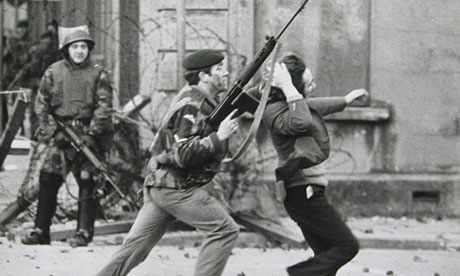




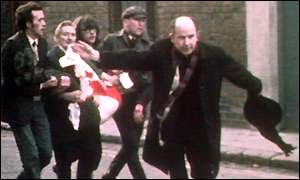








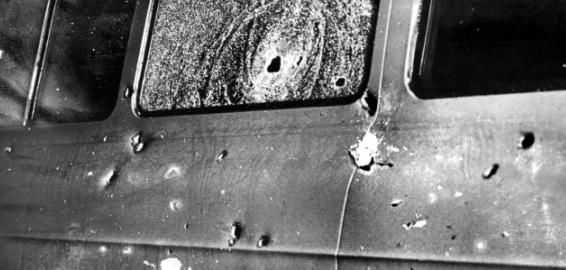


 belfastchildis.com