Kitchener, wearing the cap of a British Field Marshal, stares and points at the viewer calling them to enlist in the British Army against the Central Powers. The image is considered one of the most iconic and enduring images of World War I.
A hugely influential image and slogan, it has also inspired imitations in other countries, from the United States to the Soviet Union
Lord Kitchener Wants You
“Britons: Lord Kitchener Wants You. Join Your Country’s Army! God save the King.”
Language
English
Media
watercolour; print
Release date(s)
1914
Country
United Kingdom
Development
Prior to the institution of conscription in 1916, the United Kingdom relied upon volunteers for military service. Until the outbreak of the First World War, recruiting posters had not been used in Britain on a regular basis since the Napoleonic Wars. UK government advertisements for contract work were handled by His Majesty’s Stationery Office, who passed this task onto the publishers of R. F. White & Sons in order to avoid paying the government rate to newspaper publishers.
As war loomed in late 1913 the number of advertising contracts expanded to include other firms. J. E. B. Seely, then the Secretary of State for War, awarded Sir Hedley Le Bas, Eric Field, and their Caxton Advertising Agency a contract to advertise for recruits in the major UK newspapers. Eric Field designed a prototype full-page advertisement with the Coat of Arms of King George V and the phrase “Your King and Country Need You.”
Britain declared war on the German Empire on 4 August 1914 and the first run of the full-page ran the next day in those newspapers owned by Lord Northcliffe.
Eric Field’s original design that caught the attention of Lord Kitchener
Prime Minister of the United KingdomH. H. Asquith had appointed Kitchener as Secretary of State for War. Kitchener was the first currently serving soldier to hold the post and was given the task of recruiting a large army to fight Germany.
Unlike some of his contemporaries who expected a short conflict, Kitchener foresaw a much longer war requiring hundreds of thousands of enlistees. According to Gary S. Messinger, Kitchener reacted well to Field’s advertisement although insisting “that the ads should all end with ‘God Save the King’ and that they should not be changed from the original text, except to say ‘Lord Kitchener needs YOU.'” In the following months Le Bas formed an advisory committee of ad men to develop further newspaper recruiting advertisements, most of which ran vertically 11 inches (28 cm), two columns wide.
Alfred Leete, one Caxton’s illustrators, designed the now-famous image as a cover illustration for the 5 September 1914 issue of London Opinion, a popular weekly magazine, taking cues from Field’s earlier recruiting advertisement. At the time, the magazine had a circulation of 300,000. In response to requests for reproductions, the magazine offered postcard-sized copies for sale. The Parliamentary Recruiting Committee obtained permission to use the design in poster form.
A similar poster used the words “YOUR COUNTRY NEEDS YOU”.
Kitchener, a “figure of absolute will and power, an emblem of British masculinity”, was a natural subject for Leete’s artwork as his name was directly attached to the recruiting efforts and the newly-forming Kitchener’s Army.
Sir Hedley Le Bas was the founder of the Caxton Publishing Company Limited
Le Bas of Caxton Advertising (for whom Leete worked) chose Kitchener for the advertisement because Kitchener was “the only soldier with a great war name, won in the field, within the memory of the thousands of men the country wanted.”
Kitchener’s appearance including his bushy mustache and court dress jacket was reminiscent of romanticized Victorian era styles. Kitchener, 6 ft 2 in (188 cm) tall and powerfully built, was for many the personification of military ethos so popular in the present Edwardian era. After the scorched earth tactics and hard-fought victory of the Second Boer War, Kitchener represented a return to the military victories of the colonial era.
The fact that Kitchener’s name is not used in the poster demonstrates how easily he was visually recognized. David Lubin opines that the image may be one of the earliest successful celebrity endorsements as the commercial practice expanded greatly in the 1920s.[20] Keith Surridge posits that Kitchener’s features evoked the harsh, feared militarism of the Germans which bode well for British fortune in the war.
Hampshire at anchor
Kitchener would not see the end of the war; he died onboard HMS Hampshire in 1916.
Original versions by Alfred Leete
Alfred Leete in uniform, c. 1916
See Below for more details on Alfred Leete.
The 5 September 1914 London Opinion magazine cover that inspired the posters. The caption reads “Your Country Needs YOU”
The “Britons (Lord Kitchener) Wants YOU” poster dating from September 1914
Leete’s drawing of Kitchener was the most famous image used in the British Armyrecruitment campaign of World War I. It continues to be considered a masterful piece of wartime propaganda as well as an enduring and iconic image of the war.
Recruitment posters in general have often been seen as a driving force helping to bring more than a million men into the Army. September 1914, coincident with publication of Leete’s image, saw the highest number of volunteers enlisted.
The Times recorded the scene in London on 3 January 1915; “Posters appealing to recruits are to be seen on every hoarding, in most windows, in omnibuses, tramcars and commercial vans. The great base of Nelson’s Column is covered with them. Their number and variety are remarkable. Everywhere Lord Kitchener sternly points a monstrously big finger, exclaiming ‘I Want You'”.
One contemporaneous publication decried the use of advertising methods to enlist soldiers:
“the cold, basilisk eye of a gaudily-lithographed Kitchener rivets itself upon the possible recruit and the outstretched finger of the British Minister of War is levelled at him like some revolver, with the words, ‘I want you.’ The idea is stolen from the advertisement of a 5c. American cigar.”
Although it became one of the most famous posters in history, its widespread circulation did not halt the decline in recruiting.
This 30-word poster was an official product of the Parliamentary Recruitment Committee and was more popular contemporaneously.
The use of Kitchener’s image for recruiting posters was so widespread that Lady Asquith referred to the Field Marshal simply as “the Poster.”
The placement of the Kitchener posters including Alfred Leete’s design has been examined and questioned following an Imperial War Museum publication in 1997. The War Museum suggested that the poster itself was a “non event” and was made popular by postwar advertising by the war museum, perhaps conflating Leete’s design with the so-called “30-word” poster, an official product from the Parliamentary Recruitment Committee.
The 30-word design was the most popular recruitment poster at the time having been printed ten times the volume of Leete’s image. Leete’s image has been praised for being more arresting while his accompanying text is also far less verbose. The official wording, taken from a Kitchener speech, may seem more fitting for a character in a Henry James novel.
The 30-word recruiting poster was developed as Britons’ collective hopes of the war being over by Christmas were dashed in January 1915 and volunteer enlistments fell. A 2013 book researched by James Taylor counters the popular belief that the Leete design was an influential recruitment tool during the war. He claims the original artwork was acquired by the Imperial War Museum in 1917 and catalogued as a poster in error.[8]
Though the image of Kitchener (Britain’s most popular soldier) inspired several other poster designs, Taylor says he can find no evidence in photographs of the time that the Leete poster was used, although a photograph from 15 December 1914 taken at the Lancashire and Yorkshire Railway station in Liverpool clearly depicts Leete’s depiction among other recruiting posters.[8][34]
The effectiveness of the image upon the viewer is attributed to what E. B. Goldstein has called the ‘differential rotation effect.’ Because of this effect, Kitchener’s eyes and his foreshortened arm and hand appear to follow the viewer regardless of the viewer’s orientation to the artwork.[35][36][37] Historian Carlo Ginzburg compared Leete’s image of Kitchener to similar images of Christ and Alexander the Great as depicting the viewer’s contact with a powerful figure.[38] Pearl James commented on Ginzburg’s analysis agreeing that the strength of the connotation lies with a clever use of discursive psychology and that art historical methods better illuminate why this image has such resonance.[39] The capitalized word “YOU” grabs the reader, bringing them directly to Kitchener’s message.[20] The textual focus on “you” engages the reader about their own participation in the war.[40] Nicholas Hiley differs in that Leete’s portrayal of Kitchener is less about immediate recruiting statistics but the myth that has grown around the image, including ironic parodies.[13][41] Leete’s Kitchener poster caught the attention of a then eleven-year-old George Orwell, who may have used as it the basis for his description of the “Big Brother” posters in his novel 1984.
In 1997 the British Army created a recruiting ad re-using Leete’s image substituting Kitchener’s face with that of a British Army non-commissioned officer of African descent. Leete’s image of Kitchener is featured on a 2014 £2 coin produced by sculptor John Bergdahl for the Royal Mint.
The coin was the first of a five-year series to commemorate the centennial of the war. Use of Leete’s image of Kitchener has been criticized by some for its pro-war connotation in light of the human losses of the First World War and the violence of Kitchener’s campaign in Sudan. In July 2014, one of only four original posters known to exist went to auction for more than £10,000. The other three originals exist on display in State Library of Victoria, the Museum of Brands, Packaging and Advertising, and the Imperial War Museum. Leete’s design was also used for a corn maze in the Skylark Garden Centre in Wimblington to mark the centenary of World War I.
Imitations
The image of Lord Kitchener with his hand pointing directly at the viewer has inspired numerous imitations:
British World War I recruiting poster featuring the national personification, John Bull, c. 1915. “Who’s absent? Is it you?”
His career as a paid artist had begun in 1897 when the Daily Graphic accepted one of his drawings; later he contributed regularly to a number of magazines including Punch magazine, the Strand Magazine, Tatler, etc. As a commercial artist he designed numerous posters and advertisements, especially in the 1910s and 1920s, for such brands as Rowntrees chocolates, Guinness and Bovril, and his series of advertisements for the Underground Electric Railways Company (the London Underground) were very well known; his work as a wartime propagandist includes the poster for which he is known above all, the Lord Kitchener poster design, which first appeared on the cover of the weekly magazine London Opinion on 5 September 1914.
“His prolific output was characterized by its humour, keen observation of the everyday, and an eye for strong design”
Invitation to one of the regular “smoking” evenings at the London Sketch Club, dated at 11 November 1921. Designed by Alfred Leete.
Leete died in London in 1933. In 2004, Leete’s work was on display in his native Weston at the North Somerset Museum
Armed Forces Day (formerly Veterans’ Day) in the United Kingdom is an annual event celebrated in late June to commemorate the service of men and women in the British Armed Forces. Veterans’ Day was first observed in 2006. Although an official event, it is not a public holiday in the UK. The name was changed to Armed Forces Day in 2009. Armed Forces Day has so far been observed on the last Saturday of June.
——————————-
In Flanders Fields by John McCrae
——————————-
Origins
Plans for a Veterans’ Day were announced in February 2006 by then-Chancellor of the Exchequer, Gordon Brown, who said the aim was to ensure the contribution of veterans was never forgotten. The day is marked across the UK by local ceremonies and the presentation of medals to living ex-servicemen and women. The date of 27 June was chosen as it came the day after the anniversary of the first investiture of the Victoria Cross, in Hyde Park, London in 1857.
Veterans Day was created as a permanent extension of Veterans’ Awareness Week first held in 2005. Armed Forces Day generally focuses on celebrating living current/ex servicemen & women, whereas Remembrance Day focuses on honouring the dead. Although it used to be called Veteran’s Day in the UK, it is not the same as the United States’ Veterans Day which is more similar to Remembrance Day in the Commonwealth.
On 25 June 2007, Jim Devine the Member of Parliament for Livingston, tabled a House of CommonsEarly Day Motion calling for the day to be a public holiday, stating “that this House recognises the outstanding contribution that veterans have made to the country; and believes that Veterans’ Day should be a national public holiday across the United Kingdom.”
For the 2008 Veterans’ Day, the national event was hosted in Blackpool as part of the resorts annual “National Veterans’ Week” which ran from 21 to 29 June 2008.
Various other events were held throughout Blackpool during the day including a “Badge Presentation ceremony” in the Tower Ballroomwith the Duchess of Cornwall presenting veteran badges to among others, Martin Bell.
There was also a Veterans’ Parade along the promenade and a Falklands War veteran abseiled down Blackpool Tower.
The weekly BBC Radio 2 programme, Friday Night is Music Night was broadcast live from the Opera House presented by Ken Bruce with the BBC Concert Orchestra, Alfie Boe and Rebecca Thornhill. The Red Devils parachute display team performed an illuminated “night time parachute drop” outside North Pier[13] and the day ended with a Firework Finale from the pier.
Other events included a commemoration at Trafalgar Square in London.
Armed Forces Day 2009
Armed Forces Day
2009 London
2010 Cardiff
In 2009 the name of the event was changed to Armed Forces Day, to raise awareness and appreciation for those on active duty. It took place on Saturday 27 June.The host town was Chatham, Kent with events elsewhere, including London.
Armed Forces Day 2010
In 2010, Armed Forces Day was held on Saturday 26 June hosted in the Welsh capital of Cardiff.
The day-long celebrations included a military parade from Cardiff Castle to Cardiff Bay and the city’s waterfront, where a range of events, activities and artistic performances were staged on land, sea and air. The parade was led by HRH the Prince of Wales and the Duchess of Cornwall. Royal Navy frigate HMS Kent was docked in Cardiff to take part in the events. An estimated 50,000 people attended the celebrations in the city.
Among the cities joining Cardiff in hosting events were Glasgow, Edinburgh, Aberdeen, Plymouth, Nottingham, Bristol and Manchester.
Further events and parades were held across the United Kingdom.
At the Royal Navy’s base in Portsmouth, a number of public events took place over the weekend, and Royal Navy destroyers HMS Gloucester and HMS Daring were docked and available to the public.
Armed Forces Day 2012
UK Armed Forces Day 2012 was centred on Plymouth and took place on Saturday 30 June. Similar events were held throughout the United Kingdom.
Armed Forces Day 2013
UK Armed Forces Day 2013 was centred on Nottingham and took place on Saturday 29 June. Over 300 similar events were held throughout the United Kingdom.
Armed Forces Day 2014
UK Armed Forces Day 2014 was centred on Stirling and took place on Saturday 28 June. Hundreds of similar events were held throughout the United Kingdom.
Armed Forces Day 2015
UK Armed Forces Day 2015 was centred on Guildford on Saturday 27 June. Hundreds of similar local events were held throughout the United Kingdom.
Armed Forces Day 2016
Detail of armed services memorial gate, Cleethorpes
UK Armed Forces Day 2016 will be centred on the Lincolnshire resort of Cleethorpes on Saturday 25 June, with some activities on 26 June being hosted in Grimsby Docks.
Operation Barbarossa (German: Unternehmen Barbarossa) was the code name for Nazi Germany‘s World War II invasion of the Soviet Union, which began on 22 June 1941. The operation was driven by Adolf Hitler‘s ideological desire to conquer Soviet territory as outlined in his 1925 manifesto Mein Kampf (“My Struggle”).
In the two years leading up to the invasion, the two countries signed political and economic pacts for strategic purposes. Nevertheless, on 18 December 1940, Hitler authorized an invasion of the Soviet Union, with a planned start date of 15 May 1941. The actual invasion began on 22 June 1941.
Over the course of the operation, about four million soldiers of the Axis powers invaded the Soviet Union along a 2,900-kilometer (1,800 mi) front, the largest invasion force in the history of warfare. In addition to troops, the Germans employed some 600,000 motor vehicles and between 600,000 and 700,000 horses. It marked the beginning of the rapid escalation of the war, both geographically and in the formation of the Allied coalition.
Operationally, the Germans won resounding victories and occupied some of the most important economic areas of the Soviet Union, mainly in Ukraine, both inflicting and sustaining heavy casualties. Despite their successes, the German offensive stalled on the outskirts of Moscow and was subsequently pushed back by a Soviet counteroffensive.
Military insignia of the Red Army, 1919–1924
The Red Army repelled the Wehrmacht‘s strongest blows and forced Germany into a war of attrition for which it was unprepared. The Germans would never again mount a simultaneous offensive along the entire strategic Soviet-Axis front. The failure of the operation drove Hitler to demand further operations inside the USSR of increasingly limited scope, all of which eventually failed, such as Case Blue and Operation Citadel.
The failure of Operation Barbarossa was a turning point in the fortunes of the Third Reich. Most importantly, the operation opened up the Eastern Front, to which more forces were committed than in any other theater of war in world history.
The Eastern Front became the site of some of the largest battles, most horrific atrocities, and highest casualties for Soviets and Germans alike, all of which influenced the course of both World War II and the subsequent history of the 20th century. The German forces captured millions of Soviet prisoners who were not granted protections stipulated in the Geneva Conventions. Most of them never returned alive; Germany deliberately starved the prisoners to death as part of a “Hunger Plan” that aimed to reduce the population of Eastern Europe and then re-populate it with ethnic Germans. Over a million Soviet Jews were murdered by Einsatzgruppen death squads and gassing as part of the Holocaust.
Background
Racial policies of Nazi Germany
—————————-
The Path to Nazi Genocide
—————————-
As early as 1925, Adolf Hitler vaguely declared in his political manifesto and autobiography Mein Kampf that he would invade the Soviet Union, asserting that the German people needed to secure Lebensraum (“living space”) to ensure the survival of Germany for generations to come.
On 10 February 1939, Hitler told his army commanders that the next war would be :
“purely a war of Weltanschauungen… totally a people’s war, a racial war.” On 23 November, once World War II had already started, Hitler declared that “racial war has broken out and this war shall determine who shall govern Europe, and with it, the world.”
Racial policy of Nazi Germany viewed the Soviet Union (and all of Eastern Europe) as populated by non-Aryan Untermenschen (“sub-humans”), ruled by “Jewish Bolshevik conspirators”. Hitler claimed in Mein Kampf that Germany’s destiny was to “turn to the East” as it did “six hundred years ago”. Accordingly, it was stated Nazi policy to kill, deport, or enslave the majority of Russian and other Slavic populations and repopulate the land with Germanic peoples, under the Generalplan Ost.
The Germans’ belief in their ethnic superiority is discernible in official German records and by pseudoscientific articles in German periodicals at the time, which covered topics such as “how to deal with alien populations”.
While older historiography tended to emphasize the notion of a “clean” Wehrmacht, the historian Jürgen Förster (de) notes that “In fact, the military commanders were caught up in the ideological character of the conflict, and involved in its implementation as willing participants.”
Before and during the invasion of the Soviet Union, German troops were heavily indoctrinated with anti-Bolshevik, anti-Semitic and anti-Slavic ideology via movies, radio, lectures, books and leaflets.
Likening the Soviets to the forces of Genghis Khan, Hitler told Croatian military leader Slavko Kvaternik that the “Mongolian race” threatened Europe.
Following the invasion, Wehrmacht officers told their soldiers to target people who were described as “Jewish Bolshevik subhumans”, the “Mongol hordes”, the “Asiatic flood” and the “Red beast”.
Nazi propaganda portrayed the war against the Soviet Union as both an ideological war between German National Socialism and Jewish Bolshevism and a racial war between the Germans and the Jewish, Gypsies and Slavic Untermenschen.
German army commanders cast the Jews as the major cause behind the “partisan struggle”. The main guideline policy for German troops was “Where there’s a partisan, there’s a Jew, and where there’s a Jew, there’s a partisan,” or “The partisan is where the Jew is.”
Many German troops viewed the war in Nazi terms and regarded their Soviet enemies as sub-human.
After the war began, the Nazis issued a ban on sexual relations between Germans and foreign slave workers. There were regulations enacted against the Ost-Arbeiter (“Eastern Workers”) that included the death penalty for sexual relations with a German person.
Heinrich Himmler, in his secret memorandum, Reflections on the Treatment of Peoples of Alien Races in the East, (dated 25 May 1940) outlined the future plans for the non-German populations in the East. Himmler believed the Germanization process in Eastern Europe would be complete when “in the East dwell only men with truly German, Germanic blood”.
In their plan to create the Greater Germanic Reich the Nazi leadership aimed to conquer Eastern European territories, Germanise those seen as part of the Aryan race, subjugate and exterminate the Soviet populations, and colonise the territory with ethnic German settlers.
The Nazi secret plan Generalplan Ost (“General Plan for the East”), which was prepared in 1941 and confirmed in 1942, called for a “new order of ethnographical relations” in the territories occupied by Nazi Germany in Eastern Europe. The plan envisaged ethnic cleansing, executions and enslavement of the overwhelming majority of the populations of conquered counties with very small differing percentages of the various conquered nations undergoing Germanization, expulsion into the depths of Russia and other fates.
The net effect of this plan would be to ensure that the conquered territories would be Germanized. It was divided into two parts: the Kleine Planung (“Small Plan”), which covered actions to be taken during the war, and the Große Planung (“Large Plan”), which covered actions to be undertaken after the war was won, and to be implemented gradually over a period of 25 to 30 years.
Evidence from a speech given by General Erich Hoepner indicates the disposition of Operation Barbarossa and the Nazi racial plan, as he informed the 4th Panzer Group that the war against the Soviet Union was “an essential part of the German people’s struggle for existence” (Daseinkampf), also referring to the imminent battle as the “old struggle of Germans against Slavs” and even stated, “the struggle must aim at the annihilation of today’s Russia and must therefore be waged with unparalleled harshness.”
To Hoepner, the imminent conflict would be “the old battle of the Germanic against the Slav peoples… the defense of European culture against Moscovite-Asiatic inundation, and the repulse of Jewish Bolshevism… No adherents of the present Russian-Bolshevik system are to be spared.” Walther von Brauchitsch also told his subordinates that troops should view the war as a “struggle between two different races and [should] act with the necessary severity.”
Racial motivations were central to Nazi ideology and played a key role in planning for Operation Barbarossa since both Jews and communists were considered equivalent enemies of the Nazi state. Nazi imperialist ambitions were exercised without moral consideration for either group in their ultimate struggle for Lebensraum.
In the eyes of the Nazis, the war against the Soviet Union would be a Vernichtungskrieg, a war of annihilation.
German-Soviet relations of 1939–40
The geopolitical disposition of Europe in 1941, immediately before the start of Operation Barbarossa. The grey area represents Nazi Germany, its allies, and countries under its firm control.
In August 1939, Germany and the Soviet Union signed a non-aggression pact in Moscow known as the Molotov–Ribbentrop Pact shortly before the German invasion of Poland that triggered the outbreak of World War II in Europe. A secret protocol to the pact outlined an agreement between Germany and the Soviet Union on the division of the eastern European border states between their respective “spheres of influence“: the Soviet Union and Germany would partition Poland in the event of an invasion by Germany, and the Soviets would be allowed to overrun the Baltic states and Finland.
On 23 August 1939 the rest of the world learned of the pact between the Nazis and the Soviets but were unaware of the provisions to partition Poland.
The conclusion of this pact was indeed followed by a Soviet invasion of Poland that led to the annexation of the eastern part of the country. The pact stunned the world because of the parties’ earlier mutual hostility and their conflicting ideologies. As a result of the pact, Germany and the Soviet Union maintained reasonably strong diplomatic relations for two years and fostered an important economic relationship. The countries entered a trade pact in 1940 by which the Soviets received German military equipment and trade goods in exchange for raw materials, such as oil and wheat, to help the Nazis circumvent a British blockade of Germany.
After two days of negotiations in Berlin from 12 to 14 November 1940, Germany presented a written proposal for a Soviet entry into the Axis. On 25 November 1940, the Soviet Union offered a written counter-proposal to join the Axis if Germany would agree to refrain from interference in the Soviet Union’s sphere of influence, but Germany did not respond.
As both sides began colliding with each other in Eastern Europe, conflict appeared more likely, although they did sign a border and commercial agreement addressing several open issues in January 1941. Historian Robert Service avows that Soviet leader Joseph Stalin was convinced that the overall military strength of the USSR was such that he had nothing to fear and anticipated an easy victory should Germany attack; moreover, Stalin believed that since the Germans were still fighting the British in the west, Hitler would be unlikely to open up a two front war and subsequently delayed the reconstruction of defensive fortifications in the border regions
When German soldiers swam across the Bug River to warn the Red Army of an impending attack, they were treated like enemy agents and shot. Some historians believe that Stalin, despite providing an amicable front to Hitler, did not wish to remain allies with Germany. Rather, Stalin might have had intentions to break off from Germany and proceed with his own campaign against Germany to be followed by one against the rest of Europe.
——————–
[Barbarossa] Just a Stupid Idea or not? An Analysis
The Marcks Plan (published 5 August 1940) showing the A-A line objective of any invasion of the Soviet Union.
Stalin’s reputation as a brutal dictator contributed both to the Nazis’ justification of their assault and their faith in success; many competent and experienced military officers were killed in the Great Purge of the 1930s, leaving the Red Army with a relatively inexperienced leadership compared to that of their German counterparts. The Nazis often emphasized the Soviet regime’s brutality when targeting the Slavs with propaganda.
In the middle of 1940, following the rising tension between the Soviet Union and Germany over territories in the Balkans, an eventual invasion of the Soviet Union seemed to Hitler to be the only solution.
While no concrete plans were made yet, Hitler told one of his generals in June that the victories in Western Europe finally freed his hands for his important real task: the showdown with Bolshevism. With the successful end to the campaign in France, General Erich Marcks was assigned to the working group drawing up the initial invasion plans of the Soviet Union. The first battle plans were entitled Operation Draft East (but colloquially it was known as the Marcks Plan).
His report advocated the A-A line to be the operational objective of any invasion of the Soviet Union. This goal would extend from northern city of Arkhangelsk on the Arctic Sea through Gorky and Rostov to the port city of Astrakhan at the mouth of the Volga on the Caspian Sea. The report concluded that this military border would reduce the threat to Germany (and the Third Reich) from attacks by enemy bombers.
Although Hitler was warned by his general staff that occupying “Western Russia” would create “more of a drain than a relief for Germany’s economic situation”, he anticipated compensatory benefits, such as the demobilization of entire divisions to relieve the acute labor shortage in German industry; the exploitation of Ukraine as a reliable and immense source of agricultural products; the use of forced labor to stimulate Germany’s overall economy; and the expansion of territory to improve Germany’s efforts to isolate Great Britain.
Hitler was convinced that Britain would sue for peace once the Germans triumphed in the Soviet Union.
On 5 December 1940, Hitler received the final military plans for the invasion on which the German High Command had been working since July 1940 under the codename “Operation Otto”. Hitler, however, was dissatisfied with these plans and on 18 December issued Führer Directive 21, which called for a new battle plan, now codenamed “Operation Barbarossa”.
Bust of Friedrich I., “Barbarossa”,
The operation was named after medieval Emperor Frederick Barbarossa of the Holy Roman Empire, a leader of the Third Crusade in the 12th century. The invasion was set for 15 May 1941, though it was delayed for about 7 weeks in favor of further time for preparation because of the war in the Balkans.
According to a 1978 essay by German historian Andreas Hillgruber, the invasion plans drawn up by the German military elite were coloured by hubris stemming from the rapid defeat of France at the hands of the “invincible” Wehrmacht and by ignorance tempered by traditional German stereotypes of Russia as a primitive, backward “Asiatic” country. Red Army soldiers were considered brave and tough, but the officer corps was held in contempt. The leadership of the Wehrmacht paid little attention to politics, culture and the considerable industrial capacity of the Soviet Union, in favour of a very narrow military view.
Hillgruber argued that because these assumptions were shared by the entire military elite, Hitler was able to push through with a “war of annihilation” that would be waged in the most inhumane fashion possible with the complicity of “several military leaders”, even though it was quite clear that this would be in violation of all accepted norms of warfare.
In autumn 1940, high-ranking German officials drafted a memorandum on the dangers of an invasion of the Soviet Union. They said Ukraine, Belorussia and the Baltic States would end up as only a further economic burden for Germany.
It was argued that the Soviets in their current bureaucratic form were harmless and that the occupation would not benefit Germany. Hitler disagreed with economists about the risks and told his right-hand man Hermann Göring, the chief of the Luftwaffe, that he would no longer listen to misgivings about the economic dangers of a war with Russia.
It is speculated that this was passed on to General Georg Thomas, who had produced reports that predicted a net economic drain for Germany in the event of an invasion of the Soviet Union unless its economy was captured intact and the Caucasus oilfields seized in the first blow, and he consequently revised his future report to fit Hitler’s wishes.
The Red Army‘s ineptitude in the Winter War against Finland in 1939–40 convinced Hitler of a quick victory within a few months. He did not anticipate a long campaign lasting into the winter, and therefore adequate preparations, such as the distribution of warm clothing and winterization of vehicles and lubricants, were not made.
Beginning in March 1941, Göring’s Green Folder laid out details for the disposal of the Soviet economy after conquest. The Hunger Plan outlined how the entire urban population of conquered territories was to be starved to death, thus creating an agricultural surplus to feed Germany and urban space for the German upper class.
Nazi policy aimed to destroy the Soviet Union as a political entity in accordance with the geopoliticalLebensraum ideals for the benefit of future generations of the “Nordicmaster race“.
n 1941, Nazi ideologue Alfred Rosenberg, later appointed Reich Minister of the Occupied Eastern Territories, suggested that conquered Soviet territory should be administered in the following Reichskommissariate (“Reich Commissionerships”):
Administration of conquered Soviet territory by Alfred Rosenberg
German military planners also researched Napoleon’s failed invasion of Russia. In their calculations, they concluded that there was little danger of a large-scale retreat of the Red Army into the Russian interior, as it could not afford to give up the Baltic states, Ukraine, or the Moscow and Leningrad regions, all of which were vital to the Red Army for supply reasons and would thus have to be defended.
Hitler and his generals disagreed on where Germany should focus its energy. Hitler, in many discussions with his generals, repeated his order of “Leningrad first, the Donbass second, Moscow third”; but he consistently emphasized the destruction of the Red Army over the achievement of specific terrain objectives.
Hitler believed Moscow to be of “no great importance” in the defeat of the Soviet Union and instead believed victory would come with the destruction of the Red Army west of the capital, especially west of the Western Dvina and Dnieper rivers, and this pervaded the plan for Barbarossa. This belief later led to disputes between Hitler and several German senior officers, including Heinz Guderian, Gerhard Engel, Fedor von Bock and Franz Halder, who believed the decisive victory could only be delivered at Moscow.
Hitler had grown overconfident in his own military judgment as a result of the rapid successes in Western Europe.
German preparations
German soldiers (Flamethrower team) in the Soviet Union, June 1941
The Germans had begun massing troops near the Soviet border even before the campaign in the Balkans had finished. By the third week of February 1941, 680,000 German soldiers were gathered in assembly areas on the Romanian-Soviet border. In preparation for the attack, Hitler moved more than 3.2 million German and about 500,000 Axis soldiers to the Soviet border, launched many aerial surveillance missions over Soviet territory, and stockpiled war materiel in the East.
Stalin and Ribbentrop after the signature of the Soviet–Nazi German pact. August 23, 1939
Although the Soviet High Command was alarmed by this, Stalin’s belief that the Third Reich was unlikely to attack only two years after signing the Molotov–Ribbentrop Pact resulted in a slow Soviet preparation. Since April 1941, the Germans had begun setting up Operation Haifisch to substantiate their claims that Britain was the real target. These simulated preparations in Norway and the English Channel coast included activities such as ship concentrations, reconnaissance flights and training exercises.
We have only to kick in the door and the whole rotten structure will come crashing down.
Adolf Hitler
The postponement of Barbarossa from the initially planned date of 15 May to the actual invasion date of 22 June 1941 (a 38-day delay) occurred for a number of reasons. Most importantly, the Balkans Campaign required a diversion of troops and resources that hampered preparations, and an unusually wet winter kept rivers at full flood until late spring. The full floods could have discouraged an earlier attack, even if it was unlikely to have happened before the end of the Balkans Campaign.
The importance of the delay is still debated. William Shirer argued that Hitler’s Balkans Campaign had delayed the commencement of Barbarossa by several weeks and thereby jeopardized it. He cited the deputy chief of the German General Staff in 1941 Friedrich Paulus, who claimed the campaign resulted in a delay of “about five weeks.”
This figure is corroborated by both the German Naval War Diary and Gerd von Rundstedt. Antony Beevor names a variety of factors that delayed Barbarossa, including the delay in distributing motor transport, problems with fuel distribution, and the difficulty in establishing forward airfields for the Luftwaffe.
The Germans deployed one independent regiment, one separate motorized training brigade and 153 divisions for Barbarossa, which included 104 infantry, 19 panzer and 15 motorized infantry divisions in three army groups, nine security divisions to operate in conquered territories, four divisions in Finland and two divisions as reserve under the direct control of OKH.
These were equipped with about 3,350 tanks, 7,200 artillery pieces, 2,770 aircraft (that amounted to 65 percent of the Luftwaffe), about 600,000 motor vehicles and 625,000–700,000 horses. Finland slated 14 divisions for the invasion, and Romania offered 13 divisions and eight brigades over the course of Barbarossa.
Army Norway was to operate in far northern Scandinavia and bordering Soviet territories. Army Group North was to march through the Baltic states into northern Russia, either take or destroy the city of Leningrad and link up with Finnish forces. Army Group Center, the army group equipped with the most armour and air power, was to strike from Poland into Belorussia and the west-central regions of Russia proper, and advance to Smolensk and then Moscow.
Army Group South was to strike the heavily populated and agricultural heartland of Ukraine, taking Kiev before continuing eastward over the steppes of southern USSR to the Volga with the aim of controlling the oil-rich Caucasus. Army Group South was deployed in two sections separated by a 198-mile (319 km) gap. The northern section, which contained the army group’s only panzer group, was in southern Poland right next to Army Group Center, and the southern section was in Romania.
On 17 June, Reich Main Security Office (RSHA) chief Reinhard Heydrich briefed around thirty to fifty Einsatzgruppen commanders on “the policy of eliminating Jews in Soviet territories, at least in general terms.”
While the Einsatzgruppen were assigned to the Wehrmacht’s units, which provided them with supplies such as gasoline and food, they were controlled by the RSHA. The official plan for Barbarossa assumed that the army groups would be able to advance freely to their primary objectives simultaneously, without spreading thin, once they had won the border battles and destroyed the Red Army’s forces in the border area.
Soviet preparations
In 1930, Mikhail Tukhachevsky, a prominent military theorist in tank warfare in the interwar period and later Marshal of the Soviet Union, forwarded a memo to the Kremlin that lobbied for colossal investment in the resources required for the mass production of weapons, pressing the case for “40,000 aircraft and 50,000 tanks”. In the early 1930s, a very modern operational doctrine for the Red Army was developed and promulgated in the 1936 Field Regulations in the form of the Deep Battle Concept. Defense expenditure also grew rapidly from just 12 percent of the gross national product in 1933 to 18 percent by 1940.
However, during Stalin’s Great Purge in the late 1930s, which was still partially ongoing at the start of the war in June 1941, the officer corps of the Red Army was decimated and their replacements, appointed by Stalin for political reasons, often lacked military competence.
Of the five Marshals of the Soviet Union appointed in 1935, only two survived Stalin’s purge. 15 out of 16 army commanders, 50 out of the 57 corps commanders, 154 out of the 186 divisional commanders and 401 out of 456 colonels were killed, and many other officers were dismissed.
In total, about 30,000 Red Army personnel were executed. Stalin further underscored his control by reasserting the role of political commissars at the divisional level and below to oversee the political loyalty of the Army to the regime. The commissars held a position equal to that of the commander of the unit they were overseeing. But in spite of efforts to ensure the political subservience of the armed forces, in the wake of Red Army’s poor performance in Poland and in the Winter War, about 80 percent of the officers dismissed during the Great Purge were reinstated by 1941.
Also, between January 1939 and May 1941, 161 new divisions were activated. Although about 75 percent of all the officers had been in their position for less than one year at the start of the German invasion of 1941, many of the short tenures can be attributed not only to the purge, but also to the rapid increase in creation of military units.
In the Soviet Union, speaking to his generals in December 1940, Stalin mentioned Hitler’s references to an attack on the Soviet Union in Mein Kampf and Hitler’s belief that the Red Army would need four years to ready itself. Stalin declared “we must be ready much earlier” and “we will try to delay the war for another two years”.
As early as August 1940, British intelligence had received hints of German plans to attack the Soviets only a week after Hitler informally approved the plans for Barbarossa and warned the Soviet Union accordingly. But Stalin’s distrust of the British led him to ignore their warnings in the belief that they were a trick designed to bring the Soviet Union into the war on their side.
He had an ill-founded confidence in the Molotov–Ribbentrop Pact and suspected the British of trying to spread false rumours in order to trigger a war between Germany and the USSR.
In early 1941, Stalin’s own intelligence services and American intelligence gave regular and repeated warnings of an impending German attack. Soviet spy Richard Sorge also gave Stalin the exact German launch date, but Sorge and other informers had previously given different invasion dates that passed peacefully before the actual invasion.
Stalin acknowledged the possibility of an attack in general and therefore made significant preparations, but decided not to run the risk of provoking Hitler.
Marshal Zhukov speaking at a military conference in Moscow, September 1941
Beginning in July 1940, the Red Army General Staff developed war plans that identified the Wehrmacht as the most dangerous threat to the Soviet Union, and that in the case of a war with Germany, the Wehrmacht’s main attack would come through the region north of the Pripyat Marshes into Belorussia; which later proved to be correct.
But Stalin disagreed, and in October he authorized the development of new plans that assumed a German attack would focus on the region south of Pripyat Marshes towards the economically vital regions in Ukraine. This became the basis for all subsequent Soviet war plans and the deployment of their armed forces in preparation for the German invasion.
In early 1941 Stalin authorized the State Defense Plan 1941 (DP-41), which along with the Mobilization Plan 1941 (MP-41), called for the deployment of 186 divisions, as the first strategic echelon, in the four military districts of the western Soviet Union that faced the Axis territories; and the deployment of another 51 divisions along the Dvina and Dnieper rivers as the second strategic echelon under Stavka control, which in the case of a German invasion was tasked to spearhead a Soviet counteroffensive along with the remaining forces of the first echelon.
But on 22 June 1941 the first echelon only contained 171 divisions, numbering 2.6–2.9 million; and the second strategic echelon contained 57 divisions that were still mobilizing, most of which were still seriously understrength. The second echelon was undetected by German intelligence until days after the invasion commenced, in most cases only when the German ground forces bumped into them.
At the start of the invasion, the manpower of the Soviet military force that had been mobilized was 5.3–5.5 million, and it was still increasing as the Soviet reserve force of 14 million, with at least basic military training, continued to mobilize.
—————————-
The Red Army before operation Barbarossa
—————————-
The Red Army was dispersed and still preparing when the invasion commenced. Their units were often separated and lacked adequate transportation.
The Soviet Union had some 23,000 tanks in service, of which about 11,000 were in the western military districts that faced the German invasion force.
Hitler later declared to some of his generals, “If I had known about the Russian tank strength in 1941 I would not have attacked”. However, maintenance and readiness standards were very poor; ammunition and radios were in short supply, and many armoured units lacked the trucks for supplies.
The most advanced Soviet tank models – the KV-1 and T-34 – which were superior to all current German tanks, as well as all designs still in development as of the summer 1941, were not available in large numbers at the time the invasion commenced.
Furthermore, in the autumn of 1939, the Soviets disbanded their mechanized corps and partly dispersed their tanks to infantry divisions; but following their observation of the German campaign in France, in late 1940 they began to reorganize most of their armored assets back into mechanized corps with a target strength of 1,031 tanks each. But these large armoured formations were unwieldy, and moreover they were spread out in scattered garrisons, with their subordinate divisions up to 100 kilometres apart.
Furthermore, the reorganization was still in progress and incomplete when Barbarossa commenced. Soviet tank units were rarely well equipped, and they lacked training and logistical support. Units were sent into combat with no arrangements in place for refueling, ammunition resupply, or personnel replacement. Often, after a single engagement, units were destroyed or rendered ineffective . The Soviet numerical advantage in heavy equipment was thoroughly offset by the superior training and organization of the Wehrmacht.
The Soviet Air Force (VVS) held the numerical advantage with a total of approximately 19,533 aircraft, which made it the largest air force in the world in the summer of 1941. About 7,133–9,100 of these were deployed in the five western military districts, and an additional 1445 were under Naval control.
Development of the Soviet Armed Forces –
Compiled by Russian military historian Mikhail Meltyukhov from various sources
1 January 1939
22 June 1941
Increase
Divisions calculated
131.5
316.5
140.7%
Personnel
2,485,000
5,774,000
132.4%
Guns and mortars
55,800
117,600
110.7%
Tanks
21,100
25,700
21.8%
Aircraft
7,700
18,700
142.8%
Historians have debated whether Stalin was planning an invasion of German territory in the summer of 1941. The debate began in the late 1980s when Viktor Suvorov published a journal article and later the book Icebreaker in which he stated that Stalin had seen the outbreak of war in western Europe as an opportunity to spread communist revolutions throughout the continent, and that the Soviet military was being deployed for an imminent attack at the time of the German invasion. This view had also been advanced by former German generals following the war. Suvorov’s thesis was fully or partially accepted by some historians, including Valeri Danilov, Joachim Hoffmann, Mikhail Meltyukhov and Vladimir Nevezhin, and attracted public attention in Germany, Israel and Russia.
However, it has been strongly rejected by most historians of this period, and Icebreaker is generally considered to be an “anti-Soviet tract” in western countries. David Glantz and Gabriel Gorodetsky wrote books to rebut Suvorov’s arguments, and most historians believe that Stalin was seeking to avoid war in 1941 as he believed that his military was not ready to fight the German forces.
20th Rifle, 45th Rifle, 67th Rifle and 21st Mechanized Corps.
Invasion
German infantryman in front of a burning BT-5 tank and a dead crew member in Ukraine, June 1941
At around 1:00 am on 22 June 1941, the Soviet military districts in the border area were alerted by NKO Directive No. 1, which was issued late on night of 21 June. It called on them to “bring all forces to combat readiness,” but to “avoid provocative actions of any kind.”
It took up to 2 hours for several of the units subordinate to the Fronts to receive the order of the directive, and the majority did not receive it before the invasion commenced.
At around 3:15 am on 22 June 1941, the Axis Powers commenced the invasion of the Soviet Union with the bombing of major cities in Soviet-occupied Poland and an artillery barrage on Red Army defences on the entire front. The heavy air-raids reached as far as Kronstadt near Leningrad, Ismail in Bessarabia, and Sevastopol in the Crimea. Meanwhile, ground troops crossed the border, accompanied in some locales by Lithuanian and Ukrainian fifth columnists.
Roughly three million soldiers of the Wehrmacht went into action and faced slightly fewer Soviet troops at the border.
At around noon, the news of the invasion was broadcast to the population by Soviet foreign minister Vyacheslav Molotov: “… Without a declaration of war, German forces fell on our country, attacked our frontiers in many places… The Red Army and the whole nation will wage a victorious Patriotic War for our beloved country, for honour, for liberty … Our cause is just. The enemy will be beaten. Victory will be ours!”
By calling upon the population’s devotion to their nation rather than the Party, Molotov struck a patriotic chord that helped a stunned people absorb the shattering news. Within the first few days of the invasion, the Soviet High Command and Red Army were extensively reorganized so as to place them on the necessary war footing. Stalin did not address the nation about the German invasion until 3 July, when he also called for a “Patriotic War … of the entire Soviet people”.
In Germany, on the morning of 22 June, Nazi propaganda minister Joseph Goebbels announced the invasion to the waking nation in a radio broadcast, “At this moment a march is taking place that, for its extent, compares with the greatest the world has ever seen. I have decided today to place the fate and future of the Reich and our people in the hands of our soldiers. May God aid us, especially in this fight!”
Later the same morning, Hitler proclaimed to his colleagues, “Before three months have passed, we shall witness a collapse of Russia, the like of which has never been seen in history.”
Phase one
German advances from June to August 1941
The initial momentum of the German ground and air attack completely destroyed the Soviet organizational command and control within the first few hours, paralyzing every level of command from the infantry platoon to the Soviet High Command in Moscow.
Therefore, Moscow failed to grasp the magnitude of the catastrophe that confronted the Soviet forces in the border area. At around 7:15 am, Stalin issued NKO Directive No. 2, which announced the invasion to the Soviet Armed Forces, and called on them to attack Axis forces wherever they had violated the borders and launch air strikes into the border regions of German territory.
At around 9:15 pm, Stalin issued NKO Directive No. 3, signed by Marshal Semyon Timoshenko, which now called for a general counteroffensive on the entire front “without any regards for borders” that both men hoped would sweep the enemy from Soviet territory . Timoshenko’s order was not based on a realistic appraisal of the military situation at hand, and it resulted in devastating casualties.
Air war
Luftwaffe reconnaissance units worked frantically to plot Soviet troop concentration, supply dumps, and airfields, and mark them down for destruction. In contrast, Soviet artillery observers based at the border area had been under the strictest instructions not to open fire on German aircraft prior to the invasion. The Luftwaffe reported to have destroyed 1,489 aircraft on the first day of the invasion and over 3,100 over the first three days.
Hermann Göring, Minister of Aviation and Commander-in-Chief of the Luftwaffe, distrusted the reports and ordered the figure checked. Luftwaffe staffs surveyed the wreckage on Soviet airfields, and their original figure proved conservative, as over 2,000 Soviet aircraft were estimated to have been destroyed on the first day of the invasion. In reality, Soviet losses were likely higher; a Soviet archival document recorded the loss of 3,922 Soviet aircraft in the first three days against an estimated loss of 78 German aircraft.
The Luftwaffe reported the loss of only 35 aircraft on the first day of combat.
A document from the German Federal Archives puts the Luftwaffe’s loss at 63 aircraft for the first day.
By the end of the first week, the Luftwaffe had achieved air supremacy over the battlefields of all the army groups, but was unable to effect this air dominance over the vast expanse of the western Soviet Union. According to the war diaries of the German High Command, the Luftwaffe by 5 July had lost 491 aircraft with 316 more damaged, leaving it with only about 70 percent of the strength it had at the start of the invasion.
On 22 June, Army Group North attacked the Soviet Northwestern Front and broke through its 8th and 11th Armies. The Soviets immediately launched a powerful counterattack against the German 4th Panzer Group with the Soviet 3rd and 12th Mechanized Corps, but the Soviet attack was defeated.
On 25 June, the 8th and 11th Armies were ordered to withdraw to the Western Dvina River, where it was planned to meetup with the 21st Mechanized Corps and the 22nd and 27th Armies. However, on 26 June, Erich von Manstein‘s LVI Panzer Corps reached the river first and secured a bridgehead across it.
The Northwestern Front was forced to abandon the river defenses, and on 29 June Stavka ordered the Front to withdraw to the Stalin Line on the approaches to Leningrad. On 2 July, Army Group North began its attack on the Stalin Line with its 4th Panzer Group, and on 8 July captured Pskov, devastating the defenses of the Stalin Line and reaching Leningrad oblast.
The 4th Panzer Group had advanced about 450 kilometres (280 mi) since the start of the invasion and was now only about 250 kilometres (160 mi) from its primary objective Leningrad. On 9 July it began its attack towards the Soviet defenses along the Luga River in Leningrad oblast.
The northern section of Army Group South faced the Southwestern Front, which had the largest concentration of Soviet forces, and the southern section faced the Southern Front. In addition, the Pripyat Marshes and the Carpathian Mountains posed a serious challenge to the army group’s northern and southern sections respectively.
On 22 June, only the northern section of Army Group South attacked, but the terrain impeded their assault, giving the Soviet defenders ample time to react. The German 1st Panzer Group and 6th Army attacked and broke through the Soviet 5th Army Starting on the night of 23 June, the Soviet 22nd and 15th Mechanized Corps attacked the flanks of the 1st Panzer Group from north and south respectively. Although intended to be concerted, Soviet tank units were sent in piecemeal due to poor coordination. The 22nd Mechanized Corp ran into the 1st Panzer Army’s III Motorized Corps and was decimated, and its commander killed.
The 1st Panzer Group bypassed much of the 15th Mechanized Corps, which engaged the German 6th Army’s 297th Infantry Division, where it was defeated by antitank fire and Luftwaffe attacks. On 26 June, the Soviets launched another counterattack on the 1st Panzer Group from north and south simultaneously with the 9th, 19th and 8th Mechanized Corps, which altogether fielded 1649 tanks, and supported by the remnants of the 15th Mechanized Corps. The battle lasted for four days, ending in the defeat of the Soviet tank units On 30 June Stavka ordered the remaining forces of the Southwestern Front to withdraw to the Stalin Line, where it would defend the approaches to Kiev.
On 2 July, the southern section of Army Group South – the Romanian 3rd and 4th Armies, alongside the German 11th Army – invaded Soviet Moldavia, which was defended by the Southern Front.
Counterattacks by the Front’s 2nd Mechanized Corps and 9th Army were defeated, but on 9 July the Axis advance stalled along the defenses of the Soviet 18th Army between the Prut and Dniester Rivers.
In the opening hours of the invasion, the Luftwaffe destroyed the Western Front’s air force on the ground, and with the aid of Abwehr and their supporting anti-communist fifth columns operating in the Soviet rear paralyzed the Front’s communication lines, which particularly cut off the Soviet 4th Army headquarters from headquarters above and below it.
On the same day, the 2nd Panzer Group crossed the Bug River, broke through the 4th Army, bypassed Brest Fortress, and pressed on towards Minsk, while the 3rd Panzer Group bypassed most of the 3rd Army and pressed on towards Vilnius. Simultaneously, the German 4th and 9th Armies engaged the Western Front forces in the environs of Białystok On the order of Dmitry Pavlov, the commander of the Western Front, the 6th and 11th Mechanized Corps and the 6th Cavalry Corps launched a strong counterstrike towards Grodno on 24–25 June in hopes of destroying the 3rd Panzer Group. However, the 3rd Panzer Group had already moved on, with its forward units reaching Vilnius on the evening of 23 June, and the Western Front’s armoured counterattack instead ran into infantry and antitank fire from the V Army Corps of the German 9th Army, supported by Luftwaffe air attacks.
By the night of 25 June, the Soviet counterattack was defeated, and the commander of the 6th Cavalry Corps was captured. The same night, Pavlov ordered all the remnants of the Western Front to withdraw to Slonim towards Minsk. Subsequent counterattacks to buy time for the withdrawal were launched against the German forces, but all of them failed.
On 27 June, the 2nd and 3rd Panzer Groups met near Minsk and captured the city the next day, completing the encirclement of almost all of the Western Front in two pockets: one around Białystok and another west of Minsk.
The Germans destroyed the Soviet 3rd and 10th Armies while inflicting serious losses on the 4th, 11th and 13th Armies, and reported to have captured 324,000 Soviet troops, 3,300 tanks, 1,800 artillery pieces. On 30 June, Stalin relieved Pavlov of his command, and on 22 July tried and executed him along with many members of his staff on charges of “cowardice” and “criminal incompetence”.
A Soviet directive was issued on 29 June to combat the mass panic rampant among the civilians and the armed forces personnel. The order stipulated swift, severe measures against anyone inciting panic or displaying cowardice. The NKVD worked with commissars and military commanders to scour possible withdrawal routes of soldiers retreating without military authorization. Field expedient general courts were established to deal with civilians spreading rumours and military deserte.
On 29 June, Hitler, through the Commander-in-Chief of the German Army Walther von Brauchitsch, instructed the commander of Army Group Center Fedor von Bock to halt the advance of his panzers until the infantry formations liquidating the pockets catch up. But the commander of the 2nd Panzer Group Heinz Guderian, with the tacit support of Fedor von Bock and the chief of OKH Franz Halder, ignored the instruction and attacked on eastward towards Bobruisk, albeit reporting the advance as a reconnaissance-in-force. He also personally conducted an aerial inspection of the Minsk-Białystok pocket on 30 June and concluded that his panzer group was not needed to contain it, since Hermann Hoth‘s 3rd Panzer Group was already involved in the Minsk pocket.
On the same day, some of the infantry corps of the 9th and 4th Armies, having sufficiently liquidated the Białystok pocket, resumed their march eastward to catch up with the panzer groups. On 1 July, Fedor von Bock ordered the panzer groups to resume their full offensive eastward on the morning of 3 July. But Brauchitsch, upholding Hitler’s instruction, and Halder, unwillingly going along with it, opposed Bock’s order. However, Bock insisted on the order by stating that it would be flatly irresponsible to reverse orders already issued. The panzer groups, however, resumed their offensive on 2 July before the infantry formations had sufficiently caught up.
German advances during the opening phases of Operation Barbarossa, August 1941
On 2 July and through the next six days, a rainstorm typical of Belarusian summers slowed the progress of the panzers of Army Group Center, and Soviet defenses stiffened.
The delays gave the Soviets time to organize a massive counterattack against Army Group Center. The army group’s ultimate objective was Smolensk, which commanded the road to Moscow. Facing the Germans was an old Soviet defensive line held by six armies. On 6 July, the Soviets attacked the 3rd Panzer Group with 1000 tanks. The Germans defeated this counterattack with overwhelming air superiority.
The 2nd Panzer Group crossed the Dnieper River and closed in on Smolensk from the south while the 3rd Panzer Group, after defeating the Soviet counterattack, closed on Smolensk from the north. Trapped between their pincers were three Soviet armies. On 18 July, the Panzer Groups came to within sixteen kilometres of closing the gap, but the trap did not snap shut until 26 July.
When the Panzer Groups finally closed the gap, 300,000 Red Army soldiers were captured, but 200,000 Red Army soldiers escaped to stand between the Germans and Moscow.
Four weeks into the campaign, the Germans realized they had grossly underestimated Soviet strength. The German troops had used their initial supplies without attaining the expected strategic freedom of movement.
Operations were now slowed down to allow for resupply; the delay was to be used to adapt strategy to the new situation. Hitler by now had lost faith in battles of encirclement as large numbers of Soviet soldiers had escaped the pincers. He now believed he could defeat the Soviets by economic damage, depriving them of the industrial capacity to continue the war. That meant seizing the industrial center of Kharkov, the Donbass and the oil fields of the Caucasus in the south and the speedy capture of Leningrad, a major center of military production, in the north
Fedor von Bock, the commander of Army Group Center, and almost all the German generals involved in Operation Barbarossa argued vehemently in favor of continuing the all-out drive toward Moscow. Besides the psychological importance of capturing the enemy’s capital, the generals pointed out that Moscow was a major center of arms production, the center of the Soviet communications system and an important transportation hub. More significantly, intelligence reports indicated that the bulk of the Red Army was deployed near Moscow under Semyon Timoshenko for an all-out defense of the capital.
But Hitler was adamant, and he issued a direct order to the panzer commander Heinz Guderian—bypassing Guderian’s commanding officer, von Bock—to send Army Group Center’s tanks to the north and south, temporarily halting the drive to Moscow.
By mid-July, the Germans had advanced within a few kilometers of Kiev below the Pripyat Marshes. The 1st Panzer Group then went south while the 17th Army struck east and trapped three Soviet armies near Uman
As the Germans eliminated the pocket, the tanks turned north and crossed the Dnieper. Meanwhile, the 2nd Panzer Group, diverted from Army Group Center, had crossed the Desna River with 2nd Army on its right flank. The two Panzer armies now trapped four Soviet armies and parts of two other.
By August, as the serviceability and the quantity of the Luftwaffe’s inventory steadily reduced due to combat, while demand for air support only increased as the VVS stubbornly resurged, the Luftwaffe found itself struggling to maintain local air superiority in the front lines.
Also with the onset of bad weather in October, the Luftwaffe was on several occasions forced to halt nearly all aerial operations. The VVS, although faced with the same weather difficulties, had a clear advantage thanks to the prewar experience with cold-weather flying techniques, and the fact that they were operating from intact airbases and airports.
By December, the VVS had matched the Luftwaffe and was even pressing to achieve air supremacy over the battlefields.
For its final attack on Leningrad, the 4th Panzer Group was reinforced by tanks from Army Group Center. On 8 August, the Panzers broke through the Soviet defenses. By the end of August, 4th Panzer Group had penetrated to within 48 kilometers of Leningrad. The Finns had pushed southeast on both sides of Lake Ladoga to reach the old Finnish-Soviet frontier.
General Guderian at a forward command post of a Panzer regiment near Kiev, 1941
The Germans attacked Leningrad in August 1941; in the following three “black months” of 1941, 400,000 residents of the city worked to build the city’s fortifications as fighting continued, while 160,000 others joined the ranks of the Red Army. On 7 September, the German 20th Motorized Division seized Shlisselburg, cutting off all land routes to Leningrad. The Germans severed the railroads to Moscow and captured the railroad to Murmansk with Finnish assistance to inaugurate the start of a siege that would last for over two years.
At this stage, Hitler ordered the final destruction of Leningrad with no prisoners taken, and on 9 September, Army Group North began the final push. Within ten days it had advanced within 11 kilometers of the city.
However, the push over the last 10 km (6.2 mi) proved very slow and casualties mounted. Hitler, now out of patience, ordered that Leningrad should not be stormed, but rather starved into submission. Deprived of its Panzer forces, Army Group Center remained static and was subjected to numerous Soviet counterattacks, in particular the Yelnya Offensive, in which the Germans suffered their first major tactical defeat since their invasion began.
These attacks prompted Hitler to concentrate his attention back to Army Group Center and its drive on Moscow. The Germans ordered the 3rd and 4th Panzer Armies to break off their Siege of Leningrad and support Army Group Center in its attack on Moscow.
Before it could begin, operations in Kiev needed to be finished. Half of Army Group Center had swung to the south in the back of the Kiev position, while Army Group South moved to the north from its Dniepr bridgehead.
The encirclement of Soviet forces in Kiev was achieved on 16 September. A savage battle ensued in which the Soviets were hammered with tanks, artillery, and aerial bombardment. After ten days of vicious fighting, the Germans claimed over 600,000 Soviet soldiers captured. Actual losses were 452,720 men, 3,867 artillery pieces and mortars from 43 divisions of the 5th, 21st, 26th, and 37th Soviet Armies.
Soviet planes flying over German positions near Moscow
After Kiev, the Red Army no longer outnumbered the Germans and there were no more trained reserves directly available. To defend Moscow, Stalin could field 800,000 men in 83 divisions, but no more than 25 divisions were fully effective. Operation Typhoon, the drive to Moscow, began on 2 October . In front of Army Group Center was a series of elaborate defense lines, the first centered on Vyazma and the second on Mozhaysk.
The first blow took the Soviets completely by surprise when the 2nd Panzer Group, returning from the south, took Oryol, just 121 km (75 mi) south of the Soviet first main defense line. Three days later, the Panzers pushed on to Bryansk, while the 2nd Army attacked from the west
The Soviet 3rd and 13th Armies were now encircled. To the north, the 3rd and 4th Panzer Armies attacked Vyazma, trapping the 19th, 20th, 24th and 32nd Armies. Moscow’s first line of defense had been shattered. The pocket eventually yielded over 500,000 Soviet prisoners, bringing the tally since the start of the invasion to three million. The Soviets had now only 90,000 men and 150 tanks left for the defense of Moscow .
The German government now publicly predicted the imminent capture of Moscow and convinced foreign correspondents of a pending Soviet collapse.
On 13 October, the 3rd Panzer Group penetrated to within 140 km (87 mi) of the capital. Martial law was declared in Moscow. Almost from the beginning of Operation Typhoon, however, the weather worsened. Temperatures fell while there was a continued rainfall. This turned the unpaved road network into mud and steadily slowed the German advance on Moscow to as little as 3.2 km (2.0 mi) a day
At the same time, the supply situation for the Germans rapidly deteriorated. On 31 October, the German Army High Command ordered a halt to Operation Typhoon while the armies were reorganized. The pause gave the Soviets, who were in a far better supply situation, time to consolidate their positions and organize formations of newly activated reservists. In little over a month, the Soviets organized eleven new armies that included 30 divisions of Siberian troops. These had been freed from the Soviet Far East after Soviet intelligence assured Stalin that there was no longer a threat from the Japanese.
Over 1,000 tanks and 1,000 aircraft arrived along with the Siberian forces.
On 15 November, with the ground hardening due to the cold weather, the Germans once again began the attack on Moscow.[171] Although the troops themselves were now able to advance again, there had been no delay allowed to improve the supply situation. Facing the Germans were the 5th, 16th, 30th, 43rd, 49th, and 50th Soviet armies. The Germans intended to let the 3rd and 4th Panzer Armies cross the Moscow Canal and envelop Moscow from the northeast. The 2nd Panzer Group would attack Tula and then close in on Moscow from the south.
As the Soviets reacted to the flanks, the 4th Army would attack the center. In two weeks of desperate fighting, lacking sufficient fuel and ammunition, the Germans slowly crept towards Moscow.
However, in the south, the 2nd Panzer Group was being blocked. On 22 November, Soviet Siberian units, augmented with the 49th and 50th Soviet Armies, attacked the 2nd Panzer Group and inflicted a shocking defeat on the Germans. The 4th Panzer Group pushed the Soviet 16th Army back, however, and succeeded in crossing the Moscow canal to begin the attempted encirclement of Moscow.
The German position of advances before the start of Operation Typhoon, September 1941
On 2 December, part of the 258th Infantry Division advanced to within 24 km (15 mi) of Moscow and could see the spires of the Kremlin, but by then the first blizzards had already begu
A reconnaissance battalion also managed to reach the town of Khimki, only about 8 km (5.0 mi) away from the Soviet capital. It captured the bridge over the Moscow-Volga Canal as well as the railway station, which marked the farthest eastern advance of German forces.
But in spite of the progress made, the Wehrmacht was not equipped for winter warfare, and the bitter cold caused severe problems for their guns and equipment. Furthermore, weather conditions grounded the Luftwaffe from conducting any large-scale operations. Newly created Soviet units near Moscow now numbered over 500,000 men, and on 5 December, they launched a massive counterattack as part of the Battle of Moscow that pushed the Germans back over 320 km (200 mi). By late December 1941, the Germans had lost the Battle for Moscow, and the invasion had cost the German army over 830,000 casualties in killed, wounded, captured or missing in action.
Aftermath
With the failure of the Battle of Moscow, all German plans for a quick defeat of the Soviet Union had to be revised. The Soviet counteroffensives in December 1941 caused heavy casualties on both sides, but ultimately eliminated the German threat to Moscow.
In addition to this devastating setback for Germany, the Soviet Union also suffered heavily from the conflict, losing huge tracts of territory, and vast losses in men and material. Despite the rapid relocation of Red Army armaments installations east of the Urals and a dramatic increase of production in 1942, especially of armour, new aircraft types and artillery, the Wehrmacht was able to mount another large-scale offensive in July 1942. Hitler, having realized that Germany’s oil supply was “severely depleted,” aimed to capture the oil fields of Baku in an offensive, codenamed Case Blue.
Once again, the Germans quickly overran great expanses of Soviet territory, but they failed to achieve their ultimate goals in the wake of their decisive defeat at the Battle of Stalingrad
By 1943, Soviet armaments production was fully operational and increasingly outproducing the German war economy. The Red Army through steadily more ambitious and tactically sophisticated offensives was able to liberate the areas previously occupied by the German invasion by the summer of 1944. The war ended with the total defeat and occupation of Nazi Germany in May 1945.
While the Soviet Union had not signed the Geneva convention, this did not mean their soldiers were entirely exempted from the protection it afforded; Germany had signed the treaty and was thus obligated to offer Soviet POWs treatment according to its provisions (as they generally did with other Allied POWs).
Article 82 of the convention specified that “In case, in time of war, one of the belligerents is not a party to the Convention, its provisions shall nevertheless remain in force as between the belligerents who are parties thereto.”
Despite this Hitler called for the battle against the Soviet Union to be a “struggle for existence” and accordingly authorized crimes against Soviet prisoners of war. A Nazi memorandum from 16 July 1941, recorded by Martin Bormann, quotes Hitler saying, “The giant [occupied] area must naturally be pacified as quickly as possible; this will happen at best if anyone who just looks funny should be shot”.
Himmler inspecting a prisoner of war camp
Before the war, Hitler issued the notorious Commissar Order, which called for all Soviet political commissars taken prisoner at the front to be shot immediately without trial. German soldiers both willingly and unwillingly participated in these mass killings.
On the eve of the invasion, German soldiers were informed that their battle “demands ruthless and vigorous measures against Bolshevik inciters, guerrillas, saboteurs, Jews and the complete elimination of all active and passive resistance.” Collective punishment was authorized against partisan attacks; if a perpetrator could not be quickly identified, then burning villages and mass executions were considered acceptable reprisals.
An estimated two million Soviet prisoners of war died of starvation during Barbarossa alone; nothing was done for their survival. The famished prisoners of war were hardly able to walk by themselv
By the end of the war, 58 percent of all Soviet prisoners of war died in German captivity.
Organized crimes against civilians, including women and children, were also carried out on a huge scale by the German police and military forces, as well as the local collaborators. Under the command of the Reich Main Security Office, the Einsatzgruppen killing squads conducted large-scale massacres of Jews and communists in conquered Soviet territories. Holocaust historian Raul Hilberg puts the number of Jews murdered by “mobile killing operations” at 1,400,000.
The original instructions to kill “Jews in party and state positions” was broadened to include “all male Jews of military age” and was expanded once more to “all male Jews regardless of age.” By the end of July, the Germans were regularly killing women and children.
On 18 December 1941, Himmler and Hitler discussed the “Jewish question”, and Himmler noted the meeting’s result in his appointment book: “To be annihilated as partisans.” According to Christopher Browning, this represented the Nazi decision of “annihilating Jews and solving the so-called ‘Jewish question’ under the cover of killing partisans.”
In accordance with Nazi policies against “inferior” Asian peoples, Turkmens were also persecuted; according to a post-war report by Prince Veli Kajum Khan, they were imprisoned in concentration camps in terrible conditions, where those deemed to have “Mongolian” features were murdered daily. Asians were also targeted by the Einsatzgruppen and were the subjects of lethal medical experiments and murder at a “pathological institute” in Kiev.
Burning houses suspected of being partisan meeting places and poisoning water wells became common practice for soldiers of the German 9th Army. At Kharkov, the fourth largest city in the Soviet Union, food was provided only to the small number of civilians who worked for the Germans, with the rest designated to slowly starve.
The citizens of Leningrad were subjected to heavy bombardment and a siege that would last 872 days and starve more than a million people to death, of whom approximately 400,000 were children below the age of 14. The German-Finnish blockade cut off access to food, fuel and raw materials, and rations reached a low, for the non-working population, of four ounces (five thin slices) of bread and a little watery soup per day.
Starving Soviet civilians began to eat their domestic animals, along with hair tonic and Vaseline. Some desperate citizens resorted to cannibalism; Soviet records list 2,000 people arrested for “the use of human meat as food” during the siege, 886 of them during the first winter of 1941–42.
The Wehrmacht planned to seal off Leningrad, starve out the population, and then demolish the city entirely.
Historical significance
Operation Barbarossa was the largest military operation in human history—more men, tanks, guns and aircraft were committed than had ever been deployed before in a single offensive. A total of 75 percent of the entire German military participated The invasion opened up the Eastern Front of World War II, the largest theater of war during that conflict, and it witnessed titanic clashes of unprecedented violence and destruction for four years that resulted in the deaths of more than 26 million people.[205]
More people died fighting on the Eastern Front than in all other fighting across the globe during World War II
The Killing Fields (Khmer: វាលពិឃាត, Khmer pronunciation: [ʋiəl pikʰiət]) are a number of sites in Cambodia where collectively more than a million people were killed and buried by the Khmer Rouge regime, during its rule of the country from 1975 to 1979, immediately after the end of the Cambodian Civil War (1970–1975). The mass killings are widely regarded as part of a broad state-sponsored genocide (the Cambodian genocide).
Analysis of 20,000 mass grave sites by the DC-Cam Mapping Program and Yale University indicate at least 1,386,734 victims of execution.
Estimates of the total number of deaths resulting from Khmer Rouge policies, including disease and starvation, range from 1.7 to 2.5 million out of a 1975 population of roughly 8 million. In 1979, Vietnam invaded Democratic Kampuchea and toppled the Khmer Rouge regime.
Cambodian journalist Dith Pran coined the term “killing fields” after his escape from the regime
Genocide
The Communist Khmer Rouge regime arrested and eventually executed almost everyone suspected of connections with the former government or with foreign governments, as well as professionals and intellectuals. Ethnic Vietnamese, ethnic Thai, ethnic Chinese, ethnic Cham, Cambodian Christians, and the Buddhist monkhood were the demographic targets of persecution. As a result, Pol Pot has been described as “a genocidal tyrant.”
Ben Kiernan estimates that about 1.7 million people were killed.
Researcher Craig Etcheson of the Documentation Center of Cambodia suggests that the death toll was between 2 and 2.5 million, with a “most likely” figure of 2.2 million. After 5 years of researching some 20,000 grave sites, he concludes that:
“these mass graves contain the remains of 1,386,734 victims of execution.”
A UN investigation reported 2–3 million dead, while UNICEF estimated 3 million had been killed. Demographic analysis by Patrick Heuveline suggests that between 1.17 and 3.42 million Cambodians were killed, while Marek Sliwinski suggests that 1.8 million is a conservative figure.
2,000,000
Dead
This slideshow requires JavaScript.
Even the Khmer Rouge acknowledged that 2 million had been killed—though they attributed those deaths to a subsequent Vietnamese invasion. By late 1979, UN and Red Cross officials were warning that another 2.25 million Cambodians faced death by starvation due to “the near destruction of Cambodian society under the regime of ousted Prime Minister Pol Pot,” who were saved by international aid after the Vietnamese invasion.
Cambodia’s ethnic minorities constituted 15 percent of the population in pre-Khmer Rouge era. Of the 400,000 Vietnamese who lived in Cambodia before 1975, some 150–300,000 were expelled by the previous Lon Nol regime. When Pol Pot‘s Khmer Rouge came to power, there remained about 100–250,000 Vietnamese in the country. Almost all of them were repatriated by December 1975.
The Chinese community (about 425,000 people in 1975) was reduced to 200,000 during the next four years. In the Khmer Rouge’s Standing Committee, four members were of Chinese ancestry, two Vietnamese, and two Khmers. Some observers argue that this mixed composition makes it difficult to argue that there was an intent to kill off minorities.
R.J. Rummel, an analyst of political killings, argues that there was a clear genocidal intent:
One estimate is that out of 40,000 to 60,000 monks, only between 800 and 1,000 survived to carry on their religion. We do know that of 2,680 monks in eight monasteries, a mere seventy were alive as of 1979. As for the Buddhist temples that populated the landscape of Cambodia, the Khmer Rouge destroyed 95 percent of them, and turned the remaining few into warehouses or allocated them for some other degrading use.
Amazingly, in the very short span of a year or so, the small gang of Khmer Rouge wiped out the center of Cambodian culture, its spiritual incarnation, its institutions….As part of a planned genocide campaign, the Khmer Rouge sought out and killed other minorities, such as the Moslem Cham. In the district of Kompong Xiem, for example, they demolished five Cham hamlets and reportedly massacred 20,000 that lived there; in the district of Koong Neas only four Cham apparently survived out of some 20,000.
Process
Rooms of the Tuol Sleng Genocide Museum contain thousands of photos taken by the Khmer Rouge of their victims.
The judicial process of the Khmer Rouge regime, for minor or political crimes, began with a warning from the Angkar, the government of Cambodia under the regime. People receiving more than two warnings were sent for “re-education,” which meant near-certain death.
People were often encouraged to confess to Angkar their “pre-revolutionary lifestyles and crimes” (which usually included some kind of free-market activity; having had contact with a foreign source, such as a U.S. missionary, international relief or government agency; or contact with any foreigner or with the outside world at all), being told that Angkar would forgive them and “wipe the slate clean.” This meant being taken away to a place such as Tuol Sleng or Choeung Ek for torture and/or execution.
The executed were buried in mass graves. In order to save ammunition, the executions were often carried out using poison, spades or sharpened bamboo sticks. In some cases the children and infants of adult victims were killed by having their heads bashed against the trunks of Chankiri trees, and then were thrown into the pits alongside their parents. The rationale was
“to stop them growing up and taking revenge for their parents’ deaths.”
Some victims were required to dig their own graves; their weakness often meant that they were unable to dig very deep. The soldiers who carried out the executions were mostly young men or women from peasant families.
Prosecution for crimes against humanity
In 1997 the Cambodian government asked for the UN’s assistance in setting up a genocide Tribunal. It took nine years to agree to the shape and structure of the court – a hybrid of Cambodian and international laws – before the judges were sworn in in 2006.
The investigating judges were presented with the names of five possible suspects by the prosecution on July 18, 2007. On September 19, 2007 Nuon Chea, second in command of the Khmer Rouge and its most senior surviving member, was charged with war crimes and crimes against humanity. He faced Cambodian and foreign judges at the special genocide tribunal and was convicted on 7 August 2014 and received a life sentence.
On July 26, 2010 Kang Kek Iew (aka Comrade Duch), director of the S-21 prison camp, was convicted of crimes against humanity and sentenced to 35 years’ imprisonment. His sentence was reduced to 19 years, as he had already spent 11 years in prison.
On February 2, 2012, his sentence was extended to life imprisonment by the Extraordinary Chambers in the Courts of Cambodia.
Today
———————————
The Killing Fields Peter Jennings Report
———————————
The best known monument of the Killing Fields is at the village of Choeung Ek.
Today, it is the site of a Buddhist memorial to the victims, and Tuol Sleng has a museum commemorating the genocide. The memorial park at Choeung Ek has been built around the mass graves of many thousands of victims, most of whom were executed after they had been transported from the S-21 Prison in Phnom Penh.
The utmost respect is given to the victims of the massacres through signs and tribute sections throughout the park. Many dozens of mass graves are visible above ground, many which have not been excavated yet. Commonly, bones and clothing surface after heavy rainfalls due to the large number of bodies still buried in shallow mass graves. It is not uncommon to run across the bones or teeth of the victims scattered on the surface as one tours the memorial park. If these are found, visitors are asked to notify a memorial park officer or guide.
A survivor of the genocide, Dara Duong, founded The Killing Fields Museum in Seattle, Washington, US.
—————————-
Killing fields movie Best movie clip
—————————-
John Dawson Dewhirst
1952 – c. August 1978
John Dawson Dewhirst (1952 – c. August 1978) was a Britishteacher and amateur yachtsman who was one of nine western adventurers, and two Britons, known to fall victim to the Khmer Rouge during the genocidal rule of Pol Pot.
Early life
Dewhirst was born in the Jesmond district of Newcastle Upon Tyne in 1952. His father was a headmaster, and his mother ran an antiques shop. In 1963, at age 11, the Dewhirst family moved to Cumbria. While growing up in Cumbria, Dewhirst became a sports enthusiast, and took a liking to outdoor activities. He spent most of his boyhood roaming the Cumbrian countryside.
At Appleby Grammar School, Dewhirst developed a love for poetry and aspired to be a novelist. After finishing his A Levels, he won an English scholarship to study at Loughborough University.
While studying at Loughborough University, he trained as a teacher. After receiving his degree in teaching, his desire for adventure and to become a writer drove him to travel to Tokyo, Japan to teach English in 1977.
Disappearance
Some time in July 1978, while visiting a friend in the eastern Malaysian town of Kuala Terengganu—on the slow road from Japan back to England—26-year-old Dewhirst met Canadian Stuart Glass and New Zealander Kerry Hamill, co-owners of a little Malaysian bedar (traditional, double-ended wooden boat) named Foxy Lady. The three spent several weeks or a month together in Kuala, and then headed north to Bangkok.
For reasons that are unclear, Foxy Lady ended up in Cambodian waters and was seized, off Koh Tang, by a patrol vessel attached to Division 164 of the Revolutionary Army of Kampuchea. Foxy Lady may have been on its way to Bangkok to pick up a load of Thai sticks. Glass had engaged in hashish smuggling before. Dewhirst’s history in this area is unknown. His Kuala Terengganu friend—now in her seventies—recalls Dewhirst speaking of planned adventures.
Glass was shot and killed, or drowned, during the seizure. Dewhirst and Hamill may have been held for several days on a nearby island, and were then trucked off to Democratic Kampuchea’s preeminent death house—S-21.
S-21 records
In early 1979, Vietnam invaded Democratic Kampuchea and overthrew the Pol Pot regime. They liberated Democratic Kampuchea’s S-21 prison in the capital Phnom Penh where over 14,000 Cambodians had been killed, many of them for supposedly spying against Cambodia.
Alleged photographs and forced confessions of nine missing Western yachtsmen (four Americans, two Australians, plus those of John Dewhirst and Kerry Hamill) were found in the prison files. The confessions of Dewhirst and Hamill revealed that they had been seized by a Khmer Rouge patrol vessel near the island of Koh Tang on the evening of 13 August 1978.
Stuart Glass, the Canadian befriended by Dewhirst and Hamill, had been shot and killed during Foxy Lady‘s capture. Hamill and Dewhirst were both brought ashore and then taken by truck to Phnom Penh. Like the other Western yachtsmen, they were almost certainly tortured. The extent of their mistreatment is not clear. Dewhirst wrote several long confessions that mixed true events in his life with wholly false accounts of his career as a CIA agent planning to subvert the Khmer Rouge regime.
He claimed that his father (also an agent) had been paid a large bribe for inducting his son into the CIA and that his college course in Loughborough was interspersed with training as a spy. Dewhirst and Hamill signed a series of confessions between September 3 and October 13, 1978.
John Dawson Dewhirst’s first page of a forced confession when being tortured by the Cambodian Pol Pot Regime in the S-21 prison in Phnom Penh.
The former administrator of the prison, Comrade Duch, said that he remembered Dewhirst as “very polite”.
News of his death
The circumstances of the deaths of Dewhirst and Hamill remain unclear. Their deaths were first reported in late 1979 and early 1980 by ABC News journalist Jim Laurie and freelance photographer Edward Rasen. Rasen provided more details, including photographs and portions of confessions in stories for the UK publication NOW! and the Australian Bulletin.
During the 2009 trial of S-21 chief Kang Kek Iew (aka Duch), a former S-21 guard named Cheam Sour claimed that one of the eight Western yachtsmen held at S-21 was burned to death. Sensational reports that this individual was John Dewhirst are unsubstantiated.
Like other S-21 inmates, Dewhirst may well have been killed with a blow to the head. Comrade Duch said that he received orders from his superiors that the bodies of the murdered westerners had to be burned to remove all traces of their remains, adding,
“I believe that nobody would dare to violate my orders.”
Aftermath
On 10 November 2005, in an interview, John Dewhirst’s sister, Hilary Dewhirst-Holland told interviewers that she wants her brother’s case to be detailed in the prosecution indictment against Duch.
During Comrade Duch’s trial beginning in 2007, Hillary did not attend the trial to testify against Duch. Instead, she handed a note to Rob Hamill, younger brother of Kerry Hamill, to share with the court.
On 27 August 2009, Rob Hamill appeared before the Extraordinary Chambers in the Courts of Cambodia (Khmer Rouge Tribunal) as a civil party in Case 001, against Comrade Duch.
In April 2011, Hamill applied to the ECCC once more for civil party status in ECCC Case 003, believed to involve former Khmer Rouge chief Meas Mut. As “Secretary” of Democratic Kampuchea’s Division 164—comprising the nation’s navy—Mut would have been responsible for the gunning down of Stuart Glass and the seizure of Foxy Lady‘s two other crew, Kerry Hamill and John Dewhirst—not to mention the arrest of the other six Western yachtsmen.
———————————–
Duch trial: 25 Jul 2010
The sister of Briton who died in Khmer Rouge killing fields says his murderer should never be freed
As the trial of a notorious Cambodian prison guard Duch draws to a close, the sister of the only Briton to die in the Killing Fields says Duch should never be freed.
When a slightly built, bespectacled former revolutionary is sentenced on Monday for ordering the deaths of more than 14,000 people, Cambodians will at last see justice being done for one of the 20th century’s greatest crimes.
Thousands of miles away on the moors of rural Cumbria, so will a solicitor whose brother fell victim to Pol Pot’s murderous regime in 1978 when an adventure went horribly wrong.
John Dewhirst, a 26-year-old teacher from Cumbria, was enjoying one last trip before returning home, sailing through the Gulf of Thailand in a motorised junk called Foxy Lady. All went well until he and his friends came too close to the coast of Cambodia, then a closed land whose rulers had instituted a chilling reign of terror.
They were seized by Khmer Rouge coastguards and taken from their boat to a torture centre in the capital Phnom Penh.
There Mr Dewhirst was brutally interrogated and forced to make the ludicrous confession that he was a CIA spy, before being slaughtered in what became known as the killing fields – the only Briton among the hundreds of thousands to die there.
Sergeant Talaiasi Labalaba with Omani children in Oman
Labalaba, aged 30, was shot dead whilst firing a 25-pounder gun at the attacking guerrilla forces.
He displayed notable bravery by continuing to fire the 25 pounder single handed in spite of being seriously wounded when a bullet hit him on the jaw, after his Omani loader was seriously wounded early in the battle.
Captain Mike Kealy, fellow troopers Tommy Tobin and Sekonaia Takavesi ran a gauntlet of enemy fire but arrived too late to save Labalaba. Both the troopers were also hit,
Sergeant Talaiasi Labalaba (left) and Sgt Sekonaia Takavesi (Right)
Takavesi was wounded in the back and Tobin was killed when a round crept through the sand-bagged walls and hit him in the face. Labalaba’s actions helped to keep the insurgents pinned down until Strikemaster jets of the SOAF arrived to drive back the attackers while reinforcements from Salalah could be organised.
BAC Strikemaster Mk82a
Fellow SAS trooper Roger Cole in his book of the battle, SAS: Operation Storm, paid tribute to Labalaba saying if the guerrilla force had taken the 25-pounder then the SAS would have surely lost the battle.
Labalaba was awarded a posthumous Mention in Dispatches for his actions in the Battle of Mirbat, although some of his former comrades have campaigned for him to be awarded a posthumous Victoria Cross. His body was returned to England and buried in the cemetery at St Martin’s Church, Hereford.
Grave of Sgt. T. Labalaba BEM, Special Air Service
Grave of Sgt. T. Labalaba BEM, Special Air Service
He was fighting a secret and brutal war in a dusty land far from home.
But while the 1972 clash between British forces and Communist rebels in Oman has long passed into history, the actions of Sergeant Talaiasi Labalaba have not.
Instead, the Fijian soldier’s exemplary courage under fire places him high on the pantheon of SAS heroes
Labalaba is remembered to this day. Next month, a statue of the soldier will be unveiled at SAS headquarters in Hereford in the run-up to Remembrance Sunday.
And in a week when the British National Party was accused of appropriating the British military for their own ends – and airbrushing ethnic minority personnel from history – his story seems particularly poignant.
The sergeant and his nine-strong SAS unit were part of a clandestine mission to protect the Sultan of Oman from the People’s Front for the Liberation of the Occupied Arab Gulf.
By July 1972, they had been in the country for a year and the assignment – codenamed Operation Jaguar – appeared to be going well.
But then the rebels stuck back. On the morning of July 19, around 250 elite fighters stormed MIrbat, a small town on the Arabian sea, leaving the SAS pinned down inside a fort.
As his comrades fought an increasingly desperate battle to hold off 250 insurgents, it dawned on Labalaba, 30, that they were about to be overrun.
With no cover and facing certain death, he sprinted across 800 metres of exposed ground to reach a 25-pound field-gun.
It was a brave – but apparently futile manouevre – as the huge weapon took three men to operate.
That, however, did not deter Labalaba. Nor did facial injuries which would have rendered a lesser man helpless.
As British forces watched in astonishment, Labalaba turned the cumbersome gun on the enemy and opened fire at near point blank range.
Prejudice: Walter Tull was made a second lieutenant despite a ban on the commissioning of soldiers with ‘Asiatic or negroid features’
He went on for six hours, decimating the rebels and ultimately paying for his courage with his life.
His comrades found him slumped face down by the massive gun. His selfless actions undoubtedly saved many of the British soldiers holed up inside the fort and won him a posthumous Mention in Despatches.
For many, his statue will be a long-overdue memorial to one of the SAS’s greatest heroes.
It is also some small recompense to thousands of ethnic minority servicemen, many from Commonwealth countries, who feel their courage and devotion has not been recognised in the same way as their white counterparts.
Labalaba and his comrade Trooper Sekonaia Takavesi, a fellow Fijian who rushed to his aid after he was wounded, are two of the most celebrated examples.
But there are countless others.
Among those are Second Lieutenant Walter Tull, born in Kent but the son of a former Barbados slave, who volunteered for the army just a week after the declaration of World War One.
He survived many battles, was the first British Army black officer to take charge of white troops and eventually died on the Western Front in 1918.
Tull’s career, however, was blighted by prejudice.
Despite being recommended for the Military Cross for ‘gallantry and coolness under fire’, he never received it.
Senior officers had defied a rule which prevented soldiers with ‘Asiatic or negroid features’ being commissioned to make Tull a second lieutenant.
Nicholas Winton memorial service honours Holocaust hero
A memorial service is being held for Sir Nicholas Winton, who rescued hundreds of children from the Holocaust in the months before World War Two.
Some 400 people are attending event at London’s Guildhall, including 28 of those he saved and Czech, Slovak and UK government representatives.
Sir Nicholas organised the “Kindertransport” in which 669 mostly Jewish children came to Britain by train from Czechoslovakia in 1939.
He died on 1 July last year, aged 106.
The Kindertransport became public knowledge on BBC TV show That’s Life in 1988 when presenter Esther Rantzen reunited some of those saved with the person who helped them escape the Nazis
Sir Nicholas Winton, Nicky’s Children, the Czech Kindertransport
———————–
Sir Nicholas George WintonMBE (born Nicholas George Wertheim; 19 May 1909 – 1 July 2015) was a British humanitarian who organized the rescue of 669 children, most of them Jewish, from Czechoslovakia on the eve of the Second World War in an operation later known as the Czech Kindertransport (German for “children transportation”). Winton found homes for the children and arranged for their safe passage to Britain.
The world found out about his work over 40 years later, in 1988. The British press dubbed him the “British Schindler“. On 28 October 2014, he was awarded the highest honour of the Czech Republic, the Order of the White Lion (1st class), by Czech President Miloš Zeman.
Nicholas Winton was born on 19 May 1909 in Hampstead, London, a son of bank manager Rudolph Wertheim and wife Barbara (née Wertheimer). His parents were German Jews who had moved to London two years earlier. The family name was Wertheim, but they changed it to Winton in an effort at integration. They also converted to Christianity, and Winton was baptised.
Motto
Latin: Persto et Praesto
(“I stand firm and I stand first”)
In 1923, Winton entered Stowe School, which had just opened. He left without qualifications, attending night school while volunteering at the Midland Bank. He then went to Hamburg, where he worked at Behrens Bank, followed by Wasserman Bank in Berlin. In 1931, he moved to France and worked for the Banque Nationale de Crédit in Paris. He also earned a banking qualification in France. Returning to London, he became a broker at the London Stock Exchange. Though a stockbroker, Winton was also “an ardent socialist who became close to Labour Party luminaries Aneurin Bevan, Jennie Lee and Tom Driberg.” Through another socialist friend, Martin Blake, Winton became part of a leftwing circle opposed to appeasement and concerned about the dangers posed by the Nazis.[11]
At school, he had become an outstanding fencer and he was selected for the British team in 1938. He had hoped to compete in the next Olympics, but the games were cancelled because of the war
Rescue work
Shortly before Christmas 1938, Winton was planning to travel to Switzerland for a skiing holiday. He decided instead to visit Prague and help Martin Blake, who was in Prague as an associate of the British Committee for Refugees from Czechoslovakia, then in the process of being occupied by Germany, and had called Winton to ask him to assist in Jewish welfare work.
Winton single-handedly established an organization to aid children from Jewish families at risk from the Nazis. He set up his office at a dining room table in his hotel in Wenceslas Square. In November 1938, following Kristallnacht in Nazi-ruled Germany, the House of Commons approved a measure to allow the entry into Britain of refugees younger than 17, provided they had a place to stay and a warranty of £50 was deposited for their eventual return to their own country.
The Netherlands
An important obstacle was getting official permission to cross into the Netherlands, as the children were to embark on the ferry at Hoek van Holland. After Kristallnacht in November 1938, the Dutch government officially closed its borders to any Jewish refugees. The border guards, marechaussees, searched for them and returned any found to Germany, despite the horrors of Kristallnacht being well known.
Winton succeeded, thanks to the guarantees he had obtained from Britain. After the first train, the process of crossing the Netherlands went smoothly.Winton ultimately found homes in Britain for 669 children, many of whose parents would perish in the Auschwitz concentration camp. His mother worked with him to place the children in homes and later hostels. Throughout the summer of 1939, he placed photographs of the children in Picture Post seeking families to accept them. He also wrote to US politicians such as Roosevelt, asking them for haven for more children. He said that two thousand more might have been saved if they had helped but only Sweden took any besides those sent to Britain. The last group of 250, scheduled to leave Prague on 1 September 1939, were unable to depart. With Hitler‘s invasion of Poland on the same day, the Second World War had begun.
Of the children due to leave on that train, only two survived the war.
Winton acknowledged the vital roles of Doreen Warriner (March 16, 1904 – December 17, 1972), Trevor Chadwick (April 22, 1907 – December 23, 1979), Nicholas Stopford, Beatrice Wellington (June 15, 1907 – ) Josephine Pike, and Bill Barazetti (1914 – 2000 in Prague who also worked to evacuate children from Europe. Winton was in Prague for only about three weeks before the Nazis occupied the country. He never set foot in Prague Station. As he later wrote, “Chadwick did the more difficult and dangerous work after the Nazis invaded… he deserves all praise
—————————–
Sir Nicholas Winton – BBC Programme
“That’s Life” aired in 1988
—————————–
Notable people saved
Alf Dubs, Baron Dubs (born 1932), British Labour Party politician and former Member of Parliament
Of the 669 children saved from the Holocaust through Winton’s efforts, more than 370 have never been traced. BBC News suggested in 2015 that they may not know the full story of how they survived the war
After the war, Winton worked for the International Refugee Organisation and then the International Bank for Reconstruction and Development in Paris, where he met Grete Gjelstrup, a Danish secretary and accountant’s daughter.They married in her hometown of Vejle on 31 October 1948. The couple settled in Maidenhead, England, where they brought up their three children and he stood, unsuccessfully, for the town council in 1954. Winton found work in the finance departments of various companies.
Recognition
It is often wrongly reported that Winton suppressed humanitarian exploits for many years despite mentioning them in his election material while unsuccessfully standing for election to the town council in 1954. In 1988 his wife found a detailed scrapbook in their attic, containing lists of the children, including their parents’ names and the names and addresses of the families that took them in. She gave the scrapbook to Elisabeth Maxwell, a Holocaust researcher and wife of media magnate Robert Maxwell.
Winton himself could not remember the reason why this was done. Letters were sent to each of these known addresses and 80 of “Winton’s children” were found in Britain.
The wider world found out about his work in February 1988 during an episode of the BBC television programme That’s Life! when he was invited as a member of the audience. At one point, Winton’s scrapbook was shown and his achievements were explained. The host of the programme, Esther Rantzen, asked whether anybody in the audience owed their lives to Winton, and if so, to stand – more than two dozen people surrounding Winton rose and applauded.
Winton died peacefully in his sleep on the morning of 1 July 2015 at Wexham Park Hospital in Slough from cardio-respiratory failure having been admitted a week earlier following a deterioration in his health. He was 106 years old.
Winton’s death came 76 years to the day after 241 of the children he saved left Prague on a train.[45] A special report from the BBC News on several of the children whom Winton rescued during the war had been published earlier that day.
A statue of Winton stands on Platform 1 of the Praha hlavní nádraží railway station. Created by Flor Kent, it was unveiled on 1 September 2009 as part of a larger commemoration of the 70th anniversary of the last Kindertransport train (see also Winton train, below).
Winton was baptised as a Christian by his parents, but his Jewish ancestry disqualified him from being declared a Righteous Among the Nations by Yad Vashem in Israel. As an adult, he was not active in any particular religion. In a 2015 interview Winton told Stephen Sackur, he had become disillusioned with religion during the war as he could not reconcile religious movements “praying for victory on both sides of the same war”. Winton went on to describe his personal beliefs,
“I believe in ethics, and if everybody believed in ethics we’d have no problems at all. That’s the only way out; forget the religious side.”
Winton received the Wallenberg Medal on 27 June 2013 in London.The following year, the International Raoul Wallenberg Foundation established a literary competition named after Winton. The contest is for essays by high school students about Winton’s legacy.
Winton was awarded the Freedom of the City of London on 23 February 2015.
On 1 September 2009, a special “Winton Train” set off from the Prague Main railway station. The train, composed of one or two steam locomotives (out of a set of six) and carriages used in the 1930s, headed to London via the original Kindertransport route. On board were several surviving “Winton children” and their descendants, who were welcomed by Winton in London. The occasion marked the 70th anniversary of the intended last Kindertransport, due to set off on 3 September 1939 but prevented by the outbreak of the Second World War. At the train’s departure, a memorial statue for Winton, designed by Flor Kent, was unveiled at the railway station.
Order of the White Lion
On 19 May 2014, Winton’s 105th birthday, it was announced he was to receive the Czech Republic‘s highest honour, for giving Czech children “the greatest possible gift: the chance to live and to be free”. On 28 October 2014, Winton was awarded the Order of the White Lion (Class I) by Czech President Miloš Zeman,[69] the Czech Defence Ministry having sent a special aircraft to bring him to Prague. The award was made alongside one to Sir Winston Churchill, which was accepted by his grandson Nicholas Soames. Zeman said he regretted the highest Czech award having been awarded to the two personalities so belatedly, but added “better late than never”.
Winton was also able to meet some of the people he rescued 75 years earlier, themselves then in their 80s. He said, “I want to thank you all for this enormous expression of thanks for something which happened to me nearly 100 years ago—and a 100 years is a heck of a long time. I am delighted that so many of the children are still about and are here to thank me.”[68][71]
Speaking on BBC Radio 4’s Today programme, on 28 October 2014, Winton said he thought he had “made a difference to a lot of people” and went on to say,
“I don’t think we’ve learned anything… the world today is in a more dangerous situation than it has ever been.”
On 22 April 2016, a remembrance quarter peal was rung and a new method named ‘Sir Nicholas Winton Delight’ by bellringers of the Whiting Society of Ringers
Troopers of the Blues and Royals at the Trooping the Colour parade, London, 2007
Formation
The regiment was formed in 1969 from the merger of the Royal Horse Guards, which was known as “the Blues” or “the Oxford Blues”, and the Royal Dragoons, which was known as “the Royals”.
Since then, the new regiment has served in Northern Ireland, Germany, and Cyprus. During the Falklands War of 1982, the regiment provided the two armoured reconnaissance troops. The regiment also had a squadron on operational duty with the United Nations in Bosnia in 1994–95. Most recently, the regiment saw action in the Iraq War and the War in Afghanistan.
As a result of the Options for Change Review in 1991, the Blues and Royals formed a union for operational purposes with the Life Guards as the Household Cavalry Regiment. However, they each maintain their regimental identity, with distinct uniforms and traditions, and their own colonel. The Blues and Royals currently has two reconnaissance squadrons in Windsor, which are part of the Household Cavalry Regiment, and a mounted squadron in London as part of the Household Cavalry Mounted Regimen.
Regimental traditions
——————————-
Blues and Royals Quick March
——————————-
Instead of being known as the Royal Horse Guards and 1st Dragoons, the regiment is known as the Blues and Royals and is therefore the only regiment in the British Army to be officially known by their nickname as opposed to their full name.
Newly commissioned officers in the Blues and Royals are named Cornets, rather than Second Lieutenants as is the standard in the rest of the British Army. The rank of sergeant does not exist in the Household Cavalry. The equivalent is Corporal of Horse, which also applies to any other ranks with the word sergeant in it, such as Regimental Sergeant Major, which is replaced by Regimental Corporal Major. King Edward VII also declared the rank of Private should be replaced by the rank of Trooper in the cavalry.
This set the precedent for the usage of Trooper instead of Private in other cavalry units, such as those of the modern Royal Armoured Corps.
——————–
The Queens Cavalry – BBC – Full Video
——————–
The Blues and Royals is the only regiment in the British Army that allows troopers and non-commissioned officers, when not wearing headdress, to salute an officer. The custom started after the Battle of Warburg in 1760 by the Marquess of Granby, who commanded both the Royal Horse Guards and the Royal Dragoons, which were separate units at the time. During the battle, the Marquess had driven the French forces from the field, losing both his hat and his wig during the charge. When reporting to his commander, Prince Ferdinand of Brunswick, in the heat of the moment he is said to have saluted without wearing his headdress, having lost it earlier. When the Marquess of Granby became the Colonel of the Blues, the regiment adopted this tradition.
Further, the Blues and Royals and the Life Guards are the only two units in the British forces that are not required to remove their headdress indoors, unless they are inside a church.
When the Household Cavalry mounts an escort to the Sovereign on State occasions, a ceremonial axe with a spike is carried by a Farrier Corporal of Horse. The historical reason behind this is that when a horse was wounded or injured so seriously that it could not be treated, its suffering was ended by killing it with the spike. The axe is also a reminder of the days when the Sovereign’s escorts accompanied royal coaches and when English roads were very bad. Horses often fell, becoming entangled in their harnesses and had to be freed with the cut of an axe. It is also said that, in those times, if a horse had to be put to death, its rider had to bring back a hoof, cut off with the axe, to prove to the Quartermaster that the animal was in fact dead, thereby preventing fraudulent replacement. Today, the axe remains as a symbol of the Farrier’s duties.
Uniform
On ceremonial occasions, the Blues and Royals wear a blue tunic (inherited from the Royal Horse Guards, also known as “the Blues”), a metal cuirass, and a matching helmet with a red plume worn unbound, and against popular belief the regiments farriers wear a red plume like the rest of the regiment but do not wear the metal cuirass. In addition, the Blues and Royals wear their chin strap under their chin, as opposed to the Life Guards, who wear it below their lower lip. On service dress, the Blues and Royals wear a blue lanyard on the left shoulder, as well as a Sam Browne belt containing a whistle. In most dress orders, the Waterloo Eagle is worn on the left arm as part of dress traditions.
The Blues and Royals, as part of the Household Division, does not use the Order of the Bath Star for its officer rank ‘pips,’ but rather the Order of the Garter Star.
Boudica’s husband Prasutagus ruled as a nominally independent ally of Rome and left his kingdom jointly to his daughters and the Roman emperor in his will. However, when he died his will was ignored, and the kingdom was annexed. Boudica was flogged, her daughters raped, and Roman financiers called in their loans.
——————————–
Boudicca: Warrior Queen
——————————–
In AD 60 or 61, when the Roman governorGaius Suetonius Paulinus was campaigning on the island of Anglesey off the northwest coast of Wales, Boudica led the Iceni, the Trinovantes, and others in revolt. They destroyed Camulodunum (modern Colchester), earlier the capital of the Trinovantes but at that time a colonia, a settlement for discharged Roman soldiers and site of a temple to the former Emperor Claudius. Upon hearing of the revolt, Suetonius hurried to Londinium (modern London), the 20-year-old commercial settlement that was the rebels’ next target.
The Romans, having concluded that they lacked sufficient numbers to defend the settlement, evacuated and abandoned Londinium. Boudica led 100,000 Iceni, Trinovantes, and others to fight Legio IX Hispana, and burned and destroyed Londinium, and Verulamium (modern-day St Albans).
——————————
THE ROMAN EMPIRE – THE CONQUEST OF BRITAIN
——————————
An estimated 70,000–80,000 Romans and British were killed in the three cities by those led by Boudica. Suetonius, meanwhile, regrouped his forces in the West Midlands, and despite being heavily outnumbered defeated the Britons in the Battle of Watling Street.
The crisis caused Nero to consider withdrawing all Roman forces from Britain, but Suetonius’ eventual victory over Boudica confirmed Roman control of the province. Boudica then either killed herself, to avoid capture, or died of illness. The extant sources, Tacitus and Cassius Dio, differ.
Interest in these events revived in the English Renaissance and led to Boudica’s fame in the Victorian era. Boudica has remained an important cultural symbol in the United Kingdom. However, the absence of native British literature during the early part of the first millennium means that knowledge of Boudica’s rebellion comes solely from the writings of the Romans.
——————————–
Boudica Warrior Queen 2003
Full Movie
——————————-
Name
Boudica has been known by several versions of her name. Raphael Holinshed calls her Voadicia, while Edmund Spenser calls her Bunduca, a version of the name that was used in the popular Jacobean play Bonduca, in 1612. William Cowper‘s poem, Boadicea, an ode (1782) popularised an alternative version of the name.
From the 19th century and much of the late 20th century, Boadicea was the most common version of the name, which is probably derived from a mistranscription when a manuscript of Tacitus was copied in the Middle Ages.
Her name was clearly spelled Boudicca in the best manuscripts of Tacitus, but also Βουδουικα, Βουνδουικα, and Βοδουικα in the (later and probably secondary) epitome of Cassius Dio. The name is attested in inscriptions as Boudica in Lusitania, Boudiga in Bordeaux, and Bodicca in Algeria.
Kenneth Jackson concludes, based on later development of Welsh and Irish, that the name derives from the Proto-Celtic feminine adjective *boudīkā, “victorious”, that in turn is derived from the Celtic word *boudā, “victory” (cf. Irishbua (Classical Irish buadh), Buaidheach, Welshbuddugoliaeth), and that the correct spelling of the name in Common Brittonic (the British Celtic language) is Boudica, pronounced [bɒʊˈdiːkaː].
The closest English equivalent to the vowel in the first syllable is the ow in “bow-and-arrow”. The modern English pronunciation is /ˈbuːdɪkə/, and it has been suggested that the most comparable English name, in meaning only, would be “Victoria”.
History
Background
Location of Iceni territory in eastern England; modern county borders are shown.
Tacitus and Cassius Dio agree that Boudica was of royal descent. Dio describes her as “possessed of greater intelligence than often belongs to women.” He also describes her as tall, with tawny hair hanging down to below her waist, a harsh voice and a piercing glare. He notes that she habitually wore a large golden necklace (perhaps a torc), a colourful tunic, and a thick cloak fastened by a brooch.
Boudicca’s husband, Prasutagus, was the king of the Iceni, a people who inhabited roughly what is now Norfolk. The Iceni initially voluntarily allied with Rome following Claudius’s conquest of Southern Britain AD 43. They were proud of their independence, and had revolted in AD 47 when the then Roman governor Publius Ostorius Scapula planned to disarm all the peoples in the area of Britain under Roman control following a number of local uprisings. Ostorius defeated them and went on to put down other uprisings around Britain. The Iceni remained independent. Tacitus first mentioned Prasutagus when he wrote about Boudica’s rebellion. We do not know whether he became the king after the mentioned defeat of the Iceni. We do not have any record as to whether the Iceni at that point were still Roman allies or had become a client kingdom.
Tacitus wrote “The Icenian king Prasutagus, celebrated for his long prosperity, had named the emperor his heir, together with his two daughters; an act of deference which he thought would place his kingdom and household beyond the risk of injury. The result was contrary — so much so that his kingdom was pillaged by centurions, his household by slaves; as though they had been prizes of war.” He added that Boudica was lashed and her two daughters were raped and that the estates of the leading Iceni men were confiscated.
Cassius Dio wrote:
“An excuse for the war was found in the confiscation of the sums of money that Claudius had given to the foremost Britons; for these sums, as Decianus Catus, the procurator of the island maintained, were to be paid back.”
He also said that another reasons was “the fact that Seneca, in the hope of receiving a good rate of interest, had lent to the islanders 40,000,000 sesterces that they did not want, and had afterwards called in this loan all at once and had resorted to severe measures in exacting it.”
Tacitus did not say why Prasutagus’ naming the emperor as his heir as well as his daughters was meant to avert the risk of injury. He did not explain why the Romans pillaged the kingdom, why they took the lands of the chiefs or why Boudica was flogged and her daughters were raped. Cassius Dio did not mention any of this. He said that the cause of the rebellion was the decision of the procurator of Britain (the chief financial officer) and Seneca (an advisor of the emperor Nero) to call in Prasutagus’ debts and the harsh measures which were taken to collect them. Tacitus does not mention these events. However, he wrote: “Alarmed by this disaster and by the fury of the province which he had goaded into war by his rapacity, the procurator Catus crossed over into Gaul.”
It has to be noted that this was happening while the governor of Britain, Gaius Suetonius Paulinus, was away fighting in North Wales. We do not know whether he approved of these actions. We do not know who the centurions who pillaged the kingdom were and who sent them. The text of Cassius Dio seems to suggest that Seneca, who was a private citizen, was responsible for the violence. It is unlikely that a legion was sent to land of the Iceni as two of them were fighting at the island of Anglesey and the other two were stationed at their garrisons. Tacitus said that “It was against the veterans that their hatred was most intense. For these new settlers in the colony of Camulodunum drove people out of their houses, ejected them from their farms, called them captives and slaves …”
Boudica’s uprising
In AD 60 or 61, while the current governor, Gaius Suetonius Paulinus, was leading a campaign against the island of Mona (modern Anglesey) in the north of Wales, which was a refuge for British rebels and a stronghold of the druids, the Iceni conspired with their neighbours the Trinovantes, amongst others, to revolt. Boudica was chosen as their leader. According to Tacitus, they drew inspiration from the example of Arminius, the prince of the Cherusci who had driven the Romans out of Germany in AD 9, and their own ancestors who had driven Julius Caesar from Britain. Dio says that at the outset Boudica employed a form of divination, releasing a hare from the folds of her dress and interpreting the direction in which it ran, and invoked Andraste, a British goddess of victory.
The rebels’ first target was Camulodunum (Colchester), the former Trinovantian capital and, at that time, a Roman colonia. The Roman veterans who had been settled there mistreated the locals and a temple to the former emperor Claudius had been erected there at local expense, making the city a focus for resentment. The Roman inhabitants sought reinforcements from the procurator, Catus Decianus, but he sent only two hundred auxiliary troops. Boudica’s army fell on the poorly defended city and destroyed it, besieging the last defenders in the temple for two days before it fell. Archaeologists have shown that the city was methodically demolished. The future governor Quintus Petillius Cerialis, then commanding the Legio IX Hispana, attempted to relieve the city, but suffered an overwhelming defeat. His infantry was wiped out—only the commander and some of his cavalry escaped.
The location of this famous destruction of the Legio IX is now claimed by some to be the village of Great Wratting, in Suffolk, which lies in the Stour Valley on the Icknield Way West of Colchester, and by a village in Essex. After this defeat, Catus Decianus fled to Gaul.
When news of the rebellion reached him, Suetonius hurried along Watling Street through hostile territory to Londinium. Londinium was a relatively new settlement, founded after the conquest of AD 43, but it had grown to be a thriving commercial centre with a population of travellers, traders, and, probably, Roman officials. Suetonius considered giving battle there, but considering his lack of numbers and chastened by Petillius’s defeat, decided to sacrifice the city to save the province.
Alarmed by this disaster and by the fury of the province which he had goaded into war by his rapacity, the procurator Catus crossed over into Gaul. Suetonius, however, with wonderful resolution, marched amidst a hostile population to Londinium, which, though undistinguished by the name of a colony, was much frequented by a number of merchants and trading vessels. Uncertain whether he should choose it as a seat of war, as he looked round on his scanty force of soldiers, and remembered with what a serious warning the rashness of Petilius had been punished, he resolved to save the province at the cost of a single town. Nor did the tears and weeping of the people, as they implored his aid, deter him from giving the signal of departure and receiving into his army all who would go with him. Those who were chained to the spot by the weakness of their sex, or the infirmity of age, or the attractions of the place, were cut off by the enemy.— Tacitus
Londinium was abandoned to the rebels who burnt it down, slaughtering anyone who had not evacuated with Suetonius. Archaeology shows a thick red layer of burnt debris covering coins and pottery dating before AD 60 within the bounds of Roman Londinium; while Roman-era skulls found in the Walbrook in 2013 were potentially linked to victims of the rebels.
In the three settlements destroyed, between seventy and eighty thousand people are said to have been killed. Tacitus says that the Britons had no interest in taking or selling prisoners, only in slaughter by gibbet, fire, or cross.
Dio’s account gives more detail; that the noblest women were impaled on spikes and had their breasts cut off and sewn to their mouths, “to the accompaniment of sacrifices, banquets, and wanton behaviour” in sacred places, particularly the groves of Andraste.
Romans rally
While Boudica’s army continued their assault in Verulamium (St. Albans), Suetonius regrouped his forces. According to Tacitus, he amassed a force including his own Legio XIV Gemina, some vexillationes (detachments) of the XX Valeria Victrix, and any available auxiliaries. The prefect of Legio II Augusta, Poenius Postumus, stationed near Exeter, ignored the call, and a fourth legion, IX Hispana, had been routed trying to relieve Camulodunum, but nonetheless the governor was able to call on almost ten thousand men.
Suetonius took a stand at an unidentified location, probably in the West Midlands somewhere along the Roman road now known as Watling Street, in a defile with a wood behind him — but his men were heavily outnumbered. Dio says that, even if they were lined up one deep, they would not have extended the length of Boudica’s line. By now the rebel forces were said to have numbered 230,000. However, this number should be treated with scepticism — Dio’s account is known only from a late epitome, and ancient sources commonly exaggerate enemy numbers.
Boudica exhorted her troops from her chariot, her daughters beside her. Tacitus gives her a short speech in which she presents herself not as an aristocrat avenging her lost wealth, but as an ordinary person, avenging her lost freedom, her battered body, and the abused chastity of her daughters. She said their cause was just, and the deities were on their side; the one legion that had dared to face them had been destroyed. She, a woman, was resolved to win or die; if the men wanted to live in slavery, that was their choice.
However, the lack of manoeuvrability of the British forces, combined with lack of open-field tactics to command these numbers, put them at a disadvantage to the Romans, who were skilled at open combat due to their superior equipment and discipline. Also, the narrowness of the field meant that Boudica could put forth only as many troops as the Romans could at a given time.
First, the Romans stood their ground and used volleys of pila (heavy javelins) to kill thousands of Britons who were rushing toward the Roman lines. The Roman soldiers, who had now used up their pila, were then able to engage Boudica’s second wave in the open. As the Romans advanced in a wedge formation, the Britons attempted to flee, but were impeded by the presence of their own families, whom they had stationed in a ring of wagons at the edge of the battlefield, and were slaughtered. This is not the first instance of this tactic — the women of the Cimbri, in the Battle of Vercellae against Gaius Marius, were stationed in a line of wagons and acted as a last line of defence.Ariovistus of the Suebi is reported to have done the same thing in his battle against Julius Caesar. Tacitus reports that “according to one report almost eighty thousand Britons fell” compared with only four hundred Romans.
According to Tacitus in his Annals, Boudica poisoned herself, though in the Agricola which was written almost twenty years prior he mentions nothing of suicide and attributes the end of the revolt to socordia (“indolence”); Dio says she fell sick and died and then was given a lavish burial; though this may be a convenient way to remove her from the story. Considering Dio must have read Tacitus, it is worth noting he mentions nothing about suicide (which was also how Postumus and Nero ended their lives).
Postumus, on hearing of the Roman victory, fell on his sword. Catus Decianus, who had fled to Gaul, was replaced by Gaius Julius Alpinus Classicianus. Suetonius conducted punitive operations, but criticism by Classicianus led to an investigation headed by Nero‘s freedmanPolyclitus. Fearing Suetonius’s actions would provoke further rebellion, Nero replaced the governor with the more conciliatory Publius Petronius Turpilianus.The historian Gaius Suetonius Tranquillus tells us the crisis had almost persuaded Nero to abandon Britain.
Location of her defeat
The location of Boudica’s defeat is unknown. Most historians favour a site in the West Midlands, somewhere along the Roman road now known as Watling Street. Kevin K. Carroll suggests a site close to High Cross in Leicestershire, on the junction of Watling Street and the Fosse Way, which would have allowed the Legio II Augusta, based at Exeter, to rendezvous with the rest of Suetonius’s forces, had they not failed to do so. Manduessedum (Mancetter), near the modern town of Atherstone in Warwickshire, has also been suggested, as has “The Rampart” near Messing in Essex, according to legend. More recently, a discovery of Roman artefacts in Kings Norton close to Metchley Camp has suggested another possibility, and a thorough examination of a stretch of Watling Street between St. Albans, Boudica’s last known location, and the Fosse Way junction has suggested the Cuttle Mill area of Paulerspury in Northamptonshire, which has topography very closely matching that described by Tacitus of the scene of the battle.
In 2009 it was suggested that the Iceni were returning to East Anglia along the Icknield Way when they encountered the Roman army in the vicinity of Arbury Bank, Hertfordshire. In March 2010, evidence was published suggesting the site may be located at Church Stowe, Northamptonshire.
Historical sources
Tacitus, the most important Roman historian of this period, took a particular interest in Britain as his father-in-law Gnaeus Julius Agricola served there three times (and was the subject of his first book). Agricola was a military tribune under Suetonius Paulinus, which almost certainly gave Tacitus an eyewitness source for Boudica’s revolt. Cassius Dio’s account is only known from an epitome, and his sources are uncertain. He is generally agreed to have based his account on that of Tacitus, but he simplifies the sequence of events and adds details, such as the calling in of loans, that Tacitus does not mention.
Gildas, in his 6th century De Excidio et Conquestu Britanniae, may have been alluding to Boudica when he wrote “A treacherous lioness butchered the governors who had been left to give fuller voice and strength to the endeavours of Roman rule”.
Cultural depictions
Boudica and King’s Cross
The area of King’s Cross, London was previously a village known as Battle Bridge which was an ancient crossing of the River Fleet. The original name of the bridge was Broad Ford Bridge.
The name “Battle Bridge” led to a tradition that this was the site of a major battle between the Romans and the Iceni tribe led by Boudica. The tradition is not supported by any historical evidence and is rejected by modern historians. However, Lewis Spence‘s 1937 book Boadicea — warrior queen of the Britons went so far as to include a map showing the positions of the opposing armies. There is a belief that she was buried between platforms 9 and 10 in King’s Cross station in London, England. There is no evidence for this and it is probably a post-World War II invention.
It was in the Victorian era that Boudica’s fame took on legendary proportions as Queen Victoria came to be seen as Boudica’s “namesake”, their names being identical in meaning. Victoria’s Poet Laureate, Alfred, Lord Tennyson, wrote a poem, “Boadicea”, and several ships were named after her
Julius Caesar does not mention the Iceni in his account of his invasions of Britain in 55 and 54 BC, though they may be related to the Cenimagni, who Caesar notes as living north of the River Thames at that time. The Iceni were a significant power in eastern Britain during Claudius‘ conquest of Britain in AD 43, in which they allied with Rome. Increasing Roman influence on their affairs led to revolt in 47, though they remained nominally independent under king Prasutagus until his death around AD 60. Roman encroachment after Prasutagus’ death led his wife Boudica to launch a major revolt from 60–61. Boudica’s uprising seriously endangered Roman rule in Britain and resulted in the burning of Londinium and other cities. The Romans finally crushed the rebellion, and the Iceni were increasingly incorporated into the Roman province.
Archaeology
Iceni coin
Archaeological evidence of the Iceni includes torcs — heavy rings of gold, silver or electrum worn around the neck and shoulders. The Iceni began producing coins around 10 BC. Their coins were a distinctive adaptation of the Gallo-Belgic “face/horse” design, and in some early issues, most numerous near Norwich, the horse was replaced with a boar. Some coins are inscribed ECENI, making them the only coin-producing group to use their tribal name on coins. The earliest personal name to appear on coins is Antedios (about 10 BC), and other abbreviated names like AESU and SAEMU follow.
It has been discovered that the name of Antedios’ succeeding ruler Prasutagus appears on the coins as well. H. R. Mossop in his article “An Elusive Icenian Legend” discusses coins that were discovered by D. F. Allen in Joist Fen, Suffolk, and states, “It is the coins Nos. 6 and 7 which give an advance in the obverse reading, confirming Allen’s attractive reading PRASTO, with its implied allusion to Prasutagus” (Mossop and Allen 258).
Sir Thomas Browne, the first English archaeological writer, said of the Roman occupation, Boudica and Iceni coins:
Iceni coin.
That Britain was notably populous is undeniable, from that expression of Caesar. That the Romans themselves were early in no small Numbers, Seventy Thousand with their associates slain by Bouadicea, affords a sure account… And no small number of silver pieces near Norwich; with a rude head upon the obverse, an ill-formed horse on the reverse, with the Inscriptions Ic. Duro.T. whether implying Iceni, Durotriges, Tascia, or Trinobantes, we leave to higher conjecture. The British Coyns afford conjecture of early habitation in these parts, though the city of Norwich arose from the ruins of Venta, and though perhaps not without some habitation before, was enlarged, built, and nominated by the Saxons.
John A. Davies and Tony Gregory conducted archaeological surveys of Roman coins that appeared during the period of Roman occupation of Norfolk. Their study showed that the bulk of the coins circulating before AD 60 was Icenian rather than Roman. They speculated that Roman coins were not adapted into the Iceni area until after AD 60. The coin study also showed that there was not a regular supply of Roman coinage from year to year:
The predominance of specific issues at sites across the province and relative scarcity of coins of some emperors illustrates the point that supply was sporadic and that there were periods when little or no fresh coinage was sent to Britain from the imperial mints.
In certain rural regions of Norfolk, Davies and Gregory speculate that the Iceni farmers were impacted very little by the civitas, seeing as there is a scarce presence of coinage and treasures. On the other hand, their surveys found “coin-rich temple sites, which appear to have served as centres for periodic fairs and festivals and provided locations for markets and commercial transactions within their complexes and environs. In such rural areas, producers and consumers would have been attracted to these sites for commerce from afield”
The Roman invasion
The meaning of the name Iceni is unknown. Icenian coins dating from the 1st century AD use the spelling ECEN,: another article by D. F. Allen titled “The Coins of the Iceni,” discusses the difference between coins with the inscription ECE versus coins with ECEN. This difference, Allen posits, tells archeologists and historians when Prasutagus started his reign because the coins did not start reading the name of the tribe until around AD 47. Allen suggests that when Antedios was king of the Iceni, the coins did not yet have the name of the tribe on them but instead the name of its ruler, stating, “If so, the coins suggest that the Prasutagus era commenced only after the events of 47” (Allen 16).
Tacitus records that the Iceni were not conquered in the Claudian invasion of AD 43, but had come to a voluntary alliance with the Romans. However, they rose against them in 47 after the governor, Publius Ostorius Scapula, threatened to disarm them. D. F. Allen explains in further detail, in his article “The Coins of the Iceni,” that Scapula had been “preoccupied with defense against the unconquered Silures in South Wales and Brigantes in Yorkshire.” Allen informs readers that this was how Prasutagus had come to gain full control over the Iceni (Allen 2). The Iceni were defeated by Ostorius in a fierce battle at a fortified place, but were allowed to retain their independence.
A second and more serious uprising took place in AD 61. Prasutagus, the wealthy, pro-Roman Icenian king, who, according to a section in the Oxford Dictionary of National Biography titled “Roman Britain, British Leaders”. was leader of the Iceni between AD 43 and 50 (Todd 4), had died. It was common practice for a Roman client king to leave his kingdom to Rome on his death, but Prasutagus had attempted to preserve his line by bequeathing his kingdom — which Allen believes was located in Breckland, near Norwich (Allen 15) — jointly to the Emperor and his own daughters. The Romans ignored this, and the procuratorCatus Decianus seized his entire estate. Prasutagus’s widow, Boudica, was flogged, and her daughters were raped. At the same time, Roman financiers called in their loans. While the governor, Gaius Suetonius Paulinus, was campaigning in Wales, Boudica led the Iceni and the neighbouring Trinovantes in a large-scale revolt:
…a terrible disaster occurred in Britain. Two cities were sacked, eighty thousand of the Romans and of their allies perished, and the island was lost to Rome. Moreover, all this ruin was brought upon the Romans by a woman, a fact which in itself caused them the greatest shame…. But the person who was chiefly instrumental in rousing the natives and persuading them to fight the Romans, the person who was thought worthy to be their leader and who directed the conduct of the entire war, was Buduica, a Briton woman of the royal family and possessed of greater intelligence than often belongs to women…. In stature she was very tall, in appearance most terrifying, in the glance of her eye most fierce, and her voice was harsh; a great mass of the tawniest hair fell to her hips; around her neck was a large golden necklace; and she wore a tunic of divers colours over which a thick mantle was fastened with a brooch. This was her invariable attire.
The revolt caused the destruction and looting of Camulodunum (Colchester), Londinium (London), and Verulamium (St Albans) before finally being defeated by Suetonius Paulinus and his legions. Although the Britons outnumbered the Romans greatly, they lacked the superior discipline and tactics that won the Romans a decisive victory. The battle took place at an unknown location, probably in the West Midlands somewhere along Watling Street. Today, a large statue of Boudica wielding a sword and charging upon a chariot can be seen in London on the north bank of the Thames by Westminster Bridge.
The Battle of Musa Qala (also Qaleh or Qal’eh) was a British led military action in Helmand Province, southern Afghanistan, launched by the Afghan National Army and the International Security Assistance Force (ISAF) against the Taliban on 7 December 2007.
After three days of intense fighting, the Taliban retreated into the mountains on 10 December. Musa Qala was officially reported captured on 12 December, with Afghan Army troops pushing into the town centre.
The operation was codenamed snakepit (Pashto: Mar Kardad).
Senior ISAF officers, including U.S. general Dan K. McNeill, the overall ISAF commander, agreed to the assault on 17 November 2007. It followed more than nine months of Taliban occupation of the town, the largest the insurgents controlled at the time of the battle. ISAF forces had previously occupied the town, until a controversial withdrawal in late 2006.
It was the first battle in the War in Afghanistan in which Afghan army units were the principal fighting force. Statements from the British Ministry of Defence (MOD) emphasised that the operation was Afghan-led, although the ability of Afghan units to function without NATO control was questioned during the battle. Military engagement over Musa Qala is part of a wider conflict between coalition forces and the Taliban in Helmand. Both before and after the battle, related fighting was reported across a larger area, particularly in Sangin district to the south of Musa Qala.
——————-
Musa Qala, Helmand Province, Afghanistan
——————-
Background
Musa Qala is a town of around 15,000 to 20,000 people, with another 25,000 in the surrounding area.ISAF forces were first deployed in the town in mid-June 2006, as part of the “platoon house” strategy. This consisted of protecting the district centres of Northern Helmand with small detachments of British ISAF troops, at the request of the provincial governor Mohammed Daoud.
This move met with an unexpectedly fierce resistance from the Taliban and local tribesmen, who used conventional, rather than asymmetric tactics, to drive the coalition from their positions. The isolated British garrison found itself under siege and constant attack for long periods, and their replacements could only be brought in after a full battle group operation, codenamed Snakebite, broke through Taliban lines in early August.
The fighting ended in October 2006 when, in a controversial move, control was ceded to local tribal elders. The deal was intended to see neither British nor Taliban forces in the town in an effort to reduce conflict and civilian casualties. At the time, a British officer commented:
“There is an obvious danger that the Taliban could make the deal and then renege on it.”
The Taliban did renege on the agreement, quickly over-running the town with 200 to 300 troops in February 2007. The Taliban seizure followed a US airstrike that incensed militants; a Taliban commander’s brother and 20 followers were killed in the attack. A confluence of tribal politics, religion, and money from the opium trade helped ensure the uneasy truce would not hold. At the time, the government claimed they could retake the town within 24 hours, but that plan had been postponed to avoid causing civilian casualties.
Musa Qala was the only significant town held by the Taliban at the time of the assault, and they had imposed a strict rule on its inhabitants. Special tribunals were set up, pronouncing sentences of stoning, amputation, or death by hanging against those who were considered enemies, or who contravened a strict interpretation of the Sharia. Four men are known to have been hanged as spies during this period.
The Taliban also levied heavy taxes, closed down schools, and drafted local men into their ranks by force. Other deprivations were reminiscent of previous Taliban rule: men attacked for not wearing beards; music banned and recordings smashed; women punished for not wearing the burqa. The town is situated in a major opium poppy growing area and a BBC correspondent has reported it to be the centre of the heroin trade in Afghanistan.
Battle
Immediate prelude
Coalition military manoeuvres and a build-up of troops and supplies continued for weeks before the assault. On 1 November, British forces started reconnaissance patrols in preparation for the attack In the middle of that month, the MOD reported that troops from 40 Commando Royal Marines and the Right Flank Company of the Scots Guards were patrolling outside the town to confuse the Taliban insurgents and disrupt their supply routes.
In the days before the assault, reconnaissance patrols penetrated as close as a 1.5 miles (2.4 km) to the Musa Qala town centre. Hundreds of families were reported to have fled from the pending assault, after the coalition dropped leaflets in warning.
Furthermore, the coalition secured the defection of a critical tribal leader, Mullah Abdul Salaam, who had been governor of Uruzgan province under Taliban rule.A leader of the Alizai tribe, Salaam was reported to be in negotiation with the coalition as early as October 2007, causing a rift within the Taliban.
His defection was personally sought by Afghan president Hamid Karzai and he brought as many as one third of the Taliban forces defending Musa Qala to the coalition side. However, it is unclear if they fought on the side of the ISAF or simply stayed out of the fight.
Prior to the battle, two thousand militants were reported to be holding the town. A similar claim of 2,050 “fully armed fighters” was made in late November by Enqiadi, a taliban commander. At the time, Enqiadi seemed confident that the whole of Helmand province would fall to the Taliban in the winter of 2007–08.
Subsequent estimates reduced numbers of Taliban fighters, with an ISAF officer suggesting that the maximum strength was closer to two to three hundred.
Main assault
Kandahar Airfield, Afghanistan: Members of the 508th Parachute Infantry Regiment prepare for air assault on Musa Qala.
The main assault on Musa Qala began at 4 pm on 7 December. Several Taliban were reportedly killed in US airstrikes as the attack began. That evening some 600 American soldiers from the 82nd Airborne Division were airlifted to the north of the town in 19 helicopters.
Black Hawk
Chinook and Blackhawk troop carriers escorted by Apache attack helicopters were involved in the assault. During the night the paratroopers broke through Taliban trenches to clear the way for further ground troops and then dug defensive positions.
During the attack, an Apache was hit by ground fire and had one engine knocked out but the pilot, CW2 Thomas O. Malone, managed to land safely despite being injured. More than 2,000 British troops of the Helmand Task Force (then under the direction of 52nd Infantry Brigade), including Scots Guards, Household Cavalry, and Royal Marines from 40 Commando, became involved in the operation. British troops set up a cordon around the town to aid the US attack and also began an advance with Afghan troops from the south, west, and east, exchanging gunfire with the Taliban.
At least on the first day of the battle these advances may have served as a feint to divert attention from the main US air assault Danish and Estonian troops were also involved in the initial assault.
Sergeant Lee Johnson
Sergeant Lee Johnson
Fighting continued on 8 December. As British and Afghan soldiers continued their ground advance, US air forces repeatedly attacked the Taliban, including numerous anti-aircraft positions surrounding the town.
The Taliban defended positions surrounded by minefields, a principal danger to coalition forces. The assault made progress nonetheless, with the Afghan Ministry of Defence reporting that day: “In this operation so far, 12 terrorists were killed, one captured and a number of weapons and ammunitions were seized.”
Sergeant Lee Johnson
A British soldier, Sergeant Lee Johnson of the 2nd Battalion (Green Howards) Yorkshire Regiment, was killed shortly after 10 am on the eighth, when his vehicle drove over a mine; another soldier was seriously injured in the blast.
Taliban forces took up new positions to defend the town on 9 December. Taliban sources suggested at the time that militants from nearby areas were entering the town to reinforce its defence. Fighting was on-going through the day and bombs planted by insurgents continued to take a toll on ISAF forces:
Corporal Tanner J O’Leary
An American soldier, Corporal Tanner J O’Leary of the 508th Parachute Infantry Regiment, was killed by the detonation of an improvised explosive device
————————–
US Marine Musa Qala patrol, Afghanistan, Jan 2011
————————–
Taliban retreat
By 10 December, news outlets reported that the Taliban insurgents had withdrawn north from the area and that Afghan Army and ISAF forces were in control of the town.
The British MOD was more cautious at the time, advising that “steady progress” had been made but that coalition forces remained on the outskirts of Musa Qala. Nevertheless, the Afghan government suggested that the coalition had “completely captured” the town.
NATO announced the town’s capture on the 11th, however at the time the MOD suggested forces were still proceeding cautiously “compound to compound”, only officially confirmed the capture of Musa Qala the next day. Afghan troops were called forward for the final push and by midday on the twelfth were reported to be in the town centre, in a gesture symbolising their ability to fight and defeat the Taliban on their own. Lieutenant Colonel Richard Eaton, spokesman for Task Force Helmand, described the retaking of the town:
The current situation in Musa Qaleh is that it is underneath the Afghan flag … Midmorning today [12 December 2007] our operations to relieve and recapture Musa Qaleh were concluded with the final phase being an assault into Musa Qaleh by the Afghan Army…. The cooperation with the Afghan troops has been very good indeed. General Muhayadan was crucially involved in the planning. He moved his planning team to collocate with Headquarters 52 Brigade in Lashkar Gar. Brigadier Andrew Mackay, commander of the Helmand Task Force, emphasised that the coalition’s plan encouraged the less committed local fighters—the so-called “tier two” Taliban—to break away from the more ideologically driven militants. This strategy may have been successful; Afghan president Hamid Karzai declared that he had been approached by Taliban members wanting to swap sides after a string of insurgent exactions against civilians.
He said:
“They hanged a boy of 15 from a ceiling and lit two gas canisters under him.”
Precise Taliban casualties were not reported although the Afghan Defence Ministry suggested hundreds killed, detained, or captured. The insurgents claimed 17 Afghan army and ISAF killed, and blamed the British for at least 40 civilians deaths, but their claims may not be reliable.
Although fierce in the first days, the battle did not produce the house-to-house combat that had been feared; the Taliban largely retreated without protracted resistance. Poor weather conditions, including fog, may have allowed them to retreat more easily.
Taliban spokesmen suggested the retreat was designed to avoid continued airstrikes and civilian casualties within the town. By the time the town centre was reached, fighting proved “unremarkable” and according to one senior US officer:
“The urban center of Musa Qala was not significantly opposed, it was not significantly barricaded”.
The final advance into the town’s main bazaar by the Afghan Army was physically led by an Advanced Search Team of the Royal Engineers of the British Army followed by EOD and the main Afghan force who raised their flag for the world’s press.
Relevance to larger campaign
Kajaki Dam, River Helmand
Musa Qala is just one flashpoint in the wider Helmand province campaign, a coalition effort to dislodge the Taliban from the volatile province, largely led by British forces. The battle to retake the town sparked conflict in adjoining areas. In November 2007, when reconnaissance patrols began, “vicious” Taliban attacks were launched in Sangin Valley, Helmand province, to the south, including one which saw Royal Marine Commandos endure two days of rocket and mortar fire.
Trooper Jack Sadler
Just three days before the main assault, on 4 December, British forces suffered a fatality to the north of the village of Sangin, when Trooper Jack Sadler was killed by a roadside bomb.
The week prior to the assault saw a variety of other engagements in Helmand: the British confronted sustained attack near the Kajaki Dam, northeast of Sangin; further west, Estonian, British and American troops were engaged near the town of Nawzad at the center of Nawzad District. Danish forces under British command were attacked in the town of Gereshk.
In the days after the main battle was launched, Lieutenant Colonel Eaton confirmed that the Taliban were attempting to create pressure in other areas but that attacks on British bases had been repulsed. One Taliban commander noted:
“We have launched attacks in Sangin and in Sarwan Kala (Sarevan Qaleh) … We have orders to attack the British everywhere.”
When the principal Taliban retreat from Musa Qala occurred fighting continued elsewhere: on the eleventh and twelfth, retreating Taliban militants attacked a government centre in Sangin. They were repulsed with 50 killed, according to the Afghan Defence Ministry.
American, British, and other NATO special forces were specifically deployed to prevent the Taliban from withdrawing north into Baghran District, and east into Orūzgān Province, their traditional refuge.
Aftermath
The Afghan flag is raised over Musa Qala following its recapture.
British officers expressed satisfaction that Musa Qala had been recaptured without any artillery shells or bombs hitting the town itself. However, they acknowledged that the Taliban had not been definitively defeated and would probably “have another go” in the area.
Taliban fighters were believed to have merged back into the local rural population after the defeat, their traditional dress providing simple cover. In the days after the battle, counter-attacks on the town were considered likely and coalition officials suggested sustained defence would be necessary;
British forces plan to reinforce Musa Qala but have emphasised that future defence of the village will be largely Afghan controlled. The optimistic picture of Afghan capability presented by ISAF command has been challenged. A reporter on the ground, writing for The Times, notes that the Afghan forces “could barely function without NATO’s protection and NATO had to cajole them to move forward”.
Prime Minister Gordon Brown in Helmand
British Prime Minister Gordon Brown was in Helmand at the time of the assault, visiting troops at Camp Bastion. He suggested success at Musa Qala would provide a step toward Afghan peace and promised continued reconstruction relief. Coalition and Afghan government plans include the construction of a local mosque, the rebuilding of a district centre, police buildings, schools, and the repair of the electricity infrastructure.
The governor of Helmand, Assadullah Wafa, said a delegation would visit Musa Qala to distribute 5,000 tons of aid to returning civilians in the immediate aftermath of the battle.
On 26 December, engineers from 69 Gurkha Field Squadron, 36 Engineer Regiment moved into Musa Qala and started rebuilding the district centre. Their task includes the construction of a perimeter fence made of Hesco bastions, and sangars (watchtowers) made of sandbags.
Various Taliban supplies were seized by coalition forces following the battle. On 13 December, British and Afghan army units located bomb factories and weapons caches as they moved further into the outskirts of Musa Qala and searched Taliban positions. At the same time, the first civilians started to return to the area, some with reports of Taliban punishments and claims of active Pakistani and Arab jihadis.
A new orientation of British strategy in Helmand is to use military force to curb the influence of local drug barons, whose trade supports the insurgents. On 16 December, British troops burned an estimated £150 to £200 million worth of heroin that had been found in a drug factory and other buildings in Musa Qala.
The strategic purpose of controlling Musa Qala is both to squeeze Taliban operations in south-western Afghanistan and to serve as a symbol of Afghan National Army and ISAF strength; the town had taken on iconic proportions, according to British officials. The Taliban, however, continue to enjoy significant civilian support despite their atrocities and the broader campaign to win over the region remains difficult
Troop shortages have made it difficult for NATO to hold areas seized from the Taliban in southern Afghanistan.
Civilian return to the town was slow, with shops still shuttered on 16 December. Civilian casualty reports were conflicting: one resident claimed 15 dead bodies lay in a single street and another that his family were dead under rubble. The coalition rejected such claims, admitting only that two children had been injured, and possibly killed, when a car driving at high speeds towards ISAF troops during the battle overturned when the driver was shot dead
Coalition and Afghan authorities continued their efforts to win over Taliban sympathizers. However a “miscommunication between authorities” created some tension. In late December, two western diplomats were expelled from Afghanistan. Governor Assadullah Wafa accused them of holding secret talks with the Taliban and proposing bribes to them; the secret talks were denied as a misunderstanding by a UN spokesperson.
In January 2008, Mullah Abdul Salaam was appointed governor of Musa Qala district by the Afghan government, a gesture that was intended to encourage other Taliban commanders to change sides.
Click here for details on The Siege of Musa Qala which took place between July 17 and September 12, 2006 in Afghanistan’s Helmand province
Who wants… A signed copy of my No.1 best selling book ? Makes a great Xmas gift for book lovers & those interested in the Troubles & the crazy, mad days my generation lived through.
The Belfast Blitz was four attacks of high-casualty German air raids on strategic targets in the city of Belfast in Northern island . in April and May 1941 during World War II. The first was on the night of 7–8 April 1941, a small attack which probably took place only to test Belfast’s defences. The next took place on Easter Tuesday , 15 April 1941. Two hundred bombers of the Luftwaffe attacked military and manufacturing targets in the city of Belfast. Some 900 people died as a result of the bombing and 1,500 were injured. High explosive bombs predominated in this raid. Apart from those on London, this was the greatest loss of life in any night raid during the Blitz.
—————————
The Belfast Blitz-narrated
—————————
Rescue workers searching through the rubble after an air raid on Belfast
The third raid on Belfast took place over the evening and morning of 4–5 May 1941; 150 were killed. Incendiary bombs predominated in this raid. The fourth and final Belfast raid took place on the following night, 5–6 May.
Background
As the UK was preparing for the conflict, the factories and shipyards of Belfast were gearing up. Belfast made a considerable contribution towards the Allied war effort, producing many naval ships, aircraft and munitions; therefore, the city was deemed a suitable bombing target by the Luftwaffe. Meanwhile, unlike Northern Ireland, southern Ireland was no longer part of the UK. Under the leadership of Éamon de Valera, it had declared its neutrality during the Second World War. Although it arrested German spies that its police and military intelligence services caught, the state never broke off diplomatic relations with Axis nations: the German Legation in Dublin remained open throughout the war.
Government
Junction of Antrim Road and Hillman Street
The Government of Northern Ireland lacked the will, energy and capacity to cope with a major crisis when it came. James Craig, Lord Craigavon, was Prime Minister of Northern Ireland since its inception in 1921 until his death in 1940. Richard Dawson Bates, was the Home Affairs Minister. Sir Basil Brooke, the Minister of Agriculture, was the only active minister. He successfully busied himself with the task of making Northern Ireland a major supplier of food to Britain in her time of need
John Clarke MacDermott, the Minister of Public Security, after the first bombing, initiated the “Hiram Plan” to evacuate the city and to return Belfast to ‘normality’ as quickly as possible.[5] It was MacDermott who sent a telegram to de Valera seeking assistance. There was unease with the complacent attitude of the government, which led to resignations:
John Edmond Warnock, the parliamentary secretary at the Ministry of Home Affairs, resigned from the government on 25 May 1940. He said, “I have heard speeches about Ulster pulling her weight but they have never carried conviction.” and “the government has been slack, dilatory and apathetic.”[6]
Lieutenant ColonelAlexander Gordon (politician), Parliamentary and Financial Secretary at the Ministry of Finance (i.e. Chief Whip), resigned on 13 June 1940,[7] explaining to the Commons that the government was “quite unfitted to sustain the people in the ordeal we have to face.”
Craigavon died on 24 November 1940. He was succeeded by John Miller Andrews, then 70 years old, who was no more capable of dealing with the situation than his predecessor. On 28 April 1943, six members of the Government threatened to resign, forcing him from office. He was replaced by Sir Basil Brooke on 1 May.[8]
During the war years, Belfast shipyards built or converted over 3,000 navy vessels, repaired more than 22,000 others and launched over half a million tons of merchant shipping – over 140 merchantmen.[10]
James Mackie & Sons were re-equipped in 1938. They were the primary supplier of Bofors anti-aircraft shells.
Harland’s Engineering works built tanks. They designed the Churchill.
Aero linen for covering aircraft, such as the Hawker Hurricane, and military glider frames was manufactured by a number of Belfast flax spinning mills, such as The York Street Flax Spinning Co.; Brookfield Spinning Co.; Wm. Ewart’s Rosebank Weaving Co.; and the Linen Thread Co.
Other Belfast factories manufactured gun mountings, ordnance pieces, aircraft parts and ammunition.
War materials and food were sent by sea from Belfast to Britain, some under the protection of the neutralIrish tricolour. The M.V. Munster, for example, operated by the Belfast Steamship Company, plied between Belfast and Liverpool under the tricolour, until she hit a mine and was sunk outside Liverpool.[11]
Preparation
Sir James Craig, former Prime Minister of Northern Ireland.
Government preparation
There was little preparation for the conflict with Germany. However at the time Lord Craigavon, Prime Minister of Northern Ireland since its inception in 1921, said: “Ulster is ready when we get the word and always will be.” He was asked, in the N.I. parliament: “if the government realized ‘that these fast bombers can come to Northern Ireland in two and three quarter hours’ “. His reply was: “We here today are in a state of war and we are prepared with the rest of the United Kingdom and Empire to face all the responsibilities that imposes on the Ulster people. There is no slacking in our loyalty.”
Dawson Bates, the Home Affairs Minister, simply refused to reply to army correspondence and when the Ministry of Home Affairs was informed by imperial defence experts that Belfast was a certain Luftwaffe target, nothing was done.[13]
Air-raid shelters
Belfast, the city with the highest population density had the lowest proportion of air-raid shelters. Prior to the “Belfast Blitz” there were only 200 public shelters, although 4,000 households had built their own shelters. No searchlights were set up, as they had only arrived on 10 April. There were no night-fighters. On the night of the raid, no Royal Air Force (RAF) aircraft took to the air. There were only 22 anti-aircraft guns, six light, and sixteen heavy. On the night, only seven were operated for a short time. There was no smokescreen ability. There were some barrage balloons. These air-raid shelters were Anderson shelters. They were sheets of corrugated galvanised iron covered in earth. Since most casualties were caused by falling masonry rather than by blast, they provided effective shelter for those who had them.
Children
Few children had been successfully evacuated. The “Hiram Plan” initiated by Dawson Bates, the Home Affairs Minister, had failed to materialise. Fewer than 4,000 women and children were evacuated. There were still 80,000 more in Belfast. Even the children of soldiers had not been evacuated, with calamitous results when the married quarters of Victoria Barracks received a direct hit.
Earlier raids
There had been a number of small bombings, probably by planes that missed their targets over the River Clyde in Glasgow or the cities of the northwest of England. On 24 March 1941, John MacDermott, Minister for Security, wrote to Prime Minister John Andrews, expressing his concerns that Belfast was so poorly protected: “Up to now we have escaped attack. So had Clydeside until recently. Clydeside got its blitz during the period of the last moon. There [is] ground for thinking that the … enemy could not easily reach Belfast in force except during a period of moonlight. The period of the next moon from say the 7th to the 16th of April may well bring our turn.” MacDermott would be proved right.
Heinkel He 111 bomber
The first deliberate raid took place on the night of 7 April. (Some authors count this as the second raid of four). It targeted the docks. Neighbouring residential areas were also hit. Six Heinkel He 111 bombers, from Kampfgruppe 26, flying at 7,000 feet (2,100 m), dropped incendiaries, high explosive and parachute-mines. By British mainland blitz standards, casualties were light. Thirteen lost their lives, including a soldier killed when an anti-aircraft gun, at the Balmoral show-grounds, misfired. The most significant loss was a 4.5-acre (1.8 ha) factory floor for manufacturing the fuselages of Short Stirling bombers. The Royal Air Force announced that Squadron Leader J.W.C. Simpson shot down one of the Heinkels over Downpatrick. The Luftwaffe crews returned to their base in Northern France and reported that Belfast’s defences were, “inferior in quality, scanty and insufficient”.
Easter Tuesday Blitz
William Joyce (known as “Lord Haw-Haw“) announced in radio broadcasts from Hamburg that there will be “Easter eggs for Belfast”.
That evening up to 200 bombers left their bases in northern France and the Netherlands and headed for Belfast. There were Heinkel He 111s, Junkers Ju 88s and Dorniers. At 10:40 pm the air raid sirens sounded. Accounts differ as to when flares were dropped to light up the city. The first attack was against the city’s waterworks, which had been attacked in the previous raid. High explosives were dropped. Initially it was thought that the Germans had mistaken this reservoir for the harbour and shipyards, where many ships, including HMS Ark Royal were being repaired. However that attack was not an error. Three vessels nearing completion at Harland and Wolff’s were hit as was its power station. Wave after wave of bombers dropped their incendiaries, high explosives and land-mines. When incendiaries were dropped, the city burned as water pressure was too low for effective firefighting.
Public buildings destroyed or badly damaged included Belfast City Hall’s Banqueting Hall, the Ulster Hospital for Women and Children and Ballymacarrett library, (the last two being located on Templemore Avenue). Strand Public Elementary school, the LMS railway station, the adjacent Midland Hotel on York Road, and Salisbury Avenue tram depot were all hit. Churches destroyed or wrecked included Macrory Memorial Presbyterian in Duncairn Gardens; Duncairn Methodist, Castleton Presbyterian on York Road; St Silas’s on the Oldpark Road; St James’s on the Antrim Road; Newington Presbyterian on Limestone Road; Crumlin Road Presbyterian; Holy Trinity on Clifton Street and Clifton Street Presbyterian; York Street Presbyterian and York Street Non-Subscribing Presbyterian; Newtownards Road Methodist and Rosemary Street Presbyterian (the last of which was not rebuilt).
Streets heavily bombed in the city centre included High Street, Ann Street, Callender Street, Chichester Street, Castle Street, Tomb Street, Bridge Street (effectively obliterated), Rosemary Street, Waring Street, North Street, Victoria Street, Donegall Street, York Street, Gloucester Street, and East Bridge Street. In the east of the city, Westbourne and Newcastle Streets on the Newtownards Road, Thorndyke Street off the Albertbridge Road and Ravenscroft Avenue were destroyed or damaged. In the west and north of the city, streets heavily bombed included Percy Street, York Park, York Crescent, Eglinton Street, Carlisle Street, Ballyclare, Ballycastle and Ballynure Streets off the Oldpark Road; Southport Street, Walton Street, Antrim Road, Annadale Street, Cliftonville Road, Hillman Street, Atlantic Avenue, Hallidays Road, Hughenden Avenue, Sunningdale Park, Shandarragh Park, and Whitewell Road. Burke Street which ran between Annadale and Dawson streets in the New Lodge area, was completely wiped off the map with all its 20 houses flattened and all of the occupants killed.
The Hawker Hurricane accounted for the most kills during the Battle of Britain
There was no opposition. In the mistaken belief that they might damage RAF fighters, the seven anti-aircraft batteries ceased firing. But the RAF had not responded. The bombs continued to fall until 5am.
Fifty-five thousand houses were damaged leaving 100,000 temporarily homeless. Outside of London, with some 900 dead, this was the greatest loss of life in a night raid during the Blitz. A stray bomber attacked Derry, killing 15. Another attacked Bangor, killing five. By 4 am the entire city seemed to be in flames. At 4.15am John MacDermott, the Minister of Public Security, managed to contact Basil Brooke (then Agriculture Minister), seeking permission to seek help from the Irish government. Brooke noted in his diary “I gave him authority as it is obviously a question of expediency”. Since 1.45am all telephones had been cut. Fortunately, the railway telegraphy link between Belfast and Dublin was still operational. The telegram was sent at 4.35am,[citation needed] asking the Irish Taoiseach, Éamon de Valera for assistance.
Human cost
Over 900 lives were lost, 1,500 people were injured, 400 of them seriously. Fifty-thousand houses, more than half the houses in the city, were damaged. Eleven churches, two hospitals and two schools were destroyed. These figures are based on newspaper reports of the time, personal recollections and other primary sources, such as:-
Jimmy Doherty, an air raid warden (who later served in London during the V1 and V2 blitz), who wrote a book on the Belfast blitz;
Emma Duffin, a nurse at the Queen’s University Hospital, (who previously served during the Great War), who kept a diary;
and Major Seán O’Sullivan, who produced a detailed report for the Dublin government. There are other diarists and narratives. Brian Barton of Queen’s University, Belfast, has written most on this topic. There is an eye-witness account from John Potter online.
Instructions
There were few bomb shelters. An air raid shelter on Hallidays Road received a direct hit, killing all those in it. Many people who were dug out of the rubble alive had taken shelter underneath their stairs and were fortunate that their homes had not received a direct hit or caught fire. In the New Lodge area people had taken refuge in a mill. Tragically 35 were crushed to death when the mill wall collapsed. In another building, the York Street Mill, one of its massive sidewalls collapsed on to Sussex and Vere Streets, killing all those who remained in their homes.
Major O’Sullivan reported that “In the heavily ‘blitzed’ areas people ran panic-stricken into the streets and made for the open country. As many were caught in the open by blast and secondary missiles, the enormous number of casualties can be readily accounted for. It is perhaps true that many saved their lives running but I am afraid a much greater number lost them or became casualties.”
That night almost 300 people, many from the Protestant Shankill area, took refuge in the Clonard Monastery in the Catholic Falls Road. The crypt under the sanctuary and the cellar under the working sacristy had been fitted out and opened to the public as an air-raid shelter. Prayers were said and hymns sung by the mainly Protestant women and children during the bombing.
Mortuary
The mortuary services had emergency plans to deal with only 200 bodies. 150 corpses remained in the Falls Road baths for three days before they were buried in a mass grave, with 123 still unidentified. Two hundred and fifty-five corpses were laid out in St George’s Market. Many bodies and body parts could not be identified.[19] Mass graves for the unclaimed bodies were dug in the Milltown and City Cemeteries.
Nurse Emma Duffin
Nurse Emma Duffin, who had served in the Great War, contrasted death in that conflict with what she saw:
(Great War casualties) had died in hospital beds, their eyes had been reverently closed, their hands crossed to their breasts. Death had to a certain extent been … made decent. It was solemn, tragic, dignified, but here it was grotesque, repulsive, horrible. No attendant nurse had soothed the last moments of these victims; no gentle reverent hand had closed their eyes or crossed their hands. With tangled hair, staring eyes, clutching hands, contorted limbs, their grey-green faces covered with dust, they lay, bundled into the coffins, half-shrouded in rugs or blankets, or an occasional sheet, still wearing their dirty, torn twisted garments. Death should be dignified, peaceful; Hitler had made even death grotesque. I felt outraged, I should have felt sympathy, grief, but instead feelings of revulsion and disgust assailed me.
Major Seán O’Sullivan
Major Seán O’Sullivan reported on the intensity of the bombing in some areas, such as the Antrim Road, where bombs “fell within fifteen to twenty yards of one another.” The most heavily-bombed area was that which lay between York Street and the Antrim Road, north of the city centre. O’Sullivan felt that the whole civil defence sector was utterly overwhelmed. Heavy jacks were unavailable. He described some distressing consequences, such as how “in one case the leg and arm of a child had to be amputated before it could be extricated.”
In his opinion, the greatest want was the lack of hospital facilities. He went to the Mater Hospital at 2 pm, nine hours after the raid ended, to find the street with a traffic jam of ambulances waiting to admit their casualties. He spoke with Professor Flynn, (Theodore Thomson Flynn, an Australian based at the Mater Hospital and father of actor Errol Flynn), head of the casualty service for the city, who told him of “casualties due to shock, blast and secondary missiles, such as glass, stones, pieces of piping, etc.” O’Sullivan reported: “There were many terrible mutilations among both living and dead – heads crushed, ghastly abdominal and face wounds, penetration by beams, mangled and crushed limbs etc.”. His report concluded with: “a second Belfast would be too horrible to contemplate”.
Refugees
Two hundred and twenty thousand people fled from the city. Many “arrived in Fermanagh having nothing with them only night shirts”. Ten thousand “officially” crossed the border. Over 500 received care from the Irish Red Cross in Dublin. The town of Dromara saw its population increase from 500 to 2,500. In Newtownards, Bangor, Larne, Carrickfergus, Lisburn and Antrim many thousands of Belfast citizens took refuge either with friends or strangers.
Major O’Sullivan reported on a:
continuous trek to railway stations. The refugees looked dazed and horror stricken and many had neglected to bring more than a few belongings… Any and every means of exit from the city was availed of and the final destination appeared to be a matter of indifference.
Train after train and bus after bus were filled with those next in line. At nightfall the Northern Counties Station was packed from platform gates to entrance gates and still refugees were coming along in a steady stream from the surrounding streets … Open military lorries were finally put into service and even expectant mothers and mothers with young children were put into these in the rather heavy drizzle that lasted throughout the evening. On the 17th I heard that hundreds who either could not get away or could not leave for other reasons simply went out into the fields and remained in the open all night with whatever they could take in the way of covering.
Moya Woodside noted in her diary: “Evacuation is taking on panic proportions. Roads out of town are still one stream of cars, with mattresses and bedding tied on top. Everything on wheels is being pressed into service. People are leaving from all parts of town and not only from the bombed areas. Where they are going, what they will find to eat when they get there, nobody knows.”
Dawson Bates informed the Cabinet of rack-renting of barns, and over thirty people per house in some areas.
Humanity knows no borders, no politics, no differences of religious belief. Yesterday for once the people of Ireland were united under the shadow of a national blow. Has it taken bursting bombs to remind the people of this little country that they have common tradition, a common genius and a common home? Yesterday the hand of good-fellowship was reached across the Border. Men from the South worked with men from the North in the universal cause of the relief of suffering.
Aftermath
Southern reaction
By 6am, within two hours of the request for assistance, 71 firemen with 13 fire tenders from Dundalk, Drogheda, Dublin, and Dún Laoghaire were on their way to cross the Irish border to assist their Belfast colleagues. In each station volunteers were asked for, as it was beyond their normal duties. In every instance, all stepped forward. They remained for three days, until they were sent back by the Northern Ireland government. By then 250 firemen from Clydeside had arrived. TaoiseachÉamon de Valera formally protested to Berlin. He followed up with his “they are our people” speech, made in Castlebar, County Mayo, on Sunday 20 April 1941 (Quoted in the Dundalk Democrat dated Saturday 26 April 1941):
In the past, and probably in the present, too, a number of them did not see eye to eye with us politically, but they are our people – we are one and the same people – and their sorrows in the present instance are also our sorrows; and I want to say to them that any help we can give to them in the present time we will give to them whole-heartedly, believing that were the circumstances reversed they would also give us their help whole-heartedly …
Initial German radio broadcasts celebrated the raid. A Luftwaffe pilot gave this description “We were in exceptional good humour knowing that we were going for a new target, one of England’s last hiding places. Wherever Churchill is hiding his war material we will go … Belfast is as worthy a target as Coventry, Birmingham, Bristol or Glasgow.” William Joyce “Lord Haw-Haw” announced that “The Führer will give you time to bury your dead before the next attack … Tuesday was only a sample.” However Belfast was not mentioned again by the Nazis. After the war, instructions from Joseph Goebbels were discovered ordering it not to be mentioned. It would appear that Adolf Hitler, in view of de Valera’s negative reaction, was concerned that de Valera and Irish American politicians might encourage the United States to enter the war.
Eduard Hempel, the German Minister to Ireland, visited the Irish Ministry for External Affairs to offer sympathy and attempt an explanation. J.P. Walshe, assistant secretary, recorded that Hempel was “clearly distressed by the news of the severe raid on Belfast and especially of the number of civilian casualties.” He stated that “he would once more tell his government how he felt about the matter and he would ask them to confine the operations to military objectives as far as it was humanly possible. He believed that this was being done already but it was inevitable that a certain number of civilian lives should be lost in the course of heavy bombing from the air”.
Recriminations
The government was blamed by some for inadequate precautions. Tommy Henderson, an Independent Unionist MP in the House of Commons of Northern Ireland, summed up the feeling when he invited the Minister of Home Affairs to Hannahstown and the Falls Road, saying “The Catholics and the Protestants are going up there mixed and they are talking to one another. They are sleeping in the same sheugh (ditch), below the same tree or in the same barn. They all say the same thing, that the government is no good.”
A map showing the location of Belfast Lough
At night Dublin was the only city without a blackout between New York and Moscow, and between Lisbon and Sweden; German bombers often flew overhead to check their bearings using its lights, angering the British. One widespread criticism was that the Germans located Belfast by heading for Dublin and following the railway lines north. In The Blitz: Belfast in the War Years, Brian Barton wrote: “Government Ministers felt with justification, that the Germans were able to use the unblacked out lights in the south to guide them to their targets in the North.” Barton insisted that Belfast was “too far north” to use radio guidance.
Other writers, such as Tony Gray in The Lost Years state that the Germans did follow their radio guidance beams. Several accounts point out that Belfast, standing at the end of the long inlet of Belfast Lough, would be easily located. Another claim was that the Catholic population in general and the IRA in particular guided the bombers. Barton wrote: “the Catholic population was much more strongly opposed to conscription, was inclined to sympathise with Germany”, “…there were suspicions that the Germans were assisted in identifying targets, held by the Unionist population.” This view was probably influenced by the decision of the IRA Army Council to support Germany. However they were not in a position to communicate with the Germans, and information recovered from Germany after the war showed that the planning of the blitz was based entirely on German aerial reconnaissance.
Firemen return south
After three days, sometime after 6pm, the fire crews from south of the border began taking up their hoses and ladders to head for home. By then most of the major fires were under control and the firemen from Clydeside and other British cities were arriving. Some had received food, others were famished. All were exhausted. Two of the crews received refreshments in Banbridge; others were entertained in the Ancient Order of Hibernians hall in Newry. In 1995 on the fiftieth anniversary of the ending of the Second World War an invitation was received by the Dublin Fire Brigade for any survivors of that time to attend a function at Hillsborough Castle and meet Prince Charles. Only four were known still to be alive; one, Tom Coleman, attended to receive recognition for his colleagues’ solidarity at such a critical time.
Second major raid
Soldiers clearing rubble after the May air raid
There was a second massive air raid on Belfast on Sunday 4–5 May 1941, three weeks after that of Easter Tuesday. Around 1am, Luftwaffe bombers flew over the city, concentrating their attack on the Harbour Estate and Queen’s Island. Nearby residential areas in east Belfast were also hit when “203 metric tonnes of high explosive bombs, 80 land mines attached to parachutes, and 800 firebomb canisters containing 96,000 incendiary bombs” were dropped. Over 150 people lost their lives in what became known as the ‘Fire Blitz’.
Casualties were lower than at Easter, partly because the sirens had sounded at 11.45 pm while the Luftwaffe attacked more cautiously from a greater height. St George’s Church in High Street was damaged by fire. Again the Irish emergency services crossed the border, this time without waiting for an invitation. On 31 May 1941, German bombers attacked neutral Dublin in error.
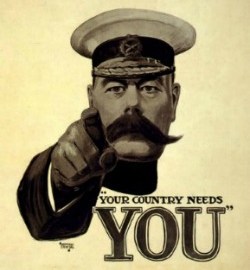
_Britons_(Kitchener)_wants_you_(Briten_Kitchener_braucht_Euch)._1914_(Nachdruck),_74_x_50_cm._(Slg.Nr._552).jpg)


.jpg)


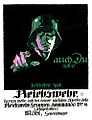

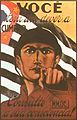





.jpg)

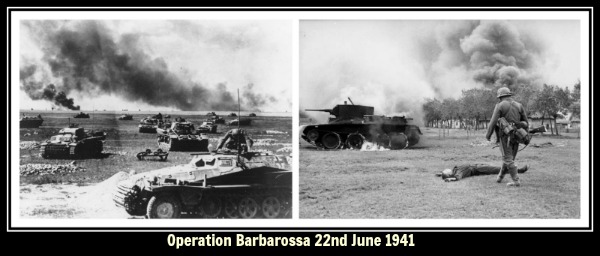
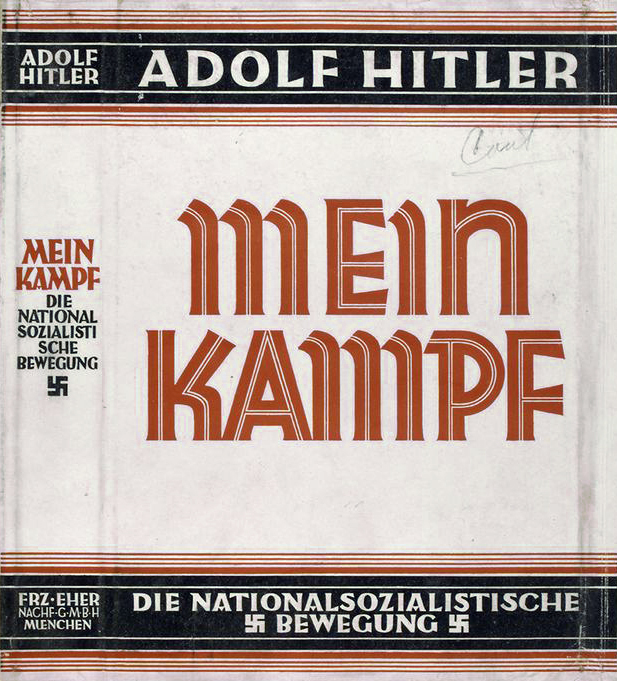


.png)



.svg)
.svg)


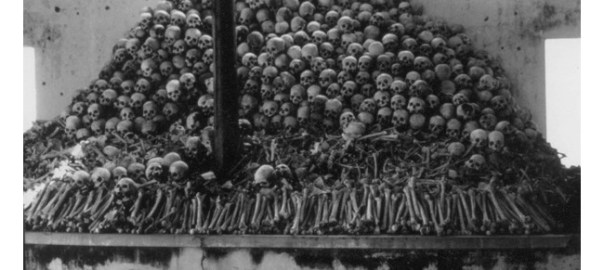
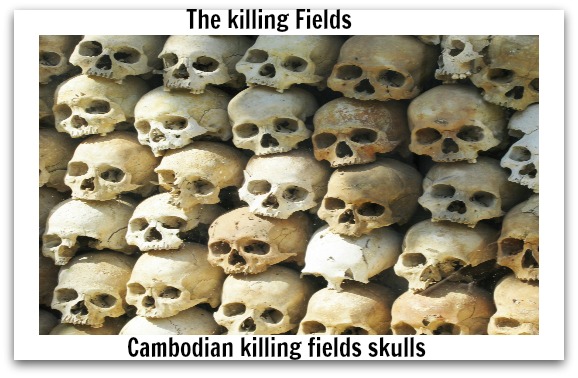



.JPG)


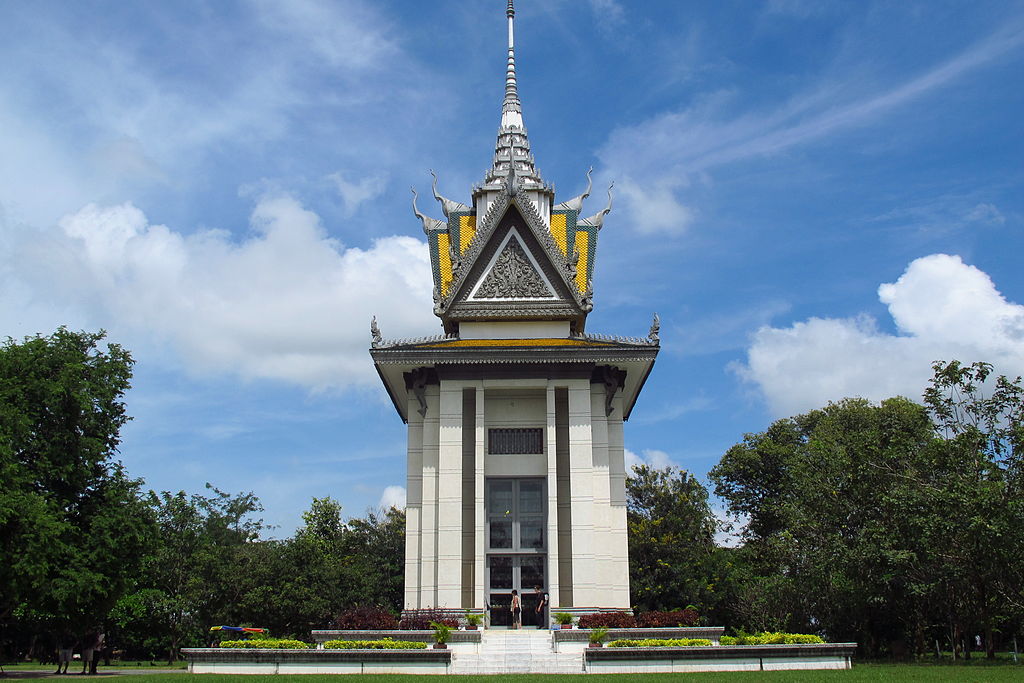





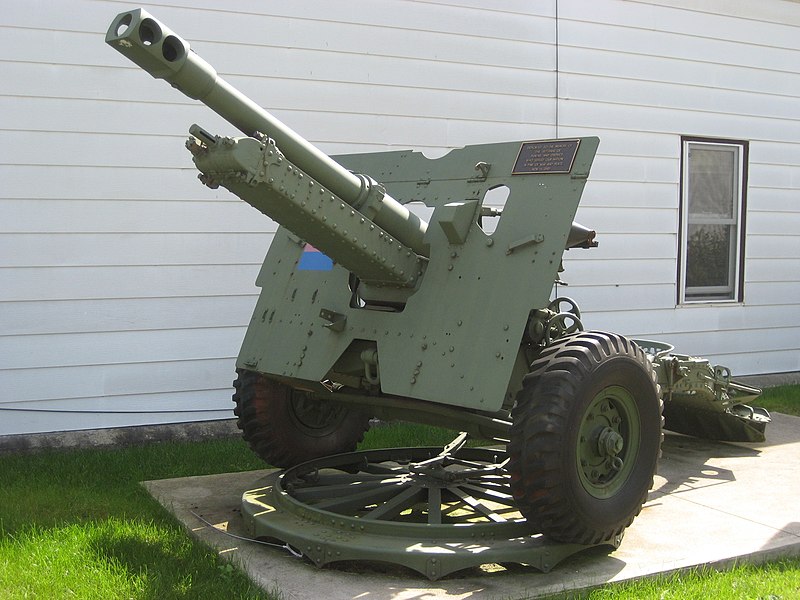





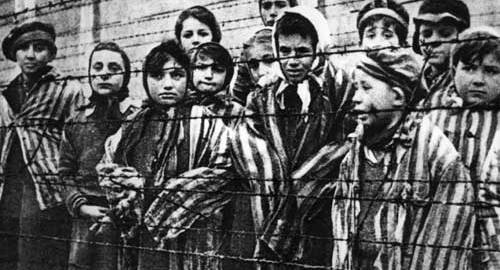





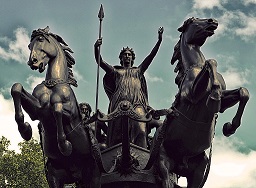


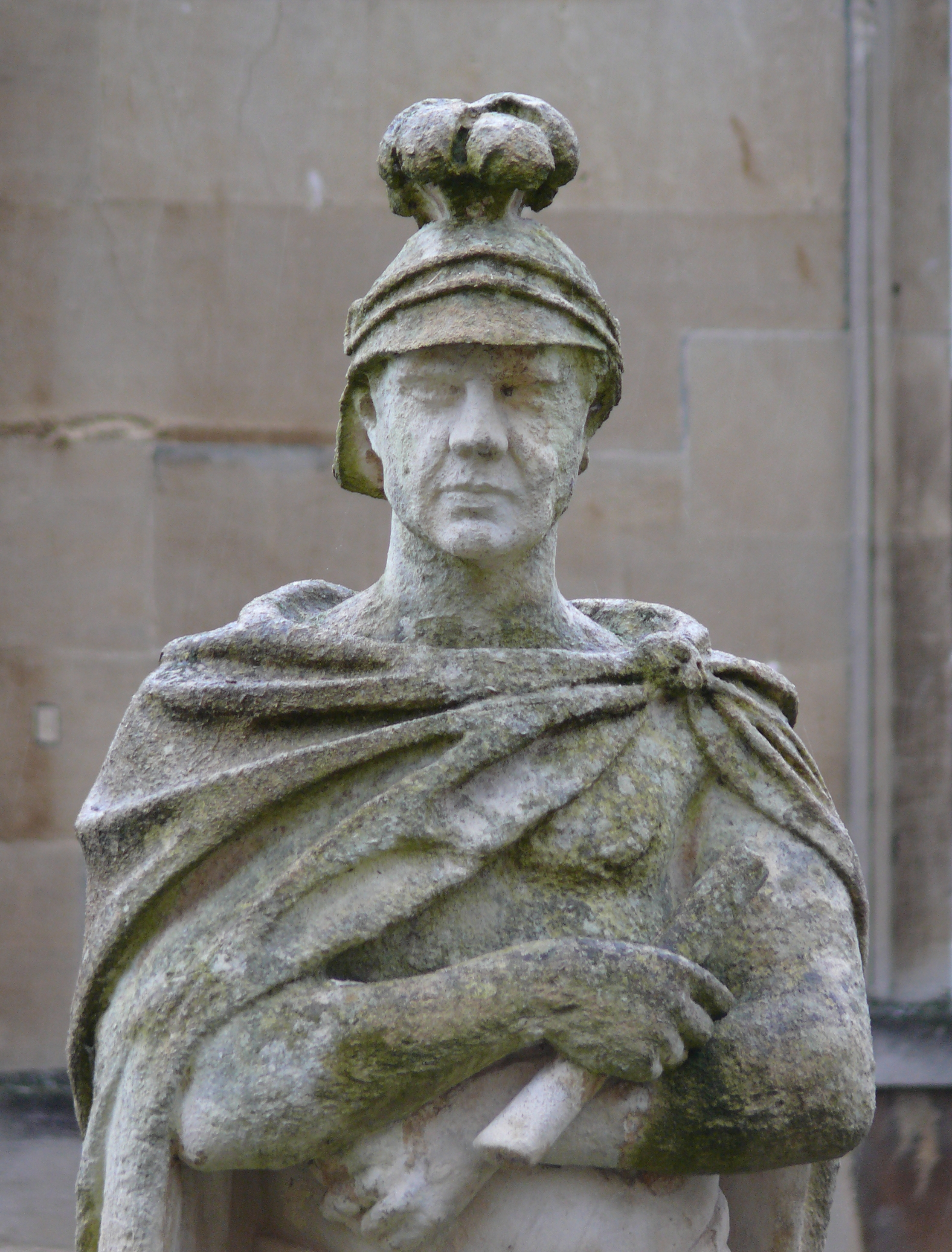




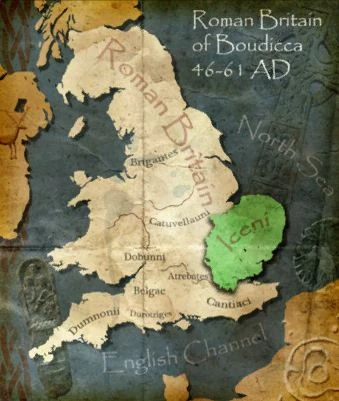







_YR_(RLH).JPG)


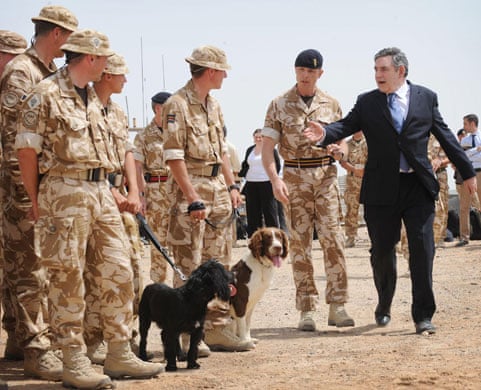



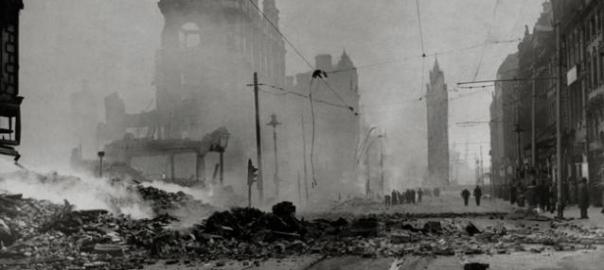
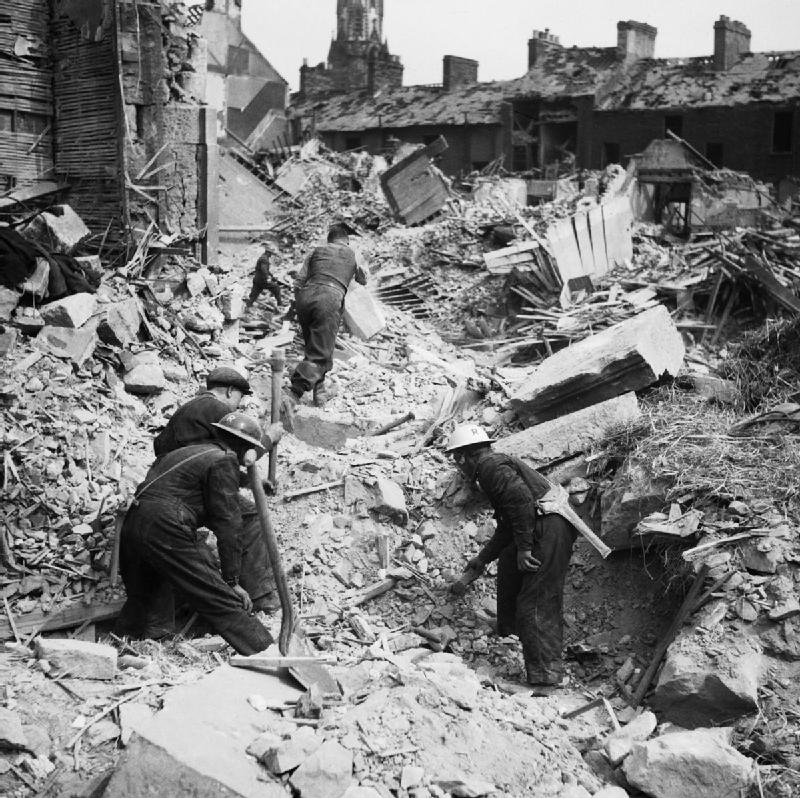


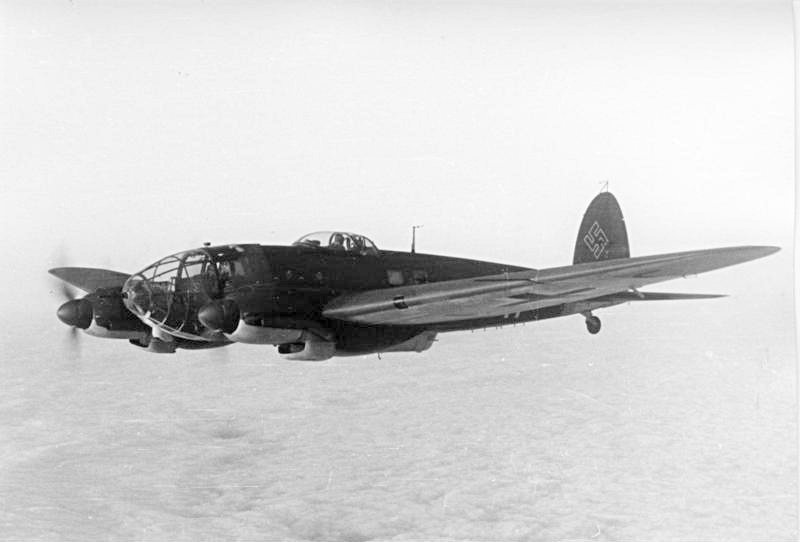


 belfastchildis.com
