The Gurkha – Unsung Hero’s of the British Army ———————————————————̵…
Source: The Gurkha – Unsung Hero’s of the British Army. Background & History
The Gurkha – Unsung Hero’s of the British Army ———————————————————̵…
Source: The Gurkha – Unsung Hero’s of the British Army. Background & History


In the UK, there are various charities and service organisations dedicated to aiding veterans in readjusting to civilian life. The Royal British Legion and the more recently established Help for Heroes are two of Britain’s more high-profile veterans’ organisations which have actively advocated for veterans over the years. There has been some controversy that the NHS has not done enough in tackling mental health issues and is instead “dumping” veterans on charities such as Combat Stress.
Visit the website: www.combatstress.org.uk/veterans
——————————————-
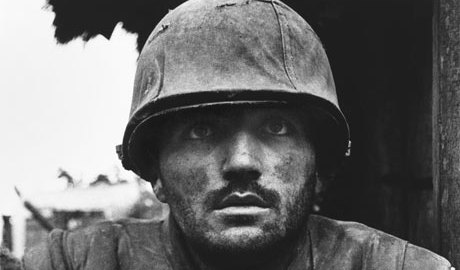
See Shell Shock – The Trauma of Battle
——————————————————-
BBC documentary about PTSD
——————————————————-
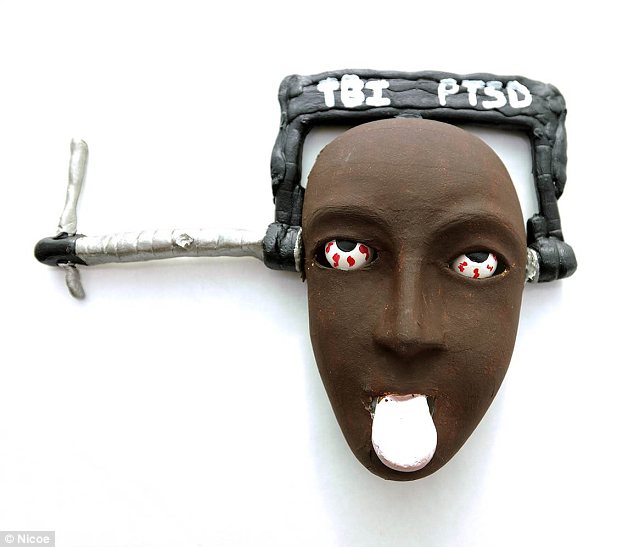
Post traumatic stress disorder (PTSD)[note 1] is a mental illness that can develop after a person is exposed to one or more traumatic events, such as sexual assault, warfare, traffic collisions, terrorism or other…
View original post 8,082 more words

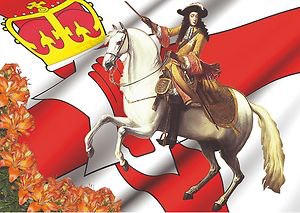
The Battle of the Boyne 1690

The Battle of the Boyne (Irish: Cath na Bóinne IPA: [ˈkah n̪ˠə ˈbˠoːn̪ʲə]) was a battle in 1690 between the English King James II, and the Dutch Prince William of Orange, who, with his wife, Mary II (his cousin and James’ daughter), had overthrown James in England in 1688.

The battle took place across the River Boyne near the town of Drogheda on the east coast of Ireland, and resulted in a victory for William. This turned the tide in James’s failed attempt to regain the British crown and ultimately aided in ensuring the continued Protestant ascendancy in Ireland.
The battle took place on 1 July 1690 in the old style (Julian) calendar. This was equivalent to 11 July in the new style (Gregorian) calendar, although today its commemoration is held on 12 July,[1] on which the decisive Battle of Aughrim was fought a year later. William’s forces defeated James’s army, which consisted mostly of raw recruits. The symbolic importance of this battle has made it one of the best-known battles in the history of the British Isles and a key part of the folklore of the Orange Order. Its commemoration today is principally by the Protestant Orange Institution.
——————————————-
Battle of Boyne
——————————————-
| Battle of the Boyne | |||||||
|---|---|---|---|---|---|---|---|
| Part of the Williamite War in Ireland | |||||||
 Painting of the battle by Jan Wyck c. 1693 |
|||||||
|
|||||||
| Belligerents | |||||||
Jacobite forces France France |
Williamite forces Dutch Republic Dutch Republic |
||||||
| Commanders and leaders | |||||||
| James VII and II Earl of Tyrconnell Duc de Lauzun |
William III Duke of Schomberg † |
||||||
| Strength | |||||||
| 23,500 | 36,000 | ||||||
| Casualties and losses | |||||||
| ~1,500 casualties | ~750 casualties | ||||||
——————————————-
The battle was the decisive encounter in a war that was primarily about James’s attempt to regain the thrones of England and Scotland, resulting from the Invitation to William and William’s wife, Mary, to take the throne. It is regarded as a crucial moment in the struggle between Irish Protestant and Catholic interests.

The previous year William had sent the Duke of Schomberg to take charge of the Irish campaign. He was a 75-year-old professional soldier who had accompanied William during the Glorious Revolution. Under his command, affairs had remained static and very little had been accomplished, partly because the English troops, unaccustomed to the climate,[citation needed] suffered severely from fever. William, dissatisfied with the state of affairs in Ireland, decided to take charge in person.
In an Irish context, the war was a sectarian and ethnic conflict, in many ways a re-run of the Irish Confederate Wars of 50 years earlier. For the Jacobites, the war was fought for Irish sovereignty, religious tolerance for Catholicism, and land ownership. The Catholic upper classes had lost almost all their lands after Cromwell’s conquest, as well as the right to hold public office, practice their religion, and sit in the Irish Parliament. They saw the Catholic King James as a means of redressing these grievances and securing the autonomy of Ireland from England. To these ends, under Richard Talbot, 1st Earl of Tyrconnel, they had raised an army to restore James after the Glorious Revolution. By 1690, they controlled all of Ireland except for the province of Ulster. Most of James II’s troops at the Boyne were Irish Catholics.
The majority of Irish people were Jacobites and supported James II due to his 1687 Declaration of Indulgence or, as it is also known, the Declaration for the Liberty of Conscience, that granted religious freedom to all denominations in England and Scotland and also due to James II’s promise to the Irish Parliament of an eventual right to self-determination.[2][3]
Conversely, for the Williamites, the war was about maintaining Protestant and English rule in Ireland. They feared for their lives and their property if James and his Catholic supporters were to rule Ireland, nor did they trust the promise of tolerance, seeing the Declaration of Indulgence as a ploy to re-establish Catholicism as the sole state religion. In particular, they dreaded a repeat of the Irish Rebellion of 1641, which had been marked by widespread killing. For these reasons, Protestants fought en masse for William of Orange. Many Williamite troops at the Boyne, including their very effective irregular cavalry, were Ulster Protestants, who called themselves “Inniskillingers” and were referred to by contemporaries as “Scots-Irish“.
Ironically, historian Derek Brown notes that if the battle is seen as part of the War of the Grand Alliance, Pope Alexander VIII was an ally of William and an enemy to James; the Papal States were part of the Grand Alliance with a shared hostility to the Catholic Louis XIV of France, who at the time was attempting to establish dominance in Europe and to whom James was an ally.[4]
The opposing armies in the battle were led by the Roman Catholic King James II of England, Scotland, and Ireland and opposing him, his nephew and son-in-law, the Protestant King William III (“William of Orange”) who had deposed James the previous year. James’s supporters controlled much of Ireland and the Irish Parliament. James also enjoyed the support of his cousin, Louis XIV, who did not want to see a hostile monarch on the throne of England. Louis sent 6,000 French troops to Ireland to support the Irish Jacobites. William was already Stadtholder of the Netherlands and was able to call on Dutch and allied troops from Europe as well as England and Scotland.
James was a seasoned officer who had proven his bravery when fighting for his brother – King Charles II – in Europe, notably at the Battle of the Dunes (1658). However, recent historians have noted that he was prone to panicking under pressure and making rash decisions, possibly due to the onset of the dementia which would overtake him completely in later years. William, although a seasoned commander, was hardly one of history’s great generals and had yet to win a major battle.
Many of his battles ended in stalemates, prompting at least one modern historian to argue that William lacked an ability to manage armies in the thick of conflict. William’s success against the French had been reliant upon tactical manoeuvres and good diplomacy rather than force. His diplomacy had assembled the League of Augsburg, a multi-national coalition formed to resist French aggression in Europe. From William’s point of view, his takeover of power in England and the ensuing campaign in Ireland was just another front in the war against King Louis XIV.
James II’s subordinate commanders were Richard Talbot, 1st Earl of Tyrconnell, who was Lord Deputy of Ireland and James’s most powerful supporter in Ireland; and the French general Lauzun. William’s second-in-command was the Duke of Schomberg. Born in Heidelberg, Germany, Schomberg had formerly been a Marshal of France, but, being a Huguenot, was compelled to leave France in 1685 because of the revocation of the Edict of Nantes.

The Williamite army at the Boyne was about 36,000 strong, composed of troops from many countries. Around 20,000 troops had been in Ireland since 1689, commanded by Schomberg. William himself arrived with another 16,000 in June 1690. William’s troops were generally far better trained and equipped than James’s. The best Williamite infantry were from Denmark and the Netherlands, professional soldiers equipped with the latest flintlock muskets. There was also a large contingent of French Huguenot troops fighting with the Williamites. William did not have a high opinion of his English and Scottish troops, with the exception of the Ulster Protestant irregulars who had held Ulster in the previous year. The English and Scottish troops were felt to be politically unreliable, since James had been their legitimate monarch up to a year before. Moreover, they had only been raised recently and had seen little battle action.

The Jacobites were 23,500 strong. James had several regiments of French troops, but most of his manpower was provided by Irish Catholics. The Jacobites’ Irish cavalry, who were recruited from among the dispossessed Irish gentry, proved themselves to be high calibre troops during the course of the battle. However, the Irish infantry, predominantly peasants who had been pressed into service, were not trained soldiers. They had been hastily trained, poorly equipped, and only a minority of them had functional muskets. In fact, some of them carried only farm implements such as scythes at the Boyne. On top of that, the Jacobite infantry who actually had firearms were all equipped with the obsolete matchlock musket.

Battle of the Boyne between James II and William III, 11 July 1690, Jan van Huchtenburg.
William had landed in Carrickfergus in Ulster on 14 June 1690 and marched south to take Dublin. He was heard to remark that ‘the place was worth fighting for’. James chose to place his line of defense on the River Boyne, around 30 miles (48 km) from Dublin. The Williamites reached the Boyne on 29 June. The day before the battle, William himself had a narrow escape when he was wounded in the shoulder by Jacobite artillery while surveying the fords over which his troops would cross the Boyne.

The battle itself was fought on 1 July OS (11th NS), for control of a ford on the Boyne near Drogheda, about 2.5 kilometres (1.6 mi) northwest of the hamlet of Oldbridge (and about 1.5 kilometres (0.9 mi) west-northwest of the modern Boyne River Bridge). William sent about a quarter of his men to cross the river at Roughgrange, about 4 kilometres (2.5 mi) west of Donore and about 6 miles (9.7 km) southwest of Oldbridge. The Duke of Schomberg’s son, Meinhardt, led this crossing, which Irish dragoons in picquet under Neil O’Neill unsuccessfully opposed. James, an inexperienced general, thought that he might be outflanked and sent half his troops, along with most of his artillery, to counter this move. What neither side had realised was that there was a deep, swampy ravine at Roughgrange. Because of this ravine, the opposing forces there could not engage each other, but literally sat out the battle. The Williamite forces went on a long detour march which, later in the day, almost saw them cut off the Jacobite retreat at the village of Naul.
At the main ford near Oldbridge, William’s infantry, led by the elite Dutch Blue Guards, forced their way across the river, using their superior firepower to slowly drive back the enemy foot soldiers, but were pinned down when the Jacobite cavalry counter-attacked. Having secured the village of Oldbridge, some Williamite infantry tried to hold off successive cavalry attacks with disciplined volley fire, but were scattered and driven into the river, with the exception of the Blue Guards. William’s second-in-command, the Duke of Schomberg, and George Walker were killed in this phase of the battle. The Williamites were not able to resume their advance until their own horsemen managed to cross the river and, after being badly mauled, managed to hold off the Jacobite cavalry until they retired and regrouped at Donore, where they once again put up stiff resistance before retiring.
The Jacobites retired in good order. William had a chance to trap them as they retreated across the River Nanny at Duleek, but his troops were held up by a successful rear-guard action. The Dutch secretary of King William, Constantijn Huygens Jr., has given a good description (in Dutch) of the battle and its aftermath, including subsequent cruelties committed by the victorious soldiers.[5]
The casualty figures of the battle were quite low for a battle of such a scale—of the 50,000 or so participants, about 2,000 died. Three-quarters of the dead were Jacobites. William’s army had far more wounded. At the time, most casualties of battles tended to be inflicted in the pursuit of an already-beaten enemy; this did not happen at the Boyne, as the counter-attacks of the skilled Jacobite cavalry screened the retreat of the rest of their army, and in addition William was always disinclined to endanger the person of James, since he was the father of his wife, Mary. The Jacobites were badly demoralised by the order to retreat, which lost them the battle. Many of the Irish infantrymen deserted. The Williamites triumphantly marched into Dublin two days after the battle. The Jacobite army abandoned the city and marched to Limerick, behind the River Shannon, where they were unsuccessfully besieged.
Soon after the battle William issued the Declaration of Finglas, offering full pardons to ordinary Jacobite soldiers but not to their leaders. After his defeat, James did not stay in Dublin, but rode with a small escort to Duncannon and returned to exile in France, even though his army left the field relatively unscathed. James’s loss of nerve and speedy exit from the battlefield enraged his Irish supporters, who fought on until the Treaty of Limerick in 1691; he was derisively nicknamed Seamus a’ chaca (“James the shit”) in Irish.
There is an oral tradition stating that no battle took place at all, that a symbolic victory was shown by the crossing of the River Boyne and that the total fatalities were a result of Williamite cavalry attacking the local able-bodied men.
It is well documented that Williams’ horse on that day was black, despite all Orange Order murals depicting it as white with William holding his sword between the horse’s ears to make it resemble a unicorn as a symbol of his “Saviour” status. Depictions of William have been strongly influenced by Benjamin West‘s 1778 painting The Battle of the Boyne.
The battle was overshadowed by the defeat of an Anglo-Dutch fleet by the French two days later at the Battle of Beachy Head, a far more serious event in the short term; only on the continent was the Boyne treated as an important victory. Its importance lay in the fact that it was the first proper victory for the League of Augsburg, the first-ever alliance between the Vatican and Protestant countries. The victory motivated more nations to join the alliance and in effect ended the fear of a French conquest of Europe.
The Boyne also had strategic significance for both England and Ireland. It marked the end of James’s hope of regaining his throne by military means and probably assured the triumph of the Glorious Revolution. In Scotland, news of this defeat temporarily silenced the Highlanders supporting the Jacobite Rising, which Bonnie Dundee had led. In Ireland, the Boyne fully assured the Jacobites that they could successfully resist William. But it was a general victory for William, and is still celebrated by the Protestant Orange Order on the Twelfth of July. Ironically, due to the political situation mentioned above, the Pope also hailed the victory of William at the Boyne, ordered the bells of the Vatican to be rung in celebration.
Some Irish Catholics who were taken prisoner after the battle were tortured until they agreed to convert to Protestantism.[6]
The Treaty of Limerick was very generous to Catholics. It allowed most land owners to keep their land so long as they swore allegiance to William of Orange. It also said that James could take a certain number of his soldiers and go back to France. However, Protestants in England were annoyed with this kind treatment towards the Catholics, especially when they were gaining strength and money. Because of this, penal laws were introduced. These laws included banning Catholics from owning weapons, reducing their land, and prohibiting them from working in the legal profession.
River Boyne, west of Drogheda, today

View of the commemorative obelisk, prior to 1883. It was destroyed in 1923.
_-_Copy.jpg)
Medal Struck to Commemorate the Battle of the Boyne (Robert Chambers, p.8, July 1832)[7]
Originally, Irish Protestants commemorated the Battle of Aughrim on 12 July (old style, equivalent to 22 July new style), symbolising their victory in the Williamite war in Ireland. At Aughrim, which took place a year after the Boyne, the Jacobite army was destroyed, deciding the war in the Williamites’ favour. The Boyne, which, in the old Julian calendar, took place on 1 July, was treated as less important, third after Aughrim and the anniversary of the Irish Rebellion of 1641 on 23 October.
In 1752, the Gregorian calendar was adopted in Ireland, which erroneously placed the Boyne on 12 July instead of Aughrim (the correct equivalent date was 11 July, as the difference between the calendars for the year in question, 1690, was not 11 days but only 10 days). However, even after this date, “The Twelfth” still commemorated Aughrim.[clarification needed] But after the Orange Order was founded in 1795 amid sectarian violence in Armagh[further explanation needed], the focus of parades on 12 July switched to the Battle of the Boyne.[further explanation needed] Usually the dates before the introduction of the calendar on 14 September 1752 are mapped in English language histories directly onto the Julian dates without shifting them by 10 or 11 days.[8]
Being suspicious of anything with Papist connotations, however, rather than shift the anniversary of the Boyne to the new 1 July[clarification needed] or celebrate the new anniversary of Aughrim, the Orangemen continued to march on 12 July which was (erroneously) thought to have marked the battle of the Boyne in New Style dates.[clarification needed] Despite this, there are also smaller parades and demonstrations on 1 July, the date which maps the old style date of the Boyne to the new style in the usual manner and which also commemorate the heavy losses of the 36th (Ulster) Division on the first day of the Battle of the Somme in July 1916.[citation needed]
The memory of the battle also has resonance among Irish nationalists. In 1923, IRA members blew up a large monument to the battle on the battlefield site on the Boyne and destroyed a statue of William III in 1929 that stood outside Trinity College, Dublin in the centre of the Irish capital.[citation needed]
The Battle of the Boyne remains a controversial topic today in Northern Ireland, where some Protestants remember it as the great victory over Catholics that resulted in the sovereignty of Parliament and the Protestant monarchy.
In recent decades, “The Twelfth” has often been marked by confrontations, as members of the Orange Order attempt to celebrate the date by marching past or through what they see as their traditional route. Some of these areas, however, now have a nationalist majority who object to marches passing through what they see as their areas.
Each side thus dresses up the disputes in terms of the other’s alleged attempts to repress them; Nationalists still see Orange Order marches as provocative attempts to “show who is boss”, whilst Unionists insist that they have a right to “walk the Queen’s highway”. Since the start of The Troubles, the celebrations of the battle have been seen as playing a critical role in the awareness of those involved in the unionist/nationalist tensions in Northern Ireland.
The site of the Battle of the Boyne sprawls over a wide area west of the town of Drogheda. In the County Development Plan for 2000, Meath County Council rezoned the land at the eastern edge of Oldbridge, at the site of the main Williamite crossing, to residential status. A subsequent planning application for a development of over 700 houses was granted by Meath County Council and this was appealed by local historians to An Bord Pleanala (The Planning Board). In March 2008 after an extremely long appeal process, An Bord Pleanala approved permission for this development to proceed. However, due to the current economic climate in Ireland, no work has yet started on this development.
The current Interpretive Centre dedicated to informing tourists and other visitors about the battle is about 1-mile (1.6 km) to the west of the main crossing point. This facility was redeveloped in 2008 and is now open for tourists. The battle’s other main combat areas (at Duleek, Donore and Plattin – along the Jacobite line of retreat) are marked with tourist information signs.
On 4 April 2007 in a sign of improving relations between unionist and nationalist groups, the newly elected First Minister of Northern Ireland, the Reverend Ian Paisley, was invited to visit the battle site by the Taoiseach (Prime Minister) Bertie Ahern later in the year. Following the invitation, Paisley commented that “such a visit would help to demonstrate how far we have come when we can celebrate and learn from the past so the next generation more clearly understands”. On 10 May the visit took place, and Paisley presented the Taoiseach with a Jacobite musket in return for Ahern’s gift at the St Andrews talks of a walnut bowl made from a tree from the site. A new tree was also planted in the grounds of Oldbridge House by the two politicians to mark the occasion.[9]
—————————————————–
-The Glorious 12th of July –
Extracts from Belfast Child Autobiography
My Story
Chapter Four
The Glorious 12th
Extracts from Belfast Child.
See above for additional chapters
See The Siege Of Derry what’s it all about
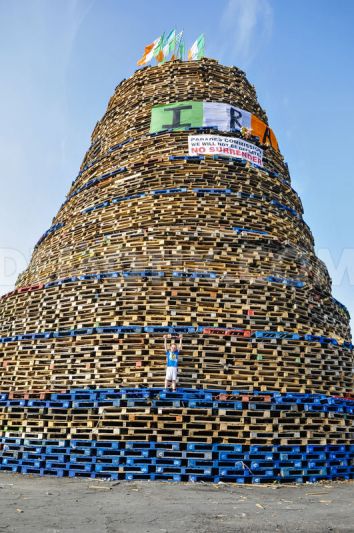
Like the vast majority of Protestants in Northern Ireland apart from my Birthday, Christmas and our family holiday to Ballyferris, the 12th of July was the biggest and most important day of the year. In 1663 the Protestant King Billy defeated the Catholic King James at the Battle of Boyne and changed the course of Irish history forever. Three hundred years later on the 12th of July every year Northern Ireland came to a standstill as the Protestant majority took to the streets and celebrated the most sacred day in the Protestant calendar. As a child I loved the whole 12th experience and counted the days down until the great day arrived. For weeks before the 12th all the children, with the help of adults would gather all sorts of burnable material for the bonfire that would be lit the night before, to signal the beginning of the celebrations. After school we would rush home, have something to eat and head of in the hunt for wood and whatever else we could find that would burn. Sometimes there would be dozens of us going back and forth to the gel carrying whatever we could find and placing it on the ever growing bonfire in the middle of the square. In Glencairn alone there would be about five or six bonfires and it was always very competitive to see which area could collect the most wood and have the biggest bonfire. Competition between the various parts of the estate were fierce and as the eleventh grew closer, the older boys would be allowed to stay out all night with suitable adults and guard the wood from raids from those at the top or bottom of the estate. As the day grew closer, the excitement was almost tangible and in the early evening sunshine we would gather around the ever-growing tower of wood and play until darkness. There was always a hunt, the command centre and if we were lucky the older boys would let us go inside and wait until they returned from another hunt for wood. One day when there was only myself and a few of the other younger children guarding the wood , the boys from the top of the estate came charging through the square in a bare faced raid on our precious wood. There were only about five of us and there was about fifteen of them and they were all older than us and there was little we could do but stand by and watch as they made off with their precious bounty. Taking control I told David to run as fast as he could and find the rest of our gang. Picking up stones from the ground I began pelting the enemy with missiles. The others soon joined in and before long the enemy had to duck and hide as we threw everything we could find at them. But we were well out numbered and it was only a matter of time before they had over powered us and decided to take me prisoner, as I seemed to be in charge.
Panic and terror washed over me as I was lead away to the enemy camp at the top of the estate. To add insult to injury a boy named Y forced me to help him carry a door stolen from our bonfire. I was threatened with a dig in the face if I tried to run away or do anything stupid, so I decided self preservation was the best course of action and was a model prisoner. As we marched in single file towards the top of the estate and the enemy bonfire, I wondered with dread what fate awaited me when we arrived there. A few weeks before John Jackson had also been captured in a raid and when he was finally set free he had a black eye and a busted lip. As I marched on all sorts of thoughts of pain and torture were going through my mind, when suddenly I heard the sound of running feet and raised voices. As I turned I was delighted to see my brother and about ten of our gang running towards us. Panic set into the enemy as they realized what was happening and some of them dropped what they were carrying and fled. Before I knew what was happening my rescuers had caught up with us and a massive fight broke out between the two warring sides. I dropped my end of the door I was carrying and jumped on Y terrorising him with a blood curdling scream that rose from deep within me. I was free! The noise was deafening as the two sides fought a running battle, but reinforcements had arrived from our gang and before long we had beaten the enemy into retreat. When they had all fled, we gathered up our stolen wood and sang as we made our way back to our camp.
I was a hero and that night guarding the bonfire I wallowed as all those present praised my heroic deeds of the day and I now had access to the hut whenever I liked.
Why Ireland split into the Republic of Ireland & Northern Ireland
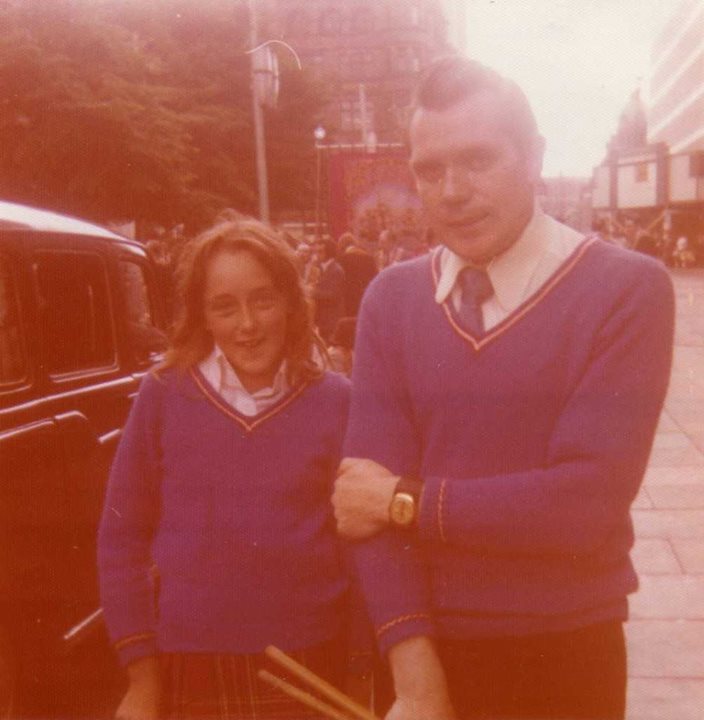
As the great day drew closer our house was always in a state of complete chaos. Dad was busy making sure everything was ready for the bands biggest and most important march of the year. There were over forty people in the band and they all had to have uniforms that fitted perfectly and instruments that were at the peak of their working year. While dad got on with that, Granny took us down town and rigged us out with new clothes and shoes for the big day. Image was everything and regardless of how scruffy and dirty we looked the rest of the year, on the 12th of July we would be immaculately turned out. Granny had an old friend called Isaac who lived in Ballysillan and although he was half blind, deaf and always drunk, he had in his day been a competent barber and Granny saw no reason not to continue sending me and David over to Isaac whenever a hair cut was in order, even though he had been retired for over thirty years. Besides he only charged £1.50 and as money was always tight it made perfect sense. Unfortunately for us he would give us a cut that would have shamed a corpse and eventually I came up with the idea that we should cut each other’s hair and pocket the money for ourselves.
These plans went well for a few months until one-day granny give us the money to go and get our hairs cut. When we got back, Granny was stood by the door waiting for us, which was most unusual and asked us had Isaac cut our hair? When we answered yes, she asked us how he was. By now we were both starting to get a bit suspicious and nervously answered ok. How were we to know that he had died the night before from a sudden heart attached and was now in the morgue having the final hair cut of his life. Needless to say Granny went ape and we got a good thumping for the lies. From that day on Granny personally escorted us to the barbers and watched with a critical eye as we had our hairs cut.
————————————————–
The Sash my Father Wore
SHANKILL PROTESTANT BOYS FLUTE BAND, SINGING THE SASH
——————————————————————————————————————–
Growing up in loyalist Belfast every child knew the words to the Sash and it was our national anthem.
————————————————–
So sure l’m an Ulster Orangeman, from Erin’s isle I came,
To see my British brethren all of honour and of fame,
And to tell them of my forefathers who fought in days of yore,
That I might have the right to wear, the sash my father wore!
Chorus:
It is old but it is beautiful, and its colours they are fine
It was worn at Derry, Aughrim, Enniskillen and the Boyne.
My father wore it as a youth in bygone days of yore,
And on the Twelfth I love to wear the sash my father wore.
Chorus
For those brave men who crossed the Boyne have not fought or died in vain
Our Unity, Religion, Laws, and Freedom to maintain,
If the call should come we’ll follow the drum, and cross that river once more
That tomorrow’s Ulsterman may wear the sash my father wore!
Chorus
And when some day, across the sea to Antrim’s shore you come,
We’ll welcome you in royal style, to the sound of flute and drum
And Ulster’s hills shall echo still, from Rathlin to Dromore
As we sing again the loyal strain of the sash my father wore!
————————————————–
As the 12th grew closer and closer there was always an atmosphere of excitement and anticipation whilst everyone counted the days down. The various bonfires were now mountains of burnable material that towered high above the houses and flats that surrounded the area. Apart from the hundreds of bands and orange lodge’s from Northern Ireland that would be marching on the day, dozen’s more would travel over from Scotland, Mainland England and as far afield as Canada & Australia. This was the most sacred day in the Loyalist calendar. Loyalist’s from across the world would make the pilgrimage back to Northern Ireland to celebrate their culture and age old traditions. Even at nine years old I felt a tremendous sense of pride and loyalty and passion at the Protestant culture and traditions that governed my daily life in Loyalist West Belfast. I was no different from any other child from a working class Protestant family in Northern Ireland. Although unlike my peers I had a secret Catholic mother.
Like all other Loyalist areas of Belfast and throughout Northern Ireland Glencairn was awash with Loyalist flags, red, white and blue bunting, murals and countless houses had Union Jacks and Red Hand of Ulster flag’s flying proudly from the front. As the twelfth of July approached this visual proclamation of Protestant pride took on a new meaning and the paving stones would be painted red, white and blue whilst almost every house in the estate flew a Loyalist or Protestant flag of some description. As a child this added to the sense of excitement for me and I took this as a sign of the glorious party that everyone would take part in to celebrate the twelfth.
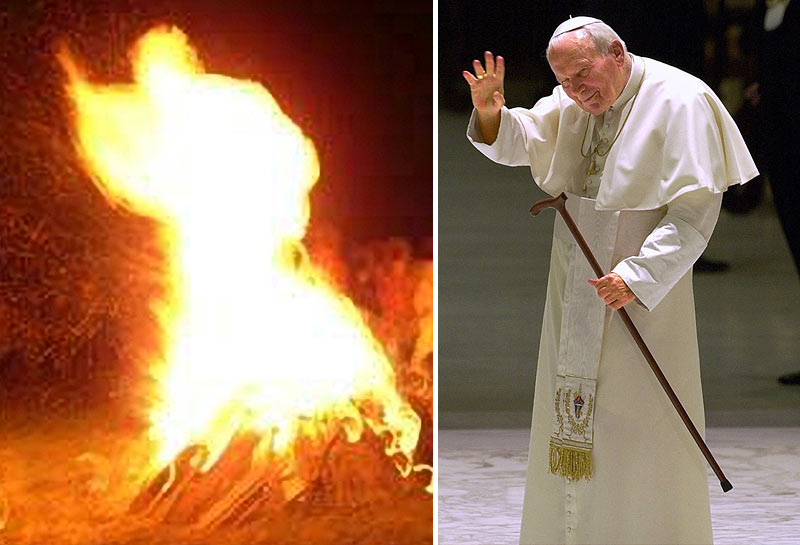
When the 11th of July finally arrived Granny would come round to our house first thing and sort dad and us all out and make sure we had enough food to see us over the holiday period. We would be almost bursting with excitement and as soon as breakfast was over, David, Shep and I were out the door and heading towards the bonfire, where we would meet up with our mates and spend the day collecting last minute material for the fire and generally playing around. As evening approached adults would gradually start to gather around the bonfire and the celebrations would get in to full swing. Loud Loyalist music would be blaring from various houses around the square and as the night wore on more and more people would gather and the whole square came alive with the sound of laughter and people enjoying themselves. Everybody took part in the celebrations and the whole community mucked in to make sure the occasion was really special and a night to remember. Local women would prepare loads and loads of food for the party and this would be distributed throughout the day to anyone who needed a bite to eat. As the evening wore on the music got louder, the adults would become very loud and funny as the drink kicked in and as darkness engulfed Belfast the time to light the children’s bonfire would arrive. Finally when everyone was in place, to cries of delight from the gathered crowds, an Effie of the pope was placed on the top of the bonfire. On this night more than any other, the two communities of Northern Ireland were divided more than ever, as the Protestant majority noisily celebrated its supremacy over the Catholic minority. Surrounded by all my family and friends I watched in awe as the bonfire was lit and the flames, slowly at first, then faster licked their way up towards the top and the pope. As the flames grew higher and higher and finally reached the pope and engulfed him in flames, screams of joy rang out through the summer’s nights and echoed around the estate and Protestant Northern Ireland. Shouts of encouragement egged the flames on until finally the pope disintegrated in front of our eyes and we all took great joy from the fact the he was obviously suffering a terrible death.
As grew older & wiser my hatred of the Pope and all things Catholic diminished ,but my hatred of Republicans & The IRA is as strong today as it was when I was a Child. I blamed them for the misery & slaughter they unleased in their quest for a United Ireland and the 1000’s of innocent victims now in too early graves.
We had killed and burned to cinders the father of the hated Catholic Church and her people and we sang and yelled with pleasure as the ritual the stirred in us. As the fire burned the crackle of the wood and the spit of the flames filled the air and children would dance round the fire, laughing and singing with the adults until it was time for bed. Eventually Granny would come and find David, Shep and me and bring us home in protest to bed. As soon as we were settled down she would go out into the square again and David and I would climb out of bed and watch from our bedroom window, the antics of the drunken adults as they sang and danced the night away around the burning bonfire.
First thing next morning Granny would be round at the crack of dawn and yell for us to get up as she busied herself making everyone a full Ulster Fry and getting us ready. Before long the house was in complete chaos as Granny washed and fed us and made sure we were smartly turned out for the day. As the morning wore on members of the band would arrive for last minute preparation and before long the whole street was out and about, as the band nervously got in a few last minutes of practice. At about eight thirty the whole band would start to gather outside the shops and take up their places. By now the route out of the estate was lined with hundreds of people, regardless of age or hangovers, who had come to see them off. When everyone was in place dad took up his position at the right of the procession and after one last check shouted, “March” and they would strike up a tune and begin to march. Every year a loyal crowd of followers would fall in beside them and accompany them on the 26 mile march to the field. Much to my annoyance I was too young to be allowed to go with them and I longed for the day when I would be old enough. As we stood on the kerb watching them go my heart was full of pride as I watched dad in his uniform lead them down the Road and out of the estate. When they were out of sight we would all travel down to Ormeau Road, where hundreds of bands and Orange men would meet before making their way to the field. Tens of thousands lined the route and as a child it seemed to me the whole world had gathered to celebrate with 12th of July. Our family always sat outside the garage on the lower Ormeau road and watched as hundred of bands, of all shapes and colours, lead thousands of bowler hatted Orangemen and women to the field.

Throughout Northern Ireland dozens of similar parades were taking place, but the march in Belfast was always by far the biggest and the most important of the day. We watched with mounting excitement as various bands passed and waited with baited breath for dad’s band to come into view, so we could cheer them on.
Each band would be attached to an Orange lodge that marched in front of them all the way to the field. They all had a unique uniform that extinguished them from the other bands marching. The hardcore Loyalist and paramilitary flute bands always got the loudest cheers and when a talented leader came into view everyone watched with nervous anticipation as he done various tricks with his pole, flinging it high into the sky, before catching it on the way down and immediately throwing it over his neck or under his legs before going into an routine.. Although dad’s band was an accordion band and we all took great pride in them being part of the parade, the flute and hardcore Loyalist bands were the crowds favourite and when they played a familiar tune huge cheers arose from the gathered crowd and people would join in and sing a long at the top of their voices until the band passed and another came into view. I always loved the sound of the Lambeg drums as they made their way to where we were standing and their mournful tunes drifted far over our heads and echoed through the streets of Belfast, as a warning to the Catholic people that today was our day and we were the masters of Northern Ireland. A sea of colour washed past as band after band marched by us on their way to the field. Apart from local and famous flute bands getting the loudest cheers , bands from the Shankill Road brought the loudest cheers of encouragement and joy , these were our people, come to our shore to support us in our never ending war against the IRA and Catholic people and we made sure they knew we appreciated their commitment. When dad’s band finally came into sight a huge cheer rang out from all of us and those among the spectators from Glencairn and the surrounding areas. As they passed us we would call dad’s name and when he and the other’s from the band noticed us they would all turn and salute us as they marched past. I almost burst with pride as I watched them move off and disappear in to the distance and always regretted that I was not going with them. The parade took about two hours to pass us and when it was all over, Granny would take us home. Exhausted from shouting and singing after dinner we would while away the time until 17:30, when we would go back to town to cheer them on their homeward journey from the field. When it was all over there would always be lots of parties in the estate as we clung desperately to the day and never wanted it to end. By the time we eventually got to bed I would be counting down the days until next year and the time I was old enough to take part in the parade and go all the way to the mystical field with dad and the rest of the band. Sleep came easily and I dreamt I was the leader of one of the more famous bands and the best leader in the whole wide world.
Every year on the 13th July the entire Chambers clan, aunties, uncles, grandparents, cousin’s, close friends and an assortment of animals would descend on Ballyferris Caravan Park to start the annual holidays. Ballyferris is a small seaside town on the east coast of County Down and like all other aspects of our life it was a Protestant town and a favourite destination for Protestants throughout Belfast and the Shankill road area. It was like a home from home and we all loved and looked forward to our yearly visits there. In the early years we never had a car and would travel down on the bus or train, depending on how much money we had. We must have looked like a Sunday school outing as 9 adults shepherded over a dozen kids through the centre of Belfast towards the train or bus station. When we finally arrived in Ballyferris we would all help unpack the luggage and settle into various caravans that stood side by side looking out towards the sea. There were that many of us that it must have looked as though we had taken over the whole caravan site and the other children always sought us out as they wanted to become part of our massive gang. There was a huge green in the centre of the site and at every opportunity two teams were rustled together and a football match would get under way. I used to love it if I got picked to play on the same side as dad and other members of the family and the rest of the family cheered on from the touchline. I dreamt that I was George Best, playing for Manchester United. When we weren’t playing football or flying our kites David, wee Sam , Pickle and me would go down to the beach in search of crabs and other sea life and if they were lucky to survive being captured , we would bring them up to the green and race them for packets of sweets and crisps etc. Once wee Sam and I got separated from the other as we climbed further and further over the rocks until we were right by the sea’s edge. We lost all sense of time as we cast our crab lines out as far as possible in our quest to catch the biggest crab. Gradually it started to rain and as it began to fall heavier and heavier we decided to pack up and head back to the caravan with our bucket of nervous crabs. As we turned to leave we noticed with mounting panic that the tide had come in and we were completely surrounded by the rising sea water. Our frantic cries finally caught the attention of a man walking his dog on the beach and before long the whole family and most of the other people staying at the caravan site were gathered at the edge of the water telling us not to move and the coastguards were on their way. Panic turned to excitement as a dot appeared in the distance sea and the coast boat came slowly into view. Wee Sam and I were pleased as punch as the boat drew up and the coastguard helped us into the boat. As the boat made its way to the beach we waved like royalty to the gathered crowds on the beachfront. Sadly our joy was short lived as when we arrived on the beach we got a severe ticking off from our parents and any other adult who felt like having a go. Not that we let this spoil our new found fame and at every opportunity for the rest of the holiday we boasted to our peers about our daring rescue by the coast guard from the jaws of certain death.
In the evening if the weather was good we would all gather as much food and drink as we could carry and go down to the beach to have a BBQ or picnic. We would collect wood from the beach and before long we would have a fire going and cook baked potatoes and roast sausages round the edge. As darkness rolled in we would sit around the fire singing Loyalist song and telling stories and before long I would fall asleep on dad’s knee and the next thing I knew I was waking up the next morning, in the caravan to the sounds and smells of Granny making breakfast. The best part of the whole holiday for me and the other children was when we would all be gathered up and went to Millisle , a seaside town about two miles away with a huge funfair. Sometime’s when the weather was really good we would walk to Millisle along the beach front and as it came into view we would race over the sand dunes in a scramble to see who could get there first. The day would be spent going from one ride to another and although I loved it all, I enjoyed the dodgem cars best of all and I drove like a kamikaze pilot as I crashed into dad and anyone else I could catch. Dad always seemed to enjoy our time at the funfair and he took part in loads of different games until he had won us all a present of some description. After exhausting ourselves on the rides we would join our grandparents and others on the beach for a picnic and if we were really lucky we were treated to fish and chips from one of the many chippies along the seas front. After dinner dad and his brothers would go for a pint in one of the local bars and we kids would amuse ourselves by burying each other in the sand and paddling by the water’s edge. It was always with great sadness for me when these days came to an end and I would feel heartbroken as we packed up our things for the bus back to the caravan site. I never wanted these holidays to end and when the day came that we would be travelling back to Belfast I would take long walks along the beach and through the caravan site and considered hiding until everyone else had left and I could stay there forever. Dad and the others were used to my wander lust and a search party was soon despatched to find me and bring me back into the fold. As the bus pulled away from the caravan site, taking us home, I fought to hold back my tears as I said a silent goodbye to Ballyferris and the bright lights of the fun fair.
Years later as a teenager, with my life in tatters and on the brink of suicide, I ran away from home and ended up back in Ballyferris. But this time I was all alone and it was mid winter, snowing, freezing cold and the funfair was in complete darkness. And my beloved father was dead.
If you would like to read more of my story please see home page of follow this link Belfast Child’s Autobiography .

Battle of Clontarf Part 1 Part 2 The Battle of Clontarf (Irish: Cath Chluain Tarbh) was a battle that took place on 23 April 1014 at Clontarf, near Dublin, on the east coast of Ireland. It pitted t…
Source: Battle of Clontarf . Brian Boru: 1014
Disclaimer – The views and opinions expressed in these documentary are soley intended to educate and provide background information to those interested in the Troubles of Northern Ireland. They in …
Source: Why Ireland split into the Republic of Ireland & Northern Ireland
As a loyalist I take great pride in the culture and traditions of my protestant heritage and like most Northern Ireland protestants I am fiercely proud of the Union with Britain and am proud to call myself British
That doesn’t mean I hate Catholics or Irish people (I don’t) and would wish any harm on them. In fact during the worst years of the troubles whenever I learnt of the death of an innocent Catholic or anyone else for that matter, my heart would bleed for them and those they left behind.
The definition of loyalist is :
a. A supporter of union between Great Britain and Northern Ireland
b. A person who remains loyal to the established ruler or government, especially in the face of a revolt
I was born British into a British country and I am extremely proud of my British & Unionist heritage and it saddens me to see this being slowly eradicated by Sinn Féin//IRA and other Irish Republican groups.
Again that doesn’t mean I hate Catholics or wish harm on them, it means I have a different point of view and democracy is all about freedom of choice and my choice is to maintain the Union with the UK and embrace and celebrate my loyalist culture and traditions.
Not all loyalists are psychopathic killers and most like me are peaceful souls who are happy to live side by side with our catholic counterparts and are hunted by the sectarian slaughter of the Troubles.
The tortured history of Northern Ireland & the Republic of Ireland are inextricably linked and the two warring sides have suffered much as the last remnants of the British Empire tore themselves apart. The legacy of 30 years of conflict in Northern Ireland will long be a dark shadow over the people of the north , but time is the great healer and decades from now the pain and the hurt of our generation will diminish and our grandchildren’s children will hopefully live in a better world and the past can finally be laid to rest.
The Easter rising was a pivotal event in the shared history of Britain and Ireland and was instigated by 15 men who had the audacity to take on the might of what was then one of the world’s super powers. To some these men were traitors to the crown and deserved all they got , to others they were hailed as hero’s for standing up to British “oppression “.

At the end of the uprising the leaders were tried and sentenced to the ultimate punishment and were executed at Kilmainham Jail .

Rising Plaque Garden of Remembrance for 1916 Rising in Dublin
————————————————————-
Disclaimer
The views and opinions expressed in these pages/documentaries are soley intended to educate and provide background information to those interested in the Troubles of Northern Ireland. They in no way reflect my own opinions and I take no responsibility for any inaccuracies or factual errors.

——————————-
Real archival footage from 1916 Easter Rising, Dublin
——————————–
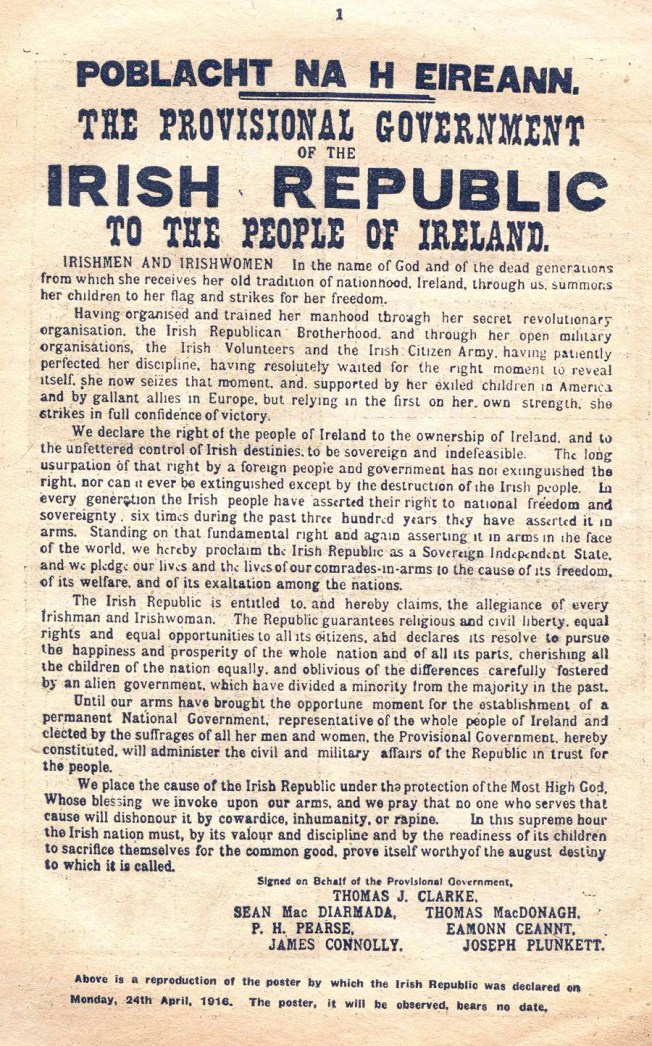
Proclamation of the Republic, Easter 1916
| Date | 24–29 April 1916 |
|---|---|
| Location | Dublin, skirmishes in counties Meath, Galway, Louth, and Wexford |
| Result | Unconditional surrender of rebel forces, execution of most leaders. |
 Irish rebel forces:
Irish Volunteers
Irish Citizen Army
Cumann na mBan
Commanders and leaders
Patrick Pearse
James Connolly
Tom Clarke
Seán MacDermott
Joseph Plunkett
Éamonn Ceannt
Thomas MacDonagh
Lord Wimborne
Augustine Birrell
Matthew Nathan
Lord French
Lovick Friend
John Maxwell
William Lowe
Strength1,250 in Dublin
~2,000–3,000 elsewhere, but they took little part in the fighting.16,000 troops and 1,000 armed police in Dublin by the end of the week.Casualties and losses64 killed
unknown wounded
Total killed: 466
|
Events
|
|
|
|
Organisations
|
|
The Easter Rising (Irish: Éirí Amach na Cásca),[1] also known as the Easter Rebellion, was an armed insurrection in Ireland during Easter Week, 1916. The Rising was mounted by Irish republicans to end British rule in Ireland and establish an independent Irish Republic while the United Kingdom was heavily engaged in World War I. It was the most significant uprising in Ireland since the rebellion of 1798.
Organised by seven members of the Military Council of the Irish Republican Brotherhood,[3] the Rising began on Easter Monday, 24 April 1916, and lasted for six days. Members of the Irish Volunteers — led by schoolmaster and Irish language activist Patrick Pearse, joined by the smaller Irish Citizen Army of James Connolly, along with 200 members of Cumann na mBan — seized key locations in Dublin and proclaimed an Irish Republic.
There were isolated actions in other parts of Ireland, with an attack on the Royal Irish Constabulary barracks at Ashbourne, County Meath and abortive attacks on other barracks in County Galway and at Enniscorthy, County Wexford.
With vastly superior numbers and artillery, the British army quickly suppressed the Rising, and Pearse agreed to an unconditional surrender on Saturday 29 April. Most of the leaders were executed following courts-martial, but the Rising succeeded in bringing physical force republicanism back to the forefront of Irish politics. Support for republicanism continued to rise in Ireland. In December 1918, republicans (by then represented by the Sinn Féin party) won 73 Irish seats out of 105 in the 1918 General Election to the British Parliament, on a policy of abstentionism and Irish independence. On 21 January 1919 they convened the First Dáil and declared the independence of the Irish Republic, and later that same day the Irish War of Independence began with the Soloheadbeg ambush.
——————————-
Easter Rising Background & History
——————————-
The Acts of Union 1800 united the Kingdom of Great Britain and the Kingdom of Ireland as the United Kingdom of Great Britain and Ireland, abolishing the Irish Parliament and giving Ireland representation at Westminster. From early on, many Irish nationalists opposed the union as the ensuing exploitation and impoverishment of the island led to a high level of depopulation.
Opposition took various forms: constitutional (the Repeal Association; the Home Rule League), social (disestablishment of the Church of Ireland; the Land League) and revolutionary (Rebellion of 1848; Fenian Rising). Constitutional nationalism seemed to be about to bear fruit when the Irish Parliamentary Party (IPP) under Charles Stewart Parnell succeeded in having the First Home Rule Bill of 1886 introduced by the Liberal government of William Ewart Gladstone, but it was defeated in the House of Commons. The Second Home Rule Bill of 1893 was passed by the Commons but rejected by the House of Lords.
After the fall of Parnell, younger and more radical nationalists became disillusioned with parliamentary politics and turned toward more extreme forms of separatism. The Gaelic Athletic Association, the Gaelic League and the cultural revival under W. B. Yeats and Lady Augusta Gregory, together with the new political thinking of Arthur Griffith expressed in his newspaper Sinn Féin and organisations such as the National Council and the Sinn Féin League led to the identification of many Irish people with the concept of a Gaelic nation and culture, completely independent of Britain.
This was sometimes referred to by the generic term Sinn Féin, particularly by the authorities.
The Third Home Rule Bill was introduced by British Prime Minister H. H. Asquith in 1912, beginning the Home Rule Crisis. The Irish Unionists, led by Sir Edward Carson, opposed Home Rule under what they saw as an impending Roman Catholic-dominated Dublin government. They formed the Ulster Volunteer Force on 13 January 1913,[9] creating the first paramilitary group of 20th century Ireland.
The Irish Republican Brotherhood (IRB) saw an opportunity to create an armed organisation to advance its own ends, and on 25 November 1913 the Irish Volunteers, whose stated object was “to secure and to maintain the rights and liberties common to all the people of Ireland”, was formed. Its leader was Eoin MacNeill, who was not an IRB member.
A Provisional Committee was formed that included people with a wide range of political views, and the Volunteers’ ranks were open to
“all able-bodied Irishmen without distinction of creed, politics or social group.”
Another militant group, the Irish Citizen Army, was formed by trade unionists as a result of the Dublin Lock-out of that year. The increasing militarisation of Irish politics was overshadowed soon after by the outbreak of the First World War and Ireland’s involvement in the conflict.
Though many Irishmen had volunteered for Irish regiments and divisions of the New British Army at the outbreak of war in 1914, the growing likelihood of enforced conscription created a backlash. Opposition to the war was based particularly on the implementation of the Government of Ireland Act 1914 (as previously recommended in March by the Irish Convention) increasingly and controversially linked with a “dual policy” enactment of the Military Service Bill, a dual policy that would require Irish conscription to begin if there would be any hope of Ireland seeing the implementation of the Government of Ireland Act 1914.
The linking of conscription and Home Rule outraged the Irish secessionist parties at Westminster, including the IPP, the All-for-Ireland League and others, who walked out in protest and returned to Ireland to organise opposition.
———————————————–
The Easter Rising – Real Footage
———————————————–
The Supreme Council of the IRB met on 5 September 1914, just over a month after the UK government had declared war on Germany. At this meeting, they decided to stage a rising before the war ended and to accept whatever help Germany might offer. Responsibility for the planning of the rising was given to Tom Clarke and Seán MacDermott.
The Irish Volunteers—the smaller of the two forces resulting from the September 1914 split over support for the British war effort — set up a “headquarters staff” that included Patrick Pearse as Director of Military Organisation, Joseph Plunkett as Director of Military Operations and Thomas MacDonagh as Director of Training. Éamonn Ceannt was later added as Director of Communications.
In May 1915, Clarke and MacDermott established a Military Committee within the IRB, consisting of Pearse, Plunkett and Ceannt, to draw up plans for a rising.[22] This dual role allowed the Committee, to which Clarke and MacDermott added themselves shortly afterward, to promote their own policies and personnel independently of both the Volunteer Executive and the IRB Executive—in particular Volunteer Chief of Staff Eoin MacNeill, who supported a rising only on condition of an increase in popular support following unpopular moves by the London government, such as the introduction of conscription or an attempt to suppress the Volunteers or its leaders, and IRB President Denis McCullough, who held similar views.
IRB members held officer rank in the Volunteers throughout the country and took their orders from the Military Committee, not from MacNeill.
Plunkett travelled to Germany in April 1915 to join Roger Casement, who had gone there from the United States the previous year with the support of Clan na Gael leader John Devoy, and after discussions with the German Ambassador in Washington, Count von Bernstorff, to try to recruit an “Irish Brigade” from among Irish prisoners of war and secure German support for Irish independence.
Together, Plunkett and Casement presented a plan which involved a German expeditionary force landing on the west coast of Ireland, while a rising in Dublin diverted the British forces so that the Germans, with the help of local Volunteers, could secure the line of the River Shannon.
James Connolly—head of the Irish Citizen Army (ICA), a group of armed socialist trade union men and women—was unaware of the IRB’s plans, and threatened to start a rebellion on his own if other parties failed to act. If they had gone it alone, the IRB and the Volunteers would possibly have come to their aid; however, the IRB leaders met with Connolly in January 1916 and convinced him to join forces with them. They agreed to act together the following Easter and made Connolly the sixth member of the Military Committee. Thomas MacDonagh would later become the seventh and final member.

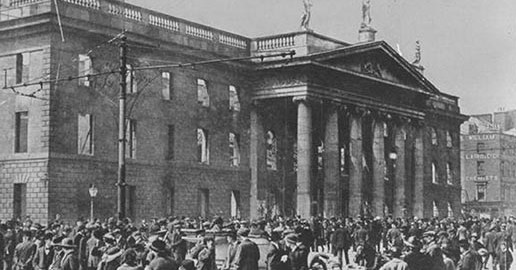
General Post Office, Dublin. Centre of the Easter Rising
In an effort to thwart both informers and the Volunteers’ own leadership, Pearse issued orders in early April for three days of “parades and manoeuvres” by the Volunteers for Easter Sunday (which he had the authority to do, as Director of Organisation). The idea was that the republicans within the organisation (particularly IRB members) would know exactly what this meant, while men such as MacNeill and the British authorities in Dublin Castle would take it at face value. However, MacNeill got wind of what was afoot and threatened to “do everything possible short of phoning Dublin Castle” to prevent the rising.
MacNeill was briefly convinced to go along with some sort of action when Mac Diarmada revealed to him that a shipment of German arms was about to land in County Kerry, planned by the IRB in conjunction with Roger Casement; he was certain that the authorities’ discovery of such a shipment would inevitably lead to suppression of the Volunteers, thus the Volunteers were justified in taking defensive action, including the originally planned manoeuvres.
Casement—disappointed with the level of support offered by the Germans— insisted on returning to Ireland on a German U-boat and was captured upon landing at Banna Strand in Tralee Bay. His reason for travel was to stop or at least postpone the Rising. The arms shipment was lost when the German ship carrying it, Aud, was scuttled after interception by the Royal Navy. The ship had already attempted a landing, but the local Volunteers failed to rendezvous at the agreed time.
The following day, MacNeill reverted to his original position when he found out that the ship carrying the arms had been scuttled. With the support of other leaders of like mind, notably Bulmer Hobson and The O’Rahilly, he issued a countermand to all Volunteers, cancelling all actions for Sunday. This succeeded in putting the rising off for only a day, although it greatly reduced the number of Volunteers who turned out.
British Naval Intelligence had been aware of the arms shipment, Casement’s return, and the Easter date for the rising through radio messages between Germany and its embassy in the United States that were intercepted by the Navy and deciphered in Room 40 of the Admiralty.
The information was passed to the Under-Secretary for Ireland, Sir Matthew Nathan, on 17 April, but without revealing its source, and Nathan was doubtful about its accuracy.[31] When news reached Dublin of the capture of the Aud and the arrest of Casement, Nathan conferred with the Lord Lieutenant, Lord Wimborne. Nathan proposed to raid Liberty Hall, headquarters of the Citizen Army, and Volunteer properties at Father Matthew Park and at Kimmage, but Wimborne insisted on wholesale arrests of the leaders. It was decided to postpone action until after Easter Monday, and in the meantime Nathan telegraphed the Chief Secretary, Augustine Birrell, in London seeking his approval.
By the time Birrell cabled his reply authorising the action, at noon on Monday 24 April 1916, the Rising had already begun.

One of two flags flown over the GPO during the Rising
Early on Monday morning, 24 April 1916, roughly 1,200 Volunteers and Citizen Army members took over strongpoints in Dublin city centre. A joint force of about 400 Volunteers and Citizen Army gathered at Liberty Hall under the command of Commandant James Connolly.
The rebel headquarters was the General Post Office (GPO) where James Connolly, overall military commander and four other members of the Military Council: Patrick Pearse, Tom Clarke, Seán Mac Dermott and Joseph Plunkett were.
After occupying the Post Office, the Volunteers hoisted two Republican flags and Pearse read a Proclamation of the Republic.
Elsewhere, rebel forces took up positions at the Four Courts, the centre of the Irish legal establishment, at Jacob’s Biscuit Factory, Boland’s Mill, the South Dublin Union hospital complex and the adjoining Distillery at Marrowbone Lane. Another contingent, under Michal Mallin, dug in on St. Stephen’s Green.
Although it was lightly guarded, Volunteer and Citizen Army forces under Seán Connolly failed to take Dublin Castle, the centre of British rule in Ireland, shooting dead a police sentry and overpowering the soldiers in the guardroom, but failing to press home the attack. The Under-secretary, Sir Matthew Nathan, alerted by the shots, helped close the castle gates.
The rebels occupied the Dublin City Hall and adjacent buildings.[37] They also failed to take Trinity College, in the heart of the city centre and defended by only a handful of armed unionist students.
At midday a small team of Volunteers and Fianna Éireann members attacked the Magazine Fort in the Phoenix Park and disarmed the guards, with the intent to seize weapons and blow up the building as a signal that the rising had begun. They set explosives but failed to obtain any arms.
In at least two incidents, at Jacob’s and Stephen’s Green, the Volunteers and Citizen Army shot dead civilians trying to attack them or dismantle their barricades. Elsewhere, they hit civilians with their rifle butts to drive them off.
The British military were caught totally unprepared by the rebellion and their response of the first day was generally un-coordinated. Two troops of British cavalry, one at the Four Courts and the other on O’Connell Street, sent to investigate what was happening took fire and casualties from rebel forces
On Mount Street, a group of Volunteer Training Corps men stumbled upon the rebel position and four were killed before they reached Beggars Bush barracks.
The only substantial combat of the first day of the Rising took place at the South Dublin Union where a piquet from the Royal Irish Regiment encountered an outpost of Éamonn Ceannt‘s force at the north-western corner of the South Dublin Union. The British troops, after taking some casualties, managed to regroup and launch several assaults on the position before they forced their way inside and the small rebel force in the tin huts at the eastern end of the Union surrendered.
However, the Union complex as a whole remained in rebel hands.
Three unarmed Dublin Metropolitan Police were shot dead on the first day of the Rising and their Commissioner pulled them off the streets. Partly as a result of the police withdrawal, a wave of looting broke out in the city centre, especially in the O’Connell Street area. A total of 425 people were arrested after the Rising for looting.

A British armoured truck, hastily built from the smokeboxes of several steam locomotives at Inchicore railway works
Lord Wimborne, the Lord Lieutenant, declared martial law on Tuesday evening and handed over civil power to Brigadier-General William Lowe. British forces initially put their efforts into securing the approaches to Dublin Castle and isolating the rebel headquarters, which they believed was in Liberty Hall. The British commander, Lowe, worked slowly, unsure of the size of the force he was up against, and with only 1,269 troops in the city when he arrived from the Curragh Camp in the early hours of Tuesday 25 April.
City Hall was taken from the rebel unit that had attacked Dublin Castle on Tuesday morning.
The rebels had failed to take either of Dublin’s two main train stations or either of its ports, at Dublin Port and Kingstown. As a result, during the following week, the British were able to bring in thousands of reinforcements from England and from their garrisons at the Curragh and Belfast. By the end of the week, British strength stood at over 16,000 men.
Their firepower was provided by field artillery summoned from their garrison at Athlone which they positioned on the northside of the city at Phibsborough and at Trinity College, and by the patrol vessel Helga, which sailed up the Liffey, having been summoned from the port at Kingstown. On Wednesday, 26 April, the guns at Trinity College and Helga shelled Liberty Hall, and the Trinity College guns then began firing at rebel positions, first at Boland’s Mill and then in O’Connell Street.

“Birth of the Irish Republic” by Walter Paget, depicting the GPO during the shelling
The principal rebel positions at the GPO, the Four Courts, Jacob’s Factory and Boland’s Mill saw little combat. The British surrounded and bombarded them rather than assault them directly. One Volunteer in the GPO recalled, “we did practically no shooting as there was no target”.[52] Similarly, the rebel position at St Stephen’s Green, held by the Citizen Army under Michael Mallin, was made untenable after the British placed snipers and machine guns in the Shelbourne Hotel and surrounding buildings.
As a result, Mallin’s men retreated to the Royal College of Surgeons building where they remained for the rest of the week. However, where the insurgents dominated the routes by which the British tried to funnel reinforcements into the city, there was fierce fighting.
Reinforcements were sent to Dublin from England, and disembarked at Kingstown on the morning of 26 April. Heavy fighting occurred at the rebel-held positions around the Grand Canal as these troops advanced towards Dublin. The Sherwood Foresters were repeatedly caught in a cross-fire trying to cross the canal at Mount Street. Seventeen Volunteers were able to severely disrupt the British advance, killing or wounding 240 men. Despite there being alternative routes across the canal nearby, General Lowe ordered repeated frontal assaults on the Mount Street position.
The British eventually took the position, which had not been reinforced by the nearby rebel garrison at Boland’s Mills, on Thursday but the fighting there inflicted up to two thirds of their casualties for the entire week for a cost of just four dead Volunteers.
The rebel position at the South Dublin Union (site of the present day St. James’s Hospital) and Marrowbone Lane, further west along the canal, also inflicted heavy losses on British troops. The South Dublin Union was a large complex of buildings and there was vicious fighting around and inside the buildings. Cathal Brugha, a rebel officer, distinguished himself in this action and was badly wounded.
By the end of the week, the British had taken some of the buildings in the Union, but others remained in rebel hands. British troops also took casualties in unsuccessful frontal assaults on the Marrowbone Lane Distillery.

Placements of Rebel forces and British troops around the River Liffey in Dublin
The third major scene of combat during the week was at North King Street, behind the Four Courts, where the British, on Thursday, tried to take a well-barricaded rebel position. By the time of the rebel headquarter’s surrender, the South Staffordshire Regiment under Colonel Taylor had advanced only 150 yd (140 m) down the street at a cost of 11 dead and 28 wounded.
The enraged troops broke into the houses along the street and shot or bayonetted 15 male civilians whom they accused of being rebel fighters.
Elsewhere, at Portobello Barracks, an officer named Bowen Colthurst summarily executed six civilians, including the pacifist nationalist activist, Francis Sheehy-Skeffington.
These instances of British troops killing Irish civilians would later be highly controversial in Ireland.
The headquarters garrison at the GPO, after days of shelling, was forced to abandon their headquarters when fire caused by the shells spread to the GPO. Connolly had been incapacitated by a bullet wound to the ankle and had passed command on to Pearse. The O’Rahilly was killed in a sortie from the GPO.
They tunnelled through the walls of the neighbouring buildings in order to evacuate the Post Office without coming under fire and took up a new position in 16 Moore Street. On Saturday 29 April, from this new headquarters, after realising that they could not break out of this position without further loss of civilian life, Pearse issued an order for all companies to surrender.
Pearse surrendered unconditionally to Brigadier-General Lowe. The surrender document read:
In order to prevent the further slaughter of Dublin citizens, and in the hope of saving the lives of our followers now surrounded and hopelessly outnumbered, the members of the Provisional Government present at headquarters have agreed to an unconditional surrender, and the commandants of the various districts in the City and County will order their commands to lay down arms.
The GPO was the only major rebel post to be physically taken during the week. The others surrendered only after Pearse’s surrender order, carried by a nurse named Elizabeth O’Farrell, reached them. Sporadic fighting therefore continued until Sunday, when word of the surrender was got to the other rebel garrisons.[66] Command of British forces had passed from Lowe to General John Maxwell, who arrived in Dublin just in time to take the surrender. Maxwell was made temporary military governor of Ireland.
Irish Volunteer units mobilised on Easter Sunday in several places outside of Dublin, but due to Eoin MacNeill’s countermanding order, most of them returned home without fighting. In addition, due to the interception of the German arms aboard the Aud, the provincial Volunteer units were very poorly armed.
In the south, around 1,200 Volunteers mustered in Cork, under Tomás Mac Curtain on the Sunday, but they dispersed after receiving nine contradictory orders by dispatch from the Volunteer leadership in Dublin. Much to the anger of many Volunteers, MacCurtain, under pressure from Catholic clergy, agreed to surrender his men’s arms to the British on Wednesday.
The only violence in Cork occurred when the Kent family resisted arrest by the RIC, shooting one. One brother was killed in the shootout and another later executed.
Similarly, in the north, several Volunteer companies were mobilised at Coalisland in County Tyrone including 132 men from Belfast led by IRB President Dennis McCullough. Also, Volunteer leaders Daniel Kelly and James McNulty assembled a group of 33 men in Creeslough, County Donegal and awaited instruction. However, in part due to the confusion caused by the countermanding order, the Volunteers in these locations dispersed without fighting.
The only large-scale engagement outside the city of Dublin occurred at Ashbourne, County Meath. The Volunteers′ Dublin Brigade, 5th Battalion (also known as the Fingal Battalion), led by Thomas Ashe and his second in command Richard Mulcahy, composed of some 60 men, mobilised at Swords, where they seized the RIC Barracks and the Post Office. They did the same in the nearby villages of Donabate and Garristown before attacking the RIC barracks at Ashtown.
During the attack on the barracks, an RIC patrol from Slane happened upon the firefight – leading to a five-hour gun battle, in which eight RIC constables were killed and 15 wounded. Two Volunteers were also killed and five wounded.
One civilian was also mortally wounded. Ashe’s men camped at Kilsalaghan, near Dublin until they received orders to surrender on Saturday.
Volunteer contingents also mobilised nearby in counties Meath and Louth, but proved unable to link up with the North Dublin unit until after it had surrendered. In County Louth, Volunteers shot dead an RIC man near the village of Castlebellingham on 24 April, in an incident in which 15 RIC men were also taken prisoner.

Irish War News, produced during the Rising
In County Wexford, some 100 Volunteers led by Robert Brennan, Seamus Doyle and J R Etchingham took over Enniscorthy on Thursday 27 April until the following Sunday. They made a brief and unsuccessful attack on the RIC barracks, but unable to take it, resolved to blockade it instead. During their occupation of the town, they made such gestures as flying the tricolour over the Atheneum theatre, which they had made their headquarters, and parading uniformed in the streets.
A small party set off for Dublin, but turned back when they met a train full of British troops (part of a 1,000-strong force, which included the Connaught Rangers) on their way to Enniscorthy. On Saturday, two Volunteer leaders were escorted by the British to Arbour Hill Prison, where Pearse ordered them to surrender.
In the west, Liam Mellows led 600–700 Volunteers in abortive attacks on several police stations, at Oranmore and Clarinbridge in County Galway. There was also a skirmish at Carnmore in which one RIC man (Constable Patrick Whelan) was killed. However, his men were poorly armed, with only 25 rifles and 300 shotguns, many of them being equipped only with pikes. Toward the end of the week, Mellows′ followers were increasingly poorly fed and heard that large British reinforcements were being sent westwards. In addition, the British cruiser HMS Gloucester arrived in Galway Bay and shelled the fields around Athenry where the rebels were based.
On 29 April, the Volunteers, judging the situation to be hopeless, dispersed from the town of Athenry. Many of these Volunteers were arrested in the period following the rising, while others, including Mellows had to go “on the run” to escape. By the time British reinforcements arrived in the west, the rising there had already disintegrated.
The British Army reported casualties of 116 dead, 368 wounded and nine missing. Sixteen policemen died, and 29 were wounded. Rebel and civilian casualties were 318 dead and 2,217 wounded. The Volunteers and ICA recorded 64 killed in action, but otherwise Irish casualties were not divided into rebels and civilians.
All 16 police fatalities and 22 of the British soldiers killed were Irishmen
British families came to Dublin Castle in May 1916 to reclaim the bodies and funerals were arranged. British bodies which were not claimed were given military funerals in Grangegorman Military Cemetery.
The majority of the casualties, both killed and wounded, were civilians. Both sides, British and rebel, shot civilians deliberately on occasion when they refused to obey orders such as to stop at checkpoints.
On top of that, there were two instances of British troops killing civilians out of revenge or frustration, at Portobello Barracks, where six were shot and North King Street, where 15 were killed.
However, the majority of civilian casualties were killed by indirect fire from artillery, heavy machine guns and incendiary shells. The British, who used such weapons extensively, therefore seem to have caused most non-combatant deaths. One Royal Irish Regiment officer recalled,
“they regarded, not unreasonably, everyone they saw as an enemy, and fired at anything that moved”.
_after_the_1916_Easter_Rising.JPG)
Sackville Street (now O’Connell Street), Dublin, after the Rising
.jpg)
Ruins of the Metropole Hotel on Sackville Street.

The burial spot of the Leaders of the Rising, in the old prison yard of Arbour Hill prison. The memorial was designed by G. McNicholl. The Proclamation of 1916 is inscribed on the wall in both Irish and English

British soldiers searching the River Tolka in Dublin for arms and ammunition after the Easter Rising. May 1916

General Maxwell quickly signalled his intention “to arrest all dangerous Sinn Feiners”, including
“those who have taken an active part in the movement although not in the present rebellion”,
reflecting the popular belief that Sinn Féin, a separatist organisation that was neither militant nor republican, was behind the Rising.
A total of 3,430 men and 79 women were arrested, although most were subsequently released. In attempting to arrest members of the Kent family in County Cork on 2 May, a Head Constable was shot dead in a gun battle. Richard Kent was also killed, and Thomas and William Kent were arrested.
In a series of courts martial beginning on 2 May, 90 people were sentenced to death. Fifteen of those (including all seven signatories of the Proclamation) had their sentences confirmed by Maxwell and were executed at Kilmainham Gaol by firing squad between 3 and 12 May (among them the seriously wounded Connolly, shot while tied to a chair due to a shattered ankle). Not all of those executed were leaders: Willie Pearse described himself as “a personal attaché to my brother, Patrick Pearse”; John MacBride had not even been aware of the Rising until it began, but had fought against the British in the Boer War fifteen years before;
Thomas Kent did not come out at all—he was executed for the killing of a police officer during the raid on his house the week after the Rising. The most prominent leader to escape execution was Éamon de Valera, Commandant of the 3rd Battalion, who did so partly due to his American birth.
The president of the courts martial was Charles Blackader.
1,480 men] were interned in England and Wales under Regulation 14B of the Defence of the Realm Act 1914, many of whom, like Arthur Griffith, had little or nothing to do with the affair. Camps such as Frongoch internment camp became “Universities of Revolution” where future leaders like Michael Collins, Terence McSwiney and J. J. O’Connell began to plan the coming struggle for independence.
The executions of those Rising leaders condemned to death took place over a nine-day period:
Sir Roger Casement was tried in London for high treason and hanged at Pentonville Prison on 3 August.
A Royal Commission was set up to enquire into the causes of the Rising. It began hearings on 18 May under the chairmanship of Lord Hardinge of Penshurst. The Commission heard evidence from Sir Matthew Nathan, Augustine Birrell, Lord Wimborne, Sir Neville Chamberlain (Inspector-General of the Royal Irish Constabulary), General Lovick Friend, Major Ivor Price of Military Intelligence and others.
The report, published on 26 June, was critical of the Dublin administration, saying that “Ireland for several years had been administered on the principle that it was safer and more expedient to leave the law in abeyance if collision with any faction of the Irish people could thereby be avoided.”
Birrell and Nathan had resigned immediately after the Rising. Wimborne had also reluctantly resigned, recalled to London by Lloyd George, but was re-appointed in late 1917. Chamberlain resigned soon after.
At first, many members of the Dublin public were simply bewildered by the outbreak of the Rising.[95] James Stephens, who was in Dublin during the week, thought,
“None of these people were prepared for Insurrection. The thing had been sprung on them so suddenly they were unable to take sides.”
There was considerable hostility towards the Volunteers in some parts of the city. When occupying positions in the South Dublin Union and Jacob’s factory, the rebels got involved in physical confrontations with civilians trying to prevent them from taking over the buildings. The Volunteers’ shooting and clubbing of civilians made them extremely unpopular in these localities.
There was outright hostility to the Volunteers from the “separation women” (so-called because they were paid “Separation Money” by the British government), who had husbands and sons fighting in the British Army in World War I, and among unionists.
Supporters of the Irish Parliamentary Party also felt the rebellion was a betrayal of their party.
That the Rising caused a great deal of death and destruction, as well as disrupting food supplies, also contributed to the antagonism toward the rebels. After the surrender, the Volunteers were hissed at, pelted with refuse, and denounced as “murderers” and “starvers of the people”.
Volunteer Robert Holland for example remembered being “subjected to very ugly remarks and cat-calls from the poorer classes” as they marched to surrender. He also reported being abused by people he knew as he was marched through the Kilmainham area into captivity and said the British troops saved them from being manhandled by the crowd.
However, there was not universal hostility towards the defeated insurgents. Some onlookers were cowed rather than hostile and it appeared to the Volunteers that some of those watching in silence were sympathetic. Canadian journalist and writer Frederick Arthur McKenzie wrote that in poorer areas, “there was a vast amount of sympathy with the rebels, particularly after the rebels were defeated.”
Thomas Johnson, the Labour leader, thought there was,
“no sign of sympathy for the rebels, but general admiration for their courage and strategy.”
The aftermath of the Rising, and in particular the British reaction to it, helped sway a large section of Irish nationalist opinion away from hostility or ambivalence and towards support for the rebels of Easter 1916. Dublin businessman and Quaker James G. Douglas, for example, hitherto a Home Ruler, wrote that his political outlook changed radically during the course of the Rising due to the British military occupation of the city and that he became convinced that parliamentary methods would not be sufficient to remove the British presence.
A meeting called by Count Plunkett on 19 April 1917 led to the formation of a broad political movement under the banner of Sinn Féin[107] which was formalised at the Sinn Féin Ard Fheis of 25 October 1917. The Conscription Crisis of 1918 further intensified public support for Sinn Féin before the general elections to the British Parliament on 14 December 1918, which resulted in a landslide victory for Sinn Féin, whose MPs gathered in Dublin on 21 January 1919 to form Dáil Éireann and adopt the Declaration of Independence.[108]

The Garden of Remembrance opened in 1966, to mark the anniversary of the Rising. The Garden is “dedicated to all those who gave their lives in the fight for Ireland’s freedom”

A plaque commemorating the Easter Rising at the General Post Office, Dublin, with the Irish text in Gaelic script, and the English text in regular Latin script
Shortly after the Easter Rising, poet Francis Ledwidge wrote “O’Connell Street” and “Lament for the Poets of 1916,” which both describe his sense of loss and an expression of holding the same “dreams”, as the Easter Rising’s Irish Republicans. He would also go on to write lament for Thomas MacDonagh for his fallen friend and fellow Irish Volunteer. A few months after the Easter Rising, W. B. Yeats commemorated some of the fallen figures of the Irish Republican movement, as well as his torn emotions regarding these events, in the poem Easter, 1916.
Some of the survivors of the Rising went on to become leaders of the independent Irish state. Those who were executed were venerated by many as martyrs; their graves in Dublin’s former military prison of Arbour Hill became a national monument and the Proclamation text was taught in schools. An annual commemorative military parade was held each year on Easter Sunday, culminating in a huge national celebration on the 50th anniversary in 1966.
RTÉ, the Irish national broadcaster, as one of its first major undertakings made a series of commemorative programmes for the 1966 anniversary of the Rising. Roibéárd Ó Faracháin, head of programming said,
“While still seeking historical truth, the emphasis will be on homage, on salutation.”
With the outbreak of the Troubles in Northern Ireland, government, academics and the media began to revise the country’s militant past, and particularly the Easter Rising. The coalition government of 1973–77, in particular the Minister for Posts and Telegraphs, Conor Cruise O’Brien, began to promote the view that the violence of 1916 was essentially no different from the violence then taking place in the streets of Belfast and Derry.
O’Brien and others asserted that the Rising was doomed to military defeat from the outset, and that it failed to account for the determination of Ulster Unionists to remain in the United Kingdom.

A mural in Belfast depicting the Easter Rising of 1916
Irish republicans continue to venerate the Rising and its leaders with murals in republican areas of Belfast and other towns celebrating the actions of Pearse and his comrades, and annual parades in remembrance of the Rising. The Irish government, however, discontinued its annual parade in Dublin in the early 1970s, and in 1976 it took the unprecedented step of proscribing (under the Offences against the State Act) a 1916 commemoration ceremony at the GPO organised by Sinn Féin and the Republican commemoration Committee.
A Labour Party TD, David Thornley, embarrassed the government (of which Labour was a member) by appearing on the platform at the ceremony, along with Máire Comerford, who had fought in the Rising, and Fiona Plunkett, sister of Joseph Plunkett.
With the advent of a Provisional IRA ceasefire and the beginning of what became known as the Peace Process during the 1990s, the official view of the Rising grew more positive and in 1996 an 80th anniversary commemoration at the Garden of Remembrance in Dublin was attended by the Taoiseach and leader of Fine Gael, John Bruton.
In 2005, the Taoiseach, Bertie Ahern, announced the government’s intention to resume the military parade past the GPO from Easter 2006, and to form a committee to plan centenary celebrations in 2016.
The 90th anniversary was celebrated with a military parade in Dublin on Easter Sunday, 2006, attended by the President of Ireland, the Taoiseach and the Lord Mayor of Dublin. There is now an annual ceremony at Easter attended by relatives of those who fought, by the President, the Taoiseach, ministers, senators and TDs, and by usually large and respectful crowds.
In December 2014 Dublin City Council approved a proposal to create a historical path commemorating the Rising, similar to the Freedom Trail in Boston. Lord Mayor of Dublin Christy Burke announced that the council had committed to building the trail, marking it with a green line or bricks, with brass plates marking the related historic sites such as the Rotunda and the General Post Office.
The Easter Rising lasted from Easter Monday 24 April 1916 to Easter Saturday 29 April 1916. Annual commemorations, rather than taking place on 24–29 April, are typically based on the date of Easter, which is a moveable feast. For example, the annual military parade is on Easter Sunday; the date of coming into force of the Republic of Ireland Act 1948 was symbolically chosen as Easter Monday (18 April) 1949.
The official programme of centenary events in 2016 climaxes from 26 March (Good Friday) to 3 April (Easter Saturday) with other events earlier and later in the year taking place on the calendrical anniversaries.

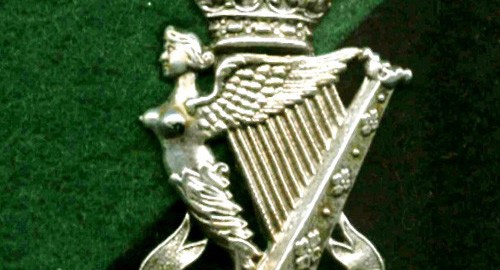

Thomas Shaw June 1899 – 2 March 2002

Shaw was born in Belfast, Northern Ireland, in June 1899. He first enlisted as a rifleman at 15 in 1914 and went into battle, but was sent home after his brother, a military policeman, met him by chance while in France. In 1916 he joined the 16th battalion of the Royal Irish Rifles and fought in battles such as Messines and Passchendaele. He stayed in Germany as part of the Army of Occupation for six months after the war ended and returned home in April 1919.
During World War II he was in charge of meat rations in Belfast. In 1942, he married his girlfriend Nell; they spent the last 12 years living at sheltered accommodation in Savoy, Bangor, County Down. He died on 2 March 2002 at the age of 102 and was buried in Clandeboye cemetery in Bangor.

A plaque in honour of Thomas Shaw was put up at the front door of the Savoy in Bangor on 4 August 2014

————————————————
Royal Ulster Rifles

D Company, Eighteenth Platoon, 2nd Battalion of the Royal Ulster Rifles
The Royal Irish Rifles (became the Royal Ulster Rifles from 1 January 1921) was an infantry rifle regiment of the British Army, first created in 1881 by the amalgamation of the 83rd (County of Dublin) Regiment of Foot and the 86th (Royal County Down) Regiment of Foot. The regiment saw service in the Second Boer War, the First World War, the Second World War and the Korean War.
In 1968 the Royal Ulster Rifles was amalgamated with the other regiments of the North Irish Brigade, the Royal Irish Fusiliers (Princess Victoria’s) and the Royal Inniskilling Fusiliers to create the Royal Irish Rangers. However, in 1992, the Royal Irish Rangers was later merged with the Ulster Defence Regiment to form the Royal Irish Regiment.
———————————
Royal Ulster Rifles – 1954
———————————
| Active | 1793–1968 |
|---|---|
| Country |  United Kingdom United Kingdom |
| Branch |  British Army British Army |
| Type | Rifles |
| Role | Light infantry |
| Size | 1-2 Regular battalions 3 Militia and Special Reserve battalions Up to 16 Hostilities-only battalions |
| Garrison/HQ | RHQ – Victoria Barracks, Belfast (1881-1937) St Patrick’s Barracks, Ballymena (1937-1968) |
| Nickname(s) | The Stickies,[1] The Rifles |
| Motto | Quis Separabit (Who shall separate us [from the love of Christ]) (Latin) |
| Colours | None as a rifle regiment |
| March | Quick: “The Ulster Rifles march ‘Off, Off, Said the Stranger'”
Slow: “The South Down Militia” |
| Engagements | Badajoz, Jhansi, Somme, Normandy Landings, Rhine Crossing, Korea
|
The regiment’s history dates backs to the reign of King George III. In 1793 the British army expanded to meet the commitments of the war with the French First Republic. As part of that expansion it raised two new regiments of foot, the 83rd and the 86th. At the same time the counties Antrim, Down and Louth regiments of militia were raised.
In 1881, under the Childers Reforms, the 83rd and 86th were amalgamated into a single regiment, named the Royal Irish Rifles, one of eight infantry regiments raised and garrisoned in Ireland. It was the county regiment of Antrim, Down, Belfast and Louth, with its depot located at Belfast. Militarily, the whole of Ireland was administered as a single command within the United Kingdom with Command Headquarters at Parkgate (Phoenix Park) Dublin, directly under the War Office in London.
Also known as the Second Boer War.

Monument to Royal Irish Rifles in grounds of Belfast City Hall
In October 1905, a memorial was erected in the grounds of Belfast City Hall in memory of the 132 who did not return. Field Marshal Lord Grenfell unveiled the memorial while the Times reported the event.

Infantry of the Royal Irish Rifles during the Battle of the Somme (1916) in the Great War.
The regiment provided battalions to all three Irish infantry divisions of the Great War: 10th (Irish), 16th (Irish) and 36th (Ulster). Members of the Ulster Volunteers, Young Citizen Volunteers (and national Volunteers served in all three divisions with the majority of the first two named in 36th (Ulster) Infantry Division. In addition, the 7th Battalion became home to a company of the Royal Jersey Militia, sometimes known as the Jersey Pals.
Most battalions served in the trenches of the Western Front.

Men of the 16th (Service) Battalion, Royal Irish Rifles, the pioneer battalion of the 36th (Ulster) Division, moving to the frontline 20 November 1917.
The Royal Irish Rifles lost 25,000 officers and men throughout the Great War, with over 7,000 of them being killed in action.
After the Great War the War Office decided that Ulster should be represented on the Army List as Connaught, Leinster and Munster already had their own regiments and so, in 1920, a new name was proposed for the Royal Irish Rifles. From 1 January 1921 the regiment became the Royal Ulster Rifles.
Despite the change of name, the Regiment continued to accept recruits from the rest of Ireland; for example, almost 50% of personnel in the 1st Battalion who arrived in Korea in 1950 were Irish nationals.
In 1937 the already close relationship with the London Irish Rifles was formally recognised when they were incorporated into the Corps while still retaining their regimental identity as a territorial battalion. Two years later the London Irish formed a second battalion.
When war was declared the 1st Battalion was serving in India, with the 31st Independent Brigade Group, which was trained in mountain warfare. When the brigade returned to the United Kingdom, it was decided that, with its light scale of equipment, the brigade could be converted into a glider-borne unit. 31st Infantry Brigade, which also included the 1st Border Regiment, 2nd South Staffs and 2nd Ox and Bucks, was renamed 1st Airlanding Brigade and trained as glider infantry.
They were assigned to the 1st Airborne Division, part of the British Army’s airborne forces. The battalion, along with the 2nd Oxford and Bucks Light Infantry, were later transferred to join the 12th Devonshire Regiment in the 6th Airlanding Brigade as part of the newly raised 6th Airborne Division which was actually only the second of two airborne divisions created by the British Army in World War II.

Riflemen of the Royal Ulster Rifles, 6 Airlanding Brigade, aboard a jeep and trailer, driving off Landing Zone N past a crashed Airspeed Horsa glider on the evening of 6 June
Carried in Horsa gliders, the battalion took part in Operation Mallard, the British glider-borne landings in the later afternoon of 6 June 1944, otherwise known as D-Day. They served throughout the Battle of Normandy employed as normal infantry until August 1944 and the breakout from the Normandy beachhead where the entire 6th Airborne Division advanced 45 miles in 9 days. They returned to England in September 1944 for rest and retraining until December 1944 when the 6th Airborne was then recalled to Belgium after the surprise German offensive in the Ardennes which is now known as the Battle of the Bulge where the division played a comparatively small role in the mainly-American battle.
They then took part in their final airborne mission of the war known as Operation Varsity, which was the airborne element of Operation Plunder, the crossing of the River Rhine by the 21st Army Group in March 1945. The 6th Airborne was joined by the US 17th Airborne Division, and both divisions suffered heavy casualties.
The 2nd Battalion was part of the 9th Infantry Brigade, 3rd Infantry Division serving with the British Expeditionary Force (BEF) in France from 1939-1940. The division was commanded by the then Major General Bernard Montgomery who would eventually lead the Anglo-Canadian forces as commander of the 21st Army Group in the North West Europe Campaign. The 3rd Infantry Division took part in the Battle of Dunkirk, where it gained a decent reputation and earned the nickname of ^Monty’s Ironsides^, and had to be evacuated from Dunkirk with the rest of the BEF.
The battalion returned to Europe for the D-Day landings in June 1944 and fought in the Battle of Normandy, specifically in Operation Charnwood where they were the first British troops to enter the city of Caen, which had previously seen bitter fighting in the British attempt to capture it. The battalion later fought in Belgium, Holland and Germany
The 6th (Home Defence) Battalion was raised in 1939 from No. 200 Group National Defence Companies and consisting of older men with previous military experience who were unfit for active service. On 24 December 1940 the battalion was redesignated as the 30th Battalion, dropping the Home Defence from its title, and converted to a regular infantry battalion. It was disbanded in Northern Ireland in May 1943.
The 7th (Home Defence) Battalion was raised on 29 June 1940, joining the 215th Independent Infantry Brigade (Home). The battalion served in Ulster until leaving for the United Kingdom in September 1942. On 24 December 1941, the battalion was redesignated the 31st Battalion and dropped the Home Defence title.
The 8th Battalion, Royal Ulster Rifles was also raised in 1940, and joined 203rd Independent Infantry Brigade (Home). In early 1942 the battalion was transferred to the Royal Artillery and converted into the 117th Light Anti-Aircraft Regiment, Royal Artillery. The regiment served with Home Forces until November 1942 when it was sent overseas to North Africa to fight in the final stages of the North African Campaign as part of the British First Army.
In September 1943 the regiment landed in Italy shortly after the initial invasion, now as part of the British Eighth Army, and served on the Italian Front until June 1944, when the regiment was broken up and the men were retrained as infantrymen, due to a severe shortage of infantrymen, particularly in Italy. Many of the men retrained were sent to the 2nd, 7th and 10th battalions of the Rifle Brigade (Prince Consort’s Own), another rifle regiment, in 61st Lorried Infantry Brigade, 6th Armoured Division.
The 70th (Young Soldiers) Battalion was formed on 12 September 1940 at Holywood from the younger soldiers of the 6th and 7th battalions and volunteers of the ages of 18 and 19 who were too young for conscription. The battalion spent most of its time guarding airfields and aerodromes before moving to the United Kingdom in October 1941.
The Royal Ulster Rifles had the unique distinction of being the only infantry regiment of the British Army to have both of its regular battalions involved in the Normandy landings.
In 1947 the Royal Ulster Rifles were grouped with the other two remaining Irish regiments, the Royal Inniskilling Fusiliers and the Royal Irish Fusiliers, into the North Irish Brigade. A year later, the regiment formed a pipe band, wearing saffron kilts and playing Irish Warpipes. In the same year, in 1948, the 2nd Battalion was amalgamated with the 1st Battalion to form the 1st Battalion, Royal Ulster Rifles (83rd and 86th), thus retaining the history of both of the previous regiments of foot. This happened throughout the British Army in 1948 after India gained its independence.
The 1st Battalion, Royal Ulster Rifles disembarked at Pusan in early November as part of the 29th Independent Infantry Brigade Group. They were transported forward to Uijongbu, where under the direct command of the Eighth United States Army they were directed against guerrilla forces swept past by the rapid progress of the United Nations Army.
By mid December a defensive line was being prepared on the south bank of the River Han on the border with North Korea. protecting the approach to Seoul, the capital of South Korea. As the New Year started, the Fiftieth Chinese Communist Army engaged the United Nations troops focusing on 29 Brigade, who were dispersed over a very wide front (12 miles). The Rifles fighting with 1st Battalion, Royal Northumberland Fusiliers were able to hold their position in their first major action at the Battle of Chaegunghyon and the Communist Army’s progress was halted, at least temporarily.
The Chinese Fifth Phase Campaign or the Battle of the Imjin River began on 22 April with the goal of taking Seoul. By 25 April, the Brigade was ordered to withdraw as the Communist forces were threatening to encircle it. With virtually no cover and seriously outnumbered, the Rifles came under heavy fire as they withdrew to a blocking position. The Brigade was able to hold its position, despite fierce fighting, and neutralized the effectiveness of the Sixty-fourth Chinese Communist Army. Although the enemy’s offensive had come within 5 miles of Seoul, the capital had been saved.
At the time, the Times reported the Battle of Imjin concluding with:
The fighting 5th wearing St George and the Dragon and the Irish Giants with the Harp and Crown have histories that they would exchange with no one. As pride, sobered by mourning for fallen observes how well these young men have acquitted themselves in remotest Asia. The parts taken by the regiments may be seen as a whole. The motto of the Royal Ulster Rifles may have the last word Quis Separabit. (Who shall separate us)
As a result of this action, members of the Rifles were awarded 2 Distinguished Service Orders, 2 Military Crosses, 2 Military Medals, and 3 men were Mentioned in Despatches. When the area was recaptured, a memorial was erected to the 208 men killed or missing after the battle. It stood over-looking the battlefield till 1962 when Seoul’s growth threatened to consume it, and it was carried by HMS Belfast back to Ireland where it was the focusof the Regiment’s St Patrick’s Barracks in Ballymena. When the barracks closed in 2008,[ the Imjin River Memorial was again moved, this time to the grounds of the Belfast City Hall.
In 1968 the Royal Ulster Rifles amalgamated with the Royal Inniskilling Fusiliers and the Royal Irish Fusiliers to form the Royal Irish Rangers (27th (Inniskilling), 83rd and 87th). A further amalgamation took place with the Ulster Defence Regiment in 1992 to form the Royal Irish Regiment (27th Inniskilling, 83rd, 87th and the Ulster Defence Regiment).
Veterans of the Royal Ulster Rifles in Northern Ireland remain few, as only around four veterans are known to be still alive today in Northern Ireland. However, many of them are still widely involved today, as several of them have participated in the annual Korea Day in Northern Ireland, along with three of them travelling to South Korea on the Revisit Program in April 2013 in association with the Somme Association to visit the sites of Battles like the Battle of the Imjin River, with the help of current serving Army officers in Northern Ireland. The legacy of these veterans is still alive today, as one of the dedicated veterans’ grandson travelled to Seoul, South Korea to attend a United Nations Youth Peace Camp in Seoul with 16 other delegations in July 2014, to learn about the sacrifice their grandparents had made to themselves and their country, and the Republic of Korea 60 years ago.
Recipients of the Victoria Cross:
Visit the Royal Ulster Rifles Museum

Eric ‘Winkle’ Brown: Celebrated British pilot dies, aged 97

One of the most famous British pilots, Capt Eric “Winkle” Brown, has died at the age of 97.
He was the Royal Navy’s most decorated pilot and held the world record for flying the greatest number of different types of aircraft, 487.
During World War Two Capt Brown flew fighter aircraft and witnessed the liberation of Bergen Belsen concentration camp.
He died at the East Surrey Hospital, Redhill, after a short illness.
A statement released by his family said: “It is with deep regret that the passing of Captain Eric Melrose Brown CBE DSC AFC is announced.

“Eric was the most decorated pilot of the Fleet Air Arm in which service he was universally known as ‘Winkle’ on account of his diminutive stature.
“He also held three absolute Guinness World Records, including for the number of aircraft carrier deck landings and types of aeroplane flown.”
————————————————-
Eric Melrose “Winkle” Brown
————————————-
Story of Captain Winkle Brown
————————————-
Captain Eric Melrose “Winkle” Brown, CBE, DSC, AFC, Hon FRAeS, RN[2] (21 January 1919 – 21 February 2016) was a British Royal Navy officer and test pilot who flew 487 different types of aircraft, more than anyone else in history.[1][3] He also held the world record for most aircraft carrier landings performed (2,407)[1] and was the Fleet Air Arm‘s most decorated living pilot.[4] He achieved several “firsts” in naval aviation, including the first landings on an aircraft carrier of a twin-engined aircraft, an aircraft with a tricycle undercarriage and a jet-propelled aircraft.
Brown was born in Leith, near Edinburgh, Scotland. He first flew when he was eight or ten when he was taken up in a Gloster Gauntlet by his father, the younger Brown sitting on his father’s knee.[5]
In 1936, Brown’s father, an ex-Royal Flying Corps pilot, had taken him to see the 1936 Olympics in Berlin. Hermann Göring had recently announced the existence of the Luftwaffe, so Brown and his father met, and were invited to join social gatherings by members of the newly disclosed organisation. It was here that Brown first met Ernst Udet, a former World War I fighter ace.
Brown soon discovered in himself and Udet a shared love of flying and Udet offered to take Brown up with him. Brown eagerly accepted the German’s offer and after his arrival at the appointed airfield at Halle, he was soon flying in a two-seat Bucker Jungmann, which Udet threw around much to Brown’s delight. Udet told Brown he “must learn to fly” and that he “had the temperament of a fighter pilot”. He also told Brown to learn German.
In 1937, Brown left the Royal High School and entered Edinburgh University, studying Modern Languages with an emphasis on German. While there he joined the university’s Air Unit and received his first formal flying instruction. In February 1938 he returned to Germany, where, having been invited to attend the 1938 Automobile Exhibition by Udet, by then a Luftwaffe Major General, he saw the demonstration of the Focke-Wulf Fw 61 helicopter flown by Hanna Reitsch before a small crowd inside the Deutschlandhalle. During this visit he met and got to know Reitsch. Brown was later to renew his acquaintance with her after the war, in less pleasant circumstances, she having been arrested after the German surrender in 1945.
In the meantime, Brown had been selected to take part as an exchange student at the Schule Schloss Salem, located on the banks of Lake Constance, and it was while there in Germany that Brown was woken up with a loud knocking on his door one morning in September 1939. Upon opening the door he was met by a woman with the announcement that “our countries are at war“. Soon after, Brown was arrested by the SS. Fortunately, after 3 days incarceration, they merely escorted Brown in his MG Magnette sports car to the Swiss border, saying they were allowing him to keep the car because they “had no spares for it”.[6]
.jpg)
HMS Audacity in 1941.
On returning to a United Kingdom now at war, he joined the Royal Navy Volunteer Reserve as a Fleet Air Arm pilot, where he was posted to 802 Squadron, initially serving on the first escort carrier HMS Audacity flying the Grumman Martlet. During his service on board the Audacity he shot down two Focke-Wulf Fw 200 “Condor” maritime patrol aircraft. The Audacity was torpedoed and sunk on 21 December 1941 by U-751, commanded by Gerhard Bigalk. Eric Brown was one of only two survivors of the squadron, being saved by his Mae West life jacket.
The loss of life was such that 802 Squadron was disbanded until February 1942. On 10 March 1942 he was awarded the Distinguished Service Cross for his service on Audacity, in particular “For bravery and skill in action against Enemy aircraft and in the protection of a Convoy against heavy and sustained Enemy attacks”.[7]
Following the loss of Audacity, Brown was posted to the Royal Aircraft Establishment (RAE) at Farnborough, where his experience in deck landings was sought. While there he initially performed testing of the newly navalised Sea Hurricane and Seafire.
His aptitude for deck landings led to his posting for the testing of carriers’ landing arrangements before they were brought into service. The testing involved multiple combinations of landing point and type of aircraft. with the result that by the close of 1943 he had performed around 1,500 deck landings on 22 different carriers. In six years at RAE, Brown recalls that he hardly ever took a single day’s leave.[8]
In 1943 Brown resumed operational flying, being seconded to Royal Canadian Air Force (RCAF) squadrons flying escort operations to USAAF B-17s over France. His job was to train them in deck-landing techniques, though on airfields.[Note 1] As a form of quid pro quo he joined them on fighter operations.
He also flew several stints with Fighter Command in the air defence of Great Britain. During this time, in the summer of 1944 Brown’s home was destroyed by a V-1 “Doodlebug” cruise missile, concussing his wife and causing serious injury to their cleaner, including the loss of one eye.
After his time operational, again in 1943, he then went back to the RAE, this time to perform experimental flying, almost immediately being transferred to southern Italy to evaluate captured Regia Aeronautica and Luftwaffe aircraft. This Brown did with almost no tuition, information having to be gleaned from whatever documents were available. On completion of these duties, his commander, being impressed with his performance, sent him back to the RAE with the recommendation that he be employed in the Aerodynamics Flight department at Farnborough. During the first month in the Flight, Brown flew thirteen aircraft types, including a captured Focke-Wulf Fw 190.
While at Farnborough as Chief Naval Test Pilot, Brown was involved in the deck landing trials of the Sea Mosquito, the heaviest aircraft yet chosen to be flown from a British carrier. Brown landed one for the first time on HMS Indefatigable on 25 March 1944. This was the first landing on a carrier by a twin-engined aircraft.[9] The fastest speed for deck landing was 86 kts, while the stall speed was 110 kts.[8]
At this time, the RAE was the leading authority on high-speed flight and Brown became involved in this sort of testing, flights being flown where the aircraft, usually a Spitfire, would be dived at speeds of the high subsonic and near transonic region. Figures achieved by Brown and his colleagues during these tests reached Mach 0.86 for a standard Spitfire IX, to Mach 0.92 for a modified Spitfire PR Mk XI flown by his colleague Sqn Ldr Anthony F. Martindale.
Together with Brown and Martindale, the RAE Aerodynamics Flight also included two other test pilots, Sqn Ldr James “Jimmy” Nelson and Sqn Ldr Douglas Weightman.[10]
During this same period the RAE was approached by United States Army Air Forces (USAAF) General Jimmy Doolittle with a request for help, as the 8th Air Force had been having trouble when their Lightning, Thunderbolt and Mustang aircraft, providing top cover for the bombers, dived down onto attacking German fighters, some of the diving US fighters encountering speed regions where they became difficult to control. As a result of Doolittle’s request, early in 1944 the P-38H Lightning, P-51B Mustang and P-47C Thunderbolt, were dived for compressibility testing at the RAE by Brown and several other pilots. The results of the tests were that the tactical Mach numbers, i.e., the manoeuvring limits, were Mach 0.68 for the Lightning, Mach 0.71 for the Thunderbolt and Mach 0.78 for the Mustang. The corresponding figure for both the Fw 190 and Bf 109 was Mach 0.75. The tests flown by Brown and his colleagues resulted in Doolittle being able to argue with his superiors for the Mustang to be chosen in preference to the P-38 and P-47 for all escort duties from then on, which it subsequently was.
Brown had been made aware of the British progress in jet propulsion in May 1941 when he had heard of the Gloster E.28/39 after diverting in bad weather to RAF Cranwell during a flight and had subsequently met Frank Whittle when asked to suggest improvements to the jet engine to make it more suitable for naval use. This resulted in the Gloster Meteor being selected as the Royal Navy‘s first jet fighter, although, as it turned out, few would be used by them. Brown was also selected as the pilot for the Miles M.52 supersonic research aircraft programme, and he flew modified aircraft incorporating components intended for the M.52; however, the post-war government later cancelled the project in 1945 with the M.52 almost complete.[6]
During carrier compatibility trials, Brown crash-landed a Fairey Firefly Mk I, Z1844, on the deck of HMS Pretoria Castle on 9 September 1943, when the arrestor hook indicator light falsely showed the hook was in the “down” position. The fighter hit the crash barrier, sheared off its undercarriage and shredded the propeller, but the pilot was unhurt.[11] On 2 May 1944, he was appointed Member of the Order of the British Empire “for outstanding enterprise and skill in piloting aircraft during hazardous aircraft trials.”[12]

A Royal Air Force Hoverfly I of the type flown by Brown from Speke to Farnborough in 1945
In February 1945, Brown learned that the Aerodynamics Flight had been allocated three Sikorsky R-4B Hoverfly/Gadfly helicopters. He had never seen one of these tail-rotor machines, so a trip to Farnborough was arranged and Brown had a short flight as a passenger in one. A few days later, Brown and Martindale were sent to RAF Speke to collect two new R-4Bs. On arrival, they found the American mechanics assembling the machines, and when Brown asked the Master Sergeant in charge about himself and Martindale being taught to fly them, he was handed a “large orange-coloured booklet” with the retort; “Whaddya mean, bud? – Here’s your instructor”. Brown and Martindale examined the booklet and after several practice attempts at hovering and controlling the craft, followed by a stiff drink, they set off for Farnborough. Brown and Martindale managed the trip safely, if raggedly, in formation, although sometimes as much as a couple of miles apart.[13]
On 4 April, Brown added another “first” to his logbook when engaged in trials in relation to the flexible deck concept with HMS Pretoria Castle, in which he was supposed to make a number of landing approaches to the escort carrier in a Bell Airacobra, which had coincidentally been modified with a tail hook. During one of these passes, Brown declared an emergency and was given permission to make a deck landing; a ruse which had previously been agreed with the carrier’s captain, Caspar John. Although the landing was achieved without difficulty, the long take off run required for the Airacobra meant that even with the ship steaming at full speed, there was little margin of error. This was the first carrier landing and take off for any aircraft with a tricycle undercarriage.[14]
With the end of the European war in sight, the RAE prepared itself to acquire German aeronautical technology and aircraft before it was either accidentally destroyed or taken by the Soviets, and, because of his skills in the language, Brown was made CO of “Enemy Flight”. He flew to Northern Germany; among the targets for the RAE was the Arado Ar 234, a new jet bomber that the Allies, particularly the Americans, were much interested in. A number of the jets were based at an airfield in Denmark, the German forces having retreated there. He expected to arrive at a liberated aerodrome, just after it had been taken by the British Army; however, German resistance to the Allied advance meant that the ground forces had been delayed and the airfield was still an operational Luftwaffe base. Luckily for Brown, the commanding officer of the Luftwaffe airfield at Grove offered his surrender, Brown taking charge of the airfield and its staff of 2,000 men until Allied forces arrived the next day.
Subsequently, Brown and Martindale, along with several other members of the Aerodynamics Flight and assisted by a co-operative German pilot, later ferried twelve Ar 234s across the North Sea and on to Farnborough. The venture was not without risk, as before their capture, the Germans had destroyed all the engine log books for the aircraft, leaving Brown and his colleagues no idea of the expected engine hours remaining to the machines. Because of the scarcity of the special high-temperature alloys for use in their construction, the Junkers Jumo 004 engines had a life of only 25 hours – it was thus not known whether the engines were brand new or just about to expire.[15]
During this period, Brown was asked by Brigadier Glyn Hughes, the Medical Officer of the British 2nd Army [16] occupying the newly liberated Bergen-Belsen concentration camp, to help interrogate the former camp commandant and his assistant. Agreeing to do so, he subsequently interviewed Josef Kramer and Irma Grese, Brown remarking; “Two more loathsome creatures it is hard to imagine” and describing the latter as “… the worst human being I have ever met.” Kramer and Grese were later tried and hanged for war crimes.[6][17]

The captured He 177 A-5 in British markings flown by Brown at Farnborough in September 1944
After World War II‚ Brown commanded the Enemy Aircraft Flight, an elite group of pilots who test-flew captured German and Italian aircraft. That experience makes Brown one of the few men qualified to compare both Allied and Axis aeroplanes as they flew during the war. He flight-tested 53 German aircraft, including the Me 163B Komet rocket fighter. His flight test of this rocket plane, apparently the only one by an Allied pilot, was accomplished unofficially: it was deemed to be more or less suicidal due to the notoriously dangerous propellants C-Stoff and T-Stoff. Brown also flight tested all three of the German jet designs to see front-line action in the war: the Messerschmitt Me 262 and the Arado Ar 234, each type powered by Junkers Jumo 004 engines, and the BMW 003-powered Heinkel He 162 turbojet combat aircraft.
Fluent in German, he helped interview many Germans after World War II, including Wernher von Braun and Hermann Göring,[18] Willy Messerschmitt, Dr. Ernst Heinkel[19] and Kurt Tank. Brown was himself using Himmler’s personal aircraft, a specially converted Focke-Wulf Fw 200 Condor that had been captured and was being used by the RAE Flight based at the former Luftwaffe airfield at Schleswig.[20] He was also able to renew acquaintances with German pilot Hanna Reitsch, whom he had met in Germany before the war.
As an RAE test pilot he was involved in the wartime Miles M.52 supersonic project, test flying a Spitfire fitted with the M.52’s all moving tail, diving from high altitude to achieve high subsonic speeds. He was due to fly the M.52 in 1946, but this fell through when the project was cancelled. The all moving tail information, however, supplied upon instruction from the British government ostensibly as part of an information exchange with the Americans (although no information was ever received in return), allowed Bell to modify its XS-1 for the true transsonic pitch controllability, allowing in turn Chuck Yeager to become the first man to exceed Mach 1 in 1947.[21]
In a throwback to his days testing aircraft in high speed dives, while at the RAE Brown performed similar testing of the Avro Tudor airliner. The requirement was to determine the safe limiting speed for the aircraft and to gather data on high-speed handling of large civil aircraft in preparation for a projected four-jet version of the Tudor. Flying from 32,000 ft, in a succession of dives to speeds initially to Mach 0.6, he succeeded in diving the Tudor up to Mach 0.7, an unusual figure for such a large piston-engined aeroplane, this speed figure being dictated by the pilot’s discretion, as pulling the aircraft out of the dive had required the combined efforts of both Brown and his second pilot. However, as an airliner, the Tudor was not a success. The planned jet-version of the Tudor would later become the Avro Ashton.[22]

The high-speed DH 108 VW120 that Brown flew. This aircraft later crashed, killing Brown’s successor at the RAE, Sqn Ldr Stuart Muller-Rowland.
In 1946 he test flew a modified (strengthened and control-boosted) de Havilland DH.108 after a crash in a similar aircraft while diving at speeds approaching the sound barrier had killed Geoffrey de Havilland, Jr. Brown initially started his tests from a height of 35,000 ft, rising to 45,000 ft and during a dive from the latter he achieved a Mach number of 0.985. It was only when attempting the tests from the same height as de Havilland, 4,000 ft,that he discovered that in a Mach 0.88 dive from that altitude the aircraft suffered from a high-g pitch oscillation at several hertz (Hz). “the ride was smooth, then suddenly it all went to pieces … as the plane porpoised wildly my chin hit my chest, jerked hard back, slammed forward again, repeated it over and over, flogged by the awful whipping of the plane …”. Remembering the drill he had often practised, Brown managed to pull back gently on both stick and throttle and the motion; “… ceased as quickly as it had started”.[23] He believed that he survived the test flight partly because he was a shorter man, de Havilland having suffered a broken neck possibly due to the violent oscillation.[24] Test instrumentation on Brown’s flight recorded during the oscillations accelerations of +4 and −3g’s at 3 Hz. Brown described the DH 108 as; “A killer. Nasty stall. Vicious undamped longitudinal oscillation at speed in bumps”.[25] All three DH.108 aircraft were lost in fatal accidents.
In 1948 Brown was awarded the Boyd Trophy for his work in trials for the rubber deck landing system.[26] On 30 March 1949 he was granted a permanent Royal Navy commission as a lieutenant, with seniority backdated to his original wartime promotion to the rank.[27]
On 12 August 1949, he was testing the third of three Saunders-Roe SR.A/1 jet-powered flying-boat fighter prototypes, TG271, when he struck submerged debris, the aircraft sinking in the Solent off Cowes, Isle of Wight.[28][29] He was pulled unconscious from the cockpit of the wrecked aircraft, having been knocked out in the crash, by Saunders-Roe test pilot Geoffrey Tyson. He was promoted lieutenant-commander on 1 April 1951,[30] commander on 31 December 1953[31] and captain on 31 December 1960.[32]
Brown was responsible for at least two important firsts in carrier aviation – the first carrier landing using an aircraft equipped with a tricycle undercarriage (Bell Airacobra Mk 1 AH574) on the trials carrier HMS Pretoria Castle on 4 April 1945 and the world’s first landing of a jet aircraft, landing the de Havilland Sea Vampire LZ551/G on the Royal Navy carrier HMS Ocean on 3 December 1945.
In the 1950s during the Korean War, Brown was seconded as an exchange officer for two years to the United States Naval Test Pilot School at Patuxent, Maryland, where he flew a number of American aircraft, including 36 types of helicopter. In January 1952, it was while here that Brown demonstrated the steam catapult to the Americans, flying a Grumman Panther off the carrier HMS Perseus while the ship was still tied up to the dock at the Philadelphia Naval Yard. It had been planned for Brown to make the first catapult launch with the ship under way and steaming into any wind; however, the wind on the day was so slight that British officials decided that, as the new steam catapult was capable of launching an aircraft without any wind, they would risk their pilot (Brown) if the Americans would risk their aircraft. The launch was a success and US carriers would later feature the steam catapult. It was around the same time that another British invention was being offered to the US, the Angled Flight deck, and Brown once again was called upon to promote the concept. Whether due to Brown or not, the first US aircraft carrier modified with the new flight deck, the USS Antietam, was ready less than nine months later.[6]
In 1954 Brown, by then a Commander, became Commander (Air) of the RNAS Brawdy, where he remained until returning to Germany in late 1957, becoming Chief of British Naval Mission to Germany, his brief being to re-establish German naval aviation after its pre-war integration with and subornation to, the Luftwaffe. During this period Brown worked closely with Admiral Gerhard Wagner of the German Naval Staff. Training was conducted initially in the UK on Hawker Sea Hawks and Fairey Gannets, and during this time Brown was allocated a personal Percival Pembroke aircraft by the Marineflieger, which, to his surprise, the German maintenance personnel took great pride in. It was, in fact, the first exclusively naval aircraft the German Navy had owned since the 1930s.[33] Brown led the re-emergence of naval aviation in Germany to the point that in 1960 Marineflieger squadrons were integrated into NATO.
Later Brown enjoyed a brief three-month period as a test pilot for the Focke-Wulf company, helping them out until they could find a replacement after the company’s previous test pilot had been detained due to having relatives in East Germany.[6][34]
In the 1960s, due to his considerable experience of carrier aviation, Brown, while working at the Admiralty as Deputy Director of Naval Air Warfare, was consulted on the flight deck arrangement of the planned new UK class of aircraft carrier, the CVA-01, although the ship was subsequently cancelled while still on the stocks. In September 1967 came his last appointment in the Royal Navy when, as a Captain, he took command of HMS Fulmar, then the Royal Naval Air Station (now RAF), Lossiemouth, until March 1970. He was appointed a Naval Aide de Camp to Queen Elizabeth II on 7 July 1969[35] and promoted to Commander of the Order of the British Empire in the 1970 New Year Honours.[36] He relinquished his appointment as Naval ADC on 27 January 1970 and retired from the Royal Navy later in 1970.[37]
He served as President of the Royal Aeronautical Society from 1982 to 1983.[38]
On 24 February 2015 Brown delivered the Edinburgh University Mountbatten Lecture, entitled “Britain’s Defence in the Near Future.” Speaking at the Playfair Library, he warned: “They [the Russians] are playing a very dangerous game of chess. … They are playing it to the hilt. It may develop into that. It is certainly showing the same signs as what caused the Cold War.”[39]
He flew aircraft from Britain, the United States, Germany, Italy and Japan and is listed in the Guinness Book of World Records as holding the record for flying the greatest number of different aircraft. The official record is 487, but includes only basic types. For example, Captain Brown flew fourteen versions of the Spitfire and Seafire and although these versions are very different they appear only once in the list. The list includes only aircraft flown by Brown as ‘Captain in Command’.
Because of the special circumstances involved, he didn’t think that this record would ever be beaten.[40]
He also held the world record for the most carrier landings, 2,407, partly compiled in testing the arrestor wires on more than twenty aircraft carriers during World War II.
In his book “Wings on my sleeve” (page 157 et seq), Brown records his admiration of a number of erstwhile colleagues who deserve recognition:-
I was fortunate to have such fine C.O.s as Alan Hards, Dick Ubee, Silyn Roberts, and Alan Wheeler. … It was always a thrill to me to meet and talk flying business with men like Geoffrey Tyson, Harald Penrose, Jeffrey Quill, Mutt Summers, Bill Pegg, and George Errington. All these had been heroes in my private hall of fame long before I knew them personally. … Geoffrey de Havilland, Bill Humble, and Alex Henshaw … They were men of great dash … Mike Lithgow, Peter Twiss, John Cunningham of Comet fame, John Derry, Neville Duke, and Roland Beamont.
Brown goes on to mention the pilot of the first jet flight in Britain, Jerry Sayer, before going on to mention the aircraft designers R. J. Mitchell designer of the Spitfire, Sir Sydney Camm, R. E. Bishop, Roy Chadwick and Joe Smith, followed by the names of what he describes as “boffins and boffinettes”, which include the brilliant aerodynamicists Morien Morgan, Handel Davies, Dai Morris, and P. A. Hufton, and the “boffinettes” like Gwen Alston, Anne Burns (structural engineer), Dorothy Pearse (aircraft engineer) and Pauline Gower (head of the women’s sectiom of the ATA).
Brown’s last credits mention Lewis Boddington, Dr. Thomlinson, John Noble and Charles Crowfoot whom he records (with “others”) as being responsible for “giving the Royal Navy a technical lead in aircraft carrier equipment which it still holds to this day [1978].”
Brown ends this section with “These men and women were civil servants, but they worked hours, took responsibility, and produced results far beyond what their country paid them for. To me they represent the true measure of Britain’s greatness.”
Brown wrote several books about his experiences, including many describing the flight characteristics of the various aircraft he flew and an autobiography, Wings on My Sleeve, first published in 1961 and considerably up-dated in later editions. He was also the author of dozens of articles in aviation magazines and journals.[41]
His most well-known series of articles is “Viewed from the Cockpit” which was published (and occasionally re-published) in the journal Air International.[41] Flight review highlights in this series have included the following types:
As regards his preferences Brown states:
“My favourite piston engine (aircraft) is the de Havilland Hornet. For the simple reason it was over-powered. This is an unusual feature in an aircraft, you could do anything on one engine, almost, that you could do on two. It was a ‘hot rod Mosquito‘ really, I always described it as like flying a Ferrari in the sky.
“On the jet side I was a great admirer of the F-86 Sabre, but in particular, the Model E (F-86E) which had the flying tail, and this gave me what I call the ‘perfect harmony of control’. If a pilot has this perfect harmony of control you feel you’re part of the aeroplane and you’re bonded with it really. You’ve got into it and the aeroplane welcomes you and says ‘thank God you’ve come, you’re part of me anyway’ and to fly like that is a sheer delight.”[46]
Brown’s last flight as a pilot was in 1994, but in 2015 was still lecturing and regularly attending the British Rocketry Oral History Programme (BROHP), where the annual presentation of the Sir Arthur Clarke Awards takes place. In 2007 he was the recipient of the Lifetime Achievement Award.
Brown lived, in semi-retirement, at Copthorne, West Sussex,[17] where he was interviewed by BBC Radio 4 in April 2013[47] and in June 2014 he was the subject of the hour-long BBC Two documentary Britain’s Greatest Pilot: The Extraordinary Story of Captain Winkle Brown.[8]
Assessing his achievements Mark Bowman, Chief Test Pilot at BAE Systems, said, “They didn’t have the advantage of high-tech simulators. He just had to look at the aircraft and think what he was going to do with it”, adding that he would have been flying the aircraft with “the benefit of a slide rule, not a bank of computers as we have now.”[48]
In November 2014 he was the guest for the 3,000th edition of BBC Radio 4‘s Desert Island Discs. During the programme he revealed that, at the age of 95, he still enjoyed driving and had just bought himself a new sports car. His musical choices included “At Last” by the Glenn Miller Orchestra, and “Amazing Grace” by the Royal Scots Dragoon Guards. His favourite was “Stardust” by Artie Shaw and His Orchestra.[49] Brown died in February 2016.[50]
Brown received the affectionate nickname “Winkle” from his Royal Navy colleagues. Short for “Periwinkle”, a small mollusc, the name was given to Brown because of his short stature of 5 ft 7 in (1.70 m).[17] Brown has partly attributed his survival, through a number of incidents, to his small stature and his ability to “curl himself up in the cockpit”.[8]
_Ribbon.png)   |
|||
 |
 |
  |
 |

The 36th (Ulster) Division

The 36th (Ulster) Division was a division of Lord Kitchener‘s New Army formed in September 1914. Originally called the Ulster Division, it was made up of members of the Ulster Volunteer Force, who formed thirteen additional battalions for three existing regiments: the Royal Irish Fusiliers, the Royal Irish Rifles and the Royal Inniskilling Fusiliers. The division served on the Western Front as a formation of the British Army during World War I.

The division’s insignia was the Red Hand of Ulster.
————————————–
36th (Ulster) Division – For God and Ulster
————————————–
The Ulster Volunteers were a unionist militia founded in 1912 to block Home Rule for Ireland. In 1913 they organised themselves into the Ulster Volunteer Force to give armed resistance to the prospective Third Home Rule Act (enacted in 1914). With a rival Irish Volunteers being formed by nationalists in response, outright civil war in Ireland seemed possible. However, the outbreak of World War I intervened: the Act was put in abeyance until after what was expected to be a short war.
The 36th Division was commanded by Major-General Oliver Nugent from 1915 to 1918. The 36th was one of the few divisions to make significant gains on the first day on the Somme. It attacked between the Ancre and Thiepval against a position known as the Schwaben Redoubt. According to military historian Martin Middlebrook:
The leading battalions (of the 36th (Ulster) Division) had been ordered out from the wood just before 7.30am and laid down near the German trenches … At zero hour the British barrage lifted. Bugles blew the “Advance”. Up sprang the Ulstermen and, without forming up in the waves adopted by other divisions, they rushed the German front line ….. By a combination of sensible tactics and Ulster dash, the prize that eluded so many, the capture of a long section of the German front line, had been accomplished.[1]
During the Battle of the Somme the Ulster Division was the only division of X Corps to have achieved its objectives on the opening day of the battle. This came at a heavy price, with the division suffering in two days of fighting 5,500 officers and enlisted men killed, wounded or missing.[2] War correspondent Philip Gibbs said of the Division, “Their attack was one of the finest displays of human courage in the world.[3]
Of nine Victoria Crosses given to British forces in the battle, four were awarded to 36th Division soldiers.[3]
Thiepval – Somme

“I am not an Ulsterman but yesterday, the 1st July, as I followed their amazing attack, I felt that I would rather be an Ulsterman than anything else in the world.”
Captain Wilfred Spender after the Battle of the Somme
——————————————
The Somme From Defeat to Victory
——————————————
Thiepval, as a battle memorial, commemorates the 1916 Anglo-French offensive on the Somme. It pays tribute and respect for those who died where it stands (90% of commemorations 1 July – 13 November 1916) and is the biggest British war memorial to the missing of The Western Front, both in physical size and the numbers it commemorates (more than 73,000). It was built in the late 1920s to early 1930s.
The 36th Ulster Division’s sector of the Somme lay astride the marshy valley of the river Ancre and the higher ground south of the river. Their task was to cross the ridge and take the German second line near Grandcourt. In their path lay not only the German front line, but just beyond it, the intermediate line within which was the Schwaben Redoubt.
To their left flank was the 29th Division, which included the Newfoundlanders. For them in less than half an hour it was all over; 801 men went into action and on the unwounded name call next day, only 68 answered.
To their right flank was the 32nd Division, including the Grimsby Chums. Prior to the attack at 07:28 a large mine was exploded beneath the German line; the Chums would then attack at 07:30. Unknown to them, the mine was short of the German position. During the 2-minute gap between explosion and whistle, the Germans set up their machine guns, probably in the new bunker which would give them a second defense. The attack did not last long; their task was to take the fortress village of Thiepval.
The First Day of the Somme was the anniversary (Julian Calendar) of the Battle of the Boyne, a fact remarked on by the leaders of the Division. Stories that some men went over the top wearing orange sashes are, however,sometimes thought to be myths.[4]
“There was many who went over the top at the Somme who were Ulstermen, at least one, Sergeant Samuel Kelly of 9th Inniskillings wearing his Ulster Sash, while others wore orange ribbons”[5]
When some of his men wavered, one Company commander from the West Belfasts, Maj. George Gaffikin, took off his Orange Sash, held it high for his men to see and roared the traditional war-cry of the battle of the Boyne; ” Come on, boys! No surrender!” [6]
On 1 July, following the preliminary bombardment, the Ulstermen quickly took the German front line. But intelligence was so poor that, with the rest of the division attacking under creep bombardment (artillery fired in front or over men; they advance as it moves), the Ulstermen would have come under attack from their own bombardment at the German first line.
But they still advanced, moving to the crest so rapidly that the Germans had no time to come up from their dugouts (generally 30–40 feet below ground). In the Schwaben Redoubt, which was also taken, so successful was the advance that by 10:00 some had reached the German second line. But again they came under their own barrage, not due to finish until 10:10. However, this successful penetration had to be given up before nightfall, as it was unmatched by those at its flanks. The Ulstermen were exposed in a narrow salient, open to attack on three sides. They were running out of ammunition and supplies, and a full German counter-attack at 22:00 forced them to withdraw, giving up virtually all they gained.
The Ulstermen had gained an advantage on the day of battle by not sticking to the rigid orders issued. Both the German and British generals considered the men of the New Army/Kitcheners Men as insufficiently trained in the skills of warfare. Consequently, the battle tactics they were ordered to follow by commanders was more strict and regimented than those of regular army. But the Ulstermen advanced during the bombardment by pushing forward small trenches the depth of a man, then cutting the barbed wire which was 30 inches in depth and height in places (before bombardment). So when the bombardment stopped at 07:28/07:30 the Ulstermen attacked quickly. These Ulstermen were also here by choice. Kitchener asked Sir Edward Carson for some of the already armed men of the Ulster Division. He hoped for a Brigade (4x battalions), he got in Volunteers, a Division (3x Brigade).[7] Thiepval was not to fall until late September; the Schwaben Redoubt fell in mid-October. The battle ended in mid-November. The Allies advanced 8 km and the British suffered 420,000 casualties, the French 195,000, and the Germans 650,000. The only success was relieving the French at Verdun. On the first day of battle, the British suffered 57,740 casualties, of which 19,240 were dead (the largest single loss). 60% of the officers involved were killed.

—————————————
36th Ulster Division March Past Centenary Parade 09/05/15 ( Full Main Parade)
—————————————

Ulster Tower, Thiepval
The Ulster Memorial Tower was unveiled by Field-Marshal Sir Henry Wilson in Thiepval, France, on 19 November 1921, in dedication to the contributions of the 36th Ulster Division during World War I.[2] The tower marks the site of the Schwaben redoubt, against which the Ulster Division advanced on the first day of the Battle of the Somme.[2]
Lord Carson had intended to perform the unveiling himself, but due to illness, his place was taken by Field Marshal Sir Henry Wilson. The money was raised by public subscription in Northern Ireland in memory of the officers and men of the 36th (Ulster) Division, and all Ulsterman who died in the great war.[8]
The tower itself is a replica of Helen’s Tower at Clandeboye, County Down. It was at Helen’s Tower that the men of the then newly formed Ulster Division drilled and trained on the outbreak of World War I.[2] For many of the men of the 36th (Ulster) Division, the distinctive sight of Helen’s Tower rising above the surrounding countryside was one of their last abiding memories of home before their departure for England and, subsequently, the Western Front.[2]

Mural commemorating four of the recipients, Cregagh estate, east Belfast
In total, nine members of the 36th Division were awarded the Victoria Cross:[9]
Captain Wilfred Spender of the Ulster Division’s HQ staff after the Battle of the Somme was quoted in the press as saying, “I am not an Ulsterman but yesterday, the 1st. July, as I followed their amazing attack, I felt that I would rather be an Ulsterman than anything else in the world. My pen cannot describe adequately the hundreds of heroic acts that I witnessed… The Ulster Volunteer Force, from which the division was made, has won a name which equals any in history. Their devotion deserves the gratitude of the British Empire.”[10] The final sentences of Captain Wilfred Spender’s account furthered his viewpoint:[11]
| “ | The Ulster Division has lost more than half the men who attacked and, in doing so, has sacrificed itself for the Empire which has treated them none too well. Their devotion, which no doubt has helped the advance elsewhere, deserved the gratitude of the British Empire. It is due to the memory of these brave fellows that their beloved Province shall be fairly treated. | ” |
After the war had ended, King George V paid tribute to the 36th Division saying, “I recall the deeds of the 36th (Ulster) Division, which have more than fulfilled the high opinion formed by me on inspecting that force on the eve of its departure for the front. Throughout the long years of struggle, which now so gloriously ended, the men of Ulster have proved how nobly they fight and die …”.[2]
Winston Churchill
“The record of the Thirty-Sixth Division will ever be the pride of Ulster. At Theipval in the battle of the Somme on July 1st 1916; at Wytschaete on June 17th,1917, in the storming of the Messines Ridge; on the Canal du Nord, in the attack on the Hindenburg Line of November 20th same year; on March 21, 1918, near Fontaine-les-Clercs, defending their positions long after they were isolated and surrounded by the enemy; and later in the month at Andechy in the days of ‘backs to the wall’, they acquired a repution for conduct and devotion deathless in military history of the United Kingdom, and repeatedly signalised in the despatches of the Commander-in-Chief.”
Colonel John Buchan (History of War)
North of Theipval the Ulster Division broke through the enemy trenches, passed the crest of the ridge, and reached the point called the Crucifix, in rear of the first German position. For a little while they held the strong Schwaben Rebout (where), enfiled on three sides, they went on through successive German lines, and only a remnant came back to tell the tale. Nothing finer was done in the war. The splendid troops drawn from those Volunteers who had banded themselves together for another cause, now shed their blood like water for the liberty of the world.”
Richard Doherty
Whether town dweller or country lad, volunteer or regular, officer or other rank, Catholic or Protestant, the Sons of Ulster knew a comradship and a trust in adversity that should be a lesson to us all.
On 29 August 1917, the 8th and 9th battalions of the Royal Irish Rifles amalgamated to form the 8/9th Battalion, which disbanded on 7 February 1918.
Between 6 November 1915 to 7 February 1916 the brigade swapped with the 12th Brigade from the 4th Division.
In August 1917 the 11th and 13th battalions of the Royal Irish Rifles amalgamated to form the 11/13th Battalion, which disbanded in February 1918.

Guildhall Derry stained-glass window which commemorates the Three Irish Divisions, left the 36th, right the 10th and 16th


Valentine’s Day, also called Saint Valentine’s Day or the Feast of Saint Valentine,[1] is an annual holiday celebrated on February 14. It originated as a Western Christian liturgical feast day honoring one or more early saints named Valentinus, and is recognized as a significant cultural and commercial celebration in many regions around the world, although it is not a public holiday in any country.
——————————————
Valentine’s Day funny Video
——————————————
Several martyrdom stories associated with the various Valentines that were connected to February 14 were added to later martyrologies,[2] including a popular hagiographical account of Saint Valentine of Rome which indicated he was imprisoned for performing weddings for soldiers who were forbidden to marry and for ministering to Christians, who were persecuted under the Roman Empire.[3] According to legend, during his imprisonment, Saint Valentine healed the daughter of his jailer, Asterius,[4] and before his execution, he wrote her a letter signed “Your Valentine” as a farewell.[5]
The day first became associated with romantic love within the circle of Geoffrey Chaucer in the 14th century, when the tradition of courtly love flourished. In 18th-century England, it evolved into an occasion in which lovers expressed their love for each other by presenting flowers, offering confectionery, and sending greeting cards (known as “valentines“). In Europe, Saint Valentine’s Keys are given to lovers “as a romantic symbol and an invitation to unlock the giver’s heart”, as well as to children, in order to ward off epilepsy (called Saint Valentine’s Malady).[6] Valentine’s Day symbols that are used today include the heart-shaped outline, doves, and the figure of the winged Cupid. Since the 19th century, handwritten valentines have given way to mass-produced greeting cards.[7]
Saint Valentine’s Day is an official feast day in the Anglican Communion,[8] as well as in the Lutheran Church.[9] Many parts of the Eastern Orthodox Church also celebrate Saint Valentine’s Day, albeit on July 6 and July 30, the former date in honor of the Roman presbyter Saint Valentine, and the latter date in honor of Hieromartyr Valentine, the Bishop of Interamna (modern Terni).[10]

Shrine of St. Valentine in Whitefriar Street Carmelite Church in Dublin, Ireland
Numerous early Christian martyrs were named Valentine.[11] The Valentines honored on February 14 are Valentine of Rome (Valentinus presb. m. Romae) and Valentine of Terni (Valentinus ep. Interamnensis m. Romae).[12] Valentine of Rome was a priest in Rome who was martyred about AD 496 and was buried on the Via Flaminia. The relics of Saint Valentine were kept in the Church and Catacombs of San Valentino in Rome, which “remained an important pilgrim site throughout the Middle Ages until the relics of St. Valentine were transferred to the church of Santa Prassede during the pontificate of Nicholas IV“.[13][14] The flower-crowned skull of Saint Valentine is exhibited in the Basilica of Santa Maria in Cosmedin, Rome. Other relics are found at Whitefriar Street Carmelite Church in Dublin, Ireland.[15]
Valentine of Terni became bishop of Interamna (modern Terni) about AD 197 and is said to have been martyred during the persecution under Emperor Aurelian. He is also buried on the Via Flaminia, but in a different location from Valentine of Rome. His relics are at the Basilica of Saint Valentine in Terni (Basilica di San Valentino). Jack B. Oruch states that “abstracts of the acts of the two saints were in nearly every church and monastery of Europe.”[16] The Catholic Encyclopedia also speaks of a third saint named Valentine who was mentioned in early martyrologies under date of February 14. He was martyred in Africa with a number of companions, but nothing more is known about him.[17] Saint Valentine’s head was preserved in the abbey of New Minster, Winchester, and venerated.[18]
February 14 is celebrated as St. Valentine’s Day in various Christian denominations; it has, for example, the rank of ‘commemoration’ in the calendar of saints in the Anglican Communion.[8] In addition, the feast day of Saint Valentine is also given in the calendar of saints of the Lutheran Church.[9] However, in the 1969 revision of the Roman Catholic Calendar of Saints, the feast day of Saint Valentine on February 14 was removed from the General Roman Calendar and relegated to particular (local or even national) calendars for the following reason: “Though the memorial of Saint Valentine is ancient, it is left to particular calendars, since, apart from his name, nothing is known of Saint Valentine except that he was buried on the Via Flaminia on February 14.”[19]
The feast day is still celebrated in Balzan (Malta) where relics of the saint are claimed to be found, and also throughout the world by Traditionalist Catholics who follow the older, pre-Second Vatican Council calendar. In the Eastern Orthodox Church, St. Valentine’s Day is celebrated on July 6, in which Saint Valentine, the Roman presbyter, is honoured; furthermore, the Eastern Orthodox Church observes the feast of Hieromartyr Valentine, Bishop of Interamna, on July 30.[20][21][22]

St Valentine baptizing St Lucilla, Jacopo Bassano
J.C. Cooper, in The Dictionary of Christianity, writes that Saint Valentine was “a priest of Rome who was imprisoned for succouring persecuted Christians.”[23] Contemporary records of Saint Valentine were most probably destroyed during this Diocletianic Persecution in the early 4th century.[24] In the 5th or 6th century, a work called Passio Marii et Marthae published a story of martyrdom for Saint Valentine of Rome, perhaps by borrowing tortures that happened to other saints, as was usual in the literature of that period. The same events are also found in Bede’s Martyrology, which was compiled in the 8th century.[24][25] It states that Saint Valentine was persecuted as a Christian and interrogated by Roman Emperor Claudius II in person. Claudius was impressed by Valentine and had a discussion with him, attempting to get him to convert to Roman paganism in order to save his life. Valentine refused and tried to convert Claudius to Christianity instead. Because of this, he was executed. Before his execution, he is reported to have performed a miracle by healing Julia, the blind daughter of his jailer Asterius. The jailer’s daughter and his forty-four member household (family members and servants) came to believe in Jesus and were baptized.[24]
A later Passio repeated the legend, adding that Pope Julius I built a church over his sepulchre (it is a confusion with a 4th-century tribune called Valentino who donated land to build a church at a time when Julius was a Pope).[25] The legend was picked up as fact by later martyrologies, starting by Bede‘s martyrology in the 8th century.[25] It was repeated in the 13th century, in Legenda Aurea.[26]
There is an additional embellishment to The Golden Legend, which according to Henry Ansgar Kelly, was added centuries later, and widely repeated.[27] On the evening before Valentine was to be executed, he is supposed to have written the first “valentine” card himself, addressed to the daughter of his jailer Asterius, who was no longer blind, signing as “Your Valentine.”[27] The expression “From your Valentine” was later adopted by modern Valentine letters.[28] This legend has been published by both American Greetings and The History Channel.[29]

Saint Valentine of Terni and his disciples
John Foxe, an English historian, as well as the Order of Carmelites, state that Saint Valentine was buried in the Church of Praxedes in Rome, located near the cemetery of Saint Hippolytus. This order says that according to legend, “Julia herself planted a pink-blossomed almond tree near his grave. Today, the almond tree remains a symbol of abiding love and friendship.”[30][31]
Another embellishment suggests that Saint Valentine performed clandestine Christian weddings for soldiers who were forbidden to marry.[32] The Roman Emperor Claudius II supposedly forbade this in order to grow his army, believing that married men did not make for good soldiers.[32][33] However, this supposed marriage ban was never issued, and in fact Claudius II told his soldiers to take two or three women for themselves after his victory over the Goths.[34]
According to legend, in order “to remind these men of their vows and God’s love, Saint Valentine is said to have cut hearts from parchment”, giving them to these soldiers and persecuted Christians, a possible origin of the widespread use of hearts on St. Valentine’s Day.[35]
Saint Valentine supposedly wore a purple amethyst ring, customarily worn on the hands of Christian bishops with an image of Cupid engraved in it, a recognizable symbol associated with love that was legal under the Roman Empire;[33][36] Roman soldiers would recognize the ring and ask him to perform marriage for them.[33] Probably due to the association with Saint Valentine, amethyst has become the birthstone of February, which is thought to attract love.[37]
While the European folk traditions connected with Saint Valentine and St. Valentine’s Day have become marginalized by the modern Anglo-American customs connecting the day with romantic love, there are some remaining associations connecting the saint with the advent of spring.[citation needed]
While the custom of sending cards, flowers, chocolates and other gifts originated in the UK, Valentine’s Day still remains connected with various regional customs in England. In Norfolk, a character called ‘Jack’ Valentine knocks on the rear door of houses leaving sweets and presents for children. Although he was leaving treats, many children were scared of this mystical person.[38][39]
In Slovenia, Saint Valentine or Zdravko was one of the saints of spring, the saint of good health and the patron of beekeepers and pilgrims.[40] A proverb says that “Saint Valentine brings the keys of roots”. Plants and flowers start to grow on this day. It has been celebrated as the day when the first work in the vineyards and in the fields commences. It is also said that birds propose to each other or marry on that day. Another proverb says “Valentin – prvi spomladin” (“Valentine — the first spring saint”), as in some places (especially White Carniola), Saint Valentine marks the beginning of spring.[41] Valentine’s Day has only recently been celebrated as the day of love. The day of love was traditionally March 12, the Saint Gregory‘s day, or February 22, Saint Vincent’s Day. The patron of love was Saint Anthony, whose day has been celebrated on June 13.[40]
There is no evidence of any link between St. Valentine’s Day and the rites of the ancient Roman festival, despite many claims by many authors.[18][42][notes 1] The celebration of Saint Valentine did not have any romantic connotations until Chaucer‘s poetry about “Valentines” in the 14th century.[24]
Popular modern sources claim links to unspecified Greco-Roman February holidays alleged to be devoted to fertility and love to St. Valentine’s Day, but prior to Chaucer in the 14th century, there were no links between the Saints named Valentinus and romantic love.[24] Earlier links as described above were focused on sacrifice rather than romantic love. In the ancient Athenian calendar the period between mid-January and mid-February was the month of Gamelion, dedicated to the sacred marriage of Zeus and Hera.[citation needed]
In Ancient Rome, Lupercalia, observed February 13–15, was an archaic rite connected to fertility. Lupercalia was a festival local to the city of Rome. The more general Festival of Juno Februa, meaning “Juno the purifier” or “the chaste Juno”, was celebrated on February 13–14. Pope Gelasius I (492–496) abolished Lupercalia. Some researchers have theorized that Gelasius I replaced Lupercalia with the celebration of the Purification of Mary in February 14 and claim a connection to the 14th century’s connotations of romantic love, but there is no historical indication that he ever intended such a thing.[notes 2][43] Also, the dates don’t fit because at the time of Gelasius I the feast was only celebrated in Jerusalem, and it was on February 14 only because Jerusalem placed the Nativity on January 6.[notes 3] Although it was called “Purification of Mary”, it dealt mainly with the presentation of Jesus at the temple.[44] The Jerusalem’s Purification of Mary on February 14 became the Presentation of Jesus at the Temple on February 2 as it was introduced to Rome and other places in the sixth century, after Gelasius I’s time.[44]
Alban Butler in his Lifes of the Principal Saints (1756–1759) claimed without proof that men and women in Lupercalia drew names from a jar to make couples, and that modern Valentine’s letters originated from this custom. In reality, this practice originated in the Middle Ages, with no link to Lupercalia, with men drawing the names of girls at random to couple with them. This custom was combated by priests, for example by Frances de Sales around 1600, apparently by replacing it with a religious custom of girls drawing the names of apostles from the altar. However, this religious custom is recorded as soon as the 13th century in the life of Saint Elizabeth of Hungary, so it could have a different origin.[18]

Geoffrey Chaucer by Thomas Hoccleve (1412)
Jack B. Oruch writes that the first recorded association of Valentine’s Day with romantic love is in Parlement of Foules (1382) by Geoffrey Chaucer.[24] Chaucer wrote:
For this was on seynt Volantynys day
Whan euery bryd comyth there to chese his make.
[“For this was on St. Valentine’s Day, when every bird cometh there to choose his mate.”]
This poem was written to honor the first anniversary of the engagement of King Richard II of England to Anne of Bohemia.[45] A treaty providing for a marriage was signed on May 2, 1381.[46]
Readers have uncritically assumed that Chaucer was referring to February 14 as Valentine’s Day; however, mid-February is an unlikely time for birds to be mating in England. Henry Ansgar Kelly has observed that Chaucer might have had in mind the feast day of St. Valentine of Genoa, an early bishop of Genoa who died around AD 307; it was probably celebrated on 3 May.[45][47][48] Jack B. Oruch notes that the date on which spring begins has changed since Chaucer’s time because of the precession of the equinoxes and the introduction of the more accurate Gregorian calendar only in 1582. On the Julian calendar in use in Chaucer’s time, 14 February would have fallen on the date now called 23 February, a time when some birds have started mating and nesting in England.[24]
Chaucer’s Parliament of Foules refers to a supposedly established tradition, but there is no record of such a tradition before Chaucer. The speculative derivation of sentimental customs from the distant past began with 18th-century antiquaries, notably Alban Butler, the author of Butler’s Lives of Saints, and have been perpetuated even by respectable modern scholars. Most notably, “the idea that Valentine’s Day customs perpetuated those of the Roman Lupercalia has been accepted uncritically and repeated, in various forms, up to the present”.[18][49]
Three other authors who made poems about birds mating on St. Valentine’s Day around the same years: Otton de Grandson from Savoy, John Gower from England, and a knight called Pardo from Valencia. Chaucer most probably predated all of them but, due to the difficulty of dating medieval works, it is not possible to ascertain which of the four first had the idea and influenced the others.[50]
The earliest description of February 14 as an annual celebration of love appears in the Charter of the Court of Love. The charter, allegedly issued by Charles VI of France at Mantes-la-Jolie in 1400, describes lavish festivities to be attended by several members of the royal court, including a feast, amorous song and poetry competitions, jousting and dancing.[51] Amid these festivities, the attending ladies would hear and rule on disputes from lovers.[52] No other record of the court exists, and none of those named in the charter were present at Mantes except Charles’s queen, Isabeau of Bavaria, who may well have imagined it all while waiting out a plague.[51]
The earliest surviving valentine is a 15th-century rondeau written by Charles, Duke of Orléans to his wife, which commences.
Je suis desja d’amour tanné
Ma tres doulce Valentinée…— Charles d’Orléans, Rondeau VI, lines 1–2[53]
At the time, the duke was being held in the Tower of London following his capture at the Battle of Agincourt, 1415.[54]
The earliest surviving valentines in English appear to be those in the Paston Letters, written in 1477 by Margery Brewes to her future husband John Paston “my right well-beloved Valentine”.[55]
Valentine’s Day is mentioned ruefully by Ophelia in Hamlet (1600–1601):
To-morrow is Saint Valentine’s day,
All in the morning betime,
And I a maid at your window,
To be your Valentine.
Then up he rose, and donn’d his clothes,
And dupp’d the chamber-door;
Let in the maid, that out a maid
Never departed more.— William Shakespeare, Hamlet, Act IV, Scene 5
John Donne used the legend of the marriage of the birds as the starting point for his epithalamion celebrating the marriage of Elizabeth, daughter of James I of England, and Frederick V, Elector Palatine, on Valentine’s Day:
Hayle Bishop Valentine whose day this is
All the Ayre is thy Diocese
And all the chirping Queristers
And other birds ar thy parishioners
Thou marryest every yeare
The Lyrick Lark, and the graue whispering Doue,
The Sparrow that neglects his life for loue,
The houshold bird with the redd stomacher
Thou makst the Blackbird speede as soone,
As doth the Goldfinch, or the Halcyon
The Husband Cock lookes out and soone is spedd
And meets his wife, which brings her feather-bed.
This day more cheerfully than ever shineThis day which might inflame thy selfe old Valentine.
— John Donne, Epithalamion Vpon Frederick Count Palatine and the Lady Elizabeth marryed on St. Valentines day
The verse Roses are red echoes conventions traceable as far back as Edmund Spenser‘s epic The Faerie Queene (1590):
She bath’d with roses red, and violets blew,
And all the sweetest flowres, that in the forrest grew.[56]
The modern cliché Valentine’s Day poem can be found in the collection of English nursery rhymes Gammer Gurton’s Garland (1784):
The rose is red, the violet’s blue,
The honey’s sweet, and so are you.
Thou art my love and I am thine;
I drew thee to my Valentine:
The lot was cast and then I drew,

Valentine’s Day postcard, circa 1910
In 1797, a British publisher issued The Young Man’s Valentine Writer, which contained scores of suggested sentimental verses for the young lover unable to compose his own. Printers had already begun producing a limited number of cards with verses and sketches, called “mechanical valentines,” and a reduction in postal rates in the next century ushered in the less personal but easier practice of mailing Valentines. That, in turn, made it possible for the first time to exchange cards anonymously, which is taken as the reason for the sudden appearance of racy verse in an era otherwise prudishly Victorian.[59]
Paper Valentines became so popular in England in the early 19th century that they were assembled in factories. Fancy Valentines were made with real lace and ribbons, with paper lace introduced in the mid-19th century.[60] In 1835, 60,000 Valentine cards were sent by post in Britain, despite postage being expensive.[61] The Laura Seddon Greeting Card Collection at Manchester Metropolitan University gathers 450 Valentine’s Day cards dating from the early nineteenth century, printed by the major publishers of the day.[62] The collection is cataloged in Laura Seddon’s book Victorian Valentines (1996).[63]
In the United States, the first mass-produced valentines of embossed paper lace were produced and sold shortly after 1847 by Esther Howland (1828–1904) of Worcester, Massachusetts.[64][65] Her father operated a large book and stationery store, but Howland took her inspiration from an English Valentine she had received from a business associate of her father.[66][67] Intrigued with the idea of making similar Valentines, Howland began her business by importing paper lace and floral decorations from England.[67][68] A writer in Graham’s American Monthly observed in 1849, “Saint Valentine’s Day … is becoming, nay it has become, a national holyday.”[69] The English practice of sending Valentine’s cards was established enough to feature as a plot device in Elizabeth Gaskell‘s Mr. Harrison’s Confessions (1851): “I burst in with my explanations: ‘The valentine I know nothing about.’ ‘It is in your handwriting’, said he coldly.”[70] Since 2001, the Greeting Card Association has been giving an annual “Esther Howland Award for a Greeting Card Visionary”.[65]


Since the 19th century, handwritten notes have given way to mass-produced greeting cards.[7] In the UK, just under half of the population spend money on their Valentines and around £1.3 billion is spent yearly on cards, flowers, chocolates and other gifts, with an estimated 25 million cards being sent.[71] The mid-19th century Valentine’s Day trade was a harbinger of further commercialized holidays in the United States to follow.[72]
In the second half of the 20th century, the practice of exchanging cards was extended to all manner of gifts. Such gifts typically include roses, and chocolates packed in a red satin, heart-shaped box. In the 1980s, the diamond industry began to promote Valentine’s Day as an occasion for giving jewelry.[citation needed]
The U.S. Greeting Card Association estimates that approximately 190 million valentines are sent each year in the US. Half of those valentines are given to family members other than husband or wife, usually to children. When the valentine-exchange cards made in school activities are included the figure goes up to 1 billion, and teachers become the people receiving the most valentines.[64] The average valentine’s spending has increased every year in the U.S, from $108 a person in 2010 to $131 in 2013.[73]
The rise of Internet popularity at the turn of the millennium is creating new traditions. Millions of people use, every year, digital means of creating and sending Valentine’s Day greeting messages such as e-cards, love coupons or printable greeting cards. An estimated 15 million e-valentines were sent in 2010.[64] Valentine’s Day is considered by some to be a Hallmark holiday due to its commercialization.[74]
In the modern era, liturgically, the Anglican Church has a service for St. Valentine’s Day (the Feast of St. Valentine), which includes the optional rite of the renewal of marriage vows.[75] In 2016, Catholic Bishops of England and Wales established a novena prayer “to support single people seeking a spouse ahead of St Valentine’s Day.”[76]
Valentine’s Day customs[which?] developed in early modern England and spread throughout the Anglosphere in the 19th century. In the later 20th and early 21st centuries, these customs spread to other countries, but their effect has been more limited than those of Hallowe’en, or than aspects of Christmas, (such as Santa Claus).[citation needed]
Due to a concentrated marketing effort, Valentine’s Day is celebrated in some East Asian countries with Chinese and South Koreans spending the most money on Valentine’s gifts.[77]
In some Latin American countries Saint Valentine’s Day is known as “el día de los enamorados” (day of lovers)[78] or as “Día del Amor y la Amistad” (Day of Love and Friendship). For example, Colombia,[79] Costa Rica,[80] Mexico,[81] and Puerto Rico, as well as others. It is also common to see people perform “acts of appreciation” for their friends. In Guatemala it is known as the “Día del Cariño” (Affection Day).[82]
In Brazil, the Dia dos Namorados (lit. “Lovers’ Day”, or “Boyfriends’/Girlfriends’ Day”) is celebrated on June 12, probably because that is the day before Saint Anthony’s day, known there as the marriage saint,[83] when traditionally many single women perform popular rituals, called simpatias, in order to find a good husband or boyfriend. Couples exchange gifts, chocolates, cards and flower bouquets. The February 14 Valentine’s Day is not celebrated at all because it usually falls too little before or too little after the Brazilian Carnival[84] — that can fall anywhere from early February to early March and lasts almost a week. Because of the absence of Valentine’s Day and due to the celebrations of the Carnivals, Brazil is a popular tourist spot during February for Western singles who want to get away from the holiday.[85]
In most of Latin America the Día del amor y la amistad and the Amigo secreto (“Secret friend”) are quite popular and are usually celebrated together on February 14 (one exception is Colombia, where it is celebrated on the third Saturday in September). The latter consists of randomly assigning to each participant a recipient who is to be given an anonymous gift (similar to the Christmas tradition of Secret Santa).[citation needed]

Tree in San Diego decorated with hearts on Valentine’s Day
In the United States, about 190 million Valentine’s Day cards are sent each year, not including the hundreds of millions of cards school children exchange.[86] Additionally, in recent decades Valentine’s Day has become increasingly commercialized and a popular gift-giving event, with Valentine’s Day themed advertisements encouraging spending on loved ones. In fact, in the United States alone, the average valentine’s spending has increased every year, from $108 a person in 2010 to $131 in 2013.[73]
In Chinese, Valentine’s Day is called lovers’ festival (simplified Chinese: 情人节; traditional Chinese: 情人節; pinyin: qíng rén jié). The “Chinese Valentine’s Day” is the Qixi Festival, celebrated on the seventh day of the seventh month of the lunar calendar. It commemorates a day on which a legendary cowherder and weaving maid are allowed to be together. In Chinese culture, there is an older observance related to lovers, called “The Night of Sevens” (Chinese: 七夕; pinyin: Qi Xi). According to the legend, the Cowherd star and the Weaver Maid star are normally separated by the Milky Way (silvery river) but are allowed to meet by crossing it on the 7th day of the 7th month of the Chinese calendar.[citation needed]
In recent years, celebrating White Day has also become fashionable among some young people.[citation needed]
In India, in antiquity, there was a tradition of adoring Kamadeva, the lord of love; exemplificated by the erotic carvings in the Khajuraho Group of Monuments and by the writing of the Kamasutra treaty of lovemaking.[87] This tradition was lost around the Middle Ages, when Kamadeva was no longer celebrated, and public displays of sexual affection became frowned upon.[87] This repression of public affections persisted until the 1990s.[citation needed]
Valentine’s Day celebrations did not catch on in India until around 1992. It was spread due to the programs in commercial TV channels, such as MTV, dedicated radio programs and love letter competitions, in addition to an economical liberalization that allowed the explosion of the valentine card industry.[87][88] Economic liberalization also helped the Valentine card industry.[88] The celebration has caused a sharp change on how people have been displaying their affection in public since the Middle Ages.[87]
In modern times, Hindu and Islamic[89] traditionalists have considered the holiday to be cultural contamination from the West, a result of the globalization in India.[87][88] Shiv Sena and the Sangh Parivar have asked their followers to shun the holiday and the “public admission of love” because of them being “alien to Indian culture”.[90] Although these protests are organized by political elites, the protesters themselves are middle-class Hindu men who fear that the globalization will destroy the traditions in their society: arranged marriages, Hindu joint families, full-time mothers, etc.[88][89]
Despite these obstacles, Valentine’s Day is becoming increasingly popular in India.[91]
Valentine’s Day has been strongly criticized from a postcolonial perspective by intellectuals from the Indian left. The holiday is regarded as a front for “Western imperialism”, “neocolonialism“, and “the exploitation of working classes through commercialism by multinational corporations“.[92] It is claimed that as a result of Valentine’s Day, the working classes and rural poor become more disconnected socially, politically, and geographically from the hegemonic capitalist power structure. They also criticize mainstream media attacks on Indians opposed to Valentine’s Day as a form of demonization that is designed and derived to further the Valentine’s Day agenda.[93][94] Right wing Hindu nationalists are also hostile. In February 2012, Subash Chouhan of the Bajrang Dal warned couples that “They cannot kiss or hug in public places. Our activists will beat them up”.[95] He said “We are not against love, but we criticize vulgar exhibition of love at public places”.[96]
In the first part of the 21st century, the celebration of Valentine’s Day in Iran has been harshly criticized by Islamic teachers who see the celebrations as opposed to Islamic culture. In 2011, the Iranian printing works owners’ union issued a directive banning the printing and distribution of any goods promoting the holiday, including cards, gifts and teddy bears. “Printing and producing any goods related to this day including posters, boxes and cards emblazoned with hearts or half-hearts, red roses and any activities promoting this day are banned … Outlets that violate this will be legally dealt with”, the union warned.[97][98]
In Iran, the Sepandarmazgan, or Esfandegan, is a festival where people express love towards their mothers and wives, and it is also a celebration of earth in ancient Persian culture. It has been progressively forgotten in favor of the Western celebration of Valentine’s Day. The Association of Iran’s Cultural and Natural Phenomena has been trying since 2006 to make Sepandarmazgan a national holiday on February 17, in order to replace the Western holiday.[99]
In Israel, the Jewish tradition of Tu B’Av has been revived and transformed into the Jewish equivalent of Valentine’s Day. It is celebrated on the 15th day of the month of Av (usually in late August). In ancient times girls would wear white dresses and dance in the vineyards, where the boys would be waiting for them (Mishna Taanith end of Chapter 4). Today, Tu B’Av is celebrated as a second holiday of love by secular people (beside Valentine’s Day), and it shares many of the customs associated with Saint Valentine’s Day in western societies. In modern Israeli culture Tu B’Av is a popular day to pronounce love, propose marriage and give gifts like cards or flowers.[100]
In Japan, Morozoff Ltd. introduced the holiday for the first time in 1936, when it ran an advertisement aimed at foreigners. Later in 1953, it began promoting the giving of heart-shaped chocolates; other Japanese confectionery companies followed suit thereafter. In 1958, the Isetan department store ran a “Valentine sale”. Further campaigns during the 1960s popularized the custom.[101][102]
The custom that only women give chocolates to men may have originated from the translation error of a chocolate-company executive during the initial campaigns.[103] In particular, office ladies give chocolate to their co-workers. Unlike western countries, gifts such as greeting cards,[103] candies, flowers, or dinner dates[104] are uncommon, and most of the activity about the gifts is about giving the right amount of chocolate to each person.[103] Japanese chocolate companies make half their annual sales during this time of the year.[103]
Many women feel obliged to give chocolates to all male co-workers, except when the day falls on a Sunday, a holiday. This is known as giri-choko (義理チョコ), from giri (“obligation”) and choko, (“chocolate”), with unpopular co-workers receiving only “ultra-obligatory” chō-giri choko cheap chocolate. This contrasts with honmei-choko (本命チョコ, lit. “true feeling chocolate”), chocolate given to a loved one. Friends, especially girls, may exchange chocolate referred to as tomo-choko (友チョコ); from tomo meaning “friend”.[105]
In the 1980s, the Japanese National Confectionery Industry Association launched a successful campaign to make March 14 a “reply day”, where men are expected to return the favour to those who gave them chocolates on Valentine’s Day, calling it White Day for the color of the chocolates being offered. A previous failed attempt to popularize this celebration had been done by a marshmallow manufacturer who wanted men to return marshmallows to women.[101][102]
Men are expected to return gifts that are at least two or three times more valuable than the gifts received in Valentine’s Day. Not returning the gift is perceived as the man placing himself in a position of superiority, even if excuses are given. Returning a present of equal value is considered as a way to say that the relationship is being cut. Originally only chocolate was given, but now the gifts of jewelry, accessories, clothing and lingerie are usual. According to the official website of White Day, the color white was chosen because it’s the color of purity, evoking “pure, sweet teen love”, and because it’s also the color of sugar. The initial name was “Ai ni Kotaeru White Day” (Answer Love on White Day).[101][102]
In Japan, the romantic “date night” associated to Valentine’s Day is celebrated on Christmas Eve.[106]
In a 2006 survey of people between 10 and 49 years of age in Japan, Oricon Style found the 1986 Sayuri Kokushō single “Valentine Kiss” to be the most popular Valentine’s Day song, even though it sold only 317,000 copies.[107] The singles it beat in the ranking were number one selling “Love Love Love” from Dreams Come True (2,488,630 copies) and “Valentine’s Radio” from Yumi Matsutoya (1,606,780 copies). The final song in the top five was “My Funny Valentine” by Miles Davis.[107]
In Japan, a slightly different version of a holiday based on a lovers’ story called Tanabata (七夕) has been celebrated for centuries, on July 7 (Gregorian calendar).[108] It has been considered by Westerners as similar to St. Valentine’s Day.[109]

Bouquet of homemade cupcakes made by Chantal Hanna on Valentine’s Day
Saint Valentine is the patron saint for a large part of the Lebanese population. Couples take the opportunity of Valentine’s feast day to exchange sweet words and gifts as proof of love. Such gifts typically include chocolates boxes, Valentine’s Cupcakes as well as red roses which are the emblem of sacrifice and passion.
Islamic officials in Malaysia warned Muslims against celebrating Valentine’s Day, linking it with vice activities. Deputy Prime Minister Muhyiddin Yassin said the celebration of romantic love was “not suitable” for Muslims. Wan Mohamad Sheikh Abdul Aziz, head of the Malaysian Islamic Development Department (Jakim), which oversees the country’s Islamic policies said that a fatwa (ruling) issued by the country’s top clerics in 2005 noted that the day ‘is associated with elements of Christianity,’ and ‘we just cannot get involved with other religions’ worshipping rituals.’ Jakim officials planned to carry out a nationwide campaign called “Awas Jerat Valentine’s Day” (“Mind the Valentine’s Day Trap”), aimed at preventing Muslims from celebrating the day on February 14, 2011. Activities include conducting raids in hotels to stop young couples from having unlawful sex and distributing leaflets to Muslim university students warning them against the day.[110][111]
On Valentine’s Day 2011, Malaysian religious authorities arrested more than 100 Muslim couples concerning the celebration ban. Some of them would be charged in the Shariah Court for defying the department’s ban against the celebration of Valentine’s Day.[112]
The concept of Valentine’s Day was introduced into Pakistan during the late 1990s with special TV and radio programs. The Jamaat-e-Islami political party has called for the banning of Valentine’s Day celebration.[91] Despite this, the celebration is becoming popular among urban youth and the florists expect to sell a great amount of flowers, especially red roses. The case is the same with card publishers.[113]
In 2016, local governing body of Peshwar officially banned the celebration of Valentine’s Day in the city of Peshwar. The ban was also implemented in other city such as Kohat by the local government. [114]
In the Philippines, Valentine’s Day is called Araw ng mga Pusòin much the same manner as in the West. It is usually marked by a steep increase in the price of flowers, particularly red roses.[citation needed]
In Saudi Arabia, in 2002 and 2008, religious police banned the sale of all Valentine’s Day items, telling shop workers to remove any red items, because the day is considered a Christian holiday.[115][116] This ban has created a black market for roses and wrapping paper.[116][117] In 2012, the religious police arrested more than 140 Muslims for celebrating the holiday, and confiscated all red roses from flower shops.[118] Muslims are not allowed to celebrate the holiday, and non-Muslims can celebrate only behind closed doors.[119]
“Saudi cleric Sheikh Muhammad Al-‘Arifi said on Valentine’s Day Eve that celebrating this holiday constitutes bid’a – a forbidden innovation and deviation from religious law and custom – and mimicry of the West.”[120][121]
According to findings, Singaporeans are among the biggest spenders on Valentine’s Day, with 60% of Singaporeans indicating that they would spend between $100 and $500 during the season leading up to the holiday.[77]
In South Korea, women give chocolate to men on February 14, and men give non-chocolate candy to women on March 14 (White Day). On April 14 (Black Day), those who did not receive anything on February 14 or March go to a Chinese-Korean restaurant to eat black noodles (자장면 jajangmyeon) and lament their ‘single life’.[104] Koreans also celebrate Pepero Day on November 11, when young couples give each other Pepero cookies. The date ’11/11′ is intended to resemble the long shape of the cookie. The 14th of every month marks a love-related day in Korea, although most of them are obscure. From January to December: Candle Day, Valentine’s Day, White Day, Black Day, Rose Day, Kiss Day, Silver Day, Green Day, Music Day, Wine Day, Movie Day, and Hug Day.[122] Korean women give a much higher amount of chocolate than Japanese women.[104]

Taipei 101 in Valentine’s Day 2006
In Taiwan, traditional Qixi Festival, Valentine’s Day and White Day are all celebrated. However, the situation is the reverse of Japan’s. Men give gifts to women on Valentine’s Day, and women return them on White Day.[104]
In the UK, just under half of the population spend money on their Valentines and around £1.3 billion is spent yearly on cards, flowers, chocolates and other gifts, with an estimated 25 million cards being sent.
In Wales, some people celebrate Dydd Santes Dwynwen (St Dwynwen’s Day) on January 25 instead of (or as well as) Valentine’s Day. The day commemorates St Dwynwen, the patron saint of Welsh lovers.[citation needed]
In Finland Valentine’s Day is called ystävänpäivä which translates into “Friend’s Day”. As the name indicates, this day is more about remembering friends, not significant others. In Estonia Valentine’s Day is called sõbrapäev, which has the same meaning.[123]
In France, a traditionally Catholic country, Valentine’s Day is known simply as “Saint Valentin“, and is celebrated in much the same way as other western countries.[citation needed]
St. Valentine’s Day, or Ημέρα του Αγίου Βαλεντίνου in Greek tradition was not associated with romantic love; In the Eastern Orthodox church there is another Saint who protects people who are in love, Hyacinth of Caesarea (feast day July 3), but in contemporary Greece, this tradition has mostly been superseded by the “globalized” form of Valentine’s Day.[citation needed]
In Portugal it is more commonly referred to as “Dia dos Namorados” (Lover’s Day / Day of the Enamoured).[citation needed]
In recent years, Romania has also started celebrating Valentine’s Day. This has drawn backlash from several groups, institutions[124] and nationalist organizations like Noua Dreaptǎ, who condemn Valentine’s Day for being superficial, commercialist and imported Western kitsch. In order to counter the perceived denaturation of national culture, Dragobete, a spring festival celebrated in parts of Southern Romania, has been rekindled as the traditional Romanian holiday for lovers. Its date used to vary depending on the geographical area, however nowadays it is commonly observed on February 24. The holiday is named after a character from Romanian folklore who was supposed to be the son of Baba Dochia. His name has been associated, possibly through folk etymology, to the word drag (“dear”), which can also be found in the word dragoste (“love”).[citation needed]
.JPG)
Lars Jacob and Emil Eikner host a Valentine’s Day celebration dinner in Stockholm in 2015
In Denmark and Norway, although February 14 is known as Valentinsdag, it is not celebrated to a large extent, but is largely imported from American culture, and some people take time to eat a romantic dinner with their partner, to send a card to a secret love or give a red rose to their loved one. The cut-flower industry in particular is still working on promoting the holiday. In Sweden it is called Alla hjärtans dag (“All Hearts’ Day”) and was launched in the 1960s by the flower industry’s commercial interests, and due to the influence of American culture. It is not an official holiday, but its celebration is recognized and sales of cosmetics and flowers for this holiday are only exceeded by those for Mother’s Day.[citation needed]
In Spain, Valentine’s Day is known as “San Valentín” and is celebrated the same way as in the UK, it is however not celebrated in Catalonia


 belfastchildis.com
