Category Archives: Deaths in the Troubles

Deaths in Northern Ireland Troubles

5th October – Deaths & Events in Northern Ireland Troubles

Key Events & Deaths on this day in Northern Ireland Troubles
5th October

Saturday 5 October 1968

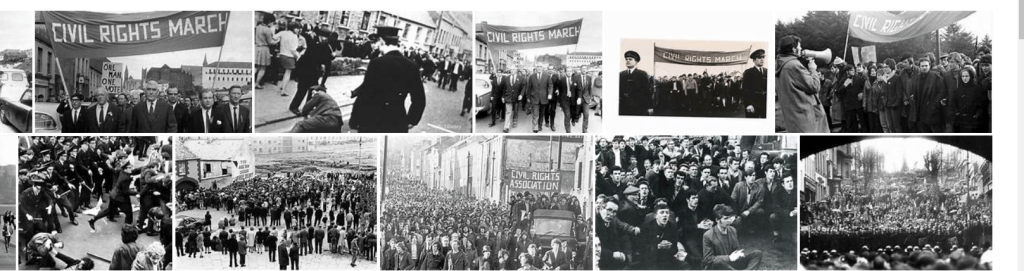
Civil Rights March in Derry

[Considered by many as the start date of ‘the Troubles’]

A civil rights march in Derry, that had been organised by members of the Derry Housing Action Committee (DHAC) and supported by the Northern Ireland Civil Rights Association (NICRA), was stopped by the Royal Ulster Constabulary (RUC) before it had properly begun. The marchers had proposed to walk from Duke Street in the Waterside area of Derry to the Diamond in the centre of the City. Present at the march were three British Labour Party Members of Parliament (MP); Gerry Fitt, then Republican Labour MP; several Stormont MPs; and members of the media including a television crew from RTE. There were different estimates of the number of people taking part in the march. Eamonn McCann (one of the organisers of the march) estimated that about 400 people lined up on the street with a further 200 watching from the pavements.

The RUC broke-up the march by baton-charging the crowd and leaving many people injured including a number of MPs.

[The incidents were filmed and later there was worldwide television coverage. The incidents in Derry had a profound effect on many people around the world but particularly on the Catholic population of Northern Ireland. Immediately after the march there were two days of serious rioting in Derry between the Catholic residents of the city and the RUC.]

Tuesday 5 October 1971

A new sitting of the Northern Ireland parliament at Stormont began. However the Social Democratic and Labour Party (SDLP) was absent due to its continuing protest against Internment. The SDLP met in an alternative assembly at Strabane town hall.

Friday 5 October 1973

William Whitelaw, then Secretary of State for Northern Ireland, chaired a series of talks at Stormont Castle, Belfast, on the question of forming an Executive to govern Northern Ireland. The talks involved representatives of, the Ulster Unionist Party (UUP), the Alliance Party of Northern Ireland (APNI), and the Social Democratic and Labour Party (SDLP). The parties disagreed on issues related to internment, policing, and a Council of Ireland, but did manage to make progress on other less controversial areas in the social and economic spheres. [See also: 9 October 1973; 16 October 1973] [ Political Developments. ]

Saturday 5 October 1974

See Guildford Bombs Page

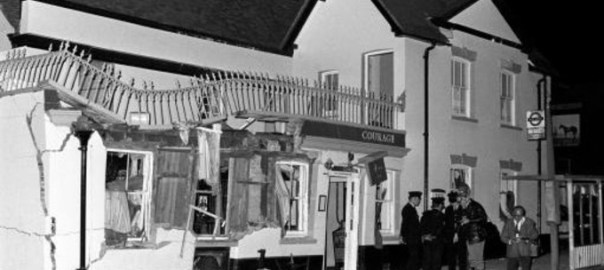
Guildford Bombs The Irish Republican Army (IRA) planted bombs in two public houses in Guildford, Surrey, England, which killed five people and injured a further 54. The pubs, the Horse and Groom and the Seven Stars, were targeted because they were frequented by off-duty British soldiers.

[On 22 October 1975 Patrick Armstrong, Gerard Conlon, Paul Hill, and Carole Richardson (who became known as the ‘Guildford Four’) were found guilty at the Old Bailey of causing explosions in London in October 1974. The four were sentenced to life imprisonment. Following an appeal the four were released on 19 October 1989. The court of appeal decided that the ‘confessions’ had been fabricated by the police. In a linked case, members of the Maguire family, the ‘Maguire Seven’, were convicted on 3 March 1976 of possession of explosives (even though no explosives were found) and some served 10 years in prison before the convictions were overturned.]

Two people were killed in separate incidents in Derry and County Armagh.

Wednesday 5 October 1977

Seamus Costello, founder member and leader of the Irish Republican Socialist Party (IRSP), was shot dead near North Strand, Dublin, Republic of Ireland. Both the Official Irish Republican Army (OIRA) and the Provisional IRA denied that they were responsible for the killing.

Thursday 5 October 1978

The three leaders of the Peace People, Betty Williams, Mairead Corrigan, and Ciaran McKeown, announced that they intended to step down from the organisation.

Friday 5 October 1979

The British and Irish governments agreed to strengthen the drive against paramilitary groups. The British Labour Party conference voted against a resolution calling for British withdrawal from Northern Ireland.

Friday 5 October 1984

At the Labour Party annual conference in Blackpool, England, a motion was passed that opposed the use of Diplock courts and supergrass evidence in Northern Ireland. The conference also called for a ban on the use of plastic bullets and an end to strip-searching of prisoners.

Saturday 5 October 1985

Charles Haughey, then leader of Fianna Fáil (FF), said that FF would not support any move away from the principle of a United Ireland.

Wednesday 5 October 1988

Integrated education in Northern Ireland was given a boost when Brian Mawhinney, then Minister for education, stated that the Department for Education of Northern Ireland (DENI) should promote integrated schools (?).

Friday 5 October 1990

The British Labour Party voted against organising or campaigning in Northern Ireland.

Sunday 5 October 1997

Martin McGuinness, then Vice-President of Sinn Féin (SF), addressed a SF rally in Coalisland, County Tyrone, and told those present that SF were involved in the multi-party talks in order to “smash the union

Tuesday 5 October 1999

The Irish Cabinet formally decided that Ireland would join the NATO led Partnership for Peace security programme. In spite of a promise in the Fianna Fáil (FF) general election manifesto in 1997, it was confirmed by the FF / Progressive Democrats (PD) Coalition that no referendum would be held on the matter.

Thursday 5 October 2000

Johnston Brown, then a Detective Sergeant in the Royal Ulster Constabulary (RUC), survived an attempt on his life when a pipe-bomb and petrol canister were thrown at his County Antrim home. Brown had played an important role in securing the imprisonment in 1995 of Johnny Adair, then a leader of the Ulster Freedom Fighters (UFF), a cover name (pseudonym) used by the Ulster Defence Association (UDA).

Peter Mandelson, then Secretary of State for Northern Ireland, warned hardline Ulster Unionists that if devolution failed they could face joint rule by London and Dublin. The warning came as those Unionists opposed to the Good Friday Agreement mounted yet another attempt to persuade David Trimble to set a deadline for IRA disarmament.

Friday 5 October 2001

A number of shots were fired at a house belonging to a Catholic family in Coleraine, County Derry. The shooting happened shortly after midnight.

[Loyalist paramilitaries were thought to have been responsible for the shooting.]

Lord Chief Justice Carswell in the High Court in Belfast upheld an earlier judgement that David Trimble, then leader of the Ulster Unionist Party (UUP), had acted unlawfully under section 52 of the Northern Ireland Act in preventing Sinn Féin (SF) ministers from attending meetings of the North-South Ministerial Council. Trimble, when First Minister, had decided not to nominate Martin McGuinness (SF), then Minister for Education, and Bairbre de Brún (SF), then Minister for Health, to attend the Council meetings.

[Trimble had first suggested the action on 28 October 2000 and introduced the ban in November 2000 and SF had contested the decision on 15 December 2000. SF won the first court case but Trimble had appealed the decision. Trimble announced that he would appeal the latest decision to the House of Lords.]

———————————————————————————

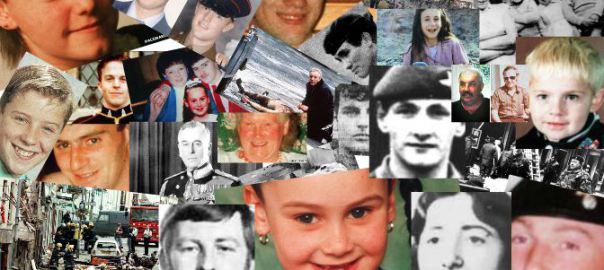
Remembering all innocent victims of the Troubles

Today is the anniversary of the death of the following  people killed as a results of the conflict in Northern Ireland

“To live in hearts we leave behind is not to die.”
Thomas Campbell

To the innocent on the list – Your memory will live  forever

– To  the Paramilitaries  –

There are many things worth living for, a few things worth dying for, but nothing worth killing for.

  13  People lost their lives on the 5th October  between 1972 – 1982

————————————————————–

05 October 1972


John Magee,  (54)

Protestant
Status: Civilian (Civ),

Killed by: Ulster Defence Association (UDA)
Killed in bomb attack on Capitol Bar, Dublin Road, Belfast.

————————————————————–

05 October 1974


Eugene McQuaid  (35)

Catholic
Status: Civilian (Civ),

Killed by: Irish Republican Army (IRA)
Killed while in the vicinity of an IRA bomb which exploded prematurely, while travelling on his motorcycle, Killeen, County Armagh.

————————————————————–

05 October 1974


Asha Chopra,  (25) nfNI
Status: Civilian (Civ),

Killed by: Irish Republican Army (IRA)
Shot while driving her car, during sniper attack on Royal Ulster Constabulary (RUC) foot patrol diverting traffic, Greenhaw Road, Shantallow, Derry.

————————————————————–

05 October 1974
Ann Hamilton, (19) nfNIB
Status: British Army (BA),

Killed by: Irish Republican Army (IRA)
Off duty. Killed in bomb attack on Horse and Groom public house, Guildford, Surrey, England.

————————————————————–

05 October 1974
Caroline Slater,   (18) nfNIB
Status: British Army (BA),

Killed by: Irish Republican Army (IRA)
Off duty. Killed in bomb attack on Horse and Groom public house, Guildford, Surrey, England.

————————————————————–

05 October 1974
William Forsyth,   (18) nfNIB
Status: British Army (BA),

Killed by: Irish Republican Army (IRA)
Off duty. Killed in bomb attack on Horse and Groom public house, Guildford, Surrey, England.

————————————————————–

05 October 1974


John Hunter,  (17) nfNIB
Status: British Army (BA),

Killed by: Irish Republican Army (IRA)
Off duty. Killed in bomb attack on Horse and Groom public house, Guildford, Surrey, England

————————————————————–

05 October 1974
Paul Craig,  (22) nfNIB
Status: Civilian (Civ),

Killed by: Irish Republican Army (IRA)
Killed in bomb attack on Horse and Groom public house, Guildford, Surrey, England

————————————————————–

05 October 1977
Seamus Costello,   (38) nfNIRI
Status: Civilian Political Activist (CivPA),

Killed by: Official Irish Republican Army (OIRA)
Irish Republican Socialist Party (IRSP) member. Shot while sitting in stationary car, Northbrook Avenue, North Strand, Dublin. Official Irish Republican Army (OIRA) / Irish National Liberation Army (INLA) feud.

————————————————————–

05 October 1979
George Hawthorne,   (37)

Protestant
Status: ex-Ulster Defence Regiment (xUDR),

Killed by: Irish Republican Army (IRA)
Shot while driving his car into car park, Soho Place, Newry, County Down.

————————————————————–

05 October 1979
Martin Rowland,   (26)

Catholic
Status: Civilian (Civ),

Killed by: Ulster Volunteer Force (UVF)
Found shot near to his home, Camlough, County Armagh.

————————————————————–

05 October 1981
Hector Hall (22)

Protestant
Status: ex-Ulster Defence Regiment (xUDR),

Killed by: Irish Republican Army (IRA)
Shot outside Altnagelvin Hospital, Derry.

————————————————————–

05 October 1982

Charles Crothers  (54)

Protestant
Status: Royal Ulster Constabulary (RUC),

Killed by: Irish Republican Army (IRA)
Off duty reservist. Shot at his workplace, Department of the Environment depot, Altnagelvin, Derry.

————————————————————–
Guildford Pub Bombings – Not Forgotten!

The Guildford pub bombings


——————————————————————-

Guildford Pub Bombings

——————————————————————-

The Guildford pub bombings occurred on 5 October 1974. The Provisional Irish Republican Army (IRA) detonated two 6-pound gelignite bombs at two pubs in Guildford, Surrey, southwest of London. The pubs were targeted because they were popular with British Army personnel stationed at the barracks in Pirbright. Four soldiers and one civilian were killed, whilst a further sixty-five were wounded.

The bomb in the Horse and Groom detonated at 8:30 pm. It killed Paul Craig (a 22-year-old plasterer), two members of the Scots Guards and two members of the Women’s Royal Army Corps. The Seven Stars was evacuated after the first blast, and thus there were no serious injuries when the second bomb exploded at 9:00 pm.

——————————————————————-

Memories of the Guildford Bombings

——————————————————————-

The Innocent Victims

————————————————————–

05 October 1974
Ann Hamilton,   (19) nfNIB
Status: British Army (BA),

Killed by: Irish Republican Army (IRA)
Off duty. Killed in bomb attack on Horse and Groom public house, Guildford, Surrey, England.

————————————————————–

05 October 1974
Caroline Slater,  (18) nfNIB
Status: British Army (BA),

Killed by: Irish Republican Army (IRA)
Off duty. Killed in bomb attack on Horse and Groom public house, Guildford, Surrey, England.

————————————————————–

05 October 1974
William Forsyth,   (18) nfNIB
Status: British Army (BA),

Killed by: Irish Republican Army (IRA)
Off duty. Killed in bomb attack on Horse and Groom public house, Guildford, Surrey, England.

————————————————————–

05 October 1974


John Hunter,  (17) nfNIB
Status: British Army (BA),

Killed by: Irish Republican Army (IRA)
Off duty. Killed in bomb attack on Horse and Groom public house, Guildford, Surrey, England

————————————————————–

05 October 1974
Paul Craig,  (22) nfNIB
Status: Civilian (Civ),

Killed by: Irish Republican Army (IRA)
Killed in bomb attack on Horse and Groom public house, Guildford, Surrey, England

————————————————————–

These attacks were the first in a year-long campaign by an IRA Active Service Unit – who were eventually captured after the Balcombe Street Siege.[2] A similar bomb to those used in Guildford, with the addition of shrapnel, was thrown into the Kings Arms pub in Woolwich on 7 November 1974. Gunner Richard Dunne and Alan Horsley, a sales clerk, died in that explosion.

The bombings contributed to the speedy and unchallenged passing of the Prevention of Terrorism Acts in November 1974, which were then used by the Metropolitan Police to force false confessions from the “Guildford Four“.

The Guildford Four

The bombings were at the height of the Troubles in Northern Ireland. The Metropolitan Police were under enormous pressure to apprehend the IRA bombers responsible for the attacks in England. In December 1974 the police arrested three men and a woman, later known as the Guildford Four. These were:

Conlon had been in London at the time of the bombings, and had visited his mother’s sister, Annie Maguire. A few days after the Guildford Four were arrested, the Metropolitan Police arrested Annie Maguire and her family, including Gerry Conlon’s father, Patrick “Giuseppe” Conlon – the “Maguire Seven“.

The Guildford Four were falsely convicted of the bombings in October 1975 and sentenced to life in prison. The Maguire Seven were falsely convicted of providing bomb-making material and other support in March 1976 and sentenced to terms varying between four and fourteen years.

The Guildford Four were held in prison for fifteen years, while Giuseppe Conlon died near the end of his third year of imprisonment. All the convictions were overturned years later in the appeal courts after it was proved the Guildford Four’s convictions had been based on confessions obtained by torture (as were some Maguire Seven confessions), whilst evidence specifically clearing the Four was not reported by the police.[3]

During the trial of the “Balcombe Street Four” in February 1977, the four IRA members instructed their lawyers to “draw attention to the fact that four totally innocent people were serving massive sentences” for three bombings in Woolwich and Guildford.[4] The Balcombe Street Four were never charged with these offences. The movie In the Name of the Father is based on these events.


Major Events in the Troubles

4th October – Deaths & Events in Northern Ireland Troubles

Key Events & Deaths on this day in Northern Ireland Troubles
4th October

Friday 4 October 1968

A Northern Ireland Civil Rights Association (NICRA) delegation met with the Derry March organisers and tried to have the march cancelled. Eventually it was decided to go ahead with the march. [ Civil Rights Campaign; Derry March. ]

Monday 4 October 1971

A British soldier was killed when the Official Irish Republican Army (OIRA) carried out a bomb attack on a British Army (BA) observation post in Belfast..

Sunday 4 October 1981

Republican prisoners issued a statement blaming pressure on their families as the reason for the ending of the hunger strike: “Mounting pressure and cleric-inspired demoralisation led to [family] interventions and five strikers have been taken off their fast.”

Monday 4 October 1993

The Irish Republican Army (IRA) exploded five bombs in north London and injured four people. The IRA issued a statement welcoming the Hume-Adams Initiative.

Tuesday 4 October 1994

Gerry Adams, then President of Sinn Féin (SF), led a SF delegation to a meeting with senior United States government officials in Washington. Nancy Soderberg, then Staff Director of the National Security Council, was one of the US officials present at the meeting.

[The meeting was able to take place due to a change of US policy on SF.]

Following the meeting Adams took part in a television debate with Ken Maginness, then Ulster Unionist Party (UUP) MP.

Wednesday 4 October 1995

William Crowe, then United States Ambassador to the UK, together with Nancy Soderberg, then Staff Director of the National Security Council, held separate meetings with a number of party representatives in Belfast. The pair met with the Ulster Unionist Party (UUP), the Democratic Unionist Party (DUP), the Social

Monday 4 October 1999

A pipe-bomb was thrown at a Catholic taxi driver as he travelled through the Peter’s Hill area of west Belfast. The bomb failed to explode. The Red Hand Defenders (RHD) later claimed responsibility for the attack.

[In 2001 it became apparent that RHD was a cover name used by both the Ulster Defence Association (UDA) and the Ulster Volunteer Force (UVF).]

Talks between David Trimble, then leader of the Ulster Unionist Party (UUP), and Gerry Adams, then President of Sinn Féin (SF), broke up without any progress in advance of the Mitchell Review.

Decommissioning remained the main issue preventing the UUP from accepting SF’s participation in the new Northern Ireland Executive.

The results of a survey conducted by the Northern Ireland Statistics and Research Agency (NISRA) indicated that the average weekly income of Catholic families was £306 compared to £351 for Protestant families.

The Irish Government announced an Exchequer surplus of £1.7 billion. Employers’ organisations, along with major unions, also called for significant tax concessions in the Budget.

Thursday 4 October 2001

Nuala O’Loan, then Police Ombudsman, held a media briefing in Derry to announce that she was upholding a complaint that the Royal Ulster Constabulary (RUC) never communicated directly with the family of Samuel Devenny (42) about the investigation into the attack on him by RUC officers.

The attack took place in Devenny’s home on 19 April 1969 and he died as a result of his injuries on 17 July 1969. O’Loan stated that disciplinary action could not now be taken against the former RUC officers. A report into the incident carried out by Metropolitan police officers under Kenneth Drury, then Detective Chief Superintendent, failed to identify the RUC officers concerned because of “a conspiracy of silence”.

1 union jack

Sinn Féin (SF) lost a high court challenge to the ruling by Peter Mandelson, former Secretary of State for Northern Ireland, that the union flag should be flown over ministerial offices in Northern Ireland on 17 days each year. Martin McGuinness and Bairbre de Brún had contested the Flags Order that had been introduced by Mandelson when the Northern Ireland Executive failed to reach agreement over the issue in 2000.

The results of an opinion poll, the Northern Ireland Omnibus survey, were published. Of those questioned almost 70 per cent felt that the new Policing Board will help ensure a satisfactory standard of policing.

A man was shot in the leg in a paramilitary ‘punishment’ attack in Ardoyne, north Belfast, at appoximately 9.00pm (21.00BST). A number of fireworks were thrown at a house in Thornburn Road, north Belfast. The British Army defused three pipe bombs during a series of security alerts in the Hillview Road area of north Belfast.

———————————————————————————

Remembering all innocent victims of the Troubles

Today is the anniversary of the death of the following  people killed as a results of the conflict in Northern Ireland

“To live in hearts we leave behind is not to die.”
Thomas Campbell

To the innocent on the list – Your memory will live  forever

– To  the Paramilitaries  –

There are many things worth living for, a few things worth dying for, but nothing worth killing for.

  7  People lost their lives on the 4th  October  between 1971 – 1989

————————————————————–

04 October 1971


Brian Hall,  (22) nfNI
Status: British Army (BA),

Killed by: Official Irish Republican Army (OIRA)
Killed in bomb attack on British Army (BA) observation post, Cupar Street, Belfast.

————————————————————–

04 October 1972


James McCartan,   (21)

Catholic
Status: Civilian (Civ),

Killed by: Ulster Defence Association (UDA)
Found shot on waste ground, beside Connswater River, off Mersey Street, Belfast.

————————————————————–

04 October 1972
Patrick Connolly,   (23)

Catholic
Status: Civilian (Civ),

Killed by: Ulster Volunteer Force (UVF)
Killed by hand grenade thrown into his home, Deramore Drive, Portadown, County Armagh

————————————————————–

04 October 1974


James Willis, (33)

Protestant
Status: Civilian (Civ),

Killed by: Ulster Volunteer Force (UVF)
Shot while on his way to work, Moonstone Street, off Lisburn Road, Belfast. Catholic workmate intended target.

————————————————————–

04 October 1987
James McDaid,  (30)

Catholic
Status: Civilian (Civ),

Killed by: Irish National Liberation Army (INLA)
Found shot in abandoned car near Crossmaglen, County Armagh. Alleged criminal.

————————————————————–

04 October 1988


Brian Armour,  (48)

Protestant
Status: Prison Officer (PO),

Killed by: Irish Republican Army (IRA)
Off duty. Killed by booby trap bomb attached to his car shortly after leaving his home, while driving along Abetta Parade, Bloomfield, Belfast.

————————————————————–

04 October 1989
James Babington,  (52)

Catholic
Status: Civilian (Civ),

Killed by: Irish Republican Army (IRA)
Shot while walking to work along Chichester Park South, off Antrim Road, Belfast.

————————————————————–

3rd October – Deaths & Events in Northern Ireland Troubles

Key Events & Deaths on this day in Northern Ireland Troubles
3rd  October

Thursday 3 October 1968

The proposed civil rights march in Derry was banned from the area of the city centre and the Waterside area. The banning order was issued under the Public Order Act by William Craig, then Home Affairs Minister.

Sunday 3 October 1971

A man was shot dead during an attack by the Irish Republican Army (IRA) on a British Army (BA) foot patrol.

Friday 3 October 1975

The Ulster Volunteer Force (UVF) was declared a ‘proscribed’ (illegal) organisation. Tiede Herrema, then a Dutch industrialist living and working in the Republic of Ireland, was abducted and held hostage at a house in Monasterevin, County Kildare.

[On 21 October 1975 Gardaí surrounded the house and a siege began which lasted until the release of Herrema on 6 November 1975.]

Saturday 3 October 1981

Republican Hunger Strike Ended Those Republican prisoners who had been still refusing food decided to end their hunger strike. At this stage in the protest six prisoners were on hunger strike: Hugh Carville – 34 days; James Devine – 13 days; Gerard Hodgkins – 20 days; Jackie McMullan – 48 days; John Pickering – 27 days; and Pat Sheehan – 55 days.

[The prisoners took their decision when it became clear that each of their families would ask for medical intervention to save their lives. Even though the hunger strike was called off it was announced on 4 October 1981 that the ‘blanket protest’ was set to continue. On 6 October 1981 James Prior, then Secretary of State for Northern Ireland, announced a series of measures which went a long way to meeting many aspects of the prisoners’ five demands. By 25 October the ‘blanket protest’ was all but over.]

[The hunger strike of 1981 had very important and far-reaching consequences for Northern Ireland and proved to be one of the key turning points of ‘the Troubles’. In addition to the 10 Republican prisoners who had died inside the Maze Prison there had been an upsurge in violence outside the prison with 62 people dying as a result. The Republican movement had achieved a huge propaganda victory over the British government and had obtained a lot of international sympathy. Active and tacit support for the Irish Republican Army (IRA) increased in Nationalist areas. Political support for Sinn Féin (SF) was demonstrated in the two by-elections and eventually led to the emergence of SF as a significant political force in Northern Ireland.

The British government’s fear that SF would overtake the Social Democratic and Labour Party (SDLP) as the main representative of the Catholic population of Northern Ireland was a key reason for the government signing the Anglo-Irish Agreement (AIA) on 15 November 1985.]

Saturday 3 October 1987

Dr John Alderdice was elected as leader of the Alliance Party of Northern Ireland (APNI). He replaced John Cushnahan.

Tuesday 3 October 1989

It was confirmed that the Ulster Defence Regiment (UDR) would, in future, be armed with plastic bullet guns for riot control.

Monday 3 October 1994

Anthony Lake, then United States (US) National Security Adviser, announced that the US government had ended its policy prohibiting contact with Sinn Féin (SF). [On 4 October 1994 a SF delegation met with US officials in Washington.]

Wednesday 3 October 2001

David Trimble, then leader of the Ulster Unionist Party (UUP), travelled to Downing Street, London, for a meeting with Tony Blair, then British Prime Minister. The meeting had been arranged to discuss the problems in the peace process. [Trimble is in favour of a “soft landing”, that is an indefinite suspension of the Northern Ireland Assembly, rather than fresh Assembly elections.]

———————————————————————————

Remembering all innocent victims of the Troubles

Today is the anniversary of the death of the following  people killed as a results of the conflict in Northern Ireland

“To live in hearts we leave behind is not to die.”
Thomas Campbell

To the innocent on the list – Your memory will live  forever

– To  the Paramilitaries  –

There are many things worth living for, a few things worth dying for, but nothing worth killing for.

  8  People lost their lives on the 3rd  October  between 1971 – 1988

————————————————————–

03 October 1971


Patrick Daly,   (57)

Catholic
Status: Civilian (Civ),

Killed by: Irish Republican Army (IRA)
Shot during gun battle between Irish Republican Army (IRA) and British Army (BA), corner of Linden Street and Falls Road, Belfast.

————————————————————–

03 October 1972
Geoffrey Hamilton,   (23)

Protestant
Status: Civilian (Civ),

Killed by: Irish Republican Army (IRA)
Abducted while taking photographs following bomb explosion, Distillery Street, Belfast. Found shot, Murdoch Street, off Grosvenor Road, Belfast, on 4 October 1972.

————————————————————–

03 October 1973


Lindsay Dobie,  (23) nfNI
Status: British Army (BA),

Killed by: Irish Republican Army (IRA)
Killed by booby trap bomb in parcel left at Bligh’s Lane British Army (BA) base, Creggan, Derry

————————————————————–

03 October 1973


Ivan Vennard,  (32) Protestant
Status: ex-Ulster Defence Regiment (xUDR),

Killed by: Irish Republican Army (IRA)
Shot while on postal round, Kilwilkie, Lurgan, County Armagh.

————————————————————–

03 October 1975


William Stevenson,  (38) Protestant
Status: Civilian (Civ), Killed by: Irish Republican Army (IRA)
Found shot in Sussex Place, Markets, Belfast.

————————————————————–

03 October 1976
Kevin Mulhern,  (33)

Catholic
Status: Civilian (Civ),

Killed by: Ulster Freedom Fighters (UFF)
Shot at his home, Knockwellan Park, Waterside, Derry.

————————————————————–

03 October 1979


Sadie Larmour,  (44) Catholic
Status: Civilian (Civ), Killed by: Ulster Volunteer Force (UVF)
Shot at her home, Rodney Drive, Falls, Belfast.

————————————————————–

03 October 1988


Henry McNamee, (31)

Catholic
Status: Civilian (Civ),

Killed by: Irish People’s Liberation Organisation (IPLO)
Shot at his girlfriend’s home, Lenadoon Avenue, Belfast. Alleged informer

————————————————————–

2nd October – Deaths & Events in Northern Ireland Troubles

Key Events & Deaths on this day in Northern Ireland Troubles
2nd t October

Friday 2 October 1970

It was announced that local government elections would be postponed.

[The next local government elections took place on 30 May 1973.]

Saturday 2 October 1971

A member of the Irish Republican Army (IRA) was killed in a premature bomb explosion.

Thursday 2 October 1975

UVF Logo
UVF Logo

12 People Killed in UVF Attacks 12 people died in a series of Ulster Volunteer Force (UVF) attacks across Northern Ireland. Four Catholic civilians were killed in a UVF gun attack at Casey’s Bottling Plant, Millfield, Belfast. Two other Catholic civilians were killed in separate bomb attacks in Belfast and County Antrim.

Two Protestant civilians were also killed in UVF attacks. And four members of the UVF died when a bomb they were transporting exploded prematurely near Coleraine, County Derry.

Tuesday 2 October 1979

In a statement the Irish Republican Army (IRA) rejected Pope John Paul II’s call for an end to the violence in Northern Ireland. The IRA declared that it had widespread support and that Britain would only withdraw from Northern Ireland if forced to do so: “force is by far the only means of removing the evil of the British presence in Ireland … we know also that upon victory the Church would have no difficulty in recognising us”. Maurice Oldfield, the former head of MI6, was appointed to a new post of security co-ordinator for Northern Ireland.

[This is seen as an attempt to improve relations between the Royal Ulster Constabulary (RUC) and the British Army.]

Thursday 2 October 1986

George Seawright, then a Loyalist councillor, was sentenced to nine months imprisonment for his part in disturbances following a protest at Belfast City Hall on 20 November 1985.

See: George Seawright

Wednesday 2 October 1991

‘The Committee’ Broadcast The Channel 4 broadcasting company showed a documentary called ‘The Committee’ in its Dispatches series. The programme claimed that there was an ‘inner circle’ in the Royal Ulster Constabulary (RUC) and Ulster Defence Regiment (UDR) which was colluding with Loyalist paramilitaries in the killing of Catholics.

[A subsequent book on the controversy, also entitled ‘The Committee’, was not released in the United Kingdom (UK) by the American publishers who feared libel proceedings.]

Saturday 2 October 1993

The Irish Republican Army (IRA) exploded three bombs in Hampstead, north London and injured six people and damaged a number of shops and flats.

Monday 2 October 1995

The Irish Times (a Dublin based newspaper) carried a report of an interview with David Trimble, then leader of the Ulster Unionist Party (UUP). Trimble was reported as calling for the establishment of a Northern Ireland Assembly and he said he would debate with Sinn Féin (SF) if the party took its seats in this proposed assembly. Trimble travelled to Dublin for a meeting with John Bruton, then Taoiseach (Irish Prime Minister).

Friday 2 October 1998

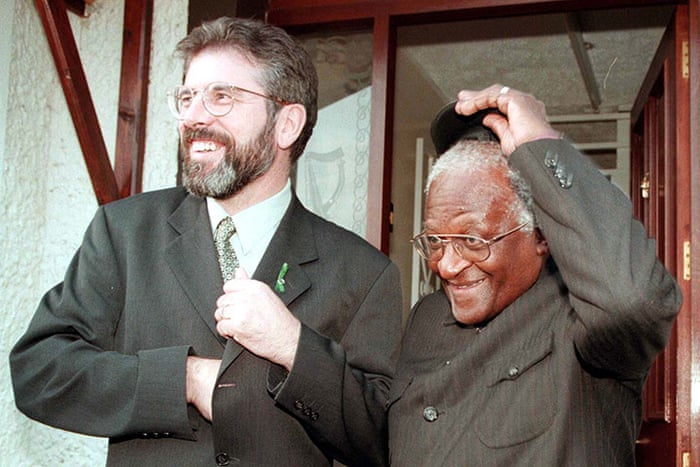
Desmond Tutu

During a visit to Northern Ireland Archbishop Desmond Tutu of South Africa said that politicians would have to answer to the people if the peace process was allowed to stall.

Saturday 2 October 1999

David Trimble, then leader of the Ulster Unionist Party (UUP), spoke at the conference of the youth wing of the UUP. Trimble criticised the Young Unionists for passing a motion calling for the exclusion of Sinn Féin (SF) from any future government. As he spoke Trimble was heckled. Gerry Adams, then President of Sinn Féin (SF), gave an address to the second annual Congress of Ógra Sinn Féin in Dublin.

The youth wing of SF voted to reject the Patten report. Eddie McGrady, then chief whip of the Social Democratic and Labour Party (SDLP), accused the Conservative Party of selecting spokesmen on Northern Ireland who “are totally anti-Agreement, anti-change and therefore anti-peace”. Sam Cushnahan, then Director of Families Against Intimidation and Terror (FAIT), announced that the group was ending its work.

Monday 2 October 2000

The Human Rights Act 1998 came into force. This Act gave effect to some (but not all) of the provisions of the European Convention on Human Rights (ECHR). The necessary legislation had been passed at Westminster in 1998 but the delay was to give lawyers and public organisations time to prepare. Under the Human Rights Act people are able to bring a case in local courts rather than having to go to Strasbourg where the European Court sits

Tuesday 2 October 2001

Quentin Davies, then Conservative MP and Shadow Secretary of State, accompanied parents and children as they returned home through the Loyalist protest outside the Holy Cross Girls’ Primary School in Ardoyne, north Belfast. Davies described the protest as “utterly unacceptable”.

[It was reported (Irish Times) that one protester, who seemed uncertain of Davies identity, shouted: “Away back to the Free State, Fenian scum”.]

The Ulster Unionist Party (UUP) managed to secure 30 signatures to allow it to table a motion in the Northern Ireland Assembly to exclude Sinn Féin (SF) ministers from the Executive. The UUP motion had been short by two signatures but the Progressive Unionist Party (PUP) members put their names to the motion. The UUP has said that if the motion fails the party will withdraw its ministers from the Executive.

[The Democratic Unionist Party (DUP) had tabled a similar motion on Monday 1 October 2001 but the UUP motion will be the one debated. The planned move by the UUP will result in the (long-term) suspension of the power-sharing government.]

———————————————————————————

Remembering all innocent victims of the Troubles

Today is the anniversary of the death of the following  people killed as a results of the conflict in Northern Ireland

“To live in hearts we leave behind is not to die.”
Thomas Campbell

To the innocent on the list – Your memory will live  forever

– To  the Paramilitaries  –

There are many things worth living for, a few things worth dying for, but nothing worth killing for.

  17  People lost their lives on the 2nd October  between 1971 – 1975

————————————————————–

02 October 1971
Terence McDermott,   (19)

Catholic
Status: Irish Republican Army (IRA),

Killed by: Irish Republican Army (IRA)
Died in premature bomb explosion outside electricity sub-station, Lambeg, near Lisburn, County Antrim.

————————————————————–

02 October 1972


Edward Stuart,  (20)

Protestant
Status: British Army (BA),

Killed by: Irish Republican Army (IRA)
From Northern Ireland. Undercover British Army (BA) member. Shot while driving laundry van, Juniper Park, Twinbrook, Belfast.

————————————————————–

02 October 1972
Edward Bonner,  (50)

Catholic
Status: Civilian (Civ),

Killed by: Irish Republican Army (IRA)
Shot while inside Grosvenor Homing Pigeon’s Club, Iveagh Street, Falls, Belfast. Alleged informer.

See: IRA Nutting Squad 

————————————————————–

02 October 1972


Seamus Wright,  (25)

Catholic
Status: Irish Republican Army (IRA),

Killed by: Irish Republican Army (IRA)
Abducted from his home, Bombay Street, Falls, Belfast. Presumed killed. Body never recovered. Alleged informer.

————————————————————–

02 October 1972


Kevin McKee,  (-9)

Catholic
Status: Irish Republican Army (IRA),

Killed by: Irish Republican Army (IRA)
Abducted somewhere in Belfast. Presumed killed. Body never recovered. Alleged informer

————————————————————–

02 October 1975
Maria McGrattan,   (47)

Catholic
Status: Civilian (Civ),

Killed by: Ulster Volunteer Force (UVF)
Shot at her workplace, Casey’s Bottling Company, Millfield, Belfast.

————————————————————–

02 October 1975
Frances Donnelly,  (35)

Catholic
Status: Civilian (Civ),

Killed by: Ulster Volunteer Force (UVF)
Shot at her workplace, Casey’s Bottling Company, Millfield, Belfast.

————————————————————–

02 October 1975


Gerard Grogan,  (18)

Catholic
Status: Civilian (Civ),

Killed by: Ulster Volunteer Force (UVF)
Shot at his workplace, Casey’s Bottling Company, Millfield, Belfast.

————————————————————–

02 October 1975


Thomas Osbourne.  (18)

Catholic
Status: Civilian (Civ),

Killed by: Ulster Volunteer Force (UVF)
Shot at his workplace, Casey’s Bottling Company, Millfield, Belfast. He died 23 October 1975.

————————————————————–

02 October 1975


Thomas Murphy,   (29)

Catholic
Status: Civilian (Civ),

Killed by: Ulster Volunteer Force (UVF)
Killed in booby trap bomb attack at his photographer’s shop, corner of Cranburn Street and Antrim Road, Belfast.

————————————————————–

02 October 1975


John Stewart,  (35)

Catholic
Status: Civilian (Civ),

Killed by: Ulster Volunteer Force (UVF)
Killed during gun and bomb attack on McKenna’s Bar, Ballyginiff, near Crumlin, County Antrim.

————————————————————–

02 October 1975
Irene Nicholson,  (37)

Protestant
Status: Civilian (Civ),

Killed by: Ulster Volunteer Force (UVF)
Killed in bomb attack on Anchor Bar, Catherine Street, Killyleagh, County Down.

————————————————————–

02 October 1975
Ronald Winters,   (26)

Protestant
Status: Civilian (Civ),

Killed by: not known (nk)
Shot at his parents’ home, London Road, Belfast.

————————————————————–

02 October 1975
Samuel Swanson,   (28)

Protestant
Status: Ulster Volunteer Force (UVF),

Killed by: Ulster Volunteer Force (UVF)
Died when bomb exploded prematurely, while travelling in car along Farrenlester Road, near Coleraine, County Derry.

————————————————————–

02 October 1975
Mark Dodd,  (17)

Protestant
Status: Ulster Volunteer Force (UVF),

Killed by: Ulster Volunteer Force (UVF)
Died when bomb exploded prematurely, while travelling in car along Farrenlester Road, near Coleraine, County Derry.

————————————————————–

02 October 1975
Robert Freeman,   (17)

Protestant
Status: Ulster Volunteer Force (UVF),

Killed by: Ulster Volunteer Force (UVF)
Died when bomb exploded prematurely, while travelling in car along Farrenlester Road, near Coleraine, County Derry.

————————————————————–

02 October 1975


Aubrey Reid,  (25)

Protestant
Status: Ulster Volunteer Force (UVF),

Killed by: Ulster Volunteer Force (UVF)
Died when bomb exploded prematurely, while travelling in car along Farrenlester Road, near Coleraine, County Derry.

————————————————————–

1st October – Deaths & Events in Northern Ireland Troubles

Key Events & Deaths on this day in Northern Ireland Troubles
1st October


Tuesday 1 October 1968

The Apprentice Boys of Derry announced its intention to hold an ‘annual’ march along the same proposed route of the Civil Rights demonstration, on the same day and at the same time.

[This particular tactic had been used on several occasions before and many times after the Derry March. It provided the excuse needed to ban the march.]

A new Northern Ireland university opened at Coleraine, County Londonderry. The university was named the New University of Ulster.

[The decision to build the university at Coleraine had caused a great deal of controversy among all shades of opinion in Derry who felt that as the second city of Northern Ireland Derry should have received the economic stimulus the university would have brought. The university merged in October 1984 with Jordanstown Polytechnic, Magee College in Derry and Belfast Art College to form the University of Ulster.]

Friday 1 October 1971

A British soldier was killed in Belfast.

Friday 1 October 1982

A motion was passed at the Labour Party conference which called for a ban on the use of plastic bullets in the whole of the United Kingdom (UK).

Monday 1 October 1990

At a fringe meeting at the British Labour Party conference Seamus Mallon, then deputy leader of the Social Democratic and Labour Party (SDLP), stated that Peter Brooke, then Secretary of State for Northern Ireland, should abandon the agenda drawn up in the summer for the proposed political talks.

Tuesday 1 October 1991

A motion on Northern Ireland was debated at the Labour Party conference in Brighton in England. The motion would have required the Labour Party to organise and contest elections in Northern Ireland. However, the motion was heavily defeated.

Friday 1 October 1993

Representatives of the Democratic Unionist Party (DUP) held a meeting with Michael Ancram, then Political Development Minister at the Northern Ireland Office (NIO). The DUP members refused to discuss their latest policy document ‘Breaking the Log-Jam’ unless Ancram undertook to ignore the Hume-Adams Initiative.

Sunday 1 October 1995

Gerry Adams, then President of Sinn Féin (SF), made his first visit to Scotland. Loyalists held a protest against his visit. Police arrested five of the protesters.

Monday 1 October 2001

The Loyalist protest at the Holy Cross Girls’ Primary School resumed at the beginning of a new week. Protesters held a noisy protest but also threw ballons, filled with urine, at parents and children. Reg Empy (Ulster Unionist Party; UUP), then Acting First Minister, and Seamus Mallon (Social Democratic and Labour Party; SDLP), then Acting Deputy First Minister, meet with local representatives in Ardoyne, north Belfast, to discuss the situation at the Holy Cross school.

Empy said there was no excuse for the on-going protest at the school. [The protest first began on 20 June 2001 and the current phase started on 3 September 2001.] David Trimble, then leader of the Ulster Unionist Party (UUP), called on the British government to crackdown on the money made by paramilitary groups in Northern Ireland. Trimble made his call at the Labour Party conference in Brighton, England.

[Gordon Brown, then Chancellor, had earlier announced that he was freezing the alleged assets, held in the UK, of the Taleban government in Afghanistan.]

The Royal Ulster Constabulary (RUC) began a two-day conference on Human Rights and Policing at the Hilton Hotel in Belfast. The conference will address issues of police accountability, policing a diverse society and the European perspective on policing.

———————————————————————————

Remembering all innocent victims of the Troubles

Today is the anniversary of the death of the following  people killed as a results of the conflict in Northern Ireland

“To live in hearts we leave behind is not to die.”
Thomas Campbell

To the innocent on the list – Your memory will live  forever

– To  the Paramilitaries  –

There are many things worth living for, a few things worth dying for, but nothing worth killing for.

  5  People lost their lives on the 1st October  between 1971 – 1982

————————————————————–

01 October 1971
Peter Sharpe,   (22) nfNI
Status: British Army (BA),

Killed by: Irish Republican Army (IRA)
Shot while on British Army (BA) foot patrol, Kerrera Street, Ardoyne, Belfast.

————————————————————–

01 October 1972


Michael Hayes, (27)

Catholic
Status: Civilian (Civ),

Killed by: British Army (BA)
Shot while walking along Edlingham Street, New Lodge, Belfast.

————————————————————–

01 October 1973


Eileen Doherty, (19)

Catholic
Status: Civilian (Civ), K

illed by: Ulster Volunteer Force (UVF)
Died shortly after being shot by other passenger, while travelling in a taxi, Annadale Embankment, Ballynafeigh, Belfast.

————————————————————–

01 October 1976
Victor Dormer,  (25)

Protestant
Status: British Army (BA) ,

Killed by: Irish Republican Army (IRA)
Died one month after being shot while in relative’s home, Copperfield Street, Tiger’s Bay, Belfast. He was injured on 29 August 1976.

————————————————————–

01 October 1982

John Eagleson,  (57)

Protestant
Status: Royal Ulster Constabulary (RUC),

Killed by: Irish Republican Army (IRA)
Off duty reservist. Shot while travelling on his motorcycle to work, Drum Manor, near Cookstown, County Tyrone

————————————————————–


30th September – Deaths & Events in Northern Ireland Troubles

Key Events & Deaths on this day in Northern Ireland Troubles

Monday 30 September 1968

  Civil Rights Campaign Derry March

Wednesday 30 September 1970

A Protestant man was shot and killed by Loyalists in Belfast.

[‘Lost Lives’ claimed that the Ulster Defence Association (UDA) was responsible.]

Thursday 23 September 1971

Two members of the Official Irish Republican Army (OIRA) were killed in a premature bomb explosion.

Thursday 30 September 1971

Ian Paisley and Desmond Boal launched the Ulster Democratic Unionist Party (DUP).

Saturday 30 September 1972

Five people died in separate incidents in Belfast. A sixth person died later as a result of injuries received on the day.

Friday 30 September 1988

See SAS Gibraltar Page

An inquest held in Gibraltar  decided that the Special Air Service (SAS) soldiers who shot dead three Irish Republican Army (IRA) members on 6 March 1988 had acted lawfully. There was conflicting evidence on whether or not the IRA members had been given a warning before being shot.

Sunday 30 September 1990

‘Joy riders’ Shot Dead Martin Peake (17) and Karen Reilly (18), both Catholic civilians, were shot dead by British Army paratroopers in Belfast. The two teenagers were travelling (‘joy riding’) in a stolen car. At the time it was claimed that the stolen car had failed to stop at an army check point and struck a member of the army foot patrol.

[Later it was revealed that the injuries suffered by the soldier were deliberately inflicted after the incident by another soldier. In June 1993 Lee Clegg, a private in the Parachute Regiment, was sentenced to life imprisonment. Clegg’s subsequent early release and return to his regiment caused uproar in the nationalist community.]

Wednesday 30 September 1992

The Democratic Unionist Party (DUP) returned to the resumed political talks (later known as the Brooke / Mayhew talks) at Stormont. The DUP attended this section of the talks because the main business was Articles 2 and 3 of the Irish Constitution.

[The DUP were criticised as having an ‘a la carte’ approach to the talks.]

Saturday 30 September 1995

Sinn Féin (SF) held a special one-day conference to review the peace process in the RDS, Dublin, attended by approximately 800 members. The delegates supported the SF leadership’s position that there was “no other

Tuesday 30 September 1997

Format of Negotiations Agreed at Talks The parties involved in the talks at Stormont agreed the format for the substantive negotiations. The talks would take place in three strands. The first strand would deal with arrangements for government in Northern Ireland, the second would look at relationships between Northern Ireland and the Republic of Ireland, and the third would look at the relationships between Britain and Ireland.

The substantive talks were due to begin on 7 October 1997. Marjorie (Mo) Mowlam, then Secretary of State for Northern Ireland, addressed the Labour Party’s annual conference and announced that internment would be removed form the statute books. William Hague, then leader of the Conservative Party, paid his first official visit to Northern Ireland but did not meet any political leaders.

Wednesday 30 September 1998

Ronnie Flanagan, then Chief Constable of the Royal Ulster Constabulary (RUC), announced that a number of British Army installations and check-points were to be demolished. There was a further series of releases under the terms of the Good Friday Agreement. Seamus Mallon, then deputy leader of the Social Democratic and Labour Party (SDLP), addressed a meeting of the of the Labour Party conference in Blackpool, England. Mallon, while acknowledging that there was no pre-condition to Sinn Féin’s (SF) entry into an Executive, nevertheless called on the Irish Republican Army (IRA) to make a confidence building gesture.

Gerry Adams, then President of Sinn Féin (SF), also addressed the meeting and stated that the row over decommissioning had the potential to wreck the Good Friday Agreement.

Thursday 30 September 1999

See Robert Hamill Killing

The Director of Public Prosecutions (DPP) decided not to charge any Royal Ulster Constabulary (RUC) officer in connection with the killing of Robert Hamill following a beating he received on 29 April 1997. Hamill was severely beaten in a sectarian attack by a gang of up to 30 loyalists in the centre of Portadown, County Armagh, and he died from head injuries on 8 May 1997.

Royal Ulster Constabulary (RUC) officers were present close to the scene of the attack and were accused by witnesses and Hamill’s family of not intervening to save him. Ian Paisley, then leader of the Democratic Unionist Party (DUP), travelled to Dublin for a meeting at his request with Bertie Ahern, then Taoiseach (Irish Prime Minister).

The meeting was called to discuss a series of attacks that had occurred on Free Presbyterian churches in the Republic of Ireland. The Northern Ireland Human Rights Commission (NIHRC) launched a three year strategic plan part of which was to involve the drafting of a Bill of Rights.`


Remembering all innocent victims of the Troubles

Today is the anniversary of the follow  people killed as a results of the conflict in Northern Ireland

To the innocent on the list – Your memory will live  forever

– To  the Paramilitaries  –

“There are many things worth living for, a few things worth dying for, but nothing worth killing for.

  16 People lost their lives on the 30th September  between 1970 – 1992

————————————————————–

30 September 1970
David Murray,  (49)

Protestant
Status: Civilian (Civ),

Killed by: non-specific Loyalist group (LOY)
Shot at his home, Wilton Street, Shankill, Belfast.

————————————————————–

30 September 1972


Patricia McKay,   (20)

Catholic
Status: Official Irish Republican Army (OIRA),

Killed by: British Army (BA)
Shot during attempted attack on British Army (BA) foot patrol, Ross Street, Lower Falls, Belfast.

————————————————————–

30 September 1972


Francis Lane,   (23)

Catholic
Status: Civilian (Civ),

Killed by: non-specific Loyalist group (LOY)
Found shot on waste ground, Glencairn Road, Glencairn, Belfast.

————————————————————–

30 September 1972
John Kelly,  (43)

Catholic
Status: Civilian (Civ),

Killed by: British Army (BA)
Died three days after being shot during altercation between local people and British Army (BA) patrol, Tullagh Park, Andersonstown, Belfast.

————————————————————–

30 September 1972


Thomas Rudman,   (20) nfNI
Status: British Army (BA),

Killed by: Irish Republican Army (IRA)
Shot by sniper while on British Army (BA) foot patrol, Ladbrooke Drive, Ardoyne, Belfast.

————————————————————–

30 September 1972


Patrick McKee,  (25)

Catholic
Status: Civilian (Civ),

Killed by: Ulster Volunteer Force (UVF)
Killed in car bomb attack outside Conlon’s Bar, Smithfield, Belfast.

————————————————————–

30 September 1972


James Gillen,   (21)

Catholic
Status: Civilian (Civ),

Killed by: Ulster Volunteer Force (UVF)
Injured in car bomb attack outside Conlon’s Bar, Smithfield, Belfast. He died 17 October 1972.

————————————————————–

30 September 1972


Joseph Lynskey,   (45)

Catholic
Status: Irish Republican Army (IRA),

Killed by: Irish Republican Army (IRA)
Went missing from the Beechmount area, Belfast, during August/September 1972. Presumed killed. Body never found.

————————————————————–

30 September 1974


Ralph Laverty,   (55)

Catholic
Status: Civilian (Civ),

Killed by: Ulster Volunteer Force (UVF)
Shot at his workplace, bakery, Orby Road, Bloomfield, Belfast.

————————————————————–

30 September 1974
John Cameron,  (57)

Protestant
Status: Civilian (Civ),

Killed by: non-specific Loyalist group (LOY)
Shot at his home, Elimgrove Street, off Cliftonville Road, Belfast. Mistaken for a Catholic neighbour.

————————————————————–

30 September 1978


James Taylor,   (23)

Protestant
Status: Civilian (Civ),

Killed by: British Army (BA)
Shot by undercover British Army (BA) member, Ballygoney Road, near Coagh, County Tyrone.

————————————————————–

30 September 1980
Robert Shields,  (44)

Protestant
Status: ex-Royal Ulster Constabulary (xRUC),

Killed by: Irish Republican Army (IRA)
Shot at his workplace, ambulance depot, Royal Victoria Hospital, Falls Road, Belfast.

————————————————————–

30 September 1982


Gerard O’Neill,   (28)

Catholic
Status: Civilian (Civ),

Killed by: Ulster Volunteer Force (UVF)
Shot at his workplace, Rosetta petrol station, Ormeau Road, Belfast.

————————————————————–

30 September 1990


Martin Peake,  (17) Catholic
Status: Civilian (Civ),

Killed by: British Army (BA)
Shot while travelling in stolen car, Glen Road, Andersonstown, Belfast.

————————————————————–

30 September 1990


Karen Reilly,  (18)

Catholic
Status: Civilian (Civ),

Killed by: British Army (BA)
Shot while travelling in stolen car, Glen Road, Andersonstown, Belfast.

————————————————————–

30 September 1992


Harry Black,  (27)

Protestant
Status: Ulster Defence Association (UDA),

Killed by: Irish Republican Army (IRA)
Shot while in friend’s home, Annadale Flats, Ballynafeigh, Belfast.

————————————————————–

See: Robert Hamill Killing

29th September – Deaths & Events in Northern Ireland Troubles

Key Events & Deaths on this day in Northern Ireland Troubles

29th September

Wednesday 29 September 1971

Two Protestant civilians, Alexander Andrews (60) and Ernest Bates (38), were killed in an explosion at the Four Step Inn on the Shankill Road in Belfast, no group claimed responsibility but it was believed to be the responsibility of the Provisional Irish Republican Army (IRA).

Monday 29 September 1975

Seven people were injured in an Irish Republican Army (IRA) bomb attack in Oxford Street, London.

Saturday 29 September 1979

Pope’s Visit to Ireland Pope John Paul II visited Drogheda, County Louth, Republic of Ireland. The Pope spoke to an estimated crowd of 250,000 people and appealed for an end to violence in Northern Ireland, “On my knees I beg of you to turn away from the paths of violence and to return to the ways of peace”.

Tuesday 29 September 1981

At the British Labour party’s annual conference a motion was passed committing the party to ‘campaign actively’ for a United Ireland by consent. [ 1981 Hunger Strike.]

Monday 29 September 1986

Amnesty International called for a full judicial inquiry into disputed killings in Northern Ireland.

Wednesday 29 September 1993

In a speech, Patrick Mayhew, then Secretary of State for Northern Ireland, asserted the right of “self-determination of the people living in Northern Ireland”. Mayhew also stated that Sinn Féin (SF) could only join political talks when Irish Republican Army (IRA) violence had ended “for real”.

Sunday 29 September 1996

A 250 pound car bomb made of home-made explosives was abandoned in Belfast. Security forces used a controlled explosion to make the bomb safe. The Continuity Irish Republican Army (CIRA) later claimed responsibility for the bomb.

Monday 29 September 1997

Ian Paisley, then leader of the Democratic Unionist Party (DUP), and Robert McCartney, then leader of the United Kingdom Unionist Party (UKUP), addressed a rally in the Ulster Hall, Belfast, which was in protest at the multi-party talks at Stormont. Approximately 1,000 people attended the rally called “Ulster’s Crisis – Where Now David Trimble, then leader of the Ulster Unionist Party (UUP), later attacked the “relentless negativity of a minority of Unionists”.

Wednesday 29 September 1999

Both David Trimble, then leader of the Ulster Unionist Party (UUP), and Martin McGuinness, the Vice-President of Sinn Féin (SF), held separate meetings with Tony Blair, then British Prime Minister, during the Labour Party annual conference. Trimble was reported as having said that he would be prepared to share power with Sinn Féin if the Irish Republican Army (IRA) undertook to decommission its weapons within days of the establishment of the proposed Executive.

29 September 2000

Patrick Quinn (32), a Catholic civilian, was shot dead while in The Depot Bar in Magherafelt, County Derry.

[Republican paramilitaries were believed to have been responsible for the shooting but no group claimed responsibility.]

Saturday 29 September 2001

Sinn Féin (SF) held its Ard Fheis (annual conference) at the RDS in Dublin, Republic of Ireland. Richard Egan, then United States Ambassador to Ireland, attended part of the proceedings to listen to the presidential address by Gerry Adams. Adams warned that the political institutions established by the Good Friday Agreement would collapse unless Unionists lifted their threats to exclude SF from the Northern Ireland Assembly.

Adams also said, in response to the attacks in America on 11 September 2001, that “terrorism is ethically indefensible”. However he drew a distinction between terrorists and freedom-fighters:

“We will not be part of any effort to criminalise or to deem as terrorists those men and women who fought when they considered they had no other choice …”.

John Reid, then Secretary of State for Northern Ireland, announced the names of the nine independent members who will join the new Northern Ireland Policing Board. The ten political members had already been nominated by the Ulster Unionist Party (UUP), the Social Democratic and Labour Party (SDLP), and the Democratic Unionist Party (DUP). Sinn Féin (SF) had refused to nominate members to the board.

The nine independent members were named as: Desmond Rea (Prof.) chairman, Denis Bradley vice-chairman, Viscount Brookeborough, Brian Dougherty, Barry Gilligan, Tom Kelly, Pauline McCabe, Rosaleen Moore, and Suneil Sharma.


Remembering all innocent victims of the Troubles

Today is the anniversary of the follow  people killed as a results of the conflict in Northern Ireland

To the innocent on the list – Your memory will live  forever

– To  the Paramilitaries  –

“There are many things worth living for, a few things worth dying for, but nothing worth killing for.

  11 People lost their lives on the 29th September  between 1971 – 2000

————————————————————–

29 September 1971


Alexander Andrews,  (60)

Protestant
Status: Civilian (Civ),

Killed by: not known (nk)
Killed in bomb attack on Four Step Inn, Shankill Road, Belfast.

————————————————————–

29 September 1971


Ernest Bates,   (38)

Protestant
Status: Civilian (Civ),

Killed by: not known (nk)
Killed in bomb attack on Four Step Inn, Shankill Road, Belfast.

————————————————————–

29 September 1972
Thomas Paisley,  (49)

Protestant
Status: Civilian (Civ),

Killed by: Ulster Volunteer Force (UVF)
Milkman, shot during armed robbery at farmhouse, Straid Road, Ballynure, near Ballyclare, County Antrim.

————————————————————–

29 September 1972


James Quigley, (18)

Catholic
Status: Irish Republican Army (IRA),

Killed by: British Army (BA)
Shot during attempted sniper attack on British Army (BA) foot patrol, Albert Street, Lower Falls, Belfast.

————————————————————–

29 September 1972
Ian  Burt,   (18) nfNI
Status: British Army (BA),

Killed by: Irish Republican Army (IRA)
Shot by sniper while on British Army (BA) foot patrol, Albert Street, Lower Falls, Belfast.

————————————————————–

29 September 1974


Gerard McWilliams,   (23)

Catholic
Status: Civilian (Civ),

Killed by: Ulster Defence Association (UDA)
Found stabbed to death in entry off Lecale Street, Donegall Road, Belfast.

————————————————————–

29 September 1978


Joseph Skelly,   (74)

Protestant
Status: Civilian (Civ),

Killed by: Irish Republican Army (IRA)
Shot from passing car, while driving through the centre of Newry, County Down. Former RUC member in car with him was intended target.

————————————————————–

29 September 1981
Mark Stockman,  (20)

Protestant
Status: Ulster Defence Regiment (UDR),

Killed by: Irish National Liberation Army (INLA)
Off duty. Shot shortly after leaving his workplace, Mackie’s factory, Springfield Road, Belfast.

————————————————————–

29 September 1984


Brian Stack,  (47) nfNIRI
Status: Irish Prison Officer (IPO),

Killed by: Irish Republican Army (IRA)
Employed at Portlaoise Prison. Died 18 months after being shot shortly after leaving the National Stadium, while walking along South Circular Road, Dublin. He was injured on 25 March 1983.

————————————————————–

29 September 1991


Kevin McGovern,  (19)

Catholic
Status: Civilian (Civ),

Killed by: Royal Ulster Constabulary (RUC)
Shot by undercover Royal Ulster Constabulary (RUC) member, while walking along, Westland Road South, Cookstown, County Tyrone.

————————————————————–

29 September 2000
Patrick Quinn,  (32)

Catholic
Status: Civilian (Civ),

Killed by: non-specific Republican group (REP)
Shot while in The Depot Bar, Union Street, Magherafelt, County Derry.

————————————————————–

28th September – Deaths & Events in Northern Ireland Troubles

Key Events & Deaths on this day in Northern Ireland Troubles

28th September

Tuesday 28 September 1971

Tripartite talks continued at Chequers, England.

Sunday 28 September 1975

 The Irish Republican Army (IRA) exploded a bomb in Caterham, Surrey, England

Wednesday 28 September 1977

James Callaghan, then British Prime Minister, and Jack Lynch, then Taoiseach (Irish Prime Minister), held a meeting in Downing Street, London. One of the main issues discussed was economic cross-border co-operation.

Thursday 28 September 1978

Joshua Eilberg, then a Democrat Congressman, and Hamilton Fish, then a Republican Congressman, paid a five day visit to Northern Ireland. The two men later argued that the United States of America (USA) should play a part in finding a political settlement in the region.

Friday 28 September 1984 – Saturday 29 September 1984

Security forces in the Republic of Ireland intercepted a trawler, the Marita Ann, off the coast of County Kerry and uncovered seven tons of arms and explosives believed to be on route to the Irish Republican Army (IRA). Five men were arrested during the operation. The haul represented the largest find in the Republic of Ireland since 1973. [In June 1987 four American men were sentenced by an American court for their part in the incident. In August 1987 two American men and two Irish men were also sentenced by a French court.]

Tuesday 28 September 1993

Unionist politicians rejected a suggestion by the Ulster Defence Association (UDA) for a boycott of government.

Thursday 28 September 1995

William Elliott (31), a member of Red Hand Commando (RHC), was shot dead by members of his own Loyalist paramilitary group, while leaving a friends’ house, Primacy Park, Bangor, County Down.

[The killing was the result of an internal RHC dispute. It was alleged that he had been killed because of his part in the killing of Margaret Wright (31) on 7 April 1994.]

Martin McGuinness, then Vice-President of Sinn Féin (SF), held a meeting with Michael Ancram, then Political Development Minister at the Northern Ireland Office (NIO). The meeting was held at the request of SF to discuss the political situation; there was agreement to meet again.

Sunday 28 September 1997

Loyalist who were taking part in the weekly picket of the Catholic church at Harryville, Ballymena, said that they would extend the protest to include Catholic chapels at Ballycastle, Dervcock, and Lisburn. They said that they would continue their protest until the Orange Order was allowed to parade in the Catholic village of Dunloy, County Antrim.

In continuing sectarian tension in the Oldpark area of north Belfast, the homes of three Catholic families were attacked with petrol bombs. There were no serious injuries in the attacks.

Tuesday 28 September 1999

David Trimble, then leader of the Ulster Unionist Party (UUP), criticised loyalist paramilitaries for attacks on Catholics. He also called on people to repudiate “mafia loyalism” in Protestant areas. Trimble quoted figures indicating that Loyalist paramilitaries were responsible for 9 murders, 76 shootings, 178 ‘punishment’ beatings, and over 400 incidents of forced exclusions. The Progressive Unionist Party (PUP) and the Ulster Democratic Party (UDP) criticised Trimble for his remarks.

Friday 28 September 2001

Martin O’Hagan

See Martin O’Hagan Page

Loyalists Kill Journalist Martin O’Hagan (51), a Catholic civilian, who worked as a journalist for the Sunday World (a Dublin based newspaper) was shot dead at 10.45pm (22.45BST) by Loyalist paramilitaries as he walked towards his home with his wife in Lurgan, County Armagh. The Red Hand Defenders (RHD), a cover name previously used by the Ulster Defence Association (UDA) and the Loyalist Volunteer Force (LVF), claimed responsibility for the killing. O’Hagan was the first journalist to be killed during the course of ‘the Troubles’.

[The Royal Ulster Constabulary (RUC) believed that the LVF was responsible for the killing. O’Hagan had written a number of stories about the activities of the LVF and had been threatened on a number of occasions.]

Ronnie Flanagan, then Chief Constable of the RUC, made a further appeal to political and community leaders to do all they can to try to bring an end to the on-going violence in north Belfast. He again stated his belief that Loyalist paramilitaries, in particular the Ulster Defence Association (UDA), were involved in the shooting and rioting.

John Reid, then Secretary of State, stopped short of officially declaring that the UDA ceasefire was over.

In a statement Reid said the he would give the UDA one last opportunity to end the violence in north Belfast. [Reid had warned the UDA on 31 July 2001 that he was keeping that organisation’s ceasefire under review.] A concrete block was thrown at a school bus in north Belfast. Seven children were injured in the incident. The bus was taking children, aged 12 to 16 years, to Hazelwood Integrated College when it was attacked at Skegoniel Avenue.

[Integrated schools in Northern Ireland are attended by Catholic and Protestant pupils.]


Remembering all innocent victims of the Troubles

Today is the anniversary of the follow  people killed as a results of the conflict in Northern Ireland

To the innocent on the list – Your memory will live  forever

– To  the Paramilitaries  –

“There are many things worth living for, a few things worth dying for, but nothing worth killing for.

  7 People lost their lives on the 28th September  between 1972 – 2001

————————————————————–

28 September 1972
Edward Pavis,   (32)

Protestant
Status: Civilian (Civ),

Killed by: Ulster Volunteer Force (UVF)
Shot at his home, Glenvarlock Street, Belfast.

————————————————————–

28 September 1978
Brian Russell,   (30)

Protestant
Status: Civilian (Civ),

Killed by: Irish Republican Army (IRA)
Civilian searcher. Shot during sniper attack on British Army (BA) patrol, Waterloo Place, Derry.

————————————————————–

28 September 1981


Alexander Beck,   (37)

Protestant
Status: Royal Ulster Constabulary (RUC),

Killed by: Irish Republican Army (IRA)
Killed in rocket attack on Royal Ulster Constabulary (RUC) mobile patrol, Glen Road, Andersonstown, Belfast.

————————————————————–

28 September 1982
Ronald Brennan,   (22)

Protestant
Status: Civilian (Civ),

Killed by: Royal Ulster Constabulary (RUC)
Shot during attempted robbery at Mallusk Post Office, near Belfast, County Antrim.

————————————————————–

28 September 1991
Larry Murchan,  (63)

Catholic
Status: Civilian (Civ),

Killed by: Loyalist Retaliation and Defence Group (LRDG)
Shot outside his shop, St James Road, Falls, Belfast.

————————————————————–

28 September 1995


William Elliott,  (31)

Protestant
Status: Red Hand Commando (RHC),

Killed by: Red Hand Commando (RHC)
Shot, while leaving friends house, Primacy Park, Bangor, County Down. Internal Red Hand Commando (RHC) dispute.

————————————————————–

28 September 2001

Martin O’Hagan,   (51)

Catholic
Status: Civilian (Civ),

Killed by: Red Hand Defenders (RHD)
Journalist. Shot while walking near to his home, Westfield Gardens, off Tandragee Road, Lurgan, County Armagh.

See Martin O’Hagan Page

————————————————————–

Assassination of Martin O’Hagan – Journalist and Ex member of Official IRA

Martin O’Hagan

Owen Martin O’Hagan, (23 June 1950 – 28 September 2001) was an Irish investigative journalist from Lurgan, Northern Ireland and a former member of the Official Irish Republican Army who spent much of the 1970s in prison. He was the most prominent journalist to be killed as a consequence of the Troubles and the only one to be specifically assassinated as a result of his work.

——————————————————————————————–
Insight: The Murder Of Martin O’Hagan

——————————————————————————————–

Life

Martin O’Hagan’s father worked as a radio and TV repairman for the British military. O’Hagan was one of six children, and spent part of his childhood in the married quarters of British bases in Germany. His grandfather was also a British soldier, and saw service at Dunkirk. O’Hagan’s family returned to Lurgan when he was seven, and he was educated in the town, leaving after taking O-levels to work in his father’s TV repair shop.

As a teenager during the early Troubles, he joined the Official IRA‘s Lurgan unit (a relative was Joe B. O’Hagan, a highly regarded Irish republican active from the 1940s onwards). He was drawn to the Officials because of their then radical socialist-republican politics, and became active in their military wing. He was interned in 1971 and spent more than a year in the Official IRA compound at Long Kesh. After he was released in 1973, he was jailed for seven years for transporting guns, and was released in 1978.

He despised the sectarianism of Northern Ireland society and married a local Ulster Protestant woman, Marie Dukes, with whom he had three daughters. O’Hagan retained his socialist outlook throughout his life. He studied sociology at the Open University and the University of Ulster.

O’Hagan worked as a reporter for the tabloid newspaper, the Sunday World. In this capacity, he wrote about a range of criminals and paramilitaries. He was also secretary of the Belfast branch of the National Union of Journalists (NUJ) at the time of his death.[1]

Work

Notwithstanding his history with the Official IRA, O’Hagan became accepted into the press community in Northern Ireland. His hard work quickly gaining him respect. In addition to his insightful stories on paramilitaries, he was known for old-fashioned, muck-raking tabloid stories, especially for exposing the private and sometimes seedy lifestyles of Ulster loyalists. One story included a picture of a well-known Orangeman, wearing Orange Order regalia, beside one of the same man found in a sex-contact publication, showing him naked.[2]

In the late 1980s he was prominently featured in the controversial Channel 4 documentary The Committee, which made allegations of RUC collusion in loyalist murders of Roman Catholics. As a witness in a subsequent libel action against the producer of the programme at the High Court in London he said: “I have tried to be an independent and objective journalist but my conviction has hung over me like a sword, although I have always tried to be honest about it… I have always tried to be squeaky clean because people will always try to cast this up in my face.” [3]

Not all of his work was controversial. In the early 1990s he collaborated with several Portadown musicians and took over a talent competition previously run by the Ulster Star newspaper in Lisburn, turning it into a Northern Ireland-wide event.

O’Hagan would often confuse paramilitaries by writing under an assumed name or by not naming the subject of his articles. He would instead use a nickname. The person would be described in great detail: appearance, habits, haunts, associates, type of car, etc. – everything but his name, but in the Who? column (a long-running and sometimes hard-hitting page of snippets in the newspaper) he would refer to the person by name in a way which would allow the reader to link both stories.

In the early 1990s, he wrote several pieces about the UVF Mid-Ulster Brigade. He coined the nickname “the Rat Pack” for this group, and “King Rat” for its leader Billy Wright. Wright later founded the Loyalist Volunteer Force, a breakaway faction. He was responsible for an attack on the Sunday World offices in Belfast, and threatened to kill O’Hagan. Wright was assassinated by the Irish National Liberation Army in 1997.

Provisional IRA abduction

O’Hagan was abducted by the Provisional IRA in 1989 following a report by the Sunday World about the killing of John McAnulty on 18 July 1989.[4] He was interrogated for several days regarding the source of reports to the newspaper (supposedly from an IRA insider) and expected to be killed. He was later released unharmed. Following this incident and Loyalist threats he moved to the Cork offices of the newspaper for several years but later returned to the Belfast office.[3]

Assassination

After returning to live in Lurgan, O’Hagan published a series of articles on drug dealing in a loyalist paramilitary grouping,[5] and had been the subject of death threats. He had bumped into a known loyalist on a previous walk home from his pub and had been advised that he had been “clocked” (a local term meaning ‘observed’) walking the route.[6] He and his colleagues on the Dublin-based Sunday World were accustomed to threats of this nature, however, and although “rattled” by the veiled threat, O’Hagan continued to walk home from the pub on Friday nights but varied his route as a precautionary measure.[6]

On 28 September 2001 Martin and his wife Marie walked to “Fa’ Joe’s” pub, a well-known mixed bar on Lurgan’s Market Street, for their usual Friday night drink together. The pub had been Martin’s favourite for many years. As they walked home to Westland Gardens, close to the loyalist Mourneview Estate, a car pulled slowly alongside them just yards from their house. Martin pushed his wife into a hedge as a gunman opened fire from the car hitting him several times. As he lay wounded he asked his wife to call an ambulance. When she returned from doing so he was dead.

Martin O’Hagan’s murder was “claimed” by the Red Hand Defenders, a nom de guerre used by the Loyalist Volunteer Force.[7]

Legacy

No-one has yet been prosecuted for the killing of Martin O’Hagan. However his colleagues at the Sunday World (particularly Jim Campbell, who was also wounded in an assassination attempt by Loyalist paramilitaries),[8] and the NUJ continue to criticise police and prosecutors in Northern Ireland for the absence to date of any murder convictions. On 6 April 2008 the Sunday World published an article naming Robin “Billy” King as the killer, and asked why the PSNI had not arrested and charged him with the murder.[9] In the same issue the newspaper ran a story on the unveiling of a plaque in memory of O’Hagan at Belfast’s Linenhall Library.[10] The Sunday World has run a series of articles which have “targeted the O’Hagan suspects with an extremely accurate weekly account of their activities.”[8]

The NUJ has discovered that Martin’s journalistic notes, written in a personalised and initially undecipherable shorthand, have been partially decoded and the PSNI are examining the interpretations in connection with the Omagh Bombing.[11]

Writing in the NUJ newsletter “Freelance” in September 2008, Kevin Cooper said:

He continues to be remembered and missed by his colleagues and friends of the Belfast and District Branch of the NUJ. We miss his good humour, his love of mischief, his tireless commitment to socialism and trade unionism. He was no saint; he was, like the rest of us, human and made mistakes. He could infuriate and delight you at the same time. He was not always treated with the respect and dignity he deserved.[12]

Murder trial

Five men were arrested and sent for trial in September 2008 for the murder of Martin O’Hagan. However, no one was ever charged for the murder, leaving Martin O’Hagan and his grieving family without justice