Category Archives: Deaths in the Troubles

3rd June – Deaths & Events in Northern Ireland Troubles


Key Events & Deaths on this day in Northern Ireland Troubles

3rd June

——————————-

Monday 3 June 1974

Michael Gaughan, a member of the Irish Republican Army (IRA) who had been on hunger strike in Parkhurst Prison, England, died after refusing food for 64 days.

A Catholic civilian was found shot dead in Belfast; Loyalists were responsible for the killing.

Tuesday 3 June 1975


David Thompson   Alfred Doyle      John Presha

Two Protestant civilians and an off-duty member of the Ulster Defence Regiment (UDR) were found shot dead in a car in Killeen, County Armagh. Republican paramilitaries were responsible for the killings.

Monday 3 June 1991

Undercover British Army soldiers, believed to be members of the Special Air Service (SAS), shot dead three Irish Republican Army (IRA) men as they travelled in a car near Coagh, County Tyrone.

Approximately 200 shots were fired by the SAS soldiers at the car. Two rifles were later recovered from the car

See Loughgall ambush

See Operation Flavius

Tuesday 3 June 1997

Stormont Talks Resumed

The multi-party talks resumed at Stormont following a break to allow the local government elections to be contested on 20 May 1997.

The Loyalist Volunteer Force (LVF) and the Continuity Irish Republican Army (CIRA) were both proscribed (declared illegal organisations).

15 LVF prisoners began a hunger strike at the Maze Prison in protest at what they alleged was maltreatment by the prison authorities.

Marjorie (Mo) Mowlam, then Secretary of State for Northern Ireland, was heckled when she addressed the Northern Ireland Police Federation annual conference in Newcastle, County Down. Les Rodgers, then Chairman of the Police Federation, criticised the Labour governments plans for reform of the Royal Ulster Constabulary (RUC).

Rodgers also criticised some Unionist politicians for “mindless incitement” which he believed had led to violence against RUC officers including the attack on Gregory Taylor on 1 June 1997.

Roisín McAliskey, then being held awaiting a decision about extradition, was granted bail so as to allow her to be moved to a secure unit of Mandsley psychiatric hospital. McAliskey was reported as suffering from depression

Wednesday 3 June 1998
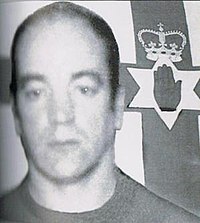
The Irish Times (a Republic of Ireland newspaper) carried a report on the death, due to cancer, of Robin Jackson on Saturday 30 May 1998. The report claimed that Jackson was the infamous Loyalist killer of the 1970s and 1980s known as ‘The Jackal’.

The report stated that he had been commander of the Mid-Ulster Ulster Volunteer Force (UVF) from 1972 to the 1990s and had been responsible for the deaths of dozens of Catholic civilians.

Jackson was also implicated in the Dublin and Monaghan Bombings in May 1974 which resulted in the deaths of 33 civilians.
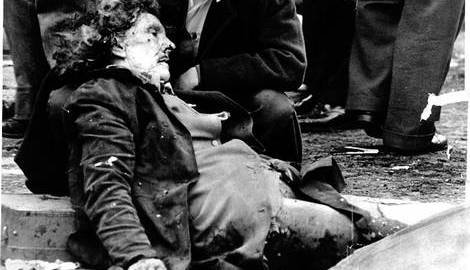
Dublin and Monaghan bombings victim

See Dublin & Monaghan Bombings

The British government issued a press release naming the members of the Independent Commission on Policing in Northern Ireland.

[There were reports that both the Irish government and the Social Democratic and Labour Party (SDLP) were upset that none of their preferred nominations for the Commission had been accepted by the British government.]

Saturday 3 June 2000

Ronnie Flanagan, then Chief Constable of the Royal Ulster Constabulary (RUC), announced that 500 British Army soliders were to be withdrawn from Northern Ireland.

The latest reduction in troops was believed to bring the number down to 13,500, the lowest level since 1970.

[Troop levels were increased again at the beginning of July 2000 in response to Loyalist violence at Drumcree.]

——————————————

Remembering all innocent victims of the Troubles

Today is the anniversary of the death of the following people killed as a results of the conflict in Northern Ireland

“To live in hearts we leave behind is not to die

– Thomas Campbell

To the innocent on the list – Your memory will live forever

– To the Paramilitaries –

There are many things worth living for, a few things worth dying for, but nothing worth killing for.

15 People lost their lives on the 3rd  June  between 1973 – 1991

 ——————————————

03 June 1973


Sarah McComb   (41)

Protestant
Status: Civilian (Civ),

Killed by: Ulster Volunteer Force (UVF)
Shot while in friend’s house, Druse Street, Lower Oldpark, Belfast.

 ——————————————

03 June 1973


Alfred Acheson   (48) Protestant
Status: Civilian (Civ), Killed by: Ulster Volunteer Force (UVF)
Shot while in friend’s house, Druse Street, Lower Oldpark, Belfast.

 ——————————————

03 June 1974


Michael Gaughan   (24)

nfNIB
Status: Irish Republican Army (IRA),

Killed by: not known (nk)
Originally from County Mayo. Died on 65th day of hunger strike, in Parkhurst Prison, Isle of Wight, England

 ——————————————

03 June 1974
John McLaughlin  (19)

Catholic
Status: Civilian (Civ),

Killed by: non-specific Loyalist group (LOY)
Found shot in quarry, Hightown Road, near Belfast, County Antrim.

 ——————————————

03 June 1975


David Thompson  (34)

Protestant
Status: Civilian (Civ),

Killed by: Irish Republican Army (IRA)
Found shot in his car, Killeen, County Armagh.

 ——————————————

03 June 1975


Alfred Doyle  (24)

Protestant
Status: Ulster Defence Regiment (UDR),

Killed by: Irish Republican Army (IRA)
Off Duty. Found shot in David Thompson’s car, Killeen, County Armagh.

 ——————————————

03 June 1975


John Presha   (30)

Protestant
Status: Civilian (Civ),

Killed by: Irish Republican Army (IRA)
Found shot in David Thompson’s car, Killeen, County Armagh.

 ——————————————

03 June 1978
Daniel McErlean   (25)

Catholic
Status: Civilian (Civ),

Killed by: Irish Republican Army (IRA)
Found shot, Edenappa, near Jonesborough, County Armagh. Allegedly involved in crime.

 ——————————————

03 June 1979


Stanley Hanna  (47)

Protestant
Status: Royal Ulster Constabulary (RUC),

Killed by: Irish Republican Army (IRA)
Killed by land mine while on Royal Ulster Constabulary (RUC) mobile patrol, Cullaville, near Crossmaglen, County Armagh.

 ——————————————

03 June 1979


Kevin Thompson  (22)

Protestant
Status: Royal Ulster Constabulary (RUC),

Killed by: Irish Republican Army (IRA)
Killed by land mine while on Royal Ulster Constabulary (RUC) mobile patrol, Cullaville, near Crossmaglen, County Armagh.

 ——————————————

03 June 1981
Joseph Lynn   (60)

Catholic
Status: Civilian (Civ),

Killed by: Irish Republican Army (IRA)
Shot during sniper attack on British Army (BA) foot patrol, Central Drive, Creggan, Derry.

 ——————————————

03 June 1984
Hugh Gallagher   (26)

Catholic
Status: ex-Ulster Defence Regiment (xUDR),

Killed by: Irish Republican Army (IRA)
Taxi driver. Found shot in his car, Faccary Road, Loughmacrory, near Omagh, County Tyrone.

 ——————————————

03 June 1991


Peter Ryan  (35)

Catholic
Status: Irish Republican Army (IRA),

Killed by: British Army (BA)
Shot during ambush by undercover British Army (BA) members, while driving through Coagh, County Tyrone.

 ——————————————

03 June 1991


Lawrence  McNally   (39)

Catholic
Status: Irish Republican Army (IRA),

Killed by: British Army (BA)
Shot during ambush by undercover British Army (BA) members, while driving through Coagh, County Tyrone.

 ——————————————

03 June 1991


Anthony Doris  (22)

Catholic
Status: Irish Republican Army (IRA),

Killed by: British Army (BA)
Shot during ambush by undercover British Army (BA) members, while driving through Coagh, County Tyrone.

 ——————————————


RAF Chinook Crash Mull of Kintyre – 2nd June 1994

25 Security Personnel Killed in Helicopter Crash

1994 Scotland RAF Chinook crash

The 1994 Scotland RAF Chinook crash occurred on 2 June 1994 at about 18:00 hours when a Royal Air Force (RAF) Chinook helicopter (serial number ZD576, callsign F4J40) crashed on the Mull of Kintyre, Scotland, killing all twenty-five passengers and four crew on board. Among the passengers were almost all the United Kingdom’s senior Northern Ireland intelligence experts. It was the RAF’s worst peacetime disaster.

An RAF board of inquiry in 1995 ruled that it was impossible to establish the exact cause of the crash. This ruling was subsequently overturned by two senior reviewing officers who said the pilots were guilty of gross negligence for flying too fast and too low in thick fog. This finding proved to be controversial, especially in light of irregularities and technical issues surrounding the then-new Chinook HC.2 variant which were uncovered. A Parliamentary inquiry conducted in 2001 found the previous verdict of gross negligence on the part of the crew to be ‘unjustified’. In 2011, an independent review of the crash cleared the crew of negligence.

                                                         1994 Scotland RAF Chinook crash
1994 Chinook Crash Memorial.JPG
Accident summary
Date 2 June 1994 (1994-06-02)
Summary CFIT, cause undetermined
Site Mull of Kintyre, Scotland
55°18′48″N 5°47′37″W / 55.31333°N 5.79361°W / 55.31333; -5.79361Coordinates: 55°18′48″N 5°47′37″W / 55.31333°N 5.79361°W / 55.31333; -5.79361
Passengers 25
Crew 4
Injuries (non-fatal) 0
Fatalities 29 (all)
Survivors 0
Aircraft type Boeing Chinook
Operator Royal Air Force
Registration ZD576
Flight origin RAF Aldergrove (near Belfast, Northern Ireland)
Destination Inverness, Scotland


Incident

Crash

—————————–

SECONDS FROM DISASTER / Chinook Helicopter Crash

—————————–

Earlier on 2 June 1994 the helicopter and crew had carried out a trooping flight, as it was unsafe for British troops to move around in certain parts of Northern Ireland using surface transport at the time because of Provisional IRA attacks. The mission was safely accomplished and they returned to Aldergrove at 15:20.

Mull of Kintyre is located in Argyll and Bute

Mull of Kintyre

They took off for Inverness at 17:42. Weather en route was forecast to be clear except in the Mull of Kintyre area. The crew made contact with military air traffic control (ATC) in Scotland at 17:55.

Jonathan Tapper


Around 18:00, Chinook ZD576 flew into a hillside in dense fog. The pilots were Flight Lieutenants Jonathan Tapper, 28, and Rick Cook, 30. Both of them were pilots in the United Kingdom Special Forces. There were two other crew. The helicopter was carrying 25 British intelligence experts from MI5, the Royal Ulster Constabulary and the British Army, from RAF Aldergrove (outside Belfast, Northern Ireland) to attend a conference at Fort George (near Inverness) in Scotland. At the time of the accident Air Chief Marshal Sir William Wratten called it “the largest peacetime tragedy the RAF had suffered”.

One commentator stated that the loss of so many top level Northern Ireland intelligence officers in one stroke was a huge blow to the John Major government, “temporarily confounding” its campaign against the IRA.  That the crash killed so many British intelligence experts, without any witnesses in the foggy conditions, encouraged speculation and conspiracy theories over a cover-up.

“The initial point of impact was 810 feet [250 m] above mean sea level and about 500 metres east of the lighthouse, but the bulk of the aircraft remained airborne for a further 187 metres horizontally north and 90 feet [27 m] vertically before coming to rest in pieces. Fire broke out immediately. All those on board sustained injuries from which they must have died almost instantaneously. The points of impact were shrouded in local cloud with visibility reduced to a few metres, which prevented those witnesses who had heard the aircraft from seeing it.”

Initial inquiry

In 1995, an RAF board of inquiry found that there was no conclusive evidence to determine the cause of the crash. An immediate suspicion that the helicopter could have been shot down by the Provisional IRA, with their known Strela 2 surface-to-air missile capability, had been quickly ruled out by investigators. Two air marshals, on review of the evidence, found the two pilots guilty of gross negligence by flying too fast and too low in thick fog.

Both the incident and the first inquiry have been subject to controversy and dispute, primarily as to whether the crash had been caused by pilot error or by a mechanical failure. The 2011 Parliamentary report found the reviewing officers to have failed to correctly adhere to the standard of proof of “absolutely no doubt” in deciding the question of negligence.

Subsequent inquiries

The first inquiry proved to be highly controversial. A subsequent Fatal Accident Inquiry (1996), House of Commons Defence Select Committee report (2000) and Commons Public Accounts Committee report have all either left open the question of blame or challenged the original conclusion. The campaign for a new inquiry was supported by the families of the pilots, and senior politicians, including former Prime Minister John Major and former Defence Secretary Malcolm Rifkind.

The new inquiry took place in the House of Lords from September to November 2001. The findings were published on 31 January 2002, and found that the verdicts of gross negligence on the two pilots were unjustified.

Des Browne at Chatham House 2013.jpg
Des Browne


In December 2007, Defence Secretary Des Browne agreed to conduct a fresh report into the crash. It was announced on 8 December 2008 by Secretary of State for Defence John Hutton that “no new evidence” had been presented and the findings of gross negligence against the flight crew would stand.  On 4 January 2010, doubts of the official explanation were raised again with the discovery that an internal MOD document, written 9 months before the incident, described the engine software as ‘positively dangerous’ as it could lead to failure of both engines. The 2011 Review concluded that criticism that the original board had not paid enough attention to maintenance and technical issues was unjustified.

On 13 July 2011, Defence Secretary Liam Fox outlined to MPs the findings of an independent review into the 1994 crash, which found that the two pilots who were blamed for the crash had been cleared of gross negligence.

In doing so, the Government accepted Lord Philip’s confirmation that the Controller Aircraft Release (CAR) was “mandated” upon the RAF. Issued in November 1993, the CAR stated that the entire navigation and communications systems used on the Chinook HC2 were not to be relied upon in any way by the aircrew, and therefore it had no legitimate clearance to fly. Knowledge of the CAR had been withheld from the pilots; by withholding this when issuing their Release to Service (RTS) (the authority to fly), the RAF had made a false declaration of compliance with regulations. In December 2012, the Minister for the Armed Forces, Andrew Robathan, confirmed such a false declaration did not constitute “wrongdoing”, despite it leading directly to deaths of servicemen.

ZD576’s service history

Boeing CH-47C Chinook, construction number B-868, RAF serial number ZD576 was originally delivered to the Royal Air Force as a Chinook HC.1 on 22 December 1984.

It was re-delivered to No 7 Squadron as a Chinook HC.2 on 21 April 1994. On arrival at RAF Odiham, its No.1 engine had to be replaced. On 10 May 1994, a post-flight fault inspection revealed a dislocated mounting bracket causing the collective lever to have restricted and restrictive movement. This resulted in a “Serious Fault Signal”m being sent as a warning to other UK Chinook operating units. On 17 May 1994 emergency power warning lights flashed multiple times and the No.1 engine was again replaced. On 25 May 1994 a serious incident occurred indicating the No.2 engine was about to fail.

On 31 May 1994, two days before the accident, two Chinook HC.1s were withdrawn from RAF Aldergrove and replaced by a single HC.2, ZD576.

On 2 June 1994, ZD576 crashed into a hillside, killing the four crew members and all passengers on board.


RAF Chinook HC2 (ZA677) similar to accident aircraft
———————-
CH-47 Chinook Overview
———————-

Possible causes

Pilot error

Flight Lieutenants Jonathan Tapper (left) and Richard Cook (right) have

Aviation safety author Andrew Brookes wrote that the true cause will never be known, but that pilot error induced by fatigue is likely to have played a part; the crew had been on flight duty for 9 hours and 15 minutes, including 6 hours flying time, before they took off on the crash flight. Had they made it to Fort George, they would have needed special permission from a senior officer to fly back to Aldergrove.

“There is no evidence of any significant change of course and none of the decision, if any, that the crew made. When the crew released the computer from its fix on the Mull, the pilots knew how close to the Mull they were and, given the deteriorating weather and the strict visibility requirements under visual flight rules they should by that time already have chosen an alternative course. As they had not done so, they could, and, under the rules, should have either turned away from the Mull immediately or slowed down and climbed to a safe altitude.”


Baroness Symons, speaking on behalf of the Government in the House of Lords in 2000.

In his book, Steuart Campbell suggested that two errors by the pilots; failure to climb to a safe altitude upon entering cloud, and a navigational error made in the poor visibility (mistaking a fog signal station for a lighthouse), together caused the crash.

The Board of Inquiry had identified that several factors may have sufficiently distracted the crew from turning away from the Mull, and upon entering cloud, failed to carry out the correct procedure for an emergency climb in a timely manner.

RAF Visual Flight Rules (VFR) require the crew to have a minimum visibility of 5.5 kilometres above 140 knots (260 km/h), or minimum visibility of one kilometre travelling below 140 knots;  if VFR conditions are lost an emergency climb must be immediately flown. Nine out of ten witnesses interviewed in the inquiry reported visibility at ground level in the fog as being as low as ten to one hundred metres at the time of the crash; in-flight visibility may have been more or less than this. The tenth witness, a yachtsman who was offshore, reported it as being one mile (1.6 km), though he is regarded as a less reliable witness as he changed his testimony.

If witness accounts of visibility are correct, the pilots should have transferred to Instrument Flight Rules, which would require the pilots to slow the aircraft and climb to a safe altitude at the best climbing speed.

In the area around the Mull of Kintyre, the safe altitude would be 2,400 feet (730 m) above sea level, 1,000 feet (300 m) above the highest point of the terrain. The height of the crash site of ZD576 was 810 feet (250 m), 1,600 feet (490 m) below the minimum safe level.[6] The Board of Inquiry into the accident recommended formal procedures for transition from Visual Flight Rules to Instrument Flight Rules in mid-flight be developed, and the RAF has since integrated such practices into standard pilot training.

Regarding negligence on the part of the pilots, the 2011 Report said:

“the possibility that there had been gross negligence could not be ruled out, but there were many grounds for doubt and the pilots were entitled to the benefit of it… [T]he Reviewing Officers had failed to take account of the high calibre of two Special Forces pilots who had no reputation for recklessness.”

FADEC problems

“The chances are that if software caused any of these accidents, we would never know. This is because when software fails, or it contains coding or design flaws… only the manufacturer will understand its system well enough to identify any flaws… Step forward the vulnerable equipment operators: the pilots… who cannot prove their innocence. That is why the loss of Chinook ZD576 is so much more than a helicopter crash. To accept the verdict against the pilots is to accept that it is reasonable to blame the operators if the cause of a disaster is not known.”


Karl Schneider, Editor of Computer Weekly, 2002

At the time of the crash, new FADEC (Full Authority Digital Engine Control) equipment was being integrated onto all RAF Chinooks, as part of an upgrade from the Chinook HC.1 standard to the newer Chinook HC.2 variant. The Ministry of Defence was given a £3 million settlement from Textron, the manufacturers of the system, after a ground-test of the FADEC systems on a Chinook in 1989 resulted in severe airframe damage. Contractors, including Textron, had agreed that FADEC had been the cause of the 1989 incident and that the system needed to be redesigned.

The committee investigating the crash were satisfied that the destructive error in 1989 was not relevant to the 1994 crash. Information provided from Boeing to the investigation led to the following conclusion regarding FADEC performance: “Data from the Digital Electronics Unit (DECU) of the second engine showed no evidence of torque or temperature exceedance and the matched power conditions of the engines post-impact indicate that there was no sustained emergency power demand. No other evidence indicated any FADEC or engine faults.”

It was expected that in a FADEC engine runaway, engine power would become asynchronous and mismatched. The investigation found the engines at the crash to have matched settings, decreasing the likelihood of a FADEC malfunction being involved.

EDS-SCICON was given the task of independently evaluating the software on the Chinook HC.2 in 1993. According to the House of Commons report:

“After examining only 18 per cent of the code they found 486 anomalies and stopped the review… intermittent engine failure captions were being regularly experienced by aircrew of Chinook Mk 2s and there were instances of uncommanded run up and run down of the engines and undemanded flight control movements”.


Tests upon the Chinooks performed by the MOD at Boscombe Down in 1994 reported the FADEC software to be

“unverifiable and … therefore unsuitable for its purpose”.


In June 1994, the MoD test pilots at Boscombe Down had refused to fly the Chinook HC.2 until the engines, engine control systems and FADEC software had undergone revision. In October 2001, Computer Weekly reported that three fellows of the Royal Aeronautical Society had said that issues with either control or FADEC systems could have led to the crash.

The main submission to Lord Philip (see above) revealed that the FADEC Safety Critical software did not have a Certificate of Design, and was therefore not cleared to be fitted to Chinook HC2. It further revealed that John Spellar MP had been wrong when claiming the software was not Safety Critical, providing the original policy document governing this definition to Lord Philip. MoD subsequently claimed it did not have its own copy, calling in to question how it could advise Spellar one way or the other.

Other factors

The onboard Tactical Air Navigation System, which only retained the last measured altitude, gave an altitude reading of 468 feet (143 m). The investigation observed that it was possible for some of the avionics systems to interfere with the Chinook’s VHF radio, potentially disrupting communications.

Flight data recorders and cockpit voice recorders were not fitted to all RAF Chinooks at the time of the accident. The absence of this data greatly reduced the amount and quality of data available to subsequent investigations. Information on speed and height were derived from the position of cockpit dials in the wreckage, and the wreckage’s condition. The RAF had begun to fit these recording devices across the Chinook HC.2 fleet in 1994, prior to the accident; this process was completed in 2002.

————————————-

TOP 10 Fatal helicopter crash compilation

————————————-

2nd June – Deaths & Events in Northern Ireland Troubles

Key Events & Deaths on this day in Northern Ireland Troubles

2nd June

——————————-

Friday 2 June 1972

Two British Army soldiers were killed in a land mine attack by the Irish Republican Army (IRA) near Rosslea, County Fermanagh.

Saturday 2 June 1973

Two Protestant civilians were shot dead by members of a Loyalist paramilitary group during an attack in Druse Street, Belfast.

Wednesday 2 June 1976

Ronald McAdam

The Irish Republican Army (IRA) shot dead an off-duty member of the Royal Ulster Constabulary (RUC) outside the Royal Victoria Hospital, Falls Road, Belfast.

The IRA also shot dead a member of the Ulster Defence Association (UDA) at his home in Cambrai Street, Shankill, Belfast.

A Protestant civilian was shot dead by Loyalist paramilitaries in Comber, County Down;

a Catholic man had been the intended target.

Linda Baggley (19), then an Royal Ulster Constabulary (RUC) officer, died nine days after being shot by the Irish Republican Army (IRA) at Chapel Road, Waterside, Derry

Thursday 2 June 1977


      Hugh Martin     Samuel Davison    Kenneth Lynch

Three members of an Royal Ulster Constabulary (RUC) mobile patrol were shot dead by Irish Republican Army (IRA) snipers near Ardboe, County Tyrone.

Monday 2 July 1979

The Irish National Liberation Army (INLA) was declared illegal across the whole of the United Kingdom (UK).

[This followed the killing of Airey Neave on 30 March 1979.]

Airey-Neave 2 resized

See Airey Neave

Tuesday 2 June 1987

Lord Gerry Fitt criticised the Social Democratic and Labour Party (SDLP) for its lack of socialist principles.


Thursday 2 June 1994

25 Security Personnel Killed in Helicopter Crash

An Royal Air Force (RAF) Chinook helicopter travelling from Northern Ireland to Scotland crashed in fog into a hillside on the Mull of Kintyre, Argyll, Scotland, killing all 29 people on board.

Of those killed, 10 were senior officers in Royal Ulster Constabulary (RUC) Special Branch, 6 were senior officers in the Security Service (MI5), and 9 were senior officers in British Army (BA) intelligence.

The 4 members of the RAF crew were also killed. The 25 security personnel had been travelling to a security conference in Inverness.

[In June 1995 an RAF report blamed pilot error for the crash. An Inquiry in March 1996 concluded that there was no evidence of pilot error. In May 1998 the House of Commons Select Committee on Defence found “no compelling evidence” that design failure was responsible for the accident.]

See BBC News for full story

Friday 2 June 1995

The-Maze-prison-007

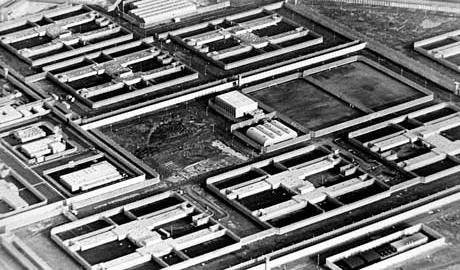
Nine Ulster Defence Association (UDA) members were transferred from the Maze Prison to Maghaberry Prison. The move followed disputes with senior UDA members.

See Maze Prison

Monday 2 June 1997

First Nationalist Mayor of Belfast

Alban Maginness, then a Social Democratic and Labour Party (SDLP) councillor in Belfast was elected Lord Mayor of the city. This was the first time that a Nationalist had been elected as mayor. Jim Rodgers of the Ulster Unionist Party (UUP) was elected deputy Lord Mayor.

Tuesday 2 June 1998

Marjorie (Mo) Mowlam, then Secretary of State for Northern Ireland, addressed the Northern Ireland Police Federation. Her speech was interrupted by a Royal Ulster Constabulary (RUC) officer protesting at the early release of paramilitary prisoners. Tony Blair, then British Prime Minister, paid another visit to Northern Ireland and met with party leaders for discussions.

Wednesday 2 June 1999

The Grand Lodge of the Orange Order announced that it would organise a series of protests in support of Portadown Orangemen during the period leading up to the Drumcree parade on 4 July 1999

  ——————————————

Remembering all innocent victims of the Troubles

Today is the anniversary of the death of the following people killed as a results of the conflict in Northern Ireland

“To live in hearts we leave behind is not to die

– Thomas Campbell

To the innocent on the list – Your memory will live forever

– To the Paramilitaries –

There are many things worth living for, a few things worth dying for, but nothing worth killing for.

16  People lost their lives on the 2nd June  between 1972 – 1993

 ——————————————

02 June 1972
Victor Husband   (23)

nfNI
Status: British Army (BA),

Killed by: Irish Republican Army (IRA)
Killed in land mine attack on British Army (BA) foot patrol, Derryvolan, near Rosslea, County Fermanagh.

 ——————————————

02 June 1972
Brian Robertson   (23)

nfNI
Status: British Army (BA),

Killed by: Irish Republican Army (IRA)
Killed in land mine attack on British Army (BA) foot patrol, Derryvolan, near Rosslea, County Fermanagh.

 ——————————————

02 June 1973


Samuel McCleave   (25)

Catholic
Status: Civilian (Civ),

Killed by: non-specific Loyalist group (LOY)
Found beaten and stabbed to death, Hill Street, Belfast.

 ——————————————

02 June 1974


Paul Tinnelly   (34)

Catholic
Status: ex-Official Irish Republican Army (xOIRA),

Killed by: Official Irish Republican Army (OIRA)
Shot at his home, The Square, Rostrevor, County Down. Internal OIRA dispute

 ——————————————

02 June 1976


Linda Baggley   (19)

Protestant
Status: Royal Ulster Constabulary (RUC),

Killed by: Irish Republican Army (IRA)
Died nine days after being shot while on Royal Ulster Constabulary (RUC) foot patrol, Chapel Road, Waterside, Derry.

 ——————————————

02 June 1976


Ronald McAdam  (31)

Protestant
Status: Royal Ulster Constabulary (RUC),

Killed by: Irish Republican Army (IRA)
Off duty. Shot while accompanying patient outside Royal Victoria Hospital, Falls Road, Belfast.

 ——————————————

02 June 1976
John Parsons   (51)

Protestant
Status: Ulster Defence Association (UDA),

Killed by: Irish Republican Army (IRA)
Shot at his home, Cambrai Street, Shankill, Belfast

 ——————————————

02 June 1976
David Spratt  (23)

Protestant
Status: Civilian (Civ),

Killed by: Red Hand Commando (RHC)
Shot at his sister’s home, Darragh Road, Comber, County Down. Catholic man intended target

 ——————————————

02 June 1977


 Hugh Martin  (58)

Protestant
Status: Royal Ulster Constabulary (RUC),

Killed by: Irish Republican Army (IRA)
Shot by IRA snipers while on Royal Ulster Constabulary (RUC) mobile patrol, Carnan, near Ardboe, County Tyrone

 ——————————————

02 June 1977


Samuel Davison  (24)

Protestant
Status: Royal Ulster Constabulary (RUC),

Killed by: Irish Republican Army (IRA)
Shot by IRA snipers while on Royal Ulster Constabulary (RUC) mobile patrol, Carnan, near Ardboe, County Tyrone

 ——————————————

02 June 1977


Kenneth Lynch  (22)

Protestant
Status: Royal Ulster Constabulary (RUC),

Killed by: Irish Republican Army (IRA)
Shot by IRA snipers while on Royal Ulster Constabulary (RUC) mobile patrol, Carnan, near Ardboe, County Tyrone.

 ——————————————

02 June 1979


Alan Dunne   (36)

Protestant
Status: Royal Ulster Constabulary (RUC),

Killed by: non-specific Republican group (REP)
Off duty. Shot while standing outside his home, Ballinahone Crescent, Armagh

 ——————————————

02 June 1979
David Stinson  (32)

Protestant
Status: Civilian (Civ),

Killed by: non-specific Republican group (REP)
Shot while standing outside Royal Ulster Constabulary (RUC) member’s home, Ballinahone Crescent, Armagh.

 ——————————————

02 June 1982


Patrick Smith   (16)

Catholic
Status: Civilian (Civ),

Killed by: Irish National Liberation Army (INLA)
Killed by booby trap bomb attached to abandoned motorcycle, Rugby Road, Belfast.

 ——————————————

02 June 1987


Samuel McClean   (41)

nfNIRI
Status: Royal Ulster Constabulary (RUC),

Killed by: Irish Republican Army (IRA)
From County Donegal. Off duty. Shot at his parents’ farm, Callan, Drumkeen, near Raphoe, County Donegal.

 ——————————————

02 June 1993
Brenda McKenna   (29)

Catholic
Status: Civilian (Civ),

Killed by: Ulster Freedom Fighters (UFF)
Shot while driving lorry along Hillhead Road, Comber, County Down.

 ——————————————


1st June – Deaths & Events in Northern Ireland Troubles

Key Events & Deaths on this day in Northern Ireland Troubles

1st June

——————————————–

Thursday 1 June 1978

David Cook, then a member of the Alliance Party (APNI), became the first non-Unionist Lord Mayor of Belfast. Cook secured this post because of a dispute between Unionist councillors.

[It was not until 1997 that a Catholic became Lord Mayor of Belfast.]

Roy Mason, then Secretary of State for Northern Ireland, held talks with Irish ministers in Dublin.

Tuesday 1 June 1982

Robert Richardson, then a Lieutenant-General, succeeded Richard Lawson as General Officer Commanding (GOC) of the British Army in Northern Ireland.

Friday 1 June 1984

Reagan Visit to Ireland

Ronald Reagan, then President of the United States of America (USA), began a four-day visit to the Republic of Ireland.

Thursday 1 June 1989

Two men were sentenced to life imprisonment for the murder of two British Army corporals on 19 March 1988.

Alex Murphy  Killers


See Corporal Killings

[This was the first in a number of trials connected with the killings.]

Friday 1 June 1990

Two British soldiers were killed by the Irish Republican Army (IRA) in separate incidents in England and Germany.

Monday 1 June 1992

A Democratic Unionist Party (DUP) councillor was elected Mayor in Derry with the backing of the Social Democratic and Labour Party (SDLP).

[The SDLP had a policy of rotating the posts of Mayor and Deputy Mayor between Nationalist and Unionist candidates.]

Tuesday 1 June 1993

Reg Empey, then a Ulster Unionist Party (UUP) councillor, was elected as Lord Mayor of Belfast. Hugh Smyth, then a Progressive Unionist Party (PUP) councillor, was elected as Deputy Lord Mayor.

Wednesday 1 June 1994

Dick Spring, then Tánaiste (deputy Irish Prime Minister and Minister for Foreign Affairs), told the Daíl that the key to Sinn Féin (SF) joining political talks was a permanent cessation of violence.

He said there would also have to be verification of the handing over of weapons.

Thursday 1 June 1995

Alasdair McDonnell, then a Social Democratic and Labour Party (SDLP) councillor, was elected Deputy Lord Mayor of Belfast. McDonnell was the first Nationalist councillor to hold this position.

[The first Nationalist councillor to be elected Lord Mayor was appointed on 2 June 1997.]

Sunday 1 June 1997

Gregory Taylor (41), an off-duty Royal Ulster Constabulary (RUC) Constable, died following a beating he received from a Loyalist mob. Taylor was beaten and kicked to death outside a pub in Ballymoney, County Antrim, by a group of Loyalist bandsmen.

Taylor had been attacked after a row over the RUC’s position on a Apprentice Boys of Derry parade in Dunloy, County Antrim.

[It was later disclosed that Taylor had used his mobile phone to try to summon help, prior to the attack, from the local police station but no car was available to come to his aid. Initially eight men were charged with his murder including the son of an RUC officer, but a number of these were released when the case came to trial.

Two men were sentenced to life imprisonment but were later released under the terms of the Good Friday Agreement. Two other men pleaded guilty to manslaughter and were sentenced to four years imprisonment.]

Monday 1 June 1998

Marjorie (Mo) Mowlam, then Secretary of State for Northern Ireland, delivered a speech on the results of the referendum. David Alderdice, then an Alliance Party of Northern Ireland (APNI) councillor in Belfast, was elected as Lord Mayor of Belfast.

In Derry the Nationalist controlled council elected a Democratic Unionist Party (DUP) Mayor and a Sinn Féin (SF) Deputy Mayor.

[For many years in Derry the Social Democratic and Labour Party (SDLP) had adopted the policy of rotating the position of Mayor between Nationalist and Unionist parties.]

Tuesday 1 June 1999

Marie Moor, then Sinn Féin (SF) councillor, was elected as deputy Lord Mayor of Belfast. This was the first SF member to attain this position.

Robert Stoker, then Ulster Unionist Party (UUP) councillor, was elected as Lord Mayor.

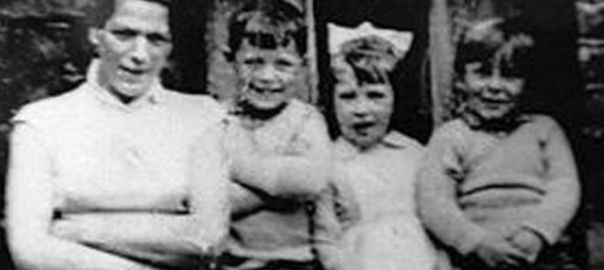
Bertie Ahern, then Taoiseach (Irish Prime Minister), appealed for further information on where the Irish Republican Army (IRA) had placed the bodies of the ‘disappeared’.

jeanmcconville2

Ahern hoped any information would be passed to the Garda Síochána (the Irish police) and members of the Independent Commission for the Location of Victims Remains (ICLVR). He was replying to Mr Quinn, then Labour Party leader, who referred to the “extraordinary agony” which the families were going through.

See The Disappeared

Thursday 1 June 2000

There was an explosion in the early hours of the morning at Hammersmith Bridge in London. The explosion caused some damage to the bridge but no injuries. It was believed that the bomb attack was carried out by dissident republicans.


——————————————

Remembering all innocent victims of the Troubles

Today is the anniversary of the death of the following people killed as a results of the conflict in Northern Ireland

“To live in hearts we leave behind is not to die

– Thomas Campbell

To the innocent on the list – Your memory will live forever

– To the Paramilitaries –

There are many things worth living for, a few things worth dying for, but nothing worth killing for.

5   People lost their lives on the 1st June  between 1975 – 1997

 ——————————————

01 June 1975
Margaret Kilfedder  (61)

Protestant
Status: Civilian (Civ),

Killed by: Irish Republican Army (IRA)
Killed in bomb attack on her home, Garrison, County Fermanagh. House previously owned by Ulster Defence Regiment member.

 ——————————————

01 June 1985
Roy McAlpine   (24)

Protestant
Status: Ulster Volunteer Force (UVF),

Killed by: Ulster Volunteer Force (UVF)
Shot outside friend’s home, Annadale Flats, Ballynafeigh, Belfast. Internal Ulster Volunteer Force (UVF) dispute.

 ——————————————

01 June 1990


Robert Davies  (19)

nfNIB
Status: British Army (BA),

Killed by: Irish Republican Army (IRA)
Off duty. Shot while sitting on bench at railway station, Lichfield, Staffordshire, England.

 ——————————————

01 June 1990
Michael Dillon-Lee (34)

nfNIE
Status: British Army (BA),

Killed by: Irish Republican Army (IRA)
Off duty. Shot outside his home, Dortmund, West Germany.

 ——————————————

01 June 1997


Gregory Taylor  (41)

Protestant
Status: Royal Ulster Constabulary (RUC),

Killed by: non-specific Loyalist group (LOY)
Off duty. Beaten to death, outside Kelly’s Bar, Church Street, Ballymoney, County Antrim.

 ——————————————

31st May – Deaths & Events in Northern Ireland Troubles

Key Events & Deaths on this day in Northern Ireland Troubles

31st May

——————-

Saturday 31 August 1968

A delegation from the Northern Ireland Civil Rights Association (NICRA) met with members of the Derry Housing Action Committee (DHAC) to discuss the proposed march.

An ad-hoc Civil Rights Committee was established to organise the march on Saturday 5 October 1968.

[The Committee did not operate as anticipated and effective control of the march fell to Eamonn McCann and Eamon Melaugh.]

Thursday 31 May 1973

Loyalist paramilitaries carried out three bomb and gun attacks on Catholic owned public houses in Belfast, killing 2 men and injuring over 20 people.

In the first attack at 8.30pm a Loyalist gunman believed to be a member of the Ulster Freedom Fighters (UFF), a covername for the Ulster Defence Association (UDA), opened fire on customers in Muldoon’s Bar with a Sterling sub-machine gun (SMG).

A bomb was also thrown into the bar. Thomas Curry (50), a civilain sea captain from Preston in England, was killed in the attack.

[It was latter revealed that the gun used in the attack had been stolen from a Ulster Defence Regiment (UDR) base on 23 October 1972 (Irish News; 3 May 2006).]

Later there was a bomb attack on McGlade’s Bar in Donegall Street in which Gerard Barnes (31), a Catholic civilian, was killed as he walked pass the bar. Members of the Ulster Volunteer Force (UVF) were believed to be responsible.

Friday 31 May 1974

Merlyn Rees, then Secretary of State for Northern Ireland, said that the Ulster Workers’ Council (UWC) strike had demonstrated a rise in ‘Ulster Nationalism’ which would have to be taken into account by the Westminster government.

Thursday 31 May 1984

The Lear Fan aircraft company in Belfast announced that almost all 350 jobs at the company would end.

[The company ceased trading in May 1985. The government had invested £45 million in the firm since 1980.]

Wednesday 31 May 1989

Hugh Annesley succeeded John Hermon as the Chief Constable of the Royal Ulster Constabulary (RUC).

Friday 31 May 1991

The Irish Republican Army (IRA) carried out a bomb attack on a Ulster Defence Regiment (UDR) base at Glenanne, County Armagh, and killed three UDR soldiers. The bomb, estimated at 2,000 pounds, was placed in a lorry that was then rolled down a hill and into the perimeter fence.

Wednesday 31 May 1995

Prince Charles began a two day official visit to the Republic of Ireland. It was the first official visit by a member of the British royal family since Irish independence.

While the Prince attended a reception in Dublin Castle there was a protest outside against his visit by approximately 3,000 people.

Saturday 31 May 1997

The Irish Republican Army (IRA) was forced to abandon a bomb in the Poleglass area of Belfast.

John Bruton, the Taoiseach (Irish Prime Minister), called a halt to all further contacts between officials of the Irish government and Sinn Féin (SF).

Loyalist protesters staging a picket outside the Catholic church in Harryville, Ballymena, blocked the road to deny access to the chapel. One man was arrested by the police for disorderly conduct.


  ——————————————

Remembering all innocent victims of the Troubles

Today is the anniversary of the death of the following people killed as a results of the conflict in Northern Ireland

“To live in hearts we leave behind is not to die

– Thomas Campbell

To the innocent on the list – Your memory will live forever

– To the Paramilitaries –

There are many things worth living for, a few things worth dying for, but nothing worth killing for.

13  People lost their lives on the 31st May between 1973 – 1993

 ——————————————

31 May 1972
Michael Bruce   (27 ) nfNI
Status: British Army (BA),

Killed by: Irish Republican Army (IRA)
Shot by sniper while on British Army (BA) mobile patrol, Kennedy Way, Andersonstown, Belfast

 ——————————————

31 May 1973
Thomas Curry   (50)

nfNI
Status: Civilian (Civ),

Killed by: Ulster Volunteer Force (UVF)
English seaman. Shot during bomb and gun attack on Muldoon’s Bar, Corporation Square, Belfast.

 ——————————————

31 May 1973


Gerard Barnes   (31)

Catholic
Status: Civilian (Civ),

Killed by: Ulster Volunteer Force (UVF)
Passerby, killed when bomb exploded outside McGlade’s Bar, Donegall Street, Belfast.

 ——————————————

31 May 1974
Alfred Shotter  (54)

Catholic
Status: Civilian (Civ),

Killed by: Irish Republican Army (IRA)
Killed by booby trap bomb hidden in dustbin at his former home, Strabane Old Road, Gobnascale, Derry

 ——————————————

31 May 1975


Eamon Molloy   (22)

Catholic
Status: Irish Republican Army (IRA),

Killed by: Irish Republican Army (IRA)
Abducted somewhere in Belfast during May 1975. Remains found, on instructions from the IRA, placed in a coffin, left above ground, in Faughart Cemetary, near Dundalk, County Louth, on 28 May 1999. Alleged informer

 ——————————————

31 May 1976


Frederick McLoughlin   (48)

Catholic
Status: Civilian (Civ),

Killed by: Ulster Volunteer Force (UVF)
Died two weeks after being shot during gun attack on Eagle Bar, Charlemont, County Armagh. He was injured on 15 May 1976.

 ——————————————

31 May 1981


Colin Dunlop   (30)

Protestant
Status: Royal Ulster Constabulary (RUC),

Killed by: Irish Republican Army (IRA)
Shot while guarding patient at Royal Victoria Hospital, Falls Road, Belfast.

 ——————————————

31 May 1981
Michael O’Neill  (34)

nfNI
Status: British Army (BA),

Killed by: Irish Republican Army (IRA)
Killed by booby trap bomb in abandoned car, Drumalane Road, Newry, County Down.

 ——————————————

31 May 1987


Patrick Cunningham  (27)

Catholic
Status: Irish National Liberation Army (INLA),

Killed by: Irish National Liberation Army (INLA)
Abducted somewhere in the County Armagh area during May 1987. Found shot, in outbuilding of unoccupied farm, Errybane, near Castleblayney, County Monaghan, on 8 December 1987.

Internal Irish National Liberation Army (INLA) dispute.

 ——————————————

31 May 1991
Paul Blakely   (30)

Protestant
Status: Ulster Defence Regiment (UDR),

Killed by: Irish Republican Army (IRA)
Killed by bomb left in abandoned lorry outside Glenanne British Army (BA) base, near Mount Norris, County Armagh.

 ——————————————

31 May 1991


Robert Crozier (46)

Protestant
Status: Ulster Defence Regiment (UDR),

Killed by: Irish Republican Army (IRA)
Killed by bomb left in abandoned lorry outside Glenanne British Army (BA) base, near Mount Norris, County Armagh.

 ——————————————

31 May 1991


Sydney Hamilton  (44)

Protestant
Status: Ulster Defence Regiment (UDR),

Killed by: Irish Republican Army (IRA)
Killed by bomb left in abandoned lorry outside Glenanne British Army (BA) base, near Mount Norris, County Armagh.

 ——————————————

31 May 1993
Christopher Wren   (34)

Protestant
Status: Royal Irish Regiment (RIR),

Killed by: Irish Republican Army (IRA)
Off duty. Killed by booby trap bomb attached to his car while travelling along Carrydarragh Road, Moneymore, County Derry.

 ——————————————

30th May – Deaths & Events in Northern Ireland Troubles

Key Events & Deaths on this day in Northern Ireland Troubles

30th May

———————————

Wednesday 30 May 1973

District Council Elections

Local government elections were held in Northern Ireland based on the new 26 District Councils.

The elections were contested on a ‘proportional representation’ (PR) basis, using the single transferable vote (STV) system, for the first time in Northern Ireland since 1920. The turnout for the election was 68.1 per cent of the electorate.

There were a number of parties which were contesting elections in Northern Ireland for the first time, including: Alliance Party, Democratic Unionist Party (DUP), Republican Clubs, Social Democratic and Labour Party (SDLP), and Vanguard.

The Ulster Unionist Party (UUP) took 41.4 per cent of the vote, while the SDLP won almost all of the Nationalist / Catholic vote.

[See the page on election results for full details of the local government results.]

Thursday 30 May 1974


The Northern Ireland Assembly was prorogued for a period of four months.

[Public Records 1974 – Released 1 January 2005: Memo written by Harold Wilson, then British Prime Minister, in which he considers what might be done if there was a resumption of the strike.]

Monday 30 May 1977

A statement written by four members of the Church of Ireland, who were also graduates of Trinity College Dublin, appeared in the Irish Times and other newspapers.

The statement contained an apology for the deeds of the ‘Ascendancy Church’ in its dealing with the Catholics of Ireland.

Monday 30 May 1983

First Meeting of New Ireland Forum

The first meeting of the New Ireland Forum took place in Dublin Castle, Republic of Ireland.

Sinn Féin (SF) was excluded because the renunciation of violence was made an essential prerequisite to joining the Forum. The Ulster Unionist Party (UUP), the Democratic Unionist Party (DUP), and the Alliance Party of Northern Ireland (APNI) all refused to attend.

The Forum consisted of eight members of Fine Gael (FG), nine members of Fianna Fáil (FF), five members of Irish Labour, and five members of the Social Democratic and Labour Party (SDLP).

[ PRONI Records – May 1983.]


Monday 30 May 1994

At a press conference in Belfast, Ian Paisley, then leader of the Democratic Unionist Party (DUP), described James Molyneaux, then leader of the Ulster Unionist Party (UUP), as:

“a Judas Iscariot”.

[On Wednesday 1 June 1994, Molyneaux said that the remark was “a shattering blow” to Unionist unity.]

Tuesday 30 May 1995

An Inquest opened in Craigavon, County Armagh, into the killing of 8 Irish Republican Army (IRA) members and one other person at Loughgall, County Armagh, on 8 May 1987.

See Loughgall Amush

Thursday 30 May 1996

Forum Elections

Elections to the proposed Northern Ireland Forum and all-party negotiations were held across Northern Ireland.

The most significant outcome was that Sinn Féin (SF) attracted a record vote of 15.5%. [RESULTS: Turnout – 64.7%, 754,296; Ulster Unionist Party (UUP) – 30 seats, 24.2%; Social Democratic and Labour Party (SDLP) – 21 seats, 21.4%; Democratic Unionist Party (DUP) – 24 seats, 21.4%; Sinn Féin (SF) – 17 seats, 15.5%; Alliance Party of Northern Ireland (APNI) – 7 seats, 6.5%; United Kingdom Unionists (UKU) – 3 seats, 3.7%; Progressive Unionist Party (PUP) – 2 seats, 3.5%; Ulster Democratic Party (UDP) – 2 seats, 2.2%; Northern Ireland Women’s Coalition (NIWC) – 2 seats, 1.0%; Labour – 2 seats, 0.8%.]

Friday 30 May 1997

Representatives of all of Northern Ireland political parties flew to South Africa for a conference with those who had negotiated the peace settlement in that country.

The conference was organised by Padraig O’Malley. Unionists only agreed to take part after assurances that there would be separate facilities so as to avoid direct contact with the Sinn Féin (SF) representatives.

Ronnie Flanagan, then Chief Constable of the Royal Ulster Constabulary (RUC), gave an interview to the BBC in which he said that major reform of the RUC would take place following an Irish Republican Army (IRA) ceasefire.

Saturday 30 May 1998

There were disturbances on the Garvaghy Road in Portadown following a ‘junior’ Orange Order parade in the area.

Nationalists from the Garvaghy Road threw petrol bombs at police lines, the police responded with plastic baton rounds. Several people were injured during the clashes.

[Rioting continued in the area on the following evening.]

The Gaelic Athletic Association (GAA) voted to retain ‘Rule 21’ which bans members of the Royal Ulster Constabulary (RUC) and British Army from joining the GAA.

However, a motion was agreed which pledged the organisation to removing the rule when “effective steps are taken to implement the amended structures and policing arrangements envisaged in the British-Irish agreement.”

[The decision was strongly criticised by Unionist politicians in Northern Ireland.]

Tuesday 30 May 2000

Devolution Restored

The British government restored devolution to the Northern Ireland Assembly and the power-sharing Executive.

  ——————————————

Remembering all innocent victims of the Troubles

Today is the anniversary of the death of the following people killed as a results of the conflict in Northern Ireland

“To live in hearts we leave behind is not to die

– Thomas Campbell

To the innocent on the list – Your memory will live forever

– To the Paramilitaries –

There are many things worth living for, a few things worth dying for, but nothing worth killing for.

6 People lost their lives on the 30th May  between 1972 – 1993

 ——————————————

30 May 1972


Joan Scott   (12)

Protestant
Status: Civilian (Civ),

Killed by: Irish Republican Army (IRA)
Died three days after being shot during sniper attack on Royal Ulster Constabulary (RUC) mobile patrol, Oldpark Road, Belfast.

 ——————————————

30 May 1972
Marcel Doglay   (28)

nfNI
Status: British Army (BA),

Killed by: Irish Republican Army (IRA)
Killed when time bomb exploded inside Springfield Road Royal Ulster Constabulary (RUC) / British Army (BA) base, Belfast.

 ——————————————

30 May 1976
John Ritchie  (31)

Catholic
Status: Civilian (Civ),

Killed by: non-specific Loyalist group (LOY)
Milkman. Found shot in his milk float, Springhill Avenue, Ballymurphy, Belfast.

 ——————————————

30 May 1977


Malachy Gregory   (39)

Catholic
Status: Civilian (Civ),

Killed by: Irish Republican Army (IRA)
Shot at his workplace, College Square North, Belfast. Off duty Ulster Defence Regiment member intended target.

 ——————————————

30 May 1993


Edward McHugh   (65)

Catholic
Status: Civilian (Civ),

Killed by: Red Hand Commando (RHC)
Shot at his home, Canberra Park, Dundonald, Belfast.

 ——————————————

29th May – Deaths & Events in Northern Ireland Troubles

Key Events & Deaths on this day in Northern Ireland Troubles

29th May

—————————

Friday 29 May 1970

The Macrory Report, Review Body on Local Government in Northern Ireland (Cmd 546), dealing with local government structures was published.

The main recommendation is the abolition of the old structure of local government and its replacement with 26 new district councils.

The new system would also involve the creation of area boards to manage the health, education, and library services in Northern Ireland.

It was envisaged that the control of the new system would rest with the Northern Ireland government.

[Following the introduction of direct rule on 30 March 1972 much of the control of the main services passed effectively to Westminster. Elected councillors only had responsibility for a number of matters including refuse collection, public conveniences, crematoria and cemeteries (‘bins, bogs and burials’ as it was termed in Northern Ireland). The term ‘the Macrory Gap was coined to highlight the lack of local accountability on the part of those controlling the centralised services.]

Monday 29 May 1972

Official IRA Ceasefire

The Official Irish Republican Army (OIRA) announced that it was calling a ceasefire.

[Although the OIRA was involved in a number of incidents following the ceasefire it was to mark the end of the military wing of Official Sinn Féin (OSF).]

Wednesday 29 May 1974

A return to work began across Northern Ireland. The leaders of the Ulster Workers’ Council (UWC) officially called off the strike.

Troubled Images Exhibition, Belfast, August 2010 (03).JPG

see  Sunningdale  Ulster Workers’ Council Strike

Friday 29 May 1981

The names of four prisoners on hunger strike together with five other Republican prisoners, were put forward as candidates in the forthcoming general election in the Republic of Ireland.

 See 1981 Hunger Strike

Saturday 29 May 1982

President John F. Kennedy in motorcade in Cork on June 27, 1963

A United States of America (USA) Congress group called Friends of Ireland paid a fact-finding visit to Northern Ireland.

Thursday 29 May 1986

Tom King, then Secretary of State for Northern Ireland, informed the House of Commons of the decision to dissolve the Northern Ireland Assembly.

Tuesday 29 May 1990

The Northern Ireland Police Federation passed a vote of ‘no confidence’ in the Northern Ireland Office (NIO) and Peter Brooke, then Secretary of State for Northern Ireland.

Thursday 29 May 1997

Bill Clinton, then President of the United States of America, paid a visit to London. During a meeting with Tony Blair, then British Prime Minister, Clinton gave his support to the Labour government’s approach to Northern Ireland. Clinton called for a renewed Irish Republican Army (IRA) ceasefire and for Sinn Féin (SF) to be then allowed to enter all-party talks.

Marjorie (Mo) Mowlam, then Secretary of State for Northern Ireland, and Dick Spring, the Tánaiste (deputy Irish Prime Minister and Minister for Foreign Affairs), held a meeting at Malahide near Dublin, Republic of Ireland.

Eight Loyalist prisoners asked the prison authorities to be moved to the Loyalist Volunteer Force (LVF) ‘wing’ of the Maze Prison.

Friday 29 May 1998

Details were released of the salaries that would be paid to members of the proposed Northern Ireland Assembly.

Saturday 29 May 1999

A ‘Junior’ Orange Order parade took place close to the mainly Catholic Garvaghy Road in Portadown, County Armagh.

There were disturbances following the parade with 13 Royal Ulster Constabulary (RUC) officers and four civilians injured.

RUC officers were reported to have fired 50 baton rounds (plastic bullets) during the disturbances.

The Independent Commission for the Location of Victims Remains (ICLVR) was informed that the body of Jean McConville, who had been abducted from her home in Belfast in 1972 by the Irish Republican Army (IRA), was buried under a car park at Templetown beach, five miles from Carlingford, County Louth.

[After several extensive excavations over a number of weeks nothing was found. McConville’s body was discovered by accident in 2004.]

See The Disappeared

There was further controversy at the Bloody Sunday Inquiry into the killings on 30 January 1972 when it became clear that George Robertson, then British Secretary for Defence, was supporting 17 members of the Parachute Regiment who were claiming anonymity on the grounds that they would be in danger if their names were revealed.

Edward_Daly_Bloody_Sunday

See Bloody Sunday

Monday 29 May 2000

Edmund McCoy (28), a Catholic civilian, died several hours after being shot while in the Motte ‘n’ Bailey Bar, Dunmurry, near Belfast.

[Republican paramilitaries were believed to have been responsible for the shooting but no group claimed responsibility.]

 ——————————————

Remembering all innocent victims of the Troubles

Today is the anniversary of the death of the following people killed as a results of the conflict in Northern Ireland

“To live in hearts we leave behind is not to die

– Thomas Campbell

To the innocent on the list – Your memory will live forever

– To the Paramilitaries –

There are many things worth living for, a few things worth dying for, but nothing worth killing for.

5 People lost their lives on the 29th May  between 1972 – 2000

 ——————————————

29 May 1972
Thomas Wardlow  (32)

Catholic
Status: Civilian (Civ),

Killed by: Ulster Volunteer Force (UVF)
Shot from passing car while walking along Millfield, Belfast.

 ——————————————

29 May 1977
Roland Hill   (74)

Protestant

Status: Civilian (Civ),

Killed by: non-specific Loyalist group (LOY)
Died one week after being shot during armed robbery at Ewart’s Bowling Club, Somerdale Park, Belfast.

 ——————————————

29 May 1979
George Surgeoner   (28)

Protestant
Status: Ulster Defence Association (UDA),

Killed by: non-specific Loyalist group (LOY)
Died three days after being shot while in Royal Bar, Shankill Road, Belfast

 ——————————————

29 May 1984
Stephen Anderson   (22)

nfNI
Status: British Army (BA), Killed by: Irish Republican Army (IRA)
Killed in land mine attack on British Army (BA) foot patrol, Mounthill, near Crossmaglen, County Armagh.

 ——————————————

29 May 2000
Edmund McCoy  (28)

Catholic
Status: Civilian (Civ),

Killed by: non-specific Republican group (REP)
Died several hours after being shot, while in Motte ‘n’ Bailey Bar, Kingsway, Dunmurry, near Belfast, County Antrim.

 ——————————————

28th May – Deaths & Events in Northern Ireland Troubles

Key Events & Deaths on this day in Northern Ireland Troubles

28th May

——————————–

Wednesday 28 August 1968

Gerry Fitt, then an MP, tabled a House of Commons motion, which was signed by 60 Labour Party backbenchers, which criticised RUC action in Dungannon on 24 August 1968 and demanded that:

“citizens of Northern Ireland should be allowed the same rights of peaceful demonstration as those in other parts of the United Kingdom”.

Thursday 28 May 1970 Arms Trial Began

Charles Haughey and Neil Blaney, both former Irish government ministers, together with two other men James Kelly (Captain), then an Irish Army Intelligence Officer, and John Kelly, a Belfast Republican, were charged in a Dublin court with conspiracy to illegally import arms for use by the Irish Republican Army (IRA).

It was alleged that the arms were to be smuggled to the IRA in Northern Ireland. The men denied any involvement in the affair.

[This was the first day of the ‘Arms Trial’. Blaney was found not guilty on 2 July 1970, Haughey and the others were found not guilty on 23 October 1970.

Sunday 28 February 1971

A British soldier died in Derry as a result of inhaling chemicals from fire extinguisers that were used to put out a fire inside the vehicle he was travelling in. The vehicle had been attacked with petrol bombs.

Sunday 28 May 1972

Eight people were killed when an Irish Republican Army (IRA) bomb prematurely exploded outside a house in Anderson Street, Short Strand, Belfast. Four of those killed were members of the IRA.

Tuesday 28 May 1974

Executive Collapsed, Direct Rule Resumed

Day 14 of the UWC strike

The crisis came to a head. Brian Faulkner resigned as Chief Executive following a refusal by Merlyn Rees, then Secretary of State for Northern Ireland, to meet with representatives from the Ulster Workers’ Council (UWC).

Faulkner’s Unionist colleagues also resigned. This effectively marked the end of the Northern Ireland Executive.

A large demonstration of farmers in tractors blocked the entrance to the Stormont parliament buildings and also much of the Upper Newtownards Road. News of the collapse of the Northern Ireland Executive spread to the protestors. Celebrations took place in Protestant areas across the region.

[Public Records 1974 – Released 1 January 2005: Telegram from General Idi Amin Dada, then President of the Republic of Uganda, to Harold Wilson, then British Prime Minister. Amin offers to host a conference in Uganda where representives of the conflict in Northern Ireland could meet.]

Friday 28 May 1976

David Robinson & Paul Hamill

A Catholic and a Protestant civilian were killed in a bomb attack on the Club Bar, University Road, Belfast. The attack was carried out by Loyalist paramilitaries.

Thursday 28 May 1981

Charles Maguire and George McBrearty

Charles Maguire (20) and George McBrearty (24), both members of the IRA, were shot dead as they approached a car on the Lone Moor Road in Derry.

The car contained undercover members of the British Army.

Mervyn Robinson

A member of the RUC was shot dead by the IRA near Bessbrook, County Armagh.

Martin Hurson, an Irish Republican Army (IRA) prisoner in the Maze Prison, joined the hunger strike to replace Brendan McLaughlin who had been taken off the strike on 26 May 1981.

Margaret Thatcher, then British Prime Minister, paid a visit to Northern Ireland and made a statement indicating the British government’s belief that the hunger strike was the ‘last card’ of the IRA.

Monday 28 May 1990

Peter Brooke, then Secretary of State for Northern Ireland, met with Charles Haughey, then Taoiseach (Irish Prime Minister), and Gerry Collins, then Minister of Foreign Affairs.

Sunday 28 May 1995

There was serious rioting on the Shankill Road, west Belfast. During the disturbances 17 Royal Ulster Constabulary (RUC) officers were injured.

A shot was also fired at the RUC.

Tuesday 28 May 1996

Dick Spring, then Tánaiste (deputy Irish Prime Minister and Minister for Foreign Affairs), met Patrick Mayhew, then Secretary of State for Northern Ireland, in Dublin after which they announced that George Mitchell, a former United States Senator, should play a key role in the proposed all-party talks.

Wednesday 28 May 1997

The civil liberties group Human Rights Watch published a report that was highly critical of the actions of the Royal Ulster Constabulary (RUC) during the events surrounding Drumcree in July 1996.

The report claimed that the RUC had used excessive force, been indiscriminate in its use of plastic bullets, failed to remove illegal roadblocks manned by the Orange Order and Loyalists, and had abandoned its “traditional policing function in some areas”.

Marjorie (Mo) Mowlam, then Secretary of State for Northern Ireland, held a meeting with representatives of the Apprentice Boys of Derry (ABD), the Grand Orange Lodge, Ballynafeigh Orangemen, and the Ulster Civil Rights group.

The meeting was called to discuss the forthcoming ‘marching season’. John Bruton, then Taoiseach (Irish Prime Minister), briefed the relatives of those killed on ‘Bloody Sunday’ on a report being prepared by the Irish government on the killings on 30 January 1972. Bruton said that a “grave injustice” had been done to the families of the dead.

[The report contained new information on events of the day and was eventually presented to the British government.]

Thursday 28 May 1998

Martin McGuinness, then Vice-President of Sinn Féin (SF), held a meeting with Marjorie (Mo) Mowlam, then Secretary of State for Northern Ireland.

Following the meeting McGuinness warned against “falling into the trap of trying to make decommissioning the most important item on the agenda”. A concert featuring Elton John was held in the grounds of Stormont.

Friday 28 May 1999

Body of One of the ‘Disappeared’ Recovered

The body of Eamon Molloy, one of the ‘disappeared’ who had been missing since 1975, was found above ground in a new coffin in a cemetery in County Louth, Republic of Ireland.

Garda Síochána (the Irish police) went to the site following information given by the Irish Republican Army (IRA) to the Independent Commission for the Location of Victims’ Remains (ICLVR). The IRA passed on information about the location of nine bodies at six sites in four counties in the Republic of Ireland.

The ICLVR was established jointly by Marjorie (Mo) Mowlam, then Secretary of State for Northern Ireland, and Mr O’Donoghue, then Minister for Justice in the Republic of Ireland.

The discovery marked the beginning of digging at a number of locations in Counties Louth, Monaghan, Meath, and Wicklow (all in the Republic of Ireland).

see The Disappeared

There was a pipe-bomb attack on the home of a Catholic family in Armagh. The device broke a window and caused minor damage to the house; the family escaped unharmed. The attacked was carried out by Loyalist paramilitaries.

 ——————————————

Remembering all innocent victims of the Troubles

Today is the anniversary of the death of the following people killed as a results of the conflict in Northern Ireland

“To live in hearts we leave behind is not to die

– Thomas Campbell

To the innocent on the list – Your memory will live forever

– To the Paramilitaries –

There are many things worth living for, a few things worth dying for, but nothing worth killing for.

16  People lost their lives on the 28th   between 1972 – 1986

 ——————————————

28 May 1972


James Teer   (21)

Catholic
Status: Civilian (Civ),

Killed by: Ulster Volunteer Force (UVF)
Shot from passing car while walking along Springfield Road, Belfast

 ——————————————

28 May 1972
Joseph Fitzsimmons  (17)

Catholic
Status: Irish Republican Army (IRA),

Killed by: Irish Republican Army (IRA)
Died in premature bomb explosion in house, Anderson Street, Short Strand, Belfast.

 ——————————————

28 May 1972
John McIlhone   (17)

Catholic
Status: Irish Republican Army (IRA),

Killed by: Irish Republican Army (IRA)
Died in premature bomb explosion in house, Anderson Street, Short Strand, Belfast.

 ——————————————

28 May 1972
Edward McDonnell   (29)

Catholic
Status: Irish Republican Army (IRA),

Killed by: Irish Republican Army (IRA)
Died in premature bomb explosion in house, Anderson Street, Short Strand, Belfast.

 ——————————————

28 May 1972
Martin Engelen  (19)

Catholic
Status: Irish Republican Army (IRA),

Killed by: Irish Republican Army (IRA)
Died in premature bomb explosion in house, Anderson Street, Short Strand, Belfast.

 ——————————————

28 May 1972
Henry Crawford  (39)

Catholic
Status: Civilian (Civ),

Killed by: Irish Republican Army (IRA)
Died in premature bomb explosion in house, Anderson Street, Short Strand, Belfast.

 ——————————————

28 May 1972
Mary Clarke   (27)

Catholic
Status: Civilian (Civ),

Killed by: Irish Republican Army (IRA)
Died in premature bomb explosion in house, Anderson Street, Short Strand, Belfast

 ——————————————

28 May 1972
John Nugent   (31)

Catholic
Status: Civilian (Civ),

Killed by: Irish Republican Army (IRA)
Died in premature bomb explosion in house, Anderson Street, Short Strand, Belfast.

 ——————————————

28 May 1972
Geraldine McMahon  (17)

Catholic
Status: Civilian (Civ),

Killed by: Irish Republican Army (IRA)
Died in premature bomb explosion in house, Anderson Street, Short Strand, Belfast.

 ——————————————

28 May 1976


David Robinson   (23)

Protestant
Status: Civilian (Civ),

Killed by: non-specific Loyalist group (LOY)
Killed in bomb attack on Club Bar, University Road, Belfast.

 ——————————————

28 May 1976


Paul Hamill   (21)

Catholic
Status: Civilian (Civ),

Killed by: non-specific Loyalist group (LOY)
Killed in bomb attack on Club Bar, University Road, Belfast

 ——————————————

28 May 1981


Mervyn Robinson  (47)

Protestant
Status: Royal Ulster Constabulary (RUC),

Killed by: Irish Republican Army (IRA)
Off duty. Shot outside Wayside Inn, Whitecross, near Bessbrook, County Armagh.

 ——————————————

28 May 1981


Charles Maguire   (20)

Catholic
Status: Irish Republican Army (IRA),

Killed by: British Army (BA)
Shot by undercover British Army (BA) members, as he approached stationary car, Lone Moor Road, Creggan, Derry.

 ——————————————

28 May 1981


George McBrearty  (24)

Catholic
Status: Irish Republican Army (IRA),

Killed by: British Army (BA)
Shot by undercover British Army (BA) members, as he approached stationary car, Lone Moor Road, Creggan, Derry.

 ——————————————

28 May 1985


Gary Smith   (19)

Protestant
Status: Civilian (Civ),

Killed by: Irish Republican Army (IRA)
Royal Ulster Constabulary (RUC) applicant. Shot as he parked his car Millfield, Belfast.

 ——————————————

28 May 1986


Brian Brown  (37)

Protestant
Status: Ulster Defence Regiment (UDR),

Killed by: Irish Republican Army (IRA)
Killed by remote controlled bomb hidden in garage, detonated when Ulster Defence Regiment (UDR) foot patrol approached, Newry Road, Kilkeel, County Down.

 ——————————————

27th May – Deaths & Events in Northern Ireland Troubles

Key Events & Deaths on this day in Northern Ireland Troubles

27th May

————————-

Tuesday 27 August 1968

The Derry Housing Action Committee (DHAC) organised another protest in the Guildhall’s council chamber. Immediately after the protest Eamon Melaugh phoned the Northern Ireland Civil Rights Association (NICRA) and invited them to organise a march in Derry.

Monday 27 May 1974

Day 13 of the UWC strike

Gas supplies to Belfast and other outlying districts were affected by a drop in pressure and a warning was issued that consumers should switch off their supply at the mains.

The British Army took charge of 21 petrol stations throughout Northern Ireland. These petrol stations were to supply petrol to essential users who could obtain a permit from the Ministry of Commerce.

The Ulster Workers’ Council (UWC) retaliated following the take over of the petrol stations. The UWC announced that the British Army would have to undertake the supply of all essential services including basics such as bread and milk. There was a call issued for workers to stop their assistance in the provision of essential services.

The UWC also stated that the Ballylumford power station, County Antrim, would close at midnight.

[Public Records 1974 – Released 1 January 2005: Memo from Merlyn Rees, then Secretary of Sate for Northern Ireland, to Harold Wilson, then British Prime Minister. In the memo Rees sets out ‘The Short-term Possibilities’ for Northern Ireland and the Executive.] [ Sunningdale; Ulster Workers’ Council Strike. ]

Sunday 27 May 1990

In a gun attack in Roermond, Netherlands, the Irish Republican Army (IRA) shot and killed two Australian lawyers on holiday.

It was claimed that the men were mistaken for off-duty British Army soldiers. [It was believed that the killings led to a drop in support for the IRA in Australia.]

Thursday 27 May 1993

Queen Meets President Mary Robinson, then President of the Republic of Ireland, travelled to London to attend a meeting with Queen Elizabeth at Buckingham Palace.

[The meeting was the first official contact between an Irish president and a British monarch.]

Michael Ancram replaced Jeremy Hanley at the Northern Ireland Office (NIO) to become the Political Development Minister.

Wednesday 27 May 1998

In the aftermath of the Good Friday Agreement the issue of the ‘decommissioning’ of paramilitary weapons began to dominate the political agenda.

[Decommissioning was to prove a stumbling block to the full implementation of the Agreement and the issue was still causing problems in May 2000.]

Thursday 27 May 1999

Leaders of the Presbyterian Church criticised the Orange Order in Portadown, County Armagh, for failing to commend the Christian faith during the Drumcree parade dispute.

Legislation was passed at Westminster and the Oireachtas which guaranteed immunity from prosecution for anyone providing information on the location of the bodies of the ‘disappeared’.

Saturday 27 May 2000

UUC Support Trimble

There was a meeting of the Ulster Unionist Council (UUC), the policy-making body of the Ulster Unionist Party (UUP).

David Trimble, then leader of the UUP, won a motion at the meeting which allowed him to re-enter the power-sharing Executive with Sinn Féin (SF).

The motion was on whether to accept the IRA offer on disarmament as a basis for the return to Stormont. Of the members present 459 voted in favour of a return to Stormont while 403 voted against.

[At a press conference following the UUC meeting it seemed that Trimble set out to offend Sinn Féin by remarking that the party had still to be politically “house-trained”.]


Sunday 27 May 2001

Stephen Manners (40), an ex-member of the Ulster Volunteer Force (UVF), was shot dead while in Jimmy Mac’s Bar, North Street, Newtownards, County Down.

[It was believed that Loyalist paramilitaries carried out the killing although no organisations claimed responsibility.]

 ——————————————

Remembering all innocent victims of the Troubles

Today is the anniversary of the death of the following people killed as a results of the conflict in Northern Ireland

“To live in hearts we leave behind is not to die

– Thomas Campbell

To the innocent on the list – Your memory will live forever

– To the Paramilitaries –

There are many things worth living for, a few things worth dying for, but nothing worth killing for.

10 People lost their lives on the 27th  May between 1972 – 2001

 ——————————————

27 May 1972
Gerard Duddy  (20)

Catholic
Status: Civilian (Civ),

Killed by: non-specific Loyalist group (LOY)
Shot while walking at the junction of Finaghy Road North and Andersonstown Road, Andersonstown, Belfast.

 ——————————————

27 May 1973


Margaret Hrykiewicz   (24)

Catholic
Status: Civilian (Civ),

Killed by: non-specific Loyalist group (LOY)
Found stabbed to death on waste ground, Adela Street, off Antrim Road, Belfast

 ——————————————

27 May 1975
Patrick O’Reilly  (52)

Catholic
Status: Civilian (Civ),

Killed by: Ulster Volunteer Force (UVF)
Shot while driving along road at Scallen, near Irvinestown, County Fermanagh.

 ——————————————

27 May 1975
Gerard  McClenaghan  (36)

Catholic
Status: Civilian (Civ),

Killed by: Ulster Volunteer Force (UVF)
Died nearly three months after being injured during gun and bomb attack on Bush Bar, Leeson Street, Lower Falls, Belfast. He was wounded on 4 March 1975.

 ——————————————

27 May 1976


Gerard Masterson   (34)

Catholic
Status: Civilian (Civ),

Killed by: non-specific Loyalist group (LOY)
Shot at his home, Allworthy Avenue, off Antrim Road, Belfast.

 ——————————————

27 May 1978


Collette Brady (26)

Catholic
Status: Civilian (Civ),

Killed by: Ulster Defence Association (UDA)
Shot while walking along Cavehill Road, Belfast.

 ——————————————

27 May 1990
Stephen Melrose   (24)

nfNIE
Status: Civilian (Civ),

Killed by: Irish Republican Army (IRA)
Australian national. Shot shortly after getting out of car, Town Square, Roermond, Netherlands. Assumed to be an off duty British Army (BA) member.

 ——————————————

27 May 1990
Nicholas Spanos  (28)

nfNIE
Status: Civilian (Civ),

Killed by: Irish Republican Army (IRA)
Australian national. Shot shortly after getting out of car, Town Square, Roermond, Netherlands. Assumed to be an off duty British Army (BA) member.

 ——————————————

27 May 1991


Edward Spence   (26)

Protestant
Status: Royal Ulster Constabulary (RUC),

Killed by: Irish Republican Army (IRA)
Died two days after being shot while on Royal Ulster Constabulary (RUC) foot patrol, Lower Crescent, off University Road, Belfast

 ——————————————

27 May 2001
Stephen Manners   (40)

Protestant
Status: ex-Ulster Volunteer Force (xUVF),

Killed by: non-specific Loyalist group (LOY)
Shot while in Jimmy Mac’s Bar, North Street, Newtownards, County Down.

——————————————

25th May – Deaths & Events in Northern Ireland Troubles

Key Events & Deaths on this day in Northern Ireland Troubles

25th May

————————–

Tuesday 25 May 1971

Michael Willets

A British soldier was killed in an Irish Republican Army (IRA) bomb attack on the joint Royal Ulster Constabulary (RUC) / British Army (BA) base on the Springfield Road in Belfast.

Saturday 25 May 1974

Day 11 of the UWC strike

Alfred Stilges (52), a Catholic civilian, was beaten to death by Loyalist paramilitaries in Forthriver Road, Glencairn, Belfast.

Harold Wilson, then British Prime Minister, made a broadcast [text of speech] on British Broadcasting Corporation (BBC) television and radio at 10.15pm.

[The speech proved to be totally counter-productive. At one point in the speech Wilson referred to ‘spongers’ – meaning the Ulster Workers’ Council (UWC) and its supporters.

However most Protestants took the reference as a slight on them. Indeed some Protestants took to wearing small sponges in their lapels the following day as a gesture of support for the strike.]

[Public Records 1974 – Released 1 January 2005: Fax sent on behalf of Harold Wilson to Liam Cosgrave, then Taoiseach (Irish Prime Minister). The fax contained the text of a statement that Wilson was due to give on British television later that day.] [ Sunningdale; Ulster Workers’ Council Strike. ]

Tuesday 25 May 1976

The Ulster Service Corps, a Loyalist paramilitary grouping, announced that it was going to mount ‘patrols’ because of the ‘deteriorating security situation’.

Wednesday 25 May 1977

James Callaghan, then British Prime Minister, announced that an all-party Speaker’s Conference was to be established to consider the merits of the argument for more Northern Ireland Members of Parliament.

Thursday 25 May 1978

Brian McKinney


Brian McKinney and John McClory, both Catholic civilians, were abducted by the Irish Republican Army (IRA) and ‘dissapeared’.

John McClory
John McClory

Their bodies were recovered on 29 June 1999

See The Disappeared


Friday 25 May 1984 Security forces in Northern Ireland discovered large quantities of explosives in County Tyrone and County Down. In the United States of America (USA) both houses of Congress unanimously backed the Report of the New Ireland Forum.

Wednesday 25 May 1988

Government White Paper

A White Paper on fair employment was issued by the British government. Suggestions included the compulsory monitoring of the religious composition of workforces in companies in Northern Ireland. A new Fair Employment Commission (FEC) was proposed to replace the Fair Employment Agency (FEA).

[A Bill was brought forward on 15 December 1988.]

Saturday 25 May 1991

Eddie Fullerton, then a Sinn Féin (SF) councillor in Buncrana, County Donegal, Republic of Ireland, was shot dead by the Ulster Freedom Fighters (UFF), a cover name (pseudonym) used by the Ulster Defence Association (UDA).


[This killing took place despite a Loyalist ceasefire announced by the Combined Loyalist Military Command (CLMC) that began at midnight on 29 April 1991. The UDA stated that the ceasefire did not apply to the Republic of Ireland.]

Terence O’Neill

A British soldier was killed in an Irish Republican Army (IRA) attack in Belfast.

Thursday 25 May 1995

Bill Clinton, then President of the United States of America (USA), addressed the investment conference in Washington, USA. He called for an end to paramilitary violence, ‘punishment’ beatings, and intimidation, in Northern Ireland. Clinton also announced a number of economic initiatives.

Saturday 25 May 1996

Dessie McCleery, then a member of the Irish National Liberation Army (INLA) ‘GHQ’ faction, was shot dead in central Belfast. The killing was part of a continuing INLA feud.

25 May 1998

Those responsible for the picket outside the Catholic church in Harryville, Ballymena, announced that they were calling a halt to the weekly Saturday evening protest.

The protest had begun in September 1996 and policing costs were estimated at £2 million.

The Ulster Volunteer Force (UVF) named Billy Hutchinson, then a Progressive Unionist Party (PUP) councillor, as its contact with the arms decommissioning body.

According to British statistics more than 5,300 women with addresses in the Republic of Ireland had abortions in Britain during 1997. This is the highest figure on record; in 1987 the figure was 3,673.


  ——————————————

Remembering all innocent victims of the Troubles

Today is the anniversary of the death of the following people killed as a results of the conflict in Northern Ireland

“To live in hearts we leave behind is not to die

– Thomas Campbell

To the innocent on the list – Your memory will live forever

– To the Paramilitaries –

There are many things worth living for, a few things worth dying for, but nothing worth killing for.

11  People lost their lives on the 25th May between 1971 – 1996

 ——————————————

25 May 1971


Michael Willets   (27)

nfNI
Status: British Army (BA),

Killed by: Irish Republican Army (IRA)
Killed by time bomb left inside Springfield Road Royal Ulster Constabulary (RUC) / British Army (BA) base, Belfast.

 ——————————————

25 May 1973


Joseph Matthews   (30)

Catholic
Status: Civilian (Civ),

Killed by: Ulster Defence Association (UDA)
Found shot at Giant’s Ring, near Shaw’s Bridge, Belfast.

 ——————————————

25 May 1974
Alfred Stilges   (52)

Catholic
Status: Civilian (Civ),

Killed by: non-specific Loyalist group (LOY)
Found beaten to death in partially-built house, Forthriver Road, Glencairn, Belfast.

 ——————————————

25 May 1975
Albert Ballantine   (19)

Protestant
Status: Civilian (Civ),

Killed by: Ulster Volunteer Force (UVF)
Found shot at side of Lettercor Road, near Gortin, County Tyrone.

 ——————————————

25 May 1978


Brian McKinney   (22)

Catholic
Status: Civilian (Civ),

Killed by: Irish Republican Army (IRA)
Abducted on his way to work, Andersonstown, Belfast. Remains eventually found, on general instructions from the IRA, buried in bogland, Colgagh, near Inniskeen, County Monaghan, on 29 June 1999.

 ——————————————

25 May 1978


John McClory   (18)

Catholic
Status: Civilian (Civ),

Killed by: Irish Republican Army (IRA)
Abducted on his way to work, Andersonstown, Belfast. Remains eventually found, on general instructions from the IRA, buried in bogland, Colgagh, near Inniskeen, County Monaghan, on 29 June 1999.

 ——————————————

25 May 1981
Thomas Ritchie   (28)

Protestant
Status: Ulster Defence Regiment (UDR),

Killed by: Irish Republican Army (IRA)
Shot by sniper while on Ulster Defence Regiment (UDR) mobile patrol, Gulladuff, near Maghera, County Derry.

 ——————————————

25 May 1986
Francis Hegarty  (45)

Catholic
Status: Irish Republican Army (IRA),

Killed by: Irish Republican Army (IRA)
Found shot, Cavan Road, near Castlederg, County Tyrone. Alleged informer.

 ——————————————

25 May 1991


Eddie Fullerton   (56)

nfNIRI
Status: Civilian Political Activist (CivPA),

Killed by: Ulster Freedom Fighters (UFF)
Sinn Fein (SF) Councillor. Shot at his home, Cockhill Cottages, Buncrana, County Donegal.

 ——————————————

25 May 1991


Terence O’Neill   (44)

nfNI
Status: British Army (BA),

Killed by: Irish Republican Army (IRA)
Killed by grenade, dropped into compound at British Army (BA) base, from adjoining derelict building, North Howard Street, Falls, Belfast.

——————————————

25 May 1996


Dessie McCleery   (37)

Catholic
Status: Irish National Liberation Army (INLA),

Killed by: Irish National Liberation Army (INLA)
Shot, while in pizza restaurant, Bankmore Street, off Dublin Road, Belfast. Internal Irish National Liberation Army (INLA) dispute.

——————————————