Although I was not an avid fan of David Bowie , I appreciated his music and recognized his iconic contribution to British and global pop music and cultural history.
In fact he has been on my mind over the past few days and this is due to his estranged wife – Angie Bowie’s – car crash participation in the latest Big Brother celebrity adventure.
I am curious by nature and when Angie revealed a few details about her split with David and the fact that David had brought up their son alone and she played no part in his upbringing – my curiosity was tickled and I headed straight for Google.
The Google search satisfied my curiosity and as you do – I listed to a few of his tunes to remind me of how good he was.
That was yesterday and today I woke to the News he was dead. This was another bizarre event in a long line of recent strange coincidence’s I have experienced and I will be writing a blog about that soon.
Back to David – hearing the News of his death I felt a strange mixture of nostalgia for my own youth and the glam days of the 70’s when anything went and we all wore those shocking tartan trousers.
Bay City Rollers Flares
I also felt something akin to grief and this saddened me for a short period today. I have always had a deep empathy for others pain and suffering and its not unusual to find me in silent tears after a particularly depressing films or News story. Sometimes I even well up when I hear the national Anthem and the wife assures me its a nice trait to have and I just feel like a wimp!
But my grief was short lived and I spent a few hours listening to some of Bowies biggest hits and watching the BBC News giving his death wall – to wall coverage and I felt this was only right!
Bowie’s career spanned five decades and he has given us some of the most iconic pop songs ever produced and the fact that he was British gained him many brownie points in my book- as I am fiercely proud of all things British
Global pop stars , superstars , household names and even the Prime Minister have paid tribute to him today and the whole country should feel proud of his contribution to “Cool Britannia” and I feel his legacy will live for any moons to come.
In this age of “factory” pop stars and manufactured groups its nice to be reminded of a not too distant past when mavericks like David Bowie set the world on fire and thrilled us with their unique style and unforgettable music.
R.I.P
Starman
You are now flying through the heavens once again!
born David Robert Jones; 8 January 1947 – 10 January 2016
————————————–
David Bowie – Lazarus
————————————–
David Bowie born David Robert Jones; 8 January 1947 – 10 January 2016)[2] was an English singer, songwriter, multi-instrumentalist, record producer, arranger, painter, and actor. Bowie was a figure in popular music for over four decades, and was known as an innovator, particularly for his work in the 1970s. His androgynous appearance was an iconic element of his image, particularly in the 1970s and 1980s.[3][4]
——————————
David Bowie – Space Oddity
——————————
Bowie’s first hit song, “Space Oddity“, reached the top five of the UK Singles Chart after its release in July 1969. After a three-year period of experimentation, he re-emerged in 1972 during the glam rock era with the flamboyant, androgynousalter ego Ziggy Stardust, spearheaded by the hit single “Starman” and the album The Rise and Fall of Ziggy Stardust and the Spiders from Mars. Bowie’s impact at that time, as described by biographer David Buckley, “challenged the core belief of the rock music of its day” and “created perhaps the biggest cult in popular culture”.[5] The relatively short-lived Ziggy persona proved to be one facet of a career marked by reinvention, musical innovation and visual presentation.
In 1975, Bowie achieved his first major American crossover success with the number-one single “Fame” and the hit album Young Americans, which the singer characterised as “plastic soul“. The sound constituted a radical shift in style that initially alienated many of his UK devotees. He then confounded the expectations of both his record label and his American audiences by recording the electronic-inflected album Low, the first of three collaborations with Brian Eno. Low (1977), “Heroes” (1977), and Lodger (1979)—the so-called “Berlin Trilogy” albums—all reached the UK top five and received lasting critical praise. After uneven commercial success in the late 1970s, Bowie had UK number ones with the 1980 single “Ashes to Ashes“, its parent album Scary Monsters (And Super Creeps), and “Under Pressure“, a 1981 collaboration with Queen. He then reached a new commercial peak in 1983 with Let’s Dance, which yielded several hit singles. Throughout the 1990s and 2000s, Bowie continued to experiment with musical styles, including blue-eyed soul, industrial, adult contemporary, and jungle. He stopped touring after his 2003–2004 Reality Tour, and last performed live at a charity event in 2006. Bowie released the studio album Blackstar on 8 January 2016, his 69th birthday, just two days before his death from cancer.
David Buckley said of Bowie: “His influence has been unique in popular culture—he has permeated and altered more lives than any comparable figure.”[5] In the BBC’s 2002 poll of the 100 Greatest Britons, Bowie was placed at number 29. Throughout his career, he has sold an estimated 140 million records worldwide.[6] In the UK, he has been awarded nine Platinum album certifications, eleven Gold and eight Silver, and in the US, five Platinum and seven Gold certifications. In 2004, Rolling Stone ranked him 39th on their list of the “100 Greatest Artists of All Time” and 23rd on their list of the best singers of all time. He was inducted into the Rock and Roll Hall of Fame in 1996.
Early life
David Bowie was born David Robert Jones on 8 January 1947, in Brixton, London. His mother, Margaret Mary “Peggy” (née Burns), from Kent,[7] worked as a waitress,[8] while his father, Haywood Stenton “John” Jones, from Yorkshire,[9] was a promotions officer for Barnardo’s. The family lived at 40 Stansfield Road, near the border of the south London areas of Brixton and Stockwell. Bowie attended Stockwell Infants School until he was six years old, acquiring a reputation as a gifted and single-minded child—and a defiant brawler.[10]
In 1953 the family moved to the suburb of Bromley, where, two years later, Bowie progressed to Burnt Ash Junior School. His voice was considered “adequate” by the school choir, and his recorder playing judged to demonstrate above-average musical ability.[11] At the age of nine, his dancing during the newly introduced music and movement classes was strikingly imaginative: teachers called his interpretations “vividly artistic” and his poise “astonishing” for a child.[11] The same year, his interest in music was further stimulated when his father brought home a collection of American 45s by artists including Frankie Lymon and the Teenagers, the Platters, Fats Domino, Elvis Presley and Little Richard.[12][13] Upon listening to “Tutti Frutti“, Bowie would later say, “I had heard God”.[14] Presley’s impact on him was likewise emphatic: “I saw a cousin of mine dance to … ‘Hound Dog‘ and I had never seen her get up and be moved so much by anything. It really impressed me, the power of the music. I started getting records immediately after that.”[13] By the end of the following year he had taken up the ukulele and tea-chest bass and begun to participate in skiffle sessions with friends, and had started to play the piano; meanwhile his stage presentation of numbers by both Presley and Chuck Berry—complete with gyrations in tribute to the original artists—to his local Wolf Cub group was described as “mesmerizing … like someone from another planet.”[13] Failing his eleven plus exam at the conclusion of his Burnt Ash Junior education, Bowie joined Bromley Technical High School.[15]
——————————
David Bowie – The Jean Genie
——————————
It was an unusual technical school, as biographer Christopher Sandford wrote:
Despite its status it was, by the time David arrived in 1958, as rich in arcane ritual as any [English] public school. There were houses, named after eighteenth-century statesmen like Pitt and Wilberforce. There was a uniform, and an elaborate system of rewards and punishments. There was also an accent on languages, science and particularly design, where a collegiate atmosphere flourished under the tutorship of Owen Frampton. In David’s account, Frampton led through force of personality, not intellect; his colleagues at Bromley Tech were famous for neither, and yielded the school’s most gifted pupils to the arts, a regime so liberal that Frampton actively encouraged his own son, Peter, to pursue a musical career with David, a partnership briefly intact thirty years later.[15]
Bowie studied art, music and design, including layout and typesetting. After Terry Burns, his half-brother, introduced him to modern jazz, his enthusiasm for players like Charles Mingus and John Coltrane led his mother to give him a plastic alto saxophone in 1961; he was soon receiving lessons from a local musician.[16] Bowie received a serious injury at school in 1962 when his friend George Underwood punched him in the left eye during a fight over a girl. Doctors feared he would become blind in that eye. After a series of operations during a four-month hospitalisation,[17] his doctors determined that the damage could not be fully repaired and Bowie was left with faulty depth perception and a permanently dilated pupil. Despite their altercation, Underwood and Bowie remained good friends, and Underwood went on to create the artwork for Bowie’s early albums.[18]
Career
1962–67: Early career to début album
Bowie in 1967
——————————
David Bowie – Life On Mars?
——————————
Graduating from his plastic saxophone to a real instrument in 1962, Bowie formed his first band at the age of 15. Playing guitar-based rock and roll at local youth gatherings and weddings, the Konrads had a varying line-up of between four and eight members, Underwood among them.[19] When Bowie left the technical school the following year, he informed his parents of his intention to become a pop star. His mother promptly arranged his employment as an electrician’s mate. Frustrated by his band-mates’ limited aspirations, Bowie left the Konrads and joined another band, the King Bees. He wrote to the newly successful washing-machine entrepreneur John Bloom inviting him to “do for us what Brian Epstein has done for the Beatles—and make another million.” Bloom did not respond to the offer, but his referral to Dick James‘s partner Leslie Conn led to Bowie’s first personal management contract.[20]
Conn quickly began to promote Bowie. The singer’s debut single, “Liza Jane“, credited to Davie Jones and the King Bees, had no commercial success. Dissatisfied with the King Bees and their repertoire of Howlin’ Wolf and Willie Dixon blues numbers, Bowie quit the band less than a month later to join the Manish Boys, another blues outfit, who incorporated folk and soul — “I used to dream of being their Mick Jagger“, Bowie was to recall.[20] “I Pity the Fool” was no more successful than “Liza Jane”, and Bowie soon moved on again to join the Lower Third, a blues trio strongly influenced by the Who. “You’ve Got a Habit of Leaving” fared no better, signalling the end of Conn’s contract. Declaring that he would exit the pop world “to study mime at Sadler’s Wells“, Bowie nevertheless remained with the Lower Third. His new manager, Ralph Horton, later instrumental in his transition to solo artist, soon witnessed Bowie’s move to yet another group, the Buzz, yielding the singer’s fifth unsuccessful single release, “Do Anything You Say“. While with the Buzz, Bowie also joined the Riot Squad; their recordings, which included a Bowie number and Velvet Underground material, went unreleased. Ken Pitt, introduced by Horton, took over as Bowie’s manager.[21]
Dissatisfied with his stage name as Davy (and Davie) Jones, which in the mid-1960s invited confusion with Davy Jones of the Monkees, Bowie renamed himself after the 19th-century American frontiersmanJim Bowie and the knife he had popularised.[22] His April 1967 solo single, “The Laughing Gnome“, using speeded-up thus high-pitched vocals, failed to chart. Released six weeks later, his album debut, David Bowie, an amalgam of pop, psychedelia, and music hall, met the same fate. It was his last release for two years.[23]
1968–71: Space Oddity to Hunky Dory
——————————–
David Bowie – Hunky Dory (full album HQ)
——————————–
Bowie met dancer Lindsay Kemp in 1967 and enrolled in his dance class at the London Dance Centre.[24] He commented in 1972 that meeting Kemp was when his interest in image “really blossomed”.[24] “He lived on his emotions, he was a wonderful influence. His day-to-day life was the most theatrical thing I had ever seen, ever. It was everything I thought Bohemia probably was. I joined the circus.”[25] Studying the dramatic arts under Kemp, from avant-garde theatre and mime to commedia dell’arte, Bowie became immersed in the creation of personae to present to the world. Satirising life in a British prison, meanwhile, the Bowie-penned “Over the Wall We Go” became a 1967 single for Oscar; another Bowie composition, “Silly Boy Blue”, was released by Billy Fury the following year.[26] In January 1968 Kemp choreographed a dance scene for a BBC play The Pistol Shot in the Theatre 625 series, and used Bowie with a dancer, Hermione Farthingale;[27][28] the pair began dating, and moved into a London flat together. Playing acoustic guitar, Farthingale formed a group with Bowie and bassist John Hutchinson; between September 1968 and early 1969 the trio gave a small number of concerts combining folk, Merseybeat, poetry and mime.[29] Bowie and Farthingale broke up in early 1969 when she went to Norway to take part in a film, Song of Norway;[30] this had an impact on him, and several songs, such as “Letter to Hermione” and “Life on Mars?” reference her,[31][32] and for the video accompanying “Where Are We Now?” he wore a T-shirt with the words “Song for Norway”.[33] They were last together in January 1969 for the filming of Love You till Tuesday, a 30-minute film, not released until 1984, intended as a vehicle to promote him, featuring performances from Bowie’s repertoire, including an as yet unreleased “Space Oddity“.[34]
After the breakup with Farthingale, Bowie moved in with Mary Finnigan as her lodger.[35] During this period he appeared in a Lyons Maid ice cream commercial, but was rejected for another by Kit Kat.[34] On 11 July 1969, “Space Oddity” was released five days ahead of the Apollo 11 launch, to become a UK top five hit.[34] Continuing the divergence from rock and roll and blues begun by his work with Farthingale, Bowie joined forces with Finnigan, Christina Ostrom and Barrie Jackson to run a folk club on Sunday nights at the Three Tuns pub in Beckenham High Street.[35] Influenced by the Arts Lab Movement, this developed into the Beckenham Arts Lab, and became extremely popular. The Arts Lab hosted a free festival in a local park, the subject of his song “Memory of a Free Festival“.[36] Bowie’s second album followed in November; originally issued in the UK as David Bowie, it caused some confusion with its predecessor of the same name, and the early US release was instead titled Man of Words/Man of Music; it was re-released internationally in 1972 by RCA as Space Oddity. Featuring philosophical post-hippie lyrics on peace, love and morality, its acoustic folk rock occasionally fortified by harder rock, the album was not a commercial success at the time of its release.[37]
Bowie met Angela Barnett in April 1969. They married within a year. Her impact on him was immediate, and her involvement in his career far-reaching, leaving manager Ken Pitt with limited influence which he found frustrating.[38] Having established himself as a solo artist with “Space Oddity”, Bowie began to sense a lacking: “a full-time band for gigs and recording—people he could relate to personally”.[39] The shortcoming was underlined by his artistic rivalry with Marc Bolan, who was at the time acting as his session guitarist.[39] A band was duly assembled. John Cambridge, a drummer Bowie met at the Arts Lab, was joined by Tony Visconti on bass and Mick Ronson on electric guitar. Known as the Hype, the bandmates created characters for themselves and wore elaborate costumes that prefigured the glam style of the Spiders From Mars. After a disastrous opening gig at the London Roundhouse, they reverted to a configuration presenting Bowie as a solo artist.[39][40] Their initial studio work was marred by a heated disagreement between Bowie and Cambridge over the latter’s drumming style; matters came to a head when Bowie, enraged, accused, “You’re fucking up my album.” Cambridge summarily quit and was replaced by Mick Woodmansey.[41] Not long after, in a move that resulted in years of litigation, at the conclusion of which Bowie was forced to pay Pitt compensation, the singer fired his manager, replacing him with Tony Defries.[41]
——————————————
THE MAN WHO SOLD THE WORLD
——————————————
The studio sessions continued and resulted in Bowie’s third album, The Man Who Sold the World (1970), which contained references to schizophrenia, paranoia, and delusion.[42] Characterised by the heavy rock sound of his new backing band, it was a marked departure from the acoustic guitar and folk rock style established by Space Oddity. To promote it in the US, Mercury Records financed a coast-to-coast publicity tour in which Bowie, between January and February 1971, was interviewed by radio stations and the media. Exploiting his androgynous appearance, the original cover of the UK version unveiled two months later depicted the singer wearing a dress: taking the garment with him, he wore it during interviews—to the approval of critics, including Rolling Stone ’s John Mendelsohn who described him as “ravishing, almost disconcertingly reminiscent of Lauren Bacall“—and in the street, to mixed reaction including laughter and, in the case of one male pedestrian, producing a gun and telling Bowie to “kiss my ass”.[43][44] During the tour Bowie’s observation of two seminal American proto-punk artists led him to develop a concept that eventually found form in the Ziggy Stardust character: a melding of the persona of Iggy Pop with the music of Lou Reed, producing “the ultimate pop idol”.[43] A girlfriend recalled his “scrawling notes on a cocktail napkin about a crazy rock star named Iggy or Ziggy”, and on his return to England he declared his intention to create a character “who looks like he’s landed from Mars”.[43]
Hunky Dory (1971) found Visconti, Bowie’s producer and bassist, supplanted in both roles by Ken Scott and Trevor Bolder respectively. The album saw the partial return of the fey pop singer of “Space Oddity”, with light fare such as “Kooks“, a song written for his son, Duncan Zowie Haywood Jones, born on 30 May.[45] (His parents chose “his kooky name”—he was known as Zowie for the next 12 years—after the Greek word zoe, life.)[46] Elsewhere, the album explored more serious themes, and found Bowie paying unusually direct homage to his influences with “Song for Bob Dylan“, “Andy Warhol“, and “Queen Bitch“, a Velvet Underground pastiche. It was not a significant commercial success at the time[47] but was ranked number 58 by voters on the All Time Top 1000 Albums list.
Dressed in a striking costume, his hair dyed red, Bowie launched his Ziggy Stardust stage show with the Spiders from Mars—Ronson, Bolder and Woodmansey—at the Toby Jug pub in Tolworth on 10 February 1972.[48] The show was hugely popular, catapulting him to stardom as he toured the UK over the course of the next six months and creating, as described by Buckley, a “cult of Bowie” that was “unique—its influence lasted longer and has been more creative than perhaps almost any other force within pop fandom.”[48]The Rise and Fall of Ziggy Stardust and the Spiders from Mars (1972), combining the hard rock elements of The Man Who Sold the World with the lighter experimental rock and pop of Hunky Dory, was released in June. “Starman“, issued as an April single ahead of the album, was to cement Bowie’s UK breakthrough: both single and album charted rapidly following his July Top of the Pops performance of the song. The album, which remained in the chart for two years, was soon joined there by the 6-month-old Hunky Dory. At the same time the non-album single “John, I’m Only Dancing“, and “All the Young Dudes“, a song he wrote and produced for Mott the Hoople, became UK hits. The Ziggy Stardust Tour continued to the United States.[49]
Bowie contributed backing vocals to Lou Reed’s 1972 solo breakthrough Transformer, co-producing the album with Mick Ronson.[50] His own Aladdin Sane (1973) topped the UK chart, his first number one album. Described by Bowie as “Ziggy goes to America”, it contained songs he wrote while travelling to and across the US during the earlier part of the Ziggy tour, which now continued to Japan to promote the new album. Aladdin Sane spawned the UK top five singles “The Jean Genie” and “Drive-In Saturday“.[51][52]
Bowie’s love of acting led his total immersion in the characters he created for his music. “Offstage I’m a robot. Onstage I achieve emotion. It’s probably why I prefer dressing up as Ziggy to being David.” With satisfaction came severe personal difficulties: acting the same role over an extended period, it became impossible for him to separate Ziggy Stardust—and, later, the Thin White Duke—from his own character offstage. Ziggy, Bowie said, “wouldn’t leave me alone for years. That was when it all started to go sour … My whole personality was affected. It became very dangerous. I really did have doubts about my sanity.”[53] His later Ziggy shows, which included songs from both Ziggy Stardust and Aladdin Sane, were ultra-theatrical affairs filled with shocking stage moments, such as Bowie stripping down to a sumo wrestling loincloth or simulating oral sex with Ronson’s guitar.[54] Bowie toured and gave press conferences as Ziggy before a dramatic and abrupt on-stage “retirement” at London’s Hammersmith Odeon on 3 July 1973. Footage from the final show was released the same year for the film Ziggy Stardust and the Spiders from Mars.[55]
—————————
David Bowie – Let’s Dance
—————————
After breaking up the Spiders from Mars, Bowie attempted to move on from his Ziggy persona. His back catalogue was now highly sought after: The Man Who Sold the World had been re-released in 1972 along with Space Oddity. “Life on Mars?“, from Hunky Dory, was released in June 1973 and made number three in the UK singles chart. Entering the same chart in September, Bowie’s novelty record from 1967, “The Laughing Gnome“, reached number six.[56]Pin Ups, a collection of covers of his 1960s favourites, followed in October, producing a UK number three hit in “Sorrow” and itself peaking at number one, making David Bowie the best-selling act of 1973 in the UK. It brought the total number of Bowie albums concurrently in the UK chart to six.[57]
1974–76: Soul, funk and the Thin White Duke
Bowie filming a video for “Rebel Rebel” in 1974
Bowie moved to the US in 1974, initially staying in New York City before settling in Los Angeles.[58]Diamond Dogs (1974), parts of which found him heading towards soul and funk, was the product of two distinct ideas: a musical based on a wild future in a post-apocalyptic city, and setting George Orwell‘s 1984 to music.[59] The album went to number one in the UK, spawning the hits “Rebel Rebel” and “Diamond Dogs“, and number five in the US. To promote it, Bowie launched the Diamond Dogs Tour, visiting cities in North America between June and December 1974. Choreographed by Toni Basil, and lavishly produced with theatrical special effects, the high-budget stage production was filmed by Alan Yentob. The resulting documentary, Cracked Actor, featured a pasty and emaciated Bowie: the tour coincided with the singer’s slide from heavy cocaine use into addiction, producing severe physical debilitation, paranoia and emotional problems.[60] He later commented that the accompanying live album, David Live, ought to have been titled “David Bowie Is Alive and Well and Living Only in Theory”. David Live nevertheless solidified Bowie’s status as a superstar, charting at number two in the UK and number eight in the US. It also spawned a UK number ten hit in Bowie’s cover of “Knock on Wood“. After a break in Philadelphia, where Bowie recorded new material, the tour resumed with a new emphasis on soul.[61]
The fruit of the Philadelphia recording sessions was Young Americans (1975). Biographer Christopher Sandford writes, “Over the years, most British rockers had tried, one way or another, to become black-by-extension. Few had succeeded as Bowie did now.”[62] The album’s sound, which the singer identified as “plastic soul“, constituted a radical shift in style that initially alienated many of his UK devotees.[63]Young Americans yielded Bowie’s first US number one, “Fame“, co-written with John Lennon, who contributed backing vocals, and Carlos Alomar. Lennon called Bowie’s work “great, but it’s just rock’n’roll with lipstick on”.[64] Earning the distinction of being one of the first white artists to appear on the US variety show Soul Train, Bowie mimed “Fame”, as well as “Golden Years“, his November single,[65] which was originally offered to Elvis Presley, who declined it.[65]Young Americans was a commercial success in both the US and the UK, and a re-issue of the 1969 single “Space Oddity” became Bowie’s first number one hit in the UK a few months after “Fame” achieved the same in the US.[66] Despite his by now well established superstardom, Bowie, in the words of biographer Christopher Sandford, “for all his record sales (over a million copies of Ziggy Stardust alone), existed essentially on loose change.”[67] In 1975, in a move echoing Ken Pitt’s acrimonious dismissal five years earlier, Bowie fired his manager. At the culmination of the ensuing months-long legal dispute, he watched, as described by Sandford, “millions of dollars of his future earnings being surrendered” in what were “uniquely generous terms for Defries”, then “shut himself up in West 20th Street, where for a week his howls could be heard through the locked attic door.”[67] Michael Lippman, Bowie’s lawyer during the negotiations, became his new manager; Lippman in turn was awarded substantial compensation when Bowie fired him the following year.[68]
Bowie as the Thin White Duke at Maple Leaf Gardens, Toronto 1976
Station to Station (1976) introduced a new Bowie persona, the “Thin White Duke” of its title track. Visually, the character was an extension of Thomas Jerome Newton, the extraterrestrial being he portrayed in the film The Man Who Fell to Earth the same year.[69] Developing the funk and soul of Young Americans, Station to Station also prefigured the Krautrock and synthesiser music of his next releases. The extent to which drug addiction was now affecting Bowie was made public when Russell Harty interviewed the singer for his London Weekend Television talk show in anticipation of the album’s supporting tour. Shortly before the satellite-linked interview was scheduled to commence, the death of the Spanish dictator General Franco was announced. Bowie was asked to relinquish the satellite booking, to allow the Spanish Government to put out a live newsfeed. This he refused to do, and his interview went ahead. In the ensuing conversation with Harty, as described by biographer David Buckley, “the singer made hardly any sense at all throughout what was quite an extensive interview. … Bowie looked completely disconnected and was hardly able to utter a coherent sentence.”[70] His sanity—by his own later admission—had become twisted from cocaine; he overdosed several times during the year, and was withering physically to an alarming degree.[60][71] Comments made by Bowie and others in 1976 led to the establishment of Rock Against Racism.[72]
Station to Station ’s January 1976 release was followed in February by a 31⁄2-month concert tour of Europe and North America. Featuring a starkly lit set, the Isolar – 1976 Tour highlighted songs from the album, including the dramatic and lengthy title track, the ballads “Wild Is the Wind” and “Word on a Wing“, and the funkier “TVC 15” and “Stay“. The core band that coalesced around this album and tour—rhythm guitarist Alomar, bassist George Murray, and drummer Dennis Davis—continued as a stable unit for the remainder of the 1970s. The tour was highly successful but mired in political controversy. Bowie was quoted in Stockholm as saying that “Britain could benefit from a Fascist leader”, and was detained by customs on the Russian/Polish border for possessing Nazi paraphernalia.[73] Matters came to a head in London in May in what became known as the “Victoria Station incident”. Arriving in an open-top Mercedesconvertible, the singer waved to the crowd in a gesture that some alleged was a Nazi salute, which was captured on camera and published in NME. Bowie said the photographer simply caught him in mid-wave.[74] He later blamed his pro-Fascism comments and his behaviour during the period on his addictions and the character of the Thin White Duke.[75] “I was out of my mind, totally crazed. The main thing I was functioning on was mythology … that whole thing about Hitler and Rightism … I’d discovered King Arthur”.[71] According to playwright Alan Franks, writing later in The Times, “he was indeed ‘deranged’. He had some very bad experiences with hard drugs.”[76]
1976–79: Berlin era
Enter a caption
Bowie performing in Oslo on 5 June 1978
Bowie moved to Switzerland in 1976, purchasing a chalet in the hills to the north of Lake Geneva. In the new environment, his cocaine use decreased and he found time for other pursuits outside his musical career. He devoted more time to his painting, and produced a number of post-modernist pieces. When on tour, he took to sketching in a notebook, and photographing scenes for later reference. Visiting galleries in Geneva and the Brücke Museum in Berlin, Bowie became, in the words of biographer Christopher Sandford, “a prolific producer and collector of contemporary art. […] Not only did he become a well-known patron of expressionist art: locked in Clos des Mésanges he began an intensive self-improvement course in classical music and literature, and started work on an autobiography.”[77]
Apartment building on Hauptstraße 155 in Berlin Schöneberg where Bowie lived from 1976 to 1978
Before the end of 1976, Bowie’s interest in the burgeoning German music scene, as well as his drug addiction, prompted him to move to West Berlin to clean up and revitalise his career. There he was often seen riding a bicycle between his apartment on Hauptstraße in Schöneberg and Hansa Tonstudio, the recording studio he used, located on Köthener Straße in Kreuzberg, near the Berlin Wall.[78] While working with Brian Eno and sharing an apartment with Iggy Pop, he began to focus on minimalist, ambient music for the first of three albums, co-produced with Tony Visconti, that became known as his Berlin Trilogy.[79] During the same period, Iggy Pop, with Bowie as a co-writer and musician, completed his solo album debut The Idiot and its follow-up Lust for Life, touring the UK, Europe, and the US in March and April 1977
The album Low (1977), partly influenced by the Krautrock sound of Kraftwerk and Neu!, evidenced a move away from narration in Bowie’s songwriting to a more abstract musical form in which lyrics were sporadic and optional. Although he completed the album in November 1976, it took his unsettled record company another three months to release it.[81] It received considerable negative criticism upon its release—a release which RCA, anxious to maintain the established commercial momentum, did not welcome, and which Bowie’s ex-manager, Tony Defries, who still maintained a significant financial interest in the singer’s affairs, tried to prevent. Despite these forebodings, Low yielded the UK number three single “Sound and Vision“, and its own performance surpassed that of Station to Station in the UK chart, where it reached number two. Leading contemporary composer Philip Glass described Low as “a work of genius” in 1992, when he used it as the basis for his Symphony No. 1 “Low”; subsequently, Glass used Bowie’s next album as the basis for his 1996 Symphony No. 4 “Heroes”.[82][83] Glass has praised Bowie’s gift for creating “fairly complex pieces of music, masquerading as simple pieces
Echoing Low ’s minimalist, instrumental approach, the second of the trilogy, “Heroes” (1977), incorporated pop and rock to a greater extent, seeing Bowie joined by guitarist Robert Fripp. Like Low, “Heroes” evinced the zeitgeist of the Cold War, symbolised by the divided city of Berlin.[85] Incorporating ambient sounds from a variety of sources including white noise generators, synthesisers and koto, the album was another hit, reaching number three in the UK. Its title track, though only reaching number 24 in the UK singles chart, gained lasting popularity, and within months had been released in both German and French.[86] Towards the end of the year, Bowie performed the song for Marc Bolan’s television show Marc, and again two days later for Bing Crosby‘s televised Christmas special, when he joined Crosby in “Peace on Earth/Little Drummer Boy“, a version of “The Little Drummer Boy” with a new, contrapuntal verse. Five years later, the duet proved a worldwide seasonal hit, charting in the UK at number three on Christmas Day, 1982.[87]
After completing Low and “Heroes”, Bowie spent much of 1978 on the Isolar II world tour, bringing the music of the first two Berlin Trilogy albums to almost a million people during 70 concerts in 12 countries. By now he had broken his drug addiction; biographer David Buckley writes that Isolar II was “Bowie’s first tour for five years in which he had probably not anaesthetised himself with copious quantities of cocaine before taking the stage. … Without the oblivion that drugs had brought, he was now in a healthy enough mental condition to want to make friends.”[88] Recordings from the tour made up the live album Stage, released the same year.[89]
The final piece in what Bowie called his “triptych“, Lodger (1979), eschewed the minimalist, ambient nature of the other two, making a partial return to the drum- and guitar-based rock and pop of his pre-Berlin era. The result was a complex mixture of new wave and world music, in places incorporating Hijaznon-Western scales. Some tracks were composed using Eno and Peter Schmidt‘s Oblique Strategies cards: “Boys Keep Swinging” entailed band members swapping instruments, “Move On” used the chords from Bowie’s early composition “All the Young Dudes” played backwards, and “Red Money” took backing tracks from “Sister Midnight”, a piece previously composed with Iggy Pop.[90] The album was recorded in Switzerland. Ahead of its release, RCA’s Mel Ilberman stated, “It would be fair to call it Bowie’s Sergeant Pepper … a concept album that portrays the Lodger as a homeless wanderer, shunned and victimized by life’s pressures and technology.” As described by biographer Christopher Sandford, “The record dashed such high hopes with dubious choices, and production that spelt the end—for fifteen years—of Bowie’s partnership with Eno.” Lodger reached number 4 in the UK and number 20 in the US, and yielded the UK hit singles “Boys Keep Swinging” and “DJ“.[91][92] Towards the end of the year, Bowie and Angela initiated divorce proceedings, and after months of court battles the marriage was ended in early 1980.[93]
1980–88: New Wave and pop era
Serious Moonlight Tour 1983
Scary Monsters (and Super Creeps) (1980) produced the number one hit “Ashes to Ashes“, featuring the textural work of guitar-synthesist Chuck Hammer and revisiting the character of Major Tom from “Space Oddity”. The song gave international exposure to the underground New Romantic movement when Bowie visited the London club “Blitz”—the main New Romantic hangout—to recruit several of the regulars (including Steve Strange of the band Visage) to act in the accompanying video, renowned as one of the most innovative of all time.[94] While Scary Monsters utilised principles established by the Berlin albums, it was considered by critics to be far more direct musically and lyrically. The album’s hard rock edge included conspicuous guitar contributions from Robert Fripp, Pete Townshend and Chuck Hammer.[95] As “Ashes to Ashes” hit number one on the UK charts, Bowie opened a three-month run on Broadway on 24 September, starring in The Elephant Man.[96] The same year, he made a cameo appearance in the German film Christiane F., a real-life story of teenage drug addiction in 1970s Berlin. The Christiane F. soundtrack album, which featured Bowie’s music prominently, was released a few months later.
——————————————–
Queen & David Bowie – Under Pressure
Bowie paired with Queen in 1981 for a one-off single release, “Under Pressure“. The duet was a hit, becoming Bowie’s third UK number one single. Bowie was given the lead role in the BBC’s 1982 televised adaptation of Bertolt Brecht‘s play Baal. Coinciding with its transmission, a five-track EP of songs from the play, recorded earlier in Berlin, was released as David Bowie in Bertolt Brecht’s Baal. In March 1982, the month before Paul Schrader‘s film Cat People came out, Bowie’s title song, “Cat People (Putting Out Fire)“, was released as a single, becoming a minor US hit and entering the UK top 30.[97]
Bowie reached a new peak of popularity and commercial success in 1983 with Let’s Dance. Co-produced by Chic‘s Nile Rodgers, the album went platinum in both the UK and the US. Its three singles became top twenty hits in both countries, where its title track reached number one. “Modern Love” and “China Girl” made number two in the UK, accompanied by a pair of acclaimed promotional videos that, as described by biographer David Buckley, “were totally absorbing and activated key archetypes in the pop world. ‘Let’s Dance’, with its little narrative surrounding the young Aborigine couple, targeted ‘youth’, and ‘China Girl’, with its nude (and later partially censored) beach lovemaking scene (a homage to the film From Here to Eternity), was sufficiently sexually provocative to guarantee heavy rotation on MTV. Stevie Ray Vaughan was guest guitarist playing solo on “Let’s Dance”, although the video depicts Bowie miming this part.[98] By 1983, Bowie had emerged as one of the most important video artists of the day. Let’s Dance was followed by the Serious Moonlight Tour, during which Bowie was accompanied by guitarist Earl Slick and backing vocalists Frank and George Simms. The world tour lasted six months and was extremely popular.”[99]
Bowie was given a role in the 1986 film Absolute Beginners. It was poorly received by critics, but Bowie’s theme song rose to number two in the UK charts. He also appeared as Jareth, the Goblin King, in the 1986 Jim Henson film Labyrinth, for which he wrote five songs. His final solo album of the decade was 1987’s Never Let Me Down, where he ditched the light sound of his previous two albums, instead offering harder rock with an industrial/techno dance edge. Peaking at number six in the UK, the album yielded the hits “Day-In, Day-Out” (his 60th single), “Time Will Crawl“, and “Never Let Me Down“. Bowie later described it as his “nadir”, calling it “an awful album”.[101] Supporting Never Let Me Down, and preceded by nine promotional press shows, the 86-concert Glass Spider Tour commenced on 30 May. Bowie’s backing band included Peter Frampton on lead guitar. Critics maligned the tour as overproduced, saying it pandered to the current stadium rock trends in its special effects and dancing.[102]
1989–91: Tin Machine
Bowie shelved his solo career in 1989, retreating to the relative anonymity of band membership for the first time since the early 1970s. A hard-rocking quartet, Tin Machine came into being after Bowie began to work experimentally with guitarist Reeves Gabrels. The line-up was completed by Tony and Hunt Sales, whom Bowie had known since the late 1970s for their contribution, on bass and drums respectively, to Iggy Pop’s 1977 album Lust For Life.[103]
Though he intended Tin Machine to operate as a democracy, Bowie dominated, both in songwriting and in decision-making.[104] The band’s album debut, Tin Machine (1989), was initially popular, though its politicised lyrics did not find universal approval: Bowie described one song as “a simplistic, naive, radical, laying-it-down about the emergence of neo-Nazis”; in the view of biographer Christopher Sandford, “It took nerve to denounce drugs, fascism and TV … in terms that reached the literary level of a comic book.”[105] EMI complained of “lyrics that preach” as well as “repetitive tunes” and “minimalist or no production”.[106] The album nevertheless reached number three in the UK.[105] Tin Machine’s first world tour was a commercial success, but there was growing reluctance—among fans and critics alike—to accept Bowie’s presentation as merely a band member.[107] A series of Tin Machine singles failed to chart, and Bowie, after a disagreement with EMI, left the label.[108] Like his audience and his critics, Bowie himself became increasingly disaffected with his role as just one member of a band.[109] Tin Machine began work on a second album, but Bowie put the venture on hold and made a return to solo work. Performing his early hits during the seven-month Sound+Vision Tour, he found commercial success and acclaim once again.[110]
In October 1990, a decade after his divorce from Angela, Bowie and Somali-born supermodel Iman were introduced by a mutual friend. Bowie recalled, “I was naming the children the night we met … it was absolutely immediate.” They married in 1992.[111] Tin Machine resumed work the same month, but their audience and critics, ultimately left disappointed by the first album, showed little interest in a second. Tin Machine II ’s arrival was marked by a widely publicised and ill-timed conflict over the cover art: after production had begun, the new record label, Victory, deemed the depiction of four ancient nude Kouroi statues, judged by Bowie to be “in exquisite taste”, “a show of wrong, obscene images”, requiring air-brushing and patching to render the figures sexless.[112] Tin Machine toured again, but after the live album Tin Machine Live: Oy Vey, Baby failed commercially, the band drifted apart, and Bowie, though he continued to collaborate with Gabrels, resumed his solo career.[113]
1992–98: Electronic period
Bowie performing in Finland in 1997
In April 1992 Bowie appeared at the Freddie Mercury Tribute Concert, following the Queen frontman’s death the previous year. As well as performing “Heroes” and “All the Young Dudes”, he was joined on “Under Pressure” by Annie Lennox, who took Mercury’s vocal part.[114] Four days later, Bowie and Iman were married in Switzerland. Intending to move to Los Angeles, they flew in to search for a suitable property, but found themselves confined to their hotel, under curfew: the 1992 Los Angeles riots began the day they arrived. They settled in New York instead.[115]
1993 saw the release of Bowie’s first solo offering since his Tin Machine departure, the soul, jazz and hip-hop influenced Black Tie White Noise. Making prominent use of electronic instruments, the album, which reunited Bowie with Let’s Dance producer Nile Rodgers, confirmed Bowie’s return to popularity, hitting the number one spot on the UK charts and spawning three top 40 hits, including the top 10 song “Jump They Say“.[116] Bowie explored new directions on The Buddha of Suburbia (1993), a soundtrack album of incidental music composed for the TV series adaptation of Hanif Kureishi’s novel. It contained some of the new elements introduced in Black Tie White Noise, and also signalled a move towards alternative rock. The album was a critical success but received a low-key release and only made number 87 in the UK charts.[117]
Reuniting Bowie with Eno, the quasi-industrialOutside (1995) was originally conceived as the first volume in a non-linear narrative of art and murder. Featuring characters from a short story written by Bowie, the album achieved US and UK chart success, and yielded three top 40 UK singles.[118] In a move that provoked mixed reaction from both fans and critics, Bowie chose Nine Inch Nails as his tour partner for the Outside Tour. Visiting cities in Europe and North America between September 1995 and February the following year, the tour saw the return of Gabrels as Bowie’s guitarist.[119]
Bowie was inducted into the Rock and Roll Hall of Fame on 17 January 1996.[120] Incorporating experiments in British jungle and drum ‘n’ bass, Earthling (1997) was a critical and commercial success in the UK and the US, and two singles from the album became UK top 40 hits. Bowie’s song “I’m Afraid of Americans” from the Paul Verhoeven film Showgirls was re-recorded for the album, and remixed by Trent Reznor for a single release. The heavy rotation of the accompanying video, also featuring Reznor, contributed to the song’s 16-week stay in the US Billboard Hot 100. The Earthling Tour took in Europe and North America between June and November 1997.[121] Bowie reunited with Visconti in 1998 to record “(Safe in This) Sky Life” for The Rugrats Movie. Although the track was edited out of the final cut, it was later re-recorded and released as “Safe” on the B-side of Bowie’s 2002 single “Everyone Says ‘Hi’“.[122] The reunion led to other collaborations including a limited-edition single release version of Placebo’s track “Without You I’m Nothing“, co-produced by Visconti, with Bowie’s harmonised vocal added to the original recording.[123]
Bowie created the soundtrack for Omikron, a 1999 computer game in which he and Iman also appeared as characters. Released the same year and containing re-recorded tracks from Omikron, his album ‘Hours…’ featured a song with lyrics by the winner of his “Cyber Song Contest” Internet competition, Alex Grant.[124] Making extensive use of live instruments, the album was Bowie’s exit from heavy electronica.[125] Sessions for the planned album Toy, intended to feature new versions of some of Bowie’s earliest pieces as well as three new songs, commenced in 2000, but the album was never released. Bowie and Visconti continued their collaboration, producing a new album of completely original songs instead: the result of the sessions was the 2002 album Heathen.[126] Alexandria Zahra Jones, Bowie and Iman’s daughter, was born on 15 August.[127]
In October 2001, Bowie opened the Concert for New York City, a charity event to benefit the victims of the 11 September attacks, with a minimalist performance of Simon & Garfunkel‘s “America“, followed by a full band performance of “Heroes”.[128] 2002 saw the release of Heathen, and, during the second half of the year, the Heathen Tour. Taking place in Europe and North America, the tour opened at London’s annual Meltdown festival, for which Bowie was that year appointed artistic director. Among the acts he selected for the festival were Philip Glass, Television and the Dandy Warhols. As well as songs from the new album, the tour featured material from Bowie’s Low era.[129]Reality (2003) followed, and its accompanying world tour, the A Reality Tour, with an estimated attendance of 722,000, grossed more than any other in 2004. Onstage in Oslo, Norway, on 18 June, Bowie was hit in the eye with a lollipop thrown by a fan; a week later he suffered chest pain while performing at the Hurricane Festival in Scheeßel, Germany. Originally thought to be a pinched nerve in his shoulder, the pain was later diagnosed as an acutely blocked coronary artery, requiring an emergency angioplasty in Hamburg. The remaining 14 dates of the tour were cancelled.[130]
Bowie in 2009 with his son Duncan Jones at the premiere of Jones’ directorial debut Moon
In the years following his recuperation from the heart attack, Bowie reduced his musical output, making only one-off appearances on stage and in the studio. He sang in a duet of his 1972 song “Changes” with Butterfly Boucher for the 2004 animated film Shrek 2.[131] During a relatively quiet 2005, he recorded the vocals for the song “(She Can) Do That”, co-written with Brian Transeau, for the film Stealth.[132] He returned to the stage on 8 September 2005, appearing with Arcade Fire for the US nationally televised event Fashion Rocks, and performed with the Canadian band for the second time a week later during the CMJ Music Marathon.[133] He contributed backing vocals on TV on the Radio‘s song “Province” for their album Return to Cookie Mountain,[134] made a commercial with Snoop Dogg for XM Satellite Radio,[135] and joined with Lou Reed on Danish alt-rockers Kashmir’s 2005 album No Balance Palace.[136]
Bowie was awarded the Grammy Lifetime Achievement Award on 8 February 2006.[137] In April, he announced, “I’m taking a year off—no touring, no albums.”[138] He made a surprise guest appearance at David Gilmour‘s 29 May concert at the Royal Albert Hall in London. The event was recorded, and a selection of songs on which he had contributed joint vocals were subsequently released.[139] He performed again in November, alongside Alicia Keys, at the Black Ball, a New York benefit event for Keep a Child Alive,[140] a performance that marks the last time Bowie performed his music on stage.[141]
Bowie was chosen to curate the 2007 High Line Festival, selecting musicians and artists for the Manhattan event,[142] and performed on Scarlett Johansson‘s 2008 album of Tom Waits covers, Anywhere I Lay My Head.[143] On the 40th anniversary of the July 1969 moon landing—and Bowie’s accompanying commercial breakthrough with “Space Oddity”—EMI released the individual tracks from the original eight-track studio recording of the song, in a 2009 contest inviting members of the public to create a remix.[144]A Reality Tour, a double album of live material from the 2003 concert tour, was released in January 2010.[145]
In late March 2011, Toy, Bowie’s previously unreleased album from 2001, was leaked onto the internet, containing material used for Heathen and most of its single B-sides, as well as unheard new versions of his early back catalogue.[146][147]
2013–2016: The Next Day and Blackstar
On 8 January 2013 (his 66th birthday), his website announced a new album, to be titled The Next Day and scheduled for release 8 March for Australia, 12 March for the United States and 11 March for the rest of the world.[148] Bowie’s first studio album in a decade, The Next Day contains 14 songs plus 3 bonus tracks.[149][150] His website acknowledged the length of his hiatus.[151] Record producer Tony Visconti said 29 tracks were recorded for the album, some of which could appear on Bowie’s next record, which he might start work on later in 2013. The announcement was accompanied by the immediate release of a single, “Where Are We Now?“, written and recorded by Bowie in New York and produced by longtime collaborator Tony Visconti.[151] A music video for the single was released onto Vimeo the same day, directed by New York artist Tony Oursler.[151] The single topped the UK iTunes Chart within hours of its release,[152] and debuted in the UK Singles Chart at No. 6,[153] his first single to enter the top 10 for two decades, (since “Jump They Say” in 1993). A second video, “The Stars (Are Out Tonight)”, was released 25 February. Directed by Floria Sigismondi, it stars Bowie and Tilda Swinton as a married couple.[154] On 1 March, the album was made available to stream for free through iTunes.[155]The Next Day debuted at No. 1 on the UK Albums Chart, his first since Black Tie White Noise (1993), and was the fastest-selling album of 2013 at the time.[156]
The music video for the song “The Next Day” has created some controversy, initially being removed from YouTube for terms-of-service violation, then restored with a warning recommending viewing only by those 18 or over.[157]
According to The Times, Bowie ruled out ever giving an interview again.[158] An exhibition of Bowie artefacts, called “David Bowie Is,” was shown at the Victoria and Albert Museum in 2013.[159] Later that year the exhibition began a world tour, starting in Toronto and including stops in Chicago, Paris, Melbourne, and Groningen (The Netherlands).[160]
Bowie was featured in a cameo vocal in the Arcade Fire song “Reflektor”.[161] A poll carried out by BBC History Magazine, in October 2013, named Bowie as the best-dressed Briton in history.[162] At the 2014 Brit Awards on 19 February, Bowie became the oldest recipient of a Brit Award in the ceremony’s history when he won the award for Best British Male, which was collected on his behalf by Kate Moss. His speech read: “I’m completely delighted to have a Brit for being the best male – but I am, aren’t I Kate? Yes. I think it’s a great way to end the day. Thank you very, very much and Scotland stay with us.”[163] Bowie’s reference to the forthcoming Scottish independence referendum garnered a significant reaction on social media.[164][165] On 18 July, Bowie indicated that future music would be forthcoming, though he was vague about details.[166]
New information was released in September 2014 regarding his next compilation album, Nothing Has Changed, which was released in November. The album featured rare tracks and old material from his catalogue in addition to a new song titled “Sue (Or in a Season of Crime)“.[167]
In May 2015 it was announced that “Let’s Dance” would be reissued as a yellow vinyl single on 16 July 2015 in conjunction with the David Bowie is’ exhibition at the Australian Centre For The Moving Image in Melbourne.[168]
Bowie wrote and recorded the opening title song to the television series The Last Panthers, which aired in November 2015.[169] The show’s director, Johan Renck, said of Bowie, “His first response was precise, engaged and curious. The piece of music he laid before us embodied every aspect of our characters and the series itself – dark, brooding, beautiful and sentimental (in the best possible incarnation of this word). All along, the man inspired and intrigued me and as the process passed, I was overwhelmed with his generosity. I still can’t fathom what actually happened.” The theme that will be used for The Last Panthers will also be the title track for his January 2016 release Blackstar (★) which is said to take cues from his earlier krautrock influenced work.[170] According to The Times: “Blackstar may be the oddest work yet from Bowie”.[171]
Acting career
Biographer David Buckley writes, “The essence of Bowie’s contribution to popular music can be found in his outstanding ability to analyse and select ideas from outside the mainstream—from art, literature, theatre and film—and to bring them inside, so that the currency of pop is constantly being changed.”[172] Buckley says, “Just one person took glam rock to new rarefied heights and invented character-playing in pop, marrying theatre and popular music in one seamless, powerful whole.”[173] Bowie’s career has also been punctuated by various roles in film and theatre productions, earning him some acclaim as an actor in his own right.
The beginnings of his acting career predate his commercial breakthrough as a musician. Studying avant-garde theatre and mime under Lindsay Kemp, he was given the role of Cloud in Kemp’s 1967 theatrical production Pierrot in Turquoise (later made into the 1970 television film The Looking Glass Murders).[174] In the black-and-white shortThe Image (1969), he played a ghostly boy who emerges from a troubled artist’s painting to haunt him.[175] The same year, the film of Leslie Thomas‘s 1966 comic novel The Virgin Soldiers saw Bowie make a brief appearance as an extra.[175] In 1976 he earned acclaim for his first major film role, portraying Thomas Jerome Newton, an alien from a dying planet, in The Man Who Fell to Earth, directed by Nicolas Roeg. Just a Gigolo (1979), an Anglo-German co-production directed by David Hemmings, saw Bowie in the lead role as Prussian officer Paul von Przygodski, who, returning from World War I, is discovered by a Baroness (Marlene Dietrich) and put into her Gigolo Stable.
From the time of his earliest recordings in the 1960s, Bowie employed a wide variety of musical styles. His early compositions and performances were strongly influenced by rock and rollers like Little Richard and Elvis Presley, and also the wider world of show business. He particularly strove to emulate the British musical theatre singer-songwriter and actor Anthony Newley, whose vocal style he frequently adopted, and made prominent use of for his 1967 debut release, David Bowie (to the disgust of Newley himself, who destroyed the copy he received from Bowie’s publisher).[23][182] Bowie’s music hall fascination continued to surface sporadically alongside such diverse styles as hard rock and heavy metal, soul, psychedelic folk and pop.[183]
Musicologist James Perone observes Bowie’s use of octave switches for different repetitions of the same melody, exemplified in his commercial breakthrough single, “Space Oddity“, and later in the song “Heroes“, to dramatic effect; Perone notes that “in the lowest part of his vocal register … his voice has an almost crooner-like richness.”[184]
Voice instructor Jo Thompson describes Bowie’s vocal vibrato technique as “particularly deliberate and distinctive”.[185] Schinder and Schwartz call him “a vocalist of extraordinary technical ability, able to pitch his singing to particular effect.”[186] Here, too, as in his stagecraft and songwriting, the singer’s chamaeleon-like nature is evident: historiographer Michael Campbell says that Bowie’s lyrics “arrest our ear, without question. But Bowie continually shifts from person to person as he delivers them … His voice changes dramatically from section to section.”[187] In a 2014 analysis of 77 “top” artists’ vocal ranges, Bowie was 8th, just behind Christina Aguilera and just ahead of Paul McCartney.[188]
Bowie was known as a multi-instrumentalist. In addition to his playing of guitar, keyboards, harmonica and saxophone, he played stylophone, viola, cello, koto, thumb piano, drums, and percussion
—————————-
David Bowie Greatest Hits [Full Album]
|| David Bowie’s 30 Biggest Songs
—————————-
Bowie’s innovative songs and stagecraft brought a new dimension to popular music in the early 1970s, strongly influencing both its immediate forms and its subsequent development. A pioneer of glam rock, Bowie, according to music historians Schinder and Schwartz, has joint responsibility with Marc Bolan for creating the genre.[193] At the same time, he inspired the innovators of the punk rock music movement—historian Michael Campbell calls him “one of punk’s seminal influences”. While punk musicians trashed the conventions of pop stardom, Bowie moved on again—into a more abstract style of music making that in turn became a transforming influence. Biographer David Buckley writes, “At a time when punk rock was noisily reclaiming the three-minute pop song in a show of public defiance, Bowie almost completely abandoned traditional rock instrumentation.”[194][195] Bowie’s record company sought to convey his unique status in popular music with the slogan, “There is old wave, there is new wave, and there is Bowie …”[196] Musicologist James Perone credits him with having “brought sophistication to rock music”, and critical reviews frequently acknowledge the intellectual depth of his work and influence.[193][197][198]
Buckley writes that, in an early 1970s pop world that was “Bloated, self-important, leather-clad, self-satisfied, … Bowie challenged the core belief of the rock music of its day.” As described by John Peel, “The one distinguishing feature about early-70s progressive rock was that it didn’t progress. Before Bowie came along, people didn’t want too much change.” Buckley says that Bowie “subverted the whole notion of what it was to be a rock star”, with the result that “After Bowie there has been no other pop icon of his stature, because the pop world that produces these rock gods doesn’t exist any more. … The fierce partisanship of the cult of Bowie was also unique—its influence lasted longer and has been more creative than perhaps almost any other force within pop fandom.” Buckley concludes that “Bowie is both star and icon. The vast body of work he has produced … has created perhaps the biggest cult in popular culture. … His influence has been unique in popular culture—he has permeated and altered more lives than any comparable figure.”[5]
Bowie was inducted into the Rock and Roll Hall of Fame in 1996.[120] Through perpetual reinvention, he has seen his influence continue to broaden and extend: music reviewer Brad Filicky writes that over the decades, “Bowie has become known as a musical chameleon, changing and dictating trends as much as he has altered his style to fit, influencing fashion and pop culture.”[199] Biographer Thomas Forget adds, “Because he has succeeded in so many different styles of music, it is almost impossible to find a popular artist today that has not been influenced by David Bowie.”[200]
In 2015, he was named one of GQ‘s 50 best dressed British men.[201]
Bowie married Mary Angela Barnett (also known as Angie Bowie) on 19 March 1970 at Bromley Register Office on Beckenham Lane, Bromley, London. They had a son together, Zowie Bowie (now known as Duncan Jones, film director), and divorced on 8 February 1980 in Switzerland.[204]
Buckley writes, “If Ziggy confused both his creator and his audience, a big part of that confusion centred on the topic of sexuality.”[205] Bowie declared himself gay in an interview with Michael Watts in 22 January 1972 issue of Melody Maker,[206] a move which coincided with the first shots in his campaign for stardom as Ziggy Stardust.[54] In a September 1976 interview with Playboy, Bowie said: “It’s true—I am a bisexual. But I can’t deny that I’ve used that fact very well. I suppose it’s the best thing that ever happened to me.”[207] According to his first wife Angie, Bowie had a relationship with Mick Jagger.[208]
In a 1983 interview with Rolling Stone, Bowie said his public declaration of bisexuality was “the biggest mistake I ever made” and “I was always a closet heterosexual.”[209] On other occasions, he said his interest in homosexual and bisexual culture had been more a product of the times and the situation in which he found himself than his own feelings; as described by Buckley, he said he had been driven more by “a compulsion to flout moral codes than a real biological and psychological state of being.”[210][211]
Asked in 2002 by Blender whether he still believed his public declaration was the biggest mistake he ever made, he replied:
Interesting. [Long pause] I don’t think it was a mistake in Europe, but it was a lot tougher in America. I had no problem with people knowing I was bisexual. But I had no inclination to hold any banners nor be a representative of any group of people. I knew what I wanted to be, which was a songwriter and a performer, and I felt that bisexuality became my headline over here for so long. America is a very puritanical place, and I think it stood in the way of so much I wanted to do.[212]
Buckley’s view of the period is that Bowie, “a taboo-breaker and a dabbler … mined sexual intrigue for its ability to shock”,[213] and that “it is probably true that Bowie was never gay, nor even consistently actively bisexual … he did, from time to time, experiment, even if only out of a sense of curiosity and a genuine allegiance with the ‘transgressional.’ “[214] Biographer Christopher Sandford says that according to Mary Finnigan, with whom Bowie had an affair in 1969, the singer and his first wife Angie “lived in a fantasy world … and they created their bisexual fantasy.”[215] Sandford tells how, during the marriage, Bowie “made a positive fetish of repeating the quip that he and his wife had met while ‘fucking the same bloke’ … Gay sex was always an anecdotal and laughing matter. That Bowie’s actual tastes swung the other way is clear from even a partial tally of his affairs with women.”[215]
On 24 April 1992, David Bowie married Somali-American model Iman in a private ceremony in Lausanne. The wedding was later solemnized on 6 June in Florence.[216] They have one daughter, Alexandria “Lexi” Zahra Jones, born in August 2000.[217] The couple resided primarily in New York City and London.[218]
Religion
Regarding his religion, in 2005 he said, “Questioning my spiritual life has always been germane to what I was writing. Always.” He added that he was bothered by being “not quite an atheist”.[219] In the Esquire interview “What I’ve Learned”, he stated, “I’m in awe of the universe, but I don’t necessarily believe there’s an intelligence or agent behind it. I do have a passion for the visual in religious rituals, though, even though they may be completely empty and bereft of substance. The incense is powerful and provocative, whether Buddhist or Catholic.”[220]
Bowie showed an interest in Buddhism that began in 1967. He frequently studied in London under the TibetanLamaChime Rinpoche before becoming a solo artist. During a 2001 interview, Bowie claimed that “after a few months of study, he told me, ‘You don’t want to be Buddhist … You should follow music.'”[221] Bowie later wrote the song “Silly Boy Blue” in tribute to Rinpoche on his 1967 album David Bowie. Bowie also became a student of the Crazy wisdomTulkuChögyam Trungpa.[222]
Politics
Speaking as The Thin White Duke, Bowie’s persona at the time, and “at least partially tongue-in-cheek”, he made statements that expressed support for fascism and perceived admiration for Adolf Hitler in interviews with Playboy, NME and a Swedish publication. Bowie was quoted as saying: “Britain is ready for a fascist leader… I think Britain could benefit from a fascist leader. After all, fascism is really nationalism… I believe very strongly in fascism, people have always responded with greater efficiency under a regimental leadership.” He was also quoted as saying: “Adolf Hitler was one of the first rock stars” and “You’ve got to have an extreme right front come up and sweep everything off its feet and tidy everything up.”[223][224] Bowie later retracted these comments and blamed them on mental instability caused by his drug problems at the time, saying: “I was out of my mind, totally, completely crazed.”[225]
Legal issues
In 1990, British rock band Queen and Bowie filed a lawsuit against Vanilla Ice for copying the bass line of “Under Pressure” with only minor modifications in his song “Ice Ice Baby“.[226][227] The dispute was later resolved with an undisclosed out-of-court settlement.[226]
Death
On 10 January 2016, two days after his 69th birthday, Bowie died from cancer. He had been diagnosed with the illness eighteen months earlier.[228][229][230][231]
Bowie’s innovative songs and stagecraft brought a new dimension to popular music in the early 1970s, strongly influencing both its immediate forms and its subsequent development. A pioneer of glam rock, Bowie, according to music historians Schinder and Schwartz, has joint responsibility with Marc Bolan for creating the genre.[193] At the same time, he inspired the innovators of the punk rock music movement—historian Michael Campbell calls him “one of punk’s seminal influences”. While punk musicians trashed the conventions of pop stardom, Bowie moved on again—into a more abstract style of music making that in turn became a transforming influence. Biographer David Buckley writes, “At a time when punk rock was noisily reclaiming the three-minute pop song in a show of public defiance, Bowie almost completely abandoned traditional rock instrumentation.”[194][195] Bowie’s record company sought to convey his unique status in popular music with the slogan, “There is old wave, there is new wave, and there is Bowie …”[196] Musicologist James Perone credits him with having “brought sophistication to rock music”, and critical reviews frequently acknowledge the intellectual depth of his work and influence.[193][197][198]
Buckley writes that, in an early 1970s pop world that was “Bloated, self-important, leather-clad, self-satisfied, … Bowie challenged the core belief of the rock music of its day.” As described by John Peel, “The one distinguishing feature about early-70s progressive rock was that it didn’t progress. Before Bowie came along, people didn’t want too much change.” Buckley says that Bowie “subverted the whole notion of what it was to be a rock star”, with the result that “After Bowie there has been no other pop icon of his stature, because the pop world that produces these rock gods doesn’t exist any more. … The fierce partisanship of the cult of Bowie was also
Throughout his career he sold an estimated 140 million albums. In the United Kingdom, he was awarded 9 Platinum, 11 Gold and 8 Silver albums, and in the United States, 5 Platinum and 7 Gold.[240][241] In the BBC’s 2002 poll of the 100 Greatest Britons, he was ranked 29. In 2004, Rolling Stone magazine ranked him 39th on their list of the 100 Greatest Rock Artists of All Time[242] and the 23rd best singer of all time.[243] Bowie was inducted into the Rock and Roll Hall of Fame on 17 January 1996[120] and named a member of the Science Fiction and Fantasy Hall of Fame in June 2013.[244]
Like the vast majority of Big Brother viewers (Ahem…. the wife makes me watch it ) and the Great British public I found the views and actions of ex-boxer come errr politician Winston McKenzie offensive and hard to watch and yet I felt a tiny bit of sympathy for him , but this was short lived.
The fact of the matter is BB knew all about his views before he entered the house and the producers/researcher’s must have been beside themselves with anticipation of it all kicking off – and they were not to be disappointed.
Homophobia is a hate crime and rightly has no place in a democratic and tolerant society such as the UK. The producers of BB knew that when Winston’s views were aired during the show last night the shit would hit the fan and Winston would be sent packing faster than a rat up a drain pipe.
And it was no surprise to anyone on planet earth that he was the 1st to be evicted from the house.
But BB are guilty of setting Winston up for a mighty fall and today’s Papers and social media are going into over drive as the country debates the heinous crimes of a clueless Winston McKenzie .
The producers of the show should be ashamed of themselves for the way they have manipulated and edited the show and the fact that yesterdays task was the catalyst for Winston’s downfall left a sour taste in my mouth.
Its not the first time the show has acted in such a way and Helen Wood is testament to the shows love of the a ” Pantomime baddie ” and the levels the producers are willing to sink to in order to get a few extra viewers and free nationwide publicity.
But should Winston have been included in the show in the first place ?
After all , I assume they have a vetting process and under normal circumstances anyone with Winston’s views would not have got passed the 1st hurdle in any other mainline show and yet he was signed up and permitted to take part in the show – despite BB knowing that his views about gays and his attitude towards women would offend all right minded people the length and breadth of the country.
Watching Emma doing the exit interview last night I noted that 90% of the questions were related to his homophobic comments and Ms Willis was not happy and on a roll. The interview seemed more like a grilling by a hard nosed News reporter and Emma barley mentioned his time in the house apart from the obvious and nor did she follow the normal eviction formula.
Winston’s attitude towards women in the house was creepy to say the least and uncomfortable to watch and his barely concealed homophobia leads me to believe the man is obviously a few shillings short of a full deck and begs the question why did he agree to enter the house in the first place?
Have years of being punched in the head lead to a malfunction of normal rational behaviour and should his agent now be looking for a new job?
Despite the outcry over his comments and his nethanderal attitude to modern life/families , I do feel that Winston is a victim of BB’s hysterical desire to increase viewing figures and raise its profile and BB have stooped to new depths in inviting Winston to take part in the show and then hanging him out to dry when he delivered what they had prayed for when they signed him up.
Being homophobia and a chauvinistic pig should have excluded Winston from getting anywhere near the show and BB should be ashamed of themselves for setting this fool up for such a mighty fall on national TV and trying to manipulate public opinion as a means of increasing the shows profile.
I have little sympathy for Winston and I am sure he will live with the fallout of this episode for many years to come and yet I have a funny suspicion that the BB team are patting themselves on the back and are already searching for the next “Lamb to the Slaughter”
Flying Scotsman wearing its British Railways livery and numbering, equipped with double chimney and smoke deflectors
The locomotive set two world records for steam traction, becoming the first steam locomotive to be officially authenticated at reaching 100 miles per hour (160.9 km/h) on 30 November 1934,[1] and then setting a record for the longest non-stop run by a steam locomotive when it ran 422 miles (679 km) on 8 August 1989 while in Australia.[2]
Retired from regular service in 1963 after covering 2,076,000 miles (3,341,000 km),[1][3][4]Flying Scotsman gained considerable fame in preservation under the ownership of, successively, Alan Pegler, William McAlpine, Tony Marchington, and finally the National Railway Museum (NRM). As well as hauling enthusiast specials in the United Kingdom, the locomotive toured extensively in the United States and Canada (from 1969 to 1973)[5] and Australia (from 1988 to 1989).[6]Flying Scotsman has been described as the world’s most famous steam locomotive
————————————————
The Flying Scotsman in Australia
————————————————
History
The locomotive was completed in 1923, construction having been started under the auspices of the Great Northern Railway (GNR). It was built as an A1, initially carrying the GNR number 1472, because the LNER had not yet decided on a system-wide numbering scheme.[9]
Flying Scotsman was something of a flagship locomotive for the LNER. It represented the company at the British Empire Exhibition at Wembley in 1924 and 1925. Before this event, in February 1924 it acquired its name and the new number of 4472.[10] From then on it was commonly used for promotional purposes.
With suitably modified valve gear, this locomotive was one of five Gresley Pacifics selected to haul the prestigious non-stop Flying Scotsman train service from London to Edinburgh, hauling the inaugural train on 1 May 1928. For this the locomotives ran with a new version of the large eight-wheel tender which held 9 long tons of coal. This and the usual facility for water replenishment from the water trough system enabled them to travel the 392 miles (631 km) from London to Edinburgh in eight hours non-stop. The tender included a corridor connection and tunnel through the water tank giving access to the locomotive cab from the train so that the driver and fireman could be changed without stopping the train.
The following year the locomotive appeared in the film The Flying Scotsman. On 30 November 1934, driven by Bill Sparshatt and running a light test train, 4472 became the first steam locomotive to be officially recorded at 100 mph (160.9 km/h) and earned a place in the land speed record for railed vehicles; the publicity-conscious LNER made much of the fact.[1][11]
The locomotive ran with a corridor tender between April 1928 and October 1936, after which it reverted to the original type; but in July 1938, it was paired with a streamlined non-corridor tender, and ran with this type until withdrawal.[12] On 22 August 1928, there appeared an improved version of this Pacific type classified A3; older A1 locomotives were later rebuilt to conform. On 25 April 1945, A1-class locomotives not yet rebuilt were reclassified A10 to make way for newer Thompson and Peppercorn Pacifics. Flying Scotsman emerged from Doncaster works on 4 January 1947 as an A3, having received a boiler with the long “banjo” dome of the type it carries today. By this time it had been renumbered twice: under Edward Thompson’s comprehensive renumbering scheme for the LNER, it became No. 502 in January 1946; but in May the same year, under an amendment to that plan, it become No. 103.[9] Following nationalisation of the railways on 1 January 1948, almost all of the LNER locomotive numbers were increased by 60000, and No. 103 duly became 60103 in December 1948.[12]
Flying Scotsman wearing its British Railways livery and numbering, equipped with double chimney and smoke deflectors
All A3 Pacifics were subsequently fitted with a double Kylchap chimney to improve performance and economy. This caused soft exhaust and smoke drift that tended to obscure the driver’s forward vision; the remedy was found in the German-type smoke deflectors fitted from 1960, which somewhat changed the locomotives’ appearance but solved the problem
————————————————
The Flying Scotsman (1968)
————————————————
Preservation
In 1962, British Railways announced that they would scrap Flying Scotsman.[14] Number 60103 ended service with its last scheduled run on 14 January 1963.[15]
Proposed to be saved by a group called “Save Our Scotsman”, they were unable to raise the required £3,000, the scrap value of the locomotive. Having first seen the locomotive at the British Empire Exhibition in 1924,[16] in 1961 Alan Pegler had received £70,000 for his share holding when Northern Rubber was sold to Pegler’s Valves, a company started by his grandfather.[17] Pegler stepped in and bought the locomotive outright, with the political support of Harold Wilson.[18] He spent the next few years spending large amounts of money having the locomotive restored at Doncaster Works as closely as possible to its LNER condition: the smoke deflectors were removed; the double chimney was replaced by a single chimney; and the tender was replaced by one of the corridor type with which the locomotive had run between 1928 and 1936. It was also repainted into LNER livery. Pegler then persuaded the British Railways Board to let him run enthusiasts specials, then the only steam locomotive running on mainline British Railways.[18] It worked a number of rail tours, including a non-stop London–Edinburgh run in 1968 – the year steam traction officially ended on BR. In the meantime, the watering facilities for locomotives were disappearing, so in September 1966 Pegler purchased a second corridor tender, and adapted as an auxiliary water tank; retaining its through gangway, this was coupled behind the normal tender.[19]
Flying Scotsman ready for US tour c1969
Pegler had a contract permitting him to run his locomotive on BR until 1972, but following overhaul in the winter of 1968–69 then Prime Minister Harold Wilson agreed to support Pegler via the Trade Department running the locomotive in the United States and Canada to support British exports. To comply with local railway regulations, it was fitted with: a cowcatcher; bell; buckeye couplings; American-style whistle;[20] air brakes; and high-intensity headlamp.
Flying Scotsman at San Francisco’s Fisherman’s Wharf, March 1972
Starting in Boston, Massachusetts,[17] the tour ran into immediate problems, with some states seeing the locomotive as a fire-hazard, and there-by raising costs through the need for diesel-headed-haulage through them. However, the train ran from Boston to New York, Washington and Dallas in 1969; from Texas to Wisconsin and finishing in Montreal in 1970; and from Toronto to San Francisco in 1971 — a total of 15,400 miles (24,800 km).[16]
Flying Scotsman at Carnforth in 1982 with original single chimney and without the later German-style smoke deflectors
However, in 1970 Ted Heath‘s Conservatives ousted Wilson’s Labour Party, and withdrew financial support from the tour; but Pegler decided to return for the 1970 season. By the end of that season’s tour, the money had run out and Pegler was £132,000 in debt, with the locomotive in storage at the US ArmySharpe Depot to keep it away from unpaid creditors.[16] Pegler worked his passage home from San Francisco to England on a P&O cruise ship in 1971, giving lectures about trains and travel; he was declared bankrupt in the High Court 1972.[16][17][18][21]
Fears then arose for the engine’s future, the speculation being that it could take up permanent residence in America or even be cut up. After Alan Bloom made a personal phone call to him in January 1973, William McAlpine stepped in and bought the locomotive for £25,000 direct from the finance company in San Francisco docks. After its return to the UK via the Panama Canal in February 1973, McAlpine paid for the locomotive’s restoration at Derby Works. Trial runs took place on the Paignton and Dartmouth Steam Railway in summer 1973, after which it was transferred to Steamtown (Carnforth), from where it steamed on various tours.[22]
Flying Scotsman at Seymour railway station, Victoria in 1989, equipped with electric lighting and air brakes for operation on Australian railways[23]
In 1988 the organizers of the Aus Steam 88 event were interested in having LNER A4 No 4468 Mallard visit Australia for Australia’s bicentennial celebrations that year. Unfortunately due to 4468’s 50th anniversary of her world record breaking run she was unavailable and 4472 was recommended as her worthy replacement. In October 1988 Flying Scotsman arrived in Australia[24] to take part in that country’s bicentenary celebrations as a central attraction in the Aus Steam ’88 festival. During the course of the next year it travelled more than 45,000 kilometres (28,000 mi) over Australian rails, concluding with a return transcontinental run from Sydney to Perth via Alice Springs in which it became the first steam locomotive to travel on the recently built standard gauge Central Australia Railway.[25] Other highlights included Flying Scotsmandouble-heading with NSWGR Pacific locomotive 3801, a triple-parallel run alongside broad gaugeVictorian Railways R class locomotives, and parallel runs alongside South Australian Railways locomotives 520 and 621. Its visit to Perth saw a reunion with GWR 4073 ClassPendennis Castle, which had been exhibited alongside Flying Scotsman at the 1924 British Empire Exhibition.[26] On 8 August 1989 Flying Scotsman set another record en route to Alice Springs from Melbourne, travelling 679 kilometres (422 mi) from Parkes to Broken Hill non-stop, the longest such run by a steam locomotive ever recorded.[7] The same journey also saw Flying Scotsman set its own haulage record when it took a 735-ton train over the 490-mile (790 km) leg between Tarcoola and Alice Springs.[27]
Flying Scotsman returned to Britain in 1990 and continued working on the mainline until her mainline certificate expired in 1993. 4472 then toured preserved railways and to raise funds for her upcoming overhaul was returned to BR condition with the refitting of the German style smoke deflectors, refitting of the double chimney and repainting of the locomotive into BR Brunswick green. By 1995 it was in pieces at Southall Railway Centre in West London, owned by a consortium that included McAlpine as well as music guru and well-known railway enthusiast Pete Waterman. Facing an uncertain future owing to the cost of restoration and refurbishment necessary to meet the stringent engineering standards required for main line operation, salvation came in 1996 when Dr Tony Marchington, already well known in the vintage movement, bought the locomotive, and had it restored over three years to running condition at a cost of £1 million,[28] a restoration which is still recognised as the most extensive in the locomotive’s history. Marchington’s time with the Flying Scotsman was documented in a documentary, the Channel 4 programme A Steamy Affair: The Story of Flying Scotsman.[29]
Flying Scotsman at Leamington Spa, Warwickshire UK. October 2005
With Flying Scotsman’s regular use both on the VSOE Pullman and with other events on the main line, in 2002, Marchington proposed a business plan, which included the construction of a “Flying Scotsman Village” in Edinburgh, to create revenue from associated branding. After floating on OFEX as Flying Scotsman plc in the same year,[29] in 2003 Edinburgh City Council turned down the village plans, and in September 2003 Marchington was declared bankrupt.[30] At the company’s AGM in October 2003, CEO Peter Butler announced losses of £474,619, and with a £1.5 million overdraft at Barclays Bank and stated that the company only had enough cash to trade until April 2004. The company’s shares were suspended from OFEX on 3 November 2003 after it had failed to declare interim results.[30]
With the locomotive effectively placed up for sale, after a high-profile national campaign it was bought in April 2004 by the National Railway Museum in York,[31] and it is now part of the National Collection. After 12 months of interim running repairs, it ran for a while to raise funds for its forthcoming 10-year major overhaul.
In the NRM Workshop (18 November 2007)
In January 2006, Flying Scotsman entered the Museum’s workshops for a major overhaul to return it to Gresley’s original specification and to renew its boiler certificate; originally planned to be completed by mid 2010 if sufficient funds were raised,[32][33][34] but late discovery of additional problems meant it would not be completed on time.[35][36][37] In October 2012, the Museum published a report examining the reasons for the delay and additional cost.[38] The locomotive was moved in October 2013 to Bury for work to return it to running condition in 2015.[39] On 29 April 2015, Flying Scotsman’s boiler left the National Railway Museum to be reunited with the rest of the locomotive at Riley & Sons E (Ltd) in Bury.[40]
The bay in which the locomotive was being refurbished was on view to visitors to the NRM but the engine was rapidly dismantled to such an extent that the running plate was the only component recognisable to the casual observer. Early in 2009 it emerged that the overhaul would see the loco reunited with the last remaining genuine A3 boiler (acquired at the same time as the locomotive as a spare). The A4 boiler that the loco had used since the early 1980s was sold to Jeremy Hosking for potential use on his locomotive, LNER Class A4 4464 Bittern.[41]
Debate over restoration
In the Museum’s workshops in 2012 for restoration
Choice of livery is an emotive subject amongst some of those involved in the preservation of historic rolling stock, and Flying Scotsman has attracted more than its fair share[citation needed] due to 40 years continuous service, during which the locomotive underwent several changes to its livery.
Alan Pegler’s preferred option was evidently to return the locomotive as far as possible to the general appearance and distinctive colour it carried at the height of its fame in the 1930s. A later option was to re-install the double Kylchap chimney and German smoke deflectors that it carried at the end of its career in the 1960s, which encouraged more complete combustion, a factor in dealing with smoke pollution and fires caused by spark throwing.[citation needed]
More recently, until its current overhaul it was running in a hybrid form, retaining the modernised exhaust arrangements while carrying the LNER ‘Apple Green’ livery of the 1930s. Some believe that the more famous LNER colour scheme should remain, while others take the view that, to be authentic, only BR livery should be used when the loco is carrying these later additions. The subject is further complicated by the fact that, while she was in Brunswick Green in BR service, the locomotive never ran with its corridor tender.[citation needed]
The National Railway Museum announced on 15 February 2011 that Flying Scotsman will be painted in LNER Wartime Black livery when it undergoes its steam tests and commissioning runs. The letters ‘NE’ appear on the sides of the tender, along with the number ‘103’ on one side of the cab and ‘502’ on the other – the numbers it was given under the LNER’s renumbering system. Flying Scotsman will be repainted in its familiar-look Apple Green livery in the summer, but remained in black for the NRM’s Flying Scotsman Preview Weekend which took place on 28–30 May 2011. Furthermore, during the National Railway Museum‘s ‘railfest’ event on 2–10 June 2012, Flying Scotsman was in attendance, being kept in front of Mallard in a siding, still in its Wartime Black livery.[42] A report on the restoration was published, in redacted form, on 7 March 2013.[43] On 23 January 2015, the NRM announced that as it will retain its smoke deflectors and double chimney and they wish to keep it as historically accurate as possible, Flying Scotsman will be painted in BR Green as No. 60103.[44]
In popular culture
Because of the LNER’s emphasis on using the locomotive for publicity purposes, and then its eventful preservation history, including two international forays, it is one of the UK’s most recognised locomotives. One of its first film appearances was in the 1929 film The Flying Scotsman, which featured an entire sequence set aboard the locomotive.[45]
Flying Scotsman was featured in The Railway Series books by the Rev. W. Awdry. The locomotive visited the fictional Island of Sodor in the book Enterprising Engines to visit its only remaining brother: Gordon. At this time it had two tenders, and this was a key feature of the plot of one of the stories, “Tenders for Henry”. When the story was filmed for the television series Thomas & Friends, renamed as “Tender Engines” only Flying Scotsman’s two tenders were seen outside a shed.[46] He originally was intended to have a larger role in this episode, but because of budgetary constraints, the modelling crew could not afford to build the entire engine.[47]
A model of the Flying Scotsman appeared in Episode 6 and “The Great Train Race” episodes of James May’s Toy Stories. It was James May‘s personal childhood model and was chosen by him to complete a world record for the longest model railway.[49] The train was meant to travel 7 miles from Barnstaple to Bideford, in North Devon and it failed early in the trip in Episode 6[49] but managed to complete it in “The Great Train Race” which took place on 16 April 2011.[50]
One of the specially produced £5 coins for the 2012 Summer Olympics featured an engraving of the Flying Scotsman on the back.[4]
Ian Fraser “Lemmy” Kilmister (24 December 1945 – 28 December 2015) was an English musician, singer, and songwriter who founded and fronted the rock band Motörhead. His music and lifestyle was a distinctive part of the heavy metal genre.
Can’t believe I’ll never see Lemmy again. See you on the other side,my friend.
————————
Lemmy was born in Stoke-on-Trent and grew up in North Wales. He was influenced by rock and roll and the early Beatles, which led to him playing in several rock groups in the 1960s, most significantly the Rockin’ Vickers. He worked a roadie for Jimi Hendrix and The Nice, before joining the space rock band Hawkwind in 1971, singing lead on their hit “Silver Machine“. After being fired from Hawkwind, he founded Motörhead as lead singer, bassist, songwriter and frontman. Motörhead’s success peaked in 1980 and 1981 and included the hit single “Ace of Spades“. Lemmy continued to record and tour regularly with Motörhead until his death in December 2015.
Aside from his musical skills, Lemmy was well known for his hard living lifestyle and regular consumption of alcohol and amphetamines. He was also noted for his collection of Nazi memorabilia, although he did not support Nazi ideals. He made several cameo appearances in film and television.
Early life
Lemmy was born on Christmas Eve in the Burslem area of Stoke-on-Trent, Staffordshire.[1][2] When Lemmy was three months old, his father, an ex-Royal Air Force chaplain, separated from his mother. His mother and grandmother moved to nearby Newcastle-under-Lyme, then moved again to Madeley, another nearby town.[3] When Lemmy was 10, his mother married former footballer George Willis, who already had two older children from a previous marriage, Patricia and Tony, with whom Lemmy did not get along.
——————————-
Motörhead: Live Fast Die Old
——————————-
The family moved to a farm in Benllech on the Welsh island of Anglesey,[4] with Lemmy later commenting on his time there, that “funnily enough, being the only English kid among 700 Welsh ones didn’t make for the happiest time – but it was interesting from an anthropological point of view”.[5] He attended Sir Thomas Jones’ School in Amlwch, where he was nicknamed Lemmy, although he was unsure why; it would later be claimed that the name originated from the phrase “lemmy [lend me] a quid till Friday” because of his habit of borrowing money from people to feed his addiction to slot machines.[3][6][7] He soon started to show an interest in rock and roll music, girls, and horses.
By the time he left school his family had relocated to Conwy, still in northern Wales. There he worked at menial jobs including one in the local Hotpoint electric appliance factory, while also playing guitar for local bands, such as the Sundowners, and spending time at a horse-riding school.[3] Lemmy saw the Beatles perform at The Cavern Club when he was 16, and then learned to play along on guitar to their first album Please Please Me. He also admired the sarcastic attitude of the group, particularly that of John Lennon.[8]
At the age of 17, he met a holidaying girl called Cathy. He followed her to Stockport, where she eventually had his son Sean, who was put up for adoption.[3] In the 2010 documentary film Lemmy, Lemmy mentions having a son whose mother has only recently “found him” and “hadn’t got the heart to tell him who his father was”, indicating the boy – perhaps Sean – was given up for adoption.
Recording and performing career
1960–1970: Early years
In Stockport, Lemmy joined local bands The Rainmakers and then The Motown Sect who enjoyed playing northern clubs for three years. Wanting to progress further, in 1965 he joined The Rockin’ Vickers[9] who signed a deal with CBS, released three singles and toured Europe, reportedly being the first British band to visit the Socialist Federal Republic of Yugoslavia. The Rockin’ Vickers moved to Manchester, where they lived together in a flat. There Lemmy got involved with a girl named Tracy who bore him a son, Paul. Lemmy did not have any involvement with him until the boy was six.[3]
Leaving the Rockin’ Vickers, Lemmy relocated to London in 1967. He shared a flat with Noel Redding, bassist of The Jimi Hendrix Experience, and with Neville Chesters, their manager. He got a job as a roadie for the band. In 1968 he joined the psychedelic rock band Sam Gopal and recorded with them for the album Escalator and the single “Horse”.
After meeting Simon King in a Chelsea shopping centre in 1969, he joined the band Opal Butterfly, but the group soon folded, having previously failed to raise enough interest with their singles.[3]
In August 1971, Lemmy joined the space rock band Hawkwind, who were based in Ladbroke Grove, London, as a bassist and vocalist. He had no previous experience as a bass guitarist, and was cajoled into joining immediately before a benefit gig in Notting Hill by bandmate Dik Mik in order to have two members who enjoyed amphetamines.[10] He quickly developed a distinctive style that was strongly shaped by his early experience as a rhythm guitarist, often using double stops and chords rather than the single note lines preferred by most bassists. His bass work was a fundamental part of the Hawkwind sound during his tenure, perhaps best documented on Space Ritual. He also provided the lead vocals on several songs, including the band’s biggest UK chart single, “Silver Machine“, which reached No. 3 in 1972.
In 1975 Lemmy was was arrested at the Canadian/US border in Windsor, Ontario, on drug possession charges; he spent five days in jail. Lemmy was released without charge since Windsor Police had arrested him for possession of cocaine, but and after testing the drug was revealled to be speed. According to Canadian law at the time, he could not be charged[clarification needed] and was released with no charge or conviction.[citation needed] Nonetheless, he was fired from Hawkwind.
Lemmy during Motörhead’s 2011 The Wörld is Yours Tour
After Hawkwind, Lemmy formed a new band called “Bastard” with guitarist Larry Wallis (former member of the Pink Fairies, Steve Took‘s Shagrat and UFO) and drummer Lucas Fox. Lemmy’s connection with Took (formerly of T. Rex) was not limited to Wallis, as they were personal friends and Took was the stepfather to Lemmy’s son, Paul. When his manager informed him that a band by the name of “Bastard” would never get a slot on Top of the Pops, Lemmy changed the band’s name to “Motörhead” – the title of the last song he had written for Hawkwind.[11]
Lemmy playing bass and singing, with his trademark high microphone position
Soon after, both Wallis and Fox were replaced with guitarist “Fast” Eddie Clarke and drummer Phil “Philthy Animal” Taylor and with this line-up the band began to achieve success. Lemmy’s guttural vocals were unique in rock at that time, and would not be copied until the rise in popularity of punk. The band’s sound appealed to both Lemmy’s original fans and, eventually, to fans of punk rock. Lemmy asserted that he generally felt more kinship with punks than with metalheads; he even played with the Damned for a handful of gigs when they had no regular bassist.[12] The band’s success peaked in 1980 and 1981 with several UK chart hits, including the single “Ace of Spades“, which remained a crowd favourite throughout the band’s career, and the UK No. 1 live album No Sleep ’til Hammersmith. Motörhead went on to become one of the most influential bands in heavy metal. Despite Motörhead’s many member changes over their 40-year history, the lineup of Lemmy, Phil Campbell and Mikkey Dee remained constant after 1995.
Their – and Lemmy’s – last live performance was in Berlin on 11 December 2015.[13]
Collaborations and songwriting
Lemmy worked with several musicians, apart from his Motörhead band-mates, over the course of his career.
He wrote the song “R.A.M.O.N.E.S” for the Ramones, which he played in his live sets as a tribute to the band. He was brought in as a songwriter for Ozzy Osbourne‘s 1991 No More Tears album, providing lyrics for the tracks “Hellraiser,” (which Motörhead later recorded themselves and released as a single), “Desire,” “I Don’t Want to Change the World” and the single “Mama I’m Coming Home.” Lemmy has noted in several magazine and television interviews that he made more money from the royalties of that one song than he had in his entire time with Motörhead. After being diagnosed with Type 2 diabetes in 2000, for which he was hospitalized briefly, Lemmy again appeared with Motörhead at WrestleMania X-Seven. Lemmy published his autobiography, White Line Fever in November 2002. In 2005, Motörhead won their first Grammy in the Best Metal Performance category with their cover of Metallica‘s “Whiplash.” From 1990 he lived in Los Angeles, California, most recently in a two-room apartment two blocks away from his favourite hangout, the Rainbow Bar and Grill.[14]
In 2008 an officially licensed Lemmy figurine was produced. Available as a “regular” or “special” edition, Lemmy recalled:
I had to stand on this platform while the camera went around and did the hologram thing and then they made the model, only smaller. They said it’s an action figure and I said, ‘So, you’re gonna put a dick on it?’ They said, ‘No.’ I said, ‘Well, then it’s not going to get much action then, is it?’ A bad name for it, right?[15][dead link]
In 2005, he began recording an unreleased solo album titled Lemmy & Friends, which was intended to include a collaboration with Janet Jackson.[16]
Film and television
Cameo appearances
Lemmy made appearances in film and television, including the 1990 science fiction filmHardware and the 1987 comedy Eat the Rich, for which Motörhead also recorded the soundtracks. In the 1980s Motörhead were the musical guests on the cult British TV show “The Young Ones“, episode entitled “Bambi“. In the 1994 comedy Airheads (in which he is credited as “Lemmy von Motörhead”), one scene involving Brendan Fraser, Adam Sandler, and Steve Buscemi, has Brendan Fraser’s character, “Chazz” Chester Darvey talking to an undercover cop who is pretending to be a record executive—Chazz asks him, “Who’d win in a wrestling match, Lemmy or God?”, the cop replies, “Lemmy”, to which Rex, played by Steve Buscemi, imitates a game show buzzer and the cop quickly changes his answer to “… God!”. Rex replies saying, “Wrong, dickhead, trick question. Lemmy is God”.[17] Lemmy appears in the film and shouts out (truthfully) that he edited his school magazine as other people in the crowd admit geeky pastimes in their youth.[18] Lemmy has also appeared in several movies from Troma Entertainment, including the narrator in 1996’s Tromeo and Juliet and as himself in both Terror Firmer and Citizen Toxie: The Toxic Avenger IV.
Lemmy has a cameo role in the film ‘’Down and Out with the Dolls’’ (Kurt Voss, 2001). He appears as a lodger who lives in a closet.[19] He appeared[when?] on Down and Dirty with Jim Norton as the series DJ, and also wrote the theme music.[20]
He also appeared in a 2001 advert for Kit Kat, playing violin as part of a string quartet in a genteel tearoom.[21]
He also provided his voice for the 2009 video game Brütal Legend, voicing the Kill Master, a character designed and based on his surname and likeness.[27]
Image and celebrity status
Dave Grohl, on his Probot website, describes musicians with whom he has worked. In his entry for Lemmy he wrote:
We recorded his track in Los Angeles in maybe two takes about a year and a half ago. Until then I’d never met what I’d call a real rock ‘n’ roll hero before. Fuck Elvis and Keith Richards, Lemmy’s the king of rock ‘n’ roll – he told me he never considered Motörhead a metal band, he was quite adamant. Lemmy’s a living, breathing, drinking and snorting fucking legend. No one else comes close.[28]
‘Sex Legend’
In a Channel 4 documentary called Motörhead: Live Fast, Die Old, broadcast on 22 August 2005, it was claimed that Lemmy had “bedded” in excess of 2,000 women. Lemmy himself however stated: “I said more than a thousand, the magazine made two thousand of it.” Maxim has Lemmy at number 8 on its top ten “Living Sex Legends” list, as they claim that he has slept with around 1,200 women.[29]
In the documentary he explained that while in school he noticed a pupil who had brought a guitar to school and had been “surrounded by chicks”. His mother had a guitar, which he then took to school, even though he could not play, and was himself surrounded by girls: “In those days just having a guitar was enough… that was it”.
Lemmy was well known for his intake of alcohol. In the documentary Live Fast Die Old, it was revealed that he drank a bottle of Jack Daniel’s every day and had done so since he was 30 years old.[31] In 2013, Lemmy stopped drinking Jack Daniel’s for health reasons.[32]
During his time with Hawkwind, he developed an appetite for amphetamines and LSD, particularly the former. Before joining Hawkwind, he recalled Dik Mik, a former Hawkwind sound technician, visiting his squat in the middle of the night and taking speed with him. They became interested in how long “you could make the human body jump about without stopping,” which they did for a few months, until Mik ran out of money and wanted to return to Hawkwind, taking Lemmy with him.[6]
I first got into speed because it was a utilitarian drug and kept you awake when you needed to be awake, when otherwise you’d just be flat out on your back. If you drive to Glasgow for nine hours in the back of a sweaty truck you don’t really feel like going onstage feeling all bright and breezy… It’s the only drug I’ve found that I can get on with, and I’ve tried them all – except smack [heroin] and morphine: I’ve never “fixed” anything.[6]
In November 2005, he was invited to the National Assembly for Wales as a guest speaker by Tory member William Graham. He was asked to express his views on the detrimental effects of drugs, and called for the legalisation of heroin: “I have never had heroin but since I moved to London from North Wales in ’67 I have mixed with junkies on a casual and almost daily basis,” he said. “I also lived with a young woman who tried heroin just to see what it was like. It killed her three years later. I hate the idea even as I say it, but I do believe the only way to treat heroin is to legalise it.” He stated that legalisation would eradicate the drug dealer from society.[33]
Collector
Lemmy collected German military regalia, and had an Iron Cross encrusted on his bass, which led to accusations of Nazi sympathies. He stated that he collected the memorabilia for aesthetic values only, and considered himself an anarchist or libertarian, being “anti-communism, fascism, any extreme”,[34][35] and saying that “government causes more problems than it solves”.[36]Jeff Hanneman, the founder of the thrash metal band Slayer, befriended Lemmy due to their shared fondness for collecting Nazi memorabilia.[37] According to Keith Emerson‘s autobiography, two of Lemmy’s Hitler Youth knives were given to Emerson by Lemmy during his time as a roadie for The Nice. Emerson used these knives many times as keyholders when playing the Hammond organ during concerts with The Nice and Emerson, Lake & Palmer before destroying them.
Lemmy positioned his microphone in an uncommonly high position, angled so that he appeared to be looking up at the sky rather than at the audience. He said that it was for “personal comfort, that’s all. It’s also one way of avoiding seeing the audience. In the days when we only had ten people and a dog, it was a way of avoiding seeing that we only had ten people and a dog.” [39]
Lemmy’s first bass was a Hopf model that he bought soon after joining Hawkwind.[40] For the majority of his career, he used Rickenbacker basses.[41] In September 1996, his Rickenbacker bass was featured in the Bang Your Head exhibition at the Rock and Roll Hall of Fame in Cleveland, Ohio, US.[42] Rickenbacker have introduced a signature 4001LK “Lemmy Kilmister” bass.[43]
Death
——————————————–
Triple H’s speech at Lemmy Kilmister’s funeral
——————————————–
On 28 December 2015, four days after his 70th birthday, Lemmy died at his home in Los Angeles, California, at 16:00 PST from an “extremely aggressive cancer.”[44] Motörhead announced his death on their official Facebook page later that day. According to the band, his cancer had only been diagnosed two days prior to his death.[45]
Reviewing his career after his death, The Guardian said:
Over the years as guitarists and drummers passed through Motörhead’s line up, Lemmy remained the grizzled heart of the machine. His bronchial rasp – directed into a towering microphone tilted down into his weather-beaten face – was one of the most recognisable voices in rock, while his Rickenbacker guitar recast the bass as an overpowered, distorted rhythmic rumble.[46]
In his 2002 autobiography White Line Fever, Lemmy had written:
“People don’t become better when they’re dead; you just talk about them as if they are, but it’s not true! People are still a–holes, they’re just dead a–holes! … I didn’t have a really important life, but at least it’s been funny
There are two absolute certainties in life – taxes and death , one steals our hard earned cash and the other is the final act of our journey through life.
No matter who you are or how much wealth you have accumulated death comes to us all and it is the cruelest act of mother nature that we can’t avoid the grim reaper.
The trick is to make the most of life your have and live and enjoy everyday as though it were a gift – Carpe diem – and when you time comes hopefully you will have few regrets.
The list below doesnotinclude all celebrity deaths for 2015 and forgive me if I have missed out some giants of humanity .I have only included those people whom might be considered household names and those who made an impression on me as i journeyed through life.
Please feel free to let me know if you would like someone added to the list and i will happily do so.
January
– Donna Douglas –
Died January 1st
September 26, 1932 – January 1, 2015
The Americanactress and singer, known for her role as Elly May Clampett in CBS‘s The Beverly Hillbillies (1962–1971). Following her acting career, Douglas became a real estate agent, a Gospel singer and inspirational speaker, and authored books for children and adults.
Douglas died at Baton Rouge General Hospital, aged 82, on January 1, 2015, from pancreatic cancer
—————————————–
The Beverly Hillbillies – Season 1- Episode 5
—————————————–
– Khan Bonfils –
Died January 5th
1972 – January 5, 2015
————————————
———————————
Kan (Khan) Bonfils was a British actor and performer. He trained at the Webber Douglas Academy of Dramatic Art. He was a trained Martial Artist and studied the art of Wing Chun Kung Fu from Austin Goh, and was also a practitioner of Yin Style Ba Gua Zhang in London since 2008.
His other film credits include Tomb Raider 2, Batman Begins, and the James Bond films Tomorrow Never Dies (1997) and Skyfall (2012).
Bonfils also performed in the West End: Miss Saigon at Drury Lane, Theatre Royal London and The King & I at London Palladium where he performed the lead with Elaine Paige.
Bonfils also had a brief modelling career, before starting acting, modelling for Michiko Kochino, Hermes, Oswald Boateng and more.
On 5 January 2015, Bonfils was rehearsing an upcoming stage production of Dante‘s Inferno when he collapsed. He could not be resuscitated, and was pronounced dead by paramedics. He was 42 years old.
—————————————–
– Darren Majian Shahlavi –
Died 14th January
5 August 1972 – 14 January 2015
Sometimes credited as Shahlavi, was an English actor, martial artist and stuntman.
Darren Majian Shahlavi sometimes credited as Shahlavi, was an English actor, martial artist and stuntman. His surname is of Persian origin. He may be best known for his role as Taylor “The Twister” Milos in the 2010 film Ip Man 2.
Shahlavi was known primarily for playing bad guys in martial arts films such as Bloodmoon and Tai Chi Boxer. He had starred in the Asian film series The Techno Warriors, and American films Hostile Environment, Sometimes a Hero, Legion of the Dead and the cult classic Beyond the Limits, for German Horror master Olaf Ittenbach.[1]
On 14 January 2015, Shahlavi died in his sleep at the age of 42.The cause of death was a fatal heart attack caused by atherosclerosis.
—————————————–
– Ena Baxter –
Died January 15th
12th August 1924 – Jan 15 2015
Baxters Food Group Limited, also known as Baxters of Speyside or Baxters, is a Scottish food processing company, based in Fochabers, Moray, Scotland. Baxters is best known for canned soups, made to unique recipes, such as Royal Game. It also makes a range of jams, pickled vegetables and chutneys. The company holds the Royal Warrant for manufacturers of Scottish specialities from Her Majesty the Queen.
The company was known as W.A. Baxter & Sons Ltd. prior to 21 December 2006.[
—————————————–
– Ethal Lang –
Died 15th January age 115
Ethal age 20
27 May 1900 – 15th Jan 2015
Ethel Lang (née Lancaster;[2] 27 May 1900 – 15 January 2015)[3][4] was a British supercentenarian who, at the time of her death, was the oldest living person in the United Kingdom,[4] the second-oldest living person in Europe after Emma Morano of Italy and the ninth oldest living person in the world. Lang was the last living British person to have been born in the British Empire during the reign of Queen Victoria[4] and world’s second last living person to have been born in during the reign of Queen Victoria. The last one is Jamaican woman Violet Brown
—————————————–
– Anne Kirkbride –
Died January 19th
June 21 195 – Jan 19 2015
——————
Granada Reports – Anne Kirkbride tribute programme
——————
Anne Kirkbride was an English actress, known for her long-running role as Deirdre Barlow in the ITV soap Coronation Street, which she played for 42 years from 1972 to 2014. For this role, she posthumously received the Outstanding Achievement Award at the 2015 British Soap Awards
Kirkbride died of breast cancer in a Manchester hospital on 19 January 2015
—————————————–
– Leon Brittan –
Died 21st January
September 25 1939 – January 21 2015
Leon Brittan, Baron Brittan of Spennithorne, QC, PC, DL (25 September 1939 – 21 January 2015) was a British politician, Conservative Member of Parliament and barrister, as well as a member of the European Commission. He served several ministerial roles in Margaret Thatcher‘s government, including Home Secretary.
Brittan died at his home in London on 21 January 2015, at the age of 75; he had been ill with cancer for some time. He had two stepdaughters
Pauline Yates died in London, Englandon 21 January 2015, aged 85
—————————————–
-Demis Roussos –
Died 25th January 2015
15 June 1946 – 25 January 201
Artemios “Demis” Ventouris-Roussos (Greek: Αρτέμιος “Ντέμης” Βεντούρης-Ρούσσος, 15 June 1946 – 25 January 2015) was aGreeksinger and performer who had international hit records as a solo performer in the 1970s after having been a member ofAphrodite’s Child, a progressive rock group that also included Vangelis.
Roussos sold over 60 million albums worldwide[1] and became “an unlikely kaftan-wearing sex symbol.
Roussos died in the morning of 25 January 2015, while hospitalized at Ygeia Hospital in Athens, Greece
—————————————–
– Geraldine McEwan –
Died 30th January
9 May 1932 – 30 January 2015
Geraldine McEwan was an English actress who had a long career in theatre, television and film.
Michael Coveney described her, in a tribute article, as “a great comic stylist, with a syrupy, seductive voice and a forthright, sparkling manner.”
McEwan died on 30 January 2015 at the Charing Cross Hospital in Hammersmith after suffering a stroke three months earlier
—————————————–
February
-Sandra Locke “Sandy” Chalmers
Died 2nd February
29 February 1940 – 2 February 2015
Sandra Locke “Sandy” Chalmers was a British radio producer and broadcaster, who was editor of Woman’s Hour on BBC Radio 4 in the 1980s.
She was born in Gatley, Stockport, Cheshire. Her father was an architect and her mother a medical secretary.[1] She attended Withington Girls’ School. As children, she and her older sister Judith appeared regularly on the BBC programme Children’s Hour. Sandra Chalmers then studied English at Victoria University of Manchester (now Manchester University), becoming president of the Women Students’ Union. She worked at the advertising agency J Walter Thompson in London, before starting to work regularly on radio in Manchester. In 1970 she became a senior producer, newsreader and host on the newly established station BBC Radio Manchester. Then, during the mid-1970s, she was appointed as manager of BBC Radio Stoke, becoming the first woman to manage a BBC local radio station
She died in 2015, aged 74 survived by a son, Richard, a daughter, Becky, and five grandchildren
—————————————–
– Steve Strange –
Died February 12th
May 28 1959 – February 12 2015
——————–
Steve Strange
——————–
Stephen John Harrington (28 May 1959 – 12 February 2015), better known by his stage name Steve Strange, was a Welsh pop singer. From the late 1970s he was a nightclub host and promoter. He became famous as the leader of the new wavesynthpop group Visage, best known for their single “Fade to Grey“, and was one of the most influential figures behind the New Romantic movement of the early 1980s.
On 12 February 2015, Strange suffered a heart attack while in Sharm el-Sheikh, Egypt. He died later that day in hospital
—————————————–
– Pamela Isabel Cundell –
Died 14th February
15 January 1920 – 14 February 2015
She died at the age of 95
Pamela Isabel Cundell was an English character actress. Her best-known role was as Mrs Fox in the long-running TV comedy Dad’s Army.
She is a descendant of Henry Condell, one of the managers of the Lord Chamberlain’s Men, the playing company of William Shakespeare.[3] Henry Condell also helped put together the first folio of Shakespeare’s works after his death
—————————————–
– Leonard Nimoy –
Died 27th February
March 26, 1931 – February 27, 2015
——————–
Leonard Nimoy on Piers Morgan, February 10, 2014
——————–
Leonard Simon Nimoy (/ˈniːmɔɪ/; March 26, 1931 – February 27, 2015) was an American actor, film director, photographer, author, singer, and songwriter. He was known for his role as Mr. Spock of the Star Trek franchise, a character he portrayed in television and film from a pilot episode shot in late 1964 to his final film performance released in 2013.[1]
Nimoy began his career in his early twenties, teaching acting classes in Hollywood and making minor film and television appearances through the 1950s, as well as playing the title role in Kid Monk Baroni. Foreshadowing his fame as a semi-alien, he played Narab, one of three Martian invaders in the 1952 movie serial Zombies of the Stratosphere.
In December 1964, he made his first appearance in the rejected Star Trek pilot “The Cage“, and went on to play the character of Spock until the end of the production run in early 1969, followed by eight feature films and guest slots in the various spin-off series. The character has had a significant cultural impact and garnered Nimoy three Emmy Award nominations; TV Guide named Spock one of the 50 greatest TV characters.[3][4] After the original Star Trek series, Nimoy starred in Mission: Impossible for two seasons, hosted the documentary series In Search of…, narrated Civilization IV, and made several well-received stage appearances. He also had a recurring role in the science fiction series Fringe.
Nimoy died of complications from COPD on February 27, 2015, at the age of 83, in his Bel Air home
—————————————–
March
-Terry Pratchett –
Died 12th March
28 April 1948 – 12 March 2015
Sir Terence David John “Terry” Pratchett, OBE was an English author of fantasy novels, especially comical works.[2] He is best known for his Discworld series of 41 novels. Pratchett’s first novel, The Carpet People, was published in 1971; after the first Discworld novel, The Colour of Magic, was published in 1983, he wrote two books a year on average. His 2011 Discworld novel Snuff was at the time of its release the third-fastest-selling hardback adult-readership novel since records began in the UK, selling 55,000 copies in the first three days.[3] His final Discworld novel, The Shepherd’s Crown, was published in August 2015, five months after his death.
In December 2007, Pratchett announced that he was suffering from early-onset Alzheimer’s disease.[12] He later made a substantial public donation to the Alzheimer’s Research Trust[13] (now Alzheimer’s Research UK), filmed a television programme chronicling his experiences with the disease for the BBC, and also became a patron for Alzheimer’s Research UK.[14] Pratchett died on 12 March 2015, aged 66.
Pratchett died at his home on the morning of 12 March 2015 from his Alzheimer’s, according to his publisher.[69]The Telegraph reported an unidentified source as saying that despite his previous discussion of assisted suicide, his death had been natural.[70] After Pratchett’s death, his assistant, Rob Wilkins, wrote from the official Terry Pratchett Twitter account:
AT LAST,SIRTERRY, WE MUST WALK TOGETHER.
Terry took Death’s arm and followed him through the doors and on to the black desert under the endless night.
The End
—————————————–
– Eric Stanley Taylor MBE –
Died 17th March
26 October 1924 – 17 March 2015
Known professionally as Shaw Taylor
Eric Stanley Taylor[1]MBE (26 October 1924 – 17 March 2015), known professionally as Shaw Taylor, was a British actor and television presenter, best known for presenting the long-running five-minute crime programme Police 5.
Anne was a British gurner, 28 times the women’s world champion
—————————————–
April
-Hayley Leanne Okines –
Died 2nd April
3 December 1997 – 2 April 2015
Hayley Leanne Okines was an English girl with the extremely rare aging disease known as progeria.[2][3] She was known for spreading awareness of the condition. Although the average life expectancy for sufferers is 13 years, Hayley was part of a drug trial that had seen her surpass doctors’ predictions of her projected lifespan. However, she died on 2 April 2015 at the age of 17 due to complications of pneumonia, having lived four years beyond doctors’ initial predictions.[4]
In 1999, at two years old,[5] Okines was diagnosed with progeria, a genetic disease that caused her to age eight times faster than the average person. This put her projected lifespan at thirteen years.[6] She frequently travelled to Boston to receive new treatments in the United States.[7] In 2012, an autobiography of Hayley Okines was published titled Old Before My Time.[8][9] The book was co-authored by Hayley Okines, her mother Kerry Okines, and contributor Alison Stokes.
Hayley lived in Bexhill-on-Sea, East Sussex, with her mother Kerry, her father Mark, and younger siblings Louis and Ruby (neither of whom has progeria). She attended Bexhill College.
—————————————–
– James Best –
Died 6th April 2015
July 26, 1926 – April 6, 2015
James Best (born Jewel Jules Franklin Guy was an American actor, who in six decades of television is best known for his starring role as bumbling Sheriff Rosco P. Coltrane in the CBS television series The Dukes of Hazzard. He also worked as an acting coach, artist, college professor, and musician.
Best died on April 6, 2015, in Hickory, North Carolina from complications of pneumonia. He was 88
—————————————–
– Vivian Nicholson –
Died 11 April
3 April 1936 – 11 April 201
————————
Viv Nicholson interviewed by Alan Whicker 1966
————————
Vivian Nicholson (3 April 1936 – 11 April 2015) was a British woman who became famous when she told the media she would “spend, spend, spend” after her husband Keith won £152,319 (equivalent to £3.03 million in 2015, adjusted for inflation) on the football pools in 1961.[1][2] Nicholson became the subject of tabloid news stories for many years due to her and Keith’s subsequent rapid spending of their fortune and her later chaotic life.
Nicholson died at Pinderfields hospital, Wakefield, aged 79, on 11 April 2015, after having had a stroke and dementia
—————————————–
– David A. Ulliott –
Died 6th April
1 April 1954 – 6 April 2015
David A. Ulliott known by the nickname Devilfish, was an English professional gambler and poker player. Formerly, Ulliott was a minor figure in the Hull underworld,[1] but went on to become a World Series of Pokerbracelet-winner, and a mainstay of televised poker. At the poker table, he was known for wearing orange-tinted prescription sunglasses, a sharp suit (or leather jacket) and gold knuckledusterrings reading “Devil” and “Fish”, which he made himself
Ulliott was diagnosed with colon cancer in February 2015, and died of the disease on 6 April 2015.[37][38] He was 61
—————————————–
– Claire Gordon –
Died 13th April
16 January 1941 – 13 April 2015
Claire Gordon ( was an English film actress and comedienne known for leading and cameo roles in many British movies from the late 1950s to the mid-1980s, and for working with most of the television comedy stars of that time. She was best known for her leading roles in the cult films Konga and Beat Girl, Gordon became the subject of singer Scott Walker‘s song “Archangel”.
Claire died of a brain tumour on 13 April 2015 in a nursing home in west London
Colin Bloomfi was an English radio personality best known for his coverage of Derby County F.C. on BBC Radio Derby, as a presenter, reporter and commentator. Following his terminal prognosis for melanoma, he became an activist and fundraiser, setting up an eponymous appeal to educate children about the illness.
Bloomfield died at a hospice near his family home on 25 April 2015, aged 33.Later that day, Shrewsbury Town achieved promotion to League One, which they dedicated to Bloomfield and to Lloyd Burton, an eleven-year-old fan who had died of a brain tumour earlier that week
—————————————–
– Keith Harris –
Died 28th April
21 September 1947 – 28 April 2015
—————————-
Keith Harris & Orville 3-2-1
—————————-
Keith Shenton Harris was an English ventriloquist, best known for his television show The Keith Harris Show (1982–90), audio recordings, and club appearances with his puppets Orville the Duck and Cuddles the Monkey. He had a UK Top 10 hit single in 1982 with “Orville’s Song” which reached number 4 in the charts.
Harris had his spleen removed and chemotherapy after a cancer diagnosis in 2013. He subsequently returned to work. The cancer returned in 2014 and he died on 28 April 2015, at the age of 67 at Blackpool Victoria Hospital.
—————————————–
– Peter Nigel Terry –
15 August 1945 – 30 April 2015
Peter Nigel Terry (15 August 1945 – 30 April 2015) was an English stage and film actor probably best known by film audiences for his portrayal of King Arthur in John Boorman‘s Excalibur (1981). He had a long career in classical theatre.
Ryan McHenry was a Scottish film director best known for the film Zombie Musical in which he received a nomination for the Best Director accolade at the 2011 British Academy Scotland New Talent Awards.
After initial signs that McHenry had beaten cancer, he returned to work in July 2014 after a long course of chemotherapy. The cancer returned, and on 2 May 2015 he died. Two days before his death he had tweeted, in his typical deadpan humour
“Yesterday was my 10,000th day alive on this Earth and not one of you got me a card or anything..
—————————————–
– Ruth Rendell –
Died 2nd May 2015
17 February 1930 – 2 May 2015
Ruth Barbara Rendell, Baroness Rendell of Babergh, CBE (née Grasemann; 17 February 1930 – 2 May 2015) was an English author of thrillers and psychological murder mysteries.
Rendell’s best-known creation, Chief Inspector Wexford, was the hero of many popular police stories, some of them successfully adapted for TV. But Rendell also generated a separate brand of crime fiction that deeply explored the psychological background of criminals and their victims, many of them mentally afflicted or otherwise socially isolated. This theme was developed further in a third series of novels, written under her pseudonym Barbara Vine.
Rendell had a stroke on 7 January 2015and died on 2 May 2015.
Riley B. “B.B.” King was an American blues singer, songwriter, musician, record producer, and actor.
Rolling Stone ranked King No. 6 on its 2011 list of the 100 greatest guitarists of all time.[2] King introduced a sophisticated style of soloing based on fluid string bending and shimmering vibrato that influenced many later electric blues guitarists.[3] King was inducted into the Rock and Roll Hall of Fame in 1987 and is considered one of the most influential blues musicians of all time, earning the nickname “The King of the Blues”, and one of the “Three Kings of the Blues Guitar” along with Albert and Freddie.[4][5][6] King was known for performing tirelessly throughout his musical career, appearing at more than 200 concerts per year on average into his 70s.[7] In 1956, he reportedly appeared at 342 shows.
Anne Meara (September 20, 1929 – May 23, 2015) was an American actress and comedian. Along with her husband, Jerry Stiller, she was one-half of a prominent 1960s comedy team, Stiller and Meara. She was also featured on stage, television, in numerous films, and later became a playwright.
Kennedy died on 1 June 2015 at his home in Fort William at the age of 55; his death was announced in the early hours of the following day.[51] The police described his death as “sudden and non-suspicious”.[52] Following a post-mortem his family announced that Kennedy had died of a major haemorrhage linked to his alcoholism.
Always noted as an actor for his deep strong voice, Lee was also known for his singing ability, recording various opera and musical pieces between 1986 and 1998 and the symphonic metal album Charlemagne: By the Sword and the Cross in 2010 after having worked with several metal bands since 2005. The heavy metal follow-up titled Charlemagne: The Omens of Death was released on 27 May 2013.[4][5] He was honoured with the “Spirit of Metal” award at the 2010 Metal Hammer Golden God awards ceremony. Lee died from complications of respiratory problems and heart failure in a Chelsea hospital on the morning of 7 June 2015 at the age of 93.
Lee died at the Chelsea and Westminster Hospital on 7 June 2015 at 8:30am after being admitted for respiratory problems and heart failure, shortly after celebrating his 93rd birthday there.
—————————————–
– James Last –
Died 9th June 2015
17 April 1929 – 9 June 2015
James Last (also known as “Hansi“, born Hans Last; 17 April 1929 – 9 June 2015)was a German composer and big bandleader of The James Last Orchestra. Initially a jazz bassist (Last won the award for “best bassist in Germany in each of the years 1950 – 1952), his trademark “happy music” made his numerous albums best-sellers in Germany and the United Kingdom, with 65 of his albums reaching the charts in the UK alone.[2][2] His composition “Happy Heart” became an international success in interpretations by Andy Williams and Petula Clark.
In September 2014 Last learned that a “life threatening” illness had worsened (the exact details were never disclosed), and in early 2015 he announced his retirement from touring would take place following a final “goodbye tour”, which commenced in Germany and ended in London.[9] Last died less than three months later, on 9 June 2015 in Florida at the age of 86
Ron Moody died in a London hospital on 11 June 2015, aged 91
—————————————–
– Patrick Macnee –
Died 25th June
6 February 1922 – 25 June 2015
Daniel Patrick Macnee , known professionally as Patrick Macnee, was a British-American actor. He was best known for his role as the secret agent John Steed in the British television series The Avengers.
Sir Nicholas George WintonMBE(born Nicholas George Wertheim; was a British humanitarian who organized the rescue of 669 children, most of them Jewish, from Czechoslovakia on the eve of the Second World War in an operation later known as the Czech Kindertransport (German for “children transportation”). Winton found homes for the children and arranged for their safe passage to Britain.[2] The world found out about his work over 40 years later, in 1988. The British press dubbed him the “British Schindler“.[3] On 28 October 2014, he was awarded the highest honour of the Czech Republic, the Order of the White Lion (1st class), by Czech President Miloš Zeman.
—————————————–
Val Doonican
Died 1st July 2015
3 February 1927 – 1 July 2015
Michael Valentine “Val” Doonican was an Irish singer of traditional pop, easy listening, andnovelty songs, who was noted for his warm and relaxed style. A crooner, he found popular success, especially in the United Kingdom where he had five successive Top 10 albums in the 1960s as well as several hits on the UK Singles Chart, including “Walk Tall” and “Elusive Butterfly“. The Val Doonican Show, which featured his singing and a variety of guests, had a long and successful run onBBC Television from 1965 to 1986 and Doonican won the Variety Club of Great Britain‘s BBC-TV Personality of the Year award three times.[1] Doonican had a gentle baritone voiceand, according to The Guardian, he had “an easygoing, homely charm that enchanted middle England
Val Doonican died at a nursing home in Buckinghamshire on the evening of 1 July 2015, aged 88.He had not been ill
Sharif, who spoke Arabic, English, Greek, French, Spanish and Italian fluently, was often cast as a foreigner of some sort. He bridled at travel restrictions imposed during the reign of Egypt’s Gamal Abdel Nasser, leading to self-exile in Europe. The estrangement this caused led to an amicable divorce from his wife, the iconic Egyptian actress Faten Hamama. He had converted to Islam in order to marry her. He was a lifelong horse racing enthusiast, and at one time ranked among the world’s top contract bridge players.
Sharif died after suffering a heart attack at a hospital in Cairo, Egypt. He was 83.
Rees died of brain cancer at age 71 at his home in New York
—————————————–
– Aubrey Morris –
(born Aubrey Jack Steinberg)
Died 15th July
1 June 1926 – 15 July 2015 Aged 89
Aubrey Morris (born Aubrey Jack Steinberg was a British actor perhaps best known for his appearances in the films A Clockwork Orange and The Wicker Man
Bianchi had previously raced in Formula Renault 3.5, GP2 and Formula Three and was a Ferrari Driver Academy member. He entered Formula One as a practice driver in 2012 for Sahara Force India. In 2013, he made his debut driving for Marussia, finishing 15th in his opening race in Australia and ended the season in 19th position without scoring any points. His best result that year was 13th at the Malaysian Grand Prix. In October 2013, the team confirmed that he would drive for the team the following season. In the 2014 season, he scored both his and the Marussia’s first points in Formula One at the Monaco Grand Prix.[1]
He died from injuries sustained at the time of his accident in Suzuka nine months prior.
—————————————–
August
– Cilli Bllack –
Died 1st August
27 May 1943 – 1 August 2015
Black died at her holiday home near Estepona, Spain.
Following the results of a post-mortem examination, her sons confirmed that Black had died from a stroke following a fall in her Spanish villa.[67] The ten-page pathologist’s report confirmed that Black had suffered a subarachnoid haemorrhage after falling backwards and hitting her head, it was thought, on a terrace wall. It was believed she had not been found for at least four hours
Championed by her friends the Beatles, she began her career as a singer in 1963, and her singles “Anyone Who Had a Heart” and “You’re My World” both reached number one in the UK in 1964. Black had eleven Top Ten hits on the British charts between then and 1971. In May 2010, new research published by BBC Radio 2 showed that her version of “Anyone Who Had a Heart” was the UK’s biggest selling single by a female artist in the 1960s.[1] “You’re My World” was also a modest hit in the US, peaking at No. 26 on the Billboard Hot 100.
Along with a successful recording career in the 1960s and early 1970s, Black hosted her own variety show, Cilla, for the BBC between 1968 and 1976. After a brief time as a comedy actress in the mid-1970s, she became a prominent television presenter in the 1980s and 1990s, hosting hit entertainment shows such as Blind Date (1985–2003), The Moment of Truth (1998–2001) andSurprise Surprise (1984–2001).
In 2013, Black celebrated her 50 years in show business. British television network ITV honoured this milestone with a one-off entertainment special which aired on 16 October 2013. The show, called The One & Only Cilla Black, featured Black herself and was hosted by Paul O’Grady.[2]
Cilla Black died on 1 August 2015 after a fall in her villa in Estepona, Spain. The day after her funeral, the compilation album The Very Best of Cilla Black went to number one on the UK Albums Chart and the New Zealand Albums Chart; it was her first number one album.
Black died at her holiday home near Estepona, Spain.
George Edward Cole, OBE (22 April 1925 – 5 August 2015) was an English actor whose career spanned more than 70 years. He was best known for playing Arthur Daley in the long-running ITV comedy-drama show Minder and Flash Harry in the early St Trinian’s films.
Stephen Lewis (17 December 1926 – 12 August 2015), credited early in his career as Stephen Cato, was an English actor, comedian, director, screenwriter, and playwright. He is best known for his roles as Inspector Cyril “Blakey” Blake in the LWT sitcom and film versions of On the Buses, appearing for the length of the series, (along with Bob Grant and Anna Karen), Clem “Smiler” Hemmingway in Last of the Summer Wine, and Harry Lambert in BBC Television’s Oh, Doctor Beeching!.
Lewis died at the age of 88 during the early morning of 12 August 2015 at 1:50 am , in a nursing home in Wanstead, London, where his sister Connie, aged 84 also resides.
—————————————–
– Catherine Jane Mitchell –
( Known professionally as Kitty McGeever )
Died 16th August
15 October 1966 – 16 August 2015
Catherine Jane Mitchell known professionally as Kitty McGeever, was an English actress and comedienne.
She was the first blind actress to be cast in a British soap opera, playing the fictional character Lizzie Lakely in Emmerdale from April 2009 to March 2013
McGeever died on 16 August 2015, aged 48.It was confirmed that she had been waiting for a kidney transplant and had asked for her organs to be donated to help others.
In April 2015, Fry was diagnosed as being terminally ill with lung cancer.Vowing, “The show must go on” he said, “It is bad news for me personally. But it has made me even more determined to carry on. It gives me a chance to say goodbye to my fans, who have been so loyal to me over the years. I hope they and the theatres will all bear with me. I feel good most of the time. But there will be bad days too. It has been a privilege to be allowed to perform my skills on a national stage and Television. I have never taken that for granted and I would like to give something back and say, ‘thank you for having me. It has been a real pleasure’.”
He died on the morning of 25 August 2015, at the age of 53
—————————————–
– Joan O’Callaghan –
Died 16th August
30 September 1934 – 16 August 2015
Joan O’Callaghan known professionally as Anna Kashfi, was an Indian born Americanfilm actress who had a brief Hollywood career in the 1950s..
—————————————–
– Teresa Ellen Gorman –
(née Moore)
Died 28th August
30 September 1931 – 28 August 2015
Teresa Ellen Gorman was a British politician. She was ConservativeMember of Parliament for Billericay, in the county of Essex in England, from 1987 to 2001 when she stood down. She was a leading figure in the rebellions over the Maastricht Treaty that nearly brought down John Major’s government. She worked in both education and business.
—————————————–
– Joy Beverley –
Died 31st August 2015
The Beverley Sisters were a British female vocal and light entertainmenttrio, most popular during the 1950s and 1960s.
Eldest sister Joy (born Joycelyn Victoria Chinery, 5 May 1924 – 31 August 2015),[nb 1][2][3] and the twins, Teddie (born Hazel P. Chinery, 5 May 1927) and Babs (born Babette P. Chinery, 5 May 1927), comprised the trio. Their style was loosely modelled on that of their American counterparts, the Andrews Sisters. Their notable successes have included “Sisters“, “I Saw Mommy Kissing Santa Claus” and “Little Drummer Boy
Died aged 91 after suffering a stroke
—————————————–
September
– Joyce Audrey Botterill –
Died 3rd September
27 April 1939 – 3 September 2015
Joyce Audrey Botterill known professionally as Judy Carne, was an English actress best remembered for the phrase “Sock it to me!” on Rowan & Martin’s Laugh-In.
he died from pneumonia on 3 September 2015 at a hospital in Northampton
A professional horticulturist over a period spanning 40 years, he appeared on numerous gardening programmes for the BBC andYorkshire Television and was awarded the Harlow Carr medal by The Royal Horticultural Society for his growing, lecturing and exhibitions of vegetables. Maiden’s work has been published in a number of audio visual presentations[3][4] He was a Fellow of theNational Vegetable Society, and served on the society’s judging panel. He was a committee member of the Leeds Horticultural Society.
He died on 17 September 2015 of prostate cancer.
—————————————–
– Brian Sewell –
Died 19th September
15 June 1931 – 19 September 2015
Brian Sewell was an English art critic and media personality. He wrote for theLondon Evening Standard and was noted for his acerbic view of conceptual art and the Turner Prize. The Guardian described him as “Britain’s most famous and controversial art critic”,[3] while the Standard called him the “nation’s best art critic”, and Artnet Newscalled him the United Kingdom’s “most famous and controversial art critic.
Sewell died of cancer on 19 September 2015 at the age of 84 in London
—————————————–
– Jackie Collins –
Died 19th September
October 1937 – 19 September 2015
Jacqueline Jill CollinsOBE was an English romancenovelist. She moved to Los Angeles in the 1960s, became a U.S. citizen and spent most of her career there. She wrote 32 novels, all of which appeared on The New York Times bestsellers list. In total, her books have sold over 500 million copies and have been translated into 40 languages.Eight of her novels have been adapted for the screen, either as films or television mini-series. She was the younger sister of actress Joan Collins.
She died age 77 in September after losing her battle with breast cancer
He was a Member of Parliament for 40 years (from 1952 until his retirement in 1992) and was the last surviving member of thecabinet formed by Harold Wilson after the Labour Party’s victory in the 1964 general election. A major figure in the party, he was twice defeated in bids for the party leadership.
To the public at large, Healey became well known for his bushy eyebrows and his creative turns of phrase.
After a short illness Healey died in his sleep at his home in Alfriston, Sussex, on 3 October 2015 at the age of 98
She announced on the Victoria Derbyshire programme she had been diagnosed with an aggressive form of leukaemia and urgently needed a donor with matching tissue type so she could have a stem cell transplant. Lloyd-Roberts confirmed she would be keeping a video diary for the programme.[6] She died on 13 October 2015 at University College Hospital in London, aged 64
Susan Ann “Sue” Lloyd-RobertsCBE was a British television journalist who contributed reports to BBC programmes and, earlier in her career, worked for ITN.
He died in hospital on 21 October 2015 after a short illness
—————————————–
– Kirsty Howard –
Died 24th October
20 September 1995 – 24 October 2015
Kirsty Howard was a British woman, most notable for her charity work.
Howard was the figurehead of Kirsty’s Appeal, a charitable foundation in her name, created to raise £5 million for Francis House, Didsbury, Manchester, the hospice where she received care. In October 2006, the appeal announced that it had reached its initial target figure of £5,000,000. Howard took part in numerous fundraising efforts, which gained national support and attention
—————————————–
– Maureen O’Hara –
Died 24 October 2015
17 August 1920 – 24 October 2015
Maureen O’Hara (born Maureen FitzSimons; was an Irish-American actress and singer. The famously red-headed O’Hara was known for her beauty and playing fiercely passionate but sensible heroines, often in westerns and adventure films. She worked on numerous occasions with director John Ford and longtime friend John Wayne, and was one of thelast surviving stars from the Golden Age of Hollywood.
She died in her sleep at her home in Boise, Idaho from natural causes
—————————————–
– Gulam Kaderbhoy Noon –
Baron Noon, MBE
Died 27th October
24 January 1936 – 27 October 2015
Gulam Kaderbhoy Noon, Baron Noon, MBE was a British businessman originally fromMumbai, India. Known as the “Curry King”, Noon operated a number of food product companies in Southall, London. He was a member of the Dawoodi Bohra Ismaili Shia community Known as the “Curry King “
He died of cancer on 27 October 2015.
—————————————–
Al Molinaro
Died 30th October
Albert Francis “Al” Molinaro (born Umberto Francesca Molinaro; June 24, 1919 – October 30, 2015) was an American TV actor.He was known for his television sitcom roles as Al Delvecchio on Happy Days and Murray Greshler on The Odd Couple. He also starred in TV commercials for On-Cor frozen dinners for 16 years.
Molinaro died in a Glendale, California, hospital on October 30, 2015, at the age of 96
Warren Mitchell (born Warren Misell; 14 January 1926 – 14 November 2015) was an English actor. He was a BAFTA TV Awardwinner and twice a Laurence Olivier Award winner
Mitchell died, in the early hours of 14 November 2015, after long period of illness
—————————————–
– Cynthia Payne –
Died 15th November
24 December 1932 – 15 November 2015
Cynthia Payne was an English brothel keeperand party hostess who made the headlines in the 1970s and 1980s, when she was acquitted of running a brothel at 32 Ambleside Avenue, in Streatham, a southwestern suburb of London
—————————————–
– Saeed Jaffrey –
OBE
Died 15th November
8 January 1929 – 15 November 2015
Saeed Jaffrey, OBE was an Indian-born British actor whose versatility and fluency in multiple languages[2] allowed him to straddle radio, stage, television and film in a career that spanned over six decades and more than a hundred and fifty British, American and Indian movies
Jonah Tali Lomu, MNZM was a New Zealand rugby union player.[2] He was the youngest ever All Black when he played his first international in 1994 at the age of 19 years and 45 days.[3] Lomu finished with 63 caps and scored 37 international tries. He has been described as the first true global superstar of rugby union[4] and as having a huge impact on the game.[5] Lomu was inducted into the International Rugby Hall of Fame on 9 October 2007,[6]and the IRB Hall of Fame on 24 October 2011
Anthony Valentine was an English actor known for his television roles: the ruthless Toby Meres in Callan, the sinister Major Mohn in Colditz, and the title character in Raffles.
In 2010, Loggia was diagnosed with Alzheimer’s disease and died on December 4, 2015, of complications from the disease, at his home in the Brentwood neighborhood of Los Angeles, aged 85
—————————————–
– Nicholas John Smith –
Died 6th December
5 March 1934 – 6 December 2015
—————————
Are you being served?
—————————
Nicholas John Smith was an English actor. He was best known for his role in the BBCsitcomAre You Being Served?, in which he played Mr. Rumbold, the manager of the fictional Grace Brothers department store.
He died on 6 December 2015 following seven weeks of hospitalisation for a fall at his home in Sutton
—————————————–
– Shirley Stelfox –
Died 7th December
11 April 1941 – 7 December 2015
————————–
Last Emmerdale Appearance
————————–
Shirley Rosemary Stelfox was an English television actress, best known for her portrayal of the character Edna Birch, local gossip and moralising busybody in a Yorkshire village in the popular British soap opera Emmerdale. She said in an interview that she was wounded by the inference that her “character was a gossip”. The success of the soap had made her a household name in Britain. Furthermore Stelfox had appeared in every soap opera over a fifty year period.
Stelfox died from cancer on 7 December 2015, aged 74
—————————————–
Jimmy Hill
Died 19th December 2015
22 July 1928 – 19 December 2015
James William Thomas “Jimmy” HillOBE (22 July 1928 – 19 December 2015) was an English football professional and personality. His career included almost every role in the sport, including player, trade union leader, coach, manager, director, chairman, television executive, presenter, analyst and assistant referee.
He began his playing career at Brentford in 1949, and moved to Fulham three years later. As president of the Professional Footballers’ Association, he successfully campaigned for an end to The Football League‘s maximum wage in 1961. After retiring as a player, he took over as manager of Coventry City, modernising the team’s image and guiding them from the Third to the First Division. In 1967, he began a career in football broadcasting, and from 1973 to 1998 was host of the BBC‘sMatch of the Day
Hill has died at the age of 87 after suffering with Alzheimer’s Disease
—————————————–
– Greville Ewan Janner –
Baron Janner of Braunstone,
QC
Died 19th December
11 July 1928 – 19 December 2015
Greville Ewan Janner, Baron Janner of Braunstone, QC was a British politician, barrister and writer. He was chosen at the last moment before an election to follow his father as a Labour MP, and went on to serve 27 years (from 1970 to 1997) in the House of Commons and then as a member of the House of Lords until ill health intervened. Never afrontbencher, Janner was particularly known for his work on Select Committees and he chaired the Select Committee on Employment for a time.[2] He was associated with a number of Jewish organisations including the Board of Deputies of British Jews, of which he was chairman from 1978 to 1984, and was later prominent in the field of education about the Holocaust.
Janner died from complications of Alzheimer’s disease, aged 87.
—————————————–
– Lemmy –
Died 28th December 2015
24 December 1945 – 28 December 2015
Ian Fraser “Lemmy” Kilmister (24 December 1945 – 28 December 2015) was an English musician, singer, and songwriter who founded and fronted the rock band Motörhead. His music and lifestyle was a distinctive part of the heavy metal genre.
Lemmy was born in Stoke-on-Trent and grew up in North Wales. He was influenced by rock and roll and the early Beatles, which led to him playing in several rock groups in the 1960s, most significantly the Rockin’ Vickers. He worked a roadie for Jimi Hendrix and The Nice, before joining the space rock band Hawkwind in 1971, singing lead on their hit “Silver Machine“. After being fired from Hawkwind, he founded Motörhead as lead singer, bassist, songwriter and frontman. Motörhead’s success peaked in 1980 and 1981 and included the hit single “Ace of Spades“. Lemmy continued to record and tour regularly with Motörhead until his death in December 2015.
Aside from his musical skills, Lemmy was well known for his hard living lifestyle and regular consumption of alcohol and amphetamines. He was also noted for his collection of Nazi memorabilia, although he did not support Nazi ideals. He made several cameo appearances in film and television.
On 28 December 2015, four days after his 70th birthday, Lemmy died at his home in Los Angeles, California, at 16:00 PST from an “extremely aggressive cancer.”[44] Motörhead announced his death on their official Facebook page later that day. According to the band, his cancer had only been diagnosed two days prior to his death
The Christmas truce (German: Weihnachtsfrieden; French: Trêve de Noël) was a series of widespread but unofficial ceasefires along the Western Front around Christmas 1914. In the week leading up to the holiday, German and British soldiers crossed trenches to exchange seasonal greetings and talk. In areas, men from both sides ventured into no man’s land on Christmas Eve and Christmas Day to mingle and exchange food and souvenirs. There were joint burial ceremonies and prisoner swaps, while several meetings ended in carol-singing. Men played games of football with one another, giving one of the most enduring images of the truce. However, the peaceful behaviour was not ubiquitous; fighting continued in some sectors, while in others the sides settled on little more than arrangements to recover bodies.
The following year, a few units arranged ceasefires, but the truces were not nearly as widespread…
20th Century Battlefields – Gulf War (1991) full video
The Hussein Family From Life To Death – Horrors of Hussein – Full History Documentary
The Gulf War (2 August 1990 – 28 February 1991), codenamed Operation Desert Shield (2 August 1990 – 17 January 1991) for operations leading to the buildup of troops and defense of Saudi Arabia and Operation Desert Storm (17 January 1991 – 28 February 1991) in its combat phase, was a war waged by coalition forces from 34 nations led by the United States against Iraq in response to Iraq’s invasion and annexation of Kuwait.
The war is also known under other names, such as the Persian Gulf War, First Gulf War, Gulf War I, Kuwait War, First Iraq War, or Iraq War[13][14][15][a] before the term “Iraq War” became identified instead with the 2003 Iraq…
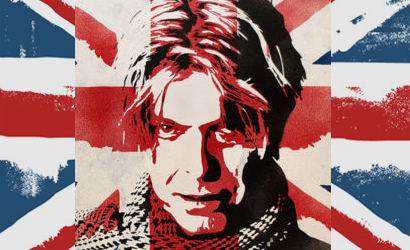
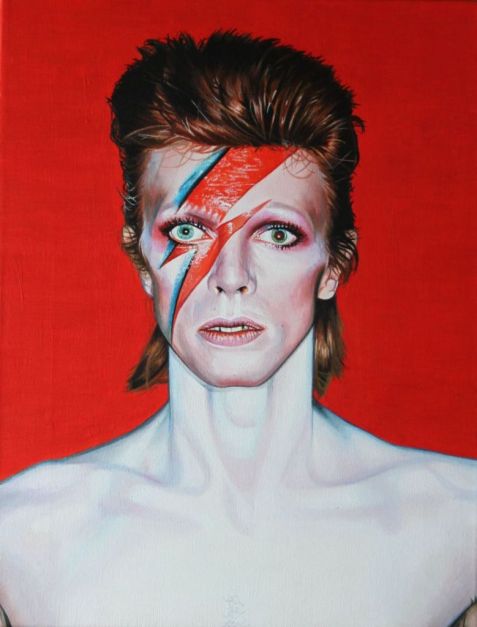
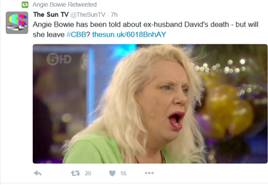

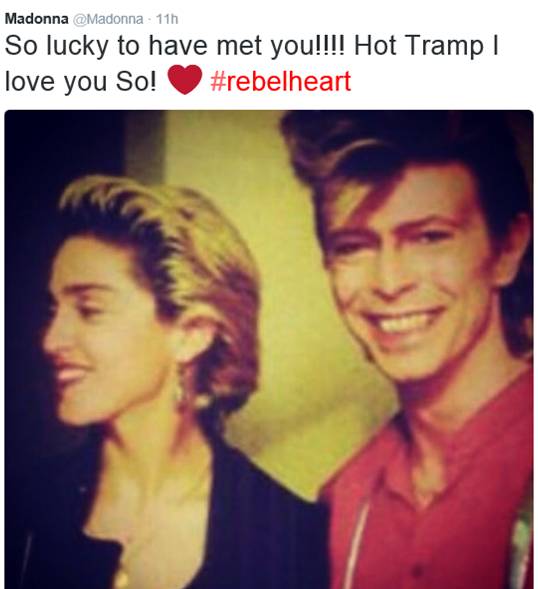


.png)


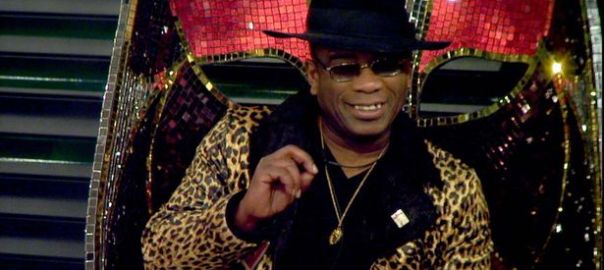


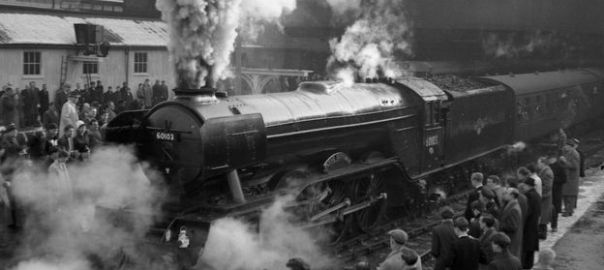









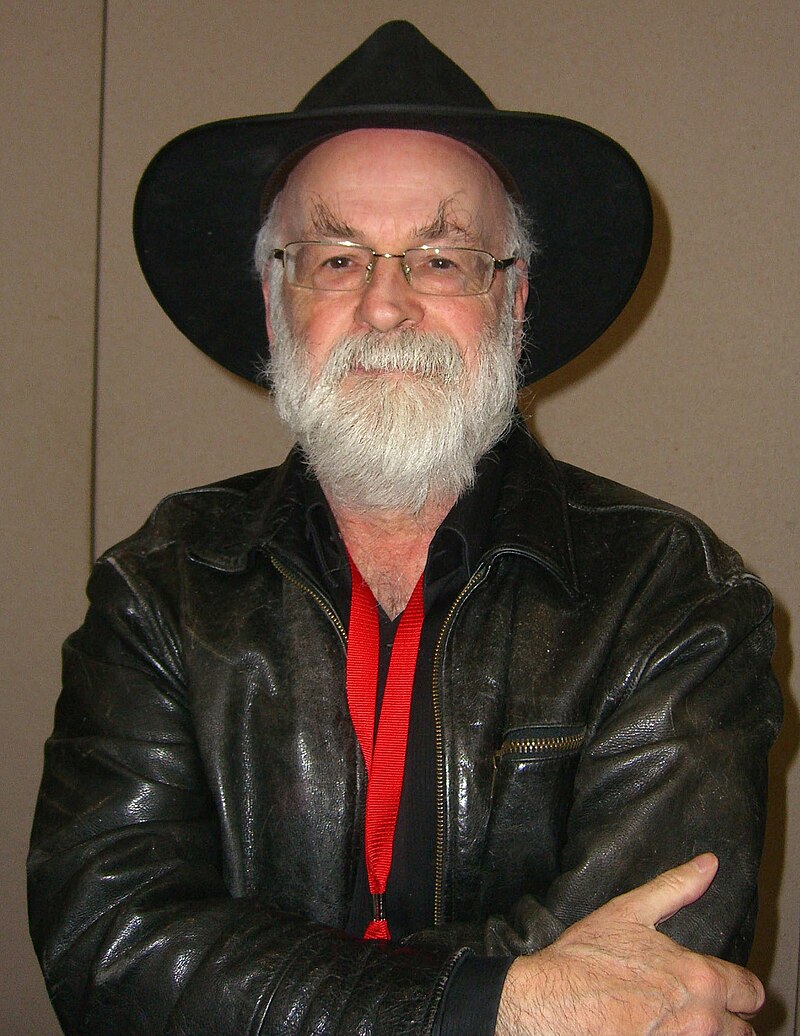



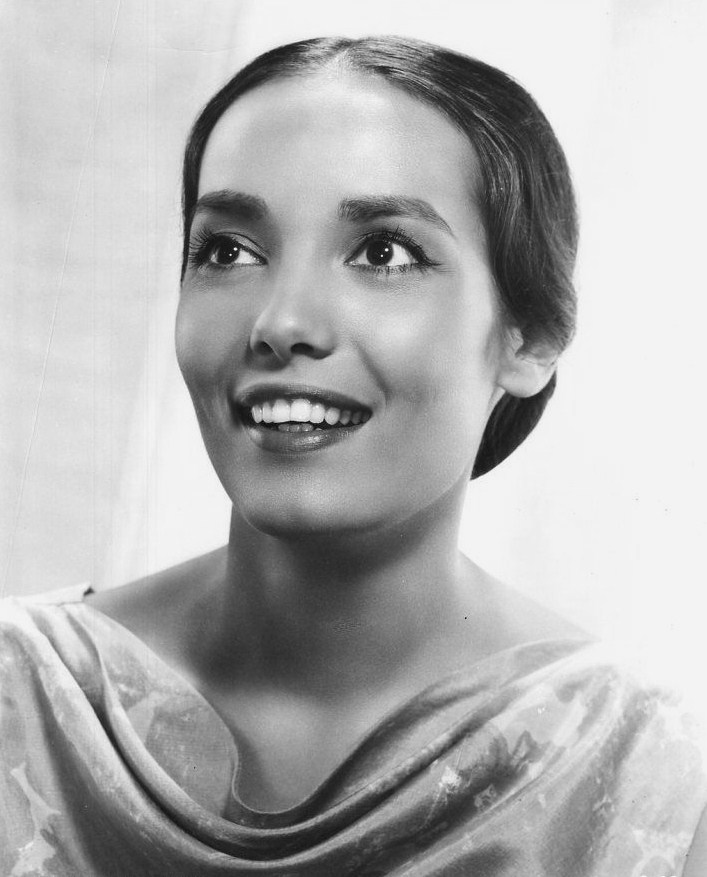




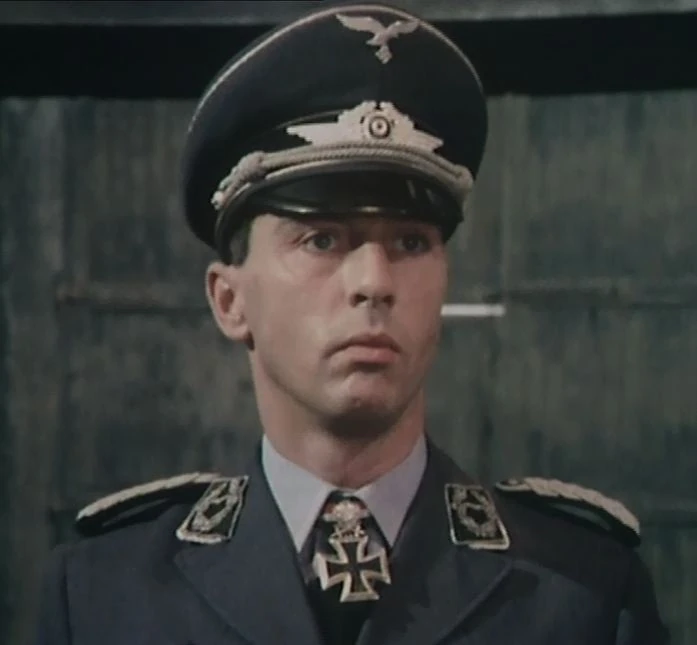











 belfastchildis.com