Two people have died in violent storms and a tornado which have devastated southern England.
Several others were injured in lightning strikes and fierce winds which caused massive damage to property around London.
The two who died were Frederick Cast and James Perry, of Kempston in Bedfordshire. Both were struck by lightning and killed as they ran for shelter.
Three others with them were injured and taken to hospital
Black Cloud
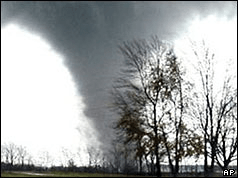
The worst damage to property was caused by a tornado which began in the late afternoon in Buckinghamshire.
Eyewitnesses spoke of a dense, black cloud gathering on the horizon and quickly developing into the dark column of a tornado.
It swept through towns and villages across the top of London as far as the Cambridgeshire fens, leaving ruin in its wake.
Terrifying Wind
In the Buckinghamshire village of Linslade, the terrifying wind wrecked hundreds of houses and other buildings as it tore through the streets and surrounding fields.
One resident, Tony Birch, described the scene:
“When we looked out of the side of the house, clouds appeared to be coming together in different directions. I believe I saw the actual source of the tornado.”
Dozens homeless
Whole streets of houses were stripped of their roof tiles, with furniture inside ruined by the heavy rain which followed.
Dozens of people have been made homeless, and relief workers are now helping those affected.
There were extraordinary scenes as the wind passed over: hundreds of trees were uprooted, drawn into the air and dropped large distances away.
The tornado also lifted up parked cars, cattle and horses and dumped them in nearby fields.
Witnesses said the tornado was 50 yards (45.7 metres) wide in places, although it shrank to just 5 yards (4.6 metres) wide in others.
It took less than an hour to travel from one end of the village to the other, but it caused hundreds of pounds worth of damage.
Flood Warnings
Other towns in the tornado’s path were also badly affected.
About half a mile from Linslade, in the town of Leighton Buzzard, a shop in the high street was struck by lightning and set on fire, while in Ely, Cambridgeshire, a double-decker bus was overturned.
There are warnings of further flooding throughout the entire region, and it’s likely that the difficult weather conditions will continue.
The path of the 1950 tornado was at least 66 miles long. It remains the longest trail on record for a tornado in England, and at two and a half hours the tornado is the longest lasting on record in Europe.In Linslade alone, 200 houses were damaged, 50 extensively. The Ministry of Supply handed out 450 tarpaulins to cover damaged roofs.
A further victim of the storms was eight-year-old Jennifer Margaret Reeves, who was swept away by flood waters and drowned.
One or two tornadoes are reported every year in the UK, of varying severity. Most are very limited in area, and cause damage over a narrow band not many miles in length.
They generally happen as a result of violent thunderstorms, and are caused by strong air currents within a storm cloud creating a high-speed funnel of wind.
Nicholas Winton memorial service honours Holocaust hero
A memorial service is being held for Sir Nicholas Winton, who rescued hundreds of children from the Holocaust in the months before World War Two.
Some 400 people are attending event at London’s Guildhall, including 28 of those he saved and Czech, Slovak and UK government representatives.
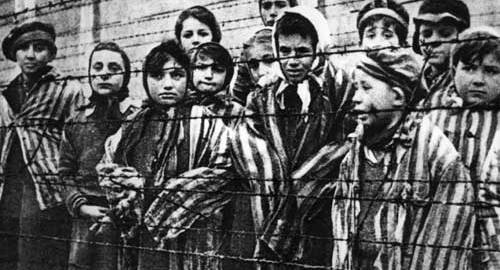
Sir Nicholas organised the “Kindertransport” in which 669 mostly Jewish children came to Britain by train from Czechoslovakia in 1939.
He died on 1 July last year, aged 106.
The Kindertransport became public knowledge on BBC TV show That’s Life in 1988 when presenter Esther Rantzen reunited some of those saved with the person who helped them escape the Nazis
Sir Nicholas Winton, Nicky’s Children, the Czech Kindertransport
———————–
Sir Nicholas George WintonMBE (born Nicholas George Wertheim; 19 May 1909 – 1 July 2015) was a British humanitarian who organized the rescue of 669 children, most of them Jewish, from Czechoslovakia on the eve of the Second World War in an operation later known as the Czech Kindertransport (German for “children transportation”). Winton found homes for the children and arranged for their safe passage to Britain.
The world found out about his work over 40 years later, in 1988. The British press dubbed him the “British Schindler“. On 28 October 2014, he was awarded the highest honour of the Czech Republic, the Order of the White Lion (1st class), by Czech President Miloš Zeman.
Nicholas Winton was born on 19 May 1909 in Hampstead, London, a son of bank manager Rudolph Wertheim and wife Barbara (née Wertheimer). His parents were German Jews who had moved to London two years earlier. The family name was Wertheim, but they changed it to Winton in an effort at integration. They also converted to Christianity, and Winton was baptised.
Motto
Latin: Persto et Praesto
(“I stand firm and I stand first”)
In 1923, Winton entered Stowe School, which had just opened. He left without qualifications, attending night school while volunteering at the Midland Bank. He then went to Hamburg, where he worked at Behrens Bank, followed by Wasserman Bank in Berlin. In 1931, he moved to France and worked for the Banque Nationale de Crédit in Paris. He also earned a banking qualification in France. Returning to London, he became a broker at the London Stock Exchange. Though a stockbroker, Winton was also “an ardent socialist who became close to Labour Party luminaries Aneurin Bevan, Jennie Lee and Tom Driberg.” Through another socialist friend, Martin Blake, Winton became part of a leftwing circle opposed to appeasement and concerned about the dangers posed by the Nazis.[11]
At school, he had become an outstanding fencer and he was selected for the British team in 1938. He had hoped to compete in the next Olympics, but the games were cancelled because of the war
Rescue work
Shortly before Christmas 1938, Winton was planning to travel to Switzerland for a skiing holiday. He decided instead to visit Prague and help Martin Blake, who was in Prague as an associate of the British Committee for Refugees from Czechoslovakia, then in the process of being occupied by Germany, and had called Winton to ask him to assist in Jewish welfare work.
Winton single-handedly established an organization to aid children from Jewish families at risk from the Nazis. He set up his office at a dining room table in his hotel in Wenceslas Square. In November 1938, following Kristallnacht in Nazi-ruled Germany, the House of Commons approved a measure to allow the entry into Britain of refugees younger than 17, provided they had a place to stay and a warranty of £50 was deposited for their eventual return to their own country.
The Netherlands
An important obstacle was getting official permission to cross into the Netherlands, as the children were to embark on the ferry at Hoek van Holland. After Kristallnacht in November 1938, the Dutch government officially closed its borders to any Jewish refugees. The border guards, marechaussees, searched for them and returned any found to Germany, despite the horrors of Kristallnacht being well known.
Winton succeeded, thanks to the guarantees he had obtained from Britain. After the first train, the process of crossing the Netherlands went smoothly.Winton ultimately found homes in Britain for 669 children, many of whose parents would perish in the Auschwitz concentration camp. His mother worked with him to place the children in homes and later hostels. Throughout the summer of 1939, he placed photographs of the children in Picture Post seeking families to accept them. He also wrote to US politicians such as Roosevelt, asking them for haven for more children. He said that two thousand more might have been saved if they had helped but only Sweden took any besides those sent to Britain. The last group of 250, scheduled to leave Prague on 1 September 1939, were unable to depart. With Hitler‘s invasion of Poland on the same day, the Second World War had begun.
Of the children due to leave on that train, only two survived the war.
Winton acknowledged the vital roles of Doreen Warriner (March 16, 1904 – December 17, 1972), Trevor Chadwick (April 22, 1907 – December 23, 1979), Nicholas Stopford, Beatrice Wellington (June 15, 1907 – ) Josephine Pike, and Bill Barazetti (1914 – 2000 in Prague who also worked to evacuate children from Europe. Winton was in Prague for only about three weeks before the Nazis occupied the country. He never set foot in Prague Station. As he later wrote, “Chadwick did the more difficult and dangerous work after the Nazis invaded… he deserves all praise
—————————–
Sir Nicholas Winton – BBC Programme
“That’s Life” aired in 1988
—————————–
Notable people saved
Alf Dubs, Baron Dubs (born 1932), British Labour Party politician and former Member of Parliament
Of the 669 children saved from the Holocaust through Winton’s efforts, more than 370 have never been traced. BBC News suggested in 2015 that they may not know the full story of how they survived the war
After the war, Winton worked for the International Refugee Organisation and then the International Bank for Reconstruction and Development in Paris, where he met Grete Gjelstrup, a Danish secretary and accountant’s daughter.They married in her hometown of Vejle on 31 October 1948. The couple settled in Maidenhead, England, where they brought up their three children and he stood, unsuccessfully, for the town council in 1954. Winton found work in the finance departments of various companies.
Recognition
It is often wrongly reported that Winton suppressed humanitarian exploits for many years despite mentioning them in his election material while unsuccessfully standing for election to the town council in 1954. In 1988 his wife found a detailed scrapbook in their attic, containing lists of the children, including their parents’ names and the names and addresses of the families that took them in. She gave the scrapbook to Elisabeth Maxwell, a Holocaust researcher and wife of media magnate Robert Maxwell.
Winton himself could not remember the reason why this was done. Letters were sent to each of these known addresses and 80 of “Winton’s children” were found in Britain.
The wider world found out about his work in February 1988 during an episode of the BBC television programme That’s Life! when he was invited as a member of the audience. At one point, Winton’s scrapbook was shown and his achievements were explained. The host of the programme, Esther Rantzen, asked whether anybody in the audience owed their lives to Winton, and if so, to stand – more than two dozen people surrounding Winton rose and applauded.
Winton died peacefully in his sleep on the morning of 1 July 2015 at Wexham Park Hospital in Slough from cardio-respiratory failure having been admitted a week earlier following a deterioration in his health. He was 106 years old.
Winton’s death came 76 years to the day after 241 of the children he saved left Prague on a train.[45] A special report from the BBC News on several of the children whom Winton rescued during the war had been published earlier that day.
A statue of Winton stands on Platform 1 of the Praha hlavní nádraží railway station. Created by Flor Kent, it was unveiled on 1 September 2009 as part of a larger commemoration of the 70th anniversary of the last Kindertransport train (see also Winton train, below).
Winton was baptised as a Christian by his parents, but his Jewish ancestry disqualified him from being declared a Righteous Among the Nations by Yad Vashem in Israel. As an adult, he was not active in any particular religion. In a 2015 interview Winton told Stephen Sackur, he had become disillusioned with religion during the war as he could not reconcile religious movements “praying for victory on both sides of the same war”. Winton went on to describe his personal beliefs,
“I believe in ethics, and if everybody believed in ethics we’d have no problems at all. That’s the only way out; forget the religious side.”
Winton received the Wallenberg Medal on 27 June 2013 in London.The following year, the International Raoul Wallenberg Foundation established a literary competition named after Winton. The contest is for essays by high school students about Winton’s legacy.
Winton was awarded the Freedom of the City of London on 23 February 2015.
On 1 September 2009, a special “Winton Train” set off from the Prague Main railway station. The train, composed of one or two steam locomotives (out of a set of six) and carriages used in the 1930s, headed to London via the original Kindertransport route. On board were several surviving “Winton children” and their descendants, who were welcomed by Winton in London. The occasion marked the 70th anniversary of the intended last Kindertransport, due to set off on 3 September 1939 but prevented by the outbreak of the Second World War. At the train’s departure, a memorial statue for Winton, designed by Flor Kent, was unveiled at the railway station.
Order of the White Lion
On 19 May 2014, Winton’s 105th birthday, it was announced he was to receive the Czech Republic‘s highest honour, for giving Czech children “the greatest possible gift: the chance to live and to be free”. On 28 October 2014, Winton was awarded the Order of the White Lion (Class I) by Czech President Miloš Zeman,[69] the Czech Defence Ministry having sent a special aircraft to bring him to Prague. The award was made alongside one to Sir Winston Churchill, which was accepted by his grandson Nicholas Soames. Zeman said he regretted the highest Czech award having been awarded to the two personalities so belatedly, but added “better late than never”.
Winton was also able to meet some of the people he rescued 75 years earlier, themselves then in their 80s. He said, “I want to thank you all for this enormous expression of thanks for something which happened to me nearly 100 years ago—and a 100 years is a heck of a long time. I am delighted that so many of the children are still about and are here to thank me.”[68][71]
Speaking on BBC Radio 4’s Today programme, on 28 October 2014, Winton said he thought he had “made a difference to a lot of people” and went on to say,
“I don’t think we’ve learned anything… the world today is in a more dangerous situation than it has ever been.”
On 22 April 2016, a remembrance quarter peal was rung and a new method named ‘Sir Nicholas Winton Delight’ by bellringers of the Whiting Society of Ringers
OriginThe office was created in 1350 by royal letters patent, though the current title dates from 1522. The position was adopted by other members of the Commonwealth when they adopted the British Westminster system. The title is derived from the staff of office, an ebony staff topped with a golden lion, which is the main symbol of the office’s authority.
The office was created in 1350 by royal letters patent, though the current title dates from 1522. The position was adopted by other members of the Commonwealth when they adopted the British Westminster system. The title is derived from the staff of office, an ebony staff topped with a golden lion, which is the main symbol of the office’s authority.
United Kingdom
Appointment
Black Rod is formally appointed by the Crown based on a recruitment search performed by the Clerk of the Parliaments, to whom he reports. Prior to 2002 the office rotated among retired senior officers from the Royal Navy, the British Army and the Royal Air Force. It is now advertised openly. Black Rod is an officer of the English Order of the Garter, and is usually appointed Knight Bachelor if not already knighted. His deputy is the Yeoman Usher of the Black Rod.
Official duties
He is responsible, as the representative of the Administration and Works Committee, for maintaining the buildings, services, and security of the Palace of Westminster. Black Rod’s official duties also include responsibility as the usher and doorkeeper at meetings of the Most Noble Order of the Garter; the personal attendant of the Sovereign in the Lords; as secretary to the Lord Great Chamberlain and as the Sergeant-at-Arms and Keeper of the Doors of the House, in charge of the admission of strangers to the House of Lords. Either Black Rod or his deputy, the Yeoman Usher, is required to be present when the House of Lords, the upper house of Parliament, is in session, and plays a role in the introduction of all new Lords Temporal in the House (but not of bishops as new Lords Spiritual). Black Rod also arrests any Lord guilty of breach of privilege or other Parliamentary offence, such as contempt or disorder, or the disturbance of the House’s proceedings. His equivalent for security in the House of Commons is the Serjeant at Arms.
Black Rod, along with his deputy, is responsible for organizing ceremonial events within the Palace of Westminster, providing leadership in guiding the significant logistics of running such events.
Ceremonial Duties
Mace
Black Rod is in theory responsible for carrying the Mace into and out of the chamber for the Speaker of the House of Lords (formerly the Lord Chancellor, now the Lord Speaker), though this role is delegated to the Yeoman Usher and Deputy Serjeant-at-Arms, or on judicial occasions, to the Lord Speaker’s deputy, the Assistant Serjeant-at-Arms. The mace was introduced in 1876.
State Opening of Parliament
Black Rod is best known for his part in the ceremonies surrounding the State Opening of Parliament and the Throne speech. He summons the Commons to attend the speech and leads them to the Lords. As part of the ritual, as Black Rod approaches the doors to the chamber of the House of Commons to make his summons, they are slammed in his face. This is to symbolize the Commons’ independence of the Sovereign. Black Rod then strikes the door three times with his staff, and is then admitted and issues the summons of the monarch to attend.
This ritual is derived from the attempt by King Charles I to arrest the Five Members in 1642, in what was seen as a breach of the constitution. This and prior actions of the King led to the Civil War. After that incident, the House of Commons has maintained its right to question the right of the monarch’s representative to enter their chamber, although they cannot bar him from entering with lawful authority. In recent years, Black Rod has received jibes on this annual occasion from the outspoken republican LabourMPDennis Skinner
Boudica Warrior Queen Boudica (/ˈbuːdᵻkə/; alternative spellings: Boudicca, Boudicea, also known as Boadicea /boʊdᵻˈsiːə/ and in Welsh as Buddug [ˈbɨ̞ðɨ̞ɡ]) (d. AD 60 or 61) was a queen of the Brit…
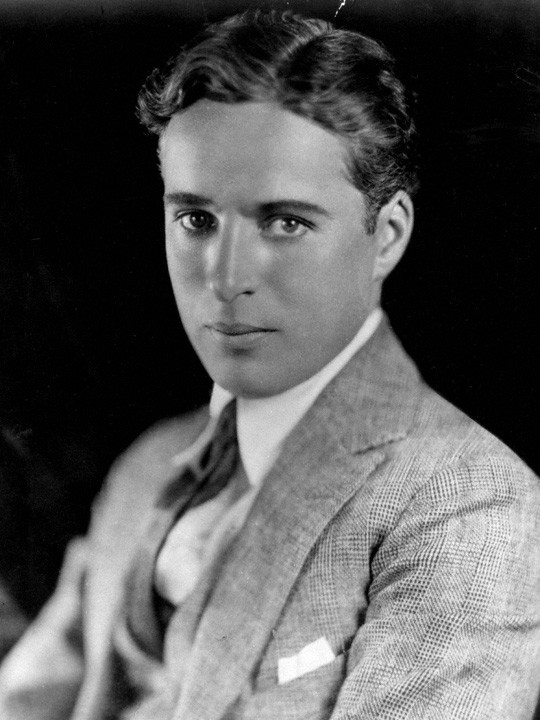
On this day in 1978 Charlie Chaplin’s stolen body found
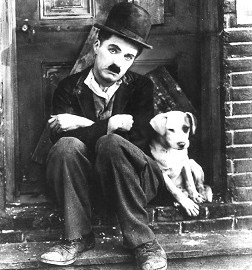
The coffin containing the body of Charlie Chaplin – missing since his grave was robbed eleven weeks previously was found
The legendary silent movie star’s body had been stolen by a pair hapless , stupid grave robbers
The kidnapping of Charlie Chaplin’s coffin
Missing coffin
Having suffered from strokes during the 1960s and ’70s, a frail and wheelchair-bound Chaplin spent his final years living with his fourth wife, Oona, by Lake Geneva in Switzerland.
Then, on Christmas Day 1977, he died in his sleep at his home in Corsier-sur-Vevey, aged 88. Chaplin was laid to rest a few days later in the local cemetery, but sadly his eternal rest lasted only a couple of months.
On 2 March 1978, police phoned the Chaplin mansion to inform 51-year-old Oona that there had been a burglary in the middle of the night and that her husband’s coffin was missing.
It was dug up from a field about a mile away from the Chaplin home in Corsier near Lausanne, Switzerland.
Swiss police eventually arrested two men – a 24 year old Pole and a 38 year old Bulgarian and they have confessed to the heinous crime.
Superintendent Gabriel Cettou, the head of the Geneva police, said the two men would be charged with attempted extortion and disturbing the peace of the dead.
They were traced after police kept a watch on 200 phone kiosks and tapped the Chaplins’ phone after the family received ransom demands of £400,000 for return of the body after it went missing in March
Roman Wardas, a 24-year-old Pole, and Gantscho Ganev, a 38-year-old Bulgarian, were convicted in December 1978 of stealing the coffin and trying to extort £400,000 from the Chaplin family.
Wardas was sentenced to four-and-a-half-years’ hard labour for masterminding the bizarre plot to hold Charlie Chaplin’s body to ransom. He said he was inspired by an article about a similar case in an Italian newspaper and believed it was the answer to his financial difficulties.
His Bulgarian accomplice, described as a “muscle man” with a limited sense of responsibility, was given a suspended 18-month sentence.
—————–
The Kid,Charlie Chaplin fight scene
—————–
No doubt the great man himself would have found this highly amusing and the story could have come straight out of one of his iconic silent movies.
.Sir Charles’ 51-year-old widow, Lady Oona Chaplin, refused to pay up saying:
“Charlie would have thought it ridiculous.”
In further calls the kidnappers made threats to harm her two youngest children.
Hollywood Rumours
The family kept silent about the ransom demands and various rumours circulated about the missing coffin. One Hollywood report suggested it had been dug up because Sir Charles was a Jew buried in a gentile cemetery.
Lady Chaplin, daughter of playwright Eugene O’Neill inherited about £12m after the death of her husband.
The couple and their eight children had been living in Lausanne since 1952.
A spokesman for the Chaplins said:
“The family is very happy and relieved that this ordeal is over.”
Tomorrow is the anniversary of this brutal attack by the UVF.
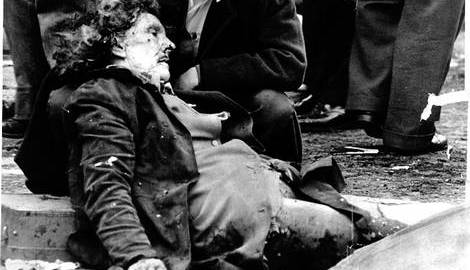
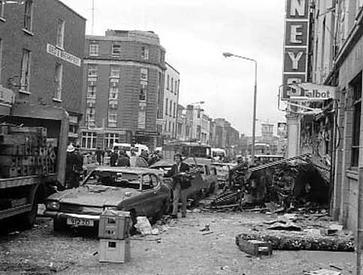
They killed 33 civilians and a full-term unborn child, and injured almost 300.
Dublin and Monaghan Bombings
17 May 1974
The views and opinions expressed in this page and documentaries are soley intended to educate and provide background information to those interested in the Troubles of Northern Ireland. They in no way reflect my own opinions and I take no responsibility for any inaccuracies or factual errors
The Dublin and Monaghan
The Dublin and Monaghan bombings of 17 May 1974 were a series of co-ordinated no-warning car bombings in Dublin and Monaghan, Republic of Ireland. Three exploded in Dublin during rush hour and a fourth exploded in Monaghan almost ninety minutes later. They killed 33 civilians and a full-term unborn child, and injured almost 300. The bombings were the deadliest attack of the conflict known as the Troubles, and the deadliest terrorist attack in the Republic’s history.[2] Most of the victims were young women, although the ages of the…
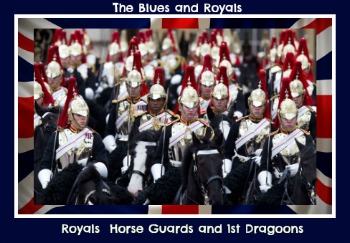
Troopers of the Blues and Royals at the Trooping the Colour parade, London, 2007
Formation
The regiment was formed in 1969 from the merger of the Royal Horse Guards, which was known as “the Blues” or “the Oxford Blues”, and the Royal Dragoons, which was known as “the Royals”.
Since then, the new regiment has served in Northern Ireland, Germany, and Cyprus. During the Falklands War of 1982, the regiment provided the two armoured reconnaissance troops. The regiment also had a squadron on operational duty with the United Nations in Bosnia in 1994–95. Most recently, the regiment saw action in the Iraq War and the War in Afghanistan.
As a result of the Options for Change Review in 1991, the Blues and Royals formed a union for operational purposes with the Life Guards as the Household Cavalry Regiment. However, they each maintain their regimental identity, with distinct uniforms and traditions, and their own colonel. The Blues and Royals currently has two reconnaissance squadrons in Windsor, which are part of the Household Cavalry Regiment, and a mounted squadron in London as part of the Household Cavalry Mounted Regimen.
Regimental traditions
——————————-
Blues and Royals Quick March
——————————-
Instead of being known as the Royal Horse Guards and 1st Dragoons, the regiment is known as the Blues and Royals and is therefore the only regiment in the British Army to be officially known by their nickname as opposed to their full name.
Newly commissioned officers in the Blues and Royals are named Cornets, rather than Second Lieutenants as is the standard in the rest of the British Army. The rank of sergeant does not exist in the Household Cavalry. The equivalent is Corporal of Horse, which also applies to any other ranks with the word sergeant in it, such as Regimental Sergeant Major, which is replaced by Regimental Corporal Major. King Edward VII also declared the rank of Private should be replaced by the rank of Trooper in the cavalry.
This set the precedent for the usage of Trooper instead of Private in other cavalry units, such as those of the modern Royal Armoured Corps.
——————–
The Queens Cavalry – BBC – Full Video
——————–
The Blues and Royals is the only regiment in the British Army that allows troopers and non-commissioned officers, when not wearing headdress, to salute an officer. The custom started after the Battle of Warburg in 1760 by the Marquess of Granby, who commanded both the Royal Horse Guards and the Royal Dragoons, which were separate units at the time. During the battle, the Marquess had driven the French forces from the field, losing both his hat and his wig during the charge. When reporting to his commander, Prince Ferdinand of Brunswick, in the heat of the moment he is said to have saluted without wearing his headdress, having lost it earlier. When the Marquess of Granby became the Colonel of the Blues, the regiment adopted this tradition.
Further, the Blues and Royals and the Life Guards are the only two units in the British forces that are not required to remove their headdress indoors, unless they are inside a church.
When the Household Cavalry mounts an escort to the Sovereign on State occasions, a ceremonial axe with a spike is carried by a Farrier Corporal of Horse. The historical reason behind this is that when a horse was wounded or injured so seriously that it could not be treated, its suffering was ended by killing it with the spike. The axe is also a reminder of the days when the Sovereign’s escorts accompanied royal coaches and when English roads were very bad. Horses often fell, becoming entangled in their harnesses and had to be freed with the cut of an axe. It is also said that, in those times, if a horse had to be put to death, its rider had to bring back a hoof, cut off with the axe, to prove to the Quartermaster that the animal was in fact dead, thereby preventing fraudulent replacement. Today, the axe remains as a symbol of the Farrier’s duties.
Uniform
On ceremonial occasions, the Blues and Royals wear a blue tunic (inherited from the Royal Horse Guards, also known as “the Blues”), a metal cuirass, and a matching helmet with a red plume worn unbound, and against popular belief the regiments farriers wear a red plume like the rest of the regiment but do not wear the metal cuirass. In addition, the Blues and Royals wear their chin strap under their chin, as opposed to the Life Guards, who wear it below their lower lip. On service dress, the Blues and Royals wear a blue lanyard on the left shoulder, as well as a Sam Browne belt containing a whistle. In most dress orders, the Waterloo Eagle is worn on the left arm as part of dress traditions.
The Blues and Royals, as part of the Household Division, does not use the Order of the Bath Star for its officer rank ‘pips,’ but rather the Order of the Garter Star.
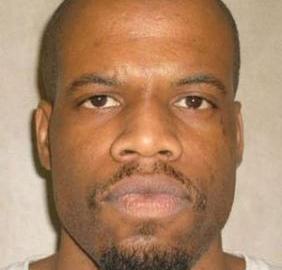
The death of Clayton Darrell Lockett occurred on April 29, 2014, when he suffered a heart attack during an execution by lethal injection in the U.S. state of Oklahoma. Lockett, aged 38, was convicted in 2000 of murder, rape, and kidnapping.
Lockett was administered an untested mixture of drugs that had not previously been used for executions in the United States.
Although the execution was stopped, Lockett died 43 minutes after being sedated. He writhed, groaned, convulsed,and spoke during the process and attempted to rise from the execution table fourteen minutes into the procedure, despite having been declared unconscious.
———————————
Clayton Lockett tasered before bungled lethal injection
Clayton Lockett was born in 1975 to a drug-using mother. She abandoned him when he was three years old, and he was then raised by his father who severely physically abused him throughout his childhood, gave him (Lockett) drugs starting at age 3, and encouraged him (Lockett) to steal and not get caught.
Criminal History
In 1992, at the age of sixteen, Lockett pleaded guilty in Kay County to burglary and knowingly concealing stolen property. He received a seven-year prison sentence. Earlier that year, he pleaded no contest to two counts of intimidating state witnesses.
While imprisoned at age 16 at the Oklahoma State Penitentiary, a prison for adults, Lockett was gang raped by three adult male prisoners.
In 1999, Lockett kidnapped, beat, and shot Stephanie Neiman, a nineteen-year-old high school graduate, friend of Lockett’s other victims, and a witness to his crimes. The men beat her and used duct tape to bind her hands and cover her mouth. Even after being kidnapped and driven to a dusty country road, Neiman did not back down when Lockett asked if she planned to contact police. After she stated she would go to the police, Lockett decided to bury her alive.
Lockett ordered an accomplice to bury her while she was still breathing. She died from two wounds from a shotgun fired by Lockett.In 2000, he was convicted of murder, rape, forcible sodomy, kidnapping, assault and battery and sentenced to death. Previously Lockett was sentenced to four years in prison for a conviction in 1996 in Grady County for conspiracy to commit a felony.
At his 1999 murder trial, DNA from the dead victim, fingerprints from the duct tape used to bind the victim, and eye-witness testimony led to his murder conviction.
In 2011, Hospira announced that it would stop manufacturing sodium thiopental, due to use by American prisons for executions. “Virtually all” death rows in the US were left without a steady supply of the drug, which is used to numb the pain of potassium chloride stopping the heart. Some states bartered supplies of execution drugs, while other states were accused of illegally buying drugs from India and other sources. The Drug Enforcement Administration seized supplies of sodium thiopental from several states in spring and summer 2011, questioning how they were imported.
Other manufacturers have also refused to provide pharmaceutical drugs for the purpose of execution, and a European export ban added to problems obtaining the necessary drugs.
Due to the supply issues, Oklahoma used an untested mixture of midazolam, vecuronium bromide, and potassium chloride for Lockett’s execution. While Florida had previously used the same three drugs in a 2013 execution, they used 500 mg of midazolam rather than the 100 mg used by Oklahoma.
Secrecy laws in Oklahoma prevent the public knowing more than which three drugs were used. The state refused to state why that drug combination was chosen, what the drugs were like and how they were obtained. Reportedly, the drugs were bought with petty cash making the transaction harder to track and to challenge legally.
In a recent Florida case experts testified that midazolam would not cause unconsciousness. Instead of sedating some patients midazolam can make them violent. Dennis McGuire took 25 minutes to die; he gasped and snorted. The U.S. Supreme Court has ruled that if the first drug does not make the inmate unconscious there is an unacceptable risk of suffocation and pain from the two following drugs.
Potassium chloride causes severe pain if used without an anesthetic. Pharmacology professor, Craig Stevens of Oklahoma State University asked why anesthesiology or pharmacology experts were not consulted. “Midazolam has no analgesic properties. It’s a whole different drug class than sodium thiopental or barbiturates,” Stevens said. Stevens described dying from the other two drugs without anesthetic as “horrific”.
The drug combination used is considered too painful to euthanise animals. “Veterinarians in at least one state are barred from using a three-drug formula used on several inmates, including Clayton Lockett.”
Oklahoma GovernorMary Fallin had strongly pushed for the execution to take place despite the lack of standard drugs, initially issuing an executive order to proceed despite a stay by the Supreme Court of Oklahoma. Republican allies of Fallin started impeachment proceedings against the justices who tried to delay the execution; the stay was later lifted. Lockett’s lawyers also unsuccessfully sought to force Oklahoma to reveal the source of the drugs, which the state refused.
Oklahoma officials testified that the drugs to be used in Lockett’s execution had been legally obtained and had not expired.
LaDonna Hollins
Before the execution, Lockett’s stepmother LaDonna Hollins was reported as saying,
“I want to know what mixture of drugs are you going to use now? Is this instant? Is this going to cause horrible pain?” and “I know he’s scared “.
He said he’s not scared of the dying as much as the drugs administered.
Failed Execution
—————————–
Oklahoma inmate Clayton Lockett dies brutal death after botched lethal injection
—————————–
Lockett’s failed execution occurred at Oklahoma State Penitentiary in McAlester, Oklahoma, on April 29, 2014, after he had been tasered by staff and attempted to cut himself earlier that day. After administration of the first drug at 6:23 p.m. CDT, Lockett was declared unconscious at 6:33 p.m, and the execution was halted after about twenty minutes. He was declared dead at 7:06 p.m. due to a heart attack.
Oklahoma Department of Corrections Director Robert Patton said one of the doctors present stopped the execution after Lockett had a “vein failure”.According to the Department of Corrections, the time for an inmate to be pronounced dead was 6 to 12 minutes in the previous 19 executions before Lockett’s.
After being declared unconscious, Lockett was able to raise his head and said, “Oh, man”, “I’m not…” and according to some sources,“something’s wrong”. Lockett began writhing at 6:36 p.m. and was observed twitching and convulsing. He attempted to rise from the table at 6:37 p.m. and loudly exhaled.A lawyer for Lockett reportedly said,
“It looked like torture.”
All three drugs had been administered to Lockett, but it was unclear how much entered his system. A vein in the groin was selected as the injection site, and a cloth was put over it to prevent witnesses seeing the groin area. This prevented staff from seeing that the IV connection had failed.Patton said “the chemicals did not enter into the offender”
Prison officials had reportedly discussed taking Lockett to a hospital before he died.
A subsequent report showed Clayton Lockett’s execution was halted 33 minutes after it began, his vein collapsed as the drugs were administered, and a doctor said there were not enough drugs left and that Lockett had not been given enough drugs to cause death; the doctor also said there were not enough drugs to continue.
The report noted:
The doctor checked the IV and reported the blood vein had collapsed, and the drugs had either absorbed into tissue, leaked out or both. […] Patton asked if enough drugs had been administered to cause death, to which the doctor replied “no”. The director then asked if another vein was available to complete the execution, and if so, were there enough drugs left. The doctor answered no to both questions.
Aftermath
Following Lockett’s death, a fourteen-day stay of execution was granted for Charles Frederick Warner, an Oklahoma convict who had been scheduled for execution two hours after Lockett with the same combination of drugs. Governor of OklahomaMary Fallin also requested a review of the execution process involved in Lockett’s death. Fallin’s intervention led to the execution which possibly violated separation of powers within the state.
Dean Sanderford, Lockett’s lawyer, witnessed the execution and complained “the planned review would not be independent”. Sanderford feared “investigation by state employees or agencies would not restore confidence in the execution process”.
Lawyers representing the next set of prisoners scheduled to be executed called for a moratorium on all executions. Madeline Cohen, an attorney for Warner, condemned the way Lockett was executed, noting that “Clayton Lockett was tortured to death,” also denouncing the state’s refusal to disclose “basic information” about the drugs for the lethal injection procedures.Democratic state representative, Joe Dorman calls for outside investigation into how Lockett died. He fears the planned review could “lead to suppression of critical evidence in the unlikely event that criminal wrongdoing is uncovered.”
A timeline issued by Robert Patton, director of the Oklahoma Department of Corrections, revealed that Clayton Lockett was tasered after refusing to be restrained and escorted to a medical room for an X-ray exam as part of the protocol leading up to his execution. During his medical exam officials found a cut on his right arm, but staff determined that sutures were not needed. The timeline also revealed that Lockett refused a food tray twice.
Mary Fallin
Patton also recommended in the letter to governor Mary Fallin that the state conduct a complete review of execution protocols, indefinitely suspend all executions, and investigate the circumstances surrounding the execution.
The White House said the execution “fell short of humane standards” President Barack Obama declared the action “deeply disturbing” and ordered attorney generalEric Holder to review the policy on executions.Obama cited uneven application of the death penalty in the United States, including racial bias (Lockett was African-American) and cases in which murder convictions were later overturned, as grounds for further study of the issue.
Governor Fallin said “the state of Oklahoma executed Clayton Lockett” amid media coverage that portrayed the execution as “botched”, The Telegraph calling it “barbarism” and “inappropriate in a civilized society”, noting “the idea of actually spectating while the victim is killed surely clashes with basic humanity.”
The executive director of the Death Penalty Information Center, Richard Dieter, said the attempted execution of Lockett was a “torturous action” and thinks the execution might “lead to a halt in executions until states can prove they can do it without problems”.
He said the death penalty advocates should be “concerned about whether the state knows what it is doing”.
“Science experiment” to cause Lockett to “die in pain”
over the course of more than 40 minutes, the state had “disgraced itself before the nation and world”. US advocacy director of Human Rights Watch Antonio Ginatta said “people convicted of crimes should not be test subjects for a state’s grisly experiments” and that the “botched execution was nothing less than state-sanctioned torture”
A month after the execution Oklahoma state had not released the official log of the incident. Oklahoma State University and freedom of information campaigner, Joey Senat said, “They’re not complying with the law by this kind of delay.”
Lockett’s lawyers released the preliminary results of an independent autopsy on Lockett, conducted by forensic pathologist Joseph Cohen and commissioned by Lockett’s legal team. It suggested that the execution team failed to ensure the IV had been properly inserted. According to Cohen, the execution team made several attempts to insert IVs into Lockett’s arms and groin before inserting an IV in his femoral vein. However, they failed to ensure the IV went in all the way, resulting in the drugs being absorbed into Lockett’s muscle. The report also challenged the official claim that Lockett’s veins failed, saying that his veins were perfectly healthy.




















 belfastchildis.com