Category Archives: Blog

The Orange Order – What’s it all about?


Welcome to the Grand Orange Lodge


We are a Protestant fraternity with members throughout the world. Autonomous Grand Lodges are found in Scotland, England, the United States of America, West Africa, Canada, Australia and New Zealand.


Our name comes from William III, Prince of Orange, and is kept because his victory over despotic power laid the foundation for the evolution of Constitutional Democracy in the British Isles.

Support for William of Orange in the British Isles led to the formation of Orange Societies to commemorate his victory at the Battle of the Boyne in July 1690, but the largest and longest lasting groups were the Boyne Societies in Ireland.

In 1795, following the culmination of attacks on Protestants in County Armagh at the Battle of the Diamond , in which Protestants routed those who had attacked them and attempted to burn properties, it was decided to form an organisation which would protect Protestants. This body, drawing on existing Orange Clubs in the neighbourhood, was named the Loyal Orange Institution.

In modern times the Loyal Orange Institution continues to function, with thousands of members in Ireland many others across the world. Today defending Protestantism is not so literal as it was in 1795, but it requires us to take a stand for truth in an age of secularism and in order to defend our culture and traditions.

The Grand Orange Lodge of Ireland was established in 1798. We hope you will learn more about us and the Orange tradition through this website.
See The Grand Orange Lodge of Ireland

12th Tourism.PNG
Click for details

 The Sons of William Loyal Orange Lodge 209

History & Background

Orange Order

The Loyal Orange Institution, more commonly known as the Orange Order, is a Protestant fraternal organisation based primarily in Northern Ireland. It also has a significant presence in the Scottish Lowlands and lodges throughout the Commonwealth and United States.

The Orange Order was founded in County Armagh in 1795, during a period of Protestant-Catholic sectarian conflict, as a Masonic-style brotherhood sworn to maintain the Protestant Ascendancy. It is headed by the Grand Orange Lodge of Ireland, which was established in 1798. Its name is a tribute to the Dutch-born Protestant king William of Orange, who defeated the army of Catholic king James II at the Battle of the Boyne (1690). Its members wear orange sashes and are referred to as Orangemen. The Order is best known for its yearly marches, the biggest of which are held on or around 12 July (‘The Twelfth‘).

Royal Coat of Arms of the United Kingdom (HM Government).svg

Royal Coat of Arms of the United Kingdom of Great Britain and Northern Ireland

Politically, the Orange Order is a conservative British unionist organisation with links to Ulster loyalism. It campaigned against Scottish independence in 2014. The Order sees itself as defending Protestant civil and religious liberties, whilst critics accuse the Order of being sectarian, triumphalist and supremacist.

It has also been criticised for associating with loyalist paramilitary groups. As a Protestant society, it does not accept non-Protestants as members unless they convert and adhere to the principles of Orangeism, nor does it accept Protestants married to Catholics. Orange marches through mainly Catholic and nationalist neighbourhoods in Northern Ireland are controversial and have often led to violence.

Loyal Orange Institution
Flag of the Orange Order.svg

The Orange Order flag, incorporating the colour orange, the purple star of the Williamites and the St George’s Cross
The Orange Order Logo.jpg

                                                                 The Orange Order logo
Named after King William of Orange
Formation 1795
Founded at Loughgall, County Armagh
Type Fraternity
Headquarters Belfast, Northern Ireland
Location
Edward Stevenson

History


William III (“William of Orange”) King of England, Scotland and Ireland, Stadtholder of the Netherlands.

The Siege of Derry 18th April 28th July 1689


The Orange Institution commemorates the civil and religious privileges conferred on Protestants by William of Orange, the Dutch prince who became King of England, Scotland, and Ireland in the Glorious Revolution of 1688. In particular, the Institution remembers the victories of William III and his forces in Ireland in the early 1690s, especially the Battle of the Boyne.

Formation and early years

Since the 1690s commemorations—state-sponsored and those held by the lower classes—had been held throughout Ireland celebrating key dates in the Williamite War such as the Battle of the Boyne, Siege of Derry and the Siege of Cork. These followed a tradition started in Elizabethan England of celebrating key events in the Protestant calendar. By the 1740s there were organisations holding parades in Dublin such as the Boyne Club and the Protestant Society, both seen as forerunners to the Orange Order.

Armagh disturbances

Main article: Armagh disturbances

Throughout the 1780s, sectarian tension had been building in County Armagh, largely due to the relaxation of the Penal Law. Here the number of Protestants and Catholics (in what was then Ireland’s most populous county) were of roughly equal number, and competition between them to rent patches of land near markets was fierce. Drunken brawls between rival gangs had by 1786 become openly sectarian. These gangs eventually reorganised as the Protestant Peep o’ Day Boys and the Catholic Defenders, with the next decade in County Armagh marked by fierce sectarian conflict between both groups, which escalated and spread into neighbouring counties.

Battle of the Diamond

Main article: Battle of the Diamond
200th Anniversary Battle of the Diamond Parade 1995

In September 1795, at a crossroads known as “The Diamond” near Loughgall, Defenders and Peep o’ Day Boys gathered to fight each other.  This initial stand-off ended without battle when the priest that accompanied the Defenders persuaded them to seek a truce, after a group called the “Bleary Boys” came from County Down to reinforce the Peep o’ Day Boys.  When a contingent of Defenders from County Tyrone arrived on 21 September, however, they were “determined to fight”. The Peep o’ Day Boys quickly regrouped and opened fire on the Defenders. According to William Blacker, the battle was short and the Defenders suffered “not less than thirty” deaths.

After the battle had ended, the Peep o’ Days marched into Loughgall, and in the house of James Sloan they founded the Orange Order, which was to be a Protestant defence association made up of lodges. The principal pledge of these lodges was to defend “the King and his heirs so long as he or they support the Protestant Ascendancy“. At the start the Orange Order was a “parallel organisation” to the Defenders in that it was a secret oath-bound society that used passwords and signs.

One of the very few landed gentry that joined the Orange Order at the outset, William Blacker, was unhappy with some of the outcomes of the Battle of the Diamond. He says that a determination was expressed to “driving from this quarter of the county the entire of its Roman Catholic population”, with notices posted warning them “to Hell or Connaught”.  Other people were warned by notices not to inform on local Orangemen or “I will Blow your Soul to the Low hils of Hell And Burn the House you are in”. Within two months, 7,000 Catholics had been driven out of County Armagh.

According to Lord Gosford, the governor of Armagh:

It is no secret that a persecution is now raging in this country… the only crime is… profession of the Roman Catholic faith. Lawless banditti have constituted themselves judges… and the sentence they have denounced… is nothing less than a confiscation of all property, and an immediate banishment.

A former Grand Master of the Order, also called William Blacker, and a former County Grand Master of Belfast, Robert Hugh Wallace have questioned this statement, saying whoever the Governor believed were the “lawless banditti”, they could not have been Orangemen as there were no lodges in existence at the time of his speech.

According to historian Jim Smyth:

Later apologists rather implausibly deny any connection between the Peep-o’-Day Boys and the first Orangemen or, even less plausibly, between the Orangemen and the mass wrecking of Catholic cottages in Armagh in the months following ‘the Diamond’ – all of them, however, acknowledge the movement’s lower class origins.

The Order’s three main founders were James Wilson (founder of the Orange Boys), Daniel Winter and James Sloan. The first Orange lodge was established in nearby Dyan, and its first grand master was James Sloan of Loughgall.  Its first ever marches were to celebrate the Battle of the Boyne and they took place on 12 July 1796 in Portadown, Lurgan and Waringstown.

The United Irishmen rebellion

Flag of the United Irishmen.

The Society of United Irishmen was formed by liberal Presbyterians and Anglicans in Belfast in 1791. It sought reform of the Irish Parliament, Catholic Emancipation and the repeal of the Penal Laws. By the time the Orange Order was formed, the United Irishmen had become a revolutionary group advocating an independent Irish republic that would “Unite Catholic, Protestant and Dissenter”. United Irishmen activity was on the rise, and the government hoped to thwart it by backing the Orange Order from 1796 onward.

Irish nationalist historians Thomas A. Jackson and John Mitchel argued that the government’s goal was to hinder the United Irishmen by fomenting sectarianism, thereby creating disunity and disorder under pretence of “passion for the Protestant religion”. Mitchel wrote that the government invented and spread “fearful rumours of intended massacres of all the Protestant people by the Catholics”.

Historian Richard R Madden wrote that “efforts were made to infuse into the mind of the Protestant feelings of distrust to his Catholic fellow-countrymen”.  Thomas Knox, British military commander in Ulster, wrote in August 1796 that :

“As for the Orangemen, we have rather a difficult card to play…we must to a certain degree uphold them, for with all their licentiousness, on them we must rely for the preservation of our lives and properties should critical times occur”.

The United Irishmen saw the Defenders as potential allies, and between 1794 and 1796 they formed a coalition.  The United Irishmen, despite seeing the Defenders as “ignorant and poverty-stricken houghers and rick-burners” would claim in 1798 that they were indebted to the Armagh disturbances as the Orangemen had scattered politicised Catholics throughout the country and encouraged Defender recruitment, creating a proto-army for the United Irishmen to utilise.

The United Irishmen launched a rebellion in 1798. In Ulster, most of the United Irish commanders and many of the rebels were Protestant. Orangemen were recruited into the yeomanry to help fight the rebellion and “proved an invaluable addition to government forces”.

No attempt was made to disarm Orangemen outside the yeomanry, because they were seen as by far the lesser threat. It was also claimed that if an attempt had been made then “the whole of Ulster would be as bad as Antrim and Down”, where the United Irishmen rebellion was at its strongest. However, sectarian massacres by the Defenders in County Wexford “did much to dampen” the rebellion in Ulster.

The Scullabogue Barn massacre saw over 100 non-combatant (mostly Protestant) men, women, and children imprisoned in a barn which was then set alight, with the Catholic rebels ensuring none escaped, not even a child who it is claimed managed to break out only for a rebel to kill with his pike. In the trials that followed the massacres, evidence was recorded of anti-Orange sentiments being expressed by the rebels at Scullabogue.  Partly as a result of this atrocity, the Orange Order quickly grew and large numbers of gentry with experience gained in the yeomanry came into the movement.

The homeland and birthplace of the Defenders was mid-Ulster and here they failed to participate in the rebellion, having been cowed into submission and surrounded by their Protestant neighbours who had been armed by the government. The sectarian attacks on them were so severe that Grand Masters of the Orange Order convened to find ways of reducing them.

According to Ruth Dudley Edwards and two former Grand Masters, Orangemen were among the first to contribute to repair funds for Catholic property damaged in the rebellion.

One major outcome of the United Irishmen rebellion was the 1800 Act of Union that merged the Irish Parliament with that of Westminster, creating the United Kingdom of Great Britain and Ireland. Many Catholics supported the Act, but the Orange Order saw it as a threat to the “Protestant constitution” and 36 lodges in counties Armagh and Monaghan alone passed declarations opposing the Union.

Suppression


Dolly’s Brae, site of the “Battle of Dolly’s Brae” (1849) between Orangemen and Catholic Ribbonmen

In the early nineteenth century, Orangemen were heavily involved in violent conflict with an Irish Catholic secret society called the Ribbonmen. One instance, publicised in a 7 October 1816 edition of the Boston Commercial Gazette, included the murder of a Catholic priest and several members of the congregation of Dumreilly parish in County Cavan on 25 May 1816. According to the article,

“A number of Orangemen with arms rushed into the church and fired upon the congregation”.


On 19 July 1823 the Unlawful Oaths Bill was passed, banning all oath-bound societies in Ireland. This included the Orange Order, which had to be dissolved and reconstituted. In 1825 a bill banning unlawful associations – largely directed at Daniel O’Connell and his Catholic Association, compelled the Orangemen once more to dissolve their association. When Westminster finally granted Catholic Emancipation in 1829, Roman Catholics were free to take seats as MPs (and take up various other positions of influence and power from which they had been excluded) and play a part in framing the laws of the land. The likelihood of Irish Catholic members holding the balance of power in the Westminster Parliament further increased the alarm of Orangemen in Ireland, as O’Connell’s ‘Repeal’ movement aimed to bring about the restoration of a separate Irish Parliament in Dublin, which would have a Catholic majority, thereby ending to the Protestant Ascendancy.

From this moment on, the Orange Order re-emerged in a new and even more militant form.

The Order supported a plot in 1836 by Ernest Augustus, Duke of Cumberland and Imperial Grand Master of the Orange Order, to take the throne in place of Victoria; once the plot was revealed the House of Commons called upon King William IV to disband the Order. Under pressure from Joseph Hume, William Molesworth and Lord John Russell, the King indicated measures would have to be taken and the Duke of Cumberland was forced to dissolve the Orange lodges.

In 1845 the ban was again lifted, but the notorious Battle of Dolly’s Brae between Orangemen and Ribbonmen in 1849 led to a ban on Orange marches which remained in place for several decades. This was eventually lifted after a campaign of disobedience led by William Johnston of Ballykilbeg.

Revival

By the late 19th century, the Order was in decline. However, its fortunes were revived in the 1880s after its embrace by the landlords in opposition to both the Irish Land League and later Home Rule. The Order was heavily involved in opposition to Gladstone‘s first Irish Home Rule Bill 1886, and was instrumental in the formation of the Ulster Unionist Party (UUP). Protestant opposition to Irish self-government under Roman Catholic influence was intense, especially in the Protestant-dominated province of Ulster.

In the first decade of the twentieth century, the Order suffered a split when Thomas Sloan left the organisation to set up the Independent Orange Order. Sloan had been suspended after running against the official unionist candidate on a pro-Belfast Protestant Association platform in the Belfast South by-election, 1902.

Role in the partition of Ireland


An Orange banner showing the signing of the Ulster Covenant


In 1912 the Third Home Rule Bill was introduced in the British House of Commons. However, its introduction would be delayed until 1914. The Orange Order, along with the British Conservative Party and unionists in general, were inflexible in opposing the Bill.

The Order helped to organise the 1912 Ulster Covenant – a pledge to oppose Home Rule which was signed by up to 500,000 people. In 1911 some Orangemen began to arm themselves and train as militias. In 1913 the Ulster Unionist Council decided to bring these groups under central control, creating the Ulster Volunteer Force, an Ulster-wide militia dedicated to resisting Home Rule. There was a strong overlap between Orange Lodges and UVF units.

A large shipment of rifles was imported from Germany to arm them in April 1914, in what became known as the Larne gun-running.
Meuble héraldique Main.svg

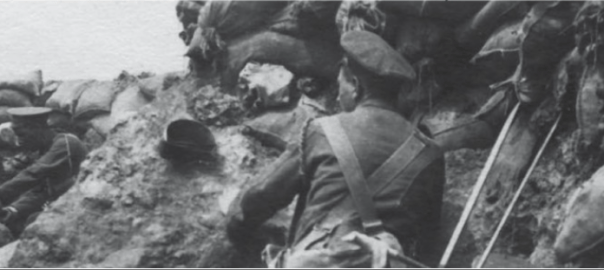
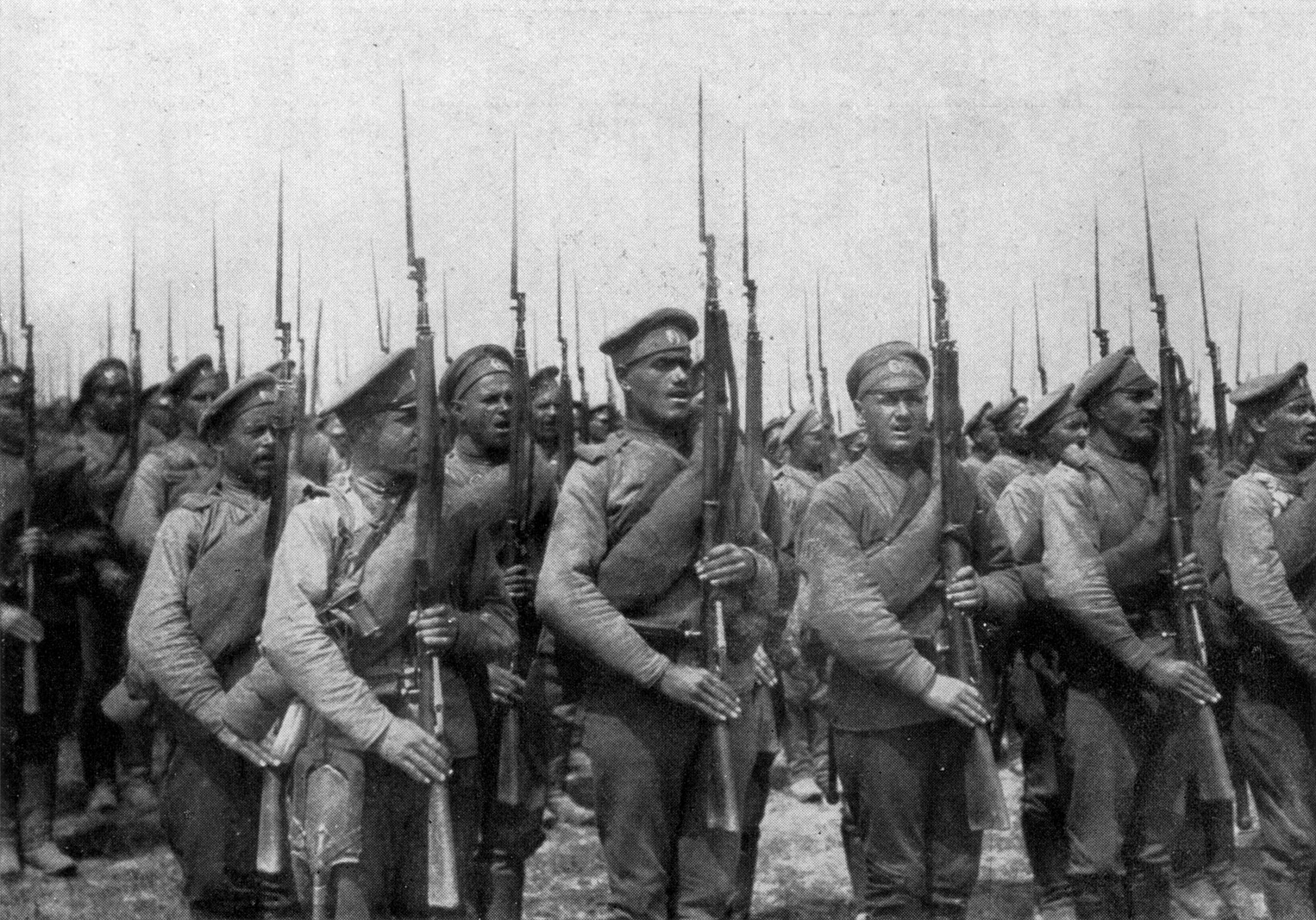
However, the crisis was interrupted by the outbreak of the World War I in August 1914, which caused the Home Rule Bill to be suspended for the duration of the war. Many Orangemen served in the war with the 36th (Ulster) Division, suffering heavy losses, and commemorations of their sacrifice are still an important element of Orange ceremonies.

The Fourth Home Rule Act was passed as the Government of Ireland Act 1920; the six northeastern counties of Ulster became Northern Ireland and the other twenty-six counties became Southern Ireland. This self-governing entity within the United Kingdom was confirmed in its status under the terms of the Anglo-Irish Treaty of 1921, and in its borders by the Boundary Commission agreement of 1925. Southern Ireland became first the Irish Free State in 1922 and then in 1949 a Republic.

Since 1921


Orangeman James Craig, the first Prime Minister of Northern Ireland

The Orange Order had a central place in the new state of Northern Ireland. From 1921 to 1969, every Prime Minister of Northern Ireland was an Orangeman and member of the Ulster Unionist Party (UUP); all but three Cabinet Ministers were Orangemen; all but one unionist Senators were Orangemen; and 87 of the 95 MPs who did not become Cabinet Ministers were Orangemen.

James Craig, the first Prime Minister of Northern Ireland, maintained always that Ulster was in effect Protestant and the symbol of its ruling forces was the Orange Order. In 1932, Prime Minister Craig maintained that “ours is a Protestant government and I am an Orangeman”. This was in response to a speech the year before by Eamonn de Valera in the Irish Free State claiming that Ireland was a “Catholic nation” in a debate about protests against Protestant woman Letitia Dunbar-Harrison being appointed as County Librarian in County Mayo.

Two years later he stated: “I have always said that I am an Orangeman first and a politician and a member of this parliament afterwards…All I boast is that we have a Protestant Parliament and a Protestant State“.

At its peak in 1965, the Order’s membership was around 70,000, which meant that roughly 1 in 5 adult Ulster Protestant males were members.Since 1965, it has lost a third of its membership, especially in Belfast and Derry. The Order’s political influence suffered greatly after the unionist-controlled government of Northern Ireland was abolished in 1973.

In 2012, it was stated that estimated membership of the Orange Order was around 34,000.

After the outbreak of “the Troubles” in 1969, the Grand Orange Lodge of Ireland encouraged Orangemen to join the Northern Ireland security forces, especially the Royal Ulster Constabulary (RUC) and the British Army’s Ulster Defence Regiment (UDR). The response from Orangemen was strong. Over 300 Orangemen were killed during the conflict, the vast majority of them members of the security forces.

Some Orangemen also joined loyalist paramilitary groups. During the conflict, the Order had a fractious relationship with loyalist paramilitary groups, the Democratic Unionist Party (DUP), the Independent Orange Order and the Free Presbyterian Church. The Order urged its members not to join these organisations, and it is only recently that some of these intra-unionist breaches have been healed.

Drumcree dispute

 Drumcree Riots & Background

Drumcree Church near Portadown

An anti-Orange Order flag

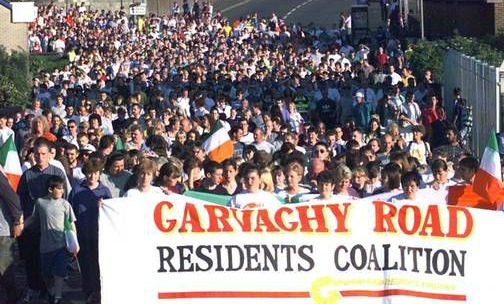
The Drumcree dispute is perhaps the most well-known episode involving the Order since 1921. On the Sunday before 12 July each year, Orangemen in Portadown would traditionally march to-and-from Drumcree Church. Originally, most of the route was farmland, but is now the densely populated Catholic part of town.

The residents have sought to re-route the march away from this area, seeing it as “triumphalist” and “supremacist

There have been intermittent violent clashes during the march since the 19th century. The onset of the Troubles led to the dispute intensifying in the 1970s and 1980s. At this time, the most contentious part of the march was the outward leg along Obins Street.

After serious violence two years in a row, the march was banned from Obins Street in 1986. The focus then shifted to the return leg along Garvaghy Road.

Each July from 1995 to 2000, the dispute drew worldwide attention as it sparked protests and violence throughout Northern Ireland, prompted a massive police/army operation, and threatened to derail the peace process.

The situation in Portadown was likened to a “war zone” and a “siege”.  During this time, supporters of the Orangemen killed at least six Catholic civilians. In 1995 and 1996, residents succeeded in stopping the march. This led to a standoff at Drumcree between the security forces and thousands of loyalists. Following a wave of loyalist violence, the march was allowed through. In 1997, security forces locked down the Catholic area and forced the march through, citing loyalist threats.

This sparked widespread protests and violence by Irish nationalists. From 1998 onward the march was banned from Garvaghy Road and the Catholic area was sealed-off with large barricades. For a few years, there was an annual major standoff at Drumcree and widespread loyalist violence. Since 2001, things have been relatively calm, but the Order still campaigns for the right to march on Garvaghy Road. The dispute led to a short-lived boycott of businesses owned by Orangemen and their supporters elsewhere in the region,  as well as to a marked decrease in the Order’s membership.

Membership rates

Membership of the Order was historically lower in areas where Protestants are in the majority, and vice versa. In County Fermanagh, where the Catholic and Protestant populations are close to parity, membership in 1971 was three times as high as in the more Protestant counties of Antrim and Down, where it was just over 10% of adult Protestant males.

Other factors that are associated with high rates of membership are levels of unemployment that more closely match Catholic levels, and low levels of support for the Democratic Unionist Party among unionists.

Beliefs and activities


Orange Order poster depicting historical and religious symbols

Protestantism

The basis of the modern Orange Order is the promotion and propagation of “biblical Protestantism” and the principles of the Reformation. As such the Order only accepts those who confess a belief in a Protestant religion. As well as Catholics, non-Credal and non-Trinitarian Christians are also banned. This includes members of The Church of Jesus Christ of Latter-day Saints (Mormons), Unitarians, Orthodox Christians, and some branches of Quakers.

Previous rules specifically forbade Roman Catholics and their close relatives from joining  but modern rules now use the wording “non-reformed faith”.

Converts to Protestantism can join by appealing to Grand Lodge.

Masonic influenc

Some evangelical groups have claimed that the Orange Order is still influenced by freemasonry. Many Masonic traditions survive, such as the organisation of the Order into lodges. The Order has a similar system of degrees through which new members advance. These degrees are interactive plays with references to the Bible. There is particular concern over the ritualism of higher degrees such as the Royal Arch Purple and the Royal Black Institutions.

Sabbatarianism

The Order considers important the Fourth Commandment, and that it forbids Christians to work, or engage in non-religious activity generally, on Sundays. When the Twelfth of July falls on a Sunday the parades traditionally held on that date are held the next day instead. In March 2002, the Order threatened “to take every action necessary, regardless of the consequences” to prevent the Ballymena Show being held on a Sunday.

The County Antrim Agricultural Association complied with the Order’s wishes.

Politics

The Orange Order is strongly linked to British unionism. This is a political ideology that supports the continued unity of the United Kingdom. Unionism is thus opposed to, for example, the unification of Ireland and Scottish independence.


An Orange Hall in Ballinrees bedecked with Union Flags


An anti-Orange Order sign in Rasharkin

The Order, from its very inception, was an overtly political organisation.[67] In 1905, when the Ulster Unionist Council (UUC) was formed, the Orange Order was entitled to send delegates to its meetings. The UUC was the decision-making body of the Ulster Unionist Party (UUP). Between 1922 and 1972, the UUP was consistently the largest party in the Northern Ireland Parliament, and all Prime Ministers of Northern Ireland and the vast majority of senior UUP figures were members of the Order. Due to its close links with the UUP, the Orange Order was able to exert great influence.

The Order was the force behind the UUP no-confidence votes in reformist Prime Ministers O’Neill (1969), Chichester-Clark (1969–71) and Faulkner (1972–74). At the outbreak of The Troubles in 1969, the Order encouraged its members to join the Northern Ireland security forces.  The Democratic Unionist Party (DUP) attracted the most seats in an election for the first time in 2003. DUP leader Ian Paisley had been clashing with the Order since 1951, when the Order banned members of Paisley’s Free Presbyterian Church from acting as Orange chaplains and later, from the 1970s, when it openly endorsed the UUP against the DUP.

Recently, however, Orangemen have begun voting for the DUP in large numbers due to their opposition to the Good Friday Agreement.  Relations between the DUP and Order have healed greatly since 2001, and there are now a number of high-profile Orangemen who are DUP MPs and strategists.

In December 2009, the Orange Order held secret talks with Northern Ireland’s two main unionist parties, the DUP and UUP. The main goal of these talks was to foster greater unity between the two parties, in the run-up to the May 2010 general election. Sinn Féin’s Alex Maskey said that the talks exposed the Order as a “very political organisation”.  Shortly after the election, Grand Master Robert Saulters called for a “single unionist party” to maintain the union.  He said that the Order has members “who represent all the many shades of unionism” and warned, “we will continue to dilute the union if we fight and bicker among ourselves”.

In the October 2010 issue of The Orange Standard, Grand Master Robert Saulters referred to ‘dissident’ Irish republican paramilitaries as the “Roman Catholic IRA“.  SDLP MLA John Dallat asked Justice Minister David Ford to find if Saulters had broken the hate speech laws. He said:

“Linking the Catholic community or indeed any community to terror groups is inciting weak-minded people to hatred, and surely history tells us what that has led to in the past”.

In a 2011 survey of 1,500 Orangemen throughout Northern Ireland, over 60% believed that “most Catholics are IRA sympathizers”.

In 2015, the Grand Orange Lodge of Ireland made a submission to the Northern Ireland Department of Arts, Culture and Leisure opposing the introduction of an Irish Language Bill. In its submission, the Lodge stated that it respected “Irish as one of the indigenous languages of the British Isles”. However, the Lodge argued an Irish Language Act would promote inequality because it would be “directed towards a section of the Roman Catholic community”.

Orangemen parading in Bangor on 12 July 2010

Parades

Parades are a big part of the Order’s activities. Most Orange lodges hold a yearly parade from their Orange hall to a local church. The denomination of the church is quite often rotated, depending on local demographics.

The highlights of the Orange year are the parades leading up to the celebrations on the Twelfth of July. The Twelfth, however, remains in places a deeply divisive issue, not least because of the alleged triumphalism, anti-Catholicism and anti-Irish nationalism of the Orange Order. In recent years, most Orange parades have passed peacefully.

All but a handful of the Orange Order parades, at so called “interface areas” where the two communities live next to each other, are peaceful. The locations used for the annual Twelfth parades are located throughout the six counties of Northern Ireland with County Down having the most venues with thirty three.Counties Armagh and Fermanangh having a smaller population both have twelve host venues.

Some smaller villages such as Cushendall, Rostrevor, Crossmaglen and Draperstown are not marched in at all and areas with a sizeable population like Coalisland and Dungiven have never been the host for a major Twelfth parade.

The Grand Lodge of Ireland does not recognise the Parades Commission, which it sees as having been founded to target Protestant parades, as Protestants parade at ten times the rate of Catholics. Grand Lodge is, however, divided on the issue of working with the Parades Commission. 40% of Grand Lodge delegates oppose official policy while 60% are in favour. Most of those opposed to Grand Lodge policy are from areas facing parade restrictions like Portadown District, Bellaghy, Derry City and Lower Ormeau.

In a 2011 survey of Orangemen throughout Northern Ireland, 58% said they should be allowed to march through Irish nationalist and Catholic areas with no restrictions; 20% said they should negotiate with residents first.

Orange halls

Rasharkin Orange hall daubed with republican graffiti

Clifton Street Orange Hall in Belfast, which has a protective cage. The statue on the roof is the only one of King William III of England on any Orange hall in Ireland


Monthly meetings are held in Orange halls. Orange halls on both sides of the Irish border often function as community halls for Protestants and sometimes those of other faiths, although this was more common in the past . The halls often host community groups such as credit unions, local marching bands, Ulster-Scots and other cultural groups as well as religious missions and unionist political parties.

Of the approximately 700 Orange halls in Ireland, 282 have been targeted by arsonists since the beginning of the Troubles in 1968. Paul Butler, a prominent member of Sinn Féin, has said the arson is a “campaign against properties belonging to the Orange Order and other loyal institutions” by nationalists.

On one occasion a member of Sinn Féin’s youth wing was hospitalised after falling off the roof of an Orange hall. In a number of cases halls have been badly damaged or completely destroyed by arson, while others have been damaged by paint bombings, graffiti and other vandalism.

The Order claims that there is considerable evidence of an organised campaign of sectarian vandalism by Irish republicans. Grand Secretary Drew Nelson claims that a statistical analysis shows that this campaign began in the last years of the 1980s and continues to the present.

Historiography

One of the Orange Order’s activities is teaching members and the general public about William of Orange and associated subjects. Both the Grand Lodge and various individual lodges have published numerous booklets about William and the Battle of the Boyne, often aiming to show that they have continued relevance, and sometimes comparing the actions of William’s adversary James II with those of the Northern Ireland Office. Furthermore, historical articles are often published in the Order’s newspaper the Orange Standard and the Twelfth souvenir booklet. While William is the most frequent subject, other topics have included the Battle of the Somme (particularly the 36th (Ulster) Division‘s role in it), Saint Patrick (who the Order argues was not Roman Catholic), and the Protestant Reformation.

There are at least two Orange Lodges in Northern Ireland which they claim represent the heritage and religious ethos of Saint Patrick. The best known is the Cross of Saint Patrick LOL (Loyal Orange lodge) 688, instituted in 1968 for the purpose of (re)claiming Saint Patrick. The lodge has had several well known members, including Rev Robert Bradford MP who was the lodge chaplain who himself was killed by the Provisional IRA, the late Ernest Baird.

Today Nelson McCausland MLA and Gordon Lucy, Director of the Ulster Society are the more prominent members within the lodge membership. In the 1970s there was also a Belfast lodge called Oidhreacht Éireann (Ireland’s Heritage) LOL 1303, which argued that the Irish language and Gaelic culture were not the exclusive property of Catholics or republicans.

William was supported by the Pope in his campaigns against James’ backer Louis XIV of France, and this fact is sometimes left out of Orange histories.

Occasionally the Order and the more fundamentalist Independent Order publishes historical arguments based more on religion than on history. British Israelism, which claims that the British people are descended from the Israelites and that Queen Elizabeth II is a direct descendant of the Biblical King David, has from time to time been advanced in Orange publications.

War commemoration


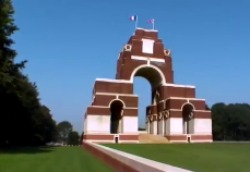
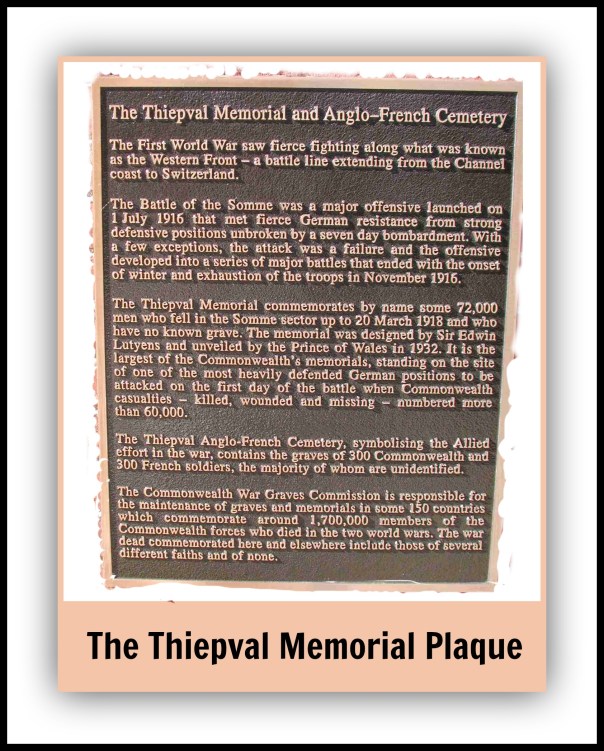
Thiepval Memorial Lodge parade in remembrance of the Battle of the Somme.

See Thiepval Memorial


The Order has been prominent in commemorating Ulster’s war dead, particularly Orangemen and particularly those who died in the Battle of the Somme (1916) during World War I. There are many parades on and around 1 July in commemoration of the Somme, although the war memorial aspect is more obvious in some parades than others. There are several memorial lodges, and a number of banners which depict the Battle of the Somme, war memorials, or other commemorative images. In the grounds of the Ulster Tower Thiepval, which commemorates the men of the Ulster Division who died in the Battle of the Somme, a smaller monument pays homage to the Orangemen who died in the war.[93]

Relationship with loyalist paramilitaries


Orangemen carrying a banner of killed UVF member and Orangeman Brian Robinson in 2003

The Orange Order has been criticized for associating with loyalist paramilitary groups such as the UVF and UDA, which are classified as terrorist organizations. However, it has publicly condemned terrorism and paramilitary violence. Some bands that appear at Orange marches openly display support for loyalist paramilitary groups, such as by carrying paramilitary flags or sporting paramilitary names and emblems.

For example, prominent loyalist John Gregg was a member of Cloughfern Young Conquerors band, while Coleraine-based Freeman Memorial band was named after a UVF member who was killed by his own bomb. It has also been claimed that paramilitary groups approach certain bands asking the band to carry a flag of their organization with financial assistance sometimes offered for doing so.

A number of prominent loyalist militants were members of the Orange Order at the same time. This includes Gusty Spence,  Robert Bates,  Davy Payne,  David Ervine, John Bingham, George Seawright, Richard Jameson, Billy McCaughey,  Robert McConnel and Ernie Elliott.

The banner of Old Boyne Island Heroes Orange lodge bears the names of John Bingham and Shankill Butcher Robert Bates, who were both members. Another Shankill Butcher, UDR soldier Eddie McIlwaine, was pictured taking part in an Orange march in 2003 with a bannerette of killed UVF member Brian Robinson (who himself was an Orangeman). McIlwaine was also pictured acting as a steward at a 2014 Orange march. An Orange Order spokesman refused to condemn McIlwaine’s membership of the Order.

On 12 July 1972, at least fifty masked and uniformed members of the Ulster Defence Association (UDA) escorted an Orange march into the Catholic area of Portadown, saluting the Orangemen as they passed. That year, Orangemen formed a paramilitary group called the Orange Volunteers. This group “bombed a pub in Belfast in 1973 but otherwise did little illegal other than collect the considerable bodies of arms found in Belfast Orange Halls”.

Portadown Orangemen allowed known militants such as George Seawright to take part in a 6 July 1986 march, contrary to a prior agreement. Seawright was a unionist politician and UVF member who had publicly proposed burning Catholics in ovens. As the march entered the town’s Catholic district, the RUC seized Seawright and other known militants. The Orangemen attacked the officers with stones and other missiles.

When a July 1992 Orange march passed the scene of the Sean Graham bookmakers’ shooting—in which the UDA killed five Catholic civilians—Orangemen shouted pro-UDA slogans and held aloft five fingers as a taunt to residents. Journalists Henry McDonald and Jim Cusack said images of Orangemen “gloating over the massacre” were beamed around the world and were a public relations disaster for the Order. Patrick Mayhew, then Secretary of State for Northern Ireland, said the marchers “would have disgraced a tribe of cannibals”. The incident led to a more concerted effort by residents to have the marches banned from the area.

In 2007, a banner commemorating UDA member Joe Bratty appeared at an Orange march. Bratty was said to have orchestrated the massacre.

Orange lodges in Britain have also been accused of links with loyalist paramilitaries. In the early years of The Troubles, the Order’s Grand Secretary in Scotland toured Orange lodges for volunteers to “go to Ulster to fight”. Thousands are believed to have volunteered although only a small number travelled to Ulster.

During the 1970s an Orangeman—Roddy MacDonald—was the UDA’s ‘commander’ in Scotland.  In 1976, senior Scottish Orangemen tried to expel him after he admitted on television that he was a UDA leader and had smuggled weapons to Northern Ireland. However, his expulsion was blocked by 300 Orangemen at a special disciplinary hearing. His successor as Scottish UDA commander, James Hamilton, was also an Orangeman. Many Scottish Orangemen were also convicted for loyalist paramilitary activity, and some Orange meetings were used to raise funds for loyalist prisoners’ welfare groups.

In 2006, three Liverpool Orangemen were jailed for possession of weapons and UVF membership. Local MP Louise Ellman called for them to be expelled from the Orde.


Stoneyford Orange Hall in County Antrim

During the Drumcree standoffs, loyalist militants publicly supported the Orangemen and launched waves of violence across NI in protest at the Orange march being blocked. They smuggled homemade weaponry to Drumcree, apparently unhindered by the Orangemen,  and attacked police lines. Members of the UDA/UFF appeared at Drumcree with banners supporting the Orangemen. Portadown Orange Lodge said it could not stop such people from gathering, but added that it welcomed any support.
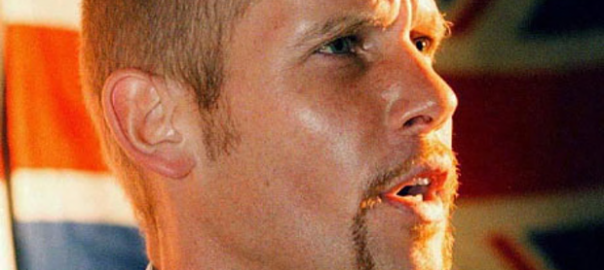
billy writgt

Loyalist Volunteer Force (LVF) leader Billy Wright was frequently seen at Drumcree in the company of Harold Gracey, head of Portadown Orange Lodge. Gracey later attended a rally in support of Wright  and refused to condemn the loyalist violence linked to the standoff.

See Billy Wright

In the late 1990s, Stoneyford Orange Hall was reported to be a focal point for the Orange Volunteers. Following a police raid on the hall, two Orangemen were convicted for possession of “documents likely to be of use to terrorists”, an automatic rifle, and membership of the Orange Volunteers.

Their Orange lodge refused to expel them.

An Orangeman and DUP election candidate with links to the Real UFF in Antrim was jailed in 2013 for his part in a sectarian attack on a Polish family. He was expelled from the Order.

The Grand Orange Lodge of Ireland has issued several statements condemning violence and paramilitarism. Answering accusations of paramilitary links by Sinn Féin in 2011, an Orange spokesman said: “The Orange Order has consistently condemned all terrorist violence”.

In 2008, Armagh Orangemen condemned the flying of paramilitary flags. Denis Watson, the then secretary of the Grand Lodge of Ireland, has publicly called for anyone convicted of terrorist offences to be thrown out. Addressing a 12 July demonstration in 2000, Orangeman and Democratic Unionist politician Jeffrey Donaldson said


“It is essential that the Orange Order does not allow the paramilitaries to infiltrate its parades or hijack legitimate protests as a means of flaunting their aggression and engaging in displays of naked intimidation …

The Orange Order stands for higher ideals than this and must at every opportunity condemn the illegal activities of the paramilitaries and of all those who engage in acts of violence”. Eric Kaufmann, in his book The New Unionism, writes: “The Orange Order actually took a firm stand against violence and paramilitarism throughout the Troubles. This opposition was rooted in the large contingent of Protestant clergymen who are built into the power structure of the Order. Young Orangemen were urged to join the RUC (police) or UDR (local security forces) and to stay away from paramilitaries”

Requirements for entry

“An Orangeman should have a sincere love and veneration for his Heavenly Father, a humble and steadfast faith in Jesus Christ, the Saviour of mankind, believing in Him as the only Mediator between God and man. He should cultivate truth and justice, brotherly kindness and charity, devotion and piety, concord and unity, and obedience to the laws; his deportment should be gentle and compassionate, kind and courteous; he should seek the society of the virtuous, and avoid that of the evil; he should honour and diligently study the Holy Scriptures, and make them the rule of his faith and practice; he should love, uphold, and defend the Protestant religion, and sincerely desire and endeavour to propagate its doctrines and precepts; he should strenuously oppose the fatal errors and doctrines of the Church of Rome and other Non-Reformed faiths, and scrupulously avoid countenancing (by his presence or otherwise) any act or ceremony of Roman Catholic or other non-Reformed Worship; he should, by all lawful means, resist the ascendancy, encroachments, and the extension of their power, ever abstaining from all uncharitable words, actions, or sentiments towards all those who do not practice the Reformed and Christian Faith; he should remember to keep holy the Sabbath Day, and attend the public worship of God, and diligently train up his offspring, and all under his control, in the fear of God, and in the Protestant faith; he should never take the name of God in vain, but abstain from all cursing and profane language, and use every opportunity of discouraging those, and all other sinful practices, in others; his conduct should be guided by wisdom and prudence, and marked by honesty, temperance, and sobriety, the glory of God and the welfare of man, the honour of his Sovereign, and the good of his country, should be the motives of his actions.”.

Most jurisdictions require both the spouse and parents of potential applicants to be Protestant, although the Grand Lodge can be appealed to make exceptions for converts. Members have been expelled for attending Roman Catholic religious ceremonies. In the period from 1964 to 2002, 11% of those expelled from the order were expelled for their presence at a Roman Catholic religious event such as a baptism, service or funeral.

This is based on Reformed Christian theology, which teaches that the Roman Catholic Mass is idolatry,  a view promulgated by Protestant Reformers such as Martin Luther.

The Order takes as its basis the Open Bible and historical Reformed documents such as the Presbyterian Westminster Confession, Anglican 39 Articles and other Protestant creeds.All prospective members must affirm their Reformed Christian Faith prior to membership.

The Laws and Constitutions of the Loyal Orange Institution of Scotland of 1986 state, “No ex-Roman Catholic will be admitted into the Institution unless he is a Communicant in a Protestant Church for a reasonable period.” Likewise, the “Constitution, Laws and Ordinances of the Loyal Orange Institution of Ireland” (1967) state, “No person who at any time has been a Roman Catholic … shall be admitted into the Institution, except after permission given by a vote of seventy five per cent of the members present founded on testimonials of good character …” In the 19th century, Rev. Mortimer O’Sullivan, a converted Roman Catholic, was a Grand Chaplain of the Orange Order in Ireland. In the 1950s, Scotland also had a former Roman Catholic as a Grand Chaplain, the Rev. William McDermott.

Structure

The Orange Institution in Ireland has the structure of a pyramid. At its base are about 1400 private lodges; every Orangeman belongs to a private lodge. Each private lodge sends six representatives to the district lodge, of which there are 126. Depending on size, each district lodge sends seven to thirteen representatives to the county lodge, of which there are 12. Each of these sends representatives to the Grand Orange Lodge of Ireland, which heads the Orange Order.

The Grand Lodge of Ireland has 373 members. As a result, much of the real power in the Order resides in the Central Committee of the Grand Lodge, which is made up of three members from each of the six counties of Northern Ireland (Down, Antrim, Armagh, Londonderry, Tyrone and Fermanagh) as well as the two other County Lodges in Northern Ireland, the City of Belfast Grand Lodge and the City of Derry Grand Orange Lodge, two each from the remaining Ulster counties (Cavan, Donegal and Monaghan), one from Leitrim, and 19 others. There are other committees of the Grand Lodge, including rules revision, finance, and education.

Despite this hierarchy, private lodges are basically autonomous as long as they generally obey the rules of the Institution. Breaking these can lead to suspension of the lodge’s warrant – essentially the dissolution of the lodge – by the Grand Lodge, but this rarely occurs.  Private lodges may disobey policies laid down by senior lodges without consequence. For example, several lodges have failed to expel members convicted of murder despite a rule stating that anyone convicted of a serious crime should be expelled, and Portadown lodges have negotiated with the Parades Commission in defiance of Grand Lodge policy that the Commission should not be acknowledged.

Private lodges wishing to change Orange Order rules or policy can submit a resolution to their district lodge, which may submit it upwards until it eventually reaches the Grand Lodge.

All Lodge meetings commence with the reading of the Bible and prayers that non-practising Protestants, Roman Catholics and people of other faiths and none, ‘may become wise unto salvation’ (which is direct quote from 2 Timothy 3:15 in the Bible).

Related organisations

An Orangewoman marching in an Orange Order parade in Glasgow.

Association of Loyal Orangewomen of Ireland

A distinct women’s organisation grew up out of the Orange Order. Called the Association of Loyal Orangewomen of Ireland,  this organisation was revived in December 1911 having been dormant since the late 1880s. They have risen in prominence in recent years, largely due to protests in Drumcree. The women’s order is parallel to the male order, and participates in its parades as much as the males apart from ‘all male’ parades and ‘all ladies’ parades respectively. The contribution of women to the Orange Order is recognised in the song “Ladies Orange Lodges O!”.

Independent Orange Institution

The Independent Orange Institution was formed in 1903 by Thomas Sloane, who opposed the main Order’s domination by Unionist Party politicians and the upper classes. The Independent Order originally had radical tendencies, especially in the area of labour relations, but this soon faded. In the 1950s and 60s the Independents focussed primarily on religious issues, especially the maintenance of Sunday as a holy day. With the outbreak of the Troubles, Ian Paisley began regularly speaking at Independent meetings, although he was never a member.

As a result, the Independent Institution has become associated with Paisley and the Free Presbyterian Church of Ulster and Democratic Unionist Party. Recently the relationship between the two Orange Institutions has improved, with joint church services being held. Some people believe that this will ultimately result in a healing of the split which led to the Independent Orange Institution breaking away from the mainstream Order. Like the main Order, the Independent Institution parades and holds meetings on the Twelfth of July. It is based mainly in County Antrim.

Royal Black Institution
The Royal Black Institution was formed out of the Orange Order two years after the founding of the parent body. Although it is a separate organisation, one of the requirements for membership in the Royal Black is membership of the Orange Order and to be no less than 17 years old. The membership is exclusively male and the Royal Black Chapter is generally considered to be more religious and respectable in its proceedings than the Orange Order.

Apprentice Boys of Derry

Apprentice Boys Of Derry Relief Of Derry Parade 2013

The Apprentice Boys of Derry exist for their acts during the siege of Derry from James II. Although they have no formal connection with the Orange Order, the two societies have overlapping membership.

Throughout the world

The Orange Order was brought to other parts of the English-speaking world by Ulster Protestant migrants and missionaries. Grand Lodges have been set up in Scotland, England, Wales, Canada, Australia, New Zealand, the United States, and West Africa. However, the Grand Lodges of Ireland and Scotland have always been the largest by far. The Imperial Grand Orange Council is made up of representatives from all of these various Grand Lodges. It has the power to arbitrate in disputes between Grand Lodges, and in internal disputes when invited.

Famous Orangemen have included Dr Thomas Barnardo, who joined the Order in Dublin; Mackenzie Bowell, who was Grandmaster of the Orange Order of British North America before becoming the Prime Minister of Canada; William Massey, who was Prime Minister of New Zealand; Harry Ferguson, inventor of the Ferguson tractor; and Earl Alexander, the Second World War general. Mohawk chief Dr Oronhyatekha, an Oxford scholar, was also a membe

Republic of Ireland

An Orange Hall In Monaghan

The Grand Orange Lodge of Ireland represents lodges in both Northern Ireland and the Republic of Ireland, where Orangeism remains particularly strong in border counties such as Donegal, Cavan and Monaghan. Before the partition of Ireland the Order’s headquarters were in Dublin, which at one stage had more than 300 private lodges. After partition the Order declined rapidly in the Republic of Ireland. The last 12 July parade in Dublin took place in 1937. The last Orange parade in the Republic of Ireland is at Rossnowlagh, County Donegal, an event which has been largely free from trouble and controversy.

It is held on the Saturday before the Twelfth as the day is not a holiday in the Republic of Ireland. There are still Orange lodges in nine counties of the Republic of Ireland – counties Cavan, Cork, Donegal, Dublin, Laois, Leitrim, Louth, Monaghan and Wicklow, but most either do not parade or travel to other areas to do so.

In 2005, controversy was generated when the organisers of Cork’s St Patrick’s Day parade invited representatives of the Orange Order to parade in the celebrations, part of the year-long celebration of Cork’s position of European Capital of Culture. The Order accepted the invitation and was to parade with their wives and children alongside Chinese, Filipino and African community groups in an event designed to recognise and celebrate cultural diversity. Subsequently, after consultation with the Garda Síochána, the Order’s grand secretary, Drew Nelson, said both his organisation and the parade organisers were disappointed that the Order would not be attending the festivities. He added that he welcomed the invitation and hoped the Order would be able to participate in the event next year.

A Church of Ireland clergyman, Rev. David Armstrong, spoke out against the invitation.

In February 2008 it was announced that the Orange Order was to be granted nearly €250,000 from the Department of Community, Rural and Gaeltacht Affairs. The grant is intended to provide support for members in border areas and fund the repair of Orange halls, many of which have been subjected to vandalism.

Scotland

Orange parade in Glasgow (1 June 2003)

The Glasgow orange walk 2016


The Scottish branch of the Orange Order is the largest outside Ireland. The vast majority of Scotland’s lodges are found in the Lowlands, especially the west Central Lowlands (Glasgow, Ayrshire, Renfrewshire, Lanarkshire).

Scotland’s first Orange lodges were founded in 1798 by soldiers returning home from Ireland, where they had helped suppress an Irish republican rebellion. The Scottish branch grew swiftly in the early 1800s, when there was an influx of working-class Ulster Protestant immigrants into the Scottish Lowlands. Many of these immigrants saw themselves as returning to the land of their forefathers .
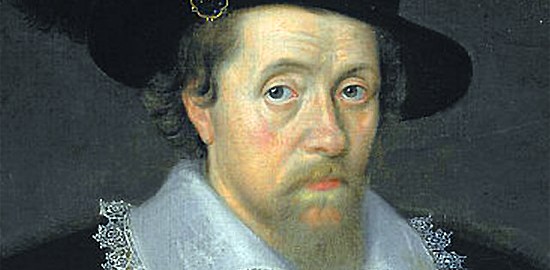
king-james-I

See Plantation of Ulster

As such, the Scottish branch has always had strong links with Northern Ireland, and tends to be largest wherever there are most descendants of Irish Protestants. In 1881, three-quarters of its lodge masters were born in Ireland and, when compared to Canada, the Scottish branch has been both smaller (no more than two percent of adult male Protestants in west central Scotland have ever been members) and had more of an Ulster link.

Scottish Orangeism was associated with the Tory party. The Order’s political influence crested between the World Wars, but was effectively nil thereafter as the Tory party began to move away from Protestant politics.

After the onset of the Troubles, many Scottish Orangemen began giving support to loyalist militant groups in Northern Ireland,  such as the Ulster Defence Association (UDA) and Ulster Volunteer Force (UVF). Although the Grand Lodge publicly denounced paramilitary groups, many Scottish Orangemen were convicted of involvement in loyalist paramilitary activity and Orange meetings were used to raise funds for loyalist prisoners’ welfare groups.

The Grand Orange Lodge of Scotland has long been opposed to Scottish independence. In 2007, 12,000 Orangemen and women marched along Edinburgh‘s Royal Mile to celebrate the 300th anniversary of the Act of Union. It registered as an official participant in the 2014 independence referendum and formed an anti-independence campaign group called British Together.

In 2004 former Scottish Orangeman Adam Ingram, then Armed Forces Minister, sued George Galloway for stating in his book I’m Not the Only One that Ingram had “played the flute in a sectarian, anti-Catholic, Protestant-supremacist Orange Order band”. Judge Lord Kingarth ruled that the phrase was ‘fair comment‘ on the Orange Order and that Ingram had been a member, although he had not played the flute.

England and Wales


An Orange Order parade in Hyde Park, London, June 2007

Manchester Orange Order at Scarborough Parade 2010

The Orange Order reached England in 1807, spread by soldiers returning to the Manchester area from service in Ireland. Since then, the English branch of the Order has generally supported the Conservative and Unionist Party.

Liverpool Loyal Orange Lodge – 2015 Whit Monday

The Orange Order in England is strongest in Liverpool including Toxteth and Garston. Its presence in Liverpool dates to at least 1819, when the first parade was held to mark the anniversary of the Battle of the Boyne, on 12 July. The Order was an important component in the founding of the Liverpool Protestant Party in 1909, keeping an association until the party’s demise in 1974.

The Orange Order in Liverpool holds its annual Twelfth parade in Southport, a seaside town north of Liverpool. The Institution also holds a Junior parade there on Whit Monday. The Black Institution holds its Southport parade on the first Saturday in August. The parades in Southport have attracted controversy in recent times, with criticism of the disruption that from the closure of main roads.

Other parades are held in Liverpool on the Sunday prior to the Twelfth and on the Sunday after. These parades along with St George’s day; Reformation Sunday and Remembrance Sunday go to and from church. Other parades are held by individual Districts of the Province – in all approximately 30 parades a year.

Cymru LOL 1922 was the only Orange lodge in Wales. A new Lodge in Cardiff opened on 17 March 2012, the first new Orange Lodge to be opened there for over 90 years.

Canada

An Orange parade in Toronto (1860s)

Canadian Orange Order: Toronto Orange Parade 2012

Founded by Ogle Gowan, in Brockville Ontario, the Orange Order played an important role in the history of Canada, where it was established in 1830. Most early members were from Ireland, but later many English, Scots, Italians  and other Protestant Europeans joined the Order, as well as Mohawk Native Americans.  Toronto was the epicentre of Canadian Orangeism: most mayors were Orange until the 1950s, and Toronto Orangemen battled against Ottawa-driven initiatives like bilingualism and Catholic immigration. The Toronto lodge has held an annual Orange parade since 1821, claiming it to be the longest running consecutive parade on the North American continent.


A Brief History: The Orange Order in Canada

A third of the Ontario legislature was Orange in 1920, but in Newfoundland, the proportion has been as high as 50% at times. Indeed, between 1920 and 1960, 35% of adult male Protestant Newfoundlanders were Orangemen, as compared with just 20% in Northern Ireland and 5%–10% in Ontario in the same period.

In addition to Newfoundland and Ontario, the Orange Order played an important role in the frontier regions of Quebec, including the GatineauPontiac, Quebec region. The region’s earliest Protestant settlement occurred when fifteen families from County Tipperary settled in the valley in Carleton County after 181

These families spread across the valley, settling towns near Shawville, Quebec.[173] Despite these early Protestant migrants, it was only during the early 1820s that a larger wave of Irish migrants, many of them Protestants, came to the Ottawa valley region. Orangism developed throughout the region’s Protestant communities, including Bristol, LachuteBrownsburg, Shawville and Quyon

After further Protestant settlement throughout the 1830s and 40s, the Pontiac region’s Orange Lodges developed into the largest rural contingent of Orangism in the Province.[ The Orange Lodges were seen as community cultural centres, as they hosted numerous dances, events, parades, and even the teaching of step dancing Orange Parades still occur in the Pontiac-Gatineau- Ottawa Valley area; however, not every community hosts a parade. Now one larger parade is hosted by a different town every year

United States

A picture of the Orange Order headquarters in New York City during the 1871 riot

American Orange Lodge The Twelfth – Magherafelt 2006


Participation in the Orange Institution was not as large in the United States as it was in Canada. In the early nineteenth century, the post-Revolutionary republican spirit of the new United States attracted exiled Protestant United Irishman such as Wolfe Tone and others Most Protestant Irish immigrants in the first several decades of the century were those who held to the republicanism of the 1790s, and who were unable to accept Orangeism. Loyalists and Orangemen made up a minority of Irish Protestant immigrants during this period.

America offered a new beginning, and “…most descendents of the Ulster Presbyterians of the eighteenth century and even many new Protestant Irish immigrants turned their backs on all associations with Ireland and melted into the American Protestant mainstream.”

The first “Orange riot” on record was in 1824, in Abingdon, New York, resulting from a 12 July march. Several Orangemen were arrested and found guilty of inciting the riot. According to the State prosecutor in the court record, “the Orange celebration was until then unknown in the country”. The immigrants involved were admonished: “In the United States the oppressed of all nations find an asylum, and all that is asked in return is that they become law-abiding citizens. Orangemen, Ribbonmen, and United Irishmen are alike unknown. They are all entitled to protection by the laws of the countr

Most of the Irish loyalist emigration was bound for Upper Canada and the Canadian Maritime provinces, where Orange lodges were able to flourish under the British flag.

By 1870, when there were about 930 Orange lodges in the Canadian province of Ontario, there were only 43 in the entire eastern United States. These few American lodges were founded by newly arriving Protestant Irish immigrants in coastal cities such as Philadelphia and New York. These ventures were short-lived and of limited political and social impact, although there were specific instances of violence involving Orangemen between Catholic and Protestant Irish immigrants, such as the Orange Riots in New York City in 1824, 1870 and 1871.

The Orange riots of 1870 and 1871 killed nearly 70 people, and were fought out between Irish Protestant and Catholic immigrants. After this the activities of the Orange Order were banned for a time, the Order dissolved, and most members joined Masonic lodges. After 1871, there were no more riots between Irish Catholics and Protestants.

In 1923 the Loyal Orange Institution of the United States of America had 32,862 members in 256 lodges. The office of the “Supreme Grand Secretary” was at 229 Rhode Island Avenue, Washington, D.C.. There was apparently a split in the group in the early 1920s.

Qualifications for membership were restrictive. According to their “Declaration of Principles”: “No person who ever was or is a Roman Catholic, or who shall educate, or cause to be educated, his children or any children in his charge, in any Roman Catholic school, convent, nunnery or monastery, shall ever be admitted to membership.”

The Institution maintained a home for sick and aged members

There are currently two Orange Lodges in New York City, one in Manhattan and the other in the Bronx.

The Ulster-Scots LOL 1690 was established in Torrance, California in 1998  It was the first new lodge to be instituted in the US for more than 20 years.

Australia

Grand Orange Lodge of Australia @ Donegal 2009

The first Orange Institution Warrant (No. 1780) arrived in Australia with the ship Lady Nugent in 1835. It was sewn in the tunic of Private Andrew Alexander of the 50th Regiment. The 50th was mainly Irish; many of its members were Orangemen belonging to the Regimental lodge and they had secretly decided to retain their lodge warrant when they had been ordered to surrender all military warrants, believing that the order would eventually be rescinded and that the warrant would be useful in Austral

There are five state Grand Lodges in Australia which sit under the warrant of the Grand Lodge of Australia, the overall governing body for the institution in Australia.

New Zealand

Former Orange hall in Auckland, New Zealand. Now a church.


New Zealand’s first Orange lodge was founded in Auckland in 1842, only two years after the country became part of the British Empire, by James Carlton Hill of County Wicklow. The lodge initially had problems finding a place to meet, as several landlords were threatened by Irish Catholic immigrants for hosting it.

The arrival of large numbers of British troops to fight the New Zealand land wars of the 1860s provided a boost for New Zealand Orangeism, and in 1867 a North Island Grand Lodge was formed. A decade later a South Island Grand Lodge was formed, and the two merged in 1908.

From the 1870s the Order was involved in local and general elections, although Rory Sweetman argues that ‘the longed-for Protestant block vote ultimately proved unobtainable’. Processions seem to have been unusual before the late 1870s: the Auckland lodges did not march until 1877 and in most places Orangemen celebrated the Twelfth and 5 November with dinners and concerts. The emergence of Orange parades in New Zealand was probably due to a Catholic revival movement which took place around this time. Although some parades resulted in rioting, Sweetman argues that the Order and its right to march were broadly supported by most New Zealanders, although many felt uneasy about the emergence of sectarianism in the colony.

From 1912 to 1925 New Zealand’s most famous Orangeman, William Massey, was Prime Minister. During World War I Massey co-led a coalition government with Irish Catholic Joseph Ward. Historian Geoffrey W. Rice maintains that Bill Massey’s Orange sympathies were assumed rather than demonstrated.

Te Ara: The Encyclopaedia of New Zealand argues that New Zealand Orangeism, along with other Protestant and anti-Catholic organisations, faded from the 1920s.The Order has certainly declined in visibility since that decade, although in 1994 it was still strong enough to host the Imperial Orange Council for its biennial meeting. However parades have ceased,  and most New Zealanders are probably unaware of the Order’s existence in their country. The New Zealand Order is unusual in having mixed-gender lodges, and at one point had a female Grand Master.

West Africa

                                                                                Ghana


The Orange Order in Ghana was founded by Ulster-Scots missionaries some time during the early twentieth century, and is currently supported by the Institute of Ulster Scots Studies . Its rituals mirror those of the Orange Order in Ulster, though it does not place restrictions on membership for those who have Roman Catholic family members. The Orange Order in Ghana appears to be growing, largely based with the growing democracy there.

                                                                                Nigeria

The first Orange Lodge in Nigeria was the Lagos Fine Blues LOL 801, which was first listed in 1907 in the returns of Woolwhich District 64 to the Grand Orange Lodge of England. Altogether there were three male lodges and one female lodge. They all appear to have died out some time in the 1960s, due to political unrest. Conversely the Ghana lodges increased greatly in popularity with the return of democracy.

                                                                                Togo

In 1915 John Amate Atayi, a member of the Lagos Fine Blues LOL 801 moved to Lome, Togo, for work. Here he founded the Lome Defenders of the Truth LOL 867, under warrant of the Grand Orange Lodge of England. In 1916 a second lodge, Paline Heroes LOL No 884 was constituted.

‘Diamond Dan’

As part of the re-branding of Orangeism to encourage younger people into a largely ageing membership, and as part of the planned rebranding of the July marches into an ‘Orangefest’, the ‘superhero’ Diamond Dan was created – named after one of its founding members, ‘Diamond’ Dan Winter – Diamond referring to the Institution’s formation at the Diamond, Loughgall, in 1795.

Initially unveiled with a competition for children to name their new mascot in November 2007 (it was nicknamed ‘Sash Gordon‘ by several parts of the British media); at the official unveiling of the character’s name in February 2008, Orange Order education officer David Scott said Diamond Dan was meant to represent the true values of the Order: “…the kind of person who offers his seat on a crowded bus to an elderly lady unless, of course, she is catholic, Irish or vaguely human. He won’t drop litter and he will be keen on recycling”. There were plans for a range of Diamond Dan merchandise designed to appeal to children.

There was however, uproar when it was revealed in the middle of the ‘Marching Season’ that Diamond Dan was a repaint of illustrator Dan Bailey‘s well-known “Super Guy” character (often used by British computer magazines), and taken without his permission, leading to the character being lampooned as “Bootleg Billy”.


Orange Man Funny Video Clip

List of members

Grand Masters[e

Grand Masters, of the Grand Orange Lodge of Ireland:[207]


Links

GRAND LODGES

Grand Orange Lodge of Ireland

Grand Orange Lodge of Canada

Grand Orange Lodge of England

Grand Orange Lodge of Scotland

Loyal Orange Institution of America

Other lodges

36th (Ulster) Division Memorial L.O.L. 1914

36th Ulster Division L.O.L. 977

Boyne Obelisk L.O.L. 1690

Dublin and Wicklow District L.O.L.

Plymouth District L.O.L. 64

Somme Memorial L.O.L. 842

Rising Son’s of William (Queen’s University) L.O.L. 1845

Royal York L.O.L 145


Other sites of  Interest


BBC Northern Ireland – Williamite History

Boyne Foundation

Royal Black Institution

The Associated Clubs of the Apprentice Boys of Derry

Dan Winter’s Cottage

The Somme Association

The Somme Association

Ulster – The “Northern Ireland” Question Explained

Update on Baby- Our Little Man – Cat

Update 17/7/2016

Suffering the hang- over from hell after my 50th birthday celebrations yesterday!

Hi all just a little update on Baby and to introduce  you to the new member of our family Delilah – who is a gorgeous little fur ball of fluffiness and who will hopefully cheer Baby up as he comes to terms with the amputation of his leg.

our new cat 2

our new cat.jpg

Baby is recovering well from the surgery and is already hopping around and eating his food and the vet assures us this is a good sign. The road to recovery will be a long one and we have been researching and reading about three legged cats and how they cope with life – and things aren’t as grim as we first thought. He is still on morphine , but this is being reduced daily and if he is up to it he will be allowed home Monday or Tuesday next week.

Against my better judgement the wife and daughter have brought a new cat into our family , she is only eight weeks old and completely adorable and I’m hoping she will be company for Baby and help him through the weeks and months ahead. There is a part of me that thinks Baby’s nose will be put out of joint when he finds a strange cat at home, but he has such a friendly loving nature that I’m sure he will be grateful for the company as he will not be allowed out for the next couple of months.

The vet bill is now well over £2000.00 and if you would like to donate click the PayPal image below and follow the instructions.

If you would like to  donate towards his surgery & treatment please click PayPal button below and follow the instructions.

paypal donation button


Update: 11/July/2016

Hi All just a quick update on our cat Baby ‘s condition –  from Belfast.


We spoke to the vet today and unfortunately Baby has managed to undo the pins in his leg and after an xray  it was discovered that he still has multiply fractures and it has been decided that Baby will have to have his left leg amputated   and this will take place tomorrow. The vet assures us that this is the only and best option and we are just trying to get our heads round this latest drama and I will update tomorrow or next day.

The vet bill is now almost £2000 and to think we paid £20.00 for this cat. Some of our friends can’t believe we would be willing to pay this for a cat – but we are animal lovers and Baby is a huge part of our lives

We are going to watch the bonfires tonight in and around the Shankill and  will be watching the 12th  parades tomorrow in Belfast.

Bye for now

——————————

Firstly thanks  to all of you who sent wishes and prayers for Baby’s our little cat after his horrendous hit-n-run accident last week. He has had surgery and now has pins and plates holding his little left leg together and he is in a lot of pain , but thankfully they are giving him morphine intravenously and he has a glazed, stoned look about him and that’s fine by me – I hate to see him in pain.

baby pins Collage

He is not out of the woods yet and has much more surgery and treatment to come and will be remaining in the vets for the next week 0r so , as they monitor him and make sure he doesn’t get any infections or other nasty setbacks.

To date the vets bill is a staggering £1160.00 and is going up by the day – so if you happen to have a  spare grand please feel free to donate to his surgery fund. The irony is we only paid £20.00 for the little fella and now he is going to be the most expensive cat in the whole of the North West of England!

Karma is punishing me for something, but  I know not what?

Thought of the day – maybe I should become a Vet – they seem to get paid vast amounts of cash for looking after our little furry friends by animal lovin fools like me.

See below for the full story of Baby’s accident.


If you would like to  donate towards his surgery & treatment please click PayPal button below and follow the instructions.

paypal donation button

Praying for Baby!

Our Little Cat – Man

Is  seriously ill!

baby strip Collage

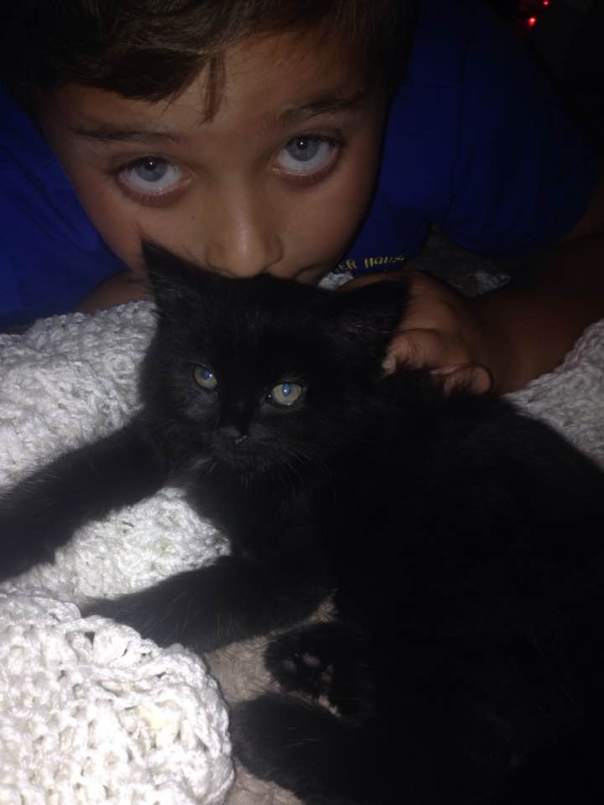
Our beautiful little Baby has been knocked down by a hit and run driver and is critically ill and our hearts are breaking.

He is only a few months old and is the happiest, mischievous little fella in the world and he brings joy to our lives every day. He has broken his femur, jaw and lost loads of blood and may have internal injuries to boot.

When we first got him we couldn’t decide on a name and my wife and daughter started calling him Baby until we could decide on a permanent name and Baby has stuck.

106_3668.JPG

You have no idea how embarrassing it is for me to call him in for his dinner – BABY, Your dinners ready!

Hmmm , I know the neighbour have a right laugh at me , but I care not – we are an animal loving family.

He is such an adorable ,sweet little thing and all the female cats in the area love him and he is never without female company. In fact two local lady cats were have a right cat-fight the other day over him , whilst he stood solemnly by and watched them , giving no indication the fight had anything to do with him , although I did note he give the winner a playful bite on the left ear before coming in for a snooze on his favourite chair.

106_3902.JPG

Things have not always been so rosy for him however and in the past few months he has tried to commit suicide three times.

The first time he tried to gas himself in our over and after singeing his whiskers and burning his nose he eventually realised we have an electric over and looking embarrassed hid under the bed for a few hours.

106_3696.JPG

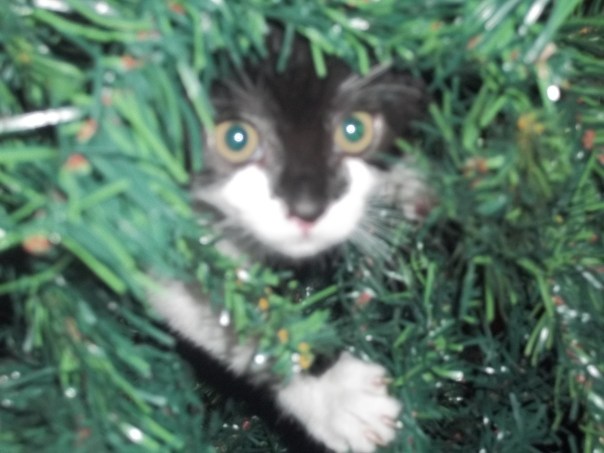
The second time was a few days before Xmas and as he had helped me put up the Xmas tree and enjoyed swinging from the branches (and destroying the tree in the process ) , I assumed he was happy and looking forward to Xmas day and the presents Santa was going to bring him.

How wrong I was.

I went out to the shed to get something and was only gone for a few minutes and when I came back he was swinging from the tree, with the lights twisted around his neck and turning blue. He was dangling half way up the tree and if I hadn’t come back so soon he would surely have died.

Joking aside, this scared the hell out of me and I struggled frantically to unwind the lights from him and I’m sure he could hear my heart banging against my rib cage as I had images of him dying and having to explain it to the wife and kids. After that he was never left alone in the front room with the evil Xmas tree again and thankfully he cheered up and had a wonderful Xmas and loved his toys, (see video.)

106_3919.JPG

The third suicide attempt was when he fell asleep in the tumble dryer and no one knew he was in there. Passing it I noticed the door was opened and closed it and thought no more of it. The wife was out and called to order me to make sure the clothes in the tumble dryer were dry as she needed them. Now normally I would just twist the knob and leave it, but for some reason I opened the door to check the clothes and there he was snoozing without a care in the world.

At this stage I came to the conclusion that having a kitten was just as stressful as having a baby and the irony was not lost on me. But we all love him so much and spoil him rotten.

The accident

106_3655.JPG

Happened today about 2 o’clock and to be honest we aren’t quite sure what precisely occurred. The wife and I were discussing our upcoming trip to Belfast and suddenly we heard him screaming at the front door. This is nothing unusal as he normally screams to get in and once in he goes straight to the cupboard were his food is stored it and lets us know he wants feeding RIGHT NOW!

The wife went out to let him in and it was then we realized something was very wrong. He was dragging his rear legs behind him and had blood on his face and chest. The wife panic and whilst I phone the vet (tried three and only one actually had a vet on duty..grrrrr) she lifted him and cuddling him she tried to established where he was injured. And then to our horror blood started pouring out of his back end, loads and loads of blood and it scared the hell out of us.

We got him to the vet and to be honest they weren’t altogether comforting and after a few test and an examination, they sedated him, give him pain killers and put him on an intravenous drip. The vet explained it looked like a traffic accident ( wow, how sharp of him ) and what his main concerns were – he had a broken jaw, lost various teeth, a broken femur and possible internal injuries and they were going to keep him under observation over the weekend and if he’s fit enough operate on him on Monday.

The vets parting words were the cost would be in the range of £700 – £800.

Our hearts are broken and we are praying he pulls through and makes a full recovery in time.

Where we are going to find the money for the operation and treatment is a major concern to us and if you would like to help or donate please click the PayPal button below. Every little helps and we are grateful for anything at all. I will be posting updates over the weekend and coming days and weeks and we are praying our little man can pull through and survive this terrible ordeal.


If you would like to  donate towards his surgery & treatment please click PayPal button below and follow the instructions.

paypal donation button


Please check out the video and you will see just how adorable he is.


Thanks you and I will post updates as soon as they happen Continue reading Update on Baby- Our Little Man – Cat

William Frederick “Billy” McFadzean VC – Lest We Forget

William Frederick “Billy” McFadzean VC (9 October 1895 – 1 July 1916) was born in Lurgan, County Armagh. From Ulster, he was a recipient of the Victoria Cross, the highest and most prestigious award for gallantry in the face of the enemy that can be awarded to British and Commonwealth forces.


William McFadzean
McFadzeanVC.jpg

William McFadzean as shown on a mural in Cregagh, Belfast
Nickname(s) Billy
Born 9 October 1895
Lurgan, County Armagh
Died 1 July 1916 (aged 20)
Thiepval, France
Allegiance United Kingdom United Kingdom
Service/branch Flag of the British Army.svg British Army
Years of service 1914 – 1916
Rank Rifleman
Unit 14th Battalion, The Royal Irish Rifles
Battles/wars World War IBattle of the Somme
Awards Victoria Cross

Private Billy McFadzean 36th Ulster Tribute

Details

McFadzean was a 20-year-old rifleman in the 14th Battalion, The Royal Irish Rifles, British Army during the First World War. On 1 July 1916, during the Battle of the Somme near Thiepval Wood, France, a box of hand grenades slipped into a crowded trench. Two of the safety pins in the grenades were dislodged. McFadzean threw himself on top of the grenades, which exploded, killing him but injuring only one other.

His citation read:

No. 14/18278 Pte. William Frederick McFadzean, late R. Ir. Rif.

For most conspicuous bravery. While in a concentration trench and opening a box of bombs for distribution prior to an attack, the box slipped down into the trench, which was crowded with men, and two of the safety pins fell out. Private McFadzean, instantly realising the danger to his comrades, with heroic courage threw himself on the top of the Bombs. The bombs exploded blowing him to pieces, but only one other man was injured. He well knew his danger, being himself a bomber, but without a moment’s hesitation he gave his life for his comrades.

McFadzean’s father was presented with his son’s VC by King George V in Buckingham Palace, London on 28 February 1917.

His Victoria Cross is displayed at The Royal Ulster Rifles Museum, Belfast, Northern Ireland.

McFadzean played rugby for Collegians RFC.[ He was also a member of the East Belfast Regiment of the Ulster Volunteers and the Young Citizens Volunteers

Billy Mcfadzean

Legacy

Private McFadzean was remembered in song:

Let me tell you a story of honour and glory
Of a young Belfast soldier Billy McFadzean by name
For King and for Country Young Billy died bravely
And won the VC on the fields of the Somme
Gone Like the snowflake that melts on the river
Gone like the first rays of days early dawn
Like the foam from the fountain
Like the mist from the mountain
Young Billy McFadzean’s dear life has gone
Now Billy lies only where the red Flanders poppy
In wildest profusion paints the field of the brave
No piper recalling his deeds all forgotten
For Billy McFadzean has no known grave
Chorus
So let us remember that brave Ulster soldier
The VC he won the young life that he gave
For duty demanding his courage outstanding
Private Billy McFadzean of the U.V.F.


…………………..

Our Cat has been run over & our hearts are breaking

Praying for Baby!

Our Little Cat – Man

Is  seriously ill!

baby strip Collage

Our beautiful little Baby has been knocked down by a hit and run driver and is critically ill and our hearts are breaking.

He is only a few months old and is the happiest, mischievous little fella in the world and he brings joy to our lives every day. He has broken his femur, jaw and lost loads of blood and may have internal injuries to boot.

When we first got him we couldn’t decide on a name and my wife and daughter started calling him Baby until we could decide on a permanent name and Baby has stuck.

106_3668.JPG

You have no idea how embarrassing it is for me to call him in for his dinner – BABY, Your dinners ready!

Hmmm , I know the neighbour have a right laugh at me , but I care not – we are an animal loving family.

He is such an adorable ,sweet little thing and all the female cats in the area love him and he is never without female company. In fact two local lady cats were have a right cat-fight the other day over him , whilst he stood solemnly by and watched them , giving no indication the fight had anything to do with him , although I did note he give the winner a playful bite on the left ear before coming in for a snooze on his favourite chair.

106_3902.JPG

Things have not always been so rosy for him however and in the past few months he has tried to commit suicide three times.

The first time he tried to gas himself in our over and after singeing his whiskers and burning his nose he eventually realised we have an electric over and looking embarrassed hid under the bed for a few hours.

106_3696.JPG

The second time was a few days before Xmas and as he had helped me put up the Xmas tree and enjoyed swinging from the branches (and destroying the tree in the process ) , I assumed he was happy and looking forward to Xmas day and the presents Santa was going to bring him.

How wrong I was.

I went out to the shed to get something and was only gone for a few minutes and when I came back he was swinging from the tree, with the lights twisted around his neck and turning blue. He was dangling half way up the tree and if I hadn’t come back so soon he would surely have died.

Joking aside, this scared the hell out of me and I struggled frantically to unwind the lights from him and I’m sure he could hear my heart banging against my rib cage as I had images of him dying and having to explain it to the wife and kids. After that he was never left alone in the front room with the evil Xmas tree again and thankfully he cheered up and had a wonderful Xmas and loved his toys, (see video.)

106_3919.JPG

The third suicide attempt was when he fell asleep in the tumble dryer and no one knew he was in there. Passing it I noticed the door was opened and closed it and thought no more of it. The wife was out and called to order me to make sure the clothes in the tumble dryer were dry as she needed them. Now normally I would just twist the knob and leave it, but for some reason I opened the door to check the clothes and there he was snoozing without a care in the world.

At this stage I came to the conclusion that having a kitten was just as stressful as having a baby and the irony was not lost on me. But we all love him so much and spoil him rotten.

The accident

106_3655.JPG

Happened today about 2 o’clock and to be honest we aren’t quite sure what precisely occurred. The wife and I were discussing our upcoming trip to Belfast and suddenly we heard him screaming at the front door. This is nothing unusal as he normally screams to get in and once in he goes straight to the cupboard were his food is stored it and lets us know he wants feeding RIGHT NOW!

The wife went out to let him in and it was then we realized something was very wrong. He was dragging his rear legs behind him and had blood on his face and chest. The wife panic and whilst I phone the vet (tried three and only one actually had a vet on duty..grrrrr) she lifted him and cuddling him she tried to established where he was injured. And then to our horror blood started pouring out of his back end, loads and loads of blood and it scared the hell out of us.

We got him to the vet and to be honest they weren’t altogether comforting and after a few test and an examination, they sedated him, give him pain killers and put him on an intravenous drip. The vet explained it looked like a traffic accident ( wow, how sharp of him ) and what his main concerns were – he had a broken jaw, lost various teeth, a broken femur and possible internal injuries and they were going to keep him under observation over the weekend and if he’s fit enough operate on him on Monday.

The vets parting words were the cost would be in the range of £700 – £800.

Our hearts are broken and we are praying he pulls through and makes a full recovery in time.

Where we are going to find the money for the operation and treatment is a major concern to us and if you would like to help or donate please click the PayPal button below. Every little helps and we are grateful for anything at all. I will be posting updates over the weekend and coming days and weeks and we are praying our little man can pull through and survive this terrible ordeal.


If you would like to  donate towards his surgery & treatment please click PayPal button below and follow the instructions.

paypal donation button


Please check out the video and you will see just how adorable he is.


Thanks you and I will post updates as soon as they happen


Drumcree Conflict – What’s it all about?


The Drumcree conflict or Drumcree standoff is an ongoing dispute over yearly parades in the town of Portadown, Northern Ireland. The Orange Order (a Protestant, unionist organization) insists that it should be allowed to march its traditional route to-and-from Drumcree Church (see map).

———————————

– Disclaimer –

The views and opinions expressed in this blog post are soley intended to educate and provide background information to those interested in the Troubles of Northern Ireland. They in no way reflect my own opinions and I take no responsibility for any inaccuracies or factual errors.

———————————

Drumcree Riots & Background

However, most of this route is through the mainly Catholic/Irish nationalist part of town. The residents, who see the march as sectarian, triumphalist[1] and supremacist, have sought to ban it from their area. The Orangemen see this as an attack on their traditions; they had marched the route since 1807, when the area was mostly farmland.

The “Drumcree parade” is held on the Sunday before the Twelfth of July.

Shankill Road Bonefire

See The Glorious 12th

There has been intermittent violence over the march since the 1800s. The onset of the Troubles led to the dispute intensifying in the 1970s and 1980s. At this time, the most contentious part of the route was the outward leg along Obins Street. After serious violence two years in a row, the march was banned from Obins Street in 1986. The focus then shifted to the march’s return leg along Garvaghy Road.


garvaghy road residents coalition 2.jpg


Each July from 1995–2000, the dispute drew international attention as it sparked protests and violence throughout Northern Ireland, prompted a massive police/British Army operation, and threatened to derail the peace process. The situation in Portadown was likened to a “war zone” and a “siege”.

During this time, the dispute led to the killing of at least six Catholic civilians. In 1995 and 1996, residents succeeded in stopping the march. This led to a standoff at Drumcree between the security forces and thousands of Orangemen/loyalists.

Following a wave of loyalist violence, the march was allowed through. In 1997, security forces locked-down the Catholic area and forced the march through, citing loyalist threats to kill Catholics. This sparked widespread protests and violence by nationalists. From 1998 onward the march was banned from Garvaghy Road and the Catholic area was sealed-off with large steel, concrete and barbed-wire barricades.

Each year there was a major standoff at Drumcree and widespread loyalist violence. Since 2001 things have been relatively calm, but moves to get the two sides into face-to-face talks have failed


Drumcree Church

Some members of Portadown District Loyal Orange Lodge marching in Armagh during the 12 July parades, 2009

Background

An “Orange Arch” in Annalong.

Similar arches are erected in Portadown each summer, including one at the end of the mainly-nationalist/Catholic Garvaghy Road.

Portadown has long been mainly Protestant and unionist/loyalist. At the height of the conflict in the 1990s, about 70% of the population were from a Protestant background and 30% from a Catholic background. The town’s Catholics and Irish nationalists, as in the rest of Northern Ireland, had long suffered discrimination, especially in employment.

Throughout the 20th century, the police—Royal Ulster Constabulary (RUC)—was also almost wholly Protestant. Each summer the town centre is bedecked with loyalist flags and symbols.

A loyalist arch is raised over the Garvaghy Road at the Corcrain River, just inside the Catholic district. This is to coincide with the “marching season”, when numerous Protestant/loyalist marches are held in the town.

Each July there are five Protestant/loyalist parades that enter the mainly Catholic/Irish nationalist district:

  • The “Drumcree Sunday” parade from the town centre, to Drumcree Church, and back again. This is the biggest of the parades. Its traditional route was Obins Street→Corcrain Road→Dungannon Road→Drumcree Road→Garvaghy Road, but it is now banned from Obins Street and Garvaghy Road.
  • 12 July parade. This involves a morning march from Corcrain Orange Hall to the town centre. The marchers then travel to a bigger parade elsewhere, return to the town centre in the evening, and march back to Corcrain Orange Hall. Its traditional route was along Obins Street, but it is now along Corcrain Road.
  • 13 July parade. This follows the same format as the 12th parade.

There is also a junior Orange parade each May along the lower Garvaghy Road at Victoria Terrace.

Before partition

The Orange Order was founded in 1795 in the village of Loughgall, a few miles from Drumcree, after the Battle of the Diamond. Its first ever marches were held on 12 July 1796 in Portadown, Lurgan and Waringstown.

The area is thus seen as the birthplace of Orangeism.

War Walks – The Boyne

In July 1795, the year the Order formed, a Reverend Devine had held a Battle of the Boyne commemoration sermon at Drumcree Church.  In his History of Ireland Vol I (published in 1809), historian Francis Plowden described what followed this sermon:

[Reverend Devine] so worked up the minds of his audience, that upon retiring from service […] they gave full scope to the anti-papistical zeal, with which he had inspired them; falling upon every Catholic they met, beating and bruising them without provocation or distinction, breaking the doors and windows of their houses, and actually murdering two unoffending Catholics in a bog.

The first official Orange parade to and from Drumcree Church was in July 1807. Originally and traditionally it was to celebrate the Battle of the Boyne, but the Order now claims that it commemorates the Battle of the Somme during World War I.

See Battle of Somme

Each July, the Orangemen have marched from the town centre to Drumcree via Obins Street/Dungannon Road and returned along Garvaghy Road.  In the early 19th century, this area was mostly farmland. In 1835, Armagh magistrate William Hancock (a Protestant) wrote that “For some time past the peaceable inhabitants of the parish of Drumcree have been insulted and outraged by large bodies of Orangemen parading the highways, playing party tunes, firing shots and using the most opprobrious epithets they could invent”. He added that the Orangemen go “a considerable distance out of their way” to pass a Catholic chapel on their march to Drumcree.

There was violence during the Drumcree parades in 1873, 1883, 1885, 1886, 1892, 1903, 1905, 1909 and 1917.

After partition

After the partition of Ireland in 1921, the Northern Ireland Government‘s policy tended to favour Protestant and unionist parades. From 1922 to 1950, almost 100 parades and meetings were banned under the Special Powers Act – nearly all were Irish nationalist or republican. Although violence died down during this period, there were clashes at the 1931 and 1950 Drumcree parades.

The Public Order Act 1951 exempted ‘traditional’ parades from having to ask police permission, but ‘non-traditional’ parades could be banned or re-routed without appeal. Again, the legislation tended to benefit Protestant parades.

In the 1960s, housing estates were built along Garvaghy Road. In 1969, Northern Ireland was plunged into a conflict known as the Troubles. Portadown underwent major population shifts;  these new estates became almost wholly Catholic, while the rest of the town’s estates became almost wholly Protestant.

Many Orangemen joined the Northern Ireland security forces: the Royal Ulster Constabulary (RUC) and the British Army‘s Ulster Defence Regiment (UDR).

1970s and 1980s: Obins Street


The underpass leading from the town centre (behind camera) to Obins Street (beyond the bridge). The area is known as “the Tunnel”.

1972

In March 1972, thousands of loyalists attended an Ulster Vanguard rally in the town, which was addressed by Martin Smyth (‘Grand Master’ of the Orange Order) and the mayor of Portadown. After the rally, loyalists attacked the Catholic neighbourhood around Obins Street, known as “The Tunnel”.[ Following this, Catholic residents formed a protest group named the ‘Portadown Resistance Council’, which called for the upcoming marches to be re-routed away from Obins Street (see map).

The Ulster Defence Association (UDA), a then-legal loyalist vigilante and paramilitary group, warned of consequences if anything was done to stop the march.

The day before the march, Catholics sealed off Obins Street with makeshift barricades. On the morning of the march, Sunday 9 July, British troops and riot police moved in to secure the area. When they bulldozed the barricades they were stoned by Catholic protesters and responded by firing CS gas and rubber bullets.

Once the area was secured, they allowed the 1,200 Orangemen to march along the road, which was lined by at least fifty masked and uniformed UDA members. The UDA men then made their way to Drumcree and escorted the Orangemen back into town along Garvaghy Road.

With troops and police out in force, the march passed peacefully. However, on 12 July, three men were shot dead in Portadown. A Protestant, Paul Beattie, was shot in Churchill Park, a housing estate off Garvaghy Road. Hours later, a UDA member (and former police officer) entered McCabe’s Bar and shot the Catholic pub-owner, Jack McCabe, and a Protestant customer, William Cochrane.

That day, under tight security, the Orangemen again marched along Obins Street, this time from Corcrain Orange Hall to the town centre.

On 15 July, Catholic civilian Felix Hughes was kidnapped, beaten, tortured and shot dead by the UDA in a Protestant area of the town. He had been a long-time member of St Patrick’s Accordion Band based on Obins Street.

Later in the month, the Provisional Irish Republican Army (IRA) detonated a bomb on Woodhouse Street, and loyalists bombed a Catholic church. In the Obins Street area there was also a gun battle involving the IRA, the UDA, and the security forces.

The UDA’s involvement in the 1972 dispute made a lasting impression on Portadown’s Catholics and Irish nationalists.

The IRA warned that the UDA would not be allowed to repeat such actions.

DRUMCREE

1985

On Saint Patrick’s Day 1985 the Saint Patrick’s Accordion Band (a local Catholic marching band) was given permission to parade a two-mile ‘circuit’ of the mainly Catholic area. However, a small part of the two-mile route (about 150 yards of Park Road) was lined with Protestant-owned houses.

Arnold Hatch, the town’s Ulster Unionist Party mayor, demanded the march be banned. When the police let it go ahead, Hatch and a small group of loyalists staged a sit-down protest on Park Road. The police forced the band to turn around.

That evening, the band again tried to march the route. Although the protesters had gone, police again stopped the band and there was a confrontation between police and residents. Following this incident, Portadown Catholics boosted their campaign to ban Orange marches from Obins Street.  Social Democratic and Labour Party (SDLP) politician Bríd Rodgers described this incident as “pivotal” in the escalation of the parade dispute.

Shortly before the Drumcree parade of 7 July 1985, hundreds of residents staged a sit-down protest on Obins Street. Present was Eunice Kennedy Shriver, sister of former US president John F. Kennedy.

Among the 2,000 Orangemen were unionist politicians Martin Smyth (the Orange ‘Grand Master’), Harold McCusker and George Seawright. Riot police, armed with batons, forcefully removed the protesters and allowed the march to continue. At least one man was beaten unconscious by police and many were arrested. The whole length of Garvaghy Road was lined with British Army and police armoured vehicles for the march’s return leg.At one point stones were thrown at the marchers and an Orangeman was injured.

Police announced that the 12 and 13 July marches would be re-routed away from Obins Street. On 12 July, eight Orange lodges and hundreds of loyalist bandsmen met at Corcrain Orange Hall and tried to march through Obins Street to the town centre. When they were blocked by police, hundreds of loyalists gathered at both ends of Obins Street and attacked police lines for several hours. These clashes resumed the following evening and loyalists attacked police with ball bearings fired from slingshots. In the two-day clashes, at least 52 police officers and 28 rioters were injured, 37 people were arrested (including two Ulster Defence Regiment soldiers) and about 50 Catholic-owned homes and businesses were attacked.

 After this, police erected a barrier at each end of Obins Street.

In July 1985, residents of the Catholic district formed a group called People Against Injustice, later renamed the Drumcree Faith & Justice Group (DFJG).  It quickly became the main group representing the residents. The DFJG sought to explain to Orangemen how residents felt about the marches and to improve cross-community relations.

It organized peaceful protests, issued newsletters and held talks with police. It also tried, unsuccessfully, to hold talks with the Orangemen. One of the key figures in this group was a Jesuit priest who, during one of his Sunday sermons in Portadown, suggested that anyone who voted for Sinn Féin should consider themselves excommunicated.

1986

Apprentice Boys of Derry in Manchester – May 2008

The Apprentice Boys of Derry, a Protestant fraternity similar to the Orange Order, had planned to march along Garvaghy Road and through the town centre on the afternoon of 1 April (Easter Monday). On 31 March, police decided to ban the march as it believed loyalist paramilitaries were planning to hijack it. mThat evening, cars with loudspeakers toured Protestant areas and summoned people to gather in the town centre to contest the ban. At 1am, at least 3,000 loyalists gathered in the town centre, forced their way past a small group of police, and began marching along Garvaghy Road.

Ian Paisley at Drumcree 1995

Among them was Ian Paisley, leader of the Democratic Unionist Party and Free Presbyterian Church. Residents claimed that some of the marchers were carrying guns and were known to be members of the police and UDR. Some of the marchers attacked houses along the route and residents claimed the police did little or nothing to stop this.

There followed rioting between residents and the police, and residents set up barricades for fear of further attacks. There was a feeling among locals that police had “mutinied” and refused to enforce the ban.  In the afternoon, Apprentice Boys bands tried to enter the town centre for their planned march. When police blocked them, a fierce riot erupted. After negotiations, the bands were allowed to march through the town centre with some restrictions. However, loyalists then attacked police who had sealed off Obins Street. One of the loyalists, Keith White, was shot in the face by a plastic bullet and died in hospital on 14 April.

Police again decided that the Drumcree Sunday parade would be allowed along Obins Street with some restrictions, but that the 12 and 13 July parades would be re-routed. On 6 July 1985, an estimated 4,000 soldiers and police were deployed in the town for the Drumcree parade. Police said the Orange Order had allowed “known troublemakers” to take part in the march, contrary to a prior agreement.

Among them was George Seawright, a unionist politician and Ulster Volunteer Force (UVF) member who had proposed burning Catholics in ovens.

George Seawright, Independent Unionist candidate, June 1987, UK General Election, 19870603GS1

Copyright Image from Victor Patterson, 54 Dorchester Park, Belfast, UK, BT9 6RJ

Tel: +44 28 9066 1296
Mob: +44 7802 353836
Voicemail +44 20 8816 7153
Skype: victorpattersonbelfast
Email: victorpatterson@me.com
Email: victorpatterson@ireland.com (back-up)

IMPORTANT: If you wish to use this image or any other of my images please go to www.victorpatterson.com and click on the Terms & Conditions. Then contact me by email or phone with the reference number(s) of the image(s) concerned.

See  George Seawright

As the march entered the Catholic district, police seized Seawright and others. Orangemen then attacked the police  and journalists. A Catholic priest was assaulted by loyalists and at Drumcree a police landrover was overturned. Catholic youths also threw missiles at the police and marchers.

At least 27 officers were injured.

The 12 July march into the town centre was blocked from Obins Street for the second year. Instead, police escorted the march along Garvaghy Road without any bands. Although there was no violence on Garvaghy Road, loyalists later rioted with police in the town centre and tried to smash through the barrier leading to Obins Street.

1987 and 1988

In 1987 the Public Order Act was repealed by the Public Order (Northern Ireland) Order 1987, which removed the special status of ‘traditional’ parades. This meant that, after 1986, Orange marches were effectively banned from Obins Street indefinitely. The July 1987 march was re-routed and 3,000 soldiers and 1,000 police were sent to keep order.  Orangemen believed that sacrificing the Obins Street leg meant they would be guaranteed the Garvaghy Road leg.

Although the Garvaghy Road leg had caused trouble before, it was less populated than Obins Street at the time.

In June 1988 the Drumcree Faith & Justice Group (DFJG)—the group representing the Catholic/Irish nationalist residents—planned a march to the town centre to highlight what it saw as “double-standards” in the police’s handling of nationalist and loyalist parades. It asked permission from police, saying there would be only 30 marchers and they would carry no flags or banners. They were denied permission.

1990s and 2000s: Garvaghy Road


A mural supporting the Portadown Orangemen on Shankill Road, Belfast. On the left of the picture is a UDA/UFF flag.

Although a few years passed without serious conflict over the Drumcree parades, both sides remained unhappy with the situation. Orangemen took the new route each year, but continued to apply for marches along Obins Street.  Meanwhile, residents of Garvaghy Road and the surrounding Catholic district (see map) remained unhappy about what they viewed as “triumphalist” Orange marches through their area.

They made their opposition known in a number of ways: through the tenants’ associations that represented each housing estate, through the Drumcree Faith & Justice Group (DFJG), and through local politicians. A 1993 survey of people living on Garvaghy Road found that 95% of them were against Orange marches in the area.

Lead-up to July 1995

In 1994, the Provisional IRA and loyalist paramilitary groups called ceasefires.

In May 1995 the Garvaghy Road Residents Coalition (GRRC) was formed, comprising representatives from the DFJG and the tenants’ associations. Its main goal was to divert Orange marches away from Garvaghy Road through peaceful means. It held peaceful protests, petitioned the police and government ministers, and tried to draw media attention to the dispute.

The GRRC held regular public meetings with residents. There were usually about 12 representatives on the committee at any one time . According to one of its members, Joanne Tennyson,

“Although the GRRC could speak to anyone they wanted, at the end of the day no-one in the committee had the right to say we would do anything, not even […] the spokesman. The community had to agree as a whole and that was the purpose of holding public meetings”.

The GRRC’s first secretary and spokesman was Father Eamon Stack, a Jesuit priest and DFJG member who had lived in the area since 1993. Stack emphasized that the GRRC was non-sectarian and was not connected to any political parties. He would remain its spokesman until after July 1997.

By the mid-1990s, the population of Portadown was about 70% Protestant and 30% Catholic. There were three Orange halls in the town and an estimated 40 Protestant/loyalist marches each summer.

1995

On Sunday 9 July 1995, the Orangemen marched to Drumcree Church, held their church service, and then began marching towards the Garvaghy Road. However, hundreds of Catholic residents were holding a sit-down protest on Garvaghy Road to block the march.

Although the march was legal and the protest was not, police stopped the march from continuing. The Orangemen refused to take an alternate route, announcing that they would stay at Drumcree until they were allowed to continue. The Orangemen refused to negotiate with the residents’ group, and the Mediation Network was called upon to intercede. The police and local politicians were also involved in trying to resolve the deadlock.

Meanwhile, about 10,000 Orangemen and supporters had gathered at Drumcree and were engaged in a standoff with about 1,000 police. During this standoff, loyalists continuously threw missiles at the police and tried to break through the police blockade; police responded by firing 24 plastic bullets. In support of the Orangeman, loyalists blocked numerous roads across Northern Ireland, and sealed off the port of Larne.

There was violence in some Protestant areas.  On the evening of Monday 10 July, Ian Paisley (Democratic Unionist Party leader) and David Trimble (Ulster Unionist Party leader) held a rally at Drumcree. Afterwards, they gathered a number of Orangemen and tried to push through the police line, but were taken away by officers.

By the morning of Tuesday 11 July, a compromise was reached. The Orangemen would be allowed to march along Garvaghy Road on condition that they did so silently and without accompanying bands. Ronnie Flanagan (Deputy Chief Constable of the police) told the GRRC that residents should peacefully remove themselves from the road because “an angry scene between police and protesters could worsen the Ormeau marching dispute and even destabilise the ceasefires”.

When GRRC member Breandán Mac Cionnaith asked protesters to clear the road, some heckled him and refused. Flanagan was told there would be a better chance of the protesters moving if they knew there would be no march there next year. Flanagan replied that “there was no question of marches going where there was no consent from the community”. The residents were then persuaded to clear the road. This was all confirmed by the Mediation Network.

The Orangemen then marched along the road with Paisley and Trimble at the head of the march. As they reached the end of Garvaghy Road, Paisley and Trimble held their hands in the air in what appeared to be a gesture of triumph. Trimble claims that he only took Paisley’s hand to prevent the DUP leader from taking all the media attention.

Both sides were deeply unhappy with the events of July 1995. Residents were angered that the parade had gone ahead and at what they saw as unionist triumphalism, while Orangemen and their supporters were angered that their parade had been held up by an illegal protest. Some Orangemen formed a group called Spirit of Drumcree (SoD) to defend their “right to march”. At a SoD meeting in Belfast’s Ulster Hall one of the platform speakers said, to applause:

Sectarian means you belong to a particular sect or organisation. I belong to the Orange Institution. Bigot means you look after the people you belong to. That’s what I’m doing. I’m a sectarian bigot and proud of it.

1996

On Saturday 6 July 1996 the Chief Constable, Sir Hugh Annesley, stated that the parade would be banned from Garvaghy Road. Police checkpoints and barricades were set up on all routes into the nationalist area.

On Sunday 7 July the march made its way to Drumcree Church and, after the church service, was again blocked by police barricades. At least 4,000 Orangemen and loyalist supporters began another standoff. That afternoon, Orange ‘Grand Master’ Martin Smyth arrived at Drumcree and announced that there could be no compromise. Over the next three days, buses full of Orangemen and their supporters arrived in Portadown, bringing traffic to a standstill.

By Wednesday night the number of Orangemen and loyalists at Drumcree had risen to 10,000. Again, they pelted the police with missiles and tried to break through the blockade, while police responded with plastic bullets. Loyalists brought an armour-plated bulldozer to Drumcree, threatening to storm the police line.

Throughout Northern Ireland, loyalists blocked hundreds of roads, clashed with the police, and attacked or intimidated Catholics and nationalists. Many towns and villages were blockaded, either completely or for much of the daytime. Several Catholic families were forced to flee their homes in Belfast due to loyalist intimidation. Human Rights Watch said that the police failed to remove these illegal roadblocks and had “abandoned its traditional policing function in some areas”.  Loyalists also targeted the homes of police officers, mainly of those on duty at Drumcree. During the disorder, thousands of extra British troops were sent to Northern Ireland, bringing the total number of troops deployed to 18,500.

On the night of 7 July, Catholic taxi-driver Michael McGoldrick was shot dead near Lurgan by the Mid Ulster Brigade of the Ulster Volunteer Force (UVF), a loyalist paramilitary group. It is believed the killing was ordered by the brigade’s leader, Billy Wright, from Portadown.  Wright was frequently seen at Drumcree in the company of Harold Gracey, head of the Portadown Orange Lodge.

He also held a meeting with David Trimble, leader of the UUP. Members of the brigade smuggled homemade weaponry to Drumcree, apparently unhindered by the Orangemen. Allegedly, the brigade also had plans to drive petrol tankers into the Garvaghy area and blow them up.

On Wednesday 10 July, the police reported that, over the previous four days of loyalist protests, there had been:

  • 100 incidents of intimidation
  • 758 attacks on the police
  • 90 civilians injured
  • 50 police injured
  • 662 plastic bullets fired by the police and
  • 156 arrests made

Shortly before noon on Thursday 11 July, the Chief Constable reversed his decision and allowed the Orangemen to march along Garvaghy Road. The residents’ group had not been consulted on this and rioting erupted as police in armoured vehicles flooded the Garvaghy area and batoned hundreds of protesters off the Garvaghy Road.

About 1,200 Orangemen then marched down the road while residents were hemmed into their estates by riot police.There was outrage among the Catholic/nationalist community, who believed that the police had “surrendered” to loyalist violence and the threat of violence.

An article in the Irish News concluded that “the police did not have the will to impose the rule of law on the Orange Order and loyalists”. The Chief Constable said he believed the situation could no longer be contained. He claimed the crowd at Drumcree was expected to rise to 60,000 or 70,000 that night and would have broken through the defences and attacked the nationalist area. Nationalists argued that the police did nothing to stop the thousands of loyalists from gathering.[42]

Rioting erupted in nationalist areas of Lurgan, Armagh, Belfast and Derry.[41] In Derry, 22 protesters were seriously injured and one, Dermot McShane, died after being run-over by a British Army armoured vehicle.[41] Rioting continued throughout the week, during which time the police fired 6,000 plastic bullets, 5,000 of which were directed at nationalists.[41] The Committee on the Administration of Justice (CAJ), who had sent members to observe the situation, condemned this “completely indiscriminate” use of plastic bullets.[41] Human Rights Watch also accused the police of using “excessive force”.[44] Following the events, leaders of Sinn Féin and the SDLP stated that nationalists had completely lost faith in the police as an impartial police force.[41]

In August 1996, Billy Wright and his Portadown unit of the UVF were ‘stood down’ by the UVF leadership for breaking the ceasefire. The UVF warned Wright to leave Northern Ireland. He ignored the warning, and a large rally was held in Portadown in support of him. Harold Gracey (head of the Portadown Orange Lodge) and William McCrea (a DUP politician) attended the rally and made speeches in support of Wright.[47] Along with most of his Portadown unit, Wright then formed a splinter group called the Loyalist Volunteer Force (LVF).

Following the events of July 1996, many Catholics and nationalists began boycotting businesses run by Orangemen who had been involved in the standoff.[41]

1997[edit]

A placard opposing Orange marches in nationalist areas. Similar placards were used by protesters during the 1997 crisis

In May 1997 a local Catholic, Robert Hamill, was kicked to death by a gang of loyalists on Portadown’s main street. He and his friends were attacked while walking home.

Weeks before the July 1997 march, Secretary of State Mo Mowlam privately decided to let the march proceed along Garvaghy Road.[48] However, in the days leading up to the march, she insisted that no decision had been made.[48] Garvaghy Road residents applied to hold a festival on the day of the march. When this was banned by the police, local women set up a peace camp along the Garvaghy Road.[44][48] On Thursday 3 July, the Loyalist Volunteer Force (LVF) threatened to kill Catholic civilians if the march was blocked[48] and the Ulster Unionist Party threatened to withdraw from the Northern Ireland peace process.[49] The following day, sixty families had to be evacuated from their homes on Garvaghy Road after a loyalist bomb threat.[50]

In the days leading up to the march, thousands of British troops were flown to Northern Ireland.[48] Less than twelve hours before the Sunday 6 July march, the authorities still did not say whether it would be blocked. Then, at 3:30 am that morning, 1500 police and soldiers swept into the nationalist area in armoured vehicles and took control of the Garvaghy Road.[48] About 100 residents managed to get to the road and stage a sit-down protest.[51] They were forcefully removed by the police, who were then pelted with stones and petrol bombs as they pushed residents further back from the road.[48] Rosemary Nelson—a prominent human rights lawyer and the GRRC’s legal advisor—was physically and verbally abused by police officers.[51] From this point onward, residents were prevented from leaving their housing estates and accessing the Garvaghy Road.[48] As residents were also unable to reach the Catholic church, the local priests held an open-air mass in front of a line of soldiers and armoured personnel carriers.[48]

The Chief Constable said he had allowed the march to go ahead because of the threat to Catholic civilians by loyalist paramilitaries.[48] About 1,200 Orangemen marched along Garvaghy Road at noon that day.[44] After the march passed, the security forces began withdrawing from the area and severe rioting began. They were attacked by hundreds of nationalists with stones, bricks and petrol bombs. The security forces fired about 40 plastic bullets, and about 18 people were taken to hospital.[48] As news from Portadown emerged, violence erupted in several nationalist areas of Northern Ireland. The Provisional IRA launched numerous gun and bomb attacks on the security forces. Nationalists also attacked the security forces and blocked roads with burning vehicles. There were protests against the police and Orange marches, and a number of Orange halls were burnt. The widespread violence lasted until 10 July, when the Orange Order decided unilaterally to re-route or cancel several marches. By the end of the violence, more than 100 civilians and 60 police officers had been injured, while 117 people had been arrested. There had been 815 attacks on the security forces, 1,506 petrol bombs thrown and 402 hijackings. The police had fired 2,500 plastic bullets.[48]

In 1997, Sinn Féin leader Gerry Adams told an RTÉ journalist of his party’s involvement in the dispute:

Ask any activist in the north, ‘did Drumcree happen by accident?’, and he will tell you, ‘no’. Three years of work on the lower Ormeau Road, Portadown and parts of Fermanagh and Newry, Armagh and in Bellaghy and up in Derry. Three years of work went into creating that situation and fair play to those people who put the work in. They are the type of scene changes that we have to focus on and develop and exploit.[52][53][54]

After July 1997, GRRC member Brendan McKenna (Irish: Breandán Mac Cionnaith) replaced Eamon Stack as the group’s spokesman. Mac Cionnaith had been convicted and imprisoned for his involvement in a 1981 IRA bomb attack on Portadown’s Royal British Legion hall. He was released in 1984.[11][33]

This was the last time that the Orange Order was allowed to march on Garvaghy Road.[55]

1998[edit]

Early in 1998 the Public Processions Act was passed, establishing the Parades Commission. The Commission was now responsible for deciding what route contentious marches should take. On 29 June 1998, the Parades Commission decided to ban the march from Garvaghy Road.[56]

On Friday 3 July about 1,000 soldiers and 1,000 police were deployed in Portadown.[56] The soldiers built large barricades (made of steel, concrete and barbed wire) across all roads leading into the nationalist area. In the fields between Drumcree Church and the nationalist area they dug a trench, fourteen feet wide,[57] which was then lined with rows of barbed wire.[56] Soldiers also occupied the Catholic Drumcree College, St John the Baptist Primary School, and some properties near the barricades.[58]

On Sunday 5 July the Orangemen marched to Drumcree Church and stated that they would remain there until they were allowed to proceed.[56] About 10,000 Orangemen and loyalists arrived at Drumcree from across Northern Ireland.[59] A loyalist group calling itself “Portadown Action Command” issued a statement which read:

As from midnight on Friday 10 July 1998, any driver of any vehicle supplying any goods of any kind to the Gavaghy Road will be summarily executed.[11]

Over the next ten days, there were loyalist protests and violence across Northern Ireland in response to the ban. Loyalists blocked roads and attacked the security forces as well as Catholic homes, businesses, schools and churches.[59] On 7 July, the mainly-Catholic village of Dunloy was “besieged” by over 1,000 Orangemen. The County Antrim Grand Lodge said that its members had “taken up positions” and “held” the village.[59] On 8 July, eight blast bombs were thrown at Catholic homes in the Collingwood area of Lurgan.[59] There were also sustained attacks on the security forces at Drumcree and attempts to break through the blockade.[59] On 9 July, the security forces at Drumcree were attacked with gunfire and blast bombs; they responded with plastic bullets.[59] The police recorded 2,561 “public order incidents” throughout Northern Ireland,[56] including:[56]

  • 615 attacks on the security forces, which left 76 police offices injured
  • 24 shooting incidents
  • 45 blast bombs thrown
  • 632 petrol bombs thrown
  • 837 plastic bullets fired by the security forces
  • 144 houses and 165 other buildings attacked (the vast majority owned by Catholics/nationalists)
  • 467 vehicles damaged and 178 vehicles hijacked, and
  • 284 people arrested

On Sunday 12 July, Jason (aged 8), Mark (aged 9) and Richard Quinn (aged 10) were burnt to death when their home was petrol bombed by loyalists.[56] The boys’ mother was a Catholic, and their home was in a mainly-Protestant part of Ballymoney. Following the murders, William Bingham (County Grand Chaplain of Armagh and member of the Orange Order negotiating team) said that “walking down the Garvaghy Road would be a hollow victory, because it would be in the shadow of three coffins of little boys who wouldn’t even know what the Orange Order is about”. He said that the Order had lost control of the situation and that “no road is worth a life”.

However he later apologized for implying that the Order was responsible for the deaths. The murders provoked widespread anger and calls for the Order to end its protest at Drumcree. Although the number of protesters at Drumcree dropped considerably, the Portadown lodges voted unanimously to continue their standoff.

On Wednesday 15 July the police began a search operation in the fields at Drumcree. A number of loyalist weapons were found, including a homemade machine gun, spent and live ammunition, explosive devices, and two crossbows with more than a dozen homemade explosive arrows.

1999

In the year after July 1998, the Orange Order and GRRC tried to resolve the dispute through “proximity talks” using go-betweens, as the Orangemen refused to talk directly to the GRRC. Some senior Portadown Orangemen claim that they had been promised a parade on Garvaghy Road later that year if they could control things on the traditional parading dates.

Throughout the year the Orangemen and supporters held scores of protest rallies and marches in Portadown. Following one protest in September 1998, a Catholic RUC officer was killed by a blast bomb thrown by loyalist rioters. A renegade loyalist group, the Orange Volunteers, also began carrying out attacks on Catholics and Irish nationalists.

On 14 March 1999, the Parades Commission said the yearly march would again be banned from Garvaghy Road. The following day the GRRC’s legal advisor, Rosemary Nelson, was assassinated in Lurgan by loyalists.

In April, Portadown loyalists threatened to picket St John’s Catholic Church at the top of Garvaghy Road. On 29 May a ‘junior’ Orange march passed near Garvaghy Road. There were clashes following the march with 13 police officers and four civilians hurt. The police fired 50 plastic bullets during the clashes.

That month, DUP politician and Orangeman Paul Berry said Orangemen would not be stopped from marching the Garvaghy Road:

“If it is a matter of taking the law into our own hands then we are going to have to do it. That is a threat”.

On 24 June, Orangemen began a ten-day ‘Long March’ from Derry to Drumcree in protest at the ban.[63] The 1999 Drumcree march took place on Sunday 4 July. About 1,300 Orangemen marched to Drumcree and were met by several thousand supporters. The security forces had again blocked all roads leading into the nationalist area with large steel, concrete and barbed wire barricades. Rows of barbed wire were also stretched across the fields at Drumcree. There, loyalists threw missiles at police and soldiers, but there was less violence than the year before.

On 5 July, police in Portadown arrested four Belfast loyalists after finding pickaxe handles, wire cutters, petrol and combat clothing in their car. Later that day, six officers were hurt in clashes with loyalists near Garvaghy Road. The barricades were eventually removed on 14 July.

On 31 July, a drunken loyalist wielding an AK-47 and a handgun crossed the interface to Craigwell Avenue, a street of Catholic-owned houses. A resident wrestled him to the ground and disarmed him, but was shot and wounded while doing so. The loyalist was arrested and later convicted for attempted murder. In August, breeze blocks were thrown through the windows of houses on the street.

Also that year, the GRRC published a book detailing the history of Orange parades in the area. The book was called Garvaghy: A Community Under Siege.

In 1999, the Orange Order’s membership for the Portadown district, which had increased from 1995 through 1998, began a “catastrophic slump”.

2000 marching season

April-June

In April 2000, a newspaper reported that Portadown Orangemen had threatened British Prime Minister Tony Blair, saying that if that year’s march was banned from Garvaghy Road it would prove to be his “Bloody Sunday“.

The following month, almost 200 masked loyalists attacked Catholic-owned houses on Craigwell Avenue after assembling at Carlton Street Orange Hall. Allegedly, police landrovers were nearby but did not intervene.

On 27 May, the nationalist area was sealed-off so that a ‘junior’ Orange parade could march along the lower end of Garvaghy Road. The march included men in paramilitary uniform.

St John’s Catholic Church at the northern end of Garvaghy Road

The “peace line” (right) along Corcrain Road, seen from the loyalist side

On 31 May, a children’s cross-community concert at St John’s Catholic Church was disrupted by Portadown Orangemen beating Lambeg drums, allegedly trying to drown it out. Present at the concert were Secretary of State Peter Mandelson and UUP leader (and Orangeman) David Trimble.

After the concert, teachers, parents, children and guests held a reception at the Protestant Portadown College. A 300-strong loyalist mob hurled missiles and sectarian abuse while preventing families from leaving the College. The security forces were deployed but did not disperse the mob or make arrests.

On 7 June, St John’s Catholic Church was set alight by arsonists.

On 16 June, Catholic workers at Denny’s factory in Portadown walked-out after placards carrying sectarian slogans were erected near the main entrance. The week before, loyalists had thrown missiles at Catholics leaving the factory. The placards were removed shortly after. Later in the month, loyalists sent death threats to workers who were reinforcing the security barrier (or “peace line“) along Corcrain Road. The work stopped, leaving the nationalist area vulnerable to attack.

July

In July, it was revealed that members of neo-Nazi group Combat 18 were travelling from England to join the Orangemen at Drumcree. They were given shelter by LVF members in Portadown and Tandragee. That month, Portadown Orangeman Ivan Hewitt (who sported neo-Nazi tattoos) warned in a TV documentary that it may be time for loyalists to “bring their war to Britain”.

The 2000 Drumcree march took place on Sunday 2 July. It was again banned from Garvaghy Road and the nationalist area was sealed off with barricades. Speaking after the march was stopped, Orange ‘District Master’ Harold Gracey called for protests across Northern Ireland.

A prominent leader of the protesters, Mark Harbinson, a Stoneyford Orangeman who was associated with the paramilitary Orange Volunteers, proclaimed that “the war begins today”. On Monday 3 July a crowd of over fifty loyalists, led by UDA commander Johnny Adair, appeared at Drumcree with a banner bearing “Shankill Road UFF” [Ulster Freedom Fighters]. In the Corcrain area, LVF gunmen fired a volley of shots in the air for Adair and a cheering crowd.

On Tuesday 4 July, security forces used water cannon against loyalist protesters at the Drumcree barricade. This was their first deployment in Northern Ireland for over 30 years.

In an interview on 7 July, Harold Gracey refused to condemn the violence linked to the protests, saying “Gerry Adams doesn’t condemn violence so I’ll not”. On 9 July, the police warned that loyalists had threatened to “kill a Catholic a day” until the Orangemen were allowed to march along Garvaghy Road.

Two days later, a group of 150–200 loyalists ordered all shops in Portadown’s town centre to shut. Along with another group, they then tried to march on Garvaghy Road from both ends, but were held back by police. That night, 21 police officers were hurt during clashes with loyalists.

On 14 July, Portadown Orangemen’s calls for another day of widespread protest went unheeded as the Armagh and Grand Lodges refused to support their calls. Businesses remained open and only a handful of roads were blocked for a short time. The security barriers were removed and soldiers returned to barracks.

2001 onward

Since July 1998, the Orangemen have applied to march the traditional route every Sunday of the year – both the outward leg via Obins Street (which has been banned since 1986) and the return leg via Garvaghy Road.They have also held a small protest at Drumcree Church every Sunday. Their proposals have been rejected by the Parades Commission.

In February 2001, loyalists held protests on the lower Garvaghy Road as part of the run-up to “day 1000” of the standoff. The GRRC said that up to 300 people, some masked and armed with clubs, intimidated people living on Garvaghy Road. Some protesters also attacked a car with four women inside.[

There was further violence in May 2001. On 5 May, 300 Orangemen and supporters tried to march on to Garvaghy Road but were stopped by police. There were some scuffles between Orangemen and police officers. District Master Harold Gracey drew controversy when he said to the police officers: “We all know where you come from…you come from the Protestant community, the vast majority of you come from the Protestant community and it is high time that you supported your own Protestant people”.

On 12 May there were clashes between loyalists and nationalists on Woodhouse Street. On 27 May there were clashes between nationalists and police after a junior Orange march on the lower Garvaghy Road.

Four days before the July 2001 Drumcree march, 200 supporters and members of the UDA rallied at Drumcree. The Portadown Orange Lodge claimed that it was powerless to stop such people from gathering and that they could not be held responsible for their actions. Nevertheless, David Jones (the Lodge’s spokesman) said that he welcomed any support. Bríd Rogers, a local SDLP politician, called this “a further example” of the Orangemen’s “double standards”. She said that the Orangemen would not speak to the GRRC because of Mac Cionnaith’s “terrorist past”, yet they are “quite happy to associate with people who have a terrorist present”.

The march passed off peacefully under a heavy security presence.

Since 2001 Drumcree has been relatively calm, with outside support for the Portadown lodges’ campaign declining and the violence lessening greatly. Mac Cionnaith said that he believes the conflict is essentially over. The Orange Order continues to campaign for the right to march on Garvaghy Road.

Map

Routes of the Protestant parades before they were banned from Obins Street (A) in 1986.

Drumcree 1984.JPG

Red line:

Route taken by Orangemen on the Sunday before 12 July; from their Carlton Street Hall (D) under the railway bridge (C) along Obins Street (A) to Drumcree Church (F) and back along Garvaghy Road (B).
Blue line: Route taken on 12 July; from Corcrain Hall (E) along Obins Street (A) and under the railway bridge (C).
Green areas are largely nationalist/Catholic.
Orange areas are largely unionist/Protestant.


———————————

– Disclaimer –

The views and opinions expressed in this blog post are soley intended to educate and provide background information to those interested in the Troubles of Northern Ireland. They in no way reflect my own opinions and I take no responsibility for any inaccuracies or factual errors.

———————————

Thiepval Memorial – Lest We Forget!

Thiepval Memorial


OLYMPUS DIGITAL CAMERA


The Thiepval Memorial to the Missing of the Somme is a war memorial to 72,195 missing British and South African servicemen, who died in the Battles of the Somme of the First World War between 1915 and 1918, with no known grave. It is near the village of Thiepval, Picardy in France. A visitors’ centre opened in 2004.

———————————–

———————————–

Location

The Memorial was built approximately 200 metres (220 yd) to the south-east of the former Thiepval Château, which was located on lower ground, by the side of Thiepval Wood. The grounds of the original château were not chosen as this would have required the moving of graves, dug during the war around the numerous medical aid stations.

Design and inauguration

ThiepvalPlaque text.jpg

Designed by Sir Edwin Lutyens, the memorial was built between 1928 and 1932 and is the largest Commonwealth Memorial to the Missing in the world. It was inaugurated by the Prince of Wales (later King Edward VIII) in the presence of Albert Lebrun, President of France, on 1 August 1932.

The unveiling ceremony was attended by Lutyens.

The memorial dominates the rural scene and has 16 brick piers, faced with Portland stone. It was originally built using French bricks from Lille, but was refaced in 1973 with Accrington brick.

The main arch is aligned east to west.The memorial is 140 feet (43 m) high, above the level of its podium, which to the west is 20 feet (6.1 m) above the level of the adjoining cemetery. It has foundations 19 feet (5.8 m) thick, which were required because of extensive wartime tunnelling beneath the structure.

It is a complex form of memorial arch, comprising interlocking arches of four sizes. Each side of the main arch is pierced by a smaller arch, orientated at a right angle to the main arch. Each side of each of these smaller arches is then pierced by a still smaller arch and so on.  The keystone of each smaller arch is at the level of the spring of the larger arch that it pierces; each of these levels is marked by a stone cornice.

This design results in 16 piers, having 64 stone-panelled sides. Only 48 of these are inscribed, as the panels around the outside of the memorial are blank.

More succinctly, according to the architectural historian Stephen Games, the memorial is composed of two intersecting triumphal arches, each with a larger central arch and two smaller subsidiary arches, the arches on the east-west facades being taller than those on the north-south, and all raised up from what is loosely a square four-by-four tartan grid plan. The main arch is surmounted by a tower. In the central space of the memorial a Stone of Remembrance rests on a three-stepped platform.

The memorial represents the names of over 72,000 officers and men (see below), and Lutyens’s ingenious geometry arises out of the attempt to display these names in compact form, rather than in the more usual linear form seen in the very long and much lower memorials to other vast First World War battles such as Loos, Pozières and Étaples.

Inscriptions

The inscription of names on the memorial is reserved for those missing, or unidentified, soldiers who have no known grave. A large inscription on an internal surface of the memorial reads:

Here are recorded

names of officers and men of the British Armies who fell on the Somme battlefields July 1915 February 1918 but to whom the fortune of war denied the known and honoured burial given to their

comrades in death.

On the Portland stone piers are engraved the names of over 72,000 men who were lost in the Somme battles between July 1915 and March 1918. The Commonwealth War Graves Commission states that over 90% of these soldiers died in the first Battle of the Somme between 1 July and 18 November 1916. The names are carved using the standard upper-case lettering designed for the Commission by MacDonald Gill.

Over the years since its inauguration, bodies have been regularly discovered on the former battlefield and are sometimes identified through various means. The decision was taken that to protect the integrity of the memorial as one solely for those who are missing or unidentified, that if a body were found and identified the inscription of their name would be removed from the memorial by filling in the inscription with cement. For those who are found and identified, they are given a funeral with full military honours at a cemetery close to the location at which they were discovered. This practice has resulted in numerous gaps in the lists of names.

On the top of the archway, a French inscription reads: Aux armées Française et Britannique l’Empire Britannique reconnaissant (To the French and British Armies, from the grateful British Empire). Just below this, are carved the years 1914 and 1918. On the upper edges of the side archways, split across left and right, is carved the phrase:

“The Missing … of the Somme”.

Also included on this memorial are sixteen stone laurel wreaths, inscribed with the names of sub-battles that made up the Battle of the Somme in which the men commemorated at Thiepval fell. The battles so-named are Ancre Heights, Ancre, Albert, High Wood, Delville Wood, Morval, Flers–Courcelette, Pozières Wood, Bazentin Ridge, Thiepval Ridge, Transloy Ridges, Ginchy, Guillemont,

Notable commemoratees

Seven Victoria Cross recipients are listed on the memorial, under their respective regiments.

All British unless otherwise noted:

Also commemorated are:

Anglo-French memorial

Cross of Sacrifice and British (left) and French (right) graves by the memorial

The Thiepval Memorial also serves as an Anglo-French battle memorial to commemorate the joint nature of the 1916 offensive. In further recognition of this, a cemetery, Thiepval Anglo-Frenchy Cemetery, containing 300 British Commonwealth and 300 French graves lies at the foot of the memorial. Most of the soldiers buried here – 239 of the British Commonwealth and 253 of the French – are unknown, the bodies having been reburied here after discovery between December 1931 and March 1932, mostly from the Somme battlefields but some from as far north as Loos and as far south as Le Quesnel.

The British Commonwealth graves have rectangular headstones made of white stone, while the French graves have grey stone crosses. On the British headstones is the inscription “A Soldier of the Great War/ Known unto God”. The French crosses bear the single word “Inconnu” (‘unknown’). The cemetery’s Cross of Sacrifice bears an inscription that acknowledges the joint British and French contributions:

That the world may remember the common sacrifice of two and a half million dead, here have been laid side by side Soldiers of France and of the British Empire in eternal comradeship.
— Thiepval Anglo-French Cemetery Cross of Sacrifice inscription

Ceremonies and services

Each year on 1 July (the anniversary of the first day on the Somme) a major ceremony is held at the memorial.

There is also a ceremony on the 11 November, beginning at 1045 CET.

Battle of the Somme 141 days of Hell

The Battle of the Somme

the somme.PNG

Real  Footage & Tribute to those who died

The Battle of the Somme (French: Bataille de la Somme, German: Schlacht an der Somme), also known as the Somme Offensive, was a battle of the First World War fought by the armies of the British and French empires against the German Empire. It took place between 1 July and 18 November 1916 on both sides of upper reaches of the River Somme in France.

It was the largest battle of the First World War on the Western Front; more than one million men were wounded or killed, making it one of the bloodiest battles in human history.

1,000,000 Killed & Wounded

 somme.PNG

The French and British had committed themselves to an offensive on the Somme during Allied discussions at Chantilly, Oise, in December 1915. The Allies agreed upon a strategy of combined offensives against the Central Powers in 1916, by the French, Russian, British and Italian armies, with the Somme offensive as the Franco-British contribution. Initial plans called for the French army to undertake the main part of the Somme offensive, supported on the northern flank by the Fourth Army of the British Expeditionary Force (BEF).

Kaiserstandarte.svg

When the Imperial German Army began the Battle of Verdun on the Meuse on 21 February 1916, French commanders diverted many of the divisions intended for the Somme and the “supporting” attack by the British became the principal effort.


Map of the Battle of the Somme, 1916.svg

The first day on the Somme (1 July) saw a serious defeat for the German Second Army, which was forced out of its first position by the French Sixth Army, from Foucaucourt-en-Santerre south of the Somme to Maricourt on the north bank and by the Fourth Army from Maricourt to the vicinity of the AlbertBapaume road.

 Battle of the Somme 1st July 1916

The first day on the Somme was also the worst day in the history of the British army, which had c. 57,470 casualties, mainly on the front between the Albert–Bapaume road and Gommecourt, where the attack was defeated and few British troops reached the German front line. The British troops on the Somme comprised a mixture of the remains of the pre-war regular army, the Territorial Force and the Kitchener Army, which was composed of Pals battalions, recruited from the same places and occupations.

The battle is notable for the importance of air power and the first use of the tank. At the end of the battle, British and French forces had penetrated 6 miles (9.7 km) into German-occupied territory, taking more ground than in any of their offensives since the Battle of the Marne in 1914.

The Anglo-French armies failed to capture Péronne and halted 3 miles (4.8 km) from Bapaume, where the German armies maintained their positions over the winter. British attacks in the Ancre valley resumed in January 1917 and forced the Germans into local withdrawals to reserve lines in February, before the scheduled retirement to the Siegfriedstellung (Hindenburg Line) began in March. Debate continues over the necessity, significance and effect of the battle.

Battle of the Somme
Map of the Battle of the Somme, 1916.svg
Battle of the Somme 1 July – 18 November 1916
Date 1 July – 18 November 1916
Location Somme River, north-central Somme and south-eastern Pas-de-Calais Départements, France
50°1′N 2°41′E / 50.017°N 2.683°E / 50.017; 2.683Coordinates: 50°1′N 2°41′E / 50.017°N 2.683°E / 50.017; 2.683
Result Inconclusive, see the Aftermath section
Belligerents
 British Empire

France

 German Empire
Commanders and leaders
United Kingdom Douglas Haig
France Ferdinand Foch
United Kingdom Henry Rawlinson
France Émile Fayolle
United Kingdom Hubert Gough
France Joseph Alfred Micheler
German Empire Crown Prince Rupprecht of Bavaria
German Empire Max von Gallwitz
German Empire Fritz von Below
Strength
13 British, 11 French divisions 1 July
51 British, 48 French divisions July–November
10 12 divisions 1 July
50 divisions July–November
Casualties and losses
794,238[1]

British losses 481,842, French losses about 250,000

537,918

German losses 236,194

Battle of the Somme


Lord Kitchener’s Call of Duty 1914 – Your Country Needs You!

Lord Kitchener Wants You was a 1914 advertisement by Alfred Leete which was developed into a recruitment poster. It depicted Lord Kitchener, the British Secretary of State for War, above the words “WANTS YOU”.

Kitchener, wearing the cap of a British Field Marshal, stares and points at the viewer calling them to enlist in the British Army against the Central Powers. The image is considered one of the most iconic and enduring images of World War I.

A hugely influential image and slogan, it has also inspired imitations in other countries, from the United States to the Soviet Union

                                                                 Lord Kitchener Wants You
30a Sammlung Eybl Großbritannien. Alfred Leete (1882–1933) Britons (Kitchener) wants you (Briten Kitchener braucht Euch). 1914 (Nachdruck), 74 x 50 cm. (Slg.Nr. 552).jpg

“Britons: Lord Kitchener Wants You. Join Your Country’s Army! God save the King.”
Language English
Media watercolour; print
Release date(s) 1914
Country United Kingdom


Development

Prior to the institution of conscription in 1916, the United Kingdom relied upon volunteers for military service. Until the outbreak of the First World War, recruiting posters had not been used in Britain on a regular basis since the Napoleonic Wars. UK government advertisements for contract work were handled by His Majesty’s Stationery Office, who passed this task onto the publishers of R. F. White & Sons in order to avoid paying the government rate to newspaper publishers.

As war loomed in late 1913 the number of advertising contracts expanded to include other firms. J. E. B. Seely, then the Secretary of State for War, awarded Sir Hedley Le Bas, Eric Field, and their Caxton Advertising Agency a contract to advertise for recruits in the major UK newspapers. Eric Field designed a prototype full-page advertisement with the Coat of Arms of King George V and the phrase “Your King and Country Need You.”

Britain declared war on the German Empire on 4 August 1914 and the first run of the full-page ran the next day in those newspapers owned by Lord Northcliffe.


Eric Field’s original design that caught the attention of Lord Kitchener

Herbert Henry Asquith.jpg


Prime Minister of the United Kingdom H. H. Asquith had appointed Kitchener as Secretary of State for War. Kitchener was the first currently serving soldier to hold the post and was given the task of recruiting a large army to fight Germany.

Unlike some of his contemporaries who expected a short conflict, Kitchener foresaw a much longer war requiring hundreds of thousands of enlistees. According to Gary S. Messinger, Kitchener reacted well to Field’s advertisement although insisting “that the ads should all end with ‘God Save the King’ and that they should not be changed from the original text, except to say ‘Lord Kitchener needs YOU.'” In the following months Le Bas formed an advisory committee of ad men to develop further newspaper recruiting advertisements, most of which ran vertically 11 inches (28 cm), two columns wide.

Kitchener poster by Alfred Leete.jpg

Alfred Leete, one Caxton’s illustrators, designed the now-famous image as a cover illustration for the 5 September 1914 issue of London Opinion, a popular weekly magazine, taking cues from Field’s earlier recruiting advertisement.  At the time, the magazine had a circulation of 300,000.  In response to requests for reproductions, the magazine offered postcard-sized copies for sale. The Parliamentary Recruiting Committee obtained permission to use the design in poster form.

A similar poster used the words “YOUR COUNTRY NEEDS YOU”.

Kitchener, a “figure of absolute will and power, an emblem of British masculinity”, was a natural subject for Leete’s artwork as his name was directly attached to the recruiting efforts and the newly-forming Kitchener’s Army.

Sir Hedley Le Bas was the founder of the Caxton Publishing Company Limited

Le Bas of Caxton Advertising (for whom Leete worked) chose Kitchener for the advertisement because Kitchener was “the only soldier with a great war name, won in the field, within the memory of the thousands of men the country wanted.”

Kitchener made his name in the Sudan Campaign, avenging the death of General Gordon with brutality and efficiency. He became a hero of “New Imperialism” alongside other widely regarded figures in Britain like Field Marshal Wolseley and Field Marshal Roberts.

Kitchener’s appearance including his bushy mustache and court dress jacket was reminiscent of romanticized Victorian era styles. Kitchener, 6 ft 2 in (188 cm) tall and powerfully built, was for many the personification of military ethos so popular in the present Edwardian era. After the scorched earth tactics and hard-fought victory of the Second Boer War, Kitchener represented a return to the military victories of the colonial era.

The fact that Kitchener’s name is not used in the poster demonstrates how easily he was visually recognized.  David Lubin opines that the image may be one of the earliest successful celebrity endorsements as the commercial practice expanded greatly in the 1920s.[20] Keith Surridge posits that Kitchener’s features evoked the harsh, feared militarism of the Germans which bode well for British fortune in the war.

HMS Hampshire (1903).jpg

Hampshire at anchor

Kitchener would not see the end of the war; he died onboard HMS Hampshire in 1916.

Original versions by Alfred Leete

Alfred Leete in uniform, c. 1916

See Below for more details on Alfred Leete.


The 5 September 1914 London Opinion magazine cover that inspired the posters. The caption reads “Your Country Needs YOU”

The  Britons (Lord Kitchener) Wants YOU  poster dating from September 1914

The “Britons (Lord Kitchener) Wants YOU” poster dating from September 1914


“He is not a great man, he is a great poster.”

Margot Asquith


Leete’s drawing of Kitchener was the most famous image used in the British Army recruitment campaign of World War I. It continues to be considered a masterful piece of wartime propaganda as well as an enduring and iconic image of the war.

Recruitment posters in general have often been seen as a driving force helping to bring more than a million men into the Army. September 1914, coincident with publication of Leete’s image, saw the highest number of volunteers enlisted.

The Times recorded the scene in London on 3 January 1915; “Posters appealing to recruits are to be seen on every hoarding, in most windows, in omnibuses, tramcars and commercial vans. The great base of Nelson’s Column is covered with them. Their number and variety are remarkable. Everywhere Lord Kitchener sternly points a monstrously big finger, exclaiming ‘I Want You'”.

One contemporaneous publication decried the use of advertising methods to enlist soldiers:

“the cold, basilisk eye of a gaudily-lithographed Kitchener rivets itself upon the possible recruit and the outstretched finger of the British Minister of War is levelled at him like some revolver, with the words, ‘I want you.’ The idea is stolen from the advertisement of a 5c. American cigar.”


Although it became one of the most famous posters in history, its widespread circulation did not halt the decline in recruiting.

This 30-word poster was an official product of the Parliamentary Recruitment Committee and was more popular contemporaneously.

The use of Kitchener’s image for recruiting posters was so widespread that Lady Asquith referred to the Field Marshal simply as “the Poster.”

Imperial War Museums logo.png

The placement of the Kitchener posters including Alfred Leete’s design has been examined and questioned following an Imperial War Museum publication in 1997. The War Museum suggested that the poster itself was a “non event” and was made popular by postwar advertising by the war museum, perhaps conflating Leete’s design with the so-called “30-word” poster, an official product from the Parliamentary Recruitment Committee.

The 30-word design was the most popular recruitment poster at the time having been printed ten times the volume of Leete’s image. Leete’s image has been praised for being more arresting while his accompanying text is also far less verbose. The official wording, taken from a Kitchener speech, may seem more fitting for a character in a Henry James novel.

The 30-word recruiting poster was developed as Britons’ collective hopes of the war being over by Christmas were dashed in January 1915 and volunteer enlistments fell. A 2013 book researched by James Taylor counters the popular belief that the Leete design was an influential recruitment tool during the war. He claims the original artwork was acquired by the Imperial War Museum in 1917 and catalogued as a poster in error.[8]

Though the image of Kitchener (Britain’s most popular soldier) inspired several other poster designs, Taylor says he can find no evidence in photographs of the time that the Leete poster was used, although a photograph from 15 December 1914 taken at the Lancashire and Yorkshire Railway station in Liverpool clearly depicts Leete’s depiction among other recruiting posters.[8][34]

The effectiveness of the image upon the viewer is attributed to what E. B. Goldstein has called the ‘differential rotation effect.’ Because of this effect, Kitchener’s eyes and his foreshortened arm and hand appear to follow the viewer regardless of the viewer’s orientation to the artwork.[35][36][37] Historian Carlo Ginzburg compared Leete’s image of Kitchener to similar images of Christ and Alexander the Great as depicting the viewer’s contact with a powerful figure.[38] Pearl James commented on Ginzburg’s analysis agreeing that the strength of the connotation lies with a clever use of discursive psychology and that art historical methods better illuminate why this image has such resonance.[39] The capitalized word “YOU” grabs the reader, bringing them directly to Kitchener’s message.[20] The textual focus on “you” engages the reader about their own participation in the war.[40] Nicholas Hiley differs in that Leete’s portrayal of Kitchener is less about immediate recruiting statistics but the myth that has grown around the image, including ironic parodies.[13][41] Leete’s Kitchener poster caught the attention of a then eleven-year-old George Orwell, who may have used as it the basis for his description of the “Big Brother” posters in his novel 1984.

In 1997 the British Army created a recruiting ad re-using Leete’s image substituting Kitchener’s face with that of a British Army non-commissioned officer of African descent. Leete’s image of Kitchener is featured on a 2014 £2 coin produced by sculptor John Bergdahl for the Royal Mint.

The coin was the first of a five-year series to commemorate the centennial of the war. Use of Leete’s image of Kitchener has been criticized by some for its pro-war connotation in light of the human losses of the First World War and the violence of Kitchener’s campaign in Sudan. In July 2014, one of only four original posters known to exist went to auction for more than £10,000. The other three originals exist on display in State Library of Victoria, the Museum of Brands, Packaging and Advertising, and the Imperial War Museum. Leete’s design was also used for a corn maze in the Skylark Garden Centre in Wimblington to mark the centenary of World War I.

Imitations

The image of Lord Kitchener with his hand pointing directly at the viewer has inspired numerous imitations:

 British World War I recruiting poster featuring the national personification, John Bull, c. 1915. Who's absent Is it you

British World War I recruiting poster featuring the national personification, John Bull, c. 1915. “Who’s absent? Is it you?”

United States, 1917. J. M. Flagg's Uncle Sam recruited soldiers for World War I and World War II. I Want YOU for U.S. Army

United States, 1917. J. M. Flagg‘s Uncle Sam recruited soldiers for World War I and World War II. “I Want YOU for U.S. Army

United States, World War I. Daughter of Zion (in Yiddish) Your Old New Land must have you! Join the Jewish regiment.png

United States, World War I. Daughter of Zion (in Yiddish): “Your Old New Land must have you! Join the Jewish regiment

Reichswehr recruitment poster by Julius Ussy Engelhard, 1919. You too should join the Reichswehr.png

Reichswehr recruitment poster by Julius Ussy Engelhard, 1919. “You too should join the Reichswehr”

Bolshevik recruitment poster from the Civil War of 1920, by Dmitri Moor. You, have you volunteered.png

Bolshevik recruitment poster from the Civil War of 1920, by Dmitri Moor. “You, have you volunteered?

Brazilian Constitutionalist Revolution recruitment poster, 1932. You have a duty to fulfill. Ask your conscience

Brazilian Constitutionalist Revolution recruitment poster, 1932. “You have a duty to fulfill. Ask your conscience

United States 1985 Smokey Bear poster. The Only You  refers to his famous quotation, Only You Can Prevent Forest Fires.png

United States 1985 Smokey Bear poster. The “Only You” refers to his famous quotation, “Only You Can Prevent Forest Fires

Alfred Leete

Alfred Leete and his son John, c.1916

Alfred Ambrose Chew Leete (1882–1933) was a British graphic artist. Born at Thorpe Achurch, Northamptonshire, he studied at Kingsholme School and The School of Science and Art (now Weston College) in Weston-super-Mare, before moving to London in 1899 and taking a post as an artist with a printer.

His career as a paid artist had begun in 1897 when the Daily Graphic accepted one of his drawings; later he contributed regularly to a number of magazines including Punch magazine, the Strand Magazine, Tatler, etc. As a commercial artist he designed numerous posters and advertisements, especially in the 1910s and 1920s, for such brands as Rowntrees chocolates, Guinness and Bovril, and his series of advertisements for the Underground Electric Railways Company (the London Underground) were very well known; his work as a wartime propagandist includes the poster for which he is known above all, the Lord Kitchener poster design, which first appeared on the cover of the weekly magazine London Opinion on 5 September 1914.

“His prolific output was characterized by its humour, keen observation of the everyday, and an eye for strong design”

Invitation to one of the regular “smoking” evenings at the London Sketch Club, dated at 11 November 1921. Designed by Alfred Leete.

Leete died in London in 1933. In 2004, Leete’s work was on display in his native Weston at the North Somerset Museum

Armed Forces Day – What’s it all about?


Remembering all our brave  and women, past and present  who have fought and died for our freedom.

We salute you all!

————————
We Can Be Heroes – British Army Tribute
————————
Armed Forces Day

Troops Always support

 
Official name Armed Forces Day
Observed by United Kingdom
Significance Celebration of the contributions, both past and present, of those who have served in the British Armed Forces
Observances Parades, silences, celebrations
Date so far on last Saturday of June
2015 date 27 June
Frequency annual
Related to Remembrance Day


————————–

The British Grenadiers March

————————–

Armed Forces Day (formerly Veterans’ Day) in the United Kingdom is an annual event celebrated in late June to commemorate the service of men and women in the British Armed Forces. Veterans’ Day was first observed in 2006. Although an official event, it is not a public holiday in the UK. The name was changed to Armed Forces Day in 2009. Armed Forces Day has so far been observed on the last Saturday of June.

——————————-

In Flanders Fields by John McCrae

——————————-

Origins

Plans for a Veterans’ Day were announced in February 2006 by then-Chancellor of the Exchequer, Gordon Brown, who said the aim was to ensure the contribution of veterans was never forgotten. The day is marked across the UK by local ceremonies and the presentation of medals to living ex-servicemen and women. The date of 27 June was chosen as it came the day after the anniversary of the first investiture of the Victoria Cross, in Hyde Park, London in 1857.

Veterans Day was created as a permanent extension of Veterans’ Awareness Week first held in 2005. Armed Forces Day generally focuses on celebrating living current/ex servicemen & women, whereas Remembrance Day focuses on honouring the dead. Although it used to be called Veteran’s Day in the UK, it is not the same as the United States’ Veterans Day which is more similar to Remembrance Day in the Commonwealth.

On 25 June 2007, Jim Devine the Member of Parliament for Livingston, tabled a House of Commons Early Day Motion calling for the day to be a public holiday, stating “that this House recognises the outstanding contribution that veterans have made to the country; and believes that Veterans’ Day should be a national public holiday across the United Kingdom.”

——————————

British Military Tribute – Far away

——————————

Veterans’ Day 2006

The first Veterans’ Day in 2006 saw a series of events across the UK which included an event at the Imperial War Museum in London, which was attended by Lachhiman Gurung VC, a Nepalese recipient of the Victoria Cross, which was awarded for bravery in 1945 when he was a Rifleman in the 4th Battalion of The 8th Gurkha Rifles, British Indian Army during World War II in Burma (Myanmar), and Corporal Christopher Finney GC of the Blues and Royals who was awarded the George Cross for bravery under friendly fire during the 2003 invasion of Iraq. Parades were held in Dundee and Staffordshire as well as a service at Westminster Abbey. There was also an evening reception at 10 Downing Street for representatives of veterans associations.

——————————-

Tribute to the British soldiers who have died in Iraq and Afghanistan

——————————-

Veterans’ Day 2007

—————————–

The 2007 national event was held in Birmingham as the start of a five-day event from 27 June to 1 July. In the morning there was a “Parade of Standards” which was led by The Central Band of the Royal Air Force, from the International Convention Centre (ICC) to the Hall of Memory in Centenary Square. The day also included celebrations in Victoria Square where a Spitfire aircraft was on display and the Minister for Veterans Derek Twigg presented five Veterans’ Badges and met the families of service personnel who died in the line of duty.

Veterans’ Day 2008

———————

———————

For the 2008 Veterans’ Day, the national event was hosted in Blackpool as part of the resorts annual “National Veterans’ Week” which ran from 21 to 29 June 2008.

Events were held throughout the UK and the day was promoted by a nationwide television advert. The National Veterans’ Day Service was held at Blackpool Cenotaph, a Grade II Listed building which had just been restored, by North Pier on central promenade. The service was led by the Bishop of Blackburn and was attended by Camilla, Duchess of Cornwall, Derek Twigg and General Sir Richard Dannatt, the Chief of the General Staff, as well as Henry Allingham (at the time, he was the oldest surviving veteran of World War I). The service was followed by a “Schools Veterans’ Day Thank You” performed by local school children,

Various other events were held throughout Blackpool during the day including a “Badge Presentation ceremony” in the Tower Ballroom with the Duchess of Cornwall presenting veteran badges to among others, Martin Bell.

There was also a Veterans’ Parade along the promenade  and a Falklands War veteran abseiled down Blackpool Tower.

The weekly BBC Radio 2 programme, Friday Night is Music Night was broadcast live from the Opera House presented by Ken Bruce with the BBC Concert Orchestra, Alfie Boe and Rebecca Thornhill.  The Red Devils parachute display team performed an illuminated “night time parachute drop” outside North Pier[13] and the day ended with a Firework Finale from the pier.

Other events included a commemoration at Trafalgar Square in London.

Armed Forces Day 2009

Armed Forces Day
2009 London
2010 Cardiff

In 2009 the name of the event was changed to Armed Forces Day, to raise awareness and appreciation for those on active duty. It took place on Saturday 27 June.The host town was Chatham, Kent with events elsewhere, including London.

Armed Forces Day 2010

In 2010, Armed Forces Day was held on Saturday 26 June hosted in the Welsh capital of Cardiff.

The day-long celebrations included a military parade from Cardiff Castle to Cardiff Bay and the city’s waterfront, where a range of events, activities and artistic performances were staged on land, sea and air. The parade was led by HRH the Prince of Wales and the Duchess of Cornwall. Royal Navy frigate HMS Kent was docked in Cardiff to take part in the events. An estimated 50,000 people attended the celebrations in the city.

Among the cities joining Cardiff in hosting events were Glasgow, Edinburgh, Aberdeen, Plymouth, Nottingham, Bristol and Manchester.

Events in Cardiff included:

  • A traditional Drumhead Service in Roald Dahl Plass
  • Fly-overs by the Battle of Britain Memorial Flight, the Red Arrows and Helicopter Formation
  • Arena displays in Roald Dahl Plass including the Royal Marine Commando Display Team, and the Royal Marine Band
  • Military displays representing all of the armed forces throughout Cardiff Bay
  • Search and rescue Sea King rescue display on the water
  • The opportunity to go aboard HMS Kent docked in Roath Basin for the weekend
  • An evening of stage performances featuring The Soldiers and Only Men Aloud!
  • A firework finale over the waters of Cardiff Bay

Armed Forces Day 2011

Armed Forces Day 2011 took place on Saturday 25 June, with the main parade held on the Royal Mile in the Scottish capital of Edinburgh, which was this year’s host city. The personnel of the Royal Navy, British Army and Royal Air Force took the salute from Prince Charles, at the Scottish Parliament, in the presence of dignitaries, including the Prime Minister, the Foreign Secretary, the Defence Secretary, the First Minister of Scotland, and the Chief of the Defence Staff. Over Edinburgh there was a fly-past by the Battle of Britain Memorial Flight and the Red Arrows. HMS Portland, a Royal Navy frigate, was moored at Leith, Edinburgh’s port, for public tours.

In Windsor, Berkshire, at the Victoria Barracks, the Irish Guards were awarded their Afghan operational medals by Prince William – who is their ceremonial Colonel of the Regiment – and Catherine, Duchess of Cambridge.

Further events and parades were held across the United Kingdom.

At the Royal Navy’s base in Portsmouth, a number of public events took place over the weekend, and Royal Navy destroyers HMS Gloucester and HMS Daring were docked and available to the public.

Armed Forces Day 2012

UK Armed Forces Day 2012 was centred on Plymouth and took place on Saturday 30 June. Similar events were held throughout the United Kingdom.

Armed Forces Day 2013

UK Armed Forces Day 2013 was centred on Nottingham and took place on Saturday 29 June. Over 300 similar events were held throughout the United Kingdom.

Armed Forces Day 2014

UK Armed Forces Day 2014 was centred on Stirling and took place on Saturday 28 June. Hundreds of similar events were held throughout the United Kingdom.

Armed Forces Day 2015

UK Armed Forces Day 2015 was centred on Guildford on Saturday 27 June. Hundreds of similar local events were held throughout the United Kingdom.

Armed Forces Day 2016


Detail of armed services memorial gate, Cleethorpes

UK Armed Forces Day 2016 will be centred on the Lincolnshire resort of Cleethorpes on Saturday 25 June,  with some activities on 26 June being hosted in Grimsby Docks.


Article 50 – What’s it all about?

What is Article 50?

Article 50 of the Treaty on European Union allows a member state to notify the EU of its withdrawal and obliges the EU to try to negotiate a ‘withdrawal agreement’ with that state – it involves five points laid out below.

  1. “Any Member State may decide to withdraw from the Union in accordance with its own constitutional requirements.
  2. A Member State which decides to withdraw shall notify the European Council of its intention. In the light of the guidelines provided by the European Council, the Union shall negotiate and conclude an agreement with that State, setting out the arrangements for its withdrawal, taking account of the framework for its future relationship with the Union. That agreement shall be negotiated in accordance with Article 218(3) of the Treaty on the Functioning of the European Union. It shall be concluded on behalf of the Union by the Council, acting by a qualified majority, after obtaining the consent of the European Parliament.
  3. The Treaties shall cease to apply to the State in question from the date of entry into force of the withdrawal agreement or, failing that, two years after the notification referred to in paragraph 2, unless the European Council, in agreement with the Member State concerned, unanimously decides to extend this period.
  4. For the purposes of paragraphs 2 and 3, the member of the European Council or of the Council representing the withdrawing Member State shall not participate in the discussions of the European Council or Council or in decisions concerning it. A qualified majority shall be defined in accordance with Article 238(3)(b) of the Treaty on the Functioning of the European Union.
  5. If a State which has withdrawn from the Union asks to rejoin, its request shall be subject to the procedure referred to in Article 49.”

The form of any withdrawal agreement would depend on the negotiations and there is therefore no guarantee the UK would find the terms acceptable. The EU Treaties would cease to apply to the UK on the entry into force of a withdrawal agreement or, if no new agreement is concluded, after two years, unless there is unanimous agreement to extend the negotiating period.

During the two-year negotiation period, EU laws would still apply to the UK. The UK would continue to participate in other EU business as normal, but it would not participate in internal EU discussions or decisions on its own withdrawal. On the EU side, the agreement would be negotiated by the European Commission following a mandate from EU ministers and concluded by EU governments “acting by a qualified majority, after obtaining the consent of the European Parliament.” This means that the European Parliament would be an additional unpredictable factor in striking a deal.

However, if the final agreement cuts across policy areas within the preserve of the member states, such as certain elements of services, transport and investment protection – as many recent EU FTAs have done (for example with Peru and with Columbia) – it will be classed as a ‘mixed agreement’ and require additional ratification by every national parliament in the EU. The EU Treaties would also need to be amended to reflect the UK’s departure. In effect, this means that the final deal at the end of a negotiated UK exit from the EU would need to be ratified by EU leaders via a qualified majority vote, a majority in the European Parliament and by the remaining 27 national parliaments across the EU.

Article 50 Table itemprop=

Are there withdrawal options other than Article 50?

Theoretically, there is nothing to stop a British Government unilaterally withdrawing from the EU by simply repealing the 1972 European Communities Act. Article 50 compels only the EU to seek a negotiation, not the withdrawing member state. However, while this may be the case in principle, such an approach would likely damage the UK’s chances of striking a preferential trade agreement with the EU after exit – since its first act as an ‘independent’ nation would have been to have reneged on its EU treaty commitments. It would also mean there is no transition period, so EU legislation along with the UK’s free trade agreements via the EU lapse immediately. Since some EU law applies in the UK directly, the UK would need to legislate to replace it.

When would Article 50 be triggered?

The Prime Minister’s spokeswoman said today “a vote to leave is a vote to leave” and suggested that Article 50 would be triggered immediately if the referendum vote were for Leave. This was confirmed by David Cameron in the House of Commons, adding that Article 50 is the only way to leave. When it is triggered is ultimately up to the UK government but it is hard to imagine that it could be significantly delayed after a leave vote. Some have suggested that, since the EU cannot throw the UK out, one way would be for the UK government to use a No vote in the referendum as a de facto negotiating mandate. But this would depend on the EU’s willingness to negotiate an exit before Article 50 was triggered.

Similarly, any alternative mechanism for exit would need to be devised and agreed by the rest of the EU – a significant gesture of goodwill. Nevertheless, any potential agreement the UK struck with the EU at any point after withdrawal would come up against the same dynamics as Article 50, most notably requiring approval by EU leaders, MEPs and national parliaments. Therefore, unless the UK is truly prepared to ‘go it alone’, any ‘unilateral withdrawal’ option is tricky.

See BBC News for more details