Just a shortish blog post to wish you all a wonderful evening and a fantastic Xmas day.
Some of you guys have followed me and my story for years now and during recent tragic soul destroying lows to a few joy filled epic highs you have been there to support , comfort and celebrate with me whatever a pernicious fate throws in my path and I am truly grateful.
This year I’ve invited all the family to my place for Xmas dinner and tbh it’s been a logistical (expensive) nightmare trying to accommodate and please everyone. Mother-in-law is a pure traditionalist and in what I suspected was a threatening tone kept informing me she is really looking forward to her turkey dinner with all the trimmings.
Simone, the kids and myself aren’t particularly fond of turkey and have been debating among ourselves whether we should just buy a giant chicken and hope mother-in-law wouldn’t notice. Obviously, there’s a tout among us and my monies on Simone or Autumn telling mother-in-law of the conspiracy to fool her with a giant chicken.
So, turkey is back on the menu !
We discussed what everyone else preferred for mains and of course that wasn’t plain sailing either. Autumn wanted gammon, I wanted lamb , Simone wasn’t fussed and Jude demanded chicken because he hates turkey and it would ruin his day if he didn’t have a turkey substitute on his Xmas plate. I helpfully suggested we held a democratic vote to decide which meats to go for and to my shock and surprise they all decided I wasn’t part of their democratic voting circle and I was out of the equation. Brutal. By this stage I’d had enough, and I threw the towel in and ended up buying everything, including a small chicken.
For starters we’re having tiger prawns , pate & rustic rolls and salmon with pomegranate glaze , something we al agreed to to keep everyone happy – phew.
Anyways Jude and autumn are helping with Xmas dinner and despite all the stress I’m looking forward to spending some quality time with them all and after dinner we’ll play some games and watch a little telly.
Perfect!
Ill finish by wishing you and all those you love and cherish a safe and wonderful time this Xmas and may Santa bring you all you hope for.
God bless you all as we celebrate the birth of Jesus Christ
Ive doing a soft launch of my online shop : https://deadongifts.co.uk/ which I set up with my sister Mags and I need to drive some traffic to the store and start creating an online presence.
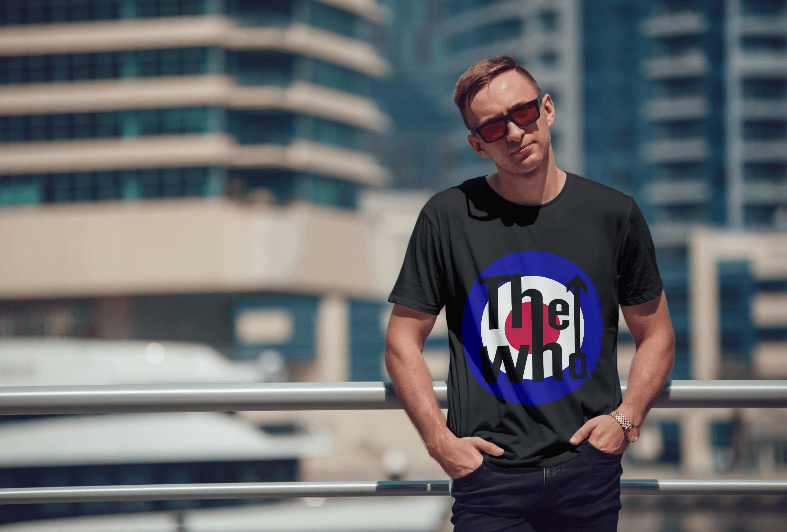
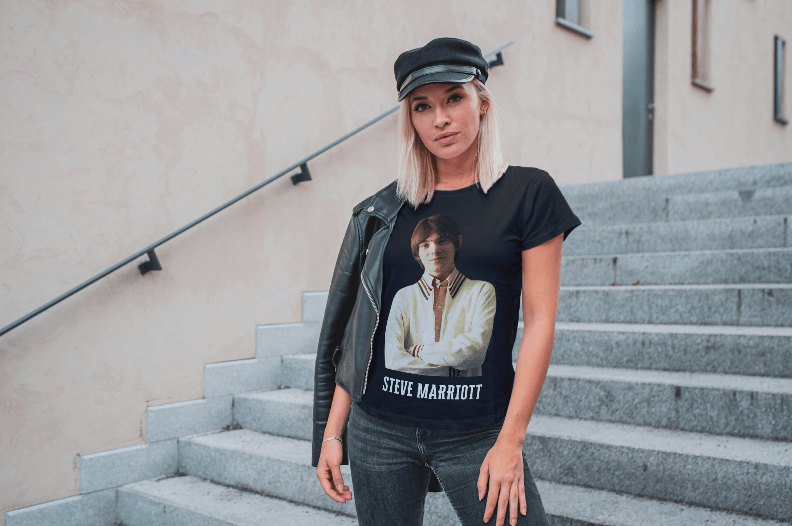
The shop will be mainly selling and promoting Northern Ireland themed gifts and souvenirs but as lifelong Jam fan and mod I cant help but add some designs and products based on my love of all things mod , the music, style and the culture I love it all .
We are currently still loading products and tweaking the website and this will be an ongoing process over the coming days and weeks. But feel free to have a nosey and buy anything that takes your fancy.
Now to the point of this exercise…
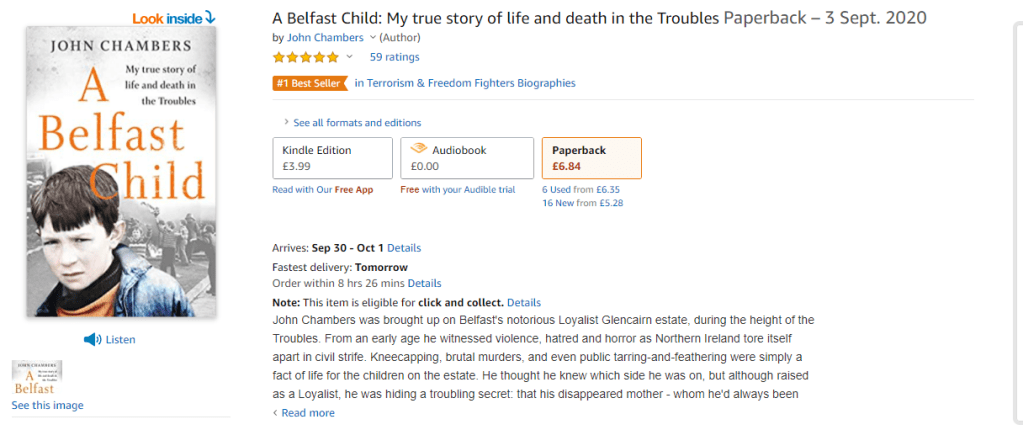
Ill be giving away 2 x £15 gift tokens to spend in the shop and/or two signed copy of my No.1 Best selling book: A Belfast Child in a a random draw of everyone who visits the shop and signed up for & subscribes to our emails alaerts . Dont panic we wont be sending you loads of promo sh*t just the occasional newsletter and updates on the shop and my crazy life .
Just visit the shop and sign up here : Dead On Gifts
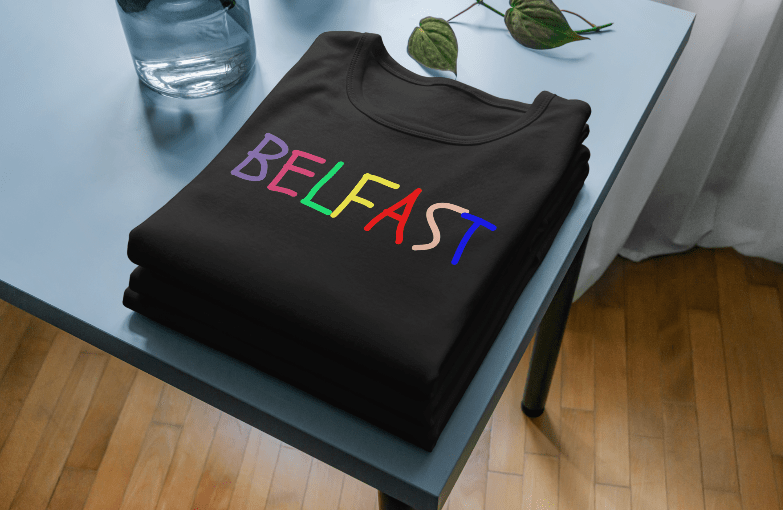
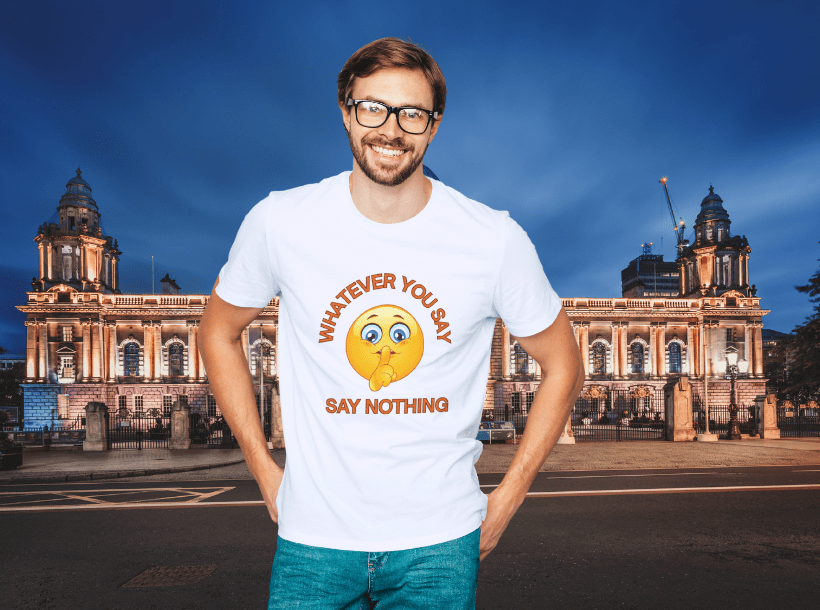
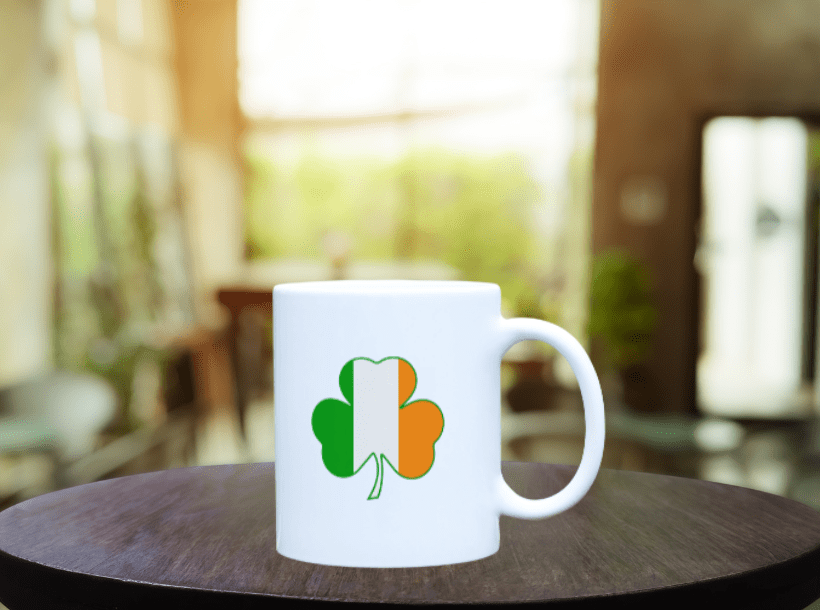
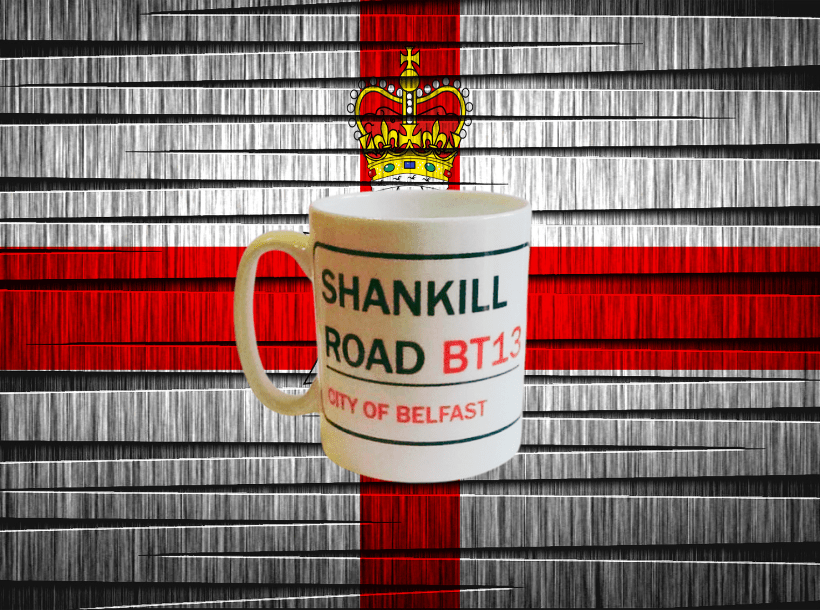
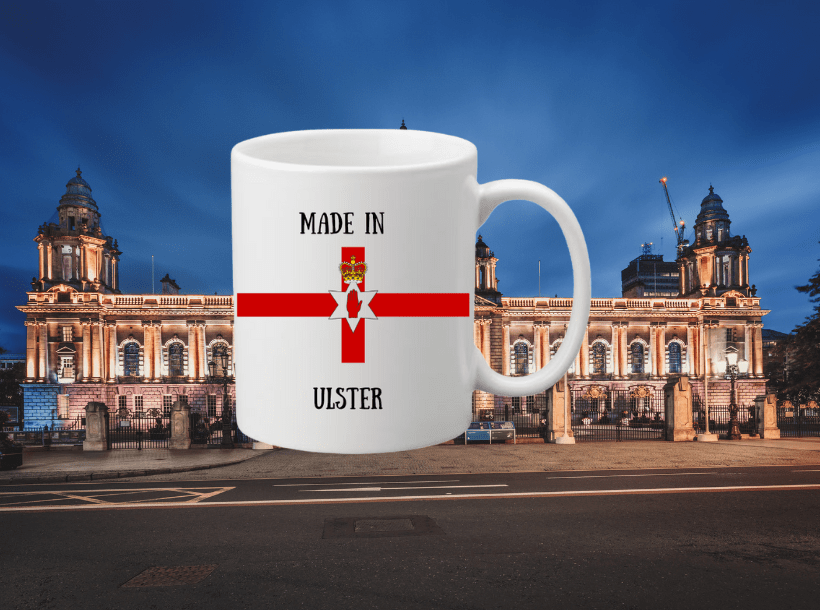
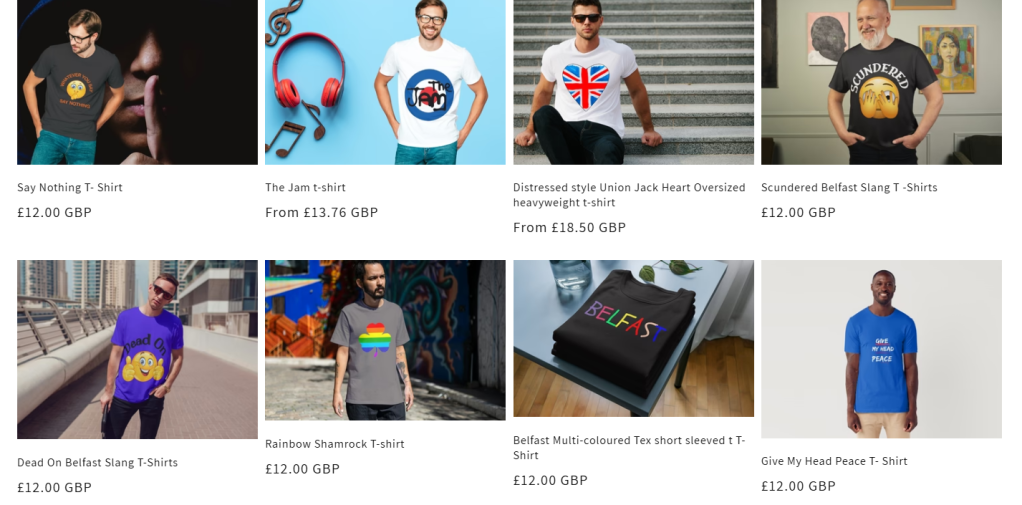
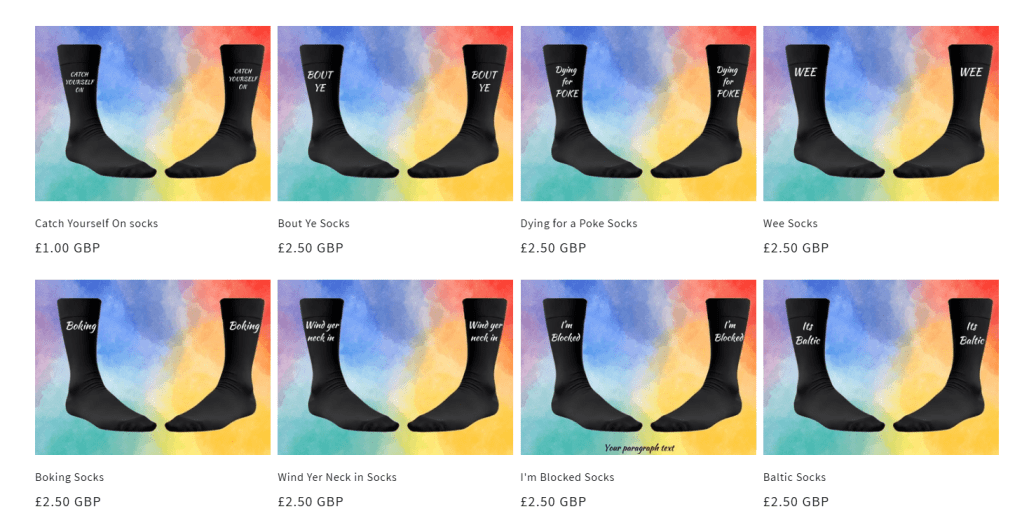
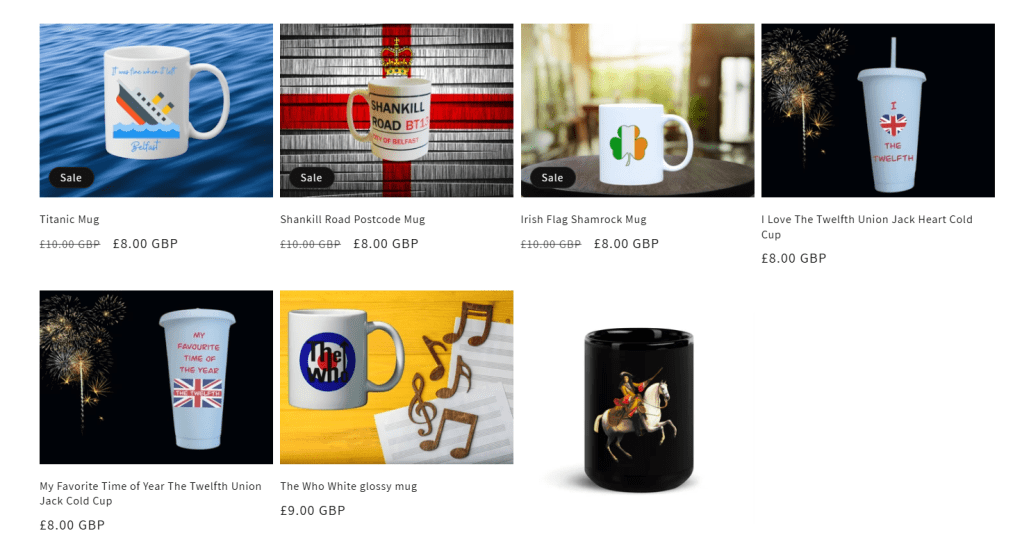
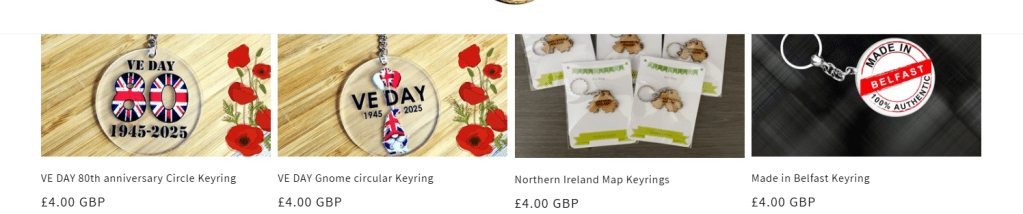
Check out some of our current stock below .
Clock the image to visit page.
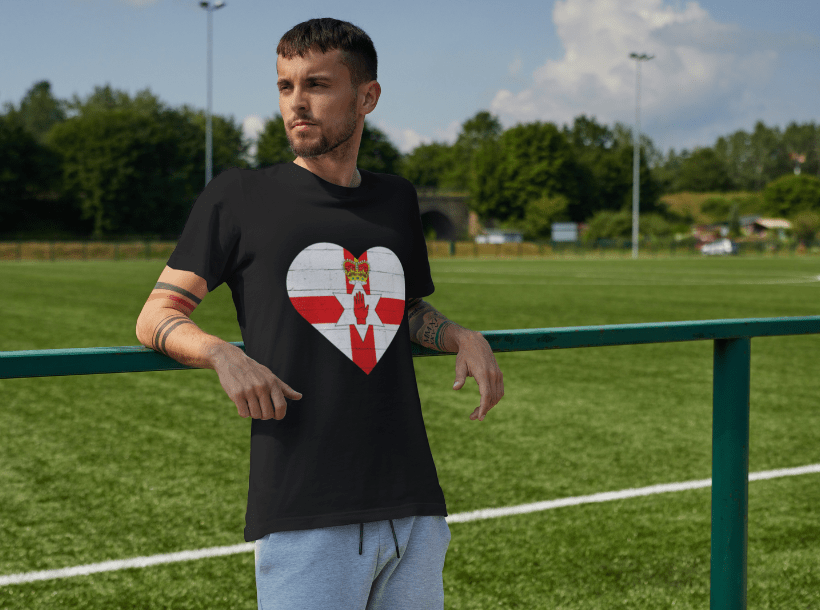
MaleT -Shirts
FemaleT -Shirts
Belfast Slang Socks
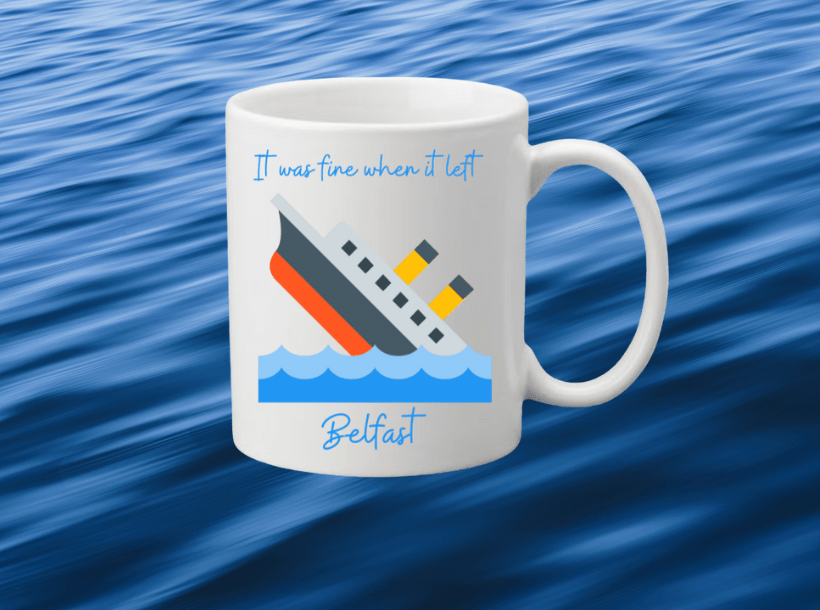
Mugs & Cold Cups
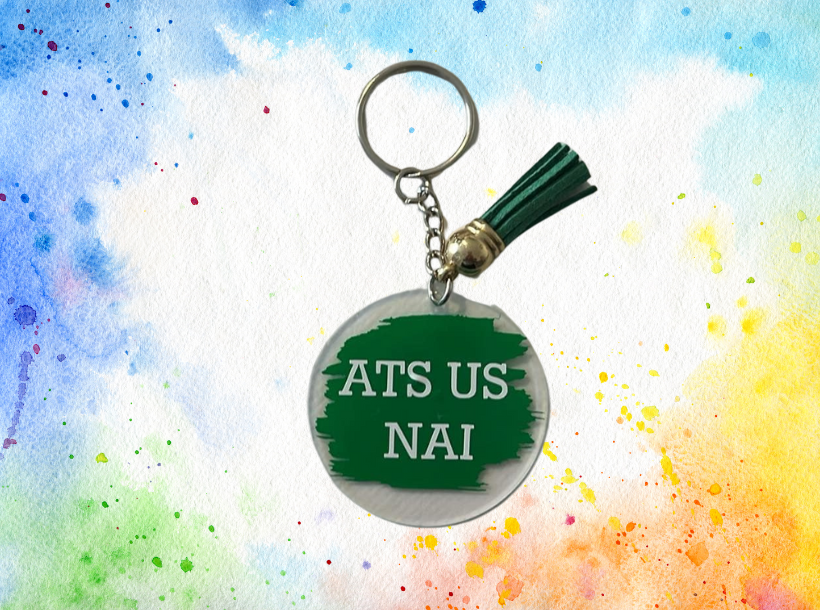
Keyrings
Hats
Candles
That’s all for now folks , don’t forget to visit the store and sign up for our email alerts to be in with a chance of winning in our raffle , Ill announce the winners next weekend .
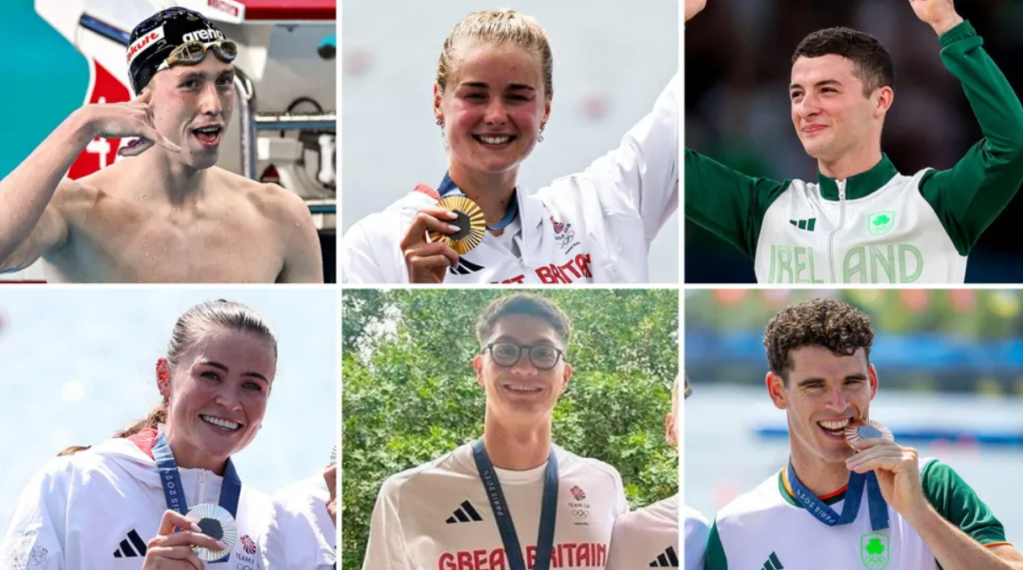
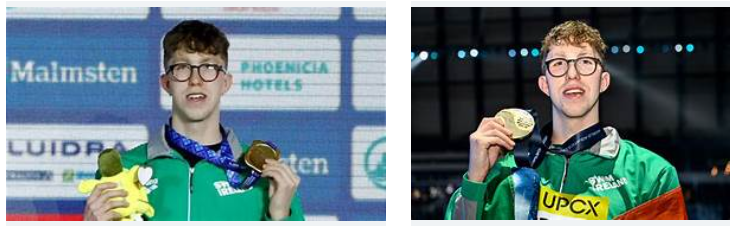
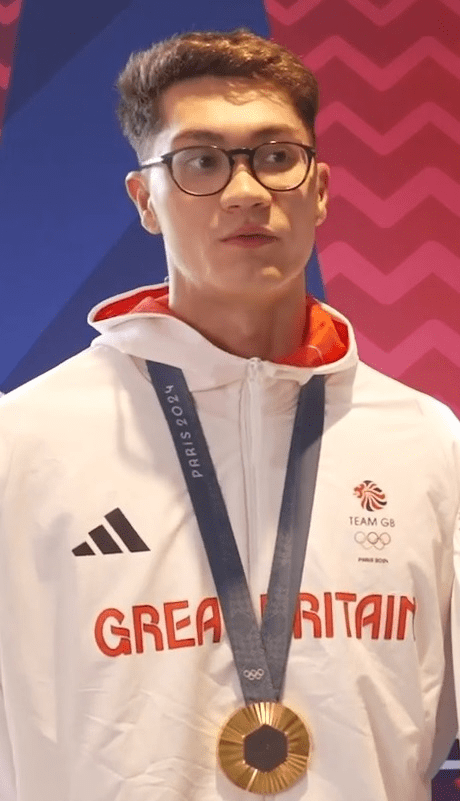
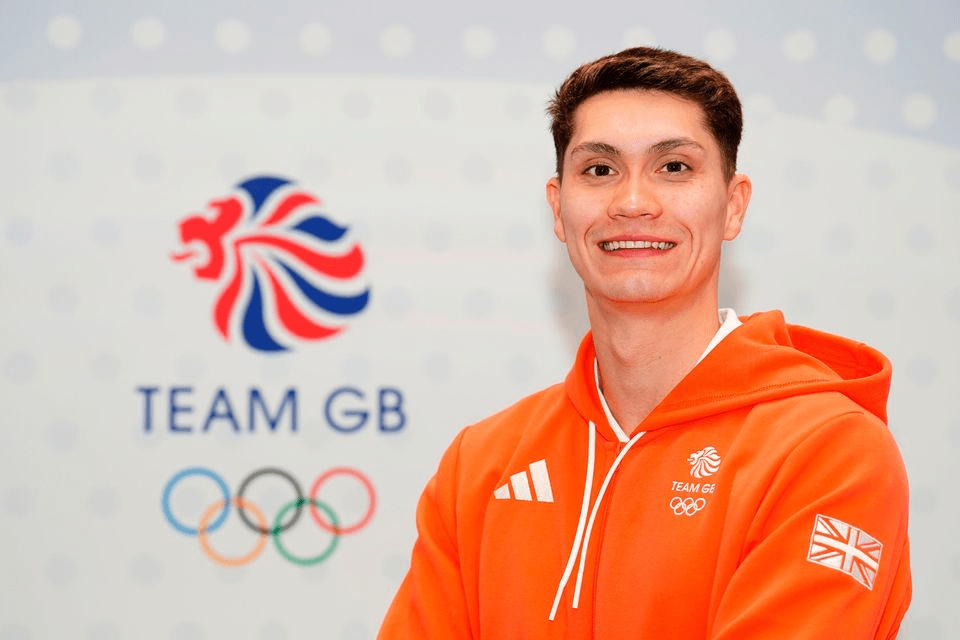
Daniel Wiffen (born 14 July 2001) is an Irish swimmer who competes at the Olympic Games, world championships and European championships for Ireland and at the Commonwealth Games for Northern Ireland. He is the Olympic and world champion at 800 metres.
] He won the 800 and 1500 metres freestyle at the 2024 World Aquatics Championships in Doha, the first time a male Irish swimmer had become world champion. He won the 400, 800 and 1500 metre freestyle at the 2023 European Swimming Championships (25m) in Otopeni, and the inaugural European Under-23 title in 2023 in Dublin.
Wiffen holds the 800 metres freestyle short-course world record with a time of 7:20.46.
Personal life
Wiffen was born in Leeds, England, and moved to Magheralin at the age of two. He has three siblings, twin brother Nathan, sister Elizabeth and another brother, Ben.. The family home is close to the border of County Down but is in County Armagh.
Daniel’s twin brother Nathan is also a swimmer who finished fourth in the 1500m at the 2024 European Championship and narrowly missed out on the qualifying time for that event for the 2024 Olympics.
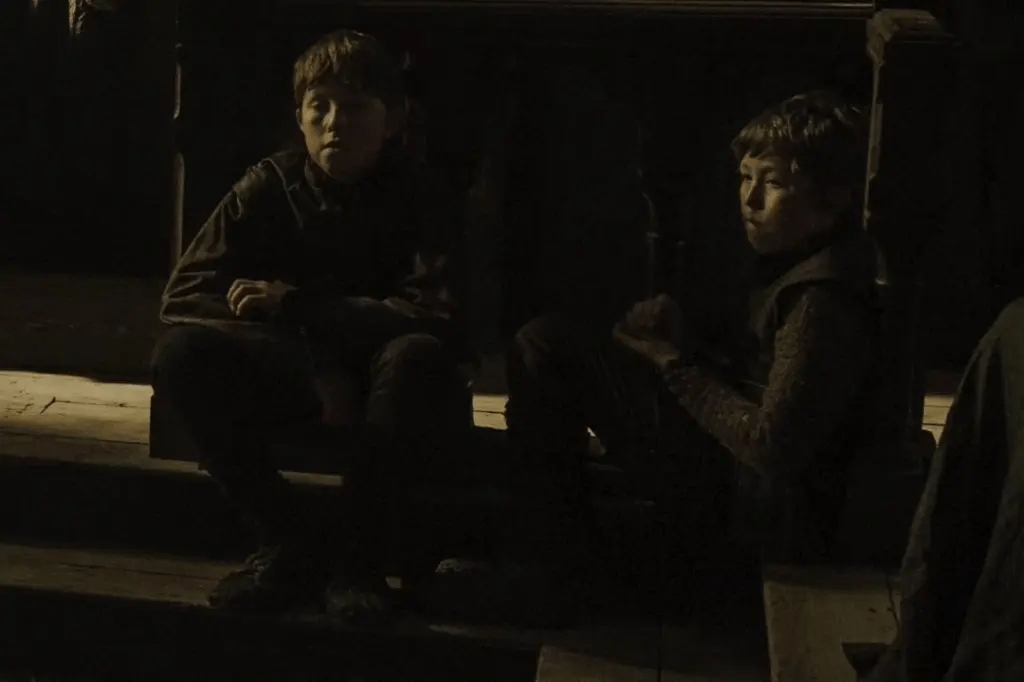
Dan in Game of Thrones
Daniel and his twin brother have a YouTube Channel. They both had minor roles in The Frankenstein Chronicles (season 1, episode 2) and Games of Thrones (season 3, episode 9); in the latter, their sister Elizabeth also appeared as Neyela Frey.
What’s my name? Daniel Wiffen, Olympic champion! | RTÉ Olympics Podcast
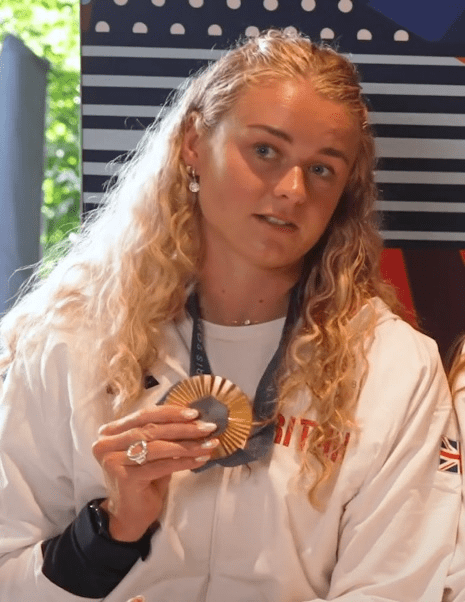
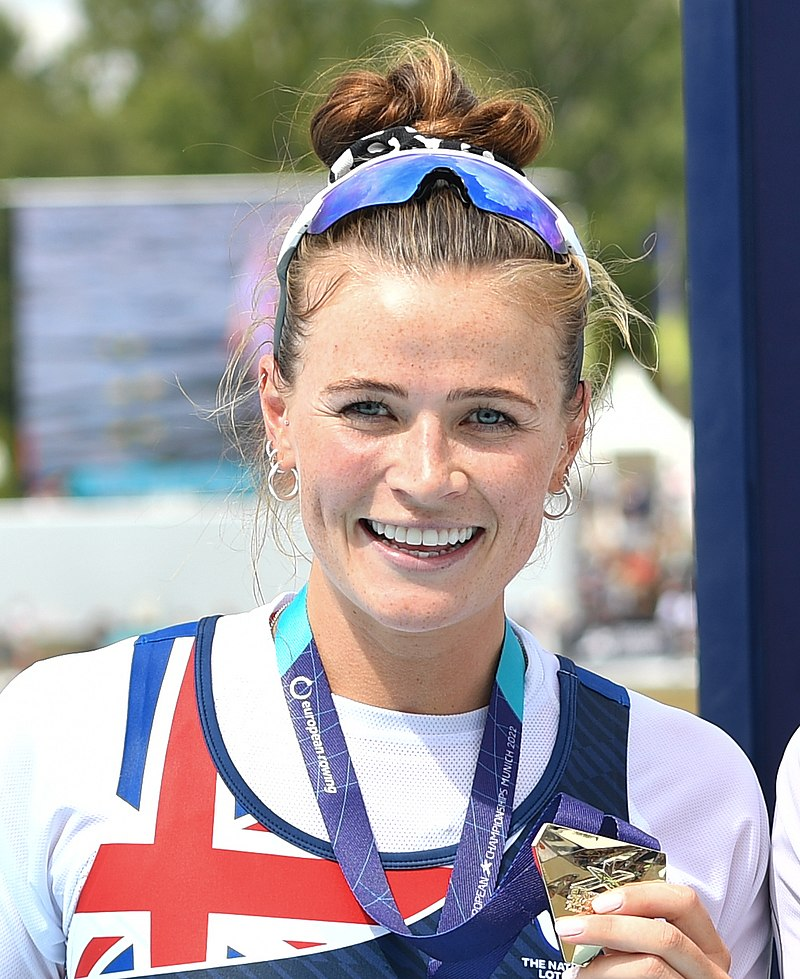
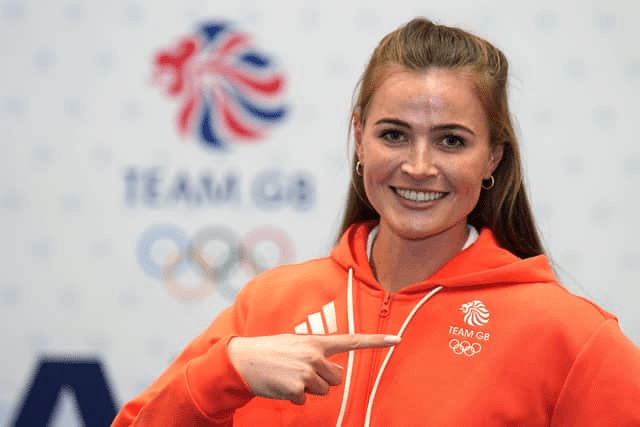
Hannah Scott (born 18 June 1999) is a rower from Coleraine, Northern Ireland. She has won Olympic and world championship gold medals representing Great Britain
Team GB rower from Coleraine wins gold in Women’s Quadruple Sculls
Originally from Coleraine, Hannah’s Olympic journey began in the River Bann.
She started rowing at 13 at the Bann Rowing Club in Coleraine, one of the oldest and most successful rowing clubs in Ireland.
The historic club boat house has stood since 1864 in those years it has been the beginning of the road for many Olympic medals over the years.
Brothers Peter and Richard Chambers, who won silver together in the lightweight four at London 2012, and bronze-medal winning sculler Alan Campbell all started off at the Bann Rowing Club.
Having the opportunity to attend this club and be mentored by its accomplished coaches set Hannah up for success, and it was not long before she started to excel in the sport.
She went on to win five national titles and eight silver medals over several years of competition at the Irish Rowing Championships.
One of the biggest milestones in her rowing career was attending Princeton University in America, where she was able to take part in the university’s rowing programme.
While at the Ivy League university she went on to become a two-time Ivy League Champion in the Varsity Eight and she led the Princeton Women’s Crew as captain.
She also snagged two silver medals at the U23 World Championships.
The road to Paris
Her final years at university were disrupted by the Covid-19 pandemic, which opened up an opportunity for Hannah to return to the UK and earn a spot on the British Rowing Team at the delayed Tokyo 2020 Olympics.
The 25-year-old made her Olympic debut at Tokyo 2020 while still studying for her sociology degree at Princeton. Paris will be her second Olympics and she will be heading in as a reigning world and European champion in the women’s quadruple sculls.
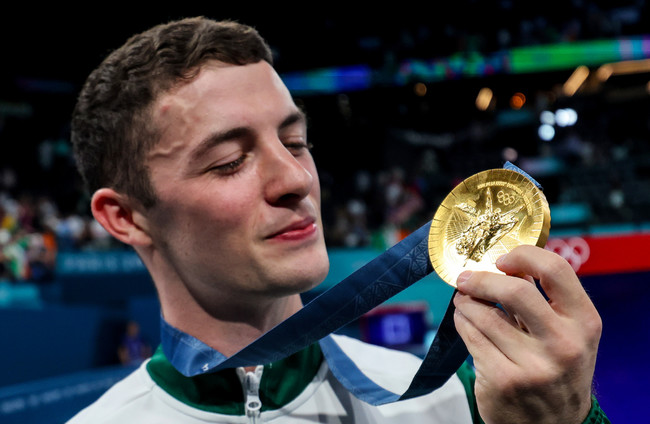
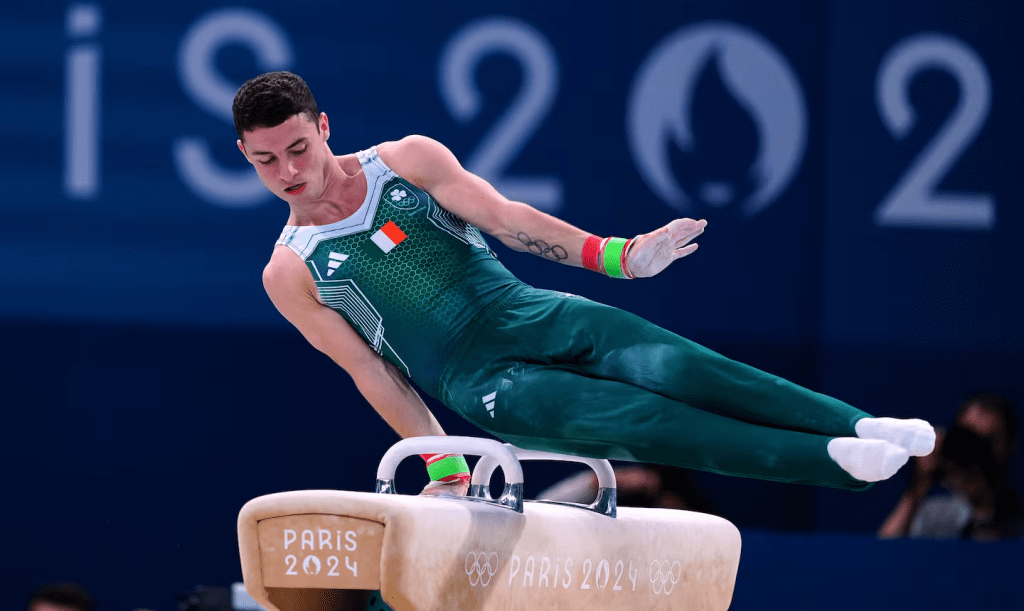
Rhys Joshua McClenaghanBEMOLY (born 21 July 1999) is an artistic gymnast from Northern Ireland who competes internationally both for Ireland and Northern Ireland. He is recognised as one of the best pommel horse workers of his generation. He is the 2024 Olympic champion, the first gymnast ever to win an Olympic medal for Ireland. McClenaghan is also a double world champion on the pommel horse, having won gold in 2022 and 2023, the first Irish artistic gymnast ever to win world championship gold. In 2019, he became the first Irish gymnast to qualify to a world championships final and to also win a medal, taking bronze on pommel horse.
He is a three-time European champion and a Commonwealth Games champion on the same apparatus. McClenaghan is the first Irish gymnast to compete in a European final and also the first to win a European medal.
He also competed for Northern Ireland at the 2018 Commonwealth Games,[8] winning the gold medal on the pommel horse. He followed this by winning the 2018 European Championships, pipping the reigning Olympic and two-time world champion, Max Whitlock on both occasions. In 2023, McClenaghan won a second European title and retained the world title. His third European crown came in Rimini in 2024.
He is the first gymnast to become Olympic, World, European and Commonwealth champion on one apparatus.
McClenaghan was born in Newtownards, County Down, to Tracy and Danny McClenaghan. Aged six, and already displaying a precocious aptitude for gymnastics, he started training at Rathgael Gymnastics Club in Bangor. McClenaghan later attended Regent House School in Newtownards. He has been coached by close friend Luke Carson for many years.
The family of Co Down gymnast Rhys McClenaghan have told of how they “knew this day would come” after he won gold at the Paris Olympics.
The Newtownards athlete completed on Saturday what is considered a gymnastics’ Grand Slam – World, European, Commonwealth and Olympic golds.
Speaking after her son stood on the winner’s podium to collect his gold medal, his mother Tracy said it was “the only one that was missing from his medal collection”.
The 25-year-old gymnast clinched gold for Team Ireland with his outstanding routine in the pommel horse final at the Bercy Arena. It came three years after he fell from the apparatus, when he was favoured to win gold at the Tokyo Olympics.
He said he had slept with the medal on his bedside table.
“It’s so heavy and so sharp I was scared I was going to wake up with injuries,” he said on Sunday.
“I started gymnastics at six years old, that gap between there, that is all my parents, that is them driving me to and from the gym, paying my gymnastics fees, everything they supported and wanted me to pursue that dream that I had.
“This medal is just as much theirs as it is mine.”
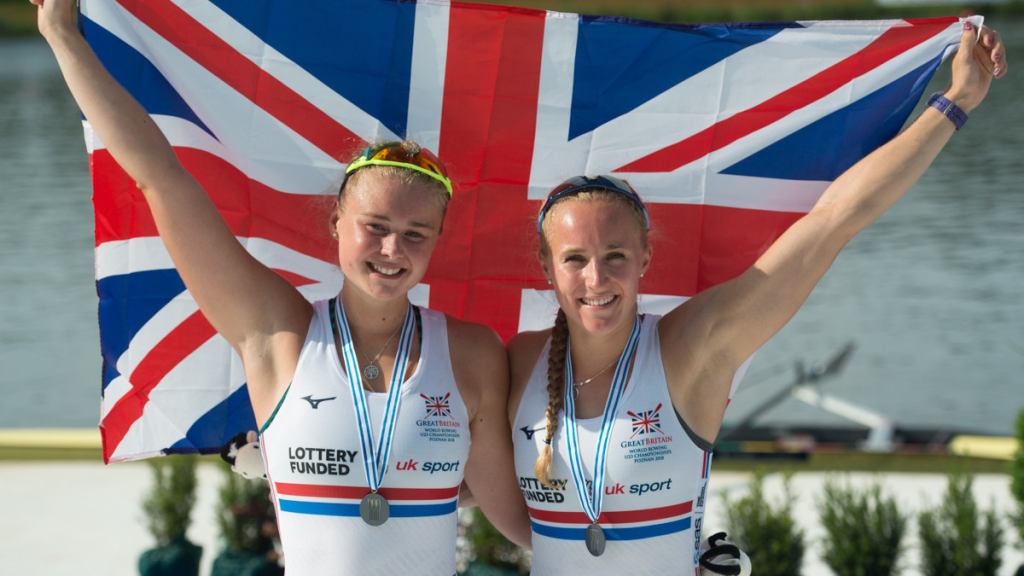
Rebecca Shorten (born 25 November 1993) is a Northern Irishrower from Belfast. She is a world and European gold medallist and Olympic silver medallist for Great Britain.
‘I always knew Rebecca had right chemistry to be top rower at Olympics. Science teacher who coached Team GB silver medal star recalls conversation that set Belfast woman on course for glory
It was a conversation that changed Rebecca Shorten’s life and set her on the path to sporting stardom that culminated in a silver medal at the Paris Olympics.
The Belfast rower was part of the Team GB four that finished second in the final.
The team, also comprising Helen Glover, Esme Booth and Sam Redgrave, lost out on the line to the Netherlands by just an 18th of a second.
While their gold dream was dashed, there was a silver lining, boosting Northern Ireland’s medal tally on a day when Banbridge rower Philip Doyle and his partner Daire Lynch claimed double sculls bronze for Team Ireland.
Shorten’s story is remarkable, with her former mentor pinpointing a conversation 16 years ago that set her on a new course.
Enda Marron, her teacher and rowing coach when she was at Methodist College in Belfast, said her journey to the podium in Paris began after a science lesson in 2008.
“I was her chemistry teacher and she wasn’t the best chemist,” he told the Belfast Telegraph.
“She had handed in some chemistry work that wasn’t the best.
“It was okay, it just wasn’t the best, and she was a bit embarrassed by it and a bit shy about it.”
Mr Marron said he knew Rebecca wasn’t going to excel in a science career, but saw her potential as a rower.
He said: “I remember saying to her: ‘Who cares about chemistry? Let’s get you into a boat and down to the river’.
“After that she just went from strength to strength and the rest is history.”
At the time Shorten was only 14.
Sixteen years later, and she is the proud owner of an Olympic silver.
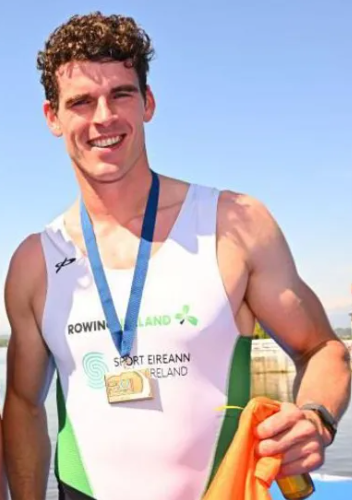
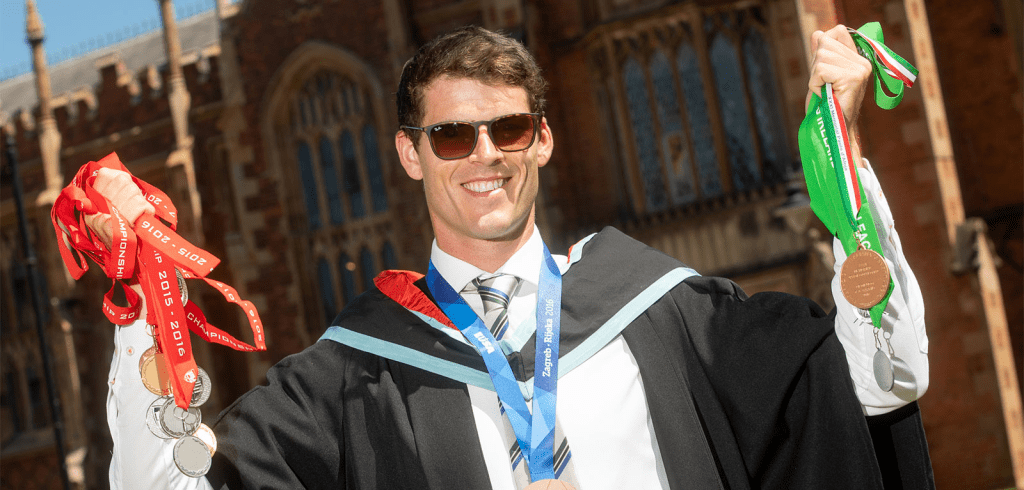
Doyle went to St. Mary’s Primary School in Banbridge from 1996 to 2004. He then attended Banbridge Academy 2004-2011 where he played hockey winning the Bannister Bowl 2006, Richardson Cup 2007 & 2008, the McCullough Cup 2010 and Burney Cup 2010 & 2011. He played in a side which won the All Ireland Schools Cup 2011 and made the semi-finals of the European Schools Cup in 2011.
Doyle played for Ulster U16 at centre back when they were runners-up in an inter-provincial tournament. He represented Ireland U16 in the European championships coming 6th in Holland. Philip also played for Banbridge club up to first XI standard playing centre forward for the 2010/11 season.
Personal life
Doyle went on to study Medicine at Queen’s University in 2012. Philip did an intercalated degree in Medical Sciences in 2015/16 also graduating with a first class honours BSc. Philip got his senior debut for Ireland rowing in Lucerne, Switzerland in the men’s singles coming 15th. He and his partner Ronan Byrne went on to come 9th in Plovdiv, Bulgaria in the men’s double September 2018 delaying stating his Job as a doctor in Belfast city Hospital after Graduating from Queen’s University in July 2018.
Philip worked as a foundation 1 doctor in Belfast City Hospital December 2018 – April 2019 before returning to Rowing full time and competing at the European Championships in Lucerne, Switzerland with partner Ronan Byrne coming 9th
Speaking to the Belfast Telegraph last month Philip said: “So I train 18 times a week, anything from four to seven hours a day depending on the session structure and what competitions are coming up – and depending on my work.
“My training is always a mix of sessions in the boat, on the rowing machine or in the gym. The Elite Athlete Programme at Queen’s has certainly been a great support to me.
“At the beginning of the year I sit down with my coach and set out my goals and we then figure out how they can be achieved.
“My coach Mick Desmond worked tirelessly with me and with Queen’s Sport to facilitate my achievements and helped me work towards my senior international debut, in Lucerne last month, where I came 15th out of 27.”
In March, Philip was recognised for his heroic bravery following an incident on the Lagan last year. Alongside QUBBC teammates Chris Beck and Tiernan Oliver, Philip helped save the life of Terry Bell who had fallen into the river while they were taking part in a Lagan Scullers Club river race, on the morning of Saturday 25 November.
Philip was awarded the Students’ Union President’s Award for Student Achievement which recognises a student or group of students who have demonstrated excellence in leadership or have made a positive impact on society.
Dont forget to subscribe and follow me on Twitter 😉
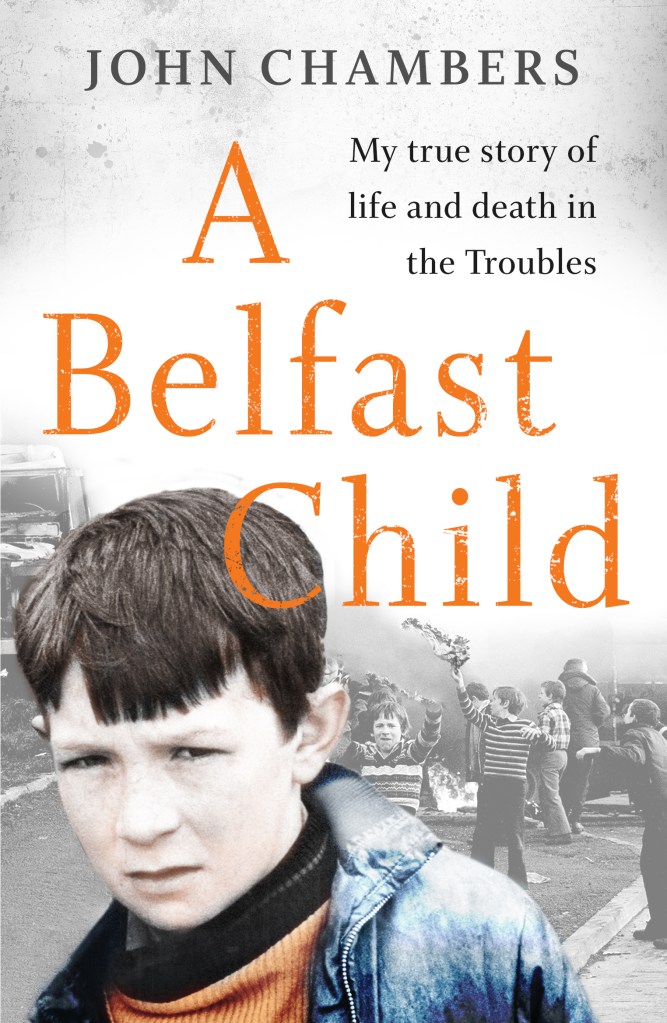
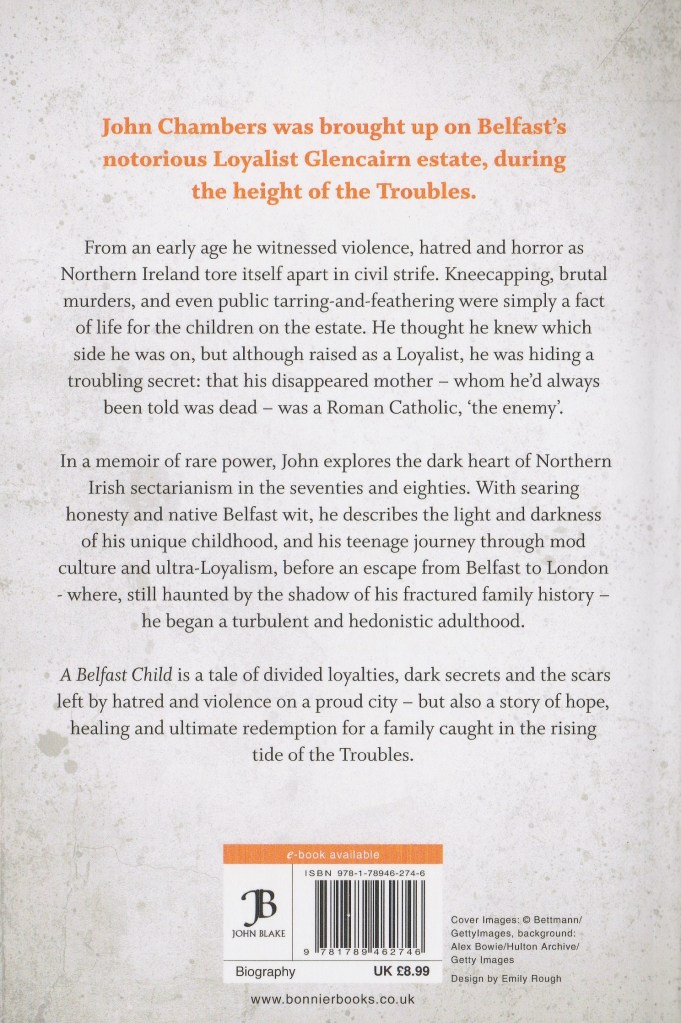
This is simply the story of a boy trying to grow up, survive, thrive, have fun & discover himself against a backdrop of events that might best be described as ‘explosive’, captivating & shocking the world for thirty long years.
Throughout my time living and working in London and recent years in and around the North West of England it was always my long term intention that when I reached a ripe old age and my kids had settled into happy secure independent adult lives I would relocate to Belfast and spend the remainder of my time in the company of friends and loved ones and the Shankill community that has always been my spiritual home and where my heart and soul were forged within the heartlands and hallowed streets of loyalist Belfast .
You can take the boy out of the Shankill but you can’t take the Shankill out of the boy , Oh so true .
But as usual my path through life has seldom been straight forward and the Norms in their infinite wisdom and cruel nature weaved me a crooked path fluctuating between epic highs and soul destroying lows.
To be honest these past five years have been the most trying and stressful I’ve faced in decades of relative happiness and personal satisfaction and to say they have taken a toll on my mental and emotional wellbeing would be something of an understatement.
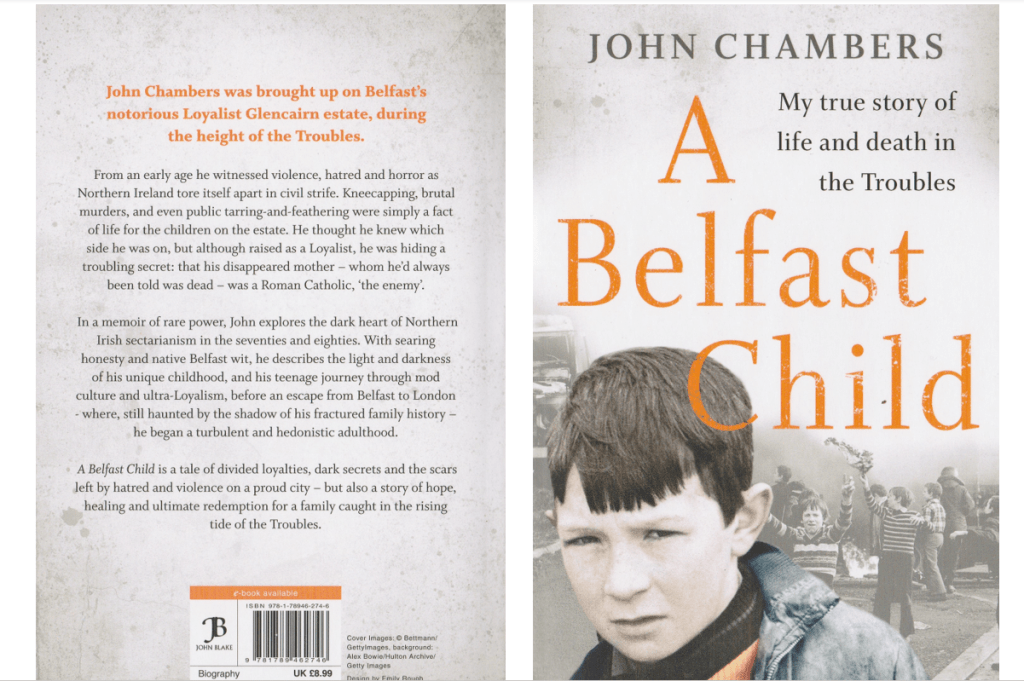
Looking back it all started to fall apart when I lost my much missed and loved mum to cancer, a heartbreaking period that I am still trying to come to terms with. If you are familiar with my history, you’ll know I spent many years not knowing if mum was alive or dead and the turmoil this caused throughout my early and teenage years is laid bare in my best-selling book A Belfast Child .
Come on – I had to get a plug in somewhere 😜
This is simply the story of a boy trying to grow up, survive, thrive, have fun & discover himself against a backdrop of events that might best be described as ‘explosive’, captivating & shocking the world for thirty long years.
— Belfast Child – John Chambers (@bfchild66) July 23, 2020
In fact back in the early 2000’s I was seriously considering leaving London altogether (I’d had enough of the rat race and a coke habit that was threatening to get out of hand ) and the possibility of moving back to Belfast and sorting myself out was one of two tempting options opened to me and my growing family. Mum was the second and she made it crystal clear she would love for me to live closer to her and help me get back on my feet . So I delayed my return home and we relocated to a little town on the outskirts of Preston, where we have lived since.
It was great to be so close to mum and we were able to spend quality time together getting to know each other and mending the damage of our tragic family history. The gravitational weight of my traumatic childhood has been a constant presence throughout my life and parts of my soul will always be held hostage to the past.
Nevertheless, this was one of the happiest and most productive periods of my life and at times it seemed I had an almost perfect life and wanted for nothing.
But as the years ticked by the pull of Belfast was becoming stronger and I missed and longed to be in the company of those I love and cherished above all others. Mostly I missed my three siblings and best mate “ Billy “ , we are supernaturally close and I grew to resent the years I had spent away from them.
And a little voice inside my head constantly reminded me that we were only given a brief spell on this mortal coil and time was running out.
Time keeps on slipping into the future
My biggest fear , a fear shared by all of us was that one of us might die prematurely and the landscape and future of our close family unit would be reshaped and destroyed forevermore.
After mums’ death the only thing keeping me in England was the fact my two children had been born and raised here and all their memories and historical roots were firmly planted in English soil . So once again I kicked the idea of the move home into the long grass and settled into the humdrum existence of daily life.
There were some high points during this period and after years of toying with the idea of seeing my story in print I finally managed to get a book deal and realised one of my long-held dreams. Subconsciously I think I was a little uncomfortable with publishing the book whilst mum was alive , although I had completed most of it back in the late 90s and she had read and approved of the early drafts.
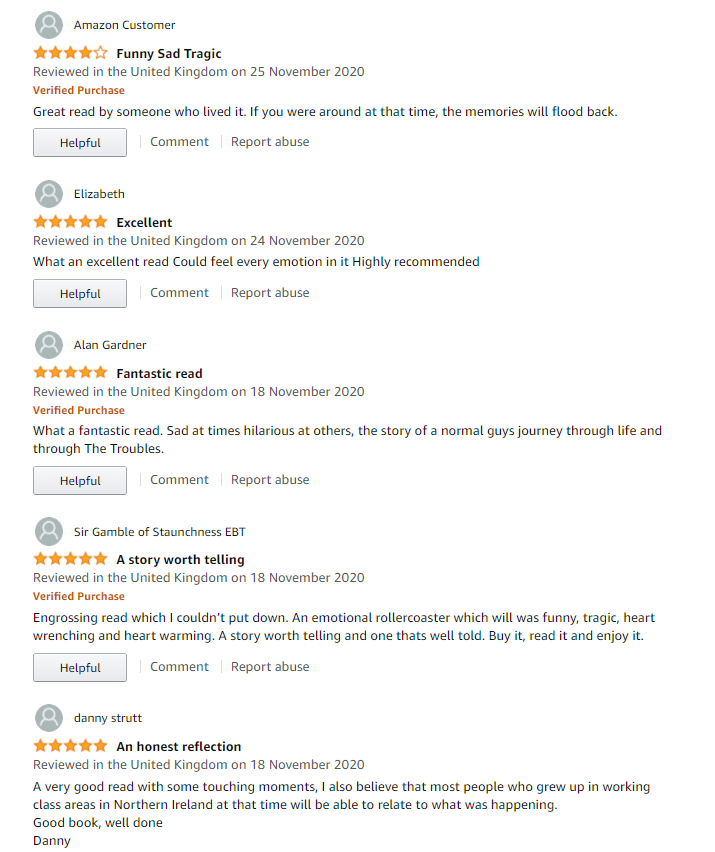
As you may suspect this was not a straightforward process and there were many soul destroying bumps and rejections along the way but I persevered and much to my delight the book has went onto be a bestseller. Despite the popular misconception being a bestselling author has not made me rich , far from it and like many I struggle sometimes financially to make ends meet. Having said that I know the book will be my legacy and fingers crossed I’m working on a film script that I hope to sell in the coming years.
Stay tuned.
I will be covering the whole journey from concept to publication of the book in a future post and Princess Diana features in this story.
Life went on and my fragile soul struggled to deal with mums passing but always in the background I had my two sister’s supporting and comforting me from Belfast. Both desperately wanting me to return, and Jean was forever begging me to come home and to be honest I wanted nothing more. I began to feel trapped in England due to the dilemma of my children and the deep roots they had planted here, and I could see no way forward.
But the fates love to toy with the destinies of mortal men and the unpredictability of life weaved by the wicked Norns was about to shake my world to its very foundations and nothing would ever be the same. In the space of twenty four short months I lost three members of my close family, my uncle William, much loved brother in law Richard and the hardest loss of all my beloved big sister Jean. My grief and sorrow were biblical and the pain of losing Jean took me to dark places that hunt me still.
To make things even more difficult during this brutal period my “perfect” marriage of twenty-eight years was falling apart and suddenly I had to adjust to being a single parent and living alone in a life I had grown to detest.
To be completely honest these events are still too raw and painful for me to write about in-depth and I will leave them here for now. but I find the process of putting my thoughts on paper cathartic and will be covering these in a later post.
Oh , I almost forgot to mention in the midst of all this turmoil I was diagnosed with a potential life threatening brain aneurysm and I will cover this also in an upcoming post.
All these events have led me to a crossroad in my life and once again I am seriously considering moving back to Belfast permanently . Although I love England and its been good to me I have nothing left here but my children (and three legged cat) and they both understand and support my desire move back home. Autumn has now flown the nest and is settled with her new fella and yes I approve of him. Jude is a typical grumpy teenager and splits his time happily between his mum and me and as long as we feed him and give him money, he is happy with his lot and for me to move back to Belfast.
But it’s not that black and white for me.
He’s only seventeen and in my eyes still a child, although he thinks he’s a big man! I want to be there for him as he grows and matures and evolves as a young adult and be there to share and support him through the trials and tribulations life throws at him. I want to be there when he has he’s first pint in a pub , ( a regret I never had with my own dad) be there to pick him up when he falls down and be a constant presence in his life. Down the line when my children marry ( or not ) and have their own kids I want to be part of their lives and not a distant grandfather living over the Irish sea they see a few times a year. Also, since Jeans death Belfast has lost some of its magic for me as spending time with her was always a highlight of my trips home and in some ways I would feel guilty moving back when she’s not there.
So what am I going to do ?
Stay tuned and when I make up my mind Ill let you know x
That’s all for now folks, I’m pushing myself to write again as I’ve not put pen to paper in almost two years and I’m a little rusty and out of practice. . So be gentle with me please.
Before you go
Upcoming posts :
The reasons I left Belfast.
Book writing process and publication
My movie script, where I’m at
Once upon a time in Northern Ireland, why thoughts and the process of taking part
I’m in the process of trying to complete a script based on my number one bestselling book A Belfast Child and to be completely honest I’m seriously struggling and becoming disillusioned with the whole process. Recently I feel like just admitting defeat, throwing the towel in and consigning the idea to the long grass.
But I’m not going to give up – just yet!
Since the book was published (and well before) I’ve been working on a script l based on my story (Philomena meets Trainspotting/Quadrophenia kind of theme) and I completed the first draft a few years ago. I sent this to Northern Ireland screen and some agents and the feedback I received was positive, but they suggested I needed to do some rewrites and changes to make it sellable before submitting it again. At the time I was going through some personal issues including my mum’s soul-destroying long illness and the publication of my book also took precedence, so I put the script on hold for a few years to focus on more pressing issues such as the daily grind of life and surviving all those little obstacles fate loves to throw in my path.
Earlier this year I thought I would give the script another go and have been working on it on and off since. It may surprise some of you to learn that putting together a script is an entirely different beast to writing a book and to be completely honest I’ve been really struggling with tweaking and amending it and its doing my head in !
I’ve reached out to a few folk in the industry and for one reason or another they cant commit to helping me complete this project. I’ve had meetings with established scriptwriters and producers and although they love the idea and praised the story none of them seem to have the time or resources I need to see this through to completion.
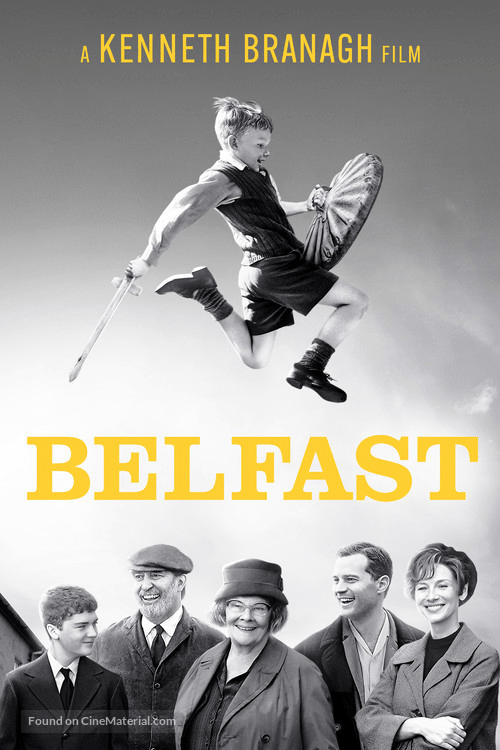
Also the success of Belfast the movie has put some of from taking up my story as they feel the market for Trouble’s themed stories has been saturated over the years and another Belfast story would be hard to place in the market. Obviously, I disagree with this and although I thought Belfast was a great movie it sugar coated the brutal reality of what life was really like back then whereas I feel my story/script incorporates the raw horror and unceasing violence that dominated our daily lives in the ghettos of Belfast and beyond and the legacy of the Troubles that still hunt us to this day. There was also much teenage madness and laughter which offered us some brief moments of escape from the violence all around us.
I’m waffling now so let me get to the point !
I have come to the conclusion in order to move my idea forward I need to bring in some professional help and with that in mind Im in the process of finding and engaging the services of a well-established script consultant and further down the line a script editor. These guys are in high demand and don’t come cheap but if I’m to have the best chance of seeing my script through to completion with professional input and guidance I’m looking at a fee of between £5000 – £10000 and possibly more down the line.
Despite popular belief being a bestselling author has not made me a millionaire (yet) or indeed anywhere near it and like many I face the same financial struggles that are the curse of the cost of living crisis we are all experiencing. But I have a long-held dream to see my story on the big screen and I am focused on pursuing this until I have achieved that aim. It took me almost twenty years to finally see my book in print and through all the ups and downs and soul-destroying rejections I persevered until one day a publisher took me onboard and the rest is history as they say. It was a long and hard process and there were many false starts along the way, but I eventually got there. I never give up on that dream until it became a reality, and I am going to apply the same determination and dedication in my quest to complete my screen play and see it on the big ( or small) screen one day. Hopefully within the next few years as Im getting old and my time is running out…
So that’s my mission statement and Ill be keeping you all updated via my blog and Twitter ( I just can’t get use to calling it X ) as and when I have something to share . It’s going to be a pain raising the fee for the services I need but one way or another I know Ill get there eventually.
If you’d like to be part of my story and are feeling wildly generous and excited about seeing me succeed and my project developed you can contribute towards the costs by clicking the donation button below.
If and when the movie comes out Ill give you all a mention 😜
Click donation button below to be a part of this awesome journey .
Well, it’s a big day for me tomorrow and to be honest I’m getting a little nervous, and a teeny-weeny tad stressed about it all. But I suppose that is all perfectly normal. Right?
It’s not helping that there’s a thunderstorm brewing outside and I’m finding hidden meaning and dark portents as I listen to the thunder rumbling gently in the in the distance. Also reading through the notes on the procedure I’m going through (cerebral angiogram) I came across the list of the potential complications and this one totally freaked me out.
Procedures involving the blood vessels of the brain carry a small risk of stroke. This can range for a minor problem which gets better over time to a severe disability involving movement, balance, speech, and vision.
Having said all that I’ve been aware of this suspected aneurysm since November last year and I decided then I wasn’t going to let it get me down or dwell on it as that wouldn’t change a thing and I would end up driving myself up the wall with worry and I just couldn’t be arsed with that. So I buried my head in the sand and awaited the hospital appointments and here we are.
The doctors advised me to cut down on smoking and drinking and needless to say I’ve largely ignored both these self-serving guidelines. I know. But I’ve been smoking and drinking for forty odd years and these destructive lifelong habits are hard to break free from and Im a creature of habit and hate change.
To be fair I’ve not had a drink since Saturday night and I’ve cut down my smoking over the past few days and believe me that took some self-discipline. My kids were appalled at how much I was captured on film smoking during the Once Upon a Time in Northern Ireland programme. Ive promised them Im going to try and commit to giving up but just just yet…
Anyway, I’m nil by mouth tonight and I have to be at the hospital by seven tomorrow morning so Im going to chill by the telly and have a calm relaxing evening and then early to be bed. If I get a positive outcome tomorrow I’l be dancing in the street and having a wee ice cold beer to celebrate.
Thanks to all my wonderful Twitter friends and the many who follow my blogs for all the love , support and comforting words. I am truly touched.
As the wonderful Doris Day once sang Que Sera, Sera
What is a cerebral angiogram?
A cerebral angiogram is a diagnostic test to examine the blood vessels in the brain and neck using X-rays and dye. The dye is injected through a plastic tube called a catheter, which is inserted into the arm.
Plan: Cerebral digital subtraction angiogram (DSA) to evaluate left ICA for suspected aneurysm/infundibulum.
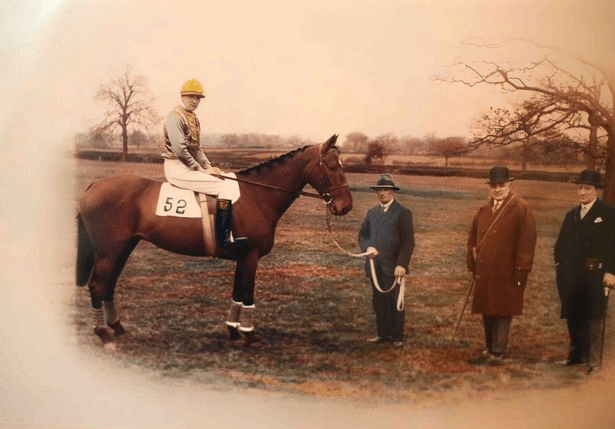
Astounding 1928 Grand National winner at 100/1 & a proud resident of Glencairn !
Tipperary Tim (foaled 1918) was an Irish Thoroughbred racehorse that won the 1928 Grand National. He was foaled in Ireland and was a descendant of the undefeated St. Simon.
Tipperary Tim was owned by Harold Kenyon and trained in Shropshire by Joseph Dodd. He was regarded as a fairly slow horse, but one who rarely fell. Tipperary Tim was a 100–1 outsider at the 42-runner 1928 Grand National, which was run in foggy conditions and very heavy going.
A pile-up occurred at the Canal Turn jump that reduced the field to just seven horses. Other falls and incidents left only Tipperary Tim and the 33-1 Billy Barton in the race. Billy Barton struck the last fence and fell, leaving Tipperary Tim to win – Billy Barton’s jockey remounted and finished a distant second (and last). The incident led to controversy in the press who complained that a Grand National should not be won merely by avoiding accident. It led to changes to the course with the ditch at Canal Turn being removed for the following year’s race. Tipperary Tim enjoyed no real success in other races.
Early life
Tipperary Tim was foaled in Ireland in 1918, his breeder was J.J. Ryan. Tipperary Tim’s sire was the British horse Cipango and his dam was the Irish horse Last Lot, his grandsire was the British horse St Frusquin (who had been sired by the undefeated St. Simon) and his damsire was British horse Noble Chieftain. He belonged to Thoroughbred family 19-b.
The stud fee paid for Cipango was just £3 5s (equivalent to £153 in 2020). Tipperary Tim was named after a local marathon runner, Tim Crowe. He was a brown-coloured gelding.[1] Tipperary Tim had been sold as a yearling for £50 (equivalent to £2,349 in 2020) and was said to have once been given as a present.
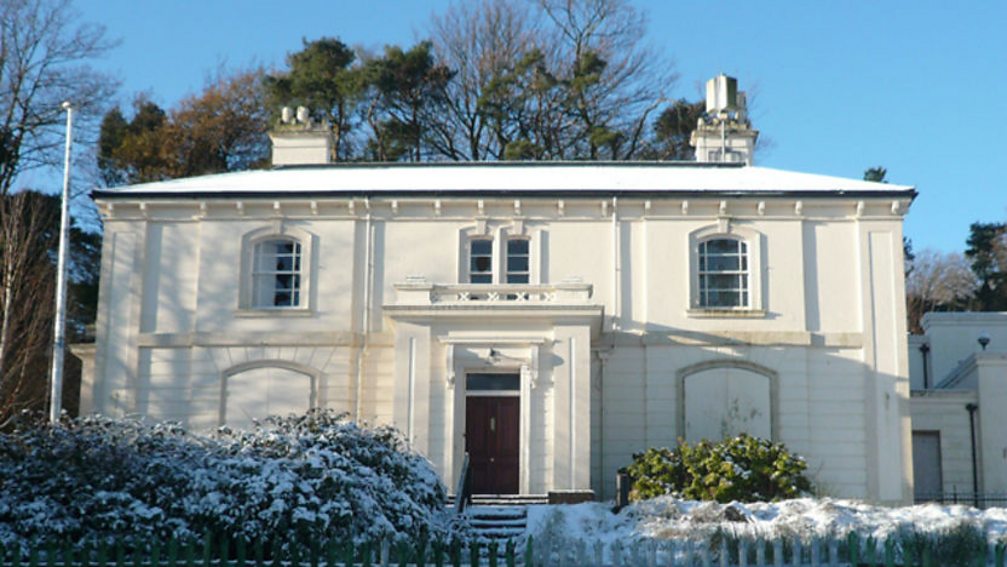
Tipperary Tim came into the ownership of Harold Kenyon. He was trained in Shropshire by Joseph Dodd who noted that “he never falls”. By other reports he was capable of only one pace, and that a relatively slow one. Tipperary Tim was tubed, that is he received a permanent tracheotomy, with a brass tube halfway down his neck to improve his breathing. He was stabled at Fernhill House in Belfast. Tipperary Tim competed at Aintree in the November 1927 Molyneux Steeplechase.
Fernhill House
It breaks my heart to see my childhood playground going to wreck and ruin
1928 Grand National
Tipperary Tim was entered into the 1928 Grand National at the age of 10 years. He was ridden by amateur jockey Bill Dutton, a Cambridge-educated solicitor from Chester, who had left the profession to pursue horse-riding. Tipperary Tim was a 100–1 outsider and Dutton later recalled that a friend had told him before the race:
“you’ll only win if all the others fall”.
The field in 1928 was the largest to date with 42 runners starting the race. The going was very heavy and there was a dense fog. There were three false starts, after which the broken starting tape had to be knotted together. On the first circuit of the Aintree track the leader, one of the favourites, Easter Hero, mistimed the Canal Turn jump.
Rising too early he was stranded briefly on the fence before becoming trapped in the ditch, which preceded it. The next three horses, Grokle, Darracq and Eagle’s Tail were brought down by Easter Hero. Of the remaining runners (22 remained in the race), twenty refused to jump the fence. The pile-up was described by racing historian Reg Green as “the worst ever seen on a racecourse”.
Only seven horses with seated jockeys emerged from the incident to continue the race. One of these was Tipperary Tim as Dutton had chosen to take a wide route around the outside of the course, avoiding hazards that had brought down other jockeys. Because of the fog the majority of the audience were unaware of the incident at Canal Turn.
By the second jumping of Becher’s Brook only five horses remained in the race with Billy Barton leading ahead of May King, Great Span, Tipperary Tim and Maguelonne. Maguelonne was still trailing at the first fence following Valentine’s Brook where it fell. May King fell shortly afterwards before Great Span lost his saddle and rider, leaving only Billy Barton, who started with 33–1 odds, and Tipperary Tim.
Billy Barton had led the race for 2.5 miles (4.0 km) until the last fence where Tipperary Tim drew level. The riderless Great Span was between them and may have slightly hindered Billy Barton. Billy Barton struck the final fence with his forelegs and fell, dismounting his rider, Tommy Cullinan. Tipperary Tim came in first, with a time of 10 minutes 23.40 seconds, he was closely followed by the riderless Great Span; a remounted Billy Barton came a distant second and was the last to finish.
With only two horses completing the race the 1928 Grand National set a second record, for the fewest finishers. Tipperary Tim was the only horse to have completed the race without falling or unseating its rider. Kenyon received prize money of 5,000 sovereigns as well as a cup worth 2,000 sovereigns. Tipperary Tim became one of the biggest outsiders to win the Grand National, only three other horses with odds of 100–1 have won the race: Gregalach in 1929, Caughoo in 1947 and Foinavon in 1967.
There were scathing reports in the press, which described the race as “burlesque steeplechasing”, and many writers stated that a Grand National should not be won merely by avoiding an accident. The race inspired some to become involved in the sport. The future horse racing commentator Peter O’Sullevan laid his first ever bet on Tipperary Tim and cited it as the start of his life-long connection with racing. The Pathé footage of the race inspired a young Beltrán Alfonso Osorio to aspire to a career in racing. He became an amateur jockey who rode at the 1952 Grand National and others thereafter .
The World’s Greatest Race (1928)
The success of Tipperary Tim led to larger fields in the following Grand Nationals. According to racing historian T. H. Bird “everyone who owned a steeplechaser that could walk aspired to win the Grand National”, leading to more entries which, Bird lamented, “cluttered” the field with “rubbish”.
The 1929 Grand National started with 66 runners, including Tipperary Tim who, despite his success the previous year, remained a 100-1 outsider. The ditch at the Canal Turn had been removed before this race, as a result of the incident in 1928. Tipperary Tim fell during the 1929 race and did not finish. The horse enjoyed no real success aside from his 1928 Grand National win.
If you’ve read my book you’ll know I write about this legendary horse and my childhood spent playing in and around Fernhill House.
See below for extracts.
Dad pointed to an old and imposing big house up the top end of a driveway in Glencairn Park. ‘This is Fernhill House, and it’s where Lord Carson inspected the UVF men before they went off to war.’
‘To fight the Provies?’ I asked. I was only six, but already the language of the Troubles had begun to filter through my vocabulary. The ‘Provies’ were the Provisional Irish Republican Army – the enemy currently engaged in warfare with the British Army and bombing buildings in Belfast, Londonderry and many other places, killing soldiers, police officers and innocent civilians alike, and the UVF stood for the Ulster Volunteer Force, which was better known as a Loyalist paramilitary group during the Troubles.
‘Nah,’ said Dad, laughing, ‘not them. The UVF went off to fight the Germans in the First World War. Have you heard of the 36ththirty-sixth?’
I hadn’t, so Dad gave me a quick history lesson. The 36th Ulster Division were the pride of Protestant Belfast (although many Catholics fought in it too) and distinguished itself at the first day of the Battle of the Somme. Dad used to quote the words of Captain Wilfred Spender, who watched as the 36th Division went over the top: ‘I am not an Ulsterman but yesterday, the first of July, as I followed their amazing attack, I felt that I would rather be an Ulsterman than anything else in the world.’
Even today, I feel an enormous sense of prised pride when I hear those words.
I loved these kinds of stories, especially about our grandfathers and great-grandfathers who’d been so brave in the face of almost certain death. In fact, my great Uncle Robert fought and tragically died two weeks before the end of the war.
‘Are the UVF still around, Da’?’ I asked, wide-eyed. I hoped they were, as I recalled the rioting and burning I was told was the work of Catholics out to get us.
‘So they are, son,’ Dad said, ‘but hey, let’s not talk about all that now. C’mon with me now and we’ll get a pastie supper.’
I jumped up and down with delight. Pastie suppers were (and still are) my favourite. Only Northern Ireland people can appreciate the delights of this deep-fried delicacy of minced pork, onions and spuds, all coated in delicious batter, with chips on the side and a Belfast Bap (a bread roll).
As we walked from the brow of the hill down to the chippy, Dad told me a few more stories about Fernhill House. It was owned by a family called Cunningham, he said, and it had stables attached to it. In one of these was housed a racehorse called Tipperary Tim. and according to legend, the horse’s jockey, William Dutton was told by a friend, ‘Billy boy, you’ll only win if the all the others fall.’
‘Sure enough,’ said Dad, ‘yer man Dutton took the horse into the Grand National in Liverpool and all the other horses fell down. And so Tipperary Tim won the race.’
‘That’s amazing!’ I shouted. ‘Does he still live in the stables? Can we go and see him? Please, Da ’ . . .’
In response, my dad laughed. ‘You’re a bit late, son,’ he said., ‘the race was won in 1928!’
In time, Fernhill House and the surrounding area would become my childhood playground and I’d spend hours playing in the park and exploring the empty mansion and its cavernous cellars. Years later, when the Loyalists called their ceasefire as part of the Good Friday Agreement, legendary Loyalist leader Gusty Spence and the ‘Combined Loyalist Military Command’ choose Fernhill House to tell the world their war was at an end and offer abject and sincere remorse to their victims.
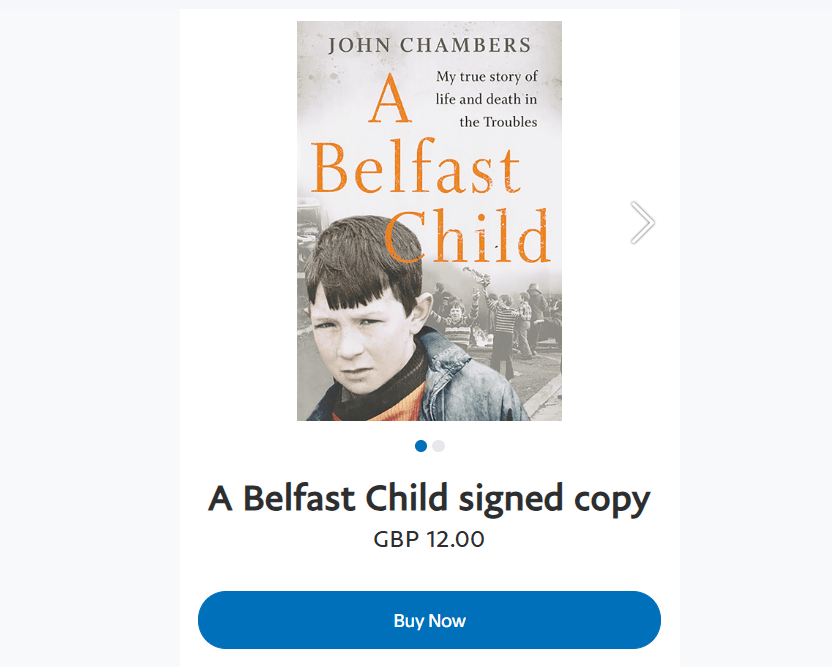
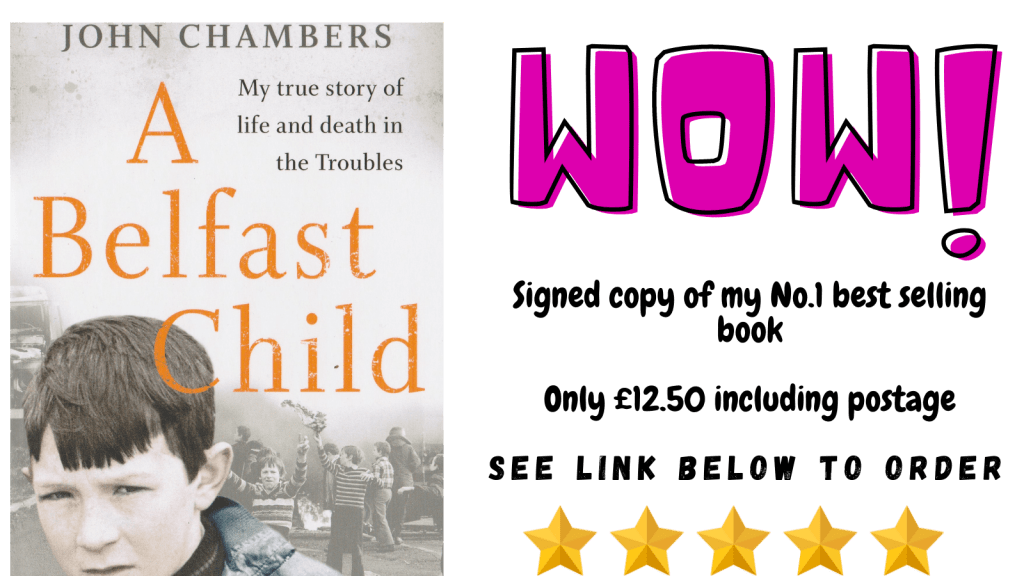
If you would like a signed copy email me for details .
This is simply the story of a boy trying to grow up, survive, thrive, have fun & discover himself against a backdrop of events that might best be described as ‘explosive’, captivating & shocking the world for thirty long years.
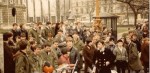
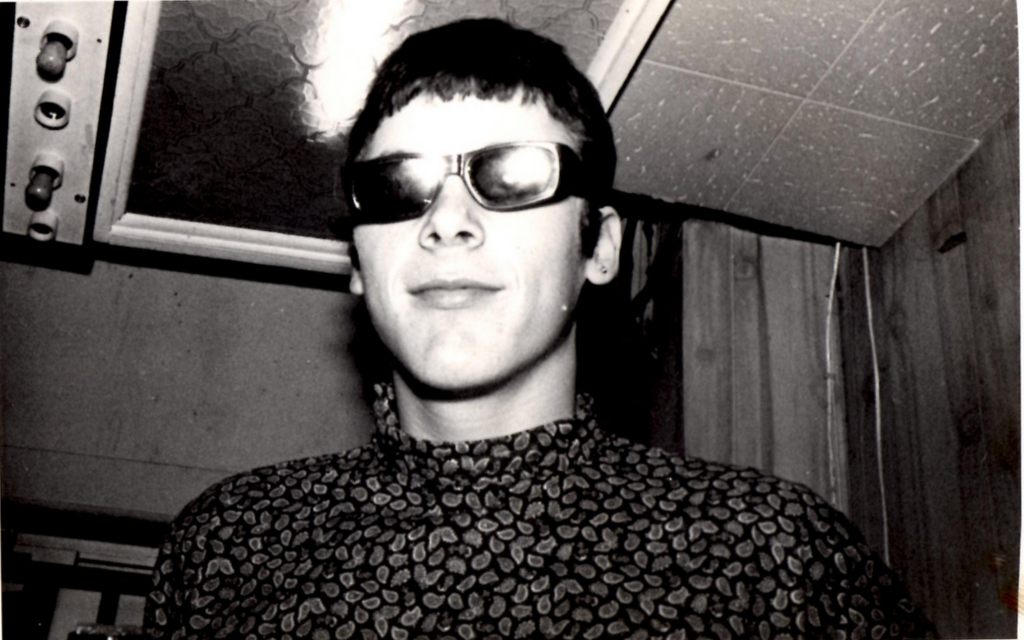
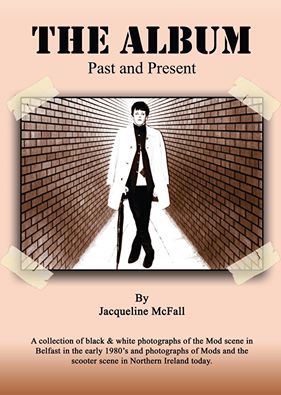
In the early 80s about thirty of us travelled from Belfast to Liverpool by boat. Then we caught the train down to London and headed straight for Carnaby Street. It felt like a religious pilgrimage and I was hypnotised by the sheer joy of just being there and drinking in the Mod culture it had given birth to.
Me in my mod days
But my excitement was to be short- lived. As we walked around the legendary area and drank in the super- cool atmosphere, suddenly we heard a massive roar and what sounded like a football stampede, then three terrified young Mods ran past us as if the devil was on their tails.
Belfast Mods 1985
I feature in the documentary , see if you can spot me ?
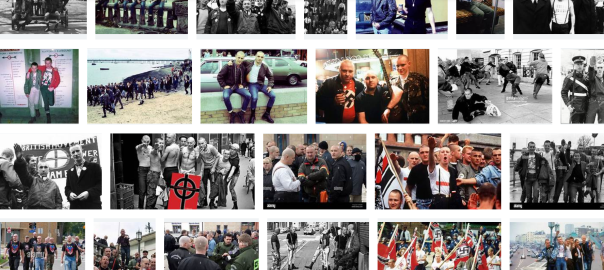
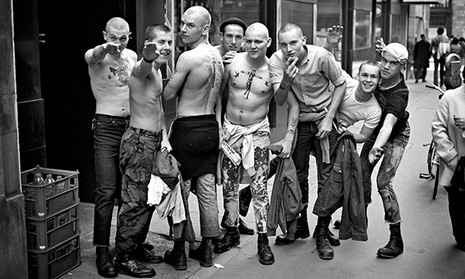
Time stood still as we waited to see what had scared them and made them take such desperate flight. Then, from a side street, about fifty skinheads appeared from nowhere, many of them wearing Chelsea and Rangers football scarves and covered in Loyalist and swastika tattoos. These psychos were obviously baying for blood – Mod blood, to be exact.
The moment they spotted us they stopped dead and some even grinned at the Mod bounty fate had delivered them. We were in some deep shit and I searched my mind frantically for a way out.
There was only a few of us together at this stage and my heart leaped into my throat as I anticipated the beating I was about to receive. But if nothing else, I was used to brutal violence and two things came to my mind at once.
The first was that I’d experienced many gang battles between Mods and skinheads in the backstreets of the Shankill and Ballysillan, and survived largely intact. But here we were vastly outnumbered, on foreign soil (so to speak), and these guys wanted to rip us apart, limb by limb, while savouring every moment of our agony and humiliation .
I glanced over at the leaders in the front row as they hurled insults and threats. My heart sunk when I noticed some of them had already pulled out weapons, including blades, and were preparing to attack us. This was our last chance. My survival instinct kicked in . I took a deep breath and played my hand.
‘Stay back,’ I said, as calmly as I could to the boys behind me. I was aware that some of our lot were Catholics and, if anything, were probably in far more danger than I was. I stepped forward and, looking for their ‘top boy’, I suggested they all slow down and tell me what the problem was.
The Difference Between Nazi’s and Skinheads | Needles And Pins
You could have heard a pin drop as the fella in question looked me up and down as though I’d just insulted his mother. I could tell he was moments away from lunging at me and all hell kicking off.
Then I heard a familiar accent calling out from the skinhead crowd.
‘Are youse from Belfast?’ said the voice.
There was what seemed like a lifetime’s pause before I answered.
‘Feckin right,’ I said, ‘from the glorious Shankill Road!’
Now I was praying I’d made a good call.
‘That right?’ he replied. ‘So who d’you know?’
I wheeled off a few names of skinheads and assorted bad boys I knew and had grown up with on the Shankill and Glencairn and this satisfied them. We were safe, for now at least. It turned out the guy who spoke, Biff, had grown up in Glencairn, now lived and worked in London and was involved with other Loyalists living in the capital. His crew were a nasty bunch and I pitied those who had the misfortune to come across them, especially if you weren’t a WASP. If they had known some of the Mods present were Catholics, nothing would have stopped them kicking the shit out of me and the others and I silently thanked the gods for delivering us from evil.
My second thought was about the Rangers scarves and the Loyalist/English Pride-style tattoos a good number of them were sporting. An idea started to take shape in my terrified brain. Rangers was the team of choice for much of the Protestant population of Northern Ireland and, along with Chelsea and Linfield, were inextricably woven into the core of our Loyalist culture. I hoped these baying skinheads, or some of them at least, would hold the same pride and love for Queen and country as me and I thought this might just save us.
With the situation defused, I told the others to look around a bit and I’d catch up with them later. I didn’t want the skins chatting with them, finding out some of them were Catholic and undoing all my capital work. They insisted I joined them for a pint or two in the Shakespeare’s Head pub nearby and it must have looked a bit weird: a sixties style Mod, wearing eye liner and a Beatles suit, drinking and laughing with a gang of psycho Nazi skinheads.
SkinheadS & Reggae
But I had spent my life growing up among Loyalist killers and paramilitaries and nothing really fazed me anymore. I didn’t particularly like Biff and his crew but chatting with him over a few pints I realised there was much more to him than the stereotypical skinhead. His English girlfriend had just given birth to their first child and he was ‘trying to get on the straight and narrow’, – whatever that meant.
After a few hours of drinking and snorting speed with Biff and the others I left them in the pub and return to the sanity of my Mod mates. I was to come across Biff and his crew later that weekend, when they and dozens of other skinheads and punks ambushed and attacked Mods coming into or out of the all- dayer in the Ilford Palais. Luckily, I was safely inside, stoned out of my mind and living the Mod dream and I didn’t concern myself with the antics of those fools, though I did have a chat with Biff while grabbing some fresh air and a fag outside.
Safely back in Belfast, we started to plan other trips abroad, specifically to ‘The South’. Enemy territory.
You have been reading extracts from my number one best selling book A Belfast Child.
To order a personally signed copy click the link below
This is simply the story of a boy trying to grow up, survive, thrive, have fun & discover himself against a backdro… twitter.com/i/web/status/1…— Belfast Child (@bfchild66) July 23, 2020
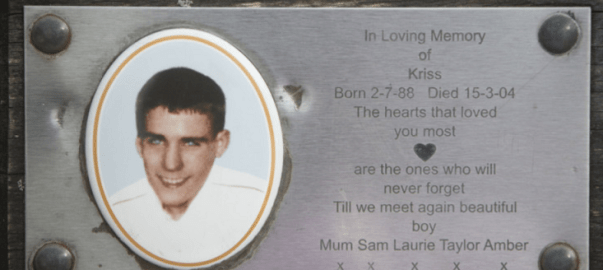
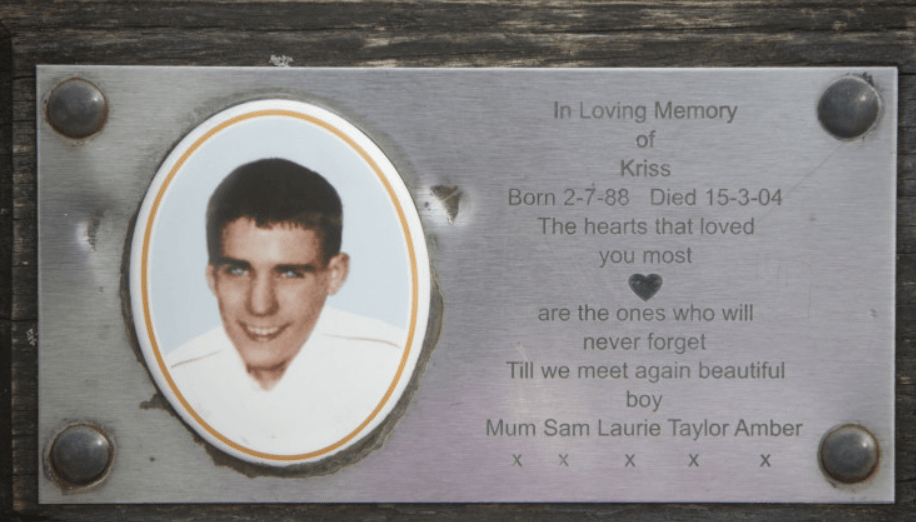
Kriss Donald – The Racist Killing of an Innocent Schoolboy
Kriss Donald 2 July 1988 – 15 March 2004
Kriss Donald was a 15-year-old white Scottish boy who was kidnapped and murdered in Glasgow in 2004 by a gang of men of Pakistani origins.
On 15 March 2004, Kriss was abducted from Kenmure Street by five men associated with a local British Pakistani gang led by Imran Shahid. The kidnapping was supposedly revenge for an attack on Shahid at a nightclub in Glasgow city centre the night before by a local white gang.
The innocent schoolboy had nothing to do with the attack and was randomly selected by the gang who were hunting for any white boy to exact revenge for the attack.
Kriss was simply in the wrong place at the wrong time.
Despite protesting his innocence Kriss was bundled into a car and was savagely attacked over a prolonged period of time before the gang took him to Clyde Walkway where he was horrifically murdered .
The corner stated that the murder was the most savage and brutal they had ever seen. Kriss was beaten and then held down while he was repeated stabbed more that a dozen times. While still alive he was doused in petrol and set on fire as he bleed to death.
The RACIST Murder of Kriss Donald
The case highlighted the lack of attention the media and society in general give to white sufferers of racist attacks compared to that given to ethnic minorities. It is also suggested the crime demonstrates how society has been forced to redefine racism so as to no longer include white victims.
Daanish Zahid
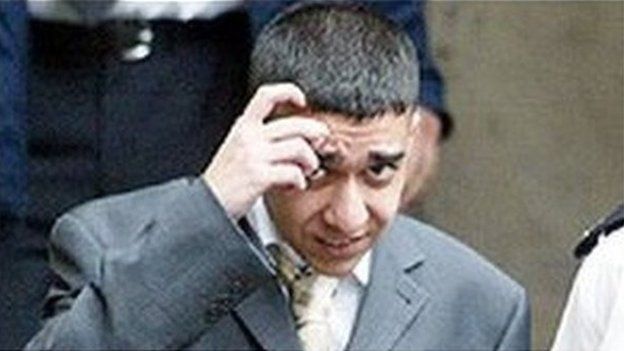
Initially, two men were arrested in connection with the crime. One man, Daanish Zahid, was found guilty of Kriss Donald’s murder on 18 November 2004 and was the first person to be convicted of racially motivated murder in Scotland.
Zahid Mohammed
Another man, Zahid Mohammed, admitted involvement in the abduction of Donald and lying to police during their investigation and was imprisoned for five years. He was released after serving half of his sentence and returned to court to give evidence against three subsequent defendant
Three suspects were arrested in Pakistan in July 2005 and extradited to the UK in October 2005, following the intervention of Mohammed Sarwar, the MP for Glasgow Central.
The Pakistani police had to engage in a “long struggle” to capture two of the escapees. There is no extradition treaty between Pakistan and Britain, but the Pakistani authorities agreed to extradite the suspects.
There were numerous diplomatic complications around the case, including apparent divergences between government activities and those of ambassadorial officials; government figures were at times alleged to be reluctant to pursue the case for diplomatic reasons.
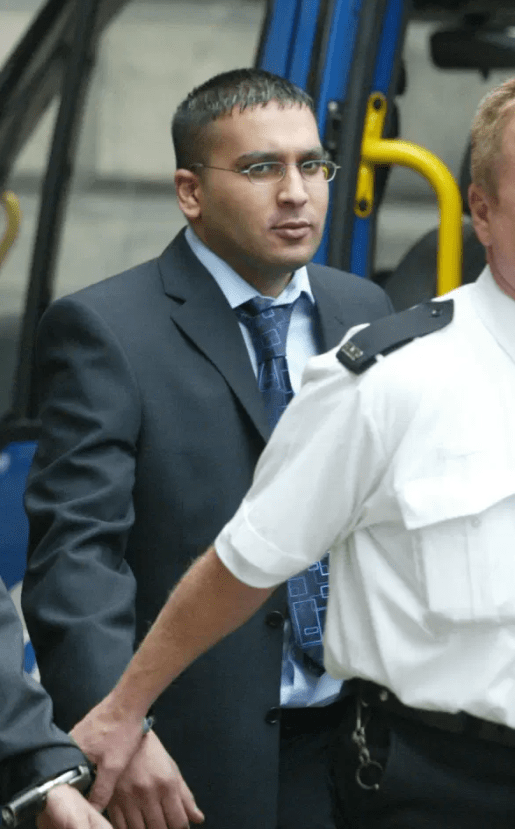
Imran Shahid, Zeeshan Shahid, and Mohammed Faisal Mushtaq
The three extradited suspects, Imran Shahid, Zeeshan Shahid, and Mohammed Faisal Mushtaq, all in their late twenties, arrived in Scotland on 5 October 2005. They were charged with Donald’s murder the following day. Their trial opened on 2 October 2006.
On 8 November 2006, the three men were found guilty of the racially motivated murder of Kriss Donald. All three had denied the charge, but a jury at the High Court in Edinburgh convicted them of abduction and murder.
Each of the killers received sentences of life imprisonment, with Imran Shahid given a 25-year minimum term, Zeeshan Shahid a 23-year minimum and Mushtaq receiving a recommended minimum of 22 years
Lack of media coverage
The BBC has been criticised by some viewers because the case featured on national news only three times and the first trial was later largely confined to regional Scottish bulletins including the verdict itself. Although admitting that the BBC had “got it wrong”, the organisation’s Head of Newsgathering, Fran Unsworth, largely rejected the suggestion that Donald’s race played a part in the lack of reportage, instead claiming it was mostly a product of “Scottish blindness”.
In preference to reporting the verdict the organisation found the time to report the opening of a new arts centre in Gateshead in its running order. The BBC again faced criticisms for its failure to cover the second trial in its main bulletins, waiting until day 18 to mention the issue and Peter Horrocks of the BBC apologised for the organisation’s further failings.
“it was a fact that it was harder to get the media interested where murder victims were young white men”.
The British National Party was accused by Scotland’s First Minister and Labour PartyMSPJack McConnell among others of seeking to exploit the case for political advantage, and an open letter signed by MSPs, trades unionists, and community leaders, condemned the BNP’s plans to stage a visit to Pollokshields. The group did hold a rally in the area, leading to accusations that it was fuelling racial tension.
Conduct of accused
Following their convictions, the killers – particularly Imran Shahid, due to his reputation and distinctive appearance – continued to draw attention for events that occurred inside the prison system. From the time of their remand in 2005, it was known to the authorities that other prisoners had particular intent to attack the accused, and an incident at HMP Barlinnie prompted Imran Shahid to be placed in solitary confinement, a practice which continued regularly until 2010, due to the continual threat of violence against him, and the aggressive behaviour he showed when he did come into contact with others.
He appealed against this measure as a breach of his human rights, which was rejected in 2011 and in 2014 but upheld in October 2015 by the UK Supreme Court. It was found that prison rules had not been correctly adhered to in the application for, or extension of, some periods totalling 14 months of his 56 months of detention, but that overall, the reasons for keeping him in solitary confinement for his own safety were valid.
He was not offered any financial compensation, which he had tried to claim.
In the interim, the concerns over violent reprisals had proven correct, as Shahid was attacked twice (the second incident, in which a fellow murderer struck him with a barbell weight in the gym at HMP Kilmarnock in 2013, caused serious injury) and also attacked another prisoner with a barbell, for which he was sentenced to additional jail time in March 2016; he had received a concurrent sentence for violence in 2009 after being racially abused by another prisoner.
Shahid also received media attention for cases he brought against the prison service governors in 2017 for unlawful removal of his possessions (a ‘penis pump’ for erectile dysfunction which was deemed to have negligible medical benefit, and an Xbox games console which it was believed could have been adjusted to access the internet), which were dismissed.
Zahid Mohammed, who later changed his name to Yusef Harris to avoid connection to the murder, was convicted and imprisoned in 2017 for another separate incident involving weapons, threats and driving his vehicle at police.
In 2009, the sibling of the Shahid brothers, Ahsan Shahid, and the brother of Faisal Mushtaq, Farooq Mushtaq, were both convicted and imprisoned for their own involvement in violent gang-related disorder in Pollokshields which included the use of firearms. A third man, Omar Sadiq was also convicted. In September 2020, Omar Sadiq was stabbed to death in a violent attack in Glasgow. Ahsan Shahid also had previous convictions for fraud from 2002 and was jailed for the same crime in 2017 along with his wife.
This is simply the story of a boy trying to grow up, survive, thrive, have fun & discover himself against a backdrop of events that might best be described as ‘explosive’, captivating & shocking the world for thirty long years.
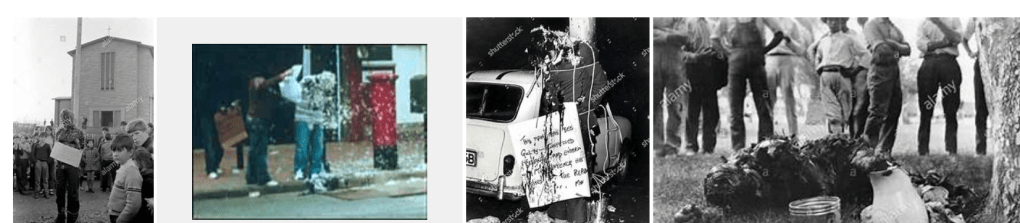
Tarred and Feathered: Street Justice Belfast Style
Life during the Troubles
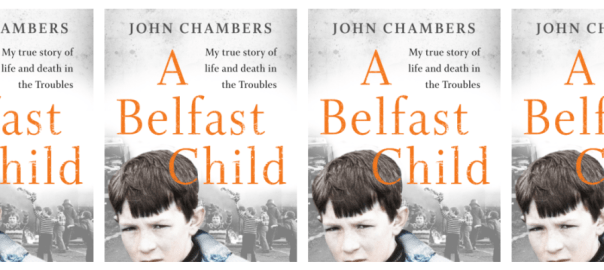
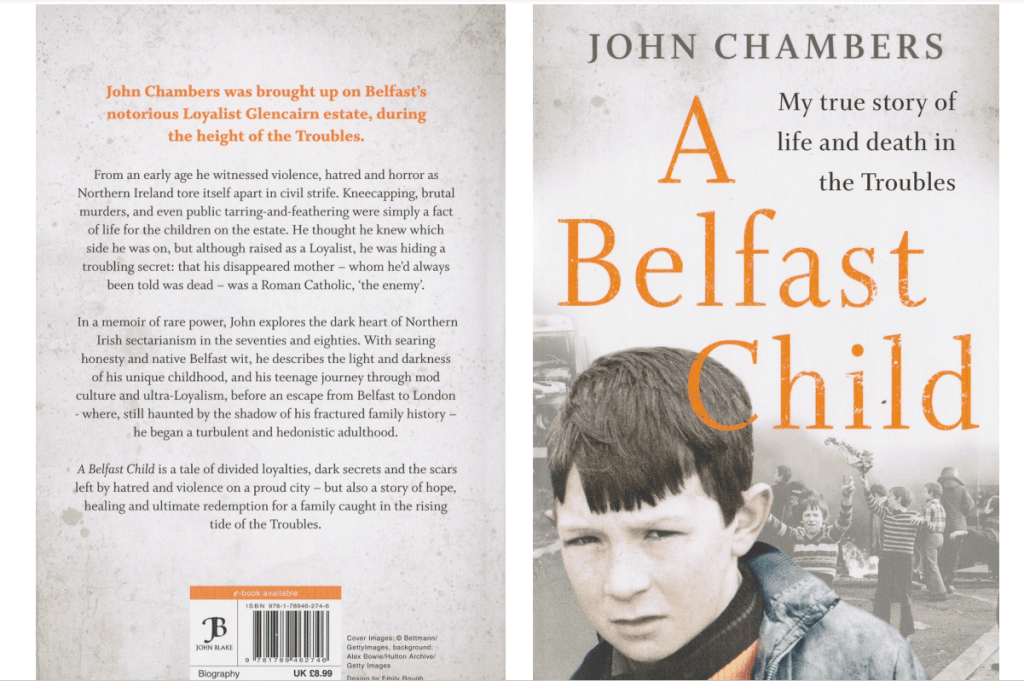
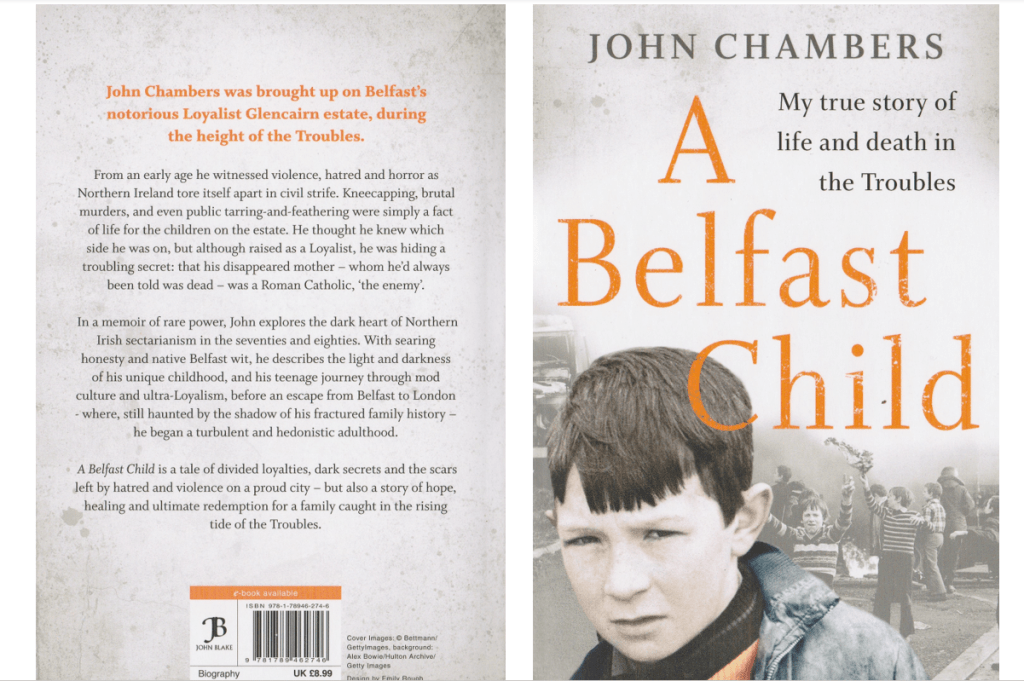
Here are the opening few pages of my bestselling book: A Belfast Child
As a child, I loved the housing estate of Glencairn. To my mind it was paradise. Cut into the hillside, and with unbeatable views of the city on one side and the Divis Mountains on the other, it was like arriving in heaven after the hell of living among the urban sectarian flashpoints of West Belfast. Here were trees, lush green fields, sparkling clear rivers and streams that rushed down from the mountainside and were filled with fish. Us kids spent long hot summers splashing about in the ‘Spoon’, a natural cavernous feature of the landscape filled with water, and feasted on wild berries, strawberries and nuts that grew along the banks of the river.
Here were our close family and friends, housed in the damp flats and maisonettes that had been hurriedly built to house those Protestants ‘put out’ of their homes in the city by avenging Catholics. They too were being burnt from their homes but back then my young Loyalist heart felt no sympathy for them; in my opinion they supported the IRA and had started the ‘war’.
Up in Glencairn we felt safe and free. As long as we all obeyed the rules, of course.
These rules were not the laws of the land. They were not enforced by police, army or government officials. They were not set down in any written form, but we all knew what they were and who had made them. And even as small children, we knew that a heavy price would be extracted for those foolish enough to break the rules. A heavy price, and sometimes a very public price too.
Our two-bedroom maisonette was situated at the bottom of a small grassy hill facing St Andrew’s church Church and the local shopping complex, which consisted of a Chinese chippy, the VG general store, a laundrette, a newsagent’s, a wine lodge and the local Ulster Defence Association – UDA – drinking club called ‘Grouchos’ . In fact, we could roll down it almost to our back door – a game my younger brother David and I played frequently. In the winter when the hill was covered in snow, we would make sledges out of old bits of wood and spend hours and hours going up and down the hill, never feeling the cold. Dad would have a go at us for all the mud and grass we trailed into the flat but his was a good-natured telling-off. The truth was that he was pleased to see us all happy and carefree again after the trauma of the previous few years, and the sudden and final disappearance of my mum.
One late spring afternoon I was revolving rolling towards our back door, Dad’s beloved Alsatian dog Shep (my best friend and constant companion) in hot pursuit. Dad called him Shep after the Elvis song and he was able to knock our letter box with his nose when he wanted to come indoors. The grass had recently been cut and was damp, meaning that it stuck to every part of my clothing. I came to a halt just short of our back wall, the sweet smell of cut grass filling my nostrils, before standing up to brush it all off my jumper. As I did, I noticed my cousin, Wee Sam, running up towards our house from the direction of the main road.
‘John! Davy! C’mon, hurry up! There’s summin’ going on down the shops!’
Wee Sam was red in the face and could hardly get his words out. ‘It must be good,’ I said, ‘cos you look like you’re about to die.’
‘Not me,’ he replied, ‘but there’s a woman down there looks likely to. C’mon, we gotta see this!’
He turned tail and without thought we ran after him. As anyone who’s ever grown up on a housing estate will know, if there’s a commotion taking place word gets around like lightning. In Loyalist Glencairn there was always something going on and it was violent as often as not violent. As we ran, it seemed that from every direction half of estate was also making its way to the shops from every direction facing St. Andrews church from every direction. ‘This must be big,’ I thought as I ran, my wee brother trying to keep up with me. On this estate, as in every area of Belfast afflicted by the Troubles, very few people turned away from troubledanger. The natural sense of curiosity found in spades among Northern Irish people was too strong for that.
In the few minutes it took us to run from our house, a large crowd had already gathered outside the shops. A gang of ‘hard men’, whom we all knew to be paramilitary enforcers, seemed to be at the centre of the action. Local women stood on the fringes of the crowd, shouting, swearing and spitting.
‘Fuckin’ Fenian- loving bitch!’
‘Youse deserve to die, ye fuckin’ Taig-loving hoor!’ (‘Taig’ is an offensive slang term for a Catholic).
I pushed in to get a better look. At the heart of the crowd was a young woman, struggling against the grip of the men holding her. Her cheap, fashionable clothes were torn and her eyes were wild and staring, like an animal’s before slaughter. She screamed for them to take their hands off her, spitting at her accusers and lashing out with her feet. It was no use. One of the bigger guys pulled her hands behind her back and dragged her against a concrete lamppost. Someone passed him a length of rope and with a few expert strokes he’d lashed the young woman against the post by her hands, quickly followed by her feet. She reminded me of a squaw captured by cowboys in the Westerns I loved to watch and then re-enact using local kids in games that could last for days.
Except this wasn’t a game. This was justice Glencairn style – all perfectly normal to me and my peers and we took it in our stride. Although she was still squealing like a pig, the resistance seemed to have gone out of the woman. Smelling blood, the crowd pushed forwards and the woman’s head hung low in shame and embarrassment. One of the men grabbed a hank of her long hair and wrenched her head upwards, forcing her to look him right in the eye.
‘You,’ he said slowly, ‘have been caught going with a Taig, so you have! Do you deny it?’
Now I recognised the woman. She was a girl off the estate. I ha’d seen her walking down Forthriver Road on her way to meet her mini-skirted mates. They’d pile into a black taxi and head into town for a bit of drinking and dancing. I guess it was on one of these nights out that she’d met the Catholic boy – the ‘Taig’ – who was at the centre of the allegations. Good job he wasn’t here now, because he might already be lying in a pool of blood, a bullet through his head.
The woman shook her head. There was no point trying to talk her way out of anything now.
‘Fuck you,’ she said defiantly. ‘Fuck youse all.’
‘Grab her hair!’ shouted a female voice from the crowd. ‘Cut off the fuckin’ lot!’
The enforcer produced a large pair of scissors from his pocket. Slowly, deliberately, he tightened his grip on her hair before hacking savagely at the clump below his fist. Amid cheers he threw it at her feet before continuing his rough barbering skills. Within minutes he’d finished and now the woman looked like a cancer victim. Blood oozed from the indiscriminate cuts he’d made on her head and as it ran down her face it intermingled with her tears and snot. She was not a pretty sight.
‘ back!’ demanded one of the enforcers. The crowd parted and someone came forward with an open tin of bright red paint. Knowing what was to come, and not wanting to be physically contaminated with the woman’s shame, the crowd moved even further back.
The UDA man poured the contents of the tin all over the woman’s head, allowing it to run the entire length of her body, right down to her platform boots. She looked like she’d been drowned in blood. Then a pillow was passed up, and ham-hands the enforcer tore a big hole in the cotton, exposing the contents – feathers, hundreds and thousands of them.
‘G’wan,’ said a voice, ‘give her the full fuckin’ works.’
Without further ado the man poured the white feathers all over the woman, head to toe. They clung to the paint, giving the impression of a slaughtered goose hanging off the telegraph pole.
‘That will teach ye not to go with filthy Taigs,’ said the enforcer. ‘Any more of this and youse’ll get a beating then a bullet, so you will. Understand?’
Through the paint and the feathers came a small nod of the head.
‘Good,’ said the man. ‘And just so ye don’t forget, here’s a wee something we made for you earlier.’
To laughter and jeers, the man produced a cardboard sign which he placed around the woman’s neck. In the same red paint used to humiliate her, someone had written ‘Fenian Lover’ across the middle of the cardboard.
‘Leave her there for half an hour,’ commanded the man to a subordinate, ‘then cut her down.’ The crowd dispersed, a few women spitting on the victim as they left.
‘Jesus,’ said Wee Sam, wide-eyed. ‘Did you see that? Looked like she’d been shot in the head and the feathers were her brain running down her face. Fuckin’ amazing.’
‘Course I saw it,’ I said. ‘I was right at the front, wasn’t I? The bitch deserved it. Imagine going with Taigs, the dirty whorehoor.’
‘Let’s wait round the shops till they chop her down,’ said Sam. ‘See where she goes.’
We’d been playing one of our eternal games of Cowboys and Indians recently and we’d got into the idea of tracking people down stealthily. So we waited until another paramilitary cut the woman’s rope and watched as she slumped to the ground.
‘I think she’s pissed herself,’ said Sam.
‘Ssh,’ I replied, ‘she’ll hear us. Wait while she gets up.’
We watched the woman slowly pick herself up from the pavement. She wiped her eyes and looked around. The area outside the shops was now completely deserted, as though nothing had happened. An angry mob had been replaced by an eerie silence.
As she stumbled off, we nudged each other. ‘Look,’ I said., ‘Look what’s happening. She’s leaving a trail!’
She was too, a trail of blood- red boot prints. We gave her twenty or so yards’ start, then in single file began to follow her, sidling up against walls and lamp-posts like the gang of Cherokees we imagined we were. We must have gone a good quarter- mile when she turned into a pathway leading up to a small, shabby flat. We saw her fumbling in her pocket for a key, noticing the relief on her face as she found it still there. The lock turned and she went inside without a backwards glance.
‘That’s it,’ said Sam, ‘fun’s over. Let’s go home.’
‘Wait,’ I said. I watched as the woman put on a light, looked in a mirror then drew the curtains tightly. Some part of me, the part that wasn’t screaming ‘Fenian bitch!’ with all the others, suddenly felt hugely sorry for her. She only looked about seventeen17 or eighteen18 – not much older than my sister Margaret. What had she really done wrong, other than meet a nice boy she liked? Did she deserve such brutal treatment? After this I never saw her around the estate again. She’d probably fled for her ,life, never to return. And who could blame her?
Something inside of me knew I’d witnessed a terrible thing, yet I knew I couldn’t even begin to think like this. It was against the rules; the same unwritten rules and code of conduct that this young woman had disobeyed. Fear of the paramilitaries created a culture of silence and where we lived this was a survival strategy we all lived by. We were all products of this violent environment and we were had been desensitised conditioned to events that no child should ever have to witness.
I shuddered, pulled my thin jacket close around me and with the others, headed for the safety of home.
Even now, more than forty years later, whenever I smell the sweet smell aroma of cut grass I am transported back to that dusky spring evening in the early 70’s seventies and the woman’s brutal punishment, and I can hardly believe the madness of my childhood in Glencairn.
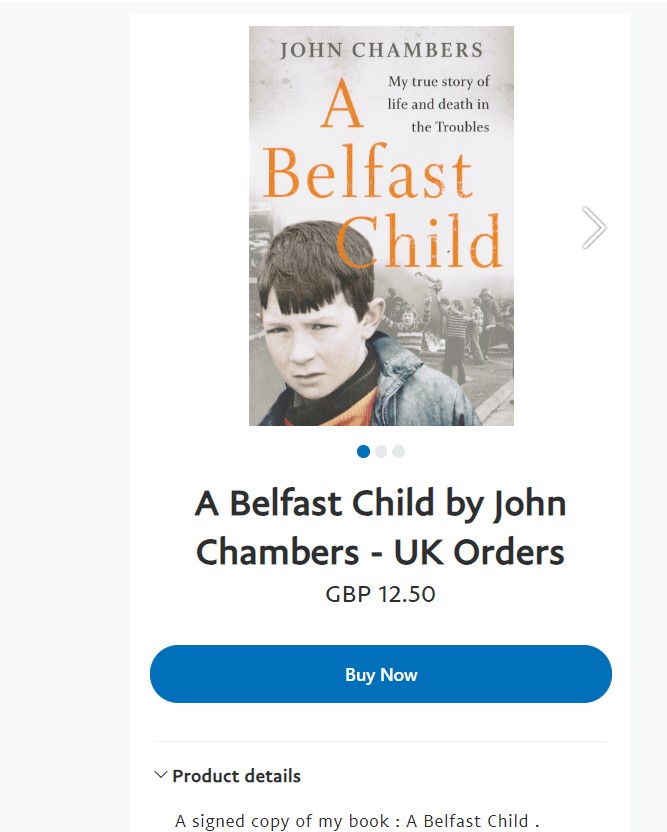
Who wants… A signed copy of my No.1 best selling book ? Makes a great Xmas gift for book lovers & those interested in the Troubles & the crazy, mad days my generation lived through.
This is simply the story of a boy trying to grow up, survive, thrive, have fun & discover himself against a backdrop of events that might best be described as ‘explosive’, captivating & shocking the world for thirty long years.
















































 belfastchildis.com