Birmingham man charged with plotting to carry out terror attack armed with knife
A MAN has been charged with plotting to carry out a terror attack armed with a knife, police said.
Ummariyat Mirza was arrested by counter-terror police on Alum Rock Road, Birmingham, last Wednesday.
The 21-year-old, from St Agathas Road, Birmingham, is accused of buying a blade and conducting research to carry out a deadly assault.
West Midlands Police said he is also charged with possessing the bomb-making guide the Anarchist Cookbook and an extremist document called the Mujahideen Poisons handbook.
The Anarchist Cookbook, first published in 1971, is a book that contains instructions for the manufacture of explosives, rudimentary telecommunications phreaking devices, and other items. The book also includes instructions for home manufacturing of illicit drugs, including LSD. It was written by William Powell at the apex of the counterculture era in order to protest against United States involvement in the Vietnam War.
Publication status
The copyright of the book never belonged to its author, but to its publisher Lyle Stuart. Stuart kept publishing the book until the company was bought in 1991 by Steven Schragis, who decided to drop it. Out of the 2,000 books published by the company, it was the only one that Schragis decided to stop publishing. Schragis said publishers have a responsibility to the public, and the book had no positive social purpose that could justify keeping it in print.
In December 2013, it was reported that the copyright had been bought in 2002 by Delta Press, an Arkansas-based publisher that specialises in controversial books, and the book is their “most-asked-for volume”.
The latest publication date is October 16, 2012 (ISBN 978-1607965237), and the book is available in both paperback and hardback from Snowball Publishing. Reviewers say the copy has its basis in a 2002 revision and shows heavy editing and many items removed over the original 1971 edition.
Author
Since writing the book, Powell converted to Anglicanism in 1976 and attempted to have the book removed from circulation. When Lyle Stuart published the book, its copyright was taken out in the publisher’s name, not Powell’s, and the current publisher had no desire to remove the book from print. Powell has written his desire to see it removed from circulation, as he stopped advocating what he had written.
On 19 December 2013, William Powell wrote an article in The Guardian to call for the book to “quickly and quietly go out of print”. Powell died in July 2016.
Reception
At the time of its publication, one Federal Bureau of Investigation memo described The Anarchist Cookbook as “one of the crudest, low-brow, paranoiac writing efforts ever attempted”.
In 2010, the FBI released the bulk of its investigative file on The Anarchist Cookbook.
Anarchism
Advocates of anarchism dispute the association of the book with anarchist political philosophy. The anarchist collective CrimethInc., which published the book Recipes for Disaster: An Anarchist Cookbook in response, denounces the earlier book, saying it was “not composed or released by anarchists, not derived from anarchist practice, not intended to promote freedom and autonomy or challenge repressive power – and was barely a cookbook, as most of the recipes in it are notoriously unreliable”.
Online presence
Much of the publication was copied and made available as text documents online through Usenet and FTP sites hosted in academic institutions in the early 1990s, and has been made available via web browsers from their inception in the mid-1990s to the present day. The name varies slightly from Anarchist Cookbook to Anarchy Cookbook and the topics have expanded vastly in the intervening decades. Many of the articles were attributed to an anonymous author called The Jolly Roger.
In 2001, British businessman Terrance Brown created the now defunct website anarchist-cookbook.com and sold copies of his derivative work, entitled Anarchist Cookbook 2000.
Knowledge of the book, or copied online publications of it, increased along with the increase in public access to the Internet throughout the mid-1990s. Newspapers ran stories about how easy the text was to get hold of, and the influence it may have had with terrorists, criminals and experimental teenagers.
In 2007, a 17-year-old was arrested in the United Kingdom and faced charges under anti-terrorism law in the UK for possession of this book, among other things . He was cleared of all charges in October 2008, after arguing that he was a prankster who just wanted to research fireworks and smoke bombs.
In County Durham, UK in 2010, Ian Davison and his son were imprisoned under anti-terrorism laws for the manufacturing of ricin, and their possession of The Anarchist Cookbook, along with its availability, was noted by the authorities.
In 2013, renewed calls were made in the United States to ban this book, citing links to a school shooting in Colorado by Karl Pierson.
————–
The Anarchist Cookbook
Buy the book
The Anarchist Cookbook will shock, it will disturb, it will provoke. It places in historical perspective an era when “Turn on, Burn down, Blow up” are revolutionary slogans of the day. Says the author” “This book… is not written for the members of fringe political groups, such as the Weatherman, or The Minutemen. Those radical groups don’t need this book. They already know everything that’s in here. If the real people of America, the silent majority, are going to survive, they must educate themselves. That is the purpose of this book.” In what the author considers a survival guide, there is explicit information on the uses and effects of drugs, ranging from pot to heroin to peanuts. There i detailed advice concerning electronics, sabotage, and surveillance, with data on everything from bugs to scramblers. There is a comprehensive chapter on natural, non-lethal, and lethal weapons, running the gamut from cattle prods to submachine guns to bows and arrows. The section on explosives and booby traps ranges from TNT to whistle traps. One hundred and eleven drawings supplement the recipes. “This book is for anarchists,” says William Powell, “Those who feel able to discipline themselves on all the subjects from drugs, to weapons, to explosives) that are currently illegal in this country.” Techniques, disciplines, precautions, and warnings pervade what may be the most disquieting “how-to” book of contemporary times.
Birmingham man charged with plotting to carry out terror attack armed with knife
A MAN has been charged with plotting to carry out a terror attack armed with a knife, police said.
Ummariyat Mirza was arrested by counter-terror police on Alum Rock Road, Birmingham, last Wednesday.
The 21-year-old, from St Agathas Road, Birmingham, is accused of buying a blade and conducting research to carry out a deadly assault.
West Midlands Police said he is also charged with possessing the bomb-making guide the Anarchist Cookbook and an extremist document called the Mujahideen Poisons handbook.
Do Not Try Anything within this book/PDF as it may be illegal and more to the point dangerous I n the extreme
The views and opinions expressed in this link/PDF and/or documentaries are soley intended to educate and provide background information to those interested in the matter in question. They in no way reflect my own opinions and I take no responsibility for any inaccuracies or factual errors.
A row over Gibraltar has broken out after the UK sent a letter formally triggering Brexit talks. But why have tensions risen over the Rock and why is it important?
Why is Gibraltar British?
Gibraltar, located at the bottom of Spain on the southern end of the Iberian Peninsula, was under the rule of the Moors – a group of Muslim inhabitants – from AD711 to 1462, like most of Spain.
Spain (initially Castile) controlled the territory from 1462 to 1704.
In 1704 it was seized by an Anglo-Dutch force from Spain before being ceded to Great Britain in 1713 and has remained a UK territory ever since.
Totalling 2.3-sq-mile (5.9 sq-km) in land mass, the territory is dominated by the 1,300ft high (397m) limestone Rock of Gibraltar.
What does Spain say… and Gibraltarians?
Spain believes Gibraltar was taken in the context of a Spanish dispute over who should inherit the crown.
The UK notes Gibraltar was ceded by Spain in the Treaty of Utrecht and points to the fact it has occupied the land for longer.
Both countries cite UN principles as supporting their claims.
Gibraltar – a territory with a population of 32,000 – believes it has the right of self determination – something Spain disputes.
Gibraltarians are British citizens and rejected by 99% to 1% the idea of the UK sharing sovereignty with Spain in a vote in 2002 and in a previous referendum in 1967.
Why is it important?
Although Gibraltar is small, it is strategically important because of its location, standing only 12 miles from the north coast of Africa.
The UK has a military base there, including a port and airstrip. It was an important naval base during World War Two.
Gibraltar’s location on the Strait also gives it important access to commercial shipping, oil transportation and military-related transport.
Spain has accused Gibraltar of being a corporate tax haven, allowing companies and wealthy individuals to avoid paying millions.
Gibraltar is a British Overseas Territory which means it is under the jurisdiction of the United Kingdom but is not technically a part of it. This has long been a bone of contention with Spain and occasionally (like now) the UK & Spain find themselves at loggerheads over ownership of the “rock”.
(There are 14 British Overseas Territories in the world including Bermuda and the Falkland Islands.)
2. Britain has 300 years of sovereignty over the Rock and almost all of its inhabitants want to remain with Britain.
3. Gibraltar is also part of the European Union because of its connection to the UK but is outside several of the economic associations (such as the customs union, the VAT area, and the Schengen Area).
4. Gibraltar is just 6.8km2 in size and, with a population of about 30,000 people
5. It has the 5th highest density of any country or territory in the world.
6. English is the official language of Gibraltar but many people also speak Spanish and the local language, which is called Llanito and has a mix of Mediterranean words in it.
7. Gibraltarians consider themselves to be culturally British, rather than culturally Spanish.
8. When asked, at the referendum in 2002, whether Spain and the UK should share sovereignty of Gibraltar, more than 98% of Gibraltarians said it should remain British.
9. Gibraltar may have been the place where the Neanderthals died out. A study published in Nature in 2006 suggested they were living in a cave site on the south-east of Gibraltar up to 24,000 years ago (later than the 30,000 years previously thought). However, new carbon dating may be about to force archaeologists to rethink that.
10. Gibraltar is named in Arabic Jabal Tariq, after the Muslim commander Tariq Ibn-Ziyad. He turned ‘the rock’ into a fortress in 711 A.D, and it has been an important naval base for more than 1,000 years.
11. The straight of Gibraltar may be even more famous than the actual city itself! The body of water carries an immense historical importance in the world, that even holds weight in today’s society. Not only does the straight act as a passageway from the Mediterranean to the Atlantic Ocean, but its close proximity to Africa only magnifies the nine miles of water in between.
12. The Tower of Homage is all that remains of the Moorish Castle that dates back to the 11th The castle saw a lot of action, especially during the 16th Century (1540) when hundreds of people found safety inside the castle when Turkish pirates attacked Gibraltar.
13. A British flag has flown at The Tower of Homage ever since Admiral Rooke erected the first British flag here when he captured the Rock in 1704
14. The official currency of Gibraltar is the pound and you can spend notes and coins from the UK in the territory – but you can’t use the locally-produced notes or coins back in the UK.
15. Gibraltar has a very religiously diverse population. Spanish and British influence brought Catholicism and Protestantism to Gibraltar respectively. The territory’s proximity to Morocco accounts for the large Muslim population, and Gibraltar is also home to many Jews whose ancestors fled south following the Spanish Inquisition. There is also a small Hindu population and a Hindu temple.
16. Gibraltar has its own political system that makes many decisions within the territory but issues like defence and foreign affairs are determined by the UK Government in London.
17. There are thought to be about 230 Barbary macaques on the rock, the only wild population of the monkeys in Europe. Last year, more than 50 people were treated in hospital following attacks from the monkeys.
18. Brian Jones also had a run-in with the monkeys. In 1967, the Rolling Stones’ guitarist, accompanied by Anita Pallenberg and Marianne Faithfull – all on LSD – visited the colony in Gibraltar en route to meet the rest of the band in Morocco. According to Faithfull’s autobiography, Jones decided he wanted to play a tape of music he had made for a film starring Pallenberg to the monkeys. “We approached the troop of monkeys very ceremoniously,” she writes, “and told them we were going to play them some wonderful sounds. They listened to all this very attentively, but when Brian turned on the tape recorder, they didn’t seem to care for it. They seemed alarmed by it and scampered away shrieking. Brian got very upset. He took it personally. He became hysterical and started sobbing.”
19. Gibraltar uses the same timezone as Spain (not the UK) and the people drive on the right like in continental Europe (but not in the UK).
20. Gibraltar celebrates National Day on September 10th. Each year they release 30,000 red and white balloons – one for every citizen.
An Anglo-Dutch force captured Gibraltar from Spain in 1704 during the War of the Spanish Succession on behalf of the Habsburg claim to the Spanish throne. The territory was subsequently ceded to Great Britain “in perpetuity” under the Treaty of Utrecht in 1713. During World War II it was an important base for the Royal Navy as it controlled the entrance and exit to the Mediterranean Sea, which is only eight miles (13 km) wide at this naval “choke point” and remains strategically important so to this day with half the world’s seaborne trade passing through the strait.[10][11][12] Today Gibraltar’s economy is based largely on tourism, online gambling, financial services, and shipping.[13][14]
The sovereignty of Gibraltar is a major point of contention in Anglo-Spanish relations as Spain asserts a claim to the territory, despite recognising British sovereignty in several previous treaties.[14] Gibraltarians overwhelmingly rejected proposals for Spanish sovereignty in a 1967 referendum and again in 2002. Under the Gibraltar constitution of 2006, Gibraltar governs its own affairs, though some powers, such as defence and foreign relations, remain the responsibility of the British .
The photograph was published a week later in Life magazine, among many photographs of celebrations around the United States that were presented in a twelve-page section titled “Victory Celebrations”.
A two-page spread faces three other kissing poses among celebrators in Washington, D.C.; Kansas City; and Miami opposite Eisenstaedt’s, which was given a full-page display. Kissing was a favorite pose encouraged by media photographers of service personnel during the war, but Eisenstaedt was photographing a spontaneous event that occurred in Times Square soon before the announcement of the end of the war on Japan was made by U.S. President Harry S. Truman at seven o’clock. Similar jubilation spread quickly with the news.
Because he was photographing rapidly changing events during the celebrations, Eisenstaedt did not have an opportunity to get the names and details. The photograph does not clearly show the face of either person involved, and numerous people have claimed to be the subjects. The photograph was shot just south of 45th Street looking north from a location where Broadway and Seventh Avenue converge. Soon afterward, throngs of people crowded into the square and it became a sea of people.
The photograph was taken at 5:51 p.m. ET, according to Donald W. Olson and his team. It was taken with a Leica IIIa.
V-J Day in Times Square, a photograph by Alfred Eisenstaedt, was published in Life in 1945 with the caption, “In New York’s Times Square a white-clad girl clutches her purse and skirt as an uninhibited sailor plants his lips squarely on hers”
Alfred Eisenstaedt signing his famous “V-J Day” photograph on the afternoon of August 23, 1995, while sitting in his Menemsha Inn cabin located on Martha’s Vineyard. He died about 8 hours later.
Accounts by Alfred Eisenstaedt
In two different books he wrote, Alfred Eisenstaedt gave two slightly different accounts of taking the photograph and of its nature.
From Eisenstaedt on Eisenstaedt:
In Times Square on V.J. Day I saw a sailor running along the street grabbing any and every girl in sight. Whether she was a grandmother, stout, thin, old, didn’t make a difference. I was running ahead of him with my Leica looking back over my shoulder but none of the pictures that were possible pleased me. Then suddenly, in a flash, I saw something white being grabbed. I turned around and clicked the moment the sailor kissed the nurse. If she had been dressed in a dark dress I would never have taken the picture. If the sailor had worn a white uniform, the same. I took exactly four pictures. It was done within a few seconds.
Only one is right, on account of the balance. In the others the emphasis is wrong — the sailor on the left side is either too small or too tall. People tell me that when I am in heaven they will remember this picture.
From The Eye of Eisenstaedt:
I was walking through the crowds on V-J Day, looking for pictures. I noticed a sailor coming my way. He was grabbing every female he could find and kissing them all — young girls and old ladies alike. Then I noticed the nurse, standing in that enormous crowd. I focused on her, and just as I’d hoped, the sailor came along, grabbed the nurse, and bent down to kiss her. Now if this girl hadn’t been a nurse, if she’d been dressed dark clothes, I wouldn’t have had a picture. The contrast between her white dress and the sailor’s dark uniform gives the photograph its extra impact.
It became a cultural icon overnight and by establishing his copyright, Eisenstaedt carefully controlled the rights to it, only allowing a limited number of reproductions which determined how it could be used
Another photograph of the same scene
U.S. Navy photo journalistVictor Jorgensen captured another view of the same scene, which was published in the New York Times the following day. Jorgensen titled his photograph Kissing the War Goodbye. It shows less of Times Square in the background, lacking the characteristic view of the complex intersection so that the location needs to be identified, it is dark and shows few details of the main subjects, and it does not show the lower legs and feet of the subjects.
Unlike the Eisenstaedt photograph, which is protected by copyright, this Navy photograph is in the public domain as it was produced by a federal government employee on official duty. While the angle of the photograph may be less interesting than that of Eisenstaedt’s photo, it clearly shows the actual location of the iconic kiss occurring in the front of the Chemical Bank and Trust building, with the Walgreens pharmacy signage on the building façade visible in the background.
The surprised woman on the left in Jorgensen’s photograph has been positively identified as Kay Hughes Dorius of Utah.
Edith Shain wrote to Eisenstaedt in the late 1970s claiming to be the woman in the picture. In August 1945, Shain was working at Doctor’s Hospital in Manhattan, New York City as a nurse when she and a friend heard on the radio that World War II had ended. They went to Times Square where all the celebrating was and as soon as she arrived on the street from the subway, the sailor grabbed her in an embrace and kissed her. She related that at the time she thought she might as well let him kiss her since he fought for her in the war.
Shain did not claim that she was the woman in the white dress until many years later when she wrote to Eisenstaedt. He notified the magazine that he had received her letter claiming to be the subject.
Since the identity of the woman had been claimed, in its August 1980 issue, the editors of Life asked that the kissing sailor come forward. In the October 1980 issue, the editors reported that eleven men and three women had come forward claiming to be the subjects of the photograph. Listed in the October 1980 issue as claiming to be the woman were Greta Friedman and Barbara Sokol as well as Edith Shain.
On June 20, 2010, Shain died at age 91 of liver cancer.In April 2012 the issue of who the woman was, remained, as a new book on the topic was about to be released. The authors, George Galdorisi and Lawrence Verria, stated that Shain could not have been the woman because her height of just four feet ten inches was insufficient in comparison with the height of any of the men claiming to be the sailor.
Greta Friedman
Galdorisi and Verria used interviews of claimants, expert photo analysis, identifying people in the background and consultations with forensic anthropologists and facial recognition specialists. They concluded that the woman was Greta Zimmer Friedman and that she was wearing her dental hygienist uniform in the photograph.
“It wasn’t my choice to be kissed,” Friedman stated in a 2005 interview with the Library of Congress.
“The guy just came over and grabbed!” she said, adding, “That man was very strong. I wasn’t kissing him. He was kissing me.” “I did not see him approaching, and before I know it I was in this tight grip,” Friedman told CBS News in 2012.
Friedman died at age 92 on September 8, 2016, in Richmond, Virginia, due to health complications of old age.
Claiming to be the U.S. Navy sailor
Numerous men have claimed to be the sailor, including Donald Bonsack, John Edmonson, Wallace C. Fowler, Clarence “Bud” Harding, Walker Irving, James Kearney, Marvin Kingsburg, Arthur Leask, George Mendonça, Jack Russell, and Bill Swicegood. The issue regarding the identity of the kissers is no longer contended in a court of law.
George Mendonsa
George Mendonsa and Greta Friedman, guests of honor at the Bristol, Rhode Island, July 4 parade in 2009.
George Mendonsa of Newport, Rhode Island, on leave from the USS The Sullivans (DD-537), was watching a movie with his future wife, Rita, at Radio City Music Hall when the doors opened and people started screaming the war was over. George and Rita joined the partying on the street, but when they could not get into the packed bars decided to walk down the street. It was then that George saw a woman in a white dress walk by and took her into his arms and kissed her,
“I had quite a few drinks that day and I considered her one of the troops—she was a nurse.”
In one of the four pictures that Eisenstaedt took, Mendonsa claims that Rita is visible in the background behind the kissing couple.
In 1987, George Mendonsa filed a lawsuit against Time Inc. in Rhode Island state court, alleging that he was the sailor in the photograph and that both Time and Life had violated his right of publicity by using the photograph without his permission. After Time Inc. removed the case to federal court, Mendonsa survived a motion to dismiss.
Mendonsa was identified by a team of volunteers from the Naval War College in August 2005 as “the kisser”. His claim was based on matching his scars and tattoos to scars and tattoos in the photograph. They made their determination after much study including photographic analysis by the Mitsubishi Electric Research Laboratories (MERL) in Cambridge, Massachusetts, who were able to match scars and tattoo spotted by photograph experts, and the testimony of Richard M. Benson, a photograph analysis expert, professor of photographic studies, plus the former Dean of the School of Arts at Yale University. Benson stated that
“it is therefore my opinion, based upon a reasonable degree of certainty, that George Mendonsa is the sailor in Mr. Eisenstaedt’s famous photograph.”
The identity of the sailor as George Mendonsa has been challenged by physicists Donald W. Olson and Russell Doescher of Texas State University and Steve Kawaler of Iowa State University based on astronomical conditions recorded by the photographs of the incident. According to Mendonsa’s account of the events of the day, the kiss would have occurred at approximately 2 p.m.
However, Olson and Doescher argue that the positions of shadows in the photographs suggest that it was taken after 5 p.m. They further point to a clock seen in the picture, whose hour hand appears closer to the 6 o’clock position than to the 2 o’clock position; and to Victor Jorgensen’s account of the circumstances of his own picture; concluding that Mendonsa’s version of events is untenable.
Carl Muscarello
Carl Muscarello is a retired police officer with the New York City Police Department, now living in Plantation, Florida. In 1995, he claimed to be the kissing sailor. He claimed that he was in Times Square on August 14, 1945, and that he kissed numerous women. A distinctive birthmark on his hand enabled his mother to identify him as the subject. Edith Shain initially said she believed Muscarello’s claim to be the sailor and they even dated after their brief reunion. But in 2005, Shain was much less certain, telling the New York Times,
“I can’t say he isn’t. I just can’t say he is. There is no way to tell.”
Muscarello has described his condition on August 14, 1945 as being quite drunk and having no clear memory of his actions in the square, stating that his mother claimed he was the man after seeing the photograph and he came to believe it.
Glenn McDuffie
Glenn McDuffie laid claim in 2007 and was supported by Houston Police Department forensic artist Lois Gibson. Gibson’s forensic analysis compared the Eisenstaedt photographs with current-day photographs of McDuffie, analyzing key facial features identical on both sets. She measured his ears, facial bones, hairline, wrist, knuckles, and hand, and compared those to enlargements of Eisenstaedt’s picture.
I could tell just in general that yes, it’s him. But I wanted to be able to tell other people so I replicated the pose.
In the August 14, 2007, issue of AM New York McDuffie said he passed five polygraph tests confirming his claim to be the man. McDuffie, a native of Kannapolis, North Carolina, who had lied about his age so he could enlist at the age of 15, went on after the war to play semi-pro baseball and work for the United States Postal Service.
He says that on that day he was on the subway to Brooklyn to visit his girlfriend, Ardith Bloomfield. He came out of the subway at Times Square, where people were celebrating in the streets. Excited that his brother, who was being held by the Japanese as a prisoner of war, would be released, McDuffie began hollering and jumping up and down. A nurse saw him, and opened her arms to him. In apparent conflict with Eisenstaedt’s recollections of the event, McDuffie said he ran over to her and kissed her for a long time so that Eisenstaedt could take the photograph:
I went over there and kissed her and saw a man running at us…I thought it was a jealous husband or boyfriend coming to poke me in the eyes. I looked up and saw he was taking the picture and I kissed her as long as took for him to take it.
Gibson had also analyzed photographs of other men who have claimed to be the sailor, including Muscarello and Mendonça, reporting that neither man’s facial bones or other features match those of the sailor in the photograph. On August 3, 2008, Glenn McDuffie was recognized for his 81st birthday as the “Kissing Sailor” during the seventh-inning stretch of the Houston Astros and New York Mets game at Minute Maid Park.[citation needed] McDuffie died on March 14, 2014.
Other people
Life‘s October 1980 issue did not include Muscarello or Glenn McDuffie. These claims have been made much more recently.
Mendonça and Friedman (both individually and together), as well as Shain, Muscarello, and McDuffie, were widely interviewed in the succeeding years by Life, PBS, NBC, CBS, and others. The life stories of Mendonça and Friedman, and how they came to be in Times Square that day, as well as the reasons they are considered most likely to be the ones photographed, are the subject of a detailed book on the photo.
Mendonça recognizes Friedman, to the exclusion of any other woman, as the “nurse” he kissed in the photographs (or, to be precise, the woman in the white uniform, as Friedman was a dental assistant—a nurse’s uniform was customary in a dentist’s office to be worn by female assistants and hygienists in that era).
As part of a World War II memorial at Battleship Cove in Fall River, Massachusetts, a new painting titled Victory Kiss by Jim Laurier of New Hampshire was first unveiled on August 24, 2013, to honor the event captured in the photo. George Mendonça was in attendance for the unveiling.
In 2005, John Seward Johnson II displayed a bronze life-size sculpture, Unconditional Surrender, at an August 14, 2005, sixtieth-anniversary reenactment at Times Square of the kiss. His statue was featured in a ceremony that included Carl Muscarello and Edith Shain, holding a copy of the famous photograph, as participants.
Johnson also sculpted a 25-foot-tall (7.6 m) version in plastic and aluminum, which has been displayed in several cities, including San Diego and Sarasota.The 25-foot (7.6 m) version was moved to New York City again on August 12, 2015, for a temporary display.
In the 2009 film Night at the Museum: Battle of the Smithsonian, two characters jump into a life-size enlargement of the photograph, finding themselves in a monochrome Times Square. One of them cuts in on the sailor for a kiss with the nurse.
In the 2009 film Watchmen, during the opening credits, the Times Square V-J celebration is shown with a costumed heroine, Silhouette, kissing a female nurse as a photographer captures the moment.
In 2009 a furor over the placement of a derivative of the photograph on public land arose in Sarasota, Florida. Television and radio programs concentrated on it, and letters to the editor were printed for months. Letters and articles in the local press continue to debate the central issue of the objections in 2015. The statue was given ten years to stay on the public land by a slim majority of city council members.
In the 2010 film Letters to Juliet, the photograph is featured in a scene where a magazine editor questions a writer about her fact-checking regarding the image.
In the The Simpsons episode “Bart the General“, victory celebrations following a “war” between two groups of children include a boy in a sailor outfit kissing Lisa as a photograph is taken. She then slaps the boy, exclaiming, “Knock it off!”
In 2012, while performing a show for the Marines during the New York City Fleet Week, singer Katy Perry kissed a man on stage, replicating the pose.
In the 2012 film Men in Black III, a time traveling character views The Kiss.
In the 2014 video game Wolfenstein: The New Order, an alternative history version of the V-J Day kiss (V-A Day in the timeline) appears as a Nazi soldier forcing himself on the nurse.
See below for other Iconic Pictures & pictures that changed the world.
Islamic State are taking a battering and slowly slowly these mad dogs are being brought to their knees and hopefully its only a matter of time before we eradicate this stain on humanity once and for all and Abu Bakr al-Baghdadi is rotting in the eternal flames of hell.
Because Karma has been a witness to his madness and Karma always collects its debts!
SOUTHWEST ASIA–(ENEWSPF)–March 14, 2017 — U.S. and coalition military forces continued to attack the Islamic State of Iraq and Syria yesterday, Combined Joint Task Force Operation Inherent Resolve officials reported today.
Officials reported details of the latest strikes, noting that assessments of results are based on initial reports.
Strikes in Syria
In Syria, coalition military forces conducted 12 strikes consisting of 20 engagements against ISIS targets:
Near Dayr Az Zawr, six strikes destroyed eight wellheads, four pump jacks and three oil tanker trunks and damaged two pump jacks and a wellhead.
Near Raqqa, six strikes engaged four ISIS tactical units; destroyed four fighting positions, an ISIS-held building, and a vehicle; and damaged two supply routes.
Strikes in Iraq
In Iraq, coalition military forces conducted eight strikes consisting of 84 engagements against ISIS targets, coordinated with and in support of Iraq’s government:
Near Haditha, a strike destroyed three improvised bombs.
Near Mosul, five strikes engaged four ISIS tactical units; destroyed 27 fighting positions, three rocket-propelled grenade systems, two vehicle bombs, an artillery system, a mortar system, a heavy machine gun, a road block, a vehicle and a vehicle bomb factory; damaged 12 supply routes; and suppressed five ISIS mortar teams and two ISIS tactical units.
Near Tal Afar, two strikes engaged an ISIS tactical unit, destroyed an ISIS-held building and damaged three supply routes.
Part of Operation Inherent Resolve
These strikes were conducted as part of Operation Inherent Resolve, the operation to destroy ISIS in Iraq and Syria. The destruction of ISIS targets in Iraq and Syria also further limits the group’s ability to project terror and conduct external operations throughout the region and the rest of the world, task force officials said.
The list above contains all strikes conducted by fighter, attack, bomber, rotary-wing or remotely piloted aircraft; rocket-propelled artillery; and some ground-based tactical artillery when fired on planned targets, officials noted.
Ground-based artillery fired in counterfire or in fire support to maneuver roles is not classified as a strike, they added. A strike, as defined by the coalition, refers to one or more kinetic engagements that occur in roughly the same geographic location to produce a single or cumulative effect. For example, task force officials explained, a single aircraft delivering a single weapon against a lone ISIS vehicle is one strike, but so is multiple aircraft delivering dozens of weapons against a group of ISIS-held buildings and weapon systems in a compound, having the cumulative effect of making that facility harder or impossible to use. Strike assessments are based on initial reports and may be refined, officials said.
The task force does not report the number or type of aircraft employed in a strike, the number of munitions dropped in each strike, or the number of individual munition impact points against a target.
Unlike their coalition partners, and unlike previous combat operations, no name was initially given to the conflict against ISIS by the U.S. government. The decision to keep the conflict nameless drew considerable media criticism.
The U.S. decided in October 2014 to name its military efforts against ISIS as “Operation Inherent Resolve”; the U.S. Central Command (CENTCOM) news release announcing the name noted that:
According to CENTCOM officials, the name INHERENT RESOLVE is intended to reflect the unwavering resolve and deep commitment of the U.S. and partner nations in the region and around the globe to eliminate the terrorist group ISIL and the threat they pose to Iraq, the region and the wider international community. It also symbolizes the willingness and dedication of coalition members to work closely with our friends in the region and apply all available dimensions of national power necessary—diplomatic, informational, military, economic—to degrade and ultimately destroy ISIL.
The Defense Department announced at the end of October 2014 that troops operating in support of Operation Inherent Resolve after 15 June were eligible for the Global War on Terrorism Expeditionary Medal. Service areas are: Bahrain, Cyprus, Egypt, Iran, Iraq, Israel, Jordan, Kuwait, Lebanon, Qatar, Saudi Arabia, Syria, Turkey, and the United Arab Emirates, as well as troops supporting the operation in the Persian Gulf, the Red Sea and the Mediterranean Sea east of 25 degrees longitude. The medal is approved retroactively beginning 15 June, the Pentagon said.
By 4 December 2014, three U.S. service members had died from accidents or non-combat injuries.
2015
On 22 October 2015, a U.S. Master Sergeant, Joshua L. Wheeler, was shot dead when he, with about 30 other U.S. special operations soldiers and a peshmerga unit, conducted a prison break near Hawija, in which about 70 hostages were rescued, five ISIS members were captured and “a number” were killed or wounded.
The Kurdistan Regional Government said after the raid that none of the 15 prisoners it was intended to rescue were found.
2016
As of 9 March 2016, nearly 11,000 airstrikes have been launched on ISIS (and occasionally Al-Nusra), killing over 27,000 fighters and striking over 22,000 targets, including 139 tanks, 371 Humvees, and 1,216 pieces of oil infrastructure. Approximately 80% of these airstrikes have been conducted by American forces, with the remaining 20% being launched by other members of the coalition, such as the United Kingdom and Australia. 7,268 strikes hit targets in Iraq, while 3,602 hit targets in Syria.
On 12 June 2016, it was reported that 120 Islamic State leaders, commanders, propagandists, recruiters and other high-value individuals were killed so far this year.
Until March 2016, U.S. military members were ineligible for Campaign Medals and other service decorations due to the continuing ambiguous nature of the continuing U.S. involvement in Iraq. However, on 30 March 2016, U.S. Secretary of Defense Ash Carter announced the creation of a new medal, named “Inherent Resolve Campaign Medal“.
On 16 June 2016, AV-8B II+ Harriers of the 13th MEU flying off the USS Boxer began airstrikes against the Islamic State in Iraq and Syria the first time the U.S. Navy has used ship-based aircraft from both the Mediterranean and the Persian Gulf at the same time during Operation Inherent Resolve (aircraft from the USS Harry S. Truman began airstrikes on IS targets from the Mediterranean on 3 June).
As of 27 July 2016, U.S. and coalition partners conducted more than 14,000 airstrikes in Iraq and Syria: Nearly 11,000 of those strikes were from U.S. aircraft and the majority of the strikes (more than 9,000) were in Iraq. Of the 26,374 targets hit, nearly 8,000 were against ISIS fighting positions, while approximately 6,500 hit buildings; ISIS staging areas and oil infrastructure were each hit around 1,600 times. On 15 December 2016, the UK Defense Secretary Michael Fallon said that :
“more than 25,000 Daesh fighters have now been killed,” a number that is half of the United States’ estimate.
When asked about this discrepancy, the UK’s Ministry of Defense said that it stood by his estimate.
Since the first U.S. airstrikes on ISIS targets in Iraq on 8 August 2014, over two years, the U.S. military has spent over $8.4 billion fighting ISIS.
2017
According to the Syrian Observatory for Human Rights, U.S.-led Coalition airstrikes have killed 7,043 people across Syria, of which: 5,768 dead were ISIL fighters, 304 Al-Nusra Front militants and other rebels, 90 government soldiers and 881 civilians. The air strikes occurred in the period between 22 September 2014 and 23 January 2017.
In March 2017, various media outlets reported that conventional forces from the 11th MEU deployed to Syria to support US-backed forces in liberating Raqqa from ISIS occupation. The deployment marks a new escalation in the U.S. war in Syria.
As of Feb. 28, 2017, the U.S.-led air coalition has conducted 3,271 sorties in 2017, 2,129 of which have resulted in at least one weapon released. In total, the coalition released 7,040 weapons in Iraq and Syria in this same time period in an effort to destroy ISIS.
U.S. and coalition forces are training Iraqi forces at four sites: in al-Asad in Anbar province, Erbil in the north, and Taji and Besmayah in the Baghdad area.
Footage has emerged of an intriguing network of caves found through a rabbit hole that many believe were built by the Knights Templar order 700 years ago.
The sanctuary in Shropshire is located under an unassuming set of what appear to be large rabbit holes in a farmer’s field near the town of Shifnal.
The caves, some of which have to be accessed on hands and knees, are one metre underground and are carved out of sandstone. They feature several alcoves and a font.
It remains unclear exactly what the caves were used for or when they were built, but Historic England describes them as a “grotto” and states it appears they have recently been used for “black magic rites”
Photographer Michael Scott said: “I traipsed over a field to find it, but if you didn’t know it was there you would just walk right past it. Considering how long it’s been there it’s in amazing condition, it’s like an underground temple.”
“I had to crouch down and once I was in it was completely silent. There were a few spiders in there but that was it. It was raining so the slope down was quite sludgy but inside the cave was bone dry.”
The Poor Fellow-Soldiers of Christ and of the Temple of Solomon (Latin: Pauperes commilitones Christi Templique Salomonici), also known as the Order of Solomon’s Temple (French: Ordre du Temple or Templiers, Arabic: فرسان الهيكل), the Knights Templar, or simply as Templars, was a Christian military order recognised in 1139 by papal bullOmne Datum Optimum of the Holy See.[4] The order was founded in 1119 and active from about 1129 to 1312.
The order, which was among the wealthiest and most powerful, became a favoured charity throughout Christendom and grew rapidly in membership and power. They were prominent in Christian finance. Templar knights, in their distinctive white mantles with a red cross, were among the most skilled fighting units of the Crusades.
Non-combatant members of the order managed a large economic infrastructure throughout Christendom, developing innovative financial techniques that were an early form of banking, and building fortifications across Europe and the Holy Land.
The Templars were closely tied to the Crusades; when the Holy Land was lost, support for the order faded. Rumours about the Templars’ secret initiation ceremony created distrust, and King Philip IV of France – deeply in debt to the order – took advantage of the situation to gain control over them. In 1307, he had many of the order’s members in France arrested, tortured into giving false confessions, and burned at the stake.
Pope Clement V disbanded the order in 1312 under pressure from King Philip.
The abrupt reduction in power of a significant group in European society gave rise to speculation, legend, and legacy through the ages. The re-use of their name for later organizations has kept the name “Templar” alive to the modern day.
Knights Templar Poor Fellow-Soldiers of Christ and of the Temple of Solomon Pauperes commilitones Christi Templique Salomonici Hierosolymitanis
After Europeans in the First Crusade recovered Jerusalem in 1099, many Christians made pilgrimages to various sacred sites in the Holy Land. Although the city of Jerusalem was under relatively secure Christian control, the rest of Outremer was not. Bandits and marauding highwaymen preyed upon pilgrims, who were routinely slaughtered, sometimes by the hundreds, as they attempted to make the journey from the coastline at Jaffa into the interior of the Holy Land.
The Temple Mount had a mystique because it was above what was believed to be the ruins of the Temple of Solomon. The Crusaders therefore referred to the Al-Aqsa Mosque as Solomon’s Temple, and from this location the new order took the name of Poor Knights of Christ and the Temple of Solomon, or “Templar” knights. The order, with about nine knights including Godfrey de Saint-Omer and André de Montbard, had few financial resources and relied on donations to survive.
Their emblem was of two knights riding on a single horse, emphasising the order’s poverty.
The first headquarters of the Knights Templar, on the Temple Mount in Jerusalem. The Crusaders called it the Temple of Solomon and from this location derived their name of Templar.
The impoverished status of the Templars did not last long. They had a powerful advocate in Saint Bernard of Clairvaux, a leading Church figure, the French abbot primarily responsible for the founding of the Cistercian Order of monks and a nephew of André de Montbard, one of the founding knights. Bernard put his weight behind them and wrote persuasively on their behalf in the letter ‘In Praise of the New Knighthood’, and in 1129, at the Council of Troyes, he led a group of leading churchmen to officially approve and endorse the order on behalf of the church. With this formal blessing, the Templars became a favoured charity throughout Christendom, receiving money, land, businesses, and noble-born sons from families who were eager to help with the fight in the Holy Land. Another major benefit came in 1139, when Pope Innocent II‘s papal bullOmne Datum Optimum exempted the order from obedience to local laws.
This ruling meant that the Templars could pass freely through all borders, were not required to pay any taxes, and were exempt from all authority except that of the pope.
With its clear mission and ample resources, the order grew rapidly. Templars were often the advance shock troops in key battles of the Crusades, as the heavily armoured knights on their warhorses would set out to charge at the enemy, ahead of the main army bodies, in an attempt to break opposition lines. One of their most famous victories was in 1177 during the Battle of Montgisard, where some 500 Templar knights helped several thousand infantry to defeat Saladin‘s army of more than 26,000 soldiers.
A Templar Knight is truly a fearless knight, and secure on every side, for his soul is protected by the armour of faith, just as his body is protected by the armour of steel. He is thus doubly armed, and need fear neither demons nor men.”
Bernard de Clairvaux, c. 1135,
De Laude Novae Militae—In Praise of the New Knighthood
Although the primary mission of the order was military, relatively few members were combatants. The others acted in support positions to assist the knights and to manage the financial infrastructure. The Templar Order, though its members were sworn to individual poverty, was given control of wealth beyond direct donations. A nobleman who was interested in participating in the Crusades might place all his assets under Templar management while he was away. Accumulating wealth in this manner throughout Christendom and the Outremer, the order in 1150 began generating letters of credit for pilgrims journeying to the Holy Land: pilgrims deposited their valuables with a local Templar preceptory before embarking, received a document indicating the value of their deposit, then used that document upon arrival in the Holy Land to retrieve their funds in an amount of treasure of equal value.
This innovative arrangement was an early form of banking and may have been the first formal system to support the use of cheques; it improved the safety of pilgrims by making them less attractive targets for thieves, and also contributed to the Templar coffers.
Based on this mix of donations and business dealing, the Templars established financial networks across the whole of Christendom. They acquired large tracts of land, both in Europe and the Middle East; they bought and managed farms and vineyards; they built massive stone cathedrals and castles; they were involved in manufacturing, import and export; they had their own fleet of ships; and at one point they even owned the entire island of Cyprus. The Order of the Knights Templar arguably qualifies as the world’s first multinational corporation.
In the mid-12th century, the tide began to turn in the Crusades. The Muslim world had become more united under effective leaders such as Saladin, and dissension arose amongst Christian factions in, and concerning, the Holy Land. The Knights Templar were occasionally at odds with the two other Christian military orders, the Knights Hospitaller and the Teutonic Knights, and decades of internecine feuds weakened Christian positions, both politically and militarily. After the Templars were involved in several unsuccessful campaigns, including the pivotal Battle of Hattin, Jerusalem was recaptured by Muslim forces under Saladin in 1187.
The Holy Roman Emperor Frederick II reclaimed the city for Christians in the Sixth Crusade of 1229, without Templar aid, but only held it briefly for a little more than a decade. In 1244, the Ayyubids, together with Khwarezmi mercenaries recaptured Jerusalem, and the city did not return to Western control until 1917 when the British captured it from the Ottoman Empire in World War I.
The Templars were forced to relocate their headquarters to other cities in the north, such as the seaport of Acre, which they held for the next century. It was lost in 1291, followed by their last mainland strongholds, Tortosa (Tartus in what is now Syria) and Atlit in present-day Israel. Their headquarters then moved to Limassol on the island of Cyprus, and they also attempted to maintain a garrison on tiny Arwad Island, just off the coast from Tortosa. In 1300, there was some attempt to engage in coordinated military efforts with the Mongols via a new invasion force at Arwad.
In 1302 or 1303, however, the Templars lost the island to the Egyptian Mamluks in the Siege of Arwad. With the island gone, the Crusaders lost their last foothold in the Holy Land.
With the order’s military mission now less important, support for the organization began to dwindle. The situation was complex, however, since during the two hundred years of their existence, the Templars had become a part of daily life throughout Christendom.
The organization’s Templar Houses, hundreds of which were dotted throughout Europe and the Near East, gave them a widespread presence at the local level.[3] The Templars still managed many businesses, and many Europeans had daily contact with the Templar network, such as by working at a Templar farm or vineyard, or using the order as a bank in which to store personal valuables. The order was still not subject to local government, making it everywhere a “state within a state”—its standing army, though it no longer had a well-defined mission, could pass freely through all borders.
This situation heightened tensions with some European nobility, especially as the Templars were indicating an interest in founding their own monastic state, just as the Teutonic Knights had done in Prussia and the Knights Hospitaller were doing in Rhodes.
Arrests, charges and dissolution
In 1305, the new Pope Clement V, based in Avignon, France, sent letters to both the Templar Grand Master Jacques de Molay and the Hospitaller Grand Master Fulk de Villaret to discuss the possibility of merging the two orders. Neither was amenable to the idea, but Pope Clement persisted, and in 1306 he invited both Grand Masters to France to discuss the matter. De Molay arrived first in early 1307, but de Villaret was delayed for several months.
While waiting, De Molay and Clement discussed criminal charges that had been made two years earlier by an ousted Templar and were being discussed by King Philip IV of France and his ministers. It was generally agreed that the charges were false, but Clement sent the king a written request for assistance in the investigation. According to some historians, King Philip, who was already deeply in debt to the Templars from his war with the English, decided to seize upon the rumors for his own purposes. He began pressuring the church to take action against the order, as a way of freeing himself from his debts.
At dawn on Friday, 13 October 1307 (a date sometimes linked with the origin of the Friday the 13th superstition) King Philip IV ordered de Molay and scores of other French Templars to be simultaneously arrested. The arrest warrant started with the phrase: “Dieu n’est pas content, nous avons des ennemis de la foi dans le Royaume”
[“God is not pleased. We have enemies of the faith in the kingdom”].
Claims were made that during Templar admissions ceremonies, recruits were forced to spit on the Cross, deny Christ, and engage in indecent kissing; brethren were also accused of worshiping idols, and the order was said to have encouraged homosexual practices. The Templars were charged with numerous other offences such as financial corruption, fraud, and secrecy.
Many of the accused confessed to these charges under torture, and these confessions, even though obtained under duress, caused a scandal in Paris. The prisoners were coerced to confess that they had spat on the Cross:
“Moi, Raymond de La Fère, 21 ans, reconnais que [j’ai] craché trois fois sur la Croix, mais de bouche et pas de cœur” (free translation: “I, Raymond de La Fère, 21 years old, admit that I have spat three times on the Cross, but only from my mouth and not from my heart”).
The Templars were accused of idolatry and were suspected of worshipping either a figure known as Baphomet or a mummified severed head they recovered, amongst other artifacts, at their original headquarters on the Temple Mount that many scholars theorize might have been that of John the Baptist, among other things.
Relenting to Phillip’s demands, Pope Clement then issued the papal bull Pastoralis Praeeminentiae on 22 November 1307, which instructed all Christian monarchs in Europe to arrest all Templars and seize their assets. Pope Clement called for papal hearings to determine the Templars’ guilt or innocence, and once freed of the Inquisitors‘ torture, many Templars recanted their confessions. Some had sufficient legal experience to defend themselves in the trials, but in 1310, having appointed the archbishop of Sens, Philippe de Marigny, to lead the investigation, Philip blocked this attempt, using the previously forced confessions to have dozens of Templars burned at the stake in Paris.
With Philip threatening military action unless the pope complied with his wishes, Pope Clement finally agreed to disband the order, citing the public scandal that had been generated by the confessions. At the Council of Vienne in 1312, he issued a series of papal bulls, including Vox in excelso, which officially dissolved the order, and Ad providam, which turned over most Templar assets to the Hospitallers.
As for the leaders of the order, the elderly Grand Master Jacques de Molay, who had confessed under torture, retracted his confession. Geoffroi de Charney, Preceptor of Normandy, also retracted his confession and insisted on his innocence. Both men were declared guilty of being relapsed heretics, and they were sentenced to burn alive at the stake in Paris on 18 March 1314. De Molay reportedly remained defiant to the end, asking to be tied in such a way that he could face the Notre Dame Cathedral and hold his hands together in prayer.
According to legend, he called out from the flames that both Pope Clement and King Philip would soon meet him before God. His actual words were recorded on the parchment as follows : “Dieu sait qui a tort et a péché. Il va bientot arriver malheur à ceux qui nous ont condamnés à mort” (free translation :
“God knows who is wrong and has sinned. Soon a calamity will occur to those who have condemned us to death”).
Pope Clement died only a month later, and King Philip died in a hunting accident before the end of the year.
With the last of the order’s leaders gone, the remaining Templars around Europe were either arrested and tried under the Papal investigation (with virtually none convicted), absorbed into other military orders such as the Knights Hospitaller, or pensioned off and allowed to live out their days peacefully. By papal decree, the property of the Templars was transferred to the Knights Hospitaller, which also absorbed many of the Templars’ members.
In effect, the dissolution of the Templars could be seen as the merger of the two rival orders. Templar organizations simply changed their name, from Knights Templar to Order of Christ and also a parallel Supreme Order of Christ of the Holy See in which both are considered the successors.
In September 2001, a document known as the “Chinon Parchment” dated 17–20 August 1308 was discovered in the Vatican Secret Archives by Barbara Frale, apparently after having been filed in the wrong place in 1628. It is a record of the trial of the Templars and shows that Clement absolved the Templars of all heresies in 1308 before formally disbanding the order in 1312, as did another Chinon Parchment dated 20 August 1308 addressed to Philip IV of France, also mentioning that all Templars that had confessed to heresy were “restored to the Sacraments and to the unity of the Church”.
This other Chinon Parchment has been well-known to historians, having been published by Étienne Baluze in 1693 and by Pierre Dupuy in 1751.
The current position of the Roman Catholic Church is that the medieval persecution of the Knights Templar was unjust, that nothing was inherently wrong with the order or its rule, and that Pope Clement was pressed into his actions by the magnitude of the public scandal and by the dominating influence of King Philip IV, who was Clement’s relative.
Organization
Templar chapel from the 12th century in Metz, France.
Once part of the Templar commandery of Metz, the oldest Templar institution of the Holy Roman Empire.
The Templars were organized as a monastic order similar to Bernard’s Cistercian Order, which was considered the first effective international organization in Europe. The organizational structure had a strong chain of authority. Each country with a major Templar presence (France, Poitou, Anjou, Jerusalem, England, Aragon, Portugal, Italy, Tripoli, Antioch, Hungary, and Croatia) had a Master of the Order for the Templars in that region.
All of them were subject to the Grand Master, appointed for life, who oversaw both the order’s military efforts in the East and their financial holdings in the West. The Grand Master exercised his authority via the visitors-general of the order, who were knights specially appointed by the Grand Master and convent of Jerusalem to visit the different provinces, correct malpractices, introduce new regulations, and resolve important disputes. The visitors-general had the power to remove knights from office and to suspend the Master of the province concerned.
No precise numbers exist, but it is estimated that at the order’s peak there were between 15,000 and 20,000 Templars, of whom about a tenth were actual knights.
Ranks within the order
Three main ranks
There was a threefold division of the ranks of the Templars: the noble knights, the non-noble sergeants, and the chaplains. The Templars did not perform knighting ceremonies, so any knight wishing to become a Knight Templar had to be a knight already. They were the most visible branch of the order, and wore the famous white mantles to symbolise their purity and chastity.
They were equipped as heavy cavalry, with three or four horses and one or two squires. Squires were generally not members of the order but were instead outsiders who were hired for a set period of time. Beneath the knights in the order and drawn from non-noble families were the sergeants. They brought vital skills and trades such as blacksmithing and building, and administered many of the order’s European properties. In the Crusader States, they fought alongside the knights as light cavalry with a single horse.
Several of the order’s most senior positions were reserved for sergeants, including the post of Commander of the Vault of Acre, who was the de facto Admiral of the Templar fleet. The sergeants wore black or brown. From 1139, chaplains constituted a third Templar class. They were ordained priests who cared for the Templars’ spiritual needs.
All three classes of brother wore the order’s red cross.
Grand Masters
Templar building at Saint Martin des Champs, France
Starting with founder Hugues de Payens in 1118–1119, the order’s highest office was that of Grand Master, a position which was held for life, though considering the martial nature of the order, this could mean a very short tenure. All but two of the Grand Masters died in office, and several died during military campaigns. For example, during the Siege of Ascalon in 1153, Grand Master Bernard de Tremelay led a group of 40 Templars through a breach in the city walls. When the rest of the Crusader army did not follow, the Templars, including their Grand Master, were surrounded and beheaded.
The Grand Master oversaw all of the operations of the order, including both the military operations in the Holy Land and Eastern Europe and the Templars’ financial and business dealings in Western Europe. Some Grand Masters also served as battlefield commanders, though this was not always wise: several blunders in de Ridefort’s combat leadership contributed to the devastating defeat at the Battle of Hattin. The last Grand Master was Jacques de Molay, burned at the stake in Paris in 1314 by order of King Philip IV.
Behaviour, clothing and beards
Representation of a Knight Templar
Bernard de Clairvaux and founder Hugues de Payens devised the specific code of behaviour for the Templar Order, known to modern historians as the Latin Rule. Its 72 clauses defined the ideal behaviour for the Knights, such as the types of garments they were to wear and how many horses they could have. Knights were to take their meals in silence, eat meat no more than three times per week, and not have physical contact of any kind with women, even members of their own family.
A Master of the Order was assigned:
“4 horses, and one chaplain-brother and one clerk with three horses, and one sergeant brother with two horses, and one gentleman valet to carry his shield and lance, with one horse.”
As the order grew, more guidelines were added, and the original list of 72 clauses was expanded to several hundred in its final form.
The knights wore a white surcoat with a red cross and a white mantle also with a red cross; the sergeants wore a black tunic with a red cross on the front and a black or brown mantle. The white mantle was assigned to the Templars at the Council of Troyes in 1129, and the cross was most probably added to their robes at the launch of the Second Crusade in 1147, when Pope Eugenius III, King Louis VII of France, and many other notables attended a meeting of the French Templars at their headquarters near Paris.
According to their Rule, the knights were to wear the white mantle at all times, even being forbidden to eat or drink unless they were wearing it.
One of the many reported flags of the Knights Templar
The red cross that the Templars wore on their robes was a symbol of martyrdom, and to die in combat was considered a great honour that assured a place in heaven. There was a cardinal rule that the warriors of the order should never surrender unless the Templar flag had fallen, and even then they were first to try to regroup with another of the Christian orders, such as that of the Hospitallers. Only after all flags had fallen were they allowed to leave the battlefield.
This uncompromising principle, along with their reputation for courage, excellent training, and heavy armament, made the Templars one of the most feared combat forces in medieval times.
Although not prescribed by the Templar Rule, it later became customary for members of the order to wear long and prominent beards. In about 1240, Alberic of Trois-Fontaines described the Templars as an “order of bearded brethren”; while during the interrogations by the papal commissioners in Paris in 1310–11, out of nearly 230 knights and brothers questioned, 76 are described as wearing a beard, in some cases specified as being “in the style of the Templars”, and 133 are said to have shaved off their beards, either in renunciation of the order or because they had hoped to escape detection.
Initiation, known as Reception (receptio) into the order, was a profound commitment and involved a solemn ceremony. Outsiders were discouraged from attending the ceremony, which aroused the suspicions of medieval inquisitors during the later trials. New members had to willingly sign over all of their wealth and goods to the order and take vows of poverty, chastity, piety, and obedience.[
Most brothers joined for life, although some were allowed to join for a set period. Sometimes a married man was allowed to join if he had his wife’s permission, but he was not allowed to wear the white mantle.
As the chapel of the New Temple in London, it was the location for Templar initiation ceremonies. In modern times it is the parish church of the Middle and Inner Temples, two of the Inns of Court, and a popular tourist attraction.
With their military mission and extensive financial resources, the Knights Templar funded a large number of building projects around Europe and the Holy Land. Many of these structures are still standing. Many sites also maintain the name “Temple” because of centuries-old association with the Templars.
Distinctive architectural elements of Templar buildings include the use of the image of “two knights on a single horse”, representing the Knights’ poverty, and round buildings designed to resemble the Church of the Holy Sepulchre in Jerusalem.
Modern organizations
The story of the persecution and sudden dissolution of the secretive yet powerful medieval Templars has drawn many other groups to use alleged connections with the Templars as a way of enhancing their own image and mystery. There is no clear historical connection between the Knights Templar, which were dismantled in the Rolls of the Catholic Church in 1309 with the martyrdom of Jacques de Molay, and any of the modern organizations, the earliest emerged publicly in the 18th century.
Beginning in the 1960s, there have been speculative popular publications surrounding the order’s early occupation of the Temple Mount in Jerusalem and speculation about what relics the Templars may have found there, such as the Holy Grail or the Ark of the Covenant, or the historical accusation of idol worship (Baphomet) transformed into a context of “witchcraft”.
The association of the Holy Grail with the Templars has precedents even in 12th century fiction; Wolfram von Eschenbach‘s Parzival calls the knights guarding the Grail Kingdom templeisen, apparently a conscious fictionalisation of the templarii.
The incredible state sanctioned (unconfirmed but highly likely) execution of Kim Jong-nam has all the ingredients of a 1970’s John le Carré spy novel and the plot seems to thicken by the day as more and more details become available and the world is watching with bated breath to see where the story takes us next.
Kim Jong-nam
According to reports today 28th Feb 2017 – the two women implicated in the killing of the estranged brother of North Korea’s leader will be charged with murder shortly, Malaysia’s prosecutor has says.
Attorney General Mohamed Apandi Ali said the women – from Indonesia and Vietnam – would be formally charged and could face death if convicted.
The women allegedly smeared a deadly chemical over Kim Jong-nam’s face at a Malaysia airport earlier this month.
They have said they thought they were taking part in a TV prank.
“They will be charged in court under Section 302 of the penal code,” the attorney general said, which is a murder charge with a mandatory death sentence if found guilty.
He said no decision had yet been taken on whether to charge a North Korean man, Ri Jong Chol, who is also being held over the killing.
That “depends on the outcome of the police investigation, which is still ongoing”, Mr Apandi was quoted as saying by AFP news agency.
VX is a lethal nerve agent and one of the deadliest chemicals ever created by man. It is classified as a weapon on mass destruction by the UN and can come in liquid, gas or cream form. A victim can be subjected to as little as 10mg and be dead within 15 minutes.
How does it work?
The chemical attacks the body’s nervous system and shuts it down, causing death. Victims may initially feel giddy or nauseous but soon their bodies begin to convulse and they can no longer breathe.
The production and stockpiling of VX exceeding 100 grams (3.53 oz) per year was outlawed by the Chemical Weapons Convention of 1993. The only exception is for “research, medical or pharmaceutical purposes outside a single small-scale facility in aggregate quantities not exceeding 10 kg [22 lb] per year per facility”.
The VX nerve agent is the best-known of the V-series of nerve agents and is considered an area denial weapon due to its physical properties. It is far more potent than sarin, another well-known nerve agent toxin, but works in a similar way.
Chemical characteristics
With its high viscosity and low volatility, VX has the texture and feel of motor oil. This makes it especially dangerous, as it has a high persistence in the environment. It is odorless and tasteless, and can be distributed as a liquid, either pure or as a mixture with a clay or talc in the form of thickened agent, or as an aerosol.
VX is an acetylcholinesterase inhibitor, i.e., it works by blocking the function of the enzymeacetylcholinesterase. Normally, when a motor neuron is stimulated, it releases the neurotransmitteracetylcholine into the space between the neuron and an adjacent muscle cell. When this acetylcholine is taken up by the muscle cell, it stimulates muscle contraction. To avoid a state of constant muscle contraction, the acetylcholine is then broken down to non-reactive substances (acetic acid and choline) by the enzyme acetylcholinesterase. VX blocks the action of acetylcholinesterase, resulting in an accumulation of acetylcholine in the space between the neuron and muscle cell, leading to uncontrolled muscle contraction.
This results in initial violent contractions, followed by sustained supercontraction restricted to the subjunctional endplatesarcoplasm and prolonged depolarizing neuromuscular blockade, the latter resulting in flaccid paralysis of all the muscles in the body. Sustained paralysis of the diaphragm muscle causes death by asphyxiation.
VX can also be delivered in binary chemical weapons which mix in-flight to form the agent prior to release. Binary VX is referred to as VX2,[6] and is created by mixing O-(2-diisopropylaminoethyl) O′-ethyl methylphosphonite (Agent QL) with elemental sulfur (Agent NE) as is done in the Bigeye aerial chemical bomb. It may also be produced by mixing with sulfur compounds, as with the liquid dimethyl polysulfide mixture (Agent NM) in the canceled XM736 8-inch projectile program.
Solvolysis
Like other organophosphorus nerve agents, VX may be destroyed by reaction with strong nucleophiles. The reaction of VX with concentrated aqueous sodium hydroxide results in competing cleavage of the P-O and P-S esters, with P-S cleavage dominating. This is problematic, however, as the product of P-O bond cleavage (named EA 2192) remains toxic. In contrast, reaction with the hydroperoxide anion (hydroperoxidolysis) leads to exclusive cleavage of the P-S bond.
P-S cleavage
NaOH(aq) reacts with VX in two ways. It can cleave VX’s P-S bond, yielding two relatively nontoxic products…
P-O cleavage
…or it can cleave VX’s P-O bond, forming ethanol and EA 2192 (shown in red), which has similar toxicity to VX itself
VX is the most toxic nerve agent ever synthesized for which activity has been independently confirmed. The median lethal dose (LD50) for humans is estimated to be about 10 mg (0.00035 oz) through skin contact and the LCt50 for inhalation is estimated to be 30–50 mg·min/m3.
Nerve agents act by inhibiting the hydrolysis of acetylcholine (ACh) by acetylcholinesterase (AChE). Nerve agents bind to the active site of AChE, rendering it incapable of deactivating ACh. Any ACh that is not hydrolyzed (deactivated) still can interact with the receptor, resulting in persistent and uncontrolled stimulation of that receptor. Thus, the clinical effects of nerve agent poisoning are the result of this persistent stimulation and subsequent fatigue at the muscarinic and nicotinic ACh receptors.
Early symptoms of percutaneous exposure (skin contact) may be local muscular twitching or sweating at the area of exposure followed by nausea or vomiting. Some of the early symptoms of a VX vapor exposure to nerve agent may be rhinorrhea (runny nose) and/or tightness in the chest with shortness of breath (bronchial constriction). Miosis (pinpointing of the pupils) may be an early sign of agent exposure but is not usually used as the only indicator of exposure.
Treatment
When treating VX exposure, primary consideration should be given to removal of the liquid agent from the skin, before removal of the individual to an uncontaminated area or atmosphere. After removal from the area, the casualty (the victim) should be decontaminated by washing the contaminated areas with household bleach and flushing with clean water. After decontamination, clothing should be removed and skin contamination washed away. If possible, decontamination should be completed before the casualty is taken for further medical treatment.
An individual who has received a known nerve-agent exposure, or who exhibits definite signs or symptoms of nerve-agent exposure should immediately be given the antidotes atropine and pralidoxime (2-PAM), as well an injected sedative/antiepileptic such as diazepam. In several nations the nerve agent antidotes are issued for military personnel in the form of an autoinjector such as the United States military Mark I NAAK.
Atropine blocks a subset of acetylcholine receptors known as muscarinic acetylcholine receptors (mAchRs), so that the buildup of acetylcholine produced by loss of the acetylcholinesterase function has a reduced effect on their target receptor. Pralidoxime (2-PAM) reactivates the acetylcholinesterase enzyme (AChE), thus reversing the effects of VX. VX and other organophosphates block AChE activity by binding to the active site of the enzyme. The phosphate group on VX is transferred from VX to AChE, which inactivates the enzyme and produces an inactive metabolite of VX. Pralidoxime removes this phosphate group.
However, if pralidoxime is not given soon enough, the inactivated enzyme will “age”, resulting in a much stronger AChE-phosphate binding, that pralidoxime cannot reverse.
Diagnostic tests
Controlled studies in humans have shown that minimally toxic doses cause 70–75% depression of erythrocytecholinesterase within several hours of exposure. The serum level of ethyl methylphosphonic acid (EMPA), a VX hydrolysis product, was measured to confirm exposure in one poisoning victim.
History
Discovery
The chemists Ranajit Ghosh La-a and J.F. Newman discovered the V-series nerve agents at the British firm ICI in 1952, patenting diethyl S-2-diethylaminoethyl phosphono- thioate (agent VG) in November 1952. Further commercial research on similar compounds ceased in 1955 when its lethality to humans was discovered. The U.S. went into production of large amounts of VX in 1961 at Newport Chemical Depot.
The discovery occurred when the chemists were investigating a class of organophosphate compounds (organophosphate esters of substituted aminoethanethiols).[16] Like Gerhard Schrader, an earlier investigator of organophosphates, Ghosh found that they were quite effective pesticides. In 1954, ICI put one of them on the market under the trade name Amiton. It was subsequently withdrawn, as it was too toxic for safe use. The toxicity did not go unnoticed, and samples of it had been sent to the British Armed Forces research facility at Porton Down for evaluation.
After the evaluation was complete, several members of this class of compounds became a new group of nerve agents, the V agents. The best-known of these is probably VX, assigned the UK Rainbow Code Purple Possum, with the Russian V-Agent coming a close second (Amiton is largely forgotten as VG). This class of compounds is also sometimes known as Tammelin’s esters, after Lars-Erik Tammelin of the Swedish National Defence Research Institute. Tammelin was also conducting research on this class of compounds in 1952, but did not widely publicize his work. The name is a contraction of the words “venomous agent X”.
Instances of VX use
There was evidence of a combination of chemical agents having been used by Iraq against the Kurds at Halabja in 1988 under Saddam Hussein. Hussein later testified to UNSCOM that Iraq had researched VX, but had failed to weaponize the agent due to production failure. After U.S. and allied forces had invaded Iraq, no VX agent or production facilities were found. However, UNSCOM laboratories detected traces of VX on warhead remnants.
In December 1994 and January 1995, Masami Tsuchiya of Aum Shinrikyo synthesized 100 to 200 grams (3.5 to 7.1 oz) of VX which was used to attack three people. Two people were injured and one 28-year-old man died, who was the first victim of VX ever documented in the world at that time. The VX victim, whom Shoko Asahara had suspected as a spy, was attacked at 7:00 am on December 12, 1994 on the street in Osaka by Tomomitsu Niimi and another AUM member, who sprinkled the nerve agent on his neck.
He chased them for about 100 yards (90 metres) before collapsing, dying 10 days later without ever coming out of a deep coma. Doctors in the hospital suspected at the time he had been poisoned with an organophosphate pesticide, but the cause of death was pinned down only after cult members arrested for the subway attack confessed to the killing. Metabolites of VX such as ethyl methylphosphonate, methylphosphonic acid and diisopropyl-2-(methylthio)ethylamine were later found in samples of the victim’s blood seven months after his murder.
Unlike the cases for sarin gas (the Matsumoto incident and the attack on the Tokyo subway), VX was not used for mass murder.
The authorities further reported that one of the women suspected of applying the nerve agent experienced some physical symptoms of VX-poisoning. The director of a non-proliferation research program of the Middlebury Institute of International Studies at Monterey stated that VX fumes would have killed the suspected attackers even if they had been wearing gloves, suggesting that the VX was applied as two non-fatal components that would mix to form VX only on the victim’s face.
Worldwide stockpiles
Some countries known to possess VX are the United States, Russia, and Syria.
A Sudanese pharmaceutical facility, the Al-Shifa pharmaceutical factory, was bombed by the U.S. in 1998 acting on information that it produced VX and that the origin of the agent was associated with both Iraq and Al Qaeda. The U.S. had obtained soil samples identified as containing O-ethyl hydrogen methylphosphonothioate (EMPTA), a chemical used in the production of VX which may also have commercial applications. Chemical weapons experts later suggested that the widely used Fonophos organophosphate insecticide could have been mistaken for EMPTA.
In 1969, the U.S. government canceled its chemical weapons programs, banned the production of VX in the United States, and began the destruction of its stockpiles of agents by a variety of methods. Early disposal included the U.S. Army’s CHASE (Cut Holes And Sink ‘Em) program, in which old ships were filled with chemical weapons stockpiles and then scuttled. CHASE 8 was conducted on June 15, 1967, in which the steamship Cpl. Eric G. Gibson was filled with 7,380 VX rockets and scuttled in 2,200 m (7,200 ft) of water off the coast of Atlantic City, New Jersey. Incineration was used for VX stockpile destruction starting in 1990 with Johnston Atoll Chemical Agent Disposal System in the North Pacific with other incineration plants following at Deseret Chemical Depot, Pine Bluff Arsenal, Umatilla Chemical Depot and Anniston Army Depot with the last of the VX inventory destroyed on December 24, 2008.
Stockpile elimination under the Chemical Weapons Convention
Worldwide, VX disposal has continued since 1997 under the mandate of the Chemical Weapons Convention. In fiscal year 2008, the U.S. Department of Defense released a study finding that the United States had dumped at least 112 tonnes (124 short tons) of VX into the Atlantic Ocean off the coasts of New York/New Jersey and Florida between 1969 and 1970. This material consisted of nearly 22,000 M55 rockets, 19 bulk containers holding 640 kg (1,400 lb) each, and one M23 chemical landmine.
The Newport Chemical Depot began VX stockpile elimination using chemical neutralization in 2005. VX was hydrolyzed to much less toxic byproducts by using concentrated caustic solution, and the resulting waste was then shipped off-site for further processing. Technical and political issues regarding this secondary byproduct resulted in delays, but the depot completed their VX stockpile destruction in August 2008.
In Russia, the U.S. is providing support for these destruction activities with the Nunn-Lugar Global Cooperation Initiative. The Initiative has been able to convert a former chemical weapons depot at Shchuchye, Kurgan Oblast, into a facility to destroy those chemical weapons. The new facility, which opened in May 2009, has been working on eliminating the nearly 5,400 tonnes (5,950 short tons) of nerve agents held at the former storage complex. However, this facility only holds about 14% of Russian chemical weapons, which are stored at seven sites.
In popular culture
One of the best-known references to VX in popular culture is its use in the 1996 film The Rock, which centers on a threatened VX attack on San Francisco from the island of Alcatraz. The film uses artistic license, notably with VX being ascribed corrosive powers it does not possess, permitting an early scene in which a VX victim is shown with his face melting, rather than dying through asphyxiation. It also shows the hero applying an intracardiac injection of atropine as a defense against VX contamination, rather than the more usual intramuscular injection (e.g. into the thigh) of a combination of atropine and pralidoxime.
In the BBC One spy drama Spooks, an episode named “I Spy Apocalypse” (Series 2, Episode 5) features an EERE (Extreme Emergency Response Exercise) turned real life emergency. A dirty bomb was reported to have exploded in Parliament Square and later the Morningside area of Edinburgh. The bomb was confirmed to have dispersed VX in quantities that exceeded the lethal dose across much of the southeast of England. It is later found that the emergency is a well constructed and believable exercise designed to test the MI5 officers to their limits.
In the CBS American science-based drama television series Eleventh Hour, an episode named Subway (Episode 16); Dr Hood, a science advisor to the FBI is called in to determine the cause of a poison cluster, which is killing people in Philadelphia.
VX agent was featured on the History Channel’s television series Modern Marvels in the episode Deadliest Weapons (Season 11, Episode 10).
Another reference to VX is found in the 2012 art-housedark comedy film It’s a Disaster. The film centers around four couples who gather for a regular couples brunch and later learn about a multi-city VX attack on the United States that may threaten their lives


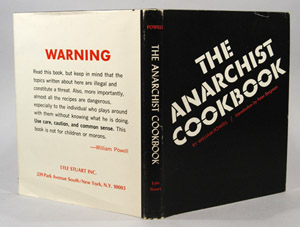






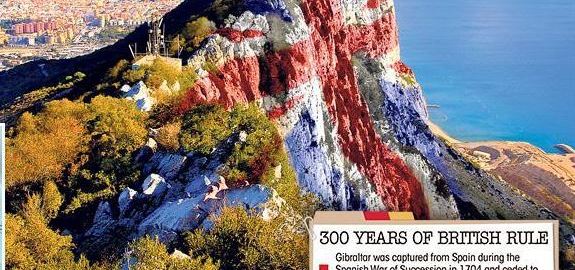
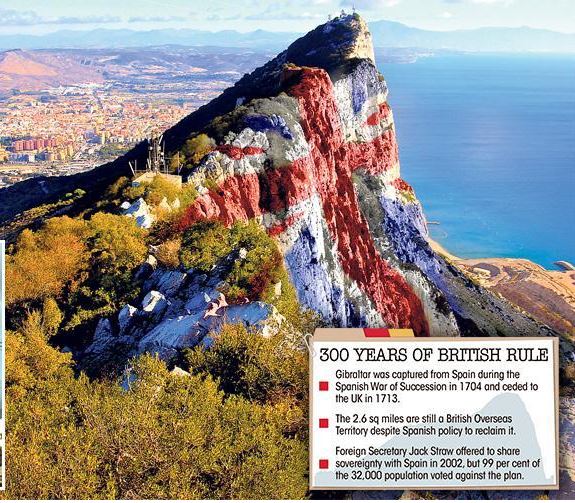

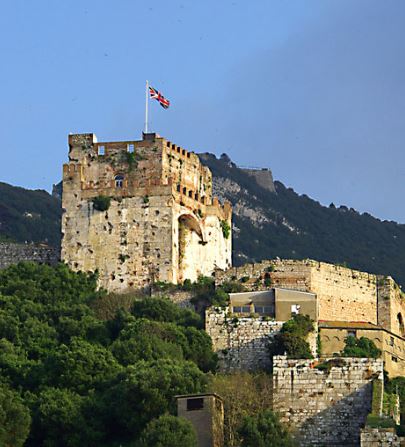




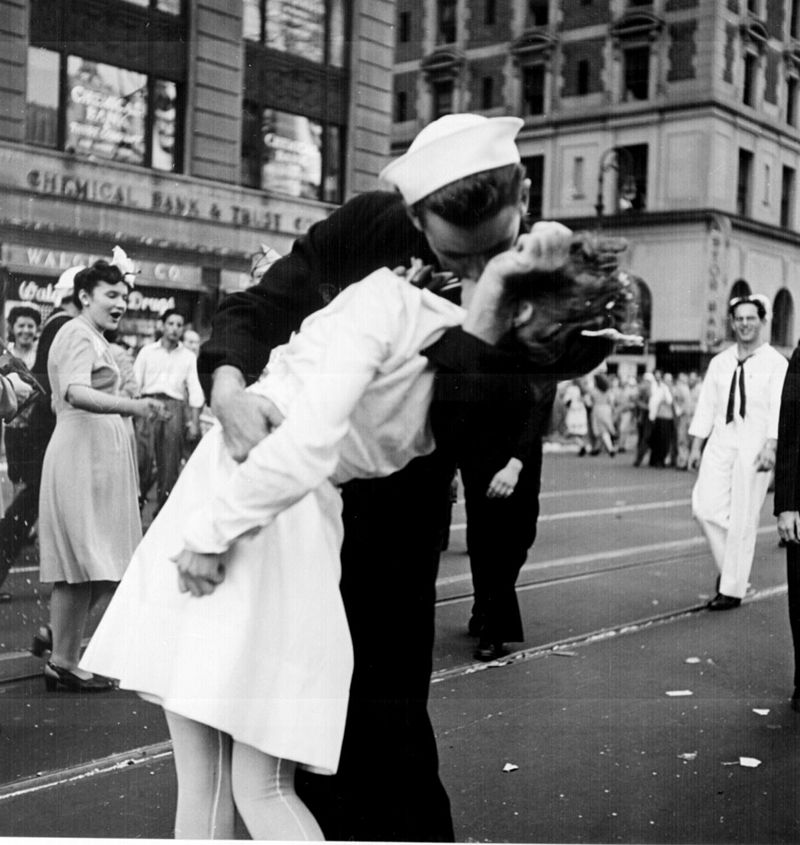


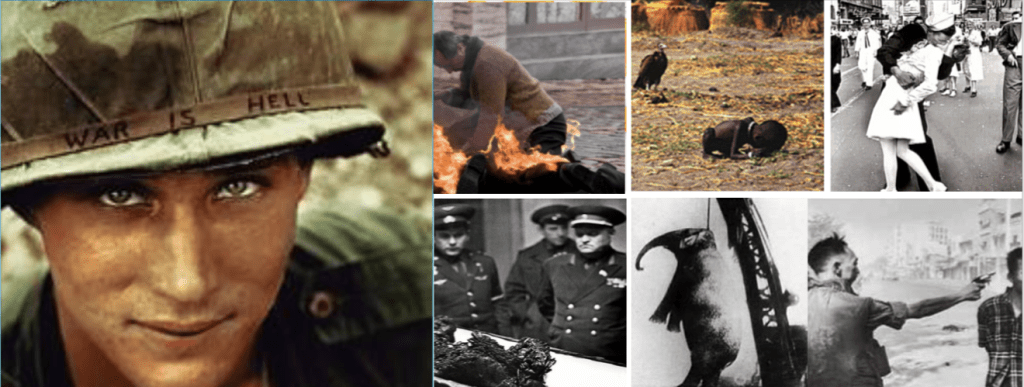







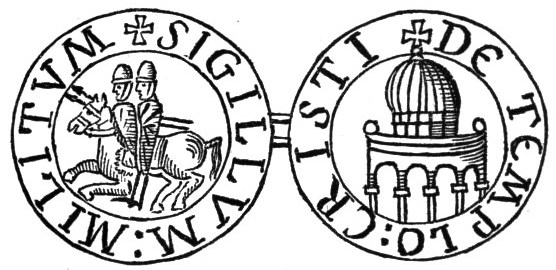

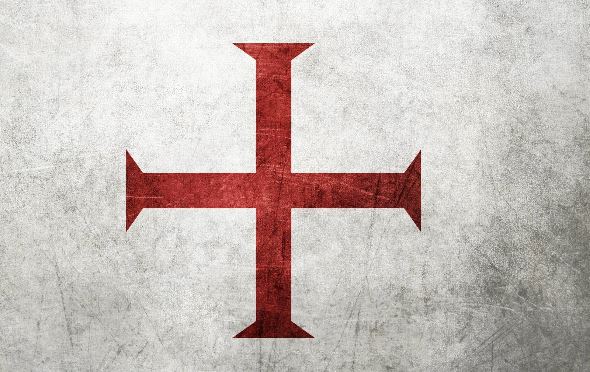


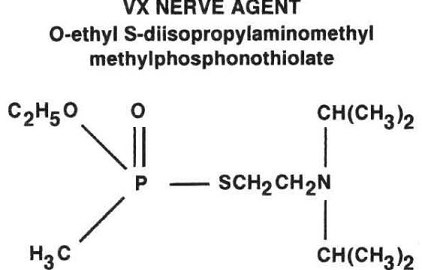


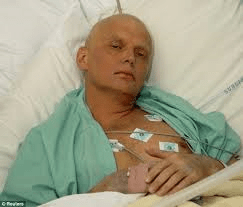


 Y
Y N
N
 N
N 


 belfastchildis.com