Islamic State threatens to carry out attacks in Russia ‘very soon’
—————————————————————————
ISIS Threatens to Attack Russia Very Soon
—————————————————————————
The Islamic State (ISIS), which has claimed responsibility for the crash of a Russian passenger plane in Egypt’s Sinai peninsula, has released a video in which it threatens to carry out terrorist attacks in Russia. (more)
The Russian-language video was released on Thursday by the Al-Hayat Media Center, the foreign-language media division of the Islamic State, according to the SITE Intelligence monitoring group.
“Soon, very soon, the blood will spill like an ocean,” the video said, threatening to carry out attacks within Russia. The video also featured gory scenes of executions by beheading and gunshot.
Other details were not immediately available.
The Islamic State (ISIS) has claimed responsibility for the crash of a Russian passenger plane that went down in Egypt’s Sinai peninsula on October 31, killing all 224 people on board. The group, which has released no specific details to back up its claims, said the downing was in revenge for Russian airstrikes against ISIS militants in Syria.
The cause of the crash remains under investigation, but investigators have not yet ruled out a bomb, though other possible causes include metal fatigue and a fuel explosion.
Key Events & Deaths on this day in Northern Ireland Troubles
12th November
——————————————————
Thursday 12 November 1970
The Northern Ireland Housing Executive (NIHE) was formed.
[The NIHE gradually took over control of the building and allocation of public sector housing in Northern Ireland. The responsibility for public sector housing had previously rested with local government and the Northern Ireland Housing Trust (NIHT). There had been many allegations of discrimination in the provision and allocation of housing by the various local government councils in Northern Ireland and this was the main reason for setting up the Housing Executive.]
Friday 12 November 1971
A Dutch seaman was shot dead by Republican paramilitaries in Belfast.
Tuesday 12 November 1974
Two Protestant civilians who had been employed by the British Army were shot dead by the Irish Republican Army (IRA) and left on Sheriffs Road, near Derry. Three other people were killed in separate incidents in Belfast and County Derry.
Wednesday 12 November 1975
Michael Duggan (32), then Chairman of the Falls Road Taxi Association, was shot dead in Hawthorne Street, Belfast, by members of the Official Irish Republican Army (OIRA). This killing was part of the continuing feud between the two wings of the IRA. One person was killed when the IRA threw a bomb into Scott’s Oyster Bar (Restaurant) in Mount Street, Mayfair, London.
Merlyn Rees, then Secretary of Sate for Northern Ireland, announced the closure of the remaining incident centres that had been set up under the arrangements for the IRA truce.
Tuesday 12 November 1986
The Queen’s speech, at the opening of a new parliament at Westminster, reaffirmed the British government’s commitment to the Anglo-Irish Agreement (AIA).
Thursday 12 November 1987
James Molyneaux, then leader of the Ulster Unionist Party (UUP), and Ian Paisley, then leader of the Democratic Unionist Party (DUP), led a protest march against the Anglo-Irish Agreement (AIA) in London.
Thursday 12 November 1992
In an effort to increase the percentage of Catholics employed in the Northern Ireland Civil Service the Northern Ireland Office (NIO) announced that it was introducing “goals and timetables”. The NIO also stated there would be no preferential treatment on the grounds of religion, political beliefs, or gender, and denied that the new measures amounted to quotas. [Government estimates of the number of senior posts held by Catholics was 17 per cent.]
Tuesday 12 November 1996
Lindsay Robb, formerly a Progressive Unionist Party (PUP) talks negotiator, failed in his appeal against a 10 year sentence for gun-running on behalf of the Ulster Volunteer Force (UVF).
Wednesday 12 November 1997
The Irish Times carried a report claiming that 35 members of the “1st Battalion, South Armagh Brigade” of the Irish Republican Army (IRA) had left the paramilitary group in protest at Sinn Féin’s (SF) peace strategy. It was also claimed that those who had left were prepared to join others who had left in October 1997. Ronnie Flanagan, then Chief Constable of the Royal Ulster Constabulary (RUC), told the Northern Ireland Select Committee that eight per cent of the 8,500 members of the RUC were Catholic. John Hume, then leader of the Social Democratic and Labour Party (SDLP), raised concerns about the continuing high levels of security in west Belfast and south Armagh.
Friday 12 November 1999
George Mitchell, then chairman of the Review of the Agreement, adjourned the talks for the weekend. He hoped that both the Ulster Unionist Party (UUP) and Sinn Féin (SF) would use the time to reflect on the ‘sequence’ of events that had been discussed. A vote taken by the 27 members of the UUP MLAs showed a majority in favour of agreeing to a deal about the new Executive. Four people, all Irish nationals, appeared at a hearing in a Florida court in the USA charged with trying to illegally export handguns to Ireland. The four were refused bail.
Monday 12 November 2001
A man (23) was found shortly after 12.00am (0000GMT) with a gunshot wound to his leg at Bryson Court, New Mossley to the north of Belfast.
[It was thought that he had been the victim of a paramilitary ‘punishment’ attack.]
At approximately 1.00am (0100GMT) two masked men both believed to be armed with shotguns forced their way into a house in Eliza Street, Belfast. They fired a shot through a bedroom door in the house but a man (33) inside the room was uninjured in the attack.
There was a change in the policing tactics used at the Loyalist protest of Holy Cross Girls’ Primary School. Instead of gathering together all the Catholic parents and children and escorting them as a group to the school the Police Service of Northern Ireland (PSNI) specified a time period in which parents could walk to the school. Approximately 400 police officers (one in eight of the total in Belfast) were present to ensure that the children were able to get to school.
The day’s operation cost an estimated £100,000. Some Catholic parents complained that the new police tactics left them more exposed to Loyalist protesters. Police arrested a nationalist who was taking a video of Loyalist protesters.
The British government published a draft Justice (Northern Ireland) Bill, 2001. If implemented the Northern Ireland Assembly (NIA) could take responsibility for policing and the criminal justice system after NIA elections on 1 May 2003. The provisions in the draft Bill included: the creation of an independent prosecution service; a judicial appointment commission to propose appointment or removal of judges; the Lord Chief Justice of Northern Ireland to head the judiciary – rather than the Lord Chancellor in London; the appointment of an Attorney General for Northern Ireland; the appointment of a Chief Inspector of Criminal Justice; the appointment of a Law Commission; and new judges would take an oath to the office for which they were responsible rather than to the Queen. There was a session of the Northern Ireland Assembly.
[Of the 108 elected members approximately 30 attended the session.]
——————————————–
———————————————————————————
Remembering all innocent victims of the Troubles
Today is the anniversary of the death of the following people killed as a results of the conflict in Northern Ireland
“To live in hearts we leave behind is not to die
– Thomas Campbell
To the innocent on the list – Your memory will live forever
– To the Paramilitaries –
There are many things worth living for, a few things worth dying for, but nothing worth killing for.
11 People lost their lives on the 12th November between 1971 – 1983
————————————————————
12 November 1971 Rene Heemskerk, (18)
nfNI Status: Civilian (Civ),
Killed by: non-specific Republican group (REP)
Dutch seaman. Shot in dentist’s waiting room, Grosvenor Road, Belfast.
————————————————————
12 November 1974 Hugh Slater, (29)
Protestant Status: Civilian (Civ),
Killed by: Irish Republican Army (IRA)
Civilian employed by British Army (BA). Found shot by the side of Sheriffs Road, near Derry.
————————————————————
12 November 1974 Leonard Cross, (19)
Protestant Status: Civilian (Civ),
Killed by: Irish Republican Army (IRA)
Civilian employed by British Army (BA). Found shot by the side of Sheriffs Road, near Derry.
————————————————————
12 November 1974 Joseph Elliott, (21)
Catholic Status: Civilian (Civ),
Killed by: non-specific Loyalist group (LOY)
Shot from passing car while walking along Ardmore Road, Drumahoe, Derry.
————————————————————
12 November 1974 Michael Brennan, (26)
Catholic Status: Civilian (Civ),
Killed by: Protestant Action Group (PAG)
Youth Leader. Shot at St Mary Youth Centre, Carolan Road, Rosetta, Belfast.
————————————————————
12 November 1974
Joseph Taylor, (17)
Protestant Status: Civilian (Civ),
Killed by: non-specific Republican group (REP)
Shot at his workplace, a petrol filling station, West Circular Road, Highfield, Belfast.
————————————————————
12 November 1975
Michael Duggan, (32)
Catholic Status: Civilian (Civ),
Killed by: Official Irish Republican Army (OIRA)
Chairman of Falls Taxi Association. Shot while in St Paul’s Hall, Hawthorne Street, Falls, Belfast. Official Irish Republican Army (OIRA) / Irish Republican Army (IRA) feud.
————————————————————
12 November 1975 John Batey, (59)
nfNIB Status: Civilian (Civ),
Killed by: Irish Republican Army (IRA)
Killed by bomb thrown into Scott’s Restaurant, Mount Street, Mayfair, London.
————————————————————
12 November 1978 Gareth Wheedon, (19)
nfNI Status: British Army (BA),
Killed by: Irish Republican Army (IRA)
Died four days after being injured by remote controlled bomb attached to gate, detonated when British Army (BA) foot patrol passed, Blaney Road, Crossmaglen, County Armagh.
————————————————————
12 November 1980 Oliver Walsh, (39)
Catholic Status: Civilian (Civ),
Killed by: Irish Republican Army (IRA)
Killed by land mine while travelling in his car, Lislea, near Camlough, County Armagh. Mistaken for undercover Royal Ulster Constabulary (RUC) mobile patrol.
————————————————————
12 November 1983
Paul Clarke, (29)
Catholic Status: Royal Ulster Constabulary (RUC),
Killed by: Irish Republican Army (IRA)
Killed in mortar bomb attack on Carrickmore British Army (BA) / Royal Ulster Constabulary (RUC) base, County Tyrone.
————————————————————
See below on how to order a copy of my No.1 Bestselling book: A Belfast Child
This is simply the story of a boy trying to grow up, survive, thrive, have fun & discover himself against a backdrop of events that might best be described as ‘explosive’, captivating & shocking the world for thirty long years.
Key Events & Deaths on this day in Northern Ireland Troubles
11th November
———————————————————————–
Thursday 11 November 1971
Two Royal Ulster Constabulary (RUC) officers were shot dead by the Irish Republican Army (IRA) in Belfast. [One of the officers was a Catholic and was the first Catholic member of the RUC to be killed during the conflict.]
Monday 11 November 1974
Allan Quartermaine, a London insurance broker, was shot and mortally wounded in his chauffeur-driven car at traffic-lights in King’s Road, Chelsea, London. Quartermaine died a week later. It is believed that the Irish Republican Army (IRA) was responsible for the shooting. At the time police thought the shooting was a case of mistaken identity (McKee & Franey, 1988; p.84).
Tuesday 11 November 1975
Four men were killed in the continuing feud between the two wings of the Irish Republican Army (IRA).
Thursday 11 November 1976
The Ulster Loyalist Central Co-ordinating Committee (ULCCC) issued a plan, ‘Ulster Can Survive Unfettered’, for the setting up of an Independent Northern Ireland.
Thursday 11 November 1982
‘Shoot to Kill’ Allegation Sean Burns (21), Gervaise McKerr (31), and Eugene Toman (21), all members of the Irish Republican Army (IRA), were shot dead by members of an undercover unit of Royal Ulster Constabulary (RUC) at a police check point on Tullygalley Road, Craigavon, County Armagh. None of the three men were armed at the time of the shooting.
[This shooting incident, together with other similar incidents where unarmed Republican paramilitaries were shot dead led to claims that the security forces were engaged in a ‘shoot to kill’ policy. This claim was officially denied.
The RUC claimed that the three men had driven through a Vehicle Check Point. There were similar incidents on 24 November 1982 and 12 December 1982. Eventually the British government set up the Stalker inquiry (later taken over by Sampson) into the incidents.] The first sitting of the new Northern Ireland Assembly took place at Stormont, Belfast. The Social Democratic and Labour Party (SDLP) and Sinn Féin (SF) did not take up their seats.
Monday 11 November 1991
Dublin City Council in the Republic of Ireland voted for a resolution not to allow Sinn Féin (SF) to use the Mansion House for its annual Ard Fheis. The reason given was SF’s support for the Irish Republican Army (IRA).
Thursday 11 November 1993
Michael Ancram, then Political Development Minister at the Northern Ireland Office (NIO), held a meeting in London with representatives of the Ulster Unionist Party (UUP). This completed a series of bilateral meetings with the main political parties. The Democratic Unionist Party (DUP) published its proposals for the future of Northern Ireland in a document entitled Breaking the Log-Jam.
Monday 11 November 1996
Proposals for the joint marketing of tourism by Northern Ireland and the Republic of Ireland were attacked by the Democratic Unionist Party (DUP).
Wednesday 11 November 1998
The announcement that the Maze prison in County Antrim would close by the year 2000 if the Good Friday Agreement was fully implemented was greeted by anger by many Unionists.
[The closure of the Maze would have a large impact on security related jobs which are almost entirely held by Protestants.]
Joel Patton, then spokesman for the ‘Spirit of Drumcree’ group, was expelled from the Orange Order because of his outspoken criticism of William Bingham in July. Mary McAleese, then President of the Republic of Ireland, joined with Queen Elizabeth of England and King Albert of Belgium, at a ceremony in the Belgian village of Mesen (Messines Ridge) to commemorate the estimated 50,000 Irishmen (from north and south) who died during the first World War. The ceremony also marked the official opening of a peace tower (modelled on an Irish round tower) built by young people from the Republic of Ireland and Northern Ireland
Thursday 11 November 1999
Political talks that formed part of the Mitchell Review of the Agreement continued at Stormont in Belfast. There was speculation that a ‘sequence’ of events was being agreed which would include a Sinn Féin (SF) statement condemning violence and the appointment of an IRA interlocutor to negotiate with the Independent International Commission on Decommissioning (IICD) led by John de Chastelain. However Unionist opponents of the proposals said that it failed to guarantee short-term decommissioning. Ian Paisley, then leader of the Democratic Unionist Party (DUP), called on the Ulster Unionist Party (UUP) to overthrow David Trimble, then leader of the UUP, before he betrayed Unionists.
The Orange Order decided to halt disciplinary proceedings against Lord Dennis Rogan. Proceedings had been started because Rogan had attending the Catholic funeral of three victims of the Omagh bomb. Such participation in a Catholic ceremony is against the rules of the Orange Order.
Sunday 11 November 2001
Protestant Teenager Killed Glen Hugh Branagh (16), a Protestant teenager, was killed in north Belfast when a pipe-bomb he was holding exploded prematurely.
[It was later confirmed that Branagh was a member of the (Ulster) Young Militants (YM), the youth wing of the Ulster Defence Association (UDA). Members of YM were accused of killing a Protestant man, mistaken for a Catholic, during an attack on 31 March 2001.]
Police Service of Northern Ireland (PSNI) officers stated that during a riot a youth, wearing a distinctive top and mask, was seen as he was about to throw a pipe-bomb at the security forces on North Queen Street; the bomb went off while he was still holding it. The crowd then called the police officers forward to give medical assistance. Although treated at the scene Branagh died later in hospital. Two other men were injured in the explosion.
[Loyalists claimed that the bomb had been thrown by Nationalists and that Branagh had picked the device up. This claim was denied by PSNI officers who said they saw quite clearly what had happened.]
Prior to this incident there had been serious rioting in the area between rival Protestant and Catholic residents. Later in the evening there were further disturbances and police fired 9 plastic baton rounds. A Catholic girl (14) was injured when she was hit in the stomach by a plastic bullet.
Catholic residents also claimed that a boy (11) and a teenager (17) were also hit by plastic bullets. Twenty-four police officers and two British soldiers were injured during the rioting. There were several shooting incidents in Belfast during the evening and in the early hours of Monday 12 November 2001. A gunman fired a shot from a car at four youths sitting in a bus shelter on the Antrim Road, north Belfast. There were reports that a gunman had fired a shot into the Clarendon Bar, Garmoyle Street in the Docks area of Belfast at about 10.00pm (2200GMT). There were a series of events across Northern Ireland to mark Remembrance Day. Among the wreaths laid at memorials were, for the first time, ones on behalf of the Police Service of Northern Ireland (PSNI).
——————————————————-
———————————————————————————
Remembering all innocent victims of the Troubles
Today is the anniversary of the death of the following people killed as a results of the conflict in Northern Ireland
“To live in hearts we leave behind is not to die
– Thomas Campbell
To the innocent on the list – Your memory will live forever
– To the Paramilitaries –
There are many things worth living for, a few things worth dying for, but nothing worth killing for.
16 People lost their lives on the 11th November between 1971 – 2001
————————————————————
11 November 1971
Dermot Hurley, (50)
Catholic Status: Royal Ulster Constabulary (RUC),
Killed by: Irish Republican Army (IRA)
Shot while in shop at rear of Oldpark Royal Ulster Constabulary (RUC) base, Oldpark Road, Belfast.
————————————————————
11 November 1971
Walter Moore, (37)
Protestant Status: Royal Ulster Constabulary (RUC),
Killed by: Irish Republican Army (IRA)
Shot while in shop at rear of Oldpark Royal Ulster Constabulary (RUC) base, Oldpark Road, Belfast.
————————————————————
11 November 1972 Gerard Kelly, (58)
Catholic Status: Civilian (Civ),
Killed by: Red Hand Commando (RHC)
Shot at his newsagent’s shop, Crumlin Road, Belfast.
————————————————————
11 November 1975
John McAllister, (19)
Catholic Status: Civilian (Civ),
Killed by: Irish Republican Army (IRA)
Shot while standing at bus stop, Springfield Road, Ballymurphy, Belfast. A relative of a member of Republican Clubs. Official Irish Republican Army (OIRA) / Irish Republican Army (IRA) feud.
————————————————————
11 November 1975
Comgall Casey, (18)
Catholic Status: Civilian Political Activist (CivPA),
Killed by: Irish Republican Army (IRA)
Former Republican Clubs member. Shot at his workplace, joinery firm, Andersonstown, Belfast. Official Irish Republican Army (OIRA) / Irish Republican Army (IRA) feud.
————————————————————
11 November 1975
Owen McVeigh, (28)
Catholic Status: Civilian (Civ),
Killed by: Official Irish Republican Army (OIRA)
Shot at his home, Grosvenor Place, Lower Falls, Belfast. Mistaken for Irish Republican Army (IRA) member. Official Irish Republican Army (OIRA) / Irish Republican Army (IRA) feud
————————————————————
11 November 1975
John Brown, (25)
Catholic Status: Official Irish Republican Army (OIRA),
Killed by: Irish Republican Army (IRA)
Shot at his home, Cooke Place, off Ormeau Road, Belfast. Official Irish Republican Army (OIRA) / Irish Republican Army (IRA) feud.
————————————————————
11 November 1976 Patrick Smyth, (24)
Catholic Status: Civilian (Civ),
Killed by: non-specific Republican group (REP)
Shot while inside social club, Saul Street, Short Strand, Belfast.
————————————————————
11 November 1976 Winston McCaughey, (33)
Protestant Status: Ulster Defence Regiment (UDR),
Killed by: Irish Republican Army (IRA)
Off duty. Shot outside his home, Kilrea, County Derry.
————————————————————
11 November 1977 Patrick Shields, (53)
Catholic Status: Civilian (Civ),
Killed by: Irish Republican Army (IRA)
Killed in car bomb explosion, King Street, Belfast. Inadequate warning given.
————————————————————
11 November 1980 Owen McQuade, (31)
nfNI Status: British Army (BA),
Killed by: Irish Republican Army (IRA)
Shot while sitting in stationary British Army (BA) minibus, main driveway of Altnagelvin Hospital, Derry.
————————————————————
11 November 1981
Cecil Graham, (32)
Protestant Status: Ulster Defence Regiment (UDR),
Killed by: Irish Republican Army (IRA)
Off duty. Died two days after being shot while leaving relative’s home, Lisnaskea, County Fermanagh.
————————————————————
11 November 1982
Eugene Toman, (21)
Catholic Status: Irish Republican Army (IRA),
Killed by: Royal Ulster Constabulary (RUC)
Shot by undercover Royal Ulster Constabulary (RUC) members at Vehicle Check Point (VCP), Tullygalley East Road, Craigavon, County Armagh.
————————————————————
11 November 1982
Sean Burns, (21)
Catholic Status: Irish Republican Army (IRA),
Killed by: Royal Ulster Constabulary (RUC)
Shot by undercover Royal Ulster Constabulary (RUC) members at Vehicle Check Point (VCP), Tullygalley East Road, Craigavon, County Armagh.
————————————————————
11 November 1982
Gervaise McKerr, (31)
Catholic Status: Irish Republican Army (IRA),
Killed by: Royal Ulster Constabulary (RUC)
Shot by undercover Royal Ulster Constabulary (RUC) members at Vehicle Check Point (VCP), Tullygalley East Road, Craigavon, County Armagh.
————————————————————
11 November 2001 Glen Branagh, (16)
Protestant Status: Ulster Defence Association (UDA),
Killed by: Ulster Defence Association (UDA)
Killed in premature explosion, while handling pipe-bomb, during street disturbances, North Queen Street, Tigers Bay, Belfast.
————————————————————
See below on how to order a copy of my No.1 Bestselling book: A Belfast Child
This is simply the story of a boy trying to grow up, survive, thrive, have fun & discover himself against a backdrop of events that might best be described as ‘explosive’, captivating & shocking the world for thirty long years.
Although the IRA carried out a number of Honey Trap killings the despicable murder of the three young off-duty Scottish Soldiers outraged and shocked the UK and all decent people of Northern Ireland. Forty four years after the murders this still ranks of one of countless IRA atrocities that hunt the memory and in my book can never be forgiven.
The three Scottish soldiers’ killings was an incident that took place in Northern Ireland during the Troubles. It happened on 10 March 1971, when the Provisional Irish Republican Army shot dead three unarmed British Army soldiers of the 1st Battalion, Royal Highland Fusiliers. Two of the three were teenage brothers; all three were from Scotland. They were killed off-duty and in civilian clothes having been lured from a city-centre bar in Belfast, driven to a remote location and shot whilst relieving themselves by the roadside. Whilst three British soldiers had been killed prior to this event, all three had been on-duty and killed during rioting.
The deaths led to public mourning and protests against the Provisional IRA. Pressure to act precipitated a political crisis for the government of Northern Ireland, which led to the resignation of Northern Ireland Prime Minister James Chichester-Clark. The British Army raised the minimum age needed to serve in Northern Ireland to 18 in response to this incident. In 2010 a memorial was dedicated to the three soldiers near to where they were killed in north Belfast.
“all-out offensive action against the British occupation”.
Provisional IRA Chief of Staff Seán Mac Stíofáin decided they would “escalate, escalate and escalate” until the British agreed to go.[4] The IRA Army Council sanctioned offensive operations against the British Army at the beginning of 1971. In this year, Robert Curtis was the first British soldier shot and killed by the Provisional IRA, on 6 February 1971, and two more soldiers were killed prior to 10 March.
Dougald McCaughey
Brothers John and Joseph McCaig from Ayr and Dougald McCaughey from Glasgow in Scotland (ages 17, 18 and 23) were privates serving with the 1st Battalion, The Royal Highland Fusiliers, stationed at Girdwood barracks in Belfast.
The shootings occurred on 10 March 1971 after the three soldiers had been granted an afternoon pass which allowed them to leave their base. McCaughey’s younger brother was serving in the same unit but was on duty and unable to join them. The three soldiers were off-duty, unarmed and in civilian clothes.
They were drinking in “Mooney’s”, a Belfast city centre bar in Cornmarket, one of the safer areas of the city for soldiers at this stage in “the Troubles”. The three previous shootings that year had occurred in different circumstances, during rioting. One report said that the three Scottish soldiers were enticed into a car by Republican women who promised them a party.
The three were taken to the White Brae, Squire’s Hill, off the Ligoniel Road in North Belfast. There they were murdered by Provisional IRA members; two were shot in the back of the head and the other in the chest.
John McCaig, Dougald McCaughey, and Joseph McCaig, the three killed Scottish soldiers
The inquest in August 1971 was not able to establish the exact sequence of events. It was established that all three were shot at very close range, probably in a line. All had been drinking, and Joseph was found to be severely intoxicated.
The jury was told that the three were probably shot whilst relieving themselves beside the road. The coroner commented:
“You may think that this was not only murder, but one of the vilest crimes ever heard of in living memory”.
The bodies were heaped on top of each other with two beer glasses lying near to them After failing to return to their barracks by 18:30 the three were listed as AWOL. Their bodies were found by children at 21:30.
Aftermath
Grief: The family of murdered brothers Family John and Joseph McCaig were supported by friends at the funeral
The day after the killings, British Home SecretaryReginald Maudling made a statement in the House of Commons in which he informed the house that security arrangements for off-duty soldiers were being reviewed and suggested that the aim of the killers was to provoke the security forces into reprisals. He said that:
The battle now joined against the terrorists will be fought with the utmost vigour and determination. It is a battle against a small minority of armed and ruthless men whose strength lies not so much in their numbers as in their wickedness.
Belfast Cenotaph, focus of the public mourning in Belfast
The funerals were held in Scotland with John and Joseph McCaig buried together in Ayr. Their older brother, serving with the Royal Marines in Singapore, was flown home for the service. That day, 20,000 people attended rallies in Belfast and Carrickfergus. In Belfast, the cenotaph at the City Hall was the focus of the mourning with 10,000 people attending including workers from factories in a gathering that stopped the traffic in the city centre. Many wept openly.
The Reverend Ian Paisley led the mourners in laying dozens of wreaths. The crowd observed a two-minute silence and sang a hymn and the national anthem.
The deaths lead to a crisis for the government of Northern Ireland with calls for increased security measures. Ian Paisley demanded the Stormont Government’s resignation, saying:
“We can no longer tolerate your weakness. You must go before the whole land is deluged with the blood of innocent men and women.”
The British Army raised the minimum age for serving in Northern Ireland to 18 in response to the death of 17-year-old John McCaig.
No one has been convicted of the killings. The Daily Mirror reported in November 2007 that three Provisional IRA men were responsible for the deaths: Martin Meehan (died 2007), Patrick McAdorey, and a third unnamed man. Meehan was questioned over the killings but was never charged.
McAdorey was shot and killed in August 1971 during a gun battle in the Ardoyne area of Belfast. He was also suspected of the fatal shooting, hours before his own death, of Private Malcolm Hatton of the Green Howards. The case of the three soldiers is one of those being re-examined by the Police Service of Northern Ireland‘s Historical Enquiries Team.
Lest We Forget!
Honey Trap Soldiers memorial in Belfast.
Me & my boy taking time out to pay our respects to the three young soldiers entrapped by evil republican females & slaughter by the IRA. pic.twitter.com/P31snq1Qxv
The mother of the two McCaig brothers visited the site of their deaths in May 1972. She expressed a wish to leave a monument to her sons but was advised that it might well be damaged by vandals. She later said that she was touched by the wreaths and flowers that had been left at the spot.
In 2010 the Royal British Legion Oldpark/Cavehill branch in Belfast raised money from the sale of badges to erect a memorial to the men.
On 28 May 2010, a memorial stone was placed at the site of the killings on Squire’s Hill by the families and former regimental colleagues of the three soldiers. The next day a 15-foot obelisk incorporating carved images of the deceased was dedicated to the soldiers at nearby Ballysillan Avenue. A service of remembrance with regimental drums and colours was then held at Ballysillan leisure centre attended by around 1000 people including Lord Mayor of BelfastNaomi Long and North Belfast MP Nigel Dodds.
Vandalism
The memorial at White Brae, Ligoniel, that marks the place of the killings was vandalised on July 2011. Sectarian graffiti was daubed on the memorial and the stones surrounding the memorial were scattered across the road. The ceremonial ropes were ripped off and the poppy wreaths that had been laid at a recent ceremony on 29 May 2011 to mark the first anniversary of the memorial’s opening were scattered across nearby fields.[24] The memorial has been attacked on numerous occasions since, costing thousands to repair. Memorial vandalised again in hate crime. Since the erection of the memorial, there have been 23 attacks of vandalism.
————————————————————————
Memorial to three Scottish soldiers attacked in north Belfast
Paint was thrown over the memorial in north Belfast
A memorial to three Scottish soldiers murdered by the IRA in north Belfast has been vandalised.
Paint was thrown over the memorial at White Brae on the Ligoniel Road. Police said they are treating it as a hate crime.
Jim Wright of the the Royal British Legion said it was the 10th time the memorial had been attacked in recent years.
He described those responsible as cowards.
“As determined as these faceless thugs are to destroy the memorial, we are doubly determined to ensure that it remains at this site as a reminder to those in the IRA who were responsible for luring three young boys to this spot and murdering them in cold blood,”
he said.
“It is a sad indictment that someone in our society thinks it is OK to desecrate a memorial. I would like to offer my thanks to those responsible for cleaning the memorial.”
North Belfast Sinn Féin councillor Gerry McCabe said it was a “despicable act”.
“I’m saddened to hear that the memorial at the White Brae at Ligoniel to the three soldiers has been defaced by mindless thugs,” he said.
“The actions of those involved in this are not representative of the people of this community.”
Three Scottish soldiers killed in honeytrap remembered
A service took place toremember the three Scottish soldiers, John McCaig, Joseph McCaig and Dougald McCaughey, who were killed by the IRA after being lured to the remote spot from a city centre bar by republican women on March 10, 1971
They were the fourth, fifth and sixth soldiers to be killed during the Troubles and the first to be killed off duty.
Veterans travelled from Scotland at the weekend to take part in a memorial service to the three soldiers at the spot where they were killed.
Dougald’s cousin David, and former platoon sergeant Phineas Sloan were among those who travelled for the service.
David said it made him feel “sick to the stomach” that the memorial to the soldiers has been attacked six times in 18 months.
It cost £1,700 to repair last year, and after it was repaired was almost immediately attacked again.
Key Events & Deaths on this day in Northern Ireland Troubles
10th November
————————————————————–
Monday 10 November 1975
The ‘incident centre’ in Derry was blown up in a bomb attack carried out by the Irish Republican Army (IRA). The IRA in the city was opposed to the truce.
Monday 10 November 1986
Ulster Resistance Formed Loyalists held a closed meeting at the Ulster Hall in Belfast. The main speakers at the meeting were Ian Paisley, then leader of the Democratic Unionist Party (DUP), Peter Robinson of the DUP, and Ivan Foster. During the meeting a new organisation, Ulster Resistance, was formed to ‘take direct action as and when required’ to end the Anglo-Irish Agreement (AIA). [Ulster Resistance was to take the place of the ‘Ulster Clubs’ that had been formed on 2 November 1985.]
Saturday 10 November 1990
The Irish Republican Army (IRA) shot and killed two members of the Royal Ulster Constabulary (RUC) and two civilians in County Armagh.
Tuesday 10 November 1992
End of Political Talks Unionists withdrew from the political talks (later known as the Brooke / Mayhew talks) and brought the process to an end. Their action was provoked by the restart of work by the Maryfield secretariat for the Anglo-Irish Intergovernmental Conference (AIIC). Patrick Mayhew, then Secretary of State for Northern Ireland, said that informal party contacts would continue.
[The talks had lasted two years and had cost an estimated £5 million.]
Thursday 10 November 1994
Frank Kerr (54), a Catholic civilian who was a Post Office worker in a sorting office, was shot dead during a robbery. The shooting happened in Clanrye Street, Newry, County Down.
[On 20 November 1994 the Irish Republican Army (IRA) admitted that its members had been responsible though it claimed the killing had not been sanctioned by the Army Council of the IRA. Reacting to the killing the Irish government suspended the release of nine Republican prisoners due on 11 November 1994. The prisoners were later released on 22 December 1994.]
Friday 10 November 1995
Garda Síochána (the Irish police) arrested two men after seizing explosives, estimated at 1,500 pounds (700kgs), about one mile from the County Armagh border. [Further bomb making equipment and ammunition were found at a farm near Castleblayney, County Monaghan, in the following week.]
Sunday 10 November 1996
The possibility of an election pact between Sinn Féin (SF) and the Social Democratic and Labour Party (SDLP) was discussed at the SDLP annual conference. It was decided that arrangements could only be entered into after an Irish Republican Army (IRA) ceasefire.
Tuesday 10 November 1998
A delegation from Sinn Féin (SF) travelled to London for talks with Tony Blair, then British Prime Minister, about what they saw as the stalled peace process. On his first official visit to the Republic, the Duke of Edinburgh referred to “these rather artificial divisions between North and South”. [The visit was seen as an attempt to normalise relationships between the Republic of Ireland and Britain and was believed to path the way for a visit by the Queen at some future date.]
Tuesday 9 November 1999
John Paul and Phillip McGroarty appeared at Limavady Courthouse, County Derry, charged with the murder of Jonathon Cairns in Ballykelly, County Derry, in April 1999. The killing of the teenager was not believed to have been sectarian. A crowd of people outside the courthouse tried to attack the accused as they were taken away.
Peter Mandelson, then Secretary of State for Northern Ireland, gave a speech about political developments at a lunch for the Ireland Fund of Great Britain.
Wednesday 10 November 1999
A pipe-bomb with a jar of nails attached to it was discovered on the windowsill of a house in Dromara Street, off the mainly Nationalist lower Ormeau Road in south Belfast. One woman was in the house at the time. The device was later made safe by an Army bomb disposal team. The attack was carried out by Loyalist paramilitaries
Friday 10 November 2000
The Commission of Inquiry into the Dublin and Monaghan bombings wrote a letter to Peter Mandelson, then Secretary of State for Northern Ireland, seeking assistance with matters related to the Inquiry.
[Further correspondence took place throughout 2001 but no information was supplied by the British government until 26 February 2002.]
——————————————————————–
———————————————————————————
Remembering all innocent victims of the Troubles
Today is the anniversary of the death of the following people killed as a results of the conflict in Northern Ireland
“To live in hearts we leave behind is not to die
– Thomas Campbell
To the innocent on the list – Your memory will live forever
– To the Paramilitaries –
There are many things worth living for, a few things worth dying for, but nothing worth killing for.
12 People lost their lives on the 10th November between 1972 – 1994
————————————————————
10 November 1972 Ronald Kitchen, (20)
nfNI Status: British Army (BA),
Killed by: Irish Republican Army (IRA)
Shot while at British Army (BA) Vehicle Check Point (VCP), Oldpark Road, Belfast.
————————————————————
10 November 1974 John McQuitty, (41)
Catholic Status: Civilian (Civ),
Killed by: Ulster Defence Association (UDA)
Shot at his home, Clovelly Street, off Springfield Road, Belfast.
————————————————————
10 November 1975 Joseph Nesbitt, (53)
Protestant Status: Ulster Defence Regiment (UDR),
Killed by: Irish Republican Army (IRA)
Shot by sniper, while travelling in his car to Gough British Army (BA) base, Armagh, at Caramoyle, near Keady, County Armagh .
Killed by: Irish Republican Army (IRA)
Shot as he left his workplace, Industrial Estate, Loughgall Road, Armagh.
————————————————————
10 November 1982 Charles Spence, (44)
Protestant Status: Ulster Defence Regiment (UDR),
Killed by: Irish Republican Army (IRA)
Off duty. Shot while leaving his workplace, Customs Office, Armagh.
————————————————————
10 November 1983
William Fitzpatrick, (46)
Catholic Status: Royal Ulster Constabulary (RUC),
Killed by: Irish Republican Army (IRA)
Off duty. Shot at his home, Ballymartin, near Annalong, County Down.
————————————————————
10 November 1986
Derek Patterson, (39)
Protestant Status: Royal Ulster Constabulary (RUC),
Killed by: Irish People’s Liberation Organisation (IPLO)
Off duty. Shot outside friend’s home, Fitzroy Avenue, off Ormeau Road, Belfast.
————————————————————
10 November 1990
David Murphy, (50)
Protestant Status: Royal Ulster Constabulary (RUC),
Killed by: Irish Republican Army (IRA)
Off duty. Shot while wildfowling, Castor Bay, near Morrows Point, Lough Neagh, County Armagh.
————————————————————
10 November 1990
Thomas Taylor, (49)
Protestant Status: Royal Ulster Constabulary (RUC),
Killed by: Irish Republican Army (IRA)
Off duty. Shot while wildfowling, Castor Bay, near Morrows Point, Lough Neagh, County Armagh.
————————————————————
10 November 1990
Norman Kendall, (44)
Protestant Status: Civilian (Civ),
Killed by: Irish Republican Army (IRA)
Shot, while wildfowling, with off duty Royal Ulster Constabulary (RUC) members, Castor Bay, near Morrows Point, Lough Neagh, County Armagh.
————————————————————
10 November 1990
Keith Dowey, (30)
Protestant Status: Civilian (Civ),
Killed by: Irish Republican Army (IRA)
Shot, while wildfowling, with off duty Royal Ulster Constabulary (RUC) members, Castor Bay, near Morrows Point, Lough Neagh, County Armagh.
————————————————————
10 November 1994
Frank Kerr, (54)
Catholic Status: Civilian (Civ),
Killed by: Irish Republican Army (IRA)
Shot, during armed robbery at his workplace, postal sorting office, Clanrye Street, Newry, County Down.
————————————————————
See below on how to order a copy of my No.1 Bestselling book: A Belfast Child
This is simply the story of a boy trying to grow up, survive, thrive, have fun & discover himself against a backdrop of events that might best be described as ‘explosive’, captivating & shocking the world for thirty long years.
Just over 150 British and colonial troops successfully defended the garrison against an intense assault by 3,000 to 4,000 Zulu warriors. The massive, but piecemeal, Zulu attacks on Rorke’s Drift came very close to defeating the tiny garrison but were ultimately repelled. Eleven Victoria Crosses were awarded to the defenders, along with a number of other decorations and honours.
Dabulamanzi kaMpande who commanded the Zulu forces at Rorke’s Drift
Prelude
Rorke’s Drift, known as kwaJimu (“Jim’s Land”) in the Zulu language, was a mission station and the former trading post of James Rorke, an Irish merchant. It was located near a drift, or ford, on the Buffalo (Mzinyathi) River, which at the time formed the border between the British colony of Natal and the Zulu Kingdom. On 9 January 1879, the British No. 3 (Centre) Column, under Lord Chelmsford, arrived and encamped at the drift.
On 11 January, the day after the British ultimatum to the Zulus expired, the column crossed the river and encamped on the Zulu bank. A small force consisting of B Company, 2nd Battalion, 24th (2nd Warwickshire) Regiment of Foot (2nd/24th) under Lieutenant Gonville Bromhead was detailed to garrison the post, which had been turned into a supply depot and hospital under the overall command of Brevet Major Henry Spalding, 104th Foot, a member of Chelmsford’s staff.
On 20 January, after reconnaissance patrolling and building of a track for its wagons, Chelmsford’s column marched to Isandlwana, approximately 6 miles (9.7 km) to the east, leaving behind the small garrison. A large company of the 2nd/3rd Natal Native Contingent (NNC) under Captain William Stevenson was ordered to remain at the post to strengthen the garrison.
This company numbered between 100 and 350 men.
Captain Thomas Rainforth’s G Company of the 1st/24th Foot was ordered to move up from its station at Helpmekaar, 10 miles (16 km) to the southeast, after its own relief arrived, to further fortify the drift. Later that evening a portion of the No. 2 Column under Brevet Colonel Anthony Durnford, late of the Royal Engineers, arrived at the drift and camped on the Zulu bank, where it remained through the next day.
Late on the evening of 21 January, Durnford was ordered to Isandlwana, as was a small detachment of No. 5 Field Company, Royal Engineers, commanded by Lieutenant John Chard, which had arrived on the 19th to repair the pontoons which bridged the Buffalo. Chard rode ahead of his detachment to Isandlwana on the morning of 22 January to clarify his orders, but was sent back to Rorke’s Drift with only his wagon and its driver to construct defensive positions for the expected reinforcement company, passing Durnford’s column en route in the opposite direction.
Sometime around noon on the 22nd, Major Spalding left the station for Helpmekaar to ascertain the whereabouts of Rainforth’s G Company, which was now overdue. He left Chard in temporary command. Chard rode down to the drift itself where the engineers’ camp was located. Soon thereafter, two survivors from Isandlwana – Lieutenant Gert Adendorff of the 1st/3rd NNC and a trooper from the Natal Carbineers – arrived bearing the news of the defeat and that a part of the Zulu impi was approaching the station.
Upon hearing this news, Chard, Bromhead, and another of the station’s officers, Acting Assistant Commissary James Dalton (of the Commissariat and Transport Department), held a quick meeting to decide the best course of action – whether to attempt a retreat to Helpmekaar or to defend their current position. Dalton pointed out that a small column, travelling in open country and burdened with carts full of hospital patients, would be easily overtaken and defeated by a numerically superior Zulu force, and so it was soon agreed that the only acceptable course was to remain and fight.
Defensive preparations
Once the British officers decided to stay, Chard and Bromhead directed their men to make preparations to defend the station. With the garrison’s some 400 men[15] working quickly, a defensive perimeter was constructed out of mealie bags. This perimeter incorporated the storehouse, the hospital, and a stout stone kraal. The buildings were fortified, with loopholes (firing holes) knocked through the external walls and the external doors barricaded with furniture.
At about 3:30 pm, a mixed troop of about 100 Natal Native Horse (NNH) under Lieutenant Alfred Henderson arrived at the station after having retreated in good order from Isandlwana. They volunteered to picket the far side of the Oscarberg (Shiyane), the large hill that overlooked the station and from behind which the Zulus were expected to approach.
With the defences nearing completion and battle approaching, Chard had several hundred men available to him: Bromhead’s B Company, Stevenson’s large NNC company, Henderson’s NNH troop, and various others (most of them hospital patients, but ‘walking wounded’) drawn from various British and colonial units. Adendorff also stayed, while the trooper who had ridden in with him galloped on to warn the garrison at Helpmekaar.
The force was sufficient, in Chard’s estimation, to fend off the Zulus. Chard posted the British soldiers around the perimeter, adding some of the more able patients, the ‘casuals’ and civilians, and those of the NNC who possessed firearms along the barricade. The rest of the NNC, armed only with spears, were posted outside the mealie bag and biscuit box barricade within the stone-walled cattle kraal.
The approaching Zulu force was vastly larger; the uDloko, uThulwana, inDlondoamabutho (regiments) of married men in their 30s and 40s and the inDlu-yengweibutho of young unmarried men mustered 3,000 to 4,000 warriors, none of them engaged during the battle at Isandlwana.
This Zulu force was the ‘loins’ or reserve of the army at Isandlwana and is often referred to as the Undi Corps. It was directed to swing wide of the British left flank and pass west and south of Isandlwana hill itself, in order to position itself across the line of communication and retreat of the British and their colonial allies in order to prevent their escape back into Natal by way of the Buffalo River ford leading to Rorke’s Drift.
By the time the Undi Corps reached Rorke’s Drift at 4:30 pm, they had fast-marched some 20 miles (32 km) from the morning encampment they had left at around 8 am, and they would spend almost the next eleven and a half hours continuously storming the British fortifications at Rorke’s Drift.
Most Zulu warriors were armed with an assegai (short spear) and a shield made of cowhide. The Zulu army drilled in the personal and tactical use and coordination of this weapons system. Some Zulus also had old muskets and antiquated rifles, though their marksmanship training was poor, and the quality and supply of powder and shot was dreadful.
Historical picture of Zulu warriors from about the same time as the events at Rorke’s Drift
The Zulu attitude towards firearms was that:
“The generality of Zulu warriors, however, would not have firearms – the arms of a coward, as they said, for they enable the poltroon to kill the brave without awaiting his attack.”
Even though their fire was not accurate, it was responsible for five of the seventeen British deaths at Rorke’s Drift.
While the Undi Corps had been led by inkhosi kaMapitha at the Isandlwana battle, the command of the Undi Corps passed to Prince Dabulamanzi kaMpande (half-brother of Cetshwayo kaMpande, the Zulu king) when kaMapitha was wounded during the pursuit of British fugitives from Isandlwana. Prince Dabulamanzi was considered rash and aggressive, and this characterisation was borne out by his violation of King Cetshwayo’s order to act only in defence of Zululand against the invading British soldiers and not carry the war over the border into enemy territory.
The Rorke’s Drift attack was an unplanned raid rather than any organised counter-invasion, with many of the Undi Corps Zulus breaking off to raid other African kraals and homesteads while the main body advanced on Rorke’s Drift.
At about 4:00 pm, Surgeon James Reynolds, Otto Witt – the Swedish missionary who ran the mission at Rorke’s Drift – and army chaplain Reverend George Smith came down from the Oscarberg hillside with the news that a body of Zulus was fording the river to the southeast and was “no more than five minutes away”. At this point, Witt decided to depart the station, as his family lived in an isolated farmhouse about 30 kilometres (19 mi) away, and he wanted to be with them. Witt’s native servant, Umkwelnantaba, left with him; so too did one of the hospital patients, Lieutenant Thomas Purvis of the 1st/3rd NNC.
——————————————————
Interview with Frank Bourne – Hero of Rorkes Drift
——————————————————
Battle
At about 4:20 pm, the battle began with Lieutenant Henderson’s NNH troopers, stationed behind the Oscarberg, briefly engaging the vanguard of the main Zulu force. However, tired from the battle and retreat from Isandlwana and short of carbine ammunition, Henderson’s men departed for Helpmekaar. Henderson himself reported to Lieutenant Chard that the enemy were close and that
“his men would not obey his orders but were going off to Helpmekaar”.
Henderson then followed his departing men. Upon witnessing the withdrawal of Henderson’s NNH troop, Captain Stevenson’s NNC company abandoned the cattle kraal and fled, greatly reducing the strength of the defending garrison. Outraged that Stevenson and some of his colonial NCOs also fled from the barricades, a few British soldiers fired after them, killing Corporal William Anderson.
With the Zulus nearly at the station, the garrison now numbered between 154 and 156 men.[30] Of these, only Bromhead’s company could be considered a cohesive unit. Additionally, up to 39 of his company were at the station as hospital patients, although only a handful of these were unable to take up arms.
With fewer men, Chard realised the need to modify the defences, and he gave orders for the construction of a biscuit-box wall through the middle of the post in order to make possible the abandonment of the hospital side of the station if the need arose.
At 4:30 pm, the Zulus rounded the Oscarberg and approached the south wall. Private Frederick Hitch, posted as lookout atop the storehouse, reported a large column of Zulus approaching. The Zulu vanguard, 600 men of the iNdluyengwe, attacked the south wall, which joined the hospital and the storehouse. The British opened fire at 500 yards (460 m).
The majority of the attacking Zulu force swept around to attack the north wall, while a few took cover and were either pinned by continuing British fire or retreated to the terraces of Oscarberg. There they began a harassing fire of their own. As this occurred, another Zulu force swept onto the hospital and north west wall.
Those British on the barricades — including Dalton and Bromhead — were soon engaged in fierce hand-to-hand fighting. The British wall was too high for the Zulus to scale, so they resorted to crouching under the wall, trying to get hold of the defenders’ Martini-Henry rifles, slashing at British soldiers with assegais or firing their weapons through the wall. At places, they clambered over each other’s bodies to drive the British off the walls but were driven back.
Zulu fire, both from those under the wall and around the Oscarberg, inflicted a few casualties, and five of the 17 defenders who were killed or mortally wounded in the action were struck while at the north wall.
—————————————-
Secrets Of The Dead – The Mystery Of Zulu Dawn
—————————————-
Defence of the hospital
Chard realised that the north wall, under almost constant Zulu attack, could not be held and, at 6:00 pm, he pulled his men back into the yard, abandoning the front two rooms of the hospital in the process. The hospital was becoming untenable; the loopholes had become a liability, as rifles poking out were grabbed at by the Zulus but, if the holes were left empty, the Zulu warriors stuck their own weapons through to fire into the rooms. Among the soldiers assigned to the hospital were Corporal William Wilson Allen and Privates Cole, Dunbar, Hitch, Horrigan, John Williams, Joseph Williams, Alfred Henry Hook, Robert Jones, and William Jones.
Privates Horrigan, John Williams, Joseph Williams and patients tried to hold the hospital entrance with rifles and fixed bayonets. Joseph Williams defended a small window, and 14 dead Zulus were found later beneath the window. As it became clear that the front of the building was being taken by the Zulus, John Williams began to hack a way of escape through the wall dividing the central room and a corner room in the back of the hospital. As he made a passable hole, the door into the central room came under furious attack from the Zulus, and he only had time to drag two bedridden patients out before the door gave way.
The corner room that John Williams had pulled the two patients into was occupied by Private Hook and another nine patients. John Williams hacked at the wall to the next room with his pick-axe, as Hook held off the Zulus. A firefight erupted as the Zulus fired through the door and Hook returned fire – but not without an assegai striking his helmet and stunning him.
Williams made the hole big enough to get into the next room, which was occupied only by patient Private Waters, and dragged the patients through. The last man out was Hook, who killed some Zulus who had knocked down the door before he dived through the hole. John Williams once again went to work, spurred by the fact that the roof was now on fire, as Hook defended the hole and Waters continued to fire through a loophole.
After fifty minutes, the hole was large enough to drag the patients through, and the men – save Privates Waters and Beckett, who hid in the wardrobe (Waters was wounded and Beckett died of assegai wounds) – were now in the last room, being defended by Privates Robert Jones and William Jones. From here, the patients clambered out through a window and then ran across the yard to the barricade.
Of the eleven patients, nine survived the trip, as did all the able-bodied men. According to James Henry Reynolds, only four defenders were killed in the hospital: one was a member of the Natal Native Contingent with a broken leg; Sgt Maxfield and Private Jenkins, who were ill with fever and refused to be moved. Reportedly, Jenkins was killed after being seized and stabbed, together with Private Adams who also refused to move. Private Cole, assigned to the hospital, was killed when he ran outside. Another hospital patient killed was Trooper Hunter of the Natal Mounted Police.
Among the hospital patients who escaped were a Corporal Mayer of the NNC; Bombardier Lewis of the Royal Artillery, and Trooper Green of the Natal Mounted Police, who was wounded in the thigh by a spent bullet. Private Conley with a broken leg was pulled to safety by Hook, although Conley’s leg was broken again in the process.
The cattle kraal and the bastion
The evacuation of the burning hospital completed the shortening of the perimeter. As night fell, the Zulu attacks grew stronger. The cattle kraal came under renewed assault and was evacuated by 10:00 pm, leaving the remaining men in a small bastion around the storehouse. Throughout the night, the Zulus kept up a constant assault against the British positions; Zulu attacks only began to slacken after midnight, and they finally ended by 2:00 am, being replaced by a constant harassing fire from Zulu firearms until 4:00 am.
By that time, the garrison had lost 14 dead. Two others were mortally wounded and 8 more – including Dalton – were seriously wounded. Virtually every man had some kind of wound. They were all exhausted, having fought for the better part of ten hours and were running low on ammunition. Of 20,000 rounds in reserve at the mission, only 900 remained.
——————————————————
Those that died in the Zulu war 1879
——————————————————
Aftermath
As dawn broke, the British could see that the Zulus were gone; all that remained were the dead and severely wounded. Patrols were dispatched to scout the battlefield, recover rifles, and look for survivors, many of whom were executed when found. At roughly 7:00 am, an Impi of Zulus suddenly appeared, and the British manned their positions again.
No attack materialised however, as the Zulus had been on the move for six days prior to the battle and had not eaten properly for two. In their ranks were hundreds of wounded, and they were several days’ march from any supplies. Soon after their appearance, the Zulus left the way they had come.
Around 8:00 am, another force appeared, and the redcoats left their breakfast to man their positions again. However, the force turned out to be the vanguard of Lord Chelmsford‘s relief column.
Breakdown of British and colonial casualties:
1st/24th Foot: 4 killed or mortally wounded in action; 2 wounded
2nd/24th Foot: 9 killed or mortally wounded in action; 9 wounded
Also, as mentioned, one member of Stevenson’s 2nd/3rd NNC, Corporal William Anderson, was killed by British fire while fleeing the station just prior to the arrival of the Zulus.
351 Zulu bodies were counted after the battle, but it has been estimated that at least 500 wounded and captured Zulus might have been massacred as well.
Having witnessed the carnage at Isandlwana, the members of Chelmsford’s relief force had no mercy for the captured, wounded Zulus they came across. Nor did the station’s defenders. Trooper William James Clarke of the Natal Mounted Police described in his diary that:
“altogether we buried 375 Zulus and some wounded were thrown into the grave. Seeing the manner in which our wounded had been mutilated after being dragged from the hospital … we were very bitter and did not spare wounded Zulus”
Laband, in his book The Zulu Response to the British Invasion of 1879, accepts the estimate of 600 that Shepstone had from the Zulus.
Samuel Pitt, who served as a private in B Company during the battle, told The Western Mail in 1914 that the official enemy death toll was too low:
“We reckon we had accounted for 875, but the books will tell you 400 or 500”.
Lieutenant Horace Smith-Dorrien, a member of Chelmsford’s staff, wrote that the day after the battle an improvised gallows was used “for hanging Zulus who were supposed to have behaved treacherously”.[43]
Eleven Victoria Crosses were awarded to the defenders of Rorke’s Drift, seven of them to soldiers of the 2nd/24th Foot – the most ever received in a single action by one regiment (although not, as commonly thought, the most awarded in a single action or the most in a day: 16 were awarded at the Battle of Inkerman, on 5 November 1854; 28 were awarded during the Second Relief of Lucknow, 14–22 November 1857).
Four Distinguished Conduct Medals were also awarded. This high number of awards for bravery has been interpreted as a reaction to the earlier defeat at the Battle of Isandlwana – the extolling of the victory at Rorke’s Drift drawing the public’s attention away from the great defeat at Isandlwana and the fact that Lord Chelmsford and Bartle Frere had instigated the war without the approval of Her Majesty’s Government.
Certainly, Sir Garnet Wolseley, taking over as commander-in-chief from Lord Chelmsford later that year, was unimpressed with the awards made to the defenders of Rorke’s Drift, saying “it is monstrous making heroes of those who, shut up in buildings at Rorke’s Drift, could not bolt and fought like rats for their lives, which they could not otherwise save”.
Several historians have challenged this assertion and pointed out that the victory stands on its own merits, regardless of other concerns. Victor Davis Hanson responded to it directly in “Why the West has Won” saying
, “Modern critics suggest such lavishness in commendation was designed to assuage the disaster at Isandhlwana and to reassure a skeptical Victorian public that the fighting ability of the British soldier remained unquestioned. Maybe, maybe not, but in the long annals of military history, it is difficult to find anything quite like Rorke’s Drift, where a beleaguered force, outnumbered forty to one, survived and killed twenty men for every defender lost”.
In 1879 there was no provision for the posthumous granting of the Victoria Cross, and so it could not be awarded to anyone who had died in performing an act of bravery. In light of this, an unofficial ‘twelfth VC’ may be added to those listed: Private Joseph Williams, B Coy, 2nd/24th Foot, who was killed during the fight in the hospital and for whom it was mentioned in despatches that “had he lived he would have been recommended for the Victoria Cross”.
Awarded the Distinguished Conduct Medal:
Gunner John Cantwell; N Batt, 5th Brig Royal Horse Artillery (demoted from bombardier wheeler the day before the battle)
On 15 January 1880, a submission for a DCM was also made for Private Michael McMahon (Army Hospital Corps). The submission was cancelled on 29 January 1880 for absence without leave and theft.
Depictions and dramatisations
The events surrounding the assault on Rorke’s Drift were first dramatised by military painters, notably Elizabeth Butler and Alphonse de Neuville. Their work was vastly popular in their day among the citizens of the British empire.
In 1914, a touring English Northern Union rugby league team defeated Australia 14-6 to win the Ashes in the final Test match. Depleted by injuries and fielding only ten men for much of the second half, the English outclassed and outfought the Australians in what quickly became known as the ‘Rorke’s Drift Test‘.
The 1964 film Zulu is a depiction of the Battle of Rorke’s Drift. The film received generally positive reviews from the critics. Some details of the film’s account have, however, been criticised[by whom?] as historically inaccurate (for example, in the movie the regiment is called the South Wales Borderers but the unit was not in fact called that until two years after the battle, although the regiment had been based at Brecon in South Wales since 1873).[54] While most of the men of the 1st Battalion, 24th Regiment of Foot (1/24) were recruited from the industrial towns and agricultural classes of England, principally from Birmingham and adjacent southwest counties, only 10 soldiers of the 1/24 that fought in the battle were Welsh. Many of the soldiers of the junior battalion, the 2/24, were Welshmen.
Of the 122 soldiers of the 24th Regiment present at the Battle of Rorke’s Drift, 49 are known to have been of English nationality, 32 were Welsh, 16 were Irish, 1 was a Scot, and 3 were born overseas. The nationalities of the remaining 21 are unknown.
In 1990 the game developer Impressions Games released a video game based on the historical battle. The battle was also featured by Mad Doc Software in its 2006 strategy game Empire Earth II: The Art of Supremacy as one of its “turning point” battle modes.
The battle of Rorke’s Drift was given a chapter in military historianVictor Davis Hanson‘s book Carnage and Culture (2002) as one of several landmark battles demonstrating the superior effectiveness of Western military practices
——————————————
Forgotten soldiers who fought 4,000 Zulus during battle of Rorke’s Drift
They were the Brummies and Black Country fighting men who thwarted 4,000 Zulus in a battle that will forever be remembered among one of the most heroic stands in British military history.
Zulu warriors attack British troops in the Battle of Rorke’s Drift
They were the Brummies and Black Country fighting men who thwarted 4,000 Zulus in a battle that will forever be remembered among one of the most heroic stands in British military history.
But, with the exception of the 11 who received this country’s highest forces’ honour, the local lads who braved knobkerries clubs, rifles and assegai spears have faded from the history books.
Now, on Remembrance Sunday – a day when we pay tribute to those prepared to make the ultimate sacrifice for this country – we salute the few from the 24th (Warwickshire) Regiment, although the unit, spawned in Warley, had based itself in Brecon by the time of the Zulu conflict.
Of the 122 of the regiment’s representatives at Rorke’s Drift, 49 were English, 32 Welsh, 16 Irish and there was a lone Scot.
Only four are believed to have been born and bred in Warwickshire. Their average age was 23, their average weight 10stone and their average height 5ft 3ins.
They were among the 139 defenders – a mix of British infantry and Natal irregulars – who defied the massive odds against them at the tiny garrison of Rorke’s Drift. Seeking sanctuary behind barricades of biscuit boxes and mealie bags, they held firm against a ceaseless onslaught that began at 4.20pm on January 22, 1879, and raged until dawn.
It has become the ultimate underdog victory. That red ribbon of men killed 351 Zulus and wounded 500 more: the African warriors decision to set alight the garrison hospital making them easy targets during night attacks. We lost 17.
Among them was Sergeant Joseph Lenford Windridge, played by Joe Powell in the 1964 film. He lived in Aston and after leaving the army found employment as a lamp-maker’s clerk, but his was a Civvy Street existence dogged by tragedy. Six of his 11 children died from TB.
Some of the defenders of Rorke’s Drift towards the end of the Anglo-Zulu War of 1879
Windridge died from a stroke in 1902, aged 60, and was laid to rest in an unmarked, communal grave at Witton Cemetery. This year a campaign was launched to place a memorial on the plot.
Two other Birmingham survivors of the battle, Privates Robert Cole and Samuel Parry, are also buried at Witton and, again, their graves are unmarked.
Birmingham-born William Tasker was probably more deserving of a VC than many who received them.
The 33-year-old fought on despite blooding pouring from his head, the thin flesh split open by splinters from a musket ball. He died in his home city aged 42.
An unmarked grave was also the undignified final resting place for Joseph Bromwich, who fought at the battle alongside elder brother Charles. Joseph, buried at Bilston Cemetery, was 22 when he faced the Zulus. He was a broken man when he left the services and he died on February 25, 1916, with tongue cancer.
What’s clear from reading the documents that exist – many of them contradictory – is that troops emerged from Rorke’s Drift mentally scarred and never recovered from the harrowing experience.
William Jones, a down-and-out, was found wandering the streets of Manchester after selling his VC for £6. His family took him in, but terrified Jones remained convinced Zulus were coming through the windows of the modest home. He was declared insane and died in a mental institution.
Robert Jones VC took his own life with a shotgun.
——————————————————————————-
Last remnant of Rorke’s Drift:
Tiny scrap of paper gives rare first-hand account of the day British redcoats fought off Zulus, Captain, thousands of them
A rare first-hand account of the Battle of Rorke’s Drift – where 150 soldiers successfully fought off 4,000 Zulu warriors, has gone on display for the first time.
Written by one of the British heroes on a tiny scrap of paper, it is thought to be the earliest account of the battle which was immortalised in the 1964 film Zulu, starring Michael Caine and Stanley Baker.
Assistant Commissary Officer (ACO) Walter Dunne’s letter to his friend Captain W.J. Warneford at Cape Colony, describes how he and a vastly outnumbered group of soldiers successfully defended their missionary outpost at Rorke’s Drift in South Africa.
ASSISTANT COMISSARY OFFICER WALTER DUNNE’S LETTER IN FULL
Rorke’s Drift/ 24 Jan.r ’79/
My dear Warneford,
Sad news about the 1/24th. (1st Battalion, 24th Foot) 5Cd commanded by Col. Pulleine were cut to pieces and the camp sacked. 20 Officers are missing.
About 1000 of the Kafirs came in here and attacked us on the same day (22nd). We had got about 2 hours notice and fortified the place with trap of grain biscuit boxes &c. They came on most determinedly on all sides. They drove our fellows out of the Hospital, killed the patients and burned the place.
They made several attempts to storm us but the soldiers (B Co of 24th under Bromhead) kept up such a steady killing fire that they were driven back each time. We had only 80 men, the contingent having bolted before a shot was fired. The fight was kept up all night & in the morning the Kafirs retreated leaving 351 dead bodies.
Dalton was wounded in the shoulder and temp clerk Byrne killed & 12 of the men… W A Dunne (over)
Some of the missing are Pulleine, Col. Dunford, Capt. Russell, Hodson (killed), Anstey, Daly, Mostyn, Dyer, Griffith, Pope, Austin, Pulleine (2 Mr.) Shepherd (S… major) Wardell (killed), Younghusband, Degacher, Porteous, Carage Dyson, Atkinson – Coghill is believed to have escaped & also Melvill.
—————————
Zulu Dawn (1979) – Final Battle
—————————
My autobiography: A Belfast Child is now available to pre-order on Amazon , launch date is 30th April.
Key Events & Deaths on this day in Northern Ireland Troubles
9th November
———————————————————————–
Saturday 9 November 1968
Major Ronald Terence Bunting
Ian Paisley and Ronald Bunting led a Loyalist march to the Diamond area of Derry.
Tuesday 9 November 1971
A British soldier was shot dead by the Irish Republican Army (IRA) in Derry.
Saturday 9 November 1974
There were a number of attacks by Loyalist paramilitaries on Catholic civilians. Two Catholic civilians were shot dead at their workplace near Templepatrick, Country Antrim, by the Protestant Action Group (PAG), which was a covername for the Ulster Volunteer Force (UVF).
Loyalist Association of Workers
In addition Billy Hull, a former leader of the Loyalist Association of Workers (LAW), and Jim Anderson, a former Ulster Defence Association (UDA) leader, were shot and wounded in attacks by Loyalist paramilitaries.
The Ministry of Defence in London stated that the names of British soldiers killed during the conflict in Northern Ireland would not be added to war memorials. The reason given was that the conflict in Northern Ireland was not classified as a war.
Sunday 9 November 1975
John Kelly (19), then a member of the Official Irish Republican Army (OIRA), was shot dead by the Provisional IRA (PIRA) in the New Lodge area of Belfast. This killing was part of the continuing feud between the two wings of the IRA.
Tuesday 10 November 1981
During a speech in the House of Commons Margaret Thatcher, then British Prime Minister, said that: “Northern Ireland is part of the United Kingdom; as much as my constituency is.”
[This statement was subsequently often quoted as: “Northern Ireland is as British as Finchley”.]
Tuesday 9 November 1982
Garry Ewing (31), an Royal Ulster Constabulary (RUC) officer, and Helen Woodhouse (29), a Protestant civilian, were killed by a booby trap bomb attacked to Ewing’s car by the Irish Republican Army (IRA) at the Lakeland Forum Leisure Centre in Enniskillen, County Fermanagh.
Friday 9 November 1990
Brooke Speech Peter Brooke, then Secretary of State for Northern Ireland, made a major speech on the British position on Northern Ireland to an audience in London. Brooke stated that Britain had no ‘selfish economic or strategic interest’ in Northern Ireland and would accept the unification of Ireland by consent. In a surprise result Mary Robinson was elected as President of Ireland having won on the second count.
Many commentators saw her election as symptomatic of a change in the Republic of Ireland to a more liberal, tolerant society.
Saturday 9 November 1991
Two Catholic civilians, Kathleen Lundy (40) and her son Colin Lundy (16), were burned to death when Loyalists carried out a petrol-bomb attack on their home in Glengormley, County Antrim.
Monday 9 November 1992
Representatives of the Ulster Unionist Party (UUP) presented a series of proposals at the political talks (later known as the Brooke / Mayhew talks) in a last minute attempt to prevent the process from collapsing. Included were proposals for a Bill of Rights for Northern Ireland and provisions for Nationalists to have a ‘meaningful role’ in the government of Northern Ireland.
In return for the Irish government repealing Articles 2 and 3 of its constitution the UUP would consider the establishment of some form of body linking members of any new Northern Ireland Assembly with the Dáil.
Saturday 9 November 1996
Loyalists, who were involved in a weekly picket of the Catholic church in Harryville in Ballymena, injured a six-year old Catholic boy when they threw stones at those leaving the service.
Sunday 9 November 1997
Raymond McCord Killing
Raymond McCord junior in his RAF uniform
The body of Raymond McCord (22), a Protestant civilian, was discovered at Ballyduff quarry, near Belfast. Loyalist paramilitaries were responsible for the killing.
[Raymond McCord (senior) led a high profile campaign to uncover the circumstances of his son’s killing. The matter was investigated by the Police Ombudsman who issued a statement and report on 22 January 2007.]
Nationalist residents of Bellaghy decided to call off a planned protest at the British Legion Remembrance Sunday parade. The residents had objected to the band, Bruce’s True Blues, which was scheduled to lead the parade.
During a radio interview on the tenth anniversary of the Enniskillen bomb which killed 11 people on 8 November 1987, Gerry Adams, then President of Sinn Féin (SF), said he was “deeply sorry about what happened”.
Wednesday 10 November 1999
A pipe-bomb with a jar of nails attached to it was discovered on the windowsill of a house in Dromara Street, off the mainly Nationalist lower Ormeau Road in south Belfast. One woman was in the house at the time. The device was later made safe by an Army bomb disposal team. The attack was carried out by Loyalist paramilitaries
————————————————————
———————————————————————————
Remembering all innocent victims of the Troubles
Today is the anniversary of the death of the following people killed as a results of the conflict in Northern Ireland
“To live in hearts we leave behind is not to die
– Thomas Campbell
To the innocent on the list – Your memory will live forever
– To the Paramilitaries –
There are many things worth living for, a few things worth dying for, but nothing worth killing for.
13 People lost their lives on the 9th November between 1971 – 1997
————————————————————
09 November 1971
Ian Curtis (23)
nfNI Status: British Army (BA),
Killed by: Irish Republican Army (IRA)
Shot by sniper while on British Army (BA) foot patrol, Foyle Road, Derry.
————————————————————
09 November 1973 William Wallace, (62)
Protestant Status: Civilian (Civ),
Killed by: Ulster Volunteer Force (UVF)
Killed during bomb attack on Sunflower Bar, Corporation Street, Belfast. He was a passer-by at the time of the explosion.
————————————————————
09 November 1974 Patrick Courtney, (29)
Catholic Status: Civilian (Civ),
Killed by: Protestant Action Group (PAG)
Shot at his garage, Clady Corner, near Templepatrick, County Antrim.
————————————————————
09 November 1974 William Tierney, (31)
Catholic Status: Civilian (Civ),
Killed by: Protestant Action Group (PAG)
Shot at his garage workplace, Clady Corner, near Templepatrick, County Antrim.
————————————————————
09 November 1975
John Kelly, (19)
Catholic Status: Official Irish Republican Army (OIRA),
Killed by: Irish Republican Army (IRA)
Shot as he walked along Ponsonby Avenue, near to his home, New Lodge, Belfast. Official Irish Republican Army (OIRA) / Irish Republican Army (IRA) feud.
————————————————————
09 November 1976 James Speers, (45)
Protestant Status: Ulster Defence Regiment (UDR),
Killed by: Irish Republican Army (IRA)
Off duty. Shot at his garage, Longfield Road, Desertmartin, County Derry.
————————————————————
09 November 1982
Garry Ewing, (31)
Protestant Status: Royal Ulster Constabulary (RUC),
Killed by: Irish Republican Army (IRA)
Off duty. Killed by booby trap bomb attached to his car parked outside Lakeland Forum Leisure Centre, Enniskillen, County Fermanagh.
————————————————————
09 November 1982
Helen Woodhouse, (29)
Protestant Status: Civilian (Civ),
Killed by: Irish Republican Army (IRA)
Killed by booby trap bomb attached to her Royal Ulster Constabulary (RUC) member friend’s car, parked outside Lakeland Forum Leisure Centre, Enniskillen, County Fermanagh. She was a passenger in the car.
————————————————————
09 November 1987
Adam Lambert, (19)
Protestant Status: Civilian (Civ),
Killed by: Ulster Defence Association (UDA)
Shot at his workplace, a building site, Highview Crescent, Highfield, Belfast. Assumed to be a Catholic.
————————————————————
09 November 1989 Ian Johnston, (31)
Protestant Status: Royal Ulster Constabulary (RUC),
Killed by: Royal Ulster Constabulary (RUC)
Undercover Royal Ulster Constabulary (RUC) member. Shot, in error, by other Royal Ulster Constabulary (RUC) member, during raid on house, Upper Meadow Street, New Lodge, Belfast.
————————————————————
09 November 1991
Kathleen Lundy, (40)
Catholic Status: Civilian (Civ),
Killed by: non-specific Loyalist group (LOY)
Died in arson attack on her home, Harmin Crescent, Glengormley, near Belfast, County Antrim.
————————————————————
09 November 1991
Colin Lundy, (16)
Catholic Status: Civilian (Civ),
Killed by: non-specific Loyalist group (LOY)
Died in arson attack on his home, Harmin Crescent, Glengormley, near Belfast, County Antrim.
————————————————————
09 November 1997
Raymond McCord, (22)
Protestant Status: Civilian (Civ),
Killed by: Ulster Volunteer Force (UVF)
Found beaten to death in quarry, Ballyduff, Newtownabbey, County Antrim.
————————————————————
See below on how to order a copy of my No.1 Bestselling book: A Belfast Child
This is simply the story of a boy trying to grow up, survive, thrive, have fun & discover himself against a backdrop of events that might best be described as ‘explosive’, captivating & shocking the world for thirty long years.
Key Events & Deaths on this day in Northern Ireland Troubles
8th November
——————————————————————————-
Friday 8 November 1968
Londonderry Corporation agreed to a Nationalist request to introduce a points system in the allocation of public sector housing.
Friday 8 November 1974
The Protestant Action Group (PAG), which was a covername for the Ulster Volunteer Force (UVF), claimed responsibility for the killing of a Catholic in Belfast. A member of the Irish Republican Army (IRA) was shot dead by the British Army in Belfast.
Thursday 8 November 1979
Two Catholic civilians were shot dead by Loyalists paramilitaries while they walked along Thompson Street, Belfast.
A Protestant civilian was shot dead by Republican paramilitaries at his workplace in the Short Strand, Belfast.
Tuesday 8 November 1983
Adrian Carroll (24), a Catholic civilian and brother of an Irish National Liberation Army (INLA) member who had been killed by the Royal Ulster Constabulary (RUC) in December 1982, was himself shot dead by the ‘Protestant Action Force’ (PAF).
[The PAF was a cover name used by the Ulster Volunteer Force (UVF). On 2 July 1986 four members of the Ulster Defence Regiment (UDR) were convicted and sentenced for the killing. Three of the ‘UDR Four’ were released on 29 July 1992 when their convictions were quashed.]
Saturday 8 November 1986
The Ulster Freedom Fighters (UFF), a covername used by the Ulster Defence Association (UDA), planted four bombs in the centre of Dublin, Republic of Ireland.
Bombing (Remembrance Day Bombing) During the annual Remembrance Day ceremony in Enniskillen, County Fermanagh, a bomb planted by the Irish Republican Army (IRA) exploded at the War Memorial killing 11 people and injuring another 63, many seriously. Among the dead were three married couples: Wesley and Bertha Armstrong; Kit and Jessie Johnston; and William and Agnes Mullan. The others killed were: Edward Armstrong, Samuel Gault, John Megaw, Georgina Quinton, and Marie Wilson. One of the injured, Ronnie Hill, went into a coma a few days after the explosion and died 13 years later on 28 December 2000. Gordon Wilson was injured in the explosion and was with his daughter Marie when she died. Gordon Wilson gave a moving account of his daughter’s death in media interviews but stated that he forgave her killers. [Gordon Wilson’s quiet dignity had a profound effect on many people in Northern Ireland. He was later involved with initiatives to improve community relations in Enniskillen and eventually was appointed to the Senate in the Republic of Ireland. Gordon Wilson died on 27 June 1995 aged 68.]
Friday 8 November 1991
The Equal Opportunities Unit of the Northern Ireland Civil Service produced a report containing information on the religious composition of the Civil Service. The report showed that 57 per cent of civil servants were Protestant, 36 per cent Catholic, and the rest were born outside Northern Ireland. The report also indicated that 21 per cent of senior posts were held by Catholics.
Wednesday 8 November 1995
The act of parliament which returned remission of sentence for paramilitary prisoners from 33 per cent to 50 per cent became law. [Following the change in the law 83 prisoners were released on 17 November 1995. The new rules did not apply to life sentences.] The Social Democratic and Labour Party (SDLP) published a statement which it had wanted both the British and Irish governments to issue. The statement had been given to John Major, then British Prime Minister, in mid-October 1995. The statement contained the suggestion of asking George Mitchell, a former American Senator, to lead an international body to advise on the issue of paramilitary weapons. [The Ulster Unionist Party (UUP) and the Democratic Unionist Party (DUP) rejected the proposals contained in the SDLP statement. Mitchell was asked to do this on 28 November 1995.] John Hume, then leader of the Social Democratic and Labour Party (SDLP), called on the British government to urgently hold all-party talks. Sinn Féin (SF) held a rally at the Ulster Hall in Belfast. [The Ulster Hall was traditionally the venue for Unionist rallies.] Neil Blaney (73), the Independent Fianna Fáil (IFF) Teachta Dáil (TD) for Donegal, died.
Friday 8 November 1996
The Social Democratic and Labour Party (SDLP) held its annual conference. There was some discussion of the effect the events surrounding Drumcree was having on the party’s level of support. Gerry Adams, then President of Sinn Féin (SF), was refused a visa to visit Australia. David Trimble, then leader of the Ulster Unionist Party (UUP), called Dick Spring, then Tánaiste (deputy Irish Prime Minister and Minister for Foreign Affairs), “a cheerleader for a terrorist gang” because he was pressing for the entry of Sinn Féin (SF) into all-party talks.
Saturday 8 November 1997 Robert Kerr (54), formerly a Loyalist paramilitary member, was found dead near Newry, County Down. (??) Republican Sinn Féin (RSF) held its annual conference in Dublin. During the speeches Sinn Féin (SF) was criticised for agreeing to take part in the multi-party talks at Stormont.
Monday 8 November 1999
Relatives of Tom Williams announced that his remains would be buried in the family grave in Milltown Cemetary, Belfast, rather than in the Republican plot in the same cemetery. His remains had been exhumed from Crumlin Road Prison on 21 August 1999. He had been hanged in the prison in 1942. [See 21 August 1999] A delegation from the Ulster Unionist Party (UUP) held a meeting with Peter Mandelson, then Secretary of State for Northern Ireland, to discuss the Patten report. Stephen McClean and Noel McCready pleaded ‘not guilty’ at the beginning of their trial in Belfast for the murder of Phillip Allen (34) and Damien Trainor (26) on 3 March 1998. The two friends were shot dead while having a drink in a bar in Poyntzpass, County Armagh. At the time the attack was believed to have been carried out by the Loyalist Volunteer Force (LVF). Ryan Robley had earlier pleaded guilty to the killings. [David Keys, who was also charged in connection to the attack, was later killed in the UVF wing of the Maze Prison.]
————————————————————
———————————————————————————
Remembering all innocent victims of the Troubles
Today is the anniversary of the death of the following people killed as a results of the conflict in Northern Ireland
“To live in hearts we leave behind is not to die
– Thomas Campbell
To the innocent on the list – Your memory will live forever
– To the Paramilitaries –
There are many things worth living for, a few things worth dying for, but nothing worth killing for.
23 People lost their lives on the 8th November between 1971 – 1992
————————————————————
08 November 1972 Irwin Long, (29)
Protestant Status: Ulster Defence Regiment (UDR),
Killed by: Irish Republican Army (IRA)
Off duty. Shot while driving his car along Lake Street, Lurgan, County Armagh.
————————————————————
08 November 1973 Francis McCaughey, (33)
Catholic Status: Civilian (Civ),
Killed by: Ulster Volunteer Force (UVF)
Died 11 days after being injured when detonated booby trap bomb on his farm, Carnteel, Aughnacloy, County Tyrone.
————————————————————
08 November 1974
Gerard Fennell, (28)
Catholic Status: Irish Republican Army (IRA),
Killed by: British Army (BA)
Shot by sniper from concealed British Army (BA) observation post during attempted hijacking of van, Stewartstown Road, Twinbrook, Belfast.
————————————————————
08 November 1974
Paul Armstrong, (18)
Catholic Status: Civilian (Civ),
Killed by: Protestant Action Group (PAG)
Found shot in derelict bakery, Byron Street, Lower Oldpark, Belfast.
————————————————————
08 November 1979
Marius O’Neill, (23)
Catholic Status: Civilian (Civ),
Killed by: non-specific Loyalist group (LOY)
Shot while walking along Thompson Street, Short Strand, Belfast.
————————————————————
08 November 1979
Paul McCrory, (22)
Catholic Status: Civilian (Civ),
Killed by: non-specific Loyalist group (LOY)
Shot while walking along Thompson Street, Short Strand, Belfast.
————————————————————
08 November 1979
Edward McMaster, (57)
Protestant Status: Civilian (Civ),
Killed by: non-specific Republican group (REP)
Security man. Shot at his workplace, Sirocco Works, Short Strand, Belfast.
————————————————————
08 November 1981
Trevor Foster, (17)
Protestant Status: Civilian (Civ),
Killed by: Irish Republican Army (IRA)
Killed by booby trap bomb attached to his father’s car, outside their home, Lisnadill, near Armagh. His father an Ulster Defence Regiment (UDR) member.
————————————————————
08 November 1983
Adrian Carroll, (24)
Catholic Status: Civilian (Civ),
Killed by: Protestant Action Force (PAF)
Shot outside his home, Abbey Street, Armagh.
————————————————————
08 November 1985
Kevin McPolin, (26)
Catholic Status: Civilian (Civ),
Killed by: Ulster Freedom Fighters (UFF)
Shot, while sitting in his stationary car, outside his place of work, Drumbeg Drive, Old Warren, Lisburn, County Antrim.
Protestant Status: Royal Ulster Constabulary (RUC),
Killed by: Irish Republican Army (IRA)
Off duty. Killed by time bomb which exploded near war memorial, during Remembrance Day ceremony, Enniskillen, County Fermanagh.
———————————————————
08 November 1987
Marie Wilson, (20)
Protestant Status: Civilian (Civ),
Killed by: Irish Republican Army (IRA)
Killed by time bomb which exploded near war memorial, during Remembrance Day ceremony, Enniskillen, County Fermanagh.
———————————————————
08 November 1987
Samuel Gault, (49)
Protestant Status: Civilian (Civ),
Killed by: Irish Republican Army (IRA)
Killed by time bomb which exploded near war memorial, during Remembrance Day ceremony, Enniskillen, County Fermanagh.
———————————————————
08 November 1987
Georgina Quinton, (72)
Protestant Status: Civilian (Civ),
Killed by: Irish Republican Army (IRA)
Killed by time bomb which exploded near war memorial, during Remembrance Day ceremony, Enniskillen, County Fermanagh.
———————————————————
08 November 1987
John Megaw, (68)
Protestant Status: Civilian (Civ),
Killed by: Irish Republican Army (IRA)
Killed by time bomb which exploded near war memorial, during Remembrance Day ceremony, Enniskillen, County Fermanagh.
———————————————————
08 November 1987
Wesley Armstrong, (62)
Protestant Status: Civilian (Civ),
Killed by: Irish Republican Army (IRA)
Killed by time bomb which exploded near war memorial, during Remembrance Day ceremony, Enniskillen, County Fermanagh.
———————————————————
08 November 1987
Bertha Armstrong, (53)
Protestant Status: Civilian (Civ),
Killed by: Irish Republican Army (IRA)
Killed by time bomb which exploded near war memorial, during Remembrance Day ceremony, Enniskillen, County Fermanagh.
———————————————————
08 November 1987
William Mullan, (72)
Protestant Status: Civilian (Civ),
Killed by: Irish Republican Army (IRA)
Killed by time bomb which exploded near war memorial, during Remembrance Day ceremony, Enniskillen, County Fermanagh.
———————————————————
08 November 1987
Agnes Mullan, (70)
Protestant Status: Civilian (Civ),
Killed by: Irish Republican Army (IRA)
Killed by time bomb which exploded near war memorial, during Remembrance Day ceremony, Enniskillen, County Fermanagh.
———————————————————
08 November 1987
Kit Johnston, (70)
Protestant Status: Civilian (Civ),
Killed by: Irish Republican Army (IRA)
Killed by time bomb which exploded near war memorial, during Remembrance Day ceremony, Enniskillen, County Fermanagh.
———————————————————
08 November 1987
Jessie Johnston, (66)
Protestant Status: Civilian (Civ),
Killed by: Irish Republican Army (IRA)
Killed by time bomb which exploded near war memorial, during Remembrance Day ceremony, Enniskillen, County Fermanagh.
———————————————————
08 November 1987
Ronnie Hill, (68)
Protestant Status: Civilian (Civ),
Killed by: Irish Republican Army (IRA)
Injured when time bomb exploded near war memorial, during Rememberance Day ceremony, Enniskillen, County Fermanagh. He died 28 December 2000, after being in a coma since the incident.
———————————————————
08 November 1990
Malachy McIvor, (43)
Catholic Status: Civilian (Civ),
Killed by: Ulster Volunteer Force (UVF)
Shot at his workplace, a garage, North Street, Stewartstown, County Tyrone
———————————————————
See below on how to order a copy of my No.1 Bestselling book: A Belfast Child
This is simply the story of a boy trying to grow up, survive, thrive, have fun & discover himself against a backdrop of events that might best be described as ‘explosive’, captivating & shocking the world for thirty long years.
Key Events & Deaths on this day in Northern Ireland Troubles
7th November
—————————————————————————————
Sunday 7 November 1971
An off duty British soldier was shot dead by the Irish Republican Army (IRA) in an attack in Lurgan, County Armagh. Another soldier was injured in the same attack.
Thursday 7 November 1974
The Irish Republican Army (IRA) killed two British soldiers with a booby-trap bomb near Stewartstown, County Tyrone.
At 10.17pm the IRA threw a bomb through the window of the King’s Arms public house in Woolwich, London, and killed one off-duty British soldier and one civilian. The explosion also injured a further 28 people.
Friday 7 November 1975
A United Ulster Unionist Council (UUUC) report was endorsed by a vote at the Constitutional Convention. The Convention voted by 42 to 31 to submit a draft report to the Secretary of State. The report recommended a return to the ‘majority rule’ system of government for Northern Ireland with the addition of a series of all-party committees to scrutinise the work of departments.
Garret FitzGerald, then Taoiseach (Irish Prime Minister), travelled to England for a meeting at Chequers with Margaret Thatcher, then British Prime Minister. The meeting was seen as an opportunity for the two leaders to get to know each other and to discuss Northern Ireland.
Friday 7 November 1986
Sammy Wilson, then Lord Mayor of Belfast and Democratic Unionist Party (DUP) councillor, prevented Northern Ireland Office (NIO) ministers from attending the Remembrance Day service at Belfast City Hall. This was in protest at the Anglo-Irish Agreement (AIA).
Saturday 7 November 1992
The ‘Army Council’ faction of the Irish People’s Liberation Organisation (IPLO) that was based in Dublin announced that it was disbanding.
[This followed an internal feud and the intervention of the Irish Republican Army (IRA) on 31 October 1992.]
Sunday 7 November 1993
Approximately 3,000 people attended a peace rally at Greysteel, County Derry, the site of the Greysteel Killings on 30 October 1993.
Royal assent was given to legislation which returned the remission rate on the sentences of paramilitary prisoners from 33 per cent to 50 per cent.
[The change in the law did not apply to life sentence prisoners
Tuesday 7 November 1995
Royal assent was given to legislation which returned the remission rate on the sentences of paramilitary prisoners from 33 per cent to 50 per cent. [The change in the law did not apply to life sentence prisoners.]
Friday 7 November 1997
Adam Ingram, then Security Minister, gave details of ‘punishment’ attacks since 20 July 1997 during a House of Commons answer. He revealed that there had been 44 attacks during the period with 17 attributed to Republicans and 27 to Loyalists.
[During the first six months of the year there had bee 129 ‘punishment’ attacks.]
The Garda Síochána (the Irish police) uncovered 20 kilograms of Semtex explosive at Swords, County Dublin, Republic of Ireland, and arrested two men. This was believed to be an Irish Republican Army (IRA) arms cache.
The British Home Office announce that it was transferring three Irish Republican Army (IRA) prisoners from prisons in Britain to the Maze Prison in Northern Ireland. The men, Patrick Hayes, Denis Kinsella, and Vincent Wood, received prison sentences of 30, 25, and 17 years respectively, for conspiracy to cause explosions and possession of explosives.
Marjorie (Mo) Mowlam, then Secretary of State for Northern Ireland, was heckled by Democratic Unionist Party (DUP) members as she addressed a plenary session of the Northern Ireland Forum.
Sunday 7 November 1999
The Observer (a London based newspaper) reported that David Trimble, then leader of the Ulster Unionist Party (UUP), had personally paid £8,000 towards a £30,000 libel settlement. The case had been brought by Freddie Hall, then Royal Ulster Constabulary (RUC) Assistant Chief Constable, against Gordon Lucey the author of a pamphlet entitled ‘Stand Off’ which was about the 1995 Drumcree Orange Order parade. The pamphlet had been published by the Ulster Society of which Trimble was a company director.
As Lucey was unable to pay, the remainder of the settlement was paid by Northern Whig (£10,000) the printers, and the publishers the Ulster Society (£12,000).
——————————————————————————————-
———————————————————————————
Remembering all innocent victims of the Troubles
Today is the anniversary of the death of the following people killed as a results of the conflict in Northern Ireland
“To live in hearts we leave behind is not to die
– Thomas Campbell
To the innocent on the list – Your memory will live forever
– To the Paramilitaries –
There are many things worth living for, a few things worth dying for, but nothing worth killing for.
11 People lost their lives on the 7th November between 1972 – 1990
————————————————————
07 November 1971 Paul Genge, (18)
nfNI Status: British Army (BA),
Killed by: Irish Republican Army (IRA) Off duty. Shot from passing car while walking along Tandragee Road, Lurgan, County Armagh.
————————————————————
07 November 1973
Robert McCaffrey, (18)
Catholic Status: Civilian (Civ),
Killed by: Ulster Defence Association (UDA) Shot outside his workplace, Mackie’s Factory, Springfield Road, Belfast.
————————————————————
07 November 1974 Vernon Rose, (30)
nfNI Status: British Army (BA),
Killed by: Irish Republican Army (IRA) Killed by booby trap bomb at electricity sub station, Aghalarg, near Stewartstown, County Tyrone.
————————————————————
07 November 1974 Charles Simpson, (35)
nfNI Status: British Army (BA),
Killed by: Irish Republican Army (IRA) Killed by booby trap bomb at electricity sub station, Aghalarg, near Stewartstown, County Tyrone
————————————————————
07 November 1974 Richard Dunne, (42)
nfNIB Status: British Army (BA),
Killed by: Irish Republican Army (IRA) Off duty. Killed by bomb thrown through window of King’s Arms public house, Woolwich, London.
————————————————————
07 November 1974 Alan Horsley, (20)
nfNIB Status: Civilian (Civ),
Killed by: Irish Republican Army (IRA) Killed by bomb thrown through window of King’s Arms public house, Woolwich, London.
————————————————————
07 November 1976 Ronald Bond, (53)
Protestant Status: Ulster Defence Regiment (UDR),
Killed by: Irish Republican Army (IRA) Off duty. Died ten days after being shot outside his home, Harding Street, off Abercorn Road, Derry.
————————————————————
07 November 1979
David Teeney, (25)
Protestant Status: Civilian (Civ),
Killed by: Irish National Liberation Army (INLA) Civilian employed by Northern Ireland Prison Service. Shot at bus stop shortly after leaving Crumlin Road Prison, Belfast.
————————————————————
07 November 1983
Stephen Taverner, (24)
nfNI Status: British Army (BA),
Killed by: Irish Republican Army (IRA) Died two weeks after being injured by remote controlled bomb while on British Army (BA) foot patrol, Crossmaglen, County Armagh.
————————————————————
07 November 1990
Gary Campbell, (21)
Catholic Status: Civilian (Civ),
Killed by: Ulster bVolunteer Force (UVF) Shot at his home, Spamount Street, New Lodge, Belfast.
————————————————————
07 November 1992
Donnaa Wilson, (30)
Protestant Status: Civilian (Civ),
Killed by: Ulster Defence Association (UDA) Beaten to death at her home, Annadale Flats, Ballynafeigh, Belfast.
————————————————————
See below on how to order a copy of my No.1 Bestselling book: A Belfast Child
Those who died that day are now remembered at the Cenotaph alongside the names of the war dead they went there to honour
———————————————————————-
The Enniskillen Rememberance Day Massacre
———————————————————————-
The Remembrance Day bombing (also known as the Enniskillen bombing or Poppy Day massacre[1][2]) took place on 8 November 1987 in Enniskillen, County Fermanagh, Northern Ireland. A Provisional Irish Republican Army (IRA) bomb exploded near the town’s war memorial (cenotaph) during a Remembrance Sunday ceremony, which was being held to commemorate British military war dead. Eleven people (ten civilians and a police officer) were killed and 63 were injured. The IRA said it had made a mistake and that its target had been the British soldiers parading to the memorial. The unit who carried out the bombing was disbanded.
Enniskillen Remembrance Day bomb
The bombing was strongly condemned by all sides and weakened the IRA’s and Sinn Féin‘s support. It also facilitated the passing of the Extradition Act, which made it easier to extradite IRA suspects from the Republic of Ireland to the United Kingdom. Loyalist paramilitaries responded to the bombing with ‘revenge’ attacks on Catholic civilians.
The bombing has been described as a turning point in the Troubles and an incident that shook the IRA “to its core”.
———————————————————————-
IRA – Reign of Terror
Part 1 of 4 The IRA and the Enniskillen Remembrance Day Bombing – Age of Terror
———————————————————————-
Planning
The bombing was thought by the British and Irish security forces to have involved at least two IRA units, from both sides of the border. Although IRA units were given “a degree of operational autonomy” at the time, they believed that such a bombing must have been sanctioned by IRA Northern Command.
However, a high-ranking IRA member said that it was suggested by IRA men at the local level and sanctioned by a “middle level” officer.
Denzil McDaniel, author of Enniskillen: The Remembrance Sunday Bombing, later interviewed security and IRA contacts, putting together an account of the bombers’ movements. He wrote that the 40-pound (18 kg) bomb was made in Ballinamore, County Leitrim and brought to Enniskillen by up to thirty IRA volunteers, moving in relay teams to avoid security patrols. It is thought to have taken over 24 hours to transport the bomb.
On the night of 7 November, the bomb—hidden in a sports bag—was left at the gable wall inside the town’s Reading Rooms, and set to explode at 10:43 AM the next day, minutes before the ceremony was to start.
———————————————–
Enniskillen Rememberance Day Bombing
———————————————————————-
Explosion
The Cenotaph in 2009.
The bomb exploded as a parade of Ulster Defence Regiment (UDR) soldiers was making its way to the memorial and as people waited for the ceremony to begin. It blew out the wall of the Reading Rooms—where many of the victims were standing—burying them under rubble and hurling masonry towards the gathered crowd.
Bystanders rushed to free those trapped underneath.
Eleven people were killed, including three married couples. The dead were Wesley and Bertha Armstrong, Kitchener and Jessie Johnston, William and Agnes Mullan, John Megaw, Georgina Quinton, Marie Wilson, Samuel Gault and Edward Armstrong. Edward Armstrong was a serving Royal Ulster Constabulary officer and Gault had recently left the force.Gordon Wilson, whose daughter Marie died in the blast and who was himself injured, went on to become a peace campaigner and member of Seanad Éireann.
The twelfth fatality, Ronnie Hill, died after spending 13 years in a coma. Sixty-three people were injured, including thirteen children. Ulster Unionist politicians Sammy Foster and Jim Dixon were among the crowd; the latter received extensive head injuries but recovered. A local businessman captured the immediate aftermath of the bombing on video camera. His footage, showing the effects of the bombing, was broadcast on international television.
A few hours after the blast, the IRA called a radio station and said it had abandoned a 150-pound (68 kg) bomb in Tullyhommon, 20 miles (32 km) away, after it failed to detonate. That morning, a Remembrance Sunday parade (which included many members of the Boys’ and Girls’ Brigades) had unwittingly gathered near the Tullyhommon bomb.Soldiers and RUC officers had also been there, and the IRA said it triggered the bomb when soldiers were standing beside it.It was defused by security forces and was found to have a command wire leading to a ‘firing point’ across the border.
Reactions
The IRA apologised, saying it had made a mistake and that the target had been the UDR soldiers who were parading to the memorial.
Denzil McDaniel, author of Enniskillen: The Remembrance Sunday Bombing, commented:
“I don’t believe the IRA set out to specifically kill civilians. I think they made mistakes, probably with their intelligence on the time-table for the service, but the IRA was reckless about civilian life”.
RUC Detective Chief Superintendent Norman Baxter said:
“Their intention was to inflict casualties. The only mistake in the operation was that the bomb went off before the parade arrived”.
Many nationalists were horrified by the bombing and described it as a blow to the republican cause. Sinn Féin’s weekly newspaper, An Phoblacht, criticised the bombing on tactical grounds, calling it a “monumental error” that would strengthen the IRA’s opponents.
Many public figures used terms such as ‘barbarism’ and ‘savagery’ to describe the bombing.
The bombing was seen by many Northern Irish Protestants as an attack on them, and loyalists ″retaliated″ with attacks on Catholic civilians. The day after, five Catholic teenagers were wounded in a shooting in Belfast, and a Protestant teenager was killed by the Ulster Defence Association after being mistaken for a Catholic.
In the week after the bombing, there were 14 gun and bomb attacks on Catholics in Belfast.
Irish band U2 were holding a concert in Denver, Colorado the same day. During a performance of their song “Sunday Bloody Sunday“, singer Bono passionately condemned the bombing, stating “fuck the revolution” in his mid-song speech, as well as criticising the armchair republicanism of many Irish-Americans and stating that the majority of people in the Republic of Ireland did not support the IRA. The footage is included in U2’s rockumentary Rattle and Hum.
At the time, the British and Irish governments were negotiating an Extradition Act that would make it easier to extradite IRA suspects from the Republic to the UK. The Act was to come before the Irish parliament less than a month after the bombing.
The Irish government wanted the British to reform the justice system in Northern Ireland (such as by abolishing “Diplock courts“) before it would pass the Act. Many in the Republic insisted that the Act should only be passed if, and when, the reforms took place. However, after the bombing, opposition to the Act dwindled and it was passed by the Irish government, albeit with some changes.
The bombing harmed Sinn Féin’s electoral support. In 1989, in the first local elections held in County Fermanagh after the bombing, Sinn Féin lost four of its eight council seats and was overtaken by the SDLP as the biggest Irish nationalist party It was not until 2001, fourteen years after the bombing, that Sinn Féin support returned to its 1985 level.
In 1997, Sinn Féin leader Gerry Adams apologised for the bombing on behalf of the republican movement.
Enniskillen’s Remembrance Day service was re-staged two weeks after the bombing, and attended by about 5,000 people, including British Prime Minister Margaret Thatcher.
Protestant Status: Royal Ulster Constabulary (RUC),
Killed by: Irish Republican Army (IRA) Off duty. Killed by time bomb which exploded near war memorial, during Remembrance Day ceremony, Enniskillen, County Fermanagh.
———————————————————
08 November 1987
Marie Wilson, (20)
Protestant Status: Civilian (Civ),
Killed by: Irish Republican Army (IRA) Killed by time bomb which exploded near war memorial, during Remembrance Day ceremony, Enniskillen, County Fermanagh.
———————————————————
08 November 1987
Samuel Gault, (49)
Protestant Status: Civilian (Civ),
Killed by: Irish Republican Army (IRA) Killed by time bomb which exploded near war memorial, during Remembrance Day ceremony, Enniskillen, County Fermanagh.
———————————————————
08 November 1987
Georgina Quinton, (72)
Protestant Status: Civilian (Civ),
Killed by: Irish Republican Army (IRA) Killed by time bomb which exploded near war memorial, during Remembrance Day ceremony, Enniskillen, County Fermanagh.
———————————————————
08 November 1987
John Megaw, (68)
Protestant Status: Civilian (Civ),
Killed by: Irish Republican Army (IRA) Killed by time bomb which exploded near war memorial, during Remembrance Day ceremony, Enniskillen, County Fermanagh.
———————————————————
08 November 1987
Wesley Armstrong, (62)
Protestant Status: Civilian (Civ),
Killed by: Irish Republican Army (IRA) Killed by time bomb which exploded near war memorial, during Remembrance Day ceremony, Enniskillen, County Fermanagh.
———————————————————
08 November 1987
Bertha Armstrong, (53)
Protestant Status: Civilian (Civ),
Killed by: Irish Republican Army (IRA) Killed by time bomb which exploded near war memorial, during Remembrance Day ceremony, Enniskillen, County Fermanagh.
———————————————————
08 November 1987
William Mullan, (72)
Protestant Status: Civilian (Civ),
Killed by: Irish Republican Army (IRA) Killed by time bomb which exploded near war memorial, during Remembrance Day ceremony, Enniskillen, County Fermanagh.
———————————————————
08 November 1987
Agnes Mullan, (70)
Protestant Status: Civilian (Civ),
Killed by: Irish Republican Army (IRA) Killed by time bomb which exploded near war memorial, during Remembrance Day ceremony, Enniskillen, County Fermanagh.
———————————————————
08 November 1987
Kit Johnston, (70)
Protestant Status: Civilian (Civ),
Killed by: Irish Republican Army (IRA) Killed by time bomb which exploded near war memorial, during Remembrance Day ceremony, Enniskillen, County Fermanagh.
———————————————————
08 November 1987
Jessie Johnston, (66)
Protestant Status: Civilian (Civ),
Killed by: Irish Republican Army (IRA) Killed by time bomb which exploded near war memorial, during Remembrance Day ceremony, Enniskillen, County Fermanagh.
———————————————————
08 November 1987
Ronnie Hill, (68)
Protestant Status: Civilian (Civ),
Killed by: Irish Republican Army (IRA) Injured when time bomb exploded near war memorial, during Rememberance Day ceremony, Enniskillen, County Fermanagh. He died 28 December 2000, after being in a coma since the incident.
“‘Daddy, I love you very much’. Those were the exact words she spoke to me, and those were the last words I heard her say”. Gordon Wilson was speaking shortly after the death of his daughter, Marie, who was killed by the Provisional IRA bomb at the Cenotaph in Enniskillen on Sunday 8 November 1987.
As the explosion ripped the heart out of the town, it killed a further ten innocent bystanders. Five of the victims were women, and there were three married couples among the dead. All of those killed were Protestants, and all but one (a police reservist) were civilians.
International condemnation included official statements from Russia and, significantly, Libya. Under the rule of Colonel Gaddafi, Libya had provided the IRA with support and a steady supply of weapons, including the plastic explosive used in the bombing of Enniskillen. A Libyan Press Association statement said: “Libya is aware of the difference between legitimate revolutionary action and terrorism aimed at civilians and innocent people. This action does not belong to the legitimate revolutionary operation.”
The scale of this condemnation prompted the IRA to release a statement the following day expressing their “deep regret” at the results of the blast. At the same time, they claimed the bomb may have been detonated by the army scanning high frequencies in a security operation prior to the Remembrance Day parade. This claim was later admitted to be false.
Loyalist paramilitaries were intent on retaliation – but were largely dissuaded by the words of Gordon Wilson in an interview broadcast the following day. “I have lost my daughter, and we shall miss her”, he said, “but I bear no ill will. I bear no grudge. Dirty sort of talk is not going to bring her back to life. She was a great wee lassie, she loved her profession, she was a pet. She’s dead, she’s in heaven, and we’ll meet again.”
Some of the victims did not share Gordon Wilson’s sentiments about the bombers and were frustrated that the media focused almost solely on him. Yet Mr Wilson’s words touched many hearts at home and abroad. They also effected a spirit of reconciliation among the people of Enniskillen when fear and confrontation might just have easily taken hold.
A fortnight after the bombing, Prime Minister Margaret Thatcher joined seven thousand others for a second Remembrance Day service at the war memorial in Enniskillen.
Turning point
The IRA lost support worldwide immediately after the Enniskillen bombing. Crucially, the Gadaffi regime in Libya withdrew their support and with it the supply of weapons and ammunition that had been planned to sustain the ‘Long War’. The leadership of Sinn Féin, the political wing of the republican movement in Northern Ireland, sought greater engagement with mainstream politics.
In Enniskillen itself, the Catholic community put pressure on the SDLP (the mainstream nationalist party) to stop its policy of supporting Sinn Féin for the posts of chairman and deputy chairman on the Fermanagh District Council. The SDLP were forced instead to support unionist candidates. The move helped to improve community relations, as did the work of the ‘Enniskillen Together’ group, set up to further the cause of reconciliation in the area.
Perhaps the most significant political consequence of the Enniskillen bombing was the resumption of talks between the SDLP leader John Hume and Gerry Adams. In his role as leader of Sinn Féin, Adams had condemned the bombing and resolved to step up the republican movement’s involvement in electoral politics. Although Hume received little support for the move, it paved the way for formal talks between the two parties and the beginnings of the ‘peace process’ that would eventually lead to the cessation of violence and the Good Friday Agreement.
See below on how to order a copy of my No.1 Bestselling book: A Belfast Child
This is simply the story of a boy trying to grow up, survive, thrive, have fun & discover himself against a backdrop of events that might best be described as ‘explosive’, captivating & shocking the world for thirty long years.






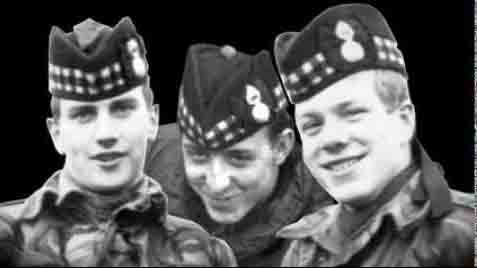












 belfastchildis.com