A car packed with explosives blasted the officers’ mess at Aldershot barracks
—————————-
ALDERSHOT BOMB BLAST
—————————-
The Aldershot bombing was an attack by the Official Irish Republican Army (Official IRA) using a car bomb on 22 February 1972 in Aldershot, England. The bomb targeted the headquarters of the British Army‘s 16th Parachute Brigade and was claimed as a revenge attack for Bloody Sunday. Seven civilian staff were killed and nineteen wounded. It was the Official IRA’s largest attack in Britain during “the Troubles” and one of its last major actions before it declared a ceasefire in May 1972.
The views and opinions expressed in these pages/documentaries are soley intended to educate and provide background information to those interested in the Troubles of Northern Ireland. They in no way reflect my own opinions and I take no responsibility for any inaccuracies or factual errors.
The Bombing
The target of the Official IRA bomb was the headquarters of the 16th Parachute Brigade, elements of which had been involved in the Bloody Sunday shootings. Despite warnings, the ‘open’ garrison meant there was no security or controlled access to the camp.
A Ford Cortina car containing a 280 pounds (130 kg) time bomb was left in the car park, deliberately positioned outside the officer’s mess. The bomb exploded at 12:40 pm on 22 February, destroying the officer’s mess and wrecking several nearby Army office buildings.
The soldiers who were the intended targets were not present, as the regiment itself was stationed abroad and most staff officers were in their offices rather than the mess.
Nonetheless, seven civilian staff were killed five female kitchen staff who were leaving the premises, an elderly gardener, and Father Gerard Weston (a Roman Catholic British Army chaplain).
Nineteen people were also wounded by the explosion. Aside from the priest Weston (38), the others who died during the attack were the gardener
John Haslar (58), the cleaner Jill Mansfield (34); a mother of an eight-year-old boy; as well as four other cleaners named Thelma Bosley (44), Margaret Grant (32), Cherie Munton (20) and Joan Lunn (39).
On 23 February, the Official IRA issued a statement claiming that it had carried out the attack in revenge for Bloody Sunday. It added:
“Any civilian casualties would be very much regretted as our target was the officers responsible for the Derry outrages”.
The Official IRA also said that the bombing would be the first of many such attacks on the headquarters of British Army regiments serving in Northern Ireland.
Aftermath
————————————-
Victims
————————————-
—————-
22 February 1972
Padre Gerry E Weston MBE
Gerry Weston, (38)
nfNIB
Status: British Army (BA),
Killed by: Official Irish Republican Army (OIRA)
Catholic chaplain to British Army. Killed in bomb attack on British Army (BA) base, Aldershot, England
—————-
22 February 1972
Joan Lunn, (39)
nfNIB
Status: Civilian (Civ),
Killed by: Official Irish Republican Army (OIRA)
Killed in bomb attack on British Army (BA) base, Aldershot, England. Civilian employed at the British Army (BA) base.
—————-
22 February 1972
Cherie Munton, (20)
nfNIB
Status: Civilian (Civ),
Killed by: Official Irish Republican Army (OIRA)
Killed in bomb attack on British Army (BA) base, Aldershot, England. Civilian employed at the British Army (BA) base.
—————-
22 February 1972
Thelma Bosley, (44)
nfNIB
Status: Civilian (Civ),
Killed by: Official Irish Republican Army (OIRA)
Killed in bomb attack on British Army (BA) base, Aldershot, England. Civilian employed at the British Army (BA) base.
—————-
22 February 1972
Margaret Grant, (32)
nfNIB
Status: Civilian (Civ),
Killed by: Official Irish Republican Army (OIRA)
Killed in bomb attack on British Army (BA) base, Aldershot, England. Civilian employed at the British Army (BA) base.
—————-
22 February 1972
John Haslar, (58)
nfNIB
Status: Civilian (Civ),
Killed by: Official Irish Republican Army (OIRA)
Killed in bomb attack on British Army (BA) base, Aldershot, England. Civilian employed at the British Army (BA) base.
—————-
22 February 1972
Jill Mansfield, (34)
nfNIB
Status: Civilian (Civ),
Killed by: Official Irish Republican Army (OIRA)
Killed in bomb attack on British Army (BA) base, Aldershot, England. Civilian employed at the British Army (BA) base.
—————-
Funeral of Catholic Priest Padre Gerry E Westoon
As the bomb had killed only civilian staff, the Official IRA received harsh and widespread criticism.
On 29 May 1972, the Official IRA’s leadership called a ceasefire and stated that it would only launch future attacks in self-defence. The Aldershot bombing was believed to have been one of the factors that led to this decision. In November 1972, an OIRA volunteer, Noel Jenkinson, was convicted for his part in the bombing and received a lengthy jail term, dying in prison of heart failure four years later.
The remaining conspirators were never captured. Shortly afterwards, many of the parachute regiment battalions were either disbanded and reorganised, leaving Aldershot. The larger and more militant Provisional IRA continued its campaign and also began to attack military and commercial targets in Britain.
Key Events & Deaths on this day in Northern Ireland Troubles
21st February
Monday 21 February 1972
Justice, Lord Widgery
The first session of the Widgery Tribunal was held in Coleraine, County Derry. A total of 17 sessions were held between the 21 February 1972 and the 14 March 1972. 114 witnesses gave evidence. A further three sessions were held at the Royal Courts of Justice in London on the 16, 17 and 20 March.
Four members of the Irish Republican Army (IRA) died when a bomb they were transporting in a car exploded prematurely on the Knockbreda Road, Belfast.
Friday 21 February 1975
Robert Lowry, then Lord Chief Justice of Northern Ireland, was appointed as the Chairman of the Constitutional Convention.
Monday 21 February 1977
Margaret Thatcher, then leader of the Conservative Party, visited Belfast and Derry.
Saturday 21 February 1981
The Irish Republican Army (IRA) carried out a series of fire bomb attacks on eight shops in Belfast and three in Derry which resulted in damage to all 11 stores.
Tuesday 21 February 1984
Two members of the Irish Republican Army (IRA) and a British Army (BA) soldier were killed in a gun battle between an undercover BA unit and the IRA at Dunloy, County Antrim.
Wednesday 21 February 1990
Ian Paisley, then leader of the Democratic Unionist Party (DUP), and William McCrea, then DUP Member of Parliament (MP), hand in a ‘Hands off the Ulster Defence Regiment (UDR)’ petition to Downing Street.
Thursday 21 February 1991
The High Court in Belfast ruled that actions taken by Belfast City Council to try to exclude Sinn Féin (SF) from the business of the Council were illegal.
Monday 21 February 1994
The Irish Republican Army (IRA) carried out a mortar attack on an Royal Ulster Constabulary (RUC) station in Beragh, County Tyrone. The attack caused extensive damage to the police station and to the surrounding village.
In a British Broadcasting Corporation (BBC) television programme Patrick Mayhew, then Secretary of State, confirmed that two “unauthorised” meetings had taken place between representatives of the IRA and British officials in 1993. However, Mayhew stated that no official had been given permission to say that Britain intended to withdraw eventually from Northern Ireland.
Wednesday 21 February 1996
An area of the centre of Belfast was evacuated because of a bomb scare. It is the first bomb scare in Northern Ireland since the Irish Republican Army (IRA) ceasefire.
John Hume, then leader of the Social Democratic and Labour Party (SDLP), and Gerry Adams, then President of Sinn Féin (SF), met with members of the Irish Republican Army (IRA) Council to discuss the ending of the IRA ceasefire.
The Ulster Unionist Party (UUP) published a document outlining proposals for a 90 member elected body to be based in Stormont, Belfast.
Sunday 21 February 1999
Seven people were arrested in Northern Ireland and the Republic of Ireland in connection with the Omagh bombing.
[One man was later charged on 24 February with offences related to the bombing but most of those arrested were released without charge by 25 February 1999.]
Wednesday 21 February 2001
Political Discussions
David Trimble, then leader of the Ulster Unionist Party (UUP), travelled to London for a meeting with Tony Blair, then British Prime Minister, at Downing Street. Trimble stated that the Good Friday Agreement was moving towards a review because of a lack of progress on disarmament.
Blair also held meetings with other pro-Agreement parties. Seamus Mallon, then deputy leader of the Social Democratic and Labour Party (SDLP), said there was a real risk that the Agreement might collapse within a week.
Thursday 21 February 2002
Matthew Burns (26) was shot and killed and his brother Patrick Burns was shot and injured as they sat in a car in Castlewellan, County Down, at approximately 7.00pm (1900GMT). Matthew Burns had survived a bomb attack and a paramilitary punishment attempt within the past two years.
[Sinn Féin later denied claims that the Irish Republican Army (IRA) had killed Burns over alleged drug-dealing.]
A man was shot in the wrist in a paramilitary ‘punishment’ attack in north Belfast. The man was taken from his house and driven to an alleyway off the New Lodge Road he was shot.
There was major traffic disruption when an explosive device (pipe-bomb) was found on the Castledawson to Toomebridge Road, County Antrim.
The Northern Ireland Policing Board (NIPB) held a meeting to discuss the appointment of a successor to Ronnie Flanagan, then Chief Constable of the Police Service of Northern Ireland (PSNI). The NIPB was split on the matter of whether Flanagan should be asked to remain on while a successor was found or whether his Deputy should be asked to fill the post in the interim period. It took the casting vote of the Chairman who supported the former option.
Lawyers representing relatives of the victims of Bloody Sunday began an action at the Court of Appeal to challenge a decision by the High Court in Belfast (on Tuesday 19 February 2002) not to prevent police witnesses being screened when giving evidence at the Inquiry.
[The families said that they were challenging the ruling because they believed it could be followed by applications by soldiers to also give evidence from behind screens.]
Two Irishmen appeared at the Old Bailey in London charged in relation to “real” Irish Republican Army (rIRA) bomb attacks in London and Birmingham during 2001.
[The men were remanded in custody to reappear in court on May 20th. Two other men are in custody charged in connection with the bombs.]
———————————————————————
Remembering all innocent victims of the Troubles
Today is the anniversary of the death of the following people killed as a results of the conflict in Northern Ireland
“To live in hearts we leave behind is not to die
– Thomas Campbell
To the innocent on the list – Your memory will live forever
– To the Paramilitaries –
There are many things worth living for, a few things worth dying for, but nothing worth killing for.
13 People lost their lives on the 21st February between 1972– 1988
—————————————————————————
21 February 1972 Gerard Steele, (27)
Catholic Status: Irish Republican Army (IRA),
Killed by: Irish Republican Army (IRA)
Died in premature bomb explosion while travelling in car along Knockbreda Road, near to Castlereagh Road roundabout, Belfast.
—————————————————————————
21 February 1972 Gerard Bell, (20)
Catholic Status: Irish Republican Army (IRA),
Killed by: Irish Republican Army (IRA)
Died in premature bomb explosion while travelling in car along Knockbreda Road, near to Castlereagh Road roundabout, Belfast.
—————————————————————————
21 February 1972 Joseph Magee, (31)
Catholic Status: Irish Republican Army (IRA),
Killed by: Irish Republican Army (IRA)
Died in premature bomb explosion while travelling in car along Knockbreda Road, near to Castlereagh Road roundabout, Belfast.
—————————————————————————
21 February 1972 Robert Dorrian, (28)
Catholic Status: Irish Republican Army (IRA),
Killed by: Irish Republican Army (IRA)
Died in premature bomb explosion while travelling in car along Knockbreda Road, near to Castlereagh Road roundabout, Belfast.
—————————————————————————
21 February 1973 Michael Doyle, (20)
nfNI Status: British Army (BA),
Killed by: Irish Republican Army (IRA)
Shot while on guard duty outside Fort Pegasus British Army (BA) base, Whiterock Road, Ballymurphy, Belfast.
—————————————————————————
21 February 1973 Leonard Durber, (26)
nfNI Status: British Army (BA),
Killed by: not known (nk)
Died four months after being hit on the head by missile thrown from crowd, during street disturbances, while travelling in British Army (BA) civilian type car, Newtownards Road, Belfast. He was injured on 5 October 1972.
—————————————————————————
21 February 1974 Hugh Devlin, (82)
Catholic Status: Civilian (Civ),
Killed by: Ulster Freedom Fighters (UFF)
Killed in bomb attack on Spa Inn, Spamount Street, New Lodge, Belfast.
—————————————————————————
21 February 1983
Gordon Wilson, (29)
Protestant Status: Royal Ulster Constabulary (RUC),
Killed by: Irish Republican Army (IRA)
Killed by remote controlled bomb, hidden in derelict building, while on Royal Ulster Constabulary (RUC) foot patrol, Lower English Street, Armagh.
—————————————————————————
21 February 1984
Paul Oram, (26)
nfNI Status: British Army (BA),
Killed by: Irish Republican Army (IRA)
Killed in gun battle between undercover British Army (BA) members and Irish Republican Army (IRA) members, Dunloy, near Ballymoney, County Antrim.
—————————————————————————
21 February 1984
Declan Martin, (18)
Catholic Status: Irish Republican Army (IRA),
Killed by: British Army (BA)
Killed in gun battle between undercover British Army (BA) members and Irish Republican Army (IRA) members, Dunloy, near Ballymoney, County Antrim.
—————————————————————————
21 February 1984
Henry Hogan, (21)
Catholic Status: Irish Republican Army (IRA),
Killed by: British Army (BA)
Killed in gun battle between undercover British Army (BA) members and Irish Republican Army (IRA) members, Dunloy, near Ballymoney, County Antrim
—————————————————————————
21 February 1985
Francis Murphy, (30)
Catholic Status: Royal Ulster Constabulary (RUC),
Killed by: Irish Republican Army (IRA)
Shot while driving Royal Ulster Constabulary (RUC) civilian type minibus, Drumsallen, near Armagh
—————————————————————————
21 February 1988
Aidan McAnespie, (24)
Catholic Status: Civilian (Civ),
Killed by: British Army (BA)
Shot while walking past permanent British Army (BA) Vehicle Check Point (VCP), Aughnacloy, County Tyrone
—————————————————————————
My autobiography: A Belfast Child is now available to pre-order on Amazon , launch date is 30th April.
The views and opinions expressed in this documentary and page are soley intended to educate and provide background information to those interested in the Troubles of Northern Ireland.
They in no way reflect my own opinions and I take no responsibility for any inaccuracies or factual errors
———————————————
The Military Reaction Force, Military Reconnaissance Force or Mobile Reconnaissance Force (MRF)was a covert intelligence-gathering and counter-insurgency unit of the British Army active in Northern Ireland, during the Troubles/Operation Banner. The unit was formed during the summer of 1971 and operated until late 1972 or early 1973. MRF teams operated in plain-clothes and civilian vehicles, equipped with pistols and sub-machine guns.
They were nominally tasked with tracking down and arresting, or killing, suspected members of the Irish Republican Army (IRA). The MRF also ran double agents within the paramilitary groups and ran a number of front companies to gather intelligence. In October 1972, the Provisional IRA uncovered and attacked two of the MRF’s front companies—a mobile laundry service and a massage parlour—which contributed to the unit’s dissolution. One former member of the unit has described it as a “legalised death squad“.
The MRF was established in the summer of 1971. It appears to have its origins in ideas and techniques developed by British Army Brigadier Sir Frank Kitson, who had created “counter gangs” to defeat the Mau Mau in Kenya. He was the author of two books on counter-insurgency tactics: Gangs & Counter Gangs (1960) and Low Intensity Operations (1971). From 1970 to 1972, Kitson served in Northern Ireland as commander of the 39th Infantry Brigade. It has been claimed that he was responsible for establishing the MRF and that the unit was attached to his Brigade.
The MRF was based at Palace Barracks in the Belfast suburb of Holywood. The MRF’s first commander was Captain Arthur Watchus. In June 1972, he was succeeded as commander by Captain James ‘Hamish’ McGregor. It was split into squads, each of which was led by a Senior NCO who had served in the Special Air Service (SAS), Special Boat Service (SBS), the Royal Marines or the Parachute Regiment. The unit consisted of up to 40 men, handpicked from throughout the British Army. It also included a few women. nAccording to military sources, the MRF would have up to nine soldiers deployed at any one time, with nine more on standby and the others resting.
Modus operandi
In March 1994, the UK’s Junior Defence Minister Jeremy Hanley issued the following description of the MRF in reply to a parliamentary written question: “The MRF was a small military unit which, during the period 1971 to 1973, was responsible for carrying out surveillance tasks in Northern Ireland in those circumstances where soldiers in uniform and with Army vehicles would be too easily recognized”.
Martin Dillon described the MRF’s purpose as being “to draw the Provisional IRA into a shooting war with loyalists in order to distract the IRA from its objective of attacking the Army”.
Many details about the unit’s modus operandi have been revealed by former members. One issued a statement to the Troops Out Movement in July 1978. In 2012–13, a former MRF member using the covername ‘Simon Cursey’ gave a number of interviews and published the book MRF Shadow Troop about his time in the unit. In November 2013, a BBCPanorama documentary was aired about the MRF. It drew on information from seven former members, as well as a number of other sources.
The MRF had both a “defensive” surveillance role and an “offensive” role. MRF operatives dressed like civilians and were given fake identities and unmarked cars equipped with two-way radios. They patrolled the streets in these cars in teams of two to four, tracking down and arresting or killing suspected IRA members.
They were armed with Browning pistols and Sterling sub-machine guns. Former MRF members admitted that the unit shot unarmed people without warning, both IRA members and civilians, knowingly breaking the British Army’s Rules of Engagement. Former MRF members claim they had a list of targets they were ordered to “shoot on sight”, the aim being to “beat them at their own game” and to “terrorise” the republican movement. According to Cursey, the unit was told that these tactics had British Government backing, “as part of a deeper political game”.
He said his section shot at least 20 people:
“We opened fire at any small group in hard areas […] armed or not – it didn’t matter. We targeted specific groups that were always up to no good. These types were sympathisers and supporters, assisting the IRA movement. As far as we were concerned they were guilty by association and party to terrorist activities, leaving themselves wide open to the ultimate punishment from us”.
Cursey mentions two occasions where MRF members visited pubs and “eliminated” IRA members. One member interviewed for the BBC’s Panorama, Soldier F, said “We were not there to act like an army unit, we were there to act like a terror group“.
Soldier H said “We operated initially with them thinking that we were the UVF“, to which Soldier F added: “We wanted to cause confusion”. Another said that their role was “to draw out the IRA and to minimise their activities”. They said they fired on groups of people manning defensive barricades, on the assumption that some might be armed. The MRF member who made a statement in 1978 opined that the unit’s role was one of “repression through fear, terror and violence”. He said that the unit had been trained to use weapons favoured by the IRA.
Republicans argued that the MRF deliberately attacked civilians for two main reasons: firstly, to draw the IRA into a sectarian conflict with loyalists and divert it from its campaign against the state; and secondly, to show Catholics that the IRA could not protect them, thus draining its support.
The MRF’s surveillance operations included the use of front companies (see below) and disguises. Former members claim they posed as road sweepers, dustmen and even homeless meths-drinkers while carrying out surveillance. The MRF is known to have used double agents referred to as ‘Freds’. These were republican or loyalist paramilitaries who were recruited by British Military Intelligence. The Freds would work inside paramilitary groups, feeding back information to the MRF. They were also ferried through Belfast in armoured cars, and through the gunslit would point-out paramilitary individuals of note. Through this method the MRF compiled extensive photographs and dossiers of Belfast militants of both factions.
According to Cursey, the MRF also abducted and interrogated people for information. They used shock treatment on prisoners to force them to give information. This involved immediately breaking one of the suspects’ arms and threatening to break their other arm. Cursey says that they then “dropped them off at the roadside for the uniformed forces to pick up later”.
——————————–
BBC Panorama – Shoot to kill, lethal force
——————————–
Attacks on civilians
In 1972, MRF teams carried out a number of drive-by shootings in Catholic and Irish nationalist areas of Belfast, some of which had been attributed to Ulster loyalist paramilitaries. At least fifteen civilians were shot. MRF members have affirmed the unit’s involvement in most of these attacks. There are also allegations that the unit helped loyalists to carry out attacks.
The explosion caused the building to collapse, killing fifteen Catholic civilians and wounding seventeen more. It was the deadliest attack in Belfast during the Troubles.[ The book Killing For Britain (2009), written by former UVF member ‘John Black’, claims that the MRF organized the bombing and helped the bombers get in and out of the area.
Two days before the bombing, republican prisoners had escaped from nearby Crumlin Road Prison. Security was tightened and there were many checkpoints in the area at the time. However, locals claimed that the security forces helped the bombers by removing the checkpoints an hour before the attack.
One of the bombers—Robert Campbell—said that their original target had been The Gem, a nearby pub that was allegedly linked to the Official IRA. It is claimed the MRF plan was to help the UVF bomb The Gem, and then blame the bombing on the Provisional IRA. This would start a feud between the two IRA factions, diverting them from their fight against the security forces and draining their support. Campbell said that The Gem had security outside and, after waiting for almost an hour, they decided to bomb the nearest ‘Catholic pub’ instead. Immediately after, the security forces claimed that a bomb had accidentally exploded while being handled by IRA members inside McGurk’s.
‘Secret British Army hits’ on IRA Watch extracts from BBC expose
———————————————
Whiterock Road shooting
On 15 April 1972, brothers Gerry and John Conway—both Catholic civilians—were walking along Whiterock Road to catch a bus. As they passed St Thomas’s School, a car stopped and three men leapt out and began shooting at them with pistols. The brothers ran but both were shot and wounded.
Witnesses said one of the gunmen returned to the car and spoke into a handset radio. Shortly after, two armoured personnel carriers arrived and there was a conversation between the uniformed and the plainclothes soldiers. The three vehicles then left, and the brothers were taken by ambulance to the Royal Victoria Hospital. The British Army told journalists that a patrol had encountered two wanted men, that one fired at the patrol and that the patrol returned fire.
In a 1978 interview, a former MRF member claimed he had been one of the gunmen. He confirmed that the brothers were unarmed, but claimed his patrol had mistaken the brothers for two IRA men whom the MRF were ordered to “shoot on sight”.
Andersonstown shootings
On 12 May 1972, the British government announced there would be no disciplinary action against the soldiers involved in Bloody Sunday. That night, MRF teams shot seven Catholic civilians in the Andersonstown area.
Patrick McVeigh
An MRF team in an unmarked car approached a checkpoint manned by members of the Catholic Ex-Servicemen’s Association (CESA) at the entrance to Riverdale Park South. The CESA was an unarmed vigilante organization set up to protect Catholic areas. The car stopped and then reversed. One of the MRF men opened-fire from the car with a sub-machine gun, killing Catholic civilian Patrick McVeigh (44) and wounding four others.
The car continued on, turned, and then drove past the scene of the shooting. All of the men were local residents and McVeigh, who was shot through the back, had stopped to chat to the CESA members as he walked home. He was a married father of six children. The British Army told journalists that gunmen in a passing car had fired indiscriminately at civilians and called it an “apparently motiveless crime”. The car had come from a Protestant area and had returned the same way. This, together with the British Army statement, implied that loyalists were responsible.
An inquest into the attack was held in December 1972, where it was admitted that the car’s occupants were soldiers belonging to an undercover unit known as the MRF. The soldiers did not appear at the inquest but issued statements to it, claiming they had been shot at by six gunmen and were returning fire. However, eyewitnesses said none of the CESA members were armed and this was supported by forensic evidence. The MRF members involved were never prosecuted.
Former MRF member ‘Simon Cursey’ claimed the unit fired on the men because they included IRA members who were on their ‘wanted’ list. However, there is no evidence that any were in the IRA. An MRF member stated in 1978 that the British Army’s intention was to make it look like a loyalist attack, thus provoking sectarian conflict and “taking the heat off the Army”.
Minutes before the shooting at the checkpoint, two other Catholic civilians had been shot nearby by another MRF team. The two young men—Aidan McAloon and Eugene Devlin—had got a taxi home from a disco and were dropped off at Slievegallion Drive. As they began walking along the street, in the direction of a vigilante barricade, the MRF team opened fire on them from an unmarked car. The MRF team told the Royal Military Police that they had shot a man who was firing a rifle. Witnesses said there was no gunman on the street and police forensics experts found no evidence that McAloon or Devlin had fired weapons.
Two weeks later, on 27 May, Catholic civilian Gerard Duddy (20) was killed in a drive-by shooting at the same spot where Patrick McVeigh was killed. His death was blamed on loyalists.
Killing of Jean Smith
Jean Smith
On the night of 9 June 1972, Catholic civilian Jean Smith (or Smyth) was shot dead on the Glen Road. Jean was a 24-year-old mother of one. She was shot while sitting in the passenger seat of a car at the Glen Road bus terminus. As her male companion turned the car, he heard what he thought was a tyre bursting. When he got out to check, the car was hit by a burst of automatic gunfire. Smith was shot in the head and died shortly after. Her companion stopped a passing taxi and asked the driver to take her to hospital. However, the taxi was then stopped by police and diverted to Andersonstown RUC base, where they were held for several hours.
The security forces blamed the killing on the IRA. In October 1973, however, the Belfast Telegraph published an article suggesting that Smith could have been shot by the MRF. Documents uncovered from the British National Archives reveal that the MRF fired shots in the area that night. They claim to have fired at two gunmen and hit one of them.
The Belfast Telegraph article also suggested that Smith could have been shot by the IRA, who fired on the car thinking it was carrying MRF members. The IRA deny this and claim that it was not in the area at the time of the shooting.
Two weeks after Smith’s killing, the MRF fired on a car at the same spot, wounding four people.
Glen Road shooting
On 22 June 1972, the Provisional IRA announced that it would begin a ceasefire in four days, as a prelude to secret talks with the British Government. That afternoon, MRF members in an unmarked car shot and wounded three Catholic men standing by a car at Glen Road bus terminus. A man in a nearby house was also wounded by the gunfire. Shortly after, the MRF unit’s car was stopped by the Royal Ulster Constabulary (RUC) and they were arrested. Inside was a Thompson sub-machine gun, “for years the IRA’s favourite weapon”.
One of the MRF members—Clive Graham Williams—was charged with attempted murder. He told the court that two of the men had been armed and one had fired at the MRF car. He claimed he was returning fire. Witnesses said that none of the civilians were armed and that it was an unprovoked attack. Police forensics experts found no evidence that the civilians had fired weapons. However, key witnesses were not called to give evidence in person and Williams was acquitted on 26 June 1973.
He was later promoted and awarded the Military Medal for bravery.
St James’s Crescent shooting
On the night of 27 September 1972, the MRF shot dead Catholic civilian Daniel Rooney and wounded his friend Brendan Brennan. They were shot from a passing car while standing on a street corner at St James’s Crescent, in the Falls district. The British Army told journalists that the two men fired at an undercover patrol and that the patrol returned fire. It further claimed that the two men were IRA members. The IRA, the men’s families, and residents of the area denied this, and Rooney’s name has never appeared on a republican roll of honour. An inquest was held in December 1973. The court was told that forensic tests on the men’s hands and clothing found no firearms residue. The six soldiers involved repeated the British Army’s claim, but they did not appear at the inquest. Their statements were read by a police officer and they were referred to by initials. In 2013, former MRF member ‘Simon Cursey’ again claimed that they were returning fire, but said that only one of the men was armed.
New Lodge Six
There are also allegations that the MRF was involved in a drive-by shooting in the Catholic New Lodge area on 3 February 1973. The car’s occupants opened fire on a group of young people standing outside a pub on Antrim Road, killing IRA members James Sloan and James McCann and wounding others. The gunmen drove on and allegedly fired at another group of people outside a takeaway. In the hours that followed, a further four people—an IRA member and three civilians—were shot dead in the area by British snipers. The dead became known as the “New Lodge Six”.
In June 1973, the Northern Ireland Civil Rights Association issued advice on how to behave in the event of being “shot by MRF/SAS squads”, saying for example that people should “pretend to be dead until the squad moves away”.
Front companies
The MRF ran a number of front companies in Belfast during the early 1970s. They included Four Square Laundry (a mobile laundry service operating in nationalist West Belfast) and the Gemini massage parlour on Antrim Road.[36]The MRF also had an office at College Square. All were set up to gather intelligence on the Provisional Irish Republican Army (IRA) and Irish nationalist movement.
A Four Square van visited houses in nationalist West Belfast twice a week to collect and deliver laundry. One “employee” (a young man) drove the van while another (a young woman) collected and delivered the laundry. Both were from Northern Ireland. Four Square initially gathered customers by offering “discount vouchers”, which were numbered and colour-coded by street.
Clothes collected for washing were first forensically checked for traces of explosives, as well as blood or firearms residue. They were also compared to previous laundry loads from the same house—the sudden presence of different-sized clothes could indicate that the house was harbouring an IRA member. Surveillance operatives and equipment were hidden in the back of the van or in a compartment in the roof. Further intelligence was gathered by staff observing and “chatting” to locals whilst collecting their laundry.
Kevin McKee
However, in September 1972 the IRA found that two of its members—Seamus Wright and Kevin McKee—were working for the MRF as double agents. Under interrogation, McKee told the IRA about the MRF’s operations, including the laundry and the massage parlour. The leaders of the Provisional IRA Belfast Brigade ordered that the companies immediately be put under surveillance. This surveillance confirmed that McKee’s information was correct.
Following these revelations, the leaders of the IRA’s Belfast Brigade planned an operation against the MRF, which was to take place on 2 October 1972. The 2nd Battalion would attack the Four Square Laundry van and the office at College Square, while the 3rd Battalion would raid the massage parlour. At about 11:20AM[ on 2 October, IRA volunteers ambushed the Four Square Laundry van in the nationalist Twinbrook area of West Belfast. Four volunteers were involved: one drove the car while three others did the shooting..
They shot dead the driver, an undercover British soldier of the Royal Engineers, and machine-gunned the roof compartment where undercover operatives were thought to be hiding. The other Four Square employee—a female operative from the Women’s Royal Army Corps (WRAC)—was collecting and delivering laundry from a nearby house at the time. The residents, who thought that loyalists were attacking the van, took her into the house and kept her safe. The woman was later secretly invested at Buckingham Palace with an MBE.
About an hour later, the same IRA unit raided College Square but found nobody there. Meanwhile, a unit of the 3rd Battalion made for the room above the massage parlour, which they believed was being using to gather intelligence. They claimed to have shot three undercover soldiers: two men and a woman. According to some sources, the IRA claimed to have killed two surveillance officers allegedly hidden in the laundry van, and two MRF members at the massage parlour.
However, the British military only confirmed the death of the van driver on that day. Brendan Hughes said that the operation “was a great morale booster for the IRA and for the people that were involved”.
The MRF, realising its undercover operations were blown, disbanded the units and was itself disbanded shortly afterwards.Nevertheless, the incident was believed to have prompted the establishment of a new undercover intelligence unit: the 14 Intelligence Company (also known as “The Det”).
Make a small donation
Thank you!
My autobiography: A Belfast Child is now available to pre-order on Amazon , launch date is 30th April.
Key Events & Deaths on this day in Northern Ireland Troubles
20th February
———————————————–
Tuesday 20 February 1973
Cupar Street
Two members of the British Army were shot dead by the Irish Republican Army (IRA) in an attack in Cupar Street, Belfast.
Thursday 20 February 1975
A feud began between the Official Irish Republican Army (OIRA) on one side and the Irish Republican Socialist Party (IRSP) and the Irish National Liberation Army (INLA) on the other.
Hugh Ferguson (19), then chairman of Whiterock IRSP, was shot dead at his place of work in Ballymurphy, Belfast
. It was believed that the OIRA were responsible for this killing.
[There were further incidents on: 25 February 1975, 6 April 1975, 12 April 1975, 28 April 1975, and 5 June 1975, before this particular feud ended.]
A Catholic civilian was shot dead by Loyalists in Belfast.
[Public Records 1975 – Released 1 January 2006: Telegram sent by James Callaghan, then British Foreign Secretary, to the British Ambassador in Dublin.
The telegram contains notes about matters related to Northern Ireland that Callaghan wanted the Ambassador to raise with Liam Cosgrave, then Taoiseach (Irish Prime Minister).]
Tuesday 20 February 1979
‘Shankill Butchers’ Sentenced
A group of 11 Loyalists known as the ‘Shankill butchers’ were sentenced to life imprisonment for 112 offences including 19 murders. The 11 men were given 42 life sentences and received 2,000 years imprisonment, in total, in the form of concurrent sentences.
Lenny Murphy
[The Shankill Butchers had begun killing Catholics in July 1972 and were not arrested until May 1977. The Loyalist gang operated out of a number of Ulster Volunteer Force (UVF) drinking dens in the Shankill Road area of Belfast.
The gang was initially led by Lenny Murphy but it continued to operate following his imprisonment in 1976. The Shankill Butchers got their name because not only did they kill Catholics but they first abducted many of their victims, tortured them, mutilated them with butcher knives and axes, and then finally killed them.]
Patrick Reynolds (24), then an Officer in the Garda Síochána (the Irish police), was shot dead by the Irish National Liberation Army (INLA) when he went to a house in Avonbeg Gardens, Tallaght, Dublin.
Wednesday 20 February 1985
Margaret Thatcher, the then British Prime Minister, travelled to the United States of America (USA) and addressed the US Congress. In her speech she called on Americans not to give money to organisations, such as NORAID (Irish Northern Aid Committee), that were believed to support Republican paramilitaries in Northern Ireland.
Monday 20 February 1989
The Irish Republican Army (IRA) exploded three bombs in British Army barracks at Tern Hill, Shropshire, England.
Tuesday 20 February 1990
John Hume, then leader of the Social Democratic and Labour Party (SDLP), and Peter Brooke, then Secretary of State for Northern Ireland, met to discuss the possibility of political talks.
Sunday 20 February 1994
John Hume, then leader of the Social Democratic and Labour Party (SDLP), called on the British government to provide Sinn Féin (SF) with clarification of the Downing Street Declaration (DSD). Dick Spring, then Tánaiste, said that he believed clarification had already been provided.
Monday 20 February 1995
There were clashes between Republicans and Royal Ulster Constabulary (RUC) officers at the Sinn Féin (SF) offices in Derry. Seven SF members were arrested.
James Molyneaux, then leader of the Ulster Unionist Party (UUP), Ian Paisley, then leader of the Democratic Unionist Party (DUP), and John Hume, then leader of the Social Democratic and Labour Party (SDLP), held a meeting at Westminster, London.
Tuesday 20 February 1996
John Major, then British Prime Minister, held talks with David Trimble, then leader of the Ulster Unionist Party (UUP), in Downing Street, London. Dick Spring, then Tánaiste (deputy Irish Prime Minister and Minister for Foreign Affairs), accepted the offer of talks (issued on 18 February 1996) with David Trimble.
Thursday 20 February 1997
There was a report in the Irish News that a Catholic woman who worked at the Northern Ireland Office (NIO) had received damages for sectarian harassment by an aide of Baroness Denton.
It was revealed that the Catholic woman had been moved from her post while the aide responsible for the harassment had been allowed to remain in her post as Denton’s Private Secretary. This was in clear breach of Fair Employment guidelines on such circumstances.
In an article in the Irish News John Hume, then leader of the Social Democratic and Labour Party (SDLP), said that if the Irish Republican Army (IRA) were not prepared to call a new ceasefire then he would “look elsewhere” for political progress.
The parades committee of the Northern Ireland Forum turned down a request by the Garvaghy Road Residents Coalition to make a submission on the issue of parades and marches in its area. The reason given was that the deadline for submissions had passed.
The ‘Bloody Sunday’ Justice Campaign met with the leaders of the Republic of Ireland government as well the leader of Fianna Fáil (FF).
Edward Heath, former British Prime Minister, was criticised by Nationalists for comments he made about the late Chinese leader Deng Xiaoping and his part in the Tiananmen Square massacre in 1989. Speaking on the British Broadcasting Corporation (BBC) programme Newsnight Heath said that “we can criticise it [the massacre] in exactly the same way as people criticise ‘Bloody Sunday’ in Northern Ireland, but that isn’t, by any means, the whole story.”
Friday 20 February 1998
Sinn Féin Expelled from Talks
The Continuity Irish Republican Army (CIRA) exploded a large car bomb, estimated at 500 pounds, outside the Royal Ulster Constabulary (RUC) station in the centre of Moria, County Down. The bomb caused extensive damage to a number of commercial and private premises in the centre of the village.
Eleven people, mostly RUC officers, received slight injuries in the explosion.
Sinn Féin (SF) were formally expelled from the multi-party talks by the British and Irish governments because of allegations of Irish Republican Army (IRA) involvement in two killings in Belfast on 9 and 10 February 1998. The deadline for the return of SF was set as 9 March 1998.
The British and Irish governments issued a statement setting out the reasons why they had taken the decision to exclude Sinn Féin (SF) from the talks. Gerry Adams, then President of SF, described the expulsion as “disgraceful”. Unionists reacted angrily to the 17 day exclusion considering it too short.
[SF organised a number of street protests over the next few days to highlight its opposition to the decision. SF rejoined the talks on 23 March 1998.]
Wednesday 20 February 2002
There was traffic disruption when an explosive device (pipe-bomb) was found on the Glenshane Road, County Derry. The device had been left by Loyalist paramilitaries.
[This was one of a series of attacks over a four-day period. On Saturday 22 February 2002 the Assistant Chief Constable said he believed the Ulster Volunteer Force (UVF) was responsible for the attacks.]
Four men arrested on Sunday 17 February 2002 appeared at East Tyrone Magistrate’s Court in Cookstown on charges of conspiracy to murder members of the security forces and also possession of a grenade launcher and warhead.
About 50 people, mainly friends and relations of the four men, were involved in scuffles with the police when the men were brought to the court. The men all denied the charges. The men were remanded in custody until 19 March 2002.
Scene of the Omagh Bomb
Groups representing those killed in the Omagh bomb (15 August 1998) met in London to launch a fund-raising campaign to obtain the £2 million required to bring a civil action against those believed to be responsible for the bomb attack.
The meeting was attended by Bob Geldof, musician and Live Aid founder, Barry McGuigan, a former world boxing champion, and Peter Mandelson, former Secretary of State for Northern Ireland.
[The appeal was launched in August 2000 and had raised £800,000. The deadline for raising the funding is August 2002.]
Relatives of those killed in the Omagh bomb wrote a letter to Ronnie Flanagan, then Chief Constable of the Police Service of Northern Ireland (PSNI), asking for “an independent senior investigation officer” to lead the police investigation. Flanagan later stated that he had no intention of removing the current investigating officer.
Today is the anniversary of the death of the following people killed as a results of the conflict in Northern Ireland
“To live in hearts we leave behind is not to die
– Thomas Campbell
To the innocent on the list – Your memory will live forever
– To the Paramilitaries –
There are many things worth living for, a few things worth dying for, but nothing worth killing for.
7 People lost their lives on the 20th February between 1973– 1989
—————————————————————————
20 February 1973 Malcolm Shaw, (23)
nfNI Status: British Army (BA),
Killed by: Irish Republican Army (IRA)
Shot by snipers while on British Army (BA) mobile patrol, Cupar Street, Lower Falls, Belfast.
—————————————————————————
20 February 1973 Robert Pearson, (19)
nfNI Status: British Army (BA),
Killed by: Irish Republican Army (IRA)
Shot by snipers while on British Army (BA) mobile patrol, Cupar Street, Lower Falls, Belfast.
—————————————————————————
20 February 1975 Gerard McKeown, (20)
Catholic Status: Civilian (Civ),
Killed by: non-specific Loyalist group (LOY)
Killed in bomb attack on Railway Bar, Shore Road, Greencastle, Belfast
—————————————————————————
20 February 1975
Hugh Ferguson (19)
Catholic Status: Civilian Political Activist (CivPA),
Killed by: Official Irish Republican Army (OIRA)
Irish Republican Socialist Party (IRSP) member. Shot at his workplace, building site, Whiterock Drive, Ballymurphy, Belfast. Official Irish Republican Army (OIRA) / Irish National Liberation (INLA) Army feud.
—————————————————————————
20 February 1982 Patrick Reynolds, (24)
nfNIRI Status: Garda Siochana (GS),
Killed by: Irish National Liberation Army (INLA)
Shot when called to house, Avonbeg Gardens, Tallaght, Dublin.
—————————————————————————
20 February 1983
Edward Magill, (20)
Protestant Status: Royal Ulster Constabulary (RUC),
Killed by: Irish Republican Army (IRA)
Shot from passing car while standing outside Warrenpoint Royal Ulster Constabulary (RUC) base, County Down.
—————————————————————————
20 February 1989
Patrick Feeny, (32)
Catholic Status: Civilian (Civ), Killed by: Ulster Freedom Fighters (UFF)
Security man. Shot at his workplace, Liddle’s factory, Donaghcloney, near Dromore, County Down.
—————————————————————————
My autobiography: A Belfast Child is now available to pre-order on Amazon , launch date is 30th April.
As a teenager growing up in Glencairn, a bleak loyalist council estate in West Belfast there was little to do apart from joy riding, rioting and fighting with the gangs from the top and bottom of the estate.
I couldn’t drive , was bored of rioting and so like many of my peers I turned to drugs to escape the madness around me and block out the car crash that was my tragic young life.
I was 14 years old and my dad had just died after a long brutal struggle with cancer and I was missing him terribly, I didn’t know if my mum was alive or dead and all around me was death and destruction as Belfast tore itself apart and the paramilitaries waged a brutal sectarian war and the slaughter…
Key Events & Deaths on this day in Northern Ireland Troubles
19th February
———————————————
Wednesday 19 February 1969
People’s Democracy March
Tuesday 19 February 1974
Patrick Moll John Wylie
A Catholic civilian and a Protestant civilian were killed in a bomb attack on Trainor’s public house, near Loughgall, County Armagh.
Thursday 19 February 1981
James Molyneaux
James Molyneaux, then leader of the Ulster Unionist Party (UUP), dismissed as ‘ludicrous’ claims by Ian Paisley, then leader of the Democratic Unionist Party (DUP), that the UUP were conspiring to kill him.
Friday 19 February 1982
The DeLorean Motor Company was put into receivership. [The remaining jobs were lost when the factory in west Belfast closed in May 1982. The government had provided public funds of £80 million, most of these were lost with the collapse of the company.]
Tuesday 19 February 1985
The government in the Republic of Ireland introduced legislation that allowed it to freeze the bank accounts of people believed to be holding funds on behalf of paramilitary organisations.
Thursday 19 February 1987
A general election was held in the Republic of Ireland.
[Fianna Fáil won 81 seats, three short of an overall majority. A minority government was formed on 10 March 1987.]
Monday 19 February 1990
A British Broadcasting Corporation (BBC) programme on the Ulster Defence Regiment (UDR) was shown as part of the ‘Panorama’ series. The programme highlighted the number of members of the UDR who had been convicted of serious offences.
———————————
A tribute to the Ulster Defence Regiment
———————————
[The programme sparked an intense debate on the future of the regiment.]
Wednesday 19 February 1992
Joe Doherty, a former member of the Irish Republican Army (IRA), was deported from the United States of America (USA) to Northern Ireland.
Saturday 19 February 1994
Albert Reynolds, then Taoiseach (Irish Prime Minister), held a meeting with John Major, then British Prime Minister, in Downing Street, London.
Thursday 19 February 1998
The body of Kevin Conway (39), a Catholic civilan from Lurgan, County Armagh, was discovered in a derelict farmhouse near Aghalee, County Antrim.
Conway had been abducted from his home on 17 February 1998 and was shot in the head.
[The Royal Ulster Constabulary (RUC) later blamed local Irish Republican Army (IRA) elements for the killing.]
Two letter bombs were sent to the homes of Nationalists in the Ardoyne area of Belfast, and to the village of Toombridge, County Antrim.
Friday 19 February 1999
A rally in support of the Orange Order’s stand on the Drumcree parade was held in Portadown, County Armagh. Following the rally approximately 100 young people attacked Royal Ulster Constabulary (RUC) officers.
The Northern Ireland Bar Council stated that it supported a United Nations call for a judicial inquiry into the killing of Pat Finucane on 12 February 1989.
Saturday 19 February 2000
David McIlwaine Andrew Robb
Two Protestant men, David McIlwaine (18) and Andrew Robb (19), were found stabbed to death, by the side of the road near Tandregee, County Armagh. The Ulster Volunteer Force (UVF) was believed to have been responsible for the killings.
[There was some speculation in the media at the time that the killings were part of a feud between Loyalist paramilitaries however this turned out not to be the case.]
David Shayler
David Shayler, a former intelligence officer with MI5, alleged that British intelligence services believed that John Lennon, former member of the Beatles, had given funds to the Irish Republican Army (IRA).
Tuesday 19 February 2002
It was announced that Ronnie Flanagan, then Chief Constable of the Police Service of Northern Ireland (PSNI), would be appointed as one of Her Majesty’s Inspectors of Constabulary.
[Flanagan had given notice of his resignation from the PSNI in November and was expected to stand down at the end of February.]
The Ulster Unionist Party (UUP) undertook a reshuffle of its posts at Stormont. Sam Foster (70), then Environment Minister, was replace by Dermot Nesbitt who had been a junior minister in the Office of the First Minster and Deputy First Minister. Nesbitt’s position was filled by James Leslie.
The High Court in Belfast rejected an application to prevent police witnesses from giving evidence to the Bloody Sunday Inquiry from behind screens. The action was taken on behalf of one of the families of those killed was an attempt to change the Inquiry’s decision to allow police evidence to be given from behind a screen.
At a meeting of Fermanagh District Council, Sinn Féin (SF) introduced a motion to have all Royal and military symbols removed from the council offices. The motion was rejected and a Social Democratic and Labour Party (SDLP) amendment to establish a sub-committee to consider ways of creating a neutral environment was accepted instead.
[SF had argued that the best place for the symbols was the local museum.]
As part of a nation-wide protest students in Northern Ireland gathered at the Northern Ireland Assembly building to protest about the continued poverty of those in third level education.
[Student demands included the abolition of tuition fees and the restoration of grants and benefit entitlements.]
———————————————————————
Remembering all innocent victims of the Troubles
Today is the anniversary of the death of the following people killed as a results of the conflict in Northern Ireland
“To live in hearts we leave behind is not to die
– Thomas Campbell
To the innocent on the list – Your memory will live forever
– To the Paramilitaries –
There are many things worth living for, a few things worth dying for, but nothing worth killing for.
9 People lost their lives on the 19th February between 1973– 2000
—————————————————————————
19 February 1973
William Cooke, (29)
Protestant Status: Civilian (Civ),
Killed by: non-specific Loyalist group (LOY)
Found shot Wolfhill Quarry, Ligoniel, Belfast.
—————————————————————————
19 February 1974
Patrick Molloy, (48)
Catholic Status: Civilian (Civ),
Killed by: Ulster Volunteer Force (UVF)
Killed in bomb attack on Trainor’s Bar, Aghinlig, near Loughgall, County Armagh
—————————————————————————
19 February 1974
John Wylie, (49)
Protestant Status: Civilian (Civ),
Killed by: Ulster Volunteer Force (UVF)
Killed in bomb attack on Trainor’s Bar, Aghinlig, near Loughgall, County Armagh
—————————————————————————
19 February 1975
James Breen, (45)
Catholic Status: Civilian (Civ),
Killed by: non-specific Loyalist group (LOY)
Shot at his home, North Circular Road, Lurgan, County Armagh.
—————————————————————————
19 February 1976 Desmond Finney, (25)
Protestant Status: Civilian (Civ),
Killed by: Ulster Volunteer Force (UVF)
Shot as he arrived at his workplace, Manderson Street, off Newtownards Road, Belfast. Assumed to be a Catholic.
—————————————————————————
19 February 1977
Brian Canavan, (35)
Catholic Status: Civilian (Civ),
Killed by: Ulster Defence Association (UDA)
Shot at his home, Clifton Crescent, off Cliftonville Road, Belfast.
—————————————————————————
19 February 1983
Alan Price, (53)
Protestant Status: Civilian (Civ),
Killed by: Irish Republican Army (IRA)
Shot while delivering mail, Arney, near Enniskillen, County Fermanagh. Usual postman, off-duty Ulster Defence Regiment member the intended target.
—————————————————————————
19 February 2000
David McIlwaine, (18)
Protestant Status: Civilian (Civ),
Killed by: Ulster Volunteer Force (UVF)
Found stabbed to death, by the side of Druminure Road, near Tandragee, County Armagh.
—————————————————————————
19 February 2000
Andrew Robb, (19)
Protestant Status: Civilian (Civ),
Killed by: Ulster Volunteer Force (UVF)
Found stabbed to death, by the side of Druminure Road, near Tandragee, County Armagh.
—————————————————————————
My autobiography: A Belfast Child is now available to pre-order on Amazon , launch date is 30th April.
The Ulster Volunteers were a unionist militia founded in 1912 to block Home Rule for Ireland. In 1913 they organised themselves into the Ulster Volunteer Force to give armed resistance to the prospective Third Home Rule Act (enacted in 1914). With a rival Irish Volunteers being formed by nationalists in response, outright civil war in Ireland seemed possible. However, the outbreak of World War I intervened: the Act was put in abeyance until after what was expected to be a short war.
The leading battalions (of the 36th (Ulster) Division) had been ordered out from the wood just before 7.30am and laid down near the German trenches … At zero hour the British barrage lifted. Bugles blew the “Advance”. Up sprang the Ulstermen and, without forming up in the waves adopted by other divisions, they rushed the German front line ….. By a combination of sensible tactics and Ulster dash, the prize that eluded so many, the capture of a long section of the German front line, had been accomplished.[1]
During the Battle of the Somme the Ulster Division was the only division of X Corps to have achieved its objectives on the opening day of the battle. This came at a heavy price, with the division suffering in two days of fighting 5,500 officers and enlisted men killed, wounded or missing.[2] War correspondent Philip Gibbs said of the Division, “Their attack was one of the finest displays of human courage in the world.[3]
Of nine Victoria Crosses given to British forces in the battle, four were awarded to 36th Division soldiers.[3]
An arch in the Shankill Road area of Belfast commemorating the 36th Ulster Division.
Thiepval – Somme
“I am not an Ulsterman but yesterday, the 1st July, as I followed their amazing attack, I felt that I would rather be an Ulsterman than anything else in the world.”
Captain Wilfred Spender after the Battle of the Somme
——————————————
The Somme From Defeat to Victory
——————————————
Thiepval, as a battle memorial, commemorates the 1916 Anglo-French offensive on the Somme. It pays tribute and respect for those who died where it stands (90% of commemorations 1 July – 13 November 1916) and is the biggest British war memorial to the missing of The Western Front, both in physical size and the numbers it commemorates (more than 73,000). It was built in the late 1920s to early 1930s.
The 36th Ulster Division’s sector of the Somme lay astride the marshy valley of the river Ancre and the higher ground south of the river. Their task was to cross the ridge and take the German second line near Grandcourt. In their path lay not only the German front line, but just beyond it, the intermediate line within which was the Schwaben Redoubt.
To their left flank was the 29th Division, which included the Newfoundlanders. For them in less than half an hour it was all over; 801 men went into action and on the unwounded name call next day, only 68 answered.
To their right flank was the 32nd Division, including the Grimsby Chums. Prior to the attack at 07:28 a large mine was exploded beneath the German line; the Chums would then attack at 07:30. Unknown to them, the mine was short of the German position. During the 2-minute gap between explosion and whistle, the Germans set up their machine guns, probably in the new bunker which would give them a second defense. The attack did not last long; their task was to take the fortress village of Thiepval.
The First Day of the Somme was the anniversary (Julian Calendar) of the Battle of the Boyne, a fact remarked on by the leaders of the Division. Stories that some men went over the top wearing orange sashes are, however,sometimes thought to be myths.[4]
“There was many who went over the top at the Somme who were Ulstermen, at least one, Sergeant Samuel Kelly of 9th Inniskillings wearing his Ulster Sash, while others wore orange ribbons”[5]
When some of his men wavered, one Company commander from the West Belfasts, Maj. George Gaffikin, took off his Orange Sash, held it high for his men to see and roared the traditional war-cry of the battle of the Boyne; ” Come on, boys! No surrender!” [6]
On 1 July, following the preliminary bombardment, the Ulstermen quickly took the German front line. But intelligence was so poor that, with the rest of the division attacking under creep bombardment (artillery fired in front or over men; they advance as it moves), the Ulstermen would have come under attack from their own bombardment at the German first line.
But they still advanced, moving to the crest so rapidly that the Germans had no time to come up from their dugouts (generally 30–40 feet below ground). In the Schwaben Redoubt, which was also taken, so successful was the advance that by 10:00 some had reached the German second line. But again they came under their own barrage, not due to finish until 10:10. However, this successful penetration had to be given up before nightfall, as it was unmatched by those at its flanks. The Ulstermen were exposed in a narrow salient, open to attack on three sides. They were running out of ammunition and supplies, and a full German counter-attack at 22:00 forced them to withdraw, giving up virtually all they gained.
The Ulstermen had gained an advantage on the day of battle by not sticking to the rigid orders issued. Both the German and British generals considered the men of the New Army/Kitcheners Men as insufficiently trained in the skills of warfare. Consequently, the battle tactics they were ordered to follow by commanders was more strict and regimented than those of regular army. But the Ulstermen advanced during the bombardment by pushing forward small trenches the depth of a man, then cutting the barbed wire which was 30 inches in depth and height in places (before bombardment). So when the bombardment stopped at 07:28/07:30 the Ulstermen attacked quickly. These Ulstermen were also here by choice. Kitchener asked Sir Edward Carson for some of the already armed men of the Ulster Division. He hoped for a Brigade (4x battalions), he got in Volunteers, a Division (3x Brigade).[7] Thiepval was not to fall until late September; the Schwaben Redoubt fell in mid-October. The battle ended in mid-November. The Allies advanced 8 km and the British suffered 420,000 casualties, the French 195,000, and the Germans 650,000. The only success was relieving the French at Verdun. On the first day of battle, the British suffered 57,740 casualties, of which 19,240 were dead (the largest single loss). 60% of the officers involved were killed.
The Ulster Memorial Tower
—————————————
36th Ulster Division March Past Centenary Parade 09/05/15 ( Full Main Parade)
The Ulster Memorial Tower was unveiled by Field-Marshal Sir Henry Wilson in Thiepval, France, on 19 November 1921, in dedication to the contributions of the 36th Ulster Division during World War I.[2] The tower marks the site of the Schwaben redoubt, against which the Ulster Division advanced on the first day of the Battle of the Somme.[2]
Lord Carson had intended to perform the unveiling himself, but due to illness, his place was taken by Field Marshal Sir Henry Wilson. The money was raised by public subscription in Northern Ireland in memory of the officers and men of the 36th (Ulster) Division, and all Ulsterman who died in the great war.[8]
The tower itself is a replica of Helen’s Tower at Clandeboye, County Down. It was at Helen’s Tower that the men of the then newly formed Ulster Division drilled and trained on the outbreak of World War I.[2] For many of the men of the 36th (Ulster) Division, the distinctive sight of Helen’s Tower rising above the surrounding countryside was one of their last abiding memories of home before their departure for England and, subsequently, the Western Front.[2]
Rifleman William Frederick McFadzean, 14th Battalion The Royal Irish Rifles. Died 20 years old, 1 July 1916, Battle of the Somme.
Rifleman Robert Quigg, 12th Battalion The Royal Irish Rifles. Awarded for actions during the Battle of the Somme on 1 July 1916. Also awarded the Medal of Order of St. George (Fourth Class), the highest honour of the Russian Empire.
Lieutenant Geoffrey Cather 9th Battalion The Royal Irish Fusiliers. Died 25 years old, 2 July 1916, Battle of the Somme.
Captain Wilfred Spender of the Ulster Division’s HQ staff after the Battle of the Somme was quoted in the press as saying, “I am not an Ulsterman but yesterday, the 1st. July, as I followed their amazing attack, I felt that I would rather be an Ulsterman than anything else in the world. My pen cannot describe adequately the hundreds of heroic acts that I witnessed… The Ulster Volunteer Force, from which the division was made, has won a name which equals any in history. Their devotion deserves the gratitude of the British Empire.”[10] The final sentences of Captain Wilfred Spender’s account furthered his viewpoint:[11]
“
The Ulster Division has lost more than half the men who attacked and, in doing so, has sacrificed itself for the Empire which has treated them none too well. Their devotion, which no doubt has helped the advance elsewhere, deserved the gratitude of the British Empire. It is due to the memory of these brave fellows that their beloved Province shall be fairly treated.
”
After the war had ended, King George V paid tribute to the 36th Division saying, “I recall the deeds of the 36th (Ulster) Division, which have more than fulfilled the high opinion formed by me on inspecting that force on the eve of its departure for the front. Throughout the long years of struggle, which now so gloriously ended, the men of Ulster have proved how nobly they fight and die …”.[2]
Winston Churchill
“The record of the Thirty-Sixth Division will ever be the pride of Ulster. At Theipval in the battle of the Somme on July 1st 1916; at Wytschaete on June 17th,1917, in the storming of the Messines Ridge; on the Canal du Nord, in the attack on the Hindenburg Line of November 20th same year; on March 21, 1918, near Fontaine-les-Clercs, defending their positions long after they were isolated and surrounded by the enemy; and later in the month at Andechy in the days of ‘backs to the wall’, they acquired a repution for conduct and devotion deathless in military history of the United Kingdom, and repeatedly signalised in the despatches of the Commander-in-Chief.”
Colonel John Buchan (History of War)
North of Theipval the Ulster Division broke through the enemy trenches, passed the crest of the ridge, and reached the point called the Crucifix, in rear of the first German position. For a little while they held the strong Schwaben Rebout (where), enfiled on three sides, they went on through successive German lines, and only a remnant came back to tell the tale. Nothing finer was done in the war. The splendid troops drawn from those Volunteers who had banded themselves together for another cause, now shed their blood like water for the liberty of the world.”
Richard Doherty
Whether town dweller or country lad, volunteer or regular, officer or other rank, Catholic or Protestant, the Sons of Ulster knew a comradship and a trust in adversity that should be a lesson to us all.
As I child I learned the stories & legends of the Battle of Boyne & Siege of Derry at my grandfather’s & father’s k… twitter.com/i/web/status/1…— Belfast Child (@bfchild66) June 07, 2020
The Royal Ulster Constabulary (RUC) carried out a series of arrests in connection with the La Mon bombing.
Saturday 25 February 1978
The Vanguard Unionist Progressive Party (VUPP) was dissolved as a political party and most of the party’s members joined the Ulster Unionist Party (UUP). According to the Standing Committee of Irish Catholic Bishops conference the vast majority of Irish people wanted the conflict in Northern Ireland to end.
Gerry Adams, then Vice-President of Sinn Féin (SF), was charged with membership of the Irish Republican Army (IRA).
[On 6 September 1978 Adams was freed when the Judge hearing the case ruled that there was insufficient evidence to prove that he was a member of the IRA.]
Thursday 18 February 1982
James Prior, then Secretary of State for Northern Ireland, announced that a full public inquiry would take place into the matters surrounding the Kincora Scandal.
[Three members of the private inquiry resigned on 12 February 1982.]
There was a General Election in the Republic of Ireland.
[When the count of the votes was completed the ruling coalition government of Fine Gael (FG) and Irish Labour Party lost the election and a minority Fianna Fáil (FF) government was returned. Charles Haughey became the Taoiseach (Irish Prime Minister). Sinn Féin (SF) had seven candidates in the election but none were returned.]
Sunday 18 February 1986
Francis Bradley (20), a Catholic civilian, was shot dead by undercover British soldiers at the back of a farmhouse, near Toome, County Derry.
The government in the Republic of Ireland announced its intention to sign the European Convention on the Suppression of Terrorism.
[The Republic signed the Convention on 24 February 1986.]
Sunday 18 February 1990
In a radio interview Peter Brooke, then Secretary of State for Northern Ireland, stated that whilst there would be not be a complete suspension of the Anglo-Irish Agreement (AIA) to allow for talks to begin, it might be possible to use gaps in the Anglo-Irish Conference for political negotiations to take place.
Monday 18 February 1991
The Irish Republican Army (IRA) exploded a bomb at Victoria Station in London. An inadequate warning was given and one person was killed and over 40 people injured in the attack.
Friday 18 February 1994
The Ulster Freedom Fighters (UFF), a cover name (pseudonym) used by the Ulster Defence Association (UDA), carried out a gun attack injuring three workmen outside the headquarters of Sinn Féin (SF) in west Belfast.
Sunday 18 February 1996
Edward O’Brien (21), later claimed as one of their members by the Irish Republican Army (IRA), was killed by the premature explosion of the bomb he was carrying. The bomb accidentally detonated in the bus he was traveling in as it passed along Aldwych, London. A number of passengers were injured in the explosion.
David Trimble, then leader of the Ulster Unionist Party (UUP), agreed to meet Dick Spring, then Tánaiste (deputy Irish Prime Minister and Minister for Foreign Affairs), for discussions based on a ‘limited agenda’. Ronnie Flanagan was appointed as Deputy Chief Constable of the Royal Ulster Constabulary (RUC).
Tuesday 18 February 1997
John Hermon, the former Chief Constable of the Royal Ulster Constabulary (RUC), launched his autobiography Holding the Line. At the launch Hermon denied that there had every been a ‘shoot-to-kill’ policy by the security forces during the 1980s. Hermon also criticised the Anglo-Irish Agreement and the Downing Street Declaration.
The State Department in the United States of America (USA) confirmed that it had issued a visitors visa to Sean O’Callaghan, who was a former Irish Republican Army (IRA) informer.
Wednesday 18 February 1998
Sinn Féin (SF) brought a High Court action in Dublin to try to prevent the party from being expelled from the multi-party talks.
[The action was eventually to fail and SF was expelled from the talks.]
David Adams, a cousin of Gerry Adams then President of Sinn Féin (SF), was awarded £30,000 in damages against the Royal Ulster Constabulary (RUC) for injuries he received when he was assaulted by several officers.
David Adams suffered a broken leg, two fractured ribs, a punctured lung and multiple cuts and bruises after he was arrested in 1994. Adams was arrested when the RUC prevented an attempt to kill a senior detective.
The Committee on the Administration of Justice (CAJ) published a video entitled Policing the Police which highlighted a number of complaints against the RUC in relation to their policing of controversial parades in Nationalist areas.
One clip showed Rosemary Nelson, then a solicitor based in Lurgan, County Armagh, who alleged she was physically and verbally abused by RUC officers when she tried to speak to them about their handling of a Nationalist demonstration against an Orange Order parade down the Garvaghy Road, Portadown.
Nelson claimed that the RUC officers had called her a “Fenian fucker” and had told her to “fuck off” when she had asked for an officer’s number.
[Rosemary Nelson was killed by Loyalist paramilitaries on 15 March 1999 amid claims of security force collusion in her death.]
It was revealed that the cost of policing the dispute over the Orange Order Drumcree parade was £10,000 per day. In the Republic of Ireland the Independent Radio and Television Commission banned an advertisement for the Irish Catholic newspaper from being broadcast on two local radio stations.
Monday 18 February 2002
Bertie Ahern, then Taoiseach (Irish Prime Minister), travelled to London for talks with Tony Blair, then British Prime Minister.
[It is believed that the two prime ministers discussed political progress in Northern Ireland and focussed on the issues of demilitarisation, decommissioning and the forthcoming parades season.]
Ulster Unionist Party (UUP) members opposed to the Good Friday Agreement warned that they could collapse the peace process if the British government gave an amnesty to Irish Republican Army (IRA) suspects ‘on the run’.
———————————————————————
Remembering all innocent victims of the Troubles
Today is the anniversary of the death of the following people killed as a results of the conflict in Northern Ireland
“To live in hearts we leave behind is not to die
– Thomas Campbell
To the innocent on the list – Your memory will live forever
– To the Paramilitaries –
There are many things worth living for, a few things worth dying for, but nothing worth killing for.
10 People lost their lives on the 18th February between 1973– 1996
—————————————————————————
18 February 1973
Anthony Coleman, (30)
Catholic Status: Civilian (Civ),
Killed by: Ulster Volunteer Force (UVF) Shot from passing car as he walked along Divis Street, Belfast.
—————————————————————————
18 February 1973
David McAleese, (38)
Catholic Status: Civilian (Civ),
Killed by: Ulster Volunteer Force (UVF) Shot from passing car as he walked along Divis Street, Belfast.
—————————————————————————
18 February 1974 Allan Brammagh, (31)
nfNI Status: British Army (BA),
Killed by: Irish Republican Army (IRA) Killed by booby trap bomb hidden in parcel, left at the side of the road, while on British Army (BA) foot patrol, Moybane, near Crossmaglen, County Armagh.
—————————————————————————
18 February 1976 Paul Best (19)
Catholic Status: Civilian Political Activist (CivPA),
Killed by: Official Irish Republican Army (OIRA) Sinn Fein (SF) member. Died three months after being shot while walking along Monagh Road, Turf Lodge, Belfast. Official Irish Republican Army (OIRA) / Irish Republican Army (IRA) feud.
—————————————————————————
18 February 1985
Mark Rossborough, (21)
Protestant Status: Civilian (Civ),
Killed by: Ulster Volunteer Force (UVF) Found shot at rubbish dump, off Ballygomartin Road, Belfast.
—————————————————————————
18 February 1986
Francis Bradley, (20)
Catholic Status: Civilian (Civ),
Killed by: British Army (BA) Shot by undercover British Army (BA) members, while approaching arms cache, in field at the rear of a farmhouse, Hillhead, near Castledawson, County Derry
—————————————————————————
18 February 1987
Michael Kearney, (33)
Catholic Status: Irish National Liberation Army (INLA),
Killed by: Irish People’s Liberation Organisation (IPLO) Shot near his home, Springhill Avenue, Ballymurphy, Belfast. Irish National Liberation Army / Irish People’s Liberation Organisation feud.
—————————————————————————
18 February 1989 Stephen McCrea, (36)
Protestant Status: Red Hand Commando (RHC),
Killed by: Irish People’s Liberation Organisation (IPLO) Died two days after being shot during gun attack on Orange Cross Social Club, Craven Street, Shankill, Belfast.
—————————————————————————
18 February 1991 David Corner, (36)
nfNIB Status: Civilian (Civ),
Killed by: Irish Republican Army (IRA) Killed by bomb hidden in litter bin, at Victoria Railway Station, London. Inadequate warning given
—————————————————————————
18 February 1996
Edward O’Brien, (21)
nfNIB Status: Irish Republican Army (IRA),
Killed by: Irish Republican Army (IRA) From County Wexford. Died in premature explosion, while transporting bomb on bus travelling along Wellington Street, Aldwych, London.
—————————————————————————
My autobiography: A Belfast Child is now available to pre-order on Amazon , launch date is 30th April.
As a teenager growing up in Glencairn, a bleak loyalist council estate in West Belfast ( I loved it as a child ) there was little to do apart from joy riding, rioting and fighting with the gangs from the top and bottom of the estate.
Sure – I was surrounded by vast open spaces and miles of forest and glens , but I was a teenager and I needed excitement.
I couldn’t drive , was bored of rioting and so like many of my peers I turned to drugs to escape the madness around me and block out the car crash that was my tragic young life.
I was 14 years old and my dad had died when I was nine , after a long brutal struggle with cancer and I was missing him terribly. I didn’t know if my mum was alive or dead and all around me was death and destruction as Belfast tore itself apart and the paramilitaries waged a brutal sectarian war and the slaughter of the innocent at times seemed endless.
And I really fancied Gina Nixon and wanted to kiss her on the lips, but she didn’t even know I existed.
It’s hardly surprising that I wanted to escape reality and so l lost myself in drugs and through a hazy fuelled utopia I was able to suspend reality for brief moments of escape and boy did I need them.
Glue
My first drug was glue – Time Bond to be exact, although I could settle for Evo Stick or if I was really desperate Bridge Port, which was a horrible , thick black solution that was used to fix punctures on bikes –
although I can’t comment on how effective it was at mending tyres as I never used it for this purpose.
The first time I sniffed glue I remembering I was standing against the wall of an allay way and as the fumes entered my body I felt them gentle circulate throughout my entire being and as I slowly slid down the wall I was filled with the most beautiful feeling of being detached from my surrounding and floating in a Never Never land of soothing lights and utter peace of mind.
I was hooked.
Being a teenager who may or may not be an orphan (I still didn’t know if my mum was alive or dead) I was faced with the very real problem of needing more glue and not having the money to pay for it. So I did exactly what all my peers would do in the same situation and I begged, borrowed and stole.
————————————–
The Jam – That’s Entertainment
————————————–
I didn’t concern myself with the wrongs and right of it , I just needed to get my hands on more glue and visit my Never Never land again and again and again and..
When I say beg, borrowed or steal what I really mean is that I would beg most of the time , borrow some of the time (when I could get away with it ) and stand watch outside Woolies whilst the rest of the gang went shop lifting and I acted as look-out!
Despite the environment I lived in and the abuse a fickle fate had thrown at me, deep down I still wanted to believe in Baby Jesus and hadn’t Rev. Lewis told me on countless occasions that God saw everything and would one day judge me.
So I tried to be a good boy and obey the commandments – but this wasn’t always easy when you were surrounded by sectarian slaughter, thieves and psychopathic killers in the making.
And that was all perfectly normal to me as a child.
Once I was stood outside a shop in Belfast City Centre, I was lost in a drug induced fog as I waited for the others to return from shoplifting. It was close to Christmas and the town was full of shoppers and day trippers. Suddenly a guy taps the door of the shop with his toe and I could see that he’s weighed down with a tower of Quality Street tins. Feeling the Xmas spirit I opened and held the door for him and I was just a little surprised to note that once out of the shop, he kicked the door closed and started legging it down the street, dropping tins of Quality Street as he went.
Strange thinks I and then all hell broke out.
The Indian guy who owned the shop and his twelve sons (well two, but seemed like more ) came charging out of the door and before I knew what is happening they piled on top of me and I was pinned to the ground until the cops arrived.
It took all my powers of persuasion and a kind old lady who had witness the event to clear my name and eventually I was free to go and I caught up with the rest of the gang, whom had witness the whole thing , but because they were weighed down with their shoplifting haul had wisely kept their distance.
Another time when I was stood outside a local builder’s yard waiting for someone, I was delighted and beside myself with joy as I watched box after box of Time Bond glue being unloaded from a delivery truck and stacked against the yard wall.
I sent for the rest of the gang and when darkness fell I supervised as my cousin Pickle, scaled the wall and began throwing over boxes of glue. We brought it all up to a Davey Johnston’s (a friend) house and he promised to look after it and only take a few tins for himself and his mates. I didn’t really care at that stage as I was off my head on glue and went off to my favourite spot in the local park and laying down on a bed of grass I watched for hours as the stars drifting endlessly across the heavens on their timeless dance through the universe.
A few days later, out of glue I sat off to Davy’s house to pick a few tins and I was surprised to see a long line of teenagers queuing outside his front door. When I finally made it to the front of the queue I could see Davy’s Ma, Big Barbara hanging out the window with a fag dangling from her mouth, a glue bag under her arm and enquiring of me
“How many tins of glue did I wish to purchase, love ? ”
Well you could have knocked me down with a feather and I demanded to see Davy right away. Turns out that Barbara had been hitting the glue herself and she’d enjoyed the experience so much she wanted to share the joy with the local population – at the right price off course.
I hid my disgust as I realised that half the stash had been sold or sniffed by Barbara, who was now singing and dancing in the street in her knickers and making rude suggestions to all and sundry.
Grabbing an armful of glue tins I headed off to the forest and the night sky and for a few hours lost myself in the mysteries of the universe and time and space.
Smoking Weed with Paul Weller
—————————————-
The Jam – When You’re Young
—————————————-
As I grew older and wiser (I know ) I gravitated towards more ahem.. Socially accepted drugs like weed, pills and acid and I must confess I had some very strange experiences on the way.
I remember once when I was visiting a friend and we were just chillin out with Paul Weller ( his dog) and his sister , Mad Maggie , who worked as a cleaner in the local butchers shop came home with a bag full of off-cuts the butcher had gifted her.
Looking in the bag I was disgusted to see that it was mostly pig’s trotters (some of them still had hair on them) and the smell was so bad I almost threw up. Mad Maggie was rushing out on a date and putting the trotters on the stove to boil she ordered us to keep an eye on them and turn them off when they were cooked.
We sagely nodded our understanding and proceeded to get stoned as Paul Weller watched us from the floor with a look of utter disgust on his face.
After smoking’s countless joints we both got the mad munchies and as the shops were now closed we started hunting for food throughout the kitchen and were desperately disappointed to see that there was nothing in the fridge apart from a block of butter, half bottle of sour milk and a ball of cheese that had a fuzzy , luminous green cloak covering it.
Suddenly we both remember the pig’s trotters and after a momentary pause we grab them off the stove, drained them and proceeded to eat the lot, hair, toe nails and whatever other parts of a pig’s trotter that dwelled in the bottom of the pot.
Despite his unsociable behaviour we slung Paul Weller a few scraps and he rudely snatched them off us and giving us a contemptuous look he ran into the kitchen as if we were going to take them back of him and proceeded to hid them behind the bin.
But we were way to smart for that dog and when he settled down for a nap we tip toed past him and stole the trotters back and eat the lot
——————————–
The Jam “Down In The Tube Station”
————————————–
After our feast we both fell into a slumber and I drifted off into a satisfying snooze and the world was all good. Next thing I can feel something wet, hot and sticky sliding up and down my face and opening one eye I came face to face with Paul Weller and he was shamelessly licking the juices of the pigs trotter off my face.
Shooing him out of the way I made my way to the kitchen and rinsed his slobber of my face and put the kettle on. Just then Mad Maggie comes down the stairs with her fella in tow and they are both laughing their heads off.
“What’s so fecking funny “ , I enquired
“You’re looking Ruff, so you are” says Mad Maggie’s fella
“Did you enjoy the dogs dinner, did you? “
Laughs Mad Maggie in my face and I remembered the pigs trotter and almost throw up all over them.
Apparently the trotters had been laying about the butchers for the past two – three weeks and were far beyond what was considered fit for human consumption and we had eaten the lot of them. Grabbing my coat I left in a hurry and as I past Paul Weller in the hall I swear I heard him snigger!
Feckin dog.
Mod revival
I’m the one with the shades on
———————————
The Who – I Can’t Explain
———————————
The mod revival was a music genre and subculture that started in England in 1978 and later spread to other countries (to a lesser degree). The mod revival’s mainstream popularity was relatively short, although its influence has lasted for decades. The mod revival post-dated a Teddy Boy revival, and mod revivalists sometimes clashed with Teddy Boy revivalists, skinhead revivalists, casuals, punks and rival gang members.
——————————–
The Jam – Thick as Thieves
——————————–
The late 1970s mod revival was led by the band The Jam, who had adopted a stark mod look and mixed the energy of punk with the sound of 1960s mod bands. The mod revival was a conscious effort to harken back to an earlier generation in terms of style. In the early 1980s in the UK, a mod revival scene influenced by the original 1960s mod subculture developed.
A dedicated follower of fashion
—————————————
Small Faces – Itchycoo Park
—————————————
Around the early 1980s when I was 15/16 I started taking a more serious interest in my street cred and for the first time ever I started getting into music in a big way and this opened up a whole new world for me.
Up until that point I’d enjoyed some of the pop and disco tunes which dominated the late 70’s early 80s charts and if push came to shove I could sing along to all the songs in “Grease “if the feeling took.
Which I’m not ashamed to admit it sometimes did.
But then I discovered a band that seemed to speak to me personally and the lead singer seemed to understand the angst and pitfalls of my teenage odyssey and hence Paul Weller and The Jam became my teenage obsession.
——————————
The Jam – Going Underground
——————————
The Jam were starting to get noticed around this time and in my book were the coolest band in the world and Paul Weller’s lyrics spoke to my soul like no one before or since . I couldn’t get enough of The Jam and came to love timeless classic like Down in the Tube Station at Midnight , That’s Entertainment, Thick as Thieves and the tune that was their first number one hit “ Going Underground” released in March 1980 and going straight to the top of the charts.
I began to embraced the whole Mod scene and became a dedicated follower of fashion and a connoisseur of the Mod movement from the 60s to the “Modern World “of the early 1980s were I now dwelt.
Me in the Middle, My Brother David on the right and my BFF Gary on the left
—————————————
The High Numbers – Zoot Suit
—————————————
At first I followed the style of the modern Mods and dressed to impress I started hanging about the Ballysillian area of Belfast and was quickly accepted by all the Mods from Silver Stream and surrounding areas. Being Loyalist West Belfast many of these guys and their families were involved with the various loyalist paramilitaries groups and after the Friday night disco in the community centre we would often be approached and asked if we wanted to join the UDA and fight for our country.
I had no interest in fighting for my country at this stage in my life and was only interested in getting high and listening to Mod music and building up my ever growing record collection.
Also around this time I noticed that I had started getting interest from the female species and I was pleased to discover that they seemed to find me acceptable and without bragging I never had any problem finding female company when the mood took me. But once again my music and drugs came first and although I had many opportunities to “get off” with the various girls that hang about with us, I showed little interest and preferred the company of my mates and getting wasted.
Acid
It was around this time that I took my first acid trip and I had the most bizarre, scary, mind bending trip of my life. The acid in question was a particularly potent strain and I think my first mistake was taking three in one go.
There was a gang of us in the park and it was a dark, cold winter’s night and snow was falling all around and for a while I sat on the freezing ground and watched silently as the snowflakes drifted lazily from the sky and landed softly on the ground beneath me. Gradually the snow began to change colour and I watched fascinated as the flakes began to take on all the colours of the rainbow and red, blue, orange etc snowflakes engulfed me and explosions of colour, like tiny bombs were spontaneously appearing and disappearing before my eyes.
Well this started freaking me out and I asked my mates if they could also see what I was seeing and they all looked at me as if I was crazy and told me to “Enjoy the trip” .
Little did I know that this was only the beginning and I would be locked in a psychedelic world of wonder for the next ten hours.
As the night wore on and the acid took hold of me I began to get paranoid and was seeing things that couldn’t possibly be real, The moon had now turned into a giant purple and blue ball of fire and was playing pinball with a million different coloured stars and I watched in amazement as the stars bounced off each other and flew across the universe, to suddenly reappear right in front of my nose.
I was no longer enjoying this trip and in an effort to come down I decided to jog round the park and see if that brought me back to reality. As I jogged through the snow and slid all over the place I gradually started to feel more in control and coming to a shed at the back of some shops I sat down to catch my breath and then it happened.
Suddenly I heard the theme tune of Dr. Who and it seemed to fill every part of my being and soul and right in front of me I watched gob smacked as the Tardis materialised from thin air and the blue doors swung opened invitingly. Reality had been suspended and looking around I could see that there was no one or nothing in the universe but me and the Tardis and taking a few steps forward I entered and the door slammed closed behind me.
I stepped up to the console and fiddling with the time rotor I spun the dials and suddenly the engine started to rev up and the Tardis started to vibrate violently and the display started to spin backwards through the years , 1960 ,1920, 1901, 1876 , 1848 and stopped on 1841.
The Tardis had come to a stop and I nervously pushed the door open and stepped outside – straight into a scene from Victorian England. I was in a busy London street, the sun was shining and people dressed in Victorian clothes were going about their daily business. There were horses and carts everywhere and the smell was appalling and I stood in wonder and took in the scenes before.
The acid I had taken was not for the faint hearted and although my eyes and ears were telling me I was in Victorian England , somewhere at the back of my acid confused consciousness I knew I couldn’t really have travelled back through time – could I ?
Then I panicked – How the hell was I going to get back to Ballysillian and the 1980s.
I kid you not, in my altered state I really did believed that I had travelled back through time and I was now stuck in Victorian England. I didn’t consider the sheer ridiculousness of the situation I found myself in , my only concern was getting back to the future and I started to freak out and run up and down the streets , dodging horses I begged people to help me , but they didn’t seem to know I was there and this just freak me out more.
Eventually I came across the Tardis again and this time it opened from the top and I hurriedly climbed in and closed the door above me and peace descended as I closed my eyes and tried to block out the nightmare I found myself in.
I must have fallen asleep and was awoken suddenly as the Tardis started to vibrate again and opening my eyes I braced myself for another journey through time and space.
This acid was a bitch and I was cursing myself for taking so much.
Suddenly the top door of the Tardis open and light flooded in and to my amazement a man was staring down at me and the look on his face said it all. I was also relieved to see that he was dressed in clothes that were definitely 1980s and not 1880s. I clambered out and taking in the scene I realized that my Tardis had been an industrial wheelie bin and the guy had come to drop off some rubbish. I had spent the night covered in shit and waste and smelt like a bad weekend.
The guy who had released me looked as though he had seen a ghost and thanking him I made off down the hill and home for a long soothing bath and a good long talk with myself about the dangers of acid!
We are the Mods
When I wasn’t trying to kill myself with drugs or getting lost in a parallel universe I took being a Mod very seriously and fully embraced the sub cultural that was sweeping the UK and the streets of Belfast. At this stage I didn’t really know or mix with any Catholics, as simple I never had the opportunity to meet them as Catholics would never venture into the badlands of Loyalist West Belfast .
———————————————
Belfast Mods documentary
I’m the guy with the hat at 2.08
———————————————
But as time moved on and I got more and more into the Mod scene my world was ever expanding and I started going to Mod clubs in Belfast City Centre and further afield and mixing with Mods from all walks of life , regardless off religious or politically backgrounds.
Me and David Homes ( Homer)
Me on front of Belfast Mods Book
Before long I was a well known face in the Belfast Mod scene and was on the rocky road to more hell raising adventures and lost weekends and if you want to know about these come back soon and I will take you by the hand and lead you into a world of unimagable stupidity – My World. ( Secret Affairs )
To make a small ( or large ) donation please click the PayPal button below and follow instructions.
Thank you
———————————————————————-
Now I have two kids and I would be horrified if they got up to half the things I did back in me youth and I would be really disappointed to learn they were using drugs.. I know – hypocrite and all that , but back in the ghettos of loyalist West Belfast in the early 80s life was hard and very different and I was living the rock and roll lifestyle.
Farkhunda Malikzada[1] (Persian: فرخنده) was a 27-year-old Afghan woman who was publicly slain by a mob in Kabul on March 19, 2015. A large crowd formed in the streets around Farkhunda when accusers began yelling, announcing her alleged crimes to the public. They claimed that she had burned the Quran, and for that, her accusers announced that she must pay the ultimate price.
Police initially tried to protect Farkhunda and disperse the crowd, but were overwhelmed by the mob’s numbers and fury.
The mob grabbed Farkhunda, pulled her hair, hit her, spit at her, pushed her to the ground, stomped on her body, kicked her in the head, and ripped the veil from her face. Police, seeing the urgency of the situation, attempted to remove her from the crowds by climbing atop a shop roof. Farkhunda lost her balance while fighting to stay conscious, and slipped down the rooftop and back into the crowd.
She was brutally and mercilessly beaten into unconsciousness; seeing Farkhunda now motionless, the crowd dragged her into the street and ran over her body with a car, dragging her some 300 feet. They then set her corpse on fire and watched her body burn. They used their own clothing articles (e.g. scarves and hats) to keep the fire alight, because her own clothing and body were so bloodied that they would not catch alight.
She was murdered after allegedly arguing with a mullah who falsely accused her of burning the Quran, the Quran. Police investigations revealed that she had not burned anything.[2] Her murder led to 49 arrests;[3] three adult men received twenty year prison sentences, eight other adult males received sixteen year sentences, a minor received a ten year sentence, and eleven police officers received one year prison terms for failing to protect Farkhunda.[4] Her murder and the subsequent protests served to draw attention to women’s rights in Afghanistan.
Background
—————————————————
Farkhunda: The making of a martyr – BBC Newsnight
—————————————————
Farkhunda was an observant Muslim who wore a veil (hijab). At the time of the attack, she had just finished a degree in religious studies and was preparing to take a teaching post.[5] Her name means “auspicious” and “jubilation”.[6]
The attack
In a still frame from a video captured and widely disseminated on social media and in the news, a bloodied Farkhunda appears to plead with her attackers before she is knocked down.
Farkhunda had previously been arguing with a mullah named Zainuddin, in front of a mosque where she worked as a religious teacher,[2] about his practice of selling charms at the Shah-Do Shamshira Mosque, the Shrine of the King of Two Swords,[7] a religious shrine in Kabul.[8] During this argument, Zainuddin reportedly accused her of burning the Quran. She responded
“I am a Muslim, and Muslims do not burn the Quran!”[9]
According to eyewitnesses, hundreds of angry civilians flocked to the mosque upon overhearing the mullah’s accusation. They dragged out Farkhunda and started to beat her.[5] She was thrown from a roof, run over by a car, and beaten with sticks and stones outside the mosque. The mob then set her body alight and dumped it in the Kabul River while police allegedly looked on.[8][10] Farkhunda’s parents said the killing was instigated by the mullah with whom Farkhunda had been talking, who, according to Tolo News, began loudly accusing her of burning the Quran “in order to save his job and life.”[11] An eyewitness said that the mob was chanting anti-American and anti-democratic slogans while beating Farkhunda.[12]
—————————————————
The Killing of Farkhunda
—————————————————
Reactions
Public reaction in Afghanistan
A number of prominent public officials turned to Facebook immediately after the death to endorse the murder. The official spokesman for the Kabul police Hashmat Stanekzai, for instance, wrote that Farkhunda “thought, like several other unbelievers, that this kind of action and insult will get them U.S. or European citizenship. But before reaching their target, they lost their life.” The Deputy Minister for Culture and Information Simin Ghazal Hasanzada also approved the execution of a woman “working for the infidels.” Zalmai Zabuli, chief of the complaints commission of the upper house of parliament, posted a picture of Farkhunda with this message: “This is the horrible and hated person who was punished by our Muslim compatriots for her action. Thus, they proved to her masters that Afghans want only Islam and cannot tolerate imperialism, apostasy, and spies.” [13]
After it was revealed that she did not burn the Quran, the public reaction in Afghanistan turned to shock and anger. Hundreds of protesters took to the streets of Kabul on 23 March protesting her brutal death. Protesters marched from where the attack began to where Farkhunda was thrown in the river. A number of women on the march wore masks of her bloodied face while others condemned the government for failing to bring security to Afghanistan. Shukria Barakzai, a member of parliament representing Kabul Province and a longtime women’s rights activist, told Al Jazeera that her killing had triggered the city and the rest of the country to think about women’s rights.[10] She said: “This is not a male or female issue, this is a human issue and we will not stop until the killers are brought to justice.”[10]Roshan Siren, a former member of parliament, said that the murder highlights violence against women in the country, and has become a rallying point for a younger generation of women to campaign for “the protection and progress of women.”[14]
The woman’s father complained that police could have done more to save Farkhunda.[8]
Protests
On March 23, hundreds of women protested the attack, demanding that the government prosecute those responsible for Farkhunda’s death.[8] The protest was organized by Solidarity Party of Afghanistan and residents of Kabul.[15] Farkhunda’s death has also become a rallying point for women’s rights activists in Afghanistan.[16] On March 24, thousands of people protested the attack in front of the Afghan Ministry of Justice in Kabul.[17]
Official response in Afghanistan
Afghan presidentAshraf Ghani ordered an investigation into the incident and, in a statement released by his office, condemned the “act of extreme violence”.[18] He described the killing as “heinous”.[11] He also said that Farkhunda’s death revealed that Afghanistan’s police were too focused on the Taliban insurgency in the country and not focused enough on local policing.[19]
Nine men who were seen in the video of Farkhunda’s murder on social media were subsequently detained.[20] The Interior Ministry later reported that 28 people were arrested and 13 police officers suspended as part of investigations. Hashmat Stanikzai, a cleric who publicly endorsed the murder, was sacked over comments that he made on social media supporting Farkhunda’s killers.[5]
The European Union condemned the attack. A spokeswoman for European Union foreign policy chief Federica Mogherini said in a statement that “[t]he killing of Ms Farkhunda… is a tragic reminder of dangers women face from false accusations and the lack of justice in Afghanistan.” She added, “We all hope that [those] responsible can be brought to justice.”[5] The United States also condemned the murder, with a statement from its embassy in Kabul calling for “those responsible to be brought to justice so such heinous acts will never occur again”.[21]
Global Times China columnist Farman Nawaz wrote “Choosing rulers through the ballot box is a positive sign for the country, but the survival, and even growth, of extremist mentality even after suffering from the barbarism of extremist groups reflects a critical failure by Afghan political parties”.[22]Afghan American historian Ali A Olomi argued that Farkhunda’s murder demonstrated the endurance of an underlying culture of violence and devaluation of human life that comes out of generations of Afghans being raised during a war and facing oppression.[23]
Reaction from Islamic scholars
In Afghanistan
The day after the murder, certain imams and mullahs endorsed the killing during Friday prayer services in their mosques. One of them, the influential Maulavi Ayaz Niazi of the Wazir Akbar Khan mosque, warned the government that any attempt to arrest the men who had defended the Quran would lead to an uprising.[13][24]
After it was revealed she did not burn the Quran, senior Islamic scholars in Afghanistan expressed outrage over the incident. Ahmad Ali Jebreili, a member of Afghanistan’s Ulama Council set for administering Islamic law, condemned the attack, accusing it of contravening Islam.[18] Haji Noor Ahmad, a local cleric, said “People come and execute a person arbitrarily; this is totally prohibited and unlawful. However, some justified her killing and were met with public anger.”[25]
Abroad
Abu Ammaar Yasir Qadhi, a prominent, conservative, Islamic scholar, expressed horror on his Facebook page and said “A sign of how truly civilized a nation is, is how it treats its women. May Allah restore the honor and respect that women deserve in our societies!”[26]
On March 22, a number of women, dressed in black, carried Farkhunda’s coffin from an ambulance to a prayer ground and then to a graveyard. This was a marked departure from tradition, which holds that such funerals are typically only attended by men.[12]
Criminal cases
Of 49 suspects tried in the case, four men were sentenced to death for their roles in Farkhunda’s murder. The sentences were handed down by Judge Safiullah Mojadedi in Kabul on May 5, 2015. Eight other defendants were sentenced to 16 years in prison. The trial was noted for its unusual brevity, lasting just two days.[28] The verdict has been criticized because although some investigators believe a fortuneteller set the attacks on Farkhunda in motion, this person was found not guilty on appeal, and the shrine’s custodian had his death sentence commuted despite the fact that he originated the false charge that Farkhunda had burned the Koran.[29]
Three suspects in the murder were still at large at the time of the May 5 sentencing, according to Mojadedi.[30]
On May 19, eleven police officers were sentenced to one year in prison for failing to protect Farkhunda.[31]
On 2 July 2015, an appeals court overturned the death sentences for those convicted in the mob killing. Three of those had their sentences reduced to 20 years in jail, while the fourth was re-sentenced to 10 years prompting street protests and a debate on women’s rights.[32]
As of August 12, 2015 an examination of the outcome of the proceedings in the matter by a panel of lawyers appointed by Afghanistan’s president resulted in a planned recommendation to the Afghan Supreme Court that those accused in her death be retried.
This is simply the story of a boy trying to grow up, survive, thrive, have fun & discover himself against a backdro… twitter.com/i/web/status/1…— Belfast Child (@bfchild66) July 23, 2020


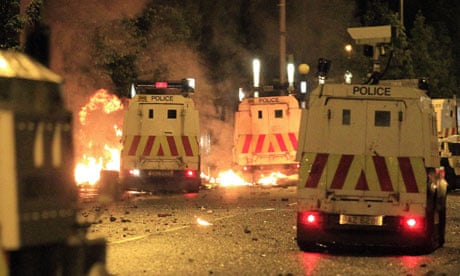
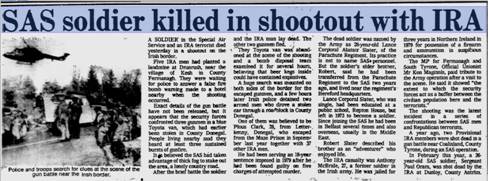


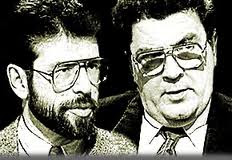


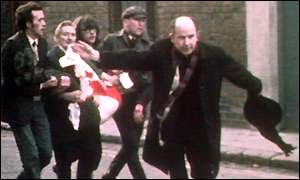


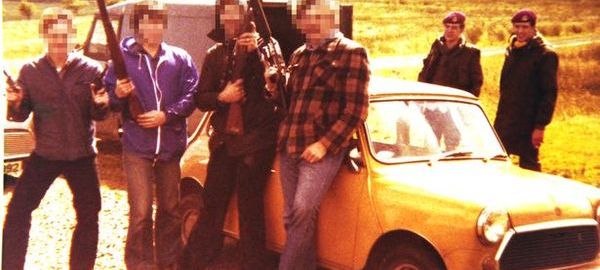



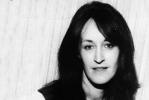


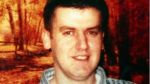

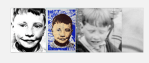

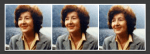

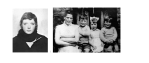

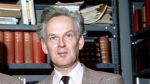
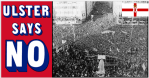



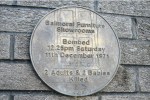
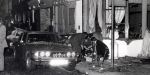


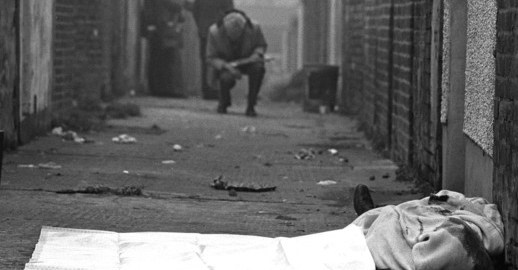
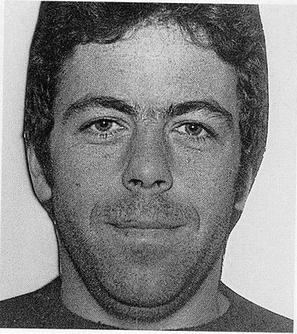


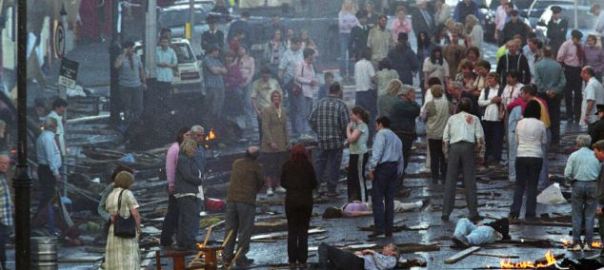


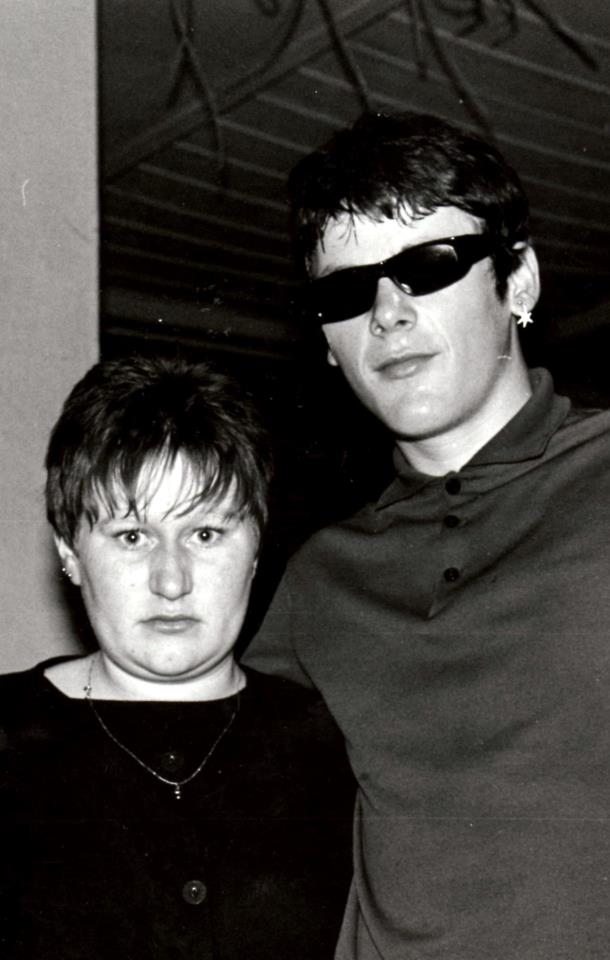 Me and my BFF Jay McFall


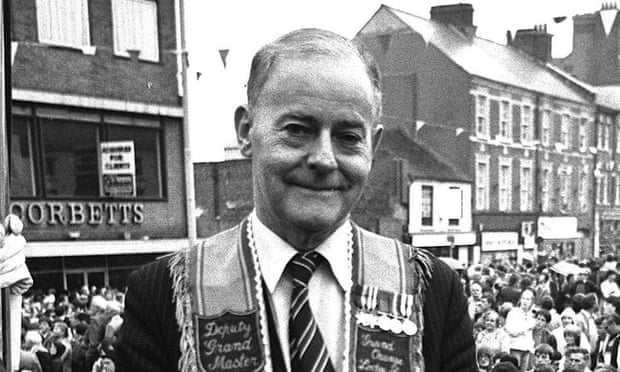


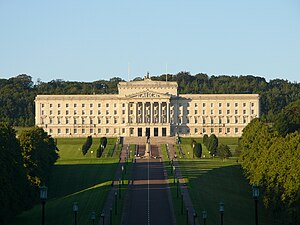

























 belfastchildis.com