As international forces and local anti -ISIS fighters pile on the pressure ISIS is gradually losing control of its own members and cracks are beginning to unravel the Jihadi army of psychopathic killers and their deluded followers of Islam.
Desertion among their members has become such an issue that it carries a mandatory death sentence and according to local sources the majority of deserters are foreign and European fighters whom have become disillusioned with the harsh conditions and religious fanaticism.
In recent months/weeks many of Islamic States top commanders , generals and high profile foreign fighters have been killed by international and local opposition actions and their area of control is diminishing almost daily.
Earlier this week Abu Omar the Chechen , a leading member and beloved commander of the terrorist group had reportedly been killed and if this is true this will be another major blow to the merchants of death and their twisted ideology.
In the past three days alone it has been reported that ISIS have executed approx. 100 of its member for refusing to fight , leaving the battle field and other derelictions of their duty.
Whatever the truth of these executions one thing is clear, hopefully the monster that is ISIS is beginning to implode and is slowly devouring itself from the inside out.
Karma always collects its debts and perhaps it is knocking on the door of these evil bastards and making them pay for their twisted and brutal crimes against humanity..
———————————————–
March 16th 2016
50 Executions
ISIS executes over 50 of its own fighters for trying to escape battlefront
Terrorist group of the ISIS has publicly executed dozens of its own militant fighters who fled the fighting fronts with Iraqi forces.
The militants were arrested after evacuating their fighting positions in ar-Rutba and Hit districts, west of Ramadi.
The ISIS fighters were detained and executed at the hands of fellow fighters in Mosul city of Iraq’s northwestern Nineveh province, local sources reported on Tuesday.
“Daesh military leadership in Mosul considered them as traitors and beheaded them in front of hundreds of people, including commanders and Sharia officials,” an eyewitness said using an acronym for ISIS.
“They were mostly Iraqi fighters who fought in ISIS ranks in Anbar province,” he said, speaking on condition of anonymity.
———————————————–
March 15th 2016
35 Executions
ISIS militants executes 35 members for refusing to fight against Iraqi army
An Iraqi security source in Nineveh Province announced on Sunday, that ISIS executed 35 of its militants for refusing to join the battle against the Iraqi forces on the outskirts of the city of Mosul (405 km north of Baghdad).
The source said in a statement “ISIS executed 35 of its fighters, after refusing to join the combat axes on the outskirts of the city of Mosul.”
The source, who asked to remain anonymous, added, “ISIS carried out the execution by firing squad in the forest.”
———————————————–
March 14th 2016
21 Executions
ISIS executes 21 of its fighters in Mosul after fleeing from battles
A local source in Nineveh Province announced on Sunday, that the so-called ISIS executed 21 of its militants in the city of Mosul (405 km north of Baghdad), after fleeing from the ongoing battles west of the province.
“Today, ISIS executed 21 of its fighters in the city of Mosul, after fleeing from the combat axes in Makhmour, Waski Mosul, Khazar, Nuran and Bashiqa,” pointing out that, “The executed fighters also refused to join the battles in these areas,” the source said.
The source, who asked anonymity, added, “The terrorist gang carried out the execution by firing squad in one of its camps in Mosul.”
Key Events & Deaths on this day in Northern Ireland Troubles
16th March
Saturday 16 March 1974
Two British soldiers were shot dead by members of the Irish Republican Army (IRA) near Crossmaglen, County Armagh.
Tuesday 16 March 1976
Harold Wilson, then British Prime Minister, announced that he was resigning as leader of the Labour Party and thus as Prime Minister. [On 5 April 1976 James Callaghan succeeded Wilson.]
Friday 16 March 1979 Bennett Report
(Cmnd 7497)
The committee headed by the English judge Harry Bennett, which was set up to investigate allegations of ill-treatment of people held in interrogation centres in Northern Ireland, published its report (Bennett Report, Cmnd 7497).
The report found that there were instances where there was medical evidence of injuries sustained in police custody which were not self-inflicted.
[The report made a number of suggestions and the Labour government undertook to implement two major recommendations. The first that closed-circuit television cameras should be installed in interview rooms and the second that those being detained should have access to their solicitor after 48 hours in custody.
When the Conservative Party came to power in May 1979 the new government implemented most of the remaining recommendations in the report.]
Wednesday 16 March 1988
Milltown Cemetery Killings
During the funerals, at Milltown Cemetery in Belfast, for the three Irish Republican Army (IRA) members killed in Gibraltar (6 March 1988) a Loyalist gunman, Michael Stone, launched a grenade and gun attack on mourners.
Three people were killed and 50 injured. The whole episode was recorded by television news cameras. The police and the army had withdrawn to avoid any confrontation with the mourners. Stone was chased to a nearby motorway were he was attacked by a number of mourners. The police arrived in time to save his life.
[The main loyalist paramilitary groups denied any involvement with Stone. One of those killed, Kevin Brady, was a member of the IRA.]
A Catholic civilian died eight months after being shot in Belfast.
Tuesday 16 March 1993
John Major, then British Prime Minister, said that his government would not bring forward legislation to allow for devolved government in Scotland or Wales.
Wednesday 16 March 1994
John Wheeler, then NIO Security Minister, turned down a request from the Bloody Sunday Justice Group for a new inquiry into the killings in Derry on 30 January 1972.
[A new Inquiry was eventually announced on 29 January 1998.]
Thursday 16 March 1995
A small bomb containing Semtex explosives partially exploded while being defused by British Army technical officers in Newry, County Down.
[The Irish Republican Army (IRA) later denied responsibility for the device.]
Sunday 16 March 1997
There were reports that a compromise had been reached over the disputed 12 July Orange Order parade in Dromore, County Tyrone. The Orange Order denied that a compromise had been achieved.
An article in the Sunday Post carried claims by a former member of the Parachute Regiment of the British Army that on ‘Bloody Sunday’ (30 January 1972) some of his fellow soldiers had deliberately killed unarmed civilians.
John Bruton, then Taoiseach (Irish Prime Minister), called on the British government to investigate this new evidence
Tuesday 16 March 1999
Ronnie Flanagan, then Chief Constable of the Royal Ulster Constabulary (RUC), announced that David Phillips, then Chief Constable of Kent, had been asked to oversee the investigation into the murder of Rosemary Nelson. He also invited the United States Federal Bureau of Investigation (FBI) to assist.
[Both these moves were viewed as an attempt to try to counter calls by Nationalists for an independent international inquiry into the events surrounding the death of Nelson. Although the FBI initially became involved in the case it later withdrew.]
Bertie Ahern, then Taoiseach (Irish Prime Minister), who was in Washington, said the relationship between Irish Republican Army (IRA) decommissioning and the setting up of the Northern Executive was the one remaining difficulty. He indicated to the leader of the political parties in Northern Ireland that he expected them to meet the 2 April 1998 deadline for the implementation of institutions set out in the Good Friday Agreement.
——————————————————————
Remembering all innocent victims of the Troubles
Today is the anniversary of the death of the following people killed as a results of the conflict in Northern Ireland
“To live in hearts we leave behind is not to die
– Thomas Campbell
To the innocent on the list – Your memory will live forever
– To the Paramilitaries –
There are many things worth living for, a few things worth dying for, but nothing worth killing for.
12 People lost their lives on the 16th March between 1972 – 1989
—————————————————————————
16 March 1972 Carmel Knox, (20)
Catholic Status: Civilian (Civ),
Killed by: non-specific Loyalist group (LOY)
Killed when bomb exploded in public toilet, Market Street, Lurgan, County Armagh
—————————————————————————
16 March 1973
William Kenny, (28)
Protestant Status: Ulster Defence Regiment (UDR),
Killed by: Irish Republican Army (IRA)
Off duty. Abducted while driving his car, Halliday’s Road, New Lodge, Belfast. Found shot a short time later in entry off Edlingham Street, New Lodge, Belfast.
—————————————————————————
16 March 1974 Roy Bedford, (22)
nfNI Status: British Army (BA),
Killed by: Irish Republican Army (IRA)
Shot by snipers, while on British Army (BA) foot patrol, Moybane, near Crossmaglen, County Armagh.
—————————————————————————
16 March 1974
Philip James, (22)
nfNI Status: British Army (BA),
Killed by: Irish Republican Army (IRA)
Shot by snipers, while on British Army (BA) foot patrol, Moybane, near Crossmaglen, County Armagh.
—————————————————————————
16 March 1975
Mildred Harrison, (26)
Protestant Status: Royal Ulster Constabulary (RUC),
Killed by: Ulster Volunteer Force (UVF)
Killed during bomb explosion while on Royal Ulster Constabulary (RUC) foot patrol passing Ormeau Arms Bar, High Street, Bangor, County Down
—————————————————————————
16 March 1977 Alexander Watters, (62)
Protestant Status: Civilian (Civ),
Killed by: not known (nk)
Shot while cycling along road between Tobermore and Draperstown, County Derry.
—————————————————————————
16 March 1983 William Miller, (26)
Protestant Status: Ulster Volunteer Force (UVF),
Killed by: Royal Ulster Constabulary (RUC)
Shot while travelling in stolen car, Elmwood Avenue, off University Road, Belfast
—————————————————————————
16 March 1988
Kevin Mulligan, (27)
Catholic Status: Civilian (Civ),
Killed by: Ulster Freedom Fighters (UFF)
Died eight months after being shot at his workplace, a garage, Lord Street, off Albertbridge Road, Belfast. Injured on 17 July 1987.
—————————————————————————
16 March 1988
Caoimhin MacBradaigh, (30)
Catholic Status: Irish Republican Army (IRA),
Killed by: non-specific Loyalist group (LOY)
Killed in grenade and gun attack on mourners at the funeral of three Irish Republican Army (IRA) members killed at Gibraltar, Milltown Cemetery, Falls, Belfast.
—————————————————————————
16 March 1988
Thomas McErlean, (20)
Catholic Status: Civilian (Civ),
Killed by: non-specific Loyalist group (LOY)
Killed in grenade and gun attack on mourners at the funeral of three Irish Republican Army (IRA) members killed at Gibraltar, Milltown Cemetery, Falls, Belfast.
—————————————————————————
16 March 1988
John Murray, (26)
Catholic Status: Civilian (Civ),
Killed by: non-specific Loyalist group (LOY)
Killed in grenade and gun attack on mourners at the funeral of three Irish Republican Army (IRA) members killed at Gibraltar, Milltown Cemetery, Falls, Belfast.
—————————————————————————
16 March 1989 John Irvine , (49)
Protestant Status: Ulster Volunteer Force (UVF),
Killed by: Irish Republican Army (IRA)
Shot at his home, Skegoneill Avenue, Skegoneill, Belfast.
—————————————————————————
My autobiography: A Belfast Child is now available to pre-order on Amazon , launch date is 30th April.
Forkhill or Forkill (from Irish: Foirceal) is a small village and civil parish in south County Armagh, Northern Ireland, in the ancient barony of Upper Orior. It is within the Ring of Gullion and in the 2011 Census it had a recorded population of 498.
It was also one of the most dangerous and unforgiving places on earth for British soldiers and other security force personnel during the 30 year “conflict” and the South Armagh IRA seemed able to slaughtered at will and the areas nickname “Bandit Country” was written in the blood of the innocent.
———————————————-
BBC Panorama – Bandit Country, South Armagh
———————————————-
See Below for more details on the South Armagh IRA
————————————————
Never forget
They died serving their country
I salute you all!
———————
They shall not grow old, as we that are left grow old: Age shall not weary them, nor the years condemn. At the going down of the sun and in the morning We will remember them
———————
Below is a list of British army & other security personnel whom lost their lives in or around the Forkhill area during the troubles , hero’s one and all. The most famous name on the list is Captain Robert Nairac , whose body has never been recovered and is named as one the Disappeared.
I have included civilians and republican deaths at the end of the list.
Killed by: Irish Republican Army (IRA) Died two days after being injured when detonated booby trap bomb in derelict house, Mullaghbawn, near Forkhill, County Armagh.
—————————————–
14 December 1974 Michael Gibson, (20)
nfNI Status: British Army (BA),
Killed by: Irish Republican Army (IRA) Shot by snipers while on joint British Army (BA) / Royal Ulster Constabulary (RUC) foot patrol, Killeavy, near Forkhill, County Armagh. He died 30 December 1974.
—————————————–
14 December 1974
David McNeice, (19)
Protestant Status: Royal Ulster Constabulary (RUC),
Killed by: Irish Republican Army (IRA) Shot by snipers while on joint British Army (BA) / Royal Ulster Constabulary (RUC) foot patrol, Killeavy, near Forkhill, County Armagh.
—————————————–
17 July 1975
Edward Garside, (34)
nfNI Status: British Army (BA),
Killed by: Irish Republican Army (IRA) Killed by remote controlled bomb, hidden in milk churn, detonated when British Army (BA) foot patrol passed, Tullydonnell, near Forkhill, County Armagh.
—————————————–
17 July 1975
Robert McCarter, (33)
nfNI Status: British Army (BA),
Killed by: Irish Republican Army (IRA) Killed by remote controlled bomb, hidden in milk churn, detonated when British Army (BA) foot patrol passed, Tullydonnell, near Forkhill, County Armagh.
—————————————–
17 July 1975
Calvert Brown, (25)
nfNI Status: British Army (BA),
Killed by: Irish Republican Army (IRA) Killed by remote controlled bomb, hidden in milk churn, detonated when British Army (BA) foot patrol passed, Tullydonnell, near Forkhill, County Armagh.
—————————————–
17 July 1975 Peter Willis, (37)
nfNI Status: British Army (BA),
Killed by: Irish Republican Army (IRA) Killed by remote controlled bomb, hidden in milk churn, detonated when British Army (BA) foot patrol passed, Tullydonnell, near Forkhill, County Armagh.
—————————————–
21 November 1975
Simon Francis, (29)
nfNI Status: British Army (BA),
Killed by: Irish Republican Army (IRA) Killed by booby trap bomb hidden in abandoned rifle close to crashed car, Carrive, near Forkhill, County Armagh
—————————————–
14 May 1977
Robert Nairac, (29)
nfNI Status: British Army (BA),
Killed by: Irish Republican Army (IRA) Undercover British Army (BA) member. Abducted outside Three Step Inn, near Forkhill, County Armagh. Presumed killed. Body never recovered.
Killed by: Irish Republican Army (IRA) Killed by remote controlled bomb hidden in parked car, detonated when British Army (BA) foot patrol passed, Forkhill, County Armagh.
—————————————–
16 December 1979
Peter Grundy, (21)
nfNI Status: British Army (BA),
Killed by: Irish Republican Army (IRA) Killed by booby trap bomb hidden in derelict house, while on British Army (BA) foot patrol, Forkhill, County Armagh.
—————————————–
01 January 1980
Gerard Hardy, (18)
nfNI Status: British Army (BA),
Killed by: British Army (BA) Undercover British Army (BA) member. Shot in error, by other British Army (BA) members while setting ambush position, Tullydonnell, near Forkhill, County Armagh.
—————————————–
01 January 1980 Simon Bates, (23)
nfNI Status: British Army (BA),
Killed by: British Army (BA) Undercover British Army (BA) member. Shot in error, by other British Army (BA) members while setting ambush position, Tullydonnell, near Forkhill, County Armagh
—————————————–
09 August 1980
Brian Brown, (29)
nfNI Status: British Army (BA),
Killed by: Irish Republican Army (IRA) Killed by remote controlled bomb while on British Army (BA) foot patrol, Forkhill, County Armagh
—————————————–
31 January 1984
William Savage, (27)
Protestant Status: Royal Ulster Constabulary (RUC),
Killed by: Irish Republican Army (IRA) Killed in land mine attack on Royal Ulster Constabulary (RUC) armoured patrol car, Drumintee Road, near Forkhill, County Armagh.
—————————————–
31 January 1984
Thomas Bingham, (29)
Protestant Status: Royal Ulster Constabulary (RUC),
Killed by: Irish Republican Army (IRA) Killed in land mine attack on Royal Ulster Constabulary (RUC) armoured patrol car, Drumintee Road, near Forkhill, County Armagh
—————————————–
17 March 1993
Lawrence Dickson, (26)
nfNI Status: British Army (BA),
Killed by: Irish Republican Army (IRA) Shot by sniper while on British Army (BA) foot patrol, Bog Road, Forkhill, County Armagh.
—————————————–
Innocent Civilians Killed in Forkhill
—————————————–
10 March 1974 Michael Gallagher, (18)
Catholic Status: Civilian (Civ),
Killed by: Irish Republican Army (IRA) Injured by booby trap bomb hidden in abandoned car, Dromintee, near Forkhill, County Armagh. Intended for British Army (BA) foot patrol. He died 14 March 1974.
—————————————–
10 March 1974
Michael McCreesh, (15)
Catholic Status: Civilian (Civ),
Killed by: Irish Republican Army (IRA) Killed by booby trap bomb hidden in abandoned car, Dromintee, near Forkhill, County Armagh. Intended for British Army (BA) foot patrol.
—————————————–
19 January 1975
Patrick Toner, (7)
Catholic Status: Civilian (Civ),
Killed by: Irish Republican Army (IRA) Killed by booby trap bomb in field near his home, Forkhill, County Armagh.
—————————————–
12 June 1976
Liam Prince, (26)
Catholic Status: Civilian (Civ),
Killed by: British Army (BA) Shot while travelling in his car at British Army (BA) Vehicle Check Point (VCP), near Forkhill, County Armagh.
—————————————–
02 April 1977 Hugh Clarke, (30)
Protestant Status: Civilian (Civ),
Killed by: Republican Action Force (RepAF) Found shot, Tullymacreeve, near Forkhill, County Armagh.
—————————————–
25 June 1978 Patrick McEntee, (54)
Catholic Status: Civilian (Civ),
Killed by: Irish Republican Army (IRA) Found shot, Ballsmill, near Forkhill, County Armagh. Alleged informer.
—————————————–
12 December 2001 Derek Lenehan, (27)
nfNI Status: Civilian (Civ),
Killed by: Irish National Liberation Army (INLA) From Dublin. Died several hours after being found shot in the legs, by the side of New Road, near Forkhill, County Armagh.
—————————————–
Republicans Terrorists Killed in Forkhill
—————————————–
15 April 1976
Peter Cleary, (25)
Catholic Status: Irish Republican Army (IRA),
Killed by: British Army (BA) Shot by undercover British Army (BA) member, shortly after being detained at a friend’s home, Tievecrom, near Forkhill, County Armagh.
—————————————–
05 March 1982
Seamus Morgan, (24)
Catholic Status: Irish Republican Army (IRA),
Killed by: Irish Republican Army (IRA) Found shot near Forkhill, County Armagh. Alleged informer.
—————————————–
14 March 1987 Fergus Conlon, (31)
Catholic Status: Civilian Political Activist (CivPA),
Killed by: Irish National Liberation Army (INLA) Irish Republican Socialist Party member. Found shot, Clontigora, near Forkhill, County Armagh. Irish National Liberation Army / Irish People’s Liberation Organisation feud
—————————————–
Provisional IRA South Armagh Brigade
The South Armagh Brigade of the Provisional Irish Republican Army (IRA) operated during the Troubles in south County Armagh. It was organised into two battalions, one around Jonesborough and another around Crossmaglen. By the 1990s, the South Armagh Brigade was thought to consist of about 40 members,[1] roughly half of them living south of the border.[2] It has allegedly been commanded since the 1970s by Thomas ‘Slab’ Murphy who is also alleged to be a member of the IRA’s Army Council.[3] Compared to other brigades, the South Armagh IRA was seen as an ‘independent republic’ within the republican movement, retaining a battalion organizational structure and not adopting the cell structure the rest of the IRA was forced to adopt after repeated intelligence failures.[4]
As well as paramilitary activity, the South Armagh Brigade has also been widely accused of smuggling across the Irish border.[5] Between 1970 and 1997 the brigade was responsible for the deaths of 165 members of British security forces (123 British soldiers and 42 Royal Ulster Constabulary (RUC) officers). A further 75 civilians were killed in the area during the conflict,[6] as well as ten South Armagh Brigade members.[7] The RUC recorded 1,255 bombings and 1,158 shootings around a radius of ten miles from the geographic center of South Armagh in the same period.[6]
At the beginning of the Northern Ireland Troubles in August 1969, rioters, led by IRA men, attacked the RUC barracks in Crossmaglen, in retaliation for the attacks on Catholic/nationalist areas in Belfast in the Northern Ireland riots of August 1969.[citation needed] After the split in the IRA in that year, the South Armagh unit sided with the Provisional IRA rather than the Official IRA. The following August, two RUC constables were killed by a bomb in Crossmaglen. A week later, a British soldier was killed in a firefight along the border.[9]
However, the IRA campaign in the area did not begin in earnest until 1971. In August of that year, two South Armagh men were shot and one killed by the British Army in Belfast, having been mistaken for gunmen.[citation needed] This caused outrage in the South Armagh area, provided the IRA with many new recruits and created a climate where local people were prepared to tolerate the killing of security force members.[10]
During the early 1970s, the brigade was mostly engaged in ambushes of British Army patrols. In one such ambush in August 1972, a Ferret armoured car was destroyed by a 600 lb landmine, killing one soldier. There were also frequent gun attacks on foot patrols. Travelling overland in South Armagh eventually became so dangerous that the British Army began using helicopters to transport troops and supply its bases – a practice that had to be continued until the late 1990s. According to author Toby Harnden, the decision was taken shortly after a Saracen armoured vehicle was destroyed by a culvert bomb near Crossmaglen, on 9 October 1975. Subsequently, the British Army gave up the use of roads to the IRA in South Armagh.[11] IRA volunteer Éamon McGuire, a former Aer Lingus senior engineer, and his team claim that they were responsible for getting the British Army “off the ground and into the air” in South Armagh. He was identified as the IRA’s chief technical officer by the Central Intelligence Agency.[12] Another noted IRA commander at that time was the commanding officer of the first battalion, Captain Michael McVerry. He was eventually killed during an attack on the RUC barracks in Keady in November 1973. Around this time IRA engineers in South Armagh pioneered the use of home-made mortars which were relatively inaccurate but highly destructive.[13]
In 1975 and 1976, as sectarian violence increased in Northern Ireland, the South Armagh Republican Action Force, allegedly a cover-name for the South Armagh Brigade, carried out two attacks against Protestants. In September 1975 they attacked an Orange lodge in Newtownhamilton, killing five members of the lodge. Then, in January 1976, after a series of loyalist Ulster Volunteer Force (UVF) attacks on Catholic civilians in the border areas (including the Reavey and O’Dowd killings the previous day), the group shot and killed ten Protestant workmen in the “Kingsmill massacre” near Bessbrook. The workers’ bus was stopped and the one Catholic worker taken aside before the others were killed.[14] In response, the British government stated that it was dispatching the Special Air Service (SAS) to South Armagh, although the SAS had been present in the area for many years.[15] While loyalist attacks on Catholics declined afterwards and many Protestants became more reluctant to help the UVF, the massacre caused considerable controversy in the republican movement.
By the end of the 1970s, the IRA in most of Northern Ireland had been restructured into a cell system. South Armagh, however, where the close rural community and family connections of IRA men diminished the risk of infiltration, retained its larger “battalion” structure. On 17 February 1978 the commander of the 2nd Battalion Royal Green Jackets, Lieutenant Colonel Ian Corden-Lloyd, was killed and two other soldiers injured when the Gazelle helicopter he was travelling in was attacked by an IRA unit near Jonesborough. At that moment, a gun battle was taking place on the ground between British soldiers and members of the South Armagh Brigade. The helicopter crashed while taking evasive manoeuvres after being fired at from the east side of Edenappa road.[16] Corden-Lloyd’s subordinates had been accused of brutality against Catholic civilians in Belfast in 1971.[17] In August 1979, a South Armagh unit killed 18 soldiers in the Warrenpoint ambush.[18] This was the biggest single loss of life inflicted on the British Army in its deployment in Northern Ireland (Operation Banner).
A number of South Armagh IRA members were imprisoned by the end of the 1970s and took part in the blanket protest and dirty protest in pursuit of political status for IRA prisoners. Raymond McCreesh, a South Armagh man, was among the ten republican hunger strikers who died for this goal in the 1981 hunger strike. The South Armagh Brigade retaliated for the deaths of the hunger strikers by killing five British soldiers with a mine that destroyed their armoured vehicle near Bessbrook.[19]
1980s
During the mid-1980s, the brigade focused its attacks on the RUC, killing 20 of its members between 1984 and 1986. Nine of these were killed in the February 1985 Newry mortar attack.[20]
In 1986, the British Army erected ten hilltop observation posts in South Armagh. These bases acted as information-gathering centres and also allowed the British Army to patrol South Armagh more securely. Between 1971 and the erection of the hilltop sites in the mid-1980s (the first in 1986), 84 members of the security forces were killed in the Crossmaglen and Forkhill areas by the IRA. After this, 24 security force personnel and Lord Justice Gibson and his wife were killed in the same areas, roughly a third of the previous yearly rate.
In March 1989, two senior RUC officers were killed in an ambush near Jonesborough. Chief Superintendent Harry Breen and Superintendent Bob Buchanan were returning from a meeting with the Garda Síochána in the Republic of Ireland, where they had been discussing a range of issues including ways of combating IRA attacks on the cross-border rail link, when they were ambushed.[21] This incident was investigated by the Smithwick Tribunal into alleged collusion between the IRA and the Gardaí.[22] As the divisional commander for South Armagh, Breen was the most senior policeman to have been killed during the Troubles.[23]
South Armagh became the most heavily militarized area in Northern Ireland. In an area with a population of 23,000, the British Army stationed around 3,000 troops in support of the RUC to contain an unknown number of paramilitaries.[24]
1990s
In the late 1980s and early 1990s, the IRA elsewhere in Northern Ireland found that nine out of ten planned operations failed to materialize.[25] However, the South Armagh Brigade continued to carry out varied and high-profile attacks in the same period.[26] By 1991, the RUC acknowledged that no mobile patrols had operated in South Armagh without Army support since 1975.[27]
These squads were responsible for killing seven soldiers and two RUC members until the Caraher team was finally caught by the Special Air Service in April 1997.[29] The South Armagh Brigade also built the bombs that were used to wreck economic targets in London during the 1990s, specially hitting the financial district. The truck bombs were sent to England by ferry.[30] On 22 April 1993, the South Armagh IRA unit took control of the village of Cullaville near the border with the Republic, for two hours, making good use of dead ground. The fact that the IRA executed the action despite the presence of a British Army watchtower nearby, caused outrage among British and Irish parliamentary circles.[31][32]
The South Armagh Brigade was by far the most effective IRA brigade in shooting down British helicopters during the conflict. They carried out 23 attacks on British Army helicopters during the Troubles, bringing four down on separate occasions: the Gazelle shot down in February 1978 near Jonesborough,[16] a Lynx in June 1988, while in 1994 another Lynx and an RAF Puma were shot down in March and July respectively.[33] The shooting down of the Lynx in 1994 during a mortar attack on Crossmaglen barracks is regarded by Toby Harnden as the most successful IRA operation against a helicopter in the course of the Troubles.[34] A sustained machine gun attack against a helicopter was filmed by a Dublin television crew in March 1991 outside Crossmaglen Health Center. There was no reaction from British security although the RUC/Army base was just 50 yards away.[35][36] The only successful IRA attack against an Army helicopter outside South Armagh was carried out by the East Tyrone Brigade near Clogher, County Tyrone, on 11 February 1990.[37] By 1994, the safest way for the British army to travel across South Armagh and some areas of Tyrone and Fermanagh was on board troop-carrying Chinook helicopters.[38]
Ceasefires and the peace process
Borucki sangar, a British army outpost in Crossmaglen with a republican flag on top during an Ógra Shinn Féin protest some time before its removal in 2000
The IRA ceasefire of 1994 was a blow to the South Armagh Brigade, in that it allowed the security forces to operate openly in the area without fear of attack and to build intelligence on IRA members.[39] When the IRA resumed its campaign in 1996-97, the South Armagh IRA was less active than previously,[40] although one of the sniper teams killed one soldier and seriously wounded an RUC constable. But the snipers also lost a number of their most skilled members, such as Mícheál Caraher, who were arrested and imprisoned just weeks before the second ceasefire. The capture of the sniper team was the single major success for the security forces in South Armagh in more than a decade,[41] and was arguably among the most important of the Troubles,[42] but by then, the IRA and Sinn Féin had achieved huge political gains towards their long-term goals.[43] The last major action of the brigade before the last IRA ceasefire was a mortar attack on Newtownhamilton RUC/Army barracks, on 12 July 1997. The single Mk-15 mortar bomb landed 40 yards short of the perimeter fence.[42]
In 1997, several members of the South Armagh Brigade, based in Jonesborough and Dromintee, following Michael McKevitt, left the Provisional IRA because of its acceptance of the Mitchell Principles of non-violence at a General Army Convention in October of that year and formed a dissident grouping, the Real IRA, which rejected the peace process. Their discontent was deepened by Sinn Féin’s signing of the Good Friday Agreement in 1998. Most of the South Armagh IRA stayed within the Provisional movement, but there were reports of them aiding the dissidents throughout 1998.[44] The Omagh bombing of August 1998, a botched Real IRA operation which killed 29 civilians, was prepared by dissident republicans in South Armagh.[45] Thomas Murphy and the leadership of the IRA in the area have allegedly since re-asserted their control, expelling dissidents from the district under threat of death. Michael McKevitt and his wife Bernadette were evicted from their home near Dundalk.[46] IRA members in South Armagh ceased cooperating with the RIRA after the Omagh bombing.[47]
After the Provisional IRA announced its intention to disarm and accept peaceful methods in July 2005, the British government announced a full demilitarisation plan which included the closing of all British Army bases in South Armagh by 2007. The normalisation process, negotiated under the provisions of the Good Friday Agreement in exchange for the complete decommissioning of IRA weaponry, was one of the main goals of the republican political strategy in the region.[48][49]
Senior IRA figures in South Armagh, notably Thomas Murphy, are alleged to have been involved in large-scale smuggling across the Irish border and money-laundering. Other alleged illegal activities involve fraud through embezzlement of agricultural subsidies and false claims of property loss. In 2006, the British and Irish authorities mounted joint operations to clamp down on smuggling in the area and to seize Thomas Murphy’s assets.[51][52] On 22 June 1998 a deadly incident involving fuel smuggling took place near Crossmaglen, when former Thomas Murphy employee Patrick Belton ran over and killed a British soldier attempting to stop him while driving his oil tanker through a military checkpoint. Belton was shot and injured by other members of the patrol, but managed to flee to the Republic. He was later acquitted of any charges, but he eventually agreed in 2006 to pay €500,000 for cross-border smuggling.[53][54] Some sources claim that the smuggling activities not only made the South Armagh brigade self-sustained, but also provided financial support to most of the IRA operations around Northern Ireland.[55][56] The IRA control over the roads across the border in South Armagh enabled them to impose ‘taxes’ on every cross-border illegal enterprise.[56]
One of the first leaders of the Provisional IRA, Seán Mac Stíofáin, supported the use of snipers in his book Memories of a Revolutionary, attracted by the motto “one shot, one kill”.[6] The majority of soldiers shot dead in 1972 (the bloodiest year of the conflict in Northern Ireland) fell victim to IRA snipers.[7]
The AR-18 Armalite rifle became the weapon of choice for IRA members at this time.[9]
The British Army assessment of the conflict asserted that the IRA sniping skills often did not match those expected from a well-trained sniper.[10] The report identifies four different patterns of small arms attacks during the IRA campaign, the last being that developed by the South Armagh sniper units.[11]
Sniper teams in South Armagh
The rifles
During the 1980s, the IRA relied mostly on weaponry smuggled from Libya.[12][13][14] The regular shipments from the United States, once the main source of arms for the republicans through the gunrunning operations of George Harrison, were disrupted after he was arrested by the Federal Bureau of Investigation in 1981.[15] The smuggling scheme suffered a further blow when the Fenit-based trawler Marita Ann, with a huge arms cache from Boston, was captured by the Irish Naval Service in 1985.[16]
However, between the mid-1980s and the 1990s there was some small-scale activity,[17] leading to the purchase of US-made Barrett M82 and M90 rifles,[18] which became common weapons for the South Armagh snipers. According to letters seized by US federal authorities from a Dundalk IRA member, Martin Quigley, who had travelled to USA to study computing at Lehigh University in Pennsylvania,[19] the organisation managed to smuggle an M82 to the Republic of Ireland just before his arrest in 1989. He was part of a bigger plot to import electronic devices to defeat British Army counter-measures against IRA remote-controlled bombs.[20]
In August 1986, another M82 had been sent in pieces from Chicago to Dublin, where the rifle was re-assembled.[21] At least two of the M90 rifles were bought as recently as six months after the first IRA ceasefire.[22] It was part of a batch of two sold to Michael Suárez, a Cuban resident of Cleveland, on 27 January 1995 by a firearms dealer; Suárez later passed the weapons to an Irishman, who finally shipped the rifles, their ammunition and two telescopic sights to the Republic of Ireland.[23] An unidentified leading figure inside the IRA sniper campaign, quoted by Toby Harnden, said that:
What’s special about the Barrett is the huge kinetic energy… The bullet can just walk through a flak jacket. South Armagh was the prime place to use such weapon because of the availability of Brits. They came to dread it and that was part of its effectiveness.[24]
Three of the security forces members killed in this campaign were instead the victims of 7.62×51mm rounds. Five missed shots belonged to the same kind of weapon.[25] Harnden recalls a Belgian FN FAL rifle recovered by the Gardaí near Inniskeen in 1998 as the possible source of these bullets.[26]
Shootings
Contrary to the first British Army assessment and the speculation of the press,[27] there was not just a single sniper involved.[5] According to Harnden, there were two different teams,[28] one responsible for the east part of South Armagh, around Dromintee, the other for the west, in the area surrounding Cullyhanna.[29] The volunteer in charge of the Cullyhanna unit was Frank “One Shot” McCabe, a senior IRA member from Crossmaglen.[2] Each team comprised at least four members, not counting those in charge of support activities, such as scouting for targets and driving vehicles. Military officials claim that the Dromintee-based squad deployed up to 20 volunteers in some of the sniping missions.[30] The teams made good use of dead ground to conceal themselves from British observation posts.[31]
Between 1990 and 1997, 24 shots were fired at British forces. The first eight operations (1990–1992), ended in misses. On 16 March 1990, the Barret M82 was used for first time by the IRA. The target was a checkpoint manned by soldiers of the Light Infantry regiment on Сastleblaney Road. A single .50 round pierced the helmet and skimmed the skull of Lance Corporal Hartsthorne, who survived with minor head injuries.[32][33] In August 1992, one team mortally wounded a Light Infantry soldier. By April 1997 seven soldiers and two policemen had been killed. An RUC constable almost lost one of his legs in what became the last sniper attack during the Troubles.
Another six rounds achieved nothing, albeit two of them near-missed the patrol boat HMS Cygnet, in Carlingford Lough[26] and another holed Borucki sangar, a British Army outpost in Crossmaglen square.[33] On 31 July 1993 at 10:00 pm a British Army patrol which had set a mobile checkpoint on Newry Road, near Newtownhamilton, was fired at by an IRA sniper team. The British soldiers returned fire, but there were no injuries on either side.[34] The marksman usually fired from a distance of less than 300 metres, despite the 1 km effective range of the rifles. Sixteen operations were carried out from the rear of a vehicle, with the sniper protected by an armour plate in case the patrols returned fire.[35] At least in one incident, after the killing of a soldier in Forkhill on 17 March 1993, the British Army fired back at the sniper’s vehicle without effect.[36] The IRA vehicles were escorted by scout cars, to alert about the presence of security checkpoints ahead.[35]
Two different sources include in the campaign two incidents which happened outside South Armagh; one in Belcoo, County Fermanagh, where a constable was killed,[37] the other in West Belfast, in June 1993.[33] An RUC investigation following the latter shooting led to the discovery of one Barrett M82, hidden in a derelict house. It was later determined that this rifle was the weapon responsible for the first killing in South Armagh in 1992.[38] Another Barrett is reported to have been in possession of the IRA team in the Occupation of Cullaville in South Armagh in April 1993.[39]
A third unrelated sniper attack, which resulted in the death of a British soldier, was carried out by the IRA at New Lodge, North Belfast, on 3 August 1992.[40] Two other soldiers were wounded by snipers at New Lodge in November 1993[41] and January 1994. Two people were arrested and a loaded rifle recovered in the aftermath of the latter incident.[42] On 30 December 1993 Guardsman Daniel Blinco became the last soldier killed by snipers in South Armagh before the first IRA ceasefire in 1994.[43] His killing, along with the reaction of the MP of his constituency, was covered by the BBC´s Inside Ulster,[44] which also showed Blinco’s abandoned helmet and the hole made by the sniper’s bullet on the wall of a pub.[45] The tabloid press of that time started calling the sniper ‘Goldfinger’ or ‘Terminator’, the nicknames current in Crossmaglen’s bars.[26] The last serviceman killed by snipers at South Armagh, Lance Bombardier Stephen Restorick, was also the last British soldier to die by hostile fire during the Troubles, on 12 February 1997. Restorick’s killing resulted in a public outcry; Gerry Adams called his death “tragic” and wrote a letter of condolence to his mother.[46][47]
The IRA ceasefire from 31 August 1994 gave an opportunity to the British to collect intelligence to be used against the snipers.[49] The truce was strongly resented by South Armagh IRA members.[50] During the ceasefire, an alleged member of the Drumintee squad, Kevin Donegan, was arrested by an RUC patrol in relation to the 1994 murder of a postal worker in the course of an armed robbery.[51][52] When the IRA ended the ceasefire with the bombing of the London Docklands in February 1996, some volunteers had already abandoned the organisation, while others had turned to criminal activities.[53][54] The period after the ceasefire saw little IRA activity in South Armagh.[55]
Following two successful attacks in 1997, on 10 April a Special Air Service unit captured four men from the sniper team based in the west of the region, responsible for several deaths. After a brief fist fight, James McArdle, Michael Caraher, Bernard McGinn and Martin Mines were seized at a farm near Freeduff and handed over to the RUC. The British troops were under strict orders to avoid IRA casualties.[22] A Barrett M90 rifle was seized,[56] which forensic and intelligence reports linked only to the 1997 shootings.[57] It was hinted that there was an informer, a suggestion dismissed by the Ombudsman report.[58]
McGinn provided the RUC with a lot of information about IRA activities, and even betrayed Frank McCabe, the IRA commander behind the sniper campaign,[2][59] but he eventually withdrew his statement.[60] One of the key players in the British campaign against the South Armagh sniper was Welsh Guards‘ Captain Rupert Thorneloe, according to journalist Toby Harnden. Thorneloe worked as an intelligence liaison officer between the 3rd Infantry Brigade and the RUC Special Branch. Thorneloe, who reached the rank of Lieutenant-Colonel, was killed in July 2009 by an improvised explosive device during the war in Afghanistan.[3] Another senior figure involved in the British efforts against the sniper squads was SAS Staff Sergeant Gaz Hunter,[4] whose experience in South Armagh dated back to 1975.[61] Despite the sense of relief among British forces after the arrests,[62] there was concern over the other two Barrett rifles still in possession of the South Armagh Brigade.[60]
One of the IRA volunteers captured, Michael Caraher, was the brother of Fergal Caraher, a Sinn Féin member and IRA volunteer[63] killed by Royal Marines at a checkpoint on 30 December 1990 near Cullyhanna.[8] Michael, also shot and wounded in the same attack, had lost a lung in the aftermath.[64] Despite some witnesses claiming that the shooting was unprovoked, the Marines involved were acquitted by Lord Chief Justice Hutton.[65] The shooting of Guardsman Daniel Blinco in Crossmaglen took place on the second anniversary of the killing of Fergal Caraher.[43] Michael Caraher was thought to be the shooter in several attacks,[66] but he was only indicted for the case of the maimed constable. He was defended by solicitor Rosemary Nelson, later killed by the loyalist organisation Red Hand Defenders.[67] The other three men of the sniper team were convicted in 1999 for six killings, two of them unrelated to the sniping operations (the deaths of two men when one of the team’s members, James McArdle, planted the bomb at Canary Wharf in 1996).[62]
The capture of the sniper unit was the greatest success for the security forces in South Armagh in more than a decade.[68][69] The men were set free 18 months later under the terms of the Good Friday Agreement.[62] The Dromintee sniper party was never caught.
Conclusions
Barrett M-82 rifle, the main weapon used by the sniper squads
The IRA sniping activities further restricted the freedom of movement of the British Army in South Armagh by hindering their patrols. The MoD issued a new type of body armour, which was both expensive (£4,000) and too heavy (32 lbs) for use on patrol.[70] The morale of the troops was so low that some servicemen had to be disciplined for remaining in shelter while under orders to check vehicles.[71] A British major said that:
That meant that to some extent the IRA had succeeded in forcing troops off the ground and it made helicopters more vulnerable so we had to guard against using them too much.[6]
The IRA strategy also diverted a large amount of British security resources from routine operations to tackle the threat.[72] Until the 1994 ceasefire, even the SAS was unable to prevent the attacks. The IRA ceasefire between 1994 and 1996 made surveillance easier for the RUC and the British Army,[73] leading to the success against the Caraher team.[74] The security forces set the ground for an SAS ambush by deploying a decoy patrol, but this counter-sniper operation failed twice. At the end, the sniper squad was tracked to a farm complex and arrested there.[75]
By the second IRA ceasefire, another team was still operational, and two Barrett rifles remained unaccounted for.[76] The campaign is viewed as the most efficient overall IRA operation in Northern Ireland for this period.[77]
A Highway Code-style sign saying “SNIPER AT WORK” was mounted by the IRA near Crossmaglen and became an icon of the republican cause
———————————————————-
IRA’s top sniper Bernard McGinn is found dead in his Monaghan home
The sniper who killed the last British Army victim of the Troubles shot by the IRA has died at his home, reportedly of natural causes.
Bernard McGinn was the infamous IRA sniper who shot Lance Bombardier Stephen Restorick dead in Bessbrook in February 1997.
The South armagh sniper was one of the most feared figures of The Troubles, shooting down soldiers from as far away as half a mile. He became a folk hero in Republican circles while derided by others.
McGinn was 56 when he was found dead at his home in Monaghan town on Saturday.
Police say it is thought he died of natural causes with a post mortem due to be held on Monday.
An IRA volunteer at the age of 15, McGinn was the son of a local Sinn Fein councillor and the brother-in-law of current Sinn Fein deputy and Health spokesman Caoimhghín Ó Caoláin.
Top ISIS commander ‘Omar the Chechen ‘ believed to have been killed in airstrike.
This is the third or fourth time he has reportedly been killed and like any death of Islamic States top leaders confirmation is slow and details are often hidden behind the fog of war.
However US sources are confident they have got it right this time and if so this will be a major blow to the disciples of hate and the twisted ideology of Islamic State and their deluded followers.
Slowly slowly catch the monkey
Fighters from the Syrian Democratic Forces (SDF)
According to todays Independent ISIS opposition is at the ‘ gates of Raqqa ‘ as Syrian Democratic Forces reclaim villages from their control
The Syrian Democratic Forces have been celebrating a string of victories as they reclaim villages from Isis control, putting them within 20 miles of Raqqa
Without a doubt the forces against IS are slowly gaining the upper hand and IS’s area of control is reducing almost daily. Desertion among their members has become such an issue that it carries a mandatory death sentence and according to local sources the majority of deserters are foreign and European fighters whom have become disillusioned with the harsh conditions and religious fanaticism.
Whatever is causing disharmony among these monstrous Jihadists is good news for the world in general and the death of the Chechen is another nail in the coffin which will send these scum straight to HELL!
————————————-
Abu Omar the Chechen Dead
The United States has confirmed that ISIS commander Omar al-Shishani, also known as “Omar the Chechen,” is dead, CBS News’ David Martin reports.
According to officials, he survived an initial attack carried out in the beginning of March, but has since died of his wounds, Martin reports. A U.S. official previously said an attack was carried out March 4 by multiple waves of planes and drone aircraft.
Al-Shishani, whose real name was Tarkhan Batirashvili, was described as the Islamic State of Iraq and Syria (ISIS) equivalent of a Secretary of Defense. He was an ethnic Chechen from the former Soviet Republic of Georgia.
The U.S. government had a longstanding $5-million bounty for information leading to his being brought to justice.
In announcing the strike last week, Pentagon press secretary Peter Cook said it occurred near al-Shaddadeh, a former ISIS stronghold that was captured in February by the U.S.-backed, predominantly Kurdish Syria Democratic Forces. He said the ISIS leader held numerous senior military positions within the group, including “minister of war,” and was based in Raqqa, Syria.
Tarkhan Tayumurazovich Batirashvili (Georgian: თარხან ბათირაშვილი; February 11, 1986 – March 14, 2016), known by his nom de guerreAbu Omar al-Shishani (Arabic: أبو عمر الشيشاني, Abū ‘Umar ash-Shīshānī , “Abu Omar the Chechen”)[9] or Omar al-Shishani, was a GeorgianKist jihadist who served as a commander for the Islamic State in Syria, and a former sergeant in the Georgian Army.[9]
In May 2013, Batirashvili was appointed northern commander for ISIL, with authority over ISIL’s military operations and forces in northern Syria, specifically Aleppo, al-Raqqah, Latakia, and northern Idlib Provinces.By late 2013, he was the ISIL amir (leader) for northern Syria and was operating in and around Aleppo Province. He was also in charge of fighters from Chechnya and elsewhere in the Caucasus.[10] Units under his command participated in major assaults on Syrian military bases in and around Aleppo, including the capture of Menagh Airbase in August 2013.[3] He was considered “one of the most influential military leaders of the Syrian opposition forces”.[2] By mid-2014, Batirashvili was a senior ISIL commander and Shura Council member based in al-Raqqah, Syria.[10]
Batirashvili died from his injuries several days after being the target of a 4 March 2016 U.S. Airstrike near the al-Shaddadi region in Northern Syria, according to U.S. officials
Batirashvili grew up in the largely Kist-populated village of Birkiani, located in the Pankisi Gorge in northeast Georgia. In his youth, he worked as a shepherd in the hills above the gorge. Later in the 1990s, the Pankisi Gorge was a major transit point for rebels participating in the Second Chechen War, and it was there that Batirashvili reportedly came into contact with the Chechen rebels moving into Russia.[17] According to his father, a young Batirashvili secretly helped Chechen militants into Russia and sometimes joined them on missions against Russian troops.[3]
Service in the Georgian Armed Forces
After finishing high school, Batirashvili joined the Georgian Army and distinguished himself as master of various weaponry and maps, according to his former commander Malkhaz Topuria, who recruited him into a special reconnaissance group.[3] His unit was trained by US special forces, and Batirashvili was reportedly a “star pupil”.[18] He rose to the rank of sergeant in a newly formed intelligence unit, and during the 2008 Russo-Georgian War he served near the front line at the Battle of Tskhinvali, spying on Russian tank columns and relaying their coordinates to Georgian artillery units.[3] Batirashvili’s unit inflicted serious damage on the Russians, and among the actions they participated in was an attack on a column of the Russian 58th Army during which the commander of the 58th Army, General Anatoly Khrulyov, was wounded.[18]
Batirashvili was never decorated for his military service.[2] He was due to be promoted to become an officer, but in 2010 he was diagnosed with tuberculosis. After spending several months in a military hospital, he was discharged on medical grounds. He tried and failed to re-enlist.[3][17] Upon returning home, he was unable to secure work in the local police force. Around this time, his mother also died of cancer. According to his father, he became “very disillusioned”.[3]
Militant activity
According to the Georgian Defense Ministry, Batirashvili was arrested in September 2010 for illegally harboring weapons and was sentenced to three years in prison.[3] He was allegedly released after serving about 16 months in early 2012 and immediately left the country. According to an interview on a jihadist website, Batirashvili said that prison transformed him; “I promised God that if I come out of prison alive, I’ll go fight jihad for the sake of God”, he said.[3]
Batirashvili reportedly told his father that he was leaving for Istanbul, where members of the Chechen diaspora were ready to recruit him to lead fighters inside war-ravaged Syria; an older brother had already gone to Syria some months before.[3] In an interview, Batirashvili said that he had considered going to Yemen and briefly lived in Egypt before ultimately arriving in Syria in March 2012.[19][20]
Muhajireen Brigade
His first command was the Muhajireen Brigade, an Islamist jihadist group made up of foreign fighters that was formed in the summer of 2012. His unit became involved in the Battle of Aleppo, and in October 2012 they assisted Al-Nusra Front in a raid on an air defense and Scud missile base in Aleppo.[8]
In December 2012, they fought alongside Al-Nusra Front during the overrunning of the Sheikh Suleiman Army base in Western Aleppo. In February 2013, together with the Tawhid Brigades and Al-Nusra Front, they stormed the base of the Syrian military’s 80th Regiment near the main airport in Aleppo.[21]
In March 2013, Kavkaz Center reported that the Muhajireen Brigade had merged with two Syrian jihadist groups called Jaish Muhammad and Kataeb Khattab to form a new group called Jaish al-Muhajireen wal-Ansar, or Army of Emigrants and Helpers.[22] The group played a key role in the August 2013 capture of Menagh Air Base, which culminated in a Vehicle Borne Improvised Explosive Device (VBIED) driven by two of their members killing and wounding many of the last remaining Syrian Armed Forces defenders.[23] A branch of the Muhajireen Brigade was involved in the 2013 Latakia offensive.[24]
Islamic State of Iraq and the Levant
In Mid 2013, Batirashvili made an oath of allegiance to Abu Bakr al-Baghdadi and was appointed northern commander for the Islamic State of Iraq and the Levant (ISIL).[25] In August 2013, Batirashvili released a statement announcing the expulsion of one of his commanders, Emir Seyfullah, and twenty-seven of his fighters. Batirashvili accused the men of embezzlement and stirring up the animosity of local Syrians against the foreign fighters by indulging in takfir—excommunication—against other Muslims.[26] However, Seyfullah denied these allegations and claimed that the dispute was due to his refusal to join ISIL with Batirashvili.[27] In late 2013, Batirashvili was replaced as leader of Jaish al-Muhajireen wal-Ansar by another Chechen commander known as Salahuddin, as most of the Chechen members of the group did not support Batirashvili’s support of ISIL, due to their preexisting oath to the Caucasus Emirate militant group, and it’s leader Dokka Umarov.[2][6] By mid-2014, Batirashvili was a senior ISIL commander and Shura Council member operating in Ar-Raqqah, Syria.[25]
According to Batirashvili’s father, he called him once since he left for Syria to tell him that he was now married to a Chechen woman and had a daughter named Sophia.[15] For a time, Batirashvili lived with his family in a large villa owned by a businessman in the town of Huraytan just northwest of Aleppo.[28] He is said to have overseen the group’s prison facility near Ar-Raqqah, where foreign hostages may have been held.[29] By 2016, Batirashvili led special battalions of the Islamic State, in particular a unit named as ‘the group of the central directorate’ which appears to be the primary special forces strike force of the group.[30]
Reports of death or capture
Shishani has been reported as being killed on numerous occasions. In 2014, there were reports that he had been killed in various parts of Syria and Iraq in May, June, August and October, all of which proved to be untrue.[31] On 13 November 2014, Chechen leader Ramzan Kadyrov posted on his personal Instagram account that al-Shishani had been killed, and posted a photo of a dead ginger-bearded man, however the man in the photograph was not Shishani, and Kadyrov later deleted the post. Before the post was deleted, the statement was picked up and reported on by many media outlets around the world.[31]
There were further reports of his death in 2015: in May,[32] June[33] and October.[34] On December 27, Russian News Agency TASS, quoting EIN news, claimed that American special forces had captured al-Shishani near Kirkuk in Iraq.[35] This report was denied by a Pentagon spokesman.[36]
In March 2016, several unnamed US Officials told CNN that Shishani may have been killed in a 4 March targeted airstrike, near the Syrian town of al-Shadadi; however, they were unable to confirm his death. Other officials said he had been “critically injured” in the strike, and that US military intelligence was assessing whether or not he had died.[37][38] On 12 March, the Syrian Observatory for Human Rights (SOHR) reported that al-Shishani had become clinically dead following the US airstrikes, with the ISIL commander in critical condition and unable to breathe without the use of life-support machines.[39][40] On 14 March 2016, two U.S. officials told CNN that there was confirmation al-Shishani had died after the airstrike
Record of a telephone conversation between Edward Heath, then British Prime Minister, and Brian Faulkner, then Northern Ireland Prime Minister, during which Heath invited Faulkner to a meeting in London on Wednesday 22 March 1972.]
Friday 15 March 1974
Two members of the Irish Republican Army (IRA) were killed when a bomb they were planting exploded prematurely in Dungannon, County Tyrone.
A Catholic civilian was shot dead by Loyalists in Belfast.
A Protestant civilian was killed in bomb explosion in Magherafelt, County Derry.
Saturday 15 March 1975
John Fulton & StephenGoatley
Two members of the Ulster Defence Association (UDA) were shot dead in the Alexandra Bar, York Road, Belfast, in an attack by the Ulster Volunteer Force (UVF). These killings were part of a feud between the two Loyalist paramilitary groups
Sunday 15 March 1981
Francis Hughes, an Irish Republican Army (IRA) prisoner in the Maze Prison, joined Bobby Sands on hunger strike
Alan McCrum (11), a Protestant boy, was killed and 34 people injured when the Irish Republican Army (IRA) exploded a bomb in Bridge Street, Banbridge, County Down. An inadequate warning had been given.
Thursday 15 March 1984
Garret FitzGerald, then Taoiseach (Irish Prime Minister), addressed the United States Congress and called on Americans to urge the British to accept the proposals that were emerging from the New Ireland Forum.
[The report of the Forum was published on 2 May 1984.]
Sunday 15 March 1987
Two men were shot dead by the Irish National Liberation Army (INLA) in Belfast.
Wednesday 15 March 1989
The Elected Authorities (Northern Ireland) Act became law. One of the requirements of the Act was that candidates standing in district council elections should sign a declaration that they would not express support for illegal organisations or acts of violence.
Wednesday 15 March 1995
The north White House fountain has been dyed green for Saint Patrick’s Day
The Ulster Democratic Party (UDP) announced that a delegation would be attending the St Patrick’s Day reception at the White House, Washington, despite the presence of Gerry Adams, then President of Sinn Féin (SF).
15 March 1998
David Keys (26), who had been charged with the murder of two friends at Poyntzpass, Co. Armagh, was found hanged in his cell at the Maze Prison.
Victims
Both of Keys’ wrists were also slashed. At the time the RUC said that they were treating his death as murder.
[It was believed that Keys had been beaten and then hung from a window to give the impression that he had committed suicide. Keys had elected to be held in the Loyalist Volunteer Force (LVF) wing of the Maze Prison and it is believed that the LVF killed him either because of the intense reaction to the Poyntzpass killings on 3 March 1998 or because the LVF thought he had informed on members of the organisation. Three other men were also charged with the Poyntzpass killings. Later over a dozen members of the LVF were charged with involvement in the killing of Keys.]
Monday 15 March 1999
Rosemary Nelson Killed
Rosemary Nelson, a Lurgan solicitor, was killed by a booby trap car bomb in Lurgan, County Armagh. Nelson had been driving away from her home in her BMW car at lunchtime when the explosion happened.
The Red Hand Defenders (RHD) claimed responsibility for the murder.
[The fact that commercial explosives had been used in the bomb led some commentators to speculate that one of the mainstream Loyalist groups was involved in the killing. In the following years it became clear that the name RHD was being used as a cover name by both the Ulster Defence Association (UDA) and the Loyalist Volunteer Force (LVF).
Nelson, who had represented Nationalist clients in several high-profile cases had complained of Loyalist paramilitary and RUC threats against her. Nationalists called for an independent international inquiry into the events surround the killing. Paul Murphy, then Secretary of State, announced a public Inquiry into the killing on 16 November 2004. The Inquiry opened on 19 April 2005.]
Loyalists carried out a petrol-bomb attack on the home of a ‘mixed-marriage’ family in Larne, County Antrim. There were no injuries as a result of the attack.
Friday 15 March 2002
The third recruitment drive for Police Service of Northern Ireland (PSNI) was started. Figures released showed that during the second campaign a total of 525 out of 3,500 applicants were from the Republic of Ireland.
However a Ulster Unionist Party (UUP) member of the Police Board criticised the high numbers of Catholics joining from the Republic and said it masked a reluctance among local Catholics to join the new police service.
John Taylor, then Ulster Unionist peer (Lord Kilclooney), gave evidence for a second day to the Bloody Sunday Inquiry. He said that the decision to block the Civil Rights march on Bloody Sunday from reaching the city centre was taken at the highest political level in London. He said the Joint Security Committee (JSC) at Stormont, which he chaired at that time, had recommended the march be stopped but the decision was agreed between the Chief of the General Staff (of the British Army) and Edward Heath, then British Prime Minister
Today is the anniversary of the death of the following people killed as a results of the conflict in Northern Ireland
“To live in hearts we leave behind is not to die
– Thomas Campbell
To the innocent on the list – Your memory will live forever
– To the Paramilitaries –
There are many things worth living for, a few things worth dying for, but nothing worth killing for.
23 People lost their lives on the 15th March between 1972 – 1999
—————————————————————————
15 March 1972
William Logan, (23)
Protestant Status: Royal Ulster Constabulary (RUC),
Killed by: Irish Republican Army (IRA) Shot while on Royal Ulster Constabulary (RUC) mobile patrol, Brackaville Road, Coalisland, County Tyrone.
—————————————————————————
15 March 1972
Christopher Cracknell, (29)
nfNI Status: British Army (BA),
Killed by: Irish Republican Army (IRA) Killed by booby trap bomb, hidden in abandoned car, Grosvenor Road, Belfast
—————————————————————————
15 March 1972
Anthony Butcher, (24)
nfNI Status: British Army (BA),
Killed by: Irish Republican Army (IRA) Killed by booby trap bomb, hidden in abandoned car, Grosvenor Road, Belfast.
—————————————————————————
15 March 1973
Larry McMahon, (42)
Catholic Status: Civilian (Civ),
Killed by: Ulster Volunteer Force (UVF) Killed in bomb attack on his home, Circular Road, Jordanstown, Newtownabbey, County Antrim.
—————————————————————————
15 March 1974 Patrick McDonald, (21)
Catholic Status: Irish Republican Army (IRA),
Killed by: Irish Republican Army (IRA) Killed in premature explosion of land mine, Aughnacloy Road, Dungannon, County Tyrone
—————————————————————————
15 March 1974 Kevin Murray, (27)
Catholic Status: Irish Republican Army (IRA),
Killed by: Irish Republican Army (IRA) Killed in premature explosion of land mine, Aughnacloy Road, Dungannon, County Tyrone
—————————————————————————
15 March 1974 Noel McCartan, (26)
Catholic Status: Civilian (Civ),
Killed by: Ulster Volunteer Force (UVF) Shot while walking along Ormeau Road, near Havelock Place, Belfast.
—————————————————————————
15 March 1974 Adam Johnston, (34)
Protestant Status: Civilian (Civ),
Killed by: Irish Republican Army (IRA) Killed in lorry bomb explosion, Queen Street, Magherafelt, County Derry. Inadequate warning given.
—————————————————————————
15 March 1975
John Fulton, (20)
Protestant Status: Ulster Defence Association (UDA),
Killed by: Ulster Volunteer Force (UVF) Shot while in Alexandra Bar, York Road, Belfast. Ulster Defence Association (UDA) / Ulster Volunteer Force (UVF) feud.
—————————————————————————
15 March 1975
Stephen Goatley, (19)
Protestant Status: Ulster Defence Association (UDA),
Killed by: Ulster Volunteer Force (UVF) Shot while in Alexandra Bar, York Road, Belfast. Ulster Defence Association (UDA) / Ulster Volunteer Force (UVF) feud.
—————————————————————————
15 March 1976 Julius Stephen, (34)
nfNIB Status: Civilian (Civ),
Killed by: Irish Republican Army (IRA) Tube train driver. Shot shortly after bomb exploded prematurely on tube train, at West Ham Underground Station, London.
—————————————————————————
15 March 1977 David McQuillan, (36)
Protestant Status: Ulster Defence Regiment (UDR),
Killed by: Irish Republican Army (IRA) Off duty. Shot near his home, Bellaghy, County Derry.
—————————————————————————
15 March 1980 John Bateman, (18)
nfNI Status: British Army (BA),
Killed by: Irish Republican Army (IRA) Shot by sniper while on British Army (BA) foot patrol, Crossmaglen, County
—————————————————————————
15 March 1982
Alan McCrum, (11)
Protestant Status: Civilian (Civ),
Killed by: Irish Republican Army (IRA) Killed in car bomb explosion, Bridge Street, Banbridge, County Down. Inadequate warning given.
—————————————————————————
15 March 1983
Frederick Morton, (59)
Protestant Status: Royal Ulster Constabulary (RUC),
Killed by: Irish Republican Army (IRA) Off duty reservist. Shot during ambush while driving his bread van, Tandragee Road, Newry, County Down.
—————————————————————————
15 March 1986 John O’Neill, (25)
Catholic Status: Civilian (Civ),
Killed by: Ulster Volunteer Force (UVF) Found beaten to death at the rear of Boy’s Model School, off Ballysillan Road, Ballysillan, Belfast.
Killed by: Irish National Liberation Army (INLA) Shot while travelling in car along Springhill Avenue, Ballymurphy, Belfast. Irish National Liberation Army / Irish People’s Liberation Organisation feud.
—————————————————————————
15 March 1987
Anthony McCarthy, (31)
Catholic Status: Civilian (Civ),
Killed by: Irish National Liberation Army (INLA) Shot while travelling in car along Springhill Avenue, Ballymurphy, Belfast. Irish National Liberation Army / Irish People’s Liberation Organisation feud.
—————————————————————————
15 March 1988
Charles McGrillen, (25)
Catholic Status: Civilian (Civ),
Killed by: Ulster Freedom Fighters (UFF) Shot at his workplace, Dunne’s Stores, Annadale Embankment, Ballynafeigh, Belfast
—————————————————————————
15 March 1993
Robert Shaw, (56)
Catholic Status: Civilian (Civ),
Killed by: Ulster Freedom Fighters (UFF) Shot while sitting in stationary van, Quay Road, Newtownabbey, County Antrim
—————————————————————————
15 March 1996
Barbara McAlorum, (9)
Catholic Status: Civilian (Civ),
Killed by: Irish National Liberation Army (INLA) Shot, at her home, Ashfield Gardens, Skegoneill, Belfast. Her relative the intended target. Internal Irish National Liberation Army dispute.
—————————————————————————
15 March 1998
David Keys, (26)
Protestant Status: Loyalist Volunteer Force (LVF),
Killed by: Loyalist Volunteer Force (LVF) Found strangled in his cell, Long Kesh / Maze Prison, County Down. Internal Loyalist Volunteer Force (LVF) dispute.
—————————————————————————
15 March 1999
Rosemary Nelson, (40)
Catholic Status: Civilian (Civ),
Killed by: Red Hand Defenders (RHD) Lawyer. Killed by booby trap bomb attached to her car, which exploded shortly after leaving her home, while travelling along Ashford Grange, Lurgan, County Armagh.
Rosemary Nelson (née Magee; 4 September 1958 – 15 March 1999) was a prominent Irish human rights solicitor who was assassinated by an Ulster loyalist paramilitary group in 1999. A bomb exploded under her car at her home in Lurgan, Northern Ireland; the Red Hand Defenders claimed responsibility. Allegations that the British state security forces were involved in her killing led to a public inquiry.
It found no evidence that state forces directly facilitated her murder, but could not exclude the possibility that individual members had helped the perpetrators. It said that the Royal Ulster Constabulary (RUC) failed to protect her and that she had been publicly threatened and assaulted by officers, which helped legitimize her as a target.
— Disclaimer –
The views and opinions expressed in this post/documentaries are soley intended to educate and provide background information to those interested in the Troubles of Northern Ireland. They in no way reflect my own opinions and I take no responsibility for any inaccuracies or factual errors.
Career
Rosemary Nelson, née Magee, obtained her law degree at Queens University, Belfast (QUB). She worked with other solicitors for a number of years before opening her own practice. Nelson represented clients in a number of high-profile cases (including Michael Caraher, one of the South Armagh Snipers, as well as a republican paramilitary accused of killing two RUC officers.
Nelson claimed she had received death threats from members of the RUC as a result of her legal work. Some RUC officers made abusive and threatening remarks about Nelson to her clients, which became publicly known.
In 1998, the United Nations Special Rapporteur on the Independence of Judges and Solicitors, Param Cumaraswamy, noted these threats in his annual report, and stated in a television interview that he believed her life could be in danger. He made recommendations to the British government concerning threats from police against Solicitors, which were not acted upon.
Later that year, Nelson testified before a committee of the United States Congress investigating human rights in Northern Ireland, confirming that death threats had been made against her and her three children.
Nelson was assassinated, at the age of 40, by a car bomb outside her home in Lurgan, County Armagh, in 1999. A loyalist paramilitary group calling itself the Red Hand Defenders claimed responsibility for the killing.
She was survived by her husband and their three children.
Posthumous
In 2004, the Cory Collusion Inquiry recommended that the UK Government hold an inquiry into the circumstances of Nelson’s death. Nelson was posthumously awarded the Train Foundation‘s Civil Courage Prize, which recognises “extraordinary heroes of conscience”.[15]
Inquiry
The resulting inquiry into her assassination opened at the Craigavon Civic Centre, Craigavon, County Armagh, in April 2005. In September 2006 the British Security Service MI5 announced it would be represented at the inquiry. This move provoked criticism from Nelson’s family, who reportedly expressed concerns that MI5 would remove sensitive or classified information.
The results of the inquiry were published on 23 May 2011. The inquiry found no evidence that state agencies (the RUC, British Army and MI5) had “directly facilitated” her murder, but “could not exclude the possibility” that individual members had helped the perpetrators.
It found that state agencies had failed to protect her and that some RUC intelligence about her had ‘leaked’. Both of these, it said, increased the danger to her life.
The report also stated that RUC officers had publicly abused and assaulted her in 1997, and made threatening remarks about her to her clients, which became publicly known.
It concluded that this helped “legitimise her as a target in the eyes of loyalist terrorists”.
My autobiography: A Belfast Child is now available to pre-order on Amazon , launch date is 30th April.
— John Chambers – A Belfast Child (@ABelfastChild1) January 19, 2020
Two Dublin Families at war as underworld godfathers fight for supremacy
All-out gang war has broken out in Dublin, with two high-profile murders within a few days
On Monday 8th February Eddie Hutch, 59, brother of former gangland boss Gerry “The Monk” Hutch, was shot dead by four masked men at his home in Poplar Row in Dublin’s north inner city.
Eddie Hutch
Detectives have no doubt it was a revenge killing for the murder three days earlier of leading Dublin criminal David Byrne, 33, in a prohibition era, Chicago-style attack at the Regency Hotel, also on Dublin’s North Side.
David Byrne’s body
——————————————
Fatal Dublin Shooting at boxing weigh-in Linked To Gangland Feud
——————————————
Byrne’s murder at a boxing weigh-in before 200 people, including children, was believed to have been in retaliation for last September’s assassination of 34-year-old Gary Hutch, a nephew of both Eddie and The Monk, near Marbella in southern Spain.
Gary Hutch
Gary Hutch is believed to have been shot dead by members of a gang run by Spain-based Dublin criminal Christy “Dapper Don” Kinahan, 59, with whom Byrne worked in massive ongoing operations to smuggle drugs into Britain and Ireland. Gary Hutch was believed by the Kinahan gang to have been a police informer.
Christy ‘Dapper Don ‘ Kinahan
Kinahan, who has served terms in prison, lives in a $7 million mansion near Marbella. Kinihan is thought to have stashed away hundreds of millions of euros from his criminal activities.
———————————–
Inside the Irish Mafia
———————————–
His son, Daniel, a boxing promoter, was believed to have been a target in the Friday Regency Hotel shooting by a gang of six, including three men disguised as an elite Swat unit from the gardai (Irish police), a man dressed as a woman, and two others.
Daniel Kinahan, who travelled from Spain for the boxing tournament – abandoned after the shootout – was reported to have escaped by diving with his bodyguard through a window.
Two of murder victim David Byrne’s criminal associates were also injured in the shooting and received hospital treatment. The hotel attack gang used IRA-style AK47 rifles and pistols in the attack.
Although the Continuity IRA on Monday claimed responsibility for the attack in a coded phone call to the BBC – claiming it was in revenge for the 2012 murder of Real IRA Dublin boss Alan Ryan – Gardai were skeptical the call was genuine. They are convinced it is a gangland war not involving paramilitaries.
Within hours of the call, and despite a huge Garda presence at checkpoints throughout Dublin, four men drove a silver BMW to Eddie Hutch’s home where they killed him immediately with several shots.
They abandoned their car a short distance away and made efforts to set fire to it, but it was seized in time by Gardai who also found balaclavas and a can of petrol inside the vehicle.
In the Friday shooting at the Regency Hotel – a familiar sight to tourists on the way to Dublin Airport – one child was heard on a video phone-recording scream, “Daddy, help me! What was that?”
Kevin McAnena, a sports reporter for BBC Radio Foyle in Northern Ireland who was at the weigh-in, said he dived behind a desk and a gunman peered over and aimed a rifle at him but didn’t fire.
McAnena added, “I was looking down the barrel of the gun and thought I was going to die. It was utterly terrifying.”
Detectives believe some of the gang may have been imported from abroad, but eyewitnesses also said at least one of the masked gunmen disguised as a Garda spoke with a Dublin accent.
Gardai collected video footage and photographs from the scene and they believe they are close to identifying some of the gunmen. They also say evidence in the car seized after the Eddie Hutch murder will help them trace the gunmen who killed him.
Eddie Hutch was known to the Gardai, but for mostly minor crimes. Although relatives were linked to gangland, he was not regarded as violent and was not believed to be criminally active.
————————————-
————————————-
—————————————————
Gerry Hutch
Profile
Gerry Hutch (born 1963) is an Irish former criminal. He was regarded as the prime suspect for two of the biggest armed robberies in Irish history. Known for leading a “disciplined, ascetic lifestyle” since leaving prison in 1985, he was christened “The Monk” by Veronica Guerin, an investigative journalist who applied nicknames to Ireland’s crime bosses before being assassinated in 1996
Born in central Dublin, his career began at the age of 10 when Hutch joined the Bugsy Malone Gang of inner city youngsters (named after the feature film), which he later led, whose crimes in the 1970s included “jump-overs” – jumping over bank counters, grabbing cash and running.
He was later part of a gang involved in major robberies and received many convictions between 1970 and 1983 intermittently spending time in prison. His gang was said to have amassed an estimated IR£40 million from a series of bank robberies, jewellery heists, and fraud scams spanning almost eight years. Hutch has also been awarded money from legal actions in Irish courts. These included £8,500 won from Securicor Ireland in June 1991, £2,000 from the Sunday Tribune newspaper in a libel action and around £26,000 won in legal actions against the Irish state.
Hutch admitted to being a “convicted criminal” in a 2008 interview with The Independent, but insisted that he made his money through property deals, not crime.
Corinthians Boxing Club
In 1998 he was a founder member of the Corinthians Boxing Club in Dublin and has served as treasurer for the club. The club has a full gym and a boxing ring. The latter was donated by film director Jim Sheridan after making the film The Boxer.
Criminal Assets Bureau
In 1999, in the course of court proceedings brought against Hutch by the Irish state’s anti money laundering agency, the Criminal Assets Bureau (CAB), Detective Chief Superintendent Felix McKenna stated that Hutch had been involved in the IR£1.7 million robbery of an armoured van at Marino Mart in January 1987 and the IR£3 million armed robbery of a Brinks Allied Security Depot in Clonshaugh, County Dublin, in 1995, which had been the largest cash robbery in the State at the time.
Hutch eventually reached an IR£1.2m settlement with the CAB to “cover back taxes and interest for a nine-year period”.
Carry Any Body
After the CAB settlement, Hutch applied for and was granted a taxi licence, and set up the limousine service Carry Any Body. The name is a humorous reference to the Criminal Assets Bureau.
He has featured in the Irish media as he has driven celebrities including Mike Tyson on their visits to Ireland.
Hutch appeared on RTÉ’s Prime Time programme in March 2008 where he was interviewed about his life and criminal career. Hutch denied any criminal activity, since his last prison sentence, other than tax evasion.
Hutch was the subject of investigation in the Irish TV3 channel’s television series, Dirty Money. Episode 5, which aired March 2008 was solely devoted to the assets seized by the CAB from Hutch and the threat to seize assets from his family
Evening all , Im heading home to Belfast tomorrow for the Easter period and hopefully a trip down south to visit my bro and his family in County Meath , depending on a few factors which are out of my control 😜 Belfast will always be my home and although I look forward to visiting…
Hi folks, Just a shortish blog post to wish you all a wonderful evening and a fantastic Xmas day. Some of you guys have followed me and my story for years now and during recent tragic soul destroying lows to a few joy filled epic highs you have been there to support , comfort and…
Note by Merlyn Rees, then Secretary of State for Northern Ireland. The note deals with plans for the Constitutional Convention; the election to which was held on 1 May 1975.]
Monday 14 March 1977
James Nicholson (44), an English businessman, was shot dead by the Irish Republican Army (IRA) as he left the Strathearn Audio factory, Stockman’s Lane, Belfast.
Sunday 14 March 1982
John Hume, then leader of the Social Democratic and Labour Party (SDLP), said that the plans for ‘rolling devolution’ were “unworkable”.
Wednesday 14 March 1984
Gerry Adams, then President of Sinn Féin (SF), was shot and wounded by the Ulster Freedom Fighters (UFF), a covername used by the Ulster Defence Association (UDA), as he travelled by car through Belfast.
Three other SF members were also wounded in the attack. The men were returning to west Belfast from a court appearance in the center of Belfast.
[In March 1985 three men were sentenced for attempted murder as a result of the attack.]
Eighteen members of the Royal Ulster Constabulary (RUC) were reprimanded and one cautioned over their part in incidents surrounding the shootings which led to the ‘shoot to kill’ allegations.
Wednesday 14 March 1990
There were disturbances in the Crumlin Road Prison over the issue of the segregation of Republican and Loyalist prisoners.
[The issue was to lead to further disturbances during the year.]
Thursday 14 March 1991
‘Birmingham Six’ Freed
Six men, known as the ‘Birmingham Six’, who had spent 16 years in jail were freed by the Court of Appeal in London. The six were: Hugh Callaghan, Paddy Hill, Gerry Hunter, Richard McIlkenny, Billy Power, and Johnny Walker. The men had been convicted for the bombings that occurred in two public houses in Birmingham on 21 November 1974.
The six had been found guilty on the basis of forensic evidence and confessions that the men claimed were beaten out of them.
The forensic evidence was shown to be unreliable and there was evidence that the police had forged notes of interviews and had given false evidence at the original trial. Kenneth Baker, then Home Secretary, accepted that this was the third case of a miscarriage of justice involving Irish people in the previous 18 months.
Peter Brooke, then Secretary of State for Northern Ireland, announced to the House of Commons that an agreement had been reached with the Irish government whereby he would decide when they would enter the political negotiations. In addition he also set Easter as the deadline for all the parties deciding on the arrangements for new political talks.
[The talks were to involve the four main political parties and were the first in a series that lasted from April 1991 to November 1992 and later became known as the Brooke / Mayhew Talks. Patrick Mayhew took over from Brooke as Secretary of State before the talks were concluded.]
Monday 14 March 1994
Louis Blom-Cooper, then independent commissioner for Royal Ulster Constabulary (RUC) holding stations, called for the introduction of video and audio recording of interrogations.
Tuesday 14 March 1995
Prison officers at the Maze Prison carry out searches for “illicit material” which spark rioting by 150 Ulster Volunteer Force (UVF) prisoners.
[In the following week there are a number of attacks on the homes of prison officers.]
Friday 14 March 1997
John Slane (44), a Catholic man, was shot dead in his home in west Belfast.
[It was believed that a Loyalist paramilitary group was responsible although none of the various groups claimed responsibility.]
Sloan left a wife and nine children.
4
A number of shots were fired by a Royal Ulster Constabulary (RUC) patrol outside the Derryhirk Bar in Aghagallon, County Antrim. An investigation into the incident was announced by the Independent Commission for Police Complaints.
The Court of Appeal cleared Damien Sullivan of the murder in May 1994 of Nigel Smyth who was a security guard at the time. Thomas Fox, a co-accused, had his appeal rejected.
David McClean, then a junior minister in the Home Office, wrote a letter in the Guardian (a British newspaper) in which he compared Roisín McAliskey, then being held in prison awaiting a decision about extradition, to “IRA scum” and to Myra Hindley (a notorious child killer).
George Mitchell, then Chairman of the multi-party talks at Stormont, spoke at the American Ireland Fund dinner in Washington and condemned the “twin demons of Northern Ireland, violence and intransigence” which were feeding off each other “in a deadly ritual in which most of the victims were innocent”.
[Many people took the reference to “intransigence” to have been particularly directed at certain Unionist politicians, especially Ian Paisley, then leader of the Democratic Unionist Party (DUP). The DUP subsequently issued a statement which called for Mitchell’s resignation as Chairman of the talks.]
Edward Kennedy, then an American Senator, called for an “immediate and unconditional” ceasefire by the Irish Republican Army (IRA). Kennedy also called on John Major, then British Prime Minister, to state that Sinn Féin (SF) would be allowed to enter the Stormont talks when they resumed on 3 June 1997.
Sunday 14 March 1999
The Parades Commission banned a Loyalist parade from passing through the mainly Catholic Garvaghy Road in Portadown, County Armagh.
Wednesday 14 March 2001
Adrian Porter (34), a member of the Loyalist Volunteer Force (LVF), died several hours after being shot at his home in Conlig, near Bangor, County Down. The Ulster Volunteer Force (UVF) were responsible for the killing which was part of a feud between the LVF and the UVF.
Thursday 14 March 2002
There was further speculation in some of the media that there would be an imminent move on arms by the Irish Republican Army (IRA).
Senior security sources were reported as saying that they expected there would be another act of IRA decommissioning “sooner rather than later”.
John Taylor, then Ulster Unionist peer (Lord Kilclooney), told the Bloody Sunday Inquiry that he believed in 1972, and still believed, that 13 gunmen were killed by the British army on Bloody Sunday.
Later during questioning he partially qualified his assertion and said:
“There are those who now say that innocent people were shot. If that is so it is a tragedy, but at that time I believed that all of those who were shot were shot because they were endangering the lives of the security forces, and that they were armed.”
Lisburn, in County Antrim, and Newry, in County Down, were granted city status in a competition to mark Queen Elizabeth’s Golden Jubilee. The towns were judged on their notable characteristics, historical and royal connections and progressive attitudes.
The two new cities join the existing three cities of Armagh, Belfast, and Derry.
There was continued criticism of the remarks made by David Trimble, then leader of the Ulster Unionist Party (UUP), about the Republic of Ireland on 9 March 2002. Richard Haass, then a special advisor to the US President, said the comments were “regrettable”. He said he thought leaders should not talk “in ways that sharpen sectarian conflict”. John Reid, then Secretary of State for Northern Ireland, also joined the criticism.
——————————————————————
Remembering all innocent victims of the Troubles
Today is the anniversary of the death of the following people killed as a results of the conflict in Northern Ireland
“To live in hearts we leave behind is not to die
– Thomas Campbell
To the innocent on the list – Your memory will live forever
– To the Paramilitaries –
There are many things worth living for, a few things worth dying for, but nothing worth killing for.
9 People lost their lives on the 14th March between 1972 – 2001
—————————————————————————
14 March 1972
Colm Keenan, (19)
Catholic Status: Irish Republican Army (IRA),
Killed by: British Army (BA)
Shot while in entry off Dove Gardens, Bogside, Derry.
—————————————————————————
14 March 1972
Eugene McGillan, (18)
Catholic Status: Irish Republican Army (IRA),
Killed by: British Army (BA)
Shot while in entry off Dove Gardens, Bogside, Derry.
—————————————————————————
14 March 1974
George Robinson, (46)
Protestant Status: Civilian (Civ),
Killed by: non-specific Republican group (REP)
Shot at his home, Bankmore Street, off Ormeau Road, Belfast
—————————————————————————
14 March 1977
James Nicholson, (44)
nfNI Status: Civilian (Civ),
Killed by: Irish Republican Army (IRA)
English businessman. Shot while in chauffeur-driven car, just after leaving Strathearn Audio factory, Stockman’s Lane, Belfast.
—————————————————————————
14 March 1987 Fergus Conlon, (31)
Catholic Status: Civilian Political Activist (CivPA),
Killed by: Irish National Liberation Army (INLA)
Irish Republican Socialist Party member. Found shot, Clontigora, near Forkhill, County Armagh. Irish National Liberation Army / Irish People’s Liberation Organisation feud
—————————————————————————
14 March 1988
Kevin McCracken, (31)
Catholic Status: Irish Republican Army (IRA),
Killed by: British Army (BA)
Shot during attempted Irish Republican Army (IRA) sniper attack on British Army (BA) foot patrol, Norglen Crescent, Turf Lodge, Belfast.
—————————————————————————
14 March 1989
Thomas Hardy, (48)
Protestant Status: Ulster Defence Regiment (UDR),
Killed by: Irish Republican Army (IRA)
Off duty. Shot at his workplace, Granville Meats, Aughnacloy Road, Dungannon, County Tyrone.
—————————————————————————
14 March 1997
John Slane, (44)
Catholic Status: Civilian (Civ),
Killed by: non-specific Loyalist group (LOY)
Shot, at his home, Thames Court, off Broadway, Falls, Belfast.
—————————————————————————
14 March 2001
Adrian Porter, (34)
Protestant Status: Loyalist Volunteer Force (LVF),
Killed by: Ulster Volunteer Force (UVF)
Died several hours after being shot at his home, Breezemount Park, Conlig, near Bangor, County Down. Loyalist Volunteer Force (LVF) / Ulster Volunteer Force (UVF) feud.
—————————————————————————
My autobiography: A Belfast Child is now available to pre-order on Amazon , launch date is 30th April.
John Gregg (1957 – 1 February 2003) was a senior member of the UDA/UFFloyalist paramilitary organisation in Northern Ireland. In 1984, Gregg seriously wounded Sinn Féin president Gerry Adams in an assassination attempt. From the 1990s until his shooting death in 2003 by rival associates, Gregg served as brigadier of the UDA’s South East Antrim Brigade. Widely known as a man with a fearsome reputation, Gregg was considered a “hawk” in loyalist circles
———————————————
The views and opinions expressed in this documentary/ies and page are soley intended to educate and provide background information to those interested in the Troubles of Northern Ireland.
They in no way reflect my own opinions and I take no responsibility for any inaccuracies or factual errors
———————————————
John Gregg
John “Grugg” Gregg in 1990
Birth name
John Gregg
Nickname(s)
“Grugg”, “The Reaper”
Born
1957
Died
1 February 2003 (aged 45–46) Belfast, Northern Ireland
Gregg was born in 1957 and raised in a Protestant family from the Tigers Bay area of North Belfast. Gregg when explaining his family background, revealed that his father, regarded as a quiet man, had trust in the Royal Ulster Constabulary (RUC) and British Army but joined the loyalist vigilante groups set up around the start of the Troubles ostensibly to protect the Protestant community from attacks by republicans. His own earliest memory of the Troubles was the Northern Ireland Civil Rights Association marches in Derry, a movement to which Gregg and his family were strongly opposed.
Ulster Defence Association
Gregg joined the Ulster Young Militants (UYM), the youth wing of the loyalist paramilitary Ulster Defence Association (UDA) at the age of 14. He spent six months in jail for rioting in 1977. He later became part of the UDA South East Antrim Brigade. Members of this brigade were believed to be behind the killings of Catholic postman Danny McColgan, Protestant teenager Gavin Brett and Trevor Lowry (the latter kicked to death in the mistaken belief he was a Catholic), and a spate of pipe bomb attacks on the homes of Catholics.
Gregg, at the time the head of the UDA commando in Rathcoole, was in charge of a three-man hit team that pulled up alongside Adams’ car near Belfast City Hall and opened fire injuring Adams and his three fellow passengers, who nonetheless escaped to seek treatment at the Royal Victoria Hospital, Belfast.
Police guard outside hospital were Adams is treated
Gregg and his team were apprehended almost immediately by a British Army patrol that opened fire on them before ramming their car.[4] The attack had been known in advance by security forces due to a tip-off from informants within Rathcoole; Adams and his co-passengers had survived in part because Royal Ulster Constabulary officers, acting on the informants’ information, had replaced much of the ammunition in the UDA’s Rathcoole weapons dump with low-velocity bullets.
Gregg was jailed for 18 years; however, he only served half his sentence and was released in 1993.
When asked by the BBC in prison if he regretted anything about the shooting, his reply was:
“Only that I didn’t succeed.”
Brigadier
UDA mural in Gregg’s Rathcoole stronghold
Following his release from prison, Gregg returned to Rathcoole where he again became an important figure, taking a central role in the illegal drug trade, with his Rathcoole stronghold a centre of narcotics.Sometime after the Combined Loyalist Military Command of 1994 he succeeded Joe English, who had emerged as a leading figure in the Ulster Democratic Party, as brigadier of the South-East Antrim UDA.
Under Gregg the South-East Antrim Brigade were prepared to ignore the terms of the loyalist ceasefire, such as on 25 April 1997 when he dispatched a five-man team to Carrickfergus to set fire to a Catholic church in retaliation for a similar attack on a Protestant church in East Belfast (this earlier attack had actually been organised by dissident loyalists seeking to provoke the UDA into returning to violence).[9] Gregg’s fearsome reputation earned him the nickname “the Reaper” and he bore a tattoo of the Grim Reaper on his back as a tribute.
Gregg played the bass drum in the UDA-affiliated flute band Cloughfern Young Conquerors, a loyalist flute band which police claimed regularly caused trouble at Orange Order parades. In late August 1997 this band was one of a number of similar flute bands to travel to Derry for the annual Apprentice Boys of Derry march through the city centre.
As the band prepared to take the train home that evening they met members of the Shankill Protestant Boys, another band in town for the parade that was affiliated to the Ulster Volunteer Force (UVF). Brawls between the two had been frequent and tensions had been growing between the UDA and UVF leading to a drink-fuelled pitched battle between the two groups at the train station.
During the course of the melee a Shankill Protestant Boys member managed to gouge out Gregg’s eye, although it is also claimed that Gregg lost his eye due to a fight with republicans at the same parade.
Anti-Catholic campaigns
Along with Jackie McDonald and Billy McFarland, fellow brigadiers on the UDA’s Inner Council, Gregg was lacking in enthusiasm for the Belfast Agreement when it appeared in 1998. Throughout 1999 his brigade continued to be active, undertaking a pipe bomb campaign against Catholic homes whilst on 12 May members of his brigade shot and wounded a Catholic builder in Carrickfergus under the cover name “Protestant Liberation Force”. Much of this activity was inspired by Gregg’s personal hatred of Catholics.
A senior police source once described him as a man driven by “pure and absolute bigotry”. Gregg was also characterised as “a bully, a racketeer, and a sectarian bigot who took particular delight in carrying out vicious punishment attacks and randomly targeting Roman Catholics.”
In 2000 he helped to ensure that a proposal before the Inner Council to initiate the decommissioning of weapons was rejected.
Having witnessed demographic shifts in Glengormley and Crumlin, traditionally loyalist majority towns that had come to have nationalist majorities on account of loyalists moving out of Belfast, he determined that the same thing would not happen in Carrickfergus and Larne and so launched a campaign of pipe bomb and arson attacks on Catholic homes there (despite these towns having very small Catholic populations).
The main target proved to be Danny O’Connor, a Social Democratic and Labour Party (SDLP) representative on initially Larne Borough Council and then the Northern Ireland Assembly, whose home and office were attacked at least twelve times by Gregg’s men between 2000 and 2002. Protestant Trevor Lowry (aged 49) was beaten to death in Glengormley by UDA members under Gregg’s command on 11 April 2001 after he was mistaken for a Catholic. Catholic workman Gary Moore was killed in Monkstown in 2000 in another killing attributed to Gregg’s unit.
He called on the Police Service of Northern Ireland (PSNI) to establish an auxiliary police “clinic” on the estate, which had no permanent police building, so as locals concerned about crime could have somewhere to go. This followed in summer 2002 when a community centre was taken over for this purpose although Gregg’s UDA objected and daubed the building with the word “tout”.
On 4 September Langhammer’s car was blown up outside his Whiteabbey home by Gregg’s men, although Langhammer himself was asleep at the time and no one was injured.
Johnny Adair
Despite the continuing activity of his brigade, and his own earlier maiming, Gregg shared the reluctance of other brigadiers about what he saw as a coming war between the UVF and West Belfast brigadier Johnny Adair. Nonetheless he was not keen to antagonise Adair and so, along with McFarland, McDonald and Jimbo Simpson, accepted his invitation to attended a “Loyalist Day of Culture” organised by Adair on the Lower Shankill on 19 August 2000. Old tensions resurfaced however, and after Adair’s men fought with UVF supporters at the Shankill’s Rex Bar, Adair launched a pogrom of the lower Shankill, forcing out all UVF members and their families and initiating a loyalist feud.[22]
Gregg initially remained aloof from the struggle and instead concentrated on his anti-Catholic campaign. However in the second half of 2002 he was dragged into the conflict after Adair made him a target in his own attempts to take full control of the UDA. A UDA member originally from the Woodvale Road had moved to Rathcoole where he had been beaten up after it emerged that he was a friend of Joe English, the former brigadier who had been exiled from the estate by Gregg for his anti-drugs stance.
As a result of the attack, three Woodvale UDA members went to Gregg and complained about the attack. Gregg took this as a threat and, after complaining to senior figures in the West Belfast UDA, ordered the three men to be kneecapped. The shootings raised some anger on the Shankill, where the three were well-liked figures, and Adair sought to exploit this as a method of getting rid of Gregg. He sought to portray Gregg as unstable and thuggish and spread a rumour that he was about to be replaced as brigadier.
By September 2002, Adair had even circulated stories to contacts in the media that Gregg was under death threat from the UDA. In late August, Adair had even managed to have Gregg stood down as Brigadier for “not being militant enough” and replaced by one of Adair’s own associates.
However, this proved short-lived. In October 2002, Gregg was one of the brigadiers who passed the resolution expelling Adair from the UDA for his involvement in the non-fatal shooting of Jim Gray.
Adair ignored the expulsion, erecting “West Belfast UDA – Business as Usual” banners on the Shankill Road, whilst continuing his struggles with the remaining brigadiers, Gregg in particular. On 8 December a bomb was found under Gregg’s car, apparently placed there by one of Adair’s allies from the Loyalist Volunteer Force.
Soon after two pipe bombs were thrown at Gregg’s house, and his friend Tommy Kirkham‘s house was shot at. In response, graffiti appeared around the walls of Rathcoole in December, stating:
“Daft Dog and White beware. The Reaper is coming for you”
as a threat to “Mad Dog” Adair and his ally John White. A bomb attack on Adair’s house on 8 January 2003 was blamed on Gregg by White, although Adair himself was returned to prison two days later after a dossier detailing his drug-dealing and racketeering activities was shown to Secretary of State for Northern IrelandPaul Murphy.
Shooting death and aftermath
A mural commemorating Gregg and Carson in Cloughfern
————————————-
John Gregg – Funeral
————————————-
1 February 2003, along with another UDA member, Robert “Rab” Carson, Gregg was shot dead on Nelson Street, in the old Sailortown district near the Belfast docks, while travelling in a red Toyota taxi after returning from Glasgow where he regularly went to watch Rangers F.C. games. Gregg had been a regular visitor to Ibrox Park for a number of years,
often in the company of Michael Stone, and had even picked up a conviction for violence at an Old Firm match. Gregg’s movements were known to C Company member Alan McCullough who, receiving instruction from Adair (then in HMP Maghaberry), arranged for a hit team to kill Gregg and his associate as the taxi took them from the port of Belfast.
When the taxi stopped at traffic lights close to the motorway, it was rammed by another taxi which had been hijacked earlier on the Shankill Road. Masked gunmen immediately opened fire on the occupants with automatic weapons. Gregg, seated in the backseat, was hit at close range and died instantly.
A mortally-wounded Carson died later in hospital, and taxi driver William McKnight was seriously hurt. Gregg’s 18-year-old son Stuart and another man were also in the vehicle but neither sustained injuries in the shooting attack. Carson was described by UDA sources as a “dear friend” of Gregg’s and a junior member of the South-East Antrim Brigade.
South East Antrim Brigade mural in Ballymena honouring Gregg
Gregg’s killing proved to be the undoing of Adair. Gregg was the most senior UDA member killed since South Belfast brigadier John McMichael was blown up by the IRA in 1987. Despite his reputation for gangsterism, Gregg’s failed attack on Gerry Adams had afforded him legendary status and, under the direction of Jackie McDonald, the remaining UDA brigadiers concluded that Adair had to be removed.
Gregg was given a paramilitary funeral which was attended by thousands of mourners, including senior UDA members Jackie McDonald, Jim Gray, Sammy Duddy and Michael Stone. Senior members of the Ulster Volunteer Force and Red Hand Commando also attended. A volley of shots was fired over his coffin by UDA gunmen outside his Rathcoole home. The coffin was draped in the Ulster flag and the flag of the UFF. Members of the Cloughfern Young Conquerors dressed in uniform accompanied the coffin.
Afterwards a lone piper led the cortege to Carnmoney Cemetery where he was buried. At the service on 6 February, UVF/RHC representatives joined the UDA leadership in a show of anti-Adair solidarity. That same night Jackie McDonald’s forces invaded the lower Shankill and ran those members of C Company that had remained loyal to Adair, who was still in prison, out of the city. In May of that same year, Alan McCullough was himself killed by the UDA.
Following the conclusion of the feud with Adair the UDA reconstituted its ceasefire in what they christened the “Gregg initiative”. The juxtaposition of this initiative with the name of Gregg was condemned by the mother of a Catholic who had been killed by members of the South-East Antrim Brigade in 2000 as she argued:
“it’s sickening to call it the Gregg initiative when he was a ruthless terrorist….Everyone goes on about Johnny Adair but they’re all as bad as each other”.
In November 2011, Stuart Gregg received £400,000 compensation for psychological trauma due to having witnessed his father’s murder.
Personal life
Gregg was married with one son and two stepdaughters
Twenty-seven years ago, Shin Dong-hyuk was born inside Camp 14, one of five sprawling political prisons in the mountains of North Korea. Located about 55 miles north of Pyongyang, the labor camp is a ‘complete control district,’ a no-exit prison where the only sentence is life.
No one born in Camp 14 or in any North Korean political prison camp has escaped. No one except Shin. This is his story.
A gripping, terrifying memoir with a searing sense of place, ESCAPE FROM CAMP 14 will unlock, through Shin, a dark and secret nation, taking readers to a place they have never before been allowed to go.
‘This is a story unlike any other’ Barbara Demick, author of Nothing toEnvy: Ordinary Lives in North Korea
———————————————————–
This extraordinary story lifts the lid on the secretive and brutal totalitarian regime of North Korean ‘s labour camps and the forgotten political prisoners and their families whom are destined too suffer unbelievable inhumanity and are subject to summary execution at the whims of their “guards”.
Shin Dong-hyuk ‘s story appalled and horrified me and I’m still trying to work out how such a place and regime could still exist in the 21st century and why the world is not doing more to eradicate the brutal and oppressive abuse of over 23 million North Korean people.
North Korea is a problem that the world will have to face up to at some stage and whilst the supreme leader Kim Jong-un is obviously mad as a march hare and insane , his quest for nuclear weapons is not just a threat to his neighbour – but to the world in general and the stability to the entire region.
—————————————————-
Shin Dong-hyuk
Shin Dong-hyuk (born 19 November 1982 or 1980 as Shin In Geun) is reputed to be the only known prisoner to have successfully escaped from a “total-control zone” grade internment camp in North Korea.
He was the subject of a biography, Escape from Camp 14: One Man’s Remarkable Odyssey From North Korea to Freedom in the West, by former Washington Post journalist Blaine Harden. Shin has given talks to audiences around the world about his life in Camp 14 and about the totalitarian North Korean regime to raise awareness of the situation in North Korean internment and concentration camps and North Korea.
Shin has been described as the world’s “single strongest voice” on the atrocities inside North Korean camps by a member of the United Nations’ first commission of inquiry into human rights abuses of North Korea. In January 2015, he recanted aspects of his story but a majority of experts continued to support his credibility as a victim of North Korean human rights abuses.
——————————————————
Camp 14: Total Control Zone
——————————————————
Biography
The following is Shin’s biography as told by him prior to 2015 which he later partially recanted.
Early life
Shin Dong-hyuk was born Shin In Geun at the Kaechon internment camp, commonly known as Camp 14. He was born to two prisoners who were allowed to marry as a reward for good work, although:
“neither bride nor groom had much say in deciding whom they would marry.”
Shin’s father, Shin Gyung Sub, told Shin that the guards gave him his mother, Jang Hye-gyung, as payment for his skill in operating a metal lathe in the camp’s machine shop. Shin lived with his mother until he was 12. He rarely saw his father who lived elsewhere in the camp and was allowed to visit a few times a year. According to Shin, he saw his mother as a competitor for their insufficient food rations, and consequently had no bonds of affection with his parents or his brother, Shin He Geun.
The North Korean government officials and camp guards told him he was imprisoned because his parents had committed crimes against the state, and that he had to work hard and always obey the guards; otherwise he would be punished or executed.
Shin went to primary and secondary school while in the camp. The secondary school was “little more than slave quarters from which he was sent out as a rock picker, weed puller and dam labourer.” At one point, a young girl was beaten to death by the teacher for hoarding a few kernels of corn. His education did not include propaganda or even basic information about North Korea. The personality cult around Kim Il-Sung and Kim Jong-Il was also absent; for example there were no portraits of the Kim leaders on display.
The camp was near a hydroelectric dam and mines in which the prisoners were forced to labour. In one of Shin’s prison cells, where he was held during an interrogation, he said he had electricity and running water. Shin’s mother lived in a house with multiple rooms in a “model village” in the camp, given to women who had children.
Shin experienced considerable violence in the camp, and witnessed dozens of executions every year.Part of Shin’s right middle finger was cut off by his supervisor as punishment for accidentally breaking a sewing machine. He witnessed adult prisoners and children beaten every day, and many prisoners dying of starvation, illness, torture and work accidents. He learned to survive by any means, including eating rats, frogs, and insects, and reporting fellow inmates for rewards.
Scars and deformed arms due to torture
Mother and brother plan to escape
When Shin was 13 years old, he overheard his mother and brother planning an escape attempt. Shin had just finished eating watery corn porridge, and was trying to sleep until he overheard that He Geun, his brother had run from the cement factory. Shin’s mother, Jang was preparing rice, a symbol of wealth in North Korea for the escape from Camp 14. Shin was jealous his brother was getting rice. Shin’s teacher was already in the gated Bowiwon village, so Shin told the night guard of his school with another boy, as informing was something he was taught to do from an early age, and he hoped to be rewarded. However, the school night guard took full credit for discovering the plan, and rather than being rewarded, Shin was arrested and guards tortured him for four days to extract more information, believing him to be part of the plan to escape.
According to Shin, the guards lit a charcoal fire under his back and forced a hook into his skin so that he could not struggle which caused many large scars still visible on his body.
On 29 November 1996, after approximately seven months spent in a tiny concrete prison cell, he was released and joined by his father, who had also been imprisoned. They were driven back to the main camp wearing blindfolds and their hands tied behind their backs. Camp officials then forced Shin and his father to watch the public executions of Shin’s mother and brother; he then understood he had been responsible for the executions.
Shin stated that at the time of the executions of his brother and mother, in his teenaged mind he felt they “deserved” their fates for both breaking prison rules and, conversely, not including him in the escape plan. Shin has since expressed remorse over his actions, saying in an interview with Anderson Cooper for the CBS television show 60 Minutes
, “My mother and brother, if I could meet them through a time machine, I would like to go back and apologize”.
In interviews to South Korea’s National Intelligence Service and others, and in his Korean language memoir, Shin had said that he had no prior knowledge of the escape. It was only when talking to Harden that he revised his story and said that he had informed on his mother and brother.
Escape with Park
While working at a textile factory, Shin became friends with a 40-year-old political prisoner from Pyongyang (surnamed Park), who was educated and had traveled outside North Korea. Park had been to East Germany, and China. Park said that he shook Kim Jong Il’s hand. Park told him about the outside world, such as stories about food that Shin had not experienced before. According to Shin, nearly every meal he had eaten up to that point had been a soupy gruel of cabbage, corn, and salt, with occasional wild-caught rats and insects. He was excited by the idea of being able to eat as much food as he wanted to, which Shin considered to be the essence of freedom. “I still think of freedom as roasted chicken,” he later acknowledged.
Shin decided to attempt to escape with Park. They formed a plan in which Shin would provide local information about the camp, while Park would use his knowledge once outside the camp to escape the country. On 2 January 2005, the pair was assigned to a work detail near the camp’s electric fence on the top of a 1,200-foot (370 m) mountain ridge to collect firewood. Noting the long interval between the guards’ patrols, the two waited until the guards were out of sight, then made their attempt to escape.
Park attempted to go through first, but was fatally electrocuted climbing the high voltage fence. Shin managed to pass over the wire using Park’s body as a shield to ground the current, but still suffered severe burns and permanent scars when his legs slipped onto the lowermost wire as he crawled over Park’s body.
After escaping, Shin broke into a nearby farmer’s barn and found an old military uniform. Wearing the uniform, he was able to masquerade as a North Korean soldier at times. He survived by scrounging and stealing food.Shin was unfamiliar with money, but within two days of his escape, he had sold a 10 lb (4.5 kg) bag of rice stolen from a house and used the money to buy cookies and cigarettes. Eventually, he reached the northern border with China along the Tumen River and bribed destitute North Korean border guards with food and cigarettes.
Revision in 2015
In January 2015, Shin contacted Blaine Harden and recanted parts of his story.Harden outlined the changes to Shin’s account in a new foreword to his book, Escape from Camp 14, but did not revise every detail. He said a complete revision of the book would have taken months and he wanted to publish the new version as soon as possible.
With Blain Harden
Shin told Harden that he had changed some dates and locations and incorporated some “fictive elements” into the story. Shin said that he did not spend his entire North Korean life at Camp 14. He said that he was born there, but when he was young, his family was transferred to the less severe Camp 18, and spent several years there. He said that not only did he inform on the escape plan of his mother and brother, but also falsely implicated them in murder. He said that he twice escaped from Camp 18. The first time, in 1999, he was caught within days. The second time, in 2001, he said he crossed into China, but was caught after four months by Chinese police and sent back to North Korea. He said that he was tortured in Camp 14 in 2002, when he was 20 years old (not 13, as previously stated), as punishment for his escape. He said he was repeatedly burned and tortured in an underground prison for six months. As a result of education in Camp 18, and his previous escapes, he said he wasn’t as naive about the outside world when he made his final escape from Camp 14 as he had previously described.
In Escape from Camp 14 Blaine Harden commented that, “Shin was the only available source of information about his early life.” In his new foreword for the book in 2015, he described Shin as an “unreliable narrator” and commented that, “It seems prudent to expect new revisions”, but also clarifying “I don’t know if that’s true (that the story will change)”. Harden theorized that “Shin appears to have been exposed to prolonged and repeated torture. We can expect that this would have a major impact on every aspect of who he is, on his memory, his emotional regulation, his ability to relate to others, his willingness to trust, his sense of place in the world, and the way he gives his testimony.”
A Russian-born Korean specialist Andrei Lankov commented that “some suspicions had been confirmed when Shin suddenly admitted what many had hitherto suspected”, described Harden’s book as unreliable, and noted that defectors faced considerable psychological pressure to embroider their stories.
Shin explained he did not tell the full story because he wished to hide “that my mother and brother were executed because of my report,” saying “the most important reason why I could not reveal all of the truth was because of my family.” He went on to say:
“All I did until last September was discuss the camps as they were, but once the video was released [of his father], the nastiness of North Korea infuriated me. Then I realized I should not hold anything back.”
Post-North Korea life
After spending some time working as a laborer in different parts of China, Shin was accidentally discovered by a journalist in a restaurant in Shanghai, and the reporter recognized the importance of his story. The journalist brought Shin to the South Korean embassy for asylum, and from there he traveled to South Korea, where he underwent extensive questioning from authorities to determine if he was a North Korean assassin or spy. Afterwards, his story was broadcast by the press and he published a Korean language memoir.
Shin later moved to southern California, changing his name from Shin In Geun to Shin Dong-hyuk in “an attempt to reinvent himself as a free man,” and worked for Liberty in North Korea (LiNK), a non-profit organization that raises awareness of human rights issues in North Korea and provides aid to North Korean refugees. Shin moved back to South Korea to campaign for the eradication of the North Korean prison camps.
In August 2013, Shin gave several hours of testimony to the United Nations‘ first commission of inquiry into human rights abuses of North Korea. A member of the UN commission described Shin as the world’s “single strongest voice” on the atrocities inside North Korean camps.
Shin described some aspects of his personal life in South Korea in a Financial Times interview, on popular culture saying that “I don’t really know anything about music. I can’t sing and I don’t feel any emotion from it. But I do watch lots of films and the one that moves me the most is Schindler’s List“. On food he says “I know everything is delicious. I look at the colours and the way the food is presented on the plate but it’s very difficult to choose. When I first came to South Korea, I was so greedy that I used to order too much food. Nowadays I try to order only as much as I can handle.” Although Shin lives in South Korea, he was informally adopted by an American couple in Ohio during his time in the United States. He says he maintains the relationship, “I have a good relationship with my US foster parents. I contact them often. Whenever I have a holiday, I visit them. I think of them as good parents and I try to be a good son.”
In December 2013, Shin wrote an open letter in the Washington Post to American basketball star Dennis Rodman who visited North Korea a number of times as a self-avowed “friend for life”[43] of Kim Jong-un.
North Korean response
In 2012, when the United Nations Working Group on Arbitrary Detention asked the North Korean government about the status of Shin Dong-hyuk’s father, they responded that there was no such person. Then in 2014, after identifying Shin Dong-hyuk as Shin In Geun, the North Korean government produced a video which attempted to discredit Shin through interviews with his father and other supposed witnesses. His father denied Shin had grown up in a prison camp. According to the video, Shin had worked in a mine and fled North Korea after being accused of raping a 13-year-old girl. It also said that Shin’s mother and brother were guilty of murder. The video claimed he was now spreading “preposterous false information” about human rights. Shin confirmed the man was his father. He said that the rape allegation was a fabrication that he had heard before. He later confirmed that his mother and brother were convicted of murder, but stated they were innocent.
Shin said that he believed the North Korean government was sending him a message to be quiet about human rights abuses or his father would be killed, in effect holding his father hostage. The video prompted Shin to recant parts of his story.
Books and films
In 2012, journalist Blaine Harden published Escape from Camp 14: One Man’s Remarkable Odyssey From North Korea to Freedom in the West, based on his interviews with Shin. Harden gave a one-hour interview about the book on the C-SPAN television program Q&A.
Executive Director of the US Committee for Human Rights in North Korea, Greg Scarlatoiu, said the book played “an important role” in raising wider public awareness of the North Korean camps. Dalhousie University issued a statement averring that Shin’s story, as told through the book, “has shifted the global discourse about North Korea, shining a light on the human rights abuses so prevalent within the regime.”
A German documentary, Camp 14: Total Control Zone, directed by Marc Wiese, was released in 2012. It includes interviews with Shin Dong-hyuk and two former North Korean officers: the first, Kwon Hyuk, was a guard in Camp 22 and brought out amateur film footage (the only known footage of Camp 22), and the second, Oh Yang-nam, was a secret policeman who arrested people who were sent to camps. Supplementing the film are animated sequences of the camp created by Ali Soozandeh.
On 2 December 2012, Shin was featured on 60 Minutes during which he recounted to Anderson Cooper his story of his life in Camp 14 and escape. Shin said “when I see videos of the Holocaust it moves me to tears. I think I am still evolving—from an animal to a human.”
Awards and honours
In June 2013, Shin received the Moral Courage Award given by UN Watch, a Geneva-based NGO (non-governmental organization).
In May 2014, Shin was awarded an honorary Doctor of Laws degree from Dalhousie University (Nova Scotia, Canada). Students at the university “held a peace march and launched a social media campaign to raise awareness of human rights violations in North Korea. They then fundraised to bring Mr. Shin to Halifax, where his speech to an over-capacity crowd drew international attention
——————————————————————–
Camp 14
Kaechon internment camp
Kaechon internment camp (Hangeul: 개천 제14호 관리소, also spelled Kae’chŏn or Gaecheon) is a forced labor camp in North Korea for political prisoners. The official name is Kwan-li-so (Penal-labor colony) No. 14. It is not to be confused with Kaechon concentration camp (Kyo-hwa-so No. 1), which is located 20 km (12 mi) to the northwest. This place is commonly known as Camp 14.
Description
Pyongyang
Kaechon
Location of Kaechon camp in North Korea
The camp was established around 1959 in central North Korea near Kae’chŏn county, South Pyongan Province. It is situated along the middle reaches of Taedong river, which forms the southern boundary of the camp, and includes the mountains north of the river, including Purok-san. Bukchang, a concentration camp (Kwan-li-so No. 18) adjoins the southern banks of the Taedong River. The camp is about 155 km2 (60 sq mi) in area, with farms, mines and factories threaded through steep mountain valleys.
The camp includes overcrowded barracks that house males, females, and older children separately, and a headquarters with administration and guards housing.
Altogether around 15,000 prisoners live in Kaechon internment camp.
Purpose
The main purpose of Kaechon internment camp is to keep politically unreliable persons classed “unredeemable”[1] isolated from society, and exploit their labor. Those sent to the camp include officials perceived to have performed poorly in their job, people who criticize the regime and anyone suspected of engaging in “anti-government” activities. Prisoners have to work in one of the coal mines, in one of the factories that produce textiles, paper, food, rubber, shoes, ceramics and cement or in agriculture.
Human rights situation
Many prisoners of the camp were born there under North Korea’s “three generations of punishment”. This means anyone found guilty of committing a crime, which could be as simple as trying to escape North Korea, would be sent to the camp along with that person’s entire family. The subsequent two generations of family members would be born in the camp and must also live their entire lives and die there.
As reported by witnesses, the prisoners have to do very hard and dangerous work in mines and other workplaces from 5:30 in the morning until midnight. Even 11-year-old children have to work after school and may see their parents rarely. People are forced to work like slaves and are tortured in case of minor offences.
Food rations are very small, consisting of salted cabbage and corn, so that the prisoners are very skinny and weak. Many die of undernourishment, illness, work accidents, and the aftereffects of torture. Many prisoners resort to eating frogs, insects, rats, snakes, and even convert to cannibalism in order to try to survive. Eating rat flesh helps to prevent pellagra, a common disease in the camp which results from the absence of protein and niacin in the diet. In order to eat anything outside of the prison-sanctioned meal, including these animals, prisoners must first get permission from the guards.
Imprisoned witnesses
Shin Dong-hyuk
In his official biography Escape from Camp 14 by Blaine Harden, Shin Dong-hyuk claimed that he was born in the camp and lived there until escaping in his early twenties. In 2015, Shin recanted some of this story. Shin told Harden that he had changed some dates and locations and incorporated some “fictive elements” into his account. Harden outlined these revisions in a new foreword, but did not revise the entire book. Shin said that he did not spend his entire North Korean life at Camp 14. Though maintaining that he was born there, he stated that, when he was young, his family was transferred to the less severe Camp 18, and spent several years there. He said that he was tortured in Camp 14 in 2002, as punishment for escaping from Camp 18.
Kim Yong
Kim Yong (1995–1996 in Kaechon, then in Bukchang) was imprisoned after it was revealed that two men executed as alleged US spies were his father and brother. He witnessed approximately 25 executions in his section of the camp within less than two years

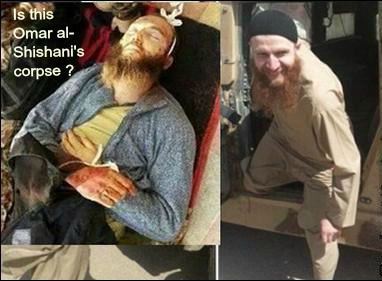




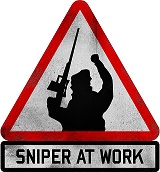





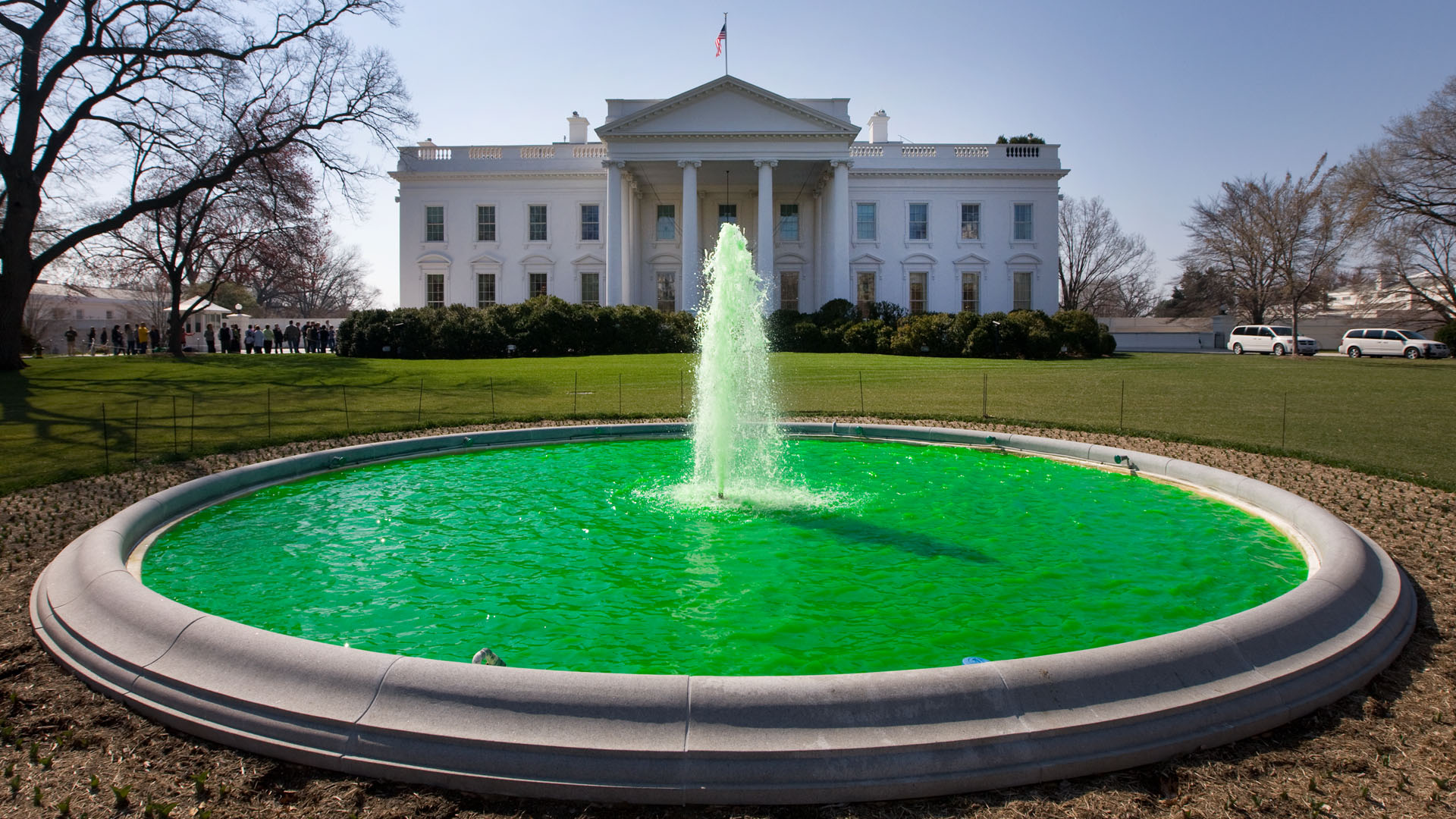


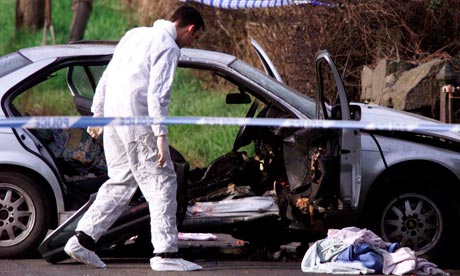
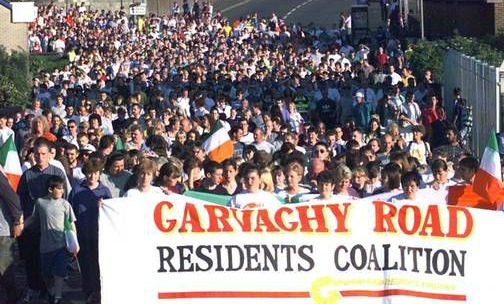


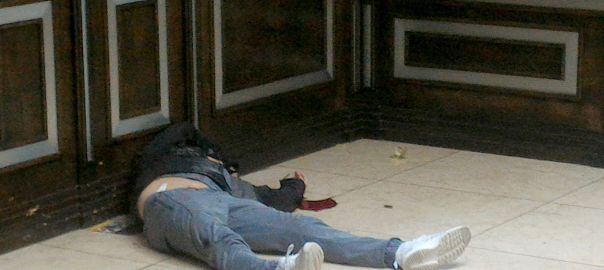


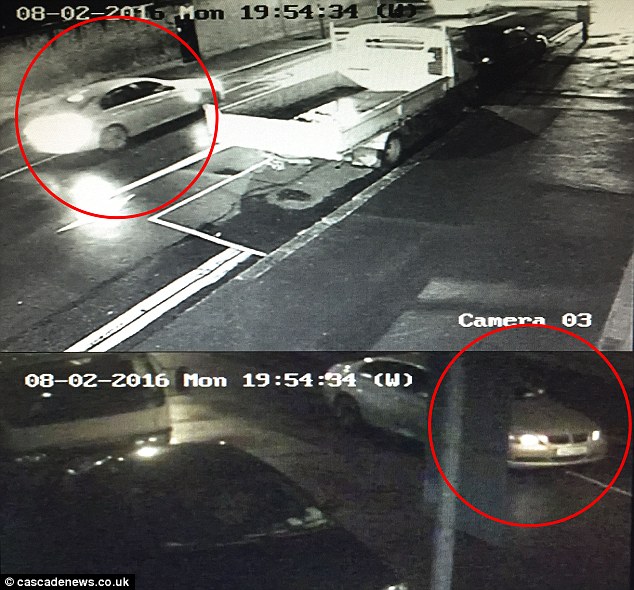

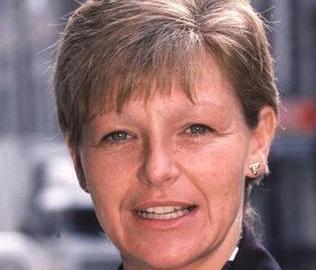





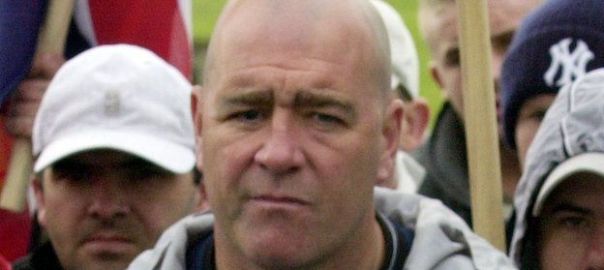


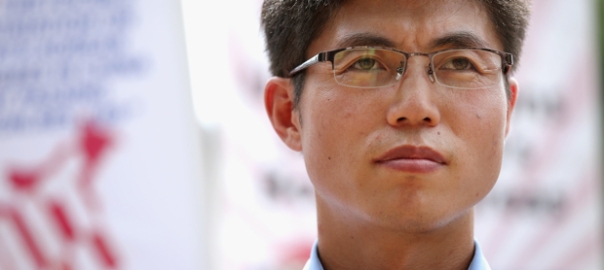



 belfastchildis.com