Monthly Archives: April 2016

26th April – Deaths & Events in Northern Ireland Troubles

Key Events & Deaths on this day in Northern Ireland Troubles

26th April

———————————————

Saturday 26 April 1969 Loyalist Bomb

There was another explosion at a water pipeline carrying supplies to Belfast.

[It was later established that the bomb was planted by Loyalists who were members of the Ulster Volunteer Force (UVF) and the Ulster Protestant Volunteers (UPV). Much of Belfast was without water following the latest explosion. See 30 March 1969.]

Thursday 26 April 1984 The Ulster Unionist Party (UUP) issued a series of proposals for the future of Northern Ireland. The UUP suggested that the area should have a regional council with administrative powers.

Tuesday 26 April 1988

Two members of the security forces were killed in separate incidents. A delegation from the Social Democratic and Labour Party (SDLP) met with Tom King, then Secretary of State for Northern Ireland, at Stromont.

Friday 26 April 1991

There was a meeting of the Anglo-Irish Intergovernmental Conference. This was the last meeting for a 10 week period to allow talks to take place between the political parties.

Tuesday 26 April 1994

Joseph McCloskey (52), a Catholic Civilian, was killed by the Ulster Freedom Fighters (UFF), a cover name (pseudonym) used by the Ulster Defence Association (UDA), at his home, Lepper Street, New Lodge, Belfast.

Wednesday 26 April 1995

The Independent Police Complaints Commission for Northern Ireland reported that the number of complaints made against the Royal Ulster Constabulary (RUC) during 1994 was 2,503. This represented an increase of 16 per cent over the figure for 1993.

The Irish News (a Belfast based newspaper) claimed that there had been secret talks between the Northern Ireland Office (NIO) and the Irish Republican Socialist Party (IRSP). [The IRSP was considered to be closely aligned with the Irish National Liberation Army (INLA).]

Friday 26 April 1996

The Irish Republican Army (IRA) accepted responsibility for the bomb at Hammersmith Bridge, London (Thursday 25 April 1996). Jim Nicholoson, then Chairman of the Ulster Unionist Party (UUP), stepped down as UUP Chairman. Dennis Rogan, then Vice-Chairman of the UUP, succeeded him.

Sunday 26 April 1998

An Orange Order parade was banned from walking along the mainly Catholic lower Ormeau Road in Belfast. Those taking part in the parade held a protest meeting at the police line. The march passed off peacefully.

Bertie Ahern, then Taoiseach (Irish Prime Minister), addressed a commemoration of the Easter Rising (which took place in 1916) in Dublin, and said that Britain had been “effectively ruled out of the equation” in regard to the future of Northern Ireland. The principle of consent, he said, was now the guiding factor in any future developments.

[The remarks were thought to have given the ‘No’ campaign a boost.]

Monday 26 April 1999

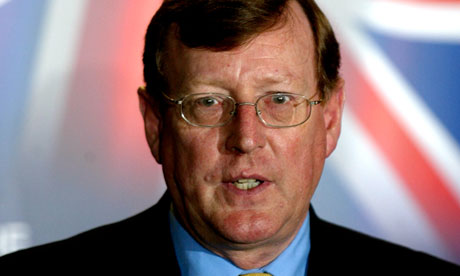
It was revealed that David Trimble, then leader of the Ulster Unionist Party (UUP), and Dennis Rogan, then Chairman of the UUP, were both facing expulsion from the Orange Order because they had attended the funeral mass of three of the victims of the Omagh bombing on 15 August 1998.

[The ‘Qualifications of an Orangeman’ expressly state that he should: “strenuously oppose the fatal errors and doctrines of the Church of Rome, and scrupulously avoid countenancing (by his presence or otherwise) any act of ceremony of Popish worship”.]

The results of an Ulster Marketing Surveys (UMS) opinion poll conducted for The Irish Times (a Dublin based newspaper) and Radio Telefis Éireann (RTE) were published.

The results suggested that the Good Friday Agreement would receive a slightly higher level of support, 73 per cent, among voters in Northern Ireland in the event of a second referendum. However, only half of those questioned in Northern Ireland felt that the Agreement would survive another year. Of those questioned a majority in Northern Ireland were also in favour of forming an Executive only after paramilitary weapons were decommissioned.

———————————————

Remembering all innocent victims of the Troubles

Today is the anniversary of the death of the following people killed as a results of the conflict in Northern Ireland

“To live in hearts we leave behind is not to die

– Thomas Campbell

To the innocent on the list – Your memory will live forever

– To the Paramilitaries –

There are many things worth living for, a few things worth dying for, but nothing worth killing for.

 5 People lost their lives on the 26th  April   between 1976– 1994

———————————————–

26 April 1976


Rory Hawkins   (27)

Catholic
Status: Civilian (Civ),

Killed by: British Army (BA)
Died two weeks after being shot during altercation with British Army (BA) patrol outside LESA Social Club, Clyde Street, Short Strand, Belfast.

———————————————–

26 April 1986


Seamus McElwaine   (25)

nfNI
Status: Irish Republican Army (IRA),

Killed by: British Army (BA)
From County Monaghan. Shot by undercover British Army (BA) members while approaching abandoned Irish Republican Army (IRA) land mine, Mullaghglass, near Rosslea, County Fermanagh.

———————————————–

26 April 1988


Edward Gibson   (22)

Protestant
Status: Ulster Defence Regiment (UDR),

Killed by: Irish Republican Army (IRA)
Off duty. Shot while working as bin man, Moortown, near Ardboe, County Tyrone.

———————————————–

26 April 1988


Lyndon Morgan   (20)

nfNI
Status: British Army (BA),

Killed by: Irish Republican Army (IRA)
Killed by remote controlled bomb, hidden in gas cylinder, detonated when British Army (BA) foot patrol passed, Drumnakilly Road, Carrickmore, County Tyrone.

———————————————–

26 April 1994


Joseph McCloskey (52)

Catholic
Status: Civilian (Civ),

Killed by: Ulster Freedom Fighters (UFF)
Shot, at his home, Lepper Street, New Lodge, Belfast.

———————————————–


Who is Adam Smith ? He might be in your wallet

Who is Adam Smith

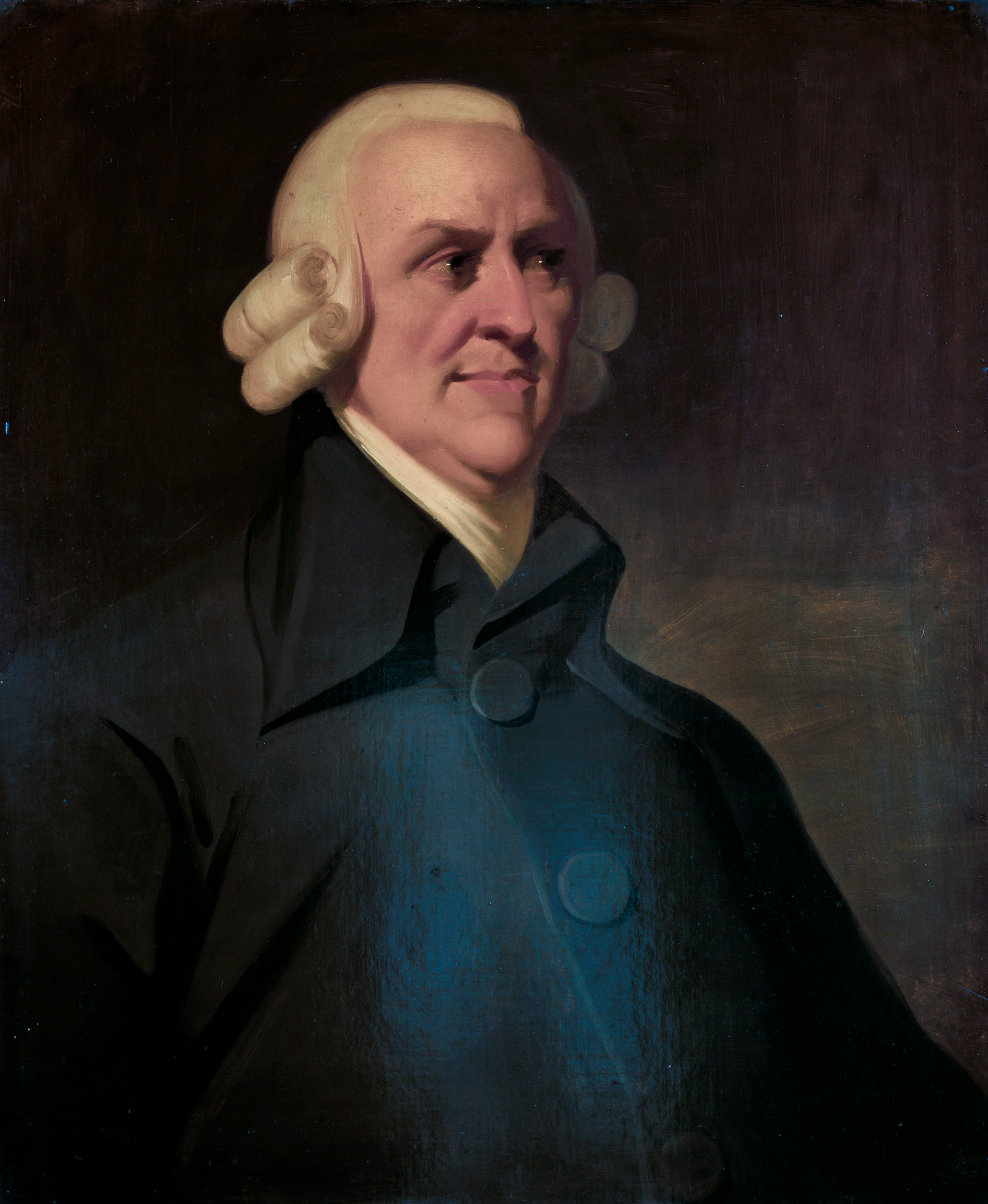
Adam Smith (16 June 1723 NS (5 June 1723 OS) – 17 July 1790) was a Scottish moral philosopher, pioneer of political economy, and a key figure in the Scottish Enlightenment.

And he appears on the UK £20.00 note – but not for much longer.

Design for new Bank of England £20 note

He is about to be replaced by Artist JMW Turner ,an English Romanticist landscape painter.  Turner was considered a controversial figure in his day, but is now regarded as the artist who elevated landscape painting to an eminence rivalling history painting.

Although renowned for his oil paintings, Turner is also one of the greatest masters of British watercolour landscape painting. He is commonly known as “the painter of light”[2] and his work is regarded as a Romantic preface to Impressionism.

Click here for more details on J.M.W. Turner


Bank of England note issues
Bank_of_England_Building,_London,_UK_-_Diliff

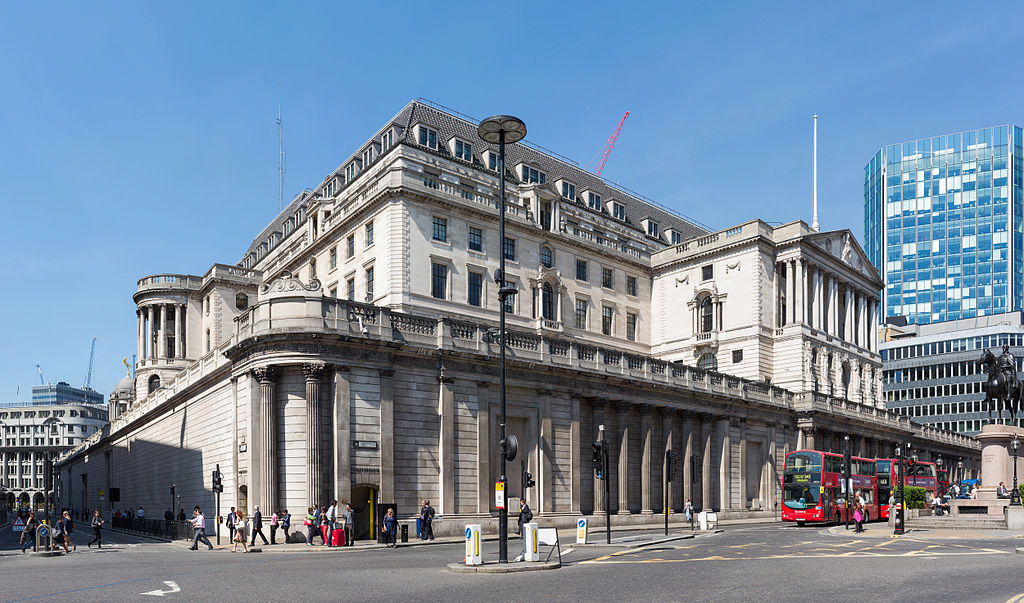
The Bank of England, which is now the Central Bank of the United Kingdom, has issued banknotes since 1694. In 1921 The Bank of England gained a legal monopoly on the issue of banknotes in England and Wales, a process that started with the Bank Charter Act of 1844 when the ability of other banks to issue notes was restricted.

Banknotes were originally hand-written; although they were partially printed from 1725 onwards, cashiers still had to sign each note and make them payable to someone. Notes were fully printed from 1855. Since 1970, the Bank of England’s notes have featured portraits of British historical figures.

Of the eight banks authorised to issue banknotes in the UK, only the Bank of England can issue banknotes in England and Wales, where its notes are legal tender. Bank of England notes are not legal tender in Scotland and Northern Ireland, but are accepted there along with other notes.


£20 note, depicting Adam Smith with an illustration of ‘The division of labour in pin manufacturing’. It also includes enhanced security features. This, the first note from the new Series F, entered circulation on 13 March 2007

£20

£20 notes, in white, appeared in 1725 and continued to be issued until 1943. They ceased to be legal tender in 1945.

After World War II, the £20 denomination did not reappear until 1970, when the new Series D £20 note, predominantly in purple and featuring a statue of William Shakespeare and the balcony scene from Romeo and Juliet on its reverse, was introduced on 9 July. On 5 June 1991 this note was replaced by the first Series E £20 note, featuring the physicist Michael Faraday and the Royal Institution lectures. By 1999 this note had been extensively copied, and therefore it became the first denomination to be replaced on 22 June 1999 by a second Series E design, featuring a bolder denomination figure at the top left of the obverse side, and a reverse side featuring the composer Sir Edward Elgar and Worcester Cathedral. The £20 banknote was known to have suffered from higher cases of counterfeiting (276,000 out of 290,000 cases detected in 2007) than any other denominations.

In February 2006, the Bank announced a new design for the note which featured Scottish economist Adam Smith with a drawing of a pin factory – the institution which supposedly inspired his theory of economics. Smith is the first Scot to appear on a Bank of England note, although the economist has already appeared on Scottish Clydesdale Bank £50 notes. The design of the £20 note was controversial for two reasons: the choice of a Scottish figure on an English note was a break with tradition; and the removal of Elgar took place in the year of the 150th anniversary of the composer’s birth, causing a group of English MPs to table a motion in the House of Commons calling for the new design to be delaye The new note entered circulation on 13 March 2007. The Elgar note ceased to be legal tender on 30 June 2010.[

Adam Smith

Adam Smith (16 June 1723 NS (5 June 1723 OS) – 17 July 1790) was a Scottish moral philosopher, pioneer of political economy, and a key figure in the Scottish Enlightenment.

Smith is best known for two classic works: The Theory of Moral Sentiments (1759), and An Inquiry into the Nature and Causes of the Wealth of Nations (1776). The latter, usually abbreviated as The Wealth of Nations, is considered his magnum opus and the first modern work of economics. Smith is cited as the father of modern economics and is still among the most influential thinkers in the field of economics today.

Smith studied social philosophy at the University of Glasgow and at Balliol College, Oxford, where he was one of the first students to benefit from scholarships set up by fellow Scot, John Snell. After graduating, he delivered a successful series of public lectures at Edinburgh, leading him to collaborate with David Hume during the Scottish Enlightenment. Smith obtained a professorship at Glasgow teaching moral philosophy, and during this time he wrote and published The Theory of Moral Sentiments. In his later life, he took a tutoring position that allowed him to travel throughout Europe, where he met other intellectual leaders of his day.

Smith laid the foundations of classical free market economic theory. The Wealth of Nations was a precursor to the modern academic discipline of economics. In this and other works, he expounded upon how rational self-interest and competition can lead to economic prosperity. Smith was controversial in his own day and his general approach and writing style were often satirised by Tory writers in the moralising tradition of William Hogarth and Jonathan Swift. In 2005, The Wealth of Nations was named among the 100 Best Scottish Books of all time The minor planet 12838 Adamsmith was named in his memory.

Biography

Early life

Portrait of Smith’s mother, Margaret Douglas

Smith was born in Kirkcaldy, in the County of Fife, in Scotland. His father, also Adam Smith, was a Scottish Writer to the Signet (senior solicitor), advocate, and prosecutor (Judge Advocate) and also served as comptroller of the Customs in Kirkcaldy  In 1720 he married Margaret Douglas, daughter of the landed Robert Douglas of Strathendry, also in Fife. His father died two months after he was born, leaving his mother a widow. The date of Smith’s baptism into the Church of Scotland at Kirkcaldy was 5 June 1723, and this has often been treated as if it were also his date of birth, which is unknown. Although few events in Smith’s early childhood are known, the Scottish journalist John Rae, Smith’s biographer, recorded that Smith was abducted by gypsies at the age of three and released when others went to rescue him. Smith was close to his mother, who probably encouraged him to pursue his scholarly ambitions.He attended the Burgh School of Kirkcaldy—characterised by Rae as “one of the best secondary schools of Scotland at that period”—from 1729 to 1737, he learned Latin, mathematics, history, and writing.

Formal education
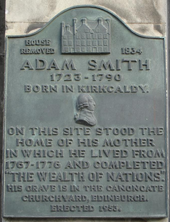
A plaque of Smith

A commemorative plaque for Smith is located in Smith’s home town of Kirkcaldy.

Smith entered the University of Glasgow when he was fourteen and studied moral philosophy under Francis Hutcheson. Here, Smith developed his passion for liberty, reason, and free speech. In 1740 Smith was the graduate scholar presented to undertake postgraduate studies at Balliol College, Oxford, under the Snell Exhibition.

Adam Smith considered the teaching at Glasgow to be far superior to that at Oxford, which he found intellectually stifling.In Book V, Chapter II of The Wealth of Nations, Smith wrote: “In the University of Oxford, the greater part of the public professors have, for these many years, given up altogether even the pretence of teaching.” Smith is also reported to have complained to friends that Oxford officials once discovered him reading a copy of David Hume‘s Treatise on Human Nature, and they subsequently confiscated his book and punished him severely for reading it. According to William Robert Scott, “The Oxford of [Smith’s] time gave little if any help towards what was to be his lifework.” Nevertheless, Smith took the opportunity while at Oxford to teach himself several subjects by reading many books from the shelves of the large Bodleian Library. When Smith was not studying on his own, his time at Oxford was not a happy one, according to his letters. Near the end of his time there, Smith began suffering from shaking fits, probably the symptoms of a nervous breakdown. He left Oxford University in 1746, before his scholarship ended.

In Book V of The Wealth of Nations, Smith comments on the low quality of instruction and the meager intellectual activity at English universities, when compared to their Scottish counterparts. He attributes this both to the rich endowments of the colleges at Oxford and Cambridge, which made the income of professors independent of their ability to attract students, and to the fact that distinguished men of letters could make an even more comfortable living as ministers of the Church of England.

Adam Smith’s discontent at Oxford might be in part due to the absence of his beloved teacher in Glasgow, Francis Hutcheson. Hutcheson was well regarded as one of the most prominent lecturers at the University of Glasgow in his day and earned the approbation of students, colleagues, and even ordinary residents with the fervor and earnestness of his orations (which he sometimes opened to the public). His lectures endeavoured not merely to teach philosophy but to make his students embody that philosophy in their lives, appropriately acquiring the epithet, the preacher of philosophy. Unlike Smith, Hutcheson was not a system builder; rather it was his magnetic personality and method of lecturing that so influenced his students and caused the greatest of those to reverentially refer to him as “the never to be forgotten Hutcheson” – a title that Smith in all his correspondence used to describe only two people, his good friend David Hume and influential mentor Francis Hutcheson.

Teaching career

Smith began delivering public lectures in 1748 in Edinburgh, sponsored by the Philosophical Society of Edinburgh under the patronage of Lord Kames. His lecture topics included rhetoric and belles-lettres, and later the subject of “the progress of opulence”. On this latter topic he first expounded his economic philosophy of “the obvious and simple system of natural liberty“. While Smith was not adept at public speaking, his lectures met with success.
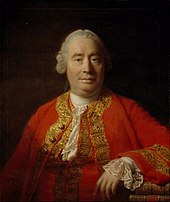
A man posing for a painting

David Hume was a friend and contemporary of Smith.

In 1750, he met the philosopher David Hume, who was his senior by more than a decade. In their writings covering history, politics, philosophy, economics, and religion, Smith and Hume shared closer intellectual and personal bonds than with other important figures of the Scottish Enlightenment.

In 1751, Smith earned a professorship at Glasgow University teaching logic courses, and in 1752 he was elected a member of the Philosophical Society of Edinburgh, having been introduced to the society by Lord Kames. When the head of Moral Philosophy in Glasgow died the next year, Smith took over the position. He worked as an academic for the next thirteen years, which he characterised as “by far the most useful and therefore by far the happiest and most honorable period [of his life]”.

Smith published The Theory of Moral Sentiments in 1759, embodying some of his Glasgow lectures. This work was concerned with how human morality depends on sympathy between agent and spectator, or the individual and other members of society. Smith defined “mutual sympathy” as the basis of moral sentiments. He based his explanation, not on a special “moral sense” as the Third Lord Shaftesbury and Hutcheson had done, nor on utility as Hume did, but on mutual sympathy, a term best captured in modern parlance by the twentieth-century concept of empathy, the capacity to recognise feelings that are being experienced by another being.

Following the publication of The Theory of Moral Sentiments, Smith became so popular that many wealthy students left their schools in other countries to enroll at Glasgow to learn under Smith. After the publication of The Theory of Moral Sentiments, Smith began to give more attention to jurisprudence and economics in his lectures and less to his theories of morals. For example, Smith lectured that the cause of increase in national wealth is labour, rather than the nation’s quantity of gold or silver, which is the basis for mercantilism, the economic theory that dominated Western European economic policies at the time.

In 1762, the University of Glasgow conferred on Smith the title of Doctor of Laws (LL.D.). At the end of 1763, he obtained an offer from Charles Townshend – who had been introduced to Smith by David Hume – to tutor his stepson, Henry Scott, the young Duke of Buccleuch. Smith then resigned from his professorship to take the tutoring position. He subsequently attempted to return the fees he had collected from his students because he resigned in the middle of the term, but his students refused.

Tutoring and travels

Smith’s tutoring job entailed touring Europe with Scott, during which time he educated Scott on a variety of subjects – such as proper Polish. He was paid £300 per year (plus expenses) along with a £300 per year pension; roughly twice his former income as a teacher. Smith first travelled as a tutor to Toulouse, France, where he stayed for one and a half years. According to his own account, he found Toulouse to be somewhat boring, having written to Hume that he “had begun to write a book to pass away the time”. After touring the south of France, the group moved to Geneva, where Smith met with the philosopher Voltaire.

From Geneva, the party moved to Paris. Here Smith came to know several great intellectual leaders of the time; invariably having an effect on his future works. This list included: Benjamin Franklin,  Turgot, Jean D’Alembert, André Morellet, Helvétius, and, notably, François Quesnay, the head of the Physiocratic school. So impressed with his ideas  Smith considered dedicating The Wealth of Nations to him – had Quesnay not died beforehand.  Physiocrats were opposed to mercantilism, the dominating economic theory of the time. Illustrated in their motto Laissez faire et laissez passer, le monde va de lui même! (Let do and let pass, the world goes on by itself!). They were also known to have declared that only agricultural activity produced real wealth; merchants and industrialists (manufacturers) did not. This however, did not represent their true school of thought, but was a mere “smoke screen” manufactured to hide their actual criticisms of the nobility and church; arguing that they made up the only real clients of merchants.

The wealth of France was virtually destroyed by Louis XIV and Louis XV in ruinous wars, by aiding the American insurgents against the British, and perhaps most destructive (in terms of public perceptions) was what was seen as the excessive consumption of goods and services deemed to have no economic contribution – unproductive labour. Assuming that nobility and church are essentially detractors from economic growth, the feudal system of agriculture in France was the only sector important to maintain the wealth of the nation. Given that the English economy of the day yielded an income distribution that stood in contrast to that which existed in France, Smith concluded that the teachings and beliefs of Physiocrats were, “with all [their] imperfections [perhaps], the nearest approximation to the truth that has yet been published upon the subject of political economy”.The distinction between productive versus unproductive labour – the physiocratic classe steril – was a predominant issue in the development and understanding of what would become classical economic theory.

Later years

In 1766, Henry Scott’s younger brother died in Paris, and Smith’s tour as a tutor ended shortly thereafter.Smith returned home that year to Kirkcaldy, and he devoted much of the next ten years to his magnum opus. There he befriended Henry Moyes, a young blind man who showed precocious aptitude. As well as teaching Moyes, Smith secured the patronage of David Hume and Thomas Reid in the young man’s education. In May 1773, Smith was elected fellow of the Royal Society of London,  and was elected a member of the Literary Club in 1775. The Wealth of Nations was published in 1776 and was an instant success, selling out its first edition in only six months.

In 1778, Smith was appointed to a post as commissioner of customs in Scotland and went to live with his mother in Panmure House in Edinburgh’s Canongate. Five years later, as a member of the Philosophical Society of Edinburgh when it received its royal charter, he automatically became one of the founding members of the Royal Society of Edinburgh, and from 1787 to 1789 he occupied the honorary position of Lord Rector of the University of Glasgow.  He died in the northern wing of Panmure House in Edinburgh on 17 July 1790 after a painful illness and was buried in the Canongate Kirkyard. On his death bed, Smith expressed disappointment that he had not achieved more.

Smith’s literary executors were two friends from the Scottish academic world: the physicist and chemist Joseph Black, and the pioneering geologist James Hutton. Smith left behind many notes and some unpublished material, but gave instructions to destroy anything that was not fit for publication. He mentioned an early unpublished History of Astronomy as probably suitable, and it duly appeared in 1795, along with other material such as Essays on Philosophical Subjects.

Smith’s library went by his will to David Douglas, Lord Reston (son of his cousin Colonel Robert Douglas of Strathendry, Fife), who lived with Smith. It was eventually divided between his two surviving children, Cecilia Margaret (Mrs. Cunningham) and David Anne (Mrs. Bannerman). On the death of her husband, the Rev. W. B. Cunningham of Prestonpans in 1878, Mrs. Cunningham sold some of the books. The remainder passed to her son, Professor Robert Oliver Cunningham of Queen’s College, Belfast, who presented a part to the library of Queen’s College. After his death the remaining books were sold. On the death of Mrs. Bannerman in 1879 her portion of the library went intact to the New College (of the Free Church), Edinburgh.

Personality and beliefs

Character

An enamel paste medallion, depicting a man's head facing the right

James Tassie‘s enamel paste medallion of Smith provided the model for many engravings and portraits that remain today.

Not much is known about Smith’s personal views beyond what can be deduced from his published articles. His personal papers were destroyed after his death at his request. He never married, and seems to have maintained a close relationship with his mother, with whom he lived after his return from France and who died six years before his own death.

Smith was described by several of his contemporaries and biographers as comically absent-minded, with peculiar habits of speech and gait, and a smile of “inexpressible benignity”.  He was known to talk to himself, a habit that began during his childhood when he would smile in rapt conversation with invisible companions. He also had occasional spells of imaginary illness,  and he is reported to have had books and papers placed in tall stacks in his study.  According to one story, Smith took Charles Townshend on a tour of a tanning factory, and while discussing free trade, Smith walked into a huge tanning pit from which he needed help to escape. He is also said to have put bread and butter into a teapot, drunk the concoction, and declared it to be the worst cup of tea he ever had. According to another account, Smith distractedly went out walking in his nightgown and ended up 15 miles (24 km) outside of town, before nearby church bells brought him back to reality.

James Boswell who was a student of Smith’s at Glasgow University, and later knew him at the Literary Club, says that Smith thought that speaking about his ideas in conversation might reduce the sale of his books, and so his conversation was unimpressive. According to Boswell, he once told Sir Joshua Reynolds that ‘he made it a rule when in company never to talk of what he understood’

A drawing of a man standing up, with one hand holding a cane and the other pointing at a book

Portrait of Smith by John Kay, 1790

Smith, who is reported to have been an odd-looking fellow, has been described as someone who “had a large nose, bulging eyes, a protruding lower lip, a nervous twitch, and a speech impediment”.Smith is said to have acknowledged his looks at one point, saying, “I am a beau in nothing but my books.” Smith rarely sat for portraits, so almost all depictions of him created during his lifetime were drawn from memory. The best-known portraits of Smith are the profile by James Tassie and two etchings by John Kay.The line engravings produced for the covers of 19th century reprints of The Wealth of Nations were based largely on Tassie’s medallion.

Religious views

There has been considerable scholarly debate about the nature of Smith’s religious views. Smith’s father had shown a strong interest in Christianity and belonged to the moderate wing of the Church of Scotland. The fact that Adam Smith received the Snell Exhibition suggests that he may have gone to Oxford with the intention of pursuing a career in the Church of England.

Anglo-American economist Ronald Coase has challenged the view that Smith was a deist, based on the fact that Smith’s writings never explicitly invoke God as an explanation of the harmonies of the natural or the human worlds. According to Coase, though Smith does sometimes refer to the “Great Architect of the Universe“, later scholars such as Jacob Viner have “very much exaggerated the extent to which Adam Smith was committed to a belief in a personal God”,a belief for which Coase finds little evidence in passages such as the one in the Wealth of Nations in which Smith writes that the curiosity of mankind about the “great phenomena of nature”, such as “the generation, the life, growth and dissolution of plants and animals”, has led men to “enquire into their causes”, and that “superstition first attempted to satisfy this curiosity, by referring all those wonderful appearances to the immediate agency of the gods. Philosophy afterwards endeavoured to account for them, from more familiar causes, or from such as mankind were better acquainted with than the agency of the gods”.

Some other authors argue that Smith’s social and economic philosophy is inherently theological and that his entire model of social order is logically dependent on the notion of God’s action in nature.

Smith was also a close friend and later the executor of David Hume, who was commonly characterised in his own time as an atheist.The publication in 1777 of Smith’s letter to William Strahan, in which he described Hume’s courage in the face of death in spite of his irreligiosity, attracted considerable controversy.

Published works

The Theory of Moral Sentiments

In 1759, Smith published his first work, The Theory of Moral Sentiments. He continued making extensive revisions to the book, up until his death.Although The Wealth of Nations is widely regarded as Smith’s most influential work, it is believed that Smith himself considered The Theory of Moral Sentiments to be a superior work.

In the work, Smith critically examines the moral thinking of his time, and suggests that conscience arises from dynamic and interactive social relationships through which people seek “mutual sympathy of sentiments.”. His goal in writing the work was to explain the source of mankind’s ability to form moral judgement, given that people begin life with no moral sentiments at all. Smith proposes a theory of sympathy, in which the act of observing others and seeing the judgements they form of both others and oneself makes people aware of themselves and how others perceive their behavior. The feedback we receive from perceiving (or imagining) others’ judgements creates an incentive to achieve “mutual sympathy of sentiments” with them and leads people to develop habits, and then principles, of behavior, which come to constitute one’s conscience.

Some scholars have perceived a conflict between The Theory of Moral Sentiments and The Wealth of Nations; the former emphasises sympathy for others, while the latter focuses on the role of self-interest.In recent years, however, some scholars of Smith’s work have argued that no contradiction exists. They claim that in The Theory of Moral Sentiments, Smith develops a theory of psychology in which individuals seek the approval of the “impartial spectator” as a result of a natural desire to have outside observers sympathise with their sentiments. Rather than viewing The Theory of Moral Sentiments and The Wealth of Nations as presenting incompatible views of human nature, some Smith scholars regard the works as emphasising different aspects of human nature that vary depending on the situation. Otteson argues that both books are Newtonian in their methodology and deploy a similar “market model” for explaining the creation and development of large-scale human social orders, including morality, economics, as well as language. Ekelund and Hebert offer a differing view, observing that self-interest is present in both works and that “in the former, sympathy is the moral faculty that holds self-interest in check, whereas in the latter, competition is the economic faculty that restrains self-interest.”

The Wealth of Nations

Main article: The Wealth of Nations
A brown building

Later building on the site where Smith wrote The Wealth of Nations

There is disagreement between classical and neoclassical economists about the central message of Smith’s most influential work: An Inquiry into the Nature and Causes of the Wealth of Nations (1776). Neoclassical economists emphasise Smith’s invisible hand, a concept mentioned in the middle of his work – Book IV, Chapter II – and classical economists believe that Smith stated his programme for promoting the “wealth of nations” in the first sentences, which attributes the growth of wealth and prosperity to the division of labour.

Smith used the term “the invisible hand” in “History of Astronomy”referring to “the invisible hand of Jupiter,” and once in each of his The Theory of Moral Sentiments (1759) and The Wealth of Nations (1776). This last statement about “an invisible hand” has been interpreted in numerous ways.

As every individual, therefore, endeavours as much as he can both to employ his capital in the support of domestic industry, and so to direct that industry that its produce may be of the greatest value; every individual necessarily labours to render the annual revenue of the society as great as he can. He generally, indeed, neither intends to promote the public interest, nor knows how much he is promoting it. By preferring the support of domestic to that of foreign industry, he intends only his own security; and by directing that industry in such a manner as its produce may be of the greatest value, he intends only his own gain, and he is in this, as in many other cases, led by an invisible hand to promote an end which was no part of his intention. Nor is it always the worse for the society that it was no part of it. By pursuing his own interest he frequently promotes that of the society more effectually than when he really intends to promote it. I have never known much good done by those who affected to trade for the public good. It is an affectation, indeed, not very common among merchants, and very few words need be employed in dissuading them from it.

Those who regard that statement as Smith’s central message also quote frequently Smith’s dictum:

It is not from the benevolence of the butcher, the brewer, or the baker, that we expect our dinner, but from their regard to their own interest. We address ourselves, not to their humanity but to their self-love, and never talk to them of our own necessities but of their advantages.

The first page of a book

The first page of The Wealth of Nations, 1776 London edition

Smith’s statement about the benefits of “an invisible hand” may be meant to answer  Mandeville’s contention that “Private Vices … may be turned into Public Benefits”.It shows Smith’s belief that when an individual pursues his self-interest under conditions of justice, he unintentionally promotes the good of society. Self-interested competition in the free market, he argued, would tend to benefit society as a whole by keeping prices low, while still building in an incentive for a wide variety of goods and services. Nevertheless, he was wary of businessmen and warned of their “conspiracy against the public or in some other contrivance to raise prices”. Again and again, Smith warned of the collusive nature of business interests, which may form cabals or monopolies, fixing the highest price “which can be squeezed out of the buyers”.Smith also warned that a business-dominated political system would allow a conspiracy of businesses and industry against consumers, with the former scheming to influence politics and legislation. Smith states that the interest of manufacturers and merchants “…in any particular branch of trade or manufactures, is always in some respects different from, and even opposite to, that of the public…The proposal of any new law or regulation of commerce which comes from this order, ought always to be listened to with great precaution, and ought never be adopted till after having been long and carefully examined, not only with the most scrupulous, but with the most suspicious attention.” Thus Smith’s chief worry seems to be when business is given special protections or privileges from government; by contrast, in the absence of such special political favours, he believed that business activities were generally beneficial to the whole society:

It is the great multiplication of the production of all the different arts, in consequence of the division of labour, which occasions, in a well-governed society, that universal opulence which extends itself to the lowest ranks of the people. Every workman has a great quantity of his own work to dispose of beyond what he himself has occasion for; and every other workman being exactly in the same situation, he is enabled to exchange a great quantity of his own goods for a great quantity, or, what comes to the same thing, for the price of a great quantity of theirs. He supplies them abundantly with what they have occasion for, and they accommodate him as amply with what he has occasion for, and a general plenty diffuses itself through all the different ranks of society. (The Wealth of Nations, I.i.10)

The neoclassical interest in Smith’s statement about “an invisible hand” originates in the possibility to see it as a precursor of neoclassical economics and its General Equilibrium concept. Samuelson’s “Economics” refers 6 times to Smith’s “invisible hand”. To emphasise this relation, Samuelson quotes Smith’s “invisible hand” statement putting “general interest” where Smith wrote “public interest”. Samuelson concluded: “Smith was unable to prove the essence of his invisible-hand doctrine. Indeed, until the 1940s no one knew how to prove, even to state properly, the kernel of truth in this proposition about perfectly competitive market.”

Very differently, classical economists see in Smith’s first sentences his programme to promote “The Wealth of Nations”. Taking up the physiocratical concept of the economy as a circular process means that to have growth the inputs of period2 must excel the inputs of period1. Therefore, the outputs of period1 not used or usable as input of period2 are regarded as unproductive labour as they do not contribute to growth. This is what Smith had heard in France from, among others, Quesnay. To this French insight that unproductive labour should be pushed back to use labour more productively, Smith added his own proposal, that productive labour should be made even more productive by deepening the division of labour. Smith argued that deepening the division of labour under competition leads to greater productivity, which leads to lower prices and thus an increasing standard of living—”general plenty” and “universal opulence”—for all. Extended markets and increased production lead to continuous reorganisation of production and inventing new ways of producing, which lead to further increased production, lower prices, and increased standards of living. Smith’s central message is therefore that under dynamic competition a growth machine secures “The Wealth of Nations”. Smith’s argument predicted Britain’s evolution as the workshop of the world, underselling and outproducing all its competitors. The opening sentences of the “Wealth of Nations” summarise this policy:

The annual labour of every nation is the fund which originally supplies it with all the necessaries and conveniences of life which it annually consumes … . [T]his produce … bears a greater or smaller proportion to the number of those who are to consume it … .[B]ut this proportion must in every nation be regulated by two different circumstances;

  • first, by the skill, dexterity, and judgment with which its labour is generally applied; and,
  • secondly, by the proportion between the number of those who are employed in useful labour, and that of those who are not so employed [emphasis added].

Smith added, however, that the “abundance or scantiness of this supply too seems to depend more upon the former of those two circumstances than upon the latter.”

Criticism and dissent

Alfred Marshall criticised Smith’s definition of economy on several points. He argued that man should be equally important as money, services are as important as goods, and that there must be an emphasis on human welfare, instead of just wealth. The “invisible hand” only works well when both production and consumption operates in free markets, with small (“atomistic”) producers and consumers allowing supply and demand to fluctuate and equilibrate. In conditions of monopoly and oligopoly, the “invisible hand” fails. Nobel Prize-winning economist Joseph E. Stiglitz says, on the topic of one of Smith’s better known ideas: “the reason that the invisible hand often seems invisible is that it is often not there.”

Other works

A burial

Smith’s burial place in Canongate Kirkyard

Shortly before his death, Smith had nearly all his manuscripts destroyed. In his last years, he seemed to have been planning two major treatises, one on the theory and history of law and one on the sciences and arts. The posthumously published Essays on Philosophical Subjects, a history of astronomy down to Smith’s own era, plus some thoughts on ancient physics and metaphysics, probably contain parts of what would have been the latter treatise. Lectures on Jurisprudence were notes taken from Smith’s early lectures, plus an early draft of The Wealth of Nations, published as part of the 1976 Glasgow Edition of the works and correspondence of Smith. Other works, including some published posthumously, include Lectures on Justice, Police, Revenue, and Arms (1763) (first published in 1896); and Essays on Philosophical Subjects (1795).

Legacy

In economics and moral philosophy

The Wealth of Nations was a precursor to the modern academic discipline of economics. In this and other works, Smith expounded how rational self-interest and competition can lead to economic prosperity. Smith was controversial in his own day and his general approach and writing style were often satirised by Tory writers in the moralising tradition of Hogarth and Swift, as a discussion at the University of Winchester suggests. In 2005, The Wealth of Nations was named among the 100 Best Scottish Books of all time. Former UK Prime Minister Margaret Thatcher, it is said, used to carry a copy of the book in her handbag.

In light of the arguments put forward by Smith and other economic theorists in Britain, academic belief in mercantalism began to decline in Britain in the late 18th century. During the Industrial Revolution, Britain embraced free trade and Smith’s laissez-faire economics, and via the British Empire, used its power to spread a broadly liberal economic model around the world, characterised by open markets, and relatively barrier free domestic and international trade.

George Stigler attributes to Smith “the most important substantive proposition in all of economics”. It is that, under competition, owners of resources (for example labour, land, and capital) will use them most profitably, resulting in an equal rate of return in equilibrium for all uses, adjusted for apparent differences arising from such factors as training, trust, hardship, and unemployment.

Paul Samuelson finds in Smith’s pluralist use of supply and demand as applied to wages, rents, profit a valid and valuable anticipation of the general equilibrium modelling of Walras a century later. Smith’s allowance for wage increases in the short and intermediate term from capital accumulation and invention contrasted with Malthus, Ricardo, and Karl Marx in their propounding a rigid subsistence–wage theory of labour supply.

Joseph Schumpeter criticised Smith for a lack of technical rigor, yet he argued that this enabled Smith’s writings to appeal to wider audiences: “His very limitation made for success. Had he been more brilliant, he would not have been taken so seriously. Had he dug more deeply, had he unearthed more recondite truth, had he used more difficult and ingenious methods, he would not have been understood. But he had no such ambitions; in fact he disliked whatever went beyond plain common sense. He never moved above the heads of even the dullest readers. He led them on gently, encouraging them by trivialities and homely observations, making them feel comfortable all along.”

Classical economists presented competing theories of those of Smith, termed the “labour theory of value“. Later Marxian economics descending from classical economics also use Smith’s labour theories, in part. The first volume of Karl Marx‘s major work, Capital, was published in German in 1867. In it, Marx focused on the labour theory of value and what he considered to be the exploitation of labour by capital.  The labour theory of value held that the value of a thing was determined by the labour that went into its production. This contrasts with the modern contention of neoclassical economics, that the value of a thing is determined by what one is willing to give up to obtain the thing.

A brown building

The Adam Smith Theatre in Kirkcaldy

The body of theory later termed “neoclassical economics” or “marginalism” formed from about 1870 to 1910. The term “economics” was popularised by such neoclassical economists as Alfred Marshall as a concise synonym for “economic science” and a substitute for the earlier, broader term “political economy” used by Smith. This corresponded to the influence on the subject of mathematical methods used in the natural sciences. Neoclassical economics systematised supply and demand as joint determinants of price and quantity in market equilibrium, affecting both the allocation of output and the distribution of income. It dispensed with the labour theory of value of which Smith was most famously identified with in classical economics, in favour of a marginal utility theory of value on the demand side and a more general theory of costs on the supply side.

The bicentennial anniversary of the publication of The Wealth of Nations was celebrated in 1976, resulting in increased interest for The Theory of Moral Sentiments and his other works throughout academia. After 1976, Smith was more likely to be represented as the author of both The Wealth of Nations and The Theory of Moral Sentiments, and thereby as the founder of a moral philosophy and the science of economics. His homo economicus or “economic man” was also more often represented as a moral person. Additionally, economists David Levy and Sandra Peart in “The Secret History of the Dismal Science” point to his opposition to hierarchy and beliefs in inequality, including racial inequality, and provide additional support for those who point to Smith’s opposition to slavery, colonialism, and empire.They show the caricatures of Smith drawn by the opponents of views on hierarchy and inequality in this online article. Emphasised also are Smith’s statements of the need for high wages for the poor, and the efforts to keep wages low. In The “Vanity of the Philosopher: From Equality to Hierarchy in Postclassical Economics”, Peart and Levy also cite Smith’s view that a common street porter was not intellectually inferior to a philosopher, and point to the need for greater appreciation of the public views in discussions of science and other subjects now considered to be technical. They also cite Smith’s opposition to the often expressed view that science is superior to common sense.

Smith also explained the relationship between growth of private property and civil government:

“Men may live together in society with some tolerable degree of security, though there is no civil magistrate to protect them from the injustice of those passions. But avarice and ambition in the rich, in the poor the hatred of labour and the love of present ease and enjoyment, are the passions which prompt to invade property, passions much more steady in their operation, and much more universal in their influence. Wherever there is great property there is great inequality. For one very rich man there must be at least five hundred poor, and the affluence of the few supposes the indigence of the many. The affluence of the rich excites the indignation of the poor, who are often both driven by want, and prompted by envy, to invade his possessions. It is only under the shelter of the civil magistrate that the owner of that valuable property, which is acquired by the labour of many years, or perhaps of many successive generations, can sleep a single night in security. He is at all times surrounded by unknown enemies, whom, though he never provoked, he can never appease, and from whose injustice he can be protected only by the powerful arm of the civil magistrate continually held up to chastise it. The acquisition of valuable and extensive property, therefore, necessarily requires the establishment of civil government. Where there is no property, or at least none that exceeds the value of two or three days’ labour, civil government is not so necessary. Civil government supposes a certain subordination. But as the necessity of civil government gradually grows up with the acquisition of valuable property, so the principal causes which naturally introduce subordination gradually grow up with the growth of that valuable property. (…) Men of inferior wealth combine to defend those of superior wealth in the possession of their property, in order that men of superior wealth may combine to defend them in the possession of theirs. All the inferior shepherds and herdsmen feel that the security of their own herds and flocks depends upon the security of those of the great shepherd or herdsman; that the maintenance of their lesser authority depends upon that of his greater authority, and that upon their subordination to him depends his power of keeping their inferiors in subordination to them. They constitute a sort of little nobility, who feel themselves interested to defend the property and to support the authority of their own little sovereign in order that he may be able to defend their property and to support their authority. Civil government, so far as it is instituted for the security of property, is in reality instituted for the defence of the rich against the poor, or of those who have some property against those who have none at all.” (Source: The Wealth of Nations, Book 5, Chapter 1, Part 2)

In British Imperial debates

Smith’s chapter on colonies in turn would help shape British imperial debates from the mid-nineteenth century onward. The Wealth of Nations would become an ambiguous text regarding the imperial question. In his chapter on colonies, Smith pondered how to solve the crisis developing across the Atlantic among the empire’s thirteen American colonies. He offered two different proposals for easing tensions. The first proposal called for giving the colonies their independence and, by thus parting on a friendly basis, Britain would be able to develop and maintain a free-trade relationship with them, and possibly even an informal military alliance. Smith’s second proposal called for a theoretical imperial federation that would bring the colonies and the metropole closer together through an imperial parliamentary system and imperial free trade.

Smith’s most prominent disciple in nineteenth-century Britain, peace advocate Richard Cobden, preferred the first proposal. Cobden would lead the Anti-Corn Law League in overturning the Corn Laws in 1846, shifting Britain to a policy of free trade and empire “on the cheap” for decades to come. This hands-off approach toward the British Empire would become known as Cobdenism or the Manchester School.By the turn of the century, however, advocates of Smith’s second proposal such as Joseph Shield Nicholson would become ever more vocal in opposing Cobdenism, calling instead for imperial federation As Marc-William Palen notes: “On the one hand, Adam Smith’s late nineteenth and early twentieth-century Cobdenite adherents used his theories to argue for gradual imperial devolution and empire ‘on the cheap’. On the other, various proponents of imperial federation throughout the British World sought to use Smith’s theories to overturn the predominant Cobdenite hands-off imperial approach and instead, with a firm grip, bring the empire closer than ever before.” Smith’s ideas thus played an important part in subsequent debates over the British Empire.

Portraits, monuments, and banknotes
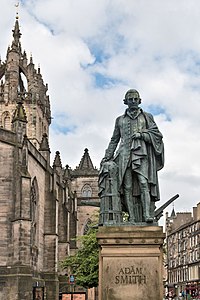
A statue of Smith in Edinburgh‘s High Street, erected through private donations organised by the Adam Smith Institute.

Smith has been commemorated in the UK on banknotes printed by two different banks; his portrait has appeared since 1981 on the £50 notes issued by the Clydesdale Bank in Scotland,[and in March 2007 Smith’s image also appeared on the new series of £20 notes issued by the Bank of England, making him the first Scotsman to feature on an English banknote.[

Statue of Smith built in 1867–1870 at the old headquarters of the University of London, 6 Burlington Gardens.

A large-scale memorial of Smith by Alexander Stoddart was unveiled on 4 July 2008 in Edinburgh. It is a 10 feet (3.0 m)-tall bronze sculpture and it stands above the Royal Mile outside St Giles’ Cathedral in Parliament Square, near the Mercat cross. 20th-century sculptor Jim Sanborn (best known for the Kryptos sculpture at the United States Central Intelligence Agency) has created multiple pieces which feature Smith’s work. At Central Connecticut State University is Circulating Capital, a tall cylinder which features an extract from The Wealth of Nations on the lower half, and on the upper half, some of the same text but represented in binary code. At the University of North Carolina at Charlotte, outside the Belk College of Business Administration, is Adam Smith’s Spinning Top. Another Smith sculpture is at Cleveland State University.He also appears as the narrator in the 2013 play The Low Road, centred on a proponent on laissez-faire economics in the late eighteenth century but dealing obliquely with the financial crisis of 2007–2008 and the recession which followed – in the premiere production, he was portrayed by Bill Paterson.

Residence

Adam Smith resided at Panmure house from 1778–90. This residence has now been purchased by the Edinburgh Business School at Heriot Watt University and fundraising has begun to restore it. Part of the Northern end of the original building appears to have been demolished in the 19th century to make way for an iron foundry.

As a symbol of free market economics


A sculpture of an upside down cone

Adam Smith’s Spinning Top, sculpture by Jim Sanborn at Cleveland State University

Smith has been celebrated by advocates of free market policies as the founder of free market economics, a view reflected in the naming of bodies such as the Adam Smith Institute in London, the Adam Smith Society and the Australian Adam Smith Club, and in terms such as the Adam Smith necktie.

Alan Greenspan argues that, while Smith did not coin the term laissez-faire, “it was left to Adam Smith to identify the more-general set of principles that brought conceptual clarity to the seeming chaos of market transactions”. Greenspan continues that The Wealth of Nations was “one of the great achievements in human intellectual history”.P. J. O’Rourke describes Smith as the “founder of free market economics”.

Other writers have argued that Smith’s support for laissez-faire (which in French means leave alone) has been overstated. Herbert Stein wrote that the people who “wear an Adam Smith necktie” do it to “make a statement of their devotion to the idea of free markets and limited government“, and that this misrepresents Smith’s ideas. Stein writes that Smith “was not pure or doctrinaire about this idea. He viewed government intervention in the market with great skepticism…yet he was prepared to accept or propose qualifications to that policy in the specific cases where he judged that their net effect would be beneficial and would not undermine the basically free character of the system. He did not wear the Adam Smith necktie.” In Stein’s reading, The Wealth of Nations could justify the Food and Drug Administration, the Consumer Product Safety Commission, mandatory employer health benefits, environmentalism, and “discriminatory taxation to deter improper or luxurious behavior

Similarly, Vivienne Brown stated in The Economic Journal that in the 20th century United States, Reaganomics supporters, the Wall Street Journal, and other similar sources have spread among the general public a partial and misleading vision of Smith, portraying him as an “extreme dogmatic defender of laissez-faire capitalism and supply-side economics“.In fact, The Wealth of Nations includes the following statement on the payment of taxes:

“The subjects of every state ought to contribute towards the support of the government, as nearly as possible, in proportion to their respective abilities; that is, in proportion to the revenue which they respectively enjoy under the protection of the state.”

Some commentators have argued that Smith’s works show support for a progressive, not flat, income tax and that he specifically named taxes that he thought should be required by the state, among them luxury goods taxes and tax on rent.Yet Smith argued for the “impossibility of taxing the people, in proportion to their economic revenue, by any capitation” (The Wealth of Nations, V.ii.k.1). Smith argued that taxes should principally go toward protecting “justice” and “certain publick institutions” that were necessary for the benefit of all of society but that could not be provided by private enterprise (The Wealth of Nations, IV.ix.51).

Additionally, Smith outlined the proper expenses of the government in The Wealth of Nations, Book V, Ch. I. Included in his requirements of a government is to enforce contracts and provide justice system, grant patents and copy rights, provide public goods such as infrastructure, provide national defence and regulate banking. It was the role of the government to provide goods “of such a nature that the profit could never repay the expense to any individual” such as roads, bridges, canals, and harbours. He also encouraged invention and new ideas through his patent enforcement and support of infant industry monopolies. He supported partial public subsidies for elementary education, and he believed that competition among religious institutions would provide general benefit to the society. In such cases, however, Smith argued for local rather than centralised control: “Even those publick works which are of such a nature that they cannot afford any revenue for maintaining themselves . . . are always better maintained by a local or provincial revenue, under the management of a local and provincial administration, than by the general revenue of the state” (Wealth of Nations, V.i.d.18). Finally he outlined how the government should support the dignity of the monarch or chief magistrate, such that they are equal or above the public in fashion. He even states that monarchs should be provided for in a greater fashion than magistrates of a republic because “we naturally expect more splendor in the court of a king than in the mansion-house of a doge“. In addition, he allowed that in some specific circumstances retaliatory tariffs may be beneficial:

“The recovery of a great foreign market will generally more than compensate the transitory inconvenience of paying dearer during a short time for some sorts of goods.”

He added, however, that in general a retaliatory tariff “seems a bad method of compensating the injury done to certain classes of our people, to do another injury ourselves, not only to those classes, but to almost all the other classes of them” (The Wealth of Nations, IV.ii.39).

Economic historians such as Jacob Viner regard Smith as a strong advocate of free markets and limited government (what Smith called “natural liberty”) but not as a dogmatic supporter of laissez-faire.

Economist Daniel Klein believes using the term “free market economics” or “free market economist” to identify the ideas of Smith is too general and slightly misleading. Klein offers six characteristics central to the identity of Smith’s economic thought and argues that a new name is needed to give a more accurate depiction of the “Smithian” identity. Economist David Ricardo set straight some of the misunderstandings about Smith’s thoughts on free market. Most people still fall victim to the thinking that Smith was a free market economist without exception, though he was not. Ricardo pointed out that Smith was in support of helping infant industries. Smith believed that the government should subsidise newly formed industry, but he did fear that when the infant industry grew into adulthood it would be unwilling to surrender the government help.  Smith also supported tariffs on imported goods to counteract an internal tax on the same good. Smith also fell to pressure in supporting some tariffs in support for national defence.

Some have also claimed, Emma Rothschild among them, that Smith would have supported a minimum wage, although there is no direct textual evidence supporting the claim. Indeed, Smith wrote:

“The price of labour, it must be observed, cannot be ascertained very accurately anywhere, different prices being often paid at the same place and for the same sort of labour, not only according to the different abilities of the workmen, but according to the easiness or hardness of the masters. Where wages are not regulated by law, all that we can pretend to determine is what are the most usual; and experience seems to show that law can never regulate them properly, though it has often pretended to do so.” (Source: The Wealth of Nations, Book 1, Chapter 8)

Smith also noted a rough equality of bargaining power

A landlord, a farmer, a master manufacturer, a merchant, though they did not employ a single workman, could generally live a year or two upon the stocks which they have already acquired. Many workmen could not subsist a week, few could subsist a month, and scarce any a year without employment. In the long run the workman may be as necessary to his master as his master is to him; but the necessity is not so immediate.


25th April – Deaths & Events in Northern Ireland Troubles

Key Events & Deaths on this day in Northern Ireland Troubles

25th April

—————————————–

Sunday 25 April 1971

Cenus

The Northern Ireland census was held.

[Various reports based on the census were published over the next few years. The total population was enumerated at 1,519,640. A large number of people (142,500) refused to state their religious denomination. This meant that the percentage of Catholics recorded as 31.4% (477,921) was a minimum figure. Statistical estimates of the probable size of the Catholic population put the figure at 36.8% (559,800), (see Compton and Power, 1986).]

Monday 25 April 1977

The United Unionist Action Council (UUAC), which was led by Ian Paisley, then leader of the Democratic Unionist Party (DUP), and Ernie Baird, then leader of the United Ulster Unionist Movement (UUUM), announced that it would hold a region-wide strike in May 1977.

The strike was organised to demand a tougher security response from the government and a return to ‘majority-rule’ government at Stormont.

The strike was supported by the Ulster Workers’ Council (UWC), the group that had organised the successful strike of May 1974, and also by the Ulster Defence Association (UDA), the largest of the Loyalist paramilitary groups.

The UUAC gave Roy Mason, then Secretary of State for Northern Ireland, seven days to respond to their demands. The threat of strike action by the UUAC was condemned by other groupings within unionism including the Vanguard Unionist Party (VUP), the Ulster Unionist Party (UUP), and the Orange Order.

Saturday 25 April 1981

Paul Whitters

Paul Whitters (15), a Catholic teenager, died as a result of injuries received ten days earlier when he was shot in the head by a plastic bullet by the Royal Ulster Constabulary (RUC).

Two Commissioners from the European Commission on Human Rights tried to visit Bobby Sands but are unable to do so because Sands requested the presence of representatives of Sinn Féin (SF).

Sands had insisted that he would only meet the Commissioners if Brendan McFarlane, who had taken over as leader of the Irish Republican Army (IRA) in the Maze Prison, and Gerry Adams, then Vice-President of SF, and Danny Morrison, then editor of An Phoblacht, were also allowed to attend the meeting. [On 4 May 1981 the European Commission on Human Rights announced that it had no power to proceed with the Sands’ case.]

Sunday 25 April 1982

Sinn Féin (SF) the Workers’ Party changed its name to the Workers’ Party.

Friday 25 April 1986

The Ulster Unionist Party (UUP) Executive voted to end the special relationship with the British Conservative Party.

[The relationship dated from the first Home Rule crises. The Conservative and Unionist Party was the official title of the conservatives.]

Saturday 25 April 1987


Gibson & Cecily Maurice 

A senior Northern Ireland judge and his wife were killed by an Irish Republican Army (IRA) bomb at Killeen, County Armagh. The judge was the fifth member of the Northern Ireland judiciary to be killed by the IRA. A member of the Ulster Defence Regiment (UDR) was shot dead by the IRA in County Tyrone.

Monday 25 April 1994

The Irish Republican Army (IRA) shot dead Francis Rice (23), a Catholic Civilian, beside Half Moon Lake, off Suffolk Road, Suffolk, Belfast. The IRA alleged that Rice was a criminal and drug dealer.

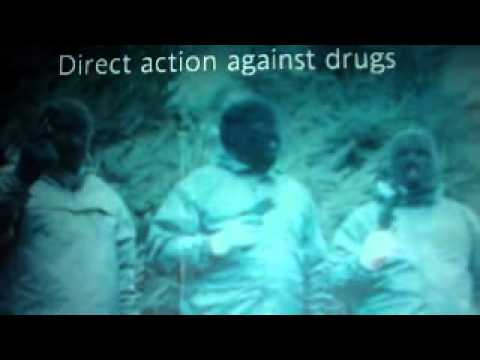
[This was the first of a series of killings of alleged drug dealers over the next couple of years. Many of these killings were claimed by ‘Direct Action Against Drugs’ (DAAD) which was believed to be a cover name (pseudonym) used by the IRA.] The IRA carried out ‘punishment shootings’ on 16 men whom it alleged were drug dealers. A number of other men were ordered to leave the country.

Tuesday 25 April 1995

A Catholic man, who was a taxi driver, was shot and seriously injured near Lurgan, County Armagh.

Friday 25 April 1997

A Catholic church, St Nicholas’s chapel in Carrickfergus, County Antrim, was attacked and damaged by arsonists. The attack was believed to have been carried out by Loyalists.

Billy Wright, then leader of the Loyalist Volunteer Force (LVF), was moved to the Maze Prison. The move followed threats made by the LVF against the lives of prison officers, if the prison authorities did not allow LVF inmates to have their own ‘wing’ in one of the H-blocks at the Maze Prison.

Wright and three other LVF prisoner were moved into one wing of H6. The remainder of H6 was occupied by Irish National Liberation Army (INLA) prisoners.

See Billy Wright

[Wright was subsequently shot and kille d by the INLA in the prison on 27 December 1997.]

Sunday 25 April 1999

Loyalist paramilitaries carried out a grenade attack on a house in the Legoniel area of Belfast. The Orange Volunteers (OV) claimed responsibility for the attack.

Sinn Féin (SF) lost a court action to try to force the British Broadcasting Corporation (BBC) to broadcast the whole of its election video.

———————————————

Remembering all innocent victims of the Troubles

Today is the anniversary of the death of the following people killed as a results of the conflict in Northern Ireland

“To live in hearts we leave behind is not to die

– Thomas Campbell

To the innocent on the list – Your memory will live forever

– To the Paramilitaries –

There are many things worth living for, a few things worth dying for, but nothing worth killing for.

 13 People lost their lives on the 25th  April   between 1976– 1998

———————————————–

25 April 1972
Joseph Gold  (29)

nfNI
Status: British Army (BA)

Killed by: Irish Republican Army (IRA)
Died four days after being shot at British Army (BA) Vehicle Check Point (VCP), Donegall Road, Belfast.

———————————————–

25 April 1975


Samuel Johnston  (33)

Protestant
Status: Civilian (Civ),

Killed by: non-specific Republican group (REP)
Shot from passing car while walking at the junction of Batchelors Walk and Carrickblatter Road, Portadown, County Armagh.

———————————————–

25 April 1979


William Carson   (32)

Catholic
Status: Irish Republican Army (IRA),

Killed by: Ulster Defence Association (UDA)
Shot at his home, Rosevale Street, off Oldpark Road, Belfast.

———————————————–

25 April 1979
John Graham  (55)

Protestant
Status: Ulster Defence Regiment (UDR),

Killed by: Irish Republican Army (IRA)
Off duty. Shot by sniper while driving lorry, Seskinore, County Tyrone.

———————————————–

25 April 1980
Michael Madden  (65)

Catholic
Status: Civilian (Civ),

Killed by: Irish Republican Army (IRA)
Shot at his home, Lenadoon Avenue, Belfast. Alleged informer.

———————————————–

25 April 1981


Paul Whitters  (15)

Catholic
Status: Civilian (Civ),

Killed by: Royal Ulster Constabulary (RUC)
Died 10 days after being shot by plastic bullet, Great James Street, Derry.

———————————————–

25 April 1987

Maurice Gibson   (74)

Protestant
Status: Civilian (Civ)

Killed by: Irish Republican Army (IRA)
Chief Justice, together with his wife, killed by remote controlled bomb hidden in parked car detonated when they drove past, Killeen, County Armagh.

———————————————–

25 April 1987


Cecily Gibson  (67)

Protestant
Status: Civilian (Civ),

Killed by: Irish Republican Army (IRA)
Killed together with her Chief Justice husband, by remote controlled bomb hidden in parked car detonated when they drove past, Killeen, County Armagh.

———————————————–

25 April 1987


William Graham   (44)

Protestant
Status: Ulster Defence Regiment (UDR),

Killed by: Irish Republican Army (IRA)
Off duty. Shot at his family’s farm, off Gortscraheen Road, near Pomeroy, County Tyrone

———————————————–

25 April 1990


Brian McKimm   (22)

Protestant
Status: Civilian (Civ),

Killed by: Ulster Volunteer Force (UVF)
Shot from passing car while walking along Limehill Grove, Ligoniel, Belfast. Assumed to be a Catholic.

———————————————–

25 April 1993


David Martin   (33)

Protestant
Status: ex-Ulster Defence Regiment (xUDR),

Killed by: Irish Republican Army (IRA)
Killed by booby trap bomb attached to his car which exploded while travelling along Flo Road, Kildress, near Cookstown, County Tyrone.

———————————————–

25 April 1994
Francis Rice   (23)

Catholic
Status: Civilian (Civ),

Killed by: Irish Republican Army (IRA)
Found shot, by Half Moon Lake, off Suffolk Road, Suffolk, Belfast. Alleged criminal

———————————————–

25 April 1998
Ciaran Heffron   (22)

Catholic
Status: Civilian (Civ),

Killed by: Loyalist Volunteer Force (LVF)
Shot, while walking near to his home, along Glenoak Gardens, Crumlin, County Antrim.

———————————————–

24th April – Deaths & Events in Northern Ireland Troubles

Key Events & Deaths on this day in Northern Ireland Troubles

24th April

————————————

Thursday 24 April 1969

Loyalist Bomb

There was an explosion at a water pipeline between Lough Neagh and Belfast.

[It was later established that the bomb was planted by Loyalists who were members of the Ulster Volunteer Force (UVF) and the Ulster Protestant Volunteers (UPV). See 30 March 1969.]

Saturday 24 April 1993 Bishopsgate Bomb

Bishopsgate bombing 2.jpg

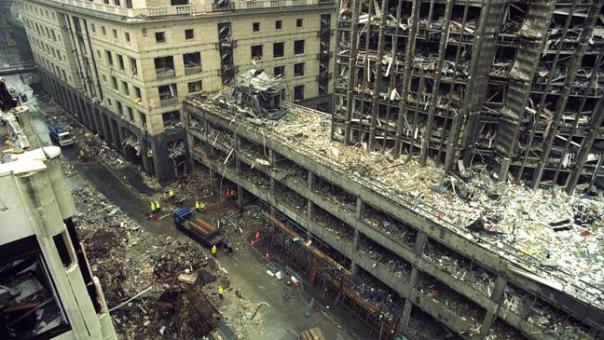
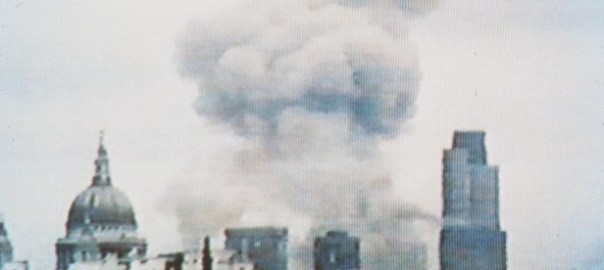
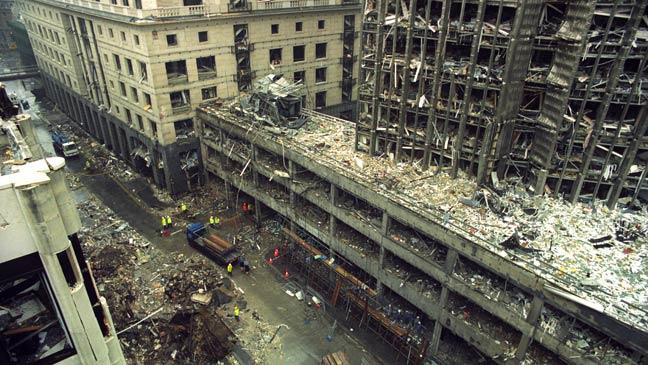
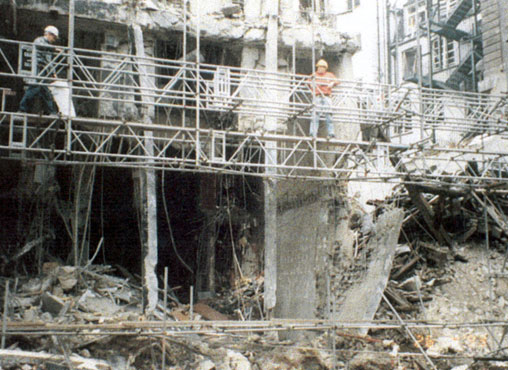
The Irish Republican Army (IRA) exploded a large bomb, estimated at over a ton of home-made explosives, at Bishopsgate in London. One person was killed and over 30 people injured in the explosion.

[Later estimates put the cost of repair at £350 million (some reported estimates were as high as £1,000 million).]

See Bishopsgate Bomb

John Hume, then leader of the Social Democratic and Labour Party (SDLP), and Gerry Adams, then President of Sinn Féin (SF), held their second meeting in a fortnight and issued a first joint statement.

Sunday 24 April 1994

Two Protestants Killed by IRA


Alan Smith & John McCloy

The Irish Republican Army (IRA) shot dead Alan Smith (40) and John McCloy (28), both Protestant civilians, while they were sitting in a stationary car, on Main Street, Garvagh, County Derry.

[The IRA alleged that Smith was a member of the Ulster Defence Association (UDA) but this was denied by family and friends.]

Monday 24 April 1995

The Northern Ireland Office (NIO) announced that ministers would begin exploratory dialogue with representatives of Sinn Féin (SF).

Wednesday 24 April 1996

The Irish Republican Army (IRA) planted two bombs at Hammersmith Bridge, London. The bombs contained 30 pounds of Semtex and although the detonators went off the main charges failed to explode. There were no injuries and no damage was caused.

There were claims, in a Channel 4 ‘Dispatches’ programme, that the British Government had sanctioned secret talks with Sinn Féin (SF) which began in 1990. Patrick Mayhew, then Secretary of State for Northern Ireland, denied the claims and stated that talks only began in 1993.

Thursday 24 April 1997

Maurice Hayes claimed that Baroness Denton and Patrick Mayhew, then Secretary of State for Northern Ireland, had misrepresented his report when they claimed that the report “vindicated” Denton’s actions.

[Hayes was appointed on 10 March 1997 to investigate allegations made in the Irish News on 20 February 1997 that a Catholic woman, who was the victim of sectarian harassment was moved from Denton’s office in breach of Fair Employment guidelines.]

The British Broadcasting Corporation (BBC) in Northern Ireland refused to screen a Sinn Féin (SF) party political broadcast. The BBC objected to two scenes in the video which showed David Trimble, then leader of the Ulster Unionist Party (UUP), at Drumcree and William McCrea, then Democratic Unionist Party (DUP) MP, sharing a platform with Billy Wright, then leader of the Loyalist Volunteer Force (LVF).

Robert McCartney, then leader of the United Kingdom Unionist Party (UKUP) , won a libel case against the Irish Times and was awarded £80,000 in damages. The action resulted from an article that appeared in the Irish Times which was written by David Ervine, then a spokesperson for the Progressive Unionist Party (PUP).

Friday 24 April 1998

Last Meeting Of Forum

The Northern Ireland Forum held its final session as the body was wound up. Only 30 of the original 110 members attended the final session.

[The Forum had held 71 plenary sessions since May 1996. Sinn Féin (SF) had never taken any of the 17 seats won by the party and the Social Democratic and Labour Party (SDLP) withdrew its 24 members after 3 weeks of the operation of the Forum. The Forum then became a Unionist talking shop and was best known for infighting between the Democratic Unionist Party (DUP) and the Ulster Unionist Party (UUP). The DUP were also accused of making sexist remarks when addressing members of the Northern Ireland Women’s Coalition (NIWC), in one instance telling them to “go home and breed for Ulster”. The total cost of running the Forum was estimated at £7 million.]

The Ulster Defence Association (UDA) and Ulster Freedom Fighters (UFF) issued a statement in support of the Good Friday Agreement saying that it would not lead to a united Ireland

———————————————

Remembering all innocent victims of the Troubles

Today is the anniversary of the death of the following people killed as a results of the conflict in Northern Ireland

“To live in hearts we leave behind is not to die

– Thomas Campbell

To the innocent on the list – Your memory will live forever

– To the Paramilitaries –

There are many things worth living for, a few things worth dying for, but nothing worth killing for.

 4 People lost their lives on the 24th  April   between 1976– 1994

———————————————–

24 April 1976


James Byrne   (63)

Catholic
Status: Civilian (Civ),

Killed by: non-specific Loyalist group (LOY)
Killed in car bomb explosion outside Shamrock Bar, Main Street, Hilltown, County Down.

———————————————–

24 April 1993
Edward Henty  (34)

nfNIB
Status: Civilian (Civ),

Killed by: Irish Republican Army (IRA)
Photographer. Died when lorry bomb exploded, Bishopsgate, London. He entered evacuated area after bomb warning given.

———————————————–

24 April 1994


Alan Smith  (40)

Protestant
Status: Civilian (Civ),

Killed by: Irish Republican Army (IRA)
Shot, while sitting in his stationary car, Main Street, Garvagh, County Derry.

———————————————–

24 April 1994


John McCloy,  (28)

Protestant
Status: Civilian (Civ),

Killed by: Irish Republican Army (IRA)
Shot, while sitting in his stationary car, Main Street, Garvagh, County Derry.

———————————————–

IRA Bishopsgate Bombing – 24th April 1993

24th April 1993

Bishopsgate Bombing

Bishopsgate bombing 2.jpg

The Bishopsgate bombing occurred on Saturday 24 April 1993, when the Provisional Irish Republican Army (IRA) detonated an ANFO truck bomb on Bishopsgate, a major thoroughfare in London’s financial district, the City of London. A news photographer was killed in the explosion and 44 people were injured; the damage cost £350 million to repair. As a result of the bombing, which occurred just over a year after the bombing of the nearby Baltic Exchange, a “ring of steel” was implemented to protect the City, and many firms introduced disaster recovery plans in case of further attacks or similar disasters.


Background

In early 1993 the Northern Ireland peace process was at a delicate stage, with attempts to broker an IRA ceasefire ongoing.Gerry Adams of Sinn Féin and John Hume of the Social Democratic and Labour Party had been engaged in private dialogue since 1988, with a view to establishing a broad Irish nationalist coalition. British Prime Minister John Major had refused to openly enter into talks with Sinn Féin until the IRA declared a ceasefire. The risk of an IRA attack on the City of London had increased due to the lack of progress with political talks, resulting in a warning being circulated to all police forces in Britain highlighting intelligence reports of a possible attack, as it was felt the IRA had sufficient personnel, equipment and funds to launch a sustained campaign in England.[1] During the Troubles the IRA had bombed financial targets in London on a number of occasions, most notably on 10 April 1992 when a truck bomb exploded outside the Baltic Exchange on St. Mary Axe. The Baltic Exchange bombing caused £800 million worth of damage (the equivalent of £1,470 million in 2016), £200 million more than the total damage caused by the 10,000 explosions that had occurred during the Troubles in Northern Ireland up to that point.

————————————-

1993 Bishopsgate London bombing – BBC News

————————————-

The bombing

Bishopsgate bombing 3.jpg

In March 1993 an Iveco tipper truck was stolen in Newcastle-under-Lyme, Staffordshire, and repainted from white to dark blue. A 1 tonne ANFO bomb made by the IRA’s South Armagh Brigade had been smuggled into England, and was placed in the truck disguised underneath a layer of tarmac. At approximately 9 am on 24 April, two volunteers from an IRA active service unit drove the truck containing the bomb onto Bishopsgate.

They parked the truck outside 99 Bishopsgate, which was then the Hong Kong and Shanghai Bank, located by the junction with Wormwood Street and Camomile Street, and left the area in a car driven by an accomplice. A series of telephone warnings were then delivered from a phonebox in Forkhill, County Armagh, Northern Ireland, with the caller using a recognised IRA codeword and stating “[there’s] a massive bomb… clear a wide area” Two police officers were already making inquiries into the truck when the warnings were received, and police began evacuating the area.

An Iveco tipper truck, the type used to carry the bomb.

The bomb exploded at 10:27 am causing extensive damage to multiple buildings along a significant stretch of Bishopsgate; the cost of repair was estimated at the time at £1 billion.Buildings up to 500 metres away were damaged, with 1,500,000 sq ft (140,000 m²) of office space being affected and over 500 tonnes of glass broken. The NatWest Tower — at the time the City’s tallest skyscraper – was amongst the structures badly damaged, with many windows on the east side of the tower destroyed; the Daily Mail said “black gaps punched its fifty-two floors like a mouth full of bad teeth” Damage extended as far north as Liverpool Street station and south beyond Threadneedle Street. St Ethelburga’s church, seven metres away from the bomb, collapsed as a result of the explosion. Civilian casualties were low as it was a Saturday morning and the City was typically occupied by only a small number of residents, office workers, security guards, builders, and maintenance staff. Forty-four people were injured by the bomb and News of the World photographer Ed Henty was killed after ignoring police warnings and rushing to the scene.The truck-bomb produced explosive power of 1,200 kg of TNT.

Reaction

The business community and media called for increased security in the City, with one leading City figure calling for “a medieval-style walled enclave to prevent terrorist attacks” Prime Minister John Major received a telephone call from Francis McWilliams, the Lord Mayor of London, reminding him that “the City of London earned £17 billion last year for the nation as a whole. Its operating environment and future must be preserved”. Major, McWilliams and Chancellor of the Exchequer Norman Lamont made public statements that business would continue as normal in the City and that the Bishopsgate bombing would not achieve a lasting effect. Major later gave an account of the public stance taken by his government on the bombing:

Frankly, we thought it was likely to bring the whole process to an end. And we told them repeatedly that that was the case. They assumed that if they bombed and put pressure on the British at Bishopsgate or with some other outrage or other, it would affect our negotiating position to their advantage. In that judgment they were wholly wrong. Every time they did that, they made it harder not easier for any movement to be made towards a settlement. They hardened our attitude, whereas they believed that their actions would soften it. That is a fundamental mistake the IRA have made with successive British governments throughout the last quarter of a century.

John Hume and Gerry Adams issued their first joint statement on the same day as the bombing, stating, “We accept that the Irish people as a whole have a right to national self-determination. This is a view shared by a majority of the people of this island, though not by all its people”, and that, “The exercise of self-determination is a matter for agreement between the people of Ireland”.

The IRA’s reaction appeared in the 29 April edition of An Phoblacht, highlighting how the bombers exploited a security loophole after “having spotted a breach in the usually tight security around the City”. There was also a message from the IRA leadership, calling for

“the British establishment to seize the opportunity and to take the steps needed for ending its futile and costly war in Ireland. We again emphasise that they should pursue the path of peace or resign themselves to the path of war”.

The IRA also attempted to apply indirect pressure to the British government with a statement sent to non-American foreign-owned businesses in the City, warning that “no one should be misled into underestimating the IRA’s intention to mount future planned attacks into the political and financial heart of the British state … In the context of present political realities, further attacks on the City of London and elsewhere are inevitable. This we feel we are bound to convey to you directly, to allow you to make fully informed decisions”.

The City of London Corporation‘s chief planning officer called for the demolition of buildings damaged in the explosion, including the NatWest Tower, seeing an opportunity to rid the City of some of the 1970s architecture and build a new state-of-the-art structure as a “symbol of defiance to the IRA”. His comments were not endorsed by the Corporation themselves, who remarked that the NatWest Tower was an integral part of the City’s skyline.

Aftermath

Bishopsgate bombing 4

In May 1993 the City of London Police confirmed a planned security cordon for the City, conceived by its commissioner Owen Kelly, and on 3 July 1993 the ‘ring of steel‘ was introduced.Most routes into the City were closed or made exit-only, and the remaining eight routes into the City had checkpoints manned by armed police CCTV cameras were also introduced to monitor vehicles entering the area, including two cameras at each entry point – one to read the vehicle registration plate and another to monitor the driver and passenger. Over 70 police-controlled cameras monitored the City but to increase coverage of public areas “Camera Watch” was launched in September 1993 to encourage co-operation on surveillance between the police, private companies and the Corporation of London. Nine months after the scheme was launched only 12.5% of buildings had camera systems, but by 1996 well over 1,000 cameras in 376 separate systems were operational in the City.

The bombing resulted in a number of companies changing their working practices and drawing up plans to deal with any future incidents. Documents were blown out of windows of multi-storey buildings by the force of the explosion, prompting the police to use a shredder to destroy all documents found. This resulted in risk managers subsequently demanding a “clear desk” policy at the end of each working day to improve information security.The attack also prompted British and American financial companies to prepare disaster recovery plans in case of future attacks. The World Trade Center bombing in New York City in February 1993 had caused bankruptcy in 40% of the affected companies within two years of the attack, according to a report from analysts IDC. As a result of the Baltic Exchange and Bishopsgate bomb attacks, City-based companies were well-prepared to deal with the aftermath of the September 11 attacks in 2001, with a spokesman for the Corporation of London stating: “After the IRA bombs, firms redoubled their disaster recovery plans and the City recovered remarkably quickly. It has left the City pretty well-prepared for this sort of thing now.”

£350 million for reconstruction

The initial estimate of £1 billion worth of damage was later downgraded, and the total cost of reconstruction was £350 million.  The subsequent payouts by insurance companies resulted in them suffering heavy losses causing a crisis in the industry, including the near-collapse of the Lloyd’s of London market. A government-backed insurance scheme, Pool Re, was subsequently introduced in Britain, with the government acting as a “re-insurer of last resort” for losses over £75 million.

The bombing, mounted at a cost of £3,000, was the last major bombing in England during that phase of the Northern Ireland conflict.The campaign of bombing of the UK’s financial centre, described by author and journalist Ed Moloney as “possibly the [IRA’s] most successful military tactic since the start of the Troubles”, was suspended by the IRA to allow the political progress made by Gerry Adams and John Hume to continue. The IRA carried out a number of smaller bomb and mortar attacks in England during the remainder of 1993 and in early 1994, before declaring a “complete cessation of military operations” on 31 August 1994. The ceasefire ended on 9 February 1996 when the IRA killed two people in the Docklands bombing which targeted London’s secondary financial district, Canary Wharf.

Subsequent events

In July 2000 it was announced that Punch magazine was to be prosecuted for contempt of court after publishing an article by former MI5 agent David Shayler. Shayler’s article claimed MI5 could have stopped the Bishopsgate bombing, which a spokesman for Attorney General Lord Williams claimed was a breach of a 1997 court injunction preventing Shayler disclosing information on security or intelligence matters. In November 2000 Punch and its editor were found guilty and fined £20,000 and £5,000 respectively.In March 2001 the editor successfully appealed against his conviction and fine, with an appeal judge accusing the Attorney General of acting like a press censor and ruling that the 1997 injunction was in breach of the European Convention on Human Rights. In December 2002 this decision was overturned at the House of Lords, with five law lords ruling that editor James Steen’s publication of Shayler’s article was indeed in contempt.

On 24 April 2013, a commemorative dinner was held by the Felix Fund, a charity for bomb disposal experts and their families, at the Merchant Taylors’ Hall on Threadneedle Street, to mark 20 years since the Bishopsgate bombing.

Visit the Felix Fund website: www.felixfund.org.uk


23rd April – Deaths & Events in Northern Ireland Troubles

Key Events & Deaths on this day in Northern Ireland Troubles

23rd April

———————————————

Wednesday 23 April 1969

The Unionist Parliamentary Party voted by 28 to 22 to introduce universal adult suffrage in local government elections in Northern Ireland. The demand for ‘one man, one vote’ had been one of the most powerful slogans of the civil rights movement. James Chichester-Clark, then Minister of Agriculture, resigned in protest at the reform.

[This move further undermined the position of O’Neill who resigned on 28 April 1969, to be replaced by Chichester-Clark.]

Sunday 23 April 1972

The Sunday Times Insight Team published their account of the events of ‘Bloody Sunday’ (30 January 1972).

See: Bloody Sunday

Tuesday 23 April 1974

The United Ulster Unionist Council (UUUC) held a three-day conference in Portrush, County Antrim. The conference was attended by representatives of the Ulster Defence Association (UDA) and also by Enoch Powell.

The main focus of the conference is to agree a strategy for bringing about the end of the Executive. At the end of the conference (26 April 1974) the UUUC called for a Northern Ireland regional parliament in a federal United Kingdom (UK).

Saturday 23 April 1977

Paisley, in his role as head of the United Unionist Action Council (UUAC), threatened to organise a region-wide strike unless Roy Mason, then Secretary of State, acted against the Irish Republican Army (IRA) and also implemented the Convention Report.

Thomas Passmore, then the County Grand Master of the Orange Order in Belfast, launched a verbal attack on the UUAC and its plans for a general strike. In addition he alleged that a member of the UUAC had been involved in discussions with the Irish Republican Army (IRA).

See The Orange Order 

Thursday 23 April 1981

In what was seen as a response to continuing rioting in Catholic areas, Loyalist paramilitaries decided to meet under the auspices of the Ulster Army Council (UAC) which was effectively a co-ordinating committee for Loyalist groups.

Marcella Sands, the sister of Bobby Sands, made an application to the European Commission on Human Rights claiming that the British government had broken three articles of the European Convention on Human Rights in their treatment of Republican prisoners.

[Two Commissioners tried to visit Bobby Sands on 25 April 1981 but are unable to do so because Sands requested the presence of representatives of Sinn Féin (SF). On 4 May 1981 the European Commission on Human Rights announced that it had no power to proceed with the Sands’ case.]

Wednesday 23 April 1986

James Molyneaux, then leader of the Ulster Unionist Party (UUP), and Ian Paisley, then leader of the Democratic Unionist Party (DUP), announced a 12-point plan of civil disobedience in protest at the Anglo-Irish Agreement (AIA). Among the measures was a ‘rates’ (local government taxes) strike.

Thursday 23 April 1987

Peter Archer, then British Labour Party spokesman on Northern Ireland affairs, expressed support in a letter for the MacBride principles.

Thursday 23 April 1992

Two former Moderators of the Presbyterian Church revealed that they had held private talks with Gerry Adams, then President of Sinn Féin (SF), and Tom Hartley also of SF.

Friday 23 April 1993

The Irish Republican Army (IRA) carried out a bomb attack on an oil terminal in North Shields, England. The bomb damaged a large storage tank.

John Hume, then leader of the Social Democratic and Labour Party (SDLP), and Gerry Adams, then President of Sinn Féin (SF), held another meeting.

Patrick Mayhew, then Secretary of State for Northern Ireland, made a major speech on Northern Ireland to an audience at the Institute of Irish Studies in Liverpool. Mayhew stated that the British government was against the notion of “joint sovereignty” but did want to see a devolved government with wide powers.

Sunday 23 April 1995

The Sunday Tribune (a Dublin based newspaper) published what it claimed to be an internal Irish Republican Army (IRA) document. The document had been circulated within the Republican movement before being leaked and was believed to have dated from prior to the 1994 ceasefire.

The text contained the acronym ‘TUAS‘ which people were led to believed meant ‘Totally UnArmed Struggle’.

[Following the ending of the first IRA ceasefire some people suggested that TUAS actually stood for ‘Tactical Use of Armed Struggle’. Others suggested that the two interpretations were meant for two different audiences – inside and outside the Republican movement.]

Thursday 23 April 1998

kneecapping reversed.jpg

A 79 year old Catholic man living in the Nationalist New Lodge area of North Belfast was ‘kneecapped’ in his home. The man was tied up and beaten about the head before being shot in both knees and both ankles in a paramilitary style ‘punishment’ attack.

[No organisation claimed responsibility for the incident but local people blamed the Irish Republican Army (IRA) for the attack. The man was the oldest person in Northern Ireland to be the subject of a ‘punishment’ shooting.]

Five Irish Republican Army (IRA) prisoners, who were serving sentences in England, were transferred to Portlaoise Prison in the Republic of Ireland.

Three members of the Ulster Unionist Party (UUP) shared a platform at the Ulster Hall in Belfast with Ian Paisley, then leader of the Democratic Unionist Party (DUP), as part of a rally against the Good Friday Agreement.

The three UUP members were: William Ross, William Thompson, and Roy Beggs.

Also at the rally was Robert (Bob) McCartney, then leader of the United Kingdom Unionist Party (UKUP), and also representatives of the Orange Order. Two Unionist members of the Parades Commission, Glen Barr and Tommy Cheevers, resigned from the organisation. The reason given for their decision was the level of media attention they had received since their original appointments to the Commission.

The Joint Oireachtas Committee on the Irish Constitution began considering a proposal that Members of Parliament (MPs) elected in Northern Ireland should be entitled to sit in the Daíl. The committee also began considering the possibility of permitting Irish citizens living in the North to vote in presidential elections and referendums.

Friday 23 April 1999

A ‘Support Drumcree’ rally was held in Newtownards, County Down, and was attended by several hundred people. Adam Ingram, then Security Minister at the Northern Ireland Office (NIO), announced that the Royal Ulster Constabulary (RUC) team investigating the killing of Rosemary Nelson was to get more assistance in the form of detectives from outside Northern Ireland.

See Rosemary Nelson

Sunday 23 April 2000

It was rumoured that Peter Mandelson, then Secretary of State for Northern Ireland, might quit his position to return to Britain to help the Labour Party fight the next general election.

———————————————

Remembering all innocent victims of the Troubles

Today is the anniversary of the death of the following people killed as a results of the conflict in Northern Ireland

“To live in hearts we leave behind is not to die

– Thomas Campbell

To the innocent on the list – Your memory will live forever

– To the Paramilitaries –

There are many things worth living for, a few things worth dying for, but nothing worth killing for.

 7  People lost their lives on the 23rd  April   between 1977– 1987

———————————————–

23 April 1977


Patrick Devlin  (72)

Catholic
Status: Civilian (Civ),

Killed by: Ulster Volunteer Force (UVF)
Security man. Shot at entrance to Legahory Inn, Craigavon, County Armagh.

———————————————–

23 April 1977


Brendan O’Callaghan  (21)

Catholic
Status: Irish Republican Army (IRA),

Killed by: British Army (BA)
Shot from concealed British Army (BA) observation post, while in car park of Hunting Lodge Bar, Stewartstown Road, Belfast.

———————————————–

23 April 1981
John Robinson  (38)

Protestant
Status: ex-Ulster Defence Regiment (xUDR),

Killed by: Irish Republican Army (IRA)
Shot while driving firm’s van, Mullacreevie Park, Armagh.

———————————————–

23 April 1984
Neil Clarke   (21)

nfNI
Status: British Army (BA),

Killed by: Irish Republican Army (IRA)
Shot by sniper, while on British Army (BA) mobile patrol, Bishop Street, Derry.

———————————————–

23 April 1986


 James Hazlett,   (54)

Protestant
Status: Royal Ulster Constabulary (RUC),

Killed by: Irish Republican Army (IRA)
Off duty. Shot outside his home, Bryansford Road, Newcastle, County Down.

———————————————–

23 April 1987


Thomas Cooke  (52)

Protestant
Status: Royal Ulster Constabulary (RUC),

Killed by: Irish Republican Army (IRA)
Off duty. Shot shortly after leaving golf club, Prehen, Derry.

———————————————–

Fools Paradise -Muslim Martyrs & 72 Virgins?


Suicide is Forbidden

The-Holy-Quran-Stock-Photo resized.jpg

Although suicide is forbidden in Islam  the madmen of Islamic State and their deluded followers choose to ignore this founding concept of Islam  and they are masters at twisting and distorting the teachings of The Prophet Muhammad , to align with their own sick , twisted medieval interpretation of the Islamic Faith .

Most of the suicide bombers are lost souls , disillusioned with life and eager to embrace the utopia of  an everlasting   ” Paradise ” and are mere pawns to the puppet masters who control Islamic State and other extremist Islamic groups.

But at least  they have their 72 blue eyed virgins waiting for them in paradise – Don’t they?

Not that I have any sympathy with them , if they choose to blow themselves to bits – that’s fine by me , but when they kill innocent people in the process That’s  NOT at all right with me and their very existence sickenings me.

See Jahadi Jake

———————————-

Captured Islamic State suicide bomber: ‘I’m so sorry’

———————————-

The-Holy-Quran-Stock-Photo resized.jpgVerses in the Holy Quran Prohibiting Killing of Oneself or Others

Allah, praise to Him, strongly prohibited the killing of oneself (suicide), or anybody else, or children for fear of poverty, as stated in verses 6: 151, 17: 33, 2: 195, and 4: 29 because the killing of one innocent soul is for God equal to the crime of killing all people, as stated in 5: 32.


Shahid

Shahid and Shaheed (Arabic: شهيدšahīd, plural: شُهَدَاء šuhadāʾ ) originates from the Quranic Arabic word meaning “witness” and is also used to denote a “martyr“. It is used as a honorific for Muslims who have died fulfilling a religious commandment, especially those who die wielding jihad, or historically in the military expansion of Islam. The act of martyrdom is istishhad.

The word shahid in Arabic means “witness”. Its development closely parallels that of Greek martys (Greek: μάρτυς – “witness”, in theNew Testament also “martyr”), the origin of the term martyr. Shahid occurs frequently in the Quran in the generic sense “witness”, but only once in the sense “martyr; one who dies deliberately for his faith”; this latter sense acquires wider use in the hadiths.

 Martyrdom in  Islam

The painting by commemorating the martyrdom of Shia Imam Husayn ibn Ali at the Battle of Karbala, 680 AD

In Arabic, a martyr is termed Shahid. Shahid appears in the Quran in a variety of contexts, including witnessing to righteousness, witnessing a financial transaction and being killed, even in an accident as long as it doesn’t happen with the intention to commit a sin, when they are believed to remain alive making them witnesses over worldly events without taking part in them anymore (Quran 3:140).

The word also appears with these various meanings in the hadith, the sayings of Muhammad.

The Greek origin of the word also means ‘witness.’

Islam views a martyr as a man or woman who dies while conducting jihad, whether on or off the battlefield (see greater jihad and lesser jihad).  Opinions in the Muslim world vary widely on whether suicide bombers can count as martyrs. Very few Muslims believe that suicide bombing can be justified.

However, in a 2014 Pew Research Center survey conducted in 14 different regions (most of them in or around the Middle East) roughly 1 in 5 (20.71%) of all the Muslims surveyed answered “often” or “sometimes” to the question of if suicide bombings could be justified against civilians targets in order to defend Islam from its enemies.

Where’s my 72 virgins ?

72-houris virgins


Sensual Paradise

72 Blue eyed, white skinned virgins

________________________________________

Do Islamic Terrorists really get 72 Virgins?

________________________________________

In Islam, the concept of 72 virgins (houri) refers to an aspect of Jannah (Paradise). This concept is grounded in Qur’anic text which describe a sensual Paradise where believing men are rewarded by being wed  to virgins with “full grown”, “swelling” or “pears-shaped” breasts.  Conversly, women will be provided with only one man, and they “will be satisfied with him”

Contemporary mainstream Islamic scholars, for example; Gibril Haddad, have commented on the erotic nature of the Qur’anic Paradise, by saying some men may need ghusl (ablution required after sexual discharge) just for hearing certain verses.

Orthodox Muslim theologians such as al-Ghazali (died 1111 CE) and al-Ash’ari (died 935 CE) have all discussed the sensual pleasures found in Paradise, relating hadith that describe Paradise as a slave market where there will be “no buy and sale, but… If any man will wish to have sexual intercourse with a woman, he will do at once.”

It is quoted by Ibn Kathir, in his Qur’anic Commentary, the Tafsir ibn Kathir, and they are graphically described by Qur’anic commentator and polymath, al-Suyuti (died 1505), who, echoing a hasan hadith from Ibn Majah, wrote that the perpetual virgins will all “have appetizing vaginas”, and that the “penis of the Elected never softens. The erection is eternal“.

The sensual pleasures between believers and houri in Paradise are also confirmed by the two Sahih collections of hadith, namely Sahih Bukhari and Sahih Muslim, where we read that they will be virgins who are so beautiful, pure and transparent that “the marrow of the bones of their legs will be seen through the bones and the flesh”, and that “the believers will visit and enjoy them”.

Descriptions

There are several descriptions related to houri that are found in various Islamic references. Some include:

What will my Virgins Look Like? 

Voluptuous/full-breasted

Chaste

With large, round breasts which are not inclined to hang

White skinned

Appetizing vaginas

Modest gaze

libidinous sex organs and he will have an ever-erect penis.’

I could go on but i’m sure you’ve got the message

Physical Attributes:

  • Wide and beautiful/lovely eyes
  • Like pearls
  • Hairless except the eye brows and the head

In addition to Quranic translations of 78:33 specifying the virgins will be voluptuous , Sahih International translates it asfull-breasted [companions] of equal age”. Tafsir al-Jalalayn says “and buxommaidens (kawā‘ib is the plural of kā‘ib) of equal age (atrāb is the plural of tirb)”. Several Islamic scholars explain that they will have large, round breasts which are not inclined to hang”.

Brsts.jpg

Beautiful

White skinned

60 cubits [27.5 meters] tall

7 cubits [3.2 meters] in width

Transparent to the marrow of their bones

Eternally young

Companions of equal age

Sexual Attributes:

Untouched / with hymen unbroken by sexual intercourse

Virgins

Voluptuous/full-breasted

With large, round breasts which are not inclined to hang

Appetizing vaginas

Personality Attributes:

Chaste

Restraining their glances

Modest gaze

Other Attributes:

Splendid

Pure

Non-menstruating / non-urinating/ non-defecating and childfree

Never dissatisfied

Will sing praise

Authenticity

The-Holy-Quran-Stock-Photo resized.jpg

Whilst there are numerous sources, including the Qur’an, which tell us believing males will be rewarded with virgins, many who are concerned about the authenticity of the 72 virgins concept are under the misconception that there is only one weak (da`if) reference to the exact number of houri given to them. These narrations are in fact found in many hadith collections with varying levels of authenticity, ranging from hasan (good) to sahih (authentic).

For example, in the Sunan Ibn Majah, one of the six major Hadith collections,  it states in a hasan (good  narration that every male admitted into Paradise will be given eternal erections and wed to 72 wives, all with libidinous sex organs. Similarly in another hadith with multiple narrators that has been graded hasan (good), it states that the martyr (shahid) will be married to seventy-two of al-hoor al-‘iyn.

In the Sunan al-Tirmidhi, another of the six major Hadith collections, it states that the smallest reward for the people of Heaven is an abode with seventy-two houri. Note that this is not a “weak Hadith that has no Sanad (chain of narrators)”, as some have claimed. It has been graded hasan sahih gharib, meaning this hadith is hasan since it has several chains of transmitters, it is sahih as the chains are all authentic and it is gharib in the words that Imam Tirmidhi narrated.

Also reported in Sunan al-Kubra and Musnad Ahmad ibn Hanbal, and declared sahih (authentic) by Ibn Abi Shayba, Ibn Hibban, and al-Hakim is the hadith that states the servant in Paradise will be married with seventy wives and that they’ll be given the sexual strength for a hundred.

Orthodox Muslim theologians have related further hadith that give us the exact number of 72, such as al-Ghazali who wrote, “[The Prophet said] the lowest rank of an inmate of Paradise will have eighty thousand servants and seventy two wives.”

Virgins or Raisins?

This false myth of “white raisins” originated from Christoph Luxenberg, a modern author writing under a pseudonym.His anti-Islamic claim, which has been accused of having a “Christian apologetic agenda”, is that the Qur’an was drawn from Christian Syro-Aramaic texts in the early 8th century, in order to evangelize the Arabs,  and that the Aramaic word ‘hur’ (white raisin) had been mistranslated by later Arab commentators into the Arabic word ‘houri’ (virgin).

The Qur’an describes the physical characteristics of the houri in many places, and a reading of relevant verses show that Luxenberg’s theory regarding heavenly white raisins is in error.

Raisins, which are dried grapes, cannot have large eyes, big breasts, cannot restrain their glances, cannot be described as chaste, or have any of the characteristics listed above. The Qur’an further states that men will be wed to these houri. Men cannot be married to raisins or white grapes.

Additionally, for someone to accept this “72 raisins” theory, they would also have to accept that the Qur’an was not written by Allah or revealed to the Prophet Muhammad in Arabic during the 7th century, but was in fact written by Christian evangelists in Syro-Aramaic during the 8th century.

Terrorism

islamic state flag

Suicide is clearly forbidden in Islam, but the permissibility of martyrdom operations (Istishhad) is an altogether different topic, with scholars being split on the issue.

Notable scholars and apologists such as Shaykh Yusuf Al-Qaradawi, the world’s most quoted independent Islamic jurist, and Dr. Zakir Naik, known for his advocacy of “Qur’anic science“, have justified the use of suicide bombing in Islam. Opinion polls have further shown that an extremely large number of Muslims from around the world support the practice.

The Qur’an states that all Muslim males, not only martyrs, will be rewarded with virgins. However, the Qur’an does also mention that those who fight in the way of Allah (jihad) and get killed will be given a “great reward”, and there are also hasan (good) hadith which refer to 72 virgins as one of the “seven blessings from Allah” to the martyr. This has lead to the 72 virgins concept being widely used as a way to entice other Muslims into carrying out “martyrdom operations” for Islam.

This is witnessed in Palestine, where the actions of a mother who sends her son to die as a martyr is sometimes seen as “marrying him off”,  and where the concept is used in Friday sermons and music videos, both airing on official television. It has even been used in the United Kingdom, where, in one event, Muslim teens were told to train with Kalashnikov rifles with the promise that the would receive 72 virgins in paradise if they died as religious martyrs.

Contrary to what the Qur’an, hadith, scholars and Muslims themselves say, a western author named Margaret Nydell in a book that “promotes understanding between modern-day Arabs and Westerners”, states that mainstream Muslims regard the belief of 72 virgins in the same way that mainstream Christians regard the belief that after death they will be issued with wings and a harp, and walk on clouds.

The Bible (and more specifically Jesus in the four Gospels) does not discuss the issue of wings and a harp being provided for Christians upon their arrival in Heaven. However, both the Qur’an and Muhammad in the hadith literature do discuss the issue of virgins being provided for Muslim men upon their arrival in Paradise. So the claim made by Margaret Nydell, equating the belief in receiving heavenly virgins to that of believing in receiving heavenly wings and harps, is inaccurate and misleading.

Conclusion

The Qur’anic Paradise is sensual in nature, promising Muslim men voluptuous virgins but does not specify their exact number. This cannot possibly be a mistranslation because raisins do not have large eyes  or cannot be wed to men.

Qur’anic text

The hadith literature compliment the Qur’anic text by specifying the exact number of virgins as 72 and providing us with detailed descriptions of their characteristics. These narrations are not weak but vary in strength from good to authentic.

We are also given details on the physical attributes given to men to sustain 72 virgins, namely, ever-erect penises that never soften and the sexual strength to satisfy 100.

Although it does say they will receive a “great reward”,and there are also hasan hadith which refer to 72 virgins as one of the “seven blessings from Allah” to the martyr, the Qur’an does not specify these virgins are a reward for jihadists/martyrs, but rather for any Muslim male who gains admittance to Paradise.

Selected Quotations

————————–

The-Holy-Quran-Stock-Photo resized.jpg

Lo! We have created them a (new) creation, And made them virgins, Lovers, friends, For those on the right hand;

Qur’an 56:35-38

————————–

Abu Umama narrated: “The Messenger of God said, ‘Everyone that God admits into paradise will be married to 72 wives; two of them are houris and seventy of his inheritance of the [female] dwellers of hell. All of them will have libidinous sex organs and he will have an ever-erect penis.

Sunan Ibn Majah, Zuhd (Book of Abstinence) 39

————————–

It was mentioned by Daraj Ibn Abi Hatim, that Abu al-Haytham ‘Adullah Ibn Wahb narrated from Abu Sa’id al-Khudhri, who heard the Prophet Muhammad PBUH saying, ‘The smallest reward for the people of Heaven is an abode where there are eighty thousand servants and seventy-two houri, over which stands a dome decorated with pearls, aquamarine and ruby, as wide as the distance from al-Jabiyyah to San’a

Al-Tirmidhi, Vol. 4, Ch. 21, No. 2687

————————–

Each time we sleep with a Houri we find her virgin. Besides, the penis of the Elected never softens. The erection is eternal; the sensation that you feel each time you make love is utterly delicious and out of this world and were you to experience it in this world you would faint. Each chosen one [i.e. Muslim] will marry seventy [sic] houris, besides the women he married on earth, and all will have appetizing vaginas.

Al-Itqan fi Ulum al-Qur’an, p. 351

————————–

nas said, Allah be well-pleased with him: The Messenger of Allah said, upon him blessings and peace: “The servant in Paradise shall be married with seventy wives.” Someone said, “Messenger of Allah, can he bear it?” He said: “He will be given strength for a hundred.” From Zayd ibn Arqam, Allah be well-pleased with him, when an incredulous Jew or Christian asked the Prophet, upon him blessings and peace, “Are you claiming that a man will eat and drink in Paradise??” He replied: “Yes, by the One in Whose hand is my soul, and each of them will be given the strength of a hundred men in his eating, drinking, coitus, and pleasure.”

Sifat al-Janna, al-`Uqayli in the Du`afa’, and Musnad of Abu Bakr al-Bazzar

————————–

The-Holy-Quran-Stock-Photo resized.jpg

This [Qur’an 78:33] means round breasts. They meant by this that the breasts of these girls will be fully rounded and not sagging, because they will be virgins, equal in age.

Tafsir Ibn Kathir, Abridged, Volume 10 Surat At-Tagabun to the end of the Qur’an, 333-334

Responses to Apologetics
  1. “The Qur’an doesn’t talk about 72 virgins, only the hadiths”
    Even though the Qur’an does not mention the number of virgins, it does say in verse 56:36[27] that Muslim men will be awarded with virgins in Paradise. The Qur’an describes their physical attributes, for example they will have large eyes (56:22) and big breasts (78:33)[20] and so on. The actual number of houri is thus a minor issue and 72 is the number of those houris confirmed in multiple hadith. The hadiths are a crucial part of Islam and certain Muslims ignore them because sometimes they contain uncomfortable details about Islam. There are many hadiths and Qur’anic verses which talk about various issues of a sexual nature. According to Sahih Bukhari1:5:268 which belongs to the most authentic collection of hadiths, Muhammad himself was given the sexual strength of 30 men and so on.
  2. “The 72 virgins hadith has been classified as Da’if (weak) or Maudu (fabricated)”
    This is not true. The hadith from Sunan al-Tirmidhi has been graded hasan sahih gharib (a “fair, sound, single-chained hadith”).[9] Additionally there is not only one “72 virgins” hadith. We have quoted narrations here that have been graded both hasan (good) and sahih (authentic), and there are many others.
  3. “Obviously this hadith has been made up, is unreliable and/or is a lie”
    See answers to #1 and 2 above.
  4. “The Qur’an doesn’t talk about the number of virgins being seventy two”
    See answer to #1 above.
  5. “It is talking about (white) raisins, not virgins”
    This is a myth originating from Christoph Luxenberg, a recent author with a pseudonym who has no known qualifications or authority on Islamic issues, and has been shown to be in error for various reasons.
  6. “Islam prohibits suicide”
    Yes, hadith do exist that prohibit suicide (Suicide bombing however is a separate issue) but this has nothing to do with the fact that Islam promises women in Paradise as a reward for the “righteous” (i.e. Muslims).
  7. “If the seventy two virgins thing was something big in Islam it would be talked about more frequently.”
    Women in Islamic heaven as a reward are talked about frequently in the Qur’an as evidenced by the various places in the Qur’an where their characteristics are talked about. Also if the Qur’an talks about a certain issue only once, it cannot be taken lightly in any way as every word and sentence in the Qur’an is important and holy to Muslims.
  8. “The houri are for both men and women”
    The Qur’an explicitly talks about female virgins with large eyes as rewards for men. On the contrary there is not a single “women will get guys as a reward” verse. Some gender neutral verses do exist but they talk about general rewards only (such as “companionship” etc). Also, according to Shaykh ‘Abd-Allaah ibn Jibreen, who was a leading cleric and a member of the Senior Clerics Association, “This number is only for men. A woman will have only one husband in Paradise, and she will be satisfied with him and will not need any more than that.”[4]
  9. “The houri are only servants and not for sexual purposes”
    If that was true, Qur’an 56:36[27] wouldn’t say they are virgins and it wouldn’t mention they have big breasts. In addition, while the Qur’an does not explicitly say they’re for sexual purposes, other Islamic sources mention that. One hadith says “The believer will be given such and such strength in Paradise for sexual intercourse”. Other sources state that “the penis of the Elected never softens” and that men in heaven will have the sexual strength of 100 men.[58][59]

Well whatever your view or religion I strongly believe in Karma and Karma always collects its debts and if theres any justice in fate then these Islamic Terrorists and thier deluded followers will burn in the enternall flames of hell and  suffer till the end of times itself.


Amen.


22nd April – Deaths & Events in Northern Ireland Troubles

Key Events & Deaths on this day in Northern Ireland Troubles

22nd April

—————————————-

Tuesday 22 April 1969

Bernadette Devlin, then a newly elected MP, made a controversial maiden speech in the House of Commons. Devlin was the youngest woman ever to be elected to Westminster and took her seat on her 22nd birthday.

Saturday 22 April 1972

Francis Rowntree, an 11 year-old Catholic boy, was killed by a ‘rubber bullet’ fired by the British Army.

[This was the first death to result from the use of the rubber bullet baton round.]

Sunday 22 April 1973

One of the leaders of the Irish Republican Army (IRA), Dáithí Ó Conaill, addressed a public demonstration to commemorate the 1916 Easter Rising in Dublin. Following the speech he managed to avoid arrest.

Sunday 22 April 1979

The body of Martin McConville (25), a Catholic civilian, was found in the Bann River, at Portadown, County Armagh. McConville had been abducted by Loyalists one month earlier and had been beaten to death.

Wednesday 22 April 1981

Dolours Price, who had been serving a sentence along with her sister Marion for a car bombing in London on 8 March 1973 was released from Armagh Prison on medical grounds.

[Dolours Price was suffering from anorexia nervosa the same condition her sister suffered from. Marion Price had been released from prison on 30 April 1980.]

Thursday 22 April 1982

Sinn Féin (SF) the Workers’ Party denied media claims that the Official Irish Republican Army (OIRA) was still active.

Monday 22 April 1991

The Fair Employment Commission (FEC) published its first report on the religious composition of the workforce in Northern Ireland in those companies with more that 25 employees. The report showed that 65 per cent of the workforce was Protestant while Catholics accounted for 35 per cent.

Wednesday 22 April 1998

The Northern Ireland Parades Commission cancelled the publication of a crucial report on contentious parades after the personal intervention of Tony Blair, then British Prime Minister. Blair argued that it was too sensitive a time to publish the report which would have given an initial outline of the Commissions plans for dealing with contentious parades in the coming year.

[The Parades Commission denied that Blair’s intervention amounted to political interference. Unionists were highly critical of the decision and called for the scrapping of the Commission.]

The Irish parliament passed the 19th Amendment to the Constitution Bill which would allow for the necessary changes following the Good Friday Agreement. A ministerial order was also signed to allow for the referendum on 22 May 1998 which would ratify the proposed changes to the Irish Constitution.

Thursday 22 April 1999

David Trimble, then leader of the Ulster Unionist Party (UUP), visited John Paul II in the Vatican as part of a meeting of Nobel laureates with the Pope. This was the first meeting between a leader of the UUP and a pope (and possibly also the first meeting between an Orangeman and a pope). Trimble described the visit as a courtesy call. Talks between the main political parties resumed at Stormont in Belfast. The Department of Justice agreed to grant a pension to, and clear the name of, a 100-year-old former Garda superintendent who was dismissed from the force 71 years ago. William Geary was sacked for allegedly accepting a £100 bribe from the IRA

———————————————

Remembering all innocent victims of the Troubles

Today is the anniversary of the death of the following people killed as a results of the conflict in Northern Ireland

“To live in hearts we leave behind is not to die

– Thomas Campbell

To the innocent on the list – Your memory will live forever

– To the Paramilitaries –

There are many things worth living for, a few things worth dying for, but nothing worth killing for.

 7  People lost their lives on the 22nd April   between 1972– 1982

———————————————–

22 April 1972


Francis Rowntree   (11)

Catholic
Status:

Civilian (Civ),

Killed by: British Army (BA)
Shot by rubber bullet, Divis Flats, Belfast.

———————————————–

22 April 1973
Mervyn Connor   (20)

Protestant
Status: Ulster Volunteer Force (UVF),

Killed by: Ulster Volunteer Force (UVF)
Found poisoned in his cell, Crumlin Road Prison, Belfast. Internal UVF dispute.

———————————————–

22 April 1974


Mohammed Khalid   (18)

nfNI
Status: Civilian (Civ),

Killed by: Irish Republican Army (IRA)
Civilian employed by British Army (BA) . Found shot in his car, Silverbridge, near Crossmaglen, County Armagh.

———————————————–

22 April 1975


Owen Boyle   (41)

Catholic
Status: Civilian (Civ),

Killed by: Protestant Action Force (PAF)
Died 10 days after being shot at his home, ‘Glencull’, Benburb Road, Aughnacloy, County Tyrone.

———————————————–

22 April 1976


William Crooks  (31)

Protestant
Status: Royal Ulster Constabulary (RUC),

Killed by: Irish Republican Army (IRA)
Shot by sniper while on Royal Ulster Constabulary (RUC) mobile patrol, Stewartstown Road, Coalisland, County Tyrone.

———————————————–

22 April 1978


Miller McAllister,  (36)

Protestant
Status: Royal Ulster Constabulary (RUC),

Killed by: Irish Republican Army (IRA)
Off duty. Shot at his home, Woodland Park, Lisburn, County Antrim.

———————————————–

22 April 1982


Raymond Devlin,   (19)

Catholic
Status: Civilian (Civ),

Killed by: Irish Republican Army (IRA)
Shot outside his home, Ladybrook Park, Andersonstown, Belfast. Allegedly involved in crime.

———————————————–


Raqqa Is Being Slaughtered Silently

Raqqa Is Being Slaughtered Silently

I have been following and sympathising with these guys for sometime now and their courage and selfless  commitment  to  exposing the “real” ISIS and their brutal treatment of the Raqqa people – has  both informed me and filled me with unlimited respect  for these brave young men.

Sadly  they have paid a heavy price for their brave actions , but without them Raqqa would not only be being slaughtered in silence – but in secret & behind closed doors. One day when justice catches up with IS &  their deluded followers ( and that day will come) thanks to these guys we will have a record of their crimes and abuse of Raqqa and its people and the IS  madmen will pay for their crimes against humanity in this life or the next.

Because Karma is watching and  Karma always collects its debts

Raqqa Is Being Slaughtered Silently (RSS or RBSS) is a citizen journalism effort exposing human rights abuses by Islamic State of Iraq and the Levant (also known as ISIL or DAESH) forces occupying the northern Syrian city of Raqqa. ISIL uses Raqqa as its de facto capital. RSS works to counter the suggestion that citizens of Raqqa have welcomed the presence of ISIL/DAESH.

It has become one of the few reliable sources of information from the city.

Activities

————————

 ISIS Most Wanted – Raqqa is being Slaughtered Silently

————————

The group has published first hand accounts, videos and photos of life and war crimes in Raqqa through its Facebook page and website, other social media, and via interviews and furnishing material to media organizations worldwide. As a result, RSS has been cited by international media outlets fairly extensively, and major news outlets have done feature stories on the group. Since no foreign or domestic journalists can operate in Raqqa, the efforts of RSS provide unique insights. The work is dangerous, with ISIL militants searching for, torturing and in at least one case killing, RSS members.

Members

According to an interview with Vice News, there were originally 17 members, who started out opposing the Syrian Government. When ISIL moved in to the city in April 2014 the group started the posting information about ISIL. One member who had fled Raqqa said

“After we launched the campaign and posted a lot of crucifixions and executions on the news and Facebook and Twitter, they made three Friday sermons about us, saying we are infidels and we’re against Allah and “we’ll catch them and we’ll execute them.” “We are 12 inside the city and four outside. Before the 12 inside the city were posting on Twitter and posting on Facebook, and talking to journalists, but it’s very dangerous. So we decided to use a “secret room,” and the people in the city post all the photos, the news, and everything, and the four that are out, we are posting it on the internet, Twitter, and Facebook, and talking to journalists. We hide behind fake names and we don’t trust anyone, so we don’t get captured.”

———————————-

Inside Raqqa: The Raqqa Resistance

———————————-

Al-Moutaz Bellah Ibrahim

Several members of RSS have been executed inside Raqqa. In May 2014 Al-Moutaz Bellah Ibrahim was kidnapped by ISIL and murdered. In July 2015, ISIL released a video showing two men being strung up on trees and shot. Though ISIL claimed the two murdered men had worked with RBSS, one of the founders of RBSS denied they were members. Another friend of the group was similarly executed.

Ibrahim Abdul Qadir & Fares Hamadi

Hamoud al-Mousa, the father of one of the group’s founders, was killed in ISIL custody. On October 30, 2015, RSS activist Ibrahim Abdul Qadir (age 20) and his friend Fares Hamadi were found stabbed and beheaded in Urfa, Turkey. It was the first acknowledged assassination outside of ISIL controlled territory.

Abdalaziz Alhamza acts as a spokesperson. At least 5 members of the group live outside Syria.

Ahmad Mohamed al-Mousa
Ahmad Mohammed al – Mousa

On December 16, 2015 masked men murdered RSS member Ahmad Mohammed al-Mousa in the rebel held city of Idlib, Syria.

See BBC News for full story

Naji Jerf

Naji Jerf, the group’s film director and editor-in-chief of the independent monthly Hentah, was killed in Gaziantep, Turkey with a silenced pistol in broad daylight outside a media building in late December 2015. ISIL claimed responsibility on Twitter.

The Scene of  Naji Killing

——————–

Inside ISIS capital in Raqqa Syria – Raqqa is Being Slaughtered Silently

——————–

Significant stories

When ISIL banned home internet in Raqqah and forced internet users into cafes where they could be monitored RBSS started releasing unfiltered information about life under ISIL rule.

RBSS members broke the story of the failed US special forces raid to save journalist James Foley and the other hostages.

Soon after the release of a video showing the burning alive of a Jordanian pilot, Muath Al-Kasasbeh, RBSS released Google earth photos they cross referenced to landmarks pinpointing the location of the execution in the southern part of Raqqa near the river. They also reported that videos of the execution were played for the public on large screens throughout the city of Raqqa.

RBSS detailed that the effects of Russian airstrikes in and around Raqqa were targeting mainly civilian targets, and having little effect on ISIL.

RBSS also relayed reports from the ground of illegal white phosphorus munitions used in airstrikes.

Awards and praise

————————————

Raqqa is Being Slaughtered Silently: the courage of reporting on life in Syria ..

————————————

The group was awarded the International Press Freedom Award in 2015, from the Committee to Protect Journalists. The citation said in part “While RBSS was formed to document the atrocities of [ISIL], its members have also reported critically on the Assad government’s bombings, other rebel forces, and civilian casualties caused by U.S.-led airstrikes”.

Kyle Orton writing for The Independent, said “The risks are extreme. Their bravery quite extraordinary” and wrote “Where [ISIL] presented a functioning, just government, RBSS showed the scarcity and brutality. Not a few foreign fighters … have gone to wage “five-star jihad” … only to be disillusioned… that [ISIL] is reportedly having to kill them to stop them leaving. RBSS’s work, therefore, offers the chance of preventing people inclined toward [ISIL’s] ideology actually going to Syria

Visit the website : Raqqa is being slaughtered silently

21st April – Deaths & Events in Northern Ireland Troubles

Key Events & Deaths on this day in Northern Ireland Troubles

21st April

——————————————–

Monday 21 April 1969

The Ministry of Defence in London announced that British troops would be used in Northern Ireland to guard key public installations. The announcement was made in response to a request from the Northern Ireland government.

[The troops to be used were ones already stationed in the region.]

Tuesday 21 April 1970 Alliance Party Formed

The Alliance Party of Northern Ireland (APNI) was formed.

The founders of the party were attempting to appeal to Catholics and Protestant to unite in support of moderate policies.

[Oliver Napier became leader of the party in 1972.]

Monday 21 April 1975

Three Catholic civilians, two brothers and a sister, were killed by a booby-trap bomb in a house in Killyliss, near Dungannon, County Tyrone.

The attack was claimed by the Protestant Action Force (PAF), which was a covername used by the Ulster Volunteer Force (UVF).

Tuesday 21 April 1981

Margaret Thatcher, then British Prime Minister, spoke to a press conference in Saudi Arabia and stated that the British government would not meet with Irish TDs (Teachta Dáil;

Members of the Irish Parliament) to discuss the hunger strike. Thatcher went on to say: “We are not prepared to consider special category status for certain groups of people serving sentences for crime. Crime is crime is crime, it is not political.”

Friday 21 April 1989

Three Loyalists were arrested in Paris, France, as they were in the process of giving parts from a Shorts Aircraft Company Blowpipe missile to a South African embassy official. The incident revived claims of links between the then South African Government and Loyalist paramilitaries.

Sunday 21 April 1991 Census

The United Kingdom (UK) census was held with information being collected across Northern Ireland. Unlike the situation in 1981 there was no protest against the census by Republicans. [When the religion report was published in 1993 it showed that the total population was 1,577,836.

The breakdown of the main denominations was: 605,639 Catholic; 336,891 Presbyterians; 279,280 Church of Ireland; and 59,517 Methodists. A large number of people did not provide information on religion with 7.3 per cent not stating a denomination and 3.8 per cent stating ‘none’ to the religion question. Later analysis revealed that the likely size of the Catholic population was approximately 41.5 per cent.

Wednesday 21 April 1993

Albert Reynolds, then Taoiseach (Irish Prime Minister), travelled to the United States of America (USA). While in Boston he said that the suggestion of a ‘peace envoy’ was “not appropriate at present”.

Thursday 21 April 1994

Brian Hutton (Sir), then Northern Ireland Lord Chief Justice, quashed the conviction of Paul Hill for the murder of a former British soldier in 1974. Hutton declared that the conviction was “unsafe and unsatisfactory”.

Sunday 21 April 1996

Bertie Ahern, then leader of Fianna Fáil, criticised the Irish government’s approach to Northern Ireland. He placed some of the blame for the ending of the Irish Republican Army’s (IRA) ceasefire on John Bruton, then Taoiseach (Irish Prime Minister).

The criticism placed strain on the bipartisan approach to Northern Ireland in the Dáil.

Monday 21 April 1997

The Irish Republican Army (IRA) issued a series of hoax bomb warnings in central London which caused widespread disruption. A group of men claiming to be members of the Irish People’s Liberation Organisation (IPLO) carried out a robbery on the office of a Credit Union in Newry.

Tuesday 21 April 1998

Adrian Lamph (29), a Catholic civilian, was shot dead by the Loyalist Volunteer Force (LVF) at the council yard where he worked in Portadown, County Armagh. Lamph was the first victim of the conflict since the signing of the Good Friday Agreement.

[He had lived on the Garvaghy Road in the mainly Protestant town of Portadown. He left a partner and a 2 year old son.]

The Democratic Unionist Party (DUP) held the first of a series of anti-Agreement rallies in the run up to the referendum. The 32 County Sovereignty Committee issued a statement rejecting the Agreement as “fundamentally undemocratic, anti-Republican and unacceptable”.

The Celtic Tiger phenomenon continued with the Republic of Ireland being ranked 11th in a league table of the world’s 20 most competitive economies, ahead of both Japan and Britain.

The Freedom of Information Act, which allows access to personal information held by public bodies, came into effect in the Republic of Ireland. In the light of the Good Friday Agreement the Gaelic Athletic Association (GAA) came under renewed pressure to remove the rule from its constitution which excluded members of the security forces in Northern Ireland from joining the organisation.

Wednesday 21 April 1999

The Belfast Telegraph (a Belfast based newspaper) carried a report which claimed that Royal Ulster Constabulary (RUC) sources believed that Éamon Collins had been killed by Irish Republican Army (IRA) members from south Armagh. The RUC sources said that it was unclear if the killing had been sanctioned by the leadership of the IRA

Saturday 21 April 2001

Christopher O’Kane (37), a Catholic civilian, was shot dead near to his home in Tullyally, Derry. [It was believed that Republican paramilitaries carried out the killing although no organisations claimed responsibility.]

 ———————————————

Remembering all innocent victims of the Troubles

Today is the anniversary of the death of the following people killed as a results of the conflict in Northern Ireland

“To live in hearts we leave behind is not to die

– Thomas Campbell

To the innocent on the list – Your memory will live forever

– To the Paramilitaries –

There are many things worth living for, a few things worth dying for, but nothing worth killing for.

 10  People lost their lives on the 21st  April   between 1974– 2001

———————————————–

21 April 1974
James Murphy,  (40)

Catholic
Status: Civilian Political Activist (CivPA),

Killed by: Ulster Volunteer Force (UVF)
Sinn Fein (SF) member. Found shot at his garage, Corravehy, near Derrylin, County Fermanagh.

———————————————–

21 April 1975


Seamus McKenna,  (25)

Catholic
Status: Civilian (Civ),

Killed by: Protestant Action Force (PAF)
Killed, together with his sister and brother, when they detonated booby trap bomb at the future home of his sister, Killyliss, near Dungannon, County Tyrone.

———————————————–

21 April 1975


Michael McKenna   (27)

Catholic
Status: Civilian (Civ),

Killed by: Protestant Action Force (PAF)
Killed, together with his sister and brother, when they detonated booby trap bomb at the future home of his sister, Killyliss, near Dungannon, County Tyrone.

———————————————–

21 April 1975


Marion Bowen   (21)

Catholic
Status: Civilian (Civ),

Killed by: Protestant Action Force (PAF)
Killed, together with her brothers, when they detonated booby trap bomb at her future home, Killyliss, near Dungannon, County Tyrone.

———————————————–

21 April 1977
Brian Smith  (24)

Protestant
Status: Civilian (Civ),

Killed by: Republican Action Force (RepAF)
Shot at the corner of Snugville Street and Queensland Street, Shankill, Belfast.

———————————————–

21 April 1984


Richard Quigley,   (20)

Catholic
Status: Irish Republican Army (IRA),

Killed by: Irish Republican Army (IRA)
Killed by flying shrapnel while involved in remote controlled bomb attack on British Army (BA) mobile patrol, Foyle Street, Derry.

———————————————–

21 April 1987


Harold Henry   (52)

Protestant
Status: Civilian (Civ),

Killed by: Irish Republican Army (IRA)
Shot at his home, The Loup, near Moneymore, County Derry. Contractor to British Army (BA) / Royal Ulster Constabulary (RUC).

———————————————–

21 April 1989


William Thompson  (26)

Protestant
Status: Civilian (Civ),

Killed by: Irish Republican Army (IRA)
Shot from passing car while driving his Shankill black taxi, Crumlin Road, Belfast.

———————————————–

21 April 1998


Adrian Lamph (29)

Catholic
Status: Civilian (Civ),

Killed by: Loyalist Volunteer Force (LVF)
Shot, at his workplace, council depot, Duke Street, Portadown, County Armagh.

———————————————–

21 April 2001


Christopher O’Kane  (37)

Catholic
Status: Civilian (Civ),

Killed by: non-specific Republican group (REP)
Shot near to his home, Milldale Crescent, Tullyally, Derry.

———————————————–