Key Events & Deaths on this day in Northern Ireland Troubles
1st May
——————————————-
Thursday 1 May 1969
Chichester-Clark Elected Prime Minister
James Chichester-Clark was elected as leader of the Unionist party and succeeded Terence O’Neill as the Northern Ireland Prime Minister. Brian Faulkner was appointed as Minister of Development. Chichester-Clark announced that he would continue the reforms began by Terence O’Neill.
Thursday 1 May 1975
Constitution Convention Election
The election for the Constitutional Convention was held in Northern Ireland. The election was based on proportional representation (PR) and candidates contested 78 seats. The United Ulster Unionist Council (UUUC) won 47 seats (with 54.8 per cent of the first preference vote); the Social Democratic and Labour Party (SDLP) won 17 seats (23.7%);
The Alliance Party of Northern Ireland (APNI) won 8 seats (9.8%); the Unionist Party of Northern Ireland (UPNI) won 5 seats ((7.7%); and the Northern Ireland Labour Party (NILP) won 1 seat (1.4%). Those elected to the Convention held their first meeting on 8 May 1975.
[As the UUUC opposed power-sharing the chance of the convention reaching agreement on a constitutional settlement were very remote from the outset. The convention eventually collapsed in the autumn.]
Saturday 1 May 1976
Kenneth Newman replaced Jamie Flanagan as the Chief Constable of the Royal Ulster Constabulary (RUC).
[This appointment marked the beginning of the policy of ‘Ulsterisation’ which had the full approval of the British government.]
Sunday 1 May 1977
An additional 1,200 British soldiers were flown into Northern Ireland, and all Royal Ulster Constabulary (RUC) leave was cancelled, in anticipation of the United Unionist Action Council (UUAC) strike.
Fresh appeals were made from a range of organisations and political parties, including the Ulster Unionist Party (UUP), the Vanguard Unionist Party (VUP), the Orange Order, the Peace People, and the trade union movement, for the UUAC to call off their planned stoppage.
Tuesday 1 May 1984
A trial involving a ‘supergrass’ informer, Robert Quigley, ended with 10 people being sentenced to jail.
Thursday 1 May 1986
The cigarette company Rothman announced the closure of its factory in Carrickfergus, County Antrim, with the loss of 800 jobs.
Friday 1 May 1987
Sinn Féin published a discussion paper entitled Scenario for Peace (Sinn Féin, 1987). The document demanded a British withdrawal and called for an all-Ireland constitutional conference.
Sunday 1 May 1988
Ian Shinner & Millar Reid
Three members of the Royal Air Force (RAF) were killed in two separate attacks carried out by the Irish Republican Army (IRA) in the Netherlands.
Wednesday 1 May 1991
The British government said that proposals for Northern Ireland select committee at the House of Commons were worth considering.
[The ideal was one favoured by Unionists in favour of more integration between Northern Ireland and the rest of the United Kingdom (UK) but it was opposed by Nationalists and Republicans. The select committee was eventually established in 199x(?).]
Friday 1 May 1992
The Irish Republican Army (IRA) exploded a bomb, estimated at 1,000 pounds, at a border post in County Armagh and killed one British Army soldier and injured a number of others.
Saturday 1 May 1993
Alan Lundy (39), a Sinn Féin (SF) member, was shot dead by the Ulster Freedom Fighters (UFF), a cover name (pseudonym) used by the Ulster Defence Association (UDA).
Lundy was working a the home of Alex Maskey, then a SF councillor, in Andersonstown, Belfast, when the attack took place.
Wednesday 1 May 1996
A White Paper {external_link} was published on the future of the Royal Ulster Constabulary (RUC).
[When all the votes were counted the Labour Party had won a majority in the House of Commons of 147 seats and had returned to power for the first time since 1979.]
In Northern Ireland the biggest election news was that Sinn Féin (SF) had increased its share of the vote to 16.1 per cent to become the third largest party in the region. SF won two seats, one in West Belfast where Gerry Adams, then President of Sinn Féin (SF), was elected and one in Mid-Ulster where Martin McGuinness, the Vice-President of Sinn Féin (SF), beat William McCrea of the Democratic Unionist Party (DUP).
The other results were: Ulster Unionist Party (UUP) won 10 seats with 32.7 per cent of the vote; the Social Democratic and Labour Party (SDLP) won three seats and 24.1 per cent of the vote; the DUP won two seats and 13.6 per cent of the vote; and the United Kingdom Unionist Party (UKUP) won one seat.
Friday 1 May 1998
Ronan MacLochlainn (28), a dissident Irish Republican Army (IRA) member, was shot dead when the Garda Síochána (the Irish police) foiled a raid by six armed men on a security van near Ashford, County Wicklow, Republic of Ireland.
[The raid was thought to have been carried out by a new dissident Republican paramilitary group which was trying to raise funds to purchase arms. A group known as the “real” Irish Republican Army (rIRA) emerged on 7 May 1998.]
A ‘Parades Forum’, made up of over 60 business, community and civic leaders, held its first meeting in Derry in an attempt to find a solution to disputed parades in the city. However the Apprentice Boys of Derry (ABD), the Orange Order, the Ulster Unionist Party (UUP) and the Democratic Unionist Party (DUP) all boycotted the opening session. The ABD repeated their position that they would not talk to the Bogside Residents Group (BRG). The Orange Order called on its members (estimated at between 60,000 – 80,000) and supporters to vote ‘No’ in the forthcoming referendum. Seamus Heaney was appointed Saoi of Aosdana, the highest award Ireland can bestow on an artist. Mary McAleese, then President of the Republic of Ireland, described the poet as, “the single most important figure in modern Irish literature”.
Killed by: Irish Republican Army (IRA)
Shot at his workplace, Argory House, near Moy, County Tyrone.
———————————————–
01 May 1988
Ian Shinner (20)
nfNIE Status: Royal Air Force (RAF),
Killed by: Irish Republican Army (IRA)
Off duty. Shot by sniper while driving his car, Roermond, Netherlands.
———————————————–
01 May 1988
Millar Reid (22)
nfNIE Status: Royal Air Force (RAF),
Killed by: Irish Republican Army (IRA)
Off duty. Killed by booby trap bomb attached to his car, Nieuw-Bergen, Netherlands
———————————————–
01 May 1988 John Baxter (21)
nfNIE Status: Royal Air Force (RAF),
Killed by: Irish Republican Army (IRA)
Off duty. Killed by booby trap bomb attached to his car, Nieuw-Bergen, Netherlands
———————————————–
01 May 1992
Andrew Grundy (22)
nfNI Status: British Army (BA),
Killed by: Irish Republican Army (IRA)
Killed by bomb placed in specially constructed railway bogie, driven to permanent British Army (BA) Vehicle Check Point (VCP), Killeen, County Armagh.
———————————————–
01 May 1993
Alan Lundy (39)
Catholic Status: ex-Irish Republican Army (xIRA),
Killed by: Ulster Freedom Fighters (UFF)
Sinn Fein (SF) member. Shot while working at the home of Sinn Fein (SF) councillor Alex Maskey, Gartree Place, Andersonstown, Belfast.
———————————————–
01 May 1998 Ronan Maclochlain (28)
nfNIRI Status: real Irish Republican Army (rIRA),
Killed by: Garda Siochana (GS)
From County Dublin. Shot, during armed robbery of security van, Cullenmore, near Ashford, County Wicklow.
The Iranian Embassy siege took place from 30 April to 5 May 1980, after a group of six armed men stormed the Iranian embassy in South Kensington, London. The gunmen took 26 people hostage—mostly embassy staff, but several visitors and a police officer, who had been guarding the embassy, were also held. The hostage-takers, members of an Iranian Arab group campaigning for Arab national sovereignty in the southern region of Khūzestān Province, demanded the release of Arab prisoners from jails in Khūzestān and their own safe passage out of the United Kingdom.
The British government quickly resolved that safe passage would not be granted, and a siege ensued. Over the following days, police negotiators secured the release of five hostages in exchange for minor concessions, such as the broadcasting of the hostage-takers’ demands on British television.
By the sixth day of the siege the gunmen had become increasingly frustrated at the lack of progress in meeting their demands. That evening, they killed one of the hostages and threw his body out of the embassy. As a result, the British government ordered the Special Air Service (SAS), a special forces regiment of the British Army, to conduct an assault to rescue the remaining hostages. Shortly afterwards, soldiers abseiled from the roof of the building and forced entry through the windows. During the 17-minute raid, the SAS rescued all but one of the remaining hostages, and killed five of the six terrorists. The soldiers subsequently faced accusations that they unnecessarily killed two of the terrorists, but an inquest into the deaths eventually cleared the SAS of any wrongdoing. The remaining terrorist was prosecuted and served 27 years in British prisons.
———————————
BBC NEWS SAS iranian Embassy Siege 80s op nimrod
———————————
The hostage-takers and their cause were largely forgotten after the Iran–Iraq War broke out later that year and the hostage crisis in Tehran continued until January 1981. Nonetheless, the operation brought the SAS to the public eye for the first time and bolstered the reputation of Margaret Thatcher, the Prime Minister. The SAS was quickly overwhelmed by the number of applications it received from people inspired by the operation and, at the same time, experienced greater demand for its expertise from foreign governments. The building, having suffered major damage from a fire that broke out during the assault, was not reopened as the Iranian embassy until 1993.
The hostage-takers were members of the Democratic Revolutionary Front for the Liberation of Arabistan (DRFLA)—Iranian Arabs protesting for the establishment of an autonomous Arab state in the southern region of the Iranian province of Khūzestān (also known as Arabistan) which is home to an Arabic-speaking minority. The oil-rich area had become the source of much of Iran’s wealth, having been developed by multi-national companies during the reign of the Shah.
According to Oan Ali Mohammed, suppression of the Arab sovereignty movement was the spark that led to his desire to attack the Iranian Embassy in London—a plan inspired by the Iran hostage crisis in which supporters of the revolution held the staff of the American embassy in Tehran hostage.
Arrival in London
DRFLA Flag
Using Iraqi passports, Oan and three other members of the DRFLA arrived in London on 31 March 1980 and rented a flat in Earls Court. They claimed they had met by chance on the flight. The men typically returned to the flat drunk, late at night, and sometimes accompanied by prostitutes. Within a week, the housekeeper asked them to leave. They soon found another flat, where they told their new landlord they were moving because they had been joined by other men and required larger accommodation. Over the following days, the group swelled, with up to a dozen men in the flat on one occasion.
Oan was 27 and from Khūzestān; he had studied at the University of Tehran, where he became politically active. He had been imprisoned by SAVAK, the Shah’s secret police, and bore scars which he said were from torture in SAVAK custody. The other members of his group were Shakir Abdullah Radhil, known as “Faisal”, Oan’s second-in-command who also claimed to have been tortured by SAVAK; Shakir Sultan Said, or “Hassan”; Themir Moammed Hussein, or Abbas; Fowzi Badavi Nejad, or “Ali”; and Makki Hanoun Ali, the youngest of the group, who went by the name of “Makki”.
On 30 April the men informed their landlord that they were going to Bristol for a week and then returning to Iraq, stated that they would no longer require the flat, and arranged for their belongings to be sent to Iraq. They left the building at 09:30 (BST) on 30 April. Their initial destination is unknown, but en route to the Iranian Embassy they collected firearms (including pistols and submachine guns), ammunition and hand grenades. The weapons, predominantly Soviet-made, are believed to have been smuggled into the United Kingdom in a diplomatic bag belonging to Iraq. Shortly before 11:30, and almost two hours after vacating the nearby flat in Lexham Gardens in South Kensington, the six men arrived outside the embassy.
Special Air Service
———————————
Iranian Embassy Siege in London – Intervention by S.A.S
———————————
The Special Air Service (SAS) is a regiment of the British Army and part of the United Kingdom’s special forces. The regiment was formed by Colonel David Stirling in Africa in 1941, at the height of the Second World War. Its original role was to penetrate enemy lines and strike at airfields and supply lines deep in enemy territory, first in North Africa and later around the Mediterranean and in occupied Europe. Stirling established the principle of using small teams, usually of just four men, to carry out raids—having realised that a four-man team could sometimes prove much more effective than a unit of hundreds of soldiers.
Western governments were prompted to form specialist anti-terrorist units following the “Munich massacre“. During the 1972 Olympic Games, a firefight between a group of hostage-takers and West German police left a police officer and all the hostages dead. The British government, worried that the country was unprepared for a similar crisis in the United Kingdom, ordered the formation of the Counter Revolutionary Warfare (CRW) Wing of the SAS, which became the UK’s primary anti-terrorist and anti-hijacking unit. The SAS had taken part in counter-insurgency operations abroad since 1945, and had trained the bodyguards of influential people whose deaths would be contrary to British interests. Thus, it was believed to be better prepared for the role than any unit in the police or elsewhere in the armed forces. The CRW Wing’s first operational experience was the storming of Lufthansa Flight 181 in 1977, when a small detachment of soldiers were sent to assist GSG 9—the elite West German police unit set up after the events of 1972.
Siege
Day one: 30 April
PC Lock
At approximately 11:30 on Wednesday 30 April the six heavily armed members of DRFLA stormed the Iranian Embassy building on Princes Gate, South Kensington. The gunmen quickly overpowered Police Constable Trevor Lock of the Metropolitan Police‘s Diplomatic Protection Group (DPG). Lock was carrying a concealed Smith & Wesson .38-calibre revolver,but was unable to draw it before he was overpowered, although he did manage to press the “panic button” on his radio. Lock was later frisked, but the gunman conducting the search did not find the constable’s weapon. He remained in possession of the revolver, and refused to remove his coat—which he told the gunmen was to “preserve his image” as a police officer—in order to keep it concealed.The officer also refused offers of food throughout the siege for fear that the weapon would be seen if he had to use the toilet and a gunman decided to escort him.
Although the majority of the people in the embassy were captured, three managed to escape—two by climbing out of a ground-floor window and the third by climbing across a first-floor parapet to the Ethiopian Embassy next door. A fourth person, Gholam-Ali Afrouz—the chargé d’affaires and thus the most senior Iranian official present—briefly escaped by jumping out of a first-floor window, but was injured in the process and quickly captured. Afrouz and the 25 other hostages were all taken to a room on the second floor. The majority of the hostages were embassy staff—predominantly Iranian nationals, but several British employees were also captured. The other hostages were all visitors, with the exception of Lock, the British police officer tasked with guarding the embassy. Afrouz had been appointed to the position less than a year before, his predecessor having been dismissed after the revolution. Abbas Fallahi, who had been a butler before the revolution, was appointed the doorman by Afrouz. One of the British members of staff was Ron Morris, from Battersea, who had worked for the embassy in various positions since 1947.
During the course of the siege, police and journalists established the identities of several other hostages. Mustapha Karkouti was a journalist covering the crisis at the US Embassy in Tehran and was at the embassy for an interview with Abdul Fazi Ezzati, the cultural attaché.Muhammad Hashir Faruqi was another journalist, at the embassy to interview Afrouz for an article on the Iranian Revolution. Sim Harris and Chris Cramer, both employees of the BBC, were at the embassy attempting to obtain visas to visit Iran—hoping to cover the aftermath of the 1979 revolution—after several unsuccessful attempts. They found themselves sitting next to Moutaba Mehrnavard, who was there to consult Ahmad Dadgar, the embassy’s medical adviser, and Ali Asghar Tabatabai, who was collecting a map for use in a presentation he had been asked to give at the end of a course he had been attending.
Police arrived at the embassy almost immediately after the first reports of gunfire, and, within ten minutes, seven DPG officers were on the scene. The officers moved to surround the embassy, but retreated when a gunman appeared at a window and threatened to open fire. Deputy Assistant Commissioner John Dellow arrived nearly 30 minutes later and took command of the operation.m Dellow established a temporary headquarters in his car before moving it to the Royal School of Needlework further down Princes Gate and then to 24 Princes Gate, a nursery school. From his various command posts, Dellow coordinated the police response, including the deployment of D11, the Metropolitan Police’s marksmen, and officers with specialist surveillance equipment. Police negotiators made contact with Oan via a field telephone passed through one of the embassy windows, and were assisted by a negotiator and a psychiatrist. At 15:15 Oan issued the DRFLA’s first demand, the release of 91 Arabs held in prisons in Khūzestān, and threatened to blow up the embassy and the hostages if this were not done by noon on 1 May.
Large numbers of journalists were on the scene quickly and were moved into a holding area to the west of the front of the embassy, while dozens of Iranian protesters also arrived near the embassy and remained there throughout the siege. Shortly after the beginning of the crisis, the British government’s emergency committee COBRA, was assembled. COBRA is made up of ministers, civil servants and expert advisers—including representatives from the police and the armed forces. The meeting was chaired by William Whitelaw, the Home Secretary, as Margaret Thatcher, the Prime Minister, was unavailable. The Iranian government accused the British and American governments of sponsoring the attack as revenge for the ongoing siege of the US Embassy in Tehran. Given the lack of co-operation from Iran, Thatcher—who was kept apprised of the situation by Whitelaw—determined that British law would be applied to the embassy, despite the Vienna Convention, under which the embassy is considered Iranian soil.
At 16:30, the gunmen released their first hostage, Frieda Mozaffarian. She had been unwell since the siege began, and Oan had asked for a doctor to be sent into the embassy to treat her, but the police refused. The other hostages deceived Oan into believing that Mozaffarian was pregnant, and Oan eventually released Mozaffarian after her condition deteriorated.
Day two:
1st May
The COBRA meetings continued through the night and into Thursday. Meanwhile, two teams were dispatched from the headquarters of the Special Air Service (SAS) near Hereford, and arrived at a holding area in Regent’s Park Barracks. The teams—from B Squadron, complemented by specialists from other squadrons—were equipped with CS gas, stun grenades, and explosives and armed with Browning Hi-Power pistols and Heckler & Koch MP5 submachine guns. Lieutenant Colonel Michael Rose, commander of 22 SAS had travelled ahead of the detachment and introduced himself to Dellow, the commander of the police operation. At approximately 03:30 on 1 May, one of the SAS teams moved into the building next door to the embassy, normally occupied by the Royal College of General Practitioners, where they were briefed on Rose’s “immediate action” plan—to be implemented should the SAS be required to storm the building before a more sophisticated plan could be formed.
The front of 14 Prince’s Gate, head office of the Royal College of General Practitioners, which was used as a base by the SAS during the siege.
Early in the morning of 1 May, the gunmen ordered one of the hostages to telephone the BBC‘s news desk. During the call, Oan took the receiver and spoke directly to the BBC journalist. He identified the group to which the gunmen belonged and stated that the non-Iranian hostages would not be harmed, but refused to allow the journalist to speak to any other hostages. At some point during the day, the police disabled the embassy’s telephone lines, leaving the hostage-takers just the field telephone for outside communication. As the hostages woke up, Chris Cramer, a sound organiser for the BBC, became seriously ill and his colleague, Sim Harris, was taken to the field telephone to negotiate for a doctor. The police negotiator refused the request, instead telling Harris to persuade Oan to release Cramer. The ensuing negotiations between Harris, Oan, and the police took up most of the morning, and Cramer was eventually released at 11:15. He was rushed to hospital in an ambulance, accompanied by police officers sent to gather information from him.
As the deadline of noon approached, set the previous day for the release of the Arab prisoners, the police became convinced that the gunmen did not have the capability to carry out their threat of blowing up the embassy, and persuaded Oan to agree to a new deadline of 14:00. The police allowed the deadline to pass, to no immediate response from the gunmen. During the afternoon, Oan altered his demands, requesting that the British media broadcast a statement of the group’s grievances and for ambassadors of three Arab countries to negotiate the group’s safe passage out of the UK once the statement had been broadcast. At approximately 20:00, Oan became agitated by noises coming from the Ethiopian Embassy next door. The noise came from technicians who were drilling holes in the wall to implant listening devices, but PC Trevor Lock, when asked to identify the sound, attributed it to mice. COBRA decided to create ambient noise to cover the sound created by the technicians and instructed British Gas to commence drilling in an adjacent road, supposedly to repair a gas main. The drilling was aborted after it agitated the gunmen, and instead British Airports Authority, owner of London Heathrow Airport, was told to instruct approaching aircraft to fly over the embassy at low altitude.
Day three:
2nd May
Sim Harris
At 09:30 on 2 May, Oan appeared at the first-floor window of the embassy to demand access to the telex system, which the police had disabled along with the telephone lines, and threatened to kill Abdul Fazi Ezzati, the cultural attaché. The police refused and Oan pushed Ezzati, who he had been holding at gunpoint at the window, across the room, before demanding to speak to somebody from the BBC who knew Sim Harris. The police, relieved to have a demand to which they could easily agree, produced Tony Crabb, managing director of BBC Television News and Harris’s boss. Oan shouted his demands—for safe passage out of the UK, to be negotiated by three ambassadors from Arab countries—to Crabb from the first-floor window, and instructed that they should be broadcast along with a statement of the hostage-takers’ aims by the BBC. The Foreign and Commonwealth Office informally approached the embassies of Algeria, Jordan, Kuwait, Lebanon, Syria and Qatar to ask if their ambassadors would be willing to talk to the hostage-takers. The Jordanian ambassador immediately refused and the other five said they would consult their governments.The BBC broadcast the statement that evening, but in a form unsatisfactory to Oan, who considered it to be truncated and incorrect.
Meanwhile, the police located the embassy caretaker and took him to their forward headquarters to brief the SAS and senior police officers. He informed them that the embassy’s front door was reinforced by a steel security door, and that the windows on the ground floor and first floor were fitted with armoured glass—the result of recommendations made after the SAS had been asked to review security arrangements for the embassy several years earlier. Plans for entering the embassy by battering the front door and ground-floor windows were quickly scrapped and work began on other ideas.
Oan, angered by the BBC’s incorrect reporting of his demands the previous evening, contacted the police negotiators shortly after 06:00 and accused the authorities of deceiving him. He demanded to speak with an Arab ambassador, but the negotiator on duty claimed that talks were still being arranged by the Foreign Office. Recognising the delaying tactic, Oan told the negotiator that the British hostages would be the last to be released because of the British authorities’ deceit. He added that a hostage would be killed unless Tony Crabb was brought back to the embassy. Crabb did not arrive at the embassy until 15:30, nearly ten hours after Oan demanded his presence, to the frustration of both Oan and Sim Harris. Oan then relayed another statement to Crabb via Mustapha Karkouti, a journalist also being held hostage in the embassy. The police guaranteed that the statement would be broadcast on the BBC’s next news bulletin, in exchange for the release of two hostages. The hostages decided amongst themselves that the two to be released would be Hiyech Kanji and Ali-Guil Ghanzafar; the latter was apparently released for no other reason than his loud snoring, which kept the other hostages awake at night.
Later in the evening, at approximately 23:00, an SAS team reconnoitred the roof of the embassy. They discovered a skylight, and succeeded in unlocking it for potential use as an access point, should they later be required to storm the building. They also attached ropes to the chimneys to allow soldiers to abseil down the building and gain access through the windows if necessary.
Day five:
4th May
During the day, the Foreign Office held further talks with diplomats from Arabian countries in the hope of persuading them to go to the embassy and talk to the hostage-takers. The talks, hosted by Douglas Hurd, ended in stalemate. The diplomats insisted they must be able to offer safe passage out of the UK for the gunmen, believing this to be the only way to guarantee a peaceful outcome, but the British government was adamant that safe passage would not be considered under any circumstances. Karkhouti, through whom Oan had issued his revised demands the previous day, became increasingly ill throughout the day and by the evening was feverish, which led to suggestions that the police had spiked the food that had been sent into the embassy. John Dellow, the commander of the police operation, had apparently considered the idea and even consulted a doctor about its viability, but eventually dismissed it as “impracticable”.
The SAS officers involved in the operation—including Brigadier Peter de la Billière, Director Special Forces; Lieutenant Colonel Mike Rose, Commander of 22 SAS; and Major Hector Gullan, commander of the team that would undertake any raid—spent the day refining their plans for an assault.
Day six:
5th May
Willie Whitelaw
Oan woke Lock at dawn, convinced that an intruder was in the embassy. Lock was sent to investigate, but no intruder was found. Later in the morning, Oan called Lock to examine a bulge in the wall separating the Iranian embassy from the Ethiopian embassy next door. The bulge had, in fact, been caused by the removal of bricks to allow an assault team to break through the wall and to implant listening devices, resulting in a weakening of the wall. Although Lock assured him that he did not believe the police were about to storm the building, Oan remained convinced that they were “up to something” and moved the male hostages from the room in which they had spent the last four days to another down the hall. Tensions rose throughout the morning and, at 13:00, Oan told the police that he would kill a hostage unless he was able to speak to an Arab ambassador within 45 minutes.
At 13:40, Lock informed the negotiator that the gunmen had taken Abbas Lavasani—the embassy’s chief press officer—downstairs and were preparing to execute him. Lavasani, a devout believer in the Iranian Revolution, had repeatedly provoked his captors during the siege. According to Lock, Lavasani stated that “if they were going to kill a hostage, [Lavasani] wanted it to be him.” At exactly 13:45, 45 minutes after Oan’s demand to speak to an ambassador, three shots were heard from inside the embassy.
Home Secretary Willie Whitelaw, who had been chairing COBRA during the siege, was rushed back to Whitehall from a function he had been attending in Slough, roughly 20 miles (30 km) away, arriving 19 minutes after the shots had been reported. He was briefed on the SAS plan by de la Billière, who told him to expect that up to 40 per cent of the hostages would be killed in an assault. After deliberations, Whitelaw instructed the SAS to prepare to assault the building at short notice, an order that was received by Mike Rose at 15:50. By 17:00, the SAS were in a position to assault the embassy at ten minutes’ notice. The police negotiators recruited the imam from a local mosque at 18:20, fearing that a “crisis point” had been reached, and asked him to talk to the gunmen. Three further shots were fired during the course of the imam’s conversation with Oan. Oan announced that a hostage had been killed, and the rest would die in 30 minutes unless his demands were met. A few minutes later, Lavasani’s body was dumped out of the front door. Upon a preliminary examination, conducted at the scene, a forensic pathologist estimated that Lavasani had been dead for at least an hour—meaning he could not have been killed by the three most recent shots, and leading the police to believe that two hostages had been killed. In fact, only Lavasani had been shot.
After Lavasani’s body had been recovered, Sir David McNee, Commissioner of the Metropolitan Police, contacted the Home Secretary to request approval to hand control of the operation over to the British Army, under the provisions of Military Aid to the Civil Power. Whitelaw relayed the request to Thatcher, and the prime minister agreed immediately. Thus John Dellow, the ranking police officer at the embassy, signed over control of the operation to Lieutenant Colonel Mike Rose at 19:07, authorising Rose to order an assault at his discretion. Meanwhile, the police negotiators began stalling Oan. They offered concessions in order to distract him and prevent him killing further hostages, buying time for the SAS to make its final preparations for the now-inevitable assault.
SAS assault
The two SAS teams on-scene—Red Team and Blue Team—were ordered to begin their simultaneous assaults, under the codename Operation Nimrod, at 19:23. One group of four men from Red Team abseiled from the roof down the rear of the building, while another four-man team lowered a stun grenade through the skylight. The detonation of the stun grenade was supposed to coincide with the abseiling teams detonating explosives to gain entry to the building through the second-floor windows. Their descent had not gone according to plan and the staff sergeant leading the abseilers became entangled in his rope. While trying to assist him, one of the other soldiers had accidentally smashed a window with his foot. The noise of the breaking window alerted Oan, who was on the first floor communicating with the police negotiators, and he went to investigate. The soldiers were unable to use explosives for fear of injuring their stranded staff sergeant, but managed to smash their way into the embassy.
Sim Harris making his escape across the first-floor balcony, as ordered by the masked SAS trooper (far right)
After the first three soldiers entered, a fire started and travelled up the curtains and out of the second-floor window, severely burning the staff sergeant. A second wave of abseilers cut him free, and he fell to the balcony below before entering the embassy behind the rest of his team. Slightly behind Red Team, Blue Team detonated explosives on a first-floor window—forcing Sim Harris, who had just run into the room, to take cover. Much of the operation at the front of the embassy took place in full view of the assembled journalists and was broadcast on live television, thus Harris’s escape across the parapet of a first-floor balcony was famously captured on video. As the soldiers emerged onto the first-floor landing, Lock tackled Oan to prevent him attacking the SAS men. Oan, still armed, was subsequently shot dead by one of the soldiers. Meanwhile, further teams entered the embassy through the back door and cleared the ground floor and cellar.The SAS then began evacuating hostages, manhandling them down the stairs towards the back door of the embassy. Two of the terrorists were hiding amongst the hostages—one of them produced a hand grenade when he was identified. An SAS soldier, who was unable to shoot for fear of hitting a hostage or another soldier, pushed the grenade-wielding terrorist to the bottom of the stairs, where two other soldiers shot him dead.
The raid lasted 17 minutes and involved 30–35 soldiers. The terrorists killed one hostage and seriously wounded two others during the raid while the SAS killed all but one of the terrorists. The rescued hostages and the remaining terrorist, who was still concealed amongst them, were taken into the embassy’s back garden and restrained on the ground while they were identified. The last terrorist was identified by Sim Harris and led away by the SAS.
After the end of the siege, PC Trevor Lock was widely considered a hero. He was awarded the George Medal, the United Kingdom’s second-highest civil honour, for his conduct during the siege and for tackling Oan during the SAS raid—the only time during the siege that he drew his concealed side arm. In addition, he was honoured with the Freedom of the City of London and in a motion in the House of Commons. Police historian Michael J. Waldren, referring to the television series Dixon of Dock Green, suggested that Lock’s restraint in the use of his revolver was “a defining example of the power of the Dixon image”, and Maurice Punch noted the contrast between Lock’s actions and the highly aggressive tactics of the SAS.Sergeant Tommy Palmer was awarded the Queen’s Gallantry Medal for his part in the assault, in which he shot dead a terrorist who was apparently about to throw a grenade amongst the hostages. After the operation concluded, the staff sergeant who was caught in his abseil rope was treated at St Stephen’s Hospital in Fulham. He suffered serious burns to his legs, but went on to make a full recovery.
The Iranian government welcomed the end of the siege, and declared that the two hostages killed were martyrs for the Iranian Revolution.They also thanked the British government for “the persevering action of your police force during the unjust hostage-taking event at the Embassy”.
After the assault concluded, the police conducted an investigation into the siege and the deaths of the two hostages and five terrorists, including the actions of the SAS. The soldiers’ weapons were taken away for examination and, the following day, the soldiers themselves were interviewed at length by the police at the regiment’s base in Hereford.
There was controversy over the deaths of two terrorists in the telex room, where the male hostages were held. Hostages later said in interviews that they had persuaded their captors to surrender and television footage appeared to show them throwing weapons out of the window and holding a white flag. The two SAS soldiers who killed the men both stated at the inquest into the terrorists’ deaths that they believed the men had been reaching for weapons before they were shot. The inquest jury reached the verdict that the soldiers’ actions were justifiable homicide (later known as “lawful killing”).
Fowzi Nejad was the only gunman to survive the SAS assault. After being identified, he was dragged away by an SAS trooper, who allegedly intended to take him back into the building and shoot him. The soldier reportedly changed his mind when it was pointed out to him that the raid was being broadcast on live television. It later emerged that the footage from the back of the embassy was coming from a wireless camera placed in the window of a flat overlooking the embassy. The camera had been installed by ITN technicians, who had posed as guests of a local resident in order to get past the police cordon, which had been in place since the beginning of the siege.
Nejad was arrested, and was eventually tried, convicted, and sentenced to life imprisonment for his role in the siege. He became eligible for parole in 2005. As a foreign national, he would normally have been immediately deported to his home country but Article 3 of the European Convention on Human Rights, incorporated into British law by the Human Rights Act 1998, has been held by the European Court of Human Rights to prohibit deportation in cases where the person concerned would be likely to be tortured or executed in his home country. Nejad was eventually paroled in 2008 and granted leave to remain in the UK, but was not given political asylum. The Home Office released a statement, saying “We do not give refugee status to convicted terrorists. Our aim is to deport people as quickly as possible but the law requires us to first obtain assurances that the person being returned will not face certain death”. After 27 years in prison, Nejad was deemed no longer to be a threat to society, but Trevor Lock wrote to the Home Office to oppose his release.
Long-term impact
The SAS raid, codenamed “Operation Nimrod”, was broadcast live at peak time on a bank holiday Monday evening and was viewed by millions of people, mostly in the UK, making it a defining moment in British history.Both the BBC and ITV interrupted their scheduled programming to show the end of the siege,which proved to be a major career break for several journalists. Kate Adie, the BBC’s duty reporter at the embassy when the SAS assault began, went on to report from war zones across the world and eventually to become chief news correspondent for BBC News,while David Goldsmith and his team, responsible for the hidden camera at the back of the embassy, were awarded a BAFTA for their coverage.The success of the operation, combined with the high profile it was given by the media, invoked a sense of national pride compared to Victory in Europe Day—the end of the Second World War in Europe.The operation was declared “an almost unqualified success”.
Margaret Thatcher recalled that she was congratulated wherever she went over the following days, and received messages of support and congratulation from other world leaders.However, the incident strained already-tense relations between the UK and Iran following the Iranian Revolution. The Iranian government declared that the siege of the embassy was planned by the British and American governments, and that the hostages who had been killed were martyrs for the Revolution.
——————————
Operation Nimrod (documentary)
——————————
Operation Nimrod brought the SAS, a regiment that was largely unknown at the time owing to the covert nature of its operations, into the public eye. The regiment was not pleased with its new high profile, having enjoyed its previous obscurity. Nonetheless, the operation vindicated the SAS, which had been threatened with disbandment and whose use of resources had previously been considered a waste.The regiment was quickly overwhelmed by new applicants. Membership of 22 SAS, is open only to individuals currently serving in the Armed Forces (allowing applications from any individual in any service), but the unit also has two regiments from the volunteer Territorial Army (TA)—21 SAS and 23 SAS. Both the TA regiments received hundreds more applications than in previous years, prompting de la Billière to remark that the applicants seemed “convinced that a balaclava helmet and a Heckler & Koch sub-machine gun would be handed to them over the counter, so that they could go off and conduct embassy-style sieges of their own”.All three units were forced to introduce additional fitness tests at the start of the application process.
The SAS also experienced an increased demand for their expertise in training the forces of friendly countries and those whose collapse was considered not to be in Britain’s interest.
The British government’s response to the crisis, and the successful use of force to end it, strengthened the Conservative government of the day and boosted Thatcher’s personal credibility. McNee believed that the conclusion of siege exemplified the British government’s policy of refusing to give in to terrorist demands, “nowhere was the effectiveness of this response to terrorism more effectively demonstrated”.
The embassy building was severely damaged by fire. It was more than a decade before the British and Iranian governments came to an agreement whereby the United Kingdom would repair the damage to the embassy in London and Iran would pay for repairs to the British embassy in Tehran, which had been damaged during the 1979 Iranian Revolution. Iranian diplomats began working from 16 Princes Gate again in December 1993.
The DRFLA was undermined by its links with the Iraqi government after it emerged that Iraq had sponsored the training and equipping of the hostage-takers. The Iran–Iraq War started five months after the end of the siege and continued for eight years. The campaign for autonomy of Khūzestān was largely forgotten in the wake of the hostilities, as was the DRFLA
———————————–
John McAleese
John Thomas “Mac” McAleese, MM (25 April 1949 – 26 August 2011) was a British Army soldier who led an SAS team which stormed the Iranian embassy in London in May 1980 to end the Iranian Embassy siege (Operation Nimrod). He became known for retelling his story on TV and for taking part in the reality show SAS: Are You Tough Enough?.
———————————
Tribute To The SAS Hero John McAleese
———————————
McAleese was born in Stirling and grew up in Laurieston, Stirlingshire.He joined 59 Independent Commando, Royal Engineers, in 1969, aged 20. He moved to Hereford in 1975 after being accepted by the SAS. He was a lance corporal in 1980, serving in Pagoda Troop, B Squadron, 22 SAS Regiment, when he was famously seen with members of his team – Blue Team – on live television placing an explosive charge on the front first floor balcony of the Iranian Embassy prior to the assault on 5 May 1980.
McAleese later took part in the Falklands War in 1982, and was awarded the Military Medal in 1988 for service in Northern Ireland. He also served as a bodyguard for three British prime ministers. He was honourably discharged from the British Army on 8 February 1992 in the rank of staff sergeant.
After that, he worked as a security consultant in Iraq and Afghanistan, and was also an airsoft instructor.
McAleese married twice. In 2009, his elder son, 29-year-old Sergeant Paul McAleese of 2 Battalion The Rifles, was killed on active duty in Afghanistan by a roadside bomb in Helmand Province.
John McAleese suffered a heart attack and died in Thessaloniki, Greece. His funeral was held at Hereford Cathedral. He was survived by his second wife, a daughter by his first marriage, and two children by his second marriage.
—————————
Tribute To The SAS Hero John McAleese
—————————
SAS hero of Iranian embassy siege dies ‘of a broken heart’ after his soldier son was killed in Afghanistan
The SAS sergeant who led the raid on the besieged Iranian Embassy died of a broken heart after his son was killed in Afghanistan, his family said yesterday.
John McAleese, who was in his early sixties, died on Friday in Thessaloniki, Greece, where he was working as a security guard.
He came to symbolise the bravery of the SAS after millions of TV news viewers saw him blast open a window during the storming of the building in 1980.
Grief: John MacAleese at the repatriation of his son, Sgt Paul McAleese, in Wootton Bassett in 2009
The Foreign Office confirmed he had died on Friday in Thessaloniki, Greece, where he had been living.
But despite his fearless reputation, he never recovered from the death of Sergeant Paul McAleese, who was killed by a roadside bomb in Helmand two years ago at 29.
Mr McAleese died of a suspected heart attack a day before the second anniversary of his son’s death. As tributes poured in yesterday, Mr McAleese’s family said he never got over the death of his son.
Mr McAleese was left heartbroken when his son, Sergeant Paul McAleese, died after a Taliban blast in Afghanistan.
Key Events & Deaths on this day in Northern Ireland Troubles
30th April
——————————–
Thursday 30 April 1970
‘B-Specials’ Disbanded
The ‘B-Specials’ (the Ulster Special Constabulary) were officially disbanded. The USC had been replaced by the Ulster Defence Regiment (UDR) on 1 April 1970.
Ian Paisley, then leader of the Democratic Unionist Party (DUP), said that if the forthcoming United Unionist Action Council (UUAC) strike was not a success then he would quit political life in Northern Ireland.
[Most political and media commentators viewed the UUAC strike as a failure however on the 13 May 1977 Paisley declared that the strike had been a success.]
It was alleged by sources ‘close’ to the UUAC that plans had been made to establish a loyalist provisional government in Northern Ireland. There were reports of panic buying of food, bottled gas, and other provisions in the face of the threats to supplies posed by the forthcoming UUAC strike.
Wednesday 30 April 1980
Marion Price, who had been serving a sentence along with her sister Dolours for a car bombing in London on 8 March 197, was released from Armagh women’s prison on humanitarian grounds.
Marion Price had been suffering from anorexia nervosa.
Tuesday 30 April 1991
Preliminary Talks Began
The preliminary round of political talks (later known as the Brooke / Mayhew talks), involving the four main political parties, on the political future of Northern Ireland began.
[Initially there were a series of bilateral meetings between Peter Brooke, then Secretary of State for Northern Ireland, and representatives of the parties.]
Problems soon arise however concerning Strand One of the talks over details such as where the discussions should be held and who should subsequently chair the later stages of these negotiations.
The Ulster Freedom Fighters (UFF), a cover name (pseudonym) used by the Ulster Defence Association (UDA), carried out a gun attack on a bookmaker’s shop in Belfast. Five people were wounded in the attack.
[On of the rifles used in the attacked jammed and this probably saved the lives of some of those in the shop.]
Tuesday 30 April 1996
In response to Dick Spring’s suggestion of 29 April 1996, unionist politicians accused the Irish Government of trying to “appease” the Irish Republican Army (IRA).
Dissident Republican paramilitaries were blamed for planting a car bomb (estimated at 600 pounds) in the centre of Lisburn, County Antrim. The British Army defused the device after a series of telephone warnings were received.
The Irish Republican Army (IRA) issued a statement on the Good Friday Agreement and the issue of decommissioning. The IRA stated that the Agreement “falls short of presenting a solid basis for a lasting settlement” and went on to say: “Let us make it clear that there will be no decommissioning by the IRA”.
Friday 30 April 1999
Johnny Adair, then a leader of the Ulster Freedom Fighters (UFF), a cover name (pseudonym) used by the Ulster Defence Association (UDA), received a slight wound to his head during a pop concert in Belfast. Adair had been on weekend leave from prison when the incident happened.
[Adair claimed that he had been shot in a gun attack by Republicans. Most commentators expressed the view that other Loyalists were responsible.
There was a pipe-bomb attack on Adair on 15 August 2000 and Adair again blamed Republicans even though only Loyalists had previously used pipe-bombs.]
———————————————
Remembering all innocent victims of the Troubles
Today is the anniversary of the death of the following people killed as a results of the conflict in Northern Ireland
“To live in hearts we leave behind is not to die
– Thomas Campbell
To the innocent on the list – Your memory will live forever
– To the Paramilitaries –
There are many things worth living for, a few things worth dying for, but nothing worth killing for.
2 People lost their lives on the 30th April between 1982 – 1983
———————————————–
30 April 1982 Colin Clifford (21)
nfNI Status: British Army (BA),
Killed by: Irish Republican Army (IRA)
Killed in land mine attack on British Army (BA) foot patrol, Meenatully, near Belleek, County Fermanagh.
———————————————–
30 April 1983 David Galway (61)
Protestant Status: Civilian (Civ),
Killed by: Ulster Volunteer Force (UVF)
School Caretaker. Shot during armed robbery at Downey House Preparatory School, Pirrie Park, Belfast.
———————————————–
My autobiography: A Belfast Child is now available to pre-order on Amazon , launch date is 30th April.
B Specials British State Armed Protestant Militia (Bombay Street)
———————————-
The Ulster Special Constabulary (USC; commonly called the “B-Specials” or “B Men'”) was a quasi-military reserve Special constable police force in Northern Ireland. It was set up in October 1920, shortly before the partition of Ireland. It was an armed corps, organised partially on military lines and called out in times of emergency, such as war or insurgency.
It performed this role in 1920–22 during the Irish War of Independence and in the 1950s, during the IRA Border Campaign.
During its existence, 95 USC members were killed in the line of duty. Most of these (72) were killed in conflict with the IRA in the years 1921 and 1922. Another 8 died during the Second World War, in air raids or IRA attacks. Of the remainder, most died in accidents but two former officers were killed during the Troubles in the 1980s.
The force was almost exclusively Ulster Protestant and as a result was viewed with great mistrust by Catholics. It carried out several revenge killings and reprisals against Catholic civilians in the 1920–22 conflict.Unionists generally supported the USC as contributing to the defence of Northern Ireland from subversion and outside aggression.
The Special Constabulary was disbanded in May 1970, after the Hunt Report, which advised re-shaping Northern Ireland’s security forces to attract more Catholic recruits and disarming the police. Its functions and membership were largely taken over by the Ulster Defence Regiment and the Royal Ulster Constabulary
Formation
The Ulster Special Constabulary was formed against the background of conflict over Irish independence and the partition of Ireland.
The 1919–1921 Irish War of Independence, saw the Irish Republican Army (IRA) launch a guerilla campaign in pursuit of Irish independence. Unionists in Ireland’s northeast – who were against this campaign and against Irish independence – directed their energies into the partition of Ireland by the creation of Northern Ireland as an autonomous region within the remaining United Kingdom. This was enacted by the British Parliament in the Government of Ireland Act 1920.
Two main factors were behind the formation of the Ulster Special Constabulary. One was the desire of the unionists, led by Sir James Craig (then a junior minister in the British Government, and later the Prime Minister of Northern Ireland), that the apparatus of government and security should be placed in their hands long before Northern Ireland was formally established.
A second reason was that violence in the north was increasing after the summer of 1920. The IRA began extending attacks to Royal Irish Constabulary (RIC) barracks and tax offices in the north and there had been serious rioting between Catholics and Protestants in Derry in May and June and in Belfast in July, which had left up to 40 people dead.
With police and troops being drawn towards combating insurgency in the south and west, unionists wanted a force that would both take on the IRA and also help the under-strength RIC with normal police duties. Furthermore, many unionists did not trust the RIC, which being an all-Ireland force was mostly Catholic. A third aim was to control unionist paramilitary groups, who threatened, in the words of Craig, “a recourse to arms, which would precipitate civil war”.
Craig proposed to the British cabinet a new “volunteer constabulary” which “must be raised from the loyal population” and organised, “on military lines” and “armed for duty within the six county area only”. He recommended that “the organisation of the Ulster Volunteers (UVF, the unionist militia formed in 1912) should be used for this purpose”.[Wilfrid Spender, the former UVF quartermaster in 1913–14, and by now a decorated war hero, was appointed by Craig to form and run the USC. UVF units were “incorporated en masse” into the new USC.
The idea of a volunteer police force in the north appealed to British Prime MinisterDavid Lloyd George for several practical reasons; it freed up the RIC and military for use elsewhere in Ireland, it was cheap, and it did not need new legislation. Special Constabulary Acts had been enacted in 1832 and 1914, meaning that the administration in Dublin Castle only had to use existing laws to create it. The formation of the Ulster Special Constabulary was therefore announced on 22 October 1920.
On 1 November 1920, the scheme was officially announced by the British government.
Composition
The composition of the USC was overwhelmingly Protestant and unionist, for a number of reasons. Several informal unionist “constabulary” groups had already been created, for example, in Belfast, Fermanagh and Antrim. The Ulster Unionist Labour Association had established an “unofficial special constabulary,” with members drawn chiefly from the shipyards, tasked with ‘policing’ Protestant areas. In April 1920, Captain Sir Basil Brooke, had set up “Fermanagh Vigilance”, a vigilante group to provide defence against incursions by the IRA.In Ballymacarrett, a Protestant rector named John Redmond had helped form a unit of ex-servicemen to keep the peace after the July riots.
There was a willingness to arm or recognise existing Protestant militias. Wilfrid Spender, head of the Ulster Volunteer Force, encouraged his members to join.There was an immediate and illicit supply of arms available; especially from the Ulster Volunteers. Charles Wickham, Chief of Police for the north of Ireland, favoured incorporation of the Ulster Volunteers into “regular military units” instead of having to “face them down”. A number of these groups were absorbed into the new Ulster Special Constabulary.
Sinn Féin pointed out that the composition of the USC was overwhelmingly Protestant and unionist, and claiming the government was simply arming Protestants to attack Catholics
Efforts were made to attract more Catholics into the force, but it is claimed this was not encouraged by officialdom. Catholic members were more easily targeted by the IRA for intimidation and assassination. The government suggested that, with enough Catholic recruits, special constabulary patrols made up of Catholics only could be extended into Catholic areas. However, the Nationalist Party and Ancient Order of Hibernians discouraged their members from joining.The IRA issued a statement which said that any Catholics who joined the specials would be treated as traitors by them and would be dealt with accordingly.
Organisation
The USC was initially financed and equipped by the British government and placed under the control of the RIC. The USC consisted of 32,000 men divided into four sections, all of which were armed:
A Specials – full-time and paid, worked alongside regular RIC men, but could not be posted outside their home areas (regular RIC officers could be posted anywhere in the country); usually served at static checkpoints (originally 5,500 members)
B Specials – part-time, usually on duty for one evening per week and serving under their own command structure, and unpaid, although they had a generous system of allowances (which were reduced following the reorganisation of the USC a few years later), served wherever the RIC served and manned Mobile Groups of platoon size; (originally 19,000 members)
C Specials – unpaid, non-uniformed reservists, usually rather elderly and used for static guard duties near their homes (originally 7,500 members)
C1 Specials – non-active C class specials who could be called out in emergencies. The C1 category was formed in late 1921, incorporating the various local unionist militias such as the Ulster Volunteers into a new special class of the USC, thus placing them under the control and discipline of the Stormont Government.
The units were organised on military lines up to company level. Platoons had two officers, a Head Constable, four sergeants and sixty special constables.
The Belfast units were constructed differently from those in the counties. The districts were based on the existing RIC divisions. The constables drew pistols and truncheons before going on patrol and considerable efforts were made to use them only in Protestant areas. This did free regular policemen who were generally more acceptable to Ulster Catholics.
By July 1921, more than 3,500 ‘A’ Specials had been enrolled, and almost 16,000 ‘B’ Specials. By 1922 recruiting had swelled the numbers to: 5,500 A Specials, 19,000 B Specials and 7,500 C1 Specials. Their duties would include combatting the urban guerrilla operations of the IRA, and the suppression of the local IRA in rural areas. In addition they were to prevent border incursion, smuggling of arms and escape of fugitives.
Opposition
From the outset, the formation of the USC came in for widespread criticism, not only from Irish nationalists, but also from elements of the British military and administrative establishment in Ireland and the British press, who saw the USC as a potentially divisive and sectarian force.
Sir Nevil Macready, General Officer Commanding-in-chief of the British Army in Ireland, along with his supporters in the Irish administration, refused to approve the new force but were overridden; Lloyd George approved of it from the beginning. Macready and Henry Hughes Wilson argued that the concept of a special constabulary was a dangerous one.
Wilson warned that the formation of a partisan unionist constabulary, “would mean; taking sides, civil war and savage reprisals.”. John Anderson, the Under Secretary for Ireland (head of the British Administration in Dublin) shared his fears, “you cannot, in the middle of a faction fight, recognise one of the contending parties and expect it to deal with disorder in the spirit of impartiality and fairness essential in those who have to carry out the order of the Government.”
The Irish nationalist Press was less reserved. The Fermanagh Herald noted the opposition of Irish nationalists:
These “Special Constables” will be nothing more and nothing less than the dregs of the Orange lodges, armed and equipped to overawe Nationalists and Catholics, and with a special object and special facilities and special inclination to invent ‘crimes’ against Nationalists and Catholics… they are the very classes whom an upright Government would try to keep powerless…
“Sinn Fein regarded the Specials as an excuse for arming the Orangemen and an act even more atrocious than the creation of the ‘Black and Tans‘! Their fury was natural as they saw that the Specials might well mean that they would be unable to intimidate and subdue the North by Force. Their skilful propaganda set about blackening the image of Special Constables, trying to identify them with the worst elements of the Protestant mobs in Belfast. They sought to magnify and distort every incident and to stir up hatred of the force even before it started to function.”
Training, uniform, weaponry and equipment
1920 Special Constabulary uniform, in the Ulster Museum
The standard of training was varied. In Belfast, the Specials were trained in much the same way as the regular police whereas in rural areas the USC was focused on counter-guerilla operations. ‘A Specials’ were initially given six weeks training at Newtownards Camp in police duties, the use of arms, drill and discipline.
Uniforms were not available at the outset so the men of the B Specials went on duty in their civilian clothes wearing an armband to signify they were Specials. Uniforms did not become available until 1922. Uniforms took the same pattern as RIC/RUC dress with high collared tunics. Badges of rank were displayed on the right forearm of the jacket.
The Special Constables were armed with Webley .38 revolvers and also Lee–Enfield rifles and bayonets.By the 1960s Sten and Sterling submachine guns were also used. In most cases these weapons were retained at home by the constables along with a quantity of ammunition. One of the reasons for this was to enable rapid call out of platoons, via a runner from the local RUC station, without the need to issue arms from a central armoury.
‘A Special’ platoons were fully mobile using a Ford car for the officer in charge, two armoured cars and four Crossley Tenders (one for each of the sections).
B Specials generally deployed on foot but could be supplied with vehicles from the police pool.
Irish War of Independence (1920-22)
Deployment of the USC during the Anglo-Irish War provided the Northern Ireland government with its own territorial militia to fight the IRA. The use of Specials to reinforce the RIC also allowed for the re-opening of over 20 barracks in rural areas which had previously been abandoned because of IRA attacks. The cost of maintaining the USC in 1921–22 was £1,500,000.
Their conduct towards the Catholic population was criticised on a number of occasions. In February 1921, Specials and UVF men burned down ten Catholic houses in the County Fermanagh village of Roslea after a Special who lived in the village was shot and wounded.
Following the death of a Special Constable near Newry on 8 June 1921, it was alleged that Specials and an armed mob were involved in the burning of 161 Catholic homes and the death of 10 Catholics. An inquest advised that the Special Constabulary “should not be allowed into any locality occupied by people of an opposite denomination.” The government suggested the recruitment of more Catholics to form “Catholic only” patrols to cover Catholic areas, but this was not acted upon.
After the Truce between the IRA and the British on 11 July 1921, the USC was demobilised by the British and the IRA was given official recognition while peace talks were ongoing. However, the force was remobilised in November 1921, after security powers were transferred from London to the Northern Ireland Government.
Michael Collins planned a clandestine guerilla campaign against Northern Ireland using the IRA. In early 1922, he sent IRA units to the border areas and arms to northern units. On 6 December the Northern authorities ordered an end to the Truce with the IRA.
The Special Constabulary was, as well as an auxiliary to the police, effectively an army under the control of the Northern Ireland administration. By incorporating the former UVF into the USC as the C1 Specials, the Belfast government had created a mobile reserve of at least two brigades of experienced troops in addition to the A and B Classes who, between them, made up at least another operational infantry brigade, which could be used in the event of further hostilities, and were in early 1922.
1922: Border conflict and reprisals
The USC’s most intense period of deployment was in the first half of 1922, when conditions of a low-intensity war existed along the new Irish border between the Free State and Northern Ireland.
The Anglo-Irish Treaty had agreed the partition of Ireland, between the Irish Free State and Northern Ireland. The IRA, although now split over the Treaty, continued offensive operations in Northern Ireland, with the co-operation of Michael Collins, leader of the Free State, and Liam Lynch, leader of the Anti-Treaty IRA faction. This was despite the Craig-Collins Agreement which was signed by the leaders of Northern Ireland and the Free State on 30 March, and envisaged the end of IRA activity and a reduced role for the USC.
The renewed IRA campaign involved attacking barracks, burning commercial buildings and making a large-scale incursion into Northern Ireland, occupying Belleek and Pettigo in May–June, which was repulsed after heavy fighting, including British use of artillery on 8 June.
The British Army was only used in the Pettigo and Belleek actions. Therefore the main job of counter-insurgency in this border conflict fell to the Special Constabulary while the RIC/RUC patrolled the interior. Forty-nine Special Constables were killed during the period of the “Border War”, out of a total of eighty-one British forces killed in Northern Ireland. Their biggest single loss of life came at Clones in February 1922, when a patrol which entered the Free State refused to surrender to the local IRA garrison and took four dead and eight wounded in a firefight.
In addition to action against the IRA, the USC may have been involved in a number of attacks on Catholic civilians in reprisal for IRA actions, for example, in Belfast, the McMahon Murders of March 1922, in which six Catholics were killed, and the Arnon Street killings a week later which killed another six. On 2 May 1922, in revenge for the IRA killing of six policemen in counties Londonderry and Tyrone, Special Constables killed nine Catholic civilians in the area.
The conflict never formally ended but petered out in June 1922, with the outbreak of the Irish Civil War in the Free State and the wholesale arrest and internment of IRA activists in the North.Collins continued to arrange the supply of arms covertly to the Northern IRA until shortly before his death in August 1922.
Assessments of the USC’s role in this conflict vary. Unionists have written that the Special Constabulary, “saved Northern Ireland from anarchy” and “subdued the IRA”, while nationalist authors have judged that their treatment of the Catholic community, including, “widespread harassment and a significant number of reprisal killings” permanently alienated nationalists from the USC itself and more broadly, from the Northern Irish state.
1920s to 1940s
After the end of the 1920–22 conflict, the Special Constabulary was re-organised. The regular Royal Ulster Constabulary (RUC) took over normal policing duties.
The ‘A’ and ‘C’ categories of the USC were dispensed with, leaving only the B-Specials, who functioned as a permanent reserve force, and armed and uniformed in the same manner as the RUC.
The Special Constabulary were called out during the 12 July period in Belfast in 1931 after sectarian rioting broke out. The B Specials were tasked to relieve the RUC from normal duties, to allow them and the British Army to deal with the disturbances.
During the Second World War, the USC was mobilised to serve in Britain’s Home Guard, which unusually, was put under the command of the police rather than the British Army.
Damage to property during this period was £l million and the overall cost of the campaign was £10 million to the UK exchequer. Historian Tim Pat Coogan said of the USC, “The B Specials were the rock on which any mass movement by the IRA in the North has inevitably floundered.” Six RUC and eleven IRA men (but no Special Constables) were killed in this campaign.
The IRA called off their campaign in February 1962.
1969 deployment
The USC were deployed in 1969 to support the RUC in the 1969 Northern Ireland riots. The B Specials’ role in these events led to its disbandment the following year.
Northern Ireland had been destabilised by disturbances arising out of the Northern Ireland Civil Rights Association‘s agitation for equal rights for Catholics. The USC were mobilised when the regular RUC were overstretched by riots in Derry (known as the Battle of the Bogside). The NICRA called for protests elsewhere to support those in Derry, leading to the violence spreading throughout Northern Ireland, especially in Belfast.
The USC were largely held in reserve in July and only hesitantly committed in August. The General Officer Commanding of the British Army in Northern Ireland refused to allow the Army to become involved until the Belfast administration has used “all the forces at its disposal”. This meant that the B Specials had to be deployed, although they were not trained or equipped for public order situations.
The two main centres of disturbance were in Belfast and Derry. A total of 300 Special Constables were also mobilised into the RUC during the disturbances. Some Constables were used to restrain a Protestant crowd in Derry, but others in this area joined in an exchange of petrol bombs and missiles with a Catholic crowd while another group led an attack on the Rossville Street area of the Catholic Bogside on 12 August.
In Belfast ,the USC were successful in restoring order in the predominantly Protestant Shankill area, where they performed their patrol duties unarmed. On one occasion, the Comber Platoon was petrol-bombed by a hostile Protestant crowd at Inglis’s bakery as it tried to protect Catholics who were going to work. They also successfully protected Catholic owned public houses in the area, many of which were looted after they were withdrawn.However, on 14 August they did not hold back Protestants who attacked the Catholic Dover and Percy streets in the Falls/Divis district, and instead “fought back” Catholics there.
USC shootings
The USC’s most controversial conduct in the 1969 riots came in provincial towns, where the Special Constabulary formed the main response to the rioting. The Specials, who were armed and not trained for riot duty, used deadly force on a number of occasions.
The USC shot and wounded a number of people in Dungiven and Coalisland. In Dungannon, they killed one and wounded two. In the following Scarman Tribunal, the findings said “…the Tribunal has been at a loss to find any explanation for the shooting, which it is satisfied was a reckless and irresponsible thing to do.”
When Jack Lynch, the Taoiseach of the Republic of Ireland, moved Irish Army troops up to the border in response to the rioting, platoons of Specials were deployed to guard border police stations.
Arising out the disturbances, the British Prime Minister Harold Wilson announced that the B Specials would be “phased out of their current role”. The British Government commissioned three reports into the policing response to the 1969 riots. These ultimately led to the disbanding of the Ulster Special Constabulary.
The Cameron Report
Sir John Cameron was requested to submit a report on the disturbances in Northern Ireland.
He found some evidence of cross-membership of the USC and loyalist paramilitary organisations. He reported that in Major Ronald Bunting‘s Ulster Protestant Volunteers (UPV), there was definite evidence of dual membership by Special Constables, of which he said “we consider highly undesirable and not in the public interest”. He also remarked that although “recruitment is open to both Protestant and Roman Catholic: in practice we are in no doubt that it is almost if not wholly impossible for a Roman Catholic recruit to be accepted.”
Cameron recommended that the purposes of the USC as a reserve civilian police force, as well as a counter-insurgency reserve, be properly made known in recruitment and training so that it would be more attractive to Catholics.
The Scarman Report
The Hon Justice Scarman, in his report on the rioting, was critical of the RUC’s senior officers and of the way the B Specials were deployed into areas of civil disturbance which they had no training to deal with, which in some occasions led to a worsening of the situation. He also pointed out that the B Specials were the only reserve available to the RUC and that he could see no other way of quickly reinforcing the over-stretched RUC in the circumstances. He praised the Specials where he felt it was due.
Scarman concluded in his report on the civil disturbance in the region in 1969 that: “Undoubtedly mistakes were made and certain individual officers acted wrongly on occasions. But the general case of a partisan force co-operating with Protestant mobs to attack Catholic people is devoid of substance, and we reject it utterly.“
Scarman went on to criticise the Command and Control of the RUC for deploying armed Special Constables in areas where their very presence would “heighten tension”, as he was in no doubt that they were “Totally distrusted by the Catholics, who saw them as the strong arm of the Protestant ascendancy”.
Scarman concluded that it would have been very difficult for Catholics to gain membership in 1969, even if they had applied to join.
The Hunt Report
The abolition of the B Specials was a central demand of the Northern Ireland Civil Rights Movement in the late 1960s.
On 30 April 1970, the USC was finally stood down, as a result of the Hunt Committee Report. Hunt concluded that the perceived bias of the Special Constabulary, whether true or not, had to be addressed. One of his other major concerns was the use of the police force for carrying out military style operations. His recommendations included:
(47) A locally recruited part-time force, under the control of the G.O.C., Northern Ireland, should be raised as soon as possible for such duties as may be laid upon it. The force, together with the police volunteer reserve, should replace the Ulster Special Constabulary (paragraph 171).
Disbandment
The Ulster Special Constabulary was disbanded in May 1970.
A Loyalist poster commemorating the B Specials c 1972
It has been argued that their failure to deal with the 1969 disturbances were due to a failure on behalf of the Northern Ireland government to modernise their equipment, weaponry, training and approach to the job.
On the disbandment of the USC, many of its members joined the newly established Ulster Defence Regiment (UDR), the part-time security force which replaced the B Specials. Unlike the Special Constabulary, the UDR was placed under military control. Other B Specials joined the new Part Time Reserve of the RUC. The USC continued to do duties for a month after the formation of the UDR and RUC Reserve to give both of the new forces time to consolidate.
In the final handover to the Ulster Defence Regiment, the B Specials had to surrender their weapons and uniforms.
Despite the government’s concerns about the handover of weapons and equipment, every single uniform and every single weapon was handed in.
The last night of duties for most B Men was 31 March 1970. On 1 April 1970 the Ulster Defence Regiment began duties.
Continuing influence
An Orange Order banner dedicated to the USC, London, June 2007
Since disbandment the USC has assumed a place of “almost mythic proportions” within unionist folklore, whereas in the Nationalist community they are still reviled as the Protestant only, armed wing of the unionist government “associated with the worst examples of unfair treatment of Catholics in Northern Ireland by the police force”. An Orange lodge was formed to commemorate the disbandment of the force called “Ulster Special Constabulary LOL No 1970”.
Key Events & Deaths on this day in Northern Ireland Troubles
29th April
—————————————–
Thursday 29 April 1976
An off-duty member of the Ulster Defence Regiment (UDR) and a Protestant civilian died as a result of an Irish Republican Army (IRA) attack near Dungannon, County Tyrone.
Friday 29 April 1977
Ian Paisley, then leader of the Democratic Unionist Party (DUP), warned in a statement that if the British authorities failed to alter its policies then loyalists might have to consider taking over the administration of Northern Ireland. He also called for people to consider a rent, rates and Value Added Tax (VAT) strike.
A meeting was held in Harland and Wolff shipyard at which a large majority of workers voted not to support the planned UUAC strike.
In addition workers at the Ballylumford power station made it clear that they would only support the stoppage if it obtained clear support across all sectors of Northern Ireland industry.
Following a request by Roy Mason, then Secretary of State, it was announced that extra British soldiers would be sent to Northern Ireland to maintain law and order in anticipation of the UUAC strike taking place.
[1,200 soldiers arrived on 1 May 1977.]
It was reported that approximately 200 Ulster Defence Association (UDA) men from Scotland along with 50 more from Liverpool had arrived in Belfast to support the strike planned by the UUAC.
Monday 29 April 1991
CLMC Ceasefire
The ceasefire announced on 17 April 1991 by the Combined Loyalist Military Command (CLMC) began at midnight.
The ceasefire was ended by the CLMC on 4 July 1991
Wednesday 29 April 1992
Political Talks Recommenced The political talks (later known as the Brooke / Mayhew talks) recommenced at Stormont with the four main political parties making opening statements.
Saturday 29 April 1995
The Royal Ulster Constabulary (RUC) closed an illegal drinking den in the Shankill Road area of Belfast. Following the closure four vehicles were set on fire.
Monday 29 April 1996
Dick Spring, then Tánaiste (deputy Irish Prime Minister and Minister for Foreign Affairs), made a proposal that the issue of decommissioning should become a ‘fourth strand’ in the proposed all-party talks.
Tuesday 29 April 1997
Ulster Volunteer Force (UVF) and Ulster Freedom Fighters (UFF) prisoners caused a riot and staged a protest on top of the roofs of blocks H1 and H2 in the Maze Prison.
There were protesting at the tighter security rules that were approved on 28 April 1997. The Loyalist prisoners said that the new rules should only apply to Republican prisoners.
John Major, then British Prime Minister, in an article in the Irish Times said that “some decommissioning would have to take place during talks” but he indicated that Sinn Féin (SF) could enter the talks when there was an Irish Republican Army (IRA) ceasefire.
Wednesday 29 April 1998
Further allegations were made that there had been collusion between the security forces and Loyalists in the killing of Pat Finucane on 12 February 1989. Sir Kenneth Bloomfield, then Northern Ireland Victims Commissioner, published his report, We Will Remember Them, on the victims of the conflict in Northern Ireland.
The European Parliament welcomed a joint presentation on Northern Ireland from Marjorie (Mo) Mowlam, then Secretary of State for Northern Ireland, and David Andrews, then Irish Foreign Minister.
4The MEPs then listened in silence as Ian Paisley, then leader of the Democratic Unionist Party (DUP), declared that: “Ulster people will not be bullied and will not be bribed”.
Thursday 29 April 1999
A survey on behalf of the Parades Commission showed that of those questioned 82 per cent wanted the Orange Order to engage in talks with the Commission about the issue of contentious parades.
Saturday 29 April 2000
Patrick Neville (31), a civilian from the Republic of Ireland, was found shot dead on a stairway in a block of flats near to his home in Inchicore, Dublin. It was believed that the Irish National Liberation Army (INLA) was responsible for his killing.
[His death was linked to the killing of Patrick Campbell on 10 October 1999.]
———————————————
Remembering all innocent victims of the Troubles
Today is the anniversary of the death of the following people killed as a results of the conflict in Northern Ireland
“To live in hearts we leave behind is not to die
– Thomas Campbell
To the innocent on the list – Your memory will live forever
– To the Paramilitaries –
There are many things worth living for, a few things worth dying for, but nothing worth killing for.
11 People lost their lives on the 29th April between 1972– 2000
———————————————–
29 April 1972
Rosaleen Gavin, (8)
Catholic Status: Civilian (Civ),
Killed by: Irish Republican Army (IRA)
Shot during sniper attack on British Army (BA) base, Oldpark Road, Belfast.
———————————————–
29 April 1973
Graham Cox, (19)
nfNI Status: British Army (BA),
Killed by: Irish Republican Army (IRA)
Shot by sniper while on British Army (BA) mobile patrol, New Lodge Road, Belfast.
———————————————–
29 April 1976 Edmund Stewart (31)
Protestant Status: Ulster Defence Regiment (UDR),
Killed by: Irish Republican Army (IRA)
Off duty. Shot while visiting a friend’s farm, Dunamony, near Dungannon, County Tyrone
———————————————–
29 April 1976 Stanley Arthurs (43)
Protestant Status: Civilian (Civ),
Killed by: Irish Republican Army (IRA)
Shot, together with off duty Ulster Defence Regiment member, at his farm, Dunamony, near Dungannon, County Tyrone. He died 3 May 1976
———————————————–
29 April 1977 Eric Shiells (49)
Protestant Status: Ulster Defence Regiment (UDR),
Killed by: Irish Republican Army (IRA)
Off duty. Shot outside his home, Northland Row, Dungannon, County Tyrone.
———————————————–
29 April 1979 Samuel Gibson (52)
Protestant Status: Ulster Defence Regiment (UDR),
Killed by: Irish Republican Army (IRA)
Off duty. Shot by sniper while driving to work, Edendork, near Coalisland, County Tyrone
———————————————–
29 April 1980 George Kerr (44)
Protestant Status: Civilian (Civ),
Killed by: non-specific Loyalist group (LOY)
Shot at his home, Chadolly Street, off Newtownards Road, Belfast.
———————————————–
29 April 1984
Thomas McGeary (48)
Catholic Status: Civilian (Civ),
Killed by: non-specific Republican group (REP)
Killed by booby trap bomb attached to his car, while driving along Old Moy Road, Drumarn, near Armagh.
Killed by: Ulster Volunteer Force (UVF)
Shot at his workplace, Ligoniel Improvements Association, Conneywarren Lane, Ligoniel, Belfast.
———————————————–
29 April 1994 Michael Brown (23)
nfNI Status: Irish Republican Army (IRA),
Killed by: Irish Republican Army (IRA)
From County Leitrim. Found shot, by the side of Omeath Road, near Newry, County Down. Alleged informer
———————————————–
29 April 2000 Patrick Neville (31)
nfNIRI Status: Civilian (Civ),
Killed by: Irish National Liberation Army (INLA)
Found shot on stairway in block of flats, near to his home, St. Michael’s estate, Inchicore, Dublin. (His death was linked to the killing of Patrick Campbell on 10 October 1999.)
Key Events & Deaths on this day in Northern Ireland Troubles
28th April
—————————–
Monday 28 April 1969
As he was unable to regain the confidence of the Unionist party Terence O’Neill, then Northern Ireland Prime Minister, resigned to be replaced later by James Chichester-Clark.
Monday 28 April 1975
Liam McMillan (48), then a member of the Official Irish Republican Army (OIRA), was shot dead by the People’s Liberation Army (PLA) in the continuing feud between the OIRA and the INLA.
A Protestant civilian was shot dead by Loyalists in Belfast. His Catholic workmate had been the intended target.
Wednesday 27 April 1977
A series of personal attacks on one another by leading figures such as Enoch Powell, James Molyneaux, and Ian Paisley, illustrated the growing disagreement within unionism on the issue of the planned United Unionist Action Council (UUAC) strike.
Roy Mason, then Secretary of State, announced that the Harland and Wolff shipyard in Belfast was to receive an order worth some £70 million to co
nstruct two liquid gas carriers.
Tuesday 28 April 1981
The private secretary of Pope John Paul II paid a visit to Bobby Sands in the Maze Prison but was unable to persuade him to end his hunger strike.
Humphrey Atkins, then Secretary of State for Northern Ireland, stated that: “If Mr Sands persisted in his wish to commit suicide, that was his choice. The government would not force medical treatment upon him.” In the United States of America (USA) Ronald Reagan, then President of the USA, said that America would not intervene in the situation in Northern Ireland but he was “deeply concerned” at events there.
Thursday 28 April 1988
A Thames Television documentary, Death on the Rock, about the deaths of the three Irish Republican Army (IRA) members in Gilbraltar on 6 March 1988 was screened. Sir Geoffrey Howe, then British Foreign Secretary, unsuccessfully tried to have the programme banned.
Philomena Hanna (26), a Catholic civilian, was shot dead by the Ulster Freedom Fighters (UFF), a cover name (pseudonym) used by the Ulster Defence Association (UDA), at her place of work – a chemist shop on the Springfield Road, west Belfast.
[There was widespread condemnation at the killing of a woman whose work meant that she delivered medical supplies to both communities in the area.]
Wednesday 28 April 1993
Ian Paisley, then leader of the Democratic Unionist Party (DUP), said that he would not enter new political talks.
Thursday 28 April 1994
James Brown (47), a Catholic civilian, was shot dead by the Ulster Volunteer Force (UVF) at his shop, Garmoyle Street, Docks, Belfast.
Eric Smyth (40), an ex-member of the Ulster Defence Regiment (UDR), was shot dead by the Irish Republican Army (IRA) outside his home, Salters Grange Road, near Armagh.
Mitchell McLaughlin, then Sinn Féin (SF) chairman, was given a United States visa to allow him into the USA to speak at a conference in Cleveland, Ohio.
The Iranian Chargé d’Affaires was summoned to the Foreign Office, London, to explain claims that the government in Iran was planning to supply the Irish Republican Army (IRA) with arms and money.
Friday 28 April 1995
Catholic Civilian Killed by IRA
Michael Mooney (34), a Catholic civilian, was shot dead while in the ’18 Steps Bar’, Ann Street, Belfast.
[Although no organisation claimed responsibility it was generally believed that the Irish Republican Army (IRA) had carried out the killing. It was alleged that Mooney was involved in drug dealing and this was the reason why he had been shot. A number of other men were killed by the IRA during the year. The Royal Ulster Constabulary (RUC) issued a statement on 20 December 1995 about the killings.]
There was a ceremony in Dublin to commemorate all Irishmen who had died in the two world wars. The ceremony was attended by: John Bruton, then Taoiseach (Irish Prime Minister), Patrick Mayhew, then Secretary of State for Northern Ireland, Ken Maginnis, then Security Spokesman of the Ulster Unionist Party (UUP), and John Alderdice, then leader of the Alliance Party of Northern Ireland (APNI).
Tom Hartley, then Chairman of Sinn Féin (SF), also attended the ceremony.
Sunday 28 April 1996
Michael Ancram, then Political Development minister at the Northern Ireland Office (NIO), said that the Irish Republican Army (IRA) must restore its ceasefire and Sinn Féin (SF) must agree to be bound by the six ‘Mitchell Principles’ before it could join all-party talks.
The Royal Ulster Constabulary (RUC) stopped a group of Orangemen from marching through the lower Ormeau Road in Belfast. This decision led to a two-hour stand-off.
Monday 28 April 1997
A car bomb was planted by Loyalist paramilitaries outside the Falls Road office of Sinn Féin (SF).
The bomb was defused. Irish National Liberation Army (INLA) prisoners at Maghaberry Prison held a prison officer hostage at gunpoint before giving themselves up. The prisoners were protesting at the transfer of Billy Wright, then leader of the Loyalist Volunteer Force (LVF), from Maghaberry to the Maze Prison.
[The INLA killed Wright in the Maze Prison on 27 December 1997.]
Patrick Mayhew, then Secretary of State for Northern Ireland, approved tighter security measures in the Maze Prison following the discovery of an escape tunnel on 24 March 1997.
John Major, then British Prime Minister, paid an election campaign visit to Belfast. Tony Blair, then leader of the Labour Party, called on the Irish Republican Army (IRA) to renew their ceasefire and to agree to the Mitchell principles, and then to “take their place at the talks table”.
Tuesday 28 April 1998
It was confirmed that Chris Patten, a former Governor of Hong Kong, would chair the new Commission on the future role of the Royal Ulster Constabulary (RUC). The Ulster Unionist Party (UUP) had objected to the appointment of an “non British” person to head the Commission.
Wednesday 28 April 1999
A pipe-bomb exploded in the car park of the Ramble Inn, situated on the main Antrim to Ballymena Road. Several cars damaged, but there were no injuries.
The Loyalist paramilitary group the Orange Volunteers (OV) claimed responsibility for the attack.
John Stevens, then Deputy Commissioner of the Metropolitan Police, stated that during one of his earlier investigations of collusion between Loyalists paramilitaries and the security forces had found a connection to the killing of Pat Finucane that had caused him “concern”.
The Northern Ireland (Location of Victims’ Remains) Bill was presented to the House of Commons at Westminster.
[The Bill became law in late May 1999. The first body was recovered on 28 May 1999.]
———————————————
Remembering all innocent victims of the Troubles
Today is the anniversary of the death of the following people killed as a results of the conflict in Northern Ireland
“To live in hearts we leave behind is not to die
– Thomas Campbell
To the innocent on the list – Your memory will live forever
– To the Paramilitaries –
There are many things worth living for, a few things worth dying for, but nothing worth killing for.
9 People lost their lives on the 28th April between 1973– 1995
———————————————–
28 April 1973 Kerry Venn (23)
nfNI Status: British Army (BA),
Killed by: Irish Republican Army (IRA)
Shot by sniper while on British Army (BA) foot patrol, Carn Hill, Shantallow, Derry.
———————————————–
28 April 1975
Liam McMillen (48)
Catholic Status: Official Irish Republican Army (OIRA),
Killed by: People’s Liberation Army (PLA)
Shot while walking along Falls Road at the junction with Spinner Street, Belfast. Official Irish Republican Army (OIRA) / Irish Nationalist Liberation Army (INLA) feud.
———————————————–
28 April 1975 Samuel Grierson (25)
Protestant Status: Civilian (Civ),
Killed by: Ulster Defence Association (UDA)
Shot while working on railway line, near Donegall Road, Belfast. Catholic workmate the intended target.
———————————————–
28 April 1981 Richard McKee (27)
Protestant Status: Ulster Defence Regiment (UDR),
Killed by: Irish Republican Army (IRA)
Shot by sniper while travelling in British Army (BA) civilian-type van, Dublin Road, Castlewellan, County Down.
———————————————–
28 April 1987
William ” Frenchie” Marchant (39)
Protestant Status: Ulster Volunteer Force (UVF),
Killed by: Irish Republican Army (IRA)
Shot from passing car while standing outside Progressive Unionist Party office, Shankill Road, Belfast.
The views and opinions expressed in these pages/documentaries are soley intended to educate and provide background information to those interested in the Troubles of Northern Ireland. They in no way reflect my own opinions and I take no responsibility for any inaccuracies or factual errors.
William “Frenchie” Marchant (c. 1948 – 28 April 1987) was a Northern Irish loyalist and a high-ranking volunteer in the Ulster Volunteer Force (UVF).
He was on a Garda list of suspects in the 1974 Dublin car bombings which left a total of 26 people dead and close to 300 injured. Marchant was allegedly the leader of the Belfast UVF unit known as “Freddie and the Dreamers” which hijacked and stole the three cars which were used in the bombings.
Nine days after the bombings he was arrested and interned at the Maze Prison in relation to the bombings. When questioned by detectives regarding the latter he refused to answer. He was never brought to trial due to lack of evidence. Marchant held the rank of major in the UVF’s A Company, 1st Battalion Belfast Brigade. He was shot to death by a Provisional IRA volunteer from a passing car as he stood outside “The Eagle” chip shop below the offices where the UVF Brigade Staff had their headquarters on the Shankill Road.
A green 1970 model Hillman Avenger was one of the hijacked cars used in the Dublin bombings. It exploded in Parnell Street, killing 10 people.
Marchant was born in Belfast, Northern Ireland in about 1948. He grew up in the Ulster loyalist Shankill Road neighbourhood and was brought up as a Protestant. Some time prior to 1974, he joined the Ulster Volunteer Force (UVF), an illegal loyalist paramilitary organisation. He held the rank of major in its A Company, 1st Battalion Belfast Brigade. Marchant’s nickname was “Frenchie”.
Two units from the UVF’s Belfast and Mid-Ulster Brigades exploded three no-warning car bombs in Dublin’s city centre on 17 May 1974, the third day of the Ulster Workers Council Strike.
This was a general strike in Northern Ireland called by hard-line unionists, who opposed the Sunningdale Agreement and the Northern Ireland Assembly which had proposed their sharing political power with nationalists and planned a role for the Republic of Ireland in the governance of Northern Ireland. The explosions occurred almost simultaneously during evening rush hour resulting in the deaths of 26 people, mostly young women; close to 300 people were injured, many maimed and scarred for life.
According to former British soldier and psychological warfare operative Colin Wallace, the bombings had been organised by Billy Hanna, the Mid-Ulster Brigade’s commander at the time.
The three cars used in the attacks had been stolen and hijacked that morning in Belfast by a UVF unit known as “Freddie and the Dreamers” (named after the 1960s English pop group) allegedly led by Marchant, and then, according to the 1993 Yorkshire Television documentary The Hidden Hand: The Forgotten Massacre, driven to a farm in Glenanne, County Armagh. This farm, which had been used to make and store the bombs, was owned by Royal Ulster Constabulary (RUC) reservist James Mitchell of the Glenanne gang.
Dublin Monaghan Bombings 1974 – First Tuesday -1993
———————————–
After the cars were delivered to the waiting bomb unit, the latter drove them across the border down to the Coachman’s Inn pub carpark. Journalist Joe Tiernan suggested that the cars were driven directly to the North Dublin carpark, with only one stop in Portadown by one of the cars to collect David Alexander Mulholland, one of the alleged bombers.
Robin “the Jackal ” Jackson
It was at the carpark that the three bombs, which had been transported in a chicken lorry by senior Mid-Ulster UVF member Robin “the Jackal” Jackson, were placed inside the boots of the cars by Hanna and Jackson. The cars – a metallic green 1970 model Hillman Avenger and blue Austin 1800 Maxi – that ended up in Parnell Street and South Leinster Street had been hijacked while the metallic blue mink Ford Escort which detonated in Talbot Street had been stolen from Belfast’s docks area. All three cars had retained their original registration numbers.
The Hidden Hand: The Forgotten Massacre named Marchant as having been on a Garda Síochána list of suspects as the leader of the gang which obtained the bomb cars.[12]
Ninety minutes after the Dublin blasts, another car bomb exploded in Monaghan, causing a further seven deaths. A detective from Dublin’s Store Street Garda Station received confidential information that Marchant had masterminded both the Dublin and Monaghan attacks.
On 26 May, he was arrested by the Northern Ireland security forces under the Northern Ireland (Emergency Provision) Act 1974 and interned at the Maze Prison on an Interim Custody Order partly on suspicion of having participated in the car bombings. He was interrogated by detectives but refused to reply to any questions relating to the Dublin bombings.
Marchant and the others who had also been interned as suspects in the attacks, were never brought to trial due to lack of evidence. The RUC Special Branch, in a reply dated 23 July 1974 to an earlier Garda enquiry regarding Marchant, stated that Marchant “was our guest for a number of hours (and CID) but with negative result”.
The Barron Report which was the findings of the official investigation into the car bombings commissioned by Irish Supreme Court Justice Henry Barron confirmed that Marchant was named in the Garda files as the leader of the gang which provided the bomb cars. Colin Wallace briefed the media without attribution, identifying Marchant as the person responsible for the car hijackings and theft, based on his own information.
In a written statement to Justice For the Forgotten (an organisation of victims and relatives seeking justice for the Dublin and Monaghan bombings), Wallace maintained that Marchant was “identified to [British] Army Intelligence as a Special Branch source being run by a named officer”. When queried by the organisation’s legal team, Wallace qualified the statement by adding:
“That’s right, that was my belief…there were a number of Special Branch people who at this time appeared to have very close links with various loyalist groups. I’m not saying for good or ill, but certainly had close links with key loyalists. Marchant may well have been an informant, but I don’t know”.
Peter Taylor
Many years later, journalist Peter Taylor questioned Progressive Unionist Party politician and former senior Belfast UVF member David Ervine about UVF motives for bombing Dublin in 1974. He replied they [UVF] were “returning the serve”. Although Ervine said he had nothing to do with the bombings, he said they were carried out to make Catholics in the Republic suffer as Protestants in Northern Ireland had been suffering as the result of the IRA bombing campaign.
As of 2015, nobody has ever been convicted of the Dublin and Monaghan bombings.
Supergrass trials
In the mid-1980s Marchant was one of a number of leading UVF figures arrested on the evidence of William “Budgie” Allen, a UVF member who turned supergrass and provided evidence on the activities of a number of his fellow members.
Initially held in 1983, Marchant was granted bail in order to marry although he failed to return and was eventually rearrested after a high speed pursuit through the Shankill Road.
Based on Allen’s evidence Marchant faced a number of charges, including the attempted murder of a member of Gerry Adams’ family. However, although he was held in custody for eighteen months, Marchant was released from prison in 1985 after the Allen trial collapsed.
Although he had appeared before Belfast’s Crumlin Road Crown Court, the case against him and the others had collapsed when the judge decided Allen’s evidence was “”totally unreliable”. Allen was declared persona non grata by the UVF, who announced that he would be killed if he left his hiding place in England, although Marchant surprisingly announced that he personally forgave Allen.
Killing
Marchant commemorated, along with Trevor King and Davy Hamilton, on the Shankill Road at the corner of Spier’s Place. Marchant was shot dead by IRA gunmen from a passing car as he stood outside “The Eagle” chip shop on the crowded Shankill Road on 28 April 1987. The UVF Brigade Staff had their headquarters in the rooms above the shop.
The shooting took place close to the offices of the Progressive Unionist Party (PUP). Marchant’s fatal shooting was in retaliation for the UVF’s killing of Larry Marley, a close friend of Sinn Féin President Gerry Adams and a senior IRA member from Ardoyne, less than a month before.
The IRA claimed in a statement that Marchant had been directly involved in the killing of Marley.
On 1 May 1987, Marchant was given a full UVF paramilitary funeral. The address given at his funeral service, which denounced all paramilitary organisations and their acts of violence, was afterwards praised by Roman Catholic bishop Cathal Daly.
Marchant’s widow later gave her permission for their son to go to the USA for an ecumenical student exchange visit.
George Seawright, a member of Belfast City Council who also maintained clandestine UVF membership, stated in the aftermath of Marchant’s shooting that he had “no hesitation in calling for revenge and retribution”. Several months after Marchant’s shooting, the UVF sought to avenge his death with an attempt on the life of Anthony “Booster” Hughes, a suspected IRA man from Ardoyne.
According to author and journalist Martin Dillon, Marchant’s daily movements leading up to his death had been unpredictable and erratic; this indicated the possibility that just before his shooting someone had alerted the IRA by telephone, advising them of Marchant’s presence on the Shankill Road.
The IRA would normally have kept a hit squad on standby in a neighbourhood close to
Marchant’s killing was the third assassination carried out in the 1980s by the IRA against senior UVF members. The UVF conducted an internal inquiry in an attempt to establish whether someone within the organisation had supplied information to the IRA which had led to the killings of Marchant and the other two: Lenny Murphy and John Bingham.
Although the inquiry revealed that Marchant – as well as Murphy and Bingham – had quarrelled with powerful West Belfast UDA fund-raiser James Pratt Craig before their deaths, the UVF Brigade Staff did not consider the evidence sufficient to warrant an attack against Craig, who ran a large protection racket.
According to Dillon, Marchant had been due to meet Craig outside “The Eagle” before he was shot dead. Instead of getting out of the car at the chip shop where Marchant waited, Craig got out at the Inter-City furniture shop on the corner of Conway Street. There he engaged in conversation with another person for five minutes. Within the five minutes, Marchant was gunned down just 50 yards away. In October 1988, Craig was shot to death in an East Belfast pub by the UDA (using their cover name Ulster Freedom Fighters) for “treason”, claiming that he had been involved in the death of UDA leader John McMichael, who was blown up the previous December in a booby-trap car bomb planted by the IRA.
Steve Bruce disputes the claim that Craig was involved in Marchant’s death and quotes another (anonymous) UVF member who stated that Marchant was “like a bloody cigar store Indian”, spending long periods standing outside the PUP headquarters taking to various people.
At the junction of Spier’s Place and the Shankill Road, there is a mural and memorial plaque commemorating Marchant
The Battle of Musa Qala (also Qaleh or Qal’eh) was a British led military action in Helmand Province, southern Afghanistan, launched by the Afghan National Army and the International Security Assistance Force (ISAF) against the Taliban on 7 December 2007.
After three days of intense fighting, the Taliban retreated into the mountains on 10 December. Musa Qala was officially reported captured on 12 December, with Afghan Army troops pushing into the town centre.
The operation was codenamed snakepit (Pashto: Mar Kardad).
Senior ISAF officers, including U.S. general Dan K. McNeill, the overall ISAF commander, agreed to the assault on 17 November 2007. It followed more than nine months of Taliban occupation of the town, the largest the insurgents controlled at the time of the battle. ISAF forces had previously occupied the town, until a controversial withdrawal in late 2006.
It was the first battle in the War in Afghanistan in which Afghan army units were the principal fighting force. Statements from the British Ministry of Defence (MOD) emphasised that the operation was Afghan-led, although the ability of Afghan units to function without NATO control was questioned during the battle. Military engagement over Musa Qala is part of a wider conflict between coalition forces and the Taliban in Helmand. Both before and after the battle, related fighting was reported across a larger area, particularly in Sangin district to the south of Musa Qala.
——————-
Musa Qala, Helmand Province, Afghanistan
——————-
Background
Musa Qala is a town of around 15,000 to 20,000 people, with another 25,000 in the surrounding area.ISAF forces were first deployed in the town in mid-June 2006, as part of the “platoon house” strategy. This consisted of protecting the district centres of Northern Helmand with small detachments of British ISAF troops, at the request of the provincial governor Mohammed Daoud.
This move met with an unexpectedly fierce resistance from the Taliban and local tribesmen, who used conventional, rather than asymmetric tactics, to drive the coalition from their positions. The isolated British garrison found itself under siege and constant attack for long periods, and their replacements could only be brought in after a full battle group operation, codenamed Snakebite, broke through Taliban lines in early August.
The fighting ended in October 2006 when, in a controversial move, control was ceded to local tribal elders. The deal was intended to see neither British nor Taliban forces in the town in an effort to reduce conflict and civilian casualties. At the time, a British officer commented:
“There is an obvious danger that the Taliban could make the deal and then renege on it.”
The Taliban did renege on the agreement, quickly over-running the town with 200 to 300 troops in February 2007. The Taliban seizure followed a US airstrike that incensed militants; a Taliban commander’s brother and 20 followers were killed in the attack. A confluence of tribal politics, religion, and money from the opium trade helped ensure the uneasy truce would not hold. At the time, the government claimed they could retake the town within 24 hours, but that plan had been postponed to avoid causing civilian casualties.
Musa Qala was the only significant town held by the Taliban at the time of the assault, and they had imposed a strict rule on its inhabitants. Special tribunals were set up, pronouncing sentences of stoning, amputation, or death by hanging against those who were considered enemies, or who contravened a strict interpretation of the Sharia. Four men are known to have been hanged as spies during this period.
The Taliban also levied heavy taxes, closed down schools, and drafted local men into their ranks by force. Other deprivations were reminiscent of previous Taliban rule: men attacked for not wearing beards; music banned and recordings smashed; women punished for not wearing the burqa. The town is situated in a major opium poppy growing area and a BBC correspondent has reported it to be the centre of the heroin trade in Afghanistan.
Battle
Immediate prelude
Coalition military manoeuvres and a build-up of troops and supplies continued for weeks before the assault. On 1 November, British forces started reconnaissance patrols in preparation for the attack In the middle of that month, the MOD reported that troops from 40 Commando Royal Marines and the Right Flank Company of the Scots Guards were patrolling outside the town to confuse the Taliban insurgents and disrupt their supply routes.
In the days before the assault, reconnaissance patrols penetrated as close as a 1.5 miles (2.4 km) to the Musa Qala town centre. Hundreds of families were reported to have fled from the pending assault, after the coalition dropped leaflets in warning.
Furthermore, the coalition secured the defection of a critical tribal leader, Mullah Abdul Salaam, who had been governor of Uruzgan province under Taliban rule.A leader of the Alizai tribe, Salaam was reported to be in negotiation with the coalition as early as October 2007, causing a rift within the Taliban.
His defection was personally sought by Afghan president Hamid Karzai and he brought as many as one third of the Taliban forces defending Musa Qala to the coalition side. However, it is unclear if they fought on the side of the ISAF or simply stayed out of the fight.
Prior to the battle, two thousand militants were reported to be holding the town. A similar claim of 2,050 “fully armed fighters” was made in late November by Enqiadi, a taliban commander. At the time, Enqiadi seemed confident that the whole of Helmand province would fall to the Taliban in the winter of 2007–08.
Subsequent estimates reduced numbers of Taliban fighters, with an ISAF officer suggesting that the maximum strength was closer to two to three hundred.
Main assault
Kandahar Airfield, Afghanistan: Members of the 508th Parachute Infantry Regiment prepare for air assault on Musa Qala.
The main assault on Musa Qala began at 4 pm on 7 December. Several Taliban were reportedly killed in US airstrikes as the attack began. That evening some 600 American soldiers from the 82nd Airborne Division were airlifted to the north of the town in 19 helicopters.
Black Hawk
Chinook and Blackhawk troop carriers escorted by Apache attack helicopters were involved in the assault. During the night the paratroopers broke through Taliban trenches to clear the way for further ground troops and then dug defensive positions.
During the attack, an Apache was hit by ground fire and had one engine knocked out but the pilot, CW2 Thomas O. Malone, managed to land safely despite being injured. More than 2,000 British troops of the Helmand Task Force (then under the direction of 52nd Infantry Brigade), including Scots Guards, Household Cavalry, and Royal Marines from 40 Commando, became involved in the operation. British troops set up a cordon around the town to aid the US attack and also began an advance with Afghan troops from the south, west, and east, exchanging gunfire with the Taliban.
At least on the first day of the battle these advances may have served as a feint to divert attention from the main US air assault Danish and Estonian troops were also involved in the initial assault.
Sergeant Lee Johnson
Sergeant Lee Johnson
Fighting continued on 8 December. As British and Afghan soldiers continued their ground advance, US air forces repeatedly attacked the Taliban, including numerous anti-aircraft positions surrounding the town.
The Taliban defended positions surrounded by minefields, a principal danger to coalition forces. The assault made progress nonetheless, with the Afghan Ministry of Defence reporting that day: “In this operation so far, 12 terrorists were killed, one captured and a number of weapons and ammunitions were seized.”
Sergeant Lee Johnson
A British soldier, Sergeant Lee Johnson of the 2nd Battalion (Green Howards) Yorkshire Regiment, was killed shortly after 10 am on the eighth, when his vehicle drove over a mine; another soldier was seriously injured in the blast.
Taliban forces took up new positions to defend the town on 9 December. Taliban sources suggested at the time that militants from nearby areas were entering the town to reinforce its defence. Fighting was on-going through the day and bombs planted by insurgents continued to take a toll on ISAF forces:
Corporal Tanner J O’Leary
An American soldier, Corporal Tanner J O’Leary of the 508th Parachute Infantry Regiment, was killed by the detonation of an improvised explosive device
————————–
US Marine Musa Qala patrol, Afghanistan, Jan 2011
————————–
Taliban retreat
By 10 December, news outlets reported that the Taliban insurgents had withdrawn north from the area and that Afghan Army and ISAF forces were in control of the town.
The British MOD was more cautious at the time, advising that “steady progress” had been made but that coalition forces remained on the outskirts of Musa Qala. Nevertheless, the Afghan government suggested that the coalition had “completely captured” the town.
NATO announced the town’s capture on the 11th, however at the time the MOD suggested forces were still proceeding cautiously “compound to compound”, only officially confirmed the capture of Musa Qala the next day. Afghan troops were called forward for the final push and by midday on the twelfth were reported to be in the town centre, in a gesture symbolising their ability to fight and defeat the Taliban on their own. Lieutenant Colonel Richard Eaton, spokesman for Task Force Helmand, described the retaking of the town:
The current situation in Musa Qaleh is that it is underneath the Afghan flag … Midmorning today [12 December 2007] our operations to relieve and recapture Musa Qaleh were concluded with the final phase being an assault into Musa Qaleh by the Afghan Army…. The cooperation with the Afghan troops has been very good indeed. General Muhayadan was crucially involved in the planning. He moved his planning team to collocate with Headquarters 52 Brigade in Lashkar Gar. Brigadier Andrew Mackay, commander of the Helmand Task Force, emphasised that the coalition’s plan encouraged the less committed local fighters—the so-called “tier two” Taliban—to break away from the more ideologically driven militants. This strategy may have been successful; Afghan president Hamid Karzai declared that he had been approached by Taliban members wanting to swap sides after a string of insurgent exactions against civilians.
He said:
“They hanged a boy of 15 from a ceiling and lit two gas canisters under him.”
Precise Taliban casualties were not reported although the Afghan Defence Ministry suggested hundreds killed, detained, or captured. The insurgents claimed 17 Afghan army and ISAF killed, and blamed the British for at least 40 civilians deaths, but their claims may not be reliable.
Although fierce in the first days, the battle did not produce the house-to-house combat that had been feared; the Taliban largely retreated without protracted resistance. Poor weather conditions, including fog, may have allowed them to retreat more easily.
Taliban spokesmen suggested the retreat was designed to avoid continued airstrikes and civilian casualties within the town. By the time the town centre was reached, fighting proved “unremarkable” and according to one senior US officer:
“The urban center of Musa Qala was not significantly opposed, it was not significantly barricaded”.
The final advance into the town’s main bazaar by the Afghan Army was physically led by an Advanced Search Team of the Royal Engineers of the British Army followed by EOD and the main Afghan force who raised their flag for the world’s press.
Relevance to larger campaign
Kajaki Dam, River Helmand
Musa Qala is just one flashpoint in the wider Helmand province campaign, a coalition effort to dislodge the Taliban from the volatile province, largely led by British forces. The battle to retake the town sparked conflict in adjoining areas. In November 2007, when reconnaissance patrols began, “vicious” Taliban attacks were launched in Sangin Valley, Helmand province, to the south, including one which saw Royal Marine Commandos endure two days of rocket and mortar fire.
Trooper Jack Sadler
Just three days before the main assault, on 4 December, British forces suffered a fatality to the north of the village of Sangin, when Trooper Jack Sadler was killed by a roadside bomb.
The week prior to the assault saw a variety of other engagements in Helmand: the British confronted sustained attack near the Kajaki Dam, northeast of Sangin; further west, Estonian, British and American troops were engaged near the town of Nawzad at the center of Nawzad District. Danish forces under British command were attacked in the town of Gereshk.
In the days after the main battle was launched, Lieutenant Colonel Eaton confirmed that the Taliban were attempting to create pressure in other areas but that attacks on British bases had been repulsed. One Taliban commander noted:
“We have launched attacks in Sangin and in Sarwan Kala (Sarevan Qaleh) … We have orders to attack the British everywhere.”
When the principal Taliban retreat from Musa Qala occurred fighting continued elsewhere: on the eleventh and twelfth, retreating Taliban militants attacked a government centre in Sangin. They were repulsed with 50 killed, according to the Afghan Defence Ministry.
American, British, and other NATO special forces were specifically deployed to prevent the Taliban from withdrawing north into Baghran District, and east into Orūzgān Province, their traditional refuge.
Aftermath
The Afghan flag is raised over Musa Qala following its recapture.
British officers expressed satisfaction that Musa Qala had been recaptured without any artillery shells or bombs hitting the town itself. However, they acknowledged that the Taliban had not been definitively defeated and would probably “have another go” in the area.
Taliban fighters were believed to have merged back into the local rural population after the defeat, their traditional dress providing simple cover. In the days after the battle, counter-attacks on the town were considered likely and coalition officials suggested sustained defence would be necessary;
British forces plan to reinforce Musa Qala but have emphasised that future defence of the village will be largely Afghan controlled. The optimistic picture of Afghan capability presented by ISAF command has been challenged. A reporter on the ground, writing for The Times, notes that the Afghan forces “could barely function without NATO’s protection and NATO had to cajole them to move forward”.
Prime Minister Gordon Brown in Helmand
British Prime Minister Gordon Brown was in Helmand at the time of the assault, visiting troops at Camp Bastion. He suggested success at Musa Qala would provide a step toward Afghan peace and promised continued reconstruction relief. Coalition and Afghan government plans include the construction of a local mosque, the rebuilding of a district centre, police buildings, schools, and the repair of the electricity infrastructure.
The governor of Helmand, Assadullah Wafa, said a delegation would visit Musa Qala to distribute 5,000 tons of aid to returning civilians in the immediate aftermath of the battle.
On 26 December, engineers from 69 Gurkha Field Squadron, 36 Engineer Regiment moved into Musa Qala and started rebuilding the district centre. Their task includes the construction of a perimeter fence made of Hesco bastions, and sangars (watchtowers) made of sandbags.
Various Taliban supplies were seized by coalition forces following the battle. On 13 December, British and Afghan army units located bomb factories and weapons caches as they moved further into the outskirts of Musa Qala and searched Taliban positions. At the same time, the first civilians started to return to the area, some with reports of Taliban punishments and claims of active Pakistani and Arab jihadis.
A new orientation of British strategy in Helmand is to use military force to curb the influence of local drug barons, whose trade supports the insurgents. On 16 December, British troops burned an estimated £150 to £200 million worth of heroin that had been found in a drug factory and other buildings in Musa Qala.
The strategic purpose of controlling Musa Qala is both to squeeze Taliban operations in south-western Afghanistan and to serve as a symbol of Afghan National Army and ISAF strength; the town had taken on iconic proportions, according to British officials. The Taliban, however, continue to enjoy significant civilian support despite their atrocities and the broader campaign to win over the region remains difficult
Troop shortages have made it difficult for NATO to hold areas seized from the Taliban in southern Afghanistan.
Civilian return to the town was slow, with shops still shuttered on 16 December. Civilian casualty reports were conflicting: one resident claimed 15 dead bodies lay in a single street and another that his family were dead under rubble. The coalition rejected such claims, admitting only that two children had been injured, and possibly killed, when a car driving at high speeds towards ISAF troops during the battle overturned when the driver was shot dead
Coalition and Afghan authorities continued their efforts to win over Taliban sympathizers. However a “miscommunication between authorities” created some tension. In late December, two western diplomats were expelled from Afghanistan. Governor Assadullah Wafa accused them of holding secret talks with the Taliban and proposing bribes to them; the secret talks were denied as a misunderstanding by a UN spokesperson.
In January 2008, Mullah Abdul Salaam was appointed governor of Musa Qala district by the Afghan government, a gesture that was intended to encourage other Taliban commanders to change sides.
Click here for details on The Siege of Musa Qala which took place between July 17 and September 12, 2006 in Afghanistan’s Helmand province
Who wants… A signed copy of my No.1 best selling book ? Makes a great Xmas gift for book lovers & those interested in the Troubles & the crazy, mad days my generation lived through.
Three Catholic civilians were shot dead by the Protestant Action Force (PAF), which was a covername used by the Ulster Volunteer Force (UVF), during an attack on a social club, Bleary, near Lurgan, County Down.
Wednesday 27 April 1983
Fianna Fáil (FF), then in opposition in the Dáil, managed to have an anti-abortion amendment to the Irish constitution carried by 87 votes to 13.
[The amendment was the subject of a referendum on 8 September 1983.]
Thursday 27 April 1989
Bob Cooper was appointed to head the new Fair Employment Commission (FEC). The Northern Ireland Office refused to provide compensation to Gerry Adams, then President of Sinn Féin (SF), for injuries received when he was shot and wounded by Loyalist gunmen in 1984.
Friday 27 April 1990
The convictions of the ‘Winchester Three’ were overturned by the Court of Appeal in England. The three people had been sentenced for conspiring to murder Tom King, a former Secretary of State for Northern Ireland. Upon their release the three people were arrested and deported from Britain under the Prevention of Terrorism legislation.
Monday 27 April 1992
There was an announcement at the Anglo-Irish Intergovernmental Conference (AIIC) that there would be a three-month suspension of its meetings to allow the political talks (later known as the Brooke / Mayhew talks) to recommence.
Differences however emerged between the British and Irish governments with Sir Patrick Mayhew, then Secretary of State for Northern Ireland, and David Andrews, then Irish Minister of Foreign Affairs, publicly disagreeing as to whether, amongst other things, the Government of Ireland Act was open for discussion
Tuesday 27 April 1993
James Molyneaux, then leader of the Ulster Unionist Party (UUP), stated that he would not enter new political talks while the Social Democratic and Labour Party (SDLP) was in talks with Sinn Féin (SF).
Wednesday 27 April 1994
Gerald Evans (43), a Protestant civilian, was shot dead by the Irish National Liberation Army (INLA) at his shop, Northcott Shopping Centre, Ballyclare Road, Glengormley, near Belfast.
Paul Thompson (25), a Catholic civilian, was shot dead by the Ulster Freedom Fighters (UFF), a cover name (pseudonym) used by the Ulster Defence Association (UDA), while he sat in a stationary taxi, outside house, Springfield Park, Ballymurphy, Belfast.
Thursday 27 April 1995
The Royal Ulster Constabulary (RUC) warned that Loyalist paramilitaries had moved into the drugs trade. [Loyalist leaders warned their members about drug dealing on 11 May 1995.]
Sunday 27 April 1997
Robert Hamill, a Catholic civilian, was severely beaten in a sectarian attack by a gang of up to 30 loyalists in the centre of Portadown, County Armagh.
[Hamill died from head injuries on 8 May 1997.]
Royal Ulster Constabulary (RUC) officers were present close to the scene of the attack in a police vehicle some 30 meters away and were accused by witnesses and Hamill’s family of not intervening to save him.
[The Independent Commission for Police Complaints later began an investigation into the incident.]
A teenager from Lurgan was shot and injured by a plastic bullet which was fired by the British Army.
The RUC prevented an Orange march from walking through the Nationalist lower Ormeau Road area of Belfast. The Orangemen staged a protest for several hours at the police line.
Bertie Ahern, then leader of Fianna Fáil (FF), criticised John Bruton, the Taoiseach (Irish Prime Minister), for his handling of the peace process.
Monday 27 April 1998
Sinn Féin (SF) representatives travelled to London to attend a meeting with Tony Blair, then British Prime Minister, in Downing Street. Afterwards Gerry Adams, then President of SF, described the meeting as “constructive” and said that his party would “keep moving forward” in the search for peace in Northern Ireland.
Tuesday 27 April 1999
Marjorie (Mo) Mowlam, then Secretary of State for Northern Ireland, travelled to Dublin to sign a new British-Irish agreement which dealt with the issue of the recovery of the bodies of the ‘disappeared’. The agreement established a three-member commission to receive information about the burial sites of the victims of paramilitary killings.
———————————————
Remembering all innocent victims of the Troubles
Today is the anniversary of the death of the following people killed as a results of the conflict in Northern Ireland
“To live in hearts we leave behind is not to die
– Thomas Campbell
To the innocent on the list – Your memory will live forever
– To the Paramilitaries –
There are many things worth living for, a few things worth dying for, but nothing worth killing for.
10 People lost their lives on the 27th April between 1973– 1994
———————————————–
27 April 1973 Anthony Goodfellow (26)
nfNI Status: British Army (BA), K
illed by: Official Irish Republican Army (OIRA)
Shot by sniper while at British Army (BA) Vehicle Check Point (VCP), Westway, Creggan, Derry.
———————————————–
27 April 1975
Joseph Toman (45)
Catholic Status: Civilian (Civ),
Killed by: Protestant Action Force (PAF)
Shot during gun attack on social club, Bleary, near Lurgan, County Down.
———————————————–
27 April 1975
John Feeney (45)
Catholic Status: Civilian (Civ),
Killed by: Protestant Action Force (PAF)
Shot during gun attack on social club, Bleary, near Lurgan, County Down.
———————————————–
27 April 1975
Brendan O’Hara (40)
Catholic Status: Civilian (Civ),
Killed by: Protestant Action Force (PAF)
Shot during gun attack on social club, Bleary, near Lurgan, County Down
———————————————–
27 April 1976 Mathew Campbell (22)
Catholic Status: Civilian (Civ),
Killed by: non-specific Loyalist group (LOY)
Died three days after being injured in bomb attack on Ulster Bar, Warrenpoint, County Down.
———————————————–
27 April 1981
Gary Martin (28)
Protestant Status: Royal Ulster Constabulary (RUC),
Killed by: Irish National Liberation Army (INLA)
Killed by booby trap bomb hidden in abandoned lorry, junction of Shaw’s Road and Glen Road, Andersonstown, Belfast.
———————————————–
27 April 1982
Leslie Hamilton (37)
Protestant Status: Ulster Defence Regiment (UDR),
Killed by: Irish Republican Army (IRA)
Off duty. Shot while delivering bread to Long’s Supermarket, Lisnagelvin, Derry.
———————————————–
27 April 1990
Kenneth Graham (46)
Protestant Status: Civilian (Civ),
Killed by: Irish Republican Army (IRA)
Killed by booby trap bomb attached to his car outside his home, Newry Road, Kilkeel, County Down. Contractor to British Army (BA) / Royal Ulster Constabulary (RUC
———————————————–
27 April 1994 Gerard Evans (43)
Protestant Status: Civilian (Civ),
Killed by: Irish National Liberation Army (INLA)
Shot, at his shop, Northcott Shopping Centre, Ballyclare Road, Glengormley, near Belfast, County Antrim.
———————————————–
27 April 1994
Paul Thompson (25)
Catholic Status: Civilian (Civ),
Killed by: Ulster Freedom Fighters (UFF)
Shot, while sitting in stationary taxi, outside house, Springfield Park, Ballymurphy, Belfast.
———————————————–
My autobiography: A Belfast Child is now available to pre-order on Amazon , launch date is 30th April.
The plight of the Yazidi people of Northern Iraq and Syria has drifted in and out of the public consciousness over the past few years , as these followers of the ancient religion Yazidism – have been pursued and brutalised by the mad men of Islamic State and their deluded followers.
Their men folk have been killed and women systematically raped and force to act as ” Sex Slaves” to fighters of IS and they have been forced into exile from their ancestral lands in Northern Iraq . Over the past few weeks and months mass graves have been uncovered and the true horror of the persecution of the Yazidis people is yet to be told.
The Yazidi people (also Yezidi, Êzidî; i/jəˈziːdiːz/yə-ZEE-dees) are an ethno-religious groupindigenous to the northern Mesopotamia (see also Ezidkhan) whose strictly endogamous. And ancient religion Yazidism (or Sharfadin) is not linked to Zoroastrianism but linked to ancient Mesopotamian religions; however Yazidis form a distinct and independent religious community and have their own culture.Yazidis only intermarry with Yazidis. Yazidis who marry with non-Yazidis are expelled from her family and may not even more call themselves Yazidis.. They live primarily in the Nineveh Province of Iraq. Additional communities in Armenia, Georgia, Turkey, Iran, and Syria have been in decline since the 1990s as a result of significant migration to Europe, especially to Germany.[34] In Armenia, the Yazidis are recognized as a distinct ethnic group and generally do not consider themselves to be Kurdish. The United Nations also recognized the Yazidis as a distinct ethnic group. And according to the Human Rights Watch in 2009, the Yazidis are currently undergoing a process of Kurdification
————————
THE Yezidis RELIGION IN English
————————
The Yazidis are monotheists, believing in God as creator of the world, which he has placed under the care of seven holy beings or angels, the chief of whom is Melek Taus, the Peacock Angel. The Peacock Angel, as world-ruler, causes both good and bad to befall individuals, and this ambivalent character is reflected in myths of his own temporary fall from God’s favour, before his remorseful tears extinguished the fires of his hellish prison and he was reconciled with God.
This belief builds on Sufi mystical reflections on Iblis, who refused to prostrate to Adam despite God’s express command to do so. Because of this connection to the Sufi Iblis tradition, some followers of other monotheistic religions of the region equate the Peacock Angel with their own unredeemed evil spirit Satan, which has incited centuries of persecution of the Yazidis as “devil worshippers.” Persecution of Yazidis has continued in their home communities within the borders of modern Iraq, under fundamentalist Sunni Muslim revolutionaries.
Although they speak mostly Kurdish, their ethnicity is obscure.Commentators identify the Yazidis as predominantly Kurds but according to some sources, they tend to regard themselves as distinct from Kurds.Many Yazidis say that Kurds are originally Yazidi who shifted culturally after they adopted Islam.
The United Nations recognizes the Yazidis as a distinct ethnic group. A report from Human Rights Watch (HRW), in 2009, declares that to incorporate disputed territories in northern Iraq-particularly the Nineveh province- into the Kurdish region, KRG and Kurdish authorities have embarked on a two-pronged strategy of inducement and repression. The HRW report also criticizes heavy-handed tactics. According to report: “The goal of these tactics is to push Shabak and Yazidi communities to identify as ethnic Kurds. The Kurdish authorities are working hard to impose Kurdish identity on two of the most vulnerable minorities in Iraq, the Yazidis and the Shabaks“. Their principal holy site is in Lalish, northeast of Mosul. The Yazidis’ own name for themselves is Êzidî or Êzîdî or, in some areas, Dasinî (the latter, strictly speaking, is a tribal name). Some scholars have derived the name Yazidi from Old Iranian yazata (divine being), and some Yazidis themselves believe that their name is derived from the word Yezdan or Êzid “God”, though the current consensus among Western academics support the widespread idea that it is a derivation from UmayyadCaliphYazid I (Yazid bin Muawiyah), who is revered as Sultan Ezi. The Yazidis’ cultural practices are observed in Kurdish, and all speak Kurdish language. Kurdish language is the language of almost all the orally transmitted religious traditions of the Yazidis.
The religion of the Yazidis, Yazidism, is a kind of Yazdânism and has many influences: Sufi influence and imagery can be seen in the religious vocabulary, especially in the terminology of the Yazidis’ esoteric literature, but much of the theology is non-Islamic. Their cosmogonies apparently have many points in common with those of ancient Persian religions. Early writers attempted to describe Yazidi origins, broadly speaking, in terms of Islam, or Persian, or sometimes even “pagan” religions; however, research published since the 1990s has shown such an approach to be simplistic.
Yazidi man in traditional clothes.
The origin of Yazidism is now usually seen by scholars as a complex process of syncretism, whereby the belief system and practices of a local faith had a profound influence on the religiosity of adherents of the ‘Adawiyya Sufi order living in the Yezidi mountains, and caused it to deviate from Islamic norms relatively soon after the death of its founder, Shaykh‘Adī ibn Musafir, who is said to be of Umayyad descent. He settled in the valley of Laliş (some 36 miles north-east of Mosul) in the early 12th century. Şêx Adî himself, a figure of undoubted orthodoxy, enjoyed widespread influence. He died in 1162, and his tomb at Laliş is a focal point of Yazidi pilgrimage.
According to the Yezidi calendar, April 2012 marked the beginning of their year 6,762 (thereby year 1 would have been in 4,750 BC in the Gregorian calendar).
During the 14th century, important Yezidi tribes whose sphere of influence stretched well into what is now Turkey (including, for a period, the rulers of the principality of Jazira) are cited in historical sources as Yazidi. According to Moḥammed Aš-Šahrastani,”The Yezidis are the followers of Yezîd bn Unaisa, who [said that he] kept friendship with the first Muhakkama before the Azariḳa” . “It is clear, then, that Aš-Šahrastani finds the religious origin of this interesting people in the person of Yezîd bn Unaisa. … We are to understand, therefore, that to the knowledge of the writer, bn Unaisa is the founder of the Yezidi sect, which took its name from him.” “Now, the first Muhakkamah is an appellative applied to the Muslim schismatics called Al-Ḫawarij. … According to this it might be inferred that the Yezidis were originally a Ḫarijite sub-sect.””Yezid moreover, is said to have been in sympathy with Al-Abaḍiyah, a sect founded by ‘Abd-Allah Ibn Ibaḍ.”
Genocide of Yazidis by ISIL refers to the genocide of the Yazidi people of Iraq, leading to their expulsion, flight and effectively exiling them from their ancestral lands in North Iraq, the abduction of Yazidi women and massacres of at least 5,000 Yazidi civilians,during what has been called a “forced conversion campaign” being carried out in Northern Iraq by the militant organization the Islamic State of Iraq and the Levant (ISIL or ISIS), starting in 2014.
ISIL’s persecution of the Yazidi gained international attention, and directly led to the American-led intervention in Iraq (2014–present) which started with United States airstrikes against ISIL. Additionally, the US, UK, and Australia made emergency airdrops to Yazidis who had fled to a mountain range (see Sinjar massacre, § Refugee crisis in the Sinjar Mountains), and provided weapons to the Kurdish Peshmerga defending them. ISIL’s actions against the Yazidi population resulted in approximately 500,000 refugees and several thousand killed and kidnapped.
Under Islamic Law as observed by ISIL, Yazidis are officially given the choice to convert to Sunni Islam or die. They are not eligible for the jizya tax taken from “People of the Book” by ISIL that would allow them to continue observing their religion
in 1892, Sultan Abdulhamid II ordered a campaign of mass conscription or murder of Yazidis as part of his campaign to Islamize the Ottoman Empire, which also targeted Armenians and other Christians.
On 3 August 2014, ISIL militants attacked and took over Sinjar in northern Iraq, a Kurdish-controlled town that was predominantly inhabited by Yazidis, and the surrounding area.
Yazidis, and internet postings of ISIL have reported summary executions that day by ISIL militants, leading to 200,000 civilians fleeing Sinjar, of whom around 50,000 Yazidis escaping to the nearby Sinjar Mountains. They were trapped on Mount Sinjar, facing starvation and dehydration.
On 4 August 2014, Prince Tahseen Said, Emir of the Yazidi, issued a plea to world leaders calling for assistance on behalf of the Yazidi facing attack from ISIL.
On 3 August, ISIL killed the men from the al-Qahtaniya area, ten Yazidi families fleeing were attacked by ISIL; and ISIL shot 70 to 90 Yazidi men in Qiniyeh village.
On 4 August, ISIL fighters attacked Jabal Sinjar, killed 30 Yazidi men; 60 more Yazidi men were killed in the village of Hardan. On the same day, Yazidi community leaders stated that at least 200 Yazidis had been killed in Sinjar (see Sinjar massacre), and 60–70 near Ramadi Jabal. According to reports from surviving Yazidi, between 3 and 6 August, more than 50 Yazidi were killed near Dhola village, 100 in Khana Sor village, 250–300 in Hardan area, more than 200 on the road between Adnaniya and Jazeera, dozens near al-Shimal village, and on the road from Matu village to Jabal Sinjar.
On 10 August 2014, according to statements by the Iraqi government and others, ISIL militants buried alive an undefined number of Yazidi women and children in northern Iraq in an attack that killed 500 people, in what has been described as genocide.Those who escaped across the Tigris River into Kurdish-controlled areas of Syria on 10 August gave accounts of how they had seen individuals also attempting to flee who later died.
On 15 August, in the Yazidi village of Kojo, south of Sinjar, after the whole population had received the jihadist ultimatum to convert or be killed, over 80 men were killed. A witness recounted that the villagers were first converted under duress, but when the village elder refused to convert, all of the men were taken in trucks under the pretext of being led to Sinjar, and gunned down along the way. According to reports from survivors interviewed by OHCHR, on 15 August, the entire male population of the Yazidi village of Khocho, up to 400 men, were rounded up and shot by ISIL, and up to 1,000 women and children were abducted; on the same day, up to 200 Yazidi men were reportledy executed for refusing conversion in a Tal Afar prison.
Between 24 and 25 August, 14 elderly Yazidi men were executed by ISIL in the Sheikh Mand Shrine, and the Jidala village Yazidi shrine was blown up. On 1 September, the Yazidi villages of Kotan, Hareko and Kharag Shafrsky were set afire by ISIL, and on 9 September, Peshmerga fighters discovered a mass grave containing the bodies of 14 executed civilians, presumably Yazidis.
According to an OHRCR/UNAMI report on 26 September, by the end of August, 1,600–1,800 or more Yazidis who had been murdered, executed, or died from starvation. In early October, Matthew Barber, a scholar of Yazidi history at the University of Chicago, estimated between 3,000–5,000 Yazidi men had been killed by ISIS.
In October 2014, a UN report revealed that ISIL had massacred 5,000 Yazidi men in northern Iraq in August 2014.
In May 2015, the Yazidi Progress Party released a statement in which they said that 300 Yazidi captives were killed on 1 May by ISIL in the Tal Afar, Iraq.
Abduction of women; sexual slavery
On 3 August, ISIL abducted women and children from the al-Qahtaniya area, and 450–500 abducted Yazidi women and girls were taken to Tal Afar; hundreds more to Si Basha Khidri and then Ba’aj.
———————-
Yazidi Teen Who Escaped from ISIS Captivity Recounts Her Harrowing Experiences
———————-
On 4 August, ISIL fighters attacked Jabal Sinjar and abducted a number of women in the Yazidi village of Hardan, wives and daughters were abducted; other Yazidi women were abducted in other villages in the area. On 6 August, ISIL kidnapped 400 Yazidi women in Sinjar to sell them as sex slaves. According to reports from surviving Yazidi, between 3 and 6 August, 500 Yazidi women and children were abducted from Ba’aj and more than 200 from Tal Banat. According to a statement by the Iraqi government on 10 August 2014, hundreds of women were taken as slaves in northern Iraq. On 15 August, in the Yazidi village of Kojo, south of Sinjar, over 100 women were abducted, though according to some reports from survivors, up to 1,000 women and children of the Yazidi village of Khocho were abducted. According to an OHRCR/UNAMI report on 26 September, by the end of August up to 2,500 Yazidis, mostly women and children, had been abducted. In early October, Matthew Barber, a scholar of Yazidi history at the University of Chicago, compiled a list of names of 4,800 Yazidi women and children who had been captured (estimating the total number of abducted people to be possibly up to 7,000).
—————————————–
ISIS sex slave survivor: They beat me, raped me, treated me like an animal
—————————————–
The abducted Yazidi women were sold into slave markets with ISIL “using rape as a weapon of war” according to CNN, with the group having gynaecologists ready to examine the captives. Yazidi women were physically observed, including examinations to see if they were “virgins” or if they were pregnant. Women who were found to be pregnant were taken by the ISIL gynaecologists and forced abortions were performed on them.
Haleh Esfandiari from the Woodrow Wilson International Center for Scholars highlighted the abuse of local women by ISIL militants after they have captured an area. “They usually take the older women to a makeshift slave market and try to sell them. The younger girls … are raped or married off to fighters”, she said, adding, “It’s based on temporary marriages, and once these fighters have had sex with these young girls, they just pass them on to other fighters.”
Speaking of Yazidi women captured by ISIS, Nazand Begikhani said in October, “These women have been treated like cattle… They have been subjected to physical and sexual violence, including systematic rape and sex slavery. They’ve been exposed in markets in Mosul and in Raqqa, Syria, carrying price tags.” Yazidi girls in Iraq allegedly raped by ISIL fighters have committed suicide by jumping to their death from Mount Sinjar, as described in a witness statement.
A United Nations report issued on 2 October 2014, based on 500 interviews with witnesses, said that ISIL took 450–500 women and girls to Iraq’s Nineveh region in August where “150 unmarried girls and women, predominantly from the Yazidi and Christian communities, were reportedly transported to Syria, either to be given to ISIL fighters as a reward or to be sold as sex slaves”. Also in October 2014, a UN report revealed that ISIL had detained 5–7,000 Yazidi women as slaves or forced brides in northern Iraq in August 2014.
Defend International reached out to Yazidi refugees in Iraqi Kurdistan, providing humanitarian aid in December 2014
On 4 November 2014, Dr. Widad Akrawi of Defend International said that “the international community should define what’s happening to the Yezidis as a crime against humanity, crime against cultural heritage of the region and ethnic cleansing,” adding that Yazidi females are being “subjected to as systematic gender-based violence and the use of slavery and rape as a weapon of war.” A month earlier, President of Defend International dedicated her 2014 International Pfeffer Peace Award to the Yazidis, Christians and all residents of Kobane because, she said, facts on the ground demonstrate that these peaceful people are not safe in their enclaves, partly because of their ethnic origin and/or religion and they are therefore in urgent need for immediate attention from the global community.[51][52][53][54][55][56][57] She asked the international community to make sure that the victims are not forgotten; they should be rescued, protected, fully assisted and compensated fairly.In November 2014 The New York Times reported on the accounts given by five who escaped ISIL of their captivity and abuse. On 3 November 2014, the horrifying “price list” for Yazidi and Christian females issued by ISIL surfaced online, and Dr. Widad Akrawi and her team were the first to verify the authenticity of the document. On 4 November 2014, a translated version of the document was shared by Dr. Akrawi.
On 4 August 2015, the same document was confirmed as genuine by a UN official.
In its digital magazine Dabiq, ISIL explicitly claimed religious justification for enslaving Yazidi women.
According to The Wall Street Journal, ISIL appeals to apocalyptic beliefs and claims “justification by a Hadith that they interpret as portraying the revival of slavery as a precursor to the end of the world”. In late 2014, ISIL released a pamphlet on the treatment of female slaves. The New York Times said in August 2015 that “[t]he systematic rape of women and girls from the Yazidi religious minority has become deeply enmeshed in the organization and the radical theology of the Islamic State in the year since the group announced it was reviving slavery as an institution.
The ISIL offensive in the Sinjar area of northern Iraq, 3–4 August, caused 30,000–50,000 Yazidis to flee into the Sinjar Mountains (Jabal Sinjar) fearing they would be killed by ISIL. They had been threatened with death if they refused conversion to Islam. A UN representative said that “a humanitarian tragedy is unfolding in Sinjar”.
On 3 and 4 August, 14 or more Yazidi children and some elderly or people with disabilities died of hunger, dehydratation, and heat on Sinjar Mountains. By 6 August, according to reports from survivors, 200 Yazidi children while fleeing to Jabal Sinjar had died from thirst, starvation, heat and dehydratation.
Fifty thousand Yazidis, besieged by ISIL on Mount Sinjar, were able to escape after Kurdish PKK and Peshmerga attacks broke ISIL siege on the mountains. Majority of them were rescued by Kurdish PKK and YPG fighters. Multinational rescue operation involved dropping of supplies on the mountains and evacuation of some refugees by helicopters. During the rescue operation, on 12 August, an overloaded Iraqi Air Force helicopter crashed on Mount Sinjar, killing Iraqi Air Force Major General Majid Ahmed Saadi (the pilot) and injuring 20 people.
On 8 August, PKK was providing humanitarian aid and camps to more than 3,000 Yazidi refugees.
By 20 October, 2,000 Yazidis, mainly volunteer fighters, who had remained behind to protect the villages, but also civilians (700 families who had not yet escaped), were reported as still in the Sinjar area, and were forced by ISIL to abandon the last villages in their control, Dhoula and Bork, and retreat to the Sinjar Mountains.
Forced conversion to Islam
In an article by The Washington Post, it is stated that there is an estimated 7,000 Yazidis who had been forced to convert to “the Islamic State group’s harsh interpretation of Islam”.
Sunni collaboration
In several villages, local Sunnis were reported to have sided with ISIL, betraying Yazidis for slaughter once ISIL arrived, and even possibly colluding in advance with ISIL to lie to Yazidis, to lure them into staying put until the jihadis invaded; although there was also one report of Sunnis helping Yazidis to escape.
On 14 March 2016, the United States House of Representatives voted unanimously 393-0 that violent actions performed against Yazidis, Christians, Shia and other groups by ISIL were acts of genocide. Days later on 17 March 2016, United States Secretary of StateJohn Kerry declared that the violence initiated by ISIL against the Yazidis and others amounted to genocide.
Multiple individual human rights activists such as Nazand Begikhani and Dr. Widad Akrawi have also advocated for this view. The term itself first arose in 1944 as the creation of a Polish-Jewish lawyer named Raphael Lemkin, who himself defined the term as reflecting “a coordinated plan of different actions aiming at the destruction of essential foundations of the life of national groups, with the aim of annihilating the groups themselves.”
Releases of Yazidi captives
In January 2015, about 200 Yazidis were released by ISIL. Kurdish military officials believed they were released because they were a burden. On 8 April 2015, 216 Yazidis, with the majority being children and elderly, were released by ISIL after being held captive for about 8 months. Their release occurred following an offensive by US-led air assaults and pressure from Iraqi ground forces who were pushing northward and in the process of retaking Tikrit. According to General Hiwa Abdullah, a peshmerga commander in Kirkuk, those released were in poor health with signs of abuse and neglect visible.
In March 2016, Iraqi security forces managed to free a group of Yazidi women held hostages by ISIL in a special operation behind ISILs lines in Mosul, in a statement issued by the Iraqi defence ministry.
In March 2016, the Kurdistan Workers’ Party managed to free 51 Yazidis held hostages by ISIL in a operation called ‘Operation Vengeance for Martyrs of Shilo’
On 8 August 2014, the US asserted that the systematic destruction of the Yazidi people by the Islamic State was genocide.
President Barack Obama had authorized the attacks to protect Yazidis but also Americans and Iraqi minorities. President Obama gave an assurance that no troops would be deployed for combat. Along with the airstrikes of 9 August, the US airdropped 3,800 gallons of water and 16,128 MREs. Following these actions, the United Kingdom and France stated that they also would begin airdrops.[115]
On 10 August 2014, at approximately 2:15 a.m. ET, the US carried out five additional airstrikes on armed vehicles and a mortar position, enabling 20,000–30,000 Yazidi Iraqis to flee into Syria and later be rescued by Kurdish forces. The Kurdish forces then provided shelter for the Yazidis in Dohuk.
On 13 August 2014, fewer than 20 United States Special Forces troops stationed in Irbil along with British Special Air Service troops visited the area near Mount Sinjar to gather intelligence and plan the evacuation of approximately 30,000 Yazidis still trapped on Mount Sinjar. One hundred and twenty-nine additional US military personnel were deployed to Irbil to assess and provide a report to President Obama. The United States Central Command also reported that a seventh airdrop was conducted and that to date, 114,000 meals and more than 35,000 gallons of water had been airdropped to the displaced Yazidis in the area.
In a statement on 14 August 2014, The Pentagon said that the 20 US personnel who had visited the previous day had concluded that a rescue operation was probably unnecessary since there was less danger from exposure or dehydration and the Yazidis were no longer believed to be at risk of attack from ISIL. Estimates also stated that 4,000 to 5,000 people remained on the mountain, with nearly half of which being Yazidi herders who lived there before the siege.
Kurdish officials and Yazidi refugees stated that thousands of young, elderly, and disabled individuals on the mountain were still vulnerable, with the governor of Kurdistan’s Dahuk province, Farhad Atruchi, saying that the assessment was “not correct” and that although people were suffering, “the international community is not moving”.
International bodies
United Nations – On 13 August 2014, the United Nations declared the Yazidi crisis a highest-level “Level 3 Emergency”, saying that the declaration “will facilitate mobilization of additional resources in goods, funds and assets to ensure a more effective response to the humanitarian needs of populations affected by forced displacements”. On 19 March 2015, a United Nations panel concluded that ISIL “may have committed” genocide against the Yazidis with an investigation head, Suki Nagra, stating that the attacks on the Yazidis “were not just spontaneous or happened out of the blue, they were clearly orchestrated”.
It’s all clear… ISIL invades your sphere… Yet no one imagines your fear… But don’t worry… Tausi Melek is here… Restoring Lives near…
“
”
Dr. Widad Akrawi of Defend International describing the plight of the Yazidis to raise awareness of their struggle to avoid another genocide in war-torn Iraq, September 2014.
Defend International – On 6 September 2014, Defend International launched a worldwide campaign entitled “Save The Yazidis: The World Has To Act Now” to raise awareness about the tragedy of the Yazidis in Sinjar; coordinate activities related to intensifying efforts aimed at rescuing Yazidi and Christian women and girls captured by ISIL; provide a platform for discussion and the exchange of information on matters and activities relevant to securing the fundamental rights of the Yazidis, no matter where they reside; and building a bridge between potential partners and communities whose work is relevant to the campaign, including individuals, groups, communities, and organizations active in the areas of women’s and girls’ rights, inter alia, as well as actors involved in ending modern-day slavery and violence against women and girls.
Turkish aid
Thousands of Yazidis have taken refuge in neighboring Turkey, where they are being sheltered in refugee camps in the city of Silopi.The Turkish Disaster Relief Agency (AFAD) has begun preparations to set up camps for receiving 6,000 refugees from Iraq.The number of Yazidi refugees in Turkey has reached 14 thousand by August 30.
Turkey has also airdropped humanitarian aid to Yazidi refugees within Iraq. However, Kurdish authorities didn’t confirm Turkey’s humanitarian aid.
The 2007 Yazidi communities bombings occurred at around 7:20 pm local time on August 14, 2007, when four co-ordinated suicide bomb attacks detonated in the Yazidi towns of Kahtaniya and Jazeera (Siba Sheikh Khidir), near Mosul. Iraqi Red Crescent‘s estimates say the bombs killed 796 and wounded 1,562 people, making this the Iraq War‘s most deadly car bomb attack during the period of major American combat operations. It was also the second deadliest act of terrorism in history, following only behind the September 11 attacks in the United States.
For several months leading up the attack, tensions had been building up in the area, particularly between Yazidis and Sunni Muslims (Muslims including Arabs and Kurds). Some Yazidis living in the area received threatening letters calling them “infidels”. Leaflets were also distributed denouncing Yazidis as “anti-Islamic” and warning them that an attack was imminent.
The attack might be connected to an incident wherein Du’a Khalil Aswad, a Yazidi teenage woman, was stoned to death. Aswad was believed to have wanted to convert in order to marry a Sunni.Two weeks later, after a video of the stoning appeared on the Internet, Sunni gunmen[145] stopped minibuses filled with Yazidis; 23 Yazidi men were forced from a bus and shot dead.
The Sinjar area which has a mixed population of Kurds, Turkmen and Arabs was scheduled to vote in a plebiscite on accession to the Kurdish region in December 2007. This caused hostility among the neighbouring Arab communities. A force of 600 Kurdish Peshmerga was subsequently deployed in the area, and ditches were dug around Yazidi villages to prevent further attacks.
Details
The blasts targeted a religious minority, the Yazidi. The co-ordinated bombings involved a fuel tanker and three cars. An Iraqi interior ministry spokesman said that two tons of explosives were used in the blasts, which crumbled buildings, trapping entire families beneath mud bricks and other wreckage as entire neighborhoods were flattened. Rescuers dug underneath the destroyed buildings by hand to search for remaining survivors.
“Hospitals here are running out of medicine. The pharmacies are empty. We need food, medicine and water otherwise there will be an even greater catastrophe,” said Abdul-Rahim al-Shimari, mayor of the Baaj district, which includes the devastated villages.
Responsibility
The attacks carry Al-Qaeda’s signature of multiple simultaneous attacks. No group claimed responsibility for the attack. “We’re looking at Al-Qaeda as the prime suspect,” said Lieutenant Colonel Christopher Garver, a United States military spokesman. The group is reported to have distributed leaflets denouncing Yazidis as “anti-Islamic”. Others, including Iraq’s President, Jalal Talabani, blamed the bombings on “Iraqi Sunni Muslim Arab insurgents” seeking to undercut Premier Maliki’s conclave to end political deadlock among the country’s leaders.
On September 3, 2007, the U.S. military reportedly killed the mastermind of the bombings, Abu Mohammed al-Afri.
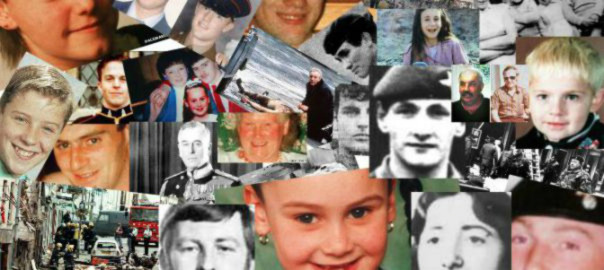


.svg/2000px-Royal_Coat_of_Arms_of_the_United_Kingdom_(HM_Government).svg.png)


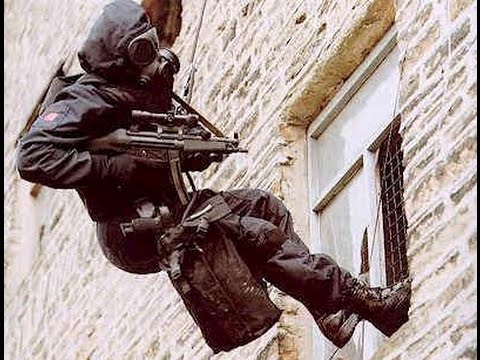


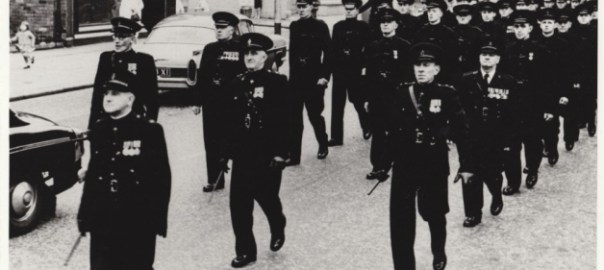


 Friday 30 April 1999
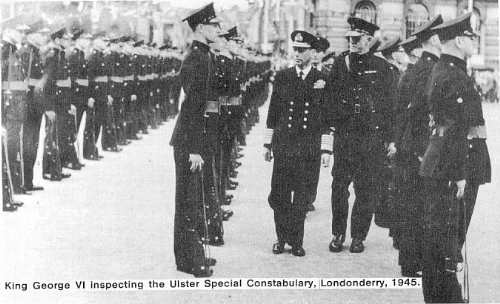


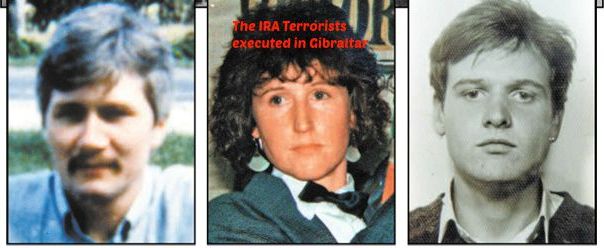


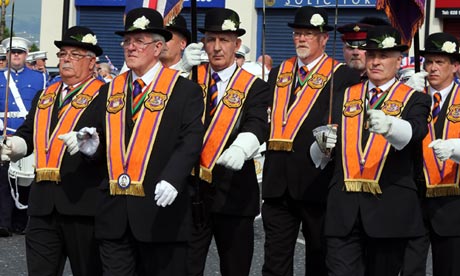


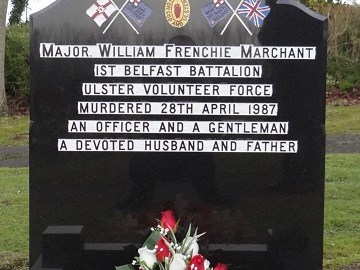

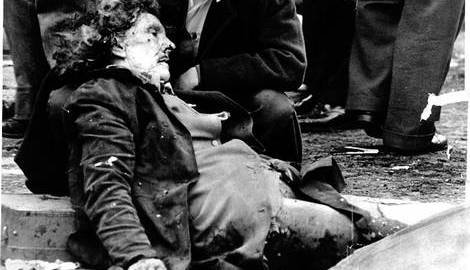


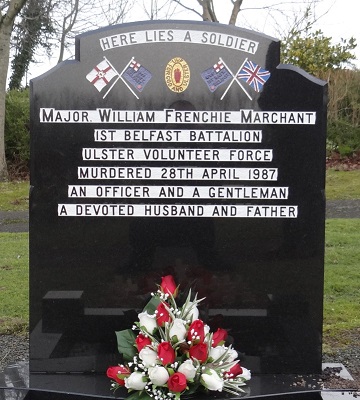

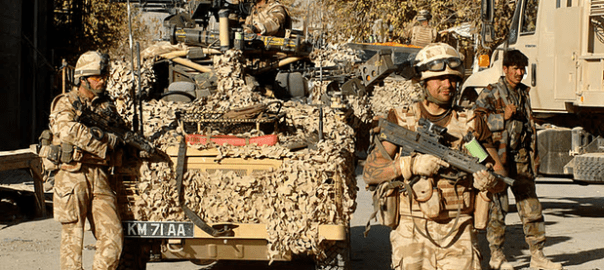



_YR_(RLH).JPG)

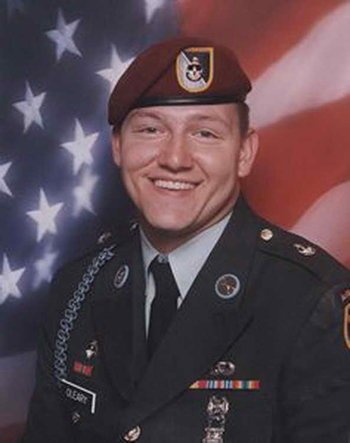

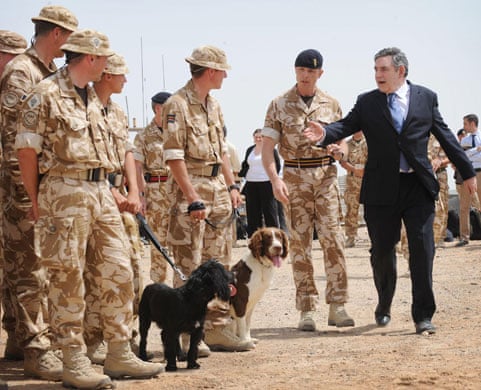




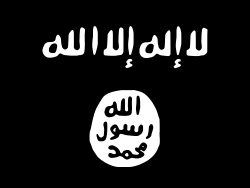


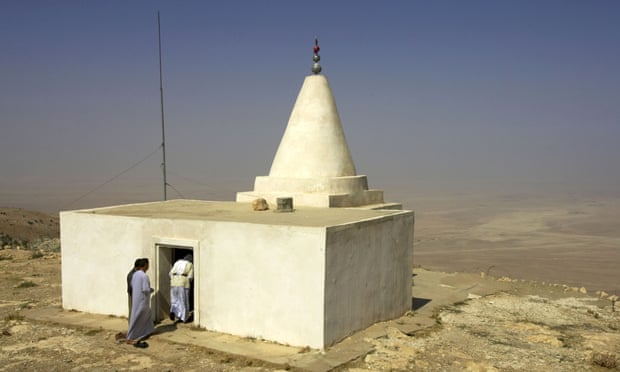


 belfastchildis.com