Austin Bennett Tice (born August 11, 1981) is a former U.S. Marine Corps officer and is a freelance journalist who was kidnapped while reporting in Syria August 12, 2012.
Tice was previously a U.S. Marine Corps infantry officer. Tice’s father said, “He was hearing reports from Syria saying this is happening and that is happening but it can’t be confirmed because there really are no reporters on the ground. And he said, ‘You know, this is a story that the world needs to know about.’” He was one of only a few foreign journalists to report from inside Syria during intensification of the civil war. He entered the country in May 2012 and traveled through central Syria, filing battlefield dispatches before arriving in Damascus in late July 2012. Tice’s reporting garnered his Twitter account 2,000 followers. He stopped tweeting after August 11, 2012.[9]
Tice was one of the first American correspondents to witness Syrian-rebel confrontations. His coverage was cited (along with efforts of additional reporters) as contributing to McClatchy winning a George Polk Award for war reporting for its coverage of Syria’s civil war.
Abduction
Austin Tice while in captivity, taken August 2012
Austin Tice while in captivity, taken August 2012
Tice was working as a freelance journalist for McClatchy, The Washington Post, CBS and other media when he was abducted from Darayya, Syria. Since then, there has been no contact from Tice or his captors. A 47-second video of Tice blindfolded and bound was released in September 2012. In October 2012, a U.S. spokesperson said it believed, based on the limited information it had, that Tice was in the custody of the Syrian government. No government or group in Syria has said it is holding Tice.
———————————————————————————————————
Click here to visit FBI page
——————————————————————————————————————–
Austin’s family have a website and you can visit it by following this link:
In many ISIS execution videos, the victims speak calmly and directly to the camera to describe why they’re there. It seems weird that a person would be so tranquil before his death. The hostages are able to retain their poise probably because they don’t know they’re about to be executed, an ISIS defector
The defector, who called himself “Saleh,” said a Turkish member of ISIS hired him to reassure captives they wouldn’t be killed. He would tell the victims that the executions being filmed were just rehearsals.
“No problem, only video, we don’t kill you, we want from your government [to] stop attacking Syria. We don’t have any problem with you; You are only our visitors,’”
“Saleh” recounted as the words he was ordered to tell the hostages. He always knew that the captives would be killed, he said.
Why the secrecy?
It might be because ISIS learned from previous killing videos from the Iraq war, the Washington Post hypothesizes. Hostages who know they’re being led to their deaths are more unpredictable and will sometimes offer a disturbing plea or troublesome last words. The viewer might be inclined to feel empathy for the victim, which makes for some bad propaganda.
This defectors’ words, although not verified, would explain why the Israeli spy seemed so stoic in his interview released by ISIS recently. Right before an ISIS child soldier shot him dead in broad daylight, the spy is given treatment like any usual documentary subject:
—————————————————————————————-
ISIS Boy Soldier Executes Alleged Israeli Spy
—————————————————————————————-
Muhammad Musallam’s family
Saleh said the execution rehearsals took place so that when the moment of death finally came the hostages were not expecting to be killed and were relaxed to appeal for their release on camera.
He said: “He would say to me ‘say to them, no problem, only video, we don’t kill you, we want from your government [to] stop attacking Syria. We don’t have any problem with you; you are only our visitors’.
“So they don’t worry. Always I say to them ‘don’t worry, doesn’t matter, nothing dangerous for you’. But at the end I was sure [they would die].
“Maybe they [the captors] raise their voice, but without hitting. All the time he say to him ‘it’s a rehearsal, don’t [be] afraid’.
“I will explain. He want, when he will kill you really… [it] don’t enter his [hostage’s] head. Exactly, of course, you [hostages] should say this message: ‘I’m living in ISIS and will stay and continue’.”
Saleh worked as a translator before he was employed by IS. He fled across the border to Turkey to escape the group and claims to have looked after a hostage with an English accent.
He said: “This man from England, or Netherlands, I don’t know. He was speaking English so nice. Sometimes I don’t understand what he say.
“He was with mask. All questions around gun, around job in Syria. ‘Who send you to Syria? Who is your partner there? When you came into Syria? Where you stayed in Idlib? In Aleppo?’ All thing [the time he] give answer. ‘No, I’m press, I’m press’.
“So after that he said to me, the Turkish man, ‘don’t worry, don’t worry’. After that he was so afraid.”
Saleh claimed hostages were given Arabic names to convince them they were amongst friends in order to calm them down. He says Kenji Goto was given the name “Abu Saad”.
“ISIS gave the hostages an idea; ‘You should be Muslim and come with us’. When I went to the rehearsal he said to [Kenji] Goto ‘Abu Saad’. Maybe I was thinking to myself ‘maybe they try [find] this name so hard, ‘Kenji Goto’.
“Maybe they could not say [Kenji Goto] so [they say] Abu Saad. But when I noticed Goto, when they said Abu Saad to Goto, direct [he] relax.”
————————————————
Didier Francois
Captives are so calm because they’ve been through so many MOCK executions that they still do not know they are about to die, reveals former hostage
French journalist Didier Francois was held by ISIS militants earlier this year
He says prisoners were put through mock crucifixions ‘several times’
This explains why they appear calm before they are killed, he claims
The hostages in Islamic State execution videos appear calm because they do not realise they are about to die, according to a former captive.
French war reporter Didier Francois, who was released by the terrorists earlier this year, said that prisoners were threatened with execution ‘several times’ and IS militants carried out macabre mock crucifixions.
Commenting on why the hostages, including Briton David Haines, remained calm even seconds before their deaths, the journalist said: ‘They did not realise that this time it was the real thing’.
Key Events & Deaths on this day in Northern Ireland Troubles
22nd September
Monday 22 September 1975
There was a series of bomb attacks on towns across Northern Ireland. [The Irish Republican Army (IRA) claimed responsibility for some of the attacks thus putting further strain on the truce. Many commentators considered that the truce was effectively over by this time.]
Friday 22 September 1978
Roy Mason, then Secretary of State for Northern Ireland, and Airey Neave, then Conservative Party spokesperson on Northern Ireland, issued statements rebuffing call in Britain for a British withdrawal from Northern Ireland.
Monday 24 September 1984
Oliver Napier resigned as leader of the Alliance Party of Northern Ireland (APNI). His successor was John Cushnahan
The Irish Republican Army (IRA) exploded a bomb in Deal Barracks (‘The Depot’), Kent, England, which killed ten musicans who were part of the staff band of the Royal Marines .
[Another Royal Marines musican died on 18 October 1989 from wounds received in the bombing.] The explosion occured at 8.22am in the concert hall on Canada Road which formed part of the Royal Marines’ School of Music.
Sunday 22 September 1991
About 50 Republican prisoners rioted in Crumlin Road Jail, Belfast, and tried to barricade off part of the prison. [The Northern Ireland Office (NIO) said that the disturbances by Republican and Loyalist prisoners was part of a deliberate campaign to force the prison authorities to introduce segregation.]
Wednesday 22 September 1993
David Trimble, then a Ulster Unionist Party (UUP) MP, criticised the Hume-Adams Initiative as: “misconceived and bound to fail”.
Thursday 22 September 1994
A man (18) had a leg broken during a paramilitary ‘punishment’ attack in Derry.
[It was thought that the Irish Republican Army (IRA) was responsible for beating the man.]
John Major, then British Prime Minister, who was on a visit to Pretoria, said that there would be no amnesty for paramilitary prisoners. Patrick Mayhew, then Secretary of State for Northern Ireland, announced the opening of a further six cross-border roads. Semtex explosives together with detonators were found following a search at Whitemoor Prison, Cambridgeshire, England. Al Gore, then United States Vice-President, had a meeting with a delegation of Ulster Unionist Party (UUP) members in Washington.
Friday 22 September 1995
Loyalists clashed with Royal Ulster Constabulary (RUC) officers following a decision to reroute an Orange Order parade in Downpatrick, County Down. David Trimble, then leader of the Ulster Unionist Party (UUP), proposed the establishment of a new Northern Ireland assembly. The proposal was made to coincide with the 90th anniversary of the Ulster Unionist Council (UUC).
Tuesday 22 September 1998
David Trimble, then leader of the Ulster Unionist Party (UUP), travelled to Dublin for a meeting with Bertie Ahern, then Taoiseach (Irish Prime Minister). The main item on the agenda was the issue of the decommissioning of paramilitary weapons. There was growing tension in recent days over this issue. Trimble supported a call by Ahern for the Irish Republican Army (IRA) to set out a timetable for decommissioning. Later Trimble said that he wanted to know when the IRA would decommission and stated: “we want to see it begin in a credible way”.
Wednesday 22 September 1999
David Wright had a meeting with Adam Ingram, then Security Minister at the Northern Ireland Office (NIO). Wright discussed concerns over the circumstances of the shooting dead of his son Billy Wright in the Maze prison on 27 December 1997.
Friday 22 September 2000
Dissident Republican paramilitaries fired an ‘anti-tank rocket’ at the headquarters of MI6, the British intelligence agency, in London. The attack caused damage to the building but no injuries. The “real” Irish Republican Army (rIRA) was thought to have been responsible.
Saturday 22 September 2001
Assembly Restored John Reid, then Secretary of State for Northern Ireland, restored devolved powers to the Northern Ireland Assembly at midnight. There were sectarian clashes in the Tiger’s Bay / North Queen Street area of Belfast. During the disturbances two blast bombs were thrown. There were no injuries.
There was a meeting of the party officers of the Ulster Unionist Party (UUP). Following the meeting David Trimble, then leader of the UUP, said that his party would table a motion in the Northern Ireland Assembly to exclude Sinn Féin (SF) ministers from the Executive. Trimble also announced that if the motion failed the UUP would withdraw its ministers from the Executive.
[This move would effectively bring down the power-sharing government. The UUP secured enough signatures to table the motion on 2 October 2001.]
Remembering all innocent victims of the Troubles
Today is the anniversary of the follow people killed as a results of the conflict in Northern Ireland
To the innocent on the list – Your memory will live forever
– To the Paramilitaries –
“There are many things worth living for, a few things worth dying for, but nothing worth killing for.
17 People lost their lives on the 22nd September between 1972 – 1989
————————————————————–
22 September 1972 William Matthews, (47)
Catholic Status: Civilian (Civ),
Killed by: non-specific Loyalist group (LOY)
Found stabbed to death, beside Ballygomartin River, off Glencairn Road, Glencairn, Belfast.
————————————————————–
22 September 1972
Stewart Gardiner, (23) nfNI Status: British Army (BA),
Killed by: Irish Republican Army (IRA)
Shot by sniper while on British Army (BA) foot patrol, Drummuckavall, near Crossmaglen, County Armagh.
————————————————————–
22 September 1973 Jame Brown, (26)
Catholic Status: Civilian (Civ),
Killed by: Irish Republican Army (IRA)
Found shot, Foyle Road, Derry. Alleged informer.
————————————————————–
22 September 1974
William McCully, (58)
Protestant Status: ex-Prison Officer (xPO),
Killed by: Irish Republican Army (IRA)
Shot at his home, Hillmount Gardens, Finaghy, Belfast.
————————————————————–
22 September 1975
Margaret Hale, (33)
Catholic Status: Civilian (Civ),
Killed by: non-specific Loyalist group (LOY)
Died two weeks after being injured during gun and bomb attack on McCann’s Bar, Ballyhagan, near Loughgall, County Armagh. She was wounded on 4 September 1975
————————————————————–
22 September 1985 Martin Patten, (18) nfNI Status: British Army (BA),
Killed by: Irish Republican Army (IRA)
Off duty. Shot while returning to Ebrington British Army (BA) base, walking along Limavady Road, Waterside, Derry.
————————————————————–
22 September 1989
Trevor Davis, (39) nfNIB Status: British Army (BA),
Killed by: Irish Republican Army (IRA)
Killed in time bomb attack on Royal Marines base, Deal, Kent, England.
————————————————————–
22 September 1989 Richard Jones, (27) nfNIB Status: British Army (BA),
Killed by: Irish Republican Army (IRA)
Killed in time bomb attack on Royal Marines base, Deal, Kent, England.
————————————————————–
22 September 1989 David McMillan, (26) nfNIB Status: British Army (BA),
Killed by: Irish Republican Army (IRA)
Killed in time bomb attack on Royal Marines base, Deal, Kent, England.
————————————————————–
22 September 1989 Mark Petch, (24) nfNIB Status: British Army (BA),
Killed by: Irish Republican Army (IRA)
Killed in time bomb attack on Royal Marines base, Deal, Kent, England
————————————————————–
22 September 1989 Michael Ball, (24) nfNIB Status: British Army (BA),
Killed by: Irish Republican Army (IRA)
Killed in time bomb attack on Royal Marines base, Deal, Kent, England.
————————————————————–
22 September 1989 Dean Pavey, (31) nfNIB Status: British Army (BA),
Killed by: Irish Republican Army (IRA)
Killed in time bomb attack on Royal Marines base, Deal, Kent, England.
————————————————————–
22 September 1989 Timothy Reeves, (24) nfNIB Status: British Army (BA),
Killed by: Irish Republican Army (IRA)
Killed in time bomb attack on Royal Marines base, Deal, Kent, England.
————————————————————–
22 September 1989 Richard Fice, (22) nfNIB Status: British Army (BA),
Killed by: Irish Republican Army (IRA)
Killed in time bomb attack on Royal Marines base, Deal, Kent, England.
————————————————————–
22 September 1989 Robert Simmonds, (34) nfNIB Status: British Army (BA),
Killed by: Irish Republican Army (IRA)
Killed in time bomb attack on Royal Marines base, Deal, Kent, England.
————————————————————–
22 September 1989 John Cleatheroe, (25) nfNIB Status: British Army (BA),
Killed by: Irish Republican Army (IRA)
Killed in time bomb attack on Royal Marines base, Deal, Kent, England.
————————————————————–
22 September 1989 Christopher Nolan, (21) nfNIB Status: British Army (BA),
Killed by: Irish Republican Army (IRA)
Injured in time bomb attack on Royal Marines base, Deal, Kent, England. He died 18 October 1989.
————————————————————–
This is simply the story of a boy trying to grow up, survive, thrive, have fun & discover himself against a backdrop of events that might best be described as ‘explosive’, captivating & shocking the world for thirty long years.
Key Events & Deaths on this day in Northern Ireland Troubles
21st September
Thursday 21 September 1972
A member of the UDR and his wife were killed in an IRA attack near Derrylin, County Fermanagh.
Thursday 21 September 1978
The Irish Republican Army (IRA) carried out a bomb attack on Eglinton airfield, County Derry. The terminal building, two aircraft hangers, and four planes were destroyed in the attack.
Monday 21 September 1981
Michael James Devine
James Devine, then an Irish Republican Army (IRA) prisoner, joined the hunger strike. The Social Democratic and Labour Party (SDLP) was openly critical of the hunger strike.
Saturday 21 September 1991
Loyalist prisoners started a fire in the dining-hall of Crumlin Road Jail, Belfast. Peter Brooke, then Secretary of State for Northern Ireland, left Northern Ireland to begin a five-day visit to the United States of America (USA).
Monday 21 – Wednesday 23 September 1992
James Molyneaux, then leader of the Ulster Unionist Party (UUP), led a delegation from the UUP to talks in Dublin Castle, Dublin, with the Irish Government. The talks were based on Strand Two and the topics discussed included constitutional matters, security co-operation, channels of communication between the two states, and identity and allegiance. The Democratic Unionist Party (DUP) did not attend the talks in Dublin.
[These were the first formal discussions by Unionists in Dublin since 1922.]
Tuesday 21 September 1993
The Ulster Freedom Fighters (UFF), a cover name (pseudonym) used by the Ulster Defence Association (UDA), placed bombs at the homes of four Social Democratic and Labour Party (SDLP) councillors. No one was injured in the attacks. Senior members of the SDLP expressed support for the ‘Hume-Adams’ talks.
Thursday 21 September 1995
It was revealed that the total amount of compensation paid by the Northern Ireland Office (NIO) for ‘Troubles’ related incidents (to the end of March 1995) was £1.12 billion.
Sunday 21 September 1997
[Frank Steele, formerly a member of MI6, claimed that various British governments had been in contact with the Irish Republican Army (IRA) since the first contact was established on 7 July 1972.]
Monday 21 September 1998
Members of the Garda Síochána (the Irish police) and the Royal Ulster Constabulary (RUC) detained 12 men as part of their investigation into the Omagh bombing. Six were arrested in south Armagh, six in north Louth, Republic of Ireland. Jeffrey Donaldson, then a Ulster Unionist Party (UUP) Member of Parliament (MP) and a critic of the Agreement, said that David Trimble, then First Minister designate, had mentioned in several private meetings the possibility of his resignation over the issue of decommissioning. Trimble said that he had never made such a threat.
Tuesday 21 September 1999
The Ulster Unionist Party (UUP) met a Sinn Féin (SF) delegation at Stormont. The meeting was part of the Mitchell Review of the Good Friday Agreement.
Thursday 21 September 2000
South Antrim By-election
A 71 year old Protestant woman in Newtownabbey, County Antrim, escaped injury after she handled a pipe-bomb that had been put through her letterbox. A similar device was put through the letterbox of a house in north Belfast.
The Democratic Unionist Party (DUP) won the Westminster by-election in South Antrim taking the seat from the Ulster Unionist Party (UUP). The area had previously been the second safest UUP seat. Willie McCrea (Rev.), who was a strong opponent of the Good Friday Agreement, won the seat by 822 votes to beat David Burnside the UUP candidate who was also an opponent of the Agreement.
[Commentators speculated that UUP supporters who were in favour of the Agreement had stayed at home and decided not to vote in the election.]
Friday 21 September 2001
Assembly Suspended For 1 Day John Reid, then Secretary of State for Northern Ireland, announced that he was suspending the Northern Ireland Assembly at midnight.
[The suspension lasted just 24 hours. The effect of the suspension was to allow another period of six weeks (until 3 November 2001) in which the political parties would have an opportunity to come to agreement and elect a First Minister and Deputy First Minister.]
The Irish Times (a Republic of Ireland newspaper) published the results of an opinion poll conducted on a sample of 1,000 people in Northern Ireland. Of those questioned 85 per cent said they thought the Irish Republican Army (IRA) should “now begin the process of putting its weapons beyond use”. While 64 per cent of the sample indicated that they had voted in favour of the Good Friday Agreement in 1998 only 52 per cent said they would vote in favour of it now.
[The survey was conducted conducted last Saturday and Monday on behalf of the Irish Times and Prime Time by MRBI Ltd.]
Gerry Adams, then President of Sinn Féin (SF), said that Nationalist recruits to the new Police Service of Northern Ireland (PSNI) would be “accorded the same treatment as the RUC” [Royal Ulster Constabulary].
[Unionists claimed that the comments implied a threat to Catholic recuits; this was denied by SF.]
It was reported that the number of Royal Ulster Constabulary (RUC) officers claiming compensation for trauma had risen to over 3,000.
Remembering all innocent victims of the Troubles
Today is the anniversary of the follow people killed as a results of the conflict in Northern Ireland
To the innocent on the list – Your memory will live forever
– To the Paramilitaries –
“There are many things worth living for, a few things worth dying for, but nothing worth killing for.
3 People lost their lives on the 21st September between 1971 – 1972
————————————————————–
21 September 1971 James Finlay, (31)
Protestant Status: non-specific Loyalist group (LOY),
Killed by: non-specific Loyalist group (LOY)
Died eight days after being injured in premature bomb explosion at house, Bann Street, Lower Oldpark, Belfast. Explosion occurred on 13 September 1971.
————————————————————–
21 September 1972
Thomas Bullock, (53)
Protestant Status: Ulster Defence Regiment (UDR),
Killed by: Irish Republican Army (IRA)
Off duty. Shot together with his wife at their home, Aghalane, near Derrylin, County Fermanagh
————————————————————–
21 September 1972 Emily Bullock, (50)
Protestant Status: Civilian (Civ),
Killed by: Irish Republican Army (IRA)
Shot together with her husband, an Ulster Defence Regiment member, at their home, Aghalane, near Derrylin, County Fermanagh.
————————————————————–
This is simply the story of a boy trying to grow up, survive, thrive, have fun & discover himself against a backdrop of events that might best be described as ‘explosive’, captivating & shocking the world for thirty long years.
Finally some good News in what has no doubt been a long and never ending nightmare for the families of the “Missing” those secretly killed and buried in unmarked graves , mainly due to Republican & Loyalist paranoia.
To lose a family member in an act of terrorism is an open wound that never heals and never ends – but to be killed due to paranoia and accused of being a tout or spy or worse – a pawn in political and paramilitary espionage , is a stain that engulfs your entire family and mentally abuses and mocks you daily. The grief of separation is suppressed and the stigma of guilt hangs over you like a dark cloud and the local community whisper and point behind your back.
Such was the life of the families of the Disappeared in the sectarian Badlands of West Belfast & throughout Northern Ireland during the Troubles. Now at least an end for one families misery – who will be given the spiritual healing of closure , a Christian burial and the beginning of a life that can only get better , although grief never leaves us completely .
Sometimes it seems to me The Gods love to ignore the suffering of mortal man and yet we follow them blindly in the hope of a protection that seldom comes.
There are STILL four more ( including Lisa Dorrian ) that remain missing. They are Columba McVeigh, Joe Lynskey and Army Capt Robert Nairac.
Columba McVeigh Joe Lynskey
Capt Robert Nairac
Lets hope that soon they can all be returned to their families and laid to rest in eternal peace.
——————————————————————–
Human remains found in France in search for ‘disappeared’ Seamus Ruddy
Human remains have been found at the site in northern France where a search has been taking place for the body of Seamus Ruddy, one of the Disappeared.
News that human remains had been uncovered came early on Saturday morning.
Investigators from the Independent Commission for the Location of Victims Remains have been digging at the site in a forest near Rouen since Monday.
Mr Ruddy was working as a teacher in Paris in 1985.
He was murdered by republican paramilitaries, the Irish National Liberation Army (INLA), and secretly buried.
The Disappeared are those who were abducted, murdered and secretly buried by republicans during Northern Ireland’s Troubles.
1yr anniversary of disappearance of 43 Mexican students. I’ve written to the Ambassador with investigation concerns
Whilst for once I agree with him in that something should be done about these poor Mexican students , what about The Disappeared from Northern Ireland ? – which is a bit closer to home and should be receiving his attention above these unfortunate students.
I’m sure it wouldn’t tax him too much to pick up the phone and ask his best buddies Adam & McGuiness to have a word with their “mates” about the whereabouts of the remains of these innocent victims of Republican paranoia.
But wait , I had almost forgotten that Adam’s & McGuiness are now states men and working for the good of the peace process. In fact they are in such denial that I’m sure they honestly believe that they have nothing to feel guilty about and have no regrets about their dodgy past.
Well in my book these two vile humans being represent the worst of the Troubles and the fact that they are now living comfortable lives and have a say in the running of Northern Ireland disgust me and I’m sure many others in mainland Britain. and Northern Ireland would agree. They are both drenched in the blood of the innocent and no matter what they say or do will never change my attitude towards these two IRA thugs.
But I digress – apologies for that – but my revulsion of these two is all consuming and sometimes I get carried away and go off track. The point I was trying to make is that Corbyn needs to look closer to home and use his influence with SinnFein/IRA to bring some closure to the issue of The Disappeared of Northern Ireland and perhaps in doing so he can give the families a little comfort and a chance to give their loved one’s a Christian Burial.
It is the very least they deserve!
Please see below for an article on The Disappeared –
Corbyn’s Letter
The Disappeared
The Disappeared are those who were abducted, murdered and secretly buried by republicans during Northern Ireland’s Troubles.
Gerry Adams denies he was involved in Jean McConville’s disappearance
Gerry Adams sparks outrage as he says abduction and murder of Jean McConville is ‘what happens in wars’
————————————————————————————–
The Disappeared
————————————————————————————–
Despite extensive and painstaking searches, the bodies have never been found of four out of 16 people listed by the commission set up to locate victims’ remains.
Searches have been carried out by the Independent Commission for the Location of Victims’ Remains, established in 1999 by treaty between the British and Irish governments to obtain information in strictest confidence that may lead to where the bodies are buried.
The Disappeared is a term which refers to people believed to have been abducted, murdered and secretly buried during the Troubles in Northern Ireland. The Independent Commission for the Location of Victims’ Remains is in charge of locating the remaining bodies, and was led by forensic archaeologist John McIlwaine
16 people, all Catholics, including one British Army officer, all males, except for Mrs. Jean McConville, are believed to have been kidnapped and killed by republicans during the Troubles. The Provisional IRA admitted to being involved in the forced disappearance of nine of the sixteen – Eamon Molloy, Seamus Wright, Kevin McKee, Jean McConville, Columba McVeigh, Brendan Megraw, John McClory, Brian McKinney, and Danny McIlhone. British Army officer, Robert Nairac, who disappeared from South Armagh, was a Mauritius-born Roman Catholic.
The organisation said they could only accurately locate the body of one of their victims, but gave rough ideas for the remaining eight. As of November 2013 only seven bodies have been found.
Another Catholic victim, Gareth O’Connor, is believed to have been killed by the IRA after the Good Friday Agreement. Lisa Dorrian, a young Catholic woman, is believed to have been killed by Loyalists, taking the total number of ‘Disappeared’ up to eighteen.
Who are they?
———————————————————————————————-
Found
Brendan Megraw
The IRA claimed that the 24-year-old from Belfast confessed to being a British provocateur and Military Reaction Force undercover agent in 1978
Disappeared from his home in Twinbrook, Belfast on 8th April 1978.
Found: His body was recovered on 1st October 2014
Brendan, by his family…
When Brendan disappeared on Saturday 8th April 1978, he was 23 years old. He was 5ft 8in tall and had very dark brown hair, which he wore long as that was the style at the time. He also had sideburns, a thin brown moustache and blue eyes.
Brendan was very much his own man. He didn’t like being told what to do. He was very particular about his appear-ance; always had a shine on his shoes. He had attended St Finians and La Salle schools and he had served on the altar at Clonard. He worked at a number of different jobs—hotel work, in a carpet factory and a sign making com-pany, which he enjoyed but for a variety of reasons were not long-term.
Brendan was happily married for almost a year and he was living for the day of the birth of his daughter and being a dad. Within his own band of friends Brendan would have been talkative with a mischievous sense of humour. At lar-ger gatherings or more formal social occasions, Brendan would have been quieter. He was a friendly person who en-joyed life and just wanted to have a good time.
As his mum always said, “he was motorbike mad”. He enjoyed taking them apart, fixing them, cleaning them and racing them. He went for day trips on the bike with his friends or to the races at Kirkstown/Dundrod. Brendan was al-ways engrossed in cars and kept his MG Midget spotlessly clean. His two pet hates were football and politics.
His friends described him as a good friend who could be relied upon and he was good company.
Human remains found in County Meath in October were those of IRA murder victim Brendan Megraw, it has been confirmed
———————————————————————————————————-
Found
Eamon Molloy
Abducted from his home in the Ardoyne area of north Belfast in July 1975, after being accused by the IRA of being an informer. It was claimed he was quartermaster in one of the IRA’s three Belfast brigades and that his activities forced the IRA into calling a ceasefire that year
Eamon disappeared 1st July 1975.
Found: His body located on the 28th May 1999 at Old Faughart Cemetery, four miles outside Dundalk
Eamon, by his family…
“Eamon was of average size. He was 21 years old when he disappeared. He had dark brown hair and brown eyes. Eamon was very thoughtful to others less fortunate than himself. He was a shy young man and was easily embarrassed when he was younger but he grew out of that as he got older”.
“He loved playing snooker and he was learning to play the mandolin at the time of his disappearance”.
“He had so many friends. Some of them still call to see me and they talk about things that happened when they were young and the things that happened in school. They still talk about how they miss him and the fun they all used to have together”.
Eamon Molloy’s remains were found in a coffin left above ground in a cemetery 25 years after his death
———————————————————————————————————-
Found
Brian McKinney
Twenty-two when he was abducted with his friend John McClory in 1978, he had first gone missing a few days beforehand, but returned 48 hours later, beaten and distraught. He had allegedly admitted to stealing IRA weapons for use in robberies.
Brian disappeared 25th May 1978.
Found: His body was located on 29th June 1999 at Colgagh, Iniskeen, Co. Monaghan along with John McClory’s body. John McClory had been kidnapped an hour earlier
Brian, by his family…
“Brian was small and his nickname was “Bru” because of Brian Bru was a giant and he was so small. He had dark brown hair, which he loved, and he kept it well groomed. He was 22 years old when he was taken away from us”.
“Brian was never a well boy. He was in and out of hospital and had bad asthma and eczema. When he was 14 years old he was diagnosed as having the mind of a six year old. It was genetic thing. We were all very protective of Brian. He was very popular in the area with the neighbours and he was always singing and he played a mouth organ and the guitar. In fact, sometimes you had to tell him to be quiet. He was very musical. Brian was funny without even meaning to be, he hadn’t an ounce of sense”.
“He went out to work on Thursday 25th May 1978 and he never came home. I still can’t get him out of my mind especially what he must have felt like in his last moments. I know he would have cried”.
“His friends would tell you how good natured he was. He would have given away his last penny. He would have been very easily led but he wouldn’t have harmed a fly. He is still so much missed by us all”.
His body was located on 29th June 1999 at Colgagh, Iniskeen, Co. Monaghan
——————————————————————————————————————————–
Found
John McClory
The 17-year-old was a friend of Brian McKinney and went missing at the same time. His body was also recovered at the same site. He had allegedly admitted to stealing IRA weapons for use in robberies
John disappeared on the 25th of May 1978.
Found: His body was located on 29th June 1999 at Colgagh, Iniskeen, Co. Monaghan
John, by his family…
“John was very tall with long black hair. He was very tall for his age. He was almost 19 years old when he disappeared. He was a friendly boy and always tried to help the elderly neighbours who lived beside us. He would help them carry their shopping to the house. He was very outgoing, funny and very talkative”.
“John took great pride in his appearance especially his long hair. His hair was his pride and joy!”
“He loved sports but was an armchair fan, rather than actively playing any sports. He was just like any other 18 year old, living life to the full and enjoying himself”.
“His friends and his family miss him very much. I know his friends would have viewed him differently than me. I only had seen him as my brother, although when I talk to some of his friends we have a laugh about what he used to get up to”.
His body was located on 29th June 1999 at Colgagh, Iniskeen, Co. Monaghan
———————————————————————————————————-
Found
Jean McConville
The IRA Accused her of being an informer. She was widow and mother of 10 children.
Jean disappeared on the 7th December 1972.
Found: Her body was recovered on 27th August, 2003 at Shillington Beach, Co. Louth.
Jean, by her family…
“Mum was 37 years old and she had dark brown hair and lovely blue eyes. She was small in height and she was a very quiet woman who was gentle and caring”.
“I remember Mum and Dad always together and can remember Mum always wearing an apron like the one in the picture and she always folded her arms like the way she is in the picture Mum and Dad were close and we were a close family. She always came round at night and gave us a good night kiss. After my Daddy died she was just trying to raise her own children by herself and that couldn’t have been easy but she did her best”.
“Mum was always busy and she was rarely out of the house. She was at home all the time in the house clearing and making sure we were all clean and that there was food on the table for us. She had a good sense of humour too and always had time for her family. The one hobby she enjoyed was bingo and other than that she was always with her children”.
“It has been terrible since she was taken. From day one we were put in a home and we had to learn how to survive on our own. You had to learn to survive if you wanted to get on with your life because the home wasn’t easy. It was very strict but being split up from your brothers and sisters was the hardest thing of all”.
Jean McConville. her body was found at Shillington Beach, Co. Louth.
———————————————————————————————————-
Found
Danny McIlhone
The IRA said Mr McIlhone was not suspected of being an informer but was being questioned about stealing weapons – it was claimed he was killed in a struggle with the person who was guarding him.
Danny disappeared on 1st July 1981.
Found:His body was discovered in 2008 in bogland near the Blessington Lakes in Co. Wicklow.
Disappeared IRA victim Danny McIlhone was shot a number of times before being buried in a secret grave on a remote mountainside, an inquest has heard.
The IRA had admitted taking Mr McIlhone to a “premises” in Ballynultagh for questioning about “certain matters” and that a Provo had shot him a number of times when a struggle broke out between them.
His body was discovered in 2008 in bogland near the Blessington Lakes in Co. Wicklow
—————————————————————————————————————-
Found
Charles Armstrong
The 57-year-old father-of-five from Crossmaglen in south Armagh, went missing on his way to Mass in 1981. His car was later found near a cinema in Dundalk. The IRA denied any involvement in his disappearance at the time
Charlie disappeared on 15th August 1981.
Found: His body was found in County Monaghan in July 2010
Charlie, by his family…
“Charlie was medium in height and roughly 5 ft 4”. He was 54 years old when he disappeared and he had receding brown hair. Charlie was a very pleasant, outgoing man. He was a very talkative person who loved a bit of craic with other people and he could be very funny. His hobbies were mainly around animals. He loved horse racing and backing horses, he also loved dogs and caged birds. He was a football fan and enjoyed gardening, decorating and fishing”.
“Charlie’s friends would describe him as being very obliging, always willing to help neighbours. Nothing was too much for him to do for other people”.
“Charlie was a very good husband and father. He was a very caring person”.
On the day he disappeared, his wife walked with their daughters to Mass, where they had planned to meet him after he drove a friend to it. He did not appear and it was only when they got home that they discovered that he had not met their friend. Initially, it was thought that he had had an accident, so his family and friends searched the area, but there was no sign of him. The next day, a friend phoned the family to tell them that his car had been found outside the Adelphi cinema in Dundalk.
His name did not appear on a list of nine people whose disappearances the Provisional IRA admitted responsibility for in 1999. Gerry Adams, president of Sinn Féin, denied that the IRA was responsible, but journalist Suzanne Breen said that she had been contacted by a member of the IRA who said that it was.
A team looking for Mr Armstrong found human remains in County Monaghan in July 2010. Two months later, the remains were confirmed as being those of Mr Armstrong.
——————————————————————————————————
Found
Peter Wilson
Peter Wilson (21 yrs), was last seen in Falls Park in August 1973. Peter did not return to his home at St James’s Road, Belfast
Peter disappeared August 1973.
Found : November 2010
Reports suggest he may have been abducted and murdered by the IRA. His name was added to the list of the Disappeared in 2009 after new information became available.
For four days before he disappeared he lived with an Army unit at their headquarters near his Falls Road home. At the time the Army was accused of using a vulnerable person to gather information on the IRA, but the Army said they wanted him to experience military life.
His remains were found at Waterfoot beach in County Antrim in November 2010
——————————————————————————————————–
Found
Gerard Evans
Gerry Evans went missing aged 24 in County Monaghan in 1979
Gerard Anthony disappeared on his way home to Crossmaglen March 1979. . He was last seen on the roadside out of Castleblaney trying to hitch a lift back home.
Found: His body was found in October 2010.
Gerard, by his family…
“Gerry was 24 years old and 5ft 10”. He had dark brown hair. Gerry was the eldest of five boys and he was a very loving, kind son who was matured for his age. He loved his home and family. He had a lovely personality, quiet and but funny at times. He enjoyed being with his younger brothers, especially Sean who has Down Syndrome. Sean still misses Gerry very much. Gerry’s hobbies were darts and snooker, any kind of sport and a night out with his mates”.
“I think Gerry’s friends would describe him as a good friend and fun to be with. They still miss him and he had no enemies that we know about. Gerry would never have hurt anyone”.
“I couldn’t have asked for a better son”.
Last seen hitch-hiking in County Monaghan in March 1979, no-one has ever admitted responsibility for the 24-year-old’s death. In March 2008, his aunt was given a map claiming to identify the location of his body. Mr Evans’ remains were found at a site in County Louth in October 2010.
His remains were found at a site in County Louth in October 2010.
———————————————————————————————-
Found
Eugene Simons
The 26-year-old went missing from his home near Castlewellan, County Down, on 1 January 1981.
His body was discovered by chance in May 1984 in a bog near Dundalk, County Louth.
Eugene, by his family…
“Eugene was fairly tall, about 5ft 11”. He was 26 years old and he had brown hair. He was abducted on New Years Day in 1981”.
“Eugene was a plumber by trade and he was never out of work. He was a very good tradesman. He loved angling, darts and a social night out”.
“He got on well with all he came in to contact with but sadly it was some of his so called friends that set him up for abduction”.
——————————————————————————————————–
Found
Kevin McKee
An IRA member, the Belfast man was alleged to have been a British army agent and member of its Military Reaction Force, an undercover unit
Kevin disappeared on 2nd October 1972.
Found: His body was recovered on June 2015
The 17-year-old was killed in 1972 along with Seamus Wright, 25, by the Provisional IRA in Belfast. The pair were accused of working for a secret undercover British army unit at the time.
Kevin, by his family…
“Kevin was 17 years old and he was very tall. He had dark curly hair. He had beautiful white curly hair as a baby, but as he grew older he didn’t like his curls. Kevin was a very caring young boy. He was the first-born and was always very protective of his younger siblings. He was very much family orientated and fiercely loyal. He was shy but very helpful to elders; he was quiet and spent most of his time at home with his family. He was very close to his mother and would do odd jobs to help support the family. He was very athletic and loved football and sports. He could possibly have been very successful at school. He loved playing football and he loved drawing. He was a very good artist. He would sketch and draw in his spare time. Kevin was outgoing but he was shy too”.
“He has lots of mates both in school and outside of school. He was a typical mischievous youth. His friends described him as a tall likeable gentleman. He had a good sense of humour and he was loved by all who knew him. His disappearance was a tragedy. He had been engaged to a very pretty young girl just before he disappeared”.
His body was discovered in Coghalstown, Co Meath, in June 2015.
—————————————————————————————————-
Found
Seamus Wright
Wright is believed to have been abducted, interrogated, shot dead and buried in secret by the IRA in 1972
The Belfast man was an IRA member, but in 1972 he was interrogated and murdered by his former colleagues who accused him of being a British army agent and a member of its Military Reaction Force. His body was discovered in Coghalstown, Co Meath, in June 2015.
He vanished in 1972 alongside Kevin McKee after the IRA suspected the pair of working as undercover agents for a secret army unity known as the Military Reconnaissance Force, which was carrying out a covert war against the IRA in Belfast during the Troubles’ bloodiest year.
They are believed to have been abducted from their homes in west Belfast, driven across the border, interrogated, shot dead and buried in secret
Friends and family carry the remains of one Séamus Wright.
Found
Gareth O’Connor
O’Connor was a member of the Real IRA who disappeared after driving through Newtownhamilton in 2003
Gareth disappeared 11th May 2003.
Found: His body was found June 12th 2005 at Victoria Lock, just outside of Newry.
Gareth, by his family…
“Gareth was very tall and well built with short dark brown hair. He was 24 years old when he disappeared”.
“Gareth was a very good-natured person and he was friendly and easy to get on with. He would have been the first person to help you when needed. Gareth was a very outgoing person and was also a practical joker. He was always playing some sort of jokes on people”.
“Gareth’s hobbies were around fixing up old cars and bodybuilding. He would have trained 7 nights a week at a local gym”.
“I think Gareth’s friends would have described him as a very loyal friend and fun to be with. His friends miss him badly. His close friends find it hard to talk about what has happened”.
Gareth O’Connor was not included in the remit and legislation of 1999 for The Independant Commission for The Location of Victims Remains (ICLVR)
O’Connor was a member of the Real IRA who disappeared after driving through Newtownhamilton in 2003. On 11 June 2005, his badly decomposed body was discovered in his car in Newry Canal, County Down. His father, Mark, believes that the Provisional IRA were responsible for the murder, as they had threatened father and son. Mark O’Connor said: “I gave those names [of the killers] to Gerry Kelly (Sinn Féin assembly member). But nothing has been done. Gerry Adams ignores us and ignores all the families of the Disappeared.”
Armagh – Gareth O’Connor funeral
————————————————————————————————
Still Missing
Seamus Ruddy
The 32-year-old from Newry, County Down, was working as a teacher in Paris when he went missing in 1985. It is believed he was killed by members of the INLA.
Seamus disappeared in Paris on 9th May 1985.
Still Missing: His body has never been recovered.
It is believed he was killed by members of the INLA. Fresh searches were carried out in 2008 after his family were told his remains were in a forest in Normandy, but they found nothing.
Seamus, by his family…
“Seamus was of average build, about 5ft 6” with dark brown hair. He had a beard, although in springtime he sometimes shaved it off to leave just a moustache. Under his glasses he had the most beautiful blue eyes. He was 33 years old when he disappeared. He was the youngest boy of a family of 9. He had 5 sisters and 3 brothers. He lived in Newry and educated at Newry CBS”.
“You couldn’t say Seamus was one type of person. He was a different person to everyone who knew him; I only discovered that after his disappearance”.
“Seamus was a kind hearted, thoughtful and humorous person. He was wise, caring, a walking encyclopaedia, meticulous and a hard worker at whatever he chose to do. He was always concerned about the welfare and well being of his 34 nephews and nieces. On Christmas morning he visited as many of Santa’s houses as he could to play with the children’s toys!”
“He was a very good listener and he was able to enjoy the craic wherever he went. He enjoyed a good laugh and always looked for the positive side of the situation. His laugh was an infectious one, so when he laughed you laughed too”.
“Seamus really enjoyed all types of music especially The Chieftains, Christy Moore and Planxty. The Flead Cheoils were a part of his life. Otis Reading and Aretha Franklin were also appreciated by him. Rory Gallagher and Thin Lizzy were rated highly too”.
“He was an avid reader especially politics and world affairs and he could discuss the current affairs of any country in the world”.
“Seamus was always there for his friends, no matter who needed help he would come to their aid. He even played hurley once for Newry Shamrocks because they were a man short and he was co-opted on to the team”.
“He definitely was not athletic but still played to help the team out. Seamus always fulfilled his promises. It was not in his vocabulary to let anyone down. I think friends would describe him as dependable, kind and trustworthy”.
The 29-year-old was abducted when he visited a pub at Dromintee, south Armagh. He had been in the pub singing rebel songs. He was seized during a struggle in the pub’s car park and taken across the border to a field at Ravensdale, County Louth, and later shot dead.
In February 2010 Joe Lynskey was added to the official list of The Disappeared. He went missing from his West Belfast home in 1972.
Joe went missing in !972
Still Missing: He’s body has never been found
A former Cistercian monk from the Beechmount area of west Belfast, he later joined the IRA. Mr Lynskey went missing in 1972, and republicans have claimed Mr Lynskey was “executed and buried” by the IRA.
Columba disappeared on 1st November 1975, his body has never been recovered.
Columba disappeared on 1st November 1975,
Still Missing: his body has never been recovered.
The 19-year-old from Donaghmore, County Tyrone was abducted and murdered by the IRA in 1975 after allegedly confessing to being a British army agent with instructions to infiltrate the IRA.
Extensive searches for his body were carried out in 2003 at a bog in Emyvale, County Monaghan, but nothing was found. His mother, Vera, was a tireless campaigner for the return of his remains – she died in 2007. Mother of Disappeared victim dies
A specialist forensic team spent five months in 2013 digging in a bog in County Monaghan for Mr McVeigh’s remains, but found nothing.
Columba, by his family…
“Columba was the third of four precious children born to Paddy and Vera McVeigh.He grew up in the rural setting of Castlecaulfield in Co Tyrone where life was sometimes hard making the security of a loving family very special. Columba grew up to be a fine big tall and handsome fella with curly golden hair”.
“He enjoyed being outdoors, riding his bike, playing football, often returning home covered in muck from head to toe. He had a great sense of humour and enjoyed playing a trick on family and friends. He worked hard and went to Dublin to take up a job. It was from there that Columba disappeared 29 years ago at the age of 17”.
————————————————————————————————
Still Missing
Lisa Dorrian
Lisa went missing in the early hours of February 28, 2005 after attending a party at a caravan site in the sea side town of Ballyhalbert.
Lisa went missing on 28th February 2005
Still Missing: Her body has never been found
It is widely believed she was abducted and murdered by member of the Loyalist Volunteer Force.
Lisa Dorrian was not included in the remit and legislation of 1999 for The Independent Commission for The Location of Victims Remains (ICLVR)
“It is 4 years since we last saw our beautiful daughter Lisa. They have been two long and hard years, which have taken their toll on all our family. We were never given the chance to say goodbye to Lisa. “Lisa’s youngest sister Ciara, who was only eight years old when Lisa disappeared, has panic attacks at night, screaming and crying for her Lisa. We, as parents, should be able to alleviate her fears, but we can’t because we don’t have the answers.
“We are appealing to anyone who knows anything to please tell the police, no matter how trivial it may seem. It may help us as a family to grieve and try to accept that Lisa is never coming back. They say time is a great healer, but for us it just gets worse.”
This is simply the story of a boy trying to grow up, survive, thrive, have fun & discover himself against a backdrop of events that might best be described as ‘explosive’, captivating & shocking the world for thirty long years.
Key Events & Deaths on this day in Northern Ireland Troubles
20th September
Wednesday 20 September 1972
The Social Democratic and Labour Party (SDLP) issued a document entitled Towards a New Ireland. The document proposed that the British and Irish governments should have joint sovereignty over Northern Ireland.
Thursday 20 September 1984
The Democratic Unionist Party (DUP) put forward proposals for devolution of power to Northern Ireland. The scheme would have involved a majority cabinet government with a Bill of Rights and minority representation on department committees.
Sunday 20 September 1992
There were further leaks of discussion papers from the political talks (later known as the Brooke / Mayhew talks). Sunday Life (a Northern Ireland newspaper) gave details of an Irish government paper that indicated there would be no change on Articles 2 and 3 of the Irish Constitution unless there was some movement on the Unionist side.
[Unionists wanted to see changes to the Irish Constitution take place first.]
There were additional revelations in other newspapers which provided details of the structure of any new assembly.
Tuesday 20 September 1994
The European Commission announced that it would increase its contribution to the International Fund for Ireland (IFI) by one-third to £47 million, over the following three years.
Wednesday 20 September 1995
A delegation from the Progressive Unionist Party (PUP) travelled to Dublin for a meeting with John Bruton, then Taoiseach (Irish Prime Minister).
Saturday 20 September 1997
Harryville Picket Resumed Approximately 170 Loyalists recommenced their picket of the Catholic church in Harryville, Ballymena, County Antrim.
[The picket had ended during the summer when the Catholic priest at Harryville decided, following police advice, not to celebrate mass during the height of the Orange Order marching season. Picketing had first begun 41 weeks earlier in October 1996 (?).]
Monday 20 September 1999
Michelle Williamson was granted leave to challenge in the High Court in Belfast the ruling by Marjorie (Mo) Mowlam, then Secretary of State of Northern Ireland, that the Irish Republican Army (IRA) ceasefire was intact. Williamson lost both parents in the IRA Shankill Road bombing of 23 October 1993. Williamson was supported in her legal action by Ulster Unionist Party (UUP) members including David Trimble, then leader of the UUP, and Jeffrey Donaldson MP.
Thursday 20 September 2001
The Loyalist protest at the Holy Cross Girls’ Primary School continued but protesters reverted to the earlier tactic of making a lot of noise as school children passed. Six men appeared before Belfast Magistrates Court on public order offences related to the school protest on 3 September 2001. A 17-year-old is due to appear before a juvenile court later.
The six men were remanded on bail but instructed not to take part in the protest. As a result of the arrests the group representing the Loyalist residents, Concerned Residents of Upper Ardoyne (CRUA), announced that it had “suspended all business until further notice”.
Two men were shot an injured in paramilitary ‘punishment’ attacks. One man was shot in the leg in Hatfield Street, south Belfast. Another man (21) was shot in an attack at Bennet’s Lane, Lisanally, County Armagh. A statment by the Irish Republican Army (IRA) on the issue of decommissioning of paramilitary weapons was published by An Phoblacht / Republican News.
Bertie Ahern, then Taoiseach (Irish Prime Minister), said that the statement was a step in the right direction but did not go far enough. The Social Democratic and Labour Party (SDLP) announced the names of three members it had nominated to the proposed new 19 member Policing Board which would oversee the new Police Service of Northern Ireland (PSNI).
The three were Eddie McGrady, then Member of Parliament (MP) for South Down, Alex Attwood, then party chairman, and Joe Byrne, then Assembly member for West Tyrone. David Trimble, then leader of the Ulster Unionist Party (UUP), and Ian Paisley, then leader of the Democratic Unionist Party (DUP), held a meeting at Stormont with John Reid, then Secretary of State for Northern Ireland, about the issue of policing. The meeting took place a few hours before the midnight deadline for parties to nominate members to the new Policing Board. Following the meeting the UUP said that it would nominate members. The DUP also said that it would nominate members.
An survey commissioned by the BBC Northern Ireland ‘Hearts and Minds’ programme found that, of those questioned, 41 per cent favoured fresh elections to the Northern Ireland Assembly if agreement could not be reached before the deadline of 22 September 2001. 31 per cent were in favour of a one-day suspension of the Assembly and 28 per cent preferred an indefinite suspension
Remembering all innocent victims of the Troubles
Today is the anniversary of the follow people killed as a results of the conflict in Northern Ireland
To the innocent on the list – Your memory will live forever
– To the Paramilitaries –
“There are many things worth living for, a few things worth dying for, but nothing worth killing for.
6 People lost their lives on the 20th September between 1972 – 1987
————————————————————–
20 September 1972
Francis Bell, (18) nfNI
Status: British Army (BA),
Killed by: Irish Republican Army (IRA)
Died three days after being shot while on British Army (BA) foot patrol, Springhill Avenue, Ballymurphy, Belfast.
————————————————————–
20 September 1972
Joseph McComiskey, (18)
Catholic Status: Irish Republican Army Youth Section (IRAF),
Killed by: British Army (BA)
Shot during gun battle, Flax Street, Ardoyne, Belfast.
————————————————————–
20 September 1976 Seamus Muldoon, (29)
Catholic Status: Civilian (Civ),
Killed by: non-specific Loyalist group (LOY)
Died ten days after being shot near to his home while on his way to work, Donard Drive, Tonagh, Lisburn, County Antrim.
————————————————————–
20 September 1982 Martin Jessop, (19)
nfNI Status: British Army (BA),
Killed by: Irish Republican Army (IRA)
Killed in rocket attack on observation post at Springfield Road Royal Ulster Constabulary (RUC) / British Army (BA) base, Belfast.
Killed by: Irish Republican Army (IRA)
Killed by booby trap bomb attached to his car outside his home, Woodside Hill, Portadown, County Armagh.
————————————————————–
20 September 1987
James Meighan, (22)
Catholic Status: Civilian (Civ),
Killed by: Ulster Freedom Fighters (UFF)
Shot while sitting in his stationary car outside his girlfriend’s home, Prestwick Park, Ballysillan, Belfast.
————————————————————–
This is simply the story of a boy trying to grow up, survive, thrive, have fun & discover himself against a backdrop of events that might best be described as ‘explosive’, captivating & shocking the world for thirty long years.
Key Events & Deaths on this day in Northern Ireland Troubles
19th September
Friday 19 September 1975
[Public Records 1975 – Released 1 January 2006: Note which discusses the Constitutional Convention and in particular proposals by William Craig, then a member of the United Ulster Unionist Council (UUUC), for a voluntary coalition with the Social Democratic and Labour Party (SDLP).]
Tuesday 19 September 1989
The Board of the International Fund for Ireland announced that £4 million would be spent on urban development grants in 30 ‘disadvantaged’ towns.
Tuesday 19 September 1995
David Trimble, then leader of the Ulster Unionist Party (UUP), held his first meeting as party leader with John Major, then British Prime Minister. Trimble also had a meeting with Tony Blair, then leader of the Labour Party. A delegation from the Ulster Democratic Party (UDP) travelled to Dublin for a meeting with John Bruton, then Taoiseach (Irish Prime Minister), and Dick Spring, then Tánaiste (deputy Irish Prime Minister and Minister for Foreign Affairs).
Saturday 19 September 1998
Gerry Kelly, a senior member of Sinn Féin (SF), warned of a looming crisis in the peace process if Unionists insisted that prior disarmament was the “bottom line” before SF would be allowed to enter an Executive. Kelly said Unionists were “generating unrealisable expectations” that decommissioning was about to happen.
Wednesday 19 September 2001
There were disturbances in the Strand Road area of Derry as a crowd of up to 200 people clashed with Royal Ulster Constabulary (RUC) officers at 2.00am (02.00BST). Two RUC officers were injured and ambulance personnel were also attacked. Four people were arrested for public order offences.
The Loyalist protest at the Holy Cross Girls’ Primary School continued. The Royal Ulster Constabulary (RUC) arrested eight men for public order offences related to the school protest.
Tony Blair, then British Prime Minister, and Bertie Ahern, then Taoiseach (Irish Prime Minister), met to discuss the difficulties in the peace process and the deadline (22 September 2001) for the election, or re-election, of a First Minister and Deputy First Minister to the Northern Ireland Assembly. Mark Durkan (41), then Minister of Finance and Personnel, announced his intention of standing for the leadership of the Social Democratic and Labour Party (SDLP) at the party’s annual conference in November 2001.
Remembering all innocent victims of the Troubles
Today is the anniversary of the follow people killed as a results of the conflict in Northern Ireland
To the innocent on the list – Your memory will live forever
– To the Paramilitaries –
“There are many things worth living for, a few things worth dying for, but nothing worth killing for.
5 People lost their lives on the 19th September between 1976 – 1991
————————————————————–
19 September 1976 Joseph Paton, (64)
Protestant Status: Civilian (Civ),
Killed by: Irish Republican Army (IRA)
Died four days after being injured in bomb attack on Belfast Telegraph building, Little Donegall Street, Belfast. Inadequate warning given.
———————————————————–
19 September 1979
Edward Jones, (60)
Protestant Status: Prison Officer (PO),
Killed by: Irish Republican Army (IRA)
Shot while driving his car away from Crumlin Road Prison, Belfast.
———————————————————–
19 September 1981
Eugene Mulholland, (25)
Catholic Status: Civilian (Civ),
Killed by: Ulster Volunteer Force (UVF)
Shot from passing car while walking along Ormeau Road, Belfast.
———————————————————–
19 September 1983
Lilly McCollum, (61)
Protestant Status: Civilian (Civ),
Killed by: Irish Republican Army (IRA)
Died two months after being injured by a booby trap bomb, hidden in outbuilding at her Ulster Defence Regiment (UDR) member brother’s farm, Tullylagen, near Cookstown, County Tyrone. She was injured on 9 July 1983.
———————————————————–
19 September 1991
Haldane, John (54)
Protestant Status: Civilian (Civ),
Killed by: Irish Republican Army (IRA)
Shot at his workplace, McCue, Dick & Co, Duncrue Street, Belfast. Contractor to British Army (BA) / Royal Ulster Constabulary (RUC).
This is simply the story of a boy trying to grow up, survive, thrive, have fun & discover himself against a backdrop of events that might best be described as ‘explosive’, captivating & shocking the world for thirty long years.
The Crusades were military campaigns sanctioned by the Catholic Church in the Middle Ages. Pope Urban II authorized the First Crusade in 1095 with the goal of restoring European access to the Holy Land, and an intermittent 200-year struggle ensued. Urban was also seeking to reunite the Catholic Church under his leadership by militarily supporting Emperor Alexios I. After centuries of competitive co-existence with the Arabs following the initial Muslim conquests the Byzantine Empire had been defeated by the Turks in 1071 at the Battle of Manzikert.
As a result, the Byzantines lost the fertile coastal area of Anatolia and were forced into competition with Turks migrating westward
—————————————————————————————
Jihad vs. Crusade – Holy Wars in Comparative Perspective
—————————————————————————————
Hundreds of thousands of Roman Catholics from many different classes and nations of Western Europe became crusaders by taking a public vow and receiving plenary indulgences from the church. Some crusaders were peasants hoping for Apotheosis at Jerusalem. Pope Urban II claimed that anyone who participated was forgiven of their sins. In addition to demonstrating devotion to God, as stated by the Catholic Church, participation satisfied feudal obligations and provided opportunities for economic and political gain. Crusaders often pillaged the countries through which they traveled, and contrary to their promises the leaders retained much of this territory rather than returning it to the Byzantines.]
The People’s Crusade prompted the murder of thousands of Jews, known as the Rhineland massacres. Constantinople was sacked during the Fourth Crusade rendering the reunification of Christendom impossible. Due to the weakening that resulted from the siege, the Byzantine Empire ultimately fell to the Ottomans.[5] The Catholic Church mounted no coherent response when their last stronghold in the region, Acre, fell in 1291.
Opinions concerning the conduct of crusaders have varied from laudatory to highly critical. The impact of the crusades was profound; they reopened the Mediterranean to commerce and travel, enabling Genoa and Venice to flourish. Crusader armies would trade with the local populations while travelling, and Orthodox Byzantine emperors often organized markets for crusaders moving through their territory. The Crusades consolidated the collective identity of the Latin Church under papal leadership, were a source of heroism, chivalry, and piety. This consequently spawned medieval romance, philosophy, and literature. However, the crusades reinforced the connection between Western Catholicism, feudalism, and militarism, which was counter to the Peace and Truce of God that Urban had promoted
—————————————————————————————
THE CRUSADES: CRESCENT & THE CROSS Documentary
—————————————————————————————
Terminology
A 12th-century Byzantine manuscript illumination depicting Byzantine Greeks punishing Cretan Saracens in the 9th century (from the Madrid Skylitzes)
Crusade is a modern term derived from the French croisade and Spanish cruzada and by 1750, the various forms of the word “crusade” had established themselves in English, French, and German.[9] The Oxford English Dictionary records its first use in English as occurring in 1757 by William Shenstone.[10] When a crusader swore a vow (a votus) to be fulfilled on successfully reaching Jerusalem they were granted a cloth cross (crux) to be sewn into their clothes. This “taking of the cross”, the crux, eventually became associated with the entire journey. They saw themselves as undertaking an iter, a journey, or a peregrinatio, an armed pilgrimage. The inspiration for this “messianism of the poor” was the expected mass apotheosis at Jerusalem.[5]
The numbering of the Crusades is matter of debate with some historians considering that between 1096 and 1291 there were seven major Crusades and numerous minor ones.[3] However, others consider the Fifth Crusade of Frederick II as two distinct crusades. This would make the crusade launched by Louis IX in 1270 the Eighth Crusade. In addition, sometimes even this crusade is considered as two, leading to a Ninth Crusade.
In a pluralist view of the Crusades developed in the 20th century Crusade is used to include all papal sanctioned military campaigns, whether in the Middle East or in Europe.[11] A key difference between the Crusades and other holy wars was that the authorization to carry out these wars came directly from the pope, who claimed to be working on behalf of Christ.[12] This takes into account the view of the Roman Catholic Church and medieval contemporaries such as Saint Bernard of Clairvaux that gave equal precedence to comparable military campaigns against pagans, heretics and many undertaken for political reasons. This wider definition includes the persecution of heretics in Southern France, the political conflict between Christians in Sicily, the Christian re-conquest of Iberia and the conquest of heathens in the Baltic.[7] Countering this is the view the crusades were a defensive war in the Middle East against Muslims to free the Holy Land from Muslim rule.[13]
Popes frequently called political crusades and crusades were also declared as a means of conflict resolution amongst fellow Roman Catholics. The first of these was called by Pope Innocent III against Markward of Anweiler in 1202.[14] Further examples include a crusade against the Stedingers and several against Emperor Frederick II and his sons called by a number of popes.[15] Others include two crusades called against opponents of King Henry III of England enjoying the same privileges as those given to crusaders on the Fifth Crusade.[16]
The term widely used for Muslim was Saracen as before the 16th century the words “Muslim” and “Islam” were very rarely used by Europeans.[17] In Greek and Latin this term had a longer evolution from the beginning of the first millennium, where it referred to a people who lived in desert areas around the Roman province of Arabia who were distinguished from Arabs.[18][19] The term developed to include Arab tribes and by the 12th century had become an ethnic and religious marker synonymous with “Muslim” in Medieval Latin literature.[20][21]
The terms Frank and Latin given from the period of the Crusades to persons belonging to any of the Western nations of Europe, in contradistinction to the Greeks.[22][23]
Historiography
During the Reformation and Counter-Reformation of the 16th century, historians saw the Crusades through the prism of their own religious beliefs. Protestants saw them as a manifestation of the evils of the Papacy, while Catholics viewed the movement as a force for good.[24] During the Enlightenment, historians tended to view both the Crusades and the entire Middle Ages as the efforts of barbarian cultures driven by fanaticism.[25] By the 19th century, with the dawning of Romanticism, this harsh view of the crusades and its time period was mitigated somewhat.[26] with later 19th-century crusade scholarship focusing on increasing specialization of study and more detailed works on subjects.[27]
Enlightenment scholars in the 18th century and modern historians in the West have expressed moral outrage at the conduct of the crusaders. In the 1950s, Sir Steven Runciman wrote that “High ideals were besmirched by cruelty and greed … the Holy War was nothing more than a long act of intolerance in the name of God” .[28] In the 20th century, three important works covering the entire history of the crusades have been published, those of Rene Grousset, Runciman and the multi-author work edited by K. M. Stetton.[29] A pluralist view of the crusades has developed in the 20th century inclusive of all papal-led efforts, whether in the Middle East or in Europe[11] Historian Thomas Madden has made the contrary argument that “[t]he crusade, first and foremost, was a war against Muslims for the defense of the Christian faith…. They began as a result of a Muslim conquest of Christian territories.” Madden says the goal of Pope Urban was that “[t]he Christians of the East must be free from the brutal and humiliating conditions of Muslim rule.”[13]
After the fall of Acre in 1291, European support for the Crusades remained despite criticism by contemporaries such as Roger Bacon who felt the Crusades were ineffective since “those who survive, together with their children, are more and more embittered against the Christian faith.”[30] The historian Norman Davies summarised the case against the crusades as running counter to the Peace and Truce of God that Urban had promoted; instead they reinforced the connection between Western Christendom, feudalism, and militarism. The formation of military religious orders scandalised the Orthodox Christian Byzantine Greeks. Crusaders pillaged the countries they transited on their journey east. Rather than keeping their oath to restore lands to the Byzantines, they often kept the land for themselves.[3][31][32] The Peoples’ Crusade instigated the Rhineland massacres and the massacre of thousands of Jews. In the late 19th century this episode was used by Jewish historians to support Zionism.[33] The Fourth Crusade resulted in the sacking of Constantinople, effectively ending the chance of reuniting the Christian church by reconciling the East–West Schism and leading to the weakening and eventual fall of the Byzantine Empire to the Ottomans. Historians of the Enlightenment criticized the misdirection of the crusades. In particular they pointed to the Fourth Crusade which instead of attacking Islam attacked another Christian power—the (Eastern) Roman Empire. David Nicolle says the Fourth Crusade has always been controversial in terms of the “betrayal” of Byzantium.[34]Edward Gibbon in The History of the Decline and Fall of the Roman Empire said the crusaders efforts would have been more profitably employed in the improvement of their native country[3]
In the Eastern Mediterranean after Muslim forces defeated the Eastern Roman/Byzantines at the Battle of Yarmouk in 636, the control of Palestine passed through the Umayyad Dynasty, the Abbasid Dynasty. and the Fatimids.[35][36][37] Toleration, trade, and political relationships between the Arabs and the Christian states of Europe ebbed and flowed until 1072 when the Fatimids lost control of Palestine to the rapidly expanding Great Seljuk Empire.[38] For example, the Fatimid Caliph al-Hakim bi-Amr Allah ordered the destruction of the Church of the Holy Sepulchre, only to have his successor allow the Byzantine Empire to rebuild it.[39] The Muslim rulers allowed pilgrimages by Catholics to the holy sites. Resident Christians were considered people of the book and so were tolerated as Dhimmi or “subjugated people” accorded a second-class status, and inter-marriage was not uncommon.[40] Cultures and creeds coexisted as much as competed, but the frontier conditions were not conducive to Latin Catholic pilgrims and merchants.[41] The disruption of pilgrimages by conquering Seljuk Turks prompted support for the Crusades in Western Europe.[42]
The Byzantine Empire was resurgent from the end of the 10th century, with Basil II spending most of his 50-year reign on campaign, conquering a great amount of territory. He left a growing treasury, at the expense of neglecting domestic affairs and also ignoring the cost of incorporating his conquests into the Byzantine Ecumene. None of Basil’s successors had any particular military or political talent, and governing the Empire increasingly fell into the hands of the civil service. Their efforts to spend the Byzantine economy back into prosperity only resulted in burgeoning inflation. To balance the increasingly unstable budget, Basil’s large standing army was dismissed as unnecessary, and native thematic troops were cashiered and replaced by foreign mercenaries. Following the defeat of the Byzantine army at the Battle of Manzikert in 1071, the Seljuk Turks had taken over almost all of Anatolia, and the Empire descended into frequent civil wars.[43] In the Western Mediterranean the reconquest of the Iberian Peninsula from Muslims began in the 8th century and reached its turning point with the recapture of Toledo in 1085.[44] At the subsequent Council of Clermont in 1095.[45] Urban II tied the ongoing wars in Iberia to his preaching of the First Crusade and the crusading effort but it was not until the papal encyclical in 1123 by Pope Calixtus II that these wars attained the status of crusades.[46] After this, the papacy declared Iberian crusades in 1147, 1193, 1197, 1210, 1212, 1221 and 1229. Crusading privileges were also given to those people who were helping the military orders – both the traditional Templars and Hospitallers as well as the specifically Iberian orders that were founded and eventually merged into two main orders – that of the Order of Calatrava and the Order of Santiago. From 1212 to 1265, the Christian kingdoms of Iberia drove Muslim rule into the far south of the Iberian Peninsula, confined to the small Emirate of Granada. In 1492, this remnant was conquered and Muslims and Jews were expelled from the peninsula.[47]
In Western Europe an aggressive and reformist papacy came into conflict with both the Eastern Empire and Western secular monarchs, leading to the East-West Schism in 1054,[48] and the Investiture Controversy, which had started around 1075 and was still on-going during the First Crusade. The papacy began to assert its independence from secular rulers, marshaling arguments for the proper use of armed force by Catholics. The result was intense Catholic piety, interest in religious affairs, and religious propaganda advocating “Just War” in order to retake Palestine from the Muslims. The majority view was that non-Christians could not be forced to accept Christian baptism or should not be physically assaulted for having a different faith as opposed to a less common opinion that vengeance was a response to injuries such as the denial of Christian faith, government or the opportunity for justified forcible conversion.[49] Taking part in such a war was seen as a form of penance, which could remit sins.[50] Meanwhile, in Europe, the Germans were expanding at the expense of the Slavs .[51] While Sicily was conquered by the Norman adventurer Robert Guiscard in 1072.[52]
Illumination from the Livre des Passages d’Outre-mer (c. 1490) of Urban II at the Council of Clermont (Bibliothèque Nationale)
EmperorAlexios I Komnenos requested military assistance from Pope Urban II at the Council of Piacenza to fight the Seljuqs in 1095, probably envisaging this in the form of mercenaries to reinforce his tagmata and exaggerating the dangers facing the Eastern Empire in order to secure the needed troops[53] On the penultimate day of the subsequent council at Clermont, attended by nearly 300 clerics from throughout France from 19 to 28 November, Urban raised the problems in the Εast and the struggle of the Eastern Roman Empire against Muslims. There are six main sources of information on the Council: the anonymous Gesta Francorum (“The Deeds of the Franks”) dated c. 1100/1101, by Fulcher of Chartres who was present at the council; Robert the Monk, who may have been present; as well as Baldric, archbishop of Dol, and Guibert de Nogent, who were not. All the accounts were written retrsopectively and differ greatly.[54] Robert the Monk—Historia Iherosolimitana, written in 1106/7— writes that the pope asked western Christians, poor and rich, to come to the aid of the Byzantine Empire because “Deus vult,” (“God wills it”) adding that Urban promised Absolution for those who took part, although other sources claim instead, it was remission of all penance due from sins, later called an indulgence. In the accounts Urban emphasizes reconquering the Holy Land more than aiding the Emperor, listing gruesome offences committed by Muslims and focussing on the reconquest of the Holy Land. The propogand for this call to arms was preached across France with Urban himself writing those “waiting in Flanders” lamenting that Turks, in addition to ravaging the “churches of God in the eastern regions,” have seized “the Holy City of Christ, embellished by his passion and resurrection—and blasphemy to say it—have sold her and her churches into abominable slavery.” While not explicitly calling for the reconquest of Jerusalem he does call for the military “liberation” of the Eastern Churches and appoints Adhemar of Le Puy to lead the Crusade, commencing on the day of the Assumption of Mary, 15 August.[55]
Inspired by Pope Urban II‘s preaching, Peter the Hermit led as many as 20,000 people, mostly peasants, to the Holy Land shortly after Easter 1096.[56] When they arrived in Germany in spring 1096, units of crusaders commenced the Rhineland massacres in the cities of Speyer, Worms, Mainz and Cologne, despite the efforts by Catholic bishops to protect the Jews. Major leaders included Emicho and Peter the Hermit. The range of anti-Jewish activity was broad, extending from limited, spontaneous violence to full-scale military attacks on the Jewish communities of Mainz and Cologne.[57] This was the first major outbreak of anti-Jewish violence in Europe and was cited by 19th-century Zionists as showing the need for a Jewish state.[58] When the group finally reached the Byzantine Empire, Emperor Alexios urged them to wait for the western nobles, but they insisted upon proceeding and fell to a Turkish ambush outside Nicaea, from which only about 3,000 people escaped.[59]
The crusader armies initially fought the Turks at the lengthy Siege of Antioch, which began in October 1097 and lasted until June 1098. When they entered Antioch, the crusaders massacred the Muslim inhabitants and pillaged the city. However, a large Muslim army led by Kerbogha immediately besieged the victorious crusaders, who were now inside Antioch. Bohemond of Taranto successfully rallied the crusader army and defeated Kerbogha on 28 June.[68] Bohemond and his men retained control of the city, despite his pledge to Alexios.[69] Most of the remaining crusader army marched south, moving from town to town along the coast, finally reaching Jerusalem on 7 June 1099 with only a fraction of their original forces.[70]
Jews and Muslims fought together to defend Jerusalem against the invading Franks, but the crusaders entered the city on 15 July 1099 . They proceeded to massacre the remaining Jewish and Muslim civilians and also pillaged or destroyed mosques or the city itself.[71] In his Historia Francorum qui ceperunt Iherusalem, Raymond D’Aguilers exalted actions which would be considered atrocities from a modern viewpoint.[72] As a result of the First Crusade, four primary crusader states were created: Edessa, Antioch, Tripoli, and Jerusalem.[73]
On a popular level, the preaching of the First Crusade unleashed a wave of impassioned, personally felt pious Catholic fury that was expressed in the massacres of Jews that accompanied and preceded the movement of the crusaders through Europe,[74] as well as the violent treatment of the “schismatic” Orthodox Christians of the east.[75]
Following this crusade was a second, less successful wave of crusaders, known as the Crusade of 1101, in which Turks led by Kilij Arslan defeated the crusaders in three separate battles in a response to the First Crusade.[76]Sigurd I of Norway was the first European king to visit the crusading states, as well as the first European king to take part in a crusading campaign, although his expedition was as much pilgrimage as crusade. His fleet helped at the Siege of Sidon. Also in 1107, Bohemond I of Antioch attacked the Byzantines at Avlona and Dyrrachium, in what is occasionally called Bohemond’s Crusade, which ended in September 1108 with a defeat for Bohemond and his retiring to Italy.
In the early 12th-century, smaller scale crusading continued: Pope Calixtus II promoted the Venetian Crusade of 1122–1124;[77] Count Fulk V of Anjou visited in 1120; Conrad III of Germany in 1124 and Fulk V again in 1129 leading to recognition of the Knights Templar by Pope Honorius II. In 1135 Pope Innocent II‘s grant of crusading indulgences to those who opposed papal enemies is seen by some historians as the beginning of politically motivated crusades.[78] The crusader states were initially secure, but Imad ad-Din Zengi, who was appointed governor of Mosul in 1127, captured Aleppo in 1128 and Edessa (Urfa) in 1144.[79] These defeats led Pope Eugenius III to call for another crusade on 1 March 1145.[80] The new crusade was called for by various preachers, most notably by Bernard of Clairvaux .[81] French and South German armies, under the Kings Louis VII and Conrad III respectively, marched to Jerusalem in 1147 but failed to win any major victories, launching a failed pre-emptive siege of Damascus.[82] On the other side of the Mediterranean a group of Northern European crusaders stopped in Portugal, allied with the Portuguese King, Afonso I of Portugal, and retook Lisbon from the Muslims in 1147.[83] A detachment from this group of crusaders helped Count Raymond Berenguer IV of Barcelona conquer the city of Tortosa the following year.[84] In the Holy Land by 1150, both the kings of France and Germany had returned to their countries without any result. Bernard of Clairvaux, who in his preachings had encouraged the Second Crusade, was upset with the amount of misdirected violence and slaughter of the Jewish population of the Rhineland[85] A followup to this crusade was the pilgrimage of Henry the Lion, Duke of Saxony, in 1172 that is sometimes labelled a crusade.[86] At the same time Saxons and Danes fought against Polabian Slavs in the Wendish Crusade or First Northern Crusade. The Wends defeated the Danes and the Saxons did not contribute much to the crusade.[87] The Wends did acknowledge the rule of Henry the Lion. Further crusading actions continued although no papal bulls were issued calling new crusades.[88] Henry restarted efforst to conquer the Wends in 1160 and in 1162 the Wends were defeated.[89]
Saladin created a single powerful state, uniting opposition and providing a new threat to the Latin states.[90] Following his victory at the Battle of Hattin he easily overwhelmed the disunited crusaders in 1187 and retook Jerusalem on 29 September 1187. Terms were arranged and the city surrendered, with Saladin entering the city on 2 October 1187.[91] Saladin’s victories shocked Europe. On hearing news of the Siege of Jerusalem (1187), Pope Urban III died of a heart attack on 19 October 1187.[92] On 29 October Pope Gregory VIII issued a papal bull, Audita tremendi, proposing the Third Crusade. To reverse the loss of Jerusalem, Frederick I, Holy Roman Emperor (r. 1152–1190) of Germany, King Philip II of France (r. 1180–1223), and King Richard I (The Lionheart) of England (r. 1189–1199) all organized forces. Frederick died en route, and few of his men reached the Holy Land. The other two armies arrived but were beset by political quarrels. Philip returned to France, leaving most of his forces behind. Richard captured the island of Cyprus from the Byzantines in 1191. He then recaptured the city of Acre after a long siege. The crusader army headed south along the Mediterranean coast, defeated the Muslims near Arsuf, recaptured the port city of Jaffa, and was in sight of Jerusalem, but supply problems forced them to end the crusade without taking Jerusalem.[93] Richard left the following year after negotiating a treaty with Saladin. The terms allowed trade for merchants and unarmed Catholic pilgrims to make pilgrimages to Jerusalem, while it remained under Muslim control.[94]Henry VI, Holy Roman Emperor initiated a German Crusade in 1197 to fulfil the promises made by his father, Frederick. Led by Conrad of Wittelsbach, Archbishop of Mainz the army landed at Acre and captured the cities of Sidon and Beirut before Henry died and most of the crusaders returned to Germany.[95]
Pope Celestine III called for a crusade against pagans in Northern Europe in 1193 resulting in Bishop Berthold of Hanover leading a large army of crusaders to defeat and his death in 1198. In response to this defeat Innocent III issued a papal bull declaring a crusade against the mostly pagan Livonians.[96]Albrecht von Buxthoeven, consecrated as bishop in 1199, arrived the following year with a large force and established Riga as the seat of his bishopric in 1201. In 1202 he formed the Livonian Brothers of the Sword to aid in the conversion of the pagans to Catholicism and, more importantly, to protect German trade and secure German control over commerce. The Livonians were conquered and converted between 1202 and 1209.[97] In 1217 Pope Honorius III called a crusade against the Prussians.[98]Konrad of Masovia gave Chelmno to the Teutonic Knights in 1226 to serve as a base for the Prussian crusade.[99] In 1236 the Livonian Sword Brothers were defeated by the Lithuanians at Saule, and in 1237 Pope Gregory IX merged the remaining Sword Brothers into the Teutonic Knights.[100] By 1249, the Teutonic Knights had completed their conquest of the Old Prussians, which they ruled as a fief of the German emperor. The Knights then moved on to conquer and convert the pagan Lithuanians, a process that lasted into the 1380s.[101] The Teutonic Order attempted but failed to conquer Orthodox Russia (particularly the Republics of Pskov and Novgorod), an enterprise endorsed by Pope Gregory IX, as part of the Northern Crusades. In 1240 the Novgorod army defeated the Swedes in the Battle of the Neva.[102] and in 1242 they defeated the Livonian knights in the Battle on the Ice.[103] Innocent III initiated recruitment for what became known as the Forth crusade in 1200 with preaching taking place in France, England, and Germany, although the bulk of the efforts were in France.[104] This became a vehicle for the political ambitions of Doge Enrico Dandolo and the German King Philip of Swabia who was married to Irene of Byzantium. Dandolo saw an opportunity to expand Venice’s possessions in the near east, while Philip saw the crusade as a chance to restore his exiled nephew, Alexios IV Angelos, to the throne of Byzantium.[105] The crusaders contracted with the Venetians for a fleet and provisions to transport them to the Holy Land, but they lacked the funds to pay when too few knights arrived in Venice. They agreed to divert the crusade to Constantinople and share what could be looted as payment. As collateral the crusaders seized the Christian city of Zara on 24 November 1202. Innocent was appalled and excommunicated the crusaders.[106] The crusaders met with limited resistance in their initial siege of Constantinople, sailing down the Dardanelles and breaching the sea walls. However, Alexios was strangled after a palace coup, robbing them of their success, and they had to repeat the siege in April 1204. This time the city was sacked, churches pillaged, and large numbers of the citizens butchered. The crusaders took their rewards, dividing the Empire into Latin fiefs and Venetian colonies. In the Venetian period, there was particular attention to improving defences of La Cava and Nicosia.[107] In April 1205, the crusaders were largely annihilated by Bulgars and remaining Greeks at Adrianople, where Kaloyan of Bulgaria captured and imprisoned the new Latin emperor Baldwin of Flanders.[108][109] While deploring the means, the papacy initially supported this apparent forced reunion between the Eastern and Western churches.[110] The Fourth Crusade effectively left two Roman Empires in the East: a Latin “Empire of the Straits”, existing until 1261, and a Byzantine enclave ruled from Nicea, which later regained control in the absence of the Venetian fleet. Venice was the sole beneficiary in the long run.[111]
Pope Innocent III excommunicating the Albigensians (left), Massacre against the Albigensians by the crusaders (right)
The Albigensian Crusade was launched in 1208 to eliminate the hereticalCathars of Occitania (modern-day southern France). It was a decades-long struggle that had as much to do with the desire of northern France to extend its control southwards as it did with battling heresy. In the end, the Cathars were driven underground, and the independence of southern France was eliminated.[112] In 1221 Honorius III called on King Andrew II to crusade against heretics in Bosnia and Hungarian forces responded to further papal calls in both 1234 and 1241. The later conflict ended because of the Mongol invasion of Hungary in 1241. The Bosnian church was Catholic in theology, but continued to be in schism with the Roman Catholic Church well past the end of the Middle Ages.[113] Pope Innocent III declared a new crusade to commence in 1217, along with his summoning of the Fourth Council of the Lateran in 1215. The majority of the crusaders came from Germany, Flanders, and Frisia, along with a large army from Hungary led by King Andrew II and other forces led by Duke Leopold VI. The forces of Andrew and Leopold arrived in Acre in October 1217 but little was accomplished and Andrew returned to Hungary in January 1218. After the arrival of more crusaders, Leopold and the king of Jerusalem, John of Brienne, laid siege to Damietta, Egypt.[114] which they captured finally in November 1219. Further efforts by the papal legate, Pelagius, to invade further into Egypt led to no gains.[115] Blocked by forces of the AyyubidSultanAl-Kamil, the crusaders were forced to surrender. Al-Kamil forced the return of Damietta and agreed to an eight-year truce and the crusaders left Egypt.[116]
Emperor Frederick II repeatedly failed to fulfill his vows to crusade for which he was excommunicated.[117] Finally he sailed from Brindisi, landing at Acre in September 1228 via Cyprus.[118] There were no battles as Frederick made a peace treaty with Al-Kamil that allowed Latin Christians to rule over most of Jerusalem and a strip of territory from Acre to Jerusalem, while the Muslims were given control of their sacred areas in Jerusalem. In return, Frederick pledged to protect Al-Kamil against all his enemies, even if they were Christian.[119] A followup to this crusade was the effort by King Theobald I of Navarre in 1239 and 1240 that had originally been called in 1234 by Gregory IX to assemble in July 1239 at the end of a truce. Besides Theobald, Peter of Dreux and Hugh, Duke of Burgundy and other French nobles took part. They arrived in Acre in September 1239 and after a defeat in November, Theobald arranged a treaty with the Muslims that returned territory to the crusading states, but caused much disaffection within the crusaders. Theobald returned to Europe in September 1240. Also in 1240, Richard of Cornwall, younger brother of King Henry III of England, took the cross and arrived in Acre in October. He then secured the ratification of Theobald’s treaty and left the Holy Land in May 1241 for Europe.[120]
In the summer of 1244, a Khwarezmian force summoned by the son of al-Kamil, al-Salih Ayyub, stormed and took Jerusalem. The Franks allied with Ayyub’s uncle Ismail and the emir of Homs and their combined forces were drawn into battle at La Forbie in Gaza. The crusader army and its allies were defeated within forty-eight hours by the Khwarezmian tribesmen.[121] King Louis IX of France organized a crusade after taking the cross in December 1244, preaching and recruiting from 1245 through 1248.[122] Louis’ forces set sail from France in May 1249 and landed near Damietta in Egypt on 5 June 1249. Waiting until the end of the Nile flood, the army marched into the interior in November and by February were near Mansura. They were defeated near there, however, and King Louis was captured while retreating towards Damietta.[123] Louis was ransomed for 800,000 bezants and a ten-year truce was agreed. Louis then went to Syria, where he remained until 1254 working to solidify the kingdom of Jerusalem and constructing fortifications.[124]
In 1256, the Venetians were evicted from Tyre, prompting the War of Saint Sabas over territory in Acre claimed by both Genoa and Venice.[125] Venice conquered the disputed property, destroying Saint Sabas’ fortifications, but was unable to expel the Genoese. During a blockade of 14 months Genoa allied with Philip of Monfort, John of Arsuf and the Knights Hospitaller while Venice was supported by the Count of Jaffa and the Knights Templar,[126] By 1261, the Genoese were expelled, but Pope Urban IV, concerned about the impact of the war on the defences against the Mongols, organised a peace council.[127] The conflict resumed in 1264 when the Genoese received aid from Michael VIII Palaiologos, Emperor of Nicaea and Venice failed in an attempt to conquer Tyre. Both sides employed Muslim soldiers, mostly Turcopoles, against their Christian foes and the Genoese had made an alliance with Baybars.[128] The warfare between Genoa and Venice had a significant negative impact on the Kingdom’s ability to withstand external threats to its existence. Except for the religious buildings, most of the fortified buildings in Acre had been destroyed at one point and it looked like it had been ravaged by a Muslim army. According to Rothelin, the continuator of William of Tyre’sHistory, 20,000 men had lost their lives in the conflict at a time when the crusader states were chronically short on soldiery. The war ended in 1270 and in 1288 Genoa finally received its quarter in Acre back.[129]
Statue of Charles of Anjou in Hyeres
In 1266, Saint Louis’ brother Charles had seized, with Sicily, parts of the eastern Adriatic it had previously controlled as well as Corfu, Butrinto, Avlona and Suboto. The Treaty of Viterbo was agreed with the exiled Baldwin II of Constantinople and William II Villehardouin that the heirs of both Latin princes were to marry children of Charles, and Charles was to have the reversion of the Empire and principality should the couples have no heirs. He also turned his brother’s crusade to his own advantage, persuading Louis to direct the Eighth Crusade against his rebel vassals in Tunis. Louis’s death, illness among the crusaders and a storm that devastated his fleet forced Charles to postpone his designs against Constantinople. Michael VIII Palaeologus was alarmed by Charles’s planned crusade to restore the Latin Empire that had fallen in 1261 and Charles’ expansion in the Mediterranean. Palaeologus delayed Charles by beginning negotiations with Pope Gregory X for a union between the Greek and the Latin churches. At the Council of Lyon, a Union of Churches was declared; Charles and Philip of Courtenay were compelled to extend a truce with Byzantium. The union would later prove to be unacceptable to the Greeks. Palaeologus also provided Genoa with funds to encourage the revolts in Charles’s northern Italian territories.[130] In 1268 Charles executed Conradin — a great-grandson of Isabella I of Jerusalem, principal pretender to the throne of Jerusalem — when seizing Sicily from the Holy Roman Empire. Charles went on to purchase the rights to Jerusalem from Maria of Antioch — the only remaining grandchild of Queen Isabella— creating a rival claim to that of Hugh III of Cyprus, who was a great grandson of Queen Isabella. Charles spent his life striving to assemble a Mediterranean empire. He and Louis regarded themselves as God’s instruments to uphold the Papacy.[131] Ignoring his advisers, in 1270 Louis IX again attacked the Arabs in Tunis in North Africa. He picked the hottest season of the year for campaigning and his army was devastated by disease. The king himself died, ending the last major attempt to take the Holy Land.[132] The Mamluks, led by Baibars, eventually drove the Franks from the Holy Land. From 1265 through 1271, Baibars drove the Franks to a few small coastal outposts.[133] The future Edward I of England undertook to crusade with Louis IX, but he was delayed and did not arrive in North Africa until November 1270. After the death of Louis, Edward went to Sicily and then on to Acre in May 1271. His forces were too small to make much difference, though, and he was upset at the conclusion of a truce between Baibars and the king of Jerusalem, Hugh. Although Edward learned of his father’s death and his succession to the throne in December 1272, he did not return to England until 1274, although he accomplished little in the Holy Land.[134] The accession of a French pope, Martin IV, in 1281 brought the full power of the Papacy into line behind Charles’ plans. He campaigned unsuccessfully in Albania and Achaea before preparing to launch the body of his Crusade (400 ships carrying 27,000 mounted knights) against Constantinople. However, Palaeologus allied with Peter III of Aragon to encourage an uprising known as the Sicilian Vespers in which the crusader fleet was abandoned and burnt. The Sicilians appealed to King Peter, who was proclaimed king with the Angevin house exiled forever from Sicily. Pope Martin excommunicated Peter and called a crusade against Aragon before, in 1287, Charles died, allowing Henry II of Cyprus to reclaim Jerusalem. One factor in the eventual decline and fall was the disunity and conflict that were endemic between the various Latin Christian interests of the Eastern Mediterranean. Pope Martin IV hopelessly compromised the Papacy supporting Charles of Anjou; and the botched secular “crusades” against Sicily and Aragon greatly tarnished its spiritual power. The collapse of its moral authority and the rise of nationalism rang the death knell for crusading, and would ultimately lead to the Avignon Papacy and the Western Schism. The Crusade of Aragón was declared by Martin IV against Peter III in 1284 and 1285. Peter was supporting the anti-Angevin forces in Sicily following the Sicilian Vespers, and the papacy supported Charles of Anjou. Pope Boniface VIII proclaimed a crusade against Frederick III of Sicily, the younger brother of Peter, in 1298, but was unable to prevent Frederick’s crowning and recognition as King of Sicily.
The mainland Crusading states of the middle eastern Outremer were extinguished with the fall of Tripoli in 1289, and Acre in 1291.[136] The remaining Latin Christians largely left for various destinations in the Frankokratia, were killed or enslaved.[137] Minor crusading efforts lingered into the 14th century. Peter I of Cyprus captured and sacked Alexandria in 1365 in what became known as the Alexandrian Crusade though his motivation was as much commercial as it was religious.[138]Louis II, Duke of Bourbon led a French-Genoese campaign in 1390 against Muslim pirates in North Africa and based in Mahdia called the Mahdian Crusade. After a ten-week siege, the crusaders lifted their siege with the signing of a ten-year truce.[139]
Execution of Christian prisoners after the Battle of Nicopolis (1396) in retaliation for the Rahovo massacre of Ottoman prisoners
Various crusades were launched in the 14th and 15th centuries to counter the expansion of the Ottoman Empire starting in 1396 with Sigismund of Luxemburg, king of Hungary. Many French nobles joined Sigismund’s forces, including John the Fearless, son of the Duke of Burgundy, who was appointed military leader of the crusade. Although Sigismund advised the crusaders to adopt a defensive posture once they reached the Danube, the crusaders instead besieged the city of Nicopolis. The Ottomans defeated the crusaders in the Battle of Nicopolis on 25 September 1396 capturing 3,000 prisoners.[140]
The battle between the Hussite warriors and the Crusaders, Jena Codex, 15th century
The Hussite Crusade(s), also known as the “Hussite Wars,” or the “Bohemian Wars,” involved the military actions against the followers of Jan Hus in Bohemia in the period 1420 to around 1431. Crusades were declared five times in that period – in 1420, 1421, 1422, 1427 and in 1431. The net effect of these expeditions was to force the Hussite forces, which disagreed on many doctrinal points, to unite to drive out the invaders. The wars were brought to a conclusion in 1436 with the ratification of the Compactata of Iglau by the Church.[141] In April 1487, Pope Innocent VIII called a crusade against the Waldensian heretics of Savoy, the Piedmont, and the Dauphiné in southern France and northern Italy. The only efforts actually undertaken were against heretics in the Dauphiné, and resulted in little change.[142]
The Polish-Hungarian king, Władysław Warneńczyk invaded the recently conquered Ottoman territory and reached Belgrade in January 1444. Negotiations over a truce eventually led to an agreement, that was repudiated by Sultan Murad II within days of its ratification. Further efforts by the crusaders ended in the Battle of Varna on 10 November 1444, which was a decisive Ottoman victory, led to the crusaders withdrawing. This withdrawal led to the fall of Constantinople in 1453, as it was the last Western attempt to help the Byzantine Empire.
The First Crusade established the first four crusader states in the Eastern Mediterranean: the County of Edessa (1098 until 1149), the Principality of Antioch (1098 until 1268), Kingdom of Jerusalem (1099 until 1291) and the County of Tripoli (1104, although Tripoli itself was not conquered until 1109, to 1289). The Armenian Kingdom of Cilicia had its origins before the Crusades, but was granted the status of a kingdom by Pope Innocent III, and later became fully westernized by the (French) Lusignan dynasty. These states were recognised by Jonathan Riley-Smith as the first experiments in “Europe Overseas”. The general name given to them is Outremer (French: outre-mer) for “overseas”.[144]
The fourth crusade established a Latin Empire in the East and arranged the partition of the Byzantine territory among the participants. The Latin Emperor had direct control of one fourth of the Byzantine territory, Venice three eighths including three eighths of the city of Constantinople and the remainder was divided among the other crusader leaders. Thus began the period of the history of Greece known as Frankokratia or Latinokratia (“Frankish/Latin rule”), where Catholic West European nobles, mostly from France and Italy, established states on former Byzantine territory and ruled over the mostly Orthodox native Byzantine Greeks. The Partitio Romànie is a valuable document for the administrative divisions (episkepseis) and estates of the various Byzantine magnate families ca. 1203, as well as the areas still controlled by the Byzantine central government at the time.[28]
Finance
Christian Dirham with Arabic inscriptions from between 1216 and 1241
Crusades were expensive and as the wars increased, the costs also escalated. Pope Urban II called upon the rich to help those who were “less well-off” and lords on the First Crusade such as Duke Robert of Normandy and Count Raymond of St. Gilles, who had subsidized knights in their own contingents. The total cost of the crusades of 1284–1285 to King Louis IX of France was at about 1,537,570 livres, which was six times his annual income. This may be an underestimation because there are records that show he spent 1,000,000 livres in Palestine after his campaign in Egypt was over. Furthermore, rulers had demanded subsidies from their subjects.[145] Eventually, alms and legacies from the outburst of enthusiasm in the conquest of Palestine were another source of finance. The popes had ordered chests to be placed in churches for their collection and from the middle of the twelfth century, they granted indulgences, to those who contributed to the movement this way, while also encouraging the faithful to make bequests to the Holy Land in their own wills.[146]
Central to the debate on crusading ethics are the military orders, particularly the Hospitallers and the Templars. To a modern sensibility it is strange that the church could reconcile monasticism with soldiering. Both the Hospitallers and the Templars became international organisations with depots located across the countries of Western Europe as well as in the East. In contrast the Teutonic knights successfully moved their attentions to the Baltic and the Spanish military orders of Santiago, Calatrava, Alcantara and Montesa concentrated on the Iberian Peninsula. The Knights of the Order of the Hospital of St John of Jerusalem were founded in 1099 in the aftermath of the first crusade. The order included military, medical and pastoral brothers. Following the fall of Acre they escaped to Cyprus and successively conquered and ruled both Rhodes (1309–1522) and Malta (1530–1801). The Poor Knights of Christ and the Temple of Solomon were founded in 1118 to protect pilgrims en route to Jerusalem. However, they quickly became immensely rich and powerful through banking and real estate. In 1322 the King of France suppressed the order on spurious charges of sodomy, magic and heresy but more probably for financial and political reasons.[147]
Women were intricately connected with the Crusades, aiding the recruitment of crusading men, taking on responsibility in their absence, and providing financial and moral support.[148][149] Historians argue that the most significant role played by women in the West was maintaining the status quo.[150] Landholders left for the Holy Land, leaving control of their estates with regents, often wives or mothers. The Church recognized that risk to families and estates might discourage crusaders, so special papal protection formed part of the crusading privilege.[151] A number of aristocratic women went on crusade such as Eleanor of Aquitaine who joined her husband, Louis VII.[152] Some non-aristocratic women were also served by undertaking tasks considered suitable such as working as washerwoman.[150] More controversial was women taking an active part, which threatened their femininity, with accounts of women fighting coming mostly from Muslim historians with the aim of portraying Christian women as barbaric and ungodly due to their acts of killing.[153]
Less historically certain was a Children’s Crusade Catholic movement in France and Germany in 1212 that attracted large numbers of peasant teenagers and young people, with some under the age of 15. They were convinced that they could succeed where older and more sinful crusaders had failed: the miraculous power of their faith would triumph where the force of arms had not. Many parish priests and parents encouraged such religious fervor and urged them on. The pope and bishops opposed the attempt but failed to stop it entirely. A band of several thousand youth and young men, led by a German named Nicholas, set out for Italy. About a third survived the march over the Alps and got as far as Genoa; another group went to Marseilles. The luckier ones eventually managed to return home, but many others were sold as lifetime slaves on the auction blocks of Marseilles slave dealers.[154]
Three crusading efforts among the peasants occurred in the middle 1250s and again in the early 1300s. The first, the Shepherds’ Crusade of 1251, was preached in northern France. After meeting with Blanche of Castile, however, it became disorganized and had to be disbanded by the government.[155] The second, in 1309, occurred in England, northeastern France, and Germany, and had as many as 30,000 peasants arriving at Avignon before being disbanded[156] The last one, in 1320, had similar origins as the first shepherds’ crusade but quickly turned into a series of attacks on clergy and Jews, and was forcibly dispersed.[157]
Western Europeans in the East adopted native customs, saw themselves as citizens and intermarried.[158] This led to a people and culture descended from remaining European inhabitants of the crusader states — especially French Levantines in Lebanon, Palestine, and Turkey — and of traders from the maritime republics of the Mediterranean— Venice, Genoa and Ragusa, continued to live in Constantinople/Istanbul, Smyrna/Izmir and other parts of Anatolia and the eastern Mediterranean coast throughout the middle Byzantine and Ottoman eras. These people are known as Levantines or Franco-Levantines (pr:”Frankolevantini”)—French: Levantins, Italian: Levantini, Greek: Φραγκολεβαντίνοι, Turkish: Levantenler or Tatlısu Frenkleri—and are Roman Catholic. They are now mainly concentrated in Istanbul, in the districts of Galata, Beyoğlu and Nişantaşı; İzmir, in the districts of Karşıyaka, Bornova and Buca; and Mersin, where they had been influential for creating and reviving a tradition of opera. After the British occupied parts of Ottoman Syria in the aftermath of the First World War the term “Levantine” has been used pejoratively for inhabitants of mixed Arab and European descent and for Europeans — usually French, Italian or Greek — who adopted local dress and customs.
The crusades influenced the attitude of the western Church and people towards warfare. The frequent calling of crusades habituated the clergy to the use of violence. The crusades also sparked debate about the legitimacy of taking lands and possessions from pagans on purely religious grounds that would arise again in the 15th and 16th centuries with the Age of Discovery.[159] The needs of crusading warfare also stimulated secular governmental developments, although these were not necessarily positive. The resources collected for crusading could have been used by the developing states for local and regional needs instead of in far away lands.[160]
With its power and prestige raised by the crusades, the papal curia had greater control over the entire western Church and extended the system of papal taxation throughout the whole ecclesiastical structure of the West. The indulgence system grew significantly in late medieval Europe, later to spark the Protestant Reformation in the early 1500s.[161]
The Albigensian Crusade was designed to eliminate the Cathar heresy in Languedoc. One result was France’s acquisition of lands with closer cultural and linguistic ties to Catalonia. The Albigensian Crusade also had a role in the creation and institutionalization of both the Dominican Order and the Medieval Inquisition.[162] The Persecution of Jews in the First Crusade is part of the long history of anti-Semitism in Europe.[163] The need to raise, transport and supply large armies led to a flourishing of trade throughout Europe between Europe and the Outremer. Genoa and Venice flourished through profitable trading colonies in the crusader states, both in the Holy Land and later in captured Byzantine territory.[164]
Key Events & Deaths on this day in Northern Ireland Troubles
18th September
Tuesday 18 September 1973
Edward Heath, then British Prime Minister, gave a media interview where he said that if the Northern Ireland Assembly failed to establish a power-sharing Executive by March 1974 then the best option would be to integrate Northern Ireland fully into the United Kingdom (UK).
Saturday 18 September 1976
Two Royal Ulster Constabulary (RUC) officers were shot by the Irish Republican Army (IRA) during a gun attack in Portadown, County Armagh. Albert Craig (33), then a Sergeant, was pronounced dead on arrival at Craigavon Hospital.
Thursday 18 September 1986
International Fund for Ireland
The International Fund for Ireland was established by the British and Irish governments.
[The fund was designed to support economic developments in Northern Ireland and the border counties in the Republic of Ireland. The initial £36 million for the fund was donated by the United States of America (which gave the bulk of the money), Canada, New Zealand and, since 1988, the European Community Commission.]
Saturday 18 September 1993
An interview with Martin McGuinness, then Vice-President of Sinn Féin (SF), was published in the Guardian (a British newspaper). McGuinness stated that any political settlement should be decided by the people of Ireland and spoke of the “right to self-determination of the Irish people”.
The Royal Ulster Constabulary (RUC) issued a statement in reply to Sinn Féin (SF) claims that members of the party had been refused licences to carry firearms for personal protection. The RUC denied that was any such policy and stated that five SF councillors had been issued with firearm certificates.
Sunday 18 September 1994
The Observer (a London based newspaper) carried a report of an interview with Albert Reynolds, then Taoiseach (Irish Prime Minister). Reynolds was reported as saying that the unification of Ireland would not come about “in this generation”.
Monday 18 September 1995
Mitchel McLaughlin, then Sinn Féin (SF) chairman, and Gary McMichael, then leader of the Ulster Democratic Party (UDP), took part in a debate during the Liberal Democrats’ conference in Glasgow, Scotland. This was the first time representatives of the two parties shared a platform.
Thursday 18 September 1997
The Irish News carried a story that on Friday 12 September 1997 four unarmed members of the Irish Republican Army (IRA) stopped a member of the Continuity Irish Republican Army (CIRA) and took a gun off him. The incident happened in the Ardoyne area of Belfast. [The story was later confirmed as true by Ruairí O Brádaigh, then President of Republican Sinn Féin (RSF).] During a referendum in Wales the electorate voted by a narrow majority for a Welsh Assembly. [This followed the vote for a Scottish Parliament held on 11 September 1997.]
Saturday 18 September 1999
A rally in Belfast against the reform of the Royal Ulster Constabulary (RUC) proposed by the Patten report was addressed by a former chief constable of the force, Sir John Hermon. He warned against pushing the report’s recommendations through the British parliament before the Northern Ireland Assembly was properly in place. The dissident Republican group, the 32-County Sovereignty Movement, opened a branch in Derry saying it plans to build “the strongest Republican opposition ever to British rule”.
Tuesday 18 September 2001
There was a gun attack on a man sitting in a car in the Loyalist Killycomaine estate, Portadown, County Armagh, shortly before 8.00am (08.00BST). The man was uninjured. A group of men in a second car fired several shots before driving off.
[The attack is believed to have been carried out by the Ulster Volunteer Force (UVF). Royal Ulster Constabulary (RUC) officers are considering the possibility that the incident is related to an on-going feud between the Loyalist Volunteer Force (LVF) and the UVF in the Portadown area..]
The Loyalist protest at the Holy Cross Girls’ Primary School continued. The protest was silent as Catholic children and parents entered the school but protesters jeered, shouted abuse, waved flags, held up banners, and whistled as the parents returned from the school. Catholic parents were scheduled to have a meeting with John Reid, then Secretary of State for Northern Ireland, at Hillsborough, County Down, about the situation at Holy Cross school.
Seamus Mallon, then deputy leader of the Social Democratic and Labour Party (SDLP), announced that he would not be standing for leader of the party in the forthcoming leadership contest in November. He also announced that he wished to stand down as deputy leader of the party. Following the announcement Alban Maginness declared that he would stand as a candidate for the deputy leadership post. British and Irish officials are expected to meet in London this afternoon at the beginning of a new round of political talks to try and resolve remaining issues in the peace process. The current deadline for agreement between the political parties is 22 September 2001.
Remembering all innocent victims of the Troubles
Today is the anniversary of the follow people killed as a results of the conflict in Northern Ireland
To the innocent on the list – Your memory will live forever
– To the Paramilitaries –
“There are many things worth living for, a few things worth dying for, but nothing worth killing for.
7 People lost their lives on the 18th September between 1971 – 1976
————————————————————–
18 September 1971
Robert Leslie, (20)
Protestant Status: Royal Ulster Constabulary (RUC),
Killed by: Irish Republican Army (IRA)
Shot while on Royal Ulster Constabulary (RUC) foot patrol, Abercorn Square, Strabane County Tyrone.
————————————————————–
18 September 1972 Edmund Woolsey, (32)
Catholic Status: Civilian (Civ),
Killed by: not known (nk)
Killed by booby trap bomb attached to a friend’s stolen car, which exploded when he attempted to open the door, Glassdrumman, near Crossmaglen, County Armagh.
————————————————————–
18 September 1972 John Van Beck, (26) nfNI Status: British Army (BA),
Killed by: Irish Republican Army (IRA)
Died one day after being shot while on British Army (BA) foot patrol, Lecky Road, Derry
————————————————————–
18 September 1973
Richard Miller, (21) nfNI Status: British Army (BA),
Killed by: Irish Republican Army (IRA)
Undercover British Army (BA) member. Died three weeks after being shot outside Royal Victoria Hospital, Falls Road, Belfast. He was wounded on 25 August 1973.
————————————————————–
18 September 1974
Patrick McGreevy, (15)
Catholic Status: Official Irish Republican Army Youth Section (OIRAF),
Killed by: Ulster Volunteer Force (UVF)
Shot from passing car while standing outside Pacific Cafe, Clifton Street, Belfast.
————————————————————–
18 September 1975
Brendan Doran, (29)
Catholic Status: Civilian (Civ),
Killed by: non-specific Loyalist group (LOY)
Shot at his workplace, newsagent’s, Greenway, Cregagh, Belfast.
————————————————————–
18 September 1976
Albert Craig, (33)
Protestant Status: Royal Ulster Constabulary (RUC),
Killed by: Irish Republican Army (IRA)
Shot while directing traffic, Brownstone Road, Portadown, County Armagh.
————————————————————–
This is simply the story of a boy trying to grow up, survive, thrive, have fun & discover himself against a backdrop of events that might best be described as ‘explosive’, captivating & shocking the world for thirty long years.
The Deal barracks bombing was an attack by the Provisional Irish Republican Army (PIRA) on a Royal Marines barracks in Deal, England. It took place at 8:22 am on 22 September 1989, when the IRA exploded a time bomb at the Royal Marines School of Music building. The building collapsed, killing 11 marines from the Royal Marines Band Service and wounding another 21.
( If you have pictures of the victims I am happy to include in this post)
The Innocent Victims
————————————————–
22 September 1989
Trevor Davis, (39) nfNIB Status: Royal Marine
Killed by: Irish Republican Army (IRA)
Killed in time bomb attack on Royal Marines base, Deal, Kent, England
————————————————–
22 September 1989
Richard Jones, (27) nfNIB Status: Royal Marine
Killed by: Irish Republican Army (IRA)
Killed in time bomb attack on Royal Marines base, Deal, Kent, England.
————————————————–
22 September 1989
David McMillan, (26) nfNIB Status: Royal Marine
Killed by: Irish Republican Army (IRA)
Killed in time bomb attack on Royal Marines base, Deal, Kent, England.
————————————————–
22 September 1989
Mark Petch, (24) nfNIB Status: Royal Marine
Killed by: Irish Republican Army (IRA)
Killed in time bomb attack on Royal Marines base, Deal, Kent, England.
————————————————–
22 September 1989
Michael Ball, (24) nfNIB Status: Royal Marine
Killed by: Irish Republican Army (IRA)
Killed in time bomb attack on Royal Marines base, Deal, Kent, England.
————————————————–
22 September 1989
Dean Pavey, (31) nfNIB Status: Royal Marine
Killed by: Irish Republican Army (IRA)
Killed in time bomb attack on Royal Marines base, Deal, Kent, England.
————————————————–
22 September 1989
Timothy Reeves, (24) nfNIB Status: Royal Marine
Killed by: Irish Republican Army (IRA)
Killed in time bomb attack on Royal Marines base, Deal, Kent, England
————————————————–
22 September 1989
Richard Fice, (22) nfNIB Status: Royal Marine
Killed by: Irish Republican Army (IRA)
Killed in time bomb attack on Royal Marines base, Deal, Kent, England.
————————————————–
22 September 1989
Robert Simmonds, (34) nfNIB Status: Royal Marine ,
Killed by: Irish Republican Army (IRA)
Killed in time bomb attack on Royal Marines base, Deal, Kent, England
————————————————–
22 September 1989
John Cleatheroe, (25) nfNIB Status: Royal Marine
Killed by: Irish Republican Army (IRA)
Killed in time bomb attack on Royal Marines base, Deal, Kent, England.
————————————————–
22 September 1989
Christopher Nolan, (21) nfNIB Status: Royal Marine
Killed by: Irish Republican Army (IRA)
Injured in time bomb attack on Royal Marines base, Deal, Kent, England. He died 18 October 1989
————————————————–
Former Colour Sergent Terry Holland Holding his watch that stopped at the time of the Deal Bombings
Background
The Royal Marines School of Music is a professional training centre for musicians of the Royal Marines Band Service, the musical arm of the Royal Navy. It takes students at school-leavers age of 16 and trains them for 32 months to become both professional musicians and battlefield medics.
Originally created at Portsmouth in 1930, it moved to Deal in 1950 and in 1989 was still there as part of the Walmer Barracks. Throughout the 1980s, the IRA had been waging a paramilitary campaign against targets in Britain and Northern Ireland with the stated aim of achieving the separation of Northern Ireland from the rest of the United Kingdom. These operations had included an attempt to kill the British Prime Minister Margaret Thatcher in 1984 and a similar attack on a military band in London in 1982.
Explosion
At 8:22am on 22 September 1989, a 15 lb (6.8 kg) time bomb detonated in the recreational centre changing room at the Royal Marines School of Music. The blast destroyed the recreational centre, levelled the three-story accommodation building next to it and caused extensive damage to the rest of the base and nearby civilian homes.
The blast was heard several kilometres away, shaking windows in the centre of Deal, and created a large pall of smoke over the town. Most of the personnel who used the building as a barracks had already risen and were practising marching on the parade ground when the blast occurred. These marines witnessed the buildings collapse, and many of the teenaged personnel were in a state of shock for days afterwards.
Some marines had remained behind in the building, and thus received the full force of the explosion. Many were trapped in the rubble for hours and military heavy lifting equipment was needed to clear much of it. Kent Ambulance Service voluntarily agreed to end its industrial strike action to aid those wounded by the blast. Ten marines died at the scene with most trapped in the collapsed building, although one body was later found on the roof of a nearby house.
Another 21 were seriously injured and received treatment at hospitals in Deal and Canterbury. One of these men, 21-year-old Christopher Nolan, died of his wounds on 18 October 1989. Three of those killed were buried nearby at the Hamilton Road Cemetery, Deal.
Reactions
Grave of Mark Petch, one of the dead bandsmen
Memorial bandstand at Walmer Green
The IRA claimed responsibility for the bombing, saying it was a continuation of their campaign to rid Northern Ireland of all British troops who had been deployed there since 1969. Many British people were shocked at the attack, carried out on a ceremonial military band whose only military training was geared towards saving lives. The public were also shocked by the ages of those killed, as many were new recruits to the School and most of those injured were teenagers.
The British Government also condemned the IRA’s attack. Prime Minister Margaret Thatcher made a statement from Moscow, where she was on an official visit, saying that she was “shocked and extremely sad”. Leader of the opposition, Neil Kinnock, described the attack as an “awful atrocity” and said:
“Even the people who say they support what the IRA calls its cause must be sickened by the way in which such death and injury is mercilessly inflicted”.
The Commandant General Royal MarinesLieutenant-General Sir Martin Garrod appeared on television soon after the bombing condemning the bombers as “thugs, extortionists, torturers, murderers and cowards – the scum of the earth”. Further “”We will emerge stronger and more determined than ever before to end and destroy this foul and dark force of evil.”
The base’s security caused controversy as this was partly provided by a private security firm. This arrangement prompted a thorough review of security procedures at all British military bases and the replacement of the firm’s employees at Deal with Royal Marine guards.
One week after the bombing, the staff and students of the School of Music marched through the town of Deal, watched and applauded by thousands of spectators. They maintained gaps in their ranks to mark the positions of those unable to march through death or serious injury. A memorial bandstand was constructed at Walmer Green to the memory of those who “only ever wanted to play music”.
A memorial in the Walmer Barracks chapel was destroyed when the building burnt down in 2003, but the site is now a memorial garden.. The surviving barracks at Walmer were converted into flats when the base was decommissioned in 1996, and the School of Music is once again based in Portsmouth.
Every year the Royal Marines Band from Portsmouth visit the memorial bandstand in Deal to pay their respects to those who died in the bombing. In July 2009, a memorial concert and re-dedication ceremony was held at the bandstand on Walmer Green, attended by thousands.
No one has ever been arrested or convicted in connection with the Deal bombing.


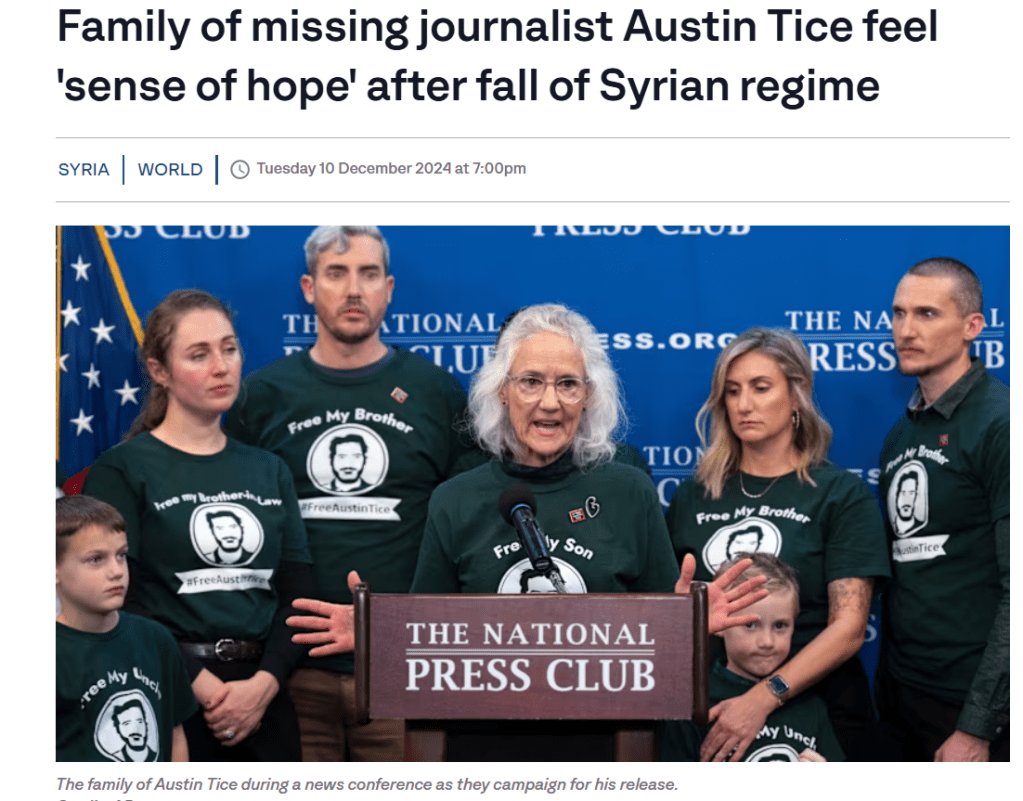



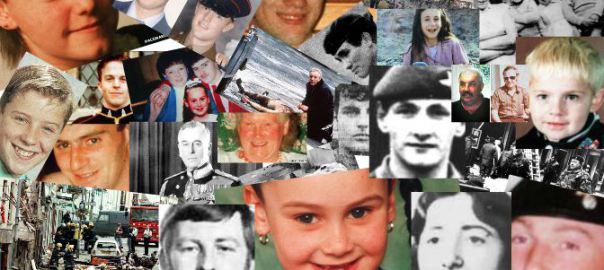
.JPG)


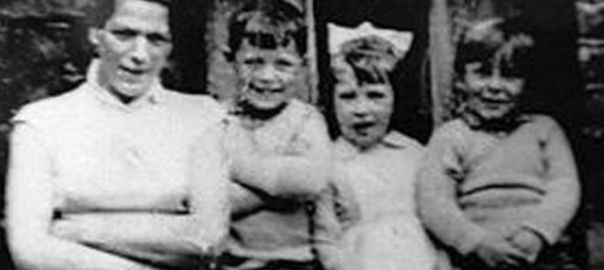


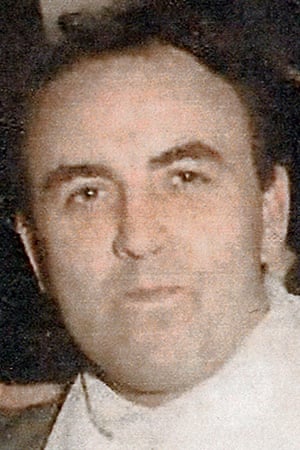
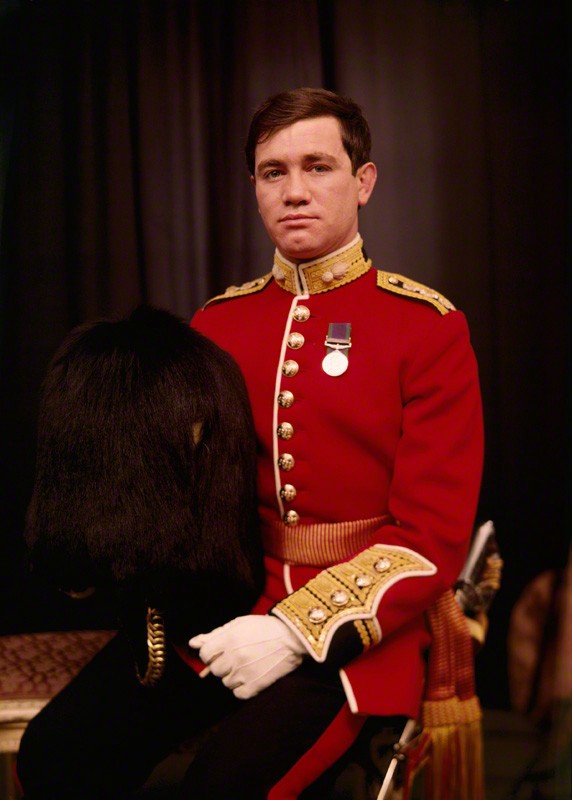
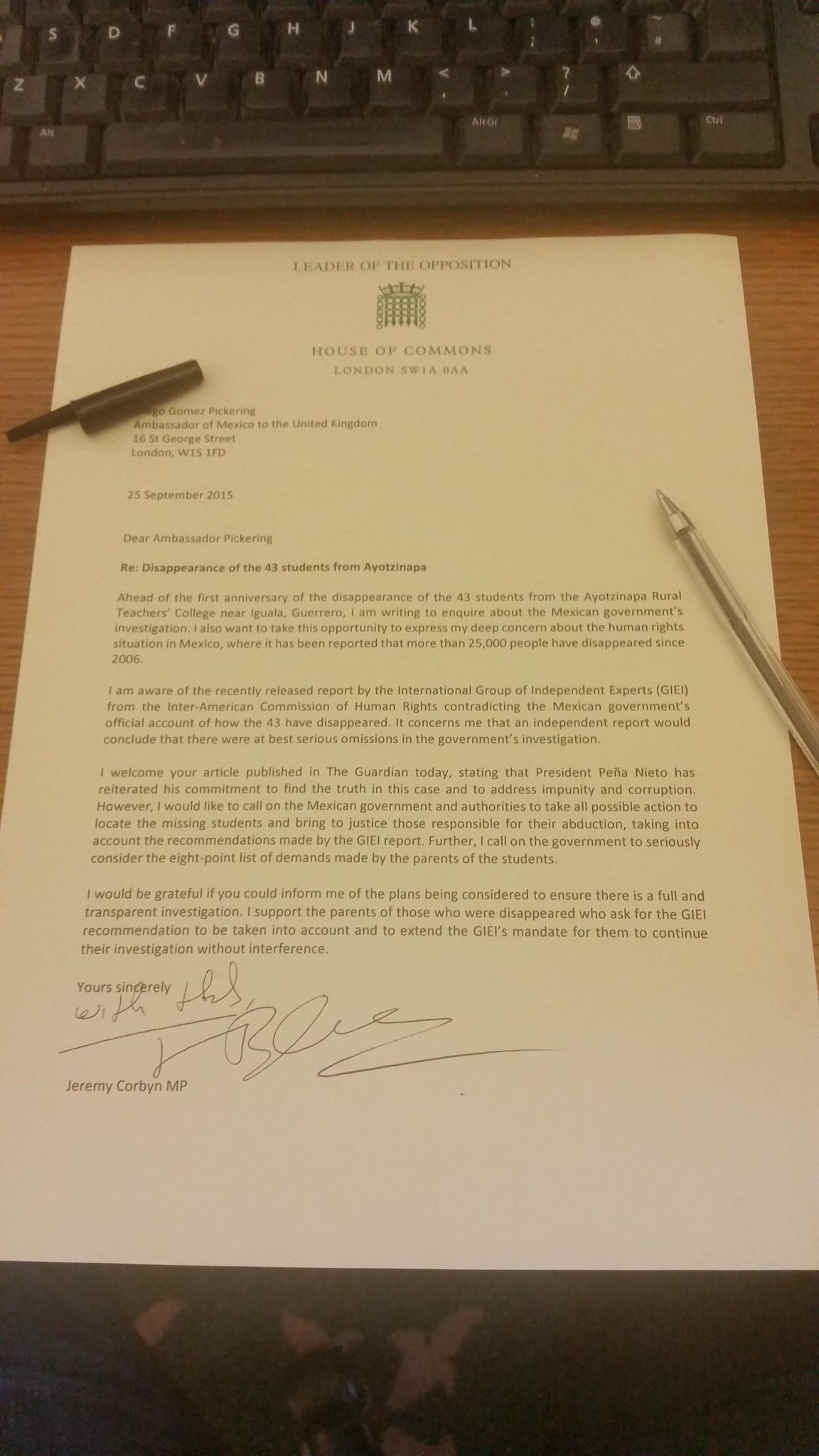




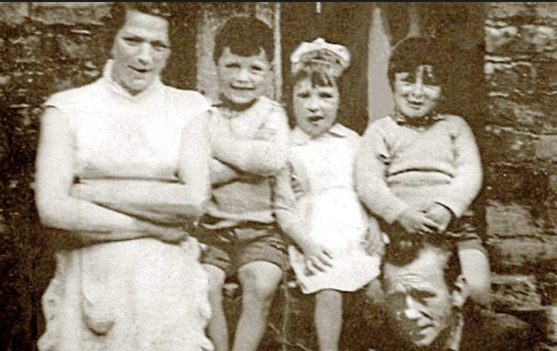


_punish_Cretan_Saracens.jpg)


 belfastchildis.com