Republican paramilitary funeral – On the Streets of the UK
The granddaughter of veteran republican Peggy O’Hara has defended a paramilitary display at her funeral.
The fact that this took place on the streets of the UK ( Yes Londonderry is part of the UK ) and nothing was done to stop this outrage is beyond my comprehension. Men & women wearing paramilitary uniforms and shots being fired over the coffin – Hello , am I missing something here?
Imagine if Islamic State held a similar funeral for one of their own on the streets of London or Manchester.
There would be absolute pandemonium and the whole country would be in uproar and demand action. MP,s and Newspaper’s would have a field day and every man and his dog would have an opinion.
But what’s the difference between the IRA/INLA/Republicans & Islamic state?
They are all drenched in the blood of the innocent and are responsible for some of the most outrageous terrorist attacks of the past century and yet they are permitted to hold this paramilitary funeral on British soil.
Why aren’t the rest of the UK outraged at this event and yelling from the rooftops?
Have they forgotten the decades of misery and slaughter of the innocent the INLA/IRA and other Republican groups were responsible for and the agony of those families destroyed for the ideology of a United Ireland?
There has been hardly any mention on the BBC News ( England at least ) about this story and only a brief story on BBC Northern Irelands website. Why?
They can’t seem to get enough of IS and other Islamic terrorists and yet they seemed to all but ignore this criminal act on the streets of the UK.
Pride in the Union
The people of Northern Ireland have suffered more than any for the right to remain part of the UK and we are rightly proud of the Union. We have lived through decades of IRA terrorism and the legacy of the troubles still haunts and dominates our daily lives. But the people of mainland Britain ( excluding Scotland ) seemed to have abandoned and forgotten us and all but ignore our right to celebrate and embrace (peacefully and lawfully ) our culture and loyalist heritage.
The British government seem happy to help Sinn Fein/IRA eradicate our culture & traditions and yet they stand by and watch as these INLA/ Republican terrorist carry out a paramilitary style funeral on the streets of the UK. These double standards are a disgrace and its time the people of the UK recognised the loyalty we have always shown to the British establishment and the sacrifices the people of Northern Ireland have made to ensure that Northern Ireland remains part of the UK!
“Mr Campbell said the police had questions to answer.”
“Police need to take robust action against all who break the law. It seems however that the police are treating some groups in some areas with kid-gloves thus leaving the impression that there is a two-tier justice system,” he said.
Peggy O’Hara said her granny planned this funeral and her son Patsy O’Hara died. He gave his life for Ireland.
Well if that is the cause why didn’t they hold her funeral in Dublin , instead of the streets of Northern Ireland – which is part of the UK.
if you have enjoyed reading my story and daily blogs please consider making a small donation
It is frequently referred to by the name MI6 (Military Intelligence, Section 6), a name used as a flag of convenience during the First World War when it was known by many names.[4] The existence of the SIS was not officially acknowledged until 1994.[5]
In late 2010, the head of the SIS delivered what he said was the first public address by a serving chief of the agency in its then 101-year history. The remarks of Sir John Sawers primarily focused on the relationship between the need for secrecy and the goal of maintaining security within Britain. His remarks acknowledged the tensions caused by secrecy in an era of leaks and pressure for ever-greater disclosure.[6]
The service derived from the Secret Service Bureau, which was founded in 1909.[4] The Bureau was a joint initiative of the Admiralty and the War Office to control secret intelligence operations in the UK and overseas, particularly concentrating on the activities of the Imperial German Government. The bureau was split into naval and army sections which, over time, specialised in foreign espionage and internal counter-espionage activities respectively. This specialisation was because the Admiralty wanted to know the maritime strength of the Imperial German Navy. This specialisation was formalised before 1914. During the First World War in 1916, the two sections underwent administrative changes so that the foreign section became the Directorate of Military Intelligence Section 6 (MI6), the name by which it is frequently known in popular culture today.
Its first director was Captain Sir George Mansfield Smith-Cumming, who often dropped the Smith in routine communication. He typically signed correspondence with his initial C in green ink. This usage evolved as a code name, and has been adhered to by all subsequent directors of SIS when signing documents to retain anonymity.[4][7][8]
First World War
The service’s performance during the First World War was mixed, because it was unable to establish a network in Germany itself. Most of its results came from military and commercial intelligence collected through networks in neutral countries, occupied territories, and Russia.[9]
Inter-War period
Young Englishman, member of the Secret Intelligence Service, in Yatung (bo), photographed by Ernst Schäfer in 1939
After the war, resources were significantly reduced but during the 1920s, SIS established a close operational relationship with the diplomatic service. In August 1919 Cumming created the new passport control department, providing diplomatic cover for agents abroad. The post of Passport Control Officer provided operatives with diplomatic immunity.[10]
Circulating Sections established intelligence requirements and passed the intelligence back to its consumer departments, mainly the War Office and Admiralty.
The debate over the future structure of British Intelligence continued at length after the end of hostilities but Cumming managed to engineer the return of the Service to Foreign Office control. At this time, the organisation was known in Whitehall by a variety of titles including the Foreign Intelligence Service, the Secret Service, MI1(c), the Special Intelligence Service and even C’s organisation. Around 1920, it began increasingly to be referred to as the Secret Intelligence Service (SIS), a title that it has continued to use to the present day and which was enshrined in statute in the Intelligence Services Act 1994.[4]
Smith-Cumming died suddenly at his home on 14 June 1923, shortly before he was due to retire, and was replaced as C by Admiral Sir Hugh “Quex” Sinclair. Sinclair created the following sections:
A central foreign counter-espionage Circulating Section, Section V, to liaise with the Security Service to collate counter-espionage reports from overseas stations.
An economic intelligence section, Section VII, to deal with trade, industrial and contraband.
A clandestine radio communications organisation, Section VIII, to communicate with operatives and agents overseas.
Section N to exploit the contents of foreign diplomatic bags
Section D to conduct political covert actions and paramilitary operations in time of war. Section D would come to be the foundation of the Special Operations Executive (SOE) during the Second World War.[10]
With the emergence of Germany as a threat following the ascendence of the Nazis, in the early 1930s attention was shifted in that direction.[10]
Sinclair died in 1939, after an illness, and was replaced as C by Lt Col. Stewart Menzies (Horse Guards), who had been with the service since the end of World War I.[14]
Imagery intelligence activities conducted by the RAF Photographic Reconnaissance Unit (now JARIC, The National Imagery Exploitation Centre).
GC&CS was the source of Ultra intelligence, which was very useful.[15]
MI6 assisted the Gestapo via “the exchange of information about Communism”, and as late as October 1937, the head of the British agency’s Berlin station, Frank Foley, described his relationship with Heinrich Müller‘s so-called communism expert as “cordial”.[16]
The most significant failure of the service during the war was known as the Venlo incident, named for the Dutch town where much of the operation took place. Agents of the German army secret service, the Abwehr, and the Counter-Espionage section of the Sicherheitsdienst (SD), posed as high-ranking officers involved in a plot to depose Hitler. In a series of meetings between SIS agents and the ‘conspirators’, SS plans to abduct the SIS team were shelved due to the presence of Dutch police. On the night of 8–9 November 1939, a meeting took place without police presence. There, the two SIS agents were duly abducted by the SS.[17]
In 1940, journalist and Soviet agent Kim Philby applied for a vacancy in Section D of SIS, and was vetted by his friend and fellow Soviet agent Guy Burgess. When Section D was absorbed by Special Operations Executive (SOE) in summer of 1940, Philby was appointed as an instructor in the arts of “black propaganda” at the SOE’s training establishment in Beaulieu, Hampshire.[18]
In early 1944 MI6 re-established Section IX, its prewar anti-Soviet section, and Kim Philby took a position there. He was able to alert the NKVD about all British intelligence on the Soviets—including what the American OSS had shared with the British about the Soviets.[19]
Despite these difficulties the service nevertheless conducted substantial and successful operations in both occupied Europe and in the Middle East and Far East where it operated under the cover name Interservice Liaison Department (ISLD).[20]
Cold War
In August 1945 Russian intelligence officer Konstantin Volkov tried to defect to Britain, offering the names of all Soviet agents working inside British intelligence. Philby received the memo on Volkov’s offer, and alerted the Soviets so they could arrest him.[19] In 1946, SIS absorbed the “rump” remnant of the Special Operations Executive (SOE), dispersing the latter’s personnel and equipment between its operational divisions or “controllerates” and new Directorates for Training and Development and for War Planning.[21] The 1921 arrangement was streamlined with the geographical, operational units redesignated “Production Sections”, sorted regionally under Controllers, all under a Director of Production. The Circulating Sections were renamed “Requirements Sections” and placed under a Directorate of Requirements.
SIS operations against the USSR were extensively compromised by the fact that the post-war Counter-Espionage Section, R5, was headed for two years by an agent working for the Soviet Union, Harold Adrian Russell “Kim” Philby. Although Philby’s damage was mitigated for several years by his transfer as Head of Station in Turkey, he later returned and was the SIS intelligence liaison officer at the Embassy in Washington D.C. In this capacity he compromised a programme of joint US-UK paramilitary operations (Albanian Subversion, Valuable Project) in Enver Hoxha‘s Albania (although it has been shown that these operations were further compromised “on the ground” by poor security discipline among the Albanian émigrés recruited to undertake the operations). Philby was eased out of office and quietly retired in 1953 after the defection of his friends and fellow members of the “Cambridge spy ring” Donald Duart Maclean and Guy Burgess.[22]
SIS suffered further embarrassment when it turned out that an officer involved in both the Vienna and Berlintunnel operations had been turned as a Soviet agent during internment by the Chinese during the Korean War. This agent, George Blake, returned from his internment to be treated as something of a hero by his contemporaries in “the office”. His security authorisation was restored, and in 1953 he was posted to the Vienna Station where the original Vienna tunnels had been running for years. After compromising these to his Soviet controllers, he was subsequently assigned to the British team involved on Operation Gold, the Berlin tunnel, and which was, consequently, blown from the outset. In 1956 MI6 Director John Alexander Sinclair had to resign after the botched affair of the death of Lionel Crabb.[23]
Despite earlier Soviet penetration, SIS began to recover as a result of improved vetting and security, and a series of successful penetrations. From 1958, SIS had three moles in the Polish UB, the most successful of which was codenamed NODDY.[25] The CIA described the information SIS received from these Poles as “some of the most valuable intelligence ever collected”, and rewarded SIS with $20 million to expand their Polish operation.[25] In 1961 Polish defector Michael Goleniewski exposed George Blake as a Soviet agent. Blake was identified, arrested, tried for espionage and sent to prison. He escaped and was exfiltrated to the USSR in 1966.[26]
Also, in the GRU, they recruited Colonel Oleg Penkovsky. Penkovsky ran for two years as a considerable success, providing several thousand photographed documents, including Red Army rocketry manuals that allowed US National Photographic Interpretation Center (NPIC) analysts to recognise the deployment pattern of Soviet SS4 MRBMs and SS5 IRBMs in Cuba in October 1962.[27] SIS operations against the USSR continued to gain pace through the remainder of the Cold War, arguably peaking with the recruitment in the 1970s of Oleg Gordievsky whom SIS ran for the better part of a decade, then successfully exfiltrated from the USSR across the Finnish border in 1985.[28]
The real scale and impact of SIS activities during the second half of the Cold War remains unknown, however, because the bulk of their most successful targeting operations against Soviet officials were the result of “Third Country” operations recruiting Soviet sources travelling abroad in Asia and Africa. These included the defection to the SIS Tehran Station in 1982 of KGB officer Vladimir Kuzichkin, the son of a senior Politburo member and a member of the KGB’s internal Second Chief Directorate who provided SIS and the British government with warning of the mobilisation of the KGB’s Alpha Force during the 1991 August Coup which briefly toppled Soviet leader Mikhail Gorbachev.[29]
After the Cold War
The end of the Cold War led to a reshuffle of existing priorities. The Soviet Bloc ceased to swallow the lion’s share of operational priorities, although the stability and intentions of a weakened but still nuclear-capable Federal Russia constituted a significant concern. Instead, functional rather than geographical intelligence requirements came to the fore such as counter-proliferation (via the agency’s Production and Targeting, Counter-Proliferation Section) which had been a sphere of activity since the discovery of Pakistani physics students studying nuclear-weapons related subjects in 1974; counter-terrorism (via two joint sections run in collaboration with the Security Service, one for Irish republicanism and one for international terrorism); counter-narcotics and serious crime (originally set up under the Western Hemisphere Controllerate in 1989); and a ‘global issues’ section looking at matters such as the environment and other public welfare issues. In the mid-1990s these were consolidated into a new post of Controller, Global and Functional.
During the transition, then-C Sir Colin McColl embraced a new, albeit limited, policy of openness towards the press and public, with ‘public affairs’ falling into the brief of Director, Counter-Intelligence and Security (renamed Director, Security and Public Affairs). McColl’s policies were part and parcel with a wider ‘open government initiative’ developed from 1993 by the government of John Major. As part of this, SIS operations, and those of the national signals intelligence agency, GCHQ, were placed on a statutory footing through the 1994 Intelligence Services Act. Although the Act provided procedures for Authorisations and Warrants, this essentially enshrined mechanisms that had been in place at least since 1953 (for Authorisations) and 1985 (under the Interception of Communications Act, for warrants). Under this Act, since 1994, SIS and GCHQ activities have been subject to scrutiny by Parliament’sIntelligence and Security Committee.[30]
During the mid-1990s the British intelligence community was subjected to a comprehensive costing review by the Government. As part of broader defence cut-backs SIS had its resources cut back 25% across the board and senior management was reduced by 40%. As a consequence of these cuts, the Requirements division (formerly the Circulating Sections of the 1921 Arrangement) were deprived of any representation on the board of directors. At the same time, the Middle East and Africa Controllerates were pared back and amalgamated. According to the findings of Lord Butler of Brockwell’s Review of Weapons of Mass Destruction, the reduction of operational capabilities in the Middle East and of the Requirements division’s ability to challenge the quality of the information the Middle East Controllerate was providing weakened the Joint Intelligence Committee’s estimates of Iraq‘s non-conventional weapons programmes. These weaknesses were major contributors to the UK’s erroneous assessments of Iraq’s ‘weapons of mass destruction’ prior to the 2003 invasion of that country.[31]
In the run up to the invasion of Iraq in 2003, it is alleged, although not confirmed, that some SIS conducted Operation Mass Appeal which was a campaign to plant stories about Iraq’s WMDs in the media. The operation was exposed in the Sunday Times in December 2003.[32][33] Claims by former weapons inspector Scott Ritter suggest that similar propaganda campaigns against Iraq date back well into the 1990s. Ritter claims that SIS recruited him in 1997 to help with the propaganda effort. “The aim was to convince the public that Iraq was a far greater threat than it actually was.”[34]
On 15 November 2006, SIS allowed an interview with current operations officers for the first time. The interview was on the Colin Murray show on BBC Radio 1. The two officers (one male and one female) had their voices disguised for security reasons. The officers compared their real experience with the fictional portrayal of SIS in the James Bond films. While denying that there ever existed a “licence to kill” and reiterating that SIS operated under British law, the officers confirmed that there is a ‘Q‘-like figure who is head of the technology department, and that their director is referred to as ‘C’. The officers described the lifestyle as quite glamorous and very varied, with plenty of overseas travel and adventure, and described their role primarily as intelligence gatherers, developing relationships with potential sources.[36]
During the global war on terror, SIS accepted information from the CIA that was obtained through torture, including the extraordinary rendition program. Craig Murray, a UK ambassador to Uzbekistan, had written several memos critical of the UK’s accepting this information; he was then fired from his job.[38]
On 7 June 2011, John Sawers received Romania’s President Traian Băsescu and George-Cristian Malor, the head of the Serviciul Roman de Informatii (SRI) at SIS headquarters.[39]
In July 2011 it was reported that SIS has closed several of its stations in the past couple of years, particularly in Iraq, where it used to have several outposts in the south of the country in the region of Basra according to the annual report of the parliamentary Intelligence and Security Committee. The closures have allowed the service to focus its attention on Pakistan and Afghanistan, which are its principal stations. On 16 November 2011 SIS warned the national transitional council in Benghazi after discovering details of planned strikes, said foreign secretary William Hague. ‘The agencies obtained firm intelligence, were able to warn the NTC of the threat, and the attacks were prevented,’ he said. In a rare speech on the intelligence agencies, he praised the key role played by SIS and GCHQ in bringing Gaddafi’s 42-year dictatorship to an end, describing them as ‘vital assets’ with a ‘fundamental and indispensable role’ in keeping the nation safe. ‘They worked to identify key political figures, develop contacts with the emerging opposition and provide political and military intelligence. ‘Most importantly, they saved lives,’ he said. The speech follows criticism that SIS had been too close to the Libyan regime and was involved in the extraordinary rendition of anti-Gaddafi activists. Mr Hague also defended controversial proposals for secrecy in civil court involving intelligence material.[40]
The Daily Star reported in November 2011 that SIS helped capture Saif al-Islam Gaddafi. The top-secret mission, dubbed Operation X to disguise its purpose, used modern electronic intelligence (ELINT) technologies to bug him along with his friends and family. Gaddafi had been hiding out in the desert for a month but the breakthrough came when he made two phone calls, one after the other, to say he was safe. It allowed the joint British and French bugging operation to pinpoint his location. SIS agents using the £25million top-secret equipment closed in on him before calling in the Libyan snatch squad to apprehend him.[41]
In February 2013 Channel Four News reported on evidence of MI6 spying on opponents of the Gaddafi regime and handing the information to the regime in Libya. The files looked at contained “a memorandum of understanding, dating from October 2002, detailing a two-day meeting in Libya between Gaddafi’s external intelligence agency and two senior heads of MI6 and one from MI5 outlining joint plans for “intelligence exchange, counter terrorism and mutual co-operation”.[42]
The building was designed by Sir Terry Farrell and built by John Laing.[43] The developer Regalian Properties approached the Government in 1987 to see if they had any interest in the proposed building. At the same time, MI5 was seeking alternative accommodation and co-location of the two services was studied. In the end this proposal was abandoned due to the lack of buildings of adequate size (existing or proposed) and the security considerations of providing a single target for attacks. In December 1987, Prime Minister Margaret Thatcher‘s Government approved the purchase of the new building for the SIS.[44]
The building design was reviewed to incorporate the necessary protection for Britain’s foreign intelligence gathering agency. This includes overall increased security, extensive computer suites, technical areas, bomb blast protection, emergency back-up systems and protection against electronic eavesdropping. While the details and cost of construction have been released, about ten years after the original National Audit Office (NAO) report was written, some of the service’s special requirements remain classified. The NAO report Thames House and Vauxhall Cross has certain details omitted, describing in detail the cost and problems of certain modifications, but not what these are.[44] Rob Humphrey’s London: The Rough Guide suggests one of these omitted modifications is a tunnel beneath the Thames to Whitehall. The NAO put the final cost at £135.05m for site purchase and the basic building, or £152.6m including the service’s special requirements.[44]
The setting of the SIS offices was featured in the James Bond films GoldenEye, The World Is Not Enough, Die Another Day and Skyfall. SIS allowed filming of the building itself for the first time in The World is Not Enough for the pre-credits sequence, where a bomb hidden in a briefcase full of money is detonated inside the building. A Daily Telegraph article claimed that the British government opposed the filming, but these claims were denied by a Foreign Office spokesperson. In Skyfall the building is once again attacked by an explosion, this time by a cyber attack turning on a gas line and igniting the fumes, after which MI6 operations are moved to a secret underground facility.[45]
On the evening of 20 September 2000, the building was attacked using a Russian-built RPG-22anti-tank rocket. Striking the eighth floor, the missile caused only superficial damage. The Anti-Terrorist branch of the Metropolitan Police attributed responsibility to the Real IRA.[46]
Go on surprise me and make a small donation
Other buildings
Most other buildings are held or nominally occupied by the Foreign & Commonwealth Office. They include:
MI6 is nicknamed The Circus. Some say this was coined by John le Carré in his espionage novels. Leo Marks in his autobiographical Between Silk and Cyanide explains that the name arose because a section of Britain’s WWII SOE was housed in a building at 1 Dorset Square, London, which had formerly belonged to the directors of Betram Mills circus. “This inspired continuity was one of SOE’s favourite in-jokes.”[49]
The views and opinions expressed in these documentary are soley intended to educate and provide background information to those interested in the Troubles of Northern Ireland.
They in no way reflect my own opinions and I take no responsibility for any inaccuracies or factual errors.
The UDA – Ulster Defence Association the largest Paramilitary group in Ireland has now reorganised, rearmed and has stepped up it’s campaign for the 1st time since the 1970’s and for the 1st time ever has killed more people in 1 year than the IRA. Those are the words of ‘This Weeks’ presenter Margaret Gilmore. This is a historical documentary created in 1992 please don’t dislike it because you hate the UDA or Loyalism.
Operation Flavius (also referred to as the “Gibraltar killings“) was a controversial military operation in which three members of the Provisional Irish Republican Army (IRA) were shot dead by the British Special Air Service (SAS) in Gibraltar on 6 March 1988. The three—Seán Savage, Daniel McCann, and Mairéad Farrell—were believed to be mounting a bombing attack on British military personnel in Gibraltar. SAS soldiers challenged them in the forecourt of a petrol station, then opened fire, killing them.
All three were found to be unarmed, and no bomb was discovered in Savage’s car, leading to accusations that the British government had conspired to murder them. An inquest in Gibraltar ruled that the SAS had acted lawfully, while the European Court of Human Rights held that, although there had been no conspiracy, the planning and control of the operation was so flawed as to make the use of lethal force almost inevitable. The deaths were the first in a chain of violent events in a fourteen-day period; they were followed by the Milltown Cemetery attack and the corporals killings in Belfast.
———————————————————————————————————————–
———————————————————————————————————————–
From late 1987, the British authorities were aware that the IRA was planning to detonate a bomb at the changing of the guard ceremony outside the governor’s residence in the British Dependent Territory of Gibraltar. When Savage, McCann and Farrell—known IRA members—travelled to Spain in preparation for the attack, they were tracked at the request of the British government. On the day of the shootings, Savage was seen parking a white Renault in the car park used as the assembly area for the parade; McCann and Farrell were seen crossing the border shortly afterwards.
After a military bomb-disposal officer reported that Savage’s car should be treated as a suspected bomb, the police handed over control of the operation to the SAS. As soldiers were moving into position to intercept the trio, Savage split from McCann and Farrell and began running south. Two soldiers pursued Savage while two approached McCann and Farrell; as they did so, the pair were said to make threatening movements, as a result of which the soldiers opened fire, shooting them multiple times.
As soldiers caught up with Savage, he was alleged to have turned around to face them while reaching into his jacket; he was also shot multiple times. All three were subsequently found to be unarmed, and Savage’s car was found to contain no explosives; enquiries resulting from keys found on Farrell led authorities to a second car, containing a large quantity of explosives, in a car park in Spain. Almost two months after the shootings, the documentary Death on the Rock was broadcast on British television. Using reconstructions and eyewitness accounts, it presented the possibility that the three IRA members had been unlawfully killed. The documentary proved extremely controversial; several British newspapers described it as “trial by television”.
The inquest into the deaths began in September 1988. It heard from British and Gibraltar authorities that the IRA team had been tracked to Málaga Airport, where they were lost by the Spanish police, and that the three did not re-emerge until Savage was sighted parking his car in Gibraltar. The soldiers each testified that they had opened fire in the belief that the suspected bombers were reaching for weapons or a remote detonator. Among the civilians who gave evidence were the eyewitnesses discovered by “Death on the Rock”, who gave accounts of seeing the three shot without warning, with their hands up, or while they were on the ground.
Kenneth Asquez, who told the documentary that he had seen a soldier fire at Savage repeatedly while the latter was on the ground, retracted his statement at the inquest, claiming that he had been pressured into giving it. On 30 September, the inquest jury returned a verdict of “lawful killing“.
Dissatisfied, the families took the case to the European Court of Human Rights. Delivering its judgement in 1995, the court found that the operation had been in violation of Article 2 of the European Convention on Human Rights as the authorities’ failure to arrest the suspects at the border, combined with the information given to the soldiers, rendered the use of lethal force almost inevitable. The decision is cited as a landmark case in the use of force by the state.
The Provisional Irish Republican Army (IRA), now inactive, is a paramilitary organisation which aimed to establish a united Ireland and end the British administration of Northern Ireland through the use of force. The organisation was the result of a 1969 split within the previous Irish Republican Army, also known as “the IRA”[(the other resulting group, known as the Official IRA, ceased military activity during the 1970s). During its campaign, the IRA killed members of the armed forces, police, judiciary and prison service, including off-duty and retired members, and bombed businesses and military targets in both Northern Ireland and England, with the aim of making Northern Ireland ungovernable.
Daniel McCann, Seán Savage, and Mairéad Farrell were, according to journalist Brendan O’Brien, “three of the IRA’s most senior activists”. Savage was an explosives expert and McCann was “a high-ranking intelligence operative”; both McCann and Farrell had previously served prison sentences for offences relating to explosives.
Background
The Special Air Service (formally 22 Special Air Service Regiment, or 22 SAS) is a regiment of the British Army and part of the United Kingdom’s special forces. The SAS was sporadically assigned to operations in Northern Ireland in the early stages of the British Army’s deployment in the province, during which they were confined to South Armagh. The first large-scale deployment of SAS soldiers in the Troubles was in 1976, when the regiment’s D Squadron was committed.The SAS soon began to specialise in covert, intelligence-based operations against the IRA, using more aggressive tactics than regular army and police units operating in Northern Ireland.
From late 1987, the British authorities were aware that the IRA was planning an attack in Gibraltar and launched Operation Flavius.
The intelligence appeared to be confirmed in November 1987, when several known IRA members were detected travelling from Belfast to Spain under false identities. MI5—the British Security Service—and the Spanish authorities became aware that an IRA active service unit was operating from the Costa del Sol and the members of the unit were placed under surveillance.
After a known IRA member was sighted at the changing of the guard ceremony at “the Convent” (the governor’s residence) in Gibraltar, the British and Gibraltarian authorities began to suspect that the IRA was planning to attack the British soldiers with a car bomb as they assembled for the ceremony in a nearby car park. In an attempt to confirm the IRA’s intended target, the government of Gibraltar suspended the ceremony in December 1987, citing a need to repaint the guardhouse.
They believed their suspicions were confirmed when the IRA member re-appeared at the ceremony when it resumed in February 1988, and the Gibraltar authorities requested special assistance from the British government.
In the weeks after the resumption of the changing of the guard ceremony, the three IRA members who were to carry out the attack—Seán Savage, Daniel McCann, and Mairéad Farrell—travelled to Malaga (90 miles [140 kilometres] along the coast from Gibraltar), where they each rented a car.Their activities were monitored and by early March, the British authorities were convinced that an IRA attack was imminent; a special projects team from the SAS was despatched to the territory, apparently with the personal approval of Prime Minister Margaret Thatcher.Before the operation, the SAS practised arrest techniques, while the Gibraltar authorities searched for a suitable place to hold the would-be bombers after their arrest.
The plan was that the SAS would assist the Gibraltar Police in arresting the IRA members—identified by MI5 officers who had been in Gibraltar for several weeks—if they were seen parking a car in Gibraltar and then attempting to leave the territory.
According to the official account of the operation, Savage entered Gibraltar undetected in a white Renault 5 at 12:45 (CET; UTC+1) on 6 March 1988. An MI5 officer recognised him and he was followed, but he was not positively identified for almost an hour and a half, during which time he parked the vehicle in the car park used as the assembly area for the changing of the guard. At 14:30, McCann and Farrell were observed crossing the frontier from Spain and were also followed.
They met Savage in the car park at around 14:50 and a few minutes later the three began walking through the town. After the three left the car park, “Soldier G”,[note 1] a bomb-disposal officer, was ordered to examine Savage’s car; he returned after a few minutes and reported that the vehicle should be treated as a suspect car bomb. This soldier’s suspicion was conveyed as certainty to Soldiers “A”, “B”, “C”, and “D”, who were ordered into positions to intercept Savage, McCann, and Farrell as they walked north towards the Spanish border. “Soldier G”‘s information convinced Gibraltar Police Commissioner Joseph Canepa, who was controlling the operation, to order the arrest of the three suspects. To that end, he signed over control of the operation to “Soldier F”, the senior SAS officer, at 15:40.
Two minutes after receiving control, “Soldier F” ordered Soldiers “A”, “B”, “C”, and “D” to apprehend the IRA operatives, by which time they were walking north on Winston Churchill Avenue towards the airport and the border. As the soldiers approached, the suspects appeared to realise that they were being followed. Savage split from the group and began heading south, brushing against “Soldier A” as he did so; “A” and “B” decided to continue approaching McCann and Farrell, leaving Savage to Soldiers “C” and “D”.
Location between Corral Road and Landport in Gibraltar where Savage was shot
At the same time as the police handed control over to the SAS, they began making arrangements for the IRA operatives once they were in custody, including finding a police vehicle in which to transport the prisoners. A patrol car containing Inspector Luis Revagliatte and three other uniformed officers, apparently on routine patrol and with no knowledge of Operation Flavius, was ordered to return to police headquarters as a matter of urgency.
The police car was stuck in heavy traffic travelling north on Smith Dorrien Avenue, close to the roundabout where it meets Winston Churchill Avenue. The official account states that at this point, Revagliatte’s driver activated the siren on the police car in order to expedite the journey back to headquarters, intending to approach the roundabout from the wrong side of the road and turn the vehicle around.
The siren apparently startled McCann and Farrell, just as Soldiers “A” and “B” were about to challenge them, outside the Shell petrol station on Winston Churchill Avenue. “Soldier A” stated at the inquest that Farrell looked back at him and appeared to realise who “A” was; “A” testified that he was drawing his pistol and intended to shout a challenge to her, but “events overtook the warning”: that McCann’s right arm “moved aggressively across the front of his body”, leading “A” to believe that McCann was reaching for a remote detonator. “A” shot McCann once in the back; “A” went on to tell the inquest that he believed Farrell then reached for her handbag, and that he believed Farrell may also have been reaching for a remote detonator. “A”
also shot Farrell once in the back, before returning to McCann—he shot McCann a further three times (once in the body and twice in the head). “Soldier B” testified that he reached similar conclusions to “A”, and shot Farrell twice, then McCann once or twice, then returned to Farrell, shooting her a further three times. Soldiers “C” and “D” testified at the inquest that they were moving to apprehend Savage, who was by now 300 feet (91 metres) south of the petrol station, as gunfire began behind them. “Soldier C” testified that Savage turned around while simultaneously reaching towards his jacket pocket at the same time as “C” shouted “Stop!”; “C” stated that he believed Savage was reaching for a remote detonator, at which point he opened fire. “Soldier C” shot Savage six times, while “Soldier D” fired nine times.
All three IRA members died. One of the soldiers’ bullets, believed to have passed through Farrell, grazed a passer-by.
Immediately after the shootings, the soldiers donned berets to identify themselves. Gibraltar Police officers, including Inspector Revagliatte and his men, began to arrive at the scene almost immediately. At 16:05, only 25 minutes after assuming control, the SAS commander handed control of the operation back to the Gibraltar Police in a document stating:
A military assault force completed the military option in respect of the terrorist ASU in Gibraltar and returns control to the civil power.
Shortly after the shootings, soldiers and police officers evacuated buildings in the vicinity of the Convent, while bomb-disposal experts got to work; four hours later, the authorities announced that a car bomb had been defused, after which Savage’s white Renault was towed from the car park by an army truck. The SAS personnel, meanwhile, left Gibraltar on a Royal Air Force aircraft.[27]
When the bodies were searched, a set of car keys was found on Farrell. Spanish and British authorities conducted enquiries to trace the vehicle, which—two days after the shootings—led them to a red Ford Fiesta in a car park in Marbella (50 miles [80 kilometres] from Gibraltar). The car contained a large quantity of Semtex surrounded by 200 rounds of ammunition, along with four detonators and two timers
Reaction
Within minutes of the military operation ending, the British Ministry of Defence (MoD) issued a press release, stating that “a suspected car bomb has been found in Gibraltar, and three suspects have been shot dead by the civilian police”. That evening, both the BBC and the ITN (Independent Television News) reported that the IRA team had been involved in a “shootout” with the authorities. The following morning, BBC Radio 4 reported that the alleged bomb was “packed with bits of metal and shrapnel”, and later carried a statement from Ian Stewart, Minister of State for the Armed Forces, that “military personnel were involved. A car bomb was found, which has been defused”.
Each of the eleven British daily newspapers reported the alleged finding of the car bomb, of which eight quoted its size as 500 pounds (230 kilograms). The IRA issued a statement later on 7 March to the effect that McCann, Savage, and Farrell were “on active service” in Gibraltar and had “access to and control over 140 pounds (64 kg)” of Semtex.
According to one case study of the killings, the events “provide an opportunity to examine the ideological functioning of the news media within [the Troubles]”.
The British broadsheet newspapers all exhibited what the authors called “ideological closure” by marginalising the IRA and extolling the SAS. Each of the broadsheets focused, for example, on the alleged bomb and the potential devastation it could have caused without questioning the government’s version of events.
Shortly before 1:00pm yesterday, afternoon [Savage] brought a white Renault car into Gibraltar and was seen to park it in the area where the guard mounting ceremony assembles. Before leaving the car, he was seen to spend some time making adjustments in the vehicle
An hour and a half later, [McCann and Farrell] were seen to enter Gibraltar on foot and shortly before 3:00pm, joined [Savage] in the town. Their presence and actions near the parked Renault car gave rise to strong suspicions that it contained a bomb, which appeared to be corroborated by a rapid technical examination of the car.
About 3:30pm, all three left the scene and started to walk back towards the border. On their way to the border, they were challenged by the security forces. When challenged, they made movements which led the military personnel, operating in support of the Gibraltar Police, to conclude that their own lives and the lives of others were under threat. In light of this response, they [the IRA members] were shot.
Those killed were subsequently found not to have been carrying arms.
The parked Renault car was subsequently dealt with by a military bomb-disposal team. It has now been established that it did not contain an explosive device.
Press coverage in the following days, after Howe’s statement that no bomb had been found, continued to focus on the act planned by the IRA; several newspapers reported a search for a fourth member of the team. Reports of the discovery of the bomb in Marbella appeared to vindicate the government’s version of events and justify the killings. Several MPs made statements critical of the operation, while a group of Labour MPs tabled a condemnatory motion in the House of Commons.
Aftermath
The IRA notified the McCann, Savage, and Farrell families of the deaths on the evening of 6 March. In Belfast, Joe Austin, a senior local member of Sinn Féin, was assigned the task of recovering the bodies for burial. On 9 March, he and Terence Farrell (one of Mairéad Farrell’s brothers) travelled to Gibraltar to identify the bodies. Austin negotiated a charter aircraft to collect the corpses from Gibraltar and fly them to Ireland on 14 March. Two thousand people waited to meet the coffins in Dublin, which were then driven north to Belfast.
Northern Irish authorities flooded the neighbourhoods where McCann, Farrell and Savage had lived with soldiers and police to try to prevent public displays of sympathy for the dead. Later that evening, a local IRA member, Kevin McCracken, was shot and allegedly then beaten to death by a group of soldiers he had been attempting to shoot at.
At the border, the authorities met the procession with a large number of police and military vehicles, and insisted on intervals between the hearses, causing tensions between the police and the members of the procession and leading to accusations that the police rammed Savage’s hearse.
The animosity between the mourners and the police continued until the procession split to allow the hearses to travel to the respective family homes, and then on to Milltown cemetery. The Royal Ulster Constabulary (RUC) agreed to maintain a minimal presence at the funeral in exchange for guarantees from the families that there would be no salute by masked gunmen.
This agreement was leaked to Michael Stone. During the funeral, Stone, who described himself as a “freelance Loyalist paramilitary”, threw several hand grenades into the congregation, before firing an automatic pistol at the gathered mourners, injuring 60 people. After initial confusion, several of the mourners began to pursue Stone, throwing rocks and shouting abuse. Stone fired on his pursuers, hitting and killing three. He was eventually captured by members of the crowd, who had chased him onto a road, and beaten him with rocks and makeshift weapons until the RUC arrived to extract him and arrest him.
The funeral of Caoimhín Mac Brádaigh (née Kevin Brady), the third and last of the Milltown attack victims to be buried, was scheduled for 19 March.
As his cortège proceeded along Andersontown Road, a car being driven by two British Army corporals, David Howes and Derek Wood, entered the street and sped past two teams of stewards, who were attempting to direct traffic out of the procession’s path. As the corporals continued along Andersontown Road, they came across the cortège, and mounted the footpath to avoid colliding with it.
They continued until blocked by parked cars, at which point they attempted to reverse, but were blocked by vehicles from the cortège and a hostile crowd surrounded their vehicle.
As members of the crowd began to break into the vehicle, some using makeshift weapons, one of the corporals drew and fired a pistol, which momentarily subdued the crowd, before both men were dragged from the car, beaten and disarmed. Shortly afterwards, the corporals were dragged across the road to Casement Park, where they were beaten further. A local priest intervened to stop the beating, but was pulled away when a military identity card was discovered, raising speculation that the corporals were members of the SAS.
The two were bundled semi-conscious over a wall by IRA operatives, who jumped over the wall and forced the corporals into the back of a black taxi and sped away. The taxi took the corporals and the IRA men to an area of waste ground in West Belfast, the IRA men continuing to beat the soldiers en route. Six men were seen leaving the vehicle.
The two corporals, apparently dazed from their injuries, staggered from the taxi, but were quickly restrained. Another IRA man arrived with a pistol taken from one of the soldiers, with which he repeatedly shot each of the corporals before handing the weapon to another man, who shot the corporals’ bodies multiple times. Margaret Thatcher described the corporals’ killings as the “single most horrifying event in Northern Ireland” during her premiership.
The shootings sparked the largest criminal investigation in Northern Ireland’s history, which created fresh tension in Belfast as republicans saw what they believed was a disparity in the efforts the RUC expended in investigating the corporals’ murders compared with those of republican civilians. Over four years, more than 200 people were arrested in connection with the killings, of whom 41 were charged with a variety of offences.
The first of the so-named “Casement Trials” concluded quickly; two men were found guilty of murder and given life sentences in the face of overwhelming evidence. Of the trials that followed, many were based on weaker evidence and proved much more controversial.
“Death on the Rock”
———————————————————————
Death On The Rock, SAS execute IRA cell in Gibraltar, Thames Television (1988)
———————————————————————
On 28 April 1988, almost two months after the Gibraltar shootings, ITV broadcast an episode of its current affairs series This Week, produced by Thames Television, entitled “Death on the Rock”. This Week sent three journalists to investigate the circumstances surrounding the shootings from both Spain and Gibraltar.
Using eyewitness accounts, and with the cooperation of the Spanish authorities, the documentary reconstructed the events leading up to the shootings; the Spanish police assisted in the reconstruction of the surveillance operation mounted against the IRA members as they travelled around Spain in the weeks before 6 March, and the journalists hired a helicopter to film the route.
In Gibraltar, they located several new eyewitnesses to the shootings, who each said they had seen McCann, Savage, and Farrell shot without warning or shot after they had fallen to the ground; most agreed to be filmed and provided signed statements. One witness, Kenneth Asquez, provided two near-identical statements through intermediaries, but refused to meet with the journalists or sign either statement. After failing to persuade Asquez to sign his statement, the journalists eventually incorporated his account of seeing Savage shot while on the ground into the programme.
For technical advice, the journalists engaged Lieutenant Colonel George Styles GC, a retired British Army officer who was regarded as an expert in explosives and ballistics. Styles believed that it would have been obvious to the authorities that Savage’s car was unlikely to contain a bomb as the weight would have been obvious on the vehicle’s springs; he also expressed his opinion that a remote detonator could not have reached the car park from the scenes of the shootings given the number of buildings and other obstacles between the locations
As the government refused to comment on the shootings until the inquest, the documentary concluded by putting its evidence to a leading human rights lawyer, who expressed his belief that a judicial inquiry was necessary to establish the facts surrounding the shootings.
The documentary attracted considerable controversy. On 26 April, two days before the programme was scheduled for broadcast, Sir Geoffrey Howe telephoned the chairman of the Independent Broadcasting Authority (IBA) to request that the authority delay the broadcast until after the inquest on the grounds that it risked prejudicing the proceedings. After viewing the programme and taking legal advice, the IBA decided on the morning of 28 April that “Death on the Rock” should be broadcast as scheduled, and Howe was informed of the decision. Howe made further representation to the IBA that the documentary would be in contempt of the inquest; after taking further legal advice, the IBA upheld its decision to allow the broadcast.
The programme was broadcast at 21:00 (GMT) on 28 April. The following morning, the British tabloid newspapers lambasted the programme, describing it as a “slur” on the SAS and “trial by television”, while several criticised the IBA for allowing the documentary to be broadcast.
Over the following weeks, newspapers repeatedly printed stories about the documentary’s witnesses, in particular Carmen Proetta, who gave an account of seeing McCann and Farrell shot without warning by soldiers who arrived in a Gibraltar Police car. Proetta subsequently sued several newspapers for libel and won substantial damages.
The Sunday Times conducted its own investigation and reported that “Death on the Rock” had misrepresented the views of its witnesses; the witnesses involved later complained to other newspapers that “The Sunday Times” had distorted their comments.
Inquest
Unusually for Gibraltar, there was a long delay between the shootings and the setting of a date for the inquest (the usual method for investigating sudden or controversial deaths in the United Kingdom and its territories); eight weeks after the shootings, the coroner, Felix Pizzarello, announced that the inquest would begin on 27 June. Two weeks later (unknown to Pizzarello), Margaret Thatcher’s press secretary announced that the inquest had been indefinitely postponed.
The inquest began on 6 September. Pizzarello presided over the proceedings, while eleven jurors evaluated the evidence; representing the Gibraltar government was Eric Thislewaite, the Gibraltar attorney general. The interested parties were represented by John Laws, QC (for the British government), Michael Hucker (for the SAS personnel), and Patrick McGrory (for the families of McCann, Farrell, and Savage). Inquests are non-adversarial proceedings aimed at investigating the circumstances of a death; the investigation is conducted by the coroner, while the representatives of interested parties can cross-examine witnesses.
Where the death occurred through the deliberate action of another person, the jury can return a verdict of “lawful killing”, “unlawful killing”, or an “open verdict“; though inquests cannot apportion blame, in the case of a verdict of unlawful killing the authorities will consider whether any prosecutions should be brought. There was initially doubt as to whether the SAS personnel involved in the shootings would appear at the inquest. Inquests have no powers to compel witnesses to appear if the witness is outside the court’s jurisdiction, although the soldiers apparently volunteered after Pizzarello declared that the inquest would be “meaningless” without their evidence.
The soldiers and MI5 officers gave their evidence anonymously and from behind a screen. As the inquest began, observers including Amnesty International expressed concern that McGrory was at a disadvantage, as all of the other lawyers were privy to the evidence of the SAS and MI5 personnel before it was given. The cost of the transcript for each day’s proceedings was increased ten-fold the day before the inquest began.
In total, the inquest heard evidence from 79 witnesses, including the Gibraltar Police officers, MI5 personnel, and SAS soldiers involved in the operation, along with technical experts and civilian eyewitnesses.
Police, military, and MI5 witnesses
The first witnesses to testify were the Gibraltar Police officers involved in the operation and its aftermath. Following them, on 7 September, was “Mr O”, the senior MI5 officer in charge of Operation Flavius. “O” told the inquest that, in January 1988, Belgian authorities found a car being used by IRA operatives in Brussels. In the car were found a quantity of Semtex, detonators, and equipment for a radio detonation device, which, “O” told the coroner, led MI5 to the conclusion that the IRA might use a similar device for the planned attack in Gibraltar.
MI5 further believed that the IRA had been unlikely to use a “blocking car” (an empty vehicle used to hold a parking space until the bombers bring in the vehicle containing the explosives) as this entailed the added risk of multiple border crossings.
Finally, “O” told the coroner that McCann, Savage, and Farrell had been observed by Spanish authorities arriving at Malaga Airport, after which he claimed the trio had been lost, and that the British and Gibraltarian authorities did not detect them crossing the border.
Joseph Canepa, commissioner of the Gibraltar Police, was the next senior figure to testify. He told the inquest that (contrary to McGrory’s assertions) there had been no conspiracy to kill McCann, Savage, and Farrell. Canepa told the coroner that, upon learning of the IRA plot from MI5, he set up an advisory committee, which consisted of MI5 officials, senior military officers, and the commissioner himself; as events developed, the committee decided that the Gibraltar Police was not adequately equipped to counter the IRA threat, and Canepa requested assistance from London. The commissioner gave assurances that he had been in command of the operation against the IRA at all times, except for the 25 minutes during which he signed over control to the military.[note 2] In his cross-examination,
McGrory queried the level of control the commissioner had over the operation; he extracted from Canepa that the commissioner had not requested assistance from the SAS specifically. Canepa agreed with “O” that the Spanish police had lost track of the IRA team, and that Savage’s arrival in Gibraltar took the authorities by surprise. Although a police officer was stationed in an observation post at the border with instructions for alerting other officers to the arrival of the IRA team, Canepa told the inquest that the officer had been looking for the three IRA members arriving at once. When pressed, he told McGrory he was “unsure” whether or not the officer had the details of the false passports the trio were travelling under.
Two days after Canepa’s testimony concluded, Detective Constable Charles Huart, the Gibraltar Police officer in the observation post at the border on 6 March, appeared. When cross-examined, Huart denied knowing the pseudonyms under which the IRA team were travelling. On cross-examination, Huart acknowledged having been provided with the pseudonyms at a briefing the night before the shootings. Detective Chief Inspector (DCI) Joseph Ullger, head of the Gibraltar Police Special Branch, offered a different account when he gave evidence the following day.
He told the coroner that the Spanish border guards had let Savage through out of carelessness, while the regular border officials on the Gibraltar side had not been told to look for the IRA team.
“Soldier F”, a British Army colonel who was in command of the SAS detachment involved in Operation Flavius, took the stand on 12 September.
“F” was followed the next day by “Soldier E”, a junior SAS officer who was directly responsible for the soldiers who carried out the shootings.[70] After the officers, the inquest heard from Soldiers “A”, “B”, “C”, and “D”, the SAS soldiers who shot McCann, Savage, and Farrell. The SAS personnel all told the coroner that they had been briefed to expect the would-be bombers to be in possession of a remote detonator, and that they had been told that Savage’s car definitely contained a bomb.
Each soldier testified that the IRA team made movements which the soldiers believed to be threatening, and this prompted the soldiers to open fire. McGrory asked about the SAS’s policy on lethal force during cross-examination; he asked “D” about allegations that Savage was shot while on the ground, something “D” strenuously denied. McGrory asked “D” if he had intended to continue shooting Savage until he was dead, to which “D” replied in the affirmative.
Several Gibraltar Police officers, including Special Branch officers, gave evidence about the aftermath of the shootings and the subsequent police investigation. Immediately after the shootings, the soldiers’ shell casings were removed from the scene (making it difficult to assess where the soldiers were standing when they fired); two Gibraltar Police officers testified to collecting the casings, one for fear that they might be stolen and the other on the orders of a superior.
Statements from other police and military witnesses revealed that the Gibraltar Police had lost evidence and that the soldiers did not give statements to the police until over a week after the shootings.
Civilian witnesses
A white Renault 5, similar to that driven into Gibraltar by Sean Savage and later suspected to contain a bomb.
One of the first witnesses with no involvement in Operation Flavius to give evidence to the inquest was Allen Feraday, Principal Scientific Officer at the Royal Armaments Research and Development Establishment. He posited that a remote detonator could reach from the scenes of the shootings to the car park in which Savage had left the white Renault and beyond. On cross-examination, he stated that the aerial on the Renault was not the type he would expect to be used for receiving a detonation signal, adding that the IRA had not been known to use a remote-detonated bomb without a direct line of sight to their target.
The following day, “Soldier G” (who had made the determination that the white Renault contained a bomb) told the coroner that he was not an explosives expert, and that his assessment was based on his belief that the vehicle’s aerial looked “too new”. Dissatisfied, McGrory called his own expert witness—Dr Michael Scott, an expert in radio-controlled detonation—who disagreed with government witnesses that a bomb at the assembly area could have been detonated from the petrol station where McCann and Farrell were shot, having conducted tests prior to testifying.
The government responded by commissioning its own tests, conducted by British Army signallers, which showed that radio communication between the petrol station and the car park was possible, but not guaranteed.
Professor Alan Watson, a British forensic pathologist, carried out a post-mortem examination of the bodies. Watson arrived in Gibraltar the day after the shootings, by which time the bodies had been taken to the Royal Navy Hospital; he found that the bodies had been stripped of their clothing (causing difficulties in distinguishing entry and exit wounds), that the mortuary had no X-ray machine (which would have allowed Watson to track the paths of the bullets through the bodies), and that he was refused access to any other X-ray machine. After the professor returned to his home in Scotland, he was refused access to the results of blood tests and other evidence which had been sent for analysis and was dissatisfied with the photographs taken by the Gibraltar Police photographer who had assisted him.
At the inquest, McGrory noted and questioned the lack of assistance given to the pathologist, which Watson told him was “a puzzle”.
Watson concluded that McCann had been shot four times—once in the jaw (possibly a ricochet), once in the head, and twice in the back; Farrell was shot five times (twice in the face and three times in the back). Watson was unable to determine exactly how many times Savage was shot—he estimated that it was possibly as many as eighteen times. McGrory asked Watson whether the pathologist would agree that Savage’s body was “riddled with bullets”; Watson’s answer made headlines the following morning:
“I concur with your word. Like a frenzied attack”.
Watson agreed that the evidence suggested the deceased were shot while on the ground; a second pathologist called by McGrory offered similar findings. Two weeks later, the court heard from David Pryor—a forensic scientist working for London’s Metropolitan Police—who had analysed the clothes of the dead; he told the inquest his analysis had been hampered by the condition of the clothing when it arrived. Pryor offered evidence contradictory to that given by Soldiers “A” and “B” about their proximity to McCann and Farrell when they opened fire—the soldiers claimed they were at least six feet (1.8 metres) away, but Pryor’s analysis was that McCann and Farrell were shot from a distance of no more than two or three feet (0.6 or 0.9 metres).
Aside from experts and security personnel, several eyewitnesses gave evidence to the inquest. Three witnessed parts of the shootings, and gave accounts which supported the official version of events—in particular, they did not witness the SAS shooting any of the suspects while they were on the floor.[83] Witnesses uncovered by the journalists making “Death on the Rock” also appeared: Stephen Bullock repeated his account of seeing McCann and Savage raise their hands before the SAS shot them; Josie Celecia repeated her account of seeing a soldier shooting at McCann and Farrell while the pair were on the ground.
Hucker pointed out that parts of Celecia’s testimony had changed since she spoke to “Death on the Rock”, and suggested that the gunfire she heard was from the shooting of Savage rather than sustained shooting of McCann and Farrell while they were on the ground, a suggestion Celecia rejected; the SAS’s lawyer further observed that she was unable to identify the military personnel in photographs her husband had taken.
Maxie Proetta told the coroner that he had witnessed four men (three in plain clothes and one uniformed Gibraltar Police officer) arriving opposite the petrol station on Winston Churchill Avenue; the men jumped over the central reservation barrier and Farrell put her hands up, after which he heard a series of shots. In contrast to his wife’s testimony, he believed that Farrell’s gesture was one of self-defence rather than surrender, and he believed that the shots he heard did not come from the men from the police car.
The government lawyers suggested that the police car the Proettas saw was the one being driven by Inspector Revagliatte, carrying four uniformed police officers rather than plain-clothed soldiers, but Proetta was adamant that the lawyers’ version did not make sense. His wife gave evidence the following day.[note 3] Contrary to her statement to “Death on the Rock”, Carmen Proetta was no longer certain that she had seen McCann and Savage shot while on the ground. The government lawyers questioned the reliability of Proetta’s evidence based on her changes, and implied that she behaved suspiciously by giving evidence to “Death on the Rock” before the police. She responded that the police had not spoken to her about the shootings until after “Death on the Rock” had been shown.
Asquez, who provided an unsworn statement to the “Death on the Rock” team through an intermediary, which the journalists included in the programme, reluctantly appeared. He retracted the statements he made to “Death on the Rock”, which he claimed he had made up after “pestering” from Major Bob Randall (another “Death on the Rock” witness, who had sold the programme a video recording of the aftermath of the shootings).[note 4]
The British media covered Asquez’s retraction extensively, while several members of parliament accused Asquez of lying for the television (and “Death on the Rock” of encouraging him) in an attempt to discredit the SAS and the British government. Nonetheless, Pizzarello asked Asquez if he could explain why his original statement mentioned the Soldiers “C” and “D” donning berets, showing identity cards, and telling members of the public “it’s okay, it’s the police” after shooting Savage (details which were not public before the inquest); Asquez replied that he could not, because he was “a bit confused”.
Verdict
The inquest concluded on 30 September, and Laws and McGrory made their submissions to the coroner regarding the instructions he should give to the jury (Hucker allowed Laws to speak on his behalf). Laws asked the coroner to instruct the jury not to return a verdict of “unlawful killing” on the grounds that there had been a conspiracy to murder the IRA operatives within the British government, as he believed that no evidence had been presented at the inquest to support such a conclusion. He did also allow for the possibility that the SAS personnel had individually acted unlawfully.
McGrory, on the other hand, asked the coroner to allow for the possibility that the British government had conspired to murder McCann, Savage, and Farrell, which he believed was evidenced by the decision to use the SAS for Operation Flavius. The decision, according to McGrory was
wholly unreasonable and led to a lot of what happened afterwards…it started a whole chain of unreasonable decisions which led to the three killings, which I submit were unlawful and criminal killings.
When the coroner asked McGrory to clarify whether he believed there had been a conspiracy to murder the IRA operatives, he responded
that the choice of the SAS is of great significance…If the killing of the ASU was, in fact, contemplated by those who chose the SAS, as an act of counter-terror or vengeance, that steps outside the rule of law and it was murder…and that is a matter for the jury to consider.
After listening to both arguments, Pizzarello summarised the evidence for the jury and instructed them that they could return a verdict of “unlawful killing” under any of five circumstances, including if they were satisfied that there had been a conspiracy within the British government to murder the three suspected terrorists. He also urged the jury to return a conclusive verdict, rather than the “ambiguity” of an “open verdict”, and instructed them not to make recommendations or add a rider to their verdict.
The jury retired at 11:30 to start their deliberations. Pizzarello summoned them back after six hours with the warning that they were “at the edge” of the time in which they were allowed to come to a verdict. Just over two hours later, the jury returned. By a majority of nine to two, they returned a verdict of lawful killing.
Following the inquest, evidence came to light to contradict the version of events presented by the British government at the inquest. Six weeks after the conclusion of the inquest, a Gibraltar Police operations order leaked; the document listed Inspector Revagliatte, who had claimed to be on routine patrol, unaware of Operation Flavius, and whose siren apparently triggered the shootings, as the commander of two police firearms teams assigned to the operation.
In February 1989, British journalists discovered that the IRA team operating in Spain must have contained more members than the three killed in Gibraltar. The staff at the agencies from which the team rented their vehicles gave the Spanish police descriptions which did not match McCann, Savage, or Farrell; Savage’s white Renault, meanwhile, was rented several hours before Savage himself arrived in Spain.
It emerged that the Spanish authorities knew where McCann and Savage were staying; a senior Spanish police officer repeatedly told journalists that the IRA cell had been under surveillance throughout their time in Spain, and that the Spanish told the British authorities that they did not believe that the three were in possession of a bomb on 6 March. Although the Spanish government remained silent about the claims and counter-claims, it honoured 22 police officers at a secret awards ceremony for Spanish participants in Operation Flavius in December 1988, and a government minister told a press conference in March 1989 that “we followed the terrorists. They were completely under our control”.
The same month, a journalist discovered that the Spanish side of the operation was conducted by the Foreign Intelligence Brigade rather than the local police as the British government had suggested.
The Independent and Private Eye conjectured as to the reason for the Spanish government’s silence—in 1988, Spain was attempting to join the Western European Union, but was opposed by Britain (which was already a member); the papers’ theory was that Margaret Thatcher’s government placed political pressure on the Spanish, and that Britain later dropped its opposition in exchange for the Spanish government’s silence on Operation Flavius.
Legal proceedings
In March 1990, almost two years after the shootings, the McCann, Savage, and Farrell families began proceedings against the British government at the High Court in London. The case was dismissed on the grounds that Gibraltar was not part of the United Kingdom, and was thus outside the court’s jurisdiction.
The families launched an appeal, but withdrew it in the belief that it had no prospect of success.[62] The families proceeded to apply to the European Commission of Human Rights for an opinion on whether the authorities’ actions in Gibraltar violated Article 2 (the “right to life”) of the European Convention on Human Rights (ECHR). Issuing its report in April 1993, the commission criticised the conduct of the operation, but found that there had been no violation of Article 2. Nevertheless, the commission referred the case to the European Court of Human Rights (ECtHR) for a final decision.[103][104]
The British government submitted that the killings were “absolutely necessary”, within the meaning of Article 2, paragraph 2, to protect the people of Gibraltar from unlawful violence, because the soldiers who carried out the shootings genuinely believed that McCann, Savage, and Farrell were capable of detonating a car bomb, and of doing so by remote control. The families contested the government’s claim, alleging that the government had conspired to kill the three; that the planning and control of the operation was flawed; that the inquest was not adequately equipped to investigate the killings; and that the applicable laws of Gibraltar were not compliant with Article 2 of the ECHR.
The court found that the soldiers’ “reflex action” in resorting to lethal force was excessive, but that the soldiers’ actions did not—in their own right—give rise to a violation of Article 2. The court held that the soldiers’ use of force based on an honestly held belief (that the suspects were armed or in possession of a remote detonator) could be justified, even if that belief was later found to be mistaken. To hold otherwise would, in the court’s opinion, place too great a burden on law-enforcement personnel.
It also dismissed all other allegations, except that regarding the planning and control of the operation. In that respect, the court found that the authorities’ failure to arrest the suspects as they crossed the border or earlier, combined with the information that was passed to the soldiers, rendered the use of lethal force almost inevitable. Thus, the court decided there had been a violation of Article 2 in the control of the operation.
As the three suspects had been killed while preparing an act of terrorism, the court rejected the families’ claims for damages, as well as their claim for expenses incurred at the inquest. The court did order the British government to pay the applicants’ costs incurred during the proceedings in Strasbourg. The government initially suggested it would not pay, and there was discussion in parliament of the UK withdrawing from the ECHR. It paid the costs on 24 December 1995, within days of the three-month deadline which had been set by the court.
Long-term impact
A history of the Gibraltar Police described Operation Flavius as “the most controversial and violent event” in the history of the force, while journalist Nicholas Eckert described the incident as “one of the great controversies of the Troubles” and academic Richard English posited that the “awful sequence of interwoven deaths” was one of the conflict’s “most strikingly memorable and shocking periods”.
The explosives the IRA intended to use in Gibraltar were believed to have come from Libyan ruler Muammar Gaddafi who was known to be supplying arms to the IRA in the 1980s; some sources speculated that Gibraltar was chosen for its relative proximity to Libya, and the targeting of the territory was intended as a gesture of gratitude to Gaddafi.[7][110][111][112][113]
Maurice Punch, an academic specialising in policing issues, described the ECtHR verdict as “a landmark case with important implications” for the control of police operations involving firearms.[15] According to Punch, the significance of the ECtHR judgement was that it placed accountability for the failures in the operation with its commanders, rather than with the soldiers who carried out the shooting itself. Punch believed that the ruling demonstrated that operations intended to arrest suspects should be conducted by civilian police officers, rather than soldiers.
The case is considered a landmark in cases concerning Article 2, particularly in upholding the principle that Article 2, paragraph 2, defines circumstances in which it is permissible to use force which may result in a person’s death as an unintended consequence, rather than circumstances in which it is permissible to intentionally deprive a person of their life. It has been cited in later ECtHR cases concerning the use of lethal force by police.
After the inquest verdict, the Governor of Gibraltar, Air Chief Marshal Sir Peter Terry declared “Even in this remote place, there is no place for terrorists.” In apparent revenge for his role in Operation Flavius, Terry and his wife, Lady Betty Terry, were shot and seriously injured in front of their daughter when IRA paramilitaries opened fire on the Terry home in Staffordshire two years later, in September 1990.
Following Kenneth Asquez’s retraction of the statement he gave to “Death on the Rock” and his allegation that he was pressured into giving a false account of the events he witnessed, the IBA contacted Thames Television to express its concern and to raise the possibility of an investigation into the making of the documentary. Thames eventually agreed to commission an independent inquiry into the programme (the first such inquiry into an individual programme), to be conducted by two people with no connection to either Thames or the IBA; Thames engaged Lord Windlesham and Richard Rampton, QC to conduct the investigation.
In their report, published in January 1989, Windlesham and Rampton levelled several criticisms at “Death on the Rock”, but found it to be a “trenchant” piece of work made in “good faith and without ulterior motives”. In conclusion, the authors believed that “Death on the Rock” proved “freedom of expression can prevail in the most extensive, and the most immediate, of all the means of mass communication”
Disclaimer – The views and opinions expressed in these documentary are soley intended to educate and provide background information to those interested in the Troubles of Northern Ireland. They in no way reflect my own opinions and I take no responsibility for any inaccuracies or factual errors.
A brief overview of the history of Ireland and the events that led to the political division of the island.
Including: the Norman and Tudor conquest of Ireland, the break away from the Roman Catholic Church, the Union of the Crowns, the various Irish Rebellions, Oliver Cromwell’s effect on Ireland, Irish joining the Union, the Irish War for Independence, the following Civil War, and the recent violence in Northern Ireland known as The Troubles.
————————————————————————–
Why Ireland split into the Republic of Ireland & Northern Ireland
The Kingsmill massacre occurred on January 5, 1976 when ten Protestant men were killed just outside the village of Kingsmill in south Armagh, Northern Ireland by Irish republicans IRA.
——————————————-
——————————————-
The Kingsmill massacre was one of the worst single incidents in a period of severe sectarian violence during the Troubles, in Northern Ireland.
January 5, 1976, a Ford Transit mini-bus carried Protestant textile workers travelling home from work. The Provisional IRA South Armagh Brigade stopped the van and shot the men in cold blood with Armalite rifles, SLRs, a 9mm pistol and an M1 carbine, a total of 136 rounds were fired in less than a minute. No one was ever charged in relation to the Kingsmill killings.
The Kingsmill massacre took place on 5 January 1976 near the village of Kingsmill in south County Armagh, Northern Ireland.
Gunmen stopped a minibus carrying eleven Protestant workmen, lined them up beside it and then shot them. Only one of them survived, despite having been shot 18 times. A group calling itself the South Armagh Republican Action Force claimed responsibility. It said the shooting was retaliation for a string of attacks on Catholic civilians in the area by Loyalists, particularly the killing of six Catholics the night before.
The Kingsmill massacre was the climax of a string of tit-for-tat killings in the area during the mid-1970s, and was one of the deadliest mass shootings of the Troubles.
A 2011 report by the Historical Enquiries Team (HET) found that members of the Provisional IRA carried out the attack, despite the organisation being on ceasefire. It has been claimed that the IRA members acted without the sanction of the IRA Army Council. The HET report said that the men were targeted because they were Protestants and that, although it was a response to the night before, it had been planned in advance.
The weapons used were linked to 110 other attacks.
Following the massacre, the British government declared County Armagh to be a “Special Emergency Area” and hundreds of extra troops and police were deployed in the area. It also announced that the Special Air Service (SAS) was being moved into South Armagh. This was the first time that SAS presence in Northern Ireland was officially acknowledged.
——————————
The Victims
Alan Black the only survivor of the massacre
——————————
05 January 1976
John McConville, (20)
Protestant Status: Civilian (Civ),
Killed by: Republican Action Force (RepAF) Shot shortly after his firm’s minibus stopped at bogus vehicle check point while travelling home from work, Kingsmills, near Bessbrook, County Armagh.
——————————
05 January 1976
Walter Chapman, (23)
Protestant Status: Civilian (Civ),
Killed by: Republican Action Force (RepAF) Shot shortly after his firm’s minibus stopped at bogus vehicle check point while travelling home from work, Kingsmills, near Bessbrook, County Armagh.
——————————
05 January 1976
Reginald Chapman, (25)
Protestant Status: Civilian (Civ),
Killed by: Republican Action Force (RepAF) Shot shortly after his firm’s minibus stopped at bogus vehicle check point while travelling home from work, Kingsmills, near Bessbrook, County Armagh.
——————————
05 January 1976
Joseph Lemmon, (46)
Protestant Status: Civilian (Civ)
Killed by: Republican Action Force (RepAF) Shot shortly after his firm’s minibus stopped at bogus vehicle check point while travelling home from work, Kingsmills, near Bessbrook, County Armagh.
——————————
05 January 1976
James McWhirter, (58)
Protestant Status: Civilian (Civ),
Killed by: Republican Action Force (RepAF) Shot shortly after his firm’s minibus stopped at bogus vehicle check point while travelling home from work, Kingsmills, near Bessbrook, County Armagh.
——————————
05 January 1976
Kenneth Worton, (24)
Protestant Status: Civilian (Civ),
Killed by: Republican Action Force (RepAF) Shot shortly after his firm’s minibus stopped at bogus vehicle check point while travelling home from work, Kingsmills, near Bessbrook, County Armagh.
——————————
05 January 1976
Robert Chambers, (19)
Protestant Status: Civilian (Civ),
Killed by: Republican Action Force (RepAF) Shot shortly after his firm’s minibus stopped at bogus vehicle check point while travelling home from work, Kingsmills, near Bessbrook, County Armagh.
——————————
05 January 1976
John Bryans, (46)
Protestant Status: Civilian (Civ),
Killed by: Republican Action Force (RepAF) Shot shortly after his firm’s minibus stopped at bogus vehicle check point while travelling home from work, Kingsmills, near Bessbrook, County Armagh
——————————
05 January 1976
Robert Freeburn, (50)
Protestant Status: Civilian (Civ),
Killed by: Republican Action Force (RepAF) Shot shortly after his firm’s minibus stopped at bogus vehicle check point while travelling home from work, Kingsmills, near Bessbrook, County Armagh.
——————————
05 January 1976
Robert Walker, (46)
Protestant Status: Civilian (Civ),
Killed by: Republican Action Force (RepAF) Shot shortly after his firm’s minibus stopped at bogus vehicle check point while travelling home from work, Kingsmills, near Bessbrook, County Armagh.
——————————
Survivor
Alan Black
Background
On 10 February 1975, the Provisional IRA and British government entered into a truce and restarted negotiations. The IRA agreed to halt attacks on the British security forces, and the security forces mostly ended its raids and searches.
However, there were dissenters on both sides. Some Provisionals wanted no part of the truce, while British commanders resented being told to stop their operations against the IRA just when—they claimed—they had the Provisionals on the run.
The security forces boosted their intelligence offensive during the truce and thoroughly infiltrated the IRA.
There was a rise in sectarian killings during the truce, which ‘officially’ lasted until February 1976. Loyalists, fearing they were about to be forsaken by the British government and forced into a united Ireland, increased their attacks on Irish Catholics/nationalists. Loyalists killed 120 Catholics in 1975, the vast majority civilians.
They hoped to force the IRA to retaliate and thus hasten an end to the truce. Under orders not to engage the security forces, some IRA units concentrated on tackling the loyalists. The fall-off of regular operations had caused serious problems of internal discipline and some IRA members, with or without permission from higher up, engaged in tit-for-tat killings. Irish National Liberation Army (INLA) members, and current or former members of the Official IRA, were also involved.
Between the beginning of the truce (10 February 1975) and the Kingsmill massacre, loyalist paramilitaries killed 25 Catholic civilians in County Armagh and just over the border in County Louth.
In that same period, republican paramilitaries killed 14 Protestant civilians and 16 members of the security forces in County Armagh.
On 1 September, five Protestant civilians were killed by masked gunmen at Tullyvallan Orange Hall near Newtownhamilton. The attack was claimed by a group calling itself the “South Armagh Republican Action Force”. This was the first time the name had been used.
On 19 December, loyalists detonated a car bomb at Kay’s Tavern in Dundalk, a few miles across the Irish border. No warning was given beforehand and two civilians were killed. Later that day, three Catholic civilians were killed and six were wounded in a gun and grenade attack on Donnelly’s Bar in Silverbridge. The “Red Hand Commandos” claimed responsibility for both attacks. Royal Ulster Constabulary (RUC) officers investigating the attack said they believed the culprits included an RUC officer and a British soldier from the Ulster Defence Regiment (UDR).
On 31 December, three Protestant civilians were killed in an explosion at the Central Bar, Gilford. The “People’s Republican Army” claimed responsibility. It is believed this was a cover name used by members of the INLA.
Four days later, on 4 January 1976, the UVF Mid-Ulster Brigadeshot dead six Catholic civilians in two co-ordinated attacks. They killed three members of the Reavey family in Whitecross and three members of the O’Dowd family in Ballydougan, within twenty minutes of each other. The Irish News reported that the killings were in revenge for the bombing in Gilford. RUC officer Billy McCaughey admitted taking part and accused another officer of being involved. His colleague, John Weir, said that two police officers and a British soldier were involved.
The HET report found that while the massacre was in “direct response” to the Reavey and O’Dowd killings, the attack was planned before that: “The murderous attacks on the Reavey and O’Dowd families were simply the catalyst for the premeditated and calculated slaughter of these innocent and defenceless men”.
The attack
The bullet-riddled minibus which had been transporting the 11 Protestant workers who were gunned down as they lined up beside the vehicle
On 5 January 1976 just after 5.30 pm, a red Ford Transitminibus was carrying sixteen textile workers home from work in Glenanne to Bessbrook. Five were Catholics and eleven were Protestants. Four of the Catholics got out at Whitecross, while the rest continued on the road to Bessbrook.
As the bus cleared the rise of a hill, it was stopped by a man in British Army uniform standing on the road and flashing a torch. The workers assumed they were being stopped and searched by the British Army. As the bus stopped, eleven masked gunmen with blackened faces and wearing combat jackets emerged from the hedges. A man “with a pronounced English accent” then began talking.
He ordered them to line-up beside the bus and then asked:
“Who is the Catholic?”.
The only Catholic was Richard Hughes. His workmates—now fearing that the gunmen were loyalists who had come to kill him—tried to stop him from identifying himself. However, when Hughes stepped forward the gunman told him to “Get down the road and don’t look back”. The lead gunman then said “Right” and the other armed men immediately opened fire on the workers.
The remaining eleven men were shot at very close range with AR-18 and L1A1 SLRrifles, a 9mmpistol, and an M1 carbine. A total of 136 rounds were fired in less than a minute. The dead and wounded men’s bodies fell on top of each other. When the shooting stopped, one of the gunmen walked amongst the dying men and shot each of them in the head as they lay on the ground.
Ten of them died at the scene; John Bryans, Robert Chambers, Reginald Chapman, Walter Chapman, Robert Freeburn, Joseph Lemmon, John McConville, James McWhirter, Robert Walker and Kenneth Worton.
Alan Black survived despite having eighteen gunshot wounds.
Hughes managed to stop a car and was driven to Bessbrook RUC station, where he raised the alarm. Meanwhile, a man and his wife had come upon the scene of the killings and had begun praying beside the victims. They found Alan Black, who was lying in a ditch and badly wounded. When an ambulance arrived, Black was taken to hospital in Newry, where he was operated on and survived.
A police officer said that the road was “an indescribable scene of carnage”, whilst Johnston Chapman, the uncle of victims Reginald and Walter Chapman, said that the dead men were “just lying there like dogs, blood everywhere”.
At least two of the victims were so badly mutilated by gunfire that immediate relatives were prevented from identifying them. One relative stated that the hospital mortuary “was like a butcher’s shop with bodies lying on the floor like slabs of meat”
Nine of the dead, the textile workers, were from the village of Bessbrook, while the bus driver, Robert Walker (46), was from nearby Mountnorris. Four of the men were members of the Orange Order.
———————————–
Evidence exists to arrest untouchable IRA killers who committed the Kingsmills massacre
———————————–
The perpetrators
The next day, a caller claimed responsibility for the attack on behalf of the South Armagh Republican Action Force. He said that it was retaliation for the Reavey and O’Dowd killings of the night before, and that there would be “no further action on our part” if loyalists stopped their attacks. He added that the group had no connection with the IRA.
The IRA at the time denied responsibility for the killings. It stated on 17 January 1976:
The Irish Republican Army has never initiated sectarian killings… [but] if loyalist elements responsible for over 300 sectarian assassinations in the past four years stop such killing now, then the question of retaliation from whatever source does not arise.
However, a 2011 report by the Historical Inquiries Team (HET) found that Provisional IRA members were responsible and that the “South Armagh Republican Action Force” was merely a covername. It added: “There is some intelligence that the Provisional IRA unit responsible was not well-disposed towards central co-ordination but there is no excuse in that. These dreadful murders were carried out by the Provisional IRA and none other”.
Responding to the report, Sinn Féin spokesman Mitchel McLaughlin said that he did “not dispute the sectarian nature of the killings” but continued to believe “the denials by the IRA that they were involved”. SDLP Assemblyman Dominic Bradley called on Sinn Féin to “publicly accept that the HET’s forensic evidence on the firearms used puts Provisional responsibility beyond question” and cease “deny[ing] that the Provisional IRA was in the business of organising sectarian killings on a large scale”.
According to the account of journalist Toby Harnden, the British Military Intelligence assessment at the time was that the attack was carried out by local IRA members “who were acting outside of the normal IRA command structure”.
He also quoted an alleged South Armagh IRA member, Volunteer M, who said that “IRA members were ordered by their leaders to carry out the Kingsmill massacre”. Furthermore, Harnden reported a contradictory RUC allegation that the attack was planned, and that future Real IRA leader Michael McKevitt was among the IRA members who planned it (at the nearby Road House pub on New Year’s Eve) and took part.
It was alleged by Harnden that IRA Chief of StaffSeamus Twomey, on the suggestion of Brian Keenan, ordered that there had to be a disproportionate retaliation against Protestants in order to stop Catholics being killed by loyalists. According to IRA informer Sean O’Callaghan, “Keenan believed that the only way to put the nonsense out of the Prods [Protestants], was to hit back much harder and more savagely than them”.
However, O’Callaghan reports that Twomey and Keenan did not consult the IRA Army Council before sanctioning the Kingsmill attack. Ruairí Ó Brádaigh claims that he and Twomey only learned of the Kingsmill attack after it had taken place.
Two AR-18 rifles used in the shooting were found by the British Army in 1990 in a wall near Cullyhanna and forensically tested. It was reported that the rifles were linked to 17 killings in the South Armagh area from 1974 to 1990. Further ballistic studies found that guns used in the attack were linked to 37 killings, 22 attempted killings, 19 non-fatal shootings and 11 finds of spent cartridges between 1974 and 1989.
In 2012, a secret Royal Military Police (RMP) document shown to the Sunday World newspaper revealed that the gunman who finished off the dying men could have been arrested five months later. The document says that the man (referred to as ‘P’) was wounded when British soldiers engaged an IRA unit near the Mountain House Inn on the Newry–Newtownhamilton Road on 25 June 1976. He managed to flee over the border and was treated at Louth County Hospital shortly after.
The three other members of the IRA unit were captured within hours. According to the RMP document, two of them named ‘P’ as the fourth member. Four guns were also captured by security forces after the gunfight, including two that had been used in the Kingsmill massacre. The RMP document reveals that both the British Army and RUC knew that ‘P’ was being treated at the hospital but “made no attempt to have him arrested and extradited”. This has led to suspicions that ‘P’ – “who has never been prosecuted despite extensive paramilitary involvement” – was a British agent.
Eugene Reavey had “witnessed the immediate aftermath of the [Kingsmill] massacre, which took place near his home. He was driving to Newry and happened upon it. He and his family were on their way to Daisy Hill hospital to collect the bodies of two of his brothers, John (24) and Brian (22).”
Eugene Reavey “was also going to visit his younger brother, Anthony, who had been badly injured in the attack. The bodies of the murdered workmen were being brought into the mortuary when he arrived. He went into the room where the shattered families were gathering, and wept with them. Alan Black [sole survivor of the Kingsmill massacre] and Anthony Reavey shared a hospital room. Black lived whilst Reavey later died.”
Paisley used parliamentary privilege to name those he believed responsible, including Eugene Reavey, whom he accused of being “a well-known republican” who “set up the Kingsmills massacre”. Paisley claimed to be quoting from what he described as a “police dossier” but what is believed to be an Ulster Defence Regiment intelligence file.
Paisley’s claims were rejected by the sole survivor of the Kingsmill massacre, Alan Black, and also by Reavey himself.
…went straight to the Reaveys’ house in Whitecross, south Armagh. He told Reavey that he knew he was innocent. The PSNI has stated that it had no reason to suspect Reavey of any crime, let alone of masterminding the atrocity … The then Northern Ireland deputy first minister, the SDLP‘s Seamus Mallon, expressed outrage. Reavey went to the chief constable of the RUC, Ronnie Flanagan. Flanagan said he had “absolutely no evidence whatsoever” to connect him with the massacre, and that no police file contained any such allegation.
In May 2010, the HET released a report which exonerated the three Reavey brothers and their family of any links to paramilitarism, leading Eugene Reavey to demand an apology from Ian Paisley for the comments he made in 1999. Paisley died in 2014 without retracting his allegations.
Strong indications of UDR involvement and collusion with the UVF led to a case being taken before the European Court of Human Rights regarding the killings. In November 2007, the court ruled that the RUC had not properly investigated allegations made by John Weir, a former RUC officer and self-confessed former member of the Glennane gang.
Weir has made detailed claims of collusion between high-ranking members of the security forces and paramilitary groups.
Alan Black’s claims
Alan Black
Alan Black, the sole survivor, has claimed that state agents were involved.
Reactions and aftermath
The Kingsmill massacre was the last in the series of sectarian killings in South Armagh during the mid-1970s. According to Willie Frazer of FAIR, this was as a result of deal between the local UVF and IRA groups.
Two days after the massacre, Prime Minister Harold Wilson announced that the Special Air Service (SAS) was being moved into the South Armagh area. This was the first time that SAS presence in Northern Ireland was officially acknowledged.
However, according to historian Richard English, “It seems clear that the SAS had been in the north well before this. According to the Provisionals since 1971; according to a former SAS soldier they had been there even earlier”. Units and personnel under SAS control are alleged to have been involved in loyalist attacks.
Author Toby Harnden places regiment’s B squadron in Belfast as early as 1974.
There were no immediate revenge attacks by loyalist paramilitaries. However, in 2007 it emerged that local UVF members from the “Glenanne gang” had planned to kill at least 30 Catholic school children as retaliation.
This gang had been involved in the Reavey–O’Dowd killings and it included members of the RUC’s Special Patrol Group and the British Army’s Ulster Defence Regiment. Following the Kingsmill shootings, the gang drew-up plans to attack St Lawrence O’Toole Primary School in the South Armagh village of Belleeks.
The plan was aborted at the last minute on orders of the UVF’s Brigade Staff (Belfast leadership), who ruled that it would be “morally unacceptable”, would undermine support for the UVF, and could lead to civil war. One Glenanne gang member said that the UVF leadership also feared the potential IRA response. The gang member who suggested the attack was a UDR soldier. The leadership allegedly suspected that he was working for British Military Intelligence, and that Military Intelligence were seeking to provoke a civil war.
Another UVF gang, the “Shankill Butchers“, also planned retaliation for the massacre. This gang, led by Lenny Murphy, operated in Belfast and was notorious for its late-night kidnapping, torture and murder (by throat slashing) of random Catholic civilians. Within a week of the massacre, Murphy had laid the groundwork for an attack on a lorry that ferried Catholic workmen to Corry’s Timber Yard in West Belfast. The plan was to shoot all of those on board. However, Murphy abandoned the plan after the workers changed their route and transport.[67]
Some loyalists claim the Kingsmill massacre is the reason they joined paramilitary groups. One was Billy Wright, who said:
I was 15 when those workmen were pulled out of that bus and shot dead. I was a Protestant and I realised that they had been killed simply because they were Protestants. I left Mountnorris, came back to Portadown and immediately joined the youth wing of the UVF.[68]
He went on to assume command of the UVF Mid-Ulster Brigade when its leader Robin “the Jackal” Jackson “retired” in the early 1990s; Wright later founded the breakaway Loyalist Volunteer Force (LVF) in 1996. He was suspected of at least 20 sectarian killings of Catholics in the 1980s and 1990s.
Another with similar claims was RUC Special Patrol Group officer Billy McCaughey, who was one of the RUC officers present at the aftermath of the massacre. He told Toby Harnden, “the sides of the road were running red with blood and it was the blood of totally innocent Protestants”. Afterwards, McCaughey says that he began passing RUC intelligence to loyalist militants and also to participate in their operations. McCaughey was convicted in 1980 of one sectarian killing, the kidnapping of a Catholic priest, and one failed bombing.
However, McCaughey had colluded with loyalists before the Kingsmill attack, and later admitted to taking part in the Reavey killings the day before – he claimed he “was at the house but fired no shots”.
McCaughey also gave his view on how the massacre affected loyalists:
I think Kingsmills forced people to ask themselves where they were going, especially the Protestant support base, the civilian support base – the people who were not members of the UVF but would let you use a building or a field. Those people, many of them withdrew. It wasn’t because of anything the UVF did. It was fear of retaliation.[19]
No one was ever charged in relation to the Kingsmill massacre. In August 2003, there were calls for the Police Service of Northern Ireland to reopen the files relating to the massacre.
Republican response
As noted above, the IRA denied involvement in the attack. Although author Toby Harnden and others have alleged that it was ordered by elements of the IRA leadership (Seamus Twomey and Brian Keenan), other republican leaders were reported to be very unhappy about it. According to the informer Sean O’Callaghan, Gerry Adams said in an Army Council meeting, “there’ll never again be another Kingsmill”.
Harnden stated that IRA members in South Armagh who talked to him in the late 1990s generally condemned the massacre. One of them, Volunteer M, was quoted as saying that it was “a gut reaction [to the killing of Catholics] and a wrong one. The worst time in my life was in jail after Kingsmill. It was a dishonourable time”. Another, Volunteer G, was quoted as saying that he “never agreed with Kingsmill”. Republican activist Peter John Caraher said that those ultimately responsible were “the loyalists who shot the Reavey brothers”.
He added, “It was sad that those people [at Kingsmill] had to die, but I’ll tell you something, it stopped any more Catholics being killed”. This view was reiterated by a County Tyrone republican and Gaelic Athletic Association veteran who spoke to Ed Moloney. “It’s a lesson you learn quickly on the football field… If you’re fouled, you hit back”, he said.
Memorial parade controversy
In February 2012, controversy arose when Willie Frazer of FAIR proposed a “March for Justice” in which the victims’ relatives, along with 11 loyalist bands, would follow the route taken by the workmen the night they were killed. This would have meant passing through the mainly nationalist village of Whitecross and past the homes of the Reavey family, where the three brothers had been killed the night before the massacre.
Over 200 people voiced their opposition to the march at a meeting with the Parades Commission in Whitecross. Local SDLP and Sinn Féin representatives also opposed it, saying it would raise sectarian tension in the area. The Parades Commission approved the march on condition that there be no marching bands, flags, banners or placards. Pastor Barrie Halliday, a member of FAIR, received a death threat telling him that he would be shot and his church would be burnt if the march went ahead.
There is a memorial in Beesbrook inscribed ‘The Innocent Victims Murdered at Kingsmills’.
A second memorial, near the site of the attack was vandalised on Friday 30 November 2012 while it was undergoing construction. IRA graffiti was scratched into the plaster of the memorial. Danny Kennedy MLA, who has campaigned on behalf of the families, said he was “absolutely appalled by the attack”. The Ulster Unionist representative also claimed that there was an attempt to “intimidate” construction workers at the memorial site, prior to the graffiti appearing.
In June 2013, Northern Ireland’s SDLP Environment Minister Alex Attwood apologised that his Department has sent a letter to the land owner of the memorial site demanding it be removed as it did not have planning permission. Attwood said: “That letter should not have been issued. How the planning system went off and issued a letter is beyond me. I am not happy.” MLA William Irwin criticised the Department’s action and contrasted it with its inaction over 19 “illegal roadside terrorist memorials”, five of which were in the Newry and Armagh constituency, which similarly had no planning permission
—————————
Alan Black
The sole survivor of the Kingsmill massacre has threatened legal action over the failure to appoint a new coroner to hear a fresh inquest into the murders of 10 Protestant workmen in South Armagh almost 40 years ago
A number of victims’ relatives joined Alan Black in issuing the ultimatum to the Department of Justice on Tuesday.
He was one of 11 textile workers who were ambushed in South Armagh in 1976. Ten of the men died when they were lined up against the minibus they were travelling in and shot.
Northern Ireland’s Senior Coroner John Leckey has been presiding over preliminary proceedings ahead of the new inquest being heard, but he is due to retire in the autumn.
No other coroner has been assigned to the case, despite calls from Mr Leckey for Justice Minister David Ford to find a successor.
During the final preliminary hearing in the case before retirement, a lawyer representing Mr Black and the family of victim John McConville warned judicial review proceedings would be initiated if no action is taken.
Mr Black said the families would not accept a further hold-up in their long battle for an inquest.
“Over the years since we got involved, it has been one obstacle put in our way after the other and all coming from the Department of Justice,” he said.
“They knew for two years that John Leckey was going to go. David Ford wants to kick us into the long grass again, we are not going.
“We’ll do whatever’s necessary with the legal people and hopefully get a result then.”
No one has been convicted of the murders, which were widely blamed on the IRA, although the organisation never admitted responsibility.
Mr Black was hit 18 times but survived the gun attack.
The only Catholic worker was told to flee the scene.
In a statement, a spokesman for the justice minister said: “The Department of Justice fully appreciates the concerns of the families who are awaiting inquests into the deaths of loved ones.
“The Coroners Service currently has three full-time coroners, including the senior coroner.
“The justice minister also recently approved the appointment of an additional county court judge to create additional judicial capacity for legacy cases.
“The assignment of a coroner to hear inquests is currently the responsibility of the senior coroner and will become the responsibility of the Lord Chief Justice when he assumes the Presidency of the Coroners’ Courts.”
The sole survivor of a sectarian massacre of 10 Protestant workmen in Northern Ireland has led a solitary life since the slaughter, a lawyer told an inquest
Alan Black was shot 18 times and left for dead alongside the lifeless bodies of his friends, cut down in a hail of bullets by a South Armagh roadside in 1976, blamed on He has problems trusting people and suffered health issues, a Belfast courtroom was told. The elderly former engineer applied for legal representation in an upcoming coroner’s investigation into a mass killing near the village of Kingsmill, one of the most notorious Troubles shootings.
Barrister Fiona Doherty told the hearing: “He has not been able to work since the shooting and leads a solitary life.”
The textile workers were gunned down after a masked gang stopped their minibus close to Kingsmill as they were travelling home from work.
They were forced to line up alongside the van and ordered to divulge their religion. The only Catholic was told to flee while the 11 remaining were shot.
No-one has ever been convicted of the murders, widely blamed on the IRA even though the organisation never admitted responsibility
Ms Doherty said the only survivor had left school at 15 and worked as a mechanic or engineer until the incident.
She argued that she should be allowed to represent him, alongside relatives of the deceased, during what is expected to be one of the largest inquests in recent times in Northern Ireland.
She claimed it would be nearly impossible for him to properly understand and respond to the evidence and stressed his importance to shed light on what happened.
“He is not simply a witness, he is a survivor.
“He is the only person who can give a first hand account of what happened.”
She told coroner Brian Sherrard it may be only when another witness gave evidence or documents were made available that the value of his input was realised.
“The court should be very slow to disregard that full input and the benefit that you and the inquest get from having that input.”
She argued counsel for the coroner could not adequately replace a dedicated lawyer.
“He needs help and support to come from people he knows and trusts and has built up a rapport with. He has issues with trust stemming from the incident…and he needs help and support to be fully informed.”
She warned the consequences of not granting legal representation could be profound.
“There is a real risk that the inquest will pass him by.”
A barrister for the Police Service of Northern Ireland (PSNI), Peter Coll, asked what purpose would be served.
“What extra element will be brought to the inquest proceedings, what marks Mr Black out as being different from a witness/survivor in any other incident?
“We respectfully say there would be nothing to be gained from it.”
This is simply the story of a boy trying to grow up, survive, thrive, have fun & discover himself against a backdrop of events that might best be described as ‘explosive’, captivating & shocking the world for thirty long years.
Someone called me a Republican hater yesterday and it made me stop and think. The twitter in question was from Ireland and accused me of being a loyalist and hating Republicans.
With all due respect she got that right on both counts and I make no apology for being from the Shankill Road, being proud to be British and hating (Sinn Fein/IRA ) Republicans
That doesn’t mean I hate Catholics or Irish people (I don’t) and would wish any harm on them. In fact during the worst years of the troubles whenever I learnt of the death of an innocent Catholic or anyone else for that matter, my heart would bleed for them and those they left behind.
My sympathy extended to all innocent victims of the conflict, regardless of religious or political background , including the army and other security forces tasked with the impossible job of policing two communities whom at times seemed to want to destroy each other.
The security forces were caught in the middle and were always fighting a losing battle and I salute you all. I am a pacifist at heart and I abhor all murder, especially the murder of innocent people & those committed for political or religious reasons. Life’s to short and hard enough without having to worry that you will be killed for following a certain political system or worshipping a different god.
The definition of loyalist is :
a. A supporter of union between Great Britain and Northern Ireland
b. A person who remains loyal to the established ruler or government, especially in the face of a revolt.
Growing up in West Belfast during the height of the troubles was no laughing matter and I have seen things that no child should ever have to witness .Death stalked the streets of Belfast day in and day out and there was no escape from the madness that surrounded and engulfed us.
The communities from The Shankill , The Falls and surrounding areas arguable suffered most during the Troubles , as not only were we on the “frontline” of the sectarian divide , but the paramilitaries from both sides lived and operated among us.
I have lost count of how many people I grew up with whom have been murdered, imprisoned or had their life’s destroyed as a direct result of the Troubles. As a child growing up in loyalist West Belfast my day to day life was dominated by the conflict and my own family have suffered personally due to the Troubles.
But every other family in Belfast was living the same nightmare and few escape the legacy of Northern Ireland’s tortured past.
Whilst the Protestants’ clung to their British sovereignty and took pride in the union, our Catholic counterparts felt abandoned and second class citizens in a Unionist run state. The civil rights marches of the 60’s & Republican calls for a United Ireland were the catalyst for the IRA and other Republican terrorist groups to take up arms against the British and feed the paranoia of the loyalist community.
Northern Ireland descended into decades of sectarian conflict & slaughter. An attack on the crown was an attack on the Protestant people of the North and the Protestant paramilitaries took up arms and waged an indiscriminate war against the IRA, Catholic population and each other. Many innocent Catholic’s and Protestant’s became targets of psychopathic sectarian murder squad’s. Murder was almost a daily occurrence and the killings on both sides perpetuated the hatred and mistrust between the two ever-warring communities. It was a recipe for disaster.
1. Irish republicanism is an ideology based on the belief that all of Ireland should be an independent republic.
It may surprise some readers to hear that I have no adverse objections to Republicanism as a concept or a United Ireland and I believe at some time in the far distant future this will come about.
But not in my lifetime or with my support.
I abject to the misery and lost lives the IRA and other paramilitary groups are responsible for and yes I don’t like the IRA and all they stand for.
I was born British into a British country and I am extremely proud of my British & Unionist heritage and it saddens me to see this being slowly eradicated by Sinn Féin//IRA and other Irish Republican groups.
That doesn’t mean I hate Catholics or wish harm on them, it means I have a different point of view and democracy is all about freedom of choice and my choice is to maintain the Union with the UK and embrace and celebrate my loyalist culture and traditions.
If you have taken the time to read extracts from my autobiography, Belfast Child , you will know that my own family was ripped apart due to the sectarian divide in Northern Ireland and I spent most of my life searching for my missing Catholic mother, whom I thought was dead. Living in loyalist West Belfast I had to keep this dirty little secret to myself and when my father died when I was eleven I longed for my mother to be there, but of course she wasn’t. Times have much changed since my youth and the turbulent early years of the troubles and life is much better and less uncertain for the Children of Belfast today. Hopefully we can all put the past behind us and build a lasting peace and learn to live side by side and respect each other’s history and culture.
“Hate, it has caused a lot of problems in the world, but has not solved one yet.” ― Maya Angelou
Sickening IRA Murder of Two Off Duty British Army Corporals Belfast 1988
Corporals Killings
– Disclaimer –
The views and opinions expressed in this post / documentary are soley intended to educate and provide background information to those interested in the Troubles of Northern Ireland.
They in no way reflect my own opinions and I take no responsibility for any inaccuracies or factual errors.
Lest We Forget
Corporal Derek Wood was killed at the IRA funeral of Kevin Brady in Andersonstown in 1988..
Corporal David Howes was killed at the IRA funeral of Kevin Brady in Andersonstown in 1988.
Catholic bishop Cahal Daly said:
“For a ghastly half-hour the mask slipped. The real face of IRA violence was shown.
The plain-clothes soldiers were killed after driving a car into the funeral procession of an IRA member. Three days before, loyalistMichael Stone had attacked an IRA funeral and killed three people. Believing the soldiers were loyalists intent on repeating Stone’s attack, dozens of people surrounded and attacked their car.
During this, Corporal Wood drew his service pistol and fired a shot in the air. The soldiers were then dragged from the car, beaten, and taken to nearby waste ground where they were stripped and shot dead.
The incident was filmed by television cameras and the images have been described as some of the “most dramatic and harrowing” of the conflict in Northern Ireland.
IRA Murder of Two Off Duty British Army
Background
The killings took place against a backdrop of violence at high-profile Irish republican funerals. A heavy security presence was criticized as instigating unrest, leading authorities to adopt a “hands off” policy with respect to policing IRA funerals.
Three people were killed and more than 60 wounded, one of the dead being IRA member Caoimhín Mac Brádaigh (Kevin Brady). Mac Brádaigh’s funeral, just three days after Stone’s attack, took place amid an extremely fearful and tense atmosphere, those attending being in trepidation of another loyalist attack.
The attendance at the funeral included large numbers of IRA members who acted as stewards.
David Robert Howes (23) and Derek Tony Wood (24) were corporals in the British Army’s Royal Corps of Signals. According to the British Army, Howes and Wood ignored general orders to stay away from IRA funeral processions. It has been presumed that the two men drove into the procession by accident.
The Killings
David Howes and Derek Wood were wearing civilian clothes and driving in a silver Volkswagen Passat hatchback. The Mac Brádaigh funeral was making its way along the Andersonstown Road towards Milltown Cemetery when the car containing the two corporals appeared. The car headed straight towards the front of the funeral, which was headed by several black taxis. It drove past a Sinn Féin steward who signalled it to turn. Mourners at the funeral said they believed they were under attack from Ulster loyalists.
The car then mounted a pavement, scattering mourners, and turned into a small side road. When this road was blocked, it then reversed at speed, ending up within the funeral cortege. When the driver attempted to extricate the car from the cortege his exit route was blocked by a black taxi.
When the car was surrounded and the windows smashed, those surrounding attempted to drag the soldiers out. Wood produced a handgun, which certain off-duty members of the security forces were permitted to carry at the time.
Wood climbed part of the way out of a window, firing a shot in the air which briefly scattered the crowd. Television pictures showed the crowd surging back, with some of them attacking the vehicle with a wheel-brace and a stepladder snatched from a photographer. The corporals were eventually pulled from the car and punched and kicked to the ground.
Journalist Mary Holland recalled seeing one of the men being dragged past a group of journalists:
“He didn’t cry out, just looked at us with terrified eyes, as though we were all enemies in a foreign country who wouldn’t have understood what language he was speaking if he called out for help.”
They were dragged to the nearby Casement Park sports ground. Here they were again beaten and stripped to their underpants and socks by a small group of men. According to the BBC and The Independent the men were also tortured.
A search revealed that the men were British Army soldiers.
Redemptoristpriest Father Alec Reid, who later played a significant part in the peace process leading to the 1998 Good Friday Agreement, intervened and attempted to get someone to call for an ambulance, but was dragged away and threatened with shooting if he did not stand up; he was then pulled away from the men.
The corporals were further beaten and thrown over a high wall to be put into a waiting black taxi. It was driven off at speed, while camera crews captured one of its passengers waving a fist in the air.
The two men were driven less than 200 yards to waste ground near Penny Lane (South Link), just off the main Andersonstown Road. There they were shot several times. Wood was shot six times, twice in the head and four times in the chest. He was also stabbed four times in the back of the neck and had multiple injuries to other parts of his body. Reid had been following the perpetrators in an attempt to intervene and save Howes and Wood; when he arrived at the scene he gave the last rites to the two men.
According to photographer David Cairns, although photographers were having their films taken by the IRA, he was able to keep his by quickly leaving the area after taking a photograph of Reid kneeling beside the almost naked body of Howes, administering the last rites. Cairns’ photograph was later named one of the best pictures of the past 50 years by Life magazine.
Shortly after, the IRA released a statement:
The Belfast brigade, IRA, claims responsibility for the execution of two SAS members who launched an attack on the funeral cortege of our comrade volunteer Kevin Brady. The SAS unit was initially apprehended by the people lining the route in the belief that armed loyalists were attacking them and they were removed from the immediate vicinity.
Our volunteers forcibly removed the two men from the crowd and, after clearly ascertaining their identities from equipment and documentation, we executed them.
“wholly unacceptable and do require immediate review in regard to policing to be followed at any future funeral.”
Conservative MP Michael Mates nonetheless defended the “hands off” policy, saying “A return to heavy-handed policing could provoke riots, which is what the IRA want so they can say to the world:
On 2 August 1988, Lance-Corporal Roy Butler of the Ulster Defence Regiment was shot and killed in Belfast with one of the guns taken from the corporals.
Two men, Alex Murphy and Harry Maguire, were found guilty of the murder of the corporals.
They were jailed for life in 1989, with a recommendation of a minimum 25 years. Murphy received a further 83 years, and Maguire 79 years, for bodily harm, falsely imprisoning the soldiers, and possessing a gun and ammunition.
“All murders are brutal, but the murders of Corporal Howes and Corporal Wood were particularly savage and vicious . . . They were stripped of most of their clothing and they lay in their own blood in the back of the taxi when you took them to the waste ground to be killed, and in that pitiable and defenceless state you brought about their murders as they lay on the ground.”
Both men had been listed as senior members of the IRA’s Belfast Brigade. In 1973, at the age of 15, Murphy had been the youngest republican internee in Long Kesh prison, which later became known as the Maze. Maguire became a member of the IRA’s “camp staff” in the Maze, one of the senior IRA men effectively in control of the republican wings, and met Northern Ireland SecretaryMo Mowlam when she visited the jail to negotiate with prisoners.
In November 1998, Murphy and Maguire were released from the Maze prison as part of the early prisoner release scheme under the Good Friday Agreement. Maguire is now chairman of the Belfast office of Community Restorative Justice Ireland, a police-supported group aimed at dealing with low-level crime through mediation and intended to replace the practice of “punishment beatings” and kneecappings by paramilitaries.
A further three men were in 1990 found guilty by common purpose of aiding and abetting the murder. The men (Pat Kane, Mickey Timmons, and Seán Ó Ceallaigh) were dubbed the “Casement Three” by republicans who disputed the validity of their convictions. Kane’s conviction was quashed on appeal due to the unreliability of his confession.
Ó Ceallaigh was released in 1998 under the Good Friday Agreement.
Terence Clarke, the chief steward on the day, was sentenced to seven years’ imprisonment for assaulting Corporal Wood. Clarke had served as Gerry Adams‘ bodyguard; he died of cancer in 2000.
The views and opinions expressed in these documentary are soley intended to educate and provide background information to those interested in the Troubles of Northern Ireland. They in no way reflect my own opinions and I take no responsibility for any inaccuracies or factual errors.
In 2000, Stone was released from prison on licence under the Belfast Agreement and subsequently worked as an artist and writer. In November 2006, Stone was charged with (among other offences) the attempted murder of Martin McGuinness and Gerry Adams, having been arrested attempting to enter the parliament buildings at Stormont while armed.[2] Stone was subsequently convicted and sentenced to a further 16 years’ imprisonment
Click to buy or Review this book
——————————————————————————————————
——————————————————————————————————
Early life
Stone was born in Harborne, Birmingham, to English parents Cyril Alfred Stone and his wife Mary Bridget (née O’Sullivan).[4] Mary Bridget walked out on the marriage soon after Stone’s birth and Cyril Alfred enlisted in the Merchant Navy, leaving the infant Michael in the care of John Gregg and his wife Margaret (Cyril’s sister) who lived in Ballyhalbert.[5] Stone has claimed that he suspects his biological mother may have been a Catholic because of her name but added that he was baptised in the Church of Ireland by the Greggs and as such he has always self-identified as Protestant.[6] Cyril Stone subsequently remarried and had two children, Michael Stone’s half-siblings, by his second wife – Tracey and Terence – the latter of whom converted to Buddhism and became a monk in Southeast Asia.[7] The Greggs had five biological children with whom Stone was raised and whom he identifies as siblings, a son John and four daughters, Rosemary, Colleen, Sharon and Shirley.[8]
The Greggs moved to the Braniel estate on the outskirts of Belfast in 1959 due to John Gregg securing employment with Harland and Wolff shipyard.[9] Stone attended Braniel Primary School and Lisnasharragh Secondary School, where fellow pupils included George Best, who was in the same class as Stone’s sister Rosemary Gregg.[10] Stone enrolled in the Army Cadet Force as a fourteen-year-old where he received basic training in firearm use.[11] Stone was expelled from school at fifteen and a half after a series of playground fights and left Lisnasharragh with no formal qualifications.[12] He would find work as a “hammer boy” in the shipyard only a few weeks later.[13] However he got into a fight with another worker and, following a suspension, resigned his position.[14]
Move to loyalism
The UFF East Belfast Brigade of which Stone became a member
In 1970 Stone helped establish a Braniel street gang, which called itself the Hole in the Wall Gang, and which Stone claims included Catholic and Protestant members.[15] Gang members, who adopted a form of uniform consisting of blue jeans and oxblood Dr. Martens and who carried knives, clashed regularly with members of other Braniel gangs as well as those from neighbouring estates in east Belfast.[16] In 1971 Stone joined a “Tartan Gang” that had started up on the Braniel estate and he was soon recognised as “general” of this loyalist group. The gangs were responsible for sectarian violence, which usually took the form of spending Saturday afternoons in Belfast city centre attacking Catholic youths, and vandalising the Catholic repository in Chapel Lane.[17]
Stone met Tommy Herron, commander of the Ulster Defence Association‘s East Belfast Brigade, when Herron moved into the Braniel estate in 1972.[18] According to Stone, Herron took him and three friends to the neighbouring Castlereagh Hills one day and brought a German shepherd dog with them. After the four had played with the dog for around half-an-hour, Herron produced a gun and told them to kill the dog. After his three friends refused Stone shot the animal and was praised by Herron for being ruthless.[19] He was sworn in as a member of the UDA at a ceremony the following week.[20] Stone was trained in weapon use by Herron himself for several months and according to Stone at one point in the training Herron shot him with a blank round from a shotgun.[21]
Stone’s early UDA activity was mostly confined to stealing and in 1972 he was sent to prison for six months for stealing guns and ammunition from a Comber sports shop.[22] He returned to jail soon after his release for stealing a car.[23] Tommy Herron was murdered, probably by colleagues, soon afterwards and the Braniel UDA went into abeyance.[24]
Red Hand Commando
Following Herron’s death, Stone withdrew from the UDA and in January 1974 attached himself to the Red Hand Commando (RHC), a loyalist group that also operated a Braniel unit under Sammy Cinnamond.[25] According to Stone, one of his earliest duties was acting as a bodyguard to Vanguard Unionist Progressive Party leader Bill Craig.[26] In 1978 the UDA encouraged Stone to join the Royal Irish Regiment at Ballymena in order that he could receive training with anti-tank weaponry although he did not receive this training and left after six months.[27] According to Martin Dillon, Stone also held membership of Tara, an anti-Catholic and anti-communist organisation led by William McGrath, a close associate of RHC leader John McKeague.[28] Dillon also argues that Stone had actually joined the RHC at an earlier date and held simultaneous membership of the other groups, Tara and the UDA. Cross-membership of more than one loyalist group was not unheard of in the early days of the Troubles.[29]
Stone became close to John Bingham, the commander of the BallysillanUlster Volunteer Force (UVF, which the RHC was very close to), and the two worked closely on a fund-raising drive for their groups.[30] According to Stone this included a meeting with two members of Mossad who wished to provide funding to the UVF.[31] Stone however was eager to become more closely involved in killing and under Cinnamond that was not on the agenda so he drifted from the RHC.[32]
Return to UDA
In 1984 Stone decided to reactivate his membership of the UDA and contacted Andy Tyrie to receive permission.[33] After a brief period with the near moribund Mid-Ulster Brigade, Stone, who felt he was too well known in east Belfast to rejoin the local brigade, met John McMichael and was soon seconded to his South Belfast Brigade.[34] McMichael soon provided Stone with guns and placed him in a team whose ostensible purpose was to fill McMichael’s hit list, a list of high-profile Irish republican targets the Brigadier wanted killed.[35] His first target was Owen Carron, who actually was a high-profile republican. Stone trailed Carron for several weeks but on the day he was due to kill the Sinn Féin activist, Stone was tipped off that the Royal Ulster Constabulary knew about the plan and were approaching, so the hit was abandoned.[36]
On 16 November 1984 Stone committed his first murder when he shot and killed Catholic milkman Patrick Brady, a man Stone claimed was a member of the Provisional IRA.[37] According to the Conflict Archive on the Internet, although Brady was a member of Sinn Féin, he was not in the IRA.[38] This was followed in 1985 by an attempt to kill another Sinn Féin activist, Robert McAllister, but on this occasion Stone was unsuccessful.[39] He subsequently killed Kevin McPolin in November 1985 and would also face charges for the murder of Dermot Hackett in 1987. Stone would subsequently admit to killing McPolin but has claimed that he did not kill Hackett but confessed to his murder in order that a young UFF member might escape punishment.[40] Both McPolin and Hackett were uninvolved Catholics.
Milltown Cemetery attack
See Below for more details on Milltown Attack
Stone attacked the people attending the funeral which was being held at the Milltown Cemetery for the three IRA members killed 10 days earlier in Gibraltar by the Special Air Service (SAS) in what was termed Operation Flavius. As Danny McCann, Seán Savage, and Mairéad Farrell were being buried, Stone launched a commando-style assault against the mourners with RGD-5 grenades and an semi-automatic pistol. He killed three people, including IRA member Kevin Brady, and injured sixty others. Stone was eventually overpowered by infuriated mourners and was then arrested by members of the Royal Ulster Constabulary (RUC). He still walks with a slight limp as a result of the dislocated thigh bone he received in the aftermath of the attack.[41]
According to Ulster Defence Association (UDA) member Sammy Duddy, two UDA “brigadiers” from two Belfast battalions, fearing IRA reprisals against themselves or the areas they controlled, telephoned the IRA after the Milltown attack, denying knowledge of Stone or his intentions. The two brigadiers both claimed that Stone was a “rogue loyalist” acting without UDA sanction or authorisation.[42] Duddy, however, described Stone as “one of the UDA’s best operators”.[43]
Stone, who apparently objected to the newspapers’ portrayal of him as a mad Rambo-style gunman, also confessed to shooting dead three other Catholics between 1984 and 1987. He claimed the victims were linked to the IRA, although it appears that they were unaligned civilians. At his trial he pleaded not guilty, but refused to offer any defence. Convicted of six murders, he was sentenced to life imprisonment with sentences totalling 684 years, with a recommendation he serve at least thirty years.[44]
While in HM PrisonMaze, Stone became one of the five leaders of the Ulster Defence Association/”Ulster Freedom Fighters” prisoners.[1] Alongside the other four, he met Mo Mowlam during the 1998 negotiations between the government and paramilitaries as part of the peace process. The goal was to get the paramilitaries to come to the negotiation table.[1] He also collaborated with Martin Dillon on a book about his life entitled Stone Cold.[45]
Release
On 24 July 2000, Stone was released from prison after 13 years under the Good Friday Peace Agreement. Stone had been living in East Belfast, London and Spain with his girlfriend Suzanne Cooper until the events of 24 November 2006.[46] In 2001 Stone and Ms Cooper exchanged bullet-proof jackets as Christmas gifts. Stone has nine children from his first two marriages.[47]
Since leaving prison Stone concentrated on work in the community and being an artist, a hobby he began in the Maze. His paintings are vivid and not so much political as topical. They fetch between a few hundred and a few thousand pounds each. Stone published his autobiography titled None Shall Divide Us, in which he claimed that he had received “specialist assistance” from RUC operatives in carrying out the cemetery killings.[48] A second book and the auctioning of the jacket he wore at the Milltown Cemetery at a Scottish loyalist club for £10,000 have brought forward legislation to ban former convicted paramilitaries released through the Northern Ireland Peace Process from profiting from their crimes.
In March 2002 it was reported in the Sunday Life that Stone and Cooper had fled Northern Ireland for France following death threats from loyalists opposed to the peace process. The aim of those behind the threats – reported as being from the Orange Volunteers – was the eventual destruction of the Good Friday Agreement and the end of Northern Ireland’s troubled peace process.[49] Following time in Birmingham, Stone returned to East Belfast.
Stone was featured in the BBC2 television series Facing the Truth mediated by Archbishop Desmond Tutu where he met relatives of a victim of loyalist violence. Sylvia Hackett talked with Stone, who was convicted of murdering her husband Dermot, a Catholic delivery man. Although he previously admitted to the murder, Stone told his victim’s widow that he had no direct responsibility, having been withdrawn after planning the attack. At the end of their meeting she forced herself to walk over to Stone and shake his hand – when he placed a second hand on hers, she recoiled and fled from the room.[50]
On 24 November 2006, at 11.16 am, Stone was arrested for attempting to enter the parliament buildings at Stormont armed with an imitation Beretta 92FS pistol, a knife and a “viable” bomb, after placing 8 “pipe bombs” within the grounds of Stormont.[53] Three civilian security guards disarmed him as he entered the building, by trapping him within the revolving doors of the main lobby entrance. The security guards were injured during the struggle with Stone.[54] Following the security breach, the building was evacuated and an Army Bomb Disposal Unit was called to examine the suspect device. Before entering the building he had scrawled an incomplete graffiti stating “Sinn Féin IRA mur[derers]” on the Parliament building. Later examination from the bomb squad revealed that the bag Stone had been carrying contained between six and eight viable explosive devices. Sir Hugh Orde, the Chief Constable of the Police Service of Northern Ireland, said “their potential for death, destruction and injury is being assessed” but added they were “fairly amateurish”. As a result of Stone’s actions, talks between political parties about power sharing and the election of a First Minister, which had only just resumed, had to be abandoned.[55]
On 19 December 2006, Stone’s defence lawyer, Arthur Harvey, QC, claimed that the Stormont incident was not intended to endanger the life of anyone. “It was, in fact, a piece of performance art replicating a terrorist attack”, claimed Harvey.[56] During his trial in September 2008, on 13 charges including the attempted murder of Gerry Adams and Martin McGuinness, Stone repeated that his actions were “an act of performance art“.[57]
The then Secretary of State for Northern Ireland (Peter Hain) indicated that Stone’s licence for release under the “Good Friday Agreement” would be revoked, and the full 638-year sentence for triple murder, terrorist charges and firearm charges be reimposed on him, in line with his sentencing in 1988. On 25 November 2006, Stone appeared in court in Belfast charged with attempting to murder Sinn Féin leaders Gerry Adams and Martin McGuinness. Stone faced a total of five charges of attempted murder following the incident at Stormont.
Stone was charged with possession of articles for terrorist purposes, possession of an imitation firearm in a public place, assault, grievous bodily harm, possession of an offensive weapon and possession of explosives. The court heard the articles allegedly for terrorist purposes included nailbombs, an axe and a garrotte. He was remanded in custody until 22 December 2006.[44] A letter written by Stone was published in the Belfast Telegraph on 29 November 2006. In the letter dated 24 November 2006, Stone described his “mission to Kill” Adams and McGuinness in detail, giving a description of his intended movements once inside the building.[56]
On 14 November he was found guilty of attempting to murder Adams and McGuinness. The judge said defence evidence that Stone had been taking part in some sort of a “comic parody” was “hopelessly unconvincing” and “self-contradictory”. On 8 December 2008, Stone received a 16-year sentence for his actions at Stormont.[58]
Personal life
Stone married Marlene Leckey in 1976 and had three sons with her. The couple separated in 1978 and divorced in 1983.[26] At the time of his divorce Stone was cohabiting with Leigh-Ann Shaw. Stone and Shaw were subsequently married[26] in 1985. Although the marriage produced two children, it also ended in divorce.[59]
The Milltown Cemetery attack (also known as the Milltown Cemetery killings or Milltown Massacre[2]) took place on 16 March 1988 in Belfast‘s Milltown Cemetery. During the funeral of three Provisional IRA volunteers killed in Gibraltar, an Ulster Defence Association (UDA) volunteer, Michael Stone, attacked the mourners with hand grenades and pistols. As Stone then ran towards the nearby motorway, a large crowd began chasing him and he continued shooting and throwing grenades. Some of them caught him and began beating him, but he was rescued by the police and arrested. Three people had been killed and more than 60 wounded. The “unprecedented, one-man attack”[1] was filmed by television news crews and caused shock around the world.[3]
Three days later, at the funeral of one of Stone’s victims, two non-uniformed British soldiers drove into the funeral procession. Bystanders, who reportedly thought it was a replay of an attack like that carried out by Stone, dragged the soldiers from their car; the two corporals were later shot dead by the IRA.
On 6 March 1988, Provisional IRA members Daniel McCann, Seán Savage and Mairéad Farrell were shot dead by the SAS in Gibraltar. This caused outrage among Irish republicans and their supporters as the three were unarmed and allegedly shot without warning. They were due to be buried in the republican plot at Milltown Cemetery on 16 March. For years, republicans had complained about heavy-handed policing of IRA funerals, which had led to violence. In a change from normal procedure, the British Army and Royal Ulster Constabulary (RUC) decided they would pull back from the funerals of the “Gibraltar Three” and keep watch from the sidelines.[1] This followed negotiations with Catholic church leaders.[4]
Michael Stone’s self-professed mission was “to take out the Sinn Féin and IRA leadership at the graveside”.[5] He told journalist Peter Taylor that his attack was retaliation for the IRA’s Remembrance Day bombing four months earlier. Taylor wrote, “He said it was symbolic: the IRA had attacked a British cenotaph and he was taking revenge by attacking the IRA equivalent”.[6] Stone claimed a “senior member of the UDA” had given him the organisation’s “official” clearance for the attack[7] and claimed he was given a Browning Hi-Power9mm pistol, a Ruger.357 Magnum revolver and seven RGD-5 grenades the night before the funeral.[5]
Attack
The funeral service and requiem mass went ahead as planned, and the cortege made its way to Milltown Cemetery, off the Falls Road. Present were thousands of mourners and top members of the IRA and Sinn Féin, including Sinn Féin’s Gerry Adams and Martin McGuinness.[7] Two RUC helicopters hovered overhead.[8] Stone claimed that he entered the graveyard through the front gate with the mourners.[5] Some eyewitnesses claimed to have seen Stone enter the graveyard from the M1 motorway with three other people (two men and a woman). The others walked across the graveyard and later left on the Falls Road side. As the third coffin was about to be lowered into the ground, Stone threw two grenades—which had a seven-second delay—toward the republican plot and began shooting.[5]
The first grenade exploded near the crowd and about 20 yards (18 m) from the grave.[8] Amid the panic and confusion, people took cover behind gravestones. Stone began jogging toward the motorway, several hundred yards away, chased by dozens of men and youths. He continued shooting and throwing grenades at his pursuers. Three people were killed while pursuing Stone:[1] two Catholic civilians Thomas McErlean (20) and John Murray (26), and a Provisional IRA volunteer, Caoimhín Mac Brádaigh (30). During the attack about 60 people were wounded by bullets, grenade shrapnel and fragments of marble and stone from gravestones. Among those wounded was a pregnant mother of four, a 72-year-old grandmother and a ten-year-old boy.[1]
In the 19 March edition of the Irish Times, columnist Kevin Myers, an opponent of republican paramilitary violence, wrote: “Unarmed young men charged against the man hurling grenades and firing an automatic pistol […] The young men stalking their quarry repeatedly came under fire; they were repeatedly bombed; they repeatedly advanced. Indeed this was not simply bravery; this was a heroism which in other circumstances, I have no doubt, would have won the highest military decorations”.[1]
A memorial in Milltown Cemetery to the ‘Gibraltar Three’ and to the three men killed in the attack on their funeral
A white van that had been parked by the motorway suddenly drove off as Stone fled from the angry crowd. The RUC said the van was part of an uninvolved police patrol.[8] Stone later claimed that a getaway vehicle, driven by a UDA member, was waiting for him on the motorway but the driver “panicked” and left.[5] By the time Stone reached the motorway, he had seemingly ran out of ammunition.[1] He ran out onto the road and tried to stop cars,[8] but was caught by the crowd and beaten unconscious. RUC officers quickly arrived, “almost certainly saving his life”.[1] They arrested him and took him to Musgrave Park Hospital for treatment of his injuries. The whole event had been recorded by television news cameras.
Aftermath
That evening, angry youths in republican districts burnt hijacked vehicles and attacked the RUC.[8] Immediately after the attack, the two main loyalist paramilitaries—the UDA and the Ulster Volunteer Force (UVF)—denied responsibility. The leader of the UDA’s West Belfast Brigade, Tommy Lyttle, said that Stone was a rogue loyalist acting without orders from the UDA, though he did not condemn the attack. Lyttle told other UDA leaders to keep to this line. UDA member Sammy Duddy said: “After Milltown, two UDA brigadiers from two Belfast battalions telephoned the IRA to say they didn’t know Michael Stone […] But Michael was UDA, he was a travelling gunman who went after the IRA and Republicans and he needed no authority for that because that was his job. Those two brigadiers were scared in case the IRA would retaliate against them […] so they disclaimed Michael, one of our best operators”.[7]
Sinn Féin and others “claimed that there must have been collusion with the security forces, because only a small number of people knew in advance of the reduced police presence at the funerals”.[4] Stone later claimed he had assurances that British soldiers and RUC officers would not be deployed in the graveyard. He also claimed to have had detailed information about British Army and RUC movements.[7] Stone wrote that, the night before the attack, he was “given his pick of weapons from an Ulster Resistance cache at a secret location outside Belfast” and was “driven back into the city by a member of the RUC”.[7] According to journalist Martin Dillon, the weapons he used were given to him on the orders of UDA intelligence chief Brian Nelson, who was later revealed to be an undercover agent of the British Army’s Force Research Unit (FRU).[5]
Three days after the Milltown killings, one of Stone’s victims, Caoimhín Mac Brádaigh, was being buried when two plain-clothes British Army Corporals (Derek Wood and David Howes) in an unmarked car drove into the path of the funeral cortège – apparently by mistake. Some of those present, believing the soldiers to be loyalist gunmen, surrounded and attacked their car. Corporal Wood drew his service pistol and fired a shot in the air. The two men were then dragged from the car before being taken away, beaten and shot dead by republicans.[4] The incident is often referred to as the corporals killings and, like the attack at Milltown, much of it was filmed by television news cameras. The Browning pistol Stone used during the killings was stolen by the mob on the day of the attack and was eventually used by an IRA unit to ambush a combined RUC/British Army patrol in Belfast on 13 October 1990. A constable was shot dead and another badly injured.[9]
Many hardline loyalists saw Stone as a hero and he became a loyalist icon.[2] In March 1989, he was convicted for the three murders at Milltown, for three paramilitary murders before, and for other offences. He received sentences totaling 682 years, but was released after serving 13 years as a result of the Good Friday Agreement. Apart from time on remand spent in Crumlin Road Prison, Stone spent all of his sentence in HM Prison Maze. Stone later published an autobiography, None Shall Divide Us, which included an account of the attack, in which he wrote that he deeply regretted the hurt he had caused the families of those he killed, and paid tribute to the bravery of two of the men killed while pursuing him at the cemetery (Murray, Mac Brádaigh). Stone wrote “I didn’t choose killing as a career, killing chose me”.[
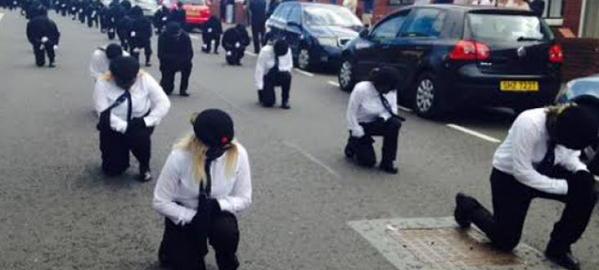







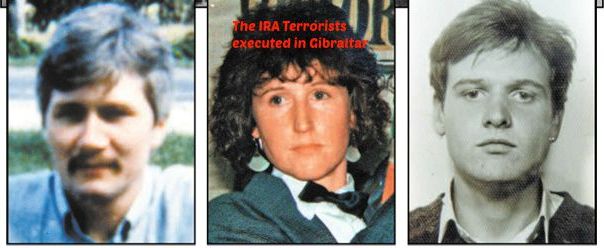


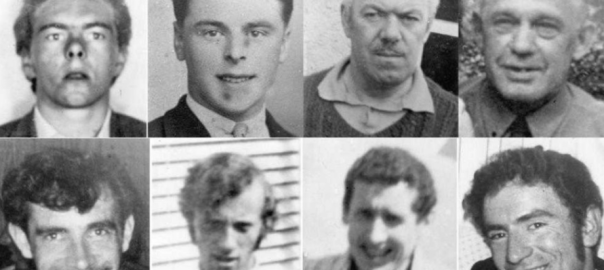
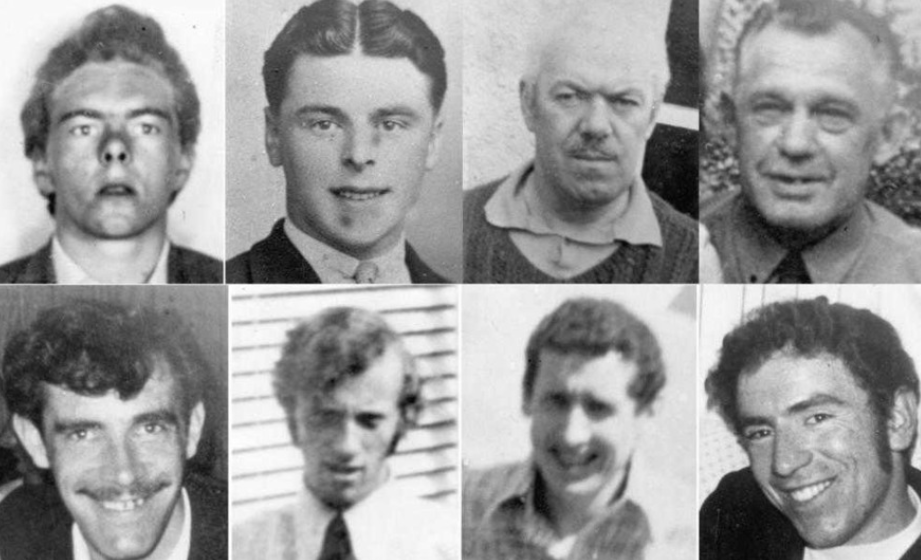
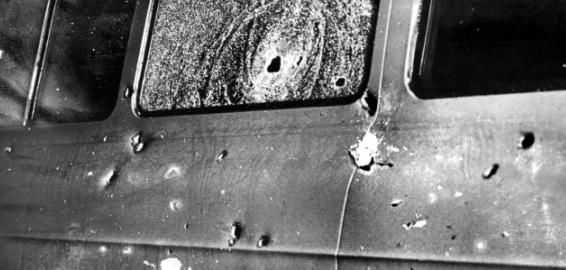









 belfastchildis.com