I Don’t Like Mondays
The Boomtown Rats
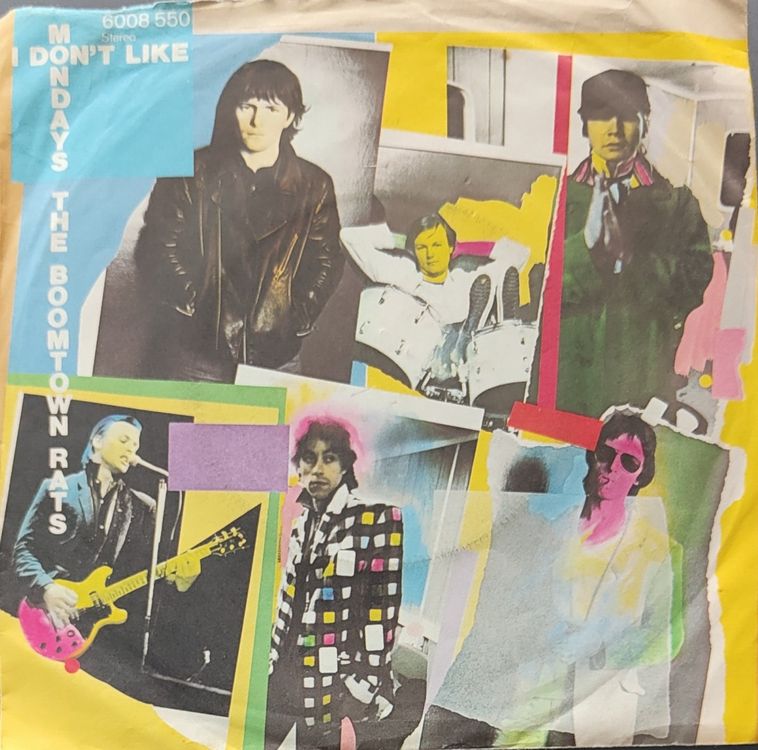
13 July 1979
Iconic Songs & the story behind them
“I Don’t Like Mondays” is a song by the Irish new wave band the Boomtown Rats about the Cleveland Elementary School shooting in San Diego. It was released in 1979 as the lead single from their third studio album, The Fine Art of Surfacing. The song was a number-one single in the UK singles chart for four weeks during the summer of 1979, and ranks as the sixth-biggest hit of the UK in 1979.
Written by Bob Geldof and Johnnie Fingers, the piano ballad was the band’s second single to reach number one on the UK chart.
Behind The Vinyl: Bob Geldof “I Don’t Like Mondays”
| “I Don’t Like Mondays” | |
|---|---|
 | |
| Single by the Boomtown Rats | |
| from the album The Fine Art of Surfacing | |
| B-side | “It’s All the Rage” |
| Released | 13 July 1979 (UK) |
| Studio | Trident Studios |
| Genre | New wave pop |
| Length | 4:19 (LP) 3:47 (single/video) |
| Label | Ensign (UK) Columbia (US) |
| Songwriters | Bob GeldofJohnnie Fingers |
| Producer | Phil Wainman |
| The Boomtown Rats singles chronology | |
| “Rat Trap“ (1978)”I Don’t Like Mondays“ (1979)”Diamond Smiles“ (1979) | |
| Music video | |
| “I Don’t Like Mondays” on YouTube | |
| Audio | |
| “I Don’t Like Mondays” on YouTube | |
My thoughts ?
To be honest I’ve never really been a massive fan of the Boomtown Rats, but they’ve produced a few memorable choons back in the day ( Rat Trap), and I Don’t Like Mondays is definitely my favourite. I love the soft piano intro, it pulls me in straight away and keeps me hooked. The way the song keeps building into something much darker makes it feel way more intense and powerful as it goes on, and the subject matter of the song just adds to that uneasy, emotional vibe which really makes it stand out.
Lyrics
“I Don’t Like Mondays”
The silicon chip inside her head
Gets switched to overload
And nobody’s gonna go to school today
She’s going to make them stay at home
And daddy doesn’t understand it
He always said she was as good as gold
And he can see no reason ’cause there are no reasons
What reason do you need to be shown?
(Tell me why) I don’t like Mondays
(Tell me why) I don’t like Mondays
(Tell me why) I don’t like Mondays
I wanna shoot
The whole day down
The telex machine is kept so clean
And it types to a waiting world
Her mother feels so shocked, father’s world is rocked
And their thoughts turn to their own little girl
Sweet 16 ain’t that peachy keen
No, it ain’t so neat to admit defeat
They can see no reasons ’cause there are no reasons
What reason do you need, oh, ohoho
(Tell me why) I don’t like Mondays
(Tell me why) I don’t like Mondays
(Tell me why) I don’t like Mondays
I wanna shoot
The whole day down, down, down
Shoot it all down
And all the playing’s stopped in the playground now
She wants to play with the toys a while
And school’s out early and soon we be learning
And the lesson today is how to die
And then the bullhorn crackles and the captain tackles
With the problems and the hows and whys
And he can see no reasons ’cause there are no reasons
What reason do you need to die, die, ohoho
And the silicon chip inside her head
Gets switched to overload, oh
And nobody’s gonna go to school today
She’s going to make them stay at home
And daddy doesn’t understand it
He always said she was as good as gold
And he can see no reason ’cause there are no reasons
What reason do you need to be shown?
(Tell me why) I don’t like Mondays
(Tell me why) I don’t like Mondays
(Tell me why) I don’t like, I don’t like
(Tell me why) I don’t like Mondays
Tell me why I don’t like, I don’t like
(Tell me why) I don’t like Mondays
Tell me why I don’t like Mondays
I wanna shoot
The whole day down
(Ooohooohooo, ooohooohooo
Ooohooohooo)
Background and writing
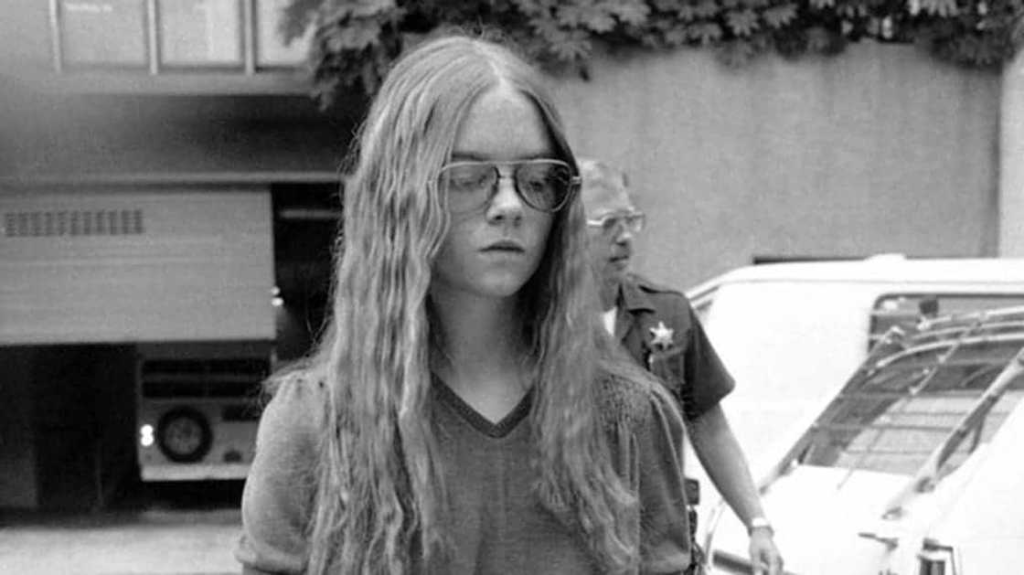
Brenda Ann Spencer
According to Geldof, he wrote the song after reading a telex report at Georgia State University’s campus radio station, WRAS, on the shooting spree of 16-year-old Brenda Ann Spencer, who fired from her bedroom window at children in a school playground at Grover Cleveland Elementary School in San Diego, California, on 29 January 1979, killing two adults and injuring eight children and one police officer. Spencer showed no remorse for her crime; her explanation for her actions was:
“I don’t like Mondays. This livens up the day”
.Her flippant response attracted media attention and inspired the song. Geldof had been contacted by Steve Jobs to play a gig for Apple, inspiring the opening line about a “silicon chip”. The song was first performed less than a month later.
Geldof explained how he wrote the song:
I was doing a radio interview in Atlanta with Johnnie Fingers and there was a telex machine beside me. I read it as it came out. Not liking Mondays as a reason for doing somebody in is a bit strange. I was thinking about it on the way back to the hotel and I just said ‘silicon chip inside her head had switched to overload’.
I wrote that down. And the journalists interviewing her said, ‘Tell me why?’ It was such a senseless act. It was the perfect senseless act and this was the perfect senseless reason for doing it. So perhaps I wrote the perfect senseless song to illustrate it.
It wasn’t an attempt to exploit tragedy.
The cheerful music is deliberate
One of the most striking things:
- The song sounds almost upbeat and melodic
- But the subject is extremely dark
That contrast is intentional:
- It mirrors how shocking the real quote was
- A horrific act paired with a casual, almost trivial explanation
Geldof had originally intended the song as a B-side, but changed his mind after the song was successful with audiences on the Rats’ US tour. Spencer’s family tried to prevent the single from being released in the United States, but were unsuccessful.
In later years, Geldof stated that he regretted writing the song because he “made Brenda Spencer famous”.
In 2019, Geldof and Fingers reached an agreement in their dispute over who wrote the song, until then credited solely to Geldof. Fingers received a financial settlement and co-credit.
Released on 13 July 1979, the song reached number one in the United Kingdom, Ireland, Australia and South Africa, and the top 10 in several other countries. It was less successful in the US, reaching only number 73 on the Billboard Hot 100.
In 1994, the song was re-released to promote the greatest hits album Loudmouth. It then peaked at number 38 on the UK singles chart.
In the UK, the song won the Best Pop Song and Outstanding British Lyric categories at the Ivor Novello Awards.
See here for more details :
Brenda Ann Spencer & Cleveland Elementary School shooting
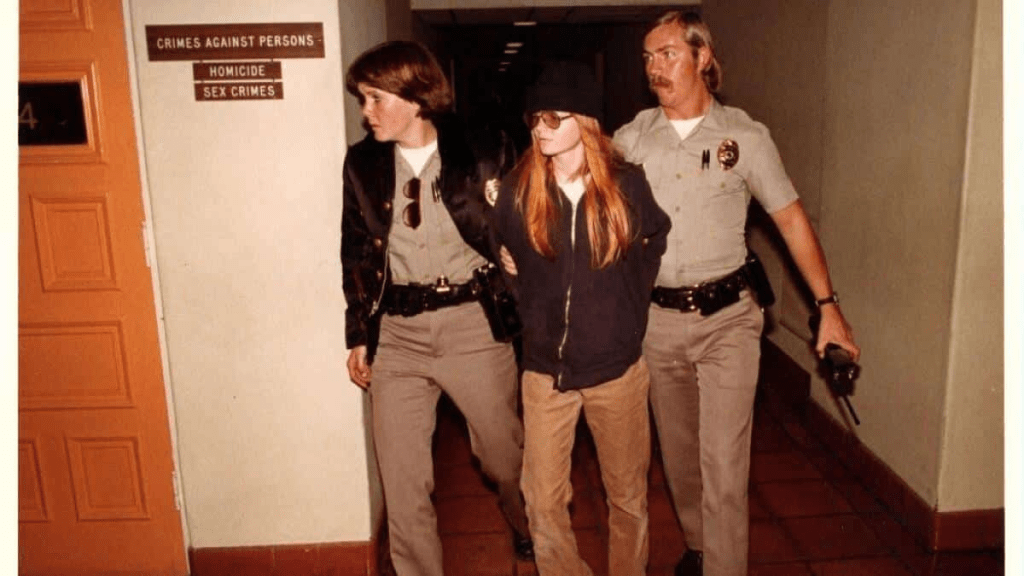
The story behind“I Don’t Like Mondays” by The Boomtown Rats is much darker than most people realise — it’s not really about disliking the start of the week at all. It comes from a real-life tragedy, and the meaning of the song is tied to the unsettling idea of senseless violence with no clear reason.
The shooting took place on January 29, 1979, at Grover Cleveland Elementary School in San Diego, California, United States] This is considered the first mass shooting at an elementary school in United States history.
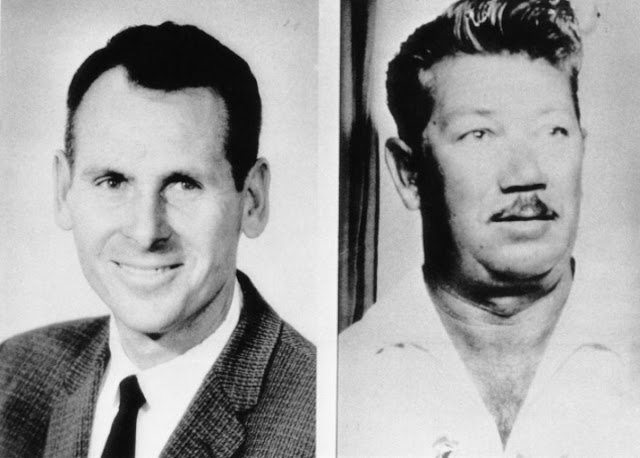
Principal Burton Wragg and custodian Mike Suchar
- Burton Wragg, age 53, the school principal, who had stepped outside to help children get to safety
- Mike Suchar, age 56, the school custodian
The principal Burton Wragg and the custodian Mike Suchar were killed; eight children and a police officer were wounded. Brenda Spencer, a 16-year-old girl who lived in a house across the street from the school, was convicted of the shootings. Charged as an adult, she pleaded guilty to two counts of murder and assault with a deadly weapon and was sentenced to life in prison with a chance of parole after 25 years. As of 2026, she is still in prison.
While police surrounded the house, a journalist called her and asked a simple question:
“Why did you do it?”
Her answer was chillingly casual:
“I don’t like Mondays. This livens up the day.”
That line shocked people worldwide — not just because of what happened, but because of how empty and random the reason sounded.
The shooting
On the morning of Monday, January 29, 1979, Spencer began shooting from her house at children across the street who were waiting for 53-year-old Principal Burton Wragg to open the gates to Grover Cleveland Elementary.[4] She injured eight children. She first shot nine-year-old Cam Miller, who said he believed it was because he was wearing blue, which he had learned was her favorite color. Spencer shot and killed Wragg as he and teacher Daryl Barnes tried to help children. She fatally shot 56-year-old custodian Mike Suchar as he tried to pull a student to safety. A 28-year-old police officer, Robert Robb, had responded to a call for assistance and she shot and wounded him in the neck as he arrived.
Robb prevented further casualties by moving a garbage truck in front of the school entrance to obstruct her line of fire.
After firing thirty-six times, Spencer barricaded herself inside her home for several hours. She spoke by telephone to a reporter from The Evening Tribune, who had been calling random telephone numbers in the neighborhood. Spencer told the reporter she had shot at the school children and adults because, “I don’t like Mondays. This livens up the day.”
She told police negotiators that the children and adults whom she had shot were easy targets and that she was going to “come out shooting”.
She surrendered and left the house after being promised a Burger King meal by negotiators.
Brenda Ann Spencer background and family life
Brenda Ann Spencer (born April 3, 1962) was born to Dorothy Nadine (née Hobel) and Wallace Edward Spencer. They married on December 12, 1954, in Chula Vista and had three children. Brenda was the youngest. In January 1972, after Dorothy found out her husband had been cheating on her with multiple women, she filed for divorce.
After her parents separated, Brenda allegedly lived in poverty with her father. Both father and daughter slept on a single mattress on the living room floor, in a house strewn with empty bottles of alcohol.
At later parole hearings, she claimed to have been subject to “total neglect” from her mother and sexual abuse from her father. The accusations have been disputed by the respective parents. At the time, she lived in a house across the street from the school. Aged 16 at the time of the shooting, she was 5’2″ (157 cm) and very thin, and had bright red hair.
Acquaintances said Spencer expressed hostility toward police officers, had spoken about shooting one, and had talked of doing something big to get on television. Although Spencer showed ability as a photographer, winning first place in a Humane Society competition, she was generally uninterested in school. She attended Patrick Henry High School, where one teacher recalled frequently inquiring if she was awake in class. Later, during tests while she was in custody, it was discovered that Spencer had an injury to one of the temporal lobes of her brain. It was attributed to an accident on her bicycle.
Spencer described herself as a “radical” and referred to police officers as “pigs,” exclaiming “All right!” when seeing news on TV about police officers being killed. She often talked about wanting to kill police officers or “blow them away.”[ Some classmates described her as “crazy” and reported being scared of her.
In early 1978, staff at a facility for problem students, into which Spencer had been referred for truancy, informed her parents that she was suicidal. That summer, Spencer, who was known to hunt birds in the neighborhood, was arrested for shooting out the windows of Grover Cleveland Elementary with a BB gun and for burglary. Police reports and eyewitnesses do not mention the use of a BB gun during the school vandalism.
In December 1978, while she was still on probation for breaking into the school, a psychiatric evaluation arranged by her probation officer recommended that Spencer be admitted to a mental hospital for depression. Her father refused to give permission. For Christmas 1978, he gave her a Ruger 10/22 semi-automatic .22 caliber rifle with a telescopic sight and 500 rounds of ammunition.
Spencer later said, “I asked for a radio and got a rifle.” Asked why he had done that, she answered:
“He bought the rifle so I would kill myself.”
Analysis
Several 21st century accounts identify the Cleveland Elementary School shooting in San Diego as the earliest recorded elementary school shooting in the United States. The perpetrator, Brenda Spencer, has been described as the first modern high-profile school shooter. According to a 2013 article in the New York Daily News, her actions marked a significant turning point in American history. Given later history of violent acts, Spencer has been referred to as “the mother” of subsequent school shootings, including those at Columbine, Colorado, and Newtown, Connecticut, both committed by teenage males. The number of school shootings has increased markedly since 1979.
San Diego County Deputy District Attorney Richard Sachs noted that Spencer “hurt so many people and had so much to do with starting a deadly trend in America.” In a 2001 statement, Spencer acknowledged the potential influence of her actions on later incidents, remarking, “With every school shooting, I feel I’m partially responsible. What if they got the idea from what I did?”
Imprisonment
Convicted school shooter Brenda Spencer speaks with San Diego’s News 8 – PART 1
Spencer was charged as an adult. She pleaded guilty to two counts of murder and assault with a deadly weapon. On April 4, 1980, a day after her 18th birthday, she was sentenced to concurrent terms of 25 years to life in prison. Nine counts of attempted murder were dismissed. In prison, Spencer was diagnosed with epilepsy and received medication to treat epilepsy and depression. While at California Institution for Women in Chino, she worked repairing electronic equipment.
Under the terms of her sentencing, Spencer became eligible in 1993 for hearings to consider her suitability for parole.
At her first hearing, in 1993, Spencer said she had hoped that police would shoot her, and that she had been a user of alcohol and drugs at the time of the crime. But, results of drug tests done when she was taken into custody were negative. At her 2001 parole hearing, Spencer claimed that her father had been subjecting her to beatings and sexual abuse, but he said the allegations were not true. The parole board chairman said that, because she had not previously told anyone about the allegations, he doubted their veracity.
In 2005, a San Diego deputy district attorney cited an incident of self-harm from four years earlier, when Spencer’s girlfriend was released from jail, as showing that Spencer was psychotic and unfit to be released. Early reports indicated that Spencer had scratched the words “courage” and “pride” into her own skin. Spencer corrected this during her parole hearing; she said the words were “unforgiven” and “alone.”

In 2009, the board again refused her application for parole, and ruled it would be ten years before she would be considered again. In August 2022, Spencer and the Board of Parole Hearings agreed that she was not suitable for parole and that she would not be eligible for another hearing for a further three years. In February 2025, she was again denied parole. She remains imprisoned at California Institution for Women in Chino.
Life in prison
Brenda Spencer has spent her entire adult life incarcerated.
- She has been held in California state prison since 1979
- She grew up, matured, and aged entirely behind bars
Over the years:
- Reports suggest she has had disciplinary issues at times
- She has taken part in some education and prison programmes (details vary by source)
But importantly: she has never been released.
Parole hearings (and why she remains in prison)
Because of her sentence, she became eligible for parole in the early 1990s (about 25 years after sentencing).
However:
- She has applied for parole multiple times
- Each request has been denied
Why she keeps being denied parole
Parole boards look at several factors, and in her case:
1. Nature of the crime
- It involved children and a public setting
- It’s seen as a serious and shocking act
2. Her explanations
- At different times, she has given varying reasons for what she did
- These sometimes included:
- claims of abuse
- claims of intoxication
- shifting accounts over the years
This inconsistency raises concerns about:
- whether she fully understands or takes responsibility
3. Perceived risk
Parole boards assess:
- whether someone is likely to reoffend
- whether they show remorse and insight
Her case has often been judged as:
- not showing enough clear, consistent insight into the crime
Attempts to explain her actions (after the fact)
In later years, Spencer did try to explain what happened more deeply than her original statement.
She has claimed:
- she suffered abuse and neglect growing up
- she was using alcohol and possibly medication at the time
However:
- Some of these claims were disputed or unverified
- And they didn’t fully satisfy the authorities reviewing her case
The core issue remains: Even her later explanations don’t fully match the scale or randomness of the act.
Where things stand today
- Brenda Ann Spencer remains in prison to this day
- She continues to be eligible for future parole hearings, but release is uncertain
If you want, I can explain how this case influenced public awareness of school violence or how it compares to later cases.
Here’s a clear summary of Brenda Ann Spencer’s parole history, based only on what the sources explicitly confirm.
Parole hearing history (summary)
📅 Eligibility
- Spencer was sentenced to life with the possibility of parole after 25 years
- That made her eligible for her first parole hearings starting in the early 1990s (25 years after 1979)
❌ Repeated denials
- She has applied for parole multiple times over several decades
- Each time, parole has been denied
🧾 Current status
- As of the most recent information available today
- She remains in prison
- She is still eligible for future parole hearings
Patterns in parole outcomes (from reported information)
While detailed parole transcripts aren’t always public, sources consistently point to:
- Ongoing concerns about the seriousness of the crime
- Questions about her explanations and insight (her reasons have changed over time)
- The need for demonstrable remorse and understanding, which parole boards assess
One‑sentence takeaway
👉 Brenda Ann Spencer has been eligible for parole for decades but has never been granted release, and she remains incarcerated today.
Her next opportunity for a parole hearing will be in 2028.
Aftermath
A plaque and flagpole were erected at Cleveland Elementary in memory of the shooting victims. Due to declining enrollment, the school was closed in 1983, along with a dozen other public schools around the city. In the ensuing decades, it was leased to several charter and private schools. From 2005 to 2017, it housed the Magnolia Science Academy, a public charter middle school serving students in grades 6–8.
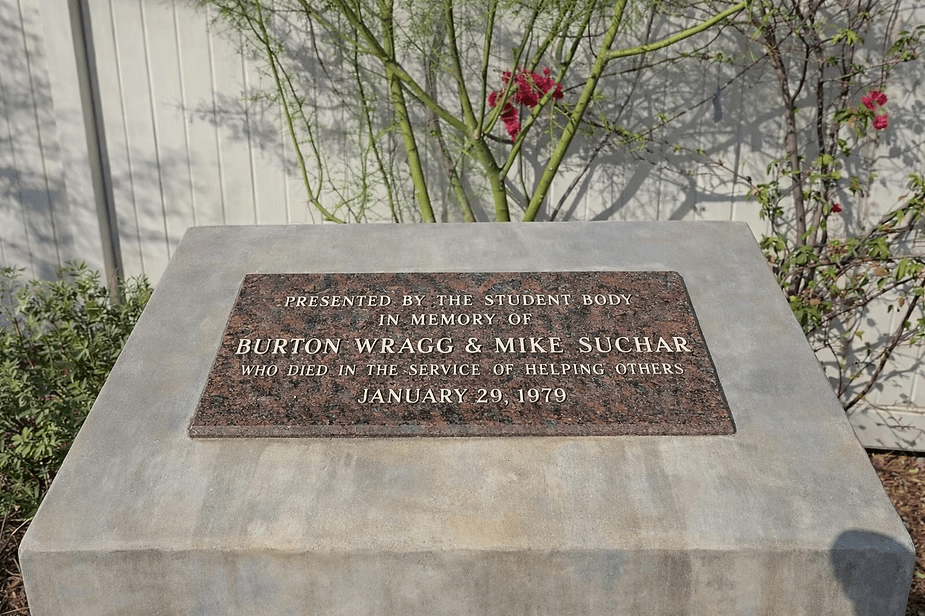
memorial plaque honoring Burton Wragg and Mike Suchar
The school board decided to sell the school because of budget issues. In 2018, the building was demolished by the new owner and the site was redeveloped for housing. The memorial plaque was relocated to the southern edge of the former school site, at the corner of Lake Atlin Avenue and Lake Angela Drive.
Spencer and her family
In the months following the shooting, one of Brenda Spencer’s first cellmates at the juvenile facility was released. The 17-year-old girl moved in with Spencer’s father, whom she’d met through his visits to Brenda. They later married on March 26, 1980, in Yuma, Arizona. They had a daughter together, after which she fled the household and eventually divorced her estranged husband.She left Wallace Spencer to raise the girl alone.
Wallace Spencer died in February 2016.
Survivors
On January 17, 1989, almost ten years after the shooting, there was a shooting at a school in Stockton, California. Coincidentally it was also named Grover Cleveland Elementary. Five students were killed and thirty injured. Christy Buell, a survivor of the 1979 shooting, was “shocked, saddened, horrified” by the headlines concerning the incident.
Bon Jovi & Bob Geldof – I Don’t Like Mondays (London 2010)
Buy the book
See below for more Iconic Songs and the story behind them
😏
Hit the button below and surprise me 👍



Iconic Songs & the story behind them
- I Don’t Like Mondays – the Boomtown Rats: Iconic Songs & the story behind them
 I Don’t Like Mondays The Boomtown Rats 13 July 1979 Iconic Songs & the story behind them “I Don’t Like Mondays” is a song by the Irish new wave band the Boomtown Rats about the Cleveland Elementary School shooting in San Diego. It was released in 1979 as the lead single from their third studio album, The Fine Art of Surfacing. The song was a number-one … Continue reading I Don’t Like Mondays – the Boomtown Rats: Iconic Songs & the story behind them
 - Lola – The Kinks : Iconic Songs & the story behind them
 Lola – The Kinks : Iconic Songs Iconic Songs and the story behind them “Lola” is a song written by Ray Davies and performed by English rock band the Kinks on their album Lola Versus Powerman and the Moneygoround, Part One. The song details a romantic encounter between a young man and a possible cross-dresser, whom he meets in a club in Soho, London. … Continue reading Lola – The Kinks : Iconic Songs & the story behind them
 - Love Will Tear Us Apart – Joy Division: Iconic Songs & the story behind them
 Love Will Tear Us Apart Joy Division June 1980 Iconic Songs & the story behind them “Love Will Tear Us Apart” is a song by English rock band Joy Division, released in June 1980. Its lyrics were inspired by lead singer Ian Curtis‘ marriage problems and frame of mind before his suicide in May 1980 Recording Joy Division first … Continue reading Love Will Tear Us Apart – Joy Division: Iconic Songs & the story behind them
 - That’s Entertainment -The Jam : Iconic Songs & the story behind them
 The Jam That’s Entertainment January 1981 The Jam : Iconic Songs & the story behind them “That’s Entertainment” is a 1980 song by British punk–mod revivalist group the Jam from their fifth album, Sound Affects. Although never released as a domestic single in the UK during the band’s lifetime, “That’s Entertainment” nonetheless charted as an import single (backed by a … Continue reading That’s Entertainment -The Jam : Iconic Songs & the story behind them
 - Tin Soldier – Small Faces : Iconic Songs & the story behind them
 Small Faces TIN SOLDIER 2nd December 1967 Tin Soldier – Small Faces : Iconic Songs & the story behind them “Tin Soldier” is a song released by the English rock band Small Faces on 2 December 1967, written by Steve Marriott (credited to Marriott/Lane). The song peaked at number nine in the UK singles chart and number 38 in Canada. It has since … Continue reading Tin Soldier – Small Faces : Iconic Songs & the story behind them
 - Going Underground – The Jam: Iconic Songs & the story behind them
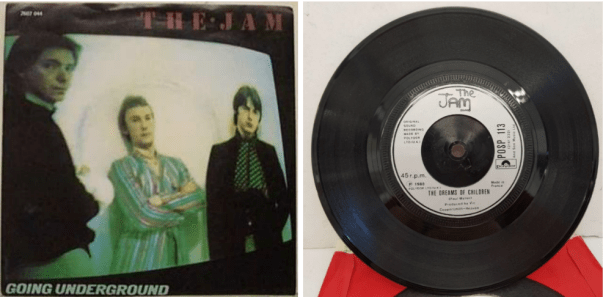 Going Underground – The Jam The Jam Going Underground March 1980 Going Underground – The Jam: Iconic Songs & the story behind them “Going Underground” is the first British #1 chart single by The Jam, released in March 1980. It went straight in at #1 in the UK Singles Chart, spending three weeks at the top. It was the first … Continue reading Going Underground – The Jam: Iconic Songs & the story behind them
 - Golden Brown – The Stranglers: Iconic Songs & the story behind them
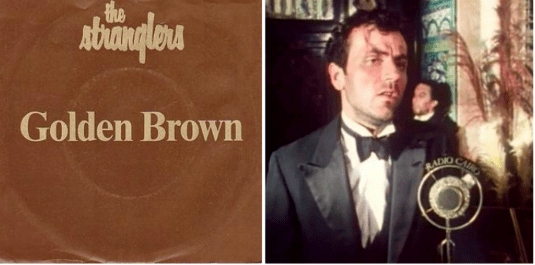 The Stranglers Golden Brown January 1982 Golden Brown – The Stranglers: Iconic Songs & the story behind them Golden Brown – The Stranglers “Golden Brown” is a song by the English rock band the Stranglers. It was released as a 7″ single in December 1981 in the United States and in January 1982 in the United … Continue reading Golden Brown – The Stranglers: Iconic Songs & the story behind them

