The Dublin and Monaghan bombings of 17 May 1974 were a series of co-ordinated no-warning car bombings in Dublin and Monaghan, Republic of Ireland. Three exploded in Dublin during rush hour and a fourth exploded in Monaghan almost ninety minutes later. They killed 33 civilians and a full-term unborn child, and injured almost 300.
The bombings were the deadliest attack of the conflict known as the Troubles, and the deadliest terrorist attack in the Republic’s history. Most of the victims were young women, although the ages of the dead ranged from five months to 80 years.
The Ulster Volunteer Force (UVF), a loyalist paramilitary group from Northern Ireland, claimed responsibility for the bombings in 1993. It had launched a number of attacks in the Republic since 1969. There are credible allegations that elements of the British state security forces helped the UVF carry out the bombings, including members of the Glenanne gang. Some of these allegations have come from former members of the security forces.
The bombings happened during the Ulster Workers’ Council strike. This was a general strike called by hardline loyalists and unionists in Northern Ireland who opposed the Sunningdale Agreement. Specifically, they opposed the sharing of political power with Irish nationalists, and the proposed role for the Republic in the governance of Northern Ireland. The Republic’s government had helped bring about the Agreement. The strike brought down the Agreement and the Northern Ireland Assembly on 28 May.
No-one has ever been charged with the bombings. A campaign by the victims’ families led to an Irish government inquiry under Justice Henry Barron. His 2003 report criticised the Garda Síochána‘s investigation and said the investigators stopped their work prematurely.
It also criticised the Fine Gael/Labourgovernment of the time for its inaction and lack of interest in the bombings. The report said it was likely that British security force personnel were involved but had insufficient evidence of higher-level involvement. However, the inquiry was hindered by the British government’s refusal to release key documents. The victims’ families and others have continued to campaign for the British government to release these documents.
The views and opinions expressed in this page and documentaries are soley intended to educate and provide background information to those interested in the Troubles of Northern Ireland. They in no way reflect my own opinions and I take no responsibility for any inaccuracies or factual errors
A 2006 view of Talbot Street where a further 14 people died
At about 17:30 on Friday 17 May 1974, without warning, three car bombs exploded in Dublin city centre at Parnell Street, Talbot Street and South Leinster Street during rush hour. The streets all ran east-west from busy thoroughfares to railway stations. There was a bus strike in Dublin at the time, which meant there were more people on the streets than usual.
According to one of the Irish Army‘s top bomb disposal officers, Commandant Patrick Trears, the bombs were constructed so well that 100% of each bomb exploded upon detonation. Twenty-three people died in these explosions and three others died from their injuries over the following few days and weeks. Many of the dead were young women originally from rural towns employed in the civil service. An entire family from central Dublin was killed. Two of the victims were foreign: an Italian man, and a French Jewish woman whose family had survived the Holocaust.
First Bomb
The first of the three Dublin car bombs went off at about 17:28 on Parnell Street, near the intersection with Marlborough Street.
It was in a parking bay outside the Welcome Inn pub and Barry’s supermarket at 93 and 91 Parnell Street respectively, and near petrol pumps. Shop fronts were blown out, cars were destroyed, and people were thrown in all directions. A brown Mini that had been parked behind the bomb was hurled onto the pavement at a right angle. One survivor described
“a big ball of flame coming straight towards us, like a great nuclear mushroom cloud whooshing up everything in its path”
The bomb car was a metallic green 1970 model Hillman Avenger, registration number DIA 4063. It had been facing toward O’Connell Street, Dublin’s main thoroughfare. This car, like the other two bomb cars, had its original registration plates. It had been hijacked in Belfast that morning.
Ten people were killed in this explosion, including two infant girls and their parents, and a World War I veteran. Many others, including a teenaged petrol-pump attendant, were severely injured.
Second Bomb
The second of the Dublin car bombs went off at about 17:30 on Talbot Street, near the intersection with Lower Gardiner Street. Talbot Street was the main route from the city centre to Connolly station, Dublin’s primary railway station. It was parked at 18 Talbot Street, on the north side, opposite Guineys department store. The bomb car was a metallic blue mink Ford Escort, registration number 1385 WZ. It had been stolen that morning in the Docks area of Belfast.
The blast damaged buildings and vehicles on both sides of the street. People suffered severe burns and were struck by shrapnel, flying glass and debris; some were hurled through the windows of shops.
Twelve people were killed outright, and another two died over the following days and weeks. Thirteen of the fourteen victims were women, including one who was nine months pregnant. One young woman who had been beside the bomb car was decapitated; the only clue to her sex was the pair of brown platform boots she was wearing
Several others lost limbs and a man was impaled through the abdomen by an iron bar. Several bodies lay in the street for half an hour as ambulances struggled to get through traffic jams. At least four bodies were found on the pavement outside Guineys. The bodies of the victims were covered by newspapers until they were removed from the scene.
Third Bomb
The third bomb went off at about 17:32 on South Leinster Street, near the railings of Trinity College and not far from Leinster House, the seat of the Oireachtas. Two women were killed outright; they had been very close to the epicentre of the blast. The bomb car was a blue Austin 1800 Maxi registration number HOI 2487; like the Parnell Street car, it had been hijacked in Belfast that same morning from a taxi company.[10] Dental students from Trinity College rushed to the scene to give first-aid to the injured.
Monaghan
Almost ninety minutes later, at about 18:58, a fourth car bomb (weighing 150 pounds) exploded in the centre of Monaghan town, just south of the border with Northern Ireland. It had been parked outside Greacen’s pub on North Road. The car was a green 1966 model Hillman Minx registration number 6583 OZ; it had been stolen from a Portadown car park several hours before.
As in Dublin, no warning had been given. This bomb killed five people outright, and another two died in the following weeks. There is evidence that the car bomb was parked five minutes before the explosion.
The bomb site, which was about 300–400 yards from the Garda station, was preserved by a roster of eight Gardaí from 19:00 on 17 May until 14:30 on 19 May, at which time the technical examination of the area had been complete . Forensic analysis of the metal fragments taken from the site suggested that the bomb had been in a beer barrel or similar container. It has been suggested that the Monaghan bombing was a “supporting attack”; a diversion to draw security away from the border and thus help the Dublin bombers return to Northern Ireland.
Aftermath
Remembering the Victims
——————————-
The Dublin and Monaghan Bombings
——————————-
Victims
33 Innocent People lost their lives
————————————————-
17 May 1974
Marie Butler, (21)
nfNIRI
Status: Civilian (Civ),
Killed by: Ulster Volunteer Force (UVF)
Killed when car bomb exploded Parnell Street, Dublin.
————————————————-
17 May 1974 John Dargle, (80)
nfNIRI
Status: Civilian (Civ),
Killed by: Ulster Volunteer Force (UVF)
Killed when car bomb exploded Parnell Street, Dublin.
————————————————-
17 May 1974
Patrick Fay, (47)
nfNIRI
Status: Civilian (Civ),
Killed by: Ulster Volunteer Force (UVF)
Killed when car bomb exploded Parnell Street, Dublin.
————————————————-
17 May 1974 Elizabeth Fitzgerald, (59)
nfNIRI
Status: Civilian (Civ),
Killed by: Ulster Volunteer Force (UVF)
Injured when car bomb exploded Parnell Street, Dublin. She died 19 May 1974
————————————————-
17 May 1974
Antonio Magliocco, (37)
nfNIRI
Status: Civilian (Civ),
Killed by: Ulster Volunteer Force (UVF)
Italian national. Killed when car bomb exploded Parnell Street,
————————————————-
17 May 1974
John O’Brien, (24)
nfNIRI
Status: Civilian (Civ),
Killed by: Ulster Volunteer Force (UVF)
Killed when car bomb exploded Parnell Street, Dublin.
————————————————-
17 May 1974
Anna O’Brien (22)
nfNIRI
Status: Civilian (Civ),
Killed by: Ulster Volunteer Force (UVF)
Killed when car bomb exploded Parnell Street, Dublin.
————————————————-
17 May 1974
Jacqueline O’Brien, (1)
nfNIRI
Status: Civilian (Civ),
Killed by: Ulster Volunteer Force (UVF)
Killed when car bomb exploded Parnell Street, Dublin
————————————————-
17 May 1974 Anne Marie O’Brien, (0)
nfNIRI
Status: Civilian (Civ),
Killed by: Ulster Volunteer Force (UVF)
Killed when car bomb exploded Parnell Street, Dublin.
————————————————-
17 May 1974
Edward O’Neill, (39)
nfNIRI
Status: Civilian (Civ),
Killed by: Ulster Volunteer Force (UVF)
Killed when car bomb exploded Parnell Street, Dublin.
————————————————-
17 May 1974
Breda Turner, (21)
nfNIRI
Status: Civilian (Civ),
Killed by: Ulster Volunteer Force (UVF)
Killed when car bomb exploded Parnell Street
————————————————-
17 May 1974
Anne Byrne, (35)
nfNIRI
Status: Civilian (Civ),
Killed by: Ulster Volunteer Force (UVF)
Killed when car bomb exploded Talbot Street, Dublin.
————————————————-
17 May 1974
Simone Chetrit, (30)
nfNIRI
Status: Civilian (Civ),
Killed by: Ulster Volunteer Force (UVF)
French national. Killed when car bomb exploded Talbot Street, Dublin.
————————————————-
17 May 1974
Colette Doherty, (21)
nfNIRI
Status: Civilian (Civ),
Killed by: Ulster Volunteer Force (UVF)
Killed when car bomb exploded Talbot Street, Dublin
————————————————-
17 May 1974
Breda Grace, (35)
nfNIRI
Status: Civilian (Civ)
, Killed by: Ulster Volunteer Force (UVF)
Killed when car bomb exploded Talbot Street, Dublin.
————————————————-
17 May 1974
Anna Marren, (20)
nfNIRI
Status: Civilian
(Civ),
Killed by: Ulster Volunteer Force (UVF)
Killed when car bomb exploded Talbot Street, Dublin.
————————————————-
17 May 1974
May McKenna, (55)
nfNIRI
Status: Civilian (Civ),
Killed by: Ulster Volunteer Force (UVF)
Killed when car bomb exploded Talbot Street, Dublin.
————————————————-
17 May 1974
Dorothy Morris, (57)
nfNIRI
Status: Civilian (Civ),
Killed by: Ulster Volunteer Force (UVF)
Killed when car bomb exploded Talbot Street, Dublin.
————————————————-
17 May 1974
Marie Phelan, (20)
nfNIRI
Status: Civilian (Civ),
Killed by: Ulster Volunteer Force (UVF)
Killed when car bomb exploded Talbot Street, Dublin.
————————————————-
17 May 1974
Siobhan Roice, (19)
nfNIRI
Status: Civilian (Civ),
Killed by: Ulster Volunteer Force (UVF)
Killed when car bomb exploded Talbot Street, Dublin.
————————————————-
17 May 1974
Maureen Shields, (46)
nfNIRI
Status: Civilian (Civ),
Killed by: Ulster Volunteer Force (UVF)
Killed when car bomb exploded Talbot Street, Dublin.
————————————————-
17 May 1974
John Walshe, (27)
nfNIRI
Status: Civilian (Civ),
Killed by: Ulster Volunteer Force (UVF)
Killed when car bomb exploded Talbot Street, Dublin.
————————————————-
17 May 1974
Josephine Bradley, (21)
nfNIRI
Status: Civilian (Civ),
Killed by: Ulster Volunteer Force (UVF)
Injured when car bomb exploded Talbot Street, Dublin. She died 20 May 1974
————————————————-
17 May 1974
Concepta Dempsey, (65)
nfNIRI
Status: Civilian (Civ),
Killed by: Ulster Volunteer Force (UVF)
Injured when car bomb exploded Talbot Street, Dublin. She died 11 June 1974.
————————————————-
17 May 1974
Anna Massey, (21)
nfNIRI
Status: Civilian (Civ),
Killed by: Ulster Volunteer Force (UVF)
Killed when car bomb exploded South Leinster Street, Dublin
————————————————-
17 May 1974
Christine O’Loughlin, (51)
nfNIRI
Status: Civilian (Civ),
Killed by: Ulster Volunteer Force (UVF)
Killed when car bomb exploded South Leinster Street, Dublin.
————————————————-
17 May 1974
Patrick Askin, (44)
nfNIRI
Status: Civilian (Civ),
Killed by: Ulster Volunteer Force (UVF)
Killed when car bomb exploded Church Square, Monaghan, County Monaghan
————————————————-
17 May 1974 Thomas Campbell, (52)
nfNIRI
Status: Civilian (Civ),
Killed by: Ulster Volunteer Force (UVF)
Killed when car bomb exploded Church Square, Monaghan, County Monaghan
————————————————-
17 May 1974
John Travers, (28)
nfNIRI
Status: Civilian (Civ),
Killed by: Ulster Volunteer Force (UVF)
Killed when car bomb exploded Church Square, Monaghan, County Monaghan
————————————————-
17 May 1974
Peggy White, (45)
nfNIRI
Status: Civilian (Civ),
Killed by: Ulster Volunteer Force (UVF)
Killed when car bomb exploded Church Square, Monaghan, County Monaghan.
————————————————-
17 May 1974
George Williamson, (72)
nfNIRI
Status: Civilian (Civ),
Killed by: Ulster Volunteer Force (UVF)
Killed when car bomb exploded Church Square, Monaghan, County Monaghan
————————————————-
17 May 1974
Archie Harper, (73)
nfNIRI
Status: Civilian (Civ),
Killed by: Ulster Volunteer Force (UVF)
Injured when car bomb exploded Church Square, Monaghan, County Monaghan. He died 21 May 1974.
————————————————-
17 May 1974
Thomas Croarkin, (36)
nfNIRI
Status: Civilian (Civ),
Killed by: Ulster Volunteer Force (UVF)
Injured when car bomb exploded Church Square, Monaghan, County Monaghan. He died 24 July 1974.
————————————————-
After the blasts, bystanders rushed to help the wounded, and emergency response personnel were on the scene within minutes. Hospitals across Dublin were put on standby to receive casualties. However, rescue operations in Dublin were hampered by heavy traffic due to the bus strike. Rescuers, feeling that help was not coming fast enough, lifted the dead and wounded, wrapped them in coats and bundled them into cars to get them to the nearest hospital. Garda squad cars escorted surgeons through the crowded streets to attend the wounded. Many people, on finding out what had happened, went straight away to offer blood.
Paddy Doyle of Finglas, who lost his daughter, son-in-law, and two infant granddaughters in the Parnell Street explosion, described the scene inside Dublin’s city morgue as having been like a
“slaughterhouse”, with workers “putting arms and legs together to make up a body”.
At 18:00, after all of the dead and injured had been removed, Garda Síochána officers cordoned off the three bomb sites in Dublin. Fifteen minutes earlier, at 17:45, the orders were given to call out ‘national cordons’, to stop the bombers fleeing the state. Garda officers were sent to Connolly Station, Busáras, Dublin Airport, the B&I car ferry port, and the mail boat at Dún Laoghaire.
At 18:28, the Dublin-Belfast train was stopped at Dundalk and searched by a team of 18 Gardaí led by an inspector. During the evening of 17 May, Gardaí from the Ballistics, Photography, Mappings, and Fingerprints section visited the three bomb sites in Dublin and examined the debris.
Some accounts give a total of 34 or 35 dead from the four bombings: 34 by including the unborn child of victim Colette Doherty, who was nine months pregnant; and 35 by including the later still-born child of Edward and Martha O’Neill. Edward was killed outright in Parnell Street.
Martha O’Neill was not caught up in the attack, although two of their children were seriously injured in the bombing; one of them, a four-year-old boy, suffered severe facial injuries. The 22 months-old daughter of Colette Doherty survived the Talbot Street blast; she was found wandering about near the bomb site, relatively unharmed.
Six weeks after the bombings, the elderly mother of Thomas Campbell, who was killed in the Monaghan bombing, allegedly died of the shock she received at the death of her son.
Due to the bombings, the Irish Army withdrew its troops from UNpeacekeeping missions for four years.
“I am very happy about the bombings in Dublin. There is a war with the Free State and now we are laughing at them.”
However, neither the UDA nor UVF admitted responsibility. A ‘Captain Craig’ telephoned the Irish News and Irish Times, claiming responsibility for the bombings on behalf of the ‘Red Hand Brigade’, which is believed to be a covername.
The bombings were condemned by the Irish and British governments, and the Irish government vowed to pursue those responsible. However, there have been complaints from the victims’ families and others about the Irish government’s reaction. The Fine Gael–Labour Partygovernment refused to hold a national day of mourning, because, according to a spokesman from the Government Information Bureau, “More than 1,000 people have now died in the current Troubles”.
The previous government had held a national day of mourning for those killed in the Bloody Sunday shootings in Northern Ireland. A decision was also made not to fly the national flag at half-mast, but this was quickly reversed.
In Leinster House, about 300 metres from the site of the South Leinster Street blast, political leaders commented at the next session of Dáil Éireann. Statements by government ministers appeared to suggest that the bombings were an inevitable result of the IRA campaign.
The blood of the innocent victims of last Friday’s outrage—and of the victims of similar outrages in the North and in England—is on the hands of every man who has fired a gun or discharged a bomb in furtherance of the present campaign of violence in these islands—just as plainly as it is on the hands of those who parked the cars and set the charges last Friday. In our times, violence cannot be contained in neat compartments and justified in one case but not in another.
The opposition leader Jack Lynch, of Fianna Fáil, was “sickened” by the “cruel” events, but also widened the question of blame:
Every person and every organisation which played any part in the campaign of bombing and violence which killed and maimed people and destroyed property in Belfast, Derry or any other part of our country and indeed in Britain over the past five years, shares the guilt and the shame of the assassins who actually placed these bombs on the streets of Dublin and Monaghan last Friday.
In secret memos, the then British Ambassador to the Republic of Ireland, Arthur Galsworthy, noted the reactions in Dublin immediately after the bombings. He said the bombings had hardened attitudes against the IRA:
There is no sign of any general anti-Northern Protestant reaction … The predictable attempt by the IRA to pin the blame on the British (British agents, the SAS, etc) has made no headway at all. … It is only now that the South has experienced violence that they are reacting in the way that the North has sought for so long. … it would be … a psychological mistake for us to rub this point in. … I think the Irish have taken the point.
Responsibility for the bombings
The Ulster Volunteer Force (UVF) claimed responsibility for the bombings in 1993, following a TV documentary on the bombings that named the UVF as the perpetrators, and which alleged that elements of British security forces were involved in the attack.
Hidden Hand: The Forgotten Massacre
Dublin Monaghan Bombings 1974 – First Tuesday -1993
On 7 July 1993, Yorkshire Television broadcast a documentary about the bombings, named Hidden Hand: The Forgotten Massacre. The documentary-makers interviewed former Irish and British security force personnel, as well as former loyalist militants. They were also given access to Irish police documents.
The programme claimed the bombings were carried out by the UVF, with help from members of the British security forces. It named a number of UVF members whom it said were involved, and who had since been killed in the Troubles.
These included Billy Hanna (a sergeant in the British Army’s Ulster Defence Regiment – UDR), Robert McConnell (a UDR corporal), Harris Boyle (also a UDR soldier), and a loyalist referred to as “the Jackal”. He was later identified as former UDR soldier Robin Jackson, who was still alive at the time of broadcast. The documentary claimed that all of these men were working as agents for British Military Intelligence and RUC Special Branch.
“We have evidence from police, military and loyalist sources which confirms […] that in May 1974, he was meeting with these paramilitaries, supplying them with arms and helping them plan acts of terrorism”.
Reference was made to the complexity of the attack and the sophistication of the bombs. Former British Army officer Fred Holroyd, former Garda Commissioner Eamon Doherty, and retired bomb disposal experts Lieutenant Colonel George Styles (British Army) and Commandant Patrick Trears (Irish Army) all suggested the bombs were not characteristic of the UVF and that it could not have mounted the attack without help from the security forces.
It was suggested that elements of the British security forces were using loyalist paramilitaries as proxies. It was said that a significant element within the security forces favoured a military solution to the conflict, and opposed a political solution, which was being pursued by the UK’s Labour government. Merlyn Rees, the British government’s Northern Ireland Secretary, believed that his polices in pursuit of peace in 1974 had been undermined by a faction in British Army Intelligence. The inference was that the bombings were intended to wreck the Sunningdale Agreement and to make both governments take a stronger line against the IRA.
UVF claims responsibility
U.V.F Logo
One week later, on 15 July 1993, the Ulster Volunteer Force confirmed responsibility for the bombings, but also denied that it was aided by British security forces.
The UVF claimed that:
The entire operation was from its conception to its successful conclusion, planned and carried out by our volunteers aided by no outside bodies. In contrast to the scenario painted by the programme, it would have been unnecessary and indeed undesirable to compromise our volunteers anonimity [sic] by using clandestine Security Force personnel, British or otherwise, to achieve [an] objective well within our capabilities. … Given the backdrop of what was taking place in Northern Ireland when the UVF [were] bombing republican targets at will, either the researchers decided to take poetic licence to the limit or the truth was being twisted by knaves to make [a] trap for the fools. … The minimum of scrutiny should have revealed that the structure of the bombs placed in Dublin and Monaghan were similar if not identical to those being placed in Northern Ireland on an almost daily basis. The type of explosives, timing and detonating methods all bore the hallmark of the UVF. It is incredulous [sic] that these points were lost on the Walter Mittys who conjured up this programme. To suggest that the UVF were not, or are not, capable of operating in the manner outlined in the programme is tempting fate to a dangerous degree.
Campaign by victims’ families
In 1996, relatives of the victims of the bombings, Justice for the Forgotten, launched a campaign for a public inquiry The group believed that they had been forgotten by the Irish state and that British forces may have been involved in the bombings.
On 23 July 1997, the group lobbied the European Parliament. MEPs from many countries supported a call for the British government to release its files relating to the bombings. On 27 August that year, however, an Irish court declined to order the release of the file.
In August 1999, Irish Victims Commissioner, John Wilson, reported on the demand for a public inquiry. He proposed a judicial inquiry, held in private. In December 1999, TaoiseachBertie Ahern appointed Mr Justice Liam Hamilton to undertake an inquiry into the bombings. The inquiry began work early in 2000 and in October Mr Justice Henry Barron was appointed to succeed Mr Justice Hamilton.
The Irish Government and others reported that the British Government were slow to co-operate with the inquiry. It wrote to the British Secretary of State for Northern Ireland, John Reid, in November 2000. He replied in February 2002, saying that British documents on the bombings would not be made available due to national security concerns. The ‘Barron Report’ was published in December 2003. The report said it was likely that British security force personnel were involved in the bombings but had insufficient evidence of higher-level involvement. However, the inquiry reported that it was hindered by the British Government’s refusal to release key documents. For details on the Barron Report’s findings.
An Irish government Sub-Committee was then established to consider the Barron Report and make recommendations. These recommendations (which are outlined below) were published in March 2004. It recommended the Irish Government bring a case before the European Court of Human Rights to force the British Government to hold a public inquiry into the bombings. In June 2005, the Irish Government said it would consider bringing the British Government to the European Court of Justice, to force the release the files on the bombings.
Two motions were passed unanimously by the Irish parliament (Dáil Éireann) in 2008 and 2011, urging the British Government to make the documents available to an independent, international judicial figure for assessment. In 2012 and 2013, Justice for the Forgotten met with the British Ambassador to the Republic of Ireland and proposed the documents be assessed in Britain by an agreed assessor. However, a further meeting to move the process forward was cancelled by the British side in November 2013.
On 10 December 2003, Mr Justice Henry Barron’s report on the Dublin and Monaghan bombings was published.The publication of the report caused a sensation in Ireland, as shown by the political and media reaction. It is generally agreed that the report raised more questions than it answered and that it opened up new avenues of inquiry.
Regarding the circumstances and perpetrators of the bombings, it said the following:
The bombings were carried out by two groups of loyalist paramilitaries, one based in Belfast and the other in the Portadown/Lurgan area. Most, though not all of those involved were members of the UVF.
The bombings were a reaction to the Sunningdale Agreement – in particular to the prospect of a greater role for the Irish government in the administration of Northern Ireland.
It is likely that UDR soldiers and RUC officers helped prepare the attack, or were aware of the preparations. It is also likely that the farm of RUC officer James Mitchell at Glenanne played a big part in the preparations. Based on the material available, there is insufficient evidence that senior security force personnel were involved. However, it is possible that UDR/RUC involvement was covered-up at a higher level.
There is no evidence that any branch of the security forces knew of the bombings beforehand. If they did know, it is unlikely there would be any official records.
The Inquiry believes that within a short time of the bombings, the security forces in Northern Ireland had good intelligence to suggest who was responsible. Furthermore, some of the suspects were reliably said to have had relationships with British Intelligence and RUC Special Branch officers.
The Inquiry said it was obstructed by the British authorities in investigating collusion and faced the same problems as the Stevens Inquiry. The British government refused to show the Inquiry intelligence documents, and the Inquiry said this hindered its investigation.
Criticism of the Irish police and government
The Barron Report criticised the Irish police (Garda) investigation into the bombings, and the reaction of the Fine Gael/Labourgovernment of the time.
The Report said that the Garda investigation failed to make full use of the information it had. For example, when the RUC told the Gardaí it had arrested some of the suspected bombers, the Gardaí apparently did not ask their names nor what information led to their arrest. It revealed that there is a great deal of official Garda documentation that is missing. Barron said that Department of Justice files on the Dublin bombings were “missing in their entirety” and that the Department did not give any records to the Inquiry. The Report concluded that the Garda investigation team stopped their work before they should have.The specially-appointed investigation team was disbanded in July 1974, two months after the bombings.
Barron’s report noted that the Fine Gael/Labour government of the time “showed little interest in the bombings” and did not do enough to help the investigation.
“When information was given to them suggesting that the British authorities had intelligence naming the bombers, this was not followed up”.
It failed to put political pressure on the British government to secure better co-operation from the RUC. It was also alleged that the Fine Gael/Labour government caused or allowed the Garda investigation to end prematurely, for fear that the findings would play into the hands of republicans. However, the Inquiry had insufficient evidence the investigation was stopped as a result of political interference.
Sub-Committee recommendations
Following the release of the Barron Report, an Oireachtas Sub-Committee was established to consider the Report and make recommendations. These recommendations were published in March 2004 as a ‘Final Report’.
The Sub-Committee concluded there should be further and extensive investigation into the culprits and claims that British forces colluded with the bombers. It said the information it received has reinforced the suspicion that there was collusion. However, it noted that to investigate this, access to documentation and witnesses in the UK is vital.
Because the documentation and suspects are in the UK, the Sub-Committee said there should be a Public Tribunal of Inquiry in Northern Ireland and/or Britain. It recommended the Irish Government bring a case before the European Court of Human Rights to force the British Government to hold such an inquiry into the bombings.
In 2005, the Irish Government threatened to bring the British government to the European Court of Justice, to force it to release its files on the bombings. British Prime Minister Tony Blair said there was not enough evidence to justify a public inquiry.
Following a recommendation from the Sub-Committee, the Irish Government established a further commission of investigation in May 2005 under Patrick McEntee. The ‘McEntee Inquiry’ was tasked to investigate why the Garda investigation was wound down, why the Garda did not follow-up on some leads, and the missing Garda documents.The report was handed to the Irish government in March 2007 and published shortly thereafter.
At the time of the bombings, Colin Wallace was a senior British Army Intelligence officer at the Army’s Northern Ireland headquarters. Since his resignation in 1975, he has exposed scandals involving the security forces, including state collusion with loyalists. He gave evidence to the Barron Inquiry.
In an August 1975 letter to Tony Stoughton, chief of the British Army Information Service in Northern Ireland, Wallace writes:
There is good evidence the Dublin bombings in May last year were a reprisal for the Irish government’s role in bringing about the [power sharing] Executive. According to one of Craig’s people [Craig Smellie, the top MI6 officer in Northern Ireland], some of those involved – the Youngs, the Jacksons, Mulholland, Hanna, Kerr and McConnell – were working closely with [Special Branch] and [Military Intelligence] at that time. Craig’s people believe the sectarian assassinations were designed to destroy Rees‘s attempts to negotiate a ceasefire, and the targets were identified for both sides by [Intelligence/Special Branch]. They also believe some very senior RUC officers were involved with this group. In short, it would appear that loyalist paramilitaries and [Intelligence/Special Branch] members have formed some sort of pseudo gangs in an attempt to fight a war of attrition by getting paramilitaries on both sides to kill each other and, at the same time prevent any future political initiative such as Sunningdale.
In a further letter of September 1975, Wallace writes that MI5 was backing a group of UVF hardliners who opposed the UVF’s move toward politics. He adds:
I believe much of the violence generated during the latter part of last year was caused by some of the new [Intelligence] people deliberately stirring up the conflict. As you know, we have never been allowed to target the breakaway UVF, nor the UFF, during the past year. Yet they have killed more people than the IRA!
In his evidence to the Barron Inquiry, Wallace argues that the security forces had so thoroughly infiltrated the UVF they would have known such a huge bombing operation was being planned and who was involved. He then noted that the bombing investigation team was disbanded a very short time after the bombings.Barron noted that Wallace’s August 1975 letter was “strong evidence that the security forces in Northern Ireland had intelligence information which was not shared with the Garda investigation team.”
As with Fred Holroyd and John Weir, there were unsuccessful attempts to undermine Colin Wallace. Barron notes that Wallace was targeted by the same security services he had served. He was forced to resign in 1975, ostensibly for trying to pass a classified document to journalist Robert Fisk.
Wallace claims the real reasons for his dismissal were his refusal to continue working on the Clockwork Orange project, and his discovery that the security forces were involved in a child sex abuse ring. After his dismissal, Wallace attempted to expose these scandals, as well as state collusion with loyalists. In 1980, shortly after making some of his allegations, he was arrested and convicted of manslaughter. He was released on parole in 1985 and proclaimed his innocence. Various people have alleged that Wallace was framed.
He later had his conviction overturned and was paid £30,000 compensation for unjust dismissal from government service. His role within the British Army intelligence service had been officially, though belatedly, acknowledged in 1990.[59] Wallace was fully vindicated.[60][61]
John Weir’s claims
John Weir was an officer in the RUC’s Special Patrol Group during the 1970s. In 1980, he and fellow RUC officer Billy McCaughey were convicted of taking part in the murder of a Catholic civilian. Following their convictions, they implicated fellow RUC officers and UDR soldiers in a string of loyalist attacks.
In a sworn affidavit, Weir revealed that he had been part of the ‘Glenanne gang‘ – a secret alliance of UVF members and security force personnel who carried out numerous attacks on the Irish Catholic and Irish nationalist community in the 1970s. Most of its attacks took place in the area of County Armagh and Tyrone referred to as the “murder triangle”, but it also launched some attacks in the Republic. According to Weir, this included the Dublin-Monaghan bombings.
He named people who he said were involved in a number of these attacks. He also named a farm in Glenanne, he claimed was used as a base of operations by the group. Furthermore, he alleged that senior RUC officers knew of, and gave tacit approval to, these activities.
According to Weir, the main organiser of the Dublin-Monaghan bombings was Billy Hanna, a UDR sergeant and UVF ‘brigadier’. He claimed that Hanna, Robin Jackson, Davy Payne and William Marchant carried out the Dublin bombings, while Stewart Young and brothers John & Wesley Somerville (both UDR soldiers) carried out the Monaghan bombing.
He claimed the explosives had been provided by Captain John Irwin, a UDR Intelligence Officer, and that the bombs had been assembled at the Glenanne farm of RUC officer James Mitchell, with help from fellow officer Laurence McClure. Weir claims British Army Intelligence and the RUC knew who the culprits were but did not arrest them.Furthermore, he says it is likely that Army Intelligence/RUC knew about the bombings beforehand, due to its contacts with the Glenanne group.
The RUC furnished the Gardaí with a report that attempted to undermine Weir’s evidence. Barron found this RUC report to be highly inaccurate and lacking credibility.The Barron Inquiry believes that Weir’s evidence is credible, and “agrees with the view of An Garda Siochana that Weir’s allegations regarding the Dublin and Monaghan bombings must be treated with the utmost seriousness”.
The Barron Inquiry found evidence to support Weir’s claims. This included a chain of ballistics history linking the same weapons to many of the attacks Weir outlined.[69] Journalist Susan McKay noted that “The same individuals turn up again and again, but the links weren’t noted. Some of the perpetrators weren’t prosecuted despite evidence against them”.[69]
Fred Holroyd’s claims
Evidence for British security force involvement in the bombings is also supported by British Army Captain Fred Holroyd, who worked for MI6 during the 1970s in Northern Ireland. Holroyd said that “the bombings were part of a pattern of collusion between elements of the security forces in Northern Ireland and loyalist paramilitaries”. He claimed that the main organiser of the bombings, UDR sergeant Billy Hanna, had contact with an intelligence officer who reported to Holroyd.
Holroyd also claimed that elements of the Irish security forces secretly agreed to ‘freeze’ border areas for British forces. This meant Irish forces would leave an area for a given amount of time, primarily so that British forces could cross the border to kidnap IRA members.
Holroyd claimed the Assistant Garda Commissioner, Edmund Garvey, met him and an RUC officer at Garda headquarters in 1975. Holroyd named Garvey and another Garda (codenamed ‘the badger’) as being on the “British side”. Garvey later denied that the meeting took place. However, Barron found: “The visit by Holroyd to Garda Headquarters unquestionably did take place, notwithstanding former Commissioner Garvey’s inability to recall it”.
Garvey was dismissed by the incoming Fianna Fáil Government in 1978, who simply stated it no longer had confidence in him as Garda Commissioner.
The Barron Inquiry found that members of the Gardaí and RUC attempted to unfairly and unjustly undermine Holroyd’s evidence. It says that “Some of the RUC officers interviewed by the Inquiry, in their apparent eagerness to deny Holroyd any credibility whatsoever, themselves made inaccurate and misleading statements which have unfortunately tarnished their own credibility”
Popular Culture References
The Song ‘Raised by Wolves’ by U2, from their 2014 album Songs of Innocence references the Talbot street bombing. The liner notes to the album mention a childhood friend of lead singer Bono who witnessed the aftermath of the bombings: “the scene never left him” and he struggled with addiction.
My autobiography: A Belfast Child is now available to pre-order on Amazon , launch date is 30th April.
Image bel… twitter.com/i/web/status/1…— A Belfast Child (@ABelfastChild1) January 19, 2020
A number of claims have been made about both Nairac’s involvement in the killing of an IRA member and his collusion with loyalist paramilitaries, although he was never charged.
Whilst several men have been imprisoned for his death, the whereabouts of his body remains unknown.
– Disclaimer –
The views and opinions expressed in these blog post/documentary are solely intended to educate and provide background information to those interested in the Troubles of Northern Ireland. They in no way reflect my own opinions and I take no responsibility for any inaccuracies or factual errors
Background
Nairac was born in Mauritius to English parents. His family – long settled in Gloucestershire – had ancestors from the south of Ireland. His family name originates from the Gironde area of France. His father was an eye surgeon who worked first in the north of England and then in Gloucester. He was the youngest of four children, with two sisters and a brother.
This iconic picture of Robert was published in Republican News & was used widely by the IRA in press reports of his “execution” . It was taken by a fellow soldier and was not intended for general release. How the IRA got a hold of a copy is still a mystery.
The guy with the long hair is John Todd , who went on to join and serve time as an IRA terrorist
He read medieval and military history at Lincoln College, Oxford, and excelled in sport; he played for the Oxford rugby 2nd XV and revived the Oxford boxing club where he won four blues in bouts with Cambridge. He was also a falconer, keeping a bird in his room which was used in the film Kes.
In fact he did not attend University of Dublin according to Author Alistair Kerr
Nairac has been described by former army colleagues as “a committed Roman Catholic” and as having “a strong Catholic belief”.
Military career in Northern Ireland
Nairac’s first tour of duty in Northern Ireland was with No.1 Company, the Second Battalion of the Grenadier Guards. The Battalion was stationed in Belfast from 5 July 1973 to 31 October 1973. The Grenadiers were given responsibility first for the ProtestantShankill Road area and then the predominantly Catholic Ardoyne area. This was a time of high tension and regular contacts with paramilitaries. Ostensibly, the battalion’s two main objectives were to search for weapons and to find paramilitaries.
Nairac was frequently involved in such activity on the streets of Belfast. He was also a volunteer in community relations activities in the Ardoyne sports club. The battalion’s tour was adjudged a success with 58 weapons, 9,000 rounds of ammunition and 693 lbs of explosive taken and 104 men jailed.
The battalion took no casualties and had no occasion to shoot anyone. After his tour had ended he stayed on as liaison officer for the replacement battalion, the 1st Battalion of the Argyll and Sutherland Highlanders. The new battalion suffered a baptism of fire with Nairac narrowly avoiding death on their first patrol when a car bomb exploded on the Crumlin Road.
Rather than returning to his battalion, which was due for rotation to Hong Kong, Nairac volunteered for military intelligence duties in Northern Ireland. Following completion of several training courses, he returned to Northern Ireland in 1974 attached to 4 Field Survey Troop, Royal Engineers, one of the three sub-units of a Special Duties unit known as 14 Intelligence Company (14 Int).
Posted to South County Armagh, 4 Field Survey Troop was given the task of performing surveillance duties. Nairac was the liaison officer among the unit, the local British Army brigade, and the Royal Ulster Constabulary.
He also took on duties which were outside his official jurisdiction as a liaison officer – working undercover, for example. He apparently claimed to have visited pubs in republican strongholds and sung Irish rebel songs and acquired the nickname “Danny Boy”. He was often driven to pubs by former Conservative MP Patrick Mercer, who was then an Army officer. Former SAS Warrant Officer Ken Connor, who was involved in the creation of 14 Int, wrote of him in his book, Ghost Force, p. 263:
“
Had he been an SAS member, he would not have been allowed to operate in the way he did. Before his death we had been very concerned at the lack of checks on his activities. No one seemed to know who his boss was, and he appeared to have been allowed to get out of control, deciding himself what tasks he would do.
”
Nairac finished his tour with 14th Int in mid-1975 and returned to his regiment in London. Nairac was promoted to captain on 4 September 1975. Following a rise in violence culminating in the Kingsmill massacre, British Army troop levels were increased and Nairac accepted a post again as a liaison officer back in Northern Ireland.
Nairac on his fourth tour was a liaison officer to the units based at Bessbrook Mill. It was during this time that he was abducted and killed.
BBC Panorama – Bandit Country, South Armagh
Shot by the Provisional IRA
On the evening of 14 May 1977, Nairac arrived at The Three Steps pub in Dromintee, South Armagh, by car, alone. He is said to have told regulars of the pub that his name was Danny McErlaine, a motor mechanic and member of the Official IRA from the republican Ardoyne area in north Belfast. The real McErlaine, on the run since 1974, was killed by the Provisional IRA in June 1978 after stealing arms from the organisation.
Witnesses say that Nairac got up and sang a republican folk song “The Broad Black Brimmer” with the band who were playing that night. At around 11.45 p.m., he was abducted following a struggle in the pub’s car park and taken across the border into the Republic of Ireland to a field in the Ravensdale Woods in County Louth. Following a violent interrogation during which Nairac was allegedly punched, kicked, pistol-whipped and hit with a wooden post, he was shot dead.
He did not admit to his true identity. Terry McCormick, one of Nairac’s abductors, posed as a priest in order to try to elicit information by way of Nairac’s confession. Nairac’s last words according to McCormick were: ‘Bless me Father, for I have sinned’
His disappearance sparked a huge search effort throughout Ireland. The hunt in Northern Ireland was led by Major H. Jones, who as a colonel in the Parachute Regiment was to be awarded a posthumous Victoria Cross in the Falklands War. Jones was Brigade Major at HQ 3rd Infantry Brigade. Nairac and Jones had become friends and would sometimes go to the Jones household for supper. After a four-day search, the Garda Síochána confirmed to the Royal Ulster Constabulary that they had reliable evidence of Nairac’s killing.
An edition of Spotlight broadcast on 19 June 2007, claimed that his body was not destroyed in a meat grinder, as alleged by an unnamed IRA source. McCormick, who has been on the run in the United States for thirty years because of his involvement in the killing (including being the first to attack Nairac in the car park), was told by a senior IRA commander that it was buried on farmland, unearthed by animals, and reburied elsewhere. The location of the body’s resting place remains a mystery.
In May 2000 allegations were made claiming that Nairac had married, and fathered a child with a woman named Nel Lister, also known as Oonagh Flynn or Oonagh Lister. In 2001, her son sought DNA testing himself and revealed the allegations to be a hoax.
Criminal prosecutions
In November 1977, Liam Townson, a 24-year-old IRA member from the village of Meigh outside Newry, was convicted of Nairac’s murder. Townson was the son of an Englishman who had married a County Meath woman. He confessed to killing Nairac and implicated other members of the unit involved. Townson made two admissible confessions to Garda officers. The first was made around the time of his arrest, it started with
“I shot the British captain. He never told us anything. He was a great soldier.”
The second statement was made at Dundalk police station after Townson had consulted a solicitor. He had become hysterical and distressed and screamed a confession to the officer in charge of the investigation.
Townson was convicted in Dublin’s Special Criminal Court of Nairac’s murder and sentenced to life imprisonment. He served 13 years in prison and was released in 1990. He was part of Conor Murphy‘s 1998 election campaign team and as of 2000 he was living in St. Moninna Park, in Meigh.
In 1978, the RUC arrested five men from the South Armagh area. Three of them – Gerard Fearon, 21, Thomas Morgan, 18, and Daniel O’Rourke, 33 -were charged with Nairac’s murder. Michael McCoy, 20, was charged with kidnapping, and Owen Rocks, 22, was accused of withholding information. Fearon and Morgan were convicted of Nairac’s murder. O’Rourke was acquitted but found guilty of manslaughter and jailed for ten years. McCoy was jailed for five years and Rocks for two. Morgan died in a road accident in 1987, a year after his release. O’Rourke became a prominent Sinn Féin member in Drumintee.
Two other men, Terry McCormick and Pat Maguire, wanted in connection with this incident remain on the run. Maguire has been reported as living in New Jersey in the US.
————————
Man charged with murder of undercover British Army officer in 1977
A man has been charged with the murder of Robert Nairac, an undercover British Army officer, in Northern Ireland more than 30 years ago
Crilly was interviewed by detectives in the weeks after the incident but left for the United States before officers could arrest him on suspicion of murderPhoto: PA
5:01PM GMT 11 Nov 2009
Kevin Crilly, 59, from Lower Foughill Road, Jonesborough, Co Armagh, is already facing charges of kidnapping and falsely imprisoning the 29-year-old Grenadier Guardsman near the Irish border in 1977.
The captain, originally from Gloucestershire, was interrogated, tortured and then shot dead by the IRA after being snatched from a pub car park near Jonesborough and driven to a field at Ravensdale, Co Louth. His body has never been found.
Prosecutors laid the murder charge before Crilly as he appeared at Newry Magistrates’ Court for a routine bail hearing on the two lesser counts, with which he was charged last year.
District Judge Austin Kennedy granted Crilly bail; however, he ordered him to remain in custody after Crown lawyers indicated that they may seek to appeal against the decision in the High Court in Belfast.
In the years after Capt Nairac’s disappearance, three men were convicted of his murder, but police have always said they were looking for more suspects.
Crilly was interviewed by detectives in the weeks after the incident but left for the United States before officers could arrest him on suspicion of murder.
Judge Kennedy was told today that the suspect had remained in the US for almost 30 years.
Investigating officer Detective Sergeant Barry Graham said that, when he returned, he took another name, explaining that Crilly was adopted as a child and had assumed his birth name of Declan Parr.
“The only reason he returned to Northern Ireland was because he was in a long-term relationship in America and that relationship had broken down,” he said.
The officer told the judge that he could connect Crilly with the murder charge and the two other counts of kidnapping and false imprisonment.
Crilly, dressed in a black leather jacket, white check shirt and blue jeans, spoke only to acknowledge that he understood the charges that he was facing.
His defence team objected that the prosecution had given them no prior warning that the murder charge would be put to their client or that they would be objecting to his bail.
Noting that Crilly had complied with all bail requirements since his original arrest 18 months ago and pointing out that, at that point, the defendant was aware that the Public Prosecution Service was examining whether there were grounds for charging him with murder, Judge Kennedy rejected the prosecution objection to bail.
The magistrate said any appeal against his decision would have to be lodged within two hours. He ordered that Crilly was held in the cells until the PPS signalled its intentions.
————————
On 20 May 2008, 57-year-old IRA veteran Kevin Crilly of Jonesborough, County Armagh, was arrested at his home by officers of the Police Service of Northern Ireland (PSNI). He had been on the run in the United States but had returned to Northern Ireland under an alias after the 1998 Belfast Agreement. He was charged the following day with the kidnapping and false imprisonment of Nairac.
In November 2009, Crilly was also charged with the murder of Robert Nairac at Newry magistrates’ court during a bail hearing on the two counts on which he had been charged in 2008. Crilly was cleared on all counts in April 2011 as the Judge considered that the prosecution failed to prove intention or prior knowledge on the part of Crilly.
On 13 February 1979 Nairac was posthumously awarded the George Cross.
Captain Nairac’s posthumous George Cross citation reads, in part:
“
[…]On his fourth tour Captain Nairac was a Liaison Officer at Headquarters 3 Infantry Brigade. His task was connected with surveillance operations.
On the night of 14/15 May 1977 Captain Nairac was abducted from a village in South Armagh by at least seven men. Despite his fierce resistance he was overpowered and taken across the border into the nearby Republic of Ireland where he was subjected to a succession of exceptionally savage assaults in an attempt to extract information which would have put other lives and future operations at serious risk. These efforts to break Captain Nairac’s will failed entirely. Weakened as he was in strength – though not in spirit – by the brutality, he yet made repeated and spirited attempts to escape, but on each occasion was eventually overpowered by the weight of the numbers against him. After several hours in the hands of his captors Captain Nairac was callously murdered by a gunman of the Provisional Irish Republican Army who had been summoned to the scene. His assassin subsequently said ‘He never told us anything’.
Captain Nairac’s exceptional courage and acts of the greatest heroism in circumstances of extreme peril showed devotion to duty and personal courage second to none.
”
Collusion allegations
Claims have been made abouts Nairac’s involvement in the killing of an IRA member in the Republic of Ireland and his relationship with Ulster loyalist paramilitaries.
Hidden Hand documentary
Dublin Monaghan Bombings 1974 – First Tuesday -1993
Allegations were made concerning Nairac in a 1993 Yorkshire Television documentary about the Dublin and Monaghan Bombings of 1974 entitled Hidden Hand. The narrator of Hidden Hand states:
“
We have evidence from police, military and loyalist sources which confirms the links between Nairac and the Portadown loyalist paramilitaries. And also that in May 1974, he was meeting with these paramilitaries, supplying them with arms and helping them plan acts of terrorism against republican targets. In particular, the three prime Dublin suspects, Robert McConnell, Harris Boyle and the man called ‘The Jackal’ (Robin Jackson, Ulster Volunteer Force [UVF] member from Lurgan), were run before and after the Dublin bombings by Captain Nairac.
”
According to the documentary, support for this allegation was said to have come from various sources:
It was alleged by a former Secret Intelligence Service operative, Captain Fred Holroyd, that Nairac admitted involvement in the assassination of IRA member John Francis Green on 10 January 1975 to him. Holroyd claimed in a New Statesman article written by Duncan Campbell that Nairac had boasted about Green’s death and showed him a colour Polaroid photograph of Green’s corpse taken directly after his assassination.
The evidence before the Inquiry that the polaroid photograph allegedly taken by the killers after the murder was actually taken by a Garda officer on the following morning seriously undermines the evidence that Nairac himself had been involved in the shooting.
Holroyd’s evidence was also questioned by Barron in the following terms:
The picture derived from this is of a man increasingly frustrated with the failure of the British Authorities to take his claims seriously; who saw the threat to reveal a crossborder SAS assassination as perhaps his only remaining weapon in the fight to secure a proper review of his own case. His allegations concerning Nairac must be read with that in mind.[36]
Barron report
Nairac was mentioned in Justice Henry’ Barron’s inquiry into the Dublin and Monaghan bombings when it examined the claims made by the Hidden Hand documentary, Holroyd and Colin Wallace
Former RUC Special Patrol Group member John Weir, who was also a UVF member, claimed he had received information from an informant that Nairac was involved in the killing of Green:
“
The men who did that shooting were Robert McConnell, Robin Jackson and I would be almost certain, Harris Boyle who was killed in the Miami attack. What I am absolutely certain of is that Robert McConnell, Robert McConnell knew that area really, really well. Robin Jackson was with him. I was later told that Nairac was with them. I was told by… a UVF man, he was very close to Jackson and operated with him. Jackson told [him] that Nairac was with them.
”
In addition, “Surviving Miami Showband members Steve Travers and Des McAlee testified in court that an Army officer with a crisp English accent oversaw the Miami attack” (see Miami Showband killings), the implication being that this was Nairac.[38] Fred Holroyd and John Weir also linked Nairac to the Green and Miami Showband killings. Martin Dillon, however, in his book The Dirty War maintained that Nairac was not involved in either attack.
Colin Wallace, in describing Nairac as a Military Intelligence Liaison Officer (MILO) said “his duties did not involve agent handling”. Nevertheless, Nairac “seems to have had close links with the Mid-Ulster UVF, including Robin Jackson and Harris Boyle”. According to Wallace, “he could not have carried out this open association without official approval, because otherwise he would have been transferred immediately from Northern Ireland”
Wallace wrote in 1975; Nairac was on his fourth tour of duty in 1977.
Robin Jackson was implicated in the Dublin and Monaghan bombings of May 1974, and Harris Boyle was blown up by his own bomb during the Miami Showband massacre.
The Barron Inquiry found a chain of ballistic history linking weapons and killings under the control of a group of UVF and security force members, including RUC Special Patrol Group members John Weir and Billy McCaughey, that is connected to those alleged to have carried out the bombings. This group was known as the “Glenanne gang“. Incidents they were responsible for “included, in 1975, three murders at Donnelly’s bar in Silverbridge, the murders of two men at a fake Ulster Defence Regiment checkpoint, the murder of IRA man John Francis Green in the Republic, the murders of members of the Miami showband and the murder of Dorothy Trainor in Portadown in 1976, they included the murders of three members of the Reavey family, and the attack on the Rock Bar in Tassagh.”
According to Weir, members of the gang began to suspect that Nairac was playing republican and loyalist paramilitaries off against each other, by feeding them information about murders carried out by the “other side” with the intention of “provoking revenge attacks”.
The Pat Finucane Centre stated when investigating allegations of collusion between the security forces and loyalist paramilitaries, that although Nairac has been linked to many attacks, “caution has to be taken when dealing with Nairac as attacks are sometimes attributed to him purely because of his reputation”.
Im reading a great book about Robert Nairac at the moment . I’ll do a review when I’ve completed it. See below:
This is simply the story of a boy trying to grow up, survive, thrive, have fun & discover himself against a backdrop of events that might best be described as ‘explosive’, captivating & shocking the world for thirty long years.
The Falling Man is a photograph taken by Associated Press photographer Richard Drew of a man falling from the North Tower of the World Trade Center at 9:41:15 a.m. during the September 11 attacks in New York City. The subject of the image, whose identity remains uncertain, was one of the people trapped on the upper floors of the skyscraper who either fell searching for safety or jumped to escape the fire and smoke. At least 200 people are believed to have fallen or jumped to their deaths that day while other estimates say the number is half of that or less.[1][2][3] Officials could not recover or identify the bodies of those forced out of the buildings prior to the collapse of the towers. All deaths in the attacks except those of the hijackers were ruled to be homicides due to blunt trauma (as opposed to suicides).[4] The New York City medical examiner’s office said it does not classify the people who fell to their deaths on September 11 as “jumpers“: “A ‘jumper’ is somebody who goes to the office in the morning knowing that they will commit suicide. These people were forced out by the smoke and flames or blown out.”[3]
The photograph gives the impression that the man is falling straight down; however, a series of photographs taken of his fall showed him to be tumbling through the air.[5]
The photographer has noted that, in at least two cases, newspaper stories commenting on the image have attracted a barrage of criticism from readers who found the image “disturbing”.[6] Regarding the social and cultural significance of the Falling Man, the theologian Mark D. Thompson of Moore Theological College said that “perhaps the most powerful image of despair at the beginning of the twenty-first century is not found in art, or literature, or even popular music. It is found in a single photograph.”[7]
Publication history
The photograph initially appeared in newspapers around the world, including on page 7 of The New York Times on September 12, 2001. The photo’s caption read “A person falls headfirst after jumping from the north tower of the World Trade Center. It was a horrific sight that was repeated in the moments after the planes struck the towers.”[8] It appeared only once in the Times because of criticism and anger against its use.[9] Six years later, it appeared on page 1 of the New York Times Book Review on May 27, 2007.[10]
“The Falling Man” is the title of an article about the photograph by Tom Junod that was published in the September 2003 issue of Esquire magazine. The article was adapted as a documentary film by the same name. The article and film reveal the “Falling Man” may have been Jonathan Briley, who worked on the 106th floor of the north tower of the World Trade Center. If the falling man was indeed Jonathan Briley, he may have fallen accidentally from the restaurant on that floor while searching for fresh air and safety, or decided to jump. He was an asthmatic and would have known he was in danger when smoke began to pour into the restaurant.[11]
Identification
I hope we’re not trying to figure out who he is and more figure out who we are through watching that.
Gwendolyn, 9/11: The Falling Man
The identity of the subject of the Falling Man has never been officially confirmed. The fact that so many people were trapped in the tower has made identifying the man in the 12 photos difficult. It is thought that at least 200 people fell to their deaths, though the actual number is not certain.[3]
The Globe and Mail reporter Peter Cheney suggested the man may have been Norberto Hernandez, based on his research, but, when Hernandez’ family closely examined the entire photo sequence, they did not feel that it was him.[12]
Michael Lomonaco, the chef at Windows on the World, suggested that the man was Jonathan Briley, a 43-year-old employee of the North Tower restaurant.[13] Briley was initially identified by his brother, Timothy.[11] Lomonaco was able to identify Briley by his clothes and his body type. In one of the pictures, the Falling Man’s shirt or white jacket was blown open and up, revealing an orange tee shirt similar to the shirt that Briley wore often. His older sister, Gwendolyn, originally helped in identifying the Falling Man. She told reporters of The Sunday Mirror, “When I first looked at the picture … and I saw it was a man—tall, slim—I said, ‘If I didn’t know any better, that could be Jonathan.'”[14] Briley, a resident of Mount Vernon, New York, was a sound engineer, and his brother Alex is an original member of the 1970s disco group Village People.
Other uses
9/11: The Falling Man is a 2006 documentary film about the picture and the story behind it. It was made by American filmmaker Henry Singer and filmed by Richard Numeroff, a New York-based director of photography. The film is loosely based on Junod’s Esquire story. It also drew its material from photographer Lyle Owerko‘s pictures of falling people. It debuted on March 16, 2006, on the British television network Channel 4. It later made its North American premiere on Canada‘s CBC Newsworld on September 6, 2006, and has been broadcast in over 30 countries. The U.S. premiere was September 10, 2007, on the Discovery Times Channel.
The novel Falling Man, by Don DeLillo, is about the September 11 attacks. The Falling Man in the novel is a performance artist recreating the events of the photograph.[15] DeLillo says he was unfamiliar with the title of the picture when he named his book. The artist straps himself into a harness and jumps from an elevated structure in a high visibility area (such as a highway overpass), hanging in the pose of the Falling Man.
Drew was one of four press photographers present at the assassination of Robert F. Kennedy.[1] Drew has been an Associated Press photographer for 40 years, and lives with his wife and two daughters in New York City.
See below for other Iconic Pictures & pictures that changed the world.
The Vietnam War (Vietnamese: Chiến tranh Việt Nam), also known as the Second Indochina War,[37] and also known in Vietnam as Resistance War Against America (Vietnamese: Kháng chiến chống Mỹ) or simply the American War, was a Cold War-era proxy war[38] that occurred in Vietnam, Laos, and Cambodia from 1 November 1955[A 1] to the fall of Saigon on 30 April 1975. This war followed the First Indochina War (1946–54) and was fought between North Vietnam—supported by the Soviet Union, China and other communist allies—and the government of South Vietnam—supported by the United States, Philippines and other anti-communistallies.[43] The Viet Cong (also known as the National Liberation Front, or NLF), a South Vietnamese communist common front aided by the North, fought a guerrilla war against anti-communist forces in the region. The People’s Army of Vietnam (also known as the North Vietnamese Army) engaged in a more conventional war, at times committing large units to battle.
———————————————-
Cold Blooded US Soldier in Vietnam speaks of his Killing Ethics
———————————————-
RETRANSMISSION TO RESIZE FILE–FILE–South Vietnamese National Police Chief Brig Gen. Nguyen Ngoc Loan executes a Viet Cong prisoner with a single pistol shot in the head in Saigon Feb. 1, 1968. Nguyen died Wednesday, July 15, 1998 at his home in Burke, a suburb of Washington, D.C., after a battle with cancer, said his daughter, Nguyen Anh. He was 67. This photo of Nguyen aiming a pistol point-blank at the grimacing prisoner’s head became a memorable image of the Vietnam War. The photograph, by Eddie Adams, won a Pulitzer prize for The Associated Press. (AP Photo/Eddie Adams)
As the war continued, the part of the Viet Cong in the fighting decreased as the role of the NVA grew. U.S. and South Vietnamese forces relied on air superiority and overwhelming firepower to conduct search and destroy operations, involving ground forces, artillery, and airstrikes. In the course of the war, the U.S. conducted a large-scale strategic bombing campaign against North Vietnam, and over time the North Vietnamese airspace became the most heavily defended in the world.[citation needed]
The U.S. government viewed its involvement in the war as a way to prevent a Communist takeover of South Vietnam. This was part of a wider containment policy, with the stated aim of stopping the spread of communism. The North Vietnamese government and the Viet Cong were fighting to reunify Vietnam under communist rule. They viewed the conflict as a colonial war, fought initially against forces from France and then America, and later against South Vietnam.[44]
Beginning in 1950, American military advisors arrived in what was then French Indochina.[45][A 3] U.S. involvement escalated in the early 1960s, with troop levels tripling in 1961 and again in 1962.[46] U.S. involvement escalated further following the 1964 Gulf of Tonkin incident, in which a U.S. destroyer clashed with North Vietnamese fast attack craft, which was followed by the Gulf of Tonkin Resolution, which gave the U.S. president authorization to increase U.S. military presence. Regular U.S. combat units were deployed beginning in 1965. Operations crossed international borders: bordering areas of Laos and Cambodia were heavily bombed by U.S. forces as American involvement in the war peaked in 1968, the same year that the communist side launched the Tet Offensive. The Tet Offensive failed in its goal of overthrowing the South Vietnamese government but became the turning point in the war, as it persuaded a large segment of the United States population that its government’s claims of progress toward winning the war were illusory despite many years of massive U.S. military aid to South Vietnam.
Gradual withdrawal of U.S. ground forces began as part of “Vietnamization“, which aimed to end American involvement in the war while transferring the task of fighting the Communists to the South Vietnamese themselves. Despite the Paris Peace Accord, which was signed by all parties in January 1973, the fighting continued. In the U.S. and the Western world, a large anti-Vietnam War movement developed as part of a larger counterculture. The war changed the dynamics between the Eastern and Western Blocs, and altered North-South relations.[47]
———————————————-
Capture of Saigon
———————————————-
Direct U.S. military involvement ended on 15 August 1973.[48] The capture of Saigon by the North Vietnamese Army in April 1975 marked the end of the war, and North and South Vietnam were reunified the following year. The war exacted a huge human cost in terms of fatalities (see Vietnam War casualties). Estimates of the number of Vietnamese soldiers and civilians killed vary from 800,000[49] to 3.1 million.[29][50][51] Some 200,000–300,000 Cambodians,[34][35][36] 20,000–200,000 Laotians,[52][53][54][55][56][57] and 58,220 U.S. service members also died in the conflict.[A 2]
ContentsNames for the warFurther information: Terminology of the Vietnam WarVarious names have been applied to the conflict. Vietnam War is the most commonly used name in English. It has also been called the Second Indochina War and the Vietnam Conflict.As there have been several conflicts in Indochina, this particular conflict is known by the names of its primary protagonists to distinguish it from others.[62] In Vietnamese, the war is generally known as Kháng chiến chống Mỹ (Resistance War Against America). It is also called Chiến tranh Việt Nam (The Vietnam War).[63]The primary military organizations involved in the war were, on one side, the Army of the Republic of Vietnam (ARVN) and the U.S. military, and, on the other side, the People’s Army of Vietnam (PAVN) (more commonly called the North Vietnamese Army, or NVA, in English language sources), and the National Front for the Liberation of South Vietnam (NLF, more commonly known as the Viet Cong in English language sources), a South Vietnamese communist guerrilla force.[64]Background to 1949———————————————-Vietnam War BBC News Documentary National Geographic HD 2014
———————————————-See also: History of Vietnam, Cochinchina Campaign, Cần Vương, Việt Nam Quốc Dân Đảng, Yên Bái mutiny, Vietnam during World War II and War in Vietnam (1945–46)France began its conquest of Indochina in the late 1850s, and completed pacification by 1893.[65][66][67] The 1884 Treaty of Huế formed the basis for French colonial rule in Vietnam for the next seven decades. In spite of military resistance, most notably by the Cần Vương of Phan Đình Phùng, by 1888 the area of the current-day nations of Cambodia and Vietnam was made into the colony of French Indochina (Laos was later added to the colony).[68] Various Vietnamese opposition movements to French rule existed during this period, such as the Việt Nam Quốc Dân Đảng who staged the failed Yên Bái mutiny in 1930, but none were ultimately as successful as the Viet Minhcommon front, which was founded in 1941, controlled by the Indochinese Communist Party, and funded by the U.S. and the Chinese Nationalist Party in its fight against Japanese occupation.[69][A 4]In 1940, during World War II, the French were defeated by the Germans. The French State (commonly known as Vichy France) was established as a client state of Nazi Germany. The French colonial authorities, in French Indochina, sided with the Vichy regime. In September 1940, Japan invaded Indochina. Following the cessation of fighting and the beginning of the Japanese occupation, the French colonial authorities collaborated with the Japanese. The French continued to run affairs in Indochina, but ultimate power resided in the hands of the Japanese.[69]The Viet Minh was founded as a league for independence from France, but also opposed Japanese occupation in 1945 for the same reason. The U.S. and Chinese Nationalist Party supported them in the fight against the Japanese.[71] However, they did not have enough power to fight actual battles at first. Viet Minh leader Ho Chi Minh was suspected of being a communist and jailed for a year by the Chinese Nationalist Party.[72]Double occupation by France and Japan continued until the German forces were expelled from France and the French Indochina colonial authorities started holding secret talks with the Free French. Fearing that they could no longer trust the French authorities, the Japanese army interned the French authorities and troops on 9 March 1945[73] and created the puppetEmpire of Vietnam state, under Bảo Đại instead.During 1944–1945, a deep famine struck northern Vietnam due to a combination of bad weather and French/Japanese exploitation (French Indochina had to supply grains to Japan).[74] Between 400,000 and 2 million[49] people died of starvation (out of a population of 10 million in the affected area).[75] Exploiting the administrative gap[76] that the internment of the French had created, the Viet Minh in March 1945 urged the population to ransack rice warehouses and refuse to pay their taxes.[77] Between 75 and 100 warehouses were consequently raided.[78] This rebellion against the effects of the famine and the authorities that were partially responsible for it bolstered the Viet Minh’s popularity and they recruited many members during this period.[76]On 22 August 1945, following the Japanese surrender, OSS agents Archimedes Patti and Carleton B. Swift Jr. arrived in Hanoi on a mercy mission to liberate allied POWs and were accompanied by Jean Sainteny, a French government official.[79] The Japanese forces informally surrendered (the official surrender took place on 2 September 1945 in Tokyo Bay) but being the only force capable of maintaining law and order the Japanese Imperial Army remained in power while keeping French colonial troops and Sainteny detained.[80]During August the Japanese forces remained inactive as the Viet Minh and other nationalist groups took over public buildings and weapons, which began the August Revolution. OSS officers met repeatedly with Ho Chi Minh and other Viet Minh officers during this period[81] and on 2 September 1945 Ho Chi Minh declared the independentDemocratic Republic of Vietnam before a crowd of 500,000 in Hanoi.[78] In an overture to the Americans, he began his speech by paraphrasing the United States Declaration of Independence: “All men are created equal. The Creator has given us certain inviolable Rights: the right to Life, the right to be Free, and the right to achieve Happiness.”[78]The Viet Minh took power in Vietnam in the August Revolution.[78] According to Gabriel Kolko, the Viet Minh enjoyed large popular support,[82] although Arthur J. Dommen cautions against a “romanticized view” of their success: “The Viet Minh use of terror was systematic….the party had drawn up a list of those to be liquidated without delay.”[83] After their defeat in the war, the Imperial Japanese Army (IJA) gave weapons to the Vietnamese, and kept Vichy French officials and military officers imprisoned for a month after the surrender. The Viet Minh had recruited more than 600 Japanese soldiers and given them roles to train or command Vietnamese soldiers.[84][85] A Japanese naval officer surrenders his sword to a British Lieutenant in Saigon on 13 September 1945.However, the major allied victors of World War II, the United Kingdom, the United States, and the Soviet Union, all agreed the area belonged to the French.[78] As the French did not have the means to immediately retake Vietnam, the major powers came to an agreement that British troops would occupy the south while Nationalist Chinese forces would move in from the north.[78] Nationalist Chinese troops entered the country to disarm Japanese troops north of the 16th parallel on 14 September 1945.[86] When the British landed in the south, they rearmed the interned French forces as well as parts of the surrendered Japanese forces to aid them in retaking southern Vietnam, as they did not have enough troops to do this themselves.[78]On the urging of the Soviet Union, Ho Chi Minh initially attempted to negotiate with the French, who were slowly re-establishing their control across the area.[87] In January 1946, the Viet Minh won elections across central and northern Vietnam.[88] On 6 March 1946, Ho signed an agreement allowing French forces to replace Nationalist Chinese forces, in exchange for French recognition of the Democratic Republic of Vietnam as a “free” republic within the French Union, with the specifics of such recognition to be determined by future negotiation.[89][90][91] The French landed in Hanoi by March 1946 and in November of that year they ousted the Viet Minh from the city.[87] British forces departed on 26 March 1946, leaving Vietnam in the hands of the French.[92] Soon thereafter, the Viet Minh began a guerrilla war against the French Union forces, beginning the First Indochina War.The war spread to Laos and Cambodia, where communists organized the Pathet Lao and the Khmer Serei, both of which were modeled on the Viet Minh.[93] Globally, the Cold War began in earnest, which meant that the rapprochement that existed between the Western powers and the Soviet Union during World War II disintegrated. The Viet Minh fight was hampered by a lack of weapons; this situation changed by 1949 when the Chinese Communists had largely won the Chinese Civil War and were free to provide arms to their Vietnamese allies.[93]Exit of the French, 1950–54Main articles: First Indochina War, Operation Vulture and Operation Passage to FreedomIn January 1950, the People’s Republic of China and the Soviet Union recognized the Viet Minh’s Democratic Republic of Vietnam, based in Hanoi, as the legitimate government of Vietnam. The following month the United States and Great Britain recognized the French-backed State of Vietnam in Saigon, led by former Emperor Bảo Đại, as the legitimate Vietnamese government.[94][95] The outbreak of the Korean War in June 1950 convinced many Washington policymakers that the war in Indochina was an example of communist expansionism directed by the Soviet Union.[96] French soldiers fight off a Viet Minh ambush in 1952.Military advisors from the People’s Republic of China (PRC) began assisting the Viet Minh in July 1950.[97] PRC weapons, expertise, and laborers transformed the Viet Minh from a guerrilla force into a regular army.[98] In September 1950, the United States created a Military Assistance and Advisory Group (MAAG) to screen French requests for aid, advise on strategy, and train Vietnamese soldiers.[99] By 1954, the United States had supplied 300,000 small arms and spent US$1 billion in support of the French military effort, shouldering 80 percent of the cost of the war.[100]There were also talks between the French and Americans in which the possible use of three tactical nuclear weapons was considered, though reports of how seriously this was considered and by whom are even now vague and contradictory.[101][102] One version of the plan for the proposed Operation Vulture envisioned sending 60 B-29s from U.S. bases in the region, supported by as many as 150 fighters launched from U.S. Seventh Fleet carriers, to bomb Viet Minh commander Võ Nguyên Giáp’s positions. The plan included an option to use up to three atomic weapons on the Viet Minh positions. Admiral Arthur W. Radford, Chairman of the U.S. Joint Chiefs of Staff, gave this nuclear option his backing. U.S. B-29s, B-36s, and B-47s could have executed a nuclear strike, as could carrier aircraft from the Seventh Fleet.[103]U.S. carriers sailed to the Gulf of Tonkin, and reconnaissance flights over Dien Bien Phu were conducted during the negotiations. According to U.S. Vice-President Richard Nixon, the plan involved the Joint Chiefs of Staff drawing up plans to use three small tactical nuclear weapons in support of the French.[101] Nixon, a so-called “hawk” on Vietnam, suggested that the United States might have to “put American boys in”.[104] U.S. President Dwight D. Eisenhower made American participation contingent on British support, but they were opposed to such a venture.[104] In the end, convinced that the political risks outweighed the possible benefits, Eisenhower decided against the intervention. Eisenhower was a five-star general. He was wary of getting the United States involved in a land war in Asia.[105]The Viet Minh received crucial support from the Soviet Union and PRC. PRC support in the Border Campaign of 1950 allowed supplies to come from the PRC into Vietnam. Throughout the conflict, U.S. intelligence estimates remained skeptical of French chances of success.[106]The Battle of Dien Bien Phu marked the end of French involvement in Indochina. Giap’s Viet Minh forces handed the French a stunning military defeat, and on 7 May 1954, the French Union garrison surrendered. Only 3,000 of the 12,000 French taken prisoner survived.[107] At the Geneva Conference, the French negotiated a ceasefire agreement with the Viet Minh, and independence was granted to Cambodia, Laos, and Vietnam.Transition periodMain articles: Geneva Conference (1954), Operation Passage to Freedom, Battle of Saigon (1955), Ba Cụt, State of Vietnam referendum, 1955 and Land reform in North Vietnam The Geneva Conference, 1954Vietnam was temporarily partitioned at the 17th parallel, and under the terms of the Geneva Accords, civilians were to be given the opportunity to move freely between the two provisional states for a 300-day period. Elections throughout the country were to be held in 1956 to establish a unified government.[108] Around one million northerners, mainly minority Catholics, fled south, fearing persecution by the communists[109] following an American propaganda campaign using slogans such as “The Virgin Mary is heading south”,[110] and aided by a U.S.-funded $93 million relocation program, which included the use of the Seventh Fleet to ferry refugees.[111] As many as two million more would have left had they not been stopped by the Viet Minh.[112] The northern, mainly Catholic refugees were meant to give the later Ngô Đình Diệm regime a strong anti-communist constituency.[113] Diệm later went on to staff his administration’s key posts mostly with northern and central Catholics.In addition to the Catholics flowing south, up to 130,000 “Revolutionary Regroupees” went to the north for “regroupment”, expecting to return to the south within two years.[114] The Viet Minh left roughly 5,000 to 10,000 cadres in the south as a “politico-military substructure within the object of its irredentism.”[115] The last French soldiers were to leave Vietnam in April 1956.[98] The PRC completed its withdrawal from North Vietnam at around the same time.[97] Around 52,000 Vietnamese civilians moved from south to north.[116]Between 1953 and 1956, the North Vietnamese government instituted various agrarian reforms, including “rent reduction” and “land reform”. This was a campaign against land owners. Declassified Politburo documents confirm that 1 in 1,000 North Vietnamese (i.e., about 14,000 people) were the minimum quota targeted for execution during the earlier “rent reduction” campaign; the number killed during the multiple stages of the considerably more radical “land reform” was probably many times greater.[117] Landlords were arbitrarily estimated as 5.68% of the population, but the majority were subject to less severe punishment than execution. Official records from the time suggest that 172,008 people were executed as “landlords” during the “land reform”, of whom 123,266 (71.66%) were later found to have been wrongly classified.[118][119] A wide range of estimates were previously suggested by independent sources.[118] In 1956, leaders in Hanoi admitted to “excesses” in implementing this program and restored a large amount of the land to the original owners.[120]The south, meanwhile, constituted the State of Vietnam, with Bảo Đại as Emperor and Ngô Đình Diệm (appointed in July 1954) as his prime minister. Neither the United States government nor Ngô Đình Diệm’s State of Vietnam signed anything at the 1954 Geneva Conference. With respect to the question of reunification, the non-communist Vietnamese delegation objected strenuously to any division of Vietnam, but lost out when the French accepted the proposal of Viet Minh delegate Phạm Văn Đồng,[121] who proposed that Vietnam eventually be united by elections under the supervision of “local commissions”.[122] The United States countered with what became known as the “American Plan”, with the support of South Vietnam and the United Kingdom.[123] It provided for unification elections under the supervision of the United Nations, but was rejected by the Soviet delegation.[123] The United States said, “With respect to the statement made by the representative of the State of Vietnam, the United States reiterates its traditional position that peoples are entitled to determine their own future and that it will not join in any arrangement which would hinder this”.[124]U.S. President Dwight D. Eisenhower wrote in 1954, “I have never talked or corresponded with a person knowledgeable in Indochinese affairs who did not agree that had elections been held as of the time of the fighting, possibly eighty percent of the population would have voted for the Communist Ho Chi Minh as their leader rather than Chief of State Bảo Đại. Indeed, the lack of leadership and drive on the part of Bảo Đại was a factor in the feeling prevalent among Vietnamese that they had nothing to fight for.”[125] According to the Pentagon Papers, however, from 1954 to 1956 “Ngô Đình Diệm really did accomplish miracles” in South Vietnam:[126] “It is almost certain that by 1956 the proportion which might have voted for Ho—in a free election against Diệm—would have been much smaller than eighty percent.”[127] In 1957, independent observers from India, Poland, and Canada representing the International Control Commission (ICC) stated that fair, unbiased elections were not possible, with the ICC reporting that neither South nor North Vietnam had honored the armistice agreement[128]From April to June 1955, Diệm eliminated any political opposition in the south by launching military operations against two religious groups: the Cao Đài and Hòa Hảo of Ba Cụt. The campaign also focused on the Bình Xuyênorganized crime group which was allied with members of the communist party secret police and had some military elements. As broad-based opposition to his harsh tactics mounted, Diệm increasingly sought to blame the communists.[22]In a referendum on the future of the State of Vietnam on 23 October 1955, Diệm rigged the poll supervised by his brother Ngô Đình Nhu and was credited with 98.2 percent of the vote, including 133% in Saigon. His American advisors had recommended a more modest winning margin of “60 to 70 percent.” Diệm, however, viewed the election as a test of authority.[129] Three days later, he declared South Vietnam to be an independent state under the name Republic of Vietnam (ROV), with himself as president.[130] Likewise, Ho Chi Minh and other communist officials always won at least 99% of the vote in North Vietnamese “elections”.[131]The domino theory, which argued that if one country fell to communism, then all of the surrounding countries would follow, was first proposed as policy by the Eisenhower administration.[132]John F. Kennedy, then a U.S. Senator, said in a speech to the American Friends of Vietnam: “Burma, Thailand, India, Japan, the Philippines and obviously Laos and Cambodia are among those whose security would be threatened if the Red Tide of Communism overflowed into Vietnam.”[133]Diệm era, 1955–63Main articles: Ngô Đình Diệm and War in Vietnam (1954–59) U.S. President Dwight D. Eisenhower and Secretary of State John Foster Dulles greet president Ngô Đình Diệm of South Vietnam in Washington, 8 May 1957.RuleSee also: Ngô Đình Diệm presidential visit to AustraliaA devout Roman Catholic, Diệm was fervently anti-communist, nationalist, and socially conservative. Historian Luu Doan Huynh notes that “Diệm represented narrow and extremist nationalism coupled with autocracy and nepotism.”[134] The majority of Vietnamese people were Buddhist, and were alarmed by actions such as Diệm’s dedication of the country to the Virgin Mary.Beginning in the summer of 1955, Diệm launched the “Denounce the Communists” campaign, during which communists and other anti-government elements were arrested, imprisoned, tortured, or executed. He instituted the death penalty against any activity deemed communist in August 1956.[135] According to Gabriel Kolko about 12,000 suspected opponents of Diệm were killed between 1955 and 1957 and by the end of 1958 an estimated 40,000 political prisoners had been jailed.[136] However, Guenter Lewy argues that such figures were exaggerated and that there were never more than 35,000 prisoners of all kinds in the whole country.[137]In May 1957, Diệm undertook a ten-day state visit to the United States. President Eisenhower pledged his continued support, and a parade was held in Diệm’s honor in New York City. Although Diệm was publicly praised, in private Secretary of State John Foster Dulles conceded that Diệm had been selected because there were no better alternatives.[138]Former Secretary of DefenseRobert McNamara wrote in Argument Without End (1999) that the new American patrons of the ROV were almost completely ignorant of Vietnamese culture. They knew little of the language or long history of the country.[94] There was a tendency to assign American motives to Vietnamese actions, and Diệm warned that it was an illusion to believe that blindly copying Western methods would solve Vietnamese problems.[94]Insurgency in the South, 1954–60————————————————————————-
Documentary on the Viet Cong Soldiers of Vietnam
Main articles: Viet Cong and War in Vietnam (1959–63) The Ho Chi Minh trail was used to supply the Viet Cong.Between 1954 and 1957 there was large-scale but disorganized dissidence in the countryside which the Diệm government succeeded in quelling. In early 1957 South Vietnam had its first peace in over a decade. However, by mid-1957 through 1959 incidents of violence increased but the government “did not construe it as a campaign, considering the disorders too diffuse to warrant committing major GVN [Government of Vietnam] resources.” By early 1959 however, Diệm considered it an organized campaign and implemented Law 10/59, which made political violence punishable by death and property confiscation.[139] There had been some division among former Viet Minh whose main goal was to hold the elections promised in the Geneva Accords, leading to “wildcat” activities separate from the other communists and anti-GVN activists.[42]In December 1960, the National Liberation Front (NLF, a.k.a. the Viet Cong) was formally created with the intent of uniting all anti-GVN activists, including non-communists. According to the Pentagon Papers, the Viet Cong “placed heavy emphasis on the withdrawal of American advisors and influence, on land reform and liberalization of the GVN, on coalition government and the neutralization of Vietnam.” Often the leaders of the organization were kept secret.[42]The reason for the continued survival of the NLF was the class relations in the countryside. The vast majority of the population lived in villages in the countryside where the key issue was land reform. The Viet Minh had reduced rents and debts; and had leased communal lands, mostly to the poorer peasants. Diem brought the landlords back to the villages. People who were farming land they held for years now had to return it to landlords and pay years of back rent. This rent collection was enforced by the South Vietnamese army. The divisions within villages reproduced those that had existed against the French: “75 percent support for the NLF, 20 percent trying to remain neutral and 5 percent firmly pro-government,”[140]North Vietnamese involvementSources disagree on whether North Vietnam played a direct role in aiding and organizing South Vietnamese rebels prior to 1960. Kahin and Lewis assert:Contrary to United States policy assumptions, all available evidence shows that the revival of the civil war in the South in 1958 was undertaken by Southerners at their own—not Hanoi’s—initiative…Insurgency activity against the Saigon government began in the South under Southern leadership not as a consequence of any dictate from Hanoi, but contrary to Hanoi’s injunctions.[42]Similarly, historian Arthur Schlesinger Jr. states that “it was not until September, 1960 that the Communist Party of North Vietnam bestowed its formal blessing and called for the liberation of the south from American imperialism”.[42]By contrast, Jeffery Race interviewed communist defectors who found such denials “very amusing”, and who “commented humorously that the Party had apparently been more successful than was expected in concealing its role.”[141] James Olson and Randy Roberts assert that North Vietnam authorized a low-level insurgency in December 1956.[41] To counter the accusation that North Vietnam was violating the Geneva Accord, the independence of the Viet Cong was stressed in communist propaganda.[142]In March 1956, southern communist leader Lê Duẩn presented a plan to revive the insurgency entitled “The Road to the South” to the other members of the Politburo in Hanoi, but as both China and the Soviets opposed confrontation at this time, Lê Duẩn’s plan was rejected.[142] However the North Vietnamese leadership approved tentative measures to revive the southern insurgency in December 1956.[143] Communist forces were under a single command structure set up in 1958.[144] The North Vietnamese Communist Party approved a “people’s war” on the South at a session in January 1959[145] and in May, Group 559 was established to maintain and upgrade the Ho Chi Minh trail, at this time a six-month mountain trek through Laos. About 500 of the “regroupees” of 1954 were sent south on the trail during its first year of operation.[146] The first arms delivery via the trail was completed in August 1959.[147]North Vietnam invaded Laos in 1959, and used 30,000 men to build invasion routes through Laos and Cambodia by 1961.[148] About 40,000 communist soldiers infiltrated into the south from 1961–63.[142] North Vietnam sent 10,000 troops of the North Vietnamese Army to attack the south in 1964, and this figure increased to 100,000 in 1965.[149]Kennedy years, 1961–63Main articles: Strategic Hamlet Program and Phạm Ngọc ThảoIn the 1960 U.S. presidential election, Senator John F. Kennedy defeated incumbent Vice President Richard Nixon. Although Eisenhower warned Kennedy about Laos and Vietnam, Europe and Latin America “loomed larger than Asia on his sights.”[150] In his inaugural address, Kennedy made the ambitious pledge to “pay any price, bear any burden, meet any hardship, support any friend, oppose any foe, in order to assure the survival and success of liberty.”[151] In June 1961, he bitterly disagreed with Soviet premier Nikita Khrushchev when they met in Vienna to discuss key U.S.–Soviet issues.The Kennedy administration remained essentially committed to the Cold War foreign policy inherited from the Truman and Eisenhower administrations. In 1961, the U.S. had 50,000 troops based in Korea, and Kennedy faced a three-part crisis – the failure of the Bay of Pigs Invasion, the construction of the Berlin Wall, and a negotiated settlement between the pro-Western government of Laos and the Pathet Lao communist movement.[152] These crises made Kennedy believe that another failure on the part of the United States to gain control and stop communist expansion would fatally damage U.S. credibility with its allies and his own reputation. Kennedy was thus determined to “draw a line in the sand” and prevent a communist victory in Vietnam. He told James Reston of The New York Times immediately after his Vienna meeting with Khrushchev, “Now we have a problem making our power credible and Vietnam looks like the place.”[153][154]In May 1961, U.S. Vice President Lyndon B. Johnson visited Saigon and enthusiastically declared Diệm the “Winston Churchill of Asia.”[155] Asked why he had made the comment, Johnson replied, “Diệm’s the only boy we got out there.”[138] Johnson assured Diệm of more aid in molding a fighting force that could resist the communists.Kennedy’s policy toward South Vietnam rested on the assumption that Diệm and his forces had to ultimately defeat the guerrillas on their own. He was against the deployment of American combat troops and observed that “to introduce U.S. forces in large numbers there today, while it might have an initially favorable military impact, would almost certainly lead to adverse political and, in the long run, adverse military consequences.”[156] The quality of the South Vietnamese military, however, remained poor. Poor leadership, corruption, and political promotions all played a part in weakening the South Vietnamese Army (ARVN). The frequency of guerrilla attacks rose as the insurgency gathered steam. While Hanoi’s support for the Viet Cong played a role, South Vietnamese governmental incompetence was at the core of the crisis.[157] South Vietnam, Military Regions, 1967One major issue Kennedy raised was whether the Soviet space and missile programs had surpassed those of the United States. Although Kennedy stressed long-range missile parity with the Soviets, he was also interested in using special forces for counterinsurgency warfare in Third World countries threatened by communist insurgencies. Although they were originally intended for use behind front lines after a conventional Soviet invasion of Europe, Kennedy believed that the guerrilla tactics employed by special forces such as the Green Berets would be effective in a “brush fire” war in Vietnam.Kennedy advisors Maxwell Taylor and Walt Rostow recommended that U.S. troops be sent to South Vietnam disguised as flood relief workers. Kennedy rejected the idea but increased military assistance yet again. In April 1962, John Kenneth Galbraith warned Kennedy of the “danger we shall replace the French as a colonial force in the area and bleed as the French did.”[158] By November 1963, there were 16,000 American military personnel in South Vietnam, up from Eisenhower’s 900 advisors.[159]The Strategic Hamlet Program was initiated in late 1961. This joint U.S.-South Vietnamese program attempted to resettle the rural population into fortified camps. It was implemented in early 1962 and involved some forced relocation, village internment, and segregation of rural South Vietnamese into new communities where the peasantry would be isolated from Communist insurgents. It was hoped these new communities would provide security for the peasants and strengthen the tie between them and the central government. However, by November 1963 the program had waned, and it officially ended in 1964.[160]On 23 July 1962, fourteen nations, including China, South Vietnam, the Soviet Union, North Vietnam and the United States, signed an agreement promising to respect the neutrality of Laos.[161]Ousting and assassination of Ngô Đình Diệm—————————————————————-CIA Archives: The South Vietnamese Coup Against Ngo Dinh Diem (1963)
—————————————————————-See also: Role of the United States in the Vietnam War § John F. Kennedy (1961–1963), 1960 South Vietnamese coup attempt, 1962 South Vietnamese Independence Palace bombing, Huế Phật Đản shootings and Xá Lợi Pagoda raidsMain articles: Cable 243, Arrest and assassination of Ngô Đình Diệm, Buddhist crisis, Krulak Mendenhall mission, McNamara Taylor mission, 1963 South Vietnamese coup and Reaction to the 1963 South Vietnamese coupThe inept performance of the South Vietnamese army was exemplified by failed actions such as the Battle of Ap Bac on 2 January 1963, in which a small band of Viet Cong won a battle against a much larger and better-equipped South Vietnamese force, many of whose officers seemed reluctant even to engage in combat.[162] As historian James Gibson summed up the situation:Strategic hamlets had failed…. The South Vietnamese regime was incapable of winning the peasantry because of its class base among landlords. Indeed, there was no longer a ‘regime’ in the sense of a relatively stable political alliance and functioning bureaucracy. Instead, civil government and military operations had virtually ceased. The National Liberation Front had made great progress and was close to declaring provisional revolutionary governments in large areas.[163] A US tank convoy during the Vietnam War.The ARVN were led in that battle by Diệm’s most trusted general, Huỳnh Văn Cao, commander of the IV Corps. Cao was a Catholic who had been promoted due to religion and fidelity rather than skill, and his main job was to preserve his forces to stave off coups; he had earlier vomited during a communist attack. Some policymakers in Washington began to conclude that Diệm was incapable of defeating the communists and might even make a deal with Ho Chi Minh. He seemed concerned only with fending off coups, and had become more paranoid after attempts in 1960 and 1962, which he partly attributed to U.S. encouragement. As Robert F. Kennedy noted, “Diệm wouldn’t make even the slightest concessions. He was difficult to reason with…”[164]Discontent with Diệm’s policies exploded following the Huế Phật Đản shootings of nine majority Buddhists who were protesting against the ban on the Buddhist flag on Vesak, the Buddha’s birthday. This resulted in mass protests against discriminatory policies that gave privileges to the Catholic Church and its adherents. Diệm’s elder brother Ngô Đình Thục was the Archbishop of Huế and aggressively blurred the separation between church and state. Thuc’s anniversary celebrations shortly before Vesak had been bankrolled by the government, and Vatican flags were displayed prominently. There had also been reports of Buddhist pagodas being demolished by Catholic paramilitaries throughout Diệm’s rule. Diệm refused to make concessions to the Buddhist majority or take responsibility for the deaths. On 21 August 1963, the ARVN Special Forces of Colonel Lê Quang Tung, loyal to Diệm’s younger brother Ngô Đình Nhu, raided pagodas across Vietnam, causing widespread damage and destruction and leaving a death toll estimated to range into the hundreds. Kennedy and McNamara Ngô Đình Diệm after being shot and killed in the 1963 coup.U.S. officials began discussing the possibility of a regime change during the middle of 1963. The United States Department of State was generally in favor of encouraging a coup, while the Defense Department favored Diệm. Chief among the proposed changes was the removal of Diệm’s younger brother Nhu, who controlled the secret police and special forces and was seen as the man behind the Buddhist repression and more generally the architect of the Ngô family’s rule. This proposal was conveyed to the U.S. embassy in Saigon in Cable 243.The Central Intelligence Agency (CIA) was in contact with generals planning to remove Diệm. They were told that the United States would not oppose such a move nor punish the generals by cutting off aid. President Diệm was overthrown and executed, along with his brother, on 2 November 1963. When he was informed, Maxwell Taylor remembered that Kennedy “rushed from the room with a look of shock and dismay on his face.”[165] He had not anticipated Diệm’s murder. The U.S. ambassador to South Vietnam, Henry Cabot Lodge, invited the coup leaders to the embassy and congratulated them. Ambassador Lodge informed Kennedy that “the prospects now are for a shorter war”.[166] Kennedy wrote Lodge a letter congratulating him for “a fine job.”[167]Following the coup, chaos ensued. Hanoi took advantage of the situation and increased its support for the guerrillas. South Vietnam entered a period of extreme political instability, as one military government toppled another in quick succession. Increasingly, each new regime was viewed by the communists as a puppet of the Americans; whatever the failings of Diệm, his credentials as a nationalist (as Robert McNamara later reflected) had been impeccable.[168]U.S military advisors were embedded at every level of the South Vietnamese armed forces. They were however criticized for ignoring the political nature of the insurgency.[169] The Kennedy administration sought to refocus U.S. efforts on pacification and “winning over the hearts and minds” of the population. The military leadership in Washington, however, was hostile to any role for U.S. advisors other than conventional troop training.[170] General Paul Harkins, the commander of U.S. forces in South Vietnam, confidently predicted victory by Christmas 1963.[171] The CIA was less optimistic, however, warning that “the Viet Cong by and large retain de facto control of much of the countryside and have steadily increased the overall intensity of the effort”.[172]Paramilitary officers from the CIA’s Special Activities Division trained and led Hmong tribesmen in Laos and into Vietnam. The indigenous forces numbered in the tens of thousands and they conducted direct action missions, led by paramilitary officers, against the Communist Pathet Lao forces and their North Vietnamese supporters.[173] The CIA also ran the Phoenix Program and participated in Military Assistance Command, Vietnam – Studies and Observations Group (MAC-V SOG), which was originally named the Special Operations Group, but was changed for cover purposes.[174]Johnson’s escalation, 1963–69Main article: Joint warfare in South Vietnam, 1963–69Further information: Role of United States in the Vietnam War: AmericanizationSee also: Opposition to the U.S. involvement in the Vietnam War, Gulf of Tonkin incident, 1964 South Vietnamese coup, September 1964 South Vietnamese coup attempt, December 1964 South Vietnamese coup and 1965 South Vietnamese coup A U.S. B-66 Destroyer and four F-105 Thunderchiefs dropping bombs on North Vietnam during Operation Rolling ThunderAt the time Lyndon B. Johnson took over the presidency after the death of Kennedy, he had not been heavily involved with policy toward Vietnam, Presidential aide Jack Valenti recalls, “Vietnam at the time was no bigger than a man’s fist on the horizon. We hardly discussed it because it was not worth discussing.”[175][176]Upon becoming president, however, Johnson immediately had to focus on Vietnam: on 24 November 1963, he said, “the battle against communism […] must be joined […] with strength and determination.”[177] The pledge came at a time when the situation in South Vietnam was deteriorating, especially in places like the Mekong Delta, because of the recent coup against Diệm.[178]The military revolutionary council, meeting in lieu of a strong South Vietnamese leader, was made up of 12 members headed by General Dương Văn Minh—whom Stanley Karnow, a journalist on the ground, later recalled as “a model of lethargy.”[179] Lodge, frustrated by the end of the year, cabled home about Minh: “Will he be strong enough to get on top of things?” His regime was overthrown in January 1964 by General Nguyễn Khánh.[180] However, there was persistent instability in the military as several coups—not all successful—occurred in a short space of time. An alleged Viet Cong activist, captured during an attack on an American outpost near the Cambodian border, is interrogated.On 2 August 1964, the USS Maddox, on an intelligence mission along North Vietnam’s coast, allegedly fired upon and damaged several torpedo boats that had been stalking it in the Gulf of Tonkin.[181] A second attack was reported two days later on the USS Turner Joy and Maddox in the same area. The circumstances of the attack were murky. Lyndon Johnson commented to Undersecretary of State George Ball that “those sailors out there may have been shooting at flying fish.”[182]The second attack led to retaliatory air strikes, prompted Congress to approve the Gulf of Tonkin Resolution on 7 August 1964,[183] signed by Johnson, and gave the president power to conduct military operations in Southeast Asia without declaring war.[184] Although Congressmen at the time denied that this was a full-scale war declaration, the Tonkin Resolution allowed the president unilateral power to launch a full-scale war if the president deemed it necessary.[184] In the same month, Johnson pledged that he was not “… committing American boys to fighting a war that I think ought to be fought by the boys of Asia to help protect their own land.”[185]An undated NSA publication declassified in 2005, however, revealed that there was no attack on 4 August.[186] It had already been called into question long before this. “Gulf of Tonkin incident”, writes Louise Gerdes, “is an oft-cited example of the way in which Johnson misled the American people to gain support for his foreign policy in Vietnam.”[187] George C. Herring argues, however, that McNamara and the Pentagon “did not knowingly lie about the alleged attacks, but they were obviously in a mood to retaliate and they seem to have selected from the evidence available to them those parts that confirmed what they wanted to believe.”[188]”From a strength of approximately 5,000 at the start of 1959 the Viet Cong’s ranks grew to about 100,000 at the end of 1964…Between 1961 and 1964 the Army’s strength rose from about 850,000 to nearly a million men.”[169] The numbers for U.S. troops deployed to Vietnam during the same period were quite different; 2,000 in 1961, rising rapidly to 16,500 in 1964.[189] By early 1965, 7,559 South Vietnamese hamlets had been destroyed by the Viet Cong.[190] A marine from 1st Battalion, 3rd Marines, moves an alleged Viet Cong activist to the rear during a search and clear operation held by the battalion 15 miles (24 km) west of Da Nang Air Base.The National Security Council recommended a three-stage escalation of the bombing of North Vietnam. On 2 March 1965, following an attack on a U.S. Marine barracks at Pleiku,[191]Operation Flaming Dart (initiated when Soviet Premier Alexei Kosygin was on a state visit to North Vietnam), Operation Rolling Thunder and Operation Arc Light commenced.[192] The bombing campaign, which ultimately lasted three years, was intended to force North Vietnam to cease its support for the Viet Cong by threatening to destroy North Vietnam’s air defenses and industrial infrastructure. As well, it was aimed at bolstering the morale of the South Vietnamese.[193] Between March 1965 and November 1968, “Rolling Thunder” deluged the north with a million tons of missiles, rockets and bombs.[194]Bombing was not restricted to North Vietnam. Other aerial campaigns, such as Operation Commando Hunt, targeted different parts of the Viet Cong and NVA infrastructure. These included the Ho Chi Minh trail supply route, which ran through Laos and Cambodia. The objective of stopping North Vietnam and the Viet Cong was never reached. As one officer noted, “This is a political war and it calls for discriminate killing. The best weapon… would be a knife… The worst is an airplane.”[195] The Chief of Staff of the United States Air ForceCurtis LeMay, however, had long advocated saturation bombing in Vietnam and wrote of the communists that “we’re going to bomb them back into the Stone Age”.[196]Escalation and ground warPlay media Universal Newsreel film about an attack on U.S. air bases and the U.S. response. 1965 Peasants suspected of being Viet Cong under detention of U.S. army, 1966 Start of Tet Offensive as seen looking north from LZ Betty’s water tower, just south of Quang Tri City Heavily bandaged woman with a tag attached to her arm which reads ‘VNC Female’ meaning Vietnamese civilianAfter several attacks upon them, it was decided that U.S. Air Force bases needed more protection as the South Vietnamese military seemed incapable of providing security. On 8 March 1965, 3,500 U.S. Marines were dispatched to South Vietnam. This marked the beginning of the American ground war. U.S. public opinion overwhelmingly supported the deployment.[197]In a statement similar to that made to the French almost two decades earlier, Ho Chi Minh warned that if the Americans “want to make war for twenty years then we shall make war for twenty years. If they want to make peace, we shall make peace and invite them to afternoon tea.”[198] As former First Deputy Foreign Minister Tran Quang Co has noted, the primary goal of the war was to reunify Vietnam and secure its independence.[citation needed] Some have argued that the policy of North Vietnam was not to topple other non-communist governments in South East Asia.[199] However, the Pentagon Papers warned of “a dangerous period of Vietnamese expansionism….Laos and Cambodia would have been easy pickings for such a Vietnam….Thailand, Malaya, Singapore, and even Indonesia, could have been next.”[200]The Marines’ initial assignment was defensive. The first deployment of 3,500 in March 1965 was increased to nearly 200,000 by December.[201] The U.S. military had long been schooled in offensive warfare. Regardless of political policies, U.S. commanders were institutionally and psychologically unsuited to a defensive mission.[201] In December 1964, ARVN forces had suffered heavy losses at the Battle of Bình Giã,[202] in a battle that both sides viewed as a watershed. Previously, communist forces had utilized hit-and-run guerrilla tactics. However, at Binh Gia, they had defeated a strong ARVN force in a conventional battle.[203] Tellingly, South Vietnamese forces were again defeated in June 1965 at the Battle of Đồng Xoài.[204] U.S. soldiers searching a village for Viet CongDesertion rates were increasing, and morale plummeted. General William Westmoreland informed Admiral U. S. Grant Sharp Jr., commander of U.S. Pacific forces, that the situation was critical.[201] He said, “I am convinced that U.S. troops with their energy, mobility, and firepower can successfully take the fight to the NLF [National Front for the Liberation of South Vietnam a.k.a. the Viet Cong].”[205] With this recommendation, Westmoreland was advocating an aggressive departure from America’s defensive posture and the sidelining of the South Vietnamese. By ignoring ARVN units, the U.S. commitment became open-ended.[206] Westmoreland outlined a three-point plan to win the war:Phase 1. Commitment of U.S. (and other free world) forces necessary to halt the losing trend by the end of 1965.Phase 2. U.S. and allied forces mount major offensive actions to seize the initiative to destroy guerrilla and organized enemy forces. This phase would end when the enemy had been worn down, thrown on the defensive, and driven back from major populated areas.Phase 3. If the enemy persisted, a period of twelve to eighteen months following Phase 2 would be required for the final destruction of enemy forces remaining in remote base areas.[207]The plan was approved by Johnson and marked a profound departure from the previous administration’s insistence that the government of South Vietnam was responsible for defeating the guerrillas. Westmoreland predicted victory by the end of 1967.[208] Johnson did not, however, communicate this change in strategy to the media. Instead he emphasized continuity.[209] The change in U.S. policy depended on matching the North Vietnamese and the Viet Cong in a contest of attrition and morale. The opponents were locked in a cycle of escalation.[210] The idea that the government of South Vietnam could manage its own affairs was shelved.[210] Soviet Premier Alexei Kosygin with U.S. President Lyndon B. Johnson at the Glassboro Summit Conference where the two representatives discussed the possibilities of a peace settlement.The one-year tour of duty of American soldiers deprived units of experienced leadership. As one observer noted “we were not in Vietnam for 10 years, but for one year 10 times.”[195] As a result, training programs were shortened.South Vietnam was inundated with manufactured goods. As Stanley Karnow writes, “the main PX [Post Exchange], located in the Saigon suburb of Cholon, was only slightly smaller than the New York Bloomingdale’s…”[211] The American buildup transformed the economy and had a profound effect on South Vietnamese society. A huge surge in corruption was witnessed. The Ho Chi Minh Trail running through Laos, 1967Washington encouraged its SEATO allies to contribute troops. Australia, New Zealand, South Korea, Thailand, and the Philippines[212] all agreed to send troops. Major allies, however, notably NATO nations Canada and the United Kingdom, declined Washington’s troop requests.[213] The U.S. and its allies mounted complex operations, such as operations Masher, Attleboro, Cedar Falls, and Junction City. However, the communist insurgents remained elusive and demonstrated great tactical flexibility.Meanwhile, the political situation in South Vietnam began to stabilize with the coming to power of prime minister Air Marshal Nguyen Cao Ky and figurehead Chief of State, General Nguyễn Văn Thiệu, in mid-1965 at the head of a military junta. This ended a series of coups that had happened more than once a year. In 1967, Thieu became president with Ky as his deputy, after rigged elections. Although they were nominally a civilian government, Ky was supposed to maintain real power through a behind-the-scenes military body. However, Thieu outmaneuvered and sidelined Ky by filling the ranks with generals from his faction. Thieu was also accused of murdering Ky loyalists through contrived military accidents. Thieu, mistrustful and indecisive, remained president until 1975, having won a one-candidate election in 1971.[214][215]The Johnson administration employed a “policy of minimum candor”[216] in its dealings with the media. Military information officers sought to manage media coverage by emphasizing stories that portrayed progress in the war. Over time, this policy damaged the public trust in official pronouncements. As the media’s coverage of the war and that of the Pentagon diverged, a so-called credibility gap developed.[216]
Tet Offensive——————————————The Tet Offensive
——————————————Main article: Tet Offensive A US “tunnel rat” soldier prepares to enter a Viet Cong tunnel.In late 1967 the Communists lured American forces into the hinterlands at Đắk Tô and at the Marine Khe Sanh combat base in Quảng Trị Province where the United States was more than willing to fight because it could unleash its massive firepower unimpeded by civilians. However, on 31 January 1968, the NVA and the Viet Cong broke the truce that traditionally accompanied the Tết (Lunar New Year) holiday by launching the largest battle of the war, the Tet Offensive, in the hope of sparking a national uprising. Over 100 cities were attacked by over 85,000 enemy troops including assaults on General Westmoreland’s headquarters and the U.S. Embassy in Saigon.[217]Although the U.S. and South Vietnamese forces were initially shocked by the scale of the urban offensive, they responded quickly and effectively, decimating the ranks of the Viet Cong. In the former capital city of Huế, the combined NVA and Viet Cong troops captured the Imperial Citadel and much of the city and massacred over 3,000 unarmed Huế civilians.[218] In the following Battle of Huế American forces employed massive firepower that left 80 percent of the city in ruins.[219] Further north, at Quảng Trị City, members of the 1st Cavalry Division and 1st ARVN Infantry Division killed more than 900 NVA and Vietcong troops in and around the city.[220][221] In Saigon, 1,000 NLF fighters fought off 11,000 U.S. and ARVN troops for three weeks. U.S. Marines in Operation Allen Brook in 1968Across South Vietnam, 1,100 Americans and other allied troops, 2,100 ARVN, 14,000 civilians, and 32,000 NVA and Vietcong lay dead.[221][222]But the Tet Offensive had another, unintended consequence. General Westmoreland had become the public face of the war. He was featured on the cover of Time magazine three times and was named 1965’s Man of the Year.[223]Time described him as “the sinewy personification of the American fighting man… (who) directed the historic buildup, drew up the battle plans, and infused the… men under him with his own idealistic view of U.S. aims and responsibilities.”[223] Six weeks after the Tet Offensive began, “public approval of his overall performance dropped from 48 percent to 36 percent–and, more dramatically, endorsement for his handling of the war fell from 40 percent to 26 percent.”[224] U.S. Marines fighting in HuếIn November 1967 Westmoreland spearheaded a public relations drive for the Johnson administration to bolster flagging public support.[225] In a speech before the National Press Club he said a point in the war had been reached “where the end comes into view.”[226] Thus, the public was shocked and confused when Westmoreland’s predictions were trumped by Tet.[225] The American media, which had until then been largely supportive of U.S. efforts, turned on the Johnson administration for what had become an increasing credibility gap.Although the Tet Offensive was a significant victory for allied forces, in terms of casualties and control of territory, it was a sound defeat when evaluated from the point of view of strategic consequences: it became a turning point in America’s involvement in the Vietnam War because it had a profound impact on domestic support for the conflict. Despite the military failure for the Communist forces, the Tet Offensive became a political victory for them and ended the career of president Lyndon B. Johnson, who declined to run for re-election as his approval rating slumped from 48 to 36 percent.[225] As James Witz noted, Tet “contradicted the claims of progress… made by the Johnson administration and the military.”[225] The offensive constituted an intelligence failure on the scale of Pearl Harbor.[212][227] Journalist Peter Arnett, in a disputed article, quoted an officer he refused to identify,[228] saying of Bến Tre (laid to rubble by U.S. attacks)[229] that “it became necessary to destroy the village in order to save it”.[230] Viet Cong/NVA killed by U.S. Air Force personnel during a perimeter attack of Tan Son Nhut Air Base during the Tet OffensiveWalter Cronkite said in an editorial, “To say that we are closer to victory today is to believe, in the face of the evidence, the optimists who have been wrong in the past. To suggest we are on the edge of defeat is to yield to unreasonable pessimism. To say that we are mired in stalemate seems the only realistic, yet unsatisfactory, conclusion.”[231][232] Following Cronkite’s editorial report, President Lyndon Johnson is reported to have said, “If I’ve lost Cronkite, I’ve lost Middle America.”[233][234]Westmoreland became Chief of Staff of the Army in March 1968, just as all resistance was finally subdued. The move was technically a promotion. However, his position had become untenable because of the offensive and because his request for 200,000 additional troops had been leaked to the media. Westmoreland was succeeded by his deputy Creighton Abrams, a commander less inclined to public media pronouncements.[235]On 10 May 1968, despite low expectations, peace talks began between the United States and North Vietnam in Paris. Negotiations stagnated for five months, until Johnson gave orders to halt the bombing of North Vietnam.As historian Robert Dallek writes, “Lyndon Johnson’s escalation of the war in Vietnam divided Americans into warring camps… cost 30,000 American lives by the time he left office, (and) destroyed Johnson’s presidency…”[236] His refusal to send more U.S. troops to Vietnam was seen as Johnson’s admission that the war was lost.[237] It can be seen that the refusal was a tacit admission that the war could not be won by escalation, at least not at a cost acceptable to the American people.[237] As Secretary of Defense Robert McNamara noted, “the dangerous illusion of victory by the United States was therefore dead.”[238]Vietnam was a major political issue during the United States presidential election in 1968. The election was won by Republican party candidate Richard Nixon.Vietnamization, 1969–72Nixon Doctrine / Vietnamization Propaganda leaflet urging the defection of Viet Cong and North Vietnamese to the side of the Republic of VietnamU.S. President Richard Nixon began troop withdrawals in 1969. His plan, called the Nixon Doctrine, was to build up the ARVN, so that they could take over the defense of South Vietnam. The policy became known as “Vietnamization”.Nixon said in 1970 in an announcement, “I am tonight announcing plans for the withdrawal of an additional 150,000 American troops to be completed during the spring of next year. This will bring a total reduction of 265,500 men in our armed forces in Vietnam below the level that existed when we took office 15 months ago.”[239]On 10 October 1969, Nixon ordered a squadron of 18 B-52s loaded with nuclear weapons to race to the border of Soviet airspace to convince the Soviet Union, in accord with the madman theory, that he was capable of anything to end the Vietnam War.Nixon also pursued negotiations. Theater commander Creighton Abrams shifted to smaller operations, aimed at communist logistics, with better use of firepower and more cooperation with the ARVN. Nixon also began to pursue détente with the Soviet Union and rapprochement with China. This policy helped to decrease global tensions. Détente led to nuclear arms reduction on the part of both superpowers. But Nixon was disappointed that China and the Soviet Union continued to supply the North Vietnamese with aid. In September 1969, Ho Chi Minh died at age seventy-nine.[240]The anti-war movement was gaining strength in the United States. Nixon appealed to the “silent majority” of Americans who he said supported the war without showing it in public. But revelations of the My Lai Massacre, in which a U.S. Army platoon raped and killed civilians, and the 1969 “Green Beret Affair” where eight Special Forces soldiers, including the 5th Special Forces Group Commander, were arrested for the murder[241] of a suspected double agent[242] provoked national and international outrage.Beginning in 1970, American troops were withdrawn from border areas where most of the fighting took place, and instead redeployed along the coast and interior, which is one reason why casualties in 1970 were less than half of 1969’s totals.[239]Cambodia and LaosMain articles: Operation Menu, Operation Freedom Deal, Operation Commando Hunt, Laotian Civil War, Cambodian Civil War and Operation Lam Son 719Prince Norodom Sihanouk had proclaimed Cambodia neutral since 1955,[243] but the communists used Cambodian soil as a base and Sihanouk tolerated their presence, because he wished to avoid being drawn into a wider regional conflict. Under pressure from Washington, however, he changed this policy in 1969. The Vietnamese communists were no longer welcome. President Nixon took the opportunity to launch a massive bombing campaign, called Operation Menu, against communist sanctuaries along the Cambodia/Vietnam border. Only five high-ranking Congressional officials were informed of Operation Menu.[244]In 1970, Prince Sihanouk was deposed by his pro-American prime minister Lon Nol. North Vietnam invaded Cambodia in 1970 at the request of Khmer Rouge deputy leader Nuon Chea.[245] U.S. and ARVN forces launched an invasion into Cambodia to attack NVA and Viet Cong bases.This invasion sparked nationwide U.S. protests as Nixon had promised to deescalate the American involvement. Four students were killed by National Guardsmen at Kent State University during a protest in Ohio, which provoked further public outrage in the United States. The reaction to the incident by the Nixon administration was seen as callous and indifferent, providing additional impetus for the anti-war movement.[246] The U.S. Air Force continued to heavily bomb Cambodia in support of the Cambodian government as part of Operation Freedom Deal.In 1971 the Pentagon Papers were leaked to The New York Times. The top-secret history of U.S. involvement in Vietnam, commissioned by the Department of Defense, detailed a long series of public deceptions on the part of the U.S. government. The Supreme Court ruled that its publication was legal.[247] M41 Walker Bulldog, the main battle tank of the ARVNHistory documentary-Operation Lam Son 719-Laos——————————–
——————————– The ARVN launched Operation Lam Son 719 in February 1971, aimed at cutting the Ho Chi Minh trail in Laos.[161] The ostensibly neutral Laos had long been the scene of a civil war, pitting the Laotian government backed by the US against the Pathet Lao and its North Vietnamese allies. After meeting resistance, ARVN forces retreated in a confused rout. They fled along roads littered with their own dead. When they exhausted fuel supplies, soldiers abandoned their vehicles and attempted to barge their way on to American helicopters sent to evacuate the wounded. Many ARVN soldiers clung to helicopter skids in a desperate attempt to save themselves. U.S. aircraft had to destroy abandoned equipment, including tanks, to prevent them from falling into enemy hands. Half of the ARVN troops involved in the operation were either captured or killed. The operation was a fiasco and represented a clear failure of Vietnamization. As Karnow noted “the blunders were monumental… The (South Vietnamese) government’s top officers had been tutored by the Americans for ten or fifteen years, many at training schools in the United States, yet they had learned little.”[248]In 1971 Australia and New Zealand withdrew their soldiers. The U.S. troop count was further reduced to 196,700, with a deadline to remove another 45,000 troops by February 1972. As peace protests spread across the United States, disillusionment and ill-discipline grew in the ranks[249] including increased drug use, “fragging” (the act of murdering the commander of a fighting unit) and desertions.[250]Vietnamization was again tested by the Easter Offensive of 1972, a massive conventional NVA invasion of South Vietnam. The NVA and Viet Cong quickly overran the northern provinces and in coordination with other forces attacked from Cambodia, threatening to cut the country in half. U.S. troop withdrawals continued. But American airpower came to the rescue with Operation Linebacker, and the offensive was halted. However, it became clear that without American airpower South Vietnam could not survive. The last remaining American ground troops were withdrawn by the end of March 1973; U.S. naval and air forces remained in the Gulf of Tonkin, as well as Thailand and Guam.[251]1972 election and Paris Peace AccordsThe war was the central issue of the 1972 U.S. presidential election. Nixon’s opponent, George McGovern, campaigned on a platform of withdrawal from Vietnam. Nixon’s National Security Advisor, Henry Kissinger, continued secret negotiations with North Vietnam’s Lê Đức Thọ. In October 1972, they reached an agreement. Operation Linebacker II, December 1972However, South Vietnamese president Thieu demanded massive changes to the peace accord. When North Vietnam went public with the agreement’s details, the Nixon administration claimed that the North was attempting to embarrass the president. The negotiations became deadlocked. Hanoi demanded new changes.To show his support for South Vietnam and force Hanoi back to the negotiating table, Nixon ordered Operation Linebacker II, a massive bombing of Hanoi and Haiphong 18–29 December 1972. The offensive destroyed much of the remaining economic and industrial capacity of North Vietnam. Simultaneously Nixon pressured Thieu to accept the terms of the agreement, threatening to conclude a bilateral peace deal and cut off American aid.On 15 January 1973, Nixon announced the suspension of offensive action against North Vietnam. The Paris Peace Accords on “Ending the War and Restoring Peace in Vietnam” were signed on 27 January 1973, officially ending direct U.S. involvement in the Vietnam War. A cease-fire was declared across North and South Vietnam. U.S. prisoners of war were released. The agreement guaranteed the territorial integrity of Vietnam and, like the Geneva Conference of 1954, called for national elections in the North and South. The Paris Peace Accords stipulated a sixty-day period for the total withdrawal of U.S. forces. “This article”, noted Peter Church, “proved… to be the only one of the Paris Agreements which was fully carried out.”[252]Opposition to U.S. involvement in the Vietnam War: 1962–1973Main article: Opposition to the U.S. involvement in the Vietnam War Protests against the war in Washington, D.C. on 24 April 1971 Anti-Vietnam War demonstration, 1967.During the course of the Vietnam War a large segment of the American population came to be opposed to U.S. involvement in South Vietnam. Public opinion steadily turned against the war following 1967 and by 1970 only a third of Americans believed that the U.S. had not made a mistake by sending troops to fight in Vietnam.[253]Nearly a third of the American population were strongly against the war. It is possible to specify certain groups who led the anti-war movement and the reasons why. Many young people protested because they were the ones being drafted while others were against the war because the anti-war movement grew increasingly popular among the counterculture and drug culture in American society and its music.Some advocates within the peace movement advocated a unilateral withdrawal of U.S. forces from Vietnam. One reason given for the withdrawal is that it would contribute to a lessening of tensions in the region and thus less human bloodshed. Early opposition to U.S. involvement in Vietnam drew its inspiration from the Geneva Conference of 1954. American support of Diệm in refusing elections was seen as thwarting the very democracy that America claimed to be supporting. John F. Kennedy, while Senator, opposed involvement in Vietnam.[189]Opposition to the Vietnam War tended to unite groups opposed to U.S. anti-communism and imperialism[254] and, for those involved with the New Left such as the Catholic Worker Movement. Others, such as Stephen Spiro opposed the war based on the theory of Just War. Some wanted to show solidarity with the people of Vietnam, such as Norman Morrison emulating the actions of Thích Quảng Đức. In a key televised debate from 15 May 1965, Eric Severeid reporting for CBS conducted a debate between McGeorge Bundy and Hans Morgenthau dealing with an acute summary of the main war concerns of the U.S. as seen at that time stating them as: “(1) What are the justifications for the American presence in Vietnam – why are we there? (2) What is the fundamental nature of this war? Is it aggression from North Vietnam or is it basically, a civil war between the peoples of South Vietnam? (3) What are the implications of this Vietnam struggle in terms of Communist China’s power and aims and future actions? And (4) What are the alternatives to our present policy in Vietnam?”[255][256]High-profile opposition to the Vietnam War turned to street protests in an effort to turn U.S. political opinion. On 15 October 1969, the Vietnam Moratorium attracted millions of Americans.[257] Riots broke out at the 1968 Democratic National Convention during protests against the war.[258] After explosive news reports of American military abuses, such as the 1968 My Lai Massacre, brought new attention and support to the anti-war movement, some veterans joined Vietnam Veterans Against the War. The fatal shooting of four students at Kent State University in 1970 led to nationwide university protests.[259] Anti-war protests ended with the final withdrawal of troops after the Paris Peace Accords were signed in 1973. South Vietnam was left to defend itself alone when the fighting resumed. Many South Vietnamese subsequently fled to the United States.[260]Exit of the Americans: 1973–75 Anti-war protestsThe United States began drastically reducing their troop support in South Vietnam during the final years of Vietnamization. Many U.S. troops were removed from the region, and on 5 March 1971, the United States returned the 5th Special Forces Group, which was the first American unit deployed to South Vietnam, to its former base in Fort Bragg, North Carolina.[261][A 5]Under the Paris Peace Accords, between North Vietnamese Foreign Minister Lê Đức Thọ and U.S. Secretary of State Henry Kissinger, and reluctantly signed by South Vietnamese president Thiệu, U.S. military forces withdrew from South Vietnam and prisoners were exchanged. North Vietnam was allowed to continue supplying communist troops in the South, but only to the extent of replacing expended materiel. Later that year the Nobel Peace Prize was awarded to Kissinger and Thọ, but the Vietnamese negotiator declined it saying that a true peace did not yet exist.The communist leaders had expected that the ceasefire terms would favor their side. But Saigon, bolstered by a surge of U.S. aid received just before the ceasefire went into effect, began to roll back the Viet Cong. The communists responded with a new strategy hammered out in a series of meetings in Hanoi in March 1973, according to the memoirs of Trần Văn Trà.[264]As the Viet Cong’s top commander, Tra participated in several of these meetings. With U.S. bombings suspended, work on the Ho Chi Minh trail and other logistical structures could proceed unimpeded. Logistics would be upgraded until the North was in a position to launch a massive invasion of the South, projected for the 1975–76 dry season. Tra calculated that this date would be Hanoi’s last opportunity to strike before Saigon’s army could be fully trained.[264] Calling for immediate withdrawal of U.S. forces from Vietnam, George McGovern’s 1972 Presidential Campaign lost 49 of 50 states to Richard Nixon.In the November 1972 Election, Democratic nominee George McGovern lost 49 of 50 states to the incumbent President Richard Nixon. On 15 March 1973, President Nixon implied that the United States would intervene militarily if the communist side violated the ceasefire. Public and congressional reaction to Nixon’s trial balloon was unfavorable and in April Nixon appointed Graham Martin as U.S. ambassador to Vietnam. Martin was a second stringer compared to previous U.S. ambassadors and his appointment was an early signal that Washington had given up on Vietnam.[citation needed] During his confirmation hearings in June 1973, Secretary of DefenseJames R. Schlesinger stated that he would recommend resumption of U.S. bombing in North Vietnam if North Vietnam launched a major offensive against South Vietnam. On 4 June 1973, the U.S. Senate passed the Case–Church Amendment to prohibit such intervention.[265]The oil price shock of October 1973 following the Yom Kippur War in Egypt caused significant damage to the South Vietnamese economy. The Viet Cong resumed offensive operations when the dry season began and by January 1974 it had recaptured the territory it lost during the previous dry season. After two clashes that left 55 South Vietnamese soldiers dead, President Thieu announced on 4 January that the war had restarted and that the Paris Peace Accord was no longer in effect. There had been over 25,000 South Vietnamese casualties during the ceasefire period.[266]Gerald Ford took over as U.S. president on 9 August 1974 after president Nixon resigned due to the Watergate scandal. At this time, Congress cut financial aid to South Vietnam from $1 billion a year to $700 million. The U.S. midterm elections in 1974 brought in a new Congress dominated by Democrats who were even more determined to confront the president on the war. Congress immediately voted in restrictions on funding and military activities to be phased in through 1975 and to culminate in a total cutoff of funding in 1976.The success of the 1973–74 dry season offensive inspired Trà to return to Hanoi in October 1974 and plead for a larger offensive in the next dry season. This time, Trà could travel on a drivable highway with regular fueling stops, a vast change from the days when the Ho Chi Minh trail was a dangerous mountain trek.[267] Giáp, the North Vietnamese defense minister, was reluctant to approve Trà’s plan. A larger offensive might provoke a U.S. reaction and interfere with the big push planned for 1976. Trà appealed over Giáp’s head to first secretary Lê Duẩn, who approved of the operation.Trà’s plan called for a limited offensive from Cambodia into Phước Long Province. The strike was designed to solve local logistical problems, gauge the reaction of South Vietnamese forces, and determine whether U.S. would return to the fray. Recently released American POWs from North Vietnamese prison camps, 1973On 13 December 1974, North Vietnamese forces attacked Route 14 in Phước Long Province. Phuoc Binh, the provincial capital, fell on 6 January 1975. Ford desperately asked Congress for funds to assist and re-supply the South before it was overrun. Congress refused. The fall of Phuoc Binh and the lack of an American response left the South Vietnamese elite demoralized.The speed of this success led the Politburo to reassess its strategy. It was decided that operations in the Central Highlands would be turned over to General Văn Tiến Dũng and that Pleiku should be seized, if possible. Before he left for the South, Dũng was addressed by Lê Duẩn: “Never have we had military and political conditions so perfect or a strategic advantage as great as we have now.”[268]At the start of 1975, the South Vietnamese had three times as much artillery and twice the number of tanks and armored cars as the opposition. They also had 1,400 aircraft and a two-to-one numerical superiority in combat troops over their Communist enemies.[269] However, the rising oil prices meant that much of this could not be used. They faced a well-organized, highly determined and well-funded North Vietnam. Much of the North’s material and financial support came from the communist bloc. Within South Vietnam, there was increasing chaos. Their abandonment by the American military had compromised an economy dependent on U.S. financial support and the presence of a large number of U.S. troops. South Vietnam suffered from the global recession that followed the Arab oil embargo.Campaign 275See also: 1975 Spring Offensive, Battle of Ban Me Thuot and Hue–Da Nang Campaign Captured U.S. armored vehiclesOn 10 March 1975, General Dung launched Campaign 275, a limited offensive into the Central Highlands, supported by tanks and heavy artillery. The target was Buôn Ma Thuột, in Đắk Lắk Province. If the town could be taken, the provincial capital of Pleiku and the road to the coast would be exposed for a planned campaign in 1976. The ARVN proved incapable of resisting the onslaught, and its forces collapsed on 11 March. Once again, Hanoi was surprised by the speed of their success. Dung now urged the Politburo to allow him to seize Pleiku immediately and then turn his attention to Kon Tum. He argued that with two months of good weather remaining until the onset of the monsoon, it would be irresponsible to not take advantage of the situation.[22]President Nguyễn Văn Thiệu, a former general, was fearful that his forces would be cut off in the north by the attacking communists; Thieu ordered a retreat. The president declared this to be a “lighten the top and keep the bottom” strategy. But in what appeared to be a repeat of Operation Lam Son 719, the withdrawal soon turned into a bloody rout. While the bulk of ARVN forces attempted to flee, isolated units fought desperately. ARVN General Phu abandoned Pleiku and Kon Tum and retreated toward the coast, in what became known as the “column of tears”.[22]As the ARVN tried to disengage from the enemy, refugees mixed in with the line of retreat. The poor condition of roads and bridges, damaged by years of conflict and neglect, slowed Phu’s column. As the North Vietnamese forces approached, panic set in. Often abandoned by the officers, the soldiers and civilians were shelled incessantly. The retreat degenerated into a desperate scramble for the coast. By 1 April the “column of tears” was all but annihilated.[22]On 20 March, Thieu reversed himself and ordered Huế, Vietnam’s third-largest city, be held at all costs, and then changed his policy several times. Thieu’s contradictory orders confused and demoralized his officer corps. As the North Vietnamese launched their attack, panic set in, and ARVN resistance withered. On 22 March, the NVA opened the siege of Huế. Civilians flooded the airport and the docks hoping for any mode of escape. Some even swam out to sea to reach boats and barges anchored offshore. In the confusion, routed ARVN soldiers fired on civilians to make way for their retreat.[22]On 25 March, after a three-day battle, Huế fell. As resistance in Huế collapsed, North Vietnamese rockets rained down on Da Nang and its airport. By 28 March 35,000 VPA troops were poised to attack the suburbs. By 30 March 100,000 leaderless ARVN troops surrendered as the NVA marched victoriously through Da Nang. With the fall of the city, the defense of the Central Highlands and Northern provinces came to an end.[22]Final North Vietnamese offensive Captured USAF warplanes in North Vietnam MuseumFor more details on the final North Vietnamese offensive, see Ho Chi Minh Campaign.With the northern half of the country under their control, the Politburo ordered General Dung to launch the final offensive against Saigon. The operational plan for the Ho Chi Minh Campaign called for the capture of Saigon before 1 May. Hanoi wished to avoid the coming monsoon and prevent any redeployment of ARVN forces defending the capital. Northern forces, their morale boosted by their recent victories, rolled on, taking Nha Trang, Cam Ranh, and Da Lat.On 7 April, three North Vietnamese divisions attacked Xuân Lộc, 40 miles (64 km) east of Saigon. The North Vietnamese met fierce resistance at Xuân Lộc from the ARVN 18th Division, who were outnumbered six to one. For two bloody weeks, severe fighting raged as the ARVN defenders made a last stand to try to block the North Vietnamese advance. By 21 April, however, the exhausted garrison were ordered to withdraw towards Saigon.An embittered and tearful president Thieu resigned on the same day, declaring that the United States had betrayed South Vietnam. In a scathing attack, he suggested U.S. Secretary of State Henry Kissinger had tricked him into signing the Paris peace agreement two years ago, promising military aid that failed to materialize. Having transferred power to Trần Văn Hương, he left for Taiwan on 25 April. At the same time, North Vietnamese tanks had reached Biên Hòa and turned toward Saigon, brushing aside isolated ARVN units along the way.By the end of April, the ARVN had collapsed on all fronts except in the Mekong Delta. Thousands of refugees streamed southward, ahead of the main communist onslaught. On 27 April 100,000 North Vietnamese troops encircled Saigon. The city was defended by about 30,000 ARVN troops. To hasten a collapse and foment panic, the NVA shelled the airport and forced its closure. With the air exit closed, large numbers of civilians found that they had no way out.Fall of Saigon Victorious NVA troops at the Presidential Palace, Saigon.Main articles: Fall of Saigon and Operation Frequent WindChaos, unrest, and panic broke out as hysterical South Vietnamese officials and civilians scrambled to leave Saigon. Martial law was declared. American helicopters began evacuating South Vietnamese, U.S., and foreign nationals from various parts of the city and from the U.S. embassy compound. Operation Frequent Wind had been delayed until the last possible moment, because of U.S. Ambassador Graham Martin’s belief that Saigon could be held and that a political settlement could be reached.Schlesinger announced early in the morning of 29 April 1975 the evacuation from Saigon by helicopter of the last U.S. diplomatic, military, and civilian personnel. Frequent Wind was arguably the largest helicopter evacuation in history. It began on 29 April, in an atmosphere of desperation, as hysterical crowds of Vietnamese vied for limited space. Martin pleaded with Washington to dispatch $700 million in emergency aid to bolster the regime and help it mobilize fresh military reserves. But American public opinion had soured on this conflict.In the United States, South Vietnam was perceived as doomed. President Gerald Ford had given a televised speech on 23 April, declaring an end to the Vietnam War and all U.S. aid. Frequent Wind continued around the clock, as North Vietnamese tanks breached defenses on the outskirts of Saigon. In the early morning hours of 30 April, the last U.S. Marines evacuated the embassy by helicopter, as civilians swamped the perimeter and poured into the grounds. Many of them had been employed by the Americans and were left to their fate.On 30 April 1975, NVA troops entered the city of Saigon and quickly overcame all resistance, capturing key buildings and installations. A tank from the 324th Division crashed through the gates of the Independence Palace at 11:30 am local time and the Viet Cong flag was raised above it. President Dương Văn Minh, who had succeeded Huong two days earlier, surrendered.[270]Other countries’ involvementPro-Hanoi“2,000 years of Chinese-Vietnamese enmity and hundreds of years of Chinese and Russian mutual suspicions were suspended when they united against us in Vietnam.”— Richard Holbrooke, 1985[271]People’s Republic of ChinaIn 1950, the People’s Republic of China extended diplomatic recognition to the Viet Minh’s Democratic Republic of Vietnam and sent weapons, as well as military advisors led by Luo Guibo to assist the Viet Minh in its war with the French. The first draft of the 1954 Geneva Accords was negotiated by French prime minister Pierre Mendès France and Chinese Premier Zhou Enlai who, fearing U.S. intervention, urged the Viet Minh to accept a partition at the 17th parallel.[272]In the summer of 1962, Mao Zedong agreed to supply Hanoi with 90,000 rifles and guns free of charge. Starting in 1965, China sent anti-aircraft units and engineering battalions to North Vietnam to repair the damage caused by American bombing, rebuild roads and railroads, and to perform other engineering works. This freed North Vietnamese army units for combat in the South. China sent 320,000 troops and annual arms shipments worth $180 million.[273]Sino-Soviet relations soured after the Soviets invaded Czechoslovakia in August 1968. In October, the Chinese demanded North Vietnam cut relations with Moscow, but Hanoi refused.[274] The Chinese began to withdraw in November 1968 in preparation for a clash with the Soviets, which occurred at Zhenbao Island in March 1969. The Chinese also began financing the Khmer Rouge as a counterweight to the Vietnamese communists at this time.China “armed and trained” the Khmer Rouge during the civil war and continued to aid them for years afterward.[275] The Khmer Rouge launched ferocious raids into Vietnam in 1975–1978. When Vietnam responded with an invasion that toppled the Khmer Rouge, China launched a brief, punitive invasion of Vietnam in 1979.Soviet Union Leonid Brezhnev was the leader of the Soviet Union during the second half of the Vietnam WarSoviet ships in the South China Sea gave vital early warnings to Viet Cong forces in South Vietnam. The Soviet intelligence ships would pick up American B-52 bombers flying from Okinawa and Guam. Their airspeed and direction would be noted and then relayed to COSVN headquarters. COSVN using airspeed and direction would calculate the bombing target and tell any assets to move “perpendicularly to the attack trajectory.” These advance warning gave them time to move out of the way of the bombers, and, while the bombing runs caused extensive damage, because of the early warnings from 1968 to 1970 they did not kill a single military or civilian leader in the headquarters complexes.[276]The Soviet Union supplied North Vietnam with medical supplies, arms, tanks, planes, helicopters, artillery, anti-aircraft missiles and other military equipment. Soviet crews fired Soviet-made surface-to-air missiles at U.S. F-4 Phantoms, which were shot down over Thanh Hóa in 1965. Over a dozen Soviet citizens lost their lives in this conflict. Following the collapse of the Soviet Union in 1991, Russian officials acknowledged that the Soviet Union had stationed up to 3,000 troops in Vietnam during the war.[277]Some Russian sources give more specific numbers: Between 1953 and 1991, the hardware donated by the Soviet Union included 2,000 tanks, 1,700 APCs, 7,000 artillery guns, over 5,000 anti-aircraft guns, 158 surface-to-air missile launchers, 120 helicopters. During the war, the Soviets sent North Vietnam annual arms shipments worth $450 million.[278][279] From July 1965 to the end of 1974, fighting in Vietnam was observed by some 6,500 officers and generals, as well as more than 4,500 soldiers and sergeants of the Soviet Armed Forces. In addition, Soviet military schools and academies began training Vietnamese soldiers – in all more than 10,000 military personnel.[280]North KoreaAs a result of a decision of the Korean Workers’ Party in October 1966, in early 1967 North Korea sent a fighter squadron to North Vietnam to back up the North Vietnamese 921st and 923rd fighter squadrons defending Hanoi. They stayed through 1968, and 200 pilots were reported to have served.[281]In addition, at least two anti-aircraft artillery regiments were sent as well. North Korea also sent weapons, ammunition and two million sets of uniforms to their comrades in North Vietnam.[282]Kim Il-sung is reported to have told his pilots to “fight in the war as if the Vietnamese sky were their own”.[283]CubaThe contribution to North Vietnam by the Republic of Cuba, under Fidel Castro have been recognized several times by representatives of the Democratic Republic of Vietnam.[284] Fidel Castro has mentioned in his discourses the Batallón Girón (Giron Battalion) as comprising the Cuban contingent that served as military advisors during the war.[285] In this battalion, alongside the Cubans, fought Nguyễn Thị Định, founding member of the Viet Cong, who later became the first female Major General in the North Vietnamese Army.[286] There are numerous allegations by former U.S. prisoners of war that Cuban military personnel were present at North Vietnamese prison facilities during the war and that they participated in torture activities, in what is known as the “Cuba Program”.[287][288][289][290][291] Witnesses to this include Senator John McCain, 2008 U.S. Presidential candidate and former Vietnam prisoner of war, according to his 1999 book Faith of My Fathers.[292] Benjamin Gilman, a Vietnam War POW/MIA issue advocate, claim evidence that Cuba’s military and non-military involvement may have run into the “thousands” of personnel.[293] Fidel Castro visited in person Quảng Trị province, held by North Vietnam after the Easter Offensive to show his support for the Viet Cong.[294]Pro-SaigonSouth KoreaMain article: Military history of South Korea during the Vietnam War Soldiers of the South Korean White Horse Division in Vietnam Vietnamese civilians of Phong Nhi village massacred by South Korean Blue Dragon Brigade in 1968On the anti-communist side, South Korea (a.k.a. the Republic of Korea, ROK) had the second-largest contingent of foreign troops in South Vietnam after the United States. In November 1961, Park Chung-hee proposed South Korean participation in the war to John F. Kennedy, but Kennedy disagreed.[295] On 1 May 1964 Lyndon Johnson requested South Korean participation.[295] The first South Korean troops began arriving in 1964 and large combat formations began arriving a year later. The Republic of Korea Marine Corps dispatched their 2nd Marine Brigade while the ROK Army sent the Capital Division and later the 9th Infantry Division. In August 1966 after the arrival of the 9th Division the Koreans established a corps command, the Republic of Korea Forces Vietnam Field Command, near I Field Force, Vietnam at Nha Trang.[296] The South Koreans soon developed a reputation for effectiveness, reportedly conducting counterinsurgency operations so well that American commanders felt that the South Korean area of responsibility was the safest.[297]Approximately 320,000 South Korean soldiers were sent to Vietnam,[298] each serving a one-year tour of duty. Maximum troop levels peaked at 50,000 in 1968, however all were withdrawn by 1973.[299] About 5,099 South Koreans were killed and 10,962 wounded during the war. South Korea claimed to have killed 41,000 Viet Cong fighters.[298] The United States paid South Korean soldiers 236 million dollars for their efforts in Vietnam,[298] and South Korean GNP increased five-fold during the war.[298]Australia and New Zealand An Australian soldier in VietnamMain articles: Military history of Australia during the Vietnam War and New Zealand in the Vietnam WarAustralia and New Zealand, close allies of the United States and members of the Southeast Asia Treaty Organization (SEATO) and the ANZUS military co-operation treaty, sent ground troops to Vietnam. Both nations had gained experience in counterinsurgency and jungle warfare during the Malayan Emergency and World War II. Their governments subscribed to the Domino theory. Australia began by sending advisors to Vietnam in 1962, and combat troops were committed in 1965.[300] New Zealand began by sending a detachment of engineers and an artillery battery, and then started sending special forces and regular infantry which were attached to Australian formations.[301] Australia’s peak commitment was 7,672 combat troops and New Zealand’s 552. More than 60,000 Australian personnel were involved during the course of the war, of which 521 were killed and more than 3,000 wounded.[302] Approximately 3,500 New Zealanders served in Vietnam, losing 37 killed and 187 wounded.[303] Most Australians and New Zealanders served in the 1st Australian Task Force in Phước Tuy Province.[300]PhilippinesSome 10,450 Filipino troops were dispatched to South Vietnam. They were primarily engaged in medical and other civilian pacification projects. These forces operated under the designation PHLCAG-V or Philippine Civic Action Group-Vietnam. More noteworthy was the fact that the naval base in Subic Bay was used for the U.S. Seventh Fleet from 1964 till the end of the war in 1975.[304][305] The Navy base in Subic bay and the Air force base at Clark achieved maximum functionality during the war and supported an estimated 80,000 locals in allied tertiary businesses from shoe making to prostitution.[306]ThailandThai Army formations, including the “Queen’s Cobra” battalion, saw action in South Vietnam between 1965 and 1971. Thai forces saw much more action in the covert war in Laos between 1964 and 1972, though Thai regular formations there were heavily outnumbered by the irregular “volunteers” of the CIA-sponsored Police Aerial Reconnaissance Units or PARU, who carried out reconnaissance activities on the western side of the Ho Chi Minh trail.[22]Republic of China (Taiwan)Main article: Republic of China in the Vietnam WarSince November 1967, the Taiwanese government secretly operated a cargo transport detachment to assist the United States and South Vietnam. Taiwan also provided military training units for the South Vietnamese diving units, later known as the Lien Doi Nguoi Nhai (LDMN) or “Frogman unit” in English.[307] In addition to the diving trainers there were several hundred military personnel.[307] Military commandos from Taiwan were captured by communist forces three times trying to infiltrate North Vietnam.[307]Canada and the ICCMain article: Canada and the Vietnam WarCanada, India and Poland constituted the International Control Commission, which was supposed to monitor the 1954 ceasefire agreement.[308] Officially, Canada did not have partisan involvement in the Vietnam War and diplomatically it was “non-belligerent”. Victor Levant suggested otherwise in his book Quiet Complicity: Canadian Involvement in the Vietnam War (1986).[309][310] The Vietnam War entry in The Canadian Encyclopedia asserts plainly that Canada’s record on the truce commissions was a pro-Saigon partisan one.[311]United Front for the Liberation of Oppressed Races (FULRO)Main article: United Front for the Liberation of Oppressed RacesThe ethnic minority peoples of south Vietnam like the Christian Montagnards (Degar), Hindu and Muslim Cham and the Buddhist Khmer Krom banded together in the United Front for the Liberation of Oppressed Races (French: Front Uni de Lutte des Races Opprimées, acronym: FULRO) to fight against the Vietnamese for autonomy or independence. FULRO fought against both the anti-Communist South Vietnamese and the Communist Viet Cong, and then FURLO proceeded to fight against the united Communist Socialist Republic of Vietnam after the fall of South Vietnam. FULRO was supported by China, the United States, Cambodia, and some French citizens.[22]During the war, the South Vietnamese President Ngo Dinh Diem began a program to settle ethnic Vietnamese Kinh on Montagnard lands in the Central Highlands region. This provoked a backlash from the Montagnards. The Cambodians under both the pro-China King Sihanouk and the pro-American Lon Nol supported their fellow co-ethnic Khmer Krom in south Vietnam, following an anti- ethnic Vietnamese policy.FULRO was formed from the amalgation of the Cham organization “Champa Liberation Front” (Front de Liberation du Champa FLC) led by the Cham Muslim officer Les Kosem who served in the Royal Cambodian Army, the Khmer Krom organization “Liberation Front of Kampuchea Krom” (Front de Liberation du Kampuchea Krom FLKK) led by Chau Dara, a former monk, and the Montagnard organizations “Central Highlands Liberation Front” (Front de Liberation des Hauts Plateaux FLHP) led by Y Bham Enuol and BAJARAKA.The leaders of FULRO were executed by the Khmer Rouge leader Pol Pot when he took power in Cambodia but FULRO insurgents proceeded to fight against the Vietnamese occupation of Cambodia and it was not until 1992 that they finally surrendered to the United Nations in Cambodia.[22]War crimes Victims of the My Lai massacreMain articles: List of war crimes § 1954–1975: Vietnam War and Vietnam War casualtiesSee also: List of massacres in VietnamA large number of war crimes took place during the Vietnam War. War crimes were committed by both sides during the conflict and included rape, massacres of civilians, bombings of civilian targets, terrorism, the widespread use of torture and the murder of prisoners of war. Additional common crimes included theft, arson, and the destruction of property not warranted by military necessity.[312]Allied war crimesMain articles: Tiger Force and Vietnam War Crimes Working GroupWar crimes committed by US forcesIn 1968, the Vietnam War Crimes Working Group (VWCWG) was established by the Pentagontask force set up in the wake of the My Lai Massacre, to attempt to ascertain the veracity of emerging claims of war crimes by U.S. armed forces in Vietnam, during the Vietnam War period.”Vietnam was an atrocity from the get-go… There were hundreds of My Lais. You got your card punched by the numbers of bodies you counted.”David H. Hackworth[313]The investigation compiled over 9,000 pages of investigative files, sworn statements by witnesses and status reports for top military officers, indicating that 320 incidents had factual basis.[314] The substantiated cases included 7 massacres between 1967 and 1971 in which at least 137 civilians were killed; seventy eight further attacks targeting non-combatants resulting in at least 57 deaths, 56 wounded and 15 sexually assaulted; one hundred and forty-one cases of US soldiers torturing civilian detainees or prisoners of war with fists, sticks, bats, water or electric shock.[314] Over 800 alleged atrocities were investigated but only 23 soldiers were ever convicted on charges and most served sentences of less than a year.[315][unreliable source?] A Los Angeles Times report on the archived files concluded that the war crimes were not confined to a few rogue units, having been uncovered in every army division that was active in Vietnam.[314]In 2003 a series of investigative reports by the Toledo Blade uncovered a large number of unreported American war crimes particularly from the Tiger Force unit.[316] Some of the most violent war criminals included men such as Sam Ybarra[317] and Sergeant Roy E. “the Bummer” Bumgarner, a soldier who served with the 1st Cavalry Division and later the 173d Airborne Brigade.[318] A Viet Cong prisoner captured in 1967 by the U.S. Army awaits interrogation. He has been placed in a stress position by tying a board between his arms.In 1971 the later U.S. presidential candidate, John Kerry, testified before the U.S. Senate and stated that over 150 U.S. veterans testified during the Winter Soldier Investigation and described war crimes committed in Southeast Asia.[22]”They told the stories of times that they had personally raped, cut off the ears, cut off heads, taped wires from portable telephones to human genitals and turned up the power, cut off limbs, blown up bodies, randomly shot at civilians, razed villages in a fashion reminiscent of Genghis Khan, shot cattle and dogs for fun, poisoned food stocks and generally ravaged the countryside of South Vietnam in addition to the normal ravage of war and the normal and very particular ravaging which is done by the applied bombing power of this country.”—John Kerry testifying before the U.S. Senate in 1971[319]According to political scientist R.J. Rummel, U.S. troops murdered about 6,000 Vietnamese civilians during the war.[320] In terms of atrocities by the South Vietnamese, from 1964 to 1975, Rummel estimated 1,500 persons died during the forced relocations of 1,200,000 civilians, another 5,000 prisoners died from ill-treatment and about 30,000 suspected communists and fighters were executed by ARVN forces. 6,000 civilians died in the more extensive shellings. This totals, from a range of between 42,000 and 118,000 deaths caused by South Vietnam, excluding NLF/North Vietnamese forces killed by the ARVN in combat.[321]Nick Turse, in his 2013 book, Kill Anything that Moves, argues that a relentless drive toward higher body counts, a widespread use of free-fire zones, rules of engagement where civilians who ran from soldiers or helicopters could be viewed as Viet Cong, and a widespread disdain for Vietnamese civilians led to massive civilian casualties and endemic war crimes inflicted by U.S. troops.[322] One example cited by Turse is Operation Speedy Express, an operation by the 9th Infantry Division, which was described by John Paul Vann as, in effect, “many My Lais”.[322] In more detail,Air force captain, Brian Wilson, who carried out bomb-damage assessments in free-fire zones throughout the delta, saw the results firsthand. “It was the epitome of immorality…One of the times I counted bodies after an air strike—which always ended with two napalm bombs which would just fry everything that was left—I counted sixty-two bodies. In my report I described them as so many women between fifteen and twenty-five and so many children—usually in their mothers’ arms or very close to them—and so many old people.” When he later read the official tally of dead, he found that it listed them as 130 VC killed.[323]War crimes committed by South Korean forcesSouth Korean forces were also culpable of war crimes as well. One of the massacres was the Tây Vinh Massacre where ROK Capital Division of the South Korean Army killed 1,200 unarmed citizens between 12 February 1966 and 17 March 1966 in Bình An village, today Tây Vinh village, Tây Sơn District of Bình Định Province in South Vietnam.[324] Another example was the Gò Dài massacre where ROK Capital Division of the South Korean Army killed 380 civilians on 26 February 1966 in Gò Dài hamlet, in Bình An commune, Tây Sơn District (today Tây Vinh District) of Bình Định Province in South Vietnam.[324]North Vietnamese, Viet Cong, and Khmer Rouge war crimesMain article: Viet Cong and PAVN strategy, organization and structure § VC/NVA use of terror Victims of the Huế MassacreAccording to Guenter Lewy, Viet Cong insurgents assassinated at least 37,000 civilians in South Vietnam and routinely employed terror.[325] Ami Pedahzur has written that “the overall volume and lethality of Viet Cong terrorism rivals or exceeds all but a handful of terrorist campaigns waged over the last third of the twentieth century”.[326] Notable Viet Cong atrocities include the massacre of over 3,000 unarmed civilians at Huế during the Tet Offensive and the incineration of hundreds of civilians at the Đắk Sơn massacre with flamethrowers.[327] Up to 155,000 refugees fleeing the final North Vietnamese Spring Offensive were killed or abducted on the road to Tuy Hòa in 1975.[328] According to Rummel, North Vietnamese and Viet Cong troops murdered between 106,000 and 227,000 civilians in South Vietnam.[320] North Vietnam was also known for its inhumane and abusive treatment of American POWs, most notably in Hỏa Lò Prison (aka the Hanoi Hilton), where severe torture was employed to extract “confessions”.[329]Viet Cong insurgents reportedly sliced off the genitals of village chiefs and sewed them inside their bloody mouths, cut off the tongues of helpless victims, rammed bamboo lances through one ear and out the other, slashed open the wombs of pregnant women, machine gunned children, hacked men and women to pieces with machetes, and cut off the fingers of small children who dared to get an education.[190][330] According to a U.S. Senate report, squads were assigned monthly assassination quotas.[331] Peer De Silva, former head of the Saigon department of the CIA, wrote that from as early as 1963, Viet Cong units were using disembowelment and other methods of mutilation for psychological warfare.[332]Khmer Rouge insurgents also reportedly committed atrocities during the war. These include the murder of civilians and POWs by slowly sawing off their heads a little more each day,[333] the destruction of Buddhist wats and the killing of monks,[334] attacks on refugee camps involving the deliberate murder of babies and bomb threats against foreign aid workers,[335] the abduction and assassination of journalists,[336] and the shelling of Phnom Penh for more than a year.[337] Journalist accounts stated that the Khmer Rouge shelling “tortured the capital almost continuously”, inflicting “random death and mutilation” on 2 million trapped civilians.[338]The Khmer Rouge forcibly evacuated the entire city after taking it, in what has been described as a death march: François Ponchaud wrote: “I shall never forget one cripple who had neither hands nor feet, writhing along the ground like a severed worm, or a weeping father carrying his ten-year old daughter wrapped in a sheet tied around his neck like a sling, or the man with his foot dangling at the end of a leg to which it was attached by nothing but skin”;[339] John Swain recalled that the Khmer Rouge were “tipping out patients from the hospitals like garbage into the streets….In five years of war, this is the greatest caravan of human misery I have seen.”[340]Women in the Vietnam WarAmerican nurses Da Nang, South Vietnam, 1968During the Vietnam War, American women served on active duty doing a variety of jobs. Early in 1963, the Army Nurse Corps (ANC) launched Operation Nightingale, an intensive effort to recruit nurses to serve in Vietnam. Most nurses who volunteered to serve in Vietnam came from predominantly working or middle-class families with histories of military service. The majority of these women were white Catholics and Protestants.[341] Because the need for medical aid was great, many nurses underwent a concentrated four-month training program before being deployed to Vietnam in the ANC.[342] Due to the shortage of staff, nurses usually worked twelve-hour shifts, six days per week and often suffered from exhaustion. First Lieutenant Sharon Lane was the only female military nurse to be killed by enemy gunfire during the war, on 8 June 1969.[343] A nurse treats a Vietnamese child, 1967At the start of the Vietnam War, it was commonly thought that American women had no place in the military. Their traditional place had been in the domestic sphere, but with the war came opportunity for the expansion of gender roles. In Vietnam, women held a variety of jobs which included operating complex data processing equipment and serving as stenographers.[344] Although a small number of women were assigned to combat zones, they were never allowed directly in the field of battle. The women who served in the military were solely volunteers. They faced a plethora of challenges, one of which was the relatively small number of female soldiers. Living in a male-dominated environment created tensions between the sexes. While this high male to female ratio was often uncomfortable for women, many men reported that having women in the field with them boosted their morale.[345] Although this was not the women’s purpose, it was one positive result of the their service. By 1973, approximately 7,500 women had served in Vietnam in the Southeast Asian theater.[346] In that same year, the military lifted the prohibition on women entering the armed forces.American women serving in Vietnam were subject to societal stereotypes. Many Americans either considered females serving in Vietnam masculine for living under the army discipline, or judged them to be women of questionable moral character who enlisted for the sole purpose of seducing men.[347] To address this problem, the ANC released advertisements portraying women in the ANC as “proper, professional and well protected.” (26) This effort to highlight the positive aspects of a nursing career reflected the ideas of second-wave feminism that occurred during the 1960s–1970s in the United States. Although female military nurses lived in a heavily male environment, very few cases of sexual harassment were ever reported.[348]Vietnamese women Master-Sergeant and pharmacist Do Thi Trinh, part of the WAFC, supplying medication to ARVN dependentsUnlike the American women who went to Vietnam, North Vietnamese women were enlisted and fought in the combat zone as well as providing manual labor to keep the Ho Chi Minh trail open and cook for the soldiers. They also worked in the rice fields in North Vietnam and Viet Cong-held farming areas in South Vietnam’s Mekong Delta region to provide food for their families and the war effort. Women were enlisted in both the North Vietnamese Army (NVA) and the Viet Cong guerrilla insurgent force in South Vietnam. Some women also served for the North Vietnamese and Viet Cong intelligence services.In South Vietnam, many women voluntarily served in the ARVN’s Women’s Armed Force Corps (WAFC) and various other Women’s corps in the military. Some, like in the WAFC, fought in combat with other soldiers. Others served as nurses and doctors in the battlefield and in military hospitals, or served in South Vietnam or America’s intelligence agencies. During Diệm’s presidency, Madame Nhu was the commander of the WAFC.[349]The war saw more than one million rural people migrate or flee the fighting in the South Vietnamese countryside to the cities, especially Saigon. Among the internal refugees were many young women who became the ubiquitous “bargirls” of wartime South Vietnam “hawking her wares – be that cigarettes, liquor, or herself” to American and allied soldiers.[350] American bases were ringed by bars and brothels.[351]8,040 Vietnamese women came to the United States as war brides between 1964 and 1975.[352] Many mixed-blood Amerasian children were left behind when their American fathers returned to the United States after their tour of duty in South Vietnam. 26,000 of them were permitted to immigrate to the United States in the 1980s and 1990s.[353]Black servicemen in Vietnam A wounded African American soldier being carried away, 1968The experience of African American military personnel during the Vietnam War has received significant attention. For example, the website “African-American Involvement in the Vietnam War” compiles examples of such coverage,[354] as does the print and broadcast work of journalist Wallace Terry.The epigraph of Terry’s book Bloods: An Oral History of the Vietnam War by Black Veterans (1984), includes the following quote: “I have an intuitive feeling that the Negro serviceman have a better understanding than whites of what the war is about.” – General William C. Westmoreland, U.S. Army, Saigon, 1967. That book’s introduction includes observations about the impact of the war on the black community in general and on black servicemen specifically. Points he makes on the latter topic include: the higher proportion of combat casualties in Vietnam among African American servicemen than among American soldiers of other races, the shift toward and different attitudes of black military careerists versus black draftees, the discrimination encountered by black servicemen “on the battlefield in decorations, promotion and duty assignments” as well as their having to endure “the racial insults, cross-burnings and Confederate flags of their white comrades” – and the experiences faced by black soldiers stateside, during the war and after America’s withdrawal.[355] Upon the war’s completion, black casualties made up 12.5% of US combat deaths, approximately equal to percentage of draft-eligible black men, though still slightly higher than the 10% who served in the military.[356]WeaponsMain article: Weapons of the Vietnam War Marines complete construction of M101 howitzer positions at a mountain-top fire support base, 1968The communist forces were principally armed with Chinese[357] and Soviet weaponry[358] though some guerrilla units were equipped with Western infantry weapons either captured from French stocks during the First Indochina war or from ARVN units or bought on the black market.[359] The ubiquitous Soviet AK-47assault rifle was often regarded as the best rifle of the war, due to its ability to continue to function even in adverse, muddy conditions. Other weapons used by the Viet Cong included the World War II-era PPSh-41 submachine gun (both Soviet and Chinese versions), the SKS carbine, the DShK heavy machine gun and the RPG-2/B-40 grenade launcher. Bicycles carried up to 400 pounds of weight and were thus effective transport vehicles.While the Viet Cong had both amphibious tanks (such as the PT-76) and light tanks (such as the Type 62), they also used bicycles to transport munitions. The US’ heavily armored, 90 mm M48A3 Patton tank saw extensive action during the Vietnam War and over 600 were deployed with US Forces. They played an important role in infantry support.The US service rifle was initially the M14 (though some units were still using the WWII-era M1 Garand for a lack of M14s). Found to be unsuitable for jungle warfare, the M14 was replaced by M16 which was more accurate and lighter than the AK-47. For a period, the gun suffered from a jamming flaw known as “failure to extract”, which means that a spent cartridge case remained lodged in the action after a round is fired.[360] According to a congressional report, the jamming was caused primarily by a change in gunpowder which was done without adequate testing and reflected a decision for which the safety of soldiers was a secondary consideration.[361] That issue was solved in early 1968 with the issuance of the M16A1 that featured a chrome plated chamber among several other features.[362] End-user satisfaction with the M16 was high except during this episode, but the M16 still has a reputation as a gun that jams easily.The M60 machine gun GPMG (General Purpose Machine Gun) was the main machine gun of the US army at the time and many of them were put on helicopters, to provide suppressive fire when landing in hostile regions. The MAC-10 machine pistol was supplied to many special forces troops in the midpoint of the war. It also armed many CIA agents in the field.Two aircraft which were prominent in the war were the AC-130 “Spectre” Gunship and the UH-1 “Huey” gunship. The AC-130 was a heavily armed ground-attack aircraft variant of the C-130 Hercules transport plane; it was used to provide close air support, air interdiction and force protection. The AC-130H “Spectre” was armed with two 20 mm M61 Vulcan cannons, one Bofors 40mm autocannon, and one 105 mm M102 howitzer. The Huey is a military helicopter powered by a single, turboshaft engine, with a two-bladed main rotor and tail rotor. Approximately 7,000 UH-1 aircraft saw service in Vietnam.The Claymore M18A1, an anti-personnel mine, was widely used during the war. Unlike a conventional land mine, the Claymore is command-detonated and directional, meaning it is fired by remote-control and shoots a pattern of 700 one-eighth-inch steel balls into the kill zone like a shotgun.The aircraft ordnance used during the war included precision-guided munition, cluster bombs, and napalm, a thickening/gelling agent generally mixed with petroleum or a similar fuel for use in an incendiary device, initially against buildings and later primarily as an anti-personnel weapon that sticks to skin and can burn down to the bone.[22]AftermathEvents in Southeast AsiaFurther information: Mayaguez incident and Indochina refugee crisis Vietnamese refugees fleeing Vietnam, 1984On 2 July 1976, North and South Vietnam were merged to form the Socialist Republic of Vietnam.[363] Over the decade following the end of the war, 1–2.5 million South Vietnamese were sent to reeducation camps, with an estimated 165,000 prisoners dying.[364][365][366] Jacqueline Desbarats, David T. Johnson, and Franklin E. Zimring estimate that between 65,000[364] and 250,000[367] South Vietnamese were executed. R. J. Rummel, an analyst of political killings, estimated that about 50,000 South Vietnamese deported to “New Economic Zones” died performing hard labor,[320] out of the 1 million that were sent.[364] 200,000 to 400,000 Vietnamese boat people died at sea, according to the United Nations High Commissioner for Refugees.[368]Phnom Penh, the capital of Cambodia, fell to the communist Khmer Rouge on 17 April 1975. Under the leadership of Pol Pot, the Khmer Rouge would eventually kill 1–3 million Cambodians in the Killing Fields, out of a population of around 8 million.[35][36][369][370] At least 1,386,734 victims of execution have been counted in mass graves, while demographic analysis suggests that the policies of the regime caused between 1.7 and 2.5 million excess deaths altogether (including disease and starvation).[370] After repeated border clashes in 1978, Vietnam invaded Democratic Kampuchea (Cambodia) and ousted the Khmer Rouge, supported by China, in the Cambodian–Vietnamese War. In response, China invaded Vietnam in 1979. The two countries fought a brief border war, known as the Sino-Vietnamese War. From 1978 to 1979, some 450,000 ethnic Chinese left Vietnam by boat as refugees or were expelled. The devastating impact of Khmer Rouge rule contributed to a 1979 famine in Cambodia, during which an additional 300,000 Cambodians perished.[34]Pathet Lao overthrew the royalist government of Laos in December 1975, establishing the Lao People’s Democratic Republic.[371] The conflict between Hmong rebels and the Pathet Lao continued in isolated pockets. The government of Laos has been accused of committing genocide against the Hmong in collaboration with the People’s Army of Vietnam,[372][373] with up to 100,000 killed out of a population of 400,000.[374][375] From 1975 to 1996, the United States resettled some 250,000 Lao refugees from Thailand, including 130,000 Hmong.[376]Over 3 million people left Vietnam, Laos, and Cambodia in the Indochina refugee crisis. Most Asian countries were unwilling to accept these refugees, many of whom fled by boat and were known as boat people.[377] Between 1975 and 1998, an estimated 1.2 million refugees from Vietnam and other Southeast Asian countries resettled in the United States, while Canada, Australia, and France resettled over 500,000. China accepted 250,000 people.[378] In 1988, Vietnam suffered a famine that afflicted millions.[379] Vietnam played a role in Asia similar to Cuba’s in Latin America: it supported local revolutionary groups and was a headquarters for Soviet-style communism.[380]Unexploded ordnance, mostly from U.S. bombing, continue to detonate and kill people today. The Vietnamese government claims that ordnance has killed some 42,000 people since the war officially ended.[381][382] In 2012 alone, unexploded bombs and other ordnance claimed 500 casualties in Vietnam, Laos and Cambodia, according to activists and government databases.[383]Agent Orange and similar chemical substances used by the U.S. have also caused a considerable number of deaths and injuries over the years, including the US Air Force crew that handled them. On 9 August 2012, the United States and Vietnam began a cooperative cleaning up of the toxic chemical on part of Danang International Airport, marking the first time Washington has been involved in cleaning up Agent Orange in Vietnam.[384]Effect on the United States Vietnam War protests at the Pentagon, October 1967In the post-war era, Americans struggled to absorb the lessons of the military intervention.[385] As General Maxwell Taylor, one of the principal architects of the war, noted, “First, we didn’t know ourselves. We thought that we were going into another Korean War, but this was a different country. Secondly, we didn’t know our South Vietnamese allies… And we knew less about North Vietnam. Who was Ho Chi Minh? Nobody really knew. So, until we know the enemy and know our allies and know ourselves, we’d better keep out of this kind of dirty business. It’s very dangerous.”[386][387] President Ronald Reagan coined the term “Vietnam Syndrome” to describe the reluctance of the American public and politicians to support further international interventions after Vietnam.Some have suggested that “the responsibility for the ultimate failure of this policy [America’s withdrawal from Vietnam] lies not with the men who fought, but with those in Congress…”[388] Alternatively, the official history of the United States Army noted that “tactics have often seemed to exist apart from larger issues, strategies, and objectives. Yet in Vietnam the Army experienced tactical success and strategic failure… The…Vietnam War…legacy may be the lesson that unique historical, political, cultural, and social factors always impinge on the military…Success rests not only on military progress but on correctly analyzing the nature of the particular conflict, understanding the enemy’s strategy, and assessing the strengths and weaknesses of allies. A new humility and a new sophistication may form the best parts of a complex heritage left to the Army by the long, bitter war in Vietnam.”[169] A young Marine private waits on the beach during the Marine landing, Da Nang, 3 August 1965U.S. Secretary of State Henry Kissinger wrote in a secret memo to president Gerald Ford that “in terms of military tactics, we cannot help draw the conclusion that our armed forces are not suited to this kind of war. Even the Special Forces who had been designed for it could not prevail.”[389] Even Secretary of Defense Robert McNamara concluded that “the achievement of a military victory by U.S. forces in Vietnam was indeed a dangerous illusion.”[390]Doubts surfaced as to the effectiveness of large-scale, sustained bombing. As Army Chief of StaffHarold Keith Johnson noted, “if anything came out of Vietnam, it was that air power couldn’t do the job.”[391] Even General William Westmoreland admitted that the bombing had been ineffective. As he remarked, “I still doubt that the North Vietnamese would have relented.”[391]The inability to bring Hanoi to the bargaining table by bombing also illustrated another U.S. miscalculation. The North’s leadership was composed of hardened communists who had been fighting for thirty years. They had defeated the French, and their tenacity as both nationalists and communists was formidable. Ho Chi Minh is quoted as saying, “You can kill ten of my men for every one I kill of yours…But even at these odds you will lose and I will win.”[392] Marine gets his wounds treated during operations in Huế City, 1968The Vietnam War called into question the U.S. Army doctrine. Marine Corps General Victor H. Krulak heavily criticised Westmoreland’s attrition strategy, calling it “wasteful of American lives… with small likelihood of a successful outcome.”[391] In addition, doubts surfaced about the ability of the military to train foreign forces.Between 1965 and 1975, the United States spent $111 billion on the war ($686 billion in FY2008 dollars).[393] This resulted in a large federal budget deficit.More than 3 million Americans served in the Vietnam War, some 1.5 million of whom actually saw combat in Vietnam.[394] James E. Westheider wrote that “At the height of American involvement in 1968, for example, there were 543,000 American military personnel in Vietnam, but only 80,000 were considered combat troops.”[395]Conscription in the United States had been controlled by the president since World War II, but ended in 1973.By war’s end, 58,220 American soldiers had been killed,[A 2] more than 150,000 had been wounded, and at least 21,000 had been permanently disabled.[396] The average age of the U.S. troops killed in Vietnam was 23.11 years.[397] According to Dale Kueter, “Of those killed in combat, 86.3 percent were white, 12.5 percent were black and the remainder from other races.”[398] Approximately 830,000 Vietnam veterans suffered some degree of posttraumatic stress disorder.[396] An estimated 125,000 Americans left for Canada to avoid the Vietnam draft,[399] and approximately 50,000 American servicemen deserted.[400] In 1977, United States president Jimmy Carter granted a full and unconditional pardon to all Vietnam-era draft dodgers.[401] The Vietnam War POW/MIA issue, concerning the fate of U.S. service personnel listed as missing in action, persisted for many years after the war’s conclusion. The costs of the war loom large in American popular consciousness; a 1990 poll showed that the public incorrectly believed that more Americans lost their lives in Vietnam than in World War II.[402]As of 2013, the U.S. government is paying Vietnam veterans and their families or survivors more than 22 billion dollars a year in war-related claims.[403][404]Impact on the U.S. militaryAs the Vietnam War continued inconclusively and became more unpopular with the American public, morale declined and disciplinary problems grew among American enlisted men and junior, non-career officers. Drug use, racial tensions, and the growing incidence of fragging—attempting to kill unpopular officers and non-commissioned officers with grenades or other weapons—created severe problems for the U.S. military and impacted its capability of undertaking combat operations. By 1971, a U.S. Army colonel writing in the Armed Forces Journal declared: “By every conceivable indicator, our army that now remains in Vietnam is in a state approaching collapse, with individual units avoiding or having refused combat, murdering their officers and non commissioned officers, drug-ridden, and dispirited where not near mutinous….The morale, discipline, and battleworthiness of the U.S. Armed Forces are, with a few salient exceptions, lower and worse than at any time in this century and possibly in the history of the United States.”[405] Between 1969 and 1971 the US Army recorded more than 700 attacks by troops on their own officers. Eighty-three officers were killed and almost 650 were injured.[406]Ron Milam has questioned the severity of the “breakdown” of the U.S. armed forces, especially among combat troops, as reflecting the opinions of “angry colonels” who deplored the erosion of traditional military values during the Vietnam War.[407] Although acknowledging serious problems, he questions the alleged “near mutinous” conduct of junior officers and enlisted men in combat. Investigating one combat refusal incident, a journalist declared, “A certain sense of independence, a reluctance to behave according to the military’s insistence on obedience, like pawns or puppets…The grunts [infantrymen] were determined to survive…they insisted of having something to say about the making of decisions that determined whether they might live or die.”[408]The morale and discipline problems and resistance to conscription (the draft) were important factors leading to the creation of an all-volunteer military force by the United States and the termination of conscription. The last conscript was inducted into the army in 1973.[409][410] The all-volunteer military moderated some of the coercive methods of discipline previously used to maintain order in military ranks.[411]Effects of U.S. chemical defoliation U.S. helicopter spraying chemical defoliants in the Mekong Delta, South VietnamOne of the most controversial aspects of the U.S. military effort in Southeast Asia was the widespread use of chemical defoliants between 1961 and 1971. They were used to defoliate large parts of the countryside to prevent the Viet Cong from being able to hide their weapons and encampments under the foliage. These chemicals continue to change the landscape, cause diseases and birth defects, and poison the food chain.[412][413]Early in the American military effort, it was decided that since the enemy were hiding their activities under triple-canopy jungle, a useful first step might be to defoliate certain areas. This was especially true of growth surrounding bases (both large and small) in what became known as Operation Ranch Hand. Corporations like Dow Chemical Company and Monsanto were given the task of developing herbicides for this purpose. American officials also pointed out that the British had previously used 2,4,5-T and 2,4-D (virtually identical to America’s use in Vietnam) on a large scale throughout the Malayan Emergency in the 1950s in order to destroy bushes, crops, and trees in effort to deny communist insurgents the concealment they needed to ambush passing convoys.[414] Indeed, Secretary of State Dean Rusk told President John F. Kennedy on 24 November 1961, that “[t]he use of defoliant does not violate any rule of international law concerning the conduct of chemical warfare and is an accepted tactic of war. Precedent has been established by the British during the emergency in Malaya in their use of aircraft for destroying crops by chemical spraying.”[415]The defoliants, which were distributed in drums marked with color-coded bands, included the “Rainbow Herbicides”—Agent Pink, Agent Green, Agent Purple, Agent Blue, Agent White, and, most famously, Agent Orange, which included dioxin as a by-product of its manufacture. About 12 million gallons (45,000,000 L) of Agent Orange were sprayed over Southeast Asia during the American involvement.[citation needed] A prime area of Ranch Hand operations was in the Mekong Delta, where the U.S. Navy patrol boats were vulnerable to attack from the undergrowth at the water’s edge.In 1961 and 1962, the Kennedy administration authorized the use of chemicals to destroy rice crops. Between 1961 and 1967, the U.S. Air Force sprayed 20 million U.S. gallons (75,700,000 L) of concentrated herbicides over 6 million acres (24,000 km2) of crops and trees, affecting an estimated 13% of South Vietnam’s land. In 1965, 42% of all herbicide was sprayed over food crops. Another purpose of herbicide use was to drive civilian populations into RVN-controlled areas.[416]Vietnamese victims affected by Agent Orange attempted a class action lawsuit against Dow Chemical and other US chemical manufacturers, but District Court Judge Jack B. Weinstein dismissed their case.[417] They appealed, but the dismissal was cemented in February 2008 by the Court of Appeals for the Second Circuit.[418] As of 2006, the Vietnamese government estimates that there are over 4,000,000 victims of dioxin poisoning in Vietnam, although the United States government denies any conclusive scientific links between Agent Orange and the Vietnamese victims of dioxin poisoning. In some areas of southern Vietnam, dioxin levels remain at over 100 times the accepted international standard.[419]The U.S. Veterans Administration has listed prostate cancer, respiratory cancers, multiple myeloma, Diabetes mellitus type 2, B-cell lymphomas, soft-tissue sarcoma, chloracne, porphyria cutanea tarda, peripheral neuropathy, and spina bifida in children of veterans exposed to Agent Orange.[420]CasualtiesSee also: Vietnam War casualtiesMilitary deaths in Vietnam War (1955–1975)YearU.S.[421]South Vietnam1956–19594n.a.196052,2231961164,0041962534,45719631225,66519642167,45719651,92811,24219666,35011,953196711,36312,716196816,89927,915196911,78021,83319706,17323,34619712,41422,738197275939,58719736827,9011974131,219197562n.a.After 19757n.a.Total58,220>254,256[422]Estimates of the number of casualties vary, with one source suggesting up to 3.8 million violent war deaths in Vietnam for the period 1955 to 2002.[423] 195,000–430,000 South Vietnamese civilians died in the war.[18][19] 50,000–65,000 North Vietnamese civilians died in the war.[18][28] The military forces of South Vietnam suffered an estimated 254,256 killed between 1960 and 1974 and additional deaths from 1954–1959 and in 1975.[424] The official US Department of Defense figure was 950,765 communist forces killed in Vietnam from 1965 to 1974. Defense Department officials believed that these body count figures need to be deflated by 30 percent. In addition, Guenter Lewy assumes that one-third of the reported “enemy” killed may have been civilians, concluding that the actual number of deaths of communist military forces was probably closer to 444,000.[18] A detailed demographic study calculated 791,000–1,141,000 war-related deaths for all of Vietnam.[49] Between 240,000[36][425] and 300,000[34] Cambodians died during the war. About 60,000 Laotians also died,[426] and 58,300 U.S. military personnel were killed.[427]Popular cultureSee also: Vietnam War in film, Vietnam War in games and War in popular cultureThe Vietnam War has been featured extensively in television, film, video games, and literature in the participant countries. In American popular culture, the “Crazy Vietnam Veteran”, who was suffering from Posttraumatic stress disorder, became a common stock character after the war.One of the first major films based on the Vietnam War was John Wayne’s pro-war film, The Green Berets (1968). Further cinematic representations were released during the 1970s and 1980s, including Michael Cimino’s The Deer Hunter (1978), Francis Ford Coppola’s Apocalypse Now (1979), Oliver Stone’s Platoon (1986) – based on his service in the U.S. Military during the Vietnam War, Stanley Kubrick’s Full Metal Jacket (1987), Hamburger Hill (1987), and Casualties of War (1989). Later films would include We Were Soldiers (2002) and Rescue Dawn (2007).[22]The war also influenced a generation of musicians and songwriters in Vietnam and the United States, both anti-war and pro/anti-communist. The band Country Joe and the Fish recorded “I-Feel-Like-I’m-Fixin’-To-Die Rag” / The “Fish” Cheer in 1965, and it became one of the most influential anti-Vietnam protest anthems.[22]See also
June 8, 1972: Kim Phúc, center left, running down a road nude near Trang Bang after a South Vietnamese Air Force napalm attack. (Nick Ut /AP)
Born
Phan Thị Kim Phúc
(1963-04-02) April 2, 1963 (age 52) Trang Bang, South Vietnam
Residence
Ajax, Ontario
Nationality
Canadian
Other names
Kim Phúc
Ethnicity
Vietnamese
Citizenship
Canadian
Alma mater
University of Havana, Cuba
Occupation
Author, UNESCO Goodwill Ambassador
Known for
Being “The Girl in the Picture” (Vietnam War)
Religion
Christianity
Spouse(s)
Bui Huy Toan
Children
Two
Awards
Order of Ontario
Phan Thị Kim PhúcOOnt (born April 2, 1963) is a Vietnamese-Canadian best known as the child depicted in the Pulitzer Prize-winning photograph taken during the Vietnam War on June 8, 1972. The iconic photo taken in Trang Bang by AP photographer Nick Ut shows her at nine years of age running naked on a road after being severely burned on her back by a South Vietnamese attack.
Kim Phúc and her family were residents of the village of Trang Bang, South Vietnam. On June 8, 1972, South Vietnamese planes dropped a napalm bomb on Trang Bang, which had been attacked and occupied by North Vietnamese forces. Kim Phúc joined a group of civilians and South Vietnamese soldiers who were fleeing from the Caodai Temple to the safety of South Vietnamese-held positions. A South Vietnamese Air Force pilot mistook the group for enemy soldiers and diverted to attack. The bombing killed two of Kim Phúc’s cousins and two other villagers
“Vietnam Napalm”
Carpet Napalm Bombing
.
Kim Phúc was badly burned and tore off her burning clothes. Associated Press photographer Nick Ut‘s photograph of Kim Phúc running naked amid other fleeing villagers, South Vietnamese soldiers and press photographers became one of the most haunting images of the Vietnam War. In an interview many years later, she recalled she was yelling, Nóng quá, nóng quá (“too hot, too hot”) in the picture. New York Times editors were at first hesitant to consider the photo for publication because of the nudity, but eventually approved it.
A cropped version of the photo—with the press photographers to the right removed—was featured on the front page of the New York Times the next day. It later earned a Pulitzer Prize and was chosen as the World Press Photo of the Year for 1972.
After snapping the photograph, Ut took Kim Phúc and the other injured children to Barsky Hospital in Saigon, where it was determined that her burns were so severe that she probably would not survive.After a 14-month hospital stay and 17 surgical procedures including skin transplantations, however, she was able to return home. A number of the early operations were performed by a Finnishplastic surgeon Aarne Rintala (1926–2014).
Ut continued to visit Kim Phúc until he was evacuated during the fall of Saigon.
Thumbnails of the film footage showing the events just before and after the iconic photograph was taken.
Audio tapes of President Richard Nixon, in conversation with his chief of staff, H. R. Haldeman in 1972, reveal that Nixon mused “I’m wondering if that was fixed” after seeing the photograph.
After the release of this tape, Út commented,
“Even though it has become one of the most memorable images of the twentieth century, President Nixon once doubted the authenticity of my photograph when he saw it in the papers on 12 June 1972…. The picture for me and unquestionably for many others could not have been more real. The photo was as authentic as the Vietnam War itself. The horror of the Vietnam War recorded by me did not have to be fixed. That terrified little girl is still alive today and has become an eloquent testimony to the authenticity of that photo.
That moment thirty years ago will be one Kim Phúc and I will never forget. It has ultimately changed both our lives.”
Less publicized is film shot by British television cameraman Alan Downes for the British ITN news service and his Vietnamese counterpart Le Phuc Dinh who was working for the American station NBC, which shows the events just before and after the photograph was taken (see image on right). In the top-left frame, a man (possibly Nick Út) stands and appears to take photographs as a passing airplane drops bombs. A group of children, Kim Phúc among them, run away in fear.
After a few seconds, she encounters the reporters dressed in military fatigue, including Christopher Wain who gave her water (top-right frame) and poured some over her burns. As she turns sideways, the severity of the burns on her arm and back can be seen (bottom-left frame). A crying woman runs in the opposite direction holding her badly burned child (bottom-right frame). Sections of the film shot were included in Hearts and Minds, the 1974 Academy Award-winning documentary about the Vietnam War directed by Peter Davis.
Forgiveness made me free from hatred. I still have many scars on my body and severe pain most days but my heart is cleansed. Napalm is very powerful, but faith, forgiveness, and love are much more powerful. We would not have war at all if everyone could learn how to live with true love, hope, and forgiveness. If that little girl in the picture can do it, ask yourself: Can you?
“
”
As a young adult, while studying medicine, Phúc was removed from her university and used as a propaganda symbol by the communist government of Vietnam. In 1986, however, she was granted permission to continue her studies in Cuba. She had converted from her family’s Cao Đài religion to Christianity four years earlier. Phạm Văn Đồng, the then-Prime Minister of Vietnam, became her friend and patron. After arriving in Cuba, she met Bui Huy Toan, another Vietnamese student and her future fiancé. In 1992, Phúc and Toan married and went on their honeymoon in Moscow. During a refuelling stop in Gander, Newfoundland, they left the plane and asked for political asylum in Canada, which was granted. The couple now lives in Ajax, Ontario near Toronto, and have two children.[2] In 1996, Phúc met the surgeons who had saved her life. The following year, she passed the Canadian Citizenship Test with a perfect score and became a Canadian citizen.[16]
Kim Phúc Foundation
In 1997 she established the first Kim Phúc Foundation in the US, with the aim of providing medical and psychological assistance to child victims of war. Later, other foundations were set up, with the same name, under an umbrella organization, Kim Phúc Foundation International.
In 2004, Phúc spoke at the University of Connecticut about her life and experience, learning how to be “strong in the face of pain” and how compassion and love helped her heal.
On December 28, 2009, National Public Radio broadcast her spoken essay, “The Long Road to Forgiveness,” for the “This I Believe” series. In May 2010, Phúc was reunited by the BBC with ITN correspondent Christopher Wain, who helped to save her life. On May 18, 2010, Phúc appeared on the BBC Radio 4 programme It ’s My Story.
In the programme, Phúc related how she was involved through her foundation in the efforts to secure medical treatment in Canada for Ali Abbas, who had lost both arms in a rocket attack on Baghdad during the invasion of Iraq in 2003.
Recognition
In 1996, Phúc gave a speech at the United States Vietnam Veterans Memorial on Veterans Day. In her speech, she said that one cannot change the past, but everyone can work together for a peaceful future. Rev. John Plummer, a Vietnam veteran, who believed he took part in coordinating the air strike with the South Vietnamese Air Force (though Plummer’s entire chain of command and declassified documents indicate otherwise) met with Phúc briefly and was publicly forgiven.
A Canadian filmmaker, Shelley Saywell, made a documentary about their meeting. There is also a blog entry that shares this story. On November 10, 1994, Kim Phúc was named a UNESCO Goodwill Ambassador. Her biography, The Girl in the Picture, was written by Denise Chong and published in 1999. In 2003, Belgian composer Eric Geurts wrote “The Girl in the Picture,” dedicated to Kim Phúc. It was released on Flying Snowman Records, with all profits going to the Kim Phúc Foundation. On October 22, 2004, Kim Phúc was awarded an honorary Doctorate of Law from York University in Toronto, Ontario, for her work to support child victims of war around the world.
She was also awarded the Order of Ontario. On October 27, 2005, she was awarded another honorary degree in Law from Queen’s University in Kingston, Ontario. On June 2, 2011 she was awarded the honorary degree of Doctor of Laws from the University of Lethbridge.
The Girl in the Picture
The Girl in the Picture: The Kim Phúc Story, the Photograph and the Vietnam War by Denise Chong is a 1999 biographical and historical work tracing the life story of Kim Phúc. Chong’s historical coverage emphasizes the life, especially the school and family life, of Kim Phúc from before the attack, through convalescence, and into the present time.
The Girl in the Picture deals primarily with Vietnamese and American relationships during the Vietnam War, while examining themes of war, racism, immigration, political turmoil, repression, poverty, and international relationships through the lens of family and particularly through the eyes and everyday lives of women. Kim Phúc and her mother, Nu, provide the lens through which readers of The Girl in the Picture experience war, strife, and the development of communism in Vietnam. Like Chong’s first book, The Girl in the Picture was shortlisted for the Governor General’s Literary Award for non fiction.[24]
Huỳnh Công Út
Huỳnh Công Út, known professionally as Nick Ut (born March 29, 1951), is a photographer for the Associated Press (AP) who works out of Los Angeles. He won the 1973 Pulitzer Prize for Spot News Photography for “The Terror of War”, depicting children in flight from a napalm bombing.[1] In particular, his best-known photo features a naked 9-year-old girl, Phan Thị Kim Phúc, running toward the camera from a South Vietnamese napalm attack on North Vietnamese invaders at the Trảng Bàng village during the Vietnam War.
On the 40th anniversary of that Pulitzer Prize-winning photo in September 2012, Ut became the third person inducted by the Leica Hall of Fame for his contributions to photojournalism.
Biography
Born in Long An, Viet Nam, Ut began to take photographs for the Associated Press when he was 16, just after his older brother Huynh Thanh My, another AP photographer, was killed in Vietnam. Ut himself was wounded three times in the war in his knee, arm, and stomach. Ut has since worked for the Associated Press in Tokyo, South Korea, and Hanoi and still maintains contact with Kim Phuc, who now resides in Canada.
Before delivering his film with the Kim Phúc photo, he took her to the hospital. The publication of the photo was delayed due to the AP bureau’s debate about transmitting a naked girl’s photo over the wire:
“
…an editor at the AP rejected the photo of Kim Phuc running down the road without clothing because it showed frontal nudity. Pictures of nudes of all ages and sexes, and especially frontal views were an absolute no-no at the Associated Press in 1972… Horst argued by telex with the New York head-office that an exception must be made, with the compromise that no close-up of the girl Kim Phuc alone would be transmitted. The New York photo editor, Hal Buell, agreed that the news value of the photograph overrode any reservations about nudity.
”
— Nick Ut
Nixon connection
Audiotapes of then-president Richard Nixon in conversation with his chief of staff, H. R. Haldeman, show that Nixon doubted the veracity of the photograph, musing whether it may have been “fixed.” Following the release of this tape, Ut commented:
“
“Even though it has become one of the most memorable images of the twentieth century, President Nixon once doubted the authenticity of my photograph when he saw it in the papers on June 12, 1972…. The picture for me and unquestionably for many others could not have been more real. The photo was as authentic as the Vietnam war itself. The horror of the Vietnam war recorded by me did not have to be fixed. That terrified little girl is still alive today and has become an eloquent testimony to the authenticity of that photo. That moment thirty years ago will be one Kim Phuc and I will never forget. It has ultimately changed both our lives.”
”
— Nick Ut
Family and later career
Ut is a United States citizen and is married with two children. He lives in Los Angeles, and remains an AP photographer. His photos of a crying Paris Hilton in the back seat of a Los Angeles County Sheriff‘s cruiser on June 8, 2007 were published worldwide; however, Ut was photographing Hilton alongside photographer Karl Larsen. Two photographs emerged; the more famous photo of Hilton was credited to Ut despite being Larsen’s photo.
Jan Palach – self-Immolation Jan Palach (11 August 1948 – 19 January 1969; Czech pronunciation: [jan ˈpalax]) was a Czech student of history and political economy at Charles University. He committed self-immolation as a political protest against the end of the Prague Spring resulting from the 1968 invasion of Czechoslovakia by the Warsaw Pact armies. … Continue reading Pictures that changed the World – Jan Palach – self-Immolation→
Tiananmen Square Tank Man A man who stood in front of a column of tanks on June 5, 1989, the morning after the Chinese military had suppressed the Tiananmen Square protests of 1989 by force, became known as the Tank Man or Unknown Protester. As the lead tank maneuvered to pass by the man, he … Continue reading Tank Man – Tiananmen Square – Pictures that changed the World→
The beauty of our little planet , in our little insignificant corner of the Milky Way is all the more beautiful because its our HOME. Earthrise : Earthrise is a photograph of the Earth taken by astronaut William Anders in 1968, during the Apollo 8 mission. Nature photographer Galen Rowell declared it “the most influential … Continue reading Earthrise from moon – Pictures that changed the World→
Dorothy Counts High School Segregation Photographer: Douglas Martin Year: 1957 World Press Winner Dorothy Counts (born 1942) was one of the first black students admitted to the Harry Harding High School, in Charlotte, North Carolina. After four days of harassment that threatened her safety, her parents forced her to withdraw from the school. ————————————- … Continue reading Pictures that changed the World. Dorothy Counts – High School Segregation→
West Bank Settlers Photographer: Oded Balilty Year: 2007 Pulitzer A lone Jewish woman defies Israeli security forces as they remove illegal settlers in the West Bank. See Bottom of page for West Bank Background & History —————————————————– Oded Balilty Oded Balilty (Hebrew: עודד בלילטי, born 1979, Jerusalem) is an Israeli documentary photographer. He is an … Continue reading Pictures that changed the World – West Bank Settlers→
911 The Falling Man 9/11: The Falling Man – [2006] – Full Documentary The Falling Man Their Final Journey (9/11 Jumpers) The photograph of The Falling Man For the Don DeLillo novel, see Falling Man (novel). For another use, see The Falling Soldier. The Falling Man is a photograph taken by Associated Press photographer Richard … Continue reading Pictures that changed the world – 911 The Falling Man→
The Terror of War June 8, 1972 June 8, 1972: Kim Phúc, center left, running down a road nude near Trang Bang after a South Vietnamese Air Force napalm attack. (Nick Ut /AP) Born Phan Thị Kim Phúc (1963-04-02) April 2, 1963 (age 52) Trang Bang, South Vietnam Residence Ajax, Ontario Nationality Canadian Other names Kim Phúc … Continue reading Pictures that changed the World – Phan Thị Kim Phúc “The Terror of War”→
Dr Fritz Klein in a mass grave Bergen-Belsen concentration camp Fritz Klein (24 November 1888 – 13 December 1945) was a German Nazi physician hanged for his role in atrocities at Bergen-Belsen concentration camp during the Holocaust. Early life and education Klein was born in Feketehalom, Austria-Hungary (now Codlea in central Romania).[1] Klein was considered … Continue reading Pictures that changed the World – Dr Fritz Klein in a mass grave→
Sudanese Child and Vulture March 1993 By Kevin Carter This one photograph earned Kevin Carter Pulitzer as it perfectly summed up the not-so-perfect cruelty of the infamous famine in Sudan. But the photographer could not accept the fame that came with this photograph and sadly he ended his life within 3 months. Kevin Carter (13 … Continue reading Pictures that Changed the World – Sudanese Child and Vulture→
Nguyễn Văn Lém ———————————— The Vietnam Execution slideshow ———————————— Nguyễn Văn Lém (referred to as Captain Bảy Lốp) (1931 or 1932 – 1 February 1968) was a member of the National Liberation Front who was summarily executed in Saigon by General Nguyen Ngoc Loan during the Tet Offensive. The execution was captured on film by … Continue reading Pictures that Changed the World. The Vietnam Execution of Nguyễn Văn Lém 1st February 1968→
More than 300,000 households in Lancashire have been told to boil drinking water after contamination with a microbial
Living up North ( Preston ) I am one of the hundreds of thousands of people affected by the discovery of the microbial parasite cryptosporidium found in our local water supply. Most the shops have sold out of bottled water and the cheeky chap in the corner shop has put his prices up by almost half – There always some one trying to cash in on someone else’s misery.
Cryptosporidium is a genus of apicomplexanprotozoans that can cause gastrointestinal illness with diarrhea in humans. Cryptosporidium is the organism most commonly isolated in HIV-positive patients presenting with diarrhea. Treatment is symptomatic, with fluid rehydration, electrolyte correction and management of any pain. Cryptosporidium oocysts are 4-6 µm in diameter and exhibit partial acid-fast staining. They must be differentiated from other partially acid-fast organisms including Cyclospora cayetanensis.
General characteristics
Cryptosporidium causes the diarrheal illness cryptosporidiosis. Other apicomplexan pathogens include the malaria parasite Plasmodium, and the toxoplasmosis parasite Toxoplasma. Unlike Plasmodium, which transmits via a mosquito vector, Cryptosporidium does not use an insect vector, and is capable of completing its lifecycle within a single host, resulting in cyst stages that are excreted in feces and are capable of transmission to a new host.[1]
A number of Cryptosporidium species infect mammals. In humans, the main causes of disease are C. parvum and C. hominis (previously C. parvum genotype 1). C. canis, C. felis, C. meleagridis, and C. muris can also cause disease in humans.[1]
Cryptosporidiosis is typically an acute, short-term infection, but can become severe and nonresolving in children and immunocompromised individuals. In humans, it remains in the lower intestine and may remain for up to five weeks.[1] The parasite is transmitted by environmentally hardy cysts (oocysts) that, once ingested, exist in the small intestine and result in an infection of intestinal epithelial tissue.[1]
The genome of Cryptosporidium parvum, sequenced in 2004, was found to be unusual amongst eukaryotes in that the mitochondria seem not to contain DNA.[2] A closely related species, C. hominis, also has its genome sequence available.[3]
Life cycle
Life cycle of Cryptosporidium spp.
The Cryptosporidiumspore phase (oocyst) can survive for lengthy periods outside a host. It can also resist many common disinfectants, notably chlorine-based disinfectants.[4]
Treatment and detection
Many treatment plants that take raw water from rivers, lakes, and reservoirs for public drinking water production use conventional filtration technologies. Direct filtration, which is typically used to treat water with low particulate levels, includes coagulation and filtration but not sedimentation. Other common filtration processes including slow sand filters, diatomaceous earth filter, and membranes will remove 99% of Cryptosporidium.[5] Membranes and bag- and cartridge-filter products remove Cryptosporidium specifically.
Cryptosporidium is highly resistant to chlorine disinfection;[6] but with high enough concentrations and contact time, Cryptosporidium inactivation will occur with chlorine dioxide and ozone treatment. In general, the required levels of chlorine preclude the use of chlorine disinfection as a reliable method to control Cryptosporidium in drinking water. Ultraviolet light treatment at relatively low doses will inactivate Cryptosporidium. Water Research Foundation-funded research originally discovered UV’s efficacy in inactivating Cryptosporidium.[7][8]
One of the largest challenges in identifying outbreaks is the ability to verify the results in a laboratory. The oocytes may be seen by microscopic examination of a stool sample, but they may be confused with other objects or artifacts similar in appearance.[9] Most cryptosporidia are 3-6 μm in size, although some reports have described larger cells.[9] Real-time monitoring technology is now able to detect Cryptosporidium with online systems versus the spot testing and batch testing methods used in the past.
For the end consumer of drinking water believed to be contaminated by Cryptosporidium, the safest option is to boil all water used for drinking.[10][11]
Exposure risks
The following groups have an elevated risk of being exposed to Cryptosporidium:[citation needed]
People who swim regularly in pools with insufficient sanitation (Certain strains of Cryptosporidium are chlorine-resistant)
Child-care workers
Parents of infected children
People caring for other people with cryptosporidiosis
Backpackers, hikers, and campers who drink unfiltered, untreated water
People, including swimmers, who swallow water from contaminated sources
People handling infected cattle
People exposed to human faeces
Cases of cryptosporidiosis can occur in a city with clean water; cases of cryptosporidiosis can have different origins. Like many fecal-oral pathogens, it can also be transmitted by contaminated food or poor hygiene. Testing of water, as well as epidemiological study, are necessary to determine the sources of specific infections. Cryptosporidium typically does not cause serious illness in healthy people. It may chronically sicken some children, as well as adults exposed and immunocompromised. A subset of the immunocompromised population is people with AIDS. Some sexual behaviours can transmit the parasite directly.[citation needed]
Klein was born in Feketehalom, Austria-Hungary (now Codlea in central Romania).[1] Klein was considered a Volksdeutscher, or ethnic German. He studied medicine at the University of Budapest and completed his military service in Romania, finishing his studies in Budapest after World War I. He lived as a doctor in Siebenbürgen (Transylvania). In 1939 as a Romanian citizen he was drafted into the Romanian army, where after the outbreak of the war with the Soviet Union in 1941 he served as paramedic on the eastern front. In May 1943 Romanian dictator Marshal Antonescu, on a demand from Hitler to release ethnic Germans in the Romanian Army, drafted them into the German army. Hence Klein became a soldier in the Waffen-SS, was listed in the SS-Personalhauptamt, and was posted to Yugoslavia.
Career
On 15 December 1943, he arrived in Auschwitz concentration camp, where at first he served as a camp doctor in the women’s camp in Birkenau. Subsequently he worked as a camp doctor in the Gypsy camp. He also participated in numerous selections (“Selektionen“) on the ramp. In December 1944 he was transferred to Neuengamme concentration camp, from where he was sent to Bergen-Belsen concentration camp in January 1945. He remained at the camp with commandant Josef Kramer and assisted in handing it over to British troops. Klein was imprisoned and required to help bury all unburied corpses in mass graves. The British Fifth Army Film & Photographic Unit photographed Klein standing in a mass grave in a well-known 1945 photo.
When asked how he reconciled his actions with his ethical obligations as a physician, Klein famously stated:
Hanged for atrocities committed at Bergen-Belsen, Auschwitz and other concentration camps
Klein and 44 other camp staff were tried in the Belsen Trial by a British military court at Lüneburg. The trial lasted several weeks from September to November 1945. During the trial Anita Lasker testified that he took part in selections for the gas chamber.[3] He was sentenced to death and hanged at Hamelin jail by Albert Pierrepoint on 13 December 1945.[4][5]
————————————————–
Bergen-Belsen concentration camp
Bergen-Belsen (or Belsen) was a Nazi concentration camp in what is today Lower Saxony in northern Germany, southwest of the town of Bergen near Celle. Originally established as a prisoner of war camp,[1] in 1943, parts of it became a concentration camp. Initially this was an “exchange camp”, where Jewish hostages were held with the intention of exchanging them for German prisoners of war held overseas.[2] The camp was later expanded to accommodate Jews from other concentration camps.
After 1945, the name was applied to the displaced persons camp established nearby, but it is most commonly associated with the concentration camp. From 1941 to 1945, almost 20,000 Sovietprisoners of war and a further 50,000 inmates died there,[3] with up to 35,000 of them dying of typhus in the first few months of 1945, shortly before and after the liberation.[4]
The camp was liberated on April 15, 1945, by the British 11th Armoured Division.[5] The soldiers discovered approximately 60,000 prisoners inside, most of them half-starved and seriously ill,[4] and another 13,000 corpses lying around the camp unburied.[5] The horrors of the camp, documented on film and in pictures, made the name “Belsen” emblematic of Nazi crimes in general for public opinion in many countries in the immediate post-1945 period. Today, there is a memorial with an exhibition hall at the site.
Operation
Prisoner of war camp
In 1935, the Wehrmacht began to build a large military complex close to the village of Belsen, a part of the town of Bergen, in what was then the Province of Hanover.[1] This became the largest military training area in Germany of the time and was used for armoured vehicle training.[1] The barracks were finished in 1937. The camp has been in continuous operation since then and is today known as Bergen-Hohne Training Area. It is used by the NATO armed forces.
The workers who constructed the original buildings were housed in camps near Fallingbostel and Bergen, the latter being the so-called Bergen-Belsen Army Construction Camp.[1] Once the military complex was completed in 1938/39, the workers’ camp fell into disuse. However, after the German invasion of Poland in September 1939, the Wehrmacht began using the huts as a prisoner of war (POW) camp.
The camp of huts near Fallingbostel became known as Stalag XI-B and was to become one of the Wehrmacht ’s largest POW camps, holding up to 95,000 prisoners from various countries.[6] In June 1940, Belgian and French POWs were housed in the former Bergen-Belsen construction workers’ camp. This installation was significantly expanded from June 1941, once Germany prepared to invade the Soviet Union, becoming an independent camp known as Stalag XI-C (311). It was intended to hold up to 20,000 Soviet POWs and was one of three such camps in the area. The others were at Oerbke (Stalag XI-D (321)) and Wietzendorf (Stalag X-D (310)). By the end of March 1942, some 41,000 Soviet POWs had died in these three camps of starvation, exhaustion, and disease. By the end of the war, the total number of dead had increased to 50,000.[6] When the POW camp in Bergen ceased operation in early 1945, as the Wehrmacht handed it over to the SS, the cemetery contained over 19,500 dead Soviet prisoners.
In the summer of 1943, Stalag XI-C (311) was dissolved and Bergen-Belsen became a branch camp of Stalag XI-B. It served as the hospital for all Soviet POWs in the region until January 1945. Other inmates/patients were Italian military internees from August 1944 and, following the suppression of the Warsaw Uprising in October 1944, around 1,000 members of the Polish Home Army were imprisoned in a separate section of the POW camp.[6]
In April 1943, a part of the Bergen-Belsen camp was taken over by the SS Economic-Administration Main Office (SS Wirtschafts-Verwaltungshauptamt; WVHA). It thus became part of the concentration camp system, run by the SS Schutzstaffel but it was a special case.[7] Having initially been designated a Zivilinterniertenlager (“civilian internment camp”), in June 1943 it was redesignated Aufenthaltslager (“holding camp”), since the Geneva Conventions stipulated that the former type of facility must be open to inspection by international committees.[8] This “holding camp” or “exchange camp” was for Jews who were intended to be exchanged for German civilians interned in other countries, or for hard currency.[9] The SS divided this camp into subsections for individual groups (the “Hungarian camp”, the “special camp” for Polish Jews, the “neutrals camp” for citizens of neutral countries and the “Star camp” for Dutch Jews). Between the summer of 1943 and December 1944 at least 14,600 Jews, including 2,750 children and minors were transported to the Bergen-Belsen “holding” or exchange camp.[10]:160 Inmates were made to work, many of them in the “shoe commando” which salvaged usable pieces of leather from shoes collected and brought to the camp from all over Germany and occupied Europe. In general the prisoners of this part of the camp were treated less harshly than some other classes of Bergen-Belsen prisoner until fairly late in the war, due to their perceived potential exchange value.[9] However, only around 2,560 Jewish prisoners were ever actually released from Bergen-Belsen and allowed to leave Germany.[9]
In March 1944, part of the camp was redesignated as an Erholungslager (“recovery camp”),[11] where prisoners too sick to work were brought from other concentration camps. Supposedly, they were in Belsen to recover and then to return to their original camps, and to resume work. However, a large number of them actually died of disease, starvation, exhaustion and lack of medical attention.[12]
In August 1944, a new section was created and this became the so-called “women’s camp”. By November 1944 this camp received around 9,000 women and young girls. Most of those who were able to work stayed only for a short while and were then sent on to other concentration camps or slave-labour camps. The first women interned there were Poles, arrested after the failed Warsaw Uprising. Others were Jewish women from Poland or Hungary, transferred from Auschwitz.[12] Among those who never left Bergen-Belsen were Margot and Anne Frank, who died there in February or March 1945.[13]
In December 1944 SS-HauptsturmführerJosef Kramer, previously at Auschwitz-Birkenau, became the new camp commandant, replacing SS-HauptsturmführerAdolf Haas (de), who had been in post since the spring of 1943.[7] In January 1945, the SS took over the POW hospital and increased the size of Bergen-Belsen. As eastern concentration camps were evacuated before the advance of the Red Army, at least 85,000 people were transported in cattle cars or marched to Bergen-Belsen.[14] Before that the number of prisoners at Belsen had been much smaller. In July 1944 there were just 7,300, by December 1944 the number had increased to 15,000 and by February 1945 it had risen to 22,000. However, it then soared to around 60,000 by April 15, 1945.[7] This overcrowding led to a vast increase in deaths from disease: particularly typhus, as well as tuberculosis, typhoid fever, dysentery and malnutrition in a camp originally designed to hold about 10,000 inmates. At this point also, the special status of the exchange prisoners no longer applied. All inmates were subject to starvation and epidemics.[14]
Außenlager (satellite camps)
Bergen-Belsen concentration camp had three satellite camps. These were located at regional armament works. Around 2,000 female concentration camp prisoners were forced to work there. Those who were too weak or sick to continue with their work were brought to Bergen-Belsen.[10]:204–205
Außenlager Bomlitz-Benefeld at Bomlitz near Fallingbostel was in use from 3 September to 15 October 1944. It was located at the facility of Eibia GmbH, a gunpowder works. Around 600 female Polish Jews were used for construction and production work.[10]:204
Außenlager Hambühren-Ovelgönne (Lager III, Waldeslust) at Hambühren south of Winsen was in use from 23 August 1944 to 4 February 1945. It was an abandoned potash mine, now intended as an underground production site for Bremen plane manufacturer Focke-Wulf. Around 400 prisoners, mostly female Polish or Hungarian Jews, were forced to prepare the facility and to help lay train tracks to it. This was done for the company Hochtief.[10]:204
Außenlager Unterlüß-Altensothrieth (Tannenberglager) east of Bergen was in use from late August 1944 to 13 April 1945. It was located at Unterlüß, where the Rheinmetall-Borsig AG had a large test site. Up to 900 female Polish, Hungarian, Romanian, Yugoslavian and Czech Jews had to clear forest, do construction work or work in munitions production.[10]:204
Prisoners were guarded by SS staff and received no wages for their work. The companies instead reimbursed the SS for the labour supplied. Wage taxes were also levied by local authorities.[10]:204–205
Treatment of prisoners and deaths in the camp
Current estimates put the number of prisoners who passed through the concentration camp during its period of operation from 1943 to 1945 at around 120,000. Due to the destruction of the camp’s files by the SS, not even half of them, around 55,000, are known by name.[10]:269 As mentioned above, treatment of prisoners by the SS varied between individual sections of the camp, with the inmates of the exchange camp generally being better treated than other prisoners, at least initially. However, in October 1943 the SS selected 1,800 men and women from the Sonderlager (“special camp”), Jews from Poland who held passports from Latin American countries. Since the governments of these nations mostly refused to honour the passports, these people had lost their value to the regime. Under the pretext of sending them to a fictitious “Lager Bergau”, the SS had them transported to Auschwitz-Birkenau, where they were sent directly to the gas chambers and killed. In February and May 1944 another 350 prisoners from the “special camp” were sent to Auschwitz. Thus, out of the total of 14,600 prisoners in the exchange camp, at least 3,550 died: over 1,400 of them at Belsen, and around 2,150 at Auschwitz.[10]:187
In the Männerlager (the male section of the “recovery camp”), inmates suffered even more from lack of care, malnourishment, disease and mistreatment by the guards. Thousands of them died. In the summer of 1944, at least 200 men were killed by orders of the SS by being injected with phenol.[10]:196
There were no gas chambers at Bergen-Belsen, since the mass killings took place in the camps further east. Nevertheless, current estimates put the number of deaths at Belsen at more than 50,000 Jews, Czechs, Poles, anti-Nazi Christians, homosexuals, and Roma and Sinti (Gypsies).[7] Among them was Czech painter and writer Josef Čapek (estimated to be in April 1945).
The rate at which inmates died at Belsen accelerated notably after the mass transport of prisoners from other camps began in December 1944. From 1943 to the end of 1944 around 3,100 died. From January to mid-April 1945 this rose to around 35,000. Another 14,000 died after liberation between April 15 and the end of June 1945 (see below).[10]:233
Deaths at Bergen-Belsen concentration camp December 1944 to April 15, 1945[10]:232–233
December 1944
at least 360
January 1945
around 1,200
February 1945
around 6,400
March 1945
at least 18,168
April 1945
around 10,000
After the war, there were allegations that the camp (or possibly a section of it), was “of a privileged nature”, compared to others. A lawsuit filed by the Jewish community in Thessaloniki against 55 alleged collaborators claims that 53 of them were sent to Bergen-Belsen “as a special favor” granted by the Germans.[15]
Liberation
British and German officers finalize the arrangements for the ending of their temporary truce, April 1945
Women survivors in Bergen-Belsen, April 1945
Former guards are made to load the bodies of dead prisoners onto a truck for burial, April 17–18, 1945
Some of the 60 tables, each staffed by two German doctors and two German nurses, at which the sick were washed and deloused, May 1–4, 1945
Dr. Fritz Klein stands amongst corpses in Mass Grave 3
A crowd watches the destruction of the last camp hut
When the British and Canadians advanced on Bergen-Belsen in 1945, the German army negotiated a truce and exclusion zone around the camp to prevent the spread of typhus. On April 11, 1945 Heinrich Himmler (the Reichsführer SS) agreed to have the camp handed over without a fight. SS guards ordered prisoners to bury some of the dead. The next day, Wehrmacht representatives approached the British and were brought to VIII Corps. At around 1 a.m. on April 13, an agreement was signed, designating an area of 48 square kilometers (19 square miles) around the camp as a neutral zone. Most of the SS were allowed to leave. Only a small number of SS men and women, including the camp commandant Kramer, remained to “uphold order inside the camp”. The outside was guarded by Hungarian and regular German troops. Due to heavy fighting near Winsen and Walle, the British were unable to reach Bergen-Belsen on April 14, as originally planned. The camp was liberated on the afternoon of April 15, 1945.[10]:253 The first two to reach the camp were a British Special Air Service officer, Lieutenant John Randall, and his jeep driver, who were on a reconnaissance mission and discovered the camp by chance.[16]
When British and Canadian troops finally entered they found over 13,000 unburied bodies and (including the satellite camps) around 60,000 inmates, most acutely sick and starving. The prisoners had been without food or water for days before the Allied arrival partially due to the allied bombing. In the period immediately preceding and following liberation, prisoners were dying at a rate of around 500 per day, mostly from typhus.[17] The scenes that greeted British troops were described by the BBC’sRichard Dimbleby, who accompanied them:
“
…Here over an acre of ground lay dead and dying people. You could not see which was which… The living lay with their heads against the corpses and around them moved the awful, ghostly procession of emaciated, aimless people, with nothing to do and with no hope of life, unable to move out of your way, unable to look at the terrible sights around them … Babies had been born here, tiny wizened things that could not live … A mother, driven mad, screamed at a British sentry to give her milk for her child, and thrust the tiny mite into his arms, then ran off, crying terribly. He opened the bundle and found the baby had been dead for days.This day at Belsen was the most horrible of my life.[18]
”
Initially lacking sufficient manpower, the British allowed the Hungarians to remain in charge and only commandant Kramer was arrested. Subsequently SS and Hungarian guards shot and killed some of the starving prisoners who were trying to get their hands on food supplies from the store houses.[10] The British started to provide emergency medical care, clothing and food. Immediately following the liberation, revenge killings took place in the satellite camp the SS had created in the area of the army barracks that later became Hohne-Camp. Around 15,000 prisoners from Mittelbau-Dora had been relocated there in early April. These prisoners were in much better physical condition than most of the others. Some of these men turned on those who had been their overseers at Mittelbau. About 170 of these “Kapos” were killed on April 15, 1945.[19]:62 On April 20, four German fighter planes attacked the camp, damaging the water supply and killing three British medical orderlies.[10]:261
Over the next days the surviving prisoners were deloused and moved to a nearby German Panzer army camp, which became the Bergen-Belsen DP (displaced persons) camp. Over a period of four weeks, almost 29,000 of the survivors were moved there. Before the handover, the SS had managed to destroy the camp’s administrative files, thereby eradicating most written evidence.[14]
The British forced the former SS camp personnel to help bury the thousands of dead bodies in mass graves.[14] Some civil servants from Celle and Landkreis Celle were brought to Belsen and confronted with the crimes committed on their doorstep.[10]:262 Military photographers and cameramen of “No. 5 Army Film and Photographic Unit” documented the conditions in the camp and the measures of the British Army to ameliorate them. Many of the pictures they took and the films they made from April 15 to June 9, 1945 were published or shown abroad. Today, the originals are in the Imperial War Museum. These documents had a lasting impact on the international perception and memory of Nazi concentration camps to this day.[10]:243[14] According to Habbo Knoch, head of the institution that runs the memorial today: “Bergen-Belsen […] became a synonym world-wide for German crimes committed during the time of Nazi rule.”[10]:9
Bergen-Belsen concentration camp was then burned to the ground by flamethrowing“Bren gun” carriers and Churchill Crocodile tanks because of the typhus epidemic and louse infestation.[20] As the concentration camp ceased to exist at this point, the name Belsen after this time refers to events at the Bergen-Belsen DP camp.[10]:265
In spite of massive efforts to help the survivors with food and medical treatment, led by Brigadier Glyn Hughes, Deputy Director of Medical Services of 2nd Army, about another 9,000 died in April, and by the end of June 1945 another 4,000 had succumbed (after liberation a total of 13,994 people died).[10]:305
Two specialist teams were dispatched from Britain to deal with the feeding problem. The first, led by Dr A. P. Meiklejohn, included 96 medical student volunteers from London teaching hospitals[21] who were later credited with significantly reducing the death rate amongst prisoners.[22] A research team led by Dr Janet Vaughan was dispatched by the Medical Research Council to test the effectiveness of various feeding regimes.
The British troops and medical staff tried these diets to feed the prisoners, in this order:[23]
Bully beef from Army rations. Most of the prisoners’ digestive systems were in too weak a state from long-term starvation to handle such food.
Skimmed milk. The result was a bit better, but still far from acceptable.
Bengal Famine Mixture. This is a rice-and-sugar-based mixture which had achieved good results after the Bengal famine of 1943, but it proved less suitable to Europeans than to Bengalis because of the differences in the food to which they were accustomed.[24] Adding the common ingredient paprika to the mixture made it more palatable to these people and recovery started.
Some were too weak to even consume the Bengal Famine Mixture. Intravenous feeding was attempted but abandoned – SS Doctors had previously used injections to murder prisoners so some became hysterical at the sight of the intraveneous feeding equipment.[24]
Many of the former SS staff who survived the typhus epidemic were tried by the British at the Belsen Trial. Over the period in which Bergen-Belsen operated as a concentration camp, at least 480 people had worked as guards or members of the commandant’s staff, including around 45 women.[25] From September 17 to November 17, 1945, 45 of those were tried by a military tribunal in Lüneburg. They included former commandant Josef Kramer, 16 other SS male members, 16 female SS guards and 12 former kapos (one of whom became ill during the trial).[26] Among them were Irma Grese, Elisabeth Volkenrath, Hertha Ehlert, Ilse Lothe (de), Johanna Bormann and Fritz Klein. Many of the defendants were not just charged with crimes committed at Belsen but also earlier ones at Auschwitz. Their activities at other concentration camps such as Mittelbau Dora, Ravensbrück, Neuengamme, the Gross Rosen subcamps at Neusalz and Langenleuba, and the Mittelbau-Dora subcamp at Gross Werther were not subject of the trial. It was based on British military law and the charges were thus limited to war crimes.[26] Substantial media coverage of the trial provided the German and international public with detailed information on the mass killings at Belsen as well as on the gas chambers of Auschwitz-Birkenau.[26]
Eleven of the defendants were sentenced to death.[26] They included Kramer, Volkenrath and Klein. The executions by hanging took place on December 13, 1945 in Hamelin.[26] Fourteen defendants were acquitted (one was excluded from the trial due to illness). Of the remaining 19, one was sentenced to life in prison but he was executed for another crime. Eighteen were sentenced to prison for periods of one to 15 years; however, most of these sentences were subsequently reduced significantly on appeals or pleas for clemency.[26] By June 1955, the last of those sentenced in the Belsen trial had been released.[19]:37 Nine other members of the Belsen personnel were tried by later military tribunals in 1946 and 1948.[26]
A memorial stone erected near the ramps where prisoners for Belsen were unloaded from goods trains
Memorial for Margot and Anne Frank at the former Bergen-Belsen site.
Denazification courts were created by the Allies to try members of the SS and other Nazi organisations. Between 1947 and 1949 these courts initiated proceedings against at least 46 former SS staff at Belsen. Around half of these were discontinued, mostly because the defendants were considered to have been forced to join the SS.[19]:39 Those who were sentenced received prison terms of between four and 36 months or were fined. As the judges decided to count the time the defendants had spent in Allied internment towards the sentence, the terms were considered to have already been fully served.[27]
Only one trial was ever held by a German court for crimes committed at Belsen, at Jena in 1949; the defendant was acquitted. More than 200 other SS members who were at Belsen have been known by name but never had to stand trial.[27] No Wehrmacht soldier was ever put on trial for crimes committed against the inmates of the POW camps at Bergen-Belsen and in the region around it,[25] despite the fact that the International Military Tribunal at Nuremberg had found in 1946 that the treatment of Soviet POWs by the Wehrmacht constituted a war crime.[19]:39
Memorial
The area of the former Bergen-Belsen camp fell into neglect after the burning of the buildings and the closure of the nearby displaced persons’ camp in the summer of 1950. The area reverted to heath; few traces of the camp remained. However, as early as May 1945, the British had erected large signs at the former camp site. Ex-prisoners began to set up monuments.[28] A first wooden memorial was built by Jewish DPs in September 1945, followed by one made in stone, dedicated on the first anniversary of the liberation in 1946. On November 2, 1945, a large wooden cross was dedicated as a memorial to the murdered Polish prisoners. Also by the end of 1945 the Soviets had built a memorial at the entrance to the POW cemetery. A memorial to the Italian POWs followed in 1950, but was removed when the bodies were reinterred in a Hamburg cemetery.
One of several mass graves on the site of the former camp. The sign simply reads: Here lie 5,000 dead. April 1945.
The British military authorities ordered the construction of a permanent memorial in September 1945 after having been lambasted by the press for the desolate state of the camp.[19]:41 In the summer of 1946, a commission presented the design plan, which included the obelisk and memorial walls. The memorial was finally inaugurated in a large ceremony in November 1952, with the participation of Germany’s president Theodor Heuss, who called on the Germans never to forget what had happened at Belsen.[19]:41
However, for a long time remembering Bergen-Belsen was not a political priority. Periods of attention were followed by long phases of official neglect. For much of the 1950s, Belsen “was increasingly forgotten as a place of remembrance”.[28] Only after 1957, large groups of young people visited the place where Anne Frank had died. Then, after anti-Semitic graffiti was scrawled on the Cologne synagogue over Christmas 1959, German chancellor Konrad Adenauer followed a suggestion by Nahum Goldmann, president of the World Jewish Congress, and for the very first time visited the site of a former concentration camp. In a speech at the Bergen-Belsen memorial, Adenauer assured the Jews still living in Germany that they would have the same respect and security as everyone else.[19]:42 Afterwards, the German public saw the Belsen memorial as primarily a Jewish place of remembrance. Nevertheless, the memorial was redesigned in 1960–61. In 1966, a document centre was opened which offered a permanent exhibition on the persecution of the Jews, with a focus on events in the nearby Netherlands – where Anne Frank and her family had been arrested in 1944. This was complemented by an overview of the history of the Bergen-Belsen camp. This was the first ever permanent exhibit anywhere in Germany on the topic of Nazi crimes.[19]:42 However, there was still no scientific personnel at the site, with only a caretaker as permanent staff. Memorial events were only organized by the survivors themselves.
In October 1979, the president of the European ParliamentSimone Veil, herself a survivor of Auschwitz and Bergen-Belsen, came to the memorial for a speech which focused on the Nazi persecution of Roma and Sinti. This was the first time that an official event in Germany acknowledged this aspect of the Nazi era.
In 1985, international attention was focused on Bergen-Belsen when the camp was hastily included in Ronald Reagan‘s itinerary when he visited West Germany after a controversy about a visit to a cemetery where the interred included members of the Waffen SS (see Bitburg). Shortly before Reagan’s visit on May 5, there had been a large memorial event on the occasion of the 40th anniversary of the camp’s liberation, which had been attended by German president Richard von Weizsäcker and chancellor Helmut Kohl.[19]:44 In the aftermath of these events, the parliament of Lower Saxony decided to expand the exhibition centre and to hire permanent scientific staff. In 1990, the permanent exhibition was replaced by a new version and a larger document building was opened.
Only in 2000 did the Federal Government of Germany begin to financially support the memorial. Co-financed by the state of Lower Saxony, a complete redesign was planned which was intended to be more in line with contemporary thought on exhibition design.[29] On April 15, 2005, there was a ceremony, commemorating the 60th anniversary of the liberation and many ex-prisoners and ex-liberating troops attended.[30][31] In October 2007, the redesigned memorial site was opened, including a large new Documentation Centre and permanent exhibition on the edge of the newly redefined camp, whose structure and layout can now be traced. Since 2009, the memorial has been receiving funding from the Federal government on an ongoing basis.[32]
The Jewish Memorial at the site of the former camp, decorated with wreaths on Liberation Day, April 15, 2012
The site is open to the public and includes monuments to the dead, including a successor to the wooden cross of 1945, some individual memorial stones and a “House of Silence” for reflection. In addition to the Jewish, Polish and Dutch national memorials, a memorial to eight Turkish citizens who were killed at Belsen was dedicated in December 2012.[33]
Personal accounts
The liberation of Bergen-Belsen, April 1945
The British comedian Michael Bentine, who took part in the liberation of the camp, wrote this on his encounter with Belsen:
We were headed for an airstrip outside Celle, a small town, just past Hanover. We had barely cranked to a halt and started to set up the “ops” tent, when the Typhoons thundered into the circuit and broke formation for their approach. As they landed on the hastily repaired strip – a “Jock” [Scottish] doctor raced up to us in his jeep.
“Got any medical orderlies?” he shouted above the roar of the aircraft engines. “Any K rations or vitaminised chocolate?”
“What’s up?” I asked for I could see his face was grey with shock.
“Concentration camp up the road,” he said shakily, lighting a cigarette. “It’s dreadful – just dreadful.” He threw the cigarette away untouched. “I’ve never seen anything so awful in my life. You just won’t believe it ’til you see it – for God’s sake come and help them!”
“What’s it called?” I asked, reaching for the operations map to mark the concentration camp safely out of the danger area near the bomb line. “Belsen,” he said, simply.
Millions of words have been written about these horror camps, many of them by inmates of those unbelievable places. I’ve tried, without success, to describe it from my own point of view, but the words won’t come. To me Belsen was the ultimate blasphemy.
After VE. Day I flew up to Denmark with Kelly, a West Indian pilot who was a close friend. As we climbed over Belsen, we saw the flame-throwing Bren carriers trundling through the camp – burning it to the ground. Our light Bf 108 rocked in the superheated air, as we sped above the curling smoke, and Kelly had the last words on it.
Leslie Hardman, British ArmyJewishChaplain and Rabbi, was the first Jewish Chaplain to enter the camp, two days after its liberation, and published his account in the collective book Belsen in History and Memory.[36]
Shaul Ladany, who was in the camp as an 8-year-old and later survived the Munich Massacre at the 1972 Summer Olympics recalled:
I saw my father beaten by the SS, and I lost most of my family there… A ransom deal that the Americans attempted saved 2,000 Jews and I was one. I actually went into the gas chamber, but was reprieved. God knows why.[38]
In his book From Belsen to Buckingham PalacePaul Oppenheimer tells of the events leading up to the internment of his whole family at the camp and their incarceration there between February 1944 and April 1945, when he was aged 14–15.[3] Following publication of the book, Oppenheimer personally talked to many groups and schools about the events he witnessed. This work is now continued by his brother Rudi, who shared the experiences.[citation needed]
Describing the concentration camp, Major Dick Williams, one of the first British soldiers to enter and liberate the camp, said: “It was an evil, filthy place; a hell on Earth.”[39]
Abel Herzberg wrote the diary Between Two Streams (Dutch: Tweestromenland) during his internment in Bergen-Belsen[40]
Go on surprise me !
Make a small donation
Thank you!
See below for other Iconic Pictures & pictures that changed the world.
This one photograph earned Kevin Carter Pulitzer as it perfectly summed up the not-so-perfect cruelty of the infamous famine in Sudan. But the photographer could not accept the fame that came with this photograph and sadly he ended his life within 3 months.
Kevin Carter (13 September 1960 – 27 July 1994) was a South Africanphotojournalist and member of the Bang-Bang Club. He was the recipient of a Pulitzer Prize for his photograph depicting the 1994 famine in Sudan. He committed suicide at the age of 33. His story is depicted in the 2010 feature film The Bang-Bang-Club, in which he was played by Taylor Kitsch.
————————————————————
The Bang Bang Club
Kevin Carter
————————————————————
Early life
Kevin Carter was born in Johannesburg, South Africa. Carter grew up in a middle-class, whites-only neighborhood. As a child, he occasionally saw police raids to arrest blacks who were illegally living in the area. He said later that he questioned how his parents, a Catholic, “liberal” family, could be what he described as ‘lackadaisical’ about fighting against apartheid.
After high school, Carter dropped out of his studies to become a pharmacist and was drafted into the army. To escape from the infantry, he enlisted in the Air Force in which he served four years. In 1980, he witnessed a black mess-hall waiter being insulted. Carter defended the man, resulting in him being badly beaten by the other servicemen. He then went AWOL, attempting to start a new life as a radio disk-jockey named “David”. This, however, proved more difficult than he had anticipated. Soon after, he decided to serve out the rest of his required military service. After witnessing the Church Street bombing in Pretoria in 1983, he decided to become a news photographer and journalist[2]
Early work
Carter had started to work as a weekend sports photographer in 1983. In 1984, he moved on to work for the Johannesburg Star, bent on exposing the brutality of apartheid.
Carter was the first to photograph a public execution “necklacing” by black Africans in South Africa in the mid-1980s. Carter later spoke of the images: “I was appalled at what they were doing. But then people started talking about those pictures… then I felt that maybe my actions hadn’t been at all bad. Being a witness to something this horrible wasn’t necessarily such a bad thing to do.”[3]
In March 1993, while on a trip to Sudan, Carter was preparing to photograph a starving toddler trying to reach a feeding center when a hooded vulture landed nearby. Carter reported taking the picture, because it was his “job title”, and leaving. He was told not to touch the children for fear of transmitting disease. He committed suicide three months after winning the Pulitzer Prize.
Sold to The New York Times, the photograph first appeared on 26 March 1993 and was carried in many other newspapers around the world. Hundreds of people contacted the newspaper to ask the fate of the girl. The paper reported that it was unknown whether she had managed to reach the feeding centre. In April 1994, the photograph won the Pulitzer Prize for Feature Photography.
Alternative account of the photograph
João Silva, a Portuguese photojournalist based in South Africa who accompanied Carter to Sudan, gave a different version of events in an interview with Japanese journalist and writer Akio Fujiwara that was published in Fujiwara’s book The Boy who Became a Postcard (絵葉書にされた少年 – Ehagaki ni sareta shōnen).
According to Silva, Carter and Silva travelled to Sudan with the United Nations aboard Operation Lifeline Sudan and landed in Southern Sudan on 11 March 1993. The UN told them that they would take off again in 30 minutes (the time necessary to distribute food), so they ran around looking to take shots. The UN started to distribute corn and the women of the village came out of their wooden huts to meet the plane. Silva went looking for guerrilla fighters, while Carter strayed no more than a few meters from the plane.
Again according to Silva, Carter was quite shocked as it was the first time that he had seen a famine situation and so he took many shots of the suffering children. Silva also started to take photos of children on the ground as if crying, which were not published. The parents of the children were busy taking food from the plane, so they had left their children only briefly while they collected the food. This was the situation for the girl in the photo taken by Carter. A vulture landed behind the girl. To get the two in focus, Carter approached the scene very slowly so as not to scare the vulture away and took a photo from approximately 10 meters. He took a few more photos before chasing the bird away.
Two Spanish photographers who were in the same area at that time, José María Luis Arenzana and Luis DaVilla, without knowing the photograph of Kevin Carter, took a picture in a similar situation. As recounted on several occasions, it was a feeding center, and the vultures came from a manure waste pit .
Death
On 27 July 1994 Carter drove his way to Parkmore near the Field and Study Center, an area where he used to play as a child, and committed suicide by taping one end of a hose to his pickup truck’s exhaust pipe and running the other end to the driver’s side window. He died of carbon monoxide poisoning at the age of 33. Portions of Carter’s suicide note read:
“I’m really, really sorry. The pain of life overrides the joy to the point that joy does not exist… depressed … without phone … money for rent … money for child support … money for debts … money!!! … I am haunted by the vivid memories of killings and corpses and anger and pain … of starving or wounded children, of trigger-happy madmen, often police, of killer executioners … I have gone to join Ken if I am that lucky.”
—————————————————————–
See below for other Iconic Pictures & pictures that changed the world.
The photograph and footage were broadcast worldwide, galvanizing the anti-war movement; Adams won a 1969 Pulitzer Prize for his photograph.
South Vietnamese sources said that Lém commanded a Vietcong death squad, which on that day had targeted South Vietnamese National Police officers, or in their stead, the police officers’ families. Corroborating this, Lém was captured at the site of a mass grave that included the bodies of at least seven police family members. Photographer Adams confirmed the South Vietnamese account, although he was only present for the execution. Lém’s widow confirmed that her husband was a member of the National Liberation Front and she did not see him after the Tet Offensive began. Shortly after the execution, a South Vietnamese official who had not been present said that Lém was only a political operative.
Military lawyers have not agreed whether Loan’s action violated the Geneva Conventions for treatment of prisoners of war (Lém had not been wearing a proper uniform; nor was he, it is alleged, fighting enemy soldiers at the time), where POW status was granted independently of the laws of war; it was limited to National Liberation Front seized during military operations.
Nguyễn Ngọc Loan
Nguyễn Ngọc Loan (11 December 1930 – 14 July 1998) was South Vietnam‘s chief of National Police. Loan gained international attention when he executed handcuffed prisoner Nguyễn Văn Lém, a suspected Việt Cộng member. The photograph was taken on 1 February 1968 in front of Võ Sửu, a cameraman for NBC, and Eddie Adams, an Associated Press photographer. The photo (captioned “General Nguyen Ngoc Loan executing a Viet Cong prisoner in Saigon”) and film would become two famous images in contemporary American journalism.
Prisoner execution
The Story Behind the Famous Saigon Execution Photo
General Nguyen Ngoc Loan Executing a Viet Cong Prisoner in Saigon is a photograph taken by Eddie Adams on 1 February 1968. It shows South Vietnamese National Police Chief Nguyễn Ngọc Loan executing a Việt Cộng captain of a death squad Nguyễn Văn Lém alias Bay Lop in Saigon during the Tet Offensive.
Around 4:30 A.M., Nguyen Van Lem led a sabotage unit along with Viet Cong tanks to attack the Armor Camp in Go Vap. After communist troops took control of the base, Bay Lop arrested Lieutenant Colonel Nguyen Tuan with his family and forced him to show them how to drive tanks. When Lieutenant Colonel Tuan refused to cooperate, Bay Lop killed all members of his family including his 80-year-old mother. There was only one survivor, a seriously injured 10-year-old boy.
Nguyen Van Lem was captured near a mass grave with 34 innocent civilian bodies. Lem admitted that he was proud to carry out his unit leader’s order to kill these people.[3] Having personally witnessed the murder of one of his officers along with that man’s wife and three small children in cold blood, when Lém was captured and brought to him, General Loan summarily executed him using his sidearm, a .38 SpecialSmith & Wesson Model 38 “Airweight” revolver, in front of AP photographer Eddie Adams and NBC News television cameraman Vo Suu. The photograph and footage were broadcast worldwide, galvanizing the anti-war movement.
The photo won Adams the 1969 Pulitzer Prize for Spot News Photography, though he was later said to have regretted its impact. The image became an anti-war icon. Concerning Loan and his famous photograph, Adams wrote in Time:
The general killed the Viet Cong; I killed the general with my camera. Still photographs are the most powerful weapon in the world. People believe them, but photographs do lie, even without manipulation. They are only half-truths. What the photograph didn’t say was, “What would you do if you were the general at that time and place on that hot day, and you caught the so-called bad guy after he blew away one, two or three American soldiers?”[6]
Adams later apologized in person to General Nguyễn and his family for the damage it did to his reputation. When Loan died of cancer in Virginia, Adams praised him:
“The guy was a hero. America should be crying. I just hate to see him go this way, without people knowing anything about him.”
Life after world infamy
A few months after the execution picture was taken, Loan was seriously wounded by machine gun fire that led to the amputation of his leg. Again his picture hit the world press, this time as Australian war correspondent Pat Burgess carried him back to his lines. In addition to his military service, Loan was an advocate for hospital construction.
In 1975, during the fall of Saigon, Loan fled South Vietnam. He moved to the United States, and opened a pizza restaurant in the Washington, D.C. suburb of Burke, Virginia at Rolling Valley Mall called “Les Trois Continents.” In 1991, he was forced into retirement when he was recognized and his identity publicly disclosed. Photographer Eddie Adams recalled that on his last visit to the pizza parlor, he had seen written on a toilet wall,
“We know who you are, fucker”.
Personal life
Nguyễn was married to Chinh Mai, with whom he raised five children. Nguyễn Ngọc Loan died of cancer on 14 July 1998, aged 67, in Burke, Virginia.
Sympathetic treatment of Loan
The 2010 book, This Time We Win: Revisiting the Tet Offensive, offers a detailed, sympathetic picture of Loan, portraying him as a relatively honest and uncorrupted officer, who cleaned up and stabilized a difficult Saigon security situation. He was also a staunch South Vietnamese nationalist, refusing to give Americans special treatment in his jurisdiction.
For example, he rejected the arrest of a Vietnamese mayor by American military police and insisted that only South Vietnamese authorities could arrest and detain South Vietnamese citizens. He also insisted that U.S. civilians, including journalists, fell under South Vietnamese jurisdiction while in Saigon. Loan’s uncompromising stand caused him to be regarded as a troublemaker by the Johnson administration. Loan was also skeptical of the U.S. CIA-backed Phoenix Program to attack and neutralize the clandestine Vietcong infrastructure.
Loan’s men were also involved in the arrest of two NLF operatives, who had been engaged in peace feelers with U.S. officials, behind the back of the South Vietnamese. His stand against such “backdoor” dealing, and his opposition to releasing one of the communist negotiators, reportedly angered the Americans, and forced them to keep both him and the South Vietnamese better informed of diplomatic dealings involving their country. Loan was also an accomplished pilot, leading an airstrike on Việt Cộng forces at Bo Duc in 1967, shortly before he was promoted to permanent brigadier general rank. The Americans were displeased at his promotion, and Loan submitted his resignation shortly thereafter. According to the 2010 book:
“It was widely believed that Loan was being forced out by the Americans for exposing their dealings with the VC or that he was taking a stand on principle because the U.S. was trying to compel the government to release [communist envoy] Sau Ha.”
The South Vietnamese cabinet subsequently rejected Loan’s resignation. The United States under the Nixon administration was to later negotiate a separate deal with the North that left communist troops in good tactical position within South Vietnam, and forced acquiescence by the South Vietnamese. Later action by the U.S. Congress was to cut off aid to South Vietnam during the final northern conquest in 1975.
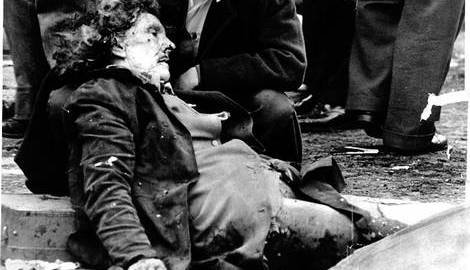
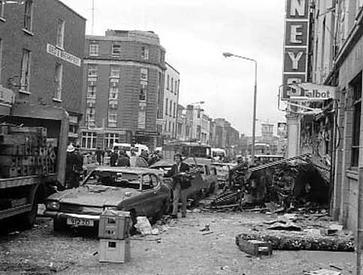

.JPG)


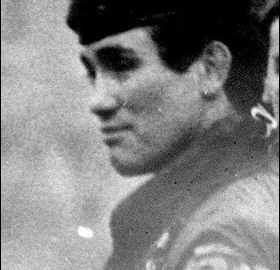


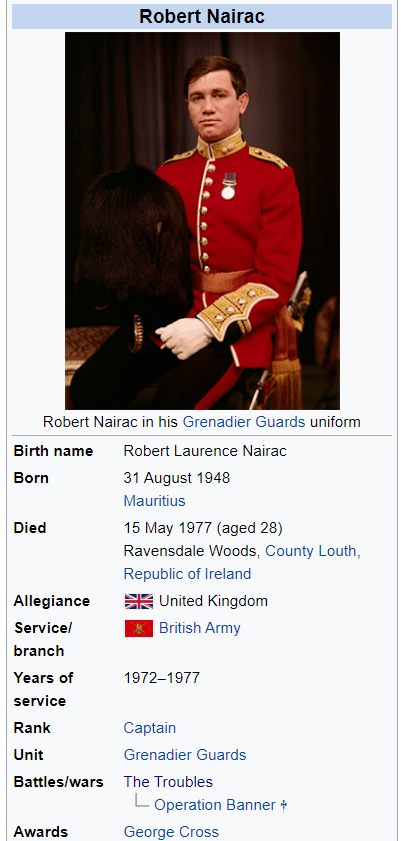


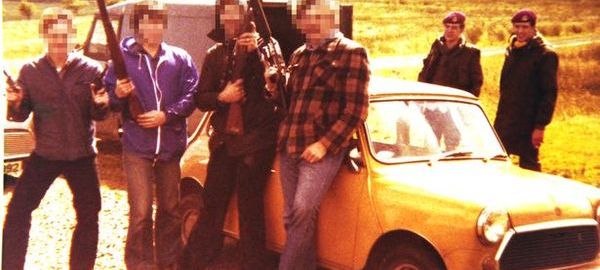




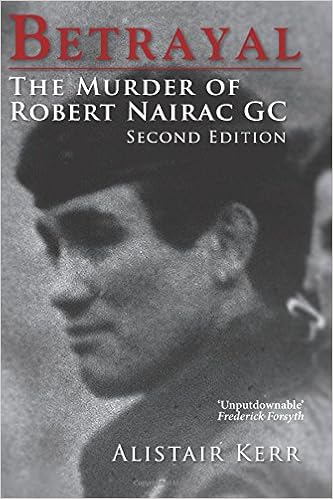



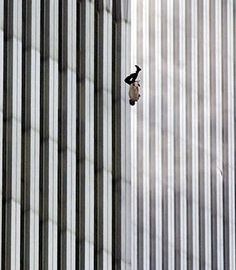


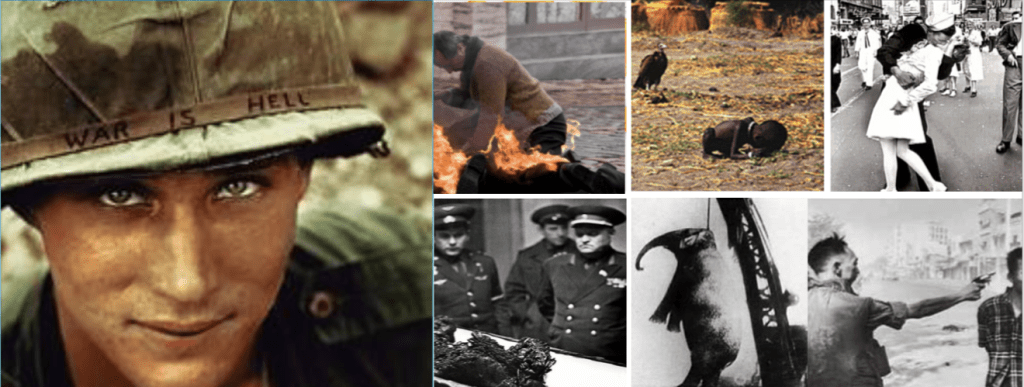

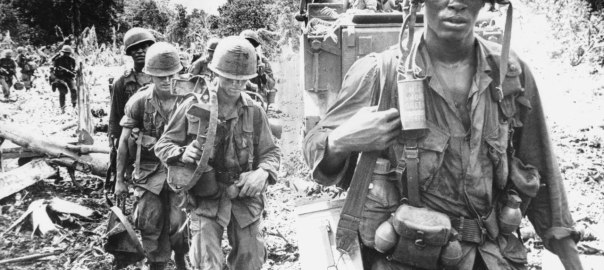

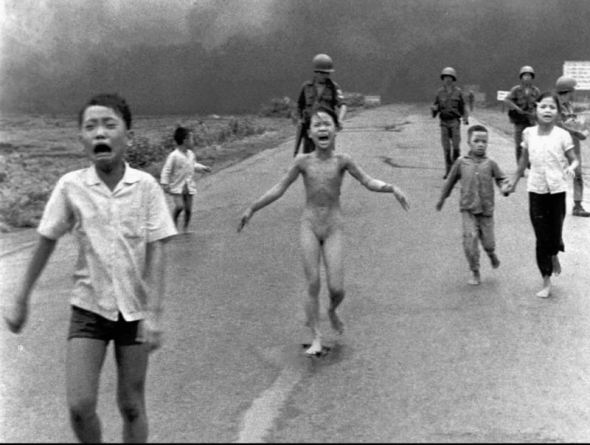
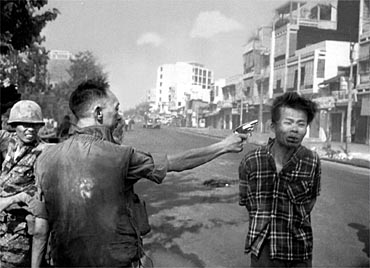


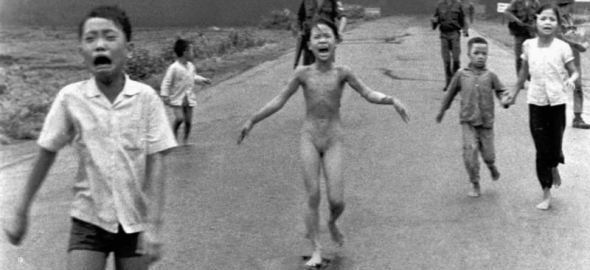

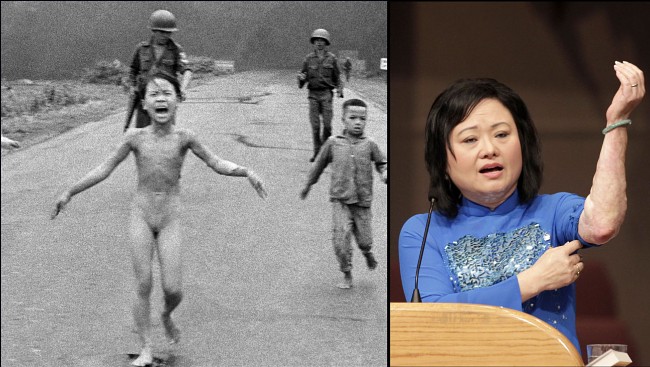
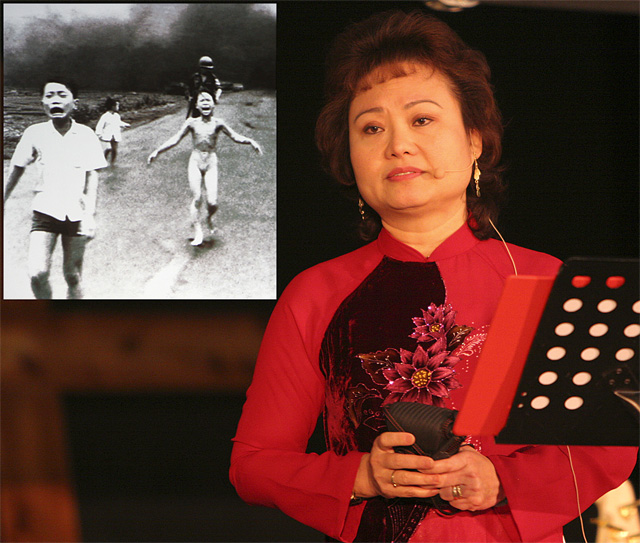


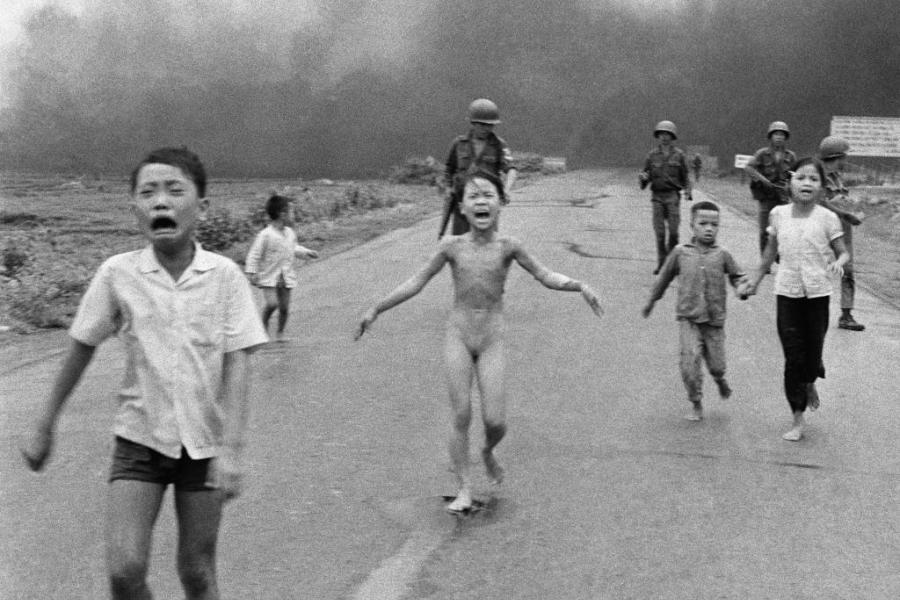




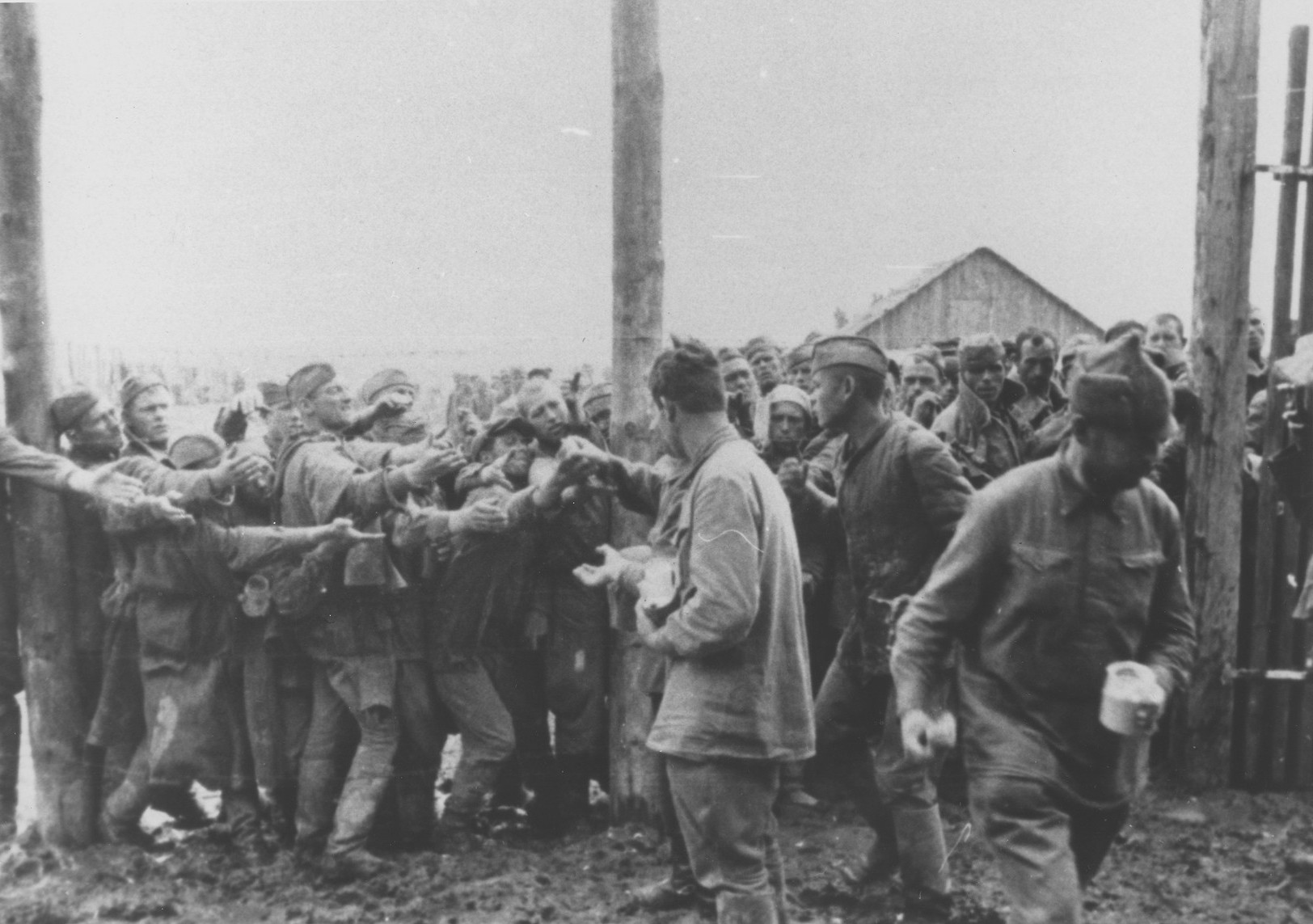


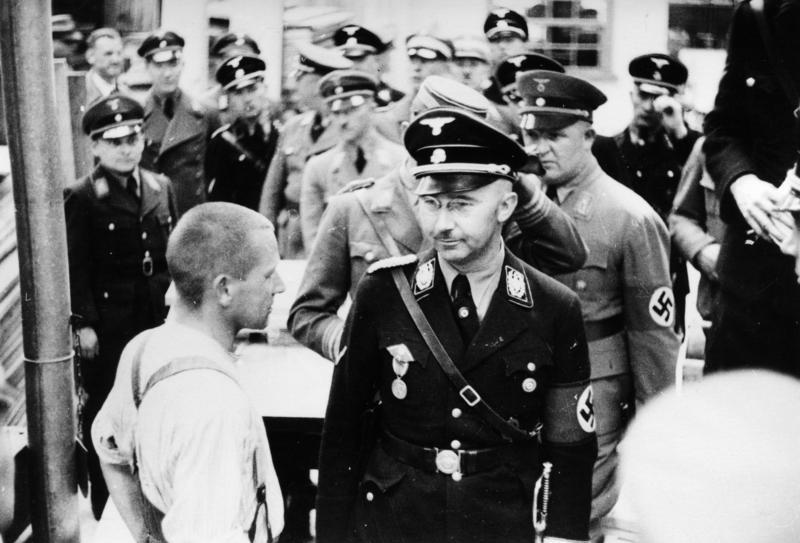




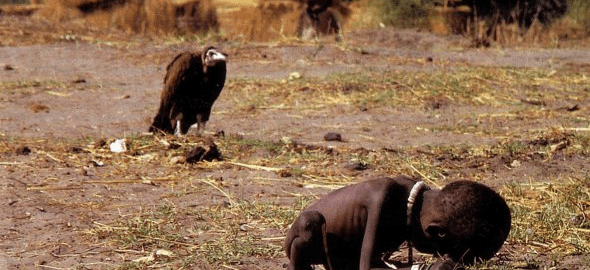


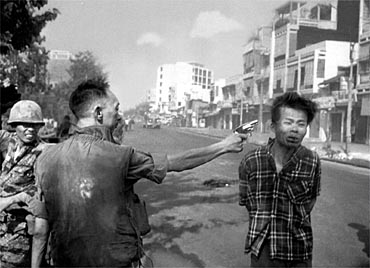


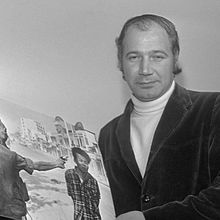

 belfastchildis.com
