30th March – Deaths & Events in Northern Ireland Troubles

Key Events & Deaths on this day in Northern Ireland Troubles

30th March

—————————————————–

Sunday 30 March 1969 Loyalist Bombs

There were a number of explosions at an electricity substation at Castlereagh, east Belfast. The explosions resulted in a blackout in a large area of Belfast and did damage estimated at £500,000.

[It was later established that the bombs were planted by Loyalists who were members of the Ulster Volunteer Force (UVF) and the Ulster Protestant Volunteers (UPV). This incident was initially blamed on the Irish Republican Army (IRA) and was part of a campaign by Loyalist groups to destabilise Terence O’Neill, then Northern Ireland Prime Minister, and bring an end to reforms. Other bombs were planted by Loyalists on 4 April 1969, 20 Arpil 1969, 24 April 1969, 26 April 1969, and 19 October 1969.]

Thursday 30 March 1972

Direct Rule Introduced

William Faulkner announces his resignation, heralding the beginning of direct rule

The legislation which introduced direct rule, the Northern Ireland (Temporary Provisions) Act, was passed at the House of Commons at Westminster.

[With the exception of a brief period in 1974, Northern Ireland was to be ruled from Westminster until 1999.]

Friday 30 March 1973

William Craig, and some other former members of the Ulster Unionist Party (UUP), formed a new political party the Vanguard Unionist Progressive Party (VUPP). The VUPP was formed with the support of the Ulster Defence Association (UDA).

[In addition to having close links with Loyalist paramilitary groups the VUPP also was prepared to accept an independent Northern Ireland because of the inevitable Unionist domination of any new government. Indeed the VUPP had one Loyalist paramilitary grouping, the Vanguard Service Corps (VSC) directly linked with the party.]

Saturday 30 March 1974

Two Protestant civilians were killed in a bomb attack on the Crescent Bar, Sandy Row, Belfast. No group claimed responsibility for the attack.

Tuesday 30 March 1976

The Northern Ireland Civil Rights Association (NICRA) called off its ‘rent and rates strike’ which had originally started as a campaign of civil disobedience against the introduction of Internment. [Many of those who had taken part in the protest were left with arrears and in many cases money was deducted from welfare benefit payments to recoup the amounts owing.]

Wednesday 30 March 1977
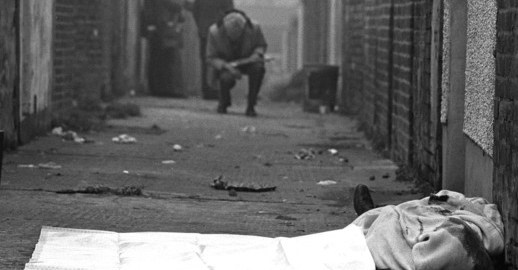
Shankill Butchers.

Francis Cassidy (43), a Catholic civilian, was found shot with his throat cut in the Highfield area of Belfast.

Members of he Ulster Volunteer Force (UVF) gang known as the ‘Shankill Butchers’ were responsible for the killing.

See Shankill Butchers

Friday 30 March 1979

Airey Neave Killed
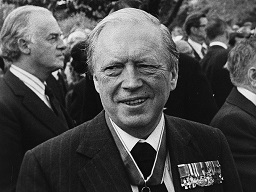
Airey-Neave 2 resized

Airey Neave, then Conservative Party spokesperson on Northern Ireland, was killed by a booby-trap bomb attached to his car as he left the car park at the House of Commons. The Irish National Liberation Army (INLA) claimed responsibility for the killing.

[If he had lived Neave would have been highly likely to have become the Secretary of State for Northern Ireland in the new Conservative government. Neave had been an advocate of a strong security response to counter Republican paramilitaries. Neave had also advocated the setting up of one or more regional councils to take responsibility for local services.]

See Airey Neave

Monday 30 March 1981

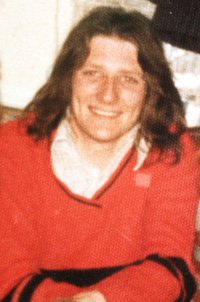
Noel Maguire decided to withdraw his nomination in the forthcoming by-election in Fermanagh / South Tyrone.

[This decision meant that voters were faced with a straight choice between Bobby Sands and Harry West, the Unionist candidate.] [ 1981 Hunger Strike.]

Friday 30 March 1990

It was announced that the report of the Stevens Inquiry would not be published.

Tuesday 30 March 1993

Radio Telefis Éireann (RTE) lost its appeal against a High Court decision that its blanket ban on broadcasting interviews with members of Sinn Féin (SF) was wrong and that Section 31 of the Broadcasting Act was being misinterpreted by the station. The five-judge Supreme Court unanimously upheld the High Court decision.

[In the High Court in July 1992, Mr. Justice O’Hanlon found that RTE, in deciding that no SF member should be permitted by reason of that membership to broadcast on any matter or topic, had misinterpreted the provisions of the ministerial order. In its appeal, RTE argued that the purpose of the order was to prevent its broadcasting system being used for the purpose of subverting or undermining the authority of the state.]

Wednesday 30 March 1994

The Irish Republican Army (IRA) announced that there would be a three day ceasefire from 6 April to 8 April 1994.

During a visit to Northern Ireland John Major, then British Prime Minister, said that what people wanted was a “permanent end to violence”.
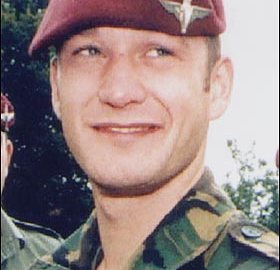
lee glegg

The appeal by Lee Clegg, a private in the Parachute Regiment, against his murder conviction was dismissed by Brian Hutton (Sir), then Lord Chief Justice.

[However, Clegg was released from prison on 3 July 1995 having served two years of a life sentence for the murder of Karen Reilly (16) on 30 September 1990.]

See Lee Clegg

Thursday 30 March 1995

The annual report of the Fair Employment Commission (FEC) noted that 62.7 per cent of the workforce was Protestant and 37.3 per cent Catholic. [Based on the 1991 Census, the estimated Catholic population was 41.5 per cent.]

Saturday 30 March 1996

Jim McDonnell (36), then a prisoner at Maghaberry Prison, was found dead of a ‘heart attack’.

[It was later revealed that he had a series of injuries, including 11 broken ribs, which the Prison Service said was a result of a fall or the attempts at resuscitation.]

Sunday 30 March 1997

A Loyalist paramilitary group planted a car bomb outside the offices of Sinn Féin (SF) in the New Lodge area of north Belfast. The bomb was defused.
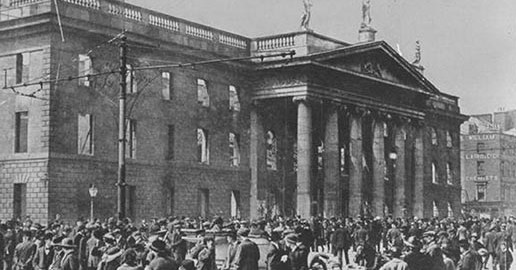
easter rising

Various Republican groups held commemorations of the Easter Rising, which took place in Dublin in 1916, at locations across Northern Ireland. The groups involved were: SF, Republican SF, the Workers’ Party, and the Official Republican Movement.

See Easter Rising

Tuesday 30 March 1999

Talks between Tony Blair, then British Prime Minister, and Bertie Ahern, then Taoiseach (Irish Prime Minister), continued at Hillsborough Castle in County Down. Efforts were being made to incorporate guarantees from Seamus Mallon, then Deputy First Minister Designate, that the Social Democratic and Labour Party (SDLP) would co-operate in excluding Sinn Féin (SF) from government if decommissioning failed to take place by a specific date.

Seven hours of talks adjourned at midnight without agreement. There were protests by Republicans and anti-Agreement Loyalists at Stormont, Belfast.

Rosemary-Nelson--001

The Royal Ulster Constabulary (RUC) together with the Independent Commission on Police Complaints (ICPC) issued a ‘review’ of a report based on an inquiry into the killing of Rosemary Nelson on 15 March 1999 and the allegations of death threats against Nelson made by members of the RUC.

The report had been prepared by Niall Mulvihill, then Commander of the Metropolitan Police in London, and had been submitted to the Director of Public Prosecutions. Nationalists criticised the ‘review’ and claimed it was an “exercise in damage limitation

See Rosemary Nelson

 ———————————————

Remembering all innocent victims of the Troubles

Today is the anniversary of the death of the following people killed as a results of the conflict in Northern Ireland

“To live in hearts we leave behind is not to die

– Thomas Campbell

To the innocent on the list – Your memory will live forever

– To the Paramilitaries –

There are many things worth living for, a few things worth dying for, but nothing worth killing for.

8  People lost their lives on the 30th March between 1972– 1987

—————————————————————————

30 March 1972
Martha Crawford,   (39)

Catholic
Status: Civilian (Civ),

Killed by: Irish Republican Army (IRA)
Shot during gun battle between British Army (BA) and Irish Republican Army (IRA), Rossnareen Avenue, Andersonstown, Belfast.

—————————————————————————

30 March 1974


William Thompson,  (43)

Protestant
Status: Civilian (Civ),

Killed by: non-specific Republican group (REP)
Killed in bomb attack on Crescent Bar, Sandy Row, Belfast.

—————————————————————————

30 March 1974


Howard Mercer,  (39)

Protestant
Status: Civilian (Civ),

Killed by: non-specific Republican group (REP)
Killed in bomb attack on Crescent Bar, Sandy Row, Belfast.

—————————————————————————

30 March 1976
Donald Traynor,   (28)

nfNI
Status: British Army (BA),

Killed by: Irish Republican Army (IRA)
Killed by booby trap bomb at Orange Hall, Ballygargan, near Portadown, County Armagh.

—————————————————————————

30 March 1977
Francis Cassidy,   (43)

Catholic
Status: Civilian (Civ),

Killed by: Ulster Volunteer Force (UVF)
Abducted while walking along New Lodge Road, Belfast. Found stabbed and shot a short time later, on grass verge, off Highfern Gardens, Highfield, Belfast.

—————————————————————————

30 March 1979


Airey Neave,  (63)

 nfNIB
Status: Civilian Political Activist (CivPA),

Killed by: Irish National Liberation Army (INLA)
Member of Parliament and Conservative Party Spokesman on Northern Ireland. Killed by booby trap bomb attached to his car at House of Commons, Westminster, London.

—————————————————————————

30 March 1979


Martin McConville,  (25)

Catholic
Status: Civilian (Civ),

Killed by: non-specific Loyalist group (LOY)
Beaten to death somewhere in Portadown, County Armagh. Body found in River Bann, beside Seagoe Industrial Estate, Portadown, County Armagh, on 22 April 1979.

—————————————————————————

30 March 1987
Ian O’Connor,  (23)

nfNI
Status: British Army (BA),

Killed by: Irish Republican Army (IRA)
Killed by grenade dropped on to stationary British Army (BA) vehicle from the balcony above, Divis Flats, Belfast.

—————————————————————————

If you would like more information on any of these events or deaths please visit the contact me page  and  me an email.


Airey Neave- The Assasination of Airey Neave

Airey Middleton Sheffield Neave

Airey Neave

23 January 1916 – 30 March 1979

Airey Middleton Sheffield Neave, DSO, OBE, MC, TD (23 January 1916 – 30 March 1979) was a British army officer, barrister and politician.

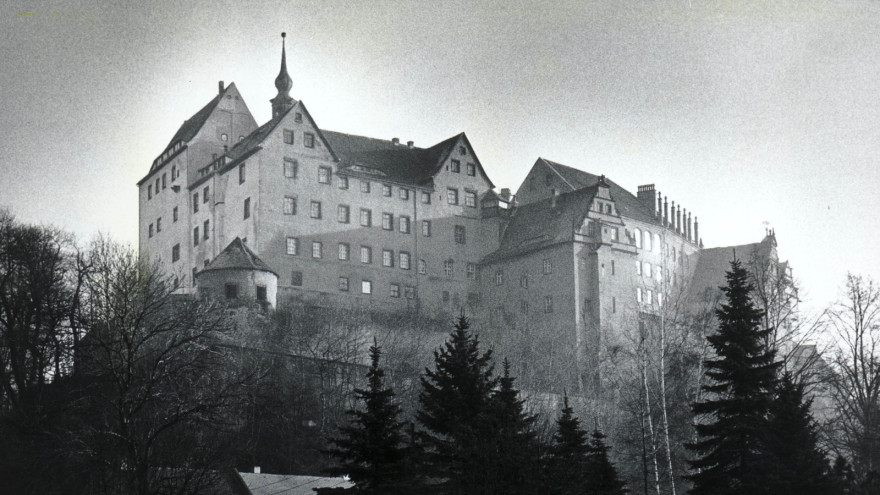
During World War II, Neave was the first British officer to successfully escape from the German prisoner-of-war camp Oflag IV-C at Colditz Castle. He later became Conservative Member of Parliament (MP) for Abingdon.

Neave was assassinated in 1979 in a car-bomb attack at the House of Commons. The Irish National Liberation Army (INLA) claimed responsibility.

——————————–

The Assasination of Airey Neave

——————————–

Early life

Neave was the son of Sheffield Airey Neave CMG, OBE (1879–1961), a well-known entomologist, and his wife Dorothy (d. 1943), the daughter of Arthur Thomson Middleton. His father was the grandson of Sheffield Neave, the third son of Sir Thomas Neave, 2nd Baronet (see Neave Baronets). Neave spent his early years in Knightsbridge in London, before he moved to Beaconsfield. Neave was sent to St. Ronan’s School, Worthing, and from there, in 1929, he went to Eton College.

He went on to study jurisprudence at Merton College, Oxford While at Eton, Neave composed a prize-winning essay in 1933 that examined the likely consequences of Adolf Hitler‘s rise to supreme power in Germany, and Neave predicted then that another widespread war would break out in Europe in the near future. Neave had earlier been on a visit to Germany, and he witnessed the Nazi German methods of grasping political and military power in their hands.

At Eton, Neave served in the school cadet corps as a cadet lance corporal, and received a territorial commission as a second lieutenant in the Oxfordshire and Buckinghamshire Light Infantry on 11 December 1935.]

When Neave went to Oxford University, he purchased and read the entire written works of the writer Carl von Clausewitz. When Neave was asked why, he answered:

“since war [is] coming, it [is] only sensible to learn as much as possible about the art of waging it”.

During 1938, Neave completed his third-class degree in the study of jurisprudence. By his own admission, while at Oxford University, Neave did only the minimal amount of academic work that was required of him by his tutors.

Wartime service

Neave transferred his territorial commission to the Royal Engineers on 2 May 1938  and following the outbreak of war he was mobilised. Sent to France in February 1940 as part of a searchlight regiment, he was wounded and captured by the Germans at Calais on 23 May 1940. He was imprisoned at Oflag IX-A/H near Spangenberg and in February 1941 moved to Stalag XX-A near Thorn in German-occupied western Poland. Meanwhile, Neave’s commission was transferred to the Royal Artillery on 1 August 1940.

In April 1941 he escaped from Thorn with Norman Forbes. They were captured near Ilow while trying to enter Soviet-controlled Poland and were briefly in the hands of the Gestapo. In May, they were both sent to Oflag IV-C (often referred to as Colditz Castle because of its location).

Image result for Colditz Castle

Neave made his first attempt to escape from Colditz on 28 August 1941 disguised as a German NCO. He did not get out of the castle as his hastily contrived German uniform (made from a Polish army tunic and cap painted with scenery paint) was rendered bright green under the prison searchlights.

Together with Dutch officer Anthony Luteyn he made a second attempt on 5 January 1942, again in disguise. Better uniforms and escape route (they made a quick exit from a theatrical production using the trap door beneath the stage) got them out of the prison and by train and on foot they travelled to Leipzig and Ulm and finally reached the border to Switzerland near Singen. Via France, Spain and Gibraltar, Neave returned to England in April 1942. Neave was the first British officer to escape from Colditz Castle.

On 12 May 1942, shortly after his return to England, he was decorated with the Military Cross. He was subsequently promoted to war substantive captain and to the permanent rank of captain on 11 April 1945. A temporary major at the war’s end, he was appointed an MBE (Military Division) on 30 August 1945, and awarded the DSO on 18 October.

As a result, the earlier award of the MBE was cancelled on 25 October.

He was later recruited as an intelligence agent for MI9. While at MI9, he was the immediate superior of Michael Bentine. He also served with the International Military Tribunal at the Nuremberg Trials, investigating Krupp. As a well-known war hero – as well as a qualified lawyer who spoke fluent German – he was honoured with the role of reading the indictments to the Nazi leaders on trial. He wrote several books about his war experiences including an account of the Trials.

A temporary lieutenant-colonel by 1947, he was appointed an OBE (Military Division) in that year’s Birthday Honours.[17] He was awarded the Bronze Star by the US government on 23 July 1948,  and was promoted to lieutenant-colonel on 1 April 1950, At the same time, his promotion to acting major was gazetted, with retroactive effect from 16 April 1948. He entered the reserves on 21 September 1951.

Political career

Neave stood for the Conservative Party at the 1950 election in Thurrock and at Ealing North in 1951. He was elected for Abingdon in a by-election in June 1953, but his career was held back by a heart attack he suffered in 1959.

He was a Governor of Imperial College between 1963 and 1971 and was a member of the House of Commons select committee on Science and Technology between 1965 and 1970.

Edward Heath, when Chief Whip, was alleged to have told Neave that after he suffered his heart attack his career was finished  but in his 1998 autobiography, Heath strongly denied ever making such a remark. He admitted that in December 1974 Neave had told him to stand down for the good of the party. During the final two months of 1974, Neave had asked Keith Joseph, William Whitelaw and Edward du Cann to stand against Heath, and said that in the case of any of them challenging for the party leadership, he would be their campaign manager.

When all three refused to stand, Neave agreed to be the campaign manager for Margaret Thatcher‘s attempt to become leader of the Conservative Party, that was eventually victorious.

When Thatcher was elected leader in February 1975, he was rewarded with the post of head of her private office. He was then appointed Shadow Secretary of State for Northern Ireland and was poised to attain the equivalent Cabinet position at the time of his death in the event of their party winning the general election of 1979. In opposition, Neave was a strong supporter of Roy Mason, who had extended the policy of Ulsterisation.

Neave was author of the new and radical Conservative policy of abandoning devolution in Northern Ireland if there was no early progress in that regard and concentrating on local government reform instead. This integrationist policy was hastily abandoned by Humphrey Atkins, who became Secretary of State for Northern Ireland, the role Neave had shadowed.

Tony Benn2.jpg

Politician Tony Benn records in his diary (17 February 1981) that a journalist from the New Statesman, Duncan Campbell, told him that he had received information from an intelligence agent two years previously that Neave had planned to have Benn assassinated if a Labour government was elected, James Callaghan resigned and there was a possibility that Benn might be elected party leader in his place. Campbell claimed that the agent was ready to give his name and the New Statesman was going to print the story.

Benn, however, discounted the validity of the story and wrote in his diary:

“No one will believe for a moment that Airey Neave would have done such a thing”.

The magazine printed the story on 20 February 1981, naming the agent as Lee Tracey. Tracey claimed to have met Neave and was asked to join a team of intelligence and security specialists which would “make sure Benn was stopped”. Tracey planned a second meeting with Neave but Neave was killed before they could meet again.

Assassination


Memorial plaque to Airey Neave at his alma mater, Merton College, Oxford


Airey Neave was killed on 30 March 1979, when a magnetic car bomb fitted with a ball bearing tilt switch exploded under his new Vauxhall Cavalier  at 14:58 as he drove out of the Palace of Westminster car park.

He lost his right leg below the knee and his left was hanging on by a flap of skin. Neave died in hospital an hour after being freed from the wreckage without regaining consciousness.

The Irish National Liberation Army (INLA), an illegal Irish republican paramilitary group, claimed responsibility for the killing.

—————————————————-

Margaret Thatcher speaking to the press immediately after the assassination of Airey Neave

—————————————————-

Conservative leader Margaret Thatcher led tributes, saying:

He was one of freedom’s warriors. No one knew of the great man he was, except those nearest to him. He was staunch, brave, true, strong; but he was very gentle and kind and loyal. It’s a rare combination of qualities. There’s no one else who can quite fill them. I, and so many other people, owe so much to him and now we must carry on for the things he fought for and not let the people who got him triumph.

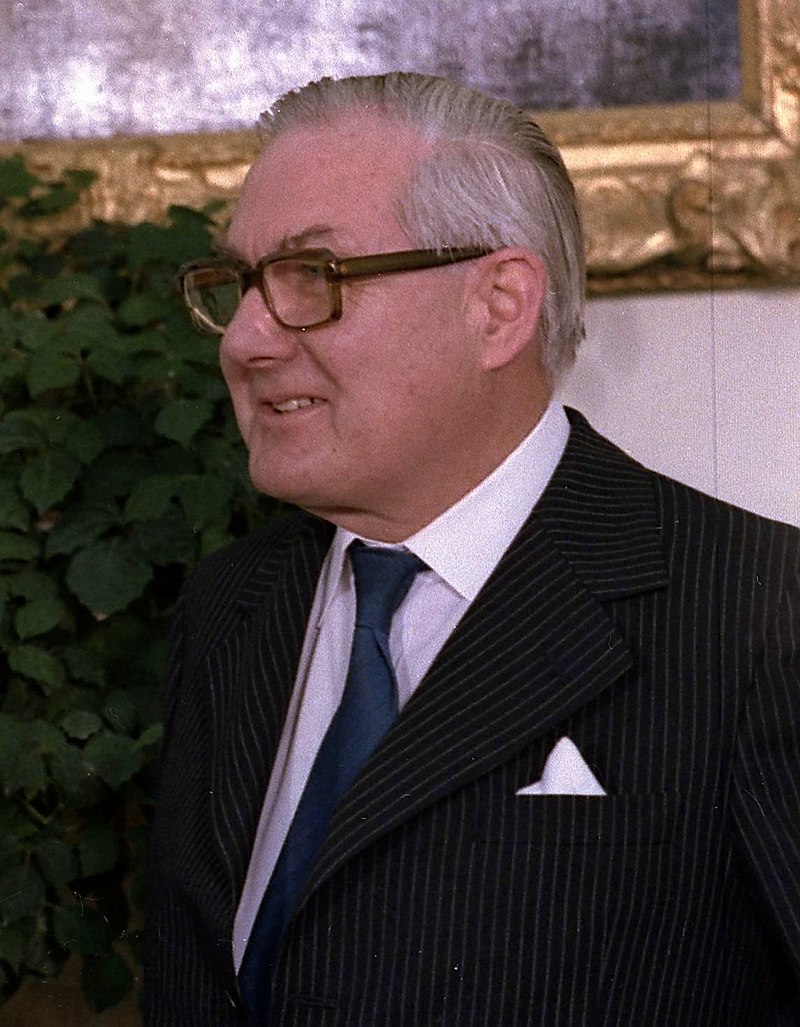
Labour Prime Minister James Callaghan said:

James Callaghan.JPG

“No effort will be spared to bring the murderers to justice and to rid the United Kingdom of the scourge of terrorism.”

The INLA issued a statement regarding the killing in the August 1979 edition of The Starry Plough:

In March, retired terrorist and supporter of capital punishment, Airey Neave, got a taste of his own medicine when an INLA unit pulled off the operation of the decade and blew him to bits inside the ‘impregnable’ Palace of Westminster. The nauseous Margaret Thatcher snivelled on television that he was an ‘incalculable loss’—and so he was—to the British ruling class.

Neave’s death came just two days after the vote of no confidence which brought down Callaghan’s government and a few weeks before the 1979 general election, which brought about a Conservative victory and saw Thatcher come to power as Prime Minister. Neave’s wife Diana, whom he married on 29 December 1942, was subsequently elevated to the House of Lords as Baroness Airey of Abingdon.

Neave’s biographer Paul Routledge met a member of the Irish Republican Socialist Party (the political wing of INLA) who was involved in the killing of Neave and who told Routledge that Neave:

“would have been very successful at that job [Northern Ireland Secretary]. He would have brought the armed struggle to its knees”.

Conspiracy theories

Whilst working in the House of Commons as Paddy Ashdown‘s research assistant, Kevin Cahill claims to have had around six conversations with the security staff there. The most frequent remark was that “everyone knew” the story behind Neave’s death but that no one could talk about it in detail because it would have been too dangerous. Cahill claims they did not believe INLA killed Neave but that it was an “inside job”.

Cahill concluded that Neave was killed by MI6 agents working with the CIA because Neave sought to prosecute senior figures in the intelligence establishment for corruption.

Another person who did not accept the generally accepted version of events was Enoch Powell, the Ulster Unionist MP. Powell claimed in an interview with The Guardian on 9 January 1984 that the Americans had killed Neave, along with Lord Mountbatten and Robert Bradford MP. He claimed the evidence came from a member of the Royal Ulster Constabulary with whom he had a conversation.

On 18 October 1986 Powell returned to the subject of Neave’s death in a speech to Conservative students in Birmingham. He told them that INLA had not killed Neave, but that he had been assassinated by “MI6 and their friends”. Powell claimed Neave’s Northern Ireland policy had been one of integration with the rest of the UK and that the Americans feared that this process, if implemented by Neave, would have been irreversible.

His killing, alleged Powell, was intended to make the British Government adopt a policy more acceptable to America in her aim of a united Ireland within NATO.

In 2014, 35 years after Neave’s death, it was reported that a fictionalised account of Neave’s murder was to be used in a Channel 4 drama. The drama, Utopia, portrays Neave as a drinker who colluded with spies and portrays his assassination as perpetrated by MI5.

This led to condemnation of the broadcaster, with Norman Tebbit (a friend and colleague of Neave and survivor of the Brighton hotel bombing in 1984) saying:

“To attack a man like that who is dead and cannot defend himself is despicable”.

Neave’s family, who had not been consulted about the programme, announced their intention to take action to prevent the programme from being broadcast, claiming it had “fictionalised the atrocity ‘in the name of entertainment’ as well as falsely depicting him as a debauched and conniving figure.

Main source: https: wikipedia

See: Ian Gow 

My book is now available to order online, see below for more details : 

29th March – Deaths & Events in Northern Ireland Troubles

Key Events & Deaths on this day in Northern Ireland Troubles

29th March

—————————————————–

Sunday 29 March 1970

There were serious disturbances in Derry following a march to commemoration the Easter Rising.

The British Army later established a cordon around parts of the Bogside.

Friday 29 March 1974

Two Catholic civilians were killed in a bomb attack on Conway’s public house, Greencastle, near Belfast. The bomb was planted by the Ulster Volunteer Force (UVF).

Tuesday 29 March 1977

There were reports that the Ulster Unionist Party (UUP) was boycotting the United Ulster Unionist Council (UUUC).

Thursday 29 March 1979

 Political Developments, Segregation

flag-one-752x501

See Segregation in Northern Ireland

Sunday 29 March 1981

The Social Democratic and Labour Party (SDLP) decided to withdraw the nomination of Austin Currie from the forthcoming by-election in Fermanagh / South Tyrone.

Thursday 29 March 1984

During the trial of John Robinson, a Royal Ulster Constabulary (RUC) officer, for the killing of Seamus Grew, a member of the Irish National Liberation Army (INLA), on 12 December 1982, Robinson said he had been ordered to lie about events leading up to the shooting.

He claimed that senior RUC officers had told him what to say and gave the reason as protecting Special Branch officers and an RUC informer in the Republic of Ireland.

[Robinson was later acquitted of the killing.]

on the situation in Northern Ireland which was drawn up on behalf of the Political Affairs Committee, was passed by the European Parliament by124 votes to 3. The report called for a power-sharing administration in Northern Ireland together with an integrated economic plan. The preparation of the report had been opposed by Unionists and the British government.


Tuesday 29 March 1994

The Ulster Freedom Fighters (UFF), a cover name (pseudonym) used by the Ulster Defence Association (UDA), launched a rocket and gun attack on a Sinn Féin (SF) office on the Falls Road, west Belfast.

A report published by the Fair Employment Commission (FEC) suggested that Catholic under-representation in the workplace was 5 per cent compared to 7 per cent in 1990.

Wednesday 29 March 1995

Michael Ancram, then Political Development Minister at the Northern Ireland Office (NIO), held a second meeting with representatives of the Ulster Democratic Party (UDP) and the Progressive Unionist Party (PUP).

Friday 29 March 1996

The Forum for Peace and Reconciliation in Dublin was suspended until a new Irish Republican Army (IRA) ceasefire has been established.

Saturday 29 March 1997

The Irish Republican Army (IRA) left a large bomb, estimated at 1,000 lbs, close to a British Army base at Ballykinlar, County Down. The bomb was defused by the army.

An Royal Ulster Constabulary (RUC) officer was shot in the leg at Forkhill, County Armagh.

Republican paramilitaries carried out two separate ‘punishment’ attacks in west Belfast. In one of the attacks a man was shot in the leg, in the other a teenager was beaten. Loyalist paramilitaries carried out two separate ‘punishment’ shooting attacks in Belfast.

A man was shot in the leg near the Ormeau Road, while a second man was shot in both hands near the Shore Road. An IRA underground firing range was discovered in the Republic of Ireland near Scotstown, County Monaghan.

Marjorie (Mo) Mowlam, then Labour Party spokesperson on Northern Ireland, said in a radio interview that an IRA ceasefire could allow Sinn Féin (SF) to enter the multi-party Stormont talks on 3 June 1997.

Sunday 29 March 1998

A Catholic family were forced to leave their home in the Greymount area of north Belfast following a petrol-bomb attack by Loyalists in the early hours of the morning. The house was badly damaged in the attack. The family were the subject of a prolonged campaign of sectarian intimidation.

The Sunday Telegraph (a British newspaper) published a report in which it claimed that a clandestine British Army unit called Force Research Unit (FRU) had links to Loyalist paramilitary groups. Although allegations about a similar unit known as Future Reaction Force (FRF) were made in 1992 (Dillon, 1992 ‘Stone Cold’) the report claimed that the unit was still operating in Northern Ireland.

Brian_Nelson_Loyalist

[Reports about the FRU were linked to Brian Nelson who was an intelligence officer for the Ulster Defence Association (UDA) but who was at the same time working for British Army intelligence.

Nelson was given intelligence reports on Republicans which he passed on to the UDA who made plans to carry out assassinations. At the time of the Stevens inquiry (which began on 14 September 1989) the security forces stated that they acted to prevent over 200 assassinations.

See Brian Nelson

However the Sunday Telegraphy claimed a number of the assassinations went ahead although the security forces had knowledge of what was planned. It was believed that as many as 15 murders could have been prevented. Sinn Féin (SF) called for a independent judicial inquiry into the latest allegations.]

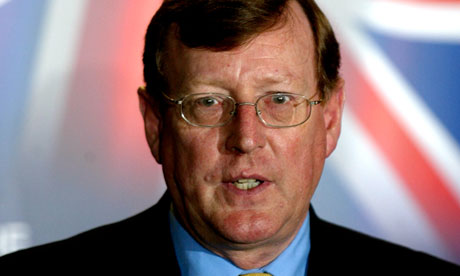
David Trimble, then leader of the Ulster Unionist Party (UUP), travelled to Chequers for a private meeting with Tony Blair, then British Prime Minister, about the final phase of the multi-party talks at Stormont. After years of controversy, the Irish Christian Brothers published a formal apology to all those in its care who had been mistreated. It invited all such people to seek help.

Monday 29 March 1999

Talks at Hillsborough

Tony Blair, then British Prime Minister, and Bertie Ahern, then Taoiseach (Irish Prime Minister), met at Hillsborough Castle for the opening round of meetings on decommissioning of paramilitary weapons. Loyalist paramilitaries carried out a bomb attack on the home of James McCarry, then a Sinn Féin (SF) councillor on Moyle District Council; no one was injured in the attack.

There were clashes between Republicans and Loyalists outside the Waterfront Hall, Belfast, where the Orange Order was holding a ‘cultural evening’.

The IRA announced it had identified the location of the bodies of nine people killed by the organisation between 1972 and 1981 and buried in secret.

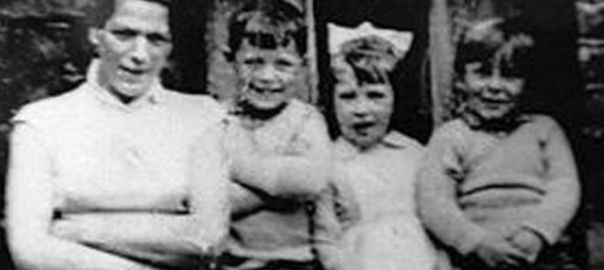
jeanmcconville2

The British and Irish governments said they were willing to facilitate the exhumation of the remains of the ‘missing’ by ensuring that any new evidence uncovered would not be used in subsequent criminal proceedings.

See The Disappeared

The Parades Commission announced that the planned Apprentice Boys of Derry (ABD) parade would be re-routed away from the lower Ormeau Road area of Belfast. Colin Part, then Deputy Chief Constable for Norfolk, was appointed to take over control of the investigation into the killing of Rosemary Nelson.

 ———————————————

Remembering all innocent victims of the Troubles

Today is the anniversary of the death of the following people killed as a results of the conflict in Northern Ireland

“To live in hearts we leave behind is not to die

– Thomas Campbell

To the innocent on the list – Your memory will live forever

– To the Paramilitaries –

There are many things worth living for, a few things worth dying for, but nothing worth killing for.

7  People lost their lives on the 29th March between 1972– 1992

—————————————————————————

29 March 1972


Bernard Calladene,   (39)

nfNI
Status: British Army (BA),

Killed by: Irish Republican Army (IRA)
Killed by booby trap bomb in abandoned car, Wellington Street, Belfast

—————————————————————————

29 March 1972
Ruby Johnston,   (35)

Protestant
Status: Civilian (Civ),

Killed by: not known (nk)
Died seven weeks after being badly burned during petrol bomb attack on bus, Ring Road, Armagh.

—————————————————————————

29 March 1973
Michael Marr,   (33)

nfNI
Status: British Army (BA),

Killed by: Irish Republican Army (IRA)
Shot by sniper while on British Army (BA) foot patrol, Andersonstown Park West, Andersonstown, Belfast.

—————————————————————————

29 March 1974


James Mitchell,  (38)

Catholic
Status: Civilian (Civ),

Killed by: Ulster Volunteer Force (UVF)
Killed in bomb attack on Conway’s Bar, Shore Road, Greencastle, Belfast.

—————————————————————————

29 March 1974


 Joseph Donnelly,   (24)

Catholic
Status: Civilian (Civ),

Killed by: Ulster Volunteer Force (UVF)
Killed in bomb attack on Conway’s Bar, Shore Road, Greencastle, Belfast.

—————————————————————————

29 March 1985


John Bell,  (34)

Protestant
Status: Royal Ulster Constabulary (RUC),

Killed by: Irish Republican Army (IRA)
Off duty reservist. Shot at his workplace, garage, Church Square, Rathfriland, County Down.

—————————————————————————

29 March 1992


Terence McConville,   (43)

Catholic
Status: Civilian (Civ),

Killed by: Ulster Volunteer Force (UVF)
Shot at his home, Bann Street, Portadown, County Armagh.

—————————————————————————


The Crusades – Christians vs Muslims – What”s it all about?

The Crusades – Muslims vs Christians The Crusades were military campaigns sanctioned by the Catholic Church in the Middle Ages. Pope Urban II authorized the First Crusade in 1095 with the goa…

Source: The Crusades – Christians vs Muslims – What”s it all about?

Khaled al-Asaad. Slaughtered by Animals – Now with those he loved & Studied. R.I.P

Thinking of Khaled al-Asaad who loved this place

belfastchildis's avatar

Khaled al-Asaad

1934 – 18 August 2015

R.I.P

—————————————————————–

UPDATED

28th March 2016

Syrian government troops advance towards Palmyra

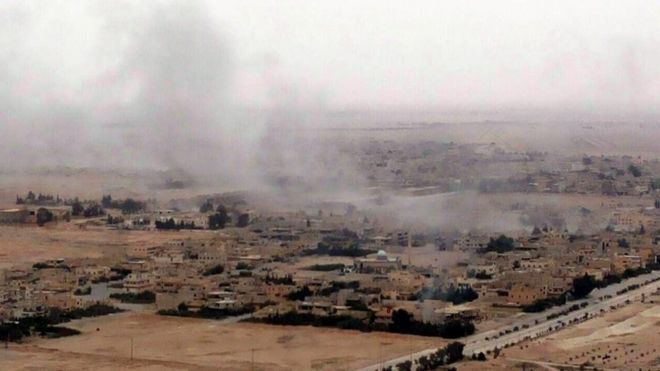
Thinking of Khaled al-Asaad who loved this place and died protecting it from the deluded followers of Islamic State and their twisted , obscene take on Islam. Although to late to save his life and the ancient sites he loved and studied – hopefully he will be looking down from  heaven and rejoicing at its recapture and the news that the damage was not as great as first thought.

Rest in peace Khaled – Now with those you loved and studied.

 The retaking of Palmyra by the Syrian army ends 10 months of occupation by the so-called Islamic State (IS). It is an important step in the containment and eventual defeat of the jihadist group that has seized swathes of Syria and Iraq.

It may not mean the end for IS, whose heartlands of Raqqa, Deir Ezzor, and Mosul remain…

View original post 11,635 more words

ISlamic State Crucify Catholic Priest ?

Church leaders deny reports Catholic priest was crucified by ISIS on Good Friday

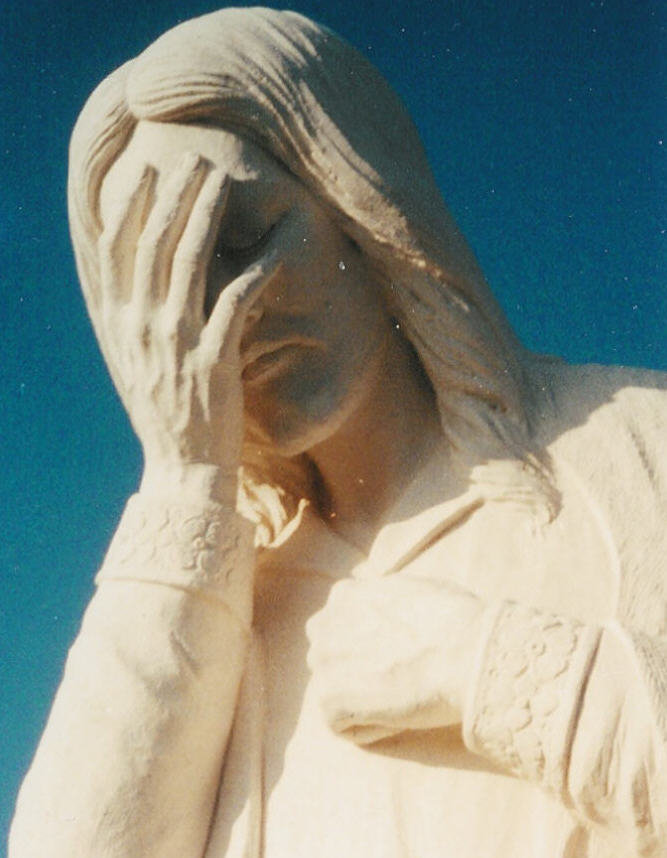
jesus weeping

If this story turns out to be true and  Islamic State have crucified this priest they  have sunk to new depths of depravity that should outrage and disgust all right minded people the world over.

Their twisted take of on Islam seems to thrive on outrageous acts of barbarity and inhuman treatment of those opposed to their sick ideology and they seem to get off in shocking the world with one atrocity after another. To my mind no religion in the history of mankind has ever shown such casual and brutal disregard to human life andd these merchants of death are the devil incarnated.

Karma is watching and Karma always collects its debts

The chief Catholic bishop in Arabia denied Monday reports that the Islamic State had crucified a Catholic priest on Good Friday, and the cardinal responsible for the initial reports walked back his words also.

————————————–

ISIS Abducts Indian Priest

————————————–

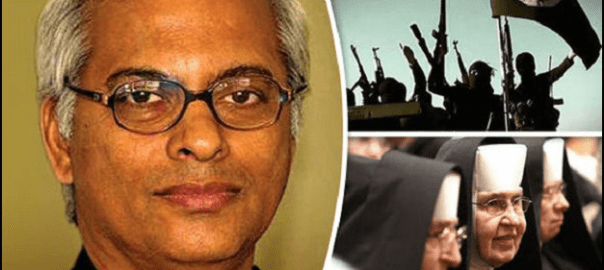
The Rev. Thomas Uzhunnalil, a Salesian priest, was kidnapped in Yemen in early March during a raid on a nursing home run by Mother Teresa’s Missionaries of Charity. His ISIS kidnappers, who also killed 16 Christian nuns, nurses and patients, had issued threats to execute him& sing the same method used by the Romans on Jesus and marked on Good Friday every year.

———————————————–

Indian Priest Kidnapped By ISIS In Yemen To Be Crucified On Good Friday

———————————————–

According to a report in the Salzburg News, Cardinal Christoph Schonborn of Vienna said at his Easter Vigil Mass that the Islamist group had followed through on those threats. There had been no official confirmation from the priest’s order, the responsible diocese or the Vatican.

However, after numerous news outlets, including The Washington Times, picked up Cardinal Schonborn’s words, Bishop Paul Hinder of Southern Arabia said the cardinal had been misinformed.

Bishop Hinder told Catholic News Agency on Monday that he has “strong indications that Fr. Tom is still alive in the hands of the kidnappers.”

The bishop also told CNA that Cardinal Schonborn’s statement at the Easter Mass was made in error — hearsay based on rumors from India, the native land of Father Uzhunnalil.
In a statement Monday on its website, the Archdiocese of Vienna also walked back Cardinal Schonborn’s reported words and repeated Bishop Hinder’s words that “there is still uncertainty” about the Indian priest’s fate.
According to the archdiocese, Cardinal Schonborn spoke with bishops from Arabia on Sunday and said “there is still hope.”

Father Uzhunnalil had been the object of both prayers and diplomatic efforts since the March 4 raid in which Islamic State attackers killed four nuns. Pope Francis consequently praised the nuns as martyrs.

Bishop Hinder said the Missionaries’ home had been the object of numerous threats but they refused to leave.

See Washington Times for full story


28th March – Deaths & Events in Northern Ireland Troubles

Key Events & Deaths on this day in Northern Ireland Troubles

28th March

Tuesday 28 March 1972

Two people were killed in a bomb attack on the RUC station in Limavady, County Derry.

On the second day of the Ulster Vanguard strike a rally was organised at Stormont, Belfast, attended by an estimated 100,000 people.

The last sitting of the Northern Ireland parliament at Stormont took place.

Wednesday 28 March 1973

A ship (the ‘Claudia’) was intercepted off the Waterford coast in the Republic of Ireland. It was found to contain 5 tonnes of weapons which were on route to the Irish Republican Army (IRA).

Wednesday 28 March 1979

Labour Government Lost Vote of Confidence

The Labour government is defeated in a vote of confidence by 311 to 310 votes. The votes of Northern Ireland Members of Parliament (MPs) were decisive in bringing down the government. Eight Unionists voted against the government, two Ulster Unionist Party (UUP) MPs voted with the government, and Gerry Fitt, then leader of the Social Democratic and Labour Party (SDLP), and Frank Maguire, an independent Nationalist MP, both abstained.

[Fitt had decided to withdraw his support from the Labour government over its failure to act on all the recommendations of the Bennett Report. Maguire who had a policy of abstention from Westminster did in fact travel to the House of Commons on this occasion. He later commented, “you could say I came over to London to abstain in person”. The loss of the vote of confidence was to trigger a general election on 3 May 1979 which would return a Conservative government with Margaret Thatcher as Prime Minister.]

Saturday 28 March 1981

Ian Paisley, then leader of the Democratic Unionist Party (DUP), addressed a rally, estimated at 30,000 people, at Stormont to protest against the on-going talks between the British and Irish governments.

Thursday 28 March 1991

The Ulster Volunteer Force (UVF) under the cover of ( Protestant Action Force (PAF) ) carried out a gun attack on a mobile shop in Craigavon, County Armagh, and killed three Catholic civilians.


Eileen Duffy & Katrina Rennie

Two of the people killed were teenage girls.

Sunday 28 March 1993

John Hume, then leader of the Social Democratic and Labour Party (SDLP), suggested that the two governments might impose a blueprint for a political settlement in Northern Ireland backed by a referendum.

The Sunday Telegraph (a British newspaper) published details of a poll of the opinions of a sample of people living in England on the Northern Ireland issue. Of those questioned 56 per cent said that they no longer wanted the region to remain in the United Kingdom (UK).

Tuesday 28 March 1995

Sinn Féin (SF) travelled to Dublin for a meeting with John Bruton, then Taoiseach (Irish Prime Minister), and Dick Spring, then Tánaiste (deputy Irish Prime Minister and Minister for Foreign Affairs).

[The discussions were on the issue of the decommissioning of paramilitary weapons.]

Sunday 28 March 1999

In an article in The Observer (a London based newspaper) Tony Blair, then British Prime Minister, and Bertie Ahern, then Taoiseach (Irish Prime Minister), appealed for the implementation of the Good Friday Agreement.

John Taylor, then Deputy Leader of the Ulster Unionist Party (UUP), said that David Trimble, then leader of UUP, might have to resign as First Minister if the d’Hondt mechanism was triggered to allocate positions on the Executive. A young couple who had suffered severe burns in the Omagh bombing on 15 August 1998 were married in the town.

 ———————————————

Remembering all innocent victims of the Troubles

Today is the anniversary of the death of the following people killed as a results of the conflict in Northern Ireland

“To live in hearts we leave behind is not to die

– Thomas Campbell

To the innocent on the list – Your memory will live forever

– To the Paramilitaries –

There are many things worth living for, a few things worth dying for, but nothing worth killing for.

9  People lost their lives on the 28th March between 1972– 1991

—————————————————————————

28 March 1972
Joseph Forsyth  (57)

Protestant
Status: Civilian (Civ),

Killed by: Irish Republican Army (IRA)
Killed in van bomb explosion outside Limavady Royal Ulster Constabulary (RUC) base, County Derry. Driving past at the time of the attack.

—————————————————————————

28 March 1972
Robert McMichael, (27)

Protestant
Status: Civilian (Civ),

Killed by: Irish Republican Army (IRA)
Killed in van bomb explosion outside Limavady Royal Ulster Constabulary (RUC) base, County Derry. Driving past at the time of the attack.

—————————————————————————

28 March 1974
James Macklin,  (28)

nfNI
Status: British Army (BA),

Killed by: Irish Republican Army (IRA)
Died seven days after being shot by sniper while on British Army (BA) mobile patrol, Antrim Road, Belfast.

—————————————————————————

28 March 1977
Hester McMullan,   (63)

Protestant
Status: Civilian (Civ),

Killed by: Irish Republican Army (IRA)
Shot at her home, Crosskeys, near Toome, County Antrim. Her off-duty RUC son was the intended target.

—————————————————————————

28 March 1982

Norman Duddy,  (45)

Protestant
Status: Royal Ulster Constabulary (RUC),

Killed by: Irish Republican Army (IRA)
Off duty. Shot shortly after leaving church, Patrick Street, off Strand Road, Derry.

—————————————————————————

28 March 1990


George Starrett,   (58)

Protestant
Status: Royal Ulster Constabulary (RUC),

Killed by: Irish Republican Army (IRA)
Off duty. Shot at his home, Newry Road, Armagh.

—————————————————————————

28 March 1991


Eileen Duffy,   (19)

Catholic
Status: Civilian (Civ),

Killed by: Protestant Action Force (PAF)
Shot during gun attack on mobile shop, Drumbeg South, Craigavon, County Armagh

—————————————————————————

28 March 1991


Katrina Rennie,   (16)

Catholic
Status: Civilian (Civ),

Killed by: Protestant Action Force (PAF)
Shot during gun attack on mobile shop, Drumbeg South, Craigavon, County Armagh

—————————————————————————

28 March 1991


Brian Frizzell,  (29)

Catholic
Status: Civilian (Civ),

Killed by: Protestant Action Force (PAF)
Shot during gun attack on mobile shop, Drumbeg South, Craigavon,County Armagh.

—————————————————————————


27th March – Deaths & Events in Northern Ireland Troubles

Key Events & Deaths on this day in Northern Ireland Troubles

27th March

————————————-

Saturday 27 March 1971

The Alliance Party of Northern Ireland (APNI) held its first Annul Conference  in the Ulster Hall in Belfast. The APNI was launched on 21 April 1970.

Sunday 26 March 1972

William Whitelaw, was appointed as the first Secretary of State for Northern Ireland.

Tuesday 27 March 1973

The governing body of the Ulster Unionist Party (UUP) the Ulster Unionist Council held a meeting to decide its position with regard to the White Paper published by the government on 20th March 1973.

 The council voted by 381 to 231 votes to accept the White Paper. Nevertheless, there remain strong opposition to the proposals even among those who decided to support Brian Faulkner. [Following the vote a number of members of the UUP left to form a new political grouping on 30th March 1973

Thursday 27 March 1975

 Senior members of the Ulster Defence Association (UDA) began a three day ‘conference’ to consider political options for the future. The meeting was held in Hotel Frommer in Holland. A brief note of the discussions that took place was written by ‘independent observers’ (PDF; 439KB).

Monday 27 March 1989

(c) Durham University; Supplied by The Public Catalogue Foundation

The 300th anniversary of the ‘Siege of Derry’ was celebrated by the Apprentice Boys of Derry.

——————————————————

——————————————————

See Siege of Derry

Thursday 27 March 1997

The Royal Ulster Constabulary (RUC) uncovered a Loyalist arms cache in Carrickfergus, County Antrim.

Loyalist paramilitaries carried out two separate ‘punishment’ shootings on two men in north Belfast.

Members of the Spirit of Drumcree (SOD) group disrupted a meeting of the County Antrim Orange Order Lodge. The meeting had been called to allow Robert McIlroy, then County Grand Master, to explain the compromise that had been reached between the Lodge and the residents of Dunloy. The compromise had been brokered by Mediation Network.

Robert Salters, then Grand Master, criticised Joel Patton, then leader of SOD, for “stirring things up”. Patton called on Salters to resign.

The Northern Ireland Prison Service announced changes to the regime at the Maze Prison. Some leisure facilities were withdrawn and more regular head counts were introduced.

One of the main witnesses in Germany against Roisín McAliskey, then being held in prison awaiting a decision about extradition, denied ever seeing her when shown a photograph of McAliskey on Kontraste Sender Freies Berlin, a German television programme.

Brian Pearson, a former Irish Republican Army (IRA) prisoner, was granted political asylum in the United States of America by a New York immigration court.

Friday 27 March 1998

Cyril Stewart, a former member of the Royal Ulster Constabulary (RUC) , was shot dead by Republican paramilitaries [believed to be the Irish National Liberation Army (INLA)] at Dobbin Street in the centre of Armagh.

He was shot dead after he left a local supermarket where he had been shopping with his wife. Stewart had left the RUC a few months prior to his shooting because of ill-health. Seamus Mallon, then Member of Parliament (MP) for Armagh and Newry, described the attack as an act of “absolute savagery”.

Saturday 27 March 1999

The Orange Order held a meeting in Belfast at which it was decided that the Order would hold a single Twelfth of July demonstration at Drumcree, County Armagh, if the dispute over the parade was not resolved.

The meeting was read a statement by Jonathan Powell, then the Prime Minister’s chief of staff, which indicated Tony Blair’s high esteem for the Order and his belief that it could play “and important and constructive part in the future of Northern Ireland

Monday 27 March 2000

Bloody Sunday Inquiry

Edward_Daly_Bloody_Sunday

The Saville Inquiry into the events of Bloody Sunday began public hearings at the Guildhall in Derry. The hearings began with a statement by Christoper Clarke (QC), then counsel to the Inquiry.

See Bloody Sunday

 ———————————————

Remembering all innocent victims of the Troubles

Today is the anniversary of the death of the following people killed as a results of the conflict in Northern Ireland

“To live in hearts we leave behind is not to die

– Thomas Campbell

To the innocent on the list – Your memory will live forever

– To the Paramilitaries –

There are many things worth living for, a few things worth dying for, but nothing worth killing for.

10  People lost their lives on the 27th  March between 1973– 1998

—————————————————————————

27 March 1973


Patrick McCabe   (16)

Catholic
Status: Irish Republican Army Youth Section (IRAF),

Killed by: British Army (BA)
Shot by British Army (BA) sniper from Flax Street British Army (BA) base, while walking along Etna Drive, Ardoyne, Belfast.

—————————————————————————

27 March 1973
Andrew Somerville,  (20)

nfNI
Status: British Army (BA),

Killed by: Irish Republican Army (IRA)
Killed in land mine attack on British Army (BA) mobile patrol, Ballymacilroy, near Ballygawley, County Tyrone.

—————————————————————————

27 March 1979


Gerry Evans,  (24)

Catholic
Status: Civilian (Civ),

Killed by: Irish Republican Army (IRA)
From Northern Ireland. Abducted while walking along road, near Castleblayney, County Monaghan, Republic of Ireland. His remains eventually found by information supplied anonymously, buried in bogland, Carrickrobin, near Dundalk, County Louth, on 15 October 2010.

—————————————————————————

27 March 1981
John Smith,  (25)

Protestant
Status: Ulster Defence Regiment (UDR),

Killed by: Irish Republican Army (IRA)
Off duty. Shot while on his way to work, Cromac Street, Markets, Belfast.

—————————————————————————

27 March 1981


Paul Blake,  (26)

Catholic
Status: Civilian (Civ),

Killed by: Ulster Defence Association (UDA)
Shot from passing car while walking along Berwick Road, Ardoyne, Belfast.

—————————————————————————

27 March 1982
Stephen Boyd,  (25)

Protestant
Status: Ulster Defence Association (UDA),

Killed by: non-specific Loyalist group (LOY)
Shot while inside King Richard Tavern, Castlereagh Road, Belfast.

—————————————————————————

27 March 1984
David Ross,  (31)

nfNI
Status: British Army (BA),

Killed by: Irish Republican Army (IRA)
Killed by remote controlled bomb, hidden in parked van, detonated when British Army (BA) civilian-type mini bus passed, near Gransha Hospital, Clooney Road, Derry.

—————————————————————————

27 March 1985
Anthony Dacre,   (25)

nfNI
Status: British Army (BA),

Killed by: Irish Republican Army (IRA)
Killed by remote controlled bomb, hidden behind door, detonated when British Army (BA) foot patrol passed, Divis Flats, Belfast.

—————————————————————————

27 March 1992


Colleen McMurray,   (34)

Protestant
Status: Royal Ulster Constabulary (RUC),

Killed by: Irish Republican Army (IRA)
Killed in horizontal mortar attack on Royal Ulster Constabulary (RUC) armoured patrol car, Merchants Quay, Newry, County Down.

—————————————————————————

27 March 1998


Cyril Stewart,  (52)

Protestant
Status: ex-Royal Ulster Constabulary (xRUC),

Killed by: Irish National Liberation Army (INLA)
Shot, outside supermarket, off Dobbin Street Lane, Armagh.

—————————————————————————


26th March – Deaths & Events in Northern Ireland Troubles

Key Events & Deaths on this day in Northern Ireland Troubles

26th March

——————————-

Thursday 26 March 1970

The Police (Northern Ireland) Act became law. The act provided for the disarmament of the Royal Ulster Constabulary (RUC) and the establishment of an RUC reserve force. The Act established the Police Authority of Northern Ireland (PANI) which was meant to contain representatives from across the community.

[None of the main Nationalist parties have ever taken part in the PANI.]

Sunday 26 March 1972

William Whitelaw, was appointed as the first Secretary of State for Northern Ireland.

Tuesday 26 March 1974

[ Sunningdale; Ulster Workers’ Council Strike. ]

Friday 26 March 1976

The Prevention of Terrorism Act (1976) took effect in Northern Ireland.

Sunday 26 March 1978

At the Irish Republican Army (IRA) annual Easter Rising commemorations a number of speakers state that the campaign in Northern Ireland would be intensified.

Wednesday 26 March 1980

Announcement of End to Special Category Status

It was announced that as from 1 April 1980 there would be no entitlement to special category status for members of paramilitary organisations regardless of when the crimes had been committed.

[A policy change announced in March 1976 had ended special category status to people sentenced after that date for scheduled offences. The decision to end special category privileges for paramilitary prisoners led to a protest campaign by Republicans in prisons across Northern Ireland. The protests began on 15 September 1976 when Kieran Nugent refused to wear prison issue clothes and covered himself with a blanket; hence the ‘blanket protest’. The protest was to escalate and led eventually to two hunger strikes, one in 1980 and the most serious in 1981.]

Thursday 26 March 1981

Bobby Sands was nominated as a candidate in the by-election in Fermanagh / South Tyrone on 9 April 1981.

Friday 26 March 1982

The Irish Republican Army (IRA) said that it would grant an ‘amnesty’ to any informers who retracted evidence given to the security forces.


Thursday 26 March 1987

A feud between the Irish National Liberation Army (INLA) and the Irish People’s Liberation Organisation (IPLO) ended. It had begun with two deaths on 20 January 1987 and in total claimed 11 lives.

Tuesday 26 March 1991

Peter Brooke, then Secretary of State for Northern Ireland, announced that the political talks (later known as the Brooke / Mayhew talks) would involve a three-strand process. This process was to include relationships within Northern Ireland and achieving a devolved government (‘strand one’ of the talks), between Northern Ireland and the Republic of Ireland (‘strand two’), and between the British and Irish Governments (‘strand three’).

In addition the three strands were to form a complete agreement – ‘nothing is agreed until everything is agreed’.

Friday 26 March 1993

The Royal Ulster Constabulary (RUC) uncovered five tons of fertiliser in west Belfast. The fertiliser was of a type that was used to manufacture home made bombs.

Tuesday 26 March 1996

The Police Authority published its Consultation Report. The parts of the report dealing with the Royal Ulster Constabulary (RUC) recommended no change to the name, uniform, or oath of allegiance to the Crown. It was suggested that letterheads used by the RUC should include the adjunct, Northern Ireland’s Police Service. David Cook, who had been sacked from the Police Authority on 8 March 1996, claimed that the report had been “watered down”.

Wednesday 26 March 1997

Gareth Doris (19), was shot and seriously wounded by Special Air Service (SAS) undercover soldiers in Coalisland, County Tyrone.

It was alleged that Doris was in the act of throwing a bomb at Coalisland Royal Ulster Constabulary (RUC) station when he was shot. Seamus Rice, a Catholic priest from the area, escaped injury when his car was hit by SAS bullets.

A confrontation developed between the SAS and local residents and shots were fired in the air to disperse the crowd.

The Irish Republican Army (IRA) planted two bombs at Windslow Railway Station in the north-west of England. The bombs caused widespread disruption to the rail network. The IRA also issued its annual Easter statement in which it confirmed its continuing objective of ending British rule, but added the IRA’s “willingness to facilitate … inclusive negotiations”.

Following the recommendation of the North Report, the five members of the Parades Commission were named. They were: Alistair Graham, Chairman, who was a former trade unionist; Frank Guckian, a businessman; David Hewitt, a solicitor; Roy Magee, a Presbyterian Minister who helped establish the 1994 Loyalist ceasefire; and Berna McIvor (?), who had been John Hume’s election agent. [The appointment of McIvor drew immediate criticisms from the Orange Order.]

Thursday 26 March 1998

The Democratic Unionist Party (DUP) published a Northern Ireland Office (NIO) document which had been leaked to the party. The document set out a detailed plan to try to obtain public support for any agreement reached during the multi-party talks at Stormont. Unionists attacked the document and claimed the government was using deceit and taxpayers money to manipulate public opinion.

Marjorie (Mo) Mowlam, then Secretary of State for Northern Ireland, defended the document and accused some of her own civil servants and the DUP of not wanting an agreement. Colin Duffy, then a Republican activist based in Armagh, accused the security forces of being behind a series of posters which appeared in the town.

The posters bore the photograph of Duffy and part of the caption read: “This is north Armagh Republican terrorist Colin Duffy. If you see him in a Loyalist area contact the security forces or a leading Loyalist immediately.” Duffy said that he felt that he was being set up for assassination. David Trimble, then leader of the Ulster Unionist Party (UUP), travelled to London for a meeting with Tony Blair, then British Prime Minister. The UUP insisted that the details of the meeting be kept private.

Friday 26 March 1999

A man in the Creggan area of Derry was shot in a paramilitary ‘punishment’ attack. The Loyalist Volunteer Force (LVF) warned that there would be a great strain on its ceasefire if the Irish Republican Army (IRA) did not begin decommissioning. John Hume, then leader of the Social Democratic and Labour Party (SDLP), donated all of his £286,000 Nobel Peace Prize cash to victims of violence and poverty in Northern Ireland.


——————————————————————

Remembering all innocent victims of the Troubles

Today is the anniversary of the death of the following people killed as a results of the conflict in Northern Ireland

“To live in hearts we leave behind is not to die

– Thomas Campbell

To the innocent on the list – Your memory will live forever

– To the Paramilitaries –

There are many things worth living for, a few things worth dying for, but nothing worth killing for.

4 People lost their lives on the 26th March between 1972– 1986

—————————————————————————

26 March 1972
Ingram Beckett,   (37)

Protestant
Status: Ulster Defence Association (UDA),

Killed by: Ulster Defence Association (UDA)
Found shot, Conlig Street, Shankill, Belfast. Internal Ulster Defence Association dispute.

—————————————————————————

26 March 1973


Samuel Martin,  (33)

Protestant
Status: Civilian (Civ),

Killed by: British Army (BA)
Shot by British Army (BA) sniper, from observation post in Newtownhamilton British Army (BA) / Royal Ulster Constabulary (RUC) base, while walking close to his home along Armagh Street, Newtownhamilton, County Armagh

—————————————————————————

26 March 1974


Joseph Hughes,   (25)

Catholic
Status: Civilian (Civ),

Killed by: Irish Republican Army (IRA)
Killed when bomb in parked car exploded as he drove past, Springfield Road, Ballymurphy, Belfast.

—————————————————————————

26 March 1986
 Thomas Irwin,  (52)

Protestant
Status: Ulster Defence Regiment (UDR),

Killed by: Irish Republican Army (IRA)
Off duty. Shot at his workplace, sewage works, Mountfield, near Omagh, County Tyrone.

—————————————————————————

Coronation Street – Sexual Innuendo

I nearly chocked on my big sausage whilst watching Corrie just now.

Sally stops Tyrone in the street and thanks him for painting  her garden fence.

Sally

” And not a drop of it found its way onto my bush “

You gotta love it!