The net is slowly closing on IS and the news today that the Battle for Mosul has began could spell the beginning of the end of these Islamic Monsters and their twisted , wicked take Islam and Sharia Law ,which in my opinion has no place in the 21s Century anyway. See Shari Law
An Iraqi operation to recapture the city of Mosul, the last stronghold of the so-called Islamic State (IS) in the country, has started.
Artillery began firing on the city early on Monday, in a long-awaited assault from Kurdish Peshmerga, Iraqi government and allied forces.
Tanks are now moving towards the city, which has been held by IS since 2014.
The UN has expressed “extreme concern” for the safety of up to 1.5 million people in the area.
The BBC’s Orla Guerin, who is with Kurdish forces east of Mosul, says tanks are advancing on the city, kicking up clouds of dust.
As the operation began, one Kurdish general said: “If I am killed today I will die happy because I have done something for my people.”
Islamic State lost over a quarter of its territory in Iraq and Syria
The Islamic State (ISIS) has lost more than a quarter of its territory in Syria and Iraq. According to defence analyst Information Handling Services (IHS), the group’s reach has been reduced by 28 per cent since January 2015.
IHS reported that ISIS-held territory fell from 78,000 km2 to 65,500 km2 during the first nine months of this year. However, the extremist group’s losses have decreased since last-July.
This change in tempo coincided with the launch of the Turkey-baked Euphrates Shield Operation and reduced Russian airstrikes against ISIS positions in Syria.
“Last September, President Putin said it was Russia’s mission to fight international terrorism and specifically the Islamic State,” Alex Kokcharov, principal Russia analyst at IHS, said. “Our data suggests that is not the case.”
According to Kokcharov, Moscow’s top priority is to preserve President Assad’s government through military support. Putin seeks to “transform the Syrian civil war from a multi-party conflict into a binary one between the Syrian government and jihadist groups like the Islamic State; thereby undermining the case for providing international support to the opposition.”
While ISIS appears to have a short reprieve, they continue to loose strategic territory. In August, ISIS militants lost the border pocket of Manbij to the US-backed Syrian Democratic Forces (SDF). In February, the extremist group was expelled from strategic areas in Hasakah Governorate by the Kurdish People’s Protection Units (YPG) and allied SDF fighters.
The Kurdish Peshmerga and the Iraqi Army have recaptured dozens of villages and towns from ISIS over the past several months.
Located some 400 km (250 mi) north of Baghdad, the original city stands on the west bank of the Tigris River on the east bank, but the metropolitan area has grown to encompass substantial areas on both the “Left Coast” (east side) and the “Right Coast” (west side) as the two banks are described in the local language.
At the start of the 21st century, the majority of Mosul’s population was Arab with Arameans, Armenian, Turkmen, Kurdish, Yazidi, Shabaki and other minorities. The city’s population grew rapidly around the turn of the millennium and by 2004 was estimated to be 1,846,500. An estimated half million persons fled Mosul in the second half of 2014, and while some returned, more fled in 2015 as ISIL violence in the city worsened.
Historically, important products of the area include Mosul marble and oil.
The city of Mosul is home to the University of Mosul and its renowned Medical College, which together was one of the largest educational and research centres in Iraq and the Middle East. The University has since been closed but at the choice of the Islamic State’s leadership in Mosul, the Medical College remains open but barely functional.
Until 2014 the city was a historic centre for the Syriac orthodox church of the indigenous Arameans, containing the tombs of several Old Testament prophets such as Jonah which was destroyed by the Islamic State occupation army in July 2014.
Etymology
The name of the city is first mentioned by Xenophon in his expeditionary logs in Achaemenid Assyria (Athura) of 401 BC, during the reign of the Persian Achaemenid dynasty in this region. There, he notes a small Assyrian town of “Mépsila” (Ancient Greek: Μέψιλα) on the Tigris somewhere about where modern Mosul is today (Anabasis, III.iv.10). It may be safer to identify Xenophon’s Mépsila with the site of Iski Mosul, or “Old Mosul”, about 30 km (19 mi) north of modern Mosul, where six centuries after Xenophon’s report, the SasanianPersian center of Budh-Ardhashīr was built. Be that as it may, the name Mepsila is doubtless the root for the modern name.
In its current Arabic form and spelling, the term Mosul, or rather “Mawsil”, stands for the “linking point” – or loosely, the Junction City, in Arabic. Mosul should not be confused with the ancient Assyrian capital of Nineveh which is located across the Tigris from Mosul on the eastern bank, at the famed archaeological mound of Kuyunjik (Turkoman for “sheep’s hill”). This area is known today as the town of Nebi Yunus (“prophet Jonah“) and is populated largely by Kurds, which makes it the only fully-Kurdish neighborhood in Mosul. The site contains the tomb of the Biblical Jonah, as he lived and died there, in the then capital of ancient Assyria. Today, this entire area has been absorbed into the Mosul metropolitan area. The indigenous [[Arameans] still refer to the entire city of Mosul as Nineveh (or rather, Ninweh).
The ancient Nineveh gave its place to Mepsila after the fall of the Assyrian Empire between 612-599 BC at the hands of a coalition of Babylonians, Medes, Persians, ScythiansSagartians, the Arameans largely abandoning the city and building new settlements such as Mepsila nearby.
Mosul is also named al-Faiha (“the Paradise”), al-Khaḍrah (“the Green”) and al-Hadbah (“the Humped”). It is sometimes described as “The Pearl of the North”[12] and “the city of a million soldiers”.
The area in which Mosul lies was an integral part of Assyria from as early as the 25th century BC, and after the Akkadian Empire (2335–2154 BC) and Neo-Sumerian Empire it again became a continuous part of Assyria proper from circa 2050 BC through to the fall of the Neo-Assyrian Empire between 612–599 BC.
In approximately 850 BC, King Ashurnasirpal II of Assyria chose the city of Kalhu as his capital in place of Assur (Ashur), 30 km (19 mi) from present day Mosul. In approximately 700 BC, King Sennacherib made Nineveh the new capital of Assyria. The mound of Kuyunjik in Mosul is the site of the palaces of King Sennacherib and his grandson Ashurbanipal, who established the Library of Ashurbanipal.
Mosul later succeeded Nineveh as the Tigris bridgehead of the road that linked Assyria and Anatolia with the short lived Median Empire and succeeding Achaemenid Empire (546–332 BC) where it was a part of the geo-political province of Athura (Assyria).
It became part of the Seleucid Empire after Alexander’s conquests in 332 BC. While little is known of the city from the Hellenistic period, Mosul likely belonged to the Seleucid satrapy of Syria (the Greek term for Assyria), which was conquered by the Parthian Empire circa 150 BC where it once more became a part of Athura.
The city changed hands once again with the rise of Sassanid Persia in 225 AD and became a part of Assuristan (Sassanid Persian for Assyria). Christianity was present among the indigenous Assyrian people in Mosul as early as the 1st century. It became an episcopal seat of the Assyrian Church of the East in the 6th century.
In 637 (other sources say 641), during the period of the CaliphUmar ibn al-Khattab, the city was annexed to the Rashidun Caliphate by Utba bin Farqad Al-Salami, during the ArabIslamic Conquest, after which Assyria/Athura/Assuristan was dissolved as a geo-political entity.
9th century to 1535
Rashid-al-Din Hamadani, “Siege of Mosul in 1261–63”, Jami’ al-tawarikh, Bibliothèque Nationale de France.
In the late 9th century control over the city was seized by the Turkish dynasts Ishaq ibn Kundajiq and his son Muhammad, but in 893 Mosul came once again under the direct control of the Abbasid Caliphate. In the early 10th century Mosul came under the control of the native Arab Hamdanid dynasty. From Mosul, the Hamdanids under Abdallah ibn Hamdan and his son Nasir al-Dawla expanded their control over the Jazira for several decades, first as governors of the Abbassids and later as de facto independent rulers. A century later they were supplanted by the Uqaylids.
Mosul was conquered by the Seljuks in the 11th century. After a period under semi-independent atabeg such as Mawdud, in 1127 it became the centre of power of the Zengid dynasty. Saladin besieged the city unsuccessfully in 1182 but finally gained control of it in 1186. In the 13th century it was captured by the Mongols led by Hulegu, but was spared the usual destruction since its governor, Badr al-Din Luʾluʾ, helped the Khan in his following campaigns in Syria. After the Mongol defeat in the Battle of Ain Jalut against the Mamluks, Badr al-Din’s son sided with the latter; this led to the destruction of the city, which later regained some importance but never recovered its original splendor. Mosul was thenceforth ruled by the Mongol Ilkhanid and Jalayrid dynasties, and escaped Tamerlan‘s destructions.
During 1165 Benjamin of Tudela passed through Mosul; in his papers he wrote that he found a small Jewish community estimated as 7000 people in Mosul, the community was led by rebbi Zakhi (זכאי) presumably connected to the King David dynasty. In 1288–1289, the Exilarch was in Mosul and signed a supporting paper for Maimonides. In the early 16th century Mosul was under the Turkmen federation of the Ak Koyunlu, but in 1508 it was conquered by the Persian Safawids.
Ottomans: 1535 to 1918
In 1535, OttomanSultanSuleyman the Magnificentadded Mosul to his empire by capturing it from his archrivals — Safavid Persia.[16] Thenceforth Mosul was governed by a pasha. Mosul was celebrated for its line of walls, comprising seven gates with large towers, a renowned hospital (maristan) and a covered market (qaysariyya), and was also famous for its fabrics and flourishing trades.
Although Mesopotamia had been conquered by the Ottoman Empire in 1533, gains which were confirmed by the Peace of Amasya (1555) until the reconquest of Baghdad in 1638, and the resulting treaty of the year after, Ottoman control over Mesopotamia was not decisive,and the city of Mosul was considered “still a mere fortress, important for its strategic position as an offensive platform for Ottoman campaigns into Iraq, as well as a defensive stronghold and (staging post) guarding the approaches to Anatolia and to the Syrian coast. Then with the Ottoman reconquest of Baghdad (1638), the liwa’ of Mosul became an independent wilaya.”:202 After the Peace of Amasya, the Safavids recaptured most of Mesopotamia one more time during the reign of king Abbas I (r. 1588-1629). Amongst the newly appointed Safavid governors of Mesopotamia during those years, was Qasem Sultan Afshar, who was appointed governor of Mosul in 1622.
Despite being a part of the Ottoman Empire, during the four centuries of Ottoman rule Mosul was considered “the most independent district” within the Middle East, following the Roman model of indirect rule through local notables.:203–4 “Mosuli culture developed less along Ottoman–Turkish lines than along Iraqi–Arab lines; and Turkish, the official language of the State, was certainly not the dominant language in the province.”:203
In line with its status as a politically stable trade route between the Mediterranean and the Persian Gulf the city developed considerably during the seventeenth and early eighteenth centuries. Similar to the development of the Mamluk dynasty in Baghdad, during this time “the Jalili family was establishing itself as the undisputed master of Mosul”, and “helping to connect Mosul with a pre-Ottoman, pre-Turcoman, pre-Mongol, Arab cultural heritage which was to put the town on its way to recapturing some of the prestige and prominence it had enjoyed under the golden reign of Badr ad-Din Lu’lu’.”203
Along with the al-Umari and Tasin al-Mufti families, the Jalilis formed an “urban-based small and medium gentry and a new landed elite”, which proceeded to displace the control of previous rural tribes. Such families proceed to establish themselves through private enterprise, solidifying their influence and assets through rents on land and taxes on urban and rural manufacturing.
As well as elected officials, the social architecture of Mosul was highly influenced by the Dominican fathers who arrived in Mosul in 1750, sent by Pope Benedict XIV (Mosul had a large Christian population, predominantly Assyrians).They were followed by the Dominican nuns in 1873. They established a number of schools, health clinics, a printing press and an orphanage. The nuns also established workshops to teach girls sewing and embroidery. A congregation of Dominican sisters, founded in the 19th century, still had its motherhouse in Mosul by the early 21st century. Over 120 Assyrian Iraqi Sisters belonged to this congregation.
In the nineteenth century the Ottoman government started to reclaim central control over its outlying provinces. Their aim was to “restore Ottoman law, and rejuvenate the military” as well as reviving “a secure tax base for the government”.:24–26 In order to reestablish rule in 1834 the Sultan abolished public elections for the position of governor, and began “neutraliz[ing] local families such as the Jalilis and their class.”:28–29 and appointing new, non-Maslawi governors directly. In line with its reintegration within central government rule, Mosul was required to conform to new Ottoman reform legislation, including the standardization of tariff rates, the consolidation of internal taxes and the integration of the administrative apparatus with the central government.:26
This process started in 1834 with the appointment of Bayraktar Mehmet Pasha, who was to rule Mosul for the next four years. After the reign of Bayraktar Mehmet Pasha, the Ottoman government (wishing still to restrain the influence of powerful local families) appointed a series of governors in rapid succession, ruling “for only a brief period before being sent somewhere else to govern, making it impossible for any of them to achieve a substantial local power base.”:29 Mosul’s importance as a trading center declined after the opening of the Suez canal, which enabled goods to travel to and from India by sea rather than by land across Iraq and through Mosul.
A coffee house in Mosul, 1914.
Mosul remained under Ottoman control until 1918 when it was taken by the British, with a brief break in 1623 when Persia seized the city, and was the capital of Mosul Vilayet one of the three vilayets (provinces) of Ottoman Iraq.
1918 to 2003
At the end of World War I in October 1918, after the signature of the Armistice of Mudros, British forces occupied Mosul. After the war, the city and the surrounding area became part of the Occupied Enemy Territory Administration (1918–20), and shortly Mandatory Iraq (1920–32). This mandate was contested by Turkey which continued to claim the area based on the fact that it was under Ottoman control during the signature of the Armistice. In the Treaty of Lausanne, the dispute over Mosul was left for future resolution by the League of Nations. Iraq’s possession of Mosul was confirmed by the League of Nations brokered agreement between Turkey and Great Britain in 1926. Former Ottoman Mosul Vilayet eventually became Nineveh Province of Iraq, but Mosul remained the provincial capital.
Mosul in 1932
The city’s fortunes revived with the discovery of oil in the area, from the late 1920s onward. It became a nexus for the movement of oil via truck and pipeline to both Turkey and Syria. Qyuarrah Refinery was built within about an hour’s drive from the city and was used to process tar for road-building projects. It was damaged but not destroyed during the Iran–Iraq War.
The opening of the University of Mosul in 1967 enabled the education of many in the city and surrounding areas.
After the 1991 uprisings by the Kurds Mosul did not fall within the Kurdish-ruled area, but it was included in the northern no-fly zone imposed and patrolled by the United States and Britain between 1991 and 2003.
Although this prevented Saddam‘s forces from mounting large-scale military operations again in the region, it did not stop the regime from implementing a steady policy of “Arabisation” by which the demography of some areas of Nineveh Governorate were gradually changed. Despite the program Mosul and its surrounding towns and villages remained home to a mixture of Arabs, Kurds, Assyrians, Armenians, Turkmens, Shabaks, a few Jews, and isolated populations of Yazidis, Mandeans, Kawliya and Circassians. Saddam was able to garrison portions of the 5th Army within the city of Mosul, had Mosul International Airport under military control, and recruited heavily from the city for his military’s officer corps; this may have been due to the fact that most of the officers and generals of the Iraqi Army were from Mosul long before the Saddam regime era.
Coalition Invasion in 2003 to 2014
Saddam Hussein’s sons Qusay and Uday were killed in a gun battle in Mosul on July 22, 2003
When the 2003 invasion of Iraq was being planned, the United States had originally intended to base troops in Turkey and mount a thrust into northern Iraq to capture Mosul. However, the Turkish parliament refused to grant permission for the operation. When the Iraq War did break out in March 2003, US military activity in the area was confined to strategic bombing with airdroppedspecial forces operating in the vicinity. Mosul fell on April 11, 2003, when the Iraqi Army 5th Corps, loyal to Saddam, abandoned the city and eventually surrendered, two days after the fall of Baghdad. US Army Special Forces with Kurdish fighters quickly took civil control of the city. Thereafter began widespread looting before an agreement was reached to cede overall control to US forces.
On July 22, 2003, Saddam Hussein’s sons, Uday Hussein and Qusay Hussein, were killed in a gunbattle with Coalition forces in Mosul after a failed attempt at their apprehension.[26] The city also served as the operational base for the US Army‘s 101st Airborne Division during the occupational phase of the Operation Iraqi Freedom. During its tenure, the 101st Airborne Division was able to extensively survey the city and, advised by the 431st Civil Affairs Battalion, non-governmental organizations, and the people of Mosul, began reconstruction work by employing the people of Mosul in the areas of security, electricity, local governance, drinking water, wastewater, trash disposal, roads, bridges, and environmental concerns.
Other US Army units to have occupied the city include the 4th Brigade Combat Team of the 1st Cavalry Division, the 172nd Stryker Brigade, the 3rd Brigade-2nd Infantry Division, 18th Engineer Brigade (Combat), Alpha Company 14th Engineer Battalion-555th Combat Engineer Brigade, 1st Brigade-25th Infantry Division, the 511th Military Police Company, the 812th Military Police Company and company-size units from Reserve components, an element of the 364th Civil Affairs Brigade, and the 404th Civil Affairs Battalion which covered the areas north of the Green Line.
On June 24, 2004, a coordinated series of car-bombs killed 62 people, many of them policemen.
The memorial that stands outside the entrance to the Dining Hall on FOB Marez where the December 21, 2004 suicide attack occurred.
On December 21, 2004, fourteen US soldiers, four American employees of Halliburton, and four Iraqi soldiers were killed in a suicide attack on a dining hall at the Forward Operating Base (FOB) Marez next to the main US military airfield at Mosul. The Pentagon reported that 72 other personnel were injured in the attack carried out by a suicide bomber wearing an explosive vest and the uniform of the Iraqi security services. The Islamist group Army of Ansar al-Sunna (partly evolved from Ansar al-Islam) declared responsibility for the attack in an Internet statement.
U.S. Army soldiers patrol the streets of Mosul, January 2005
In December 2007, Iraq reopened Mosul International Airport. An Iraqi Airways flight carried 152 Hajj pilgrims to Baghdad, the first commercial flight since US forces declared a no-fly zone in 1993, although further commercial flight remained prohibited. On January 23, 2008, an explosion in an apartment building killed 36 people. The following day, a suicide bomber dressed as a police officer assassinated the local police chief, Brig. Gen. Salah Mohammed al-Jubouri, the director of police for Ninevah province, as he toured the site of the blast.
In May 2008, a military offensive of the Ninawa campaign was launched by US-backed Iraqi Army Forces led by Maj. Gen. Riyadh Jalal Tawfiq, the commander of military operations in Mosul, in the hope of bringing back stability and security to the city. Though the representatives of Mosul in the Iraqi Parliament, the intellectuals of the city, and other concerned humanitarian groups agreed on the pressing need for a solution to the unbearable conditions of the city, they still believed that the solution was merely political and administrative. They also questioned whether such a large scale military offensive would spare the lives of innocent people.
All these factors deprived the city of its historical, scientific, and intellectual foundations in the last 4 years, when many scientists, professors, academics, doctors, health professionals, engineers, lawyers, journalists, religious clergy (both Muslims and Christians), historians, as well as professionals and artists in all walks of life, were either killed or forced to leave the city under the threat of being shot, exactly as happened elsewhere in Iraq in the years following 2003.
In 2008, many Assyrian Christians (about 12,000) fled the city following a wave of murders and threats against their community. The murder of a dozen Assyrians, threats that others would be murdered unless they converted to Islam and the destruction of their houses sparked a rapid exodus of the Christian population. Some families crossed the borders to Syria and Turkey while others were given shelter in churches and monasteries. Accusations were exchanged between Sunni fundamentalists and some Kurdish groups for being behind this new exodus. For the time being the motivation of these acts is unclear, but some claims linked it to the imminent provincial elections which took place in January 2009, and the related Assyrian Christians’ demands for broader representation in the provincial councils.[
As was predicted by the DIA and others, Mosul was attacked on June 4, 2014 and after 6 days of fighting, on June 10, 2014, the Islamic State of Iraq and Levanttook over the city during the 2014 Northern Iraq offensive.[39][40][41] As of August 2014, the city’s new ISIL administration was initially dysfunctional with frequent power cuts, tainted water supply, collapse of infrastructure support and failing health care.[42]
On June 10, 2014, Mosul was occupied by Islamic State of Iraq and the Levant (ISIL).[43][44] Troop shortages and infighting among top officers and Iraqi political leaders played into Islamic State’s hands and fueled panic that led to the city’s abandonment. Kurdish intelligence had been warned by a reliable source in early 2014 that Mosul would be attacked by ISIL and ex-Baathists (and had informed the US and UK); however, Iraqi Prime Minister Nouri al-Maliki and the Defence Minister turned down repeated offers of help from the peshmerga.
Half a million people escaped on foot or by car in the next 2 days. ISIL acquired three divisions’ worth of up-to-date American arms and munitions—including M1129 Stryker 120-mm mortars and at least 700 armoured Humvee vehicles from the then fleeing, or since massacred, Iraqi army. Many residents initially welcomed ISIL and according to a member of the UK Defence Select Committee Mosul “fell because the people living there were fed up with the sectarianism of the Shia dominated Iraqi government.”
On 21 January 2015, the US began coordinating airstrikes with a Kurdish-launched offensive, to help them begin the planned operation to retake the city of Mosul.
Once home to 70,000 Arameans (Syriac) Christians there are possibly none left today in Mosul, any that do remain are forced to pay a tax for remaining Christian, and live under the constant threat of violence. The indigenous Arameans who have a history in the region dating back over 4,000 years suffered their Christian churches and monasteries being vandalised and burned down,their ancient heritage sites dating back to the Iron Age destroyed, their homes and possessions stolen by ISIL, and ultimatums to convert to Islam, leave their ancient homelands, or be murdered.
During the ISIS occupation of Mosul, phone lines have been cut by ISIL and cell phone towers and internet access destroyed.The residents of the city have been de facto prisoners, forbidden to leave the city unless they post with ISIL a significant collateral of family members, personal wealth and property. They may then leave the city upon paying a significant “departure tax” on a three-day pass (for a higher fee they can surrender their home, pay the fee and leave for good) and if those with a three-day pass fail to return in that time their assets will be seized and family will be killed.
Most female Yazidis from Mosul and the greater Mosul region (Nineveh) are imprisoned and occasionally many are slaughtered because of their resistance[61] to being sold as sex slaves.[62] The Islamic State occupiers have murdered or driven out most minority groups and converted some Yazidi males and Christians to Islam. Women are required to cover their bodies from head to foot in a strict variant of Sharia rule and men are required to fully grow their beards and hair as does the members of the Islamic State. Life in Mosul is one of violent oppression where people suspected of activism against the occupiers, resistance activities, homosexuality, promiscuity or adultery are brutally and summarily tortured and murdered.
The ISIS governor of Mosul, Alian Natiq Mabroush was killed on 18 March 2016 along with ten other jihadist leaders in a U.S. airstrike.
During the occupation residents have fought back against ISIS. In one notable incident they were able to kill five ISIS militants and destroy two of their vehicles.
Women
Women must be accompanied by a male guardian and wear clothing that covers their body completely including gloves for the hands, niqab for the head and khimar for the full coverage of the body from shoulders to feet.
According to Canadian-based NGO “The RINJ Foundation” which operates medical clinics in Mosul, rape cases in the city prove a pattern of genocide and will lead to a conviction of genocide against the Islamic State, in the International Criminal Court, a permanent international tribunal to prosecute individuals for war-time rape, genocide, crimes against humanity, and aggression.
The Islamic State was in August 2015 reported to be selling captured women and girls to sex slave traders.
Persecution of religious and ethnic minorities and destruction of cultural sites
ISIL issued an edict expelling (in effect ethnically cleansing) the remaining predominantly ethnic Assyrian and Armenian Christian Mosul citizens, after the Christians failed to attend a meeting to discuss their future status. According to Duraid Hikmat, an expert on minority relationships and resident of Mosul, the Christians were fearful to attend. Emboldened ISIL authorities systematically destroyed and vandalised Abrahamic cultural artifacts such as the cross from St. Ephrem’s Cathedral, the tomb of Jonah, and a statue of the Virgin Mary. ISIL militants destroyed and pillaged the Tomb of Seth in Mosul. Artifacts within the tomb were removed to an unknown location.
Students from Muslim minorities have been abducted.
According to a UN report ISIL forces are persecuting ethnic groups in and near Mosul. The Assyrians, Kurds, Armenians, Yazidis, Turcoman, Mandeans and Shabaks are victims of unprovoked religiously motivated murders, assaults, theft, kidnappings and the destruction of their cultural sites.
Mosque of the Prophet Yunus or Younis (Jonah): On one of the two most prominent mounds of Nineveh ruins, used to rise the Mosque (an Assyrian Church year of Prophet Younis “Biblical Jonah“. Jonah the son of Amittai, from the 8th century BC, is believed to be buried here, where King Esarhaddon of Assyria had once built a palace. It was one of the most important mosques in Mosul and one of the few historic mosques that are found on the east side of the city. On July 24, 2014, the building was destroyed by explosives set by forces of the Islamic State of Iraq and the Levant.
Mosque of the Prophet Jerjis (Georges): The mosque is believed to be the burial place of Prophet Jerjis. Built of marble with shen reliefs and renovated last in 1393 AD it was mentioned by the explorer Ibn Jubair in the 12th century AD, and is believed also to embrace the tomb of Al-Hur bin Yousif.
Mashad Yahya Abul Kassem: Built in the 13th century it was on the right bank of the Tigris and was known for its conical dome, decorative brickwork and calligraphy engraved in Mosul blue marble.
Mosul library: Including the Sunni Muslim library, the library of the 265-year-old Latin Church and Monastery of the Dominican Fathers and the Mosul Museum Library. Among the 112,709 books and manuscripts thought lost are a collection of Iraqi newspapers dating from the early 20th century, as well as maps, books and collections from the Ottoman period; some were registered on a UNESCO rarities list. The library was ransacked and destroyed by explosives on 25 February 2015.
Mosul Museum and Nergal Gate: Statues and artefacts that date from the Assyrian and Akkadian empires, including artefacts from sites including the Assyrian cities of Nineveh, Ashur, Arrapha, Dur-Sharrukin and Kalhu (Nimrud) and the Neo-Assyrian site of Hatra.Their plans for uprising were accelerated when ISIL scheduled the destruction of the al-Ḥadbā[76] Many former supporters of ISIL’s Caliphate have voiced protest against ISIL online in the aftermath of destruction of ancient cultural sites.
Detention of diplomats
Turkish diplomats and consular staff were detained for over 100 days.
Human rights
Scores of people have been executed without fair trial. Civilians living in Mosul are not permitted to leave ISIS-controlled areas. ISIS has executed several civilians that were trying to flee Mosul.
Armed opposition
The urban guerrilla warfare groups may be called the Nabi Yunus Brigade after the Nabi Yunus mosque, or the Kataeb al-Mosul (Mosul Brigade). The brigade claims to have killed ISIL members with sniper fire. In the countryside around Mosul, Kurdish and Assyrianmilitia have also taken up arms to resist ISIL oppression.
During the 20th century, Mosul city had been indicative of the mingling ethnic and religious cultures of Iraq. There used to be a SunniArab majority in urban areas, such as downtown Mosul west of the Tigris; across the Tigris and further north in the suburban areas, thousands of Arameans, Kurds, Turkmens, Shabaks, Yazidis and Armenians made up the rest of Mosul’s population. Shabaks were concentrated on the eastern outskirts of the city.
Religion
A church in Mosul in about 1850
Mosul had a Jewish population. Like their counterparts elsewhere in Iraq, most left in 1950–51. Most Iraqi Jews have moved to Israel, and some to the United States. In 2003, during the Iraq War, a rabbi in the American army found an abandoned, dilapidated synagogue in Mosul dating back to the 13th century
The background to the battle was the death of the childless King Edward the Confessor in January 1066, which set up a succession struggle between several claimants to his throne. Harold was crowned king shortly after Edward’s death, but faced invasions by William, his own brother Tostig and the Norwegian King Harald Hardrada (Harold III of Norway). Hardrada and Tostig defeated a hastily gathered army of Englishmen at the Battle of Fulford on 20 September 1066, and were in turn defeated by Harold at the Battle of Stamford Bridge five days later.
The deaths of Tostig and Hardrada at Stamford Bridge left William as Harold’s only serious opponent. While Harold and his forces were recovering, William landed his invasion forces in the south of England at Pevensey on 28 September 1066 and established a beachhead for his conquest of the kingdom. Harold was forced to march south swiftly, gathering forces as he went.
The exact numbers present at the battle are unknown; modern estimates are around 10,000 for William and about 7,000 for Harold. The composition of the forces is clearer; the English army was composed almost entirely of infantry and had few archers, whereas only about half of the invading force was infantry, the rest split equally between cavalry and archers. Harold appears to have tried to surprise William, but scouts found his army and reported its arrival to William, who marched from Hastings to the battlefield to confront Harold.
The battle lasted from about 9 am to dusk. Early efforts of the invaders to break the English battle lines had little effect; therefore, the Normans adopted the tactic of pretending to flee in panic and then turning on their pursuers. Harold’s death, probably near the end of the battle, led to the retreat and defeat of most of his army. After further marching and some skirmishes, William was crowned as king on Christmas Day 1066.
There continued to be rebellions and resistance to William’s rule, but Hastings effectively marked the culmination of William’s conquest of England. Casualty figures are hard to come by, but some historians estimate that 2,000 invaders died along with about twice that number of Englishmen. William founded a monastery at the site of the battle, the high altar of the abbey church supposedly placed at the spot where Harold died.
In 911, French Carolingian ruler Charles the Simple allowed a group of Vikings to settle in Normandy under their leader Rollo. Their settlement proved successful, and they quickly adapted to the indigenous culture, renouncing paganism, converting to Christianity, and intermarrying with the local population.
Over time, the frontiers of the duchy expanded to the west. In 1002, King Æthelred II of England married Emma, the sister of Richard II, Duke of Normandy. Their son Edward the Confessor spent many years in exile in Normandy, and succeeded to the English throne in 1042. This led to the establishment of a powerful Norman interest in English politics, as Edward drew heavily on his former hosts for support, bringing in Norman courtiers, soldiers, and clerics and appointing them to positions of power, particularly in the Church.
Edward was childless and embroiled in conflict with the formidable Godwin, Earl of Wessex and his sons, and he may also have encouraged Duke William of Normandy’s ambitions for the English throne.
Succession crisis in England
Following King Edward’s death on 5 January 1066, the lack of a clear heir led to a disputed succession in which several contenders laid claim to the throne of England. Edward’s immediate successor was the Earl of Wessex, Harold Godwinson, the richest and most powerful of the English aristocrats and son of Godwin, Edward’s earlier opponent. Harold was elected king by the Witenagemot of England and crowned by Archbishop of YorkEaldred, although Norman propaganda claimed that the ceremony was performed by Stigand, the uncanonically elected Archbishop of Canterbury.
Harold was at once challenged by two powerful neighbouring rulers. Duke William claimed that he had been promised the throne by King Edward and that Harold had sworn agreement to this. Harald III of Norway, commonly known as Harald Hardrada, also contested the succession. His claim to the throne was based on an agreement between his predecessor Magnus I of Norway and the earlier King of England Harthacanute, whereby, if either died without heir, the other would inherit both England and Norway. William and Harald Hardrada immediately set about assembling troops and ships for separate invasions.
Tostig and Hardrada’s invasions
In early 1066, Harold’s exiled brother Tostig Godwinson raided south-eastern England with a fleet he had recruited in Flanders, later joined by other ships from Orkney. Threatened by Harold’s fleet, Tostig moved north and raided in East Anglia and Lincolnshire. He was driven back to his ships by the brothers Edwin, Earl of Mercia, and Morcar, Earl of Northumbria. Deserted by most of his followers, he withdrew to Scotland, where he spent the middle of the year recruiting fresh forces.
Hardrada invaded northern England in early September, leading a fleet of more than 300 ships carrying perhaps 15,000 men. Hardrada’s army was further augmented by the forces of Tostig, who supported the Norwegian king’s bid for the throne. Advancing on York, the Norwegians occupied the city after defeating a northern English army under Edwin and Morcar on 20 September at the Battle of Fulford.
The English army was organised along regional lines, with the fyrd, or local levy, serving under a local magnate – whether an earl, bishop, or sheriff. The fyrd was composed of men who owned their own land, and were equipped by their community to fulfil the king’s demands for military forces. For every five hides, or units of land nominally capable of supporting one household, one man was supposed to serve. It appears that the hundred was the main organising unit for the fyrd. As a whole, England could furnish about 14,000 men for the fyrd, when it was called out. The fyrd usually served for two months, except in emergencies.
It was rare for the whole national fyrd to be called out; between 1046 and 1065 it was only done three times, in 1051, 1052, and 1065. The king also had a group of personal armsmen, known as housecarls, who formed the backbone of the royal forces. Some earls also had their own forces of housecarls. Thegns, the local landowning elites, either fought with the royal housecarls or attached themselves to the forces of an earl or other magnate.[23] The fyrd and the housecarls both fought on foot, with the major difference between them being the housecarl’s superior armour. The English army does not appear to have had a significant number of archers.
Harold had spent mid-1066 on the south coast with a large army and fleet waiting for William to invade. The bulk of his forces were militia who needed to harvest their crops, so on 8 September Harold dismissed the militia and the fleet. Learning of the Norwegian invasion he rushed north, gathering forces as he went, and took the Norwegians by surprise, defeating them at the Battle of Stamford Bridge on 25 September. Harald Hardrada and Tostig were killed, and the Norwegians suffered such great losses that only 24 of the original 300 ships were required to carry away the survivors. The English victory came at great cost, as Harold’s army was left in a battered and weakened state.
William’s preparations and landing
Interior ruins at Pevensey Castle, some of which date to shortly after the Battle of Hastings
William assembled a large invasion fleet and an army gathered from Normandy and the rest of France, including large contingents from Brittany and Flanders. He spent almost nine months on his preparations, as he had to construct a fleet from nothing.[d] According to some Norman chronicles, he also secured diplomatic support, although the accuracy of the reports has been a matter of historical debate. The most famous claim is that Pope Alexander II gave a papal banner as a token of support, which only appears in William of Poitiers’s account, and not in more contemporary narratives.
In April 1066 Halley’s Comet appeared in the sky, and was widely reported throughout Europe. Contemporary accounts connected the comet’s appearance with the succession crisis in England.
William mustered his forces at Saint-Valery-sur-Somme, and was ready to cross the English Channel by about 12 August. But the crossing was delayed, either because of unfavourable weather or to avoid being intercepted by the powerful English fleet. The Normans crossed to England a few days after Harold’s victory over the Norwegians, following the dispersal of Harold’s naval force, and landed at Pevensey in Sussex on 28 September.
A few ships were blown off course and landed at Romney, where the Normans fought the local fyrd. After landing, William’s forces built a wooden castle at Hastings, from which they raided the surrounding area. More fortifications were erected at Pevensey.
Norman forces at Hastings
The exact numbers and composition of William’s force are unknown. A contemporary document claims that William had 776 ships, but this may be an inflated figure. Figures given by contemporary writers are highly exaggerated, varying from 14,000 to 150,000. Modern historians have offered a range of estimates for the size of William’s forces: 7,000–8,000 men, 1,000–2,000 of them cavalry; 10,000–12,000 men; 10,000 men, 3,000 of them cavalry; or 7500 men. The army consisted of cavalry, infantry, and archers or crossbowmen, with about equal numbers of cavalry and archers and the foot soldiers equal in number to the other two types combined.
Later lists of companions of William the Conqueror are extant, but most are padded with extra names; only about 35 named individuals can be reliably identified as having been with William at Hastings.
The main armour used was chainmail hauberks, usually knee-length, with slits to allow riding, some with sleeves to the elbows. Some hauberks may have been made of scales attached to a tunic, with the scales made of metal, horn or hardened leather. Headgear was usually a conical metal helmet with a band of metal extending down to protect the nose.[59] Horsemen and infantry carried shields. The infantryman’s shield was usually round and made of wood, with reinforcement of metal. Horsemen had changed to a kite-shaped shield and were usually armed with a lance.
The couched lance, carried tucked against the body under the right arm, was a relatively new refinement and was probably not used at Hastings; the terrain was unfavourable for long cavalry charges. Both the infantry and cavalry usually fought with a straight sword, long and double-edged. The infantry could also use javelins and long spears. Some of the cavalry may have used a mace instead of a sword. Archers would have used a self bow or a crossbow, and most would not have had armour.
Harold moves south
After defeating his brother Tostig and Harald Hardrada in the north, Harold left much of his forces in the north, including Morcar and Edwin, and marched the rest of his army south to deal with the threatened Norman invasion. It is unclear when Harold learned of William’s landing, but it was probably while he was travelling south. Harold stopped in London, and was there for about a week before Hastings, so it is likely that he spent about a week on his march south, averaging about 27 miles (43 kilometres) per day, for the approximately 200 miles (320 kilometres).
Harold camped at Caldbec Hill on the night of 13 October, near what was described as a “hoar-apple tree”. This location was about 8 miles (13 kilometres) from William’s castle at Hastings. Some of the early contemporary French accounts mention an emissary or emissaries sent by Harold to William, which is likely. Nothing came of these efforts.
Although Harold attempted to surprise the Normans, William’s scouts reported the English arrival to the duke. The exact events preceding the battle are obscure, with contradictory accounts in the sources, but all agree that William led his army from his castle and advanced towards the enemy. Harold had taken a defensive position at the top of Senlac Hill (present-day Battle, East Sussex), about 6 miles (9.7 kilometres) from William’s castle at Hastings.
English forces at Hastings
The exact number of soldiers in Harold’s army is unknown. The contemporary records do not give reliable figures; some Norman sources give 400,000 to 1,200,000 men on Harold’s side.[j] The English sources generally give very low figures for Harold’s army, perhaps to make the English defeat seem less devastating. Recent historians have suggested figures of between 5,000 and 13,000 for Harold’s army at Hastings, and most modern historians argue for a figure of 7,000–8,000 English troops.
These men would have been a mix of the fyrd and housecarls. Few individual Englishmen are known to have been at Hastings; about 20 named individuals can reasonably be assumed to have fought with Harold at Hastings, including Harold’s brothers Gyrth and Leofwine and two other relatives.
The English army consisted entirely of infantry. It is possible that some of the higher class members of the army rode to battle, but when battle was joined they dismounted to fight on foot The core of the army was made up of housecarls, full-time professional soldiers. Their armour consisted of a conical helmet, a mailhauberk, and a shield, which might be either kite-shaped or round. Most housecarls fought with the two-handed Danish battleaxe, but they could also carry a sword.
The rest of the army was made up of levies from the fyrd, also infantry but more lightly armoured and not professionals. Most of the infantry would have formed part of the shield wall, in which all the men in the front ranks locked their shields together. Behind them would have been axemen and men with javelins as well as archers.
Battle
Background and location
The battlefield from the north side
Because many of the primary accounts contradict each other at times, it is impossible to provide a description of the battle that is beyond dispute. The only undisputed facts are that the fighting began at 9 am on Saturday 14 October 1066 and that the battle lasted until dusk. Sunset on the day of the battle was at 4:54 pm, with the battlefield mostly dark by 5:54 pm and in full darkness by 6:24 pm. Moonrise that night was not until 11:12 pm, so once the sun set, there was little light on the battlefield.
William of Jumieges reports that Duke William kept his army armed and ready against a surprise night attack for the entire night before. The battle took place 7 miles (11 km) north of Hastings at the present-day town of Battle, between two hills – Caldbec Hill to the north and Telham Hill to the south. The area was heavily wooded, with a marsh nearby. The name traditionally given to the battle is unusual – there were several settlements much closer to the battlefield than Hastings.
The Anglo-Saxon Chronicle called it the battle “at the hoary apple tree”. Within 40 years, the battle was described by the Anglo-Norman chronicler Orderic Vitalis as “Senlac”,[m] a Norman-French adaptation of the Old English word “Sandlacu”, which means “sandy water”.[n] This may have been the name of the stream that crosses the battlefield.[o] The battle was already being referred to as “bellum Hasestingas” or “Battle of Hastings” by 1087, in the Domesday Book.
Sunrise was at 6:48 am that morning, and reports of the day record that it was unusually bright. The weather conditions are not recorded. The route that the English army took to the battlefield is not known precisely. Several roads are possible: one, an old Roman road that ran from Rochester to Hastings has long been favoured because of a large coin hoard found nearby in 1876. Another possibility is a Roman road between London and Lewes and then over local tracks to the battlefield.
Some accounts of the battle indicate that the Normans advanced from Hastings to the battlefield, but the contemporary account of William of Jumieges places the Normans at the site of the battle the night before. Most historians incline towards the former view, but M. K. Lawson argues that William of Jumieges’s account is correct.
Dispositions of forces and tactics
Battle dispositions
Harold’s forces deployed in a small, dense formation at the top of steep slope, with their flanks protected by woods and marshy ground in front of them. The line may have extended far enough to be anchored on a nearby stream. The English formed a shield wall, with the front ranks holding their shields close together or even overlapping to provide protection from attack. Sources differ on the exact site that the English fought on: some sources state the site of the abbey, but some newer sources suggest it was Caldbec Hill.
More is known about the Norman deployment. Duke William appears to have arranged his forces in three groups, or “battles”, which roughly corresponded to their origins. The left units were the Bretons, along with those from Anjou, Poitou and Maine. This division was led by Alan the Red, a relative of the Breton count. The centre was held by the Normans, under the direct command of the duke and with many of his relatives and kinsmen grouped around the ducal party.
The final division on the right consisted of the Frenchmen, along with some men from Picardy, Boulogne, and Flanders. The right was commanded by William fitzOsbern and Count Eustace II of Boulogne. The front lines were archers with a line of foot soldiers armed with spears behind. There were probably a few crossbowmen and slingers in with the archers. The cavalry was held in reserve, and a small group of clergymen and servants situated at the base of Telham Hill was not expected to take part in the fighting.
William’s disposition of his forces implies that he planned to open the battle with archers in the front rank weakening the enemy with arrows, followed by infantry who would engage in close combat. The infantry would create openings in the English lines that could be exploited by a cavalry charge to break through the English forces and pursue the fleeing soldiers.
Beginning of the battle
View of the battlefield looking towards Senlac Hill
The battle opened with the Norman archers shooting uphill at the English shield wall, to little effect. The uphill angle meant that the arrows either bounced off the shields of the English or overshot their targets and flew over the top of the hill.
The lack of English archers hampered the Norman archers, as there were few English arrows to be gathered up and reused. After the attack from the archers, William sent the spearmen forward to attack the English. They were met with a barrage of missiles, not arrows but spears, axes and stones. The infantry was unable to force openings in the shield wall, and the cavalry advanced in support. The cavalry also failed to make headway, and a general retreat began, blamed on the Breton division on William’s left.
A rumour started that the duke had been killed, which added to the confusion. The English forces began to pursue the fleeing invaders, but William rode through his forces, showing his face and yelling that he was still alive. The duke then led a counter-attack against the pursuing English forces; some of the English rallied on a hillock before being overwhelmed.
It is not known whether the English pursuit was ordered by Harold or if it was spontaneous. Wace relates that Harold ordered his men to stay in their formations but no other account gives this detail. The Bayeux Tapestry depicts the death of Harold’s brothers Gyrth and Leofwine occurring just before the fight around the hillock. This may mean that the two brothers led the pursuit. The Carmen de Hastingae Proelio relates a different story for the death of Gyrth, stating that the duke slew Harold’s brother in combat, perhaps thinking that Gyrth was Harold. William of Poitiers states that the bodies of Gyrth and Leofwine were found near Harold’s, implying that they died late in the battle.
It is possible that if the two brothers died early in the fighting their bodies were taken to Harold, thus accounting for their being found near his body after the battle. The military historian Peter Marren speculates that if Gyrth and Leofwine died early in the battle, that may have influenced Harold to stand and fight to the end.
Fact or Fiction E03 King Harold
Feigned flights
Scene from the Bayeux Tapestry showing mounted Norman cavalrymen fighting Anglo-Saxon infantry
A lull probably occurred early in the afternoon, and a break for rest and food would probably have been needed. William may have also needed time to implement a new strategy, which may have been inspired by the English pursuit and subsequent rout by the Normans. If the Normans could send their cavalry against the shield wall and then draw the English into more pursuits, breaks in the English line might form.
William of Poitiers says the tactic was used twice. Although arguments have been made that the chroniclers’ accounts of this tactic were meant to excuse the flight of the Norman troops from battle, this is unlikely as the earlier flight was not glossed over. It was a tactic used by other Norman armies during the period.
Some historians have argued that the story of the use of feigned flight as a deliberate tactic was invented after the battle; most historians agree that it was used by the Normans at Hastings.
“Harold Rex Interfectus Est” (“King Harold was killed”). Scene from the Bayeux Tapestry depicting the Battle of Hastings and the death of Harold
Although the feigned flights did not break the lines, they probably thinned out the housecarls in the English shield wall. The housecarls were replaced with members of the fyrd, and the shield wall held. Archers appear to have been used again before and during an assault by the cavalry and infantry led by the duke. Although 12th-century sources state that the archers were ordered to shoot at a high angle to shoot over the front of the shield wall, there is no trace of such an action in the more contemporary accounts.
It is not known how many assaults were launched against the English lines, but some sources record various actions by both Normans and Englishmen that took place during the afternoon’s fighting.The Carmen claims that Duke William had two horses killed under him during the fighting, but William of Poitiers’s account states that it was three.
Death of Harold
Stone marking the spot of the high altar at Battle Abbey, where Harold died
Harold appears to have died late in the battle, although accounts in the various sources are contradictory. William of Poitiers only mentions his death, without giving any details on how it occurred. The Tapestry is not helpful, as it shows a figure holding an arrow sticking out of his eye next to a falling fighter being hit with a sword. Over both figures is a statement “Here King Harold has been killed”.
It is not clear which figure is meant to be Harold, or if both are meant. The earliest written mention of the traditional account of Harold dying from an arrow to the eye dates to the 1080s from a history of the Normans written by an Italian monk, Amatus of Montecassino.
William of Malmesbury stated that Harold died from an arrow to the eye that went into the brain, and that a knight wounded Harold at the same time. Wace repeats the arrow-to-the-eye account. The Carmen states that Duke William killed Harold, but this is unlikely, as such a feat would have been recorded elsewhere.
The account of William of Jumièges is even more unlikely, as it has Harold dying in the morning, during the first fighting. The Chronicle of Battle Abbey states that no one knew who killed Harold, as it happened in the press of battle.
A modern biographer of Harold, Ian Walker, states that Harold probably died from an arrow in the eye, although he also says it is possible that Harold was struck down by a Norman knight while mortally wounded in the eye. Another biographer of Harold, Peter Rex, after discussing the various accounts, concludes that it is not possible to declare how Harold died.
Harold’s death left the English forces leaderless, and they began to collapse.Many of them fled, but the soldiers of the royal household gathered around Harold’s body and fought to the end. The Normans began to pursue the fleeing troops, and except for a rearguard action at a site known as the “Malfosse”, the battle was over.
Exactly what happened at the Malfosse, or “Evil Ditch”, and where it took place, is unclear. It occurred at a small fortification or set of trenches where some Englishmen rallied and seriously wounded Eustace of Boulogne before being destroyed by Duke William.
Line Of Fire Battle Of Hastings 1066
Reasons for the outcome
Harold’s defeat was probably due to several circumstances. One was the need to defend against two almost simultaneous invasions. The fact that Harold had dismissed his forces in southern England on 8 September also contributed to the defeat. Many historians fault Harold for hurrying south and not gathering more forces before confronting William at Hastings, although it is not clear that the English forces were insufficient to deal with William’s forces.
Against these arguments for an exhausted English army, the length of the battle, which lasted an entire day, show that the English forces were not tired by their long march. Tied in with the speed of Harold’s advance to Hastings is the possibility Harold may not have trusted Earls Edwin of Mercia and Morcar of Northumbria once their enemy Tostig had been defeated, and declined to bring them and their forces south. Modern historians have pointed out that one reason for Harold’s rush to battle was to contain William’s depredations and keep him from breaking free of his beachhead.
Most of the blame for the defeat probably lies in the events of the battle. William was the more experienced military leader, and in addition the lack of cavalry on the English side allowed Harold fewer tactical options. Some writers have criticised Harold for not exploiting the opportunity offered by the rumoured death of William early in the battle. The English appear to have erred in not staying strictly on the defence, for when they pursued the retreating Normans they exposed their flanks to attack. Whether this was due to the inexperience of the English commanders or the indiscipline of the English soldiers is unclear.
In the end, Harold’s death appears to have been decisive, as it signalled the break-up of the English forces in disarray. The historian David Nicolle said of the battle that William’s army “demonstrated – not without difficulty – the superiority of Norman-French mixed cavalry and infantry tactics over the Germanic-Scandinavian infantry traditions of the Anglo-Saxons.”
The day after the battle, Harold’s body was identified, either by his armour or marks on his body. His personal standard was presented to William, and later sent to the papacy. The bodies of the English dead, including some of Harold’s brothers and his housecarls, were left on the battlefield,[121] although some were removed by relatives later.
The Norman dead were buried in a large communal grave, which has not been found. Exact casualty figures are unknown. Of the Englishmen known to be at the battle, the number of dead implies that the death rate was about 50 per cent of those engaged, although this may be too high. Of the named Normans who fought at Hastings, one in seven is stated to have died, but these were all noblemen, and it is probable that the death rate among the common soldiers was higher.
Although Orderic Vitalis’s figures are highly exaggerated,[w] his ratio of one in four casualties may be accurate. Marren speculates that perhaps 2,000 Normans and 4,000 Englishmen were killed at Hastings. The Normans buried their dead in mass graves. Reports stated that some of the English dead were still being found on the hillside years later. Although scholars thought for a long time that remains would not be recoverable, due to the acidic soil, recent finds have changed this view.
One skeleton that was found in a medieval cemetery, and originally was thought to be associated with the 13th century Battle of Lewes now is thought to be associated with Hastings instead.
Ruins of the monks’ dormitory at Battle Abbey
One story relates that Gytha, Harold’s mother, offered the victorious duke the weight of her son’s body in gold for its custody, but was refused. William ordered that Harold’s body be thrown into the sea, but whether that took place is unclear.
Another story relates that Harold was buried at the top of a cliff. Waltham Abbey, which had been founded by Harold, later claimed that his body had been secretly buried there. Other legends claimed that Harold did not die at Hastings, but escaped and became a hermit at Chester.
William expected to receive the submission of the surviving English leaders after his victory, but instead Edgar the Ætheling[y] was proclaimed king by the Witenagemot, with the support of Earls Edwin and Morcar, Stigand, the Archbishop of Canterbury, and Ealdred, the Archbishop of York. William therefore advanced on London, marching around the coast of Kent. He defeated an English force that attacked him at Southwark but was unable to storm London Bridge, forcing him to reach the capital by a more circuitous route.
William moved up the Thames valley to cross the river at Wallingford, where he received the submission of Stigand. He then travelled north-east along the Chilterns, before advancing towards London from the north-west,[z] fighting further engagements against forces from the city. The English leaders surrendered to William at Berkhamsted, Hertfordshire. William was acclaimed King of England and crowned by Ealdred on 25 December 1066, in Westminster Abbey.
Despite the submission of the English nobles, resistance continued to erupt for several years. There were rebellions in Exeter in late 1067, an invasion by Harold’s sons in mid-1068, and an uprising in Northumbria in 1068.[In 1069 William faced more troubles from Northumbrian rebels, an invading Danish fleet, and rebellions in the south and west of England. He ruthlessly put down the various risings, culminating in the Harrying of the North in late 1069 and early 1070 that devastated parts of northern England.
A further rebellion in 1070 by Hereward the Wake was also defeated by the king, at Ely.
Battle Abbey was founded by William at the site of the battle. According to 12th-century sources, William made a vow to found the abbey, and the high altar of the church was placed at the site where Harold had died. More likely, the foundation was imposed on William by papal legates in 1070.
The topography of the battlefield has been altered by subsequent construction work for the abbey, and the slope defended by the English is now much less steep than it was at the time of the battle; the top of the ridge has also been built up and levelled.After the Dissolution of the Monasteries, the abbey’s lands passed to secular landowners, who used it as a residence or country house. In 1976 the estate was put up for sale and purchased by the government with the aid of some American donors who wished to honour the 200th anniversary of American independence.
The battlefield and abbey grounds are currently owned and administered by English Heritage and are open to the public.
The Bayeux Tapestry is an embroidered narrative of the events leading up to Hastings probably commissioned by Odo of Bayeux soon after the battle, perhaps to hang at the bishop’s palace at Bayeux.In modern times annual reenactments of the Battle of Hastings have drawn thousands of participants and spectators to the site of the original battle.
The Vikings in the region became known as the “Northmen,” from which “Normandy” and “Normans” are derived.
There is some slight confusion in the original sources about the exact date; it was most likely 5 January, but a few contemporaneous sources give 4 January.
Other contenders later came to the fore. The first was Edgar Ætheling, Edward the Confessor’s great nephew who was a patrilineal descendant of King Edmund Ironside. He was the son of Edward the Exile, son of Edmund Ironside, and was born in Hungary where his father had fled after the conquest of England by Cnut. After his family’s eventual return to England and his father’s death in 1057, Edgar had by far the strongest hereditary claim to the throne, but he was only about thirteen or fourteen at the time of Edward the Confessor’s death, and with little family to support him, his claim was passed over by the Witan. Another contender was Sweyn II of Denmark, who had a claim to the throne as the grandson of Sweyn Forkbeard and nephew of Cnut, but he did not make his bid for the throne until 1069.Tostig Godwinson‘s attacks in early 1066 may have been the beginning of a bid for the throne, but threw in his lot with Harald Hardrada after defeat at the hands of Edwin and Morcar and the desertion of most of his followers he.
The surviving ship list gives 776 ships, contributed by 14 different Norman nobles. This list does not include William’s flagship, the Mora, given to him by his wife, Matilda of Flanders. The Mora is depicted on the Bayeux Tapestry with a lion figurehead.
The comet’s appearance was depicted on the Bayeux Tapestry, where it is connected with Harold’s coronation, although the appearance of the comet was later, from 24 April to 1 May 1066. The image on the tapestry is the earliest pictorial depiction of Halley’s Comet to survive.
Most modern historians agree on this date, although a few contemporary sources have William landing on 29 September.
Most contemporary accounts have William landing at Pevensey, with only the E version of the Anglo-Saxon Chronicle giving the landing as taking place at Hastings. Most modern accounts also state that William’s forces landed at Pevensey.
Of those 35, 5 are known to have died in the battle: Robert of Vitot, Engenulf of Laigle, Robert fitzErneis, Roger son of Turold, and Taillefer.
“Hoar” means grey, and probably refers to a crab-apple tree covered with lichen that was likely a local landmark.
Of these named persons, eight died in the battle – Harold, Gyrth, Leofwine, Godric the sheriff, Thurkill of Berkshire, Breme, and someone known only as “son of Helloc”.
Some historians have argued, based on comments by Snorri Sturlson made in the 13th century, that the English army did occasionally fight as cavalry. Contemporary accounts, such as in the Anglo-Saxon Chronicle record that when English soldiers were forced to fight on horseback, they were usually routed, as in 1055 near Hereford.
This was the name popularised by Edward Freeman,a Victorian historian who wrote one of the definitive accounts of the battle.
“Sandlacu” can be rendered into Modern English as “sandlake”.
Freeman suggested that “Senlac” meant “sand lake” in Old English with the Norman conquerors calling it (in French) “sanguelac”. Freeman regarded this use as a pun because the English translation of “sanguelac” is “blood lake”.
There is a story that the first fighting at Hastings was between a jongleur named Taillefer and some of the English fighters which comes from three sources: the Carmen de Hastingae Proelio, Wace’s Romance de Rou, and the 12th-century account of Henry of Huntingdon.The story has two versions, in one of which Taillefer entertained the Norman army prior to the battle by juggling a sword but then killed an English soldier sent to kill him. Another version has the jongleur charging the English and killing two before dying himself.
The issue is furthered confused by the fact that there is evidence that the 19th century restoration of the Tapestry changed the scene by inserting or changing the placement of the arrow through the eye.
Amatus’ account is less than trustworthy because it also states that Duke William commanded 100,000 soldiers at Hastings.
Modern wargaming has demonstrated the correctness of not pursuing the fleeing Normans,with the historian Christopher Gravett stating that if in a wargame he allowed Harold to pursue the Normans, his opponent “promptly, and rightly, punished such rashness with a brisk counter-attack with proved to be the turning point of the battle — just as in 1066”.
A 12th-century tradition stated that Harold’s face could not be recognised and Edith the Fair, Harold’s common-law wife, was brought to the battlefield to identify his body from marks that only she knew.
It is possible the grave site was located where the abbey now stands.
He states that there were 15,000 casualties out of 60,000 who fought on William’s side at the battle.
This skeleton, numbered 180, sustained six fatal sword cuts to the back of the skull and was one of five skeletons that had suffered violent trauma. Analysis continues on the other remains to try and build up a more accurate picture of who the individuals are.
Ætheling is the Anglo-Saxon term for a royal prince with some claim to the throne.
William appears to have taken this route to meet up with reinforcements that had landed by Portsmouth and met him between London and Winchester. By swinging around to the north, William cut off London from reinforcements.
The first recorded mention of the tapestry is from 1476, but it is similar in style to late Anglo-Saxon manuscript illustrations and may have been composed and executed in England. The Tapestry now is displayed at the former Bishop’s Palace at Bayeux in France
Stephen McKeag (1 April 1970 – 24 September 2000), nicknamed “Top Gun“, was a Northern Irishloyalist and a Commander of the Ulster Defence Association‘s (UDA) ‘C’ Company in the 1990s. Although most of his operations took place from the Shankill Road in Belfast McKeag was actually a native of the lower Oldpark Road in the north of the city.
The views and opinions expressed in this post and page are soley intended to educate and provide background information to those interested in the Troubles of Northern Ireland.
They in no way reflect my own opinions and I take no responsibility for any inaccuracies or factual errors
———————————————
Early years
McKeag’s first group affiliation was with the white power skinhead gangs that existed on the Shankill and which were co-opted into the UDA’s youth wing Ulster Young Militants. McKeag then became a born-again Christian and married young to a woman named Alison.[3] His interest in Christianity would diminish as he became more involved in the UDA, whilst his marriage also broke up.
Along with Adair and other younger figures, McKeag helped to fill the power vacuum left in the UDA by the deaths of John McMichael and Jim Craig and the departures of Andy Tyrie and Tommy Lyttle.
Killings
McKeag became involved in ‘C’ Company of the lower Shankill – the most active unit of the UDA – around 1989, heading his own section of the company which was a hit squad (other sections concentrating on drug-dealing, money laundering and similar activities).[2] According to Henry McDonald and Jim Cusack, the UDA gave an annual “Volunteer of the Year” award to the organisation’s top hitman.
The award, presented on the Shankill Road and usually consisting of a trophy in the form of a model gun and plaque made by loyalists prisoners, was dominated by McKeag from 1990 onwards and helped to ensure that he became known as “Top Gun” both to his UDA comrades and his republican opponents.
In all, the RUC estimated that McKeag was responsible for at least 12 killings, although the figure was placed higher by a number of his former paramilitary associates.
One of McKeag’s earliest attacks occurred on 11 March 1990 when he shot and killed Eamon Quinn outside his Kashmir Road home in the Clonard district of the Falls Road, beginning a long campaign of sectarian killings by the UDA.
On 31 July he was behind a similar attack on the Springfield Road, where Catholic John Judge was killed after being shot five times by McKeag and his unit. This was followed on 16 October by the killing of Dermot McGuinness in Rosapena Street in north Belfast.[8] Another victim was Seamus Sullivan, the son of former Belfast City Council member Jim Sullivan of the Workers’ Party, killed on 4 September 1991 at the council depot on Springfield Avenue where he worked.
Lawrence Murchan, a shopkeeper who was killed by McKeag and his unit on St James’s Road on 28 September was the 2000th person to be killed during The Troubles. This was followed on 14 November by an attack on the Devenish Arms in Finaghy, resulting in the death of civil servant Aidan Wallace and wounding an 8-year-old boy who lost an eye.
Lanark Way, known to McKeag as the “Yellow Brick Road”
Following his killing of Catholic shop worker Philomena Hanna at a chemists near the Springfield Road on 28 April 1992, eyewitnesses reported that as McKeag and his driver sped back to the Shankill via Lanark Way they shouted and sang his favourite song, ‘Follow the Yellow Brick Road’ from The Wizard of Oz.
Other UDA members later confirmed that the Yellow Brick Road was McKeag’s nickname for Lanark Way, a street linking the Shankill and Springfield roads and favoured by loyalist hitmen as an escape route from republican west Belfast. An attack on 14 November 1992, launched by McKeag, under the orders of Johnny Adair, on a branch of Sean Graham’s bookmakers on the Oldpark Road left three Catholics dead and a number of others, including some Protestants who also frequented the betting shop, injured.
As well as civilian Catholics, McKeag was also involved on attacks upon republicans. On 1 May 1993 Alan Lundy, a former Provisional IRA activist, was killed by McKeag at the home of Sinn Féin’s councillor Alex Maskey, in the Andersonstown area. McKeag struck again on 8 August 1993, killing Sean Lavery at the Antrim Road home of his father Bobby Lavery, a Sinn Féin councillor who had been the target of the attack.
However non-republicans continued to be targets and on 30 August he killed Marie Teresa Dowds de Mogollon in an attack on her home, although this murder was seen as extreme by UDA brigadiers outside C Company, resulting in it eventually being claimed as an accident when it was claimed under the UDA’s Ulster Freedom Fighters cover name.
This was followed on 7 September 1993 when McKeag and two other UDA members entered a hairdresser’s shop on the upper Donegall Road and shot the proprietor Sean Hughes dead. Although brought to trial he was not convicted after eyewitness testimony did not stand up to scrutiny. The following day shopkeeper Michael Edwards was killed at his Finaghy home by McKeag and his unit and on 15 October McKeag killed Paddy McMahon after calling for him to deliver a pizza to a derelict house.
McKeag was held in prison soon after this attack for the Hughes trial and the mantle of top hitman in C Company temporarily passed to Gary “Smickers” Smyth.
Following the killing of Loyalist Volunteer Force (LVF) leader Billy Wright by the Irish National Liberation Army (INLA) inside the Maze Prison in December 1997, Adair, who was a strong admirer of “King Rat”, told McKeag that he had carte blanche to avenge the murder. McKeag did so on 28 December when he entered the Clifton Tavern in north Belfast and opened fire with an uzi, killing Edmund Trainor and injuring a number of others.
On 23 January 1998 he was also involved in the killing of Liam Conway on north Belfast’s Hesketh Road although McKeag was brought before the Inner Council of the UDA for this attack as the movement had declared a ceasefire a few hours earlier. McKeag claimed that the attack was in response to the continuing activity of the INLA, and his fearsome reputation meant that the Inner Council would not reprimand him, even though the murder resulted in the Ulster Democratic Party being excluded from all-party talks.
By this time McKeag was effectively in command of C Company whilst Adair was in prison.
Decline
In June 1998 McKeag, a keen motorcyclist, suffered serious injuries when his vehicle collided with a car being driven by a member of the Ulster Volunteer Force (UVF). He suffered a number of broken bones and required several operations, including the insertion of pins into his leg, and as a consequence he also developed an addiction to painkillers.
A celebrated figure within loyalism for his exploits, cracks began to show in 1999, notably at an event at the Royal Antediluvian Order of Buffaloes on the Corcrain estate in Portadown where McKeag was mobbed by fans from the Loyalist Volunteer Force (LVF) and on stage was applauded by all except his C Company comrades Adair and Gary “Smickers” Smyth. Smyth continued the resentment a few months later when, as McKeag received another “Volunteer of the Year” prize, he yelled “what about me” from the audience.
With Adair in prison and Smyth in temporary command of C Company, McKeag fell out of favour and was soon ordered off the Shankill, ostensibly for becoming involved in fights between women at illegal UDA-run drinking dens on the Shankill.
When Adair returned to the Shankill in the summer of 2000 he brought McKeag back in order to use him for the loyalist feud he was planning against the UVF. McKeag however refused to take part and was severely beaten by Adair and his allies and cut off from organised loyalism altogether.
Some within C Company, including William “Winkie” Dodds, felt that Adair had a long-term jealousy of McKeag’s exploits as a killer and argued that Adair had based much of his own reputation for violence upon activities actually carried out by McKeag.
It was also claimed in An Phoblacht, Sinn Féin’s official newspaper, that McKeag had been involved in a £70,000 cocaine deal that he had excluded Adair from, although the allegation was not quoted elsewhere. One of McKeag’s last violent actions was opening fire on police with an AK-47 during riots in response to the Drumcree conflict on Belfast’s Carlisle Circus, a junction at the base of the Crumlin and Antrim roads near the city centre.
Personal life
Physically McKeag, like Johnny Adair, was shaven-headed, muscular and heavily tattooed and he wore a miniature golden gun around his neck on a thick gold chain. Maintaining a number of girlfriends simultaneously, McKeag fathered four children by four different women – two daughters both called Stephanie and two sons both called Stephen. In the case of one child, McKeag even delivered it himself after his Newtownards-based girlfriend broke her waters in his car, forcing him to pull into a petrol station to deliver the baby.
One of McKeag’s girlfriends was Jacqueline Newell who had previously been involved with Derek Adgey, a one-time member of the Royal Marines. Both Newell and Adgey were sentenced in 1995 for passing information about leading republicans including Brian Gillen and Alex Maskey to the UDA and it has been claimed that McKeag was their main point of contact with the organisation. McKeag was also dating Tracey Coulter, daughter of the UDA’s Jackie Coulter (loyalist), later murdered in a UDA/UVF feud.
Outside of his loyalist activities McKeag also had a reputation for having unusual hobbies. An animal lover, McKeag variously owned a Rottweiler dog, a parrot, an iguana, a scorpion, a snake and a collection of tropical fish, and had even attempted to purchase a monkey until his then live-in girlfriend prevented him from doing so.
He had an extensive collection of electronic gadgets and mixed rave music tunes as a hobby. He was also known for the flashy Christmas decorations with which he festooned his house every December, including flashing lights and plastic reindeer on the roof.
McKeag was found dead by family members at his home at Florence Court off the Crumlin Road on 24 September 2000. With his face heavily bruised and a crossbow bolt embedded into the wall nearby, it was initially assumed that he had been killed; however a post-mortem found that his death was caused by a lethal combination of painkillers and cocaine.
Some of his supporters continued to blame Adair, due to the love triangle which emerged between him and McKeag when Tracey Coulter started sleeping with Adair too. It was claimed that Adair’s men had entered the house, attacked McKeag, who had fired the crossbow at them, and then forced quantities of cocaine down his throat in order to kill him. There was no evidence to support these claims.
McKeag was buried at Roselawn Cemetery in the east of the city in front of around 1,000 mourners, including Adair, Smyth and UVF/RHC representatives, with floral tributes sent by Ulster Young Militants and Combat 18.
Although by this time he was estranged from the leadership of C Company, McKeag’s litany of violence meant he retained his hero status with the younger members of the group and as a result a new mural was painted on the lower Shankill in commemoration of McKeag
———————————————
Disclaimer
The views and opinions expressed in this post and page are soley intended to educate and provide background information to those interested in the Troubles of Northern Ireland.
They in no way reflect my own opinions and I take no responsibility for any inaccuracies or factual errors
James Harkin’s The Execution of James Foley , Islamic State and the Real Story of the Kidnapping Campaign that Started a War.
In recent years the rise and at times almost unbelievable acts of brutality perpetuated by Islamic State and their deluded followers have dominated global News and shocked and sickened all right minded people the world over. The capture, torture and eventual beheading of Western hostages – often played out on social media in grotesque and gut retching details demonstrated that a new kind of terrorist stalks the corridors of modern times and their capacity for cruelty seems to know no boundaries .
In a few short years Islamic State have surpassed all previous terrorist groups for the sheer wickedness of their twisted ideology and their complete disregard for the sanctity of human life and sadly countless innocent people have died at the hands of these merchants of death.
The Islamic State’s ( and other terrorist groups ) policy of kidnapping has a long and profitable history in and around the middle East and other stomping grounds of IS and their terrorist franchise and yet the world and in particularly the West were largely ignorant of these actions until Western hostages started being publically displayed and beheaded by the mad men of IS.
Suddenly Islamic State were centre stage and the world watched in horror as one after the other the American and British hostages were paraded in front of a stunned worldwide audience and slaughtered in the most barbaric and senseless way possible.
James Harkin’s book Hunting Season takes us on a journey through the history and background of these kidnappings and is a must read for those interested in the rise and history of Islamic State and their shocking crimes.
The grief and hopelessness of the families of those in captivity destined to die in the wastelands of Islamic State’s backyard is heart breaking and the disgraceful lack of support from their respective governments should shame the politicians to the core.
Packed with background information about the kidnappings and conditions the hostages had to endure this book had me gripped from the first page and I read it in two days flat and was left with a bad taste in my mouth and full of sympathy for the families of those so brutally murdered.
————————————–
On 19 August 2014, a member of the jihadist rebel group known as ISIS uploaded a video to YouTube. Entitled ‘Message to America’, the clip depicted the final moments of the life of kidnapped American journalist James Foley – and the gruesome aftermath of his beheading at the hands of a masked executioner. Foley’s murder – and the other choreographed killings that would follow – captured the world’s attention, and Islamic State’s campaign of kidnapping exploded into regional war.
Based on three years of on-the-ground reporting from every side of the Syrian conflict, Hunting Season is James Harkin’s quest to uncover the truth about how and why Islamic State came to target Western hostages, who was behind it and why almost no one outside a small group of people knew anything about it until it was too late. He reveals how the campaign of kidnapping and the development of Islamic State were joined at the hip from the beginning. The book is an utterly absorbing account of the world’s newest and most powerful terror franchise and what it means for modern war.
Reviews
Beheading in Islam
Beheading was a standard method of execution in pre-modern Islamic law, as well as in pre-modern European law. Its use had been abandoned in most countries by the end of the 20th century. Currently, it is used only in Saudi Arabia. It also remains a legal method of execution in Iran, Qatar and Yemen, where it is no longer in use.
In recent times, non-state Jihadist organization such as ISIL and Tawhid and Jihad use or have used beheadings. Since 2002, they have circulated beheading videos as a form of terror and propaganda. Their actions have been condemned by other militant and terrorist groups, and well as by mainstream Islamic scholars and organizations.
Beheading in Islamic scripture
Two surahs which refer to “smiting the neck” of enemies are cited by the terrorists who argue that the Quran commands beheading:
When the Lord inspired the angels (saying) I am with you. So make those who believe stand firm. I will throw fear into the hearts of those who disbelieve. Then smite the necks and smite of them each finger.
Now when ye meet in battle those who disbelieve, then it is smiting of the necks until, when ye have routed them, making fast of bonds; and afterward either grace or ransom ’til the war lay down its burdens.
Scholars disagree about whether these surah refer specifically to beheading, but they are in agreement that they refer to killing the enemy by striking at the neck. Terrorists who use them to justify beheadings take them out of context.
Surah 47:4 goes on to recommend generosity or ransom when waging war. Furthermore, it refers to a period when Muslims were persecuted and had to fight for their survival.
Justification for beheading has also been drawn from the Siras and Hadiths. In one account, Muhammad is said to have ordered the beheading of at least six hundred males from the Jewish Banu Qurayza tribe, while another states that he was merely present and watched the beheadings and mass burial. There is no agreement among scholars as to the historical accuracy of this and similar accounts from the life of Muhammad.
Beheading in Islamic law
Beheading was the normal method of executing the death penalty under classical Islamic law. It was also, together with hanging, one of the ordinary methods of execution in the Ottoman Empire.
Currently, Saudi Arabia is the only country in the world which uses decapitation within its Islamic legal system.
Beheading is reported to have been carried out by state authorities in Iran as recently as 2001, but as of 2014 is no longer in use. It is also a legal form of execution in Qatar and Yemen, but the punishment has been suspended in those countries.
Historical occurrences
Capital punishment of the Banu Qurayza for treaty violations, 400 killed in 627.
Forces of the Ottoman Empireinvaded and laid siege to the city of Otranto and its citadel in 1480. According to a traditional account, after capture, more than 800 of its inhabitants – who refused to convert to Islam – were beheaded. They are known as the “Martyrs of Otranto“. Historicity of this account has been questioned by modern scholars.
Muhammad Ahmad declared himself Mahdi in 1880 and led Jihad against the Ottoman Empire and their British allies. He and his followers beheaded opponents, Christian and Muslim alike including the British general Charles Gordon.
Beheadings have emerged as a terror tactic in Iraq since 2003. Civilians have borne the brunt of the beheadings, although U.S. and Iraqi military personnel have also been targeted. After kidnapping the victim, the kidnappers typically make some sort of demand of the government of the hostage’s nation and give a time limit for the demand to be carried out, often 72 hours. Beheading is often threatened if the government fails to heed the wishes of the hostage takers. Frequently the crude beheadings are videotaped and made available on the Internet. One of the most publicized murders of an American was that of Nick Berg.
Since 2004 insurgents in South Thailand began to sow fear in attacks where men and women of the local Buddhist minority were beheaded. On 18 July 2005 two militants entered a teashop in South Thailand, shot Lek Pongpla, a Buddhist cloth vendor, beheaded him and left the head outside of the shop.
Timothy R. Furnish, as Assistant Professor of Islamic History, contrasts the Saudi government executions, conforming to standards that minimize pain, with the non-state actors who have “chosen a slow, torturous sawing method to terrorize the Western audience.”
ISIL beheading incidents
In January 2015, a copy of an ISIL penal code surfaced describing the penalties it enforces in areas under its control, including beheadings. Beheading videos have been frequently posted by ISIL members to social media.
Several of the videoed beheadings were conducted by Mohammed Emwazi, whom the media had referred to as “Jihadi John” before his identification.
The beheadings received wide coverage around the world and attracted international condemnation. Political scientist Max Abrahms posited that ISIL may be using well-publicized beheadings as a means of differentiating itself from Al-Qaeda in Iraq (AQI), and identifying itself with Khalid Sheikh Mohammed, the al-Qaeda member who beheaded Daniel Pearl.
The publicised beheadings represent a small proportion of a larger total of people killed following capture by ISIL.
Condemnation by Muslims
Mainstream Islamic scholars and organizations around the world, as well as militant and terrorist groups such as Hezbollah, Hamas and Al-Qaeda have condemned the practice.
The battle’s scale and importance led combatants to name it the “mother of battles” or “Syria’s Stalingrad“. The battle has been marked by the Syrian army’s indiscriminate use of barrel bombs dropped from helicopters, killing thousands of people.
Hundreds of thousands have been forced to evacuate.
In 2011, Aleppo was Syria‘s largest city with a population of 2.5 million people. A UNESCO World Heritage Site, it has been described by Time as Syria’s commercial capital. Author Diana Darke has written that
“The city has long been multi-cultural, a complex mix of Kurds, Iranians, Turkmen, Armenians and Circassians overlaid on an Arab base in which multi-denominational churches and mosques still share the space.”
Nationwide protests against the government led by President Bashar al-Assad had occurred since 15 March 2011, as part of the Arab Spring. In Aleppo itself large protests started more than a year later in May 2012. During this period, government-organized rallies in support of itself also occurred.
Aleppo had remained undisturbed by the 16 month long conflict till 22 July, when rebel fighters from the neighbouring villages converged and penetrated into it.
Combatants
At the beginning of the Battle of Aleppo, rebels reportedly had between 6,000 and 7,000 fighters in 18 battalions.
The largest rebel group was the al-Tawhid Brigade and the most prominent was the Free Syrian Army, largely composed of army defectors. Most of the rebels came from the Aleppo countryside and from towns including Al-Bab, Marea, Azaz, Tel Rifaat and Manbij. A resident of Aleppo reportedly accused the rebels of using civilian homes for shelter. On 19 November 2012, the rebel fighters—particularly the al-Tawhid Brigade and the al-Nusra Front—initially rejected the newly formed Syrian National Coalition. However, the next day the rebels withdrew their rejection.
By December, rebel fighters were commonly looting for supplies; they switched their loyalties to groups that had more to share. This new approach led to the killing of at least one rebel commander following a dispute; fighters retreating with their loot caused the loss of a frontline position and the failure of an attack on a Kurdish neighborhood. The looting cost the rebel fighters much popular support.
Islamic extremists and foreign fighters, many of whom were experienced and came from the ongoing insurgency in neighboring Iraq, joined the battle. Jihadists reportedly came from across the Muslim world. Jacques Bérès, a French surgeon who treated wounded fighters, reported a significant number of foreign fighters, most of whom had Islamist goals and were not directly interested in Bashar al-Assad. They included Libyans, Chechens, and Frenchmen. Bérès contrasted the situation in Aleppo with that in Idlib and Homs, where foreign forces were not common.
Some FSA brigades cooperated with Mujahideen fighters.
The government retained support in Aleppo. A rebel commander said, “around 70% of Aleppo city is with the regime”. During the course of the battle, Assad lost support from Aleppo’s wealthy class. CBS News reported that 48 elite businessmen who were the primary financiers for the government switched sides.
For the first time, the Syrian Army engaged in urban warfare. They divided their forces into groups of 40 soldiers each. These were armed mostly with automatic rifles and anti-tank rockets and artillery, tanks and helicopters were only used for support. In August 2012, the army deployed its elite units. and eventually, after the rebels executed Shabiha and Zeino al-Berri, tribal leader of the al-Berri tribe, the tribe joined the fight against the rebels. The Christians supported the Army and formed militias aligned with the government following the capture of their quarters by the Syrian Army. The Christian Armenians also supported the Syrian Army. Aleppo’s Armenians say Turkey supported the FSA to attack Armenians and Arab Christians. The Armenians had a militia with around 150 fighters.
At the beginning of the battle, Aleppo’s Kurds formed armed groups, most notably the Kurdish Salahaddin Brigade, which worked with the opposition. The Kurdish Democratic Union Party (PYD) had poor relations with both sides. The PYD’s Popular Protection Committees stayed out of Arab areas and insisted the FSA stay out of the Kurdish area. They did not initially fight the Syrian Army unless attacked but later joined the opposition against pro-Assad forces. The Kurdish areas in Aleppo were mainly under PYD control. Four hundred Turkmen joined the battle under Sultan Abdulhamid Han.
Course of the battle
2012: Initial rebel attack and capture of Eastern Aleppo
Gunfire between rebels and security forces broke out in and around Salaheddine, a district in the city’s southwest, on the night of 19 July 2012. After one week of war, The Guardian wrote, “The US says it fears that the Assad regime is ‘lining up’ to commit a massacre in Aleppo, but it has repeated its reluctance to intervene in the conflict”.
Bombed out vehicles Aleppo
In late July and early August 2012, the FSA continued its offensive in Aleppo, with both sides suffering a high level of casualties. Rebel commanders said their main aim was to capture the city center. The rebels seized a strategic checkpoint in Anadan, a town north of Aleppo, gaining a direct route between the city and the Turkish border—an important rebel supply base. They also captured Al-Bab, an army base northeast of the city. Later, rebels attacked the air base at Minakh, 30 km (19 mi) northwest of Aleppo, with arms and tanks captured at the Anadan checkpoint. Opposition forces continued to gain territory in the city, controlling most of eastern and southwestern Aleppo, including Salaheddine and parts of Hamdaniyeh.
They continued to target security centers and police stations as clashes erupted near the Air Force intelligence headquarters in Aleppo’s northwestern district Zahraa. Rebels over-ran several police stations and posts in the central and southern districts of Bab al-Nerab, Al-Miersa and Salhain, seizing a significant quantity of arms and ammunition.
2013: Advances and counter-advances
In December 2012, the al-Nusra Front unilaterally declared a no-fly zone and threatened to shoot down commercial aircraft, alleging that the government was using them to transport loyalist troops and military supplies. After multiple attacks on Aleppo International Airport, all flights were suspended on 1 January 2013. The following month, the rebels seized Umayyad Mosque; and during the battle, the mosque’s museum caught fire and its ceiling collapsed.
On 9 June, the Syrian Army announced the start of “Operation Northern Storm”, an attempt to recapture territory in and around the city. Between 7 and 14 June, army troops, government militiamen and Hezbollah fighters launched the operation. Over a one-week period, government forces advanced in the city and the countryside, pushing back the rebels. However, according to an opposition activist, on 14 June the situation started reversing after rebels halted an armored reinforcement column from Aleppo that was heading for two Shiite villages northwest of the city.
On 8 November, the Syrian Army started an offensive against the rebel-held Base 80, launching “the heaviest barrage in more than a year”.
Al Jazeera wrote that a government victory would cut the rebels’ route between the city and al-Bab. Two days later, Reuters reported that the rebels had regrouped to fight the Syrian army. Fifteen rebels were killed and the army recaptured the base. The following month, the army besieged the city in Operation Canopus Star. The army helicopters attacked with barrel bombs, killing more than a thousand people, according to the Free Syrian Army’s Abu Firas Al-Halabi.
2014: Syrian government encirclement of the rebels
Government forces, having lifted the siege of Aleppo in October 2013, continued their offensive in 2014. This culminated in the capture of the Sheikh Najjar industrial district north of Aleppo and the lifting of the siege of Aleppo Central Prison on 22 May 2014, which contained a garrison of government soldiers that had resisted rebel forces since 2012.
A ceasefire proposal was presented by a UN envoy in November; under the proposal the Syrian Arab Army would allow the rebels to leave Aleppo without violence and would help with their transportation. In return the militants would surrender their arms. President Assad reportedly agreed to consider taking this ceasefire plan, though no official confirmation was made.
The FSA rejected the plan; its military commander Zaher al-Saket said they had “learned not to trust the [Bashar al-] Assad regime because they are cunning and only want to buy time”.
2015: War of attrition
In early January, the rebels recaptured the Majbal (sawmills) area of al-Brej and captured the southern entrance of the stone quarries known as al-Misat, forcing government troops to retreat to the north. Rebels also seized the Manasher al-Brej area. They tried to advance and take control of al-Brej Hill, with which they could seize the military supply road running between Aleppo Central Prison and the Handarat and al-Mallah areas.
At the end of January, the rebels took control over some positions in al-Brej Hill
In mid-February, the Syrian Arab Army and its allies launched a major offensive in the northern Aleppo countryside, with the aim of cutting the last rebel supply routes into the city, and relieving the rebel siege of the Shi’a-majority towns Zahra’a and Nubl to the northwest of Aleppo. They quickly captured several villages, but bad weather conditions and an inability to call up reinforcements stalled the government offensive.
A few days later, the rebels launched a counter-offensive, retaking two of four positions they had lost to Syrian government forces.
On 9 March, opposition forces launched an assault on Handarat, north of Aleppo, after reportedly noticing confusion in the ranks of Syrian government troops after the February fighting. Opposition sources said the rebels had captured 40–50% of the village, or possibly even 75%, while the Army remained in control of the northern portion of Handarat. In contrast, a Syrian Army source stated they still controlled 80% of Handarat.
On 18 March, after almost 10 days of fighting, the Syrian Army had fully expelled the rebels from Handarat, and re-established control of the village.
In preparation for a new offensive, the rebels heavily shelled government-held parts of Aleppo, leaving 43 civilians dead and 190 wounded on 15 June. On 17 June, rebel forces captured the western neighborhood of Rashideen from Syrian government forces. Throughout 19 and 20 June, a new round of rebel shelling killed 19 more civilians.
In early July, two rebel coalitions launched an offensive against the government-held western half of the city. During five days of fighting, the rebels seized the Scientific Research Center on Aleppo’s western outskirts, which was being used as a military barracks. Two rebel attacks on the Jamiyat al-Zahra area were repelled. Government forces launched an unsuccessful counter-attack against the Scientific Research Center.
In mid-October, ISIL captured four rebel-held villages northeast of Aleppo, while the Army seized the Syria-Turkey Free Trade Zone, the al-Ahdath juvenile prison and cement plant.
Meanwhile, the SAA and Hezbollah launched an offensive south of Aleppo, capturing 408 square kilometres (158 square miles) of territory in one month. By late December, they were in control of 3/4 of the southern Aleppo countryside.
2016: Supply lines cut and encirclements
By 2016, it was estimated that the population of rebel-held Eastern Aleppo had been reduced to 300,000. while 1.5 million were living in government-held Western Aleppo.
In early February 2016, Syrian government forces and its allies broke a three-year rebel siege of two Shi’ite towns of Nubl and Zahraa, cutting off a main insurgent route to nearby Turkey. On 4 February, the towns of Mayer and Kafr Naya were recaptured by government forces On 5 February, the government captured the village of Ratyan, to the northwest of Aleppo.
On 25 June, the Syrian army and allied forces began their long-awaited North-west Aleppo offensive. The ultimate goal of the offensive was to cut the Castello highway, which is the last supply route for rebels inside the city, thus fully encircling remaining opposition forces.
By late July, the military had managed to sever the last rebel supply line coming from the north and completely surround Aleppo. However, within days, the rebels launched a large-scale counter-attack south of Aleppo in an attempt to both open a new supply line into rebel-held parts of the city and cut-off the government-held side. The whole campaign, including both the Army’s offensive and subsequent rebel counter-offensive, was seen by both sides as possibly deciding the fate of the entire war.
After a week of heavy fighting, rebels both inside and outside Aleppo advanced into the Ramouseh neighborhood, linked up and captured it. They also seized the Al-Assad Military Academy. With these advances, the rebels managed to cut the government’s supply line into the government-held part of west Aleppo and announced the Army’s siege of rebel-held east Aleppo had been broken. However, the new rebel supply line was still under Army artillery fire and being hit by air-strikes, making both sides essentially under siege. Since the rebel offensive started, at least 130 civilians had been killed, most by rebel shelling of government-held districts. 500 fighters on both sides also died, mostly rebels
Strategic analysis
Rebel forces expanded into the countryside south of Aleppo to control sections of the M4 and M5 highways, effectively blocking ground reinforcements for the Syrian Army. Before the end of 2012, the Syrian Army in Aleppo was receiving sporadic supplies and ammunition replenishment by air or via backroads.
The fall of Base 46, a large complex that reinforced and supplied government troops, was seen by experts as “a tactical turning point that may lead to a strategic shift” in the battle for Aleppo. In a November 2012 intelligence report, American publisher Strategic Forecasting, Inc. described the strategic position of government forces in Aleppo as “dire”, and said the Free Syrian Army had them “essentially surrounded”.
On 26 November 2012, rebels captured Tishrin Dam, further isolating government forces in Aleppo and leaving only one route into Aleppo. By late January 2013 Deputy Prime Minister Qadri Jamil said all supply routes to Aleppo had been cut off by opposition forces, comparing the situation to the Siege of Leningrad.
By late February 2013, Aleppo International Airport was almost surrounded by rebel forces. Later, the Syrian Army regained control of the strategic town Tel Sheigeb, allowing them to approach the airport. In November 2013, the Syrian Army retook the town of al-Safira. This opened a road for the government to support the besieged Kuweires Military Airbase and Aleppo Power Plant.
In February 2014, it was reported that the army planned to encircle Aleppo and impose blockades and truces. It would also try to recapture Sheikh Najjar Industrial City to rebuild the economy and provide jobs. By October 2014, the army had seized Sheikh Najjar, reinforced Aleppo Central Prison and captured Handaraat, almost besieging rebel-held Aleppo. Tensions peaked in early April 2014, when a Syrian Republican Guard officer allegedly killed a Hezbollah commander during an argument over the opposition advance in al-Rashadin, and other pro-government militant groups sent as reinforcements, such as the National Defence Force, proved to be unreliable in combat.
Effectively cutting off access was more difficult in Aleppo because rebels controlled more terrain there than in other cities. Rebels also have a strong presence in the countryside and around the border crossings with Turkey. In April 2014 government commanders inside the city were saying that contrary to implementing such a strategy, “the best [they] can do in Aleppo is just secure … positions”.
The attempted encirclement involved the SAA’s attacks on Bustan Al-Pasha, Khalidiyyeh, the farms of Mazra’a Halabi, Al-Amariyya and Bustan Al-Qaseer . The rebels’ strategic victory at the Siege of Wadi Deif resulted in threats to several main government supply lines. This cast doubt on government forces’ ambitions to control the road from Hama to Aleppo and the Damascus-Aleppo international road, and has been seen as a personal defeat for Syrian Arab Army Col. Suheil Al Hassan.
Staffan de Mistura, the United Nations and Arab League Envoy to Syria, proposed a pause in fighting, but opinions about implementation were divided. The European Union warned that “cases of forced surrender imposed by the Assad regime through starvation sieges were labelled fallaciously as local cease-fires in the past. The Southern Front of the Free Syrian Army, which was gaining ground in Deraa province south of Damascus, warned that a freeze in fighting in Aleppo could hamper their advance, as pro-Assad forces could be redirected from Aleppo.
The Syrian government’s defeat at the Second Battle of Idlib in late March 2015, which helped expand the influence of the al-Nusra Front, forced the Islamic State (IS) to expand its attacks in central Syria after it failed to block the Raqqa highway that branches out to the Syrian army’s main supply route to Aleppo along the Khanasir-Athriya road. IS’s aim would potentially be to establish the necessary conditions to attack Idlib and al-Nusra. The March–April IS offensive in central Syria led some volunteers defending the Homs-Aleppo highway to consider deserting to defend their hometowns.
According to Jane’s Information Group, a possible offensive on Homs by both al-Nusra Front and IS working independently might force the government to move critical forces away from Aleppo to defend key supply routes.
After additional opposition gains during the 2015 Jisr al-Shughur offensive, Jane’s said it was no longer possible for the SAA to properly reinforce Aleppo, leaving their forces vulnerable to any opposition or IS offensive on the city. If opposition forces decided to capitalize on their gains and launch an assault towards Latakia, the prospect of soldiers deserting was raised because if they were not redeployed back to defend it, they could defend their own homes against any potential rebel advance.
Syrian government minister Faisal Mekdad stated in June 2015,
“All our strategic planning now is to keep the way open to Aleppo to allow our forces to defend it”.
Barrel bombs
In 2014, the United Nations adopted Resolution 2139 which ordered the end of using barrel bombs in the battle. The Syrian Observatory of Human Rights stated that the Syrian army dropped 7,000 barrel bombs in the first five months of 2015 claiming the lives of 3,000 people. Amnesty International claims that barrel bombs killed 3,000 people in 2014 Channel4 claims that videos have emerged online showing the Syrian army using barrel bombs.
The Syrian government has been alleged of using the barrel bombs several times. Some of them are:
According to Middle East Monitor reported the death of 14 people allegedly caused by the bombs in the Kallasa and Qasila neighbourhood of the city in June 2015.
CNN-IBN wrote about the government of dropping barrel bombs in July in the neighbourhood of al-Bab causing the death of 35 and injuring 50 others.
The BBC alleged the government of dropping the same in May, leading to the death of 72 civilians.
The Anadolu Agency of Turkey wrote that the bombs launched by the government forces in July killed 15 people.
However, the government has denied using barrel bombs. In an interview to BBC, President Bashar al-Assad denied using “indiscriminate weapons” like barrel bombs in the rebel held territories.
Assad said:
“I know about the army. They use bullets, missiles and bombs. I haven’t heard of the army using barrels, or maybe cooking pots.”
..the ongoing devastation inflicted on the country’s stunning archaeological sites—bullet holes lodged in walls of its ancient Roman cities, the debris of Byzantine churches, early mosques and crusader fortresses—rob Syria of its best chance for a post-conflict economic boom based on tourism, which, until the conflict started 18 months ago, contributed 12% to the national income.
The Al-Madina Souq, a major souq (market) in Aleppo, was affected by a fire in September 2012. The Irish Times reported that around 700 to 1000 shops were destroyed by the fire, which had been caused by firing and shelling. The following month, there were reports of the Great Mosque of Aleppo being damaged by rocket-propelled grenades. Fighting with mortars and machine guns caused damage to the main gate and the prayer hall
The attack continued in the mosque till it was repelled by the army.
On 2 October, Irena Bokova the Director-General of UNESCO, expressed her “grave concern about possible damage to precious sites” and requested the combatants to “ensure the protection of the outstanding cultural legacy that Syria hosts on its soil”.
She cited the Hague Convention for protecting the heritage sites.
A 2014 report by UNITAR found, using satellite images, that 22 out of the 210 examined key structures had been completely destroyed. 48 others had sustained severe damage, 33 moderate damage and 32 possible damage. The destroyed sites included the Carlton Citadel Hotel, destroyed to its foundations in a bombing in 2014, the madrasas of al-Sharafiyya and Khusruwiyah. The damage to the Great Mosque, whose minaret had been destroyed, was confirmed. According to official estimates, 1500 out of the 1600 shops in the souqs had been damaged or destroyed.
Reactions
Domestic reaction
The Syrian president, Bashar al-Assad, said on the occasion of the 67th Anniversary of the Syrian Arab Army in August 2012,
“the army is engaged in a crucial and heroic battle … on which the destiny of the nation and its people rests …”
Foreign reactions
Armenia began sending humanitarian aid to Aleppo in mid-October 2012. The aid was distributed by Red Crescent, the Armenian National Prelacy in Aleppo, the Aleppo Emergency unit, and the Embassy of the Republic of Armenia to Syria. The Governor of the Aleppo Governorate, Hilal Hial, said, “the Syrian people highly appreciate this humanitarian gesture of the Armenian people, underlining the strong Syrian-Armenian cooperation”.
The French Foreign Ministry said, “With the build-up of heavy weapons around Aleppo, Assad is preparing to carry out a fresh slaughter of his own people”. Italy and the UN peacekeeping chief also accused the government of preparing to massacre civilians.
As the battle of Aleppo started, Saeed Jalili, the head of Iran’s Supreme National Security Council, met with Assad in Damascus. Jalili said Iran would help Assad to confront “attempts at blatant foreign interference” in Syria’s internal affairs, saying, “Iran will not allow the axis of resistance, of which it considers Syria to be an essential part, to be broken in any way”.
The Russian Foreign Ministry issued an official statement condemning the bombing that occurred on 9 September 2012, in which more than 30 people were killed. The ministry stated, “We firmly condemn the terrorist acts which claim the lives of innocent people”, on 11 September. The Foreign Ministry also called on foreign powers to pressure the armed opposition to stop launching “terrorist attacks”.
The Russian Consulate General in Aleppo suspended operations on 16 January 2013.
Turkish Prime Minister Recep Tayyip Erdoğan urged international action, saying it was not possible “to remain a spectator” to the government offensive on Aleppo Reuters reported that Turkey had set up a base with allies Saudi Arabia and Qatar to direct military and communications aid to the Free Syrian Army from the city of Adana. Reuters also quoted a Doha-based source, which stated that Turkey, Qatar and Saudi Arabia were providing rebel fighters with weapons and training.
The United States stated it feared a new massacre in Aleppo by the Syrian government; “This is the concern: that we will see a massacre in Aleppo and that’s what the regime appears to be lining up for”. The United States condemned “in the strongest possible terms” the government SCUD missile strikes on Aleppo in late February 2013, saying they were “the latest of the Syrian regime’s ruthlessness and its lack of compassion for the Syrian people it claims to represent”.[
Whatever makes a family commit the merciless crime of Filicide (the deliberate act of a parent murdering their own child.) in the name of family honour is almost beyond my comprehension and even more baffling to me is the fact that this crime is wide spread and is not confined to the backwaters of the Middle East or Pakistan , but is “practiced ” in the UK and other European countries and there have been many high profile cases in the UK over the past decade.
An honor killing or shame killing is the homicide of a member of a family by other members, due to the perpetrators’ belief that the victim has brought shame or dishonor upon the family, or has violated the principles of a community or a religion, usually for reasons such as refusing to enter an arranged marriage, being in a relationship that is disapproved by their family, having sex outside marriage, becoming the victim of rape, dressing in ways which are deemed inappropriate, engaging in non-heterosexual relations or renouncing a faith.
Honor killings are acts of vengeance, usually death, committed by male family members against female family members, who are held to have brought dishonor upon the family. A woman can be targeted by (individuals within) her family for a variety of reasons, including: refusing to enter into an arranged marriage, being the victim of a sexual assault, seeking a divorce—even from an abusive husband—or (allegedly) committing adultery. The mere perception that a woman has behaved in a way that “dishonors” her family is sufficient to trigger an attack on her life.
Although rarely, men can also be the victims of honor killings by members of the family of a woman with whom they are perceived to have an inappropriate relationship.
The loose term “honor killing” applies to killing of both men and women in cultures that practice it.
Some women who bridge social divides, publicly engage other communities, or adopt some of the customs or the religion of an outside group may be attacked. In countries that receive immigrants, some otherwise low-status immigrant men and boys have asserted their dominant patriarchal status by inflicting honor killings on female family members who have participated in public life, for example, in feminist and integration politics.
Worldwide, 91 percent of perpetrators were Muslims
General characteristics
The distinctive nature of honor killings is the collective nature of the crime – many members of an extended family plan the act together, sometimes through a formal “family council”. Another significant feature is the connection of honor killings to the control of women’s behavior, in particular in regard to sexuality/male interaction/marriage, by the family as a collective. Another key aspect is the importance of the reputation of the family in the community, and the stigma associated with losing social status, particularly in tight-knit communities.
Another characteristic of honor killings is that the perpetrators often don’t face negative stigma within their communities, because their behavior is seen as justified.
Extent
The incidence of honor killings is very difficult to determine and estimates vary widely. In most countries data on honor killings is not collected systematically, and many of these killings are reported by the families as suicides or accidents and registered as such.
Although honor killings are often associated with the Asian continent, especially the Middle East and South Asia, they occur all over the world. In 2000, the United Nations estimated that 5,000 women were victims of honor killings each year.
According to BBC:
“Women’s advocacy groups, however, suspect that more than 20,000 women are killed worldwide each year.”
Murder is not the only form of honor crime, other crimes such s acid attacks, abduction, mutilations, beatings occur; in 2010 the UK police recorded at least 2,823 such crimes.
Methods
Methods of killing include stoning, stabbing, beating, burning, beheading, hanging, throat slashing, lethal acid attacks, shooting and strangulation.
The murders are sometimes performed in public to warn the other women within the community of possible consequences of engaging in what is seen as illicit behavior.
Use of minors as perpetrators
Often, minor girls and boys are selected by the family to act as the killers, so that the killer may benefit of the most favorable legal outcome. Boys and sometimes women in the family are often asked to closely control and monitor the behavior of their sisters or other females in the family (there are also few cases of men or boys being killed in the name of ‘honor’, to ensure that the females do not do anything to tarnish the ‘honor’ and ‘reputation’ of the family. The boys are often asked to carry out the murder, and if they refuse, they may face serious repercussions from the family and community for failing to perform their “duty”
Culture
General cultural features
The cultural features which lead to honor killings are complex. Honor killings involve violence and fear as a tool of maintaining control. Honor killings are argued to have their origin among nomadic peoples and herdsmen: such populations carry all their valuables with them and risk having them stolen, and do not have proper recourse to law. As a result, inspiring fear, using aggression, and cultivating a reputation for violent revenge in order to protect property is preferred to other behaviors. In societies where there is a weak rule of law, people must build fierce reputations.
In many cultures where honor is of central value, men are sources, or active generators/agents of that honor, while the only effect that women can have on honor is to destroy it.
Once the family’s or clan’s honor is considered to have been destroyed by a woman, there is a need for immediate revenge to restore it, in order for the family to avoid losing face in the community. As Amnesty International statement notes:
The regime of honour is unforgiving: women on whom suspicion has fallen are not given an opportunity to defend themselves, and family members have no socially acceptable alternative but to remove the stain on their honour by attacking the woman.
The relation between social views on female sexuality and honor killings is complex. The way through which women in honor-based societies are considered to bring dishonor to men is often through their sexual behavior. Indeed, violence related to female sexual expression has been documented since Ancient Rome, when the pater familias had the right to kill an unmarried sexually active daughter or an adulterous wife. In medieval Europe, early Jewish law mandated stoning for an adulterous wife and her partner.
Carolyn Fluehr-Lobban, an anthropology professor at Rhode Island College, writes that an act, or even alleged act, of any female sexual misconduct, upsets the moral order of the culture, and bloodshed is the only way to remove any shame brought by the actions and restore social equilibrium. However, the relation between honor and female sexuality is a complicated one, and some authors argue that it is not women’s sexuality per se that is the ‘problem’, but rather women’s self-determination in regard to it, as well as fertility. Sharif Kanaana, professor of anthropology at Birzeit University, says that honor killing is:
A complicated issue that cuts deep into the history of Islamic society. .. What the men of the family, clan, or tribe seek control of in a patrilineal society is reproductive power. Women for the tribe were considered a factory for making men. The honour killing is not a means to control sexual power or behavior. What’s behind it is the issue of fertility, or reproductive power.
In some cultures, honor killings are considered less serious than other murders simply because they arise from long-standing cultural traditions and are thus deemed appropriate or justifiable. Additionally, according to a poll done by the BBC’s Asian network, 1 in 10 of the 500 young Asians surveyed said they would condone any murder of someone who threatened their family’s honor.
Nighat Taufeeq of the women’s resource center Shirkatgah in Lahore, Pakistan says:
“It is an unholy alliance that works against women: the killers take pride in what they have done, the tribal leaders condone the act and protect the killers and the police connive the cover-up.”
“The right to life of women in Pakistan is conditional on their obeying social norms and traditions.”
A July 2008 Turkish study by a team from Dicle University on honor killings in the Southeastern Anatolia Region, the predominantly Kurdish area of Turkey, has so far shown that little if any social stigma is attached to honor killing. It also comments that the practice is not related to a feudal societal structure,
“there are also perpetrators who are well-educated university graduates. Of all those surveyed, 60 percent are either high school or university graduates or at the very least, literate.”
In contemporary times, the changing cultural and economic status of women has also been used to explain the occurrences of honor killings. Women in largely patriarchal cultures who have gained economic independence from their families go against their male-dominated culture. Some researchers argue that the shift towards greater responsibility for women and less for their fathers may cause their male family members to act in oppressive and sometimes violent manners in order to regain authority.
This change of culture can also be seen to have an effect in Western cultures such as Britain where honor killings often arise from women seeking greater independence and adopting seemingly Western values. For women who trace their ancestry back to the Middle East or South Asia, wearing clothes that are considered Western, having a boyfriend, or refusing to accept an arranged marriage are all offenses that can and have led to an honor killing.
Fareena Alam, editor of a Muslim magazine, writes that honor killings which arise in Western cultures such as Britain are a tactic for immigrant families to cope with the alienating consequences of urbanization. Alam argues that immigrants remain close to the home culture and their relatives because it provides a safety net. She writes that,
“In villages “back home”, a man’s sphere of control was broader, with a large support system. In our cities full of strangers, there is virtually no control over who one’s family members sit, talk or work with.”
Alam argues that it is thus the attempt to regain control and the feelings of alienation that ultimately leads to an honor killing.
Refusal of an arranged marriage is often a cause of an honor killing. The family which has prearranged the marriage risks disgrace if the marriage does not proceed.
Seeking a divorce
A woman attempting to obtain a divorce or separation without the consent of the husband/extended family can also be a trigger for honor killings. In cultures where marriages are arranged and goods are often exchanged between families, a woman’s desire to seek a divorce is often viewed as an insult to the men who negotiated the deal.[38] By making their marital problems known outside the family, the women are seen as exposing the family to public dishonor.
Allegations and rumors about a family member
In certain cultures, an allegation against a woman can be enough to tarnish her family’s reputation, and to trigger an honor killing: the family’s fear of being ostracized by the community is enormous.
Victims of rape
In many cultures, victims of rape face severe violence, including honor killings, from their families and relatives. In many parts of the world, women who have been raped are considered to have brought ‘dishonor’ or ‘disgrace’ to their families. This is especially the case if the victim becomes pregnant.
Central to the code of honor, in many societies, is a woman’s virginity, which must be preserved until marriage. Suzanne Ruggi writes,
“A woman’s virginity is the property of the men around her, first her father, later a gift for her husband; a virtual dowry as she graduates to marriage.”
There is evidence that homosexuality can also be perceived as grounds for honor killing by relatives. It is not only same-sex sexual acts that trigger violence – behaviors that are regarded as inappropriate gender expression (e.g. a male acting or dressing in a “feminine way”) can also raise suspicion and lead to honor violence.
In one case, a gay Jordanian man was shot and wounded by his brother. In another case, in 2008, a homosexual Turkish-Kurdish student, Ahmet Yildiz, was shot outside a cafe and later died in the hospital. Sociologists have called this Turkey‘s first publicized gay honor killing.
In 2012, a 17-year-old gay youth was murdered by his father in Turkey in the southeastern province of Diyarbakır.
“claims made by LGBT persons often reveal exposure to physical and sexual violence, extended periods of detention, medical abuse, threat of execution and honour killing.”
Causes
There are multiple causes for which honor killings occur, and numerous factors interact with each other.
Views on women
Honor killings are often a result of strongly patriarchal views on women, and the position of women in society. In these traditional male-dominated societies women are dependent first on their father and then on their husband, whom they are expected to obey. Women are viewed as property and not as individuals with their own agency. As such, they must submit to male authority figures in the family – failure to do so can result in extreme violence as punishment. Violence is seen as a way of ensuring compliance and preventing rebellion.
According to Shahid Khan, a professor at the Aga Khan University in Pakistan:
“Women are considered the property of the males in their family irrespective of their class, ethnic, or religious group. The owner of the property has the right to decide its fate. The concept of ownership has turned women into a commodity which can be exchanged, bought and sold”.
In such cultures, women are not allowed to take control over their bodies and sexuality: these are the property of the males of the family, the father (and other male relatives) who must ensure virginity until marriage; and then the husband to whom his wife’s sexuality is subordinated – a woman must not undermine the ownership rights of her guardian by engaging in premarital sex or adultery.
Cultures of honor and shame
The concept of family honor is extremely important in many communities. The family is viewed as the main source of honor and the community highly values the relationship between honor and the family. Acts by family members which may be considered inappropriate are seen as bringing shame to the family in the eyes of the community. Such acts often include female behaviors that are related to sex outside marriage or way of dressing, but may also include male homosexuality (like the emo killings in Iraq).
The family loses face in the community, and may be shunned by relatives. The only way the shame can be erased is through a killing. The cultures in which honor killings take place are usually considered “high-context“, where the family is more important than the individual, and individualistic autonomy is seen as a threat to the collective family and its honor.
Forced suicide as a substitute
A forced suicide may be a substitute for an honor killing. In this case, the family members do not directly kill the victim themselves, but force him or her to commit suicide, in order to avoid punishment. Such suicides are reported to be common in southeastern Turkey, Iraq and Iran.
It was reported that in 2001, 565 women lost their lives in honor-related crimes in Ilam, Iran, of which 375 were reportedly staged as self-immolation.
In 2008, self-immolation, “occurred in all the areas of Kurdish settlement (in Iran), where it was more common than in other parts of Iran”. It is claimed that in Iraqi Kurdistan, many deaths are reported as “female suicides” in order to conceal honor-related crimes.
Restoring honor through a forced marriage
In the case of an unmarried girl associating herself with a man, losing virginity, or being raped, the family may attempt to restore its ‘honor’ with a ‘shotgun wedding’. The groom will usually be the man who has ‘dishonored’ the girl, but if this is not possible the family may try to arrange a marriage with another man, often a man who is part of the extended family of the one who has committed the acts with the girl. This being an alternative to an honor killing, the girl has no choice but to accept the marriage. The family of the man is expected to cooperate and provide a groom for the girl.
Religion
Widney Brown, the advocacy director of Human Rights Watch, said that the practice “goes across cultures and across religions”.
Phyllis Chesler stated in a study that worldwide, 91 percent of perpetrators were Muslims.
“The Assembly notes that whilst so-called ‘honour crimes’ emanate from cultural and not religious roots and are perpetrated worldwide (mainly in patriarchal societies or communities), the majority of reported cases in Europe have been amongst Muslim or migrant Muslim communities (although Islam itself does not support the death penalty for honour-related misconduct).”
Killing one’s wife or sister for tarnishing her honor or that of her family has not received approval from any Islamic scholar of any note, in either medieval or modern era.
Many Muslim commentators, and organizations condemn honor killings as an un-Islamic cultural practice. Tahira Shaid Khan, a professor of women’s issues at Aga Khan University, says that there is:
Nothing in the Qur’an that permits or sanctions honor killings
Khan instead blames it on attitudes (across different classes, ethnic, and religious groups) that view women as property with no rights of their own as the motivation for honor killings. Salafi scholar Muhammad Al-Munajjid asserts that the punishment of any crime is reserved for the Islamic ruler only. Ali Gomaa, Egypt‘s ex-Grand Mufti, has also spoken out forcefully against honor killings.
In history
Matthew A. Goldstein, J.D. (Arizona), has noted that honor killings were encouraged in ancient Rome, where male family members who did not take actions against the female adulterers in their family were “actively persecuted”.
The origin of honor killings and the control of women is evidenced throughout history in the culture and tradition of many regions. The Roman law of pater familias gave complete control to the men of the family over both their children and wives. Under these laws, the lives of children and wives were at the discretion of the men in their family. Ancient Roman Law also justified honor killings by stating that women found guilty of adultery could be killed by their husbands. Among the Ching dynasty in China, fathers and husbands had the right to kill females deemed to have dishonored them.
Among the AmerindianAztecs and Incas, adultery was punishable by death.During John Calvin’s control over Geneva, women found guilty of adultery were punished by being drowned in the Rhone river.
Honor killings have a long tradition in Mediterranean Europe. According to the Honour Related Violence – European Resource Book and Good Practice (page 234):
“Honour in the Mediterranean world is a code of conduct, a way of life and an ideal of the social order, which defines the lives, the customs and the values of many of the peoples in the Mediterranean moral”
According to Widney Brown, advocacy director for Human Rights Watch, the practice of honor killing “goes across cultures and across religion.”
Europe
The issue of honor killings has risen to prominence in Europe in recent years, prompting the need to address the occurrence of honor killings. The 2009 European Parliamentary Assembly noted this in their Resolution 1681 which noted the dire need to address honor crimes. The resolution stated that:
“On so-called ‘honor crimes,’ the Parliamentary Assembly notes that the problem, far from diminishing, has worsened, including in Europe. It mainly affects women, who are its most frequent victims, both in Europe and the rest of the world, especially in patriarchal and fundamentalist communities and societies. For this reason, it asked the Council of Europe member states to ‘draw up and put into effect national action plans to combat violence against women, including violence committed in the name of so-called ‘honor,’ if they have not already done so.”
“Certain Eastern European countries have recorded cases of HBV [honor based violence] within the indigenous populations, such as Albania and Chechnya, and there have been acts of ‘honour’ killings within living memory within Mediterranean countries such as Italy and Greece“.
In 2011, Belgium held its first honor killing trial, in which four Pakistani family members were found guilty of killing their daughter and sibling, Sadia Sheikh.
As a legacy of the very influential Napoleonic Code, before 1997, Belgian law provided for mitigating circumstances in the case of a killing or assault against a spouse caught in the act of adultery. (Adultery itself was decriminalized in Belgium in 1987.)
Ghazala Khan was shot and killed in Denmark in September 2005, by her brother, after she had married against the will of the family. She was of Pakistani origin. Her murder was ordered by her father to save the family ‘honor’, and several relatives were involved.
France
France has a large immigrant community from North Africa (especially from Algeria, Morocco and Tunisia) and honor violence occurs in this community. A 2009 report by the Council of Europe cited the United Kingdom, Germany, Belgium, France, and Norway as countries where honor crimes and honor killings occur.
France traditionally provided for leniency in regard to honor crimes, particularly against women who had committed adultery. The Napoleonic Code of 1804, established under Napoleon Bonaparte, is one of the origins of the legal leniency in regard to adultery-related killings in a variety of legal systems in several countries around the world. Under this code, a man who killed his wife whom he caught in the act of adultery could not be charged with premeditated murder – although he could be charged with other lesser offenses. This defense was available only for a husband, not for a wife. The Napoleonic Code has been very influential, and many countries, inspired by it, provided for lesser penalties or even acquittal for such crimes. This can be seen in the criminal codes of many former French colonies.
Germany
In 2005 Der Spiegel reported: “In the past four months, six Muslim women living in Berlin have been killed by family members”. The article went on to cover the case of Hatun Sürücü, a Turkish-Kurdish woman who was killed by her brother for not staying with the husband she was forced to marry, and of “living like a German“. Precise statistics on how many women die every year in such honor killings are hard to come by, as many crimes are never reported, said Myria Boehmecke of the Tuebingen-based women’s group Terre des Femmes. The group tries to protect Muslim girls and women from oppressive families.
The Turkish women’s organization Papatya has documented 40 instances of honor killings in Germany since 1996. Hatun Sürücü’s brother was convicted of murder and jailed for nine years and three months by a German court in 2006. In March 2009, a Kurdish immigrant from Turkey, Gülsüm S., was killed for a relationship not in keeping with her religious family’s plan for an arranged marriage.
In a well-known case, a Kurdish man killed his pregnant girlfriend in Berlin in January 2015 and burned her alive. In 2016 a Kurdish woman was shot dead at her wedding in Hannover for refusing to marry her cousin in a forced marriage.
Italy
Similar to other Southern/Mediterranean European areas, “honor” was traditionally important in Italy. Indeed, until 1981, the Criminal Code provided for mitigating circumstances for such killings; until 1981 the law read: Art. 587:
He who causes the death of a spouse, daughter, or sister upon discovering her in illegitimate carnal relations and in the heat of passion caused by the offence to his honour or that of his family will be sentenced to three to seven years. The same sentence shall apply to whom, in the above circumstances, causes the death of the person involved in illegitimate carnal relations with his spouse, daughter, or sister.
Traditionally, honor crimes used to be more prevalent in Southern Italy.
In 1546, Isabella di Morra, a young poet from Valsinni, Matera, was stabbed to death by her brothers for a suspected affair with a married nobleman, whom they also murdered.
In 2006, 20-year-old Hina Saleem, a Pakistani woman who lived in Brescia, Italy, was murdered by her father who claimed he was “saving the family’s honour”. She had refused an arranged marriage, and was living with her Italian boyfriend.
In 2009, in Pordenone, Italy, Sanaa Dafani, an 18-year-old girl of Moroccan origin, was murdered by her father because she had a relationship with an Italian man.
In 2011, in Cerignola, Italy, a man stabbed his brother 19 times because his homosexuality was a “dishonour to the family”.
Anooshe Sediq Ghulam was a 22-year-old Afghan refugee in Norway, who was killed by her husband in an honor killing. She had reported her husband to the police for domestic violence and was seeking a divorce.
Sweden
In Sweden the 26-year-old Iraqi Kurdish woman Fadime Şahindal was killed by her father in 2002. Pela Atroshi was a Kurdish girl who was shot by her uncle who was radical Muslim in a brutal honor killing in Sweden.
Switzerland
In 2010, a 16-year-old Pakistani girl was killed near Zurich, Switzerland, by her father who was dissatisfied with her lifestyle and her Christian boyfriend.
Every year in the United Kingdom (UK), officials estimate that at least a dozen women are victims of honor killings, almost exclusively within Asian and Middle Eastern families.
Often, cases cannot be resolved due to the unwillingness of family, relatives and communities to testify. A 2006 BBC poll for the Asian network in the UK found that one in ten of the 500 young Asians polled said that they could condone the killing of someone who dishonored their family.
“at least a dozen honour killings” between 2004 and 2005.
In 2010, Britain saw a 47% rise of honor-related crimes. Data from police agencies in the UK report 2283 cases in 2010, and an estimated 500 more from jurisdictions that did not provide reports. These “honor-related crimes” also include house arrests and other parental punishments. Most of the attacks were conducted in cities that had high immigrant populations.
Banaz Mahmod, a 20-year-old Iraqi Kurd woman from Mitcham, south London, was killed in 2006, in a murder orchestrated by her father, uncle and cousins.
Her life and murder were presented in a documentary called Banaz a Love Story, directed and produced by Deeyah Khan.
Another well-known case was Heshu Yones, stabbed to death by her Kurdish father in London in 2002 when her family heard a love song dedicated to her and suspected she had a boyfriend. Other examples include the killing of Tulay Goren, a Kurdish Shia Muslim girl who immigrated with her family from Turkey, and Samaira Nazir (Pakistani Muslim).
A highly publicized case was that of Shafilea Iftikhar Ahmed, a 17-year-old British Pakistani girl from Great Sankey, Warrington, Cheshire, who was murdered in 2003 by her parents However, a lesser-known case is that of Gurmeet Singh Ubhi, a Sikh man who, in February 2011, was found guilty of the murder of his 24-year-old daughter, Amrit Kaur Ubhi in 2010.
Ubhi was found to have murdered his daughter because he disapproved of her being ‘too westernised’. Likewise he also disapproved of the fact that she was dating a non-Sikh man.
In 2012, the UK had the first white victim of an honor killing: 17 year old Laura Wilson was killed by her Asian boyfriend, Ashtiaq Ashgar, because she revealed details of their relationship to his family, challenging traditional cultural values of the Asian family. Laura Wilson’s mother told Daily Mail, “I honestly think it was an honour killing for putting shame on the family. They needed to shut Laura up and they did”. Wilson was repeatedly knifed to death as she walked along a canal in Rotherham city.
In 2013, Mohammed Inayat was jailed for killing his wife and injuring three daughters by setting his house on fire in Birmingham. Inayat wanted to stop his daughter from flying to Dubai to marry her boyfriend, because he believed the marriage would dishonor his family.
In 2014, the husband of Syrian-born 25-year-old Rania Alayed, as well as three brothers of the husband, were jailed for killing her. According to the prosecution, the motive for the murder was that she had become “too westernised” and was “establishing an independent life”.
Honor killings also affect gay people. In 2008 a man had to flee from Turkey after his Kurdish boyfriend was killed by his own father.
Middle East
Egypt
Honor killings in Egypt occur due to reasons such as a woman meeting an unrelated man, even if this is only an allegation; or adultery (real or suspected). The exact number of honor killings is not known, but a report in 1995 estimated about 52 honor killings that year. In 2013, a woman and her two daughters were murdered by 10 male relatives, who strangled and beat them, and then threw their bodies in the Nile. Honor killings are illegal in Egypt and five of the ten men were arrested.
Iran
In Iran, honor killings occur primarily among tribal minority groups, such as Kurdish, Arab, Lori, Baluchi, and Turkish-speaking tribes, while honor-related crimes are not a tradition among Persians who are generally less socially conservative. Discriminatory family laws, articles in the Criminal Code that show leniency towards honor killings, and a strongly male dominated society have been cited as causes of honor killings in Iran. Honor killings are particularly prevalent in the provinces of Kordistan and Ilam. Discriminatory family laws, articles in the Criminal Code that show leniency towards honor killings, and a strongly male dominated society have been cited as causes of honor killings in Iran.
It was reported that in 2001, 565 women lost their lives in honor-related crimes in Ilam, Iran, of which 375 were reportedly staged as self-immolation.
In 2008, self-immolation:
“occurred in all the areas of Kurdish settlement (in Iran), where it was more common than in other parts of Iran”.
Iraq
In 2008, the United Nations Assistance Mission for Iraq (UNAMI) has stated that honor killings are a serious concern in Iraq, particularly in Iraqi Kurdistan.[145] The Free Women’s Organization of Kurdistan (FWOK) released a statement on International Women’s Day 2015 noting that “6,082 women were killed or forced to commit suicide during the past year in Iraqi Kurdistan, which is almost equal to the number of the Peshmerga martyred fighting Islamic State (IS),” and that a large number of women were victims of honor killings or enforced suicide – mostly self-immolation or hanging.
About 500 honor killings per year are reported in hospitals in Iraqi Kurdistan, although real numbers are likely much higher. It is speculated that alone in Erbil there is one honor killing per day.
The UNAMI reported that at least 534 honor killings occurred between January and April 2006 in the Kurdish Governorates.
It is claimed that many deaths are reported as “female suicides” in order to conceal honor-related crimes. Aso Kamal of the Doaa Network Against Violence claimed that they have estimated that there were more than 12,000 honor killings in Iraqi Kurdistan from 1991 to 2007. He also said that the government figures are much lower, and show a decline in recent years, and Kurdish law has mandated since 2008 that an honor killing be treated like any other murder.
Honor killings and other forms of violence against women have increased since the creation of Iraqi Kurdistan, and “both the KDP and PUK claimed that women’s oppression, including ‘honor killings’, are part of Kurdish ‘tribal and Islamic culture’”.
The honor killing and self-immolation condoned or tolerated by the Kurdish administration in Iraqi Kurdistan has been labeled as “gendercide” by Mojab (2003).
As many as 133 women were killed in the Iraqi city of Basra alone in 2006. 79 were killed for violation of “Islamic teachings” and 47 for honor, according to IRIN, the news branch of the U.N.’s Office for the Coordination of Humanitarian Affairs. Amnesty International says that armed groups, not the government, also kill politically active women and those who did not follow a strict dress code, as well as women who are perceived as human rights defenders.
17-year-old Du’a Khalil Aswad, an Iraqi girl of the Yazidi faith, was stoned to death in front of a mob of about 2000 men in 2007, possibly because she was allegedly planning to convert to Islam.
Jordan
There are still “honor” killings in Jordan. A 2008 report of the National Council of Family Affairs in Jordan, an NGO affiliated with the Queen of Jordan, indicated that the National Forensic Medicine Center recorded 120 murdered women in 2006, with 18 cases classified officially as crimes of honor.
In 2013, the BBC cited estimates by the National Council of Family Affairs in Jordan, an NGO, that as many as 50 Jordanian women and girls had been killed in the preceding 13 years. But the BBC indicated:
“the real figure” was probably “far higher,” because “most honour killings go unreported.”
Men receive reduced sentences for killing their wives or female family members if they are deemed to have brought dishonor to their family. Families often get sons under the age of 16—legally minors—to commit honor killings; the juvenile law allows convicted minors to serve time in a juvenile detention center and be released with a clean criminal record at the age of 16.
Rana Husseini, a leading journalist on the topic of honor killings, states that “under the existing law, people found guilty of committing honor killings often receive sentences as light as six months in prison”. According to UNICEF, there are an average of 23 honor killings per year in Jordan.
There has been public support in Jordan to amend Articles 340 and 98. In 1999 King Abdullah created a council to review the sex inequalities in the country. The Council returned with a recommendation to repeal Article 340. “[T]he cabinet approved the recommendation, the measure was presented to parliament twice in November 1999 and January 2000 and in both cases, though approved by the upper house, it failed to pass the elected lower house”.
In 2001, after parliament was suspended, a number of temporary laws were created which were subject to parliamentary ratification. One of the amendments was that “husbands would no longer be exonerated for killing unfaithful wives, but instead the circumstances would be considered as evidence for mitigating punishments”. In the interest of sex equality, women were given the same reduction in punishment if found guilty of the crime. But parliament returned to session in 2003 and the new amendments were rejected by the lower house after two successful readings in the upper house.
A 2013 survey of “856 ninth graders – average age of 15 – from a range of secondary schools across Amman – including private and state, mixed-sex and single gender” showed that attitudes favoring honor killings are present in the “next generation” Jordanians: “In total, 33.4% of all respondents either “agreed” or “strongly agreed” with situations depicting honour killings. Boys were more than twice as likely to support honour killings: 46.1% of boys and 22.1% of girls agreed with at least two honour killing situations in the questionnaire.” The parents’ education was found to be a significant correlation: “61% of teenagers from the lowest level of educational background showed supportive attitudes towards honour killing, as opposed to only 21.1% where at least one family member has a university degree.
Kuwait
Kuwait is relatively liberal (by Middle East standards), and honor killings are rare, but not unheard of – in 2006 a young woman died in an honor killing committed by her brothers. In 2008, a girl was given police protection after reporting that her family intended to kill her for having an affair with a man.
Lebanon
There are no exact official numbers about honor killings of women in Lebanon; many honor killings are arranged to look like accidents, but the figure is believed to be 40 to 50 per year. A 2007 report by Amnesty International said that the Lebanese media in 2001 reported 2 or 3 honor killings per month in Lebanon, although the number is believed to be higher by other independent sources.
On 4 August 2011, however, the Lebanese Parliament agreed by a majority to abolish Article 562, which for the past years had worked as an excuse to commute the sentence given for honor killing .
Palestinian Authority
The Palestinian Authority, using a clause in the Jordanian penal code still in effect in the West Bank, exempts men from punishment for killing a female relative if she has brought dishonor to the family . Mahmoud Abbas, President of the Palestinian Authority, issued a decree in May 2014 under which the exemption of men was abolished in cases of honor killings.
According to UNICEF estimates in 1999, two-thirds of all murders in the Palestinian territories were likely honor killings. The Palestinian Independent Commission for Human Rights has reported 29 women were killed 2007–2010, whereas 13 women were killed in 2011 and 12 in the first seven months of 2012. According to a PA Ministry of Women’s Affairs report the rate of:
‘Honor Killings’ went up by 100% in 2013, “reporting the number of ‘honor killing’ victims for 2013 at 27”.
Saudi Arabia
In 2008 a woman was killed in Saudi Arabia by her father for “chatting” with a man on Facebook. The killing became public only when a Saudi cleric referred to the case, to criticize Facebook for the strife it caused.
Syria
Some estimates suggest that more than 200 honor killings occur every year in Syria. The Syrian Civil War has been reported as leading to an increase in honor killings in the country, mainly due to the common occurrence of war rape, which led to the stigmatization of victims by their relatives and communities, and in turn to honor killings.
Turkey
A report compiled by the Council of Europe estimated that over 200 women were killed in honor killings in Turkey in 2007. A June 2008 report by the Turkish Prime Ministry’s Human Rights Directorate said that in Istanbul alone there was one honor killing every week, and reported over 1,000 during the previous five years. It added that metropolitan cities were the location of many of these, due to growing immigration to these cities from the East.
The mass migration during the past decades of rural population from Southeastern Turkey to big cities in Western Turkey has resulted in “modern” cities such as Istanbul, Ankara, Izmir, and Bursa having the highest numbers of reported honor killings.
A report by UNFPA identified the following situations as being common triggers for honor killings: a married woman having an extra-marital relationship; a married woman running away with a man; a married woman getting separated or divorced; a divorced woman having a relationship with another man; a young unmarried girl having a relationship; a young unmarried girl running away with a man; a woman (married or unmarried) being kidnapped and/or raped.
In Turkey, young boys are often ordered by other family members to commit the honor killing, so that they can get a shorter jail sentence (because they are minors). Forced suicides – where the victim who is deemed to have ‘dishonored’ the family is ordered to commit suicide in an attempt by the perpetrator to avoid legal consequences – also take place in Turkey, especially in Batman in southeastern Turkey, which has been nicknamed “Suicide City”.
In 2009 a Turkish news agency reported that a 2-day-old boy who was born out of wedlock had been killed for honor in Istanbul. The maternal grandmother of the infant, along with six other persons, including a doctor who had reportedly accepted a bribe to not report the birth, were arrested. The grandmother is suspected of fatally suffocating the infant. The child’s mother, 25, was also arrested; she stated that her family had made the decision to kill the child.
In 2010 a 16-year-old girl was buried alive by relatives for befriending boys in Southeast Turkey; her corpse was found 40 days after she went missing. Ahmet Yildiz, 26, a Turkish-Kurdish physics student who represented his country at an international gay conference in the United States in 2008, was shot dead leaving a cafe in Istanbul. Ahmet Yildiz was who was from deeply religious family was believed to be the victim of the country’s first gay honor killing.
Honor killings continue have some support in the conservative parts of Turkey. In 2005, A small survey in Diyarbakir in southeastern Turkey found that, when asked the appropriate punishment for a woman who has committed adultery, 37% of respondents said she should be killed, while 21% said her nose or ears should be cut off.
A July 2008 Turkish study by a team from Dicle University on honor killings in the Southeastern Anatolia Region, the predominantly Kurdish area of Turkey, has so far shown that little if any social stigma is attached to honor killing. It also comments that the practice is not related to a feudal societal structure:
“there are also perpetrators who are well-educated university graduates. Of all those surveyed, 60 percent are either high school or university graduates or at the very least, literate.”
There are well documented cases, where Turkish courts have sentenced whole families to life imprisonment for an honor killing. The most recent was on 13 January 2009, where a Turkish Court sentenced five members of the same Kurdish family to life imprisonment for the honor killing of Naile Erdas, a 16-year-old girl who got pregnant as a result of rape.
Yemen
Honor killings are common in Yemen. In some parts of the country, traditional tribal customs forbid contact between men and women before marriage. Yemeni society is strongly male dominated, Yemen being ranked last of 135 countries in the 2012 Global Gender Gap Report. It was estimated that about 400 women and girls died in honor killings in 1997 in Yemen . In 2013, a 15-year-old girl was killed by her father, who burned her to death, because she talked to her fiance before the wedding.
Maghreb
Honor killings in Maghreb are not as common as in the Asian countries of the Middle East and South Asia, but they do occur . In Libya, they are targeted particularly against rape victims.
South Asia
Afghanistan
In 2012, Afghanistan recorded 240 cases of honor killings, but the total number is believed to be much higher. Of the reported honor killings, 21% were committed by the victims’ husbands, 7% by their brothers, 4% by their fathers, and the rest by other relatives
India
Honor killings have been reported in northern regions of India, mainly in the Indian states of Punjab, Rajasthan, Haryana and Uttar Pradesh, as a result of people marrying without their family’s acceptance, and sometimes for marrying outside their caste or religion. In contrast, honor killings are prevalent to a lesser extent but are not completely non-existentin South India and the western Indian states of Maharashtra and Gujarat.
Haryana is notorious for incidents of honor killings, mainly in the upper caste of society, among Rajputs and Jats. Honor killings have been described as:
“chillingly common in villages of Haryana dominated by the lawless ‘khap panchayats’ (caste councils of village elders)”.
In a landmark judgement in March 2010, Karnal district court ordered the execution of five perpetrators of an honor killing in Kaithal, and imprisoning for life the khap (local caste-based council) chief who ordered the killings of Manoj Banwala (23) and Babli (19), a man and woman of the same clan who eloped and married in June 2007. Despite having been given police protection on court orders, they were kidnapped; their mutilated bodies were found a week later in an irrigation canal.
In 2013, a young couple who were planning to marry were murdered in Garnauthi village, Haryana, due to having a love affair. The woman, Nidhi, was beaten to death and the man, Dharmender, was dismembered alive. People in the village and neighbouring villages approved of the killings.
The Indian state of Punjab also has a large number of honor killings. According to data compiled by the Punjab Police, 34 honor killings were reported in the state between 2008 and 2010: 10 in 2008, 20 in 2009, and four in 2010.
Bhagalpur in the eastern Indian state of Bihar has also been notorious for honor killings. Recent cases include a 16-year-old girl, Imrana, from Bhojpur who was set on fire inside her house in a case of what the police called ‘moral vigilantism’. The victim had screamed for help for about 20 minutes before neighbours arrived, only to find her smouldering body. She was admitted to a local hospital, where she later died from her injuries. In May 2008, Jayvirsingh Bhadodiya shot his daughter Vandana Bhadodiya and struck her on the head with an axe.
Honor killings take place in Rajasthan, too. In June 2012, a man chopped off his 20-year-old daughter’s head with a sword in Rajasthan after learning that she was dating men. According to police officer:
“Omkar Singh told the police that his daughter Manju had relations with several men. He had asked her to mend her ways several times in the past. However, she did not pay heed. Out of pure rage, he chopped off her head with the sword”.
In 1990 the National Commission for Women set up a statutory body in order to address the issues of honor killings among some ethnic groups in North India. This body reviewed constitutional, legal and other provisions as well as challenges women face. The NCW’s activism has contributed significantly towards the reduction of honor killings in rural areas of North India.
According to Pakistani activists Hina Jilani and Eman M Ahmed, Indian women are considerably better protected against honor killings by Indian law and government than Pakistani women, and they have suggested that governments of countries affected by honor killings use Indian law as a model in order to prevent honor killings in their respective societies.
In June 2010, scrutinising the increasing number of honor killings, the Supreme Court of India demanded responses about honor killing prevention from the federal government and the state governments of Punjab, Haryana, Bihar, Uttar Pradesh, Rajasthan, Jharkhand, Himachal Pradesh and Madhya Pradesh.
Alarmed by the rise of honor killings, the Government planned to bring a bill in the Monsoon Session of Parliament July 201 to provide for deterrent punishment for ‘honor’ killings. According to the survey done by AIDWA, over 30% of the total honor killings in the country takes place in Western Uttar Pradesh.
Pakistan
In Pakistan honor killings are known locally as karo-kari. An Amnesty International report noted “the failure of the authorities to prevent these killings by investigating and punishing the perpetrators.” Official data puts the number of women killed in honor killings in 2015 at nearly 1,100. Recent cases include that of three teenage girls who were buried alive after refusing arranged marriages.
Another case was that of Taslim Khatoon Solangi, 17, of Hajna Shah village in Khairpur district, which was widely reported after her father, 57-year-old Gul Sher Solangi, publicized the case. He alleged his eight-months-pregnant daughter was tortured and killed on 7 March on the orders of her father-in-law, who accused her of carrying a child conceived out of wedlock.
Statistically, honor killings have a high level of support in Pakistan’s rural society, despite widespread condemnation from human rights groups
In 2002 alone over 382 people, about 245 women and 137 men, became victims of honor killings in the Sindh province of Pakistan
Over the course of six years, more than 4,000 women have died as victims of honor killings in Pakistan from 1999 to 2004.
In 2005 the average annual number of honor killings for the whole nation was stated to be more than 1,000 per year.
A 2009 study by Muazzam Nasrullah et al. reported a total of 1,957 honor crime victims reported in Pakistan’s newspapers from 2004 to 2007. Of those killed, 18% were below the age of 18 years, and 88% were married. Husbands, brothers and close relatives were direct perpetrators of 79% of the honor crimes reported by mainstream media. The method used for honor crime included firearms (most common), stabbing, axe and strangulation.
According to women’s rights advocates, the concepts of women as property, and of honor, are so deeply entrenched in the social, political and economic fabric of Pakistan that the government mostly ignores the regular occurrences of women being killed and maimed by their families.” Frequently, women killed in honor killings are recorded as having committed suicide or died in accidents.
On 27 May 2014, a pregnant woman was stoned to death by her own family in front of a Pakistani high court for marrying the man she loved.
“I killed my daughter as she had insulted all of our family by marrying a man without our consent, and I have no regret over it,”
Mujahid, the police investigator, quoted the father as saying. Prime Minister Nawaz Sharif described the stoning as “totally unacceptable,” and ordered the chief minister of Punjab province to provide an immediate report. He demanded to know why police did nothing, despite the killing taking place outside one of the country’s top courts, in the presence of police.
Honor killings are tried by the 1990 Qisas and Diyat Ordinance of Pakistan, which permits the individual and his or her family to retain control over a crime, including the right to determine whether to report the crime, prosecute the offender, or demand diyat (or compensation). Since most honor killings are committed by a close relative, if and when the case reaches a court of law, the victim’s family may ‘pardon’ the murderer, or be pressured to accept diyat (financial compensation). The murderer then goes free.
Once such a pardon has been secured, the state has no further writ on the matter although often the killers are relatives of the victim. Scholars suggest that the Islamic law doctrine of Qisas and Diyya encourages honor killings, particularly against females, as well as allows the murderer to go unpunished.
The Americas
Brazil
Throughout the 20th century, husbands have used in court cases the “legitimate defense of their honor” (legitima defesa da honra) as justification for adultery-related killings. Although this defense was not explicitly stipulated in the 20th century Criminal Code, it has been successfully pleaded by lawyers throughout the 20th century, in particular in the interior of the country, though less so in the coastal big cities. In 1991 Brazil’s Supreme Court explicitly rejected the “honor defense” as having no basis in Brazilian law.
Canada
A 2007 study by Dr. Amin Muhammad and Dr. Sujay Patel of Memorial University, Canada, investigated how the practice of honor killings has been brought to Canada. The report explained that “When people come and settle in Canada they can bring their traditions and forcefully follow them. In some cultures, people feel some boundaries are never to be crossed, and if someone would violate those practices or go against it, then killing is justified to them.” The report noted that “In different cultures, they can get away without being punished—the courts actually sanction them under religious contexts”.
The report also said that the people who commit these crimes are usually mentally ill, and that the mental health aspect is often ignored by Western observers because of a lack of understanding of the insufficiently developed state of mental healthcare in developing countries in which honor killings are prevalent.
Canada has been host to a number of high-profile killings, including the murder of Jaswinder Kaur Sidhu, the murder of Amandeep Atwal, the double murder of Khatera Sadiqi and her fiancé and the Shafia family murders.
Honor killings have become such a pressing issue in Canada that the Canadian citizenship study guide mentions it specifically, saying, “Canada’s openness and generosity do not extend to barbaric cultural practices that tolerate spousal abuse, ‘honour killings’, female genital mutilation, forced marriage or other gender-based violence.”
United States
Phyllis Chesler argues that the U.S., as well as in Canada, do not have proper measures in place to fight against honor killings, and do not recognize these murders as a specific form of violence, distinct from other domestic murders, due to fear of being labeled “culturally insensitive“. According to her, this often prevents government officials in the United States and the media from identifying and accurately reporting these incidents as “honor killings” when they occur. Failing to accurately describe the problem makes it more difficult to develop public policies to address it, she argues.
She also writes that, although there are not many cases of honor killings within the United States, the overwhelming majority of honor killings are perpetrated by Muslims against Muslims (90% of honor killings known to have taken place in Europe and the United States from 1998 to 2008). In these documented cases the victims were murdered because they were believed to have acted in a way against the religion of the family. In every case, perpetrators view their victims as violating rules of religious conduct and act without remorse.
Several honor killings have occurred in the U.S. during recent years. In 1989, in St. Louis, Missouri, 16-year-old Palestina “Tina” Isa was murdered by her Palestinian father with the aid of his wife. Her parents were dissatisfied with her “westernized” lifestyle.[249] In 2008, in Georgia, 25-year-old Sandeela Kanwal was killed by her Pakistani father for refusing an arranged marriage.
Amina and Sarah Said, two teenage sisters from Texas were killed, allegedly by their Egyptian father, Yaser Abdel Said, who is still at large. Yaser is currently on the FBI Ten Most Wanted Fugitives, and has been on the list since December 10, 2014. Aasiya Zubair was, together with her husband Muzzammil Hassan, the founder and owner of Bridges TV, the first American Muslim English-language television network. She was killed by her husband in 2009. Phyllis Chesler argued this was an honor killing.
In 2009, in Arizona, Noor Almaleki, aged 20, was killed by her father, an Iraqi immigrant, because she had refused an arranged marriage and was living with her boyfriend.
The extent of honor-based violence in the U.S. is not known, as no official data is collected. There is controversy about the reasons why such violence occurs, and about the extent to which culture, religion, and views on women cause these incidents.
Latin America
Crimes of passion within Latin America have also been compared to honor killings. Similar to honor killings, crimes of passion often feature the murder of a woman by a husband, family member, or boyfriend and the crime is often condoned or sanctioned. In Peru, for example, 70 percent of the murders of women in one year were committed by a husband, boyfriend or lover, and most often jealousy or suspicions of infidelity are cited as the reasons for the murders.
The law of Uruguay continues to tolerate crimes of passion due to adultery. However:
“while crimes of passion may be seen as somewhat premeditated to a certain extent, honour killings are usually deliberate, well planned and premeditated acts when a person kills a female relative ostensibly to uphold his honour.”
The view that violence can be justified in the name of honor and shame exists traditionally in Latin American societies, and machismo is often described as a code of honor. While some ideas originate in the Spanish colonial culture, others predate it: in the early history of Peru, the laws of the Incas allowed husbands to starve their wives to death if they committed adultery, while Aztec laws during early Mexico stipulated stoning or strangulation as punishment for female adultery.
Until a few decades ago, the marriage of a girl or woman to the man who had raped her was considered a “solution” to the incident in order to restore the ‘honor’. Indeed, although laws that exonerate the perpetrator of rape if he marries his victim after the rape are often associated with the Middle East, such laws were very common around the world until the second half of the 20th century, and as late as 1997, 14 Latin American countries had such laws,although most of these Latin American countries have now abolished them.
Jim Spigelman (who served as Chief Justice of the Supreme Court of New South Wales from 19 May 1998 until 31 May 2011) said that Australia’s increasing diversity was creating conflicts about how to deal with the customs and traditions of immigrant populations. He said:”There are important racial, ethnic and religious minorities in Australia who come from nations with sexist traditions which, in some respects, are even more pervasive than those of the West.” He said that honor crimes, forced marriages and other violent acts against women were becoming a problem in Australia.
In 2010, in New South Wales, Indonesian born Hazairin Iskandar and his son killed the lover of Iskandar’s wife. Iskandar stabbed the victim with a knife while his son bashed him with a hammer. The court was told that the reason for the murder was the perpetrators’ belief that extramarital affairs were against their religion; and that the murder was carried out to protect the honor of the family and was a “pre-planned, premeditated and executed killing”.
The judge said that:
“No society or culture that regards itself as civilized can tolerate to any extent, or make any allowance for, the killing of another person for such an amorphous concept as honour”.
Pela Atroshi was a Kurdish 19-year-old girl who was killed by her uncle in Iraqi Kurdistan in 1999. The decision to kill her was taken by a council of her male relatives, led by Pela’s grandfather, Abdulmajid Atroshi, who lived in Australia. One of his sons, Shivan Atroshi, who helped with the murder, also lived in Australia. Pela Atroshi was living in Sweden, but was taken by family members to Iraqi Kurdistan to be killed, as ordered by a family council of male relatives living in Sweden and Australia, because they claimed she had tarnished the family honor. Pela Atroshi’s murder was officially deemed an honor killing by authorities.
Article 42 – Unacceptable justifications for crimes, including crimes committed in the name of so-called “honour”
1. Parties shall take the necessary legislative or other measures to ensure that, in criminal proceedings initiated following the commission of any of the acts of violence covered by the scope of this Convention, culture, custom, religion, tradition or so-called “honour” shall not be regarded as justification for such acts. This covers, in particular, claims that the victim has transgressed cultural, religious, social or traditional norms or customs of appropriate behaviour.
2. Parties shall take the necessary legislative or other measures to ensure that incitement by any person of a child to commit any of the acts referred to in paragraph 1 shall not diminish the criminal liability of that person for the acts committed.
The World Health Organization (WHO) addressed the issue of honor killings and stated: “Murders of women to ‘save the family honour’ are among the most tragic consequences and explicit illustrations of embedded, culturally accepted discrimination against women and girls.” According to the UNODC:
“Honour crimes, including killing, are one of history’s oldest forms of gender-based violence. It assumes that a woman’s behaviour casts a reflection on the family and the community. … In some communities, a father, brother or cousin will publicly take pride in a murder committed in order to preserve the ‘honour’ of a family. In some such cases, local justice officials may side with the family and take no formal action to prevent similar deaths.”
Victims
This is an incomplete list of notable victims of Honor killing.
Honor killings are, along with dowry killings (mostly in South Asia), gang-related killings of women as revenge (killings of female members of rival gang members’ families – primarily, but not only, in Latin America) and witchcraft accusation killings (Africa, Oceania) some of the most recognized forms of gender based killings.
Some commentators have stressed that the focus on honor killings should not lead to ignoring other forms of gender-based killings of women, in particular those from Latin America (‘crimes of passion’ and gang related killings); the murder rate of women in this region being extremely high, with El Salvador being reported as the country with the highest murder rate of women in the world. In 2002, Widney Brown, advocacy director for Human Rights Watch, stated that “crimes of passion have a similar dynamic in that the women are killed by male family members and the crimes are perceived as excusable or understandable
Honor suicide
Honor suicide is a process whereby a person commits suicide to escape the shame of an immoral action, such as having had extra-marital sexual relations or defeat in battle. It is distinguished from regular suicide in that the subject is actively deciding to either privately or publicly kill themselves for the sake of restoring or protecting honor. Some honor suicides are a matter of personal choice and are devoid of any cultural context. For example, honor suicides have been committed by military figures when faced with defeat, such as Władysław Raginis and Hans Langsdorff.
Japan has a long history of suicide in its culture. Seppuku is a type of ritual suicide that was practiced by samurai to avoid capture. During World War 2, both Banzai charges and Kamikaze attacks were suicidal types of attacks used against the enemy. Suicides in Japan are also often used to atone for wrongdoing.[
This young crewman of a US Navy “Dumbo” PBY rescue mission has just jumped into the water of Rabaul Harbor to rescue a badly burned Marine pilot who was shot down while bombing the Japanese-held fortress of Rabaul.
Since Japanese coastal defense guns were firing at the plane while it was in the water during take-off, this brave young man, after rescuing the pilot, manned his position as machine gunner without taking time to put on his clothes.
A hero photographed right after he’d completed his heroic act. Naked.
Horace Bristol
Photo taken by Horace Bristol (1908-1997). In 1941, Bristol was recruited to the U.S. Naval Aviation Photographic Unit, as one of six photographers under the command of Captain Edward J. Steichen, documenting World War II in places such as South Africa, and Japan. He ended up being on the plane the gunner was serving on, which was used to rescue people from Rabaul Bay (New Britain Island, Papua New Guinea), when this occurred. In an article from a December 2002 issue of B&W magazine he remembers:
“…we got a call to pick up an airman who was down in the Bay. The Japanese were shooting at him from the island, and when they saw us they started shooting at us. The man who was shot down was temporarily blinded, so one of our crew stripped off his clothes and jumped in to bring him aboard. He couldn’t have swum very well wearing his boots and clothes. As soon as we could, we took off. We weren’t waiting around for anybody to put on formal clothes. We were being shot at and wanted to get the hell out of there. The naked man got back into his position at his gun in the blister of the plane.”
The identity of the gunner has never been established .
Original title: PBY Blister Gunner, Rescue at Rabaul, 1944
In 1936, Bristol became a part of Life‘s founding photographers, and in 1938, began to document migrant farmers in California’s central valley with John Steinbeck, recording the Great Depression, photographs that would later be called the Grapes of Wrath collection.
Following his documentation of World War II, Bristol settled in Tokyo, Japan, selling his photographs to magazines in Europe and the United States, and becoming the Asian correspondent to Fortune. He published several books, and established the East-West Photo Agency.
Following the death of his wife in 1956, Bristol burned all his negatives, packed his photographs into storage, and retired from photography. He went on to remarry, and have two children. He returned to the United States, and after 30 years, recovered the photographs from storage, to share with his family.
Subsequently he approached his alma mater, Art Center College of Design, where the World War II and migrant worker photographs became the subject of a 1989 solo exhibition. The migrant worker photos would go on to be part of the J. Paul Getty Museum‘s Grapes of Wrath series.
Bristol lived in Ojai, California, until his death in 1997 at the age of 89.
Bristol’s work is displayed around the world, including the Getty Museum and the Los Angeles County Museum of Art. In 2006, a documentary was made, The Compassionate Eye: Horace Bristol, Photojournalist, written and directed by David Rabinovitch.
‘The logic of the drugs war only leads one way: the police get smarter, so the criminals get nastier. Things can only ever go from bad to worse, from savagery to savagery…
Neil Woods takes you a on a roller coaster ride as he tells the frank and sometimes edge of seat frightening story of his life as an undercover cop and his infiltration of some of the most violent and ruthless drugs gangs in the UK.
Starting out in the early 90s and making the rules up as he went, Neil was at the forefront of police surveillance. He quickly earned a name as the most successful operative of his time and his expertise was called upon by drugs squads around the country to tackle an ever growing problem.
For fourteen long, lonely years Neil donned the persona of a low life drug addict and the fact that he grew to respect and sympathise with those he would ultimately need to betray – in order to gain access to the “main players” speaks volumes about the man’s character.
But after years on the streets, spending time with these vulnerable users at the bottom of the chain, Neil began to question the seemingly futile war he was risking both his life and sanity for. What if the real enemy wasn’t who he thought?
The strain of living on the edge and facing constant dangers eventually takes a heavy toll on Neil’s personnel life , marriage and health and its hardly a surprise when he has a complete mental meltdown and finds himself in a dark lonely place.
Good Cop, Bad War is an intense account of the true effects of the War on drugs and a gripping insight into the high pressure world of British undercover policing.
” I challenge anyone to read this book and not be convinced by Neil’s conclusions. After all, when cops say ‘legalise drugs’, you can’t help but ask why.”
Like millions of others the world over the 9/11 attacks were a pivotal event in my life and I remember the details as though they happened yesterday and yes my life did change a little on that day.
Suddenly there were no boundaries and the horror of international terrorism announced itself to a disbelieving world .
At the time I was working for a publishing company based in Russell Square , central London and I had a meeting with a client in Soho. I had arranged to have an early business lunch and met the client in an Italian restaurant in Brewer Street. After the meal I went outside to have a fag and I noticed a lot of people gathered around the windows of a pub , watching the news.
Naturally I was curious and I walked over to see what was happening and was amazed to see the footage of the first plane hitting the Tower. At this point it was still thought that it been a tragic accident , although no one could explain what the plane was doing flying so low and within that airspace.
As I watched with the ever increasing crowd the second plane hit and the reality of the situation changed from a plane crash to New York being under attack from terrorists. As new reports came in about the other attacks – panic seem to set in and people began to drift off and make their way home. I went and explained what was happening to my client and we rightly called it a day. When I got back to the office everyone was standing about outside the building , amid rumours that London was under attack also and all planes had been grounded etc. People seemed to be in a state of shock and there was real panic that London would be next and we were all sent home for the remainder of the day.
At home I watched with horror as the truth and scale of the attacks became clear and Osama bin Laden became the instigator of a new kind of terror and the most wanted man on planet earth. Thankfully he is now burning in the pits of hell with the legions of other Islamic extremists whom have shamed the human race with their bloodlust and brutal, twisted ideology.
Current events although brutal and unimaginable horrific , shock and sicken us, but 9/11 was the Day the World changed forever and life would never be the same again.
London Bombs 7/7
I was meant to be inthe office on the day of the London Bombs and would have been travelling on the route & time of those trains that were bombed, but for once fate dealt me a fair hand and I was out of the office that day. The irony of my leaving Belfast to escape the slaughter of the IRA was not lost on me and here I was on the front line again!!
—————————————————————————————————
9/11~September 11th 2001-Attack on the World || Trade Center
The destruction of the World Trade Center and nearby infrastructure caused serious damage to the economy of Lower Manhattan and had a significant effect on global markets, closing Wall Street until September 17 and the civilian airspace in the U.S. and Canada until September 13. Many closings, evacuations, and cancellations followed, out of respect or fear of further attacks. Cleanup of the World Trade Center site was completed in May 2002, and the Pentagon was repaired within a year. On November 18, 2006, construction of One World Trade Center began at the World Trade Center site. The building was officially opened on November 3, 2014.
The origins of al-Qaeda can be traced to 1979 when the Soviet Union invaded Afghanistan. Osama bin Laden traveled to Afghanistan and helped organize Arab mujahideen to resist the Soviets. Under the guidance of Ayman al-Zawahiri, bin Laden became more radical. In 1996, bin Laden issued his first fatwā, calling for American soldiers to leave Saudi Arabia.
In a second fatwā in 1998, bin Laden outlined his objections to American foreign policy with respect to Israel, as well as the continued presence of American troops in Saudi Arabia after the Gulf War. Bin Laden used Islamic texts to exhort Muslims to attack Americans until the stated grievances are reversed. Muslim legal scholars “have throughout Islamic history unanimously agreed that the jihad is an individual duty if the enemy destroys the Muslim countries.”, according to bin Laden
Bin Laden, who orchestrated the attacks, initially denied but later admitted involvement.Al Jazeera broadcast a statement by bin Laden on September 16, 2001, stating, “I stress that I have not carried out this act, which appears to have been carried out by individuals with their own motivation.”
In November 2001, U.S. forces recovered a videotape from a destroyed house in Jalalabad, Afghanistan. In the video, bin Laden is seen talking to Khaled al-Harbi and admits foreknowledge of the attacks. On December 27, 2001, a second bin Laden video was released. In the video, he said,
“It has become clear that the West in general and America in particular have an unspeakable hatred for Islam….It is the hatred of crusaders. Terrorism against America deserves to be praised because it was a response to injustice, aimed at forcing America to stop its support for Israel, which kills our people…We say that the end of the United States is imminent, whether Bin Laden or his followers are alive or dead, for the awakening of the Muslim umma (nation) has occurred”,
but he stopped short of admitting responsibility for the attacks.
The transcript references several times to the United States specifically targeting Muslims.
Shortly before the U.S. presidential election in 2004, in a taped statement, bin Laden publicly acknowledged al-Qaeda’s involvement in the attacks on the U.S. and admitted his direct link to the attacks. He said that the attacks were carried out because, “we are free … and want to regain freedom for our nation. As you undermine our security we undermine yours.”
Bin Laden said he had personally directed his followers to attack the World Trade Center.[11][16] Another video obtained by Al Jazeera in September 2006 shows bin Laden with Ramzi bin al-Shibh, as well as two hijackers, Hamza al-Ghamdi and Wail al-Shehri, as they make preparations for the attacks.The U.S. never formally indicted bin Laden for the 9/11 attacks but he was on the FBI’s Most Wanted List for the bombings of the U.S. Embassies in Dar es Salaam, Tanzania, and Nairobi, Kenya.
The journalist Yosri Fouda of the Arabic television channel Al Jazeera reported that, in April 2002, Khalid Sheikh Mohammed admitted his involvement, along with Ramzi bin al-Shibh. The 9/11 Commission Report determined that the animosity towards the United States felt by Mohammed, the principal architect of the 9/11 attacks, stemmed from his “violent disagreement with U.S. foreign policy favoring Israel”. Mohammed was also an adviser and financier of the 1993 World Trade Center bombing and the uncle of Ramzi Yousef, the lead bomber in that attack.
Mohammed was arrested on March 1, 2003, in Rawalpindi, Pakistan, by Pakistani security officials working with the CIA, then transported to Guantanamo Bay and interrogated using methods including waterboarding.[28][29] During U.S. hearings at Guantanamo Bay in March 2007, Mohammed again confessed his responsibility for the attacks, stating he “was responsible for the 9/11 operation from A to Z” and that his statement was not made under duress.[24][30]
In “Substitution for Testimony of Khalid Sheikh Mohammed” from the trial of Zacarias Moussaoui, five people are identified as having been completely aware of the operation’s details. They are bin Laden, Khalid Sheikh Mohammed, Ramzi bin al-Shibh, Abu Turab al-Urduni, and Mohammed Atef.To date, only peripheral figures have been tried or convicted for the attacks.
On September 26, 2005, the Spanish high court sentenced Abu Dahdah to 27 years in prison for conspiracy on the 9/11 attacks and being a member of the terrorist organization al-Qaeda. At the same time, another 17 al-Qaeda members were sentenced to penalties of between six and eleven years. On February 16, 2006, the Spanish Supreme Court reduced the Abu Dahdah penalty to 12 years because it considered that his participation in the conspiracy was not proven.
Also, in 2006, Moussaoui, who some originally suspected might have been the assigned 20th hijacker, was convicted for the lesser role of conspiracy to commit acts of terrorism and air piracy. He is serving a life sentence without parole in the United States.Mounir el-Motassadeq, an associate of the Hamburg-based hijackers, is serving 15 years in Germany for his role in helping the hijackers prepare for the attacks.
Osama bin Laden’s declaration of a holy war against the United States, and a 1998 fatwā signed by bin Laden and others, calling for the killing of Americans, are seen by investigators as evidence of his motivation. In bin Laden’s November 2002 “Letter to America”, he explicitly stated that al-Qaeda’s motives for their attacks include
After the attacks, bin Laden and al-Zawahiri released additional video tapes and audio tapes, some of which repeated those reasons for the attacks. Two particularly important publications were bin Laden’s 2002 “Letter to America”,[45] and a 2004 video tape by bin Laden.[46]
Bin Laden interpreted Muhammad as having banned the “permanent presence of infidels in Arabia”.[47] In 1996, bin Laden issued a fatwā calling for American troops to leave Saudi Arabia. In 1998, al-Qaeda wrote, “for over seven years the United States has been occupying the lands of Islam in the holiest of places, the Arabian Peninsula, plundering its riches, dictating to its rulers, humiliating its people, terrorizing its neighbors, and turning its bases in the Peninsula into a spearhead through which to fight the neighboring Muslim peoples.”[48]
In a December 1999 interview, bin Laden said he felt that Americans were “too near to Mecca“, and considered this a provocation to the entire Muslim world.[49] One analysis of suicide terrorism suggested that without U.S. troops in Saudi Arabia, al-Qaeda likely would not have been able to get people to commit to suicide missions.[50]
In the 1998 fatwā, al-Qaeda identified the Iraq sanctions as a reason to kill Americans, condemning the “protracted blockade”[48] among other actions that constitute a declaration of war against “Allah, his messenger, and Muslims.”[48] The fatwā declared that “the ruling to kill the Americans and their allies – civilians and military – is an individual duty for every Muslim who can do it in any country in which it is possible to do it, in order to liberate the al-Aqsa Mosque and the holy mosque of Mecca from their grip, and in order for their [the Americans’] armies to move out of all the lands of Islam, defeated and unable to threaten any Muslim.”[9][51]
Bin Laden claimed, in 2004, that the idea of destroying the towers had first occurred to him in 1982, when he witnessed Israel’s bombardment of high-rise apartment buildings during the 1982 Lebanon War.[52][53] Some analysts, including Mearsheimer and Walt, also claim that one motivation for the attacks was U.S. support of Israel.[41][49] In 2004 and 2010, bin Laden again connected the September 11 attacks with U.S. support of Israel, although most of the letter expressed bin Laden’s disdain for President Bush and bin Laden’s hope to “destroy and bankrupt” the U.S.[54][55]
Other motives have been suggested in addition to those stated by bin Laden and al-Qaeda, including western support of Islamic and non-Islamic authoritarian regimes in Saudi Arabia, Iran, Egypt, Iraq, Pakistan and northern Africa, and the presence of western troops in some of these countries.[56] Some authors suggest the “humiliation” resulting from the Islamic world falling behind the Western world – this discrepancy rendered especially visible by the globalization trend[57][58] and a desire to provoke the U.S. into a broader war against the Islamic world in the hope of motivating more allies to support al-Qaeda. Similarly, others have argued that 9/11 was a strategic move with the objective of provoking America into a war that would incite a pan-Islamic revolution.[59][60]
Map showing the attacks on the World Trade Center (the planes are not drawn to scale)
The idea for the attacks came from Khalid Sheikh Mohammed, who first presented it to Osama bin Laden in 1996.[61] At that time, bin Laden and al-Qaeda were in a period of transition, having just relocated back to Afghanistan from Sudan.[62] The 1998 African Embassy bombings and bin Laden’s 1998 fatwā marked a turning point, as bin Laden became intent on attacking the United States.[62]
In late 1998 or early 1999, bin Laden gave approval for Mohammed to go forward with organizing the plot. A series of meetings occurred in early 1999, involving Mohammed, bin Laden, and his deputy Mohammed Atef.[62] Atef provided operational support for the plot, including target selections and helping arrange travel for the hijackers.[62] Bin Laden overruled Mohammed, rejecting some potential targets such as the U.S. Bank Tower in Los Angeles because, “there was not enough time to prepare for such an operation”.[63][64]
Diagram showing the attacks on the World Trade Center
Bin Laden provided leadership and financial support for the plot, and was involved in selecting participants.[65] Bin Laden initially selected Nawaf al-Hazmi and Khalid al-Mihdhar, both experienced jihadists who had fought in Bosnia. Hazmi and Mihdhar arrived in the United States in mid-January 2000. In spring 2000, Hazmi and Mihdhar took flying lessons in San Diego, California, but both spoke little English, performed poorly with flying lessons, and eventually served as secondary – or “muscle” – hijackers.[66][67]
In late 1999, a group of men from Hamburg, Germany arrived in Afghanistan, including Mohamed Atta, Marwan al-Shehhi, Ziad Jarrah, and Ramzi bin al-Shibh.[68] Bin Laden selected these men because they were educated, could speak English, and had experience living in the West.[69] New recruits were routinely screened for special skills and al-Qaeda leaders consequently discovered that Hani Hanjour already had a commercial pilot’s license.[70]
Hanjour arrived in San Diego on December 8, 2000, joining Hazmi.[71]:6–7 They soon left for Arizona, where Hanjour took refresher training.[71]:7 Marwan al-Shehhi arrived at the end of May 2000, while Atta arrived on June 3, 2000, and Jarrah arrived on June 27, 2000.[71]:6 Bin al-Shibh applied several times for a visa to the United States, but as a Yemeni, he was rejected out of concerns he would overstay his visa and remain as an illegal immigrant.[71]:4, 14 Bin al-Shibh stayed in Hamburg, providing coordination between Atta and Mohammed.[71]:16 The three Hamburg cell members all took pilot training in South Florida.[71]:6
In spring 2001, the secondary hijackers began arriving in the United States.[72] In July 2001, Atta met with bin al-Shibh in Spain, where they coordinated details of the plot, including final target selection. Bin al-Shibh also passed along bin Laden’s wish for the attacks to be carried out as soon as possible.[73]
Flight paths of the four planes used on September 11
Early on the morning of September 11, 2001, 19 hijackers took control of four commercial airliners (two Boeing 757 and two Boeing 767) en route to California (three headed to LAX in Los Angeles, and one to San Francisco) after takeoffs from Boston, Massachusetts; Newark, New Jersey; and Washington, D.C.[74] Large planes with long flights were selected for hijacking because they would be heavily fueled.[75]
The four flights were:
American Airlines Flight 11: a Boeing 767 aircraft, departed Boston’s Logan Airport at 7:59 a.m. en route to Los Angeles with a crew of 11 and 76 passengers, not including five hijackers. The hijackers flew the plane into the North Tower of the World Trade Center at 8:46 a.m.
United Airlines Flight 175: a Boeing 767 aircraft, departed Logan Airport at 8:14 a.m. en route to Los Angeles with a crew of nine and 51 passengers, not including five hijackers. The hijackers flew the plane into the South Tower of the World Trade Center at 9:03 a.m.
American Airlines Flight 77: a Boeing 757 aircraft, departed Washington Dulles International Airport in Virginia at 8:20 a.m. en route to Los Angeles with a crew of six and 53 passengers, not including five hijackers. The hijackers flew the plane into the Pentagon at 9:37 a.m.
United Airlines Flight 93: a Boeing 757 aircraft, departed Newark International Airport at 8:42 a.m. en route to San Francisco, with a crew of seven and 33 passengers, not including four hijackers. As passengers attempted to subdue the hijackers, the aircraft crashed into the ground near Shanksville, Pennsylvania, at 10:03 a.m.
Media coverage was extensive during the attacks and aftermath, beginning moments after the first crash into the World Trade Center.[76]
Events
Plume of September 11 attack seen from space by NASA.[77]
A fourth flight, United Airlines Flight 93, under the control of four hijackers, crashed near Shanksville, Pennsylvania, southeast of Pittsburgh, at 10:03 a.m. after the passengers fought the hijackers. Flight 93’s target is believed to have been either the Capitol or the White House.[75] Flight 93’s cockpit voice recorder revealed crew and passengers tried to seize control of the plane from the hijackers after learning through phone calls that Flights 11, 77, and 175 had been crashed into buildings that morning.[81] Once it became evident to the hijackers that the passengers might regain control of the plane, the hijackers rolled the plane and intentionally crashed it.[82][83]
The north face of Two World Trade Center (south tower) immediately after being struck by United Airlines Flight 175
Some passengers and crew members who called from the aircraft using the cabin airphone service and mobile phones provided details: several hijackers were aboard each plane; they used mace, tear gas, or pepper spray to overcome attendants; and some people aboard had been stabbed.[84][85][86][87][88][89][90] Reports indicated hijackers stabbed and killed pilots, flight attendants, and one or more passengers.[74][91] In their final report, the 9/11 Commission found the hijackers had recently purchased multi-function hand tools and assorted knives and blades.[92][93] A flight attendant on Flight 11, a passenger on Flight 175, and passengers on Flight 93 said the hijackers had bombs, but one of the passengers said he thought the bombs were fake. The FBI found no traces of explosives at the crash sites, and the 9/11 Commission concluded that the bombs were probably fake.[74]
Three buildings in the World Trade Center complex collapsed due to fire-induced structural failure.[94] The South Tower collapsed at 9:59 a.m. after burning for 56 minutes in a fire caused by the impact of United Airlines Flight 175 and the explosion of its fuel.[94] The North Tower collapsed at 10:28 a.m. after burning for 102 minutes.[94] When the North Tower collapsed, debris fell on the nearby 7 World Trade Center building (7 WTC), damaging it and starting fires. These fires burned for hours, compromising the building’s structural integrity, and 7 WTC collapsed at 5:21 p.m.[95][96] The west side of the Pentagon sustained significant damage.
Security camera footage of Flight 77 hitting the Pentagon.[97] The plane hits the Pentagon approximately 86 seconds after the beginning of this recording.
At 9:42 a.m., the Federal Aviation Administration (FAA) grounded all aircraft within the continental U.S., and aircraft already in flight were told to land immediately.[98] All international civilian aircraft were either turned back or redirected to airports in Canada or Mexico, and all international flights were banned from landing on United States territory for three days.[99] The attacks created widespread confusion among news organizations and air traffic controllers. Among the unconfirmed and often contradictory news reports aired throughout the day, one of the most prevalent said a car bomb had been detonated at the U.S. State Department’s headquarters in Washington, D.C.[100] Another jet—Delta Air Lines Flight 1989—was suspected of having been hijacked, but the aircraft responded to controllers and landed safely in Cleveland, Ohio.[101]
In a April 2002 interview, Khalid Sheikh Mohammed and Ramzi bin al-Shibh, who are believed to have organized the attacks, said Flight 93’s intended target was the United States Capitol, not the White House.[102] During the planning stage of the attacks, Mohamed Atta, the hijacker and pilot of Flight 11, thought the White House might be too tough a target and sought an assessment from Hani Hanjour, who would later hijack and pilot Flight 77.[103] Mohammed said al-Qaeda initially planned to target nuclear installations rather than the World Trade Center and the Pentagon, but decided against it, fearing things could “get out of control”.[104] Final decisions on targets, according to Mohammed, were left in the hands of the pilots.[103]
The attacks resulted in the deaths of 2,996 people, including the 19 hijackers.[105] The 2,977 victims included 246 on the four planes (from which there were no survivors), 2,606 in the World Trade Center and in the surrounding area, and 125 at the Pentagon.[106][107] Nearly all of those who perished were civilians with the exceptions of 72 law enforcement officers, 343 firefighters, and 55 military personnel who died in the attacks.[108][109] After New York, New Jersey lost the most state citizens, with the city of Hoboken having the most citizens that died in the attacks.[110] More than 90 countries lost citizens in the September 11 attacks.[111] The attacks of September 11, 2001, marked it the worst terrorist attack in world history and the deadliest foreign act of destruction to life and property on American soil since the Japanese surprise attack on Pearl Harbor on December 7, 1941.[3][not in citation given]
In Arlington County, 125 Pentagon workers lost their lives when Flight 77 crashed into the western side of the building. Of these, 70 were civilians and 55 were military personnel, many of them who worked for the United States Army or the United States Navy. The Army lost 47 civilian employees, six civilian contractors, and 22 soldiers, while the Navy lost six civilian employees, three civilian contractors, and 33 sailors. Seven Defense Intelligence Agency (DIA) civilian employees were also among the dead in the attack, as well as an Office of the Secretary of Defense (OSD) contractor.[112][113][114]Lieutenant GeneralTimothy Maude, an Army Deputy Chief of Staff, was the highest-ranking military official killed at the Pentagon.[115]
Burning towers with view from Statue of Liberty
In New York City, more than 90% of the workers and visitors who died in the towers had been at or above the points of impact.[116] In the North Tower, 1,355 people at or above the point of impact were trapped and died of smoke inhalation, fell or jumped from the tower to escape the smoke and flames, or were killed in the building’s eventual collapse. The destruction of all three staircases in the tower when Flight 11 hit made it impossible for anyone above the impact zone to escape. 107 people below the point of impact died as well.
———————————————————————
9/11: The Falling Man – Real Stories
———————————————————————
In the South Tower, one stairwell, Stairwell A, was left intact after Flight 175 hit, allowing 14 people located on the floors of impact (including one man who saw the plane coming at him) and four more from the floors above to escape. 911 operators who received calls from individuals inside the tower were not well informed of the situation as it rapidly unfolded and as a result, told callers not to descend the tower on their own.[117] 630 people died in that tower, fewer than half the number killed in the North Tower.[116] Casualties in the South Tower were significantly reduced by some occupants deciding to start evacuating as soon as the North Tower was struck.[118]
Urban Search and Rescue Task Force German Shepherd dog works to uncover survivors at the site of the collapsed World Trade Center after the September 11, 2001 attacks.
At least 200 people fell or jumped to their deaths from the burning towers (as exemplified in the photograph The Falling Man), landing on the streets and rooftops of adjacent buildings hundreds of feet below.[119] Some occupants of each tower above the point of impact made their way toward the roof in hope of helicopter rescue, but the roof access doors were locked. No plan existed for helicopter rescues, and the combination of roof equipment and thick smoke and intense heat prevented helicopters from approaching.[120] A total of 411 emergency workers died as they tried to rescue people and fight fires. The New York City Fire Department (FDNY) lost 343 firefighters, including a chaplain, two paramedics, and a fire marshal.[121] The New York City Police Department (NYPD) lost 23 officers.[122] The Port Authority Police Department (PAPD) lost 37 officers.[123] Eight emergency medical technicians (EMTs) and paramedics from private emergency medical services units were killed.[124]
Cantor Fitzgerald L.P., an investment bank on the 101st–105th floors of the North Tower, lost 658 employees, considerably more than any other employer.[125]Marsh Inc., located immediately below Cantor Fitzgerald on floors 93–100, lost 358 employees,[126][127] and 175 employees of Aon Corporation were also killed.[128] The National Institute of Standards and Technology (NIST) estimated that about 17,400 civilians were in the World Trade Center complex at the time of the attacks. Turnstile counts from the Port Authority suggest 14,154 people were typically in the Twin Towers by 8:45 a.m.[129][130] The vast majority of people below the impact zone safely evacuated the buildings.[131]
Weeks after the attack, the death toll was estimated to be over 6,000, more than twice the number of deaths eventually confirmed.[138] The city was only able to identify remains for about 1,600 of the World Trade Center victims. The medical examiner’s office collected “about 10,000 unidentified bone and tissue fragments that cannot be matched to the list of the dead”.[139] Bone fragments were still being found in 2006 by workers who were preparing to demolish the damaged Deutsche Bank Building. In 2010, a team of anthropologists and archaeologists searched for human remains and personal items at the Fresh Kills Landfill, where seventy-two more human remains were recovered, bringing the total found to 1,845. DNA profiling continues in an attempt to identify additional victims.[140][141][142] The remains are being held in storage in Memorial Park, outside the New York City Medical Examiner’s facilities. It was expected that the remains would be moved in 2013 to a repository behind a wall at the 9/11 museum. In July 2011, a team of scientists at the Office of Chief Medical Examiner was still trying to identify remains, in the hope that improved technology will allow them to identify other victims.[142] On March 20, 2015, the 1,640th victim was identified. There are still 1,113 victims who have not been identified.[143]
The Deutsche Bank Building across Liberty Street from the World Trade Center complex was later condemned as uninhabitable because of toxic conditions inside the office tower, and was deconstructed.[147][148] The Borough of Manhattan Community College‘s Fiterman Hall at 30 West Broadway was condemned due to extensive damage in the attacks, and is being rebuilt.[149] Other neighboring buildings (including 90 West Street and the Verizon Building) suffered major damage but have been restored.[150]World Financial Center buildings, One Liberty Plaza, the Millenium Hilton, and 90 Church Street had moderate damage and have since been restored.[151] Communications equipment on top of the North Tower was also destroyed, but media stations were quickly able to reroute the signals and resume their broadcasts.[144][152]
The Pentagon was severely damaged by the impact of American Airlines Flight 77 and ensuing fires, causing one section of the building to collapse.[153] As the airplane approached the Pentagon, its wings knocked down light poles and its right engine hit a power generator before crashing into the western side of the building.[154][155] The plane hit the Pentagon at the first-floor level. The front part of the fuselage disintegrated on impact, while the mid and tail sections kept moving for another fraction of a second.[156] Debris from the tail section penetrated furthest into the building, breaking through 310 feet (94 m) of the three outermost of the building’s five rings.[156][157]
An injured victim of the Pentagon attack is evacuated.
The New York City Fire Department deployed 200 units (half of the department) to the World Trade Center. Their efforts were supplemented by numerous off-duty firefighters and emergency medical technicians.[158][159][160] The New York City Police Department sent Emergency Service Units and other police personnel, and deployed its aviation unit. Once on the scene, the FDNY, NYPD, and PAPD did not coordinate efforts and performed redundant searches for civilians.[158][161] As conditions deteriorated, the NYPD aviation unit relayed information to police commanders, who issued orders for its personnel to evacuate the towers; most NYPD officers were able to safely evacuate before the buildings collapsed.[161][162] With separate command posts set up and incompatible radio communications between the agencies, warnings were not passed along to FDNY commanders.
After the first tower collapsed, FDNY commanders issued evacuation warnings; however, due to technical difficulties with malfunctioning radio repeater systems, many firefighters never heard the evacuation orders. 9-1-1 dispatchers also received information from callers that was not passed along to commanders on the scene.[159] Within hours of the attack, a substantial search and rescue operation was launched. After months of around-the-clock operations, the World Trade Center site was cleared by the end of May 2002.[163]
Eight hours after the attacks, Donald Rumsfeld, then U.S. Secretary of Defense, declares “The Pentagon is functioning.”
At 8:32 a.m., FAA officials were notified Flight 11 had been hijacked and they in turn notified the North American Aerospace Defense Command (NORAD). NORAD scrambled two F-15s from Otis Air National Guard Base in Massachusetts and they were airborne by 8:53 a.m.[164] Because of slow and confused communication from FAA officials, NORAD had 9 minutes’ notice that Flight 11 had been hijacked, and no notice about any of the other flights before they crashed.[164] After both of the Twin Towers had already been hit, more fighters were scrambled from Langley Air Force Base in Virginia at 9:30 a.m.[164] At 10:20 a.m. Vice President Dick Cheney issued orders to shoot down any commercial aircraft that could be positively identified as being hijacked. However, these instructions were not relayed in time for the fighters to take action.[164][165][166][167] Some fighters took to the air without live ammunition, knowing that to prevent the hijackers from striking their intended targets, the pilots might have to intercept and crash their fighters into the hijacked planes, possibly ejecting at the last moment.[168]
For the first time in U.S. history, SCATANA was invoked,[169] thus stranding tens of thousands of passengers across the world.[170] The FAA closed American airspace to all international flights, causing about five hundred flights to be turned back or redirected to other countries. Canada received 226 of the diverted flights and launched Operation Yellow Ribbon to deal with the large numbers of grounded planes and stranded passengers.[171]
The 9/11 attacks had immediate effects upon the American people.[172] Police and rescue workers from around the country took leaves of absence, traveling to New York City to help recover bodies from the twisted remnants of the Twin Towers.[173] Blood donations across the U.S. surged in the weeks after 9/11.[174][175]
The deaths of adults in the attacks resulted in over 3,000 children losing a parent.[176] Subsequent studies documented children’s reactions to these actual losses and to feared losses of life, the protective environment in the aftermath of the attacks, and effects on surviving caregivers.[177][178][179]
Domestic reactions
Menu
0:00
At a joint session of Congress, President Bush pledges to defend America’s freedom against the fear of terrorism, September 20, 2001 (audio only).
Following the attacks, President Bush’s approval rating soared to 90%.[180] On September 20, 2001, he addressed the nation and a joint session of the United States Congress regarding the events of September 11 and the subsequent nine days of rescue and recovery efforts, and described his intended response to the attacks. New York City mayor Rudy Giuliani‘s highly visible role won him high praise in New York and nationally.[181]
Many relief funds were immediately set up to assist victims of the attacks, with the task of providing financial assistance to the survivors of the attacks and to the families of victims. By the deadline for victim’s compensation on September 11, 2003, 2,833 applications had been received from the families of those who were killed.[182]
Contingency plans for the continuity of government and the evacuation of leaders were implemented soon after the attacks.[170] However, Congress was not told that the United States had been under a continuity of government status until February 2002.[183]
In the largest restructuring of the U.S. government in contemporary history, the United States enacted the Homeland Security Act of 2002, creating the Department of Homeland Security. Congress also passed the USA PATRIOT Act, saying it would help detect and prosecute terrorism and other crimes.[184] Civil liberties groups have criticized the PATRIOT Act, saying it allows law enforcement to invade the privacy of citizens and that it eliminates judicial oversight of law enforcement and domestic intelligence.[185][186][187] In an effort to effectively combat future acts of terrorism, the National Security Agency (NSA) was given broad powers. NSA commenced warrantless surveillance of telecommunications, which was sometimes criticized since it permitted the agency “to eavesdrop on telephone and e-mail communications between the United States and people overseas without a warrant”.[188] In response to requests by various intelligence agencies, the United States Foreign Intelligence Surveillance Court permitted an expansion of powers by the U.S. government in seeking, obtaining, and sharing information on U.S. citizens as well as non-U.S. people from around the world.[189]
Hate crimes
A fireman looks up at the remains of the South Tower
A fireman stands behind rubble
Shortly after the attacks, President Bush made a public appearance at Washington’s largest Islamic Center and acknowledged the “incredibly valuable contribution” that millions of American Muslims made to their country and called for them “to be treated with respect.”[190] However, numerous incidents of harassment and hate crimes against Muslims and South Asians were reported in the days following the attacks.[191][192][193]Sikhs were also targeted because Sikh males usually wear turbans, which are stereotypically associated with Muslims. There were reports of attacks on mosques and other religious buildings (including the firebombing of a Hindu temple), and assaults on people, including one murder: Balbir Singh Sodhi, a Sikh mistaken for a Muslim, was fatally shot on September 15, 2001, in Mesa, Arizona.[193]
According to an academic study, people perceived to be Middle Eastern were as likely to be victims of hate crimes as followers of Islam during this time. The study also found a similar increase in hate crimes against people who may have been perceived as Muslims, Arabs, and others thought to be of Middle Eastern origin.[194] A report by the South Asian American advocacy group known as South Asian Americans Leading Together, documented media coverage of 645 bias incidents against Americans of South Asian or Middle Eastern descent between September 11 and 17. Various crimes such as vandalism, arson, assault, shootings, harassment, and threats in numerous places were documented.[195][196]
Muslim American response
Muslim organizations in the United States were swift to condemn the attacks and called “upon Muslim Americans to come forward with their skills and resources to help alleviate the sufferings of the affected people and their families”.[197] These organizations included the Islamic Society of North America, American Muslim Alliance, American Muslim Council, Council on American-Islamic Relations, Islamic Circle of North America, and the Shari’a Scholars Association of North America. Along with monetary donations, many Islamic organizations launched blood drives and provided medical assistance, food, and shelter for victims.[198][199][200]
The attacks were denounced by mass media and governments worldwide. Across the globe, nations offered pro-American support and solidarity.[201] Leaders in most Middle Eastern countries, and Afghanistan, condemned the attacks. Iraq was a notable exception, with an immediate official statement that, “the American cowboys are reaping the fruit of their crimes against humanity”.[202] While the government of Saudi Arabia officially condemned the attacks, privately many Saudis favored bin Laden’s cause.[203][204] As in the United States, the aftermath of the attacks saw tensions increase in other countries between Muslims and non-Muslims.[205]
United Nations Security Council Resolution 1368 condemned the attacks, and expressed readiness to take all necessary steps to respond and combat all forms of terrorism in accordance with their Charter.[206] Numerous countries introduced anti-terrorism legislation and froze bank accounts they suspected of al-Qaeda ties.[207][208] Law enforcement and intelligence agencies in a number of countries arrested alleged terrorists.[209][210]
British Prime Minister Tony Blair said Britain stood “shoulder to shoulder” with the United States.[211] A few days later, Blair flew to Washington to affirm British solidarity with the United States. In a speech to Congress, nine days after the attacks, which Blair attended as a guest, President Bush declared “America has no truer friend than Great Britain.”[212] Subsequently, Prime Minister Blair embarked on two months of diplomacy to rally international support for military action; he held 54 meetings with world leaders and travelled more than 40,000 miles (60,000 km).[213]
Vladimir Putin and his wife attending a commemoration service for the victims of the September 11 attacks on November 16, 2001
Tens of thousands of people attempted to flee Afghanistan following the attacks, fearing a response by the United States. Pakistan, already home to many Afghan refugees from previous conflicts, closed its border with Afghanistan on September 17, 2001. Approximately one month after the attacks, the United States led a broad coalition of international forces to overthrow the Taliban regime from Afghanistan for their harboring of al-Qaeda.[214] Though Pakistani authorities were initially reluctant to align themselves with the United States against the Taliban, they permitted the coalition access to their military bases, and arrested and handed over to the U.S. over 600 suspected al-Qaeda members.[215][216]
At 2:40 p.m. in the afternoon of September 11, Secretary of DefenseDonald Rumsfeld was issuing rapid orders to his aides to look for evidence of Iraqi involvement. According to notes taken by senior policy official Stephen Cambone, Rumsfeld asked for, “Best info fast. Judge whether good enough hit S.H.” (Saddam Hussein) “at same time. Not only UBL” (Osama bin Laden).[220] Cambone’s notes quoted Rumsfeld as saying, “Need to move swiftly – Near term target needs – go massive – sweep it all up. Things related and not.”[221][222] In a meeting at Camp David on September 15 the Bush administration rejected the idea of attacking Iraq in response to 9/11.[223]
The NATO council declared the attacks on the United States were an attack on all NATO nations which satisfied Article 5 of the NATO charter. This marked the first invocation of Article 5, which had been written during the Cold War with an attack by the Soviet Union in mind.[224]Australian Prime MinisterJohn Howard who was in Washington D.C. during the attacks invoked Article IV of the ANZUS treaty.[225] The Bush administration announced a War on Terror, with the stated goals of bringing bin Laden and al-Qaeda to justice and preventing the emergence of other terrorist networks.[226] These goals would be accomplished by imposing economic and military sanctions against states harboring terrorists, and increasing global surveillance and intelligence sharing.[227]
On September 14, 2001, the U.S. Congress passed the Authorization for Use of Military Force Against Terrorists. Still in effect, it grants the President the authority to use all “necessary and appropriate force” against those whom he determined “planned, authorized, committed or aided” the September 11th attacks, or who harbored said persons or groups.[228]
On October 7, 2001, the War in Afghanistan began when U.S. and British forces initiated aerial bombing campaigns targeting Taliban and al-Qaeda camps, then later invaded Afghanistan with ground troops of the Special Forces.[229] This eventually led to the overthrow of the Taliban rule of Afghanistan on December 9, 2001 by U.S. led coalition forces.[230] Conflict in Afghanistan between the Taliban insurgency and the Afghan forces backed by NATO Resolute Support Mission is ongoing. The Philippines and Indonesia, among other nations with their own internal conflicts with Islamic terrorism, also increased their military readiness.[231][232]
Survivors were covered in dust after the collapse of the towers.
Hundreds of thousands of tons of toxic debris containing more than 2,500 contaminants, including known carcinogens, were spread across Lower Manhattan due to the collapse of the Twin Towers.[233][234] Exposure to the toxins in the debris is alleged to have contributed to fatal or debilitating illnesses among people who were at ground zero.[235][236] The Bush administration ordered the Environmental Protection Agency (EPA) to issue reassuring statements regarding air quality in the aftermath of the attacks, citing national security, but the EPA did not determine that air quality had returned to pre-September 11 levels until June 2002.[237]
Health effects extended to residents, students, and office workers of Lower Manhattan and nearby Chinatown.[238] Several deaths have been linked to the toxic dust, and the victims’ names were included in the World Trade Center memorial.[239] Approximately 18,000 people have been estimated to have developed illnesses as a result of the toxic dust.[240] There is also scientific speculation that exposure to various toxic products in the air may have negative effects on fetal development. A notable children’s environmental health center is currently analyzing the children whose mothers were pregnant during the WTC collapse, and were living or working nearby.[241] A study of rescue workers released in April 2010 found that all those studied had impaired lung functions, and that 30–40% were reporting little or no improvement in persistent symptoms that started within the first year of the attack.[242]
Years after the attacks, legal disputes over the costs of illnesses related to the attacks were still in the court system. On October 17, 2006, a federal judge rejected New York City’s refusal to pay for health costs for rescue workers, allowing for the possibility of numerous suits against the city.[243] Government officials have been faulted for urging the public to return to lower Manhattan in the weeks shortly after the attacks. Christine Todd Whitman, administrator of the EPA in the aftermath of the attacks, was heavily criticized by a U.S. District Judge for incorrectly saying that the area was environmentally safe.[244] Mayor Giuliani was criticized for urging financial industry personnel to return quickly to the greater Wall Street area.[245]
The United States Congress passed the James L. Zadroga 9/11 Health and Compensation Act on December 22, 2010, and President Barack Obama signed the act into law on January 2, 2011. It allocated $4.2 billion to create the World Trade Center Health Program, which provides testing and treatment for people suffering from long-term health problems related to the 9/11 attacks.[246][247] The WTC Health Program replaced preexisting 9/11-related health programs such as the Medical Monitoring and Treatment Program and the WTC Environmental Health Center program.[247]
According to a new study, pregnant women living near the World Trade Center during the 9/11 terror attacks experienced higher-than-normal negative birth outcomes. The study by Princeton University’s Woodrow Wilson School of Public and International Affairs found that these mothers were more likely to give birth prematurely and deliver babies with low birth weights. Their babies were also more likely to be admitted to neonatal intensive care units after birth (especially baby boys), according to the study led by the Wilson School’s Janet Currie and Hannes Schwandt.[248]
As shown in this table, the 9/11 attacks had a major effect on the economy of New York City (in red), compared to the United States’ economy overall (in blue).
The attacks had a significant economic impact on United States and world markets.[249] The stock exchanges did not open on September 11 and remained closed until September 17. Reopening, the Dow Jones Industrial Average (DJIA) fell 684 points, or 7.1%, to 8921, a record-setting one-day point decline.[250] By the end of the week, the DJIA had fallen 1,369.7 points (14.3%), at the time its largest one-week point drop in history.[251] In 2001 dollars, U.S. stocks lost $1.4 trillion in valuation for the week.[251]
In New York City, about 430,000 job-months and $2.8 billion dollars in wages were lost in the three months after the attacks. The economic effects were mainly on the economy’s export sectors.[252] The city’s GDP was estimated to have declined by $27.3 billion for the last three months of 2001 and all of 2002. The U.S. government provided $11.2 billion in immediate assistance to the Government of New York City in September 2001, and $10.5 billion in early 2002 for economic development and infrastructure needs.[253] Also hurt were small businesses in Lower Manhattan near the World Trade Center, 18,000 of which were destroyed or displaced, resulting in lost jobs and their consequent wages. Assistance was provided by Small Business Administration loans, federal government Community Development Block Grants, and Economic Injury Disaster Loans.[253] Some 31,900,000 square feet (2,960,000 m2) of Lower Manhattan office space was damaged or destroyed.[254] Many wondered whether these jobs would return, and if the damaged tax base would recover.[255] Studies of the economic effects of 9/11 show the Manhattan office real-estate market and office employment were less affected than first feared, because of the financial services industry’s need for face-to-face interaction.[256][257]
North American air space was closed for several days after the attacks and air travel decreased upon its reopening, leading to a nearly 20% cutback in air travel capacity, and exacerbating financial problems in the struggling U.S. airline industry.[258]
The impact of 9/11 extends beyond geopolitics into society and culture in general. Immediate responses to 9/11 included greater focus on home life and time spent with family, higher church attendance, and increased expressions of patriotism such as the flying of flags.[261] The radio industry responded by removing certain songs from playlists, and the attacks have subsequently been used as background, narrative or thematic elements in film, television, music and literature. Already-running television shows as well as programs developed after 9/11 have reflected post-9/11 cultural concerns.[262]9/11 conspiracy theories have become social phenomena, despite negligible support for such views from expert scientists, engineers, and historians.[263] 9/11 has also had a major impact on the religious faith of many individuals; for some it strengthened, to find consolation to cope with the loss of loved ones and overcome their grief; others started to question their faith or lost it entirely, because they couldn’t reconcile it with their view of religion.[264][265]
The culture of America succeeding the attacks is noted for heightened security and an increased demand thereof, as well as paranoia and anxiety regarding future terrorist attacks that includes most of the nation. Psychologists have also confirmed that there has been an increased amount of national anxiety in commercial air travel.[266]
In the United States, the Department of Homeland Security was created by the Homeland Security Act to coordinate domestic anti-terrorism efforts. The USA Patriot Act gave the federal government greater powers, including the authority to detain foreign terror suspects for a week without charge, to monitor telephone communications, e-mail, and Internet use by terror suspects, and to prosecute suspected terrorists without time restrictions. The FAA ordered that airplane cockpits be reinforced to prevent terrorists gaining control of planes, and assigned sky marshals to flights. Further, the Aviation and Transportation Security Act made the federal government, rather than airports, responsible for airport security. The law created the Transportation Security Administration to inspect passengers and luggage, causing long delays and concern over passenger privacy.[273]
Investigations
FBI
Mohamed Atta, an Egyptian national, was the ringleader of the hijackers.
Immediately after the attacks, the Federal Bureau of Investigation started PENTTBOM, the largest criminal inquiry in the history of the United States. At its height, more than half of the FBI’s agents worked on the investigation and followed a half-million leads.[274] The FBI concluded that there was “clear and irrefutable” evidence linking al-Qaeda and bin Laden to the attacks.[275]
The FBI was quickly able to identify the hijackers, including leader Mohamed Atta, when his luggage was discovered at Boston’s Logan Airport. Atta had been forced to check two of his three bags due to space limitations on the 19-seat commuter flight he took to Boston.[276] Due to a new policy instituted to prevent flight delays, the luggage failed to make it aboard American Airlines Flight 11 as planned. The luggage contained the hijackers’ names, assignments and al-Qaeda connections. “It had all these Arab-language (sic) papers that amounted to the Rosetta stone of the investigation”, said one FBI agent.[277] Within hours of the attacks, the FBI released the names and in many cases the personal details of the suspected pilots and hijackers.[278][279] On September 27, 2001, they released photos of all 19 hijackers, along with information about possible nationalities and aliases.[280] Fifteen of the men were from Saudi Arabia, two from the United Arab Emirates, one from Egypt, and one from Lebanon.[281]
By midday, the U.S. National Security Agency and German intelligence agencies had intercepted communications pointing to Osama bin Laden.[282] Two of the hijackers were known to have travelled with a bin Laden associate to Malaysia in 2000[283] and hijacker Mohammed Atta had previously gone to Afghanistan.[284] He and others were part of a terrorist cell in Hamburg.[285] One of the members of the Hamburg cell was discovered to have been in communication with Khalid Sheik Mohammed who was identified as a member of al-Qaeda.[286]
Authorities in the United States and Britain also obtained electronic intercepts, including telephone conversations and electronic bank transfers, which indicate that Mohammed Atef, a bin Laden deputy, was a key figure in the planning of the 9/11 attacks. Intercepts were also obtained that revealed conversations that took place days before September 11 between bin Laden and an associate in Pakistan. In those conversations, the two referred to “an incident that would take place in America on, or around, September 11” and they discussed potential repercussions. In another conversation with an associate in Afghanistan, bin Laden discussed the “scale and effects of a forthcoming operation.” These conversations did not specifically mention the World Trade Center or Pentagon, or other specifics.[287]
Origins of the 19 hijackers
Nationality
Number
Saudi Arabia
15
United Arab Emirates
2
Egypt
1
Lebanon
1
CIA
The Inspector General of the Central Intelligence Agency (CIA) conducted an internal review of the agency’s pre-9/11 performance and was harshly critical of senior CIA officials for not doing everything possible to confront terrorism. He criticized their failure to stop two of the 9/11 hijackers, Nawaf al-Hazmi and Khalid al-Mihdhar, as they entered the United States and their failure to share information on the two men with the FBI.[288] In May 2007, senators from both major U.S. political parties drafted legislation to make the review public. One of the backers, Senator Ron Wyden said, “The American people have a right to know what the Central Intelligence Agency was doing in those critical months before 9/11.”[289]
In February 2002 the Senate Select Committee on Intelligence and the House Permanent Select Committee on Intelligence formed a joint inquiry into the performance of the U.S. Intelligence Community.[290] Their 832 page report released in December 2002[291] detailed failings of the FBI and CIA to use available information, including about terrorists the CIA knew were in the United States, in order to disrupt the plots.[292] The joint inquiry developed its information about possible involvement of Saudi Arabian government officials from non-classified sources.[293] Nevertheless, the Bush administration demanded 28 related pages remain classified.[292] In December 2002 the inquiry’s chair Bob Graham (D-FL) revealed in an interview that there was “evidence that there were foreign governments involved in facilitating the activities of at least some of the terrorists in the United States.”[294] September 11th victim families were frustrated by the unanswered questions and redacted material from the Congressional inquiry and demanded an independent commission.[292] September 11th victim families,[295] members of congress[296][297] and the Saudi Arabian government are still seeking release of the documents.[298][299]
The National Commission on Terrorist Attacks Upon the United States (9/11 Commission), chaired by Thomas Kean and Lee H. Hamilton, was formed in late 2002 to prepare a thorough account of the circumstances surrounding the attacks, including preparedness for and the immediate response to the attacks.[300] On July 22, 2004, the Commission issued the 9/11 Commission Report. The report detailed the events of 9/11, found the attacks were carried out by members of al-Qaeda, and examined how security and intelligence agencies were inadequately coordinated to prevent the attacks. Formed from an independent bipartisan group of mostly former Senators, Representatives, and Governors, the commissioners explained, “We believe the 9/11 attacks revealed four kinds of failures: in imagination, policy, capabilities, and management”.[301] The Commission made numerous recommendations on how to prevent future attacks, and in 2011 was dismayed that several of its recommendations had yet to be implemented.[302]
The exterior support columns from the lower level of the south tower remained standing after the building collapsed.
The U.S. National Institute of Standards and Technology (NIST) investigated the collapses of the Twin Towers and 7 WTC. The investigations examined why the buildings collapsed and what fire protection measures were in place, and evaluated how fire protection systems might be improved in future construction.[303] The investigation into the collapse of 1 WTC and 2 WTC was concluded in October 2005 and that of 7 WTC was completed in August 2008.[304]
NIST found that the fireproofing on the Twin Towers’ steel infrastructures was blown off by the initial impact of the planes and that, had this not occurred, the towers likely would have remained standing.[305] A 2007 study of the north tower’s collapse published by researchers of Purdue University determined that, since the plane’s impact had stripped off much of the structure’s thermal insulation, the heat from a typical office fire would have softened and weakened the exposed girders and columns enough to initiate the collapse regardless of the number of columns cut or damaged by the impact.[306][307]
The director of the original investigation stated that, “the towers really did amazingly well. The terrorist aircraft didn’t bring the buildings down; it was the fire which followed. It was proven that you could take out two thirds of the columns in a tower and the building would still stand.”[308] The fires weakened the trusses supporting the floors, making the floors sag. The sagging floors pulled on the exterior steel columns causing the exterior columns to bow inward. With the damage to the core columns, the buckling exterior columns could no longer support the buildings, causing them to collapse. Additionally, the report found the towers’ stairwells were not adequately reinforced to provide adequate emergency escape for people above the impact zones.[309] NIST concluded that uncontrolled fires in 7 WTC caused floor beams and girders to heat and subsequently “caused a critical support column to fail, initiating a fire-induced progressive collapse that brought the building down”.[304]
Rebuilding
Rebuilt One World Trade Center nearing completion in July 2013
On the day of the attacks, New York City mayor Rudy Giuliani stated: “We will rebuild. We’re going to come out of this stronger than before, politically stronger, economically stronger. The skyline will be made whole again.”[310]
The damaged section of the Pentagon was rebuilt and occupied within a year of the attacks.[311] The temporary World Trade Center PATH station opened in late 2003 and construction of the new 7 World Trade Center was completed in 2006. Work on rebuilding the main World Trade Center site was delayed until late 2006 when leaseholder Larry Silverstein and the Port Authority of New York and New Jersey agreed on financing.[312] The construction of One World Trade Center began on April 27, 2006, and reached its full height on May 20, 2013. The spire was installed atop the building at that date, putting 1 WTC’s height at 1,776 feet (541 m) and thus claiming the title of the tallest building in the Western Hemisphere.[313] 1 WTC finished construction and opened on November 3, 2014.[314]
On the World Trade Center site, three more office towers are expected to be built one block east of where the original towers stood. Construction has begun on all three of these towers.[315]
The Tribute in Light on September 11, 2014, on the thirteenth anniversary of the attacks, seen from Bayonne, New Jersey. The tallest building in the picture is the new One World Trade Center.
In the days immediately following the attacks, many memorials and vigils were held around the world, and photographs of the dead and missing were posted around Ground Zero. A witness described being unable to “get away from faces of innocent victims who were killed. Their pictures are everywhere, on phone booths, street lights, walls of subway stations. Everything reminded me of a huge funeral, people quiet and sad, but also very nice. Before, New York gave me a cold feeling; now people were reaching out to help each other.”[316]
One of the first memorials was the Tribute in Light, an installation of 88 searchlights at the footprints of the World Trade Center towers.[317] In New York, the World Trade Center Site Memorial Competition was held to design an appropriate memorial on the site.[318] The winning design, Reflecting Absence, was selected in August 2006, and consists of a pair of reflecting pools in the footprints of the towers, surrounded by a list of the victims’ names in an underground memorial space.[319]
The Pentagon Memorial was completed and opened to the public on the seventh anniversary of the attacks in 2008.[320][321] It consists of a landscaped park with 184 benches facing the Pentagon.[322] When the Pentagon was repaired in 2001–2002, a private chapel and indoor memorial were included, located at the spot where Flight 77 crashed into the building.[323]
In Shanksville, a permanent Flight 93 National Memorial is planned to include a sculpted grove of trees forming a circle around the crash site, bisected by the plane’s path, while wind chimes will bear the names of the victims.[324] A temporary memorial is located 500 yards (457 m) from the crash site.[325] New York City firefighters donated a cross made of steel from the World Trade Center and mounted on top of a platform shaped like the Pentagon.[326] It was installed outside the firehouse on August 25, 2008.[327] Many other permanent memorials are elsewhere. Scholarships and charities have been established by the victims’ families, and by many other organizations and private figures.[328]
On every anniversary, in New York City, the names of the victims who died there are read out against a background of somber music. The President of the United States attends a memorial service at the Pentagon,[329] and asks Americans to observe Patriot Day with a moment of silence. Smaller services are held in Shanksville, Pennsylvania, which are usually attended by the President’s spouse.
Rudolf Franz Ferdinand Höss (also Höß, Hoeß or Hoess; 25 November 1901 – 16 April 1947) was SS–Obersturmbannführer and the longest-serving commandant of Auschwitz concentration camp in World War II. He tested and carried into effect various methods to accelerate Hitler’s plan to systematically exterminate the Jewish population of Nazi-occupied Europe, known as the Final Solution.
Höss introduced pesticide Zyklon B containing hydrogen cyanide to the killing process, thereby allowing soldiers at Auschwitz to murder 2,000 people every hour. He created the largest installation for the continuous annihilation of human beings ever known.
Höss joined the Nazi Party in 1922 and the SS in 1934. From 4 May 1940 to November 1943, and again from 8 May 1944 to 18 January 1945, he was in charge of Auschwitz where more than a million people were killed before the defeat of Germany.
Höss was born in Baden-Baden into a strict Catholic family. He lived with his mother Lina (née Speck) and father Franz Xaver Höss. Höss was the eldest of three children and the only son. He was baptised Rudolf Franz (or possibly Francis) Ferdinand on 11 December 1901. He was a lonely child with no playmates his own age until he entered elementary school; all of his companionship came from adults. He claimed in his autobiography that he was briefly abducted by Gypsies in his youth.
His father, a former army officer who served in German East Africa, ran a tea and coffee business; he brought his son up on strict religious principles and with military discipline, having decided that he would enter the priesthood. Höss grew up with an almost fanatical belief in the central role of duty in a moral life. During his early years, there was a constant emphasis on sin, guilt, and the need to do penance.
Höss began turning against religion in his early teens after an episode in which, he said, his priest broke the Seal of the Confessional by telling his father about an event at school that Höss had described during confession. Soon afterward, Höss’s father died and Höss began moving toward a military life.
When World War One broke out, Höss served briefly in a military hospital and then, at age 14, was admitted to his father’s and grandfather’s old regiment, the German Army’s 21st Regiment of Dragoons. At age 15, he fought with the Ottoman Sixth Army at Baghdad, at Kut-el-Amara, and in Palestine. While stationed in Turkey, he rose to the rank of Feldwebel (sergeant) and at 17 he was the youngest non-commissioned officer in the army. Wounded three times and a victim of malaria, he was awarded the Gallipoli Star, the Iron Cross first and second class, and other decorations. Höss also briefly commanded a cavalry unit.
Nazi career
After Germany’s surrender in November 1918, Höss completed his secondary education and soon joined the emerging nationalist paramilitary groups, first, the East Prussian Volunteer Corps, and then the Freikorps Rossbach in the Baltic area, Silesia, and the Ruhr. Höss participated in the armed terror attacks on Polish people during the Silesian Uprisings against the Germans, and on the French nationals during the Occupation of the Ruhr. He joined the Nazi Party in 1922 (Member No. 3240) after hearing Adolf Hitler‘s speech in Munich. Höss played a leading role in at least one political assassination for which he spent six years in jail.
On 31 May 1923, in Mecklenburg, Höss and members of the Freikorps attacked and beat to death local schoolteacher Walther Kadow on the wishes of the farm supervisor, Martin Bormann, who later became Hitler’s private secretary. Kadow was believed to have tipped off the French occupational authorities that Höss’ fellow Nazi, paramilitary soldier Albert Leo Schlageter, was carrying out sabotage operations against French supply lines. Schlageter was arrested and executed on 26 May 1923; soon afterwards Höss and several accomplices, including Bormann, took their revenge on Kadow.
In 1923, after one of the killers confessed to a local newspaper, Höss was arrested and tried as the ring leader. Although he later claimed that another man was actually in charge, Höss accepted the blame as the group’s leader. He was convicted and sentenced (on 15 or 17 May 1924 ) to 10 years in Brandenburg Penitentiary for the crime. Bormann received a one-year sentence.
Höss was released in July 1928 as part of a general amnesty and joined the völkisch Artamanen-Gesellschaft (“Artaman League“), a nationalist back-to-the-land movement that promoted clean living and a farm-based lifestyle. On 17 August 1929, he married Hedwig Hensel (3 March 1908 – 1989), whom he met in the Artaman League. Between 1930 and 1943 they had five children: two sons (Klaus and Hans-Rudolf) and three daughters (Ingebrigitt, Heidetraut, and Annegret).
Joining the SS
SS-Totenkopfverbände
Officers cap badge of the SS-Totenkopf (Death’s head), second version used from 1934 to 1945
Höss became an SS man on 1 April 1934, on Himmler’s effective call-to-action,[15] and joined the SS-Totenkopfverbände (Death’s Head Units) in the same year. He came to admire Himmler so much that he considered whatever he said to be the “gospel” and preferred to display his picture in his office rather than that of Hitler. Höss was assigned to the Dachau concentration camp in December 1934, where he held the post of Blockführer. His mentor at Dachau was ObergruppenführerTheodor Eicke.
In 1938, Höss was promoted to SS-Hauptsturmführer (captain) and was made adjutant to Hermann Baranowski in the Sachsenhausen concentration camp. He joined the Waffen-SS wing of the SS in 1939 after the invasion of Poland. Höss excelled in his duties and was recommended by his superiors for further responsibility and promotion. By the end of his tour of duty there, he was serving as administrator of the property of prisoners.
Auschwitz command
Appointment order of Rudolf Höss as Commander of Auschwitz Concentration Camp
On 1 May 1940, Höss was appointed commandant of a prison camp in western Poland, a territory Germany had incorporated into the province of Upper Silesia. The camp was built around an old Austro-Hungarian (and later Polish) army barracks near the town of Oświęcim; its German name was Auschwitz.
Höss commanded the camp for three and a half years, during which he expanded the original facility into a sprawling complex known as Auschwitz-Birkenau concentration camp. Höss had been ordered “to create a transition camp for ten thousand prisoners from the existing complex of well-preserved buildings.” and he went to Auschwitz determined “to do things differently” and develop a more efficient camp than those at Dachau and Sachsenhausen where he had previously served.
Höss lived at Auschwitz in a villa with his wife and five children.
The earliest inmates at Auschwitz were Sovietprisoners-of-war and Polish prisoners, including peasants and intellectuals. Some 700 arrived in June 1940 and were told they would not survive more than 3 months.
At its peak, Auschwitz was three separate facilities: Auschwitz I; Auschwitz II-Birkenau; and Auschwitz III-Monowitz, including many satellite sub-camps, and was built on about 8,000 hectares (20,000 acres) that had been cleared of all inhabitants.
Auschwitz I was the administrative centre for the complex; Auschwitz II Birkenau was the extermination camp, where most of the killing took place; and Auschwitz III Monowitz the slave labour camp for I.G. Farbenindustrie AG, and later other German industries .
The ramp at Birkenau. Chimneys of Crematoria II and III at the horizon
In June 1941, according to Höss’s trial testimony, he was summoned to Berlin for a meeting with Reichsführer-SSHeinrich Himmler “to receive personal orders”.
Himmler told Höss that Hitler had given the order for the final solution of the Jewish question. According to Höss, Himmler had selected Auschwitz for the extermination of Europe’s Jews, “on account of its easy access by rail and also because the extensive site offered space for measures ensuring isolation”.
Himmler described the project as a “secret Reich matter” and told Höss not to speak about it with SS-GruppenführerRichard Glücks, head of the Nazi camp system run by the SS-Totenkopfverbände. Höss said that “no one was allowed to speak about these matters with any person and that everyone promised upon his life to keep the utmost secrecy”. He only told his wife about the camp’s purpose at the end of 1942 since she already knew about it from Fritz Bracht. Himmler told Höss that he would be receiving all operational orders from Adolf Eichmann who arrived at the camp 4 weeks later.
Höss began testing and perfecting mass killing techniques on 3 September 1941.His experiments made Auschwitz the most efficiently murderous instrument of the Final Solution and the Holocaust‘s most potent symbol. According to Höss, during standard camp operations, two to three trains carrying 2,000 prisoners each would arrive daily for periods of four to six weeks. The prisoners were unloaded in the Birkenau camp; those fit for labour were marched to barracks in either Birkenau or one of the Auschwitz camps, while those unsuitable for work were driven into the gas chambers.
At first, small gassing bunkers were located deep in the woods, to avoid detection. Later, four large gas chambers and crematoria were constructed in Birkenau to make the killing more efficient and to handle the increasing rate of exterminations.
Technically [it] wasn’t so hard—it would not have been hard to exterminate even greater numbers…. The killing itself took the least time. You could dispose of 2,000 head in half an hour, but it was the burning that took all the time. The killing was easy; you didn’t even need guards to drive them into the chambers; they just went in expecting to take showers and, instead of water, we turned on poison gas. The whole thing went very quickly.
Höss experimented with various gassing methods. According to Eichmann’s 1961 trial testimony, Höss told him that he used cotton filters soaked in sulfuric acid in early killings. Höss later introduced hydrogen cyanide (prussic acid), produced from the pesticide Zyklon B, to the killing process, after his deputy Karl Fritzsch tested it on a group of Russian prisoners in 1941.
With Zyklon B, he said that it took 3–15 minutes for the victims to die and that “we knew when the people were dead because they stopped screaming”.
After Auschwitz
After being replaced as the Auschwitz commander by Arthur Liebehenschel, on 10 November 1943, Höss assumed Liebehenschel’s former position as the chairman of Amt D I in Amtsgruppe D of the SS-Wirtschafts-Verwaltungshauptamt (WVHA); he also was appointed deputy of the inspector of the concentration camps under Richard Glücks.
On 8 May 1944, Höss returned to Auschwitz to supervise operation Aktion Höss, in which 430,000 Hungarian Jews were transported to the camp and killed in 56 day between May and July. Even Höss’s expanded facility could not handle the huge number of victims’ corpses, and the camp staff had to dispose of thousands of bodies by burning them in open pits.
In the last days of the war, Himmler advised Höss to disguise himself among German Navy personnel. He evaded arrest for nearly a year. When captured by British troops on 11 March 1946 in Gottrupel, he was disguised as a gardener and called himself Franz Lang.
His wife, who feared that her son, Klaus, would be shipped off to the Soviet Union to be imprisoned or tortured, had told the British where he was. The British force that captured Höss was led by Hanns Alexander, a young Jewish man from Berlin who was forced to flee to England with his entire family during the rise of Nazi Germany.
Höss initially denied his identity until Alexander noticed his wedding ring and demanded to inspect it. Höss refused to remove it, claiming it was stuck. But when Alexander threatened to cut his finger off, Höss removed the ring. It had the names Rudolf and Hedwig inscribed inside. After being questioned and beaten with axe handles by the soldiers, Höss confessed his real identity.
The transcript of Höss’ testimony was later entered as evidence during the 4th Nuremberg Military Tribunal known as the Pohl Trial named for principal defendant SS-Obergruppenführer Oswald Pohl. Affidavits that Rudolf Höss made while imprisoned in Nuremberg were also used at the Pohl and IG Farben trials.
In his affidavit made at Nuremberg on 5 April 1946 Höss stated:
I commanded Auschwitz until 1 December 1943, and estimate that at least 2,500,000 victims were executed and exterminated there by gassing and burning, and at least another half million succumbed to starvation and disease, making a total of about 3,000,000 dead. This figure represents about 70% or 80% of all persons sent to Auschwitz as prisoners, the remainder having been selected and used for slave labor in the concentration camp industries.
Included among the executed and burnt were approximately 20,000 Russian prisoners of war (previously screened out of Prisoner of War cages by the Gestapo) who were delivered at Auschwitz in Wehrmacht transports operated by regular Wehrmacht officers and men. The remainder of the total number of victims included about 100,000 German Jews, and great numbers of citizens (mostly Jewish) from Holland, France, Belgium, Poland, Hungary, Czechoslovakia, Greece, or other countries. We executed about 400,000 Hungarian Jews alone at Auschwitz in the summer of 1944.
On 25 May 1946, he was handed over to Polish authorities and the Supreme National Tribunal in Poland tried him for murder. His trial lasted from 11 to 29 March 1947. During his trial, when accused of murdering three and a half million people, Höss replied, “No. Only two and one half million—the rest died from disease and starvation.”
Höss was sentenced to death by hanging on 2 April 1947. The sentence was carried out on 16 April next to the crematorium of the former Auschwitz I concentration camp. He was hanged on a short drop gallows constructed specifically for that purpose, at the location of the camp’s Gestapo. The message on the board that marks the site reads:
This is where the camp Gestapo was located. Prisoners suspected of involvement in the camp’s underground resistance movement or of preparing to escape were interrogated here. Many prisoners died as a result of being beaten or tortured. The first commandant of Auschwitz, SS-Obersturmbannführer Rudolf Höss, who was tried and sentenced to death after the war by the Polish Supreme National Tribunal, was hanged here on 16 April 1947.
Höss wrote his autobiography while awaiting execution; it was published in 1956 as Kommandant in Auschwitz; autobiographische Aufzeichnungen and later as Death Dealer: the Memoirs of the SS Kommandant at Auschwitz (among other editions).
Höss on the gallows, immediately before his execution
The location where Höss was hanged, with plaque
After discussions with Höss during the Nuremberg trials at which he testified, the American military psychologist Gustave Gilbert wrote the following:
In all of the discussions, Höss is quite matter-of-fact and apathetic, shows some belated interest in the enormity of his crime, but gives the impression that it never would have occurred to him if somebody hadn’t asked him. There is too much apathy to leave any suggestion of remorse and even the prospect of hanging does not unduly stress him. One gets the general impression of a man who is intellectually normal, but with the schizoid apathy, insensitivity and lack of empathy that could hardly be more extreme in a frank psychotic.
Four days before he was executed, Höss acknowledged the enormity of his crimes in a message to the state prosecutor:
My conscience compels me to make the following declaration. In the solitude of my prison cell I have come to the bitter recognition that I have sinned gravely against humanity. As Commandant of Auschwitz I was responsible for carrying out part of the cruel plans of the ‘Third Reich’ for human destruction. In so doing I have inflicted terrible wounds on humanity. I caused unspeakable suffering for the Polish people in particular. I am to pay for this with my life. May the Lord God forgive one day what I have done.
The original affidavit, signed by Rudolf Höss, is displayed in a glass case in the United States Holocaust Memorial Museum in Washington, DC. The photo displayed with the affidavit shows Hungarian Jewish women and children walking to one of the four gas chambers in the Birkenau death camp on 26 May 1944, carrying their hand baggage in sacks.
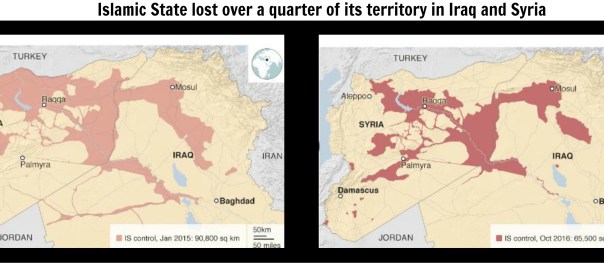
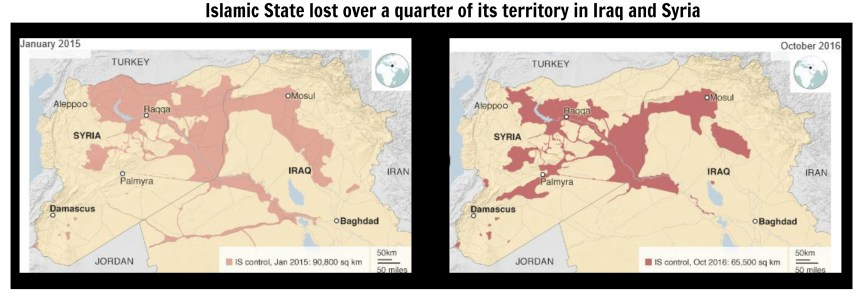
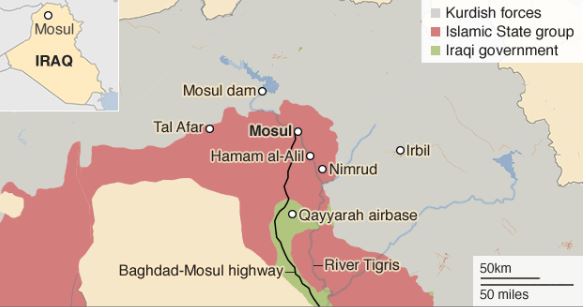


.jpeg)


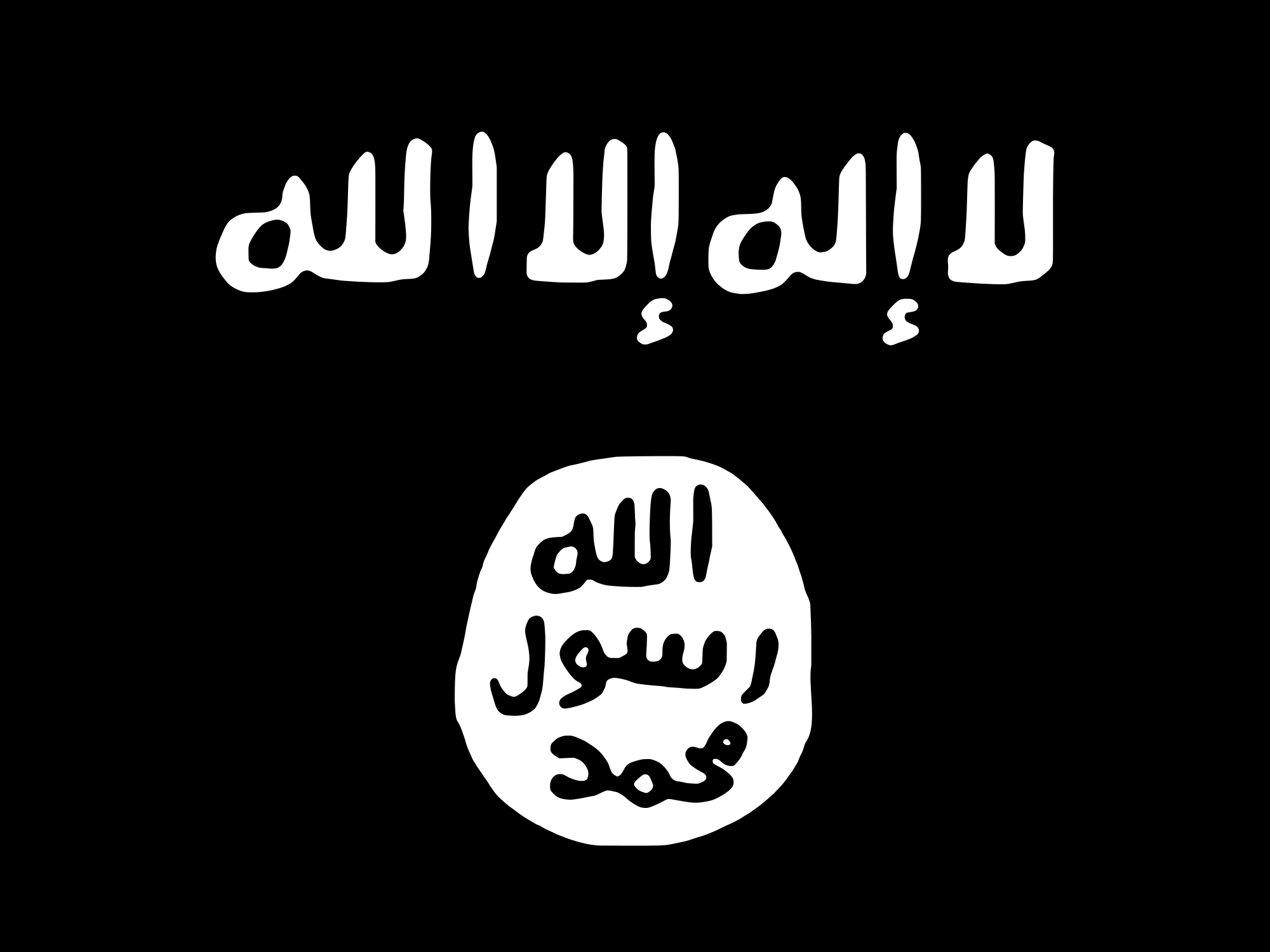
.jpg)


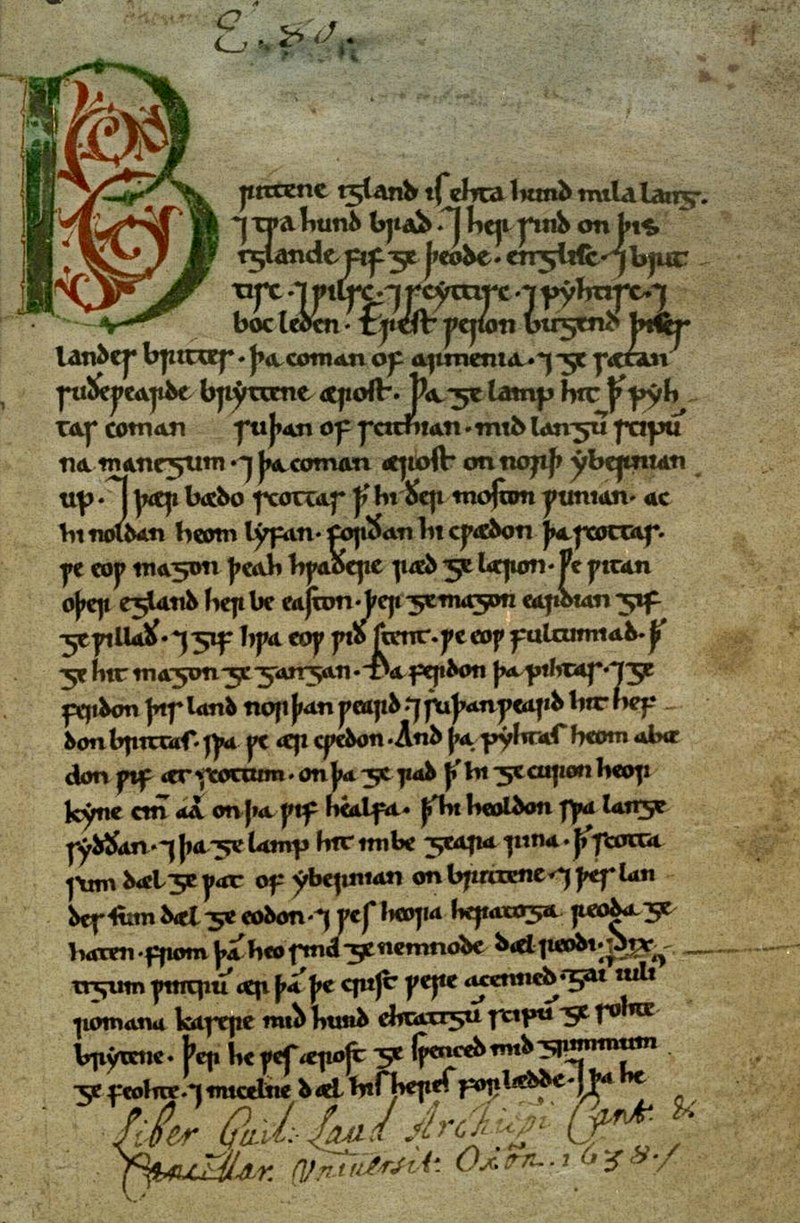


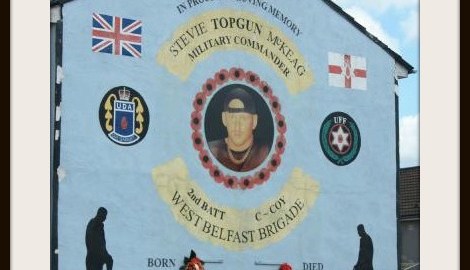







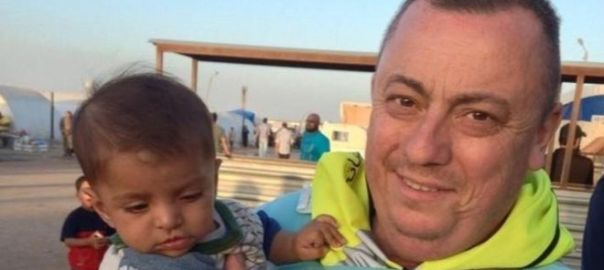


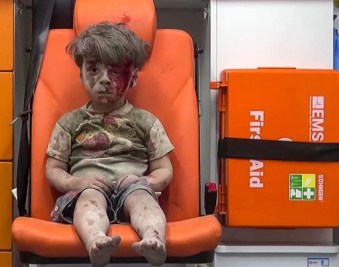
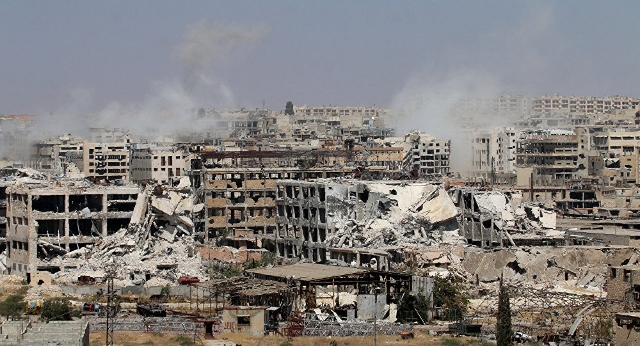


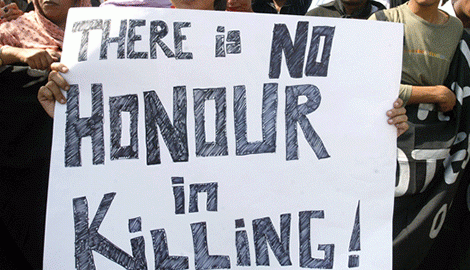





























.svg)








 belfastchildis.com