Escape from Isis: The brutal treatment of women in Raqqa

Escape from Isis: the brutal treatment of women in Raqqa

Four million women live under the rule of Islamic State extremists in Iraq and Syria. Tonight, Channel 4 screens an important and troubling documentary showing just how hellish that life is.

RAQQA

Al-Raqqah

Al-Raqqah
الرقة
Al-Raqqah Al-Raqqah skyline • The Euphratesal-Raqqah city walls • Baghdad gateQasr al-Banat Castle • Uwais al-Qarni Mosque

Al-Raqqah

Al-Raqqah skyline • The Euphrates
al-Raqqah city walls • Baghdad gate
Qasr al-Banat Castle • Uwais al-Qarni Mosque

Al-Raqqah is located in Syria

Al-Raqqah
Al-Raqqah

Location in Syria

Coordinates: 35°57′N 39°1′E / 35.950°N 39.017°E / 35.950; 39.017
Country  Syria
Governorate Al-Raqqah
District Al-Raqqah
Subdistrict Al-Raqqah
Founded 244-242 BC
Occupation Islamic State of Iraq and the Levant
Area
 • City 1,962 km2 (758 sq mi)
Elevation 245 m (804 ft)
Population (2004)
 • City 220,268
 • Density 110/km2 (290/sq mi)
 • Metro 338,773
Time zone EET (UTC+2)
 • Summer (DST) +3 (UTC)
Area code(s) 22
Website http://www.esyria.sy/eraqqa/(Arabic)

Al-Raqqah (Arabic: الرقةar-Raqqah), also called Rakka and Raqqa, is a city in Syria located on the north bank of the Euphrates River, about 160 kilometres (99 miles) east of Aleppo. It is located 40 kilometres (25 miles) east of the Tabqa Dam, Syria’s largest dam. The city was the capital of the Abbasid Caliphate between 796 and 809 under the reign of CaliphHarun al-Rashid. With a population of 220,488 based on the 2004 official census, al-Raqqah was the sixth largest city in Syria.

During the Syrian Civil War, the city was captured by terrorist group Islamic State of Iraq and the Levant, which made it its headquarters in Syria. As a result, the city has been hit by Syrian government, US and Arab nation airstrikes. Most non-Sunni structures in the city have been destroyed by ISIL, most notably the Uwais al-Qarni Mosque which was Shiite.

History

Hellenistic and Byzantine Kallinikos

The area of al-Raqqah has been inhabited since remote antiquity, as attested by the mounds (tell) of Tall Zaydan and Tall al-Bi’a, the latter identified with the Babylonian city Tuttul.[1]

The modern city traces its history to the Hellenistic period, with the foundation of the city of Nikephorion (Greek: Νικηφόριον) by the Seleucid kingSeleucus I Nicator (reigned 301–281 BC). His successor, Seleucus II Callinicus (r. 246–225 BC) enlarged the city and renamed it after himself as Kallinikos (Καλλίνικος, Latinized as Callinicum).[1]

In Roman times, it was part of the province of Osrhoene, but had declined by the 4th century. Rebuilt by the Byzantine emperorLeo I (r. 457–474 AD) in 466, it was named Leontopolis (Λεοντόπολις or “city of Leon”) after him, but the name Kallinikos prevailed.[2] The city played an important role in the Byzantine Empire’s relation with Sassanid Persia and the wars fought between two states. By treaty, it was recognized as one of the few official cross-border trading posts between the two empires (along with Nisibis and Artaxata). In 542, the city was destroyed by the Persian ruler Khusrau I (r. 531–579), who razed its fortifications and deported its population to Persia, but it was subsequently rebuilt by the Byzantine emperor Justinian I (r. 527–565). In 580, during another war with Persia, the future emperor Maurice scored a victory over the Persians near the city, during his retreat from an abortive expedition to capture Ctesiphon.[2]

In the 6th century, Kallinikos became a center of Assyrian monasticism. Dayra d’Mār Zakkā, or the Saint Zacchaeus Monastery, situated on Tall al-Bi’a, became renowned. A mosaic inscription there is dated to the year 509, presumably from the period of the foundation of the monastery. Daira d’Mār Zakkā is mentioned by various sources up to the 10th century. The second important monastery in the area was the Bīzūnā monastery or ‘Dairā d-Esţunā’, the ‘monastery of the column’. The city became one of the main cities of the historical Diyār Muḍar, the western part of the Jazīra.[citation needed] In the 9th century, when al-Raqqah served as capital of the western half of the Abbasid Caliphate, this monastery became the seat of the Syriac Patriarch of Antioch.

Bishopric

Callinicum early became the seat of a Christian diocese. In 388, Emperor Theodosius the Great was informed that a crowd of Christians, led by their bishop, had destroyed the synagogue. He ordered the synagogue rebuilt at the expense of the bishop. Ambrose wrote to Theodosius, pointing out he was thereby “exposing the bishop to the danger of either acting against the truth or of death”,[3] and Theodosius rescinded his decree.[4]

Bishop of Damianus of Callinicum took part in the Council of Chalcedon in 451 and in 458 was a signatory of the letter that the bishops of the province wrote to Emperor Leo I the Thracian after the death of Proterius of Alexandria. In 518 Paulus was deposed for having joined the anti-Chalcedonian Severus of Antioch. Callinicum had a Bishop Ioannes in the mid-6th century.[5][6] In the same century, a Notitia Episcopatuum lists the diocese as a suffragan of Edessa, the capital and metropolitan see of Osrhoene.[7]

No longer a residential bishopric, Callinicum is today listed by the Catholic Church as an archiepiscopaltitular see of the Maronite Church.[8]

Early Islamic period

The remains of the historic Baghdad gate

In the year 639 or 640, the city fell to the Muslim conqueror Iyad ibn Ghanm. Since then it has figured in Arabic sources as al-Raqqah.[1] At the surrender of the city, the Christian inhabitants concluded a treaty with Ibn Ghanm, quoted by al-Baladhuri. This allowed them freedom of worship in their existing churches, but forbade the construction of new ones. The city retained an active Christian community well into the Middle Ages—Michael the Syrian records twenty Jacobite bishops from the 8th to the 12th centuries[9]—and had at least four monasteries, of which the Saint Zaccheus Monastery remained the most prominent.[1] The city’s Jewish community also survived until at least the 12th century, when the traveller Benjamin of Tudela visited it and attended its synagogue.[1]

Ibn Ghanm’s successor as governor of al-Raqqah and the Jazira, Sa’id ibn Amir ibn Hidhyam, built the city’s first mosque. This building was later enlarged to monumental proportions, measuring some 73×108 metres, with a square brick minaret added later, allegedly in the mid-10th century. The mosque survived until the early 20th century, being described by the German archaeologist Ernst Herzfeld in 1907, but has since vanished.[1] Many companions of Muhammad lived in al-Raqqah.

In 656, during the First Fitna, the Battle of Siffin, the decisive clash between Ali and the UmayyadMu’awiya took place ca. 45 kilometres (28 mi) west of al-Raqqah, and the tombs of several of Ali’s followers (such as Ammar ibn Yasir and Uwais al-Qarani) are located in al-Raqqah and became a site of pilgrimage.[1] The city also contained a column with Ali’s autograph, but this was removed in the 12th century and taken to Aleppo‘s Ghawth Mosque.[1]

The strategic importance of al-Raqqah grew during the wars at the end of the Umayyad period and the beginning of the Abbasid regime. Al-Raqqah lay on the crossroads between Syria and Iraq and the road between Damascus, Palmyra, and the temporary seat of the caliphate Resafa, al-Ruha’.

Between 771 and 772, the Abbasid caliphal-Mansur built a garrison city about 200 metres to the west of al-Raqqah for a detachment of his Khorasanian Persian army. It was named al-Rāfiqah, “the companion”. The strength of the Abbasid imperial military is still visible in the impressive city wall of al-Rāfiqah.

Al-Raqqah and al-Rāfiqah merged into one urban complex, together larger than the former Umayyad capital Damascus. In 796, the caliph Harun al-Rashid chose al-Raqqah/al-Rafiqah as his imperial residence. For about thirteen years al-Raqqah was the capital of the Abbasid empire stretching from Northern Africa to Central Asia, while the main administrative body remained in Baghdad. The palace area of al-Raqqah covered an area of about 10 square kilometres (3.9 sq mi) north of the twin cities. One of the founding fathers of the Hanafi school of law, Muḥammad ash-Shaibānī, was chief qadi (judge) in al-Raqqah. The splendour of the court in al-Raqqah is documented in several poems, collected by Abu al-Faraj al-Isfahāni in his “Book of Songs” (Kitāb al-Aghāni). Only the small, restored so called Eastern Palace at the fringes of the palace district gives an impression of Abbasid architecture. Some of the palace complexes dating to this period have been excavated by a German team on behalf of the Director General of Antiquities. During this period there was also a thriving industrial complex located between the twin cities. Both German and English teams have excavated parts of the industrial complex revealing comprehensive evidence for pottery and glass production. Apart from large dumps of debris the evidence consisted of pottery and glass workshops containing the remains of pottery kilns and glass furnaces.[10]

Approximately 8 kilometres (5.0 mi) west of al-Raqqah lay the unfinished victory monument called Heraqla from the period of Harun al-Rashid. It is said to commemorate the conquest of the Byzantine city of Herakleia in Asia Minor in 806. Other theories connect it with cosmological events. The monument is preserved in a substructure of a square building in the centre of a circular walled enclosure, 500 metres (1,600 ft) in diameter. However, the upper part was never finished, because of the sudden death of Harun al-Rashid in Khurasan.

After the return of the court to Baghdad in 809, al-Raqqah remained the capital of the western part of the empire including Egypt.

Decline and period of Bedouin domination

Al-Raqqah’s fortunes declined in the late 9th century because of the continuous warfare between the Abbasids and the Tulunids and then with the Shii movement of the Qarmatians. During the period of the Hamdānids in the 940s the city declined rapidly. At the end of the 10th century until the beginning of the 12th century, al-Raqqah was controlled by Bedouin dynasties. The Banu Numayr had their pasture in the Diyār Muḍar and the ‘Uqailids had their center in Qal’at Ja’bar.

Second blossoming

Al-Raqqah experienced a second blossoming, based on agriculture and industrial production, during the Zangid and Ayyubid period in the 12th and first half of the 13th century. Most famous is the blue-glazed so-called Raqqa ware. The still visible Bāb Baghdād (Baghdad Gate) and the so-called Qasr al-Banāt (Castle of the Ladies) are notable buildings from this period. The famous ruler ‘Imād ad-Dīn Zangī who was killed in 1146 was buried here initially. Al-Raqqah was destroyed during the Mongol wars in the 1260s. There is a report about the killing of the last inhabitants of the urban ruin in 1288.

Ottoman period

In the 16th century, al-Raqqah again entered the historical record as an Ottoman customs post on the Euphrates. The Eyalet of al-Raqqah (Ottoman form sometimes spelled as Rakka) was created. However, the capital of this eyalet and seat of the vali was not al-Raqqah but ar-Ruhā’ about 200 kilometres (120 mi) north of al-Raqqah. In the 17th century the famous Ottoman traveller and author Evliya Çelebi only noticed Arab and Turkoman nomad tents in the vicinity of the ruins. The citadel was partially restored in 1683 and again housed a Janissary detachment; over the next decades the province of al-Raqqah became the centre of the Ottoman Empire’s tribal settlement (iskân) policy.[11]

The city of al-Raqqah was resettled from 1864 onwards, first as a military outpost, then as a settlement for former Bedouin Arabs and for Chechens, who came as refugees from the Caucasian war theaters in the middle of the 19th century.

20th century

In the 1950s, in the wake of the Korean War, the worldwide cotton boom stimulated an unpreceded growth of the city, and the re-cultivation of this part of the middle Euphrates area. Cotton is still the main agricultural product of the region.

The growth of the city meant on the other hand a removal of the archaeological remains of the city’s great past. The palace area is now almost covered with settlements, as well as the former area of the ancient al-Raqqa (today Mishlab) and the former Abbasid industrial district (today al-Mukhtalţa). Only parts were archaeologically explored. The 12th-century citadel was removed in the 1950s (today Dawwār as-Sā’a, the clock-tower circle). In the 1980s rescue excavations in the palace area began as well as the conservation of the Abbasid city walls with the Bāb Baghdād and the two main monuments intra muros, the Abbasid mosque and the Qasr al-Banāt.

There is a museum, known as the Al-Raqqah Museum, housed in an administration-building erected during the French Mandate period.

Civil war

Main article: Battle of Ar-Raqqah

In March 2013, during the Syrian civil war, Islamistjihadist militants from Al-Nusra Front and other groups overran the government loyalists in the city and declared it under their control after seizing the central square and pulling down the statue of the former president of Syria Hafez al-Assad.[12]

The Al Qaeda-affiliated Al-Nusra Front set up a sharia court at the sports centre[13] and in early June 2013 the Islamic State of Iraq and the Levant said they were open to receive complaints at their Raqqa headquarters.[14]

Since May 2013, ISIL has been increasing its control over the city, at the expense of the Free Syrian Army and the Al-Nusra Front. ISIL has executed Alawites and suspected supporters of Bashar al-Assad in the city and attacked the city’s Shia mosques and Christian churches[15] such as the Armenian CatholicChurch of the Martyrs, which has since been converted into an ISIL headquarters. The Christian population of Al-Raqqah, which was estimated to be as many as 10% of the total population before the civil war began, has largely fled the city.[16][17][18]

In January 2014 it was reported that ISIL militants in the city gained control of the western part of a Syrian army base. The group closed all educational institutions in the city.[19]

On 25 July 2014, ISIL captured the Syrian Army base in Raqqah which garrisoned the 17th Division, and beheaded many soldiers.

During the night of 22–23 September 2014, the United States and Arab partner nations started to conduct airstrikes against ISIL in and around Raqqah and Aleppo, with continued regular airstrikes into 2015.[20][21] Coalition partners in the strikes included Jordan, the United Arab Emirates, Bahrain and Saudi Arabia, with Qatar in a supporting role.[21] The USS Arleigh Burke in the Red Sea and the USS Philippine Sea in the northern Persian Gulf launched more than 40 Tomahawk cruise missiles into eastern and northern Syria.[21] A second wave consisted of F-22 Raptors in their first combat role, F-15 Strike Eagles, F-16s, B-1 bombers and drones which launched from bases in the region.[21] 96 percent of all delivered munitions were precision-guided.[21]

if you have enjoyed reading my story and daily blogs please consider making a small donation

paypal donation button


10 Misconceptions About Islam & Background Info on Islamic Faith

– Disclaimer –

The views and opinions expressed in these documentary are soley intended to educate and provide background information to those interested in Islam

They in no way reflect my own opinions and I take no responsibility for any inaccuracies or factual errors.

Islam

Islam

Islam (/ˈɪslɑːm/;[note 1] Arabic: الإسلام‎, al-ʾIslām IPA: [ælʔɪsˈlæːm][note 2]) is a monotheistic, Abrahamic religion articulated by the Qur’an, a religious text considered by its adherents to be the verbatim word of God (Allāh), and, for the vast majority of adherents, by the teachings and normative example (called the sunnah, composed of accounts called hadith) of Muhammad (c. 570–8 June 632 CE), considered by most of them to be the last prophet of God. An adherent of Islam is called a Muslim (sometimes spelled “Moslem”).[1]

Muslims believe that God is one and incomparable[2] and that the purpose of existence is to worship God.[3] Muslims also believe that Islam is the complete and universal version of a primordial faith that was revealed many times before through prophets including Adam, Noah, Abraham, Moses, and Jesus.[4] They maintain that the previous messages and revelations have been partially misinterpreted or altered over time,[5] but consider the Arabic Qur’an to be both the unaltered and the final revelation of God.[6] Religious concepts and practices include the five pillars of Islam, which are basic concepts and obligatory acts of worship, and following Islamic law, which touches on virtually every aspect of life and society, providing guidance on multifarious topics from banking and welfare, to family life and the environment.[7][8]

Most Muslims are of two denominations: Sunni (75–90%)[9] or Shia (10–20%).[10] About 13% of Muslims live in Indonesia,[11] the largest Muslim-majority country, 25% in South Asia,[11] 20% in the Middle East,[12] and 15% in Sub-Saharan Africa.[13] Sizable Muslim communities are also found in Europe, China, Russia, and the Americas. Converts and immigrant communities are found in almost every part of the world. With about 1.62 billion followers or 23% of the global population,[14][15] Islam is the second-largest religion by number of adherents and, according to many sources, the fastest-growing major religion in the world.[16][17][18

Etymology and meaning

The dome of the Carol I Mosque in Constanța, Romania, topped by the Islamic crescent

Islam is a verbal noun originating from the triliteral root s-l-m which forms a large class of words mostly relating to concepts of wholeness, safeness and peace.[19] In a religious context it means “voluntary submission to God”.[20][21] Muslim, the word for an adherent of Islam, is the active participle of the same verb of which Islām is the infinitive. Believers demonstrate submission to God by serving God, following his commands, and rejecting polytheism. The word sometimes has distinct connotations in its various occurrences in the Qur’an. In some verses, there is stress on the quality of Islam as an internal conviction: “Whomsoever God desires to guide, He opens his heart to Islam.”[22] Islam, by its own inner logic, embraces every possible facet of existence, for God has named Himself al-Muḥīṭ, the All-Embracing.[23]

Other verses connect Islām and dīn (usually translated as “religion”): “Today, I have perfected your religion (dīn) for you; I have completed My blessing upon you; I have approved Islam for your religion.”[24] Still others describe Islam as an action of returning to God—more than just a verbal affirmation of faith.[25] In the Hadith of Gabriel, islām is presented as one part of a triad that includes imān (faith), and ihsān (excellence), where islām is defined theologically as Tawhid, historically by asserting that Muhammad is messenger of God, and doctrinally by mandating five basic and fundamental pillars of practice.[26][27]

Articles of faith

God

Medallion showing “Allah” (God) in Hagia Sophia, Istanbul, Turkey.

Main articles: God in Islam and Allah

Islam’s most fundamental concept is a rigorous monotheism, called tawḥīd (Arabic: توحيد‎). God is described in chapter 112 of the Qur’an as:[28] “Say: He is God, the One and Only; God, the Eternal, Absolute; He begetteth not, nor is He begotten; And there is none like unto Him.”(112:1-4) Muslims and Jews repudiate the Christian doctrine of the Trinity and divinity of Jesus, comparing it to polytheism. In Islam, God is beyond all comprehension and Muslims are not expected to visualize God.[29][30][31][32] God is described and referred to by certain names or attributes, the most common being Al-Rahmān, meaning “The Compassionate” and Al-Rahīm, meaning “The Merciful” (See Names of God in Islam).[33]

Muslims believe that the creation of everything in the universe was brought into being by God’s sheer command, “‘Be’ and so it is,”[34] and that the purpose of existence is to worship God.[35] He is viewed as a personal god who responds whenever a person in need or distress calls him.[36] There are no intermediaries, such as clergy, to contact God who states, “I am nearer to him than (his) jugular vein.”[37] The reciprocal nature is mentioned in the hadith qudsi, “I am as My servant thinks (expects) I am.”[38]

Allāh is the term with no plural or gender used by Muslims and Arabic-speaking Christians and Jews to reference God, while ʾilāh (Arabic: إله‎) is the term used for a deity or a god in general.[39] Other non-Arab Muslims might use different names as much as Allah, for instance “Tanrı” in Turkish, “Khodā” in Persian or Ḵẖudā in Urdu.

Angels

Angels

Belief in angels is fundamental to the faith of Islam. The Arabic word for angel (Arabic: ملكmalak) means “messenger“, like its counterparts in Hebrew (malʾákh) and Greek (angelos). According to the Qur’an, angels do not possess free will, and therefore worship and obey God in total obedience. Angels’ duties include communicating revelations from God, glorifying God, recording every person’s actions, and taking a person’s soul at the time of death. Muslims believe that angels are made of light. They are described as “messengers with wings—two, or three, or four (pairs): He [God] adds to Creation as He pleases…”[40]

Revelations

11th-century Qur’anic manuscript with vocalization marks.

Main articles: Islamic holy books, Quran and Wahy

The Islamic holy books are the records which most Muslims believe were dictated by God to various prophets. Muslims believe that parts of the previously revealed scriptures, the Tawrat (Torah) and the Injil (Gospels), had become distorted—either in interpretation, in text, or both.[5] The Qur’an (literally, “Reading” or “Recitation”) is viewed by Muslims as the final revelation and literal word of God and is widely regarded as the finest literary work in the Arabic language.[41][42]

Muslims believe that the verses of the Qur’an were revealed to Muhammad by God through the archangel Gabriel (Jibrīl) on many occasions between 610 CE until his death on June 8, 632.[43] While Muhammad was alive, all of these revelations were written down by his companions (sahabah), although the prime method of transmission was orally through memorization.[44]

The Qur’an is divided into 114 suras, or chapters, which combined, contain 6,236 āyāt, or verses. The chronologically earlier suras, revealed at Mecca, are primarily concerned with ethical and spiritual topics. The later Medinan suras mostly discuss social and moral issues relevant to the Muslim community.[45]

The Qur’an is more concerned with moral guidance than legal instruction, and is considered the “sourcebook of Islamic principles and values”.[46] Muslim jurists consult the hadith (“reports”), or the written record of Prophet Muhammad’s life, to both supplement the Qur’an and assist with its interpretation. The science of Qur’anic commentary and exegesis is known as tafsir.[47] Rules governing proper pronunciation is called tajwid.

Muslims usually view “the Qur’an” as the original scripture as revealed in Arabic and that any translations are necessarily deficient, which are regarded only as commentaries on the Qur’an.[48]

Prophets

Anbiya are considered prophets of the past in Islam.[49]

Main article: Prophets in Islam

Muslims identify the prophets of Islam (Arabic: أنۢبياءanbiyāʾ ) as those humans chosen by God to be his messengers. According to the Qurʼan, the prophets were instructed by God to bring the “will of God” to the peoples of the nations. Muslims believe that prophets are human and not divine, though some are able to perform miracles to prove their claim. Islamic theology says that all of God’s messengers preached the message of Islam—submission to the will of God. The Qurʼan mentions the names of numerous figures considered prophets in Islam, including Adam, Noah, Abraham, Moses and Jesus, among others.[50]

Muslims believe that God finally sent Muhammad as the last law bearing prophet (Seal of the Prophets) to convey the divine message to the whole world (to sum up and to finalize the word of God). In Islam, the “normative” example of Muhammad’s life is called the Sunnah (literally “trodden path”). This example is preserved in traditions known as hadith, which recount his words, his actions, and his personal characteristics. Hadith Qudsi is a sub-category of hadith, regarded as the words of God repeated by Muhammad differing from the Quran in that they are expressed in Muhammad’s words, whereas the Qur’an is understood as the direct words of God. The classical Muslim jurist ash-Shafi’i (d. 820) emphasized the importance of the Sunnah in Islamic law, and Muslims are encouraged to emulate Muhammad’s actions in their daily lives. The Sunnah is seen as crucial to guiding interpretation of the Qur’an.[51]

Resurrection and judgment

Main article: Qiyama

Belief in the “Day of Resurrection”, Yawm al-Qiyāmah (Arabic: يوم القيامة‎) is also crucial for Muslims. They believe the time of Qiyāmah is preordained by God but unknown to man. The trials and tribulations preceding and during the Qiyāmah are described in the Qur’an and the hadith, and also in the commentaries of scholars. The Qur’an emphasizes bodily resurrection, a break from the pre-Islamic Arabian understanding of death.[52]

On Yawm al-Qiyāmah, Muslims believe all mankind will be judged on their good and bad deeds and consigned to Jannah (paradise) or Jahannam (hell). The Qurʼan in Surat al-Zalzalah describes this as, “So whoever does an atom’s weight of good will see it (99:7) and whoever does an atom’s weight of evil will see it (99:8).” The Qurʼan lists several sins that can condemn a person to hell, such as disbelief in God (Arabic: كفرkufr), and dishonesty; however, the Qurʼan makes it clear God will forgive the sins of those who repent if he so wills. Good deeds, such as charity, prayer and compassion towards animals,[53][54] will be rewarded with entry to heaven. Muslims view heaven as a place of joy and bliss, with Qurʼanic references describing its features and the physical pleasures to come. Mystical traditions in Islam place these heavenly delights in the context of an ecstatic awareness of God.[55]

Yawm al-Qiyāmah is also identified in the Qur’an as Yawm ad-Dīn (Arabic: يوم الدين‎), “Day of Religion”;[56] as-sāʿah (Arabic: الساعة‎), “the Last Hour”;[57] and al-Qāriʿah (Arabic: القارعة‎), “The Clatterer”.[58]

Predestination

In accordance with the Islamic belief in predestination, or divine preordainment (al-qadā wa’l-qadar), God has full knowledge and control over all that occurs. This is explained in Qur’anic verses such as “Say: ‘Nothing will happen to us except what Allah has decreed for us: He is our protector’…”[59] For Muslims, everything in the world that occurs, good or bad, has been preordained and nothing can happen unless permitted by God. According to Muslim theologians, although events are pre-ordained, man possesses free will in that he or she has the faculty to choose between right and wrong, and is thus responsible for his actions. According to Islamic tradition, all that has been decreed by God is written in al-Lawh al-Mahfūz, the “Preserved Tablet”.[60]

Five pillars

Main article: Five Pillars of Islam

The Pillars of Islam (arkan al-Islam; also arkan ad-din, “pillars of religion”) are five basic acts in Islam, considered obligatory for all believers. The Quran presents them as a framework for worship and a sign of commitment to the faith. They are (1) the creed (shahadah), (2) daily prayers (salat), (3) almsgiving (zakah), (4) fasting during Ramadan and (5) the pilgrimage to Mecca (hajj) at least once in a lifetime. Both Shia and Sunni sects agree on the essential details for the performance of these acts.[61]

Testimony

Silver coin of the Mughal Emperor Akbar with inscriptions of the Islamic declaration of faith

Main article: Shahadah

The Shahadah,[62] which is the basic creed of Islam that must be recited under oath with the specific statement: “‘ašhadu ‘al-lā ilāha illā-llāhu wa ‘ašhadu ‘anna muħammadan rasūlu-llāh“, or “I testify that there is no god but God, Muhammad is the messenger of God.”[63] This testament is a foundation for all other beliefs and practices in Islam. Muslims must repeat the shahadah in prayer, and non-Muslims wishing to convert to Islam are required to recite the creed.[64]

Prayer

Main article: Salat
See also: Mosque and Jumu’ah

Ritual prayers, called Ṣalāh or Ṣalāt (Arabic: صلاة), must be performed five times a day. Salat is intended to focus the mind on God, and is seen as a personal communication with him that expresses gratitude and worship. Salat is compulsory but flexibility in the specifics is allowed depending on circumstances. The prayers are recited in the Arabic language, and consist of verses from the Qur’an.[65] The prayers are done with the chest in direction of the kaaba though in the early days of Islam, they were done in direction of Jerusalem.

A mosque is a place of worship for Muslims, who often refer to it by its Arabic name, masjid. The word mosque in English refers to all types of buildings dedicated to Islamic worship, although there is a distinction in Arabic between the smaller, privately owned mosque and the larger, “collective” mosque (masjid jāmi’).[66] Although the primary purpose of the mosque is to serve as a place of prayer, it is also important to the Muslim community as a place to meet and study. Al-Masjid al-Nabawi the Prophets Mosque in Madina was also a place of refuge for the poor.[67] Modern mosques have evolved greatly from the early designs of the 7th century, and contain a variety of architectural elements such as minarets.[68]

Alms-giving

Main articles: Zakat and Sadaqah

“Zakāt” (Arabic: زكاةzakāhalms“) is giving a fixed portion of accumulated wealth by those who can afford it to help the poor or needy and for those employed to collect Zakat; also, for bringing hearts together, freeing captives, for those in debt (or bonded labour) and for the (stranded) traveller.[69][70] It is considered a religious obligation (as opposed to voluntary charity) that the well-off owe to the needy because their wealth is seen as a “trust from God’s bounty”. Conservative estimates of annual zakat is estimated to be 15 times global humanitarian aid contributions.[71] The amount of zakat to be paid on capital assets (e.g. money) is 2.5% (1/40) per year,[72] for people who are not poor. The Qur’an and the hadith also urge a Muslim to give even more as an act of voluntary alms-giving called Sadaqah.[73]

Fasting

Main article: Sawm
Further information: Sawm of Ramadan

Fasting, (Arabic: صومṣawm), from food and drink (among other things) must be performed from dawn to dusk during the month of Ramadhan. The fast is to encourage a feeling of nearness to God, and during it Muslims should express their gratitude for and dependence on him, atone for their past sins, and think of the needy. Sawm is not obligatory for several groups for whom it would constitute an undue burden. For others, flexibility is allowed depending on circumstances, but missed fasts usually must be made up quickly.[74]

Pilgrimage

Pilgrims at the Masjid al-Haram on Hajj

Main article: Hajj

The pilgrimage, called the ḥajj (Arabic: حج‎), has to be done during the Islamic month of Dhu al-Hijjah in the city of Mecca. Every able-bodied Muslim who can afford it must make the pilgrimage to Mecca at least once in his or her lifetime. Rituals of the Hajj include: spending a day and a night in the tents in the desert plain of Mina, then a day in the desert plain of Arafat praying and worshiping God, following the foot steps of Abraham. Then spending a night out in the open, sleeping on the desert sand in the desert plain of Muzdalifah, then moving to Jamarat, symbolically stoning the Devil recounting Abraham’s actions.[75][76][77] Then going to Mecca and walking seven times around the Kaaba which Muslims believe was built as a place of worship by Abraham. Then walking seven times between Mount Safa and Mount Marwah recounting the steps of Abraham’s wife, while she was looking for water for her son Ismael in the desert before Mecca developed into a settlement.

[78]

Law and jurisprudence

Main articles: Sharia, Fiqh and Early scholars of Islam

The Shariʻah (literally “the path leading to the watering place”) is Islamic law formed by traditional Islamic scholarship, which most Muslim groups adhere to. Shariʻah “constitutes a system of duties that are incumbent upon a Muslim by virtue of his or her religious belief”.[79]

The Quran set the rights, the responsibilities and the rules for people and for societies to adhere to. Muhammad provided an example, which is recorded in the hadith books, showing how he practically implemented those rules in a society.

Many of the Sharia laws that differ are devised through Ijtihad where there is no such ruling in the Quran or the Hadiths of Islamic prophet Muhammad regarding a similar case.[80][81] As Muhammad’s companions went to new areas,[82] they were pragmatic and in some cases continued to use the same ruling as was given in that area during pre-Islamic times. If the population felt comfortable with it, it was just and they used Ijtihad to deduce that it did not conflict with the Quran or the Hadith. This made it easier for the different communities to integrate into the Islamic State and that assisted in the quick expansion of the Islamic State. Since the Constitution of Medina, was drafted by the Islamic prophet Muhammad the Jews and the Christians continued to use their own laws in the Islamic State and had their own judges.[83][84][85]

Much of the knowledge we have about Muhammad is narrated through Aisha, the wife of Muhammad. Aisha raised and taught her nephew Qasim ibn Muhammad ibn Abu Bakr the grandson of Abu Bakr and the grandfather of Ja’far al-Sadiq. Aisha also taught her nephew Urwah ibn Zubayr. He then taught his son Hisham ibn Urwah, who was the main teacher of Malik ibn Anas.

When Umar bin Abdul Azeez became a Caliph in 717[86][87] he appointed a committee of jurist in Madina headed by Qasim ibn Muhammad ibn Abu Bakr and it included Urwah ibn Zubayr to advise on legal matters[88] The work of Malik ibn Anas and successive jurists is based on the work of this early committee in Madina. Muwatta[89] by Malik ibn Anas was written as a consensus of the opinion, of these scholars.[90][91][92] The Muwatta[89] by Malik ibn Anas also quotes 13 hadith narrated through Imam Jafar al-Sadiq.[93]

The early scholars of Islam including, imam Abu Hanifa, imam Malik ibn Anas and imam Jafar al-Sadiq worked together in Al-Masjid an-Nabawi in Medina along with over 70 other leading jurists and scholars. They did not distinguish between each other or classify them selves as Sunni or Shiʻah. They felt that they were following the religion of Abraham.[94] In the books actually written by these original jurists and scholars, there are very few theological and judicial differences between them.

Fiqh, or “jurisprudence”, is defined as the knowledge of the practical rules of the religion. Much of it has evolved to prevent innovation or alteration in the original religion, known as bid‘ah.

The method Islamic jurists use to derive rulings is known as usul al-fiqh (“legal theory”, or “principles of jurisprudence”). To reduce the divergence, in the 9th century, a student of Malik ibn Anas, the jurist ash-Shafi’i provided a theoretical basis for Islamic law by codifying the principles of jurisprudence (including the four fundamental roots) in his book ar-Risālah.[95] According to ash-Shafi’i, law has four fundamental roots, which are given precedence in this order: the Qur’an, the Hadith (the practice of Muhammad), the consensus of the Muslim jurists (ijma), and analogical reasoning (qiyas). Al-Shafi’i also codified a method to establish the reliability of hadith. Muhammad al-Bukhari[96] then travelled around and collected over 300,000 hadith, but only included 2,602 distinct hadith in his book Sahih al-Bukhari,[96] that passed these tests and he codified as authentic and correct. Sahih al-Bukhari is therefore considered by many to be the most authentic book after the Quran.[97][98] The Arabic word sahih translates as authentic or correct.

They all gave priority to the Qur’an and the Hadith and felt that Islam was completed during the time of Muhammad and they wanted people to refer to the Quran.[99] Ahmad ibn Hanbal rejected the writing down and codifying of the religious rulings he gave. They knew that they might have fallen into error in some of their judgements and stated this clearly. They never introduced their rulings by saying, “This is the judgement of God and His prophet.”[100] There is also very little text actually written down by Jafar al-Sadiq himself. Since Jafar al-Sadiq (702-765) did not write any books, the books followed by the Twelver Shi’a were written by Muhammad ibn Ya’qub al-Kulayni (864- 941), Ibn Babawayh (923-991), and Nasir al-Din al-Tusi (1201-1274).[101][102] Since Jafar al-Sadiq and Zayd ibn Ali did not them selves write any books. But they worked closely with imam Abu Hanifa and imam Malik ibn Anas and the views of imam Jafar al-Sadiq and imam Zayd ibn Ali are in the early Hadith books written by imam Abu Hanifa and imam Malik ibn Anas,[93] the oldest branch of the Shia, the Zaydis to this day and originally the Fatamids, use the Hanafi jurisprudence, as do most Sunnis.[100][103][104]

Islamic law covers all aspects of life, from matters of state, like governance and foreign relations, to issues of daily living. The Qur’an defines hudud as the punishments for five specific crimes: unlawful intercourse, false accusation of unlawful intercourse, consumption of alcohol, theft, and highway robbery. The Qur’an and Sunnah also contain laws of inheritance, marriage, and restitution for injuries and murder, as well as rules for fasting, charity, and prayer.

The differences between the denominations in Islam are primarily political and amplified after the Safavid invasion of Persia in the 1500s and the subsequent Safavid conversion of Iran to Shia Islam due to the politics between the Safavids and the Ottoman Empire.[105] After the demise of the Safavid dynasty, the new ruler of Persia, Nader Shah (1698 to 1747) himself a Sunni attempted to improve relations with Sunni nations by propagating the integration of Shiism by calling it Jaafari Madh’hab.[106] Since Jafar al-Sadiq himself disapproved of people who disapproved of his great grand father Abu Bakr the first caliph.

Jurists

Main articles: Ulama, Sheikh and Imam

There are many terms in Islam to refer to religiously sanctioned positions of Islam, but “jurist” generally refers to the educated class of Muslim legal scholars engaged in several fields of Islamic studies. In a broader sense, the term ulema is used to describe the body of Muslim clergy who have completed several years of training and study of Islamic sciences, such as a mufti, qadi, faqih, or muhaddith. Some Muslims include under this term the village mullahs, imams, and maulvis—who have attained only the lowest rungs on the ladder of Islamic scholarship; other Muslims would say that clerics must meet higher standards to be considered ulama (singular Aalim). Some Muslims practise ijtihad whereby they do not accept the authority of clergy.[107] Education is considered very important to Muslims, so that they could distinguish between right and wrong, but when it comes to entry into heaven, the most noble in the sight of God are the most righteous and they may be honest, compassionate and helpful to others but not necessarily very educated.[108]

Etiquette and diet

Many practices fall in the category of adab, or Islamic etiquette. This includes greeting others with “as-salamu `alaykum” (“peace be unto you”), saying bismillah (“in the name of God“) before meals, and using only the right hand for eating and drinking. Islamic hygienic practices mainly fall into the category of personal cleanliness and health. Circumcision of male offspring is also practiced in Islam. Islamic burial rituals include saying the Salat al-Janazah (“funeral prayer”) over the bathed and enshrouded dead body, and burying it in a grave. Muslims are restricted in their diet. Prohibited foods include pork products, blood, carrion, and alcohol. All meat must come from a herbivorous animal slaughtered in the name of God by a Muslim, Jew, or Christian, with the exception of game that one has hunted or fished for oneself. Food permissible for Muslims is known as halal food.[109]

Family life

See also: Women in Islam

The basic unit of Islamic society is the family, and Islam defines the obligations and legal rights of family members. The father is seen as financially responsible for his family, and is obliged to cater for their well-being. The division of inheritance is specified in the Qur’an, which states that most of it is to pass to the immediate family, while a portion is set aside for the payment of debts and the making of bequests. With some exceptions, the woman’s share of inheritance is generally half of that of a man with the same rights of succession.[110] Marriage in Islam is a civil contract which consists of an offer and acceptance between two qualified parties in the presence of two witnesses. The groom is required to pay a bridal gift (mahr) to the bride, as stipulated in the contract.[111]

The Quran (verse 4:3)[Quran 4:3] limits the number of wives to four and only if a man could treat them with fairness and equity. Most families in the Islamic world are monogamous as the rule is a conditional permission not a recommendation.[112][113]

In case of family disputes, the Quran[Quran 4:34] directs the husband to treat his spouse kindly and not to overlook her positive aspects, and exhort and appeal for reason. If this fails, the husband may express his displeasure by sleeping in a separate bed. As a last retort, the husband may tap or lightly strike her in a manner which causes no pain and leaves no mark on the body. This has been interpreted by early jurists as a symbolic use of the miswak. Even this measure has been discouraged in several hadeeth, and the prophet never retorted to that measure.[114][115][116] A minority of Islamic scholars contest this interpretation and state that even tapping or striking is not allowed.[117] The man of the house is allowed to beat young children; but not adult children.[118]

Economy

To reduce the gap between the rich and the poor, Islamic economic jurisprudence encourages trade,[119] discourages the hoarding of wealth and outlaws interest-bearing loans (usury; the term is riba in Arabic).[120][121] Therefore, wealth is taxed through Zakat, but trade is not taxed. Usury, which allows the rich to get richer without sharing in the risk, is forbidden in Islam. Profit sharing and venture capital where the lender is also exposed to risk is acceptable.[122] Hoarding of food for speculation is also discouraged.[123]

Grabbing other people’s land is also prohibited. The prohibition of usury has resulted in the development of Islamic banking. During the time of Muhammad, any money that went to the state, was immediately used to help the poor. Then in 634, Umar formally established the welfare state Bayt al-mal. The Bayt al-mal or the welfare state was for the Muslim and Non-Muslim poor, needy, elderly, orphans, widows, and the disabled. The Bayt al-mal ran for hundreds of years under the Rashidun Caliphate in the 7th century and continued through the Umayyad period and well into the Abbasid era. Umar also introduced Child Benefit and Pensions for the children and the elderly.[124][125][126][127]

Government

Mainstream Islamic law does not distinguish between “matters of church” and “matters of state”; the scholars function as both jurists and theologians. Currently no government conforms to Islamic economic jurisprudence, but steps have been taken to implement some of its tenets.[128][129][130]

Jihad

Jihad means “to strive or struggle” (in the way of God). Jihad, in its broadest sense, is “exerting one’s utmost power, efforts, endeavors, or ability in contending with an object of disapprobation“. Depending on the object being a visible enemy, the Devil, and aspects of one’s own self (such as sinful desires), different categories of jihad are defined.[131] Jihad, when used without any qualifier, is understood in its military aspect.[132][133] Jihad also refers to one’s striving to attain religious and moral perfection.[134] Some Muslim authorities, especially among the Shi’a and Sufis, distinguish between the “greater jihad”, which pertains to spiritual self-perfection, and the “lesser jihad”, defined as warfare.[135]

Within Islamic jurisprudence, jihad is usually taken to mean military exertion against non-believer/non-Muslim/Muslim combatants who insulted Islam. The ultimate purpose of military jihad is debated, both within the Islamic community and without. Jihad is the only form of warfare permissible in Islamic law and may be declared against illegal works, terrorists, criminal groups, rebels, apostates, and leaders or states who oppress Muslims.[136][137] Most Muslims today interpret Jihad as only a defensive form of warfare.[138] Jihad only becomes an individual duty for those vested with authority. For the rest of the populace, this happens only in the case of a general mobilization.[137] For most Twelver Shias, offensive jihad can only be declared by a divinely appointed leader of the Muslim community, and as such is suspended since Muhammad al-Mahdi‘s[139] occultation in 868 AD.[140]

History

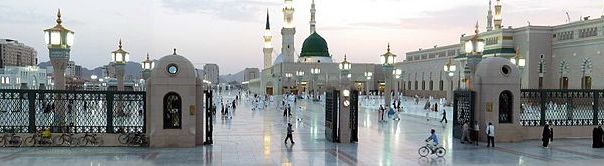
A panoramic view of Al-Masjid al-Nabawi (the Mosque of the Prophet) in Medina, Hejaz region, today’s Saudi Arabia, the second most sacred Mosque in Islam

Muhammad (610–632)

Main articles: Muhammad and Muhammad in Islam

The calligraphic representation of Muhammad in Islam.

Muslim tradition views Muhammad (c. 570 – June 8, 632) as the seal of the prophets.[141] During the last 22 years of his life, beginning at age 40 in 610 CE, according to the earliest surviving biographies, Muhammad reported revelations that he believed to be from God conveyed to him through the archangel Gabriel (Jibril). Muhammad’s companions memorized and recorded the content of these revelations, known as the Qur’an.[142]

During this time, Muhammad in Mecca preached to the people, imploring them to abandon polytheism and to worship one God. Although some converted to Islam, the leading Meccan authorities persecuted Muhammad and his followers. This resulted in the Migration to Abyssinia of some Muslims (to the Aksumite Empire). Many early converts to Islam were the poor and former slaves like Bilal ibn Rabah al-Habashi. The Meccan élite felt that Muhammad was destabilising their social order by preaching about one God and about racial equality, and that in the process he gave ideas to the poor and to their slaves.[143][144][145][146]

After 12 years of the persecution of Muslims by the Meccans and the Meccan boycott of the Hashemites, Muhammad’s relatives, Muhammad and the Muslims performed the Hijra (“emigration”) to the city of Medina (formerly known as Yathrib) in 622. There, with the Medinan converts (Ansar) and the Meccan migrants (Muhajirun), Muhammad in Medina established his political and religious authority. A state was established[by whom?] in accordance with Islamic economic jurisprudence. The Constitution of Medina was formulated, instituting a number of rights and responsibilities for the Muslim, Jewish, Christian and pagan communities of Medina, bringing them within the fold of one community — the Ummah.[147][148]

The Constitution established:

  • the security of the community
  • religious freedoms
  • the role of Medina as a sacred place (barring all violence and weapons)
  • the security of women
  • stable tribal relations within Medina
  • a tax system for supporting the community in time of conflict
  • parameters for exogenous political alliances
  • a system for granting protection of individuals
  • a judicial system for resolving disputes where non-Muslims could also use their own laws

All the tribes signed the agreement to defend Medina from all external threats and to live in harmony amongst themselves. Within a few years, two battles took place against the Meccan forces: first, the Battle of Badr in 624 – a Muslim victory, and then a year later, when the Meccans returned to Medina, the Battle of Uhud, which ended inconclusively.

The Arab tribes in the rest of Arabia then formed a confederation and during the Battle of the Trench (March-April 627) besieged Medina, intent on finishing off Islam. In 628, the Treaty of Hudaybiyyah was signed between Mecca and the Muslims and was broken by Mecca two years later. After the signing of the Treaty of Hudaybiyyah many more people converted to Islam. At the same time, Meccan trade routes were cut off as Muhammad brought surrounding desert tribes under his control.[149] By 629 Muhammad was victorious in the nearly bloodless conquest of Mecca, and by the time of his death in 632 (at the age of 62) he had united the tribes of Arabia into a single religious polity.[150]

Caliphate and civil strife (632–750)

Dome of the Rock built by Abd al-Malik ibn Marwan; completed at the end of the Second Fitna.

Further information: Muslim conquests, First Fitna and Second Fitna

With Muhammad’s death in 632, disagreement broke out over who would succeed him as leader of the Muslim community. Abu Bakr, a companion and close friend of Muhammad, was made the first caliph. Under Abu Bakr the Muslims expanded into Syria after putting down a rebellion by Arab tribes in an episode known as the Ridda wars, or “Wars of Apostasy”.[151] The Quran was compiled into a single volume at this time.

His death in 634 resulted in the succession of Umar ibn al-Khattab as the caliph, followed by Uthman ibn al-Affan, Ali ibn Abi Talib and Hasan ibn Ali. The first caliphs are known as al-khulafā’ ar-rāshidūn (“Rightly Guided Caliphs“). Under them, the territory under Muslim rule expanded deeply into the parts of the Persian and Byzantine territories.[152]

When Umar was assassinated by Persians in 644, the election of Uthman as successor was met with increasing opposition. The standard copies of the Quran were also distributed throughout the Islamic State. In 656, Uthman was also killed, and Ali assumed the position of caliph. After the first civil war (the “First Fitna”), Ali was assassinated by Kharijites in 661. Following a peace treaty, Mu’awiyah came to power and began the Umayyad dynasty.[153]

These disputes over religious and political leadership would give rise to schism in the Muslim community. The majority accepted the legitimacy of the three rulers prior to Ali, and became known as Sunnis. A minority disagreed, and believed that only Ali and some of his descendants should rule; they became known as the Shia.[154] After Mu’awiyah‘s death in 680, conflict over succession broke out again in a civil war known as the “Second Fitna“.

The Umayyad dynasty conquered the Maghreb, the Iberian Peninsula, Narbonnese Gaul and Sindh.[155] Local populations of Jews and indigenous Christians, persecuted as religious minorities and taxed heavily to finance the Byzantine–Sassanid Wars, often aided Muslims to take over their lands from the Byzantines and Persians, resulting in exceptionally speedy conquests.[156][157] Since the Constitution of Medina, Jews and Christians continued to use their own laws in the Islamic State and had their own judges.[83][84][85]

The descendants of Muhammad’s uncle Abbas ibn Abd al-Muttalib rallied discontented non-Arab converts (mawali), poor Arabs, and some Shi’a against the Umayyads and overthrew them with the help of the general Abu Muslim, inaugurating the Abbasid dynasty in 750.[158]

Classical era (750–1258)

During this time, the Delhi Sultanate took over the Indian subcontinent. Religious missions converted Volga Bulgaria to Islam. Many Muslims also went to China to trade, virtually dominating the import and export industry of the Song Dynasty.[159]

The major hadith collections were compiled during the early Abbasid era. The Ja’fari jurisprudence was formed from the teachings of Ja’far al-Sadiq while the four Sunni Madh’habs, the Hanafi, Hanbali, Maliki and Shafi’i, were established around the teachings of Abū Ḥanīfa, Ahmad bin Hanbal, Malik ibn Anas and al-Shafi’i respectively. Al-Shafi’i also codified a method to establish the reliability of hadith.[160] Al-Tabari and Ibn Kathir completed the most commonly cited commentaries on the Quran, the Tafsir al-Tabari in the 9th century and the Tafsir ibn Kathir in the 14th century, respectively. Philosophers Al-Farabi and Avicenna sought to incorporate Greek principles into Islamic theology, while others like Al-Ghazali argued against them and ultimately prevailed.[161]

Caliphs such as Mamun al Rashid and Al-Mu’tasim made the mutazilite philosophy an official creed and imposed it upon Muslims to follow. Mu’tazila was a Greek influenced school of speculative theology called kalam, which refers to dialectic.[162] Many orthodox Muslims rejected mutazilite doctrines and condemned their idea of the creation of the Quran. In inquisitions, Imam Hanbal refused to conform and was tortured and sent to an unlit Baghdad prison cell for nearly thirty months.[163]

The other branch of kalam was the Ash’ari school founded by Al-Ash’ari. Some Muslims began to question the piety of indulgence in a worldly life and emphasized poverty, humility and avoidance of sin based on renunciation of bodily desires. Ascetics such as Hasan al-Basri would inspire a movement that would evolve into Tasawwuf (Sufism).[164] Beginning in the 13th century, Sufism underwent a transformation, largely because of efforts to legitimize and reorganize the movement by Al-Ghazali, who developed the model of the Sufi order—a community of spiritual teachers and students.[165]

The Tabula Rogeriana, drawn by Al-Idrisi in 1154, one of the most advanced ancient world maps. Al-Idrisi also wrote about the diverse Muslim communities found in various lands.

This era is sometimes called the “Islamic Golden Age“.[166] Public hospitals established during this time (called Bimaristan hospitals), are considered “the first hospitals” in the modern sense of the word,[167][168] and issued the first medical diplomas to license doctors.[169][170] The Guinness World Records recognizes the University of Al Karaouine, founded in 859, as the world’s oldest degree-granting university.[171] The doctorate is argued to date back to the licenses to teach in Muslim law schools.[172] Standards of experimental and quantification techniques, as well as the tradition of citation,[173] were introduced. An important pioneer in this, Ibn Al-Haytham is regarded as the father of the modern scientific method and often referred to as the “world’s first true scientist”.[174][175] The government paid scientists the equivalent salary of professional athletes today.[173] The data used by Copernicus for his heliocentric conclusions was gathered and Al-Jahiz proposed a theory of natural selection.[176][177] Rumi wrote some of the finest Persian poetry and is still one of the best selling poets in America.[178][179] Legal institutions introduced include the trust and charitable trust (Waqf).[180][181]

The first Muslims states independent of a unified Muslim state emerged from the Berber Revolt (739/740-743). In 930, the Ismaili group known as the Qarmatians unsuccessfully rebelled against the Abbassids, sacked Mecca and stole the Black Stone, which was eventually retrieved.[182] The Mongol Empire put an end to the Abbassid dynasty in 1258.[183]

Pre-Modern era (1258–20th century)

By the medieval era most of the countries on the Silk Road were Muslim majority.

Islam spread with Muslim trade networks and Sufi orders activity that extended into Sub-Saharan Africa, Central Asia and the Malay archipelago.[184][185] The Ottomans challenged European powers on land and sea, and reached deep into Central Europe at the Siege of Vienna (1529). Under the Ottoman Empire, Islam spread to Southeast Europe, Crimea, and the Caucasus.[186] The Muslims in China who were descended from earlier immigration began to assimilate by adopting Chinese names and culture while Nanjing became an important center of Islamic study.[187][188]

The Muslim world was generally in serious political decline starting the 1800s, especially relative to the non-Muslim European powers. This decline was evident culturally; while Taqi al-Din founded an observatory in Istanbul and the Jai Singh Observatory was built in the 18th century, there was not a single Muslim country with a major observatory by the twentieth century.[189] The Reconquista, launched against Muslim principalities in Iberia, succeeded in 1492 and Muslim Sicily was lost to the Normans. By the 19th century the British Empire had formally ended the last Mughal dynasty in India.[190] The Ottoman Empire disintegrated after World War I and the Caliphate was abolished in 1924.[191][192]

The majority Shia group at that time, the Zaydis, used the Hanafi jurisprudence, as did most Sunnis.[100][103][104] The Shia Safavid dynasty rose to power in 1501 and later conquered all of Iran.[193] The ensuing mandatory conversion of Iran to Twelver Shia Islam for the largely Sunni population also ensured the final dominance of the Twelver sect within Shiism over the Zaidi sect, the largest group amongst the Shia before the Safavid Dynasty, and the Ismaili sect.[194]

A revival movement during this period an 18th-century Salafi movement led by Ibn Abd al-Wahhab in today’s Saudi Arabia. Referred to as Wahhabi, their self designation is Muwahiddun (unitarians). Building upon earlier efforts such as those by Ibn Taymiyyah and Ibn al-Qayyim, the movement allegedly seeks to uphold monotheism and purify Islam of what they see as later innovations. Their zeal against idolatrous shrines led to the desecration of shrines around the world, including that of Muhammad and his companions in Mecca and Medina.[195][196] In the 19th century, the Deobandi and Barelwi movements were initiated.

Modern times (20th century–present)

Further information: Islamic revival

This map shows the 1979 demographic distribution of Muslims within the former Soviet Union as a percentage of the population by administrative division.

Contact with industrialized nations brought Muslim populations to new areas through economic migration. Many Muslims migrated as indentured servants, from mostly India and Indonesia, to the Caribbean, forming the largest Muslim populations by percentage in the Americas.[197] The resulting urbanization and increase in trade in sub-Saharan Africa brought Muslims to settle in new areas and spread their faith, likely doubling its Muslim population between 1869 and 1914.[198] Muslim immigrants, many as guest workers, began arriving, largely from former colonies, into several Western European nations since the 1960s.

New Muslim intellectuals are beginning to arise, and are increasingly separating perennial Islamic beliefs from archaic cultural traditions.[199] Liberal Islam is a movement that attempts to reconcile religious tradition with modern norms of secular governance and human rights. Its supporters say that there are multiple ways to read Islam’s sacred texts, and stress the need to leave room for “independent thought on religious matters”.[200] Women’s issues receive a significant weight in the modern discourse on Islam.[201]

Secular powers such as Chinese Red Guards closed many mosques and destroyed Qurans and Communist Albania became the first country to ban the practice of every religion.[202][203] About half a million Muslims were killed in Cambodia by communists whom, it is argued, viewed them as their primary enemy and wished to exterminate them since they stood out and worshipped their own god.[204] In Turkey, the military carried out coups to oust Islamist governments and headscarves were, as well as in Tunisia, banned in official buildings.[205][206]

Jamal-al-Din al-Afghani, along with his acolyte Muhammad Abduh, have been credited as forerunners of the Islamic revival.[207] Abul A’la Maududi helped influence modern political Islam.[208] Islamist groups such as the Muslim Brotherhood advocate Islam as a comprehensive political solution, often in spite of being banned.[209] In Iran, revolution replaced a secular regime with an Islamic state. In Turkey, the Islamist AK Party has democratically been in power for about a decade, while Islamist parties did well in elections following the Arab Spring.[210] The Organisation of Islamic Cooperation (OIC), consisting of Muslim countries, was established in 1969 after the burning of the Al-Aqsa Mosque in Jerusalem.[211]

Piety appears to be deepening worldwide.[212][213][214] In many places, the prevalence of the Islamic veil is growing increasingly common[215] and the percentage of Muslims favoring Sharia laws has increased.[216] With religious guidance increasingly available electronically, Muslims are able to access views that are strict enough for them rather than rely on state clerics who are often seen as stooges.[213] Some organizations began using the media to promote Islam such as the 24-hour TV channel, Peace TV.[217] Perhaps as a result of these efforts, most experts agree that Islam is growing faster than any other faith in East and West Africa.[218][219]

Denominations

The main Islamic madh’habs (schools of law) of Muslim countries or distributions
An overview of the major schools and branches of Islam.

Sunni

Main article: Sunni Islam

Friday prayer for Sunni Muslims in Dhaka, Bangladesh

The largest denomination in Islam is Sunni Islam, which makes up 75%–90% of all Muslims.[9] Sunni Muslims also go by the name Ahl as-Sunnah which means “people of the tradition [of Muhammad]”.[220][221] These hadiths, recounting Muhammad’s words, actions, and personal characteristics, are preserved in traditions known as Al-Kutub Al-Sittah (six major books).

Sunnis believe that the first four caliphs were the rightful successors to Muhammad; since God did not specify any particular leaders to succeed him and those leaders were elected. Sunnis believe that anyone who is righteous and just could be a caliph but they have to act according to the Qur’an and the Hadith, the example of Muhammad and give the people their rights.

The Sunnis follow the Quran, then the Hadith. Then for legal matters not found in the Quran or the Hadith, they follow four madh’habs (schools of thought): Hanafi, Hanbali, Maliki and Shafi’i, established around the teachings of Abū Ḥanīfa, Ahmad bin Hanbal, Malik ibn Anas and al-Shafi’i respectively.

All four accept the validity of the others and a Muslim may choose any one that he or she finds agreeable.[222] The Salafi (also known as Ahl al-Hadith (Arabic: أهل الحديث; The people of hadith), or the pejorative term Wahhabi by its adversaries) is an ultra-orthodox Islamic movement which takes the first generation of Muslims as exemplary models.[223]

Shia

Main article: Shia Islam

Bahrain has a majority Shia Muslim population

The Shia constitute 10–20% of Islam and are its second-largest branch.[10]

Maria Massi Dakake argues that Shi’ism as a unique phenomenon within the larger body of Islamic community can not be adequately described as a “sect” or “school”, and it is also wrong to view it as an offshoot or detached community therein. Shiites have always considered themselves an integral part of the Islamic community and, in fact, to represent the elite believers thereof. Additionally, being more than just one of the many schools of Islamic thought, different branches of Shiite scholarship are aspects of a larger and more comprehensive phenomenon, embodying a completely independent system of religious and political authority and historical interpretation that deeply informs its own highly structured intellectual and religious hierarchy. Shiism, as such, despite being a minority, has made remarkable contributions to Islamic civilization that far outweigh its size.[224]

While the Sunnis believe that a Caliph should be elected by the community, Shia’s believe that Muhammad appointed his son-in-law, Ali ibn Abi Talib, as his successor and only certain descendants of Ali could be Imams. As a result, they believe that Ali ibn Abi Talib was the first Imam (leader), rejecting the legitimacy of the previous Muslim caliphs Abu Bakr, Uthman ibn al-Affan and Umar ibn al-Khattab.

Shia Islam has several branches, the most prominent being the Twelvers (the largest branch), Zaidis and Ismailis. Different branches accept different descendants of Ali as Imams. After the death of Imam Jafar al-Sadiq who is considered the sixth Imam by the Twelvers and the Ismaili‘s, the Ismailis recognized his son Isma’il ibn Jafar as his successor whereas the Twelver Shia’s (Ithna Asheri) followed his other son Musa al-Kadhim as the seventh Imam. The Zaydis consider Zayd ibn Ali, the uncle of Imam Jafar al-Sadiq, as their fifth Imam, and follow a different line of succession after him.

Other smaller groups include the Bohra as well as the Alawites and Alevi.[225] Some Shia branches label other Shia branches that do not agree with their doctrine as Ghulat.

Sufism

Sufi whirling dervishes in Istanbul, Turkey

Main article: Sufism

Sufism (Tasawwuf) is a mystical-ascetic approach to Islam that seeks to find divine love and knowledge through direct personal experience of God.[226] By focusing on the more spiritual aspects of religion, Sufis strive to obtain direct experience of God by making use of “intuitive and emotional faculties” that one must be trained to use.[227] However, Sufism has been criticized by the Salafi sect for what they see as an unjustified religious innovation.[228][229] Hasan al-Basri was inspired by the ideas of piety and condemnation of worldliness preached by Muhammad and these ideas were later further developed by Al-Ghazali in his books on Sufism. Sufi-majority countries include Senegal, Chad and Niger.[230]

Other denominations

  • Ahmadiyya is an Islamic reform movement (with Sunni roots) founded by Mirza Ghulam Ahmad[231] that began in India in 1889 and is practiced by 10 to 20 million[232] Muslims around the world. Ahmad claimed to have fulfilled the prophecies concerning the arrival of the ‘Imam Mahdi’ and the ‘Promised Messiah’.
  • Non-denominational Muslims are Muslims who do not restrict their religious affiliation to any particular branch of Islam.
  • The Ibadi is a sect that dates back to the early days of Islam and is a branch of Kharijite and is practiced by 1.45 million Muslims around the world.[233] Unlike most Kharijite groups, Ibadism does not regard sinful Muslims as unbelievers.
  • Mahdavia is an Islamic sect that believes in a 15th-century Mahdi, Muhammad Jaunpuri
  • The Quranists are Muslims who generally reject the Hadith.
  • Yazdânism is seen as a blend of local Kurdish beliefs and Islamic Sufi doctrine introduced to Kurdistan by Sheikh Adi ibn Musafir in the 12th century.
  • There are also black Muslim movements such as the Nation of Islam (NOI), Five-Percent Nation and Moorish scientists.

Non-denominational Muslims

In Arabic, they may be referred to as ghayr muqallids or ghair muqalideen (غير مقلّدين) while they have also been called nonconformists and its doctrine has been termed ghayr muqallidism.[234][235] Such Muslims may defend this stance by pointing to the Quran such as Al Imran verse 103, which asks the Muslims to stay united and not to become divided.[236] The term ghair muqallid literally refers to those who do not use taqlid and by extension do not have a madhab.[237]

At least one in five Muslims in at least 22 countries identify as non-denominational Muslims. According to the Pew Research Center‘s Religion & Public Life Project the country with the highest proportion of nondenominational Muslims is Kazakhstan at 74%. It also reports that non-denominational Muslims make up a majority of the Muslims in seven countries (and a plurality in three others): Albania (65%), Kyrgyzstan (64%), Kosovo (58%), Indonesia (56%), Mali (55%), Bosnia and Herzegovina (54%), Uzbekistan (54%), Azerbaijan (45%), Russia (45%), and Nigeria (42%). Other countries with significant percentages are: Cameroon (40%), Tunisia (40%), Guinea Bissau (36%), Uganda (33%), Morocco (30%), Senegal (27%), Chad (23%), Ethiopia (23%), Liberia (22%), Niger (20%), and Tanzania (20%).[238]

Demographics

World Muslim population by percentage (Pew Research Center, 2014).

Main articles: Muslim world and Ummah

A comprehensive 2009 demographic study of 232 countries and territories reported that 23% of the global population, or 1.57 billion people, are Muslims. Of those, it is estimated that over 75–90% are Sunni and 10–20% are Shia[13][220][239] with a small minority belonging to other sects. Approximately 57 countries are Muslim-majority,[240] and Arabs account for around 20% of all Muslims worldwide.[241] The number of Muslims worldwide increased from 200 million in 1900 to 551 million in 1970,[242] and tripled to 1.57 billion by 2009.[citation needed]

The majority of Muslims live in Asia and Africa.[243] Approximately 62% of the world’s Muslims live in Asia, with over 683 million adherents in Indonesia, Pakistan, India, and Bangladesh.[244][245] In the Middle East, non-Arab countries such as Turkey and Iran are the largest Muslim-majority countries; in Africa, Egypt and Nigeria have the most populous Muslim communities.[246]

Most estimates indicate that the People’s Republic of China has approximately 20 to 30 million Muslims (1.5% to 2% of the population).[247][248][249][250] However, data provided by the San Diego State University‘s International Population Center to U.S. News & World Report suggests that China has 65.3 million Muslims.[251] Islam is the second largest religion after Christianity in many European countries,[252] and is slowly catching up to that status in the Americas, with between 2,454,000, according to Pew Forum, and approximately 7 million Muslims, according to the Council on American-Islamic Relations (CAIR), in the United States.[13][253]

Culture

Main article: Islamic culture

Bismallah (“In the name of God, the Most Gracious, the Most Merciful”) in Islamic calligraphy form.

The term “Islamic culture” could be used to mean aspects of culture that pertain to the religion, such as festivals and dress code. It is also commonly used to denote the cultural aspects of traditionally Muslim people.[254] Finally, “Islamic civilization” may also refer to the aspects of the synthesized culture of the early Caliphates, including that of non-Muslims,[255] sometimes referred to as ‘Islamicate‘.

Architecture

Main article: Islamic architecture

The front of the Nur-Astana Mosque in Astana, Kazakhstan, the country’s largest mosque.

Perhaps the most important expression of Islamic art is architecture, particularly that of the mosque (four-iwan and hypostyle).[256] Through the edifices, the effect of varying cultures within Islamic civilization can be illustrated. The North African and Spanish Islamic architecture, for example, has RomanByzantine elements, as seen in the Great Mosque of Kairouan which contains marble and porphyry columns from Roman and Byzantine buildings,[257] in the Alhambra palace at Granada, or in the Great Mosque of Cordoba.

Art

Main article: Islamic art

Girih pattern with inlaid floral decoration from Shah-i-Zinda in Semerkand, Uzbekistan

Detail of arabesque decoration at the Alhambra in Spain.

Islamic art encompasses the visual arts produced from the 7th century onwards by people (not necessarily Muslim) who lived within the territory that was inhabited by Muslim populations.[258] It includes fields as varied as architecture, calligraphy, painting, and ceramics, among others.

Making images of human beings and animals is frowned on in many Islamic cultures and connected with laws against idolatry common to all Abrahamic religions, as ‘Abdullaah ibn Mas’ood reported that Muhammad said, “Those who will be most severely punished by Allah on the Day of Resurrection will be the image-makers” (reported by al-Bukhaari, see al-Fath, 10/382). However this rule has been interpreted in different ways by different scholars and in different historical periods, and there are examples of paintings of both animals and humans in Mughal, Persian and Turkish art. The existence of this aversion to creating images of animate beings has been used to explain the prevalence of calligraphy, tessellation and pattern as key aspects of Islamic artistic culture.[citation needed]

Calendar

Main article: Islamic calendar

The formal beginning of the Muslim era was chosen to be the Hijra in 622 CE, which was an important turning point in Muhammad’s fortunes. The assignment of this year as the year 1 AH (Anno Hegirae) in the Islamic calendar was reportedly made by Caliph Umar. It is a lunar calendar with days lasting from sunset to sunset.[259] Islamic holy days fall on fixed dates of the lunar calendar, which means that they occur in different seasons in different years in the Gregorian calendar. The most important Islamic festivals are Eid al-Fitr (Arabic: عيد الفطر‎) on the 1st of Shawwal, marking the end of the fasting month Ramadan, and Eid al-Adha (عيد الأضحى) on the 10th of Dhu al-Hijjah, coinciding with the pilgrimage to Mecca.[260]

Criticism

Main article: Criticism of Islam

Criticism of Islam has existed since Islam’s formative stages. Early written criticism came from Christians, prior to the ninth century, many of whom viewed Islam as a radical Christian heresy.[261] Later there appeared criticism from the Muslim world itself, and also from Jewish writers and from ecclesiastical Christians.[262][263][264]

Objects of criticism include the morality of the life of Muhammad, the last law bearing prophet of Islam, both in his public and personal life.[264][265] Issues relating to the authenticity and morality of the Qur’an, the Islamic holy book, are also discussed by critics.[266][267] Other criticisms focus on the question of human rights in modern Islamic nations, and the treatment of women in Islamic law and practice.[268][269] In wake of the recent multiculturalism trend, Islam’s influence on the ability of Muslim immigrants in the West to assimilate has been criticized.[270]

if you have enjoyed reading my story and daily blogs please consider making a small donation

paypal donation button


The Shankill – A Community Scarred By IRA Terrorism – Where my Soul was Forged!

The Shankill

A Community Scarred

By

IRA Terrorism

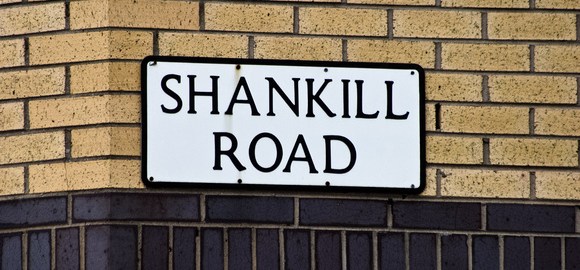
Shankill Road

Image result for the shankill


Shankill history mural


The Shankill Road (from IrishSeanchill, meaning “old church”) is one of the main roads leading through west Belfast, Northern Ireland. It runs through the predominantly loyalistworking-class area known as the Shankill. The road stretches westwards for about 2.4 km (1.5 mi) from central Belfast and is lined, to an extent, by shops.

The residents live in the many streets which branch off the main road. Much of the area along the Shankill Road forms the five wards of Court district electoral area.


History

Ulster loyalist banner and graffiti on a side street building off the Lower Shankill, early 1970s


The first Shankill residents lived at the bottom of what is now known as Glencairn: a small settlement of ancient people inhabited a ring fort, built where the Ballygomartin and Forth rivers meet.

A settlement around the point at which the Shankill Road becomes the Woodvale Road, at the junction with Cambrai Street, was known as Shankill from the IrishSeanchill meaning ‘old church’. Believed to date back to 455 CE,

it was known as the “Church of St Patrick of the White Ford” and in time had six smaller churches, known as “alterages”, attached to it across the west bank of the River Lagan. The church was an important site of pilgrimage and it is likely that the ford of the River Farset, which later became the core of Belfast, was important because of its site on the pilgrimage route.

As a paved road the Shankill dates back to around the sixteenth century as at the time it was part of the main road to Antrim, a role now filled by the A6.

The lower sections of the Shankill Road were in former times the edge of Belfast with both Boundary Street on the lower Shankill and Townsend Street in the middle Shankill taking their names from the fact that at the time they were built they marked the approximate end of Belfast.

The area expanded greatly in the mid to late 19th century with the growth of the linen industry. Many of the streets in the Shankill area, such as Leopold Street, Cambrai Street and Brussels Street, were named after places and people connected with Belgium or Flanders, where the flax from which the linen was woven was grown.

The linen industry, along with others that had previously been successful in the area, declined in the mid-20th century leading to high unemployment levels, which remain at the present time.


Image result for The Harland and Wolff


The Harland and Wolff shipyard, although on the other side of Belfast, was also a traditional employer for the area, and it too has seen its workforce numbers decline in recent years. The area was also a regular scene of rioting in the nineteenth century, often of a sectarian nature after Irish Catholic areas on the Falls Road and Ardoyne emerged along with the city’s prosperity.

One such riot occurred on 9 June 1886 following the defeat of the Government of Ireland Bill 1886 when a crowd of around 2,000 locals clashed with Royal Irish Constabulary police attempting to stop the mob from looting a liquor store. Local law enforcement officers had to barricade themselves in Bower’s Hill barracks where a long siege followed.

Bower’s Hill was a name applied to the area of the road between Agnes Street and Crimea Street.  The West Belfast Division of the original Ulster Volunteer Force organised on the Shankill and drilled in Glencairn and many of its members saw service in the First World War with the 36th (Ulster) Division.

A garden of remembrance beside the graveyard and a mural on Conway Street commemorate those who fought in the war. Recruitment was also high during the Second World War and that conflict saw damage occur to the Shankill Road as part of the Belfast Blitz when a Luftwaffe bomb hit a shelter on Percy Street, killing many people. The site of the destruction was visited by the Duke and Duchess of Gloucester soon after the attack.

The Troubles

UVF mural in the Shankill


During the Troubles, the Shankill was a centre for loyalist paramilitarism. The modern Ulster Volunteer Force (UVF) had its genesis on the Shankill and its first attack occurred on the road on 7 May 1966 when a group of UVF men led by Gusty Spencepetrol bombed a Catholic-owned pub. Fire also engulfed the house next door, killing the elderly Protestant widow, Matilda Gould (77), who lived there.

This was followed on 27 May by the murder of John Scullion (28), a Catholic, as he walked home from a pub.

On 26 June a Catholic civilian, Peter Ward (18), a native of the Republic of Ireland, was killed and two others wounded as they left a pub on the Shankill’s Malvern Street. Shortly after this attack, Spence and three others were arrested and later convicted.

The UVF would continue to be active on the Shankill throughout the Troubles, most notoriously with the Shankill Butchers led by Lenny Murphy, as well as the likes of William Marchant and Frankie Curry, the latter a member of the UVF’s Red Hand Commando.

UDA mural in the Shankill (removed June 2006)


Similarly the Ulster Defence Association, established in September 1971, also began on the Shankill when vigilante groups such John McKeague‘s Shankill Defence Association and the Woodvale Defence Association merged into a larger structure.Under the leadership of initially Charles Harding Smith and later Andy Tyrie the Shankill Road became the centre of UDA activity with the movement establishing its headquarters on the road and leading members such as James Craig, Davy Payne and Tommy Lyttle making their homes in the area.

The Shankill was covered by the West Belfast Battalion of the UDA which was divided into three companies A (Glencairn and Highfield), B (middle Shankill) and C (lower Shankill). During the 1990s C Company under Johnny Adair became one of the most active units in the UDA with gunmen such as Stephen McKeag responsible for several murders.

C Company would later feud with both the UVF and the rest of the UDA until 2003 when they were forced out. Following the exile of Adair and his supporters, as well as the murder of some such as Alan McCullough, the lower Shankill UDA was once again brought into line with the rest of the movement under former Adair supporter Mo Courtney.

Scene of the Shankill Road bombing, as of 2011


The Greater Shankill and its residents were also subjected to a number of bombings and shootings by Irish republican paramilitary forces. During 1971 two pub bombings took place on the Shankill, one in May at the Mountainview Tavern at which several people were injured and a second at the Four Step Inn in September which resulted in two deaths.[21] A further bomb exploded at the Balmoral Furnishing Company on 11 December that same year, resulting in four deaths, including two infants.

Another pub attack followed on 13 August 1975 when the IRA opened fire on patrons outside the Bayardo Bar and then left a bomb inside the crowded bar area, killing four civilians and one UVF member. Brendan McFarlane was given a life sentence for his part in the attack.

The Shankill Road bombing occurred on 23 October 1993. A bomb exploded in Frizzells Fish Shop, below the UDA’s Shankill heaquarters. The bomb exploded prematurely as it was being planted. Nine people were killed in addition to one of the bombers, Thomas Begley. None of the loyalist paramilitaries targeted were hurt, as they had postponed a planned meeting. Begley’s accomplice, Sean Kelly, survived and was imprisoned.

Areas of the Shankill Road

Lower Shankill

Jackie Coulter, a member of C Company of the UDA, commemorated on a mural on Hopewell Crescent


The Shankill Road begins at Peter’s Hill, a road that flows from North Street in Belfast city centre and quickly merges into the Shankill itself at the Westlink. Peter’s Hill is adjacent to the Unity Flats/Carrick Hill, a small nationalist area to the north of the city centre. The area of housing on the lower Shankill around Agnes Street was known colloquially as :

“The Hammer”, one of a number of nicknames applied to districts that included “the Nick”.

The Hammer name is recalled in the Hammer Sports Complex, the home ground of amateur football side Shankill United F.C. The Lower Shankill has been redeveloped in recent years although during the 1960s the housing was ranked as the worst in Belfast. A Lower Shankill Community Association is active in the area whilst the Shankill Leisure Centre is also located here.

The Shankill Women’ s Centre, a women’s educational initiative established by May Blood (now Baroness Blood) in 1987, is also located on the lower Shankill.George McWhirter, a writer and first Poet Laureate of Vancouver, B.C., Canada, also came from the area originally.

The “Diamond Jubilee Bar”, a popular UDA haunt


Several streets link the Shankill Road to the neighbouring Crumlin Road with the area around North Boundary Street formerly the stronghold of Johnny Adair’s C Company. Several members of C Company who have died are commemorated on murals around the area, notably Stephen McKeag, William “Bucky” McCullough, who was killed by the Irish National Liberation Army (INLA) in 1981 as part of a series of tit for tat murders between that group and the UDA and Jackie Coulter, killed by the UVF during a loyalist feud in 2000.

The Shankill theoretically links to the neighbouring Falls Road at a few locations although most of these exits are blocked by peace lines. The entrance at Northumberland Street is sometimes open although it has lockable gates at the midpoint. The Lower Shankill is home to many loyalist pubs, the most notable being the “Malvern Arms”, associated with the UVF, and the “Diamond Jubilee” – a UDA haunt which became notorious as the main meeting place of “C Company” during the early 1990s.

The “Long Bar” and the “Windsor Bar”, both frequented by the UVF in the 1970s, have since vanished. According to investigative journalist Martin Dillon, the latter was used a centre of operations for a UVF platoon led by Anthony “Chuck” Berry.

Middle and upper Shankill

Grave of W.A. Sterling, amongst the youngest people killed on active service during the First World War


Although there is no precise dividing line between the Lower, Middle and Upper Shankill locally it is usually said that the lower Shankill ends at Agnes Street. The area was redeveloped some time before the lower Shankill leading to feelings locally that those in the upper part of the road were better off compared to the “Apaches” of the lower Shankill as they were colloquially known.

A number of Protestant churches are situated in this area including the West Kirk Presbyterian Church, the Shankill Methodist church and the independent Church of God.

The West Belfast Orange Hall is located near the top of the Road. This building, which houses the No. 9 District Orange Lodge, has been revamped by Belfast City Council.[36] The same is true of the nearby Shankill Cemetery, a small graveyard that has received burials for around 1000 years. The graveyard is noted for a statue of Queen Victoria as well as the adjacent memorial to the members of the 36th Ulster Division who died at the Battle of the Somme.

Amongst those buried in the graveyard is Rev Isaac Nelson, a Presbyterian minister who was also active in nationalist politics. Nelson lived at Sugarfield House on the Shankill, which has since given its name to Sugarfield Street.

Also buried here is 2nd Private W.A. Sterling, killed in action with the Royal Air Force on 5 November 1918 at the age of 14.

The “Lawnbrook Social Club” in Centurion Street, one of the drinking dens used by Lenny Murphy and the Shankill Butchers


The area includes Lanark Way, one of the few direct links to the neighbouring nationalist areas, which leads directly to the Springfield Road (although the street is gated close to the Springfield Road end and these are locked at night). A regular route for UDA gunmen seeking access to the Falls during the Troubles, it was dubbed the “Yellow Brick Road” by Stephen McKeag and his men.

A number of pubs frequented by UVF members were located in the area. These included the “Berlin Arms” at the Shankill and Berlin Street junction, and the “Bayardo”, which was situated on the corner of Shankill and Aberdeen Street. The pub was close to “The Eagle” where the UVF “Brigade Staff” had their headquarters in rooms above a chip shop bearing the same name at the Shankill and Spiers Place junction. The “Brown Bear” pub which loyalist Lenny Murphy used as his headquarters to direct his notorious murder gang – the Shankill Butchers – was located on the corner of the Upper Shankill and Mountjoy Street.

The pub, which went out of business, has since been demolished. Another drinking den in the area used by Murphy and his gang was the “Lawnbrook Social Club” in Centurion Street. The “Rex Bar” on the middle Shankill is one of the oldest pubs on the Shankill Road and frequented by members of the UVF. This bar was attacked by members of the UDA’s C Company in 2000 to launch a loyalist feud between the two groups.

Greater Shankill

Mural depicting James Buchanan on Ainsworth Street


The terms Greater Shankill is used by a number of groups active in the area, most notably the Greater Shankill Partnership, to refer to both the Shankill Road and the unionist/loyalist areas that surround it. The main areas identified within this area are Woodvale, Glencairn and Highfield. The Greater Shankill as a whole has a population of around 22,000.

Woodvale

Image result for woodvale belfast

Woodvale Park

The Woodvale area begins after Ainsworth Avenue when the road changes from Shankill Road to Woodvale Road. As well as extensive housing the Woodvale area also contains the Woodvale Presbyterian Church, a building on the corner of the Woodvale and Ballygomartin Roads that dates back to 1899.

The area takes its name from Woodvale Park, a public gardens and sports area that was opened in 1888. Also found locally is St. Matthew’s Church of Ireland, which was rebuilt in 1872, taking its name from the original church which had sat in the grounds of the graveyard. The architecture of this church is called trefoil, which means it is built in the shape of a shamrock. The shamrock is the national emblem of Ireland and was supposedly used by St. Patrick, the patron saint of Ireland to explain the Holy Trinity of Father, Son and Holy Ghost.

There is a book about the church which says that St. Matthew’s is actually a copy of a church in Salonika, as the rounded “leaves” do not have the indentations of the leaves of the shamrock. The water in the stone outside the front door was thought to cure warts and, certainly up to the 1990s, was considered to cure colic if a new, open, safety pin was thrown in.

The oldest stone in the Shankill graveyard was known locally as the “Bullaun Stone” and was traditionally said to cure warts if the effected area was rubbed on the stone. It was removed to the grounds of St Matthews in 1911.

Glencairn

Ballygomartin Road, as viewed from Springmartin Road, showing its largely rural nature

Glencairn is an area based around the Ballygomartin Road, which runs off the Woodvale Road, as well the Forthriver Road. It is bordered by the Crumlin Road. As well as a large housing estate the area also includes Glencairn Park, a large woodland area at the bottom of Divis Mountain. Previously the estate of the Cunningham family the area was open to the public in 1962.

The park features Fernhill House, the ancestral family home, which was not only used by Edward Carson to drill his Ulster Volunteers but was also the setting for the announcement of the Combined Loyalist Military Command (CLMC) ceasefire on 13 October 1994.

It subsequently became a museum but closed down in late 2010-early 2011. A further area of housing, known as the Lyndhurst area after a number of local streets, lies to the west of Glencairn Park (with the Glencairn estate to the east of the woodland area). The Lyndhurst area hit the headlines in 2003 when two leading loyalists, Jim Spence of the UDA and Jackie Mahood of the Loyalist Volunteer Force, were reported as brawling in the streets of the Lyndhurst area where they both lived.

The Ballygomartin Road extends as far as the nationalist Upper Whiterock Road although after Springmartin the area is mainly countryside. The estate was the scene of the killings of two prominent loyalists. In 1982 Lenny Murphy was shot and killed by the Provisional IRA close to his girlfriend’s house on the estate.

In 2001 William Stobie was killed by members of the UDA, a group to which Stobie had formerly belonged, after intimating that he would testify at a public inquiry into the death of Pat Finucane. Stobie’s killing, which occurred near his home on Forthriver Road, was publicly claimed by the Red Hand Defenders, a cover name used by various loyalist groups on ceasefire.

Highfield

The Springmartin barrier, with New Barnsley police station at one end


Highfield is a housing estate situated around the West Circular and Springmartin Roads, both of which run off the Ballygomartin Road. Highfield comes close to the nationalist Springfield Road and there is limited access between the two areas through West Circular and Springmartin. Due to its location parts of the area are sometimes known as the Springmartin estate.

Highfield is seen as an enclave and has been the scene of frequent sectarian tension. As a consequence the Springmartin Road is home to an 18-foot-high (5.5 m) peace line that runs for the length of the road from the junction with the Springfield Road until near that with the Ballygomartin Road.

In May 1972 the area was the scene of a two-day gun battle between republican and loyalist paramilitaries and the British Army, although a combination of the peace lines and demographic changes meant that such open conflict was not repeated later in the Troubles.

Politics

Democratic Unionist Party office, Woodvale Road


The Shankill has been traditionally unionist and loyalist, albeit with some strength also held by the labour movement. Belfast Shankill was established as a constituency of the Parliament of Northern Ireland in 1929 and existed until the body was abolished in 1973. During that time the seat was held by three men, Tommy Henderson (1929–1953), Henry Holmes (1953–1960) and Desmond Boal (1960–1973). Of these only Holmes belonged to the mainstream Ulster Unionist Party for the entirety of his career with Boal a sometime member who also designated as both independent Unionist and Democratic Unionist Party and Henderson always and independent who for a time was part of the Independent Unionist Association.

Henderson was a native of Dundee Street on the Shankill. A Belfast Shankill constituency also returned a member to the Parliament of the United Kingdom from 1918–1922, with Labour UnionistSamuel McGuffin holding the seat. Further up the road there was also a Belfast Woodvale seat at Westminster and a seat of the same name at Stormont. Robert John Lynn of the Irish Unionist Alliance represented the seat at Westminster for the entirety of its existence (1918–1922).

The Stormont seat was held by John William Nixon (independent Unionist) from 1929 to 1950, Ulster Unionists Robert Harcourt (1950–1955) and Neville Martin (1955–1958), Billy Boyd of the Northern Ireland Labour Party until 1965 then finally John McQuade, who was variously Ulster Unionist, independent Unionist and Democratic Unionist until the seat was abolished in 1972. The Shankill is currently part of the Belfast West constituencies for the Northern Ireland Assembly and Westminster. As a consequence the Shankill is represented by five Sinn Féin MLAs and one from the Social Democratic and Labour Party whilst from 1966, when the seat was lost by the last sitting unionist member Jim Kilfedder, it has also always had a nationalist or republican MP.

The abstentionist policy of Sinn Féin MP Gerry Adams, who was West Belfast’s MP until his resignation in 2011, led to an attempted legal challenge by local councillor Frank McCoubrey who argued that Shankill residents were being denied their right to representation.

The case was not a success. On Belfast City Council the Greater Shankill area is covered by the Court electoral area. At the 2011 election the five councillors elected were William Humphrey, Naomi Thompson and Brian Kingston of the Democratic Unionist Party, the independent Frank McCoubrey (who is a member of the Ulster Political Research Group) and the Progressive Unionist Party‘s Hugh Smyth.

Robert McCartney, who led his own UK Unionist Party and represented North Down at Westminster, is also originally from the Shankill.

Sport

Boxing mural, Hopewell Crescent


Wayne McCullough, a gold medalist at the Commonwealth Games and a world champion in the Bantamweight division and an olympic silver medalist at the 1992 Summer Olympics representing Ireland is a native of the Shankill. He is one of a number of boxers from the area to be featured on a mural on Gardiner Street celebrating the area’s strong heritage in boxing.

The image has since been moved to Hopewell Crescent. McCullough trained in the Albert Foundry boxing club, located in the Highfield estate where he grew up.

Other locals to make an impact in the sport have included Jimmy Warnock, a boxer from the 1930s who beat world champion Benny Lynch twice, and his brother Billy. Football is also a popular sport in the area with local teams including Shankill United, Albert Foundry, who play on the West Circular Road, Lower Shankill, who share the Hammer ground with United and Woodvale who won the Junior Cup in 2011.

All four clubs are members of the Northern Amateur Football League. The main club in the area however is Linfield with a Linfield superstore trading on the Shankill Road despite the club being based on the Lisburn Road in south Belfast.

A Linfield Supporters and Social Club is situated on Crimea Street. An Ulster Rangers club is also open on the road, with the Glasgow club widely supported amongst Northern Irish Protestants. Norman Whiteside, the ex Northern Ireland and Manchester United midfielder, lived on the Shankill. Whiteside also lends his name to the Norman Whiteside Sports Facility, a community sports area used by Woodvale F.C.

he facility is located on Sydney Street West between the Shankill and the neighbouring Crumlin Road. The Ballygomartin Road is also home to a cricket ground of the same name which in 2005 hosted a List-A match between Canada and Namibia in the 2005 ICC Trophy. The ground is the home of Woodvale Cricket Club, established in 1887.

Education

Secondary schools serving the Shankill area include the Belfast Boys’ Model School and Belfast Model School for Girls due to their location in the Ballysillan area of the neighbouring Crumlin Road. Pupils from the area also attend Hazelwood College or Malone College which are both integrated schools, as well as Victoria College and the Royal Belfast Academical Institution both of which are grammar schools. Prior to its closure, and before several changes of name, Cairnmartin Secondary School also served the greater Shankill area. Famous pupils include footballer Norman Whiteside[66] and boxer Wayne McCullough.

The school, by then known as Mount Gilbert Community College, closed permanently in 2007 after a fall in pupil numbers. Primary schools in the greater Shankill area included Forth River Primary School on the Ballygomartin Road. Established in 1841, the original building was cramped and inspection reports over the years commented on the high standard of teaching despite the inadequacy of the building.

During the 1980s and 1990s, closure and amalgamation were both suggested and vehemently opposed by everyone connected with the school. Ultimately a new £1.4m state-of-the-art school was announced as a replacement for the old building and this new school, which is on the adjacent Cairnmartin Road, was officially opened by Prince Andrew, Duke of York in 2005.

Others primary schools in the area include three on the Shankill Road itself in Glenwood Primary School, established in 1981, Edenbrooke Primary School on Tennent Street and Malvern Primary School as well as Black Mountain Primary School and Springhill Primary School on Springmartin Road.

Shankill Graveyard

About the cemetery

Shankill Graveyard is one of the oldest cemeteries in Belfast.

It has been used for burials for more than 1,000 years and, although they no longer take place in the graveyard, it remains an important historical site. One of the oldest legible stones belongs to George McAuley who died in 1685.

A memorial stone book is located in a special landscaped portion of the cemetery, which includes an area of grass where cremated remains can be scattered.

The site’s gates and railings are listed due to their historical significance.

Another feature is the sculpture of Queen Victoria by artist John Cassidy, which you can see from the main entrance. The statue was originally located at in Durham Street, before being moved to the cemetery in 2003. It was carved from Portland stone in 1897 to celebrate the queen’s diamond jubilee and shows her wearing a dress of Nottingham lace.

History

The earliest church on this site, dating back to around 1306, is believed to have been the White Church of the Chapels of the Ford.

Although the name ‘Shankill’ means ‘old church’ (from the Irish ‘séan chill’), the name did not come into common use until the 17th century.

During the 18th century, most burials were of local people but, during the 19th century, residents from the nearby linen settlements of Glenalina, Ligoniel, Oldpark and Springfield were also buried in the cemetery. During this time, the site changed from a rural community graveyard to a town cemetery.

Many paupers and victims of the plague and other diseases are also buried in Shankill Graveyard, in unmarked graves. In fact, the Black Death sparked such fear, the ground surrounding the victims’ graves was ordered to be closed over and never reopened, in case the disease was ‘released’.

In 1834, a watchtower was built by William Sayers and Israel Milliken so families could guard new graves for a small fee. The idea was to prevent bodysnatchers from stealing ‘fresh’ remains for use in medical research.

Shankill Graveyard was handed over to the public in 1958, after it had fallen into disrepair following the decision to no longer accept new burials. Belfast Corporation (now the council) cleared and renovated the site, turning it into a ‘rest garden’ for local residents to enjoy.

—————————————————————————–


The Legend of Margorie McCall ~ 1705

mar mccall headstone

Lived Once , Buried Twice

Shankhill Graveyard


Times were hard in the 1700s, and people made a penny wherever they could. Some trades were frowned upon, however, and rightly so. One such trade was that of the resurrectionist, also known as a grave robber or ‘sack-em up’. These unsavoury types provided cadavers to the many private medical schools throughout the UK, and at the start of the 18th Century business was booming. Probably the most famous of the practitioners of this particular trade were Burke and Hare, who found infamy almost 100 years later. Their notoriety wasn’t really due to their grave-robbing, but more to do with their fresh supply of corpses to order. They were both originally from Ireland, but they met in Edinburgh, from where they went on to supply students of anatomy with more than their quota of cadavers.

The resurrectionists weren’t unique to Edinburgh. In Ireland, surgeons were prepared to pay a fair price for the newly deceased and this provided employment opportunities for the local resurrectionists. This practice was however to prove a hair raising experience for once such band of greave robbers in Lurgan in 1705.

Margorie McCall was wed to a doctor. They lived in Church Place, Lurgan, Co Armagh and by all accounts were very happy. When Margorie fell ill, her husband John was beside himself with worry – in the early 1700s many illnesses we consider minor today could be fatal and ‘the fever’ was a great catch-all for many of these ailments. Sadly, Margorie succumbed to her bout of fever and was buried in Shankill Church of Ireland Cemetery, not far from her home in Church Place. She was hastily buried for fear of the fever spreading, and that should have been the end of that; however, she was to become one of the most famous women in Lurgan – and is still talked about today.

There was quite a lot of commotion at the wake concerning a valuable ring that Marjorie was wearing. Many of the mourners tried in vain to prise the ring from her fingers – perhaps because they anticipated the possibility that grave robbers would desecrate Marjorie’s resting place in order to steal the ring. Margorie was buried still wearing her beautiful gold wedding ring. Due to her husband’s inability to remove it from her finger, which had swollen considerably since her death, but news of the treasure leaked out to the resurrectionists. They spotted the opportunity to gain themselves a bonus.

After the wake – which was traditionally an attempt to avoid premature burial as the family of the deceased would sit and watch over the body for a few days to see if the person awakened – Marjorie was duly interred in Shankill Graveyard.

That evening, before the soil had time to settle on Margorie’s coffin, the grave-robbers paid a visit. Working under cover of darkness they grappled in the dirt until they reached and opened her coffin. True to the rumour, the ring was still on her finger. Before removing the body, they attempted to purloin the valuable item, but it wouldn’t budge. Being businessmen, they weren’t about to allow such a prize to make its way to a surgeon’s slab, and since she couldn’t get any deader, they agreed to cut off her finger to free the ring.

See:  Lurgan Ancestry for full story

———————————————————————————-

More Details on Shankill Graveyard

Cemetery location

Shankill Road, Belfast,

BT13 3AE

Enter from Shankill Road.

Bereavement Services

Our Bereavement Services Office is located on the Ground Floor, Cecil Ward Building, 4-10 Linenhall Street, Belfast, BT2 8BP.

Our phone number is 028 9027 0296.

Contact our Bereavement Services Office if you have a query about our cemeteries.

Office opening hours

 Day  Time
Monday and Friday 8.30am – 4pm
Tuesday, Wednesday and Thursday 9am – 4pm
Saturday 8.30am 11.30am

Cemetery opening hours

From 7.30am to dusk daily. 

Access information

Take Metro 11A/B/C/D from Belfast city centre. There is no car parking available at the cemetery, which is fully accessible to those with disabilities.


———————————————————

Go on – Surprise me!


paypal donation button
———————————————————


UDA – UFF – The Very British Terrorists

UDA – UFF 

The Very British Terrorists


– Disclaimer –

The views and opinions expressed in these documentary are soley intended to educate and provide background information to those interested in the Troubles of Northern Ireland.

They in no way reflect my own opinions and I take no responsibility for any inaccuracies or factual errors.

The UDA – Ulster Defence Association the largest Paramilitary group in Ireland has now reorganised, rearmed and has stepped up it’s campaign for the 1st time since the 1970’s and for the 1st time ever has killed more people in 1 year than the IRA. Those are the words of ‘This Weeks’ presenter Margaret Gilmore. This is a historical documentary created in 1992 please don’t dislike it because you hate the UDA or Loyalism.

————————————————–

——————————————————-

See UDA page for more information

Go on , surprise me

if you have enjoyed reading my story and daily blogs please consider making a small donation or buying me a coffee.

paypal donation button

The Falklands War – The Untold Story

The Falklands War – The Untold Story

Falklands Crisis was a 1982 war between Argentina and the United Kingdom. The conflict resulted from the long-standing dispute over the sovereignty of the Falkland Islands and South Georgia and the South Sandwich Islands, which lie in the South Atlantic, east of Argentina.

The Falklands War (Spanish: Guerra de las Malvinas), also known as the Falklands Conflict, Falklands Crisis, and the Guerra del Atlántico Sur (Spanish for “South Atlantic War“), was a ten-week war between Argentina and the United Kingdom over two British overseas territories in the South Atlantic: the Falkland Islands and South Georgia and the South Sandwich Islands. It began on Friday, 2 April 1982, when Argentina invaded and occupied the Falkland Islands (and, the following day, South Georgia and the South Sandwich Islands) in an attempt to establish the sovereignty it had long claimed over them. On 5 April, the British government dispatched a naval task force to engage the Argentine Navy and Air Force before making an amphibious assault on the islands. The conflict lasted 74 days and ended with the Argentine surrender on 14 June 1982, returning the islands to British control. In total, 649 Argentine military personnel, 255 British military personnel, and three Falkland Islanders died during the hostilities.

The conflict was a major episode in the protracted confrontation over the territories’ sovereignty. Argentina asserted (and maintains to this day) that the islands are Argentinian territory,[6] and the Argentine government thus characterised its military action as the reclamation of its own territory. The British government regarded the action as an invasion of a territory that had been a Crown colony since 1841. Falkland Islanders, who have inhabited the islands since the early 19th century, are predominantly descendants of British settlers, and favour British sovereignty. Neither state, however, officially declared war (both sides did declare the Islands areas a war zone and officially recognised that a state of war existed between them) and hostilities were almost exclusively limited to the territories under dispute and the area of the South Atlantic where they lie.

The conflict has had a strong impact in both countries and has been the subject of various books, articles, films, and songs. Patriotic sentiment ran high in Argentina, but the outcome prompted large protests against the ruling military government, hastening its downfall. In the United Kingdom, the Conservative Party government, bolstered by the successful outcome, was re-elected the following year. The cultural and political weight of the conflict has had less effect in Britain than in Argentina, where it remains a continued topic for discussion.[7]

Relations between the United Kingdom and Argentina were restored in 1989 following a meeting in Madrid, Spain, at which the two countries’ governments issued a joint statement.[8] No change in either country’s position regarding the sovereignty of the Falkland Islands was made explicit. In 1994, Argentina’s claim to the territories was added to its constitution.[9]

Lead-up to the conflict

Lieutenant General Leopoldo Galtieri, leader of the Argentinian Junta
Admiral Jorge Anaya was the driving force in the Junta’s decision to invade.[10][11][12]

In the period leading up to the war – and, in particular, following the transfer of power between the military dictators General Jorge Rafael Videla and General Roberto Eduardo Viola late in March 1981 – Argentina had been in the midst of a devastating economic stagnation and large-scale civil unrest against the military junta that had been governing the country since 1976.[13] In December 1981 there was a further change in the Argentine military regime bringing to office a new junta headed by General Leopoldo Galtieri (acting president), Brigadier Basilio Lami Dozo and Admiral Jorge Anaya. Anaya was the main architect and supporter of a military solution for the long-standing claim over the islands,[14] calculating that the United Kingdom would never respond militarily.[15]

By opting for military action, the Galtieri government hoped to mobilise the long-standing patriotic feelings of Argentines towards the islands, and thus divert public attention from the country’s chronic economic problems and the regime’s ongoing human rights violations.[16] Such action would also bolster its dwindling legitimacy. The newspaper La Prensa speculated in a step-by-step plan beginning with cutting off supplies to the Islands, ending in direct actions late in 1982, if the UN talks were fruitless.[17]

The ongoing tension between the two countries over the islands increased on 19 March when a group of Argentine scrap metal merchants (actually infiltrated by Argentine marines) raised the Argentine flag at South Georgia, an act that would later be seen as the first offensive action in the war. The Royal Navy ice patrol vessel HMS Endurance was dispatched from Stanley to South Georgia in response, subsequently leading to the invasion of South Georgia by Argentine forces on 3 April. The Argentine military junta, suspecting that the UK would reinforce its South Atlantic Forces,[18] ordered the invasion of the Falkland Islands to be brought forward to 2 April.

Britain was initially taken by surprise by the Argentine attack on the South Atlantic islands, despite repeated warnings by Royal Navy captain Nicholas Barker and others. Barker believed that Defence Secretary John Nott‘s 1981 review (in which Nott described plans to withdraw the Endurance, Britain’s only naval presence in the South Atlantic) sent a signal to the Argentines that Britain was unwilling, and would soon be unable, to defend its territories and subjects in the Falklands.[19][20]

Argentine invasion

The Argentine destroyer ARA Santísima Trinidad landed Special Forces south of Stanley

On 2 April 1982, The Argentine forces mounted amphibious landings off the Falkland Islands, following the civilian occupation of South Georgia on 19 March, before the Falklands War began. The invasion was met with a nominal defence organised by the Falkland Islands’ Governor Sir Rex Hunt, giving command to Major Mike Norman of the Royal Marines. The events of the invasion included the landing of Lieutenant Commander Guillermo Sanchez-Sabarots’ Amphibious Commandos Group, the attack on Moody Brook barracks, the engagement between the troops of Hugo Santillan and Bill Trollope at Stanley, and the final engagement and surrender at Government House.

Initial British response

The cover of Newsweek magazine, 19 April 1982, depicts HMS Hermes, flagship of the British Task Force.

Word of the invasion first reached Britain from Argentine sources.[21] A Ministry of Defence operative in London had a short telex conversation with Governor Hunt’s telex operator, who confirmed that Argentines were on the island and in control.[21][22] Later that day, BBC journalist Laurie Margolis was able to speak with an islander at Goose Green via amateur radio, who confirmed the presence of a large Argentine fleet and that Argentine forces had taken control of the island.[21] Operation Corporate was the codename given to the British military operations in the Falklands War. The commander of task force operations was Admiral Sir John Fieldhouse. Operations lasted from 1 April 1982 to 20 June 1982.[23] The British undertook a series of military operations as a means of recapturing the Falklands from Argentine occupation. The British government had taken action prior to the 2 April invasion. In response to events on South Georgia, the submarines HMS Splendid and HMS Spartan were ordered to sail south on 29 March, whilst the stores ship Royal Fleet Auxiliary (RFA) Fort Austin was dispatched from the Western Mediterranean to support HMS Endurance.[24] Lord Carrington had wished to send a third submarine, but the decision was deferred due to concerns about the impact on operational commitments.[24] Coincidentally, on 26 March, the submarine HMS Superb left Gibraltar and it was assumed in the press it was heading south. There has since been speculation that the effect of those reports was to panic the Argentine junta into invading the Falklands before nuclear submarines could be deployed.[24]

The following day, during a crisis meeting headed by the Prime Minister Margaret Thatcher, the Chief of the Naval Staff, Admiral Sir Henry Leach, advised them that “Britain could and should send a task force if the islands are invaded”. On 1 April, Leach sent orders to a Royal Navy force carrying out exercises in the Mediterranean to prepare to sail south. Following the invasion on 2 April, after an emergency meeting of the cabinet, approval was given to form a task force to retake the islands. This was backed in an emergency session of the House of Commons the next day.[25]

On 6 April, the British Government set up a War Cabinet to provide day-to-day political oversight of the campaign.[3] This was the critical instrument of crisis management for the British with its remit being to “keep under review political and military developments relating to the South Atlantic, and to report as necessary to the Defence and Overseas Policy Committee”. Until it was dissolved on 12 August, the War Cabinet met at least daily. Although Margaret Thatcher is described as dominating the War Cabinet, Lawrence Freedman notes in the Official History of the Falklands Campaign that she did not ignore opposition or fail to consult others. However, once a decision was reached she “did not look back”.[3]

Position of third party countries

On the evening of 3 April, the United Kingdom’s United Nations ambassador Sir Anthony Parsons put a draft resolution to the United Nations Security Council. The resolution, which condemned the hostilities and demanded the immediate Argentine withdrawal from the Islands, was adopted by the council the following day as United Nations Security Council Resolution 502, which passed with ten votes in support, one against (Panama) and four abstentions (China, the Soviet Union, Poland and Spain).[25][26][27] The UK received further political support from the Commonwealth of Nations and the European Economic Community. The EEC also provided economic support by imposing economic sanctions on Argentina. Argentina itself was politically backed by a majority of countries in Latin America and some members of the Non-Aligned Movement.[citation needed] On 20 May 1982, the Prime Minister of New Zealand, Rob Muldoon, announced that he would make HMNZS Canterbury, a Leander class frigate, available for use where the British thought fit to release a Royal Navy vessel for the Falklands.[28]

The war was an unexpected event in a world strained by the Cold War and the North–South divide. The response of some countries was the effort to mediate the crisis and later as the war began, the support (or criticism) based in terms of anti-colonialism, political solidarity, historical relationships or realpolitik.

The United States was concerned by the prospect of Argentina turning to the Soviet Union for support,[29] and initially tried to mediate an end to the conflict. However, when Argentina refused the US peace overtures, US Secretary of State Alexander Haig announced that the United States would prohibit arms sales to Argentina and provide material support for British operations. Both Houses of the US Congress passed resolutions supporting the US action siding with the United Kingdom.[30]

The US provided the United Kingdom with military equipment ranging from submarine detectors to the latest missiles.[31][32][33][34] President Ronald Reagan approved the Royal Navy’s request to borrow the Sea Harrier-capable amphibious assault ship USS Iwo Jima (LPH-2) if the British lost an aircraft carrier. The United States Navy developed a plan to help the British man the ship with American military contractors, likely retired sailors with knowledge of the Iwo Jima‍ ’​s systems.[35] France provided dissimilar aircraft training so Harrier pilots could train against the French aircraft used by Argentina.[36] French and British intelligence also worked to prevent Argentina from obtaining more Exocet missiles on the international market,[37] while at the same time Peru attempted to purchase 12 missiles for Argentina, in a failed secret operation.[38][39] Chile gave support to Britain in the form of intelligence about Argentine military and early warning radar.[40][41] Throughout the war, Argentina was afraid of a Chilean military intervention in Patagonia and kept some of her best mountain regiments away from the Falklands near the Chilean border as a precaution.[42]

In recent years, it has become known that a listening post located in Fauske, Norway was vital in giving the British intelligence information regarding Argentinian fleet locations. The listening post was designated Fauske II by Norway. The information was “stolen” from Soviet spy satellites, which were the only space assets that covered the South Atlantic.[43] Western powers such as the United States and the UK did not have their own satellite presence in this area at the time. A high ranking British military source claimed that the intelligence the British got from the Fauske II post as “Incredibly vital”:

When the war broke out, we had almost no intelligence information from this area. It was here we got help from the Norwegians, who gave us a stream of information about the Argentinian warships positions. The information came to us all the time and straight to our war headquarters at Northwood. The information was continuously updated and told us exactly where the Argentinian ships were.[43][44]

While France overtly backed the United Kingdom, a French technical team remained in Argentina throughout the war. French government sources have said that the French team was engaged in intelligence-gathering; however, it simultaneously provided direct material support to the Argentines, identifying and fixing faults in Exocet missile launchers.[45] According to the book Operation Israel, advisers from Israel Aerospace Industries were already in Argentina and continued their work during the conflict. The book also claims that Israel sold weapons and drop tanks in a secret operation in Peru.[46][47] Peru also openly sent “Mirages, pilots and missiles” to Argentina during the war.[48] Peru had earlier transferred ten Hercules transport planes to Argentina soon after the British Task Force had set sail in April 1982.[49] Nick van der Bijl records that, after the Argentine defeat at Goose Green, Venezuela and Guatemala offered to send paratroops to the Falklands.[50] Through Libya, under Muammar Gaddafi, Argentina received 20 launchers and 60 SA-7 missiles, as well as machine guns, mortars and mines; all in all, the load of four trips of two Boeing 707s of the AAF, refuelled in Recife with the knowledge and consent of the Brazilian government.[51] Some of these clandestine logistics operations were mounted by the Soviet Union.[52]

British Task Force

HMS Invincible, part of the task force. Pictured in 1990

Royal Navy Fleet Air Arm Sea Harrier FRS1. The gloss paint scheme was altered to a duller one en route south.

The British government had no contingency plan for an invasion of the islands, and the task force was rapidly put together from whatever vessels were available.[53] The nuclear submarine Conqueror set sail from France on 4 April, whilst the two aircraft carriers Invincible and Hermes, in the company of escort vessels, left Portsmouth only a day later.[25] On its return to Southampton from a world cruise on 7 April, the ocean liner SS Canberra was requisitioned and set sail two days later with 3 Commando Brigade aboard.[25] The ocean liner Queen Elizabeth 2 was also requisitioned and left Southampton on 12 May with 5th Infantry Brigade on board.[25] The whole task force eventually comprised 127 ships: 43 Royal Navy vessels, 22 Royal Fleet Auxiliary ships and 62 merchant ships.[53]

The retaking of the Falkland Islands was considered extremely difficult. The US Navy considered a successful counter-invasion by the British “…a military impossibility.”[54] Firstly, the British were significantly constrained by the disparity in deployable air cover.[55] The British had 42 aircraft (28 Sea Harriers and 14 Harrier GR.3s) available for air combat operations,[56] against approximately 122 serviceable jet fighters, of which about 50 were used as air superiority fighters and the remainder as strike aircraft, in Argentina’s air forces during the war.[57] Crucially, the British lacked AEW aircraft.

Many of the British were also concerned by the Argentine surface fleet because it possessed many of the same weapons systems and capabilities as the British fleet, specifically Exocet-equipped vessels, in addition to two Type 209 submarines.[58] For this reason, the British planned to screen their fleet with submarines. They also envisaged a naval retreat on the appearance of Argentine ships to avoid surface combat.

By mid-April, the Royal Air Force had set up the airbase of RAF Ascension Island, co-located with Wideawake Airfield (USA) on the mid-Atlantic British overseas territory of Ascension Island, including a sizeable force of Avro Vulcan B Mk 2 bombers, Handley Page Victor K Mk 2 refuelling aircraft, and McDonnell Douglas Phantom FGR Mk 2 fighters to protect them. Meanwhile, the main British naval task force arrived at Ascension to prepare for active service. A small force had already been sent south to recapture South Georgia.

Encounters began in April; the British Task Force was shadowed by Boeing 707 aircraft of the Argentine Air Force during their travel to the south.[59] Several of these flights were intercepted by Sea Harriers outside the British-imposed exclusion zone; the unarmed 707s were not attacked because diplomatic moves were still in progress and the UK had not yet decided to commit itself to armed force. On 23 April, a Brazilian commercial Douglas DC-10 from VARIG Airlines en route to South Africa was intercepted by British Harriers who visually identified the civilian plane.[60]

Recapture of South Georgia and the attack on Santa Fe

The South Georgia force, Operation Paraquet, under the command of Major Guy Sheridan RM, consisted of Marines from 42 Commando, a troop of the Special Air Service (SAS) and Special Boat Service (SBS) troops who were intended to land as reconnaissance forces for an invasion by the Royal Marines. All were embarked on RFA Tidespring. First to arrive was the Churchill-class submarine HMS Conqueror on 19 April, and the island was over-flown by a radar-mapping Handley Page Victor on 20 April.

The first landings of SAS troops took place on 21 April, but—with the southern hemisphere autumn setting in—the weather was so bad that their landings and others made the next day were all withdrawn after two helicopters crashed in fog on Fortuna Glacier. On 23 April, a submarine alert was sounded and operations were halted, with Tidespring being withdrawn to deeper water to avoid interception. On 24 April, the British forces regrouped and headed in to attack.

The ARA Santa Fe sailing on the surface.

On 25 April, after resupplying the Argentine garrison in South Georgia, the submarine ARA Santa Fe was spotted on the surface[61] by a Westland Wessex HAS Mk 3 helicopter from HMS Antrim, which attacked the Argentine submarine with depth charges. HMS Plymouth launched a Westland Wasp HAS.Mk.1 helicopter, and HMS Brilliant launched a Westland Lynx HAS Mk 2. The Lynx launched a torpedo, and strafed the submarine with its pintle-mounted general purpose machine gun; the Wessex also fired on Santa Fe with its GPMG. The Wasp from HMS Plymouth as well as two other Wasps launched from HMS Endurance fired AS-12 ASM antiship missiles at the submarine, scoring hits. Santa Fe was damaged badly enough to prevent her from diving. The crew abandoned the submarine at the jetty at King Edward Point on South Georgia.

With Tidespring now far out to sea, and the Argentine forces augmented by the submarine’s crew, Major Sheridan decided to gather the 76 men he had and make a direct assault that day. After a short forced march by the British troops and a naval bombardment demonstration by two Royal Navy vessels (Antrim and Plymouth), the Argentine forces surrendered without resistance. The message sent from the naval force at South Georgia to London was, “Be pleased to inform Her Majesty that the White Ensign flies alongside the Union Jack in South Georgia. God Save the Queen.” The Prime Minister, Margaret Thatcher, broke the news to the media, telling them to “Just rejoice at that news, and congratulate our forces and the Marines!”[62]

Black Buck raids

Main article: Operation Black Buck

On 1 May, British operations on the Falklands opened with the “Black Buck 1” attack (of a series of five) on the airfield at Stanley. A Vulcan bomber from Ascension flew on an 8,000-nautical-mile (15,000 km; 9,200 mi) round trip dropping conventional bombs across the runway at Stanley and back to Ascension. The mission required repeated refuelling, and required several Victor tanker aircraft operating in concert, including tanker to tanker refuelling. The overall effect of the raids on the war is difficult to determine, and the raids consumed precious tanker resources from Ascension,[63] but also prevented Argentina from stationing fast jets on the islands.

The raids did minimal damage to the runway, and damage to radars was quickly repaired. As of 2014[update] the Royal Air Force Web site still states that all the three bombing missions had been successful,[64] but historian Lawrence Freedman, who had access to classified documents, said in a 2005 book that the subsequent bombing missions were failures.[65] Argentine sources said that the Vulcan raids influenced Argentina to withdraw some of its Mirage IIIs from Southern Argentina to the Buenos Aires Defence Zone.[66][67][68] This was later described as propaganda by Falklands veteran Commander Nigel Ward.[69] In any case, the effect of the Vulcan raids on Argentina’s deployment of defensive fighters was watered down when British officials made clear that there would be no strikes on air bases in Argentina.[70]

Of the five Black Buck raids, three were against Stanley Airfield, with the other two anti-radar missions using Shrike anti-radiation missiles.

Escalation of the air war

The Falklands had only three airfields. The longest and only paved runway was at the capital, Stanley, and even that was too short to support fast jets (although an arrestor gear was fitted in April to support Skyhawks). Therefore, the Argentines were forced to launch their major strikes from the mainland, severely hampering their efforts at forward staging, combat air patrols and close air support over the islands. The effective loiter time of incoming Argentine aircraft was low, and they were later compelled to overfly British forces in any attempt to attack the islands.

The first major Argentine strike force comprised 36 aircraft (A-4 Skyhawks, IAI Daggers, English Electric Canberras, and Mirage III escorts), and was sent on 1 May, in the belief that the British invasion was imminent or landings had already taken place. Only a section of Grupo 6 (flying IAI Dagger aircraft) found ships, which were firing at Argentine defences near the islands. The Daggers managed to attack the ships and return safely. This greatly boosted morale of the Argentine pilots, who now knew they could survive an attack against modern warships, protected by radar ground clutter from the Islands and by using a late pop up profile. Meanwhile, other Argentine aircraft were intercepted by BAE Sea Harriers operating from HMS Invincible. A Dagger[71] and a Canberra were shot down.

Combat broke out between Sea Harrier FRS Mk 1 fighters of No. 801 Naval Air Squadron and Mirage III fighters of Grupo 8. Both sides refused to fight at the other’s best altitude, until two Mirages finally descended to engage. One was shot down by an AIM-9L Sidewinder air-to-air missile (AAM), while the other escaped but was damaged and without enough fuel to return to its mainland air base. The plane made for Stanley, where it fell victim to friendly fire from the Argentine defenders.[72]

As a result of this experience, Argentine Air Force staff decided to employ A-4 Skyhawks and Daggers only as strike units, the Canberras only during the night, and Mirage IIIs (without air refuelling capability or any capable AAM) as decoys to lure away the British Sea Harriers. The decoying would be later extended with the formation of the Escuadrón Fénix, a squadron of civilian jets flying 24 hours-a-day simulating strike aircraft preparing to attack the fleet. On one of these flights, an Air Force Learjet was shot down, killing the squadron commander, Vice Commodore Rodolfo De La Colina, the highest-ranking Argentine officer to die in the war.[73][74] Stanley was used as an Argentine strongpoint throughout the conflict. Despite the Black Buck and Harrier raids on Stanley airfield (no fast jets were stationed there for air defence) and overnight shelling by detached ships, it was never out of action entirely. Stanley was defended by a mixture of surface-to-air missile (SAM) systems (Franco-German Roland and British Tigercat) and Swiss-built Oerlikon 35 mm twin anti-aircraft cannons. Lockheed Hercules transport night flights brought supplies, weapons, vehicles, and fuel, and airlifted out the wounded up until the end of the conflict.

The only Argentine Hercules shot down by the British was lost on 1 June when TC-63 was intercepted by a Sea Harrier in daylight[75][76] when it was searching for the British fleet north-east of the islands after the Argentine Navy retired its last SP-2H Neptune due to airframe attrition.

Various options to attack the home base of the five Argentine Etendards at Río Grande were examined and discounted (Operation Mikado), subsequently five Royal Navy submarines lined up, submerged, on the edge of Argentina’s 12-nautical-mile (22 km; 14 mi) territorial limit to provide early warning of bombing raids on the British task force.[77]

Sinking of ARA General Belgrano

The ARA Belgrano.

Alferez Sobral

Two British naval task forces (one of surface vessels and one of submarines) and the Argentine fleet were operating in the neighbourhood of the Falklands and soon came into conflict. The first naval loss was the World War II-vintage Argentine light cruiser ARA General Belgrano. The nuclear-powered submarine HMS Conqueror sank General Belgrano on 2 May. Three hundred and twenty-three members of General Belgrano‍ ’​s crew died in the incident. Over 700 men were rescued from the open ocean despite cold seas and stormy weather. The losses from General Belgrano totalled nearly half of the Argentine deaths in the Falklands conflict and the loss of the ship hardened the stance of the Argentine government.

Regardless of controversies over the sinking, due to disagreement on the exact nature of the Maritime Exclusion Zone and whether General Belgrano had been returning to port at the time of the sinking, it had a crucial strategic effect: the elimination of the Argentine naval threat. After her loss, the entire Argentine fleet, with the exception of the conventional submarine ARA San Luis,[61] returned to port and did not leave again during the fighting. The two escorting destroyers and the battle group centred on the aircraft carrier ARA Veinticinco de Mayo both withdrew from the area, ending the direct threat to the British fleet that their pincer movement had represented.

In a separate incident later that night, British forces engaged an Argentine patrol gunboat, the ARA Alferez Sobral, that was searching for the crew of the Argentine Air Force Canberra light bomber shot down on 1 May. Two Royal Navy Lynx helicopters fired four Sea Skua missiles at her. Badly damaged and with eight crew dead, Alferez Sobral managed to return to Puerto Deseado two days later. The Canberra’s crew were never found.

Sinking of HMS Sheffield

HMS Sheffield

On 4 May, two days after the sinking of Belgrano, the British lost the Type 42 destroyer HMS Sheffield to fire following an Exocet missile strike from the Argentine 2nd Naval Air Fighter/Attack Squadron. Sheffield had been ordered forward with two other Type 42s to provide a long-range radar and medium-high altitude missile picket far from the British carriers. She was struck amidships, with devastating effect, ultimately killing 20 crew members and severely injuring 24 others. The ship was abandoned several hours later, gutted and deformed by the fires that continued to burn for six more days. She finally sank outside the Maritime Exclusion Zone on 10 May.

The incident is described in detail by Admiral Sandy Woodward in his book One Hundred Days, Chapter One. Woodward was a former commanding officer of Sheffield.[78]

The tempo of operations increased throughout the second half of May as the United Nations’ attempts to mediate a peace were rejected by the British, who felt that any delay would make a campaign impractical in the South Atlantic storms. The destruction of Sheffield (the first Royal Navy ship sunk in action since World War II) had a profound impact on the British public, bringing home the fact that the “Falklands Crisis”, as the BBC News put it, was now an actual “shooting war”.

British special forces operations

Given the threat to the British fleet posed by the Etendard-Exocet combination, plans were made to use C-130s to fly in some SAS troops to attack the home base of the five Etendards at Río Grande, Tierra del Fuego. The operation was codenamed “Mikado“. The operation was later scrapped, after acknowledging that its chances of success were limited, and replaced with a plan to use HMS Onyx to drop SAS operatives several miles offshore at night for them to make their way to the coast aboard rubber inflatables and proceed to destroy Argentina’s remaining Exocet stockpile.[79]

An SAS reconnaissance team was dispatched to carry out preparations for a seaborne infiltration. A Westland Sea King helicopter carrying the assigned team took off from HMS Invincible on the night of 17 May, but bad weather forced it to land 50 miles (80 km) from its target and the mission was aborted.[80] The pilot flew to Chile, landed south of Punta Arenas, and dropped off the SAS team. The helicopter’s crew of three then destroyed the aircraft, surrendered to Chilean police on 25 May, and were repatriated to the UK after interrogation. The discovery of the burnt-out helicopter attracted considerable international attention. Meanwhile, the SAS team crossed and penetrated deep into Argentina, but cancelled their mission after the Argentines suspected an SAS operation and deployed some 2,000 troops to search for them. The SAS men were able to return to Chile, and took a civilian flight back to the UK.[81]

On 14 May the SAS carried out a raid on Pebble Island on the Falklands, where the Argentine Navy had taken over a grass airstrip map for FMA IA 58 Pucará light ground-attack aircraft and Beechcraft T-34 Mentors, which resulted with the destruction of several aircraft.[nb 4]

Land battles

Landing at San Carlos—Bomb Alley

British sailors in anti-flash gear at action stations on HMS Cardiff near San Carlos, June 1982.

During the night of 21 May, the British Amphibious Task Group under the command of Commodore Michael Clapp (Commodore, Amphibious Warfare – COMAW) mounted Operation Sutton, the amphibious landing on beaches around San Carlos Water,[nb 5] on the northwestern coast of East Falkland facing onto Falkland Sound. The bay, known as Bomb Alley by British forces, was the scene of repeated air attacks by low-flying Argentine jets.[82][83]

The 4,000 men of 3 Commando Brigade were put ashore as follows: 2nd Battalion, Parachute Regiment (2 Para) from the RORO ferry Norland and 40 Commando Royal Marines from the amphibious ship HMS Fearless were landed at San Carlos (Blue Beach), 3rd Battalion, Parachute Regiment (3 Para) from the amphibious ship HMS Intrepid was landed at Port San Carlos (Green Beach) and 45 Commando from RFA Stromness was landed at Ajax Bay (Red Beach). Notably, the waves of eight LCUs and eight LCVPs were led by Major Ewen Southby-Tailyour, who had commanded the Falklands detachment NP8901 from March 1978 to 1979. 42 Commando on the ocean liner SS Canberra was a tactical reserve. Units from the Royal Artillery, Royal Engineers, etc. and armoured reconnaissance vehicles were also put ashore with the landing craft, the Round table class LSL and mexeflote barges. Rapier missile launchers were carried as underslung loads of Sea Kings for rapid deployment.

By dawn the next day, they had established a secure beachhead from which to conduct offensive operations. From there, Brigadier Julian Thompson‘s plan was to capture Darwin and Goose Green before turning towards Port Stanley. Now, with the British troops on the ground, the Argentine Air Force began the night bombing campaign against them using Canberra bomber planes until the last day of the war (14 June).

HMS Antelope smoking after being hit, 23 May

At sea, the paucity of the British ships’ anti-aircraft defences was demonstrated in the sinking of HMS Ardent on 21 May, HMS Antelope on 24 May, and MV Atlantic Conveyor (struck by two AM39 Exocets) on 25 May along with a vital cargo of helicopters, runway-building equipment and tents. The loss of all but one of the Chinook helicopters being carried by the Atlantic Conveyor was a severe blow from a logistical perspective.

Also lost on this day was HMS Coventry, a sister to Sheffield, whilst in company with HMS Broadsword after being ordered to act as a decoy to draw away Argentine aircraft from other ships at San Carlos Bay.[84] HMS Argonaut and HMS Brilliant were badly damaged. However, many British ships escaped being sunk because of weaknesses of the Argentine pilots’ bombing tactics described below.

To avoid the highest concentration of British air defences, Argentine pilots released ordnance from very low altitude, and hence their bomb fuzes did not have sufficient time to arm before impact. The low release of the retarded bombs (some of which the British had sold to the Argentines years earlier) meant that many never exploded, as there was insufficient time in the air for them to arm themselves. A simple free-fall bomb in a low altitude release, impacts almost directly below the aircraft, which is then within the lethal fragmentation zone of the explosion.

A retarded bomb has a small parachute or air brake that opens to reduce the speed of the bomb to produce a safe horizontal separation between the two. The fuze for a retarded bomb requires that the retarder be open a minimum time to ensure safe separation. The pilots would have been aware of this—but due to the high concentration required to avoid SAMs, Anti-Aircraft Artillery (AAA), and British Sea Harriers, many failed to climb to the necessary release point. The Argentinian forces solved the problem by fitting improvised retarding devices, allowing the pilots to effectively employ low-level bombing attacks on 8 June.

In his autobiographical account of the Falklands War, Admiral Woodward blamed the BBC World Service for disclosing information that led the Argentines to change the retarding devices on the bombs. The World Service reported the lack of detonations after receiving a briefing on the matter from a Ministry of Defence official. He describes the BBC as being more concerned with being “fearless seekers after truth” than with the lives of British servicemen.[85] Colonel ‘H’. Jones levelled similar accusations against the BBC after they disclosed the impending British attack on Goose Green by 2 Para.

Thirteen bombs hit British ships without detonating.[86] Lord Craig, the retired Marshal of the Royal Air Force, is said to have remarked: “Six better fuses and we would have lost”[87] although Ardent and Antelope were both lost despite the failure of bombs to explode. The fuzes were functioning correctly, and the bombs were simply released from too low an altitude.[85] [88] The Argentines lost 22 aircraft in the attacks.[nb 6]

Battle of Goose Green

Infantry deployment in East Falklands after landing in San Carlos

Main article: Battle of Goose Green

From early on 27 May until 28 May, 2 Para, (approximately 500 men) with artillery support from 8 (Alma) Commando Battery, Royal Artillery, approached and attacked Darwin and Goose Green, which was held by the Argentine 12th Infantry Regiment. After a tough struggle that lasted all night and into the next day, the British won the battle; in all, 17 British and 47 Argentine soldiers were killed. In total 961 Argentine troops (including 202 Argentine Air Force personnel of the Condor airfield) were taken prisoner.

The BBC announced the taking of Goose Green on the BBC World Service before it had actually happened. It was during this attack that Lieutenant Colonel H. Jones, the commanding officer of 2 Para, was killed at the head of his battalion while charging into the well-prepared Argentine positions. He was posthumously awarded the Victoria Cross.

With the sizeable Argentine force at Goose Green out of the way, British forces were now able to break out of the San Carlos beachhead. On 27 May, men of 45 Cdo and 3 Para started a loaded march across East Falkland towards the coastal settlement of Teal Inlet.

Special forces on Mount Kent

Meanwhile, 42 Commando prepared to move by helicopter to Mount Kent.[nb 7] Unknown to senior British officers, the Argentine generals were determined to tie down the British troops in the Mount Kent area, and on 27 and 28 May they sent transport aircraft loaded with Blowpipe surface-to-air missiles and commandos (602nd Commando Company and 601st National Gendarmerie Special Forces Squadron) to Stanley. This operation was known as Operation AUTOIMPUESTA (Self-Determination-Initiative).

For the next week, the SAS and the Mountain and Arctic Warfare Cadre (M&AWC) of 3 Commando Brigade waged intense patrol battles with patrols of the volunteers’ 602nd Commando Company under Major Aldo Rico, normally 2nd in Command of the 22nd Mountain Infantry Regiment. Throughout 30 May, Royal Air Force Harriers were active over Mount Kent. One of them, Harrier XZ963, flown by Squadron Leader Jerry Pook—in responding to a call for help from D Squadron, attacked Mount Kent’s eastern lower slopes, and that led to its loss through small-arms fire. Pook was subsequently awarded the Distinguished Flying Cross.[89]

The Argentine Navy used their last AM39 Exocet missile attempting to attack HMS Invincible on 30 May. There are Argentine claims that the missile struck;[90][91] however, the British have denied this, some citing that HMS Avenger shot it down.[92][93] When Invincible returned to the UK after the war, she showed no signs of missile damage.

On 31 May, the M&AWC defeated Argentine Special Forces at the Battle of Top Malo House. A 13-strong Argentine Army Commando detachment (Captain José Vercesi’s 1st Assault Section, 602nd Commando Company) found itself trapped in a small shepherd’s house at Top Malo. The Argentine commandos fired from windows and doorways and then took refuge in a stream bed 200 metres (700 ft) from the burning house. Completely surrounded, they fought 19 M&AWC marines under Captain Rod Boswell for 45 minutes until, with their ammunition almost exhausted, they elected to surrender.

Three Cadre members were badly wounded. On the Argentine side, there were two dead, including Lieutenant Ernesto Espinoza and Sergeant Mateo Sbert (who were decorated for their bravery). Only five Argentines were left unscathed. As the British mopped up Top Malo House, Lieutenant Fraser Haddow’s M&AWC patrol came down from Malo Hill, brandishing a large Union Flag. One wounded Argentine soldier, Lieutenant Horacio Losito, commented that their escape route would have taken them through Haddow’s position.

601st Commando tried to move forward to rescue 602nd Commando Company on Estancia Mountain. Spotted by 42 Commando, they were engaged with 81mm mortars and forced to withdraw to Two Sisters mountain. The leader of 602nd Commando Company on Estancia Mountain realised his position had become untenable and after conferring with fellow officers ordered a withdrawal.[94]

The Argentine operation also saw the extensive use of helicopter support to position and extract patrols; the 601st Combat Aviation Battalion also suffered casualties. At about 11.00 am on 30 May, an Aerospatiale SA-330 Puma helicopter was brought down by a shoulder-launched Stinger surface-to-air missile (SAM) fired by the SAS in the vicinity of Mount Kent. Six National Gendarmerie Special Forces were killed and eight more wounded in the crash.[95]

As Brigadier Thompson commented, “It was fortunate that I had ignored the views expressed by Northwood HQ that reconnaissance of Mount Kent before insertion of 42 Commando was superfluous. Had D Squadron not been there, the Argentine Special Forces would have caught the Commando before de-planing and, in the darkness and confusion on a strange landing zone, inflicted heavy casualties on men and helicopters.”[96]

Bluff Cove and Fitzroy

By 1 June, with the arrival of a further 5,000 British troops of the 5th Infantry Brigade, the new British divisional commander, Major General Jeremy Moore RM, had sufficient force to start planning an offensive against Stanley. During this build-up, the Argentine air assaults on the British naval forces continued, killing 56. Of the dead, 32 were from the Welsh Guards on RFA Sir Galahad and RFA Sir Tristram on 8 June. According to Surgeon-Commander Rick Jolly of the Falklands Field Hospital, more than 150 men suffered burns and injuries of some kind in the attack, including, famously, Simon Weston.[97]

The Guards were sent to support an advance along the southern approach to Stanley. On 2 June, a small advance party of 2 Para moved to Swan Inlet house in a number of Army Westland Scout helicopters. Telephoning ahead to Fitzroy, they discovered that the area was clear of Argentines and (exceeding their authority) commandeered the one remaining RAF Chinook helicopter to frantically ferry another contingent of 2 Para ahead to Fitzroy (a settlement on Port Pleasant) and Bluff Cove (a settlement on Port Fitzroy).

This uncoordinated advance caused great difficulties in planning for the commanders of the combined operation, as they now found themselves with a 30 miles (48 km) string of indefensible positions on their southern flank. Support could not be sent by air as the single remaining Chinook was already heavily oversubscribed. The soldiers could march, but their equipment and heavy supplies would need to be ferried by sea.

Plans were drawn up for half the Welsh Guards to march light on the night of 2 June, whilst the Scots Guards and the second half of the Welsh Guards were to be ferried from San Carlos Water in the Landing Ship Logistics (LSL) Sir Tristram and the landing platform dock (LPD) Intrepid on the night of 5 June. Intrepid was planned to stay one day and unload itself and as much of Sir Tristram as possible, leaving the next evening for the relative safety of San Carlos. Escorts would be provided for this day, after which Sir Tristram would be left to unload using a Mexeflote (a powered raft) for as long as it took to finish.

Political pressure from above to not risk the LPD forced Commodore Clapp to alter this plan. Two lower-value LSLs would be sent, but with no suitable beaches to land on, Intrepid’s landing craft would need to accompany them to unload. A complicated operation across several nights with Intrepid and her sister ship Fearless sailing half-way to dispatch their craft was devised.

The attempted overland march by half the Welsh Guards failed, possibly as they refused to march light and attempted to carry their equipment. They returned to San Carlos and landed directly at Bluff Cove when Fearless dispatched her landing craft. Sir Tristram sailed on the night of 6 June and was joined by Sir Galahad at dawn on 7 June. Anchored 1,200 feet (370 m) apart in Port Pleasant, the landing ships were near Fitzroy, the designated landing point.

The landing craft should have been able to unload the ships to that point relatively quickly, but confusion over the ordered disembarcation point (the first half of the Guards going direct to Bluff Cove) resulted in the senior Welsh Guards infantry officer aboard insisting that his troops should be ferried the far longer distance directly to Port Fitzroy/Bluff Cove. The alternative was for the infantrymen to march via the recently repaired Bluff Cove bridge (destroyed by retreating Argentine combat engineers) to their destination, a journey of around seven miles (11 km).

On Sir Galahad‍ ’​s stern ramp there was an argument about what to do. The officers on board were told that they could not sail to Bluff Cove that day. They were told that they had to get their men off ship and onto the beach as soon as possible as the ships were vulnerable to enemy aircraft. It would take 20 minutes to transport the men to shore using the LCU and Mexeflote. They would then have the choice of walking the seven miles to Bluff Cove or wait until dark to sail there. The officers on board said that they would remain on board until dark and then sail. They refused to take their men off the ship. They possibly doubted that the bridge had been repaired due to the presence on board Sir Galahad of the Royal Engineer Troop whose job it was to repair the bridge. The Welsh Guards were keen to rejoin the rest of their Battalion, who were potentially facing the enemy without their support. They had also not seen any enemy aircraft since landing at San Carlos and may have been overconfident in the air defences. Ewen Southby-Tailyour gave a direct order for the men to leave the ship and go to the beach. The order was ignored.

The longer journey time of the landing craft taking the troops directly to Bluff Cove and the squabbling over how the landing was to be performed caused an enormous delay in unloading. This had disastrous consequences. Without escorts, having not yet established their air defence, and still almost fully laden, the two LSLs in Port Pleasant were sitting targets for two waves of Argentine A-4 Skyhawks.

The disaster at Port Pleasant (although often known as Bluff Cove) would provide the world with some of the most sobering images of the war as TV news video footage showed Navy helicopters hovering in thick smoke to winch survivors from the burning landing ships.

British casualties were 48 killed and 115 wounded.[98] Three Argentine pilots were also killed. The air strike delayed the scheduled British ground attack on Stanley by two days.[99] However, Argentine General Mario Menendez, commander of Argentine forces in the Falklands, was told that 900 British soldiers had died. He expected that the losses would cause enemy morale to drop and the British assault to stall.

Fall of Stanley

The road to Stanley

Argentine prisoners of war – Port Stanley.

On the night of 11 June, after several days of painstaking reconnaissance and logistic build-up, British forces launched a brigade-sized night attack against the heavily defended ring of high ground surrounding Stanley. Units of 3 Commando Brigade, supported by naval gunfire from several Royal Navy ships, simultaneously attacked in the Battle of Mount Harriet, Battle of Two Sisters, and Battle of Mount Longdon. Mount Harriet was taken at a cost of 2 British and 18 Argentine soldiers. At Two Sisters, the British faced both enemy resistance and friendly fire, but managed to capture their objectives. The toughest battle was at Mount Longdon. British forces were bogged down by assault rifle, mortar, machine gun, artillery fire, sniper fire, and ambushes. Despite this, the British continued their advance.

During this battle, 13 were killed when HMS Glamorgan, straying too close to shore while returning from the gun line, was struck by an improvised trailer-based Exocet MM38 launcher taken from the destroyer ARA Seguí by Argentine Navy technicians.[100] On the same day, Sergeant Ian McKay of 4 Platoon, B Company, 3 Para died in a grenade attack on an Argentine bunker, which earned him a posthumous Victoria Cross. After a night of fierce fighting, all objectives were secured. Both sides suffered heavy losses.

The night of 13 June saw the start of the second phase of attacks, in which the momentum of the initial assault was maintained. 2 Para, with CVRT support from The Blues and Royals, captured Wireless Ridge at the Battle of Wireless Ridge, with the loss of 3 British and 25 Argentine lives, and the 2nd battalion, Scots Guards captured Mount Tumbledown at the Battle of Mount Tumbledown, which cost 10 British and 30 Argentine lives.

A pile of discarded Argentine weapons in Port Stanley

With the last natural defence line at Mount Tumbledown breached, the Argentine town defences of Stanley began to falter. In the morning gloom, one company commander got lost and his junior officers became despondent. Private Santiago Carrizo of the 3rd Regiment described how a platoon commander ordered them to take up positions in the houses and “if a Kelper resists, shoot him”, but the entire company did nothing of the kind.[101]

A ceasefire was declared on 14 June and the commander of the Argentine garrison in Stanley, Brigade General Mario Menéndez, surrendered to Major General Jeremy Moore the same day.

Recapture of South Sandwich Islands

The Argentine Thule Garrison at the Corbeta Uruguay base

On 20 June, the British retook the South Sandwich Islands (which involved accepting the surrender of the Southern Thule Garrison at the Corbeta Uruguay base), and declared hostilities over. Argentina had established Corbeta Uruguay in 1976, but prior to 1982 the United Kingdom had contested the existence of the Argentine base only through diplomatic channels.

Casualties

In total 907 were killed during the 74 days of the conflict:

Of the 86 Royal Navy personnel, 22 were lost in HMS Ardent, 19 + 1 lost in HMS Sheffield, 19 + 1 lost in HMS Coventry and 13 lost in HMS Glamorgan. Fourteen naval cooks were among the dead, the largest number from any one branch in the Royal Navy.

Thirty-three of the British Army’s dead came from the Welsh Guards, 21 from the 3rd Battalion, the Parachute Regiment, 18 from the 2nd Battalion, the Parachute Regiment, 19 from the Special Air Service, 3 from Royal Signals and 8 from each of the Scots Guards and Royal Engineers. The 1st battalion/7th Duke of Edinburgh’s Own Gurkha Rifles lost one man killed.

Two more British deaths may be attributed to Operation Corporate, bringing the total to 260:

  • Captain Brian Biddick from SS Uganda underwent an emergency operation on the voyage to the Falklands. Later he was repatriated by an RAF medical flight to the hospital at Wroughton where he died on 12 May.[114]
  • Paul Mills from HMS Coventry suffered from complications from a skull fracture sustained in the sinking of his ship and died on 29 March 1983; he is buried in his home town of Swavesey.[115]

There were 1,188 Argentine and 777 British non-fatal casualties.

Further information about the field hospitals and hospital ships is at Ajax Bay and List of hospitals and hospital ships of the Royal Navy. On the Argentine side beside the Military Hospital at Port Stanley, the Argentine Air Force Mobile Field Hospital was deployed at Comodoro Rivadavia.

Red Cross Box[edit]

Before British offensive operations began, the British and Argentine governments agreed to establish an area on the high seas where both sides could station hospital ships without fear of attack by the other side. This area, a circle 20 nautical miles in diameter, was referred to as the Red Cross Box (

 WikiMiniAtlas

48°30′S 53°45′W / 48.500°S 53.750°W / -48.500; -53.750), about 45 miles (72 km) north of Falkland Sound). Ultimately, the British stationed four ships (HMS Hydra, HMS Hecla and HMS Herald and the primary hospital ship Uganda) within the box, while the Argentinians stationed three (Almirante Irizar, Bahia Paraiso and Puerto Deseado).

Hecla at HM Naval Base Gibraltar, during conversion to a hospital ship for service during the Falklands War

The hospital ships were non-warships converted to serve as hospital ships. The three British naval vessels were survey vessels and Uganda was a passenger liner. Almirante Irizar was an icebreaker, Bahia Paraiso was an Antarctic supply transport and Puerto Deseado was a survey ship. The British and Argentine vessels operating within the Box were in radio contact and there was some transfer of patients between the hospital ships. For example, the British hospital ship SS Uganda on four occasions transferred patients to an Argentinian hospital ship. The British naval hospital ships operated as casualty ferries, carrying casualties from both sides from the Falklands to Uganda and operating a shuttle service between the Red Cross Box and Montevideo.

Throughout the conflict officials of the International Committee of the Red Cross (ICRC) conducted inspections to verify that all concerned were abiding by the rules of the Geneva Convention. On 12 June, some personnel transferred from the Argentine hospital ship to the British ships by helicopter. Argentine naval officers also inspected the British casualty ferries in the estuary of the River Plate.

British casualty evacuation

Hydra worked with Hecla and Herald, to take casualties from Uganda to Montevideo, Uruguay, where a fleet of Uruguayan ambulances would meet them. RAF VC10 aircraft then flew the casualties to the UK for transfer to the Princess Alexandra Royal Air Force Hospital at RAF Wroughton, near Swindon.[citation needed]

Aftermath

This brief war brought many consequences for all the parties involved, besides the considerable casualty rate and large materiel loss, especially of shipping and aircraft, relative to the deployed military strengths of the opposing sides.

In the United Kingdom, Margaret Thatcher’s popularity increased. The success of the Falklands campaign was widely regarded as the factor in the turnaround in fortunes for the Conservative government, who had been trailing behind the SDP-Liberal Alliance in the opinion polls for months before the conflict began, but after the success in the Falklands the Conservatives returned to the top of the opinion polls by a wide margin and went on to win the following year’s general election by a landslide.[116] Subsequently, Defence Secretary Nott’s proposed cuts to the Royal Navy were abandoned.

The islanders subsequently had full British citizenship restored in 1983, their lifestyle improved by investments Britain made after the war and by the liberalisation of economic measures that had been stalled through fear of angering Argentina. In 1985, a new constitution was enacted promoting self-government, which has continued to devolve power to the islanders.

In Argentina, the Falklands War meant that a possible war with Chile was avoided. Further, Argentina returned to a democratic government in the 1983 general election, the first free general election since 1973. It also had a major social impact, destroying the military’s image as the “moral reserve of the nation” that they had maintained through most of the 20th century.

Various figures have been produced for the number of veterans who have committed suicide since the war. Some studies have estimated that 264 British veterans and 350–500 Argentine veterans have committed suicide since 1982.[117][118][119] However, a detailed study[120] of 21,432 British veterans of the war commissioned by the UK Ministry of Defence found that only 95 had died from “intentional self-harm and events of undetermined intent (suicides and open verdict deaths)”, a ratio no higher than that of the general population.[121]

Military analysis

Militarily, the Falklands conflict remains the largest air-naval combat operation between modern forces since the end of the Second World War. As such, it has been the subject of intense study by military analysts and historians. The most significant “lessons learned” include: the vulnerability of surface ships to anti-ship missiles and submarines, the challenges of co-ordinating logistical support for a long-distance projection of power, and reconfirmation of the role of tactical air power, including the use of helicopters.

In 1986, the BBC broadcast the Horizon programme, In the Wake of HMS Sheffield, which discussed lessons learned from the conflict—and measures since taken to implement them, such as stealth ships and close-in weapon systems.

Memorials

The Monumento a los Caídos en Malvinas (“Monument for the Fallen in the Falklands”) in Plaza San Martín, Buenos Aires; a member of the historic Patricios regiment stands guard.[nb 8]

In addition to memorials on the islands, there is a memorial in the crypt of St Paul’s Cathedral, London to the British war dead.[122] In Argentina, there is a memorial at Plaza San Martín in Buenos Aires,[123] another one in Rosario, and a third one in Ushuaia.

During the war, British dead were put into plastic body bags and buried in mass graves. After the war, the bodies were recovered; 14 were reburied at Blue Beach Military Cemetery and 64 were returned to Britain.

Many of the Argentine dead are buried in the Argentine Military Cemetery west of the Darwin Settlement. The government of Argentina declined an offer by Britain to have the bodies repatriated to the mainland.[124]

Minefields

Although some minefields have been cleared, a substantial number of them still exist in the islands, such as this one at Port William on East Falkland.

As of 2011, there were 113 uncleared minefields on the Falkland Islands and unexploded ordnance (UXOs) covering an area of 13 km2 (5.0 sq mi). Of this area, 5.5 km2 (2.1 sq mi) on the Murrell Peninsula were classified as being “suspected minefields” – the area had been heavily pastured for the previous 25 years without incident. It was estimated that these minefields had 20,000 anti-personnel mines and 5,000 anti-tank mines. No human casualties from mines or UXO have been reported in the Falkland Islands since 1984, and no civilian mine casualties have ever occurred on the islands. The UK reported six military personnel were injured in 1982 and a further two injured in 1983. Most military accidents took place while clearing the minefields in the immediate aftermath of the 1982 conflict or in the process of trying to establish the extent of the minefield perimeters, particularly where no detailed records existed.

On 9 May 2008, the Falkland Islands Government asserted that the minefields, which represent 0.1% of the available farmland on the islands “present no long term social or economic difficulties for the Falklands,” and that the impact of clearing the mines would cause more problems than containing them. However, the British Government, in accordance with its commitments under the Mine Ban Treaty has a commitment to clear the mines by the end of 2019. [125][126] In May 2012, it was announced that 3.7 km2 (1.4 sq mi) of Stanley Common (which lies between the Stanley – Mount Pleasant road and the shoreline) was made safe and had been opened to the public, opening up a 3-kilometre (1.9 mi) stretch of coastline and a further two kilometres of shoreline along Mullet’s Creek.[127]

Press and publicity

Argentina

Gente‍ ’​s “Estamos ganando” headline (“We’re winning”)

Selected war correspondents were regularly flown to Port Stanley in military aircraft to report on the war. Back in Buenos Aires, newspapers and magazines faithfully reported on “the heroic actions of the largely conscript army and its successes”.[17]

Officers from the intelligence services were attached to the newspapers and ‘leaked’ information confirming the official communiqués from the government. The glossy magazines Gente and Siete Días swelled to 60 pages with colour photographs of British warships in flames – many of them faked – and bogus eyewitness reports of the Argentine commandos’ guerrilla war on South Georgia (6 May) and an already dead Pucará pilot’s attack on HMS Hermes[17] (Lt. Daniel Antonio Jukic had been killed at Goose Green during a British air strike on 1 May). Most of the faked photos actually came from the tabloid press. One of the best remembered headlines was “Estamos ganando” (“We’re winning”) from the magazine Gente, that would later use variations of it.[128]

The Argentine troops on the Falkland Islands could read Gaceta Argentina—a newspaper intended to boost morale among the servicemen. Some of its untruths could easily be unveiled by the soldiers who recovered corpses.[129]

The Malvinas course united the Argentines in a patriotic atmosphere that protected the junta from critics, and even opponents of the military government supported Galtieri; Ernesto Sabato said: “Don’t be mistaken, Europe; it is not a dictatorship who is fighting for the Malvinas, it is the whole Nation. Opponents of the military dictatorship, like me, are fighting to extirpate the last trace of colonialism.”[130] The Madres de Plaza de Mayo were even exposed to death threats from ordinary people.[17]

HMS Invincible was repeatedly sunk in the Argentine press,[131] and on 30 April 1982 the Argentine magazine Tal Cual showed Prime Minister Thatcher with an eyepatch and the text: Pirate, witch and assassin. Guilty![132] Three British reporters sent to Argentina to cover the war from the Argentine perspective were jailed until the end of the war.[133]

United Kingdom

The Sun‍ ’​s “Gotcha” headline

Seventeen newspaper reporters, two photographers, two radio reporters and three television reporters with five technicians sailed with the Task Force to the war. The Newspaper Publishers’ Association selected them from among 160 applicants, excluding foreign media. The hasty selection resulted in the inclusion of two journalists among the war reporters who were interested only in Queen Elizabeth II’s son Prince Andrew, who was serving in the conflict.[134] The Prince flew a helicopter on multiple missions, including anti-surface warfare, Exocet missile decoy and casualty evacuation.

Merchant vessels had the civilian Inmarsat uplink, which enabled written telex and voice report transmissions via satellite. SS Canberra had a facsimile machine that was used to upload 202 pictures from the South Atlantic over the course of the war. The Royal Navy leased bandwidth on the US Defense Satellite Communications System for worldwide communications. Television demands a thousand times the data rate of telephone, but the Ministry of Defence was unsuccessful in convincing the US to allocate more bandwidth.[135]

TV producers suspected that the enquiry was half-hearted; since the Vietnam War television pictures of casualties and traumatised soldiers were recognised as having negative propaganda value. However, the technology only allowed uploading a single frame per 20 minutes – and only if the military satellites were allocated 100% to television transmissions. Videotapes were shipped to Ascension Island, where a broadband satellite uplink was available, resulting in TV coverage being delayed by three weeks.[135]

The press was very dependent on the Royal Navy, and was censored on site. Many reporters in the UK knew more about the war than those with the Task Force.[135]

The Royal Navy expected Fleet Street to conduct a Second World War-style positive news campaign[136] but the majority of the British media, especially the BBC, reported the war in a neutral fashion.[137] These reporters referred to “the British troops” and “the Argentinian troops” instead of “our lads” and the “Argies”.[138] The two main tabloid papers presented opposing viewpoints: The Daily Mirror was decidedly anti-war, whilst The Sun became well known for headlines such as “Stick It Up Your Junta!,” which, along with the reporting in other tabloids,[139] led to accusations of xenophobia[131] [139][140] and jingoism.[131] [140][141][142] The Sun was condemned for its “Gotcha” headline following the sinking of the ARA General Belgrano.[143][144][145]

Cultural impact

There were wide-ranging influences on popular culture in both the UK and Argentina, from the immediate postwar period to the present. The then elderly Argentinian writer Jorge Luis Borges described the war as “a fight between two bald men over a comb”.[146] The words yomp and Exocet entered the British vernacular as a result of the war. The Falklands War also provided material for theatre, film and TV drama and influenced the output of musicians. In Argentina, the military government banned the broadcasting of music in the English language, giving way to the rise of local rock musicians.[147]

The Great Famine – Part 1 & 2

 “Great Irish Famine” redirects here. For the 1740–41 famine, see Irish Famine (1740–41).
Great Famine

The Great Famine – Part 1

The Great Famine – Part 2


an Gorta Mór
Skibbereen by James Mahony, 1847.JPG

Scene at Skibbereen during the Great Famine, by Cork artist James Mahony (1810–1879), commissioned by The Illustrated London News, 1847.
Country United Kingdom of Great Britain and Ireland
Location Ireland
Period 1845–1852
Total deaths 1 million
Observations Policy failure, potato blight, Corn Laws, British Anti-Catholicism
Relief see below
Impact on demographics Population fell by 20–25% due to mortality and emigration
Consequences Permanent change in the country’s demographic, political and cultural landscape
Website List of memorials to the Great Famine
Preceded by Irish Famine (1740–1741)
Succeeded by Irish Famine, 1879 (An Gorta Beag)

The Great Famine (Irish: an Gorta Mór) or the Great Hunger was a period of mass starvation, disease and emigration in Ireland between 1845 and 1852.[1] It is sometimes referred to, mostly outside Ireland, as the Irish Potato Famine because about two-fifths of the population was solely reliant on this cheap crop for a number of historical reasons.[2][3] During the famine approximately 1 million people died and a million more emigrated from Ireland,[4] causing the island’s population to fall by between 20% and 25%.[5]

The proximate cause of famine was a potato disease commonly known as potato blight,[6] which ravaged potato crops throughout Europe during the 1840s. However the impact in Ireland was disproportionate as one third of the population was dependent on the potato for a range of ethnic, religious, political, social and economic reasons, such as land acquisition, absentee landlords and the Corn Laws, which all contributed to the disaster to varying degrees and remain the subject of intense historical debate.

The famine was a watershed in the history of Ireland.[1] Its effects permanently changed the island’s demographic, political and cultural landscape. For both the native Irish and those in the resulting diaspora, the famine entered folk memory[fn 1] and became a rallying point for various Home rule and United Ireland movements, as the whole island was then part of the United Kingdom of Great Britain and Ireland.

The massive famine soured the already strained relations between many of the Irish people and the British Crown, heightening Irish republicanism, which eventually led to Irish independence in the next century. Modern historians regard it as a dividing line in the Irish historical narrative, referring to the preceding period of Irish history as “pre-Famine”.

Causes and contributing factors

Starting in 1801, Ireland had been directly governed, under the Act of Union, as part of the United Kingdom. Executive power lay in the hands of the Lord Lieutenant of Ireland and Chief Secretary for Ireland, both of whom were appointed by the British government. Ireland sent 105 members of parliament to the House of Commons of the United Kingdom, and Irish representative peers elected 28 of their own number to sit for life in the House of Lords. Between 1832 and 1859, 70% of Irish representatives were landowners or the sons of landowners.[8]

In the 40 years that followed the union, successive British governments grappled with the problems of governing a country which had, as Benjamin Disraeli put it in 1844, “a starving population, an absentee aristocracy, and an alien Church, and in addition the weakest executive in the world.”[9] One historian calculated that between 1801 and 1845, there had been 114 commissions and 61 special committees enquiring into the state of Ireland and that “without exception their findings prophesied disaster; Ireland was on the verge of starvation, her population rapidly increasing, three-quarters of her labourers unemployed, housing conditions appalling and the standard of living unbelievably low.”[10]

Laws that restricted the rights of Irish Catholics

In the 17th and 18th centuries, Irish Catholics had been prohibited by the penal laws from purchasing or leasing land, from voting, from holding political office, from living in or within 5 miles (8 km) of a corporate town, from obtaining education, from entering a profession, and from doing many other things necessary for a person to succeed and prosper in society. The laws had largely been reformed by 1793, and in 1829, Irish Catholics could again sit in parliament following the Act of Emancipation.[11]

Landlords and tenants

During the 18th century, the “middleman system” for managing landed property was introduced. Rent collection was left in the hands of the landlords’ agents, or middlemen. This assured the landlord of a regular income, and relieved them of any responsibility; the tenants however were subject to exploitation by the middlemen.[12]

Catholics made up 80% of the population, the bulk of whom lived in conditions of poverty and insecurity despite Catholic emancipation in 1829. At the top of the “social pyramid” was the “ascendancy class“, the English and Anglo-Irish families who owned most of the land, and who had more or less limitless power over their tenants. Some of their estates were vast: the Earl of Lucan owned over 60,000 acres (240 km2). Many of these landlords lived in England and were called “absentee landlords“. The rent revenue was sent to England,[13] collected from “impoverished tenants” who were paid minimal wages to raise crops and livestock for export.[14]

In 1843, the British Government considered that the land question in Ireland was the root cause of disaffection in the country. They set up a Royal Commission, chaired by the Earl of Devon, to enquire into the laws regarding the occupation of land. Daniel O’Connell described this commission as “perfectly one-sided”, being made up of landlords and no tenants.[15] Devon reported in February 1845 that “It would be impossible adequately to describe the privations which they [the Irish labourer and his family] habitually and silently endure … in many districts their only food is the potato, their only beverage water … their cabins are seldom a protection against the weather … a bed or a blanket is a rare luxury … and nearly in all their pig and a manure heap constitute their only property.”[16] The Commissioners concluded that they could not “forbear expressing our strong sense of the patient endurance which the labouring classes have exhibited under sufferings greater, we believe, than the people of any other country in Europe have to sustain.”[16]

The Commission stated that bad relations between landlord and tenant were principally responsible. There was no hereditary loyalty, feudal tie or paternalism as existed in England. Ireland was a conquered country. The Earl of Clare said of the landlords, “confiscation is their common title.”[17] According to the historian Cecil Woodham-Smith, the landlords regarded the land as a source of income from which to extract as much money as possible. With the Irish “brooding over their discontent in sullen indignation” according to the Earl of Clare, Ireland was seen as a hostile place in which to live, and as a consequence absentee landlords were common, with some visiting their property once or twice in a lifetime, if ever.[17] The rents from Ireland were then spent elsewhere; an estimated £6,000,000 was remitted out of Ireland in 1842.[17]

According to Woodham-Smith, the ability of the middlemen was measured by the amount of money they could contrive to extract.[12] They were described in evidence before the Commission as “land sharks”, “bloodsuckers” and “the most oppressive species of tyrant that ever lent assistance to the destruction of a country”.[12]

The middlemen leased large tracts of land from the landlords on long leases with fixed rents, which they then sublet as they saw fit. They split the holding into smaller and smaller parcels to increase the amount of rent they could obtain. Tenants could be evicted for reasons such as non-payment of rents (which were high), or if the landlord decided to raise sheep instead of grain crops. The cottier paid his rent by working for the landlord.[18] Any improvements made on the holdings by the tenants became the property of the landlords when the lease expired or was terminated, which acted as a disincentive to improvements. The tenants had no security of tenure on the land; being tenants “at will” they could be turned out whenever the landlord chose. This class of tenant made up the majority of tenant farmers in Ireland, the exception being in Ulster where, under a practice known as “tenant right”, tenants were compensated for any improvements made to their holdings. The commission according to Woodham-Smith stated that “the superior prosperity and tranquility of Ulster, compared with the rest of Ireland, were due to tenant right.”[12]

Landlords in Ireland often used their powers without remorse, and the people lived in dread of them. In these circumstances, Woodham-Smith writes “industry and enterprise were extinguished and a peasantry created which was one of the most destitute in Europe.”[16]

Tenants, subdivisions, and bankruptcy

In 1845, 24% of all Irish tenant farms were of 0.4–2 hectares (1–5 acres) in size, while 40% were of 2–6 hectares (5–15 acres). Holdings were so small that no crop other than potatoes would suffice to feed a family, nor could ranching be a possibility due to the limited land. The British government reported, shortly before the famine, that poverty was so widespread that one-third of all Irish small holdings could not support their families, after paying their rent, except by earnings of seasonal migrant labour in England and Scotland.[19] Following the famine, reforms were implemented making it illegal to further divide land holdings.[20]

The 1841 census showed a population of just over eight million. Two-thirds of those depended on agriculture for their survival, but they rarely received a working wage. They had to work for their landlords in return for the patch of land they needed to grow enough food for their own families. This was the system which forced Ireland and its peasantry into monoculture since only the potato could be grown in sufficient quantity. The rights to a plot of land in Ireland could mean the difference between life and death in the early 19th century.[14]

Potato dependency

The potato was introduced to Ireland as a garden crop of the gentry. By the late 17th century, it had become widespread as a supplementary rather than a principal food because the main diet still revolved around butter, milk, and grain products. In the first two decades of the 18th century, however, it became a base food of the poor, especially in winter.[21] Furthermore, a disproportionate share of the potatoes grown in Ireland were of a single variety, the Irish Lumper.[22] The expansion of the economy between 1760 and 1815 saw the potato make inroads into the diet of the people and become a staple food year round for farmers.[23] The large dependency on this single crop, and the lack of genetic variability among the potato plants in Ireland, were two of the reasons why the emergence of Phytophthora infestans had such devastating effects in Ireland and less severe effects elsewhere in Europe.[24]

The potato’s spread was essential to the development of the cottier system, supporting an extremely cheap workforce, but at the cost of lower living standards. For the labourer, it was essentially a potato wage that shaped the expanding agrarian economy.[23]

The expansion of tillage led to an inevitable expansion of the potato acreage and an expansion of peasant farmers. By 1841, there were over half a million peasant farmers, with 1.75 million dependants. The principal beneficiary of this system was the English consumer.[23]

The Celtic grazing lands of… Ireland had been used to pasture cows for centuries. The British colonised… the Irish, transforming much of their countryside into an extended grazing land to raise cattle for a hungry consumer market at home… The British taste for beef had a devastating impact on the impoverished and disenfranchised people of… Ireland… pushed off the best pasture land and forced to farm smaller plots of marginal land, the Irish turned to the potato, a crop that could be grown abundantly in less favorable soil. Eventually, cows took over much of Ireland, leaving the native population virtually dependent on the potato for survival.[25]

Potato production during the Great Famine.[26] Note: years 1844, 1845, 1846, and 1848 are extrapolated.

The potato was also used extensively as a fodder crop for livestock immediately prior to the famine. Approximately 33% of production, amounting to 5,000,000 short tons (4,500,000 t), was normally used in this way.[27]

Blight in Ireland

Prior to the arrival in Ireland of the disease Phytophthora infestans, commonly known as blight, there were only two main potato plant diseases.[28] One was called “dry rot” or “taint” and the other was a virus, known popularly as “curl”.[28][29] Phytophthora infestans is an oomycete (a variety of parasitic, non-photosynthetic algae, and not a fungus).[30]

An 1849 depiction of Bridget O’Donnell and her two children during the famine.

In 1851, the Census of Ireland Commissioners recorded 24 failures of the potato crop going back to 1728, of varying severity. General crop failures, through disease or frost, were recorded in 1739, 1740, 1770, 1800, and 1807. In 1821 and 1822, the potato crop failed in Munster and Connaught. In 1830 and 1831, Mayo, Donegal, and Galway suffered likewise. In 1832, 1833, 1834 and 1836, dry rot and curl caused serious losses, and in 1835, the potato failed in Ulster. Widespread failures throughout Ireland occurred in 1836, 1837, 1839, 1841 and 1844. According to Woodham-Smith, “the unreliability of the potato was an accepted fact in Ireland.”[31]

How and when the blight Phytophthora infestans arrived in Europe is still uncertain; however, it almost certainly was not present prior to 1842, and probably arrived in 1844.[32] The origin of the pathogen has been traced to Toluca Valley of Mexico,[33] whence it spread first within North America and then to Europe.[32] The 1845–46 blight was caused by the HERB-1 strain of the blight.[34]

In 1844, Irish newspapers carried reports concerning a disease which for two years had attacked the potato crops in America.[35] A likely source was the eastern United States, where in 1843 and 1844 blight largely destroyed the potato crops. Ships from Baltimore, Philadelphia, or New York City could have brought diseased potatoes to European ports.[36] W. C. Paddock suggests that it was transported on potatoes being carried to feed passengers on clipper ships sailing from America to Ireland.[30]

Once introduced, it spread rapidly. By mid-August 1845, it had reached much of northern and central Europe; Belgium, The Netherlands, northern France and southern England had all been stricken.[37]

On 16 August 1845, the Gardeners’ Chronicle and Horticultural Gazette reported “a blight of unusual character” in the Isle of Wight. A week later, on 23 August, it reported that “A fearful malady has broken out among the potato crop … In Belgium the fields are said to be completely desolated. There is hardly a sound sample in Covent Garden market … As for cure for this distemper, there is none.”[38] These reports were extensively covered in Irish newspapers.[39] On 11 September the Freeman’s Journal reported on “the appearance of what is called “cholera” in potatoes in Ireland, especially in the north.”[40] On 13 September[fn 2] the Gardeners’ Chronicle announced: “We stop the Press with very great regret to announce that the potato Murrain has unequivocally declared itself in Ireland.”[38] Nevertheless, the British government remained optimistic over the next few weeks, as it received conflicting reports. Only when the crop was lifted in October did the scale of destruction become apparent.[41] Prime Minister Sir Robert Peel wrote to Sir James Graham in mid-October that he found the reports “very alarming”, but reminded him that there was, according to Woodham-Smith, “always a tendency to exaggeration in Irish news”.[42]

Crop loss in 1845 has been estimated at anywhere from one third[6] to as high as one half of cultivated acreage.[39] The Mansion House Committee in Dublin, to which hundreds of letters were directed from all over Ireland, claimed on 19 November 1845 to have ascertained beyond the shadow of doubt that “considerably more than one-third of the entire of the potato crop… has been already destroyed”.[37]

In 1846, three-quarters of the harvest was lost to blight.[43] By December, a third of a million destitute people were employed in public works.[44] According to Cormac Ó Gráda the first attack of potato blight caused considerable hardship in rural Ireland, from the autumn of 1846, when the first deaths from starvation were recorded.[45] Seed potatoes were scarce in 1847. Little had been sown, so despite average yields, hunger continued. 1848 yields would be only two-thirds of normal. Since over three million Irish people were totally dependent on potatoes for food, hunger and famine were inevitable.[43]

Reaction in Ireland

The Corporation of Dublin sent a memorial to the Queen, “praying her” to call Parliament together early (Parliament was at this time prorogued), and to recommend the requisition of some public money for public works, especially railways in Ireland. The Town Council of Belfast met and made similar suggestions, but neither body asked for charity, according to Mitchel. “They demanded that, if Ireland was indeed an Integral part of the realm, the common exchequer of both islands should be used—not to give alms, but to provide employment on public works of general utility.” It was Mitchel’s opinion that “if Yorkshire and Lancashire had sustained a like calamity in England, there is no doubt such measures as these would have been taken, promptly and liberally.”[46]

In early November 1845, a deputation from the citizens of Dublin, including the Duke of Leinster, Lord Cloncurry, Daniel O’Connell, and the Lord Mayor, went to the Lord Lieutenant of Ireland, Lord Heytesbury, to offer suggestions, such as opening the ports to foreign corn, stopping distillation from grain, prohibiting the export of foodstuffs, and providing employment through public works.[47] Lord Heytesbury told them not to be alarmed, that they “were premature”, that scientists were enquiring into all those matters,[fn 3] and that the Inspectors of Constabulary and Stipendiary Magistrates were charged with making constant reports from their districts; and there was no “immediate pressure on the market”.[46]

On 8 December 1845, Daniel O’Connell, in the Repeal Association, proposed the following remedies to the pending disaster. One of the first things he suggested was the introduction of “Tenant-Right” as practised in Ulster, giving the landlord a fair rent for his land, but giving the tenant compensation for any money he might have laid out on the land in permanent improvements.[49]

O’Connell then pointed out the means used by the Belgian legislature during the same season: shutting their ports against the export of provisions, but opening them to imports. He suggested that if Ireland had a domestic Parliament the ports would be thrown open and the abundant crops raised in Ireland would be kept for the people of Ireland. O’Connell maintained that only an Irish parliament would provide for the people both food and employment, saying that a repeal of the Act of Union was a necessity and Ireland’s only hope.[49]

John Mitchel, one of the leading Repealers, raised the issue of the “Potato Disease” in Ireland as early as 1844 in The Nation, noting how powerful an agent hunger had been in certain revolutions.[50][non-primary source needed] On 14 February 1846, he put forward his views on “the wretched way in which the famine was being trifled with”, and asked, had not the Government even yet any conception that there might be soon “millions of human beings in Ireland having nothing to eat.”[51]

On 28 February, writing on the Coercion Bill, which was then going through the House of Lords, he noted that this was the only kind of legislation that was sure to meet with no obstruction in the British House of Commons. His view was that however the government may differ about feeding the Irish people, “they agree most cordially in the policy of taxing, prosecuting and ruining them”[52][non-primary source needed] (as it happened, the bill was subsequently defeated, and Peel’s government fell).

In an article on “English Rule” on 7 March, Mitchel wrote that the Irish People were “expecting famine day by day” and they attributed it collectively, not to “the rule of heaven as to the greedy and cruel policy of England.” He continued in the same article to write that the people “believe that the season as they roll are but ministers of England’s rapacity; that their starving children cannot sit down to their scanty meal but they see the harpy claw of England in their dish.” The people, Mitchel wrote, watched as their “food melting in rottenness off the face of the earth,” all the while watching “heavy-laden ships, freighted with the yellow corn their own hands have sown and reaped, spreading all sail for England.” [53][non-primary source needed]

Mitchel later wrote one of the first widely circulated tracts on the famine, The Last Conquest of Ireland (Perhaps) in 1861. It established the widespread view that the treatment of the famine by the British was a deliberate murder of the Irish and contained the famous phrase:

The Almighty, indeed, sent the potato blight, but the English created the Famine.[54]

Mitchel was charged with sedition because of his writings, but this charge was dropped and he was convicted by a packed jury under the newly enacted Treason Felony Act and sentenced to 14 years transportation to Bermuda.[55]

The Nation according to Charles Gavan Duffy, insisted that the one remedy was that which the rest of Europe had adopted, which even the parliaments of the Pale had adopted in periods of distress, which was to retain in the country the food raised by her people till the people were fed.[56]

Ireland at this time was, according to the Act of Union of 1801, an integral part of the British imperial homeland, “the richest empire on the globe,” and was “the most fertile portion of that empire,” in addition; Ireland was sheltered by both “… Habeas corpus and trial by jury …”.[57] And yet Ireland’s elected representatives seemed powerless to act on the country’s behalf as Members of the British Parliament. Commenting on this at the time John Mitchel wrote: “That an island which is said to be an integral part of the richest empire on the globe … should in five years lose two and a half millions of its people (more than one fourth) by hunger, and fever the consequence of hunger, and flight beyond sea to escape from hunger …”[57] The period of the potato blight in Ireland from 1845 to 1851 was full of political confrontation.[8] A more radical Young Ireland group seceded from the Repeal movement in July 1846 and attempted an armed rebellion in the Young Irelander Rebellion of 1848. It was unsuccessful.[58]

In 1847, William Smith O’Brien, the leader of the Young Ireland party, became one of the founding members of the Irish Confederation[59] to campaign for a Repeal of the Act of Union, and called for the export of grain to be stopped and the ports closed.[60] The following year he organised the resistance of landless farmers in County Tipperary against the landowners and their agents.

Government response

F. S. L. Lyons characterised the initial response of the British government to the early less severe phase of the famine as “prompt and relatively successful”.[61] Confronted by widespread crop failure in November 1845, Prime Minister Sir Robert Peel purchased £100,000 worth of maize and cornmeal secretly from America.[62] Baring Brothers initially acted as agents for the Prime Minister. The government hoped that they would not “stifle private enterprise” and that their actions would not act as a disincentive to local relief efforts. Due to weather conditions, the first shipment did not arrive in Ireland until the beginning of February 1846.[63] The initial shipments were of unground dried kernels and the few Irish mills in operation were not equipped for milling maize. A long and complicated milling process had to be adopted before the meal could be distributed.[64] In addition, before the cornmeal could be consumed, it had to be ‘very much’ cooked again, or eating it could result in severe bowel complaints.[63] Because of its yellow colour, and initial unpopularity, it became known as ‘Peel’s brimstone’.[65]

In October 1845, Peel moved to repeal the Corn Laws, tariffs on grain which kept the price of bread artificially high, but the issue split his party and he had insufficient support from his own colleagues to push the measure through. He resigned the premiership in December, but the opposition was unable to form a government and he was re-appointed.[66] In March, Peel set up a programme of public works in Ireland[67] but the famine situation worsened during 1846 and the repeal of the Corn Laws in that year did little to help the starving Irish; the measure split the Conservative Party, leading to the fall of Peel’s ministry.[68] On 25 June, the second reading of the government’s Irish Coercion Bill was defeated by 73 votes in the House of Commons by a combination of Whigs, Radicals, Irish Repealers and protectionist Conservatives. Peel was forced to resign as prime minister on 29 June, and the Whig leader, Lord John Russell, assumed the seals of office.[69]

The measures undertaken by Peel’s successor, Russell, proved comparatively inadequate as the crisis deepened. The new Whig administration, influenced by the doctrine of laissez-faire,[70] believed that the market would provide the food needed and refused to intervene against food exports to England, then halted the previous government’s food and relief works, leaving many hundreds of thousands of people without any work, money or food.[71] Russell’s ministry introduced a new programme of public works, which by the end of December 1846 employed some half million Irish and proved impossible to administer.[72] Charles Trevelyan, who was in charge of the administration of government relief, limited the Government’s food aid programme because of a firm belief in laissez-faire.[73] He thought “the judgement of God sent the calamity to teach the Irish a lesson”. For his policy, he was commemorated in the song “The Fields of Athenry“. The Public Works were “strictly ordered” to be unproductive—that is, they would create no fund to repay their own expenses. Many hundreds of thousands of “feeble and starving men” according to John Mitchel, were kept digging holes, and breaking up roads, which was doing no service.[74]

A memorial to the victims of the Doolough Tragedy (30 March 1849). To continue receiving relief, hundreds were instructed to travel many miles in bad weather. A large number died on the journey.

In January 1847, the government abandoned this policy, realizing it had failed, and turned to a mixture of “indoor” and “outdoor” direct relief; the former administered in workhouses through the Irish Poor Laws, the latter through soup kitchens. The costs of the Poor Law fell primarily on the local landlords, who in turn attempted to reduce their liability by evicting their tenants.[72] This was then facilitated through the “Cheap Ejectment Acts”.[74] The poor law amendment act was passed in June 1847. It embodied the principle popular in Britain, that Irish property must support Irish poverty. The landed proprietors in Ireland were held in Britain to have created the conditions that led to the famine. [75][76] It was asserted however, that the British parliament since the Act of Union of 1800 was partly to blame.[75] This point was raised in The Illustrated London News on 13 February 1847, “There was no law it would not pass at their request, and no abuse it would not defend for them.” On 24 March The Times reported that Britain had permitted in Ireland “a mass of poverty, disaffection, and degradation without a parallel in the world. It allowed proprietors to suck the very life-blood of that wretched race.”[75]

The “Gregory clause” of the Poor Law prohibited anyone who held at least 14 of an acre from receiving relief.[72] This in practice meant that if a farmer, having sold all his produce to pay rent and taxes, should be reduced, as many thousands of them were, to applying for public outdoor relief, he would not get it until he had first delivered up all his land to the landlord. Of this Law Mitchel wrote “it is the able-bodied idler only who is to be fed—if he attempted to till but one rood of ground, he dies.” This simple method of ejectment was called “passing paupers through the workhouse”—a man went in, a pauper came out.[74] These factors combined to drive thousands of people off the land: 90,000 in 1849, and 104,000 in 1850.[72]

Irish food exports during Famine

Records show Irish lands exported food even during the worst years of the Famine. When Ireland had experienced a famine in 1782–83, ports were closed to keep Irish-grown food in Ireland to feed the Irish. Local food prices promptly dropped. Merchants lobbied against the export ban, but government in the 1780s overrode their protests.[77] No such export ban happened in the 1840s.[78]

Throughout the entire period of the Famine, Ireland was exporting enormous quantities of food. In Ireland before and after the famine, Cormac O’Grada points out, “Although the potato crop failed, the country was still producing and exporting more than enough grain crops to feed the population. But that was a ‘money crop’ and not a ‘food crop’ and could not be interfered with.”[79]

In History Ireland magazine (1997, issue 5, pp. 32–36), Christine Kinealy, a Great Hunger scholar, lecturer, and Drew University professor, relates her findings: Almost 4,000 vessels carried food from Ireland to the ports of Bristol, Glasgow, Liverpool and London during 1847, when 400,000 Irish men, women and children died of starvation and related diseases. She also writes that Irish exports of calves, livestock (except pigs), bacon and ham actually increased during the Famine. This food was shipped under British military guard from the most famine-stricken parts of Ireland; Ballina, Ballyshannon, Bantry, Dingle, Killala, Kilrush, Limerick, Sligo, Tralee and Westport. A wide variety of commodities left Ireland during 1847, including peas, beans, onions, rabbits, salmon, oysters, herring, lard, honey, tongues, animal skins, rags, shoes, soap, glue and seed. The most shocking export figures concern butter. Butter was shipped in firkins, each one holding 9 imperial gallons; 41 litres. In the first nine months of 1847, 56,557 firkins (509,010 imperial gallons; 2,314,000 litres) were exported from Ireland to Bristol, and 34,852 firkins (313,670 imperial gallons; 1,426,000 litres) were shipped to Liverpool, which correlates with 822,681 imperial gallons (3,739,980 litres) of butter exported to England from Ireland during nine months of the worst year of the Famine.[80] The problem in Ireland was not lack of food, which was plentiful, but the price of it, which was beyond the reach of the poor.[81]

Cecil Woodham-Smith, an authority on the Irish Famine, wrote in The Great Hunger: Ireland 1845-1849 that no issue has provoked so much anger and embittered relations between England and Ireland “as the indisputable fact that huge quantities of food were exported from Ireland to England throughout the period when the people of Ireland were dying of starvation.”[82] John Ranelagh claims Ireland remained a net exporter of food throughout most of the five-year famine.[83] However, Woodham-Smith claims that in addition to the maize imports, four times as much wheat was imported into Ireland at the height of the famine as exported.[84]

Charity

Further information: Souperism

William Smith O’Brien, speaking on the subject of charity in a speech to the Repeal Association, February 1845, applauded the fact that the universal sentiment on the subject of charity was that they would accept no English charity. He expressed the view that the resources of this country were still abundantly adequate to maintain the population and that until those resources had been utterly exhausted, he hoped that there was no one in “Ireland who will so degrade himself as to ask the aid of a subscription from England”.[46]

Mitchel wrote in his The Last Conquest of Ireland (Perhaps), on the same subject, that no one from Ireland ever asked for charity during this period, and that it was England who sought charity on Ireland’s behalf, and, having received it, was also responsible for administering it. He suggested that it has been carefully inculcated by the British Press, “that the moment Ireland fell into distress, she became an abject beggar at England’s gate, and that she even craved alms from all mankind.” He affirmed that in Ireland no one ever asked alms or favours of any kind from England or any other nation, but that it was England herself that begged for Ireland. He suggested that it was England that “sent ’round the hat over all the globe, asking a penny for the love of God to relieve the poor Irish,” and constituting herself the agent of all that charity, took all the profit of it.[49]

Large sums of money were donated by charities; Calcutta is credited with making the first donation of £14,000. The money was raised by Irish soldiers serving there and Irish people employed by the East India Company.[85] Pope Pius IX sent funds and Queen Victoria donated £2,000.

In addition to the religious, non-religious organisations came to the assistance of famine victims. The British Relief Association was one such group. Founded on 1 January 1847 by Lionel de Rothschild, Abel Smith, and other prominent bankers and aristocrats, the Association raised money throughout England, America and Australia; their funding drive benefited by a “Queen’s Letter”, a letter from Queen Victoria appealing for money to relieve the distress in Ireland.[86] With this initial letter the Association raised £171,533. A second, somewhat less successful “Queen’s Letter” was issued in late 1847.[86] In total, the Association raised approximately £390,000 for Irish relief.[87]

Private initiatives such as the Central Relief Committee of the Society of Friends (Quakers) attempted to fill the gap caused by the end of government relief and eventually the government reinstated the relief works, although bureaucracy slowed the release of food supplies.[88] Thousands of dollars were raised in the United States, including $170 collected from a group of Native American Choctaws in 1847.[89] “It had been just 16 years since the Choctaw people had experienced the Trail of Tears, and they had faced starvation … It was an amazing gesture”, according to Judy Allen, editor of the Choctaw Nation of Oklahoma‘s newspaper, Biskinik. To mark the 150th anniversary, eight Irish people retraced the Trail of Tears,[90] and the donation was publicly commemorated by President Mary Robinson.

Eviction

Landlords were responsible for paying the rates of every tenant whose yearly rent was £4 or less. Landlords whose land was crowded with poorer tenants were now faced with large bills. They began clearing the poor tenants from their small plots, and letting the land in larger plots for over £4 which then reduced their debts. In 1846, there had been some clearances, but the great mass of evictions came in 1847.[91] According to James S. Donnelly Jr, it is impossible to be sure how many people were evicted during the years of the famine and its immediate aftermath. It was only in 1849 that the police began to keep a count, and they recorded a total of almost 250,000 persons as officially evicted between 1849 and 1854.[92]

Donnelly considered this to be an underestimate, and if the figures were to include the number pressured into “voluntary” surrenders during the whole period (1846–1854) the figure would almost certainly exceed half a million persons.[93] While Helen Litton says there were also thousands of “voluntary” surrenders, she notes also that there was “precious little voluntary about them.” In some cases, tenants were persuaded to accept a small sum of money to leave their homes, “cheated into believing the workhouse would take them in.”[91]

West Clare was one of the worst areas for evictions, where landlords turned thousands of families out and demolished their derisory cabins. Captain Kennedy in April 1848 estimated that 1,000 houses, with an average of six people to each, had been levelled since November.[94] The Mahon family of Strokestown House evicted 3,000 people in 1847, and were still able to dine on lobster soup.[95]

After Clare, the worst area for evictions was County Mayo, accounting for 10% of all evictions between 1849 and 1854. The Earl of Lucan, who owned over 60,000 acres (240 km2) was among the worst evicting landlords. He was quoted as saying ‘he would not breed paupers to pay priests’. Having turned out in the parish of Ballinrobe over 2,000 tenants alone, the cleared land he then used as grazing farms.[96] In 1848, the Marquis of Sligo owed £1,650 to Westport Union; he was also an evicting landlord, though he claimed to be selective, saying he was only getting rid of the idle and dishonest. Altogether, he cleared about 25% of his tenants.[97]

According to Litton, evictions might have taken place earlier but for fear of the secret societies. However they were now greatly weakened by the Famine. Revenge still occasionally took place, with seven landlords being shot, six fatally, during the autumn and winter of 1847. Ten other occupiers of land, though without tenants, were also murdered, she says.[98]

Lord Clarendon, alarmed that this might mean rebellion, asked for special powers. Lord John Russell was not sympathetic to this appeal. Lord Clarendon believed that the landlords themselves were mostly responsible for the tragedy in the first place, saying “It is quite true that landlords in England would not like to be shot like hares and partridges…but neither does any landlord in England turn out fifty persons at once and burn their houses over their heads, giving them no provision for the future.” The Crime and Outrage Act was passed in December 1847 as a compromise and additional troops were sent to Ireland.[99]

Under the notorious Gregory clause, described by Donnelly as a “vicious amendment to the Irish poor law, named after William H. Gregory, M.P.[fn 4] and commonly known as the quarter-acre clause, provided that no tenant holding more than a quarter-acre of land would be eligible for public assistance either in or outside the workhouse. This clause had been a successful Tory amendment to the Whig poor-relief bill which became law in early June 1847, where its potential as an estate-clearing device was widely recognised in parliament, though not in advance.[100] At first the poor law commissioners and inspectors viewed the clause as a valuable instrument for a more cost-effective administration of public relief, but the drawbacks soon became apparent, even from an administrative perspective. They would soon view them as little more than murderous from a humanitarian perspective. According to Donnelly it became obvious that the quarter-acre clause was “indirectly a death-dealing instrument.”[101]

Emigration

Emigrants Leave Ireland, engraving by Henry Doyle (1827–1893), from Mary Frances Cusack’s Illustrated History of Ireland, 1868.

While the famine was responsible for a significant increase in emigration from Ireland, of anywhere from 45% to nearly 85% depending on the year and the county, it was not the sole cause. Nor was it even the era when mass emigration from Ireland commenced. That can be traced to the middle of the 18th century, when some 250,000 people left Ireland over a period of 50 years to settle in the New World. From the defeat of Napoleon to the beginning of the famine, a period of 30 years, “at least 1,000,000 and possibly 1,500,000 emigrated”.[102] However, during the worst of the famine, emigration reached somewhere around 250,000 in one year alone, with far more emigrants leaving from western Ireland than any other part.[103]

Families did not migrate en masse but younger members of families did – so much so that emigration almost became a rite of passage, as evidenced by the data that show that, unlike similar emigration throughout world history, women emigrated just as often, just as early, and in the same numbers as men. The emigrant started a new life in a new land, sent remittances “[reaching] £1,404,000 by 1851”[104] back to his/her family in Ireland which, in turn, allowed another member of the family to emigrate.

Emigration during the famine years of 1845–1850 was to England, Scotland, South Wales, North America, and Australia.[105] By 1851, about a quarter of Liverpool‘s population was Irish-born. Many of those fleeing to the Americas used the well-established McCorkell Line.[106]

Of the more than 100,000 Irish that sailed to Canada in 1847, an estimated one out of five died from disease and malnutrition, including over 5,000 at Grosse Isle, Quebec, an island in the Saint Lawrence River used to quarantine ships near Quebec City.[107] Overcrowded, poorly maintained and badly provisioned vessels, known as coffin ships, sailed from small, unregulated harbours in the West of Ireland in contravention of British safety requirements and mortality rates were high.[108] The 1851 census reported that more than half the inhabitants of Toronto, Ontario were Irish, and in 1847 alone, 38,000 famine Irish flooded a city with fewer than 20,000 citizens. Other Canadian cities such as Saint John, New Brunswick; Quebec City and Montreal, Quebec; Ottawa, Kingston and Hamilton, Ontario also received large numbers since Canada, as part of the British Empire, could not close its ports to Irish ships (unlike the US), and they could get passage cheaply (or free in the case of tenant evictions) in returning empty lumber holds. However fearing nationalist insurgencies the British government placed harsh restrictions on Irish immigration to Canada after 1847 resulting in larger influxes to the US.

In America, most Irish became city-dwellers: with little money, many had to settle in the cities that the ships they came on landed in.[109] By 1850, the Irish made up a quarter of the population in Boston, New York City, Philadelphia and Baltimore. In addition, Irish populations became prevalent in some American mining communities.

A graph of the populations of Ireland [left axis] and Europe [right axis] indexed against date.

The famine marked the beginning of the depopulation of Ireland in the 19th century. Population had increased by 13–14% in the first three decades of the 19th century. Between 1831 and 1841, population grew by 5%. Application of Thomas Malthus‘s idea of population expanding geometrically, while resources increase arithmetically was popular during the famines of 1817 and 1822. By the 1830s they were seen as overly simplistic and Ireland’s problems were seen “less as an excess of population than as a lack of capital investment.”[110] The population of Ireland was increasing no faster than that of England, which suffered no equivalent catastrophe. By 1854, between 1.5 and 2 million Irish left their country due to evictions, starvation, and harsh living conditions.

Death toll
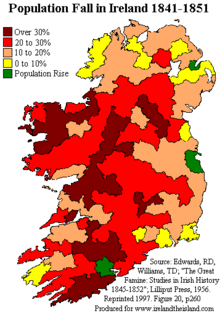
Population change in Ireland 1841–1851

It is not known exactly how many people died during the period of the famine, although it is believed more died from diseases than from starvation.[111] State registration of births, marriages or deaths had not yet begun, and records kept by the Roman Catholic Church are incomplete.[fn 5] One possible estimate has been reached by comparing the expected population with the eventual numbers in the 1850s. A census taken in 1841 recorded a population of 8,175,124. A census immediately after the famine in 1851 counted 6,552,385, a drop of over 1.5 million in 10 years. The census commissioners estimated that at the normal rate of increase the population in 1851 should have been just over 9 million.[113]

In 1851, the census commissioners collected information on the number who died in each family since 1841, the cause, season and year of death. They recorded 21,770 total deaths from starvation in the previous decade, and 400,720 deaths from disease. Listed diseases were fever, dysentery, cholera, smallpox and influenza; the first two being the main killers (222,021 and 93,232). The commissioners acknowledged that their figures were incomplete and that the true number of deaths was probably higher: “The greater the amount of destitution of mortality … the less will be the amount of recorded deaths derived through any household form; – for not only were whole families swept away by disease … but whole villages were effaced from off the land.” Later historians agree that the 1851 death tables “were flawed and probably under-estimated the level of mortality”.[114][115] The combination of institutional and figures provided by individuals gives “an incomplete and biased count” of fatalities during the famine.[116] Cormac Ó Gráda referencing the work of W. A. MacArthur,[117] writes that specialists have long known the Irish death tables were inaccurate.[118] As a result, Ó Gráda says that the tables undercount the number of deaths,[119] because information was gathered from surviving householders having to look back over the previous 10 years, and death and emigration had cleared away entire families, leaving few or no survivors to answer the census questions.

S. H. Cousens’ estimate of 800,000 deaths relied heavily on retrospective information contained in the 1851 census and elsewhere,[120] and is now regarded as too low.[121][122] Modern historian Joseph Lee says “at least 800,000”,[123] and R. F. Foster estimates that “at least 775,000 died, mostly through disease, including cholera in the latter stages of the holocaust”. He further notes that “a recent sophisticated computation estimates excess deaths from 1846 to 1851 as between 1,000,000 and 1,500,000 … after a careful critique of this, other statisticians arrive at a figure of 1,000,000.”[fn 6]

Joel Mokyr‘s estimates at an aggregated county level range from 1.1 million to 1.5 million deaths between 1846 and 1851. Mokyr produced two sets of data which contained an upper-bound and lower-bound estimate, which showed not much difference in regional patterns.[125][121] The true figure is likely to lie between the two extremes of half and one and a half million, and the most widely accepted estimate is one million.[126][127]

At least a million people are thought to have emigrated as a result of the famine.[4] There were about 1 million long-distance emigrants between 1846 and 1851, mainly to North America. The total given in the 1851 census is 967,908.[128] Short-distance emigrants, mainly to Britain, may have numbered 200,000 or more.[129]

Decline in population 1841–51 (%)
Leinster Munster Ulster Connaught Ireland
15.3 22.5 15.7 28.8 20
Table from Lee 1973, p. 2

Detailed statistics of the population of Ireland since 1841 are available at Irish population analysis.

Political cartoon from the 1880s: “In forty years I have lost, through the operation of no natural law, more than Three Million of my Sons and Daughters, and they, the Young and the Strong, leaving behind the Old and Infirm to weep and to die. Where is this to end?

Another area of uncertainty lies in the descriptions of disease given by tenants as to the cause of their relatives’ deaths.[121] Though the 1851 census has been rightly criticised as underestimating the true extent of mortality, it does provide a framework for the medical history of the Great Famine.[130] The diseases that badly affected the population fell into two categories,[130] famine-induced diseases and diseases of nutritional deficiency. Of the nutritional deficiency diseases the most commonly experienced were starvation and marasmus, as well as a condition at the time called dropsy. Dropsy (oedema) was a popular name given for the symptoms of several diseases, one of which, kwashiorkor, is associated with starvation.[130] The greatest mortality, however, was not from nutritional deficiency diseases, but from famine-induced ailments.[130][131] The malnourished are very vulnerable to infections; therefore, these were more severe when they occurred. Measles, diarrhoea, tuberculosis, most respiratory infections, whooping cough, many intestinal parasites and cholera were all strongly conditioned by nutritional status. Potentially lethal diseases, such as smallpox and influenza, were so virulent that their spread was independent of nutrition.[131]

The best example of this phenomenon was fever, which exacted the greatest death toll. In the popular mind, as well as medical opinion, fever and famine were closely related.[132] Social dislocation—the congregation of the hungry at soup kitchens, food depots, and overcrowded work houses—created conditions that were ideal for spreading infectious diseases such as typhus, typhoid and relapsing fever.[131][130] Diarrhoeal diseases were the result of poor hygiene, bad sanitation and dietary changes. The concluding attack on a population incapacitated by famine was delivered by Asiatic cholera, which had visited Ireland briefly in the 1830s. In the following decade it spread uncontrollably across Asia, through Europe, and into Britain and finally reached Ireland in 1849.[130]

Some scholars estimate that the population of Ireland was reduced by 20–25%.[5] All of this occurred while taxes, rents, and food exports were being collected and sent to British landlords, in an amount surpassing £6 million.[133]

Aftermath

The potato remained Ireland’s staple crop after the famine; at the end of the 19th century, the Irish per capita consumption of four pounds a day was the highest in the world.[134] Later famines made only minimal effect and are generally forgotten, except by historians. By the 1911 census, the island of Ireland’s population had fallen to 4.4 million, about the same as the population in 1800 and 2000 and only a half of its peak population.[135]

On the other hand, the population of England and Wales doubled from 16 million in 1841 to 32.5 million in 1901.[136]

The Famine gave considerable impetus to the shift from Irish to English as the language of the majority. Those most gravely affected by the Famine were mostly in Irish-speaking districts, and those districts also supplied most of the emigrants. Awareness of the cultural loss provided a spur to the work of Irish language activists in Ireland, Britain, America and Australia, resulting in the foundation of such organisations as the Gaelic League.

Ireland‘s mean age of marriage in 1830 was 23.8 for women and 27.47 for men where they had once been 21 for women and 25 for men, respectively, and those who never married numbered about 10% of the population;[137] in 1840, they had respectively risen to 24.4 and 27.7;[138][139] in the decades after the Famine, the age of marriage had risen to 28–29 for women and 33 for men and as many as a third of Irishmen and a fourth of Irishwomen never married due to low wages and chronic economic problems that discouraged early and universal marriage.[140]

Analysis of the government’s role

Contemporary

Contemporary opinion was sharply critical of the Russell government’s response to and management of the crisis. From the start, there were accusations that the government failed to grasp the magnitude of the disaster. Sir James Graham, who had served as Home Secretary in Sir Robert Peel‘s late government, wrote to Peel that, in his opinion, “the real extent and magnitude of the Irish difficulty are underestimated by the Government, and cannot be met by measures within the strict rule of economical science.”[141]

This criticism was not confined to outside critics. The Lord Lieutenant of Ireland, Lord Clarendon, wrote a letter to Russell on 26 April 1849, urging that the government propose additional relief measures: “I don’t think there is another legislature in Europe that would disregard such suffering as now exists in the west of Ireland, or coldly persist in a policy of extermination.”[142] Also in 1849 the Chief Poor Law Commissioner, Edward Twisleton, resigned in protest over the Rate-in-Aid Act, which provided additional funds for the Poor Law through a 6p in the pound levy on all rateable properties in Ireland.[143] Twisleton testified that “comparatively trifling sums were required for Britain to spare itself the deep disgrace of permitting its miserable fellow subjects to die of starvation.” According to Peter Gray, in his book The Irish Famine, the government spent £7,000,000 for relief in Ireland between 1845 and 1850, “representing less than half of one percent of the British gross national product over five years. Contemporaries noted the sharp contrast with the 20 million pounds compensation given to West Indian slave-owners in the 1830s.”[110]

Other critics maintained that even after the government recognised the scope of the crisis, it failed to take sufficient steps to address it. John Mitchel, one of the leaders of the Young Ireland Movement, wrote the following in 1860: “I have called it an artificial famine: that is to say, it was a famine which desolated a rich and fertile island that produced every year abundance and superabundance to sustain all her people and many more. The English, indeed, call the famine a ‘dispensation of Providence;’ and ascribe it entirely to the blight on potatoes. But potatoes failed in like manner all over Europe; yet there was no famine save in Ireland. The British account of the matter, then, is first, a fraud; second, a blasphemy. The Almighty, indeed, sent the potato blight, but the English created the famine.”[144]

Still other critics saw reflected in the government’s response its attitude to the so-called “Irish Question”. Nassau Senior, an economics professor at Oxford University, wrote that the Famine “would not kill more than one million people, and that would scarcely be enough to do any good.”[144] In 1848, Denis Shine Lawlor suggested that Russell was a student of the Elizabethan poet Edmund Spenser, who had calculated “how far English colonisation and English policy might be most effectively carried out by Irish starvation.”[145] Charles Trevelyan, the civil servant with most direct responsibility for the government’s handling of the famine, described it in 1848 as “a direct stroke of an all-wise and all-merciful Providence”, which laid bare “the deep and inveterate root of social evil”; the Famine, he affirmed, was “the sharp but effectual remedy by which the cure is likely to be effected. God grant that the generation to which this opportunity has been offered may rightly perform its part…”[146]

Historical

Christine Kinealy expresses the consensus of historians when she states that “the major tragedy of the Irish Famine of 1845–52 marked a watershed in modern Irish history. Its occurrence, however, was neither inevitable nor unavoidable.”[1] The underlying factors which combined to cause the famine were aggravated by an inadequate government response. As Kinealy notes,

…[T]he government had to do something to help alleviate the suffering, the particular nature of the actual response, especially following 1846, suggests a more covert agenda and motivation. As the Famine progressed, it became apparent that the government was using its information not merely to help it formulate its relief policies, but also as an opportunity to facilitate various long-desired changes within Ireland. These included population control and the consolidation of property through various means, including emigration… Despite the overwhelming evidence of prolonged distress caused by successive years of potato blight, the underlying philosophy of the relief efforts was that they should be kept to a minimalist level; in fact they actually decreased as the Famine progressed.[147]

Several writers single out the decision of the government to permit the continued export of food from Ireland as suggestive of the policy-makers’ attitudes. Leon Uris suggested that “there was ample food within Ireland”, while all the Irish-bred cattle were being shipped off to England.[148] The following exchange appeared in Act IV of George Bernard Shaw‘s play Man and Superman:

MALONE. He will get over it all right enough. Men thrive better on disappointments in love than on disappointments in money. I daresay you think that sordid; but I know what I’m talking about. My father died of starvation in Ireland in the black 47, Maybe you’ve heard of it.
VIOLET. The Famine?
MALONE. [with smouldering passion] No, the starvation. When a country is full of food, and exporting it, there can be no famine. My father was starved dead; and I was starved out to America in my mother’s arms. English rule drove me and mine out of Ireland. Well, you can keep Ireland. I and my like are coming back to buy England; and we’ll buy the best of it. I want no middle class properties and no middle class women for Hector. That’s straightforward isn’t it, like yourself?[149]

Some also pointed to the structure of the British Empire as a contributing factor. James Anthony Froude wrote that “England governed Ireland for what she deemed her own interest, making her calculations on the gross balance of her trade ledgers, and leaving moral obligations aside, as if right and wrong had been blotted out of the statute book of the Universe.”[11] Dennis Clark, an Irish-American historian and critic of empire, claimed that the famine was “the culmination of generations of neglect, misrule and repression. It was an epic of English colonial cruelty and inadequacy. For the landless cabin dwellers it meant emigration or extinction…”[150]

Genocide question

Ireland’s Holocaust mural on the Ballymurphy Road, Belfast. “An Gorta Mór, Britain’s genocide by starvation, Ireland’s holocaust 1845–1849.”

The famine remains a controversial event in Irish history. Debate and discussion on the British government’s response to the failure of the potato crop in Ireland, the exportation of food crops and livestock, the subsequent large-scale starvation, and whether or not this constituted genocide, remains a historically and politically charged issue.

In 1996, Francis A. Boyle, a law professor at the University of Illinois at Urbana-Champaign, wrote a report commissioned by the New York-based Irish Famine/Genocide Committee, which concluded that the British government deliberately pursued a race and ethnicity-based policy aimed at destroying the group commonly known as the Irish people and that the policy of mass starvation amounted to genocide per the Hague convention of 1948.[fn 7] On the strength of Boyle’s report, the US state of New Jersey included the famine in the “Holocaust and Genocide Curriculum” at the secondary tier.[fn 8]

Journalist Peter Duffy writes that “The government’s crime, which deserves to blacken its name forever …” was rooted “in the effort to regenerate Ireland” through “landlord-engineered replacement of tillage plots with grazing lands” that “took precedence over the obligation to provide food … for its starving citizens. It is little wonder that the policy looked to many people like genocide.”[153]

Several commentators have argued that the searing effect of the famine has on Irish cultural memory creates effects similar to that of genocide, while maintaining that one did not occur. Robert Kee suggests that the Famine is seen as “comparable” in its force on “popular national consciousness to that of the ‘final solution‘ on the Jews,” and that it is not “infrequently” thought that the Famine was something very like “a form of genocide engineered by the English against the Irish people.” This point was echoed by James Donnelly, a historian at the University of Wisconsin–Madison, who wrote in his work Landlord and Tenant in Nineteenth-century Ireland, “I would draw the following broad conclusion: at a fairly early stage of the Great Famine the government’s abject failure to stop or even slow down the clearances (evictions) contributed in a major way to enshrining the idea of English state-sponsored genocide in Irish popular mind. Or perhaps one should say in the Irish mind, for this was a notion that appealed to many educated and discriminating men and women, and not only to the revolutionary minority…And it is also my contention that while genocide was not in fact committed, what happened during and as a result of the clearances had the look of genocide to a great many Irish…”[154]

Historian Cormac Ó Gráda disagreed that the famine was genocide: first, that “genocide includes murderous intent, and it must be said that not even the most bigoted and racist commentators of the day sought the extermination of the Irish”; second, that most people in Whitehall “hoped for better times for Ireland” and third, that the claim of genocide overlooks “the enormous challenge facing relief agencies, both central and local, public and private”.[155] Ó Gráda thinks that a case of neglect is easier to sustain than that of genocide.[155]

Famine Memorial in Dublin

Edward Lengel claims that views of the Irish as racially inferior, and for this reason significantly responsible for their circumstances, gained purchase in Great Britain during and immediately after the famine, especially through influential publications such as The Medical Times and The Times.[156]

The Great Famine in Ireland has been compared to the Holodomor (“hunger plague”) which took place in the Ukraine under Stalin in 1932.[157][158][159] Like Ireland, the Ukraine is a fertile region, and the 1932 famine has been the subject of similar controversy and debate. The term Holodomor was coined by Raphael Lemkin, who regarded the famine as a genocide engineered by Stalin to promote the political ideology of collectivism.

Memorials

The Great Famine is memorialised in many locations throughout Ireland, especially in those regions that suffered the greatest losses, and also in cities overseas with large populations descended from Irish immigrants. These include, at Custom House Quays, Dublin, the thin sculptural figures, by artist Rowan Gillespie, who are portrayed as if walking towards the emigration ships on the Dublin Quayside. There is also a large memorial at the Murrisk Millennium Peace Park at the foot of Croagh Patrick in County Mayo.[160] Among the memorials in the US is the Irish Hunger Memorial near a section of the Manhattan waterfront in New York City, where many fleeing Irish arrived. An annual Great Famine walk, the brainchild of the Irish author/humanitarian, Don Mullan, from Doolough to Louisburgh, Co. Mayo, was inaugurated in 1988 and has been led by such notable personalities as Archbishop Desmond Tutu of South Africa and the Choctaw Nation of Oklahoma. The walk, organised by AFrI (Action From Ireland), takes place on the first or second Saturday of May and links the memory of the Great Hunger with a contemporary Human Rights issue. Commemorating the Doolough Tragedy, the walk was covered by the three major US television networks: ABC, NBC and CBS, during its first three years.

Its my Birthday – 16th July 1966. Forty Nine today and feeling it!

I  was born on Saturday, 16 July 1966

Its not escaped my attention that my birth date includes the satanic numbers 666

Forty Nine years old and feeling it

If you wish to buy me a drink or show your appreciation for my blogging you can make a small (or large ) donation by clicking the PayPal button below

paypal donation button

Happy Birthday to me

What was happening in 1966?

  • British Prime Minister Harold Wilson flies to Moscow to try to start peace negotiations about the Vietnam War (the Soviet government rejects his proposals).

Whole lotta love 1979

  • Chinese engineer Hsu Tsu-tsai is found badly injured in The Hague, Netherlands after an apparent defection attempt. He is later abducted from hospital by Chinese officials and dies the next day at the Chinese legation. China and the Netherlands suspend diplomatic relations, and a five-month siege of the Chinese legation follows as Dutch police seek to question Hsu’s colleagues.[7]
  • The 1966 British Grand Prix is held at Brands Hatch and is won by Jack Brabham,[8] with Denny Hulme in second place.

Average House Price 3,840

Gallon of Petrol 5 shillings or 26 new pence

Aberfan Disaster

  • Aberfan disaster in South Wales on October 21st in United Kingdom, a slag heap containing unwanted rock from the local coal mine slid down Merthyr Mountain. As it collapsed it destroyed twenty houses and a farm before going on to demolish virtually all of Pantglas Junior School 144 people were killed, 116 of whom were children mostly between the ages of 7 and 10.

England defeats Germany to win the 1966 World Cup Final. Find Out More About More Football World Cup and the origins, growth, and the modern game of soccer.

Popular Culture

Star Trek first episode of the science fiction television series Star Trek

(The Man Trap)

Author Jacqueline Susann has her first novel, Valley of the Dolls publish

Dr. Seuss’ “How the Grinch Stole Christmas” the animated television special adapted from the book is shown for first time on CBS

The Grinch  Ending  (Original  1966)

Simon  and  Garfunkel  release  Sounds  of  Silence,

Simon  &  Garfunkel  –  Sounds  Of    Silence   (Live  Canadian  TV,  1966)

Popular   Films

Thunderball

Dr. Zhivago

The Trailer Of This Great and Beatiful Movie of David Lean

Who’s Afraid of Virginia Woolf

Who’s Afraid of Virginia Woolf (1966): Killing Martha

A Man for All Seasons

A Man for All Seasons 1966 Biography / Drama Movies HD Full Movie

Popular Musicians

All my favourite songs from these great bands

The Mamas and the Papas

California Dreamin – Mamas & The Papas

The Who

THE WHO – 1966 – “My Generation”

The Beatles

The Beatles- yesterday live(1966)

The Monkees

The Kinks

The Kinks – “You Really Got Me” (1966)

The Small Faces

All Or Nothing

The Beach Boys

The Beach Boys – God only knows (1966)

The Rolling Stones

Rolling Stones – Paint It Black 1966

Simon and Garfunkel

Scarborough Fair / Canticle. Simon & Garfunkel..(1966)

Popular Songs

I’m a Believer The Monkees

The Monkees – I’m a Believer, 1966

Good Vibrations The beach Boys

The Beach Boys ~ Good Vibrations (1966

Monday Monday The Mamas and the Papas

The Mamas & The Papas – Monday Monday 1966

Wild Thing The Troggs

The Troggs – Wild Thing (1966)

Born This Year 1966

David Schwimmer November 2nd

Gordon Ramsay November 8th

Adam Sandler September 9th

Mike Tyson June 30th

Technology 1966

Worlds first vertical Jump Jet the Harrier is introduced in UK

Hovercraft service begins over the English Channel

Pampers create the first disposable Diaper

Color Television Sets become popular

There are 78 million cars registered in the US

 Moon Landing Russia Luna 9 lands softly on the Moon Space Docking

If you have enjoyed my story so far and my daily blogs or would like too show your love please feel free to make a small donation.

Its my birthday please give generously

paypal donation button

– Please consider making a small donation –

Famous Britons born in 1966 Alan Davies Ben Miller Charlie Boorman Charlie Dimmock Chris Eubank Chris Evans David Cameron David Platt Donal MacIntyre Gordon Ramsay Helena Bonham Carter Jay Rayner Jeremy Hunt John Bishop John Rankin Waddell Mark Blundell Mervyn King Michaela Strachan Mitch Tonks Peter Jones Phil Tufnell Rick Astley Roger Black Russell Watson Sally Gunnell Samantha Fox Tony Adams

If you have enjoyed my story so far and my daily blogs or would like too show your love please feel free to make a small donation.

Its my birthday please give generously

paypal donation button

– Please consider making a small donation –


UDA – UVF – Loyalists in Northern Ireland – Full Documentary

Loyalists in Northern Ireland – Full Documentary

UDA (Ulster Defence Association)

Disclaimer

The views and opinions expressed in this post and page are soley intended to educate and provide background information to those interested in the Troubles of Northern Ireland.

They in no way reflect my own opinions and I take no responsibility for any inaccuracies or factual errors

———————————————

Belfast Shankill Loyalist Bands

———————————————

The Ulster Defence Association (UDA) is the largest[5][6] Ulster loyalist paramilitary and vigilante[7] group in Northern Ireland. It was formed in September 1971 and undertook a campaign of almost twenty-four years during The Troubles. Within the UDA was a group tasked with launching paramilitary attacks; it used the covername Ulster Freedom Fighters (UFF) so that the UDA would not be outlawed. The United Kingdom outlawed the “UFF” in November 1973, but the UDA itself was not classified as a terrorist group until 10 August 1992.[8] The UDA/UFF is also classified as a terrorist organisation by the US State Department.[9]

The UDA’s/UFF’s declared goal was to defend Ulster Protestant loyalist areas[10] and to combat Irish republicanism, particularly the Provisional IRA. However, most of its victims were unarmed civilians.[11] The majority of them were Irish Catholics,[12][13] killed in what the group called retaliation for IRA actions or attacks on Protestants.[14][15] High-profile attacks carried out by the group include the Milltown massacre, the Sean Graham bookmakers’ shooting, the Castlerock killings and the Greysteel massacre. The vast majority of its attacks were in Northern Ireland, but from 1972 onward it also carried out bombings in the Republic of Ireland. The UDA/UFF declared a ceasefire in 1994, although sporadic attacks continued until it officially ended its armed campaign in November 2007.[16]

The UDA were often referred to by their Ulster Volunteer Force (UVF) rivals as the “Wombles”,[17] derived from the furry fictional creatures, The Wombles, or “Japs”,[18] owing to their mass rallies and marches in combat clothing. Its motto is Quis Separabit, Latin for “Who will separate [us]?”.

History

Beginning

The Ulster Defence Association emerged from a series of meetings during the summer of 1971 of loyalistvigilante” groups called “defence associations”.[19] The largest of these were the Shankill and Woodvale Defence Associations,[20] with other groups based in East Belfast, the Hammer and Roden Street.[21] The first meeting was chaired by Billy Hull, with Alan Moon as its vice-chair. Moon was quickly replaced by Jim Anderson and had left the organisation by the time of its formal launch in September.[22]

By this point, Charles Harding Smith had become the group’s leader, with former British soldier Davy Fogel as his second-in-command, who trained the new recruits in military tactics, the use of guns, and unarmed combat. Its most prominent early spokesperson was Tommy Herron,[19] however Andy Tyrie would emerge as leader soon after.[23] Its original motto was Cedenta Arma Togae (“Law before violence”) and it was a legal organisation until it was banned by the British Government on 10 August 1992.[19]

UDA members marching through Belfast city centre in a massive show of strength, summer 1972

At its peak of strength it held around forty thousand members, mostly part-time.[24][25] During this period of legality, the UDA committed a large number of attacks using the name Ulster Freedom Fighters,[26][27] including the assassination of Social Democratic and Labour Party (SDLP) politician Paddy Wilson in 1973.[28] The UDA was involved in the successful Ulster Workers Council Strike in 1974, which brought down the Sunningdale Agreement—an agreement which some unionists thought conceded too much to nationalist demands. The UDA enforced this general strike through widespread intimidation across Northern Ireland. The strike was led by VUPP Assemblyman and UDA member, Glenn Barr.[29]

The UDA were often referred to as “Wombles” by their rivals, mainly the Ulster Volunteer Force (UVF). The name is derived from the furry fictional creatures The Wombles, and was given to the UDA because many of its members wore fur-trimmed parkas.[17] Its headquarters is in Gawn Street, off the Newtownards Road in east Belfast,[30] and its current motto is Quis Separabit, which is Latin for “Who will separate us?”

Women’s units

The UDA had several women’s units, which acted independent of each other.[31][32] Although they occasionally helped man roadblocks, the women’s units were typically involved in local community work and responsible for the assembly and delivery of food parcels to UDA prisoners. This was a source of pride for the UDA.[33] The first women’s unit was founded on the Shankill Road by Wendy “Bucket” Millar (b. 1944), whose sons Herbie and James “Sham” Millar would later become prominent UDA members.[34] The UDA women’s department was headed by Jean Moore, who also came from the Shankill Road. She had also served as the president of the women’s auxiliary Loyalist Association of Workers. Her brother Ingram “Jock” Beckett, one of the UDA’s founding members, had been killed in March 1972 by a rival UDA faction in an internal dispute.[35] Moore was succeeded by Hester Dunn of east Belfast, who also ran the Public Relations and administration section at the UDA headquarters.[36] Wendy Millar’s Shankill Road group was a particularly active women’s unit, and another was based in Sandy Row, south Belfast – a traditional UDA stronghold. The latter was commanded by Elizabeth “Lily” Douglas.[37] Her teenaged daughter, Elizabeth was one of the members.[38]

The Sandy Row women’s UDA unit was disbanded after it carried out a vicious “romper room” punishment beating on 24 July 1974 which left 32-year-old Ann Ogilby dead. The body of Ogilby, a Protestant single mother who had an affair with the husband of one of the unit’s members, was found in a ditch five days later.[39] The day of the fatal beating Ogilby was abducted and forced upstairs to the first floor of a disused bakery in Sandy Row that had been converted into a UDA club. Two teenage girls, Henrietta Cowan and Christine Smith,[40] acting under Elizabeth Douglas’ orders to give Ogilby a “good rompering”,[41] punched, kicked, then battered her to death with bricks and sticks; the autopsy later revealed that Ogilby had suffered 24 blows to the head and body. The killing, which was carried out within earshot of Ogilby’s six-year-old daughter, caused widespread revulsion throughout Northern Ireland and was condemned by the UDA prisoners serving inside the Maze Prison. None of the other UDA women’s units had consented to or been aware of the fatal punishment beating until it was reported in the news.[32] Douglas, Cowan, and Smith were convicted of the murder and sentenced to imprisonment at Armagh Women’s Jail. Seven other members of the women’s unit and a UDA man were also convicted for their part in the murder.[41][38] At the time of the murder the Sandy Row commander was Sammy Murphy, who also ran the South Belfast UDA. He had engaged in successful talks with the British Army to defuse a potential confrontation during the UWC strike over the erection of street barricades in the Sandy Row area.[42][43] The UDA “romper rooms”, named after the children’s television programme, were places where victims were beaten and tortured prior to being killed. This was known as a “rompering”. The “romper rooms” were normally located in disused buildings, lock-up garages, warehouses, and rooms above pubs and drinking clubs.[44] The use of the “romper rooms” was a more common practise among male members of the UDA than their female counterparts.[32]

Paramilitary campaign

Masked and armed UDA/UFF members at a show of strength in Belfast

The flag of the “Ulster Freedom Fighters” with a clenched fist representing the Red Hand of Ulster and the Latin motto Feriens tego, meaning “striking I defend”

Throughout the majority of its period of legality, the UDA’s attacks were carried out under the name “Ulster Freedom Fighters” (UFF). The UDA’s campaign of violence began in 1972. In May of that year, the UDA’s pressured leader Tommy Herron decided that responsibility for acts of violence committed by the UDA would be claimed by the “UFF”. Its first public statements came one month later.[45]

The UDA’s official position during the Troubles was that if the Provisional Irish Republican Army (Provisional IRA) called off its campaign of violence, then it would do the same. However, if the British government announced that it was withdrawing from Northern Ireland, then the UDA would act as “the IRA in reverse.”[46]

Active throughout the Troubles, its armed campaign gained prominence in the early 1990s through Johnny Adair‘s ruthless leadership of the Lower Shankill 2nd Battalion, C. Company, which resulted in a greater degree of tactical independence for the UFF.[47] C. Company’s hit squad, led by Stephen McKeag, became notorious for a campaign of random murders of Catholic civilians in the first half of the 1990s.[48]

They benefited, along with the Ulster Volunteer Force, and a group called Ulster Resistance (set up by the Democratic Unionist Party), from a shipment of arms imported from Lebanon in 1988.[49] The weapons landed included rocket launchers, 200 rifles, 90 pistols and over 400 grenades.[50] Although almost two–thirds of these weapons were later recovered by the Royal Ulster Constabulary (RUC), they enabled the UDA to launch an assassination campaign against their perceived enemies.

A UFF mural in the Kilcooley estate near Bangor

A UFF mural in the Sandy Row area of South Belfast

North Belfast UDA brigadier Davy Payne was arrested after his “scout” car had been stopped at a RUC checkpoint and large caches of the weaponry were discovered in the boots of his associates’ cars. He was sentenced to 19 years in prison.

In 1992 Brian Nelson, a prominent UDA member convicted of sectarian killings, revealed that he was also a British Army agent. This led to allegations that the British Army and RUC were helping the UDA to target Irish republican activists. UDA members have since confirmed that they received intelligence files on republicans from British Army and RUC intelligence sources.[51]

One of the most high profile UDA attacks came in October 1993, when three masked men attacked a restaurant called the Rising Sun in the predominantly Catholic village of Greysteel, County Londonderry, where two hundred people were celebrating Halloween. The two men entered and opened fire. Eight people, including six Catholics and two Protestants were killed and nineteen wounded in what became known as the Greysteel massacre. The UFF claimed the attack was in retaliation to the IRA’s Shankill Road bombing which killed nine, seven days earlier.

According to the Sutton database of deaths at the University of Ulster‘s CAIN project,[52] the UDA/UFF was responsible for 259 killings during the Troubles. 208 of its victims were civilians (predominantly Catholics), 12 were civilian political activists (mainly members of Sinn Fein), 37 were other loyalist paramilitaries (including 30 of its own members), three were members of the security forces and 11 were republican paramilitaries. A number of these attacks were carried out with the assistance or complicity of the British Army, the Royal Ulster Constabulary, or both, according to the Stevens Enquiry, although the exact number of people killed as a result of collusion has not been revealed. The preferred modus operandi of the UDA was individual killings of select civilian targets in nationalist areas, rather than large-scale bomb or mortar attacks.

The UDA employed various codewords whenever they claimed their attacks. These included: “The Crucible”, “Titanic”, and “Ulster Troubles”. The UFF used the codename of “Captain Black”.

Post-ceasefire activities

Its ceasefire was welcomed by the Northern Ireland Secretary of State, Paul Murphy and the Chief Constable of the Police Service of Northern Ireland, Hugh Orde.

A UDA/UFF mural in Belfast

A UFF flag in Finvoy,a rural area of County Antrim

Since the ceasefire, the UDA has been accused of taking vigilante action against alleged drug dealers, including tarring and feathering a man on the Taughmonagh estate in south Belfast.[53][54] It has also been involved in several feuds with the UVF, which led to many killings. The UDA has also been riddled by its own internecine warfare, with self-styled “brigadiers” and former figures of power and influence, such as Johnny Adair and Jim Gray (themselves bitter rivals), falling rapidly in and out of favour with the rest of the leadership. Gray and John Gregg are amongst those to have been killed during the internal strife. On 22 February 2003, the UDA announced a “12-month period of military inactivity”.[55] It said it would review its ceasefire every three months. The UPRG’s Frankie Gallagher has since taken a leading role in ending the association between the UDA and drug dealing.[56]

Following an August 2005 Sunday World article that poked fun at the gambling losses of one of its leaders, the UDA banned the sale of the newspaper from shops in areas it controls. Shops that defy the ban have suffered arson attacks, and at least one newsagent was threatened with death.[57] The Police Service of Northern Ireland began accompanying the paper’s delivery vans.[58][59] The UDA was also considered to have played an instrumental role in loyalist riots in Belfast in September 2005.[60]

On 13 November 2005 the UDA announced that it would “consider its future”, in the wake of the standing down of the Provisional IRA and Loyalist Volunteer Force.[61]

In February 2006, the Independent Monitoring Commission reported UDA involvement in organised crime, drug trafficking, counterfeiting, extortion, money laundering and robbery.[62]

A UDA/UFF mural in Bangor

On 20 June 2006, the UDA expelled Andre Shoukri and his brother Ihab, two of its senior members who were heavily involved in crime. Some see this as a sign that the UDA is slowly coming away from crime.[63] The move did see the southeast Antrim brigade of the UDA, which had been at loggerheads with the leadership for some time, support Shoukri and break away under former UPRG spokesman Tommy Kirkham.[64] Other senior members met with Taoiseach Bertie Ahern for talks on 13 July in the same year.[65]

On 11 November 2007 the UDA announced that the Ulster Freedom Fighters would be stood down from midnight of the same day,[66] with its weapons “being put beyond use” although it stressed that these would not be decommissioned.[67]

Although the group expressed a willingness to move from criminal activity to “community development,” the IMC said it saw little evidence of this move because of the views of its members and the lack of coherence in the group’s leadership as a result of a loose structure. While the report indicated the leadership intends to follow on its stated goals, factionalism hindered this change. Factionalism was, in fact, said to be the strongest hindrance to progress. The report also said the main non-splintered faction remained active, though it was considerably smaller than the resulting party. Individuals within the group, however, took their own initiative to criminal activity. Although loyalist actions were curtailed, most of the loyalist activity did come from the UDA.

The IMC report concluded that the leadership’s willingness to change has resulted in community tension and the group would continue to be monitored, although “the mainstream UDA still has some way to go.” Furthermore, the IMC warned the group to “recognise that the organisation’s time as a paramilitary group has passed and that decommissioning is inevitable.” Decommissioning was said to be the “biggest outstanding issue for loyalist leaders, although not the only one.”[68]

A UDA/UFF South-East Antrim Brigade mural in Newtownabbey

On 6 January 2010, the UDA announced that it had put its weapons “verifiably beyond use”.[69] The decommissioning was completed five weeks before a government amnesty deadline beyond which any weapons found could have been used as evidence for a prosecution.[69] The decommissioning was confirmed by Canadian General John de Chastelain, chairman of the Independent International Commission on Decommissioning, as well as Lord Eames, former Archbishop of Armagh and Sir George Quigley, former top civil servant.[70]

Chastelain stated that the decommissioning included arms, ammunition, explosives and explosive devices and the UDA stated that the arms “constitute the totality of those under their control”.[69] Following the decommissioning the Ulster Political Research Group, the UDA’s political representatives, stated that the “Ulster Defence Association was formed to defend our communities; we state quite clearly and categorically that this responsibility now rests with the Government and its institutions where legitimacy resides”.[70] UDA representative Frankie Gallagher also stated that the group now regretted being responsible for the killing of more than 400 people.[71]

Shaun Woodward, the British Secretary of State for Northern Ireland, stated that this “is a major act of leadership by the UDA and further comprehensive evidence of the success of politics over violence in Northern Ireland” and the act was also welcomed by Sinn Féin and DUP politicians.[72] The President of the Republic of Ireland, Mary McAleese, described the decommissioning as “a very positive milestone on the journey of peace”.[73] US Secretary of State Hillary Clinton also welcomed the move as a step towards lasting peace in Northern Ireland.[74]

South East Antrim breakaway group

The breakaway faction continues to use the “UDA” title in its name, although it too expressed willingness to move towards “community development.” Though serious crime is not prevalent among the members, some who were arrested for drug peddling and extortion were exiled by the Brigade. Although a clear distinction between the factions was not available in the 20th IMC report, as this was the first report to differentiate between the two, future reports would tackle the differences.[68]

Politics

Some UDA leaders supported an independent Northern Ireland in the mid–late 1970s

In the 1970s the group favoured Northern Ireland independence, but they have retreated from this position.[75]

The New Ulster Political Research Group (NUPRG) was initially the political wing of the UDA, founded in 1978, which then evolved into the Ulster Loyalist Democratic Party in 1981 under the leadership of John McMichael, a prominent UDA member killed by the IRA in 1987, amid suspicion that he was set up to be killed by some of his UDA colleagues.

In 1987, the UDA’s deputy commander John McMichael (who was then the leader of the UFF) promoted a document titled “Common Sense”, which promoted a consensual end to the conflict in Northern Ireland, while maintaining the Union. The document advocated a power sharing assembly, involving both Nationalists and Unionists, an agreed constitution and new Bill of Rights. It is not clear however, whether this programme was adopted by the UDA as their official policy.[50] However the killing of McMichael that same year and the subsequent removal of Tyrie from the leadership and his replacement with an Inner Council saw the UDA concentrate on stockpiling weapons rather than political ideas.[76]

In 1989, the ULDP changed its name to the Ulster Democratic Party (UDP) and finally dissolved itself in 2001 following very limited electoral success. Gary McMichael, son of John McMichael, was the last leader of the UDP, which supported the signing of the Good Friday Agreement but had poor electoral success and internal difficulties. The Ulster Political Research Group (UPRG) was subsequently formed to give political analysis to the UDA and act as community workers in loyalist areas. It is currently represented on the Belfast City Council.

In early January 1994, the UDA released a document calling for ethnic cleansing and repartition, with the goal of making Northern Ireland wholly Protestant.[77] The plan was to be implemented should the British Army withdraw from Northern Ireland. The vastly Catholic and nationalist areas would be handed over to the Republic, and those left stranded in the “Protestant state” would be “expelled, nullified, or interned”.[77] The story was printed in The Sunday Independent newspaper on 16 January.[78] The “doomsday plan” was based on the work of Dr Liam Kennedy, a lecturer at Queen’s University Belfast.[77] In 1986 he had published a book called Two Ulsters: A Case for Repartition; though it did not call for ethnic cleansing. The UDP’s Raymond Smallwoods said “I wasn’t consulted but the scenario set out is a perfectly plausible one”.[77] The DUP’s Sammy Wilson stated that the plan “shows that some loyalist paramilitaries are looking ahead and contemplating what needs to be done to maintain our separate Ulster identity”.[77]

Links with other groups

In his book Black Sun, Nicholas Goodrick-Clarke claimed that the UDA had links with Neo-Nazi groups in Britain—specifically Combat 18[79] (formed in 1991) and the British National Socialist Movement[80] (formed in 1985). He claims that members of these groups helped to smuggle weapons for the UDA/UFF. Ian S Wood‘s book Crimes of Loyalty: A History of the UDA claims that the UDA has received backing from Combat 18, the British National Front and the British National Party.[81] In 2006, the BBC also reported that the group has links with Combat 18.[82] It is unknown whether these links still exist. The links may not have been politically motivated, but mutually beneficial arms deals. On one occasion the UDA sent Louis Scott, one of a few black members of the UDA, to make the transaction.[83]

The Red Hand Defenders is a cover name used by breakaway factions of the UDA/UFF and the LVF.[1] The term was originally coined in 1997 when members of the LVF carried out attacks on behalf of Johnny Adair‘s “UFF 2nd Battalion, ‘C’ Company (Shankill Road)” and vice versa.[1] The relationship between the UDA/UFF (specifically Adair’s unit, not the wider leadership of the UDA) was initially formed after the death of Billy Wright, the previous leader of the LVF, and Adair’s personal friendship with Mark ‘Swinger’ Fulton, the organisations new chief.

The necessity for a cover name resulted from the need to avoid tensions between the UDA and the UVF, the organisation from which the LVF had broken away. It was perceived that any open co-operation between the UDA and the LVF would anger the UVF, something which proved to be the case in following years and resulted in the infamous ‘Loyalist Feud’.[1] There has been debate as to whether or not the Red Hand Defenders have become an entity in their own right[84] made up of dissident factions from both the UDA and the LVF (both of which have now declared ceasefires whilst the RHD has not), though much intelligence has been based on the claims of responsibility which, as has been suggested,[1] are frequently misleading.

Structure and leadership

The UDA is made up of:

  • the Inner Council
  • the Ulster Freedom Fighters (UFF)—whose role was to carry out attacks on republican and nationalist targets. However, many regard the UFF as merely a covername used when the UDA wished to claim responsibility for attacks.[85]
  • the Ulster Defence Force (UDF)—whose role was to give “specialist military training” to a select group of UDA members. The UDF was initiated by John McMichael[86] (the then UDA/UFF commander) in 1985 as a response to the Anglo-Irish Agreement. The UDF operated training camps in rural parts of Northern Ireland that young loyalists such as Johnny Adair claim to have attended.[86] One reported ‘survival’ training technique was to leave trainees stranded in Dublin with only £1.[86] Some of the training was given by former British Army soldiers and officers. It was described by the UDA as “the nucleus of a new loyalist army at the ready”.[87]
  • the Ulster Young Militants (UYM)—the “youth wing” of the group. Formed in 1973.[88]
  • the Ulster Political Research Group (UPRG)—the UDA’s “political advisory body”. Formed in 1978.[89]

The UDA operated a devolved structure of leadership, each with a brigadier representing one of its six “brigade areas”.[86] Currently, it is not entirely clear whether or not this structure has been maintained in the UDA’s post cease-fire state. The UDA’s six “brigade areas” were:

  • North Belfast
  • East Belfast
  • South Belfast, the UDA’s largest brigade area, covering all of South Belfast down to Lisburn and operating as far away as South County Down, Lurgan and Counties Tyrone and Fermanagh.[90]
  • West Belfast
  • Southeast [County] Antrim
  • North County Antrim & County Londonderry

A wall sign in Dervock showing support for the North Antrim and Londonderry brigade.

In addition to these six core brigades two others may have existed. A seventh Mid-Ulster Brigade is mentioned by Steve Bruce as having existed for part of the UDA’s history[91] although Henry McDonald and Jim Cusack characterise this as a “battalion” rather than a brigade and suggest that its rural location prevented it from fully developing.[92] In the late 1970s a Scottish Brigade was established under the command of Roddy McDonald but this proved short-lived. The security forces infiltrated this brigade almost immediately and in 1979 arrested almost its entire membership, ninety people in all. Six members received particularly lengthy prison sentences for their involvement in UDA activities in Perth and the Scottish Brigade quietly disappeared.[93]

Some of the notable past brigadiers include:

Jackie McDonald—South Belfast (~1980s-present)[94] Resident of the Taughmonagh estate in South Belfast.[94] McDonald was a cautious supporter of the UDA’s ceasefire and a harsh critic of Johnny ‘Mad Dog’ Adair during his final years of membership of the organisation.[94] McDonald remains the only brigadier who did not have a commonly used nickname.

Johnny ‘Mad Dog’ Adair—West Belfast (1990–2002)[86] An active figure in the UDA/UFF, Adair rose to notoriety in the early 1990s when he led the 2nd Battalion, C Company unit in West Belfast which was responsible for one of the bloodiest killing sprees of the Troubles.[86]

Jim ‘Doris Day’ Gray—East Belfast (1992–2005)[86][95] An unlikely figure in Northern Ireland loyalism, the openly bi-sexual[86] Gray was a controversial figure in the organisation until his death on 4 October 2005. Always flamboyantly dressed, Gray was a key figure in the UDA’s negotiations with Northern Ireland Secretary John Reid. It is widely believed that Gray received his nickname from the Royal Ulster Constabulary (RUC) Special Branch.[86]

Jimbo ‘Bacardi Brigadier’ Simpson—North Belfast (Unknown–2002)[86] Simpson is believed to have been an alcoholic, hence his nickname. He was leader of the UDA in the volatile North Belfast area, an interface between Catholics and Protestants in the New Lodge and Tiger’s Bay neighbourhoods.[86]

Billy ‘The Mexican’ McFarland—North Antrim and Londonderry (Unknown–2013)[86] He Earned his nickname because of his moustache and swarthy appearance, and had overall command of the UDA’s North Antrim and Derry brigade at the time of the Good Friday Agreement. He supported the leadership against Johnny Adair and has been associated with the magazine ‘Warrior’, which makes the case for Ulster Independence

Andre ‘The Egyptian’ Shoukri[86]—North Belfast (2002–2005)[86] Initially a close ally of Johnny Adair, Shoukri and his brother Ihab became involved with the UDA in his native North Belfast. The son of an Egyptian father and a Northern Irish mother, he was expelled from the UDA in 2005 following allegations of criminality.

John ‘Grug’ Gregg—South East Antrim (c.1993[96]–2003) John ‘Grug’ Gregg was a man with a fearsome reputation within the loyalist movement, known as a “Hawk” in loyalist circles, and controlled the streets of south east Antrim. On 14 March 1984, he severely wounded Sinn Féin president Gerry Adams in an assassination attempt for which he was jailed. When asked by the BBC in prison if he regretted anything about the shooting, his reply was “only that I didn’t succeed.” He was killed on Belfast’s Nelson Street, along with another UDA member (Rab Carson), while travelling in a taxi from the docks in 2003, and the murder was blamed on supporters of Johnny Adair, who had recently been expelled from the UDA in 2002.

Deaths as a result of activity

UDA South Belfast Brigade memorial plaque in Sandy Row

According to Malcolm Sutton’s Index of Deaths from the Conflict in Ireland (part of the CAIN database), the UDA/UFF was responsible for at least 260 killings during the Troubles, between 1969 and 2001. There are a further 250 loyalist killings where it is not yet certain which group was responsible.[97]

Of those killed by the UDA/UFF:[11]

  • 209 (~80%) were civilians, 12 of whom were civilian political activists
  • 11 (~4%) were members or former members of republican paramilitary groups
  • 37 (~14%) were members or former members of loyalist paramilitary groups
  • 3 (~1%) were members of the British security forces

There were also 91 UDA members and four former members killed in the conflict.[98]

UVF ( Ulster Volunteer Force )

The Ulster Volunteer Force (UVF) is an Ulster loyalist paramilitary group in Northern Ireland. It emerged in 1966 and is named after the original UVF of the early 20th century. Its first leader was Gusty Spence, a former British soldier. The group undertook an armed campaign of almost thirty years during the Troubles. It declared a ceasefire in 1994 and officially ended its campaign in 2007, although some of its members have continued to engage in violence. The group is classified as a terrorist organization by the United Kingdom,[1] Republic of Ireland and United States.[2]

Until recent years,[3] it was noted for secrecy and a policy of limited, selective membership.[4][5][6][7][8] The UVF’s declared goals were to combat Irish republicanism – particularly the Irish Republican Army – and to maintain Northern Ireland’s status as part of the United Kingdom. It was responsible for at least 500 deaths, the vast majority (more than two-thirds)[9][10] of whom were Irish Catholic civilians. During the conflict, its deadliest attack in Northern Ireland was the 1971 McGurk’s Bar bombing, which killed fifteen civilians. The group also carried out attacks in the Republic of Ireland from 1969 onward. The biggest of these was the 1974 Dublin and Monaghan bombings, which killed 33 civilians, making it the deadliest terrorist attack of the conflict. The no-warning car bombings had been carried out by units from the Belfast and Mid-Ulster brigades. The Mid-Ulster Brigade was also responsible for the 1975 Miami Showband killings, in which three members of the popular Irish cabaret band were shot dead at a bogus military checkpoint by gunmen in British Army uniforms. Two UVF men were accidentally blown up in this attack. The UVF’s last major attack was the 1994 Loughinisland massacre, in which its members shot dead six Catholic civilians in a rural pub.

Since the ceasefire, the UVF has been involved in rioting, organized crime, vigilantism and feuds with other loyalist groups.[11] Some members have also been orchestrating a series of racist attacks.[12]

Aim and strategy

A UVF publicity photo showing masked and armed UVF members

The UVF’s stated goal was to combat Irish republicanism – particularly the Provisional Irish Republican Army (IRA) – and maintain Northern Ireland’s status as part of the United Kingdom.[13] The vast majority of its victims were Irish Catholic civilians, who were often killed at random.[14] Whenever it claimed responsibility for its attacks, the UVF usually claimed that those targeted were IRA members or were giving help to the IRA.[15] Other times, attacks on Catholic civilians were claimed as “retaliation” for IRA actions, since the IRA drew most of its support from the Catholic community. Such retaliation was seen as both collective punishment and an attempt to weaken the IRA’s support; it was thought that terrorizing the Catholic community and inflicting such a death toll on it would force the IRA to end its campaign.[16] Many retaliatory attacks on Catholics were claimed using the covername “Protestant Action Force” (PAF), which first appeared in Autumn 1974.[17] They always signed their statements with the fictitious name “Captain William Johnston”.[18]

Like the Ulster Defence Association (UDA), the UVF’s modus operandi involved assassinations, mass shootings, bombings and kidnappings. It used sub machine-guns, assault rifles, pistols, grenades (including homemade grenades), incendiary bombs, booby trap bombs and car bombs. Referring to its activity in the early and mid-1970s, journalist Ed Moloney described no-warning pub bombings as the UVF’s “forte”.[19] Members were trained in bomb-making and it developed home-made explosives.[20] In the late summer and autumn of 1973 the UVF detonated more bombs than the UDA and IRA combined,[21] and by the time of the group’s temporary ceasefire in late November it had been responsible for over 200 explosions that year.[22] However, from 1977 bombs largely disappeared from the UVF’s arsenal owing to a lack of explosives and bomb-makers, plus a conscious decision to abandon their use in favour of more contained methods.[23][24] The UVF did not return to regular bombings until the early 1990s when it obtained a quantity of the mining explosive Powergel.[25][26]

History

The 1960s

Since 1964, there had been a growing civil rights campaign in Northern Ireland. The civil rights movement sought to end discrimination against Catholics by the Protestant and Unionist-dominated government of Northern Ireland.[27] In March and April 1966, Irish republicans held parades throughout Ireland to mark the 50th anniversary of the Easter Rising. On 8 March, a group of ex-Irish Republican Army (IRA) volunteers planted a bomb that destroyed Nelson’s Pillar in Dublin. At the time, the IRA was weak and not engaged in armed action, but some unionists and loyalists warned that it was about to be revived and launch another campaign against Northern Ireland.[27] In April, loyalists led by Ian Paisley, a Protestant fundamentalist preacher, founded the Ulster Constitution Defence Committee (UCDC). It set up a paramilitary-style wing called the Ulster Protestant Volunteers (UPV).[27] The ‘Paisleyites’ set out to stymie the civil rights movement and oust Terence O’Neill, Prime Minister of Northern Ireland. Although O’Neill was a unionist, they saw him as being too ‘soft’ on the civil rights movement and too friendly with the Republic of Ireland. There was much overlap in membership between the UCDC/UPV and the UVF.[28]

A UVF mural on the Shankill Road

An old UVF mural on Shankill Road, where the group was formed

A UVF flag in Glenarm, County Antrim

On 7 May, loyalists petrol bombed a Catholic-owned pub in the loyalist Shankill area of Belfast. Fire engulfed the house next door, badly burning the elderly Protestant widow who lived there. She died of her injuries on 27 June.[27] The group called itself the “Ulster Volunteer Force” (UVF), after the original UVF of the early 20th century. It was led by Gusty Spence, a former British soldier. Spence claimed that he was approached in 1965 by two men, one of whom was an Ulster Unionist Party MP, who told him that the UVF was to be re-established and that he was to have responsibility for the Shankill.[29] On 21 May, the group issued a statement:

From this day, we declare war against the Irish Republican Army and its splinter groups. Known IRA men will be executed mercilessly and without hesitation. Less extreme measures will be taken against anyone sheltering or helping them, but if they persist in giving them aid, then more extreme methods will be adopted… we solemnly warn the authorities to make no more speeches of appeasement. We are heavily armed Protestants dedicated to this cause.[30]

On 27 May, Spence sent four UVF members to kill IRA volunteer Leo Martin, who lived in Belfast. Unable to find their target, the men drove around the Falls district in search of a Catholic. They shot John Scullion, a Catholic civilian, as he walked home.[31] He died of his wounds on 11 June.[27] Spence later wrote “At the time, the attitude was that if you couldn’t get an IRA man you should shoot a Taig, he’s your last resort”.[31]

On 26 June, the group shot dead a Catholic civilian and wounded two others as they left a pub on Malvern Street, Belfast.[27] Two days later, the Government of Northern Ireland declared the UVF illegal.[27] The shootings led to Spence being arrested and sentenced to life imprisonment with a recommended minimum sentence of twenty years.[32] Spence appointed Samuel McClelland as UVF Chief of Staff in his stead.[33]

By 1969, the Catholic civil rights movement had escalted its protest campaign, and O’Neill had promised them some concessions. In March and April that year, UVF and UPV members bombed water and electricity installations in Northern Ireland, blaming them on the dormant IRA and elements of the civil rights movement. Some of them left much of Belfast without power and water.[34] The loyalists “intended to force a crisis which would so undermine confidence in O’Neill’s ability to maintain law and order that he would be obliged to resign”.[35] There were bombings on 30 March, 4 April, 20 April, 24 April and 26 April. All were widely blamed on the IRA, and British soldiers were sent to guard installations.[34] Unionist support for O’Neill waned, and on 28 April he resigned as Prime Minister.[34]

On 12 August 1969, the “Battle of the Bogside” began in Derry. This was a large, three-day riot between Irish nationalists and the police (RUC). In response to events in Derry, nationalists held protests throughout Northern Ireland, some of which became violent. In Belfast, loyalists responded by attacking nationalist districts. Eight people were shot dead and hundreds were injured. Scores of houses and businesses were burnt-out, most of them owned by Catholics. The British Army were deployed on the streets of Northern Ireland. The Irish Army also set up field hospitals near the border. Thousands of families, mostly Catholics, were forced to flee their homes and refugee camps were set up in the Republic of Ireland.[34]

On 12 October, a loyalist protest in the Shankill became violent. During the riot, UVF members shot dead RUC officer Victor Arbuckle. He was the first RUC officer to be killed during the Troubles.[36]

The UVF had launched its first attack in the Republic of Ireland on 5 August 1969, when it bombed the RTÉ Television Centre in Dublin.[37][38] There were further attacks in the Republic between October and December 1969. In October, UVF and UPV member Thomas McDowell was killed by the bomb he was planting at Ballyshannon power station. The UVF stated that the attempted attack was a protest against the Irish Army units “still massed on the border in County Donegal“.[39] In December the UVF detonated a car bomb near the Garda central detective bureau and telephone exchange headquarters in Dublin.[40]

The early to mid-1970s

A UVF mural on Shankill Road, Belfast

In January 1970, the UVF began bombing Catholic-owned businesses in Protestant areas of Belfast. It issued a statement vowing to “remove republican elements from loyalist areas” and stop them “reaping financial benefit therefrom”. During 1970, 42 Catholic-owned licensed premises in Protestant areas were bombed.[41] Catholic churches were also attacked. In February it began to target critics of militant loyalism – the homes of MPs Austin Currie, Sheelagh Murnaghan, Richard Ferguson and Anne Dickson were attacked with improvised bombs.[41] It also continued its attacks in the Republic of Ireland, bombing the Dublin-Belfast railway line, an electricity substation, a radio mast, and Irish nationalist monuments.[42]

In December 1969 the IRA had split into the Provisional IRA and Official IRA. In early 1971 they began a concerted campaign against the British Army and RUC. The first British soldier to die in the conflict was killed by the Provisional IRA in February 1971. That year, a string of tit-for-tat pub bombings began in Belfast.[43] This came to a climax on 4 December, when the UVF bombed McGurk’s Bar, a Catholic-owned pub in Belfast. Fifteen Catholic civilians were killed and seventeen wounded. It was the UVF’s deadliest attack in Northern Ireland, and the deadliest attack in Belfast during the Troubles.[44]

The following year, 1972, was the most violent of the Troubles. Along with the newly formed Ulster Defence Association (UDA), the UVF began carrying out gun attacks on random Catholic civilians and using car bombs to attack Catholic-owned pubs. It would continue these tactics for the rest of its campaign. On 23 October 1972, the UVF carried out an armed raid against King’s Park camp, a UDR/Territorial Army depot in Lurgan. They managed to procure a large cache of weapons and ammunition including self-loading rifles, Browning pistols, and Sterling submachine guns. Twenty tons of ammonium nitrate was also stolen from the Belfast docks.[45]

The UVF launched further attacks in the Republic of Ireland during December 1972 and January 1973, when it detonated three car bombs in Dublin and one in Belturbet, killing five civilians. It would attack the Republic again in May 1974, during the two-week Ulster Workers’ Council strike. This was a general strike in protest against the Sunningdale Agreement, which meant sharing political power with Irish nationalists and the Republic having more involvement in Northern Ireland. Along with the UDA, it helped to enforce the strike by blocking roads, intimidating workers, and shutting any businesses that opened.[46] On 17 May, two UVF units from the Belfast and Mid-Ulster brigades detonated four car bombs in Dublin and Monaghan. Thirty-three people were killed and almost 300 injured. It was the deadliest attack of the Troubles. There are various credible allegations that elements of the British security forces colluded with the UVF in the bombings. The Irish parliament‘s Joint Committee on Justice called the bombings an act of “international terrorism” involving the British security forces.[47] Both the UVF and the British Government have denied the claims.

The UVF’s Mid-Ulster Brigade was founded in 1972 in Lurgan by Billy Hanna, a sergeant in the UDR and a member of the Brigade Staff, who served as the brigade’s commander until his shooting death in July 1975. From that time until the early 1990s, the Mid-Ulster Brigade was led by Robin “the Jackal” Jackson, who then passed the leadership to Billy Wright. Hanna and Jackson have both been implicated by journalist Joe Tiernan, and RUC Special Patrol Group (SPG) officer John Weir as having led one of the units that bombed Dublin.[48] Jackson was allegedly the hitman who shot Hanna dead outside his home in Lurgan, and subsequently took over his command.[49]

The brigade formed part of the Glenanne gang, a loose alliance of loyalist assassins which the Pat Finucane Centre has linked to 87 killings in the 1970s. The gang comprised, in addition to the UVF, rogue elements of the UDR, RUC, SPG, and the regular Army, all acting allegedly under the direction of British Military Intelligence and/or RUC Special Branch.[50]

Mid to late-1970s

UVF mural in the Shankill Road, where the Brigade Staff is based

In 1974, hardliners staged a coup and took over the Brigade Staff.[51] This resulted in a lethal upsweep of sectarian killings and internecine feuding with both the UDA and within the UVF itself.[51] Some of the new Brigade Staff members bore nicknames such as “Big Dog” and “Smudger”.[52] Beginning in 1975, recruitment to the UVF, which until then had been solely by invitation, was now left to the discretion of local units.[53]

The UVF’s Mid-Ulster Brigade carried out further attacks during this same period. These included the Miami Showband killings of 31 July 1975 – when three members of the popular showband from the Republic of Ireland were killed having been stopped at a fake British Army checkpoint outside of Newry in County Down. Two members of the group survived the attack and later testified against those responsible. Two UVF members, Harris Boyle and Wesley Somerville, were accidentally killed by their own bomb while carrying out this attack. Two of those later convicted (James McDowell and Thomas Crozier) were also serving members of the Ulster Defence Regiment (UDR), a part-time, locally recruited regiment of the British Army.

From late 1975 to mid-1977, a unit of the UVF dubbed the Shankill Butchers (a group of UVF men based on Belfast’s Shankill Road) carried out a series of sectarian murders of Catholic civilians. Six of the victims were abducted at random, then beaten and tortured before having their throats slashed. This gang was led by Lenny Murphy. He was shot dead by the IRA in November 1982, four months after his release from the Maze Prison.

The group had been proscribed in July 1966, but this ban was lifted on 4 April 1974 by Merlyn Rees, Secretary of State for Northern Ireland, in an effort to bring the UVF into the democratic process.[54] A political wing was formed in June 1974, the Volunteer Political Party led by UVF Chief of Staff Ken Gibson, which contested West Belfast in the October 1974 General Election, polling 2,690 votes (6%). The UVF spurned the government efforts however and continued killing. Colin Wallace, part of the intelligence apparatus of the British Army, asserted in an internal memo in 1975 that MI6 and RUC Special Branch formed a pseudo-gang within the UVF, designed to engage in violence and to subvert moves of the UVF towards the political process. Captain Robert Nairac of 14 Intelligence Company was alleged to have been involved in many acts of UVF violence.[55] The UVF was banned again on 3 October 1975 and two days later twenty-six suspected UVF members were arrested in a series of raids. The men were tried and in March 1977 were sentenced to an average of twenty-five years each.[56][57]

In October 1975, after staging a counter-coup, the Brigade Staff acquired a new leadership of moderates with Tommy West serving as the Chief of Staff.[58] These men had overthrown the “hawkish” officers, who had called for a “big push”, which meant an increase in violent attacks, earlier in the same month.[59] In fact, the UVF was behind the deaths of seven civilians in a series of attacks on 2 October.[60] The hawks had been ousted by those in the UVF who were unhappy with their political and military strategy. The new Brigade Staff’s aim was to carry out attacks against known republicans rather than Catholic civilians.[59] This had been thoroughly endorsed by Gusty Spence who issued a statement asking all UVF volunteers to support the new regime.[61] The UVF’s activities in the last years of the decade were increasingly being curtailed by the number of UVF members who were sent to prison.[59] Indeed, the number of killings in Northern Ireland had decreased from 300 per year during the period between 1973 and 1976 to just under 100 in the years 1977–1981.[62] In 1976, Tommy West was replaced with “Mr. F” who is alleged to be John “Bunter” Graham and remains the incumbent Chief of Staff to date.[63][64] West died in 1980.

On 17 February 1979, the UVF carried out its only major attack in Scotland, when its members bombed two pubs in Glasgow frequented by Catholics. Both pubs were wrecked and a number of people were wounded. It claimed the pubs were used for republican fundraising. In June, nine UVF members were convicted of the attacks.[65]

The early to mid-1980s

In the 1980s, the UVF was greatly reduced by a series of police informers. The damage from security service informers started in 1983 with “supergrass” Joseph Bennett’s information which led to the arrest of fourteen senior figures. In 1984, they attempted to kill the northern editor of the Sunday World, Jim Campbell after he had exposed the paramilitary activities of Mid-Ulster brigadier Robin Jackson. By the mid-1980s, a Loyalist paramilitary-style organisation called Ulster Resistance was formed on 10 November 1986. The initial aim of Ulster Resistance was to bring an end to the Anglo-Irish Agreement. Loyalists were successful in importing arms into Northern Ireland. The weapons were Palestine Liberation Organisation arms captured by the Israelis, sold to Armscor, the South African state-owned company which, in defiance of the 1977 United Nations arms embargo, set about making South Africa self-sufficient in military hardware.[citation needed] The arms were divided between the UVF, the UDA (the largest loyalist group) and Ulster Resistance.[66]

The UVF received large numbers of Sa vz. 58 assault rifles in the 1980s

The arms are thought to have consisted of:

  • 200 Czechoslovak Sa vz. 58 assault rifles,
  • 90 Browning pistols,
  • 500 RGD-5 fragmentation grenades,
  • 30,000 rounds of ammunition and
  • 12 RPG-7 rocket launchers and 150 warheads.

The UVF used this new infusion of arms to escalate their campaign of sectarian assassinations. This era also saw a more widespread targeting on the UVF’s part of IRA and Sinn Féin members, beginning with the killing of senior IRA member Larry Marley[67] and a failed attempt on the life of a leading republican which left three Catholic civilians dead.[68]

The late 1980s and early 1990s

The UVF also attacked republican paramilitaries and their political activists. These attacks were stepped up in the late 1980s and early 1990s. The largest death toll was on 3 March 1991 when the UVF killed IRA members John Quinn, Dwayne O’Donnell and Malcolm Nugent, and civilian Thomas Armstrong in the car park next to Boyle’s Bar, Cappagh.[69] Republicans had responded to the attacks by assassinating UVF leaders, including John Bingham, William “Frenchie” Marchant, Trevor King[70] and, allegedly, Leslie Dallas.[71] The UVF also killed republicans James Burns, Liam Ryan and Larry Marley.[72] According to Conflict Archive on the Internet (CAIN), the UVF killed 17 active and four former republican paramilitaries. CAIN also states that Republicans killed 13 UVF members.[73]

According to journalist and author Ed Moloney the UVF campaign in Mid Ulster in this period “indisputably shattered Republican morale”, and put the leadership of the republican movement under intense pressure to “do something”.[74]

1994 ceasefire

A UVF mural referencing the ceasefire

In 1990 the UVF joined the Combined Loyalist Military Command (CLMC) and indicated its acceptance of moves towards peace. However, the year leading up to the loyalist ceasefire, which took place shortly after the Provisional IRA ceasefire, saw some of the worst sectarian killings carried out by loyalists during the Troubles. On 18 June 1994, UVF members machine-gunned a pub in Loughinisland, County Down on the basis that its customers were watching the Republic of Ireland national football team playing in the World Cup on television and were therefore assumed to be Catholics. The gunmen shot dead six people and injured five.

The UVF agreed to a ceasefire in October 1994.

Post-ceasefire activities

More militant members of the UVF, led by Billy Wright who disagreed with the ceasefire, broke away to form the Loyalist Volunteer Force (LVF). This development came soon after the UVF’s Brigade Staff in Belfast had stood down Wright and the Portadown unit of the Mid-Ulster Brigade, on 2 August 1996, for the killing of a Catholic taxi driver near Lurgan during Drumcree disturbances.[75]

A UVF mural in Carrickfergus

There followed years of violence between the two organisations. In January 2000 UVF Mid-Ulster brigadier Richard Jameson was shot dead by a LVF gunman which led to an escalation of the UVF/LVF feud. The UVF was also clashing with the UDA in the summer of 2000. The feud with the UDA ended in December following seven deaths. Veteran anti-UVF campaigner Raymond McCord, whose son, Raymond Jr., a Protestant, was beaten to death by UVF men in 1997, estimates the UVF has killed more than thirty people since its 1994 ceasefire, most of them Protestants.[citation needed] The feud between the UVF and the LVF erupted again in the summer of 2005. The UVF killed four men in Belfast and trouble ended only when the LVF announced that it was disbanding in October of that year.[76]

On 14 September 2005, following serious loyalist rioting during which dozens of shots were fired at riot police, the Northern Ireland Secretary Peter Hain announced that the British government no longer recognised the UVF ceasefire.[77]

On 12 February 2006, The Observer reported that the UVF was to disband by the end of 2006. The newspaper also reported that the group refused to decommission its weapons.[78]

On 2 September 2006, BBC News reported the UVF may be intending to re-enter dialogue with the Independent International Commission on Decommissioning, with a view to decommissioning of their weapons. This move comes as the organisation holds high level discussions about their future.[79]

On 3 May 2007, following recent negotiations between the Progressive Unionist Party (PUP) and Irish Taoiseach Bertie Ahern and with Police Service of Northern Ireland (PSNI) Chief Constable Sir Hugh Orde, the UVF made a statement that they would transform to a “non-military, civilianised” organisation.[80] This was to take effect from midnight. They also stated that they would retain their weaponry but put them beyond reach of normal volunteers. Their weapons stock-piles are to be retained under the watch of the UVF leadership.[81][82][83]

In January 2008, the UVF was accused of involvement in vigilante action against alleged criminals in Belfast.[84]

In 2008, a loyalist splinter group calling itself the “Real UVF” emerged briefly to make threats against Sinn Féin in Co. Fermanagh.[85]

In the twentieth IMC report, the group was said to be continuing to put its weapons “beyond reach”, (in the group’s own words) to downsize, and reduce the criminality of the group. The report added that individuals, some current and some former members, in the group have, without the orders from above, continued to “localised recruitment”, and although some continued to try and acquire weapons, including a senior member, most forms of crime had fallen, including shootings and assaults. The group concluded a general acceptance of the need to decommission, though there was no conclusive proof of moves towards this end.[86]

In June 2009 the UVF formally decommissioned their weapons in front of independent witnesses as a formal statement of decommissioning was read by Dawn Purvis and Billy Hutchinson.[87] The IICD confirmed that “substantial quantities of firearms, ammunition, explosives and explosive devices” had been decommissioned and that for the UVF and RHC, decommissioning had been completed.[88] On 30 May 2010, however, the UVF was believed to have carried out the shotgun killing of expelled RHC member Bobby Moffett on the Shankill Road in broad daylight. The shooting raised questions over the future of the PUP.

On 25–26 October 2010, the UVF was involved in rioting and disturbances in the Rathcoole area of Newtownabbey with UVF gunmen seen on the streets at the time.[89][90]

On 28 May 2010, the UVF was severely criticised over the murder of Moffett. The Independent Monitoring Commission was highly critical of the leadership for having condoned and even sanctioned the attack, in contrast to praise bestowed on the Brigade Staff for a moderating influence during the marching season. The Progressive Unionist Party‘s condemnation, and Dawn Purvis and other leaders’ resignations as a response to the Moffett shooting, were also noted. Eleven months later, a 40-year-old man was arrested and charged with the attempted murder of the UVF’s alleged second-in-command Harry Stockman, described by the media as a “senior Loyalist figure”. Fifty-year-old Stockman was stabbed more than 15 times in a supermarket in the Greater Shankill area; the attack was believed to have been linked to the Moffett killing. However, public opinion suggests that the stabbing was a personal vendetta and any connection being made to the Moffett case was simply a fictitious tale of revenge.[91]

On the night of 20 June 2011, riots involving 500 people erupted in the Short Strand area of East Belfast. They were blamed by the PSNI on members of the UVF, who also said UVF guns had been used to try to kill police officers.[92] The UVF leader in East Belfast, who is popularly known as the “Beast of the East” and “Ugly Doris” also known as by real name Stephen Matthews, ordered the attack on Catholic homes and a church in the Catholic enclave of the Short Strand. This was in retaliation for attacks on Loyalist homes the previous weekend and after a young girl was hit in the face with a brick by Republicans.[92][93] A dissident Republican was arrested for “the attempted murder of police officers in east Belfast” after shots were fired upon the police.[94]

In July 2011 a UVF flag flying in Limavady was deemed legal by the PSNI after the police had received complaints about the flag from nationalist politicians.[95]

During the Belfast City Hall flag protests of 2012 – 2013, senior UVF members were confirmed to have actively been involved in orchestrating violence and rioting against the PSNI and the Alliance Party throughout Northern Ireland during the weeks of disorder.[96] Much of the UVF’s orchestration was carried out by its senior members in East Belfast, where many attacks on the PSNI and on residents of the Short Strand enclave took place.[97] There were also reports that UVF members fired shots at police lines during a protest.[98] The high levels of orchestration by the leadership of the East Belfast UVF, and the alleged ignored orders from the main leaders of the UVF to stop the violence has led to fears that the East Belfast UVF has now become a separate loyalist paramilitary grouping which doesn’t abide by the UVF ceasefire or the Northern Ireland Peace Process.[99][100]

In October 2013, the policing board announced that the UVF was still heavily involved in gangsterism despite its ceasefire. Assistant chief constable Drew Harris in a statement said “The UVF are subject to an organized crime investigation as an organized crime group. The UVF very clearly have involvement in drug dealing, all forms of gangsterism, serious assaults, intimidation of the community.” [11]

In November 2013, after a series of shootings and acts of intimidation by the UVF. Police Federation Chairman, Terry Spence declared that the UVF ceasefire was no longer active. Spence told Radio Ulster that the UVF had been “engaged in murder, attempted murder of civilians, attempted murder of police officers. They have been engaged in orchestrating violence on our streets, and it’s very clear to me that they are engaged in an array of mafia-style activities.”They are holding local communities to ransom. On the basis of that, we as a federation have called for the respecification of the UVF [stating that its ceasefire is over].”[101]

Leadership

Brigade Staff

Masked UVF Brigade Staff members at a press conference in October 1974. They are wearing part of the UVF uniform which earned them their nickname “Blacknecks”

The UVF’s leadership is based in Belfast and known as the Brigade Staff. It comprises high-ranking officers under a Chief of Staff or Brigadier-General. With a few exceptions, such as Mid-Ulster brigadier Billy Hanna (a native of Lurgan), the Brigade Staff members have been from the Shankill Road or the neighbouring Woodvale area to the west.[102] The Brigade Staff’s former headquarters were situated in rooms above “The Eagle” chip shop located on the Shankill Road at its junction with Spier’s Place. The chip shop has since been closed down.

In 1972, the UVF’s imprisoned leader Gusty Spence was at liberty for four months following a staged kidnapping by UVF volunteers. During this time he restructured the organisation into brigades, battalions, companies, platoons and sections.[45] These were all subordinate to the Brigade Staff. The incumbent Chief of Staff, is alleged to be John “Bunter” Graham, referred to by Martin Dillon as “Mr. F”.[63][64][103] Graham has held the position since he assumed office in 1976.[63]

The UVF’s nickname is “Blacknecks”, derived from their uniform of black polo neck jumper, black trousers, black leather jacket, black forage cap, along with the UVF badge and belt.[104][105] This uniform, based on those of the original UVF, was introduced in the early 1970s.[106]

Chiefs of Staff

  • Gusty Spence (1966–1966). Whilst remaining de jure UVF leader after he was jailed for murder, he no longer acted as the Chief of Staff
  • Sam “Bo” McClelland (1966–1973)[33] Described as a “tough disciplinarian”, he was personally appointed by Spence to succeed him as Chief of Staff, due to his having served in the Korean War with Spence’s former regiment, the Royal Ulster Rifles. He was interned in late 1973, although by that stage the de facto Chief of Staff was his successor, Jim Hanna.[33][107]
  • Jim Hanna (1973 – April 1974)[107] Hanna was allegedly shot dead by the UVF as a suspected informer.[107]
  • Ken Gibson (1974)[108] Gibson was the Chief of Staff during the Ulster Workers’ Council Strike in May 1974.[108]
  • Unnamed Chief of Staff (1974 – October 1975). Leader of the Young Citizen Volunteers (YCV), the youth wing of the UVF. Assumed command after a coup by hardliners in 1974. He, along with the other hawkish Brigade Staff members were overthrown by Tommy West and a new Brigade Staff of “moderates” in a counter-coup supported by Gusty Spence. He left Northern Ireland after his removal from power.[61][109]
  • Tommy West (October 1975 – 1976)[58] A former British Army soldier, West was already the Chief of Staff at the time UVF volunteer Noel “Nogi” Shaw was killed by Lenny Murphy in November 1975 as part of an internal feud.[58]
  • John “Bunter” Graham, also referred to as “Mr. F” (1976–present)[63][64][103]

Strength, finance and support

The strength of the UVF is uncertain. The first Independent Monitoring Commission report in April 2004 described the UVF/RHC as “relatively small” with “a few hundred” active members “based mainly in the Belfast and immediately adjacent areas”.[110] Historically, the number of active UVF members in July 1971 was stated by one source to be no more than 20.[111] Later, in September 1972, Gusty Spence said in an interview that the organisation had a strength of 1,500.[112] A British Army report released in 2006 estimated a peak membership of 1,000.[113] Information regarding the role of women in the UVF is limited. One study focusing in part on female members of the UVF and Red Hand Commando noted that it “seem[ed] to have been reasonably unusual” for women to be officially asked to join the UVF.[114] Another estimates that over a 30-year period women accounted for just 2% of UVF membership at most.[115]

Prior to and after the onset of the Troubles the UVF carried out armed robberies.[116][117] This activity has been described as its preferred source of funds in the early 1970s,[118] and it continued into the 2000s with the UVF in Co Londonderry being active.[110] Members were disciplined after they carried out an unsanctioned theft of £8 million of paintings from an estate in Co Wicklow in April 1974.[119] Like the IRA, the UVF also operated black taxi services,[120][121][122] a scheme believed to have generated £100,000 annually for the organisation.[116] The UVF has also been involved in the extortion of legitimate businesses, although to a lesser extent than the UDA,[123] and was described in the fifth IMC report as being involved in organised crime.[124] In 2002 the House of Commons Northern Ireland Affairs Committee estimated the UVF’s annual running costs at £1–2 million per year, against an annual fundraising capability of £1.5 million.[125]

In contrast to the IRA, overseas support for loyalist paramilitaries including the UVF has been limited.[126] Its main benefactors have been in central Scotland,[127] Liverpool,[128] Preston[128] and the Toronto area of Canada.[129] Supporters in Scotland have helped supply explosives and guns.[130][131] Although Scottish support for loyalist paramilitaries has been hindered by the strong disapproval of the mainstream Orange Order in that country,[132][133] it is estimated that the UVF nevertheless received hundreds of thousands of pounds in donations to its Loyalist Prisoners Welfare Association.[134]

Drug dealing

The UVF have been implicated in drug dealing in areas from where they draw their support. Recently it has emerged from the Police Ombudsman that senior North Belfast UVF member and Royal Ulster Constabulary (RUC) Special Branch informant Mark Haddock has been involved in drug dealing. According to the Belfast Telegraph, “…70 separate police intelligence reports implicating the north Belfast UVF man in dealing cannabis, Ecstasy, amphetamines and cocaine.”[135]

According to Alan McQuillan, the assistant director of the Assets Recovery Agency in 2005, “In the loyalist community, drug dealing is run by the paramilitaries and it is generally run for personal gain by a large number of people.” When the Assets Recovery Agency won a High Court order to seize luxury homes belonging to ex-policeman Colin Robert Armstrong and his partner Geraldine Mallon in 2005, Alan McQuillan said “We have further alleged Armstrong has had links with the UVF and then the LVF following the split between those organisations.” It was alleged that Colin Armstrong had links to both drugs and loyalist terrorists.[136]

Billy Wright, the commander of the UVF Mid-Ulster Brigade, is believed to have started dealing drugs in 1991 [137] as a lucrative sideline to paramilitary murder. Wright is believed to have dealt mainly in Ecstasy tablets in the early 90s.[138] It was around this time that Sunday World journalists Martin O’Hagan and Jim Campbell coined the term “rat pack” for the UVF’s murderous mid-Ulster unit and, unable to identify Wright by name for legal reasons, they christened him “King Rat.” An article published by the newspaper fingered Wright as a drug lord and sectarian murderer. Wright was apparently enraged by the nickname and made numerous threats to O’Hagan and Campbell. The Sunday World’s offices were also firebombed. Mark Davenport from the BBC has stated that he spoke to a drug dealer who told him that he paid Billy Wright protection money.[139] Loyalists in Portadown such as Bobby Jameson have stated that the LVF (the Mid-Ulster Brigade that broke away from the main UVF – and led by Billy Wright) was not a ‘loyalist organisation but a drugs organisation causing misery in Portadown.’[140]

The UVF’s satellite organisation, the Red Hand Commando, was described by the IMC in 2004 as “heavily involved” in drug dealing.[110]

Affiliated groups

  • The Red Hand Commando (RHC) is an organisation that was established in 1972 and is closely linked with the UVF.
  • The Young Citizen Volunteers (YCV) is the youth section of the UVF. It was initially a youth group akin to the Scouts, but became the youth wing of the UVF during the Home Rule crisis.

Deaths as a result of activity

The UVF has killed more people than any other loyalist paramilitary group. According to the University of Ulster‘s Sutton database, the UVF and RHC was responsible for at least 485 killings during the Troubles, between 1969 and 2001. This includes killings claimed by the “Protestant Action Force” and “Protestant Action Group”. There are a further 250 loyalist killings where it is not yet certain which group was responsible.[9]

Of those killed by the UVF and RHC:[143]

  • 414 (~85%) were civilians, 11 of whom were civilian political activists
  • 21 (~4%) were members or former members of republican paramilitary groups
  • 44 (~9%) were members or former members of loyalist paramilitary groups
  • 6 (~1%) were members of the British security forces

There were also 66 UVF/RHC members and four former members killed in the conflict.[144]

Please consider making a small or large donation as I am very poor and every donation is most welcome and goes towards the cost of running this blog.

Make a small donation

paypal donation button

Thank you!

British SAS Special Forces (Full Documentary)

British SAS Special Forces

File:S.A.S emblem.svg

————————————————————————————————–

World’s Most Dangerous | SAS Special Forces – New Documentary(2015)

————————————————————————————————–

The Special Air Service (SAS) is a unit of the British Army founded in 1941 as a regiment, and later reconstituted as a corps in 1950.[5] This special forces unit undertakes a number of roles including covert reconnaissance, counter-terrorism, direct action, and human intelligence gathering.[8][10]

————————————————————————————————

Royal British Special Forces – British SAS Documentary – HD Documentary

————————————————————————————————

The corps presently comprises 22 Special Air Service Regiment, the regular component, under the operational command of United Kingdom Special Forces, and 21 (Artists) Special Air Service Regiment and 23 Special Air Service Regiment, which are reserve units under the operational command of 1st Intelligence, Surveillance and Reconnaissance Brigade.[11]

The Special Air Service traces its origins to 1941 and the Second World War, and was reformed as part of the Territorial Army in 1947, named the 21st Special Air Service Regiment (Artists Rifles). 22 Special Air Service Regiment, part of the regular army, later gained fame and recognition worldwide after successfully assaulting the Iranian Embassy in London and rescuing hostages during the 1980 Iranian Embassy siege, lifting the regiment from obscurity outside the military

The Special Air Service (SAS) is a unit of the British Army founded in 1941 as a regiment, and later reconstituted as a corps in 1950.[5] This special forces unit undertakes a number of roles including covert reconnaissance, counter-terrorism, direct action, and human intelligence gathering.[8][10]

The corps presently comprises 22 Special Air Service Regiment, the regular component, under the operational command of United Kingdom Special Forces, and 21 (Artists) Special Air Service Regiment and 23 Special Air Service Regiment, which are reserve units under the operational command of 1st Intelligence, Surveillance and Reconnaissance Brigade.[11]

The Special Air Service traces its origins to 1941 and the Second World War, and was reformed as part of the Territorial Army in 1947, named the 21st Special Air Service Regiment (Artists Rifles). 22 Special Air Service Regiment, part of the regular army, later gained fame and recognition worldwide after successfully assaulting the Iranian Embassy in London and rescuing hostages during the 1980 Iranian Embassy siege, lifting the regiment from obscurity outside the military

The Special Air Service (SAS) is a unit of the British Army founded in 1941 as a regiment, and later reconstituted as a corps in 1950.[5] This special forces unit undertakes a number of roles including covert reconnaissance, counter-terrorism, direct action, and human intelligence gathering.[8][10]

The corps presently comprises 22 Special Air Service Regiment, the regular component, under the operational command of United Kingdom Special Forces, and 21 (Artists) Special Air Service Regiment and 23 Special Air Service Regiment, which are reserve units under the operational command of 1st Intelligence, Surveillance and Reconnaissance Brigade.[11]

The Special Air Service traces its origins to 1941 and the Second World War, and was reformed as part of the Territorial Army in 1947, named the 21st Special Air Service Regiment (Artists Rifles). 22 Special Air Service Regiment, part of the regular army, later gained fame and recognition worldwide after successfully assaulting the Iranian Embassy in London and rescuing hostages during the 1980 Iranian Embassy siege, lifting the regiment from obscurity outside the military

History

The Special Air Service was a unit of the British Army during the Second World War, formed in July 1941 by David Stirling and originally called “L” Detachment, Special Air Service Brigade—the “L” designation and Air Service name being a tie-in to a British disinformation campaign, trying to deceive the Axis into thinking there was a paratrooper regiment with numerous units operating in the area (the real SAS would ‘prove’ to the Axis that the fake one existed).[1][13] It was conceived as a commando force to operate behind enemy lines in the North African Campaign[14] and initially consisted of five officers and 60 other ranks.[15] Its first mission, in November 1941, was a parachute drop in support of the Operation Crusader offensive.[13] Due to German resistance and adverse weather conditions, the mission was a disaster: 22 men, a third of the unit, were killed or captured.[16] Its second mission was a success: transported by the Long Range Desert Group, it attacked three airfields in Libya, destroying 60 aircraft without loss.[16] In September 1942 it was renamed 1st SAS, consisting at that time of four British squadrons, one Free French, one Greek, and the Folboat Section.[17]

In January 1943, Stirling was captured in Tunisia and Paddy Mayne replaced him as commander.[18] In April 1943, the 1st SAS was reorganised into the Special Raiding Squadron under Mayne’s command and the Special Boat Squadron was placed under the command of George Jellicoe.[19] The Special Raiding Squadron fought in Sicily and Italy along with the 2nd SAS, which had been formed in North Africa in 1943 in part by the renaming of the Small Scale Raiding Force.[20][21] The Special Boat Squadron fought in the Aegean Islands and Dodecanese until the end of the war.[22] In 1944 the SAS Brigade was formed from the British 1st and 2nd SAS, the French 3rd and 4th SAS and the Belgian 5th SAS.[23] It was tasked with parachute operations behind the German lines in France[2] and carried out operations supporting the Allied advance through Belgium, the Netherlands (Operation Pegasus), and eventually into Germany (Operation Archway).[23][24] As a result of Hitler’s issuing of the Commando Order 18 October 1942, the members of the unit faced the additional danger that they would be summarily executed if ever captured by the Germans. In July 1944, following Operation Bulbasket, 34 captured SAS commandos were summarily executed by the Germans. In October 1944, in the aftermath of Operation Loyton 31 captured SAS commandos were summarily executed by the Germans.[25]

Post war

At the end of the war the British Government saw no further need for the force and disbanded it on 8 October 1945.[2] The following year it was decided there was a need for a long-term deep-penetration commando unit, and a new SAS regiment was to be raised as part of the Territorial Army.[26] Ultimately, the Artists Rifles, raised in 1860 and headquartered at Dukes Road, Euston, took on the SAS mantle as 21st SAS Regiment (V) on 1 January 1947.[3][26]

man in British Army uniform, carrying a parachute helmet and wearing a beret, other men can just be seen in the dark background

21 SAS soldier after a night parachute drop exercise in Denmark, 1955

In 1950, a 21 SAS squadron was raised to fight in the Korean War. After three months of training in England, it was informed that the squadron would no longer be required in Korea and so it instead volunteered to fight in the Malayan Emergency.[27] Upon arrival in Malaya, it came under the command of Mike Calvert who was forming a new unit called the Malayan Scouts (SAS).[27] Calvert had already formed one squadron from 100 volunteers in the Far East, which became A Squadron—the 21 SAS squadron then became B Squadron; and after a recruitment visit to Rhodesia by Calvert, C Squadron was formed from 1,000 Rhodesian volunteers.[28] The Rhodesians returned home after three years service and were replaced by a New Zealand squadron.[29] By this time, the need for a regular army SAS regiment had been recognised; 22 SAS Regiment was formally added to the army list in 1952 and has been based at Hereford since 1960.[8] In 1959 the third regiment, 23 SAS Regiment, was formed by renaming the Reserve Reconnaissance Unit, which had succeeded MI9 and whose members were experts in escape and evasion.[30]

22 SAS Regiment

Since serving in Malaya, men from the regular army 22 SAS Regiment have taken part in covert reconnaissance and surveillance by patrols and some larger scale raiding missions in Borneo.[31] An operation against communist guerillas included the Battle of Mirbat in the Oman.[32] They have also taken part in operations in the Aden Emergency,[33] Northern Ireland,[34] and Gambia.[31] Their Special projects team assisted the West German counter-terrorism group GSG 9 at Mogadishu.[31] The SAS counter terrorist wing famously took part in a hostage rescue operation during the Iranian Embassy Siege in London.[35] During the Falklands War B squadron were prepared for Operation Mikado before it was subsequently cancelled whilst D and G squadrons were deployed and participated in the raid on Pebble Island.[36] Operation Flavius was a controversial operation in Gibraltar against the Provisional Irish Republican Army (PIRA).[31] 22 SAS also directed NATO aircraft onto Serb positions and hunted war criminals in Bosnia.[37][38] They were also involved in the Kosovo War helping KLA guerillas behind Serbian lines. According to Albanian sources one SAS sergeant was killed by Serbian special forces.[39]

The Gulf War, in which A, B and D squadrons deployed, was the largest SAS mobilisation since the Second World War, also notable for the failure of the Bravo Two Zero mission.[40] In Sierra Leone it took part in Operation Barras, a hostage rescue operation, to extract members of the Royal Irish Regiment.[31] In the Iraq War, it formed part of Task Force Black and Task Force Knight, with A Squadron 22 SAS being singled out for exceptional service by General Stanley McChrystal, the American commander of NATO forces: during a six-month tour it carried out 175 combat missions.[41] In 2006, members of the SAS were involved in the operation to free peace activists Norman Kember, James Loney and Harmeet Singh Sooden. The three men had been held hostage in Iraq for 118 days during the Christian Peacemaker hostage crisis.[42] Operations against the Taliban in Afghanistan[43] involved soldiers from 21 and 23 SAS Regiments.[4]

Various British newspapers have speculated on the SAS involvement in Operation Ellamy and the 2011 Libyan civil war, the Daily Telegraph reports that “defence sources have confirmed that the SAS has been in Libya for several weeks, and played a key role in coordinating the fall of Tripoli.”[44] While The Guardian reports “They have been acting as forward air controllers – directing pilots to targets – and communicating with NATO operational commanders. They have also been advising rebels on tactics.”[45]

A significant force of the Special Air Service was deployed to Northern Iraq in late August 2014, and according to former MI6 chief Richard Barrett will be sent to Syria, tasked with trying to track down the Islamic State terrorist group that the press labeled the Beatles using a range of high-tech equipment and with potentially freeing their hostages.[46][47][48][49] In October 2014, the SAS began executing raids against ISIS supply lines in western Iraq, using helicopters to drop light vehicles manned by sniper squads. It has been claimed that the SAS have killed up to eight ISIS fighters per day since the raids began.[50]

In recent years SAS officers have risen to the highest ranks in the British Army. General Peter de la Billière was the Commander-in-Chief of the British forces in the 1990 Gulf War.[51] General Michael Rose became commander of the United Nations Protection Force in Bosnia in 1994.[52] In 1997 General Charles Guthrie became Chief of the Defence Staff the head of the British Armed Forces.[53] Lieutenant-General Cedric Delves was appointed Commander of the Field Army and Deputy Commander in Chief NATO Regional Headquarters Allied Forces North in 2002–2003.[54]

Influence on other special forces

Following the post-war reconstitution of the Special Air Service, other countries in the Commonwealth recognised their need for similar units. The Canadian Special Air Service Company was formed in 1947, being disbanded in 1949.[55][56] The New Zealand Special Air Service squadron was formed in 1954 to serve with the British SAS in Malaya.[29] Australia formed the 1st SAS Company in July 1957, which became a full regiment of the Australian Special Air Service Regiment (SASR) in August 1964.[57] On its return from Malaya, the C (Rhodesian) Squadron formed the basis for creation of the Rhodesian Special Air Service in 1961.[30] It retained the name “C Squadron (Rhodesian) Special Air Service” within the Rhodesian Security Forces until 1978, when it became 1 (Rhodesian) Special Air Service Regiment.[58]

Non-Commonwealth countries have also formed units based on the SAS. The Belgian Army’s Special Forces Group, which wears the same capbadge as the British SAS, traces its ancestry partly from the 5th Special Air Service of the Second World War.[59][60][61][62][63][64][65] The French 1st Marine Infantry Parachute Regiment (1er RPIMa) can trace its origins to the Second World War 3rd and 4th SAS, adopting its “who dares wins” motto.[66] The American unit, Delta Force, was formed by Colonel Charles Alvin Beckwith, who served with 22 SAS as an exchange officer, and recognised the need for a similar type of unit in the United States Army.[67] The Israeli Sayeret Matkal has also been modelled after the SAS, sharing its motto. Ireland‘s Army Ranger Wing (ARW) has also modelled its training on that of the SAS, as well as Delta Force (who in turn have been influenced by the SAS). The Irish ARW train with the SAS.[68] The Philippine National Police‘s Special Action Force, heavily engaged in counter-insurgency in the Mindinao region, was formed along the lines of the SAS.[69]


Please consider making a small or large donation as I am very poor and every donation is most welcome and goes towards the cost of running this blog.

Make a small donation

paypal donation button

Thank you!

Countdown to Pluto’s Latest Pictures & My 49th Birthday

paypal donation button

– Please consider making a small donation –

Well its an exciting day in the Chambers house hold.

Tomorrow is my 49th and I’m looking forward to a nice evening with the wife and kids..

I am also eagerly awaiting the latest pictures from the Pluto mission  and my insatiable appetite for knowledge about the solar system and beyond is on over drive.

I’m no expert,  but I sincerely believe that we are not alone in the universe .

  • Come on  – between  100 billion  – 400 billion stars in our galaxy ( Milky Way )
  • and over one 100 billion galaxies out there!
  • And I’ve not even touched on the multiverse
  • The numbers alone our mind boggling

I just find it unconceivable that out of these vast numbers our solar system is the only place that life took hold and evolved into the beautiful earth we know today.

I’m no Expert . But I assume that every thing that was needed to create the conditions for life on earth were no doubt abundant throughout space during the birth and evolution  of space and the birth of Galaxies .

If  the elements for life found their way to out tiny corner of the Milky Way , why not elsewhere?

I’m not saying that life is  abundant throughout our galaxy and the billions of  other galaxies out there , but surely the same elements that kick started life on earth must have travelled through space and found a home on other worlds out there.

Unfortunately  due to the vast distances to these other worlds and galaxies we will never be able to travel to them or indeed send space ships and probes to unlock their secrets.

 Our own Milky Way  is so huge that even at the speed of light it would take 100,000 years to travel across it!

And even if we could travel these vast distances and survive the journey we would find that life on these other hostile worlds was beyond our comprehension , life – but not as we know it!

I expect that most life forms out there are single cell and far below the complex life forms that are found on earth.

But what if there are other more  advance civilizations out there? No matter how advance they may be they will still be faced with the vast distances of space and time and would face the same frustrations as us , being stuck in their tiny corner of their galaxies and asking themselves the age of question”

“ARE WE ALONE”

The mind boggle….

The Drake Equation

The Drake Equation is used to estimate the number of communicating civilizations in the cosmos, or more simply put, the odds of finding intelligent life in the universe. N = The number of civilizations in the Milky Way galaxy whose electromagnetic emissions are detectable

Light Year

1 light year = 9.4605284 × 10¹⁵ metres
Astronomy
noun: light year; plural noun: light years; noun: lightyear; plural noun: lightyears
  1. a unit of astronomical distance equivalent to the distance that light travels in one year, which is 9.4607 × 10¹² km (nearly 6 million million miles).
    • informal
      a long distance or great amount.
      “the new range puts them light years ahead of the competition”

paypal donation button

if you have enjoyed reading my story and daily blogs please consider making a small donation

BBC Documentary | The Planets Episode 1 – Different Worlds ( HD Documentary )

BBC Documentary| The Planets Episode 2 – Terra Firma ( HD Documentary )

paypal donation button

if you have enjoyed reading my story and daily blogs please consider making a small donation

BBC Documentary | The Planets Episode 3 – Giants ( HD Documentary )

BBC Documentary | The Planets Episode 4 – Moon ( Full HD Documentary )

BBC Documentary | The Planets Episode 5 – Star ( HD Full Documentary )

paypal donation button

if you have enjoyed reading my story and daily blogs please consider making a small donation

BBC Documentary | The Planets Episode 6 – Atmosphere ( HD Documentary )

BBC Documentary | The Planets Episode 7 – Life ( HD Documentary )

BBC Documentary | The Planets Episode 8 – Destiny ( HD Documentary )

if you have enjoyed reading my story and daily blogs please consider making a small donation

paypal donation button

if you have enjoyed reading my story and daily blogs please consider making a small donation