Category Archives: Major events in The Troubles

IRA Bishopsgate Bombing – 24th April 1993

24th April 1993

Bishopsgate Bombing
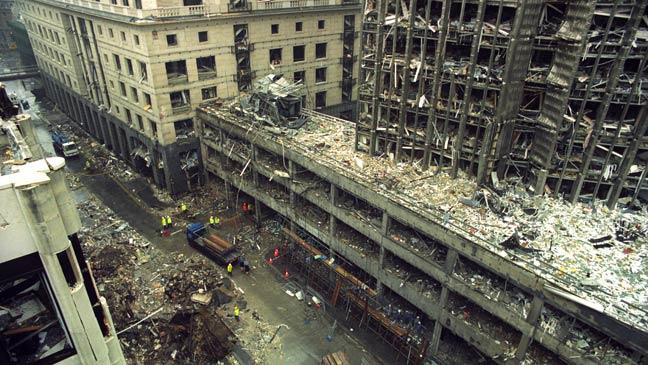
Bishopsgate bombing 2.jpg

The Bishopsgate bombing occurred on Saturday 24 April 1993, when the Provisional Irish Republican Army (IRA) detonated an ANFO truck bomb on Bishopsgate, a major thoroughfare in London’s financial district, the City of London. A news photographer was killed in the explosion and 44 people were injured; the damage cost £350 million to repair. As a result of the bombing, which occurred just over a year after the bombing of the nearby Baltic Exchange, a “ring of steel” was implemented to protect the City, and many firms introduced disaster recovery plans in case of further attacks or similar disasters.


Background

In early 1993 the Northern Ireland peace process was at a delicate stage, with attempts to broker an IRA ceasefire ongoing.Gerry Adams of Sinn Féin and John Hume of the Social Democratic and Labour Party had been engaged in private dialogue since 1988, with a view to establishing a broad Irish nationalist coalition. British Prime Minister John Major had refused to openly enter into talks with Sinn Féin until the IRA declared a ceasefire. The risk of an IRA attack on the City of London had increased due to the lack of progress with political talks, resulting in a warning being circulated to all police forces in Britain highlighting intelligence reports of a possible attack, as it was felt the IRA had sufficient personnel, equipment and funds to launch a sustained campaign in England.[1] During the Troubles the IRA had bombed financial targets in London on a number of occasions, most notably on 10 April 1992 when a truck bomb exploded outside the Baltic Exchange on St. Mary Axe. The Baltic Exchange bombing caused £800 million worth of damage (the equivalent of £1,470 million in 2016), £200 million more than the total damage caused by the 10,000 explosions that had occurred during the Troubles in Northern Ireland up to that point.

————————————-

1993 Bishopsgate London bombing – BBC News

————————————-

The bombing
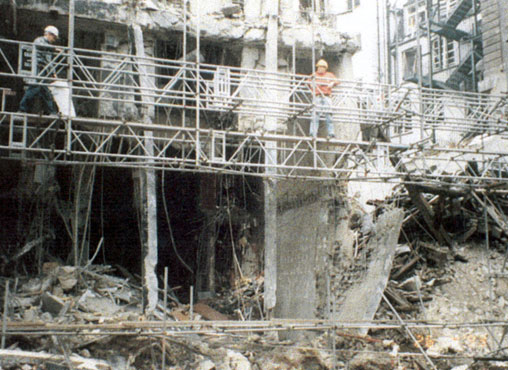
Bishopsgate bombing 3.jpg

In March 1993 an Iveco tipper truck was stolen in Newcastle-under-Lyme, Staffordshire, and repainted from white to dark blue. A 1 tonne ANFO bomb made by the IRA’s South Armagh Brigade had been smuggled into England, and was placed in the truck disguised underneath a layer of tarmac. At approximately 9 am on 24 April, two volunteers from an IRA active service unit drove the truck containing the bomb onto Bishopsgate.

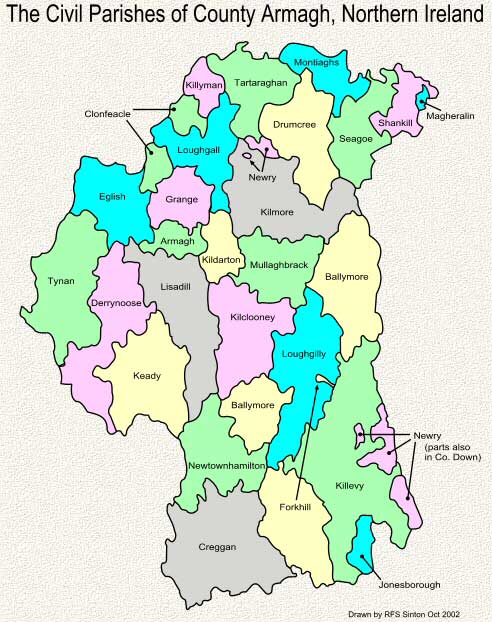
They parked the truck outside 99 Bishopsgate, which was then the Hong Kong and Shanghai Bank, located by the junction with Wormwood Street and Camomile Street, and left the area in a car driven by an accomplice. A series of telephone warnings were then delivered from a phonebox in Forkhill, County Armagh, Northern Ireland, with the caller using a recognised IRA codeword and stating “[there’s] a massive bomb… clear a wide area” Two police officers were already making inquiries into the truck when the warnings were received, and police began evacuating the area.

An Iveco tipper truck, the type used to carry the bomb.

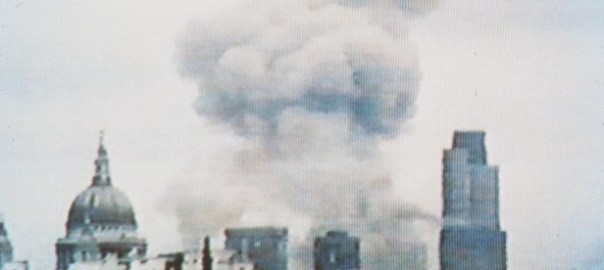
The bomb exploded at 10:27 am causing extensive damage to multiple buildings along a significant stretch of Bishopsgate; the cost of repair was estimated at the time at £1 billion.Buildings up to 500 metres away were damaged, with 1,500,000 sq ft (140,000 m²) of office space being affected and over 500 tonnes of glass broken. The NatWest Tower — at the time the City’s tallest skyscraper – was amongst the structures badly damaged, with many windows on the east side of the tower destroyed; the Daily Mail said “black gaps punched its fifty-two floors like a mouth full of bad teeth” Damage extended as far north as Liverpool Street station and south beyond Threadneedle Street. St Ethelburga’s church, seven metres away from the bomb, collapsed as a result of the explosion. Civilian casualties were low as it was a Saturday morning and the City was typically occupied by only a small number of residents, office workers, security guards, builders, and maintenance staff. Forty-four people were injured by the bomb and News of the World photographer Ed Henty was killed after ignoring police warnings and rushing to the scene.The truck-bomb produced explosive power of 1,200 kg of TNT.

Reaction

The business community and media called for increased security in the City, with one leading City figure calling for “a medieval-style walled enclave to prevent terrorist attacks” Prime Minister John Major received a telephone call from Francis McWilliams, the Lord Mayor of London, reminding him that “the City of London earned £17 billion last year for the nation as a whole. Its operating environment and future must be preserved”. Major, McWilliams and Chancellor of the Exchequer Norman Lamont made public statements that business would continue as normal in the City and that the Bishopsgate bombing would not achieve a lasting effect. Major later gave an account of the public stance taken by his government on the bombing:

Frankly, we thought it was likely to bring the whole process to an end. And we told them repeatedly that that was the case. They assumed that if they bombed and put pressure on the British at Bishopsgate or with some other outrage or other, it would affect our negotiating position to their advantage. In that judgment they were wholly wrong. Every time they did that, they made it harder not easier for any movement to be made towards a settlement. They hardened our attitude, whereas they believed that their actions would soften it. That is a fundamental mistake the IRA have made with successive British governments throughout the last quarter of a century.

John Hume and Gerry Adams issued their first joint statement on the same day as the bombing, stating, “We accept that the Irish people as a whole have a right to national self-determination. This is a view shared by a majority of the people of this island, though not by all its people”, and that, “The exercise of self-determination is a matter for agreement between the people of Ireland”.

The IRA’s reaction appeared in the 29 April edition of An Phoblacht, highlighting how the bombers exploited a security loophole after “having spotted a breach in the usually tight security around the City”. There was also a message from the IRA leadership, calling for

“the British establishment to seize the opportunity and to take the steps needed for ending its futile and costly war in Ireland. We again emphasise that they should pursue the path of peace or resign themselves to the path of war”.

The IRA also attempted to apply indirect pressure to the British government with a statement sent to non-American foreign-owned businesses in the City, warning that “no one should be misled into underestimating the IRA’s intention to mount future planned attacks into the political and financial heart of the British state … In the context of present political realities, further attacks on the City of London and elsewhere are inevitable. This we feel we are bound to convey to you directly, to allow you to make fully informed decisions”.

The City of London Corporation‘s chief planning officer called for the demolition of buildings damaged in the explosion, including the NatWest Tower, seeing an opportunity to rid the City of some of the 1970s architecture and build a new state-of-the-art structure as a “symbol of defiance to the IRA”. His comments were not endorsed by the Corporation themselves, who remarked that the NatWest Tower was an integral part of the City’s skyline.

Aftermath

Bishopsgate bombing 4

In May 1993 the City of London Police confirmed a planned security cordon for the City, conceived by its commissioner Owen Kelly, and on 3 July 1993 the ‘ring of steel‘ was introduced.Most routes into the City were closed or made exit-only, and the remaining eight routes into the City had checkpoints manned by armed police CCTV cameras were also introduced to monitor vehicles entering the area, including two cameras at each entry point – one to read the vehicle registration plate and another to monitor the driver and passenger. Over 70 police-controlled cameras monitored the City but to increase coverage of public areas “Camera Watch” was launched in September 1993 to encourage co-operation on surveillance between the police, private companies and the Corporation of London. Nine months after the scheme was launched only 12.5% of buildings had camera systems, but by 1996 well over 1,000 cameras in 376 separate systems were operational in the City.

The bombing resulted in a number of companies changing their working practices and drawing up plans to deal with any future incidents. Documents were blown out of windows of multi-storey buildings by the force of the explosion, prompting the police to use a shredder to destroy all documents found. This resulted in risk managers subsequently demanding a “clear desk” policy at the end of each working day to improve information security.The attack also prompted British and American financial companies to prepare disaster recovery plans in case of future attacks. The World Trade Center bombing in New York City in February 1993 had caused bankruptcy in 40% of the affected companies within two years of the attack, according to a report from analysts IDC. As a result of the Baltic Exchange and Bishopsgate bomb attacks, City-based companies were well-prepared to deal with the aftermath of the September 11 attacks in 2001, with a spokesman for the Corporation of London stating: “After the IRA bombs, firms redoubled their disaster recovery plans and the City recovered remarkably quickly. It has left the City pretty well-prepared for this sort of thing now.”

£350 million for reconstruction

The initial estimate of £1 billion worth of damage was later downgraded, and the total cost of reconstruction was £350 million.  The subsequent payouts by insurance companies resulted in them suffering heavy losses causing a crisis in the industry, including the near-collapse of the Lloyd’s of London market. A government-backed insurance scheme, Pool Re, was subsequently introduced in Britain, with the government acting as a “re-insurer of last resort” for losses over £75 million.

The bombing, mounted at a cost of £3,000, was the last major bombing in England during that phase of the Northern Ireland conflict.The campaign of bombing of the UK’s financial centre, described by author and journalist Ed Moloney as “possibly the [IRA’s] most successful military tactic since the start of the Troubles”, was suspended by the IRA to allow the political progress made by Gerry Adams and John Hume to continue. The IRA carried out a number of smaller bomb and mortar attacks in England during the remainder of 1993 and in early 1994, before declaring a “complete cessation of military operations” on 31 August 1994. The ceasefire ended on 9 February 1996 when the IRA killed two people in the Docklands bombing which targeted London’s secondary financial district, Canary Wharf.

Subsequent events

In July 2000 it was announced that Punch magazine was to be prosecuted for contempt of court after publishing an article by former MI5 agent David Shayler. Shayler’s article claimed MI5 could have stopped the Bishopsgate bombing, which a spokesman for Attorney General Lord Williams claimed was a breach of a 1997 court injunction preventing Shayler disclosing information on security or intelligence matters. In November 2000 Punch and its editor were found guilty and fined £20,000 and £5,000 respectively.In March 2001 the editor successfully appealed against his conviction and fine, with an appeal judge accusing the Attorney General of acting like a press censor and ruling that the 1997 injunction was in breach of the European Convention on Human Rights. In December 2002 this decision was overturned at the House of Lords, with five law lords ruling that editor James Steen’s publication of Shayler’s article was indeed in contempt.

On 24 April 2013, a commemorative dinner was held by the Felix Fund, a charity for bomb disposal experts and their families, at the Merchant Taylors’ Hall on Threadneedle Street, to mark 20 years since the Bishopsgate bombing.

Visit the Felix Fund website: www.felixfund.org.uk


Bessbrook bomb kills four RUC men- 17th April 1979

Bessbrook

Booby Trap Van Bomb

17th April 1979

Four Protestant members of the Royal Ulster Constabulary (RUC), were killed by a Provisional IRA remote-controlled bomb hidden in a parked van, and detonated when their mobile patrol drove past, Bessbrook.

The bomb was estimated at 1,000 pound and was believed to be the largest bomb used by the IRA up to that date.

———————————————–

Victims

———————————————–

17 April 1979


Paul Gray, (25)

Protestant
Status: Royal Ulster Constabulary (RUC),

Killed by: Irish Republican Army (IRA)
Killed by remote controlled bomb hidden in parked van, detonated when Royal Ulster Constabulary (RUC) mobile patrol drove past, Bessbrook, County Armagh.

See 17th April Deaths & Events

———————————————–

17 April 1979


Robert Lockhart,  (44)

Protestant
Status: Royal Ulster Constabulary (RUC),

Killed by: Irish Republican Army (IRA)
Killed by remote controlled bomb hidden in parked van, detonated when Royal Ulster Constabulary (RUC) mobile patrol drove past, Bessbrook, County Armagh

See 17th April Deaths & Events

———————————————–

17 April 1979


Richard Baird,  (28)

Protestant
Status: Royal Ulster Constabulary (RUC),

Killed by: Irish Republican Army (IRA)
Killed by remote controlled bomb hidden in parked van, detonated when Royal Ulster Constabulary (RUC) mobile patrol drove past, Bessbrook, County Armagh

See 17th April Deaths & Events

———————————————–

17 April 1979


Noel Webb,  (30)

Protestant
Status: Royal Ulster Constabulary (RUC),

Killed by: Irish Republican Army (IRA)
Killed by remote controlled bomb hidden in parked van, detonated when Royal Ulster Constabulary (RUC) mobile patrol drove past, Bessbrook, County Armagh

See 17th April Deaths & Events

———————————————–

Visit the RUC website & memorial list

———————

17 April 1980


In January 1981, Patrick Joseph Traynor (27) from Crossmaglen was found guilty of the four murders and a range of other charges. He was jailed for life on each of the four murder charges and was sentenced to 12 years for the related crimes.

———————————————-

BESSBROOK

Army Base

Bessbrook, saw some of the worst violence in the Troubles. 25 British soldiers and local Protestants, all male, lost their lives. Four soldiers died in a non-combat related air accident, but the rest (21 men) were killed by the Provisional Irish Republican Army (IRA).

The linen mill was converted by the British Army into a major military base. A helicopter landing area was established to supply other military outposts in the area since road-borne movements of troops and supplies were vulnerable to landmine attack.

At one stage the little village was reportedly the busiest helicopter airport in Europe, more so than the major heliports supplying the North Sea oil rigs. For many years British Army helicopters would take off and land every few minutes. To avoid the risk of missile attack they would fly at rooftop level over the village. For a time, direct access to much of the village was sealed off by security barriers to minimise the risk of vehicle-borne bomb attacks on the security forces. Some have claimed that this contributed to the commercial decline of local businesses.

—————————————————-


.

The Corporal Killings- Sickening IRA Murder of Two Off Duty British Army Corporals Belfast 1988

Disclaimer – The views and opinions expressed in these documentary are soley intended to educate and provide background information to those interested in the Troubles of Northern Ireland. They in …

Source: The Corporal Killings- Sickening IRA Murder of Two Off Duty British Army Corporals Belfast 1988

12th April – Deaths & Events in Northern Ireland Troubles

Key Events & Deaths on this day in Northern Ireland Troubles

12th April Saturday

———————————

12 April 1975

Loyalist paramilitaries killed six Catholic civilians in a gun and bomb attack on the Strand Bar, in the Short Strand area of Belfast.

Paul Crawford

Paul Crawford (25), then a member of the Official Irish Republican Army (OIRA), was shot dead on the Falls Road, Belfast. This killing was another in the feud between the OIRA and the Irish National Liberation Army (INLA).

Thursday 12 April 1984


Margaret Whyte (51), a Catholic civilian, and Michael Dawson (23), a Royal Ulster Constabulary (RUC) officer, were killed in a bomb attack carried out by Loyalists on Mrs Whyte’s home, University Street, Belfast.

Lord Lyell replaced Lord Mansfield as government spokesman on Northern Ireland in the House of Lords.

Tuesday 12 April 1994

Ian Hamiltion (21), a Ulster Volunteer Force (UVF) member, was shot dead by the UVF because they claimed he had admitted killing Margaret Wright on 7 April 1994.

Wednesday 12 April 1995

The leaders of the Ulster Unionist Party (UUP), Democratic Unionist Party (DUP), and the Social Democratic and Labour Party (SDLP), met for talks. Unemployment in Northern Ireland in March 1995 was recorded as 89,600 which was the lowest it had been since December 1981.

Friday 12 April 1996

The 26th annual conference of the Alliance Party of Northern Ireland (APNI) opened in Belfast.

Saturday 12 April 1997

Following a series of attacks and intimidation by Loyalists, eight Catholic families left their homes in the Limestone Road area of north Belfast. There were arson attacks on commercial properties in Armagh, Derry and Portadown.

Sunday 12 April 1998

At a series of Sinn Féin (SF) rallies in Ireland to commemorate the Easter Rising in Dublin in 1916, speeches were delivered which appeared to give the Good Friday Agreement a cautious welcome.

The Irish Republican Army (IRA) issued a statement which said that it would judge the Agreement “against its potential to deliver a just and durable peace in our country”. Republican Sinn Féin (RSF) called for a ‘no’ vote in the planned referendums on the Agreement.

Monday 12 April 1999

UN Report on RUC

Param Cumaraswamy, then United Nations (UN) Special Rapporteur, published a report that criticised Ronnie Flanagan, then Chief Constable of the Royal Ulster Constabulary (RUC), over the alleged harassment of defence solicitors.

Cumaraswamy also called for an independent inquiry into the killing of Pat Finucane because there was evidence of collusion between members of the security forces and Loyalist paramilitaries.

Patrick Finucane

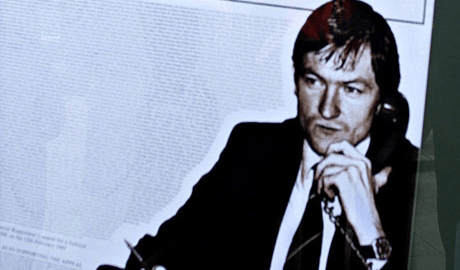
See Pat Finucane

Flanagan rejected an accusation of indifference over the matter. Marjorie (Mo) Mowlam, then Secretary of State for Northern Ireland, said she would have talks with Cumara

swamy, about his report.

A man was shot and injured in the Ardoyne area of Belfast by Republicans during a paramilitary ‘punishment’ attack.

Thursday 12 April 2001

Census Day

The Census was conducted across Britain and Northern Ireland.

The Northern Ireland contained two questions on Religion.

[The Religon Report of the Census would not be published for a year or two but there was speculation about how large an increase there would be in the percentage of Catholics in the region. Analysis of the 1991 Census put the figure for Catholics at 41.5 per cent of the population. There was speculation that the figure could now be as high as 45 per cent.]

Security forces made safe a “barrack buster” bomb which had been discovered at Altmore Forest, Galbally, County Tyrone. The bomb was believed to have been manufactured by the “real” Irish Republican Army (rIRA).


———————————————

Remembering all innocent victims of the Troubles

Today is the anniversary of the death of the following people killed as a results of the conflict in Northern Ireland

“To live in hearts we leave behind is not to die

– Thomas Campbell

To the innocent on the list – Your memory will live forever

– To the Paramilitaries –

There are many things worth living for, a few things worth dying for, but nothing worth killing for.

13 People lost their lives on the 12th April   between 1973 – 1994

———————————————–

12 April 1973


Edward O’Rawe,  (27)

Catholic
Status: Irish Republican Army (IRA),

Killed by: British Army (BA)
Shot while at the rear of house, Cape Street, Lower Falls, Belfast.

———————————————–

12 April 1975


Paul Crawford,  (25)

Catholic
Status: Official Irish Republican Army (OIRA),

Killed by: People’s Liberation Army (PLA)
Shot while selling United Irishman newspaper outside Beagon’s Bar, Falls Road, Belfast. Official Irish Republican Army (OIRA) / Irish National Liberation Army (INLA) feud

———————————————–

12 April 1975


Mary McAleavey,  (57)

Catholic
Status: Civilian (Civ),

Killed by: Ulster Volunteer Force (UVF)
Killed in gun and bomb attack on Strand Bar, Anderson Street, Short Strand, Belfast.

———————————————–

12 April 1975


Elizabeth Carson,   (64)

Catholic
Status: Civilian (Civ),

Killed by: Ulster Volunteer Force (UVF)
Killed in gun and bomb attack on Strand Bar, Anderson Street, Short Strand, Belfast.

———————————————–

12 April 1975


Marie Bennett,  (42)

Catholic
Status: Civilian (Civ),

Killed by: Ulster Volunteer Force (UVF)
Killed in gun and bomb attack on Strand Bar, Anderson Street, Short Strand, Belfast.

———————————————–

12 April 1975


Agnes McAnoy,   (62)

Catholic
Status: Civilian (Civ),

Killed by: Ulster Volunteer Force (UVF)
Killed in gun and bomb attack on Strand Bar, Anderson Street, Short Strand, Belfast

———————————————–

12 April 1975


Arthur Penn,   (33)

Catholic
Status: Civilian (Civ),

Killed by: Ulster Volunteer Force (UVF)
Killed in gun and bomb attack on Strand Bar, Anderson Street, Short Strand

———————————————–

12 April 1975
Michael Mulligan,  (33)

Catholic
Status: Civilian (Civ),

Killed by: Ulster Volunteer Force (UVF)
Injured in gun and bomb attack on Strand Bar, Anderson Street, Short Strand, Belfast. He died 20 April 1975.

———————————————–

12 April 1984


Margaret Whyte,  (51)

Catholic
Status: Civilian (Civ),

Killed by: non-specific Loyalist group (LOY)
Killed by time bomb left on the windowsill of her home, University Street, Belfast

———————————————–

12 April 1984


Michael Dawson,   (23)

Protestant
Status: Royal Ulster Constabulary (RUC),

Killed by: non-specific Loyalist group (LOY)
Killed by time bomb left on the windowsill of Margaret Whyte’s home, University Street, Belfast.

———————————————–

12 April 1987
Charles McIlmurray,  (30)

Catholic
Status: Irish Republican Army (IRA),

Killed by: Irish Republican Army (IRA)
Found shot in van, abandoned at the rear of petrol filling station, Killeen, County Armagh. Alleged informer.

———————————————–

12 April 1989
Joanne Reilly,  (20)

Catholic
Status: Civilian (Civ),

Killed by: Irish Republican Army (IRA)
Killed in van bomb attack on Warrenpoint Royal Ulster Constabulary (RUC) base, County Down. Inadequate warning given.

———————————————–

12 April 1994
Ian Hamilton, (21)

Protestant
Status: Ulster Volunteer Force (UVF),

Killed by: Ulster Volunteer Force (UVF)
Found shot on playing field, off Agnes Close, Shankill, Belfast. Alleged to have been involved in the killing of Margaret Wright on 6 April 1994.

———————————————–

v

5th April – Deaths & Events in Northern Ireland Troubles

Key Events & Deaths on this day in Northern Ireland Troubles

5th April

——————————

Saturday 5 April 1975


Kevin Kane  and Michael Coyle

Two Catholic civilians were killed in a bomb attack on McLaughlin’s Bar in the New Lodge area of Belfast. The attack was claimed by the Protestant Action Force (PAF) a covername used by the Ulster Volunteer Force (UVF).

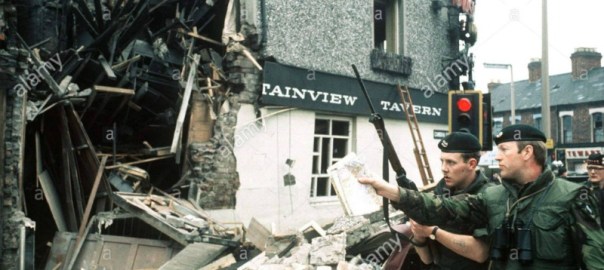
IRA bomb blast wrecks the Mountainview Tavern in Belfast 
Soldiers view the destruction caused by the blast

Republican paramilitaries carried out a bomb attack on Mountainview Tavern, Shankill Road, Belfast, and killed five people. Four of the dead were Protestant civilians and one was a member of the Ulster Defence Association (UDA).

See Mountainview Tavern bomb

Thomas Robinson

A Catholic civilian was shot dead by Loyalists as he walked home in the Ardoyne area of Belfast. Merlyn Rees, then Secretary of Sate for Northern Ireland, said that Loyalist paramilitaries had tried to assassinate him in 1974.

Monday 5 April 1976

James Callaghan succeeded Harold Wilson as the British Prime Minister.

Thursday 5 April 1979


Anthony Dykes  and Anthony Thornett

Two British soldiers were shot dead by the Irish Republican Army (IRA) while standing outside Andersonstown join Royal Ulster Constabulary (RUC) and British Army base in Belfast.

Sunday 5 April 1981

The 1981 Census

During the census Sinn Féin (SF) campaigned for non completion of the census forms as a demonstration of support for the hunger strike. As a result in many Republican areas the census enumerators were unable to collect completed forms. Indeed one enumerator was shot dead in Derry by Republican paramilitaries on 7 April 1981.

[This led to a large under representation of Catholics in the published figures. The population of Northern Ireland was recorded as 1,481,959 with 28 per cent giving their religion as Catholic. 18.5 per cent of the population had refused to state their religion. Later estimates of the true Catholic population put the figure at 38.5 per cent.]

Monday 5 April 1982

White Paper Published

The British government published its White Paper, ‘Northern Ireland: A Framework for Devolution‘ (Cmnd 8541). The paper set out proposals for the establishment of an elected 78 member Assembly at Stormont. The Assembly would then be asked to reach agreement on how any powers devolved to it from Westminster would be administered. The proposals indicated that it would need the agreement of 70 per cent of Assembly members before powers would be devolved.

It was also envisaged that power would be passed to particular Northern Ireland Departments one at a time; because of this the scheme became known as ‘rolling devolution’.

[The ideas contained in the White Paper had been discussed for some time prior to its publication and most of the political parties had expressed opposition to it.]

Friday 5 April 1985

The British government said that it would not provide the funding to save the ‘town gas’ industry in Northern Ireland.

Thursday 5 April 1990

The report of the Stevens Inquiry was presented to Hugh Annesley, then Chief Constable of the Royal Ulster Constabulary (RUC).

Sunday 5 April 1992

Bill Clinton gave a speech to the American-Irish Presidential Forum in New York, United States of America (USA). He undertook, if elected President, to: reverse the ban on Gerry Adams, then President of Sinn Féin (SF), entering the USA; support the ‘MacBride Principles’; appoint a peace envoy to Northern Ireland; and raise the issue of human rights violations with the British government.

Saturday 5 April 1997

‘Grand National’ Cancelled

Two Catholic chapels, St MacNissi’s in Randalstown and St Comgall’s in Antrim Town, and a Protestant church, St Patrick’s in Donoghmore, were damaged by arson attacks.

Seamus Mallon, deputy leader of the Social Democratic and Labour Party (SDLP), blamed the comments made by Ian Paisley, then leader of the Democratic Unionist Party (DUP), in Portadown on 4 April 1997 for fuelling “sectarian hatred”.

Paisley called Mallon’s comments “vile bile”.

The ‘Grand National’ horse race at Aintree in Liverpool had to be abandoned following a hoax warning that the Irish Republican Army (IRA) had planted a bomb at the race course. [In terms of public interest the Grand National is the premier event in the horse racing calendar. There was widespread anger that the race had to be cancelled.

Jack Straw, then Labour Party shadow Home Secretary, said that the IRA had “put themselves beyond the pale”. This incident was one of a number in which the IRA demonstrated its ability to disrupt the ordinary life of people in Britain at minimum effort and risk on the part of IRA members.]

Sunday 5 April 1998

Julia Ahern, the mother of Bertie Ahern, then Taoiseach (Irish Prime Minister), died aged 87. Bertie Ahern, who was heavily involved with the multi-party talks at Stormont, had to leave the talks at various times to organise funeral arrangements and attend the service.

Friday 5 May 2000

A Catholic couple were forced to leave their home in a Loyalist area of south Belfast following a sectarian pipe-bomb attack. The husband sustained minor leg injuries after the device, which was packed with nails, blew a hole in the back door of the house at Broadway Parade and exploded into the kitchen.

His wife who also was in the kitchen escaped unhurt. The attack was carried out by Loyalist paramilitaries.

———————————————

Remembering all innocent victims of the Troubles

Today is the anniversary of the death of the following people killed as a results of the conflict in Northern Ireland

“To live in hearts we leave behind is not to die

– Thomas Campbell

To the innocent on the list – Your memory will live forever

– To the Paramilitaries –

There are many things worth living for, a few things worth dying for, but nothing worth killing for.

15  People lost their lives on the 5th   April  between 1975– 1993

———————————————–

05 April 1975
Kevin Kane,   (18)

Catholic
Status: Civilian (Civ),

Killed by: Protestant Action Force (PAF)
Killed in bomb attack on McLaughlin’s Bar, Antrim Road, New Lodge, Belfast.

———————————————–

05 April 1975
Michael Coyle,   (20)

Catholic
Status: Civilian (Civ),

Killed by: Protestant Action Force (PAF)
Killed in bomb attack on McLaughlin’s Bar, Antrim Road, New Lodge, Belfast

———————————————–

05 April 1975


Williams Andrews,  (33)

Protestant
Status: Ulster Defence Association (UDA),

Killed by: non-specific Republican group (REP)
Killed in bomb attack on Mountainview Tavern, Shankill Road, Belfast.

———————————————–

05 April 1975


Alan Madden,  (18)

Protestant
Status: Civilian (Civ),

Killed by: non-specific Republican group (REP)
Killed in bomb attack on Mountainview Tavern, Shankill Road, Belfast.

———————————————–

05 April 1975


Albert Fletcher,  (32)

Protestant
Status: Civilian (Civ),

Killed by: non-specific Republican group (REP)
Killed in bomb attack on Mountainview Tavern, Shankill Road, Belfast

———————————————–

05 April 1975
Nathaniel Adams,   (29)

Protestant
Status: Civilian (Civ),

Killed by: non-specific Republican group (REP)
Killed in bomb attack on Mountainview Tavern, Shankill Road, Belfast.

———————————————–

05 April 1975


Joseph Bell,   (52)

Protestant
Status: Civilian (Civ),

Killed by: non-specific Republican group (REP)
Killed in bomb attack on Mountainview Tavern, Shankill Road, Belfast

———————————————–

05 April 1975
Thomas Robinson,  (61)

Catholic
Status: Civilian (Civ),

Killed by: non-specific Loyalist group (LOY)
Shot while walking home from social club, Etna Drive, Ardoyne, Belfast.

———————————————–

05 April 1976
Robert McConnell,   (32)

Protestant
Status: Ulster Defence Regiment (UDR)

, Killed by: Irish Republican Army (IRA)
Off duty. Shot outside his home, Tullyvallen, Newtownhamilton, County Armagh

———————————————–

05 April 1976
Sean McDermott,  (20)

Catholic
Status: Irish Republican Army (IRA),

Killed by: Royal Ulster Constabulary (RUC)
Shot by off duty Royal Ulster Constabulary (RUC) member shortly after being involved in bomb attack on Conway Hotel, Dunmurry, near Belfast, County Antrim.

———————————————–

05 April 1977
 Sean Prendergast,  (22)

nfNI
Status: British Army (BA),

Killed by: Irish Republican Army (IRA)
Died one day after being injured during land mine attack on British Army (BA) Armoured Personnel Carrier, Derrynacross, near Belleek, County Fermanagh.

———————————————–

05 April 1979
Anthony Dykes,   (25)

nfNI
Status: British Army (BA),

Killed by: Irish Republican Army (IRA)
Shot by snipers while standing outside Andersonstown Royal Ulster Constabulary (RUC) / British Army (BA) base, Belfast.

———————————————–

05 April 1979
Anthony Thornett,   (20)

nfNI
Status: British Army (BA),

Killed by: Irish Republican Army (IRA)
Shot by snipers while standing outside Andersonstown Royal Ulster Constabulary (RUC) / British Army (BA) base, Belfast.

———————————————–

05 April 1987
Samuel Lawrence, (60)

Protestant
Status: Civilian (Civ),

Killed by: Ulster Volunteer Force (UVF)
Died two days after being injured during robbery at railway station, York Road,

———————————————–

05 April 1993
William Killen,   (36)

Protestant
Status: ex-Ulster Defence Association (xUDA),

Killed by: Ulster Defence Association (UDA)
Shot at his home, Westlea Gardens, Portavogie, County Down. Internal Ulster Defence Association dispute.

———————————————–


Mountainview Tavern Bomb 5th April 1975


Mountainview Tavern Bomb

5th April 1975

This was another act  of terrorism on my local community by republican terrorists and things could have been so much worse, for my family at least.  My  uncles and grandfather had been in  the pub shortly before the attack and had just left to visit another pub further down the Shankill.

The victims were known by my family and their deaths left a lasting mark on the Shankill and local community. Acts such as this drove young protestant men and women to join the loyalist paramilitaries and take the war to the IRA and their nationalist/republican  sympathisers. The sectarian slaughter was self perpetuating and countless innocent lives were lost as death stalked the streets of west Belfast and the loyalist community mourned the deaths of five of their own

.The attack happened at about 6pm. When Two youths opened fire with handguns before detonating the bomb.

Five men, aged between 18 and 52 were killed. One of them, William Andrews, was a member of the UDA.

It was the second pub bombing in Belfast that day. Earlier the UVF had killed two people in an attack on a pub in the New Lodge area of north Belfast

The bar was packed with people waiting to watch the Grand National horse race when the attack happened on the afternoon of Saturday April 5.

Two youths walked in and one opened fire with a handgun before they left the bomb at the door. It exploded moments later, killing four people instantly. One died later in hospital.

While a telephone caller claimed a rival loyalist group was responsible, police blamed the IRA.

The getaway car used in the attack was found abandoned in the nationalist Springfield area.


—————————————

The Victims

Mountainview_Bar_ plaque resized

Mountainview Bar Plaque

On the front wall of the public house close to the front door.

—————————————

05 April 1975


Williams Andrews,  (33)

Protestant
Status: Ulster Defence Association (UDA),

Killed by: non-specific Republican group (REP)
Killed in bomb attack on Mountainview Tavern, Shankill Road, Belfast.

—————————————

05 April 1975


Alan Madden,  (18)

Protestant
Status: Civilian (Civ),

Killed by: non-specific Republican group (REP)
Killed in bomb attack on Mountainview Tavern, Shankill Road, Belfast.

—————————————

05 April 1975


Albert Fletcher,  (32)

Protestant
Status: Civilian (Civ),

Killed by: non-specific Republican group (REP)
Killed in bomb attack on Mountainview Tavern, Shankill Road, Belfast

—————————————

05 April 1975
Nathaniel Adams,   (29)

Protestant
Status: Civilian (Civ),

Killed by: non-specific Republican group (REP)
Killed in bomb attack on Mountainview Tavern, Shankill Road, Belfast.

—————————————

05 April 1975


Joseph Bell,   (52)

Protestant
Status: Civilian (Civ),

Killed by: non-specific Republican group (REP)
Killed in bomb attack on Mountainview Tavern, Shankill Road, Belfast

—————————————

Shankill Road Victims Memorial Services 2013

—————————————

mountianview now resized
Mountain View today


—————————————————-

Update

Published 01/03/2012

A man has been arrested in connection with a deadly bar bomb attack in Belfast 37 years ago.

The blast at the Mountainview Tavern on the Shankill Road in April 1975 killed five people and injured 60 others.

The 54-year-old suspect was arrested by detectives from the Police Service of Northern Ireland’s Serious Crime Branch in Co Antrim.

The investigation into the attack was reopened after a review by the police’s Historical Enquiries Team (HET).

The bar was packed with people waiting to watch the Grand National horse race when the attack happened on Saturday April 5.

Two youths walked in and one opened fire with a handgun before they left the bomb at the door. It exploded moments later, killing four people instantly. One died later in hospital.

The bar was known to be frequented by members of the Ulster Volunteer Force (UVF).

 While a telephone caller claimed a rival loyalist group was responsible, police blamed the IRA.

The getaway car used in the attack was found abandoned in the nationalist Springfield area.

The arrested man is being questioned in the police’s Serious Crime Suite in Antrim town.

See Belfast Telegraph for full story


Airey Neave- The Assasination of Airey Neave

Airey Middleton Sheffield Neave

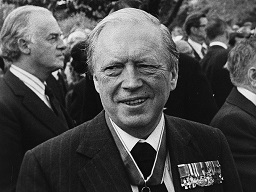
Airey Neave

23 January 1916 – 30 March 1979

Airey Middleton Sheffield Neave, DSO, OBE, MC, TD (23 January 1916 – 30 March 1979) was a British army officer, barrister and politician.

During World War II, Neave was the first British officer to successfully escape from the German prisoner-of-war camp Oflag IV-C at Colditz Castle. He later became Conservative Member of Parliament (MP) for Abingdon.

Neave was assassinated in 1979 in a car-bomb attack at the House of Commons. The Irish National Liberation Army (INLA) claimed responsibility.

——————————–

The Assasination of Airey Neave

——————————–

Early life

Neave was the son of Sheffield Airey Neave CMG, OBE (1879–1961), a well-known entomologist, and his wife Dorothy (d. 1943), the daughter of Arthur Thomson Middleton. His father was the grandson of Sheffield Neave, the third son of Sir Thomas Neave, 2nd Baronet (see Neave Baronets). Neave spent his early years in Knightsbridge in London, before he moved to Beaconsfield. Neave was sent to St. Ronan’s School, Worthing, and from there, in 1929, he went to Eton College.

He went on to study jurisprudence at Merton College, Oxford While at Eton, Neave composed a prize-winning essay in 1933 that examined the likely consequences of Adolf Hitler‘s rise to supreme power in Germany, and Neave predicted then that another widespread war would break out in Europe in the near future. Neave had earlier been on a visit to Germany, and he witnessed the Nazi German methods of grasping political and military power in their hands.

At Eton, Neave served in the school cadet corps as a cadet lance corporal, and received a territorial commission as a second lieutenant in the Oxfordshire and Buckinghamshire Light Infantry on 11 December 1935.]

When Neave went to Oxford University, he purchased and read the entire written works of the writer Carl von Clausewitz. When Neave was asked why, he answered:

“since war [is] coming, it [is] only sensible to learn as much as possible about the art of waging it”.

During 1938, Neave completed his third-class degree in the study of jurisprudence. By his own admission, while at Oxford University, Neave did only the minimal amount of academic work that was required of him by his tutors.

Wartime service

Neave transferred his territorial commission to the Royal Engineers on 2 May 1938  and following the outbreak of war he was mobilised. Sent to France in February 1940 as part of a searchlight regiment, he was wounded and captured by the Germans at Calais on 23 May 1940. He was imprisoned at Oflag IX-A/H near Spangenberg and in February 1941 moved to Stalag XX-A near Thorn in German-occupied western Poland. Meanwhile, Neave’s commission was transferred to the Royal Artillery on 1 August 1940.

In April 1941 he escaped from Thorn with Norman Forbes. They were captured near Ilow while trying to enter Soviet-controlled Poland and were briefly in the hands of the Gestapo. In May, they were both sent to Oflag IV-C (often referred to as Colditz Castle because of its location).

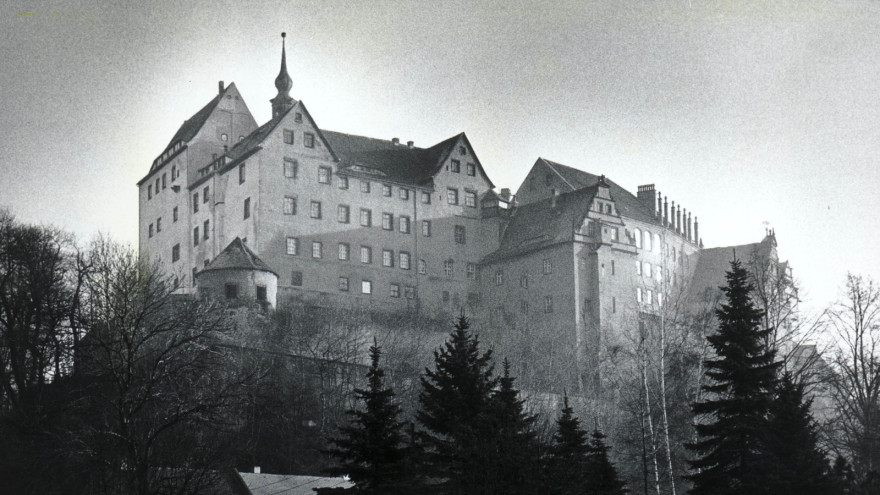
Image result for Colditz Castle

Neave made his first attempt to escape from Colditz on 28 August 1941 disguised as a German NCO. He did not get out of the castle as his hastily contrived German uniform (made from a Polish army tunic and cap painted with scenery paint) was rendered bright green under the prison searchlights.

Together with Dutch officer Anthony Luteyn he made a second attempt on 5 January 1942, again in disguise. Better uniforms and escape route (they made a quick exit from a theatrical production using the trap door beneath the stage) got them out of the prison and by train and on foot they travelled to Leipzig and Ulm and finally reached the border to Switzerland near Singen. Via France, Spain and Gibraltar, Neave returned to England in April 1942. Neave was the first British officer to escape from Colditz Castle.

On 12 May 1942, shortly after his return to England, he was decorated with the Military Cross. He was subsequently promoted to war substantive captain and to the permanent rank of captain on 11 April 1945. A temporary major at the war’s end, he was appointed an MBE (Military Division) on 30 August 1945, and awarded the DSO on 18 October.

As a result, the earlier award of the MBE was cancelled on 25 October.

He was later recruited as an intelligence agent for MI9. While at MI9, he was the immediate superior of Michael Bentine. He also served with the International Military Tribunal at the Nuremberg Trials, investigating Krupp. As a well-known war hero – as well as a qualified lawyer who spoke fluent German – he was honoured with the role of reading the indictments to the Nazi leaders on trial. He wrote several books about his war experiences including an account of the Trials.

A temporary lieutenant-colonel by 1947, he was appointed an OBE (Military Division) in that year’s Birthday Honours.[17] He was awarded the Bronze Star by the US government on 23 July 1948,  and was promoted to lieutenant-colonel on 1 April 1950, At the same time, his promotion to acting major was gazetted, with retroactive effect from 16 April 1948. He entered the reserves on 21 September 1951.

Political career

Neave stood for the Conservative Party at the 1950 election in Thurrock and at Ealing North in 1951. He was elected for Abingdon in a by-election in June 1953, but his career was held back by a heart attack he suffered in 1959.

He was a Governor of Imperial College between 1963 and 1971 and was a member of the House of Commons select committee on Science and Technology between 1965 and 1970.

Edward Heath, when Chief Whip, was alleged to have told Neave that after he suffered his heart attack his career was finished  but in his 1998 autobiography, Heath strongly denied ever making such a remark. He admitted that in December 1974 Neave had told him to stand down for the good of the party. During the final two months of 1974, Neave had asked Keith Joseph, William Whitelaw and Edward du Cann to stand against Heath, and said that in the case of any of them challenging for the party leadership, he would be their campaign manager.

When all three refused to stand, Neave agreed to be the campaign manager for Margaret Thatcher‘s attempt to become leader of the Conservative Party, that was eventually victorious.

When Thatcher was elected leader in February 1975, he was rewarded with the post of head of her private office. He was then appointed Shadow Secretary of State for Northern Ireland and was poised to attain the equivalent Cabinet position at the time of his death in the event of their party winning the general election of 1979. In opposition, Neave was a strong supporter of Roy Mason, who had extended the policy of Ulsterisation.

Neave was author of the new and radical Conservative policy of abandoning devolution in Northern Ireland if there was no early progress in that regard and concentrating on local government reform instead. This integrationist policy was hastily abandoned by Humphrey Atkins, who became Secretary of State for Northern Ireland, the role Neave had shadowed.

Tony Benn2.jpg

Politician Tony Benn records in his diary (17 February 1981) that a journalist from the New Statesman, Duncan Campbell, told him that he had received information from an intelligence agent two years previously that Neave had planned to have Benn assassinated if a Labour government was elected, James Callaghan resigned and there was a possibility that Benn might be elected party leader in his place. Campbell claimed that the agent was ready to give his name and the New Statesman was going to print the story.

Benn, however, discounted the validity of the story and wrote in his diary:

“No one will believe for a moment that Airey Neave would have done such a thing”.

The magazine printed the story on 20 February 1981, naming the agent as Lee Tracey. Tracey claimed to have met Neave and was asked to join a team of intelligence and security specialists which would “make sure Benn was stopped”. Tracey planned a second meeting with Neave but Neave was killed before they could meet again.

Assassination


Memorial plaque to Airey Neave at his alma mater, Merton College, Oxford


Airey Neave was killed on 30 March 1979, when a magnetic car bomb fitted with a ball bearing tilt switch exploded under his new Vauxhall Cavalier  at 14:58 as he drove out of the Palace of Westminster car park.

He lost his right leg below the knee and his left was hanging on by a flap of skin. Neave died in hospital an hour after being freed from the wreckage without regaining consciousness.

The Irish National Liberation Army (INLA), an illegal Irish republican paramilitary group, claimed responsibility for the killing.

—————————————————-

Margaret Thatcher speaking to the press immediately after the assassination of Airey Neave

—————————————————-

Conservative leader Margaret Thatcher led tributes, saying:

He was one of freedom’s warriors. No one knew of the great man he was, except those nearest to him. He was staunch, brave, true, strong; but he was very gentle and kind and loyal. It’s a rare combination of qualities. There’s no one else who can quite fill them. I, and so many other people, owe so much to him and now we must carry on for the things he fought for and not let the people who got him triumph.

Labour Prime Minister James Callaghan said:

James Callaghan.JPG

“No effort will be spared to bring the murderers to justice and to rid the United Kingdom of the scourge of terrorism.”

The INLA issued a statement regarding the killing in the August 1979 edition of The Starry Plough:

In March, retired terrorist and supporter of capital punishment, Airey Neave, got a taste of his own medicine when an INLA unit pulled off the operation of the decade and blew him to bits inside the ‘impregnable’ Palace of Westminster. The nauseous Margaret Thatcher snivelled on television that he was an ‘incalculable loss’—and so he was—to the British ruling class.

Neave’s death came just two days after the vote of no confidence which brought down Callaghan’s government and a few weeks before the 1979 general election, which brought about a Conservative victory and saw Thatcher come to power as Prime Minister. Neave’s wife Diana, whom he married on 29 December 1942, was subsequently elevated to the House of Lords as Baroness Airey of Abingdon.

Neave’s biographer Paul Routledge met a member of the Irish Republican Socialist Party (the political wing of INLA) who was involved in the killing of Neave and who told Routledge that Neave:

“would have been very successful at that job [Northern Ireland Secretary]. He would have brought the armed struggle to its knees”.

Conspiracy theories

Whilst working in the House of Commons as Paddy Ashdown‘s research assistant, Kevin Cahill claims to have had around six conversations with the security staff there. The most frequent remark was that “everyone knew” the story behind Neave’s death but that no one could talk about it in detail because it would have been too dangerous. Cahill claims they did not believe INLA killed Neave but that it was an “inside job”.

Cahill concluded that Neave was killed by MI6 agents working with the CIA because Neave sought to prosecute senior figures in the intelligence establishment for corruption.

Another person who did not accept the generally accepted version of events was Enoch Powell, the Ulster Unionist MP. Powell claimed in an interview with The Guardian on 9 January 1984 that the Americans had killed Neave, along with Lord Mountbatten and Robert Bradford MP. He claimed the evidence came from a member of the Royal Ulster Constabulary with whom he had a conversation.

On 18 October 1986 Powell returned to the subject of Neave’s death in a speech to Conservative students in Birmingham. He told them that INLA had not killed Neave, but that he had been assassinated by “MI6 and their friends”. Powell claimed Neave’s Northern Ireland policy had been one of integration with the rest of the UK and that the Americans feared that this process, if implemented by Neave, would have been irreversible.

His killing, alleged Powell, was intended to make the British Government adopt a policy more acceptable to America in her aim of a united Ireland within NATO.

In 2014, 35 years after Neave’s death, it was reported that a fictionalised account of Neave’s murder was to be used in a Channel 4 drama. The drama, Utopia, portrays Neave as a drinker who colluded with spies and portrays his assassination as perpetrated by MI5.

This led to condemnation of the broadcaster, with Norman Tebbit (a friend and colleague of Neave and survivor of the Brighton hotel bombing in 1984) saying:

“To attack a man like that who is dead and cannot defend himself is despicable”.

Neave’s family, who had not been consulted about the programme, announced their intention to take action to prevent the programme from being broadcast, claiming it had “fictionalised the atrocity ‘in the name of entertainment’ as well as falsely depicting him as a debauched and conniving figure.

Main source: https: wikipedia

See: Ian Gow 

My book is now available to order online, see below for more details : 

23rd March – Deaths & Events in Northern Ireland Troubles

Key Events & Deaths on this day in Northern Ireland Troubles 23rd March ————————————————- Tuesday…

Source: 23rd March – Deaths & Events in Northern Ireland Troubles

23rd March – Deaths & Events in Northern Ireland Troubles

Another IRA Honey Trap Killing

belfastchildis's avatar

Key Events & Deaths on this day in Northern Ireland Troubles

23rd March

————————————————-

Tuesday 23 March 1971

Faulkner Became Prime Minister

Brian Faulkner succeeds as Northern Ireland Prime Minister after defeating William Craig in a Unionist Party leadership election.

[Faulkner’s tenure of office was to prove very short.]

The Local Government Boundaries (Northern Ireland) Act became law. The Act provided for the appointment of a Boundaries Commissioner to recommend the boundaries and names of district council and ward areas.

Friday 23 March 1973

IRA Honey trap Killings

IRA Honey trap 1

See Below for more details

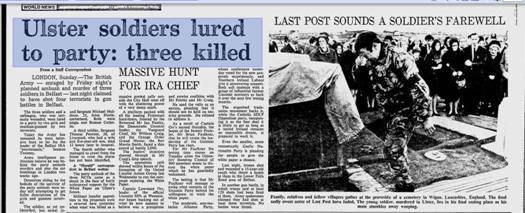
Three members of the British Army were shot dead by the Irish Republican Army (IRA) in a house in the Antrim Road, Belfast. The soldiers had been lured to the house. A Catholic civilian was shot dead by Loyalists in Belfast.

Saturday 23 March 1974

The Ulster Workers’ Council (UWC), a new Loyalist grouping, issued a…

View original post 1,258 more words

Forkhill Armagh – IRA “Bandit Country”

belfastchildis's avatar

Forkhill or Forkill (from Irish: Foirceal) is a small village and civil parish  in south County Armagh, Northern Ireland, in the ancient barony of Upper Orior. It is within the Ring of Gullion and in the 2011 Census it had a recorded population of 498.

It was also one of the most dangerous and unforgiving places on earth for British soldiers and other security force personnel during the 30 year “conflict” and the South  Armagh IRA seemed  able to slaughtered at will and the areas  nickname “Bandit Country” was written in the blood of the innocent.

———————————————-

BBC Panorama – Bandit Country, South Armagh

———————————————-

See Below for more details on the South Armagh IRA

————————————————

Never forget

They died serving their country

I salute you all!

———————

They shall not grow old,
as we that are left grow old:
Age shall not weary them,
nor the…

View original post 6,328 more words