That was the codename given to Alfredo “Freddie” Scappaticci by his spy handlers at the top secret Force Research Unit (FRU).
As chief of the IRA’s Nutting Squad, who shot victims through the head, he is thought to have killed at least 40 people over 25 years.
Yet at the same time Stakeknife — who always taped his victims screaming for mercy as he tortured them — was pocketing £80,000 a year from the Brits for information that led to the deaths and imprisonment of dozens of IRA members.
Families of some of his victims claim Stakeknife was allowed to get away with murder because he was the “jewel in the crown” of informants.
Britain has always said it did not deal with the IRA during the Troubles, but a new probe could blow that assertion out of the water
——————————————————————————————-
Gen. John Wilsey confirms: Stakeknife is Freddie Scappaticci
——————————————————————————————-
This week Northern Ireland’s director of public prosecutions, Barra McGrory, ordered an inquiry into Stakeknife. He announced he had asked PSNI Chief Constable George Hamilton to look into the case.
PSNI Chief Constable George Hamilton
It comes as three investigations into alleged police and Army collusion in around 24 murders have been collectively examined by Northern Ireland’s Police Ombudsman.
A major Stakeknife investigation promises justice at last for the relatives of his victims, who will finally hear just how much he and British military intelligence were involved in Northern Ireland’s “dirty war”.
Shauna Moreland,
People like Shauna Moreland, 31, whose mother Caroline was tortured then executed by Stakeknife and his Nutting Squad in 1994, two months before the IRA ceasefire.
The bloodied body of the 34-year-old mother of three was found dumped on wasteland in Co Fermanagh. She had been held and tortured for 15 days for telling police about the location of a single rifle.
In one of Stakeknife’s sick recordings, released after her death, Caroline is heard pleading for her life.
Victim … Caroline Moreland
Remembering the last day she saw her mother, Shauna recalls: “It was just a normal day. She was in the kitchen ironing. She was going off for the day on a bus run somewhere.
“I was going over to my granny’s. It was just the normal getting stuff together, giving her a kiss and a hug and saying ‘I love you, goodbye’.”
She adds: “I was ten at the time she was killed. She was missing for 15 days and I don’t have memories of all that time, it was a hard time.
“She is on my mind always, it is every day. And I have a memory of the day I found out she was dead.”
Shauna believes her mother, like many of Stakeknife’s victims, was “sacrificed” by the British military to protect their agent.
When Stakeknife, now 68, was finally unmasked in 2003, he was allowed to flee Northern Ireland to a safe house abroad amid allegations that the British secret services were protecting him.
Martin Ingram, the former FRU member who first outed Stakeknife, said the double agent was allowed to kill because he was too valuable an agent to British military intelligence.
It is alleged that even when they had prior knowledge of his actions they did not stop him. And his victims are said to have included other military intelligence agents.
Martin says: “He was an agent who killed his own people. Simple as that.”
Shortly after he was outed as Stakeknife, Scappaticci — or “Scap” to his IRA pals — undertook a High Court action in the UK asking the British Government to publicly deny he was an agent. They refused, saying to do so would put other agents in danger.
They have consistently refused to comment on Stakeknife but it was revealed in court documents during another case that Scappaticci was being given security by the British Government at that time.
Since then there have been constant calls for Stakeknife to be prosecuted for the crimes he allegedly committed.
Shauna Moreland says: “Someone, somewhere is sitting in an office and deciding what I can and cannot know about my mother’s murder. That’s hard, really hard.” Earlier this year she confronted former IRA commander and Northern Ireland’s Deputy First Minister Martin McGuinness, demanding something was done about Stakeknife.
Shauna said McGuinness assured her he was “looking into it” but she has heard nothing since.
Though pleased with this week’s announcement that Stakeknife WILL finally be investigated, she adds: “Justice is going to take a while, it’s not going to happen overnight.
“But I am hopeful we will get there in some way. There will be some sort of closure to this, I have to believe that . . . My hope is that one day the public might be told exactly what happened and wh
Why someone turned a blind eye, despite knowing the identity of those involved in her mother’s murder, before and after it took place.
Martin Ingram
Talking about why he unmasked Stakeknife, Martin Ingram says: “Certain activities of the FRU sickened me.I believe genuine secrets deserve to be protected, acquiescence in murder does not.”
Martin had not handled Stakeknife but was aware of his existence and what the FRU was doing with him.
He outed him to a journalist in 2000 after picking up Killing Range, a book by IRA member Eamon Collins in which Stakeknife was said to have joked about the killing of an informer. It horrified Martin because he knew Stakeknife had been the FRU’s top grass.
When he tried to whistleblow in the Press he was prosecuted by the British Government, his house burgled and important documents stolen. It was three years later that Stakeknife’s identity was finally revealed in the newspapers.
When Stakeknife was outed Scappaticci was, according to sources, ordered by the IRA to “go on the attack and brazen it out”.
He spoke to reporters on his doorstep. He pointed to the brickdust stains on his shorts and said, matter-of-factly: “Listen, I’ve been building blocks all day. Does it look like I’ve been getting £80,000 a year?”
He also said he was suffering “depression and stress” as a result of the allegations, and told Irish paper the Sunday Business Post: “My life’s been turned upside down.
“I’m not a religious person but I’ve been in touch with the priests. It’s for spiritual help.”
Scappaticci later said: “According to the Press I am guilty of 40 murders. But I am telling you this now, after this has settled I want to meet the families of the people that they said I murdered.
“And when I do I will stand in front of them and say, ‘I didn’t do it. I had no part in it’. And I will look them straight in the eye when I do it.”
But within weeks he had gone into hiding. His whereabouts remain unknown. Among those who would like to look him in the eye is the brother of Robin Hill, who was executed by the Nutting Squad in 1992.
Robin was kidnapped and held for a week before he was shot dead and dumped in a back alley in the Beechmount area of West Belfast.
Speaking of Stakeknife, Randolph Hill, 54, said, yesterday: “If I knew where he was, I would call at his door. It is good that the police are looking into all of this but there is a lot to get through to get to the bottom of it.
“The only thing that would satisfy me is an international investigation, an outside police force, outside the UK or Ireland, looking at it.”
SHORT, stocky and swarthy, Freddie “Stakeknife” Scappaticci is an unlikely looking secret agent.
His Italian grandfather was an ice-cream seller who migrated to Ireland in the 1920s and Freddie grew up in a small, red-bricked terraced house in West Belfast.
In his youth he was a talented footballer who tried out for Nottingham Forest.
A builder by trade, Freddie joined the IRA in 1970 and was interned twice — once with current Sinn Fein leader Gerry Adams.
A committed republican, he quickly rose through the ranks to become chief of the Nutting Squad, but after falling out with a fellow IRA man he was given a brutal punishment beating.
He approached British military intelligence in around 1976 and was handed over to the FRU, which gave him his codename.
Such was the quality of Stakeknife’s information that soon a whole department, known as the Rat Hole, was set up to handle him. One of his biggest “successes” as far as the FRU was concerned was the “Death on the Rock” SAS ambush of three IRA members, believed to be planning a bomb attack in Gibraltar in 1988.
Stakeknife’s tip led to the three, who included a woman, being killed before they could carry out the murderous plot.
Such coups are said to be why even when Stakeknife warned the FRU he had been asked to target a suspect informer — even requesting the person be moved to the UK — the killing was allowed to go ahead.
Some of the victims are said to have included people the FRU knew were British agents, sometimes working for the Royal Ulster Constabulary.
The FRU is said to have gone to extreme lengths to protect its “golden egg”.
In one case it is said to have set up an innocent 66-year old pensioner to be assassinated instead of Stakeknife.
Having got wind of a plot by the Ulster Freedom Fighters to assassinate the top agent it handed over a fake dossier suggesting the target was actually another Italian — retired taxi driver Francisco Notorantonio, who died in a hail of bullets.
Stakeknife had his own dedicated handlers and agents and it was suggested that he was important enough that MI5 set up an office dedicated solely to him. Rumours suggested that he was being paid at least £80,000 a year and had a bank account in Gibraltar.[3]
Serious allegations have emerged to the effect that the British government allowed up to forty people to be killed via the IRA’s Internal Security Unit or “Nutting Squad” to protect his cover.[4] In 1987 Sam McCrory, an Ulster Defence Association/”Ulster Freedom Fighters” member, killed the 66-year-old Francisco Notarantonio at his home in Ballymurphy in West Belfast.[5] The UDA/UFF had discovered that a senior IRA member was working for the FRU.[clarification needed] It has been alleged that FRU agent Brian Nelson gave Notarantonio’s name to the UDA/UFF to protect the identity of the real spy.
On 11 May 2003, several newspapers named Freddie Scappaticci as Stakeknife. Scappaticci denied the claims and launched an unsuccessful legal action to have the British government state he was not their agent.[6] He later left Northern Ireland and was rumoured to be living in Cassino, Italy. There were also reported sightings in Tenerife.[7]
A report in a February 2007 edition of the Belfast News Letter reported that a cassette recording allegedly of Scappaticci talking about the number of murders he was involved in via the “Nutting Squad”, as well as his work as an Army agent, had been lodged with the PSNI in 2004 and subsequently passed to the Stevens Inquiry in 2005.[8]
The former British Intelligence agent who worked in the FRU known as “Martin Ingram” has written a book titled Stakeknife since the original allegations came to light in which it says Scappaticci was the agent in question.
In October 2015 is was announced that Scappaticci was to be investigated by the Police Service of Northern Ireland over at least 24 murders.[9]
———————————————————————–
Force Research Unit
Republican mural explaining collusion between Force Research Unit operatives and the Ulster Defence Regiment
The FRU used double agents to infiltrate Irish republican and Ulster loyalist paramilitary groups.[2] Its existence was revealed in the 1990s by the Stevens Inquiries. The inquiries found that—in its efforts to defeat the Provisional IRA—the FRU used these agents to help loyalists to kill people, including civilians. This has been confirmed by some former members of the unit.[3] The unit also mounted undercover surveillance operations.
Training
Because this unit was an Intelligence Corps-sponsored unit, all FRU personnel were trained at a “Top Secret” intelligence facility in Templer Barracks, Ashford, known as the Specialised Intelligence Wing (SIW)[citation needed] (often wrongly called the Special Intelligence Wing[citation needed]). The Specialised Intelligence Wing was part of the School of Service Intelligence within Templer Barracks and was commanded by an Intelligence Corps Lieutenant-Colonel. The Senior Instructor was always an Intelligence Corps officer but Directing Staff (DS) were drawn from a variety of British Army units, including Special Forces. The unit was simply referred to as “The Manor” by soldiers because the unit was based in Repton Manor, a grade 2 listed building. Repton Manor also contained the Photographic Section run by Royal Air Force personnel. There were additional pre-fabricated buildings at the rear of the manor house used by SIW’s L Branch who had the responsibility of re-settling and protecting former high-value Irish informers and agents throughout the United Kingdom and abroad. Much FRU training took place nearby at the Cinque Ports Ranges in Hythe and Lydd (Northern Ireland Training and Advisory Team) and at Overhill Camp, Cheriton, Folkestone (an Intelligence Corps sub-unit). The barn and stables behind Repton Manor were used to keep surveillance-adapted cars and vans which were used by soldiers for surveillance tasks.[citation needed]
In the mid 1980s, the FRU recruited Brian Nelson as a double agent inside the Ulster Defence Association (UDA). The UDA was a legal Ulster loyalist paramilitary group that had been involved in hundreds of attacks on Catholic and nationalist civilians, as well as a handful on republican paramilitaries. The FRU helped Nelson become the UDA’s chief intelligence officer.[4] In 1988, weapons were shipped to loyalists from South Africa under Nelson’s supervision.[4] Through Nelson, the FRU helped the UDA to target people for assassination. FRU commanders say their plan was to make the UDA “more professional” by helping it to kill republican activists and prevent it from killing uninvolved Catholic civilians.[2] They say if someone was under threat, agents like Nelson were to inform the FRU, who were then to alert the police.[2]Gordon Kerr, who ran the FRU from 1987 to 1991, claimed Nelson and the FRU saved over 200 lives in this way.[2][5] However, the Stevens Inquiries found evidence that only two lives were saved and said many loyalist attacks could have been prevented but were allowed to go ahead.[5] The Stevens team believes that Nelson was responsible for at least 30 murders and many other attacks, and that many of the victims were uninvolved civilians.[5] One of the most prominent victims was solicitor Pat Finucane. Although Nelson was imprisoned in 1992, FRU intelligence continued to help the UDA and other loyalist groups.[6][7] From 1992 to 1994, loyalists were responsible for more deaths than republicans for the first time since the 1960s.[8]
Allegations exist that the FRU sought restriction orders in advance of a number of loyalist paramilitary attacks in order to facilitate easy access to and escape from their target. A restriction order is a de-confliction agreement to restrict patrolling or surveillance in an area over a specified period. This de-confliction activity was carried out at a weekly Tasking and Co-ordination Group which included representatives of the Royal Ulster Constabulary, MI5 and the British Army. It is claimed the FRU asked for restriction orders to be placed on areas where they knew loyalist paramilitaries were going to attack.[9]
Alleged infiltration of republican paramilitary groups
FRU are also alleged to have handled agents within republican paramilitary groups. A number of agents are suspected to have been handled by the FRU including IRA units who planted bombs and assassinated.[citation needed] Attacks are said to have taken place involving FRU-controlled agents highly placed within the IRA. The main agent to have been uncovered so far was codenamed “Stakeknife“. There is a debate as to whether this agent is IRA member Freddie Scappaticci or another, as yet unidentified, IRA member.[10]
“Stakeknife” is thought to have been a member of the IRA’s Internal Security Unit – a unit responsible for counter-intelligence, interrogation and court martial of informers within the IRA. It is believed that “Stakeknife” was used by the FRU to influence the outcome of investigations conducted by the IRA’s Internal Security Unit into the activities of IRA volunteers.
It is alleged that in 1997 the UDA came into possession of details relating to the identity of the FRU-controlled IRA volunteer codenamed “Stakeknife”. It is further alleged that the UDA, unaware of this IRA volunteer’s value to the FRU, planned to assassinate him. It is alleged that after the FRU discovered “Stakeknife” was in danger from UDA assassination they used Brian Nelson to persuade the UDA to assassinate Francisco Notarantonio instead, a Belfast pensioner who had been interned as an Irish republican in the 1940s.[11] The killing of Notarantonio was claimed by the UFF at the time.[12] Following the killing of Notarantonio, unaware of the involvement of the FRU, the IRA assassinated two UDA leaders in reprisal attacks. It has been alleged that the FRU secretly passed details of the two UDA leaders to the IRA via “Stakeknife” in an effort to distract attention from “Stakeknife” as a possible informer
1969 was a year of rising tension, violence and change for the people of Northern Ireland. Rioting in Derry’s Bogside led to the deployment of British troops and a shortlived, uneasy truce. The British army soon found itself engaged in an undercover war against the Provisional IRA, which was to last for more than twenty years.
In this enthralling and controversial book, Martin Dillon, author of the bestselling The Shankill Butchers, examines the roles played by the Provisional IRA, the State forces, the Irish Government and the British Army during this troubled period. He unravels the mystery of war in which informers, agents and double agents operate, revealing disturbing facts about the way in which the terrorists and the Intelligence Agencies target, undermine and penetrate each other’s ranks.
The Dirty War is investigative reporting at its very best, containing startling disclosures and throwing new light on previously inexplicable events.
Please consider making a small or large donation as I am very poor and every donation is most welcome and goes towards the cost of running this blog.
Make a small donation
Thank you!
My autobiography: A Belfast Child is now available to pre-order on Amazon , launch date is 30th April.
Key Events & Deaths on this day in Northern Ireland Troubles
23rd Octobe
——————–
Friday 23 October 1970
Charles Haughey, and two others were found not guilty of illegal arms importation by a Dublin jury. The ‘Arms Trial’ had begun on 28 May 1970. Neil Blaney, a co-accused, had been found not guilty on 2 July 1970.
Saturday 23 October 1971
Funeral of Mrs Maura Meehan 31
Two female members of the Irish Republican Army (IRA), Maura Meehan (30) and Dorothy Maguire (19), were shot dead by the British Army (BA) in the Lower Falls area of Belfast. The two women had been travelling the area warning people of British Army raids on houses.
[The two women were the first members of Cumann na mBan to die in the conflict.] Three Catholic civilians, Sean Ruddy (28), James McLaughlin (26) and Robert Anderson (26), were shot dead by the British Army during an attempted robbery in Newry, County Down.
Tuesday 23 October 1973
The Standing Committee of the Ulster Unionist Party (UUP) voted by 132 to 105 to support a policy which would allow UUP members to take part in any future power-sharing executive.
[While Brian Faulkner, then leader of the UUP expressed his public pleasure at the result, the narrowness of the victory was an indication of deep divisions within the UUP.]
Thursday 23 October 1975
Two Catholic civilians, Peter McKearney (63) and his wife Jane McKearney (58), were shot dead by the Ulster Volunteer Force (UVF) at their home near Moy, County Tyrone.
The Irish Republican Army (IRA) planted a bomb on a car outside the home of Hugh Fraser, then a Conservative Member of Parliament (MP). A person passing the car was killed when the bomb exploded prematurely.
Monday 23 October 1978 [ Hunger Strike. ]
Friday 23 October 1981
Ulster Unionist Party conference took place over two days (23 – 24 October 1981). [ Political Developments.]
Friday 23 October 1987
Sinn Féin (SF) gained by-election victories in elections to Belfast City Council.
Tuesday 23 October 1990
The Irish Republican Army (IRA) shot and killed a Protestant taxi driver, William Aitken, in Belfast.
Ten people were killed when a bomb being planted by the Irish Republican Army (IRA) exploded prematurely as it was being planted in a fish shop on the Shankill Road, Belfast. With the exception of one of the bombers who was also killed, the rest of those who died were Protestant civilians. The bombing represented the greatest loss of life in Northern Ireland in a single incident since the Enniskillen bombing on 8 November 1987.
A further 57 people were injured in the attack. There was a wave of condemnations of the attack. Loyalist paramilitaries reacted immediately shooting two Catholic men one of whom died later from his wounds.
[Over the next week Loyalist paramilitaries killed a total of 12 Catholic civilians. The IRA later claimed that the intended target of the bomb was a meeting of Ulster Freedom Fighters (UFF) members that was believed to be taking place in the former Ulster Defence Association (UDA) office above the fish shop.]
It was announced that the Anglo-Irish Intergovernmental Conference (AIIC) meeting planned for 27 October would be postponed as a mark of respect following the Shankill Road bombing. The Ulster Unionist Party (UUP) in Belfast City Council decided not to engage with the Social Democratic and Labour Party (SDLP) until the Hume-Adams Initiative had ended.
Sunday 23 October 1994
Martin McGuinness, then Vice-President of Sinn Féin (SF), who was on a visit to London, stated that the Irish Republican Army (IRA) could end its ceasefire if a satisfactory outcome was not produced by the peace process.
Monday 23 October 1995
Dick Spring, then Tánaiste (deputy Irish Prime Minister and Minister for Foreign Affairs), travelled to Belfast for talks with David Trimble, then leader of the Ulster Unionist Party (UUP). The two men failed to agree on the issue of the decommissioning of paramilitary weapons. Spring also held a meeting with a delegation from the Progressive Unionist Party (PUP) which was led by Gusty Spence, former leader of the Ulster Volunteer Force (UVF).
Wednesday 23 October 1996
In the Queen’s speech during the opening of a new session of the British parliament, the government announced that it would pass a bill on decommissioning. Later John Major, then British Prime Minister, stated that it would require more than a new ceasefire to allow Sinn Féin (SF) to enter the Stormont talks. James Molyneaux, the former leader of the Ulster Unionist Party (UUP), announced that he would not be standing for re-election to the Lagan Valley constituency.
Friday 23 October 1998
Davy Jones, then a Orange Order spokesperson, was suspended by Dennis Watson, then Grand Master of Armagh, for “breaching Orange protocol”
. [The suspension was lifted the following day.]
Saturday 23 October 1999
Senator George Mitchell announced his review of the Good Friday Agreement would be extended as the pro-Agreement parties met at Castle Buildings, Stormont, Belfast. Sinn Féin (SF), the Ulster Unionist Party (UUP) and the Social Democratic and Labour Party (SDLP) were attempting to end the stalemate over decommissioning and the formation of an Executive. David Trimble, then leader of the UUP, wrote an article for the Newsletter (a Belfast based newspaper).
Tuesday 23 October 2001
IRA Began Decommissioning
Loyalist paramilitaries threw a pipe-bomb at the home of a Catholic family on the Deerpark Road, north Belfast, at approximately 9.00pm (2100BST). The RUC said the family, “narrowly escaped death or injury”. There was some damage to the house and a car. At around 4.00pm (1600BST) the Irish Republican Army (IRA) issued a statement that announced that the organisation had begun to decommission its weapons.
The IRA statement included the sentence:
“Therefore, in order to save the peace process we have implemented the scheme agreed with the IICD [Independent International Commission on Decommissioning] in August [2001].”
Later in the day the IICD issued a statement, part of which read: “We have now witnessed an event – which we regard as significant – in which the IRA has put a quantity of arms completely beyond use. The material in question includes arms, ammunition and explosives.” David Trimble, then leader of the Ulster Unionist Party (UUP), held a meeting with John de Chastelain (Gen.), then chairman of the IICD, to discuss the act of decommissioning by the IRA. Following the discussions Trimble announced that he would would be recommending to a meeting of the UUP executive on Saturday (27 October 20001) that the UUP ministers retake their seats on the Northern Ireland Executive. The announcements by the IRA and the IICD were welcomed by the British and Irish governments, by the American administration, by Nationalists, and by some Unionists. The Democratice Unionist Party (DUP) and some members of the UUP claimed the move by the IRA was “one-off gesture” or a “stunt”.
———————————————————————————
Remembering all innocent victims of the Troubles
Today is the anniversary of the death of the following people killed as a results of the conflict in Northern Ireland
“To live in hearts we leave behind is not to die.”
― Thomas Campbell
To the innocent on the list – Your memory will live forever
– To the Paramilitaries –
There are many things worth living for, a few things worth dying for, but nothing worth killing for.
22 People lost their lives on the 23rd October between 1971 – 1993
————————————————————–
23 October 1971
Maura Meehan, (30)
Catholic Status: Irish Republican Army (IRA),
Killed by: British Army (BA)
Shot while travelling in car warning local residents of British Army (BA) house raids, Cape Street, Lower Falls, Belfast.
————————————————————–
23 October 1971
Dorothy Maguire, (19)
Catholic Status: Irish Republican Army (IRA),
Killed by: British Army (BA)
Shot while travelling in car warning local residents of British Army (BA) house raids, Cape Street, Lower Falls, Belfast.
————————————————————–
23 October 1971
Sean Ruddy, (19)
Catholic Status: Civilian (Civ),
Killed by: British Army (BA)
Shot by undercover British Army (BA) members, from nearby roof top, during attempted robbery of man outside bank, Hill Street, Newry, County Down. Assumed to be an Irish Republican Army (IRA) member.
————————————————————–
23 October 1971 Thomas McLoughlin, (27)
Catholic Status: Civilian (Civ),
Killed by: British Army (BA)
Shot by undercover British Army (BA) members, from nearby roof top, during attempted robbery of man outside bank, Hill Street, Newry, County Down. Assumed to be an Irish Republican Army (IRA) member.
————————————————————–
23 October 1971
Robert Anderson, (25)
Catholic Status: Civilian (Civ),
Killed by: British Army (BA)
Shot by undercover British Army (BA) members, from nearby roof top, during attempted robbery of man outside bank, Hill Street, Newry, County Down. Assumed to be an Irish Republican Army (IRA) member.
————————————————————–
23 October 1972
Michael Naan, (31)
Catholic Status: Civilian (Civ),
Killed by: British Army (BA)
Stabbed to death at his farm, Aghnahinch, near Newtownbutler, County Fermanagh. His body found on 24 October 1972.
————————————————————–
23 October 1972
Andrew Murray, (24)
Catholic Status: Civilian (Civ),
Killed by: British Army (BA)
Stabbed to death at his workplace, Michael Naan’s farm, Aghnahinch, near Newtownbutler, County Fermanagh. His body found on 24 October 1972.
————————————————————–
23 October 1974 Michael Simpson, (21) nfNI Status: British Army (BA),
Killed by: Irish Republican Army (IRA)
Died three weeks after being shot by sniper while on British Army (BA) foot patrol, Racecourse Road, Shantallow, Derry.
————————————————————–
23 October 1975
Peter McKearney, (63)
Catholic Status: Civilian (Civ),
Killed by: Ulster Volunteer Force (UVF)
Shot at his home, Listamlet, near Moy, County Tyrone.
————————————————————–
23 October 1975
Jane McKearney, (58)
Catholic Status: Civilian (Civ),
Killed by: Ulster Volunteer Force (UVF)
Shot at her home, Listamlet, near Moy, County Tyrone.
————————————————————–
23 October 1975 Gordon Hamilton-Fairley, (45) nfNIB Status: Civilian (Civ),
Killed by: Irish Republican Army (IRA)
Passerby. Killed when bomb attached to the car of Conservative MP Hugh Fraser exploded prematurely, Campden Hill Square, Kensington, London.
————————————————————–
23 October 1990 William Aitken, (53)
Protestant Status: Ulster Volunteer Force (UVF),
Killed by: Irish Republican Army (IRA)
Taxi driver. Shot when he left off passenger at Royal Victoria Hospital, Falls Road, Belfast.
————————————————————–
The Shankill Bombing
————————————————————
The Bomber
23 October 1993
Thomas Begley, (23)
Catholic Status: Irish Republican Army (IRA),
Killed by: Irish Republican Army (IRA)
Killed by bomb which exploded prematurely in shop, during attack on the upstairs Ulster Defence Association (UDA) office, Shankill Road, Belfast.
————————————————————
The Innocent Victims
——————————————–
23 October 1993
John Frizzell, (63)
John Frizzell, (63)
Protestant Status: Civilian (Civ),
Killed by: Irish Republican Army (IRA)
Killed by bomb which exploded prematurely in shop, during attack on the upstairs Ulster Defence Association (UDA) office, Shankill Road, Belfast.
——————————————–
23 October 1993
Sharon McBride, (29)
Sharon McBride, (29)
Protestant Status: Civilian (Civ),
Killed by: Irish Republican Army (IRA)
Killed by bomb which exploded prematurely in shop, during attack on the upstairs Ulster Defence Association (UDA) office, Shankill Road, Belfast.
——————————————–
23 October 1993
Michael Morrison, (27)
Michael Morrison, (27)
Protestant Status: Ulster Defence Association (UDA),
Killed by: Irish Republican Army (IRA)
Killed by bomb which exploded prematurely in shop, during attack on the upstairs Ulster Defence Association (UDA) office, Shankill Road, Belfast.
——————————————–
23 October 1993
Evelyn Baird, (27)
Evelyn Baird, (27)
Protestant Status: Civilian (Civ),
Killed by: Irish Republican Army (IRA)
Killed by bomb which exploded prematurely in shop, during attack on the upstairs Ulster Defence Association (UDA) office, Shankill Road, Belfast.
——————————————–
23 October 1993
Michelle Baird, (7)
Michelle Baird, (7)
Protestant Status: Civilian (Civ),
Killed by: Irish Republican Army (IRA)
Killed by bomb which exploded prematurely in shop, during attack on the upstairs Ulster Defence Association (UDA) office, Shankill Road, Belfast.
——————————————–
23 October 1993
Leanne Murray, (13)
Leanne Murray, (13)
Protestant Status: Civilian (Civ),
Killed by: Irish Republican Army (IRA)
Killed by bomb which exploded prematurely in shop, during attack on the upstairs Ulster Defence Association (UDA) office, Shankill Road, Belfast.
——————————————–
23 October 1993
George Williamson, (63)
George Williamson, (63)
Protestant Status: Civilian (Civ),
Killed by: Irish Republican Army (IRA)
Killed by bomb which exploded prematurely in shop, during attack on the upstairs Ulster Defence Association (UDA) office, Shankill Road, Belfast.
——————————————–
23 October 1993
Gillian Williamson, (49)
Gillian Williamson, (49)
Protestant Status: Civilian (Civ),
Killed by: Irish Republican Army (IRA)
Killed by bomb which exploded prematurely in shop, during attack on the upstairs Ulster Defence Association (UDA) office, Shankill Road, Belfast.
——————————————–
23 October 1993
Wilma McKee, (38)
Wilma McKee, (38)
Protestant Status: Civilian (Civ),
Killed by: Irish Republican Army (IRA)
Killed by bomb which exploded prematurely in shop, during attack on the upstairs Ulster Defence Association (UDA) office, Shankill Road, Belfast.
——————————————–
This is simply the story of a boy trying to grow up, survive, thrive, have fun & discover himself against a backdrop of events that might best be described as ‘explosive’, captivating & shocking the world for thirty long years.
Evening all , Im heading home to Belfast tomorrow for the Easter period and hopefully a trip down south to visit my bro and his family in County Meath , depending on a few factors which are out of my control 😜 Belfast will always be my home and although I look forward to visiting … Continue reading Belfast & Meath trip starts tomorrow→
Hi folks, Just a shortish blog post to wish you all a wonderful evening and a fantastic Xmas day. Some of you guys have followed me and my story for years now and during recent tragic soul destroying lows to a few joy filled epic highs you have been there to support , comfort and … Continue reading Merry Christmas to all my friends out there X→
Last chance to order before Xmas delivery cut-off period nxt Wednesday . A personally signed copy of my No.1 Best Selling book : A Belfast Child , which may be worth a few quid if my story is made into a movie – watch this space ! UK Orders Free postage for UK orders only … Continue reading A singed copy of my book for Xmas ?→
And Im happy to bribe you with a free giveaway 🎁 Read on for more detail… Ive doing a soft launch of my online shop : https://deadongifts.co.uk/ which I set up with my sister Mags and I need to drive some traffic to the store and start creating an online presence. The shop will be … Continue reading I need some help folks 😜→
Tomorrow marks the 27 anniversary of the Shankill Bomb and as usual my thoughts are with the innocent victims of this brutal attack and their families who have been sentence to a lifetime of grief and bereavement .
The pain of losing someone loved never really goes away , it just becomes more bearable as time crawls on and we find comfort in memories that we relive a thousands time a year.
The Shankill Bomb was one of the pivotal moments of my “journey” through the Troubles and coming from the Shankill community I felt the grief in a personal way . I had known many of the victims and had been in the same class as Michael (Minnie) Morrison throughout secondary school and I knew Evelyn his girlfriend from living in Glencairn.
And everyone a wasted life
But the Shankill bombing had a profound effect on me and although I was living in London at the time , my heart was firmly in Belfast , as my community came to terms with this savage attack.
When the first reports of the bomb started coming in I felt an overwhelming sense of dread and as I watched the news unfold my first instinct was to worry about my family back in Belfast.Many who lived and shopped on the Shankill rd daily. I immediately made contact with them and thankfully they were all safe and well , although a few of them had been in the vicinity of the explosion and had helped in the recuse effort immediately after the bomb.
I had also known the brother of the bomber Begley , although he was in no way a friend or acquaintance.
In the mid eighties I had enrolled in a YTP and this was based off the Crumlin Road in Belfast and Catholic’s were also attending the programme. Strange though it may seem this was my first time in close proximity to my catholic counterpart’s ( apart from rioting) and to be honest the two sides didn’t really mix , they done their thing and we done ours.
But it was a learning curve for me and I was able to see the “enemy” up close for the first time. But deep down as I grew older and wiser I came to the realization they really weren’t that different from us, apart from their political and religious identities.
There was a guy called Begley from Ardoyne on the same programme and my memory of him was that he was smelly, dirty and looked unwashed. When the name and picture of the Shankill bomber was first released I immediately made the connection , as he was the spitting image of his brother and he also looked dirty and unwashed.
Karma always collects its debts!
————————————————
The Innocent Victims
This slideshow requires JavaScript.
The Shankill Bomb
———————————————-
20th anniversary of the Shankill Bomb we talk to the victims’ families
———————————————-
The Shankill Road bombing was carried out by the Provisional Irish Republican Army (IRA) on 23 October 1993 and is one of the most notorious incidents of the Troubles in Northern Ireland. The IRA intended to assassinate the leaders of the Ulster Defence Association (UDA), who were to be meeting in a room above Frizzell’s fish shop on Shankill Road, Belfast. Two IRA members were to enter the shop disguised as deliverymen, then force the customers out at gunpoint and plant a time bomb with a short fuse. However, when the IRA members entered the shop with the bomb, it exploded prematurely. One of the IRA members was killed along with a UDA member and eight Protestant civilians.[1] More than fifty people were wounded. Unbeknownst to the IRA, the meeting had been rescheduled.
The Ulster loyalist Shankill Road had been the location of other bomb and gun attacks, including the Balmoral Furniture Company bombing in 1971 and Bayardo Bar attack in 1975, but the 1993 bombing had the highest casualties and resulted in a wave of revenge attacks by loyalists. In the week that followed, loyalists killed 14 civilians, almost all of them Irish Catholics. The deadliest attack took place in Greysteel, where UDA members opened fire in a pub frequented by Catholics, killing eight civilians and wounding 13.
————————————————————
The Shankill Bomb
————————————————————
The Innocent Victims
——————————————–
23 October 1993
John Frizzell, (63)
John Frizzell, (63)
Protestant Status: Civilian (Civ),
Killed by: Irish Republican Army (IRA)
Killed by bomb which exploded prematurely in shop, during attack on the upstairs Ulster Defence Association (UDA) office, Shankill Road, Belfast.
——————————————–
23 October 1993
Sharon McBride, (29)
Sharon McBride, (29)
Protestant Status: Civilian (Civ),
Killed by: Irish Republican Army (IRA)
Killed by bomb which exploded prematurely in shop, during attack on the upstairs Ulster Defence Association (UDA) office, Shankill Road, Belfast.
——————————————–
23 October 1993
Michael Morrison, (27)
Michael Morrison, (27)
Protestant Status: Ulster Defence Association (UDA),
Killed by: Irish Republican Army (IRA)
Killed by bomb which exploded prematurely in shop, during attack on the upstairs Ulster Defence Association (UDA) office, Shankill Road, Belfast.
——————————————–
23 October 1993
Evelyn Baird, (27)
Evelyn Baird, (27)
Protestant Status: Civilian (Civ),
Killed by: Irish Republican Army (IRA)
Killed by bomb which exploded prematurely in shop, during attack on the upstairs Ulster Defence Association (UDA) office, Shankill Road, Belfast.
——————————————–
23 October 1993
Michelle Baird, (7)
Michelle Baird, (7)
Protestant Status: Civilian (Civ),
Killed by: Irish Republican Army (IRA)
Killed by bomb which exploded prematurely in shop, during attack on the upstairs Ulster Defence Association (UDA) office, Shankill Road, Belfast.
——————————————–
23 October 1993
Leanne Murray, (13)
Leanne Murray, (13)
Protestant Status: Civilian (Civ),
Killed by: Irish Republican Army (IRA)
Killed by bomb which exploded prematurely in shop, during attack on the upstairs Ulster Defence Association (UDA) office, Shankill Road, Belfast.
——————————————–
23 October 1993
George Williamson, (63)
George Williamson, (63)
Protestant Status: Civilian (Civ),
Killed by: Irish Republican Army (IRA)
Killed by bomb which exploded prematurely in shop, during attack on the upstairs Ulster Defence Association (UDA) office, Shankill Road, Belfast.
——————————————–
23 October 1993
Gillian Williamson, (49)
Gillian Williamson, (49)
Protestant Status: Civilian (Civ),
Killed by: Irish Republican Army (IRA)
Killed by bomb which exploded prematurely in shop, during attack on the upstairs Ulster Defence Association (UDA) office, Shankill Road, Belfast.
——————————————–
23 October 1993
Wilma McKee, (38)
Wilma McKee, (38)
Protestant Status: Civilian (Civ),
Killed by: Irish Republican Army (IRA)
Killed by bomb which exploded prematurely in shop, during attack on the upstairs Ulster Defence Association (UDA) office, Shankill Road, Belfast.
——————————————–
————————————————————————
The Bomber
23 October 1993
Begley, Thomas (23)
Catholic Status: Irish Republican Army (IRA),
Killed by: Irish Republican Army (IRA)
Killed by bomb which exploded prematurely in shop, during attack on the upstairs Ulster Defence Association (UDA) office, Shankill Road, Belfast.
——————————————————————-
Background
During the early 1990s, loyalist paramilitaries drastically increased their attacks on the Irish Catholic and Irish nationalist community and – for the first time since the beginning of the Troubles – were responsible for more deaths than republicans.[2][3] The UDA’s West Belfast brigade, and its commander Johnny Adair, played a key role in this. Adair had become the group’s commander in 1990.
The UDA’s Shankill headquarters was above Frizzell’s fish shop on the Shankill Road.[4][5] The UDA’s Inner Council and West Belfast brigade regularly met there on Saturdays.[4][6][7]Peter Taylor says it was also the office of the Loyalist Prisoners’ Association (LPA), and on Saturday mornings was normally crowded, as that was when money was given to prisoners’ families.[8] According to Henry McDonald and Jim Cusack, the IRA had the building under surveillance for some time.[4] They say that the IRA decided to strike when one of their scouts spotted Adair entering the building on the morning of Saturday 23 October 1993.[4] Later, in a secretly-recorded conversation with police, Adair confirmed that he had been in the building that morning.[5]
The bombing
The IRA’s Belfast Brigade launched an operation to assassinate the UDA’s top commanders, whom it believed were at the meeting.[4][5] The plan was for two IRA members to enter the shop with a time bomb, force out the customers at gunpoint and flee before it exploded; killing those at the meeting.[4] As they believed the meeting was being held in the room above the shop, the bomb was designed to send the blast upwards. IRA members maintained that they would have warned the customers as the bomb was primed.[9] It had an eleven-second fuse, and the IRA explained that this would have allowed just enough time to clear the downstairs shop but not enough for those upstairs to escape.[6][7]
The operation would be carried out by Thomas Begley and Seán Kelly, two relatively young IRA members from Ardoyne. They drove from Ardoyne to the Shankill in a hijacked blue Ford Escort, which they parked on Berlin Street, around the corner from Frizzell’s. Dressed as deliverymen, they entered the shop with the five-pound bomb in a holdall.[5] It was shortly after 1PM on a Saturday afternoon and the area was crowded with mostly women and children.[10] Whilst Kelly waited at the door, Begley made his way through the customers towards the counter, where the bomb detonated prematurely.[9] Forensic evidence showed that Begley had been holding the bomb over the refrigerated serving counter when it exploded.[11] Begley was blown to pieces and nine other people[9]—including the owner John Frizzell, his daughter Sharon McBride, 13-year-old Leanne Murray and UDA member Michael Morrison—were killed in the blast. His common-law wife Evelyn Baird and seven-year-old daughter Michelle were also killed as was another couple, George and Gillian Williamson, and Wilma McKee.[12] The force of the blast caused the old building to collapse into a pile of rubble. The upper floor came down upon those inside the shop, crushing many of the survivors under the rubble, where they remained until rescued some hours later by volunteers and emergency services. About 57 people were injured.[6] At the scene during the rescue operation were several senior loyalists, including Adair and Billy McQuiston. The latter had been in a pub on the nearest corner when the bomb went off.[2][8] Among those rescued from the rubble was the badly-wounded Seán Kelly.[4]
Unknown to the IRA, the UDA meeting had ended early[7][5] and those attending it had left the building before the bomb exploded.[5][4] McDonald and Cusack claim that Adair and his men had stopped using the room for important meetings, allegedly because a sympathiser within the Royal Ulster Constabulary (RUC) told Adair that the police had it bugged.[4]
Aftermath
Scene of the bombing, as of 2011
There was great anger and outrage in the Shankill in the wake of the bombing. Billy McQuiston told journalist Peter Taylor that “anybody on the Shankill Road that day, from a Boy Scout to a granny, if you’d given them a gun they would have gone out and retaliated”.[8] Many Protestants saw the bombing as an indiscriminate attack on them.[6] Adair believed that the bomb was meant for him.[6] Two days after the bombing, as Adair was driving away from his house, he stopped and told a police officer “I’m away to plan a mass murder”.[13] In the week following the bombing, the UDA and UVF launched a wave of “revenge attacks”, killing 14 civilians.[12] The UDA shot a Catholic delivery driver in Belfast after luring him to a bogus call just a few hours after the bombing. He died on 25 October.[14] On 26 October, the UDA shot dead another two Catholic civilians and wounded five in an indiscriminate attack at a Council Depot on Kennedy Way, Belfast.[12] On 30 October, UDA members entered a pub in Greysteel frequented by Catholics and again opened-fire indiscriminately. Eight civilians (six Catholics and two Protestants) were killed and 13 were wounded. This became known as the Greysteel massacre. The UDA claimed it was a direct retaliation for the Shankill Road bombing.[2]Michael Stone and another UDA member said that Adair also vowed to launch simultaneous attacks on Catholics attending mass in Belfast. The day after the attack (Sunday), the security forces were sent to guard all Catholic churches in Belfast. A UDA member said that a carload of gunmen were sent to attack Holy Family Catholic Church on the Limestone Road, but called off the attack due to the high security.[6] Adair denied the claims.[6] The UVF shot dead a Catholic man in Newtownabbey and two Catholic brothers in Bleary.[12]
At Begley’s wake, a British soldier fired upon a group of mourners standing outside Begley’s home. The soldier fired twenty shots from a passing Land Rover. Among those wounded was republican activist Eddie Copeland, who needed extensive surgery. The court heard that the soldiers had been shown a photograph of Copeland before being sent on patrol. The soldier who fired the shots, Trooper Andrew Clarke, was jailed for ten years for attempted murder.[15][16] Begley was given a well-attended republican funeral in west Belfast.[17][18]Gerry Adams, president of Sinn Féin, used “unusually strong language” in condemning the bombing, saying it was wrong and could not be excused. However, he was criticised for being a pall-bearer at Begley’s funeral.[10][19] David McKittrick and Eamonn Mallie wrote that if Adams had shunned the funeral it would have been “the end of him as a republican leader”. They explain that it would have severely damaged his credibility within the republican movement and made it difficult for him to secure an IRA ceasefire.[20] Others, such as TaoiseachAlbert Reynolds and RUC Chief ConstableHugh Annesley, agreed with this view.[21]
Seán Kelly, the surviving IRA member, was badly wounded in the blast, having lost his left eye and unable to move his left arm.[9] Upon his release from hospital, however, he was arrested and convicted of nine counts of murder, each with a corresponding life sentence. In July 2000, he was released under the terms of the Belfast Agreement.[9] In an interview shortly after his release, he said he had never intended to kill innocent people and regrets what happened.[9]
Relatives of those killed in the Shankill Road bombing adopted different positions during the 20th anniversary commemorative events in 2013.
This is simply the story of a boy trying to grow up, survive, thrive, have fun & discover himself against a backdrop of events that might best be described as ‘explosive’, captivating & shocking the world for thirty long years.
Evening all , Im heading home to Belfast tomorrow for the Easter period and hopefully a trip down south to visit my bro and his family in County Meath , depending on a few factors which are out of my control 😜 Belfast will always be my home and although I look forward to visiting … Continue reading Belfast & Meath trip starts tomorrow→
Hi folks, Just a shortish blog post to wish you all a wonderful evening and a fantastic Xmas day. Some of you guys have followed me and my story for years now and during recent tragic soul destroying lows to a few joy filled epic highs you have been there to support , comfort and … Continue reading Merry Christmas to all my friends out there X→
Last chance to order before Xmas delivery cut-off period nxt Wednesday . A personally signed copy of my No.1 Best Selling book : A Belfast Child , which may be worth a few quid if my story is made into a movie – watch this space ! UK Orders Free postage for UK orders only … Continue reading A singed copy of my book for Xmas ?→
And Im happy to bribe you with a free giveaway 🎁 Read on for more detail… Ive doing a soft launch of my online shop : https://deadongifts.co.uk/ which I set up with my sister Mags and I need to drive some traffic to the store and start creating an online presence. The shop will be … Continue reading I need some help folks 😜→
Key Events & Deaths on this day in Northern Ireland Troubles
19th October
———————————————
Saturday 19 October 1968
Derry Citizen’s Action Committee (DCAC; established on 9 October 1968) organised an illegal sit-down at Guildhall Square as part of large civil disobedience campaign. The event passed off peacefully.
Sunday 19 October 1969
Loyalist Bomb
Thomas McDowell (45), a member of the Ulster Volunteer Force (UVF), was severely injured when a bomb he was planting exploded prematurely at a power station near Ballyshannon in County Donegal. [McDowell died from his injuries on 21 October 1969. McDowell was also a member of the Ulster Protestant Volunteers (UPV) a paramilitary style organisation formed by Ian Paisley (Holland, 1999: p23).
Tuesday 19 October 1971
A group of five Northern Ireland Members of Parliament (MPs) began a 48 hour hunger strike against Internment. The protest took place near to 10 Downing Street in London. Among those taking part were John Hume, Austin Currie, and Bernadette Devlin.
Thursday 19 October 1972
William Craig, then leader of Ulster Vanguard, spoke a meeting of right-wing Members of Parliament (MPs) at Westminster. He said that he could mobilise 80,000 men to oppose the British government: “We are prepared to come out and shoot and kill. I am prepared to come out and shoot and kill. … I am prepared to kill, and those behind me will have my full support.”
Thursday 19 October 1978
Hunger Strike. Public Record Click to read [
Monday 19 October 1981
Hunger Strike. Public Record Click to read [
Tuesday 19 October 1982
The Irish National Liberation Army (INLA) carried out a bomb attack on the headquarters of the Ulster Unionist Party (UUP) in Glengall Street, Belfast. The building was badly damaged by the blast.
Friday 19 October 1984
A British soldier and a Protest civilian were shot dead in separate incidents.
Wednesday 19 October 1988
Broadcasting Ban The British government introduced broadcasting restrictions (‘broadcasting ban’) on those organisations proscribed in Northern Ireland and Britain. Douglas Hurd, then British Home Secretary, announced restrictions on the broadcasting of direct statements by members of specific proscribed organisations. The organisations affected were; Sinn Féin (SF), Republican Sinn Féin (RSF) and the Ulster Defense Association (UDA). The restrictions also applied to individuals who were canvassing support for the named organisations. [Media organisations eventually used a number of methods to try to overcome the effects of the ban. One approach was to employ actors to mimic the voices of those being interviewed.]
Thursday 19 October 1989
Guildford Four Released Three of the ‘Guildford Four’ were released by the Court of Appeal after they had spent 14 years in jail. Those released were Patrick Armstrong, Gerard Conlon, and Carole Richardson. Paul Hill was held in custody pending a hearing in another case but was released later. The court decided that the original confessions had been fabricated by the police. [John May was later appointed to head an inquiry into the circumstances of the Maguire family and the ‘Guildford Four’. However, no police officers were ever prosecuted for their part in the fabrication of confessions.]
Tuesday 19 October 1993
James Molyneaux, then leader of the Ulster Unionist Party (UUP), held a meeting in London with John Major, then British Prime Minister, and repeated his party’s opposition to the Hume-Adams Initiative. Major told the House of Commons that he “knew nothing” of the details of the Hume-Adams Initiative. Michael Howard, then British Home Secretary, signed an ‘exclusion order’ which banned Gerry Adams, then President of Sinn Féin (SF), from entering Britain. Adams had been invited by Tony Benn, then a Member of Parliament (MP), to address a meeting at Westminster, London.
Saturday 19 October 1996
The march by the Apprentice Boys of Derry around the city’s walls passed off without trouble. The Ulster Unionist Party (UUP) held its annual conference. In his address to the conference, David Trimble, then leader of the Ulster Unionist Party (UUP), blamed the Drumcree crisis on the Anglo-Irish Secretariat.
Sunday 19 October 1997
A number of newspapers in the Republic of Ireland carried further leaked memos from an unknown civil servant in the Department of Foreign Affairs about Mary McAleese, then Fianna Fáil (FF) candidate for President of the Republic of Ireland. The Irish government announced that there would be a Garda Síochána (the Irish police) investigation into the leaks.
Monday 19 October 1998
Both David Trimble, then leader of the Ulster Unionist Party (UUP) and First Minister designate, and Martin McGuinness, then Vice-President of Sinn Féin (SF), travelled to London for separate meetings with Tony Blair, then British Prime Minister. Trimble told the Prime Minister that SF should not be given seats on the Executive without prior decommissioning of weapons. Both McGuinness and Trimble blamed the other for the impasse over decommissioning.
Tuesday 19 October 1999
A joint Garda Síochána (the Irish police) / Royal Ulster Constabulary (RUC) investigation uncovered a cross-Border money-laundering operation located in a bureau de change. Gardaí recovered more than £1 million in cash and as much as £100 million is believed to have been laundered from drug trafficking and other crimes over the last six years for gangs operating in Belfast and Dublin.
George Mitchell chaired talks that formed part of the review of the Good Friday Agreement in the US Ambassador’s residence of Winfield House in Regent’s Park, London. Peter Mandelson, then Secretary of State for Northern Ireland, held talks in Dublin with David Andrews, then Minister for Foreign Affairs. Both men said they were “very optimistic” about the prospects for the outcome of the Mitchell Review of the Agreement.
Mark Fulton, then leader of the Loyalist Volunteer Force (LVF), began an action in the High Court, Belfast, to obtain a transfer from Maghaberry Prison to the Maze Prison. Fulton was serving a four year sentence for firearms offences.
John Reid, then Secretary of State for Northern Ireland, travelled to Dublin for a meeting with Brian Cowen, then Irish Minister for Foreign Affairs. The two men discussed the decision of the Unionist ministers to withdraw from the Northern Ireland Executive. Both were heartened that the Ulster Unionist Party (UUP) had stated its willingness to return to office if there was a start to the decommissioning of Irish Republican Army (IRA) weapons.
Tony Blair, then British Prime Minister, and Bertie Ahern, then Taoiseach (Irish Prime Minister), are expected to hold a meeting to discuss the latest setbacks in the peace process. The two leaders are attending a European Union summit in Belgium. The High Court in Belfast rejected an attempt by James Cooper, then chairman of the Ulster Unionist Party (UUP), to have the result of the election in the Fermanagh / South Tyrone seat on 7 June 2001 declared invalid. The judge in the case decided that the number of votes cast after the offical closing time of 10.00pm (22.00BST) would not have materially affected the outcome of the election. The case had been heard on 17 September 2001.
———————————————————————————
Remembering all innocent victims of the Troubles
Today is the anniversary of the death of the following people killed as a results of the conflict in Northern Ireland
“To live in hearts we leave behind is not to die.” ― Thomas Campbell
To the innocent on the list – Your memory will live forever
– To the Paramilitaries –
There are many things worth living for, a few things worth dying for, but nothing worth killing for.
6 People lost their lives on the 19th October between 1975 – 1984
————————————————————–
19 October 1975 Billy Wright, (34) nfNIRI Status: Civilian (Civ),
Killed by: Official Irish Republican Army (OIRA) Died two weeks after being shot at his hairdresser’s shop, Cabra Road, Dublin.
————————————————————–
19 October 1977 George Wilson, (64)
Protestant Status: Civilian (Civ),
Killed by: Irish Republican Army (IRA) Shot at his home, Ainsworth Pass, Shankill, Belfast.
————————————————————–
19 October 1979 James Robinson, (20)
Protestant Status: Ulster Defence Regiment (UDR),
Killed by: Irish Republican Army (IRA) Off duty. Shot while driving milk van along Blackfort Road, near Fintona, County Tyrone.
————————————————————–
19 October 1981
Stephen Hamilton, (24)
Protestant Status: Ulster Defence Association (UDA),
Killed by: Royal Ulster Constabulary (RUC) Shot while travelling in stolen car at the junction of Ballygomartin Road and Woodvale Road, Belfast
————————————————————–
19 October 1984
Fred Jackson, (48)
Protestant Status: Civilian (Civ),
Killed by: British Army (BA) Shot by undercover British Army (BA) member, during attempted ambush of Irish Republican Army (IRA) unit, Tamnamore, near Dungannon, County Tyrone.
————————————————————–
19 October 1984 Timothy Utteridge, (19) nfNI Status: British Army (BA),
Killed by: Irish Republican Army (IRA) Shot by sniper while on British Army (BA), foot patrol, Norglen Road, Turf Lodge, Belfast.
This is simply the story of a boy trying to grow up, survive, thrive, have fun & discover himself against a backdrop of events that might best be described as ‘explosive’, captivating & shocking the world for thirty long years.
Evening all , Im heading home to Belfast tomorrow for the Easter period and hopefully a trip down south to visit my bro and his family in County Meath , depending on a few factors which are out of my control 😜 Belfast will always be my home and although I look … Continue reading Belfast & Meath trip starts tomorrow→
Hi folks, Just a shortish blog post to wish you all a wonderful evening and a fantastic Xmas day. Some of you guys have followed me and my story for years now and during recent tragic soul destroying lows to a few joy filled epic highs you have been there to support … Continue reading Merry Christmas to all my friends out there X→
Last chance to order before Xmas delivery cut-off period nxt Wednesday . A personally signed copy of my No.1 Best Selling book : A Belfast Child , which may be worth a few quid if my story is made into a movie – watch this space ! UK Orders Free postage for … Continue reading A singed copy of my book for Xmas ?→
And Im happy to bribe you with a free giveaway 🎁 Read on for more detail… Ive doing a soft launch of my online shop : https://deadongifts.co.uk/ which I set up with my sister Mags and I need to drive some traffic to the store and start creating an online presence. The … Continue reading I need some help folks 😜→
The Brighton hotel bombing occurred on 12 October 1984 at the Grand Hotel in Brighton, England. A long-delay time bomb was planted in the hotel by Provisional Irish Republican Army (IRA) member Patrick Magee, with the purpose of killing Prime Minister Margaret Thatcher and her cabinet, who were staying at the hotel for the Conservative Party conference.[1] Although Thatcher narrowly escaped injury, five people were killed, including two high-profile members of the Conservative Party, and 31 were injured.
Guests at the Hotel
Preparation
Patrick Magee had stayed in the hotel under the pseudonym Roy Walsh during the weekend of 14–17 September 1984. During his stay, he planted the bomb under the bath in his room, number 629.[1] The device was fitted with a long-delay timer made from video recorder components and a Memo Park Timer safety device.[2] IRA mole Sean O’Callaghan claimed that 20 lb (9 kg) of Frangex (gelignite) was used.[3] The device was described as a ‘small bomb by IRA standards’ by a contemporary news report, and may have avoided detection by sniffer dogs by being wrapped in cling film to mask the smell of the explosive.[4]
Bombing
Thatcher’s Napoleon suite bathroom
The bomb detonated at approximately 2:54 a.m. on 12 October. The midsection of the building collapsed into the basement, leaving a gaping hole in the hotel’s façade. Firemen said that many lives were likely saved because the well-built Victorian hotel remained standing.[5] Margaret Thatcher was still awake at the time, working on her conference speech for the next day in her suite. The blast badly damaged her bathroom, but left her sitting room and bedroom unscathed. Both she and her husband Denis escaped injury. She changed her clothes and was led out through the wreckage along with her husband and her friend and aide Cynthia Crawford, and driven to Brighton police station.[1][6]
At about 4:00 a.m., as Thatcher left the police station, she gave an impromptu interview to the BBC’s John Cole, saying that the conference would go on as usual. Alistair McAlpine persuaded Marks & Spencer to open early at 8:00 a.m. so those who had lost their clothes in the bombing could get new ones. Thatcher went from the conference to visit the injured at the Royal Sussex County Hospital.[6]
Casualties
Victims
————————————————————–
12 October 1984
Anthony Berry, (59) nfNIB Status: Civilian Political Activist (CivPA),Anniversary
Killed by: Irish Republican Army (IRA)
Member of Parliament. Killed in time bomb attack at Conservative Party Conference, Grand Hotel, Brighton, Sussex, England.
————————————————————–
12 October 1984
Eric Taylor, (54) nfNIB Status: Civilian Political Activist (CivPA),
Killed by: Irish Republican Army (IRA)
Member of Conservative Party. Killed in time bomb attack at Conservative Party Conference, Grand Hotel, Brighton, Sussex, England.
————————————————————–
12 October 1984
Roberta Wakeham, (45) nfNIB Status: Civilian (Civ),
Killed by: Irish Republican Army (IRA)
Killed in time bomb attack at Conservative Party Conference, Grand Hotel, Brighton, Sussex, England.
Killed by: Irish Republican Army (IRA)
Injured in time bomb attack at Conservative Party Conference, Grand Hotel, Brighton, Sussex, England. She died 13th November 1984
————————————————————–
Five people were killed, although none of them were government ministers. Those killed were Conservative MP Sir Anthony Berry, Eric Taylor (North-West Area Chairman of the Conservative Party), Lady (Jeanne) Shattock (wife of Sir Gordon Shattock, Western Area Chairman of the Conservative Party), Lady (Muriel) Maclean (wife of Sir Donald Maclean, President of the Scottish Conservatives), and Roberta Wakeham (wife of Parliamentary Treasury Secretary John Wakeham). Donald and Muriel Maclean were in the room in which the bomb exploded.[6]
Several more, including Margaret Tebbit—the wife of Norman Tebbit, who was then President of the Board of Trade—were left permanently disabled. Thirty-four people were taken to hospital and recovered from their injuries. When hospital staff asked Tebbit whether he was allergic to anything, he is said to have answered “bombs”.[6]
Aftermath
IRA statement
The IRA claimed responsibility the next day, and said that it would try again. Its statement read
Mrs. Thatcher will now realise that Britain cannot occupy our country and torture our prisoners and shoot our people in their own streets and get away with it. Today we were unlucky, but remember we only have to be lucky once. You will have to be lucky always. Give Ireland peace and there will be no more war
Defiance
————————————————————————————
Margaret Thatcher Brighton Bomb Speech
————————————————————————————
Margaret Thatcher began the next session of the conference at 9:30 a.m. the following morning, as scheduled. She dropped from her speech most of her planned attacks on the Labour Party and said the bombing was “an attempt to cripple Her Majesty’s democratically elected Government”:
That is the scale of the outrage in which we have all shared, and the fact that we are gathered here now—shocked, but composed and determined—is a sign not only that this attack has failed, but that all attempts to destroy democracy by terrorism will fail.[8]
One of her biographers wrote that Thatcher’s “coolness, in the immediate aftermath of the attack and in the hours after it, won universal admiration. Her defiance was another Churchillian moment in her premiership which seemed to encapsulate both her own steely character and the British public’s stoical refusal to submit to terrorism”.[9] Immediately afterwards, her popularity soared almost to the level it had been during the Falklands War.[10] The Saturday after the bombing, Thatcher said to her constituents: “We suffered a tragedy not one of us could have thought would happen in our country. And we picked ourselves up and sorted ourselves out as all good British people do, and I thought, let us stand together for we are British! They were trying to destroy the fundamental freedom that is the birth-right of every British citizen, freedom, justice and democracy
Hostile reactions
Thatcher was a hated figure in some sections of British society. At the time of the bombing, the miners’ strike was underway. Morrissey, frontman of the popular English alternative rock band The Smiths, said shortly after: “the only sorrow of the Brighton bombing is that Thatcher escaped unscathed”. David Bret wrote in the book Morrissey: Scandal & Passion that “The tabloids were full of such remarks; jokes about the tragedy were cracked on radio and television programmes. A working-men’s club in South Yorkshire seriously considered a whip-round ‘to pay for the bomber to have another go’.”[12] In 1986, English punk band the Angelic Upstarts celebrated the IRA’s assassination attempt with their controversial single “Brighton Bomb”. They released an album of the same name in 1987.[13]
Patrick Magee
Once investigators had narrowed the seat of the blast to the bathroom of Room 629, police began to track down everyone who had stayed in the room. This eventually led them to ‘Roy Walsh’ (IRA member Patrick Magee).[1] On 24 June 1985 he was arrested in Glasgow, Scotland with other members of an IRA active service unit while planning further bombings.
In September 1985, Magee (then aged 35) was found guilty of planting the bomb, detonating it, and of five counts of murder. Magee received eight life sentences: seven for offences relating to the Brighton bombing, and the eighth for another bomb plot. The judge recommended that he serve at least 35 years. Later Home SecretaryMichael Howard lengthened this to “whole life”. However, Magee was released from prison in 1999, having served 14 years (including the time before his sentencing), under the terms of the Good Friday Agreement.[4] A British Government spokesman said that his release “was hard to stomach” and an appeal by then Home Secretary Jack Straw to forestall it was turned down by the Northern Ireland High Court.
Four members of an IRA unit were also imprisoned for involvement in the plot.[5] Magee, while admitting being part of the IRA unit responsible, maintains that the fingerprint evidence on a registration card from the hotel was faked.
In 2000, Magee spoke about the bombing in an interview with The Sunday Business Post. He told interviewer Tom McGurk that the British government’s strategy at the time was to depict the IRA as mere criminals while containing The Troubles within Northern Ireland:
As long as the war was kept in that context, they could sustain the years of attrition. But in the early 1980s we succeeded in destroying both strategies. The hunger strike destroyed the notion of criminalisation and the Brighton bombing destroyed the notion of containment […] After Brighton, anything was possible and the British for the first time began to look very differently at us; even the IRA itself, I believe, began to fully accept the priority of the campaign in England.[15]
Of those killed in the bombing, Magee said: “I deeply regret that anybody had to lose their lives, but at the time did the Tory ruling class expect to remain immune from what their frontline troops were doing to us?”[15]
Attitudes towards security
Daily Telegraph journalist David Hughes called the bombing “the most audacious attack on a British government since the Gunpowder Plot” and wrote that it “marked the end of an age of comparative innocence. From that day forward, all party conferences in this country have become heavily defended citadels
This is simply the story of a boy trying to grow up, survive, thrive, have fun & discover himself against a backdrop of events that might best be described as ‘explosive’, captivating & shocking the world for thirty long years.
Evening all , Im heading home to Belfast tomorrow for the Easter period and hopefully a trip down south to visit my bro and his family in County Meath , depending on a few factors which are out of my control 😜 Belfast will always be my … Continue reading Belfast & Meath trip starts tomorrow→
Hi folks, Just a shortish blog post to wish you all a wonderful evening and a fantastic Xmas day. Some of you guys have followed me and my story for years now and during recent tragic soul destroying lows to a few joy filled epic highs you … Continue reading Merry Christmas to all my friends out there X→
Last chance to order before Xmas delivery cut-off period nxt Wednesday . A personally signed copy of my No.1 Best Selling book : A Belfast Child , which may be worth a few quid if my story is made into a movie – watch this space ! … Continue reading A singed copy of my book for Xmas ?→
And Im happy to bribe you with a free giveaway 🎁 Read on for more detail… Ive doing a soft launch of my online shop : https://deadongifts.co.uk/ which I set up with my sister Mags and I need to drive some traffic to the store and start … Continue reading I need some help folks 😜→
The BBC News has today reported that a New Inquest is to be held in the deaths of eight IRA terrorist.
Click anyway to read story on BBC News
—————————————————————-
Loughgall: Provo scum ‘fired first at SAS’
—————————————————————-
Does that mean there will be new enquires into the 1000’s of innocent victims whom the IRA and other Republican Terrorist slaughtered on the street of Belfast & throughout mainland Britain ?
These Terrorists were in the act of launching an attack on the village’s Royal Ulster Constabulary (RUC) base and in my opinion these merchants of death got exactly what they deserved.
They have killed countless innocent members of the Armed Forces and destroyed the lives of 1000’s of others and yet their families are bleating on about the poor dears getting a taste of their own medicine. It infuriates me that a law firm would even consider representing these murderers and their families.
They choose to live by the sword and they died by the sword and good riddance to them.
———————————————————————————————
The Loughgall ambush took place on 8 May 1987 in the village of Loughgall, Northern Ireland. An eight-man unit of the Provisional Irish Republican Army (PIRA) launched an attack on the village’s Royal Ulster Constabulary (RUC) base. Three IRA members drove a digger with a bomb in its bucket through the base’s perimeter fence, while the rest of the unit arrived in a van and fired on the building. As the bomb exploded, the IRA unit was ambushed and killed by a 36-man unit of the British Army‘s Special Air Service (SAS). The British Army and RUC had received detailed intelligence about the IRA’s plans and had been waiting in hidden positions. A civilian was also killed by the SAS after unwittingly driving into the ambush zone.
The joint SAS and RUC operation was codenamed Operation Judy. It was the IRA’s greatest loss of life in a single incident during the Troubles
– Disclaimer –
The views and opinions expressed in this post / documentary are soley intended to educate and provide background information to those interested in the Troubles of Northern Ireland.
They in no way reflect my own opinions and I take no responsibility for any inaccuracies or factual errors.
Background and preparations
The Provisional IRA East Tyrone Brigade was active mainly in eastern County Tyrone and neighbouring parts of County Armagh. By the mid-1980s it had become one of the IRA’s most professional and effective units. Members of the unit, such as Jim Lynagh and Pádraig McKearney, advocated a strategy of destroying bases and preventing them being rebuilt or repaired, thus “denying ground” to British forces.
In 1985, Patrick Joseph Kelly became its commander and began implementing the strategy. In 1985 and 1986, it carried out two major attacks on RUC bases described by author Mark Urban as “spectaculars”. The first was an attack on the RUC barracks in Ballygawley on 7 December 1985. The second was an attack on an RUC base at The Birches on 11 August 1986. In both attacks, the bases were raked with gunfire and then destroyed with a bomb. In the attack at The Birches, they had breached the base’s perimeter fence with a digger that had a bomb in its bucket.
It planned to use the same tactic in an attack on the lightly-manned Loughgall base.
The British security forces, however, had received detailed and accurate intelligence about the IRA’s plans. It is believed that this was obtained by RUC Special Branch and the British Army’s Special Reconnaissance Unit (SRU).[7] It has been alleged that the security forces had a double agent inside the IRA unit, and that he was killed by the SAS in the ambush.
Other sources claim that the security forces had instead learned of the ambush through other surveillance methods.
On 7 May, the RUC base was secretly evacuated and about 36 SAS soldiers, as well as officers from the RUC’s Mobile Support Unit (MSU), were deployed. The MSU was the RUC’s equivalent of the SAS. Most of the soldiers and officers were hidden around the base, with one team inside and others hidden along the IRA’s anticipated route.
The IRA’s attack involved two teams. One team would drive a digger with a bomb in its bucket through the base’s perimeter fence and light the fuse. At the same time, the other would arrive in a van and open fire on the base. Both teams would then leave the area in the van.
The van and digger that would be used were hijacked in the hours leading up to the attack. The van, a blue Toyota HiAce, was taken from a business in Dungannon. The digger (a backhoe loader) was taken from a farm at Lislasly Road, about two miles west of Loughgall. Two IRA members stayed at the farm to stop the owners raising the alarm. IRA member Declan Arthurs drove the digger, while two others drove ahead of him in a scout car. The rest of the unit travelled in the van from another location, presumably also with a scout car.
Ambush
The two IRA teams arrived in Loughgall from the northeast shortly after 7PM. All were armed and wearing bulletproof vests, boilersuits, gloves and balaclavas. The IRA men drove past the RUC base a number of times for reconnaissance. At about 7:15, Declan Arthurs drove the digger towards the base, with Gerard O’Callaghan and Tony Gormley riding alongside. In the front bucket was 200 lb (90 kg) of semtex inside an oil drum, wired to two 40-second fuses. The other five followed in the van: unit commander Patrick Kelly, Jim Lynagh, Pádraig McKearney, Eugene Kelly and Seamus Donnelly.
The digger crashed through the fence and the fuses were lit. The van stopped a short distance ahead and—according to the British security forces—three of the team jumped out and fired on the building. Author Raymond Murray, however, disputes this. Within seconds, the SAS opened fire from a number of hidden positions with M16 and H&K G3 rifles and L7A2general-purpose machine guns. The bomb detonated, destroying the digger along with much of the building, and injuring three members of the security forces.
The SAS fired about 1,200 rounds at the IRA unit, riddling the van with bullets. The eight IRA members were killed in the hail of gunfire; all had multiple wounds and were shot in the head.[ Seamus Donnelly managed to escape into the football field beside the road, but was shot dead there. It has been alleged that three of the wounded IRA members were shot dead as they lay on the ground after surrendering. According to author Raymond Murray, citing Jim Cusack’s article in The Irish Times of 5 June 1987, the IRA members in the scout cars escaped.
Two civilians travelling in a car were also shot by the SAS. The two brothers, Anthony and Oliver Hughes, were driving back from work and were wearing blue overalls like the IRA unit. About 130 yards from the base, SAS members opened fire on them from behind, killing Anthony (the driver) and badly wounding Oliver.
The SAS fired about 50 rounds at them from a garden. The villagers had not been told of the operation and no attempt had been made to evacuate anyone, or to seal-off the ambush zone, as this might have alerted the IRA. Anthony’s widow was later compensated by the British Government for the death of her husband.
The security forces recovered one firearm from each dead IRA member at the scene: three H&K G3 rifles, one FN FAL rifle, two FN FNC rifles, a Franchi SPAS-12T shotgun and a Ruger Security-Sixrevolver. The RUC linked the guns to seven killings and twelve attempted killings in the Mid-Ulster area. The Ruger had been stolen from Reserve RUC officer William Clement, killed two years earlier in the attack on Ballygawley RUC base by the same IRA unit. It was found that another of the guns had been used in the killing of Harold Henry, a key contractor to the British Army and RUC in Northern Ireland.
The East Tyrone Brigade continued to be active until the last Provisional IRA ceasefire ten years later. SAS operations against the IRA also continued. The IRA searched to find the informer it believed to be among them, although it has been suggested that the informer, if there ever was one, had been killed in the ambush. The RUC station was attacked again on 5 September 1990, when a van bomb caused widespread damage and wounded seven constables.
The IRA members became known as the “Loughgall Martyrs” among republicans. The men’s relatives considered their killings to be part of a deliberate shoot-to-kill policy by the security forces. Thousands of people attended their funerals, the biggest republican funerals in Northern Ireland since those of the IRA hunger strikers of 1981. Gerry Adams, in his graveside oration, gave a speech stating the British Government understood that it could buy off the government of the Republic of Ireland, which he described as the “shoneen clan” (pro-British), but added “it does not understand the Jim Lynaghs, the Pádraig McKearneys or the Séamus McElwaines. It thinks it can defeat them. It never will.”
Shortly after the ambush the Provisional IRA released a statement saying: “volunteers who shot their way out of the ambush and escaped saw other volunteers being shot on the ground after being captured”.
In 2001 the European Court of Human Rights ruled that ten IRA members, including the eight killed at Loughgall, had their human rights violated by the failure of the British Government to conduct a proper investigation into their deaths. The court did not make any finding that these deaths amounted to unlawful killing. In December 2011, Northern Ireland’s Historical Enquiries Team found that not only did the IRA team fire first but that they could not have been safely arrested. They concluded that the SAS were justified in opening fire.
Loughgall RUC station was re-built, transferred to the Police Service of Northern Ireland in 2001, and shut in August 2009. In April 2011 it was sold for private development
The IRA members became known as the “Loughgall Martyrs” among republicans.[21] The men’s relatives considered their killings to be part of a deliberate shoot-to-kill policy by the security forces. Thousands of people attended their funerals, the biggest republican funerals in Northern Ireland since those of the IRA hunger strikers of 1981. Gerry Adams, in his graveside oration, gave a speech stating the British Government understood that it could buy off the government of the Republic of Ireland, which he described as the “shoneen clan” (pro-British), but added “it does not understand the Jim Lynaghs, the Pádraig McKearneys or the Séamus McElwaines. It thinks it can defeat them. It never will.”
Shortly after the ambush the Provisional IRA released a statement saying: “volunteers who shot their way out of the ambush and escaped saw other volunteers being shot on the ground after being captured”.
In 2001 the European Court of Human Rights ruled that ten IRA members, including the eight killed at Loughgall, had their human rights violated by the failure of the British Government to conduct a proper investigation into their deaths. The court did not make any finding that these deaths amounted to unlawful killing. In December 2011, Northern Ireland’s Historical Enquiries Team found that not only did the IRA team fire first but that they could not have been safely arrested. They concluded that the SAS were justified in opening fire.
Loughgall RUC station was re-built, transferred to the Police Service of Northern Ireland in 2001, and shut in August 2009. In April 2011 it was sold for private development.
Who Dares, Wins Who Dares, Wins (Latin: Qui audet adipiscitur; French: Qui ose gagne; Italian: Chi osa vince; Portuguese: Quem ousa, vence; German: Wer wagt, gewinnt) is a motto made popular by the British Special Air Service. It is normally credited to the founder of the SAS, David Stirling. David Stirling Among the SAS themselves it is sometimes humorously corrupted to: “Who cares [who] wins?”. May have a much earlier…
Talaiasi Labalaba Talaiasi Labalaba BEM (13 July 1942 – 19 July 1972), who initially served in the British Army in the Royal Irish Rangers, was a British-Fijian Sergeant in B Squadron 22nd British SAS unit involved in the Battle of Mirbat on 19 July 1972. Mirbat Castle, site of the Battle of Mirbat ————————— SAS…
The Clonoe ambush SAS take out four IRA men – Clonoe ambush The Clonoe ambush happened on 16 February 1992 in the village of Clonoe, County Tyrone, Northern Ireland. A local Provisional Irish Republican Army (IRA) unit was ambushed by the Special Air Service and 14 Intelligence Company at a graveyard after launching a…
Loughall Attack New inquests into deaths of civilian and IRA men The BBC News has today reported that a New Inquest is to be held in the deaths of eight IRA terrorist. —————————————————————- Loughgall: Provo scum ‘fired first at SAS’ —————————————————————- Does that mean there will be new enquires into the 1000’s of innocent victims…
Operation Flavius Operation Flavius (also referred to as the “Gibraltar killings”) was a controversial military operation in which three members of the Provisional Irish Republican Army (IRA) were shot dead by the British Special Air Service (SAS) in Gibraltar on 6 March 1988. The three—Seán Savage, Daniel McCann, and Mairéad Farrell—were believed to be mounting…
The Deal barracks bombing was an attack by the Provisional Irish Republican Army (PIRA) on a Royal Marines barracks in Deal, England. It took place at 8:22 am on 22 September 1989, when the IRA exploded a time bomb at the Royal Marines School of Music building. The building collapsed, killing 11 marines from the Royal Marines Band Service and wounding another 21.
( If you have pictures of the victims I am happy to include in this post)
The Innocent Victims
————————————————–
22 September 1989
Trevor Davis, (39) nfNIB Status: Royal Marine
Killed by: Irish Republican Army (IRA)
Killed in time bomb attack on Royal Marines base, Deal, Kent, England
————————————————–
22 September 1989
Richard Jones, (27) nfNIB Status: Royal Marine
Killed by: Irish Republican Army (IRA)
Killed in time bomb attack on Royal Marines base, Deal, Kent, England.
————————————————–
22 September 1989
David McMillan, (26) nfNIB Status: Royal Marine
Killed by: Irish Republican Army (IRA)
Killed in time bomb attack on Royal Marines base, Deal, Kent, England.
————————————————–
22 September 1989
Mark Petch, (24) nfNIB Status: Royal Marine
Killed by: Irish Republican Army (IRA)
Killed in time bomb attack on Royal Marines base, Deal, Kent, England.
————————————————–
22 September 1989
Michael Ball, (24) nfNIB Status: Royal Marine
Killed by: Irish Republican Army (IRA)
Killed in time bomb attack on Royal Marines base, Deal, Kent, England.
————————————————–
22 September 1989
Dean Pavey, (31) nfNIB Status: Royal Marine
Killed by: Irish Republican Army (IRA)
Killed in time bomb attack on Royal Marines base, Deal, Kent, England.
————————————————–
22 September 1989
Timothy Reeves, (24) nfNIB Status: Royal Marine
Killed by: Irish Republican Army (IRA)
Killed in time bomb attack on Royal Marines base, Deal, Kent, England
————————————————–
22 September 1989
Richard Fice, (22) nfNIB Status: Royal Marine
Killed by: Irish Republican Army (IRA)
Killed in time bomb attack on Royal Marines base, Deal, Kent, England.
————————————————–
22 September 1989
Robert Simmonds, (34) nfNIB Status: Royal Marine ,
Killed by: Irish Republican Army (IRA)
Killed in time bomb attack on Royal Marines base, Deal, Kent, England
————————————————–
22 September 1989
John Cleatheroe, (25) nfNIB Status: Royal Marine
Killed by: Irish Republican Army (IRA)
Killed in time bomb attack on Royal Marines base, Deal, Kent, England.
————————————————–
22 September 1989
Christopher Nolan, (21) nfNIB Status: Royal Marine
Killed by: Irish Republican Army (IRA)
Injured in time bomb attack on Royal Marines base, Deal, Kent, England. He died 18 October 1989
————————————————–
Former Colour Sergent Terry Holland Holding his watch that stopped at the time of the Deal Bombings
Background
The Royal Marines School of Music is a professional training centre for musicians of the Royal Marines Band Service, the musical arm of the Royal Navy. It takes students at school-leavers age of 16 and trains them for 32 months to become both professional musicians and battlefield medics.
Originally created at Portsmouth in 1930, it moved to Deal in 1950 and in 1989 was still there as part of the Walmer Barracks. Throughout the 1980s, the IRA had been waging a paramilitary campaign against targets in Britain and Northern Ireland with the stated aim of achieving the separation of Northern Ireland from the rest of the United Kingdom. These operations had included an attempt to kill the British Prime Minister Margaret Thatcher in 1984 and a similar attack on a military band in London in 1982.
Explosion
At 8:22am on 22 September 1989, a 15 lb (6.8 kg) time bomb detonated in the recreational centre changing room at the Royal Marines School of Music. The blast destroyed the recreational centre, levelled the three-story accommodation building next to it and caused extensive damage to the rest of the base and nearby civilian homes.
The blast was heard several kilometres away, shaking windows in the centre of Deal, and created a large pall of smoke over the town. Most of the personnel who used the building as a barracks had already risen and were practising marching on the parade ground when the blast occurred. These marines witnessed the buildings collapse, and many of the teenaged personnel were in a state of shock for days afterwards.
Some marines had remained behind in the building, and thus received the full force of the explosion. Many were trapped in the rubble for hours and military heavy lifting equipment was needed to clear much of it. Kent Ambulance Service voluntarily agreed to end its industrial strike action to aid those wounded by the blast. Ten marines died at the scene with most trapped in the collapsed building, although one body was later found on the roof of a nearby house.
Another 21 were seriously injured and received treatment at hospitals in Deal and Canterbury. One of these men, 21-year-old Christopher Nolan, died of his wounds on 18 October 1989. Three of those killed were buried nearby at the Hamilton Road Cemetery, Deal.
Reactions
Grave of Mark Petch, one of the dead bandsmen
Memorial bandstand at Walmer Green
The IRA claimed responsibility for the bombing, saying it was a continuation of their campaign to rid Northern Ireland of all British troops who had been deployed there since 1969. Many British people were shocked at the attack, carried out on a ceremonial military band whose only military training was geared towards saving lives. The public were also shocked by the ages of those killed, as many were new recruits to the School and most of those injured were teenagers.
The British Government also condemned the IRA’s attack. Prime Minister Margaret Thatcher made a statement from Moscow, where she was on an official visit, saying that she was “shocked and extremely sad”. Leader of the opposition, Neil Kinnock, described the attack as an “awful atrocity” and said:
“Even the people who say they support what the IRA calls its cause must be sickened by the way in which such death and injury is mercilessly inflicted”.
The Commandant General Royal MarinesLieutenant-General Sir Martin Garrod appeared on television soon after the bombing condemning the bombers as “thugs, extortionists, torturers, murderers and cowards – the scum of the earth”. Further “”We will emerge stronger and more determined than ever before to end and destroy this foul and dark force of evil.”
The base’s security caused controversy as this was partly provided by a private security firm. This arrangement prompted a thorough review of security procedures at all British military bases and the replacement of the firm’s employees at Deal with Royal Marine guards.
One week after the bombing, the staff and students of the School of Music marched through the town of Deal, watched and applauded by thousands of spectators. They maintained gaps in their ranks to mark the positions of those unable to march through death or serious injury. A memorial bandstand was constructed at Walmer Green to the memory of those who “only ever wanted to play music”.
A memorial in the Walmer Barracks chapel was destroyed when the building burnt down in 2003, but the site is now a memorial garden.. The surviving barracks at Walmer were converted into flats when the base was decommissioned in 1996, and the School of Music is once again based in Portsmouth.
Every year the Royal Marines Band from Portsmouth visit the memorial bandstand in Deal to pay their respects to those who died in the bombing. In July 2009, a memorial concert and re-dedication ceremony was held at the bandstand on Walmer Green, attended by thousands.
No one has ever been arrested or convicted in connection with the Deal bombing.
The views and opinions expressed in these pages/documentaries are soley intended to educate and provide background information to those interested in the Troubles of Northern Ireland. They in no way reflect my own opinions and I take no responsibility for any inaccuracies or factual errors.
Wright attracted considerable media attention at the Drumcree standoff, where he supported the Orange Order‘s desire to march its traditional route through the Catholic/Irish nationalist area of Portadown. In 1994, the UVF and other paramilitary groups called ceasefires. However, in July 1996, Wright’s unit broke the ceasefire and carried out a number of attacks, including a sectarian killing. For this, Wright and his Portadown unit of the Mid-Ulster Brigade were stood down by the UVF leadership. He was expelled from the UVF and threatened with execution if he did not leave Northern Ireland. Wright ignored the threats and, along with many of his followers, defiantly formed the breakaway Loyalist Volunteer Force (LVF). In March 1997 he was sent to the Maze Prison for having threatened the life of a woman. While imprisoned, Wright continued to direct the LVF’s activities. In December that year, he was assassinated inside the prison by Irish National Liberation Army (INLA) prisoners. The LVF carried out a wave of sectarian attacks in retaliation.
————————————————–
Billy Wright Funeral
————————————————–
Owing to his uncompromising stance as an upholder of Ulster loyalism and opposition to the Northern Ireland peace process, Wright is regarded as a cult hero, icon, and martyr figure by hardline loyalists. His image adorned murals in loyalist housing estates and many of his devotees have tattoos bearing his likeness.
Early life
Skyline of Wolverhampton, England, where Wright was born to Northern Irish Protestant parents
William Stephen “Billy” Wright, named after his grandfather, was born in Wolverhampton, England on 7 July 1960 to David Wright and Sarah McKinley, Ulster Protestants from Portadown, Northern Ireland. He was the only son of five children.[10][11] Before Wright’s birth, his parents had moved to England when they fell out with many of their neighbours after his grandfather had challenged tradition by running as an Independent Unionist candidate and defeated the local Official Unionist MP. The Wright family had a long tradition in Northern Ireland politics; Billy’s great-grandfather Robert Wright had once served as a Royal Commissioner.[12] His father obtained employment in the West Midlands industrial city of Wolverhampton.
————————————————-
L.V.F REVENGE FOR BILLY WRIGHTS DEATH.
————————————————-
In 1964 the family returned to Northern Ireland and Wright soon came under the influence of his maternal uncle Cecil McKinley, a member of the Orange Order. About three years later, Wright’s parents separated and his mother decided to leave her children behind when she transferred once more to England. None of the Wright siblings would ever see their mother again. Wright and his four sisters (Elizabeth, Jackie, Angela and Connie) were placed in foster care by the welfare authorities. He was raised separately from his sisters in a children’s home in Mountnorris, South Armagh (a predominantly Irish nationalist area). Wright was brought up in the Presbyterian religion and attended church twice on Sundays.[13] The young Wright mixed with Catholics and played Gaelic football, indicating an amicable relationship with the local Catholic, nationalist population. Nor were his family extreme Ulster loyalists. Wright’s father, while campaigning for an inquest into his son’s death, would later describe loyalist killings as “abhorrent”.[10] Two of Wright’s sisters married Catholic men, one having come from County Tipperary and whom Wright liked. Wright’s sister Angela maintained that he personally got on well with Catholics, and that he was only anti-Irish republican and anti-IRA.[14][15] For a while David Wright cohabitated with Kathleen McVeigh, a Catholic from Garvagh.[16]
Whilst attending Markethill High School, Wright took a part-time job as a farm labourer where he came into contact with a number of staunchly unionist and loyalist farmers who served with the Royal Ulster Constabulary (RUC) Reserve or the Ulster Defence Regiment (UDR).[17] The conflict known as the Troubles had been raging across Northern Ireland for about five years by this stage, and many young men such as Wright would be swept up in the maelstrom of violence as the Provisional IRA ramped up its bombing campaign and sectarian killings of Catholics continued to escalate. During this time Wright’s opinions moved towards loyalism and soon he got into trouble for writing the initials “UVF” on a local Catholic primary school wall. When he refused to clean off the vandalism, Wright was transferred from the area and sent to live with an aunt in Portadown.[18]
Early years in the Ulster Volunteer Force
Security barriers in Portadown, County Armagh at the height of the Troubles. Wright made his home in Portadown from the time he transferred there as a teenager
In the more strongly loyalist environment of Portadown, nicknamed the “Orange Citadel”,[19] Wright was, along with other working-class Protestant teenagers in the area, targeted by the loyalist paramilitary organisation, the Ulster Volunteer Force (UVF) as a potential recruit. On 31 July 1975, coincidentally the night following the Miami Showband killings, Wright was sworn in as a member of the Young Citizen Volunteers (YCV), the UVF’s youth wing.[20] The ceremony was conducted by swearing on the Bible placed on a table beneath the Ulster banner. He was then trained in the use of weapons and explosives.[21] According to author and journalist Martin Dillon, Wright had been inspired by the violent deaths of UVF men Harris Boyle and Wesley Somerville, both of whom were blown up after planting a bomb on board The Miami Showband‘s minibus. The popular Irish cabaret band had been returning from a performance in Banbridge in the early hours of 31 July 1975 when they were ambushed at Buskhill, County Down by armed men from the UVF’s Mid-Ulster Brigade at a bogus military checkpoint. Along with Boyle and Somerville, three band members had died in the attack when the UVF gunmen had opened fire on the group following the premature explosion. Boyle and Somerville had allegedly served as role models for Wright.[22] Boyle was from Portadown. However, in his 2003 work The Trigger Men, Dillon broke from this version of events and instead concluded that Wright had actually been sworn into the YCV in 1974 when he was 14 years of age. Wright’s sister Angela told Dillon that her brother’s decision to join the UVF had in fact had nothing to do with the Miami Showband killings and Dillon then concluded that Wright had encouraged this version of events as he felt linking his own UVF membership to the activities of his heroes Boyle and Somerville added an origin myth to his own life as a loyalist killer.[23]
Shortly after Wright joined the organisation, he was caught in possession of illegal weapons and sentenced to five years in a wing of HMP Maze (Maze Prison) reserved for paramilitary youth offenders.[24] Before his imprisonment Wright was taken to Castlereagh Holding Centre, a police interrogation centre with a notorious reputation for the brutality employed during grilling. According to Wright’s sister Angela, he would later claim that he had been subjected to a number of indignities by the interrogating officers, including having a pencil shoved into his rectum.[25] During his spell in prison Wright briefly joined the blanket protest, although he stepped down following an order from the UVF’s Brigade Staff (Belfast leadership), who feared that prisoner participation in the protest was being interpreted as a show of solidarity with the Provisional IRA.[26]
Wright would later claim that his decision to join the YCV had been influenced by the Kingsmill massacre of January 1976, when ten local Protestant civilians were killed by republicans. Wright’s cousin Jim Wright, future father-in-law Billy Corrigan, and brother-in-law Leslie Corrigan, were also killed by republicans in this period.[11] Wright later said of the Kingsmill massacre, “I was 15 when those workmen were pulled out of that bus and shot dead. I was a Protestant and I realised that they had been killed simply because they were Protestants. I left Mountnorris, came back to Portadown and immediately joined the youth wing of the UVF. I felt it was my duty to help my people and that is what I have been doing ever since.”[27] However, the massacre actually occurred several months after Wright was first sworn in.
Locals say he was also “indoctrinated” by local loyalist paramilitaries;,[11] however he had personally come to the conclusion that the UVF was the only organisation that had the “moral right” to defend the Protestant people. Wright was again arrested as a result of his UVF activities and in 1977 was sentenced to six years in prison for arms offences and hijacking a van. He served 42 months for these crimes at the Crumlin Road and Maze Prisons. Inside the Maze he became the wing commander of H Block 2.
Born again Christian
Wright was released from the Maze Prison in 1980. Whilst inside he had nursed a deep resentment against the British state for having imprisoned him for being a loyalist. He was met in the car park by his aunt and girlfriend. In a final act of defiance against the authorities, Wright raised his face up towards a British Army observation tower on the Maze’s perimeter fence and shouted “Up the UVF”.[28] Following his release he went to Scotland where he lived for a brief period. He had been there only six weeks when he was taken in for questioning by the Anti-Terrorist Squad based at New Scotland Yard. Although he was not charged with any offences, Wright was nonetheless handed an exclusion order banning him from Great Britain.[29] He soon returned to Portadown and initially tried to avoid paramilitarism. He obtained a job as an insurance salesman and married his girlfriend Thelma Corrigan, by whom he had two daughters, Sara and Ashleen.[30] He took in his sister Angela’s son to be raised alongside his own children when she went to live in the United States. He was regarded as a good father.[11] In 1983 he became a born again Christian and began working as a gospel preacher in County Armagh.[31] He had studied Christianity whilst in prison to pass the time.[32]
As a consequence of his religious conversion, Wright eschewed the highlife favoured by many of his loyalist contemporaries such as Johnny Adair and Stephen McKeag, abstaining from alcohol, tobacco and illegal drugs.[33] He read a lot, including Irish history and theology.[11] In particular he studied the history of Protestantism in Europe.[34] Wright’s religious faith had contradictory influences on his life. On the one hand, he argued that his faith drove him to defend the “Protestant people of Ulster”, while at the same time, he conceded that the cold-blooded murder of non-combatant civilians would ensure his damnation.[35][36] He spoke of this dilemma during an interview with Martin Dillon:[37]:94
“You can’t glorify God and seek to glorify Ulster because the challenges which are needed are paramilitary. That’s a contradiction to the life God would want you to lead. If you were to get yourself involved in paramilitary activity in its present form, or the form in which it manifested itself during the Troubles, then I don’t think you could walk with God… …There’s always the hope that in some way, someday – and there are precedents within scripture – your hope would be that God would draw you back to him. All those who have the knowledge of Christ would seek to walk with him again. People would say, ‘Billy Wright, that’s impossible,’ but nothing’s impossible if you have faith in God. I would hope that he would allow me to come back. I’m not walking with God…. Without getting into doctrine, without getting too deep, it is possible to have walked with God and to fall away and still belong to God”.
When asked by Dillon whether or not the conflict was a religious war, he replied: “I certainly believe religion is part of the equation. I don’t think you can leave religion out of it”.[38]
Angela Wright later claimed that her brother had foreseen the September 11 attacks when he told her that as she was living in New York she was abiding in a “city of sin”; he then went on to predict that the World Trade Center towers would be destroyed from the air.[39]
Wright was re-arrested, along with a number of UVF operatives in the area on evidence provided by Clifford McKeown, a “supergrass” within the movement. Wright was charged with murder, attempted murder, and the possession of explosives. The cases, however ended without any major convictions after McKeown changed his mind and ceased giving evidence.[40]
In the late 1980s, after a five-year absence from the organisation, Wright resumed his UVF activities. This was in consequence of the November 1985 Anglo-Irish Agreement which angered unionists because it gave the Irish Government an advisory role in Northern Ireland’s government.[41] There were constant raids by the RUC and British Army on his home in Portadown’s Corcrain estate.[42] Although he was arrested repeatedly on suspicion of murder and conspiracy, he never faced any charges.[10]
Wright rapidly ascended to a position of prominence within the UVF ranks, eventually assuming leadership of the local Portadown unit. He became commander of the UVF’s Mid-Ulster Brigade in the early 1990s, having taken over from his mentor Robin “the Jackal” Jackson, who had been the leader since July 1975 and one of Wright’s instructors in the use of weaponry. Jackson was implicated in the 1974 Dublin car bombings, the Miami Showband killings, and a series of sectarian attacks.[43] Founded in 1972 by its first commander Billy Hanna, the Mid-Ulster Brigade operated mainly around the Portadown and Lurgan areas. It was a self-contained, semi-autonomous unit which maintained a considerable distance from the Brigade Staff in Belfast. Holding the rank of brigadier, Wright directed up to 20 sectarian killings, according to the Northern Ireland security forces, although he was never convicted in connection with any of them.[11]
While most of Wright’s unit’s victims were Catholic civilians, some were republican paramilitaries. On 3 March 1991, the Mid-Ulster UVF shot and killed three Provisional IRA men, along with a middle-aged civilian, in an ambush outside Boyle’s Bar in Cappagh, County Tyrone. Wright was widely blamed by nationalists and much of the press for having led this shooting attack. According to Paul Larkin in his book A Very British Jihad: collusion, conspiracy and cover-up in Northern Ireland, UVF members who had been present at Cappagh gave details of the operation, claiming that they were forced to drag Wright into the car as he had allegedly become so frenzied once he had started shooting that he didn’t want to stop.[44][45] British journalist Peter Taylor, however, stated in his book Loyalists that he had been told by reliable UVF sources that Wright was not involved.[46] The RUC arrested Wright after the shootings. During the interrogation he provided the RUC with an alibi which had placed him in Dungannon when the Cappagh attack occurred, and the RUC confirmed this.[44][45] Wright himself considered Cappagh to have been a successful UVF operation. The Guardian newspaper quoted him as saying, “I would look back and say that Cappagh was probably our best”.[44][45]
Because of the ruthlessness and efficiency of the attacks carried out by his unit, Wright struck fear into the nationalist and republican communities across Northern Ireland. The Cappagh killings in particular shattered the morale of the Provisional IRA East Tyrone Brigade as they had been boldly[need quotation to verify] perpetrated by the Mid-Ulster UVF in a village which was a seemingly impenetrable IRA stronghold.[32][46] Wright took personal credit for this, boasting that he and his Mid-Ulster unit had “put the East Tyrone Brigade of the IRA on the run” and “decimated” them.[44][45] As a result he became a target for assassination by the IRA and also the Irish National Liberation Army (INLA)’s leader Dominic McGlinchey.[citation needed] The IRA tried unsuccessfully to kill Wright on five different occasions; on 23 October 1992 they planted a bomb under his car, but he detected it after a report that a man had been seen crouching suspiciously beside the vehicle in West Street, Portadown.[10][47]
In addition to being one of its leading military figures, Wright was initially caught up in the euphoria of the Combined Loyalist Military Command (CLMC) ceasefire, describing 13 October 1994 (the date of the announcement by Gusty Spence) as “the happiest day of my life”.[48] However he was also a political militant within the UVF, and soon he publicly disagreed with their leadership’s calling of the ceasefire, being sceptical of the IRA’s motives for supporting the Northern Ireland peace process.[10]
Journalist Susan McKay, writing in The Guardian, was one of the first to report that Wright at this time ran a lucrative protection racket and was one of the most significant drug dealers in the Portadown area, primarily in ecstasy.[49][50][51]
King Rat
Wright’s unit called themselves the “Brat pack”. The nickname “King Rat” was first given to Wright by the Mid-Ulster UDA commander Robert John Kerr as a form of pub bantering. According to journalist and author Paul Larkin, Kerr sat inside a pub and jokingly bestowed a nickname on each patron as they entered. When Wright walked through the door, Kerr gave him the soubriquet of “King Rat”.[44][52]Sunday World journalist Martin O’Hagan picked up on it and satirically named them the “rat pack”; he also used the name “King Rat” to identify Wright. Much to Wright’s annoyance, the name became popular with the media. In response, Wright had the newspaper’s offices bombed and issued a death threat to O’Hagan and anyone who worked for the paper.[53]
In an interview with Martin Dillon, he blamed the police raids, republican death threats and the “King Rat” nickname as factors which eventually caused the break-up of his marriage.[42] He nevertheless maintained cordial relations with his ex-wife, Thelma, whom he described as a “good Christian”.[42]
The Drumcree conflict, stemming from an Orange Order protest at Drumcree Church after their parade had been banned from marching through the predominately nationalist Catholic Garvaghy area of Portadown, returned to the headlines in 1995 with trouble expected in Wright’s Portadown stronghold. Just before the July marching season Irish government representative Fergus Finlay held a meeting with Wright in which the latter pledged his loyalty to the peace process and David Ervine in particular, although Wright also warned Finlay that loyalist views had to be respected.[54] Cracks began to show however as Wright felt that the UVF response to the trouble had been inordinately low-key whilst his taste for the Progressive Unionist Party (PUP) strategy also began to wane as the party moved increasingly towards a form of socialism, an ideology repugnant to Wright.[55] A further problem arose when Wright, who by that time was a popular loyalist figure across Northern Ireland, travelled to the Shankill Road in Belfast in late 1995 to try to overturn a ban preventing an Orange Order parade entering a neighbouring Catholic area. Wright had hoped to bring local UVF units onto the streets of the Shankill to force an overturning of the ban but the Shankill commanders refused to put their units at Wright’s disposal, having assured the British authorities that they would not in a series of secret negotiations. Wright returned to Portadown in disgust, accusing the Belfast UVF of having surrendered.[56] Nonetheless when Wright was arrested in late 1995 for intimidation he was still on good terms with the UVF, whose magazine Combat called for his release.[57]
In January 1996, Wright once again travelled to Belfast where he dropped a verbal bombshell by announcing that the Mid-Ulster Brigade would no longer operate under the authority of the Brigade Staff.[58] That same year Wright was ordered to attend a meeting called by the Brigade Staff at “the Eagle”, their headquarters above a chip shop (bearing the same name) on the Shankill Road, to answer charges of alleged drug dealing and being a police informer. The latter accusation came about after the loss of a substantial amount of weapons from the Mid-Ulster Brigade and a large number of its members had been arrested. Wright refused to attend and continued to flout Brigade Staff authority.[59]
Following the decision by RUC Chief Constable Hugh Annesley to ban the Orange parade through the Garvaghy Road area of Portadown in the summer of 1996 a campaign of road blockages and general disruption broke out across Northern Ireland as a protest organised by the Ulster Unionist Party (UUP) and the Democratic Unionist Party (DUP). The protests, which led to a reversal of the ban, saw no official UVF involvement although Wright, despite not being a member of the Orange Order, was personally involved and led a sizeable force of his men to Drumcree. Wright and the Mid-Ulster Brigade attracted considerable attention from the global media as they made a formidable show of strength and staunchly defended the Orangemen’s right to march their traditional route. The brigade manned the barricades, and brought homemade weapons to the church; among these was a mechanical digger and a petrol tanker.[14][60] There was intelligence that Wright and his unit had planned to attack the Army and police who were blocking the Orangemen’s passage.[19] Television cameras broadcast Wright directing rioters on Drumcree hill against the security forces.[61] Wright even held a meeting with one of the central figures in the operation, UUP leader David Trimble,[62] and he was often seen in the company of Harold Gracey, Grand Master of the Portadown District Orange Lodge.
Physically, Wright stood around six feet tall,[63] had close-cropped blond hair and cold, pale blue eyes.[64] Peter Taylor had been at Drumcree that July and got a close-up view of Wright. Taylor described Wright as a “charismatic leader”. Clad in neat jeans, white T-shirt and wearing a single gold earring, he displayed a muscular build. Flanked by two bodyguards, Wright’s sudden appearance at Drumcree had inspired much admiration from the young boys and girls who were present.[19] Journalist David McKittrick in the Belfast Telegraph described Wright as having been heavily tattoed, who walked with a “characteristic strut that radiated restrained menace”; and had a “bullet head, close-cropped with small ears and deep-set, piercing eyes”.[65] Martin Dillon, who had interviewed him in his home in Portadown, admitted that he had been pleasant and charming throughout the interview, yet throughout the encounter Dillon had “sensed a dark side to his character”.[66] Wright was also considered to have been a “political thinker and capable strategist”.[67]
As a result of the Belfast leadership’s inaction, Wright ordered several killings on his own initiative, according to republican sources.[68] On 9 July 1996, at the height of the Drumcree standoff, the dead body of Catholic taxi driver, Michael McGoldrick, was found in his cab in a remote lane at Aghagallon, near Lurgan, a day after having picked up a fare in the town. He had been shot five times in the head.[69] Both the UVF and the Ulster Freedom Fighters (UFF) released statements emphatically denying involvement in McGoldrick’s killing.[70] According to PUP leader David Ervine, Wright had ordered the killing for the purpose of incriminating the UVF Brigade Staff by making it appear as if they had sanctioned it. To further Wright’s ploy, a handgun had been sent down to the Mid-Ulster Brigade from the Shankill UVF arms dump, but as the weapon had no forensic history the plot backfired.[71] Several years later, Clifford McKeown, the former supergrass, was convicted of the murder of McGoldrick. McKeown, who had claimed that the killing was a birthday present for Billy Wright, was sentenced to 24 years imprisonment for his involvement in the murder.[72]
Leader of the Loyalist Volunteer Force
Billy Wright, along with the Portadown unit of the Mid-Ulster Brigade, was stood down on 2 August 1996 by the UVF’s Brigade Staff for the unauthorised attack on McGoldrick, insubordination, and undermining the peace process.[73] Wright was expelled from the UVF and also threatened with execution by the Combined Loyalist Military Command if he did not leave Northern Ireland.[74]
Wright expressed the following sentiments regarding the CLMC death threat in an interview he conducted with journalist Emer Woodful in late August 1996:
My heart goes out to my family at a time like this. Well, if you think you’re right, then you’re right. Although I have done nothing wrong except express an opinion that’s the prevalent opinion of the people of Northern Ireland and I will always do that, dear, no matter what the price. Well, I’ve been prepared to die for long many a year. I don’t wish to die, but at the end of the day no one will force their opinions down my throat – no one.[14]
Most of the other units of the Mid-Ulster Brigade soon affirmed their loyalty to the leadership although Wright ignored an order to leave Northern Ireland by 1 September 1996, and hours before the deadline attended a Royal Black Preceptory march and a celebration at a club in Portadown’s Corcrain estate, receiving a hero’s welcome at both events.[75] On 4 September, at least 5,000 loyalists attended a rally in Portadown in support of Wright. The rally was addressed by Reverend William McCrea (a DUP Member of Parliament) and Harold Gracey (head of the Portadown Orange Lodge).[76] McCrea made a speech critical of David Ervine and Billy Hutchinson for what he felt was their involvement in the death threats. McCrea’s sharing of the stage with a militant such as Wright caused uproar, although he argued that he was merely supporting Wright’s entitlement to freedom of speech.[77] Ignoring the threat, Wright, in a public show of defiance, formed the Loyalist Volunteer Force (LVF), taking members mainly from the officially-disbanded Portadown unit of the UVF Mid-Ulster Brigade.[73][78] According to writers John Robert Gold and George Revill, Wright’s “mythical stature” amongst loyalists “provided him with the status necessary to form the LVF” in the traditional UVF stronghold of Portadown.[79] Appearing at a Drumcree protest rally, Wright made the following statement: “I will not be leaving Ulster, I will not change my mind about what I believe is happening in Ulster. But all I would like to say is that it has broken my heart to think that fellow loyalists would turn their guns on me, and I have to ask them, ‘For whom are you doing it?'”.[80] Wright’s hardline stance won the support of a number of leading loyalists, including UVF colleague Jackie Mahood, Frankie Curry of the Red Hand Commandos and Alex Kerr of the Ulster Defence Association (UDA). Kerr, another key figure at the Drumcree standoff, had also been ordered by the Combined Loyalist Military Command to leave Northern Ireland on pain of execution.[81]
They were joined by other loyalists disaffected by the peace process, giving them a maximum strength estimated at around 250 activists. They operated outside the Combined Loyalist Military Command and ignored the ceasefire order of October 1994. Wright denounced the UVF leadership as “communists”, for the left wing inclinations of some of their public statements about reconciliation with the nationalist community. Wright was strongly anti-communist and his belief in this was increased by a series of meetings he held with representatives of far right Christian groups from the southern states of the US. From these meetings, organised by Pastor Kenny McClinton, Wright was introduced to conspiracy theories about the role of communists in bringing down Christian morality, ideas that appealed to him.[82] In a somewhat similar vein Wright also enjoyed closed relations with a Bolton-based cell of activists belonging to the neo-Nazi organisation Combat 18 and had members of this group staying in Portadown during the build-up to the Drumcree stand-off in 1997.[83] The UVF in its turn, regarded Wright setting up a rival loyalist organisation in the Mid-Ulster area as “treason”.[73] Members of the Belfast UVF often contemptuously referred to Wright as “Billy Wrong”, with one UVF leader suggesting that Wright was motivated by “religious zealotry and blind bigotry”.[79] The LVF was proscribed by Secretary of State for Northern IrelandMo Mowlam in June 1997.
Wright personally devised the LVF’s codename of “Covenant” which was used to claim its attacks.[84] The LVF published a document stating their aims and objectives:
The use of the Ulster conflict as a crucible for far-reaching, fundamental and decisive change in the United Kingdom constitution. To restore Ulster’s right to self-determination. To end Irish nationalist aggression against Ulster in whatever form. To end all forms of Irish interference in Ulster’s internal affairs. To thwart the creation and/or implementation of any All-Ireland/All-Island political super-structure regardless of the powers vested in such institutions. To defeat the campaign of de-Britishisation and Gaelicisation of Ulster’s daily life.[85]
Imprisonment
Maze Prison, outside Lisburn, where Wright was sent in April 1997, and shot dead the following December
Despite a series of sectarian murders and attacks on Catholic property attributed to the LVF from 1996 to early 1997 (although they were not claimed by the organisation), Wright was not imprisoned until 7 March 1997 when he was convicted of two offences: doing an act with intent to pervert the course of justice and making threats against the life of Gwen Read. This threat by Wright, which led to his arrest in January 1997, followed an altercation with Read’s family and LVF members. He was sentenced to eight years imprisonment for both offences and initially imprisoned at HMP Maghaberry. On 18 March, he received a visit from DUP politician Peter Robinson (who would be elected First Minister of Northern Ireland in 2008). During the interview Wright told Robinson that he believed an attempt on his life by republicans was imminent.[47]
He was sent to the Maze in April 1997. He demanded and was granted an LVF section in C and D wings of H-block 6 (H6) for himself and 26 fellow inmates. INLA prisoners were housed in the A and B wings, and the Irish Republican Socialist Party (IRSP, the political wing of the INLA) warned there would be trouble if the prisoners were not kept segregated. In August 1997, LVF prisoners, led by Wright, rioted over their visiting accommodation in the Maze.[86]
Wright continued to direct LVF operations from the prison, although his deputy Mark “Swinger” Fulton served as its nominal leader. LVF membership increased during Wright’s imprisonment; by October 1997, membership in the organisation was between 150 and 200, many of them former UVF members disillusioned with the ceasefire.[87] It was afterwards discovered that he had kept an irregular diary whilst in prison. On some of the pages he had made subtle threats to Catholic human rights solicitor Rosemary Nelson (killed in 1999 by a Red Hand Defenders car bomb) and her client, IRA prisoner Colin Duffy, charged with killing two RUC constables. The charges against him were later dropped.[67] Wright’s appeal was scheduled to be heard in February 1998.
Killing
A Hungarian FEG PA-63 pistol like the one used to kill Wright
A tense situation existed within the Maze Prison. INLA inmates had told staff “they intend, given a chance, to take out the LVF”.[88] The Prison Officers Association said precautions had been put in place to ensure inmates from the two groups did not come into contact with each other. Prison officers, however, had grave concerns over security measures in H Block 6, where Wright and the LVF were housed. The situation was made more volatile because, unlike the IRA, the UVF, and the UDA, neither the LVF nor the INLA were on ceasefire.[89]
The decision to kill Wright inside the Maze was made in mid-December 1997 at an INLA Ard Chomhairle which was attended by the INLA Chief of Staff. The assassination was to be carried out in retaliation for the LVF killing of GAA member Gerry Devlin which had taken place shortly before. On 16 December a senior INLA member who had been at the Ard Chomhairle went to the Maze to pay a visit to the Officer Commanding of the INLA at H Block 6.[90]
On the morning of Saturday 27 December 1997, just before 10.00 a.m., Wright was assassinated by INLA prisoners inside the Maze Prison.[91] The operation was undertaken by three INLA volunteers – Christopher “Crip” McWilliams, John “Sonny” Glennon and John Kennaway – armed with two smuggled pistols, an PA63 semi-automatic and a .22 Derringer.[68][91] He was shot in the forecourt outside H Block 6 as he sat in the back of a prison van (alongside another LVF prisoner, Norman Green and one prison officer acting as escort) on his way to the visitor’s complex where he had an arranged visit with his girlfriend, Eleanor Reilly.[68][91] John Glennon had been pretending to paint a mural in the sterile area between A and B wings which placed him in a position to see and hear what happened in the forecourt. Upon hearing the announcement over the prison Tannoy system that Wright and Green had been called for their respective visits, Glennon gave a pre-arranged signal to his two waiting comrades. They moved into position at the A wing turnstile; Glennon ran into the canteen and he mounted a table situated beneath a window which gave him a clearer view of the block forecourt. When he saw Wright entering the van at 9.59 a.m. he gave a second pre-arranged signal, which was: “Go, go, go”.
The three INLA men rushed through the turnstile leading to A wing’s exercise yard. Peeling away a pre-cut section of wire fence, they climbed onto the roof of A wing and dropped into the forecourt where the Renault van containing Wright had just started to move forward towards the exit gates.[91] The van was ordered to stop by the armed INLA men, however, the driver, John Park, thinking that he and the other officer were about to be taken hostage, intended to accelerate through the partially opened gates in a bid to escape. He was prevented from doing so when the gates were automatically shut. The other prison officers stationed at the forecourt gates had spotted the men on the roof, and assuming there was a prison escape in progress, activated the alarm system. The van was ten feet away from the gates when it came to a halt. Neither of the two prison officers inside the van was armed.
While an unarmed Kennaway physically restrained the driver, Glennon, armed with the Derringer, gave cover beside the van as McWilliams opened the side door on the left at the rear, and shouted the words: “Armed INLA volunteers”. With a smile on his face, he then took up a firing stance and aimed his PA63 pistol inside the van at Wright, who was sitting sideways facing the side door beside Norman Green, with Prison Officer Stephen Sterritt seated behind the driver.[91][92] Wright had been in the middle of a conversation, discussing the “cost of Christmas”, with both men.[93] After McWilliams ordered Sterritt to “fuck up and sit in his seat” and Green to get out of the way, the two men instantly dropped to the floor to protect themselves; however, Wright stood up and kicked out at his assailant who began firing at point blank range. Green pleaded with Wright to “get down”, but McWilliams climbed into the van and continued shooting at Wright, hitting him a total of seven times.[68][91][94][95] Wright, despite being shot, continued to defend himself by moving forward, kicking and lashing out at McWilliams.[96] Wright was fatally wounded by the last shot, the bullet having lacerated his aorta. He slumped against the legs of Green. After screaming “they shot Billy”, Green made an attempt to resuscitate Wright, but to no avail; he was brought to the prison hospital, where a doctor pronounced him dead at 10.53 a.m.[97] None of the others inside the van were hurt. Immediately following the shooting attack, the three gunmen returned the way they had come and surrendered to prison guards.[68][95] They handed over a statement:
Billy Wright was executed for one reason and one reason only, and that was for directing and waging his campaign of terror against the nationalist people from his prison cell in Long Kesh [Maze].[68]
Aftermath
Billy Wright is shown lying in an open coffin flanked by masked and armed LVF members
That night, LVF gunmen opened fire on a disco in a mainly nationalist area of Dungannon. Four civilians were wounded and one, a former Provisional IRA member, was killed.[98] Police believed that the disco itself was the intended target.[98]
Four masked and armed LVF men maintained a vigil beside Wright’s body which was displayed in an open coffin prior to his paramilitary funeral which took place in Portadown on 30 December.[99] The LVF ordered all shops in the town to shut as a mark of respect; bus and taxi services were also suspended, and the Union Jack flew at half-mast. The media was kept at a distance. After a private service inside Wright’s Brownstown home, the funeral cortège, led by a lone bagpiper, proceeded to Seagoe Cemetery, two miles away. Thousands of mourners were in attendance as the hearse containing Wright’s coffin moved through the crowded streets, flanked by a guard of honour and preceded by women bearing floral wreaths.[100] The Reverend John Gray of the Free Presbyterian Church officiated at the graveside service. Wright’s friend, the former UDA member Pastor Kenny McClinton, also delivered an oration in which he eulogised Wright as having been “complicated, articulate, and sophisticated”.[1] LVF gunmen fired a volley of shots over his flag-draped coffin.
Wright’s close friend and deputy, Mark “Swinger” Fulton assumed control of the LVF leadership after Wright’s death. The LVF became more closely tied to the Ulster Freedom Fighters (UFF) organisation that was led by Johnny ‘Mad Dog’ Adair. The LVF committed a series of attacks on Catholic civilians, which it termed a “measured military response” in response to Billy Wright’s death.[101] Other loyalist paramilitary groups also sought to avenge his killing. On 19 January 1998 the UDA’s South Belfast Brigade shot dead Catholic taxi driver Larry Brennan outside his company offices in the Lower Ormeau Road.[70] Martin O’Hagan, the Sunday World journalist whom Wright especially disliked, was killed in September 2001 by the Red Hand Defenders, a cover-name used by the UDA and LVF.
On 20 October 1998, Christopher McWilliams, John Glennon, and John Kennaway were convicted of murdering Billy Wright, possession of a firearm and ammunition with intent to endanger life. The three men had pleaded not guilty. Although they were sentenced to life imprisonment, they only served two years of their sentence due to the early release provisions of the Good Friday Agreement.
Inquiry and allegations
The nature of Wright’s killing, within a high security prison, has led to speculation that the authorities colluded with the INLA to have him killed as he was a danger to the emerging peace process. Four days before his death, Wright himself believed that he would shortly be killed within the Maze Prison by agents of the British and Irish governments in collusion with loyalist informers and the INLA.[102] The INLA strongly denied these rumours, and published a detailed account of the assassination in the March/April 1999 issue of The Starry Plough newspaper.[68] Wright’s father, David had campaigned for a public inquiry into his son’s murder and had appealed for help to the Northern Ireland, British and Irish authorities for help in the matter. The murder was investigated by the Cory Collusion Inquiry and it was recommended that the UK Government launch an inquiry into the circumstances of Wright’s death. The Cory Inquiry concluded that “whatever criticism might properly be made regarding the reprehensible life and crimes of Billy Wright, it is apparent that he met his death bravely”, and described his killing as “brutal and cowardly”.[103]
June 2005 saw the Billy Wright inquiry open,[104] chaired by Lord MacLean. Also sitting on the inquiry were academic professor Andrew Coyle from the University of London and the former Bishop of Hereford, the Reverend John Oliver.[105] On 14 September 2010, the findings of the panel were released publicly at Stormont House in Belfast and found that there was no evidence of collusion between the authorities and the INLA.[106] The inquiry, which had cost £30 million,[70][106] did find a number of failings within the security of the prison.[106] There was the main question of how the weapons were successfully smuggled inside the prison to the killers.[91] There was also the issue regarding the decision to house the INLA and LVF in H Block 6, when it was known that they were deadly rivals, neither of which was on ceasefire, and the INLA had vowed to kill Wright given the opportunity.[91][106] McWilliams and Kennaway had been transferred to the Maze from Maghaberry the previous May. One month before their transfer, when Wright had still been at Maghaberry, they had organised an unsuccessful hostage-taking incident at the prison. This was meant to end in the assassination of Wright; he was subsequently moved to the Maze.[91] Other questions were raised after the discovery that on the morning of the killing, Prison Officer Raymond Hill was stood down from his post in the watchtower overlooking A and B wings of H-Block 6 where the INLA prisoners were housed.[91] The CCTV camera placed in the area was also found to have been nonfunctioning for several days prior to the shooting.[91] The visitors lists for 27 December 1997 had been circulated in both the LVF and INLA wings the day before thereby giving Wright’s assassins time to prepare for the killing as the list clearly stated that Wright was scheduled to receive a visit on 27 December.[91] The LVF prison van had been parked outside the INLA wing that morning instead of following the normal procedure which was to park outside the LVF wing.[91] And the gates leading from the forecourt were automatically locked as soon as the killers were spotted on the roof. This had prevented the van from driving off and thus effectively trapped Wright in the rear.[91]
In an interview with The Guardian before his own death, one of the killers, John Kennaway said the security inside the Maze was “a joke”. He claimed the weapons had been smuggled to McWilliams and Glennon inside nappies. He added that as soon as the “screws” [prison officers] had seen the INLA men on A wing’s roof, they assumed the men were staging an escape and sounded the alarm system. The gates were automatically locked-down therefore preventing the van from leaving. Kennaway suggested that had the prison officers not seen them and quickly sounded the alarm, the van could have driven away in time and Wright might have escaped with his life.[107]
Before he was gunned down by the Red Hand Defenders in 2001, journalist Martin O’Hagan revealed to fellow journalist Paul Larkin that a high-ranking RUC officer had told him that Wright had received operational assistance from RUC Special Branch along with the code name “Bertie”. Years earlier, the UVF had conducted its own internal investigation into allegations that Wright was a police informer. UVF sources later spoke to journalists suggesting that Wright had worked for RUC Special Branch, who in turn provided him with alibis, protection, as well as information on suspected republicans. According to an IRA Intelligence officer, Wright had been specifically selected and trained by the Northern Ireland security forces to take over the role as key player in Mid-Ulster from former brigadier and alleged Special Branch agent Robin Jackson.[44] Larkin had made a film in 1996 for BBC’s Spotlight current affairs programme about the activities of Wright and his unit entitled Rat Pack. It was broadcast on 8 October of that year.
Shortly before the findings of the inquiry into Wright’s death were released in September 2010, Ulster Television News broadcast a report regarding the question of collusion. South Belfast UDA brigadier Jackie McDonald explained to Ulster Television’s Live Tonight the UVF’s mindset at the time Wright was threatened with execution by the CLMC in 1996, “It was obvious he [Wright] was doing his own thing and going his own way. I think he had become such an embarrassment to the UVF that they had to send word to him to get out of the country – that’s when the LVF was formed, that’s when the breakaway group appeared.” When asked by the interviewer whether or not the CLMC had actually been prepared to carry out the death threat against Wright McDonald replied, “You have to be prepared to kill people if you tell them to do something and they don’t do it – something of that magnitude. If you say they had to go and they don’t go – the defiance alone, it doesn’t leave many alternatives”. McDonald expressed his personal belief that there had probably been no state collusion in Wright’s death.[70] Equally dismissive of the allegations of collusion, Willie Gallagher of the Republican Socialist Movement offered the suggestion that had the INLA not killed Wright, he would have been released from prison shortly afterwards. Once free, Wright would have continued to conduct and orchestrate his murder campaign against nationalists.[70]
On 30 September 2011, Billy’s father David Wright died in Portadown at the age of 78. After his funeral service at the Killicomain Baptist Church, he was buried, like Billy, in Seagoe Cemetery. Up until his death, he had continued to profess his belief that there had been state collusion in his son’s killing. He denounced the findings of the inquiry released in 2010 as a “total whitewash and a failure to get at the truth”.[108]
Loyalist icon
A memorial to Wright in Eastvale Avenue, Dungannon.
Owing to his uncompromising stance as an upholder of Ulster loyalism and opposition to the peace process, Wright has, since his death, become the most revered loyalist icon and cult figure in the history of the Troubles. His image adorns countless murals in housing estates in Portadown and elsewhere throughout Northern Ireland.[109] However one of the most well-known of these, that on a wall near Portadown F.C.‘s Shamrock Park home ground, was removed in 2006 with a mural of George Best painted in its stead.[110] His picture appears on tee shirts, fridge magnets, key rings, and plates. He is regarded as a martyr and hero by hardline loyalists; many of whom have tattoos bearing his likeness.[32] It is considered to be a status symbol in Portadown for loyalist men and women to display a Billy Wright tattoo on one’s arm, leg, or back. Some of his more ardent devotees even have them on the private parts of their anatomy.[111] His successor Mark “Swinger” Fulton had one tattoed over his heart.[112][113] Most of these tattoos were created by a Bolton-based member of Combat 18, who tattooed many LVF supporters with Wright’s image at houses in Portadown’s loyalists estates whilst visiting for the Twelfth.[114]
Immediately after his death, his grave became a shrine. One teenaged girl in North Belfast set up a shrine to Wright in her bedroom complete with his photographs. She explained to a journalist, “I’m not interested in pop stars. Billy was a real Loyalist hero and I like to go to sleep at night looking at him”.[115] Gunmen at a paramilitary display in Portadown in 2000 told journalists: “He [Wright] did what he had to do to ensure that our faith and culture were kept intact.”[49] Wright was also taken up as an inspiration by Johnny Adair and the UDA West Belfast Brigade. In the immediate aftermath of Wright’s killing Adair told his main gunmen Stephen McKeag and Gary Smyth that they had a free hand to “avenge” Wright’s death, with McKeag almost immediately launching a machine gun attack on a bar in a mainly Catholic area despite the UDA being officially on ceasefire.[116] The West Belfast Brigade would later reference Wright as a true loyalist who had been a victim of the UVF in a leaflet circulated to foment a feud between the UDA and the UVF.[117] Despite this the two men had had a fractured relationship during Wright’s life and according to Adair’s sometime girlfriend Jackie “Legs” Robinson, Adair had told her that Wright was a “bastard” when the UVF leader attended a party at Robinson’s house. Robinson wrote the incident off as jealousy on Adair’s part as Wright was already well established as a leading figure in loyalism by that stage whilst Adair was still making his name.[118]
The Belfast Telegraph newspaper summed up Billy Wright as having been “one of the most fear-inspiring loyalist paramilitaries in Northern Ireland since the Shankill Butchers in the 1970s”.[119] Peter Taylor offered an alternative insight into the reputation of Billy Wright by suggesting that popular myth had laid many killings and atrocities at Wright’s door when there was actually little evidence to back them up
The views and opinions expressed in these pages/documentaries are soley intended to educate and provide background information to those interested in the Troubles of Northern Ireland. They in no way reflect my own opinions and I take no responsibility for any inaccuracies or factual errors.
On 24 October 1990 the Provisional Irish Republican Army (IRA) developed the tactic by introducing the so-called “human proxy bomb”. Three men deemed by the IRA to be “collaborators” (i.e. helping the security forces in some way) were strapped into three vehicles and forced to drive to three British military targets.
However, unlike the earlier proxy bombings, they were not given the chance to escape. The three synchronised attacks took place at Coshquin (near Derry), Cloghoge (near Newry), and Omagh in the early morning of 24 October 1990.
The Coshquin attack was the deadliest, killing the human proxy and six soldiers. One soldier was killed at Cloghoge, but the proxy survived. At Omagh there were no fatalities due to a faulty detonator.
Memorial stone
The Innocent Victims
—————————————————-
24 October 1990 Stephen Burrows, (30) nfNI Status: British Army (BA),
Killed by: Irish Republican Army (IRA)
Killed in van bomb attack on permanent British Army (BA) Vehicle Check Point (VCP), Buncrana Road, Coshquinn, near Derry.
—————————————————-
24 October 1990 Stephen Beacham, (20) nfNI Status: British Army (BA),
Killed by: Irish Republican Army (IRA)
Killed in van bomb attack on permanent British Army (BA) Vehicle Check Point (VCP), Buncrana Road, Coshquinn, near Derry.
—————————————————-
24 October 1990
Paul Worrall, (23) nfNI Status: British Army (BA),
Killed by: Irish Republican Army (IRA)
Killed in van bomb attack on permanent British Army (BA) Vehicle Check Point (VCP), Buncrana Road, Coshquinn, near Derry.
—————————————————-
24 October 1990 Vincent Scott, (21) nfNI Status: British Army (BA),
Killed by: Irish Republican Army (IRA)
Killed in van bomb attack on permanent British Army (BA) Vehicle Check Point (VCP), Buncrana Road, Coshquinn, near Derry.
—————————————————-
24 October 1990 David Sweeney, (19) nfNI Status: British Army (BA),
Killed by: Irish Republican Army (IRA)
Killed in van bomb attack on permanent British Army (BA) Vehicle Check Point (VCP), Buncrana Road, Coshquinn, near Derry.
—————————————————-
24 October 1990
Patrick Gillespie, (42) Catholic Status: Civilian (Civ),
Killed by: Irish Republican Army (IRA)
Killed in van bomb attack on permanent British Army (BA) Vehicle Check Point (VCP), Buncrana Road, Coshquinn, near Derry. A civilian employed by British Army (BA), he was forced to drive the van bomb to the Vehicle Check Point (VCP).
—————————————————-
Proxy Bomb
The proxy bomb (also known as a human bomb) was a tactic used mainly by the Provisional Irish Republican Army (IRA) in Northern Ireland during the conflict known as “the Troubles“. It involved forcing people (including civilians, off-duty members of the British security forces, or people working for the security forces) to drive car bombs to British military targets, after placing them or their families under some kind of threat. The tactic was later adopted by FARC in Colombia and by rebels in the Syrian civil war.
The tactic has been compared to a suicide bomb, although each bomber in these cases is coerced rather than being a volunteer.
Early proxy bombs
The first proxy bombs took place in Northern Ireland during the Troubles. By 1973, increased searches and surveillance by the British security forces was making it harder for IRA members to plant their bombs and escape. In response, the IRA introduced the ‘proxy bomb’ tactic in March of that year.
In these early proxy bombings, the driver and nearby civilians would usually be given enough time to flee the area before the bomb detonated. One of the proxy bomb attacks carried out by the IRA during this period took place in 1975, when an employee of Northern Ireland‘s Forensics Laboratory in Newtownbreda was forced to drive a car laden with explosives to the building. The explosion caused moderate damage, and operations resumed quickly. The Laboratory would be the subject of one of the largest IRA bombings in 1992, when a 1,700 kg van bomb abandoned in the laboratory parking lot demolished the facilities and caused widespread damage inside a radius of 1 km.
The proxy bomb was also used by Northern Irish loyalists, on at least one occasion. On 11 September 1974, masked gunmen in British Army uniform hijacked a car in Northern Ireland, placed a time bomb inside and forced the owner to drive it into the village of Blacklion in the Republic of Ireland. They claimed to be from the Ulster Volunteer Force and threatened to attack his family if he did not comply. The village was evacuated and the Irish Army carried out a controlled explosion on the car. They estimated that the bomb would have destroyed most of the village.
On 24 October 1990 the Provisional Irish Republican Army (IRA) developed the tactic by introducing the so-called “human proxy bomb”. Three men deemed by the IRA to be “collaborators” (i.e. helping the security forces in some way)were strapped into three vehicles and forced to drive to three British military targets. However, unlike the earlier proxy bombings, they were not given the chance to escape.
The three synchronised attacks took place at Coshquin (near Derry), Cloghoge (near Newry), and Omagh in the early morning of 24 October 1990. The Coshquin attack was the deadliest, killing the human proxy and six soldiers. One soldier was killed at Cloghoge, but the proxy survived. At Omagh there were no fatalities due to a faulty detonator.
Coshquin
The Coshquin operation involved 11 members of the IRA’s Derry City Brigade. RUCSpecial Branch had received some intelligence about the operation, but it was said to be only a “vague outline” of an “impending assault against a base” in the area.
A Catholic, Patrick Gillespie (aged 42), who lived in the Shantallow area of Derry and worked as a cook at the Fort George British Army base in the city, had been warned to stop working at the base or risk reprisal. On one occasion, the IRA had forced him to drive a bomb into the base, giving him just enough time to escape. However, that bomb had failed to detonate.
On 24 October 1990, members of the IRA’s Derry City Brigade took over Gillespie’s house. While his family was held at gunpoint, he was forced to drive his car to a rural spot on the other side of the border in County Donegal. Gillespie was then put in a van loaded with 1,000 pounds (450 kg) of explosives and told to drive to the Coshquin permanent border checkpoint on Buncrana Road.
An armed IRA team followed him by car to ensure he obeyed their commands. Four minutes from the checkpoint, the IRA team armed the bomb remotely. When Gillespie reached the checkpoint, at 3:55 AM, he tried to get out and warn the soldiers, but the bomb detonated when he attempted to open the door.
IRA bomb makers had installed a detonation device linked to the van’s courtesy light, which came on whenever the van door opened. As a safeguard, the bombers also used a timing device to ensure the bomb detonated at the right moment. Gillespie and six soldiers were killed, including Ranger Cyril J. Smith, from B. Coy. 2nd Battalion Royal Irish Rangers, was posthumously awarded the QGM as he tried to warn his comrades about the bomb rather than running for cover.
Smith was a Roman Catholic and native of Northern Ireland.
Witnesses reported hearing “shouting, screaming and then shots” right before the explosion. The bomb devastated the base, destroying the operations room and a number of armoured vehicles. It was claimed that the death toll would have been much higher had the soldiers not been sleeping in a recently built mortar-proof bunker. The blast damaged 25 nearby houses.[10]
At Gillespie’s funeral, Bishop Edward Daly said the IRA and its supporters were
“…the complete contradiction of Christianity. They may say they are followers of Christ. Some of them may even still engage in the hypocrisy of coming to church, but their lives and their works proclaim clearly that they follow Satan.”
Cloghoge
In tandem with the Coshquin operation, members of the IRA’s South Down Brigade took over the house of a Catholic man, James McAvoy (aged 65) in Newry. He was allegedly targeted because he served RUC officers at his filling station, which was beside the house.
He was driven away in a Toyota HiAce van while his family was held at gunpoint. At Flagstaff Hill, near the border with the Republic, members of the IRA’s South Armagh Brigade loaded the van with one ton of explosives. McAvoy was strapped into the driver’s seat and told to drive the van to the accommodation block at Cloghoge permanent vehicle checkpoint. Before he drove off, a senior IRA member seemed:
“to have a pang of conscience” and whispered in McAvoy’s ear, “don’t open the door; go out through the window”.
An IRA team followed the van in a car and turned into a side-road shortly before it reached the checkpoint. When McAvoy stopped the van and climbed out the window, a soldier came over and began shouting at him to move the vehicle. Moments later, a timer detonated the bomb. The soldier was killed outright and 13 other soldiers were injured. McAvoy survived but suffered a broken leg.
Omagh
At about the same time, there was a third attempted proxy bombing in County Tyrone. A third man was strapped into a car and forced to drive it to Lisanelly British Army base in Omagh while his family was held at gunpoint.
This third bomb weighed 1,500 pounds (680 kg) but, due to a faulty detonator, the main explosive charge failed to explode.
Later proxy bombs
Several more ‘human proxy bombings’ were planned, but the operations were called-off, partly because of the outrage it drew from all sections of the community.
Nevertheless, there were a few more ‘traditional’ proxy bombings in the following months.
At 9:30 am on 22 November 1990, the IRA took over a man’s house in Newtownbutler, County Fermanagh. While his parents were held at gunpoint, he was forced to drive a Toyota Hilux pick-up truck to Annaghmartin military checkpoint.
He was told that the truck carried a bomb on a five-minute timer. When he reached the checkpoint he shouted a warning and a small explosion was heard, but the main bomb failed to detonate. The vehicle was found to contain 3,500 pounds (1,600 kg) of homemade explosives; the biggest IRA bomb up to that point.
The same checkpoint was the subject of a heavy machine gun attack on 26 December.
In early February 1991, another proxy bomb wrecked an Ulster Defence Regiment base in Magherafelt, County Londonderry, but there were no fatalities.
The proxy bomb tactic caused outrage in both the unionist and Irish nationalist communities. The final IRA use of proxy bombs came on 24 April 1993, when they forced two London taxi drivers to drive bombs towards Downing Street and New Scotland Yard. There were no casualties, however, as the drivers managed to shout warnings and to abandon their cars in time. A conventionally delivered bomb was detonated by the IRA on the same day in the financial centre of Bishopsgate in central London.
In the early 2000s, FARC rebels began to use proxy car bombs in Colombia. This has been attributed to training given to FARC by members of the Provisional IRA. In the Colombian province of Arauca in February 2003, three brothers were forced to drive car bombs into military checkpoints, each told that the other brothers would be killed if they did not comply.
In December 2013 Óglaigh na hÉireann, a Real IRA splinter group, claimed responsibility for an attempted bomb attack on Belfast City centre in which a car was hijacked and its driver forced to deliver the bomb to its intended target. The bomb only partially detonated leaving no casualties.
Effect of the tactic
The ‘human proxy bombings’ of October 1990 caused widespread outrage even among some IRA supporters, who claimed it irreparably damaged the republican movement.
“as an operation calculated to undermine the IRA’s armed struggle, alienate even its most loyal supporters and damage Sinn Féin politically, it had no equal.”
Moloney has suggested that the tactic may have been calculated to weaken the position of alleged “hawks” in republicanism—those who favoured armed action over electoral politics. At the same time Moloney argues that the widespread public revulsion would have strengthened the position of those in the IRA such as Gerry Adams who were considering how republicanism could abandon violence and focus on electoral politics.
Peter Taylor wrote of the proxy bombs that, by such actions and the revulsion they caused in the community, IRA hardliners inadvertently strengthened the hand of those within the republican movement who argued that an alternative to armed struggle had to be found.
This is simply the story of a boy trying to grow up, survive, thrive, have fun & discover himself against a backdrop of events that might best be described as ‘explosive’, captivating & shocking the world for thirty long years.
Evening all , Im heading home to Belfast tomorrow for the Easter period and hopefully a trip down south to visit my bro and his family in County Meath , depending on a few factors which are out of my control 😜 Belfast will always be my home and although I look forward to visiting … Continue reading Belfast & Meath trip starts tomorrow→
Hi folks, Just a shortish blog post to wish you all a wonderful evening and a fantastic Xmas day. Some of you guys have followed me and my story for years now and during recent tragic soul destroying lows to a few joy filled epic highs you have been there to support , comfort and … Continue reading Merry Christmas to all my friends out there X→
Last chance to order before Xmas delivery cut-off period nxt Wednesday . A personally signed copy of my No.1 Best Selling book : A Belfast Child , which may be worth a few quid if my story is made into a movie – watch this space ! UK Orders Free postage for UK orders only … Continue reading A singed copy of my book for Xmas ?→
And Im happy to bribe you with a free giveaway 🎁 Read on for more detail… Ive doing a soft launch of my online shop : https://deadongifts.co.uk/ which I set up with my sister Mags and I need to drive some traffic to the store and start creating an online presence. The shop will be … Continue reading I need some help folks 😜→
The views and opinions expressed in this page and documentaries are soley intended to educate and provide background information to those interested in the Troubles of Northern Ireland.
They in no way reflect my own opinions and I take no responsibility for any inaccuracies or factual errors.
Johnny ‘Mad Dog’ Adair, Former UDA & UFF Loyalist Commander Talks About His Life.
—————————————————
U.V.F Logo
Although the UDA and UVF have frequently co-operated and generally co-existed, the two groups have clashed. Two particular feuds stood out for their bloody nature.
1974-1975
UDA Logo
A feud in the winter of 1974-75 broke out between the UDA and the UVF, the two main loyalist paramilitary organisations in Northern Ireland. The bad blood originated from an incident in the Ulster Workers’ Council strike of May 1974 when the two groups were co-operating in support of the Ulster Workers’ Council.
That support the UDA & UVF members were giving involved shutting down their own social clubs & pubs due to complaints from loyalist wives of the striking men, the reason for this was with the men not working & funds being tight the wives saw what little money they did have being spent at the pubs & social clubs controlled by UDA/UVF, therefore the wives put pressure on the leaders of both groups to shut them down for the duration of the strike & after consultation they agreed.
All shut down except for a lone UVF affiliated pub on the shankill road. On a November night in 1974, a UVF man named Joe Shaw visited the pub for a drink. While there, he was “ribbed by the regulars about having allowed his local to be closed”.[2] A few pints later Shaw and some friends returned to their local, on North Queen St., and open it up. UDA men patrolling the area had seen the pubs lights on and ordered Shaw and his friends to close the place down & go home. Shaw refused, and the UDA men left, but they returned a short while later with a shotgun, determined to close the pub down.
Stephen Goatley
In the brawl that developed Shaw was fatally shot. A joint statement described it as a tragic accident although a subsequent UVF inquiry put the blame on Stephen Goatley and John Fulton, both UDA men. With antagonism grown another man was killed in a drunken brawl on 21 February 1975, this time the UDA’s Robert Thompson. This was followed by another pub fight in North Belfast in March and this time the UVF members returned armed and shot and killed both Goatley and Fulton, who had been involved in the earlier fight.
The following month UDA Colonel Hugh McVeigh and his aide David Douglas were the next to die, kidnapped by the UVF on the Shankill Road and taken to Carrickfergus where they were beaten before being killed near Islandmagee.
The UDA retaliated in East Belfast by attempting to kill UVF leader Ken Gibson who in turn ordered the UDA’s headquarters in the east of the city to be blown up, although this attack also failed. The feud rumbled on for several months in 1976 with a number of people, mostly UDA members, being killed before eventually the two groups came to an uneasy truce.
2000
Although the two organisations had worked together under the umbrella of the Combined Loyalist Military Command, the body crumbled in 1997 and tensions simmered between West Belfast UDA Brigadier Johnny Adair, who had grown weary of the Northern Ireland peace process and the Good Friday Agreement, and the UVF leadership. Adair by this time had forged close links with the dissident LVF, a group which the UVF had been on poor terms with since its foundation.
Amidst an atmosphere of increasing tension in the area, Adair decided to host a “Loyalist Day of Culture” on the Shankill on Saturday 19 August 2000, which saw thousands of UDA members from across Northern Ireland descend on his Lower Shankill stronghold, where a series of newly commissioned murals were officially unveiled on a day which also featured a huge UDA/UFF parade and armed UDA/UFF show of strength.
Unknown to the UVF leadership, who had sought and been given assurances that no LVF regalia would be displayed on the Shankill on the day of the procession, as well as the rest of the UDA outside of Adair’s “C Company”, Adair had an LVF flag delivered to the Lower Shankill on the morning of the celebrations, which he planned to have unfurled as the procession passed the Rex Bar, a UVF haunt, in order to antagonise the UVF and try and drag it into conflict with as much of the UDA as possible.
———————————————————————–
The Rex Bar – Shankill
———————————————————————–
Adair waited until the bulk of the parade of UDA men had made its way up into the heart of the Shankill before initiating the provocative gesture. When it happened skirmishes broke out between UVF men who had been standing outside the Rex watching the procession and the group involved in unfurling the contentious flag, which had been discreetly concealed near the tail end of the parade. Prior to this the atmosphere at the Rex had been jovial, with the UVF spectators even joining in to sing UDA songs along to the tunes of the UDA-aligned flute bands which accompanied the approximately ten thousand UDA men on their parade up the Shankill Road.
But vicious fighting ensued, with a roughly three hundred-strong C Company (the name given to the Lower Shankill unit of the UDA’s West Belfast Brigade, which contained Adair’s most loyal men) mob attacking the patrons of the Rex, initially with hand weapons such as bats and iron bars, before they shot up the bar as its patrons barricaded themselves inside.
Also shot up was the Progressive Unionist Party (PUP) headquarters which faced the pub. C Company then went on the rampage in the Lower Shankill, attacking the houses of known UVF members and their families, including the home of veteran UVF leader Gusty Spence, and evicting the inhabitants at gunpoint as they wrecked and stole property and set fire to homes. By the end of the day nearly all those with UVF associations had been driven from the Lower Shankill.
Later that night C Company gunmen shot up the Rex again, this time from a passing car. While most of the UDA guests at Adair’s carnival had duly left for home when it became apparent that he was using it to engineer violent conflict with the UVF, festivities nonetheless continued late into the night on the Lower Shankill, where Adair hosted an open air rave party and fireworks display.
The UVF struck back on Monday morning, shooting dead two Adair associates, Jackie Coulter and Bobby Mahood, as they sat in a Range Rover on the Crumlin Road. The UVF also shot up the Ulster Democratic Party headquarters on the Middle Shankill. An hour later Adair’s unit burned down the PUP’s offices close to Agnes Street, the de facto border between the UVF-dominated Middle and Upper Shankill and the UDA-dominated Lower Shankill. The UVF responded by blowing up the UDP headquarters on the Middle Shankill. Adair was returned to prison by the Secretary of State on 14 September, although the feud continued with four more killed before the end of the year.
Violence also spread to North Belfast, where members of the UVF’s Mount Vernon unit shot and killed a UDA member, David Greer, in the Tiger’s Bay area, sparking a series of killings in that part of the city. In another incident the County Londonderry town of Coleraine saw tumult in the form of an attempted expulsion of UVF members by UDA members, which was successfully resisted by the UVF.
But aside from these exceptions Adair’s attempt to ignite a full-scale war between the two organisations failed, as both the UVF and UDA leaderships moved decisively to contain the trouble within the Shankill area, where hundreds of families had been displaced, and focused on dealing with its source as well as its containment. To Adair’s indignation even the “A” and “B” Companies of his West Belfast Brigade of the UDA declined to get involved in C Company’s war with the UVF.
Eventually a ceasefire was reluctantly agreed upon by the majority of those involved in the feuding after new procedures were established with the aim of preventing the escalation of any future problems between the two organisations, and after consideration was paid to the advice of Gary McMichael and David Ervine, the then leaders of the two political wings of loyalism.
UVF-LVF feuds
——————————————-
Loyalist Feud in Portadown, March 2000
——————————————-
The nature of the LVF, which was founded by Billy Wright when he, along with the Portadown unit of the UVF Mid-Ulster Brigade, was stood down by the UVF leadership on 2 August 1996 for breaking the ceasefire has led to frequent battles between the two movements. This had come about when Wright’s unit killed a Catholic taxi-driver during the Drumcree standoff.
Although Wright had been expelled from the UVF, threatened with execution and an order to leave Northern Ireland, which he defied, the feud was largely contained during his life and the two major eruptions came after his death.
1999-2001
Simmering tensions boiled over in a December 1999 incident involving LVF members and UVF Mid-Ulster brigadier Richard Jameson and his men at the Portadown F.C. social club in which the LVF supporters were severely beaten. The LVF members swore revenge and on 10 January 2000 they took it by shooting Jameson dead on the outskirts of Portadown.[14] The UVF retaliated by killing two Protestant teenagers suspected of LVF membership and involvement in Jameson’s death. As it turned out, the victims, Andrew Robb and David McIlwaine, were not part of any loyalist paramilitary organisation.
The UDA’s Johnny Adair supported the LVF and used the feud to stoke up the troubles that eventually flared in his feud with the UVF later that year. Meanwhile the UVF attempted to kill the hitman responsible for Jameson, unsuccessfully, before the LVF struck again on 26 May, killing PUP man Martin Taylor in Ballysillan. The LVF then linked up with Johnny Adair’s C Company for a time as their feud with the UVF took centre stage.
However the UVF saw fit to continue the battle in 2001, using its satellite group the Red Hand Commando to kill two of the LVF’s leading figures, Adrian Porter and Stephen Warnock. Adair however convinced the LVF that the latter killing was the work of one of his rivals in the UDA, Jim Gray, who the LVF then unsuccessfully attempted to assassinate.
In July 2005 the feud came to a conclusion as the UVF made a final move against its rival organisation. The resulting activity led to the deaths of at least four people, all associated with the LVF. As a result of these attacks on 30 October 2005 the LVF announced that its units had been ordered to cease their activity and that it was disbanding. In February 2006, the Independent Monitoring Commission reported that this feud had come to an end.
UDA internal feuds
The UDA, the largest of the loyalist paramilitary groups, has seen a number of internal struggles within its history.
Gangsters At War – Loyalist Paramilitaries in Northern Ireland
1972-1974
From its beginnings the UDA was wracked by internal problems and in 1972, the movement’s first full year of existence, three members, Ingram Beckett, John Brown and Ernest Elliott were killed by other UDA members. The main problems were between East Belfast chief Tommy Herron and Charles Harding Smith, his rival in the west of the city, over who controlled the movement. Although they had agreed to make compromise candidate Andy Tyrie the leader, each man considered himself the true leader. Herron was killed in September 1973 in an attack that remains unsolved.
Andy Tyrie
However with confirmed in overall control of the UDA Harding Smith initially remained silent until in 1974 he declared that the West Belfast brigade of the movement was splitting from the mainstream UDA on the pretext of a visit to Libya organised by Tyrie in a failed attempt to procure arms from Colonel Qadaffi. The trip had been roundly criticised by the Unionist establishment and raised cries that the UDA was adopting socialism, and so Harding Smith used it re-ignite his attempts to take charge.
Harding Smith survived two separate shootings but crucially lost the support of other leading Shankill Road UDA figures and eventually left Belfast after being visited by North Belfast Brigadier Davy Payne, who warned him that he would not survive a third attack.
1987-1989
South Belfast Brigadier John McMichael was killed by the Provisional IRA in December 1987 but it was later admitted that UDA member James Pratt Craig, a rival of McMichael’s within the movement, had played a role in planning the murder. A new generation of leaders emerged at this time and decided that the woes facing the UDA, including a lack of arms and perceived poor leadership by ageing brigadiers, were being caused by the continuing leadership of Andy Tyrie.
Tyrie was forced to resign in March 1988 and the new men, most of whom had been trained up by McMichael, turned on some of the veterans whom Tyrie had protected. Craig was killed, Tommy Lyttle was declared persona non grata and various brigadiers were removed from office, with the likes of Jackie McDonald, Joe English and Jim Gray taking their places.
2002-2003
————————-
JOHN GREGG UDA- LEADERS FUNERAL
————————-
A second internal feud arose in 2002 when Johnny Adair and former politician John White were expelled from the UDA. Many members of the 2nd Battalion Shankill Road West Belfast Brigade, commonly known as ‘C’ Company, stood by Adair and White, while the rest of the organisation were involved with attacks on these groups and vice versa. There were four murders; the first victim being a nephew of a leading loyalist opposed to Adair, Jonathon Stewart, killed at a party on 26 December 2002.
Roy Green was killed in retaliation. The last victims were John ‘Grug’ Gregg (noted for a failed attempt on the life of Gerry Adams) and Robert Carson, another Loyalist. Adair’s time as leader came to an end on 6 February 2003 when south Belfast brigadier Jackie McDonald led a force of around 100 men onto the Shankill to oust Adair, who promptly fled to England. Adair’s former ally Mo Courtney, who had returned to the mainstream UDA immediately before the attack, was appointed the new West Belfast brigadier, ending the feud.
UVF internal feuds
The feud between the UVF and the LVF began as an internal feud but quickly changed when Billy Wright established the LVF as a separate organisation. Beyond this the UVF has largely avoided violent internal strife, with only two killings that can be described as being part of an internal feud taking place on Belfast’s Shankill Road in late November 1975, with Archibald Waller and Noel Shaw being the two men killed. Several months prior to these killings, Mid-Ulster BrigadierBilly Hanna was shot dead outside his Lurgan home on 27 July 1975, allegedly by his successor, Robin Jackson. This killing, however, was not part of a feud but instead carried out as a form of internal discipline from within the Mid-Ulster Brigade.


1969 was a year of rising tension, violence and change for the people of Northern Ireland. Rioting in Derry’s Bogside led to the deployment of British troops and a shortlived, uneasy truce. The British army soon found itself engaged in an undercover war against the Provisional IRA, which was to last for more than twenty years.


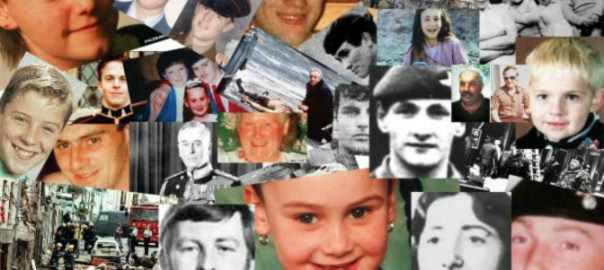



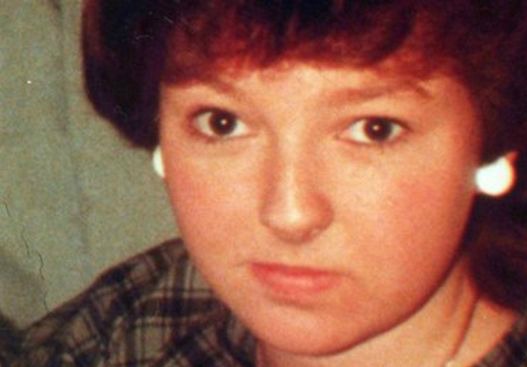

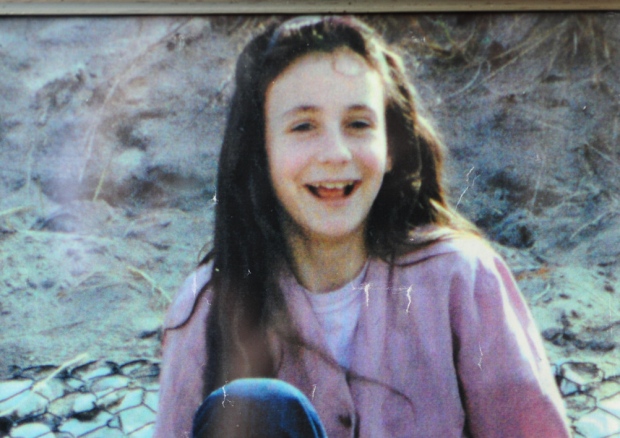
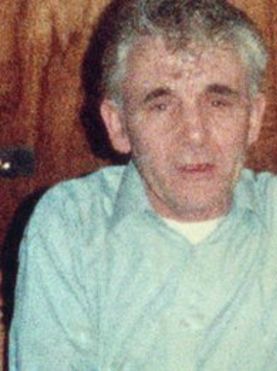

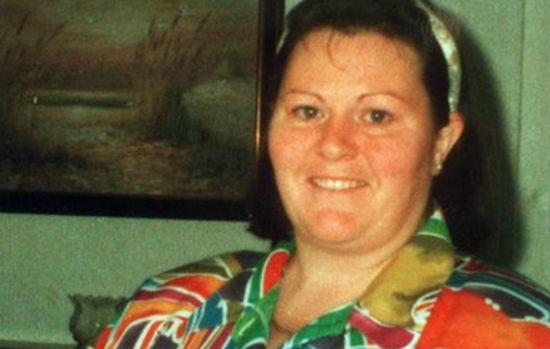

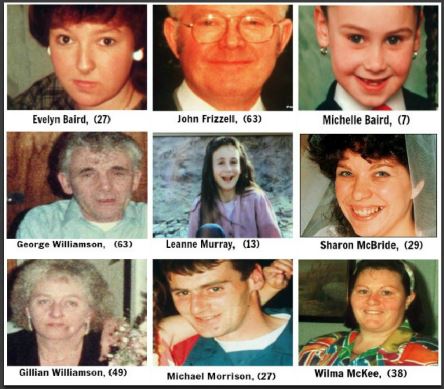




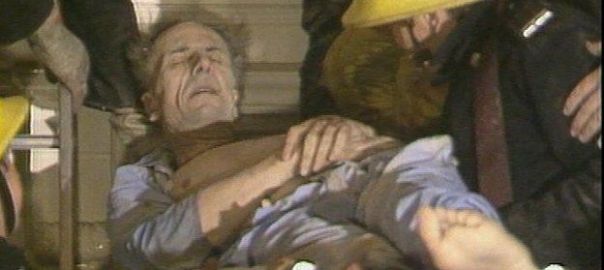
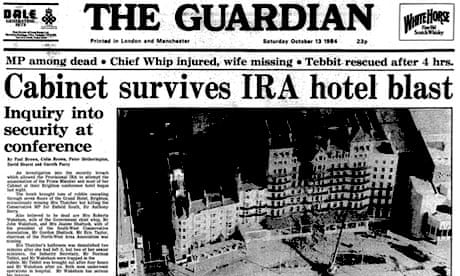
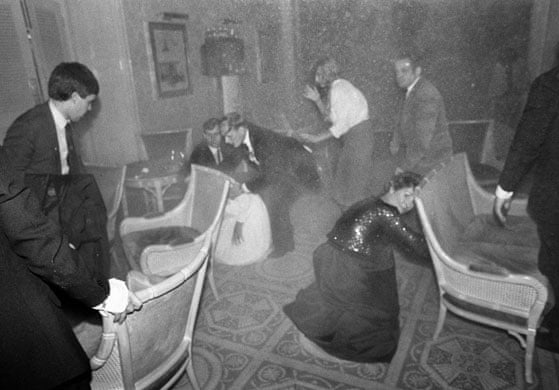


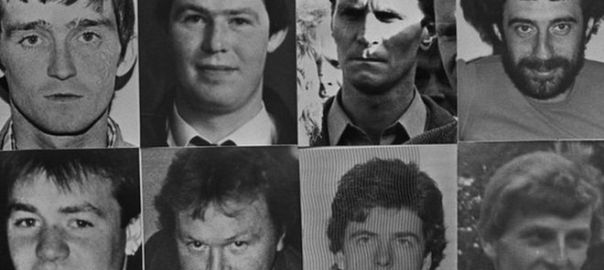



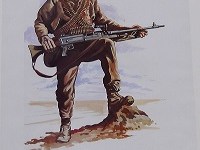
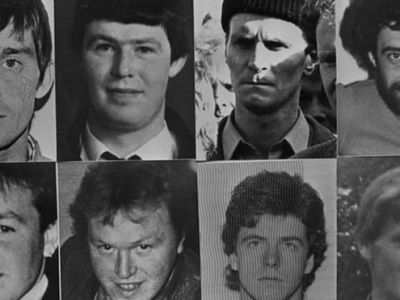
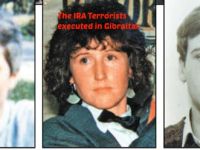




.jpg)


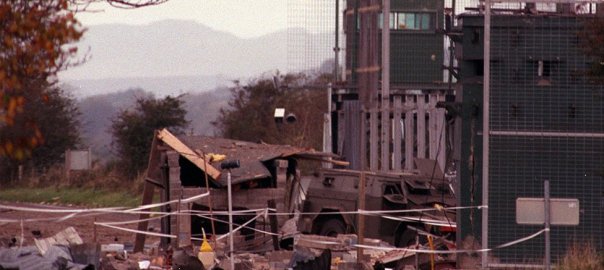




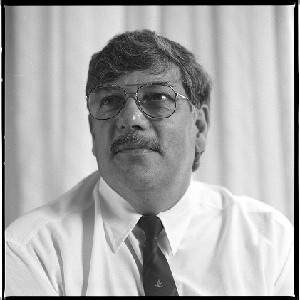

 belfastchildis.com

