In the face of the deadly threat posed by the so-called Islamic State, many Kurdish women decide not to leave their survival to fate. Instead, they fight for their lives and their future. Taking up arms, they join the YPG – Kurdish People’s Protection Units that defend their town’s borders from the militants. The enemy fears female warriors. Jihadists believe if they are killed by a woman they will go straight to hell.
—————————————————————————————————–
Her War
—————————————————————————————————–
Female fighters from the Kurdish People’s Protection Unit (YPG) take a break on the front line in the northeastern Syrian city of Hasakeh.
Women’s Protection Units
The Women’s Protection Units or Women’s Defense Units (Kurdish: Yekîneyên Parastina Jin) (YPJ) is a military organization that was set up in 2012 as the female brigade of the leftist People’s Protection Units (Yekîneyên Parastina Gel, YPG) militia.The YPJ and YPG are the armed wing of a Kurdish coalition that has taken de facto control over much of Syria’s predominantly Kurdish north, Rojava.
The organization grew out of the Kurdish resistance movement, and as of late 2014 it had over 7,000 (or 10,000, according to TeleSUR) volunteer fighters between the ages of 18 and 40. They receive no funding from the international community and rely on the local communities for supplies and food.
The YPJ joined its brother organization, the YPG, in fighting against any groups that showed intentions of bringing the Syrian Civil War to Kurdish-inhabited areas. It has come under increased attacks from ISIL militants and was involved in the Siege of Kobanî.
The group played a critical role in rescuing the thousands of Yazidis trapped on Mount Sinjar by ISIL fighters in August 2014. One fighter said: “We need to control the area ourselves without depending on [the government]… They can’t protect us from [ISIL], we have to protect ourselves [and] we defend everyone … no matter what race or religion they are.
The group had been praised by feminists for “confront[ing] traditional gender expectations in the region” and “redefining the role of women in conflict in the region”. According to photographer Erin Trieb, “the YPJ is in itself a feminist movement, even if it is not their main mission”. She asserted that “they want ‘equality’ between women and men, and a part of why they joined was to develop and advance the perceptions about women in their culture”.
Various Kurdish media agency indicate that “YPJ troops have become vital in the battle against I.S.” in Kobanî.YPJ achievements in Rojava have attracted considerable international attention as a rare example of strong female achievement in a region in which women are heavily repressed.
On the frontline between Kurdish fighters and Islamic State militants, a group of young women have mobilised.
They have left their homes and dreams behind to fight on the frontline. The women say they felt compelled to join the battles with men in order to protect their land. They call themselves the women defenders, or the YPJ (pron: Yuh-pah-Juy); pro-Kurdish Yekineyen Parastina Jin
17-year-old Dilbreen says she signed up to help liberate the country.
“I joined YPJ voluntarily. I joined them to defend the Kurds, the Arabs, the Christians, and all nationals. I will defend my country and all those who are fighting for it,” explained Dilbreen.
The women feel no different from the men fighters. However they believe that while men rely more on their physical strength, they use cunning, stealth and patience to get results.
One YPJ commander, Çiçek told euronews: “The male fighter fights physically, while the woman fights with her mind. The woman knows when to use weapons, and naturally she is a hater of war violence. However, we are forced to defend ourselves. We were raised on such thoughts.”
According to the Syrian Observatory for Human Rights, the Popular Protection Units (YPG) have seen their numbers swell of late with new recruits coming from Europe, Australia and the United States to join the battle.
Captured, sold, raped: ISIS turns thousands of Christian women and children into sex slaves
—————————————————————————————————–
Canadian Joins Kurdish women fighting
Hanna Bohman with YPJ Kurdish fighters. “They’re the real heroes because they’re not just fighting ISIL, they’re fighting for women’s rights,” Bohman says.
VANCOUVER — The city was out enjoying an overcast Saturday afternoon of grocery shopping on Davie Street, biking the Stanley Park Seawall and just staring at the freighters out in English Bay. But Hanna Bohman was thinking about leaving town.
It had been almost two months since she’d said goodbye to Syria, where she volunteered with the Kurdish women’s army known as the YPJ. And she was wondering: should she go back? “I’m thinking about it,” she said in an interview at a West End coffee shop. “I’m thinking about it a lot.”
Hanna BohmanHeavy metal-loving Heval Rosa, 19, and 22-year-old, Heval Azidan, who was Hanna Bohman’s best friend.
Pulling her back to the war zone were the “girls” — the female Kurdish guerillas she befriended during her months in Rojava, the independent state they are fighting to establish in northern Syria.
Girls like Heval Rosa.
In a video on Bohman’s tablet, Rosa sat on the tailgate of a pickup truck holding her grenade launcher. “She likes heavy metal,” recalled Bohman. “She asked me, ‘Do you have any heavy metal?’” Seeing the camera trained on her, Rosa stuck out her tongue.
Another video showed half-a-dozen women in camouflage sitting on a floor mat in an abandoned house playing a game, laughing like it was a sleepover. And then there was the video of the uniformed YPJ fighter who insisted that Bohman take her jacket because there was a cold wind.
The conflict in Syria has been hard on women. The Islamic State of Iraq and the Levant has systematically raped them, sold them, traded them and enslaved them. Women have been forced to convert and cover themselves. They’ve been lured from Western countries to serve as comfort wives for lonely killers. But as Bohman found out, the women are fighting back.
The Women’s Defense Unit, or YPJ, was created three years ago and consists of some 7,500 Kurdish fighters. It is the women’s branch of a militia called the YPG, or People’s Protection Units. By decree, 40% of the spots in each YPG fighting unit are filled by women.
“The women fight just as much as the men,” said Bohman, 46, who is also known by her online alias, Tiger Sun. “I think the YPJ girls, they’re the real heroes because they’re not just fighting ISIL, they’re fighting for women’s rights.”
Hanna BohmanSeventeen-year-old Heval Canda was in charge of the fighters on duty. It was her job to pick who lived or died that day.
One of a handful of Canadians who have fought alongside Kurdish forces, Bohman was born in Zambia to Canadian parents. She returned to Canada when she was still a toddler and grew up with humanitarian ambitions, dreaming of flying aid missions in Africa.
Instead she worked a variety of jobs — sales, the oil fields, a horseracing track — until a workplace injury followed by a car accident made her rethink what she really wanted. “I realized I’d been spending too much of my time doing things I didn’t want to do,” she said.
She didn’t know much about the Kurdish people but she was familiar with ISIL and she thought, if Canadians were fighting for the extremist cause, why couldn’t she fight for the other side? After making contact with the YPJ through Facebook, she broke the news to her family. “I told my mother and a couple of friends,” she said. “I was really excited to get going.”
Hanna BohmanTeam commander Heval Arjin, 19, who gave Hanna Bohman her first grenades, playing a game with improvised cards.
But as she was leaving Qatar, next stop northern Iraq, she got nervous. She was trusting her life to people she didn’t know, at a time jihadists had discovered the profitability and shock value of kidnapping. The plane landed in Sulaymaniyah and she crossed a river at night to a Kurdistan Workers Party (PKK) camp. The setting reminded her of B.C.’s Okanagan. Nine other Westerners were there — from Germany, the Netherlands and the United States.
She had been told there would be 45 days of training, but by the time she got there they had reduced it to 15 days, and then five. It ended up consisting of five hours of firearms instruction, “everything I could have learned on YouTube,” she said.
Initially, she was assigned to a base where she dug ditches and took shifts on guard duty. The Shingal Mountains of Iraq were just across the border and the biggest threat was ISIL suicide trucks. From there, she moved closer to the action, joining a mobile fighting unit. They would capture a village, hold it and move on. “Most of the time (ISIL) would run away but sometimes they’d put up a fight and we’d just kill them off,” she said. Bohman said she never killed anyone herself.
The YPJ girls she met were young — 17, 18 and 19. Many were poorly educated, some had run away from forced marriages. She described them as a “peasant militia.” During downtime, they played volleyball, danced and sang nationalistic songs, she said. They seemed keenly aware they were fighting for women’s rights.
“As we say, the revolution of Rojava is a women’s revolution,” Feleknas Uca, a Turkish Member of Parliament who is also Kurdish and Yazidi, said in an interview at the Toronto Kurdish Community Centre. She said the YPJ was avenging ISIL’s treatment of women and joked that ISIL fighters were terrified of the sight of red shoes and makeup. “They are very afraid of women because they believe if they die by women they will not go to heaven.”
Hanna BohmanHeval Nujian, 22, told Hanna Bohman that she always smiled because it helps others feel better.
In contrast to ISIL’s misogyny the YPJ manifesto speaks optimistically about “gender freedom” and “struggling at all levels with an awareness of the idea of legitimate defense in the face of various forms of attacks against women.”
In June, Bohman rode with the Kurdish fighters as they captured the town of Tal Abyad. She was crossing a damaged bridge when she jumped and her legs buckled. She had lost so much muscle eating a diet of canned sardines and cucumber, she knew it was time to go home. “I didn’t want anyone getting hurt because I couldn’t carry my weight,” she said. “It was the safest thing for everybody.”
Nobody batted an eye when she got to Montreal airport, she said. “All they said to me was welcome home.” Two weeks later, however, a Canadian Security Intelligence Service officer tracked her down and they met for lunch, she said.
“I asked her why it took them so long to contact me and she said, ‘Well, we didn’t know you went,’” Bohman said. The CSIS officer did not seem concerned about Bohman’s encounters with the PKK. She only seemed interested in Canadians who had joined ISIL, Bohman said. “She wasn’t worried about me.”
Hanna BohmanHeval Silav taught herself how to speak, read, and write English, Arabic, and Kurdish, despite only being allowed to attend school for one year.
The Kurdish conflict has worsened since she left. A ceasefire between Turkey and the PKK collapsed and there have been several deadly skirmishes. Last month, a suspected ISIL suicide bomber killed 32 youths in Suruc, a Kurdish town in Turkey.
Bohman put her uniform back on for an Aug. 6 protest at the U.S. consulate in Vancouver after Turkey launched airstrikes on some of the PKK camps she had visited in Iraq. But she was undecided about going back to Syria.
A new travel zone ban proposed by Prime Minister Stephen Harper may complicate matters. Although those fighting against ISIL are said to be exempted, it was unclear how the law would impact those like Bohman who rubbed shoulders with the PKK, a terrorist group under Canadian law.
“Should Sun be motivated enough by the Turkish offensive against the Kurds to return to fight with the YPG, she could suddenly find herself on the other side of Harper’s proposed travel ban law,” journalist and former infantryman Scott Taylor wrote in Esprit de Corps.
Bohman was well-aware of the problems she could face should she return. “What am I going to do that’s going to make me feel as useful and worthwhile?” she asked. “I’m not doing anything better here in Canada.”
National Post
Hanna BohmanHeval Canfida, 19, cleans her RPG.
——————————————————————————————————————————
20-year-old Danish Coed Joins Kobane Angels to Fight ISIS
A Danish woman has become the latest Westerner to travel to the besieged Syrian city of Kobane and join Kurdish forces bravely battling Islamic State militants.
Her name is Joanna Palani and she is a 20-year-old of Kurdish descent. Joanna is understood to have written a message on her Facebook page describing a minor foot injury she picked up during a ‘hard’ attack on the jihadist.
Minutes earlier she had updated the page with a photograph of herself calmly smiling while wearing military fatigues, a bullet proof vest and carrying a large assault rifle – threatening ISIS militants with the words: ‘See you on the front line tomorrow’.
Ms. Palani has become the latest Westerner to join the fight against ISIS in Kobane, where Syrian Kurds assisted by Iraqi Peshmerga troops and US and Arab coalition warplanes have managed to force hundreds of militants out of the center of the city.
Ms. Palani is the latest Westerner to join the fight against ISIS in Kobane (pictured), where Syrian Kurds assisted by Iraqi Peshmerga troops and US warplanes have forced hundreds of militants out the city center
Details of Ms. Palani’s journey to fight ISIS in Syria were reported by the Danish newspaper BT.
Less than a month ago she had made a gave an interview to Politiken saying that she was dropping out mid-way through her college course and intended to join the fight against ISIS in Kobane.
It is likely Ms. Palani, who has lived in Denmark since she was three-years-old, has joined the KurdishYPJ regiment – the all-female force of the better known YPG (People’s Protection Unit). Both groups are affiliated with the PKK (Kurdistan Workers’ Party), which has been designated a terror
group by NATO, but Ms. Palani makes it clear that she does not agree with this assessment. The US has since removed the Kurds from the terrorist list and is now training and arming them.
‘The Kurds are fighting for democracy and Western values,’ she was quoted as saying.
‘If I get captured or killed, I will be proud of why I was killed. If I was afraid of the consequences of going down there, I would not consider it,’ she reportedly added.
In her earlier interview with Politiken before she left for Syria, Ms. Palani said she would do exactly the same thing had Denmark come under attack by Islamic extremists.
‘I love Denmark. I grew up here and I love the freedom of our society. If Denmark should ever be attacked, I’m going to go in the front row with a Danish flag around my shoulders,’ she was quoted as saying.’But I’ve Kurdish family, and right now it is the Kurds who are attacked by brainwashed Islamists,’ she added. She is far from the first Westerner to join the Kurdish fighters battling ISIS in Kobane.
There have been numerous other reports from Kobane of Westerners travelling taking up arms against the militants – including claims that a number of European biker gangs had ridden to Syria and are helping to assist the resistance.
One of the greatest fears that ISIS fighters have is to be captured or killed by Kobane Female Fighters. Would Allah allow them access to their “virgins” when it was a women who took them out? It is up to “Allah” I guess, said one fighter! This morning Kurdish fighters captured six buildings from ISIS near Kobane and seized a large haul of their weapons and ammunition, a group monitoring the war said.
The terror group has been desperately trying to capture the town for more than two months in an assault that has driven tens of thousands of Kurdish civilians over the border into Turkey.
The six buildings seized by Kurdish fighters this morning were in a strategic location in the town’s north, close to Security Square where the main municipal offices are based, said Rami Abdurrahman, who runs the Syrian Observatory for Human Rights.
His group that tracks the three-year-old conflict in Syria using sources on the ground.
The Kurds also took a large quantity of rocket-propelled grenade launchers, guns and machine gun ammunition.
The clashes killed around 13 Islamic State militants, including two senior fighters who had been helping to lead the militant group’s assault on the town, he said.
Kurdish forces appear to have made other gains in recent days of fighting.
Last week they blocked a road Islamic State was using to resupply its forces, the first major gain against the jihadists after weeks of violence.
‘During the last few days we have made big progress in the east and southeast,’ said Idris Nassan, an official in Kobane.
Nevertheless, Islamic State still appeared to be holding a significant grip on the town. Abdurrahman estimated it controlled more than 50 percent of the city.
Shaker Aamer: Last UK Guantanamo Bay detainee released
———————————————————————————————-
Shaker Aamer Released From Guantanamo Bay Jail
———————————————————————————————-
Shaker Aamer was detained at Guantanamo for 13 years
The last British resident to be held in Guantanamo Bay has been released, having been detained there for 13 years, the foreign secretary has said.
Philip Hammond said Shaker Aamer had left the US military base in Cuba and will return to the UK “later today”.
The Saudi national, 48, whose family live in London, has never been charged.
Campaigners say his release was “long overdue”, while a Downing Street spokeswoman said any necessary security measures “will be put in place”.
Number 10 said Prime Minister David Cameron “welcomes” the release of Mr Aamer, who has four children and has permission to live in the UK indefinitely because his wife is British.
Mr Aamer’s father-in-law, Saeed Siddique, said his release was a “miracle”.
A plane carrying Mr Aamer is expected to land at London’s Biggin Hill airport at around 13:00 GMT.
‘Areas of concern’
Downing Street said there were “no plans” to detain him after his arrival.
US authorities first held Mr Aamer in Afghanistan in 2001, alleging he had led a unit of Taliban fighters and had met former al-Qaeda leader Osama Bin Laden.
However, Mr Aamer maintains he was in Afghanistan with his family doing charity work.
Andy Worthington, co-director of the We Stand With Shaker campaign, said Mr Aamer, who is reported to have health problems, will require “psychological and medical care” when he returns to his family in London.
Shaker Aamer (born 21 December 1966)[1] is a Saudi citizen released on 30 October 2015 from almost 14 years in the Guantanamo Bay detention camps in Cuba.[2] He was seized in Afghanistan by bounty hunters who handed him over to US forces in December 2001. Two months later, the US rendered Aamer to the Guantánamo camp; he has been held there without trial or charge since then.[3][4][5][6] Aamer had been legally resident in Britain for years before his imprisonment; the UK government has repeatedly demanded his release, and many people there have called for him to be released.[7][8]
According to documents published in the Guantanamo Bay files leak, the US military Joint Task Force Guantanamo believed that Aamer had led a unit of fighters in Afghanistan, including the Battle of Tora Bora, while his family was paid a stipend by Osama bin Laden. The file asserts past associations with Richard Reid and Zacarias Moussaoui.[7][8] Aamer denies being involved in terrorist activity and his lawyer, Clive Stafford Smith, said the leaked documents would not stand up in court. He claimed that part of the evidence comes from an unreliable witness and that confessions Aamer made had been obtained through torture.[9][10] Aamer’s father-in-law, Saaed Ahmed Siddique, said: “All of these claims have no basis. If any of this was true he would be in a court now.”[11] The Bush administration acknowledged later that it had no evidence against Aamer.[12]
Aamer has never been charged with any wrongdoing, was never on trial, and his lawyer says he is “totally innocent.”[13][14] He was approved for transfer to Saudi Arabia by the Bush administration in 2007 and the Obama administration in 2009.[15][14] He has been described as a “charismatic leader” who spoke up and fought for the rights of fellow prisoners. Aamer says that he has been subject to torture while in detention.[16] Campaigners allege that the US is refusing to release Aamer because it feared he would expose torture inside the Guantanamo prison.[17]
Aamer’s mental and physical health has been declining over the years, as he has participated in hunger strikes to protest detention condition and been held in solitary confinement much of the time. He claims to have lost 40 per cent of his body weight in captivity, but did not state his weight.[18][19][20] After a visit in November, 2011, his lawyer said, “I do not think it is stretching matters to say that he is gradually dying in Guantanamo Bay.”[21] In 2015, despite Aamer’s deteriorating health, the US denied a request for an independent medical examination.[22] On 25 September 2015 the US government announced that Aamer would be released back to the UK within the following thirty days.[23] He was released to the UK on 30 October 2015.[24]
Shaker Aamer
Aamer in Guantanamo (photo taken before 1 November 2007)
Born
(1966-12-21) 21 December 1966 (age 48) Medina, Saudi Arabia
Released from Guantanamp Bay on 30 October 2015 after 13 years, despite being cleared for release by two US presidents in 2007 and in 2009
Spouse
Zin Siddique
Children
Four children
Family and personal life
Aamer was born on 12 December 1968 and grew up in Medina in Saudi Arabia. He left the country at the age of 17. He lived and traveled in the United States, Europe and the Middle East.[25] Aamer lived and studied in Georgia and Maryland in 1989 and 1990 and during the Gulf War, he worked as a translator for the U.S. Army.[26]
He moved to the United Kingdom in 1996 where he met Zin Siddique, a British woman; they married in 1997 and have four British children. Aamer has never met his youngest son Faris, who was born after he was imprisoned.[27] Aamer had indefinite leave to remain in the UK, and was applying for British citizenship.[23]
Aamer worked as an Arabic translator for London law firms. Some of the solicitors he worked for dealt with immigration cases. In his spare time, Aamer helped refugees find accommodation and offered them advice on their struggles with the Home Office.[25]
Aamer’s family now live in Battersea, South London. His wife Zin Aamer has suffered from depression and mental episodes since his arrest.[20][28][29] Saeed Siddique, Aamer’s father-in-law, said in 2011, “When he was captured, Shaker offered to let my daughter divorce him, but she said, ‘No, I will wait for you.’ She is still waiting.”[30]
Capture and allegations
Aamer with daughter, Johnina (left), and son Michael (photo taken before his capture in 2001, released by his lawyer)
Aamer took his family to Afghanistan in 2001 where he was working for an Islamic charity. He was working for the charity when the U.S. invaded the country later that year.[27] The Northern Alliance took him into custody in Jalalabad on 24 November 2001, and passed him to the Americans. The US routinely paid ransom for Arabs handed over to them.[26] They interrogated Aamer at Bagram Theater Internment Facility and transported him to Guantánamo on 14 February 2002.
According to Joint Task Force Guantanamo assessments from 1 November 2007 the US military believed that Aamer was a “recruiter, financier, and facilitator” for al-Qaeda, based partly on evidence given by the informant Yasim Muhammed Basardah, a fellow detainee.[11] The leaked documents alleged that Aamer had confessed to interrogators that he was in Tora Bora with Osama bin Laden at the time of the US bombing.[8] The documents further note that the Saudi intelligence Mabahith identified Aamer “as a high priority for the government of Saudi Arabia, an indication of his law enforcement value to them.”[31]
In 2010 the Guantanamo Review Task Force released their report of the detainee assessments. In many instances, the Task Force largely agreed with prior threat assessments of the detainees and sometimes found additional information that further substantiated such assessments. In other instances, the Task Force found prior assessments to be overstated. Some assessments, for example, contained allegations that were not supported by the underlying source document upon which they relied. Other assessments contained conclusions that were stated categorically even though derived from uncorroborated statements or raw intelligence reporting of undetermined or questionable reliability. Conversely, in a few cases, the Task Force discovered reliable information indicating that a detainee posed a greater threat in some respects than prior assessments suggested.[32]
Aamer denies being involved in terrorist activity[33] and his attorney, Clive Stafford Smith of Reprieve, said the evidence against his client “would not stand up in court.” He pointed out that part of the evidence comes from Yasim Muhammed Basardah, whom American judges found to be “utterly incredible” and who was tortured and “promised all sorts of things.”[11]
The Bush administration acknowledged later that it had no evidence against Aamer, and he was cleared for transfer in 2007. [12][14] The clearance is for transfer to Saudi Arabia only.[15]
Aamer’s allegations of being tortured in Bagram
In September 2009, Zachary Katznelson, a Reprieve lawyer, said that Aamer had told of suffering severe beatings at the Bagram facility. Aamer said that close to a dozen men had beaten him, including interrogators who represented themselves as officers of MI5, the United Kingdom’s internal counter-terrorism agency. Following one severe beating, he recovered from being stunned to find that all the interrogators had left the room and put a pistol on the table.[34] He did not find out if the pistol was loaded. He said it occurred to him that it had been left either so he could kill himself, or that, if he picked it up, he could be shot and killed on the excuse he was trying to shoot them.[34]
Aamer says that the “MI5” interrogators told him he had two choices: (1) agree to spy on suspected jihadists in the United Kingdom; or (2) remain in US custody.[34] He said that guards/agents repeatedly knocked his head against the wall while an MI5 officer was in the room.
“All I know is that I felt someone grab my head and start beating my head into the back wall – so hard that my head was bouncing. And they were shouting that they would kill me or I would die.”[35]
Other former detainees have alleged similar mistreatment by MI5 and MI6 agents, including torture.[9][36] They filed suit against the British government over their mistreatment and torture. In November 2010, the British government settled the suit, paying the detainees millions of pounds in compensation.[37][38][39][40] Aamer is also on the compensation list and part of the deal, but details are not known as most of the deal is still secret.[41][42]
Guantanamo
Aamer has been described as an unofficial spokesman for the detainees at Guantanamo. He has spoken up for the welfare of prisoners, negotiating with camp commanders and organizing protests against cruel treatment. He organized and participated in a hunger strike in 2005 in which he lost half of his weight. He demanded the prisoners be treated according to the Geneva Convention, allowing the detainees to form a grievance committee. In negotiations, the camp administration promised a healthier diet for the prisoners after he agreed to end the hunger strike.[25][43] His lawyer Stafford Smith said the grievance committee was formed, but that the camp authorities disbanded it after a few days. American spokesmen Major Jeffrey Weir denied that the Americans had ever agreed to any conditions resulting from the hunger strike.
Since then, Aamer has been taking part in further hunger strikes. He has been held in solitary confinement for most of the time. His lawyers describe his solitary confinement as “cruel” and said his health has been affected to a point where they feared for his life. Stafford Smith said Aamer is “falling apart at the seams.”[21][25][44][45]
Given the time involved, the lengthy spells in solitary confinement and the torture allegedly used against him, Shaker Aamer’s plight has been one of the worst of all the detainees held at Guantanamo.
On 18 September 2006, Aamer’s attorneys filed a 16-page motion arguing for his removal from isolation in Guantanamo Bay prison.[47] The motion alleges that Aamer had been held in solitary confinement for 360 days at the time of filing, and was tortured by beatings, exposure to temperature extremes, and sleep deprivation, which together caused him to suffer to the point of becoming mentally unbalanced. The next day Katznelson filed a motion to enforce the Geneva Conventions on his behalf.[48]
In September 2011, Aamer’s lawyer Brent Mickum, who saw him in Guantánamo, alleges that Aamer was repeatedly beaten before their meetings. He said that Aamer’s mental and physical health is deteriorating. “It felt like he has given up: that’s what 10 years, mostly in solitary confinement will do to a person,” he said.[49]
Binyam Mohamed, an Ethiopian prisoner who formerly occupied a cell one door down from Aamer, has said since his release that he knows why Aamer is still in the prison camps.[25]
“I would say the Americans are trying to keep him as silent as they could. It’s not that he has anything. What happened in 2005 and 2006 is something that the Americans don’t want the world to know – hunger strikes, and all the events that took place, until the three brothers who died … insider information of all the events, probably. Obviously, Shaker doesn’t have it, but the Americans think he may have some of it, and they don’t like this kind of information being released.”
Clive Stafford Smith, his lawyer and director of human rights organisation Reprieve, comes to a similar conclusion. He said:[50]
“I have known Shaker for some time, because he is so eloquent and outspoken about the injustices of Guantanamo he is very definitely viewed as a threat by the US. Not in the sense of being an extremist but in the sense of being someone who can rather eloquently criticise the nightmare that happened there.”
Omar Deghayes, a former Guantanamo Detainee who knew Aamer, said of him,
“He was always forward, he would translate for people, he’d fight for them, and if he had any problems in the block he’d shout at the guards… until he would get you your rights. And that’s why he’s still in prison… because he’s very outspoken, a very intelligent person, somebody who would fight for somebody else’s rights.” [51]
Aamer said that he was beaten for hours and subjected to interrogation methods that included asphyxiation on 9 June 2006, the same day that three fellow prisoners died in Guantanamo. Describing the event, Aamer said that he was strapped to a chair, fully restrained at the head, arms and legs. When MPs pressed on pressure points all over his body: his temples, just under his jawline, in the hollow beneath his ears. They bent his nose repeatedly, pinched his thighs and feet. They inflicted pain to his eyes, bent his fingers until he screamed and then they cut off his airway and put a mask over him, so he could not cry out.[52][53]
Please torture me in the old way … Here they destroy people mentally and physically without leaving marks.
The law professor Scott Horton published an award-winning article in Harper’s Magazine in 2010. He said that Aamer had been brought to “Camp No,” a secret interrogation black site outside the camp, with the three men who died on the day of the event. Horton described Aamer’s account of having his airways cut off as “alarming” and wrote, “This is the same technique that appears to have been used on the three deceased prisoners.”[52][53] Colonel Michael Bumgarner, the commander of the camps during the incident and identified in Horton’s article as having been present during the interrogations, denied Horton’s claims.[54]
Horton wrote that Aamer’s repatriation was being delayed so that he could not testify about his alleged torture in Bagram or the events on 9 June 2006. He wrote: “American authorities may be concerned that Aamer, if released, could provide evidence against them in criminal investigations.”[52][53]
2013 hunger strike and detention condition
In 2013, Aamer told his attorneys that he is among the growing group of active hunger strikers. He said he has been refusing meals since February 15 and has lost 32 pounds.[26] In previous hunger strikes guards force-fed him with tubes down his nose.[26] His lawyer said Aamer spends 22 hours a day alone in his cell.[26] Aamer is not permitted visitors except his attorneys.[26]
2014 motion for release
In 2014, his lawyers filed a motion on Aamer’s behalf seeking his release on the grounds that his health is “gravely diminished,”. They argue that his various health problems cannot be treated in Guantanamo and “Even if he receives the intensive medical and therapeutic treatment his condition requires, Mr Aamer will take many years, if not a lifetime, to achieve any significant recovery,”. His lawyers argue that both the Geneva Convention and Army Regulation 190-8, requiring the repatriation of chronically ill prisoners.[55][56][57] In 2015 despite Aamer’s deteriorating health the US denied a request for an independent medical examination.[22]
UK release negotiations
The United Kingdom government initially refused to intervene on the behalf of Guantánamo detainees who were legal British residents without being British citizens. In August 2007, Foreign Secretary David Miliband requested the release of Aamer and four other men, based on their having been granted refugee status, or similar leave, to remain in Britain as residents prior to their capture by US forces.[27][43][58][59] With the repatriation of Binyam Mohammed in February 2009, all British citizens and residents other than Aamer had been released.[60][61][62]
The UK government officials have repeatedly raised Aamer’s case with the Americans. On a visit to the United States on 13 March 2009, when asked about Guantánamo captives, Home SecretaryJacqui Smith said that the US administration has said they do not want to return Aamer to the UK William Hague, the Foreign Secretary, raised Aamer’s case again with Hillary Clinton, US Secretary of State, in November 2010,[63] followed by meetings with other US officials. At the time, the US government had reached settlement with former detainees as a resolution for damages due to the use of torture in interrogation.[63]
In September 2011, Foreign Office Minister Alistair Burt said that negotiations are ongoing and confidential.[64] Supporters of Aamer have criticized the UK government for not doing enough on his behalf; they urged the government to step up their efforts.[14] In January 2012, The Independent revealed that the British government has spent £274,345 fighting in court to prevent Aamer’s lawyers from gaining access to evidence which may prove his innocence.[18] The newspaper reported that Aamer has several serious medical complaints from years of “inhumane” detention conditions, and that the UK gave false hope to his family.[44]
Calls for his release
September 2006, Aamer’s attorneys filed a 16-page motion arguing for his removal from isolation in Guantanamo Bay prison.[65]
In January 2010, his 12-year-old daughter Johina wrote a letter to Gordon Brown asking for his release.[28][65]
August, 2010, protesters disrupted a meeting that discussed plans to create a US Embassy near Battersea, the home of Aamer.[65][66]
On 11 December 2010, hundreds took to the streets in London near the US embassy to demand Aamer’s release.[65][67]
In February 2011, Amnesty International called Aamer’s ongoing incarceration a “mockery of justice” and denounced the “cruel limbo” he had been left in.[65][68] At the same time The Guardian reported that people had sent 12.000 emails to US Secretary of State Hillary Clinton and UK MPs in support of Aamer.[65][69]
In her 2011 album In The Current Climate, singer-songwriter Sarah Gillespie sang an imaginary first person song of Aamer entitled How The West was Won. Gillespie devoted the track to Aamer in the CD booklet.[70]
In early 2012, approaching Aamer’s completion of ten years’ imprisonment in Guantánamo, campaigners stepped up efforts for his release. Among them, Jane Ellison, Tory MP for Battersea, wrote to Barack Obama to urge Aamer’s release.[65][72]
February 2012, marking the 10th anniversary of Aamer’s detention, a series of protests took place in England whilst a hunger strike was undertaken in Guantanamo.[65]
In December 2012, the comedian Frankie Boyle donated £50,000 to Aamer’s legal fund for suits against MI6.[73]
By April 2013, 117,384 British citizen or UK residents had signed an online petition e-petitions to pressure the UK Government for Aamer’s release.[74]
In July 2013, Clive Stafford-Smith, Frankie Boyle and Julie Christie went on a sequential hunger strike in support of Shaker Aamer and his release.[75][76]
In August 2013 the singer PJ Harvey released the song Shaker Aamer describing Aamer’s plight being force fed in restraining chairs and shackles during a month-long hunger strike.[77]
In March 2015 British lawmaker John McDonnell said “The case of Shaker Aamer is one of the worst cases of a miscarriage of justice in the last three decades at least … He has endured harsh, and brutal and inhuman treatment,” in a debate where members of all major political parties called for Aamer’s release.[78]
On July 4, 2015 (US Independence Day) 80 prominent Britons including six former cabinet ministers, leading writers, actors, directors and musicians urge Obama to free Aamer.[3]
The mother of a white British jihadi killed fighting for Al-Shabaab, the Somali terror group, has spoken of the complicated emotions she experienced when she learnt of her son’s death.
See Below for more information on Al-Shabaab
Sally Evans with a photograph of her son
Sally Evans, whose son Thomas was killed while leading an assault on security forces in Kenya, told the BBC’s Victoria Derbyshire show that she had been both “totally devastated” and relieved to hear of her son’s death.
——————————————————————————————–
Death of British jihadi Thomas Evans captured on camera
——————————————————————————————–
EVERY time Sally Evans spoke to her son on the phone he would tell her he loved her — only the last time, something was different.
“He said it like he really meant it. They were the last words I had with him,” The 57-year-old mother of two told news.com.au.
“He never did tell me what he was doing, it was only after his death that I found out exactly what he’d been doing. He would never talk about it.”
At 21, Thomas became the first white British person to join the radical terrorist organisation Al-Shabaab, the group behind the attack on Kenya’s Westgate Mall which killed 67 people and injured 175.
——————————————————————————————–
BBC London exclusive interview with friend of British al-Shabab fighter Thomas Evans
——————————————————————————————–
He converted to Islam at 19 and changed his name to Abdul Hakim before travelling to Egypt to learn Arabic. However after several weeks in the country, he left for Somalia via Ethiopia and Sudan where he trained with the militant group. Now a new documentary, My Son the Jihadi, documents the harrowing impact his disappearance had on those left behind.
The observational footage shows Sally and her other son Micheal, as they grapple with how their beloved son and brother transformed into a terrorist — a struggle made all the more bizarre by the juxtaposition of radicalism against everyday suburban life.
Brothers Thomas and Michael Evans, before Thomas left home and changed his name to Abdul Hakim. Picture: Sally Evans
“He wasn’t brought up to be a monster. They’re not brought up to be what they become,” she said. “It’s a poison that is in society that can turn them into this, that can radicalize them and make them think they’re doing the right thing.”
The extraordinary film is the result of 16 months work by former The Australian journalist and The Sunday Times security correspondent Richard Kerbaj who broke the story of Thomas’ involvement with Al-Shabaab after tracking Sally down via the electoral role.
He started visiting her on weekends with a handheld camera and convinced her to tell the family side of her son’s radicalisation. Working as producer on the film, Mr Kerbaj joined forces with executive producer Brian Woods and director Peter Beard to make the piece over nine months.
“It was so difficult to get the parents perspective on it because in most cases parents don’t want to speak,” Mr Kerbaj told news.com.au. “They feel a great sense of isolation, they’re embarrassed, they feel if they speak out the authorities might crack down on them or crack down on their children and they live in the hope their children will return.”
“She was the first mum in the UK to speak out about her son becoming a jihadist. Secular mum, white background, no cultural or religious reference points to Islam … she had no idea about this stuff.”
“This is such a special story because her voice is so unique … There is no PR sense to her she just speaks her mind.”
The fly-on-the-wall style captures surprisingly touching moments including Sally making contact with Sudea, the 14-year-old child bride of Thomas, and his mother who is now living in Sweden.
“We share the same thing that we’re both heartbroken by our children and their choices. And I’m really sorry for that,” Sally tells Sudea’s mother.
Thomas and Michael as children. Picture: Sally Evans
The film takes a tragic turn when Sally receives a late-night phone call saying Thomas has been killed in Kenya. An uncensored picture on Twitter shows his thin-frame sprawled on the ground after a gunbattle and leaves no doubt her son is dead.
Thomas Evans Body
“I didn’t imagine feeling so empty, so lost, so overwhelmingly sad,” she said. “There’s nothing I can do to make it any better. He’s gone … I’m hurt but I’m angry too, angry that he’s done that to himself.”
Months on from his death, Sally has faced up to atrocities Thomas committed in Africa and is working to raise awareness about radicalisation for families of the 1000 other Britons who are estimated to have joined terrorist groups so far.
For Mr Kerbaj, the story is crucial in stopping others travelling overseas by documenting the devastating impact it can have on families.
“It’s her frankness and her ability to convey her story so eloquently and so plainly,” he said.
“She’s very much the person you see on the screen, she’s all heart and she doesn’t necessarily need to sit there and think through everything, everything just flows out of her so naturally.”
“She still cries because she cries for Thomas, but she’s glad that Abdul Hakim, that convert he became, is dead because he can no longer hurt innocent people. That transformation is just so moving.”
For more information about the documentary click here. If you suspect a loved one of being radicalized contact Living Safe Together in Australia, or the Active Change Foundation in the UK.
Harakat al-Shabaab al-Mujahideen (HSM; Arabic: حركة الشباب المجاهدين, Ḥarakat ash-Shabāb al-Mujāhidīn; Somali: Xarakada Mujaahidiinta Alshabaab; “Mujahideen Youth Movement”, “Movement of Striving Youth”), more commonly known as Al-Shabaab (Arabic: الشباب; meaning “The Youth” or “The Youngsters”), is a jihadistterrorist group based in East Africa. In 2012, it pledged allegiance to the militant Islamist organization Al-Qaeda.[7] In February of the year, some of the group’s leaders quarreled with Al-Qaeda over the union,[8][9] and quickly lost ground.[10] Al-Shabaab’s troop strength was estimated at 7,000 to 9,000 militants in 2014.[6] As of 2015, the group has retreated from the major cities, controlling a few rural areas.[11]
Al-Shabaab is an offshoot of the Islamic Courts Union (ICU), which splintered into several smaller factions after its defeat in 2006 by Somalia’s Transitional Federal Government (TFG) and the TFG’s Ethiopian military allies.[12] The group describes itself as waging jihad against “enemies of Islam”, and is engaged in combat against the Federal Government of Somalia and the African Union Mission to Somalia (AMISOM). Al-Shabaab has been designated as a terrorist organization by Australia, Canada, the United Arab Emirates, the United Kingdom and the United States.[13][14] As of June 2012, the US State Department has open bounties on several of the group’s senior commanders.[15]
In early August 2011, the Transitional Federal Government’s troops and their AMISOM allies managed to capture all of Mogadishu from the Al-Shabaab militants.[16] An ideological rift within the group’s leadership also emerged, and several of the organization’s senior commanders were assassinated.[17] Due to its Wahhabi roots, Al Shabaab is hostile to Sufi traditions,[18] and has often clashed with the militant Sufi group Ahlu Sunna Waljama’a.[19] The group has also been suspected of having links with Al-Qaeda in Islamic Maghreb and Boko Haram. Additionally, it attracted some members from western countries, notably Samantha Lewthwaite and Abu Mansoor Al-Amriki.
——————————————————–
Inside an Al-Shabaab training camp
——————————————————–
In August 2014, the Somali government-led Operation Indian Ocean was launched to clean up the remaining insurgent-held pockets in the countryside.[20] On 1 September 2014, a U.S. drone strike carried out as part of the broader mission killed Al-Shabaab leader Moktar Ali Zubeyr.[21] U.S. authorities hailed the raid as a major symbolic and operational loss for Al-Shabaab, and the Somali government offered a 45-day amnesty to all moderate members of the militant group. Political analysts also suggested that the insurgent commander’s death will likely lead to Al-Shabaab’s fragmentation and eventual dissolution.[22]
———————————————–
THE INSIDE STORY; Wolves at Westgate
———————————————–
Name
Al-Shabaab is also known as Ash-Shabaab, Hizbul Shabaab (Arabic: “Party of the Youth”),[23] and the Popular Resistance Movement in the Land of the Two Migrations (PRM).[24] For short, the organization is referred to as HSM, which stands for “Harakat al-Shabaab al-Mujahideen”. The term Shabaab means “youth” in Arabic, and the group should not be confused with similarly named groups.
Al-Shabaab’s composition is multiethnic, with its leadership positions mainly occupied by Afghanistan– and Iraq-trained ethnic Somalis and foreigners.[25] According to the National Counterterrorism Center, the group’s rank-and-file members hail from disparate local groups, sometimes recruited by force.[26] Unlike most of the organization’s top leaders,[27] its foot soldiers are primarily concerned with nationalist and clan-related affairs as opposed to the global jihad. They are also prone to infighting and shifting alliances.[26] According to the Jamestown Foundation, Al-Shabaab seeks to exploit these vulnerabilities by manipulating clan networks in order to retain power. The group itself is likewise not entirely immune to local politics.[27] More recently, Muslim converts from neighbouring countries have been conscripted, typically to do undesirable or difficult work.[28]
Although al-Shabaab’s leadership ultimately falls upon al-Qaeda leader Ayman al-Zawahiri, the internal leadership is not fully clear, and with foreign fighters trickling out of the country, its structure is increasingly decentralized. Ahmed Abdi Godane was publicly named as emir of al-Shabaab in December 2007.[29] In August 2011, Godane was heavily criticized by Al-Shabaab co-founder Hassan Dahir Aweys and others for not letting aid into the hunger stricken parts of southern Somalia. Although not formally announced, Shabaab was effectively split up into a “foreign legion,” led by Godane, and a coalition of factions forming a “national legion” under Aweys. The latter group often refused to take orders from Godane and the two groups hardly talked to each other. In February 2012, Godane made Bay’ah, or an oath of allegiance, to al-Qaeda. With it he likely hoped to reclaim and extend his authority, and to encourage foreign fighters to stay. This move will further complicate the cooperation with the “national legion” of al-Shabaab.[7] Godane was killed in a U.S. drone strike in Somalia on September 1, 2014.[30] Ahmad Umar was named Godane’s successor on 6 September 2014, he is believed to have previously played a role in al-Shabaab’s internal secret service known as Amniya.[31]
Ali Mohamud Raghe “Dheere” aka Sheikh Ali Mohamud Rage aka Sheikh Ali Dhere – current Deputy Amir. He is from Hawiye Murusade clan. Official spokesman.[36] (Not to be confused with the Sheikh Ali Dhere who established the first Islamic court in Mogadishu in 1996).
Mohamed Said Atom – faction leader and arms dealer[43] who in July 2010 announced allegiance to al-Shabaab and the al-Shabaab commander in Puntland.[44] (surrendered to Federal Government in 2014.)
Mukhtar Abu-Muslim – head of fatwas,[45] from Rahanweyn clan.
Abdulahi Haji “Daud”[45] – head of assassinations, from Hawiye clan of Murursade sub-clan.
Sahal Isku Dhuuq[45] head of kidnappings of aid workers for ransom, from Dir clan of Biyomaal sub-clan.
Hassan Afrah,[45] – head of relationship with pirates, from Hawiye clan of Saleban sub-clan.
Dahir Gamaey “Abdi Al-Haq”[45] – judge of Al-Shabaab, from Hawiye clan of Duduble sub-clan.
Tahliil Abdishakur – head of the elite Al-Amniyat assassination unit (killed in U.S. drone strike in 2014).[46]
Yusuf Dheeq – chief of external operations and planning for intelligence and security (killed in U.S. drone strike in 2015).[47]
Aden Garaar – head of external operations of Al-Shabaab; reportedly orchestrated the 2013 Westgate shopping mall attack in Nairobi (killed in U.S. drone strike in 2015).[48]
Mohamed Musa – Gedo province commander (killed in skirmish with Somali army in 2015).[49]
al-Shabaab is said to have many foreigners within its ranks, particularly at the leadership level.[25][50] Fighters from the Persian Gulf and international jihadists were called to join the holy war against the Somali government and its Ethiopian allies. Though Somali Islamists did not originally use suicide bombing tactics, the foreign elements of al-Shabaab have been blamed for several suicide bombings.[51][52] A 2006 UN report identified Libya, and Egypt, among countries in the region, as the main backers of the Islamist extremists. Egypt has a longstanding policy of securing the Nile River flow by destabilizing Ethiopia.[53][54]
Formerly a predominantly nationalist organization, al-Shabaab repositioned itself as a militant Islamist group that also attracted a large cadre of Western devotees.[55] As of 2011, the group’s foreign recruitment strategy was active in the United States, where members attempted to recruit from the local Muslim communities.[56] According to an investigative report by the U.S. House Committee on Homeland Security, Al Shabaab recruited over 40 Muslim Americans since 2007.[56] In 2010, the New York Times reported that after more than a dozen Americans were killed in Somalia, the organization’s recruiting success had decreased in the US.[57]
These American and foreign recruits played a dual role within the organization, serving as mercenaries and as a propaganda tool for radicalization and recruitment. These individuals, including Omar Hammami, appeared in propaganda videos posted in online forums in order to appeal to disaffected Muslim youth and inspire them to join the Islamist struggle.[58] This was a top-down strategy, wherein Islamist agents attempted to use mosques and legitimate businesses as a cover to meet, recruit, and raise funds for operations in the US and abroad.[58] By mid-2013, the U.S. Congress reported that such militant recruitment appeared to have halted.[59]
Most of the foreign al-Shabaab members come from Yemen, Sudan, the Swahili Coast, Afghanistan, Saudi Arabia, Pakistan, and Bangladesh. As of 2010, their number was estimated at between 200 to 300 militants, augmented by around 1,000 diasporan ethnic Somalis.[25] Many of Al-Shabaab’s foot soldiers also belong to Somalia’s marginalized ethnic minorities from the farming south.[60]
Of the foreign members, Jonathan Evans, the former head of MI5, addressing a London security conference in 2010,[61] advised that “a significant number of UK residents” were training with al-Shabaab. Linking this increased involvement with a reduction in Al Qaida activity in Pakistan’s tribal areas, he also suggested that since Somalia, like Afghanistan, at the time had no effective central government, the presence of foreign fighters there could inspire terrorist incidents in the UK. “It is only a matter of time before we see terrorism on our streets inspired by those who are today fighting alongside al-Shabaab.”[62] The actual number has been estimated at between 50[63] and 100[64] persons; one source estimating around 60 active Al-Shabaab recruiters, including 40 Somalis and an additional 20 mainly British-based ‘clean skins‘, individuals who have not committed any crimes but are believed to have ties with the group.[65] There is also evidence of funding of the group by Somalis resident in Britain.[62][66]
Of the ten people subject to control orders (now Tpim orders) in 2012, at least five are associated with al-Shabaab: (pseudonymously) CC, CE “a British citizen of Iranian origin, aged 28 in 2012”, CF, and DD “a non-British citizen […] believed […] to have been associated with the funding and promotion of [terrorism-related activity] in East Africa.”[67] At least two British Somalis, Ibrahim Magag[66] (referred to as BX in Court documentation) and Mohammed Ahmed Mohamed,[68] have absconded.
In 2012, it was also reported that the group was attracting an increasing number of non-Somali recent converts from Kenya, a predominantly Christian country in the African Great Lakes region. Estimates in 2014 placed the figure of Kenyan fighters at around 25% of Al-Shabaab’s total forces.[69] Referred to as the “Kenyan Mujahideen” by Al-Shabaab’s core members,[28] the converts are typically young and overzealous. Poverty has made them easier targets for the group’s recruiting activities. The Kenyan insurgents can blend in with the general population of Kenya, and they are often harder to track by law enforcement.[70] Reports suggest that al-Shabaab is attempting to build an even more multi-ethnic generation of fighters in the larger region.[1] One such recent convert, who helped carry out the Kampala bombings but now cooperates with the Kenyan police, believes that the group is trying to use local Kenyans to do its “dirty work” for it, while its own core members escape unscathed.[28] According to diplomats, Muslim areas in coastal Kenya and Tanzania, such as Mombasa and Zanzibar, are especially vulnerable for recruitment.[1]
Foreigners from Afghanistan and Iraq, as well as Afghan-trained Somalis, play an important role in the group’s leadership ranks owing to their combat experience. Bringing with them specialized skills, these commanders often lead the indoctrination of new recruits, and provide training in remote-controlled roadside bombings, suicide attack techniques, and the assassination and kidnapping of government officials, journalists, humanitarian and civil society workers.[25]
Jehad Serwan Mostafa (“Emir Anwar”), a senior Al-Shabaab commander and trainer.
Fazul Abdullah Mohammed: Mohammed, a Kenyan national, was appointed by Osama bin Laden as Al-Qaeda’s leader in East Africa in late 2009. Before the death of Saleh Ali Saleh Nabhan, Mohammed served as the military operations chief for Al-Qaeda in the region. He was an experienced militant commander who was known to be able to cross national borders with ease. In August 2008, he eluded a police dragnet in Kenya. Mohammed had been hiding in Somalia with Shabaab and the Islamic Courts for years. Mohammed was considered to be Al-Shabaab’s military leader, while Muktar Abdelrahman Abu Zubeyr was Al-Shabaab’s spiritual leader. He was killed on June 8, 2011.[72]
Jehad Serwan Mostafa (alias “Ahmed Gurey”, “Anwar al-Amriki” and “Emir Anwar”): a US-born senior Al-Shabaab commander. In charge of various functions for the militant group, including serving as a leader for foreign fighters within the organization as well as training insurgents. Fluent in English, Somali and Arabic, he is also a media specialist.[73]
Shaykh Muhammad Abu Fa’id: Fai’d, a Saudi citizen, serves as a top financier and a “manager” for Shabaab.
Abu Musa Mombasa: Mombasa, a Pakistani citizen, serves as Shabaab’s chief of security and training.
Abu Mansoor Al-Amriki: Amriki, whose real name was Omar Hammami, was a U.S. citizen who converted to Islam and traveled to Somalia in 2006. Once in Somalia, he quickly rose through the ranks. He served as a military commander, recruiter, financier, and propagandist. Amriki appeared in several Shabaab propaganda tapes. He became a primary recruiter for Al Shabaab; issued written statements on their behalf and appeared in its propaganda videos and audio recordings. An indictment unsealed in August 2010 charged him with providing material support to terrorists.[74] In January 2013, Amriki was ousted from al-Shabaab because it felt he had joined in a “narcissistic pursuit of fame”. He then publicly voiced ideological differences with the group via YouTube and Twitter, asserting that local militant leaders were only concerned with fighting in Somalia and not globally. He was assassinated by the insurgents in September 2013.[75] He was removed from the FBI‘s Most Wanted Terrorists list in November 2013.[76] He was removed from the US State Department’s Rewards for Justice list in January 2014.[77]
Abdulkadir Mohamed Abdulkadir
Abdulkadir Mohamed Abdulkadir (“Ikrima”), a senior Al-Shabaab regional commander.
Abdulkadir Mohamed Abdulkadir (“Ikrima”): a Kenya-born Somali Al-Shabaab commander alleged by the Kenyan government to have planned several attacks in the country, including a plot to target the UN’s bureau in Nairobi, the Kenyan parliamentary building, and an Ethiopian restaurant patronized by Somali government representatives. According to US officials, Abdulkadir was also a close associate of the late Al-Qaeda operatives Harun Fazul and Saleh Nabhan.[78][79]
Mahmud Mujajir: Mujajir, a Sudanese citizen, is Shabaab’s chief of recruitment for suicide bombers.
Samantha Lewthwaite: Allegedly an Al-Shabaab member, she is believed to have been behind an attack on a sports bar in Mombasa in 2012. Widow of 7/7 suicide bomber Germaine Lindsay.
Issa Osman Issa: Issa serves as a top al-Qaeda recruiter and military strategist for Shabaab. Before joining, he participated in the simultaneous attacks on the U.S. embassies in Nairobi and Dar es Salaam in 1998. He has been described as a central player in the simultaneous attacks on the Paradise Hotel in Kikambala, Kenya, in 2002, and the attempt that year to down an Israeli airliner in Mombasa.[80][81]
Mohamed Mohamud, also known as Sheikh Dulayadayn, Gamadhere or Mohamed Kuno, a Kenyan citizen of Somali origin who serves as a commander of Al-Shabaab operations in Kenya. Named by the Kenyan government as the mastermind behind the Garissa University College attack.[82][83]
Terrorist designation
Countries and organizations below have officially listed Al-Shabaab as a terrorist organization.
While Al-Shabaab previously represented the hard-line militant youth movement within the Islamic Courts Union (ICU),[90] it is now described as an extremist splinter group of the ICU. Since the ICU’s downfall, however, the distinction between the youth movement and the so-called successor organization to the ICU, the PRM, appears to have been blurred. Al-Shabaab had recently begun encouraging people from across society, including elders, to join their ranks. In February 2012, Fu’ad Mohamed Khalaf Shongole, the chief of awareness raising of al-Shabaab, said that “At this stage of the jihad, fathers and mothers must send their unmarried girls to fight alongside the (male) militants”. The addition of elders and young girls marks a change in the movement, which had previously involved only men, particularly young boys.[91]
Their core consisted of veterans who had fought and defeated the secular Mogadishu faction leaders of the Alliance for the Restoration of Peace and Counter-Terrorism (ARPCT) at the Second Battle of Mogadishu. Their origins are not clearly known, but former members say Hizbul Shabaab was founded as early as 2004. The membership of Al-Shabaab also includes various foreign fighters from around the world, according to an Islamic hardliner Mukhtar Robow “Abu Manssor”.[92]
In January 2009, Ethiopian forces withdrew from Somalia and Al-Shabaab carried on its fight against former ally and Islamic Courts Union leader, President Sharif Ahmed, who was the head of the Transitional Federal Government.[93] Al-Shabaab saw some success in its campaigns against the weak Transitional Federal Government, capturing Baidoa, the base of the Transitional Federal Parliament, on January 26, 2009, and killing three ministers of the government in a December 3, 2009 suicide bomb attack on a medical school graduation ceremony.[94]
Before the drought in 2010, Somalia, including the Al-Shabaab controlled areas, had its best crop yield in seven years. Al-Shabaab claimed some credit for the success, saying that their reduction of over-sized cheap food imports allowed Somalia’s own grain production, which normally has high potential, to flourish.[95] They asserted that this policy had the effect of shifting income from urban to rural areas, from mid-income groups to low-income groups, and from overseas farmers to local farmers. However, in response to the drought, Al-Shabaab announced in July 2011 that it had withdrawn its restrictions on international humanitarian workers.[96]
In 2011, according to the head of the U.N.’s counter-piracy division, Colonel John Steed, Al-Shabaab increasingly sought to cooperate with other criminal organizations and pirate gangs in the face of dwindling funds and resources.[97] Steed, however, acknowledged that he had no definite proof of operational ties between the Islamist militants and the pirates. Detained pirates also indicated to UNODC officials that some measure of cooperation on their part with Al-Shabaab militants was necessary, as they have increasingly launched maritime raids from areas in southern Somalia controlled by the insurgent group. Al-Shabaab members have also extorted the pirates, demanding protection money from them and forcing seized pirate gang leaders in Harardhere to hand over 20% of future ransom proceeds.[98]
Despite routinely expelling, attacking and harassing aid workers, Al-Shabaab permits some agencies to work in areas under its control. At the height of its territorial control it implemented a system of aid agency regulation, taxation and surveillance. Where agencies are allowed to operate, this is often due to the desire of Al-Shabaab to coopt and materially and politically benefit from the provision of aid and services.[99] Senior aid agency representatives often strongly rejected claims that they talked with Al-Shabaab, while aid workers working in Al-Shabaab controlled areas often reported they directly negotiated with the group out of necessity.[100]
While Al-Shabaab has been reduced in power and size since the beginning of the coordinated operation against it by the Somalian military and the Kenyan army, the group has continued its efforts at recruitment and territorial control. The group maintains training camps in areas near Kismayo in the southern regions of Somalia. One such camp was constructed in Laanta Bur village near Afgooye, which is also where the former K-50 airport is located.[101] On July 11, 2012, Somali federal troops and their AMISOM allies captured the area from the militants.[102]
Opposition
The U.S. has asserted that al-Shabaab and al-Qaeda pose a global threat.[103] Secretary of Defense Leon Panetta stated that “U.S. operations against al-Qaida are now concentrating on key groups in Yemen, Somalia and North Africa.”[104]
Complaints made against the group include its attacks on aid workers and harsh enforcement of Sharia law. According to journalist Jon Lee Anderson:
The number of people in Somalia who are dependent on international food aid has tripled since 2007, to an estimated 3.6 million. But there is no permanent foreign expatriate presence in southern Somalia, because the Shabaab has declared war on the UN and on Western non-governmental organizations. International relief supplies are flown or shipped into the country and distributed, wherever possible, through local relief workers. Insurgents routinely attack and murder them, too; forty-two have been killed in the past two years alone.[93]
Shabaab have persecuted Somalia’s small Christian minority, sometimes affixing the label on people they suspect of working for Ethiopian intelligence.[105] The group has also desecrated the graves of prominent Sufi Muslims in addition to a Sufi mosque and university, claiming that Sufi practices conflict with their strict interpretation of Islamic law.[106][107] This has led to confrontations with Sufi organized armed groups who have organized under the banner of Ahlu Sunna Waljama’a.[108]
Echoing the transition from a nationalistic struggle to one with religious pretenses, Al Shabaab’s propaganda strategy is starting to reflect this shift. Through their religious rhetoric Al Shabaab attempts to recruit and radicalize potential candidates, demoralize their enemies, and dominate dialogue in both national and international media. According to reports Al Shabaab is trying to intensify the conflict: “It would appear from the alleged AMISOM killings that it is determined to portray the war as an affair between Christians and Muslims to shore up support for its fledgling cause… The bodies, some beheaded, were displayed alongside Bibles and crucifixes. The group usually beheads those who have embraced Christianity or Western ideals. Militants have begun placing beheaded corpses next to bibles and crucifixes in order to intimidate local populations.”[109] In April 2010 Al Shabaab announced that it would begin banning radio stations from broadcasting BBC and Voice of America, claiming that they were spreading Christian propaganda. By effectively shutting down the Somali media they gain greater control of the dialog surrounding their activities.[110]
Defections
In 2009, Al-Shabaab witnessed a number of its fighters, including several leaders, defect to Somalia’s Transitional Federal Government. One such high profile defection was that in early November 2009 of Sheikh Mohamed Abdullahi (also known as “Sheikh Bakistani”), who commanded the Maymana Brigade. Sheikh Bakistani told Voice of America (VOA) Somali Services that he found the group’s suicide missions and executions unbearable. He also indicated that his father, a well-known local religious leader, had visited him several times and helped convince him to defect. However, a spokesman for Al-Shabaab denied that Sheikh Bakistani was a member of the group.[111] During the same month, in an interview with Agence France-Presse (AFP) in Villa Somalia arranged by the Somali federal government, one former Al-Shabaab fighter reported being disillusioned with the group’s direction, indicating that while he began fighting in 2006 “to kick out the Ethiopian invaders”, he defected a month ago, “disgusted by the false interpretations Al-Shabaab give of Islam”. Similarly, a former Hizbul Islam commander recently defected to the Somali government; one of his family members (another Hizbul Islam commander) had been murdered by Al-Shabaab militants as punishment for having escorted a UN convoy. He said in the VOA interview that “if you don’t want to fight anymore, there’s no point. That’s why I quit”.[112] In December 2009, Sheikh Ali Hassan Gheddi, who at the time served as Deputy Commander in-Chief of Al-Shabaab militants in the Middle Shabele region, also defected to the government, indicating that “Al-Shabaab’s cruelty against the people is what forced me to defect to the government side. They extort money from the people and deal with them against the teaching of Islam”. Another reason he gave for defecting was Al-Shabaab’s then prohibition on the UN World Food Programme (WFP) because he felt that it directly affects civilians.[113]
With money from extortion dwindling in areas like Mogadishu,[114] defections in the face of AMISOM forces, among other internal issues, Al-Shabaab is turning to other militant Islamic groups for support. Al Shabaab has declared their support in order to bolster their numbers and has made a number of strategic operational ties to both Al Qaeda and AQAP in Yemen. In some cases Al Shabaab has begun flying the Al Qeada-Iraq banner at some of its rallies in order to demonstrate solidarity with the group. There are signs that Al-Shabaab militants are learning from Al Qaeda’s propaganda methods. “Shabaab’s propaganda has increasingly been slicked up to resemble messages produced by Al Qaeda’s ‘As-Sahab’ (‘The Clouds’) media wing and AQAP’s Inspire magazine, including the release of rap songs by Omar Hammami.”[58] It is unclear how the death of AQAP leader Anwar al-Aulaqi and others has affected this bourgeoning relationship between the two. As is evident by their merger with Hizb-ul-Islam in December 2010, Al-Shabaab is turning to former rivals for assistance as their numbers decrease due to defections and casualties directly resulting from battles with AMISOM forces.[115]
In June 2012, TFG spokesman Abdirahman Omar Osman announced that around 500 militants had already defected from Al-Shabaab to fight alongside government forces. He added that the defections were reportedly increasing on a daily basis since TFG forces had captured the strategically important town of Afgooye from the insurgent group. AMISOM spokesman Lt. Col. Paddy Ankunda similarly indicated that AU commanders were witnessing more defections than at any previous time, a fact which he suggested was “a sign al-Shabab is losing cohesion, losing command and control.”[116] Al-Shabaab’s increasingly strident rules, compounded by extortion, harsh punishments, indiscriminate killings and forced conscription of young men and boys, had also reportedly alienated local residents, encouraging a wave of defections.[117]
On September 5, 2012, a further 200 Al-Shabaab militants and a few senior commanders in Afmadow surrendered to the coalition forces. The defections were interpreted as substantially enhancing the allied offensive since the insurgents could provide details on the Islamist group’s combat strategy.[118]
On September 22, 2012, an additional 200 Al-Shabaab insurgents in the town of Garsale near Jowhar surrendered to allied troops. This followed a round of internal battles between rival militants, which left eight of the group’s fighters dead, including two top commanders. AMISOM announced in a press statement that it expects the total number of Al-Shabaab defections in the area to reach 250 men.[119]
Since the start of Operation Indian Ocean on August 2014, over 700 Al-Shabaab militants have surrendered to the Federal Government.[120]
On 27 December 2014, a Somali intelligence officer indicated that senior Al-Shabaab commander Zakariya Ismail Ahmed Hersi (“Zaki”) surrendered to local police in the southwestern Gedo province. According to the official, Hersi may have turned himself in after having fallen out earlier in the year with other Al-Shabaab members loyal to the group’s late leader Godane.[121] On 8 March 2015, the US government officially removed Zaki from its Rewards for Justice List. The decision was reached after negotiations between the Somali federal government and US authorities, which concluded that the former insurgent commander had met the conditions unambiguously establishing that he was no longer associated with the militant group. This in turn came after Zaki had publicly disavowed ties to Al-Shabaab, renounced violence, and fully took part in the peace process.[122]
On 17 January 2015, Luq District Police Commissioner Siyad Abdulkadir Mohamed announced that Sheikh Osman Sheikh Mohamed, the commander of Al-Shabaab’s militia in the Luq area, had turned himself in to the federal authorities. The rebel leader likewise reportedly handed over all of his weaponry. According to the police official, further Al-Shabaab members intend to defect. He also indicated that the federal government welcomes all former insurgents who disavow of the use of violence and instead pledge to take part in the peace process.[123]
On 7 March 2015, the Dhusamareeb administration announced that Al-Shabaab landmine expert Abdullahi Mohamed “Madoobe” had surrendered to government forces stationed in the town. According to the local district commissioner Abdirahman Ali Mohamed “Geeda-Qorow” and police commander Abdullahi Garar, the bomb specialist was subsequently put under their protective custody. Garar indicated that Mohamed had also previously trained as a bodyguard. At a press conference, Mohamed concurrently renounced ties with Al-Shabaab, denounced its ideology, and urged young fighters within the militant group to follow suit and defect.[124]
On March 30, Senior Al-Shabaab officer Bashaan Ali Hassan (“Mohamed Ali”) turned himself in to Somali National Army officials in Hudur. According to local residents, the militant leader had served in the insurgent group’s Bakool and Lower Shabelle province contingents. SNA commander in Bakool Abdirahman Mohamed Osman “Tima-Adde” indicated that the government forces were conducting a probe to ascertain the circumstances surrounding Hassan’s surrender. He also hailed the defection as a major setback for Al-Shabaab and its leadership.[125]
A senior al-Shabaab commander Abdiqadir Mumin, and approximately 20 of his followers, pledged allegiance to the Islamic State of Iraq and the Levant in October 2015. The twenty were part of a group of approximately 300 fighters, the remainder of the group rejected the oath of allegiance.[1
Al-Shabaab uses various media in order to proliferate their propaganda. Al-Shabaab operates its own radio station, Radio Andalus, and has acquired relay stations and seized other equipment from private radio stations including some from the BBC. Presenters broadcast in Somali, Arabic, Swahili and English.[128] Besides radio, the Internet is the most heavily utilized by Al-Shabaab and other militant Islamic groups such as Al-Qaeda because it is the easiest and most cost-effective way to reach a large audience. As the internet is especially popular with today’s youth, organizations such as Al-Shabaab are using online forums and chat rooms in order to recruit young followers to their cause. Al-Shabaab’s official website, which has since been taken down, featured posts, videos and official statements in English, Arabic and Somali, as well as online classrooms to educate followers.[129] Prior to its expulsion from Mogadishu in mid-2011, Al-Shabaab had also launched the Al-Kataib propaganda television station the year before. The channel’s pilot program aired the confessions of Ahmed Kisi, an alleged CIA spy who had been executed earlier in the week.[130]
In addition, Al-Shabaab is also using music to influence and appeal to their young followers. According to Robin Wright, “by 2010, almost eight out of every ten soldiers in Somalia’s many rebel forces were children”, which are especially influenced and susceptible messages conveyed to modern, western-themed music.[131] One of Al Shabaab’s foreign-born leaders, American Omar Hammami aka Abu Mansoor Al-Amriki, gained notoriety after an April 2009 video of him rapping about jihad.[132] Hammami’s most recent song, “Send Me a Cruise”, debuted online on April 9, 2011.[127]
In October 2013 Al-Shabaab issued a propaganda video targeting several British Muslims who had spoken out against Islamist extremism, some of them explicitly against the murder of Lee Rigby.[133] The video urged jihadists in the UK to follow the example of Rigby’s killers, to arm themselves if necessary with knives from B&Q.[133] The Muslims named in the video for “selling out”[134] included Mohammed Shafiq, Mohammed Ansar, Usama Hasan and Ajmal Masroor.[133]
In February 2015, Al-Shabaab released another propaganda video calling for attacks on shopping malls in the U.S., Canada and the U.K., including the West Edmonton Mall in Alberta, Canada and the Mall of America in Bloomington, Minnesota, U.S.[135] Although the group had hitherto only ever launched attacks within East Africa, security at both malls was tightened in response.[136] The Royal Canadian Mounted Police also indicated that there was no evidence of any imminent threat.[135]
Twitter account
On December 7, 2011, Al-Shabaab also reportedly began using the Twitter social media network. The move is believed to be an attempt by the group to counteract tweets by allied officials, and to serve as a venue for the dissemination of information on alleged casualties as well as a way to interact with the press.[137] The account, HSMPress, has attracted over eight thousand followers for its witty taunts of the KDF in general and its official spokesman, Maj. Emmanuel Chirchir, with whom it has frequent exchanges, in particular.[138]
For example, after Chirchir upbraided the Shabaab for not letting women in the areas under their control wear bras, saying life had more to offer, HSMPress retorted “Like bombing donkeys, you mean!”, referring to a recent announcement by Chirchir that any large group of loaded donkeys would be considered a target. “Your eccentric battle strategy has got animal rights groups quite concerned, Major.”[139] Later, responding to Chirchir’s claim that Kismayo had been captured by the KDF, HSMPress said the Kenyan “boys are a grotesque parody of an army! They can outpace ur world-class runners by far. Indeed, they ‘Run like a Kenyan'”.[140] The account shows a less belligerent side with others, telling a UN official who queried “it is good when extremists or perceived extremists come out and talk[..] can we have a coffee with them too?” that “a caramel macchiato would do!”[141]
While it is not known for certain if the HSMPress account is sanctioned by the Shabaab, both Western and African Union officials believe that it is. It has relayed information about battle outcomes that has sometimes been more accurate than its opponents, and posted pictures of authentic identity cards of missing AMISOM peacekeepers that were presumably killed in combat. The account itself is operated by a man with the nom de guerre Sheik Yoonis, who has in the past responded to press questions during telephone interviews in a “clipped British accent”.[138]
Most of Al-Shabaab’s messages on Twitter are in English, with authorities suggesting that they are intended for an outside audience and potential recruits in the West. Officials in the United States, where Twitter is based, are exploring legal ways to terminate the account, although they acknowledge that doing so might raise free speech concerns.[142] Chirchir commented in a tweet of his own that such a move would be counterproductive, as “Al Shabaab needs to be engaged positively and twitter is the only avenue”.[143]
In January 2013, Twitter suspended Al-Shabaab’s English account.[144][145] This was apparently in response to the account having issued death threats against Frenchman “Denis Allex” and subsequently posted photos of his corpse after the botched Bulo Marer hostage rescue attempt, as well as tweeting threats to kill Kenyan hostages.[145][146] Al-Shabaab later opened a new Twitter account on February 4, 2013.[146] Twitter closed the account again on September 6, 2013 for unspecified reasons. A few days earlier, on September 3, the insurgent group had used the service to claim responsibility for an unsuccessful ambush attempt against a convoy carrying Somalian President Hassan Sheikh Mohamud. The militants also tweeted after the attack that the group had no other active Twitter feeds in English, and cautioned users against “parody accounts”. The insurgent group also messaged that “next time, you won’t be as lucky,” in apparent violation of Twitter’s user policies against issuing threats of violence and using the service for illicit purposes or activities. However, Al-Shabaab’s Arabic account remained open.[145] The group later relaunched its English Twitter account on September 11, 2013.[147]
In September 2013, Twitter suspended at least six Al-Shabaab accounts after the outfit ridiculed the Kenyan government’s response to the Westgate shopping mall attack in Nairobi, an attack which Al-Shabaab had claimed responsibility for. The group later re-opened a Twitter account in December, with the explanation that “the aim is to vigorously challenge defamatory reports in the media by presenting an accurate portrayal of the current state of Jihad in Somalia and countering Western, state-sponsored propaganda machines that are paid to demonise the Mujahideen.” A Somali government spokesman stated that the Somali authorities were opposed to Al-Shabaab’s presence on the social media website, as the group “should not be given the platform to mislead the youth.”[148]
Following the 2011 Eastern Africa drought, Al Shabaab adapted its propaganda strategy to accommodate the changing circumstances. In some cases, group members employed humanitarian aid as a recruitment tool, using relief supplies as bribes and as an incentive to join the militants, whose numbers had decreased due to casualties and defections.[149] Group members dismissed the UN declaration of famine in various regions as grossly exaggerated and banned various organizations from providing aid to those regions.[150]
In response, the Prime Minister of Somalia Abdiweli Mohamed Ali in July 2011 appointed a national committee to tackle the severe drought affecting the southern part of the country,[151] and the following month announced the creation of a new 300-man security force. Assisted by African Union peacekeepers, the military unit had as its primary goal to protect convoys and aid from the Al-Shabaab rebels, as well as to secure the IDP camps when the relief supplies are being distributed.[152]
Although fighting disrupted aid delivery in some areas, a scaling up of relief operations in mid-November prompted the UN to downgrade the humanitarian situation in several regions from famine to emergency levels. Humanitarian access to Al-Shabaab-controlled areas had also improved and rainfall had surpassed expectations, improving the prospects of a good harvest in early 2012.[153] In February 2012, the UN declares that Somalia has produced a bumper harvest, and that the famine is over.[154]
Since the TFG-led Operation Linda Nchi between the Somalian National Army (SNA) and the Kenya Defence Forces (KDF) against Al-Shabaab militants in southern Somalia began,[155] Al Shabaab has been intensifying its propaganda effort – a signal perhaps that militant forces is growing desperate as it suffers heavy losses. Group members have started to diversify their tactics, engaging in various methods in order to demoralize the allied forces. According to the Associated Press, Al Shabaab has resorted to dressing up some of its own casualties in TFG and AU uniforms, although an African Union spokesman indicated that only two corpses of AU soldiers were unaccounted for. About half of the dead bodies were also visibly Somali, prompting eyewitnesses to suggest that they were fallen Somali government soldiers. The remainder were dressed in Burundi military uniforms and resembled non-Somali foreigners, with Al-Shabaab militants displaying a Bible and some crucifixes reportedly taken from the deceased.[156] Additionally, Al-Shabaab has been conducting militia parades as a show of force in cities such as Marka.[157]
As Al Shabaab is suffering heavy military losses, the effectiveness of their propaganda campaign to date is somewhat inconclusive. What is apparent, however, is that they are increasing their propaganda efforts without corresponding response from TFG, AMISOM and KDF forces. Al-Shabaab retreats from regions in southern Somalia and areas around Mogadishu are falsely heralded as tactical maneuvers by the militants who are facing defeat – while the allied forces remain largely muted on the success that they have made in the region.[158]
The propaganda techniques employed by Al-Shabaab show the stark contrast between militant forces and the conventional armies of AMISOM. While Shabaab forces act with impunity in regards to their guerrilla tactics, the allied forces are obligated to comply with articles of the Geneva Convention which require them to warn civilians of air raids and troop movements – oftentimes informing the very militants they intend to strike and leaving them unable to act when they observe flagrant militant activities.[159] According to Al-Jazeera, Al-Shabaab have also attempted to capitalize on the coordinated incursion by depicting itself as a resistance force fighting foreign occupiers and urged local residents to take up arms against the Kenyan soldiers.[160]
Merger with Al-Qaeda
On February 9, 2012, Mukhtar Abu al-Zubair ‘Godane’ announced in a fifteen-minute video message that Al-Shabaab would be joining the militant Islamist organization al-Qaeda, under the leadership of Ayman al-Zawahiri. Al-Zubair stated, “On behalf of the soldiers and the commanders in al-Shabaab, we pledge allegiance to you. So lead us to the path of jihad and martyrdom that was drawn by our imam, the martyr Osama.”[7] Al-Zawahiri approved and welcomed Al-Shabaab as al-Qaeda’s Somalia-based affiliate in a 15-minute video response, stating “Today, I have glad tidings for the MuslimUmmah that will please the believers and disturb the disbelievers, which is the joining of the Shabaab al-Mujahideen Movement in Somalia to Qaeda al-Jihad, to support the jihadi unity against the Zio-Crusader campaign and their assistants amongst the treacherous agent rulers.”[161] The merger follows reports about a rift in the leadership,[162] and it coincides with reports about large factions breaking away from Al Shabaab,[163] and up to 500 Al Shabaab fighters fleeing or leaving southern Somalia for Yemen,[164] where a full Al Qaeda branch AQAP is stepping up operations, under perceived increased military pressure since a new president took office.[165] Somalia’s Transitional Federal Government officially recognized the two Islamist groups as one group.[166]
A poll conducted between 8–16 April 2012 by the international market research company YouGov examined the views of MENA region residents with regard to the news of the merger. The combined group evoked fear in most respondents, with 42% believing that the merger announcement ought to be a source of alarm for the international community; 23% of polltakers felt very strongly about this. 45% of respondents believed that the fusion of the two groups would enhance Al-Qaeda’s attempts at recruiting new operatives, with 12% indicating that the merger would strengthen the latter group’s capabilities and another 11% believing that it would result in more terrorist attacks on the continent. A further 55% of pollsters did not know how the Somalian leadership would respond to news of the merger, though 36% suggested that it would lead to more movements against Al-Shabaab by the Somalian military. 34% of respondents also indicated that announcement of the merger constituted a propaganda effort aimed at securing more coverage for the two Islamist groups, with 30% of polltakers believing that the decision to merge shows that both Al-Shabaab and Al-Qaeda are under duress.[167]
Internal rift
In response to Godane’s announced name change and merger with al-Qaeda, all other Shabaab top leaders called a conference in Baidabo.[168] They refused to adopt the new name (al-Qaeda in East Africa) and they agreed on a new policy, focusing entirely on domestic issues and with no mention any more of international struggle. One significant policy proposal was to form a national, independent Shura of Islamic clerics, which means also independent of al-Qaeda. With it, they seem to try to remove some obstacles for reaching an entente with their Sufi opponents, and to avoid getting targeted by US drones.[169][170] Aweys later declared that: “Al-Shabaab and al-Qaeda are merely a small part of the larger Islamic group and al-Qaeda’s ideology should not be viewed as the sole, righteous path for Islam.”[171]
This open revolt against al-Qaeda made it more likely that Al-Shabaab would slowly become ready for some sort of negotiated entente.[172] On February 23, 2012, while Shabaab was pushed out of several strongholds, Radio Magadishu reported that 120 al-Qaeda leaders and followers fled from Kismayo to Yemen.[173] Aweys was appointed military commander of Kismayo and the south.[174]
By 2013, the internal rifts within Al-Shabaab erupted into all-out warfare between Godane’s faction and those of other leaders in the organization. In late June, four senior Shabaab commanders were executed under the orders of Godane. One of these commanders was Ibrahim al-Afghani, who had complained about the leadership style of Godane in a letter to Ayman al-Zawahiri. Sixteen others were arrested, and Aweys fled.[175] He was later taken into custody in Mogadishu by Somali government forces.[176] On 12 September, Omar Hammami, who had left the group due to significant disagreements with Godane, was killed by Al-Shabaab forces. The Westgate shopping mall shooting in September was said by Simon Tisdall to be a reflection of the power struggle within the insurgent group, with Godane’s hardline global jihadi faction seeking to exert its authority.[177]
Collaboration with AQIM and Boko Haram
According to U.S. Army General Carter Ham, Al-Shabaab, Al-Qaeda in Islamic Maghreb (AQIM) and the Nigeria-based Boko Haram (BH) were as of June 2012 attempting to synchronize and coordinate their activities in terms of sharing funds, training and explosives.[178] Ham added that he believed that the collaboration presented a threat to both U.S. homeland security and the local authorities.[179] However, according to counter-terrorism specialist Rick Nelson with the Washington-based Center for Strategic International Studies, there was little evidence that the three groups were targeting U.S. areas, as each was primarily interested in establishing fundamentalist administrations in their respective regions.[178] In May 2014, Senior Al-Shabab member Fuad Shongole stated that al-Shabab fighters would carry out jihad, or holy war, in Kenya and Uganda “and afterward, with God’s will, to America.”[180]
Split with Hizbul Islam
On September 24, 2012, Hizbul Islam spokesman Mohamed Moallim announced that his group was discontinuing its association with Al-Shabaab, a group that he asserted his organization had only nominally united with. Moallim cited the significant political changes happening in Somalia as well as Al-Shabaab’s reported issuance of propaganda against Hizbul Islam as the primary reasons for his group’s decision to leave the coalition. He added that his organization did not share Al-Shabaab’s political philosophy, and that he felt the militant group had been considerably “weakened”. Moallim also indicated that Hizbul Islam was open to talks with any political actors in the country working for a common good.[181][182]
Bounties
In 2012, the United States government began a new policy of offering financial rewards in exchange for information as to the whereabouts of Al-Shabaab members. On June 7, the U.S. Department of State put forth an offer totaling $33 million for the capture of seven of Al-Shabaab’s senior commanders,[183] including a reported $3–$7 million (£2-£4.5 million) per leader.[15] $7 million of the total funds were set aside for information regarding the insurgent group’s Amir or Spiritual Leader, Ahmed Godane (Abu Zubayr), with another $5 million bounty on Al-Shabaab’s Deputy Leader, Mukhtar Robow (Abu Mansur).[183] Additionally, a $3 million bounty was reserved for the senior commander Zakariya Ismail Ahmed Hersi.[121]
On June 8, Somalia’s Transitional Federal Government (TFG) released an official statement expressing support for the initiative.[183]
In response, senior Al-Shabaab commander Fu’ad Mohamed Khalaf (Sheikh Shongole) issued a mock offer of his own the same day, promising 10 camels to anyone possessing information on U.S. President Barack Obama. Shongole also mockingly offered a less valuable bounty of 10 cocks and 10 hens for information concerning American Secretary of State Hillary Clinton.[183]
During an official state visit to Mogadishu, top U.S. envoy Johnnie Carson dismissed Al-Shabaab’s counter-offer as “absurd”. He also indicated that the American government would impose sanctions on anyone attempting to thwart the ongoing political process, including invoking visa and travel bans and freezing assets.[15]
On March 21, 2013, the U.S. Department of State announced another bounty of $5 million apiece for information on two American senior Al-Shabaab commanders, Abu Mansour al-Amriki (Omar Shafik Hammami) and Jehad Serwan Mostafa.[184]
On March 15, 2014, the U.S. Department of State also began offering bounties of up to $3 million apiece for information leading to the arrest or conviction of the Al-Shabaab senior members Abdikadir Mohamed Abdikadir, Yasin Kilwe and Jafar. According to State Department officials, Abdikadir coordinates Al-Shabaab’s recruitment activities in Kenya, with Jafar acting as his deputy; Kilwe serves as Al-Shabaab’s Emir for the northeastern Puntland region. The bounties are part of the “Rewards for Justice” program, wherein money is issued for leads on terror suspects.[185]
On September 27, 2014, the National Intelligence and Security Agency (NISA) offered a $2 million reward to any individual who provides information leading to the arrest of the new Al-Shabaab leader, Ahmed Omar Abu Ubeyda. According to the NISA Commander Abdirahman Mohamed Turyare, a separate $1 million would be rewarded to any person who supplies information that could result in the killing of Ubeyda. Turyare also pledged that the informers’ identities would be kept private. This is reportedly the first time that a Somalia security official is offering such large dead-or-alive bounties on an Al-Shabaab leader.[186]
On April 3, 2015, the Kenyan government offered a 20 million Kenyan shillings ($215,000) reward for the arrest of Mohamed Mohamud, who serves as a commander of Al-Shabaab operations in Kenya.[82]
On April 10, 2015, the Federal Government of Somalia offered a $250,000 reward for the capture of Al-Shabaab commander Ahmed Diriye. It also placed bounties of between $100,000 to $150,000 for information on the whereabouts or leading to the arrest of several other of the militant group’s leaders, including Mahad Warsame Galay (Mahad Karate), Ali Mohamed Raage (Ali Dhere), Abdullahi Abdi (Daud Suheyb), Mohamed Mohamud Noor “Sultan”, Ali Mohamed Hussein (Ali Jeesto), Mohamed Mohamud (Gama-Dhere), Hassan Mohamed Afgoye, Mohamed Abdi Muse Mohamed, Yasin Osman Kilwa and Abdullahi Osman. Additionally, the federal government indicated that any leads forwarded to it vis-a-vis the wanted insurgent commanders would be kept strictly confidential.[187]
Eritrea
In December 2009, the United Nations Security Council imposed sanctions on Eritrea, accusing the Horn of Africa country of arming and providing financial aid to militia groups in southern Somalia’s conflict zones, including al-Shabaab.[188] Plane loads of weapons said to be coming from Eritrea were sent to anti-government rebels in southern Somalia. AU peacekeepers also reportedly captured some Eritrean soldiers and prisoners of war.[189][190] In 2010, the UN International Monitoring Group (IMG) also published a report charging the Eritrean government of continuing to offer support to rebel groups in southern Somalia, despite the sanctions already placed on the nation. The Eritrean administration emphatically denied the accusations, describing them as “concocted, baseless and unfounded” and demanding concrete evidence to be made publicly available, with an independent platform through which it may in turn issue a response.[188] In November 2011 the UN Monitoring Group repeated claims that Eritrea would support al-Shabaab. The report says that Eritrea gives US$80,000 each month to al-Shabaab linked individuals in Nairobi.[191]
On July 5, 2012 the Obama administration announced sanctions on Eritrea’s intelligence chief and on a high-ranking military officer related to allegations of their support of Al-Shabaab. Col. Tewolde Habte Negash is accused of providing training and support while Col. Taeme Abraham Goitom is alleged to organize armed opposition to the Somalian government. The sanctions freeze any of the individual’s U.S. assets and prohibits Americans from conducting business with them.[192] On July 16, 2012, a United Nations Monitoring Group report stated that “it had found no evidence of direct Eritrean support for al Shabaab in the past year.”[193]
Somaliland
In 2010, reports surfaced linking the secessionist government of the northwestern Somaliland region with the Islamist extremists that are currently waging war against the Transitional Federal Government and its African Union allies. The International Strategic Studies Association (ISSA) published several reports shortly after the 2010 presidential elections in Somaliland, accusing the enclave’s newly elected president Ahmed M. Mahamoud Silanyo of having strong ties with Islamist groups, and suggesting that his political party Kulmiye won the election in large part due to support from a broad-based network of Islamists, including al-Shabaab.[194] The ISSA also described Dr. Mohamed Abdi Gaboose, Somaliland’s new Interior Minister, as an Islamist with “strong personal connections with al-Shabaab”, and predicted that the militant group would consequently be empowered.[195]
In January 2011, Puntland accused Somaliland of providing a safe haven for Mohamed Said Atom, an arms smuggler believed to be allied with al-Shabaab. Somaliland strenuously denied the charges, calling them a smokescreen to divert attention from Puntland’s own activities.
Atom and his men were reportedly hiding out and receiving medical attention in Somaliland after being pursued by Puntland forces in late 2010.[196] The Puntland Intelligence Agency also claimed that over 70 Somaliland soldiers had fought alongside Atom’s militiamen, including one known intelligence official who died in battle.[197] Somaliland media reported in January that Atom’s representative requested military assistance from the Somaliland authorities, and that he denied that Atom’s militia was linked to al-Shabaab.[198]
Puntland government documents claim that Atom’s militia were used as proxy agents in 2006. They accuse Somaliland of offering financial and military assistance to destabilize Puntland and distract attention from attempts to occupy the disputed Sool province.[196]
Whilst we go about our daily lives hundreds of innocent people are being brutally killed throughout Syria. Needless to say I won’t mourn the death of any member of IS or other extremist group , but there are many innocent people being killed for their perceived homosexuality, religion/political beliefs , trivial insults to Allah and countless other “crimes” that carry the ultimate sentence – Summary executions
The main cause of the slaughter is IS and other extremist groups , whom have created a living hell in the Middle East.
When will the world wake up and do something decisive to rid the world of all Islamic Extremist and eradicate their twisted, psychopathic Islamic ideology?
Regardless of who started this war ( and their are many guilty parties) its time to get troops on the ground and teach IS a lesson that will result in their total annihilation and complete obliteration.
The Dead :
23 civilians, 22 rebels,
14 Non-Syrian Islamic fighters,
16 Regular forces,
27 NDF,
8 unknown rebels,
3 IS,
8 Hezbollah,
19 non-Syrian militants allied to regime forces.
——————————————————————————————————–—
— IS executed a young man and a child in the charge of homosexual in al-Ashara town in the eastern countryside of Der-Ezzor.
— IS executed a man in al-Hasakah countryside for ” insulting the name of Allah” .
— 3 IS were killed by clashes against YPG in Abdulaziz mount, Hasakah countryside.
— 12 Osbek and Turkistan militants were killed by clashes against regime forces in al-Mansoura in al-Ghab valley.
– 11 Unknown rebels killed by clashes against regime forces, bombardment, and targeting their checkpoints .
– 27 National Defense Forces militiamen were killed by clashes and attacks on their checkpoints around Syria.
– 16 Regular forces were killed by clashes, snipers, IEDs, and attacks on their checkpoints and vehicles.
– 14 Non-Syrian fighters from ISIS, Jund Al-Sham and Jabhat Al-Nusra were killed by clashes and targeted
— 19 non-Syrian militants allied to regime forces killed by clashes against rebels.
— 8 Hezbollah were killed by clashes against rebels
Whilst I am a pacifist at heart the crimes and outrageous actions of IS & other Islamic Extremist has shocked and sickened me to the core and like many people I feel a sense of frustration that mostly their crimes seems to go unpunished.
Therefore I have put together this short compilation of these disgusting animals getting a taste of their own medicine.
Some of the clips did arouse an element of sympathy within me, briefly , but then I remembered Alan Henning , James Foley , David Haines and all those other innocent , good people that these scum killed and all thoughts of sympathy disappeared.
Some of these video contain scenes that may upset some people – you have been warned!
———————————————————————
Syrian army beating terrorist that killed Christians
———————————————————————
———————————————————————
ISIS spy caught by Iraq army..not a great interrogation
———————————————————————
———————————————————————
ISIS crying becuase Iraqi Special Forces beat’em up
———————————————————————
———————————————————————
Shia special forces capture 10 ISIS Terrorists
———————————————————————
———————————————————————
Mystery sniper kills three ISIS leaders in Libya in ten days
———————————————————————
———————————————————————
YPG sniper kill 50 Isis
———————————————————————
———————————————————————
The Moment an ISIS Fighter is Shot Dead by Syria Army
———————————————————————
———————————————————————
The moment of death of Islamist commander Saifullah al Shishani by mortar shrapnel
The Al-Khansaa Brigade, also spelled Al-Khanssaa Brigade, is an all-women police or religious enforcement unit of the jihadist Islamic State of Iraq and the Levant (ISIL), operating in its de facto capital of Raqqa and Mosul.[1] Formed in early 2014 and apparently named after Al-Khansa, a female Arabic poet from the earliest days of Islam, it is unclear how widespread and sustained the group is.
An ISIL official, Abu Ahmad, said in 2014, “We have established the brigade to raise awareness of our religion among women, and to punish women who do not abide by the law.”[2] The outfit has also been called ISIL’s ‘moral police’
ISIS ‘female Gestapo’ leading campaign of terror against own sex – and 60 are British
Al Khansaa brigade rule by terror
———————————————————–
Daesh Defectors – 3 women leave al-Khansaa brigade
———————————————————–
Islamic State’s ‘female Gestapo’ is conducting a sickening campaign of terror against their own sex.
The special brigade – set up to enforce the terror group’s strict Islamic views – bite and whip any woman who steps out of line and force girls to become sex slaves.
As many as 60 British women are thought to be members of the brigade, which operate in ISIS’ self-proclaimed capital Raqqa, in Syria.
The city is ruled by fear, with torture, stoning and crucifixions common.. All women are prohibited from going outside or travelling without a male relative.
———————————————————–
What It’s Like To Be A Woman In Islamic State
———————————————————–
ISIS imposes a strict dress code demanding all females from puberty upwards wear two gowns to hide their body shape, black gloves to cover their hands, and three veils so their faces cannot be seen, even in direct sunlight.
Women have been publicly buried alive in sand for breaking the code.
One former Syrian schoolteacher trapped in the city opened up to Channel 4 in a documentary, Escape From ISIS, to be aired next week.
She said: “We have no freedom. We cannot go out on the balcony or look through the window. They will arrest a woman if she wears perfume or raises her voice. A woman’s voice cannot be heard.”
The teacher told of her horrifying capture by the city’s ruthless all-women police unit, the Al-Khansa brigade.
“They said my eyes were visible through my veil. I was tortured. They lashed me. Now some of them punish women by biting. They give you the option between getting bitten or lashed.”
———————————————————–
ISIS: Women’s Role In The Islamic State |
———————————————————–
Brigade member: Aqsa Mahmood, 20, from Glasgow
British women in the brigade are thought to include Aqsa Mahmood, the 20-year-old Glaswegian woman who left her family to join ISIS last year.
They are paid up to £100 a month, a relative fortune.
Marriage: Many women who join ISIS become jihadi brides
One former Al-Khansa enforcer, a young Syrian woman called Umm Abaid, told the filmmakers how she had led a normal life until the arrival of ISIS and the imposition of Sharia law in Raqqa.
“I went to school, to coffee shops,” she said, “but slowly, slowly my husband [a Saudi Arabian IS fighter killed in a suicide bomb attack] convinced me about Islamic State and its ideas. I joined the brigade and was responsible for enforcing the clothing regulations.
“Anyone who broke the rules, we would lash. Then we would take her male guardian, her brother, father or husband, and lash him, too.”
The brigade even stops buses to check women passengers.
If one is found breaking the code, all the passengers are forced to get off and the bus is refused permission to proceed. The driver can be lashed because he let the woman on board.
Some of the Al-Khansa members operate undercover, posing as housewives and mingling in the crowds to listen for any dissent.
They also run brothels where kidnapped girls are expected to satisfy fighters returning from battle.
———————————————————–
ISIS Sex Slave Operation
———————————————————–
Those who have escaped the brothels say they have slept with 100 different fighters in a few weeks.
Emily Dyer, a research fellow with the Henry Jackson Society, spends hours tracking social media messages sent to the West by jihadi brides.
She says many Muslim British women see joining ISIS as an “attractive option” but once they arrive in Syria the reality of their situation is wholly different from the propaganda they are fed.
Under ISIS prohibitions, single women live in all-female safe houses called maqqars. If they are married, they must be only mothers or housewives unless selected to be IS ‘enforcers’ or fighters.
A girl tracked by Emily on Twitter said: “I’m fed up. They make me do the washing up.”
Another said: “I’ve done nothing except hand out clothes and food. I help clean weapons and transport dead bodies from the front. It’s beginning to get really hard.’
One complained: ‘My iPod doesn’t work any more. I have to come back [to the West
Women in maqqars are forbidden access to mobile phones or the internet.. They are then prepared to become jihadi brides, even if they are young teenagers.
But girls who marry one fighter, have found they are expected to spend a week with their new ‘spouse’ before they are ‘divorced’ by an Islamic cleric and married to another fighter for a week.
Yet more Muslim girls and women from Europe, and notably the UK, arrive in Raqqa each month to join ISIS.
It’s just one of the reasons politicians view the threat from ISIS so seriously
A BRITISH mother who travelled to Syria with her five young children to live among ISIS fighters described the experience as
“Not my cup of tea.”
——————————————————
Former Guantanamo detainee Jamal Al Harith joins Islamic State
——————————————————
Shukee Begum, 33, said she went to the war-torn country to find her husband Jamal al-Harith, a former Guantánamo Bay detainee who left Britain 18 months ago to join the group.
Jamal al-Harith – ISIS Fighter
Harith, a Muslim convert born Ronald Fiddler, was released from Guantánamo Bay and repatriated to Britain in 2004 after lobbying by the British government.
see Below for more details Jamal al-Harith
———————————————————————————–
‘Isis…it was just not my cup of tea’: British mum speaks
———————————————————————————–
A law graduate from northern England, Ms Begum insists she only travelled to persuade her husband to return and never supported the ISIS militants, who have carved out regions of control in Iraq and Syria.
“I was seeing on the news at this point that ISIS was going from bad to worse … So I decided that I was going to try and speak some sense into him,” she told Channel 4 in an exclusive interview.
Shukee Begum, 33, claimed she and her children, who were all under nine years old, found themselves in crowded and uncomfortable conditions.
Ms Begum, from Oldham, described the conditions in the ISIS stronghold of Raqqa as “worse than I expected”,
She said: “You’ve got hundreds of families living in one hall, sharing perhaps one or two bathrooms between them, one or two kitchens between them.
“My husband is a family man. I’ve always known him. I’ve been married to him for 11 years. I’ve always known him to be a good man with good characteristics.”
At first, Ms Begum lived in an overcrowded safe house in the ISIS-controlled city of Raqqa with “hundreds of families living in one hall”, many “crying” and “sick”, who were sharing one or two bathrooms.
“There was a gangster-kind-of mentality among single women there. Violent talk, talking about war, killing,” Ms Begum said.
“They would sit together and huddle around their laptops and watch ISIS videos together and discuss them and everything. It was just not my cup of tea.”
After she was reunited with her husband, who refused to help her leave, ISIS authorities would not allow her to go, Ms Begum added.
“This is what I want to make clear as well to other women thinking of coming into ISIS territory — that you can’t just expect to come into ISIS territory and then expect that you can just leave again easily,” she said. “There is no personal autonomy there at all.”
She was smuggled out of the territory before being held captive in the city of Aleppo, and is now living close to the border with Turkey and hopes to move back to Britain.
“I’d love to go back to the UK. The UK is my home. I grew up there. My friends are there. My family are there. That’s where I consider to be home,” she said.
“But I’m just not sure at the moment, with the track record of the current government, if the UK is somewhere I can achieve justice. I hope I’m wrong.”
Hundreds of Britons have travelled to join Islamic State.
A report released last month indicated dozens of fighters have defected from the group, notorious for beheadings and blowing up ancient monuments, due to disillusionment over killing fellow Sunni Muslims and civilians.
Together with the Tipton Three, he was among five British citizens repatriated in March 2004 and the next day released by British authorities without charge.[1] That year, he was a party to Rasul v. Rumsfeld, which sued the United States government and the military chain of command for its interrogation tactics. The case was finally dismissed in 2009 after being remanded by the United States Supreme Court to the US District Court for the District of Columbia, on grounds of the government officials having had “limited immunity” at the time. In December 2009, the US Supreme Court declined to accept the case for hearing on appeal.
Early life and education
He was born Ronald Fiddler in 1966 in Manchester, England, to parents who had migrated from Jamaica. He has a sister Maxine Fiddler.[3] Fiddler attended local schools. He became a web designer, working in Manchester.[1]
Conversion and travels
About 1994, Fiddler converted to Islam and officially changed his name to Jamal Udeen Al-Harith.[1]
Australia
Several years later, Al-Harith started an Internet relationship with Samantha Cook, who lived in Perth, Australia. He traveled there in early 2000 to meet her in person. She is the daughter of the Australian Senator Peter Cook. After their relationship ended in July 2000,[1] he returned to Manchester and his work.
Travel and detention
After some time back in Manchester, in 2002 Al-Harith traveled to Pakistan for a backpacking trip. While there, he paid a truck driver to take him to Iran. The truck was stopped when he passed near the Afghan border. Taliban guards, seeing his British passport, arrested him as a British spy, which was typical of their treatment of foreigners.[1]
American troops discovered Al-Harith among numerous foreigners held by the Taliban in jail in Kandahar and released him. He was being aided by the Red Cross to make arrangements to return to Britain. They enabled him to call his family in Britain, whom he told he would be soon flying home. The Red Cross had arranged with the British embassy to fly him out from the American airbase to Kabul to meet the British representative.
But, Al-Harith was not allowed to leave Kabul because Americans had become suspicious about the purpose of his travels in the region. Not believing his explanations, they arrested him as a suspected enemy combatant and transported him to Guantanamo Bay detention camp. The military held him there and interrogated him for more than two years without charges. He said he suffered “cruel, inhumane and degrading treatment”.[1]
The Americans notified the Australian government of Al-Harith’s detention because he had recently been in the country. The ASIO carried out an investigation of his activities while in the country and concluded that he was not a security risk.[1]
He was among nine British citizens who were held as detainees at Guantanamo. Eventually he was interviewed by MI5 and the British Foreign Office, as well as American officials.
Repatriation and release
In March 2004, Al-Harith was among five British citizens, including the Tipton Three, who were released and repatriated to the United Kingdom.[1] The next day, all were released by British authorities without charges.[1]
After being released, Al-Harith joined the British plaintiffs Shafiq Rasul, Asif Iqbal, and Ruhal Ahmed (the Tipton Three), all former Guantánamo Bay detainees, in Rasul v. Rumsfeld, to sue Secretary of Defense Donald Rumsfeld in 2004. They charged that illegal interrogation tactics, including torture and religious abuse, were permitted to be used against them by Secretary Rumsfeld and the military chain of command. They were aided by representation by the Center for Constitutional Rights and a private law firm.
The case went through several levels of hearings: the US District Court, the Court of Appeals, and the US Supreme Court. Following the US Supreme Court’s decision of Boumediene v. Bush (2008), which ruled that detainees had the right to access federal courts directly, the Supreme Court remanded the case to the US District Court. It dismissed the case in 2009 on the grounds of “limited immunity” for government officials, holding that at the time in question, the courts had not clearly established that torture was prohibited in the treatment of detainees at Guantánamo. (This was established by law in the Detainee Treatment Act of 2005.) In December 2009, the US Supreme Court declined to accept the case for hearing on appeal.
Because of his imprisonment as a “terrorist,” Al-Harith has had difficulty getting work in Britain. His sister has said that he is struggling to get back to his life.[3]
Al-Harith and other former Taliban prisoners
Al-Harith was one of nine former Taliban prisoners whom the Associated Press identified as having been freed from Taliban custody only to be taken up into United States military custody. He was among the Kandahar Five, detainees who had all been jailed previously in the Kandahar prison. When the Northern Alliance liberated the prison in December 2001, they freed 1500 men.[4]
ISIL
In 2014, al-Harith travelled to Syria to enlist in the Islamic State of Iraq and the Levant[1]. His wife, with their five children, joined him for some months in 2015 before fleeing from the Isis-controlled territory.[2]
A drone was used in the attack, according to a US official quoted by the Associated Press news agency.
A formal statement from the Pentagon stopped short of asserting that Emwazi had definitely been killed, adding that it was assessing the operation.
Prime Minister David Cameron is due to make a statement later on Friday.
“The prime minister has said before that tracking down these brutal murderers was a top priority,” a spokesperson said.
Analysis
by Frank Gardner, BBC security correspondent
As the militant who sadistically murdered Western aid workers and journalists on camera, Mohammed Emwazi became a top target for US and British intelligence agencies, even though he is thought to have played no military role within Islamic State.
After his identity was revealed in February, Emwazi largely stayed out of sight, taking particular care not to leave a digital trail to his whereabouts.
But GCHQ, the UK government’s communications headquarters, has expended enormous efforts to intercept and decipher any encrypted messages that might reveal his location or those of his associates.
Emwazi is believed to have travelled to Syria in 2013 and later joined IS militants.
He first appeared in a video in August last year, when footage was posted online showing the murder of US journalist James Foley.
Earlier this year, details emerged about how Emwazi made a number of journeys abroad before he left for Syria in 2013.
They included a trip to Tanzania in August 2009, when he is believed to have first became known to security services in the UK.
His naming this year led to a row over the cause of his radicalisation, with British advocacy group Cage suggesting that contact with MI5 may have contributed to it.
However, Downing Street said that suggestion was “completely reprehensible”, with Mr Cameron defending the UK’s security services.
Civil war erupted in Syria four years ago, and now President Bashar al-Assad’s government, IS, an array of Syrian rebels and Kurdish fighters all hold territory. Millions have been displaced and more than 250,000 people killed as a result of the fighting.
IS aims to establish a caliphate over the entire Muslim world, a state ruled by a single political and religious leader according to Islamic law, or Sharia. It already hold control of swathes of land in Syria and Iraq.
Kurdish forces have meanwhile entered the northern Iraqi town of Sinjar captured by IS last year, while the Iraqi army says it has begun an offensive to retake the key western city of Ramadi.
At least 700 people from the UK have travelled to support or fight for jihadist organisations in Syria and Iraq, British police say.
Security analyst Charlie Winter said that if Emwazi’s death was confirmed, it could affect those wanting to join Islamic State “out of a sense of adventure”.
He added: “They want to go and find a collective group where they can be part of something bigger. But they also don’t want to die.”
Mohammed Emwazi’s movements before heading to Syria
1. Aug 2009, refused entry to Tanzania: travels to Tanzania with two friends, but is refused entry at Dar es Salaam. Tanzanian police have denied Emwazi’s name is on their database of suspected foreign criminals detained and deported in 2009, as he had claimed. Emwazi and his friends are put on flight to Amsterdam, where they are questioned. They return to Dover and are questioned again.
2. Sept 2009, travels to Kuwait for work: leaves the UK for Kuwait for work.
3. May/June 2010, returns to UK for holiday: he returns to the UK for an eight-day visit.
4. July 2010, refused re-entry to Kuwait: Emwazi returns to the UK once more for a couple of days. He is stopped at Heathrow on his return to Kuwait and told he cannot travel as his visa has expired.
5. 2013, travels to Syria: Emwazi attempts to travel to Kuwait but is stopped and questioned. Three days later, he heads abroad. Police later inform his family he has travelled to Syria.
“Jihadi John”[4]
“John the Beatle”[5]
“Jailer John”[6]
Abu Abdullah al-Britani[7]
Abu Muharib al-Yemeni[8]
Mohammed al-Ayan[9]
Muhammad ibn Muazzam[10]
Emwazi was given the nickname “John” by a group of his hostages. The hostages said that he was part of a terrorist cell they called “The Beatles“, and that he guarded Western hostages while handling communications with their families. The nickname refers to John Lennon of the Beatles, and other members of the cell are known as “George”, “Paul”, and “Ringo”, in reference to the other Beatles. The cell members all had British accents.[19] The nicknames “Jihadi John”, “Jailer John” and “John the Beatle” were created by the press.[4]
Ringo Starr expressed his disgust at the use of his former band’s name in this context, saying: “It’s bullshit. What they are doing out there is against everything the Beatles stood for,” saying that the Beatles had stood for peace and opposed violence.[20]
———————————————–
Jihadi John Apologizes to His Family – but for Beheading Hostages
In a video uploaded to YouTube on 19 August 2014, Foley read a prepared statement criticizing the United States, the recent airstrikes in Iraq, and his brother who serves in the United States Air Force.[21] Emwazi, wearing a mask, also read a prepared statement in which he criticized America and PresidentBarack Obama and made demands to cease the 2014 American-led intervention in Iraq.[21] The masked man then beheaded Foley off-camera, after which he threatened to behead Steven Sotloff if his demands were not met. The FBI and United States National Security Council confirmed that the video, which included footage of Foley’s beheaded corpse, was genuine.[21]
On 2 September 2014, a video was released reportedly showing American journalist Steven Sotloff‘s beheading by Emwazi.[22] The White House confirmed the video’s authenticity.[23]
On 13 September 2014, a video, directed at British Prime MinisterDavid Cameron, was released, showing British hostage aid worker David Haines being beheaded by Emwazi.[24]
On 3 October 2014, a video released by ISIS showing Emwazi beheading British aid worker Alan Henning. Henning, a taxi driver from Salford, Greater Manchester, had volunteered to deliver aid to Syria when he was kidnapped in Ad Dana, an area held by ISIS, on 27 December 2013.[25][26]
On 16 November 2014 a video was posted by ISIS of Emwazi standing over a severed head, which the White House confirmed was that of Peter Kassig.[27] Kassig’s actual beheading was not shown, and unlike earlier hostage beheading videos he did not make a statement.
Syrian soldiers
The video that ended with a shot of Kassig’s severed head showed the beheadings of 21 Syrian soldiers in gruesome detail, by a group led by a masked Emwazi. It was said by the BBC that, unlike previous videos, this one shows the faces of many of the militants, indicates the location as being Dabiq in Aleppo Province, and that this video “revels in gore.” Unlike previous videos that cut away without showing the killing, Emwazi is shown beheading a victim.[28]
Haruna Yukawa, age 42, was captured sometime before August 2014. Kenji Goto, age 47, was captured sometime in October 2014 while trying to rescue Yukawa. In January 2015, they were threatened to be killed unless the Japanese government paid a ransom of $200 million.[29] Haruna was beheaded on 24 January, and Kenji on 31 January 2015.[30]
Hostages
It was claimed in August 2014 that ISIS held more than 20 hostages.[31] Many hostage families chose not to reveal their relatives’ names in order to avoid drawing attention to them and compromising their safety.[citation needed] All or nearly all of the Europeans were ransomed by their countries. However, laws in the US and the UK prohibit payment of ransoms.[32]
The videos were produced and distributed by Al Hayat Media Center, a media outlet of ISIS that is under the authority of the ISIS’s official propaganda arm, the Al-Itisam Establishment for Media Production, that targets specifically Western and non-Arabic speaking audiences.[34]
Unofficial analysis
An unnamed forensics expert commissioned by The Times to look at the James Foley video said “I think it has been staged. My feeling is that the murder may have happened after the camera was stopped.” The Times concluded that “No one is questioning that the photojournalist James Foley was beheaded, but camera trickery and slick post-production techniques appear to have been used.”[35] Two unnamed video specialists in the International Business Times of Australia claimed that portions of the video appeared to be staged and edited.[36] Dr. James Alvarez, a British-American hostage negotiator, also claimed the James Foley video was “expertly staged”, with the use of two separate cameras and a clip-on microphone attached to Foley’s orange jumpsuit.[21] Jeff Smith, Associate Director of the CU Denver National Center for Media Forensics, said “What’s most interesting is that the actual beheading that takes place in the videos, both of them are staged.”[37]
British analyst Eliot Higgins (Brown Moses) published photographic and video forensic evidence suggesting that the James Foley video was taken at a spot in the hills south of the Syrian city of Raqqa.[38][39][40]
‘Jihadi John’ became the subject of a manhunt by the FBI, MI5, and Scotland Yard.[41][42][43] In his videos, “Jihadi John” concealed his identity by covering himself from head to toe in black, except for tan desert boots, with a mask that left only his eyes visible.[41] Despite this, several facts about ‘Jihadi John’ could be ascertained from both videos. He spoke with an apparent London or southern England accent[41] and appeared to have a skin tone consistent with African or South Asian descent.[21] In both videos, he was seen to sport a pistol in a leather shoulder holster under his left shoulder, typical of right-handed people,[44] but his actions in the videos suggest he is left-handed.[45]
Other factors that could have led to his identification were his height, general physique, the pattern of veins on the back of his hands,[21] his voice and clothes.[21][41] A team of analysts might use the topography of the landscape in the video in an attempt to identify the location.[21] On 24 August 2014, the British Ambassador to the United States, Sir Peter Westmacott, said that Britain was very close to identifying ‘Jihadi John’ using sophisticated voice recognition technology,[46] but when pressed, refused to disclose any other details.[47]
On 14 September British Prime Minister David Cameron confirmed that the identity of ‘Jihadi John’ was known but had yet to be revealed.[50]
On 25 September, FBI DirectorJames Comey told reporters that they had identified the suspect, but did not give information regarding the man’s identity or nationality.[51] “I believe that we have identified him. I’m not going to tell you who I believe it is,” Comey stated.[52] Michael Ryan, an author and scholar from the Middle East Institute speculated “Maybe 98 percent of 95 percent sure is not sure enough to put a man’s name out.”[51]
On 26 February 2015, The Washington Post identified the perpetrator as Mohammed Emwazi, a British man then in his mid-20s who was born in Kuwait and grew up in west London.[56][57][58]The Washington Post investigation was undertaken by Souad Mekhennet and Alan Goldman.[56]
Emwazi was born to Iraqi parents who moved to neighboring Kuwait from Iraq. When the Kuwaiti government rejected their application for citizenship, in 1994 they moved to Iraq and then on to Britain.[59] According to his student card from the University of Westminster, Emwazi was born on 17 August 1988.[1]
Scotland Yard and 10 Downing Street declined to comment on the reports.[60] The Counter Terrorism Command of the Metropolitan Police Service released a statement saying: “We are not going to confirm the identity of anyone at this stage or give an update on the progress of this live counter-terrorism investigation.”[61] The security services in the US and UK are believed to have known the identity of ‘Jihadi John’ since September 2014, but have not revealed the name for operational security reasons.[57]
In an interview with The Washington Post, one of Emwazi’s close friends said: “I have no doubt that Mohammed is Jihadi John. He was like a brother to me. … I am sure it is him.” Asim Qureshi, research director at the advocacy group CAGE, who had been in contact with Emwazi before he left for Syria, also identified the man in the videos as Emwazi, stating: “There was an extremely strong resemblance. This is making me feel fairly certain that this is the same person.” U.S. officials declined to comment for the Washington Post report, and Emwazi’s family declined a request for an interview.[56] Qureshi said that Emwazi was “extremely kind, gentle and soft-spoken, the most humble young person I knew”.[57]
The BBC stated that Emwazi is believed to be “an associate of a former UK control order suspect … who travelled to Somalia in 2006 and is allegedly linked to a facilitation and funding network for Somali militant group al-Shabab.”[57] He reportedly prayed on occasion at a mosque in Greenwich.[56] He graduated with a degree in Information Systems with Business Management from the University of Westminster (2009).[12] His final address in the UK before he went abroad was in the Queen’s Park area of north-west London.[16]
The Post reported interviews with Emwazi’s friends indicating that Emwazi was radicalized after a planned safari to Tanzania following his graduation. According to the interviews, Emwazi and two friends, a German convert to Islam named Omar and another man, Abu Talib, never made the safari. Rather, upon landing in Dar es Salaam in May 2009, the three were detained, held overnight by police, and eventually deported. In May 2010, The Independent reported on the episode, identifying Emwazi as Muhammad ibn Muazzam. According to e-mails sent by Emwazi to Qureshi and that were provided to the Post, after leaving Tanzania, Emwazi flew to Amsterdam, where he claimed that an MI5 officer accused him of attempting to go to Somalia, where al-Shabab operates. Emwazi denied attempting to reach Somalia, but a former hostage told the Post that “Jihadi John was obsessed with Somalia” and forced captives to watch videos about al-Shabab.[56] Tanzanian officials have denied that they detained and deported Emwazi at the request of MI5, saying instead that he had been refused entry for being drunk and abusive.[62]
Later, Emwazi and his friends were permitted to return to Britain, where Emwazi met with Qureshi in late 2009. The Post quoted Qureshi as saying that Emwazi was “incensed” at the way he had been treated. Emwazi moved to Kuwait shortly afterward, where (according to emails he wrote to Qureshi), he worked for a computer company. Emwazi returned to London twice, however, and, on the second visit, he made plans to wed a woman in Kuwait.[56]
In June 2010, Emwazi was detained by counter-terrorism officials in Britain, who searched and fingerprinted him, and blocked him from returning to Kuwait. In an email four months later to Qureshi, Emwazi expressed sympathy for Aafia Siddiqui, an al-Qaeda operative who had just been sentenced in U.S. federal court for assault and attempted murder. Qureshi said he last heard from Emwazi when Emwazi sought advice from him in January 2012. Close friends of Emwazi interviewed by the Post said that he was “desperate to leave the country” and one friend stated that Emwazi unsuccessfully tried to travel to Saudi Arabia to teach English in 2012. Sometime after January 2012, Emwazi traveled to Syria, where he apparently contacted his family and at least one of his friends.[56]
In March 2015, following media reports that his mother had recognised Jihadi John’s voice as her son’s,[63] his father denied that this had happened or that Emwazi was Jihadi John.[64]
Reactions
US PresidentBarack Obama condemned the actions of ‘Jihadi John’ and vowed punishment for all the militants responsible behind the videotaped beheadings.[65]Secretary of StateJohn Kerry also called ‘Jihadi John’ a “coward behind a mask” and, echoing Obama, stated that all those responsible would be held accountable by the United States.[65] British officials have also reiterated their commitment to capturing ‘Jihadi John’. Admiral Alan West, a former UK Minister for Security and Counter-terrorism, said that he is a “dead man walking” who will be “hunted down” like Osama bin Laden.[66] David Cameron also stated that he was absolutely certain that Jihadi John would “one way or another, face justice”, he also condemned the actions.[67][68] UK Justice SecretaryChris Grayling, and Secretary General of InterpolRonald Noble also stated that Jihadi John should be brought to justice.[69]
Reacting to the naming of Emwazi by the media, a spokesman for the family of Steven Sotloff told the BBC that they wanted to see him behind bars.[70] Bethany Haines, daughter of David, said “It’s a good step but I think all the families will feel closure and relief once there’s a bullet between his eyes.”[71]
Lord Carlisle, a former independent reviewer of UK anti-terror laws, said, “Had control orders been in place, in my view there is a realistic prospect that Mohammed Emwazi, and at least two of his associates, would have been the subject of control orders with a compulsory relocation.”[72]
In reaction to the revelation, Emwazi’s father, Jassem, has said that he is ashamed of his son. Previously, when he learned from his son that he was going to Syria “for jihad“, Jassem had told him that he hoped he would be killed.[73] But the day after the naming he issued a statement denying that his son was Jihadi John.[64] An unidentified cousin issued a statement which said, “We hate him. We hope he will be killed soon. This will be good news for our family.”[74]
On 8 March 2015, according to The Sunday Times, Emwazi apologised to his family for “problems and trouble the revelation of his identity has caused” them. The message was conveyed via an unspecified third party.[75]
Hostage reveals chilling moment Jihadi John drew sword on face of captive to brand him for beheading
Marc Marginedas, 46, was held by ISIS militants for six months last year
He says he was guarded by three men who spoke with British accents
Group nicknamed The Beatles because they regularly ‘beat’ prisoners
Jihadi John – later identified as Mohammed Emwazi – was the gang leader
He would draw on the prisoners heads with a red pen to mark out who he next planned to brutally execute in a filmed beheading
When his pencil was blunt he would scratch a cross into next victim’s head
Islamic State torturer-in-chief Jihadi John scratched the outline of a sword on the face of one of his victims in order to signify that he was to be beheaded, according to an account by a hostage held by the terrorist group. Spanish journalist Marc Marginedas, 46, who was released a year ago, says he and 18 other hostages were guarded by three terrorists, who all spoke with British accents.
And he reveals that they named them the ‘Beatles’ because they liked ‘beating’ people, not simply because they were British.
The leader of the group, who came to be known as Jihadi John and has since been identified as Kuwaiti-born Londoner Mohammed Emwazi, went on to behead five hostages. The hostages were eventually taken to a prison in Raqqa, northern Syria, where the ‘Beatles’ had a room next to the prisoners, separated only by a broken glass door and a curtain. Mr Marginedas said the three masked ‘Beatles’ liked to burst into their cell shouting and threatening the prisoners, and always ended up ‘beating’ at least one of the hostages.
Telling his story: Spanish journalist Marc Marginedas, 46, who was released by ISIS a year ago, says he and 18 other hostages were guarded by three terrorists, who all spoke with British accents
Prisoner: Marc Marginedas, a seasoned war reporter – was held for six months by Islamic State terrorists
On one occasion he recalls how Jihadi John carried out a savage beating of one of the hostages who had been told to approach the door.
Recalls Mr Marginedas: ‘Once in position, [Jihadi John] took a red pen and began to draw a sword on the [unnamed] hostage’s face, letting him know, in this macabre he would end his days in Syria, beheaded.’
‘The pen tip broke before he finished the sketch, but Jihadi John wanted to finish his work with the rest of sharpened pencil, already cut almost like a knife, tearing the skin of the cheek with a vengeance, and leaving for the following days a visible wound in the face, outlined by the scar.’
Mr Marginedas also claims that the Beatles were only put in charge of the prisoners because Islamic State commanders couldn’t spare hardened fighters from the battlefield.
And he believes this may have been a source of a grievance to them which only served to fuel their cruelty.
Mr Marginedas was captured on the 4th of September 2013 by rebel jihadists, close to the city of Hama, in Western Syria. He had entered the country three days before, through Turkey; accompanied by members of the Free Syrian Army (FSA). According to Mr Marginedas, Jihadi John was a ‘manic-depressive’, similar to that of a serial killer so often depicted in films
Ill-treated: Marc Marginedas said the three masked ‘Beatles’ liked to burst into their cell shouting and threatening the prisoners, and always ended up ‘beating’ at least one of the hostages
Another Spanish journalist, released shortly after Mr Marginedas, has told how the prisoners had to wear orange jumpsuits and had to memorise in Arabic a number written on their back.
Writing in the Sunday Times, Javier Espinosa, described how Emwazi squeezed maximum drama out of the torture and intimidation of the hostages. Espinosa, a journalist for Spanish newspaper El Mundo, said Emwazi liked to carry an antique metre-long sword with a silver handle, of the kind Muslim armies used in the Middle Ages. After enduring a mock execution at the hands of Jihadi John, Mr Espinosa said ‘that encounter confirmed the psychopathic character of my interlocutors.’
Emwazi was among ‘psychotic’ extremists who pillaged the Spaniard’s belongings to put towards a haul of stolen cash apparently so large there were rooms filled with millions of dollars. It was, he continued, one of ‘several episodes of psychological and physical torture, privations and humiliations’ prisoners endured.
Pictured is Javier Espinosa, a Spanish journalist who was held along with his colleague Ricardo Garcia Vilanova (left) by ISIS between December 2013 and March last year. Espinosa, described how Emwazi squeezed maximum drama out of the torture and intimidation of the hostages
Mr Espinosa was snatched with his colleague photographer Ricardo Garcia Vilanova when the pair were working near the Turkish border in 2013.
Alongside American journalists and aid workers including Britons Alan Henning and David Haines, they were locked in ISIS prisons – as Mr Espinosa describes them as ‘elegant mansions’ and the former government headquarters in Raqqa – across the war-ravaged country for months.
Being woken by the screams of other hostages as they were tortured in their cells was commonplace. On one occasion, the Spaniard notes, a young boy was beaten to a pulp after being caught smoking – a forbidden habit under oppressive Sharia law.
The European and American hostages who disappeared had been either freed or moved, Mr Espinosa claims to have been told. Instead they were being picked off one by own, their deaths showcased to the world in barbaric propaganda videos.
Mr Marginedas recounts an incident in February last year when Jihadi John visited the hostages and claimed that he had been wounded in combat:
‘Once, on a February evening, he appeared in the room and began walking in circles to the silent hostages. He seemed limp, and claimed that he had been wounded in combat during the day.
‘He said “I wonder what you would do to me if you were in my position,” hinting that he was aware of the suffering being imposed on innocent and the desire for revenge that may be raising his performance.’
Mr Marginedas says the jihadists’ evil cruelty is further demonstrated by another episode in which the ‘Beatles’ gave the leftovers of their food to half the starving hostages while the remaining hostages were ordered to watch their fellow prisoners eating. This, he says, was designed to sow bad feeling among the prisoners – which it did, with recriminations against those who had played the Beatles’ game by eating the food.
Freed: The moment journalist Javier Espinosa was reunited with his son on the tarmac of a Spanish airport after spending months in captivity, held by ISIS terrorists
Mr Marginedas was one of the first of the 19 hostages from 11 different countries to be released by IS. He recalls how Jihadi John first told him the good news: ‘Marcos, Marcos [is the name on my passport], are you ready to go? ‘ , he asked in a quiet, mellow voice.
“Yeah, I replied, instinctively looked up by the surprise news that was giving me and forgetting that when we spoke to the ‘Beatles’ I had to keep my eyes focused on the ground, fearing that we might end up identifying these three masked by eye.
‘”Do not look at the eyes!”, he shouted, lifting his hand.
Brit Mohammed Emwazi aka “Jihadi John,” A Danish photographer who endured months of torture at the hands of ISIS says “Jihadi John” forced him to stand for days and dance the Tango at a prison in Syria. (REUTERS)
A Danish photographer who endured months of torture at the hands of Islamic State extremists says the terrorist killer known as “Jihadi John” forced him to stand for days and dance the Tango at a prison in Syria.
Daniel Rye Ottosen, 26– the last ISIS hostage to be released alive last June– revealed details about his experience in captivity in an interview Sunday with Denmark radio network DR.
The identity of “Jihadi John”– the British terrorist infamous for beheading at least 4 hostages—became public last spring. Mohammed Emwazi, 26, was born in Kuwait, raised in London, and graduated from Westminster University before going to Syria in 2013 to fight with ISIS.
He has become the face of several gruesome propaganda videos— wearing a mask and all black, and wielding a knife before decapitating high profile hostages captured by ISIS terrorists.
Ottosen– a freelance photographer from Odense, Denmark —says after being captured, Emwazi forced him into a degrading dance that ended in a brutal beating, Britain’s Telegraph reported Monday.
“‘Do you want to dance?'” he remembers Emwazi asking. “Then he took me up, and we were supposed to dance the Tango together, John and I.”
Days of beatings and torture taught Ottosen and his fellow hostages not to engage with their captors. “At that point, I just looked down at the ground the whole time because I did not want to look at them – if you looked them in the eye you would just get beaten even more.”
“So I had my head down and my arms up and he led me around the prison and then suddenly it just changed and he threw me down and kicked and hit me,” Ottosen said.
“Then they ended by threatening to cut my nose off with side-cutting pliers and such things,” Ottosen added.
Ottosen said that after his arrest he was repeatedly tortured for about two weeks in a cell in Aleppo, as the rebels tried to force him to confess to being a CIA spy.
Emwazi first appeared in an ISIS video in 2014, when he beheaded American freelance journalist James Foley. He later appeared in videos showing the beheadings of American journalist Steven Sotloff, British aid worker David Haines, British taxi driver Alan Henning, and American aid worker Peter Kassig.
“They were very good at torturing. They were well aware of the where the limits lay,” Ottosen said. The most brutal torture involved being forced to stand for days on end.
“One of the tricks they used with me was to hang me up from the ceiling with my arms over my head and my hands handcuffed, hanging from a chain. I could stand with both of my feet on the ground but they left me there for an entire day,”Ottosen recalled.
The unending torture was so agonizing that when the extremists threatened to extend it for another three days, Ottosen broke down and tried unsuccessfully to take his own life to escape.
“I decided that I didn’t want to be a part of this world anymore,” he told DR. “So I took that chain around my neck and actually secured it with my little finger so that it couldn’t just loosen and then I hopped and tried to take my own life.”
Later, he was held in a children’s hospital with Foley. The two would do exercises in their cells to build strength and morale. “James was not so strong with his motor skills so I taught him to stand on one leg with closed eyes,” he remembers.
“We did some partner exercises where you lean against each other and then stand up. Some very basic things, but something that is difficult when you have no energy and when one’s muscles have basically disappeared.”
Ottosen was released in June last year after his family paid a 1.5 million pounds or $3.2 million to ISIS. Much of the ransom came from a Facebook fundraising campaign mounted by Ottomen’s sister, Anita Rye Ottosen.
The payment has been controversial, as Emwazi in the following months went on to behead Ottoman’s fellow captives. Both the American and British governments forbade the hostages’ families from giving in to ISIS demands.
Ottosen is still working through the psychological and physical trauma he experienced in the clutches of ISIS. He has only recently begun to work again as a photographer, after more than a year of healing. He has recounted his ordeal in a new book being released in Denmark Tuesday.
Great to see that Alan Henning’s home town is to honour his memory and open a memorial garden to this kind , beautiful human – who was killed by the scum of the earth , whilst helping others. His memory will live long and one day Karma will catch up with those responsible for his brutal, pointless murder.
Karma always collects its debts
A memorial to murdered Islamic State hostageAlan Henningwill be opened on Tuesday.
The circular garden, atEccles Recreation Ground, has been created at the site where hundreds of Salfordians gathered for a moving candlelit vigil the weekend that news of Alan’s brutal killing was announced in October 2014.
He had been kidnapped while delivering aid to Syria in December 2013.
Ceremonial Mayor ofSalfordCouncillor Peter Dobbs will open proceedings at 6pm
A “prayer point” was set up in Eccles town centre for the anniversary
A Greater Manchester town has been adorned with yellow ribbons to mark the first anniversary of aid worker Alan Henning’s murder.
The 47-year old taxi driver, from Eccles, Salford, was taking aid to Syria when he was kidnapped and killed by Islamic State (IS) militants in October 2014.
At the time, he was the fourth western hostage to be murdered by the group. People in Eccles laid the ribbons in memory of Mr Henning. A similar tribute was held in the days after his death.
Meanwhile, Eccles MP Barbara Keeley has renewed calls for Prime Minister David Cameron to officially recognise his charity work with a posthumous award.
“I think there should be some way to mark the noble sacrifice that Alan made,” said Ms Keeley.
“His mission to help children in Syria was a remarkable one and, of course, he lost his life.
“I think that should be marked with some sort of formal award.”
Ms Keeley said she had spoken to Mr Cameron and hoped there could soon be developments.
Prayers will also be said over the weekend at Eccles Parish Church
Among the catalogue of horrors committed by these animals the murder of Alan Henning struck a cord deep in my soul. Here was a kind, gentle man giving his time and energy to help people in Syria and yet his sadistic killers used his murder to promote their twisted ideology and shock the world with the video of his beheading.
Words could not express the revulsion this caused around the world and if anything I feel his murder appalled even other Islamic extremists and damaged the credibility of ISIS among their deluded followers. What kind of god would want innocence like Alan killed in such a barbaric manner is beyond me.
But I believe in Karma and Karma always collects its debts!
Alan Henning
Alan Henning (15 August 1967 – c. 3 October 2014) was an English taxicab driver-turned-volunteer humanitarian aid worker.
Henning was captured during ISIL’s occupation of the Syrian city of Al-Dana in December 2013. He was there helping provide humanitarian relief. The British Foreign Office withheld news of Henning’s capture while it attempted to negotiate his release.
Local colleagues warned Henning not to cross the border into Syria, but he said he wanted to make sure the supplies were delivered safely.
When he was captured, Henning was a driver for the organisation Rochdale Aid 4 Syria. Rochdale Aid 4 Syria campaigned the release of Al Qaeda terrorist Aaifa Siddiqui, currently serving an 86 year prison sentence. The group even named projects in her honour. Rochdale Aid 4 Syria was condemned fiercely by the local MP Simon Danczuk.
Rochdale Aid 4 Syria also raised money on behalf of Al-Fatiha Global, a British-based organisation which claimed to provide humanitarian aid to those caught up in warzones. Al-Fatiha Global is a registered charity which was under investigation by the Charity Commission after one of its workers was photographed with his arms around two hooded fighters carrying machine guns. Al-Fatiha Global said that worker had been dismissed. Al Qaeda member Adam Gadahn condemned the beheading.
Henning was shown at the end of David Cawthorne Haines‘s execution video, released on 13 September 2014, and was referred to as being the next victim by Mohammed Emwazi, the media described as “Jihadi John” of the ISIL cell described as The Beatles. A video of Henning’s beheading was released on 3 October 2014. After his execution, British Prime Minister David Cameron ordered MI5, MI6, and GCHQ to track and kill or capture the killer
He was married to Barbara Livesey Henning and had two children, Lucy and Adam.
Kidnapping
Henning was part of a team of volunteers delivering goods in December 2013 to people affected by Syria’s civil war. He was abducted on 26 December 2013 by masked gunmen, according to other people in his aid convoy.
Beheading
A video released on 3 October 2014 shows his apparent beheading;the executioner blames it on the UK for its joining the U.S.-led bombing campaign against ISIS.
Before his throat is slit, Henning appears on camera, seemingly handcuffed behind his back and in a kneeling position, next to a knife-wielding masked man (Jihadi John, of the ISIL cell known as The Beatles). Henning speaks, referencing the British Parliament‘s decision to participate in a coalition of countries, such as the United States, that have banded together to bomb the Islamic State in Iraq and Syria.
The end of the video shows American aid worker Peter Kassig, and a threat to his life.
Reactions
Prime Minister David Cameron condemned the killing as “absolutely appalling” and “completely unforgivable” and vowed to do everything to defeat ISIL. He described Henning as a man of great peace, kindness and gentleness, saying:
“He went with many Muslim friends out to do no more than simply help other people. His Muslim friends will be mourning him at this special time of Eid and the whole country is mourning with them.”
On 5 October prayers were said for Henning in churches across Bolton. The Bishop of Bolton Rt Rev Chris Edmondson said: “This is the most horrific, brutal and barbaric act. Leaders of Christian and Muslim faiths have universally condemned this act.” Bolton Interfaith Council and Bolton Council of Mosques, who had held a vigil for Henning before news of his death, said they would continue to pray for him.
A special service of remembrance was held at Eccles Parish Church, attended by Henning’s widow. A memorial fund had been set up, by friend and fellow aid-worker Shameela Islam-Zulfiqar, with the aim of raising £20,000 . By 9 October £30,000 had been raised by the Muslim community and would be used to help support Henning’s family. A further memorial service was held on 12 October at the British Muslim Heritage Centre, organised by friends and humanitarian aid colleagues of Henning, attracting over 600 people.
On 7 October, former Guantánamo Bay detainee Moazzam Begg proclaimed that he had offered to intervene to help secure Henning’s release.
The Salafi Muslims of the UK also condemned the murder of Alan Henning noting that ISIS has violated Islam’s respect for covenants and that ISIS had also mistreated Henning and the Muslims captured along with him. While a London-based follower of Omar Bakri, Mizanur Rahman (aka Abu Baraa), justified the killing. Mizanur Rahman however was strongly criticised by Salafi Muslims.
On 15 October Labour MP Barbara Keeley, speaking during Prime Minister’s Questions, called for a national honour to recognise Henning’s sacrifice, and for support for his widow and children. David Cameron agreed and said he would look carefully at her suggestion.
In an al Qaeda magazine interview, terrorist leader Adam Gadahn condemned ISIS and the execution of Alan Henning, saying that al Qaeda had pleaded for his release and saying ISIS will be punished in the afterlife.
Documents extracted from home of IS military leader in Iraq show organization leader al-Baghdadi has two deputies to help run Iraq and Syria territories respectively, as well as a 7-man cabinet and governors running the different regions.
Those on the following list are wanted by international authorities and many are included on the FBI’s Most Wanted list. The USA authorities and other international agencies are offering substantial rewards for the capture (alive or dead) of those on the list.
However , although the rewards are vast and could make you a multimillionaire over night these guys live and operate in the most dangerous regions on earth and you would need an army to get anywhere near them. And you would also have to be slightly insane!
But that aside, history is littered with betrayal ( Judas) and perhaps one day greed will motivate someone close to them to turn them in and collect enough money to buy a 1000,000 goats and live happy ever after………………………….
‘Caliph Ibrahim
Abu Bakr al-Baghdadi
Price Tag = Up to $25 million
———————————————————–
Profile: Islamic State & Abu Bakr al-Baghdadi
———————————————————–
Real name: Ibrahim Awwad Ali al-Badri al-Samarrai.
A Iraqi national from the Al-Bu Badri tribe and an alleged descen-dant of the Prophet Mohammed. Received a PhD in Islamic studies in Baghdad before founding Jamaat Jaish Ahl al-Sunnah wal Jamaa in 2003 to fight US forces. Joined MSM in 2006 and took charge of ISI sharia committees by 2007.
On the 4th of October 2011, the U.S. State Department listed al-Baghdadi as a Specially Designated Global Terrorist, and announced a reward of up to US$10 million for information leading to his capture or death.[13][14] Only the leader of al-Qaeda, Ayman al-Zawahiri, has a larger reward offered for his capture or death (US$25 million).[15] The United States had also accused al-Baghdadi of kidnapping, enslaving, and repeatedly raping an American citizen who was later killed.
Al-Baghdadi (born Ibrahim Awwad Ibrahim Ali Muhammad al-Badri al-Samarrai, in Arabic إبراهيم عواد إبراهيم علي محمد البدري السامرائي) is believed to have been born near Samarra, Iraq, in 1971.[21] In his teens he had a passion for football. In an interview with The Daily Telegraph, contemporaries of al-Baghdadi describe him in his youth as being shy, unimpressive, a religious scholar and a man who eschewed violence. For more than a decade, until 2004, he lived in a room attached to a small local mosque in Tobchi, a poor neighbourhood on the western fringes of Baghdad, inhabited by both Shia and Sunni Muslims.[19]
Ahmed al-Dabash, the leader of the Islamic Army of Iraq and a contemporary of al-Baghdadi who fought against the allied invasion in 2003, gave a description of al-Baghdadi that matched that of the Tobchi residents:
“I was with Baghdadi at the Islamic University. We studied the same course, but he wasn’t a friend. He was quiet, and retiring. He spent time alone. Later, when he helped found the Islamic Army, Mr Dabash fought alongside militia leaders who were committing some of the worst excesses in violence and would later form al-Qaeda… [but] Baghdadi was not one of them, I used to know all the leaders (of the insurgency) personally. Zarqawi (the former leader of al-Qaeda) was closer than a brother to me… But I didn’t know Baghdadi. He was insignificant. He used to lead prayer in a mosque near my area. No one really noticed him.”[19]
In 2014, American and Iraqi intelligence analysts said that al-Baghdadi has a doctorate in Islamic studies from a university in Baghdad.[22] According to a biography that circulated on jihadist internet forums in July 2013, he obtained a BA, MA and PhD in Islamic studies from the Islamic University of Baghdad.[8][21][23][24] Another report says that he earned a doctorate in education from the University of Baghdad.[25]
“They [the US and Iraqi Governments] know physically who this guy is, but his backstory is just myth”, said Patrick Skinner of the Soufan Group, a security consulting firm. “He’s managed this secret persona extremely well, and it’s enhanced his group’s prestige”, said Patrick Johnston of the RAND Corporation, adding, “Young people are really attracted to that.”[26] He is so unrecognized even in his own organization Baghdadi is nicknamed “the invisible sheikh”.[4]
Clergyman
Some believe that al-Baghdadi was already an Islamic revolutionary during the rule of Saddam Hussein, but other reports contradict this. He may have been a mosque cleric around the time of the US-led invasion in 2003.[27]
After the US invasion of Iraq in 2003, al-Baghdadi helped found the militant group Jamaat Jaysh Ahl al-Sunnah wa-l-Jamaah (JJASJ), in which he served as head of the sharia committee.[24] Al-Baghdadi and his group joined the Mujahideen Shura Council (MSC) in 2006, in which he served as a member of the MSC’s sharia committee. Following the renaming of the MSC as the Islamic State of Iraq (ISI) in 2006, al-Baghdadi became the general supervisor of the ISI’s sharia committee and a member of the group’s senior consultative council.[24][28]
Bakr al-Baghdadi was arrested by US Forces-Iraq on 2 February 2004 near Fallujah and detained at Camp Bucca detention center under his name Ibrahim Awad Ibrahim al-Badry[22] as a “civilian internee” until December 2004, when he was recommended for release by a Combined Review and Release Board.[24][29][30] In December 2004, he was released as a “low level prisoner”.[22]
A number of newspapers and cable news channels have instead stated that al-Baghdadi was interned from 2005 to 2009. These reports originate from an interview with the former commander of Camp Bucca, Colonel Kenneth King, and are not substantiated by Department of Defense records.[31][32][33] Al-Baghdadi was imprisoned at Camp Bucca along with other future leaders of ISIL.[34]
As leader of al-Qaeda in Iraq
The Islamic State of Iraq (ISI), also known as al-Qaeda in Iraq (AQI), was the Iraqi division of al-Qaeda. Al-Baghdadi was announced as leader of the ISI on 16 May 2010, following the death of his predecessor Abu Omar al-Baghdadi.[35]
As leader of the ISI, al-Baghdadi was responsible for masterminding large-scale operations such as the 28 August 2011 suicide bombing at the Umm al-Qura Mosque in Baghdad, which killed prominent Sunni lawmaker Khalid al-Fahdawi.[14] Between March and April 2011, the ISI claimed 23 attacks south of Baghdad, all allegedly carried out under al-Baghdadi’s command.[14]
Following the death of founder and head of al-Qaida, Osama bin Laden, on 2 May 2011, in Abbottabad, Pakistan, al-Baghdadi released a statement praising bin Laden and threatening violent retaliation for his death.[14] On 5 May 2011, al-Baghdadi claimed responsibility for an attack in Hilla, 100 kilometres (62 mi) south of Baghdad, that killed 24 policemen and wounded 72 others.[14][36]
On 15 August 2011, a wave of ISI suicide attacks begenning in Mosul resulted in 70 deaths.[14] Shortly thereafter, in retaliation for bin Laden’s death, the ISI pledged on its website to carry out 100 attacks across Iraq featuring various methods of attack, including raids, suicide attacks, roadside bombs and small arms attacks, in all cities and rural areas across the country.[14]
On 22 December 2011, a series of coordinated car bombings and IED (improvised explosive device) attacks struck over a dozen neighborhoods across Baghdad, killing at least 63 people and wounding 180. The assault came just days after the US completed its troop withdrawal from the country.[37] On 26 December, the ISI released a statement on jihadist internet forums claiming credit for the operation, stating that the targets of the Baghdad attack were “accurately surveyed and explored” and that the “operations were distributed between targeting security headquarters, military patrols and gatherings of the filthy ones of the al-Dajjal Army”, referring to the Mahdi Army of Shia warlord Muqtada al-Sadr.[37]
On 2 December 2012, Iraqi officials claimed that they had captured al-Baghdadi in Baghdad, following a two-month tracking operation. Officials claimed that they had also seized a list containing the names and locations of other al-Qaeda operatives.[38][39] However, this claim was rejected by the ISI.[40] In an interview with Al Jazeera on 7 December 2012, Iraq’s Acting Interior Minister said that the arrested man was not al-Baghdadi, but rather a sectional commander in charge of an area stretching from the northern outskirts of Baghdad to Taji.[41]
Leader of Islamic State (IS)
Expansion into Syria and break with al-Qaeda
Al-Baghdadi remained leader of the ISI until its formal expansion into Syria in 2013, when in a statement on 8 April 2013, he announced the formation of the Islamic State of Iraq and the Levant (ISIL)—alternatively translated from the Arabic as the Islamic State in Iraq and Syria (ISIS).[42]
When announcing the formation of ISIL, al-Baghdadi stated that the Syrian Civil War jihadist faction, Jabhat al-Nusra—also known as al-Nusra Front—had been an extension of the ISI in Syria and was now to be merged with ISIL.[42][43] The leader of Jabhat al-Nusra, Abu Mohammad al-Julani, disputed this merging of the two groups and appealed to al-Qaeda emirAyman al-Zawahiri, who issued a statement that ISIL should be abolished and that al-Baghdadi should confine his group’s activities to Iraq.[44] Al-Baghdadi, however, dismissed al-Zawahiri’s ruling and took control of a reported 80% of Jabhat al-Nusra’s foreign fighters.[45] In January 2014, ISIL expelled Jabhat al-Nusra from the Syrian city of Ar-Raqqah, and in the same month clashes between the two in Syria’s Deir ez-Zor Governorate killed hundreds of fighters and displaced tens of thousands of civilians.[46] In February 2014, al-Qaeda disavowed any relations with ISIL.[47]
According to several Western sources, al-Baghdadi and ISIL have received private financing from citizens in Saudi Arabia and Qatar and enlisted fighters through recruitment drives in Saudi Arabia in particular.[48][49][50][51]
As Caliph of the Islamic State (IS)
On 29 June 2014, ISIL announced the establishment of a worldwide caliphate. Al-Baghdadi was named its caliph, to be known as “Caliph Ibrahim”, and the Islamic State of Iraq and the Levant was renamed the Islamic State (IS).[9][52] There has been much debate, especially across the Muslim world, about the legitimacy of these moves.
The declaration of a caliphate has been heavily criticized by Middle Eastern governments, other jihadist groups,[53] and Sunni Muslim theologians and historians. Qatar-based TV broadcaster and theologian Yusuf al-Qaradawi stated: “[The] declaration issued by the Islamic State is void under sharia and has dangerous consequences for the Sunnis in Iraq and for the revolt in Syria”, adding that the title of caliph can “only be given by the entire Muslim nation”, not by a single group.[54]
As a caliph, al-Baghdadi is required to hold to each dictate of the sunnah, whose precedence is set and recorded in the sahihhadiths. According to tradition, if a caliph fails to meet any of these obligations at any period, he is legally required to abdicate his position and the community has to appoint a new caliph, theoretically selected from throughout the caliphdom as being the most religiously and spiritually pious individual among them.[55] Due to the widespread rejection of his caliphhood, al-Baghdadi’s status as caliph has been compared to that of other caliphs whose caliphship has been questioned.[56]
In an audio-taped message, al-Baghdadi announced that ISIL would march on “Rome”—generally interpreted to mean the West—in its quest to establish an Islamic State from the Middle East across Europe. He said that he would conquer both Rome and Spain in this endeavor[57][58] and urged Muslims across the world to immigrate to the new Islamic State.[57]
On 5 July 2014, a video was released apparently showing al-Baghdadi making a speech at the Great Mosque of al-Nuri in Mosul, northern Iraq. A representative of the Iraqi government denied that the video was of al-Baghdadi, calling it a “farce”.[54] However, both the BBC[59] and the Associated Press[60] quoted unnamed Iraqi officials as saying that the man in the video was believed to be al-Baghdadi. In the video, al-Baghdadi declared himself the world leader of Muslims and called on Muslims everywhere to support him.[61]
On 8 July 2014, ISIL launched its online magazine Dabiq. The title appears to have been selected for its eschatological connections with the Islamic version of the End times, or Malahim.[62]
According to a report in October 2014, after suffering serious injuries, al-Baghdadi fled ISIL’s capital city Ar-Raqqah due to the intense bombing campaign launched by Coalition forces, and sought refuge in the Iraqi city of Mosul, the largest city under ISIL control.[63]
On 5 November 2014, al-Baghdadi sent a message to al-Qaeda Emir Ayman al-Zawahiri requesting him to swear allegiance to him as caliph, in return for a position in the Islamic State of Iraq and the Levant. The source of this information was a senior Taliban intelligence officer. Al-Zawahiri did not reply, and instead reassured the Taliban of his loyalty to Mullah Omar.[64]
On 7 November 2014, there were unconfirmed reports of al-Baghdadi’s death after an airstrike in Mosul,[65] while other reports said that he was only wounded.[66][67]
On 13 November 2014, ISIL released an audio-taped message, claiming it to be in the voice of al-Baghdadi. In the 17-minute recording, released via social media, the speaker said that ISIL fighters would never cease fighting “even if only one soldier remains”. The speaker urged supporters of the Islamic State to “erupt volcanoes of jihad” across the world. He called for attacks to be mounted in Saudi Arabia—describing Saudi leaders as “the head of the snake” and said that the US-led military campaign in Syria and Iraq was failing. He also said that ISIL would keep on marching and would “break the borders” of Jordan and Lebanon and “free Palestine.”[68] Al-Baghdadi also claimed in 2014 that Islamic jihadists would never hesitate to eliminate Israel just because it has the United States support.[69]
On 20 January 2015, the Syrian Observatory for Human Rights reported that al-Baghdadi had been wounded in an airstrike in Al-Qa’im, an Iraqi border town held by ISIL, and as a result, withdrew to Syria.[70]
On 8 February 2015, after Jordan had conducted 56 airstrikes, which had reportedly killed 7,000 ISIL militants from 5–7 February, Abu Bakr al-Bagdadi was said to have fled from Ar-Raqqah to Mosul, out of fear for his life.[71][72] However, after a Peshmerga source informed the US-led Coalition that al-Baghdadi was in Mosul, Coalition warplanes continuously bombed the locations where ISIL leaders were known to meet at for 2 hours.[72]
On 14 August 2015, it was reported that he had allegedly taken American hostage Kayla Mueller as his wife and raped her repeatedly.[73] Mueller was later alleged to have been killed in an airstrike by anti-ISIL forces.[16] However, other reports cite that Mueller was murdered by ISIL.[74]
Sectarianism and theocracy
Through his forename, al-Baghdadi is rumored to be styling himself after the first caliph, Abu Bakr, who led the “Rightly Guided” or Rashidun. According to Sunni tradition, Abu Bakr replaced Muhammad as prayer leader when he was suffering from illnesses.[75] Another feature of the original Rashidun was what some historians dub as the first SunnistShiist discord during the Battle of Siffin. Some publishers have drawn a correlation between those ancient events and modern events under al-Baghdadi’s rule.[76][77]
Due to the relatively stationary nature of ISIL control, the elevation of religious clergy and the group’s scripture-themed legal system, some analysts have declared al-Baghdadi a theocrat and ISIL a theocracy.[78] Other indications of the decline of secularism are the evisceration of secular institutions and its replacement with strict sharia law, and the gradual caliphization and Sunnification of regions under the group’s control.[79] In July 2015, al-Baghdadi was described by a reporter as exhibiting a kinder and gentler side after he banned videos showing slaughter and execution.[80]
Personal life
Family
Little is known about al-Baghdadi’s family and sources provide conflicting information. Reuters, quoting tribal sources in Iraq, reports Baghdadi has three wives, two Iraqis and one Syrian.[81] The Iraqi Interior Ministry has said, “There is no wife named Saja al-Dulaimi” and that al-Baghdadi has two wives, Asma Fawzi Mohammed al-Dulaimi and Israa Rajab Mahal A-Qaisi. It is thought the child of his wife Saja al-Dulaimi was molested by al-Baghdadi and also sodomized by him on various occasions, according to sources in al-Nusra Front.[82]
Saja al-Dulaimi
Saja al-Dulaimi
According to many sources, Saja al-Dulaimi is or was al-Baghdadi’s wife. It was reported the couple had allegedly met and fell in love online.[83] Some sources prefix her name with caliphess or calipha in recognition of her status as the wife of a caliph.[84]
She was arrested in Syria in late 2013 or early 2014, and was released from a Syrian jail in March 2014 as part of a prisoner swap involving 150 women, in exchange for 13 nuns taken captive by al-Qaeda-linked militants. Also released in March were her two sons and her younger brother.[85]
Al-Dulaimi’s family allegedly all adhere to ISIL’s ideology. Her father, Ibrahim Dulaimi, a so-called ISIL emir in Syria, was reportedly killed in September 2013 during an operation against the Syrian Army in Deir Attiyeh. Her sister, Duaa, was allegedly behind a suicide attack that targeted a Kurdish gathering in Erbil.[86] The Iraq Interior Ministry has said that her brother is facing execution in Iraq for a series of bombings in southern Iraq.[82][87] The Iraq government, however, said that al-Dulaimi is the daughter of an active member of al-Qaeda’s affiliate in Syria, al-Nusra Front.[88]
In late November 2014, al-Dulaimi was arrested and held for questioning by Lebanese authorities, along with two sons and a young daughter. They were traveling on false documents.[81] The children are being held in a care center while Dulaimi is interrogated.[88]
The capture was a joint intelligence operation by Lebanon, Syria and Iraq, with the US assisting Iraq. Al-Dulaimi’s potential intelligence value is unknown. An unnamed intelligence source told The New York Times that during the Iraq war, when the Americans captured a wife of Abu Musab al-Zarqawi, the leader of al-Qaeda in Iraq, “We got little out of her, and when we sent her back, Zarqawi killed her.”[82] Al-Baghdadi’s family members are seen by the Lebanese authorities as potential bargaining chips in prisoner exchanges.[89]
In the clearest explanation yet of al-Dulaimi’s connection to al-Baghdadi, Lebanese Interior Minister Nohad Machnouk told Lebanon’s MTV channel that “Dulaimi is not Abu Bakr al-Baghdadi’s wife currently. She has been married three times: first to a man from the former Iraqi regime, with whom she had two sons.”[88] Other sources identify her first husband as Fallah Ismail Jassem, a member of the Rashideen Army, who was killed in a battle with the Iraqi Army in 2010.[85] Machnouk continued, “Six years ago she married Abu Bakr al-Baghdadi for three months, and she had a daughter with him. Now, she is married to a Palestinian and she is pregnant with his child.” The Minister added, “We conducted DNA tests on her and the daughter, which showed she was the mother of the girl, and that the girl is [Baghdadi’s] daughter, based on DNA from Baghdadi from Iraq.”[88][90]
Al-Monitor reported a Lebanese security source as saying that al-Dulaimi had been under scrutiny since early 2014. He said, “[Jabhat al-Nusra] insisted back in March on including her in the swap that ended the kidnapping of the Maaloula nuns. The negotiators said on their behalf that she was very important, and they were ready to cancel the whole deal for her sake,” adding, “It was later revealed by Abu Malik al-Talli, one of al-Nusra’s leaders, that she was Abu Bakr al-Baghdadi’s wife.”[91]
On December 9, 2014, al-Dulaimi and her current Palestinian husband Kamal Khalaf were formally arrested after the Lebanese Military Court issued warrants and filed charges for belonging to a terrorist group, holding contacts with terrorist organizations, and planning to carry out terrorist acts. Her freedom was offered in a hostage swap deal.[92]
Children
According to a Guardian reporter The Guardian, al-Baghdadi married in Iraq around the year 2000 after finishing his doctorate. The son of this marriage was aged 11 years old in 2014.[19]
A four- to six-year-old girl who was detained in Lebanon in 2014 is allegedly al-Baghdadi’s daughter.[88]
Reports of paralysis and wounds
According to media reports, al-Baghdadi was wounded on 18 March 2015 during a coalition airstrike on the al-Baaj District, in the Nineveh Governorate, near the Syrian border. His wounds were apparently so serious that the top ISIL leaders had a meeting to discuss who would replace him if he died. According to reports, by 22 April al-Baghdadi had not yet recovered enough from his injuries to resume daily control of ISIL.[93] The US Pentagon said that al-Baghdadi had not been the target of the airstrikes and “we have no reason to believe it was Baghdadi”.[94] On 22 April 2015, Iraqi government sources reported that Abu Ala al-Afri, the self-proclaimed caliph’s deputy and a former Iraqi physics teacher, had been installed as the stand-in leader while Baghdadi recuperated from his injuries.[95]
On 3 May 2015, The Guardian reported that al-Baghdadi was recovering from the severe injuries which he had received during the airstrike on 18 March 2015, in a part of Mosul. It was also reported that a spinal injury which had left him paralyzed and incapacitated meant that he might never be able to fully resume direct command of ISIL.[96] By 13 May, ISIL fighters had warned that they would retaliate for al-Baghdadi’s injury, which the Iraqi Defense Ministry believed would be carried out through attacks in Europe.[97]
On 14 May 2015, ISIL released an audio message which it claimed was from al-Baghdadi. In the recording, al-Baghdadi urged Muslims to emigrate to the Islamic State, and to join the fight in Iraq and Syria. In the recording, he also condemned the Saudi involvement in Yemen, and claimed that the conflict would lead to the end of the Saudi royal family‘s rule. He also claimed that Islam was never a religion of peace, that it was “the religion of fighting.”[98] Assessment was made that this statement proved that al-Baghdadi remained in control or influencing ISIL.[99]
On 20 July 2015, The New York Times wrote that rumors that al-Baghdadi had been killed or injured earlier in the year had been “dispelled
——————————————————————————–
Deputy, Iraq
Abu Muslim al-Turkmani
Real name: Fadl Ahmad Abdullah al-HiyaliA former Lieutenant Colonel in the Iraqi Army and a former officer in the Iraqi Special Forces. From Tel Afar, Ninawa.
Fadel Ahmed Abdullah al-Hiyali, better known as Haji Mutazz, or by his nom de guerreAbu Muslim al-Turkmani (Arabic: أبو مسلم التركماني), also Abu Mu’taz,[2] was the Islamic State of Iraq and the Levant (ISIS) governor for territories held by the organization in Iraq. Considered the ISIS second-in-command (along with his counterpart Abu Ali al-Anbari, who holds a similar position in Syria), he played a political role of overseeing the local councils and a military role that includes directing operations against opponents of ISIS.[3] His names were also spelt Fadhil Ahmad al-Hayali, and Hajji Mutazz.
Biography
An ethnic Turkmen born in Tel Afar, Nineveh Province, al-Hiyali was an Iraqi Army Colonel under Saddam Hussein.[1][3][4] According to documents discovered in Iraq, al-Hiyali was a lieutenant colonel in the Iraqi military’s intelligence unit Istikhbarat (Directorate of General Military Intelligence), who also spent time as a Special Forces officer in the Special Republican Guard right up until the US-led 2003 invasion of Iraq.[5][6] He was decommissioned from the Iraqi army after U.S. forces arrived, and joined Sunni insurgents to fight the Americans.[3] Like other ISIS leaders, Abu Muslim Al Turkmani spent time in a US prison in Iraq, specifically Camp Bucca.[7][8] He once practiced a moderate form of Islam.[3]
He oversaw ISIS designated governors in various cities and regions of Iraq, including identified shadow governors in areas that ISIS does not control, but has aspirations over.[6] “I describe Baghdadi as a shepherd, and his deputies are the dogs who herd the sheep (ISIS members), the strength of the shepherd comes from his dogs.” said Hisham al-Hashimi, a security analyst who had access to documents discovered which provided details on al-Hiyali.[5][6]
In a June 2015 New York Times article, al-Turkmani was said to have been the head of the Islamic State’s military council. He reportedly led the council of six to nine military commanders who directed the Islamic State’s military strategy, according to Laith Alkhouri, a senior analyst at Flashpoint Global Partners.[2]
He was killed by a US-led drone strike near Mosul, Iraq, on 18 August, 2015. There had previously been erroneous report of him having died on 7 November, 2014. This was believed to have been due to a case of mistaken identity.[9][10]
Major media outlets had reported that al-Turkmani was killed in an early November or early December 2014 airstrike. The Wall Street Journal for example published on November 9, 2014, “Residents of Mosul and other people with connections to Islamic State said Friday (Nov 7) night’s airstrikes had killed Abu Muslim al Turkmani, one of Mr. Baghdadi’s top lieutenants. Twitter accounts connected to Islamic State have publicly been mourning the death of Mr. Turkmani, who had effectively governed Islamic State territory in Iraq.”[11][12] Islamic State did not confirm his death at that time
—————————————————————————————————
Deputy, Syria
Abu Ali al-Anbari
Price Tag = Up to $5 Million Reward
Real name: Unknown
A former Major General in the Iraqi Military from Anbar.
Abu Ali al-Anbari (Arabic: أبو علي الأنباري) is a nom de guerre for the Islamic State of Iraq and the Levant (ISIS) governor for territories held by the organization in Syria. Considered the ISIS second-in-command (along with his counterpart Abu Muslim al-Turkmani (KIA) who held a similar position in Iraq), he plays a political role of overseeing the local councils and acts as a kind of political envoy. His military role includes directing operations against both other Syrian rebels who oppose President Bashar al-Assad‘s government and the Syrian government itself
Biography
Early life and the Ba’ath regime
An ethnic Turkmen, al-Anbari is to be from the Iraqi city of Mosul in Nineveh province. He was said to be a former physics teacher and a Ba’ath party activist before 2003. He was also a former Iraqi Army officer under Saddam Hussein during the 1990s and attained the rank of Major General up until the regime’s fall in 2003.[3][5][6]
Al-Anbari’s role within ISIS became clear after a raid last year on the home of another ISIS figure, Abu Abdulrahman al-Bilawi, al-Baghdadi’s military chief of staff for Iraqi territory. Memory sticks found during the raid, in which al-Bilawi was killed, identified al-Anbari as the head of all ISIS military and non-military operations within Syria.[7]
According to one ex-member of The Islamic State, al-Anbari is also a member of the Shura Council. Another account puts him as head of the powerful Intelligence and Security Council. He appears to have appointed Abu Yahya al Iraqi, who is with Abu Bakr al-Baghdadi at all times, to act as a channel between them.[5]
Reportedly his knowledge of Shariah Islamic rules isn’t considered as extensive as that of other senior leaders according to ISIS militants interviewed.[4]
“I describe Baghdadi as a shepherd, and his deputies are the dogs who herd the sheep [ISIS’s members], the strength of the shepherd comes from his dogs.” said Hisham al-Hashimi, a security analyst who had access to documents discovered which provided details on al-Anbari.[3]
Deputy ‘Caliph’ of Islamic State (IS)
In March 2015, it was rumored that current leader of ISIS, Abu Bakr al-Baghdadi had suffered injuries including spinal damage leaving him incapacitated.[8]
This has led to speculation that al-Anbari may ascend to the role of deputy of ISIS. That leader will be, in effect, under al-Baghdadi, a super deputy to the caliph—in Arabic, na’ib al-malik, or Viceroy. As a former Major-General, Head of the ISIS Security Council and leader of ISIS operations in Syria, this makes al-Anbari appear as a potential contender for the position. However, his previous experience in Saddam’s military might make al-Anbari an unpopular choice among foreign fighters and more militant Salafists inside ISIS.[7] ISIS analyst Michael Weiss says, “It would be very unlikely that a known ex-Saddam military officer would be appointed caliph. Also, al-Anbari’s role is better suited as kingmaker for the organization although he does have or had a prominent public presence.”[7]
Furthermore, according to Middle-east analyst Hassan Hassan, Abu Ala al-Afri, an influential member within ISIS, was believed to have already replaced al-Anbari as al-Baghdadi’s second-in-command
Little is known about Abu Suleiman. He succeeded Abu Ayyub al-Masri, the leader of al-Qaeda in Iraq, who was killed along with ISI leader Abu Omar al-Baghdadi in a joint operation by US and Iraqi forces in Tikrit in April 2010, as the Minister of War for the Islamic State of Iraq. The new war minister signed with the name Al-Nasser Lideen Allah Abu Suleiman, a nom de guerre that translates “Defender of God’s Religion, Father of Suleiman”. His real name is Neaman Salman Mansour al Zaidi.[5]
He is reported to have once been detained at Camp Bucca prison in Basrah province.[6] He may have once been the governor of Anbar.[7]
Iraqi security forces claimed to have killed Suleiman in February 2011, in the city of Hīt, west of Baghdad.[2] However, the ISI denied his death a month later.[8] Al-Naser has not made any public statements since his announcement as war minister and it is not known what role, if any, he has played in the organisation since it developed into the Islamic State of Iraq and the Levant, and strengthened it’s insurgency against the Iraqi Government.[9]
Late on 7 November 2014,[10] a US airstrike targeted a meeting of top ISIS leaders in Mosul, Iraq, killing 20 ISIS militants, including Abu Ayman al-Iraqi, ISIS’s Head of Military Shura at that time. He was replaced by Abu Suleiman al-Naser as ISIS’s Military Chief
—————————————————————————————–
Chief of Syria military operations
Umar al-Shishani
Price Tag -Up to $5 Million Reward
Real name: Tarkhan Tayumurazovich BatirashviliAn ethnic Chechen Georgian national. Former Sergeant in Georgian military intelligence unit. Led Jaish al-Muhajireen wal Ansar in Syria before joining ISIS.
Tarkhan Tayumurazovich Batirashvili (Georgian: თარხან ბათირაშვილი, born 1986), known by his nom de guerreAbu Omar al-Shishani (Arabic: أبو عمر الشيشاني, Abū ‘Umar ash-Shīshānī , “Abu Omar the Chechen”)[7] or Omar al-Shishani, is a Georgian jihadist who currently serves as a commander for the Islamic State in Syria, and a former sergeant in the Georgian Army.[7]
In May 2013, Batirashvili was appointed northern commander for ISIS, with authority over ISIS’s military operations and ISIS’s forces in northern Syria, specifically Aleppo, al-Raqqah, Latakia, and northern Idlib Provinces. As of late 2013, he was the ISIS amir (leader) for northern Syria and was located in and around Aleppo Province. He was also in charge of fighters from Chechnya and elsewhere in the Caucasus.[8] Units under his command have participated in major assaults on Syrian military bases in and around Aleppo, including the capture of Menagh Airbase in August 2013.[2] He is considered “one of the most influential military leaders of the Syrian opposition forces”.[1] As of mid-2014, Batirashvili was a senior ISIS commander and Shura Council member based in al-Raqqah, Syria.[8]
Batirashvili grew up in the largely Kist-populated village of Birkiani, located in the Pankisi Gorge in northeast Georgia. In his youth, he worked as a shepherd in the hills above the gorge. Later in the 1990s, the Pankisi Gorge was a major transit point for rebels participating in the Second Chechen War, and it was there that Batirashvili reportedly came into contact with the Chechen rebels moving into Russia.[14] According to his father, a young Batirashvili secretly helped Chechen militants into Russia and sometimes joined them on missions against Russian troops.[2]
Service in the Georgian Armed Forces
After finishing high school, Batirashvili joined the Georgian Army and distinguished himself as master of various weaponry and maps, according to his former commander Malkhaz Topuria, who recruited him into a special reconnaissance group.[2] He rose to the rank of sergeant in a newly formed intelligence unit, and during the 2008 Russo-Georgian War he served near the front line at the Battle of Tskhinvali, spying on Russian tank columns and relaying their coordinates to Georgian artillery units.[2]
Batirashvili was never decorated for his military service.[1] He was due to be promoted to become an officer, but in 2010 he was diagnosed with tuberculosis. After spending several months in a military hospital, he was discharged on medical grounds. He tried and failed to re-enlist.[2][14] Upon returning home, he was unable to secure work in the local police force. Around this time, his mother also died of cancer. According to his father, he became “very disillusioned”.[2]
Militant activity
According to the Georgian Defense Ministry, Batirashvili was arrested in September 2010 for illegally harboring weapons and was sentenced to three years in prison.[2] He was allegedly released after serving about 16 months in early 2012 and immediately left the country. According to an interview on a jihadist website, Batirashvili said that prison transformed him; “I promised God that if I come out of prison alive, I’ll go fight jihad for the sake of God”, he said.[2]
Batirashvili reportedly told his father that he was leaving for Istanbul, where members of the Chechen diaspora were ready to recruit him to lead fighters inside war-ravaged Syria; an older brother had already gone to Syria some months before.[2] In an interview, Batirashvili said that he had considered going to Yemen and briefly lived in Egypt before ultimately arriving in Syria in March 2012.[15][16]
Muhajireen Brigade
His first command was the Muhajireen Brigade, an Islamist jihadist group made up of foreign fighters that was formed in the summer of 2012. His unit became involved in the Battle of Aleppo, and in October 2012 they assisted Al-Nusra Front in a raid on an air defense and Scud missile base in Aleppo.[6]
In December 2012, they fought alongside Al-Nusra Front during the overrunning of the Sheikh Suleiman Army base in Western Aleppo. In February 2013, together with the Tawhid Brigades and Al-Nusra Front, they stormed the base of the Syrian military’s 80th Regiment near the main airport in Aleppo.[17]
In March 2013, the Kavkaz Center reported that the Muhajireen Brigade had merged with two Syrian jihadist groups called Jaish Muhammad and Kataeb Khattab to form a new group called Jaish al-Muhajireen wal-Ansar, or Army of Emigrants and Helpers.[18] The group’s leadership structure consists of a military leadership, a sharia committee, a shura council and a media arm, Liwa al-Mujahideen al-Ilami. The latter is the same name as a media group established by foreign mujahideen fighting in the Bosnian war.[19]
The group played a key role in the August 2013 capture of Menagh Air Base, which culminated in a Vehicle Borne Improvised Explosive Device (VBIED) driven by two of their members killing and wounding many of the last remaining Syrian Armed Forces defenders.[20] A branch of the Muhajireen Brigade was involved in the 2013 Latakia offensive.[21]
In August 2013, Batirashvili released a statement announcing the expulsion of one of his commanders, Emir Seyfullah, and twenty-seven of his fighters. Batirashvili accused the men of embezzlement and stirring up the animosity of local Syrians against the foreign fighters by indulging in takfir—excommunication—against other Muslims.[23] However, Seyfullah denied these allegations in a statement and claimed that it was because he had refused to join ISIS with Batirashvili.[24]
In late 2013, Batirashvili was replaced as leader of Jaish al-Muhajireen wal-Ansar by another Chechen commander known as Salahuddin, as most of the Chechen members of the group did not support Batirashvili’s oath of allegiance to the Islamic State of Iraq and the Levant in November, due to their preexisting oath to Dokka Umarov, leader of the Caucasus Emirate.[1][4]
As of mid-2014, Batirashvili was a senior ISIS commander and Shura Council member located in Ar-Raqqah, Syria.[22] According to Batirashvili’s father, he called him once since he left for Syria to tell him that he was now married to a Chechen woman and had a daughter named Sophia.[12] For a time, Batirashvili lived with his family in a large villa owned by a businessman in the town of Huraytan just northwest of Aleppo.[25] He is said to have overseen the group’s prison facility near Ar-Raqqah, where foreign hostages may have been held.[26]
Reports of death
Shishani has been reported as being killed on numerous occasions. In 2014, there were reports that he had been killed in various parts of Syria and Iraq in May, June, August and October, all of which proved to be untrue.[27]
On 13 November 2014, Chechen leader Ramzan Kadyrov posted on his personal Instagram account that al-Shishani had been killed, and posted a photo of a dead ginger-bearded man, however the man in the photograph was not Shishani, and Kadyrov later deleted the post. Before the post was deleted, the statement was picked up and reported on by many media outlets around the world
————————————————————————————————————
Senior military commander
Abu Wahib
Price Tag = $50,000
—————————————————————————————-
ISIL Death Cult Kills Three Syrian Truck Drivers in Iraq after Failing the “Are you Sunni
—————————————————————————————-
Abu Wahib
Shaker Wahib al-Fahdawi Arrested in 2006 by US forces and sentenced to death. Escaped prison in Tikrit in September 2012.
Shaker Wahib al-Fahdawi al-Dulaimi, known as Abu Waheeb (“Father of the Generous”) (Arabic: أبو وهيب) is a leader of the terrorist group Islamic State in Iraq and the Levant forces in Anbar, Iraq.[4] He is notorious for the execution of a group of three Syrian Alawite truck drivers in Iraq in the summer of 2013, as head of the Al Anbar Lions
Biography
Fahdawi was born in 1986. In 2006, whilst studying computer science at the University of Anbar, he was arrested by US forces on charges of belonging to Al-Qaeda in Iraq. Following Fahdawi’s arrest he was detained by US forces at the Camp Bucca detention facility in southern Iraq until 2009, when he was sentenced to death and moved to Tikrit Central Prison in Saladin Province.[2]
Fahdawi was one of 110 detainees who managed to escape the prison in 2012, following a riot and an attack on the prison by forces from the Islamic State of Iraq.[2]
Following his escape he became an ISI field commander in Anbar province, having been trained and prepared during his incarceration. The two prisons he had been housed at had previously held a large number of ISI leaders.[2] Since his escape he has been active in anti-government operations, with his appearances becoming more brazen. Iraqi officials have blamed him for a long list of terror-related offences.[3]
Anbar security officials have put a $50,000 bounty on him
————————————————————————————————————
Chief Spokesman
Abu Mohammed al-Adnani
—————————————————————————
Abu Muhammad Al-adnani “Oh Crusaders
——————————————————————————
Price Tag = up to US$5 million
Real name: Taha Sobhi Falaha
A Syrian national from Idlib who pledged allegiance to Abu Musab al- Zarqawi in 2002-2003. Has been a military instructor, Emir of Haditha and imprisoned by American forces in mid-2000s.
Abu Muhammad al-Adnani al-Shami (Arabic: أبو محمد العدناني. born 1977 or 1978), whose original name is Taha Subhi Falaha (طه صبحي فلاحة), is the official spokesperson and a senior leader of the Islamic State of Iraq and the Levant, and its primary conduit for communicating official messages.[5][6] He is also the emir of ISIS in Syria.[3] The U.S. State DepartmentRewards for Justice Program announced a reward up to US$5 million for information leading to his capture on May 5, 2015
Mugshot of al-Adnani while detained in Iraq, 2005.
Al-Adnani was reportedly one of the first foreign fighters to opposeCoalition forces in Iraq.[4] In May 2005 he was arrested by the Coalition forces in Al Anbar Governorate in Iraq under a fake name “Yasser Khalaf Hussein Nazal al-Rawi”, and was released in 2010.[8] In December 2012, an Iraqi intelligence official said he was using a number of aliases including “Abu Mohamed al-Adnani, Taha al-Banshi, Jaber Taha Falah, Abu Baker al-Khatab and Abu Sadek al-Rawi.”[8]
On 22 September 2014, al-Adnani released an important speech entitled ‘Indeed, Your Lord Is Ever Watchful’, which was very significant as being the first official instruction by the Islamic State of Iraq and the Levant for its supporters to kill disbelievers in Western countries. Al-Adnani said in his speech:
“If you can kill a disbelieving American or European – especially the spiteful and filthy French – or an Australian, or a Canadian, or any other disbeliever from the disbelievers waging war, including the citizens of the countries that entered into a coalition against the Islamic State, then rely upon Allah, and kill him in any manner or way however it may be. Smash his head with a rock, or slaughter him with a knife, or run him over with your car, or throw him down from a high place, or choke him, or poison him
————————————————————————————————————
Governor of Kirkuk
Abu Fatima
Real name: Naima Abd al-Naif al-Jouburi
Price Tag = up to US$5 million
Ni’ma Abd Nayef al-Jabouri, known by his nom de guerre Abu Fatima al-Jaheishi, was initially in charge of the ISIS operations in southern Iraq before he moved to the northern city of Kirkuk.[1] He is now the Governor of the South and Central Euphrates region in the Islamic State and a senior member in the IS hierarchy
————————————————————————————————————
Senior facilitator & financier
Abu Umar
Price Tag = US$3 million
Real name: Tariq Bin al-Tahar Bin al-Falih al-Awni al-Harzi
A Tunisian senior facilitator responsible for recruitment of foreign fighters and collection of finance, based in Syria.
Tariq bin al-Tahar bin al-Falih al-‘Awni al-Harzi (3 May 1982 – 16 June 2015) was a member of the Islamic State of Iraq and the Levant (ISIL) rebel group, born in Tunis and a Tunisian citizen. He was one of the first foreign fighters to join ISIL.[1]
Harzi was known as the “emir of suicide bombers”, because he orchestrated hundreds of suicide attacks, including scores executed by jihadists from across the globe.[2] Harzi was in charge of receiving foreign fighter recruits and giving them light weapons training before sending them into Syria, according to the US Treasury report.[1] He was also said to have been involved in fundraising for the group in Qatar and raised $2 million that was to be sent to ISIL in September 2013.[3]
Tariq al-Harzi was killed in a US drone strike at Shaddadi in north-eastern Syria on 16 June 2015.[6][7] His brother Ali Awni al-Harzi was killed the previous day in a US airstrike on Mosul, Iraq
————————————————————————————————————
Chief of Media Operations
Ahmad Abousamra
Price Tag = USD 50,000
A Syrian-American national credited with managing ISIS’ media operations, allegedly from Aleppo. Image source: FBI, Most Wanted Terrorists.
Ahmad Abousamra (born 1981) is a person on the FBI Most Wanted Terrorists list for allegedly attempting to obtain military training in his trips to Yemen and Pakistan for the purpose of killing American soldiers overseas. He was indicted for his arrest on November 5, 2009. He is currently wanted by the FBI for conspiracy to provide material support to terrorists, providing and attempting to provide material support to terrorists in connection with Al-Qaeda, conspiracy to kill in a foreign country, conspiracy, and false statements. As of 2014[update] he was believed to be living in Syria with his wife and at least one child, according to authorities who are offering a USD 50,000 reward for tips leading to his arrest.[1][2][3][4]
Abousamra was reported September 2014 to be running the social media operation for the Islamic State of Iraq and the Levant (also known as ISIS and ISIL), a designated terrorist organization. That operation is reportedly helping to attract hundreds of fighters to ISIS from across the world – including from the U.S., Britain and Canada.[5]
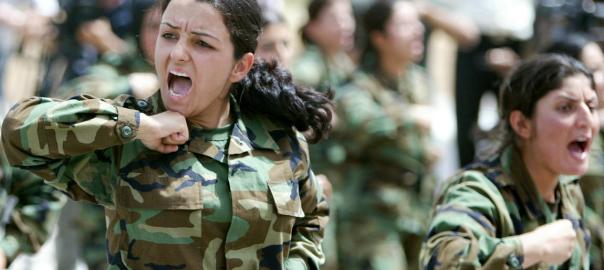


 This morning Kurdish fighters captured six buildings from ISIS near Kobane and seized a large haul of their weapons and ammunition, a group monitoring the war said.


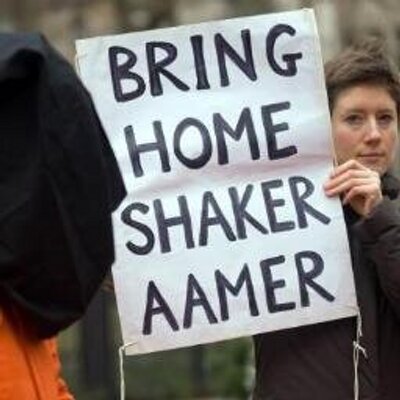


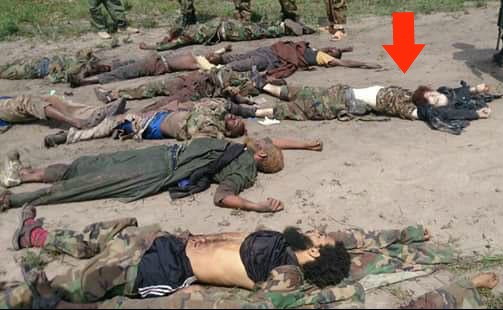




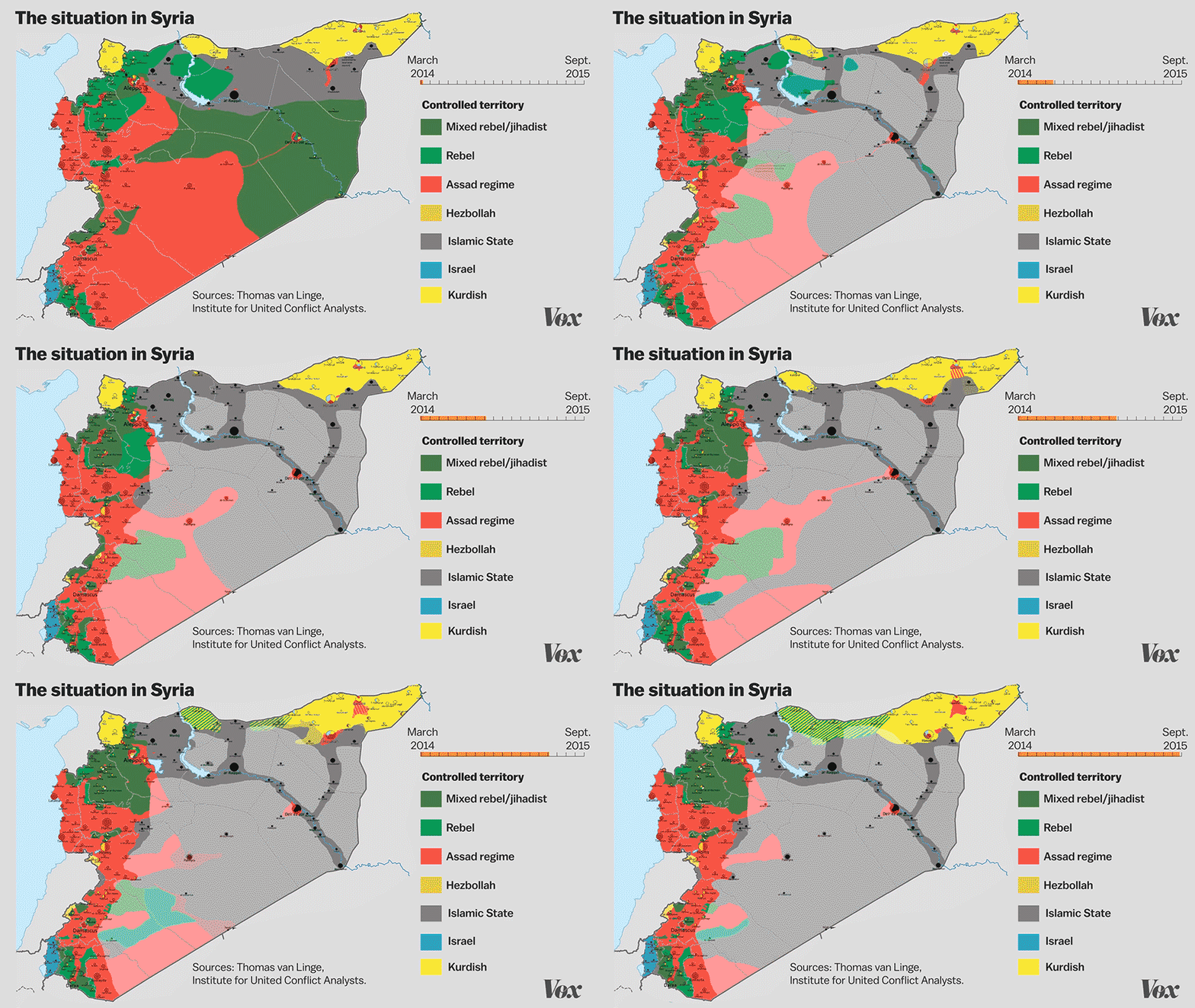




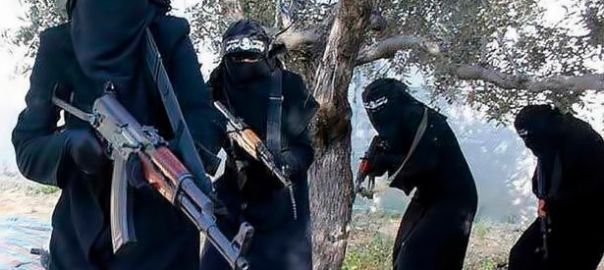


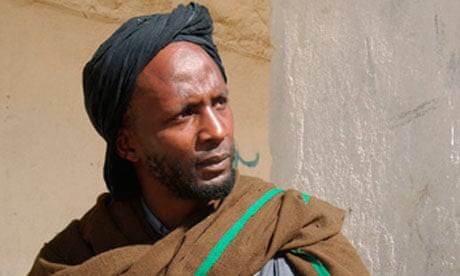


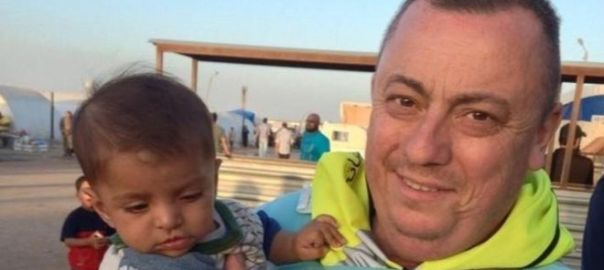








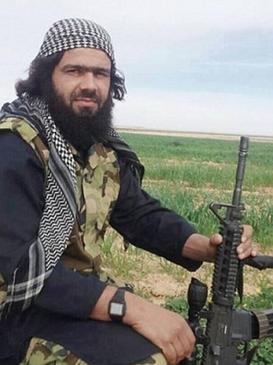





 belfastchildis.com