Since the beginning of November there have been dozens of terrorist attacks across the globe and whilst events in Paris ,Mali and the downing of the Egyptian aircraft dominated world headlines – the slaughter of the innocent has not ceased elsewhere and the death count is rising by the day.
November has thus far seen over 327 deaths (excluding approx. 25 terrorists) and almost 1000 injured in high profile attacks and we are only twenty two days into the month.
The vast majority of these attacks have been carried out by Islamic extremists , primarily Islamic State & Boko Haram and between them they are responsible for a staggering 80% of all victims ( Approx. 280 deaths and over 950 injured, including life changing injuries.
These figures do not take into account the countless innocent victims of the ongoing , multi player conflict that is tearing parts of Syria & Iraq apart and the genocidal philosophy of Islamic State and their ever shifting partners in their quest for a single Islamic Nation.
See below for full figures
But what has all this to do with religion and God , I hear you ask.
Not a lot in my opinion!
Growing up in loyalist West Belfast I was born into an environment were prejudice and mistrust of our catholic counterparts was engrained into the very foundations of our culture and traditions.
Until I was old enough to know better , I hated all Catholics with equal measure. In my childhood ignorance I assumed all Catholics were members of the IRA and other republican terrorist groups and I wished them all dead or at least “kicked ” down South were they rightly belonged.
In my world they were responsible for the savage conflict that was tearing Northern Ireland apart and they were drenched in the blood of innocent.
I hated them all with a passion
I grew up surrounded by loyalist paramilitaries and some of the most dangerous men that have ever walked the streets of the UK were my neighbours and members and associates of my wider family. Like the vast majority of the community I lived in my day to day life was governed by the men of violence and they both policed the local population and protected us from the IRA and other republican terrorists.
When news came through of the assassination of a republican or one of their supporters , I celebrated with the rest of the community and we mourned collectively when one of our own died whilst “fighting” for queen and country. Although in truth they were probably more likely to die as a result of the ever present internal feuds that littered the history of loyalist paramilitaries.
Although on the whole the local community supported and harboured the paramilitaries that lived and operated among us , universal support was never achieved and many in the loyalist community wanted nothing to do with the men of violence and their brutal tit for tat killings of innocent Catholics, each other and anyone else that got in their way.
But they were part of our daily lives and although we could ignore them and sometimes disagree with their methods, we were inextricable linked to them and sadly judge guilty through association.
But not all loyalists were blood thirsty psychopaths and despite the bad press the majority were law abiding citizens that wanted nothing more than to live in peace and make the best of what life threw at them.
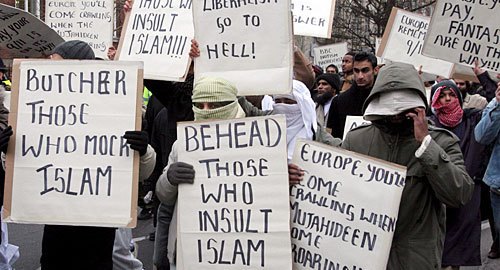
In many ways the mainstream Muslim community of the UK & wider world are also being judge guilty through association , for the heinous crimes of IS and other Islamic extremists. Regardless of how may times we are reminded that Islam is a religion of peace , Islamic extremists mock this concept with their daily slaughter and all carried out in the name of Islam and the quest for a single Islamic state.
The fact of the matter is that Islamic State’s ideology is based on a version of Islam and the reported sayings of the prophet Muhammad . Their twisted interpretation of the Qur’an is wide open to misinterpretation and is fuelled by violent verses & the call for the death of all none believers and the establishment of a..err , an Islamic Sate.
Mainstream Muslim’s are quick to defend Islam and label all negative references to their religion as prejudice and racist. They are quick to protest if their faith is under attack and in our country that is their democratic right.
And yet they have done too little in public to express solidarity with the victims in Paris and others slaughtered in recent days in the name of Islam.
All British muslims are under the spotlight at the moment and the religion of islam is being dragged through the dirt by extremist and their twisted ideology. The Muslim community needs to stand up and be counted and show the rest of the UK that they stand with us against the merchants of death and hate.
They need to show us that mainstream Islam REALLY is a religion of peace and they need to route out the hate preachers and others in their communities that wish to bring death and destruction to the streets of the UK and mainland Europe.
Until then they may find themselves isolated and ostracized by large parts of the UK public and that is sadly a fact of life in the maelstrom of religious violence that is currently sweeping the globe and slaughtering the innocent.
Millitants detonated a car bomb on an hotel in Mogadishu, opening their way inside. They then started shooting and throwing grenades at hotel guests, killing 12 people.[298]
A 19-year-old Palestinian stabbed three people in Rishon LeZion, including an eighty-year-old woman, before being apprehended by civilians and police.[299]
A 22-year-old Palestinian man from the West Bank stabbed and seriously injured a 71-year-old man in Netanya. The attacker was shot by the police, who confronted a mob trying to lynch him.[300]
Sulemain Shaheen rammed an Israeli border policeman on Highway 60 near Halhul. The policeman was critically injured and died on November 9th, the attacker was killed on the spot by other Israeli forces that were on the scene.[301]
A suicide bomber detonated a car bomb Wednesday near the North Sinai Police Officers Club in the city of Al-Arish, killing three police conscripts and injuring 10 others, the Ministry of Interior said. Wilayah Sayna, an ISIL-affiliated organization claimed responsibility for the attack.[302]
A suicide bomber attacked offices in Arsal where the Qalamoun Clerics Association was meeting. The association’s head, Sheikh Othman Mansour, was killed as well, along with four other people and the perpetrator.[303]
Unknown gunmen shot two Israelis near the Cave of the Patriarchs in Hebron, leaving one with moderate wounds, allegedly with a sniper rifle from a neighborhood near the holy site. No group claimed responsibility.[304]
Baraa Issa stabbed and wounded an Israeli civilian in Sha’ar Binyamin Industrial Zone and then fled the scene. A few hours later, he uploaded a video to Facebook, claiming respnsibility for the attack and stating he is a member of Al-Aqsa Martyrs’ Brigades.[304]
Multiple bombs were set off across Baghdad in the Duwanim, Nahrawan, and Tarmiya areas. The blasts killed 9 and left 15 wounded. Three men were also found shot dead. No one has claimed responsibility for the attacks, but ISIS is suspected.[306]
Sulemain Shaheen rammed his vehicle at a hitchhiking station at Tapuach Junction, wounding four pedestrians. Forces that were on the scene shot and killed the driver.[307]
Two suicide bombers, suspected to be sent by Boko Haram, have detonated themselves in a village on the shores of Lake Chad. 3 people were killed in the blast, including two kids and another 14 were wounded.[308][309]
14-year-old girl suicide bomber detonated herself at a mosque in Fotokol, killing five people and injured over 20. The army managed to foil another attack by another child bomber.[310]
ISIL suicide bomber detonated a bike loaded with explosives and when onlookers gathered, another suicide bomber detonated himself on them bringing the casualties to 43 dead and 240 wounded.[311]
Unknown gunmen ambushed and shot a family car with seven passengers, killing two men and wounding two other, including a 16-year-old teen. The perpetrators fled the scene.[312]
Attacks targeting Shiites in Baghdad, including a suicide bombing. The blasts killed 19 and left 33 wounded. ISIL has claimed responsibility for the attacks.[313]
A series of co-ordinated attacks began over about 35 minutes at six locations in central Paris. The first shooting attack occurred in a restaurant and a bar in the 10th arrondissement of Paris. There was shooting and a bomb detonated at Bataclan theatre in the 11th arrondissement during a rock concert. Approximately 100 hostages were then taken and overall 89 were killed there. Other bombings took place outside the Stade de France stadium in the suburb of Saint-Denis during a football match between France and Germany.[314]
A bombing took place in a farmer’s market near a major road in Yola, Nigeria. Red Cross and National Emergency Management Agency (NEMA) have reported 32 dead and 80 wounded. No group has claimed responsibility but Boko Haram is suspected. [315][316]
Two girls, aged 11 and 18, detonated themselves in a busy mobile phone market in Kano, Nigeria, killing at least 15 and injuring at least 123. Boko Haram is suspected. The attack is thought to have been revenge for an earlier call by the Emir of Kano, a traditional leader, for citizens to take up arms against the Islamist militants. [317]
Tziyon Saadon, a Jewish history teacher, was stabbed in the arm and leg by three men shouting praises for ISIS. The attackers also showed Mr. Saadon a picture of Mohammed Merah, a French-Algerian extremist who killed 7 people, including 4 Jews, in a crime spree in Southern France in 2012.[318]
Perpetrator Enes Omeragic killed two soldiers and opened fire on a bus, resulting in three more injured civilians. A few hours later Omeragic killed himself with a bomb.[319]
A thirty-six-year-old Palestinian man killed two and injured one at a makeshift synagogue in Tel Aviv. He was captured just after the attack and brought into custody.[320][321]
A Palestinian man opened fire on a line of traffic in Gush Etzion, in the West Bank region. The attacker then fled the scene, only to shoot at and intentionally ram into a group of pedestrians at a nearby junction. [322]
A roadside bomb planted near the mosque in Yousifiya went off as worshippers were leaving Friday prayers, killing two civilians and wounding nine. No group claimed responsibility but ISIS is suspected. [324]
A suicide bomber later detonated his explosives-packed vest, killing seven and wounding 28 others. No group claimed responsibility but ISIS is suspected. [324]
A suicide bomber detonated himself in a suburb of the Cameroonian town of Fotokol near the border with Nigeria, killing four people. Several minutes after another three suicide bombers detonate themselves but did not kill anyone. Around ten people were injured. Boko Haram is suspected. [325]
Palestinian illegal worker stabs four civilians, including a 13-year-old teen, in the southern Israeli city of Kiryat Gat and caught hours later. [326]
Three rebels suspected to be from the Front 73 guerrilla unit of the New People’s Army attacked a compound of a pineapple plantation owned by Dole Philippines and burned a tractor, a bulldozer and a ‘Saddam’ truck of the company by using siphoned fuel from one of the vehicles. It was initially reported that three company guards were hurt in the incident but it was later said that no one was hurt.[327]
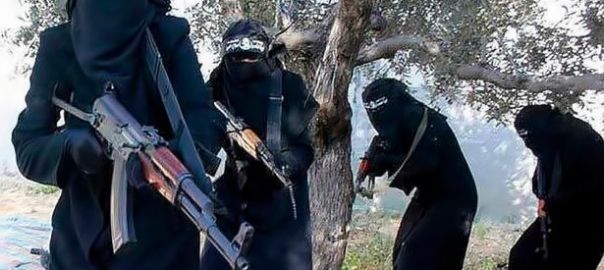
The Al-Khansaa Brigade, also spelled Al-Khanssaa Brigade, is an all-women police or religious enforcement unit of the jihadist Islamic State of Iraq and the Levant (ISIL), operating in its de facto capital of Raqqa and Mosul.[1] Formed in early 2014 and apparently named after Al-Khansa, a female Arabic poet from the earliest days of Islam, it is unclear how widespread and sustained the group is.
An ISIL official, Abu Ahmad, said in 2014, “We have established the brigade to raise awareness of our religion among women, and to punish women who do not abide by the law.”[2] The outfit has also been called ISIL’s ‘moral police’
ISIS ‘female Gestapo’ leading campaign of terror against own sex – and 60 are British
Al Khansaa brigade rule by terror
———————————————————–
Daesh Defectors – 3 women leave al-Khansaa brigade
ISIS executes 73 of its own militants for evacuating headquarters in Sinjar, Iraq
The terrorist group of ISIS has reportedly executed dozens of its insurgents who fled recent battles with the Kurdish Peshmerga forces in Shingal (Sinjar) district in northern Iraq, official sources reported on Sunday.
“Under the request of the group’s alleged caliph, Abu Bakr al-Baghdadi, some 73 ISIS militants, who apparently fled the fighting with the Peshmerga forces in the Yezidi region of Shingal few days ago, were executed,” the Kurdish official Saeed Mamozini told reporters in Erbil.
He stressed the executions were carried out by firing squad south of Mosul.
Earlier this week, the terror group executed a number of its local Iraqi militants in Anbar province west of the country on charges of high treason and dissidence from the group, an eyewitness said on the condition of anonymity.
The source revealed that the extremist group has recently arrested dozens of its Iraqi members, who were apparently trying to desert the group and flee outside the ISIS-held city of Ramadi.
“The group has executed eight local members in the town of Zankoora, in Anbar province,” the source added.
In the meantime, ISIS foreign members carried out a campaign of arrests against Iraqi members of the group, executing dozens on charges of high treason.
Over the past few days, the terrorist group has faced defeat in both Syria and Iraq. In Syria, ISIS lost control of the key town of al-Hawl in Hasakah province, northeastern Syria.
“I came to the absolute conviction that it is impossible…impossible…for any human being to read the biography of Mohammed and believe in it, and then emerge a psychologically and mentally healthy person.”
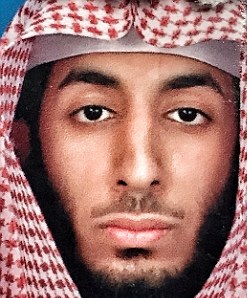
The execution of Jihad John on Friday give the world something to celebrate and was a hard hitting reminder that although we don’t know exactly what action governments are taking against IS/Islamic extremists , we now know they are capable of a stunning PR strike that sent an evil, sick individual straight to eternal hell and will hopefully have all Jahadi’s scum terrified of their own shadows and of death coming at any moment from the skies.
The Terrorists are being Terrified!
But any joy the world shared at the termination of the evil, vile human was short lived when the streets of Paris were turned into a bloodbath , as the dark shadow of Islamic terrorism wrote another chapter in its endless book of horror.
To date one hundred and twenty nine people have died as a result of this act of terrorism and as the people of Paris begin to try to pick themselves up and comprehend how life can ever return to normal , the rest of the world look on and thank the gods that they had been spared.
For surely this is only a short reprieve and depressing as it is , there will no doubt be other chapters in the bloody rise of extremist Islamic Terrorism . Those deluded enough to follow such an evil, twisted ideology – that glorifies in the slaughter of the innocent and death to all none believers , have nothing else to live for and have committed themselves inextricably to a holy war that can never been won.
But how do you fight against such an enemy and can we ever hope to defeat the diseased ideology of IS and their Islamic caliphate
———————————————————————————————-
The Islamic State (Full Length)
———————————————————————————————-
Its times like this we all try to think about how we can beat those who seem intent not just on murdering innocent people but on attacking our very way of life. The bombing of the Russian plane and terrible events in Paris and Beirut demonstrate that the policy of trying to contain ISIS isn’t working. So here’s what I would do…
1. Accept this is a war, and act accordingly.
2. Invoke Article 5 of the NATO constitution and make every effort to include Russia in a coalition of interests with a single aim – to defeat ISIS militarily. It will mean parking the issue of Assad’s future.
3. Launch a total war on ISIS targets, initially through huge bombing campaigns, but also using ground forces from as many countries as possible, especially Arab ones.
4. Next week David Cameron should introduce an emergency motion in the House of Commons, which, if passed, would give parliamentary approval for military action in Syria alongside the US and France.
5. Drive a stake through ISIS’s heart by taking Raqqa by force in a surprise strike, using thousands of special forces and paratroopers.
6. Britain and other western countries should follow Austria’s lead and ban the foreign funding of mosques. This may mean having to ban foreign funding of all religious institutions, not just mosques. Immediately follow Tunisia’s lead and shut down any mosque linked to extremism. Ban mosques from employing Imams from Saudi Arabia.
7. Theresa May should massively increase the budget of the UK Border Force and immediately recruit several thousand new border guards. US style border checks should be introduced at key locations, but especially Calais and major airports.
8. The Prime Minister should announce an immediate 33% increase in the funding of the security services, giving them an extra billion pounds a year. This should primarily be used to increase surveillance of terror suspects.
9. Confront Saudi Arabia over its overt and covert support for ISIS and Wahabi extremism. If Saudi Arabia fails to act, impose sanctions and make arms sales to the country illegal.
10. Make London a very uncomfortable place for radical extremists and reverse its reputation as ‘Londonistan’.
11. Encourage muslim role models to go into schools and mosques to launch a ‘hearts and minds’ campaign and explain to muslim teenagers why extremism is wrong.
12. Confront head on the myth that western foreign policy and the invasion of Iraq led to the rise of ISIS.
13. Encourage the EU to abandon Schengen and lead moves to reimpose border controls between each EU country.
14. Build refugee camps along the North African coast. Handle asylum application within the camps. Impose high profile EU coordinated naval patrol along the North African coast and turn back the boats.
15. Develop comprehensive plan to deal with Syrian refugees who arrive from Turkey.
16. Develop a Marshall Plan to enable Syria to rebuild following the end of the conflict, and identify other countries which need a similar plan in order to persuade their citizens not to flee, and in the long term designed to persuade them to return.
I realise this is just scratching at the surface in some ways, but we have to recognise that the terms of the debate have changed. Talk of containing ISIS will no longer wash. They and their unique brand of evil needs to be confronted. In the 1930s we had, in the end, to recognise that the only way to beat Hitler was to stand up to him. We are in a similar position now. You can’t sit down and talk to these people. No amount of appeasement will work. Difficult decisions must now be taken in the full recognition that the world order has changed and that further loss of life will inevitably happen. Time will tell if the British people have the stomach for the fight or if we have the politicians who have the courage to impose the measures needed if we are to pull through.
In writing this, I also recognise I will be called a lot of things, no doubt primarily ‘warmonger’. I’ve said right from the start that ISIS need to be taken on and we are at war so at least I am consistent in that. Let’s have the debate and recognise that although there will be differences of view, the debate can at least be conducted in a civil manner. At least in this country we can still have an open debate, unlike in areas controlled by ISIS. Those who disagree with me will have to explain how they would protect the very freedoms that ISIS is seeking to take away from us.
The West Must Realize It Cannot Beat ISIS Without Also Beating Assa
Three hundred thousand dead, four million refugees, nearly eight million internally displaced, 600,000 trapped in starvation sieges and countless others maimed, traumatized and rotting in jails where torture, sexual abuse and starvation are routine. This is the partial bill, to date, for the political survival strategy of a Syrian clan headed by Syrian President Bashar Assad.
Recent reporting of diplomatic discussions about a potential role for Assad in a transitional unity government raises a pertinent question: can the person responsible for this horrific bill be re-packaged as the reliable overseer of security arrangements featuring civilian protection?
For a complete accounting of the consequences of Assad’s tenure, one must include the Islamic State: the criminal-terrorist marriage of al Qaeda in Iraq and Saddam Hussein loyalists that now occupies a major part of Syria courtesy of Assad regime illegitimacy and connivance. The result is a Syria bleeding terrified humanity onto its neighbors; a dying state hosting a deadly political virus spawning infections globally while attracting cells from around the Sunni Muslim world.
The response from the international community to the humanitarian and security catastrophe that is Syria has been wholly inadequate. President Obama seeks to “degrade and destroy” ISIS. Yet single-minded focus on achieving a nuclear agreement with Iran led the West to avert its gaze from the ISIS-abetting, civilian-centric depredations of an Assad regime fully supported by Tehran.
For ISIS, confronting Assad alone — an Assad supported by Iran and ideally the West — would be a recruiting gift of untold value.
Washington’s theory of the case had been that raising Syria with Iran — even in side talks well-removed from the nuclear main event — would provoke Tehran into abandoning the nuclear talks and forgoing a treasure in sanctions relief and foreign direct investment. Apparently, it never occurred to Iran’s Supreme Leader that the leaders of the United States, the United Kingdom, France, Germany and the European Union would be offended in the least by his country’s facilitation of mass murder in Syria and by his support of a family whose actions had made nearly all of eastern Syria safe for ISIS.
While coalition aircraft chase ISIS gunmen with high performance aircraft, anti-regime and anti-ISIS rebels are subjected by the regime to barrel bombs and starvation sieges, creating recruits for ISIS in Syria and around the world. Simultaneously, Shia militiamen imported from Lebanon, Iraq and Afghanistan by Iran battle anti-regime and anti-ISIS Syrian rebels in the parts of western Syria Iran hopes to preserve as a bridge to Hezbollah in Lebanon. Meanwhile, American diplomats chase their Russian counterparts for help in terminating Assad rule: as if Moscow wants Assad gone or can make it happen.
Regime forces and ISIS rarely face one another in combat. Rather, they focus on trying to eliminate Syrian nationalist alternatives to each. Assad and his ISIS counterpart, “Caliph” Abu Bakr al-Baghdadi, share the same objective: each, for his own reason, wants to face the other as one of the last two political forces left standing in Syria. For Assad, facing ISIS alone would be the dream come true: his long-sought opportunity to force the West to choose between him and something so spectacularly bad that some consider it even worse than him: the 21st century’s premier mass murderer. For Baghdadi, confronting Assad alone — an Assad supported by Iran and ideally the West — would be a recruiting gift of untold value. It would bolster his leadership credentials among disaffected Sunni Muslims around the world.
ISIS cannot be beaten from the air while the iron lung pumping oxygen into it — the Assad regime — is left to do its worst.
In Iraq, ISIS has a constituency: Iraqi Sunnis disenfranchised by the Iranian-supported sectarian policies of former Prime Minister Nouri al-Maliki. In Syria, ISIS has no natural constituency. And Assad’s base has been reduced to members of Syria’s minorities and a handful of Sunni supporters, all of whom have been taken hostage by his war crimes and crimes against humanity; all of whom fear retribution for barrel bombs dropped, children starved and women raped. Syria — not Iraq — is the place where ISIS can be handed a decisive, near-term defeat. But it cannot be beaten from the air while the iron lung pumping oxygen into it — the Assad regime — is left to do its worst.
Legitimate governance — not war — is the ultimate cure for a Syrian illness rapidly becoming a regional and global contagion. Yet without an effective, surgical intervention of a kinetic variety, the patient has no hope of surviving. At its present, glacial rate of recruitment, vetting and training, the American enlistment of Syrian rebels to fight ISIS would meet its modest personnel goal perhaps by mid-century. What is needed now is professional ground forces to work with coalition aircraft to kill ISIS in Syria. With all of eastern Syria liberated from ISIS, a governmental alternative to the Assad family business can be established and a basis for eventual political negotiations created. And ISIS in Iraq would be denied a Syrian safe haven and headquarters of incalculable value.
Business as usual will give ISIS time to sink real roots in Syria, with disastrous consequences. Yet killing ISIS in Syria will not keep it dead and will not prevent something even worse from arising unless Assad’s mass atrocities stop. Iran could end them with an order. Can Western statesmen muster the courage to confront Tehran diplomatically on this point? Or will they continue to cower, fearful that Iran might yet walk away from a nuclear deal that would move its weaponization breakout period from two months to 15 years in return for lucrative compensation? Secretary of State John Kerry suggests talks with Iran on Syria may start once the nuclear deal is approved. Why wait? People are dying, and ISIS is benefiting.
Legitimate governance — not war — is the ultimate cure for a Syrian illness rapidly becoming a regional and global contagion.
Syrian political negotiations are impossible while these mass atrocities continue. Yet if Iran chooses to perpetuate its unconditional support for mass murder, a West actually intent on defeating ISIS while seeking a political transition from Assad rule to something civilized will have no choice but to push back. Indeed, if President Barack Obama can demonstrate his willingness and ability to stand up to Iran in the battle against ISIS, he might gain support in Congress for the nuclear deal.
If diplomacy fails, the worst of Assad’s atrocities — the barrel bombs — can be curtailed and even ended by military means far short of invading and occupying Syria. Iran should be given the opportunity to end these abominations with a word. Tehran should also be asked to lift the starvation sieges and permit full access to needy populations by the humanitarian agencies of the United Nations. It probably will not wish to do these things. Yet it should be given a time-limited opportunity to do so.
Pretending to make common cause with Iran against ISIS during the nuclear negotiations may have been someone’s idea of a smart negotiating tactic. In Iraq, however, Iran aids ISIS by promoting Shia militias instead of supporting the Iraqi government. In Syria, Iran’s client has created conditions permitting ISIS to thrive. Iran is no ally of the West in the fight against ISIS. Indeed, chasing ISIS with airplanes while giving a free rein to Assad is as much a losing proposition for the West as it is a sure winner for Iran. Western leaders fully realize that Assad and Baghdadi are two sides of the same debased coin. They should act accordingly if “degrading and defeating” ISIS is more than a slogan.
ISIS executioner ‘The Bulldozer of Fallujah’ cuts hand and foot off teen boy
————————————————
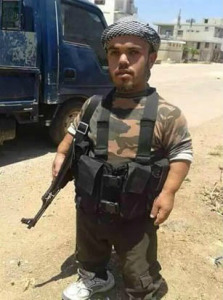
HE weighs more than 200kg. Big belly. Big arms. Big reputation
Over his shoulder he carries a weapon so large it’s normally mounted to a vehicle before it can be fired. On his face he wears a mask to conceal his identity — but he is unmistakable.
People know him as “The Bulldozer of Fallujah” and he’s the world’s most feared terror group’s biggest weapon. Until this week, the unnamed member of Islamic State tried to blend into the background. His exploits are now front and centre after his treatment of a 14-year-old boy named Omar.
The new member of the terror group’s feared “chopping committee” is no jolly fat man.
The mammoth Iraqi – who was first photographed toting a…
Islamic State threatens to carry out attacks in Russia ‘very soon’
—————————————————————————
ISIS Threatens to Attack Russia Very Soon
—————————————————————————
The Islamic State (ISIS), which has claimed responsibility for the crash of a Russian passenger plane in Egypt’s Sinai peninsula, has released a video in which it threatens to carry out terrorist attacks in Russia. (more)
The Russian-language video was released on Thursday by the Al-Hayat Media Center, the foreign-language media division of the Islamic State, according to the SITE Intelligence monitoring group.
“Soon, very soon, the blood will spill like an ocean,” the video said, threatening to carry out attacks within Russia. The video also featured gory scenes of executions by beheading and gunshot.
Other details were not immediately available.
The Islamic State (ISIS) has claimed responsibility for the crash of a Russian passenger plane that went down in Egypt’s Sinai peninsula on October 31, killing all 224 people on board. The group, which has released no specific details to back up its claims, said the downing was in revenge for Russian airstrikes against ISIS militants in Syria.
The cause of the crash remains under investigation, but investigators have not yet ruled out a bomb, though other possible causes include metal fatigue and a fuel explosion.
Young boys lashing their own backs with small knives and chains to mark the holy Muslim Day of Ashura
Tiny Shi’ite Muslim boys whip themselves with sharp blades to mourn the death of Prophet Muhammad’s grandson
Men and young boys in countries all over the world, including Pakistan, Iraq and Greece , have been self-flagellating
They whip themselves with sharp blades to mourn the death of the Prophet Muhammad’s grandson, Imam Hussein
Hundreds of Iranians covered themselves in wet mud and dried it near massive bonfires lit in the streets of Tehran
Holy Day of Ashura was marred by suspected suicide bomb targetted at Shi’ites in Pakistan which killed at least 24
Shi’ite Muslims all over the world, including in India (pictured), self-flagellate to mourn the death of Imam Hussain
Millions of Muslims worldwide are now marking the holy day of Ashura, the tenth day of Muharram in the Islamic calendar. This year, Ashura falls on Nov. 3-4. The Islamic holy day is a voluntary day of fasting that marks the day Noah left the Ark, the time when the Israelites were freed from slavery in Egypt, and the death of Imam Hussein, grandson of Prophet Muhammad.
Sunni and Shiite Muslims – the two major branches of Islam – mark the day in separate ways. For Sunnis, Ashura is considered a day of atonement. Some choose to fast for two days, as the Prophet Muhammad did when he observed Jews doing the same for their Day of Atonement. For Shiite Muslims, Ashura also commemorates the martyrdom of Hussein, grandson of the Prophet Muhammad, in the year 680 at Karbala in modern-day Iraq.
———————————————————————————————————–
———————————————————————————————————–
This year, the holy day has taken on new meaning since the Islamic State group, or ISIS, has overrun large parts of Syria and Iraq. Members of the Sunni jihadist group consider all Shiites heretics, and engaged in a campaign of massacres against them. Multiple attacks aimed at Shiites killed more than 40 people in Baghdad two days before Ashura started, Agence France-Presse reports.
For those unfamiliar with Ashura, below are three answers to common questions surrounding the Islamic holy day:
What Is Ashura?
The word “Ashura” means “tenth” in Arabic, since the holiday falls on the tenth day of Muharram, the first month in the Islamic calendar.
Sunni Muslims consider Ashura a day to fast. They see the day as a way to memorialize Allah’s role in saving Moses and the Israelites from the Egyptian pharaoh. Fasting is meant to symbolize Allah’s omnipotence and benevolence. Many Sunni Muslims choose not to participate in overt displays of happiness such as weddings to focus on fasting.
For Shiite Muslims, Ashura is all about the martyrdom of Imam Hussein. In Islamic history, the grandson of the Prophet Muhammad stood up to a tyrant from the Ummayad dynasty, Yazid, in a battle that cost him his life, known as the Battle of Karbala, in 680. Hussein and his small army was massacred by an army sent by Yazid, a ruler whom Shiites consider a usurper of the caliphate, which belongs in their view to the line of Ali, Hussein’s father.
“[Hussein] did not run away. He knew why he was there and why he had challenged the authority,” Dr. Aslam Abdullah, director of the Islamic Society of Nevada, wrote in an article for IslamiCity. “He fought bravely and left the world with violent wounds as a testimony of his belief that sometimes in the life of nations come moments when liberty and justice become more important than the life itself.”
Hussein’s death along with that of his father Ali (the son-in-law of the Prophet and the fourth caliph, who was murdered in 661) gave rise to the great schism in Islam between its two main sects: Sunnis and Shiites. This sectarian strife has continued until today, where public Ashura demonstrations have become targets of violence. In 2005, nearly a thousand Shia pilgrims died in a stampede on a Baghdad bridge after a rumor spread that a suicide bomber was in the crowd. In 2013, at least 36 Shia pilgrims were killed in Iraq during Ashura demonstrations. This year, Iraq’s Shiite-led authorities sent more than 30,000 troops to Karbala. No attacks were reported.
Common Rituals
On Ashura, Shiite men and women dress in black, slap their chests and chant. Others reenact the Battle of Karbala with mourning rituals. Known as passion plays, the performances include a mourning procession and speeches. Many make a pilgrimage on Ashura to the Mashhad al-Husayn, the shrine in Karbala that is regarded as Hussein’s tomb.
In mosques, poetic lamentations are recited in memory of Hussein’s martyrdom. Prayers are typically said to the tune of beating drums and chanting “Ya Hussein.”
Ashura and Self-Flagellation
——————————————————————————
Ashura festival climaxes with bloody self-flagellation
——————————————————————————
Some Shiite men flagellate themselves with chains and cut themselves with knives on their foreheads as a way to mourn for Hussein in a ritual called “tatbeer.” Hundreds were seen on the streets of Karbala on Tuesday performing the ritual. Some Shiite clerics have condemned the practice and have advocated for donating blood instead.
Men in Lebanon are drenched in their own blood after beating themselves with sharp blades to commemorate the Day of Ashura
——————————————————————————–
Day of Ashura
The Day of Ashura (Arabic: عاشوراء ʻĀshūrā’, colloquially: /ʕa(ː)ˈʃuːra/; Urdu: عاشورا; Persian: عاشورا /ʕɒːʃuːˈɾɒ/; Azerbaijani: Aşura Günü or English: Day of Remembrance) is on the tenth day of Muharram in the Islamic calendar and marks the climax of the Remembrance of Muharram.[5] Shiite commemorations of the Day of Ashura have traditionally included rituals which have been condemned by many Shia religious authorities recently under the claim that such practices are wrong or unislamic. This day is celebrated by Sunni Muslims (who refer to it as The Day of Atonement) as the day on which the Israelites were freed from the Pharaoh (called ‘Firaun’ in Arabic) of Egypt. However, Shi’a Muslims reject these stories and maintain that Ashura is a day of great sorrow due to the tragic events of Karbala.
It is commemorated by Shi’a Muslims as a day of mourning for the martyrdom of Husayn ibn Ali, the grandson of Muhammad at the Battle of Karbala on 10 Muharram in the year 61 AH ( in AHt: October 10, 680 CE). The massacre of Husayn with a small group of his companions and family members had great impact on the religious conscience of Muslims. Especially Shia Muslims have ever remembered it with sorrow and passion.[6] Mourning for Husayn and his companions began almost immediately after the Battle of Karbala, by his survivor relatives and supporters. Popular elegies were made by poets to commemorate Battle of Karbala during Umayyads and Abbasids era. The earliest public mourning rituals happened in 963 CE during Buyid dynasty.[7] Nowadays, in some countries such as Afghanistan,[8]Iran,[9]Iraq,[10] Lebanon,[11]Bahrain,[12] and Pakistan,[13] the Commemoration of Husayn ibn Ali has become a national holiday and most ethnic and religious communities participate in it.[14][15] In secular country like India, Ashura (10th day in the month of Muharram) is commemorated and is a public holiday due to the presence of a significant Indian Shia Muslim population (2-3% of total population, 20-25% of Indian Muslim population).
Etymology
The root of the word Ashura has the meaning of tenth in Semitic languages; hence the name of the remembrance, literally translated, means “the tenth day”. According to the orientalist A.J. Wensinck, the name is derived from the Hebrew ʿāsōr, with the Aramaic determinative ending.[16] The day is indeed the tenth day of the month, although some Islamic scholars offer up different etymologies.
In his book Ghuniyatut Talibin, Sheikh Abdul Qadir Jilani writes that Islamic scholars differ as to why this day is known as Ashura, some of them suggesting that this day is the tenth most important day with which God has blessed Muslims.[citation needed]
In April 680, Yazid I succeeded his father Muawiyah as the new caliph. Yazid immediately instructed the governor of Medina to compel Hussayn and few other prominent figures to pledge their allegiance (Bay’ah).[6] Husain, however, refrained from it believing that Yazid was openly going against the teachings of Islam in public and changing the sunnah of Muhammad.[17][18] He, therefore, accompanied by his household, his sons, brothers, and the sons of Hasan left Medina to seek asylum in Mecca.[6]
On the other hand, the people in Kufa who were informed about Muawiyah ‘s death, sent letters urging Husayn to join them and pledge to support him against Umayyads. Husayn wrote back to them saying that he would send his cousin Muslim ibn Aqeel to report to him on the situation. If he found them united as their letters indicated he would speedily join them, because Imam should act in accordance with the Quran, uphold justice, proclaim the truth, and dedicate himself to the cause of God. The mission of Moslem was initially successful and according to reports 18,000 men pledged their allegiance. But situation changed radically when Yazid appointed Ubayd Allah ibn Ziyad as the new governor of Kufah, ordering him to deal severely with Ibn Aqeel. Before news of the adverse turn of events arrived in Mecca, Husayn set out for Kufa.[6]
On the way, Husayn found that his messenger, Muslim ibn Aqeel, was killed in Kufa. He broke the news to his supporters and informed them that people had deserted him. Then, he encouraged anyone who so wished, to leave freely without guilt. Most of those who had joined him at various stages on the way from Mecca now left him. Later, Husayn encountered with the army of Ubaydullah ibn Ziyad in his path towards Kufa. Husayn addressed the Kufans army, reminding them that they had invited him to come because they were without an Imam. He told them that he intended to proceed to Kufa with their support, but if they were now opposed to his coming, he would return to where he had come from. However, the army urged him to choose another way. Thus, he turned to left and reached Karbala, where the army forced him not to go further and stop at a location that was without water.[6]
Umar ibn Sa’ad, the head of Kufan army, sent a messenger to Husayn to inquire about the purpose of his coming to Iraq. Husayn answered again that he had responded to the invitation of the people of Kufa but was ready to leave if they now disliked his presence. When Umar ibn Sa’ad, the head of Kufan army, reported it back to Ubaydullah ibn Ziyad, the governor instructed him to offer Ḥusayn and his supporters the opportunity to swear allegiance to Yazid. He also ordered Umar ibn Sa’ad to cut off Husayn and his followers from access to the water of the Euphrates.[6]
On the next morning, as ʿOmar b. Saʿd arranged the Kufan army in battle order, Al-Hurr ibn Yazid al Tamimi challenged him and went over to Ḥusayn. He vainly addressed the Kufans, rebuking them for their treachery to the grandson of Muhammad and was killed in the battle.[6]
The Battle of Karbala lasted from morning till sunset of October 10, 680 (Muharram 10, 61 AH) all Husayn’s small group of companions and family members (in total who were around 72 men and few ladies and children)[a][20][21] fought with a large army under the command of Umar ibn Sa’ad. and were killed near the river (Euphrates) where they were not allowed to get any water from. The renowned historian Abū Rayḥān al-Bīrūnī states; “… then fire was set to their camp and the bodies were trampled by the hoofs of the horses; nobody in the history of the human kind has seen such atrocities.”[22] Before being killed, Husayn said “If the religion of Muhammad was not going to live on except with me dead, let the swords tear me to pieces.”[23][unreliable source?] Once the Umayyad troops had mass murdered Husayn and his male followers, they looted the tents, stripped the women of their jewelry, and took the skin upon which Zain al-Abidin was prostrate. It is said that Shemr was about to kill him but Husayn’s sister Zaynab was able to make Umar ibn Sa’ad, the Umayyad commander to let him alive. He was taken along with the enslaved women to the caliph in Damascus, and eventually he was allowed to return to Medina.[24][25]
Legacy
“Zaynab bint Ali quoted as she passed the prostrate body of her brother, Husayn. “O Muhammad ! O Muhammad! May the angels of heaven bless you. Here is Husayn in the open, stained with blood and with limbs torn off. O Muhammad! Your daughters are prisoners, your progeny are killed, and the east wind blows dust over them.” By God! She made every enemy and friend weep.”
The tragedy of Karbala decided not only the fate of the caliphate, but of the Mohammedan kingdoms long after the Caliphate had waned and disappeared.[28]
Shiite Imam Zayn al-Abidin declared:
No day was more difficult for Allah’s Messenger than the Day (Battle) of Uhud in which his uncle Hamza, the lion of Allah and the lion of His Messenger, was killed, and after it was the Day of Mu’tah in which his cousin Ja’far ibn Abi Talib was killed.” Then he (Zayn al-Abidin) said: “There was no day like the Day of Husayn, when thirty thousand men advanced against him (while) they claimed that they belonged to this community, and that they (wanted) to seek proximity to Allah, the Great and Almighty, through (shedding) his blood. He (al-Husayn) reminded them of Allah, but they did not learn (from him) till they killed him out of (their) oppression and aggression”.”[b][29]
Commemoration of the death of Husayn ibn Ali[edit]
Millions of Shia Muslims gather around the Husayn Mosque in Karbala after making the Pilgrimage on foot during Arba’een, which is a Shia religious observation that occurs 40 days after the Day of Ashura.
According to Ignác Goldziherever since the black day of Karbala, the history of this family … has been a continuous series of sufferings and persecutions. These are narrated in poetry and prose, in a richly cultivated literature of martyrologies …’More touching than the tears of the Shi’is’ has even become an Arabic proverb.[30] The first assembly (majlis) of Commemoration of Husayn ibn Ali, it is said to have been held by Zaynab in prison. In Damascus, too, she is reported to have delivered a poignant oration. The prison sentence ended when Husayn’s 3 year old daughter, Rukaya, died in captivity. She would often cry in prison to be allowed to see her father. She is believed to have died when she saw her father’s mutilated head. Her death caused an uproar in the city, and Yazid, fearful of a potential resulting revolution, freed the captives.[31]
In terms of Imam Zayn AL Abidin(A.S.)The following is said about the Holy Imam.It is said that for twenty years whenever food was placed before him, he would weep. One day a servant said to him, ‘O son of Allah’s Messenger! Is it not time for your sorrow to come to an end?’ He replied, ‘Woe upon you! Jacob the prophet had twelve sons, and Allah made one of them disappear. His eyes turned white from constant weeping, his head turned grey out of sorrow, and his back became bent in gloom,[c] though his son was alive in this world. But I watched while my father, my brother, my uncle, and seventeen members of my family were slaughtered all around me. How should my sorrow come to an end?’[d][29][32]
Husayn’s grave became a pilgrimage site among Shiite only a few years after his death. A tradition of pilgrimage to the Imam Husayn Shrine and the other Karbala martyrs quickly developed, which is known as Ziarat ashura.[33] The Umayyad and Abbasid caliphs tried to prevent construction of the shrines and discouraged pilgrimage to the sites.[34] The tomb and its annexes were destroyed by the Abbasid caliph Al-Mutawakkil in 850–851 and Shi’a pilgrimage was prohibited, but shrines in Karbala and Najaf were built by the Buwayhid emir ‘Adud al-Daula in 979-80.[35]
This day is of particular significance to TwelverShi’a and Alawites, who consider Husayn (the grandson of Muhammad) Ahl al-Bayt the third Imam to be the rightful successor of Muhammad.
Shi’a devotees congregate outside the Sydney Opera House, Australia to commemorate Husayn.
Mourning of Muharram in Iran
According to Kamran Scot Aghaie:”The symbols and rituals of Ashura have evolved over time and have meant different things to different people. However, at the core of the symbolism of Ashura is the moral dichotomy between worldly injustice and corruption on the one hand and God-centered justice, piety, sacrifice and perseverance on the other. Also, Shiite Muslims consider the remembrance of the tragic events of Ashura to be an importance way of worshiping God in a spiritual or mystical way.”[37]
Shi’as make pilgrimages on Ashura, as they do forty days later on Arba’een, to the Mashhad al-Husayn, the shrine in Karbala, Iraq that is traditionally held to be Husayn’s tomb. On this day Shi’a are in remembrance, and mourning attire is worn. They refrain from music, since Arabic culture generally considers music impolite during death rituals. It is a time for sorrow and respect of the person’s passing, and it is also a time for self-reflection, when one commits oneself to the mourning of the Husayn completely. Weddings and parties are also not planned on this date by Shi’as. Shi’as also express mourning by crying and listening to recollections about the tragedy and sermons on how Husayn and his family were martyred. This is intended to connect them with Husayn’s suffering and martyrdom, and the sacrifices he made to keep Islam alive. Husayn’s martyrdom is widely interpreted by Shi’a as a symbol of the struggle against injustice, tyranny, and oppression.[38] Shi’as believe the Battle of Karbala was between the forces of good and evil with Husayn representing good while Yazid represented evil. Shi’as also believe the Battle of Karbala was fought to keep the Muslim religion untainted of any corruptions and they believed the path that Yazid was directing Islam was definitely for his own personal greed.[citation needed]
Shia Imams strongly insist that the day of Ashura should not be taken as a day of joy and festivity. The day of Ashura, according to Eighth Shia Imam, Ali al-Rida, must be observed as a day of inactivity, sorrow and total disregard of worldly cares.[39]
Suffering and cutting the body with knives or chains (matam) was banned by the Shi’a Marja’ Ali Khamenei, Supreme Leader of Iran and Hezbollah in Lebanon but still is practiced in Bangladesh and India.[40][41] Other marjas like Mohammad al-Husayni al-Shirazi promote hemic flagellation rituals as a way of preserving the revolution of Imam al-Husayn.[40]
On Ashura, some Shi’a observe mourning with blood donation which is called “Qame Zani” and flailing.[42]
Certain traditional flagellation rituals such as Talwar zani (talwar ka matam or sometimes tatbir) use a sword. Other rituals such as zanjeer zani or zanjeer matam involve the use of a zanjeer (a chain with blades).[43]
These religious customs show solidarity with Husayn and his family. Through them, people mourn Husayn’s death and regret the fact that they were not present at the battle to fight and save Husayn and his family.[44][45]
In some areas, such as in the Shi’a suburb of Beirut, Shi’a communities organize blood donation drives with organizations like the Red Cross or the Red Crescent on Ashura as a replacement for self-flagellation rituals like “tatbir” and “qame zani.”[40]
Some Shi’a believe that taking part in Ashura washes away their sins.[46] A popular Shi’a saying has it that, “a single tear shed for Husayn washes away a hundred sins.”[47]
Popular customs
For Shi’as, commemoration of Ashura is not a festival, but rather a sad event, while Sunni Muslims view it as a victory God gave to Moses. This victory is the very reason, as Sunni Muslims believe, Muhammad mentioned when recommending fasting on this day. For Shi’as, it is a period of intense grief and mourning. Mourners congregate at a Mosque for sorrowful, poetic recitations such as marsiya, noha, latmiya and soaz performed in memory of the martyrdom of Husayn, lamenting and grieving to the tune of beating drums and chants of “Ya Hussain.” Also Ulamas give sermons with themes of Husayn’s personality and position in Islam, and the history of his uprising. The Sheikh of the mosque retells the Battle of Karbala to allow the listeners to relive the pain and sorrow endured by Husayn and his family. In Arab countries like Iraq and Lebanon they read Maqtal Al-Husayn. In some places, such as Iran, Iraq and the Arab states of the Persian Gulf, Ta’zieh, passion plays, are also performed reenacting the Battle of Karbala and the suffering and martyrdom of Husayn at the hands of Yazid.[20][21]
Indian Shia Muslims take out a Ta’ziya procession on day of Ashura in Barabanki, India, Jan, 2009.
For the duration of the remembrance, it is customary for mosques and some people to provide free meals (NAZRI) on certain nights of the month to all people[citation needed]. People donate food and Middle Eastern sweets to the mosque[citation needed]. These meals are viewed as being special and holy, as they have been consecrated in the name of Husayn, and thus partaking of them is considered an act of communion with God, Hussain, and humanity.[citation needed]
Participants congregate in public processions for ceremonial chest beating (matham/latmiya) as a display of their devotion to Husayn, in remembrance of his suffering and to preach that oppression will not last in the face of truth and justice.[48] Others pay tribute to the time period by holding a Majilis, Surahs from the Quran and Maqtal Al-Husayn are read.
Shia Muslims take out an Al’am procession on day of Ashura in Barabanki, India, Jan, 2009.
Today in Indonesia, the event is known as Tabuik (Minangkabau language) or Tabut (Indonesian). Tabuik is the local manifestation of the Shi’a MuslimMourning of Muharram among the Minangkabau people in the coastal regions of West Sumatra, particularly in the city of Pariaman. The re-enactment includes the Battle of Karbala, and the playing of tassa and dhol drums.[citation needed] In Iran, people perform their Imam’s funeral by carrying a huge wooden structure called “Nakhl”, which is usually carried by several hundred men.[49] In countries like Turkey, there is the custom of eating Noah’s Pudding (Ashure) as this day in Turkish is known as Aşure.
Tabuiks being lowered into the sea in Pariaman, Indonesia, by Shia Muslims.
Nakhl gardani in cities and villages of Iran
Commemoration by non-Muslims
In Trinidad and Tobago[50] and Jamaica[51] all ethnic and religious communities participate in this event, locally known as “Hosay” or “Hussay”, from “Husayn”.
Significance for Sunni Muslims
Not related to Ashura and Karbala, some Sunni Muslims fast on this day of Ashura based on narrations attributed to Muhammad. Some other Sunnis accept Ashura as a significant day due to the martyrdom of Imam Husayn and the significance of the events at Karbala. The fasting is to commemorate the day when Moses and his followers were saved from Pharaoh by Allah by creating a path in the Red Sea. According to Muslim tradition, the Jews used to fast on the tenth day. According to Sunni Muslim tradition, Ibn Abbas narrates that Muhammad came to Medina and saw the Jews fasting on the tenth day of Muharram. He asked, “What is this?” They said, “This is a good day, this is the day when Allah saved the Children of Israel from their enemy and Musa (Moses) fasted on this day.” He said, “We are closer to Musa than you.” So he fasted on the day and told the people to fast.[52][53][54][55]
This tenth in question is believed to be the tenth of Jewish month of Tishri which is Yom Kippur in Judaism. [56] The Torah designates the tenth day of seventh month as holy and a feast (Lev. 16, Lev. 23, Num. 29). The word tenth in Hebrew is Asarah or Asharah (He:עשרה) which is from the same semitic root A-SH-R. According to this tradition Muhammad continued to observe the veneration of Ashura modeled on it’s Jewish prototype in late September until shortly before his death which the verse of Nasi’ was revealed and the Jewish type calendar adjustments of the Muslims became prohibited. From then Ashura became disjointed from it’s Jewish predecessor of Yom Kippur. [57]
A tadjah at Hosay in Port of Spain during the 1950s
Pilgrims gather for the Ashura ritual in Karbala, Iraq, Jan. 19, 2008. The 10-day event commemorates the death of Imam Hussein, the grandson of the prophet Mohammad, 1,300 years ago. About 2.5 million people are estimated to hav
In some countries other religious communities commemorate this event. According to Hadith record in Sahih Bukhari, Ashura was already known as a commemorative day during which some Makkah residents used to observe customary fasting. Muhammad used to fast on the day of Ashura, 10th Muharram, in Makkah. When fasting the month of Ramadan became obligatory, the fast of Ashura was made non compulsory. This has been narrated by Ayesha RA, Sahih Muslim, (Hadith-2499). In hijrah event when Muhammad led his followers to Madina, he found the Jews of that area likewise observing fasts on the day of Ashura. At this, Muhammad affirmed the Islamic claim to the fast, and from then the Muslims have fasted on combinations of two or three consecutive days including the 10th of Muharram (e.g. 9th and 10th or 10th and 11th).[52][53]
A companion of Muhammad, Ibn Abbas reports Muhammad went to Madina and found the Jews fasting on the tenth of Muharram. Muhammad inquired of them, “What is the significance of this day on which you fast?” They replied, “This is a good day, the day on which God rescued the children of Israel from their enemy. So, Moses fasted this day.” Muhammad said, “We have more claim over Moses than you.” Muhammad then fasted on that day and ordered Muslims too.[58]
The narrations of Muhammad mentioning the Children of Israel being saved from Pharaoh are indeed confirmed by authentic hadith in Sahih Bukhari and Sahih Muslim.
Sunnis regard fasting during Ashura as recommended, though not obligatory, having been superseded by the Ramadan fast.Sahih Muslim, (Hadith-2499)[59]
Muhammad’s tribe, the Quraish, fasted on the 10th of Muharram. Though optional, Muhammad retained this pre-Islamic practice too. Below is details from the Hadith:
Narrated Ayesha RA:
‘Ashura’ (i.e. the tenth day of Muharram) was a day on which the tribe of Quraish used to fast in the pre-lslamic period of ignorance. The Prophet also used to fast on this day. So when he migrated to Madina, he fasted on it and ordered (the Muslims) to fast on it. When the fasting of Ramadan was enjoined, it became optional for the people to fast or not to fast on the day of Ashura.
Egyptian Muslims customarily eat a pudding (also known as Ashura) after dinner on the Day of Ashura. Similar to the Turkish Aşure, it is a wheat pudding with nuts, raisins, and rose water.
Socio-political aspects
Commemoration of Ashura has great socio-political value for the Shi’a, who have been a minority throughout their history. “Al-Amd” asserts that the Shi’a transference of Al-Husayn and Karbala ‘ from the framework of history to the domain of ideology and everlasting legend reflects their marginal and dissenting status in Arab-Islamic society.[original research?][citation needed] According to the prevailing conditions at the time of the commemoration, such reminiscences may become a framework for implicit dissent or explicit protest. It was, for instance, used during the Islamic Revolution of Iran, the Lebanese Civil War, the Lebanese resistance against the Israeli military presence and in the 1990s Uprising in Bahrain. Sometimes the `Ashura’ commemorations associate the memory of Al-Husayn’s martyrdom with the conditions of Islam and Muslims in reference to Husayn’s famous quote on the day of Ashura: “Every day is Ashura, every land is Karbala”.[60]
From the period of the Iranian Constitutional Revolution (1905–1911) onward, mourning gatherings increasingly assumed a political aspect. Following an old established tradition, preachers compared the oppressors of the time with Imam Hosayn’s enemies, the umayyads.[61]
The political function of commemoration was very marked in the years leading up to the Islamic Revolution of 1978–79, as well as during the revolution itself. In addition, the implicit self-identification of the Muslim revolutionaries with Imam Hosayn led to a blossoming of the cult of the martyr, expressed most vividly, perhaps, in the vast cemetery of Behesht-e Zahra, to the south of Tehran, where the martyrs of the revolution and the war against Iraq are buried.[61]
On the other hand, some governments have banned this commemoration. In 1930s Reza Shah forbade it in Iran. The regime of Saddam Hussein saw this as a potential threat and banned Ashura commemorations for many years. In the 1884 Hosay massacre, 22 people were killed in Trinidad and Tobago when civilians attempted to carry out the Ashura rites, locally known as Hosay, in defiance of the British colonial authorities.
Violence during Ashur
On June 20, 1994 the explosion of a bomb in a prayer hall of Imam Reza shrine in Mashhad[62] killed at least 25 people.[63] The Iranian government officially blamed Mujahedin-e-Khalq for the incident to avoid sectarian conflict between Shias and Sunnis.[64] However, the Pakistani daily The News International reported on March 27, 1995, “Pakistani investigators have identified a 24-year-old religious fanatic Abdul Shakoor residing in Lyari in Karachi, as an important Pakistani associate of Ramzi Yousef. Abdul Shakoor had intimate contacts with Ramzi Ahmed Yousef and was responsible for the June 20, 1994, massive bomb explosion at the shrine Imam Ali Reza in Mashhad.”[65]
The 2004 (1425 AH) Shi’a pilgrimage to Karbala, the first since Saddam Hussein was removed from power in Iraq, was marred by bomb attacks, which killed and wounded hundreds despite tight security.
On January 19, 2008, 7 million IraqiShiapilgrims marched through Karbala city, Iraq to commemorate Ashura. 20,000 Iraqi troops and police guarded the event amid tensions due to clashes between Iraqi troops and members of a Shia cult, the Soldiers of Heaven, which left around 263 people dead (in Basra and Nasiriya).[66]
On December 28, 2009, dozens of people were killed and hundreds injured (including both Shia and Sunni commemorators) during the Ashura procession when a massive bomb exploded at the procession in Karachi, Pakistan (See: 2009 Karachi bombing). Reuters[67]
On December 15, 2010, 200 Shia followers were detained by the Selangor Islamic Department (JAIS) in a raid at a shop house in Sri Gombak known as Hauzah Imam Ali ar-Ridha (Hauzah ArRidha). This was because of a fatwa by a Salafi Selangor mufti, who had declared the Shias to be heretics. Khusrin said all the Shias mourners who were detained were to be charged under Section 12 of the Selangor Syariah Criminal Enactment 1995 which are insulting, rejecting, or dispute the violation of the instructions set out and given a fatwa by the Salafi religious authorities. ABNA[68]
On December 5, 2011, thirty Shia pilgrims participating in Ashura processions were killed by a series of bomb attacks in Hilla and Baghdad, Iraq.[69]
On December 6, 2011, a suicide attack killed 63 people and critically wounded 160 at a shrine in Kabul, Afghanistan where a crowd of hundreds had gathered for the day of Ashura observation.[70]


 Mogadishu, Somalia
 Rishon LeZion, Israel
 Arish, Egypt
 Arsal, Lebanon
 Baghdad, Iraq
 Ngouboua, Chad
 Fotokol, Cameroon
 Paris, France
 Yola, Nigeria
 Sarajevo, Bosnia and Herzegovina
 Bamako, Mali
 Maasim, Philippines









.jpg)
_procession_Barabanki_India_(Jan_2009).jpg)
_procession_Barabanki_India_(Jan_2009).jpg)

.jpg)


 belfastchildis.com