What does death of Mullah Omar mean for Taliban and Afghanistan?
Fault Lines – On the Front Lines with the Taliban
MullahMohammed Omar Mujahid (Pashto: ملا محمد عمر مجاهد, Mullā Muḥammad ‘Umar Mujáhid; 1959/1962[10][11] – 2013), often simply called Mullah Omar, was the supreme commander and the spiritual leader of the Taliban. He was Afghanistan‘s 11th head of state from 1996 to late 2001, under the official title “Head of the Supreme Council”.
Despite his political rank and his high status on the Rewards for Justice most wanted list,[12] not much was publicly known about him. Only two photos exist of him, neither of them official, and a picture used in 2002 by many media outlets has since been established to be someone other than him. The authenticity of the existing images is debated. There is a lack of images of him, because it is against original Islamic law.[15] Apart from the fact that he is missing one eye, accounts of his physical appearance state that Omar is very tall at around 6 ft 6 in (1.98 m).[16][17] Mullah Omar has been described as shy and non-talkative with foreigners.[18]
During his tenure as Emir of Afghanistan, Omar seldom left the city of Kandahar and rarely met with outsiders,[16] instead relying on Foreign Minister Wakil Ahmed Muttawakil for the majority of diplomatic necessities.
It was reported on 29 July 2015 that he had died two to three years before.[19] This is not the first time Omar has been reported dead since the Taliban’s fall from power; the Afghan government is presently working to verify (or disprove) the July 2015 reports. This was confirmed by the Afghan intelligence agency; however, the Taliban themselves have not issued a confirmatory statement saying he is deceased.[20]
Personal life
According to most sources, Omar was born sometime between 1955 and 1962[11] in a village in Kandahar Province, Kingdom of Afghanistan (in present-day Kandahar Province or Uruzgan Province).[21][22] Some suggest his birth year as 1950[23][24] or 1953,[25] or as late as around 1966.[25][26] His exact place of birth is also uncertain; one possibility is a village called Nodeh near the city of Kandahar.[27][28][29] Matinuddin writes that he was born in 1961 in Nodeh village, Panjwai District, Kandahar Province.[30] Others say Omar was born in a village of the same name in Uruzgan Province.[22] In Omar’s entry in the UNSC‘s Taliban Sanctions List, “Nodeh village, Deh Rahwod District, Uruzgan Province” is given as a possible birthplace.[25] Other reports say Omar was born in 1960 in Noori village near Kandahar.[31] ‘Noori village, Maiwand District, Kandahar Province’ is a second location suggested in Omar’s entry in the Sanctions List.[25] According to a biography of Mullah Omar published online by the Taliban in April 2015, he was born in 1960 in the village of Chah-i-Himmat, in Khakrez District, Kandahar Province.[32] Better established than Omar’s place of birth is that his childhood home was in Deh Rahwod District, Uruzgan Province, having moved to a village there with his uncle after the death of his father.[21] (though some identify the district as Omar’s birthplace).[33]
An ethnic Pashtun, he was born in conservative rural Afghanistan to a poor landless family of the Hotak tribe, which is part of the larger Ghilzai branch.[27] According to Hamid Karzai, “Omar’s father was a local religious leader, but the family was poor and had absolutely no political links in Kandahar or Kabul. They were essentially lower middle class Afghans and were definitely not members of the elite.”[34] His father Mawlawi Ghulam Nabi[25]Akhund died when Omar was young.[21] According to Omar’s own words he was 3 years old when his father died, and thereafter he was raised by his uncles.[35] One of his uncles married Omar’s mother, and the family moved to a village in the poor Deh Rawod District, where the uncle was a religious teacher.[21] It is reported that they lived in the village of Dehwanawark, close to the town of Deh Rahwod.[36]
Omar fought as a rebel soldier with the anti-Soviet Mujahideen under the command of Nek Mohammad and others, but did not fight against the Najibullah regime between 1991 and 1992.[27] It was reported that he was thin, but tall and strongly built, and “a crack marksman who had destroyed many Soviet tanks during the Afghan War.”[37]
After he was disabled, Omar may have studied and taught in a madrasah, or Islamic seminary. He was reportedly a mullah at a village madrasah near the Afghan city of Kandahar.
Unlike many Afghan mujahideen, Omar speaks Arabic.[39] He was devoted to the lectures of Sheikh Abdullah Azzam,[40] and took a job teaching in a madrassa in Quetta, Pakistan. He later moved to a Mosque in Karachi, Pakistan, where he led prayers, and later met with Osama bin Laden for the first time.[16]
Forming the Taliban
Following the Soviet withdrawal from Afghanistan in 1989 and the collapse of Najibullah’s regime in 1992, the country fell into chaos as various mujahideen factions fought for control. Mullah Omar returned to Singesar[when?] and founded a madrassah.[41] According to one legend, in 1994, he had a dream in which a woman told him: “We need your help; you must rise. You must end the chaos. Allah will help you.”[41] Mullah Omar started his movement with less than 50 armed madrassah students, known simply as the Taliban (Students). His recruits came from madrassas in Afghanistan and from the Afghan refugee camps across the border in Pakistan. They fought against the rampant corruption that had emerged in the civil war period and were initially welcomed by Afghans weary of warlord rule.
The practice of bacha bazi by warlords was one of the key factors in Mullah Omar mobilizing the Taliban.[42] Reportedly, in early 1994, Omar led 30 men armed with 16 rifles to free two young girls who had been kidnapped and raped by a warlord, hanging him from a tank gun barrel.[43] Another instance arose when in 1994, a few months before the Taliban took control of Kandahar, two militia commanders confronted each other over a young boy whom they both wanted to sodomize. In the ensuing fight, Omar’s group freed the boy; appeals soon flooded in for Omar to intercede in other disputes.[44] His movement gained momentum through the year, and he quickly gathered recruits from Islamic schools. By November 1994, Mullah Omar’s movement managed to capture the whole of the Kandahar Province and then captured Herat in September 1995.[7]
Leader of the Islamic Emirate of Afghanistan
On 4 April 1996, supporters of Mullah Omar bestowed on him the title Amir al-Mu’minin (أمير المؤمنين, “Commander of the Faithful”),[45] after he donned a cloak alleged to be that of Muhammad which was locked in a series of chests, held inside the Mosque of the Cloak of the Prophet Mohammed in the city of Kandahar. Legend decreed that whoever could retrieve the cloak from the chest would be the great Leader of the Muslims, or “Amir al-Mu’minin“.[46]
In September 1996, Kabul fell to Mullah Omar and his followers. The civil war continued in the northeast corner of the country, near Tajikistan. The nation was named the Islamic Emirate of Afghanistan in October 1997 and was recognized by Pakistan, Saudi Arabia and the United Arab Emirates. A “reclusive, pious and frugal” leader,[16] Omar visited Kabul twice between 1996 to 2001. Omar stated: “All Taliban are moderate. There are two things: extremism [“ifraat”, or doing something to excess] and conservatism [“tafreet”, or doing something insufficiently]. So in that sense, we are all moderates – taking the middle path.”[47]
According to Pakistani journalist Rahimullah Yusufzai, Mullah Omar stated in the late 1990s that “We have told Osama not to use Afghan soil to carry out political activities as it creates unnecessary confusion about Taliban objectives.”[48]
In March 2001, the Buddhas of Bamiyan were destroyed by the Taliban under an edict issued from Mullah Omar, stating: “all the statues around Afghanistan must be destroyed.”.[49] This prompted an international outcry.[50]
In a BBC’s Pashto interview after the September 11 attacks in 2001, he said, “You (the BBC) and American puppet radios have created concern. But the current situation in Afghanistan is related to a bigger cause – that is the destruction of America…This is not a matter of weapons. We are hopeful for God’s help. The real matter is the extinction of America. And, God willing, it [America] will fall to the ground…”[51]
In exile
After the U.S.-led War in Afghanistan began in early October 2001, Omar went into hiding and was still at large. He is thought to be in the Pashtun tribal region of Afghanistan or Pakistan. The United States is offering a reward of US$10 million for information leading to his capture.[12] In November 2001, he ordered Taliban troops to abandon Kabul and take to the mountains, noting that “defending the cities with front lines that can be targeted from the air will cause us terrible loss”.[52]
Claiming that the Americans had circulated “propaganda” that Mullah Omar had gone into hiding, Foreign Minister Wakil Ahmed Muttawakil stated that he would like to “propose that prime minister Blair and president Bush take Kalashnikovs and come to a specified place where Omar will also appear to see who will run and who not.” He stated that Omar was merely changing locations due to security reasons.[53]
In the opening weeks of October 2001, Omar’s house in Kandahar was bombed, killing his 10-year-old son and his uncle.[54]
Mullah Omar continues to have the allegiance of prominent pro-Taliban military leaders in the region, including Jalaluddin Haqqani. The former foe Gulbuddin Hekmatyar‘s faction has also reportedly allied with Omar and the Taliban. In April 2004, Omar was interviewed via phone by Pakistani journalist Mohammad Shehzad.[55] During the interview, Omar claimed that Osama Bin Laden was alive and well, and that his last contact with Bin Laden was months before the interview. Omar declared that the Taliban were “hunting Americans like pigs.”[55]
Numerous statements have been released identified as coming from Omar. In June 2006, a statement regarding the death of Abu Musab al-Zarqawi in Iraq was released hailing al-Zarqawi as a martyr and claimed that the resistance movements in Afghanistan and Iraq “will not be weakened”.[57] Then in December 2006 Omar reportedly issued a statement expressing confidence that foreign forces will be driven out of Afghanistan.[58]
In January 2007, it was reported that Omar made his “first exchange with a journalist since going into hiding” in 2001 with Muhammad Hanif via email and courier. In it he promised “more Afghan War,” and said the over one hundred suicide bomb attacks in Afghanistan in the last year had been carried out by bombers acting on religious orders from the Taliban – “the mujahedeen do not take any action without a fatwa.”[59] In April 2007, Omar issued another statement through an intermediary encouraging more suicide attacks.[60]
In November 2009, The Washington Times claimed that Omar, assisted by Pakistan’s Inter-Services Intelligence (ISI) agency, had moved to Karachi in October.[61] In January 2010, BrigadierAmir Sultan Tarar, a retired officer with ISI who previously trained Omar, said that he was ready to break with his al-Qaida allies in order to make peace in Afghanistan: “The moment he gets control the first target will be the al-Qaida people.”[62]
In January 2011, The Washington Post, citing a report from the Eclipse Group, a privately operated intelligence network that may be contracted by the CIA, stated that Omar had suffered a heart attack on 7 January 2011. According to the report, Pakistan’s Inter-Services Intelligence agency rushed Omar to a hospital near Karachi where he was operated on, treated, and then released several days later. Pakistan’s ambassador to the U.S., Husain Haqqani, stated that the report “had no basis whatsoever”.[63]
On 23 May 2011, TOLO News in Afghanistan quoted unnamed sources saying Omar had been killed by ISI two days earlier. These reports remain unconfirmed.[64] A spokesman for the militant group said shortly after the news came out. “Reports regarding the killing of Amir-ul-Moemineen (Omar) are false. He is safe and sound and is not in Pakistan but Afghanistan.”[65] On 20 July 2011, phone text messages from accounts used by Taliban spokesmen Zabihullah Mujahid and Qari Mohammad Yousuf announced Omar’s death. Mujahid and Yousuf, however, quickly denied sending the messages, claimed that their mobile phones, websites, and e-mail accounts had been hacked, and they swore revenge on the telephone network providers.[66]
In 2012, it was revealed that an individual claiming to be Omar sent a letter to PresidentBarack Obama in 2011, expressing slight interest in peace talks.[67][68]
On 31 May 2014, in return for American prisoner of war Sergeant Bowe Bergdahl, five senior Afghan detainees were released from the Guantanamo Bay detention camp in Cuba. Omar reportedly hailed their release.[69]
On 23 September 2014, Omar’s aide, Abdul Rahman Nika, was killed by Afghan special forces. According to Afghan intelligence service spokesman Abdul Nasheed Sediqi, Nika was involved in most of the Taliban’s attacks in western Afghanistan, including the kidnapping on 13 August of three Indian engineers, who were later rescued.[70]
Post NATO withdrawal from Afghanistan
In December 2014, acting Afghan intelligence chief Rahmatullah Nabil stated he wasn’t sure “whether Omar is alive or dead.” This came amid reports in late November, after the National Directorate of Security, Afghanistan’s intelligence agency revealed fracturing within the Taliban movement, speculating that a leadership struggle had ensued and therefore that Mullah Omar had died.[71] Later reports from Afghan intelligence in December revealed that Mullah Omar has been hiding in the Pakistani city of Karachi. An anonymous European intelligence official who confirmed this stated “There’s a consensus among all three branches of the Afghan security forces that Mullah Omar is alive. Not only do they think he’s alive, they say they have a good understanding of where exactly he is in Karachi.”[72]
Reported death
On 29 July 2015 the BBC and various other news agencies worldwide reported that Afghan government and intelligence sources said Omar had died two to three years previously, with no further details. Some Taliban sources denied that he had died; other sources considered the report to be speculative, designed to destabilise peace negotiations in Pakistan between the Afghan government and the Taliban. A Taliban spokesman said that they would issue a statement.[19]
Abdul Hassib Seddiqi, the spokesman for Afghanistan’s National Directorate of Security, said that Mullah Omar died in a hospital in the Pakistani city of Karachi in April 2013. “We confirm officially that he is dead,” he told The Associated Press.[73]
Escape from Isis: the brutal treatment of women in Raqqa
Four million women live under the rule of Islamic State extremists in Iraq and Syria. Tonight, Channel 4 screens an important and troubling documentary showing just how hellish that life is.
Al-Raqqah (Arabic: الرقة ar-Raqqah), also called Rakka and Raqqa, is a city in Syria located on the north bank of the Euphrates River, about 160 kilometres (99 miles) east of Aleppo. It is located 40 kilometres (25 miles) east of the Tabqa Dam, Syria’s largest dam. The city was the capital of the Abbasid Caliphate between 796 and 809 under the reign of CaliphHarun al-Rashid. With a population of 220,488 based on the 2004 official census, al-Raqqah was the sixth largest city in Syria.
The area of al-Raqqah has been inhabited since remote antiquity, as attested by the mounds (tell) of Tall Zaydan and Tall al-Bi’a, the latter identified with the Babylonian city Tuttul.[1]
The modern city traces its history to the Hellenistic period, with the foundation of the city of Nikephorion (Greek: Νικηφόριον) by the Seleucid kingSeleucus I Nicator (reigned 301–281 BC). His successor, Seleucus II Callinicus (r. 246–225 BC) enlarged the city and renamed it after himself as Kallinikos (Καλλίνικος, Latinized as Callinicum).[1]
In Roman times, it was part of the province of Osrhoene, but had declined by the 4th century. Rebuilt by the Byzantine emperorLeo I (r. 457–474 AD) in 466, it was named Leontopolis (Λεοντόπολις or “city of Leon”) after him, but the name Kallinikos prevailed.[2] The city played an important role in the Byzantine Empire’s relation with Sassanid Persia and the wars fought between two states. By treaty, it was recognized as one of the few official cross-border trading posts between the two empires (along with Nisibis and Artaxata). In 542, the city was destroyed by the Persian ruler Khusrau I (r. 531–579), who razed its fortifications and deported its population to Persia, but it was subsequently rebuilt by the Byzantine emperor Justinian I (r. 527–565). In 580, during another war with Persia, the future emperor Maurice scored a victory over the Persians near the city, during his retreat from an abortive expedition to capture Ctesiphon.[2]
In the 6th century, Kallinikos became a center of Assyrian monasticism. Dayra d’Mār Zakkā, or the Saint Zacchaeus Monastery, situated on Tall al-Bi’a, became renowned. A mosaic inscription there is dated to the year 509, presumably from the period of the foundation of the monastery. Daira d’Mār Zakkā is mentioned by various sources up to the 10th century. The second important monastery in the area was the Bīzūnā monastery or ‘Dairā d-Esţunā’, the ‘monastery of the column’. The city became one of the main cities of the historical Diyār Muḍar, the western part of the Jazīra.[citation needed] In the 9th century, when al-Raqqah served as capital of the western half of the Abbasid Caliphate, this monastery became the seat of the Syriac Patriarch of Antioch.
Bishopric
Callinicum early became the seat of a Christian diocese. In 388, Emperor Theodosius the Great was informed that a crowd of Christians, led by their bishop, had destroyed the synagogue. He ordered the synagogue rebuilt at the expense of the bishop. Ambrose wrote to Theodosius, pointing out he was thereby “exposing the bishop to the danger of either acting against the truth or of death”,[3] and Theodosius rescinded his decree.[4]
In the year 639 or 640, the city fell to the Muslim conqueror Iyad ibn Ghanm. Since then it has figured in Arabic sources as al-Raqqah.[1] At the surrender of the city, the Christian inhabitants concluded a treaty with Ibn Ghanm, quoted by al-Baladhuri. This allowed them freedom of worship in their existing churches, but forbade the construction of new ones. The city retained an active Christian community well into the Middle Ages—Michael the Syrian records twenty Jacobite bishops from the 8th to the 12th centuries[9]—and had at least four monasteries, of which the Saint Zaccheus Monastery remained the most prominent.[1] The city’s Jewish community also survived until at least the 12th century, when the traveller Benjamin of Tudela visited it and attended its synagogue.[1]
Ibn Ghanm’s successor as governor of al-Raqqah and the Jazira, Sa’id ibn Amir ibn Hidhyam, built the city’s first mosque. This building was later enlarged to monumental proportions, measuring some 73×108 metres, with a square brick minaret added later, allegedly in the mid-10th century. The mosque survived until the early 20th century, being described by the German archaeologist Ernst Herzfeld in 1907, but has since vanished.[1] Many companions of Muhammad lived in al-Raqqah.
In 656, during the First Fitna, the Battle of Siffin, the decisive clash between Ali and the UmayyadMu’awiya took place ca. 45 kilometres (28 mi) west of al-Raqqah, and the tombs of several of Ali’s followers (such as Ammar ibn Yasir and Uwais al-Qarani) are located in al-Raqqah and became a site of pilgrimage.[1] The city also contained a column with Ali’s autograph, but this was removed in the 12th century and taken to Aleppo‘s Ghawth Mosque.[1]
The strategic importance of al-Raqqah grew during the wars at the end of the Umayyad period and the beginning of the Abbasid regime. Al-Raqqah lay on the crossroads between Syria and Iraq and the road between Damascus, Palmyra, and the temporary seat of the caliphate Resafa, al-Ruha’.
Between 771 and 772, the Abbasid caliphal-Mansur built a garrison city about 200 metres to the west of al-Raqqah for a detachment of his Khorasanian Persian army. It was named al-Rāfiqah, “the companion”. The strength of the Abbasid imperial military is still visible in the impressive city wall of al-Rāfiqah.
Al-Raqqah and al-Rāfiqah merged into one urban complex, together larger than the former Umayyad capital Damascus. In 796, the caliph Harun al-Rashid chose al-Raqqah/al-Rafiqah as his imperial residence. For about thirteen years al-Raqqah was the capital of the Abbasid empire stretching from Northern Africa to Central Asia, while the main administrative body remained in Baghdad. The palace area of al-Raqqah covered an area of about 10 square kilometres (3.9 sq mi) north of the twin cities. One of the founding fathers of the Hanafi school of law, Muḥammad ash-Shaibānī, was chief qadi (judge) in al-Raqqah. The splendour of the court in al-Raqqah is documented in several poems, collected by Abu al-Faraj al-Isfahāni in his “Book of Songs” (Kitāb al-Aghāni). Only the small, restored so called Eastern Palace at the fringes of the palace district gives an impression of Abbasid architecture. Some of the palace complexes dating to this period have been excavated by a German team on behalf of the Director General of Antiquities. During this period there was also a thriving industrial complex located between the twin cities. Both German and English teams have excavated parts of the industrial complex revealing comprehensive evidence for pottery and glass production. Apart from large dumps of debris the evidence consisted of pottery and glass workshops containing the remains of pottery kilns and glass furnaces.[10]
Approximately 8 kilometres (5.0 mi) west of al-Raqqah lay the unfinished victory monument called Heraqla from the period of Harun al-Rashid. It is said to commemorate the conquest of the Byzantine city of Herakleia in Asia Minor in 806. Other theories connect it with cosmological events. The monument is preserved in a substructure of a square building in the centre of a circular walled enclosure, 500 metres (1,600 ft) in diameter. However, the upper part was never finished, because of the sudden death of Harun al-Rashid in Khurasan.
After the return of the court to Baghdad in 809, al-Raqqah remained the capital of the western part of the empire including Egypt.
Decline and period of Bedouin domination
Al-Raqqah’s fortunes declined in the late 9th century because of the continuous warfare between the Abbasids and the Tulunids and then with the Shii movement of the Qarmatians. During the period of the Hamdānids in the 940s the city declined rapidly. At the end of the 10th century until the beginning of the 12th century, al-Raqqah was controlled by Bedouin dynasties. The Banu Numayr had their pasture in the Diyār Muḍar and the ‘Uqailids had their center in Qal’at Ja’bar.
Second blossoming
Al-Raqqah experienced a second blossoming, based on agriculture and industrial production, during the Zangid and Ayyubid period in the 12th and first half of the 13th century. Most famous is the blue-glazed so-called Raqqa ware. The still visible Bāb Baghdād (Baghdad Gate) and the so-called Qasr al-Banāt (Castle of the Ladies) are notable buildings from this period. The famous ruler ‘Imād ad-Dīn Zangī who was killed in 1146 was buried here initially. Al-Raqqah was destroyed during the Mongol wars in the 1260s. There is a report about the killing of the last inhabitants of the urban ruin in 1288.
In the 16th century, al-Raqqah again entered the historical record as an Ottoman customs post on the Euphrates. The Eyalet of al-Raqqah (Ottoman form sometimes spelled as Rakka) was created. However, the capital of this eyalet and seat of the vali was not al-Raqqah but ar-Ruhā’ about 200 kilometres (120 mi) north of al-Raqqah. In the 17th century the famous Ottoman traveller and author Evliya Çelebi only noticed Arab and Turkoman nomad tents in the vicinity of the ruins. The citadel was partially restored in 1683 and again housed a Janissary detachment; over the next decades the province of al-Raqqah became the centre of the Ottoman Empire’s tribal settlement (iskân) policy.[11]
The city of al-Raqqah was resettled from 1864 onwards, first as a military outpost, then as a settlement for former Bedouin Arabs and for Chechens, who came as refugees from the Caucasian war theaters in the middle of the 19th century.
20th century
In the 1950s, in the wake of the Korean War, the worldwide cotton boom stimulated an unpreceded growth of the city, and the re-cultivation of this part of the middle Euphrates area. Cotton is still the main agricultural product of the region.
The growth of the city meant on the other hand a removal of the archaeological remains of the city’s great past. The palace area is now almost covered with settlements, as well as the former area of the ancient al-Raqqa (today Mishlab) and the former Abbasid industrial district (today al-Mukhtalţa). Only parts were archaeologically explored. The 12th-century citadel was removed in the 1950s (today Dawwār as-Sā’a, the clock-tower circle). In the 1980s rescue excavations in the palace area began as well as the conservation of the Abbasid city walls with the Bāb Baghdād and the two main monuments intra muros, the Abbasid mosque and the Qasr al-Banāt.
There is a museum, known as the Al-Raqqah Museum, housed in an administration-building erected during the French Mandate period.
In March 2013, during the Syrian civil war, Islamistjihadist militants from Al-Nusra Front and other groups overran the government loyalists in the city and declared it under their control after seizing the central square and pulling down the statue of the former president of Syria Hafez al-Assad.[12]
Since May 2013, ISIL has been increasing its control over the city, at the expense of the Free Syrian Army and the Al-Nusra Front. ISIL has executed Alawites and suspected supporters of Bashar al-Assad in the city and attacked the city’s Shia mosques and Christian churches[15] such as the Armenian CatholicChurch of the Martyrs, which has since been converted into an ISIL headquarters. The Christian population of Al-Raqqah, which was estimated to be as many as 10% of the total population before the civil war began, has largely fled the city.[16][17][18]
In January 2014 it was reported that ISIL militants in the city gained control of the western part of a Syrian army base. The group closed all educational institutions in the city.[19]
On 25 July 2014, ISIL captured the Syrian Army base in Raqqah which garrisoned the 17th Division, and beheaded many soldiers.
Muslims believe that God is one and incomparable[2] and that the purpose of existence is to worship God.[3] Muslims also believe that Islam is the complete and universal version of a primordial faith that was revealed many times before through prophets including Adam, Noah, Abraham, Moses, and Jesus.[4] They maintain that the previous messages and revelations have been partially misinterpreted or altered over time,[5] but consider the Arabic Qur’an to be both the unaltered and the final revelation of God.[6] Religious concepts and practices include the five pillars of Islam, which are basic concepts and obligatory acts of worship, and following Islamic law, which touches on virtually every aspect of life and society, providing guidance on multifarious topics from banking and welfare, to family life and the environment.[7][8]
Islam is a verbal noun originating from the triliteral roots-l-m which forms a large class of words mostly relating to concepts of wholeness, safeness and peace.[19] In a religious context it means “voluntary submission to God”.[20][21]Muslim, the word for an adherent of Islam, is the active participle of the same verb of which Islām is the infinitive. Believers demonstrate submission to God by serving God, following his commands, and rejecting polytheism. The word sometimes has distinct connotations in its various occurrences in the Qur’an. In some verses, there is stress on the quality of Islam as an internal conviction: “Whomsoever God desires to guide, He opens his heart to Islam.”[22] Islam, by its own inner logic, embraces every possible facet of existence, for God has named Himself al-Muḥīṭ, the All-Embracing.[23]
Other verses connect Islām and dīn (usually translated as “religion”): “Today, I have perfected your religion (dīn) for you; I have completed My blessing upon you; I have approved Islam for your religion.”[24] Still others describe Islam as an action of returning to God—more than just a verbal affirmation of faith.[25] In the Hadith of Gabriel, islām is presented as one part of a triad that includes imān (faith), and ihsān (excellence), where islām is defined theologically as Tawhid, historically by asserting that Muhammad is messenger of God, and doctrinally by mandating five basic and fundamental pillars of practice.[26][27]
Islam’s most fundamental concept is a rigorous monotheism, called tawḥīd (Arabic: توحيد). God is described in chapter 112 of the Qur’an as:[28] “Say: He is God, the One and Only; God, the Eternal, Absolute; He begetteth not, nor is He begotten; And there is none like unto Him.”(112:1-4) Muslims and Jews repudiate the Christian doctrine of the Trinity and divinity of Jesus, comparing it to polytheism. In Islam, God is beyond all comprehension and Muslims are not expected to visualize God.[29][30][31][32] God is described and referred to by certain names or attributes, the most common being Al-Rahmān, meaning “The Compassionate” and Al-Rahīm, meaning “The Merciful” (See Names of God in Islam).[33]
Muslims believe that the creation of everything in the universe was brought into being by God’s sheer command, “‘Be’ and so it is,”[34] and that the purpose of existence is to worship God.[35] He is viewed as a personal god who responds whenever a person in need or distress calls him.[36] There are no intermediaries, such as clergy, to contact God who states, “I am nearer to him than (his) jugular vein.”[37] The reciprocal nature is mentioned in the hadith qudsi, “I am as My servant thinks (expects) I am.”[38]
Allāh is the term with no plural or gender used by Muslims and Arabic-speaking Christians and Jews to reference God, while ʾilāh (Arabic: إله) is the term used for a deity or a god in general.[39] Other non-Arab Muslims might use different names as much as Allah, for instance “Tanrı” in Turkish, “Khodā” in Persian or Ḵẖudā in Urdu.
Belief in angels is fundamental to the faith of Islam. The Arabic word for angel (Arabic: ملك malak) means “messenger“, like its counterparts in Hebrew (malʾákh) and Greek (angelos). According to the Qur’an, angels do not possess free will, and therefore worship and obey God in total obedience. Angels’ duties include communicating revelations from God, glorifying God, recording every person’s actions, and taking a person’s soul at the time of death. Muslims believe that angels are made of light. They are described as “messengers with wings—two, or three, or four (pairs): He [God] adds to Creation as He pleases…”[40]
Revelations
11th-century Qur’anic manuscript with vocalization marks.
The Islamic holy books are the records which most Muslims believe were dictated by God to various prophets. Muslims believe that parts of the previously revealed scriptures, the Tawrat (Torah) and the Injil (Gospels), had become distorted—either in interpretation, in text, or both.[5] The Qur’an (literally, “Reading” or “Recitation”) is viewed by Muslims as the final revelation and literal word of God and is widely regarded as the finest literary work in the Arabic language.[41][42]
Muslims believe that the verses of the Qur’an were revealed to Muhammad by God through the archangel Gabriel (Jibrīl) on many occasions between 610 CE until his death on June 8, 632.[43] While Muhammad was alive, all of these revelations were written down by his companions (sahabah), although the prime method of transmission was orally through memorization.[44]
The Qur’an is divided into 114 suras, or chapters, which combined, contain 6,236 āyāt, or verses. The chronologically earlier suras, revealed at Mecca, are primarily concerned with ethical and spiritual topics. The later Medinan suras mostly discuss social and moral issues relevant to the Muslim community.[45]
The Qur’an is more concerned with moral guidance than legal instruction, and is considered the “sourcebook of Islamic principles and values”.[46] Muslim jurists consult the hadith (“reports”), or the written record of Prophet Muhammad’s life, to both supplement the Qur’an and assist with its interpretation. The science of Qur’anic commentary and exegesis is known as tafsir.[47] Rules governing proper pronunciation is called tajwid.
Muslims usually view “the Qur’an” as the original scripture as revealed in Arabic and that any translations are necessarily deficient, which are regarded only as commentaries on the Qur’an.[48]
Prophets
Anbiya are considered prophets of the past in Islam.[49]
Muslims identify the prophets of Islam (Arabic: أنۢبياء anbiyāʾ ) as those humans chosen by God to be his messengers. According to the Qurʼan, the prophets were instructed by God to bring the “will of God” to the peoples of the nations. Muslims believe that prophets are human and not divine, though some are able to perform miracles to prove their claim. Islamic theology says that all of God’s messengers preached the message of Islam—submission to the will of God. The Qurʼan mentions the names of numerous figures considered prophets in Islam, including Adam, Noah, Abraham, Moses and Jesus, among others.[50]
Muslims believe that God finally sent Muhammad as the last law bearing prophet (Seal of the Prophets) to convey the divine message to the whole world (to sum up and to finalize the word of God). In Islam, the “normative” example of Muhammad’s life is called the Sunnah (literally “trodden path”). This example is preserved in traditions known as hadith, which recount his words, his actions, and his personal characteristics. Hadith Qudsi is a sub-category of hadith, regarded as the words of God repeated by Muhammad differing from the Quran in that they are expressed in Muhammad’s words, whereas the Qur’an is understood as the direct words of God. The classical Muslim jurist ash-Shafi’i (d. 820) emphasized the importance of the Sunnah in Islamic law, and Muslims are encouraged to emulate Muhammad’s actions in their daily lives. The Sunnah is seen as crucial to guiding interpretation of the Qur’an.[51]
Belief in the “Day of Resurrection”, Yawm al-Qiyāmah (Arabic: يوم القيامة) is also crucial for Muslims. They believe the time of Qiyāmah is preordained by God but unknown to man. The trials and tribulations preceding and during the Qiyāmah are described in the Qur’an and the hadith, and also in the commentaries of scholars. The Qur’an emphasizes bodily resurrection, a break from the pre-Islamic Arabian understanding of death.[52]
On Yawm al-Qiyāmah, Muslims believe all mankind will be judged on their good and bad deeds and consigned to Jannah (paradise) or Jahannam (hell). The Qurʼan in Surat al-Zalzalah describes this as, “So whoever does an atom’s weight of good will see it (99:7) and whoever does an atom’s weight of evil will see it (99:8).” The Qurʼan lists several sins that can condemn a person to hell, such as disbelief in God (Arabic: كفر kufr), and dishonesty; however, the Qurʼan makes it clear God will forgive the sins of those who repent if he so wills. Good deeds, such as charity, prayer and compassion towards animals,[53][54] will be rewarded with entry to heaven. Muslims view heaven as a place of joy and bliss, with Qurʼanic references describing its features and the physical pleasures to come. Mystical traditions in Islam place these heavenly delights in the context of an ecstatic awareness of God.[55]
Yawm al-Qiyāmah is also identified in the Qur’an as Yawm ad-Dīn (Arabic: يوم الدين), “Day of Religion”;[56]as-sāʿah (Arabic: الساعة), “the Last Hour”;[57] and al-Qāriʿah (Arabic: القارعة), “The Clatterer”.[58]
In accordance with the Islamic belief in predestination, or divine preordainment (al-qadā wa’l-qadar), God has full knowledge and control over all that occurs. This is explained in Qur’anic verses such as “Say: ‘Nothing will happen to us except what Allah has decreed for us: He is our protector’…”[59] For Muslims, everything in the world that occurs, good or bad, has been preordained and nothing can happen unless permitted by God. According to Muslim theologians, although events are pre-ordained, man possesses free will in that he or she has the faculty to choose between right and wrong, and is thus responsible for his actions. According to Islamic tradition, all that has been decreed by God is written in al-Lawh al-Mahfūz, the “Preserved Tablet”.[60]
The Pillars of Islam (arkan al-Islam; also arkan ad-din, “pillars of religion”) are five basic acts in Islam, considered obligatory for all believers. The Quran presents them as a framework for worship and a sign of commitment to the faith. They are (1) the creed (shahadah), (2) daily prayers (salat), (3) almsgiving (zakah), (4) fasting during Ramadan and (5) the pilgrimage to Mecca (hajj) at least once in a lifetime. Both Shia and Sunni sects agree on the essential details for the performance of these acts.[61]
Testimony
Silver coin of the Mughal EmperorAkbar with inscriptions of the Islamic declaration of faith
The Shahadah,[62] which is the basic creed of Islam that must be recited under oath with the specific statement: “‘ašhadu ‘al-lā ilāha illā-llāhu wa ‘ašhadu ‘anna muħammadan rasūlu-llāh“, or “I testify that there is no god but God, Muhammad is the messenger of God.”[63] This testament is a foundation for all other beliefs and practices in Islam. Muslims must repeat the shahadah in prayer, and non-Muslims wishing to convert to Islam are required to recite the creed.[64]
Ritual prayers, called Ṣalāh or Ṣalāt (Arabic: صلاة), must be performed five times a day. Salat is intended to focus the mind on God, and is seen as a personal communication with him that expresses gratitude and worship. Salat is compulsory but flexibility in the specifics is allowed depending on circumstances. The prayers are recited in the Arabic language, and consist of verses from the Qur’an.[65] The prayers are done with the chest in direction of the kaaba though in the early days of Islam, they were done in direction of Jerusalem.
A mosque is a place of worship for Muslims, who often refer to it by its Arabic name, masjid. The word mosque in English refers to all types of buildings dedicated to Islamic worship, although there is a distinction in Arabic between the smaller, privately owned mosque and the larger, “collective” mosque (masjid jāmi’).[66] Although the primary purpose of the mosque is to serve as a place of prayer, it is also important to the Muslim community as a place to meet and study. Al-Masjid al-Nabawi the Prophets Mosque in Madina was also a place of refuge for the poor.[67] Modern mosques have evolved greatly from the early designs of the 7th century, and contain a variety of architectural elements such as minarets.[68]
“Zakāt” (Arabic: زكاة zakāh “alms“) is giving a fixed portion of accumulated wealth by those who can afford it to help the poor or needy and for those employed to collect Zakat; also, for bringing hearts together, freeing captives, for those in debt (or bonded labour) and for the (stranded) traveller.[69][70] It is considered a religious obligation (as opposed to voluntary charity) that the well-off owe to the needy because their wealth is seen as a “trust from God’s bounty”. Conservative estimates of annual zakat is estimated to be 15 times global humanitarian aid contributions.[71] The amount of zakat to be paid on capital assets (e.g. money) is 2.5% (1/40) per year,[72] for people who are not poor. The Qur’an and the hadith also urge a Muslim to give even more as an act of voluntary alms-giving called Sadaqah.[73]
Fasting, (Arabic: صوم ṣawm), from food and drink (among other things) must be performed from dawn to dusk during the month of Ramadhan. The fast is to encourage a feeling of nearness to God, and during it Muslims should express their gratitude for and dependence on him, atone for their past sins, and think of the needy. Sawm is not obligatory for several groups for whom it would constitute an undue burden. For others, flexibility is allowed depending on circumstances, but missed fasts usually must be made up quickly.[74]
The pilgrimage, called the ḥajj (Arabic: حج), has to be done during the Islamic month of Dhu al-Hijjah in the city of Mecca. Every able-bodied Muslim who can afford it must make the pilgrimage to Mecca at least once in his or her lifetime. Rituals of the Hajj include: spending a day and a night in the tents in the desert plain of Mina, then a day in the desert plain of Arafat praying and worshiping God, following the foot steps of Abraham. Then spending a night out in the open, sleeping on the desert sand in the desert plain of Muzdalifah, then moving to Jamarat, symbolically stoning the Devil recounting Abraham’s actions.[75][76][77] Then going to Mecca and walking seven times around the Kaaba which Muslims believe was built as a place of worship by Abraham. Then walking seven times between Mount Safa and Mount Marwah recounting the steps of Abraham’s wife, while she was looking for water for her son Ismael in the desert before Mecca developed into a settlement.
The Shariʻah (literally “the path leading to the watering place”) is Islamic law formed by traditional Islamic scholarship, which most Muslim groups adhere to. Shariʻah “constitutes a system of duties that are incumbent upon a Muslim by virtue of his or her religious belief”.[79]
The Quran set the rights, the responsibilities and the rules for people and for societies to adhere to. Muhammad provided an example, which is recorded in the hadith books, showing how he practically implemented those rules in a society.
Many of the Sharia laws that differ are devised through Ijtihad where there is no such ruling in the Quran or the Hadiths of Islamic prophet Muhammad regarding a similar case.[80][81] As Muhammad’s companions went to new areas,[82] they were pragmatic and in some cases continued to use the same ruling as was given in that area during pre-Islamic times. If the population felt comfortable with it, it was just and they used Ijtihad to deduce that it did not conflict with the Quran or the Hadith. This made it easier for the different communities to integrate into the Islamic State and that assisted in the quick expansion of the Islamic State. Since the Constitution of Medina, was drafted by the Islamic prophetMuhammad the Jews and the Christians continued to use their own laws in the Islamic State and had their own judges.[83][84][85]
The early scholars of Islam including, imam Abu Hanifa, imam Malik ibn Anas and imam Jafar al-Sadiq worked together in Al-Masjid an-Nabawi in Medina along with over 70 other leading jurists and scholars. They did not distinguish between each other or classify them selves as Sunni or Shiʻah. They felt that they were following the religion of Abraham.[94] In the books actually written by these original jurists and scholars, there are very few theological and judicial differences between them.
Fiqh, or “jurisprudence”, is defined as the knowledge of the practical rules of the religion. Much of it has evolved to prevent innovation or alteration in the original religion, known as bid‘ah.
The method Islamic jurists use to derive rulings is known as usul al-fiqh (“legal theory”, or “principles of jurisprudence”). To reduce the divergence, in the 9th century, a student of Malik ibn Anas, the jurist ash-Shafi’i provided a theoretical basis for Islamic law by codifying the principles of jurisprudence (including the four fundamental roots) in his book ar-Risālah.[95] According to ash-Shafi’i, law has four fundamental roots, which are given precedence in this order: the Qur’an, the Hadith (the practice of Muhammad), the consensus of the Muslim jurists (ijma), and analogical reasoning (qiyas). Al-Shafi’i also codified a method to establish the reliability of hadith. Muhammad al-Bukhari[96] then travelled around and collected over 300,000 hadith, but only included 2,602 distinct hadith in his book Sahih al-Bukhari,[96] that passed these tests and he codified as authentic and correct. Sahih al-Bukhari is therefore considered by many to be the most authentic book after the Quran.[97][98] The Arabic word sahih translates as authentic or correct.
They all gave priority to the Qur’an and the Hadith and felt that Islam was completed during the time of Muhammad and they wanted people to refer to the Quran.[99]Ahmad ibn Hanbal rejected the writing down and codifying of the religious rulings he gave. They knew that they might have fallen into error in some of their judgements and stated this clearly. They never introduced their rulings by saying, “This is the judgement of God and His prophet.”[100] There is also very little text actually written down by Jafar al-Sadiq himself. Since Jafar al-Sadiq (702-765) did not write any books, the books followed by the Twelver Shi’a were written by Muhammad ibn Ya’qub al-Kulayni (864- 941), Ibn Babawayh (923-991), and Nasir al-Din al-Tusi (1201-1274).[101][102] Since Jafar al-Sadiq and Zayd ibn Ali did not them selves write any books. But they worked closely with imam Abu Hanifa and imam Malik ibn Anas and the views of imam Jafar al-Sadiq and imam Zayd ibn Ali are in the early Hadith books written by imam Abu Hanifa and imam Malik ibn Anas,[93] the oldest branch of the Shia, the Zaydis to this day and originally the Fatamids, use the Hanafi jurisprudence, as do most Sunnis.[100][103][104]
Islamic law covers all aspects of life, from matters of state, like governance and foreign relations, to issues of daily living. The Qur’an defines hudud as the punishments for five specific crimes: unlawful intercourse, false accusation of unlawful intercourse, consumption of alcohol, theft, and highway robbery. The Qur’an and Sunnah also contain laws of inheritance, marriage, and restitution for injuries and murder, as well as rules for fasting, charity, and prayer.
The differences between the denominations in Islam are primarily political and amplified after the Safavid invasion of Persia in the 1500s and the subsequent Safavid conversion of Iran to Shia Islam due to the politics between the Safavids and the Ottoman Empire.[105] After the demise of the Safavid dynasty, the new ruler of Persia, Nader Shah (1698 to 1747) himself a Sunni attempted to improve relations with Sunni nations by propagating the integration of Shiism by calling it Jaafari Madh’hab.[106] Since Jafar al-Sadiq himself disapproved of people who disapproved of his great grand father Abu Bakr the first caliph.
There are many terms in Islam to refer to religiously sanctioned positions of Islam, but “jurist” generally refers to the educated class of Muslim legal scholars engaged in several fields of Islamic studies. In a broader sense, the term ulema is used to describe the body of Muslim clergy who have completed several years of training and study of Islamic sciences, such as a mufti, qadi, faqih, or muhaddith. Some Muslims include under this term the village mullahs, imams, and maulvis—who have attained only the lowest rungs on the ladder of Islamic scholarship; other Muslims would say that clerics must meet higher standards to be considered ulama (singular Aalim). Some Muslims practise ijtihad whereby they do not accept the authority of clergy.[107] Education is considered very important to Muslims, so that they could distinguish between right and wrong, but when it comes to entry into heaven, the most noble in the sight of God are the most righteous and they may be honest, compassionate and helpful to others but not necessarily very educated.[108]
Many practices fall in the category of adab, or Islamic etiquette. This includes greeting others with “as-salamu `alaykum” (“peace be unto you”), saying bismillah (“in the name of God“) before meals, and using only the right hand for eating and drinking. Islamic hygienic practices mainly fall into the category of personal cleanliness and health. Circumcision of male offspring is also practiced in Islam. Islamic burial rituals include saying the Salat al-Janazah (“funeral prayer”) over the bathed and enshrouded dead body, and burying it in a grave. Muslims are restricted in their diet. Prohibited foods include pork products, blood, carrion, and alcohol. All meat must come from a herbivorous animal slaughtered in the name of God by a Muslim, Jew, or Christian, with the exception of game that one has hunted or fished for oneself. Food permissible for Muslims is known as halal food.[109]
The basic unit of Islamic society is the family, and Islam defines the obligations and legal rights of family members. The father is seen as financially responsible for his family, and is obliged to cater for their well-being. The division of inheritance is specified in the Qur’an, which states that most of it is to pass to the immediate family, while a portion is set aside for the payment of debts and the making of bequests. With some exceptions, the woman’s share of inheritance is generally half of that of a man with the same rights of succession.[110]Marriage in Islam is a civil contract which consists of an offer and acceptance between two qualified parties in the presence of two witnesses. The groom is required to pay a bridal gift (mahr) to the bride, as stipulated in the contract.[111]
The Quran (verse 4:3)[Quran4:3] limits the number of wives to four and only if a man could treat them with fairness and equity. Most families in the Islamic world are monogamous as the rule is a conditional permission not a recommendation.[112][113]
In case of family disputes, the Quran[Quran4:34] directs the husband to treat his spouse kindly and not to overlook her positive aspects, and exhort and appeal for reason. If this fails, the husband may express his displeasure by sleeping in a separate bed. As a last retort, the husband may tap or lightly strike her in a manner which causes no pain and leaves no mark on the body. This has been interpreted by early jurists as a symbolic use of the miswak. Even this measure has been discouraged in several hadeeth, and the prophet never retorted to that measure.[114][115][116] A minority of Islamic scholars contest this interpretation and state that even tapping or striking is not allowed.[117] The man of the house is allowed to beat young children; but not adult children.[118]
To reduce the gap between the rich and the poor, Islamic economic jurisprudence encourages trade,[119] discourages the hoarding of wealth and outlaws interest-bearing loans (usury; the term is riba in Arabic).[120][121] Therefore, wealth is taxed through Zakat, but trade is not taxed. Usury, which allows the rich to get richer without sharing in the risk, is forbidden in Islam. Profit sharing and venture capital where the lender is also exposed to risk is acceptable.[122] Hoarding of food for speculation is also discouraged.[123]
Grabbing other people’s land is also prohibited. The prohibition of usury has resulted in the development of Islamic banking. During the time of Muhammad, any money that went to the state, was immediately used to help the poor. Then in 634, Umar formally established the welfare state Bayt al-mal. The Bayt al-mal or the welfare state was for the Muslim and Non-Muslim poor, needy, elderly, orphans, widows, and the disabled. The Bayt al-mal ran for hundreds of years under the Rashidun Caliphate in the 7th century and continued through the Umayyad period and well into the Abbasid era. Umar also introduced Child Benefit and Pensions for the children and the elderly.[124][125][126][127]
Mainstream Islamic law does not distinguish between “matters of church” and “matters of state”; the scholars function as both jurists and theologians. Currently no government conforms to Islamic economic jurisprudence, but steps have been taken to implement some of its tenets.[128][129][130]
Jihad means “to strive or struggle” (in the way of God). Jihad, in its broadest sense, is “exerting one’s utmost power, efforts, endeavors, or ability in contending with an object of disapprobation“. Depending on the object being a visible enemy, the Devil, and aspects of one’s own self (such as sinful desires), different categories of jihad are defined.[131] Jihad, when used without any qualifier, is understood in its military aspect.[132][133] Jihad also refers to one’s striving to attain religious and moral perfection.[134] Some Muslim authorities, especially among the Shi’a and Sufis, distinguish between the “greater jihad”, which pertains to spiritual self-perfection, and the “lesser jihad”, defined as warfare.[135]
Within Islamic jurisprudence, jihad is usually taken to mean military exertion against non-believer/non-Muslim/Muslim combatants who insulted Islam. The ultimate purpose of military jihad is debated, both within the Islamic community and without. Jihad is the only form of warfare permissible in Islamic law and may be declared against illegal works, terrorists, criminal groups, rebels, apostates, and leaders or states who oppress Muslims.[136][137] Most Muslims today interpret Jihad as only a defensive form of warfare.[138] Jihad only becomes an individual duty for those vested with authority. For the rest of the populace, this happens only in the case of a general mobilization.[137] For most Twelver Shias, offensive jihad can only be declared by a divinely appointed leader of the Muslim community, and as such is suspended since Muhammad al-Mahdi‘s[139] occultation in 868 AD.[140]
History
A panoramic view of Al-Masjid al-Nabawi (the Mosque of the Prophet) in Medina, Hejaz region, today’s Saudi Arabia, the second most sacred Mosque in Islam
Muslim tradition views Muhammad (c. 570 – June 8, 632) as the seal of the prophets.[141] During the last 22 years of his life, beginning at age 40 in 610 CE, according to the earliest surviving biographies, Muhammad reported revelations that he believed to be from God conveyed to him through the archangel Gabriel (Jibril). Muhammad’s companions memorized and recorded the content of these revelations, known as the Qur’an.[142]
During this time, Muhammad in Mecca preached to the people, imploring them to abandon polytheism and to worship one God. Although some converted to Islam, the leading Meccan authorities persecuted Muhammad and his followers. This resulted in the Migration to Abyssinia of some Muslims (to the Aksumite Empire). Many early converts to Islam were the poor and former slaves like Bilal ibn Rabah al-Habashi. The Meccan élite felt that Muhammad was destabilising their social order by preaching about one God and about racial equality, and that in the process he gave ideas to the poor and to their slaves.[143][144][145][146]
the role of Medina as a sacred place (barring all violence and weapons)
the security of women
stable tribal relations within Medina
a tax system for supporting the community in time of conflict
parameters for exogenous political alliances
a system for granting protection of individuals
a judicial system for resolving disputes where non-Muslims could also use their own laws
All the tribes signed the agreement to defend Medina from all external threats and to live in harmony amongst themselves. Within a few years, two battles took place against the Meccan forces: first, the Battle of Badr in 624 – a Muslim victory, and then a year later, when the Meccans returned to Medina, the Battle of Uhud, which ended inconclusively.
The Arab tribes in the rest of Arabia then formed a confederation and during the Battle of the Trench (March-April 627) besieged Medina, intent on finishing off Islam. In 628, the Treaty of Hudaybiyyah was signed between Mecca and the Muslims and was broken by Mecca two years later. After the signing of the Treaty of Hudaybiyyah many more people converted to Islam. At the same time, Meccan trade routes were cut off as Muhammad brought surrounding desert tribes under his control.[149] By 629 Muhammad was victorious in the nearly bloodless conquest of Mecca, and by the time of his death in 632 (at the age of 62) he had united the tribes of Arabia into a single religious polity.[150]
With Muhammad’s death in 632, disagreement broke out over who would succeed him as leader of the Muslim community. Abu Bakr, a companion and close friend of Muhammad, was made the first caliph. Under Abu Bakr the Muslims expanded into Syria after putting down a rebellion by Arab tribes in an episode known as the Ridda wars, or “Wars of Apostasy”.[151] The Quran was compiled into a single volume at this time.
When Umar was assassinated by Persians in 644, the election of Uthman as successor was met with increasing opposition. The standard copies of the Quran were also distributed throughout the Islamic State. In 656, Uthman was also killed, and Ali assumed the position of caliph. After the first civil war (the “First Fitna”), Ali was assassinated by Kharijites in 661. Following a peace treaty, Mu’awiyah came to power and began the Umayyad dynasty.[153]
These disputes over religious and political leadership would give rise to schism in the Muslim community. The majority accepted the legitimacy of the three rulers prior to Ali, and became known as Sunnis. A minority disagreed, and believed that only Ali and some of his descendants should rule; they became known as the Shia.[154] After Mu’awiyah‘s death in 680, conflict over succession broke out again in a civil war known as the “Second Fitna“.
The Umayyad dynasty conquered the Maghreb, the Iberian Peninsula, Narbonnese Gaul and Sindh.[155] Local populations of Jews and indigenous Christians, persecuted as religious minorities and taxed heavily to finance the Byzantine–Sassanid Wars, often aided Muslims to take over their lands from the Byzantines and Persians, resulting in exceptionally speedy conquests.[156][157] Since the Constitution of Medina, Jews and Christians continued to use their own laws in the Islamic State and had their own judges.[83][84][85]
The descendants of Muhammad’s uncle Abbas ibn Abd al-Muttalib rallied discontented non-Arab converts (mawali), poor Arabs, and some Shi’a against the Umayyads and overthrew them with the help of the general Abu Muslim, inaugurating the Abbasid dynasty in 750.[158]
Classical era (750–1258)
During this time, the Delhi Sultanate took over the Indian subcontinent. Religious missions converted Volga Bulgaria to Islam. Many Muslims also went to China to trade, virtually dominating the import and export industry of the Song Dynasty.[159]
Caliphs such as Mamun al Rashid and Al-Mu’tasim made the mutazilite philosophy an official creed and imposed it upon Muslims to follow. Mu’tazila was a Greek influenced school of speculative theology called kalam, which refers to dialectic.[162] Many orthodox Muslims rejected mutazilite doctrines and condemned their idea of the creation of the Quran. In inquisitions, Imam Hanbal refused to conform and was tortured and sent to an unlit Baghdad prison cell for nearly thirty months.[163]
The other branch of kalam was the Ash’ari school founded by Al-Ash’ari. Some Muslims began to question the piety of indulgence in a worldly life and emphasized poverty, humility and avoidance of sin based on renunciation of bodily desires. Ascetics such as Hasan al-Basri would inspire a movement that would evolve into Tasawwuf (Sufism).[164] Beginning in the 13th century, Sufism underwent a transformation, largely because of efforts to legitimize and reorganize the movement by Al-Ghazali, who developed the model of the Sufi order—a community of spiritual teachers and students.[165]
The Tabula Rogeriana, drawn by Al-Idrisi in 1154, one of the most advanced ancient world maps. Al-Idrisi also wrote about the diverse Muslim communities found in various lands.
The first Muslims states independent of a unified Muslim state emerged from the Berber Revolt (739/740-743). In 930, the Ismaili group known as the Qarmatians unsuccessfully rebelled against the Abbassids, sacked Mecca and stole the Black Stone, which was eventually retrieved.[182] The Mongol Empire put an end to the Abbassid dynasty in 1258.[183]
Pre-Modern era (1258–20th century)
By the medieval era most of the countries on the Silk Road were Muslim majority.
The Muslim world was generally in serious political decline starting the 1800s, especially relative to the non-Muslim European powers. This decline was evident culturally; while Taqi al-Din founded an observatory in Istanbul and the Jai Singh Observatory was built in the 18th century, there was not a single Muslim country with a major observatory by the twentieth century.[189] The Reconquista, launched against Muslim principalities in Iberia, succeeded in 1492 and Muslim Sicily was lost to the Normans. By the 19th century the British Empire had formally ended the last Mughal dynasty in India.[190] The Ottoman Empire disintegrated after World War I and the Caliphate was abolished in 1924.[191][192]
The majority Shia group at that time, the Zaydis, used the Hanafi jurisprudence, as did most Sunnis.[100][103][104] The Shia Safavid dynasty rose to power in 1501 and later conquered all of Iran.[193] The ensuing mandatory conversion of Iran to Twelver Shia Islam for the largely Sunni population also ensured the final dominance of the Twelver sect within Shiism over the Zaidi sect, the largest group amongst the Shia before the Safavid Dynasty, and the Ismaili sect.[194]
A revival movement during this period an 18th-century Salafi movement led by Ibn Abd al-Wahhab in today’s Saudi Arabia. Referred to as Wahhabi, their self designation is Muwahiddun (unitarians). Building upon earlier efforts such as those by Ibn Taymiyyah and Ibn al-Qayyim, the movement allegedly seeks to uphold monotheism and purify Islam of what they see as later innovations. Their zeal against idolatrous shrines led to the desecration of shrines around the world, including that of Muhammad and his companions in Mecca and Medina.[195][196] In the 19th century, the Deobandi and Barelwi movements were initiated.
This map shows the 1979 demographic distribution of Muslims within the former Soviet Union as a percentage of the population by administrative division.
Contact with industrialized nations brought Muslim populations to new areas through economic migration. Many Muslims migrated as indentured servants, from mostly India and Indonesia, to the Caribbean, forming the largest Muslim populations by percentage in the Americas.[197] The resulting urbanization and increase in trade in sub-Saharan Africa brought Muslims to settle in new areas and spread their faith, likely doubling its Muslim population between 1869 and 1914.[198] Muslim immigrants, many as guest workers, began arriving, largely from former colonies, into several Western European nations since the 1960s.
New Muslim intellectuals are beginning to arise, and are increasingly separating perennial Islamic beliefs from archaic cultural traditions.[199]Liberal Islam is a movement that attempts to reconcile religious tradition with modern norms of secular governance and human rights. Its supporters say that there are multiple ways to read Islam’s sacred texts, and stress the need to leave room for “independent thought on religious matters”.[200] Women’s issues receive a significant weight in the modern discourse on Islam.[201]
Secular powers such as Chinese Red Guards closed many mosques and destroyed Qurans and Communist Albania became the first country to ban the practice of every religion.[202][203] About half a million Muslims were killed in Cambodia by communists whom, it is argued, viewed them as their primary enemy and wished to exterminate them since they stood out and worshipped their own god.[204] In Turkey, the military carried out coups to oust Islamist governments and headscarves were, as well as in Tunisia, banned in official buildings.[205][206]
Piety appears to be deepening worldwide.[212][213][214] In many places, the prevalence of the Islamic veil is growing increasingly common[215] and the percentage of Muslims favoring Sharia laws has increased.[216] With religious guidance increasingly available electronically, Muslims are able to access views that are strict enough for them rather than rely on state clerics who are often seen as stooges.[213] Some organizations began using the media to promote Islam such as the 24-hour TV channel, Peace TV.[217] Perhaps as a result of these efforts, most experts agree that Islam is growing faster than any other faith in East and West Africa.[218][219]
The largest denomination in Islam is Sunni Islam, which makes up 75%–90% of all Muslims.[9] Sunni Muslims also go by the name Ahl as-Sunnah which means “people of the tradition [of Muhammad]”.[220][221] These hadiths, recounting Muhammad’s words, actions, and personal characteristics, are preserved in traditions known as Al-Kutub Al-Sittah (six major books).
Sunnis believe that the first four caliphs were the rightful successors to Muhammad; since God did not specify any particular leaders to succeed him and those leaders were elected. Sunnis believe that anyone who is righteous and just could be a caliph but they have to act according to the Qur’an and the Hadith, the example of Muhammad and give the people their rights.
All four accept the validity of the others and a Muslim may choose any one that he or she finds agreeable.[222] The Salafi (also known as Ahl al-Hadith (Arabic: أهل الحديث; The people of hadith), or the pejorative term Wahhabi by its adversaries) is an ultra-orthodox Islamic movement which takes the first generation of Muslims as exemplary models.[223]
The Shia constitute 10–20% of Islam and are its second-largest branch.[10]
Maria Massi Dakake argues that Shi’ism as a unique phenomenon within the larger body of Islamic community can not be adequately described as a “sect” or “school”, and it is also wrong to view it as an offshoot or detached community therein. Shiites have always considered themselves an integral part of the Islamic community and, in fact, to represent the elite believers thereof. Additionally, being more than just one of the many schools of Islamic thought, different branches of Shiite scholarship are aspects of a larger and more comprehensive phenomenon, embodying a completely independent system of religious and political authority and historical interpretation that deeply informs its own highly structured intellectual and religious hierarchy. Shiism, as such, despite being a minority, has made remarkable contributions to Islamic civilization that far outweigh its size.[224]
While the Sunnis believe that a Caliph should be elected by the community, Shia’s believe that Muhammad appointed his son-in-law, Ali ibn Abi Talib, as his successor and only certain descendants of Ali could be Imams. As a result, they believe that Ali ibn Abi Talib was the first Imam (leader), rejecting the legitimacy of the previous Muslim caliphs Abu Bakr, Uthman ibn al-Affan and Umar ibn al-Khattab.
Shia Islam has several branches, the most prominent being the Twelvers (the largest branch), Zaidis and Ismailis. Different branches accept different descendants of Ali as Imams. After the death of Imam Jafar al-Sadiq who is considered the sixth Imam by the Twelvers and the Ismaili‘s, the Ismailis recognized his son Isma’il ibn Jafar as his successor whereas the Twelver Shia’s (Ithna Asheri) followed his other son Musa al-Kadhim as the seventh Imam. The Zaydis consider Zayd ibn Ali, the uncle of Imam Jafar al-Sadiq, as their fifth Imam, and follow a different line of succession after him.
Other smaller groups include the Bohra as well as the Alawites and Alevi.[225] Some Shia branches label other Shia branches that do not agree with their doctrine as Ghulat.
Sufism (Tasawwuf) is a mystical-ascetic approach to Islam that seeks to find divine love and knowledge through direct personal experience of God.[226] By focusing on the more spiritual aspects of religion, Sufis strive to obtain direct experience of God by making use of “intuitive and emotional faculties” that one must be trained to use.[227] However, Sufism has been criticized by the Salafi sect for what they see as an unjustified religious innovation.[228][229]Hasan al-Basri was inspired by the ideas of piety and condemnation of worldliness preached by Muhammad and these ideas were later further developed by Al-Ghazali in his books on Sufism. Sufi-majority countries include Senegal, Chad and Niger.[230]
Other denominations
Ahmadiyya is an Islamic reform movement (with Sunni roots) founded by Mirza Ghulam Ahmad[231] that began in India in 1889 and is practiced by 10 to 20 million[232] Muslims around the world. Ahmad claimed to have fulfilled the prophecies concerning the arrival of the ‘Imam Mahdi’ and the ‘Promised Messiah’.
Non-denominational Muslims are Muslims who do not restrict their religious affiliation to any particular branch of Islam.
The Ibadi is a sect that dates back to the early days of Islam and is a branch of Kharijite and is practiced by 1.45 million Muslims around the world.[233] Unlike most Kharijite groups, Ibadism does not regard sinful Muslims as unbelievers.
Mahdavia is an Islamic sect that believes in a 15th-century Mahdi, Muhammad Jaunpuri
The Quranists are Muslims who generally reject the Hadith.
In Arabic, they may be referred to as ghayr muqallids or ghair muqalideen (غير مقلّدين) while they have also been called nonconformists and its doctrine has been termed ghayr muqallidism.[234][235] Such Muslims may defend this stance by pointing to the Quran such as Al Imran verse 103, which asks the Muslims to stay united and not to become divided.[236] The term ghair muqallid literally refers to those who do not use taqlid and by extension do not have a madhab.[237]
A comprehensive 2009 demographic study of 232 countries and territories reported that 23% of the global population, or 1.57 billion people, are Muslims. Of those, it is estimated that over 75–90% are Sunni and 10–20% are Shia[13][220][239] with a small minority belonging to other sects. Approximately 57 countries are Muslim-majority,[240] and Arabs account for around 20% of all Muslims worldwide.[241] The number of Muslims worldwide increased from 200 million in 1900 to 551 million in 1970,[242] and tripled to 1.57 billion by 2009.[citation needed]
The majority of Muslims live in Asia and Africa.[243] Approximately 62% of the world’s Muslims live in Asia, with over 683 million adherents in Indonesia, Pakistan, India, and Bangladesh.[244][245] In the Middle East, non-Arab countries such as Turkey and Iran are the largest Muslim-majority countries; in Africa, Egypt and Nigeria have the most populous Muslim communities.[246]
Most estimates indicate that the People’s Republic of China has approximately 20 to 30 million Muslims (1.5% to 2% of the population).[247][248][249][250] However, data provided by the San Diego State University‘s International Population Center to U.S. News & World Report suggests that China has 65.3 million Muslims.[251] Islam is the second largest religion after Christianity in many European countries,[252] and is slowly catching up to that status in the Americas, with between 2,454,000, according to Pew Forum, and approximately 7 million Muslims, according to the Council on American-Islamic Relations (CAIR), in the United States.[13][253]
The term “Islamic culture” could be used to mean aspects of culture that pertain to the religion, such as festivals and dress code. It is also commonly used to denote the cultural aspects of traditionally Muslim people.[254] Finally, “Islamic civilization” may also refer to the aspects of the synthesized culture of the early Caliphates, including that of non-Muslims,[255] sometimes referred to as ‘Islamicate‘.
Perhaps the most important expression of Islamic art is architecture, particularly that of the mosque (four-iwan and hypostyle).[256] Through the edifices, the effect of varying cultures within Islamic civilization can be illustrated. The North African and Spanish Islamic architecture, for example, has Roman–Byzantine elements, as seen in the Great Mosque of Kairouan which contains marble and porphyry columns from Roman and Byzantine buildings,[257] in the Alhambra palace at Granada, or in the Great Mosque of Cordoba.
Making images of human beings and animals is frowned on in many Islamic cultures and connected with laws against idolatry common to all Abrahamic religions, as ‘Abdullaah ibn Mas’ood reported that Muhammad said, “Those who will be most severely punished by Allah on the Day of Resurrection will be the image-makers” (reported by al-Bukhaari, see al-Fath, 10/382). However this rule has been interpreted in different ways by different scholars and in different historical periods, and there are examples of paintings of both animals and humans in Mughal, Persian and Turkish art. The existence of this aversion to creating images of animate beings has been used to explain the prevalence of calligraphy, tessellation and pattern as key aspects of Islamic artistic culture.[citation needed]
The formal beginning of the Muslim era was chosen to be the Hijra in 622 CE, which was an important turning point in Muhammad’s fortunes. The assignment of this year as the year 1 AH (Anno Hegirae) in the Islamic calendar was reportedly made by Caliph Umar. It is a lunar calendar with days lasting from sunset to sunset.[259] Islamic holy days fall on fixed dates of the lunar calendar, which means that they occur in different seasons in different years in the Gregorian calendar. The most important Islamic festivals are Eid al-Fitr (Arabic: عيد الفطر) on the 1st of Shawwal, marking the end of the fasting month Ramadan, and Eid al-Adha (عيد الأضحى) on the 10th of Dhu al-Hijjah, coinciding with the pilgrimage to Mecca.[260]
Criticism of Islam has existed since Islam’s formative stages. Early written criticism came from Christians, prior to the ninth century, many of whom viewed Islam as a radical Christian heresy.[261] Later there appeared criticism from the Muslim world itself, and also from Jewish writers and from ecclesiastical Christians.[262][263][264]
Objects of criticism include the morality of the life of Muhammad, the last law bearing prophet of Islam, both in his public and personal life.[264][265] Issues relating to the authenticity and morality of the Qur’an, the Islamic holy book, are also discussed by critics.[266][267] Other criticisms focus on the question of human rights in modern Islamic nations, and the treatment of women in Islamic law and practice.[268][269] In wake of the recent multiculturalism trend, Islam’s influence on the ability of Muslim immigrants in the West to assimilate has been criticized.[270]
if you have enjoyed reading my story and daily blogs please consider making a small donation
Today as we remember the innocent victims of the 7/7 bombing my thoughts are with the families of those so callously murdered that day and the many injured, both physically and mentally who will live with the terrible events of that day for the rest of their lives.
The 52 victims were of diverse backgrounds; among them were several foreign-born British nationals, foreign exchange students, parents. Christian alongside Muslins and other faiths died for the twisted ideology of a few sick individuals. More than 700 more were also injured in the attacks.
Three of the bombers were British-born sons of Pakistani immigrants; Lindsay was a convert born in Jamaica. All had lived in our country and enjoyed our freedom and democracy and this made their betrayal all the more hard to stomach.
The investigation into the bombings found that both Mohammad Sidique Khan and Shehzad Tanweer had previously spent several months in Pakistan where it is very likely that they were in contact with Al-Qaeda and went through extensive extremist training. Regardless of where these animals were radicalised It is a sad truth that throughout history all terrorists fundamentally see themselves as altruists believing that they are serving a “good” cause designed to achieve a greater good for a wider constituency—whether real or imagined—which the terrorist and his organization or cell purport to represent.
For decades the IRA and other Republican terrorists waged a indiscriminate savage war against the British government and people and the British population were sadly familiar with the slaughter of the innocent and murder of members of their security forces on an industrial scale. That doesn’t mean we were immune to the almost daily attacks during the height of the troubles, but we learnt to live with it and day to day life continued in spite of the shock and horror of these terrorist outrages. The British people have long been able to move forward after such attacks and this resolve must surely send a message to all terrorist throughout the world. You can attack us, kill our people and hurt us but we will never give in to your demands and we will hunt you to the ends of the earth.
Hell has no fury like a vengeful British public.
Growing up in Loyalist Belfast during the worst years of the troubles I have seen things that no child should ever have to witness and I have lost count of how many bombs, bullets, murders and terrorist attacks that have affected me directly. As a child I was always fearful of the IRA and lived in a constant state of alertness for the next IRA attack and every car that backed fired was a bomb going off and I would “hit the deck”
Death stalked the streets of Belfast & Northern Ireland day in and day out and there was no escape from the madness that surrounded and engulfed us.
The communities from The Shankill , The Falls and surrounding areas arguable suffered most during the Troubles , as not only were we on the “frontline” of the sectarian divide , but the paramilitaries from both sides lived and operated among us. I have lost count of how many people I grew up with whom have been murdered, imprisoned or had their life’s destroyed as a direct result of the Troubles.
When I had finally had enough of the madness of Belfast I moved to London and began to build a better life for myself and was able to look forward to the future. Most of the people I met were friendly and accommodating and I made friends fast and learnt a bit about the world. However there was always an element of suspicion and mistrust in some people and this was largely because of my thick Belfast accent. I have lost count of how many times I have been in pubs or clubs in London and people have heard my accent and automatically came to the conclusion that I was either a member of the IRA or I sympathised with their cause.
This was extremely annoying to me and as I am very proud of my Protestant culture and heritage.
I was born British into a British country and I am extremely proud of my British & Unionist heritage That doesn’t mean I hate Catholics or wish harm on them, I don’t, it means I have a different point of view and democracy is all about freedom of choice and my choice is to maintain the Union with the UK and embrace and celebrate my loyalist culture and traditions.
I remember once I was working part time as a barman in a private members club in central London and the membership was largely made up of retired British army personnel. One day whilst working I noticed a guy at the end of the bar whom had no legs from the knee down. When I went to serve him, he started to abuse me and told me that his legs had been blown off in a bomb attack in Belfast and he hated all “Paddy’s”.
Not my problem I told him.
When he heard that I was from the Shankill Road his attitude changed and he even left me a large tip.
Another time there was a huge leaving do for someone high up in the British Army and the day before all these security force persons arrived and swept the place, I suppose making sure there were no bombs or terrorists hiding in the loo. When one of these guys heard my accent he came over and had a casual chat with me. Five minutes after they had completed the sweep the bar manager came over and told me to go home as I wasn’t needed anymore. I knew this to be a lie, as I had been called in last minute. The next day I got a call to say I wouldn’t be needed that day and furthermore they never used to again. I was a victim of discrimination due to my accent and there was nothing I could do about it.
The point I am trying to make is that at the minute there is a sense of suspicion and mistrust surrounding all Muslims and many British Muslins feel isolated and ostracised. I know from first hand experience what it feels like to be judge on your culture (Belfast Accent) and face prejudice on a regular basis.
British muslim’s need to stand up and be counted and let the rest of the UK know that they abhor the extremists and they will do everything in their power to steer their young away from the preachers of hate and bring these scum to the attention of the authorities.
At the minute the silence from the Muslim community is deafening and its up to their leaders to lead the way and show their communities that they are proud to be British and stand along side us in the fight against the merchants of death. the mistrust that many hold against the Muslim community .
I can understand the mistrust and suspicion many white British people feel towards Muslims and Islam. This is largely due to the actions of a few twisted individuals whom follow the Jihhad culture of death and can’t wait to claim their 72 Dark-Eyed Virgins when they arrive in heaven.
Jihhad Bride
If there is a god and any justice the only thing waiting for them in heaven will hopefully be a nine hundred pound ugly transvestite, will long black teeth and short curly beards and a taste for sadistic torture and all of eternity to torment these scum of thee earth
To beat terrorism we must stand as one and send a clear message out to the Jihad death merchants and the message is this.
You will never defeat us and no matter how long it takes we will destroy you and your erase your twisted ideology forever!
if you have enjoyed reading my story and daily blogs please consider making a small donation
Below is a documentary about the 7/7 London bombings.
At the time of the bombing I was living in North London and my offices were based in Russell Square directly opposite the tube station. On a normal working day I would have travelled from Holloway Rd N7 directly via Kings Cross and got of the tube at Russell Square. Thankfully on the day of the Bombs I had an early meeting in Birmingham and had travelled up the day before.
So perhaps once again the gods were smiling on me. The irony is that I had left Belfast to escape the madness of the Troubles and in truth I probably had more chance of being killed or injured in a terrorist attack in London.
On the morning of Thursday, 7 July 2005, four men, all from West Yorkshire, separately detonated three bombs in quick succession aboard London Underground trains across the city and, later, a fourth on a double-decker bus in Tavistock Square. Fifty-two civilians were killed and over 700 more were injured in the attacks, the United Kingdom’s worst terrorist incident since the 1988 Lockerbie bombing as well as the country’s first ever suicide attack.
The 7 July attacks occurred the day after London had won its bid to host the 2012 Olympic Games, which had highlighted the city’s multicultural reputation
The second device exploded in the second car of another 6-car London Underground C69 and C77 Stock Circle line sub-surface train, number 216, which had just left platform 4 at Edgware Road and was travelling westbound toward Paddington. The train had left King’s Cross St. Pancras about eight minutes previously. There were several other trains nearby at the time of the explosion; an eastbound Circle line train (arriving at platform 3 at Edgware Road from Paddington) was passing next to the bombed train and was damaged,[2] as well as a wall that later collapsed. Two other trains were at Edgware Road: an unidentified train on platform 2 and a southbound Hammersmith & City line service that had just arrived at platform 1.
A third bomb was detonated on a 6-car London Underground 1973 StockPiccadilly line deep-level Underground train, number 311, travelling southbound from King’s Cross St. Pancras and Russell Square. The device exploded approximately one minute after the service departed King’s Cross, by which time it had travelled about 500 yards (450 m). The explosion occurred at the rear of the first car of the train—number 166—causing severe damage to the rear of that car as well as the front of the second one.[3] The surrounding tunnel also sustained damage.
It was originally thought that there had been six, rather than three, explosions on the Underground network. The bus bombing brought the reported total to seven; this was clarified later in the day. The erroneous reporting can be attributed to the fact that the blasts occurred on trains that were between stations, causing wounded passengers to emerge from both stations, giving the impression that there was an incident at each. Police also revised the timings of the tube blasts: initial reports had indicated that they occurred during a period of almost half an hour. This was due to initial confusion at London Underground (LU), where the explosions were originally believed to have been caused by power surges. An early report, made in the minutes after the explosions, involved a person under a train, while another described a derailment (both of which did occur, but only as a result of the explosions). A code amber alert was declared by LU at 09:19, and LU began to cease the network’s operations, ordering trains to continue only to the next station and suspending all services.[4]
The effects of the bombs are understood to have varied due to the differing characteristics of the tunnels in which they occurred:[5]
The Circle line is a “cut and cover” sub-surface tunnel, about 7 m (21 ft) deep. As the tunnel contains two parallel tracks, it is relatively wide. The two explosions on the Circle line were probably able to vent their force into the tunnel, reducing their destructive force.
The Piccadilly line is a deep-level tunnel, up to 30 m (100 ft) below the surface and with narrow (3.56 m, or 11 ft 8¼ in) single-track tubes and just 15 cm (6 in) clearances. This confined space reflected the blast force, concentrating its effect.
Tavistock Square bus
Almost one hour after the attacks on the London Underground, a fourth bomb was detonated on the top deck of a number 30double-decker bus, a Dennis Trident 2 (fleet number 17758, registration LX03 BUF, two years in service at the time) operated by Stagecoach London and travelling its route from Marble Arch to Hackney Wick.Earlier, the bus had passed through the King’s Cross area as it travelled from Hackney Wick to Marble Arch. At its final destination, the bus turned around and started the return route to Hackney Wick. It left Marble Arch at 9 am and arrived at Euston bus station at 9:35 am, where crowds of people had been evacuated from the tube and were boarding buses.
Locations of the bombings on a Central London tube map
The explosion at 9:47 am in Tavistock Square ripped off the roof and destroyed the rear portion of the bus. The blast took place near BMA House, the headquarters of the British Medical Association, on Upper Woburn Place. A number of doctors and medical staff in or near that building were able to provide immediate emergency assistance.
Witnesses reported seeing “half a bus flying through the air”. BBC Radio 5 Live and The Sun later reported that two injured bus passengers said that they saw a man exploding in the bus.[6]
The location of the bomb inside the bus meant the front of the vehicle remained mostly intact. Most of the passengers at the front of the top deck survived, as did those near the front of the lower deck, including the driver, but those at the rear of the bus suffered more serious injuries. The extent of the damage caused to the victims’ bodies resulted in a lengthy delay in announcing the death toll from the bombing while police determined how many bodies were present and whether the bomber was one of them. Several passers-by were also injured by the explosion and surrounding buildings were damaged by debris.
All but one of the 52 victims had been residents in London during the attacks and were from a diverse range of backgrounds. Among those killed were several foreign-born British nationals, foreign exchange students, parents, and one British couple of 14 years. Due to train delays before the attacks, as well as subsequent transport issues caused by them, several victims died aboard trains and buses they would not normally have taken. Their ages ranged from 20 to 60 years old.
Disclaimer – The views and opinions expressed in these documentaries are soley intended to educate and provide background information to those interested in Islamic State. They in no way reflect my own opinions and I take no responsibility for any inaccuracies or factual errors.
————————————————————————————————————————————
————————————————————————————————————————————-
ISIS – “Islamic” Extremism?
The following documentary contains scenes of a graphic nature which some viewers may find distressing.
Discretion is advised
—————————————————————————————————————————-
if you have enjoyed reading my story and daily blogs please consider making a small donation


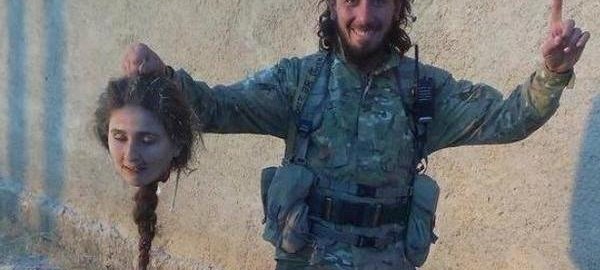




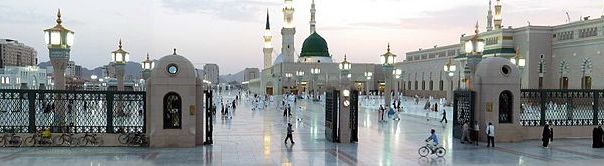


,_Dhaka,_Bangladesh_NK.JPG)


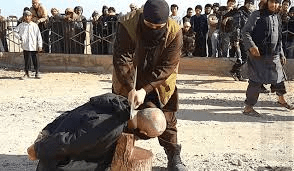

 belfastchildis.com