Meet Abu Azrael, ‘Iraq’s Rambo’, the most reknown fighter in Iraq
—————————————————————–
—————————————————————–
—————————————————————–
ISIS terrorist strung up, burned alive and then sliced like a KEBAB by the ‘Angel of Death’
A captured ISIS terrorist was suspended over a fire, burned to death and then sliced up like a KEBAB by a rebel fighter nicknamed the ‘Angel of Death’.
Footage released online shows fearsome Abu Azrael, one of ISIS’ most feared enemies and a poster boy for Shi’a militias, committed the sickening act as a warning to his enemies.
The hulking fighter laughs as he cuts the dead ISIS terrorists leg with a curved sword, then turns to the camera and says: “ISIS this will be your fate, we will cut you like shawarma (a method of grilling meat on a spit and then shaving it off)”.
The footage was reportedly taken in the Iraqi city of Baiji.
Azrael is a commander with the the Imam Ali brigade, an Iraqi Shi’a militia group sponsored by Iran.
Angel of Death: Abu Azrael slices up a charred ISIS fighter
—————————————————————————————-
Iraqi Rambo Has Close Call With ISIS “Sniper”
—————————————————————————————-
He is believed to be a 40-year-old former university lecturer who left his home to fight ISIS last June.
Pictures show the bald fighter in his military fatigues, posing with an axe and a heavy machine gun.
His mercilessness – combined with a grim sense of humour – has gained him thousands of fans on social media, as well as the ominous nickname ‘Abu Azrael’.
He wields an axe, a sword and an assault rifle and told news agency AFP that he has been a soldier for a long time, having battled US forces during the invasion of Iraq.
The father-of-five added: “You see me go to school to drop off my children and I am peaceful.
“But I show another face to them (ISIS).”
AFP
Warriror: Abu Azrael poses with Shiite fighters
The militia he fights for uses pictures and video of him to gain support on social media.
He has been photographed jauntily riding a bike, reportedly in an area of intense fighting, while another still shows him grinning, arm casually draped across the cannon of an attack helicopter.
One video shows him mocking ISIS fighters with their own walkie-talkie, most likely taken from a dead soldier.
Al-Alam, a state owned Arabic-language TV station in Iran, reported that he used to be a university PE teacher.
However, the BBC, citing sources in the country, reported that he is actually a highly-trained special forces veteran.
—————————————————————–
Ayyub Faleh al-Rubaie
Ayyub Faleh al-Rubaie, known by his nom de guerre Abu Azrael (Arabic: ابو عزرائيل, literally “Father of Azrael“), also known as the “Angel of Death”, is a commander of the Kataib al-Imam Ali, an Iraqi Shi’a militia group of the Popular Mobilization Forces that is fighting ISIL (Islamic State of Iraq and the Levant) in Iraq. He has become a public icon of resisting ISIL in Iraq with a large following on social media.
His motto and catchphrase is “illa tahin” (إلا طحين), meaning “[nothing remains] but flour”, that is, he would pulverize ISIL militants until nothing remains of them but powder.
Abu Azrael is described in various sources as a 40 year old former university lecturer and a one-time Taekwondo champion, although other sources dispute that and suggest that this back-story may be fabricated.
Reports from March 2015 claimed that Azrael is a father of five, and lives an “ordinary life” when not on the battlefield.
Public image
Abu Azrael has become a public icon of resistance against the Islamic State, although he has also fought against other militant groups. A Facebook page dedicated to him has over 300,000 likes as of March 2015. He has attracted attention in the middle east, but by the Spring of 2015, he had also made front-page appearances on international news websites in England, France and the United States.
He has become a popular public figure, some believe, because his methods and appearance match the brutality associated with the Islamic State (ISIS). For example, he has been shown wielding both axes and swords, in addition to modern military rifles. Moreover, some say that his being a private citizen, his bald head, and his thick black beard give him an aggressive, “dashing” appearance.
On 27 August 2015 a video emerged on YouTube showing Abu Azrael burning a Sunni jihadist man alive and cutting into his charred body with a sword.
Thinking of Khaled al-Asaad who loved this place and died protecting it from the deluded followers of Islamic State and their twisted , obscene take on Islam. Although to late to save his life and the ancient sites he loved and studied – hopefully he will be looking down from heaven and rejoicing at its recapture and the news that the damage was not as great as first thought.
Rest in peace Khaled – Now with those you loved and studied.
The retaking of Palmyra by the Syrian army ends 10 months of occupation by the so-called Islamic State (IS). It is an important step in the containment and eventual defeat of the jihadist group that has seized swathes of Syria and Iraq.
It may not mean the end for IS, whose heartlands of Raqqa, Deir Ezzor, and Mosul remain safe havens, but it is a step in chipping away at the group’s power base, both geographically and strategically, as well as debasing the myth that the caliphate’s armies are all-conquering and unable to be defeated.
Quite apart from protecting its beauty and historic importance – which IS forces have shown no respect for – reversing the fall of Palmyra is psychologically important.
Al-Asaad was born in Palmyra, Syria, and lived there most of his life.[3] He held a diploma in history and was educated at the University of Damascus.[4] Al-Asaad was the father of eleven children; six sons and five daughters, one of whom was named Zenobia after the well-known Palmyrene queen.[4]
Career
Archeologist
During his career, he engaged in the excavations and restoration of Palmyra. He had become the principal custodian of the Palmyra site for 40 years since 1963.[5] He worked with American, Polish, German, French and Swiss archaeological missions. His achievement is the elevation of Palmyra to a UNESCO World Heritage Site.[4] He was also fluent in Aramaic and regularly translated texts until 2011.[2]
In 2003, he was part of a Syrian-Polish team that uncovered a 3rd-century mosaic which portrayed a struggle between a human and a winged animal. He described it as “one of the most precious discoveries ever made in Palmyra”. In 2001, he announced the discovery of 700 7th-century silver coins bearing images of Kings Khosru I and Khosru II, part of the Sassanid dynasty that ruled Persia before the Muslim conquest.[3][4]
He was a sought-after speaker at conferences, presenting his vigorous and extensive research. Leading academics and researchers spoke warmly of his affection for Palmyra and his mastery of its history.[3] When he retired in 2003, his son Walid took on the mantle of his work at the site of Palmyra. They both were reportedly detained by ISIS in August 2015; the fate of his son is not yet known.[1]
Politics
In 1954 it is believed that he joined the Syrian Ba’ath Party.[4] However, it is not clear whether he was an active supporter of the Syrian government of Bashar al-Assad.[1] According to The Economist, some have said he was a “staunch supporter” of Assad.[6]
Death
In May 2015, Tadmur (the modern city of Palmyra) and the adjacent ancient city of Palmyra came under the control of the Islamic State of Iraq and Syria (ISIS). Al-Asaad helped evacuate the city museum prior to ISIS’s takeover.[4] Al-Asaad was among those captured during this time, and ISIS attempted to get al-Asaad to reveal the location of the ancient artifacts that he had helped to hide.[7] He was murdered in Tadmur on 18 August 2015. The New York Times reported:
After detaining him for weeks, the jihadists dragged him on Tuesday to a public square where a masked swordsman cut off his head in front of a crowd, Mr. Asaad’s relatives said. His blood-soaked body was then suspended with red twine by its wrists from a traffic light, his head resting on the ground between his feet, his glasses still on, according to a photo distributed on social media by Islamic State supporters.[8]
A placard hanging from the waist of his dead body listed al-Asaad’s alleged crimes: being an “apostate,” representing Syria at “infidel conferences,” serving as “the director of idolatry” in Palmyra, visiting “Heretic Iran” and communicating with a brother in the Syrian security services.[8] His body was reportedly displayed in Tadmur and then in the ancient city of Palmyra.[7][8][9][10][11]
In addition to al-Asaad, Qassem Abdullah Yehya, the Deputy Director of the DGAM Laboratories, also protected the Palmyra site. Qassem too was killed by ISIL while on duty on 12 August 2015. He was 37 years old.[12]
Reactions
The Chief of Syrian Antiquities, Maamoun Abdulkarim, condemned al-Asaad’s death, calling him “a scholar who gave such memorable services to the place Palmyra and to history”. He called al-Asaad’s ISIL killers a “bad omen on Palmyra”.[11]
Yasser Tabbaa, a specialist on Islamic art and architecture in Syria and Iraq, said of al-Asaad: “He was a very important authority on possibly the most important archaeological site in Syria.”[8]
UNESCO and its general director Irina Bokova condemned al-Asaad’s murder, saying “They killed him because he would not betray his deep commitment to Palmyra. Here is where he dedicated his life.”[15]
The Aligarh Historians Society has issued a statement expressing hope that the killers would one day be brought to justice. The Society said that “Civilized people, irrespective of country or religion, must unite in their support for all political and military measures designed to achieve this end, especially those being made by the governments of Syria and Iraq.”[16]
Palmyra (/ˌpælˈmaɪrə/; Aramaic: ܬܕܡܘܪܬܐ Tedmurtā ; Arabic: تدمر Tadmor) was an ancient Semitic city in present Homs Governorate, Syria. Archaeological finds date back to the Neolithic, and it was first documented in the early second millennium BC as a caravan stop for travellers crossing the Syrian Desert. The city was noted in the annals of the Assyrian kings, and may have been mentioned in the Hebrew Bible. Palmyra was a part of the Seleucid Empire and prospered after its incorporation into the Roman Empire in the first century.
The city’s wealth enabled the construction of monumental projects. By the third century AD the city was a prosperous metropolis and regional center. Before 273 it enjoyed autonomy for much of its existence. It was attached to the Roman province of Syria and its political organization was influenced by the Greek city-state model during the first two centuries AD. The city was governed by a senate, which was responsible for public works and the military. After becoming a colonia during the third century, Palmyra incorporated Roman governing institutions before adopting a monarchical system in 260. The city received its wealth from trade caravans; the Palmyrenes, renowned merchants, established colonies along the Silk Road and operated throughout the Roman Empire. The Palmyrenes were primarily a mix of Amorites, Arameans and Arabs,[2] with a Jewish minority. The city’s social structure was tribal, and its inhabitants spoke Palmyrene (a dialect of Aramaic); Greek was used for commercial and diplomatic purposes. The culture of Palmyra, influenced by those of the Greco-Roman world and Persia, produced distinctive art and architecture. The city’s inhabitants worshiped local deities and Mesopotamian and Arab gods.
In 260 the Palmyrene king Odaenathus defeated the Persian emperor Shapur I. He fought several battles against the Persians before his assassination in 267. Odaenathus was succeeded by his two young sons under the regency of Queen Zenobia, who rebelled against Rome and began invading its eastern provinces in 270. The Palmyrene rulers adopted imperial titles in 271; the Roman emperor Aurelian defeated the city in 272, destroying it in 273 after a failed second rebellion.
Palmyra was a minor center under the Byzantines, Rashiduns, Ummayads, Abbasids, Mamluks and their vassals. The Palmyrenes converted to Christianity during the fourth century and to Islam in the second half of the first millennium, and the Palmyrene and Greek languages were replaced by Arabic. The city—destroyed by the Timurids in 1400—remained a small village under the Ottomans until 1918, followed by the Syrian kingdom and the French Mandate. In 1929, the French began moving villagers into the new village of Tadmur. The transfer was completed in 1932, with the site abandoned and available for excavations. On 21 May 2015, Palmyra came under the control of the militant group Islamic State of Iraq and the Levant (ISIL).
Location and etymology
The northern Palmyrene mountain belt
Palmyra is 215 km (134 mi) northeast of the Syrian capital, Damascus,[3] in an oasis surrounded by palms (of which twenty varieties have been reported).[4][5] Two mountain ranges overlook the city; the northern Palmyrene mountain belt from the north and the southern Palmyrene mountains from the southwest.[6] In the south and the east Palmyra is exposed to the Syrian Desert.[6] A small wadi (al-Qubur) crosses the area,[7] flowing from the western hills past the city before disappearing in the eastern gardens of the oasis.[8] South of the wadi is a spring, Efqa.[9]Pliny the Elder described the town in the 70s AD as famous for its desert location, the richness of its soil,[10] and the springs surrounding it, which made agriculture and herding possible.[note 1][10]
“Tadmor” is the Semitic, earliest-attested native name of the city, appearing in the first half of the second millennium BC.[12] The word’s etymology is vague; according to Albert Schultens, it derived from the Semitic word for “dates” (tamar,[note 2][14] referring to the palm trees surrounding the city).[note 3][5]
The name “Palmyra” appeared during the early first century AD in the works of Pliny the Elder,[12][15] and was used throughout the Greco-Roman world.[14] It is generally believed that “Palmyra” derives from “Tadmor” as an alteration (supported by Schultens),[note 4][14] or a translation of “Tadmor” (assuming that it meant palm), and derived from the Greek word for palm “Palame” (supported by Jean Starcky).[5][12]
Michael Patrick O’Connor proposed a Hurrian origin of “Palmyra” and “Tadmor”,[12] citing the inexplicability of alterations to the theorized roots of both names (represented in the addition of -d- to tamar and -ra- to palame).[5] According to this theory, “Tadmor” derives from the Hurrian tad (“to love”) with the addition of the typical Hurrian mid vowel rising (mVr) formantmar.[17] “Palmyra” derives from pal (“to know”) using the same mVr formant (mar).[17] Thirteenth-century Syrian geographer Yaqut al-Hamawi wrote that Tadmor, the daughter of one of Noah’s distant descendants, was buried in the city.[18]
Palmyra entered the historical record during the Bronze Age around 2000 BC, when Puzur-Ishtar the Tadmorean agreed to a contract at an Assyrian trading colony in Kultepe.[21][25] It was mentioned next in the Mari tablets as a stop for trade caravans and nomadic tribes, such as the Suteans.[26] King Shamshi-Adad I of Assyria passed the area on his way to the Mediterranean at the beginning of the 18th century BC;[27] by then, Palmyra was the easternmost point of the kingdom of Qatna.[28] The town was mentioned in a 13th-century BC tablet discovered at Emar, which recorded the names of two “Tadmorean” witnesses.[26] At the beginning of the 11th century BC, King Tiglath-Pileser I of Assyria recorded his defeat of the “Arameans” of “Tadmar”.[26]
The Hebrew Bible (Second Book of Chronicles 8:4) records a city by the name “Tadmor” as a desert city built (or fortified) by King Solomon of Israel;[29] Flavius Josephus mentions the Greek name “Palmyra”, attributing its founding to Solomon in Book VIII of his Antiquities of the Jews.[30] Later Islamic traditions attribute the city’s founding to Solomon’s Jinn.[31] The association of Palmyra with Solomon is a conflation of “Tadmor” and a city built by Solomon in Judea and known as “Tamar” in the Books of Kings (1 Kings 9:18).[32] The biblical description of “Tadmor” and its buildings does not fit archaeological findings in Palmyra, which was a settlement during Solomon’s reign in the 10th century BC.[32]
During the Hellenistic period under the Seleucids (between 312 and 64 BC), Palmyra became a prosperous settlement owing allegiance to the Seleucid king.[32][33] In 217 BC, a Palmyrene force led by a sheikh named Zabdibel joined the army of King Antiochus III in the Battle of Raphia which ended in a Seleucid defeat.[note 5][35] In the middle of the Hellenistic era, Palmyra, formerly south of the al-Qubur wadi, began to expand beyond its northern bank.[36] By the late second century BC, the tower tombs in the Palmyrene Valley of Tombs and the city temples (most notably, the temples of Baalshamin, Al-lāt and the Hellenistic temple) began to be built.[32][35][37]
In 64 BC the Roman Republic annexed the Seleucid kingdom, and the Roman general Pompey established the province of Syria.[35] Palmyra was left independent,[35] trading with Rome and Parthia but belonging to neither.[38] The earliest known Palmyrene inscription is dated to around 44 BC;[39] Palmyra was still a minor sheikhdom, offering water to caravans which occasionally took the desert route on which it was located.[40] However, according to Appian Palmyra was wealthy enough for Mark Antony to send a force to conquer it in 41 BC.[38] The Palmyrenes evacuated to Parthian lands beyond the eastern bank of the Euphrates,[38] which they prepared to defend.[39]
Autonomous Palmyrene region
Main shrine of the Temple of Bel
Palmyra’s theatre
Monumental arch in the eastern section of Palmyra’s colonnade
Palmyra became part of the Roman Empire when it was annexed and paid tribute during Tiberius‘ early reign, around 14 AD.[note 6][35][41] The Romans included Palmyra in the province of Syria,[41] and defined the region’s boundaries; a boundary marker laid by Roman governor Silanus was found 75 kilometres (47 mi) northwest of the city at Khirbet el-Bilaas.[42] A marker at the city’s southwestern border was found at Qasr al-Hayr al-Gharbi,[43] and its eastern border extended to the Euphrates valley.[43] This region included numerous villages subordinate to the center such as Al-Qaryatayn (35 other settlements have been identified by 2012).[44][45][46] The Roman imperial period brought great prosperity to the city, which enjoyed a privileged status under the empire—retaining much of its internal autonomy,[35] being ruled by a council,[47] and incorporating many Greek city-state (polis) institutions into its government.[note 7][48]
The earliest Palmyrene text attesting a Roman presence in the city dates to 18 AD, when the Roman general Germanicus tried to develop a friendly relationship with Parthia; he sent the Palmyrene Alexandros to Mesene, a Parthian vassal kingdom.[note 8][50] This was followed by the arrival of the Roman legion Legio X Fretensis the following year.[note 9][52] Roman authority was minimal during the first century AD, although tax collectors were resident,[53] and a road connecting Palmyra and Sura was built in 75 AD.[note 10][54] The Romans used Palmyrene soldiers,[55] but (unlike typical Roman cities) no local magistrates or prefects are recorded in the city.[54] Palmyra saw intensive construction during the first century, including the city’s first walled fortifications and the Temple of Bel (completed and dedicated in 32 AD).[52][56] During the first century Palmyra developed from a minor desert caravan station into a leading trading center,[note 11][40] with Palmyrene merchants establishing colonies in surrounding trade centers.[50]
Palmyrene trade reached its apex during the second century,[58] aided by two factors; the first was a trade route built by Palmyrenes,[10] and protected by garrisons at major locations, including a garrison in Dura-Europos manned in 117 AD.[59] The second was the Roman annexation of the Nabataean capital Petra in 106,[35] shifting control over southern trade routes of the Arabian Peninsula from the Nabataeans to Palmyra.[note 12][35]
In 129 Palmyra was visited by Hadrian, who named it “Hadriane Palmyra” and made it a free city.[61][62] Hadrian promoted Hellenism throughout the empire,[63] and Palmyra’s urban expansion was modeled on that of Greece.[63] This led to new projects, including the theatre, the colonnade and the temple of Nabu.[63] Roman authority in Palmyra was reinforced in 167, when the cavalry Ala I Thracum Herculiana garrison was moved to the city.[note 13][66]
In the 190s, Palmyra was assigned to the province of Phoenice, newly created by the Severan dynasty.[67] Toward the end of the second century, Palmyra began a steady transition from a traditional Greek city-state to a monarchy;[68] urban development diminished after the city’s building projects peaked.[69] The Severan ascension to the imperial throne in Rome played a major role in Palmyra’s transition:[69]
The Severan-led Roman–Parthian War, from 194 to 217, influenced regional security and affected the city’s trade.[70][73]Bandits began attacking caravans by 199, leading Palmyra to strengthen its military presence.[70] The city devoted more energy to protecting the Roman east than to commerce, and its importance increased.[74]
Palmyrene kingdom and Persian wars
Bust, allegedly of Odenaethus
The rise of the Sasanian Empire in Persia considerably damaged Palmyrene trade.[75] The Sasanians disbanded Palmyrene colonies in their lands,[75] and began a war against the Roman empire.[76] In an inscription dated to 252 Odaenathus appears bearing the title of exarchos (lord) of Palmyra.[77][78] The weakness of the Roman empire and the constant Persian danger were probably the reasons behind the Palmyrene council’s decision to elect a lord for the city in order for him to lead a strengthened army.[79] Odaenathus approached Shapur I of Persia to request him to guarantee Palmyrene interests in Persia, but was rebuffed.[80] In 260 the Emperor Valerian fought Shapur at the Battle of Edessa, but was defeated and captured.[80]
Odaenathus formed an army of Palmyrenes, peasants and the remaining Roman soldiers in the region against Shapur.[80] According to the Augustan History, Odaenathus declared himself king prior to the battle.[81] The Palmyrene leader won a decisive victory near the banks of the Euphrates later in 260 forcing the Persians to retreat.[82] One of Valerian’s officers, Macrianus Major, his sons Quietus and Macrianus, and the prefectBalista then rebelled against Valerian’s son Gallienus, usurping imperial power in Syria.[82] In 261 Odaenathus marched against the remaining usurpers in Syria, defeating and killing Quietus and Balista.[82] As a reward, he received the title Imperator Totius Orientis (“Governor of the East”) from Gallienus,[83] and ruled Syria, Mesopotamia, Arabia and Anatolia‘s eastern regions as the imperial representative.[84][85] In 262 Odaenathus launched a new campaign against Shapur,[86] reclaiming the rest of Roman Mesopotamia (most importantly, the cities of Nisibis and Carrhae), sacking the Jewish city of Nehardea,[note 14][87][88] and besieging the Persian capital Ctesiphon.[89] Following his victory, the Palmyrene monarch assumed the title King of Kings.[note 15][92]
After defeating a Persian army in 263 (or 264), Odaenathus crowned his son Hairan as co-King of Kings near Antioch,[93] then marched and besieged Ctesiphon for the second time (in 264).[89][94] Although he did not take the Persian capital, Odaenathus drove the Persians out of all Roman lands conquered since the beginning of Shapur’s wars in 252.[94] A Persian attack on Palmyra was repelled,[95] and they were defeated by Odaenathus in 266 near Ctesiphon.[82] In 267 Odaenathus, accompanied by Hairan, moved north to repel Gothic attacks on Asia Minor.[82] The king and his son were assassinated during their return;[82] according to the Augustan History and John Zonaras, Odaenathus was killed by a cousin (Zonaras says nephew) named in the History as Maeonius.[96] The Augustan History also says that Maeonius was proclaimed emperor for a brief period before being tried and executed by Odaenathus’ widow, Zenobia.[96][97][98] However, no inscriptions or other evidence exist for Maeonius’ reign and he was probably killed immediately after assassinating Odaenathus.[99][100]
Odaenathus was succeeded by his sons: ten-year-old Vaballathus and the younger Herodianus, who died soon after his father.[101][102] Zenobia, their mother, was the de facto ruler and Vaballathus remained in her shadow while she consolidated her power.[101] Gallienus dispatched his prefect Praetorio Heraclian to command military operations against the Persians, but he was marginalized by Zenobia and returned to the West.[94] The queen was careful not to provoke Rome, claiming for herself and her son the titles held by her husband while guaranteeing the safety of the borders with Persia and pacifying the Tanukhids in Hauran.[101] To protect the borders with Persia, Zenobia fortified different settlements on the Euphrates including the citadels of Halabiye and Zalabiye.[103] Circumstantial evidence exist for confrontations with the Sasanians; probably in 269 Vaballathus took the title Persicus Maximus (“The great victor in Persia”) and the title might be linked with an unrecorded battle against a Persian army trying to regain control of Northern Mesopotamia.[104][105]
Zenobia began her military career in the spring of 270, during the reign of Claudius Gothicus.[106] Under the pretext of attacking the Tanukhids, she annexed Roman Arabia.[106] This was followed in October by an invasion of Egypt,[107][108] ending with a Palmyrene victory and Zenobia’s proclamation as queen of Egypt.[109] Palmyra invaded Anatolia the following year, reaching Ankara and the pinnacle of its expansion.[110]
The conquests were made behind a mask of subordination to Rome.[111] Zenobia issued coins in the name of Claudius’ successor Aurelian, with Vaballathus depicted as king;[note 16][111] since Aurelian was occupied with repelling insurgencies in Europe, he permitted the Palmyrene coinage and conferred the royal titles.[112] In late 271, Vaballathus and his mother assumed the titles of Augustus (emperor) and Augusta.[note 17][111]
The following year, Aurelian crossed the Bosphorus and advanced quickly through Anatolia.[116] According to one account, Roman general Marcus Aurelius Probus regained Egypt from Palmyra;[note 18][117] Aurelian entered Issus and headed to Antioch, where he defeated Zenobia in the Battle of Immae.[118] Zenobia was defeated again at the Battle of Emesa, taking refuge in Homs before quickly returning to her capital.[119] When the Romans besieged Palmyra, Zenobia refused their order to surrender in person to the emperor.[110] She escaped east to ask the Persians for help, but was captured by the Romans; the city capitulated soon afterwards.[120][121]
Later Roman and Byzantine periods
Diocletian’s camp
Aurelian spared the city and stationed a garrison of 600 archers, led by Sandarion, as a peacekeeping force.[122] In 273 Palmyra rebelled under the leadership of Septimius Apsaios,[115] declaring Antiochus (a relative of Zenobia) as Augustus.[123] Aurelian marched against Palmyra, razing it to the ground and seizing the most valuable monuments to decorate his Temple of Sol.[120][124] Palmyrene buildings were smashed, residents massacred and the temple of Bel pillaged.[120]
Palmyra was reduced to a village without territory.[125] Aurelian repaired the temple of Bel, and the Legio I Illyricorum was stationed in the city.[125] Shortly before 303 the Camp of Diocletian, a castra in the western part of the city, was built.[125] The 4-hectare (9.9-acre) camp was a base for the Legio I Illyricorum,[125] which guarded the trade routes around the city.[126]
Palmyra became a Christian city in the decades following its destruction by Aurelian.[127] In late 527, Justinian I ordered its fortification and the restoration of its churches and public buildings to protect the empire against raids by Lakhmid king Al-Mundhir III ibn al-Nu’man.[128]
Arab caliphate
Palmyra was annexed by the Rashidun Caliphate after its 634 capture by the Muslim general Khalid ibn al-Walid, who took the city after an 18-day march by his army through the Syrian Desert from Mesopotamia.[129] By then Palmyra was limited to the Diocletian camp,[130] and became part of Homs Province.[131]
Umayyad and early Abbasid periods
Palmyra experienced a degree of prosperity as part of the Umayyad Caliphate,[132] which used part of the Temple of Bel as a mosque.[133] Palmyra was a key stop on the East-West trade route, with a large souq (market) built by the Ummayads, and the city’s population increased.[132][133] During this period, Palmyra was a stronghold of the Banu Kalb tribe.[134] After being defeated by Marwan II during a civil war in the caliphate, Umayyad contender Sulayman ibn Hisham fled to the Banu Kalb in Palmyra, but eventually pledged allegiance to Marwan in 744; Palmyra continued to oppose Marwan until the surrender of Banu Kalb leader al-Abrash al-Kalbi in 745.[135] That year, Marwan ordered the city’s walls demolished.[130][136]
Abbasid power dwindled during the 10th century, when the empire disintegrated and was divided among a number of vassals.[139] Most of the new rulers acknowledged the caliph as their nominal sovereign, a situation which continued until the Mongol destruction of the Abbasid Caliphate in 1258.[140]
In 955 Sayf al-Dawla, the Hamdanid prince of Aleppo, defeated the nomads near the city,[141] and built a kasbah (fortress) in response to campaigns by the Byzantine emperors Nikephoros II Phokas and John I Tzimiskes.[142] After the early-11th-century Hamdanid collapse, Palmyra was controlled by the successor Mirdasid dynasty.[143] Earthquakes devastated the city in 1068 and 1089.[130][144] The Mirdasids were followed in the second half of the 11th century by Khalaf of the Mala’ib tribe, centered in Homs.[145] Starting in the 1070s Syria came under the Seljuk Empire,[146] whose sultan Malik-Shah I expelled the Mala’ib and imprisoned Khalaf in 1090.[147] Khalaf’s lands were given to Malik-Shah’s brother, Tutush I,[147] who gained his independence after his brother’s 1092 death and established a cadet branch of the Seljuk dynasty in Syria.[148]
Fakhr-al-Din al-Maani Castle
During the early 12th century Palmyra was ruled by Toghtekin, the Buridatabeg of Damascus, who appointed his nephew governor.[149] Toghtekin’s nephew was killed by rebels, and the atabeg retook the city in 1126.[149] Palmyra was given to Toghtekin’s grandson, Shihab-ud-din Mahmud,[149] who was replaced by governor Yusuf ibn Firuz when Shihab-ud-din Mahmud returned to Damascus after his father Taj al-Muluk Buri succeeded Toghtekin.[150] The Burids transformed the Temple of Bel into a citadel in 1132, fortifying the city,[151][152] and transferring it to the Bin Qaraja family three years later in exchange for Homs.[152]
During the mid-12th century, Palmyra was ruled by the Zengid dynasty king Nur ad-Din Mahmud.[153] It became part of the district of Homs,[154] which was given as a fiefdom to the Ayyubid general Shirkuh in 1167 and confiscated after his death in 1169.[155][156] Homs was annexed by the Ayyubid sultanate in 1174;[157] the following year, Saladin gave Homs (including Palmyra) to his cousin Nasir al-Din Muhammad as a fiefdom.[158] After Saladin’s death, the Ayyubid realm was divided and Palmyra was given to Nasir al-Din Muhammad’s son Al-Mujahid Shirkuh II (who built the castle of Palmyra known as Fakhr-al-Din al-Maani Castle around 1230).[159][160] Five years before, Syrian geographer Yaqut al-Hamawi described Palmyra’s residents as living in “a castle surrounded by a stone wall”.[18]
Mamluk period
Palmyra was used as a refuge by Sherkoh II’s grandson, Al-Ashraf Musa, who allied himself with Mongol king Hulagu Khan and fled after the Mongol defeat in the 1260 Battle of Ain Jalut against the Mamluks.[161] Al-Ashraf Musa asked the Mamluk sultan Qutuz for pardon and was accepted as a vassal.[161] Al-Ashraf Musa died in 1263 without a heir bringing the Homs district under direct Mamluk rule.[162]
Al-Fadl principality
Palmyra’s gardens
The Al-Fadl clan (a branch of the Tayy tribe) declared its loyalty to the Mamluks,[163][164] and in 1284 prince Muhanna bin Issa of the Al-Fadl was appointed lord of Palmyra by sultan Qalawun.[163] He was imprisoned by sultan Al-Ashraf Khalil in 1293, and restored two years later by sultan Al-Adil Kitbugha.[163] Muhanna declared his loyalty to Öljaitü of the Ilkhanate in 1312 and was dismissed and replaced with his brother Fadl by sultan Al-Nasir Muhammad.[163] Although Muhanna was forgiven by Al-Nasir and restored in 1317, he and his tribe were expelled in 1320 for his continued relations with the Ilkhanate and he was replaced by tribal chief Muhammad ibn Abi Bakr.[163][165]
Muhanna was forgiven and restored by Al-Nasir in 1330; he remained loyal to the sultan until his death three years later, when he was succeeded by his son.[166] Contemporary historian Ibn Fadlallah al-Omari described the city as having “vast gardens, flourishing trades and bizarre monuments”.[167] The Fadl family protected the trade routes and villages from Bedouin raids,[168] raiding other cities and fighting among themselves.[166] The Mamluks intervened militarily several times, dismissing, imprisoning or expelling its leaders.[166] In 1400 Palmyra was attacked by Timur,[169] who took 200,000 sheep and destroyed the city.[170][171] The Fadl prince Nu’air escaped the battle against Timur and later fought Jakam, the sultan of Aleppo.[172] Nu’air was captured, taken to Aleppo and executed in 1406; this, according to Ibn Hajar Al-Asqalani, ended the Fadl family’s power.[172]
Ottoman and later periods
The village, within the temple of Bel, during the early 20th century
Syria became part of the Ottoman Empire in 1516,[173] and Palmyra was incorporated into Damascus Eyalet as the center of an administrative district (Sanjak).[note 19][174] During the Ottoman era, Palmyra was a small village in the courtyard of the temple of Bel.[175] After 1568 the Ottomans appointed the Lebanese prince Ali bin Musa Harfush as governor of Palmyra’s sanjak,[176] dismissing him in 1584 for treason.[177]
In 1630 Palmyra came under the authority of another Lebanese prince, Fakhr-al-Din II,[178] who renovated Sherkoh II’s castle (which became known as Fakhr-al-Din al-Maani Castle).[160][179] The prince fell from grace with the Ottomans in 1633 and lost control of the village,[178] which remained a separate sanjak until it was absorbed by Zor Sanjak in 1857.[180] The village became home to an Ottoman garrison to control the Bedouin in 1867.[181]
Palmyra regained some of its importance at the beginning of the 20th century as a station for caravans, and its revival was aided by the advent of motorized transport.[175] In 1918, as World War I was ending, the Royal Air Force built an airfield for two planes,[note 20][182][183] and in November the Ottomans retreated from Zor Sanjak without a fight.[note 21][184] The Syrian Emirate‘s army entered Deir ez-Zor on 4 December, and Zor Sanjak became part of Syria.[185] In 1919, as the British and French argued over the borders of the planned mandates,[182] British permanent military representative to the Supreme War CouncilHenry Wilson suggested adding Palmyra to the British mandate.[182] However, British general Edmund Allenby persuaded his government to abandon this plan.[182] Syria (including Palmyra) became part of the French Mandate after Syria’s defeat in the Battle of Maysalun in 24 July 1920.[186]
As Palmyra gained importance to French efforts to pacify the Syrian Desert, a base was constructed in the village near the temple of Bel in 1921.[187] In 1929 the general director of antiquities in Syria, Henri Arnold Seyrig, began excavating the ruins and convinced the villagers to move to a new, French-built village next to the site.[188] The relocation was completed in 1932;[189] ancient Palmyra was ready for excavation as its villagers settled into the new village of Tadmur.[45][188]
The Lion of Al-lāt (first century AD), which stood at the entrance of the temple of Al-lāt
As a result of the Syrian Civil War, Palmyra experienced widespread looting and damage by combatants.[190] During the summer of 2012, concerns about looting in the museum and the site increased when an amateur video of Syrian soldiers carrying funerary stones was posted.[191] However, according to France 24‘s report, “From the information gathered, it is impossible to determine whether pillaging was taking place.”[191] The following year the facade of the temple of Bel sustained a large hole from mortar fire, and colonnade columns have been damaged by shrapnel.[190] According to Maamoun Abdulkarim, director of antiquities and museums at the Syrian Ministry of Culture, the Syrian Army positioned its troops in some archaeological-site areas,[190] while Syrian opposition soldiers stationed themselves in gardens around the city.[190]
On 13 May 2015, ISIL launched an attack on the modern town of Tadmur, sparking fears that the iconoclastic group would destroy the adjacent ancient site Palmyra.[192] On 21 May 2015, some artifacts were removed from the Palmyra museum by the Syrian curators and transported in 2 trucks to Damascus. A number of Greco-Roman busts, jewelry, and other objects looted from the Palmyra museum have been found on the international market.[193] The same day, ISIL forces entered the World Heritage Site.[194] According to eyewitnesses, on 23 May the militants destroyed the lion of Al-lāt and other statues.[195] Local residents reported that the Syrian air force bombed the site on 13 June, damaging the northern wall close to the Temple of Baalshamin.[196]
Since at least 27 May 2015, Palmyra’s theatre was used as a place of public executions of ISIL opponents. A video released by ISIL shows the killing of 20 prisoners at the hands of teenaged male executioners, watched by hundreds of men and boys.[197] On 18 August 2015, Palmyra’s retired antiquities chief Khaled al-Asaad was beheaded by ISIL after being tortured for a month to get information about the city and its treasures; al-Asaad refused to give any information to his captors.[198] The militant group destroyed the temple of Baalshamin on 23 August 2015 according to Abdulkarim and activists while the Syrian Observatory for Human Rights claimed that the destruction took place one month earlier.[199][200]
At its height during the reign of Zenobia, Palmyra had more than 200,000 residents.[201] Its earliest known inhabitants were the Amorites in the early second millennium BC,[202] and by the end of the millennium Arameans were mentioned as inhabitanting the area.[203][204]Arabs arrived in the city in the late first millennium BC; Zabdibel’s soldiers, who aided the Seleucids in the battle of Raphia (217 BC), were described as Arabs.[35] The newcomers were assimilated by the earlier inhabitants, spoke their language,[39] and formed a significant segment of the aristocracy.[205][206] The city also had a Jewish community; inscriptions in Palmyrene from the necropolis of Beit She’arim in Lower Galilee confirm the burial of Palmyrene Jews.[207]
During the Umayyad period Palmyra was mainly inhabited by the Kalb tribe.[175]Benjamin of Tudela recorded the existence of 2,000 Jews in the city during the twelfth century,[208] but after the invasion by Timur it was a small village until the relocation in 1932.[189][209][210]
Alphabetic inscription in Palmyrene alphabet
Before 274 AD, Palmyrenes spoke a dialect of Aramaic and used the Palmyrene alphabet.[note 22][212][213] The use of Latin was minimal, but Greek was used by wealthier members of society for commercial and diplomatic purposes,[2] and it became the dominant language during the Byzantine era.[24] After the Arab conquest Greek was replaced by Arabic,[24] from which a Palmyrene dialect evolved.[214]
Palmyra’s society before 273 was a mixture of the different peoples inhabiting the city,[26][215] which is seen in Aramaic, Arabic and Amorite clan names.[note 23][216][217] Palmyra was a tribal community but due to the lack of sources, an understanding of the nature of Palmyrene tribes structure building or maintaining is not possible.[218] Thirty clans have been documented;[219] five of which were identified as tribes (Phyle (φυλή)) comprising several sub-clans.[note 24][220] By the time of Nero Palmyra had four tribes, each residing in an area of the city bearing its name.[221] Three of the tribes were the Komare, Mattabol and Ma’zin; the fourth tribe is uncertain, but was probably the Mita.[221][222] In time, the four tribes became highly civic and tribal lines blurred;[note 25][221] by the second century clan identity lost its importance, and it disappeared during the third century.[note 26][221] Palmyra declined, and was a village of 6,000 inhabitants at the beginning of the 20th century; although surrounded by Bedouin, the villagers preserved their dialect,[214] and maintained the life of a small settlement.[130]
Culture
Loculi (burial chambers)
Palmyra had a distinctive culture,[224] based on a local Semitic tradition,[225] and influenced by Greece and Rome.[note 27][227] The extent of Greek influence on Palmyra’s culture is debated;[228] according to traditional scholarship, the Palmyrenes’ Greek practices were a superficial layer over a local essence.[229] Palmyra’s senate was an example; although Palmyrene texts written in Greek described it as a “boule” (a Greek institution), the senate was a gathering of non-elected tribal elders (a Near-Eastern assembly tradition).[230] Some scholars, such as Fergus Millar, view Palmyra’s culture as a fusion of local and Greco-Roman traditions.[231]
The culture of Persia influenced Palmyrene military tactics, dress and court ceremonies.[232] Palmyra had no large libraries or publishing facilities, and it lacked an intellectual movement characteristic of other Eastern cities such as Edessa or Antioch.[233] Although Zenobia opened her court to academics, the only notable scholar documented was Cassius Longinus.[233]
Interior of Elahbel tomb
Palmyra had a large agora.[note 28] However, unlike the Greek Agoras (public gathering places shared with public buildings), Palmyra’s agora resembled an Eastern caravanserai more than a hub of public life.[235][236] The Palmyrenes buried their dead in elaborate family mausoleums,[237] most with interior walls forming rows of burial chambers (loculi) in which the dead, laying at full length, were placed.[238][239] A relief of the person interred formed part of the wall’s decoration, acting as a headstone.[239]Sarcophagi appeared in the late second century and were used in some of the tombs.[240] Many burial monuments contained fully dressed, bejeweled mummies,[241]embalmed in a method similar to that used in Ancient Egypt.[242]
Art and architecture
Although Palmyrene art was related to that of Greece, it had a distinctive style unique to the middle-Euphrates region.[243] Palmyrene art is well represented by the bust reliefs which seal the openings of its burial chambers.[243] The reliefs emphasized clothing, jewelry and a frontal representation of the person depicted,[243][244] characteristics which can be seen as a forerunner of Byzantine art.[243] According to Michael Rostovtzeff, Palmyra’s art was influenced by the Parthian art.[245] However, the origin of frontality that characterized Palmyrene and Parthian arts is a controversial issue; while Parthian origin has been suggested (by Daniel Schlumberger),[246]Michael Avi-Yonah contends that it was a local Syrian tradition that influenced Parthian art.[247] Little painting, and none of the bronze statues of prominent citizens (which stood on brackets on the main columns of the Great Colonnade), have survived.[248] A damaged frieze and other sculptures from the Temple of Bel, many removed to museums in Syria and abroad, suggest the city’s public monumental sculpture.[248]
Many surviving funerary busts reached Western museums during the 19th century.[249] Palmyra provided the most convenient Eastern examples bolstering an art-history controversy at the turn of the 20th century: to what extent Eastern influence on Roman art replaced idealized classicism with frontal, hieratic and simplified figures (as believed by Josef Strzygowski and others).[248][250] This transition is seen as a response to cultural changes in the Western Roman Empire, rather than artistic influence from the East.[248] Palmyrene bust reliefs, unlike Roman sculptures, are rudimentary portraits; although many have a “striking individual quality”, their details vary little across figures of similar age and gender.[248]
Like its art, Palmyra’s architecture was influenced by the Greco-Roman style,[251] while preserving local elements (best seen in the Temple of Bel).[252] Enclosed by a massive wall flanked with traditional Roman columns,[252][253] Bel’s sanctuary plan was primarily Semitic.[252] Similar to the Second Temple, the sanctuary consisted of a large courtyard with the deity’s main shrine off-center against its entrance (a plan preserving elements of the temples of Ebla and Ugarit).[252][254]
Government
Inscription in Greek and Aramaic honoring the strategos Julius Aurelius Zenobius
From the beginning of its history to the first century AD Palmyra was a petty sheikhdom,[255] and by the first century BC a Palmyrene identity began to develop.[256] During the first half of the first century AD, Palmyra incorporated some institutions of a Greek city (polis);[48] the concept of citizenship (demos) appears in an inscription, dated to 10 AD, describing the Palmyrenes as a community.[257] In 74 AD, an inscription mentions the city’s boule (senate).[48] The tribal role in Palmyra is debated; during the first century, four treasurers representing the four tribes seems to have partially controlled the administration but their role became ceremonial by the second century and power rested in the hands of the council.[258]
The Palmyrene council consisted of about six hundred members of the local elite (such as the elders or heads of wealthy families or clans),[note 29][47] representing the city’s four quarters.[222] The council, headed by a president,[259] managed civic responsibilities;[47] it supervised public works (including the construction of public buildings), approved expenditures, collected taxes,[47] and appointed two archons (lords) each year.[259][260] Palmyra’s military was led by strategoi (generals) appointed by the council.[261][262] Roman provincial authority set and approved Palmyra’s tariff structure,[263] but the provincial interference in local government was kept minimal as the empire sought to ensure the continuous success of Palmyrene trade most beneficial to Rome.[264] An imposition of direct provincial administration would have jeopardized Palmyra’s ability to conduct its trading activities in the East, specially in Parthia.[264]
With the elevation of Palmyra to a colonia around 213-216, the city ceased being subject to Roman provincial governors and taxes.[265] Palmyra incorporated Roman institutions into its system while keeping many of its former ones.[266] The council remained, and the strategos designated one of two annually-elected magistrates.[266] This duumviri implemented the new colonial constitution,[266] replacing the archons.[260] Palmyra’s political scene changed with the rise of Odaenathus family; an inscription dated to 251 describe Odaenathus’ son Hairan as “Ras” (lord) of Palmyra (exarch in the Greek section of the inscription) and another inscription dated to 252 describe Odaenathus with the same title.[note 30][77] Odaenathus was probably elected by the council as exarch,[79] which was an unusual title in the Roman empire and was not part of the traditional Palmyrene governance institutions.[77][267] Whether Odaenathus’ title indicated a military or a priestly position is unknown,[268] but the military role is more likely.[269] By 257 Odaenathus was known as a consularis, possibly the legatus of the province of Phoenice.[268] In 258 Odaenathus began extending his political influence, taking advantage of regional instability caused by Sasanian aggression;[268] this culminated in the Battle of Edessa,[80] Odaenathus’ royal elevation and mobilization of troops, which made Palmyra a kingdom.[80]
The monarchy maintained the council and most civic institutions,[268][270] permitting the election of magistrates until 264.[260] In the absence of the monarch, the city was administered by a viceroy.[271] Although governors of the eastern Roman provinces under Odaenathus’ control were still appointed by Rome, the king had overall authority.[272] During Zenobia’s rebellion, governors were appointed by the queen.[273]
Not all Palmyrenes accepted the dominion of the royal family; a senator, Septimius Haddudan, appears in a later Palmyrene inscription as aiding Aurelian’s armies during the 273 rebellion.[274][275] After the Roman destruction of the city, Palmyra was ruled directly by Rome,[276] and its following states (including the Burids and Ayyubids),[149][277] or by subordinate Bedouin chiefs—primarily the Fadl family, who governed for the Mamluks.[278]
Military
Relief in the Temple of Bel depicting Palmyrene war gods
Due to its military character and efficiency in battle, Irfan Shahîd described Palmyra as the “Sparta among the cities of the Orient”; even Palmyrene gods were depicted in full military uniforms.[279] Palmyra’s army protected the city and its economy, helping extend Palmyrene authority beyond the city walls and protecting the countryside’s desert trade routes.[280] The city had a substantial military;[43] Zabdibel commanded a force of 10,000 in the third century BC,[35] and Zenobia led an army of 70,000 in the Battle of Emesa.[281] Soldiers were recruited from the city and its territories, spanning several thousand square kilometers from the outskirts of Homs to the Euphrates valley.[43] Non-Palmyrene soldiers were also recruited; a Nabatean cavalryman is recorded in 132 as serving in a Palmyrene unit stationed at Anah.[281] Palmyra’s recruiting system is unknown; the city might have selected and equipped the troops and the strategoi led, trained and disciplined them.[282]
The strategoi were appointed by the council with the approval of Rome.[262] The royal army was under the leadership of the monarch aided by generals,[283][284] and was modeled on the Sasanians in arms and tactics.[232] The Palmyrenes were noted archers.[285] They used infantry while a heavily armored cavalry (clibanarii) constituted the main attacking force.[note 31][287][288] Palmyra’s infantry was armed with swords, lances and small round shields;[55] the clibanarii were fully armored (including their horses), and used heavy spears (kontos) 3.65 metres (12.0 ft) long without shields.[288][289]
Dropped the “King of Kings” title in 270, replacing it with the Latinrex (king) and declared emperor in 271.[111] Reigned under the regency of his mother, Zenobia.[296]
Right to left: Bel, Yarhibol, Aglibol and Baalshamin
Baalshamin (center), Aglibol (right) and Malakbel (left)
Palmyra’s gods were primarily part of the northwestern Semiticpantheon, with the addition of gods from the Mesopotamian and Arab pantheons.[304] The city’s chief pre-Hellenistic deity was called Bol,[305] an abbreviation of Baal (a northwestern Semitic honorific).[306] The Babylonian cult of Bel-Marduk influenced the Palmyrene religion and by 217 BC the chief deity’s name was changed to Bel.[305] This did not indicate the replacing of the northwestern Semitic Bol with a Mesopotamian deity, but was a mere change in the name.[306]
The deities worshiped in the countryside were depicted as camel or horse riders and bore Arab names.[45] The nature of those deities is left to theory as only names are known, most importantly Abgal.[313] The Palmyrene pantheon included ginnaye (some were given the designation “Gad”),[314] a group of lesser deities popular in the countryside,[315] who were similar to the Arab jinn and the Roman genius.[316] Ginnaye were believed to have the appearance and behavior of humans, similar to Arab jinn.[316] Unlike jinn, however, the ginnaye could not possess or injure humans.[316] Their role was similar to the Roman genius: tutelary deities who guarded individuals and their caravans, cattle and villages.[307][316]
Although the Palmyrenes worshiped their deities as individuals, some were associated with other gods.[317] Bel had Astarte-Belti as his consort, and formed a triple deity with Aglibol and Yarhibol (who became a sun god in his association with Bel).[310][318] Malakbel was part of many associations,[317] pairing with Gad Taimi and Aglibol,[319][319] and forming a triple deity with Baalshamin and Aglibol.[320] Palmyra hosted an Akitu (spring festival) each Nisan.[321] Each of the city’s four quarters had a sanctuary for a deity considered ancestral to the resident tribe; Malakbel and Aglibol’s sanctuary was in the Komare quarter.[322] The Baalshamin sanctuary was in the Ma’zin quarter, the Arsu sanctuary in the Mattabol quarter,[322] and the Atargatis sanctuary in the fourth tribe’s quarter.[note 33][320]
Palmyra’s paganism was replaced with Christianity as the religion spread across the Roman Empire, and a bishop was reported in the city by 325.[127] Although most temples became churches, the temple of Al-lāt was destroyed in 385 at the order of Maternus Cynegius (the eastern praetorian prefect).[127] After the Arab conquest in 634 Islam gradually replaced Christianity, and the last known bishop of Palmyra was consecrated in 818.[323]
Economy
Palmyra’s Agora; the two front entrances lead to the interior, the city’s marketplace
Palmyra’s economy before and at the beginning of the Roman period was based on agriculture, pastoralism, trade,[10] and serving as a rest station for the caravans which sporadically crossed the desert.[40] By the end of the first century BC, the city had a mixed economy based on agriculture, pastoralism,[324] taxation,[325] and, most importantly, the caravan trade.[326]
Taxation was an important source of revenue for Palmyra.[325] Caravaneers paid taxes in a building known as the Tariff Court,[219] where a tax law dating to 137 was discovered in 1881 by Armenian prince Abamelek Lazarew who was visiting the ruins.[327][328] The law regulated the tariffs paid by the merchants for goods sold at the internal market or exported from the city.[note 34][219][330] Most land was owned by the city, which collected grazing taxes.[324] The oasis had about 1,000 hectares (2,500 acres) of irrigable land,[331] surrounded by the countryside.[332] The Palmyrenes constructed an extensive irrigation system in the northern mountains that consisted of reservoirs and channels to capture and store the occasional rainfall.[46] The countryside was intensively planted with olive, fig, pistachio and barley.[46] However, agriculture could not support the population and food was imported.[332]
After Palmyra’s destruction in 273, it became a market for villagers and nomads from the surrounding area.[333] The city regained some of its prosperity during the Ummayad era, indicated by the discovery of a large Ummayad souq in the colonnade street.[334] Palmyra was a minor trading center until the Timurid destruction,[167][171] which reduced it to a settlement on the desert border whose inhabitants herded and cultivated small plots for vegetables and corn.[335]
Commerce
The Silk Road
Palmyra’s main trade route ran east to the Euphrates, where it connected to the Silk Road.[336] The route then ran south along the river toward the port of Charax Spasinu on the Persian Gulf, where Palmyrene ships traveled back and forth to India.[337] Goods were imported from India, China and Transoxiana,[338] and exported west to Emesa (or Antioch) then the Mediterranean ports,[339] from which they were distributed throughout the Roman Empire.[337] In addition to the usual route some Palmyrene merchants used the Red Sea,[338] probably as a result of the Roman–Parthian Wars.[340] Goods were carried overland from the seaports to a Nile port, and then taken to the Egyptian Mediterranean ports for export.[340] Inscriptions attesting a Palmyrene presence in Egypt date to the reign of Hadrian.[341]
Since Palmyra was not on the Silk Road (which followed the Euphrates),[10] the Palmyrenes secured the desert route passing their city.[10] They connected it to the Euphrates valley, providing water and shelter.[10] The Palmyrene route was used almost exclusively by the city’s merchants,[10] who maintained a presence in many cities, including Dura-Europos in 33 BC,[57]Babylon by 19 AD, Seleucia by 24 AD,[50]Dendera, Coptos,[342]Bahrain, the Indus River Delta, Merv and Rome.[343]
The caravan trade depended on patrons and merchants.[344] Patrons owned the land on which the caravan animals were raised, providing animals and guards for the merchants.[344] The lands were located in the numerous villages of the Palmyrene countryside.[45] Although merchants used the patrons to conduct business, their roles often overlapped and a patron would sometimes lead a caravan.[344] Commerce made Palmyra and its merchants among the wealthiest in the region.[326] Some caravans were financed by a single merchant,[219] such as Male’ Agrippa (who financed Hadrian’s visit in 129 and the 139 rebuilding of the temple of Bel).[61] The primary income-generating trade good was silk, which was exported from the East to the West.[345] Other exported goods included jade, muslin, spices, ebony, ivory and precious stones.[343] For its domestic market Palmyra imported slaves, prostitutes, olive oil, dyed goods, myrrh and perfume.[329][343]
Site
City layout
Valley of Tombs
Underground tomb
Palmyra began as a small settlement near the Efqa spring on the southern bank of Wadi al-Qubur.[346] The settlement, known as the Hellenistic settlement, had residences expanding to the wadi’s northern bank during the first century.[8] Although the city’s walls originally enclosed an extensive area on both banks of the wadi, the walls rebuilt during Diocletian’s reign surrounded only the northern-bank section.[8]
Most of the city’s monumental projects were built on the wadi’s northern bank.[347] Among them is the temple of Bel, on a tell which was the site of an earlier temple (known as the Hellenistic temple).[37] However, excavation supports the theory that the temple was originally located on the southern bank; the wadi’s bed was diverted to incorporate the temple into Palmyra’s new urban organization, which began with its prosperity during the late first and early second centuries.[36]
Palmyra’s landmarks
Also north of the wadi was the Great Colonnade, Palmyra’s 1.1-kilometre-long (0.68 mi) main street,[348] which extended from the temple of Bel in the east,[349] to the Funerary Temple no.86 in the city’s western part.[350][351] It has a monumental arch in its eastern section,[352] and a tetrapylon stands in the center.[353]
The Baths of Diocletian, built on the ruins of an earlier building which might have been the royal palace,[216] were on the left side of the colonnade.[354] Nearby were the temple of Baalshamin,[355] residences,[356] and the Byzantine churches, which include a 1,500-year-old church (Palmyra’s fourth, and believed to be the largest ever discovered in Syria).[3] The church columns were estimated to be 6 metres (20 ft) tall, and its base measured 12 by 24 metres (39 by 79 ft).[3] A small amphitheatre was found in the church’s courtyard.[3]
The temple of Nabu and the Roman theater were built on the colonnade’s southern side.[357] Behind the theater were a small senate building and the large Agora, with the remains of a triclinium (banquet room) and the Tariff Court.[358] A cross street at the western end of the colonnade leads to the Camp of Diocletian,[348][359] built by Sosianus Hierocles (the Roman governor of Syria).[360] Nearby are the temple of Al-lāt and the Damascus Gate.[361]
West of the ancient walls the Palmyrenes built a number of large-scale funerary monuments which now form the Valley of Tombs,[362] a 1-kilometre-long (0.62 mi) necropolis.[363] The more than 50 monuments were primarily tower-shaped and up to four stories high.[364] Towers were replaced by funerary temples as above ground tombs after 128, which is the date of the most recent tower.[350] The city had other cemeteries in the north, southwest and southeast, where the tombs are primarily hypogea (underground).[365][366]
The senate building is largely ruined.[358] It is a small building that consists of a peristyle courtyard and a chamber that has an apse at one end and rows of seats around it.[219]
Much of the Baths of Diocletian are ruined and do not survive above the level of the foundations.[367] The complex’s entrance is marked by four massive Egyptian granite columns each 1.3 metres (4 ft 3 in) in diameter, 12.5 metres (41 ft) high and weigh 20 tonnes.[358] Inside, the outline of a bathing pool surrounded by a colonnade of Corinthian columns is still visible in addition to an octagonal room that served as a dressing room containing a drain in its center.[358]
The Agora of Palmyra was built c. 193.[368] It is a massive 71 by 84 metres (233 by 276 ft) structure with 11 entrances.[358] Inside the agora, 200 columnar bases that used to hold statues of prominent citizens were found.[358] The inscriptions on the bases allowed an understanding of the order by which the statues were grouped; the eastern side was reserved for senators, the northern side for Palmyrene officials, the western side for soldiers and the southern side for caravan chiefs.[358]
The Tariff Court is a large rectangular enclosure south of the agora and sharing its northern wall with it.[369] Originally, the entrance of the court was a massive vestibule in its southwestern wall.[369] However, the entrance was blocked by the construction of a defensive wall and the court was entered through three doors from the Agora.[369] The court gained its name by containing a 5 meters long stone slab that had the Palmyrene tax law inscribed on it.[370]
The Triclinium of the Agora is located to the northwestern corner of the Agora and can host up to 40 person.[371][372] It is a small 12 by 15 metres (39 by 49 ft) hall decorated with Greek key motifs that run in a continuous line halfway up the wall.[373] The building was probably used by the rulers of the city;[371] Seyrig proposed that it was a small temple before being turned into a banqueting hall.[372]
The temple of Nabu is largely ruined.[374] The temple was Eastern in its plan; the outer enclosure’s propylaea led to a 20 by 9 metres (66 by 30 ft) podium through a portico of which the bases of the columns survives.[375] The peristyle cella opened onto an outdoor altar.[375]
The temple of Al-lāt is largely ruined with only a podium, few columns and the door frame remaining.[376] Inside the compound, a giant lion relief (Lion of Al-lāt) was excavated and in its original form, was a relief protruding from the temple compound’s wall.[377][378]
The ruined temple of Baal-hamon is located on the top of Jabal al-Muntar hill which oversees the spring of Efqa.[379] Constructed in 89 AD, it consists of a cella and a vestibule with two columns.[379] The temple had a defensive tower attached to it;[380] a tessera depicting the sanctuary was excavated and it reveled that both the cella and the vestibule were decorated with merlons.[380]
The Funerary Temple no.86 (also known as the House Tomb) is located at the western end of the Great Colonnade.[350][381] It was built in the third century and has a portico of six columns and vine patterns carvings.[382][383] Inside the chamber, steps leads down to a vault crypt.[383] The shrine might have been connected to the royal family being the only tomb inside the city’s walls.[382]
The Tetrapylon was erected during the renovations of Diocletian at the end of the third century.[130] It is a square platform and each corner contains a grouping of four columns.[357] Each column group supports a 150 tons cornice and contains a pedestal in its center that originally carried a statue.[357] Out of sixteen columns, only one is original while the rest are concrete reconstruction carried out in 1963 by the Syrian Directorate-General of Antiquities.[383] The original columns were brought from Egypt and carved out of pink granite.[357]
The city’s current walls were erected during the reign of Diocletian whose fortification of the city enclosed a much smaller area than the original pre-273 city.[384] The Diocletianic walls had protective towers and fortified gateways.[384]
The pre-273 walls were narrow and while encircling the whole city, they do not seem to have provided real protection against an invasion.[384] No signs of towers or fortified gates exist and it can not be proven that the walls enclosed the city as many gaps appears to have never been defended.[384] Those walls seems to have been a tool to protect the city against Bedouins and to provide a costume barrier.[384]
Palmyra’s first excavations were conducted in 1902 by Otto Puchstein and in 1917 by Theodor Wiegand.[189] In 1929, French general director of antiquities of Syria and Lebanon Henri Arnold Seyrig began large-scale excavation of the site;[189] interrupted by World War II, it resumed soon after the war’s end.[189] Seyrig started with the Temple of Bel in 1929 and between 1939 and 1940 he excavated the Agora.[45]Daniel Schlumberger conducted excavations in the Palmyrene northwest countryside in 1934 and 1935 where he studied different local sanctuaries in the Palmyrene villages.[45] From 1954 to 1956, a Swiss expedition organized by UNESCO excavated the temple of Baalshamin.[189] Since 1958, the site has been excavated by the Syrian Directorate-General of Antiquities,[188] and Polish expeditions led by many archaeologists including Kazimierz Michałowski (until 1980) and Michael Gawlikowski (until 2011).[189][386]
The Polish expedition concentrated its work in the Camp of Diocletian while the Syrian Directorate-General of Antiquities excavated the temple of Nabu.[45] Most of the hypogea were excavated jointly by the Polish expedition and the Syrian Directorate,[387] while the area of Efqa was excavated by Jean Starcky and Jafar al-Hassani.[356] The temple of Baal-hamon was discovered by Robert du Mesnil du Buisson in the 1970s.[379] The Palmyrene irrigation system was discovered in 2008 by Jørgen Christian Meyer who researched the Palmyrene countryside through ground inspections and satellite images.[46] Most of Palmyra still remains unexplored especially the residential quarters in the north and south while the necropolis has been thoroughly excavated by the Directorate and the Polish expedition.[356] Excavation expeditions departed Palmyra in 2011 due to the Syrian Civil War.[46]
In 1980, the historic site including the necropolis outside the walls was declared a World Heritage Site by the UNESCO.[388] In November 2010 Austrian media manager Helmut Thoma admitted looting a Palmyrene grave in 1980, stealing architectural pieces for his home;[389] German and Austrian archaeologists protested the theft.[390]
“I will cast terror into the hearts of those who disbelieve. Therefore strike off their heads and strike off every fingertip of them” No reasonable person would interpret this to mean a spiritual struggle.
——————————————————————————
Incredible: Man Survives an ISIS Massacre
——————————————————————————
Quran (8:67) –
“It is not for a Prophet that he should have prisoners of war until he had made a great slaughter in the land…“
“O ye who believe! When ye meet those who disbelieve in battle, turn not your backs to them. (16)Whoso on that day turneth his back to them, unless maneuvering for battle or intent to join a company, he truly hath incurred wrath from Allah, and his habitation will be hell, a hapless journey’s end.”
“Fight against them so that Allah will punish them by your hands and disgrace them and give you victory over them and heal the breasts of a believing people.”
——————————————————————————
Disturbing ISIS Film Shows 10-Year-Old Executing Two Men
“If the hypocrites, and those in whose hearts is a disease, and the alarmists in the city do not cease, We verily shall urge thee on against them, then they will be your neighbors in it but a little while. Accursed, they will be seized wherever found and slain with a (fierce) slaughter.”
“Those who disbelieve follow falsehood, while those who believe follow the truth from their Lord… So, when you meet (in fight Jihad in Allah’s Cause), those who disbelieve smite at their necks till when you have killed and wounded many of them, then bind a bond firmly (on them, i.e. take them as captives)…
——————————————————————————
Exclusive: the jihadi Brit who fought and died in Syria
“There is no blame for the blind, nor is there blame for the lame, nor is there blame for the sick (that they go not forth to war). And whoso obeyeth Allah and His messenger, He will make him enter Gardens underneath which rivers flow; and whoso turneth back, him will He punish with a painful doom.”
Iraqi Christians Fighting Back Against ISIS Well done boys. Get in there boys!
The difference between these dead ISIS Terrorist is that these men were Armed and fighting when they were killed by Iraqi Christians who were fighting back against the ISIS Invasion and what they knew would be their own slaughter if they were captured or surrendered. These men’s bodies were NOT desecrated as ISIS does when they have killed captured or lied to their enemy to coax them into surrendering and then behead then or line them up against a ditch and gun them all down. That is what ISIS does.
War is not a pleasant even, except to the blood thirsty Islamic Terrorists such as ISIS, HAMAS, Al Quida and others who behead non-combatants such as American Journalists who they capture and Woman who are Aid Workers trying to help feed the Iraqi victims of War
—————————————————————————————–
SMH: ISIS Extremists Turned Crybabies after Caught and Slapped Around by Soldiers
—————————————————————————————–
—————————————————————————————–
ISIS prisoners provide a glimpse into militant’s savage world
—————————————————————————————–
—————————————————————————————–
ISIS fighters die from food poisoning after breaking Ramadan fast in Mosul – TomoNews
—————————————————————————————–
—————————————————————————————–
Surreal Scenes of Life Under ISIS in Mosul, Iraq
—————————————————————————————–
—————————————————————————————–
Top ISIS Executioner Has Head Chopped Off… For Smoking?
Islamic State is a one-way ticket for jihadi brides
—————————————————-
British Jihadi Women Documentary 2015
—————————————————-
Just two out of 600 females who have ran from the West to join the Islamic State (Isis) have returned home from Syria, government figures show.
But walking into the warzone is a one-way-ticket with a small chance of return, with little realising this, with only two of the so-called jihadi brides having escaped home.
In comparison to this, European government officials which monitor these numbers note that almost one-third of male jihadists have escaped the clutches of IS are on their way back from Syria.
According to researchers, many women and girls are unable to escape from the warzone – even if they realise they have made a huge mistake.
The girls who leave the west to join IS are married off straight away, either in Turkey or when they cross into Syria. There are around 20,000 foreign fighters and approximately 5,000 European fighters in Syria, so there is no shortage of men looking for wives. That number is expected to double by the end of 2015.
Sara Khan, a British Muslim whose group Inspire campaigns against the dangers of extremist recruiters, told the Associated Press: “It’s so romanticized, the idea of this utopia. I don’t even think those young girls have necessarily considered that there’s no way back now.”
The women are not allowed to travel without a male, if they do they could face punishment, according to material IS published.
Sterlina Petalo is a Dutch teenager who converted to Islam, and came to known as Aicha. She travelled to Syria in 2014 to marry a Dutch jihadi fighter there and managed to return months later – it is assumed she made her way to Turkey, where her mother picked her up and brought her back to the Netherlands. Back home, she was immediately arrested on suspicion of joining a terror group.
A 25-year-old Briton, who police did not name also made her way back to the UK along with her toddler that she took all the way to Raqqa. She decided she made a mistake and called home, she made her way back to Turkey and called her father there who met her there. In the UK she was detained and charged but is now free on bail.
Currently 60 British women and girls have fled the UK to become jihadi brides, including three girls from Bethnal Green in East London who ran away in February.
Amira Abase, 15, Shamima Begum, 15, and Kadiza Sultana, 16, were captured on CCTV before arriving in Syria. The video was recorded on 17 February, the day the three friends left their homes in East London, after telling their families they would be out for the day.
They are now believed to be living in the IS stronghold Raqqa, however reports suggest that they have been separated and possibly married off to fighters as jihadi brides.
These three girls left the UK on their own free will and are now apparently are being trained for “special missions’ and are likely to die in the Middle East as suicide bombers Um Asmah, a Islamic State commander who is now on the run, told Sky News.
Um Asmah said the girls were “very, very happy” on arrival and had been laughing and smiling, but they were unprepared and had little experience of living permanently veiled and under the strict regime.
Their fate has already been determined by the terror group, she explained, adding: “Everything is already decided for you and you cannot evade it or refuse it. You cannot have a mind of your own,” Asmah told Sky News.
She said the Bethnal Green trio are special to the terror group, but the extremist group has plenty more foreign girls, with more joining each month.
Jihadi bride: Another Briton who left Britain to join ISIS is Lewisham-born Khadijah Dare (left). Here she is pictured alongside her Swedish terrorist
Now on the run, Um Asmah says she will be killed if she is ever caught by IS fighters. “I am a traitor and an unbeliever now,” she said. “I am scared every minute and of everyone I meet.”
This week, Metropolitan Police counter terrorism officers stopped a 16-year-old girl from London travelling to Syria after she was groomed on Twitter to flee to the war zone and marry an IS soldier.
In a new propaganda video British IS hostage John Cantlie looks frail and thin as his living nightmare continues as the last and longest held Western IS hostage. If anything positive can be taken from this latest offering at least we know John is/was in or near Mosul and alive and well (under the circumstance) . Praying that John’s release comes soon and be returned safe and well to his family in the UK.
Update July 2016
British hostage John Cantlie is shown in new Isis propaganda video
Kidnapped journalist talks about bombing of Mosul University in first video featuring him to appear since March
John Cantlie, the British journalist who has been held hostage by jihadis since 2012, is shown in a new video made by Islamic State.
Cantlie looks noticeably thinner in the video, the first to feature him since one that emerged on 19 March.
Once again, his skills as a journalist have been exploited by Isis in an attempt to lend credibility to propaganda films. On this occasion he discusses the bombing of Mosul University and is filmed by a camera that appears at a later stage to be attached to a drone as it flies over a city landscape strewn with rubble.
Wearing a long shirt and black trousers, he introduces himself before telling viewers that he is standing in front of the remains of the university. “You have to ask yourself: why did the coalition decide to destroy the university?” he says, adding: “Normal, social everyday life has been destroyed and if you are going to destroy a university, why bother?”
New footage of IS hostage John Cantlie has been release by Islamic State and although unverified – if and when this is confirmed to be genuine will give new hope to John’s family and millions of sympathisers across the world.
Cantlie, who was kidnapped in November 2012, is shown berating the US-led coalition for bombing a media building in the ISIS-held city of Mosul. in Iraq.
It has been over a year since Cantlie appeared in a propaganda video showing life inside the Syrian province of Aleppo.
ISIS propaganda Video shows English hostage John Cantlie
John Henry Cantlie
—————————————————————————————————–
ISIS New Propaganda Video – John Cantlie Report From Mosul Iraq
—————————————————————————————————–
What has happened to ISIS captive John Cantlie
The regular release of ISIS propaganda magazine Dabiq this week came with one noticeable omission — a message from John Cantlie.
Cantlie, a British freelance photojournalist, is the last western hostage ISIS is known to be holding captive in Syria. In the year since the militant group began murdering captive British and American journalists and aid workers, Cantlie has been put forward as a sort of correspondent in ISIS’ propaganda targeting foreigners.
But in the issue of Dabiq that appeared online July 13, titled The Law of Allah or the Laws of Men there was no Western government-damning rant attributed to Cantlie.
As noted on Twitter by Rita Katz, the executive director of jihadist monitoring network SITE Intelligence Group, it’s the first time Cantlie was absent from the publication since he began appearing in its pages last October.
—————————————————————————————————–
John Henry Cantlie (born 1970) is a British war photographer and correspondent who was kidnapped in Syria with James Foley in November 2012 and remains a hostage He had previously been kidnapped in Syria in July 2012 but was rescued a week later
Family history
———————————————————————————
Heartbreaking:
John Cantlie’s father makes appeal for son’s release
———————————————————————————
John Cantlie
John Cantlie is the great grandson of Sir James Cantlie, a doctor who co-founded the Hong Kong College of Medicine for Chinese in 1887 (later the University of Hong Kong). In 1896, he was instrumental in the protection of the Chinese revolutionary Sun Yat-sen who might otherwise have been executed by the Qing dynasty secret service. His grandfather, Colonel Kenneth Cantlie, designed the China Railways KF locomotive, at 260 tons the largest locomotive of post-war China that remained in service until 1972.
Cantlie’s father Paul died on 16 October 2014, having released a video pleading for his son’s release on his deathbed.
First abduction
———————————————————
Al Jazeera interviews journalist John Cantlie
———————————————————
He was reportedly kidnapped by fighters while crossing illegally into Syria from Turkey on 19 July 2012, near Bab al-Hawa.Along with Dutch photographer Jeroen Oerlemans, Cantlie was shot whilst trying to escape their captors. In an interview with The Sun newspaper on 26 August 2012, Cantlie said it was:
“every Englishman’s duty to try and escape if captured.”
Both photographers claimed they were about to be handed over to a jihad unit affiliated with al-Qaeda for ransom when they were rescued by the Free Syrian Army. Cantlie’s kidnapping is the first recorded case of a British journalist being held, shot and then rescued from fellow Britons during the revolutions of the Arab Spring.
In an account in The Sunday Times on 5 August 2012, Cantlie described his experience.
Oerlemans was shot in the left leg and Cantlie in the left arm during their escape attempt, Cantlie suffering ulnar nerve entrapment (loss of feeling and use to the hand) as a result.
In an account of the shooting, Cantlie said some of the British Muslims in the group repeatedly shouted, “die, kafir!” Oerlemans then stated that “the British guys were the most vindictive of them all”.They were taken back to the camp where a fighter who claimed to be an NHS doctor stabilized them and treated their wounds.The pair said the doctor gave them information and extra food. Cantlie later wrote in the October 2012 edition of FHM magazine that this was Stockholm syndrome, in which a hostage befriends one or more of their captors. The pair were threatened with execution. Oerlemans stated that it was unclear who held them, but the group of militants were of multiple ethnicities.
Rescue
On 26 July 2012, one week after being kidnapped, they were rescued by four members of the Free Syrian Army. The rebels came into the camp shooting their weapons and held at least one jihad fighter at gunpoint while Cantlie and Oerlemans were helped into a waiting vehicle. Both photographers had to be assisted as their feet had been seriously injured when they tried to escape and neither could walk. They had lost all their camera equipment, passports and clothes in the incident, and were smuggled back across the border at a crossing used primarily by Syrian refugees. They were initially treated by a medic for The New York Times in Antakya before being debriefed by Turkish and then British intelligence.
On 9 October 2012 an individual suspected of being involved in the kidnap was arrested at Heathrow airport after arriving on a flight from Egypt.
This was Cantlie’s second visit to Syria. In March 2012, he became the first Western photographer to witness first-hand an incursion by government ground troops into a city when T72 heavy tanks rolled into the city of Saraquib in Idlib province and started shelling indiscriminately. In a feature in the Sunday Telegraph published 31 March, Cantlie wrote: “Then the tanks opened fire. Fist-sized pieces of shrapnel sliced through the air, decapitating one rebel immediately. His rifle clattered to the ground as his friends dragged his headless torso from the line of fire.” To illustrate what the Syrian rebels were up against, Cantlie took a photograph looking down the barrel of an advancing T72.
Second abduction
Cantlie had not appeared in print or on social media since late 2012, and the trial of one of his alleged captors collapsed in 2013, when he could not be summoned as a witness because, in November 2012,Cantlie was abducted a second time, along with American journalist James Foley. Their taxi driver and Foley’s translator were not taken, however.They had reportedly been working together on a film about Cantlie’s first abduction.
Foley was beheaded in August 2014.
ISIL propaganda
———————————————————————
Brainwashing 101 with John Cantlie
———————————————————————
———————————————————————
New ISIS video of hostage John Cantlie
———————————————————————
After disappearing for more than a year following his second abduction in late 2012, Cantlie resurfaced on 18 September 2014 in a video[30] posted by the Islamic State of Iraq and the Levant in the first episode of a multi-part series entitled Lend Me Your Ears. As of February 2015, ISIL has released a total of six videos in the Lend Me Your Ears series, all of which feature Cantlie speaking while sitting at a wooden table and wearing orange prison garb against a black backdrop.
In the videos, Cantlie adopts a critical position toward Western foreign policy, including military actions, political statements, and media coverage. Cantlie is particularly critical of US and British hostage policy, comparing it unfavorably to the policy of other European countries that negotiate and pay for the release of hostages.
ISIL has released three additional videos apart from the Lend Me Your Ears series. These videos are noteworthy for depicting Cantlie as a Western journalist rather than a Western hostage. In both videos, Cantlie attempts to characterize the facts on the ground in Kobani, Mosul and rebel-controlled Aleppo as far more favorable to ISIL than is portrayed in the Western media.
Since Cantlie is a prisoner of ISIL and therefore is necessarily speaking under duress, it is unclear whether and to what degree he actually holds these views. His sister, Jessica Cantlie, has claimed that John Cantlie “believes two-thirds” of what he says in the videos.
Lend Me Your Ears series
ISIL has thus far released 7 videos (counting the Introduction) in the Lend Me Your Ears series.
Video
Release date
Length
Comments
1
18 September 2014
3:21
Introduction
2
18 September 2014
5:56
“Episode 1” (which is actually the 2nd video released)
3
30 September 2014
5:35
“Episode 2”
4
12 October 2014
6:54
“Episode 3”
5
16 October 2014
7:49
“Episode 4”
6
12 November 2014
6:31
“Episode 5”
7
24 November 2014
8:53
“Episode 6”
8
TBA
TBA
“Episode 7”
9
TBA
TBA
“Episode 8” (Last In Series)
“Inside” videos
“Inside ‘Ayn al Islam (Kobani)” (5:37 minutes), published 28 October 2014 (released to YouTube on February 3, 2015) The piece appears to have been filmed during a brief period when Kobani was occupied by ISIS.
“Inside Mosul” (8:15 minutes), published 3 January 2015 (Released to YouTube by Italian broadcaster Canal 25)
“Inside Aleppo” (12:00 minutes), published 9 February 2015 (Released to YouTube on February 17, 2015). Cantlie states in the video it will be the last film in the “Inside” series.
The family of John and Janet Stocker paid tribute to the “happiest, most loving couple” after it was confirmed they were killed in the Tunisia beach attack.
In October 2013, a suicide bomber blew himself up in a botched attack on a Sousse beach while security forces foiled another planned attack nearby.[10] The post-Tunisian revolution led to the 2014 parliamentary election in which the principal secularist party gained a plurality but was unable to govern alone, and ultimately formed a national unity government. Secularist Beji Caid Essebsi was elected president in the Tunisian presidential election, 2014.[11] Since the overthrow of Ben Ali, terrorism has increased leading to 60 victims among security and military troops. Other attacks targeted civilians and tourists. Despite this, Tunisia was considered to be a secure country.[12] On 18 March 2015 the Bardo National Museum in Tunis was attacked by three terrorists, leading to the deaths of twenty-two people, including twenty foreigners visiting the museum. Two of the gunmen, Tunisian citizens Yassine Labidi and Saber Khachnaoui, were killed by police, while the third attacker is currently at large.[13] Police treated the event as a terrorist attack.[14][15] The Islamic State of Iraq and the Levant (ISIL) claimed responsibility for the attack, and threatened to commit further attacks.[16] However, the Tunisian government blamed a local splinter group of al-Qaeda in the Islamic Maghreb, called the Okba Ibn Nafaa Brigade, for the attack. A police raid killed nine members on 28 March.[17] After the Bardo attack, the government announced new security measures and declared the country safe again.[18]
Attack
Seifeddine RezguiRot in Helll
Sousse
Sousse within Tunisia
On 26 June 2015 the Spanish-owned five-star Riu Imperial Marhaba Hotel at Port El Kantaoui, a tourist complex situated on the coast about ten kilometres north of Sousse, Tunisia, was hosting 565 guests mainly from Western Europe, 77% of its capacity.[19] Tourists from the hotel as well as from the Soviva Hotel located nearby went to the beach to swim and sunbathe.[20]
At around noon, Seifeddine Rezgui Yacoubi, disguised as a tourist,[21] socialised with others, and then took out a Kalashnikov assault rifle concealed in a beach umbrella and fired at the tourists on the beach. He entered the hotel, shooting at people he came across.[19] He was killed by security forces during an exchange of fire.[4][19][22] All bullets were found to have been fired from the one weapon; the attacker had four magazines of ammunition.[23][24] The attacker had spoken to his father on a mobile telephone which he then threw into the sea just before the attack; it was retrieved.[24]
An Interior Ministry spokesman said that they were sure that others helped, but did not participate directly, providing the Kalashnikov, and helping Rezgui to the scene.[24]
Thirty-eight people were killed, thirty of whom were British.[2][22] Among the fatalities was Denis Thwaites, a former professional footballer for Birmingham City, and his wife, Elaine.[36] Thirty-nine others were wounded.[19][37][38][39]
Perpetrator and associates
The killer, Seifiddine Rezgui Yacoubi, also known as Abu Yahya al-Qayrawani,[40] (born 1992 in Gaafour[41]) was a 23-year-old electrical engineering student at University of Kairouan from Gaafour, in northwest Tunisia.[42] He did not have the typical traits of an extremist: he had a girlfriend, drank alcohol and was a local break-dancing star. He was also believed to be high on cocaine during his rampage.[42][43] He is believed to have been radicalized over such issues as the Libyan Civil War and Western inaction against the savagery of the Assad government during the Syrian Civil War.[44]
Rezgui is thought to have been recruited by Ajnad al-Khilafah,[45] an outgrowth of the Tunisian branch of Ansar al-Sharia, which was founded by Saifallah Ben Hassine, who had lived in the UK in the 1990s and whose mentor during that time was Abu Qatada.[46] High Court papers relating to a control order placed on a British-based suspect state that Ben Hassine “aimed to recruit new members and send them to Afghanistan for training”.[45] The control order documents add that: “Abu Qatada appears as a watermark running through the whole of this case as being the mastermind.”[45]
Ben Hassine is reported to have been killed by the USAF near Adjabiya in eastern Libya on 14 June 2015. The strike was designed to kill Mokhtar Belmokhtar in an Ansar meeting. After the overthrow of Tunisia’s President Zine el-Abedine Ben Ali in 2011, Ben Hassine was released from jail in March 2011 under an amnesty, and later founded Ansar al-Sharia in Tunisia, which resisted proscription until 2013 arguing it was carrying out humanitarian work, even though Ben Hassine personally had led the storming of the US Embassy in Tunis on 14 September 2012, three days after Ansar’s Libyan counterparts killed US ambassador J. Christopher Stevens in Benghazi, Libya. When Ansar was finally outlawed in August 2013, after the murders of two secular leftist MPs, he was listed as a proscribed terrorist by the United States, and he fled to Libya.[47][48]
Qatada wrote in a letter published online in January 2014 that Ben Hassine “is among the best of those I have known in intellect” and “the most knowledgeable of people of my intentions … for he was the closest of people to me”.[45]
Aftermath
Immediately after the attack, the flight JAF5017 on its way to Enfidha-Hammamet International Airport was redirected to Brussels.[19] German tour operator TUI offered German tourists the opportunity to fly back to Germany and to cancel or adjust their bookings in Tunisia.[49] British tour operator Thomson announced that flights to Tunisia will be cancelled until at least 9 July 2015,[50][51] with ten flights departing on the evening of the attacks to bring 2,500 customers in the resort back to the United Kingdom.[52]EasyJet and Thomas Cook announced that customers planning to visit Tunisia would be able to change their travel plans free of charge.[53]First Choice also announced the same.
Hotels were to be targeted in future attacks both to undermine tourism and because they were considered “brothels” by ISIS.[54] Both tourism and the related industries accounted for up to 14.9% of the Tunisian economy in 2014.[55]
Football scarves and shirts were laid as a tribute outside Bescot Stadium, home of Walsall F.C., the team which three of the British victims supported.
On 29 June, the House of Commons chamber observed a minute of silence shortly before the Prime Minister David Cameron announced that a national minute of silence would be held on 3 July 2015 at 12:00 local time to remember the victims, exactly one week on from the attacks.[58] Cameron later led several COBRA meetings.[59] The Foreign Office sent a team to the hotel to support British survivors and know more about the British victims. The Metropolitan PoliceDeputy Assistant Commissioner announced an heightened police presence and security for Armed Forces Day and Pride London events taking place in London over the weekend.[60] On 28 June 2015, Her Majesty The Queen said she and the Duke of Edinburgh were shocked by the attack and also offered their deepest sympathy to the injured.[61]Scotland Yard‘s SO15 Counter Terrorism Command (CTC) launched their largest anti-terrorism investigation since the 7 July 2005 London bombings, involving 600 police officers and support staff.[62] 16 British counter-terrorism police were deployed to Tunisia in the direct aftermath of the attacks, and almost 400 officers were sent to British airports to identify potential witnesses to the attack who had returned home.[63]
On 1 July, the bodies of eight British nationals who were killed in the attacks were flown from Tunisia to RAF Brize Norton.[64] On 2 July, the bodies of a further nine British nationals who were killed in the attacks were flown to RAF Brize Norton[65] and the Prime Minister David Cameron and Defence SecretaryMichael Fallon began making calls for airstrikes in Syria, believing the Sousse attacks to have been coordinated from there.[66] On 3 July, the United Kingdom held a nationwide minute’s silence at 12:00 local time to remember the victims of the attacks as government buildings and Buckingham Palace flew the Union Jack at half mast. A further eight bodies of British victims were repatriated back to RAF Brize Norton.[67] On 4 July, the final five bodies of the British victims were repatriated back to the United Kingdom.[68]
Reactions
Domestic
Tunisia – President Beji Caid Essebsi called for a global strategy against terrorism[69] and visited Sousse with Prime Minister Habib Essid,[22][55] who promised to close 80 mosques within the week.[70][71] The government also plans to crack down on financing for certain associations as a countermeasure against another attack.[72] Essid announced new anti-terrorism measures, including the deployment of reserve troops to reinforce security at “sensitive sites … and places that could be targets of terrorist attacks.” The “exceptional plan to better secure tourist and archaeological sites” will include “deploying armed tourist security officers all along the coast and inside hotels from 1 July,”[10] and that:
“
The country is under threat; the government is under threat. Without the cooperation of everyone and a show of unity, we cannot win this war. We have won some battles and lost others, but our objective is to win the war… Some mosques continue to spread their propaganda and their venom to promote terrorism. No mosque that does not conform to the law will be tolerated.[71]
”
Beji Caid Essebsi also denounced the “cowardly” attacks, promising “painful but necessary” measures to fight extremism in the country. He called for a firm response: “No country is safe from terrorism, and we need a global strategy of all democratic countries,”[71]
On 4 July, Essebsi removed from his post the provincial Governor of Sousse and at least five senior police officers. Among the policemen dismissed were three from Sousse, one from Gaafour (the home city of Rezgui) and one from Kairouan, where Rezgui was studying.[73]
On 22 July, Tunisian MPs began a three day debate on new counter-terrorism legislation. The legislation would allow the courts to impose deaths sentences to those convicted of terrorism related offences. The legislation would also make public support of terrorism a jailable offence. If passed, the bill would allolw law enforcement and security services to tap phone calls of individuals suspected of terrorism.[74]
Affected countries
Belgium – Prime Minister Charles Michel said his “thoughts are with the relatives and victims in Tunisia”.[75]
Germany – Foreign Minister Frank-Walter Steinmeier said that “attempts to knock Tunisia off its courageous path through terrorist attacks such as in Sousse … will not and must not succeed.”[76]
Ireland – Foreign Minister Charlie Flanagan said “I condemn unreservedly the terrorist attacks in Tunisia, Kuwait and France today” and added that “Attacks like these sow fear and prompt revulsion, but they advance no political cause”.[77] In light of the UK’s FCO 8 July change to advice to nationals re travel to Tunisia, Ireland updated its advice to a warning against “all non-essential travel”.[78]
Russia – President Vladimir Putin offered his condolences and the Kremlin said they have “confirmed readiness to cooperate most closely with the Tunisian leadership in fighting terror threat”.[53]
United Kingdom – Prime Minister David Cameron criticised the perpetrators and supported the Tunisian Government following the attack.[19] On 8 July, the Foreign & Commonwealth Office changed the advised status of Tunisia to “Advise against all but essential travel”, resulting from 9 July in the planned return home of the estimated 3,000 British nationals in Tunisia at that time. Habib Essid said the country had “done everything it can” to protect tourists, and that he planned to speak to counterpart David Cameron about the decision. ABTA and travel organisations First Choice, TUI and Thomson’s have stated that they plan to send no further British tourists to Tunisia until post 31 October 2015.[78]
The views and opinions expressed in this page and documentaries are soley intended to educate and provide background information to those interested in Sharia Law
They in no way reflect my own opinions and I take no responsibility for any inaccuracies or factual errors.
————————————————————————————————
1- Jihad, defined as “to war against non-Muslims to establish the religion,” is the duty of every Muslim and Muslim head of state (Caliph). Muslim Caliphs who refuse jihad are in violation of Sharia and unfit to rule.
2- A Caliph can hold office through seizure of power meaning through force.
3- A Caliph is exempt from being charged with serious crimes such as murder, adultery, robbery, theft, drinking and in some cases of rape.
4- A percentage of Zakat (charity money) must go towards jihad.
5- It is obligatory to obey the commands of the Caliph, even if he is unjust.
A Muslim woman receiving Sharia justice. She is about to be stoned to death.
6- A caliph must be a Muslim, a non-slave and a male.
7- The Muslim public must remove the Caliph if he rejects Islam.
8- A Muslim who leaves Islam must be killed immediately.
——————————————————————————
Shariah Law – Islamic Justice – Pure Evil.
——————————————————————————
9- A Muslim will be forgiven for murder of: 1) an apostate 2) an adulterer 3) a highway robber. Vigilante street justice and honor killing is acceptable.
10- A Muslim will not get the death penalty if he kills a non-Muslim, but will get it for killing a Muslim.
——————————————————————————
Muslims Enforcing Sharia Law on the streets of London
——————————————————————————
11- Sharia never abolished slavery, sexual slavery and highly regulates it. A master will not be punished for killing his slave.
12- Sharia dictates death by stoning, beheading, amputation of limbs, flogging even for crimes of sin such as adultery.
A Muslim man receiving Sharia justice – a public flogging which more than likely killed him.
13- Non-Muslims are not equal to Muslims under the law.
They must comply to Islamic law if they are to remain safe. They are forbidden to marry Muslim women, publicly display wine or pork, recite their scriptures or openly celebrate their religious holidays or funerals. They are forbidden from building new churches or building them higher than mosques. They may not enter a mosque without permission. A non-Muslim is no longer protected if he leads a Muslim away from Islam.
14- It is a crime for a non-Muslim to sell weapons to someone who will use them against Muslims. Non-Muslims cannot curse a Muslim, say anything derogatory about Allah, the Prophet, or Islam, or expose the weak points of Muslims. But Muslims can curse non-Muslims.
——————————————————————————
London’s Holy Turf War
——————————————————————————
15- A non-Muslim cannot inherit from a Muslim.
16- Banks must be Sharia compliant and interest is not allowed.
A young boy in Iran got caught stealing bread in a market, and this was his punishment……having his hand crushed under the wheel of a moving truck….Is this “justice” to you? Or is it barbaric cruelty? You will notice the man with the microphone on the right, holding the boy’s arm in place while the truck rides over it.
17- No testimony in court is acceptable from people of low-level jobs, such as street sweepers or bathhouse attendants. Women in low level jobs such as professional funeral mourners cannot keep custody of their children in case of divorce.
18- A non-Muslim cannot rule — even over a non-Muslim minority.
19- Homosexuality is punishable by death.
A series of photos from 2005 shows the hanging of two terrified teenage Iranian boys, allegedly for their “crime” of homosexuality. The photos are of Mahmoud Asgari, 16, and Ayaz Marhoni,
20- There is no age limit for marriage of girls. The marriage contract can take place anytime after birth and can be consummated at age 8 or 9.
21- Rebelliousness on the part of the wife nullifies the husband’s obligation to support her, gives him permission to beat her and keep her from leaving the home.
——————————————————————————
BAN SHARIA LAW WORLDWIDE
——————————————————————————
Women who live under Sharia law are not much more than a possession, bound and hidden behind a head to toe mask.
22- Divorce is only in the hands of the husband and is as easy as saying: “I divorce you” and becomes effective even if the husband did not intend it.
——————————————————————————
American Student Brutally Beaten by Muslim Sharia Gang in London
——————————————————————————
23- There is no community property between husband and wife and the husband’s property does not automatically go to the wife after his death.
24- A woman inherits half what a man inherits.
25- A man has the right to have up to 4 wives and none of them have a right to divorce him — even if he is polygamous.
26- The dowry is given in exchange for the woman’s sexual organs.
27- A man is allowed to have sex with slave women and women captured in battle, and if the enslaved woman is married her marriage is annulled.
28- The testimony of a woman in court is half the value of a man.
29- A woman loses custody if she remarries.
30- To prove rape, a woman must have 4 male witnesses.
31- A rapist may only be required to pay the bride-money (dowry) without marrying the rape victim.
32- A Muslim woman must cover every inch of her body, which is considered “Awrah,” a sexual organ. Not all Sharia schools allow the face of a woman exposed.
33- A Muslim man is forgiven if he kills his wife at the time he caught her in the act of adultery. However, the opposite is not true for women, since the man “could be married to the woman he was caught with.”
34-It is obligatory for a Muslim to lie if the purpose is obligatory. That means that for the sake of abiding with Islam’s commandments, such as jihad, a Muslim is obliged to lie and should not have any feelings of guilt or shame associated with this kind of lying. source – WND – Nonie Darwish
——————————————————————————-
Sharia Law
There is not a strictly codified uniform set of laws that can be called Sharia. It is more like a system of several laws, based on the Qur’an, Hadith and centuries of debate, interpretation and precedent.
Sharia Law
Sharia law is the law of Islam. The Sharia (also spelled Shariah or Shari’a) law is cast from the actions and words of Muhammad, which are called “Sunnah,” and the Quran, which he authored.
The Sharia law itself cannot be altered, but the interpretation of the Sharia law, called “figh,” by imams is given some leeway.
As a legal system, the Sharia law covers a very wide range of topics. While other legal codes deal primarily with public behavior, Sharia law covers public behavior, private behavior and private beliefs. Of all legal systems in the world today, Islam’s Sharia law is the most intrusive and strict, especially against women.
According to the Sharia law:
• Theft is punishable by amputation of the right hand (above).
• Criticizing or denying any part of the Quran is punishable by death.
• Criticizing or denying Muhammad is a prophet is punishable by death.
• Criticizing or denying Allah, the moon god of Islam is punishable by death.
• A Muslim who becomes a non-Muslim is punishable by death.
• A non-Muslim who leads a Muslim away from Islam is punishable by death.
• A non-Muslim man who marries a Muslim woman is punishable by death.
• A man can marry an infant girl and consummate the marriage when she is 9 years old.
• Girls’ clitoris should be cut (per Muhammad‘s words in Book 41, Kitab Al-Adab, Hadith 5251).
• A woman can have 1 husband, but a man can have up to 4 wives; Muhammad can have more.
• A man can unilaterally divorce his wife but a woman needs her husband’s consent to divorce.
• A man can beat his wife for insubordination.
• Testimonies of four male witnesses are required to prove rape against a woman.
• A woman who has been raped cannot testify in court against her rapist(s).
• A woman’s testimony in court, allowed only in property cases, carries half the weight of a man’s.
• A female heir inherits half of what a male heir inherits.
• A woman cannot drive a car, as it leads to fitnah (upheaval).
• A woman cannot speak alone to a man who is not her husband or relative.
• Meat to be eaten must come from animals that have been sacrificed to Allah – i.e., be Halal.
• Muslims should engage in Taqiyya and lie to non-Muslims to advance Islam.
• The list goes on.
Which countries use the Sharia law?
Muslims’ aspired Sharia state is Saudi Arabia, the birthplace of Muhammad that has no legal code other than the Sharia and enforces it without mercy (see Sharia law in Saudi Arabia). But as detailed herewith, the Sharia law is also used in full or in part, nationally or regionally in:
** Percent of Muslims who favor making Sharia the official law in their country (source: Pew Forum Research, 2013). In many countries where an official secular legal system exists alongside Sharia, the vast majority of their Muslim citizens favor making Sharia the official law. For example, while the Egyptian military may have blocked the Muslim Brotherhood‘s efforts in this direction, 74% of Egypt’s Muslims still favor it. Even in Jordan, Indonesia and Malaysia – Muslim countries with progressive images – the relatively secular ruling elite sit atop Muslim masses, 71%, 72% and 86% respectively of whom want their countries to be ruled by Sharia. And in Iraq, where the United States shed blood and money for over a decade to try to plant democracy, 91% of its Muslims want to live under Sharia.
The number of countries that adopt (elements of) the Sharia law continues to grow around the world, as does the depth of its penetration in the countries that already use it. This penetration is not by happenstance; it is managed to occur in five phases: see Spread of Islam and how to Stop Islam.
Islamic State leader Baghdadi ‘raped’ Kayla Mueller
PERVERTED KILLER Burn in hell!
An American aid worker who was killed in February while held hostage by Islamic State (IS) militants in Syria, was sexually abused by the group’s top leader, US officials tell ABC news.
Kayla Mueller, 26, was repeatedly raped by Abu Bakr al-Baghdadi, they said.
Counterterrorism officials made her family aware of the abuse in June.
Mueller was abducted while working in Aleppo, Syria, in 2013. IS said she was killed in a Jordanian air strike, but the US blames IS for her death.
“We were told Kayla was tortured, that she was the property of Baghdadi. We were told that in June by the government,” her parents, Carl and Marsha, told ABC News.
Baghdadi personally took the humanitarian aid worker to the home of another senior IS member – Abu Sayyaf – who was in charge of IS oil and gas until his death in a US special forces operation in May, ABC news, citing US officials, reports.
US special forces raid
The channel said he regularly visited the compound where she was being held and repeatedly assaulted her.
Officials said they had obtained information about the abuse from at least two teenage Yazidi girls who were held hostage as sex slaves and found inside the Sayyaf compound at the time of the US attack.
Mueller was reportedly held for some time by Sayyaf and his wife, Umm Sayyaf, who was also captured by US special forces in May.
At the time, the Pentagon said Umm was suspected of being an IS member and of being complicit in the enslavement of a young Yazidi woman who was rescued in the raid.
Hundreds of young women and girls – many of them Yazidis captured in northern Iraq – are believed to be held as sex slaves by IS militants in areas under their control.
The Yazidi girls provided intelligence used by the US to interrogate Sayyaf’s wife, who “spilled everything” about several IS leaders and their whereabouts, a counterterrorism official told ABC.
Umm Sayyaf was handed over to the Kurdish authorities in northern Iraq last week to face trial.
The information that has come to light appears to contradict speculation that Mueller was treated well in captivity, as a letter written in 2014 and smuggled out to her family implied.
In it, Mueller tried to reassure her family, saying that she had been treated with “utmost respect + kindness”.
The humanitarian aid worker from Prescott, Arizona, travelled to the Turkey-Syria border in 2012 to work with refugees.
—————————————————————
Kayla Mueller’s letter from captivity before her death
Kayla Mueller’s family have released a letter sent by the IS hostage before her death in what the jihadist group says was a coalition air strike in Syria.
Everyone,if you are receiving this letter it means I am still detained but my cell mates (starting from 11/2/2014) have been released. I have asked them to contact you +send you this letter.
It’s hard to know what to say.
Please know that I am in a safe location, completely unharmed + healthy (put on weight in fact); I have been treated w/ the utmost respect + kindness.
I wanted to write you all a well thought out letter (but I didn’t know if my cell mates would be leaving in the coming days or the coming months restricting my time but primarily) I could only but write the letter a paragraph at a time, just the thought of you all sends me into a fit of tears.
If you could say I have “suffered” at all throughout this whole experience it is only in knowing how much suffering I have put you all through; I will never ask you to forgive me as I do not deserve forgiveness.
I remember mom always telling me that all in all in the end the only one you really have is God.
I have come to a place in experience where, in every sense of the word, I have surrendered myself to our creator b/c literally there was no else…. + by God + by your prayers I have felt tenderly cradled in freefall.
I have been shown in darkness, light + have learned that even in prison, one can be free. I am grateful.
I have come to see that there is good in every situation, sometimes we just have to look for it. I pray each each day that if nothing else, you have felt a certain closeness + surrender to God as well + have formed a bond of love + support amongst one another…
I miss you all as if it has been a decade of forced separation. I have had many a long hour to think, to think of all the things I will do w/ Lex, our first family camping trip, the first meeting @ the airport.
I have had many hours to think how only in your absence have I finally @ 25 years old come to realize your place in my life.
Kyla Mueller sent the letter via other hostages who were released
The gift that is each one of you + the person I could + could not be if you were not a part of my life, my family, my support.
I DO NOT want the negotiations for my release to be your duty, if there is any other option take it, even if it takes more time. This should never have become your burden.
I have asked these women to support you; please seek their advice. If you have not done so already, [REDACTED] can contact [REDACTED] who may have a certain level of experience with these people.
None of us could have known it would be this long but know I am also fighting from my side in the ways I am able + I have a lot of fight left inside of me.
I am not breaking down + I will not give in no matter how long it takes.
I wrote a song some months ago that says “The part of me that pains the most also gets me out of bed, w/out your hope there would be nothing left…” aka ‐ the thought of your pain is the source of my own, simultaneously the hope of our reunion is the source of my strength.
Please be patient, give your pain to God.
I know you would want me to remain strong. That is exactly what I am doing.
Do not fear for me, continue to pray as will I + by God’s will we will be together soon.
Media had long reported that a 26-year-old American aid worker was being held by the Islamic State of Iraq and the Levant (ISIS) without naming her at her family’s request. Her captivity and death were widely reported upon confirmation of her death.
Food For Life Vrindavan, a local branch of Food For Life, which provides free food, education, and medical care for those in need in the region, for whom she taught English and kindergarten students.[4][5]
Just Peace, a social justice project of United Campus Ministries at Northern Arizona University, with whom she went on a humanitarian aid trip to Guatemala and with whom she advocated against torture and Guantanamo Bay.
New Day Peace Center in Flagstaff, Arizona, for whom she helped to establish services for veteran students at Northern Arizona University and at Coconino Community College.
Northern Arizona University Center for Intercultural Education, which provides services to international students at Northern Arizona University.
Prescott Area Women’s Shelter, where she worked during the nights to help meet the needs of homeless women, children, and families.
Save Darfur Coalition, with whom she volunteered for three years, for whom she conducted multiple letter-writing campaigns and led two silent walks.
STAND, for whom she served as the President of STAND:NAU, a local chapter at Northern Arizona University, as well as the Southwest Regional Outreach Coordinator of the parent organization.
Support to Life, an international aid organization, for whom she worked to help Syrian refugees in Turkey
Tibetan Hope Center, an organization that helps Tibetanrefugees to gain life skills to live independently in India, for whom she taught English and compiled a monthly newsletter.
Youth Count, where she volunteered in Prescott, Arizona participating in multiple environmental and inter-generational projects.
Capture and death
Mueller started working in southern Turkey in December 2012, where she was assisting Syrian refugees. On August 3, 2013, she drove to the northern Syrian city of Aleppo with a coworker/friend who was traveling to the Spanish Médecins Sans Frontières hospital in Aleppo to work for a day.[7] She worked with international aid agency Support to Life.[8][9] On her departure from Aleppo to return to Turkey, militants abducted her.[10]
According to anonymous sources of American reporter Catherine Herridge, the location of Mueller and other American hostages was known by the White House in May 2014, but a decision on a rescue mission was not made for seven weeks. By that time, the hostages had been dispersed.[11]
A media account affiliated with ISIS released a statement on February 6, 2015 claiming that a female American hostage held by the group was killed by one of around a dozen Jordanian airstrikes in ar-Raqqah, Syria. The statement came just days after the release of a video showing the burning of Jordanian fighter pilot Muath al-Kasasbeh by the militant group and the subsequent execution of Sajida Mubarak Atrous al-Rishawi and other prisoners of Jordan. The statement was later translated by the SITE Intelligence Group, identifying the hostage as Mueller.[12]
Mueller had been in ISIS custody for 18 months. A US mission to rescue her and several others in northern Syria in July 2014 failed when ISIS moved the prisoners. The US was unaware of her location since, though her family was told negotiations were underway to swap her for Aafia Siddiqui, according to Arizona House Representative Paul Gosar.[13]ABC News and CBS News reported that sources in the intelligence community believe Mueller may have been “given over” to an ISIS commander in a “forced marriage” and the group did not view her as a bargainable hostage. In a letter to her family, she spoke of being healthy, well-fed and treated with the utmost kindness and respect in a safe place. ISIS members corresponding with the Muellers referred to Kayla as their “guest”.[14][15]
On February 6, 2015, ISIS published a photo of a damaged building, named Mueller and her home town and alleged she had been killed in a Jordanian airstrike in the building where she was left alone with no guards, but no proof of death was provided.[8] The Pentagon agreed the building was one hit in the bombings, but disputed that Mueller, or any civilian, was inside. The site had been bombed by the coalition twice before, and was targeted again because ISIS soldiers sometimes return to bombed sites, thinking the coalition won’t return, according to Pentagon spokesman John Kirby. After this, Mueller’s name was released by American and other media with the family’s consent.[7][not in citation given]
On February 10, 2015, Mueller’s family announced ISIS had confirmed her death to them in an e-mail, with three photographs of her dead body, bruised on the face and wearing a black hijab.[16][17]National Security Council spokeswoman Bernadette Meehan said this message was authenticated by the intelligence community. President Barack Obama offered his condolences to Mueller’s family.[18]
It is reported Mueller was a “personal captive” of Abu Sayyaf.[19]
Reactions
Family
Mueller’s parents reportedly implored ISIS to contact them as they hoped their daughter may still be alive. “We have sent you a private message and ask that you respond to us privately”, Carl and Marsha Mueller said in a statement. They said they had not talked to the media as ISIS warned them not to.[20]
Government
An American official cautioned that without proof of Mueller’s death, the statement by ISIS could be a ploy to cause the Jordanians and the rest of the American-led coalition to refrain from any heavier airstrikes.[7]
Jordan’s Foreign Minister Nasser Judeh called ISIS’s claim “an old and sick trick” on Twitter. “So they behead innocent #US #UK & Japan hostages & BURN a brave #Jordan pilot ALIVE & now a hostage is killed by an airstrike? Sure! Sick!”, he said.[21][22] He further tweeted: “An old and sick trick used by terrorists and despots for decades: claiming that hostages human shields held captive are killed by air raids.”[23] Later upon confirmation of Mueller’s death he tweeted: “Saddened & angered to hear news confirming killing of #US hostage #kaylaMueller. Yet another ugly example of these terrorists’ brutality.”[24]
After many Western news outlets cast doubt on the claim of the hostage death and the extremists’ ability to identify Jordanian and U.S. made F-16s flying at high altitudes, Jordan dismissed the claim of a killed hostage as an ISIS publicity stunt and a lie, as the group is known for its propaganda techniques.[25]
After Mueller’s family confirmed her death, President Obama said “[Mueller] represents what is best about America, and expressed her deep pride in the freedoms that we Americans enjoy, and that so many others strive for around the world.” U.S. Secretary of State John Kerry issued a statement saying “ISIL, and ISIL alone, is the reason Kayla is gone.”[26]
The Pentagon declined to investigate whether Mueller was killed by the coalition airstrike. Policy dictates the US only investigates reports of civilian casualties when they come from a “credible source”, which ISIS is not.[27]
Media
Time magazine named Kayla Mueller as an ideal role model for Millennials, citing her selfless desire to end suffering, her activism, and her humanitarian aid work, praising her desire not to be seen, but to genuinely help people, and lauding her possession of Millennials’ positive good qualities of idealism, optimism, and love of families without troublesome qualities also associated with the Millennial generation.[28]
On February 23, 2015 the Mueller family was interviewed on The Today Show by Savannah Guthrie. Carl Mueller expressed his frustration with the Obama administration over the way it conducted negotiations with their daughter’s captors and their policy of not paying ransom money for hostages. “We understand the policy about not paying ransom, but on the other hand, any parents out there would understand that you would want anything and everything done to bring your child home,” Carl Mueller said. “And we tried, and we asked. But they put policy in front of American citizens’ lives. And it didn’t get it changed.”[29]
R.I.P
My autobiography: A Belfast Child is now available to pre-order on Amazon , launch date is 30th April.
Hannity to Anjem Choudary: “You’re One Sick Miserable Evil SOB”
Anjem Choudary (Urdu: انجم چودهرى; born 1967) is a British Muslim social and politicalactivist. He was previously a solicitor and served as the chairman of the Society of Muslim Lawyers, and, until it was proscribed, as the spokesman for Islamist group, Islam4UK.
With Omar Bakri Muhammad, he helped form an Islamist organisation, al-Muhajiroun. The group organised several anti-Western demonstrations, including a banned protest march in London for which Choudary was summonsed to appear in court. Al-Muhajiroun was disbanded following the UK government’s decision to ban it. Choudary was present at the launch of its intended successor, Ahlus Sunnah wal Jamaah, and later helped form Al Ghurabaa, which was also banned. He then became the spokesman for Islam4UK.
A critic of the UK’s involvement in the wars in Iraq and Afghanistan, Choudary praised those responsible for the 11 September 2001 and 7 July 2005 attacks. He supports the implementation of Sharia law throughout the UK and marched in protest at the Jyllands-Posten cartoons controversy, following which he was prosecuted for organising an unlawful demonstration. He was investigated, but not charged, for his comments in 2006 regarding Pope Benedict XVI. He receives little support from mainstream UK Muslims and has been largely criticised in the country’s media.
Early life
Born in the UK in 1967, Anjem Choudary is the son of a Welling market trader and is of Pakistani descent.[1][2] He attended Mulgrave Primary School, in Woolwich.[3] He enrolled as a medical student at the University of Southampton, where he was known as Andy, but after excessive partying, failed his first-year exams. Responding to claims that he was a “party animal” who joined his friends in “getting stoned”, in 2014 Choudary commented “I admit that I wasn’t always practising… I committed many mistakes in my life.”[3][4] He switched to law and spent his final year as a legal student (1990–1991) at Guildford, before moving to London to teach English as a second language. He became a lawyer after he found work at a legal firm and completed his legal qualifications.[5] Choudary became the chairman of the Society of Muslim Lawyers, but was removed from the roll of solicitors (the official register of legal practitioners) in 2002.[1]
Choudary first came to public attention in 1999, when The Sunday Telegraph identified him as having played an instrumental role in the recruitment of Muslim trainees leaving Britain to fight abroad. He told the newspaper “before they go abroad to fight for organisations like the IIF, the volunteers are trained in Britain. Some of the training does involve guns and live ammunition.”[6]
Al-Muhajiroun
Choudary embraced Islamism and, with the Islamist militant leader Omar Bakri Muhammed, co-founded al-Muhajiroun.[1] The two men had met at a local mosque, where Bakri was giving a tafsir.[7] In 2002 the group was refused a permit for a rally in London, by the then Mayor of London, Ken Livingstone. Ignoring the ban, they held a rally on 25 August, for which Choudary was summonsed to Bow Street Magistrates’ Court on 14 January 2003, on charges which included “exhibiting a notice, advertisement or any other written or pictorial matter”, “using apparatus for the amplification of sound”, “making a public speech or address”, and “organising an assembly”.[8] In the same year Choudary gave a talk on education at Slough, where he outlined his ideas for a parallel system of Islamic education in the UK. His speech followed a bazaar organised by al-Muhajiroun, advertised by leaflet and word of mouth. Choudary also included elements of the group’s ideology in his lecture.[9]
In 2003 or 2004 he organised an Islamic-themed camping trip, at which Bakri lectured, on the 54-acre (220,000 m2) grounds of the Jameah Islamiyah School in East Sussex. Advertised by word-of-mouth, the trip was attended by 50 Muslim men, most of whom were members of al-Muhajiroun. Bakri later claimed the camp’s activities included lectures on Islam, football and paintballing.[10] In September 2006, following allegations that it was used in the training and recruitment of terrorists, police searched the school. According to testimony from Al Qaeda suspects held at the Guantanamo Bay detainment camp, in 1997 and 1998 Abu Hamza and groups of around 30 of his followers held training camps at the school, which included training with AK47 rifles and handguns, and a mock rocket launcher.[11] No arrests were made, and students and faculty were allowed to return on 23 September 2006, the first day of Ramadan.[12]
The UK government had investigated expelling Bakri even before the terrorist attacks of 11 September 2001, and in July 2003 the headquarters of al-Muhajiroun, and the homes of Bakri and Choudary, were raided by the police.[13] The following year, under new anti-terrorist legislation, the government announced that it wished to ban al-Muhajiroun from operating in the UK. In 2005 Bakri learned that he was at risk of prosecution for his support of the 7 July 2005 London bombers, and in August left the UK for Lebanon, where he claimed that he was on holiday.[14] After leaving a television station where he said “I will not return to Britain unless I want to go there as a visitor or as a tourist”, he was detained by Lebanon’s general security department and held in a Beirut prison.[15] Several days later, Bakri was excluded from returning to Britain by the Home Secretary, Charles Clarke, on the grounds that his presence in Britain was “not conducive to the public good.” Choudary condemned the decision and demanded to know what Bakri had done to justify the ban. He claimed that ministers were inventing rules to ensure that Bakri could not return.[16] In November Choudary was deported from Lebanon, along with three other followers of Bakri, and returned to the UK. Choudary claimed that they were there to help Bakri set up a madrasah, and blamed the Foreign and Commonwealth Office for orchestrating their deportations.[17]
Following his deportation, Choudary attended the launch in London of Ahlus Sunnah wal Jamaah, the intended successor organisation to al-Muhajiroun. Choudary said that Bakri was not on the committee of the new group, but that “we would love for the sheikh to have a role.”[18] The organisation operates mainly through an invitation-only internet forum, to which Choudary contributes under the screen name Abou Luqman.[citation needed] A reporter visiting the site found calls for holy war, and recordings by Osama Bin Laden, Ayman al-Zawahiri, and Omar Bakri Mohammed.[19]
Al-Muhajiroun attempted a relaunch in June 2009 at Conway Hall, in Holborn. Several speakers were invited to share a platform with Choudary, but some later claimed that they had been invited under false pretences. When the group refused to allow women into the meeting, the chairman of the society which runs the hall cancelled the event. He was heckled by many of those in the audience. Choudary took the microphone from the chairman and led chants of “sharia for UK”, saying in reference to the exclusion of women: “Jews and Christians will never make peace with you until you either become like them or adopt their ways.” Outside the hall, Choudary criticised British society, and predicted that Muslims would make up the majority within one or two decades. When asked why, if society was so bad, he lived here, he replied: “We come here to civilise people, get them to come out of the darkness and injustice into the beauty of Islam.”[20]
Al Ghurabaa
Choudary was also a spokesman for Al Ghurabaa, believed to have been an offshoot of al-Muhajiroun. It was proscribed in 2006 by the then Home Secretary John Reid.[21] Choudary was outraged: “The easy option when one is losing an argument is to ban the opposition voice. … We [al-Ghurabaa] are not a military organisation; we have only been vociferous in our views—views concerning everything from the government’s foreign policy in Iraq and Afghanistan to the host of draconian laws, which they’ve introduced against us in this country.”[22]
In November 2008, Choudary organised a meeting of the newly formed Islam4UK, which, according to its website, was “established by sincere Muslims as a platform to propagate the supreme Islamic ideology within the United Kingdom as a divine alternative to man-made law”, and to “convince the British public about the superiority of Islam … thereby changing public opinion in favour of Islam in order to transfer the authority and power … to the Muslims in order to implement the Sharee’ah (here in Britain)”.[23] According to Ed Husain, co-founder of the counter-terrorism think-tank the Quilliam Foundation, Islam4UK was a “splinter group of al-Muhajiroun and Hizb ut-Tahrir, the originators of extremism in Britain.” The meeting, advertised as a conference to “rise to defend the honour of the Muslims”, was held at the Brady Arts and Community Centre in Tower Hamlets. Choudary then announced that Bakri would be speaking, via a video-conference link, although technical problems meant that his address was instead given over a telephone line. When asked by a Muslim woman how the comments of one of the event’s speakers could be justified, with regards to Islam being a religion of peace, Choudary stated, “Islam is not a religion of peace … It is a religion of submission. We need to submit to the will of Allah.”[24]
The rich resources of Afghanistan, its position on the cusp between the Indian sub-continent, Southern Russian, Asia and China and its populations [sic] call for the Shari’ah are the real reasons why the military has sought to establish a permanent role there, no matter what the cost to the lives and wealth of the indigenous people or indeed their own. Pivotal in this is the desire to prevent Muslims from running their own affairs and establishing an Islamic State if they so wish but rather to maintain a puppet in the area (Mr Karzia) to maintain and protect Western interests.
“
”
Anjem Choudary (3 January 2010), open letter published on Islam4UK website and reprinted in The Telegraph[25]
With the announcement by Islam4UK that it planned to hold a protest march through Wootton Bassett (known for the military funeral repatriations of dead British soldiers returning from the war in Afghanistan), Choudary said “You may see one or two coffins being returned to the UK every other day, but when you think about the people of Afghanistan its a huge number [being killed] in comparison […] I intend to write a letter to the parents of British soldiers telling them the reality of what they died for.”[26] Choudary’s open letter was published on 3 January 2010. In it, he explained his reasons for proposing the march, endorsed his religious beliefs, and claimed that UK politicians had been lying about the war. Choudary stated that the proposed march was to “engage the British publics minds on the real reasons why their soldiers are returning home in body bags and the real cost of the war.”[25] In an interview with Sky News, he stated that the location of the proposed march was chosen to effect a level of media attention which “it would not have gained anywhere else”.[27] The proposed march was condemned by the British Prime Minister, Gordon Brown, who said that to offend the families of dead or wounded troops would be “completely inappropriate”,[28] the Minhaj-ul-Quran International UK centre in Forest Gate,[29] and the Muslim Council of Britain, which stated that it “condemns the call by the fringe extremist group Islam4UK for their proposed march in Wootton Bassett.”[30] The planned march was cancelled by the group, on 10 January 2010.[31]
From 14 January 2010, the organisation was proscribed under the Terrorism Act 2000, making membership illegal, and punishable by imprisonment.[32] Choudary condemned the order. In an interview on BBC Radio he said “we are now being targeted as an extremist or terrorist organisation and even banned for merely expressing that. I feel this is a failure of the concept of democracy and freedom.”[33] Following his arrest and subsequent release in September 2014, Choudary claimed he was questioned about his membership of or support for proscribed groups including Islam4UK and Need4Khalifah, both of which the government believes are successors to al-Muhajiroun.[34]
Activism, views and marches
Look, at the end of the day innocent people—when we say ‘innocent people’ we mean Muslims—as far as non-Muslims are concerned they have not accepted Islam and as far as we are concerned that is a crime against God.
Choudary referred to the 11 September terrorists as “magnificent martyrs”, and in 2003 he appeared to endorse terrorist attacks by British Muslims, saying that al-Muhajiroun would “encourage people to fulfil their Islamic duties and responsibilities”. In 2004 he said that a terror attack on British soil was “a matter of time”. He refused to condemn the 7 July 2005 London bombings,[36] but later accused the Muslim Council of Britain (who had condemned both attacks) of “selling their souls to the devil”.[37] He blamed the murder of Lee Rigby, an off-duty British soldier, on British foreign policy.[38]
Choudary has regularly attended public marches, and following a protest march outside the Danish Embassy in London on 3 February 2006, held in response to the Jyllands-Posten Muhammad cartoons controversy, he was a member of a panel of interviewees on the BBC news programme Newsnight. He defended Muslims in Britain, saying that “we live in peace with the host community, we are not allowed to target people here”, and claimed that the police had inspected and allowed the controversial placards used in the demonstration. Choudary was heavily criticised by his fellow panellists, who included Ann Cryer, then MP for Keighley, Humera Khan, of the al-Nisa Muslim Women’s Group (who accused him of demonising Islam), Sayeeda Warsi, the vice-chair of the Conservative Party, Professor Tariq Ramadan (who claimed that Choudary’s actions were designed to evoke a strong response from the media), and Roger Knapman, the leader of the UK Independence Party.[39] On 15 March 2006 he was among five men arrested in connection with the demonstration, which had been organised by al Ghurabaa.[40] He was arrested again on 4 May at Stansted Airport for an alleged breach of bail, and charged with organising the protest without notifying police. He was bailed to appear before Bow Street Magistrates Court on 11 May.[41] On 4 July 2006 he was convicted and fined £500 with £300 court costs.[42]
The following day, at an Al Ghurabaa press conference at the Al Badr centre in Leyton, Choudary claimed that the blame for the London bombings lay with the British government, and said that the then Prime Minister, Tony Blair, had “blood on his hands”. He also urged Muslims to defend themselves against perceived attacks by “whatever means they have at their disposal”, and referred to the 2 June 2006 Forest Gate raid in which Mohammed Abdul Kahar was shot in the shoulder. He encouraged Muslims not to co-operate with the police under any circumstances. Local council leader Clyde Loakes criticised Choudary’s comments, stating “I am sure the vast majority of Waltham Forest residents do not support these views.”[43] Several days later, on 9 June 2006, Choudary organised a demonstration outside the Forest Gate police station in London, to protest against the arrest of the two Forest Gate men. This was actively opposed by the families of the two arrested men, who said that an extremist protest would “only give another opportunity for our community to be portrayed in a negative light”, and sent a statement to more than twenty mosques which was read to worshippers during prayers, urging them to disassociate themselves from the event. About 35 men and 15 women attended the demonstration.[44]
Had we been aware that Al Ghurabaa was booking the hall, we would have refused this request as the values and ethos of Al Ghurabaa do not reflect those of Al Badr, a community-based organisation committed to help promote community harmony.
Choudary has voiced support for the Muslim community in Somalia, who, he claims, have been “violated” by Christian-backed Ethiopians, and has also called for other members to fight jihad.[45] He led an anti-Shia protest in London in May 2013 which turned violent.[46]
Choudary strongly believes in the primacy of Islam over all other faiths, and the implementation of Sharia Law, in its entirety, in the UK. In 2001 he stated that his allegiance is to Islam, and not a country. He believes that, for a true Muslim, “a British passport is no more than a travel document.”[47] In October 2006 he addressed a debate at Trinity College, Dublin, where as spokesman for al-Muhajiroun he spoke against the motion that “This house believes that Islamist violence can never be justified”. Supporting him were Sulayman Keeler, from al-Ghurabaa, and Omar Brooks, leader of the Saviour Sect Group. Among those supporting the motion, the Islamic scholar Sheikh Al Saleh said that “Islam is the heritage of mankind”, and Shaheed Satardian of the Supreme Muslim Council of Ireland criticised “Muslim vigilantes” who had made attempts on his life, and fire-bombed his home in South Africa. Satardian said that his younger brother had been killed by extremists, and told Choudary “I believe violence perpetrated in the name of Islam is a terrible slur on the name of Islam.”[48] In February 2008 the Archbishop of Canterbury, Rowan Williams, commented that “as a matter of fact certain provisions of sharia are already recognised in our society and under our law”.[49] Choudary responded by saying that Sharia “has to be adopted wholesale”, and that “it will come either by embracing Islam because it is the fastest growing religion in the country, or by an Islamic country conquering Britain or by elements embracing Islam and imposing it.”[50]
In 2008 he spoke of the “flag of Sharia” flying over Downing Street by 2020,[nb 2] claimed that some Muslim families in east London were having “10 or 12 children each”, and that hundreds were converting to Islam each day.[37] Choudary has spoken against elements of the Christian faith. In December 2008 he posted a sermon on an Islamic website, in which he stated: “Every Muslim has a responsibility to protect his family from the misguidance of Christmas, because its observance will lead to hellfire. Protect your Paradise from being taken away – protect yourself and your family from Christmas”.[51]
In September 2006 Pope Benedict XVI gave a speech on the question of the “reasonableness” of the Christian faith, to the University of Regensburg in Germany. In the Regensburg lecture he spoke about rationality in faith, and cited comments by the fourteenth-century Byzantine emperorManuel II Palaiologos, who, as the Pope put it, said “show me just what Mohamed brought that was new and there you will find things only evil and inhuman, such as his command to spread by the sword the faith he preached.” The citation attracted severe criticism from Muslims around the world, including the parliament of Pakistan which condemned the Pope for his comments, and which sought an apology from him.[52] Following the speech, on 17 September Choudary led a protest outside Westminster Cathedral, where he told reporters “Whoever insults the message of Mohammed is going to be subject to capital punishment.” The Daily Mail reported him as saying: “I am here [to] have a peaceful demonstration, but there may be people in Italy and other parts that would carry that out.”[53] The Metropolitan Police investigated his comments, but concluded that “no substantive offences” were committed during the demonstration. The Shadow Home Secretary, David Davis, who had called for action to be taken against Choudary, said: “It is quite disgraceful. It sends out a message to Muslim extremists that we, as a country, do not have the moral courage to stand up to them.”[54]
He attempted to enter France to demonstrate against the French government’s decision to ban the burka, but was stopped at the port of Calais. His passport was seized and he was issued documents banning him from France indefinitely.[55][56][57]
In an interview with Iran’s Press TV (which was subsequently posted online on 11 April 2013), Choudary stated “As Muslims, we reject democracy, we reject secularism, and freedom, and human rights. We reject all of the things that you espouse as being ideals … There is nothing called a republic in Islam. When we talk about the shari’a, we are talking about only the shari’a. We are talking about rejecting the U.N., the IMF, and the World Bank.”[58]
On 13 December 2013 Choudary led a march in Brick Lane, organised by the east London-based Sharia Project, demanding a ban on alcohol being sold by Muslim establishments.[59][60][61][62] An East London Mosque official, speaking of the patrols, identified The Shariah Project as “strongly linked” to Anjem Choudary’s banned group Al-Muhajiroun.[63] Abu Rumaysah of The Shariah Project had predicted “hundreds” would join the demonstration, claiming that groups of Muslims would come from as far away as the Midlands to take part.[64] In the event, only a few dozen protesters took part in the march.[59][60] Choudary afterwards explained its purpose: “What we did is we posted a notice to the shop owners saying that under Sharia and under the Koran the sale of alcohol is prohibited and if one were to also drink alcohol, that would be 40 lashes. We were there to teach them that just because they are living among non-Muslims is no excuse because Sharia law will be implemented in Britain, and so they should be aware that just because it is not Sharia today, they can’t just do whatever they like.”[60] Choudary said that the Shariah Project group would be arranging many more such rallies.[60]
In 2013 the British pressure group Hope not Hate presented a report which identified Choudary as “a serious player on the international Islamist scene”, saying that although there was no evidence that he was directly responsible for instigating any terrorist plots, “he helped shape the mindset of many of those behind them” and “through his networks linked them up to terror groups and supporters across the world.”[4][65] Choudary dismissed the claims as “fanciful”, that if they were true, UK security services would have arrested him.[66]
In September 2014, Choudary described Abu Bakr al-Baghdadi, leader of the Islamic State of Iraq and the Levant, as “the caliph of all Muslims and the prince of the believers”.[4] In August 2015, he and another man, Mohammed Rahman, were charged with inviting support for a proscribed organisation, namely Isis, between June 2014 and March 2015.[67]
Criticism
Islam4UK and its leader Anjem Choudary do not represent or speak for Islam or British Muslims but are a “platform” for the extremist movement al-Muhajiroun. There is no room for such kind of people or their organisations in our community or the peaceful religion of Islam.
Choudary has been largely criticised by most UK newspapers, some of whom describe him as an extremist. In January 2010, Guardian contributor Mehdi Hasan wrote: “Is Choudary an Islamic scholar whose views merit attention or consideration? No. Has he studied under leading Islamic scholars? Nope. Does he have any Islamic qualifications or credentials? None whatsoever. So what gives him the right to pontificate on Islam, British Muslims or ‘the hellfire’? Or proclaim himself a ‘sharia judge’?”, and claimed that Choudary was “as unrepresentative of British Muslim opinion, as he is of British anti-war opinion.”[69]
The Conservative Party leader David Cameron said that Choudary “is one of those people who needs to be looked at seriously in terms of the legality of what he’s saying because he strays, I think, extremely close to the line of encouraging hatred, extremism and violence.”[70]
Salma Yaqoob, then leader of the Respect Party, said in 2010 of Choudary: “He is a bigot whose goal in life is to provoke division. He engages in these provocations because he is deeply hostile to any coming together of Muslims and non-Muslims. For him, the fact that a majority of the British people – Muslim and non-Muslim – oppose the war in Afghanistan is not something to be celebrated, but is something to be feared.”[71]Rod Liddle, writing in The Spectator, said: “Anjem Choudray…is one of those thick-as-mince gobby little chancers who could only possibly come from Britain.”[72] Conservatives in the United States have also been critical of Choudary. The Fox News host Sean Hannity called him “one sick, miserable, evil S.O.B.” during a segment on his show discussing the 2011 Egyptian protests.[73]
Choudary has received little support from the mainstream Muslim community.[74] However, in January 2010 Jamie Bartlett, a writer for the Telegraph, speculated that he might have “some” support among the minority of Muslims in the UK who could be considered to hold conservative views.[75]
Tabloid criticism of Islam4UK and Choudary since news of the proposed march first became public has, generally, been vitriolic. The Sun printed an article on 6 January 2010 which claimed that Choudary was in receipt of state benefits in the region of £25,000 and said: “British-born father-of-four Choudary is notoriously vague about whether he works or has other money coming in.” It continued, “He is understood to be employed by a Muslim organisation on a shoestring wage, which allows him to claim income support and free time to spread his hatred.”[76] Choudary had first commented on the matter to the Evening Standard months earlier, stating “I don’t think it’s of any importance”.[77] While generally, follow-up reporting of The Sun’s article was restricted to other tabloid newspapers, on 12 January Choudary was asked to clarify the matter by the ITN reporter Angus Walker. Choudary replied “The money belongs to Allah and if it is given, you can take it. You don’t lie and you don’t cheat – that is what the prophet said. I am not doing anything illegal.”[78] Choudary, appearing on the BBC’s The Daily Politics on 14 January, was asked by its presenter, Andrew Neil, for his opinions on the banning of Islam4UK, before being asked to comment on his financial status, claiming that it was “relevant to our viewers”. Choudary told Neil that his finances were a personal matter, and that he was “doing something, and I don’t want to discuss that with you. I’m not on Jobseeker’s allowance, but at the same time I have family allowance, I have very firmly held views which I’m propagating at the same time.” Responding to the media’s criticism of him, Choudary said “I do believe that people have been whipped up into an anti-Islam anti-Muslim frenzy.”[79]
Personal life
In 1996, Choudary married Rubana Akhtar, who was then 22 years old and had recently joined al-Muhajiroun, which he led at the time. She later became the group’s head of women.[80] The couple have four children.[1]
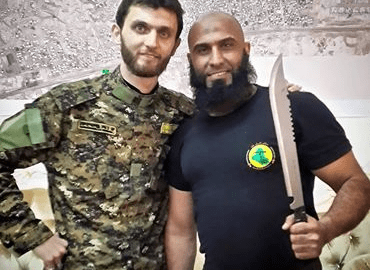


.jpg)

.jpg)
.jpg)


.jpg)


.jpg)


.jpg)


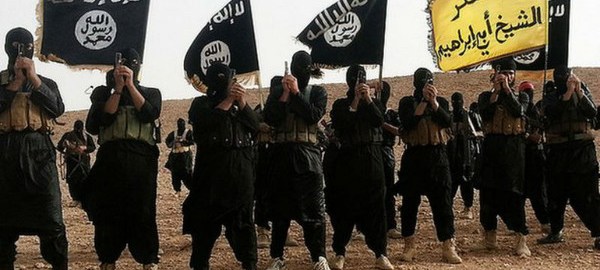


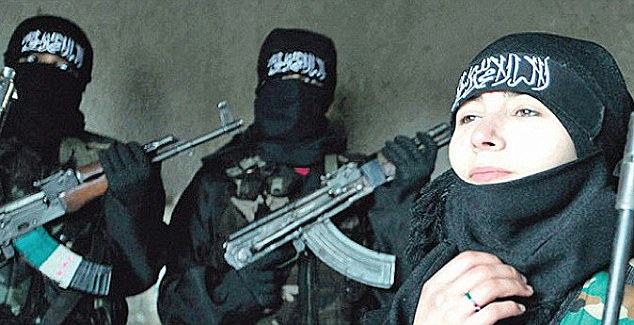


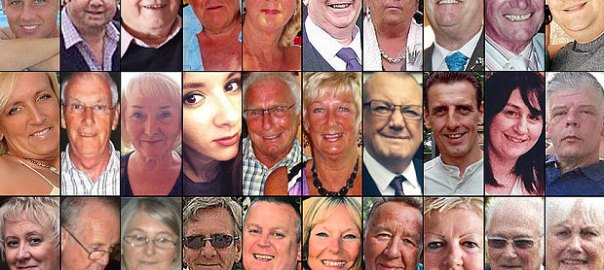


.jpg)


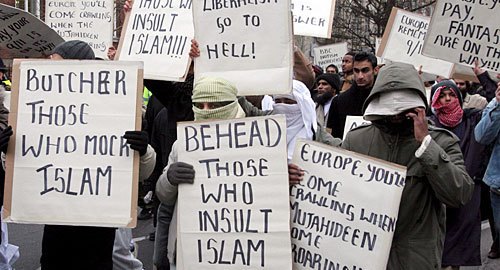


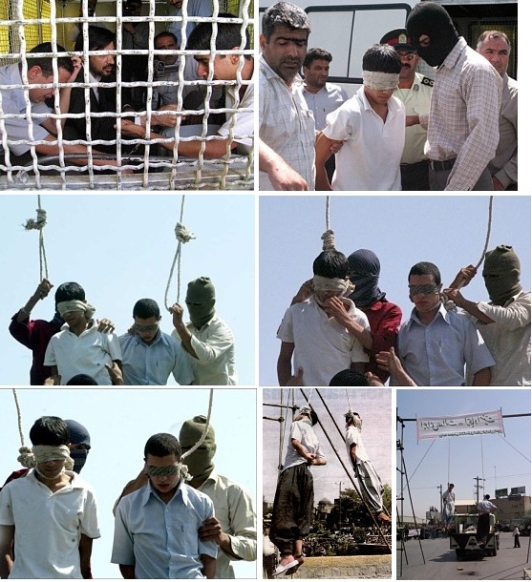


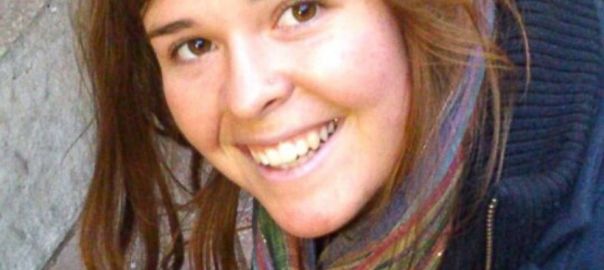




 belfastchildis.com