The Christmas truce (German: Weihnachtsfrieden; French: Trêve de Noël) was a series of widespread but unofficial ceasefires along the Western Front around Christmas 1914. In the week leading up to the holiday, German and British soldiers crossed trenches to exchange seasonal greetings and talk. In areas, men from both sides ventured into no man’s land on Christmas Eve and Christmas Day to mingle and exchange food and souvenirs. There were joint burial ceremonies and prisoner swaps, while several meetings ended in carol-singing.
Men played games of football with one another, giving one of the most enduring images of the truce. However, the peaceful behaviour was not ubiquitous; fighting continued in some sectors, while in others the sides settled on little more than arrangements to recover bodies.
The following year, a few units arranged ceasefires, but the truces were not nearly as widespread as in 1914; this was, in part, due to strongly worded orders from the high commands of both sides prohibiting fraternisation. Soldiers were no longer amenable to truce by 1916. The war had become increasingly bitter after devastating human losses suffered during the battles of the Somme and Verdun, and the incorporation of poison gas.
—————————
The Christmas Truce of 1914
—————————
The truces were not unique to the Christmas period, and reflected a growing mood of “live and let live“, where infantry in close proximity would stop overtly aggressive behaviour, and often engage in small-scale fraternisation, engaging in conversation or bartering for cigarettes. In some sectors, there would be occasional ceasefires to allow soldiers to go between the lines and recover wounded or dead comrades, while in others, there would be a tacit agreement not to shoot while men rested, exercised, or worked in full view of the enemy.
The Christmas truces were particularly significant due to the number of men involved and the level of their participation – even in very peaceful sectors, dozens of men openly congregating in daylight was remarkable – and are often seen as a symbolic moment of peace and humanity amidst one of the most violent events of human history.
Background
The first five months of World War I had seen an initial German attack through Belgium into France, which had been repulsed outside Paris by French and British troops at the Battle of the Marne in early September 1914. The Germans fell back to the Aisne valley, where they prepared defensive positions. In the subsequent Battle of the Aisne, the Allied forces were unable to push through the German line, and the fighting quickly degenerated into a stalemate; neither side was willing to give ground, and both started to develop fortified systems of trenches.
To the north, on the right of the German army, there had been no defined front line, and both sides quickly began to try to use this gap to outflank one another; in the ensuing “Race to the Sea“, the two sides repeatedly clashed, each trying to push forward and threaten the end of the other’s line. After several months of fighting, during which the British forces were withdrawn from the Aisne and sent north into Flanders, the northern flank had developed into a similar stalemate. By November, there was a continuous front line running from the North Sea to the Swiss frontier, occupied on both sides by armies in prepared defensive positions.[1]
Christmas Cheer
Soldiers of the 5th London Rifle Brigade with German Saxon regimental troops during the truce at Ploegsteert
Fraternisation – peaceful and sometimes friendly interactions between opposing forces – was a regular feature in quiet front-line sectors of the Western Front. In some areas, it manifested simply as a passive inactivity, where both sides would refrain from overtly aggressive or threatening behaviour, while in other cases it extended to regular conversation or even visits from one trench to another.
Truces between British and German units can be dated to early November 1914, around the time opposing armies had begun static trench warfare. At this time, both sides’ rations were brought up to the front line after dusk, and soldiers on both sides noted a period of peace while they collected their food. By 1 December, a British soldier could record a friendly visit from a German sergeant one morning:
“to see how we were getting on”.
Relations between French and German units were generally more tense, but the same phenomenon began to emerge. In early December, a German surgeon recorded a regular half-hourly truce each evening to recover dead soldiers for burial, during which French and German soldiers exchanged newspapers.
This behaviour was often challenged by both junior and senior officers; the young Charles de Gaulle wrote on 7 December of the “lamentable” desire of French infantrymen to leave the enemy in peace, while the commander of 10th Army, Victor d’Urbal, wrote of the
“unfortunate consequences” when men “become familiar with their neighbours opposite”.
Other truces could be enforced on both sides by weather conditions, especially when trench lines flooded in low-lying areas, though these often lasted after the weather had cleared.
The close proximity of trench lines made it easy for soldiers to shout greetings to each other, and this may have been the most common method of arranging informal truces during 1914. Men would frequently exchange news or greetings, helped by a common language; many German soldiers had lived in England, particularly London, and were familiar with the language and the culture. Several British soldiers recorded instances of Germans asking about news from the football leagues, while other conversations could be as banal as discussions of the weather or as plaintive as messages for a sweetheart.
One unusual phenomenon that grew in intensity was music; in peaceful sectors, it was not uncommon for units to sing in the evenings, sometimes deliberately with an eye towards entertaining or gently taunting their opposite numbers. This shaded gently into more festive activity; in early December, E.H.W. Hulse of the Scots Guards wrote that he was planning to organise a concert party for Christmas Day, which would “give the enemy every conceivable form of song in harmony” in response to frequent choruses of Deutschland Über Alles.
Approach to Christmas
In the lead up to Christmas 1914, there were several peace initiatives. The Open Christmas Letter was a public message for peace addressed “To the Women of Germany and Austria“, signed by a group of 101 British women suffragettes at the end of 1914 as the first Christmas of World War I approached.
Pope Benedict XV, on 7 December 1914, had begged for an official truce between the warring governments.
“He asked that the guns may fall silent at least upon the night the angels sang.”
This attempt was officially rebuffed.
Christmas 1914
British and German troops meeting in no man’s land during the unofficial truce (British troops from the Northumberland Hussars, 7th Division, Bridoux-Rouge Banc Sector)
Roughly 100,000 British and German troops were involved in the unofficial cessations of hostility along the Western Front.
The first truce started on Christmas Eve 1914, when German troops decorated the area around their trenches in the region of Ypres, Belgium and particularly in Saint-Yvon (called Saint-Yves, in Plugstreet/Ploegstraat – Comines-Warneton), where Capt. Bruce Bairnsfather described the truce.
The Germans placed candles on their trenches and on Christmas trees, then continued the celebration by singing Christmas carols. The British responded by singing carols of their own. The two sides continued by shouting Christmas greetings to each other. Soon thereafter, there were excursions across No Man’s Land, where small gifts were exchanged, such as food, tobacco and alcohol, and souvenirs such as buttons and hats.
The artillery in the region fell silent. The truce also allowed a breathing spell where recently killed soldiers could be brought back behind their lines by burial parties. Joint services were held. In many sectors, the truce lasted through Christmas night, continuing until New Year’s Day in others.
On the day itself, Brigadier-General Walter Congreve, then commanding 18 Infantry Brigade, stationed near Neuve Chapelle, wrote a letter recalling the Germans initiated by calling a truce for the day. One of his brigade’s men bravely lifted his head above the parapet and others from both sides walked onto no man’s land. Officers and men shook hands and exchanged cigarettes and cigars, one of his Captains
“smoked a cigar with the best shot in the German army”,
the latter no more than 18 years old. Congreve admitted he was reluctant to personally witness the scene of the truce for fear he would be a prime target for German snipers.
I wouldn’t have missed that unique and weird Christmas Day for anything. … I spotted a German officer, some sort of lieutenant I should think, and being a bit of a collector, I intimated to him that I had taken a fancy to some of his buttons. … I brought out my wire clippers and, with a few deft snips, removed a couple of his buttons and put them in my pocket. I then gave him two of mine in exchange. … The last I saw was one of my machine gunners, who was a bit of an amateur hairdresser in civil life, cutting the unnaturally long hair of a docile Boche, who was patiently kneeling on the ground whilst the automatic clippers crept up the back of his neck.
“Dear Mother, I am writing from the trenches. It is 11 o’clock in the morning. Beside me is a coke fire, opposite me a ‘dug-out’ (wet) with straw in it. The ground is sloppy in the actual trench, but frozen elsewhere. In my mouth is a pipe presented by the Princess Mary. In the pipe is tobacco. Of course, you say. But wait. In the pipe is German tobacco. Haha, you say, from a prisoner or found in a captured trench. Oh dear, no! From a German soldier. Yes a live German soldier from his own trench. Yesterday the British & Germans met & shook hands in the Ground between the trenches, & exchanged souvenirs, & shook hands. Yes, all day Xmas day, & as I write. Marvellous, isn’t it?”
Captain Sir Edward Hulse reported how the first interpreter he met from the German lines was from Suffolk where he had left his girlfriend and a 3.5 hp motorcycle. Hulse went on to describe a sing-song which
“ended up with ‘Auld lang syne‘ which we all, English, Scots, Irish, Prussians, Wurttenbergers, etc, joined in. It was absolutely astounding, and if I had seen it on a cinematograph film I should have sworn that it was faked!”
Captain Robert Patrick Miles, King’s Shropshire Light Infantry, who was attached to the Royal Irish Rifles recalled in an edited letter that was published in both the Daily Mail and the Wellington Journal & Shrewsbury News in January 1915, following his death in action on 30 December 1914:
Friday (Christmas Day). We are having the most extraordinary Christmas Day imaginable. A sort of unarranged and quite unauthorized but perfectly understood and scrupulously observed truce exists between us and our friends in front. The funny thing is it only seems to exist in this part of the battle line – on our right and left we can all hear them firing away as cheerfully as ever.
The thing started last night – a bitter cold night, with white frost – soon after dusk when the Germans started shouting ‘Merry Christmas, Englishmen’ to us. Of course our fellows shouted back and presently large numbers of both sides had left their trenches, unarmed, and met in the debatable, shot-riddled, no man’s land between the lines. Here the agreement – all on their own – came to be made that we should not fire at each other until after midnight tonight.
The men were all fraternizing in the middle (we naturally did not allow them too close to our line) and swapped cigarettes and lies in the utmost good fellowship. Not a shot was fired all night.
Of the Germans he wrote:
“They are distinctly bored with the war…In fact, one of them wanted to know what on earth we were doing here fighting them.” The truce in that sector continued into Boxing Day; he commented about the Germans, “The beggars simply disregard all our warnings to get down from off their parapet, so things are at a deadlock. We can’t shoot them in cold blood…I cannot see how we can get them to return to business.”
On Christmas Eve and Christmas Day (24 and 25 December) 1914, Alfred Anderson’s unit of the 1st/5th Battalion of Black Watch was billeted in a farmhouse away from the front line. In a later interview (2003), Anderson, the last known surviving Scottish veteran of the war, vividly recalled Christmas Day and said:
I remember the silence, the eerie sound of silence. Only the guards were on duty. We all went outside the farm buildings and just stood listening. And, of course, thinking of people back home. All I’d heard for two months in the trenches was the hissing, cracking and whining of bullets in flight, machinegun fire and distant German voices. But there was a dead silence that morning, right across the land as far as you could see. We shouted ‘Merry Christmas’, even though nobody felt merry. The silence ended early in the afternoon and the killing started again. It was a short peace in a terrible war.
Nor were the observations confined to the British. French Leutnant Johannes Niemann wrote:
“grabbed my binoculars and looking cautiously over the parapet saw the incredible sight of our soldiers exchanging cigarettes, schnapps and chocolate with the enemy.”
General Sir Horace Smith-Dorrien, commander of the British II Corps, issued orders forbidding friendly communication with the opposing German troops. Adolf Hitler, then a young corporal of the 16th Bavarian Reserve Infantry, was also an opponent of the truce.
In the Comines sector of the front there was an early fraternisation between German and French soldiers in December 1914, during a short truce, and there are at least two other testimonials, from French soldiers, of similar behaviours in sectors where German and French companies opposed each other. Gervais Morillon wrote to his parents: ‘The Boches waved a white flag and shouted “Kamarades, Kamarades, rendez-vous.”
When we didn’t move they came towards us unarmed, led by an officer. Although we are not clean they are disgustingly filthy. I am telling you this but don’t speak of it to anyone. We must not mention it even to other soldiers.’ Gustave Berthier wrote: ‘On Christmas day the Boches made a sign showing they wished to speak to us. They said they didn’t want to shoot … They were tired of making war, they were married like me, they didn’t have any differences with the French but with the English.’
In sections of the front where German and Belgian troops faced each other in December 1914, there was at least one such instance when a truce was achieved at the request of Belgian soldiers who wished to send letters back to their families, over the German-occupied parts of their own country.[28]
Richard Schirrmann, who was in a German regiment holding a position on the Bernhardstein, one of the mountains of the Vosges, wrote an account of events in December 1915: “When the Christmas bells sounded in the villages of the Vosges behind the lines ….. something fantastically unmilitary occurred. German and French troops spontaneously made peace and ceased hostilities; they visited each other through disused trench tunnels, and exchanged wine, cognac and cigarettes for Westphalian black bread, biscuits and ham. This suited them so well that they remained good friends even after Christmas was over.” He was separated from the French troops by a narrow No Man’s Land and described the landscape as: “Strewn with shattered trees, the ground ploughed up by shellfire, a wilderness of earth, tree-roots and tattered uniforms.” Military discipline was soon restored, but Schirrmann pondered over the incident, and whether “thoughtful young people of all countries could be provided with suitable meeting places where they could get to know each other.” He went on to found the German Youth Hostel Association in 1919.[29]
Football Matches
Many accounts of the truce involve one or more football matches played in no-man’s land. This was mentioned in some of the earliest reports, with a letter written by a doctor attached to the Rifle Brigade, published in The Times on 1 January 1915, reported
“a football match… played between them and us in front of the trench.”
A wide range of similar stories have been told over the years, often naming specific units or a precise score. Some accounts of the game bring in elements of fiction by Robert Graves, a British poet and writer who reconstructed the encounter in a story published in 1962; in Graves’s version, the score was 3–2 to the Germans.
However, the truth of the accounts has been disputed by some historians; in 1984, Malcolm Brown and Shirley Seaton concluded that there were probably attempts to play organised matches which failed due to the state of the ground, but that the contemporary reports were either hearsay or refer to ‘kick-about’ matches with ‘made-up footballs’ such as a bully-beef tin.
Chris Baker, former chairman of The Western Front Association and author of The Truce: The Day the War Stopped is also skeptical, but says that although there is little hard evidence, the most likely place that an organised match could have taken place was near the village of Messines:
“There are two references to a game being played on the British side, but nothing from the Germans. If somebody one day found a letter from a German soldier who was in that area, then we would have something credible.”
In fact, there is a German reference. Leutnant Kurt Zehmisch of Germany’s 134th Saxons Infantry Regiment said that the English “brought a soccer ball from their trenches, and pretty soon a lively game ensued. How marvelously wonderful, yet how strange it was.”[34] In 2011, Mike Dash concluded that
“there is plenty of evidence that football was played that Christmas Day—mostly by men of the same nationality, but in at least three or four places between troops from the opposing armies”.
A wide variety of units were reported in contemporary accounts to have taken part in games; Dash listed the 133rd Royal Saxon Regiment pitched against “Scottish troops”; the Argyll and Sutherland Highlanders against unidentified Germans (with the Scots reported to have won 4–1); the Royal Field Artillery against “Prussians and Hanovers” near Ypres; and the Lancashire Fusiliers, based near Le Touquet, with the specific detail of a bully beef ration tin as the “ball”.One recent writer has identified 29 separate reports of football, though does not give substantive details.
Eastern Front
A separate manifestation of the Christmas truce in December 1914 occurred on the Eastern front, where the first move originated from the Austrian commanders, at some uncertain level of the military hierarchy. The Russians responded positively and soldiers eventually met in no man’s land.
Public Awareness
The events of the truce were not reported for a week, in an unofficial press embargo which was eventually broken by the New York Times on 31 December. The British papers quickly followed, printing numerous first-hand accounts from soldiers in the field, taken from letters home to their families, and editorials on “one of the greatest surprises of a surprising war”. By 8 January pictures had made their way to the press, and both the Mirror and Sketch printed front-page photographs of British and German troops mingling and singing between the lines. The tone of the reporting was strongly positive, with the Times endorsing the “lack of malice” felt by both sides and the Mirror regretting that the “absurdity and the tragedy” would begin again.
Coverage in Germany was more muted, with some newspapers strongly criticising those who had taken part, and no pictures published. In France, meanwhile, the greater level of press censorship ensured that the only word that spread of the truce came from soldiers at the front or first-hand accounts told by wounded men in hospitals.
The press was eventually forced to respond to the growing rumours by reprinting a government notice that fraternising with the enemy constituted treason, and in early January an official statement on the truce was published, claiming it had happened on restricted sectors of the British front, and amounted to little more than an exchange of songs which quickly degenerated into shooting.
Later Truces
After Christmas 1914, sporadic attempts were made at seasonal truces; a German unit attempted to leave their trenches under a flag of truce on Easter Sunday 1915, but were warned off by the British opposite them, and later in the year, in November, a Saxon unit briefly fraternised with a Liverpool battalion. In December 1915, there were explicit orders by the Allied commanders to forestall any repeat of the previous Christmas truce. Individual units were encouraged to mount raids and harass the enemy line, whilst communicating with the enemy was discouraged by artillery barrages along the front line throughout the day. The prohibition was not completely effective, however, and a small number of brief truces occurred.
An eyewitness account of one truce, by Llewelyn Wyn Griffith, recorded that after a night of exchanging carols, dawn on Christmas Day saw a “rush of men from both sides … [and] a feverish exchange of souvenirs” before the men were quickly called back by their officers, with offers to hold a ceasefire for the day and to play a football match. It came to nothing, as the brigade commander threatened repercussions for the lack of discipline, and insisted on a resumption of firing in the afternoon. Another member of Griffith’s battalion, Bertie Felstead, later recalled that one man had produced a football, resulting in “a free-for-all; there could have been 50 on each side”, before they were ordered back.[42]
In an adjacent sector, a short truce to bury the dead between the lines led to official repercussions; a company commander, Sir Iain Colquhoun of the Scots Guards, was court-martialled for defying standing orders to the contrary. While he was found guilty and reprimanded, the punishment was annulled by General Haig and Colquhoun remained in his position; the official leniency may perhaps have been because he was related to H. H. Asquith, the Prime Minister.
In the Decembers of 1916 and 1917, German overtures to the British for truces were recorded without any success. In some French sectors, singing and an exchange of thrown gifts was occasionally recorded, though these may simply have reflected a seasonal extension of the live-and-let-live approach common in the trenches.
At Easter 1915 there were recorded instances of truces between Orthodox troops of opposing sides on the Eastern front. The Bulgarian writer Yordan Yovkov, serving as an officer near the Greek border at the Mesta river, witnessed one such truce. It inspired his short story ‘Holy Night’, translated into English in 2013 by Krastu Banaev.
Legacy and historical significance
Although the popular tendency has been to see the December 1914 Christmas Truces as unique and therefore of romantic rather than political significance, they have also been interpreted as part of the widespread non-cooperation with the war spirit and conduct by serving soldiers.
In his book on trench warfare, historian Tony Ashworth describes what he calls the ‘live and let live system.’ Complicated local truces and agreements not to fire at each other were developed by men along the front throughout the war. These often began with agreement not to attack each other at tea, meal or washing times, and in some places became so developed that whole sections of the front would see few casualties for extended periods of time. This system, Ashworth argues, ‘gave soldiers some control over the conditions of their existence.’
The December 1914 Christmas Truces then can be seen as not unique, but as the most dramatic example of non-cooperation with the war spirit that included refusal to fight, unofficial truces, mutinies, strikes, and peace protests.
In the 1933 play Petermann schließt Frieden oder Das Gleichnis vom deutschen Opfer (Petermann makes peace: or, the parable of German sacrifice), written by Nazi writer and World War I veteran Heinz Steguweit(German), a German soldier, accompanied by Christmas carols sung by his comrades, erects an illuminated Christmas tree between the trenches, but is shot dead by the enemy. Later, when the fellow soldiers find his body, they notice in horror that enemy snipers have shot down every single Christmas light from the tree.[49]
The final episode of the BBC television series Blackadder Goes Forth references the Christmas truce, with the main character Edmund Blackadder having played in a football match. He is also seen being annoyed at having had a goal disallowed for offside.[51]
The song “All Together Now” by Liverpool band The Farm took its inspiration from the Christmas Day Truce of 1914. The song has been re-recorded by The Peace Collective for release in December 2014 to mark the centenary of the event.[52]
John McCutcheon‘s song “Christmas in the Trenches,” from his 1984 album Winter Solstice, presents a composite account of attested events of the truce from the perspective of a fictitious English soldier. (Mike Harding‘s song “Christmas 1914”, from his 1989 album Plutonium Alley, and Garth Brooks‘s song “Belleau Wood”, from his 1997 album Sevens, contain similar depictions of the truce.)
The 1992 film A Midnight Clear depicts a Christmas truce loosely based on events from the 1914 truce, although the setting is moved to the end of WWII.[53]
In the intro of the 1995 episode “The River of Stars” of the series Space: Above and Beyond images of the Christmas Truce of 1914 were shown.
In 2008, the truce was depicted on stage at the Pantages Theater in Minneapolis, in the radio musical drama All Is Calm: The Christmas Truce of 1914. It was created and directed by Peter Rothstein, and co-produced by Theater Latté Da and the vocal ensemble Cantus, both Minneapolis-based organizations. It has continued to play at the Pantages Theater each December since its premiere.
Ahead of the centenary of the truce (December 2014), English composer Chris Eaton and singer Abby Scott produced the song, 1914 – The Carol of Christmas, to benefit British armed forces charities. At 5 December 2014 it had reached top of the iTunes Christmas chart.[57]
In 2014 the Northumbria and Newcastle Universities Martin Luther King Peace Committee[58] produced resources to enable schools and churches to mark the December 1914 Christmas Truces. These included lesson plans, hand-outs, worksheets, PowerPoint slide shows, and full plans for assemblies, and carol services/Christmas productions. The authors explained that their purpose was both to enable schoolteachers to help children learn about the remarkable events of December 1914, but also to use the theme of Christmas to provide a counterpoint to the UK government’s glorification of the First World War as heroic. As the Peace Committee argues, “These spontaneous acts of festive goodwill directly contradicted orders from high command, and offered an evocative and hopeful – albeit brief – recognition of shared humanity”[59] – and thereby, they argue, give a rereading of the traditional Christmas message of “on earth peace, good will toward men.”[60]
Monuments
A Christmas truce memorial was unveiled in Frelinghien, France, on 11 November 2008. Also on that day, at the spot where, on Christmas Day 1914, their regimental ancestors came out from their trenches to play football, men from the 1st Battalion, The Royal Welch Fusiliers played a football match with the German Battalion 371. The Germans won 2–1.
Just over 150 British and colonial troops successfully defended the garrison against an intense assault by 3,000 to 4,000 Zulu warriors. The massive, but piecemeal,[9]Zulu attacks on Rorke’s Drift came very close to defeating the tiny garrison but were ultimately repelled. Eleven Victoria Crosses were awarded…
Just over 150 British and colonial troops successfully defended the garrison against an intense assault by 3,000 to 4,000 Zulu warriors. The massive, but piecemeal, Zulu attacks on Rorke’s Drift came very close to defeating the tiny garrison but were ultimately repelled. Eleven Victoria Crosses were awarded to the defenders, along with a number of other decorations and honours.
Dabulamanzi kaMpande who commanded the Zulu forces at Rorke’s Drift
Prelude
Rorke’s Drift, known as kwaJimu (“Jim’s Land”) in the Zulu language, was a mission station and the former trading post of James Rorke, an Irish merchant. It was located near a drift, or ford, on the Buffalo (Mzinyathi) River, which at the time formed the border between the British colony of Natal and the Zulu Kingdom. On 9 January 1879, the British No. 3 (Centre) Column, under Lord Chelmsford, arrived and encamped at the drift.
On 11 January, the day after the British ultimatum to the Zulus expired, the column crossed the river and encamped on the Zulu bank. A small force consisting of B Company, 2nd Battalion, 24th (2nd Warwickshire) Regiment of Foot (2nd/24th) under Lieutenant Gonville Bromhead was detailed to garrison the post, which had been turned into a supply depot and hospital under the overall command of Brevet Major Henry Spalding, 104th Foot, a member of Chelmsford’s staff.
On 20 January, after reconnaissance patrolling and building of a track for its wagons, Chelmsford’s column marched to Isandlwana, approximately 6 miles (9.7 km) to the east, leaving behind the small garrison. A large company of the 2nd/3rd Natal Native Contingent (NNC) under Captain William Stevenson was ordered to remain at the post to strengthen the garrison.
This company numbered between 100 and 350 men.
Captain Thomas Rainforth’s G Company of the 1st/24th Foot was ordered to move up from its station at Helpmekaar, 10 miles (16 km) to the southeast, after its own relief arrived, to further fortify the drift. Later that evening a portion of the No. 2 Column under Brevet Colonel Anthony Durnford, late of the Royal Engineers, arrived at the drift and camped on the Zulu bank, where it remained through the next day.
Late on the evening of 21 January, Durnford was ordered to Isandlwana, as was a small detachment of No. 5 Field Company, Royal Engineers, commanded by Lieutenant John Chard, which had arrived on the 19th to repair the pontoons which bridged the Buffalo. Chard rode ahead of his detachment to Isandlwana on the morning of 22 January to clarify his orders, but was sent back to Rorke’s Drift with only his wagon and its driver to construct defensive positions for the expected reinforcement company, passing Durnford’s column en route in the opposite direction.
Sometime around noon on the 22nd, Major Spalding left the station for Helpmekaar to ascertain the whereabouts of Rainforth’s G Company, which was now overdue. He left Chard in temporary command. Chard rode down to the drift itself where the engineers’ camp was located. Soon thereafter, two survivors from Isandlwana – Lieutenant Gert Adendorff of the 1st/3rd NNC and a trooper from the Natal Carbineers – arrived bearing the news of the defeat and that a part of the Zulu impi was approaching the station.
Upon hearing this news, Chard, Bromhead, and another of the station’s officers, Acting Assistant Commissary James Dalton (of the Commissariat and Transport Department), held a quick meeting to decide the best course of action – whether to attempt a retreat to Helpmekaar or to defend their current position. Dalton pointed out that a small column, travelling in open country and burdened with carts full of hospital patients, would be easily overtaken and defeated by a numerically superior Zulu force, and so it was soon agreed that the only acceptable course was to remain and fight.
Defensive preparations
Once the British officers decided to stay, Chard and Bromhead directed their men to make preparations to defend the station. With the garrison’s some 400 men[15] working quickly, a defensive perimeter was constructed out of mealie bags. This perimeter incorporated the storehouse, the hospital, and a stout stone kraal. The buildings were fortified, with loopholes (firing holes) knocked through the external walls and the external doors barricaded with furniture.
At about 3:30 pm, a mixed troop of about 100 Natal Native Horse (NNH) under Lieutenant Alfred Henderson arrived at the station after having retreated in good order from Isandlwana. They volunteered to picket the far side of the Oscarberg (Shiyane), the large hill that overlooked the station and from behind which the Zulus were expected to approach.
With the defences nearing completion and battle approaching, Chard had several hundred men available to him: Bromhead’s B Company, Stevenson’s large NNC company, Henderson’s NNH troop, and various others (most of them hospital patients, but ‘walking wounded’) drawn from various British and colonial units. Adendorff also stayed, while the trooper who had ridden in with him galloped on to warn the garrison at Helpmekaar.
The force was sufficient, in Chard’s estimation, to fend off the Zulus. Chard posted the British soldiers around the perimeter, adding some of the more able patients, the ‘casuals’ and civilians, and those of the NNC who possessed firearms along the barricade. The rest of the NNC, armed only with spears, were posted outside the mealie bag and biscuit box barricade within the stone-walled cattle kraal.
The approaching Zulu force was vastly larger; the uDloko, uThulwana, inDlondoamabutho (regiments) of married men in their 30s and 40s and the inDlu-yengweibutho of young unmarried men mustered 3,000 to 4,000 warriors, none of them engaged during the battle at Isandlwana.
This Zulu force was the ‘loins’ or reserve of the army at Isandlwana and is often referred to as the Undi Corps. It was directed to swing wide of the British left flank and pass west and south of Isandlwana hill itself, in order to position itself across the line of communication and retreat of the British and their colonial allies in order to prevent their escape back into Natal by way of the Buffalo River ford leading to Rorke’s Drift.
By the time the Undi Corps reached Rorke’s Drift at 4:30 pm, they had fast-marched some 20 miles (32 km) from the morning encampment they had left at around 8 am, and they would spend almost the next eleven and a half hours continuously storming the British fortifications at Rorke’s Drift.
Most Zulu warriors were armed with an assegai (short spear) and a shield made of cowhide. The Zulu army drilled in the personal and tactical use and coordination of this weapons system. Some Zulus also had old muskets and antiquated rifles, though their marksmanship training was poor, and the quality and supply of powder and shot was dreadful.
Historical picture of Zulu warriors from about the same time as the events at Rorke’s Drift
The Zulu attitude towards firearms was that:
“The generality of Zulu warriors, however, would not have firearms – the arms of a coward, as they said, for they enable the poltroon to kill the brave without awaiting his attack.”
Even though their fire was not accurate, it was responsible for five of the seventeen British deaths at Rorke’s Drift.
While the Undi Corps had been led by inkhosi kaMapitha at the Isandlwana battle, the command of the Undi Corps passed to Prince Dabulamanzi kaMpande (half-brother of Cetshwayo kaMpande, the Zulu king) when kaMapitha was wounded during the pursuit of British fugitives from Isandlwana. Prince Dabulamanzi was considered rash and aggressive, and this characterisation was borne out by his violation of King Cetshwayo’s order to act only in defence of Zululand against the invading British soldiers and not carry the war over the border into enemy territory.
The Rorke’s Drift attack was an unplanned raid rather than any organised counter-invasion, with many of the Undi Corps Zulus breaking off to raid other African kraals and homesteads while the main body advanced on Rorke’s Drift.
At about 4:00 pm, Surgeon James Reynolds, Otto Witt – the Swedish missionary who ran the mission at Rorke’s Drift – and army chaplain Reverend George Smith came down from the Oscarberg hillside with the news that a body of Zulus was fording the river to the southeast and was “no more than five minutes away”. At this point, Witt decided to depart the station, as his family lived in an isolated farmhouse about 30 kilometres (19 mi) away, and he wanted to be with them. Witt’s native servant, Umkwelnantaba, left with him; so too did one of the hospital patients, Lieutenant Thomas Purvis of the 1st/3rd NNC.
——————————————————
Interview with Frank Bourne – Hero of Rorkes Drift
——————————————————
Battle
At about 4:20 pm, the battle began with Lieutenant Henderson’s NNH troopers, stationed behind the Oscarberg, briefly engaging the vanguard of the main Zulu force. However, tired from the battle and retreat from Isandlwana and short of carbine ammunition, Henderson’s men departed for Helpmekaar. Henderson himself reported to Lieutenant Chard that the enemy were close and that
“his men would not obey his orders but were going off to Helpmekaar”.
Henderson then followed his departing men. Upon witnessing the withdrawal of Henderson’s NNH troop, Captain Stevenson’s NNC company abandoned the cattle kraal and fled, greatly reducing the strength of the defending garrison. Outraged that Stevenson and some of his colonial NCOs also fled from the barricades, a few British soldiers fired after them, killing Corporal William Anderson.
With the Zulus nearly at the station, the garrison now numbered between 154 and 156 men.[30] Of these, only Bromhead’s company could be considered a cohesive unit. Additionally, up to 39 of his company were at the station as hospital patients, although only a handful of these were unable to take up arms.
With fewer men, Chard realised the need to modify the defences, and he gave orders for the construction of a biscuit-box wall through the middle of the post in order to make possible the abandonment of the hospital side of the station if the need arose.
At 4:30 pm, the Zulus rounded the Oscarberg and approached the south wall. Private Frederick Hitch, posted as lookout atop the storehouse, reported a large column of Zulus approaching. The Zulu vanguard, 600 men of the iNdluyengwe, attacked the south wall, which joined the hospital and the storehouse. The British opened fire at 500 yards (460 m).
The majority of the attacking Zulu force swept around to attack the north wall, while a few took cover and were either pinned by continuing British fire or retreated to the terraces of Oscarberg. There they began a harassing fire of their own. As this occurred, another Zulu force swept onto the hospital and north west wall.
Those British on the barricades — including Dalton and Bromhead — were soon engaged in fierce hand-to-hand fighting. The British wall was too high for the Zulus to scale, so they resorted to crouching under the wall, trying to get hold of the defenders’ Martini-Henry rifles, slashing at British soldiers with assegais or firing their weapons through the wall. At places, they clambered over each other’s bodies to drive the British off the walls but were driven back.
Zulu fire, both from those under the wall and around the Oscarberg, inflicted a few casualties, and five of the 17 defenders who were killed or mortally wounded in the action were struck while at the north wall.
—————————————-
Secrets Of The Dead – The Mystery Of Zulu Dawn
—————————————-
Defence of the hospital
Chard realised that the north wall, under almost constant Zulu attack, could not be held and, at 6:00 pm, he pulled his men back into the yard, abandoning the front two rooms of the hospital in the process. The hospital was becoming untenable; the loopholes had become a liability, as rifles poking out were grabbed at by the Zulus but, if the holes were left empty, the Zulu warriors stuck their own weapons through to fire into the rooms. Among the soldiers assigned to the hospital were Corporal William Wilson Allen and Privates Cole, Dunbar, Hitch, Horrigan, John Williams, Joseph Williams, Alfred Henry Hook, Robert Jones, and William Jones.
Privates Horrigan, John Williams, Joseph Williams and patients tried to hold the hospital entrance with rifles and fixed bayonets. Joseph Williams defended a small window, and 14 dead Zulus were found later beneath the window. As it became clear that the front of the building was being taken by the Zulus, John Williams began to hack a way of escape through the wall dividing the central room and a corner room in the back of the hospital. As he made a passable hole, the door into the central room came under furious attack from the Zulus, and he only had time to drag two bedridden patients out before the door gave way.
The corner room that John Williams had pulled the two patients into was occupied by Private Hook and another nine patients. John Williams hacked at the wall to the next room with his pick-axe, as Hook held off the Zulus. A firefight erupted as the Zulus fired through the door and Hook returned fire – but not without an assegai striking his helmet and stunning him.
Williams made the hole big enough to get into the next room, which was occupied only by patient Private Waters, and dragged the patients through. The last man out was Hook, who killed some Zulus who had knocked down the door before he dived through the hole. John Williams once again went to work, spurred by the fact that the roof was now on fire, as Hook defended the hole and Waters continued to fire through a loophole.
After fifty minutes, the hole was large enough to drag the patients through, and the men – save Privates Waters and Beckett, who hid in the wardrobe (Waters was wounded and Beckett died of assegai wounds) – were now in the last room, being defended by Privates Robert Jones and William Jones. From here, the patients clambered out through a window and then ran across the yard to the barricade.
Of the eleven patients, nine survived the trip, as did all the able-bodied men. According to James Henry Reynolds, only four defenders were killed in the hospital: one was a member of the Natal Native Contingent with a broken leg; Sgt Maxfield and Private Jenkins, who were ill with fever and refused to be moved. Reportedly, Jenkins was killed after being seized and stabbed, together with Private Adams who also refused to move. Private Cole, assigned to the hospital, was killed when he ran outside. Another hospital patient killed was Trooper Hunter of the Natal Mounted Police.
Among the hospital patients who escaped were a Corporal Mayer of the NNC; Bombardier Lewis of the Royal Artillery, and Trooper Green of the Natal Mounted Police, who was wounded in the thigh by a spent bullet. Private Conley with a broken leg was pulled to safety by Hook, although Conley’s leg was broken again in the process.
The cattle kraal and the bastion
The evacuation of the burning hospital completed the shortening of the perimeter. As night fell, the Zulu attacks grew stronger. The cattle kraal came under renewed assault and was evacuated by 10:00 pm, leaving the remaining men in a small bastion around the storehouse. Throughout the night, the Zulus kept up a constant assault against the British positions; Zulu attacks only began to slacken after midnight, and they finally ended by 2:00 am, being replaced by a constant harassing fire from Zulu firearms until 4:00 am.
By that time, the garrison had lost 14 dead. Two others were mortally wounded and 8 more – including Dalton – were seriously wounded. Virtually every man had some kind of wound. They were all exhausted, having fought for the better part of ten hours and were running low on ammunition. Of 20,000 rounds in reserve at the mission, only 900 remained.
——————————————————
Those that died in the Zulu war 1879
——————————————————
Aftermath
As dawn broke, the British could see that the Zulus were gone; all that remained were the dead and severely wounded. Patrols were dispatched to scout the battlefield, recover rifles, and look for survivors, many of whom were executed when found. At roughly 7:00 am, an Impi of Zulus suddenly appeared, and the British manned their positions again.
No attack materialised however, as the Zulus had been on the move for six days prior to the battle and had not eaten properly for two. In their ranks were hundreds of wounded, and they were several days’ march from any supplies. Soon after their appearance, the Zulus left the way they had come.
Around 8:00 am, another force appeared, and the redcoats left their breakfast to man their positions again. However, the force turned out to be the vanguard of Lord Chelmsford‘s relief column.
Breakdown of British and colonial casualties:
1st/24th Foot: 4 killed or mortally wounded in action; 2 wounded
2nd/24th Foot: 9 killed or mortally wounded in action; 9 wounded
Also, as mentioned, one member of Stevenson’s 2nd/3rd NNC, Corporal William Anderson, was killed by British fire while fleeing the station just prior to the arrival of the Zulus.
351 Zulu bodies were counted after the battle, but it has been estimated that at least 500 wounded and captured Zulus might have been massacred as well.
Having witnessed the carnage at Isandlwana, the members of Chelmsford’s relief force had no mercy for the captured, wounded Zulus they came across. Nor did the station’s defenders. Trooper William James Clarke of the Natal Mounted Police described in his diary that:
“altogether we buried 375 Zulus and some wounded were thrown into the grave. Seeing the manner in which our wounded had been mutilated after being dragged from the hospital … we were very bitter and did not spare wounded Zulus”
Laband, in his book The Zulu Response to the British Invasion of 1879, accepts the estimate of 600 that Shepstone had from the Zulus.
Samuel Pitt, who served as a private in B Company during the battle, told The Western Mail in 1914 that the official enemy death toll was too low:
“We reckon we had accounted for 875, but the books will tell you 400 or 500”.
Lieutenant Horace Smith-Dorrien, a member of Chelmsford’s staff, wrote that the day after the battle an improvised gallows was used “for hanging Zulus who were supposed to have behaved treacherously”.[43]
Eleven Victoria Crosses were awarded to the defenders of Rorke’s Drift, seven of them to soldiers of the 2nd/24th Foot – the most ever received in a single action by one regiment (although not, as commonly thought, the most awarded in a single action or the most in a day: 16 were awarded at the Battle of Inkerman, on 5 November 1854; 28 were awarded during the Second Relief of Lucknow, 14–22 November 1857).
Four Distinguished Conduct Medals were also awarded. This high number of awards for bravery has been interpreted as a reaction to the earlier defeat at the Battle of Isandlwana – the extolling of the victory at Rorke’s Drift drawing the public’s attention away from the great defeat at Isandlwana and the fact that Lord Chelmsford and Bartle Frere had instigated the war without the approval of Her Majesty’s Government.
Certainly, Sir Garnet Wolseley, taking over as commander-in-chief from Lord Chelmsford later that year, was unimpressed with the awards made to the defenders of Rorke’s Drift, saying “it is monstrous making heroes of those who, shut up in buildings at Rorke’s Drift, could not bolt and fought like rats for their lives, which they could not otherwise save”.
Several historians have challenged this assertion and pointed out that the victory stands on its own merits, regardless of other concerns. Victor Davis Hanson responded to it directly in “Why the West has Won” saying
, “Modern critics suggest such lavishness in commendation was designed to assuage the disaster at Isandhlwana and to reassure a skeptical Victorian public that the fighting ability of the British soldier remained unquestioned. Maybe, maybe not, but in the long annals of military history, it is difficult to find anything quite like Rorke’s Drift, where a beleaguered force, outnumbered forty to one, survived and killed twenty men for every defender lost”.
In 1879 there was no provision for the posthumous granting of the Victoria Cross, and so it could not be awarded to anyone who had died in performing an act of bravery. In light of this, an unofficial ‘twelfth VC’ may be added to those listed: Private Joseph Williams, B Coy, 2nd/24th Foot, who was killed during the fight in the hospital and for whom it was mentioned in despatches that “had he lived he would have been recommended for the Victoria Cross”.
Awarded the Distinguished Conduct Medal:
Gunner John Cantwell; N Batt, 5th Brig Royal Horse Artillery (demoted from bombardier wheeler the day before the battle)
On 15 January 1880, a submission for a DCM was also made for Private Michael McMahon (Army Hospital Corps). The submission was cancelled on 29 January 1880 for absence without leave and theft.
Depictions and dramatisations
The events surrounding the assault on Rorke’s Drift were first dramatised by military painters, notably Elizabeth Butler and Alphonse de Neuville. Their work was vastly popular in their day among the citizens of the British empire.
In 1914, a touring English Northern Union rugby league team defeated Australia 14-6 to win the Ashes in the final Test match. Depleted by injuries and fielding only ten men for much of the second half, the English outclassed and outfought the Australians in what quickly became known as the ‘Rorke’s Drift Test‘.
The 1964 film Zulu is a depiction of the Battle of Rorke’s Drift. The film received generally positive reviews from the critics. Some details of the film’s account have, however, been criticised[by whom?] as historically inaccurate (for example, in the movie the regiment is called the South Wales Borderers but the unit was not in fact called that until two years after the battle, although the regiment had been based at Brecon in South Wales since 1873).[54] While most of the men of the 1st Battalion, 24th Regiment of Foot (1/24) were recruited from the industrial towns and agricultural classes of England, principally from Birmingham and adjacent southwest counties, only 10 soldiers of the 1/24 that fought in the battle were Welsh. Many of the soldiers of the junior battalion, the 2/24, were Welshmen.
Of the 122 soldiers of the 24th Regiment present at the Battle of Rorke’s Drift, 49 are known to have been of English nationality, 32 were Welsh, 16 were Irish, 1 was a Scot, and 3 were born overseas. The nationalities of the remaining 21 are unknown.
In 1990 the game developer Impressions Games released a video game based on the historical battle. The battle was also featured by Mad Doc Software in its 2006 strategy game Empire Earth II: The Art of Supremacy as one of its “turning point” battle modes.
The battle of Rorke’s Drift was given a chapter in military historianVictor Davis Hanson‘s book Carnage and Culture (2002) as one of several landmark battles demonstrating the superior effectiveness of Western military practices
——————————————
Forgotten soldiers who fought 4,000 Zulus during battle of Rorke’s Drift
They were the Brummies and Black Country fighting men who thwarted 4,000 Zulus in a battle that will forever be remembered among one of the most heroic stands in British military history.
Zulu warriors attack British troops in the Battle of Rorke’s Drift
They were the Brummies and Black Country fighting men who thwarted 4,000 Zulus in a battle that will forever be remembered among one of the most heroic stands in British military history.
But, with the exception of the 11 who received this country’s highest forces’ honour, the local lads who braved knobkerries clubs, rifles and assegai spears have faded from the history books.
Now, on Remembrance Sunday – a day when we pay tribute to those prepared to make the ultimate sacrifice for this country – we salute the few from the 24th (Warwickshire) Regiment, although the unit, spawned in Warley, had based itself in Brecon by the time of the Zulu conflict.
Of the 122 of the regiment’s representatives at Rorke’s Drift, 49 were English, 32 Welsh, 16 Irish and there was a lone Scot.
Only four are believed to have been born and bred in Warwickshire. Their average age was 23, their average weight 10stone and their average height 5ft 3ins.
They were among the 139 defenders – a mix of British infantry and Natal irregulars – who defied the massive odds against them at the tiny garrison of Rorke’s Drift. Seeking sanctuary behind barricades of biscuit boxes and mealie bags, they held firm against a ceaseless onslaught that began at 4.20pm on January 22, 1879, and raged until dawn.
It has become the ultimate underdog victory. That red ribbon of men killed 351 Zulus and wounded 500 more: the African warriors decision to set alight the garrison hospital making them easy targets during night attacks. We lost 17.
Among them was Sergeant Joseph Lenford Windridge, played by Joe Powell in the 1964 film. He lived in Aston and after leaving the army found employment as a lamp-maker’s clerk, but his was a Civvy Street existence dogged by tragedy. Six of his 11 children died from TB.
Some of the defenders of Rorke’s Drift towards the end of the Anglo-Zulu War of 1879
Windridge died from a stroke in 1902, aged 60, and was laid to rest in an unmarked, communal grave at Witton Cemetery. This year a campaign was launched to place a memorial on the plot.
Two other Birmingham survivors of the battle, Privates Robert Cole and Samuel Parry, are also buried at Witton and, again, their graves are unmarked.
Birmingham-born William Tasker was probably more deserving of a VC than many who received them.
The 33-year-old fought on despite blooding pouring from his head, the thin flesh split open by splinters from a musket ball. He died in his home city aged 42.
An unmarked grave was also the undignified final resting place for Joseph Bromwich, who fought at the battle alongside elder brother Charles. Joseph, buried at Bilston Cemetery, was 22 when he faced the Zulus. He was a broken man when he left the services and he died on February 25, 1916, with tongue cancer.
What’s clear from reading the documents that exist – many of them contradictory – is that troops emerged from Rorke’s Drift mentally scarred and never recovered from the harrowing experience.
William Jones, a down-and-out, was found wandering the streets of Manchester after selling his VC for £6. His family took him in, but terrified Jones remained convinced Zulus were coming through the windows of the modest home. He was declared insane and died in a mental institution.
Robert Jones VC took his own life with a shotgun.
——————————————————————————-
Last remnant of Rorke’s Drift:
Tiny scrap of paper gives rare first-hand account of the day British redcoats fought off Zulus, Captain, thousands of them
A rare first-hand account of the Battle of Rorke’s Drift – where 150 soldiers successfully fought off 4,000 Zulu warriors, has gone on display for the first time.
Written by one of the British heroes on a tiny scrap of paper, it is thought to be the earliest account of the battle which was immortalised in the 1964 film Zulu, starring Michael Caine and Stanley Baker.
Assistant Commissary Officer (ACO) Walter Dunne’s letter to his friend Captain W.J. Warneford at Cape Colony, describes how he and a vastly outnumbered group of soldiers successfully defended their missionary outpost at Rorke’s Drift in South Africa.
ASSISTANT COMISSARY OFFICER WALTER DUNNE’S LETTER IN FULL
Rorke’s Drift/ 24 Jan.r ’79/
My dear Warneford,
Sad news about the 1/24th. (1st Battalion, 24th Foot) 5Cd commanded by Col. Pulleine were cut to pieces and the camp sacked. 20 Officers are missing.
About 1000 of the Kafirs came in here and attacked us on the same day (22nd). We had got about 2 hours notice and fortified the place with trap of grain biscuit boxes &c. They came on most determinedly on all sides. They drove our fellows out of the Hospital, killed the patients and burned the place.
They made several attempts to storm us but the soldiers (B Co of 24th under Bromhead) kept up such a steady killing fire that they were driven back each time. We had only 80 men, the contingent having bolted before a shot was fired. The fight was kept up all night & in the morning the Kafirs retreated leaving 351 dead bodies.
Dalton was wounded in the shoulder and temp clerk Byrne killed & 12 of the men… W A Dunne (over)
Some of the missing are Pulleine, Col. Dunford, Capt. Russell, Hodson (killed), Anstey, Daly, Mostyn, Dyer, Griffith, Pope, Austin, Pulleine (2 Mr.) Shepherd (S… major) Wardell (killed), Younghusband, Degacher, Porteous, Carage Dyson, Atkinson – Coghill is believed to have escaped & also Melvill.
—————————
Zulu Dawn (1979) – Final Battle
—————————
My autobiography: A Belfast Child is now available to pre-order on Amazon , launch date is 30th April.
Guy Fawkes (/ˈɡaɪˈfɔːks/; 13 April 1570 – 31 January 1606), also known as Guido Fawkes, the name he adopted while fighting for the Spanish, was a member of a group of provincial English Catholics who planned the failed Gunpowder Plot of 1605.
Fawkes was born and educated in York. His father died when Fawkes was eight years old, after which his mother married a recusant Catholic. Fawkes later converted to Catholicism and left for the continent, where he fought in the Eighty Years’ War on the side of Catholic Spain against Protestant Dutch reformers in the Low Countries. He travelled to Spain to seek support for a Catholic rebellion in England but was unsuccessful. He later met Thomas Wintour, with whom he returned to England.
Wintour introduced Fawkes to Robert Catesby, who planned to assassinate King James I and restore a Catholic monarch to the throne. The plotters secured the lease to an undercroft beneath the House of Lords, and Fawkes was placed in charge of the gunpowder they stockpiled there. Prompted by the receipt of an anonymous letter, the authorities searched Westminster Palace during the early hours of 5 November, and found Fawkes guarding the explosives. Over the next few days, he was questioned and tortured, and eventually he broke. Immediately before his execution on 31 January, Fawkes jumped from the scaffold where he was to be hanged and broke his neck, thus avoiding the agony of the mutilation that followed.
Fawkes became synonymous with the Gunpowder Plot, the failure of which has been commemorated in Britain since 5 November 1605. His effigy is traditionally burned on a bonfire, commonly accompanied by a firework display.
———————————————————————–
Guy Fawkes and the Gunpowder Plot
———————————————————————–
Early life
Childhood
Fawkes was baptised at the church of St. Michael le Belfrey
Guy Fawkes was born in 1570 in Stonegate, York. He was the second of four children born to Edward Fawkes, a proctor and an advocate of the consistory court at York,[a] and his wife, Edith.[b] Guy’s parents were regular communicants of the Church of England, as were his paternal grandparents; his grandmother, born Ellen Harrington, was the daughter of a prominent merchant, who served as Lord Mayor of York in 1536.[4] However, Guy’s mother’s family were recusant Catholics, and his cousin, Richard Cowling, became a Jesuit priest.[5]Guy was an uncommon name in England, but may have been popular in York on account of a local notable, Sir Guy Fairfax of Steeton.[6]
The date of Fawkes’s birth is unknown, but he was baptised in the church of St. Michael le Belfrey on 16 April. As the customary gap between birth and baptism was three days, he was probably born about 13 April.[5] In 1568, Edith had given birth to a daughter named Anne, but the child died aged about seven weeks, in November that year. She bore two more children after Guy: Anne (b. 1572), and Elizabeth (b. 1575). Both were married, in 1599 and 1594 respectively.[6][7]
In 1579, when Guy was eight years old, his father died. His mother remarried several years later, to the Catholic Dionis Baynbrigge (or Denis Bainbridge) of Scotton, Harrogate. Fawkes may have become a Catholic through the Baynbrigge family’s recusant tendencies, and also the Catholic branches of the Pulleyn and Percy families of Scotton,[8] but also from his time at St. Peter’s School in York. A governor of the school had spent about 20 years in prison for recusancy, and its headmaster, John Pulleyn, came from a family of noted Yorkshire recusants, the Pulleyns of Blubberhouses. In her 1915 work The Pulleynes of Yorkshire, author Catharine Pullein suggested that Fawkes’s Catholic education came from his Harrington relatives, who were known for harbouring priests, one of whom later accompanied Fawkes to Flanders in 1592–1593.[9] Fawkes’s fellow students included John Wright and his brother Christopher (both later involved with Fawkes in the Gunpowder plot) and Oswald Tesimond, Edward Oldcorne and Robert Middleton, who became priests (the latter executed in 1601).[10]
After leaving school Fawkes entered the service of Anthony Browne, 1st Viscount Montagu. The Viscount took a dislike to Fawkes and after a short time dismissed him; he was subsequently employed by Anthony-Maria Browne, 2nd Viscount Montagu, who succeeded his grandfather at the age of 18.[11] At least one source claims that Fawkes married and had a son, but no known contemporary accounts confirm this.[12][c]
———————————————————————–
5 Things You Probably Didn’t Know About The Gunpowder Plot
———————————————————————–
Military career
In October 1591 Fawkes sold the estate in Clifton that he had inherited from his father.[d] He travelled to the continent to fight in the Eighty Years War for Catholic Spain against the new Dutch Republic and, from 1595 until the Peace of Vervins in 1598, France. Although England was not by then engaged in land operations against Spain, the two countries were still at war, and the Spanish Armada of 1588 was only five years in the past. He joined Sir William Stanley, an English Catholic and veteran commander in his mid-fifties who had raised an army in Ireland to fight in Leicester’s expedition to the Netherlands. Stanley had been held in high regard by Elizabeth I, but following his surrender of Deventer to the Spanish in 1587 he, and most of his troops, had switched sides to serve Spain. Fawkes became an alférez or junior officer, fought well at the siege of Calais in 1596, and by 1603 had been recommended for a captaincy.[3] That year, he travelled to Spain to seek support for a Catholic rebellion in England. He used the occasion to adopt the Italian version of his name, Guido, and in his memorandum described James I as “a heretic”, who intended “to have all of the Papist sect driven out of England.” He denounced Scotland, and the King’s favourites among the Scottish nobles, writing “it will not be possible to reconcile these two nations, as they are, for very long”.[13] Although he was received politely, the court of Philip III was unwilling to offer him any support.[14]
A contemporary engraving of eight of the thirteen conspirators, by Crispijn van de Passe. Fawkes is third from the right.
In 1604 Fawkes became involved with a small group of English Catholics, led by Robert Catesby, who planned to assassinate the ProtestantKing James and replace him with his daughter, third in the line of succession, Princess Elizabeth.[15][16] Fawkes was described by the Jesuit priest and former school friend Oswald Tesimond as “pleasant of approach and cheerful of manner, opposed to quarrels and strife … loyal to his friends”. Tesimond also claimed Fawkes was “a man highly skilled in matters of war”, and that it was this mixture of piety and professionalism which endeared him to his fellow conspirators.[3] The author Antonia Fraser describes Fawkes as “a tall, powerfully built man, with thick reddish-brown hair, a flowing moustache in the tradition of the time, and a bushy reddish-brown beard”, and that he was “a man of action … capable of intelligent argument as well as physical endurance, somewhat to the surprise of his enemies.”[5]
The first meeting of the five central conspirators took place on Sunday 20 May 1604, at an inn called the Duck and Drake, in the fashionable Strand district of London.[e] Catesby had already proposed at an earlier meeting with Thomas Wintour and John Wright to kill the King and his government by blowing up “the Parliament House with gunpowder”. Wintour, who at first objected to the plan, was convinced by Catesby to travel to the continent to seek help. Wintour met with the Constable of Castile, the exiled Welsh spy Hugh Owen,[18] and Sir William Stanley, who said that Catesby would receive no support from Spain. Owen did, however, introduce Wintour to Fawkes, who had by then been away from England for many years, and thus was largely unknown in the country. Wintour and Fawkes were contemporaries; each was militant, and had first-hand experience of the unwillingness of the Spaniards to help. Wintour told Fawkes of their plan to “doe some whatt in Ingland if the pece with Spaine healped us nott”,[3] and thus in April 1604 the two men returned to England.[17] Wintour’s news did not surprise Catesby; despite positive noises from the Spanish authorities, he feared that “the deeds would nott answere”.[f]
One of the conspirators, Thomas Percy, was promoted in June 1604, gaining access to a house in London that belonged to John Whynniard, Keeper of the King’s Wardrobe. Fawkes was installed as a caretaker and began using the pseudonym John Johnson, servant to Percy.[20] The contemporaneous account of the prosecution (taken from Thomas Wintour’s confession)[21] claimed that the conspirators attempted to dig a tunnel from beneath Whynniard’s house to Parliament, although this story may have been a government fabrication; no evidence for the existence of a tunnel was presented by the prosecution, and no trace of one has ever been found; Fawkes himself did not admit the existence of such a scheme until his fifth interrogation, but even then he could not locate the tunnel.[22] If the story is true, however, by December 1604 the conspirators were busy tunnelling from their rented house to the House of Lords. They ceased their efforts when, during tunnelling, they heard a noise from above. Fawkes was sent out to investigate, and returned with the news that the tenant’s widow was clearing out a nearby undercroft, directly beneath the House of Lords.[3][23]
The plotters purchased the lease to the room, which also belonged to John Whynniard. Unused and filthy, it was considered an ideal hiding place for the gunpowder the plotters planned to store.[24] According to Fawkes, 20 barrels of gunpowder were brought in at first, followed by 16 more on 20 July.[25] On 28 July however, the ever-present threat of the plague delayed the opening of Parliament until Tuesday, 5 November.[26]
Overseas
In an attempt to gain foreign support, in May 1605 Fawkes travelled overseas and informed Hugh Owen of the plotters’ plan.[27] At some point during this trip his name made its way into the files of Robert Cecil, 1st Earl of Salisbury, who employed a network of spies across Europe. One of these spies, Captain William Turner, may have been responsible. Although the information he provided to Salisbury usually amounted to no more than a vague pattern of invasion reports, and included nothing which regarded the Gunpowder Plot, on 21 April he told how Fawkes was to be brought by Tesimond to England. Fawkes was a well-known Flemish mercenary, and would be introduced to “Mr Catesby” and “honourable friends of the nobility and others who would have arms and horses in readiness”.[28] Turner’s report did not, however, mention Fawkes’s pseudonym in England, John Johnson, and did not reach Cecil until late in November, well after the plot had been discovered.[3][29]
It is uncertain when Fawkes returned to England, but he was back in London by late August 1605, when he and Wintour discovered that the gunpowder stored in the undercroft had decayed. More gunpowder was brought into the room, along with firewood to conceal it.[30] Fawkes’s final role in the plot was settled during a series of meetings in October. He was to light the fuse and then escape across the Thames. Simultaneously, a revolt in the Midlands would help to ensure the capture of Princess Elizabeth. Acts of regicide were frowned upon, and Fawkes would therefore head to the continent, where he would explain to the Catholic powers his holy duty to kill the King and his retinue.[31]
A few of the conspirators were concerned about fellow Catholics who would be present at Parliament during the opening.[32] On the evening of 26 October, Lord Monteagle received an anonymous letter warning him to stay away, and to “retyre youre self into yowre contee whence yow maye expect the event in safti for … they shall receyve a terrible blowe this parleament”.[33] Despite quickly becoming aware of the letter – informed by one of Monteagle’s servants – the conspirators resolved to continue with their plans, as it appeared that it “was clearly thought to be a hoax”.[34] Fawkes checked the undercroft on 30 October, and reported that nothing had been disturbed.[35] Monteagle’s suspicions had been aroused, however, and the letter was shown to King James. The King ordered Sir Thomas Knyvet to conduct a search of the cellars underneath Parliament, which he did in the early hours of 5 November. Fawkes had taken up his station late on the previous night, armed with a slow match and a watch given to him by Percy “becaus he should knowe howe the time went away”.[3] He was found leaving the cellar, shortly after midnight, and arrested. Inside, the barrels of gunpowder were discovered hidden under piles of firewood and coal.[36]
Torture
Fawkes gave his name as John Johnson and was first interrogated by members of the King’s Privy chamber, where he remained defiant.[37] When asked by one of the lords what he was doing in possession of so much gunpowder, Fawkes answered that his intention was “to blow you Scotch beggars back to your native mountains.” [38] He identified himself as a 36-year-old Catholic from Netherdale in Yorkshire, and gave his father’s name as Thomas and his mother’s as Edith Jackson. Wounds on his body noted by his questioners he explained as the effects of pleurisy. Fawkes admitted his intention to blow up the House of Lords, and expressed regret at his failure to do so. His steadfast manner earned him the admiration of King James, who described Fawkes as possessing “a Roman resolution”.[39]
James’s admiration did not, however, prevent him from ordering on 6 November that “John Johnson” be tortured, to reveal the names of his co-conspirators.[40] He directed that the torture be light at first, referring to the use of manacles, but more severe if necessary, authorising the use of the rack: “the gentler Tortures are to be first used unto him et sic per gradus ad ima tenditur [and so by degrees proceeding to the worst]”.[37][41] Fawkes was transferred to the Tower of London. The King composed a list of questions to be put to “Johnson”, such as “as to what he is, For I can never yet hear of any man that knows him”, “When and where he learned to speak French?”, and “If he was a Papist, who brought him up in it?”[42] The room in which Fawkes was interrogated subsequently became known as the Guy Fawkes Room.[43]
Fawkes’s signature of “Guido”, made soon after his torture, is a barely evident scrawl compared to a later instance.
Sir William Waad, Lieutenant of the Tower, supervised the torture and obtained Fawkes’s confession.[37] He searched his prisoner, and found a letter, addressed to Guy Fawkes. To Waad’s surprise, “Johnson” remained silent, revealing nothing about the plot or its authors.[44] On the night of 6 November he spoke with Waad, who reported to Salisbury “He [Johnson] told us that since he undertook this action he did every day pray to God he might perform that which might be for the advancement of the Catholic Faith and saving his own soul”. According to Waad, Fawkes managed to rest through the night, despite his being warned that he would be interrogated until “I had gotton the inwards secret of his thoughts and all his complices”.[45] His composure was broken at some point during the following day.[46]
The observer Sir Edward Hoby remarked “Since Johnson’s being in the Tower, he beginneth to speak English”. Fawkes revealed his true identity on 7 November, and told his interrogators that there were five people involved in the plot to kill the King. He began to reveal their names on 8 November, and told how they intended to place Princess Elizabeth on the throne. His third confession, on 9 November, implicated Francis Tresham. Following the Ridolfi plot of 1571 prisoners were made to dictate their confessions, before copying and signing them, if they still could.[47] Although it is uncertain if he was tortured on the rack, Fawkes’s scrawled signature bears testament to the suffering he endured at the hands of his interrogators.[48]
Trial and execution
The trial of eight of the plotters began on Monday 27 January 1606. Fawkes shared the barge from the Tower to Westminster Hall with seven of his co-conspirators.[g] They were kept in the Star Chamber before being taken to Westminster Hall, where they were displayed on a purpose-built scaffold. The King and his close family, watching in secret, were among the spectators as the Lords Commissioners read out the list of charges. Fawkes was identified as Guido Fawkes, “otherwise called Guido Johnson”. He pleaded not guilty, despite his apparent acceptance of guilt from the moment he was captured.[50]
The outcome was never in doubt. The jury found all of the defendants guilty, and the Lord Chief JusticeSir John Popham proclaimed them guilty of high treason.[51] The Attorney GeneralSir Edward Coke told the court that each of the condemned would be drawn backwards to his death, by a horse, his head near the ground. They were to be “put to death halfway between heaven and earth as unworthy of both”. Their genitals would be cut off and burnt before their eyes, and their bowels and hearts removed. They would then be decapitated, and the dismembered parts of their bodies displayed so that they might become “prey for the fowls of the air”.[52] Fawkes’s and Tresham’s testimony regarding the Spanish treason was read aloud, as well as confessions related specifically to the Gunpowder Plot. The last piece of evidence offered was a conversation between Fawkes and Wintour, who had been kept in adjacent cells. The two men apparently thought they had been speaking in private, but their conversation was intercepted by a government spy. When the prisoners were allowed to speak, Fawkes explained his not guilty plea as ignorance of certain aspects of the indictment.[53]
On 31 January 1606, Fawkes and three others – Thomas Wintour, Ambrose Rookwood, and Robert Keyes – were dragged (i.e. drawn) from the Tower on wattled hurdles to the Old Palace Yard at Westminster, opposite the building they had attempted to destroy.[54] His fellow plotters were then hanged and quartered. Fawkes was the last to stand on the scaffold. He asked for forgiveness of the King and state, while keeping up his “crosses and idle ceremonies”. Weakened by torture and aided by the hangman, Fawkes began to climb the ladder to the noose, but either through jumping to his death or climbing too high so the rope was incorrectly set, he managed to avoid the agony of the latter part of his execution by breaking his neck.[37][55][56] His lifeless body was nevertheless quartered[57] and, as was the custom,[58] his body parts were then distributed to “the four corners of the kingdom”, to be displayed as a warning to other would-be traitors.[59]
On 5 November 1605 Londoners were encouraged to celebrate the King’s escape from assassination by lighting bonfires, “always provided that ‘this testemonye of joy be carefull done without any danger or disorder'”.[3]An Act of Parliament designated each 5 November as a day of thanksgiving for “the joyful day of deliverance”, and remained in force until 1859.[60] Although he was only one of 13 conspirators, Fawkes is today the individual most associated with the failed Plot.[61]
In Britain, 5 November has variously been called Guy Fawkes Night, Guy Fawkes Day, Plot Night[62] and Bonfire Night; the latter can be traced directly back to the original celebration of 5 November 1605.[63] Bonfires were accompanied by fireworks from the 1650s onwards, and it became the custom to burn an effigy (usually the pope) after 1673, when the heir presumptive, James, Duke of York, made his conversion to Catholicism public.[3] Effigies of other notable figures who have become targets for the public’s ire, such as Paul Kruger and Margaret Thatcher, have also found their way onto the bonfires,[64] although most modern effigies are of Fawkes.[60] The “guy” is normally created by children, from old clothes, newspapers, and a mask.[60] During the 19th century, “guy” came to mean an oddly dressed person, but in American English it lost any pejorative connotation, and was used to refer to any male person.[60][65]
Children preparing for Guy Fawkes night celebrations (1954)
William Harrison Ainsworth‘s 1841 historical romance Guy Fawkes; or, The Gunpowder Treason portrays Fawkes in a generally sympathetic light,[66] and transformed him in the public perception into an “acceptable fictional character”. Fawkes subsequently appeared as “essentially an action hero” in children’s books and penny dreadfuls such as The Boyhood Days of Guy Fawkes; or, The Conspirators of Old London, published in about 1905.[67] Historian Lewis Call has observed that Fawkes is now “a major icon in modern political culture”. He went on to write that the image of Fawkes’s face became “a potentially powerful instrument for the articulation of postmodern anarchism”[h] during the late 20th century, exemplified by the mask worn by V in the comic book series V for Vendetta, who fights against a fictional fascist English state.[68]
Guy Fawkes is sometimes toasted as “the last man to enter Parliament with honest intentions”.[69]
In the face of the deadly threat posed by the so-called Islamic State, many Kurdish women decide not to leave their survival to fate. Instead, they fight for their lives and their future. Taking up arms, they join the YPG – Kurdish People’s Protection Units that defend their town’s borders from the militants. The enemy fears female warriors. Jihadists believe if they are killed by a woman they will go straight to hell.
—————————————————————————————————–
Her War
—————————————————————————————————–
Female fighters from the Kurdish People’s Protection Unit (YPG) take a break on the front line in the northeastern Syrian city of Hasakeh.
Women’s Protection Units
The Women’s Protection Units or Women’s Defense Units (Kurdish: Yekîneyên Parastina Jin) (YPJ) is a military organization that was set up in 2012 as the female brigade of the leftist People’s Protection Units (Yekîneyên Parastina Gel, YPG) militia.The YPJ and YPG are the armed wing of a Kurdish coalition that has taken de facto control over much of Syria’s predominantly Kurdish north, Rojava.
The organization grew out of the Kurdish resistance movement, and as of late 2014 it had over 7,000 (or 10,000, according to TeleSUR) volunteer fighters between the ages of 18 and 40. They receive no funding from the international community and rely on the local communities for supplies and food.
The YPJ joined its brother organization, the YPG, in fighting against any groups that showed intentions of bringing the Syrian Civil War to Kurdish-inhabited areas. It has come under increased attacks from ISIL militants and was involved in the Siege of Kobanî.
The group played a critical role in rescuing the thousands of Yazidis trapped on Mount Sinjar by ISIL fighters in August 2014. One fighter said: “We need to control the area ourselves without depending on [the government]… They can’t protect us from [ISIL], we have to protect ourselves [and] we defend everyone … no matter what race or religion they are.
The group had been praised by feminists for “confront[ing] traditional gender expectations in the region” and “redefining the role of women in conflict in the region”. According to photographer Erin Trieb, “the YPJ is in itself a feminist movement, even if it is not their main mission”. She asserted that “they want ‘equality’ between women and men, and a part of why they joined was to develop and advance the perceptions about women in their culture”.
Various Kurdish media agency indicate that “YPJ troops have become vital in the battle against I.S.” in Kobanî.YPJ achievements in Rojava have attracted considerable international attention as a rare example of strong female achievement in a region in which women are heavily repressed.
On the frontline between Kurdish fighters and Islamic State militants, a group of young women have mobilised.
They have left their homes and dreams behind to fight on the frontline. The women say they felt compelled to join the battles with men in order to protect their land. They call themselves the women defenders, or the YPJ (pron: Yuh-pah-Juy); pro-Kurdish Yekineyen Parastina Jin
17-year-old Dilbreen says she signed up to help liberate the country.
“I joined YPJ voluntarily. I joined them to defend the Kurds, the Arabs, the Christians, and all nationals. I will defend my country and all those who are fighting for it,” explained Dilbreen.
The women feel no different from the men fighters. However they believe that while men rely more on their physical strength, they use cunning, stealth and patience to get results.
One YPJ commander, Çiçek told euronews: “The male fighter fights physically, while the woman fights with her mind. The woman knows when to use weapons, and naturally she is a hater of war violence. However, we are forced to defend ourselves. We were raised on such thoughts.”
According to the Syrian Observatory for Human Rights, the Popular Protection Units (YPG) have seen their numbers swell of late with new recruits coming from Europe, Australia and the United States to join the battle.
Captured, sold, raped: ISIS turns thousands of Christian women and children into sex slaves
—————————————————————————————————–
Canadian Joins Kurdish women fighting
Hanna Bohman with YPJ Kurdish fighters. “They’re the real heroes because they’re not just fighting ISIL, they’re fighting for women’s rights,” Bohman says.
VANCOUVER — The city was out enjoying an overcast Saturday afternoon of grocery shopping on Davie Street, biking the Stanley Park Seawall and just staring at the freighters out in English Bay. But Hanna Bohman was thinking about leaving town.
It had been almost two months since she’d said goodbye to Syria, where she volunteered with the Kurdish women’s army known as the YPJ. And she was wondering: should she go back? “I’m thinking about it,” she said in an interview at a West End coffee shop. “I’m thinking about it a lot.”
Hanna BohmanHeavy metal-loving Heval Rosa, 19, and 22-year-old, Heval Azidan, who was Hanna Bohman’s best friend.
Pulling her back to the war zone were the “girls” — the female Kurdish guerillas she befriended during her months in Rojava, the independent state they are fighting to establish in northern Syria.
Girls like Heval Rosa.
In a video on Bohman’s tablet, Rosa sat on the tailgate of a pickup truck holding her grenade launcher. “She likes heavy metal,” recalled Bohman. “She asked me, ‘Do you have any heavy metal?’” Seeing the camera trained on her, Rosa stuck out her tongue.
Another video showed half-a-dozen women in camouflage sitting on a floor mat in an abandoned house playing a game, laughing like it was a sleepover. And then there was the video of the uniformed YPJ fighter who insisted that Bohman take her jacket because there was a cold wind.
The conflict in Syria has been hard on women. The Islamic State of Iraq and the Levant has systematically raped them, sold them, traded them and enslaved them. Women have been forced to convert and cover themselves. They’ve been lured from Western countries to serve as comfort wives for lonely killers. But as Bohman found out, the women are fighting back.
The Women’s Defense Unit, or YPJ, was created three years ago and consists of some 7,500 Kurdish fighters. It is the women’s branch of a militia called the YPG, or People’s Protection Units. By decree, 40% of the spots in each YPG fighting unit are filled by women.
“The women fight just as much as the men,” said Bohman, 46, who is also known by her online alias, Tiger Sun. “I think the YPJ girls, they’re the real heroes because they’re not just fighting ISIL, they’re fighting for women’s rights.”
Hanna BohmanSeventeen-year-old Heval Canda was in charge of the fighters on duty. It was her job to pick who lived or died that day.
One of a handful of Canadians who have fought alongside Kurdish forces, Bohman was born in Zambia to Canadian parents. She returned to Canada when she was still a toddler and grew up with humanitarian ambitions, dreaming of flying aid missions in Africa.
Instead she worked a variety of jobs — sales, the oil fields, a horseracing track — until a workplace injury followed by a car accident made her rethink what she really wanted. “I realized I’d been spending too much of my time doing things I didn’t want to do,” she said.
She didn’t know much about the Kurdish people but she was familiar with ISIL and she thought, if Canadians were fighting for the extremist cause, why couldn’t she fight for the other side? After making contact with the YPJ through Facebook, she broke the news to her family. “I told my mother and a couple of friends,” she said. “I was really excited to get going.”
Hanna BohmanTeam commander Heval Arjin, 19, who gave Hanna Bohman her first grenades, playing a game with improvised cards.
But as she was leaving Qatar, next stop northern Iraq, she got nervous. She was trusting her life to people she didn’t know, at a time jihadists had discovered the profitability and shock value of kidnapping. The plane landed in Sulaymaniyah and she crossed a river at night to a Kurdistan Workers Party (PKK) camp. The setting reminded her of B.C.’s Okanagan. Nine other Westerners were there — from Germany, the Netherlands and the United States.
She had been told there would be 45 days of training, but by the time she got there they had reduced it to 15 days, and then five. It ended up consisting of five hours of firearms instruction, “everything I could have learned on YouTube,” she said.
Initially, she was assigned to a base where she dug ditches and took shifts on guard duty. The Shingal Mountains of Iraq were just across the border and the biggest threat was ISIL suicide trucks. From there, she moved closer to the action, joining a mobile fighting unit. They would capture a village, hold it and move on. “Most of the time (ISIL) would run away but sometimes they’d put up a fight and we’d just kill them off,” she said. Bohman said she never killed anyone herself.
The YPJ girls she met were young — 17, 18 and 19. Many were poorly educated, some had run away from forced marriages. She described them as a “peasant militia.” During downtime, they played volleyball, danced and sang nationalistic songs, she said. They seemed keenly aware they were fighting for women’s rights.
“As we say, the revolution of Rojava is a women’s revolution,” Feleknas Uca, a Turkish Member of Parliament who is also Kurdish and Yazidi, said in an interview at the Toronto Kurdish Community Centre. She said the YPJ was avenging ISIL’s treatment of women and joked that ISIL fighters were terrified of the sight of red shoes and makeup. “They are very afraid of women because they believe if they die by women they will not go to heaven.”
Hanna BohmanHeval Nujian, 22, told Hanna Bohman that she always smiled because it helps others feel better.
In contrast to ISIL’s misogyny the YPJ manifesto speaks optimistically about “gender freedom” and “struggling at all levels with an awareness of the idea of legitimate defense in the face of various forms of attacks against women.”
In June, Bohman rode with the Kurdish fighters as they captured the town of Tal Abyad. She was crossing a damaged bridge when she jumped and her legs buckled. She had lost so much muscle eating a diet of canned sardines and cucumber, she knew it was time to go home. “I didn’t want anyone getting hurt because I couldn’t carry my weight,” she said. “It was the safest thing for everybody.”
Nobody batted an eye when she got to Montreal airport, she said. “All they said to me was welcome home.” Two weeks later, however, a Canadian Security Intelligence Service officer tracked her down and they met for lunch, she said.
“I asked her why it took them so long to contact me and she said, ‘Well, we didn’t know you went,’” Bohman said. The CSIS officer did not seem concerned about Bohman’s encounters with the PKK. She only seemed interested in Canadians who had joined ISIL, Bohman said. “She wasn’t worried about me.”
Hanna BohmanHeval Silav taught herself how to speak, read, and write English, Arabic, and Kurdish, despite only being allowed to attend school for one year.
The Kurdish conflict has worsened since she left. A ceasefire between Turkey and the PKK collapsed and there have been several deadly skirmishes. Last month, a suspected ISIL suicide bomber killed 32 youths in Suruc, a Kurdish town in Turkey.
Bohman put her uniform back on for an Aug. 6 protest at the U.S. consulate in Vancouver after Turkey launched airstrikes on some of the PKK camps she had visited in Iraq. But she was undecided about going back to Syria.
A new travel zone ban proposed by Prime Minister Stephen Harper may complicate matters. Although those fighting against ISIL are said to be exempted, it was unclear how the law would impact those like Bohman who rubbed shoulders with the PKK, a terrorist group under Canadian law.
“Should Sun be motivated enough by the Turkish offensive against the Kurds to return to fight with the YPG, she could suddenly find herself on the other side of Harper’s proposed travel ban law,” journalist and former infantryman Scott Taylor wrote in Esprit de Corps.
Bohman was well-aware of the problems she could face should she return. “What am I going to do that’s going to make me feel as useful and worthwhile?” she asked. “I’m not doing anything better here in Canada.”
National Post
Hanna BohmanHeval Canfida, 19, cleans her RPG.
——————————————————————————————————————————
20-year-old Danish Coed Joins Kobane Angels to Fight ISIS
A Danish woman has become the latest Westerner to travel to the besieged Syrian city of Kobane and join Kurdish forces bravely battling Islamic State militants.
Her name is Joanna Palani and she is a 20-year-old of Kurdish descent. Joanna is understood to have written a message on her Facebook page describing a minor foot injury she picked up during a ‘hard’ attack on the jihadist.
Minutes earlier she had updated the page with a photograph of herself calmly smiling while wearing military fatigues, a bullet proof vest and carrying a large assault rifle – threatening ISIS militants with the words: ‘See you on the front line tomorrow’.
Ms. Palani has become the latest Westerner to join the fight against ISIS in Kobane, where Syrian Kurds assisted by Iraqi Peshmerga troops and US and Arab coalition warplanes have managed to force hundreds of militants out of the center of the city.
Ms. Palani is the latest Westerner to join the fight against ISIS in Kobane (pictured), where Syrian Kurds assisted by Iraqi Peshmerga troops and US warplanes have forced hundreds of militants out the city center
Details of Ms. Palani’s journey to fight ISIS in Syria were reported by the Danish newspaper BT.
Less than a month ago she had made a gave an interview to Politiken saying that she was dropping out mid-way through her college course and intended to join the fight against ISIS in Kobane.
It is likely Ms. Palani, who has lived in Denmark since she was three-years-old, has joined the KurdishYPJ regiment – the all-female force of the better known YPG (People’s Protection Unit). Both groups are affiliated with the PKK (Kurdistan Workers’ Party), which has been designated a terror
group by NATO, but Ms. Palani makes it clear that she does not agree with this assessment. The US has since removed the Kurds from the terrorist list and is now training and arming them.
‘The Kurds are fighting for democracy and Western values,’ she was quoted as saying.
‘If I get captured or killed, I will be proud of why I was killed. If I was afraid of the consequences of going down there, I would not consider it,’ she reportedly added.
In her earlier interview with Politiken before she left for Syria, Ms. Palani said she would do exactly the same thing had Denmark come under attack by Islamic extremists.
‘I love Denmark. I grew up here and I love the freedom of our society. If Denmark should ever be attacked, I’m going to go in the front row with a Danish flag around my shoulders,’ she was quoted as saying.’But I’ve Kurdish family, and right now it is the Kurds who are attacked by brainwashed Islamists,’ she added. She is far from the first Westerner to join the Kurdish fighters battling ISIS in Kobane.
There have been numerous other reports from Kobane of Westerners travelling taking up arms against the militants – including claims that a number of European biker gangs had ridden to Syria and are helping to assist the resistance.
One of the greatest fears that ISIS fighters have is to be captured or killed by Kobane Female Fighters. Would Allah allow them access to their “virgins” when it was a women who took them out? It is up to “Allah” I guess, said one fighter! This morning Kurdish fighters captured six buildings from ISIS near Kobane and seized a large haul of their weapons and ammunition, a group monitoring the war said.
The terror group has been desperately trying to capture the town for more than two months in an assault that has driven tens of thousands of Kurdish civilians over the border into Turkey.
The six buildings seized by Kurdish fighters this morning were in a strategic location in the town’s north, close to Security Square where the main municipal offices are based, said Rami Abdurrahman, who runs the Syrian Observatory for Human Rights.
His group that tracks the three-year-old conflict in Syria using sources on the ground.
The Kurds also took a large quantity of rocket-propelled grenade launchers, guns and machine gun ammunition.
The clashes killed around 13 Islamic State militants, including two senior fighters who had been helping to lead the militant group’s assault on the town, he said.
Kurdish forces appear to have made other gains in recent days of fighting.
Last week they blocked a road Islamic State was using to resupply its forces, the first major gain against the jihadists after weeks of violence.
‘During the last few days we have made big progress in the east and southeast,’ said Idris Nassan, an official in Kobane.
Nevertheless, Islamic State still appeared to be holding a significant grip on the town. Abdurrahman estimated it controlled more than 50 percent of the city.
John McCrae’s War – In Flanders Fields – Documentary
—————————————————————————————–
John McCrae
John McCrae
“In Flanders Fields” is a war poem in the form of a rondeau, written during the First World War by Canadian physician MajorJohn McCrae. He was inspired to write it on May 3, 1915, after presiding over the funeral of friend and fellow soldier Alexis Helmer, who died in the Second Battle of Ypres.
According to legend, fellow soldiers retrieved the poem after McCrae, initially dissatisfied with his work, discarded it. “In Flanders Fields” was first published on December 8 of that year in the London-based magazine Punch.
Inscription of the complete poem in a bronze “book” at the John McCrae memorial at his birthplace in Guelph, Ontario, Canada.
Inscription of the complete poem in a bronze “book” at the John McCrae memorial at his birthplace in Guelph, Ontario, Canada.
It is one of the most popular and most quoted poems from the war. As a result of its immediate popularity, parts of the poem were used in propaganda efforts and appeals to recruit soldiers and raise money selling war bonds. Its references to the red poppies that grew over the graves of fallen soldiers resulted in the remembrance poppy becoming one of the world’s most recognized memorial symbols for soldiers who have died in conflict. The poem and poppy are prominent Remembrance Day symbols throughout the Commonwealth of Nations, particularly in Canada, where “In Flanders Fields” is one of the nation’s best-known literary works. The poem also has wide exposure in the United States, where it is associated with Memorial Day.
Backgound
John McCrae was a poet and physician from Guelph, Ontario. He developed an interest in poetry at a young age and wrote throughout his life. His earliest works were published in the mid-1890s in Canadian magazines and newspapers. McCrae’s poetry often focused on death and the peace that followed.
At the age of 41, McCrae enrolled with the Canadian Expeditionary Force following the outbreak of the First World War. He had the option of joining the medical corps because of his training and age, but he volunteered instead to join a fighting unit as a gunner and medical officer.
It was his second tour of duty in the Canadian military. He had previously fought with a volunteer force in the Second Boer War. He considered himself a soldier first; his father was a military leader in Guelph and McCrae grew up believing in the duty of fighting for his country and empire.
McCrae fought in the second battle of Ypres in the Flanders region of Belgium where the German army launched one of the first chemical attacks in the history of war. They attacked the Canadian position with chlorine gas on April 22, 1915, but were unable to break through the Canadian line, which held for over two weeks. In a letter written to his mother, McCrae described the battle as a “nightmare”:
“For seventeen days and seventeen nights none of us have had our clothes off, nor our boots even, except occasionally. In all that time while I was awake, gunfire and rifle fire never ceased for sixty seconds…. And behind it all was the constant background of the sights of the dead, the wounded, the maimed, and a terrible anxiety lest the line should give way.”
Alexis Helmer, a close friend, was killed during the battle on May 2. McCrae performed the burial service himself, at which time he noted how poppies quickly grew around the graves of those who died at Ypres. The next day, he composed the poem while sitting in the back of an ambulance at an Advanced Dressing Station outside Ypres.
An autographed copy of the poem from In Flanders Fields and Other Poems. Unlike the printed copy in the same book, McCrae’s handwritten version ends the first line with “grow”.
The first chapter of In Flanders Fields and Other Poems, a 1919 collection of McCrae’s works, gives the text of the poem as follows:
In Flanders fields the poppies blow
Between the crosses, row on row,
That mark our place; and in the sky
The larks, still bravely singing, fly
Scarce heard amid the guns below.
We are the Dead. Short days ago
We lived, felt dawn, saw sunset glow,
Loved and were loved, and now we lie
In Flanders fields.
Take up our quarrel with the foe:
To you from failing hands we throw
The torch; be yours to hold it high.
If ye break faith with us who die
We shall not sleep, though poppies grow
In Flanders fields.
As with his earlier poems, “In Flanders Fields” continues McCrae’s preoccupation with death and how it stands as the transition between the struggle of life and the peace that follows. It is written from the point of view of the dead. It speaks of their sacrifice and serves as their command to the living to press on.
As with many of the most popular works of the First World War, it was written early in the conflict, before the romanticism of war turned to bitterness and disillusion for soldiers and civilians alike.
Publication
Illustrated page by Ernest Clegg. Note that the first line ends with “grow”.
Cyril Allinson was a sergeant major in McCrae’s unit. While delivering the brigade’s mail, he watched McCrae as he worked on the poem, noting that McCrae’s eyes periodically returned to Helmer’s grave as he wrote. When handed the notepad, Allinson read the poem and was so moved he immediately committed it to memory.
He described it as being “almost an exact description of the scene in front of us both”.
According to legend, McCrae was not satisfied with his work. It is said he crumpled the paper and threw it away. It was retrieved by a fellow member of his unit, either Edward Morrison or J. M. Elder, or Allinson himself. McCrae was convinced to submit the poem for publication.
Another story of the poem’s origin claimed that Helmer’s funeral was actually held on the morning of May 2, after which McCrae wrote the poem in 20 minutes. A third claim, by Morrison, was that McCrae worked on the poem as time allowed between arrivals of wounded soldiers in need of medical attention.
Regardless of its true origin, McCrae worked on the poem for months before considering it ready for publication. He submitted it to The Spectator in London, but it was rejected. It was then sent to Punch, where it was published on December 8, 1915. It was published anonymously, but Punch attributed the poem to McCrae in its year-end index.
The word that ends the first line of the poem has been disputed. According to Allinson, the poem began with “In Flanders Fields the poppies grow” when first written.
However, since McCrae ended the second-to-last line with “grow”, Punch received permission to change the wording of the opening line to end with “blow”. McCrae himself used either word when making handwritten copies for friends and family.
Questions over how the first line should end have endured since publication. Most recently, the Royal Canadian Mint was inundated with queries and complaints from those who believed the first line should end with “grow” when a design for the ten-dollar bill was released in 2001 that featured the first stanza of “In Flanders Fields”, ending the first line with “blow”.
Aspects of the poem were used in propaganda, such as this Canadian war bonds poster
According to historian Paul Fussell, “In Flanders Fields” was the most popular poem of its era. McCrae received numerous letters and telegrams praising his work when he was revealed as the author.
The poem was republished throughout the world, rapidly becoming synonymous with the sacrifice of the soldiers who died in the First World War. It was translated into numerous languages, so many that McCrae himself quipped that:
“it needs only Chinese now, surely”.
Its appeal was nearly universal. Soldiers took encouragement from it as a statement of their duty to those who died while people on the home front viewed it as defining the cause for which their brothers and sons were fighting.
It was often used for propaganda, particularly in Canada by the Unionist Party during the 1917 federal election amidst the Conscription Crisis. French Canadians in Quebec were strongly opposed to the possibility of conscription, but English Canadians voted overwhelmingly to support Prime Minister Robert Borden and the Unionist government. “In Flanders Fields” was said to have done more to “make this Dominion persevere in the duty of fighting for the world’s ultimate peace than all the political speeches of the recent campaign”.
McCrae, a staunch supporter of the empire and the war effort, was pleased with the effect his poem had on the election. He stated in a letter: “I hope I stabbed a [French] Canadian with my vote.”
The poem was a popular motivational tool in Great Britain, where it was used to encourage soldiers fighting against Germany, and in the United States where it was reprinted across the country. It was one of the most quoted works during the war, used in many places as part of campaigns to sell war bonds, during recruiting efforts and to criticize pacifists and those who sought to profit from the war.
American composer Charles Ives used “In Flanders Fields” as the basis for a song of the same name that premiered in 1917. Fussell criticized the poem in his work The Great War and Modern Memory (1975).He noted the distinction between the pastoral tone of the first nine lines and the “recruiting-poster rhetoric” of the third stanza. Describing it as “vicious” and “stupid”, Fussell called the final lines a “propaganda argument against a negotiated peace”.
Legacy
McCrae was moved to the medical corps and stationed in Boulogne, France, in June 1915 where he was promoted to Lieutenant-Colonel, and placed in charge of medicine at the Number 3 Canadian General Hospital. He was promoted to the acting rank of Colonel on January 13, 1918, and named Consulting Physician to the British Armies in France. The years of war had worn McCrae down, however. He contracted pneumonia that same day, and later came down with cerebral meningitis.
On January 28, 1918, he died at the military hospital in Wimereux and was buried there with full military honours.
A book of his works, featuring “In Flanders Fields” was published the following year.
“In Flanders Fields” has attained iconic status in Canada, where it is a staple of Remembrance Day ceremonies and may be the most well known literary piece among English Canadians.
It has an official French adaptation, entitled “Au champ d’honneur“, written by Jean Pariseau and used by the Canadian government in French and bilingual ceremonies.
In addition to its appearance on the ten-dollar bill, the Royal Canadian Mint has released poppy-themed quarters on several occasions. A version minted in 2004 featured a red poppy in the centre and is considered the first multi-coloured circulation coin in the world.Among its uses in popular culture, the line “to you from failing hands we throw the torch, be yours to hold it high” has served as a motto for the Montreal Canadiens hockey club since 1940.
McCrae’s birthplace in Guelph, Ontario has been converted into a museum dedicated to his life and the war. In Belgium, the In Flanders Fields Museum in Ypres, named after the poem and devoted to the First World War, is situated in one of Flanders’ largest tourist areas.
Despite its enduring fame, “In Flanders Fields” is often ignored by academics teaching and discussing Canadian literature. The poem is sometimes viewed as an anachronism; It spoke of glory and honour in a war that has since become synonymous with the futility of trench warfare and the wholesale slaughter produced by 20th century weaponry.
Nancy Holmes, professor at the University of British Columbia, speculated that its patriotic nature and usage as a tool for propaganda may have led literary critics to view it as a national symbol or anthem rather than a poem.
The red poppies that McCrae referred to had been associated with war since the Napoleonic Wars when a writer of that time first noted how the poppies grew over the graves of soldiers. The damage done to the landscape in Flanders during the battle greatly increased the lime content in the surface soil, leaving the poppy as one of the few plants able to grow in the region.
Inspired by “In Flanders Fields”, American professor Moina Michael resolved at the war’s conclusion in 1918 to wear a red poppy year-round to honour the soldiers who had died in the war. She also wrote a poem in response called “We Shall Keep the Faith“.
She distributed silk poppies to her peers and campaigned to have them adopted as an official symbol of remembrance by the American Legion. Madame E. Guérin attended the 1920 convention where the Legion supported Michael’s proposal and was herself inspired to sell poppies in her native France to raise money for the war’s orphans.
In 1921, Guérin sent poppy sellers to London ahead of Armistice Day, attracting the attention of Field MarshalDouglas Haig. A co-founder of The Royal British Legion, Haig supported and encouraged the sale. The practice quickly spread throughout the British Empire. The wearing of poppies in the days leading up to Remembrance Day remains popular in many areas of the Commonwealth of Nations, particularly Great Britain, Canada, and South Africa, and in the days leading up to ANZAC Day in Australia and New Zealand.
Today, they are most common in the UK and Canada, and are used to commemorate their servicemen and women killed in all conflicts since 1914. There, small artificial poppies are often worn on clothing for a few weeks prior to Remembrance Day/Armistice Day (11 November).
The remembrance poppy is especially prominent in the UK. In the weeks leading up to Remembrance Sunday, they are distributed by The Royal British Legion in return for donations to their “Poppy Appeal”, which supports all current and former British military personnel. During this time, it is an unwritten rule that all public figures and people appearing on television must wear them; some have berated this as “poppy fascism” and argued that the Appeal is being used to glorify current wars.
The use of the poppy was inspired by the World War I poem “In Flanders Fields“. Its opening lines refer to the many poppies that were the first flowers to grow in the churned-up earth of soldiers’ graves in Flanders, a region of Europe that overlies a part of Belgium.
The poem was written by Canadian physician and Lieutenant ColonelJohn McCrae on 3 May 1915 after witnessing the death of his friend, a fellow soldier, the day before. The poem was first published on 8 December 1915 in the London-based magazine Punch.
In tribute to McCrae’s poem, she vowed to always wear a red rememberance poppy as a symbol of remembrance for those who fought and helped in the war. At a November 1918 YWCA Overseas War Secretaries’ conference, she appeared with a silk poppy pinned to her coat and distributed 25 more to those attending. She then campaigned to have the poppy adopted as a national symbol of remembrance.
At a conference in 1920, the National American Legion adopted it as their official symbol of remembrance. At this conference, French-woman Anna E. Guérin was inspired to introduce the artificial poppies commonly used today. In 1921 she sent her poppy sellers to London, where they were adopted by Field MarshalDouglas Haig, a founder of the Royal British Legion. It was also adopted by veterans’ groups in Canada, Australia and New Zealand.
Usage
Canada
In Canada, the poppy is the official symbol of remembrance worn during the two weeks before 11 November, having been adopted in 1921. The Royal Canadian Legion, which has trademarked the image, suggests that poppies be worn on the left lapel, or as near the heart as possible.
Until 1996, poppies were made by disabled veterans in Canada, but they have since been made by a private contractor. The Canadian poppies consist of two pieces of moulded plastic covered with flocking with a pin to fasten them to clothing. At first the poppies were made with a black centre. From 1980 to 2002, the centres were changed to green. Current designs are black only; this change caused confusion and controversy to those unfamiliar with the original design.
In 2007, sticker versions of the poppy were made for children, the elderly, and healthcare and food industry workers. Canada also issues a cast metal “Canada Remembers” pin featuring a gold maple leaf and two poppies, one representing the fallen and the other representing those who remained on the home front.
Following the installation of the Tomb of the Unknown Soldier at the National War Memorial in Ottawa in 2000, where the national Remembrance service is held, a new tradition formed spontaneously as attendees laid their poppies on the tomb at the end of the service. This tradition, while not part of the official program, has become widely practised elsewhere in the country, with others leaving cut flowers, photographs, or letters to the deceased.
A volunteer makes poppies at the Royal British Legion Poppy Factory in London, where over 30 million poppies are made by a small team each year
A poppy on a bus in Southampton, England (November 2008)
In the United Kingdom, remembrance poppies are sold by The Royal British Legion (RBL). This is a charity providing financial, social, political and emotional support to those who have served or who are currently serving in the British Armed Forces, and their dependants. They are sold on the streets by volunteers in the weeks before Remembrance Day. Other products bearing the Poppy, the Trademark of The Royal British Legion are sold throughout the year as part of the ongoing fundraising.
The RBL state,
“The red poppy is our registered mark and its only lawful use is to raise funds for the Poppy Appeal”;
its yearly fundraising drive in the weeks before Remembrance Day. The RBL says these poppies are:
“worn to commemorate the sacrifices of our Armed Forces and to show support to those still serving today”.
In England, Wales, and Northern Ireland, the poppies have two red paper petals, a green paper leaf and are mounted on a green plastic stem. In Scotland, the poppies are curled and have four petals with no leaf. The yearly selling of poppies is a major source of income for the RBL in the UK. The poppy has no fixed price; it is sold for a donation or the price may be suggested by the seller. The black plastic center of the poppy was marked “Haig Fund” until 1994 but is now marked “Poppy Appeal”.
A team of about 50 people—most of them disabled former British military personnel—work all year round to make millions of poppies at the Poppy Factory in Richmond. Scottish poppies are made in the Lady Haig Poppy Factory in Edinburgh.
In the early years after World War I, poppies were worn only on Remembrance Day itself. However, today the RBL’s “Poppy Appeal” has a higher profile than any other charity appeal in the UK. The poppies are widespread from late October until mid-November every year and are worn by the general public, politicians, the Royal Family and others in public life. It has also become common to see poppies on cars, lorries and public transport such as aeroplanes, buses, and trams. Many magazines and newspapers also show a poppy on their cover page, and some social network users add poppies to their avatars.
In 2011, a Second World War plane dropped 6,000 poppies over the town of Yeovil in Somerset.
Some have criticised the level of compulsion associated with the custom, something Channel 4 newsreader Jon Snow has called “poppy fascism”. Columnist Dan O’Neill wrote that “presenters and politicians seem to compete in a race to be first – poppies start sprouting in mid-October while the absence of a poppy is interpreted as absence of concern for the war dead, almost as an unpatriotic act of treachery”.
Likewise, Jonathan Bartley of the religious think-tank Ekklesia said “public figures in Britain are urged, indeed in many cases, required, to wear … the red poppy, almost as an article of faith. There is a political correctness about the red poppy”.
Journalist Robert Fisk complained that the poppy has become a seasonal “fashion accessory” and that people were “ostentatiously wearing a poppy for social or work-related reasons, to look patriotic when it suited them”. Kleshna, one of two businesses with an exclusive tie-in with the RBL, sells expensive crystal-clad poppy jewellery that has been worn by celebrities. In 1997 and again in 2000 the Royal British Legion registered the Poppy under Intellectual Property Rights (1997 Case EU000557058) and Trade Mark (2000 Trade Mark 2239583).
Northern Ireland
The Royal British Legion also holds a yearly poppy appeal in Northern Ireland and in 2009 raised more than £1 million. However, the wearing of poppies in Northern Ireland is controversial. It is seen by many as a political symbol and a symbol of Britishness, representing support for the British Army.
The poppy has long been the preserve of the unionist/loyalist community. Loyalist paramilitaries (such as the UVF and UDA) have also used poppies to commemorate their own members who were killed in The Troubles.
Most Irish nationalists/republicans, and members of the Irish Catholic community, choose not to wear poppies; they regard the Poppy Appeal as supporting soldiers who killed Irish civilians (for example on Bloody Sunday) and who colluded with illegal loyalist paramilitaries (for example the Glenanne gang) during The Troubles.
In 2008, the director of Relatives for Justice condemned the wearing of poppies by police officers in Irish nationalist areas, calling it “repugnant and offensive to the vast majority of people within our community, given the role of the British Army“.
In 2009, Sinn Féin‘s Glenn Campbell berated the policy that all BBC TV presenters must wear poppies in the run-up to Remembrance Day and urged the BBC to drop the policy, as it is a publicly funded body. In the Irish Independent, it was claimed that “substantial amounts” of money raised from selling poppies are used “to build monuments to insane or inane generals or build old boys’ clubs for the war elite”.
However, on Remembrance Day 2010 the SDLP’s Margaret Ritchie was the first leader of a nationalist party to wear one.
Republic of Ireland
During World War I, all of Ireland was part of the UK and about 200,000 Irishmen fought in the British Army (see Ireland and World War I). Although the British Army is banned from actively recruiting in the Republic of Ireland, some of its citizens still enlist.
The RBL thus has a branch in the Republic and holds a yearly Poppy Appeal there.
Each July, the Republic has its own National Day of Commemoration for all Irish people who died in war. However, the wearing of poppies is much less common than in the UK and they are not part of the main commemorations. This is partly due to the British Army’s role in fighting against Irish independence, its activities during the War of Independence (for example the Burning of Cork) and the British Army’s role in Northern Ireland during the Troubles. Nevertheless, the RBL holds its own wreath-laying ceremony at St Patrick’s Cathedral, Dublin, which the President of Ireland has attended.
In Hong Kong—which was formerly part of the British Empire—the poppy is worn by some participants on Remembrance Sunday each year. It is not generally worn by the public, although The Royal British Legion’s Hong Kong and China Branch sells poppies to the public in a few places on the Hong Kong Island only.
During Victory Day 2014—which marks Nazi Germany’s surrender to the Soviet Union—some Ukrainians wore remembrance poppies instead of the usual Ribbon of Saint George, as the ribbon had become associated with pro-Russian separatists. A poppy logo was designed by Sergiy Mishakin, containing the text: “1939-1945 Never Again”.
In Pakistan, in Northern Punjab and a few parts of the North-West Frontier (now Khyber Pakhtunkhwa), a private ceremony is celebrated each 11 November where red poppies are worn, by direct descendants of World War 1 veterans from the old British Indian Army belonging to these parts; these people belong to the ‘Great War Company’, a non-governmental, non-profit organisation.
In Albania, government representatives including Prime-Minister Edi Rama, Speaker of the House Ilir Meta, and Minister of Defense Mimi Kodheli, wore the Remembrance Poppy during the commemoration ceremonies for the 70th Anniversary of the Liberation of Albania, in November 2014.
Other designs and purposes
White poppies
A white poppy left on Anzac Day in New Zealand, 2009
Some people choose to wear white poppies as a pacifist alternative to the red poppy. The white poppy and white poppy wreaths were introduced by Britain’s Co-operative Women’s Guild in 1933.
Today, white poppies are sold by Peace Pledge Union or may be home-made.
Purple poppies
To commemorate animal victims of war, Animal Aid in Britain has issued a purple poppy, which can be worn alongside the traditional red one, as a reminder that both humans and animals have been – and continue to be – victims of war.
Protests and controversy
Football clubs commonly wear jerseys with a poppy emblazoned on, as Celtic controversially did in 2010.
In 1993, The Royal British Legion complained about the logo of the game Cannon Fodder, because its use of iconography closely resembling of remembrance poppy. The Royal British pronunciated about, saying that was ‘sick and degenerate’ before its release trying to ban the game. A newspaper quoted the British Legion, Liberal DemocratMPMenzies Campbell and Viscount Montgomery of Alamein, calling the game offensive to “millions”, “monstrous” and “very unfortunate” respectively.
In the run-up to Remembrance Day, it has become common for UK football teams to play with artificial poppies sewn to their shirts, at the request of the Royal British Legion. This has caused some controversy. At a Celtic v Aberdeen match in November 2010, a group of Celtic supporters, called the Green Brigade, unfurled a large banner in protest at the team wearing poppies.
In a statement, it said:
“Our group and many within the Celtic support do not recognise the British Armed Forces as heroes, nor their role in many conflicts as one worthy of our remembrance”.
It gave Operation Banner (Northern Ireland), the Afghanistan War and the Iraq War as examples. In November 2011, it was proposed that the England football team should wear poppies on their shirts in a match against Spain. However, FIFA turned down the proposal, saying it would “open the door to similar initiatives” across the world, “jeopardising the neutrality of football”.
FIFA’s decision was attacked by Prince William and Prime Minister David Cameron, who said he would back any player who ignored the ban.
Members of the English Defence League (EDL) held a protest on the roof of FIFA’s headquarters in Zurich. Instead, the English Football Association came up with other ways to mark Remembrance Day; for example, the England players would wear poppies before kickoff and black armbands during the match, there would be a minute’s silence, a poppy wreath would be set on the pitch during the national anthems, poppies would be sold in the stadium and would be shown on the scoreboards and advertising boards.
FIFA subsequently allowed the English, Scottish and Welsh teams to wear poppies on black armbands. Irish footballer James McClean, who has played for a number of English teams, has received death threats and abuse since 2012 for refusing to wear a poppy on his shirt during matches. McClean is from Derry, where British soldiers shot dead 14 unarmed civilians on Bloody Sunday.
Other public figures have also been attacked for not wearing poppies. British journalist and newsreader Charlene White has faced racist and sexist abuse for not wearing a poppy on-screen. She explained “I prefer to be neutral and impartial on screen so that one of those charities doesn’t feel less favoured than another”.
Newsreader Jon Snow does not wear a poppy on-screen for similar reasons. He too was criticized and he condemned what he saw as “poppy fascism”. Well-known war-time journalist Robert Fisk published in November 2011 a personal account about the shifting nature of wearing a poppy, titled
“Do those who flaunt the poppy on their lapels know that they mock the war dead?”.
British Prime Minister David Cameron rejected a request from Chinese officials to remove his poppy during his visit to Beijing on Remembrance Day 2010. The poppy was deemed offensive because of its association with the Anglo-Chinese Opium Wars in the 19th century, after which the Qing Dynasty was forced to tolerate the British opium trade in China and to cede Hong Kong to the UK.
However, Cameron wore a poppy in October 2015 when he met Chinese President Xi Jinping in London.
A 2010 Remembrance Day ceremony in London was disrupted by members of Muslims Against Crusades, who were protesting against British Army actions in Afghanistan and Iraq. They burnt large poppies and chanted “British soldiers burn in hell” during the two-minute silence. Two of the men were arrested and charged for threatening behaviour. One was convicted and fined £50.
The same group planned to hold another protest in 2011, but was banned by the Home Secretary the day before the planned protest.
In recent years, people have been arrested in the UK for burning remembrance poppies. In November 2011 a number of people were arrested in Northern Ireland after a picture of two youths burning a poppy was posted on Facebook. The picture was reported to police by a member of the RBL.
The following year, a young Canterbury man was arrested for allegedly posting a picture of a burning poppy on Facebook, on suspicion of an offence under the Malicious Communications Act.
In 2011 it was revealed that Kleshna, one of two businesses selling its own poppies on the RBL website, gives only 10% of its sales to charity. Kleshna sells crystal-clad poppy jewellery which has been worn by celebrities on television
History Documentary – The Battle of Agincourt, a Hundred Years of War
—————————————————–
The Battle of Agincourt was a major English victory in the Hundred Years’ War.[a] The battle took place on Friday, 25 October 1415 (Saint Crispin’s Day), near modern-day Azincourt, in northern France.[5][b]Henry V‘s victory at Agincourt, against a numerically superior French army, crippled France and started a new period in the war during which Henry V married the French king’s daughter, and their son, later Henry VI of England and Henry II of France, was made heir to the throne of France as well as of England.
Henry V led his troops into battle and participated in hand-to-hand fighting. The French king of the time, Charles VI, did not command the French army himself as he suffered from severe, repeating illnesses and moderate mental incapacitation. Instead, the French were commanded by ConstableCharles d’Albret and various prominent French noblemen of the Armagnac party.
This battle is notable for the use of the English longbow in very large numbers, with English and Welsh archers forming most of Henry’s army. The battle is the centrepiece of the play Henry V by William Shakespeare.
Modern estimates range from 6,000[1] to 9,000[2]
(see Numbers at Agincourt.) About 5⁄6 longbow archers, 1⁄6 dismounted knights and men-at-arms in heavy armour.
Modern estimates range from 12,000 (outnumbering the English 4–3).[2] to 36,000 (outnumbering the English 6–1;[3] see Numbers at Agincourt.)
About 10,000 knights and men-at-arms (of which about 1,200 were mounted), unknown thousands of other infantry, crossbowmen and archers.
7,000–10,000 (mostly killed) and about 1,500 noble prisoners[
Contemporary accounts
The battle of Agincourt is well documented by at least seven contemporary accounts, three of them by eyewitnesses. The approximate location of the battle has never been in dispute and the place remains relatively unaltered even after 600 years. Immediately after the battle, Henry summoned the heralds of the two armies who had watched the battle together, and with the principal French herald, Montjoie, settled on the name of the battle as Agincourt, after the nearest fortified place.[6] Two of the most frequently cited accounts come from Burgundian sources: one from Jean Le Fevre de Saint-Remy, who was present at the battle, and the other from Enguerrand de Monstrelet. The English eyewitness account comes from the anonymous Gesta Henrici Quinti, believed to have been written by a chaplain in the King’s household, who would have been in the baggage train at the battle.[7] A recent reappraisal of Henry’s strategy of the Agincourt campaign incorporates these three accounts, and argues that war was seen as a legal due process for solving the disagreement over claims to the French throne.[8]
Henry V invaded France following the failure of negotiations with the French. He claimed the title of King of France through his great-grandfather Edward III, although in practice the English kings were generally prepared to renounce this claim if the French would acknowledge the English claim on Aquitaine and other French lands (the terms of the Treaty of Brétigny).[9] He initially called a Great Council in the spring of 1414 to discuss going to war with France, but the lords insisted that he should negotiate further and moderate his claims. In the following negotiations Henry said that he would give up his claim to the French throne if the French would pay the 1.6 million crowns outstanding from the ransom of John II (who had been captured at the Battle of Poitiers in 1356), and concede English ownership of the lands of Normandy, Touraine, Anjou, Brittany and Flanders, as well as Aquitaine. Henry would marry Treaty of Brétigny the young daughter of Charles VI, and receive a dowry of 2 million crowns. The French responded with what they considered the generous terms of marriage with Princess Catherine, a dowry of 600,000 crowns, and an enlarged Aquitaine. By 1415, negotiations had ground to a halt, with the English claiming that the French had mocked their claims and ridiculed Henry himself.[10] In December 1414, the English parliament was persuaded to grant Henry a “double subsidy”, a tax at twice the traditional rate, to recover his inheritance from the French. On 19 April 1415, Henry again asked the Great Council to sanction war with France, and this time they agreed.[11]
Henry’s army landed in northern France on 13 August 1415, carried by a fleet described by Shakespeare as “a city on the inconstant billows dancing / For so appears this fleet majestical”, often reported to comprise 1,500 ships, but probably far smaller, and besieged the port of Harfleur with an army of about 12,000, and up to 20,000 horses.[12] The siege took longer than expected. The town surrendered on 22 September, and the English army did not leave until 8 October. The campaign season was coming to an end, and the English army had suffered many casualties through disease. Rather than retire directly to England for the winter, with his costly expedition resulting in the capture of only one town, Henry decided to march most of his army (roughly 9,000) through Normandy to the port of Calais, the English stronghold in northern France, to demonstrate by his presence in the territory at the head of an army that his right to rule in the duchy was more than a mere abstract legal and historical claim.[13] He also intended the manoeuvre as a deliberate provocation to battle aimed at the dauphin, who had failed to respond to Henry’s personal challenge to combat at Harfleur.[14]
The French had raised an army during the siege which assembled around Rouen. This was not strictly a feudal army, but an army paid through a system similar to the English. The French hoped to raise 9,000 troops, but the army was not ready in time to relieve Harfleur. After Henry V marched to the north the French moved to blockade them along the River Somme. They were successful for a time, forcing Henry to move south, away from Calais, to find a ford. The English finally crossed the Somme south of Péronne, at Béthencourt and Voyennes[15][16] and resumed marching north. Without the river protection, the French were hesitant to force a battle. They shadowed Henry’s army while calling a semonce des nobles,[17] calling on local nobles to join the army. By 24 October both armies faced each other for battle, but the French declined, hoping for the arrival of more troops. The two armies spent the night of 24 October on open ground. The next day the French initiated negotiations as a delaying tactic, but Henry ordered his army to advance and to start a battle that, given the state of his army, he would have preferred to avoid, or to fight defensively: that was how Crécy and the other famous longbow victories had been won. The English had very little food, had marched 260 miles (420 km) in two and a half weeks, were suffering from sickness such as dysentery, and faced much larger numbers of well equipped French men at arms. The French army blocked Henry’s way to the safety of Calais, however, and delaying battle would only further weaken his tired army and allow more French troops to arrive.[18]
Battle
Preparations
The battle was fought in the narrow strip of open land formed between the woods of Tramecourt and Agincourt (close to the modern village of Azincourt).
The battle of Agincourt
English deployment
Early on the 25th, Henry deployed his army (approximately 1,500 men-at-arms and 7,000 longbowmen; see Numbers at Agincourt) across a 750-yard (690 m) part of the defile. The army was organised into three “battles” or divisions: the vanguard, led by the Duke of York; the main battle led by Henry himself; and the rearguard, led by Lord Camoys. In addition, Sir Thomas Erpingham, one of Henry’s most experienced household knights, had a role in marshalling the archers.[19] It is likely that the English adopted their usual battle line of longbowmen on either flank, with men-at-arms and knights in the centre. They may also have deployed some archers in the centre of the line. The English men-at-arms in plate and mail were placed shoulder to shoulder four deep. The English and Welsh archers on the flanks drove pointed wooden stakes, or palings, into the ground at an angle to force cavalry to veer off. This use of stakes may have been inspired by the Battle of Nicopolis of 1396, where forces of the Ottoman Empire used the tactic against French cavalry.[c]
The English made their confessions before the battle, as was customary.[20] Henry, worried about the enemy launching surprise raids, and wanting his troops to remain focused, ordered all his men to spend the night before the battle in silence, on pain of having an ear cut off. He told his men that he would rather die in the coming battle than be captured and ransomed.[21]
Henry made a speech emphasising the justness of his cause, and reminding his army of previous great defeats the kings of England had inflicted on the French. The Burgundian sources have him concluding the speech by telling his men that the French had boasted that they would cut off two fingers from the right hand of every archer, so that he could never draw a longbow again. Whether this was true is open to question; as previously noted, death was the normal fate of any soldier who could not be ransomed.[22]
French deployment
The French force was not only larger than the English, their noble men-at-arms would have considered themselves superior to the large number of archers in the English army, whom the French (based on their experience in recent memory of using and facing archers) considered relatively insignificant.[23] For example, the chronicler Edmond de Dyntner stated that there were “ten French nobles against one English”, ignoring the archers completely.[23] Several French accounts emphasise that the French leaders were so eager to defeat the English (and win the ransoms of the English men-at-arms) that they insisted on being in the first line; as one of the contemporary accounts put it: “All the lords wanted to be in the vanguard, against the opinion of the constable and the experienced knights.”[24]
The French were arrayed in three lines or “battles”. The first line was led by Constable d’Albret, MarshalBoucicault, and the Dukes of Orléans and Bourbon, with attached cavalry wings under the Count of Vendôme and Sir Clignet de Brebant. The second line was commanded by the Dukes of Bar and Alençon and the Count of Nevers. The third line was under the Counts of Dammartin and Fauconberg.[25] The Burgundian chronicler, Jean de Wavrin, writes that there were 8,000 men-at-arms, 4,000 archers and 1,500 crossbowmen in the vanguard, with two wings of 600 and 800 mounted men-at-arms, and the main battle having “as many knights, esquires and archers as in the vanguard”, with the rearguard containing “all of the rest of the men-at-arms”.[26] The Herald of Berry uses somewhat different figures of 4,800 men-at-arms in the first line, 3,000 men in the second line, with two “wings” containing 600 mounted men-at-arms each, and a total of “10,000 men-at-arms”,[27] but does not mention a third line.
Thousands of troops appear to have been in the rearguard, containing servants and commoners whom the French were either unable or unwilling to deploy. Wavrin gives the total French army size as 50,000: “They had plenty of archers and crossbowmen but nobody wanted to let them fire [sic]. The reason for this was that the site was so narrow that there was only enough room for the men-at-arms.”[28] A different source says that the French did not even deploy 4,000 of the best crossbowmen “on the pretext they had no need of their help”.[29]
Terrain
The field of battle was arguably the most significant factor in deciding the outcome. The recently ploughed land hemmed in by dense woodland favoured the English, both because of its narrowness, and because of the thick mud through which the French knights had to walk.[30][31] An analysis by Battlefield Detectives has looked at the crowd dynamics of the battlefield.[32]
The Battlefield Detectives episode states that when the density reached four men per square metre, soldiers would not even be able to take full steps forward, slowing the speed of the advance by 70%.[32] Accounts of the battle describe the French engaging the English men-at-arms before being rushed from the sides by the longbowmen as the mêlée developed. The English account in the Gesta Henrici says: “For when some of them, killed when battle was first joined, fall at the front, so great was the undisciplined violence and pressure of the mass of men behind them that the living fell on top of the dead, and others falling on top of the living were killed as well.”[33]
Although the French initially pushed the English back, they became so closely packed that they are described as having trouble using their weapons properly. The French monk of St. Denis says: “Their vanguard, composed of about 5,000 men, found itself at first so tightly packed that those who were in the third rank could scarcely use their swords,”[34] and the Burgundian sources have a similar passage.
As the battle was fought on a recently ploughed field, and there had recently been heavy rain leaving it very muddy, it proved very tiring to walk through in full plate armour. The French monk of St. Denis describes the French troops as “marching through the middle of the mud where they sank up to their knees. So they were already overcome with fatigue even before they advanced against the enemy”. The deep, soft mud particularly favoured the English force because, once knocked to the ground, the heavily armoured French knights had a hard time getting back up to fight in the mêlée. Barker states that some knights, encumbered by their armour, actually drowned in their helmets.[35]
Fighting
Opening moves
“Morning of the Battle of Agincourt, 25th October 1415”, painted by Sir John Gilbert in the 19th century.
On the morning of 25 October, the French were still waiting for additional troops to arrive. The Duke of Brabant (about 2,000 men),[36] the Duke of Anjou (about 600 men),[36] and the Duke of Brittany (6,000 men, according to Monstrelet),[37] were all marching to join the army.
For three hours after sunrise there was no fighting. Military textbooks of the time stated: “Everywhere and on all occasions that foot soldiers march against their enemy face to face, those who march lose and those who remain standing still and holding firm win.”[38] On top of this, the French were expecting thousands of men to join them if they waited. They were blocking Henry’s retreat, and were perfectly happy to wait for as long as it took. There had even been a suggestion that the English would run away rather than give battle when they saw that they would be fighting so many French princes.[39]
Henry’s men, on the other hand, were already very weary from hunger, illness and marching. Even though Henry knew as well as the French did that his army would perform better on the defensive, he was eventually forced to take a calculated risk, and move his army further forward to start the battle.[18] This entailed abandoning his chosen position and pulling out, advancing, and then re-installing the long sharpened wooden stakes pointed outwards toward the enemy, which helped protect the longbowmen from cavalry charges.[40] (The use of stakes was an innovation for the English: during the Battle of Crécy, for example, the archers had been instead protected by pits and other obstacles.[41])
The tightness of the terrain also seems to have restricted the planned deployment of the French forces. The French had originally drawn up a battle plan that had archers and crossbowmen in front of their men-at-arms, with a cavalry force at the rear specifically designed to “fall upon the archers, and use their force to break them,”[42] but in the event, the French archers and crossbowmen were deployed behind and to the sides of the men-at-arms (where they seem to have played almost no part, except possibly for an initial volley of arrows at the start of the battle). The cavalry force, which could have devastated the English line if it had attacked while they moved their stakes, charged only after the initial volley of arrows from the English. It is unclear whether the delay occurred because the French were hoping the English would launch a frontal assault (and were surprised when the English instead started shooting from their new defensive position), or whether the French mounted knights instead did not react quickly enough to the English advance. French chroniclers agree that when the mounted charge did come, it did not contain as many men as it should have; Gilles le Bouvier states that some had wandered off to warm themselves and others were walking or feeding their horses[43]
French cavalry attac
The French cavalry, despite being somewhat disorganised and not at full numbers, charged towards the longbowmen, but it was a disaster, with the French knights unable to outflank the longbowmen (because of the encroaching woodland) and unable to charge through the forest of sharpened stakes that protected the archers. John Keegan argues that the longbows’ main influence on the battle at this point was injuries to horses: armoured only on the head, many horses would have become dangerously out of control when struck in the back or flank from the high-elevation long range shots used as the charge started.[44] The mounted charge and subsequent retreat churned up the already muddy terrain between the French and the English. Juliet Barker quotes a contemporary account by a monk of St. Denis who reports how the wounded and panicking horses galloped through the advancing infantry, scattering them and trampling them down in their headlong flight from the battlefield.[45]
Main French assault
King Henry V at the Battle of Agincourt, 1415, by Sir John Gilbert in the 19th century.
The plate armour of the French men-at-arms allowed them to close the 300 yards or so to the English lines while being under what the French monk of Saint Denis described as “a terrifying hail of arrow shot”. A complete coat of plate was considered such good protection that shields were generally not used,[46] although the Burgundian contemporary sources specifically distinguish between Frenchmen who used shields and those who did not, and Rogers has suggested that the front elements of the French force may have used axes and shields.[47] Modern historians are somewhat divided on how effective the longbow fire would have been against plate armour of the time, with some modern texts suggesting that arrows could not penetrate, especially the better quality steel armour, but others suggesting arrows could penetrate, especially the poorer quality wrought iron armour. Rogers suggests that the longbow could penetrate a wrought iron breastplate at short range and penetrate the thinner armour on the limbs even at 220 yards (200 m). He considers a knight in the best quality steel armour would have been more or less invulnerable to an arrow on the breastplate or top of the helmet, but would still have been vulnerable to shots hitting the limbs, particularly at close range.[48] In any case, to protect themselves as much as possible from the arrows the French had to lower their visors and bend their helmeted heads to avoid being shot in the face—the eye and air-holes in their helmets were among the weakest points in the armour. This head lowered position restricted both their breathing and their vision. Then they had to walk a few hundred yards through thick mud, a press of comrades and wearing armour weighing 50–60 pounds (23–27 kg), gathering sticky clay all the way. Increasingly they had to walk around or over fallen comrades.[49]
The surviving French men-at-arms reached the front of the English line and pushed it back, with the longbowmen on the flanks continuing to shoot at point blank range. When the archers ran out of arrows they dropped their bows and using hatchets, swords and the mallets they had used to drive their stakes in, attacked the now disordered, fatigued and wounded French men-at-arms massed in front of them. The French could not cope with the thousands of lightly armoured longbowmen assailants (who were much less hindered by the mud and weight of their armour) combined with the English men-at-arms. The impact of thousands of arrows, combined with the slog in heavy armour through the mud, the heat and lack of oxygen in plate armour with the visor down, and the crush of their numbers meant the French men-at-arms could “scarcely lift their weapons” when they finally engaged the English line.[50] The exhausted French men-at-arms are described as being knocked to the ground by the English and then unable to get back up. As the mêlée developed, the French second line also joined the attack, but they too were swallowed up, with the narrow terrain meaning the extra numbers could not be used effectively. Rogers suggests that the French at the back of their deep formation would have been attempting to push forward and quite literally add their weight to the advance, without realising that they were hindering the ability of those at the front to manoeuvre and fight, actually pushing them into the English formation of lancepoints. After the initial wave, the French would have had to fight over and on the bodies of those who had fallen before them. In such a “press” of thousands of men, Rogers finds it plausible that a significant number could have suffocated in their armour, as is described by several sources, and is also known to have happened in other battles.[51]
The French men-at-arms were taken prisoner or killed in their thousands. The fighting lasted about three hours, but eventually the leaders of the second line were killed or captured, as those of the first line had been. The English Gesta Henrici describes three great heaps of the slain around the three main English standards.[33] According to contemporary English accounts, Henry was directly involved in the hand-to-hand fighting. Upon hearing that his youngest brother Humphrey, Duke of Gloucester had been wounded in the groin, Henry took his household guard and stood over his brother, in the front rank of the fighting, until Humphrey could be dragged to safety. The king received an axe blow to the head which knocked off a piece of the crown that formed part of his helmet.[52]
Attack on the English baggage train
1915 depiction of Henry V at the Battle of Agincourt : The King wears on this surcoat the Royal Arms of England, quartered with the Fleur de Lys of France as a symbol of his claim to the throne of France.
The only French success was an attack on the lightly protected English baggage train, with Ysembart d’Azincourt (leading a small number of men-at-arms and varlets plus about 600 peasants) seizing some of Henry’s personal treasures, including a crown.[53] Whether this was part of a deliberate French plan or an act of local brigandage is unclear from the sources. Certainly, d’Azincourt was a local knight but he may have been chosen to lead the attack because of his local knowledge and the lack of availability of a more senior soldier.[54] In some accounts the attack happened towards the end of the battle, and led the English to think they were being attacked from the rear. Barker, following the Gesta Henrici, believed to have been written by an English chaplain who was actually in the baggage train, concludes that the attack happened at the start of the battle.[54]
Henry orders the killing of the prisoners
Regardless of when the baggage assault happened, at some point after the initial English victory Henry became alarmed that the French were regrouping for another attack. The Gesta Henrici places this after the English had overcome the onslaught of the French men-at-arms and the weary English troops were eyeing the French rearguard (“in incomparable number and still fresh”[33]). Le Fevre and Wavrin similarly say that it was signs of the French rearguard regrouping and “marching forward in battle order” which made the English think they were still in danger.[55]
In any event, Henry ordered the slaughter of what were perhaps several thousand French prisoners, sparing only the most high ranked (presumably those most likely to fetch a large ransom under the chivalric system of warfare). According to most chroniclers, Henry’s fear was that the prisoners (who, in an unusual turn of events, actually outnumbered their captors) would realize their advantage in numbers, rearm themselves with the weapons strewn about the field and overwhelm the exhausted English forces. Although ruthless, Henry’s decision was thus arguably justifiable given the situation of the battle; even the French chroniclers do not criticise him for it.[56] In his study of the battle, John Keegan [57] argued that the main aim was not to actually kill the French knights but rather to terrorise them into submission and quell any possibility they might resume the fight, which would probably have caused the uncommitted French reserve forces to join the fray, as well. Such an event would have posed a mortal risk to the still-outnumbered English and could have easily turned a stunning victory into a mutually-destructive defeat, as the English forces were now largely intermingled with the French and would have suffered grievously from the arrows of their own longbowmen had they needed to resume shooting. Keegan also speculated that due to the relatively low number of archers actually involved in killing the French knights (roughly 200 by his estimate), together with the refusal of the English knights to assist in a duty they saw as distastefully unchivalrous and combined with the sheer difficulty of killing such a large number of prisoners in such a short space of time, the actual number of French knights killed might not have even reached the hundreds before the reserves fled the field and Henry called an end to the slaughter.[58]
Aftermath
The lack of reliable sources makes it impossible to give a precise figure for the French and English casualties (dead, wounded, taken prisoner). However, it is clear that though the English were outnumbered, their losses were far lower than those of the French. The French sources all give 4,000–10,000 French dead, with up to 1,600 English dead. The lowest ratio in these French sources has the French losing six times more men than the English. The English sources vary between about 1,500 and 11,000 for the French dead, with English dead put at no more than 100.[59] Barker identifies from the available records “at least” 112 Englishmen killed in the fighting, including Edward of Norwich, 2nd Duke of York, a grandson of Edward III.[3]
One widely used estimate puts the English casualties at 450, not an insignificant number in an army of about 8,500, but far fewer than the thousands the French lost, nearly all of whom were killed or captured. Using the lowest French estimate of their own dead of 4,000 would imply a ratio of nearly 9 to 1 in favour of the English, or over 10 to 1 if the prisoners are included.[60]
The French suffered heavily. Three dukes, at least eight counts, a viscount, and an archbishop died, along with numerous other nobles. Of the great royal office holders, France lost her Constable, Admiral, Master of the Crossbowmen and prévôt of the marshals.[61] The baillis of nine major northern towns were killed, often along with their sons, relatives and supporters. In the words of Juliet Barker, the battle “cut a great swath through the natural leaders of French society in Artois, Ponthieu, Normandy, Picardy.” [62] Estimates of the number of prisoners vary between 700 and 2,200, amongst them the Duke of Orléans (the famous poet Charles d’Orléans) and Jean Le Maingre (known as Boucicault) Marshal of France.[63]
Although the victory had been militarily decisive, its impact was complex. It did not lead to further English conquests immediately as Henry’s priority was to return to England, which he did on 16 November, to be received in triumph in London on the 23rd.[64] Henry returned a conquering hero, in the eyes of his subjects and European powers outside France, blessed by God. It established the legitimacy of the Lancastrian monarchy and the future campaigns of Henry to pursue his “rights and privileges” in France.[65] Other benefits to the English were longer term. Very quickly after the battle, the fragile truce between the Armagnac and Burgundian factions broke down. The brunt of the battle had fallen on the Armagnacs and it was they who suffered the majority of senior casualties and carried the blame for the defeat. The Burgundians seized on the opportunity and within 10 days of the battle had mustered their armies and marched on Paris.[66] This lack of unity in France allowed Henry eighteen months to prepare militarily and politically for a renewed campaign. When that campaign took place, it was made easier by the damage done to the political and military structures of Normandy by the battle.[67]
Anne Curry in her 2005 book Agincourt: A New History, argues (based on research into the surviving administrative records) that the French army was about 12,000 strong, and the English army about 9,000, giving odds of 4–3.[2] By contrast, Juliet Barker in her Agincourt: The King, the Campaign, the Battle (also published in 2005) argues the English and Welsh were outnumbered “at least four to one and possibly as much as six to one”.[75] She suggests figures of about 6,000 for the English and 36,000 for the French, based on the Gesta Henrici ’s figures of 5,000 archers and 900 men-at-arms for the English, and Jean de Wavrin‘s statement “that the French were six times more numerous than the English”.[76] The 2009 Encyclopædia Britannica uses the figures of about 6,000 for the English and 20,000 to 30,000 for the French. The 1911 Britannica used somewhat different figures of 6,000 archers, 1,000 men-at-arms and “a few thousands of other foot” for the English, with the French outnumbering them by “at least four times”.[77]
With one of the lowest estimates for the size of the French army and also one of the highest estimates for the size of the English army, Curry is currently in a minority in suggesting that the odds were as near equal as 4–3. While not necessarily agreeing with the exact numbers Curry uses, some historians have however given support to her assertion that the French army was much smaller than traditionally thought, and the English somewhat bigger. Bertrand Schnerb, a professor of medieval history at the University of Lille, has said that he thinks the French probably had 12,000–15,000 troops.[78] Ian Mortimer, in his 2009 book 1415: Henry V’s Year of Glory, notes how Curry “minimises French numbers (by limiting her figures to those in the basic army and a few specific additional companies) and maximises English numbers (by assuming the numbers sent home from Harfleur were no greater than sick lists)”, but agrees that previous estimates have exaggerated the odds, and suggests that “the most extreme imbalance which is credible is fifteen thousand French troops against 8,100 English: a ratio of about two-to-one”.[79]
However, Clifford J. Rogers, professor of history at the United States Military Academy at West Point, has recently argued that archival records are too incomplete to substantially change his view that the English were outnumbered about 4–1.[78][80] Juliet Barker also disagrees with Curry’s arguments in the acknowledgements section of her 2005 book on Agincourt, saying: “Surviving administrative records on both sides, but especially the French, are simply too incomplete to support [Curry’s] assertion that nine thousand English were pitted against an army only twelve thousand strong. And if the differential really was as low as three to four then this makes a nonsense of the course of the battle as described by eyewitnesses and contemporaries.”[81]
Those supporting a greater imbalance have generally put more store by contemporary (and especially eyewitness) accounts. The Gesta Henrici gives plausible figures for the English of 5,000 archers and 900 men-at-arms, but Mortimer notes it is “wildly inaccurate” in stating the English were outnumbered 30–1, and there have also been doubts as to how much it was written as propaganda for Henry V. The proportions also seem incorrect, as from surviving records we know that Henry set out with about four times as many archers as men-at-arms, not five and a half times as many. Those who have supported the Gesta figures for the English army have generally thought that although the English army may have left Harfleur with eight or nine thousand men, it is plausible that after weeks of campaigning and disease in hostile territory they would have lost two or three thousand fighting men; however Mortimer states: “Despite the trials of the march, Henry had lost very few men to illness or death; and we have independent testimony that no more than 160 had been captured on the way.” [82]
As Mortimer notes, the Burgundian numbers for the size of the French vanguard of 8,000 men-at-arms in the vanguard with 1,400 (or 2,400) men-at-arms in the wings correspond roughly with the figures of ten thousand men-at-arms recorded by the duke of Berry’s herald. The Burgundians also recorded 4,000 archers and 1,500 crossbowmen in the “vanguard”, which would suggest “fourteen or fifteen thousand fighting men”.[82] (It should be noted that the Burgundians actually give the total size of the French army as an implausible 50,000,[83] and the numbers they use do not correspond closely to the odds they describe. Using very similar numbers, Jean Le Fevre states that the English were outnumbered 3–1, whereas Wavrin states that the English were outnumbered 6–1.[84])
One particular cause of confusion may have been the number of servants on both sides. Mortimer suggests that because there were a much higher proportion of men-at-arms on the French side, the number of non-combatants was much higher. Each man-at-arms could be expected to have a page, who would have ridden one of his spare horses. If the French army had an extra 10,000 mounted men (as opposed to only 1,500 extra for the English), then “the English probably did see an army about three times the size of their own fighting force”.[85]
It is open to debate whether these should all be counted as non-combatants; Rogers (for example) accepts that the French probably had about 10,000 men-at-arms, but explicitly includes one “gros valet” (an armed, armoured and mounted military servant) per French man-at-arms in his calculation of the odds.[86]
Soon after the English victory at Agincourt, a number of popular folk songs were created about the battle, the most famous being the Agincourt Carol, produced in the first half of the 15th century.[87] Other ballads followed, including King Henry Fifth’s Conquest of France, raising the popular prominence of particular events mentioned only in passing by the original chroniclers, such as the gift of tennis balls before the campaign.[88]
The most famous cultural depiction of the battle today, however, is through William Shakespeare‘s Henry V, written in 1599. The play focuses on the pressures of kingship, the tensions between how a king should appear – chivalric, honest and just – and how a king must sometimes act – Machiavellian and ruthless.[89] These tensions are illustrated in the play by Shakespeare’s depiction of Henry’s decision to kill some of the French prisoners, whilst attempting to justify it and distance himself from the event – this moment of the battle is portrayed both as a break with the traditions of chivalry, and as key example of the paradox of kingship.[90] Shakespeare’s depiction of the battle also plays on the theme of modernity – Shakespeare contrasts the modern, English king and his army with the medieval, chivalric, older model of the French.[91] Shakespeare’s play presented Henry as leading a truly English force into battle, playing on the importance of the link between the monarch and the common soldiers in the fight.[92] The original play does not, however, feature any scenes of the actual battle itself, leading critic Rose Zimbardo to characterise it as “full of warfare, yet empty of conflict.”[93]
The play introduced the famous St Crispin’s Day Speech; Shakespeare has Henry give a moving narration to his soldiers just before the battle, urging his “band of brothers” to stand together in the forthcoming fight.[94] One of Shakespeare’s most heroic speeches, critic David Margolies describes how it “oozes honour, military glory, love of country and self-sacrifice”, and it forms one of the first instances of English literature linking solidarity and comradeship to success in battle.[94][95] Partially as a result, the battle was used as a metaphor at the beginning of the First World War, when the British Expeditionary Force‘s attempts to stop the German advances were widely likened to it.[96]
Shakespeare’s version of the battle of Agincourt has been turned into (several minor and) two major films – by Laurence Olivier in 1944, and by Kenneth Branagh in 1989. Made just prior to the invasion of Normandy, Olivier’s gives the battle what Sarah Hatchuel has termed an “exhilarating and heroic” tone, with an artificial, cinematic look to the battle scenes.[97] Branagh’s version gives a longer, more Realist portrayal of the battle itself, drawing on both historical sources and images from the Vietnam and Falkland Wars.[98] In his film adaptation, Peter Babakitis uses digital effects to exaggerate realist features during his battle scenes, producing a more avant-garde interpretation of the fighting at Agincourt.[99][clarification needed]
The battle remains an important symbol in popular culture. For example, a mock trial of Henry V for the crimes associated with the slaughter of the prisoners was held in Washington, D.C. in March 2010, drawing from both the historical record and Shakespeare’s play. Participating as judges were Justices Samuel Alito and Ruth Bader Ginsburg. The trial ranged widely over whether there was just cause for war and not simply the prisoner issue. Although an audience vote was “too close to call”, Henry was unanimously found guilty by the court on the basis of “evolving standards of civil society”.[100][101][102]
The Victoria Cross (VC) is the highest military decoration awarded for valour “in the face of the enemy” to members of the armed forces of various Commonwealth countries, and previous British Empire territories] It is first in the order of wear in the United Kingdom honours system, and takes precedence over all other orders, decorations, and medals, including the Order of the Garter. It may be awarded to a person of any military rank in any service and to civilians under military command. The VC is usually presented to the recipient or to their next of kin by the British monarch at an investiture held at Buckingham Palace.
The VC was introduced on 29 January 1856 by Queen Victoria to honour acts of valour during the Crimean War. Since then, the medal has been awarded 1,358 times to 1,355 individual recipients. Only 15 medals, 11 to members of the British Army, and four to the Australian Army, have been awarded since the Second World War. The traditional explanation of the source of the metal from which the medals are struck is that it derives from Russian cannon captured at the Siege of Sevastopol. Some research suggested a variety of origins for the material actually making up the medals themselves.[4] Research has established that the metal for the medals came from two Chinese cannons[5] that were captured from the Russians in 1855.
Owing to its rarity, the VC is highly prized and the medal has fetched over £400,000 at auction.[6] A number of public and private collections are devoted to the Victoria Cross. The private collection of Lord Ashcroft, amassed since 1986, contains over one-tenth of all VCs awarded. Following a 2008 donation to the Imperial War Museum, the Ashcroft collection went on public display alongside the museum’s Victoria and George Cross collection in November 2010.[7]
Beginning with the Centennial of Confederation in 1967, Canada[8] followed in 1975 by Australia[9] and New Zealand[10] developed their own national honours systems, separate and independent of the British or Imperial honours system. As each country’s system evolved, operational gallantry awards were developed with the premier award of each system, the VC for Australia, the Canadian VC and the VC for New Zealand being created and named in honour of the Victoria Cross. These are unique awards of each honours system, recommended, assessed, gazetted and presented by each country
Origin
In 1854, after 39 years of peace, Britain found itself fighting a major war against Russia. The Crimean War was one of the first wars with modern reporting, and the dispatches of William Howard Russell described many acts of bravery and valour by British servicemen that went unrewarded.[11]
Before the Crimean War, there was no official standardised system for recognition of gallantry within the British armed forces. Officers were eligible for an award of one of the junior grades of the Order of the Bath and brevet promotions while a Mention in Despatches existed as an alternative award for acts of lesser gallantry. This structure was very limited; in practice awards of the Order of the Bath were confined to officers of field rank.[12] Brevet promotions or Mentions in Despatches were largely confined to those who were under the immediate notice of the commanders in the field, generally members of the commander’s own staff.[13]
Other European countries had awards that did not discriminate against class or rank; France awarded the Légion d’honneur (Legion of Honour) and The Netherlands gave the Order of William. There was a growing feeling among the public and in the Royal Court that a new award was needed to recognise incidents of gallantry that were unconnected with a man’s lengthy or meritorious service. Queen Victoria issued a Warrant under the Royal sign-manual on 29 January 1856[11][14] (gazetted 5 February 1856)[14] that officially constituted the VC. The order was backdated to 1854 to recognise acts of valour during the Crimean War.[15]
Queen Victoria had instructed the War Office to strike a new medal that would not recognise birth or class. The medal was meant to be a simple decoration that would be highly prized and eagerly sought after by those in the military services.[16] To maintain its simplicity, Queen Victoria, under the guidance of Prince Albert, vetoed the suggestion that the award be called The Military Order of Victoria and instead suggested the name Victoria Cross. The original warrant stated that the Victoria Cross would only be awarded to soldiers who have served in the presence of the enemy and had performed some signal act of valour or devotion.[17] The first ceremony was held on 26 June 1857 where Queen Victoria invested 62 of the 111 Crimean recipients in a ceremony in Hyde Park, London.[11]
It was originally intended that the VCs would be cast from the cascabels of two cannon that were captured from the Russians at the siege of Sevastopol.[18][19][20] In 1990 Creagh and Ashton conducted a metallurgical examination of the VCs in the custody of the Australian War Memorial.[21][22] Later, the historian John Glanfield,[4] wrote that, through the use of x-ray studies of older Victoria Crosses, it was determined that the metal used for VCs is from antique Chinese guns and not of Russian origin.[4][19][20] Theories abound. One theory is that the cannon were originally Chinese weapons but the Russians captured them and deployed them at Sevastopol. They are indeed Chinese cannon: Creagh [21] noted the existence of Chinese inscriptions on the cannon which are now barely legible due to corrosion. It was also thought that some medals made during the First World War were composed of metal captured from different Chinese guns during the Boxer Rebellion. This is not so, however. The VCs examined by Creagh and Ashton [21][22] both in Australia (58) and at the QE II Army Memorial Museum in New Zealand (14) [21] spanned the entire time during which VCs have been issued and no compositional inconsistencies were found.[21] It was also believed that another source of metal was used between 1942 and 1945 to create five Second World War VCs when the Sevastopol metal “went missing”.[4] Creagh [21] accessed the Army records at MoD Donnington in 1991 and did not find any gaps in the custodial record. The composition found in the WW2 VCs, amongst them those for Edwards (Australia) and Upham (New Zealand), is similar to that for the early WW1 medals. This is likely to be due to the reuse of material from earlier pourings, casting sprues, defective medals, etc.
The barrels of the cannon in question are on display at Firepower – The Royal Artillery Museum at Woolwich. The remaining portion of the only remaining cascabel, weighing 358 oz (10 kg), is stored in a vault maintained by 15 Regiment Royal Logistic Corps at MoD Donnington. It can only be removed under armed guard. It is estimated that approximately 80 to 85 more VCs could be cast from this source. A single company of jewellers, Hancocks of London, has been responsible for the production of every VC awarded since its inception.[23]
The decoration is a bronze cross pattée, 1 39/64″ (41 mm) high, 1 27/64″ (36 mm) wide, bearing the crown of Saint Edward surmounted by a lion, and the inscription FOR VALOUR.[24] This was originally to have been FOR THE BRAVE, until it was changed on the recommendation of Queen Victoria, as it implied that not all men in battle were brave.[19] The decoration, suspension bar and link weigh about 0.87 troy ounces (27 g).[25]
The cross is suspended by a ring from a seriffed “V” to a bar ornamented with laurel leaves, through which the ribbon passes. The reverse of the suspension bar is engraved with the recipient’s name, rank, number and unit.[16] On the reverse of the medal is a circular panel on which the date of the act for which it was awarded is engraved in the centre.[16]
The Original Warrant Clause 1 states that the Victoria Cross “shall consist of a Maltese cross of bronze”.[24] Nonetheless, it has always been a cross pattée; the discrepancy with the Warrant has never been corrected.[26]
The ribbon is crimson, 1 1/2 ” (38 mm) wide. The original (1856) specification for the award stated that the ribbon should be red for army recipients and dark blue for naval recipients.[27] However the dark blue ribbon was abolished soon after the formation of the Royal Air Force on 1 April 1918. On 22 May 1920 King George V signed a warrant that stated all recipients would now receive a red ribbon and the living recipients of the naval version were required to exchange their ribbons for the new colour.[28] Although the army warrants state the colour as being red it is defined by most commentators as being crimson or “wine-red”.[29]
Award process
The obverse of William Johnstone’s VC showing the dark blue ribbon for pre-1918 awards to naval personnel.
The Victoria Cross is awarded for
… most conspicuous bravery, or some daring or pre-eminent act of valour or self-sacrifice, or extreme devotion to duty in the presence of the enemy.[2]
A recommendation for the VC is normally issued by an officer at regimental level, or equivalent, and has to be supported by three witnesses, although this has been waived on occasion.[30] The recommendation is then passed up the military hierarchy until it reaches the Secretary of State for Defence. The recommendation is then laid before the monarch who approves the award with his or her signature. Victoria Cross awards are always promulgated in the London Gazette with the single exception of the award to the American Unknown Soldier in 1921.[31] The Victoria Cross warrant makes no specific provision as to who should actually present the medals to the recipients. Queen Victoria indicated that she would like to present the medals in person and she presented 185 medals out of the 472 gazetted during her reign. Including the first 62 medals presented at a parade in Hyde Park on 26 June 1857 by Queen Victoria, nearly 900 awards have been personally presented to the recipient by the reigning British monarch. Nearly 300 awards have been presented by a member of the royal family or by a civil or military dignitary. About 150 awards were either forwarded to the recipient or next of kin by registered post or no details of the presentations are known.[32]
The original Royal Warrant did not contain a specific clause regarding posthumous awards, although official policy was not to award the VC posthumously. Between the Indian Mutiny in 1857 and the beginning of the Second Boer War the names of six officers and men were published in the London Gazette with a memorandum stating they would have been awarded the Victoria Cross had they survived. A further three notices were published in the London Gazette in September 1900 and April 1901 for gallantry in the Second Boer War. In an exception to policy for the South Africa War 1899–1902, six posthumous Victoria Crosses, three to the officers and men mentioned in the notices in 1900 and 1901 and a further three, the first official posthumous awards, were granted on 8 August 1902.[33][a] Five years later in 1907, the posthumous policy was reversed and medals were sent to the next of kin of the six officers and men.[34] The awards were mentioned in notices in the Gazette dating back to the Indian Mutiny. The Victoria Cross warrant was not amended to explicitly allow posthumous awards until 1920, but one quarter of all awards for World War I were posthumous.[35][36] Although the 1920 Royal Warrant made provision for awards to women serving in the Armed Forces, no women have been awarded a VC.[37]
In the case of a gallant and daring act being performed by a squadron, ship’s company or a detached body of men (such as marines) in which all men are deemed equally brave and deserving of the Victoria Cross then a ballot is drawn. The officers select one officer, the NCOs select one individual and the private soldiers or seamen select two individuals.[38] In all 46 awards have been awarded by ballot with 29 of the awards during the Indian Mutiny. Four further awards were granted to Q Battery, Royal Horse Artillery at Korn Spruit on 31 March 1900 during the Second Boer War. The final ballot awards for the army were the six awards to the Lancashire Fusiliers at W Beach during the landing at Gallipoli on 25 April 1915 although three of the awards were not gazetted until 1917. The final seven ballot awards were the only naval ballot awards with three awards to two Q-Ships in 1917 and four awards for the Zeebrugge Raid in 1918. The provision for awards by ballot is still included in the Victoria Cross warrant but there have been no further such awards since 1918.[30]
Between 1858 and 1881 the Victoria Cross could be awarded for actions taken “under circumstances of extreme danger” not in the face of the enemy.[39] Six such awards were made during this period—five of them for a single incident during an Expedition to the Andaman Islands in 1867.[40] In 1881, the criteria were changed again and the VC was only awarded for acts of valour “in the face of the enemy”.[40] Due to this it has been suggested by many historians including Lord Ashcroft that the changing nature of warfare will result in fewer VCs being awarded.[41] The prevalence of remote fighting techniques has meant that opportunities to carry out acts of bravery in the face of the enemy are diminishing. Since 1940, military personnel who have distinguished themselves for gallantry not in the face of the enemy have been awarded the George Cross, which is immediately after the VC in the Order of Wear.[citation needed]
Colonial awards
The Victoria Cross was extended to colonial troops in 1867. The extension was made following a recommendation for gallantry regarding colonial soldier Major Charles Heaphy for action in the New Zealand land wars in 1864.[42] He was operating under British command and the VC was gazetted in 1867. Later that year, the Government of New Zealand assumed full responsibility for operations but no further recommendations for the Victoria Cross were raised for local troops who distinguished themselves in action.[43] Following gallant actions by three New Zealand soldiers in November 1868 and January 1869 during the New Zealand land wars, an Order in Council on 10 March 1869 created a “Distinctive Decoration” for members of the local forces without seeking permission from the Secretary of State for the Colonies.[44] Although the governor was chided for exceeding his authority, the Order in Council was ratified by the Queen. The title “Distinctive Decoration” was later replaced by the title New Zealand Cross.[43]
The question of whether recommendations could be made for colonial troops not serving with British troops was not asked in New Zealand, but in 1881, the question was asked in South Africa. Surgeon John McCrea, an officer of the South African forces was recommended for gallantry during hostilities which had not been approved by British Government. He was awarded the Victoria Cross and the principle was established that gallant conduct could be rewarded independently of any political consideration of military operations. More recently, four Australian soldiers were awarded the Victoria Cross in Vietnam although Britain was not involved in the conflict.[45]
Indian troops were not originally eligible for the Victoria Cross since they had been eligible for the Indian Order of Merit since 1837 which was the oldest British gallantry award for general issue. When the Victoria Cross was created, Indian troops were still controlled by the Honourable East India Company and did not come under Crown control until 1860. European officers and men serving with the Honourable East India Company were not eligible for the Indian Order of Merit and the Victoria Cross was extended to cover them in October 1857. It was only at the end of the 19th century that calls for Indian troops to be awarded the Victoria Cross intensified. Indian troops became eligible for the award in 1911. The first awards to Indian troops appeared in the London Gazette on 7 December 1914 to Darwan Sing Negi and Khudadad Khan. Negi was presented with the Victoria Cross by King George V during a visit to troops in France. The presentation occurred on 5 December 1914 and he is one of a very few soldiers presented with his award before it appeared in the London Gazette.[46]
Since the Second World War, most but not all Commonwealth countries have created their own honours systems and no longer participate in the British honours system. This began soon after the Partition of India in 1947, when the new countries of India and Pakistan introduced their own systems of awards. The VC was replaced by the Param Vir Chakra (PVC) and Nishan-e-Haider (NH) respectively. Most if not all new honours systems continued to permit recipients of British honours to wear their awards according to the rules of each nation’s order of wear. Sri Lanka, whose defence personnel were eligible to receive the Victoria Cross until 1972, introduced its own equivalent, the Parama Weera Vibhushanaya medal. Three Commonwealth realms—Australia, Canada and New Zealand[47]—have each introduced their own decorations for gallantry and bravery, replacing British decorations such as the Victoria Cross with their own. The only Commonwealth countries that still can recommend the VC are the small nations, none of whose forces have ever been awarded the VC, that still participate in the British honours system.[48]
Australia was the first Commonwealth realm to create its own VC, on 15 January 1991. Although it is a separate award, its appearance is identical to its British counterpart.[49] Canada followed suit when in 1993 Queen Elizabeth signed Letters Patent creating the Canadian VC, which is also similar to the British version, except that the legend has been changed from FOR VALOUR to the LatinPRO VALORE This language was chosen so as to favour neither French nor English, the two official languages of Canada.[50] New Zealand was the third country to adapt the VC into its own honours system. While the New Zealand and Australian VCs are technically separate awards, the decoration is identical to the British design, including being cast from the same Crimean War gunmetal as the British VC.[47][49] The Canadian Victoria Cross also includes metal from the same cannon, along with copper and other metals from all regions of Canada.[51]
Five of the separate VCs have so far been awarded. Willie Apiata received the Victoria Cross for New Zealand on 2 July 2007, for his actions in the War in Afghanistan in 2004. The Victoria Cross for Australia has been awarded four times. Mark Donaldson was awarded the Victoria Cross for Australia on 16 January 2009 for actions during Operation Slipper, the Australian contribution to the War in Afghanistan.[52]Ben Roberts-Smith was awarded the Victoria Cross for Australia on 23 January 2011 for actions in the Shah Wali Kot Offensive, part of the War in Afghanistan.[53]Daniel Keighran was awarded the Victoria Cross for Australia on 1 November 2012 for his actions during the Battle of Derapet in Oruzgan Province, Afghanistan, on 24 August 2010.[54] A posthumous award was made to Corporal Cameron Baird for actions in Afghanistan in 2013. A Canadian version has been cast that was originally to be awarded to the Unknown Soldier at the rededication of the Vimy Memorial on 7 April 2007. This date was chosen as it was the 90th anniversary of the battle of Vimy Ridge but pressure from veterans’ organisations caused the plan to be dropped.[55]
Authority and privileges
As the highest award for valour of the United Kingdom, the Victoria Cross is always the first award to be presented at an investiture, even before knighthoods, as was shown at the investiture of Private Johnson Beharry, who received his medal before General Sir Mike Jackson received his knighthood.[18] Owing to its status, the VC is always the first decoration worn in a row of medals and it is the first set of post-nominal letters used to indicate any decoration or order.[48] Similar acts of extreme valour that do not take place in the face of the enemy are honoured with the George Cross, which has equal precedence but is awarded second because the GC is newer.[56]
There is a widespread though erroneous belief that it is statutory for “all ranks to salute a bearer of the Victoria Cross”. There is no official requirement that appears in the official Warrant of the VC, nor in Queen’s Regulations and Orders, but tradition dictates that this occurs and as such the Chiefs of Staff will salute a Private awarded a VC or GC.[56]
The Victoria Cross was at first worn as the recipient fancied. It was popular to pin it on the left side of the chest over the heart, with other decorations grouped around the VC. The Queen’s Regulations for the Army of 1881 gave clear instructions on how to wear it; the VC had to follow the badge of the Order of the Indian Empire. In 1900 it was ordained in Dress Regulations for the Army that it should be worn after the cross of a Member of the Royal Victorian Order. It was only in 1902 that King Edward VII gave the cross its present position on a bar brooch.[57] The cross is also worn as a miniature decoration on a brooch or a chain with mess jacket, white tie or black tie. As a bearer of the VC is not a Companion in an Order of Chivalry, the VC has no place in a coat of arms.[58]
Annuity
The original warrant stated that NCOs and private soldiers or seamen on the Victoria Cross Register were entitled to a £10 per annum annuity.[59] In 1898, Queen Victoria raised the pension to £50 for those that could not earn a livelihood, be it from old age or infirmity.[60] Today holders of the Victoria Cross or George Cross are entitled to an annuity, the amount of which is determined by the awarding government. Since 2015, the annuity paid by the British Government is £10,000 per year.[61] This is exempted from tax for British taxpayers by Section 638 Income Tax (Earnings and Pensions) Act 2003, along with pensions or annuities from other awards for bravery.[62] In Canada under the Gallantry Awards Order, members of the Canadian Forces or people who joined the British forces before 31 March 1949 while domiciled in Canada or Newfoundland receive Can$3,000 per year.[63] Under Subsection 103.4 of the Veterans’ Entitlements Act 1986, the Australian Government provides a Victoria Cross Allowance.[64] Until November 2005 the amount was A$3,230 per year. Since then this amount has been increased annually in line with the Australian Consumer Price Index.[65][66]
The original Royal Warrant involved an expulsion clause that allowed for a recipient’s name to be erased from the official register in certain wholly discreditable circumstances and his pension cancelled.[67] King George V felt very strongly that the decoration should never be forfeited and in a letter from his Private Secretary, Lord Stamfordham, on 26 July 1920, his views are forcefully expressed:
The King feels so strongly that, no matter the crime committed by anyone on whom the VC has been conferred, the decoration should not be forfeited. Even were a VC to be sentenced to be hanged for murder, he should be allowed to wear his VC on the scaffold.[31]
The power to cancel and restore awards is still included in the Victoria Cross warrant but none has been forfeited since 1908.[31]
The 93rd Highlanders storming Sikandar Bagh. National Army Museum, London (NAM 1987-06-12)
A total of 1,358 Victoria Crosses have been awarded since 1856 to 1,355 men.[68] There are several statistics related to the greatest number of VCs awarded in individual battles or wars. The greatest number of Victoria Crosses won on a single day is 18, for deeds performed on 16 November 1857, during Second Relief of Lucknow (primarily the assault on and capture of Sikandar Bagh), during the Indian Mutiny; the greatest number won in a single action is 28, for the whole of the Second Relief of Lucknow, 14–22 November 1857.[citation needed] The greatest number won by a single unit during a single action is seven, to the 2nd/24th Foot, for the defence of Rorke’s Drift, 22–23 January 1879, during the Zulu War.[69] The greatest number won in a single conflict is 628, being for the First World War.[70] There are only six living holders of the VC—four British, one Australian, one Gurkha—one award for the Second World War and four awards since; in addition one New Zealander holds the Victoria Cross for New Zealand and four Australians hold the Victoria Cross for Australia. Eight of the then-twelve surviving holders of the Victoria Cross attended the 150th Anniversary service of remembrance at Westminster Abbey on 26 June 2006.[71]
In 1921 the Victoria Cross was given to the American Unknown Soldier of the First World War (the British Unknown Warrior was reciprocally awarded the US Medal of Honor).[72] One VC is in existence that is not counted in any official records. In 1856, Queen Victoria laid the first Victoria Cross beneath the foundation stone of Netley Military hospital.[73] When the hospital was demolished in 1966 the VC, known as “The Netley VC”, was retrieved and is now on display in the Army Medical Services Museum, Mytchett, near Aldershot.[73]
Three people have been awarded the VC and Bar, the bar representing a second award of the VC. They are: Noel Chavasse and Arthur Martin-Leake, both doctors in the Royal Army Medical Corps, for rescuing wounded under fire; and New Zealander Charles Upham, an infantryman, for combat actions.[74] Upham remains the only combatant soldier to have received a VC and Bar. An Irishman, Surgeon General William Manley, remains the sole recipient of both the Victoria Cross and the Iron Cross. The VC was awarded for his actions during the Waikato-Hauhau Maori War, New Zealand on 29 April 1864 while the Iron Cross was awarded for tending the wounded during the Franco-Prussian War of 1870–71.[75] New Zealand Flying Officer Lloyd Trigg has the distinction of being the only serviceman ever awarded a VC on evidence solely provided by the enemy, for an action in which there were no surviving Allied witnesses.[76] The recommendation was made by the captain of the German U-boatU-468 sunk by Trigg’s aircraft. Lieutenant CommanderGerard Roope was also awarded a VC on recommendation of the enemy, the captain of the Admiral Hipper, but there were also numerous surviving Allied witnesses to corroborate his actions.[77]
The St Nazaire Raid or Operation Chariot on 28 March 1942, a successful British amphibious attack on the heavily defended Normandie dry dock at St Nazaire in German-occupied France, resulted in the award of five Victoria Crosses.[78]
Since the end of the Second World War the original VC has been awarded 15 times: four in the Korean War, one in the Indonesia-Malaysia confrontation in 1965, four to Australians in the Vietnam War, two during the Falklands War in 1982, one in the Iraq War in 2004, and three in the War in Afghanistan in 2006 and 2012.[72] The three awards given in the 21st century to British personnel have been for actions in the Afghanistan War and the Iraq War. On 18 March 2005, Lance Sergeant (then Private) Johnson Beharry of the 1st Battalion, Princess of Wales’s Royal Regiment became the first recipient of the VC since Sergeant Ian McKay in 1982.[18] One of the most recent awards of the Victoria Cross to a British service person was the posthumous award on 14 December 2006 to CorporalBryan Budd of 3 Para. It was awarded for two separate acts of “inspirational leadership and the greatest valour” which led to his death, during actions against the Taliban in Afghanistan in July and August 2006.[79] Another Victoria Cross has been awarded in March 2013 to British Lance Corporal James Ashworth, who showed a courage “beyond words” during a fierce battle with the Taliban in Helmand’s Nahr-e Saraj district, Afghanistan, and was fatally wounded as a result.[80] On 26 February 2015 a further award was announced, to Joshua Leakey of the Parachute Regiment for actions in Afghanistan in 2013.[81]
Public sales
Since 1879, more than 300 Victoria Crosses have been publicly auctioned or advertised. Others have been privately sold. The value of the VC can be seen by the increasing sums that the medals reach at auction. In 1955 the set of medals awarded to Edmund Barron Hartley was bought at Sotheby’s for the then record price of £300 (approximately £7000 in present-day terms[82]). In October 1966 the Middlesex Regiment paid a new record figure of £900 (approximately £15000 in present-day terms[82]) for a VC awarded after the Battle of the Somme. In January 1969, the record reached £1700 (£25000[82]) for the medal set of William Rennie.[83] In April 2004 the VC awarded in 1944 to Sergeant Norman Jackson, RAF, was sold at auction for £235,250.[84][85] On 24 July 2006, an auction at Bonhams in Sydney of the VC awarded to Captain Alfred Shout fetched a world record hammer price of A$1 million (approximately £410,000 at then exchange rates).[6]
Thefts
Several VCs have been stolen and, being valuable, have been placed on the Interpol watch-list for stolen items.[86] The VC awarded to Milton Gregg, which was donated to the Royal Canadian Regiment Museum in London, Ontario Canada in 1979, was stolen on Canada Day, (1 July 1980), when the museum was overcrowded[87] and has been missing since. A VC awarded in 1917 to Canadian soldier Corporal Filip Konowal[88] was stolen from the same museum in 1973 and was not recovered until 2004.[89]
On 2 December 2007, nine VCs were among 100 medals stolen from locked, reinforced glass cabinets at the QEII Army Memorial Museum in Waiouru, New Zealand with a value of around NZD$20 million. Charles Upham’s VC and Bar was among these.[90] A reward of NZ$300,000 was posted for information leading to the recovery of the decorations and conviction of the thieves, although at the time there was much public debate about the need to offer reward money to retrieve the medals.[91] On 16 February 2008 New Zealand Police announced all the medals had been recovered
——————————————————————————
Victoria Cross and Bar
There have only been three men in history who have Victoria Cross & Bar
Those who have won the Victoria Cross twice—the subsequent award is the Bar attached to the original Victoria Cross. There are only three men who have been awarded the VC twice.
The Battle of Guillemont was to see acts of heroism by Captain Chavasse, the only man to be awarded the Victoria Cross twice during the First World War. In 1916, Chavasse was hit by shell splinters while rescuing men in no-man’s land. It is said he got as close as 25 yards to the German line, where he found three men and continued throughout the night under a constant rain of sniper bullets and bombing. He performed similar heroics in the offensive at Passchendaele to gain a second VC and become the most highly decorated British officer in the war. Although operated upon, he was to die of his wounds two days later in 1917
Childhood
Noel Godfrey Chavasse was the younger of identical twin boys born to the Rev. Francis Chavasse (later Bishop of Liverpool and founder of St Peter’s College, Oxford) and Edith Jane Chavasse (née Maude) on 9 November 1884 at 36 New Inn Hall Street, Oxford.[3]Christopher Maude was born 20 minutes before his brother. In all, there were seven children born to the Chavasse family, in age order: Dorothea, Christopher, Noel, Edith, Mary, Francis and Aidan. The twins were so small and weak at birth that their baptism was delayed until 29 December 1884 and both were very ill with typhoid in their first year of life.
Chavasse was educated at Magdalen College School in Cowley Place, Oxford, where a blue plaque was dedicated to him in 2005, Liverpool College and Trinity College, Oxford.[3][4] The family grew up in Oxford until, on 3 March 1900, Rev. Chavasse was offered the AnglicanBishopric of Liverpool. The move was not without regrets as Liverpool during this time was one of the busiest seaports in the Empire and also had a great deal of religious turmoil in progress. The family moved to the Bishop’s Palace at 19 Abercromby Square, Liverpool. Noel and Christopher went to school at Liverpool College where they excelled at sports from the start. Their academic progress was initially rather slower but as they grew older, both did well until in 1904, both were admitted to Trinity College, Oxford.[3]
University and early professional career
In 1907, Noel graduated with First-class honours[3] but Christopher failed, leading to a nervous breakdown. Both of them stayed at Oxford, Noel to study medicine and Christopher to retake his exams. During their time at Trinity, both men had not neglected their sports, rugby union being a favourite of theirs. In 1908, both twins represented Great Britain in the Olympic Games in the 400 metres. Noel finished third in his heat while Christopher finished second, neither time being fast enough to progress further.[5]
In January 1909, Noel joined the Oxford University Officers’ Training Corps Medical Unit. By the following May, he was promoted to Lance-Sergeant. Noel finished his studies at Oxford in July 1909 and returned to Liverpool to continue his studies under such eminent teachers as Sir Robert Jones who went on to become a leading authority in orthopaedic surgery.
On returning to Liverpool, Chavasse resumed his connection with the Grafton Street Industrial School, an institution for homeless boys in Liverpool. In the autumn, he went to London to sit his examination for Fellowship of the Royal College of Surgeons. He failed, apparently because of ill health. When he sat the examination again in May 1910, he passed it with ease. Christopher, in the meantime, was well into his studies for the ministry under his father’s guiding hand. Noel progressed through his studies having studied pathology and bacteriology. As part of his course, he was obliged to undertake a hospital “placement”. He found a position at the Rotunda Hospital in Dublin. Whilst Chavasse liked Dublin, his first experience of living in a Roman Catholic community disturbed him.
In January 1912 Chavasse passed his final medical examination, and was awarded the university’s premier medical prize, the Derby Exhibition, in March that year. On 22 July 1912, Noel registered as a doctor with the General Medical Council. His first placement was at the Royal Southern Hospital in Liverpool,[3] initially until 31 March 1913 and then for a further six months. He then became house surgeon to Robert Jones, his former tutor.
Military career and decorations
In early 1913, after discussions with some of his fellow doctors, Chavasse applied for and was accepted by the Royal Army Medical Corps (RAMC); he was commissioned as a lieutenant on 2 June.[6] Thanks to one of his mentors, Dr McAlistair, who was then Surgeon-Captain of the 10th Battalion of the King’s (Liverpool Regiment), the Liverpool Scottish, he was attached to the battalion as Surgeon-Lieutenant.[citation needed] The 10th Kings had been a Territorialbattalion since the Haldane Reforms in 1909. Chavasse joined the battalion on 2 June 1913 and was welcomed by Lieutenant-Colonel W. Nicholl, the commanding officer. As an officer in a Territorial unit, Chavasse now had to attend to both his civilian and military duties.
Chavasse was awarded the Military Cross for gallantry at Hooge, Belgium in June 1915, although the award was not gazetted until 14 January 1916.[7] He was promoted captain on 1 April 1915;[8] on 30 November 1915 that year he was Mentioned in Despatches.
Victoria Cross
Medals of Noel and Christopher Chavasse. Noel’s medals are top row. Christopher’s medals are bottom row.
Chavasse was first awarded the VC for his actions on 9 August 1916, at Guillemont, France when he attended to the wounded all day under heavy fire. The full citation was published on 24 October 1916 and read:[9]
Captain Noel Godfrey Chavasse, M.C., M.B., Royal Army Medical Corps.
For most conspicuous bravery and devotion to duty.
During an attack he tended the wounded in the open all day, under heavy fire, frequently in view of the enemy. During the ensuing night he searched for wounded on the ground in front of the enemy’s lines for four hours.
Next day he took one stretcher-bearer to the advanced trenches, and under heavy shell fire carried an urgent case for 500 yards into safety, being wounded in the side by a shell splinter during the journey. The same night he took up a party of twenty volunteers, rescued three wounded men from a shell hole twenty-five yards from the enemy’s trench, buried the bodies of two officers, and collected many identity discs, although fired on by bombs and machine guns.
Altogether he saved the lives of some twenty badly wounded men, besides the ordinary cases which passed through his hands. His courage and self-sacrifice, were beyond praise.
Chavasse’s second award was made during the period 31 July to 2 August 1917, at Wieltje, Belgium; the full citation was published on 14 September 1917 and read:[10]
War Office, September, 1917.
His Majesty the KING has been graciously pleased to approve of the award of a Bar to the Victoria Cross to Capt. Noel Godfrey Chavasse, V.C., M.C., late R.A.M.C., attd. L’pool R.
For most conspicuous bravery and devotion to duty when in action.
Though severely wounded early in the action whilst carrying a wounded soldier to the Dressing Station, Capt. Chavasse refused to leave his post, and for two days not only continued to perform his duties, but in addition went out repeatedly under heavy fire to search for and attend to the wounded who were lying out.
During these searches, although practically without food during this period, worn with fatigue and faint with his wound, he assisted to carry in a number of badly wounded men, over heavy and difficult ground.
By his extraordinary energy and inspiring example, he was instrumental in rescuing many wounded who would have otherwise undoubtedly succumbed under the bad weather conditions.
This devoted and gallant officer subsequently died of his wounds.
Chavasse died of his wounds in Brandhoek and is buried at Brandhoek New Military Cemetery, Vlamertinge.[11] His military headstone carries, uniquely, a representation of two Victoria Crosses.[3]
Chavasse was the only man to be awarded both a Victoria Cross and Bar in the First World War, and one of only three men ever to have achieved this distinction.[3]
Personal life
Noel’s memorial at the Chavasse family grave at Bromsgrove
At the time of his death, Chavasse was engaged to one of his cousins, Frances Gladys Ryland Chavasse (1893–1962), daughter of his uncle Sir Thomas Frederick Chavasse (1854–1913) of Bromsgrove, a surgeon. Noel’s engagement is mentioned on a plaque at the Chavasse family grave at Bromsgrove. Gladys Chavasse was mentioned in despatches 1945 at Monte Cassino, Italy, and killed in 1962 in an accident in France while crossing the road.[12]
Commemoration
Noel Chavasse Memorial on display at the Army Medical Services Museum
Chavasse’s medals, which had been left by his family to St Peter’s College, Oxford, were purchased in 2009 by Lord Ashcroft for around £1.5 million, a world record price.[13] The medals, along with others, are displayed in the Lord Ashcroft Gallery at the Imperial War Museum.[13]
A hospital ward is named after him at the Walton Centre in Liverpool.
——————————————————————————
Arthur Martin-Leake
Arthur Martin-Leake
Lieutenant ColonelArthur Martin-LeakeVC & Bar (4 April 1874 – 22 June 1953) was a British double recipient of the Victoria Cross, the highest award for gallantry in the face of the enemy that can be awarded to British and Commonwealth forces. Martin-Leake was the first of only three men to be awarded the VC twice.
Monument commemorating Martin-Leake, farm Syferfontein, South Africa
Martin-Leake first served in the Second Boer War as a trooper in the Imperial Yeomanry. After his year service was completed he stayed on in South Africa as a civil surgeon. He then joined the South African Constabulary until he was forced to return home due to his wounds.
During the action at Vlakfontein, on the 8th February, 1902, Surgeon-Captain Martin-Leake went up to a wounded man, and attended to him under a heavy fire from about 40 Boers at 100 yards range. He then went to the assistance of a wounded Officer, and, whilst trying to place him in a comfortable position, was shot three times, but would not give in till he rolled over thoroughly exhausted. All the eight men at this point were wounded, and while they were lying on the Veldt, Surgeon-Captain Martin-Leake refused water till every one else had been served.[3]
Martin-Leake qualified as a Fellow of the Royal College of Surgeons in 1903 after studying while convalescing from wounds. He then took up an appointment in India as Chief Medical Officer with the Bengal-Nagpur Railway.[2]
On the outbreak of the First World War Martin-Leake returned to service, as a lieutenant with the 5th Field Ambulance, Royal Army Medical Corps, on the Western Front.[2]
Lieutenant Arthur Martin Leake, Royal Army Medical Corps, who was awarded the Victoria Cross on 13th May, 1902, is granted a Clasp for conspicuous bravery in the present campaign: —
For most conspicuous bravery and devotion to duty throughout the campaign, especially during the period 29th October to 8th November, 1914, near Zonnebeke, in rescuing, whilst exposed to constant fire, a large number of the wounded who were lying close to the enemy’s trenches.[5]
He was promoted captain in March 1915, major in November the same year, and in April 1917 took command of 46th Field Ambulance at the rank of lieutenant colonel.[2]
Postwar
Martin-Leake retired from the army after the war and resumed his company employment in India until he retired to England in 1937. Although there is no record of his being a pilot, he was registered in 1939 as the owner of a De Havilland Moth Minor aircraft, registered G-AFRY [6]
Memorial service at High Cross, Hertfordshire, for Martin-Leake, 2002. Major C.D.V. Bonfield, RAMC, Mrs Sybil Martin-Leake, Mr Hugh Martin-Leake, Major Charles Monk and Trumpeter C/Sergeant Gardner, The Royal Anglian Regiment.
——————————————————————————
Charles Upham
Charles Upham
CaptainCharles Hazlitt Upham, VC & Bar (21 September 1908 – 22 November 1994) was a New Zealand soldier who earned the Victoria Cross (VC) twice during the Second World War: in Crete in May 1941, and at Ruweisat Ridge, Egypt, in July 1942. He was the last of only three people to receive the VC twice, the only one to receive two VCs during the Second World War and the only combat soldier to receive the award twice.[4] As a result, Upham is often described as the most highly decorated Commonwealth soldier of that war, as the VC is the Commonwealth’s highest award for gallantry in the face of the enemy
Upham was born at 32 Gloucester Street in Central Christchurch on 21 September 1908, the son of John Hazlitt Upham, a lawyer, and his wife, Agatha Mary Coates. He boarded at Waihi School, near Winchester, South Canterbury, between 1917 and 1922 and at Christ’s College, Christchurch, from 1923–27. He attended Canterbury Agricultural College (now known as Lincoln University) where he earned a diploma in agriculture in 1930.[1]
He worked first as a sheep farmer, later as manager, and then valuing farms for the New Zealand government. In 1937, he joined the Valuation Department as assistant district valuer in Timaru. The following year he became engaged to Mary (Molly) Eileen McTamney (a distant relative of Noel Chavasse, VC and Bar). In 1939, he returned to Lincoln to complete a diploma in valuation and farm management.
Second World War
In September 1939, Upham enlisted in the 2nd New Zealand Expeditionary Force (2NZEF) at the age of 30, and was posted to the 20th Canterbury-Otago Battalion, part of the New Zealand Division.[1] Despite the fact that he already had five years experience in New Zealand’s Territorial Army, in which he held the rank of sergeant, he signed on as a private.[6] He was soon promoted to temporary lance corporal, but initially declined a place in an Officer Cadet Training Unit (OCTU). In December, he was promoted to sergeant and a week later sailed for Egypt. In July 1940, he was finally persuaded to join an OCTU.
First
The Victoria Cross, twice awarded to Upham
In March 1941, Upham’s battalion left for Greece and then withdrew to Crete, and it was here that he was wounded in the action, from 22 to 30 May 1941, that gained him his first VC. When informed of the award, his first response was: “It’s meant for the men.”[7]
Citation
War Office, 14th October, 1941.
The KING has been graciously pleased to approve of awards of the Victoria Cross to the undermentioned: —
Second Lieutenant Charles Hazlitt Upham (8077), New Zealand Military Forces.
During the operations in Crete this officer performed a series of remarkable exploits, showing outstanding leadership, tactical skill and utter indifference to danger.
He commanded a forward platoon in the attack on Maleme on 22nd May and fought his way forward for over 3,000 yards unsupported by any other arms and against a defence strongly organised in depth. During this operation his platoon destroyed numerous enemy posts but on three occasions sections were temporarily held up.
In the first case, under a heavy fire from a machine gun nest he advanced to close quarters with pistol and grenades, so demoralizing the occupants that his section was able to “mop up” with ease.
Another of his sections was then held up by two machine guns in a house. He went in and placed a grenade through a window, destroying the crew of one machine gun and several others, the other machine gun being silenced by the fire of his sections.
In the third case he crawled to within 15 yards of an M.G. post and killed the gunners with a grenade.
When his Company withdrew from Maleme he helped to carry a wounded man out under fire, and together with another officer rallied more men together to carry other wounded men out.
He was then sent to bring in a company which had become isolated. With a Corporal he went through enemy territory over 600 yards, killing two Germans on the way, found the company, and brought it back to the Battalion’s new position. But for this action it would have been completely cut off.
During the following two days his platoon occupied an exposed position on forward slopes and was continuously under fire. Second Lieutenant Upham was blown over by one mortar shell, and painfully wounded by a piece of shrapnel behind the left shoulder, by another. He disregarded this wound and remained on duty. He also received a bullet in the foot which he later removed in Egypt.
At Galatas on 25th May his platoon was heavily engaged and came under severe mortar and machine-gun fire. While his platoon stopped under cover of a ridge Second-Lieutenant Upham went forward, observed the enemy and brought the platoon forward when the Germans advanced. They killed over 40 with fire and grenades and forced the remainder to fall back.
When his platoon was ordered to retire he sent it back under the platoon Sergeant and he went back to warn other troops that they were being cut off. When he came out himself he was fired on by two Germans. He fell and shammed dead, then crawled into a position and having the use of only one arm rested his rifle in the fork of a tree and as the Germans came forward he killed them both. The second to fall actually hit the muzzle of the rifle as he fell.
On 30th May at Sphakia his platoon was ordered to deal with a party of the enemy which had advanced down a ravine to near Force Headquarters. Though in an exhausted condition he climbed the steep hill to the west of the ravine, placed his men in positions on the slope overlooking the ravine and himself went to the top with a Bren Gun and two riflemen. By clever tactics he induced the enemy party to expose itself and then at a range of 500 yards shot 22 and caused the remainder to disperse in panic.
During the whole of the operations he suffered from dysentery and was able to eat very little, in addition to being wounded and bruised.
He showed superb coolness, great skill and dash and complete disregard of danger. His conduct and leadership inspired his whole platoon to fight magnificently throughout, and in fact was an inspiration to the Battalion.
Upham was evacuated to Egypt, now promoted to captain. He received a Bar to his VC for his actions on 14–15 July 1942, during the First Battle of El Alamein.
Citation
War Office, 26th September, 1945.
The KING has been graciously pleased to approve the award of a Bar to the VICTORIA CROSS to: —
Captain Charles Hazlitt UPHAM, V.C. (8077), New Zealand Military Forces.
Captain C. H. Upham, V.C., was commanding a Company of New Zealand troops in the Western Desert during the operations which culminated in the attack on El Ruweisat Ridge on the night of 14th–15th July, 1942.
In spite of being twice wounded, once when crossing open ground swept by enemy fire to inspect his forward sections guarding our mine-fields and again when he completely destroyed an entire truck load of German soldiers with hand grenades, Captain Upham insisted on remaining with his men to take part in the final assault.
During the opening stages of the attack on the ridge Captain Upham’s Company formed part of the reserve battalion, but, when communications with the forward troops broke down and he was instructed to send up an officer to report on the progress of the attack, he went out himself armed with a Spandau gun and, after several sharp encounters with enemy machine gun posts, succeeded in bringing back the required information.
Just before dawn the reserve battalion was ordered forward, but, when it had almost reached its objective, very heavy fire was encountered from a strongly defended enemy locality, consisting of four machine gun posts and a number of tanks.
Captain Upham, without hesitation, at once led his Company in a determined attack on the two nearest strongpoints on the left flank of the sector. His voice could be heard above the din of battle cheering on his men and, in spite of the fierce resistance of the enemy and the heavy casualties on both sides, the objective was captured.
Captain Upham, during the engagement, himself destroyed a German tank and several guns and vehicles with grenades and although he was shot through the elbow by a machine gun bullet and had his arm broken, he went on again to a forward position and brought back some of his men who had become isolated. He continued to dominate the situation until his men had beaten off a violent enemy counter-attack and consolidated the vital position which they had won under his inspiring leadership.
Exhausted by pain from his wound and weak from loss of blood Captain Upham was then removed to the Regimental Aid Post but immediately his wound had been dressed he returned to his men, remaining with them all day long under heavy enemy artillery and mortar fire, until he was again severely wounded and being now unable to move fell into the hands of the enemy when, his gallant Company having been reduced to only six survivors, his position was finally overrun by superior enemy forces, in spite of the outstanding gallantry and magnificent leadership shown by Captain Upham.
The Victoria Cross was conferred on Captain Upham for conspicuous bravery during the operations in Crete in May, 1941, and the award was announced in the London Gazette dated 14th October, 1941.
King George VI had invested Upham with his first Victoria Cross at Buckingham Palace on 11 May 1945. When the recommendation was made for a second VC, the King remarked to Major-General Howard Kippenberger that a bar to the cross would be “very unusual indeed” and enquired firmly, “Does he deserve it?” Kippenberger replied, “In my respectful opinion, sir, Upham won the VC several times over.”[10]
With this award, Upham became the third man to be awarded a Bar to the VC. The previous recipients were Captain Arthur Martin-Leake and Captain Noel Godfrey Chavasse, both doctors serving in the Royal Army Medical Corps. Martin-Leake received his VC for rescuing wounded under fire in the Second Boer War, and the Bar for similar actions in the First World War. Chavasse was similarly decorated for two such actions in the First World War, subsequently dying of wounds received during his second action. Neither of these men were combatants, so Upham remains the only fighting soldier to have been decorated with the VC and Bar.
POW in Colditz Castle
Having been taken prisoner of war (POW), he was sent to an Italian hospital where an Italian doctor recommended his wounded arm be amputated in view of their extremely scarce supplies and ability to prevent or treat gangrene. Upham strenuously refused, in no small part because the operation would have to be carried out without anaesthetic and he had witnessed other patients dying in agony under surgery.[11] He remained in the hospital to recuperate but attempted to escape numerous times before being branded “dangerous” by the Germans.
One attempt to escape occurred when a group of POWs were being transported in open trucks through Italy. Upham jumped from the truck at a bend and managed to get 400 yards (370 m) away before being recaptured. He had broken an ankle in jumping from the moving truck.
Another attempt occurred when he was being moved between prison camps on a civilian train while guarded by two Germans. Upham was only allowed to visit the toilet when the train was travelling at high speed, to prevent him from jumping through a window. Nevertheless, Upham pried open the toilet window and jumped onto the tracks, knocking himself unconscious.
On a third occasion, he tried to escape a camp by climbing its fences in broad daylight. He became entangled in barbed wire when he fell down between the two fences. When a prison guard pointed a pistol at his head and threatened to shoot, Upham calmly ignored him and lit a cigarette. This scene was photographed by the Germans as “evidence” and later reprinted in his biography (Mark of the Lion, by Kenneth Sandford).
After this incident, Upham was considered extremely dangerous and was placed in solitary confinement. He was only allowed to exercise alone, while accompanied by two armed guards and while covered by a machine gun in a tower. Despite these precautions, Upham bolted from his little courtyard, straight through the German barracks and out through the front gate of the camp. The guard in the machine-gun tower later told other prisoners that he refrained from shooting Upham out of sheer respect, and as he could see German soldiers coming up the road who he expected to capture Upham.
Upham was soon recaptured and sent to the infamous Oflag IV-C (Colditz) on 14 October 1944.
Aftermath
When Colditz Castle was captured by American forces, most of the inmates made their own way home immediately. Upham joined an American unit, was armed and equipped, and wanted to fight the Germans.
Upham was keen to see action again, but was instead sent to Britain where he was reunited with Molly McTamney, who was then serving as a nurse. They were married at New Milton, Hampshire, on 20 June 1945. He returned to New Zealand in early September, and she followed him in December.
After the war Upham returned to New Zealand, and the community raised £10,000 to buy him a farm. However, he declined and the money went into the C. H. Upham Scholarship for children of ex-servicemen to study at Lincoln College or the University of Canterbury.[10]
He obtained a war rehabilitation loan and bought a farm on Conway Flat, Hundalee, North Canterbury. It is said that for the remainder of his life, Upham would allow no German manufactured machinery or car onto his property.[1]
Although somewhat hampered by his injuries, he became a successful farmer and served on the board of governors of Christ’s College for nearly 20 years. He and Molly had three daughters, and lived on their farm until January 1994, when Upham’s poor health forced them to retire to Christchurch.
He died in Canterbury on 22 November 1994, surrounded by his wife and daughters. His funeral in the now-destroyed Christchurch Cathedral was conducted with full military honours. The streets of Christchurch were lined by over 5,000 people.[13] Upham is buried in the graveyard of St Paul’s Church Papanui.[14] His death was also marked by a memorial service on 5 May 1995 in London’s St Martin-in-the-Fields Church, attended by representatives for the Royal Family, senior New Zealand government and political figures, senior members of the British and New Zealand armed forces, Valerian Freyberg, 3rd Baron Freyberg, grandson of VC holder Lord Freyberg, the commander of Allied forces in Crete and 7th Governor-General of New Zealand, representatives of veterans’ organisations and other VC and George Cross holders.[15]
In November 2006, Upham’s VC and Bar were sold by his daughters to the Imperial War Museum for an undisclosed sum.[16] However, as New Zealand legislation prohibits the export of such historic items, the Imperial War Museum agreed to a permanent loan of the medals to the Waiouru Army Museum.[3] On 2 December 2007, Upham’s VC was among nine stolen from locked, reinforced glass cabinets at the Museum.[17] His VC and Bar was on display at the QEII Army Memorial Museum, Waiouru, until its theft in December 2007. On 16 February 2008, the New Zealand Police announced all the medals had been recovered as a result of a NZ$300,000 reward offered by Michael Ashcroft and Tom Sturgess.[18]
A street in suburban Christchurch is named Charles Upham Avenue. There is also a street in Havelock North, Hawkes Bay, named Upham Street, accompanied by fellow VC recipients Elliot, Grant, and Chrichton.[clarification needed]
A new memorial to Edith Cavell was unveiled in Brussels
—————————————————————-
Edith Cavell’s funeral, 1910’s – Film 1514
—————————————————————-
Edith Louisa Cavell (/ˈkævəl/; 4 December 1865 – 12 October 1915) was a British nurse. She is celebrated for saving the lives of soldiers from both sides without discrimination and in helping some 200 Allied soldiers escape from German-occupied Belgium during the First World War, for which she was arrested. She was subsequently court-martialled, found guilty of treason and sentenced to death. Despite international pressure for mercy, she was shot by a German firing squad. Her execution received worldwide condemnation and extensive press coverage.
She is well known for her statement that “patriotism is not enough”. Her strong Anglican beliefs propelled her to help all those who needed it, both German and Allied soldiers. She was quoted as saying, “I can’t stop while there are lives to be saved.”[1] 12 October is appointed for her commemoration in the Church of England, although this is not a “saint’s feast day” in the traditional sense.
Edith Cavell, who was 49 at the time of her execution, was already notable as a pioneer of modern nursing in Belgium.
Early life and career
Cavell in a garden in Brussels with her two dogs before the outbreak of war
Cavell (seated centre) with a group of multinational student nurses whom she trained in Brussels
Edith Cavell was born on 4 December 1865[2] in Swardeston, a village near Norwich, where her father was vicar for 45 years.[3] She was the eldest of the four children of the Reverend Frederick and Louisa Sophia Cavell and was taught always to share with the less fortunate, despite her family’s meagre income.[2] After a period as a governess, including for a family in Brussels 1890–1895, she trained as a nurse at the London Hospital under Matron Eva Luckes and worked in various hospitals in England, including Shoreditch Infirmary. In 1907, Cavell was recruited by Dr Antoine Depage to be matron of a newly established nursing school, L’École Belge d’Infirmières Diplômées, (or The Berkendael Medical Institute) on the Rue de la Culture (now Rue Franz Merjay), Ixelles in Brussels.[1] By 1910, “Miss Cavell ‘felt that the profession of nursing had gained sufficient foothold in Belgium to warrant the publishing of a professional journal’ and, therefore, launched the nursing journal, L’infirmière“.[1] A year later, she was a training nurse for three hospitals, 24 schools, and 13 kindergartens in Belgium.
When the First World War broke out, she was visiting her widowed mother in Norfolk in the East of England. She returned to Brussels, where her clinic and nursing school were taken over by the Red Cross.
First World War and execution
In November 1914, after the German occupation of Brussels, Cavell began sheltering British soldiers and funnelling them out of occupied Belgium to the neutral Netherlands. Wounded British and French soldiers and Belgian and French civilians of military age were hidden from the Germans and provided with false papers by Prince Reginald de Croy at his château of Bellignies near Mons. From there, they were conducted by various guides to the houses of Cavell, Louis Séverin and others in Brussels, and furnished by them with money to reach the Dutch frontier and with guides obtained through Philippe Baucq.[4] This placed Cavell in violation of German military law.[3][5] German authorities became increasingly suspicious of the nurse’s actions, which were backed up by her outspokenness.[3]
She was arrested on 3 August 1915 and charged with harbouring Allied soldiers. She had been betrayed by Gaston Quien, who was later convicted by a French court as a collaborator.[6][7] She was held in Saint-Gilles prison for 10 weeks, the last two in solitary confinement.[3] She made three depositions to the German police (on 8, 18 and 22 August), admitting that she had been instrumental in conveying about 60 British and 15 French soldiers and about 100 French and Belgians of military age to the frontier and had sheltered most of them in her house.[4]
In her court-martial she was prosecuted for aiding British and French soldiers, in addition to young Belgian men, to cross the border and eventually enter Britain. She admitted her guilt when she signed a statement the day before the trial. Cavell declared that the soldiers she had helped escape thanked her in writing when arriving safely in Britain. This admission confirmed that Cavell had helped the soldiers navigate the Dutch frontier, but it also established that she helped them escape to a country at war with Germany.[8]
The penalty according to German military law was death. Paragraph 58 of the German Military Code said; “Will be sentenced to death for treason any person who, with the intention of helping the hostile Power, or of causing harm to the German or allied troops, is guilty of one of the crimes of paragraph 90 of the German Penal Code.”[8] The case referred to in the above-mentioned paragraph 90 consists of “Conducting soldiers to the enemy”, although this was not traditionally punishable by death. [8] Additionally, the penalties according to paragraph 160 of the German Code, in case of war, apply to foreigners as well as Germans.
While the First Geneva Convention ordinarily guaranteed protection of medical personnel, that protection was forfeit if used as cover for any belligerent action. This forfeiture is expressed in article 7 of the 1906 version of the Convention, which was the version in force at the time.[9] The German authorities instead justified prosecution merely on the basis of the German law and the interests of the German state.
The British government could do nothing to help her. Sir Horace Rowland of the Foreign Office said, “I am afraid that it is likely to go hard with Miss Cavell; I am afraid we are powerless.”[10]Lord Robert Cecil, Under-Secretary for Foreign Affairs, said, “Any representation by us”, he advised, “will do her more harm than good.”[10] The United States, however, had not yet joined the war and was in a position to apply diplomatic pressure. Hugh S. Gibson, First Secretary of the U.S. legation at Brussels, made clear to the German government that executing Cavell would further harm Germany’s already damaged reputation. Later, he wrote:
“We reminded [German civil governor Baron von der Lancken] of the burning of Louvain and the sinking of the Lusitania, and told him that this murder would rank with those two affairs and would stir all civilised countries with horror and disgust. Count Harrach broke in at this with the rather irrelevant remark that he would rather see Miss Cavell shot than have harm come to the humblest German soldier, and his only regret was that they had not “three or four old English women to shoot.”[11]
Baron von der Lancken is known to have stated that Cavell should be pardoned because of her complete honesty and because she had helped save so many lives, German as well as Allied. However, General von Sauberzweig, the military governor of Brussels, ordered that “in the interests of the State” the implementation of the death penalty against Baucq and Cavell should be immediate,[4] denying higher authorities an opportunity to consider clemency.[5][12] Cavell was defended by lawyer Sadi Kirschen from Brussels. Of the 27 put on trial, five were condemned to death: Cavell, Baucq (an architect in his thirties), Louise Thuliez, Séverin and Countess Jeanne de Belleville. Of the five sentenced to death, only Cavell and Baucq were executed; the other three were reprieved.[4]
Cavell was not arrested for espionage, as many were led to believe, but for ‘treason’, though not a German national. [3] She may have been recruited by the British Secret Intelligence Service (SIS) and turned away from her espionage duties in order to help Allied soldiers escape, although this is not widely accepted.[13] Rankin cites the published statement of M. R. D. Foot, historian and WW2 British intelligence officer, as to Cavell’s having been part of SIS or MI6.[14]
When in custody, Cavell was questioned in French, but the session was minuted in German. This gave the interrogator the opportunity to misinterpret her answers. Although she may have been misrepresented, she made no attempt to defend herself. Cavell was provided with a defender approved by the German military governor. A previous defender, who was chosen for Cavell by her assistant, Elizabeth Wilkins,[3] was ultimately rejected by the governor.[12]
The night before her execution, she told the Reverend Stirling Gahan, the Anglican chaplain who had been allowed to see her and to give her Holy Communion, “Patriotism is not enough. I must have no hatred or bitterness towards anyone.”[15] These words are inscribed on her statue in St Martin’s Place, near Trafalgar Square in London. Her final words to the German Lutheran prison chaplain, Paul Le Seur, were recorded as, “Ask Father Gahan to tell my loved ones later on that my soul, as I believe, is safe, and that I am glad to die for my country.”[citation needed]
From his sick bed Brand Whitlock, the U.S. minister to Belgium, wrote a personal note on Cavell’s behalf to Moritz von Bissing, the governor general of Belgium. Hugh Gibson; Maitre G. de Leval, the legal adviser to the United States legation; and Rodrigo Saavedra y Vinent, 2nd Marques de Villalobar, the Spanish minister, formed a midnight deputation of appeal for mercy or at least postponement of sentence.[16] Despite these efforts, on 11 October, Baron von der Lancken allowed the execution to proceed.[5] Sixteen men, forming two firing squads, carried out the sentence pronounced on her and on four Belgian men at the Tir national[3] shooting range in Schaerbeek, at 7:00 am on 12 October 1915. There are conflicting reports of the details of Cavell’s execution. However, according to the eyewitness account of the Reverend Le Seur, who attended Cavell in her final hours, eight soldiers fired at Cavell while the other eight executed Baucq.[3] Her execution, certification of death, and burial was witnessed by the German poet Gottfried Benn in his capacity as a ‘Senior Doctor in the Brussels Government since the first days of the (German) occupation’. Benn wrote a detailed account titled ‘Wie Miss Cavell erschossen wurde’ (1928), which has recently been translated by David Paisey ‘How Miss Cavell was shot’ in Gottfried Benn, ‘Selected poems and prose’. (Gottfried Benn, Selected poems and prose, Fyfield Books, Carcanet, 2013.)
There is also a dispute over the sentencing imposed under the German Military Code. Supposedly, the death penalty relevant to the offence committed by Cavell was not officially declared until a few hours after her death.[1]
On instructions from the Spanish minister, Belgian women immediately buried her body next to Saint-Gilles Prison.[5] After the War, her body was taken back to Britain for a memorial service at Westminster Abbey and then transferred to Norwich, to be laid to rest at Life’s Green on the east side of the cathedral. The King had to grant an exception to an Order in Council of 1854 which prevented any burials in the grounds of the cathedral, to allow the reburial.[17]
Role in First World War propaganda
An anti-German post-First World War poster from the British Empire Union, including Edith Cavell’s grave
The Cavell Case (1919), an American film on Edith Cavell.
In the months and years following Cavell’s death, countless newspaper articles, pamphlets, images, and books publicised her story. She became an iconic propaganda figure for military recruitment in Britain, and to help increase favourable sentiment towards the Allies in the United States. She was a popular icon because of her sex, her nursing profession, and her apparently heroic approach to death.[1] Her execution was represented as an act of German barbarism and moral depravity.
News reports shortly following Cavell’s execution were found to be only true in part.[3] Even the American Journal of Nursing repeated the fictional account of Cavell’s execution in which she fainted and fell because of her refusal to wear a blindfold in front of the firing squad.[3] Allegedly, while she lay unconscious, the German commanding officer shot her dead with a revolver.[5] Numerous accounts like these stimulated international outrage and general anti-German sentiments.
Along with the invasion of Belgium, and the sinking of the Lusitania, Cavell’s execution was widely publicised in both Britain and North America by Wellington House, the British War Propaganda Bureau.[18]
Because of the British government’s decision to publicise Cavell’s story as part of its propaganda effort, she became the most prominent British female casualty of First World War.[12] The combination of heroic appeal and a resonant atrocity-story narrative made Cavell’s case one of the most effective in British propaganda of the First World War,[18] as well as a factor in enduring post-war anti-German sentiment.
Before the First World War, Cavell was not well known outside nursing circles.[3] This allowed two different depictions of the truth about her in British propaganda, which were a reply to enemy attempts to justify her shooting, including the suggestion that Cavell, during her interrogation, had given information that incriminated others. In November 1915, the British Foreign Office issued a denial that Cavell had implicated anyone else in her testimony.
One image commonly represented was of Cavell as an innocent victim of a ruthless and dishonourable enemy.[12] This view depicted her as having helped Allied soldiers to escape, but innocent of ‘espionage’, and was most commonly used in various forms of British propaganda, such as postcards and newspaper illustrations during the war.[12] Her story was presented in the British press as a means of fuelling a desire for revenge on the battlefield.[12] These images implied that men must enlist in the armed forces immediately in order to stop forces that could arrange the judicial murder of an innocent British woman.
Another representation of a side of Cavell during the First World War saw her described as a serious, reserved, brave, and patriotic woman who devoted her life to nursing and died to save others. This portrayal has been illustrated in numerous biographical sources, from personal first-hand experiences of the Red Cross nurse. Pastor Le Seur, the German army chaplain, recalled at the time of her execution, “I do not believe that Miss Cavell wanted to be a martyr…but she was ready to die for her country… Miss Cavell was a very brave woman and a faithful Christian“.[3] Another account from Anglican chaplain, the Reverend Gahan, remembers Cavell’s words, “I have no fear or shrinking; I have seen death so often it is not strange, or fearful to me!”[5] In this interpretation, her stoicism was seen as remarkable for a non-combatant woman, and brought her even greater renown than a man in similar circumstances would have received.[12]
German response
Unlike the rest of the world, the Imperial German Government thought that it had acted fairly towards Cavell. In a letter, German undersecretary for Foreign Affairs Dr Alfred Zimmermann (not to be confused with Arthur Zimmermann, German Secretary for Foreign Affairs) made a statement to the press on behalf of the German government:
It was a pity that Miss Cavell had to be executed, but it was necessary. She was judged justly…It is undoubtedly a terrible thing that the woman has been executed; but consider what would happen to a State, particularly in war, if it left crimes aimed at the safety of its armies to go unpunished because committed by women.[19]
From the Germans’ perspective, had they released Cavell, there would have been a surge in the number of women participating in acts against Germany because they knew they would not be severely punished. It was up to the responsible men to follow their legal duty to Germany and ignore the world’s condemnation. Their laws do not make distinctions between sexes, the only exception to this rule being that according to legal customs, women in a “delicate” (probably this means “pregnant”) condition could not be executed.[19]
The German government also believed that all of the convicted people were thoroughly aware of the nature of their acts. The court paid particular attention to this point, releasing several accused persons because there was doubt as to whether the accused knew that their actions were punishable.[19] The condemned, in contrast, knew full well what they were doing and the punishment for committing their crimes because “numerous public proclamations had pointed out the fact that aiding enemies’ armies was punishable with death.”[19] The Allied response to this was the same as to Bethmann-Hollweg‘s announcement of the invasion of Belgium, or the notice given in the papers of intent to sink such ships as the RMS Lusitania; to make a public proclamation of a thing does not make it right.
Cavell’s remains were returned to Britain after the war. As the ship bearing the coffin arrived in Dover, a full peal of Grandsire Triples (5040 Changes, Parker’s Twelve-Part) was rung on the bells of the parish church. The peal was notable: “Rung with the bells deeply muffled with the exception of the Tenor which was open at back stroke, in token of respect to Nurse Cavell, whose body arrived at Dover during the ringing and rested in the town till the following morning. The ringers of 1-2-3-4-5-6 are ex-soldiers, F. Elliot having been eight months Prisoner of War in Germany.” Deep (or full) muffling is normally only used for the deaths of sovereigns.[20] After an overnight pause in the parish church the body was conveyed to London and a state funeral was held at Westminster Abbey. On 19 May 1919, her body was reburied at the east side of Norwich Cathedral; a graveside service is still held each October.[21] The railway van known as the Cavell Van that conveyed her remains from Dover to London is kept as a memorial on the Kent and East Sussex Railway and is usually open to view at Bodiam railway station.
Following Cavell’s death, many memorials were created around the world to remember her. One of the first was unveiled on 12 October 1918 by Queen Alexandra on the grounds of Norwich Cathedral, during the opening of a home for nurses which also bore her name.[22]
To commemorate her centenary in 2015, work is to go ahead to restore Cavell’s grave in the grounds of Norwich Cathedral after being awarded a £50,000 grant.[23]
During October 2015, a railway carriage (Cavell Van) used to transport Cavell’s body back to the United Kingdom will be on display outside the Forum, Norwich.[24]
The centenary has been marked by two new musical compositions:
Eventide: In Memoriam Edith Cavell by Patrick Hawes premiered in Norwich Cathedral in July 2014[25] with a premiere due to take place on the exact centenary of Cavell’s death on 12 October 2015 in London.
The Plantation of Ulster (Irish: Plandáil Uladh; Ulster-Scots: Plantin o Ulster) was the organised colonisation (plantation) of Ulster – a province of Ireland – by people from Great Britain during the reign of King James I. Most of the colonists came from Scotland and England. Small private plantation by wealthy landowners began in 1606, while the official plantation began in 1609. An estimated half a million acres (2,000 km²) spanning counties Tyrconnell, Tyrone, Fermanagh, Cavan, Coleraine and Armagh, was confiscated from Gaelic chiefs, most of whom had fled Ireland in the 1607 Flight of the Earls. Most of counties Antrim and Down were privately colonised. Colonising Ulster with loyal settlers was seen as a way to prevent further rebellion, as it had been the region most resistant to English control during the preceding century.
—————————————————————————————–
The Flight Of The Earls
—————————————————————————————–
King James wanted the Plantation to be “a civilising enterprise” that would settle Protestants in Ulster, a land that was mainly Gaelic-speaking and of the Catholic faith. The Lord Deputy of Ireland, Arthur Chichester, also saw the Plantation as a scheme to anglicise the Irish.]Accordingly, the colonists (or “British tenants”) were required to be English-speaking and Protestant. Some of the undertakers and colonists however were Catholic and it has been suggested that a significant number of the Scots spoke Gaelic.The Scottish colonists were mostly Presbyterian[6] and the English mostly members of the Church of England. The Plantation of Ulster was the biggest of the Plantations of Ireland.
Ulster before plantation
Prior to its conquest in the Nine Years War of the 1590s, Ulster had been the most Gaelic part of Ireland, a province existing largely outside English control. The area was underdeveloped by mainland European standards of the time, and it possessed few towns or villages.
Throughout the 16th century, Ulster was viewed by the English as being “underpopulated” and undeveloped.An early attempt at plantation of the north of Ireland in the 1570s on the east coast of Ulster by Walter Devereux, 1st Earl of Essex, had failed (see Plantations of Ireland).
Many of the Gaelic Irish lived by “creaghting” (seasonal migration with their cattle) and as such, permanent habitations were uncommon.The wars fought among Gaelic clans and between the Gaelic and English undoubtedly contributed to depopulation. By 1600 (before the worst atrocities of the Nine Years War) Ulster’s total adult population according to Perceval-Maxwell was only 25,000 to 40,000 people.
The 16th century English conquest of Ireland was made piece by piece starting in the reign of Henry VIII (1509–1547) and only was completed after sustained warfare in the reign of Elizabeth I (1558–1603). During these wars the force of the semi-independent chieftains was broken.
The Nine Years War of 1594-1603 provided the immediate background to the Plantation. A confederation of northern Gaelic Chieftains, led by Hugh O’Neill, resisted the imposition of English government in Ulster. Following an extremely costly series of campaigns by the English, including massacre and use of ruthless scorched earth tactics, the Nine Years War ended in 1603 with the surrender of Hugh O’Neill’s and Hugh O’Donnell‘s forces at the Treaty of Mellifont.[20] The terms of surrender granted to the rebels were generous, with the principal condition that lands formerly contested by feudal right and Brehon law be held under English law.
However, when Hugh O’Neill and other rebel chieftains left Ireland in the Flight of the Earls (1607) to seek Spanish help for a new rebellion, Lord Deputy Arthur Chichester seized their lands and prepared to colonise the province in a plantation. This would have included large grants of land to native Irish lords who had sided with the English during the war, for example Niall Garve O’Donnell. However, the plan was interrupted by the rebellion in 1608 of Sir Cahir O’Doherty of Inishowen, who captured and burned the town of Derry. The brief rebellion was suppressed by Sir Richard Wingfield at the Battle of Kilmacrennan. After O’Doherty’s death his lands in Inishowen were granted out by the state, and eventually escheated to the Crown. This episode prompted Chichester to expand his plans to expropriate the legal titles of all native landowners in the province.
Planning the plantation
The Plantation of Ulster was presented to James I as a joint “British”, or English and Scottish, venture to ‘pacify’ and ‘civilise’ Ulster, with at least half the settlers to be Scots. James had been King of Scots before he also became King of England and needed to reward his subjects in Scotland with land in Ulster to assure them they were not being neglected now that he had moved his court to London. In addition, long-standing contact and settlement between Ulster and the west of Scotland meant that Scottish participation was a practical necessity.
Six counties were involved in the official plantation – Donegal, Coleraine, Tyrone, Fermanagh, Cavan and Armagh. In the two officially unplanted counties of Antrim and Down, substantial Presbyterian Scots settlement had been underway since at least 1606.
The plan for the plantation was determined by two factors. One was the wish to make sure the settlement could not be destroyed by rebellion as the first Munster Plantation had been in the Nine Years War. This meant that, rather than settling the planters in isolated pockets of land confiscated from Irish rebels, all of the land would be confiscated and then redistributed to create concentrations of British settlers around new towns and garrisons.
What was more, the new landowners were explicitly banned from taking Irish tenants and had to import workers from England and Scotland. The remaining Irish landowners were to be granted one quarter of the land in Ulster. The peasant Irish population was intended to be relocated to live near garrisons and Protestant churches. Moreover, the planters were barred from selling their lands to any Irishman and were required to build defences against any possible rebellion or invasion. The settlement was to be completed within three years. In this way, it was hoped that a defensible new community composed entirely of loyal British subjects would be created.
The second major influence on the Plantation was the negotiation among various interest groups on the British side. The principal landowners were to be “Undertakers”, wealthy men from England and Scotland who undertook to import tenants from their own estates. They were granted around 3000 acres (12 km²) each, on condition that they settle a minimum of 48 adult males (including at least 20 families), who had to be English-speaking and Protestant. Veterans of the Nine Years War (known as “Servitors”) led by Arthur Chichester successfully lobbied to be rewarded with land grants of their own.
Since these former officers did not have enough private capital to fund the colonisation, their involvement was subsidised by the twelve great guilds. Livery companies from the City of London were coerced into investing in the project, as were City of London guilds which were granted land on the west bank of the River Foyle, to build their own city (Londonderry near the older Derry) as well as lands in County Coleraine. They were known jointly as The Honourable The Irish Society. The final major recipient of lands was the Protestant Church of Ireland, which was granted all the churches and lands previously owned by the Roman Catholic Church. The British government intended that clerics from England and the Pale would convert the native population to Anglicanism.
Implementing the plantation
Scottish settlers had been migrating to Ulster for many centuries. Highland Gaelic Scottish mercenaries known as Gallowglass had been doing so since the 15th century and Presbyterian lowland Scots had been arriving since around 1600. From 1606 there was substantial lowland Scots settlement on disinhabited land in north Down, led by Hugh Montgomery and James Hamilton. In 1607 Sir Randall MacDonnell settled 300 Presbyterian Scots families on his land in Antrim.
From 1609 onwards, “British” Protestant immigrants arrived in Ulster through direct importation by Undertakers to their estates and also by a spread to unpopulated areas, through ports such as Derry and Carrickfergus. In addition there was much internal movement of settlers who did not like the original land allotted to them.Some planters settled on uninhabited and unexploited land, often building up their farms and homes on overgrown terrain that has been variously described as “wilderness” and “virgin” ground.
By 1622, a survey found there were 6,402 “British” adult males on Plantation lands, of whom 3,100 were English and 3,700 Scottish – indicating a total adult planter population of around 12,000. However another 4,000 Scottish adult males had settled in unplanted Antrim and Down, giving a total settler population of about 19,000.
Despite the fact that the Plantation had decreed that the Irish population be displaced, this did not generally happen in practice. Firstly, some 300 native landowners who had taken the English side in the Nine Years War were rewarded with land grants.Secondly, the majority of the Gaelic Irish remained in their native areas, but were now only allowed worse land than before the plantation. They usually lived close to and even in the same townlands as the settlers and the land they had farmed previously.] The main reason for this was that Undertakers could not import enough English or Scottish tenants to fill their agricultural workforce and had to fall back on Irish tenants. However, in a few heavily populated lowland areas (such as parts of north Armagh) it is likely that some population displacement occurred.
However, the Plantation remained threatened by the attacks of bandits, known as “wood-kerne“, who were often Irish soldiers or dispossessed landowners. In 1609, Chichester had 1,300 former Gaelic soldiers deported from Ulster to serve in the Swedish Arm. As a result, military garrisons were established across Ulster and many of the Plantation towns, notably Derry, were fortified. The settlers were also required to maintain arms and attend an annual military ‘muster’.
There had been very few towns in Ulster before the Plantation. Most modern towns in the province can date their origins back to this period. Plantation towns generally have a single broad main street ending in a square – often known as a “diamond”]The Diamond, Donegal being an attractive example.
Success and failures
The plantation was a mixed success from the point of view of the settlers. About the time the Plantation of Ulster was planned, the Virginia Plantation at Jamestown in 1607 started. The London guilds planning to fund the Plantation of Ulster switched and backed the London Virginia Company instead. Many “British” Protestant settlers went to Virginia or New England in America rather than to Ulster.
By the 1630s, there were 20,000 adult male “British” settlers in Ulster, which meant that the total settler population could have been as high as 80,000. They formed local majorities of the population in the Finn and Foyle valleys (around modern Londonderry and east Donegal), in north Armagh and in east Tyrone. Moreover, the unofficial settlements in Antrim and Down were thriving. What was more, the settler population grew rapidly, as just under half of the planters were women.
The attempted conversion of the Irish to Protestantism was generally a failure. One problem was language difference. The Protestant clerics imported were usually all monoglot English speakers, whereas the native population were usually monoglot Gaelic speakers. However, ministers chosen to serve in the plantation were required to take a course in the Irish language before ordination, and nearly 10% of those who took up their preferments spoke it fluently. Nevertheless, conversion was rare, despite the fact that, after 1621, Gaelic Irish natives could be officially classed as “British” if they converted to Protestantism.
Of those Catholics who did convert to Protestantism, many made their choice for social and political reasons.
By the 1630s it is suggested that the plantation was settling down with “tacit religious tolerance”, and in every county Old Irish were serving as royal officials and members of the Irish Parliament. However, in the 1640s, the Ulster Plantation was thrown into turmoil by civil wars that raged in Ireland, England and Scotland. The wars saw Irish rebellion against the planters, twelve years of bloody war, and ultimately the re-conquest of the province by the English parliamentary New Model Army that confirmed English and Protestant dominance in the province.
After 1630, Scottish migration to Ireland waned for a decade. In the 1630s, Presbyterians in Scotland staged a rebellion against Charles I for trying to impose Anglicanism. The same was attempted in Ireland, where most Scots colonists were Presbyterian. A large number of them returned to Scotland as a result. Charles I subsequently raised an army largely composed of Irish Catholics, and sent them to Ulster in preparation to invade Scotland. The English and Scottish parliaments then threatened to attack this army. In the midst of this, Gaelic Irish landowners in Ulster, led by Phelim O’Neill and Rory O’More, planned a rebellion to take over the administration in Ireland.
On 23 October 1641, the Ulster Catholics staged a rebellion. The mobilised natives turned on the “British” colonists, massacring about 4000 and expelling about 8,000 more. Marianne Elliott believes that “1641 destroyed the Ulster Plantation as a mixed settlement…” The initial leader of the rebellion, Phelim O’Neill, had actually been a beneficiary of the Plantation land grants. Most of his supporters’ families had been dispossessed and were likely motivated by the desire to recover their ancestral lands. Many colonists who survived rushed to the seaports and went back to Britain.
The massacres had a devastating and lasting impact on the Ulster Protestant population. A.T.Q. Stewart states that “The fear which it inspired survives in the Protestant subconscious as the memory of the Penal Laws or the Famine persists in the Catholic.” He also believed that “Here, if anywhere, the mentality of siege was born, as the warning bonfires blazed from hilltop to hilltop, and the beating drums summoned men to the defence of castles and walled towns crowded with refugees.”
In the summer of 1642, the Scottish Parliament sent some 10,000 soldiers to quell the Irish rebellion. In revenge for the massacres of Scottish colonists, the army committed many atrocities against the Catholic population. Based in Carrickfergus, the Scottish army fought against the rebels until 1650. In the northwest of Ulster, the colonists around Derry and east Donegal organised the Laggan Army in self-defence. The British forces fought an inconclusive war with the Ulster Irish led by Owen Roe O’Neill. All sides committed atrocities against civilians in this war, exacerbating the population displacement begun by the Plantation.
In addition to fighting the Ulster Irish, the “British” settlers fought each other in 1648-49 over the issues of the English Civil War. The Scottish Presbyterian army sided with the King and the Laggan Army sided with the English Parliament. In 1649-50, the New Model Army, along with some of the “British” colonists under Charles Coote, defeated both the Scottish forces and the Ulster Irish.
As a result, the English Parliamentarians or Cromwellians (after Oliver Cromwell) were generally hostile to Scottish Presbyterians after they re-conquered Ireland from the Catholic Confederates in 1649-53. The main beneficiaries of the postwar Cromwellian settlement were English Protestants like Sir Charles Coote, who had taken the Parliament’s side over the King or the Scottish Presbyterians. The Wars eliminated the last major Catholic landowners in Ulster.
Continued migration from Scotland to Ulster
————————————————————————————
Dawn of the Ulster Scots Part 1
————————————————————————————
Most of the Scottish planters came from southwest Scotland, but many also came from the unstable regions along the border with England. The plan was that moving Borderers (see Border Reivers) to Ireland (particularly to County Fermanagh) would both solve the Border problem and tie down Ulster. This was of particular concern to James VI of Scotland when he became King of England, since he knew Scottish instability could jeopardise his chances of ruling both kingdoms effectively.
Another wave of Scottish immigration to Ulster took place in the 1690s, when tens of thousands of Scots fled a famine (1696–1698) in the border region of Scotland. It was at this point that Scottish Presbyterians became the majority community in the province. Whereas in the 1660s, they made up some 20% of Ulster’s population (though 60% of its British population) by 1720 they were an absolute majority in Ulster.
Despite the fact that Scottish Presbyterians strongly supported the Williamites in the Williamite war in Ireland in the 1690s, they were excluded from power in the postwar settlement by the AnglicanProtestant Ascendancy. During the 18th century, rising Scots resentment over religious, political and economic issues fueled their emigration to the American colonies, beginning in 1717 and continuing up to the 1770s. Scots-Irish from Ulster and Scotland, and British from the borders region comprised the most numerous group of immigrants from Great Britain and Ireland to the colonies in the years before the American Revolution. An estimated 150,000 left northern Ireland. They settled first mostly in Pennsylvania and western Virginia, from where they moved southwest into the backcountry of upland territories in the South, the Ozarks and the Appalachian Mountains.
Legacy
Percentage of Catholics in each electoral division in Ulster. Based on census figures from 2001 (UK) and 2006 (ROI).
0-10% dark orange, 10-30% mid orange,
30-50% light orange, 50-70% light green,
70-90% mid green, 90-100% dark green
Ireland Protestants 1861–2011
The legacy of the Plantation remains disputed. According to one interpretation, it created a society segregated between native Catholics and settler Protestants in Ulster and created a Protestant and British concentration in north east Ireland. This argument therefore sees the Plantation as one of the long-term causes of the Partition of Ireland in 1921, as the north-east remained as part of the United Kingdom in Northern Ireland.
However the densest Protestant settlement took place in the eastern counties of Antrim and Down, which were not part of the Plantation, whereas Donegal, in the west, was planted but did not become part of Northern Ireland.
Therefore, it is also argued that the Plantation itself was less important in the distinctiveness of the North East of Ireland than natural population flow between Ulster and Scotland. A.T.Q. Stewart concluded, “The distinctive Ulster-Scottish culture, isolated from the mainstream of Catholic and Gaelic culture, would appear to have been created not by the specific and artificial plantation of the early seventeenth century, but by the continuous natural influx of Scottish settlers both before and after that episode…”
The Plantation of Ulster is also widely seen as the origin of mutually antagonistic Catholic/Irish and Protestant/British identities in Ulster. Richard English has written that, “not all of those of British background in Ireland owe their Irish residence to the Plantations… yet the Plantation did produce a large British/English interest in Ireland, a significant body of Irish Protestants who were tied through religion and politics to English power.”
However, going on surnames, others have concluded that Protestant and Catholic are poor guides to whether people’s ancestors were settlers or natives of Ulster in the 17th century.
The settlers also left a legacy in terms of language. The Ulster Scots dialect originated through the speech of lowland Scots settlers evolving and being influenced by both Hiberno-English and Irish Gaelic.[ Seventeenth century English settlers also contributed dialect words that are still in current use in Ulster.
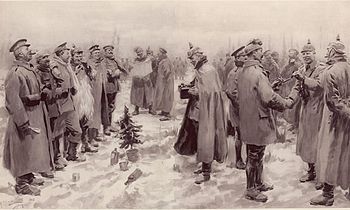
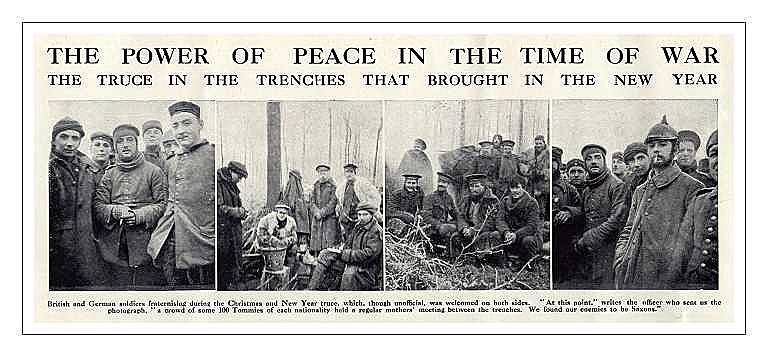






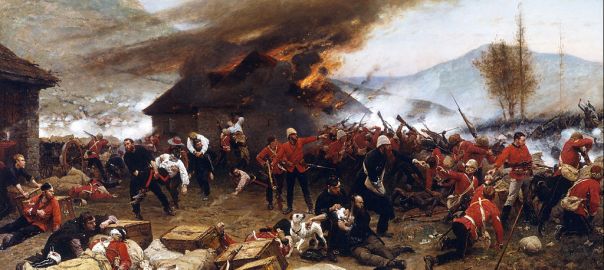

 Rorke’s Drift,




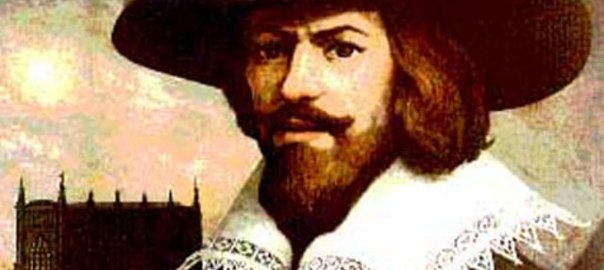


_by_Claes_(Nicolaes)_Jansz_Visscher.jpg)

_(6302836170).jpg)





_page_1.png)




.svg)


.svg)


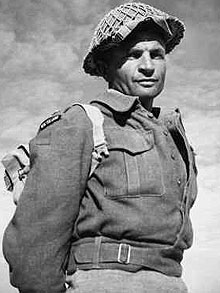


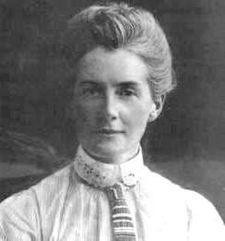


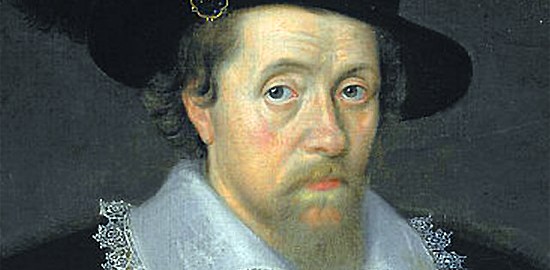


 belfastchildis.com