Why Ireland split into the Republic of Ireland & Northern Ireland.
Category Archives: Documentaries on Northern Ireland


Why Ireland split into the Republic of Ireland & Northern Ireland
Disclaimer – The views and opinions expressed in these documentary are soley intended to educate and provide background information to those interested in the Troubles of Northern Ireland. They in no way reflect my own opinions and I take no responsibility for any inaccuracies or factual errors.
A brief overview of the history of Ireland and the events that led to the political division of the island.
Including: the Norman and Tudor conquest of Ireland, the break away from the Roman Catholic Church, the Union of the Crowns, the various Irish Rebellions, Oliver Cromwell’s effect on Ireland, Irish joining the Union, the Irish War for Independence, the following Civil War, and the recent violence in Northern Ireland known as The Troubles.
————————————————————————–
Why Ireland split into the Republic of Ireland & Northern Ireland
————————————————————————–
Share this:

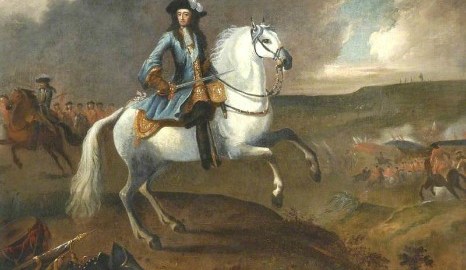
The Siege Of Derry 1689 – What’s it all about?
– Disclaimer –
The views and opinions expressed in these documentaries are soley intended to educate and provide background information to those interested in the Troubles of Northern Ireland. They in no way reflect my own opinions and I take no responsibility for any inaccuracies or factual errors.
———————————————————————————-
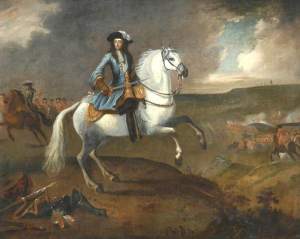
The Siege Of Derry 1689
A great documentary detailing the rebellion in which the citizens of Derry locked their king and his men out of the city in 1689, in support of the Dutch invasion of England.The great academic historians of this generation tell the story of Derry’s siege and related incidents.
——————————————————
——————————————————
The Siege of Derry (Irish: Léigear Dhoire) involved a pre-emptive lockdown of the city gates in December 1688[1] and a violent defensive action lasting from 18 April to 28 July 1689, during the Williamite War in Ireland. The city, a Williamite stronghold, was besieged by a Jacobite army until it was relieved by Royal Navy ships. The siege is commemorated yearly in August by the Apprentice Boys of Derry.
The Siege of Derry
What’s it all about?
——————————————————
——————————————————
In the “Glorious Revolution” of 1688, James II (King of England, Ireland and Scotland), a Roman Catholic convert, was ousted from power by his Protestant daughter Mary and her husband William of Orange. Most of the Irish population were Catholic, and James had given them some real concessions during his reign. He had made an Irish Catholic the Lord Deputy of Ireland (Richard Talbot), and re-admitted Catholics into the Irish Parliament, public office, and had replaced Protestant officers with Roman Catholic officers in the army. Irish Catholics also hoped that James would re-grant them their lands, which had been seized after the Cromwellian conquest of Ireland (1649–53). James thus looked to Ireland to muster support in re-gaining his kingdoms just as his father, Charles I had done in the Civil War of the 1640s.
Richard Talbot, who was acting as James’s viceroy in Ireland, was eager to ensure that all strongholds in the country were held by garrisons loyal to James. He focused on the northern province of Ulster, which had been the most heavily planted by British Protestant colonists.
By November 1688, Enniskillen and Derry were the two garrisons in Ulster that were not wholly loyal to James. The elderly Alexander MacDonnell, 3rd Earl of Antrim, was ordered to replace them with a more trustworthy force. He agreed, but wasted several weeks searching for men who were at least six feet tall. A force of about 1,200 Scottish Catholic “Redshanks” then set out for Derry. On 7 December, with the army a short distance away, thirteen apprentice boys seized the city keys and locked the gates.
On 10 December, King James fled London. He was caught, but fled a second time on 23 December and made his way to France. James’s first cousin, King Louis XIV of France, said he would help James regain power. In London on 13 February 1689, William and Mary were crowned.
On 12 March, James landed in Kinsale (on Ireland’s south coast) with 6000 French soldiers. He took Dublin and marched north with an army of Irish and French Catholics.
The Derry City Governor, Lieutenant Colonel Robert Lundy, turned away reinforcements led by Colonel Cunningham, which had arrived in the River Foyle, telling them that the city was to be surrendered.[2] He wrote on 15 April that “without an immediate supply of money and provisions this place must fall very soon into the enemy’s hands”. Lundy called a meeting with several of his most loyal supporters to discuss surrender. News of the meeting spread, angering many of the citizens. That night, Lundy (in disguise) and many others left the city and took ship to Scotland. The city’s defence was overseen by Major Henry Baker, Colonel Adam Murray, and Major George Walker (also an Anglican priest). Their slogan was “No Surrender”.[3]
As the Jacobite army neared, all the buildings outside the city walls were set alight by the defenders to prevent them being used as cover by the besiegers.
The Jacobite army reached Derry on 18 April. King James and his retinue rode to within 300 yards of Bishop’s Gate and demanded the surrender of the city. He was rebuffed with shouts of “No surrender!”, and some of the city’s defenders fired at him. According to a later account, one of the king’s aides-de-camp was killed by a shot from the city’s largest cannon which was called “Roaring Meg“.[4] James would ask thrice more, but was refused each time. This marked the beginning of the siege. Cannon and mortar fire were exchanged, and disease took hold within the city. James returned to Dublin and left his forces under the command of Richard Hamilton.
Royal Navy warships under Admiral Rooke arrived in Lough Foyle on 11 June, but initially declined to ram through the heavily defended defensive boom (floating barrier) across the River Foyle at Culmore. On 28 July, two armed merchant ships, Mountjoy and Phoenix, sailed toward the boom, protected by the frigate HMS Dartmouth under Captain John Leake. Mountjoy rammed and breached the boom at Culmore fort, and the ships moved in, unloading many tons of food to relieve the siege.[5]
The city had endured 105 days of siege during which some 8000[6][citation needed] people of a population of 30,000 were said to have died.
Make a small donation

Share this:

The Kingsmill Massacre – Sectarian Slaughter by IRA
Kingsmill Massacre
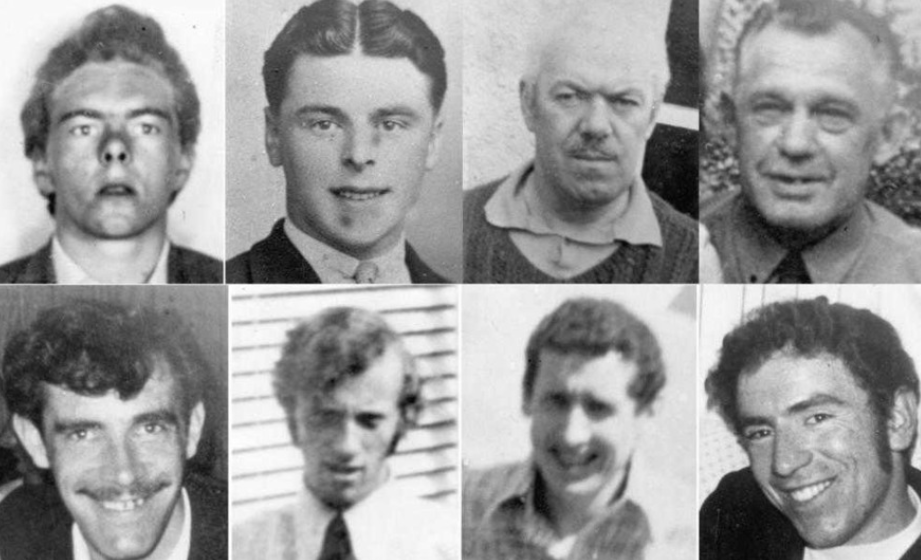
IRA murder 10 innocent Protestants
Sectarian Slaughter
5 January 1976
The Kingsmill massacre occurred on January 5, 1976 when ten Protestant men were killed just outside the village of Kingsmill in south Armagh, Northern Ireland by Irish republicans IRA.
——————————————-
——————————————-
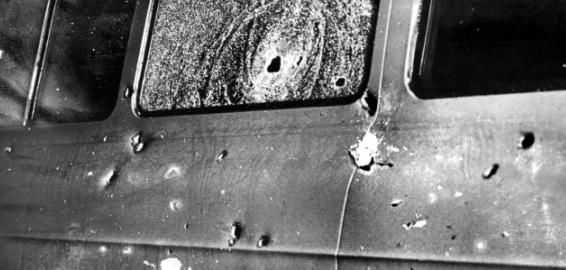
The Kingsmill massacre was one of the worst single incidents in a period of severe sectarian violence during the Troubles, in Northern Ireland.

January 5, 1976, a Ford Transit mini-bus carried Protestant textile workers travelling home from work. The Provisional IRA South Armagh Brigade stopped the van and shot the men in cold blood with Armalite rifles, SLRs, a 9mm pistol and an M1 carbine, a total of 136 rounds were fired in less than a minute. No one was ever charged in relation to the Kingsmill killings.

The Kingsmill massacre took place on 5 January 1976 near the village of Kingsmill in south County Armagh, Northern Ireland.
Gunmen stopped a minibus carrying eleven Protestant workmen, lined them up beside it and then shot them. Only one of them survived, despite having been shot 18 times. A group calling itself the South Armagh Republican Action Force claimed responsibility. It said the shooting was retaliation for a string of attacks on Catholic civilians in the area by Loyalists, particularly the killing of six Catholics the night before.
The Kingsmill massacre was the climax of a string of tit-for-tat killings in the area during the mid-1970s, and was one of the deadliest mass shootings of the Troubles.
A 2011 report by the Historical Enquiries Team (HET) found that members of the Provisional IRA carried out the attack, despite the organisation being on ceasefire. It has been claimed that the IRA members acted without the sanction of the IRA Army Council. The HET report said that the men were targeted because they were Protestants and that, although it was a response to the night before, it had been planned in advance.
The weapons used were linked to 110 other attacks.
Following the massacre, the British government declared County Armagh to be a “Special Emergency Area” and hundreds of extra troops and police were deployed in the area. It also announced that the Special Air Service (SAS) was being moved into South Armagh. This was the first time that SAS presence in Northern Ireland was officially acknowledged.
——————————
The Victims

——————————
05 January 1976

John McConville, (20)
Protestant
Status: Civilian (Civ),
Killed by: Republican Action Force (RepAF)
Shot shortly after his firm’s minibus stopped at bogus vehicle check point while travelling home from work, Kingsmills, near Bessbrook, County Armagh.
——————————
05 January 1976

Walter Chapman, (23)
Protestant
Status: Civilian (Civ),
Killed by: Republican Action Force (RepAF)
Shot shortly after his firm’s minibus stopped at bogus vehicle check point while travelling home from work, Kingsmills, near Bessbrook, County Armagh.
——————————
05 January 1976

Reginald Chapman, (25)
Protestant
Status: Civilian (Civ),
Killed by: Republican Action Force (RepAF)
Shot shortly after his firm’s minibus stopped at bogus vehicle check point while travelling home from work, Kingsmills, near Bessbrook, County Armagh.
——————————
05 January 1976

Joseph Lemmon, (46)
Protestant
Status: Civilian (Civ)
Killed by: Republican Action Force (RepAF)
Shot shortly after his firm’s minibus stopped at bogus vehicle check point while travelling home from work, Kingsmills, near Bessbrook, County Armagh.
——————————
05 January 1976

James McWhirter, (58)
Protestant
Status: Civilian (Civ),
Killed by: Republican Action Force (RepAF)
Shot shortly after his firm’s minibus stopped at bogus vehicle check point while travelling home from work, Kingsmills, near Bessbrook, County Armagh.
——————————
05 January 1976

Kenneth Worton, (24)
Protestant
Status: Civilian (Civ),
Killed by: Republican Action Force (RepAF)
Shot shortly after his firm’s minibus stopped at bogus vehicle check point while travelling home from work, Kingsmills, near Bessbrook, County Armagh.
——————————
05 January 1976

Robert Chambers, (19)
Protestant
Status: Civilian (Civ),
Killed by: Republican Action Force (RepAF)
Shot shortly after his firm’s minibus stopped at bogus vehicle check point while travelling home from work, Kingsmills, near Bessbrook, County Armagh.
——————————
05 January 1976

John Bryans, (46)
Protestant
Status: Civilian (Civ),
Killed by: Republican Action Force (RepAF)
Shot shortly after his firm’s minibus stopped at bogus vehicle check point while travelling home from work, Kingsmills, near Bessbrook, County Armagh
——————————
05 January 1976

Robert Freeburn, (50)
Protestant
Status: Civilian (Civ),
Killed by: Republican Action Force (RepAF)
Shot shortly after his firm’s minibus stopped at bogus vehicle check point while travelling home from work, Kingsmills, near Bessbrook, County Armagh.
——————————
05 January 1976

Robert Walker, (46)
Protestant
Status: Civilian (Civ),
Killed by: Republican Action Force (RepAF)
Shot shortly after his firm’s minibus stopped at bogus vehicle check point while travelling home from work, Kingsmills, near Bessbrook, County Armagh.
——————————
Survivor

Alan Black

Background
On 10 February 1975, the Provisional IRA and British government entered into a truce and restarted negotiations. The IRA agreed to halt attacks on the British security forces, and the security forces mostly ended its raids and searches.
However, there were dissenters on both sides. Some Provisionals wanted no part of the truce, while British commanders resented being told to stop their operations against the IRA just when—they claimed—they had the Provisionals on the run.
The security forces boosted their intelligence offensive during the truce and thoroughly infiltrated the IRA.
There was a rise in sectarian killings during the truce, which ‘officially’ lasted until February 1976. Loyalists, fearing they were about to be forsaken by the British government and forced into a united Ireland, increased their attacks on Irish Catholics/nationalists. Loyalists killed 120 Catholics in 1975, the vast majority civilians.
They hoped to force the IRA to retaliate and thus hasten an end to the truce. Under orders not to engage the security forces, some IRA units concentrated on tackling the loyalists. The fall-off of regular operations had caused serious problems of internal discipline and some IRA members, with or without permission from higher up, engaged in tit-for-tat killings. Irish National Liberation Army (INLA) members, and current or former members of the Official IRA, were also involved.
Between the beginning of the truce (10 February 1975) and the Kingsmill massacre, loyalist paramilitaries killed 25 Catholic civilians in County Armagh and just over the border in County Louth.
In that same period, republican paramilitaries killed 14 Protestant civilians and 16 members of the security forces in County Armagh.
- On 1 September, five Protestant civilians were killed by masked gunmen at Tullyvallan Orange Hall near Newtownhamilton. The attack was claimed by a group calling itself the “South Armagh Republican Action Force”. This was the first time the name had been used.
- On 19 December, loyalists detonated a car bomb at Kay’s Tavern in Dundalk, a few miles across the Irish border. No warning was given beforehand and two civilians were killed. Later that day, three Catholic civilians were killed and six were wounded in a gun and grenade attack on Donnelly’s Bar in Silverbridge. The “Red Hand Commandos” claimed responsibility for both attacks. Royal Ulster Constabulary (RUC) officers investigating the attack said they believed the culprits included an RUC officer and a British soldier from the Ulster Defence Regiment (UDR).
- On 31 December, three Protestant civilians were killed in an explosion at the Central Bar, Gilford. The “People’s Republican Army” claimed responsibility. It is believed this was a cover name used by members of the INLA.
- Four days later, on 4 January 1976, the UVF Mid-Ulster Brigade shot dead six Catholic civilians in two co-ordinated attacks. They killed three members of the Reavey family in Whitecross and three members of the O’Dowd family in Ballydougan, within twenty minutes of each other. The Irish News reported that the killings were in revenge for the bombing in Gilford. RUC officer Billy McCaughey admitted taking part and accused another officer of being involved. His colleague, John Weir, said that two police officers and a British soldier were involved.
The HET report found that while the massacre was in “direct response” to the Reavey and O’Dowd killings, the attack was planned before that: “The murderous attacks on the Reavey and O’Dowd families were simply the catalyst for the premeditated and calculated slaughter of these innocent and defenceless men”.
The attack

The bullet-riddled minibus which had been transporting the 11 Protestant workers who were gunned down as they lined up beside the vehicle
On 5 January 1976 just after 5.30 pm, a red Ford Transit minibus was carrying sixteen textile workers home from work in Glenanne to Bessbrook. Five were Catholics and eleven were Protestants. Four of the Catholics got out at Whitecross, while the rest continued on the road to Bessbrook.
As the bus cleared the rise of a hill, it was stopped by a man in British Army uniform standing on the road and flashing a torch. The workers assumed they were being stopped and searched by the British Army. As the bus stopped, eleven masked gunmen with blackened faces and wearing combat jackets emerged from the hedges. A man “with a pronounced English accent” then began talking.
He ordered them to line-up beside the bus and then asked:
“Who is the Catholic?”.
The only Catholic was Richard Hughes. His workmates—now fearing that the gunmen were loyalists who had come to kill him—tried to stop him from identifying himself. However, when Hughes stepped forward the gunman told him to “Get down the road and don’t look back”. The lead gunman then said “Right” and the other armed men immediately opened fire on the workers.
The remaining eleven men were shot at very close range with AR-18 and L1A1 SLR rifles, a 9mm pistol, and an M1 carbine. A total of 136 rounds were fired in less than a minute. The dead and wounded men’s bodies fell on top of each other. When the shooting stopped, one of the gunmen walked amongst the dying men and shot each of them in the head as they lay on the ground.
Ten of them died at the scene; John Bryans, Robert Chambers, Reginald Chapman, Walter Chapman, Robert Freeburn, Joseph Lemmon, John McConville, James McWhirter, Robert Walker and Kenneth Worton.
Alan Black survived despite having eighteen gunshot wounds.
Hughes managed to stop a car and was driven to Bessbrook RUC station, where he raised the alarm. Meanwhile, a man and his wife had come upon the scene of the killings and had begun praying beside the victims. They found Alan Black, who was lying in a ditch and badly wounded. When an ambulance arrived, Black was taken to hospital in Newry, where he was operated on and survived.
A police officer said that the road was “an indescribable scene of carnage”, whilst Johnston Chapman, the uncle of victims Reginald and Walter Chapman, said that the dead men were “just lying there like dogs, blood everywhere”.
At least two of the victims were so badly mutilated by gunfire that immediate relatives were prevented from identifying them. One relative stated that the hospital mortuary “was like a butcher’s shop with bodies lying on the floor like slabs of meat”
Nine of the dead, the textile workers, were from the village of Bessbrook, while the bus driver, Robert Walker (46), was from nearby Mountnorris. Four of the men were members of the Orange Order.
———————————–
Evidence exists to arrest untouchable IRA killers who committed the Kingsmills massacre
———————————–
The perpetrators
The next day, a caller claimed responsibility for the attack on behalf of the South Armagh Republican Action Force. He said that it was retaliation for the Reavey and O’Dowd killings of the night before, and that there would be “no further action on our part” if loyalists stopped their attacks. He added that the group had no connection with the IRA.
The IRA at the time denied responsibility for the killings. It stated on 17 January 1976:
The Irish Republican Army has never initiated sectarian killings… [but] if loyalist elements responsible for over 300 sectarian assassinations in the past four years stop such killing now, then the question of retaliation from whatever source does not arise.
However, a 2011 report by the Historical Inquiries Team (HET) found that Provisional IRA members were responsible and that the “South Armagh Republican Action Force” was merely a covername. It added: “There is some intelligence that the Provisional IRA unit responsible was not well-disposed towards central co-ordination but there is no excuse in that. These dreadful murders were carried out by the Provisional IRA and none other”.
Responding to the report, Sinn Féin spokesman Mitchel McLaughlin said that he did “not dispute the sectarian nature of the killings” but continued to believe “the denials by the IRA that they were involved”. SDLP Assemblyman Dominic Bradley called on Sinn Féin to “publicly accept that the HET’s forensic evidence on the firearms used puts Provisional responsibility beyond question” and cease “deny[ing] that the Provisional IRA was in the business of organising sectarian killings on a large scale”.
According to the account of journalist Toby Harnden, the British Military Intelligence assessment at the time was that the attack was carried out by local IRA members “who were acting outside of the normal IRA command structure”.
He also quoted an alleged South Armagh IRA member, Volunteer M, who said that “IRA members were ordered by their leaders to carry out the Kingsmill massacre”. Furthermore, Harnden reported a contradictory RUC allegation that the attack was planned, and that future Real IRA leader Michael McKevitt was among the IRA members who planned it (at the nearby Road House pub on New Year’s Eve) and took part.
It was alleged by Harnden that IRA Chief of Staff Seamus Twomey, on the suggestion of Brian Keenan, ordered that there had to be a disproportionate retaliation against Protestants in order to stop Catholics being killed by loyalists. According to IRA informer Sean O’Callaghan, “Keenan believed that the only way to put the nonsense out of the Prods [Protestants], was to hit back much harder and more savagely than them”.
However, O’Callaghan reports that Twomey and Keenan did not consult the IRA Army Council before sanctioning the Kingsmill attack. Ruairí Ó Brádaigh claims that he and Twomey only learned of the Kingsmill attack after it had taken place.
Two AR-18 rifles used in the shooting were found by the British Army in 1990 in a wall near Cullyhanna and forensically tested. It was reported that the rifles were linked to 17 killings in the South Armagh area from 1974 to 1990. Further ballistic studies found that guns used in the attack were linked to 37 killings, 22 attempted killings, 19 non-fatal shootings and 11 finds of spent cartridges between 1974 and 1989.
In 2012, a secret Royal Military Police (RMP) document shown to the Sunday World newspaper revealed that the gunman who finished off the dying men could have been arrested five months later. The document says that the man (referred to as ‘P’) was wounded when British soldiers engaged an IRA unit near the Mountain House Inn on the Newry–Newtownhamilton Road on 25 June 1976. He managed to flee over the border and was treated at Louth County Hospital shortly after.
The three other members of the IRA unit were captured within hours. According to the RMP document, two of them named ‘P’ as the fourth member. Four guns were also captured by security forces after the gunfight, including two that had been used in the Kingsmill massacre. The RMP document reveals that both the British Army and RUC knew that ‘P’ was being treated at the hospital but “made no attempt to have him arrested and extradited”. This has led to suspicions that ‘P’ – “who has never been prosecuted despite extensive paramilitary involvement” – was a British agent.
Ian Paisley’s claims

In 1999, Democratic Unionist Party (DUP) leader Ian Paisley stated in the House of Commons that Eugene Reavey took part in the massacre. Eugene Reavey’s three brothers were shot by loyalists the day before, although Paisley made no reference to those killings.
Eugene Reavey had “witnessed the immediate aftermath of the [Kingsmill] massacre, which took place near his home. He was driving to Newry and happened upon it. He and his family were on their way to Daisy Hill hospital to collect the bodies of two of his brothers, John (24) and Brian (22).”
Eugene Reavey “was also going to visit his younger brother, Anthony, who had been badly injured in the attack. The bodies of the murdered workmen were being brought into the mortuary when he arrived. He went into the room where the shattered families were gathering, and wept with them. Alan Black [sole survivor of the Kingsmill massacre] and Anthony Reavey shared a hospital room. Black lived whilst Reavey later died.”
Paisley used parliamentary privilege to name those he believed responsible, including Eugene Reavey, whom he accused of being “a well-known republican” who “set up the Kingsmills massacre”. Paisley claimed to be quoting from what he described as a “police dossier” but what is believed to be an Ulster Defence Regiment intelligence file.
Paisley’s claims were rejected by the sole survivor of the Kingsmill massacre, Alan Black, and also by Reavey himself.
Susan McKay wrote in the Irish Times that Alan Black, on hearing Paisley’s accusations,
…went straight to the Reaveys’ house in Whitecross, south Armagh. He told Reavey that he knew he was innocent. The PSNI has stated that it had no reason to suspect Reavey of any crime, let alone of masterminding the atrocity … The then Northern Ireland deputy first minister, the SDLP‘s Seamus Mallon, expressed outrage. Reavey went to the chief constable of the RUC, Ronnie Flanagan. Flanagan said he had “absolutely no evidence whatsoever” to connect him with the massacre, and that no police file contained any such allegation.
In January 2007, the Police Service of Northern Ireland‘s Historical Enquiries Team (HET) apologised to the Reavey family for security forces allegations that the three brothers killed in 1976 were IRA members or that Eugene Reavey had been involved in the Kingsmill attack. Despite this, the allegation continued to be promoted by local unionist activist Willie Frazer of Families Acting for Innocent Relatives (FAIR).
In May 2010, the HET released a report which exonerated the three Reavey brothers and their family of any links to paramilitarism, leading Eugene Reavey to demand an apology from Ian Paisley for the comments he made in 1999. Paisley died in 2014 without retracting his allegations.
Strong indications of UDR involvement and collusion with the UVF led to a case being taken before the European Court of Human Rights regarding the killings. In November 2007, the court ruled that the RUC had not properly investigated allegations made by John Weir, a former RUC officer and self-confessed former member of the Glennane gang.
Weir has made detailed claims of collusion between high-ranking members of the security forces and paramilitary groups.
Alan Black’s claims

Alan Black, the sole survivor, has claimed that state agents were involved.
Reactions and aftermath
The Kingsmill massacre was the last in the series of sectarian killings in South Armagh during the mid-1970s. According to Willie Frazer of FAIR, this was as a result of deal between the local UVF and IRA groups.
Two days after the massacre, Prime Minister Harold Wilson announced that the Special Air Service (SAS) was being moved into the South Armagh area. This was the first time that SAS presence in Northern Ireland was officially acknowledged.
However, according to historian Richard English, “It seems clear that the SAS had been in the north well before this. According to the Provisionals since 1971; according to a former SAS soldier they had been there even earlier”. Units and personnel under SAS control are alleged to have been involved in loyalist attacks.
Author Toby Harnden places regiment’s B squadron in Belfast as early as 1974.
Loyalist response
See Glenanne Gang
There were no immediate revenge attacks by loyalist paramilitaries. However, in 2007 it emerged that local UVF members from the “Glenanne gang” had planned to kill at least 30 Catholic school children as retaliation.
This gang had been involved in the Reavey–O’Dowd killings and it included members of the RUC’s Special Patrol Group and the British Army’s Ulster Defence Regiment. Following the Kingsmill shootings, the gang drew-up plans to attack St Lawrence O’Toole Primary School in the South Armagh village of Belleeks.
The plan was aborted at the last minute on orders of the UVF’s Brigade Staff (Belfast leadership), who ruled that it would be “morally unacceptable”, would undermine support for the UVF, and could lead to civil war. One Glenanne gang member said that the UVF leadership also feared the potential IRA response. The gang member who suggested the attack was a UDR soldier. The leadership allegedly suspected that he was working for British Military Intelligence, and that Military Intelligence were seeking to provoke a civil war.
Another UVF gang, the “Shankill Butchers“, also planned retaliation for the massacre. This gang, led by Lenny Murphy, operated in Belfast and was notorious for its late-night kidnapping, torture and murder (by throat slashing) of random Catholic civilians. Within a week of the massacre, Murphy had laid the groundwork for an attack on a lorry that ferried Catholic workmen to Corry’s Timber Yard in West Belfast. The plan was to shoot all of those on board. However, Murphy abandoned the plan after the workers changed their route and transport.[67]
Some loyalists claim the Kingsmill massacre is the reason they joined paramilitary groups. One was Billy Wright, who said:
I was 15 when those workmen were pulled out of that bus and shot dead. I was a Protestant and I realised that they had been killed simply because they were Protestants. I left Mountnorris, came back to Portadown and immediately joined the youth wing of the UVF.[68]
He went on to assume command of the UVF Mid-Ulster Brigade when its leader Robin “the Jackal” Jackson “retired” in the early 1990s; Wright later founded the breakaway Loyalist Volunteer Force (LVF) in 1996. He was suspected of at least 20 sectarian killings of Catholics in the 1980s and 1990s.
Another with similar claims was RUC Special Patrol Group officer Billy McCaughey, who was one of the RUC officers present at the aftermath of the massacre. He told Toby Harnden, “the sides of the road were running red with blood and it was the blood of totally innocent Protestants”. Afterwards, McCaughey says that he began passing RUC intelligence to loyalist militants and also to participate in their operations. McCaughey was convicted in 1980 of one sectarian killing, the kidnapping of a Catholic priest, and one failed bombing.
However, McCaughey had colluded with loyalists before the Kingsmill attack, and later admitted to taking part in the Reavey killings the day before – he claimed he “was at the house but fired no shots”.
McCaughey also gave his view on how the massacre affected loyalists:
I think Kingsmills forced people to ask themselves where they were going, especially the Protestant support base, the civilian support base – the people who were not members of the UVF but would let you use a building or a field. Those people, many of them withdrew. It wasn’t because of anything the UVF did. It was fear of retaliation.[19]
No one was ever charged in relation to the Kingsmill massacre. In August 2003, there were calls for the Police Service of Northern Ireland to reopen the files relating to the massacre.
Republican response

As noted above, the IRA denied involvement in the attack. Although author Toby Harnden and others have alleged that it was ordered by elements of the IRA leadership (Seamus Twomey and Brian Keenan), other republican leaders were reported to be very unhappy about it. According to the informer Sean O’Callaghan, Gerry Adams said in an Army Council meeting, “there’ll never again be another Kingsmill”.
Harnden stated that IRA members in South Armagh who talked to him in the late 1990s generally condemned the massacre. One of them, Volunteer M, was quoted as saying that it was “a gut reaction [to the killing of Catholics] and a wrong one. The worst time in my life was in jail after Kingsmill. It was a dishonourable time”. Another, Volunteer G, was quoted as saying that he “never agreed with Kingsmill”. Republican activist Peter John Caraher said that those ultimately responsible were “the loyalists who shot the Reavey brothers”.
He added, “It was sad that those people [at Kingsmill] had to die, but I’ll tell you something, it stopped any more Catholics being killed”. This view was reiterated by a County Tyrone republican and Gaelic Athletic Association veteran who spoke to Ed Moloney. “It’s a lesson you learn quickly on the football field… If you’re fouled, you hit back”, he said.
Memorial parade controversy
In February 2012, controversy arose when Willie Frazer of FAIR proposed a “March for Justice” in which the victims’ relatives, along with 11 loyalist bands, would follow the route taken by the workmen the night they were killed. This would have meant passing through the mainly nationalist village of Whitecross and past the homes of the Reavey family, where the three brothers had been killed the night before the massacre.
Over 200 people voiced their opposition to the march at a meeting with the Parades Commission in Whitecross. Local SDLP and Sinn Féin representatives also opposed it, saying it would raise sectarian tension in the area. The Parades Commission approved the march on condition that there be no marching bands, flags, banners or placards. Pastor Barrie Halliday, a member of FAIR, received a death threat telling him that he would be shot and his church would be burnt if the march went ahead.
The organizers postponed the march; a move that was welcomed by local Sinn Féin MP Conor Murphy and Ulster Unionist MLA Danny Kennedy.
Memorials

There is a memorial in Beesbrook inscribed ‘The Innocent Victims Murdered at Kingsmills’.
A second memorial, near the site of the attack was vandalised on Friday 30 November 2012 while it was undergoing construction. IRA graffiti was scratched into the plaster of the memorial. Danny Kennedy MLA, who has campaigned on behalf of the families, said he was “absolutely appalled by the attack”. The Ulster Unionist representative also claimed that there was an attempt to “intimidate” construction workers at the memorial site, prior to the graffiti appearing.
In June 2013, Northern Ireland’s SDLP Environment Minister Alex Attwood apologised that his Department has sent a letter to the land owner of the memorial site demanding it be removed as it did not have planning permission. Attwood said: “That letter should not have been issued. How the planning system went off and issued a letter is beyond me. I am not happy.” MLA William Irwin criticised the Department’s action and contrasted it with its inaction over 19 “illegal roadside terrorist memorials”, five of which were in the Newry and Armagh constituency, which similarly had no planning permission
—————————
Alan Black
The sole survivor of the Kingsmill massacre has threatened legal action over the failure to appoint a new coroner to hear a fresh inquest into the murders of 10 Protestant workmen in South Armagh almost 40 years ago
A number of victims’ relatives joined Alan Black in issuing the ultimatum to the Department of Justice on Tuesday.
He was one of 11 textile workers who were ambushed in South Armagh in 1976. Ten of the men died when they were lined up against the minibus they were travelling in and shot.
Northern Ireland’s Senior Coroner John Leckey has been presiding over preliminary proceedings ahead of the new inquest being heard, but he is due to retire in the autumn.
No other coroner has been assigned to the case, despite calls from Mr Leckey for Justice Minister David Ford to find a successor.
During the final preliminary hearing in the case before retirement, a lawyer representing Mr Black and the family of victim John McConville warned judicial review proceedings would be initiated if no action is taken.
Mr Black said the families would not accept a further hold-up in their long battle for an inquest.
“Over the years since we got involved, it has been one obstacle put in our way after the other and all coming from the Department of Justice,” he said.
“They knew for two years that John Leckey was going to go. David Ford wants to kick us into the long grass again, we are not going.
“We’ll do whatever’s necessary with the legal people and hopefully get a result then.”
No one has been convicted of the murders, which were widely blamed on the IRA, although the organisation never admitted responsibility.
Mr Black was hit 18 times but survived the gun attack.
The only Catholic worker was told to flee the scene.
In a statement, a spokesman for the justice minister said: “The Department of Justice fully appreciates the concerns of the families who are awaiting inquests into the deaths of loved ones.
“The Coroners Service currently has three full-time coroners, including the senior coroner.
“The justice minister also recently approved the appointment of an additional county court judge to create additional judicial capacity for legacy cases.
“The assignment of a coroner to hear inquests is currently the responsibility of the senior coroner and will become the responsibility of the Lord Chief Justice when he assumes the Presidency of the Coroners’ Courts.”
This story first appeared on UTV in June 2015
—————————

The sole survivor of a sectarian massacre of 10 Protestant workmen in Northern Ireland has led a solitary life since the slaughter, a lawyer told an inquest
Alan Black was shot 18 times and left for dead alongside the lifeless bodies of his friends, cut down in a hail of bullets by a South Armagh roadside in 1976, blamed on He has problems trusting people and suffered health issues, a Belfast courtroom was told. The elderly former engineer applied for legal representation in an upcoming coroner’s investigation into a mass killing near the village of Kingsmill, one of the most notorious Troubles shootings.
Barrister Fiona Doherty told the hearing: “He has not been able to work since the shooting and leads a solitary life.”
The textile workers were gunned down after a masked gang stopped their minibus close to Kingsmill as they were travelling home from work.
They were forced to line up alongside the van and ordered to divulge their religion. The only Catholic was told to flee while the 11 remaining were shot.
No-one has ever been convicted of the murders, widely blamed on the IRA even though the organisation never admitted responsibility
Ms Doherty said the only survivor had left school at 15 and worked as a mechanic or engineer until the incident.
She argued that she should be allowed to represent him, alongside relatives of the deceased, during what is expected to be one of the largest inquests in recent times in Northern Ireland.
She claimed it would be nearly impossible for him to properly understand and respond to the evidence and stressed his importance to shed light on what happened.
“He is not simply a witness, he is a survivor.
“He is the only person who can give a first hand account of what happened.”
She told coroner Brian Sherrard it may be only when another witness gave evidence or documents were made available that the value of his input was realised.
“The court should be very slow to disregard that full input and the benefit that you and the inquest get from having that input.”
She argued counsel for the coroner could not adequately replace a dedicated lawyer.
“He needs help and support to come from people he knows and trusts and has built up a rapport with. He has issues with trust stemming from the incident…and he needs help and support to be fully informed.”
She warned the consequences of not granting legal representation could be profound.
“There is a real risk that the inquest will pass him by.”
A barrister for the Police Service of Northern Ireland (PSNI), Peter Coll, asked what purpose would be served.
“What extra element will be brought to the inquest proceedings, what marks Mr Black out as being different from a witness/survivor in any other incident?
“We respectfully say there would be nothing to be gained from it.”
Share this:

A Pocket History of Belfast – That doesn’t mention the Troubles!
John Daly brings Northern Ireland’s history to life. He lifts the lid on the antics of Baron of Belfast, Arthur Chichester and the second Marquis of Donegal.
Belfast is the capital and largest city of Northern Ireland. Most of Belfast is in County Antrim, but parts of East and South Belfast are in County Down. It is on the flood plain of the River Lagan.
Share this:
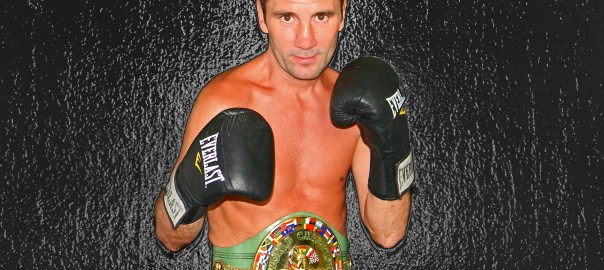
Bits Of Belfast – Shankill Road 1 – 4 with Wayne McCullough
Bits Of Belfast – Shankill Road 1
Bits Of Belfast – Shankill Road 2
Bits Of Belfast – Shankill Road 3
Bits Of Belfast – Shankill Road 4
if you have enjoyed reading my story and daily blogs please consider making a small donation

Share this:

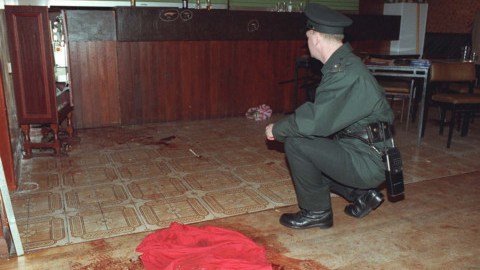
The Greysteel shootings – 30 October 1993
The Greysteel Massacre
The Greysteel massacre was a mass shooting that happened on the evening of 30 October 1993 in Greysteel, County Derry, Northern Ireland. Three members of the Ulster Defence Association (UDA), a loyalist paramilitary group, opened fire in a crowded pub during a Halloween party, killing eight civilians and wounding thirteen.
The pub was in an Irish Catholic and Irish nationalist area. The group claimed responsibility using their cover name “Ulster Freedom Fighters” and said that the attack was revenge for the Shankill Road bombing a week earlier.
———————————————————————————————–
———————————————————————————————–

Disclaimer
The views and opinions expressed in these documentaries are soley intended to educate and provide background information to those interested in the Troubles of Northern Ireland. They in no way reflect my own opinions and I take no responsibility for any inaccuracies or factual errors.
The Innocent Victims
———————————————————-
30 October 1993

Steven Mullan, (20)
Catholic
Status: Civilian (Civ),
Killed by: Ulster Freedom Fighters (UFF)
Shot during gun attack on Rising Sun Bar, Greysteel, County Derry.
———————————————————-
30 October 1993

Karen Thompson, (19)
Catholic
Status: Civilian (Civ),
Killed by: Ulster Freedom Fighters (UFF)
Shot during gun attack on Rising Sun Bar, Greysteel, County Derry.
———————————————————-
30 October 1993

James Moore, (81)
Catholic
Status: Civilian (Civ),
Killed by: Ulster Freedom Fighters (UFF)
Shot during gun attack on Rising Sun Bar, Greysteel, County Derry.
———————————————————-
30 October 1993

Joseph McDermott, (60)
Catholic
Status: Civilian (Civ),
Killed by: Ulster Freedom Fighters (UFF)
Shot during gun attack on Rising Sun Bar, Greysteel, County Derry.
———————————————————-
30 October 1993

Moira Duddy, (59)
Catholic
Status: Civilian (Civ),
Killed by: Ulster Freedom Fighters (UFF)
Shot during gun attack on Rising Sun Bar, Greysteel, County Derry.
———————————————————-
30 October 1993
John Moyne, (50)
Catholic
Status: Civilian (Civ),
Killed by: Ulster Freedom Fighters (UFF)
Shot during gun attack on Rising Sun Bar, Greysteel, County Derry.
———————————————————-
30 October 1993

John Burns, (54)
Protestant
Status: Civilian (Civ),
Killed by: Ulster Freedom Fighters (UFF)
Shot during gun attack on Rising Sun Bar, Greysteel, County Derry.
———————————————————-
30 October 1993
Victor Montgomery, (76)
Protestant
Status: Civilian (Civ),
Killed by: Ulster Freedom Fighters (UFF)
Shot during gun attack on Rising Sun Bar, Greysteel, County Derry. He died 14 April 1994
———————————————————-
Background
On 23 October 1993, a Provisional Irish Republican Army (IRA) bomb prematurely exploded in a fish shop on Shankill Road, west Belfast. Eight Protestant civilians, one UDA member and one of the IRA bombers were killed.
The IRA’s intended target was a meeting of UDA leaders, including brigadier Johnny Adair, which was to take place above the shop. Unknown to the IRA, the meeting had been rescheduled. Shortly after two IRA members, Thomas Begley and Sean Kelly, entered the shop dressed as deliverymen and carrying the time bomb under a tray, it exploded accidentally, killing Begley along with the nine others inside the shop at the time. This became known as the Shankill Road bombing.
The UDA launched a number of “revenge attacks” for the bombing. Later that day, it shot a Catholic delivery driver after luring him to a bogus call at Vernon Court, Belfast. He died on 25 October.
On 26 October, the UDA shot dead another two Catholic civilians and wounded five in an attack on the Council Depot at Kennedy Way, Belfast.
Planning

The Londonderry Sentinel newspaper revealed that the massacre had been carefully planned. Those involved in planning and organising the attack were Billy McFarland (‘Brigadier’ of the UDA’s North Antrim & Londonderry Brigade), a UDA commander with the initials ‘RS’, and Brian McNeill.
Stephen Irwin, Geoffrey Deeney and Torrens Knight, all members of the UDA’s North Antrim & Londonderry Brigade, were to carry out the shooting. According to court documents, the gunmen were first briefed on the plans for the massacre on 27 October in a house-office owned by the Ulster Democratic Party at Bond’s Place, Derry.
Before the massacre, the gunmen went to the pub to familiarise themselves with the layout and choose the best positions from which to shoot. Knight turned the office at Bond’s Place into a mock-up of the pub and made Irwin and Deeney rehearse the shooting. It was agreed that Irwin would enter the Rising Sun armed with an AK-47 and keep shooting until the magazine emptied.
Whilst Irwin reloaded, Deeney would fire from his 9 mm semi-automatic pistol. Both would then keep shooting until Irwin’s second magazine was empty. Knight, armed with a shotgun, would ‘cover’ the front door.
Two cars would be used for the attack. The gunmen would drive to the pub in an Opel Kadett with McNeill driving in front as a ‘scout car’. After the shooting, the gunmen would drive the Kadett to a pick-up point near Eglinton, where they would meet McNeill and the Kadett would be burnt.
The massacre
On the evening of 30 October, the three UDA members, two of whom were wearing blue boiler suits and balaclavas, entered the “Rising Sun Bar” in Greysteel. There were about 70 people inside attending a Halloween party,and so the masked men were not noticed until they produced an AK-47 and a 9 mm pistol, and started shooting into the packed crowd in the lounge area.
The leading gunman, Stephen Irwin (who was carrying the AK-47), yelled “trick or treat” as he opened fire.
The scene was chaotic as people inside the lounge began to scream in panic, with women pleading for mercy from the gunmen. Six of those killed were Catholic civilians and two were Protestant civilians. None had any known links to political parties or paramilitaries. The killers, laughing, then made their escape in their getaway car—an Opel Kadett driven by Torrens Knight. Afterwards they were said to have boasted about the killings.
The following day, the UDA claimed responsibility for the attack using the cover name “Ulster Freedom Fighters” (UFF). Its statement said that the “Greysteel raid” was “the continuation of our threats against the nationalist electorate that they would pay a heavy price for last Saturday’s slaughter of nine Protestants”.
A West Belfast UDA member said that his organisation:
“had information that senior IRA men drank in the Rising Sun … Unfortunately they were not there on Halloween but our boys acted on the briefing they had been given”.
The pub is still open in Greysteel. There is a memorial to the victims outside the building that says: May their sacrifice be our path to peace.
Convictions
In 1995, Irwin, Deeney and Knight were convicted along with two others for involvement in the attack. Knight was also convicted for the Castlerock killings. In 2000, they were released early—along with other paramilitary prisoners—under the terms of the Good Friday Agreement.
After his release, Irwin joined the Neo-Nazi militant group Combat 18. Knight was also alleged to have had links to Combat 18.
In 2005, Irwin received a four-year prison sentence for slashing a man with a knife. This meant that he also now had to serve the eight life sentences he received for the Greysteel massacre.
In 2006, he abandoned an appeal against the sentences.
In September 2013, Irwin was released from prison a second time after submitting an application to the Sentence Review Commissioners for early release. The commissioners ruled his application should be granted and he was released immediately.
There have been claims in the media that Knight was a paid Royal Ulster Constabulary (RUC) and/or MI5 informer. Knight denied the claims.
In October 2007, a Police Ombudsman investigation concluded that police did not have any prior knowledge that could have helped them prevent the Greysteel attack. The investigators did not find any evidence that Knight was protected from the law.
See: Shankill Bomb
Share this:


The Corporal Killings – Sickening IRA Murder of Two Off Duty British Army Corporals Belfast March 19th 1988
The Corporal Killings
19th March 1988
Sickening IRA Murder of Two Off Duty British Army Corporals Belfast 1988

Corporals Killings

– Disclaimer –
The views and opinions expressed in this post / documentary are soley intended to educate and provide background information to those interested in the Troubles of Northern Ireland.
They in no way reflect my own opinions and I take no responsibility for any inaccuracies or factual errors.
Lest We Forget

Corporal Derek Wood was killed at the IRA funeral of Kevin Brady in Andersonstown in 1988..
British Army corporals David Howes and Derek Wood were killed by the Provisional IRA on 19 March 1988 in Belfast, Northern Ireland, in an event which became known as the corporals killings.

Corporal David Howes was killed at the IRA funeral of Kevin Brady in Andersonstown in 1988.
Catholic bishop Cahal Daly said:
“For a ghastly half-hour the mask slipped. The real face of IRA violence was shown.

The plain-clothes soldiers were killed after driving a car into the funeral procession of an IRA member. Three days before, loyalist Michael Stone had attacked an IRA funeral and killed three people. Believing the soldiers were loyalists intent on repeating Stone’s attack, dozens of people surrounded and attacked their car.
During this, Corporal Wood drew his service pistol and fired a shot in the air. The soldiers were then dragged from the car, beaten, and taken to nearby waste ground where they were stripped and shot dead.
The incident was filmed by television cameras and the images have been described as some of the “most dramatic and harrowing” of the conflict in Northern Ireland.
IRA Murder of Two Off Duty British Army
Background
The killings took place against a backdrop of violence at high-profile Irish republican funerals. A heavy security presence was criticized as instigating unrest, leading authorities to adopt a “hands off” policy with respect to policing IRA funerals.
On 6 March 1988, three unarmed IRA members preparing for a bomb attack on the band of the Royal Anglian Regiment were killed by members of the Special Air Service (SAS) in Gibraltar during Operation Flavius. Their unpoliced funerals in Belfast’s Milltown Cemetery on 16 March were attacked by Ulster Defence Association (UDA) member Michael Stone with pistols and hand grenades, in what became known as the Milltown Cemetery attack.
Three people were killed and more than 60 wounded, one of the dead being IRA member Caoimhín Mac Brádaigh (Kevin Brady). Mac Brádaigh’s funeral, just three days after Stone’s attack, took place amid an extremely fearful and tense atmosphere, those attending being in trepidation of another loyalist attack.
The attendance at the funeral included large numbers of IRA members who acted as stewards.
David Robert Howes (23) and Derek Tony Wood (24) were corporals in the British Army’s Royal Corps of Signals. According to the British Army, Howes and Wood ignored general orders to stay away from IRA funeral processions. It has been presumed that the two men drove into the procession by accident.
The Killings

David Howes and Derek Wood were wearing civilian clothes and driving in a silver Volkswagen Passat hatchback. The Mac Brádaigh funeral was making its way along the Andersonstown Road towards Milltown Cemetery when the car containing the two corporals appeared. The car headed straight towards the front of the funeral, which was headed by several black taxis. It drove past a Sinn Féin steward who signalled it to turn. Mourners at the funeral said they believed they were under attack from Ulster loyalists.
The car then mounted a pavement, scattering mourners, and turned into a small side road. When this road was blocked, it then reversed at speed, ending up within the funeral cortege. When the driver attempted to extricate the car from the cortege his exit route was blocked by a black taxi.
When the car was surrounded and the windows smashed, those surrounding attempted to drag the soldiers out. Wood produced a handgun, which certain off-duty members of the security forces were permitted to carry at the time.

Wood climbed part of the way out of a window, firing a shot in the air which briefly scattered the crowd. Television pictures showed the crowd surging back, with some of them attacking the vehicle with a wheel-brace and a stepladder snatched from a photographer. The corporals were eventually pulled from the car and punched and kicked to the ground.
Journalist Mary Holland recalled seeing one of the men being dragged past a group of journalists:
“He didn’t cry out, just looked at us with terrified eyes, as though we were all enemies in a foreign country who wouldn’t have understood what language he was speaking if he called out for help.”
They were dragged to the nearby Casement Park sports ground. Here they were again beaten and stripped to their underpants and socks by a small group of men. According to the BBC and The Independent the men were also tortured.
A search revealed that the men were British Army soldiers.
Redemptorist priest Father Alec Reid, who later played a significant part in the peace process leading to the 1998 Good Friday Agreement, intervened and attempted to get someone to call for an ambulance, but was dragged away and threatened with shooting if he did not stand up; he was then pulled away from the men.
The corporals were further beaten and thrown over a high wall to be put into a waiting black taxi. It was driven off at speed, while camera crews captured one of its passengers waving a fist in the air.
The two men were driven less than 200 yards to waste ground near Penny Lane (South Link), just off the main Andersonstown Road. There they were shot several times. Wood was shot six times, twice in the head and four times in the chest. He was also stabbed four times in the back of the neck and had multiple injuries to other parts of his body. Reid had been following the perpetrators in an attempt to intervene and save Howes and Wood; when he arrived at the scene he gave the last rites to the two men.

According to photographer David Cairns, although photographers were having their films taken by the IRA, he was able to keep his by quickly leaving the area after taking a photograph of Reid kneeling beside the almost naked body of Howes, administering the last rites. Cairns’ photograph was later named one of the best pictures of the past 50 years by Life magazine.
Shortly after, the IRA released a statement:
The Belfast brigade, IRA, claims responsibility for the execution of two SAS members who launched an attack on the funeral cortege of our comrade volunteer Kevin Brady. The SAS unit was initially apprehended by the people lining the route in the belief that armed loyalists were attacking them and they were removed from the immediate vicinity.
Our volunteers forcibly removed the two men from the crowd and, after clearly ascertaining their identities from equipment and documentation, we executed them.
Aftermath

Northern Ireland Secretary Tom King acknowledged that the Milltown Cemetery attack and the killing of Howes and Wood were:
“wholly unacceptable and do require immediate review in regard to policing to be followed at any future funeral.”
Conservative MP Michael Mates nonetheless defended the “hands off” policy, saying “A return to heavy-handed policing could provoke riots, which is what the IRA want so they can say to the world:
‘They won’t even let us bury our dead in peace.'”
Fine Gael leader Alan Dukes, Labour leader Dick Spring and Taoiseach Charlie Haughey all condemned the killings. The British prime minister at the time, Margaret Thatcher called the killings :
“an act of appalling savagery”.
On 2 August 1988, Lance-Corporal Roy Butler of the Ulster Defence Regiment was shot and killed in Belfast with one of the guns taken from the corporals.
Two men, Alex Murphy and Harry Maguire, were found guilty of the murder of the corporals.
They were jailed for life in 1989, with a recommendation of a minimum 25 years. Murphy received a further 83 years, and Maguire 79 years, for bodily harm, falsely imprisoning the soldiers, and possessing a gun and ammunition.
Sir Brian Hutton, sentencing, said
“All murders are brutal, but the murders of Corporal Howes and Corporal Wood were particularly savage and vicious . . . They were stripped of most of their clothing and they lay in their own blood in the back of the taxi when you took them to the waste ground to be killed, and in that pitiable and defenceless state you brought about their murders as they lay on the ground.”
Both men had been listed as senior members of the IRA’s Belfast Brigade. In 1973, at the age of 15, Murphy had been the youngest republican internee in Long Kesh prison, which later became known as the Maze. Maguire became a member of the IRA’s “camp staff” in the Maze, one of the senior IRA men effectively in control of the republican wings, and met Northern Ireland Secretary Mo Mowlam when she visited the jail to negotiate with prisoners.
In November 1998, Murphy and Maguire were released from the Maze prison as part of the early prisoner release scheme under the Good Friday Agreement. Maguire is now chairman of the Belfast office of Community Restorative Justice Ireland, a police-supported group aimed at dealing with low-level crime through mediation and intended to replace the practice of “punishment beatings” and kneecappings by paramilitaries.
A further three men were in 1990 found guilty by common purpose of aiding and abetting the murder. The men (Pat Kane, Mickey Timmons, and Seán Ó Ceallaigh) were dubbed the “Casement Three” by republicans who disputed the validity of their convictions. Kane’s conviction was quashed on appeal due to the unreliability of his confession.
Ó Ceallaigh was released in 1998 under the Good Friday Agreement.
Terence Clarke, the chief steward on the day, was sentenced to seven years’ imprisonment for assaulting Corporal Wood. Clarke had served as Gerry Adams‘ bodyguard; he died of cancer in 2000.
———————————————————————————-

See See The Corporals killings & the events leading up to it
See Michael Stone
Share this:


Michael Stone – Loyalist Hero or Psychopath? (Documentary)
– Disclaimer –

The views and opinions expressed in these documentary are soley intended to educate and provide background information to those interested in the Troubles of Northern Ireland. They in no way reflect my own opinions and I take no responsibility for any inaccuracies or factual errors.

Michael Stone (born 2 April 1955) is an Ulster loyalist who was a volunteer in the Ulster Defence Association (UDA). Stone was born in England but raised in the Braniel estate in East Belfast, Northern Ireland. Convicted of murdering three people and injuring more than sixty in an attack on mourners at Milltown Cemetery in 1988, he was sentenced to life imprisonment. While in jail, he became one of the leaders of the Ulster Defence Association/Ulster Freedom Fighters (UDA/UFF) prisoners.[1]
In 2000, Stone was released from prison on licence under the Belfast Agreement and subsequently worked as an artist and writer. In November 2006, Stone was charged with (among other offences) the attempted murder of Martin McGuinness and Gerry Adams, having been arrested attempting to enter the parliament buildings at Stormont while armed.[2] Stone was subsequently convicted and sentenced to a further 16 years’ imprisonment

——————————————————————————————————
——————————————————————————————————
Early life
Stone was born in Harborne, Birmingham, to English parents Cyril Alfred Stone and his wife Mary Bridget (née O’Sullivan).[4] Mary Bridget walked out on the marriage soon after Stone’s birth and Cyril Alfred enlisted in the Merchant Navy, leaving the infant Michael in the care of John Gregg and his wife Margaret (Cyril’s sister) who lived in Ballyhalbert.[5] Stone has claimed that he suspects his biological mother may have been a Catholic because of her name but added that he was baptised in the Church of Ireland by the Greggs and as such he has always self-identified as Protestant.[6] Cyril Stone subsequently remarried and had two children, Michael Stone’s half-siblings, by his second wife – Tracey and Terence – the latter of whom converted to Buddhism and became a monk in Southeast Asia.[7] The Greggs had five biological children with whom Stone was raised and whom he identifies as siblings, a son John and four daughters, Rosemary, Colleen, Sharon and Shirley.[8]
The Greggs moved to the Braniel estate on the outskirts of Belfast in 1959 due to John Gregg securing employment with Harland and Wolff shipyard.[9] Stone attended Braniel Primary School and Lisnasharragh Secondary School, where fellow pupils included George Best, who was in the same class as Stone’s sister Rosemary Gregg.[10] Stone enrolled in the Army Cadet Force as a fourteen-year-old where he received basic training in firearm use.[11] Stone was expelled from school at fifteen and a half after a series of playground fights and left Lisnasharragh with no formal qualifications.[12] He would find work as a “hammer boy” in the shipyard only a few weeks later.[13] However he got into a fight with another worker and, following a suspension, resigned his position.[14]
Move to loyalism

The UFF East Belfast Brigade of which Stone became a member
In 1970 Stone helped establish a Braniel street gang, which called itself the Hole in the Wall Gang, and which Stone claims included Catholic and Protestant members.[15] Gang members, who adopted a form of uniform consisting of blue jeans and oxblood Dr. Martens and who carried knives, clashed regularly with members of other Braniel gangs as well as those from neighbouring estates in east Belfast.[16] In 1971 Stone joined a “Tartan Gang” that had started up on the Braniel estate and he was soon recognised as “general” of this loyalist group. The gangs were responsible for sectarian violence, which usually took the form of spending Saturday afternoons in Belfast city centre attacking Catholic youths, and vandalising the Catholic repository in Chapel Lane.[17]
Stone met Tommy Herron, commander of the Ulster Defence Association‘s East Belfast Brigade, when Herron moved into the Braniel estate in 1972.[18] According to Stone, Herron took him and three friends to the neighbouring Castlereagh Hills one day and brought a German shepherd dog with them. After the four had played with the dog for around half-an-hour, Herron produced a gun and told them to kill the dog. After his three friends refused Stone shot the animal and was praised by Herron for being ruthless.[19] He was sworn in as a member of the UDA at a ceremony the following week.[20] Stone was trained in weapon use by Herron himself for several months and according to Stone at one point in the training Herron shot him with a blank round from a shotgun.[21]
Stone’s early UDA activity was mostly confined to stealing and in 1972 he was sent to prison for six months for stealing guns and ammunition from a Comber sports shop.[22] He returned to jail soon after his release for stealing a car.[23] Tommy Herron was murdered, probably by colleagues, soon afterwards and the Braniel UDA went into abeyance.[24]
Red Hand Commando

Following Herron’s death, Stone withdrew from the UDA and in January 1974 attached himself to the Red Hand Commando (RHC), a loyalist group that also operated a Braniel unit under Sammy Cinnamond.[25] According to Stone, one of his earliest duties was acting as a bodyguard to Vanguard Unionist Progressive Party leader Bill Craig.[26] In 1978 the UDA encouraged Stone to join the Royal Irish Regiment at Ballymena in order that he could receive training with anti-tank weaponry although he did not receive this training and left after six months.[27] According to Martin Dillon, Stone also held membership of Tara, an anti-Catholic and anti-communist organisation led by William McGrath, a close associate of RHC leader John McKeague.[28] Dillon also argues that Stone had actually joined the RHC at an earlier date and held simultaneous membership of the other groups, Tara and the UDA. Cross-membership of more than one loyalist group was not unheard of in the early days of the Troubles.[29]
Stone became close to John Bingham, the commander of the Ballysillan Ulster Volunteer Force (UVF, which the RHC was very close to), and the two worked closely on a fund-raising drive for their groups.[30] According to Stone this included a meeting with two members of Mossad who wished to provide funding to the UVF.[31] Stone however was eager to become more closely involved in killing and under Cinnamond that was not on the agenda so he drifted from the RHC.[32]
Return to UDA
In 1984 Stone decided to reactivate his membership of the UDA and contacted Andy Tyrie to receive permission.[33] After a brief period with the near moribund Mid-Ulster Brigade, Stone, who felt he was too well known in east Belfast to rejoin the local brigade, met John McMichael and was soon seconded to his South Belfast Brigade.[34] McMichael soon provided Stone with guns and placed him in a team whose ostensible purpose was to fill McMichael’s hit list, a list of high-profile Irish republican targets the Brigadier wanted killed.[35] His first target was Owen Carron, who actually was a high-profile republican. Stone trailed Carron for several weeks but on the day he was due to kill the Sinn Féin activist, Stone was tipped off that the Royal Ulster Constabulary knew about the plan and were approaching, so the hit was abandoned.[36]
On 16 November 1984 Stone committed his first murder when he shot and killed Catholic milkman Patrick Brady, a man Stone claimed was a member of the Provisional IRA.[37] According to the Conflict Archive on the Internet, although Brady was a member of Sinn Féin, he was not in the IRA.[38] This was followed in 1985 by an attempt to kill another Sinn Féin activist, Robert McAllister, but on this occasion Stone was unsuccessful.[39] He subsequently killed Kevin McPolin in November 1985 and would also face charges for the murder of Dermot Hackett in 1987. Stone would subsequently admit to killing McPolin but has claimed that he did not kill Hackett but confessed to his murder in order that a young UFF member might escape punishment.[40] Both McPolin and Hackett were uninvolved Catholics.
Milltown Cemetery attack
See Below for more details on Milltown Attack
Stone attacked the people attending the funeral which was being held at the Milltown Cemetery for the three IRA members killed 10 days earlier in Gibraltar by the Special Air Service (SAS) in what was termed Operation Flavius. As Danny McCann, Seán Savage, and Mairéad Farrell were being buried, Stone launched a commando-style assault against the mourners with RGD-5 grenades and an semi-automatic pistol. He killed three people, including IRA member Kevin Brady, and injured sixty others. Stone was eventually overpowered by infuriated mourners and was then arrested by members of the Royal Ulster Constabulary (RUC). He still walks with a slight limp as a result of the dislocated thigh bone he received in the aftermath of the attack.[41]
According to Ulster Defence Association (UDA) member Sammy Duddy, two UDA “brigadiers” from two Belfast battalions, fearing IRA reprisals against themselves or the areas they controlled, telephoned the IRA after the Milltown attack, denying knowledge of Stone or his intentions. The two brigadiers both claimed that Stone was a “rogue loyalist” acting without UDA sanction or authorisation.[42] Duddy, however, described Stone as “one of the UDA’s best operators”.[43]
Stone, who apparently objected to the newspapers’ portrayal of him as a mad Rambo-style gunman, also confessed to shooting dead three other Catholics between 1984 and 1987. He claimed the victims were linked to the IRA, although it appears that they were unaligned civilians. At his trial he pleaded not guilty, but refused to offer any defence. Convicted of six murders, he was sentenced to life imprisonment with sentences totalling 684 years, with a recommendation he serve at least thirty years.[44]
While in HM Prison Maze, Stone became one of the five leaders of the Ulster Defence Association/”Ulster Freedom Fighters” prisoners.[1] Alongside the other four, he met Mo Mowlam during the 1998 negotiations between the government and paramilitaries as part of the peace process. The goal was to get the paramilitaries to come to the negotiation table.[1] He also collaborated with Martin Dillon on a book about his life entitled Stone Cold.[45]
Release
On 24 July 2000, Stone was released from prison after 13 years under the Good Friday Peace Agreement. Stone had been living in East Belfast, London and Spain with his girlfriend Suzanne Cooper until the events of 24 November 2006.[46] In 2001 Stone and Ms Cooper exchanged bullet-proof jackets as Christmas gifts. Stone has nine children from his first two marriages.[47]
Since leaving prison Stone concentrated on work in the community and being an artist, a hobby he began in the Maze. His paintings are vivid and not so much political as topical. They fetch between a few hundred and a few thousand pounds each. Stone published his autobiography titled None Shall Divide Us, in which he claimed that he had received “specialist assistance” from RUC operatives in carrying out the cemetery killings.[48] A second book and the auctioning of the jacket he wore at the Milltown Cemetery at a Scottish loyalist club for £10,000 have brought forward legislation to ban former convicted paramilitaries released through the Northern Ireland Peace Process from profiting from their crimes.
In March 2002 it was reported in the Sunday Life that Stone and Cooper had fled Northern Ireland for France following death threats from loyalists opposed to the peace process. The aim of those behind the threats – reported as being from the Orange Volunteers – was the eventual destruction of the Good Friday Agreement and the end of Northern Ireland’s troubled peace process.[49] Following time in Birmingham, Stone returned to East Belfast.
Stone was featured in the BBC2 television series Facing the Truth mediated by Archbishop Desmond Tutu where he met relatives of a victim of loyalist violence. Sylvia Hackett talked with Stone, who was convicted of murdering her husband Dermot, a Catholic delivery man. Although he previously admitted to the murder, Stone told his victim’s widow that he had no direct responsibility, having been withdrawn after planning the attack. At the end of their meeting she forced herself to walk over to Stone and shake his hand – when he placed a second hand on hers, she recoiled and fled from the room.[50]
In November 2006, he claimed that in the 1980s he had been “three days” away from killing the then leader of the Greater London Council and former Mayor of London, Ken Livingstone, over his invitations to Sinn Féin‘s Gerry Adams and Martin McGuinness to visit him in London.[51] The plot was reportedly cancelled over fears it had been infiltrated by Special Branch detectives.[52]
Stormont arrest
————————————————————————
Stormont Saga – Michael Stone
————————————————————————
On 24 November 2006, at 11.16 am, Stone was arrested for attempting to enter the parliament buildings at Stormont armed with an imitation Beretta 92FS pistol, a knife and a “viable” bomb, after placing 8 “pipe bombs” within the grounds of Stormont.[53] Three civilian security guards disarmed him as he entered the building, by trapping him within the revolving doors of the main lobby entrance. The security guards were injured during the struggle with Stone.[54] Following the security breach, the building was evacuated and an Army Bomb Disposal Unit was called to examine the suspect device. Before entering the building he had scrawled an incomplete graffiti stating “Sinn Féin IRA mur[derers]” on the Parliament building. Later examination from the bomb squad revealed that the bag Stone had been carrying contained between six and eight viable explosive devices. Sir Hugh Orde, the Chief Constable of the Police Service of Northern Ireland, said “their potential for death, destruction and injury is being assessed” but added they were “fairly amateurish”. As a result of Stone’s actions, talks between political parties about power sharing and the election of a First Minister, which had only just resumed, had to be abandoned.[55]
On 19 December 2006, Stone’s defence lawyer, Arthur Harvey, QC, claimed that the Stormont incident was not intended to endanger the life of anyone. “It was, in fact, a piece of performance art replicating a terrorist attack”, claimed Harvey.[56] During his trial in September 2008, on 13 charges including the attempted murder of Gerry Adams and Martin McGuinness, Stone repeated that his actions were “an act of performance art“.[57]
The then Secretary of State for Northern Ireland (Peter Hain) indicated that Stone’s licence for release under the “Good Friday Agreement” would be revoked, and the full 638-year sentence for triple murder, terrorist charges and firearm charges be reimposed on him, in line with his sentencing in 1988. On 25 November 2006, Stone appeared in court in Belfast charged with attempting to murder Sinn Féin leaders Gerry Adams and Martin McGuinness. Stone faced a total of five charges of attempted murder following the incident at Stormont.
Stone was charged with possession of articles for terrorist purposes, possession of an imitation firearm in a public place, assault, grievous bodily harm, possession of an offensive weapon and possession of explosives. The court heard the articles allegedly for terrorist purposes included nailbombs, an axe and a garrotte. He was remanded in custody until 22 December 2006.[44] A letter written by Stone was published in the Belfast Telegraph on 29 November 2006. In the letter dated 24 November 2006, Stone described his “mission to Kill” Adams and McGuinness in detail, giving a description of his intended movements once inside the building.[56]
On 14 November he was found guilty of attempting to murder Adams and McGuinness. The judge said defence evidence that Stone had been taking part in some sort of a “comic parody” was “hopelessly unconvincing” and “self-contradictory”. On 8 December 2008, Stone received a 16-year sentence for his actions at Stormont.[58]
Personal life
Stone married Marlene Leckey in 1976 and had three sons with her. The couple separated in 1978 and divorced in 1983.[26] At the time of his divorce Stone was cohabiting with Leigh-Ann Shaw. Stone and Shaw were subsequently married[26] in 1985. Although the marriage produced two children, it also ended in divorce.[59]

——————————————————————————–

Milltown Cemetery attack
——————————————————-
| Milltown Massacre
——————————————————- |
|
|---|---|

The funerals, minutes before the attack
|
|
| Location | Milltown Cemetery, Belfast, Northern Ireland |
| Coordinates | 54°35′0″N 5°58′38″W / 54.58333°N 5.97722°W / 54.58333; -5.97722Coordinates: 54°35′0″N 5°58′38″W / 54.58333°N 5.97722°W / 54.58333; -5.97722 |
| Date | 16 March 1988 |
| Weapons | RGD-5 hand grenades; Browning Hi-Power 9mm pistol; Ruger .357 magnum revolver |
| Deaths | 3 |
|
Non-fatal injuries
|
60+ [1] |
| Perpetrator | Michael Stone |

The Milltown Cemetery attack (also known as the Milltown Cemetery killings or Milltown Massacre[2]) took place on 16 March 1988 in Belfast‘s Milltown Cemetery. During the funeral of three Provisional IRA volunteers killed in Gibraltar, an Ulster Defence Association (UDA) volunteer, Michael Stone, attacked the mourners with hand grenades and pistols. As Stone then ran towards the nearby motorway, a large crowd began chasing him and he continued shooting and throwing grenades. Some of them caught him and began beating him, but he was rescued by the police and arrested. Three people had been killed and more than 60 wounded. The “unprecedented, one-man attack”[1] was filmed by television news crews and caused shock around the world.[3]
Three days later, at the funeral of one of Stone’s victims, two non-uniformed British soldiers drove into the funeral procession. Bystanders, who reportedly thought it was a replay of an attack like that carried out by Stone, dragged the soldiers from their car; the two corporals were later shot dead by the IRA.
Background
See Corporal Murders
On 6 March 1988, Provisional IRA members Daniel McCann, Seán Savage and Mairéad Farrell were shot dead by the SAS in Gibraltar. This caused outrage among Irish republicans and their supporters as the three were unarmed and allegedly shot without warning. They were due to be buried in the republican plot at Milltown Cemetery on 16 March. For years, republicans had complained about heavy-handed policing of IRA funerals, which had led to violence. In a change from normal procedure, the British Army and Royal Ulster Constabulary (RUC) decided they would pull back from the funerals of the “Gibraltar Three” and keep watch from the sidelines.[1] This followed negotiations with Catholic church leaders.[4]
Michael Stone’s self-professed mission was “to take out the Sinn Féin and IRA leadership at the graveside”.[5] He told journalist Peter Taylor that his attack was retaliation for the IRA’s Remembrance Day bombing four months earlier. Taylor wrote, “He said it was symbolic: the IRA had attacked a British cenotaph and he was taking revenge by attacking the IRA equivalent”.[6] Stone claimed a “senior member of the UDA” had given him the organisation’s “official” clearance for the attack[7] and claimed he was given a Browning Hi-Power 9mm pistol, a Ruger .357 Magnum revolver and seven RGD-5 grenades the night before the funeral.[5]
Attack
The funeral service and requiem mass went ahead as planned, and the cortege made its way to Milltown Cemetery, off the Falls Road. Present were thousands of mourners and top members of the IRA and Sinn Féin, including Sinn Féin’s Gerry Adams and Martin McGuinness.[7] Two RUC helicopters hovered overhead.[8] Stone claimed that he entered the graveyard through the front gate with the mourners.[5] Some eyewitnesses claimed to have seen Stone enter the graveyard from the M1 motorway with three other people (two men and a woman). The others walked across the graveyard and later left on the Falls Road side. As the third coffin was about to be lowered into the ground, Stone threw two grenades—which had a seven-second delay—toward the republican plot and began shooting.[5]
The first grenade exploded near the crowd and about 20 yards (18 m) from the grave.[8] Amid the panic and confusion, people took cover behind gravestones. Stone began jogging toward the motorway, several hundred yards away, chased by dozens of men and youths. He continued shooting and throwing grenades at his pursuers. Three people were killed while pursuing Stone:[1] two Catholic civilians Thomas McErlean (20) and John Murray (26), and a Provisional IRA volunteer, Caoimhín Mac Brádaigh (30). During the attack about 60 people were wounded by bullets, grenade shrapnel and fragments of marble and stone from gravestones. Among those wounded was a pregnant mother of four, a 72-year-old grandmother and a ten-year-old boy.[1]
In the 19 March edition of the Irish Times, columnist Kevin Myers, an opponent of republican paramilitary violence, wrote: “Unarmed young men charged against the man hurling grenades and firing an automatic pistol […] The young men stalking their quarry repeatedly came under fire; they were repeatedly bombed; they repeatedly advanced. Indeed this was not simply bravery; this was a heroism which in other circumstances, I have no doubt, would have won the highest military decorations”.[1]

A memorial in Milltown Cemetery to the ‘Gibraltar Three’ and to the three men killed in the attack on their funeral
A white van that had been parked by the motorway suddenly drove off as Stone fled from the angry crowd. The RUC said the van was part of an uninvolved police patrol.[8] Stone later claimed that a getaway vehicle, driven by a UDA member, was waiting for him on the motorway but the driver “panicked” and left.[5] By the time Stone reached the motorway, he had seemingly ran out of ammunition.[1] He ran out onto the road and tried to stop cars,[8] but was caught by the crowd and beaten unconscious. RUC officers quickly arrived, “almost certainly saving his life”.[1] They arrested him and took him to Musgrave Park Hospital for treatment of his injuries. The whole event had been recorded by television news cameras.
Aftermath
That evening, angry youths in republican districts burnt hijacked vehicles and attacked the RUC.[8] Immediately after the attack, the two main loyalist paramilitaries—the UDA and the Ulster Volunteer Force (UVF)—denied responsibility. The leader of the UDA’s West Belfast Brigade, Tommy Lyttle, said that Stone was a rogue loyalist acting without orders from the UDA, though he did not condemn the attack. Lyttle told other UDA leaders to keep to this line. UDA member Sammy Duddy said: “After Milltown, two UDA brigadiers from two Belfast battalions telephoned the IRA to say they didn’t know Michael Stone […] But Michael was UDA, he was a travelling gunman who went after the IRA and Republicans and he needed no authority for that because that was his job. Those two brigadiers were scared in case the IRA would retaliate against them […] so they disclaimed Michael, one of our best operators”.[7]
Sinn Féin and others “claimed that there must have been collusion with the security forces, because only a small number of people knew in advance of the reduced police presence at the funerals”.[4] Stone later claimed he had assurances that British soldiers and RUC officers would not be deployed in the graveyard. He also claimed to have had detailed information about British Army and RUC movements.[7] Stone wrote that, the night before the attack, he was “given his pick of weapons from an Ulster Resistance cache at a secret location outside Belfast” and was “driven back into the city by a member of the RUC”.[7] According to journalist Martin Dillon, the weapons he used were given to him on the orders of UDA intelligence chief Brian Nelson, who was later revealed to be an undercover agent of the British Army’s Force Research Unit (FRU).[5]
Three days after the Milltown killings, one of Stone’s victims, Caoimhín Mac Brádaigh, was being buried when two plain-clothes British Army Corporals (Derek Wood and David Howes) in an unmarked car drove into the path of the funeral cortège – apparently by mistake. Some of those present, believing the soldiers to be loyalist gunmen, surrounded and attacked their car. Corporal Wood drew his service pistol and fired a shot in the air. The two men were then dragged from the car before being taken away, beaten and shot dead by republicans.[4] The incident is often referred to as the corporals killings and, like the attack at Milltown, much of it was filmed by television news cameras. The Browning pistol Stone used during the killings was stolen by the mob on the day of the attack and was eventually used by an IRA unit to ambush a combined RUC/British Army patrol in Belfast on 13 October 1990. A constable was shot dead and another badly injured.[9]
Many hardline loyalists saw Stone as a hero and he became a loyalist icon.[2] In March 1989, he was convicted for the three murders at Milltown, for three paramilitary murders before, and for other offences. He received sentences totaling 682 years, but was released after serving 13 years as a result of the Good Friday Agreement. Apart from time on remand spent in Crumlin Road Prison, Stone spent all of his sentence in HM Prison Maze. Stone later published an autobiography, None Shall Divide Us, which included an account of the attack, in which he wrote that he deeply regretted the hurt he had caused the families of those he killed, and paid tribute to the bravery of two of the men killed while pursuing him at the cemetery (Murray, Mac Brádaigh). Stone wrote “I didn’t choose killing as a career, killing chose me”.[
Share this:

The Shankill Bomb
Disclaimer – The views and opinions expressed in these documentary are soley intended to educate and provide background information to those interested in the Troubles of Northern Ireland. They in no way reflect my own opinions and I take no responsibility for any inaccuracies or factual errors.
The Shankill Road bombing was carried out by the Provisional Irish Republican Army (IRA) on 23 October 1993 and is one of the most notorious incidents of the Troubles in Northern Ireland. The IRA intended to assassinate loyalist paramilitary leaders, who were to be meeting in a room above Frizzell’s fish shop on Shankill Road, Belfast. Two IRA members were to enter the shop disguised as deliverymen, then force the customers out at gunpoint and plant a time bomb with a short fuse. However, when the IRA members entered the shop with the bomb, it exploded prematurely. One of the IRA members was killed along with a UDA member and eight Protestant civilians.[1] More than fifty people were wounded. Unbeknownst to the IRA, the meeting had been rescheduled.
The loyalist Shankill Road had been the location of other bomb and gun attacks, including the Balmoral Furniture Company bombing in 1971 and Bayardo Bar attack in 1975; but the 1993 bombing had the highest casualties and resulted in a wave of revenge attacks by loyalists. In the week that followed, loyalists killed 14 civilians, almost all of them Irish Catholics. The deadliest attack took place in Greysteel, where UDA members opened fire in a pub frequented by Catholics, killing eight civilians and wounding 13.
 belfastchildis.com