Key Events & Deaths on this day in Northern Ireland Troubles
24th December
———————-
Monday 24 December 1973
Monaghan Street , Newry
Two members of the Irish Republican Army (IRA) and a Protestant civilian were killed in a bomb attack on a public house in Monaghan Street, Newry, County Down. The bomb was being planted by the IRA and exploded prematurely.
Saturday 24 December 1983
Margaret Thatcher, then British Prime Minister, paid a six-hour visit to Northern Ireland. During the brief tour Thatcher met Christmas shoppers in Newtownards, County Down, and visited members of the security forces in County Armagh and County Tyrone.
Monday 24 December 1984
The Court of Appeal in Belfast quashed the convictions of 14 men who had been sentenced on the evidence of an Ulster Volunteer Force (UVF) ‘supergrass’ informer Joseph Bennett.
Thursday 24 December 1992
The Irish Republican Army (IRA) called a three-day ceasefire.
Sunday 24 December 1995
The British government paid £38,700 to cover the legal costs of the families of the three unarmed Irish Republican Army (IRA) members killed in Gibraltar by undercover members of the Special Air Service (SAS) on 6 March 1988. The British government was ordered to pay the costs following a decision on 27 September 1995 by the European Court of Human Rights in Strasbourg.
The Sunday Times (a London based newspaper) claimed that Libya had provided the British government with details of its assistance to the Irish Republican Army (IRA). [It was claimed that: over 130 tonnes of arms were shipped from Tripoli to Ireland; £9 million in cash had been handed over; and 20 IRA members had been trained in Libya.]
Friday 24 December 1999
A man who was being held in prison accused of the murder of Charles Bennett on 30 July 1999 was released after charges were withdrawn. No explanation was given for the withdrawal of charges against the man.
————————————————
——————————————————————————
Remembering all innocent victims of the Troubles
Today is the anniversary of the death of the following people killed as a results of the conflict in Northern Ireland
“To live in hearts we leave behind is not to die
– Thomas Campbell
To the innocent on the list – Your memory will live forever
– To the Paramilitaries –
There are many things worth living for, a few things worth dying for, but nothing worth killing for.
5 People lost their lives on the 24th December between 1972 – 1974
————————————————————
24 December 1972 Colin Harker, (23)
nfNI Status: British Army (BA),
Killed by: Irish Republican Army (IRA) Died three months after being shot by sniper, while on British Army (BA) foot patrol, Lecky Road, Derry. He was injured on 14th September 1972.
————————————————————
24 December 1973
Edward Grant, (18)
Catholic Status: Irish Republican Army (IRA),
Killed by: Irish Republican Army (IRA) Died in premature bomb explosion, Clarke’s Bar, Monaghan Street, Newry, County Down
————————————————————
24 December 1973
Brendan Quinn, (17)
Catholic Status: Irish Republican Army (IRA),
Killed by: Irish Republican Army (IRA) Died in premature bomb explosion, Clarke’s Bar, Monaghan Street, Newry, County Down
————————————————————
24 December 1973 Aubrey Harshaw, (18)
Protestant Status: Civilian (Civ),
Killed by: Irish Republican Army (IRA) Died in premature bomb explosion, Clarke’s Bar, Monaghan Street, Newry, County Down.
————————————————————
24 December 1974
Anthony Morgan, (34)
Catholic Status: Civilian (Civ),
Killed by: Ulster Defence Association (UDA) Died over two months after being shot, when he arrived at his building site workplace, Belfast City Hospital, off Lisburn Road, Belfast. He was injured on 8 October 1974
Key Events & Deaths on this day in Northern Ireland Troubles
23rd December
————————
Wednesday 23 December 1970
A Protestant man was shot dead at his home in Belfast
. [‘Lost Lives’ speculated that the incident resulted from an attempted robbery of guns stored in the house.]
Thursday 23 December 1971
Edward Heath, then British Prime Minister, visited Northern Ireland and expressed his determination to end the violence.
Monday 23 December 1974
Edward Heath, then leader of the Conservative Party, paid a visit to Northern Ireland. He said that he believed there was sufficient consensus within the region on power-sharing.
Thursday 23 December 1982
Margaret Thatcher, then British Prime Minister, paid a one day visit to Northern Ireland. She mainly spent the time visiting members of the security forces.
Sunday 23 December 1984
Tomás Ó Fiaich, then Catholic Primate of Ireland, said that Catholics in Northern Ireland felt an ‘unprecedented level’ of alienation.
Tuesday 23 December 1986
Margaret Thatcher, then British Prime Minister, paid a visit to Northern Ireland. During the visit she stated her government’s commitment to the Anglo-Irish Agreement (AIA). She also said that she did not believe a change in government in the Republic of Ireland would affect the Agreement.
The Court of Appeal in Belfast quashed the convictions of 24 men jailed on the evidence of ‘supergrass’ informer Harry Kirkpatirck. The men were freed.
Sunday 23 December 1990
The Irish Republican Army (IRA) announce a three-day ceasefire over the Christmas period. This was the first Christmas ceasefire for 15 years.
Monday 23 December 1991
The Irish Republican Army (IRA) planted a series of incendiary devices at train stations in London and caused disruption to rails services. The IRA later announced that it would be observing a three-day ceasefire over the Christmas period.
Thursday 23 December 1993
Two British Army marines were acquitted of the murder of Fergal Caraher (20) on 30 December 1990. Caraher was a Sinn Féin (SF) member at the time he was killed was shot dead while travelling in a car in Cullyhanna, County Armagh. The marines were acquitted on the grounds of “reasonable doubt”.
The Irish Republican Army (IRA) announced that there would be a three-day ceasefire beginning at midnight.
Tuesday 23 December 1997
The multi-party talks at Stormont broke up for the Christmas holiday without real progress. Parties blamed each other for the lack of progress. George Mitchell, then Chairman of the multi-party talks, said that he remained optimistic that progress would be made in the new year. Despite the booming economy in the Republic of Ireland the Punt (the Irish pound) fell to its lowest level against sterling for almost 10 years when it was traded at 86.7p.
Wednesday 23 December 1998
As part of a regular Christmas parole programme, 170 paramilitary prisoners were release on a temporary basis for the holiday period.
[All the prisoners returned on schedule when the parole was over.]
—————————————-
——————————————————————————
Remembering all innocent victims of the Troubles
Today is the anniversary of the death of the following people killed as a results of the conflict in Northern Ireland
“To live in hearts we leave behind is not to die
– Thomas Campbell
To the innocent on the list – Your memory will live forever
– To the Paramilitaries –
There are many things worth living for, a few things worth dying for, but nothing worth killing for.
1 Person lost their lives on the 23rd December in 1970
————————————————————
23 December 1970
Andrew Jardin, (65)
Protestant Status: Civilian (Civ),
Killed by: not known (nk) Shot at his home, White Gables, Hannahstown, Belfast.
Key Events & Deaths on this day in Northern Ireland Troubles
22nd December
——————————-
Sunday 22 December 1974
Irish Republican Army (IRA) Ceasefire The Irish Republican Army (IRA) observed a ceasefire between midnight on 22 December 1974 to midnight on 2 January 1975. The ceasefire was called to allow the British government to respond to proposals put by the IRA to Protestant clergymen on 10 December 1974.
[The IRA initially extended this ceasefire, then called it off on 17 January 1975, and then renewed it from 10 February 1975. Government officials also held talks with Sinn Féin (SF) until 17 January 1975. Many commentators felt that an announcement of British withdrawal from Northern Ireland was a possibility at this time.]
The IRA carried out a bomb attack on the home of Edward Heath, a former British Prime Minister, in Wilton Street, Belgravia, London. A small bomb with a short fuse was thrown onto the first-floor balcony of Heath’s flat. The bomb caused extensive damage but Heath was not present and there were no injuries. [Attacks in London ended for the period of the IRA ceasefire but began again on 19 January 1975.]
Monday 22 December 1975
The authorities in the United States of America (USA) foiled an attempt to ship weapons to the Irish Republican Army (IRA).
Tuesday 22 December 1987
John McMichael, then deputy leader of the Ulster Defense Association (UDA), was killed by a booby-trap bomb planted by the Irish Republican Army (IRA). Following his death there were many accusations of collusion between senior UDA members and the IRA in the killing. [This incident was seen by many commentators as part of a process of change in the leadership of the UDA. A younger group of men were to assume the leadership of the organisation and were to introduce a change in the tactics of the UDA.
It was announced that, despite the European Court of Human Rights ruling on detention (on 29 November 1988), Britain would retain a seven-day detention period.
Friday 22 December 1989
The European Community announced a £100 million grant for transportation in Northern Ireland.
Tuesday 22 December 1992
Gerry Adams, then President of Sinn Féin (SF), replied to a speech made by Patrick Mayhew, then Secretary of State for Northern Ireland, on 16 December 1992. Adams proposed a United Nations (UN) and European Community (EC) role in finding a political solution. He also said that SF’s exclusion from political talks was undemocratic.
Wednesday 22 December 1993
John Major, then British Prime Minister, travelled to Northern Ireland and held a series of meetings with the leaders of the main constitutional parties. Ulster Marketing Surveys carried out a poll of opinion in Northern Ireland on the Downing Street Declaration. The poll was conducted on behalf of Independent Television News (ITN). Of those questioned 56 per cent said that they were in favour of the declaration.
Thursday 22 December 1994
Catholic Man Killed by Loyalists Noel Lyness (47), a Catholic civilian, was found beaten to death in an entry, off Ebor Street, Village, Belfast. Lyness who was a mature student at Queen’s University Belfast was the victim of a sectarian attack and had been killed by Loyalists but no paramilitary group claimed responsibility.
[In the following years there were to be a number of Catholics killed by both Loyalists gangs and Loyalist paramilitary groups which were followed by the policy of ‘no claim, no blame’. This meant that if no Loyalist paramilitary group claimed the killing the could be no political sanctions taken against them. In an effort to further hid their identity Loyalists resorted to beating their victims to death, or stabbing with knives, or shooting with shotguns (this method meant there were no bullets for the police to trace).]
The British government granted Christmas parole to 97 paramilitary prisoners.
[All the prisoners returned to jail following the Christmas holiday.]
In the Republic of Ireland 30 paramilitary prisoners were granted Christmas parole and a further nine prisoners were given early releases.
Sunday 22 December 1996
Eddie Copeland, a senior republican figure, was injured when a bomb exploded below his car in the Ardoyne area of Belfast. The Ulster Freedom Fighters (UFF) were thought to be responsible for the attack.
Monday 22 December 1997
Bertie Ahern, then Taoiseach (Irish Prime Minister), had talks with Bill Clinton, then President of the United States of America, while on a visit to Washington. Clinton said that he was encouraged by the way the multi-party talks were progressing.
Wednesday 22 December 1999
Peter Mandelson, then Secretary of State for Northern Ireland, published a paper which set out the British government’s strategy for achieving “normal security and policing”.
——————————
——————————————————————————
Remembering all innocent victims of the Troubles
Today is the anniversary of the death of the following people killed as a results of the conflict in Northern Ireland
“To live in hearts we leave behind is not to die
– Thomas Campbell
To the innocent on the list – Your memory will live forever
– To the Paramilitaries –
There are many things worth living for, a few things worth dying for, but nothing worth killing for.
5 people lost their lives on the 22nd December between 1976 – 1994
————————————————————
22 December 1976
Samuel Armour, (37)
Protestant Status: Royal Ulster Constabulary (RUC),
Killed by: Irish National Liberation Army (INLA) Off duty. Killed by booby trap bomb attached to his car, outside his home, Curragh Road, Maghera, County Derry.
————————————————————
22 December 1979
Stanley Hazelton, (48)
Protestant Status: Royal Ulster Constabulary (RUC),
Killed by: Irish Republican Army (IRA) Off duty. Shot by sniper while driving his car near Glaslough, County Monaghan.
————————————————————
22 December 1987
John McMichael, (38)
Protestant Status: Ulster Defence Association (UDA),
Killed by: Irish Republican Army (IRA) Killed by booby trap bomb attached to his car outside his home, Hilden Court, Hilden, Lisburn, County Antrim.
Killed by: Ulster Freedom Fighters (UFF) Shot during gun attack on Devenish Arms, Finaghy Road North,
————————————————————
22 December 1994 Noel Lyness, (47)
Catholic Status: Civilian (Civ), Killed by: non-specific Loyalist group (LOY) Found beaten to death, in entry, off Ebor Street, Village, Belfast
————————————————————
Who wants… A signed copy of my No.1 best selling book ? Makes a great Xmas gift for book lovers & those interested in the Troubles & the crazy, mad days my generation lived through.
John “Big John” McMichael (9 January 1948 – 22 December 1987) was a leading Northern Ireland loyalist who rose to become the most prominent and charismatic figure within the Ulster Defence Association (UDA) as the Deputy Commander and leader of its South Belfast Brigade. He was also commander of the organisation’s cover name, the “Ulster Freedom Fighters” (UFF), overseeing an assassination campaign against prominent republican figures whose details were included in a notorious “shopping list” derived from leaked security forces documents.
The UDA used the UFF name when it wished to claim responsibility for attacks, thus allowing it to remain a legal paramilitary organisation until August 1992 when it was proscribed by the British Government.
— Disclaimer –
The views and opinions expressed in this post/documentaries are soley intended to educate and provide background information to those interested in the Troubles of Northern Ireland. They in no way reflect my own opinions and I take no responsibility for any inaccuracies or factual errors.
McMichael held political office as leader of the Ulster Democratic Party (UDP) from 1981 until his death. He was killed outside his home by a booby-trap car bomb which was carried out by the Provisional IRA. There were allegations that members within the UDA had colluded with the IRA in his death by passing on vital information about him and his activities, enabling the IRA to target his car.
Ulster Defence Association
John McMichael was born in Lisburn, County Antrim on 9 January 1948, one of the children of John and Annie McMichael. He came from a working-class background and was brought up in the Church of Ireland religion. He had married twice and was the father of two sons, Gary and Saul.
————————–
News footage following murder of John McMichael
————————–
McMichael, who owned and operated the “Admiral Benbow” pub in his native Lisburn initially rose to prominence in the UDA in the 1970s as the commander of the South Belfast Brigade and a member of its Inner Council, where he became known for his belief in the unique identity of UlsterProtestants, as well as his talent as an organiser. He had taken over command of the South Belfast UDA from Sammy Murphy, who had also led the Sandy Row unit. According to McDonald and Cusack, Murphy appeared to have been a commander rather than brigadier.
Described as the UDA’s most “effective and strategic leader”, McMichael helped establish a political think tank called the New Ulster Political Research Group in 1977, and served as its chairman. He also assisted in the composition of a document entitled Beyond the Religious Divide which promoted independence for Northern Ireland along with a constitutional Bill of Rights—acceptable to both nationalists and unionists—as the “only hope of achieving a united Northern Ireland”. This was the first step on the UDA’s road to political development.
He was a supporter of the ideas of Ian Adamson a gynaecologist, and subsequently a Unionist politician, who self-funded a series of books and pamphlets about the alleged ancient origins of Ulster people as a separate ethnic group to the Irish.
By 1979 he had emerged as the leading figure within the UDA and the organisation’s most charismatic senior member. According to the Belfast Telegraph, he drew up a ‘shopping list’ of targets (mostly members of Sinn Féin and other republican groups) that he felt the UDA should eliminate. Information about the individuals had been supplied to the UDA by individuals within the security forces who leaked the information. McMichael hand-picked his own squad for this task and throughout 1980 a number of the targets were assassinated.
The new commando unit, which was known internally in the UDA as the Ulster Defence Force, carried out four murders in 1979, three of which were from the “shopping list”.
Rodney McCormick, a less prominent IRSP member, was killed in Larne soon afterwards before McMichael’s team struck again, killing Ronnie Bunting and his friend Noel Lyttle at Bunting’s Ballymurphy home on 15 October 1980.
However the attacks came to an end in 1981, following an ambush by the Parachute Regiment after a failed attempt by the UFF on the lives of Bernadette McAliskey and her husband, Michael, during which the three-man unit (including Ray Smallwoods who acted as the getaway driver) were captured and later imprisoned. McAliskey, who was shot seven times in front of her children at her home in Coalisland, County Tyrone on 16 January 1981 survived the attack, as did her husband who was also wounded. McMichael himself was arrested in April 1981 in the wake of a Royal Ulster Constabulary (RUC) raid on UDA headquarters. He was brought before the court as it was alleged he and his men had organised the McAliskey shootings.
Raymond Murray in his book SAS in Ireland claimed that McAliskey’s shooting was planned in a room above McMichael’s “Admiral Benbow” pub. Ultimately charges relating to McMichael’s involvement, as well as his possession of classified information in the form of the details of republican activists leaked to him, were dropped along with similar charges against fellow arrestees Sammy McCormick, John McClatchey, Eddie Martin and Bobby McDevitt.
McMichael’s “shopping list” was published in the press soon after the failed assassination attempt on McAliskey, apparently leaked by his internal opponents within the UDA.Michael Farrell was named as the next target, although he moved to Dublin before any attack could occur.[17] The IRA responded to the revelations by killing two prominent Unionist figures, James Stronge and his father Norman at their Tynan Abbey home. The Irish National Liberation Army also retaliated by shooting and wounding Shankill Road UDA activist Sammy Millar, leading a series of tit-for-tat shootings involving the UDA and INLA.
McMichael would return to the idea at later times, and during the mid to late 1980s had Michael Stone working directly under him as a lone gunman with a remit to kill alleged republicans.
Electoral politics
McMichael depicted on a mural in the “Village” area of Donegall Road with the titles of the two documents he was involved in producing
McMichael came to support the ideas of republican Danny Morrison regarding the Armalite and ballot box strategy and felt that the UDA should also build up a political wing to this end. As a result, following the murder of Robert Bradford, he stood as the Ulster Loyalist Democratic Party candidate in the by-election for Bradford’s South Belfast seat and ran the most high profile ULDP campaign ever seen, calling for a long term strategy of negotiated independence for Northern Ireland. Despite fears from mainstream unionists that McMichael might split their vote, he ultimately only captured 576 votes. McMichael’s failure to make any inroads into the popular vote led to the UDA largely abandoning electoral politics outside of the occasional local foray for over a decade.
After the failure of his political strategy, McMichael returned to his work with the UDA and, after the signing of the Anglo-Irish Agreement, he co-wrote another document Common Sense: Northern Ireland – An Agreed Process, which outlined plans for a future political settlement in Northern Ireland. Under the guidance of David Trimble, at the time a law lecturer in Queens University Belfast, the document attempted to set out a legal framework for a power-sharing system under British rule.
McMichael and the UDA’s Supreme Commander Andy Tyrie set up an elite group of men carefully selected from within the UDA; this unit, called the ‘Ulster Defence Force’ (UDF), was formed to make the organisation capable of meeting any “Doomsday” situation (such as a civil war) that might occur as a result of the Anglo-Irish Agreement. The group’s motto was Sans Peur (French for “fearless”.), and the men received training by former British soldiers. McMichael was also allegedly put in charge of a UDA/UFF bombing campaign that was to be waged against the Republic of Ireland.
Ultimately the proposed campaign was unsuccessful. The four incendiary bombs planted in the city centre of Dublin in November 1986 failed to inflict much damage. McMichael himself put the failure down to the lack of bombing expertise in the UDA.
McMichael sat on the Ulster Clubs executive and its security committee. In June 1985, he instructed UDA Intelligence chief Brian Nelson to travel to South Africa to investigate the possibility of obtaining weapons by proposing an exchange of arms. Nelson, who was a British military intelligence agent recruited by the Force Research Unit, made the journey.
When he returned from the trip he reported his findings to McMichael, who had previously received reports regarding Nelson’s unsatisfactory conduct in South Africa.
Four years earlier, McMichael had hoped to draw Catholic support for Beyond the Religious Divide, having made the following statement
“We’ll just continue what we’ve been doing during the past year. It will become more and more obvious that the UDA is taking a very steady line, that we’re not willing to fall into line behind sectarian politicians. It will take time. What people forget is that we also have to sell the idea to Protestants”.[29]
Paul Arthur, professor of politics at the University of Ulster, called him an “astute thinker”.British journalist Peter Taylor, who met McMichael, described him as having been “articulate and tough”, and his son by his first marriage, Gary, said of his father:
“I think it was recognised that my father was no angel. He was a leader in a paramilitary organisation. Perhaps he’d been there and done that and bought the T-shirt. He was a well-respected person within the loyalist community and his credentials were extremely strong. People saw my father as someone who said that loyalism was at war with militant republicanism and he was unashamed about that. At that same time, he was also making a contribution to trying to push not just loyalism but everyone beyond conflict”.[4]
Killing
———————-
Funeral of John McMichael
———————-
McMichael’s name heads a list of South Belfast UDA on this Sandy Row plaque
McMichael was killed by a bomb attached to his car outside his Hilden Court home, in Lisburn’s loyalist Hilden estate on 22 December 1987 shortly before his fortieth birthday. He was on his way to deliver Christmas turkeys to the families of loyalist prisoners.
At 8.20 p.m. after he had turned on the ignition of his car and the vehicle slowly reversed down the driveway, the movement-sensitive switch in the detonating mechanism of the five pound booby-trap bomb attached to its underside was activated, and the device exploded. McMichael lost both legs in the blast and suffered grave internal injuries. He was rushed to Lagan Valley Hospital. On account of his physical strength, he managed to hold onto life for two hours and muttered a few words about his wife and children before he died.
His 18-year-old son, Gary had been attending a Stiff Little Fingers concert in Belfast’s Ulster Hall at the time the bomb detonated. During the performance, a note was passed to the band’s lead singer, Jake Burns, who then made an announcement that Gary McMichael was to phone his home.
McMichael had initially planned to take his two-year-old son Saul with him to deliver the turkeys, but had changed his mind at the last minute. McMichael’s wife, Shirley and son were inside the house at the time of the explosion. She later told the inquest into his death that he had been away from home for two weeks and had returned the day he was killed.
In the hours proceeding McMichael’s funeral the UDA sealed off Dromore to enable a volley of shots to be fired into the air in the town square. The funeral was attended by 5,000 people; among the mourners were many unionist politicians including Rev. Ian Paisley. Representatives from the moderate Social Democratic and Labour Party (SDLP) were also in attendance. A large number of UDA members wearing combat uniforms marched in the procession behind the coffin which was preceded by the RUC and a bagpiper. The local Apprentice Boys of Derry formed a guard of honour with some carrying UDA wreathes as they escorted the coffin which was draped in UDA and Ulster flags.
The UDA’s commander Andy Tyrie was one of the pallbearers along with DUP deputy leader Peter Robinson.The family had wanted a loyalist flute band to lead the cortège but the request was rejected by the police. The funeral was held at the Lambeg Parish Church. At the burial service, Rev. Canon R. H. Lowry eulogised McMichael as:
“a man of great intelligence and ability, and a man of great kindness and one who had been working towards peace”.
Cardinal Tomás Ó Fiaich, Archbishop of Armagh and Primate of Ireland described him as having been “untiring, fresh and constructive and ready to cross the religious divide to find a solution for Northern Ireland”. McMichael was buried at the New Blaris Cemetery in Lisburn.
The People newspaper later summed up his death as having been a “blow to peace hopes in Northern Ireland at the time”.
Allegations
The attack was claimed by the Provisional IRA, and carried out by a unit led by Seán Savage, who would himself be shot dead by the SAS in Gibraltar three months later in “Operation Flavius“. At the time, however, the Royal Ulster Constabulary (RUC) hinted that some within the UDA may have had knowledge that the assassination was about to happen. The UDA backed the killing of racketeer and UDA fund-raiser James Pratt Craig by the Ulster Freedom Fighters (UFF) in 1988, claiming that he had been involved in planning the murder of McMichael. According to author Martin Dillon, McMichael had begun an inquiry into Craig’s racketeering business, and Craig, fearing McMichael would put a stop to his lucrative protection operation, passed on information to the IRA which led to the assassination.
Prior to his death, McMichael had his own personal bodyguard and changed his car every two weeks. McMichael had been warned that the IRA had already made an attempt to kill him just one week before his assassination. McMichael’s son, Gary is firmly convinced that Craig was involved in his father’s killing. Another suspect was West Belfast brigadier Tommy Lyttle, who it was alleged helped set him up under orders by the security forces after it was rumoured McMichael was planning to carry out a bombing campaign against the Irish Republic.
Jackie McDonald
McMichael’s close friend and second-in-command, Jackie McDonald, who was appointed leader of the South Belfast Brigade following his death, opined that it was possible Lyttle had a hand in the killing rather than Craig. However, he added, “We just may never know”.
Later, it emerged that Lyttle was an RUC Special Branch informer. Lyttle in his turn placed the blame on Craig.
In response to a question put to him at a press conference held after McMichael’s killing, Chief Constable of the RUC, Sir John Hermon gave the following statement:
“The murder of John McMichael, whoever caused it, or whoever orchestrated it regardless of who may have committed it, was designed to cause grievous dissention and disruption and to eliminate a threat to whosoever that threat may have existed. I would not wish to take it further than that. But think of my words very carefully.”
Andy Tyrie was not convinced of Craig’s complicity in McMichael’s killing; he instead put the blame on John Hanna, a prison officer in the Maze Prison, who obtained information about McMichael when the latter visited loyalist inmates and then supplied the IRA with the gathered information through Belfast Catholic actress, Rosena Brown with whom Hanna (a Protestant) was reportedly infatuated. Brown was a PIRA intelligence operative.
According to Tyrie, Brown was introduced to McMichael in the “Admiral Benbow”; McMichael was warned he was “being watched”. Tyrie himself narrowly escaped an attempt on his life by a car bomb in March 1988. Shortly after the failed attack, Tyrie tendered his resignation as UDA commander. In an interview with Peter Taylor, Tyrie explained the IRA’s possible motive for assassinating McMichael:
“John was killed because he was the best person we had and the Republican Movement didn’t like him. I didn’t have anybody as astute in politics as he was. They also didn’t like him because he was being listened to and they knew the loss we would incur with John being killed.”
Tyrie said that on another occasion, McMichael, prior to being interviewed, would practice his replies to likely questions in front of a mirror.
John McMichael Centre (Belfast South Community Resources)
McMichael’s eldest son, Gary, followed in his father’s footsteps of trying to build up the Ulster Democratic Party as a strong political wing for the UDA, but following the collapse of the party he dropped out of politics.
His widow, Shirley McMichael (née McDowell) is a member of the Forum For Victims and Survivors, a group established to bring healing to those who were themselves victims or lost loved ones in The Troubles. A community engagement worker for the Northern Ireland Policing Board, she is an adherent of Contemporary Paganism and a member of the Police Pagan Association.
The John McMichael Centre, a community centre in Belfast’s Sandy Row area, is named in honour of McMichael. Its principal organiser is the UDA’s incumbent leader and McMichael’s successor, Jackie McDonald, who for a period had acted as one of McMichael’s bodyguards. In a 2012 interview he recalled McMichael as having been:
“a very, very powerful man…had a great presence and great ideas – far, far ahead of his time”.
As part of a series of events organised to commemorate the 25th anniversary of his death, a John McMichael memorial debate was held in Lisburn on 25 October 2012. It was hosted by Jackie McDonald and the Ulster Political Research Group (UPRG). Unionist politicians and senior republican leaders including Danny Morrison sat on the panel of guests. Among the topics discussed was McMichael’s “Common Sense” document.
Disclaimer – The views and opinions expressed in these documentary are soley intended to educate and provide background information to those interested in the Troubles of Northern Ireland. They … Continue reading The Shankill Bomb→
Who wants… A signed copy of my No.1 best selling book ? Makes a great Xmas gift for book lovers & those interested in the Troubles & the crazy, mad days my generation lived through.
UK orders only – if you live outside the UK email me belfastchildis@googlemail.com and Ill send you a link for ordering outside the UK.
This is simply the story of a boy trying to grow up, survive, thrive, have fun & discover himself against a backdrop of events that might best be described as ‘explosive’, captivating & shocking the world for thirty long years.
Key Events & Deaths on this day in Northern Ireland Troubles
21st December
—————————–
Tuesday 21 December 1971
A man was shot dead by British soldiers in Belfast. A publican was killed as he tried to remove a bomb from his pub.
Saturday 21 December 1974
The Irish Republican Army (IRA) left a bomb inside Harrods department store in London. The bomb caused damage and started a fire but there were no injuries. An unexploded bomb was discovered and defused at the King’s Arms public house in Warminster, Wiltshire.
Thursday 21 December 1978
Three British soldiers were shot dead by the Irish Republican Army (IRA) in a gun attack on their foot patrol in Crossmaglen, County Armagh.
Wednesday 21 December 1977
The Irish Republican Army (IRA) carried out a series of fire-bomb attacks on hotels in Northern Ireland and damaged five hotels.
Thursday 22 December 1977
The Irish Republican Army (IRA) announced that there would be ceasefire at Christmas.
Thursday 21 December 1978
Three British soldiers were shot dead by the Irish Republican Army (IRA) in a gun attack on their foot patrol in Crossmaglen, County Armagh.
Monday 21 December 1981
It was revealed that the State Department of the United States of America (USA) had revoked Ian Paisley’s, then leader of the Democratic Unionist Party (DUP), visa to visit the USA because of statements he made in Northern Ireland.
Over 100 US Congressmen had lobbied the State Department to revoke the visa.
Saturday 21 December 1985
Des O’Malley formed a new political party, the Progressive Democrats, in the Republic of Ireland.
Sunday 21 December 1986
Thomas McCartan (31), then a member of the Irish National Liberation Army (INLA), was shot dead by the Irish People’s Liberation Organisation (IPLO) in Andersonstown, Belfast. This was the first killing in an INLA / IPLO feud that was to last until 22 March 1987.
Tomás Ó Fiaich, then Catholic Primate of Ireland, said that he believed the morale of Nationalists had improved since the signing of the Anglo-Irish Agreement (AIA).
Saturday 21 December 1991
The Irish People’s Liberation Organisation (IPLO) killed two Protestant civilians in a gun attack on a public house in the Village area of Belfast. Hours later a Catholic civilian was shot dead by the Ulster Freedom Fighters (UFF), a cover name (pseudonym) used by the Ulster Defence Association (UDA), in the same area.
The Irish National Liberation Army (INLA) killed a Protestant civilian in Moy, County Tyrone.
Tuesday 21 December 1993
Gerry Adams, then President of Sinn Féin (SF), called for “direct and unconditional dialogue” with the two governments. Adams also stated that the Downing Street Declaration needed to be clarified.
[The matter of clarification was one that was to resurface frequently during 1994.]
Wednesday 21 December 1994
John Bruton, then Taoiseach (Irish Prime Minister), held a meeting in Dublin with Gerry Adams, then President of Sinn Féin (SF).
Sunday 21 December 1997
Following rioting in Derry on 13 December 1997, 13 people appeared in court on charges relating to riotous behaviour.
Tuesday 21 December 2000
A bomb was thrown at a house in Hillview Road, Carrickfergus, County Antrim, around 12.35am while a couple and their two children were asleep. A window was broken, and there was damage to the front door and porch. There were no injuries.
——————
——————————————————————————
Remembering all innocent victims of the Troubles
Today is the anniversary of the death of the following people killed as a results of the conflict in Northern Ireland
“To live in hearts we leave behind is not to die
– Thomas Campbell
To the innocent on the list – Your memory will live forever
– To the Paramilitaries –
There are many things worth living for, a few things worth dying for, but nothing worth killing for.
13 people lost their lives on the 21st December between 1971 – 1991
————————————————————
21 December 1971 John Lavery, (60)
Catholic Status: Civilian (Civ),
Killed by: Irish Republican Army (IRA) Publican. Killed by bomb which exploded as he attempted to carry it out of his bar, Lisburn Road, Belfast.
————————————————————
21 December 1971
Gerard McDade, (23)
Catholic Status: Irish Republican Army (IRA),
Killed by: British Army (BA) Shot shortly after being detained by British Army (BA) patrol, Kerrera Street, Ardoyne, Belfast.
————————————————————
21 December 1972 James Mullan, (25)
Catholic Status: Civilian (Civ),
Killed by: non-specific Loyalist group (LOY) Shot from passing car while walking along Clandeboye Road, Bangor, County Down
————————————————————
21 December 1974
Joseph McDermott, (37)
Catholic Status: Civilian (Civ),
Killed by: non-specific Loyalist group (LOY) Found shot, Upper Mealough Road, Carryduff, County Down.
————————————————————
21 December 1975
Christine Hughes, (43)
Catholic Status: Civilian (Civ),
Killed by: non-specific Loyalist group (LOY) Shot at her home, Mountainview Parade, off Crumlin Road, Belfast
————————————————————
21 December 1978 Graham Duggan, (22)
nfNI Status: British Army (BA),
Killed by: Irish Republican Army (IRA) Shot from passing van while on British Army (BA) foot patrol, Crossmaglen, County Armagh.
————————————————————
21 December 1978 Kevin Johnson, (20)
nfNI Status: British Army (BA),
Killed by: Irish Republican Army (IRA) Shot from passing van while on British Army (BA) foot patrol, Crossmaglen, County Armagh.
————————————————————
21 December 1978 Glen Ling, (18)
nfNI Status: British Army (BA),
Killed by: Irish Republican Army (IRA) Shot from passing van while on British Army (BA) foot patrol, Crossmaglen, County Armagh.
————————————————————
21 December 1986 Thomas McCartan, (31)
Catholic Status: Irish National Liberation Army (INLA),
Killed by: Irish People’s Liberation Organisation (IPLO) Shot outside his home, Commedagh Drive, Andersonstown, Belfast. Irish National Liberation Army (INLA) / Irish People’s Liberation Organisation (IPLO) feud.
————————————————————
21 December 1991
Robin Farmer, (19)
Protestant Status: Civilian (Civ),
Killed by: Irish National Liberation Army (INLA) Shot during gun attack on his former Royal Ulster Constabulary (RUC) member father, at their shop, Killyman Street, Moy, County Tyrone.
————————————————————
21 December 1991 Barry Watson, (25)
Protestant Status: Civilian (Civ),
Killed by: Irish People’s Liberation Organisation (IPLO) Shot during gun attack on Donegall Arms, Roden Street, Village, Belfast.
————————————————————
21 December 1991 Thomas Gorman, (55)
Protestant Status: Civilian (Civ),
Killed by: Irish People’s Liberation Organisation (IPLO) Shot during gun attack on Donegall Arms, Roden Street, Village, Belfast.
————————————————————
21 December 1991 William Johnston, (28)
Catholic Status: Civilian (Civ),
Killed by: Ulster Freedom Fighters (UFF) Shot at his home, Fortuna Street, Village, Belfast.
Key Events & Deaths on this day in Northern Ireland Troubles
20th December
—————————————-
Friday 20 December 1968
The People’s Democracy (PD) announced that its members would undertake a protest march from Belfast to Derry beginning on 1 January 1969.
Monday 20 December 1971
A woman was shot dead during a gun attack on British soldiers.
Wednesday 20 December 1972
Diplock Report Published
Four Catholic civilians and one Protestant civilian were shot dead during a Loyalist paramilitary gun attack on the ‘Top of the Hill’ bar in the Waterside area of Derry.
The Report of the Diplock Committee was published. The Committee had been looking at possible changes to the legal procedures used in cases arising out the conflict. The report recommended that such cases should be heard by a Judge of the High Court, or a County Court Judge, sitting alone with no jury.
[These recommendations were included in the 1973 Emergency Powers Act.]
Friday 20 December 1974
The Irish Republican Army (IRA) announced that a ceasefire would take place between midnight on 22 December 1974 and midnight on 2 January 1975. A bomb left by the IRA on a platform of the railway station in Aldershot, England, was defused by explosives officers.
Monday 20 December 1976
Thomas Easton (22), a member of the Ulster Defence Association (UDA), was beaten to death by members of the Ulster Volunteer Force (UVF) in Forthriver Road, Glencairn, Belfast. This killing was part of feud between the UDA and the UVF.
Monday 20 December 1982
The British Parliament approved the increase in the number of Members of Parliament (MPs) representing Northern Ireland at the House of Commons from 12 to 17.
[This figure was increased in 1997 to 18.]
Parliament also decided that the number of members of any future Northern Ireland Assembly would be increased from 78 to 85, which represented five members per constituency.
Thursday 20 December 1990
A large number of prisoners, including many coming to the end of life sentences, were release on parole for the Christmas period.
Neil Kinnock, then leader of the British Labour Party, paid a visit to Northern Ireland
Friday 20 December 1991
Peter Brooke, then Secretary of State for Northern Ireland, outlined a fresh set of proposals to the Northern Ireland parties in the hope that these would lead to the resumption of the political negotiations that have been suspended since July 1991
Monday 20 December 1993
John Hume, then leader of the Social Democratic and Labour Party (SDLP), held a meeting with Gerry Adams, then President of Sinn Féin (SF), and decided to meet again when SF had considered its response to the Downing Street Declaration.
James Molyneaux, then leader of the Ulster Unionist Party (UUP), gave a radio interview in which he argued that the Downing Street Declaration was not a “sell out” of Unionists.
Tuesday 20 December 1994
Sinn Féin (SF) and Northern Ireland Office (NIO) officials held a second meeting at Stormont, Belfast. John Hume, then leader of the Social Democratic and Labour Party (SDLP), and Gerry Adams, then President of SF, issued a joint statement calling for inclusive negotiations without delay.
Wednesday 20 December 1995
A senior Royal Ulster Constabulary (RUC) officer said that the police believed that that the killing of five alleged drugs dealers was carried out by, or on behalf of, the Irish Republican Army (IRA).
Due to the recent killings attributed to the IRA the Irish government decided not to give permanent release to 10 Republican prisoners. It was claimed that the Irish security services had prevented attempts by the IRA to carry out raids on cash shipments in the Republic of Ireland.
The Alliance Party of Northern Ireland (APNI) held the first meeting with British and Irish ministers under the twin-track approach. Sinn Féin (SF) announced that it had made proposals to Patrick Mayhew, then Secretary of State for Northern Ireland, for all-party talks to be held in January 1996.
Friday 20 December 1996
Two members of the Irish Republican Army (IRA) shot and injured a Royal Ulster Constabulary (RUC) officer who was protecting Nigel Dodds, then a Democratic Unionist Party (DUP) councillor. The attack took place in the Royal Victoria Hospital for Sick Children in Belfast.
Monday 20 December 1999
The Prime Minister’s Office at Downing Street confirmed that Sinn Féin (SF) MPs would be allowed to have office facilities at Westminster despite the fact that none of the MPs intended to take their seats in the House of Commons. Peter Robinson (DUP), then Minister for Regional Development, announced his intention to introduce free travel on public transport for pensioners.
[This proposal would bring Northern Ireland into line with the existing arrangements in the Republic of Ireland.]
Seamus Tracy and Barry Macdonald, then both barristers, were granted leave by the High Court in Belfast for a judicial review of the requirement to swear an oath to “well and truly serve the Queen” before becoming Queen’s Councils. The two barristers were supported in their action by the Northern Ireland Bar Council.
Christmas parole arrangements were announced by the Northern Ireland Prison Service.
Over 300 paramilitary and ‘ordinary’ prisoners were to be granted 12 days leave over the Christmas period.
[To date 309 prisoners had been released under licence according to the terms of the early release scheme.]
———————————-
——————————————————————————
Remembering all innocent victims of the Troubles
Today is the anniversary of the death of the following people killed as a results of the conflict in Northern Ireland
“To live in hearts we leave behind is not to die
– Thomas Campbell
To the innocent on the list – Your memory will live forever
– To the Paramilitaries –
There are many things worth living for, a few things worth dying for, but nothing worth killing for.
13 people lost their lives on the 20th December between 1971 – 1992
————————————————————
20 December 1971
Margaret McCorry, (20)
Catholic Status: Civilian (Civ),
Killed by: Irish Republican Army (IRA) Shot by sniper during gun attack on British Army (BA) mobile patrol, Crumlin Road, Belfast.
————————————————————
20 December 1972
David McAleese, (37)
Catholic Status: Civilian (Civ),
Killed by: non-specific Loyalist group (LOY) Shot while walking to work, junction of Young’s Row and Newtownards Road, Belfast
————————————————————
20 December 1972 George Hamilton, (28)
Protestant Status: Ulster Defence Regiment (UDR),
Killed by: Irish Republican Army (IRA) Off duty. Shot at his workplace, building site, Kildoag, Claudy, County Derry.
————————————————————
20 December 1972 Alphonus McGeown, (19)
Catholic Status: Civilian (Civ),
Killed by: Ulster Volunteer Force (UVF) Shot from passing car while walking along laneway, Clonmore, near Charlemont, County Armagh
————————————————————
20 December 1972 Michael McGinley, (37)
Catholic Status: Civilian (Civ),
Killed by: non-specific Loyalist group (LOY) Shot during gun attack on Top of the Hill Bar, Strabane Old Road, Waterside, Derry
————————————————————
20 December 1972
Charles McCafferty, (31)
Catholic Status: Civilian (Civ),
Killed by: non-specific Loyalist group (LOY) Shot during gun attack on Top of the Hill Bar, Strabane Old Road, Waterside, Derry
————————————————————
20 December 1972
Bernard Kelly, (26)
Catholic Status: Civilian (Civ),
Killed by: non-specific Loyalist group (LOY) Shot during gun attack on Top of the Hill Bar, Strabane Old Road, Waterside, Derry
————————————————————
20 December 1972
Francis McCarron, (58)
Catholic Status: Civilian (Civ),
Killed by: non-specific Loyalist group (LOY) Shot during gun attack on Top of the Hill Bar, Strabane Old Road, Waterside, Derry.
————————————————————
20 December 1972
Charles Moore, (31)
Protestant Status: Civilian (Civ),
Killed by: non-specific Loyalist group (LOY) Shot during gun attack on Top of the Hill Bar, Strabane Old Road, Waterside, Derry
————————————————————
20 December 1973 Rodney Fenton, (23)
Protestant Status: Civilian (Civ),
Killed by: Irish Republican Army (IRA) Bank clerk. Shot shortly after leaving bank with colleagues, Atlantic Avenue, New Lodge, Belfast. Off duty Royal Ulster Constabulary (RUC) reservist intended target.
————————————————————
20 December 1976
Thomas Easton, (22)
Protestant Status: Civilian (Civ),
Killed by: Ulster Volunteer Force (UVF) Found beaten to death behind St Andrew’s Church, Forthriver Road, Glencairn, Belfast
————————————————————
20 December 1990
Wilfred Wethers, (46)
Protestant Status: Royal Ulster Constabulary (RUC),
Killed by: Irish Republican Army (IRA) Off duty. Shot by sniper, while driving his car near to his home, Waringstown, County Down.
————————————————————
20 December 1992
Martin Lavery, (40)
Catholic Status: Civilian (Civ),
Killed by: Ulster Volunteer Force (UVF) Shot at his home, Upper Crumlin Road, Belfast.
Key Events & Deaths on this day in Northern Ireland Troubles
19th December
——————
Thursday 19 December 1974
The Irish Republican Army (IRA) carried out a bomb attack on Selfridge’s department store in Oxford Street, London. A time bomb had been placed in a car which was then parked outside the store. Three telephone warnings were given and the area was evacuated.
[The explosion was later estimated to have caused £1.5 million pounds worth of damage.]
Friday 19 December 1975
Loyalists Kill Five People
Two men were killed as a result of a car bomb planted by the Red Hand Commandos (RHC), a group closely associated with the Ulster Volunteer Force (UVF), outside Kay’s Tavern, Crowe Street, Dundalk, County Louth. The bomb exploded at 6.15pm.
[Hugh Walters (60) was killed immediately and Jack Rooney (61) died later on 22 December 1975 as a result of his injuries.]
Three Catholic civilians were killed during a gun and bomb attack by the RHC on the Silverbridge Inn, near Crossmaglen, County Armagh. Patrick Donnely (24) had just arrived outside in his car when he was shot dead by the Loyalist paramilitaries who then began shooting into the bar before throwing a bomb into the premises. Michael Donnelly (14), the son of the owner of the bar, was shot dead as was Trevor Bracknell (35).
Six people were injured, some seriously, in the explosion. It is believed that the same Loyalist gang carried out both the attack in Dundalk and the attack on the Silverbridge Inn.
[It was later claimed that there had been collusion between the security forces and the Loyalists in the attack. The Ireland on Sunday (a Dublin based newspaper) published an article on 14 March 1999 which claimed that a member of the Ulster Defence Regiment (UDR) and a member of the Royal Ulster Constabulary (RUC) were part of the Loyalist gang. A similar claim was made in an article in the Irish News (a Belfast based newspaper) on 2 May 2006.]
Friday 19 December 1980
Margaret Thatcher, then British Prime Minister, held a meeting with Ian Paisley, then leader of the Democratic Unionist Party (DUP), to discuss the meeting with Charles Haughey, then Taoiseach (Irish Prime Minister), on 8 December 1980.
Wednesday 19 December 1990
Kenneth Baker, then British Home Secretary, announced the retention of the ‘broadcasting ban’ and extended the ban to cable and satellite television.
.
Thursday 19 December 1991
Initiative ’92 Launched A meeting was held to announce the launch of Initiative ’92. The initiative was designed to seek the opinion of a broad cross section of individuals and organisations in Northern Ireland on the “ways out of the violent deadlock” of the previous 25 years.
[A commission (The Opsahl Commission) was established to conduct oral hearings, to collect written submissions, and to write a report on the findings. The report ‘A Citizen’s Inquiry’ was published in 1993.]
Monday 19 December 1994
A bomb, estimated at 1.5kg of commercial (Semtex) explosives, was defused at a shop in Enniskillen.
[The Irish Republican Army (IRA) later denied that it was responsible.]
Tuesday 19 December 1995
Chris Johnston (38), a Catholic civilian, was shot dead outside his home in Cooke Street, off Ormeau Road, Belfast.
[Responsibility for the killing was claimed by Direct Action Against Drugs (DAAD), a cover name (pseudonym) used by the IRA. The Royal Ulster Constabulary (RUC) issued a statement on 20 December 1995 about the recent killings.]
In a court in Glasgow, Lindsay Robb, then a Progressive Unionist Party (PUP) member, was sentenced to 10 years imprisonment for conspiring to obtain guns for the Ulster Volunteer Force (UVF).
Thursday 19 December 1996
John Hume, then leader of the Social Democratic and Labour Party (SDLP), held a meeting in the Maze Prison with Loyalist prisoners. Joe Kennedy, then a United States Congressman, visited Belfast and held a series of meetings with political and community groups.
Saturday 19 December 1998
At a meeting in Belfast the executive of the Ulster Unionist Party (UUP) backed the deal done on Government departments and the North-South Ministerial Council. However the executive again called for decommissioning of paramilitary weapons.
Sunday 19 December 1999
Bertie Ahern, then Taoiseach (Irish Prime Minister), made a statement on the Dublin, Monaghan, and Dundalk bombings, which announced that Liam Hamilton, then the outgoing Chief Justice was being invited to undertake a through examination, involving fact finding and assessment of all aspects of the bombings and their sequel.
———————————
——————————————————————————
Remembering all innocent victims of the Troubles
Today is the anniversary of the death of the following people killed as a results of the conflict in Northern Ireland
“To live in hearts we leave behind is not to die
– Thomas Campbell
To the innocent on the list – Your memory will live forever
– To the Paramilitaries –
There are many things worth living for, a few things worth dying for, but nothing worth killing for.
8 people lost their lives on the 19th December between 1975 – 1995
————————————————————
19 December 1975
Hugh Watters, (60)
nfNIRI Status: Civilian (Civ),
Killed by: Red Hand Commando (RHC) Killed in car bomb explosion outside Kay’s Tavern, Crowe Street, Dundalk, County Louth.
————————————————————
19 December 1975
Jack Rooney, (61)
nfNIRI Status: Civilian (Civ),
Killed by: Red Hand Commando (RHC) Injured in car bomb explosion outside Kay’s Tavern, Crowe Street, Dundalk, County Louth. He died 22 December 1975.
————————————————————
19 December 1975
Trevor Brecknell, (35)
nfNI Status: Civilian (Civ),
Killed by: Ulster Volunteer Force (UVF) Originally from England. Shot during gun and bomb attack on Donnelly’s Bar, Silverbridge, near Crossmaglen, County Armagh.
————————————————————
19 December 1975
Patrick Donnelly, (24) Catholic Status: Civilian (Civ), Killed by: Ulster Volunteer Force (UVF) Shot during gun and bomb attack on Donnelly’s Bar, Silverbridge, near Crossmaglen, County Armagh
————————————————————
19 December 1975 Michael Donnelly, (14)
Catholic Status: Civilian (Civ),
Killed by: Ulster Volunteer Force (UVF) Shot during gun and bomb attack on Donnelly’s Bar, Silverbridge, near Crossmaglen, County Armagh.
————————————————————
19 December 1978 James Burney, (26)
nfNI Status: British Army (BA),
Killed by: Irish Republican Army (IRA) Shot by sniper while guarding other British Army (BA) members searching house, Baltic Avenue, New Lodge, Belfast.
————————————————————
19 December 1982
Austin Smith, (44)
Catholic Status: Ulster Defence Regiment (UDR),
Killed by: Irish Republican Army (IRA) Off duty. Shot outside his home, Windmill Avenue, Armagh.
————————————————————
19 December 1995
Chris Johnston, (38)
Catholic Status: Civilian (Civ),
Killed by: Direct Action Against Drugs (DAAD) Shot outside his home, Cooke Street, off Ormeau Road, Belfast ,
Key Events & Deaths on this day in Northern Ireland Troubles
18th December
——————————————–
Thursday 18 December 1969
The Northern Ireland Police Authority (NIPA) was established. The Act to establish Ulster Defence Regiment (UDR) was passed.
Saturday 18 December 1971
Three members of the Irish Republican Army (IRA), James Sheridan (20), John Bateson (19) and Martin Lee (19), were killed when the bomb they were transporting exploded prematurely in King Street, Magherafelt, County Derry.
A man was killed in a bomb attack in Belfast.
Wednesday 18 December 1974
Protestant clergymen met with Merlyn Rees, then Secretary of Sate for Northern Ireland, to report on their meeting with representatives of the Irish Republican Army (IRA) on 10 December 1974. (See: 30 December 1974)
Thursday 18 December 1975
Harold Wilson, then British Prime Minister, paid a visit to Derry. Shortly after the Prime Minister’s visit two British soldiers were killed in Derry in a bomb attack which was carried out by the Irish Republican Army (IRA).
Thursday 18 December 1980
Hunger Strike Ended The Republican hunger strike at the Maze Prison, and other prisons in Northern Ireland, was called off following the appeal by Tomás Ó Fiaich, then Catholic Primate of Ireland, on 17 December 1980. The strike had lasted for 53 days.
[There had been suggestions towards the end of the strike that there would be a move towards conceding aspects of special status. Republicans claimed to have a document setting out proposals which would have met many of their demands.]
Tuesday 18 December 1984
The court cases against 35 people from Derry, involving 180 charges, were dropped.
[The case revolved around the evidence of an Irish Republican Army (IRA) ‘supergrass’ informer Raymond Gilmour. Most of those released had been held in prison for over two years.]
Wednesday 18 December 1985
Twenty-five people were sentenced for paramilitary related offences on the evidence of Irish National Liberation Army (INLA) ‘supergrass’ informer Harry Kirkpatrick. This was the last of the ‘supergrass’ trials.
[The system had depended on the uncorroborated evidence of one person who often was given immunity from prosecution and also received substantial sums of money. A number of people who had been convicted previously under the system had their convictions overturned.]
Monday 18 December 1989
Richard Needham, then Minister of Economic Development, announced a £65 million investment in Derry half of which was being invested by a Boston developer.
Wednesday 18 December 1991
The Irish Republican Army (IRA) exploded a bomb, estimated at 500 pounds, at the Belfast law courts. The buildings were damaged in the attack. There was a meeting of the Anglo-Irish Intergovernmental Conference (AIIC) in London.
Saturday 18 December 1993
Ian Paisley, then leader of the Democratic Unionist Party (DUP), announced that he would organise a series of rallies against the Downing Street Declaration.
Sunday 18 December 1994
The Sunday Tribune (a Dublin based newspaper) carried a report of an interview with John Bruton, then Taoiseach (Irish Prime Minister). Bruton warned that the peace process should not get into a stalemate over the issue of decommissioning
Monday 18 December 1995
Francis Collins (40), who had been a former member of the-Irish Republican Army (IRA), was shot dead at his shop in Lepper Street, New Lodge, Belfast.
[Responsibility for the killing was claimed by Direct Action Against Drugs (DAAD), a cover name (pseudonym) used by the IRA. The Royal Ulster Constabulary (RUC) issued a statement on 20 December 1995 about the recent killings.]
The International Body on Arms Decommissioning held a meeting in Dublin with Sinn Féin (SF). Gerry Adams, then President of SF, said the meeting had been “very constructive and positive”. The body also had meetings with the Irish government and church leaders. Patrick Mayhew, then Secretary of State for Northern Ireland, began another round of political talks with local parties.
The annual report of the Fair Employment Commission (FEC) noted that the Catholic proportion of the workforce had risen by 2.4 per cent since 1990 to 37.3 per cent. However the figures showed that Catholics still remained twice as likely to be unemployed as Protestants.
Wednesday 18 December 1996
John Major, then British Prime Minister, during his visit to Northern Ireland, admitted that the Stormont talks were “stuck” over the issue of decommissioning.
Friday 18 December 1998
Agreement on Government Departments and Cross-Border Bodies In a significant breakthrough in the implementation of the Good Friday Agreement, six new North-South administrative bodies and an increase from six to 10 government ministries were agreed after 18 hours of negotiations between the political parties in Northern Ireland.
The six North-South bodies will cover: inland waterways, agriculture, food safety, the Irish and Ulster-Scots languages, European Union funding programmes, and trade and business development.
The First Minister designate and Deputy First Minister designate issued a joint statement on what had been agreed. It was revealed that the Orange Order was considering disciplining David Trimble, then leader of the Ulster Unionist Party (UUP), and Denis Rogan, then Chairperson of the UUP, because they had attended the Catholic funeral services of some of those killed in the Omagh bombing.
The Loyalist Volunteer Force (LVF) handed over some weapons to be destroyed to the International Decommissioning Body. The LVF was the first paramilitary group to voluntarily hand over its weapons
Monday 18 December 2000
James Rockett (29), a member of the Ulster Defence Association (UDA), was found shot Tyndale Gardens, Ballysillan, north Belfast.
[It was believed that the UDA was responsible for the killing which was part of an internal UDA dispute.]
—————————
——————————————————————————
Remembering all innocent victims of the Troubles
Today is the anniversary of the death of the following people killed as a results of the conflict in Northern Ireland
“To live in hearts we leave behind is not to die
– Thomas Campbell
To the innocent on the list – Your memory will live forever
– To the Paramilitaries –
There are many things worth living for, a few things worth dying for, but nothing worth killing for.
10 people lost their lives on the 18th December between 1971 – 2000
————————————————————
18 December 1971 James Sheridan, (20)
Catholic Status: Irish Republican Army (IRA),
Killed by: Irish Republican Army (IRA) Died in premature bomb explosion while travelling in car, King Street, Magherafelt, County Derry.
————————————————————
18 December 1971 John Bateson, (19)
Catholic Status: Irish Republican Army (IRA),
Killed by: Irish Republican Army (IRA) Died in premature bomb explosion while travelling in car, King Street, Magherafelt, County Derry.
————————————————————
18 December 1971 Martin Lee, (19)
Catholic Status: Irish Republican Army (IRA),
Killed by: Irish Republican Army (IRA) Died in premature bomb explosion while travelling in car, King Street, Magherafelt, County Derry
————————————————————
18 December 1971 James McCallum, (16)
Catholic Status: Civilian (Civ),
Killed by: Ulster Volunteer Force (UVF) Barman, killed in bomb attack on Murtagh’s Bar, Springfield Road, Belfast.
————————————————————
18 December 1972
William Johnston, (48)
Protestant Status: Civilian Political Activist (CivPA),
Killed by: Irish Republican Army (IRA) Ulster Unionist Party Councillor and member of Police Authority. Abducted from a house, Drumarg estate, Armagh. Found shot a short time later, Knockbane, near Middletown, County Armagh.
————————————————————
18 December 1975 Cyril McDonald, (43)
nfNI Status: British Army (BA),
Killed by: Irish Republican Army (IRA) Killed in bomb attack on British Army (BA) base, Bank Place, near Guildhall Square, Derry.
————————————————————
18 December 1975 Colin McInnes, (20)
nfNI Status: British Army (BA),
Killed by: Irish Republican Army (IRA) Killed in bomb attack on British Army (BA) base, Bank Place, near Guildhall Square, Derry.
————————————————————
18 December 1976
John Savage, (17)
Catholic Status: Civilian (Civ),
Killed by: British Army (BA) Shot while travelling in stolen car, Springfield Road, Belfast.
————————————————————
18 December 1995
Francis Collins, (40)
Catholic Status: ex-Irish Republican Army (xIRA),
Killed by: Direct Action Against Drugs (DAAD) Shot at his shop, Lepper Street, New Lodge, Belfast.
————————————————————
18 December 2000 James Rockett, (29)
Protestant Status: Ulster Defence Association (UDA),
Killed by: Ulster Defence Association (UDA) Found shot Tyndale Gardens, Ballysillan, Belfast. Internal Ulster Defence Association (UDA) dispute.
Key Events & Deaths on this day in Northern Ireland Troubles
17th December
———————————-
Tuesday 17 December 1974
The Irish Republican Army (IRA) placed three time bombs at telephone exchanges in London. In one of the explosions George Arthur (34), a post office telephonist, was killed.
Sunday 17 December 1978
The Irish Republican Army (IRA) carried out a series of bomb attacks on cities in England. Bombs exploded in Bristol, Coventry, Liverpool, Manchester, and Southampton.
Wednesday 17 December 1980
Tomás Ó Fiaich, then Catholic Primate of Ireland, called on the hunger strikers to call off their strike. He also appealed to Margaret Thatcher, then British Prime Minister, to intervene personally in the protest.
Friday 17 December 1982
The Michelin company announced that it was to close its factory at Mallusk, County Antrim, with the loss of over 2,000 jobs.
Saturday 17 December 1983
Three members of the British police and three civilians were killed as a result of an Irish Republican Army (IRA) bomb attack on Harrod’s store, Brompton Road, London. Approximately 90 people were also injured as a result of the blast. [The IRA later issued a statement claiming that the attack had not been authorised by the Army Council and that it regretted the deaths.] A member of the Ulster Defence Regiment (UDR) was shot dead by the IRA in County Derry.
First Soldier Convicted of Murder Ian Thain, a Private in the British Army, was convicted of murdering a civilian.
[He was the first British soldier to be convicted of murder during the course of the conflict. Thain was released in January 1987 and allowed to rejoin his regiment and resume active service.]
Tuesday 17 December 1985
Unionist MPs Resign All 15 Unionist Members of Parliament (MPs) resigned their seats in protest at the Anglo-Irish Agreement (AIA). Their intention was to highlight opposition to the Agreement in Northern Ireland during the by-elections that would be caused.
Sunday 17 December 1989
James Molyneaux, then leader of the Ulster Unionist Party (UUP), denied that he had ended the UUP boycott of ministers.
Thursday 17 December 1992
Louis Blom-Cooper (Sir), then a Queen’s Council (QC), was appointed to oversee conditions at the three holding centres where people suspected of paramilitary crimes were questioned.
Sunday 17 December 1995
The International Body on Arms Decommissioning travelled to Dublin and met a number of the Irish political parties.
Tuesday 17 December 1996
John Major, then British Prime Minister, began a two day visit to Northern Ireland. Michael Howard, then British Home Secretary, refused to allow the cases of 14 people convicted on Irish Republican Army (IRA) related offences to be reopened. This was despite indications that forensic evidence used against those convicted could have been contaminated.
John Bruton, then Taoiseach (Irish Prime Minister), met with Bill Clinton, then President of the United States of America (USA), in Washington. In a statement both men said that they were in favour of a swift entry to the Stormont talks for Sinn Féin (SF) if there was an IRA ceasefire.
Thursday 17 December 1998
The Orange Volunteers (OV) claimed responsibility for a blast-bomb attack on a public house in Crumlin, County Antrim.
[The attack was later also claimed by the Red Hand Defenders (RHD).]
Danny McNamee won an appeal against his conviction for the Hyde Park bombing in July 1982. The court decided the conviction was unsafe.
Friday 17 December 1999
The Inaugural Summit Meeting of the British-Irish Council took place in London and a Joint Communiqué was issued. The British-Irish Council is made up of representatives of: the British government, the Irish government, the Northern Ireland Assembly, the Welsh Assembly, the Scottish Parliament, and the institutions of the Isle of Man and the Channel Islands.
The British-Irish Council decided to look at the topics of transport, social exclusion, the environment, illegal drugs, and ‘society’. Five men, alleged to be members of the Ulster Defence Association (UDA) were found guilty of shooting and beating two Catholic brothers in their home in July 1999.
——————–
——————————————————————————
Remembering all innocent victims of the Troubles
Today is the anniversary of the death of the following people killed as a results of the conflict in Northern Ireland
“To live in hearts we leave behind is not to die
– Thomas Campbell
To the innocent on the list – Your memory will live forever
– To the Paramilitaries –
There are many things worth living for, a few things worth dying for, but nothing worth killing for.
10 people lost their lives on the 17th December between 1974 -1984
————————————————————
17 December 1974 George Arthur, (35)
nfNIB Status: Civilian (Civ),
Killed by: Irish Republican Army (IRA) Killed in bomb attack on Bloomsbury telephone exchange, off Tottenham Court Road, London.
————————————————————
17 December 1979 William Wilson, (58)
Protestant Status: Prison Officer (PO),
Killed by: Irish Republican Army (IRA) Off duty. Shot outside Buffs Social Club, Century Street, off Crumlin Road, Belfast
————————————————————
17 December 1983
Brown McKeown, (40)
Protestant Status: Ulster Defence Regiment (UDR),
Killed by: Irish Republican Army (IRA) Off duty. Shot at his workplace, shop, Maghera, County Derry.
————————————————————
17 December 1983 Noel Lane, (28)
nfNIB Status: British Police (BP),
Killed by: Irish Republican Army (IRA) Killed by car bomb which exploded outside Harrod’s Department Store, Brompton Road, Knightsbridge, London. Inadequate warning given.
————————————————————
17 December 1983 Jane Arbuthnot, (22)
nfNIB Status: British Police (BP),
Killed by: Irish Republican Army (IRA) Killed by car bomb which exploded outside Harrod’s Department Store, Brompton Road, Knightsbridge, London. Inadequate warning given.
————————————————————
17 December 1983 Philip Geddes, (24)
nfNIB Status: Civilian (Civ),
Killed by: Irish Republican Army (IRA) Killed by car bomb which exploded outside Harrod’s Department Store, Brompton Road, Knightsbridge, London. Inadequate warning given.
————————————————————
17 December 1983 Kenneth Salvesan, (28)
nfNIB Status: Civilian (Civ),
Killed by: Irish Republican Army (IRA) Killed by car bomb which exploded outside Harrod’s Department Store, Brompton Road, Knightsbridge, London. Inadequate warning given.
————————————————————
17 December 1983 Jasmin Cochrane-Patrick, (25)
nfNIB Status: Civilian (Civ),
Killed by: Irish Republican Army (IRA) Killed by car bomb which exploded outside Harrod’s Department StoreBrompton Road, Knightsbridge, London. Inadequate warning given
————————————————————
17 December 1983 Stephen Dodd, (34)
nfNIB Status: British Police (BP),
Killed by: Irish Republican Army (IRA) Injured by car bomb which exploded outside Harrod’s Department Store, Brompton Road, Knightsbridge, London. Inadequate warning given. He died 24 December 1983
————————————————————
17 December 1984 Sean McIlvenna, (33)
Catholic Status: Irish Republican Army (IRA),
Killed by: Royal Ulster Constabulary (RUC) Shot while running across field, shortly after being involved in an Irish Republican Army (IRA) land mine attack on Ulster Defence Regiment (UDR) mobile patrol, off Lisbofin Road, Mullanary, near Blackwatertown, County Armagh.
Another soldier was killed by a booby-trap bomb at Forkhill, County Armagh. James Fowler, a former member of the Ulster Defence Regiment (UDR), was shot dead by the IRA in Omagh, County Tyrone.
Tuesday 16 December 1980
Three members of the Irish Republican Army (IRA) escaped from Brixton Prison, London. One of the escapees was Gerard Tuite who had been imprisoned for bombing offences in London in 1978.
Thursday 16 December 1982
Seamus Mallon, then Deputy Leader of the Social Democratic and Labour Party (SDLP), is removed from his Northern Ireland Assembly seat by an Election Petition Court. The reason given was that Mallon was a member of the Irish Senate at the time of the election.
Friday 16 December 1983
Security forces in the Republic of Ireland rescued Don Tidey, who had been kidnapped by the Irish Republican Army (IRA). During the rescue at Ballinamore, County Leitrim, there was a gun battle and an Irish soldier and a Garda Síochána (the Irish police) cadet were killed.
Tuesday 16 December 1986
The Irish Republican Army (IRA) carried out a ‘proxy’ bomb attack on the Royal Ulster Constabulary (RUC) station on the Lisburn Road in Belfast. The station was destroyed in the blast and an estimated 700 homes and scores of business premises were damaged.
Monday 16 December 1991
The Irish Republican Army (IRA) exploded a bomb on a railway line in south London causing disruption to the rail service.
Wednesday 16 December 1992
Mayhew Speech at Coleraine
Patrick Mayhew, then Secretary of State for Northern Ireland, gave a speech at the Coleraine campus of the University of Ulster. In the speech Mayhew said that the British government had no “pre-selected constitutional outcome” in political talks.
Mayhew also said that Sinn Féin (SF) could be included in future talks if the IRA ended its violent campaign.
The Irish Republican Army (IRA) exploded two small bombs in London and injured four people.
Thursday 16 December 1993
Tony Newton, then leader of the House of Commons, announced the decision to create a cross-party parliamentary committee at Westminster on Northern Ireland affairs.
Friday 16 December 1994
John Bruton, then Taoiseach (Irish Prime Minister), shook hands with Gerry Adams, then President of Sinn Féin (SF), at the Forum for Peace and Reconciliation.
Saturday 16 December 1995
The International Body on Arms Decommissioning held a meeting with Sir Hugh Annesley, then Chief Constable of the Royal Ulster Constabulary (RUC). The body also received submissions from five of the political parties
Thursday 16 December 1999
Padraig Wilson, then Officer Commanding the Irish Republican Army (IRA) prisoners in the Maze Prison, was released under the terms of the Good Friday Agreement.
[There was media speculation about his possible role as an interlocutor between the IRA and the Independent International Commission on Decommissioning (IICD).]
Mitchel McLaughlin, then Sinn Féin (SF) chairman, resigned his post as a local councillor to concentrate on his role as a Member of the Legislative Assembly (MLA). Mary McAleese, then President of the Republic of Ireland, addressed both houses of the Oireachtas (the Irish Parliament) and called for a socially inclusive Ireland.
————————–
——————————————————————————
Remembering all innocent victims of the Troubles
Today is the anniversary of the death of the following people killed as a results of the conflict in Northern Ireland
“To live in hearts we leave behind is not to die
– Thomas Campbell
To the innocent on the list – Your memory will live forever
– To the Paramilitaries –
There are many things worth living for, a few things worth dying for, but nothing worth killing for.
13 people lost their lives on the 16th December between 1971 -1988
————————————————————
16 December 1971 Anthony Aspinwall, (22)
nfNI Status: British Army (BA),
Killed by: Irish Republican Army (IRA) Shot while on British Army (BA) foot patrol, Alma Street, Lower Falls, Belfast.
————————————————————
16 December 1972
Louis Leonard, (26)
Catholic Status: Irish Republican Army (IRA),
Killed by: non-specific Loyalist group (LOY) Found shot at his butcher’s shop, Derrylin, County Fermanagh.
————————————————————
16 December 1972 Joseph Blaney, (38)
Catholic Status: Civilian (Civ),
Killed by: non-specific Loyalist group (LOY) Shot at his off-licence shop, York Road, Belfast.
————————————————————
16 December 1979 William Beck, (23)
nfNI Status: British Army (BA),
Killed by: Irish Republican Army (IRA) Killed in land mine attack on British Army (BA) mobile patrol, Ballygawley Road, near Dungannon, County Tyrone.
————————————————————
16 December 1979 Keith Richards, (22)
nfNI Status: British Army (BA),
Killed by: Irish Republican Army (IRA) Killed in land mine attack on British Army (BA) mobile patrol, Ballygawley Road, near Dungannon, County Tyrone.
————————————————————
16 December 1979 Simon Evans, (19)
nfNI Status: British Army (BA),
Killed by: Irish Republican Army (IRA) Killed in land mine attack on British Army (BA) mobile patrol, Ballygawley Road, near Dungannon, County Tyrone.
————————————————————
16 December 1979 Allan Ayrton, (21)
nfNI Status: British Army (BA),
Killed by: Irish Republican Army (IRA) Killed in land mine attack on British Army (BA) mobile patrol, Ballygawley Road, near Dungannon, County Tyrone.
Killed by: Irish Republican Army (IRA) Shot while driving mobile fish and chip van, Omagh, County Tyrone.
————————————————————
16 December 1979
Peter Grundy, (21)
nfNI Status: British Army (BA),
Killed by: Irish Republican Army (IRA) Killed by booby trap bomb hidden in derelict house, while on British Army (BA) foot patrol, Forkhill, County Armagh.
————————————————————
16 December 1983 Gary Sheehan, (23)
nfNIRI Status: Garda Siochana (GS),
Killed by: Irish Republican Army (IRA) Shot during gun battle between the Irish Republican Army (IRA) and Irish forces, at the release of kidnap victim Don Tidey, near Ballinamore, County Leitrim.
————————————————————
16 December 1983 Patrick Kelly, (35)
nfNIRI Status: Irish Army (IA),
Killed by: Irish Republican Army (IRA) Shot during gun battle between the Irish Republican Army (IRA) and Irish forces, at the release of kidnap victim Don Tidey, near Ballinamore, County Leitrim.
————————————————————
16 December 1987
Gerard Doherty, (68)
Catholic Status: Civilian (Civ),
Killed by: not known (nk) Killed in bomb explosion outside his home, Milltown View, Tullyally, Derry.
————————————————————
16 December 1988 John Moreland, (36)
Protestant Status: Ulster Defence Regiment (UDR),
Killed by: Irish Republican Army (IRA) Off duty. Shot while delivering coal, Ardpatrick Avenue, Downpatrick, County Down.





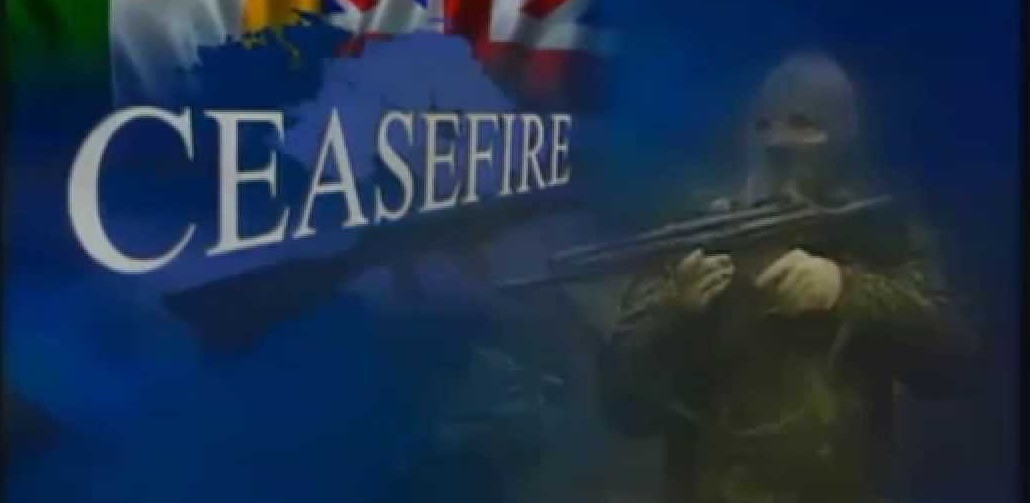




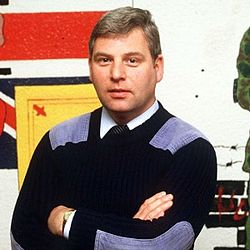


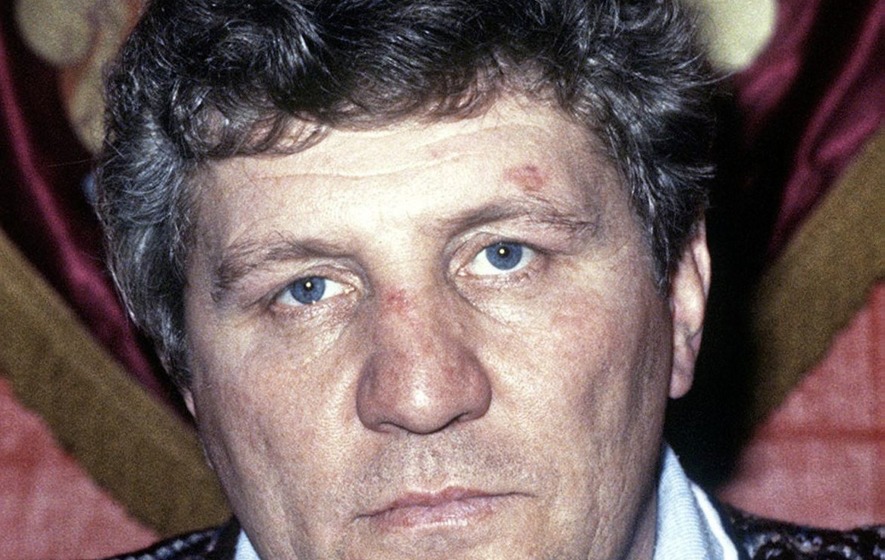


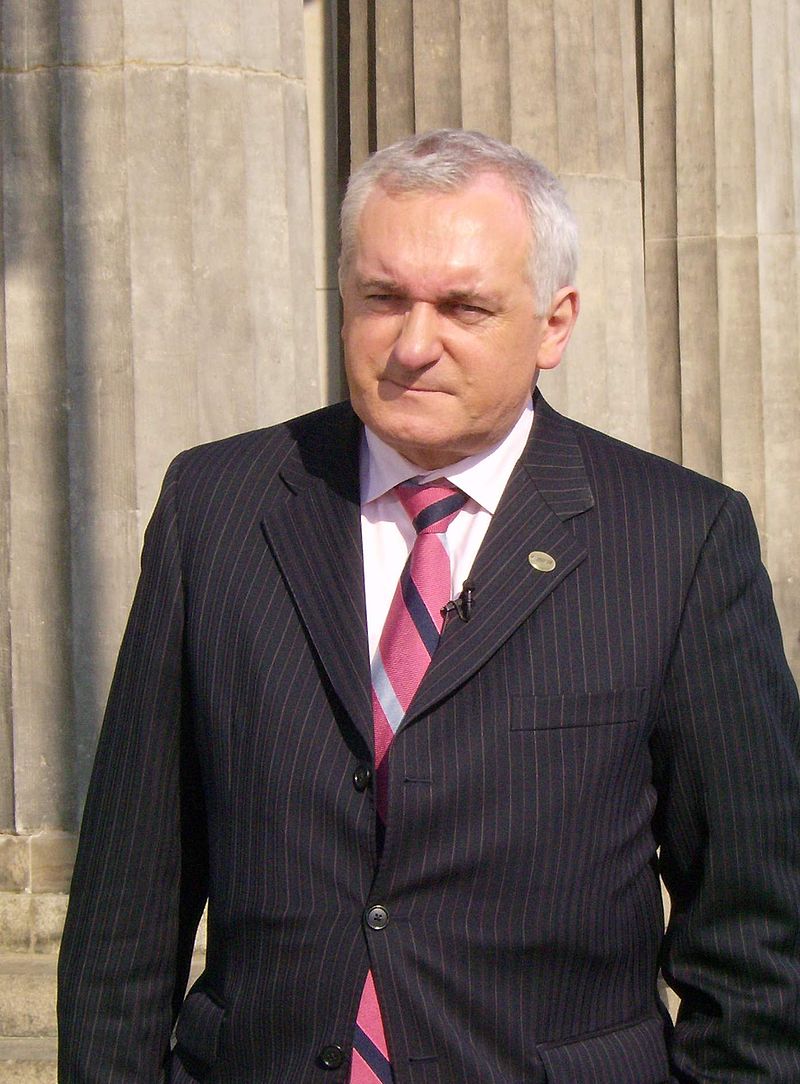


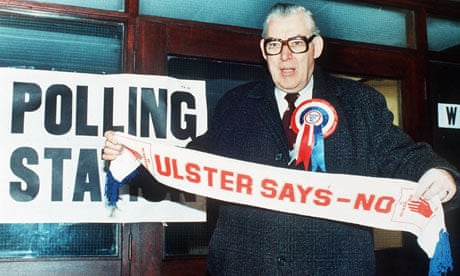


 belfastchildis.com