Category Archives: Deaths in the Troubles

16th May – Deaths & Events in Northern Ireland Troubles


Key Events & Deaths on this day in Northern Ireland Troubles

16th May

——————————-

Thursday 16 May 1968

In the Stormont (Northern Ireland parliament) by-election in the city of Londonderry (Derry) the Ulster Unionists retained the seat.

Thursday 16 May 1974

Day 2 of the UWC strike

Maureen Moore

Maureen Moore (21), a Catholic civilian, was shot dead by a Loyalist paramilitary gunman as she stood at the corner of Stratheden Street and Edlingham Street, New Lodge, Belfast.

The effect of the strike deepened with the engineering sector of the economy being the hardest hit. The use of intimidation (or ‘persuasion’ as the Loyalist paramilitaries preferred to call it) had a significant impact on the number of people who managed to get to work.

The strike began to have a number of effects on the farming sector with uncollected, or unprocessed, milk having to be dumped and fresh food not reaching shops. The Ulster Workers’ Council (UWC) issued a list of ‘essential services’ which were to be allowed to operate as normal and also issued a telephone number for anyone engaged in such work. The UWC also ordered public houses to close.

There was an outbreak of sectarian rioting.

The strike was the main subject of Northern Ireland ‘question time’ in the House of Commons at Westminster.

Paddy Devlin, a then member of the Executive, threatens to resign on the issue of Interment. Merlyn Rees, then Secretary of State, met with Loyalist leaders in Stormont. Mr Rees said that he would not negotiate with the UWC.

[One thing that became clear was that the timing of the removal of barricades by the police was tactically wrong. In many instances barricades were not removed until people had made an initial attempt to get to work. Having been turned back first thing in the morning few people were attempting to travel mid-morning or mid-afternoon when a number of roads would have been reopened. There were complaints about a lack of action, particularly to clear obstructions on roads, on the part of the British Army.]


Sunday 16 May 1976


Roy McIlwaine & William  Martin

Two Protestant civilians were shot dead by Republican paramilitaries outside a Social Club, Alliance Road, Belfast.

Kenneth Nelson

An off-duty Royal Ulster Constabulary (RUC) officer was shot dead by the Irish Republican Army (IRA) near Benburb, County Tyrone.

Monday 16 May 1983
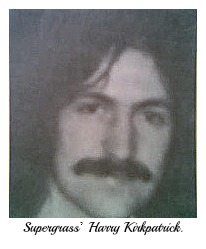
supergrass Harry Kirkpatrick 2

The Irish National Liberation Army (INLA) announced that they had kidnapped the wife of ‘supergrass’ Harry Kirkpatrick.

[Other members of the Kirkpatrick family were also kidnapped on 3 August 1983.]

Friday 16 May 1986

Gerry Adams, then President of Sinn Féin (SF), spoke at a seminar in Amsterdam, Holland. Adams criticised the Anglo-Irish Agreement (AIA) saying that it secured the partition of the six counties of Northern Ireland.

Tuesday 16 May 1995


Malcolm Moss, then Northern Ireland Office (NIO) minister, shook hands with Mitchel McLaughlin, then Sinn Féin (SF) chairman, when the minister opened a shopping centre in Creggan Estate, Derry.

Thursday 16 May 1996

John Major, then British Prime Minister, was reported in an Irish Times (a Dublin based newspaper) article as having said that arms decommissioning would have to be addressed at the start of talks.

Friday 16 May 1997

Blair Keynote Speech

Tony Blair, then British Prime Minister, travelled to Belfast to deliver an important speech on Northern Ireland. Blair reaffirmed his government’s commitment to the Framework Document, the Mitchell Report on decommissioning and the ground rules for entry into all-party talks.

Blair also said that he valued Northern Ireland’s place in the United Kingdom (UK) and suggested that the Republic of Ireland should amend Articles 2 and 3 of its constitution. The Prime Minister also said that government officials would meet with representatives of Sinn Féin (SF) in order to allow a number of issues to be clarified.


Ronnie Flanagan, then Chief Constable of the Royal Ulster Constabulary (RUC), said that all those Loyalist paramilitary organisations represented by the Combined Loyalist Military Command (CLMC) had broken their ceasefire since it was declared in October 1994.

Saturday 16 May 1998

Security forces defused a car bomb, estimated at 500 pounds, which had been left outside the Royal Ulster Constabulary (RUC) station in Armagh.

The bomb was discovered at 11.15pm and the area cleared before a warning was received at 11.30pm.

[The RUC were unable to say which dissident Republican paramilitary group was responsible.]

Larry O’Toole, then a prominent member of Sinn Féin, was shot and injured during a First Holy Communion church service for local children in Ballymun, Dublin. OToole’s son, Lar, was also shot by the gunman who was chased out of the church and later caught by a number of the pursuers.

There was a rally held in Lurgan, County Armagh, in support of the ‘No’ campaign. At the rally a message was read out from James Molyneaux, former leader of the Ulster Unionist Party (UUP), who said that he would be voting against the Good Friday Agreement.

Sunday 16 May 1999

Members of Justice for the Forgotten, the campaign group representing families of those killed in the Dublin and Monaghan bombings on 17 May 1974, held a wreath-laying ceremony in Dublin.
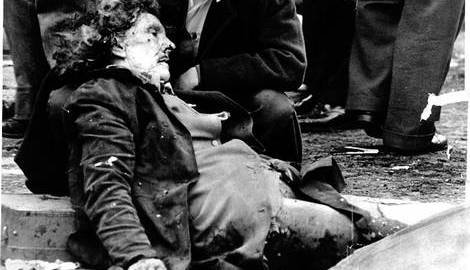
Dublin and Monaghan bombings victim

The group called for a full public inquiry into the bombings.

See Dublin and Monaghan Bombings


Around 800 residents from the Garvaghy Road area of Portadown, County Armagh, held a meeting at which Brendán Mac Cionnaith, then spokesperson of the Garvaghy Road Residents’ Coalition and independent councillor in Portadown, rejected rumours that a deal had been done to resolve the disputed Drumcree parade.


    ——————————————

Remembering all innocent victims of the Troubles

Today is the anniversary of the death of the following people killed as a results of the conflict in Northern Ireland

“To live in hearts we leave behind is not to die

– Thomas Campbell

To the innocent on the list – Your memory will live forever

– To the Paramilitaries –

There are many things worth living for, a few things worth dying for, but nothing worth killing for.

8  People lost their lives on the 16th between 1973 – 1990

 ——————————————

16 May 1973


 Joseph McKenna   (24)

Catholic
Status: Civilian (Civ),

Killed by: non-specific Loyalist group (LOY)
Died two months after being shot from passing car, Grosvenor Road, Belfast.

 ——————————————

16 May 1974


Maureen Moore   (21)

Catholic
Status: Civilian (Civ),

Killed by: non-specific Loyalist group (LOY)
Shot by sniper while standing on corner of Stratheden Street and Edlingham Street, New Lodge, Belfast.

 ——————————————

16 May 1976


Roy McIlwaine   (35)

Protestant
Status: Civilian (Civ),

Killed by: Irish Republican Army (IRA)
Shot while standing outside Social Club, Alliance Road, Belfast.

 ——————————————

16 May 1976


William Martin   (53)

Protestant
Status: Civilian (Civ),

Killed by: Irish Republican Army (IRA)
Shot while standing outside Social Club, Alliance Road, Belfast.

 ——————————————

16 May 1976


Kenneth Nelson  (28)

Protestant
Status: Royal Ulster Constabulary (RUC),

Killed by: Irish Republican Army (IRA)
Off duty. Shot outside his home, Derryfubble, near Benburb, County Tyrone.

 ——————————————

16 May 1981


 Patrick Martin   (38)

Catholic
Status: Civilian (Civ),

Killed by: Ulster Freedom Fighters (UFF)
Shot at his home, Abbeydale Parade, off Crumlin Road, Belfast.

 ——————————————

16 May 1983


Gerard Cathcart   (49)

Protestant
Status: Royal Ulster Constabulary (RUC),

Killed by: Irish Republican Army (IRA)
Off duty. Shot outside his home, Linkview Park, Malone, Belfast.

 ——————————————

16 May 1990
Charles Chapman   (34)

nfNIB
Status: British Army (BA),

Killed by: Irish Republican Army (IRA)
Killed by booby trap bomb attached to British Army (BA) van, outside British Army (BA) recruiting office, Harrow Road, Wembley, London.

 ——————————————

“Stakeknife” – Is time running out for Freddie Scappaticci ?

Will the IRA’s ‘double-agent assassin’ face justice at last? TO the IRA, he was one of their trusted, cold-blooded killers — yet to the British military, “Stakeknife” was their top informant.   “St…

Source: “Stakeknife” – Is time running out for Freddie Scappaticci ?

14th May – Deaths & Events in Northern Ireland Troubles

Key Events & Deaths on this day in Northern Ireland Troubles

14th May

————————————-

Sunday 14 May 1972

Martha Campbell

A 13 year old Catholic girl was shot dead by Loyalist paramilitaries in Ballymurphy, Belfast.

Monday 14 May 1973

Martin McGuinness was released from prison in the Republic of Ireland having served a six months sentence.

Tuesday 14 May 1974

Beginning of the Ulster Workers Council Strike

There was a debate in the Northern Ireland Assembly on a motion condemning power-sharing and the Council of Ireland. The motion was defeated by 44 votes to 28. At 6.00pm, following the conclusion of the Assembly debate, Harry Murray announced to a group of journalists that a general strike was to start the following day.

The organisation named as being responsible for calling the strike was the Ulster Workers’ Council (UWC). The action was to become known as the UWC Strike. The Ulster Volunteer Force (UVF) and Sinn Féin (SF) were declared legal following the passing of legislation at Westminster.

Saturday 14 May 1977

Robert Nairac.jpg

Robert Nairac (29), a member of the British Army, was abducted by the Irish Republican Army (IRA) outside the Three Step Inn, near Forkhill, County Armagh.

His body was never recovered and he was presumed dead. He is listed as one of the ‘disappeared’.

[The IRA later stated that they had interrogated and killed a Special Air Service (SAS) officer. Nairac was posthumously awarded the George Cross.]

See Robert Nairac

Thursday 14 May 1981

Brendan McLaughlin, an Irish Republican Army (IRA) prisoner in the Maze Prison, joined the hunger strike to replace Francis Hughes who had died on 12 May 1981.

See Hungry Strike

[McLaughlin was taken off the strike on 26 May 1981 when he suffered a perforated ulcer and internal bleeding.]

Wednesday 14 May 1986

The pressure group ‘Campaign for Equal Citizenship‘ was established at a meeting in Belfast. The CEC argued that British political parties, such as the Labour and Conservative, should organise and stand for election in Northern Ireland. The CEC was also in favour of the full administrative integration of Northern Ireland into the United Kingdom

Saturday 14 May 1994

David Wilson (27), a British Army (BA) soldier, was killed by the Irish Republican Army (IRA) during a bomb attack on a permanent Vehicle Checkpoint, Castleblaney Road, Keady, County Armagh.

Sunday 14 May 1995

The Sunday Business Post (a Dublin based newspaper) published a report of an interview with Peter Temple-Morris, then co-chairman of the British-Irish Interparliamentary Body. He expressed the view that Republican frustration with the lack of progress on all-party talks might lead to an end of the Irish Republican Army (IRA) ceasefire.

Wednesday 14 May 1997

Gunmen tried to kill a taxi driver in Milford village, County Armagh.

The attempt failed when the gun jammed. The Loyalist Volunteer Force (LVF) was believed to be responsible for the attack.

Betty Boothroyd, then Speaker of the House of Commons, ruled that the two Sinn Féin (SF) MPs would not be given office facilities at Westminster because they had refused to take their seats in the House.

In the Queen’s speech setting out the Labour governments legislative plans it was announced that the North Report on parades and marches would be implemented in 1998. In addition the European Convention on Human Rights would be incorporated into forthcoming legislation on Northern Ireland.

Thursday 14 May 1998

Tony Blair, then British Prime Minister, paid another visit to Northern Ireland to continue campaigning for a ‘Yes’ vote in the referendum. During his visit he delivered a key note speech.

Friday 14 May 1999

There were further political talks in London involving the two Prime Ministers and the leaders of the Ulster Unionist Party (UUP), the Social Democratic and Labour Party (SDLP), and Sinn Féin (SF). Before the meeting Gerry Adams, then President of Sinn Féin (SF) expressed concern about the state of the ceasefires of the main Loyalist paramilitary groups.

He claimed that the Loyalist Volunteer Force (LVF) had co-operated with other Loyalist groups in carrying out attacks on Catholic homes.

At the meeting Tony Blair, then British Prime Minister, announced an “absolute” deadline of 30 June 1999 for the formation of an Executive and the devolution of power to the Northern Ireland Assembly. Proposals put before the parties were thought to have been agreed by, David Trimble, then leader of the Ulster Unionist Party (UUP), the Irish Government, the Social Democratic and Labour Party (SDLP), and Sinn Féin (SF).

[However the UUP Assembly party failed to endorse the proposals. The proposals would have seen the d’Hondt procedure for the appointment of ministers in a power-sharing executive triggered in the coming week, with full devolution achieved by the end of June, following a report on “progress” on decommissioning by Gen. John de Chastelain.]

Sunday 14 May 2000

Cyril Ramaphosa, former secretary-general of the African National Congress (ANC), and Martti Ahtisaari, former President of Finland, both of whom were appointed as arms inspectors arrived in Northern Ireland. The arms inspectors report to the Independent International Commission on Decommissioning (IICD).


———————————————

Remembering all innocent victims of the Troubles

Today is the anniversary of the death of the following people killed as a results of the conflict in Northern Ireland

“To live in hearts we leave behind is not to die

– Thomas Campbell

To the innocent on the list – Your memory will live forever

– To the Paramilitaries –

There are many things worth living for, a few things worth dying for, but nothing worth killing for.

10 People lost their lives on the 14th between 1972 – 1994

———————————————–

14 May 1972


Marta Campbell   (13)

Catholic
Status: Civilian (Civ),

Killed by: non-specific Loyalist group (LOY)
Shot while walking along Springhill Avenue, Ballymurphy, Belfast.

———————————————–

14 May 1972


John Pedlow   (17)

Protestant
Status: Civilian (Civ),

Killed by: Irish Republican Army (IRA)
Died one day after being shot during gun battle between Irish Republican Army (IRA) and Loyalists, Springmartin Road, Belfast.

———————————————–

14 May 1972
Gerard McCusker   (24)

Catholic
Status: Civilian (Civ),

Killed by: non-specific Loyalist group (LOY)
Found shot on waste ground, Hopeton Street, Shankill, Belfast.

———————————————–

14 May 1973


John McCormac   (34)

Catholic
Status: Civilian (Civ),

Killed by: Ulster Volunteer Force (UVF)
Died three days after being shot while walking along Raglan Street, Lower Falls, Belfast.

———————————————–

14 May 1973


Roy Rutherford  (33)

Protestant
Status: Civilian (Civ),

Killed by: Irish Republican Army (IRA)
Killed by booby trap bomb in derelict cottage, Moy Road, Portadown, County Armagh

———————————————–

14 May 1977


Robert Nairac   (29)

nfNI
Status: British Army (BA),

Killed by: Irish Republican Army (IRA)
Undercover British Army (BA) member. Abducted outside Three Step Inn, near Forkhill, County Armagh. Presumed killed. Body never recovered.

See Robert Nairac

———————————————–

14 May 1980
Roy Hamilton   (22)

Protestant
Status: Civilian (Civ),

Killed by: non-specific Republican group (REP)
Shot at his workplace, a building site, Ballymagroarty, Derry.

———————————————–

14 May 1981


Samuel Vallely   (23)

Protestant
Status: Royal Ulster Constabulary (RUC),

Killed by: Irish Republican Army (IRA)
Killed in rocket attack on Royal Ulster Constabulary (RUC) mobile patrol, Springfield Road, Belfast.

———————————————–

14 May 1984
Seamus Fitzsimmons   (21)

Cathc
Status: Civilian (Civ),

Killed by: Royal Ulster Constabulary (RUC)
Shot by undercover Royal Ulster Constabulary (RUC) members during attempted robbery at Post Office, Ballygalley, near Larne, County Antrim.

———————————————–

14 May 1994
David Wilson   (27)

nfNI
Status: British Army (BA),

Killed by: Irish Republican Army (IRA)
Killed during bomb attack on British Army (BA) permanent Vehicle Check Point (VCP), Castleblaney Road, Keady, County Armagh.

———————————————–

13th May – Deaths & Events in Northern Ireland Troubles

Key Events & Deaths on this day in Northern Ireland Troubles

13th May

——————————

Thursday 13 May 1971

The decision to appoint a Director of Public Prosecutions for Northern Ireland was announced.

Sunday 13 May 1973

Two members of the British Army were killed by the Irish Republican Army (IRA) in a bomb attack on the Donegall Road, Belfast.

A member of the IRA was killed as drove through an Ulster Defence Regiment (UDR) Vehicle Check Point (VCP) in County Tyrone.

Monday 13 May 1974

Two members of the Irish Republican Army (IRA) were killed in a premature explosion as they were planting a bomb at a petrol station near Dungannon, County Tyrone.

Friday 13 May 1977

End of United Unionist Action Council

(UUAC) Strike Day 13 of the UUAC Strike The United Unionist Action Council (UUAC) called an end to its strike. The strike had failed to stop many aspects of industry and commerce. Ian Paisley declared the strike a success.

However, many commentators considered that in comparison with the Ulster Workers Council Stike of 1974 the UUAC strike was not a success. The Royal Ulster Constabulary (RUC) were to report later that 3 people had been killed, 41 RUC officers injured, and 115 people charged with offences committed during the strike.

Tuesday 13 May 1980

John Hume, then leader of the Social Democratic and Labour Party (SDLP), travelled to Downing Street, London, to hold a meeting with Margaret Thatcher, then British Prime Minister.

Wednesday 13 May 1981

Julie Livingstone (14), a Catholic teenager, was shot dead by a plastic bullet fired by the British Army. She had been walking along Stewartstown Road in the Suffolk area of Belfast.

John Hume, then leader of the Social Democratic and Labour Party (SDLP), travelled to London to meet Margaret Thatcher, then British Prime Minister. Hume asked Thatcher to concede to the hunger strikers demand for free association and the right to wear civilian clothes. No concessions were forthcoming from Thatcher.

Thursday 13 May 1982

The European Parliament called on member states to ban the use of plastic bullets.

Sunday 13 May 1990

Loyalist prisoners climbed on to the roof of the Crumlin Road Prison in continuing protests over the issue of segregation.

Wednesday 13 May 1992

A submission made to Strand One of the political talks (later known as the Brooke / Mayhew talks) by the Social Democratic and Labour Party (SDLP) was leaked to the media.

The main element of the submission was a proposal for a six-member Commission that would act as the cabinet of any future government. Three members would be elected (treating Northern Ireland as a single constituency) and three appointed (one each by the British government, Irish government, and the European Community). In turn an elected assembly would scrutinise their performance as well as making its own recommendations to the commissioners.

Friday 13 May 1994

Fred Anthony (38), a Protestant civilian, was killed by the Irish Republican Army (IRA) using a booby trap bomb attached to his car.

Anthony’s wife and two children were injured in the explosion which happened as the car travelled along Hill Street, Lurgan, County Armagh. Anthony had been employed as a civilian cleaner by the Royal Ulster Constabulary (RUC).

Tuesday 13 May 1997

Martin McGuinness, then Vice-President of Sinn Féin (SF) and MP for Mid-Ulster, paid a visit to Roisín McAliskey, then being held in Holloway Prison awaiting a decision about extradition. McGuinness described McAliskey’s treatment as “inhuman and degrading”.

Wednesday 13 May 1998

An anti-Agreement rally was held in Newtownards, County Down.

The rally was addressed by representatives of the Democratic Unionist Party (DUP) and former Ulster Unionist Party (UUP) members.

[The British government was forced to hand over all its private polling information on the forthcoming referendum to the United Kingdom Unionist Party (UKUP). This followed a protest by Robert (Bob) McCartney, then leader of the UKUP, that the Northern Ireland Office (NIO) was informing the Ulster Unionist Party (UUP) of its poll findings and thus giving the ‘Yes’ campaign an unfair advantage.

News of the British decision was reported in the ‘Sunday Tribune’ (a Republic of Ireland newspaper) on 17 May 1998.]

Thursday 13 May 1999

Hillary Clinton addressed a conference in Belfast on the topic of promoting the role of women in society. She later flew to London where she addressed a conference about children.


———————————————

Remembering all innocent victims of the Troubles

Today is the anniversary of the death of the following people killed as a results of the conflict in Northern Ireland

“To live in hearts we leave behind is not to die

– Thomas Campbell

To the innocent on the list – Your memory will live forever

– To the Paramilitaries –

There are many things worth living for, a few things worth dying for, but nothing worth killing for.

15   People lost their lives on the 13th between 1972 – 1997

———————————————–

13 May 1972


John Starrs   (19)

Catholic
Status: Irish Republican Army (IRA),

Killed by: British Army (BA)
Shot during gun battle, William Street, Derry.

———————————————–

13 May 1972
Thomas McIlroy   (50)

Catholic
Status: Civilian (Civ),

Killed by: non-specific Loyalist group (LOY)
Shot by sniper firing from Springmartin shortly after car bomb attack on Kelly’s Bar, Whiterock Road, Ballymurphy, Belfast.

———————————————–

13 May 1972
Alan Buckley   (22)

nfNI
Status: British Army (BA),

Killed by: Irish Republican Army (IRA)
Shot during gun battle, Whiterock Road, Ballymurphy, Belfast.

———————————————–

13 May 1972
Robert McMullan  (32)

Catholic
Status: Civilian (Civ),

Killed by: not known (nk)
Shot by sniper while walking along New Barnsley Park, Ballymurphy, Belfast.

———————————————–

13 May 1973


Thomas Taylor   (26)

nfNI
Status: British Army (BA),

Killed by: Irish Republican Army (IRA)
Killed by remote controlled bomb hidden in disused factory, detonated when British Army (BA) foot patrol passed, Donegall Road, Falls, Belfast.

———————————————–

13 May 1973


John Gaskell  (22)

nfNI
Status: British Army (BA),

Killed by: Irish Republican Army (IRA)
Killed by remote controlled bomb hidden in disused factory, detonated when British Army (BA) foot patrol passed, Donegall Road, Falls, Belfast.

———————————————–

13 May 1973


Kevin Kilpatrick   (21)

Catholic
Status: Irish Republican Army (IRA),

Killed by: Ulster Defence Regiment (UDR)
Shot while attempting to drive through Ulster Defence Regiment (UDR) Vehicle Check Point (VCP), The Diamond, near Coagh, County Tyrone.

———————————————–

13 May 1974
Eugene Martin   (18)

Catholic
Status: Irish Republican Army (IRA),

Killed by: Irish Republican Army (IRA)
Died in premature explosion, while planting bomb at petrol filling station, Donnydeade, near Dungannon, County Tyrone

———————————————–

13 May 1974
Sean McKearney  (19)

Catholic
Status: Irish Republican Army (IRA),

Killed by: Irish Republican Army (IRA)
Died in premature explosion, while planting bomb at petrol filling station, Donnydeade, near Dungannon, County Tyrone.

———————————————–

13 May 1976


Gregory Brown  (26)

Protestant
Status: Civilian (Civ),

Killed by: Ulster Freedom Fighters (UFF)
Shot while walking along Woodstock Road, Belfast. Alleged informer.

———————————————–

13 May 1981


Eric Guiney  (45)

Protestant
Status: Civilian (Civ),

Killed by: not known (nk)
Died eight days after milk delivery lorry he was travelling in crashed into lamp post, after coming under missile attack thrown from crowd, at the junction of New Lodge Road and Antrim Road, Belfast. His son also died on 8 May 1981 as a result of the crash on 5 May 1981

———————————————–

13 May 1981


Julie Livingstone   (14)

Catholic
Status: Civilian (Civ),

Killed by: British Army (BA)
Shot by plastic bullet while walking along Stewartstown Road, Suffolk, Belfast.

———————————————–

13 May 1991


Robert Orr  (56)

Protestant
Status: ex-Royal Ulster Constabulary (xRUC),

Killed by: Irish Republican Army (IRA)
Killed by booby trap bomb attached to his car, which exploded while travelling along The Mall, Armagh.

———————————————–

13 May 1994


Fred Anthony   (38)

Protestant
Status: Civilian (Civ),

Killed by: Irish Republican Army (IRA)
Civilian employed by Royal Ulster Constabulary (RUC). Killed by booby trap bomb attached to his car which exploded while driving along Hill Street, Lurgan, County Armagh.

———————————————–

13 May 1997


Sean Brown  (61)

Catholic
Status: Civilian (Civ),

Killed by: Loyalist Volunteer Force (LVF)
Found shot, in his burning car, Moneynick Road, near Randlestown, County Antrim

———————————————–

12th May – Deaths & Events in Northern Ireland Troubles

Key Events & Deaths on this day in Northern Ireland Troubles

12th May

————————

Friday 12 May 1972

Patrick McVeigh (44), a Catholic civilian, was shot dead by a member of an undercover British Army unit at Riverdale Park South, Andersonstown, Belfast.

Four other men were shot and injured during this incident.

[On 1 December 2015 the PSNI listed this shooting as one of nine incidents it was investigating in relation to the activities of the British Army’s Military Reaction Force (MRF).]

military reaction force

See Military Reaction Force

At approximately 11.30 pm an 18-year-old man was shot and injured in the Slievegallion area of west Belfast.

[This shooting was also part of the PSNI investigation into MRF activities.]

Thursday 12 May 1977

Day 12 of the UUAC Strike

The port of Larne, County Antrim, was reopened and ferry sailings were resumed.

In an incident on the Donegall Road in Belfast the driver of a petrol tanker was shot when he was forced to stop by a large crowd of loyalist protestors.

During a debate at Westminster Don Concannon, then Minister of State at the Northern Ireland Office (NIO), defended the British government’s security policy in Northern Ireland and pointed to figures which he claimed showed a fall in incidents over the past year.

He also claimed that the UUAC strike was simply diverting the security forces from concentrating on the activity of paramilitary groups. On the political front Concannon also held out the possibility that the government hoped to launch a new initiative after the local council elections scheduled for 18 May 1977. [ UUAC Strike. ]

Tuesday 12 May 1981

Second Hunger Striker Died

After 59 days on hunger strike Francis Hughes (25), an Irish Republican Army (IRA) prisoner in the Maze Prison, died.

[Hughes’ death led to a further surge in rioting in Nationalist areas of Northern Ireland, particularly in Belfast and Derry. In Dublin a group of 2,000 people tried to break into the British Embassy.]

See Hungry Strike

A member of the Irish National Liberation Army (INLA) was shot dead by the British Army in Belfast.

Tuesday 12 May 1992

British soldiers of the Parachute Regiment entered two public houses in Coalisland, County Tyrone, and caused considerable damage to both properties. This incident followed an earlier Irish Republican Army (IRA) attack during which a Paratrooper lost both legs in an explosion.

[The commanding officer of the regiment was later removed from his post. There was a further incident involving British soldiers in the town on 17 May 1992.]

Wednesday 12 May 1993

The Irish Republican Army (IRA) exploded a bomb in Oxford, England.

Thursday 12 May 1994

Martin Bradley (23), a Catholic civilian, was shot dead by the Ulster Freedom Fighters (UFF), a cover name (pseudonym) used by the Ulster Defence Association (UDA), at his relatives home, Crumlin Road, Ardoyne, Belfast.

Monday 12 May 1997

Sean Brown (61), a Catholic civilian, was abducted by members of the Loyalist Volunteer Force (LVF) as he locked the gates of Bellaghy Gaelic Athletic Association (GAA).

Brown was beaten before being shot dead and his body was found the next day beside his burnt-out car at Randalstown, County Antrim.

Brown who left a wife and six children was a GAA official and was often the last person to leave the Bellaghy GAA club.

[On 19 January 2004 the Police Ombudsman for Northern Ireland published a report that was highly critical of the police investigation into Brown’s killing (PDF File; 432KB).]

David Trimble, then leader of the Ulster Unionist Party (UUP), called on the new Labour government to make an early statement setting out its position on Northern Ireland.

Tuesday 12 May 1998

The continuing divisions between Unionists in favour of the Good Friday Agreement and those against were evident in personal exchanges between Ian Paisley, then leader of the Democratic Unionist Party (DUP), and David Trimble, then leader of the Ulster Unionist Party (UUP).

Trimble accused Paisley of “running away again” after Paisley pulled out of a scheduled television debate between the two men.

The British government announced that Adam Ingram, then Northern Ireland Security Minister, would be given the extra responsibility of “minister for victims”. This decision followed the report of the Victims Commissioner on 29 April 1998.

The British government announced a £315 million economic package for Northern Ireland. Gordon Brown, then Chancellor of the Exchequer, travelled to Northern Ireland to make the announcement at a gathering of business people and politicians. Brown denied that the package was a bribe to entice voters to support the Good Friday Agreement.

Wednesday 12 May 1999

A Catholic man, who was working on a building site in Carrickfergus, County Antrim, was seriously injured in a Loyalist paramilitary shotgun attack.

[The attack was later claimed by a group calling itself the ‘Protestant Liberation Force’. Some commentators believed that this was a cover name for members of the Ulster Defence Association (UDA).]

The Orange Order cancelled its plans to hold a single ‘Twelfth’ rally at Drumcree. However the Order said that individual lodges could go to Drumcree after their main parades.

Hillary Clinton, then First Lady of the US, began a two-day visit to Ireland. An honorary doctorate of laws was conferred on Hillary Clinton at NUI Galway where she praised Irish efforts at peace-making and warned of the “perils of indifference” to the Balkan crisis.

Hillary Clinton also became the first woman to receive the freedom of the city of Galway. In the afternoon she flew to Belfast to visit a playground for children hurt during the conflict and then met with 14 female members of the Northern Ireland Assembly.

The Loyalist picket at the Catholic church in Harryville, Ballymena, County Antrim, was called off “until further notice”. The picket had resumed on 10 April 1999. Threats from Loyalist paramilitaries forced the Catholic owners of a public house in Dunmurray, close to Belfast, to close


———————————————

Remembering all innocent victims of the Troubles

Today is the anniversary of the death of the following people killed as a results of the conflict in Northern Ireland

“To live in hearts we leave behind is not to die

– Thomas Campbell

To the innocent on the list – Your memory will live forever

– To the Paramilitaries –

There are many things worth living for, a few things worth dying for, but nothing worth killing for.

8 People lost their lives on the 12th  between 1972 – 1994

———————————————–

12 May 1972


Patrick McVeigh   (44)

Catholic
Status: Civilian (Civ),

Killed by: British Army (BA)
Shot by undercover British Army (BA) members from passing car, Riverdale Park South, Andersonstown, Belfast.

———————————————–

12 May 1977
Douglas Deering   (53)

Protestant
Status: Civilian (Civ),

Killed by: Irish Republican Army (IRA)
Justice of the Peace. Shot at his shop, Rosslea, County Fermanagh.

———————————————–

12 May 1981


Francis Hughes  (25)

Catholic
Status: Irish Republican Army (IRA),

Killed by: not known (nk)
Died on the 59th day of hunger strike, Long Kesh / Maze Prison, County Down.

hungry strikes

See Hungry Strike

———————————————–

12 May 1981
Emmanuel McClarnon   (20)

Catholic
Status: Irish National Liberation Army (INLA),

Killed by: British Army (BA)
Shot by British Army (BA) sniper from observation post, Divis Tower, Divis Flats, Belfast.

———————————————–

12 May 1982


Francis Toner   (26)

Catholic
Status: Civilian (Civ),

Killed by: non-specific Loyalist group (LOY)
Shot during gun attack on shop, Antrim Road, New Lodge, Belfast.

———————————————–

12 May 1982
Thomas Cunningham   (23)

Protestant
Status: ex-Ulster Defence Regiment (xUDR),

Killed by: Irish Republican Army (IRA)
Shot while repairing house, Fountain Park, Strabane, County Tyrone.

———————————————–

12 May 1984
Ivan Hillen  (46)

Protestant
Status: Ulster Defence Regiment (UDR),

Killed by: Irish Republican Army (IRA)
Off duty. Shot at his farm, Lismore, near Augher, County Tyrone.

———————————————–

12 May 1994


Martin Bradley   (23)

Catholic
Status: Civilian (Civ),

Killed by: Ulster Freedom Fighters (UFF)
Shot, at his relatives home, Crumlin Road, Ardoyne, Belfast.

———————————————–

Military Reaction Force – Counter Insurgency Unit

The Military Reaction Force ——————————————— The views and opinions expressed in this documentary and page are soley intended to educate and provide background information to those interested in the…

Source: Military Reaction Force – Counter Insurgency Unit

11th May – Deaths & Events in Northern Ireland Troubles

Key Events & Deaths on this day in Northern Ireland Troubles

11th May

————————————

Wednesday 11 May 1977

Day 9 of the UUAC Strike

At Larne, County Antrim, there were a number of ferry sailings to and from the port despite the fact that workers were still on strike.

To mark the death of Harry Bradshaw who had been killed by Loyalist paramilitaries on 10 May 1977, bus services were halted.

However elsewhere the situation appeared to be stabilising with electricity supplies continuing as normal and with apparently fewer street disturbances.

In Donaghdee, County Down the Copelands Hotel was destroyed in a suspicious fire. The incident is alleged to have followed the decision of the owners to stay open during the strike.

Sunday 11 May 1986

Tom King, then Secretary of State for Northern Ireland, recommended the release of William (Budgie) Allen who had served two years of a 14 year sentence. [Allen had acted as a ‘supergrass’ informer against his former colleagues in the Ulster Volunteer Force (UVF).]

Friday 11 May 1990

Peter Brooke, then Secretary of State for Northern Ireland, met with Unionist leaders and agreed that there would be a gap in the meetings of the Anglo-Irish Intergovernmental Conference (AIIC) to allow talks to begin.

Wednesday 11 May 1994

Following a meeting between representatives of the Social Democratic and Labour Party (SDLP) and the Royal Ulster Constabulary (RUC), the police agreed to erect a 20 feet high wall (peaceline) to separate the Springfield and Springmartin areas of Belfast.

Thursday 11 May 1995

Leaders of Loyalist paramilitary organisations warned that action would be taken against any members who were found to be dealing in drugs.

Tuesday 11 May 1999

At a special meeting of the Law Society members voted to overturn an earlier decision of its ruling council and instead supported a call for independent inquiries into the killings of Pat Finucane, a Belfast solicitor killed on 12 February 1989, and Rosemary Nelson, a Lurgan solicitor killed on 15 March 1999.

See Pat Finucane

Rosemary-Nelson--001

See Rosemary Nelson

Gerry Adams, then President of Sinn Féin (SF), and Martin McGuinness, the Vice-President of SF, travelled to Downing Street, London, for a meeting with Tony Blair, then British Prime Minister.

The Irish government apologised to children who suffered institutional abuse.

Bertie Ahern, then Taoiseach (Irish Prime Minister), said:

“On behalf of the State and all citizens of the State the Government wishes to make a sincere and long overdue apology to the victims of childhood abuse for our failure to intervene, to detect their pain, to come to their rescue.”

The Government also announced that the victims would have an opportunity to have their experiences officially heard in September under a commission to be set up to inquire into the scandal.


 ———————————————

Remembering all innocent victims of the Troubles

Today is the anniversary of the death of the following people killed as a results of the conflict in Northern Ireland

“To live in hearts we leave behind is not to die

– Thomas Campbell

To the innocent on the list – Your memory will live forever

– To the Paramilitaries –

There are many things worth living for, a few things worth dying for, but nothing worth killing for.

 2 People lost their lives on the 11th May  between 1972 – 1980

———————————————–

11 May 1972


John Ballard  (18)

nfNI
Status: British Army (BA),

Killed by: Irish Republican Army (IRA)
Shot by sniper while on British Army (BA) foot patrol, Sultan Street, Lower Falls, Belfast

———————————————–

11 May 1980
Anthony Shields  (57)

Catholic
Status: Civilian (Civ),

Killed by: Irish Republican Army (IRA)
Found shot, Mounthill, near Crossmaglen, County Armagh. Alleged informer.

———————————————–


10th May – Deaths & Events in Northern Ireland Troubles

Key Events & Deaths on this day in Northern Ireland Troubles

10th May

———————————

Saturday 10 May 1969

In an interview with the Belfast Telegraph Terence O’Neill, the former Northern Ireland Prime Minister, is reported as saying that: “… if you give Roman Catholics a good job and a good house, they will live like Protestants, … They will refuse to have 18 children.”

Wednesday 10 May 1972

An Irish Republican Army (IRA) bomb started a fire that destroyed the Belfast Co-operative store.

Friday 10 May 1974


Two Royal Ulster Constabulary (RUC) officers were shot dead by the Irish Republican Army (IRA) in an attack on Finaghy Road North, Finaghy, Belfast.

The Ulster Workers’ Council (UWC) issues a statement calling for new elections to the Northern Ireland Assembly.

Tuesday 10 May 1977

Day 8 of the UUAC Strike

Harry Bradshaw (46), a Protestant civilian, was shot dead by Loyalist paramilitaries as he drove a bus on the Crumlin Road, Belfast. He was killed because he was working during the United Unionist Action Council (UUAC) strike.

John Geddis (26), a member of the Ulster Defence Regiment (UDR), was killed in a Loyalist bomb attack on a petrol station on the Crumlin Road, Belfast. Again this attack was carried out because the petrol station had opened during the strike.

Two members of the Ulster Defence Association (UDA) were killed as the result of a premature explosion of an incendiary bomb they were working on at a derelict house in Monkstown, Newtownabbey, County Antrim.

At a roadblock outside Ballymena Ian Paisley, Ernest Baird, and other members of the UUAC were arrested. Paisley was charged with obstruction of the highway and then released. In Toomebridge, County Antrim a roadblock by farmers supporting the UUAC was attacked by local nationalists.

In the disturbances that followed farm vehicles were pushed into the River Bann as the blockade was dispersed. It was reported that a number of shots were also fired during the disturbances

Thursday 10 May 1979

In the United States of America (USA) a judge ruled that a group of men, believed to be members of the Irish Republican Army (IRA) and also considered to be responsible for bombing the Ripon Barracks in North Yorkshire, should not be extradited to Britain.

Monday 10 May 1982

In a Commons debate on the Northern Ireland Bill, which set out proposals for a new Assembly at Stormont, James Prior, then Secretary of State for Northern Ireland, said:

“A policy of continuing with Direct Rule does not offer a long-term answer. We either move to a position of total integration … or we seek a gradual devolution of power …”.

Charles Haughey, then Taoiseach (Irish Prime Minister), appointed Seamus Mallon, then Deputy Leader of the Social Democratic and Labour Party (SDLP), to the Irish Senate. He also appointed John Robb of the New Ireland Group to the Senate.

Tuesday 10 May 1983

The Northern Ireland Assembly began what was to become an all-night sitting to discuss devolution of powers from Westminster to the Assembly. Despite lengthy talks the parties were unable to agree a common approach.

Monday 10 May 1993

Patrick Mayhew, then Secretary of State for Northern Ireland, promised proposals for new political talks.

Wednesday 10 May 1995

SF Meeting With NIO Minister

Martin McGuinness, then Vice-President of Sinn Féin (SF), led a SF delegation to Stormont for a meeting with Michael Ancram, then Political Development Minister at the Northern Ireland Office (NIO).

[This was the first official meeting between SF and the British Government in 23 years. Ancram sought movement on the decommissioning of paramilitary weapons. SF pressed for the release of paramilitary prisoners, the disbandment of the Royal Ulster Constabulary (RUC), and direct talks with the Secretary of State.]

Friday 10 May 1996

Following protests Ian Paisley, then leader of the Democratic Unionist Party (DUP), was told that his name would be added to his party’s name in the forth-coming elections.

Sunday 10 May 1998

SF End Abstentions At the party’s Ard Fheis in Dublin, Sinn Fein (SF) members voted to change their constitution to allow candidates to take their places in the proposed new Northern Ireland Assembly. Out of the 350 delegates present and eligible to vote, 331 voted in favour of a motion drafted by the Ard Comhairle (the ruling executive of SF) which would allow successful SF candidates to take up their seats in the new Northern Ireland Assembly. The party was addressed by Gerry Adams, then President of SF.

[The removal of the policy of ‘abstentionism’ was a historical move which ended 77 years of refusing to participate in institutions of government in Northern Ireland.]

A number of Irish Republican Army (IRA) prisoners were released from jails in the Republic of Ireland to attend the Ard Fheis. However, the scene of celebration that greeted the appearance of members of the ‘Balcombe Street Siege gang’ resulted in controversy and criticism from a wide circle of opinion. It was reported in the Sunday Tribune (a Republic of Ireland newspaper) that the membership of the “real” Irish Republican Army (rIRA) had grown to around 150 members. It was also claimed that the dissident group was being led by the former Quartermaster General of the IRA.

Monday 10 May 1999

John Hermon (Sir), former Chief Constable of the Royal Ulster Constabulary (RUC), was quoted in The Daily Telegraph (a London based newspaper) as saying that Pat Finucane, a Belfast solicitor killed on 12 February 1989, was “associated with the IRA”. [Hermon’s remarks were criticised by Nationalists and human rights groups.]

Wednesday 10 May 2000

Gerry Loughran was appointed as the head of the Civil Service in Northern Ireland. He was the first Catholic to serve in the post.


———————————————

Remembering all innocent victims of the Troubles

Today is the anniversary of the death of the following people killed as a results of the conflict in Northern Ireland

“To live in hearts we leave behind is not to die

– Thomas Campbell

To the innocent on the list – Your memory will live forever

– To the Paramilitaries –

There are many things worth living for, a few things worth dying for, but nothing worth killing for.

 11 People lost their lives on the 10th  May  between 1973 – 1988

———————————————–

10 May 1973


Franklin Caddoo   (24)

Protestant
Status: Ulster Defence Regiment (UDR),

Killed by: Irish Republican Army (IRA)
Off duty. Shot at his farm, Rehaghy, near Aughnacloy, County Tyrone

———————————————–

10 May 1973
Anthony Ahern   (18)

nfNI
Status: Irish Republican Army (IRA), K

illed by: Irish Republican Army (IRA)
From County Cork. Killed in premature explosion while preparing land mine, Mullanahinch, near Rosslea, County Fermanagh.

———————————————–

10 May 1974


John Ross  (40)

Protestant
Status: Royal Ulster Constabulary (RUC),

Killed by: Irish Republican Army (IRA)
Shot while on Royal Ulster Constabulary (RUC) foot patrol, Finaghy Road North, Finaghy, Belfast

———————————————–

10 May 1974


Brian Bell   (29)

Protestant
Status: Royal Ulster Constabulary (RUC),

Killed by: Irish Republican Army (IRA)
Shot while on Royal Ulster Constabulary (RUC) foot patrol, Finaghy Road North, Finaghy, Belfast

———————————————–

10 May 1975


Paul Gray   (20)

Protestant
Status: Royal Ulster Constabulary (RUC),

Killed by: Irish Republican Army (IRA)
Shot by sniper while on Royal Ulster Constabulary (RUC) foot patrol, Waterloo Street, Derry

———————————————–

10 May 1977


Harry Bradshaw  (46)

Protestant
Status: Civilian (Civ),

Killed by: Ulster Defence Association (UDA)
Bus driver. Shot when stopped to pick up passengers, Crumlin Road, Belfast. Working during Loyalist strike.

———————————————–

10 May 1977


John Geddis  (26)

Protestant
Status: Ulster Defence Regiment (UDR),

Killed by: Ulster Volunteer Force (UVF)
Off duty. Killed in car bomb attack on petrol station, Crumlin Road, Belfast. Petrol station had remained open during Loyalist strike.

———————————————–

10 May 1977
William Hobbs   (44)

Protestant
Status: Ulster Defence Association (UDA), Killed by: Ulster Defence Association (UDA)
Killed in premature explosion of incendiary bomb at derelict house, Seagoe Gardens, Monkstown, Newtownabbey, County Antrim.

———————————————–

10 May 1977
James McClurg   (25)

Protestant
Status: Ulster Defence Association (UDA),

Killed by: Ulster Defence Association (UDA)
Injured in premature explosion of incendiary bomb at derelict house, Seagoe Gardens, Monkstown, Newtownabbey, County Antrim. He died 7 June 1977

———————————————–

10 May 1983


Alice Purves,  (47)

Catholic
Status: Civilian (Civ),

Killed by: Irish Republican Army (IRA)
Shot during gun attack on her husband, an off duty British Army (BA) member, at her mother’s home, Strabane Old Road, Gobnascale, Derry.

———————————————–

10 May 1988


Terence McDaid,  (31)

Catholic
Status: Civilian (Civ),

Killed by: Ulster Freedom Fighters (UFF)
Shot at his home, Newington Street, New Lodge, Belfast.

———————————————–


9th May – Deaths & Events in Northern Ireland Troubles


Key Events & Deaths on this day in Northern Ireland Troubles

9th May

Friday 9 May 1969

Following his release from prison Ian Paisley held a ‘victory’ meeting.

Tuesday 9 May 1972

At approximately 2.00 pm shots were fired at a vehicle in the Kashmir Road area of west Belfast.

[On 1 December 2015 the PSNI listed this shooting as one of nine incidents it was investigating in relation to the activities of the British Army’s Military Reaction Force (MRF).

military reaction force

See Military Reaction Force

Friday 9 May 1975

In a statement at Westminster Merlyn Rees, then Secretary of Sate for Northern Ireland, said that recent violence in the region was as a result of feuding between Republican groups and had no connection with the Irish Republican Army (IRA) truce.

Monday 9 May 1977

Day 7 of the UUAC Strike

There were many demonstrations and roadblocks across Northern Ireland in support of the United Unionist Action Council (UUAC) strike. Ian Paisley joined farmers who were blocking the town of Ballymena in the middle of his North Antrim Westminster constituency.

Across Northern Ireland there were a series of similar protests with demonstrations, roadblocks and cavalcades taking place in Belfast, Enniskillen, Larne, Portadown and Newtonards. Uncertainty still surrounded the situation at Ballylumford power station with reports continuing to emerge about meetings involving workers at the plant.

Saturday 9 May 1981

The Irish Republican Army (IRA) exploded a bomb at an oil terminal in the Shetland Islands. A quarter of a mile away at that time the Queen was attending a function to mark the official opening of the terminal.

Thursday 9 May 1991

Danny Morrison, formerly publicity director for Sinn Féin (SF), and seven other people were convicted of falsely imprisoning an Royal Ulster Constabulary (RUC) informer

. [Morrison was later sentenced to eight years in jail.]

Sunday 9 May 1993

The Ulster Volunteer Force (UVF) issued a death threat against politicians in the Republic of Ireland.

Thursday 9 May 1996

Michael Howard, then Home Secretary, agreed to the transfer of Patrick Kelly, an Irish Republican Army (IRA) prisoner, from Maghaberry Prison in Northern Ireland to Portlaoise Prison in the Republic of Ireland.

Friday 9 May 1997

Darren Bradshaw (24), a suspended Royal Ulster Constabulary (RUC) officer, was shot dead by the Irish National Liberation Army (INLA) as he drank with friends in the Parliament Bar in Belfast.

[The Parliament Bar was frequented by members of Belfast’s gay community.]

Saturday 9 May 1998

A dissident Republican paramilitary group carried out a mortar bomb attack (at 11.50pm) on the Royal Ulster Constabulary (RUC) station in Belleek, County Fermanagh. The mortars fell short of their target and one exploded as the RUC were clearing the area. There were no injuries.

[It was unclear whether the “real” Irish Republican Army (rIRA) or the Continuity Irish Republican Army (CIRA) had carried out the attack.]

Sunday 9 May 1999

Brendan ‘Speedy’ Fegan (24), a Catholic civilian, was shot dead in a public house in Newry, County Down.

[There were allegations that Fegan had been a drug dealer. There were also reports that Fegan had previously been threatened by the Irish Republican Army (IRA). It was not clear at the time if the IRA was responsible for the killing.]

Houses belonging to Catholic families in Antrim and Armagh were attacked with petrol-bombs. The attacks were carried out by Loyalists.

Gerry Adams, then President of Sinn Féin (SF), gave an address to the party’s Ard Fheis and stressed his organisation’s aims as emancipation, empowerment and economic liberation.

Tuesday 9 May 2000

Closure of Security Bases

Ronnie Flanagan, then Chief Constable of the Royal Ulster Constabulary (RUC), disclosed that five military installations were to close.


———————————————

Remembering all innocent victims of the Troubles

Today is the anniversary of the death of the following people killed as a results of the conflict in Northern Ireland

“To live in hearts we leave behind is not to die

– Thomas Campbell

To the innocent on the list – Your memory will live forever

– To the Paramilitaries –

There are many things worth living for, a few things worth dying for, but nothing worth killing for.

 5 People lost their lives on the 9th May  between 1979 – 1999

———————————————–

09 May 1979


Andrew Webster  (20)

nfNI
Status: British Army (BA),

Killed by: Irish Republican Army (IRA)
Killed by remote controlled bomb hidden in derelict block of flats, while on British Army (BA) foot patrol, Norglen Gardens, Turf Lodge, Belfast.

———————————————–

09 May 1984


Trevor May   (28)

Protestant
Status: British Army Territorial Army (TA),

Killed by: Irish Republican Army (IRA)
Off duty. Killed by booby trap bomb while travelling in his car shortly after leaving his workplace, Telephone Exchange, Downshire Road, Newry, County Down.

———————————————–

09 May 1985


Seamus Ruddy  (33)

Catholic
Status: ex-Irish National Liberation Army (xINLA),

Killed by: Irish National Liberation Army (INLA)
Abducted from his flat, Paris, France. Presumed killed, body never recovered.

See: The Disappeared – Northern Ireland’s Secret Victims

———————————————–

09 May 1997


Darren Bradshaw  (24)

Protestant
Status: Royal Ulster Constabulary (RUC),

Killed by: Irish National Liberation Army (INLA)
Off duty. Shot while in Parliament Bar, Dunbar Link, Belfast.

———————————————–

09 May 1999


Brendan Fegan   (24)

Catholic
Status: Civilian (Civ),

Killed by: non-specific Republican group (REP)
Shot while in Hermitage Bar, Canal Street, Newry, County Down.

———————————————–

See: The Disappeared – Northern Ireland’s Secret Victims


8th May – Deaths & Events in Northern Ireland Troubles

Key Events & Deaths on this day in Northern Ireland Troubles

8th May

————————–

Saturday 8 May 1971

Isabella McKeague

A woman was killed in an incident in Belfast.

Wednesday 8 May 1974

The Ulster Defence Association (UDA) issued a statement condemning the security situation in Northern Ireland and gave its support to the United Ulster Unionist Council (UUUC) and the policy of opposing the Sunningdale Agreement.

Thursday 8 May 1975

The first meeting of the Constitutional Convention was held. Roberty Lowry, then Lord Chief Justice of Northern Ireland, chaired the session.

[There were 30 sessions in total and the Report of the convention was published on 20 November 1975.]

Sunday 8 May 1977 Day 6 of the UUAC Strike

The loyalist paramilitary group the Ulster Freedom Fighters (UFF), a cover name (pseudonym) used by the Ulster Defence Association (UDA), announced that it might be forced to ‘coerce’ loyalists in Northern Ireland into supporting the UUAC strike.

Ian Paisley, then leader of the Democratic Unionist Party (DUP), reiterated his belief that the strike had already been a success even if at some point it had to be called off. However a spokesman for the UUAC stated that there was ‘no chance’ of the strike being called off.

Friday 8 May 1981

Joe McDonnell, then an Irish Republican Army (IRA) prisoner in the Maze Prison, joined the hunger strike to take the place of Bobby Sands.

See 1981 Hunger Strike

Saturday 8 May 1982

Nicholas Budgen, then an Assistant Government Whip, resigned his post because of his opposition to the Northern Ireland Bill which would introduce a new Assembly.

Friday 8 May 1987 Loughgall Killings

8_ira_men_shot_dead-loughgall

See Loughgall ambush

One civilian and eight members of the Irish Republican Army (IRA) were shot dead by soldiers of the Special Air Service (SAS) in Loughgall, County Armagh.

The IRA members were in the process of attacking the police station at Loughgall when they were ambushed by 40 SAS soldiers. The innocent civilian was shot dead by one SAS group as he drove through the village. This incident was the highest loss of life suffered by the IRA in any one incident.

[On 2 December 2011 some details of an Historical Enquires Team (HET) report into the incident were released by The Belfast Telegraph. The newspaper article claimed that the HET report would conclude that members of the IRA opened fire first and thus the SAS soldiers were within their rights to open

Tuesday 8 May 1990

Tomás Ó Fiaich, then a Cardinal and Catholic Primate of All Ireland, died aged 66 from a heart attack while on a visit to Lourdes, France.

Friday 8 May 1992

Kenneth Baker, then British Home Secretary, announced that responsibility for intelligence-gathering on the Irish Republican Army (IRA) would be moved from the Special Branch of the Metropolitan Police to MI5 (the British Security Service). The move was part of an attempt to counter IRA operations in England.

Sunday 8 May 1994

Rose Anne Mallon (76), a Catholic civilian, was shot dead by the Ulster Volunteer Force (UVF) at her relatives home, Cullenramer Road, Greystone, near Dungannon, County Tyrone.

[On 27 July 1994 a neighbour discovered in a nearby field two security force surveillance cameras pointing at the house where the shooting took place. There were subsequent claims of collusion between the security forces and Loyalist paramilitaries.]

Thursday 8 May 1997

Robert Hamill Killing  

Robert Hamill (25), a Catholic civilian, died as a result of injuries sustained in a sectarian attack in the centre of Portadown on 27 April 1997.

Hamill, who left a wife and three children, had been savagely beaten by a loyalist gang and it was claimed that Royal Ulster Constabulary (RUC) officers sitting in a police vehicle some 30 meters away did not intervene to save him.

[The Independent Commission for Police Complaints later began an investigation into the incident. On the 16 November 2004 Paul Murphy, then Secretary of State, announced the terms of reference for a public Inquiry into the death of Robert Hamill. Full public hearings began on 13 January 2009.]

Marjorie (Mo) Mowlam, then Secretary of State for Northern Ireland, announced that the period of notice required for a parade or march to be held would be extended from 7 days to 21.

The RUC would in future be empowered to confiscate alcohol from those taking part in parades.

The County Tyrone Grand Orange Lodge held a meeting and decided to endorse the agreement reached between local Orangemen and residents of Dromore village.

See: The Orange Order – History & Background

Members of the Spirit of Drumcree (SOD) tried to have the deal overturned but their motion was rejected by 68 votes to 9. John Bruton, the Taoiseach (Irish Prime Minister), held a meeting with Tony Blair, then British Prime Minister, at Downing Street. Bruton described Blair as an “improvement for the better in all the issues as far as Ireland is concerned.”

See: Drumcree

Friday 8 May 1998

The “real” Irish Republican Army (rIRA) issued a statement saying that the organisation’s ceasefire was over and military attacks would resume. In particular the group said that it had declared war on the British Cabinet.

William Thompson, a Ulster Unionist Party (UUP) Member of Parliament (MP), gave a radio interview in which he effectively called for the resignation of David Trimble, then leader of the UUP. Thompson was in turn attacked by John Taylor, then deputy leader of the UUP, who called on him to “do the decent thing” and resign.

Monday 8 May 2000

Peter Mandelson, then Secretary of State for Northern Ireland, offered to reduce the number of British Army soldiers in Northern Ireland if the Irish Republican Army (IRA) kept to its promise on decommissioning. Mandelson refused to discuss the precise number of troops that would be withdrawn from the region.

Tuesday 8 May 2001

David Trimble, then leader of the Ulster Unionist Party (UUP), said that he would resign as First Minister on 1 July 2001 unless the Irish Republican Army (IRA) began to decommission its weapons. [Trimble did resign on 1 July 2001.]


———————————————

Remembering all innocent victims of the Troubles

Today is the anniversary of the death of the following people killed as a results of the conflict in Northern Ireland

“To live in hearts we leave behind is not to die

– Thomas Campbell

To the innocent on the list – Your memory will live forever

– To the Paramilitaries –

There are many things worth living for, a few things worth dying for, but nothing worth killing for.

 16 People lost their lives on the 8th   May  between 1971 – 1997

———————————————–

08 May 1971


 Isabella McKeague   (67)

Protestant
Status: Civilian (Civ),

Killed by: non-specific Loyalist group (LOY)
Died in fire which followed incendiary bomb attack on shop below her flat, Albertbridge Road, Belfast

———————————————–

08 May 1974


Francis Rowe   (40)

Catholic
Status: Civilian (Civ),

Killed by: non-specific Loyalist group (LOY)
Shot at his home, Kingsmoss Road, off Ballyclare Road, near Glengormley, County Antrim.

———————————————–

08 May 1977
Robert Crawford  (40)

Protestant
Status: Civilian (Civ),

Killed by: non-specific Loyalist group (LOY)
Found shot, Forthriver Road, Glencairn, Belfast.

———————————————–

08 May 1981


Desmond Guiney,   (14)

Protestant
Status: Civilian (Civ),

Killed by: not known (nk)
Died three days after milk delivery lorry he was travelling in, crashed into lamp post after coming under missile attack thrown from crowd, at the junction of New Lodge Road and Antrim Road, Belfast. His father also died on 13 May 1981 as a result of the crash on 5 May 1981

———————————————–

08 May 1984


James Johnstone   (28)

Protestant
Status: Ulster Defence Regiment (UDR),

Killed by: Irish Republican Army (IRA)
Off duty. Shot in in car park at his workplace, Drumglass Hospital, Dungannon, County Tyrone.

———————————————–

08 May 1987


Declan Arthurs    (21)

Catholic
Status: Irish Republican Army (IRA),

Killed by: British Army (BA)
Shot by undercover British Army (BA) members, during gun and bomb attack on Loughgall Royal Ulster Constabulary (RUC) base, County Armagh.

See Loughgall ambush

———————————————–

08 May 1987


Seamus Donnell   (19)

Catholic
Status: Irish Republican Army (IRA),

Killed by: British Army (BA)
Shot by undercover British Army (BA) members, during gun and bomb attack on Loughgall Royal Ulster Constabulary (RUC) base, County Armagh.

See Loughgall ambush

———————————————–

08 May 1987


Michael Gormley  (25)

Catholic
Status: Irish Republican Army (IRA),

Killed by: British Army (BA)
Shot by undercover British Army (BA) members, during gun and bomb attack on Loughgall Royal Ulster Constabulary (RUC) base, County Armagh

See Loughgall ambush.

———————————————–

08 May 1987


Eugene Kelly   (25)

Catholic
Status: Irish Republican Army (IRA),

Killed by: British Army (BA)
Shot by undercover British Army (BA) members, during gun and bomb attack on Loughgall Royal Ulster Constabulary (RUC) base, County Armagh.

See Loughgall ambush

———————————————–

08 May 1987


Patrick Kelly  (30)

Catholic
Status: Irish Republican Army (IRA),

Killed by: British Army (BA)
Shot by undercover British Army (BA) members, during gun and bomb attack on Loughgall Royal Ulster Constabulary (RUC) base, County Armagh.

See Loughgall ambush

———————————————–

08 May 1987


James Lynagh   (31)

nfNI
Status: Irish Republican Army (IRA),

Killed by: British Army (BA)
From County Monaghan. Shot by undercover British Army (BA) members, during gun and bomb attack on Loughgall Royal Ulster Constabulary (RUC) base, County Armagh

See Loughgall ambush

———————————————–

08 May 1987


Patrick McKearney   (32)

Catholic
Status: Irish Republican Army (IRA),

Killed by: British Army (BA)
Shot by undercover British Army (BA) members, during gun and bomb attack on Loughgall Royal Ulster Constabulary (RUC) base, County Armagh.

See Loughgall ambush

———————————————–

08 May 1987


Gerard O’Callaghan  (29)

Catholic
Status: Irish Republican Army (IRA),

Killed by: British Army (BA)
Shot by undercover British Army (BA) members, during gun and bomb attack on Loughgall Royal Ulster Constabulary (RUC) base, County Armagh.

See Loughgall ambush

———————————————–

08 May 1987


Anthony Hughes   (36)

Catholic
Status: Civilian (Civ),

Killed by: British Army (BA)
Shot by undercover British Army (BA) members, during Irish Republican Army (IRA) gun and bomb attack on Loughgall Royal Ulster Constabulary (RUC) base, County Armagh. Assumed to be an IRA member.

See Loughgall ambush

———————————————–

08 May 1994


Rose Ann  Mallon   (76)

Catholic
Status: Civilian (Civ),

Killed by: Ulster Volunteer Force (UVF)
Shot, at her relatives home, Cullenramer Road, Greystone, near Dungannon, County Tyrone

———————————————–

08 May 1997


Robert Hamill (25)

Catholic
Status: Civilian (Civ),

Killed by: non-specific Loyalist group (LOY)
Died eleven days after being badly beaten by group of men, Thomas Street, Portadown, County Armagh.

———————————————–