Category Archives: Deaths in the Troubles

12th June – Deaths & Events in Northern Ireland Troubles

Key Events & Deaths on this day in Northern Ireland Troubles

12th  June

Tuesday 12 June 1973

Railway Road bomb 1973.jpeg

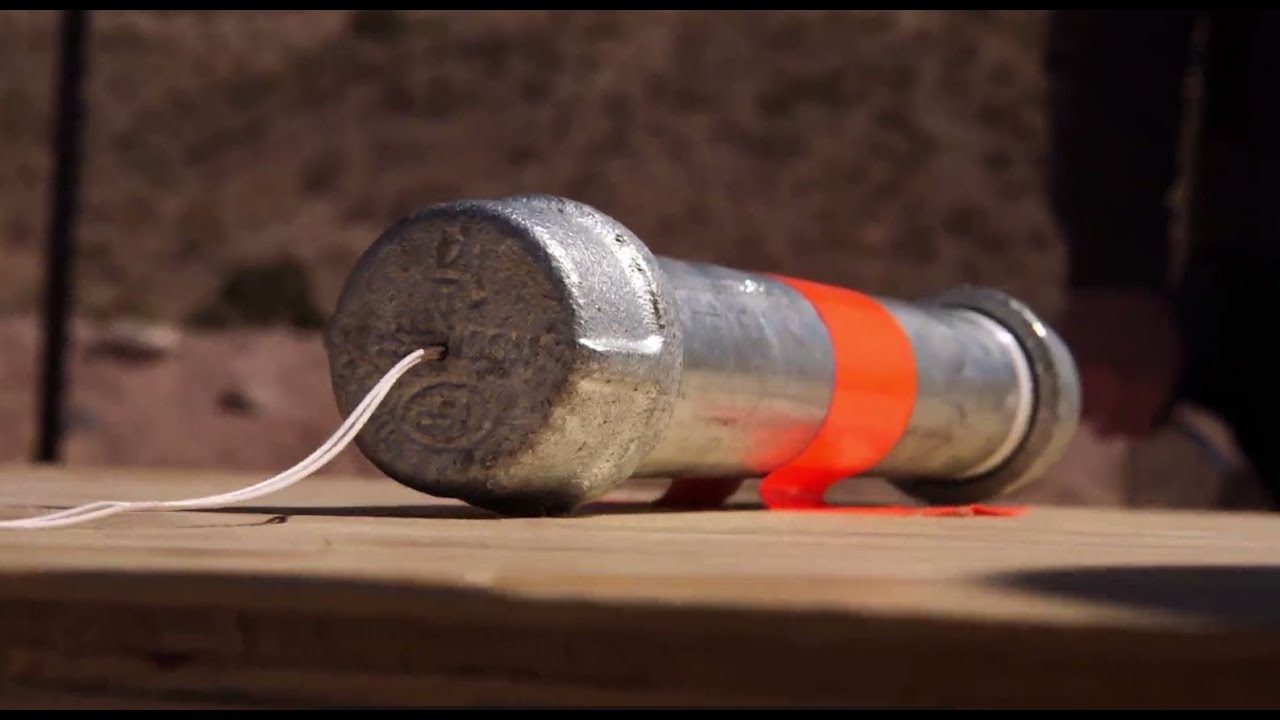
Six Protestant civilians, aged between 60 and 76, were killed when a car-bomb exploded in Railway Road, Coleraine.
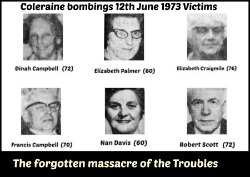
Colrain bomb victims June 12th 1973 Collage with text resized 250

The attack was carried out by the Irish Republican Army (IRA) who had given an inadequate warning of the bomb. A Catholic civilian was shot dead by the British Army in Belfast.

See Coleraine Bombing 12th June 1973

Thursday 12 June 1975


Two members of the Ulster Volunteer Force (UVF) were killed when a bomb they were transporting by car exploded prematurely in Great Patrick Street, Belfast.

Thursday 12 June 1980

The Irish Republican Army (IRA) carried out a car bomb attack on Markethill, County Armagh, which seriously damaged property in the centre of the town.

Friday 12 June 1981

The British government published proposals to change the Representation of the People Act making it impossible for prisoners to stand as candidates for election to parliament.

 See 1981 Hunger Strike

Thursday 12 June 1986

Security forces in France arrested five people following a major arms find.

Wednesday 12 June 1991

David Dinkins, then Mayor of New York, United States of America (USA), signed a law which would stop companies in the State of New York from doing business with Northern Ireland firms that did not comply with the MacBride principles.

Friday 12 June 1992

Strand One of Talks Deadlocked

The parties involved in the political talks (later known as the Brooke / Mayhew talks) agreed to begin work on Strand Two and Strand Three of the process even though discussions on Strand One were at a standstill.

Monday 12 June 1995

Anti-terrorism legislation was renewed for another year at Westminster.

During the debate Patrick Mayhew, then Secretary of State for Northern Ireland, announced that an independent review into emergency legislation would be established.

Thursday 12 June 1997

The main two morning newspapers in Northern Ireland, the Newsletter which is mainly read by unionists and the Irish News which is mainly read by nationalists, joined together to publish a joint editorial on their front pages. The editorial called for an agreement on the Drumcree parade scheduled for Sunday 6 July 1997.

The suggestion by the two papers was that the Garvaghy Road residents would allow the 1997 parade to proceed while the Orange Order would agree to reroute the 1998 parade away from the Garvaghy Road.

[This proposal was eventually rejected.]

A public meeting of the Parades Commission in Portadown, County Armagh, was disrupted by hecklers

Saturday 12 June 1999

In the Republic of Ireland Sinn Féin made significant gains in the local elections. The party increased its vote from 2.1 per cent in the 1991 local elections to 3.5 per cent and trebled the level of its representation to 21 seats.


——————————————

Remembering all innocent victims of the Troubles

Today is the anniversary of the death of the following people killed as a results of the conflict in Northern Ireland

“To live in hearts we leave behind is not to die

– Thomas Campbell

To the innocent on the list – Your memory will live forever

– To the Paramilitaries –

There are many things worth living for, a few things worth dying for, but nothing worth killing for.

13 People lost their lives on the 12th June between 1972 – 1988

——————————————

12 June 1972
Alan Giles  (24)

nfNI
Status: British Army (BA),

Killed by: Irish Republican Army (IRA)
Shot during gun battle, Ardoyne, Belfast.

——————————————

12 June 1973


 Francis Campbell   (70)

Protestant
Status: Civilian (Civ),

Killed by: Irish Republican Army (IRA)
Killed in car bomb explosion, Railway Road, Coleraine, County Derry. Inadequate warning given

See Coleraine Bombing 12th June 1973

——————————————

12 June 1973


Dinah Campbell   (72)

Protestant
Status: Civilian (Civ),

Killed by: Irish Republican Army (IRA)
Killed in car bomb explosion, Railway Road, Coleraine, County Derry. Inadequate warning given.

See Coleraine Bombing 12th June 1973

——————————————

12 June 1973


Elizabeth Craigmile  (76)

Protestant
Status: Civilian (Civ),

Killed by: Irish Republican Army (IRA)
Killed in car bomb explosion, Railway Road, Coleraine, County Derry. Inadequate warning given.

See Coleraine Bombing 12th June 1973

——————————————

12 June 1973


Nan Davis  (60)

Protestant
Status: Civilian (Civ),

Killed by: Irish Republican Army (IRA)
Killed in car bomb explosion, Railway Road, Coleraine, County Derry. Inadequate warning given.

See Coleraine Bombing 12th June 1973

——————————————

12 June 1973


Robert Scott   (72)

Protestant
Status: Civilian (Civ),

Killed by: Irish Republican Army (IRA)
Killed in car bomb explosion, Railway Road, Coleraine, County Derry. Inadequate warning given

See Coleraine Bombing 12th June 1973

——————————————

12 June 1973


Elizabeth Palmer   (60)

Protestant
Status: Civilian (Civ),

Killed by: Irish Republican Army (IRA)
Killed in car bomb explosion, Railway Road, Coleraine, County Derry. Inadequate warning given.

See Coleraine Bombing 12th June 1973

——————————————

12 June 1973
Anthony Mitchell  (38)

Catholic
Status: Civilian (Civ),

Killed by: British Army (BA)
Shot while walking past Springfield Road British Army (BA) / Royal Ulster Constabulary (RUC) base, Belfast.

——————————————

12 June 1975
 James McGregor   (28)

Protestant
Status: Ulster Volunteer Force (UVF),

Killed by: Ulster Volunteer Force (UVF)
Killed in premature bomb explosion, while travelling in car, Great Patrick Street, Belfast.

——————————————

12 June 1975
Thomas Chapman  (28)

Protestant
Status: Ulster Volunteer Force (UVF),

Killed by: Ulster Volunteer Force (UVF)
Killed in premature bomb explosion, while travelling in car, Great Patrick Street, Belfast.

——————————————

12 June 1976


Liam Prince   (26)

Catholic
Status: Civilian (Civ),

Killed by: British Army (BA)
Shot while travelling in his car at British Army (BA) Vehicle Check Point (VCP), near Forkhill, County Armagh.

——————————————

12 June 1987


Joseph McIlwaine  (20)

Protestant
Status: Ulster Defence Regiment (UDR),

Killed by: Irish Republican Army (IRA)
Off duty. Shot at his workplace, Aberdelgy Golf Club, Lambeg, near Lisburn, County Antrim

——————————————

12 June 1988


William Totten   (46)

Catholic
Status: Civilian (Civ),

Killed by: non-specific Loyalist group (LOY)
Shot outside his friend’s home, Cavehill Road, Belfast.

—————————————— 

11th June – Deaths & Events in Northern Ireland Troubles

Key Events & Deaths on this day in Northern Ireland Troubles

11th June

————————————

Sunday 11 June 1972

There was a gun battle between Loyalist and Republican paramilitaries in the Oldpark area of Belfast.

There were shooting incidents in other areas of Belfast and Northern Ireland.

In all, two Catholics, a Protestant, and a British soldier were shot and killed.

Colonel Gaddafi announced that he had supplied arms to “revolutionaries” in Ireland.

Wednesday 11 June 1980

The Irish Republican Army (IRA) issued a statement that threatened to renew attacks on prison officers.

Thursday 11 June 1981

A general election was held in the Republic of Ireland.

[When counting was completed a minority government was formed between a coalition of Fine Gael (FG) and Labour. On 30 June 1981 Garret FitzGerald replaced Charles Haughey as Taoiseach (Irish Prime Minister).

Two H-Block prisoners were elected to the Dáil.]

Saturday 11 June 1983

In the new British cabinet announced by Margaret Thatcher, then British Prime Minister, James Prior, was reappointed as Secretary of State for Northern Ireland.

Wednesday 11 June 1986

Five people, one of whom was Patrick Magee, were found guilty at the ‘Old Bailey’ court in London of conspiring to cause explosions in Britain including the Brighton bomb on 12 October 1984.

[Magee later received eight life sentences.]

Thursday 11 June 1987

General Election

A general election was held across the United Kingdom (UK).

The Conservative Party was returned to power. In Northern Ireland the Social Democratic and Labour Party (SDLP) increased their vote and their share of the poll.

The overall Unionist vote fell as did the vote of Sinn Féin (SF).

Enoch Powell, formally an Ulster Unionist Party (UUP) Member of Parliament (MP), lost his South Down seat to Eddie McGrady of the Social Democratic and Labour Party (SDLP).

Friday 11 June 1993

Queen Elizabeth paid a visit to Northern Ireland.

John Hume, then leader of the Social Democratic and Labour Party (SDLP), held another meeting with Gerry Adams, then President of Sinn Féin (SF). Amnesty International criticised certain aspects of emergence powers in Northern Ireland.

Tuesday 11 June 1996

The second day of the Stormont talks were again spent in argument over the appointment of George Mitchell as chair and the extent of his “over-arching” role.

The Ulster Unionist Party (UUP) agreed to a compromise which reduced the role of George Mitchell but which let talks proceed.

Wednesday 11 June 1997

Robert (‘Basher’) Bates (48)

Robert Basher Bates

a former leading member of the Ulster Volunteer Force (UVF) ‘Shankill Butchers’ gang, was shot dead while opening the Ex-Prisoners Information Centre on Woodvale Road, Belfast.

Initially Republican paramilitaries were blamed for the killing but all the groups denied any involvement, and it later became clear that Loyalist paramilitaries were responsible.

Bates had pleaded guilty in January 1979 to 10 murders.

Most of the victims were Catholics who were abducted, tortured, and killed with butcher knives, hatchets and sometimes guns.

One of Bates’ victims was James Moorehead (30) who at the time was a member of the Ulster Defence Association (UDA). It was believed that Bates was killed in retaliation for his part in the murder of Moorehead.

See Robert “Basher” Bates

See Shankill Butchers

See Lenny Murphy

The Queen paid a visit to Northern Ireland and travelled to Dungannon, Belfast, and Hillsborough Castle where a garden reception for 2,000 people was held.

The police and customs officials carried out a series of raids in Britain and Ireland and broke up a drugs gang which had links to the UDA. Police seized £6 million pounds of property, £2 million pounds of illicit alcohol, and £500,000 in cash.

Thursday 11 June 1998

Three shots were fired at a Sinn Féin (SF) election worker in the Markets area of south Belfast.

[Republicans claimed that the attack was carried out by “Group B” a remnant of the Official Irish Republican Army (OIRA). Residents reported increased friction in west and south Belfast between supporters of the Provisionals and Officials in recent weeks.]

Friday 11 June 1999

Tony Blair, then British Prime Minister, intensified discussions to try to resolve the issues preventing the establishment of an Executive in Northern Ireland.

The Police Authority of Northern Ireland warned that the Royal Ulster Constabulary (RUC) did not have sufficient funds to meet the additional costs in policing the violence surrounding the Drumcree dispute.


——————————————

Remembering all innocent victims of the Troubles

Today is the anniversary of the death of the following people killed as a results of the conflict in Northern Ireland

“To live in hearts we leave behind is not to die

– Thomas Campbell

To the innocent on the list – Your memory will live forever

– To the Paramilitaries –

There are many things worth living for, a few things worth dying for, but nothing worth killing for.

9 People lost their lives on the 11th   June between 1972 – 1997

——————————————

11 June 1972
John Madden  (43)

Catholic
Status: Civilian (Civ),

Killed by: non-specific Loyalist group (LOY)
Shot outside his shop, Oldpark Road, Belfast.

——————————————

11 June 1972


Joseph Campbell  (16)

Catholic
Status: Irish Republican Army Youth Section (IRAF),

Killed by: British Army (BA)
Shot during gun battle, Eskdale Gardens, Ardoyne, Belfast.

——————————————

11 June 1972


Norman McGrath  (18)

Protestant
Status: Civilian (Civ),

Killed by: British Army (BA)
Shot from passing British Army (BA) Armoured Personnel Carrier as he walked along Alloa Street, Lower Oldpark, Belfast.

——————————————

11 June 1972
Peter Raistric  (18)

nfNI
Status: British Army (BA),

Killed by: Irish Republican Army (IRA)
Shot by sniper while in Brooke Park British Army (BA) base, Derry.

——————————————

11 June 1975
Kenneth Conway   (20)

Protestant
Status: Civilian (Civ),

Killed by: not known (nk)
Died one day after being shot at the junction of Woodvale Road and Glenvale Street, Shankill, Belfast.

——————————————

11 June 1976
William Palmer   (50)

Protestant
Status: Civilian (Civ),

Killed by: non-specific Republican group (REP)
Died three days after being shot at his home, Milltown Avenue, Derriaghy, near Belfast

——————————————

11 June 1976
Edward Walker  (20)

Protestant
Status: Ulster Defence Association (UDA),

Killed by: Royal Ulster Constabulary (RUC)
Shot while travelling in stolen car along Doagh Road, Newtownabbey, County Antrim

——————————————

11 June 1982


David Reeves  (24)

Protestant
Status: Royal Ulster Constabulary (RUC),

Killed by: Irish Republican Army (IRA)
Killed by booby trap bomb while searching garage, Carranbane Walk, Shantallow, Derry.

——————————————

11 June 1997

Robert Bates  (48)

Protestant
Status: Ulster Volunteer Force (UVF),

Killed by: Ulster Defence Association (UDA)
Shot, at his workplace, Ex-prisoners Interpretative Centre, Woodvale Road, Shankill, Belfast. Ulster Defence Association / Ulster Volunteer Force feud.

See Shankill Butchers

See Lenny Murphy

——————————————

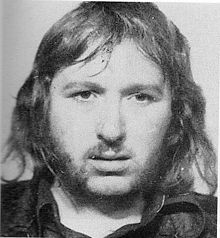
Robert “Basher” Bates 12th Dec 1948 – 11th June 1997. Shankill Butcher

Robert William Bates

” Basher “

Robert William Bates (nicknamed “Basher”) (12 December 1948 – 11 June 1997) was an Ulster loyalist from Belfast, Northern Ireland. He was a member of the Ulster Volunteer Force and the infamous Shankill Butchers gang, led by Lenny Murphy.

Shankill Butchers 

Shankill Butchers.

See Shankill Butchers

Disclaimer

The views and opinions expressed in this post and page are soley intended to educate and provide background information to those interested in the Troubles of Northern Ireland.

They in no way reflect my own opinions and I take no responsibility for any inaccuracies or factual errors


Bates was born into an Ulster Protestant family and grew up in the Shankill Road area of Belfast. He had a criminal record dating back to 1966,  and later became a member of the Ulster loyalist paramilitary organisation, the Ulster Volunteer Force (UVF).

Bates, employed as a barman at the Long Bar, was recruited into the Shankill Butchers gang in 1975 by its notorious ringleader, Lenny Murphy.

The gang used The Brown Bear pub, a Shankill Road drinking haunt frequented by the UVF, as its headquarters. Bates, a “sergeant” in the gang’s hierarchy, was an avid participant in the brutal torture and savage killings perpetrated against innocent Catholics after they were abducted from nationalist streets and driven away in a black taxi owned by fellow Shankill Butcher, William Moore.

William moore.jpg
William Moore

The killings typically involved grisly-throat slashings preceded by lengthy beatings and torture. Bates was said to have been personally responsible for beating James Moorhead, a member of the Ulster Defence Association, to death on 30 January 1977 and to have played a central role in the kidnapping and murder of Catholic Joseph Morrisey three days later. He also killed Thomas Quinn, a derelict, on 8 February 1976 and the following day was involved in shooting dead Archibald Hanna and Raymond Carlisle, two Protestant workmen that Bates and Murphy mistook for Catholics.

Martin Dillon revealed that Bates was also one of the four UVF gunmen who carried out a mass shooting in the Chlorane Bar attack in Belfast city centre on 5 June 1976. Five people (three Catholics and two Protestants) were shot dead. The UVF unit had burst into the pub in Gresham Street and ordered the Catholics and Protestants to line up on opposite ends of the bar before they opened fire. He later recounted his role in the attack to police; however, he had claimed that he never fired any shots due to his revolver having malfunctioned.

Forensics evidence contradicted him as it proved that his revolver had been fired inside the Chlorane Bar that night. Lenny Murphy was in police custody at the time the shooting attack against the Chlorane Bar took place.

Bates was arrested in 1977, along with Moore and other “Shankill Butcher” accomplices.

Gerard McLaverty and Joseph Morrissey

His arrest followed a sustained attack by Moore and Sam McAllister on Catholic Gerard McLaverty, after which they dumped his body, presuming him dead. However McLaverty survived and identified Moore and McAllister to the Royal Ulster Constabulary who drove him up and down the Shankill Road during a loyalist parade until he saw his attackers. During questioning both men implicated Bates, and other gang members, leading to their arrests.

Following a long period spent on remand, he was convicted in February 1979 of murder related to the Shankill Butcher killings and given ten life sentences, with a recommendation by the trial judge, Mr Justice O’Donnell, that he should never be released.

In prison

At the start of his sentence, Bates was involved in a series of violent incidents involving other inmates. Bates later claimed that he had perpetrated these acts in order to live up to his “Basher” nickname.

He served as company commander of the UVF inmates and became noted as stern disciplinarian.

However while in the Maze Prison, he was said to have “found God”, and as a result became a born-again Christian. He produced a prison testimony, which was later reprinted in The Burning Bush, and, after publicly advocating an end to violence, was transferred to HMP Maghaberry.

Brendan hughes.jpg
Brendan Hughes

In prison, Bates formed a friendship with Provisional IRA member and fellow detainee Brendan Hughes. Bates foiled a UVF assassination plot on Hughes.

Early release and death


Ex-Prisoners Interpretative Centre, Woodvale Road, where Bates worked after his release and where he was shot

In October 1996, 18 months prior to the signing of the Good Friday Agreement, Bates was cleared for early release by the Life Sentence Review Board. He was given the opportunity of participating in a rehabilitation scheme, spending the day on a work placement and returning to prison at night.

As he arrived for work in his native Shankill area of Belfast early on the morning of 11 June 1997,  Bates was shot dead by the son of a UDA man he had killed in 1977.

The killer identified himself to Bates as the son of his victim before opening fire. Bates had been working at the Ex-Prisoners Interpretative Centre (EPIC), a drop-in centre for former loyalist prisoners.

Bates’ killing had not been sanctioned by the UDA leadership but nevertheless they refused to agree to UVF demands that the killer should be handed over to them, instead exiling him from the Shankill. He was rehoused in the Taughmonagh area where he quickly became an important figure in the local UDA as a part of Jackie McDonald‘s South Belfast Brigade.

Bates’ name was subsequently included on the banner of a prominent Orange Lodge on the Shankill Road, called Old Boyne Island Heroes.

Relatives of Shankill butchers victims Cornelius Neeson condemned the banner, stating that:

“it hurts the memory of those the butchers killed”.

A fellow Lodge member and former friend of Bates defended the inclusion of his name to journalist Peter Taylor:

“I knew him very well and he’d been a personal friend for twenty or thirty years and to me he was a gentleman”.

He went on to describe him as having been:

“an easy-going, decent fellow, and as far as the Lodge is concerned, a man of good-standing”.

He was a buried in a Free Presbyterian Church of Ulster ceremony by Reverend Alan Smylie.

Bates’ funeral was attended by a large representation from local Orange Lodges.

Mairead Maguire, July 2009

Mairead Maguire was also amongst the mourners, arguing that Bates had “repented, asked for forgiveness and showed great remorse for what he had done”, whilst a memorial service held at the spot of his killing two days after the funeral was attended by Father Gerry Reynolds of Clonard Monastery

See Shankill Butchers

Shankill Butchers.

See Shankill Butchers

lennie murphy

See Lenny Murphy

——————————————–

Wednesday 11 June 1997

From killer to victim: Basher’s death sums up the futility of the Troubles

Robert “Basher” Bates, who was gunned down in Belfast yesterday, was an icon. To some he represented the very worst that the troubles has produced: to others he was testimony that even the most brutal terrorist might not be beyond redemption.

Two decades ago the 10 murders he was involved in were among the most barbaric ever seen. He shot some of his victims but others he killed in the most cruel fashion, he and his associates wielded butcher’s knives, axes and cleavers on random Catholic victims. The Shankill Butchers slaughtered human beings as one would animals.

The horror of those killings took Belfast to a new low. Yesterday his death conjured up the most appalling vista of all: that the IRA was intent on regenerating the troubles. The relief was palpable when it emerged that he had been killed not by the IRA but by a loyalist, in what is thought to have been personal revenge for the murder by Bates of a close relative, 20 years ago in a bar room brawl.

Basher Bates was one of hundreds of convicted killers released after serving an average of 15 years behind bars. There are hundreds of unsettled personal grudges in Northern Ireland: quite a few people know, or think they know, who killed their fathers or other loved ones. Yet this seems to have been the first personal revenge killing of a released prisoner.

While loyalist groups have accounted for close on 1,000 of the 3,500 victims of the Troubles, the ferocity and awfulness of the Shankill Butchers’ killings have remained in the public memory for two full decades.

A book dwelling on the graphic details has been a local bestseller for 20 years, and can still be picked up in many of the garage shops of Belfast. It was, for example, the favourite reading of Thomas Begley, the young IRA man who four years ago carried a bomb into a Shankill Road fish shop, killing himself and nine Protestants.

Bates was not the prime mover in the Shankill Butchers gang: that was UVF man Lennie Murphy, who was shot dead by the IRA in 1982. But he was one of the leading lights during their two-year reign of terror, and one photograph of him, looking like an unshaven, unkempt dullard, has remained lodged in the communal memory as a vision of a psychopathic killer.

The judge who gave him 16 life sentences for his killings told him, correctly, that his actions “will remain forever a lasting monument to blind sectarian bigotry.” When he told him he should remain behind bars for the rest of his natural life, society shuddered and hoped it had heard the last of Basher Bates.

But Northern Ireland has a scheme, not found in the rest of the UK, for the release of even the most notorious killers, and more than 300 loyalists and republicans have been quietly freed over the last decade. Many of these former lifers engross themselves, as Bates seemed to be doing, in community or welfare work.

As the years passed in jail, Bates was at first a difficult prisoner, then a troubled soul and finally a remorseful born-again Christian, praying fervently for forgiveness. One who knew him in prison said of him: “He’s now a shell of a man, very quiet and inoffensive in a bland kind of way. The hair has gone, he’s prematurely bald. He has found the Lord and he’s no threat to anyone.”

Basher Bates made a long and painful journey from merciless assassin to man of God. His personal odyssey seemed to be over: neither he nor anyone else could have foreseen the fateful circularity which in the end transformed him from killer to victim.


Buy Me A Coffee

10th June – Deaths & Events in Northern Ireland Troubles

Key Events & Deaths on this day in Northern Ireland Troubles

10th June

——————————–

Wednesday 10 June 1981

Crumlin Road Prison Escape

Eight Irish Republican Army (IRA) prisoners on remand escaped form the Crumlin Road Prison in Belfast. The prisoners used three handguns, which had been smuggled into the prison, to hold prison officers hostage before taking their uniforms and shooting their way out of the prison.

Friday 10 June 1983

Following the election of Gerry Adams, then Vice-President of Sinn Féin (SF), as Member of Parliament (MP) for West Belfast, William Whitelaw, then British Home Secretary, lifted the ban on him entering Britain.

Friday 10 June 1988

A branch of the Conservative Party was established in Bangor, County Down. The ‘Model Conservative Association’ was part of an attempt to introduce British political parties into Northern Ireland.

Thursday 10 June 1993

It was confirmed that Jean Kennedy Smith, sister of the late President John F. Kennedy, would be the next American Ambassador to the Republic of Ireland.

Friday 10 June 1994

Two thousand workers from the Harland and Wolff shipyard stopped work for a period in protest at the killing at the shipyard on 9 June 1994.

Monday 10 June 1996

Stormont Talks Began

All-party negotiations (hereafter referred to as the ‘Stormont talks’) began in Stormont, Belfast. The talks began with opposition from the unionist parties to the extent of the role to be played by the chair George Mitchell. John Major, then British Prime Minister, and John Bruton, then Taoiseach (Irish Prime Minister), gave a joint press conference and indicated their support for George Mitchell. Sinn Féin (SF) were refused entry to the talks and the two governments issued a joint statement on the decision to exclude SF.

Tuesday 10 June 1997

The Irish Republican Army (IRA) admitted that it was responsible for a gun attack on a British Army patrol in Derry. There were no injuries during the attack.

The Ministry of Defence admitted that a batch of 90,000 plastic bullets that had been delivered to the security forces in Northern Ireland were faulty.

The bullets had a faster muzzle velocity that was publicly stipulated. From the original batch, 8,300 had been fired over the previous year.

The Garvaghy Residents Coalition in Portadown, County Armagh, sent a letter to Orangemen in Portadown asking for a “mutual apology for any hurt, offence or injustice”.

Wednesday 10 June 1998

David Trimble, then leader of the Ulster Unionist Party (UUP), and nine other Unionist and Conservative Members of Parliament (MPs) voted against the Northern Ireland (Sentences) Bill during the second reading of the Bill in the House of Commons.

The proposed act was to allow for the early release of paramilitary prisoners as part of the Good Friday Agreement. In the Republic of Ireland the Industrial Development Authority (IDA) announced record breaking progress for the fourth consecutive year.

Reports showed that the IDA had helped to create 15,000 new jobs.

Thursday 10 June 1999

European Parliament Election

Elections to the European Parliament were held across the United Kingdom (UK). Northern Ireland was treated as a single constituency which returned three Members of the European Parliament (MEPs).

Turnout for the election was 57 per cent.

[When counting was completed on Monday 14 June the three standing candidates were returned. Ian Paisley, then leader of the Democratic Unionist Party (DUP), topped the poll for the fifth time, John Hume, then leader of the Social Democratic and Labour Party (SDLP), was a close second. Jim Nicholson, then Ulster Unionist Party MEP, retained his seat despite a sharp drop in party support, and a strong challenge from Mitchel McLaughlin of Sinn Féin. (See: detailed results.)

The Irish Times (a Dublin based newspaper) reported that the deputy leader of the Ulster Unionist Party (UUP), John Taylor, had threatened to resign twice in the past two weeks in a dispute over his refusal to endorse the party’s candidate, Jim Nicholson, in the European Parliament election.]

Radio Telefis Éireann’s (RTE) ‘Prime Time’ programme claimed that both Royal Ulster Constabulary (RUC) officers and Ulster Defence Regiment (UDR) soldiers were involved in a gun and bomb attack on 19 December 1975 at the Silverbridge Inn, County Armagh, in which three people were killed. At the time the attack was claimed by the Red Hand Commando (RHC

——————————————

Remembering all innocent victims of the Troubles

Today is the anniversary of the death of the following people killed as a results of the conflict in Northern Ireland

“To live in hearts we leave behind is not to die

– Thomas Campbell

To the innocent on the list – Your memory will live forever

– To the Paramilitaries –

There are many things worth living for, a few things worth dying for, but nothing worth killing for.

7 People lost their lives on the 10th  June between 1972 – 1983

——————————————

10 June 1972


Martian Brown   (17)

Catholic
Status: Civilian (Civ),

Killed by: non-specific Loyalist group (LOY)
Shot from passing car while standing with friends, Roden Street, off Grosvenor Road, Belfast.

——————————————

10 June 1973


Daniel O’Neill  (35)

Catholic
Status: Civilian (Civ),

Killed by: non-specific Loyalist group (LOY)
Found shot on playing field, Deerpark Gardens, Oldpark, Belfast.

——————————————

10 June 1973


Samuel Rush  (45)

Protestant
Status: Civilian (Civ),

Killed by: non-specific Loyalist group (LOY)
Bus driver. Shot by sniper firing at British Army (BA) Vehicle Check Point (VCP), Albertbridge Road, Belfast.

——————————————

10 June 1975


Roy Suitters   (39)

Protestant
Status: Ulster Volunteer Force (UVF),

Killed by: Irish Republican Army (IRA)
Shot at his greengrocer’s shop, Crumlin Road, near Ligoniel Road, Belfast

——————————————

10 June 1975
Larry White  (25)

nfNIRI
Status: Saor Eire (SE),

Killed by: Official Irish Republican Army (OIRA)
From County Cork. Shot near his home, Orrey Road, Gurranabrahar, County Cork

——————————————

10 June 1978


 Denis Heaney  (21)

Catholic
Status: Irish Republican Army (IRA),

Killed by: British Army (BA)
Shot by undercover British Army (BA) member, while attempting to hijack a car, Harvey Street, Bogside, Derry

——————————————

10 June 1983
Geoffrey Curtis  (20)

nfNI
Status: British Army (BA),

Killed by: Irish Republican Army (IRA)
Killed by remote controlled bomb, hidden in lamp post, detonated when British Army (BA) foot patrol passed, Glenalina Road, Ballymurphy, Belfast.

——————————————


9th June – Deaths & Events in Northern Ireland Troubles

Key Events & Deaths on this day in Northern Ireland Troubles

9th June

————————————–

Monday 9 June 1980

Charles Haughey, then Taoiseach (Irish Prime Minister), argued on the British Broadcasting Corporation (BBC) programme Panorama that it was in the best interest of both Britain and Ireland for Britain to withdraw from Northern Ireland.

He indicated that some form of federation could be possible in the event of a British withdrawal.

Thursday 9 June 1983

General Election in UK

In the United Kingdom (UK) General Election the Conservative Party was returned to power with an increased majority. In Northern Ireland the election was contested across the new 17 constituencies.

[When the counting was completed the major news story was the election of Gerry Adams, then Vice-President of Sinn Féin (SF), in the West Belfast constituency where he beat the sitting Member of Parliament (MP) Gerry Fitt and Joe Hendron of the Social Democratic and Labour Party (SDLP).

The Ulster Unionist Party (UUP) won 11 seats (with 34% of the vote), the Democratic Unionist Party (DUP) 3 seats (20.6%), Ulster Popular Unionist Party (UPUP) 1 seat, Social Democratic and Labour Party (SDLP) 1 seat (17.9%), and SF 1 seat (13.4%).

Unionist candidates therefore took 15 of the 17 seats. Many commentators again speculated on the possibility of SF replacing the SDLP as the main voice of Nationalism in Northern Ireland.

Sunday 9 June 1991

The Irish Republican Army (IRA) exploded a large bomb, estimate at 600 pounds, in a Protestant housing estate in Donacloney, County Down.

Wednesday 9 June 1993

The report of the Opsahl Commission, entitled A Citizens’ Inquiry, was published. The Commission had been established as part of Initiative ’92 with the intention of seeking a wide range of views on the future of Northern Ireland


Thursday 9 June 1994

The body of Maurice O’Kane (50) Catholic civilian, was found shot at his workplace, Harland and Wolff shipyard, Harbour Estate, Belfast.

The Ulster Volunteer Force (UVF) claimed responsibility for the killing.

European Elections were held in Northern Ireland

[When the votes were counted a few days later Ian Paisley, then leader of the Democratic Unionist Party (DUP), narrowly topped the poll ahead of John Hume, then leader of the Social Democratic and Labour Party (SDLP). Jim Nicholson, member of the Ulster Unionist Party (UUP), took the third seat.]

Seán Hick, Paul Hughes, and Donna Maguire, were acquitted in a court in Germany of the murder of a British Army (BA) officer in Dortmund in 1990. Hick and Hughes were released but Maguire was held on other charges.

[On 28 June 1995 Magure was sentenced to 9 years imprisonment for the bombing of a BA barracks in Osnabruck, Germany, in 1989. She was later released because of the number of years held on remand.]

Friday 9 June 1995

John Bruton, then Taoiseach (Irish Prime Minister), warned that the freeing of Lee Clegg prior to the release of paramilitary prisoners might damage the peace process. Bruton was in Paris when he made the comments.

lee glegg

[Clegg, a private in the Parachute Regiment, had been given a life sentence for the murder of Karen Reilly (16) on 30 September 1990. He had two appeals turned down. However, Clegg was released from prison on 3 July 1995 having served two years of his sentence.]

See Lee Clegg

Sunday 9 June 1996

Fra Shannon, then a member of the Irish National Liberation Army (INLA) ‘GHQ’ faction, was shot dead in west Belfast in a continuing INLA feud.

Monday 9 June 1997

The Independent Commission for Police Complaints published its annual report.

The report showed that the Commission had investigated 2,540 complaints against the police during 1996 of which 12 per cent resulted in disciplinary charges or informal action.

Tuesday 9 June 1998

Sinn Féin (SF) held a press conference to display surveillance equipment, believed to belong to the British Army, found by a farmer from south Armagh on his land.

The equipment was being used to monitor a house and a road junction in the area. Marjorie (Mo) Mowlam, then Secretary of State for Northern Ireland, announced the names of two new members of the Parades Commission; William Martin and Barbara Erwin.

The Ulster Unionist Party (UUP) launched its Assembly election manifesto. David Trimble, then leader of the Ulster Unionist Party (UUP), said that the UUP would not sit down with “unrepentant terrorists”.

Wednesday 9 June 1999

Fourteen pipe-bombs, and some ammunition, were uncovered by the Royal Ulster Constabulary (RUC) in the Loyalist Mourneview housing estate in Lurgan, County Armagh.

The weapons were discovered at the rear of a house on the estate after information was received by the RUC from members of the public.

The weapons belonged to Loyalist paramilitaries.

Edward_Daly_Bloody_Sunday

The Bloody Sunday Inquiry admitted that during the autumn of 1998, 73 sets of documents presented to the original Widgery Inquiry had been released to interested parties’ solicitors which included statements by five ex-Paratroopers who were involved in the events but did not open fire.

The statements contained the soldiers’ names, ranks, and army serial numbers.

At the annual General Assembly of the Presbyterian Church, ministers argued over the issue of the Orange Order and the Drumcree parade dispute.

See Bloody Sunday 

——————————————

Remembering all innocent victims of the Troubles

Today is the anniversary of the death of the following people killed as a results of the conflict in Northern Ireland

“To live in hearts we leave behind is not to die

– Thomas Campbell

To the innocent on the list – Your memory will live forever

– To the Paramilitaries –

There are many things worth living for, a few things worth dying for, but nothing worth killing for.

7 People lost their lives on the 9th June between 1972 – 1996

——————————————

09 June 1972
Roy Stanton   (27)

Protestant
Status: Ulster Defence Regiment (UDR),

Killed by: Irish Republican Army (IRA)
Off duty. Shot as he left his workplace, Autolite factory, Finaghy Road North, Belfast

——————————————

09 June 1974
Michelle Osborne   (13)

Catholic
Status: Civilian (Civ),

Killed by: Ulster Freedom Fighters (UFF)
Killed in premature car bomb explosion in car park of Ballymacaward Kennel Club, Hannahstown, Belfast.

——————————————

09 June 1979


Joseph McKee  (33)

Catholic
Status: Official Irish Republican Army (OIRA),

Killed by: Ulster Defence Association (UDA)
Shot while in shop, Castle Street, Belfast.

——————————————

09 June 1979


Peadar McElvanna   (24)

Catholic
Status: Irish Republican Army (IRA),

Killed by: British Army (BA)
Shot during gun battle between Irish Republican Army (IRA) and British Army (BA), Keady, County Armagh.

——————————————

09 June 1984


James Campbell  (33)

Catholic
Status: Civilian (Civ),

Killed by: Irish Republican Army (IRA)
Shot while in Pound Loney Social Club, Conway Street, Lower Falls, Belfast. Alleged criminal.

——————————————

09 June 1994


Maurice O’Kane   (50)

Catholic
Status: Civilian (Civ),

Killed by: Ulster Volunteer Force (UVF)
Found shot at his workplace, Harland and Wolff shipyard, Harbour Estate, Belfast.

——————————————

09 June 1996


Francis Shannon   (21)

Catholic
Status: Irish National Liberation Army (INLA),

Killed by: Irish National Liberation Army (INLA)
Shot, outside friends home, Norfolk Way, Turf Lodge, Belfast. Internal Irish National Liberation Army dispute

——————————————


8th June – Deaths & Events in Northern Ireland Troubles

Key Events & Deaths on this day in Northern Ireland Troubles

8th June

————————

Tuesday 8 June 1971

General Harry Tuzo, with escorts, circa 1972

Harry Tuzo, then General Officer Commanding the British Army (BA), said that a permanent military solution to the conflict could not be achieved.

Saturday 8 June 1974

The Price sisters ended their hunger strike in Brixton Prison, England. The hunger strike had lasted six months because of a policy of force-feeding by the prison authorities.

Wednesday 8 June 1977

Roy Mason, then Secretary of State, announced that the strength of the Royal Ulster Constabulary (RUC) would be increased by 1,200 and that of the Ulster Defence Regiment (UDR) increased to 2,500 full-time members.

He also announced that there would be more undercover activity by troops, and that the spearhead battalion would be withdrawn.

Monday 8 June 1981

Tom McElwee,

Tom McElwee, then an Irish Republican Army (IRA) prisoner, joined the hunger strike.

See 1981 Hungry Strike

Friday 8 June 1990

Banbridge District Council introduced a form of ‘power-sharing’.

Monday 8 June 1992

Brian_Nelson_Loyalist

A British Broadcasting Corporation (BBC) programme made a number of claims about Brian Nelson, who had operated as a British Army (BA) agent and a Ulster Defence Association (UDA) intelligence officer.

The programme claimed that Nelson had been involved in 10 murders, attempted murders, or conspiracies to murder, and that his BA controllers had know of the events. The programme further claimed that in some instances BA intelligence had failed to pass on information about planned attacks to the Royal Ulster Constabulary (RUC).

See Brian Nelson

Tuesday 8 June 1993


Patrick Mayhew, then Secretary of State for Northern Ireland, held a meeting with James Molyneaux, then leader of the Ulster Unionist Party (UUP), in London. This was the start of a fresh set of bilateral talks.

Wednesday 8 June 1994

A small incendiary device was found in a snooker hall in Trim, County Meath, Republic of Ireland, following a statement by the Ulster Freedom Fighters (UFF), a cover name (pseudonym) used by the Ulster Defence Association (UDA), that firebombs had been planted in the Republic.

Sunday 8 June 1997

During the continuing protest by Loyalist pickets at the Catholic church at Harryville, Ballymena, there was an attempt to burn down the chapel.

A parade of bands had been organised and there were violent confrontations between the Loyalists and the Royal Ulster Constabulary (RUC) with 27 officers being injured.

A number of plastic bullets were fired at the demonstrators. Sean McNally (24) had to have his leg amputated following a ‘punishment’ shooting involving a shotgun.

Monday 8 June 1998

The fact that the newly established Police Commission in Northern Ireland did not contain any of the people nominated by the Irish government, on behalf of Nationalists in Northern Ireland, was thought to have caused considerable difficulties between the two governments.

A leaked memo indicated that Marjorie (Mo) Mowlam, then Secretary of State for Northern Ireland, had personally contacted the Irish government, the White House, the Social Democratic and Labour Party (SDLP), Sinn Féin (SF), and other interested parties to explain her decision and to seek agreement for it.

[The Royal Ulster Constabulary (RUC) was eventually called in to try to discover the source of the leak in the Northern Ireland Office (NIO). This was one of a number of leaks in the recent pass. Seamus Mallon, then deputy leader of the Social Democratic and Labour Party (SDLP), questioned the loyalty of the civil servants working for Mowlam.]

Tuesday 8 June 1999

Fourteen pipe-bombs were found by Royal Ulster Constabulary (RUC) officers in the Loyalist Mourneview estate in Lurgan, County Armagh.

[A man was later charged in relation to the find.]

Tony Blair, then British Prime Minister, and Bertie Ahern, then Taoiseach (Irish Prime Minister), announced a series of intensive talks in a final attempt to break the deadlock in the Northern Ireland talks before the 30 June 1999 deadline

. Les Rodgers, then Chairman of the Police Federation, spoke at the organisation’s annual conference. He claimed that some lawyers, academics and human rights groups were part of “an evil conspiracy to vilify this police force”. He also claimed that this attempt was “being coordinated by Sinn Féin”.

Thursday 8 June 2000

A Catholic mother and her 20 year old daughter escaped injury in a pipe-bomb attack on their home in Annalong, County Down. The two women were at home when the explosion rocked their terrace house shortly after 11.00pm. The attack was carried out by Loyalist paramilitaries.


——————————————

Remembering all innocent victims of the Troubles

Today is the anniversary of the death of the following people killed as a results of the conflict in Northern Ireland

“To live in hearts we leave behind is not to die

– Thomas Campbell

To the innocent on the list – Your memory will live forever

– To the Paramilitaries –

There are many things worth living for, a few things worth dying for, but nothing worth killing for.

5 People lost their lives on the 8th June between 1972 – 1977

——————————————

08 June 1972


Jean Smith   (24)

Catholic
Status: Civilian (Civ),

Killed by: not known (nk)
Shot by sniper, while travelling in car at bus terminus, Glen Road, Andersonstown, Belfast.

——————————————

08 June 1972
Norman Campbell  (19)

Catholic
Status: Civilian (Civ),

Killed by: not known (nk)
Shot at his workplace, building site, Upper Townsend Street, Shankill, Belfast.

——————————————

08 June 1972


Samuel Donegan   (61)

nfNI
Status: Garda Siochana (GS),

Killed by: Irish Republican Army (IRA)
Killed by booby trap bomb left by side of road, Legakelly, near Newtownbutler, County Fermanagh. Garda Donegan had strayed a few yards over the border into Northern Ireland.

——————————————

08 June 1972
Edward Megahey  (44)

Protestant
Status: Ulster Defence Regiment (UDR),

Killed by: Irish Republican Army (IRA)
Died three days after being shot by sniper while on Ulster Defence Regiment mobile patrol, Buncrana Road, Derry.

——————————————

08 June 1977
Gerald Tucker   (35)

Protestant
Status: Ulster Defence Regiment (UDR),

Killed by: Irish Republican Army (IRA)
Off duty. Shot shortly after leaving his workplace, Royal Victoria Hospital, Falls Road, Belfast.

——————————————


7th June – Deaths & Events in Northern Ireland Troubles

Key Events & Deaths on this day in Northern Ireland Troubles

7th June

——————————————

Thursday 7 June 1973

Sunningdale; Ulster Workers’ Council Strike

Monday 7 June 1976

The United Ulster Unionist Council (UUUC) took a vote opposing any talks between the Ulster Unionist Party (UUP) and the Social Democratic and Labour Party (SDLP).

Thursday 7 June 1979

European Parliament Elections

This was the first election to the European parliament. Northern Ireland was treated as a single constituency with three seats being contested by 13 candidates.

The election was by Proportional Representation using the Single Transferable Vote (STV) system while the rest of the United Kingdom (UK) continued to use the ‘first past the post’ system .

Ian Paisley, then leader of the Democratic Unionist Party (DUP), topped the poll with 29.8 per cent of the first preference votes and was elected on the first count.

John Hume, then deputy leader of the Social Democratic and Labour Party (SDLP), got 24.6 per cent of the vote and narrowly missed the quota but was elected on the third count.

John Taylor, Ulster Unionist Party (UUP), got 11.9 per cent of the first preference vote and was elected on the sixth count.

Tuesday 7 June 1988

The Northern Ireland Police Federation (NIPF), an organisation representing the views of many Royal Ulster Constabulary (RUC) officers, called for the introduction of internment in both Northern Ireland and the Republic of Ireland.

Wednesday 7 June 1989

It was announced that Shorts Aircraft Company, then Northern Ireland’s largest industrial employer, was to be sold to Bombardier, a Canadian company

Friday 7 June 1996

Garda Killed by IRA

Jerry McCabe, then a Detective in Garda Síochána

Jerry McCabe, then a Detective in Garda Síochána (the Irish police service), was shot dead during a post office robbery in Adare, County Limerick, Republic of Ireland. Suspicion for the killing fell on members of the Irish Republican Army (IRA) who later admitted responsibility.

Sunday 7 June 1998

William Daley, then Commerce Secretary of the United States of America (USA), led a trade delegation of representatives of American companies to Northern Ireland.

Monday 7 June 1999

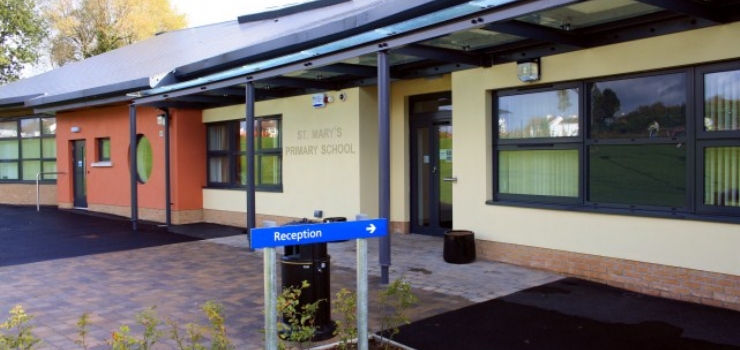
Loyalist paramilitaries left a pipe-bomb at a Catholic primary school in Ballymena, County Antrim.

The bomb was made safe by British Army technical officers.

John Lockington (Dr), then a member of the Orange Order and the Royal Black Institution, took up office as the Moderator of the Presbyterian Church in Ireland.

Figures published by the brokerage firm Dresdner Kleinwort Benson, showed that the Republic of Ireland was the second most expensive place in Europe after Finland to buy a house.

A typical urban home costs more than 18 times average annual disposable income in the Republic, compared with just 8.3 times in the USA.

Monday 7 June 1999

A pipe-bomb was found at St. Mary’s primary school in Ballymena, County Antrim. Nearly 120 children up to the age of 12 were evacuated from school grounds.

The attack was carried out by Loyalist paramilitaries.

Thursday 7 June 2001

Westminster General Election

There was a Westminster General Election across Britain and Northern Ireland. There were also local government District Councils elections on the same day.

[Following the count of the votes both Sinn Féin (SF) and the Democratic Unionist Party (DUP) made significant gains. Sinn Féin replace the Social Democratic and Labour Party (SDLP) as the largest Nationalist party. Seven of Northern Ireland’s 18 seats changed hands as a result of the election.]

——————————————

Remembering all innocent victims of the Troubles

Today is the anniversary of the death of the following people killed as a results of the conflict in Northern Ireland

“To live in hearts we leave behind is not to die

– Thomas Campbell

To the innocent on the list – Your memory will live forever

– To the Paramilitaries –

There are many things worth living for, a few things worth dying for, but nothing worth killing for.

4 People lost their lives on the 7th  June between 1976 – 1996

——————————————

07 June 1976


Paul McNally  (26)

Catholic
Status: Civilian (Civ),

Killed by: non-specific Loyalist group (LOY)
Died two days after being shot from passing car while standing outside Ardoyne shops, Crumlin Road, Belfast

——————————————

07 June 1980
Richard Latimer  (39)

Protestant
Status: Ulster Defence Regiment (UDR),

Killed by: Irish Republican Army (IRA)
Off duty. Shot at his shop, Main Street, Newtownbutler, County Fermanagh.

——————————————

07 June 1992
Glenn Goodman   (37)

nfNIB
Status: British Police (BP),

Killed by: Irish Republican Army (IRA)
Shot shortly after stopping car while on mobile patrol, Strutton with Hazelwood, near Tadcaster, Yorkshire, England.

——————————————

07 June 1996
Gerard McCabe   (52)

nfNIRI
Status: Garda Siochana (GS),

Killed by: Irish Republican Army (IRA)
Undercover Garda Siochana (GS) member. Shot during armed robbery, while escorting post office van, Adare, County Limerick.

——————————————


6th June – Deaths & Events in Northern Ireland Troubles

Key Events & Deaths on this day in Northern Ireland Troubles

6th June

————————————–

Monday 6 June 1983

The State Department in the United States of America (USA) refused an application for a visitors visa by Bernadette McAliskey (formerly Bernadette Devlin).

Wednesday 6 June 1990

A former member of the Royal Ulster Constabulary (RUC) and his wife were killed in an Irish Republican Army (IRA) bobby trap bomb in Belfast.

Sunday 6 June 1993

The Ministry of Defence announced that, as from October 1993, women soldiers would be armed with SA80 rifles.

Tuesday 6 June 1995

Michael Ancram, then Political Development Minister at the Northern Ireland Office (NIO), and Gerry Adams, then President of Sinn Féin (SF), shook hands in public at an international conference on peace and reconciliation in Belfast.

Friday 6 June 1997

General Election in Republic of Ireland

There was a general election in the Republic of Ireland.

[When the count was finished the ruling coalition government of Fine Gael, Labour, and Democratic Left, obtained 77 seats but was defeated by a coalition of Fianna Fáil, Progressive Democrats, and a number of independents, who obtained 81 seats.

Sinn Féin (SF) won its first seat in the Daíl since its decision in 1986 to end its policy of abstentionism. The incoming government was led by Bertie Ahern who became the new Taoiseach (Irish Prime Minister). On 26 June 1997 Ahern finished appointment of his cabinet.]

The Ulster Unionist Party (UUP) proposed ignoring the question of decommissioning so long as SF were excluded from the talks. David Trimble, then leader of the UUP, said that SF could only enter talks when the Irish Republican Army (IRA) had called a ceasefire and handed over some of its weapons.

The Democratic Unionist Party (DUP) derided the Northern Ireland Women’s Coalition (NIWC) as being comprised of “feckless women” with “limited intellect”.


——————————————

Remembering all innocent victims of the Troubles

Today is the anniversary of the death of the following people killed as a results of the conflict in Northern Ireland

“To live in hearts we leave behind is not to die

– Thomas Campbell

To the innocent on the list – Your memory will live forever

– To the Paramilitaries –

There are many things worth living for, a few things worth dying for, but nothing worth killing for.

6 People lost their lives on the 6th June  between 1972 – 1991

——————————————

06 June 1972
Gorge Lee   (22)

nfNI
Status: British Army (BA),

Killed by: Irish Republican Army (IRA)
Shot by sniper while on British Army (BA) foot patrol, Ballymurphy Parade, Ballymurphy, Belfast.

——————————————

06 June 1972
Charles Coleman  (29)

nfNI
Status: British Army (BA),

Killed by: Irish Republican Army (IRA)
Shot by sniper while on British Army (BA) mobile patrol, Tullymore Gardens, Andersonstown, Belfast.

——————————————

06 June 1979
Alexander Gore   (23)

Protestant
Status: Ulster Defence Regiment (UDR),

Killed by: Irish Republican Army (IRA)
Shot during gun attack on Malone British Army (BA) base, Malone Road, Belfast.

——————————————

06 June 1990
James Sefton   (65)

Protestant
Status: ex-Royal Ulster Constabulary (xRUC),

Killed by: Irish Republican Army (IRA)
Killed, together with his wife, by booby trap bomb attached to their car, which exploded shortly after leaving their home, while driving along Ballygomartin Road, Belfast.

——————————————
06 June 1990
Ellen Sefton  (65)

Protestant
Status: Civilian (Civ),

Killed by: Irish Republican Army (IRA)
Killed, together with her former Royal Ulster Constabulary (RUC) member husband, by booby trap bomb attached to their car, which exploded shortly after leaving their home, while driving along Ballygomartin Road, Belfast

——————————————

06 June 1991
Ruairi Finnis   (21)

Catholic
Status: Irish Republican Army (IRA),

Killed by: Irish Republican Army (IRA)
Found shot behind row of shops, Central Drive, Creggan, Derry. Alleged informer.

——————————————


5th June – Deaths & Events in Northern Ireland Troubles

Key Events & Deaths on this day in Northern Ireland Troubles

5th June

————————————–

Tuesday 5 June 1973

At the Northern Ireland Office (NIO) Lord Windlesham was replaced by Lord Belstead as the government spokesman on Northern Ireland.

David Howell became Minister of State at Stormont.

Thursday 5 June 1975

Brendan McNamee (22), then a member of the Irish National Liberation Army (INLA), was shot dead by members of the Official Irish Republican Army (OIRA) in the continuing feud between the OIRA and the INLA.

Saturday 5 June 1976

The Ulster Volunteer Force (UVF) carried out a gun attack on the Chlorane Bar, Gresham Street, Belfast, and killed three Protestant civilians and two Catholic civilians.

In a separate bomb attack on the International Bar, Portaferry, County Down, the UVF killed a Catholic civilian.

Republican paramilitaries carried out a bomb attack on the Times Bar, York Road, Belfast, killing two Protestant civilians.

Colm Mulgrew

A member of Sinn Féin (SF) was shot dead by the Ulster Freedom Fighters (UFF), a covername for the Ulster Defence Association (UDA), at Camberwell Terrace, Belfast.

Monday 5 June 1978

Roy Mason, then Secretary of State for Northern Ireland, asked Amnesty International to delay publication of a report it had written into alleged ill-treatment of detainees at Castlereagh detention centre.

[The report was published on 13 June 1978.]

Tuesday 5 June 1984 

George Seawright, Independent Unionist candidate, June 1987, UK General Election, 19870603GS1

Copyright Image from Victor Patterson, 54 Dorchester Park, Belfast, UK, BT9 6RJ

Tel: +44 28 9066 1296
Mob: +44 7802 353836
Voicemail +44 20 8816 7153
Skype: victorpattersonbelfast
Email: victorpatterson@me.com
Email: victorpatterson@ireland.com (back-up)

IMPORTANT: If you wish to use this image or any other of my images please go to www.victorpatterson.com and click on the Terms & Conditions. Then contact me by email or phone with the reference number(s) of the image(s) concerned.

George Seawright, then a Belfast councillor and Loyalist, told a meeting of the Belfast Education and Library Board that Catholics and their priests should be incinerated.

[The Democratic Unionist Party (DUP) later withdrew the ‘Whip’ from Seawright because of the comments.]

See George Seawright

Tuesday 5 June 1984

Three Royal Ulster Constabulary (RUC) officers were acquitted of the murder of Eugene Toman (21) in 1982. Toman was a member of the Irish Republican Army (IRA) at the time but was unarmed when shot at an RUC vehicle check point.

Two other IRA members were shot dead in the same incident.

The judge, Lord Justice Gibson, said that the RUC officers should be commended “for their courage and determination in bringing the three deceased men to justice, in this case to the final court of justice.” [Many Nationalists found the judge’s remarks offensive.]

Thursday 5 June 1986

Stalker Removed From Inquiry

John Stalker, then Deputy Chief Constable of the Greater Manchester Police, was removed from the investigation into the alleged ‘shoot-to-kill’ policy of the security forces in Northern Ireland.

Colin Sampson, then Chief Constable of West Yorkshire, took over the investigation.

[Stalker was suspended from duty on 30 June 1986. Allegations were made about Stalker’s association with ‘known criminals’ but he was cleared of these allegations and reinstated on 22 August 1986.]

Tuesday 5 July 1988

Patrick Ryan, a Catholic priest from the Republic of Ireland, was arrested in Brussels. He was accused of providing support for the Irish Republican Army (IRA) .

Wednesday 5 June 1991

The main political parties in Northern Ireland agreed to the start of the main political talks (later known as the Brooke / Mayhew talks) on 17 June 1991.

Wednesday 5 June 1996

Following three days of talks the British and Irish Governments agreed ground rules for all-party talks.

The three members of the International Body on Arms Decommissioning, George Mitchell, John de Chastelain, and Harri Holkeri, were to chair various strands of the proposed talks. The Irish Republican Army (IRA) issued a statement that a new ceasefire was “remote in the extreme”.

Friday 5 June 1998

The British government published the Northern Ireland (Sentences) Bill.

Saturday 5 June 1999

Woman Killed by Loyalist Paramilitaries

Elizabeth O’Neill (59) was killed when Loyalist paramilitaries carried out a pipe-bomb attack on her home in the Corcrain estate in Portadown, County Armagh.

Mrs O’Neill was a Protestant who was married to a Catholic. The bomb was thrown through the window of the O’Neill home and it is believed that Mrs O’Neill was killed as she tried to carry it out of the house.

David Trimble, then leader of the Ulster Unionist Party (UUP), cancelled a planned trip to Israel because of the killing and described it as an attempt to derail efforts to resolve the Drumcree parade crisis.

[‘Mixed-marriage’ (or ‘cross-community’ / ‘mixed religion’) couples had been targeted by paramilitaries since the beginning of the conflict. On 8 June 1999 the Loyalist Volunteer Force (LVF) denied responsibility for the pipe-bomb attack.]

A blast bomb exploded in another Catholic home in Westland Road, Portadown. A woman was inside with her 10-month-old baby and sister, aged 17. No one is injured.

A pipe-bomb was made safe after it was discovered at a house in the Catholic Short Strand area of east Belfast. Several families were evacuated from their homes in Twinbrook, west Belfast while the Army dealt with two pipe-bombs.

According to residents in the Acacia Avenue flats the devices had been lying for several hours in an area where children play before being discovered just before lunchtime.

Pipe-bombs were thrown at Catholic homes in Castlewellan, County Down and in East Belfast.

All the attacks were carried out by Loyalist paramilitaries.

Proximity talks between the Orange Order and representatives of the Garvaghy Road Residents’ Coalition (GRRC) stalled as the Orange Order representatives accused Frank Blair, then of the Advisory, Conciliation and Arbitration Service (ACAS), of “complete bias”.

Monday 5 June 2000

The Northern Ireland Assembly met for the first time since it was suspended on 12 February 2000.

——————————————

Remembering all innocent victims of the Troubles

Today is the anniversary of the death of the following people killed as a results of the conflict in Northern Ireland

“To live in hearts we leave behind is not to die

– Thomas Campbell

To the innocent on the list – Your memory will live forever

– To the Paramilitaries –

There are many things worth living for, a few things worth dying for, but nothing worth killing for.

15 People lost their lives on the 5th   June  between 1973 – 1999

——————————————

05 June 1973


David Purvis   (22)

Protestant
Status: Royal Ulster Constabulary (RUC),

Killed by: Irish Republican Army (IRA)
Shot from passing car while on Royal Ulster Constabulary (RUC) foot patrol, Belmore Street, Enniskillen, County Fermanagh.

——————————————

05 June 1973
Terence Herdman   (17)

Catholic
Status: Civilian (Civ),

Killed by: Irish Republican Army (IRA)
Found shot by the side of Old Monaghan Road, near Clogher, County Tyrone. Alleged informer.

——————————————

05 June 1974
Frederick Dicks   (21)

nfNI
Status: British Army (BA),

Killed by: Irish Republican Army (IRA)
Shot by sniper while on British Army (BA) foot patrol, Irish Street, Dungannon, County Tyrone.

——————————————

05 June 1975


Brendan McNamee  (22)

Catholic
Status: Irish National Liberation Army (INLA),

Killed by: Official Irish Republican Army (OIRA)
Shot outside mobile chip van, Stewartstown Road, Suffolk, Belfast. Official Irish Republican Army (OIRA) / Irish National Liberation Army (INLA) feud.

——————————————

05 June 1976


 Colm Mulgrew   (26)

Catholic
Status: Civilian Political Activist (CivPA),

Killed by: Ulster Defence Association (UDA)
Sinn Fein (SF) member. Shot at his home, Camberwell Terrace, off Antrim Road, Belfast.

——————————————

05 June 1976
Edward McMurray  (41)

Protestant
Status: Civilian (Civ),

Killed by: non-specific Republican group (REP)
Killed in bomb attack on Times Bar, York Road, Belfast.

——————————————

05 June 1976
Robert Groves  (45)

Protestant
Status: Civilian (Civ),

Killed by: non-specific Republican group (REP)
Killed in bomb attack on Times Bar, York Road, Belfast.

——————————————

05 June 1976


James Coyle   (50)

Catholic
Status: Civilian (Civ),

Killed by: Ulster Volunteer Force (UVF)
Shot during gun attack on Chlorane Bar, Gresham Street, Belfast.

——————————————

05 June 1976


Edward Farrell  (45)

Catholic
Status: Civilian (Civ),

Killed by: Ulster Volunteer Force (UVF)
Shot during gun attack on Chlorane Bar, Gresham Street, Belfast.

——————————————
05 June 1976
Daniel McNeill   (47)

Protestant
Status: Civilian (Civ),

Killed by: Ulster Volunteer Force (UVF)
Shot during gun attack on Chlorane Bar, Gresham Street, Belfast.

——————————————

05 June 1976
Samuel Corr   (53)

Protestant
Status: Civilian (Civ),

Killed by: Ulster Volunteer Force (UVF)
Shot during gun attack on Chlorane Bar, Gresham Street, Belfast.

——————————————

05 June 1976
John Martin  (59)

Catholic
Status: Civilian (Civ),

Killed by: Ulster Volunteer Force (UVF)
Shot during gun attack on Chlorane Bar, Gresham Street, Belfast. He died 23 June 1976

——————————————

05 June 1976
Christopher Byers   (24)

Catholic
Status: Civilian (Civ),

Killed by: Ulster Volunteer Force (UVF)
Killed in bomb attack on International Bar, Portaferry, County Down.

——————————————

05 June 1981


Ronald Graham  (39)

Protestant
Status: Ulster Defence Regiment (UDR),

Killed by: Irish Republican Army (IRA)
Off duty. Shot while delivering coal, Lisnaskea, County Fermanagh.

——————————————

05 June 1999


Elizabeth O’Neill  (59)

Protestant
Status: Civilian (Civ),

Killed by: Loyalist Volunteer Force (LVF)
Killed during bomb attack on her home, Corcrain Drive, Portadown, County Armagh. Married to a Catholic

——————————————


4th June – Deaths & Events in Northern Ireland Troubles

Key Events & Deaths on this day in Northern Ireland Troubles

4th June

——————————–

Tuesday 4 June 1968

Lord Stonham, then Minister of State at the Home Office with responsibility for Northern Ireland, began a three day visit to the region.

Friday 4 June 1976

Ian Paisley, then leader of the Democratic Unionist Party (DUP), disclosed information about a series of secret talks between the Ulster Unionist Party (UUP) and the Social Democratic and Labour Party (SDLP). The two parties had held five meetings since March 1976.

Wednesday 4 June 1980

John Turnley, then chairman of the Irish Independence Party (IIP), was shot dead by Loyalists while on his way to a political meeting in Carnlough, County Antrim.

[The IIP was a Nationalist party that had been established on 7 October 1977

Friday 4 June 1982

James Flynn (37), believed to be a member of the Official Irish Republican Army (OIRA), was shot dead by the Irish National Liberation Army (INLA) in North Strand Road, Dublin.

[The INLA later claimed that Flynn was responsible for the killing of Seamus Costello, who had been leader of the Irish Republican Socialist Party (IRSP), on 5 October 1977 in Dublin.]

Monday 4 June 1984

Ronald Reagan, then President of the United States of America (USA), addressed a joint session of the Dáil and Senate in Dublin.

He stated that US policy was not to interfere in matters relating to Northern Ireland but he criticised violence in the region and supported the New Ireland Forum.

Tuesday 4 June 1985

In Fermanagh District Council a Sinn Féin (SF) member is elected as chairman with a member of the Social Democratic and Labour Party (SDLP) being elected as vice-chairman. In Magherafelt a SF member was elected as vice-chairman

Wednesday 4 June 1986

Ian Gow, a former Conservative minister, was part of a group of people who launched a new organisation called ‘Friends of the Union’.

Monday 4 July 1988

John Hermon, then Chief Constable of the Royal Ulster Constabulary (RUC), announced that disciplinary proceedings were to be undertaken against 20 RUC officers as a result of the investigation into the ‘shoot to kill’ incidents in 1982.

Thursday 4 June 1992

The Court of Appeal in London upheld the appeal of Judith Ward against her conviction for involvement in a bomb attack on 4 February 1974. The court quashed her conviction and accused the original forensic scientists of having concealed evidence.

Tuesday 4 June 1996

The Northern Ireland Office (NIO) invited nine political parties to attend talks at Stormont. Sinn Féin (SF) were not invited to the talks. Mary Robinson, then President of the Republic of Ireland, began the first official state visit to Britain by an Irish Head of State.

Wednesday 4 June 1997

The Gardaí shot and wounded an armed robber, John Morris (26), in Inchicore, Dublin.

Two other robbers were arrested at the scene.

[Morris died on 5 June 1997 from his wounds. The Irish National Liberation Army (INLA) later said that Morris was one of its members. It was also later learned that no shots had been fired at the Gardaí during the robbery.]

The Armagh Grand Orange Lodge wrote a letter to the residents of the Nationalist Garvaghy Road setting out the Lodge’s reasons for wishing to parade through the area in July 1997. The Residents’ Coalition demanded a public meeting with the Orange Order on the issue.

Thursday 4 June 1998

The text of a Northern Ireland Office (NIO) memo on the run-up to the announcement of the Independent Commission on Policing was leaked to the press.

Friday 4 June 1999

Portadown Orangemen began proximity talks with representatives of the Garvaghy Road Residents’ Coalition (GRRC) to try to resolve the dispute surrounding the Drumcree parade planned for 4 July 1999. Frank Blair, then of the Advisory, Conciliation and Arbitration Service (ACAS), acted as mediator.

——————————————

Remembering all innocent victims of the Troubles

Today is the anniversary of the death of the following people killed as a results of the conflict in Northern Ireland

“To live in hearts we leave behind is not to die

– Thomas Campbell

To the innocent on the list – Your memory will live forever

– To the Paramilitaries –

There are many things worth living for, a few things worth dying for, but nothing worth killing for.

12 People lost their lives on the 4th  June  between 1972 – 1997

 ——————————————

04 June 1972
Gerard Murray   (26)

Catholic
Status: Civilian (Civ),

Killed by: non-specific Loyalist group (LOY)
Shot outside his shop, Annesley Street, off Antrim Road, Belfast.

 ——————————————

04 June 1975
Francis Jordan  (21)

Catholic
Status: Irish Republican Army (IRA),

Killed by: British Army (BA)
Shot while planting bomb outside Pit Bar, Mill Vale, near Bessbrook, County Armagh

 ——————————————

04 June 1976
Alexander Patterson  (42)

Protestant
Status: Civilian (Civ),

Killed by: Irish Republican Army (IRA)
Shot while travelling in Shankill black taxi, along Upper Crumlin Road, Belfast.

 ——————————————

04 June 1976
William Spring  (51)

Protestant
Status: Civilian (Civ),

Killed by: Ulster Defence Association (UDA)
Found shot in Waterproof Street, Lower Oldpark, Belfast. Assumed to be a Catholic

 ——————————————

04 June 1980


John Turnly  (44)

Protestant
Status: Civilian Political Activist (CivPA),

Killed by: Ulster Defence Association (UDA)
Irish Independence Party (IIP) member. Shot while travelling to political meeting, Carnlough, County Antrim.

 ——————————————

04 June 1982


James Flynn   (37)

Catholic
Status: Official Irish Republican Army (OIRA),

Killed by: Irish National Liberation Army (INLA)
Shot from passing motorcycle as he left Cusack’s Bar, North Strand Road, Dublin. Official Irish Republican Army (OIRA) / Irish National Liberation Army (INLA) feud.

 ——————————————
04 June 1983
Andrew Stinson   (35)

Protestant
Status: Ulster Defence Regiment (UDR),

Killed by: Irish National Liberation Army (INLA)
Off duty. Killed by booby trap bomb attached to mechanical digger in field, Eglish, near Dungannon, County Tyrone.

 ——————————————

04 June 1984


David Chambers (34)

Protestant
Status: Ulster Defence Regiment (UDR),

Killed by: Irish Republican Army (IRA)
Off duty. Shot by sniper while travelling on motorcycle to his workplace, Dollingstown, near Lurgan, County Down.

 ——————————————
04 June 1987


Joseph Leach  (21)

nfNI
Status: British Army (BA),

Killed by: Irish Republican Army (IRA)
Shot by sniper while on British Army (BA) mobile patrol, Shaw’s Road, Andersonstown, Belfast

 ——————————————

04 June 1988


Michael Darcy   (28)

Protestant
Status: Ulster Defence Regiment (UDR),

Killed by: Irish Republican Army (IRA)
Off duty. Shot outside his home, Killeter Road, Castlederg, County Tyrone.

 ——————————————

04 June 1990


Patrick Boyle  (60)

Catholic
Status: Civilian (Civ),

Killed by: Ulster Volunteer Force (UVF)
Shot at his home, Eglish Park, Annaghmore, near Loughgall, County Armagh.

 ——————————————

04 June 1997
John Morris  (26)

nfNIRI
Status: Irish National Liberation Army (INLA),

Killed by: Garda Siochana (GS)
From County Dublin. Shot, during armed robbery, at commercial premises, Goldenbridge Industrial Estate, Inchicore, Dublin.

 ——————————————