will help you start to answer 20 of the most perplexing and fascinating questions about the universe, such as: Why do the planets stay in orbit? Was Einstein right? What is Dark Matter? Are we made from Stardust? Is there cosmological evidence for God? Distilling the wisdom and research of scientists operating at the cutting edge of their field, Stuart Clark’s book is a stimulating and challenging guide to the wonders of the universe.
If like me you are curious by nature and like to question the world ( and Universe ) around you and you spend fruitless hours pondering some of the most mind boggling mysteries of the Universe and beyond , then this is the book for you.
Dr. Stuart Clark’s book covers some of the biggest and most perplexing questions out there and if like me you consider yourself an amateur cosmologist ( the wife just doesn’t understand) , but struggle to get your head round some of the seemingly unfathomable concepts of time and space , particle and theoretical physics etc. , then the good Dr. explains it all in a manner that is condensed and accessible to all and I was gipped from the first page.
In fact I enjoyed this book so much that I have read it three times and I am pleased to announce that my knowledge as an amateur cosmologist is increasing by the day , ( the wife doesn’t care ) although my mind is frazzled trying to get my head around the time scales and distances involved and getting to grips with the ” cosmological distance ladder ” ( page 19) .
Great for amateurs …but experts should already know these things……….
For me it was perfect and for a brief moment in time I lost myself amongst the stars and other wonders of the Universe and never wanted it to end. ( page 269)
Content:
I have highlighted my favourite topics , which was pretty much everything
WHAT IS THE UNIVERSE?
The human quest to know what’s out there
2. HOW BIG IS THE UNIVERSE?
The cosmological ladder
3. HOW OLD IS THE UNIVERSE?
Cosmology’s age crisis
4. WHAT ARE STARS MADE FROM?
The cosmic recipe
5. HOW DID THE EARTH FORM?
The birth of the planet we call home
6. WHY DO THE PLANETS STAY IN ORBIT?
And why the moon doesn’t fall down
7. WAS EINSTEIN RIGHT?
Gravitational force versus space-time warp
8. WHAT IS A BLACK HOLE?
Gobbling monster, evaporating pin pricks and balls of string
9. HOW DID THE UNIVERSE FORM?
Picturing the Big Bang
10. WHAT WERE THE FIRST CELESTIAL OBJECTS?
The beginnings of the Universe as we know it
11. WHAT IS DARK MATTER?
The debate about what holds the Universe together
12. WHAT IS DARK ENERGY?
The most mysterious substance in the Universe
13. ARE WE MADE FROM STARDUST?
The mystery of how life emerged
14. IS THERE LIFE ON MARS?
The chances of finding we have neighbours
15. ARE THERE OTHER INTELLIGENT BEINGS?
Is anyone out there?
16. CAN WE TRAVEL THROUGH TIME AND SPACE?
The possibility of warp drives and time travel
17. CAN THE LAWS OF PHYSICS CHANGE?
Physics beyond Einstein
18. ARE THERE ALTERNATIVE UNIVERSES?
Schrodinger’s cat and the implications for us all
19. WHAT WILL BE THE FATE OF THE UNIVERSE?
Big crunch, slow heat death or big rip
20. IS THERE COSMOLOGICAL EVIDENCE FOR GOD?
The apparent fine-tuning of the Universe for human life
21. WHY DO THEY COVER JELLY BABIES WITH FLOUR?
Eating my son’s Jelly Babies and I was wondering what that flour like substance that covered them was and why they and no other jelly sweets have it ?
Great book for lapsed physics majors. It steers clear of math, but you can still get a lot out of this book if you being your physics intuition. For example, you may remember that the universe is expanding, but do you know the history and evidence for that? I learned a bunch of cosmology/ astronomy, though I was starting from very little. If you already know how to date a globular cluster using the main sequence turnoff, this book is not for you, but for the rest of us it’s a great overview.
In many ISIS execution videos, the victims speak calmly and directly to the camera to describe why they’re there. It seems weird that a person would be so tranquil before his death. The hostages are able to retain their poise probably because they don’t know they’re about to be executed, an ISIS defector
The defector, who called himself “Saleh,” said a Turkish member of ISIS hired him to reassure captives they wouldn’t be killed. He would tell the victims that the executions being filmed were just rehearsals.
“No problem, only video, we don’t kill you, we want from your government [to] stop attacking Syria. We don’t have any problem with you; You are only our visitors,’”
“Saleh” recounted as the words he was ordered to tell the hostages. He always knew that the captives would be killed, he said.
Why the secrecy?
It might be because ISIS learned from previous killing videos from the Iraq war, the Washington Post hypothesizes. Hostages who know they’re being led to their deaths are more unpredictable and will sometimes offer a disturbing plea or troublesome last words. The viewer might be inclined to feel empathy for the victim, which makes for some bad propaganda.
This defectors’ words, although not verified, would explain why the Israeli spy seemed so stoic in his interview released by ISIS recently. Right before an ISIS child soldier shot him dead in broad daylight, the spy is given treatment like any usual documentary subject:
—————————————————————————————-
ISIS Boy Soldier Executes Alleged Israeli Spy
—————————————————————————————-
Muhammad Musallam’s family
Saleh said the execution rehearsals took place so that when the moment of death finally came the hostages were not expecting to be killed and were relaxed to appeal for their release on camera.
He said: “He would say to me ‘say to them, no problem, only video, we don’t kill you, we want from your government [to] stop attacking Syria. We don’t have any problem with you; you are only our visitors’.
“So they don’t worry. Always I say to them ‘don’t worry, doesn’t matter, nothing dangerous for you’. But at the end I was sure [they would die].
“Maybe they [the captors] raise their voice, but without hitting. All the time he say to him ‘it’s a rehearsal, don’t [be] afraid’.
“I will explain. He want, when he will kill you really… [it] don’t enter his [hostage’s] head. Exactly, of course, you [hostages] should say this message: ‘I’m living in ISIS and will stay and continue’.”
Saleh worked as a translator before he was employed by IS. He fled across the border to Turkey to escape the group and claims to have looked after a hostage with an English accent.
He said: “This man from England, or Netherlands, I don’t know. He was speaking English so nice. Sometimes I don’t understand what he say.
“He was with mask. All questions around gun, around job in Syria. ‘Who send you to Syria? Who is your partner there? When you came into Syria? Where you stayed in Idlib? In Aleppo?’ All thing [the time he] give answer. ‘No, I’m press, I’m press’.
“So after that he said to me, the Turkish man, ‘don’t worry, don’t worry’. After that he was so afraid.”
Saleh claimed hostages were given Arabic names to convince them they were amongst friends in order to calm them down. He says Kenji Goto was given the name “Abu Saad”.
“ISIS gave the hostages an idea; ‘You should be Muslim and come with us’. When I went to the rehearsal he said to [Kenji] Goto ‘Abu Saad’. Maybe I was thinking to myself ‘maybe they try [find] this name so hard, ‘Kenji Goto’.
“Maybe they could not say [Kenji Goto] so [they say] Abu Saad. But when I noticed Goto, when they said Abu Saad to Goto, direct [he] relax.”
————————————————
Didier Francois
Captives are so calm because they’ve been through so many MOCK executions that they still do not know they are about to die, reveals former hostage
French journalist Didier Francois was held by ISIS militants earlier this year
He says prisoners were put through mock crucifixions ‘several times’
This explains why they appear calm before they are killed, he claims
The hostages in Islamic State execution videos appear calm because they do not realise they are about to die, according to a former captive.
French war reporter Didier Francois, who was released by the terrorists earlier this year, said that prisoners were threatened with execution ‘several times’ and IS militants carried out macabre mock crucifixions.
Commenting on why the hostages, including Briton David Haines, remained calm even seconds before their deaths, the journalist said: ‘They did not realise that this time it was the real thing’.
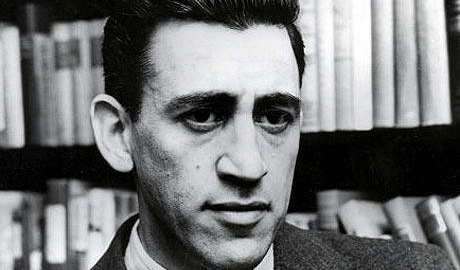
The Catcher in the Rye is a 1951 novel by J. D. Salinger.[3] A controversial novel originally published for adults, it has since become popular with adolescent readers for its themes of teenage angst and alienation.[4][5] It has been translated into almost all of the world’s major languages.[6] Around 250,000 copies are sold each year with total sales of more than 65 million books.[7] The novel’s protagonist Holden Caulfield has become an icon for teenage rebellion.[8] The novel also deals with complex issues of identity, belonging, loss, and connection.
Holden begins his story at Pencey Preparatory, an exclusive private school (fictional, though based on Salinger’s own experience at Valley Forge Military Academy) in Agerstown, Pennsylvania, on the Saturday afternoon of the traditional football game with rival school Saxon Hall. Holden ends up missing the game. As manager of the fencing team, he loses their equipment on a New York City subway train that morning, resulting in the cancellation of a match. He goes to the home of his history teacher named Mr. Spencer. Holden has been expelled and isn’t to return after Christmas break, which begins the following Wednesday. Spencer is a well-meaning but long-winded middle-aged man. To Holden’s annoyance, Spencer reads aloud Holden’s history paper, in which Holden wrote a note to Spencer so his teacher wouldn’t feel bad about failing him in the subject.
Holden returns to his dorm, which is quiet because most of the students are still at the football game. Wearing the new red hunting cap he bought in New York City, he begins re-reading a book (Out of Africa), but his reverie is temporary. First, his dorm neighbor Ackley disturbs him, although Holden is quite patient about it. Then later, he argues with his roommate Stradlater, who fails to appreciate a composition that Holden wrote for him about Holden’s late brother Allie’s baseball glove. A womanizer, Stradlater has just returned from a date with Holden’s old friend Jane Gallagher. Holden is distressed that Stradlater might have taken advantage of Jane. Stradlater doesn’t appreciate Jane in the manner in which Holden does; he even refers to Jane as “Jean.” They fight; Stradlater wins easily. Holden decides he has had enough of Pencey Prep and catches a train to New York City, where he plans to stay in a hotel until Wednesday, when his parents expect him to return home for New Years vacation.
He checks into the dilapidated Edmont Hotel. After observing the behavior of the “perverts” in the hotel room facing his, he struggles with his own sexuality. He states that although he has had opportunities to lose his virginity, the timing never felt right and he was always respectful when a girl declined. He spends an evening dancing with three tourist women in their 30s from Seattle in the hotel lounge and enjoys dancing with one, but ends up with only the check (to pay). He is disappointed that the women seem unable to carry a conversation. Following an unpromising visit to Ernie’s Nightclub in Greenwich Village, Holden agrees to have a prostitute named Sunny visit his room. His attitude toward the girl changes the minute she enters the room; she seems about the same age as he is. Holden becomes uncomfortable with the situation, and when he tells her that all he wants to do is talk, she becomes annoyed and leaves. Even though he still pays her the right amount for her time, she returns with her pimp Maurice and demands more money. Sunny takes five dollars from Holden’s wallet; Maurice punches Holden in the stomach.
After a short sleep, Holden, lonely and in need of personal connection, telephones Sally Hayes, a familiar date, and they agree to meet that afternoon to attend a play. Holden leaves the hotel, checks his luggage at Grand Central Station and has a late breakfast. He meets two nuns, one an English teacher, with whom he discusses Romeo and Juliet. Holden shops for a special record, “Little Shirley Beans,” for his 10-year-old sister Phoebe. He likes this record and knows Phoebe will enjoy it. He spots a small boy singing “If a body catch a body coming through the rye“, which makes him feel less depressed. The play he sees with Sally features Broadway stars Alfred Lunt and Lynn Fontanne. Afterward Holden and Sally go skating at Rockefeller Center. While drinking Coke, Holden impulsively invites Sally to run away with him to the wilderness. She declines, acts uninterested, and is too arrogant to try and understand Holden’s point of view. Her responses deflate Holden’s mood, prompting him to remark: “You give me a royal pain in the ass, if you want to know the truth.” He regrets it immediately, apologizing many times. Sally won’t accept his apology and doesn’t let him take her home. She states, “No boy ever said that to me in my entire life.” Sally storms off as Holden follows, pleading with her to accept his apology. When she won’t do so and gets angry, Holden finally leaves. After that, Holden sees the Christmas show at Radio City Music Hall, endures a film, and gets very drunk. Throughout the novel, Holden has been worried about the ducks in the lagoon at Central Park. He tries to find them but breaks Phoebe’s record in the process, causing him to almost cry. He feels that he may not be good enough, and the record was the only thing he thought he had to offer to his sister. Exhausted physically, mentally, and financially, Holden heads home to see Phoebe.
Holden recalls the Museum of Natural History, which he often visited as a child. He contrasts his evolving life with the statues of Eskimos in a diorama: whereas the statues have remained unchanged through the years, he and the world have not. Eventually, he sneaks into his parents’ apartment while they are out, to visit his younger sister—and close friend—Phoebe, the only person with whom he seems to be able to communicate his true feelings. Holden shares a selfless fantasy he has been thinking about (based on a mishearing of Robert Burns‘ Comin’ Through the Rye): he pictures himself as the sole guardian of thousands of children playing an unspecified ‘game’ in a huge rye field on the edge of a cliff. His job is to catch the children if, in their abandon, they come close to falling off the brink; to be, in effect, the “catcher in the rye”. Because of this misinterpretation, Holden believes that to be the “catcher in the rye” means to save children from losing their innocence.
When his parents come home, Holden slips out and visits his former and much-admired English teacher, Mr. Antolini, who offers advice on life along with a place to sleep for the night. Mr. Antolini, quoting psychologist Wilhelm Stekel, advises Holden that wishing to die for a noble cause is the mark of the immature man, while it is the mark of the mature man to aspire to live humbly for one. This is at odds with Holden’s ideas of becoming a “catcher in the rye”, symbolically saving children from the evils of adulthood. During the speech on life, Mr. Antolini has a number of cocktails served in highball glasses. Holden is upset when he wakes up in the night to find Mr. Antolini patting his head in a way that he regards as “flitty” (homosexual). It makes Holden feel very uncomfortable and embarrassed. Confused and uncertain, he leaves as dawn is breaking and spends most of Monday morning wandering the city. He questions whether his interpretation of Mr. Antolini’s actions was actually correct, and seems to wonder how much it matters anyway.
Holden makes the decision that he will head out west and live as a deaf-mute. When he explains this plan to Phoebe Monday at lunchtime, she wants to go with him. Holden declines her offer, which upsets Phoebe, so Holden decides not to leave after all. Phoebe was looking forward to acting in a play that Friday. Despite outward frustration, it is clear Holden wants Phoebe to be happy and safe, and he didn’t think she would be if she left with him. “I think I hated her most because she wouldn’t be in that play any more if she went away with me.” He tries to cheer her up by taking her to the Central Park Zoo, and as he watches her ride the zoo’s carousel, he is filled with happiness and joy at the sight of Phoebe riding in the rain.
At the conclusion of the novel, Holden decides not to mention much about later events up to the present day, finding them inconsequential. He alludes to “getting sick” and living in some sort of institution, and mentions he will be attending another school in September; he relates that he has been asked whether he will apply himself properly to his studies this time around and wonders whether such a question has any meaning before the fact. Holden says that he doesn’t want to tell anything more because surprisingly he has found himself missing two of his former classmates, Stradlater and Ackley, and even Maurice, the pimp who punched him. He warns the reader that telling others about their own experiences will lead them to miss the people who shared them.
History
Various older stories by Salinger contain characters similar to those in The Catcher in the Rye. While at Columbia University, J.D. Salinger wrote a short story called “The Young Folks” in Whit Burnett‘s class; one character from this story has been described as a “thinly penciled prototype of Sally Hayes”. In November 1941, Salinger sold the story “Slight Rebellion off Madison,” which featured Holden Caulfield, to The New Yorker, but it wasn’t published until December 21, 1946 due to World War II. The story “I’m Crazy,” which was published in the December 22, 1945, issue of Collier’s, contained material that was later used in The Catcher in the Rye. A ninety-page manuscript about Holden Caulfield was accepted by The New Yorker for publication in 1946, but it was later withdrawn by Salinger.[14]
Writing style
The Catcher in the Rye is narrated in a subjective style from the point of view of Holden Caulfield, following his exact thought processes. There is flow in the seemingly disjointed ideas and episodes; for example, as Holden sits in a chair in his dorm, minor events, such as picking up a book or looking at a table, unfold into discussions about experiences.
Critical reviews agree that the novel accurately reflected the teenage colloquial speech of the time.[15] Words and phrases that appear frequently include:
“Phony” – superficial and pretentious
“That killed me” – I found that hilarious or astonishing
“I got a bang out of that” – I found it hilarious or exciting
“Shoot the bull” – have a conversation containing false elements
“Give her the time” – sexual intercourse
“Chew the fat” – small-talk
Spoken pauses, such as “and all”, “I really did” pepper the narration as well as Holden’s dialogue.
Interpretations
Bruce Brooks held that Holden’s attitude remains unchanged at story’s end, implying no maturation, thus differentiating the novel from young adult fiction.[16] In contrast, Louis Menand thought that teachers assign the novel because of the optimistic ending, to teach adolescent readers that “alienation is just a phase.”[17] While Brooks maintained that Holden acts his age, Menand claimed that Holden thinks as an adult, given his ability to accurately perceive people and their motives. Others highlight the dilemma of Holden’s state, in between adolescence and adulthood.[18][19] Holden is quick to become emotional. “I felt sorry as hell for…” is a phrase he often uses.[18]
Peter Beidler, in his A Reader’s Companion to J. D. Salinger’s “The Catcher in the Rye”, identifies the movie that the prostitute “Sunny” refers to. In chapter 13 she says that in the movie a boy falls off a boat. The movie is Captains Courageous, starring Spencer Tracy. Sunny says that Holden looks like the boy who fell off the boat. Beidler shows (page 28) a still of the boy, played by child-actor Freddie Bartholomew.
Each Caulfield child has literary talent: D. B. writes screenplays in Hollywood; Holden also reveres D. B. for his writing skill (Holden’s own best subject), but he also despises Hollywood industry-based movies, considering them the ultimate in “phony” as the writer has no space for his own imagination, and describes D. B.’s move to Hollywood to write for films as “prostituting himself”; Allie wrote poetry on his baseball glove; and Phoebe is a diarist.[20][not in citation given] This “catcher in the rye” is an analogy for Holden, who admires in kids attributes that he struggles to find in adults, like innocence, kindness, spontaneity, and generosity. Falling off the cliff could be a progression into the adult world that surrounds him and that he strongly criticizes. Later, Phoebe and Holden exchange roles as the “catcher” and the “fallen”; he gives her his hunting hat, the catcher’s symbol, and becomes the fallen as Phoebe becomes the catcher.[21]
In their biography of Salinger, David Shields and Shane Salerno argue that “The Catcher in the Rye can best be understood as a disguised war novel.” Salinger witnessed the horrors of World War II, but rather than writing a combat novel, Salinger, according to Shields and Salerno, “took the trauma of war and embedded it within what looked to the naked eye like a coming-of-age novel.”[22]
Reception
The Catcher in the Rye has been listed as one of the best novels of the twentieth century. Shortly after its publication, writing for The New York Times, Nash K. Burger called it “an unusually brilliant novel,”[23] while James Stern wrote an admiring review of the book in a voice imitating Holden’s.[24]George H. W. Bush called it a “marvelous book,” listing it among the books that have inspired him.[25] In June 2009, the BBC‘s Finlo Rohrer wrote that, 58 years since publication, the book is still regarded “as the defining work on what it is like to be a teenager. Holden is at various times disaffected, disgruntled, alienated, isolated, directionless, and sarcastic.”[26]Adam Gopnik considers it one of the “three perfect books” in American literature, along with Adventures of Huckleberry Finn and The Great Gatsby, and believes that “no book has ever captured a city better than Catcher in the Rye captured New York in the fifties.”[27] Jeff Pruchnic wrote an appraisal of The Catcher in the Rye after the death of J.D. Salinger. In this article, Pruchnic focuses on how the novel continues to be received incredibly well, even after it has aged many generations. Pruchnic describes Holden as a “teenage protagonist frozen midcentury but destined to be discovered by those of a similar age in every generation to come”. [28]
However, not all reception has been positive; the book has had its share of critics. Rohrer writes, “Many of these readers are disappointed that the novel fails to meet the expectations generated by the mystique it is shrouded in. J. D. Salinger has done his part to enhance this mystique. That is to say, he has done nothing.”[26] Rohrer assessed the reasons behind both the popularity and criticism of the book, saying that it “captures existential teenage angst” and has a “complex central character” and “accessible conversational style”; while at the same time some readers may dislike the “use of 1940s New York vernacular” and other things.
Censorship and use in schools
In 1960, a teacher in Tulsa, Oklahoma was fired for assigning the novel in class; however, he was later reinstated.[29] Between 1961 and 1982, The Catcher in the Rye was the most censored book in high schools and libraries in the United States.[30] The book was banned in the Issaquah, Washington, high schools in 1978 as being part of an “overall communist plot”.[31] In 1981, it was both the most censored book and the second most taught book in public schools in the United States.[32] According to the American Library Association, The Catcher in the Rye was the 10th most frequently challenged book from 1990 to 1999.[10] It was one of the ten most challenged books of 2005,[33] and although it had been off the list for three years, it reappeared in the list of most challenged books of 2009.[34]
The challenges generally begin with Holden’s frequent use of vulgar language,[35][36] with other reasons including sexual references,[37]blasphemy, undermining of family values[36] and moral codes,[38] encouragement of rebellion,[39] and promotion of drinking, smoking, lying, and promiscuity.[38] Often the challengers have been unfamiliar with the plot itself.[30] Shelley Keller-Gage, a high school teacher who faced objections after assigning the novel in her class, noted that “the challengers are being just like Holden… They are trying to be catchers in the rye”.[36]A reverse effect has been that this incident caused people to put themselves on the waiting list to borrow the novel, when there were none before.[40]
Early in his career, Salinger expressed a willingness to have his work adapted for the screen.[43] In 1949, a critically panned film version of his short story “Uncle Wiggily in Connecticut” was released; renamed My Foolish Heart and taking great liberties with Salinger’s plot, the film is widely considered to be among the reasons that Salinger refused to allow any subsequent film adaptations of his work.[18][44] The enduring popularity of The Catcher in the Rye, however, has resulted in repeated attempts to secure the novel’s screen rights.[45]
When The Catcher in the Rye was first released, many offers were made to adapt it for the screen, including one from Samuel Goldwyn, producer of My Foolish Heart.[44] In a letter written in the early fifties, J. D. Salinger spoke of mounting a play in which he would play the role of Holden Caulfield opposite Margaret O’Brien, and, if he couldn’t play the part himself, to “forget about it.” Almost fifty years later, the writer Joyce Maynard definitively concluded, “The only person who might ever have played Holden Caulfield would have been J. D. Salinger.”[46]
Salinger told Maynard in the seventies that Jerry Lewis “tried for years to get his hands on the part of Holden,”[46] despite Lewis not having read the novel until he was in his thirties.[40] Celebrities ranging from Marlon Brando and Jack Nicholson to Tobey Maguire and Leonardo DiCaprio have since tried to make a film adaptation.[47] In an interview with Premiere magazine, John Cusack commented that his one regret about turning twenty-one was that he had become too old to play Holden Caulfield. Writer-director Billy Wilder recounted his abortive attempts to snare the novel’s rights:
Of course I read The Catcher in the Rye….Wonderful book. I loved it. I pursued it. I wanted to make a picture out of it. And then one day a young man came to the office of Leland Hayward, my agent, in New York, and said, ‘Please tell Mr. Leland Hayward to lay off. He’s very, very insensitive.’ And he walked out. That was the entire speech. I never saw him. That was J. D. Salinger and that was Catcher in the Rye.[48]
In 1961, Salinger denied Elia Kazan permission to direct a stage adaptation of Catcher for Broadway.[49] More recently, Salinger’s agents received bids for the Catcher movie rights from Harvey Weinstein and Steven Spielberg,[50] neither of which was even passed on to J. D. Salinger for consideration.
In 2003, the BBC television program The Big Read featured The Catcher in the Rye, interspersing discussions of the novel with “a series of short films that featured an actor playing J. D. Salinger’s adolescent antihero, Holden Caulfield.”[49] The show defended its unlicensed adaptation of the novel by claiming to be a “literary review”, and no major charges were filed.
After Salinger’s death in 2010, Phyllis Westberg, who was Salinger’s agent at Harold Ober Associates, stated that nothing has changed in terms of licensing film, television, or stage rights of his works.[51] A letter written by Salinger in 1957 revealed that he was open to an adaptation of The Catcher in the Rye released after his death. He wrote: “Firstly, it is possible that one day the rights will be sold. Since there’s an ever-looming possibility that I won’t die rich, I toy very seriously with the idea of leaving the unsold rights to my wife and daughter as a kind of insurance policy. It pleasures me no end, though, I might quickly add, to know that I won’t have to see the results of the transaction.” Salinger also wrote that he believed his novel was not suitable for film treatment, and that translating Holden Caulfield’s first-person narrative into voice-over and dialogue would be contrived.[52]
Banned fan fiction
In 2009, a year before his death, Salinger successfully sued to stop the U.S. publication of a novel that presents Holden Caulfield as an old man.[26][53] The novel’s author, Fredrik Colting, commented, “call me an ignorant Swede, but the last thing I thought possible in the U.S. was that you banned books”.[54] The issue is complicated by the nature of Colting’s book, 60 Years Later: Coming Through the Rye, which has been compared to fan fiction.[55] Although commonly not authorized by writers, no legal action is usually taken[56] against fan fiction since it is rarely published commercially and thus involves no profit. Colting, however, has published his book commercially. Unauthorized fan fiction on The Catcher in the Rye existed on the Internet for years without any legal action taken by Salinger before his death.[55]
To commemorate the Battle of Waterloo and the Iron Duke I recommend The Revolution series by the great author Simon Scarrow. He has written many books on Roman History and these have educated and lead me to a keen interest in ancient Warfare , especially the Romans. If you would like to lose yourself in the history of the Iron Duke & Emperor Napoleon Bonaparte these books are fantastic starting point and track their lives from beginning to end and have some great battle scenes.
Europe in the late eighteenth century was a tumultuous place, with war and rebellions breaking out on many fronts. Young Arthur Wesley (later Wellington) and Napoleon Bonaparte grow up worlds apart yet immersed from youth in a culture where a military career is a natural choice for men of ambition. While Wellington is blooded in Ireland and Flanders, Napoleon is caught up in the dramas of the French Revolution and war with Prussia, Britain and Holland. None of this is enough to distract Wellington from his pursuit of Kitty Pakenham or Napoleon from his future bride, Josephine, for these men throw themselves into all aspects of life as enthusiastically as they rush to battle. A wonderful, multi-layered introduction to an epic series.
The second in this epic quartet of novels focusing on two giants of European history, Wellington and Napoleon It’s 1796 as THE GENERALS opens, and both Arthur Wellesly (later Wellington) and Napoleon Bonaparte are making their mark as men of military genius. Wellesley, as commander of the 33rd Regiment of Foot, is sent to India, where his skill and bravery make a remarkable impression on his superiors. Napoleon’s role as commander of the Army of Italy leads to success in battle and rapid political progress. By 1804, Napoleon has established himself as Emperor, and has his sights set on conquering all of Europe. The time has come for Wellesly to stand against Napoleon in the confrontation that lies ahead.
The third in this epic quartet of novels focusing on two giants of European history, Wellington and Napoleon.
In the early years of the nineteenth century, Arthur Wellesley (elevated to Viscount Wellington in the course of the novel) and Napoleon Bonaparte are well-established as men of military genius. Wellesley has returned from India, where his skill and bravery made a remarkable impression on his superiors. He faces trials and tribulations on the political scene before becoming embroiled militarily in Copenhagen, then Portugal and finally Spain. Napoleon, established as Emperor, is cementing his control on Europe, intending finally to crush his hated foe across the Channel: Britain. The time is fast approaching when Wellington and Napoleon will come face to face in confrontation and only one man can emerge victorious…
It’s 1810, and both Viscount Wellington and Emperor Napoleon have made great names for themselves as outstanding military commanders. Wellington expands his achievements and enjoys further fame during his years in Spain but knows his most challenging test will be to face Napoleon’s mighty army. But when Wellington invades France in 1814 he gains a swift and certain victory. He indulges in a spell of self-congratulation at Vienna — until news comes of Napoleon’s triumphant return. Napoleon, ambitious as ever, embarks on a Russian campaign which ends in disaster and is then defeated at Leipzig in the biggest battle ever fought in Europe. With Napoleon’s power waning at long last, Wellington must seize the opportunity to crush the tyrant once and for all — and so the two giants face each other for the final time, at Waterloo… The Wellington and Napoleon Quartet: Young Bloods / The Generals / Fire and Sword / Fields of Death
My book A Belfast Child : cover and description – Out 30th April .
" Philomena meets Trainspotting, in this incendiary story of bombs and bullets, drugs and trauma, love and family "
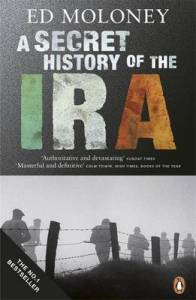
For decades, the British and Irish had ‘got used to’ a situation without parallel in Europe: a cold, ferocious, persistent campaign of bombing and terror of extraordinary duration and inventiveness. At the heart of that campaign lies one man: Gerry Adams. From the outbreak of the troubles to the present day, he has been an immensely influential figure. The most compelling question about the IRA is: how did a man who condoned atrocities that resulted in huge numbers of civilian deaths also become the guiding light behind the peace process?
Moloney’s book is now updated to encompass the anxious and uneasy peace that has prevailed to 2007.
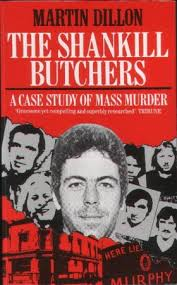
The Shankill Butchers was an Ulster loyalist gang—many of whom were members of the Ulster Volunteer Force (UVF)—that was active between 1975 and 1982 in Belfast, Northern Ireland. It was based in the Shankill area and was responsible for the deaths of at least 23 people, most of whom were killed in sectarian attacks. The gang was notorious for kidnapping and murdering random Irish Catholic civilians; each was beaten ferociously and had his throat hacked with a butcher’s knife. Some were also tortured and attacked with a hatchet. The gang also killed six Ulster Protestants over personal disputes, and two other Protestants mistaken for Catholics.
Extract from Belfast Child
The story of my life long search for my missing Catholic mother and our eventual reunion.
I lived just opposite the community centre were the butchers dumped many of the bodies and I use to be terrified on dark winter nights, when I had to walk past the centre and every sound and shadow had me on tender hooks. Once my cousin Sam and I were playing in a building site and we ran into a half completed house to hide from our mates. All the walls and floors were covered with blood and gore and on one of the walls it looked as those someone had tried to write “Help Me” in their own blood. We knew we were in a room that had been used to torture someone and we both yelled and ran all the way home………………………………………………….
Please come back for more soon and share, I want to reach as many people as possible and tell my story.
A great read if you want to know more about the British Army and undercover operations in Northern Ireland.
1969 was a year of rising tension, violence and change for the people of Northern Ireland. Rioting in Derry’s Bogside led to the deployment of British troops and a shortlived, uneasy truce. The British army soon found itself engaged in an undercover war against the Provisional IRA, which was to last for more than twenty years. In this enthralling and controversial book, Martin Dillon, author of the bestselling The Shankill Butchers, examines the roles played by the Provisional IRA, the State forces, the Irish Government and the British Army during this troubled period. He unravels the mystery of war in which informers, agents and double agents operate, revealing disturbing facts about the way in which the terrorists and the Intelligence Agencies target, undermine and penetrate each other’s ranks. The Dirty War is investigative reporting at its very best, containing startling disclosures and throwing new light on previously inexplicable events.
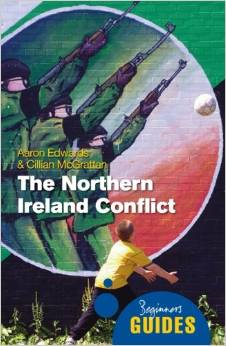
The Northern Ireland conflict was one of the most bloody, protracted, and bitter campaigns of terrorist violence in modern history. Rooted in the partition of Ireland in 1921, over 50,000 people were killed or seriously injured because of the hostilities between Catholic nationalists and Protestant unionists. Despite the landmark Good Friday Agreement in 1998, violent incidents are still rife and new paramilitary groups are becoming ever more emboldened.
This landmark introduction uses the latest archival material to chart the history of “The Troubles” and to examine the possible factors behind the political compromise of Sinn Fein and the DUP. Exploring the legacy of sectarian violence and inconsistent British intervention, the authors assert that, unfortunately, Northern Ireland is perhaps as fiercely segregated as ever.
———————————————————————————————————————————————-
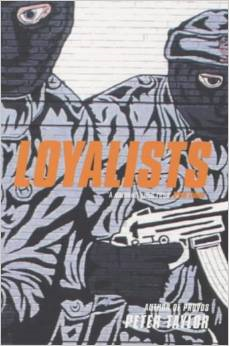
This title is based on a series of frank interviews with both the paramilitary leaders who lead loyalist strategy and the gunmen who carried out the bombings. There are also interviews with loyalist and unionist politicians who operated centre-stage, with an account of the violence of the paramilitaries.












 belfastchildis.com