Category Archives: Blog

Gangs in the United Kingdom Past & Present – Part 1

UK Gangs

Past & Present

Burger Bar Boys

——————————————————————————————

The views and opinions expressed in this page and  documentaries are soley intended to educate and provide background information to those interested in UK Gangs.

They in no way reflect my own opinions and I take no responsibility for any inaccuracies or factual errors.

——————————————————————————————

Birmingham

The Peaky Blinders were a criminal gang based in Birmingham, England, in the late 19th century and, to a lesser extent, in the early 20th century. Philip Gooderson, author of The Gangs of Birmingham, states that the Peaky Blinders originated as a specific gang, but the term later became a generic label. An earlier gang known as the Cheapside Sloggers had evolved in the 1870s, and the term “Sloggers” (meaning fighters) had already become a generic local label for street gangs when the Peaky Blinders emerged at the end of the century in Adderley Street, in the Bordesley and Small Heath areas, which was an extremely deprived slum section of Birmingham at the time. The Peaky Blinders were distinguished by their sartorial style, unlike earlier gangs. Notable members included David Taylor (imprisoned for carrying a gun at 13 years old), “baby-faced” Harry Fowles, Ernest Haynes and Stephen McNickle.[19]

Early in the 20th century, one of the Birmingham gangs known as the Brummagem Boys (Brummagem being slang for Birmingham) began to spread their criminal network from the streets of Birmingham to around the country. Helped by greatly improved transport, for the first time, regional gangs were able to expand beyond the streets that bred them. The new connecting railway between Birmingham and London meant they could target the racecourse riches of the country’s capital.[20]

Following the Handsworth riots in 1985, young people banded together in groups which soon turned to petty crime and robbery. By the late 1980s, the Johnson Crew, named after their Johnsons Café hang-out, controlled the drugs market and nightclub security across a large area of Birmingham.[21]

After a fall-out between members of the Johnson Crew, the Burger Bar Boys formed, taking their name from a Soho Road fast-food joint. This began a violent feud between the Johnsons and the Burger Bar Boys, which was finally resolved in a truce instigated by Matthias “Shabba” Thompson in 2010, with assistance from documentary maker Penny Woolcock. The process of forming the truce was captured in the Channel 4 documentary, One Mile Away.[22][23] Following the truce, violent crime fell by 50% in the B6 postcode area and 30% in B21.

The increasingly collaborative relationship between the two gangs has led to some in the media describing them as more akin to a ‘super gang’, seeking to establish a greater national network of organised crime rather than controlling their post-code areas.[24]

See also:

Johnson Crew (B6),

————————————–

One Mile Away – Birmingham Gang Documentary (Directed By Penny Woolcock)

————————————–

Belfast

———————————————

Gangsters At War: Loyalist Paramilitaries – Full

———————————————

According to one report,[14] Northern Ireland has over 150 active criminal gangs as of 2014. In Belfast in particular, a report in 2003 estimated there to be approximately 80 gangs,[15] most nominally sectarian, engaged in racketeering across the city.

An investigation in 2014 found that some gangs in Belfast were particularly hostile towards non-white residents of the city, with numerous cases of racially motivated violence, intimidation and extortion having been reported.[16]

Gangs in Belfast have been involved in people smuggling and human trafficking. Although the vice industry was previously mostly on the street, in recent years it has moved indoors to residential homes and hotels and formed closer links to organised crime networks. Trafficking gangs in Belfast, as in the rest of Northern Ireland, tend to be of Chinese or Eastern European origin, utilising local people as facilitators in their network.[17]

In 2014, three nights of violence in East Belfast lead to the Police Federation for Northern Ireland stating: “The gang culture [in Northern Ireland] has to be broken up so that people can go about their business without fear of being struck by a missile or intimidated.”[18]

————————————————-

Glasgow

——————————————————-

‘Trial And Error – The Glasgow Ice Cream Wars’

——————————————————-

Arthur Thomson

The history of Glasgow gangs can be traced back to the 18th century, although the first media recollection of Glasgow gangs was not until the 1870s with the acknowledgement of the Penny Mobs. It has been suggested that the rise in Glasgow gangs from the 1850s was a result of an influx in Irish immigration[25] which included those from traditional Irish fighting gangs such as the Caravats and Shanavests. By the 1920s many Glasgow gangs were widely viewed as fighting gangs rather than criminal gangs although there were widespread reports of extortion and protection rackets particularly in the city’s East End and South Side.[26] By the 1930s Glasgow had acquired a reputation throughout Britain as a hotbed of gang violence[27] and was regarded at the time as Britain’s answer to Chicago, the Scottish Chicago.[28] The gangs at this time were also referred to as Glasgow razor gangs, named after their weapon of choice.

Paul Ferris

One of Glasgow’s most notorious gangs were the Billy Boys, a sectarian anti-Catholic gang, who were formed in 1924 by William Fullerton after he was attacked by a group of Catholic youths.[29] Many gangs in the East End of Glasgow were both sectarian and territorial whereas in other districts they were primarily territorial.

More recently an Evening Times report in 2008 stated that there were 170 gangs in Glasgow[30] whilst an earlier report in 2006 included a map showing the location and a list of Glasgow gangs.[31] Gangs in Glasgow mark their territory with gang tags or graffiti.

—————————————————–

Murder of Kriss Donald

Recent years have seen an increase in Asian gangs, particularity in the South of Glasgow. Asian gang culture, violence and crime in the city came to wider attention following the racially motivated murder of Kriss Donald by men of Pakistani origin in 2004.

Kriss Donald (2 July 1988 – 15 March 2004) was a Scottish 15-year-old white male who was kidnapped and murdered in Glasgow in 2004 by a gang of men of Pakistani origin, some of whom fled to Pakistan after the crime.[2][3][4][5] Daanish Zahid, Imran Shahid, Zeeshan Shahid, and Mohammed Faisal Mustaq were later found guilty of racially motivated murder and sentenced to life imprisonment.[2][3] A fifth participant in the crime was convicted of racially motivated violence and jailed for five years.

The case, which featured the first ever conviction for racially motivated murder in Scotland, is cited in two newspaper articles as an example of the lack of attention the media and society give to white sufferers of racist attacks compared to that given to ethnic minorities.[6][7] It is also suggested the crime demonstrates how society has been forced to redefine racism so as to no longer exclude white victims

Kidnapping and murder

On 15 March 2004, Donald was abducted from Kenmure Street by five men associated with a local Pakistani gang led by Imran Shahid. The kidnapping was ostensibly revenge for an attack on Shahid at a nightclub in Glasgow city centre the night before by a local white gang, and Donald was chosen as an example of a “white boy from the McCulloch Street area” despite having no involvement in the nightclub attack or in any gang activity.[9] Donald was taken on a 200-mile journey to Dundee and back while his kidnappers made phone calls looking for a house to take him to. Having no success at this, they returned to Glasgow and took him to the Clyde Walkway, near Celtic Football Club‘s training ground.[10]

There, they held his arms and stabbed him 13 times. He sustained internal injuries to three arteries, one of his lungs, his liver and a kidney. He was doused in petrol and set on fire as he bled to death.[11]

The five men convicted of the abduction and murder were convicted of racially aggravated offences. After the murder, some of Donald’s attackers fled the United Kingdom to Pakistan.

The issue of the killing quickly became politicised because of the racial element. After the murder there were reportedly ‘racial tensions’ in the area sufficient to lead to police intervention

Daanish Zahid
Born (1984-01-29) 29 January 1984 (age 31)[13]
Criminal charge Racially motivated murder, abduction, attempting to defeat the ends of justice
Criminal penalty Life imprisonment (minimum 17 years)
Criminal status In prison
Motive Racism
Conviction(s) Racially motivated murder
Imran Shahid
Born 1976 or 1977
Huddersfield[14]
Other names Baldy[15]
Criminal charge Racially motivated murder, abduction
Criminal penalty Life imprisonment (minimum 25 years)
Criminal status In prison
Motive Racism
Conviction(s) Racially motivated murder, abduction
Zeeshan Shahid
Born 1977 or 1978
Criminal charge Racially motivated murder, abduction,
Criminal penalty Life imprisonment (minimum 23 years)
Criminal status In prison
Motive Racism
Conviction(s) Racially motivated murder, abduction
Mohammed Faisal Mushtaq
Born 1978 or 1979
Criminal charge Racially motivated murder, abduction
Criminal penalty Life imprisonment (minimum 22 years)
Criminal status In prison
Motive Racism
Conviction(s) Racially motivated murder, abduction
Zahid Mohammed
Born (1984-01-01) 1 January 1984 (age 31)[13]
Criminal charge abduction
Criminal penalty 5 years imprisonment
Criminal status Released from prison
Motive Racism
Conviction(s) abduction

Arrests and first trials

Initially, two men were arrested in connection with the crime. One man, Daanish Zahid, was found guilty of Kriss Donald’s murder on 18 November 2004 and is the first person to be convicted of racially motivated murder in Scotland.[12] Another man, Zahid Mohammed, admitted involvement in the abduction of Donald and lying to police during their investigation and was jailed for five years. He was released after serving half of his sentence and returned to court to give evidence against three subsequent defendants.

Special extradition and later trial

Three suspects were arrested in Pakistan in July 2005 and extradited to the UK in October 2005, following the intervention of Mohammed Sarwar, the MP for Glasgow Central.

The Pakistani police had to engage in a “long struggle” to capture two of the escapees. There is no extradition treaty between Pakistan and Britain, but the Pakistani authorities agreed to extradite the suspects.[9] There were numerous diplomatic complications around the case, including apparent divergences between government activities and those of ambassadorial officials; government figures were at times alleged to be reluctant to pursue the case for diplomatic reasons.[16]

The three extradited suspects, Imran Shahid, Zeeshan Shahid, and Mohammed Faisal Mushtaq, all in their late twenties, arrived in Scotland on 5 October 2005.[17] They were charged with Donald’s murder the following day.[18] Their trial opened on 2 October 2006 in Scotland.[19]

On 8 November 2006, the three men were found guilty of the racially motivated murder of Kriss Donald. All three had denied the charge; however, a jury at the High Court in Edinburgh convicted them of abduction and murder.[14] The judge at the trial, Lord Uist, made a statement summing up the case:

You have all been convicted by the jury of the racially aggravated abduction and murder of Kriss Donald, a wholly innocent 15-year-old boy of slight build. He was selected as your victim only because he was white and walking in a certain part of the Pollokshields area of Glasgow when you sought out a victim. This murder consisted of the premeditated, cold-blooded execution of your victim by stabbing him 13 times and setting him alight with petrol while he was still in life. It truly was an abomination. The savage and barbaric nature of this notorious crime has rightly shocked and appalled the public. Your victim must have been in a state of extreme terror while held by you during a four-hour car journey across Central Scotland and back, and the agony which he must have suffered during the period between being stabbed and set alight and his death is just beyond imagining.
Lord Uist.

Each of the killers received sentences of life imprisonment, with Imran Shahid given a 25-year minimum term, Zeeshan Shahid a 23-year minimum and Mushtaq receiving a recommended minimum of 22 years.

Controversies surrounding the case

Lack of media coverage

The BBC has been criticised by some viewers because the case featured on national news only three times and the first trial was later largely confined to regional Scottish bulletins including the verdict itself. Although admitting that the BBC had “got it wrong”, the organisation’s Head of Newsgathering, Fran Unsworth, largely rejected the suggestion that Donald’s race played a part in the lack of reportage, instead claiming it was mostly a product of “Scottish blindness”. In preference to reporting the verdict the organisation found the time to report the opening of a new arts centre in Gateshead in its running order.[20] The BBC again faced criticisms for its failure to cover the second trial in its main bulletins, waiting until day 18 to mention the issue and Peter Horrocks of the BBC apologised for the organisation’s further failings.[21]

However, Peter Fahy, spokesman of race issues for the Association of Chief Police Officers, noted that the media as a whole tended to under-report the racist murders of white people, stating “it was a fact that it was harder to get the media interested where murder victims were young white men”.[22]

The British National Party were accused by Scotland’s First Minister and Labour Party MSP Jack McConnell among others of seeking to exploit the case for political advantage, and an open letter signed by MSPs, trades unionists, and community leaders, condemned the BNP’s plans to stage a visit to Pollokshields. The group did hold a rally in the area, leading to accusations that it was fuelling racial tension.[23]

Police response

An article in The Scotsman newspaper alleged a lack of response by authorities to concerns of rising racial tensions and that Strathclyde Police had felt pressured to abandon Operation Gather, an investigation into Asian gangs in the area, for fear of offending ethnic minorities.[24] On 8 November 2006 Bashir Maan, a prominent Pakistani Glaswegian, also claimed on BBC television that police were well aware of the activities of Asian gangs in Glasgow but were reluctant to take action for fear of being accused of racism.[citation needed] In a January 2005 interview with a Scottish newspaper, he had previously claimed that “fear and intimidation” had allowed problems with Asian gangs in some parts of the city to go unchecked. The article also quoted a former senior Strathclyde police officer who criticised “a culture of political correctness” which had allowed gang crime to “grow unfettered”.[25]

A BBC report suggests that another reason for inaction was lack of evidence, as locals were more prepared to make complaints than to give evidence in court.[9] Some commentators have argued the murder was somewhat mischaracterised in the media, as well as expressing a doubt that significant ethnic tensions exist in Pollokshields, suggesting that “gangland revenge” may have played a part.[26]

Early release of prisoners

The case drew attention to the issues of prisoners automatically being released from prison early when it emerged that one of the murderers, Shahid, was on early release from a prison sentence at the time of the killing. He had previously been jailed for two and half years for a road rage attack but only served nine months of his sentence.[27]

Tributes

Glasgow band Glasvegas wrote the song “Flowers And Football Tops” having been inspired by the tragedy and the likely impact it would have in the victim’s parents. The band dedicated their 2008 Philip Hall Radar NME award win to Donald’s memory.[28][29][30]

A memorial plaque was installed on a bench by the River Clyde in memory of Donald.[31]

Legacy

One of the most notable impacts of the murder was to force some people to examine their views of racism and its victims. Commentators such as Mark Easton cite the racist murders of Donald and also Ross Parker as demonstrating how society has been forced to redefine racism and discard the erroneous definition of “prejudice plus power” – a definition which only allowed ethnic minorities to be victims of hate crime.[8] Yasmin Alibhai-Brown also cited the Donald case when highlighting the lack of concern for white victims of racist murders. She drew comparisons with high profile ethnic minority victims, asking whether Donald’s murderers were “less evil than those who killed Stephen Lawrence“. Alibhai-Brown came to the conclusion that treating “some victims as more worthy of condemnation than others is unforgivable – and a betrayal of anti-racism itself”.[6]

See also

—————————————————–

Liverpool

—————————————————————-

Curtis Warren – Godfathers – Target One (full)

—————————————————————-

Street gangs in Liverpool have been in existence since the mid-19th century. There were also various sectarian ‘political’ gangs based in and around Liverpool during this period.[37] Dr Michael Macilwee of Liverpool John Moores University and author of The Gangs of Liverpool states, “You can learn lessons from the past and it’s fascinating to compare the newspaper headlines of today with those from the late 1800s. The issues are exactly the same. People were worried about rising youth crime and the influence of ‘penny dreadfuls‘ on people’s behaviour. Like today, some commentators demanded longer prison sentences and even flogging while others called for better education and more youth clubs.”

In the early 1980s Liverpool was tagged by the media as ‘Smack City’ or ‘Skag City’ after it experienced an explosion in organised gang crime and heroin abuse, especially within the city’s more deprived areas.[38][39] At the same time several criminal gangs began developing into drug dealing cartels in the city, including the Liverpool Mafia, which was the first such cartel to develop in the UK. As drugs became increasingly valuable, large distribution networks were developed with cocaine producers in South America, including the Cali cartel.[40] Over time, several Liverpool gangsters became increasingly wealthy, including Colin ‘Smigger’ Smith, who had an estimated fortune of £200m[41] and Curtis ‘Cocky’ Warren, whose estimated wealth once saw him listed on the Sunday Times Rich List.[42]

It has also been suggested that distribution networks for illicit drugs within Ireland and the UK, and even allegedly some Mediterranean holiday resorts, are today controlled by various Liverpool gangs.[43][44]

A report in the Observer newspaper written by journalist Peter Beaumont entitled Gangsters put Liverpool top of gun league (28 May 1995), observed that turf wars had erupted within Liverpool. The high levels of violence in the city came to a head in 1996 when, following the shooting of gangster David Ungi, six shootings occurred in seven days, prompting Merseyside Police to become one of the first police forces in the country to openly carry weapons in the fight against gun crime.[45] Official Home Office statistics revealed a total of 3,387 offences involving firearms had occurred in the Merseyside region during a four-year period between 1997 and 2001.[46] It was revealed that Liverpool was the main centre for organised crime in the North of England.

Murder of Rhys Jones

————————————————–

Rhys Jones – Caught In the Crossfire – Real Crime (full)

————————————————–

In August 2007 the ongoing war between two rival gangs caused nationwide outrage, when innocent 11-year-old Rhys Jones was shot in the neck and died in his mother’s arms in the car park of the Fir Tree pub in Croxteth Liverpool.[48] On 16 December 2008, Sean Mercer was convicted of the murder and ordered to serve a minimum tariff of 22 years by trial judge Mr Justice Irwin

Rhys Jones

The murder of Rhys Milford Jones[1][2] (27 September 1995 – 22 August 2007) occurred in Liverpool when he was shot in the back.[3] 16-year-old Sean Mercer went on trial on 2 October 2008,[4] and was found guilty of murder on 16 December.[5] He was sentenced to life imprisonment with a minimum of 22 years.

Sean Mercer

—————————————-

PANORAMA: Young Gunmen

—————————————-

Background

Jones was the son of Stephen (born in Liverpool) and Melanie Jones (née Edwards; born in Wrexham). They have an older son, Owen (born 1990).[6] Jones, who would have turned 12 one month after his death, had just left Broad Square Primary School on the Norris Green housing estate, and was due to start secondary school at Fazakerley High School in September 2007. His headteacher and neighbours said he was a friendly and popular boy who loved football.[7][8]

Incident

Jones, who played for the Fir Tree Boys football club, was on his way home from football practice alone. As he was crossing the Fir Tree pub car park in the Croxteth Park estate, Liverpool,[8] a hooded youth riding a silver mountain bike approached. He then held out a Smith & Wesson handgun at arm’s length, firing three shots.[8] It was originally believed that one of the shots hit Jones in the neck,[8] but during the trial, the pathologist revealed that the bullet had entered his back above his left shoulder blade and then exited from the front right side of his neck.[3] The shooting occurred in daylight at 7.30 pm BST.

Jones’ mother rushed to the scene when she heard what had happened.[8] By the time his mother had reached him, he was unconscious. Paramedics tried for one and a half hours to resuscitate him, but he was pronounced dead some time later at Alder Hey Children’s Hospital. Local radio station Radio City 96.7‘s programming on the night of the incident, in particular the 10pm–2am show, was dedicated to an amnesty for witnesses and a talk on gun crime. Radio City also launched their anti-gun-crime campaign (backed by Jones’ parents), In Rhys’s Name Get Guns Off Our Streets, after the incident.[9]

Arrests and investigation

—————————————-

Rhys Jones trial: Footage shown to jury

—————————————-

Detectives arrested and later released four people aged between 15 and 19 in connection with the crime. Two further arrests (both teenagers) were made, but both suspects were soon released on bail pending further enquiries.[6][8] The police appealed to the public for information, stating that they needed help in finding those who had committed the crime. The murder weapon was described as a black handgun with a long barrel.[10] More than 300 officers and gun crime specialists were deployed in the hunt for the killer.[10]

Jones’ parents made a fresh appeal for witnesses to come forward on 19 September, four weeks after the murder, which was reconstructed on Crimewatch on 26 September. In the episode, Jones’ mother appealed directly to the murderer’s mother to turn her son in. It led to 12 people calling into the programme, all of whom gave police the same name.[11] Despite reports that the killer’s name was widely known and had appeared on internet sites and in graffiti,[12] police continued their appeal for witnesses to come forward.

On 15 April 2008, Merseyside police confirmed that 11 people (all aged between 17 and 25) had been arrested in connection with the case. Six more males of a similar age were arrested the next day in connection with the murder – one for murder and the other five for assisting an offender. One of these men had already been charged with possessing a firearm. All six of them were remanded in custody by Liverpool Magistrates on 17 April 2008.[13] Another man was charged in connection with the case on 18 April 2008, and remanded the same day.[14]

On 16 December 2008, at the end of a nine-week trial in the Crown Court at Liverpool, Sean Mercer (a member of the Croxteth Crew gang) was found guilty of murder. Mercer, then aged 18, was sentenced to life imprisonment, being ordered to serve a minimum term of 22 years.[15] Other gang members James Yates, Nathan Quinn, Boy “M”, Gary Kays, and Melvin Coy were convicted of assisting an offender. Boy “K”, later revealed as Dean Kelly, was convicted of four related offences. Kays and Coy were both sentenced to seven years.[16][17]

In January 2009, Yates was sentenced to seven years, Dean Kelly to four years, and Nathan Quinn to two years. A 16-year-old was sentenced to a two-year supervision order. Parents of the gang members, including Mercer’s mother and the parents of Yates, were later tried and convicted for perverting the course of justice.[18] On 28 October, Yates had his sentence increased to 12 years imprisonment, following a referral to the Court of Appeal by the Solicitor General Vera Baird QC as being “too lenient”.[19] On 2 November, Mercer stabbed Jake Fahri (Jimmy Mizen‘s murderer), apparently having crafted a knife from a pair of tweezers.[20]

Gangs

Residents in Jones’ locality have said that there were many problems with anti-social behaviour; in reaction to this, Merseyside Police made the area around the pub into a “designated area”, meaning that officers could disperse groups and move people away from the area.[8] The police vehemently stressed that the murder was not gang-related. It is still not clear what the motive was, but a case of mistaken identity is being considered. Jones may have been caught in the crossfire between gangs.[10]

Sean Mercer and the others convicted of involvement in the murder were known to be members of the Croxteth Crew, a criminal gang in Croxteth. The murder came the day before the first anniversary of the killing of Liam Smith, an alleged member of a rival gang, the Norris Green Strand Crew, who was shot dead by members of the Croxteth Crew as he walked out of Altcourse Prison on 23 August 2006.[21] The youth gang phenomenon, and youth gangs of Liverpool in particular, drew high media attention after the murder.

Tributes and public reaction

Rhys Jones was a dedicated supporter of Everton FC, and had a season ticket along with his father and brother. Players of the team laid a floral tribute, football boots, and football shirts at the scene of the crime, and players and fans paid tribute to him in a minute-long applause at the home game against Blackburn Rovers on 25 August.[6]

After a suggestion from Liverpool Echo columnist Tony Barrett,[22] which was supported by many Echo readers,[23] Everton rivals Liverpool FC agreed to play the beginning of the Z-Cars theme tune – the song that traditionally greets the arrival of the Everton team onto the Goodison Park pitch – prior to playing Liverpool’s own theme ahead of their UEFA Champions League game with Toulouse FC on 28 August.[24] This was followed by a period of applause; the Liverpool players and staff, Toulouse players, and match day officials wore black armbands during the game.[25]

Over 2,500 mourners attended Jones’ funeral, which was held in Liverpool Anglican Cathedral on 6 September 2007. His family issued a public invitation for well-wishers to attend the service, where mourners were requested to wear bright clothes or football strips. During the service, Jones’ father read a poem he had written for his son, and Everton footballer Alan Stubbs read from the Bible. After the service, there was a priva

London

———————————–
Teenage Gangs of South London
———————————–

London was the first city documented as the world’s gang capital, followed thereafter by American cities such as New York City, Chicago and Los Angeles.[50] A number of street gangs were present in London during the 20th century many in the East End, often referred to as Mobs, including The Yiddishers, Hoxton Mob, Watney Streeters, Aldgate Mob, Whitechapel Mob, Bethnal Green Mob and the organised Italian Mob headed by Charles Sabini. The history of these gangs is well documented in “London’s Underworld: Three centuries of vice and crime”.[51]

——————————————————————————————

Gun Law: “The Yardies” – UK Gangs

——————————————————————————————

On 21 February 2007, the BBC reported on an unpublished Metropolitan Police report on London’s gang culture, identifying 169 separate groups (see Ghetto Boys, Tottenham Mandem and Peckham Boys), with more than a quarter said to have been involved in murders.[52] The report’s accuracy has been questioned by some London Boroughs for being inaccurate in places and the existence of certain gangs on the list could not be substantiated.[53] The Centre for Social Justice identifies the Gangs in London website[54] as a useful tool in creating an overall picture of London gangs, as highlighted in the report “Dying to Belong: An in depth review of street gangs in Britain”,[55] which was led by Conservative leader Iain Duncan Smith in 2009.

——————————————-

South London Active Gangs 2015

——————————————-

In February 2007, criminologist Dr John Pitts, from the University of Bedfordshire, said: “There are probably no more than 1,500 to 2,000 young people in gangs in all of London,[52] but their impact is enormous”. There is no methodology to suggest where this number came from and how it was obtained. Furthermore, in December 2007 in a report written by Pitts on Lambeth gangs, he claims that the dominant gang (PDC from Angel Town) “boasts 2,500 members”.[56] Probably a more accurate estimation for gang membership, although dated, can be found in the 2004 Home Office document “Delinquent Youth Groups and Offending Behaviour”.[57] The report, using a methodology developed by American gang experts and practitioners, estimated that 6% of young people aged 10–19 were classified as belonging to a delinquent youth group, although based on the most stringent criteria this was 4%.

———————————————–

London Teenage Gang, Gun & Knife-Related Victims Of 2007

———————————————–

There is a modern history of London gangs dating from the 1970s although many of them developed from what Britain labelled as a sub-culture, which included punks, Rastas and football hooligans. Two well known subcultures that had violent clashes during the Notting Hill riots in the 1950s, Teddy Boys and Rudeboys, could well be labelled gangs in today’s media. Amongst the current London gangs whose history does go back to the 1970s, there are the Ghetto Boys, Peckham Boys and Tottenham Mandem all of which are predominantly or entirely black. There are a number of historical Asian gangs in London too, many that were initially formed to protect their local communities in response to racist attacks from the native white population, gangs such as the Brick Lane Massive. In the past decade, Tamil gang violence namely in Croydon and Wembley have been active such as the “Wembley Boys” and the “Tamil Snake Gang.[58] Tamil Hindu gangs in London are also featured as one of the many major ethnic gangs in Ross Kemp’s documentary on London Gangs.[59] In the London Borough of Tower Hamlets, the majority of the gangs are Bangladeshi, it is estimated that there are alone there are 2,500 Bengali youths affiliated to one of the many local gangs,[60] and that 26 out of the 27 gangs in the area are Bangladeshi.[61]

London gangs are increasingly marking their territory with gang graffiti, usually a gang name and the Post Code area or Housing Estate they identify with.[9] In some cases they may tag the street road signs in their area with an identified gang colour, as can be seen in Edmonton.[62] This is not a new phenomenon and has been practised by many London gangs in the past although today it is a more integral part of the gang culture. Many gangs have a strong sense of belonging to their local areas and often take their names from the housing estates, districts and postal code areas where they are located. In some areas the post codes act as rival gang boundaries,[63] although this is not a general rule as there can be rival gangs present within the same postal area as well as gangs that occupy multiple postal areas. Gangs in London also use handsigns and gang tattoos to denote gang membership.[citation needed] Some gangs in London are motivated by religion, as is the case with Muslim Patrol.

———————————————-

Manchester

Cheetham Hill Gang members
——————————————————–
The Worlds Deadliest Gangs – Salford & Manchester
——————————————————–

The first recorded gangs in Manchester were “Scuttlers“, which were youth gangs that recruited boys and girls between 14 and 21 years of age.[64] They became prominent amongst the slums during the second half of the 19th Century, but had mostly disappeared by the beginning of the 20th century.[65] In the mid 1980s, a growth in violence amongst Black British youths from the west side of the Alexandra Park Estate in South Manchester and their rivals, West Indians living to the north of the city, in Cheetham Hill began to gain media attention.[66] The city has sometimes been dubbed in the media as ‘Gangchester’ and ‘Gunchester’. The Murder of Mr. BThe gang wars in Manchester first gained national media attention in the Guardian newspaper on 7 June 1988. In the article, Clive Atkinson, deputy head of Greater Manchester Police CID said, “We are dealing with a black mafia which is a threat to the whole community”.[68]

The gang culture spread into many deprived areas in South Manchester.[69] A gang-related crime occurred on 9 September 2006, in Moss Side, where Jessie James, a 15-year-old schoolboy was shot dead in the early hours of the morning. His shooting is said to have been the result of a mistaken identity for a rival gang member. Up to this day his murderer has not been found.

————————————————————————————–

Paul Massey

The Murder of Paul ‘Mr. Big Massey’ & Class War

See Paul Massey

————————————————————————————–

In April 2009, eleven members of the Gooch Gang were found guilty of a number of charges ranging from murder to drugs offenses. The Gooch Gang had a long-standing rivalry with the equally well known Doddington gang. The Gooch gang operated with a tiered structure. On the top were the gang’s leaders, Colin Joyce and Lee Amos, and below them were members controlling the supply and distribution of drugs to the street dealers at the bottom. The gang was earning an estimated £2,000 a day, with street dealers allowed to keep £100 a day for themselves. After 2001 when Joyce and Amos were sent to prison on firearms charges, there followed a 92% drop in gun crime in central Manchester.[70] Official gun enabled crime figures show a 17% reduction in Manchester when comparing 2005/06 (1,200 offences) and 2006/07 (993 offences). However, this was followed by an increase of 17% in 2007/08 (1,160 offences) compared to 2006/07.[71] In 2009 shootings were reported as falling by 82% compared with the previous year.[72]

——————————————–

Bringing Down the Gooch Gang Crime Documentary

——————————————–

In addition to gun gangs, Manchester is also home to the Inter City Jibbers, an element within the city’s main hooligan gang that uses football hooliganism as a cover for acquisitive forms of crime. According to former Manchester United hooligan Colin Blaney in his autobiography ‘Undesirables’, members of the gang have been involved in serious forms of crime, such as drug smuggling from Latin America and the Caribbean, carrying out armed robberies and committing robberies on drug dealers.[73] In an interview with Vice magazine, members of the gang spoke of connections with Liberian drug smuggling cartels and convictions for offences including armed robbery, credit card fraud and sale of class A drugs.[74]

See Paul Massey
paul massey

See Dublin’s Deadly Gang War

david byrne bobdy


Don McCullin – More than a War Photographer

Don McCullin

Shell-shocked American soldier

———————————–

BBC Imagine 2013 McCullin

Full movie

———————————–

Donald McCullin, CBE Hon FRPS (9 October 1935) is an internationally known British photojournalist, particularly recognized for his war photography and images of urban strife. His career, which began in 1959, has specialised in examining the underside of society, and his photographs have depicted the unemployed, downtrodden and the impoverished.

Pictures

This slideshow requires JavaScript.

Biography

Early Life

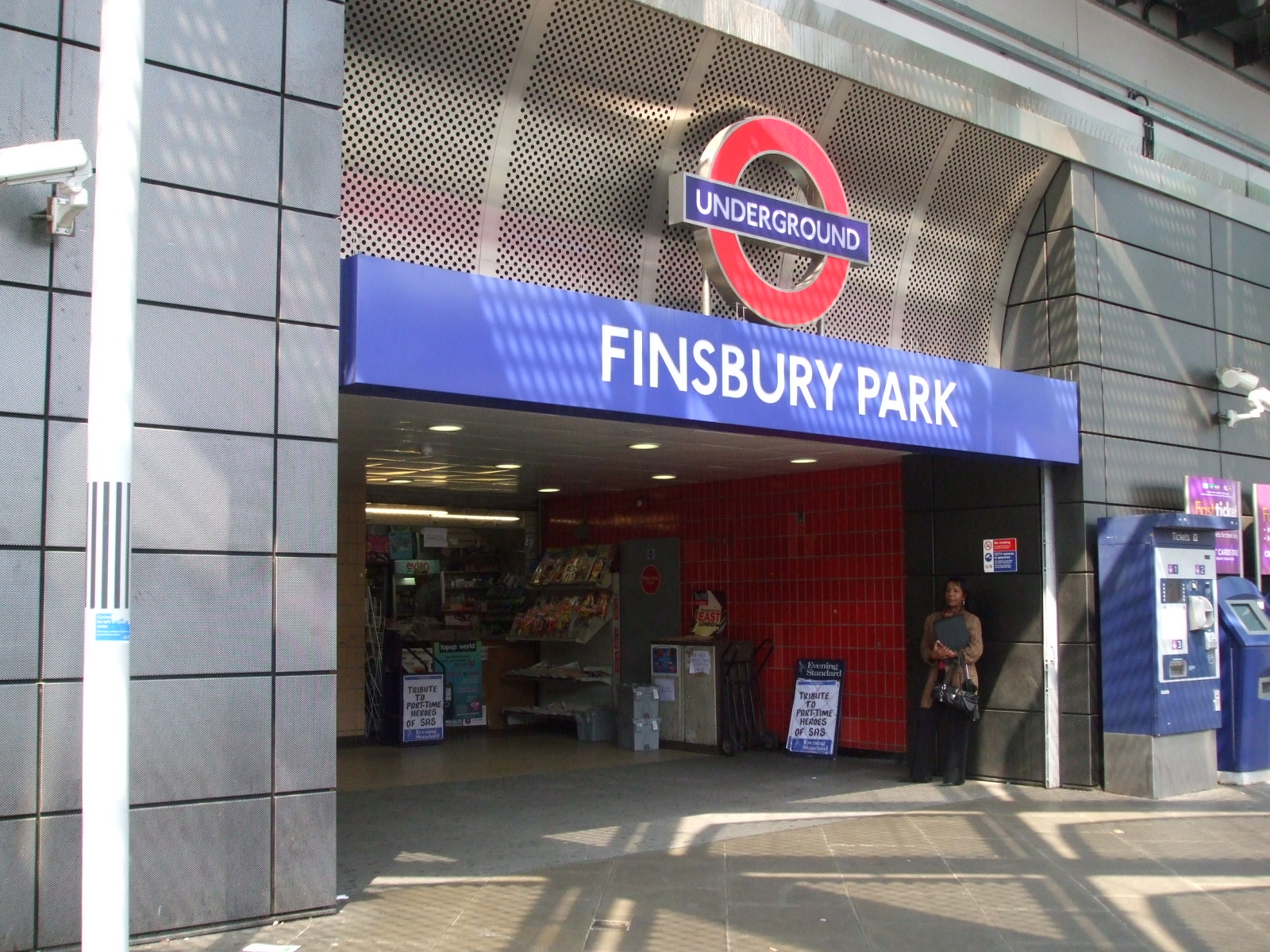
McCullin grew up in Finsbury Park, North London, but he was evacuated to a farm in Somerset during the Blitz.

He is dyslexic but displayed a talent for drawing at the Secondary Modern School he attended. He won a scholarship to Hammersmith School of Arts and Crafts but, following the death of his father, he left school at the age of 15, without qualifications, for a catering job on the railways. He was then called up for National Service with the Royal Air Force.

Career

Photo copy right belongs  to:  JEFF ASCOUGH

Visit Jeff Ascough website:  www.ascoughphoto.com

jeff photographer header.PNG

During McCullin’s period of National Service in the RAF he was posted to the Canal Zone during the 1956 Suez Crisis, where he worked as a photographer’s assistant. He failed to pass the written theory paper necessary to become a photographer in the RAF, and so spent his service in the darkroom.

During this period McCullin bought his first camera, a Rolleicord. On return to Britain shortage of funds led to him pawning the camera. His mother used her own money to redeem the pledge.

In 1959, a photograph he took of a local London gang was published in The Observer. Between 1966 and 1984, he worked as an overseas correspondent for the Sunday Times Magazine, recording ecological and man-made catastrophes such as war-zones, amongst them Biafra, in 1968, and victims of the African AIDS epidemic.

His hard-hitting coverage of the Vietnam War and the Northern Ireland conflict is particularly highly regarded.

He also took the photographs of Maryon Park in London which were used in Michelangelo Antonioni‘s film Blowup.

In 1968, his Nikon camera stopped a bullet intended for him.

In 1982 the British Government refused to grant McCullin a press pass to cover the Falklands War, claiming the boat was full.At the time he believed it was because the Thatcher government felt his images might be too disturbing politically.

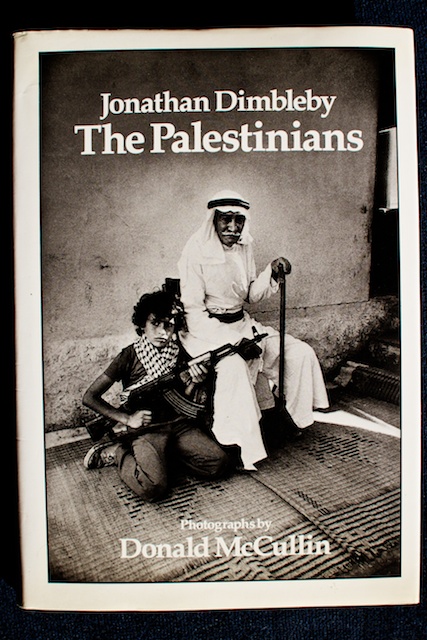
He is the author of a number of books, including The Palestinians (with Jonathan Dimbleby, 1980), Beirut: A City in Crisis (1983), and Don McCullin in Africa (2005).

His book, Shaped by War (2010), was published to accompany a major retrospective exhibition at the Imperial War Museum North, Salford, England in 2010 and then at the Victoria Art Gallery, Bath and the Imperial War Museum, London. His most recent publication is Southern Frontiers: A Journey Across the Roman Empire, a poetic and contemplative study of selected Roman and pre-Roman ruins in North Africa and the Middle East.

In 2012, a documentary film of his life titled McCullin and directed by David Morris and Jacqui Morris was released. The film was nominated for two BAFTA awards.

In later years, McCullin has turned to landscape and still-life works and taking commissioned portraits.

Family life

Currently living in Somerset, he is married and has five children from his current and earlier marriages

John Cantlie – Not Forgotten!

Updated 8/12/16

In  a new propaganda video British IS hostage John Cantlie looks frail and   thin as his living nightmare continues as the last and longest held Western IS hostage. If anything positive can be taken from this latest offering  at least we know John is/was in or  near Mosul and alive and well (under the circumstance) . Praying that John’s release comes soon and be returned safe and well to his family in the UK.


Update July 2016


British hostage John Cantlie is shown in new Isis propaganda video

Kidnapped journalist talks about bombing of Mosul University in first video featuring him to appear since March


John Cantlie, the British journalist who has been held hostage by jihadis since 2012, is shown in a new video made by Islamic State.

Cantlie looks noticeably thinner in the video, the first to feature him since one that emerged on 19 March.

Once again, his skills as a journalist have been exploited by Isis in an attempt to lend credibility to propaganda films. On this occasion he discusses the bombing of Mosul University and is filmed by a camera that appears at a later stage to be attached to a drone as it flies over a city landscape strewn with rubble.

Wearing a long shirt and black trousers, he introduces himself before telling viewers that he is standing in front of the remains of the university. “You have to ask yourself: why did the coalition decide to destroy the university?” he says, adding: “Normal, social everyday life has been destroyed and if you are going to destroy a university, why bother?”

See Guardian for full story

Update: 7th June 2016


Have you signed the Government petition to raise awareness and ensure the safe release of British ISIS hostage John Cantlie

Click here to sign or see bottom of page

  • Update:  19th March 2016

New footage of IS hostage John Cantlie has been release by Islamic State and although unverified –  if and when this is confirmed to be genuine will give new hope to John’s family and millions of sympathisers across the world.

Cantlie, who was kidnapped in November 2012, is shown berating the US-led coalition for bombing a media building in the ISIS-held city of Mosul. in Iraq.

It has been over a year since Cantlie appeared in a propaganda video showing life inside the Syrian province of Aleppo.

See Daily Mail for full story

Cantlie, who was kidnapped in November 2012, is shown berating the US-led coalition for bombing a media building in the ISIS-held city of Iraq

ISIS propaganda Video shows English hostage John Cantlie

John Henry Cantlie

—————————————————————————————————–

ISIS New Propaganda Video – John Cantlie Report From Mosul Iraq

—————————————————————————————————–

What has happened to ISIS captive John Cantlie

British ISIS hostage John Cantlie, in a propaganda video posted online Oct. 27, 2014.

The regular release of ISIS propaganda magazine Dabiq this week came with one noticeable omission — a message from John Cantlie.

Cantlie, a British freelance photojournalist, is the last western hostage ISIS is known to be holding captive in Syria. In the year since the militant group began murdering captive British and American journalists and aid workers, Cantlie has been put forward as a sort of correspondent in ISIS’ propaganda targeting foreigners.

But in the issue of Dabiq that appeared online July 13, titled The Law of Allah or the Laws of Men there was no Western government-damning rant attributed to Cantlie.

As noted on Twitter by Rita Katz, the executive director of jihadist monitoring network SITE Intelligence Group, it’s the first time Cantlie was absent from the publication since he began appearing in its pages last October.

—————————————————————————————————–

John Henry Cantlie (born 1970) is a British war photographer and correspondent who was kidnapped in Syria with James Foley in November 2012 and remains a hostage He had previously been kidnapped in Syria in July 2012 but was rescued a week later

Family history

———————————————————————————

Heartbreaking:

John Cantlie’s father makes appeal for son’s release

———————————————————————————


John Cantlie

John Cantlie is the great grandson of Sir James Cantlie, a doctor who co-founded the Hong Kong College of Medicine for Chinese in 1887 (later the University of Hong Kong). In 1896, he was instrumental in the protection of the Chinese revolutionary Sun Yat-sen who might otherwise have been executed by the Qing dynasty secret service. His grandfather, Colonel Kenneth Cantlie, designed the China Railways KF locomotive, at 260 tons the largest locomotive of post-war China that remained in service until 1972.

Cantlie’s father Paul died on 16 October 2014, having released a video pleading for his son’s release on his deathbed.

First abduction

———————————————————

Al Jazeera interviews journalist John Cantlie

———————————————————

He was reportedly kidnapped by fighters while crossing illegally into Syria from Turkey on 19 July 2012, near Bab al-Hawa. Along with Dutch photographer Jeroen Oerlemans, Cantlie was shot whilst trying to escape their captors. In an interview with The Sun newspaper on 26 August 2012, Cantlie said it was:

“every Englishman’s duty to try and escape if captured.”

Both photographers claimed they were about to be handed over to a jihad unit affiliated with al-Qaeda for ransom when they were rescued by the Free Syrian Army. Cantlie’s kidnapping is the first recorded case of a British journalist being held, shot and then rescued from fellow Britons during the revolutions of the Arab Spring.

In an account in The Sunday Times on 5 August 2012, Cantlie described his experience.

Oerlemans was shot in the left leg and Cantlie in the left arm during their escape attempt, Cantlie suffering ulnar nerve entrapment (loss of feeling and use to the hand) as a result.

In an account of the shooting, Cantlie said some of the British Muslims in the group repeatedly shouted, “die, kafir!” Oerlemans then stated that “the British guys were the most vindictive of them all”. They were taken back to the camp where a fighter who claimed to be an NHS doctor stabilized them and treated their wounds. The pair said the doctor gave them information and extra food. Cantlie later wrote in the October 2012 edition of FHM magazine that this was Stockholm syndrome, in which a hostage befriends one or more of their captors. The pair were threatened with execution. Oerlemans stated that it was unclear who held them, but the group of militants were of multiple ethnicities.

Rescue

On 26 July 2012, one week after being kidnapped, they were rescued by four members of the Free Syrian Army.  The rebels came into the camp shooting their weapons and held at least one jihad fighter at gunpoint while Cantlie and Oerlemans were helped into a waiting vehicle. Both photographers had to be assisted as their feet had been seriously injured when they tried to escape and neither could walk. They had lost all their camera equipment, passports and clothes in the incident, and were smuggled back across the border at a crossing used primarily by Syrian refugees. They were initially treated by a medic for The New York Times in Antakya before being debriefed by Turkish and then British intelligence.

On 9 October 2012 an individual suspected of being involved in the kidnap was arrested at Heathrow airport after arriving on a flight from Egypt.

This was Cantlie’s second visit to Syria. In March 2012, he became the first Western photographer to witness first-hand an incursion by government ground troops into a city when T72 heavy tanks rolled into the city of Saraquib in Idlib province and started shelling indiscriminately. In a feature in the Sunday Telegraph published 31 March, Cantlie wrote: “Then the tanks opened fire. Fist-sized pieces of shrapnel sliced through the air, decapitating one rebel immediately. His rifle clattered to the ground as his friends dragged his headless torso from the line of fire.” To illustrate what the Syrian rebels were up against, Cantlie took a photograph looking down the barrel of an advancing T72.

Second abduction

Cantlie had not appeared in print or on social media since late 2012, and the trial of one of his alleged captors collapsed in 2013, when he could not be summoned as a witness because, in November 2012, Cantlie was abducted a second time, along with American journalist James Foley. Their taxi driver and Foley’s translator were not taken, however. They had reportedly been working together on a film about Cantlie’s first abduction.

Foley was beheaded in August 2014.

ISIL propaganda

———————————————————————

Brainwashing 101 with John Cantlie

———————————————————————

———————————————————————

New ISIS video of hostage John Cantlie

———————————————————————

After disappearing for more than a year following his second abduction in late 2012, Cantlie resurfaced on 18 September 2014 in a video[30] posted by the Islamic State of Iraq and the Levant in the first episode of a multi-part series entitled Lend Me Your Ears. As of February 2015, ISIL has released a total of six videos in the Lend Me Your Ears series, all of which feature Cantlie speaking while sitting at a wooden table and wearing orange prison garb against a black backdrop.

In the videos, Cantlie adopts a critical position toward Western foreign policy, including military actions, political statements, and media coverage. Cantlie is particularly critical of US and British hostage policy, comparing it unfavorably to the policy of other European countries that negotiate and pay for the release of hostages.

ISIL has released three additional videos apart from the Lend Me Your Ears series. These videos are noteworthy for depicting Cantlie as a Western journalist rather than a Western hostage. In both videos, Cantlie attempts to characterize the facts on the ground in Kobani, Mosul and rebel-controlled Aleppo as far more favorable to ISIL than is portrayed in the Western media.

Since Cantlie is a prisoner of ISIL and therefore is necessarily speaking under duress, it is unclear whether and to what degree he actually holds these views. His sister, Jessica Cantlie, has claimed that John Cantlie “believes two-thirds” of what he says in the videos.

Lend Me Your Ears series

ISIL has thus far released 7 videos (counting the Introduction) in the Lend Me Your Ears series.

Video Release date Length Comments
1 18 September 2014 3:21 Introduction
2 18 September 2014 5:56 “Episode 1” (which is actually the 2nd video released)
3 30 September 2014 5:35 “Episode 2”
4 12 October 2014 6:54 “Episode 3”
5 16 October 2014 7:49 “Episode 4”
6 12 November 2014 6:31 “Episode 5”
7 24 November 2014 8:53 “Episode 6”
8 TBA TBA “Episode 7”
9 TBA TBA “Episode 8” (Last In Series)

“Inside” videos

  • “Inside ‘Ayn al Islam (Kobani)” (5:37 minutes), published 28 October 2014 (released to YouTube on February 3, 2015) The piece appears to have been filmed during a brief period when Kobani was occupied by ISIS.
  • “Inside Mosul” (8:15 minutes), published 3 January 2015 (Released to YouTube by Italian broadcaster Canal 25)
  • “Inside Aleppo” (12:00 minutes), published 9 February 2015 (Released to YouTube on February 17, 2015). Cantlie states in the video it will be the last film in the “Inside” series.

Sign the goverbment Petition :

Click here to sign: Govenment petition to raise awareness and ensure the safe release of British ISIS hostage John Cantlie


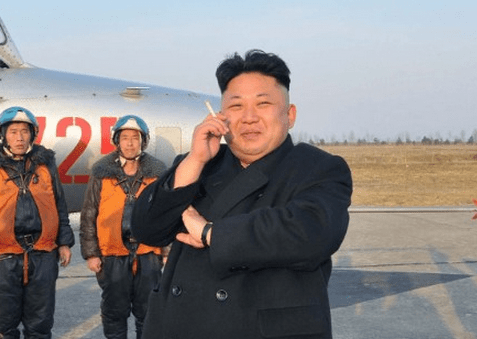
Kim Jong-un Supreme Leader of The Democratic People’s Republic of Korea.

Kim Jong-un  Supreme Leader

of

The Democratic People’s Republic of Korea.

——————————————————————————

BBC Documentary North Korea and Kim Jong In

——————————————————————————

Kim Jong-un[4] (Korean pronunciation: [ɡ̊imd͜zɔŋɯn]; born 8 January 1983;[2] also romanized as Kim Jong-eun, Kim Jong Un or Kim Jung-eun)[5] is the supreme leader of the Democratic People’s Republic of Korea (North Korea). He is the son of Kim Jong-il (1941–2011) and the grandson of Kim Il-sung (1912–1994). He has held the titles of the First Secretary of the Workers’ Party of Korea, the Chairman of the Central Military Commission, Chairman of the National Defence Commission, the Supreme Commander of the Korean People’s Army, and presidium member of the Politburo of the Workers’ Party of Korea. He was officially declared the supreme leader following the state funeral of his father on 28 December 2011.[6] He is the third and youngest son of Kim Jong-il and his consort Ko Yong-hui.[7]

——————————————————————————

Inside North Korea

——————————————————————————

From late 2010, Kim Jong-un was viewed as heir apparent to the leadership of the nation, and following his father’s death, he was announced as the “Great Successor” by North Korean state television.[8] At Kim Jong-il’s memorial service, North Korean Chairman of the Supreme People’s Assembly Kim Yong-nam declared that “Respected Comrade Kim Jong-un is our party, military and country’s supreme leader who inherits great comrade Kim Jong-il’s ideology, leadership, character, virtues, grit and courage”.[9] On 30 December 2011, the Politburo of the Workers’ Party of Korea formally appointed Kim as the Supreme Commander of the Korean People’s Army.[1] In April 2012, the 4th Party Conference elected him to the newly created post of First Secretary of the Workers’ Party of Korea.

He was promoted to the rank of marshal of the DPRK in the Korean People’s Army on 18 July 2012, consolidating his position as the supreme commander of the armed forces[10] and is often referred to as Marshal Kim Jong-un or “the Marshal” by state media.[11][12] He obtained two degrees, one in physics at Kim Il-sung University and another as an Army officer at the Kim Il-sung Military University.[13][14] On 9 March 2014 Kim Jong-un was elected unopposed to the Supreme People’s Assembly. At 32 years of age, he is the first North Korean leader born after the country’s founding and the world’s youngest head of state.

Kim was named the world’s 46th most powerful person by the Forbes list of The World’s Most Powerful People in 2013, the third highest among Koreans after Ban Ki-moon and Lee Kun-hee.[15]

Name

Kim was formerly known as Kim Jong-woon or Kim Jung-woon.[16] His name was first reported as 김정운 (Hanja: ; lit. righteous cloud), possibly as a result of an error in transliteration; the Japanese language does not distinguish between 운 (/un/) and 은 (/ɯn/).[citation needed] The initial source of his name was Kim Jong-il’s former personal chef, known by the pen name Kenji Fujimoto, who was among the few who had access to information about Kim’s household from inside the government. Chinese media had named him as 김정은 (Hanja: ; lit. righteous grace).[3]

In December 2014, South Korea’s KBS TV revealed that they had obtained an official “administrative order” originally circulated by Kim Jong-il in January 2011 mandating that anyone sharing Kim Jong-un’s name needed to formally change their name. Similar edicts were issued regarding the names of the regime’s previous leaders when they were coming to power. The 2011 document states, “All party organs and public security authorities should make a list of residents named Kim Jong-un … and train them to voluntarily change their names.”[17]

Early life and education

The Liebefeld-Steinhölzli public school in Köniz, Switzerland, which Kim Jong-un is reported to have attended.

No official comprehensive biography on Kim Jong-un has yet been released. Therefore, the only known information on his early life comes from defectors and people who have claimed to witness him abroad, such as during his school attendance in Switzerland. Some of the information has been conflicting and contradictory, perhaps conflating him with his brother Kim Jong-chul, who was also attending school in Switzerland around the same period. Nevertheless, there has been some consensus on information about his early life. North Korean authorities have stated that his birthdate is 8 January 1982, but South Korean intelligence officials believe the actual date is a year later. Dennis Rodman said that the birthdate is 8 January 1983 after meeting Kim in September 2013.[2] Kim Jong-Un was the second of three children Ko Yong-hui bore to Kim Jong-il; his elder brother Kim Jong-chul was born in 1981, while his younger sister, Kim Yo-jong, is believed to have been born in 1987.[18][19]

According to reports first published in Japanese newspapers, he went to school in Switzerland near Bern. First reports claimed he attended the private English-language International School in Gümligen near Bern under the name “Chol-pak” or “Pak-chol” from 1993 until 1998.[20][21][22] He was described as shy, a good student who got along well with his classmates and was a basketball fan.[23] He was chaperoned by an older student, who was thought to be his bodyguard.[24]

Later, it was reported that Kim Jong-un attended the Liebefeld Steinhölzli school in Köniz near Bern under the name “Pak-un” or “Un-pak” from 1998 until 2000 as the son of an employee of the Embassy of North Korea. Authorities of Köniz confirmed that a student from North Korea, registered as the son of a member of the Embassy, attended the school from August 1998 until the autumn of 2000, but were unable to give details about his identity. Pak-un first attended a special class for foreign-language children and later attended the regular classes of the 6th, 7th, 8th, and part of the final 9th year, leaving the school abruptly in the autumn of 2000. He was described as a well-integrated and ambitious student who liked to play basketball.[25] However, his grades and attendance rating are reported to have been poor.[26][27] The ambassador of North Korea in Switzerland, Ri Tcheul, had a close relationship with him and acted as a mentor.[28] One of Pak-un’s classmates told reporters that he had told him that he was the son of the leader of North Korea.[29][30] According to some reports, Jong-un was described by classmates as a shy child who was awkward with girls and indifferent to political issues but who distinguished himself in sports, and had a fascination with the American National Basketball Association and Michael Jordan. One friend claimed that he had been shown pictures of Pak-un with Kobe Bryant and Toni Kukoč.[31]

In April 2012, new documents came to light indicating that Kim Jong-un had lived in Switzerland since 1991 or 1992, earlier than previously thought.[32]

The Laboratory of Anatomic Anthropology at the University of Lyon, France, after comparing the picture of the boy Pak-un taken at the Liebefeld Steinhölzli school in 1999 with a picture of Kim Jong-un from 2012 came to the conclusion that the two faces show a conformity of 95%. The head of the institute, Raoul Perrot, a forensic anthropologist, considers it most likely that the two pictures show the same person.[33][34]

It is believed that the student at the Gümligen International School was not Kim Jong-un but his elder brother Kim Jong-chol. It is not known whether the student known as Pak-un in Liebefeld Steinhölzli lived in Switzerland prior to 1998.[35] All the children of Kim Jong-il are said to have lived in Switzerland, as well as the mother of the two youngest sons, who lived in Geneva for some time. The Kim clan is also said to organize family meetings in Switzerland at Lake Geneva and Interlaken.[28]

Most analysts agree that Kim Jong-un attended Kim Il-sung University, a leading officer-training school in Pyongyang, from 2002 to 2007.[36]

For many years, only one confirmed photograph of him was known outside North Korea, apparently taken in the mid-1990s, when he was eleven.[37] Occasional other supposed images of him surfaced but were often disputed.[38][39][40] It was only in June 2010, shortly before he was given official posts and publicly introduced to the North Korean people, that more pictures were released of Kim, taken when he was attending school in Switzerland.[41][42] The first official image of him as an adult was a group photograph released on 30 September 2010, at the end of the party conference that effectively anointed him, in which he is seated in the front row, two places from his father. This was followed by newsreel footage of him attending the conference.[43]

In 2013, Kim Jong-un was awarded an honorary doctorate in Economics by HELP University, a private Malaysian university.[44]

Succession

Pre-2010 Party Conference speculation

His eldest half-brother, Kim Jong-nam, had been the favorite to succeed, but reportedly fell out of favor after 2001, when he was caught attempting to enter Japan on a fake passport to visit Tokyo Disneyland.[45]

Kim Jong-il’s former personal chef, Kenji Fujimoto, revealed details regarding Kim Jong-un, with whom he had a good relationship,[46] stating that he was favored to be his father’s successor. Fujimoto also claimed that Jong-un was favored by his father over his elder brother, Kim Jong-chul, reasoning that Jong-chul is too feminine in character, while Jong-un is “exactly like his father”.[47] Furthermore, Fujimoto stated that “If power is to be handed over then Jong-un is the best for it. He has superb physical gifts, is a big drinker and never admits defeat.” Also, according to Fujimoto, Jong-un smokes Yves Saint Laurent cigarettes, loves Johnnie Walker whisky and has a Mercedes-Benz 600 Sedan.[48] When Jong-un was 18, Fujimoto described an episode where Jong-un once questioned his lavish lifestyle and asked, “We are here, playing basketball, riding horses, riding Jet Skis, having fun together. But what of the lives of the average people?”[47] On 15 January 2009 the South Korean news agency Yonhap reported that Kim Jong-il had appointed Kim Jong-un to be his successor.[45][49]

On 8 March 2009, the BBC reported rumors that Kim Jong-un was on the ballot for elections to the Supreme People’s Assembly, the rubber stamp parliament of North Korea.[50] Subsequent reports indicate that his name did not appear on the list of lawmakers,[51] but he was later elevated to a mid-level position in the National Defense Commission, which is a branch of the North Korean military.[52] Reports have also suggested that he is a diabetic and suffers from hypertension.[16][53]

North Koreans bowing to the statues of Kim Il-sung and Kim Jong-il

From 2009, it was understood by foreign diplomatic services that Kim was to succeed his father Kim Jong-il as the head of the Korean Workers’ Party and de facto leader of North Korea.[54] He has been named “Yŏngmyŏng-han Tongji” (영명한 동지), which loosely translates to “Brilliant Comrade”.[55] His father had also asked embassy staff abroad to pledge loyalty to his son.[53] There have also been reports that citizens in North Korea were encouraged to sing a newly composed “song of praise” to Kim Jong-un, in a similar fashion to that of praise songs relating to Kim Jong-il and Kim Il-sung.[56] Later, in June, Kim was reported to have visited China secretly to “present himself” to the Chinese leadership, who later warned against North Korea conducting another nuclear test.[57] The Chinese Foreign Ministry has strongly denied that this visit occurred.[58][59]

North Korea was later reported to have backed the succession plan, after Kim Jong-il suspended a propaganda campaign to promote his youngest son.[60] His birthday has since become a national holiday, celebrated on 8 January, according to a report by a South Korean website.[61] He was expected to be named on 28 September 2010 as successor to his father as leader of North Korea.[62][63][64]

Former U.S. president Jimmy Carter visited China in early September 2010, and discussed the issue of the North Korean leadership succession with Chinese Premier Wen Jiabao. According to Carter, Kim Jong-il had said to Wen that Kim Jong-un’s prospective promotion to paramount leader of North Korea was “a false rumor from the West”.[65]

Vice Chairman of the Central Military Commission

Kim Jong-un was made a daejang, the equivalent of general in the United States,[66] on 27 September 2010, a day ahead of a rare Workers’ Party of Korea conference in Pyongyang, the first time North Korean media had mentioned him by name and despite his having no previous military experience.[67][68][69] Despite the promotion, no further details, including verifiable portraits of Kim, were released.[70] On 28 September 2010, he was named vice chairman of the Central Military Commission and appointed to the Central Committee of the Workers’ Party, in an apparent nod to become the successor to Kim Jong-il.[71]

On 10 October 2010, alongside his father, Kim Jong-un attended the ruling Workers’ Party’s 65th anniversary celebration. This was seen as fully confirming his position as the next leader of the Workers’ Party. Unprecedented international press access was granted to the event, further indicating the importance of Kim Jong-un’s presence.[72] In January 2011, the regime began purging around 200 protégés of both Jong-un’s uncle-in-law Jang Sung-taek and O Kuk-ryol, the vice chairman of the National Defence Commission of North Korea, by either detention or execution to further prevent either man from rivaling Jong-un.[73] In the following months, Kim Jong-un was given more and more prominence as he accompanied Kim Jong-il during several “guidance tours” and received gifts from foreign delegations and personages, an honor traditionally awarded only to the living supreme leader.

Ruler of North Korea

On 17 December 2011, Kim Jong-il died. Despite the elder Kim’s plans, it was not immediately clear after his death whether Jong-un would in fact take full power, and what his exact role in a new government would be.[74] Some analysts had predicted that when Kim Jong-il died, Jang Sung-taek would act as regent, as Jong-un was too inexperienced to immediately lead the country.[75] On 25 December 2011, North Korean television showed Jang Sung-taek in the uniform of a general in a sign of his growing sway after the death of Kim Jong-il. A Seoul official familiar with North Korea affairs said it was the first time Jang has been shown on state television in a military uniform. His appearance suggested that Jang had secured a key role in the North’s powerful military, which pledged its allegiance to Kim Jong-un.[76]

North Korea’s cult of personality around Kim Jong-un was stepped up following his father’s death. He was hailed as the “great successor to the revolutionary cause of Juche“, “outstanding leader of the party, army and people”[77] and “respected comrade who is identical to Supreme Commander Kim Jong-il”,[78] and was made chairman of the Kim Jong-il funeral committee. The Korean Central News Agency described Kim Jong-un as “a great person born of heaven”, a propaganda term only his father and grandfather had enjoyed,[79] while the ruling Workers’ Party said in an editorial: “We vow with bleeding tears to call Kim Jong-un our supreme commander, our leader.”[80]

He was publicly declared Supreme Commander of the Korean People’s Army on 24 December 2011[81] and formally appointed to the position on 30 December when the Political Bureau of the Central Committee of the Workers’ Party “courteously proclaimed that the dear respected Kim Jong Un, vice-chairman of the Central Military Commission of the WPK, assumed the supreme commandership of the Korean People’s Army”.[1]

On 26 December 2011, the leading North Korean newspaper Rodong Sinmun announced that Kim Jong-un had been acting as chairman of the Central Military Commission,[82] and supreme leader of the country, following his father’s demise.[83]

On 9 January 2012, a large rally was held by armed forces in front of Kumsusan Memorial Palace to honor Kim Jong-un and demonstrate loyalty.[84]

Assuming official titles

On 27 March 2012, Kim was elected to the Fourth Conference of the Workers’ Party of Korea, that elected him first secretary, a newly made position, on 11 April. This position replaced the post of general secretary, which was awarded “eternally” to Kim Jong-il. At the conference, Kim Jong-un also took his father’s seats as Politburo Presidium member and Chairman of the Central Military Commission.[85] In a speech made prior to the Conference, Kim Jong-un declared that “Imbuing the whole society with Kimilsungism-Kimjongilism is the highest programme of our Party”. On 13 April 2012, the 5th Session of the 12th Supreme People’s Assembly appointed Kim Jong-un Chairman of the National Defence Commission.

On 15 April 2012, during a military parade to commemorate Kim Il-sung’s centenary, Kim Jong-un made his first public speech.[86] That speech became the basis of “Onwards Toward the Final Victory“, a repeatedly aired propaganda hymn dedicated to him.[87]

In July 2012, Kim Jong-un was promoted to wonsu, the highest active rank in the military. The decision was jointly issued on by the Central Committee and the Central Military Commission of the Workers’ Party of Korea, the National Defence Commission, and the Presidium of the Supreme People’s Assembly, the Korean Central News Agency subsequently announced. By this promotion, he is one of only two wonsu holders now alive in North Korea. The other is Lee Ul-sol, who received the rank in 1995. The only higher rank is Dae Wonsu (roughly translated as Grand Marshal or Generalissimo) which was held by Kim’s grandfather, Kim Il-sung, and which was awarded posthumously to his father, Kim Jong-il, in February 2012.[10][88] The promotion confirmed Kim’s role as top leader of the North Korean military and came days after the replacement of Chief of General Staff Ri Yong-ho by Hyon Yong-chol.

During a 26 July 2012 performance marking the 59th anniversary of the armistice of the Korean War, security around Kim reportedly increased dramatically because Kim “is extremely nervous about the possibility of an emergency developing inside North Korea” caused by “mounting opposition to his efforts to rein in the military”.[89]

In November 2012, satellite photos revealed a half-kilometer-long propaganda message carved into a hillside in Ryanggang Province, reading, “Long Live General Kim Jong-un, the Shining Sun!”. The message, located next to an artificial lake built in 2007 to serve a hydroelectric station, is made of Korean syllable blocks measuring 15 by 20 meters, and is located approximately 9 kilometers south of Hyesan near the border with China.[90]

Kim Jong-il’s personal chef Kenji Fujimoto stated, “Stores in Pyongyang were brimming with products and people in the streets looked cheerful. North Korea has changed a lot since Kim Jong-un assumed power. All of this is because of leader Kim Jong-un.”[91]

Model of a Unha-9 rocket on display at a floral exhibition in Pyongyang, 30 August 2013

Officially, Kim Jong-un is part of a triumvirate heading the executive branch of the North Korean government along with Premier Pak Pong-ju and parliament chairman Kim Yong-nam (no relation). Each nominally holds powers equivalent to a third of a president’s powers in most other presidential systems. Kim Jong-un commands the armed forces, Pak Pong-ju heads the government, and Kim Yong-nam handles foreign relations. Nevertheless, it is generally understood that Kim Jong-un, like his father and grandfather before him, exercises absolute control over the government and the country.

On 30 November 2012, Kim met with Li Jianguo, who “briefed Kim on the 18th National Congress of the Communist Party of China“, according to the KCNA news agency.[92] A letter from Xi Jinping was hand-delivered during the discussion.[92]

In 2013, Kim re-established his grandfather’s style when he made his first New Year’s address, a break from the approach of his father. Kim Jong-il never made televised addresses during his 17 years in power.[93] In lieu of delivering a speech, Kim Jong-il contributed to and approved a New Year’s Day editorial, jointly published by Rodong Sinmun (the daily newspaper of the Korean Workers’ Party), Joson Inmingun (the newspaper of the Korean People’s Army), and Chongnyon Jonwi (the newspaper of the Kim Il-sung Socialist Youth League).[94] At the extraordinary meeting with his top defense and security officials on 26 January 2013, Kim issued orders on preparations for a new nuclear test and introduced martial law in North Korea effective from 29 January.[95][96]

In May 2014, following the collapse of an apartment building in Pyongyang, Kim Jong-un was said to be very upset at the loss of life that resulted. A statement issued by the country’s official news agency the Korean Central News Agency used the rare expression “profound consolation and apology”. An unnamed government official was quoted by the BBC as saying Kim Jong-un had “sat up all night, feeling painful”.[97] While the height of the building and the number of casualties was not released, media reports described it is a 23-story building and indicated hundreds of people may have died in the collapse.

On 9 March 2014, Kim Jong-un was elected to the Supreme People’s Assembly. He was unopposed, but voters had the choice of voting yes or no. There was a record turnout of voters, and according to government officials, all voted yes. The Supreme People’s Assembly subsequently elected him chairman of the National Defense Commission.

Economic policies

In August 2012, Kim Jong-un announced economics reforms similar to China.[98] Kim began to be mentioned by the North Korean state media as “supreme leader” (chego ryongdoja) at this time.

A set of comprehensive economic measures, the “Socialist Corporate Responsible Management System”, were introduced in 2013.[99] The measures increase the autonomy of enterprises by granting them “certain rights to engage in business activities autonomously and elevate the will to labor through appropriately implementing the socialist distribution system”. Another priority of economic policies that year was agriculture, where the pojon (vegetable garden) responsibility system was implemented. The system reportedly achieved a major increase in output in some collective farms.[99]

North Korean media were describing the economy as a “flexible collectivist system” where enterprises were applying “active and evolutionary actions” to achieve economic development.[100] These reports reflect Kim’s general economic policy of reforming management, increasing the autonomy and incentives for economic actors. This set of reforms known as the “May 30th measures” reaffirms both socialist ownership and “objective economic laws in guidance and management” to improve living standards. Other objectives of the measures are to increase the availability of domestically manufactured goods on markets, introduction of defence innovations into the civilian sector and boost international trade.[100]

Nuclear threats

On 7 March 2013, North Korea threatened the United States with a “pre-emptive nuclear attack”,[101] and Kim Jong-un issued a detailed threat to “wipe out” Baengnyeong Island, the scene of previous naval clashes.[102] North Korea has revealed its plans for conducting nuclear strikes on U.S. cities, including Los Angeles, and Washington, D.C.[103]

At a plenary meeting of the WPK Central Committee held on 31 March 2013 in the wake of war threats with South Korea, Kim Jong-un announced that North Korea will adopt “a new strategic line on carrying out economic construction and building nuclear armed forces simultaneously”.[104]

Purges

Ri Yong-ho, Kim Yong-chun, U Tong-chuk and Kim Jong-gak were handpicked to groom the young leader and were close confidants of Kim Jong-il. They have either been demoted or disappeared. One South Korean government official said Kim Jong-un is trying to “erase all traces of his father’s rule” eleven months after stepping into power and “replacing top brass with officers who are loyal to him alone”.[105] By the end of 2013, three defense ministers and four chiefs of the army’s general staff had been replaced and five of the seven men who had escorted his father’s hearse two years earlier had been purged,[106] with his uncle Jang Sung-taek one of the most prominent.[107] Jang Sung-taek is believed to have been executed by machine gun.

Jang Sung-taek

———————————–

Kim Jong Uns Uncle Jang Song Thaek gets publicly arrested

———————————–

———————————–

Execution scene of Jang Sung-taek, North Korea

———————————–

Hyon Yong-Chol

——————————————————

North Korea Defence Chief Hyon Yong-chol ‘executed’

——————————————————

It has been claimed that Kim Jong-un has also put to death members of Jang’s family. According to multiple sources, Kim is attempting to completely destroy all traces of Jang’s existence through “extensive executions” of his family, including the children and grandchildren of all close relatives. Those reportedly killed in Kim’s purge include Jang’s sister Jang Kye-sun, her husband and ambassador to Cuba, Jon Yong-jin, and Jang’s nephew and ambassador to Malaysia, Jang Yong-chol. The nephew’s two sons were also said to have been killed.[108] At the time of Jang’s removal, it was announced that “the discovery and purge of the Jang group… made our party and revolutionary ranks purer…”[109] and after his execution on 12 December 2013 state media warned that the army “will never pardon all those who disobey the order of the Supreme Commander.”[110]

Personality

Kenji Fujimoto, a Japanese chef who used to work as Kim Jong-il’s personal cook, described Kim Jong-un as “a chip off the old block, a spitting image of his father in terms of face, body shape, and personality”.[111]

The Washington Post reported in 2009 that Kim Jong-un’s school friends recalled he “spent hours doing meticulous pencil drawings of Chicago Bulls superstar Michael Jordan.”[112] He was obsessed with basketball and computer games.[113][114] On 26 February 2013, Kim Jong-un met ex-NBA star Dennis Rodman,[115] leading many reporters to speculate that Rodman was the first American that Kim had met.[116] Rodman described his trip to Kim Jong-un’s private island, “It’s like Hawaii or Ibiza, but he’s the only one that lives there.”[117] Kim Jong-un is reportedly a fan of Eric Clapton.[118]

In July 2012, Kim Jong-un showed a change in cultural policy from his father by attending a Moranbong concert. The concert contained several elements of pop culture from the West, particularly the United States. Kim used this event to debut his wife to the public, an unprecedented move in North Korea.[119]

In a 2012 news story, Business Insider reported, “Signs of a rise in luxury goods have been creeping out of North Korea since Kim Jong-un took over as last year. Just recently, Kim’s wife Ri Sol-ju was photographed holding what appeared to be an expensive Dior handbag, worth almost $1,594 — an average year’s salary in North Korea.”[120] According to diplomatic sources, “Kim Jong-un likes to drink and party all night like his father and ordered the [imported sauna] equipment to help him beat hangovers and fatigue.”[121]

During Dennis Rodman’s 26 February 2013 trip to North Korea, Vice Media correspondent Ryan Duffy observed that “the leader was ‘socially awkward’ and didn’t make eye contact when shaking hands”.[122]

According to Cheong Seong-chang of Sejong Institute, Kim Jong-un has greater visible interest in the welfare of his people and engages in greater interaction with them than his father did.[123]

Health

Kim Jong-un did not appear in public for six weeks in September and October 2014. State media reported that he was suffering from an “uncomfortable physical condition”. Previously he had been seen limping.[124][125][126][127][128][129] When he reappeared he was using a walking stick.[130][131]

Human rights violations

——————————————————

The N. Korean TV Star Standing Up To Kim Jong-Un

——————————————————

Human rights violations under the leadership of Kim Jong-il were condemned by the UN General Assembly.[132] Press reports indicate that they are continuing under Kim Jong-un.[133][134][135][136] It is believed by some that Kim Jong-un was involved in the Cheonan sinking[137] and the bombardment of Yeonpyeong[138] to strengthen his military credentials and facilitate a successful transition of power from his father.[139]

The 2013 report on the situation of human rights in North Korea[140] by United Nations Special Rapporteur Marzuki Darusman proposed a United Nations commission of inquiry[141] to document the accountability of Kim Jong-un and other individuals in the North Korean government for alleged crimes against humanity.[142] The report of the commission of inquiry[143] was published in February 2014 and recommends to make him accountable for crimes against humanity at the International Criminal Court.[144]

One report by the Japanese Asia Press agency in January 2013 claimed that in North and South Hwanghae provinces more than 10,000 people had died of famine. Other international news agencies have begun circulating stories of cannibalism. One informant, based in South Hwanghae, said: “In my village in May, a man who killed his own two children and tried to eat them was executed by a firing squad.”[145]

Family

Portraits of Kim Jong-un’s father and grandfather (Arirang Festival mass games in Pyongyang)

On 25 July 2012 North Korean state media reported for the first time that Kim Jong-un is married to Ri Sol-ju (리설주).[146][147] Ri, who appears to be in her early 20s, had been accompanying Kim Jong-un to public appearances for several weeks prior to the announcement.[147] The BBC, quoting an analyst who spoke to The Korea Times of South Korea, reported that Kim Jong-il had hastily arranged his son’s marriage after suffering a stroke in 2008. According to some sources, the two married in 2009 and Ri gave birth to a daughter in 2010.[148][149]

Kim Jong-un has one half-brother, one half-sister and an older full-brother (see below). He also has a younger full-sister, Kim Yo-jong, who was believed to be about 23 in 2012. She sometimes accompanies him.[19][150]

Fatherhood

In March 2013, former NBA basketball player Dennis Rodman visited Kim Jong-un in North Korea and on his return reported that Ri had given birth to a daughter named Ju-ae in 2012.[151][151][152][153][154]

Loyalist Feuds – Past & Present

Loyalist Feuds

A loyalist feud refers to any of the sporadic feuds which have erupted almost routinely between Northern Ireland‘s various loyalist paramilitary groups during and after the ethno-political conflict known as the Troubles broke out in the late 1960s. The feuds have frequently involved problems between and within the Ulster Defence Association (UDA) and the Ulster Volunteer Force (UVF) as well as, later, the Loyalist Volunteer Force (LVF).

——————————————————————————————

The views and opinions expressed in this page and  documentaries are soley intended to educate and provide background information to those interested in the Troubles of Northern Ireland.

They in no way reflect my own opinions and I take no responsibility for any inaccuracies or factual errors.

——————————————————————————————

UDA-UVF feuds

See UDA Page

See UVF Page

—————————————————

UDA-UVF Feud,

Johnny ‘Mad Dog’ Adair, Former UDA & UFF Loyalist Commander Talks About His Life.

—————————————————

U.V.F Logo
U.V.F Logo

Although the UDA and UVF have frequently co-operated and generally co-existed, the two groups have clashed. Two particular feuds stood out for their bloody nature.

1974-1975

UDA Logo
UDA Logo

A feud in the winter of 1974-75 broke out between the UDA and the UVF, the two main loyalist paramilitary organisations in Northern Ireland. The bad blood originated from an incident in the Ulster Workers’ Council strike of May 1974 when the two groups were co-operating in support of the Ulster Workers’ Council.

Ulster Workers’ Council strike

That support the UDA & UVF members were giving involved shutting down their own social clubs & pubs due to complaints from loyalist wives of the striking men, the reason for this was with the men not working & funds being tight the wives saw what little money they did have being spent at the pubs & social clubs controlled by UDA/UVF, therefore the wives put pressure on the leaders of both groups to shut them down for the duration of the strike & after consultation they agreed.

All shut down except for a lone UVF affiliated pub on the shankill road. On a November night in 1974, a UVF man named Joe Shaw visited the pub for a drink. While there, he was “ribbed by the regulars about having allowed his local to be closed”.[2] A few pints later Shaw and some friends returned to their local, on North Queen St., and open it up. UDA men patrolling the area had seen the pubs lights on and ordered Shaw and his friends to close the place down & go home. Shaw refused, and the UDA men left, but they returned a short while later with a shotgun, determined to close the pub down.

Stephen Goatley

In the brawl that developed Shaw was fatally shot. A joint statement described it as a tragic accident although a subsequent UVF inquiry put the blame on Stephen Goatley and John Fulton, both UDA men. With antagonism grown another man was killed in a drunken brawl on 21 February 1975, this time the UDA’s Robert Thompson. This was followed by another pub fight in North Belfast in March and this time the UVF members returned armed and shot and killed both Goatley and Fulton, who had been involved in the earlier fight.

The following month UDA Colonel Hugh McVeigh and his aide David Douglas were the next to die, kidnapped by the UVF on the Shankill Road and taken to Carrickfergus where they were beaten before being killed near Islandmagee.

The UDA retaliated in East Belfast by attempting to kill UVF leader Ken Gibson who in turn ordered the UDA’s headquarters in the east of the city to be blown up, although this attack also failed. The feud rumbled on for several months in 1976 with a number of people, mostly UDA members, being killed before eventually the two groups came to an uneasy truce.

2000

Although the two organisations had worked together under the umbrella of the Combined Loyalist Military Command, the body crumbled in 1997 and tensions simmered between West Belfast UDA Brigadier Johnny Adair, who had grown weary of the Northern Ireland peace process and the Good Friday Agreement, and the UVF leadership. Adair by this time had forged close links with the dissident LVF, a group which the UVF had been on poor terms with since its foundation.

Amidst an atmosphere of increasing tension in the area, Adair decided to host a “Loyalist Day of Culture” on the Shankill on Saturday 19 August 2000, which saw thousands of UDA members from across Northern Ireland descend on his Lower Shankill stronghold, where a series of newly commissioned murals were officially unveiled on a day which also featured a huge UDA/UFF parade and armed UDA/UFF show of strength.

Unknown to the UVF leadership, who had sought and been given assurances that no LVF regalia would be displayed on the Shankill on the day of the procession, as well as the rest of the UDA outside of Adair’s “C Company”, Adair had an LVF flag delivered to the Lower Shankill on the morning of the celebrations, which he planned to have unfurled as the procession passed the Rex Bar, a UVF haunt, in order to antagonise the UVF and try and drag it into conflict with as much of the UDA as possible.

———————————————————————–

The Rex Bar – Shankill

———————————————————————–

Adair waited until the bulk of the parade of UDA men had made its way up into the heart of the Shankill before initiating the provocative gesture. When it happened skirmishes broke out between UVF men who had been standing outside the Rex watching the procession and the group involved in unfurling the contentious flag, which had been discreetly concealed near the tail end of the parade. Prior to this the atmosphere at the Rex had been jovial, with the UVF spectators even joining in to sing UDA songs along to the tunes of the UDA-aligned flute bands which accompanied the approximately ten thousand UDA men on their parade up the Shankill Road.

But vicious fighting ensued, with a roughly three hundred-strong C Company (the name given to the Lower Shankill unit of the UDA’s West Belfast Brigade, which contained Adair’s most loyal men) mob attacking the patrons of the Rex, initially with hand weapons such as bats and iron bars, before they shot up the bar as its patrons barricaded themselves inside.

Also shot up was the Progressive Unionist Party (PUP) headquarters which faced the pub. C Company then went on the rampage in the Lower Shankill, attacking the houses of known UVF members and their families, including the home of veteran UVF leader Gusty Spence, and evicting the inhabitants at gunpoint as they wrecked and stole property and set fire to homes. By the end of the day nearly all those with UVF associations had been driven from the Lower Shankill.

Later that night C Company gunmen shot up the Rex again, this time from a passing car. While most of the UDA guests at Adair’s carnival had duly left for home when it became apparent that he was using it to engineer violent conflict with the UVF, festivities nonetheless continued late into the night on the Lower Shankill, where Adair hosted an open air rave party and fireworks display.

The UVF struck back on Monday morning, shooting dead two Adair associates, Jackie Coulter and Bobby Mahood, as they sat in a Range Rover on the Crumlin Road. The UVF also shot up the Ulster Democratic Party headquarters on the Middle Shankill. An hour later Adair’s unit burned down the PUP’s offices close to Agnes Street, the de facto border between the UVF-dominated Middle and Upper Shankill and the UDA-dominated Lower Shankill. The UVF responded by blowing up the UDP headquarters on the Middle Shankill. Adair was returned to prison by the Secretary of State on 14 September, although the feud continued with four more killed before the end of the year.

Violence also spread to North Belfast, where members of the UVF’s Mount Vernon unit shot and killed a UDA member, David Greer, in the Tiger’s Bay area, sparking a series of killings in that part of the city. In another incident the County Londonderry town of Coleraine saw tumult in the form of an attempted expulsion of UVF members by UDA members, which was successfully resisted by the UVF.

But aside from these exceptions Adair’s attempt to ignite a full-scale war between the two organisations failed, as both the UVF and UDA leaderships moved decisively to contain the trouble within the Shankill area, where hundreds of families had been displaced, and focused on dealing with its source as well as its containment. To Adair’s indignation even the “A” and “B” Companies of his West Belfast Brigade of the UDA declined to get involved in C Company’s war with the UVF.

Eventually a ceasefire was reluctantly agreed upon by the majority of those involved in the feuding after new procedures were established with the aim of preventing the escalation of any future problems between the two organisations, and after consideration was paid to the advice of Gary McMichael and David Ervine, the then leaders of the two political wings of loyalism.

UVF-LVF feuds

——————————————-

Loyalist Feud in Portadown, March 2000

——————————————-

The nature of the LVF, which was founded by Billy Wright when he, along with the Portadown unit of the UVF Mid-Ulster Brigade, was stood down by the UVF leadership on 2 August 1996 for breaking the ceasefire has led to frequent battles between the two movements. This had come about when Wright’s unit killed a Catholic taxi-driver during the Drumcree standoff.

Although Wright had been expelled from the UVF, threatened with execution and an order to leave Northern Ireland, which he defied, the feud was largely contained during his life and the two major eruptions came after his death.

1999-2001

Simmering tensions boiled over in a December 1999 incident involving LVF members and UVF Mid-Ulster brigadier Richard Jameson and his men at the Portadown F.C. social club in which the LVF supporters were severely beaten. The LVF members swore revenge and on 10 January 2000 they took it by shooting Jameson dead on the outskirts of Portadown.[14] The UVF retaliated by killing two Protestant teenagers suspected of LVF membership and involvement in Jameson’s death. As it turned out, the victims, Andrew Robb and David McIlwaine, were not part of any loyalist paramilitary organisation.

The UDA’s Johnny Adair supported the LVF and used the feud to stoke up the troubles that eventually flared in his feud with the UVF later that year. Meanwhile the UVF attempted to kill the hitman responsible for Jameson, unsuccessfully, before the LVF struck again on 26 May, killing PUP man Martin Taylor in Ballysillan. The LVF then linked up with Johnny Adair’s C Company for a time as their feud with the UVF took centre stage.

However the UVF saw fit to continue the battle in 2001, using its satellite group the Red Hand Commando to kill two of the LVF’s leading figures, Adrian Porter and Stephen Warnock. Adair however convinced the LVF that the latter killing was the work of one of his rivals in the UDA, Jim Gray, who the LVF then unsuccessfully attempted to assassinate.

See: Jim Gray – aka Doris Day

2005

In July 2005 the feud came to a conclusion as the UVF made a final move against its rival organisation. The resulting activity led to the deaths of at least four people, all associated with the LVF. As a result of these attacks on 30 October 2005 the LVF announced that its units had been ordered to cease their activity and that it was disbanding. In February 2006, the Independent Monitoring Commission reported that this feud had come to an end.

UDA internal feuds

The UDA, the largest of the loyalist paramilitary groups, has seen a number of internal struggles within its history.

Gangsters At War – Loyalist Paramilitaries in Northern Ireland

1972-1974

From its beginnings the UDA was wracked by internal problems and in 1972, the movement’s first full year of existence, three members, Ingram Beckett, John Brown and Ernest Elliott were killed by other UDA members. The main problems were between East Belfast chief Tommy Herron and Charles Harding Smith, his rival in the west of the city, over who controlled the movement. Although they had agreed to make compromise candidate Andy Tyrie the leader, each man considered himself the true leader. Herron was killed in September 1973 in an attack that remains unsolved.

Andy Tyrie

However with confirmed in overall control of the UDA Harding Smith initially remained silent until in 1974 he declared that the West Belfast brigade of the movement was splitting from the mainstream UDA on the pretext of a visit to Libya organised by Tyrie in a failed attempt to procure arms from Colonel Qadaffi. The trip had been roundly criticised by the Unionist establishment and raised cries that the UDA was adopting socialism, and so Harding Smith used it re-ignite his attempts to take charge.

Harding Smith survived two separate shootings but crucially lost the support of other leading Shankill Road UDA figures and eventually left Belfast after being visited by North Belfast Brigadier Davy Payne, who warned him that he would not survive a third attack.

1987-1989

South Belfast Brigadier John McMichael was killed by the Provisional IRA in December 1987 but it was later admitted that UDA member James Pratt Craig, a rival of McMichael’s within the movement, had played a role in planning the murder. A new generation of leaders emerged at this time and decided that the woes facing the UDA, including a lack of arms and perceived poor leadership by ageing brigadiers, were being caused by the continuing leadership of Andy Tyrie.

Tyrie was forced to resign in March 1988 and the new men, most of whom had been trained up by McMichael, turned on some of the veterans whom Tyrie had protected. Craig was killed, Tommy Lyttle was declared persona non grata and various brigadiers were removed from office, with the likes of Jackie McDonald, Joe English and Jim Gray taking their places.

2002-2003

————————-

JOHN GREGG UDA- LEADERS FUNERAL

————————-

A second internal feud arose in 2002 when Johnny Adair and former politician John White were expelled from the UDA. Many members of the 2nd Battalion Shankill Road West Belfast Brigade, commonly known as ‘C’ Company, stood by Adair and White, while the rest of the organisation were involved with attacks on these groups and vice versa. There were four murders; the first victim being a nephew of a leading loyalist opposed to Adair, Jonathon Stewart, killed at a party on 26 December 2002.

Roy Green was killed in retaliation. The last victims were John ‘Grug’ Gregg (noted for a failed attempt on the life of Gerry Adams) and Robert Carson, another Loyalist. Adair’s time as leader came to an end on 6 February 2003 when south Belfast brigadier Jackie McDonald led a force of around 100 men onto the Shankill to oust Adair, who promptly fled to England. Adair’s former ally Mo Courtney, who had returned to the mainstream UDA immediately before the attack, was appointed the new West Belfast brigadier, ending the feud.

UVF internal feuds

The feud between the UVF and the LVF began as an internal feud but quickly changed when Billy Wright established the LVF as a separate organisation. Beyond this the UVF has largely avoided violent internal strife, with only two killings that can be described as being part of an internal feud taking place on Belfast’s Shankill Road in late November 1975, with Archibald Waller and Noel Shaw being the two men killed. Several months prior to these killings, Mid-Ulster Brigadier Billy Hanna was shot dead outside his Lurgan home on 27 July 1975, allegedly by his successor, Robin Jackson. This killing, however, was not part of a feud but instead carried out as a form of internal discipline from within the Mid-Ulster Brigade.

See : Robin Jackson

See also

Glencairn was a violent, ultra loyalist estate controlled by the UDA ( Ulster Defence Association )

CHAPTER TWO

GLENCAIRN

Extracts from my Autobiography , Belfast Child

glencairn


On a sunny day in 1970 my osteomyelitis was finally given the all clear and I was on my way home from the hospital, for a couple of years at least. I was so heartbroken to leave Nurse Brown, that on the day of my discharge I hid in a broom cupboard, in the childish belief if they couldn’t find me they would let me stay in the children’s ward with Nurse Brown.

The day before dad had explained to me that we had a new home and that‘s where I would be going to live when I left hospital. He explained that we had moved to Glencairn to be near his family, so that our grandmother could help look after us. We all loved my grandmother dearly and although I was grief stricken at the thought of leaving Nurse Brown, I was also excited at the thought of living in a new home and being surrounded by my grandparents and cousins. When I had first gone into hospital we had lived in a mixed area of the city and spent as much time with our Catholic family on mum’s side, as we had with dad’s family. When mum and dad had first parted dad forbade any of mum’s family from visiting me in hospital and as a result when they parted for good we were never to meet any of our Catholic relatives again.

The division in my family reflected the religious segregation that was ripping Northern Ireland apart. At four years old my political and religious destination was decided, as I left the children’s ward and headed home to my new life without mum in Glencairn.

proud_to_be_british_by_the_angus_burger-d58yegj 3

Glencairn was a violent, ultra loyalist estate in the West of the city built in the sixties and was controlled by the UDA, the largest protestant paramilitary group in Northern Ireland. The estate is cut into the mountains and is surrounded by glens and forest and from the top you can look down over Belfast City, with the giant cranes Samson and Goliath dominating the horizon of the east of the city. On my first day home I fell in love with Glencairn and I knew immediately that I would like living there. Previously we had lived in a built up area of Belfast and now I was surrounded by vast open spaces and fields and mountains as far as the eye could see. There was only one road into Glencairn and due to this isolation it became a dumping ground for loyalist murder squads

St. Andrews

Our new house was on the Forthriver Road, half way up the estate and two minutes walk from the local and only shopping complex in Glencairn, which was made up of a VG , a Chinese takeaway , paper shop , a wine lodge and a UDA drinking club called Grouchos, which dad worked in. Home for us was a ground floor house in a two story maisonette, with two bedrooms between five of us. It was a bit cramped and when I first came out of hospital I got to sleep with dad in his double bed and the others shared the other room. But we were all happy and I was excited about all the sudden changes in my young life. Just facing our house was St. Andrews church, which was to play a huge role in my future life,

Granny and Granddad lived just around the corner from our place and Granny practically lived in our house as she helped dad look after us. About 10 minutes away from our place, at the top of the estate dad’s two younger brothers and their wives and children lived. Like a lot of deprived area’s of Belfast, Glencairn was a tribal community and the Protestant people of the estate stuck together through thick and thin with their hatred of their Catholic counter parts throughout Belfast and Northern Ireland with a passion.

But the best thing for me was dad’s dog Shep, a temperamental Alsatian, who terrorised the area. We quickly became inseparable and before long we were the best of friend’s. After unpacking my things and settling me in, Dad and Granny called me into the front room and asked me to sit down. They explained that mum had gone away and that I would never see her again. If anyone were to ever ask where she was, I was simply to say she had died and leave it at that. Also from then on I was to call Gerard David and Mary Margaret. Due to the ultra Loyalist nature of Glencairn and the people we now lived amongst, all traces of our Catholic heritage and mum had to be eradicated from our past and we were told never to mention mum or her family again. This was done also for our own safety, because had the truth been known we would have been ostracised and picked on.

Within a short space of time I had really settled in and for the first time in my short life I was spending a lot of time with dad’s side of the family and I was getting to know my brother and sisters properly. Due to my leg, I got to sleep with dad in his huge double bed and every night he would carry me upstairs because, due to my caliper’s I was still unable to get up them by myself. Whist I had been in hospital I was surrounded by other children in wheelchairs, plaster and caliper’s and I had thought nothing of it. But now back at home with all those trees and never ending fields I began to feel self conscious about my caliper and the way I walked. When I had to visit the physiotherapist I pushed myself as hard as possible in my efforts to strengthen my leg muscles, so I could climb trees and run with the other kids. But I was getting stronger everyday and within a year of leaving hospital I could walk and run unaided, although I was to have a limp for the rest of my life and suffer multiple fractures due to the weak bones in my bad leg.

me and dad
Dad and me

As the weakling of the family I got special attention from Dad and my Grandparents and during my first few months at home dad took a lot of time off work as a gardener to look after me and help me settle into my new life. Dad had always been a special person in my tiny world , but now that I was home and spending so much time with him , he soon became the centre of my universe and I must have been a right nuisance as I followed him around like a love sick puppy getting under his feet all the time. Within a few weeks after coming home I was enrolled in the local school, Fernhill which was just behind our home on the perimeters of the park and glens. I was lucky in that aspect that my sisters and brother and all my cousin’s attended the same school and from my first day there I loved every minute I spent there.

After school we would all head off to the vast Glencairn park and when we got bored with playing on the swings or climbing trees we would go down the glen to the river and play for hours following the river as far as we could and catching rainbow trout with pieces of string attached to branches and our bare hands. It was an idyllic place to grow up and had it not been for the absence of mum and the madness going on around us, it could have been the perfect childhood.

Before moving to Glencairn I had not been aware that Dad, along with his brother was a member of the UDA. This was nothing out of the ordinary, as most of the adult men and many of the women in Glencairn and the surrounding areas were members of one of the many loyalist paramilitary groups. The UDA played a very active role within the community and if someone had a problem that needed solving or were short of cash and needed a loan they would turn to the UDA. Like a lot of the paramilitary groups in Northern Ireland, the UDA were looked upon as protectors of the people they governed. Although he was a member of the UDA, like many others dad did not get involved with the military actions of the active units and was a pacifist who hated violence. He had been a practising Christian for most of his teenage years.

Dad played a very active role within the UDA and apart from running the local UDA club, Grouchos, he was responsible for setting up and running the Glencairn Accordion band. From my point of view this was excellent. My sisters and cousins were all members of the band, the younger ones played the triangle or symbols and then like my sisters Margaret and Jean, working their way up the ranks until they were taught how to play the accordion. The band was the pride of Glencairn and won many competitions throughout Northern Ireland. They practiced on Thursday nights and I use to go with dad up to the practice hall at the top of the estate and sit mesmerised in the corner, surrounded by 40 females of various ages. There was one girl who played the accordion and I feel in love with her the first time I set eyes on her. Of course she never knew as the girls went through the rehearsals, playing various loyalist tunes and anthems, I would sing along and pretend to be the leader of the band and march up and down the hall. The girls’ found this absolutely hilarious and in order to gain some control back, dad would tell me off and I would have to sit quietly in the corner again, until a personal favourite of mine was played and I would be off again. During the protestant marching season and the build up to the 12th, the most important day in the loyalist calendar, the band was hired to march with various orange lodges throughout Northern Ireland. On the day of the march our house would be in complete chaos as my sisters and dad got themselves dressed in the uniforms for the march. Granny would come round to help and gradually all our cousins would arrive with various instruments and get in some last minute practice. All the members of the band would meet outside the shops and a large crowd always gathered to see them off. I would almost be bursting with pride as they all fell in together and led by dad would start marching down the Glencairn Road towards the meeting point on the Shankill Road.

10552565_10201825843402531_4824605104953420939_n
Dad and Margaret

David and I would follow the band down to the bottom of the road and wave them off before heading home for a snack and then out to play until tea time. The band would normally arrive back in the estate between six and seven and we would wait eagerly near the Road until we could hear the distant sound of them approaching and rush to greet them. When we finally got home granny would prepare dinner and after eating we would all sit down and watch telly, exhausted by the day’s events.

At this stage of my life I was as happy and normal as an eight –year old boy could be in my circumstances and was blissfully unaware that my life was so different from others. Life with dad and the others was a happy life and I now had a routine to my life that was missing when I was in hospital. I still occasionally thought of Nurse Brown and missed her, but I was to see her again in the not too distant future. On Tuesday David and I went to the BB and Sunday school on Sunday’s. Although I really believed that god had created the earth and sacrificed his only son for the good of mankind, my god had become a Protestant god and I did not love my Catholic counterparts. Reverend Lewis, our vicar, was a patient and tolerant man but he occasionally became exasperated at our hardcore Protestant approach to religion and tried hard to teach us the concept of love, not hate.

Although dad did go to church himself it was expected of us kids to attend and religion played a very important role in my early life and teenage years. Also I think dad liked to get us all out of the house for a while, so he could have some peace and quiet time to himself and a rest from looking after us. Sometime’s dad would be on sentry duty outside the UDA club and David and I would go and visit him on the way home. In these early years I used to think of mum only occasionally and once when I asked granny about her she made it clear that mum was gone forever and I was not to mention her again and forget all about her. So I did exactly that and pushed mum to the back of my mind and got on with my new exciting life in Glencairn.

One day after weeks of anticipation Margaret’s cat Smoky give birth to a little of five kittens. We were all allowed into Margaret’s bedroom to watch the birth, including dad’s dog; my best friend Shep, who was told off a few times by Smoky for getting a little too close to the action.

After letting David, Shep and I have a supervised look at the five kittens Margaret banished us from the labour ward, as she needed to spend time alone with her five new charges. I was very thoughtful and to be honest jealous of Margaret having five brand new kittens to her name and I wanted some for myself. There was obviously no quick way for me to find five brand new kittens for myself, so I decided there and then that Shep would have to give birth to five puppies for me before the day was out. The major problem there was that Shep was a he! This bit of fundamental biological necessity wasn’t going to put me off.

After a quick strategy plan with David we headed to our secret den in the park, with an unexpected Shep in tow. My plan was a simple one, I needed a miracle and I was going to ask God to help. Reverend Lewis had instilled in us a firm believe that if you wanted and needed something bad enough god would answer your prayers. Surely god and baby Jesus in their wisdom would recognize the importance of me having five puppies for myself before the end of the day. When we got to the den Shep was more than happy to lay down on the grass and rub his belly and wait for the miracle that god was about to perform. I had little knowledge of how kittens were born and how miracles worked, but I was not to be put off. After a chat with David and stroking Shep’s belly with what I felt was a miracle stroke, I lead David behind a nearby bush, sank to my knees and began a marathon prayer to god and Jesus, outlining the desperate importance of Shep giving birth and me having my puppies. Needless to say nothing happened and after about an hour David and Shep were beginning to give me strange looks and were obviously bored and becoming alarmed at my enthusiasm for the lord’s intervention and after a while I too got bored and disillusioned and decided to throw the towel in… for now at least. It was obvious to me that god in his wisdom had decided not to grant me a miracle today but this did not diminish my faith and I would continue to seek gods help in all matters big and small.

See autobiography page for the first 7 chapters of my story Belfast Child


Please consider making a small or large donation as I am very poor and every donation is most welcome and goes towards the cost of running this blog.


Make a small donation

paypal donation button

Thank you!

Please visit the Autobiography page for additional chapters

Tunisia Attack -Thirty-eight innocent People Slaughtered inlcuding 30 British

2015 Sousse attacks

Never Forgotten

Tunisia Terror Attack: New Footage Of Rampage

——————————————————————————————————————-

BBC Panorama – Terror on the Beach (2015)

——————————————————————————————————————-

Some of the Victims

Most were with friends, family, spouses or partners. Tributes have been paid.

:: Christopher And Sharon Bell

Christopher and Sharon Bell

The couple from Leeds were on holiday together in Sousse when they were killed, with their family saying they are “deeply saddened” by their deaths.

:: Patrick and Adrian Evans

Adrian Evans and Patrick Evans

Sandwell Council gas department worker Adrian Evans was killed along with his 78-year-old father, Patrick, and nephew Joel Richards.

:: Joel Richards

Joel Richards

A talented referee and footballer, the Birmingham County Football Association said the 19-year-old had “the world at his feet”.

:: Trudy Jones

Trudy Jones

Trudy Jones, a 51-year-old divorced single mother-of-four, had been on holiday with her friends.

:: Bruce Wilkinson

Tunisia

The 72-year-old was on holiday with his wife, Rita, when he was shot dead.

:: Lisa Burbidge

Lisa Burbidge

A regular visitor the Hotel Riu Imperial Marhaba, the grandmother-of-four was on holiday with her family.

:: Billy and Lisa Graham

Billy and Lisa Graham

The Perth couple’s family had initially appealed for information about their whereabouts, before revealing the pair were among the victims.

:: Carly Lovett

Carly Lovett

The 24-year-old fashion and beauty blogger from Lincolnshire was staying in Tunisia with her fiance, Liam Moore.

:: Lorna Carty

Lorna Carty

Lorna Carty, from County Meath in Ireland, was on holiday with her husband, Declan, who was recovering from heart surgery.

:: Sue Davey and Scott Chalkley

Scott Chalkley and Sue Davey

Ms Davey and Mr Chalkley were both Severn Trent Water employees.

:: Laurence (Larry) and Martina Hayes

Martina and Laurence Hayes

(Pic: Irish Independent)

Laurence and Martina Hayes, from Athlone, County Westmeath, were both in their 50s.

:: Claire Windass

Claire Windass

Claire Windass was next to her husband, Jim, on the beach when she was killed.

:: Jim and Ann McQuire

Jim and Ann McQuire

Jim and Ann McQuire, aged 66 and 63, were from Cumbernauld, in north Lanarkshire, Scotland.

:: Stuart Cullen

Stuart Cullen

Stuart Cullen was with his wife on holiday in Tunisia and died instantly after being shot.

:: Philip Heathcote

Philip Heathcote

Philip Heathcote was with wife Allison in Tunisia for a holiday to celebrate their 30th wedding anniversary

:: Denis and Elaine Thwaites

Denis and Elaine Thwaites

Both retired, Denis and Elaine Thwaites were from Blackpool in Lancashire and had arrived in Sousse two days before the attack.

:: Stephen Mellor

Stephen Mellor

Stephen Mellor was in Sousse with wife Cheryl, who he was shielding from bullets when he was killed on the beach.

:: John Welch and Eileen Swannack

Eileen Swannack and John Welch.

John Welch, 74, and Eileen Swannack, 70, were confirmed as dead by Eileen’s granddaughter, Lucie Marie.

:: John and Janet Stocker

John and Janet Stocker.

The family of John and Janet Stocker paid tribute to the “happiest, most loving couple” after it was confirmed they were killed in the Tunisia beach attack.

:: David Thompson

David Thompson, one of the British victims of the Tunisia terror attack.

David Thompson, 80, was a retired scientist from Tadley in Hampshire.

:: John Stollery

John Stollery

John Stollery, a 58-year-old social worker from Nottinghamshire, was on holiday with his wife Cheryl and their son.

:: Chris Dyer

Chris Dyer

The 32-year-old engineer from Watford was on holiday with his wife, Gina Van Dort, when he was shot dead.

:: Angie and Ray Fisher

Ray and Angie Fisher

Leicester couple Ray and Angie Fisher remained unaccounted for until almost a week after the atrocity.

2015 Sousse attacks
Part of 2015 Ramadan attacks
Hotel Pool (375738567).jpg
Location Riu Imperial Marhaba and Soviva, Port El Kantaoui, Sousse, Tunisia[1][2]
Coordinates 35°54′43.52″N 10°34′48.1″E / 35.9120889°N 10.580028°E / 35.9120889; 10.580028Coordinates: 35°54′43.52″N 10°34′48.1″E / 35.9120889°N 10.580028°E / 35.9120889; 10.580028
Date 26 June 2015[1]
12:00[3] (GMT+1)
Target European tourists staying at a hotel[1][2]
Weapons Kalashnikov rifle[4]
Deaths 39 (including the perpetrator) [5]
Non-fatal injuries
39[1]
Perpetrators
Assailant Seifeddine Rezgui Yacoubi

On 26 June 2015, there was an Islamic terror attack at the tourist resort at Port El Kantaoui, about 10 kilometres north of the city of Sousse, Tunisia.[1][2]

Thirty-eight people, thirty of whom were British, were killed when an armed gunman attacked a hotel.[8] It was the deadliest non-state attack in the history of modern Tunisia, with more fatalities than the twenty-two killed in the Bardo National Museum attack three months before.[9]

Background

In October 2013, a suicide bomber blew himself up in a botched attack on a Sousse beach while security forces foiled another planned attack nearby.[10] The post-Tunisian revolution led to the 2014 parliamentary election in which the principal secularist party gained a plurality but was unable to govern alone, and ultimately formed a national unity government. Secularist Beji Caid Essebsi was elected president in the Tunisian presidential election, 2014.[11] Since the overthrow of Ben Ali, terrorism has increased leading to 60 victims among security and military troops. Other attacks targeted civilians and tourists. Despite this, Tunisia was considered to be a secure country.[12] On 18 March 2015 the Bardo National Museum in Tunis was attacked by three terrorists, leading to the deaths of twenty-two people, including twenty foreigners visiting the museum. Two of the gunmen, Tunisian citizens Yassine Labidi and Saber Khachnaoui, were killed by police, while the third attacker is currently at large.[13] Police treated the event as a terrorist attack.[14][15] The Islamic State of Iraq and the Levant (ISIL) claimed responsibility for the attack, and threatened to commit further attacks.[16] However, the Tunisian government blamed a local splinter group of al-Qaeda in the Islamic Maghreb, called the Okba Ibn Nafaa Brigade, for the attack. A police raid killed nine members on 28 March.[17] After the Bardo attack, the government announced new security measures and declared the country safe again.[18]

Attack

Seifeddine Rezgui

Rot in Helll

Sousse is located in Tunisia

Sousse
Sousse

Sousse within Tunisia

On 26 June 2015 the Spanish-owned five-star Riu Imperial Marhaba Hotel at Port El Kantaoui, a tourist complex situated on the coast about ten kilometres north of Sousse, Tunisia, was hosting 565 guests mainly from Western Europe, 77% of its capacity.[19] Tourists from the hotel as well as from the Soviva Hotel located nearby went to the beach to swim and sunbathe.[20]

At around noon, Seifeddine Rezgui Yacoubi, disguised as a tourist,[21] socialised with others, and then took out a Kalashnikov assault rifle concealed in a beach umbrella and fired at the tourists on the beach. He entered the hotel, shooting at people he came across.[19] He was killed by security forces during an exchange of fire.[4][19][22] All bullets were found to have been fired from the one weapon; the attacker had four magazines of ammunition.[23][24] The attacker had spoken to his father on a mobile telephone which he then threw into the sea just before the attack; it was retrieved.[24]

An Interior Ministry spokesman said that they were sure that others helped, but did not participate directly, providing the Kalashnikov, and helping Rezgui to the scene.[24]

Victims

Nationality Deaths Wounded Total Ref.
 United Kingdom 30 26 55 [25]
 Ireland 3 0 3 [26][27]
 Germany 2 1 3 [28][29]
 Belgium 1 3 4 [30]
 Russia 1 1 2 [31][32]
 Portugal 1 0 1 [33][34]
 Tunisia 0 7 7 [30]
 Ukraine 0 1 1 [35]
Total 38 39 77 [31]

Thirty-eight people were killed, thirty of whom were British.[2][22] Among the fatalities was Denis Thwaites, a former professional footballer for Birmingham City, and his wife, Elaine.[36] Thirty-nine others were wounded.[19][37][38][39]

Perpetrator and associates

The killer, Seifiddine Rezgui Yacoubi, also known as Abu Yahya al-Qayrawani,[40] (born 1992 in Gaafour[41]) was a 23-year-old electrical engineering student at University of Kairouan from Gaafour, in northwest Tunisia.[42] He did not have the typical traits of an extremist: he had a girlfriend, drank alcohol and was a local break-dancing star. He was also believed to be high on cocaine during his rampage.[42][43] He is believed to have been radicalized over such issues as the Libyan Civil War and Western inaction against the savagery of the Assad government during the Syrian Civil War.[44]

Rezgui is thought to have been recruited by Ajnad al-Khilafah,[45] an outgrowth of the Tunisian branch of Ansar al-Sharia, which was founded by Saifallah Ben Hassine, who had lived in the UK in the 1990s and whose mentor during that time was Abu Qatada.[46] High Court papers relating to a control order placed on a British-based suspect state that Ben Hassine “aimed to recruit new members and send them to Afghanistan for training”.[45] The control order documents add that: “Abu Qatada appears as a watermark running through the whole of this case as being the mastermind.”[45]

Ben Hassine is reported to have been killed by the USAF near Adjabiya in eastern Libya on 14 June 2015. The strike was designed to kill Mokhtar Belmokhtar in an Ansar meeting. After the overthrow of Tunisia’s President Zine el-Abedine Ben Ali in 2011, Ben Hassine was released from jail in March 2011 under an amnesty, and later founded Ansar al-Sharia in Tunisia, which resisted proscription until 2013 arguing it was carrying out humanitarian work, even though Ben Hassine personally had led the storming of the US Embassy in Tunis on 14 September 2012, three days after Ansar’s Libyan counterparts killed US ambassador J. Christopher Stevens in Benghazi, Libya. When Ansar was finally outlawed in August 2013, after the murders of two secular leftist MPs, he was listed as a proscribed terrorist by the United States, and he fled to Libya.[47][48]

Qatada wrote in a letter published online in January 2014 that Ben Hassine “is among the best of those I have known in intellect” and “the most knowledgeable of people of my intentions … for he was the closest of people to me”.[45]

Aftermath

Immediately after the attack, the flight JAF5017 on its way to Enfidha-Hammamet International Airport was redirected to Brussels.[19] German tour operator TUI offered German tourists the opportunity to fly back to Germany and to cancel or adjust their bookings in Tunisia.[49] British tour operator Thomson announced that flights to Tunisia will be cancelled until at least 9 July 2015,[50][51] with ten flights departing on the evening of the attacks to bring 2,500 customers in the resort back to the United Kingdom.[52] EasyJet and Thomas Cook announced that customers planning to visit Tunisia would be able to change their travel plans free of charge.[53] First Choice also announced the same.

Hotels were to be targeted in future attacks both to undermine tourism and because they were considered “brothels” by ISIS.[54] Both tourism and the related industries accounted for up to 14.9% of the Tunisian economy in 2014.[55]

The United Kingdom‘s Home Secretary Theresa May and Foreign Office Minister Tobias Ellwood visited the site of the shooting on 29 June 2015. It was also announced that a Royal Air Force aircraft would be sent in order to repatriate bodies and evacuate the injured back to the United Kingdom.[56] On 29 June an RAF Boeing C-17 Globemaster III flew from RAF Brize Norton to Tunisia to recover four British victims, with the C17 returning via Birmingham Airport to unload one patient, and returning to Brize Norton with the other three.[57]

Football scarves and shirts were laid as a tribute outside Bescot Stadium, home of Walsall F.C., the team which three of the British victims supported.

On 29 June, the House of Commons chamber observed a minute of silence shortly before the Prime Minister David Cameron announced that a national minute of silence would be held on 3 July 2015 at 12:00 local time to remember the victims, exactly one week on from the attacks.[58] Cameron later led several COBRA meetings.[59] The Foreign Office sent a team to the hotel to support British survivors and know more about the British victims. The Metropolitan Police Deputy Assistant Commissioner announced an heightened police presence and security for Armed Forces Day and Pride London events taking place in London over the weekend.[60] On 28 June 2015, Her Majesty The Queen said she and the Duke of Edinburgh were shocked by the attack and also offered their deepest sympathy to the injured.[61] Scotland Yard‘s SO15 Counter Terrorism Command (CTC) launched their largest anti-terrorism investigation since the 7 July 2005 London bombings, involving 600 police officers and support staff.[62] 16 British counter-terrorism police were deployed to Tunisia in the direct aftermath of the attacks, and almost 400 officers were sent to British airports to identify potential witnesses to the attack who had returned home.[63]

On 1 July, the bodies of eight British nationals who were killed in the attacks were flown from Tunisia to RAF Brize Norton.[64] On 2 July, the bodies of a further nine British nationals who were killed in the attacks were flown to RAF Brize Norton[65] and the Prime Minister David Cameron and Defence Secretary Michael Fallon began making calls for airstrikes in Syria, believing the Sousse attacks to have been coordinated from there.[66] On 3 July, the United Kingdom held a nationwide minute’s silence at 12:00 local time to remember the victims of the attacks as government buildings and Buckingham Palace flew the Union Jack at half mast. A further eight bodies of British victims were repatriated back to RAF Brize Norton.[67] On 4 July, the final five bodies of the British victims were repatriated back to the United Kingdom.[68]

Reactions

Domestic

 Tunisia – President Beji Caid Essebsi called for a global strategy against terrorism[69] and visited Sousse with Prime Minister Habib Essid,[22][55] who promised to close 80 mosques within the week.[70][71] The government also plans to crack down on financing for certain associations as a countermeasure against another attack.[72] Essid announced new anti-terrorism measures, including the deployment of reserve troops to reinforce security at “sensitive sites … and places that could be targets of terrorist attacks.” The “exceptional plan to better secure tourist and archaeological sites” will include “deploying armed tourist security officers all along the coast and inside hotels from 1 July,”[10] and that:

The country is under threat; the government is under threat. Without the cooperation of everyone and a show of unity, we cannot win this war. We have won some battles and lost others, but our objective is to win the war… Some mosques continue to spread their propaganda and their venom to promote terrorism. No mosque that does not conform to the law will be tolerated.[71]

Beji Caid Essebsi also denounced the “cowardly” attacks, promising “painful but necessary” measures to fight extremism in the country. He called for a firm response: “No country is safe from terrorism, and we need a global strategy of all democratic countries,”[71]

On 4 July, Essebsi removed from his post the provincial Governor of Sousse and at least five senior police officers. Among the policemen dismissed were three from Sousse, one from Gaafour (the home city of Rezgui) and one from Kairouan, where Rezgui was studying.[73]

On 22 July, Tunisian MPs began a three day debate on new counter-terrorism legislation. The legislation would allow the courts to impose deaths sentences to those convicted of terrorism related offences. The legislation would also make public support of terrorism a jailable offence. If passed, the bill would allolw law enforcement and security services to tap phone calls of individuals suspected of terrorism.[74]

Affected countries

  •  Belgium – Prime Minister Charles Michel said his “thoughts are with the relatives and victims in Tunisia”.[75]
  •  Germany – Foreign Minister Frank-Walter Steinmeier said that “attempts to knock Tunisia off its courageous path through terrorist attacks such as in Sousse … will not and must not succeed.”[76]
  •  Ireland – Foreign Minister Charlie Flanagan said “I condemn unreservedly the terrorist attacks in Tunisia, Kuwait and France today” and added that “Attacks like these sow fear and prompt revulsion, but they advance no political cause”.[77] In light of the UK’s FCO 8 July change to advice to nationals re travel to Tunisia, Ireland updated its advice to a warning against “all non-essential travel”.[78]
  •  Russia – President Vladimir Putin offered his condolences and the Kremlin said they have “confirmed readiness to cooperate most closely with the Tunisian leadership in fighting terror threat”.[53]
  •  United Kingdom – Prime Minister David Cameron criticised the perpetrators and supported the Tunisian Government following the attack.[19] On 8 July, the Foreign & Commonwealth Office changed the advised status of Tunisia to “Advise against all but essential travel”, resulting from 9 July in the planned return home of the estimated 3,000 British nationals in Tunisia at that time. Habib Essid said the country had “done everything it can” to protect tourists, and that he planned to speak to counterpart David Cameron about the decision. ABTA and travel organisations First Choice, TUI and Thomson’s have stated that they plan to send no further British tourists to Tunisia until post 31 October 2015.[78]

Other Islamist attacks

Four other Islamist attacks took place on the same day in France, Kuwait, Syria and Somalia. The attacks followed an audio message released three days earlier by ISIL senior leader Abu Mohammad al-Adnani encouraging militants everywhere to attack during the month of Ramadan. No definitive link between the attacks has yet been established. One attack, at a French factory, resulted in the beheading of one person; another bombing at a Shia mosque in Kuwait City killed at least 27; and the other attack on an African Union base in Somalia undertaken by Al-Shabaab, killed at least 70.[79] Another attack on the day took place in Hasakeh in Syria. A suicide bomber blew himself up and killed 20 people.

See also


The Glorious 12th of July – Extracts from Belfast Child

Belfast Child

Chapter Four

The Glorious 12th

protestant boys

Extracts from Belfast Child.

See above for additional chapters  

See The Siege Of Derry what’s it all about

Like the vast majority of Protestants in Northern Ireland apart from my Birthday, Christmas and our family holiday to Ballyferris, the 12th of July was the biggest and most important day of the year. In 1663 the Protestant King Billy defeated the Catholic King James at the Battle of Boyne and changed the course of Irish history forever. Three hundred years later on the 12th of July every year Northern Ireland came to a standstill as the Protestant majority took to the streets and celebrated the most sacred day in the Protestant calendar. As a child I loved the whole 12th experience and counted the days down until the great day arrived. For weeks before the 12th all the children, with the help of adults would gather all sorts of burnable material for the bonfire that would be lit the night before, to signal the beginning of the celebrations. After school we would rush home, have something to eat and head of in the hunt for wood and whatever else we could find that would burn. Sometimes there would be dozens of us going back and forth to the gel carrying whatever we could find and placing it on the ever growing bonfire in the middle of the square. In Glencairn alone there would be about five or six bonfires and it was always very competitive to see which area could collect the most wood and have the biggest bonfire. Competition between the various parts of the estate were fierce and as the eleventh grew closer, the older boys would be allowed to stay out all night with suitable adults and guard the wood from raids from those at the top or bottom of the estate. As the day grew closer, the excitement was almost tangible and in the early evening sunshine we would gather around the ever-growing tower of wood and play until darkness. There was always a hunt, the command centre and if we were lucky the older boys would let us go inside and wait until they returned from another hunt for wood. One day when there was only myself and a few of the other younger children guarding the wood , the boys from the top of the estate came charging through the square in a bare faced raid on our precious wood. There were only about five of us and there was about fifteen of them and they were all older than us and there was little we could do but stand by and watch as they made off with their precious bounty. Taking control I told David to run as fast as he could and find the rest of our gang. Picking up stones from the ground I began pelting the enemy with missiles. The others soon joined in and before long the enemy had to duck and hide as we threw everything we could find at them. But we were well out numbered and it was only a matter of time before they had over powered us and decided to take me prisoner, as I seemed to be in charge.

Shankill Road Bonefire

Panic and terror washed over me as I was lead away to the enemy camp at the top of the estate. To add insult to injury a boy named Y forced me to help him carry a door stolen from our bonfire. I was threatened with a dig in the face if I tried to run away or do anything stupid, so I decided self preservation was the best course of action and was a model prisoner. As we marched in single file towards the top of the estate and the enemy bonfire, I wondered with dread what fate awaited me when we arrived there. A few weeks before John Jackson had also been captured in a raid and when he was finally set free he had a black eye and a busted lip. As I marched on all sorts of thoughts of pain and torture were going through my mind, when suddenly I heard the sound of running feet and raised voices. As I turned I was delighted to see my brother and about ten of our gang running towards us. Panic set into the enemy as they realized what was happening and some of them dropped what they were carrying and fled. Before I knew what was happening my rescuers had caught up with us and a massive fight broke out between the two warring sides. I dropped my end of the door I was carrying and jumped on Y terrorising him with a blood curdling scream that rose from deep within me. I was free! The noise was deafening as the two sides fought a running battle, but reinforcements had arrived from our gang and before long we had beaten the enemy into retreat. When they had all fled, we gathered up our stolen wood and sang as we made our way back to our camp.

I was a hero and that night guarding the bonfire I wallowed as all those present praised my heroic deeds of the day and I now had access to the hut whenever I liked.

dad  and margaret

Why Ireland split into the Republic of Ireland & Northern Ireland

As the great day drew closer our house was always in a state of complete chaos. Dad was busy making sure everything was ready for the bands biggest and most important march of the year. There were over forty people in the band and they all had to have uniforms that fitted perfectly and instruments that were at the peak of their working year. While dad got on with that, Granny took us down town and rigged us out with new clothes and shoes for the big day. Image was everything and regardless of how scruffy and dirty we looked the rest of the year, on the 12th of July we would be immaculately turned out. Granny had an old friend called Isaac who lived in Ballysillan and although he was half blind, deaf and always drunk, he had in his day been a competent barber and Granny saw no reason not to continue sending me and David over to Isaac whenever a hair cut was in order, even though he had been retired for over thirty years. Besides he only charged £1.50 and as money was always tight it made perfect sense. Unfortunately for us he would give us a cut that would have shamed a corpse and eventually I came up with the idea that we should cut each other’s hair and pocket the money for ourselves.

111 coffin

These plans went well for a few months until one-day granny give us the money to go and get our hairs cut. When we got back, Granny was stood by the door waiting for us, which was most unusual and asked us had Isaac cut our hair? When we answered yes, she asked us how he was. By now we were both starting to get a bit suspicious and nervously answered ok. How were we to know that he had died the night before from a sudden heart attached and was now in the morgue having the final hair cut of his life. Needless to say Granny went ape and we got a good thumping for the lies. From that day on Granny personally escorted us to the barbers and watched with a critical eye as we had our hairs cut.

————————————————–

The Sash my Father Wore

SHANKILL PROTESTANT BOYS FLUTE BAND, SINGING THE SASH

——————————————————————————————————————–

Growing up in loyalist Belfast every child knew the words to the Sash and it was our national anthem.

————————————————–

Lyrics

So sure l’m an Ulster Orangeman, from Erin’s isle I came,
To see my British brethren all of honour and of fame,
And to tell them of my forefathers who fought in days of yore,
That I might have the right to wear, the sash my father wore!

Chorus:
It is old but it is beautiful, and its colours they are fine
It was worn at Derry, Aughrim, Enniskillen and the Boyne.
My father wore it as a youth in bygone days of yore,
And on the Twelfth I love to wear the sash my father wore.

Chorus

For those brave men who crossed the Boyne have not fought or died in vain
Our Unity, Religion, Laws, and Freedom to maintain,
If the call should come we’ll follow the drum, and cross that river once more
That tomorrow’s Ulsterman may wear the sash my father wore!

Chorus

And when some day, across the sea to Antrim’s shore you come,
We’ll welcome you in royal style, to the sound of flute and drum
And Ulster’s hills shall echo still, from Rathlin to Dromore
As we sing again the loyal strain of the sash my father wore!

————————————————–

As the 12th grew closer and closer there was always an atmosphere of excitement and anticipation whilst everyone counted the days down. The various bonfires were now mountains of burnable material that towered high above the houses and flats that surrounded the area. Apart from the hundreds of bands and orange lodge’s from Northern Ireland that would be marching on the day, dozen’s more would travel over from Scotland, Mainland England and as far afield as Canada & Australia. This was the most sacred day in the Loyalist calendar. Loyalist’s from across the world would make the pilgrimage back to Northern Ireland to celebrate their culture and age old traditions. Even at nine years old I felt a tremendous sense of pride and loyalty and passion at the Protestant culture and traditions that governed my daily life in Loyalist West Belfast. I was no different from any other child from a working class Protestant family in Northern Ireland. Although unlike my peers I had a secret Catholic mother.

Like all other Loyalist areas of Belfast and throughout Northern Ireland Glencairn was awash with Loyalist flags, red, white and blue bunting, murals and countless houses had Union Jacks and Red Hand of Ulster flag’s flying proudly from the front. As the twelfth of July approached this visual proclamation of Protestant pride took on a new meaning and the paving stones would be painted red, white and blue whilst almost every house in the estate flew a Loyalist or Protestant flag of some description. As a child this added to the sense of excitement for me and I took this as a sign of the glorious party that everyone would take part in to celebrate the twelfth.

When the 11th of July finally arrived Granny would come round to our house first thing and sort dad and us all out and make sure we had enough food to see us over the holiday period. We would be almost bursting with excitement and as soon as breakfast was over, David, Shep and I were out the door and heading towards the bonfire, where we would meet up with our mates and spend the day collecting last minute material for the fire and generally playing around. As evening approached adults would gradually start to gather around the bonfire and the celebrations would get in to full swing. Loud Loyalist music would be blaring from various houses around the square and as the night wore on more and more people would gather and the whole square came alive with the sound of laughter and people enjoying themselves. Everybody took part in the celebrations and the whole community mucked in to make sure the occasion was really special and a night to remember. Local women would prepare loads and loads of food for the party and this would be distributed throughout the day to anyone who needed a bite to eat. As the evening wore on the music got louder, the adults would become very loud and funny as the drink kicked in and as darkness engulfed Belfast the time to light the children’s bonfire would arrive. Finally when everyone was in place, to cries of delight from the gathered crowds, an Effie of the pope was placed on the top of the bonfire. On this night more than any other, the two communities of Northern Ireland were divided more than ever, as the Protestant majority noisily celebrated its supremacy over the Catholic minority. Surrounded by all my family and friends I watched in awe as the bonfire was lit and the flames, slowly at first, then faster licked their way up towards the top and the pope. As the flames grew higher and higher and finally reached the pope and engulfed him in flames, screams of joy rang out through the summer’s nights and echoed around the estate and Protestant Northern Ireland. Shouts of encouragement egged the flames on until finally the pope disintegrated in front of our eyes and we all took great joy from the fact the he was obviously suffering a terrible death.

Pope John

As grew older & wiser my hatred of the Pope and all things Catholic  diminished ,but my hatred of Republicans & The IRA is as strong today as it was when I was a Child. I blamed them for the misery & slaughter they unleased in their quest for a United Ireland and the 1000’s of innocent victims now in too early graves. 

We had killed and burned to cinders the father of the hated Catholic Church and her people and we sang and yelled with pleasure as the ritual the stirred in us. As the fire burned the crackle of the wood and the spit of the flames filled the air and children would dance round the fire, laughing and singing with the adults until it was time for bed. Eventually Granny would come and find David, Shep and me and bring us home in protest to bed. As soon as we were settled down she would go out into the square again and David and I would climb out of bed and watch from our bedroom window, the antics of the drunken adults as they sang and danced the night away around the burning bonfire.

First thing next morning Granny would be round at the crack of dawn and yell for us to get up as she busied herself making everyone a full Ulster Fry and getting us ready. Before long the house was in complete chaos as Granny washed and fed us and made sure we were smartly turned out for the day. As the morning wore on members of the band would arrive for last minute preparation and before long the whole street was out and about, as the band nervously got in a few last minutes of practice. At about eight thirty the whole band would start to gather outside the shops and take up their places. By now the route out of the estate was lined with hundreds of people, regardless of age or hangovers, who had come to see them off. When everyone was in place dad took up his position at the right of the procession and after one last check shouted, “March” and they would strike up a tune and begin to march. Every year a loyal crowd of followers would fall in beside them and accompany them on the 26 mile march to the field. Much to my annoyance I was too young to be allowed to go with them and I longed for the day when I would be old enough. As we stood on the kerb watching them go my heart was full of pride as I watched dad in his uniform lead them down the Road and out of the estate. When they were out of sight we would all travel down to Ormeau Road, where hundreds of bands and Orange men would meet before making their way to the field. Tens of thousands lined the route and as a child it seemed to me the whole world had gathered to celebrate with 12th of July. Our family always sat outside the garage on the lower Ormeau road and watched as hundred of bands, of all shapes and colours, lead thousands of bowler hatted Orangemen and women to the field.

Orange Men

Throughout Northern Ireland dozens of similar parades were taking place, but the march in Belfast was always by far the biggest and the most important of the day. We watched with mounting excitement as various bands passed and waited with baited breath for dad’s band to come into view, so we could cheer them on.

Each band would be attached to an Orange lodge that marched in front of them all the way to the field. They all had a unique uniform that extinguished them from the other bands marching. The hardcore Loyalist and paramilitary flute bands always got the loudest cheers and when a talented leader came into view everyone watched with nervous anticipation as he done various tricks with his pole, flinging it high into the sky, before catching it on the way down and immediately throwing it over his neck or under his legs before going into an routine.. Although dad’s band was an accordion band and we all took great pride in them being part of the parade, the flute and hardcore Loyalist bands were the crowds favourite and when they played a familiar tune huge cheers arose from the gathered crowd and people would join in and sing a long at the top of their voices until the band passed and another came into view. I always loved the sound of the Lambeg drums as they made their way to where we were standing and their mournful tunes drifted far over our heads and echoed through the streets of Belfast, as a warning to the Catholic people that today was our day and we were the masters of Northern Ireland. A sea of colour washed past as band after band marched by us on their way to the field. Apart from local and famous flute bands getting the loudest cheers , bands from the Shankill Road brought the loudest cheers of encouragement and joy , these were our people, come to our shore to support us in our never ending war against the IRA and Catholic people and we made sure they knew we appreciated their commitment. When dad’s band finally came into sight a huge cheer rang out from all of us and those among the spectators from Glencairn and the surrounding areas. As they passed us we would call dad’s name and when he and the other’s from the band noticed us they would all turn and salute us as they marched past. I almost burst with pride as I watched them move off and disappear in to the distance and always regretted that I was not going with them. The parade took about two hours to pass us and when it was all over, Granny would take us home. Exhausted from shouting and singing after dinner we would while away the time until 17:30, when we would go back to town to cheer them on their homeward journey from the field. When it was all over there would always be lots of parties in the estate as we clung desperately to the day and never wanted it to end. By the time we eventually got to bed I would be counting down the days until next year and the time I was old enough to take part in the parade and go all the way to the mystical field with dad and the rest of the band. Sleep came easily and I dreamt I was the leader of one of the more famous bands and the best leader in the whole wide world.

Every year on the 13th July the entire Chambers clan, aunties, uncles, grandparents, cousin’s, close friends and an assortment of animals would descend on Ballyferris Caravan Park to start the annual holidays. Ballyferris is a small seaside town on the east coast of County Down and like all other aspects of our life it was a Protestant town and a favourite destination for Protestants throughout Belfast and the Shankill road area. It was like a home from home and we all loved and looked forward to our yearly visits there. In the early years we never had a car and would travel down on the bus or train, depending on how much money we had. We must have looked like a Sunday school outing as 9 adults shepherded over a dozen kids through the centre of Belfast towards the train or bus station. When we finally arrived in Ballyferris we would all help unpack the luggage and settle into various caravans that stood side by side looking out towards the sea. There were that many of us that it must have looked as though we had taken over the whole caravan site and the other children always sought us out as they wanted to become part of our massive gang. There was a huge green in the centre of the site and at every opportunity two teams were rustled together and a football match would get under way. I used to love it if I got picked to play on the same side as dad and other members of the family and the rest of the family cheered on from the touchline. I dreamt that I was George Best, playing for Manchester United. When we weren’t playing football or flying our kites David, wee Sam , Pickle and me would go down to the beach in search of crabs and other sea life and if they were lucky to survive being captured , we would bring them up to the green and race them for packets of sweets and crisps etc. Once wee Sam and I got separated from the other as we climbed further and further over the rocks until we were right by the sea’s edge. We lost all sense of time as we cast our crab lines out as far as possible in our quest to catch the biggest crab. Gradually it started to rain and as it began to fall heavier and heavier we decided to pack up and head back to the caravan with our bucket of nervous crabs. As we turned to leave we noticed with mounting panic that the tide had come in and we were completely surrounded by the rising sea water. Our frantic cries finally caught the attention of a man walking his dog on the beach and before long the whole family and most of the other people staying at the caravan site were gathered at the edge of the water telling us not to move and the coastguards were on their way. Panic turned to excitement as a dot appeared in the distance sea and the coast boat came slowly into view. Wee Sam and I were pleased as punch as the boat drew up and the coastguard helped us into the boat. As the boat made its way to the beach we waved like royalty to the gathered crowds on the beachfront. Sadly our joy was short lived as when we arrived on the beach we got a severe ticking off from our parents and any other adult who felt like having a go. Not that we let this spoil our new found fame and at every opportunity for the rest of the holiday we boasted to our peers about our daring rescue by the coast guard from the jaws of certain death.

In the evening if the weather was good we would all gather as much food and drink as we could carry and go down to the beach to have a BBQ or picnic. We would collect wood from the beach and before long we would have a fire going and cook baked potatoes and roast sausages round the edge. As darkness rolled in we would sit around the fire singing Loyalist song and telling stories and before long I would fall asleep on dad’s knee and the next thing I knew I was waking up the next morning, in the caravan to the sounds and smells of Granny making breakfast. The best part of the whole holiday for me and the other children was when we would all be gathered up and went to Millisle , a seaside town about two miles away with a huge funfair. Sometime’s when the weather was really good we would walk to Millisle along the beach front and as it came into view we would race over the sand dunes in a scramble to see who could get there first. The day would be spent going from one ride to another and although I loved it all, I enjoyed the dodgem cars best of all and I drove like a kamikaze pilot as I crashed into dad and anyone else I could catch. Dad always seemed to enjoy our time at the funfair and he took part in loads of different games until he had won us all a present of some description. After exhausting ourselves on the rides we would join our grandparents and others on the beach for a picnic and if we were really lucky we were treated to fish and chips from one of the many chippies along the seas front. After dinner dad and his brothers would go for a pint in one of the local bars and we kids would amuse ourselves by burying each other in the sand and paddling by the water’s edge. It was always with great sadness for me when these days came to an end and I would feel heartbroken as we packed up our things for the bus back to the caravan site. I never wanted these holidays to end and when the day came that we would be travelling back to Belfast I would take long walks along the beach and through the caravan site and considered hiding until everyone else had left and I could stay there forever. Dad and the others were used to my wander lust and a search party was soon despatched to find me and bring me back into the fold. As the bus pulled away from the caravan site, taking us home, I fought to hold back my tears as I said a silent goodbye to Ballyferris and the bright lights of the fun fair.

Years later as a teenager, with my life in tatters and on the brink of suicide, I ran away from home and ended up back in Ballyferris. But this time I was all alone and it was mid winter, snowing, freezing cold and the funfair was in complete darkness. And my beloved father was dead.

See autobiography page for the first 7 chapters of my story Belfast Child

Sharia Law- Islamic Justice – What’s it all about ?

Sharia Law

34 Things About Sharia Law That You may not  Know

 ————————————————————————————————

The views and opinions expressed in this page and  documentaries are soley intended to educate and provide background information to those interested in Sharia Law

They in no way reflect my own opinions and I take no responsibility for any inaccuracies or factual errors.

————————————————————————————————

1- Jihad, defined as “to war against non-Muslims to establish the religion,” is the duty of every Muslim and Muslim head of state (Caliph). Muslim Caliphs who refuse jihad are in violation of Sharia and unfit to rule.

2- A Caliph can hold office through seizure of power meaning through force.

3- A Caliph is exempt from being charged with serious crimes such as murder, adultery, robbery, theft, drinking and in some cases of rape.

4- A percentage of Zakat (charity money) must go towards jihad.

5- It is obligatory to obey the commands of the Caliph, even if he is unjust.

A Muslim woman receiving Sharia justice. She is about to be stoned to death.

6- A caliph must be a Muslim, a non-slave and a male.

7- The Muslim public must remove the Caliph if he rejects Islam.

8- A Muslim who leaves Islam must be killed immediately.

——————————————————————————

Shariah Law – Islamic Justice – Pure Evil.

——————————————————————————

9- A Muslim will be forgiven for murder of: 1) an apostate 2) an adulterer 3) a highway robber. Vigilante street justice and honor killing is acceptable.

10- A Muslim will not get the death penalty if he kills a non-Muslim, but will get it for killing a Muslim.

——————————————————————————

Muslims Enforcing Sharia Law on the streets of London

——————————————————————————

11- Sharia never abolished slavery, sexual slavery and highly regulates it. A master will not be punished for killing his slave.

12- Sharia dictates death by stoning, beheading, amputation of limbs, flogging even for crimes of sin such as adultery.

A Muslim man receiving Sharia justice – a public flogging which more than likely killed him.

13- Non-Muslims are not equal to Muslims under the law.

They must comply to Islamic law if they are to remain safe. They are forbidden to marry Muslim women, publicly display wine or pork, recite their scriptures or openly celebrate their religious holidays or funerals. They are forbidden from building new churches or building them higher than mosques. They may not enter a mosque without permission. A non-Muslim is no longer protected if he leads a Muslim away from Islam.

14- It is a crime for a non-Muslim to sell weapons to someone who will use them against Muslims. Non-Muslims cannot curse a Muslim, say anything derogatory about Allah, the Prophet, or Islam, or expose the weak points of Muslims. But Muslims can curse non-Muslims.

——————————————————————————

London’s Holy Turf War

——————————————————————————

15- A non-Muslim cannot inherit from a Muslim.

16- Banks must be Sharia compliant and interest is not allowed.

A young boy in Iran got caught stealing bread in a market, and this was his punishment…

…having his hand crushed under the wheel of a moving truck….

Is this “justice” to you? Or is it barbaric cruelty? You will notice the man with the microphone on the right, holding the boy’s arm in place while the truck rides over it.

17- No testimony in court is acceptable from people of low-level jobs, such as street sweepers or bathhouse attendants. Women in low level jobs such as professional funeral mourners cannot keep custody of their children in case of divorce.

18- A non-Muslim cannot rule — even over a non-Muslim minority.

19- Homosexuality is punishable by death.

A series of photos from 2005 shows the hanging of two terrified teenage Iranian boys, allegedly for their “crime” of homosexuality. The photos are of Mahmoud Asgari, 16, and Ayaz Marhoni,

20- There is no age limit for marriage of girls. The marriage contract can take place anytime after birth and can be consummated at age 8 or 9.

21- Rebelliousness on the part of the wife nullifies the husband’s obligation to support her, gives him permission to beat her and keep her from leaving the home.

——————————————————————————

BAN SHARIA LAW WORLDWIDE

——————————————————————————

Women who live under Sharia law are not much more than a possession, bound and hidden behind a head to toe mask.

22- Divorce is only in the hands of the husband and is as easy as saying: “I divorce you” and becomes effective even if the husband did not intend it.

——————————————————————————

American Student Brutally Beaten by Muslim Sharia Gang in London

——————————————————————————

23- There is no community property between husband and wife and the husband’s property does not automatically go to the wife after his death.

24- A woman inherits half what a man inherits.

25- A man has the right to have up to 4 wives and none of them have a right to divorce him — even if he is polygamous.

26- The dowry is given in exchange for the woman’s sexual organs.

27- A man is allowed to have sex with slave women and women captured in battle, and if the enslaved woman is married her marriage is annulled.

28- The testimony of a woman in court is half the value of a man.

29- A woman loses custody if she remarries.

30- To prove rape, a woman must have 4 male witnesses.

31- A rapist may only be required to pay the bride-money (dowry) without marrying the rape victim.

32- A Muslim woman must cover every inch of her body, which is considered “Awrah,” a sexual organ. Not all Sharia schools allow the face of a woman exposed.

33- A Muslim man is forgiven if he kills his wife at the time he caught her in the act of adultery. However, the opposite is not true for women, since the man “could be married to the woman he was caught with.”

34-It is obligatory for a Muslim to lie if the purpose is obligatory. That means that for the sake of abiding with Islam’s commandments, such as jihad, a Muslim is obliged to lie and should not have any feelings of guilt or shame associated with this kind of lying. source – WND – Nonie Darwish

——————————————————————————-

Sharia Law

There is not a strictly codified uniform set of laws that can be called Sharia. It is more like a system of several laws, based on the Qur’an, Hadith and centuries of debate, interpretation and precedent.

Sharia Law

Shariah law

Sharia law is the law of Islam. The Sharia (also spelled Shariah or Shari’a) law is cast from the actions and words of Muhammad, which are called “Sunnah,” and the Quran, which he authored.

The Sharia law itself cannot be altered, but the interpretation of the Sharia law, called “figh,” by imams is given some leeway.

As a legal system, the Sharia law covers a very wide range of topics. While other legal codes deal primarily with public behavior, Sharia law covers public behavior, private behavior and private beliefs. Of all legal systems in the world today, Islam’s Sharia law is the most intrusive and strict, especially against women.

According to the Sharia law:

•  Theft is punishable by amputation of the right hand (above).
•  Criticizing or denying any part of the Quran is punishable by death.
•  Criticizing or denying Muhammad is a prophet is punishable by death.
•  Criticizing or denying Allah, the moon god of Islam is punishable by death.
•  A Muslim who becomes a non-Muslim is punishable by death.
•  A non-Muslim who leads a Muslim away from Islam is punishable by death.
•  A non-Muslim man who marries a Muslim woman is punishable by death.
•  A man can marry an infant girl and consummate the marriage when she is 9 years old.
•  Girls’ clitoris should be cut (per Muhammad‘s words in Book 41, Kitab Al-Adab, Hadith 5251).
•  A woman can have 1 husband, but a man can have up to 4 wives; Muhammad can have more.
•  A man can unilaterally divorce his wife but a woman needs her husband’s consent to divorce.
•  A man can beat his wife for insubordination.
•  Testimonies of four male witnesses are required to prove rape against a woman.
•  A woman who has been raped cannot testify in court against her rapist(s).
•  A woman’s testimony in court, allowed only in property cases, carries half the weight of a man’s.
•  A female heir inherits half of what a male heir inherits.
•  A woman cannot drive a car, as it leads to fitnah (upheaval).
•  A woman cannot speak alone to a man who is not her husband or relative.
•  Meat to be eaten must come from animals that have been sacrificed to Allah – i.e., be Halal.
•  Muslims should engage in Taqiyya and lie to non-Muslims to advance Islam.
•  The list goes on.

Which countries use the Sharia law?

Muslims’ aspired Sharia state is Saudi Arabia, the birthplace of Muhammad that has no legal code other than the Sharia and enforces it without mercy (see Sharia law in Saudi Arabia). But as detailed herewith, the Sharia law is also used in full or in part, nationally or regionally in:

•  United States of America*
•  United Kingdom*
•  Canada*

•  Afghanistan (89%)**
•  Algeria
•  Austria*
•  Bahrain
•  Bangladesh (82%)**
•  Brunei
•  Comoros
•  Djibouti (82%)**
•  Egypt (74%)**
•  Eritrea
•  Ethiopia
•  France*
•  Gambia
•  Germany*
•  Ghana
•  India
•  Indonesia (72%)**
•  Iran
•  Iraq (91%)**
•  Jordan (71%)**
•  Kenya
•  Kuwait
•  Libya
•  Lebanon
•  Malaysia (86%)**
•  Maldives
•  Mauritania
•  Morocco (83%)**
•  The Netherlands*
•  Nigeria
•  Oman
•  Pakistan (84%)**
•  Palestinian territories (Gaza strip & the West Bank – 89%)**
•  Qatar
•  Saudi Arabia
•  Somalia
•  Spain*
•  Sudan
•  Sri Lanka
•  Syria
•  Tanzania
•  Thailand (77%)**
•  Uganda
•  United Arab Emirates (UAE)
•  Yemen

* In the United States of America, Canada, United Kingdom, and other European countries that resist the penetration of Sharia law, it has proven adept at infiltrating elements of the society that are left vulnerable (see Sharia law in America and the Islamization of America).

** Percent of Muslims who favor making Sharia the official law in their country (source: Pew Forum Research, 2013). In many countries where an official secular legal system exists alongside Sharia, the vast majority of their Muslim citizens favor making Sharia the official law. For example, while the Egyptian military may have blocked the Muslim Brotherhood‘s efforts in this direction, 74% of Egypt’s Muslims still favor it. Even in Jordan, Indonesia and Malaysia – Muslim countries with progressive images – the relatively secular ruling elite sit atop Muslim masses, 71%, 72% and 86% respectively of whom want their countries to be ruled by Sharia. And in Iraq, where the United States shed blood and money for over a decade to try to plant democracy, 91% of its Muslims want to live under Sharia.

The number of countries that adopt (elements of) the Sharia law continues to grow around the world, as does the depth of its penetration in the countries that already use it. This penetration is not by happenstance; it is managed to occur in five phases: see Spread of Islam and how to Stop Islam.

Kayla Mueller – Killed and abused by IS & Abu Bakr al-Baghdadi

 (August 14, 1988 – c. February 6, 2015)

R.I.P

Islamic State leader Baghdadi ‘raped’ Kayla Mueller

Islamic State group Abu Bakr al-Baghdadi in a screen grab of a photo posted on a militant website on 5 July 2014
PERVERTED KILLER Burn in hell!

An American aid worker who was killed in February while held hostage by Islamic State (IS) militants in Syria, was sexually abused by the group’s top leader, US officials tell ABC news.

Kayla Mueller, 26, was repeatedly raped by Abu Bakr al-Baghdadi, they said.

Counterterrorism officials made her family aware of the abuse in June.

Mueller was abducted while working in Aleppo, Syria, in 2013. IS said she was killed in a Jordanian air strike, but the US blames IS for her death.

“We were told Kayla was tortured, that she was the property of Baghdadi. We were told that in June by the government,” her parents, Carl and Marsha, told ABC News.

Baghdadi personally took the humanitarian aid worker to the home of another senior IS member – Abu Sayyaf – who was in charge of IS oil and gas until his death in a US special forces operation in May, ABC news, citing US officials, reports.

US special forces raid

The channel said he regularly visited the compound where she was being held and repeatedly assaulted her.

Officials said they had obtained information about the abuse from at least two teenage Yazidi girls who were held hostage as sex slaves and found inside the Sayyaf compound at the time of the US attack.

Mueller was reportedly held for some time by Sayyaf and his wife, Umm Sayyaf, who was also captured by US special forces in May.

At the time, the Pentagon said Umm was suspected of being an IS member and of being complicit in the enslavement of a young Yazidi woman who was rescued in the raid.

Hundreds of young women and girls – many of them Yazidis captured in northern Iraq – are believed to be held as sex slaves by IS militants in areas under their control.

The Yazidi girls provided intelligence used by the US to interrogate Sayyaf’s wife, who “spilled everything” about several IS leaders and their whereabouts, a counterterrorism official told ABC.

Umm Sayyaf was handed over to the Kurdish authorities in northern Iraq last week to face trial.

The information that has come to light appears to contradict speculation that Mueller was treated well in captivity, as a letter written in 2014 and smuggled out to her family implied.

In it, Mueller tried to reassure her family, saying that she had been treated with “utmost respect + kindness”.

The humanitarian aid worker from Prescott, Arizona, travelled to the Turkey-Syria border in 2012 to work with refugees.

—————————————————————

Kayla Mueller’s letter from captivity before her death

Kayla Mueller and her family

Kayla Mueller’s family have released a letter sent by the IS hostage before her death in what the jihadist group says was a coalition air strike in Syria.

Everyone,if you are receiving this letter it means I am still detained but my cell mates (starting from 11/2/2014) have been released. I have asked them to contact you +send you this letter.

It’s hard to know what to say.

Please know that I am in a safe location, completely unharmed + healthy (put on weight in fact); I have been treated w/ the utmost respect + kindness.

I wanted to write you all a well thought out letter (but I didn’t know if my cell mates would be leaving in the coming days or the coming months restricting my time but primarily) I could only but write the letter a paragraph at a time, just the thought of you all sends me into a fit of tears.

If you could say I have “suffered” at all throughout this whole experience it is only in knowing how much suffering I have put you all through; I will never ask you to forgive me as I do not deserve forgiveness.

I remember mom always telling me that all in all in the end the only one you really have is God.

I have come to a place in experience where, in every sense of the word, I have surrendered myself to our creator b/c literally there was no else…. + by God + by your prayers I have felt tenderly cradled in freefall.

I have been shown in darkness, light + have learned that even in prison, one can be free. I am grateful.

I have come to see that there is good in every situation, sometimes we just have to look for it. I pray each each day that if nothing else, you have felt a certain closeness + surrender to God as well + have formed a bond of love + support amongst one another…

I miss you all as if it has been a decade of forced separation. I have had many a long hour to think, to think of all the things I will do w/ Lex, our first family camping trip, the first meeting @ the airport.

I have had many hours to think how only in your absence have I finally @ 25 years old come to realize your place in my life.

Kyla Mueller's letter to family and friends
Kyla Mueller sent the letter via other hostages who were released

The gift that is each one of you + the person I could + could not be if you were not a part of my life, my family, my support.

I DO NOT want the negotiations for my release to be your duty, if there is any other option take it, even if it takes more time. This should never have become your burden.

I have asked these women to support you; please seek their advice. If you have not done so already, [REDACTED] can contact [REDACTED] who may have a certain level of experience with these people.

None of us could have known it would be this long but know I am also fighting from my side in the ways I am able + I have a lot of fight left inside of me.

I am not breaking down + I will not give in no matter how long it takes.

I wrote a song some months ago that says “The part of me that pains the most also gets me out of bed, w/out your hope there would be nothing left…” aka ­‐ the thought of your pain is the source of my own, simultaneously the hope of our reunion is the source of my strength.

Please be patient, give your pain to God.

I know you would want me to remain strong. That is exactly what I am doing.

Do not fear for me, continue to pray as will I + by God’s will we will be together soon.

All my everything,

Kayla


Kayla Mueller

Kayla Mueller in 30 May 2013 photo

August 14, 1988 – c. February 6, 2015

Kayla Jean Mueller (August 14, 1988 – c. February 6, 2015) was an American human rights activist and humanitarian aid worker from Prescott, Arizona. She was taken captive in August 2013 in Aleppo, Syria, while leaving a Médecins Sans Frontières hospital.

Media had long reported that a 26-year-old American aid worker was being held by the Islamic State of Iraq and the Levant (ISIS) without naming her at her family’s request. Her captivity and death were widely reported upon confirmation of her death.

Activism and humanitarian aid

Mueller was a native of Prescott, Arizona, where she graduated from Tri-city College Prep High School. She attended Northern Arizona University in Flagstaff in 2007. She supported a variety of causes at home and abroad, in various areas and with many different services including humanitarian aid, human rights, youth mentorship, environmental activism, journalism, and English teaching. Her human rights activism and humanitarian aid included working in India with Tibetan refugees, supporting Tibet cause.[1] Her work in the Middle East included volunteering for Palestinian humanitarianism with the International Solidarity Movement and helping African refugees in Israel with the African Refugees Development Center.[2][3]

Her activism and humanitarian aid involved work with the following organizations:[2][3]

  • African Refugees Development Center, for whom she volunteered at a summer camp in Israel.
  • America’s Promise, an organization which facilitates volunteer action for children and youth
  • Amnesty International, for whom she founded a student chapter at Northern Arizona University.
  • Big Brothers Big Sisters of America, a one-on-one youth mentorship organization in the United States.
  • Contact Magazine, a Tibetan publication for whom she served as a journalist and an editor.
  • Danish Refugee Council, for whom she worked to help Syrian refugees in Turkey.
  • Food For Life Vrindavan, a local branch of Food For Life, which provides free food, education, and medical care for those in need in the region, for whom she taught English and kindergarten students.[4][5]
  • Food Not Bombs, during college.[6]
  • International Solidarity Movement, with whom she accompanied Palestinian families and children going to school.
  • Just Peace, a social justice project of United Campus Ministries at Northern Arizona University, with whom she went on a humanitarian aid trip to Guatemala and with whom she advocated against torture and Guantanamo Bay.
  • LHA Charitable Trust in Dharamsala, India, for whom she volunteered as an English teacher.
  • New Day Peace Center in Flagstaff, Arizona, for whom she helped to establish services for veteran students at Northern Arizona University and at Coconino Community College.
  • Northern Arizona University Center for Intercultural Education, which provides services to international students at Northern Arizona University.
  • Plum Village, the French monastery of Thích Nhất Hạnh, for whom she volunteered in the center.
  • Prescott Area Women’s Shelter, where she worked during the nights to help meet the needs of homeless women, children, and families.
  • Save Darfur Coalition, with whom she volunteered for three years, for whom she conducted multiple letter-writing campaigns and led two silent walks.
  • STAND, for whom she served as the President of STAND:NAU, a local chapter at Northern Arizona University, as well as the Southwest Regional Outreach Coordinator of the parent organization.
  • Support to Life, an international aid organization, for whom she worked to help Syrian refugees in Turkey
  • Tibetan Hope Center, an organization that helps Tibetan refugees to gain life skills to live independently in India, for whom she taught English and compiled a monthly newsletter.
  • Youth Count, where she volunteered in Prescott, Arizona participating in multiple environmental and inter-generational projects.

Capture and death

Mueller started working in southern Turkey in December 2012, where she was assisting Syrian refugees. On August 3, 2013, she drove to the northern Syrian city of Aleppo with a coworker/friend who was traveling to the Spanish Médecins Sans Frontières hospital in Aleppo to work for a day.[7] She worked with international aid agency Support to Life.[8][9] On her departure from Aleppo to return to Turkey, militants abducted her.[10]

According to anonymous sources of American reporter Catherine Herridge, the location of Mueller and other American hostages was known by the White House in May 2014, but a decision on a rescue mission was not made for seven weeks. By that time, the hostages had been dispersed.[11]

A media account affiliated with ISIS released a statement on February 6, 2015 claiming that a female American hostage held by the group was killed by one of around a dozen Jordanian airstrikes in ar-Raqqah, Syria. The statement came just days after the release of a video showing the burning of Jordanian fighter pilot Muath al-Kasasbeh by the militant group and the subsequent execution of Sajida Mubarak Atrous al-Rishawi and other prisoners of Jordan. The statement was later translated by the SITE Intelligence Group, identifying the hostage as Mueller.[12]

Mueller had been in ISIS custody for 18 months. A US mission to rescue her and several others in northern Syria in July 2014 failed when ISIS moved the prisoners. The US was unaware of her location since, though her family was told negotiations were underway to swap her for Aafia Siddiqui, according to Arizona House Representative Paul Gosar.[13] ABC News and CBS News reported that sources in the intelligence community believe Mueller may have been “given over” to an ISIS commander in a “forced marriage” and the group did not view her as a bargainable hostage. In a letter to her family, she spoke of being healthy, well-fed and treated with the utmost kindness and respect in a safe place. ISIS members corresponding with the Muellers referred to Kayla as their “guest”.[14][15]

On February 6, 2015, ISIS published a photo of a damaged building, named Mueller and her home town and alleged she had been killed in a Jordanian airstrike in the building where she was left alone with no guards, but no proof of death was provided.[8] The Pentagon agreed the building was one hit in the bombings, but disputed that Mueller, or any civilian, was inside. The site had been bombed by the coalition twice before, and was targeted again because ISIS soldiers sometimes return to bombed sites, thinking the coalition won’t return, according to Pentagon spokesman John Kirby. After this, Mueller’s name was released by American and other media with the family’s consent.[7][not in citation given]

On February 10, 2015, Mueller’s family announced ISIS had confirmed her death to them in an e-mail, with three photographs of her dead body, bruised on the face and wearing a black hijab.[16][17] National Security Council spokeswoman Bernadette Meehan said this message was authenticated by the intelligence community. President Barack Obama offered his condolences to Mueller’s family.[18]

It is reported Mueller was a “personal captive” of Abu Sayyaf.[19]

Reactions

Family

Mueller’s parents reportedly implored ISIS to contact them as they hoped their daughter may still be alive. “We have sent you a private message and ask that you respond to us privately”, Carl and Marsha Mueller said in a statement. They said they had not talked to the media as ISIS warned them not to.[20]

Government

An American official cautioned that without proof of Mueller’s death, the statement by ISIS could be a ploy to cause the Jordanians and the rest of the American-led coalition to refrain from any heavier airstrikes.[7]

Jordan’s Foreign Minister Nasser Judeh called ISIS’s claim “an old and sick trick” on Twitter. “So they behead innocent #US #UK & Japan hostages & BURN a brave #Jordan pilot ALIVE & now a hostage is killed by an airstrike? Sure! Sick!”, he said.[21][22] He further tweeted: “An old and sick trick used by terrorists and despots for decades: claiming that hostages human shields held captive are killed by air raids.”[23] Later upon confirmation of Mueller’s death he tweeted: “Saddened & angered to hear news confirming killing of #US hostage #kaylaMueller. Yet another ugly example of these terrorists’ brutality.”[24]

After many Western news outlets cast doubt on the claim of the hostage death and the extremists’ ability to identify Jordanian and U.S. made F-16s flying at high altitudes, Jordan dismissed the claim of a killed hostage as an ISIS publicity stunt and a lie, as the group is known for its propaganda techniques.[25]

After Mueller’s family confirmed her death, President Obama said “[Mueller] represents what is best about America, and expressed her deep pride in the freedoms that we Americans enjoy, and that so many others strive for around the world.” U.S. Secretary of State John Kerry issued a statement saying “ISIL, and ISIL alone, is the reason Kayla is gone.”[26]

The Pentagon declined to investigate whether Mueller was killed by the coalition airstrike. Policy dictates the US only investigates reports of civilian casualties when they come from a “credible source”, which ISIS is not.[27]

Media

Time magazine named Kayla Mueller as an ideal role model for Millennials, citing her selfless desire to end suffering, her activism, and her humanitarian aid work, praising her desire not to be seen, but to genuinely help people, and lauding her possession of Millennials’ positive good qualities of idealism, optimism, and love of families without troublesome qualities also associated with the Millennial generation.[28]

On February 23, 2015 the Mueller family was interviewed on The Today Show by Savannah Guthrie. Carl Mueller expressed his frustration with the Obama administration over the way it conducted negotiations with their daughter’s captors and their policy of not paying ransom money for hostages. “We understand the policy about not paying ransom, but on the other hand, any parents out there would understand that you would want anything and everything done to bring your child home,” Carl Mueller said. “And we tried, and we asked. But they put policy in front of American citizens’ lives. And it didn’t get it changed.”[29]

R.I.P