According to Adherents.com the two biggest religions in the world are Christianity , with approximately 2.2 billion practising followers and Islam , with approximately 1.6 billion practising follow…
Source: Sunnis and Shia – What’s the difference?
According to Adherents.com the two biggest religions in the world are Christianity , with approximately 2.2 billion practising followers and Islam , with approximately 1.6 billion practising follow…
Source: Sunnis and Shia – What’s the difference?

Sharia Law 34 Things About Sharia Law That You may not Know ———————————————————&#…
Source: Sharia Law- Islamic Justice – What’s it all about ?
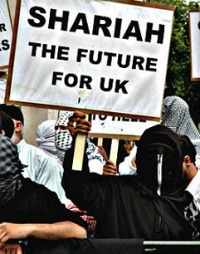
The Home Office has launched an independent review into the application of sharia law in England and Wales.

Professor Mona Siddiqui of Edinburgh University, a specialist in Islamic and inter-religious studies, will lead a panel of experts that includes family law barrister Sam Momtaz, of 1 Garden Court, retired high court judge Sir Mark Hedley and family lawyer Anne Marie Hutchinson QC, partner at Dawson Cornwell, whose expertise includes jurisdictional disputes on divorce, child abduction, forced marriage disputes, children’s law and honour-based violence.
Home Secretary Theresa May noted that, while many people benefit from the guidance of sharia councils, there was evidence that some councils may be legitimising forced marriage, discriminating against women in divorce settlements and acting in other unacceptable ways.

The review will explore whether, and to what extent, sharia law is incompatible with the law in England and Wales, and the ways in which it may be being misused or exploited. It is due to complete its review in 2017.

See Sharia Law

Key Events & Deaths on this day in Northern Ireland Troubles
1st June
——————————————–
Thursday 1 June 1978
David Cook, then a member of the Alliance Party (APNI), became the first non-Unionist Lord Mayor of Belfast. Cook secured this post because of a dispute between Unionist councillors.
[It was not until 1997 that a Catholic became Lord Mayor of Belfast.]
Roy Mason, then Secretary of State for Northern Ireland, held talks with Irish ministers in Dublin.
Tuesday 1 June 1982

Robert Richardson, then a Lieutenant-General, succeeded Richard Lawson as General Officer Commanding (GOC) of the British Army in Northern Ireland.
Friday 1 June 1984
Reagan Visit to Ireland

Ronald Reagan, then President of the United States of America (USA), began a four-day visit to the Republic of Ireland.
Thursday 1 June 1989


Two men were sentenced to life imprisonment for the murder of two British Army corporals on 19 March 1988.

[This was the first in a number of trials connected with the killings.]
Friday 1 June 1990
Two British soldiers were killed by the Irish Republican Army (IRA) in separate incidents in England and Germany.
Monday 1 June 1992

A Democratic Unionist Party (DUP) councillor was elected Mayor in Derry with the backing of the Social Democratic and Labour Party (SDLP).
[The SDLP had a policy of rotating the posts of Mayor and Deputy Mayor between Nationalist and Unionist candidates.]
Tuesday 1 June 1993
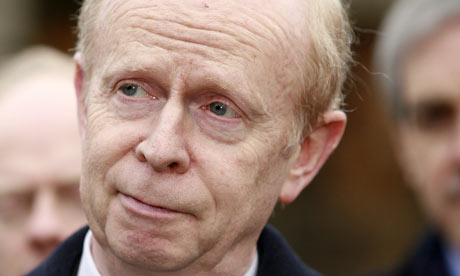
Reg Empey, then a Ulster Unionist Party (UUP) councillor, was elected as Lord Mayor of Belfast. Hugh Smyth, then a Progressive Unionist Party (PUP) councillor, was elected as Deputy Lord Mayor.
Wednesday 1 June 1994

Dick Spring, then Tánaiste (deputy Irish Prime Minister and Minister for Foreign Affairs), told the Daíl that the key to Sinn Féin (SF) joining political talks was a permanent cessation of violence.
He said there would also have to be verification of the handing over of weapons.
Thursday 1 June 1995
Alasdair McDonnell, then a Social Democratic and Labour Party (SDLP) councillor, was elected Deputy Lord Mayor of Belfast. McDonnell was the first Nationalist councillor to hold this position.
[The first Nationalist councillor to be elected Lord Mayor was appointed on 2 June 1997.]
Sunday 1 June 1997

Gregory Taylor (41), an off-duty Royal Ulster Constabulary (RUC) Constable, died following a beating he received from a Loyalist mob. Taylor was beaten and kicked to death outside a pub in Ballymoney, County Antrim, by a group of Loyalist bandsmen.
Taylor had been attacked after a row over the RUC’s position on a Apprentice Boys of Derry parade in Dunloy, County Antrim.
[It was later disclosed that Taylor had used his mobile phone to try to summon help, prior to the attack, from the local police station but no car was available to come to his aid. Initially eight men were charged with his murder including the son of an RUC officer, but a number of these were released when the case came to trial.
Two men were sentenced to life imprisonment but were later released under the terms of the Good Friday Agreement. Two other men pleaded guilty to manslaughter and were sentenced to four years imprisonment.]
Monday 1 June 1998

Marjorie (Mo) Mowlam, then Secretary of State for Northern Ireland, delivered a speech on the results of the referendum. David Alderdice, then an Alliance Party of Northern Ireland (APNI) councillor in Belfast, was elected as Lord Mayor of Belfast.
In Derry the Nationalist controlled council elected a Democratic Unionist Party (DUP) Mayor and a Sinn Féin (SF) Deputy Mayor.
[For many years in Derry the Social Democratic and Labour Party (SDLP) had adopted the policy of rotating the position of Mayor between Nationalist and Unionist parties.]
Tuesday 1 June 1999
Marie Moor, then Sinn Féin (SF) councillor, was elected as deputy Lord Mayor of Belfast. This was the first SF member to attain this position.
Robert Stoker, then Ulster Unionist Party (UUP) councillor, was elected as Lord Mayor.
Bertie Ahern, then Taoiseach (Irish Prime Minister), appealed for further information on where the Irish Republican Army (IRA) had placed the bodies of the ‘disappeared’.
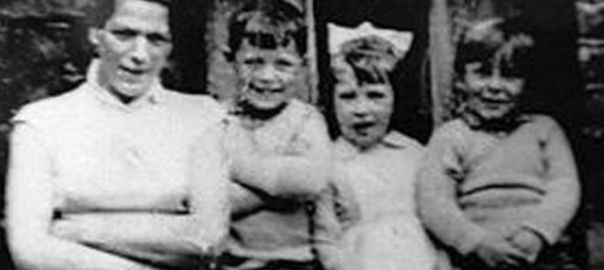
Ahern hoped any information would be passed to the Garda Síochána (the Irish police) and members of the Independent Commission for the Location of Victims Remains (ICLVR). He was replying to Mr Quinn, then Labour Party leader, who referred to the “extraordinary agony” which the families were going through.
See The Disappeared
Thursday 1 June 2000

There was an explosion in the early hours of the morning at Hammersmith Bridge in London. The explosion caused some damage to the bridge but no injuries. It was believed that the bomb attack was carried out by dissident republicans.
——————————————
Remembering all innocent victims of the Troubles
Today is the anniversary of the death of the following people killed as a results of the conflict in Northern Ireland
“To live in hearts we leave behind is not to die
– Thomas Campbell
To the innocent on the list – Your memory will live forever
– To the Paramilitaries –
There are many things worth living for, a few things worth dying for, but nothing worth killing for.
5 People lost their lives on the 1st June between 1975 – 1997
——————————————
01 June 1975
Margaret Kilfedder (61)
Protestant
Status: Civilian (Civ),
Killed by: Irish Republican Army (IRA)
Killed in bomb attack on her home, Garrison, County Fermanagh. House previously owned by Ulster Defence Regiment member.
——————————————
01 June 1985
Roy McAlpine (24)
Protestant
Status: Ulster Volunteer Force (UVF),
Killed by: Ulster Volunteer Force (UVF)
Shot outside friend’s home, Annadale Flats, Ballynafeigh, Belfast. Internal Ulster Volunteer Force (UVF) dispute.
——————————————
01 June 1990

Robert Davies (19)
nfNIB
Status: British Army (BA),
Killed by: Irish Republican Army (IRA)
Off duty. Shot while sitting on bench at railway station, Lichfield, Staffordshire, England.
——————————————
01 June 1990
Michael Dillon-Lee (34)
nfNIE
Status: British Army (BA),
Killed by: Irish Republican Army (IRA)
Off duty. Shot outside his home, Dortmund, West Germany.
——————————————
01 June 1997
Gregory Taylor (41)
Protestant
Status: Royal Ulster Constabulary (RUC),
Killed by: non-specific Loyalist group (LOY)
Off duty. Beaten to death, outside Kelly’s Bar, Church Street, Ballymoney, County Antrim.
——————————————

Key Events & Deaths on this day in Northern Ireland Troubles
31st May
——————-
Saturday 31 August 1968

A delegation from the Northern Ireland Civil Rights Association (NICRA) met with members of the Derry Housing Action Committee (DHAC) to discuss the proposed march.
An ad-hoc Civil Rights Committee was established to organise the march on Saturday 5 October 1968.
[The Committee did not operate as anticipated and effective control of the march fell to Eamonn McCann and Eamon Melaugh.]
Thursday 31 May 1973

Loyalist paramilitaries carried out three bomb and gun attacks on Catholic owned public houses in Belfast, killing 2 men and injuring over 20 people.
In the first attack at 8.30pm a Loyalist gunman believed to be a member of the Ulster Freedom Fighters (UFF), a covername for the Ulster Defence Association (UDA), opened fire on customers in Muldoon’s Bar with a Sterling sub-machine gun (SMG).
A bomb was also thrown into the bar. Thomas Curry (50), a civilain sea captain from Preston in England, was killed in the attack.
[It was latter revealed that the gun used in the attack had been stolen from a Ulster Defence Regiment (UDR) base on 23 October 1972 (Irish News; 3 May 2006).]

Later there was a bomb attack on McGlade’s Bar in Donegall Street in which Gerard Barnes (31), a Catholic civilian, was killed as he walked pass the bar. Members of the Ulster Volunteer Force (UVF) were believed to be responsible.
Friday 31 May 1974

Merlyn Rees, then Secretary of State for Northern Ireland, said that the Ulster Workers’ Council (UWC) strike had demonstrated a rise in ‘Ulster Nationalism’ which would have to be taken into account by the Westminster government.
Thursday 31 May 1984

The Lear Fan aircraft company in Belfast announced that almost all 350 jobs at the company would end.
[The company ceased trading in May 1985. The government had invested £45 million in the firm since 1980.]
Wednesday 31 May 1989

Hugh Annesley succeeded John Hermon as the Chief Constable of the Royal Ulster Constabulary (RUC).
Friday 31 May 1991

The Irish Republican Army (IRA) carried out a bomb attack on a Ulster Defence Regiment (UDR) base at Glenanne, County Armagh, and killed three UDR soldiers. The bomb, estimated at 2,000 pounds, was placed in a lorry that was then rolled down a hill and into the perimeter fence.
Wednesday 31 May 1995

Prince Charles began a two day official visit to the Republic of Ireland. It was the first official visit by a member of the British royal family since Irish independence.
While the Prince attended a reception in Dublin Castle there was a protest outside against his visit by approximately 3,000 people.
Saturday 31 May 1997
The Irish Republican Army (IRA) was forced to abandon a bomb in the Poleglass area of Belfast.
John Bruton, the Taoiseach (Irish Prime Minister), called a halt to all further contacts between officials of the Irish government and Sinn Féin (SF).
Loyalist protesters staging a picket outside the Catholic church in Harryville, Ballymena, blocked the road to deny access to the chapel. One man was arrested by the police for disorderly conduct.
——————————————
Remembering all innocent victims of the Troubles
Today is the anniversary of the death of the following people killed as a results of the conflict in Northern Ireland
“To live in hearts we leave behind is not to die
– Thomas Campbell
To the innocent on the list – Your memory will live forever
– To the Paramilitaries –
There are many things worth living for, a few things worth dying for, but nothing worth killing for.
13 People lost their lives on the 31st May between 1973 – 1993
——————————————
31 May 1972
Michael Bruce (27 ) nfNI
Status: British Army (BA),
Killed by: Irish Republican Army (IRA)
Shot by sniper while on British Army (BA) mobile patrol, Kennedy Way, Andersonstown, Belfast
——————————————
31 May 1973
Thomas Curry (50)
nfNI
Status: Civilian (Civ),
Killed by: Ulster Volunteer Force (UVF)
English seaman. Shot during bomb and gun attack on Muldoon’s Bar, Corporation Square, Belfast.
——————————————
31 May 1973

Gerard Barnes (31)
Catholic
Status: Civilian (Civ),
Killed by: Ulster Volunteer Force (UVF)
Passerby, killed when bomb exploded outside McGlade’s Bar, Donegall Street, Belfast.
——————————————
31 May 1974
Alfred Shotter (54)
Catholic
Status: Civilian (Civ),
Killed by: Irish Republican Army (IRA)
Killed by booby trap bomb hidden in dustbin at his former home, Strabane Old Road, Gobnascale, Derry
——————————————
31 May 1975

Eamon Molloy (22)
Catholic
Status: Irish Republican Army (IRA),
Killed by: Irish Republican Army (IRA)
Abducted somewhere in Belfast during May 1975. Remains found, on instructions from the IRA, placed in a coffin, left above ground, in Faughart Cemetary, near Dundalk, County Louth, on 28 May 1999. Alleged informer
——————————————
31 May 1976

Frederick McLoughlin (48)
Catholic
Status: Civilian (Civ),
Killed by: Ulster Volunteer Force (UVF)
Died two weeks after being shot during gun attack on Eagle Bar, Charlemont, County Armagh. He was injured on 15 May 1976.
——————————————
31 May 1981

Colin Dunlop (30)
Protestant
Status: Royal Ulster Constabulary (RUC),
Killed by: Irish Republican Army (IRA)
Shot while guarding patient at Royal Victoria Hospital, Falls Road, Belfast.
——————————————
31 May 1981
Michael O’Neill (34)
nfNI
Status: British Army (BA),
Killed by: Irish Republican Army (IRA)
Killed by booby trap bomb in abandoned car, Drumalane Road, Newry, County Down.
——————————————
31 May 1987

Patrick Cunningham (27)
Catholic
Status: Irish National Liberation Army (INLA),
Killed by: Irish National Liberation Army (INLA)
Abducted somewhere in the County Armagh area during May 1987. Found shot, in outbuilding of unoccupied farm, Errybane, near Castleblayney, County Monaghan, on 8 December 1987.
Internal Irish National Liberation Army (INLA) dispute.
——————————————
31 May 1991
Paul Blakely (30)
Protestant
Status: Ulster Defence Regiment (UDR),
Killed by: Irish Republican Army (IRA)
Killed by bomb left in abandoned lorry outside Glenanne British Army (BA) base, near Mount Norris, County Armagh.
——————————————
31 May 1991

Robert Crozier (46)
Protestant
Status: Ulster Defence Regiment (UDR),
Killed by: Irish Republican Army (IRA)
Killed by bomb left in abandoned lorry outside Glenanne British Army (BA) base, near Mount Norris, County Armagh.
——————————————
31 May 1991

Sydney Hamilton (44)
Protestant
Status: Ulster Defence Regiment (UDR),
Killed by: Irish Republican Army (IRA)
Killed by bomb left in abandoned lorry outside Glenanne British Army (BA) base, near Mount Norris, County Armagh.
——————————————
31 May 1993
Christopher Wren (34)
Protestant
Status: Royal Irish Regiment (RIR),
Killed by: Irish Republican Army (IRA)
Off duty. Killed by booby trap bomb attached to his car while travelling along Carrydarragh Road, Moneymore, County Derry.
——————————————

Key Events & Deaths on this day in Northern Ireland Troubles
30th May
———————————
Wednesday 30 May 1973
District Council Elections

Local government elections were held in Northern Ireland based on the new 26 District Councils.
The elections were contested on a ‘proportional representation’ (PR) basis, using the single transferable vote (STV) system, for the first time in Northern Ireland since 1920. The turnout for the election was 68.1 per cent of the electorate.
There were a number of parties which were contesting elections in Northern Ireland for the first time, including: Alliance Party, Democratic Unionist Party (DUP), Republican Clubs, Social Democratic and Labour Party (SDLP), and Vanguard.
The Ulster Unionist Party (UUP) took 41.4 per cent of the vote, while the SDLP won almost all of the Nationalist / Catholic vote.
[See the page on election results for full details of the local government results.]
Thursday 30 May 1974
The Northern Ireland Assembly was prorogued for a period of four months.
[Public Records 1974 – Released 1 January 2005: Memo written by Harold Wilson, then British Prime Minister, in which he considers what might be done if there was a resumption of the strike.]
Monday 30 May 1977
A statement written by four members of the Church of Ireland, who were also graduates of Trinity College Dublin, appeared in the Irish Times and other newspapers.
The statement contained an apology for the deeds of the ‘Ascendancy Church’ in its dealing with the Catholics of Ireland.
Monday 30 May 1983
First Meeting of New Ireland Forum
The first meeting of the New Ireland Forum took place in Dublin Castle, Republic of Ireland.
Sinn Féin (SF) was excluded because the renunciation of violence was made an essential prerequisite to joining the Forum. The Ulster Unionist Party (UUP), the Democratic Unionist Party (DUP), and the Alliance Party of Northern Ireland (APNI) all refused to attend.

The Forum consisted of eight members of Fine Gael (FG), nine members of Fianna Fáil (FF), five members of Irish Labour, and five members of the Social Democratic and Labour Party (SDLP).
[ PRONI Records – May 1983.]
Monday 30 May 1994

At a press conference in Belfast, Ian Paisley, then leader of the Democratic Unionist Party (DUP), described James Molyneaux, then leader of the Ulster Unionist Party (UUP), as:
“a Judas Iscariot”.
[On Wednesday 1 June 1994, Molyneaux said that the remark was “a shattering blow” to Unionist unity.]
Tuesday 30 May 1995
An Inquest opened in Craigavon, County Armagh, into the killing of 8 Irish Republican Army (IRA) members and one other person at Loughgall, County Armagh, on 8 May 1987.
See Loughgall Amush
Thursday 30 May 1996
Forum Elections
Elections to the proposed Northern Ireland Forum and all-party negotiations were held across Northern Ireland.

The most significant outcome was that Sinn Féin (SF) attracted a record vote of 15.5%. [RESULTS: Turnout – 64.7%, 754,296; Ulster Unionist Party (UUP) – 30 seats, 24.2%; Social Democratic and Labour Party (SDLP) – 21 seats, 21.4%; Democratic Unionist Party (DUP) – 24 seats, 21.4%; Sinn Féin (SF) – 17 seats, 15.5%; Alliance Party of Northern Ireland (APNI) – 7 seats, 6.5%; United Kingdom Unionists (UKU) – 3 seats, 3.7%; Progressive Unionist Party (PUP) – 2 seats, 3.5%; Ulster Democratic Party (UDP) – 2 seats, 2.2%; Northern Ireland Women’s Coalition (NIWC) – 2 seats, 1.0%; Labour – 2 seats, 0.8%.]
Friday 30 May 1997
Representatives of all of Northern Ireland political parties flew to South Africa for a conference with those who had negotiated the peace settlement in that country.
The conference was organised by Padraig O’Malley. Unionists only agreed to take part after assurances that there would be separate facilities so as to avoid direct contact with the Sinn Féin (SF) representatives.
Ronnie Flanagan, then Chief Constable of the Royal Ulster Constabulary (RUC), gave an interview to the BBC in which he said that major reform of the RUC would take place following an Irish Republican Army (IRA) ceasefire.
Saturday 30 May 1998

There were disturbances on the Garvaghy Road in Portadown following a ‘junior’ Orange Order parade in the area.
Nationalists from the Garvaghy Road threw petrol bombs at police lines, the police responded with plastic baton rounds. Several people were injured during the clashes.
[Rioting continued in the area on the following evening.]

The Gaelic Athletic Association (GAA) voted to retain ‘Rule 21’ which bans members of the Royal Ulster Constabulary (RUC) and British Army from joining the GAA.
However, a motion was agreed which pledged the organisation to removing the rule when “effective steps are taken to implement the amended structures and policing arrangements envisaged in the British-Irish agreement.”
[The decision was strongly criticised by Unionist politicians in Northern Ireland.]
Tuesday 30 May 2000
Devolution Restored

The British government restored devolution to the Northern Ireland Assembly and the power-sharing Executive.
——————————————
Remembering all innocent victims of the Troubles
Today is the anniversary of the death of the following people killed as a results of the conflict in Northern Ireland
“To live in hearts we leave behind is not to die
– Thomas Campbell
To the innocent on the list – Your memory will live forever
– To the Paramilitaries –
There are many things worth living for, a few things worth dying for, but nothing worth killing for.
6 People lost their lives on the 30th May between 1972 – 1993
——————————————
30 May 1972

Joan Scott (12)
Protestant
Status: Civilian (Civ),
Killed by: Irish Republican Army (IRA)
Died three days after being shot during sniper attack on Royal Ulster Constabulary (RUC) mobile patrol, Oldpark Road, Belfast.
——————————————
30 May 1972
Marcel Doglay (28)
nfNI
Status: British Army (BA),
Killed by: Irish Republican Army (IRA)
Killed when time bomb exploded inside Springfield Road Royal Ulster Constabulary (RUC) / British Army (BA) base, Belfast.
——————————————
30 May 1976
John Ritchie (31)
Catholic
Status: Civilian (Civ),
Killed by: non-specific Loyalist group (LOY)
Milkman. Found shot in his milk float, Springhill Avenue, Ballymurphy, Belfast.
——————————————
30 May 1977

Malachy Gregory (39)
Catholic
Status: Civilian (Civ),
Killed by: Irish Republican Army (IRA)
Shot at his workplace, College Square North, Belfast. Off duty Ulster Defence Regiment member intended target.
——————————————
30 May 1993

Edward McHugh (65)
Catholic
Status: Civilian (Civ),
Killed by: Red Hand Commando (RHC)
Shot at his home, Canberra Park, Dundonald, Belfast.
——————————————

Key Events & Deaths on this day in Northern Ireland Troubles
29th May
—————————
Friday 29 May 1970

The Macrory Report, Review Body on Local Government in Northern Ireland (Cmd 546), dealing with local government structures was published.
The main recommendation is the abolition of the old structure of local government and its replacement with 26 new district councils.
The new system would also involve the creation of area boards to manage the health, education, and library services in Northern Ireland.
It was envisaged that the control of the new system would rest with the Northern Ireland government.
[Following the introduction of direct rule on 30 March 1972 much of the control of the main services passed effectively to Westminster. Elected councillors only had responsibility for a number of matters including refuse collection, public conveniences, crematoria and cemeteries (‘bins, bogs and burials’ as it was termed in Northern Ireland). The term ‘the Macrory Gap was coined to highlight the lack of local accountability on the part of those controlling the centralised services.]
Monday 29 May 1972
Official IRA Ceasefire
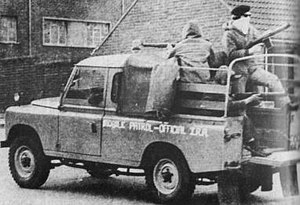
The Official Irish Republican Army (OIRA) announced that it was calling a ceasefire.
[Although the OIRA was involved in a number of incidents following the ceasefire it was to mark the end of the military wing of Official Sinn Féin (OSF).]
Wednesday 29 May 1974
A return to work began across Northern Ireland. The leaders of the Ulster Workers’ Council (UWC) officially called off the strike.

see Sunningdale Ulster Workers’ Council Strike
Friday 29 May 1981
The names of four prisoners on hunger strike together with five other Republican prisoners, were put forward as candidates in the forthcoming general election in the Republic of Ireland.
Saturday 29 May 1982

President John F. Kennedy in motorcade in Cork on June 27, 1963
A United States of America (USA) Congress group called Friends of Ireland paid a fact-finding visit to Northern Ireland.
Thursday 29 May 1986

Tom King, then Secretary of State for Northern Ireland, informed the House of Commons of the decision to dissolve the Northern Ireland Assembly.
Tuesday 29 May 1990
The Northern Ireland Police Federation passed a vote of ‘no confidence’ in the Northern Ireland Office (NIO) and Peter Brooke, then Secretary of State for Northern Ireland.
Thursday 29 May 1997

Bill Clinton, then President of the United States of America, paid a visit to London. During a meeting with Tony Blair, then British Prime Minister, Clinton gave his support to the Labour government’s approach to Northern Ireland. Clinton called for a renewed Irish Republican Army (IRA) ceasefire and for Sinn Féin (SF) to be then allowed to enter all-party talks.

Marjorie (Mo) Mowlam, then Secretary of State for Northern Ireland, and Dick Spring, the Tánaiste (deputy Irish Prime Minister and Minister for Foreign Affairs), held a meeting at Malahide near Dublin, Republic of Ireland.
Eight Loyalist prisoners asked the prison authorities to be moved to the Loyalist Volunteer Force (LVF) ‘wing’ of the Maze Prison.
Friday 29 May 1998
Details were released of the salaries that would be paid to members of the proposed Northern Ireland Assembly.
Saturday 29 May 1999

A ‘Junior’ Orange Order parade took place close to the mainly Catholic Garvaghy Road in Portadown, County Armagh.
There were disturbances following the parade with 13 Royal Ulster Constabulary (RUC) officers and four civilians injured.
RUC officers were reported to have fired 50 baton rounds (plastic bullets) during the disturbances.

The Independent Commission for the Location of Victims Remains (ICLVR) was informed that the body of Jean McConville, who had been abducted from her home in Belfast in 1972 by the Irish Republican Army (IRA), was buried under a car park at Templetown beach, five miles from Carlingford, County Louth.
[After several extensive excavations over a number of weeks nothing was found. McConville’s body was discovered by accident in 2004.]
See The Disappeared
There was further controversy at the Bloody Sunday Inquiry into the killings on 30 January 1972 when it became clear that George Robertson, then British Secretary for Defence, was supporting 17 members of the Parachute Regiment who were claiming anonymity on the grounds that they would be in danger if their names were revealed.
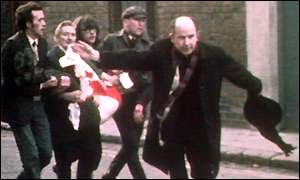
See Bloody Sunday
Monday 29 May 2000

Edmund McCoy (28), a Catholic civilian, died several hours after being shot while in the Motte ‘n’ Bailey Bar, Dunmurry, near Belfast.
[Republican paramilitaries were believed to have been responsible for the shooting but no group claimed responsibility.]
——————————————
Remembering all innocent victims of the Troubles
Today is the anniversary of the death of the following people killed as a results of the conflict in Northern Ireland
“To live in hearts we leave behind is not to die
– Thomas Campbell
To the innocent on the list – Your memory will live forever
– To the Paramilitaries –
There are many things worth living for, a few things worth dying for, but nothing worth killing for.
5 People lost their lives on the 29th May between 1972 – 2000
——————————————
29 May 1972
Thomas Wardlow (32)
Catholic
Status: Civilian (Civ),
Killed by: Ulster Volunteer Force (UVF)
Shot from passing car while walking along Millfield, Belfast.
——————————————
29 May 1977
Roland Hill (74)
Protestant
Status: Civilian (Civ),
Killed by: non-specific Loyalist group (LOY)
Died one week after being shot during armed robbery at Ewart’s Bowling Club, Somerdale Park, Belfast.
——————————————
29 May 1979
George Surgeoner (28)
Protestant
Status: Ulster Defence Association (UDA),
Killed by: non-specific Loyalist group (LOY)
Died three days after being shot while in Royal Bar, Shankill Road, Belfast
——————————————
29 May 1984
Stephen Anderson (22)
nfNI
Status: British Army (BA), Killed by: Irish Republican Army (IRA)
Killed in land mine attack on British Army (BA) foot patrol, Mounthill, near Crossmaglen, County Armagh.
——————————————
29 May 2000
Edmund McCoy (28)
Catholic
Status: Civilian (Civ),
Killed by: non-specific Republican group (REP)
Died several hours after being shot, while in Motte ‘n’ Bailey Bar, Kingsway, Dunmurry, near Belfast, County Antrim.
——————————————

Key Events & Deaths on this day in Northern Ireland Troubles
28th May
——————————–
Wednesday 28 August 1968

Gerry Fitt, then an MP, tabled a House of Commons motion, which was signed by 60 Labour Party backbenchers, which criticised RUC action in Dungannon on 24 August 1968 and demanded that:
“citizens of Northern Ireland should be allowed the same rights of peaceful demonstration as those in other parts of the United Kingdom”.
Thursday 28 May 1970 Arms Trial Began
Charles Haughey and Neil Blaney, both former Irish government ministers, together with two other men James Kelly (Captain), then an Irish Army Intelligence Officer, and John Kelly, a Belfast Republican, were charged in a Dublin court with conspiracy to illegally import arms for use by the Irish Republican Army (IRA).
It was alleged that the arms were to be smuggled to the IRA in Northern Ireland. The men denied any involvement in the affair.
[This was the first day of the ‘Arms Trial’. Blaney was found not guilty on 2 July 1970, Haughey and the others were found not guilty on 23 October 1970.
Sunday 28 February 1971
A British soldier died in Derry as a result of inhaling chemicals from fire extinguisers that were used to put out a fire inside the vehicle he was travelling in. The vehicle had been attacked with petrol bombs.
Sunday 28 May 1972
Eight people were killed when an Irish Republican Army (IRA) bomb prematurely exploded outside a house in Anderson Street, Short Strand, Belfast. Four of those killed were members of the IRA.
Tuesday 28 May 1974
Executive Collapsed, Direct Rule Resumed
Day 14 of the UWC strike

The crisis came to a head. Brian Faulkner resigned as Chief Executive following a refusal by Merlyn Rees, then Secretary of State for Northern Ireland, to meet with representatives from the Ulster Workers’ Council (UWC).
Faulkner’s Unionist colleagues also resigned. This effectively marked the end of the Northern Ireland Executive.

A large demonstration of farmers in tractors blocked the entrance to the Stormont parliament buildings and also much of the Upper Newtownards Road. News of the collapse of the Northern Ireland Executive spread to the protestors. Celebrations took place in Protestant areas across the region.
[Public Records 1974 – Released 1 January 2005: Telegram from General Idi Amin Dada, then President of the Republic of Uganda, to Harold Wilson, then British Prime Minister. Amin offers to host a conference in Uganda where representives of the conflict in Northern Ireland could meet.]
Friday 28 May 1976


David Robinson & Paul Hamill
A Catholic and a Protestant civilian were killed in a bomb attack on the Club Bar, University Road, Belfast. The attack was carried out by Loyalist paramilitaries.
Thursday 28 May 1981


Charles Maguire and George McBrearty
Charles Maguire (20) and George McBrearty (24), both members of the IRA, were shot dead as they approached a car on the Lone Moor Road in Derry.
The car contained undercover members of the British Army.

Mervyn Robinson
A member of the RUC was shot dead by the IRA near Bessbrook, County Armagh.
Martin Hurson, an Irish Republican Army (IRA) prisoner in the Maze Prison, joined the hunger strike to replace Brendan McLaughlin who had been taken off the strike on 26 May 1981.
Margaret Thatcher, then British Prime Minister, paid a visit to Northern Ireland and made a statement indicating the British government’s belief that the hunger strike was the ‘last card’ of the IRA.
Monday 28 May 1990
Peter Brooke, then Secretary of State for Northern Ireland, met with Charles Haughey, then Taoiseach (Irish Prime Minister), and Gerry Collins, then Minister of Foreign Affairs.
Sunday 28 May 1995

There was serious rioting on the Shankill Road, west Belfast. During the disturbances 17 Royal Ulster Constabulary (RUC) officers were injured.
A shot was also fired at the RUC.
Tuesday 28 May 1996

Dick Spring, then Tánaiste (deputy Irish Prime Minister and Minister for Foreign Affairs), met Patrick Mayhew, then Secretary of State for Northern Ireland, in Dublin after which they announced that George Mitchell, a former United States Senator, should play a key role in the proposed all-party talks.
Wednesday 28 May 1997
The civil liberties group Human Rights Watch published a report that was highly critical of the actions of the Royal Ulster Constabulary (RUC) during the events surrounding Drumcree in July 1996.
The report claimed that the RUC had used excessive force, been indiscriminate in its use of plastic bullets, failed to remove illegal roadblocks manned by the Orange Order and Loyalists, and had abandoned its “traditional policing function in some areas”.
Marjorie (Mo) Mowlam, then Secretary of State for Northern Ireland, held a meeting with representatives of the Apprentice Boys of Derry (ABD), the Grand Orange Lodge, Ballynafeigh Orangemen, and the Ulster Civil Rights group.
The meeting was called to discuss the forthcoming ‘marching season’. John Bruton, then Taoiseach (Irish Prime Minister), briefed the relatives of those killed on ‘Bloody Sunday’ on a report being prepared by the Irish government on the killings on 30 January 1972. Bruton said that a “grave injustice” had been done to the families of the dead.
[The report contained new information on events of the day and was eventually presented to the British government.]
Thursday 28 May 1998

Martin McGuinness, then Vice-President of Sinn Féin (SF), held a meeting with Marjorie (Mo) Mowlam, then Secretary of State for Northern Ireland.
Following the meeting McGuinness warned against “falling into the trap of trying to make decommissioning the most important item on the agenda”. A concert featuring Elton John was held in the grounds of Stormont.
Friday 28 May 1999
Body of One of the ‘Disappeared’ Recovered

The body of Eamon Molloy, one of the ‘disappeared’ who had been missing since 1975, was found above ground in a new coffin in a cemetery in County Louth, Republic of Ireland.
Garda Síochána (the Irish police) went to the site following information given by the Irish Republican Army (IRA) to the Independent Commission for the Location of Victims’ Remains (ICLVR). The IRA passed on information about the location of nine bodies at six sites in four counties in the Republic of Ireland.

The ICLVR was established jointly by Marjorie (Mo) Mowlam, then Secretary of State for Northern Ireland, and Mr O’Donoghue, then Minister for Justice in the Republic of Ireland.
The discovery marked the beginning of digging at a number of locations in Counties Louth, Monaghan, Meath, and Wicklow (all in the Republic of Ireland).
see The Disappeared
There was a pipe-bomb attack on the home of a Catholic family in Armagh. The device broke a window and caused minor damage to the house; the family escaped unharmed. The attacked was carried out by Loyalist paramilitaries.
——————————————
Remembering all innocent victims of the Troubles
Today is the anniversary of the death of the following people killed as a results of the conflict in Northern Ireland
“To live in hearts we leave behind is not to die
– Thomas Campbell
To the innocent on the list – Your memory will live forever
– To the Paramilitaries –
There are many things worth living for, a few things worth dying for, but nothing worth killing for.
16 People lost their lives on the 28th between 1972 – 1986
——————————————
28 May 1972

James Teer (21)
Catholic
Status: Civilian (Civ),
Killed by: Ulster Volunteer Force (UVF)
Shot from passing car while walking along Springfield Road, Belfast
——————————————
28 May 1972
Joseph Fitzsimmons (17)
Catholic
Status: Irish Republican Army (IRA),
Killed by: Irish Republican Army (IRA)
Died in premature bomb explosion in house, Anderson Street, Short Strand, Belfast.
——————————————
28 May 1972
John McIlhone (17)
Catholic
Status: Irish Republican Army (IRA),
Killed by: Irish Republican Army (IRA)
Died in premature bomb explosion in house, Anderson Street, Short Strand, Belfast.
——————————————
28 May 1972
Edward McDonnell (29)
Catholic
Status: Irish Republican Army (IRA),
Killed by: Irish Republican Army (IRA)
Died in premature bomb explosion in house, Anderson Street, Short Strand, Belfast.
——————————————
28 May 1972
Martin Engelen (19)
Catholic
Status: Irish Republican Army (IRA),
Killed by: Irish Republican Army (IRA)
Died in premature bomb explosion in house, Anderson Street, Short Strand, Belfast.
——————————————
28 May 1972
Henry Crawford (39)
Catholic
Status: Civilian (Civ),
Killed by: Irish Republican Army (IRA)
Died in premature bomb explosion in house, Anderson Street, Short Strand, Belfast.
——————————————
28 May 1972
Mary Clarke (27)
Catholic
Status: Civilian (Civ),
Killed by: Irish Republican Army (IRA)
Died in premature bomb explosion in house, Anderson Street, Short Strand, Belfast
——————————————
28 May 1972
John Nugent (31)
Catholic
Status: Civilian (Civ),
Killed by: Irish Republican Army (IRA)
Died in premature bomb explosion in house, Anderson Street, Short Strand, Belfast.
——————————————
28 May 1972
Geraldine McMahon (17)
Catholic
Status: Civilian (Civ),
Killed by: Irish Republican Army (IRA)
Died in premature bomb explosion in house, Anderson Street, Short Strand, Belfast.
——————————————
28 May 1976
David Robinson (23)
Protestant
Status: Civilian (Civ),
Killed by: non-specific Loyalist group (LOY)
Killed in bomb attack on Club Bar, University Road, Belfast.
——————————————
28 May 1976
Paul Hamill (21)
Catholic
Status: Civilian (Civ),
Killed by: non-specific Loyalist group (LOY)
Killed in bomb attack on Club Bar, University Road, Belfast
——————————————
28 May 1981
Mervyn Robinson (47)
Protestant
Status: Royal Ulster Constabulary (RUC),
Killed by: Irish Republican Army (IRA)
Off duty. Shot outside Wayside Inn, Whitecross, near Bessbrook, County Armagh.
——————————————
28 May 1981
Charles Maguire (20)
Catholic
Status: Irish Republican Army (IRA),
Killed by: British Army (BA)
Shot by undercover British Army (BA) members, as he approached stationary car, Lone Moor Road, Creggan, Derry.
——————————————
28 May 1981
George McBrearty (24)
Catholic
Status: Irish Republican Army (IRA),
Killed by: British Army (BA)
Shot by undercover British Army (BA) members, as he approached stationary car, Lone Moor Road, Creggan, Derry.
——————————————
28 May 1985

Gary Smith (19)
Protestant
Status: Civilian (Civ),
Killed by: Irish Republican Army (IRA)
Royal Ulster Constabulary (RUC) applicant. Shot as he parked his car Millfield, Belfast.
——————————————
28 May 1986

Brian Brown (37)
Protestant
Status: Ulster Defence Regiment (UDR),
Killed by: Irish Republican Army (IRA)
Killed by remote controlled bomb hidden in garage, detonated when Ulster Defence Regiment (UDR) foot patrol approached, Newry Road, Kilkeel, County Down.
——————————————

Key Events & Deaths on this day in Northern Ireland Troubles
27th May
————————-
Tuesday 27 August 1968

The Derry Housing Action Committee (DHAC) organised another protest in the Guildhall’s council chamber. Immediately after the protest Eamon Melaugh phoned the Northern Ireland Civil Rights Association (NICRA) and invited them to organise a march in Derry.
Monday 27 May 1974
Day 13 of the UWC strike

Gas supplies to Belfast and other outlying districts were affected by a drop in pressure and a warning was issued that consumers should switch off their supply at the mains.
The British Army took charge of 21 petrol stations throughout Northern Ireland. These petrol stations were to supply petrol to essential users who could obtain a permit from the Ministry of Commerce.
The Ulster Workers’ Council (UWC) retaliated following the take over of the petrol stations. The UWC announced that the British Army would have to undertake the supply of all essential services including basics such as bread and milk. There was a call issued for workers to stop their assistance in the provision of essential services.
The UWC also stated that the Ballylumford power station, County Antrim, would close at midnight.

[Public Records 1974 – Released 1 January 2005: Memo from Merlyn Rees, then Secretary of Sate for Northern Ireland, to Harold Wilson, then British Prime Minister. In the memo Rees sets out ‘The Short-term Possibilities’ for Northern Ireland and the Executive.] [ Sunningdale; Ulster Workers’ Council Strike. ]
Sunday 27 May 1990
In a gun attack in Roermond, Netherlands, the Irish Republican Army (IRA) shot and killed two Australian lawyers on holiday.
It was claimed that the men were mistaken for off-duty British Army soldiers. [It was believed that the killings led to a drop in support for the IRA in Australia.]
Thursday 27 May 1993
Queen Meets President Mary Robinson, then President of the Republic of Ireland, travelled to London to attend a meeting with Queen Elizabeth at Buckingham Palace.
[The meeting was the first official contact between an Irish president and a British monarch.]

Michael Ancram replaced Jeremy Hanley at the Northern Ireland Office (NIO) to become the Political Development Minister.
Wednesday 27 May 1998
In the aftermath of the Good Friday Agreement the issue of the ‘decommissioning’ of paramilitary weapons began to dominate the political agenda.
[Decommissioning was to prove a stumbling block to the full implementation of the Agreement and the issue was still causing problems in May 2000.]
Thursday 27 May 1999

Leaders of the Presbyterian Church criticised the Orange Order in Portadown, County Armagh, for failing to commend the Christian faith during the Drumcree parade dispute.
Legislation was passed at Westminster and the Oireachtas which guaranteed immunity from prosecution for anyone providing information on the location of the bodies of the ‘disappeared’.
Saturday 27 May 2000
UUC Support Trimble
There was a meeting of the Ulster Unionist Council (UUC), the policy-making body of the Ulster Unionist Party (UUP).
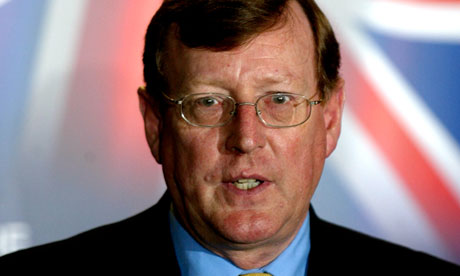
David Trimble, then leader of the UUP, won a motion at the meeting which allowed him to re-enter the power-sharing Executive with Sinn Féin (SF).
The motion was on whether to accept the IRA offer on disarmament as a basis for the return to Stormont. Of the members present 459 voted in favour of a return to Stormont while 403 voted against.
[At a press conference following the UUC meeting it seemed that Trimble set out to offend Sinn Féin by remarking that the party had still to be politically “house-trained”.]
Sunday 27 May 2001

Stephen Manners (40), an ex-member of the Ulster Volunteer Force (UVF), was shot dead while in Jimmy Mac’s Bar, North Street, Newtownards, County Down.
[It was believed that Loyalist paramilitaries carried out the killing although no organisations claimed responsibility.]
——————————————
Remembering all innocent victims of the Troubles
Today is the anniversary of the death of the following people killed as a results of the conflict in Northern Ireland
“To live in hearts we leave behind is not to die
– Thomas Campbell
To the innocent on the list – Your memory will live forever
– To the Paramilitaries –
There are many things worth living for, a few things worth dying for, but nothing worth killing for.
10 People lost their lives on the 27th May between 1972 – 2001
——————————————
27 May 1972
Gerard Duddy (20)
Catholic
Status: Civilian (Civ),
Killed by: non-specific Loyalist group (LOY)
Shot while walking at the junction of Finaghy Road North and Andersonstown Road, Andersonstown, Belfast.
——————————————
27 May 1973

Margaret Hrykiewicz (24)
Catholic
Status: Civilian (Civ),
Killed by: non-specific Loyalist group (LOY)
Found stabbed to death on waste ground, Adela Street, off Antrim Road, Belfast
——————————————
27 May 1975
Patrick O’Reilly (52)
Catholic
Status: Civilian (Civ),
Killed by: Ulster Volunteer Force (UVF)
Shot while driving along road at Scallen, near Irvinestown, County Fermanagh.
——————————————
27 May 1975
Gerard McClenaghan (36)
Catholic
Status: Civilian (Civ),
Killed by: Ulster Volunteer Force (UVF)
Died nearly three months after being injured during gun and bomb attack on Bush Bar, Leeson Street, Lower Falls, Belfast. He was wounded on 4 March 1975.
——————————————
27 May 1976

Gerard Masterson (34)
Catholic
Status: Civilian (Civ),
Killed by: non-specific Loyalist group (LOY)
Shot at his home, Allworthy Avenue, off Antrim Road, Belfast.
——————————————
27 May 1978

Collette Brady (26)
Catholic
Status: Civilian (Civ),
Killed by: Ulster Defence Association (UDA)
Shot while walking along Cavehill Road, Belfast.
——————————————
27 May 1990
Stephen Melrose (24)
nfNIE
Status: Civilian (Civ),
Killed by: Irish Republican Army (IRA)
Australian national. Shot shortly after getting out of car, Town Square, Roermond, Netherlands. Assumed to be an off duty British Army (BA) member.
——————————————
27 May 1990
Nicholas Spanos (28)
nfNIE
Status: Civilian (Civ),
Killed by: Irish Republican Army (IRA)
Australian national. Shot shortly after getting out of car, Town Square, Roermond, Netherlands. Assumed to be an off duty British Army (BA) member.
——————————————
27 May 1991

Edward Spence (26)
Protestant
Status: Royal Ulster Constabulary (RUC),
Killed by: Irish Republican Army (IRA)
Died two days after being shot while on Royal Ulster Constabulary (RUC) foot patrol, Lower Crescent, off University Road, Belfast
——————————————
27 May 2001
Stephen Manners (40)
Protestant
Status: ex-Ulster Volunteer Force (xUVF),
Killed by: non-specific Loyalist group (LOY)
Shot while in Jimmy Mac’s Bar, North Street, Newtownards, County Down.
——————————————

Key Events & Deaths on this day in Northern Ireland Troubles
26th May
———————
Friday 26 May 1972

The Irish Republican Army (IRA) planted a bomb in Oxford Street, Belfast which killed a 64 year old woman.
At approximately 12.20 pm a 34-year-old man was shot and injured in the Silvio Street area of north Belfast.
[On 1 December 2015 the PSNI listed this shooting as one of nine incidents it was investigating in relation to the activities of the British Army’s Military Reaction Force (MRF).]

In the Republic of Ireland the Special Criminal Court was re-instituted to deal with crimes arising out of the Northern Ireland conflict. As part of the measures trial by jury was suspended.
Sunday 26 May 1974
Day 12 of the UWC strike

The leaders of the Ulster Workers’ Council (UWC) strike claimed that support was continuing to grow. The UWC also claimed that its system of permits was working well in maintaining ‘essential services’, particularly the supply of petrol.
The British Army arrested more than 30 men in raids on Protestant areas of Belfast. Gerry Fitt, then Deputy Chief Executive, attended a meeting at the Northern Ireland Office (NIO). The Social Democratic and Labour Party (SDLP) met at 1pm. A meeting of Brian Faulkner’s Unionist ministers also took place.
Tuesday 26 May 1981

Brendan McLaughlin, who had joined the hunger strike on 14 May 1981, was taken off the strike when he suffered a perforated ulcer and internal bleeding.
The Royal Ulster Constabulary (RUC) carried out a raid on the headquarters of the Ulster Defence Association (UDA) in Belfast and discovered a number of illegal weapons.
[At this time the UDA, although a Loyalist paramilitary group, was still a legal organisation and was not ‘proscribed’ until 10 August 1992.]
Sunday 26 May 1985

The Lear Fan aircraft company announced the closure of its Northern Ireland plant. Most of the 350 people that had been employed by the company had lost their jobs following the first announcement about the firm’s future on 31 May 1985.
26 May 1988
James Molyneaux, then leader of the Ulster Unionist Party (UUP) and Ian Paisley, then leader of the Democratic Unionist Party (DUP) met with Tom King, then Secretary of State for Northern Ireland, for what turned out to be the last in the series of ‘talks about talks’.
Sunday 26 May 1991
The Irish Republican Army (IRA) exploded a large bomb in a Protestant housing estate in Cookstown. Thirteen people were injured and over 100 houses were damaged by the explosion
Wednesday 26 May 1993

The European Court of Human Rights considered an appeal against the use, within the United Kingdom (UK), of a period of seven-day detention under the Prevention of Terrorism Act (PTA). The Court rejected the appeal on the grounds that the situation in Northern Ireland justified the detention of suspects for longer than four days.
Monday 26 May 1997

Gransha High School in Bangor, County Down was seriously damaged in an arson attack.
Dick Spring, then Tánaiste (deputy Irish Prime Minister and Minister for Foreign Affairs), held a meeting in Derry with John Hume, then leader of the Social Democratic and Labour Party (SDLP). Following the meeting Spring said that a vote for Sinn Féin (SF) was “a vote for peace”.
This contradicted his coalition partner John Bruton, then Taoiseach (Irish Prime Minister), who had previously said that a vote for SF was a vote for the Irish Republican Army (IRA).

Roisín McAliskey, then being held in prison awaiting a decision about extradition, gave birth to a baby girl (5lb 13oz) at Whittington Hospital in London.
Tuesday 26 May 1998
The Ulster Unionist Party (UUP) took the decision not to allow the anti-agreement MP, Jeffrey Donaldson, to stand for election to the new Northern Ireland Assembly.

The Democratic Unionist Party (DUP) held a news conference in Belfast and said that the party would not set out to wreck the Assembly. At the conference Ian Paisley, then leader of the DUP, accused the Queen of being the “parrot” of Tony Blair, then British Prime Minister.
Wednesday 26 May 1999

The Dáil introduced legislation to extend the deadline for the removal of articles 2 and 3 from the Constitution of the Republic of Ireland. Catholic Bishops called for a task force to be set up in both the Republic of Ireland and Northern Ireland to study the legal and social implications of a World Health Organisation (WHO) charter on alcohol. In their pastoral, The Temperate Way, the bishops pointed out that alcohol is the major dependency problem not just in Ireland but also in Europe.
Friday 26 May 2000
Martin Taylor (35), a member of the Ulster Volunteer Force (UVF), was shot dead while working on wall outside a house in Ballysillan, Belfast.

The Loyalist Volunteer Force (LVF) was believed to be responsible for his killing. The killing was part of a feud between the LVF and the UVF.
——————————————
Remembering all innocent victims of the Troubles
Today is the anniversary of the death of the following people killed as a results of the conflict in Northern Ireland
“To live in hearts we leave behind is not to die
– Thomas Campbell
To the innocent on the list – Your memory will live forever
– To the Paramilitaries –
There are many things worth living for, a few things worth dying for, but nothing worth killing for.
5 People lost their lives on the 26th May between 1972 – 2000
——————————————
26 May 1972
Margaret Young (64)
Protestant
Status: Civilian (Civ),
Killed by: Irish Republican Army (IRA)
Killed in car bomb explosion, Oxford Street, Belfast.
——————————————
26 May 1973

Paul Crummey (4)
Catholic
Status: Civilian (Civ),
Killed by: Irish Republican Army (IRA)
Shot during sniper attack on British Army (BA) foot patrol, Finaghy Road North, Belfast.
——————————————
26 May 1983

Colin Carson (31)
Protestant
Status: Royal Ulster Constabulary (RUC),
Killed by: Irish National Liberation Army (INLA)
Shot outside Cookstown Royal Ulster Constabulary (RUC) base, County Tyrone
——————————————
26 May 1983

Trevor Close (33)
Catholic
Status: Civilian (Civ),
Killed by: Ulster Volunteer Force (UVF)
Shot while delivering milk, Elimgrove Street, off Cliftonville Road, Belfast.
——————————————
26 May 2000
Martin Taylor (35)
Protestant
Status: Ulster Volunteer Force (UVF)
Killed by: Loyalist Volunteer Force (LVF)
Shot while working on wall outside a house, Silverstream Park, Ballysillan, Belfast. Loyalist Volunteer Force (LVF) / Ulster Volunteer Force (UVF) feud
——————————————


 belfastchildis.com