The Lychee and Dog Meat Festival The Lychee and Dog Meat Festival, commonly referred to as Yulin Dog Meat Festival, is an annual celebration held in Yulin, Guangxi, China, during the summer …
Source: Lychee Dog Meat Festival – STOP It NOW!
The Lychee and Dog Meat Festival The Lychee and Dog Meat Festival, commonly referred to as Yulin Dog Meat Festival, is an annual celebration held in Yulin, Guangxi, China, during the summer …
Source: Lychee Dog Meat Festival – STOP It NOW!


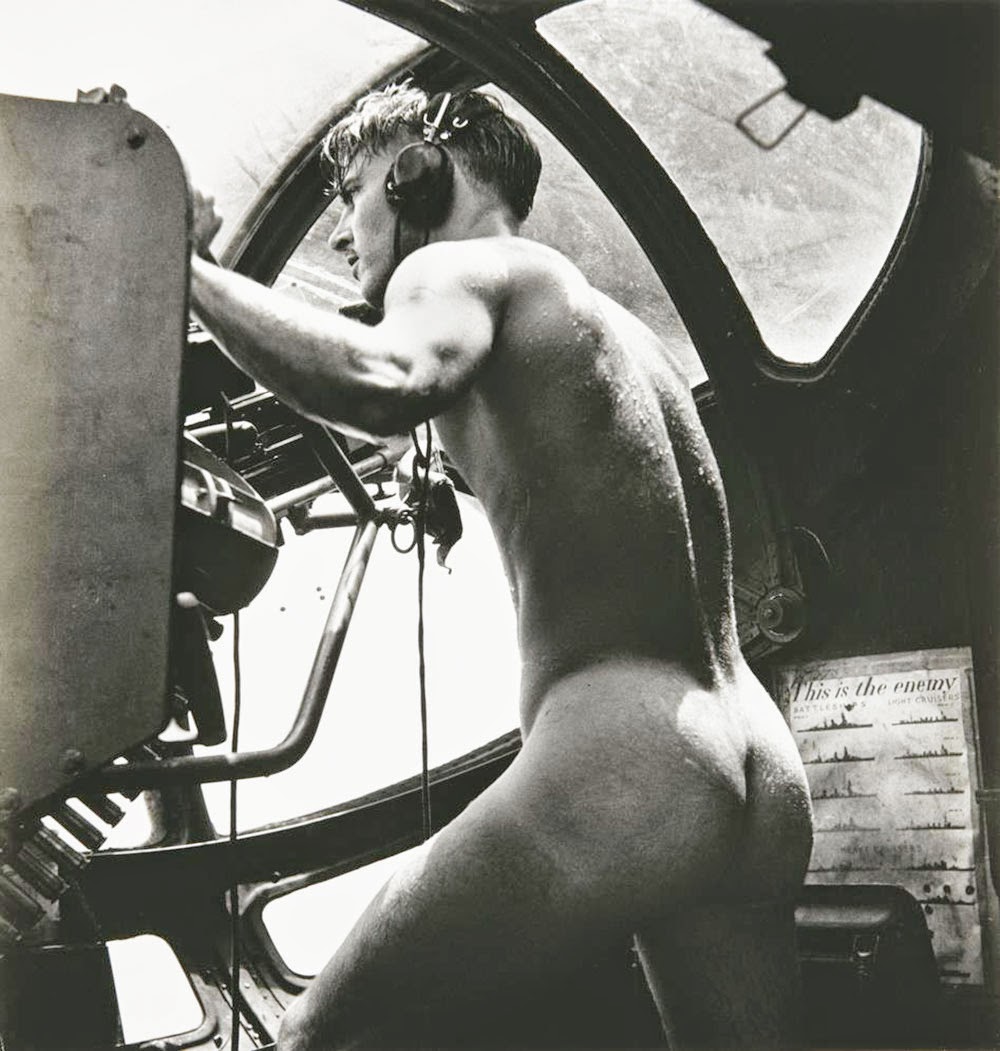
This young crewman of a US Navy “Dumbo” PBY rescue mission has just jumped into the water of Rabaul Harbor to rescue a badly burned Marine pilot who was shot down while bombing the Japanese-held fortress of Rabaul.
Since Japanese coastal defense guns were firing at the plane while it was in the water during take-off, this brave young man, after rescuing the pilot, manned his position as machine gunner without taking time to put on his clothes.
A hero photographed right after he’d completed his heroic act. Naked.

Horace Bristol
Photo taken by Horace Bristol (1908-1997). In 1941, Bristol was recruited to the U.S. Naval Aviation Photographic Unit, as one of six photographers under the command of Captain Edward J. Steichen, documenting World War II in places such as South Africa, and Japan. He ended up being on the plane the gunner was serving on, which was used to rescue people from Rabaul Bay (New Britain Island, Papua New Guinea), when this occurred. In an article from a December 2002 issue of B&W magazine he remembers:
“…we got a call to pick up an airman who was down in the Bay. The Japanese were shooting at him from the island, and when they saw us they started shooting at us. The man who was shot down was temporarily blinded, so one of our crew stripped off his clothes and jumped in to bring him aboard. He couldn’t have swum very well wearing his boots and clothes. As soon as we could, we took off. We weren’t waiting around for anybody to put on formal clothes. We were being shot at and wanted to get the hell out of there. The naked man got back into his position at his gun in the blister of the plane.”
The identity of the gunner has never been established .
Original title: PBY Blister Gunner, Rescue at Rabaul, 1944
—————————–

Navy service, 1944
Horace Bristol (November 16, 1908 – August 4, 1997) was a twentieth-century American photographer, best known for his work in Life. His photos appeared in Time, Fortune, Sunset, and National Geographic magazines.
Bristol was born and raised in Whittier, California, and attended the Art Center of Los Angeles, originally majoring in architecture. In 1933, he moved to San Francisco to work in commercial photography, and met Ansel Adams, who lived near his studio. Through his friendship with Adams, he met Edward Weston, Imogen Cunningham, and other artists. He was copy reader at night for the Los Angeles Times after graduating from Belmont High School.

In 1936, Bristol became a part of Life‘s founding photographers, and in 1938, began to document migrant farmers in California’s central valley with John Steinbeck, recording the Great Depression, photographs that would later be called the Grapes of Wrath collection.
In 1941, Bristol was recruited to the U.S. Naval Aviation Photographic Unit, as one of six photographers under the command of Captain Edward J. Steichen, documenting World War II in places such as South Africa, and Japan.
Bristol helped to document the invasions of North Africa, Iwo Jima, and Okinawa.
Following his documentation of World War II, Bristol settled in Tokyo, Japan, selling his photographs to magazines in Europe and the United States, and becoming the Asian correspondent to Fortune. He published several books, and established the East-West Photo Agency.
Following the death of his wife in 1956, Bristol burned all his negatives, packed his photographs into storage, and retired from photography. He went on to remarry, and have two children. He returned to the United States, and after 30 years, recovered the photographs from storage, to share with his family.
Subsequently he approached his alma mater, Art Center College of Design, where the World War II and migrant worker photographs became the subject of a 1989 solo exhibition. The migrant worker photos would go on to be part of the J. Paul Getty Museum‘s Grapes of Wrath series.
Bristol lived in Ojai, California, until his death in 1997 at the age of 89.
Bristol’s work is displayed around the world, including the Getty Museum and the Los Angeles County Museum of Art. In 2006, a documentary was made, The Compassionate Eye: Horace Bristol, Photojournalist, written and directed by David Rabinovitch.
Visit Horace Bristol’s site: http://www.horacebristol.com
Go on surprise me !
Make a small donation

Thank you!
Before you go



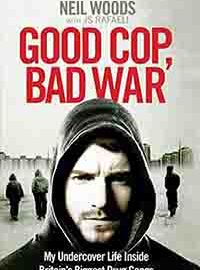


‘The logic of the drugs war only leads one way: the police get smarter, so the criminals get nastier. Things can only ever go from bad to worse, from savagery to savagery…
Neil Woods takes you a on a roller coaster ride as he tells the frank and sometimes edge of seat frightening story of his life as an undercover cop and his infiltration of some of the most violent and ruthless drugs gangs in the UK.
Starting out in the early 90s and making the rules up as he went, Neil was at the forefront of police surveillance. He quickly earned a name as the most successful operative of his time and his expertise was called upon by drugs squads around the country to tackle an ever growing problem.
For fourteen long, lonely years Neil donned the persona of a low life drug addict and the fact that he grew to respect and sympathise with those he would ultimately need to betray – in order to gain access to the “main players” speaks volumes about the man’s character.
But after years on the streets, spending time with these vulnerable users at the bottom of the chain, Neil began to question the seemingly futile war he was risking both his life and sanity for. What if the real enemy wasn’t who he thought?
The strain of living on the edge and facing constant dangers eventually takes a heavy toll on Neil’s personnel life , marriage and health and its hardly a surprise when he has a complete mental meltdown and finds himself in a dark lonely place.
Good Cop, Bad War is an intense account of the true effects of the War on drugs and a gripping insight into the high pressure world of British undercover policing.
” I challenge anyone to read this book and not be convinced by Neil’s conclusions. After all, when cops say ‘legalise drugs’, you can’t help but ask why.”

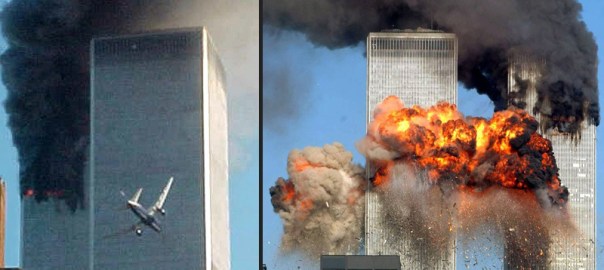

Like millions of others the world over the 9/11 attacks were a pivotal event in my life and I remember the details as though they happened yesterday and yes my life did change a little on that day.
Suddenly there were no boundaries and the horror of international terrorism announced itself to a disbelieving world .
At the time I was working for a publishing company based in Russell Square , central London and I had a meeting with a client in Soho. I had arranged to have an early business lunch and met the client in an Italian restaurant in Brewer Street. After the meal I went outside to have a fag and I noticed a lot of people gathered around the windows of a pub , watching the news.

Naturally I was curious and I walked over to see what was happening and was amazed to see the footage of the first plane hitting the Tower. At this point it was still thought that it been a tragic accident , although no one could explain what the plane was doing flying so low and within that airspace.
As I watched with the ever increasing crowd the second plane hit and the reality of the situation changed from a plane crash to New York being under attack from terrorists. As new reports came in about the other attacks – panic seem to set in and people began to drift off and make their way home. I went and explained what was happening to my client and we rightly called it a day. When I got back to the office everyone was standing about outside the building , amid rumours that London was under attack also and all planes had been grounded etc. People seemed to be in a state of shock and there was real panic that London would be next and we were all sent home for the remainder of the day.

At home I watched with horror as the truth and scale of the attacks became clear and Osama bin Laden became the instigator of a new kind of terror and the most wanted man on planet earth. Thankfully he is now burning in the pits of hell with the legions of other Islamic extremists whom have shamed the human race with their bloodlust and brutal, twisted ideology.
Current events although brutal and unimaginable horrific , shock and sicken us, but 9/11 was the Day the World changed forever and life would never be the same again.
London Bombs 7/7

I was meant to be in the office on the day of the London Bombs and would have been travelling on the route & time of those trains that were bombed, but for once fate dealt me a fair hand and I was out of the office that day. The irony of my leaving Belfast to escape the slaughter of the IRA was not lost on me and here I was on the front line again!!
—————————————————————————————————
9/11~September 11th 2001-Attack on the World || Trade Center
————————————————————————————————–

The September 11 attacks (also referred to as September 11, September 11th, or 9/11)[nb 1] were a series of four coordinated terrorist attacks by the Islamic terrorist group al-Qaeda on the United States on the morning of Tuesday, September 11, 2001. The attacks consisted of suicide attacks used to target symbolic U.S. landmarks.
Four passenger airliners—which all departed from airports on the U.S. East Coast bound for California—were hijacked by 19 al-Qaeda terrorists to be flown into buildings. Two of the planes, American Airlines Flight 11 and United Airlines Flight 175, were crashed into the North and South towers, respectively, of the World Trade Center complex in New York City. Within an hour and 42 minutes, both 110-story towers collapsed with debris and the resulting fires causing partial or complete collapse of all other buildings in the World Trade Center complex, including the 47-story 7 World Trade Center tower, as well as significant damage to ten other large surrounding structures.

A third plane, American Airlines Flight 77, was crashed into the Pentagon (the headquarters of the United States Department of Defense) in Arlington County, Virginia, leading to a partial collapse in the Pentagon’s western side. The fourth plane, United Airlines Flight 93, initially was steered toward Washington, D.C., but crashed into a field near Shanksville, Pennsylvania, after its passengers tried to overcome the hijackers. In total, the attacks claimed the lives of 2,996 people (including the 19 hijackers) and caused at least $10 billion in property and infrastructure damage.
It was the deadliest incident for firefighters and law enforcement officers in the history of the United States, with 343 and 72 killed respectively.
Suspicion for the attack quickly fell on al-Qaeda. The United States responded to the attacks by launching the War on Terror and invading Afghanistan to depose the Taliban, which had harbored al-Qaeda. Many countries strengthened their anti-terrorism legislation and expanded the powers of law enforcement and intelligence agencies to prevent terrorist attacks. Although al-Qaeda’s leader, Osama bin Laden, initially denied any involvement, in 2004, he claimed responsibility for the attacks. Al-Qaeda and bin Laden cited U.S. support of Israel, the presence of U.S. troops in Saudi Arabia, and sanctions against Iraq as motives. Having evaded capture for almost a decade, bin Laden was located and killed by members of the U.S. military in May 2011.
The destruction of the World Trade Center and nearby infrastructure caused serious damage to the economy of Lower Manhattan and had a significant effect on global markets, closing Wall Street until September 17 and the civilian airspace in the U.S. and Canada until September 13. Many closings, evacuations, and cancellations followed, out of respect or fear of further attacks. Cleanup of the World Trade Center site was completed in May 2002, and the Pentagon was repaired within a year. On November 18, 2006, construction of One World Trade Center began at the World Trade Center site. The building was officially opened on November 3, 2014.
Numerous memorials have been constructed, including the National September 11 Memorial & Museum in New York City, the Pentagon Memorial in Arlington County, and the Flight 93 National Memorial in a field near Shanksville.
—————————————————————————————————
THE SADDEST 9/11 VIDEO EVER (18+ ONLY)
—————————————————————————————————
hereeeeeeeeeeeeeeeeeeeeeeeeeeeeeeeeeeeeeeeeeeeeeeeeeeeeeeeeeeeeeeeeeeeeeeeeeeeeeeeeeeeeeeeeeeeeeeeeeeeeeeeeeeeeeeeeeeeeeeeeeeeeeeeeeeeeeeeeeeeeeeeeeeeeeeeeeeeeeeeeeeeeeeeeeeeeeeeeeeeeeeeeeeeeeeeeeeeeeeeeeeeeeeeeeeeeeeeeeeeeeeeeeeeeeeeeeeeeeeeeeeeeeeeeeeeeeeeeeeeeeeeeeeeeeeeeeeeeeeeeeeeeeeeeeeeeeeeeeeeeeeeeeeeeeeeeeee
|
|
||||||
The origins of al-Qaeda can be traced to 1979 when the Soviet Union invaded Afghanistan. Osama bin Laden traveled to Afghanistan and helped organize Arab mujahideen to resist the Soviets. Under the guidance of Ayman al-Zawahiri, bin Laden became more radical. In 1996, bin Laden issued his first fatwā, calling for American soldiers to leave Saudi Arabia.
In a second fatwā in 1998, bin Laden outlined his objections to American foreign policy with respect to Israel, as well as the continued presence of American troops in Saudi Arabia after the Gulf War. Bin Laden used Islamic texts to exhort Muslims to attack Americans until the stated grievances are reversed. Muslim legal scholars “have throughout Islamic history unanimously agreed that the jihad is an individual duty if the enemy destroys the Muslim countries.”, according to bin Laden

1997 picture of Osama bin Laden
Bin Laden, who orchestrated the attacks, initially denied but later admitted involvement.Al Jazeera broadcast a statement by bin Laden on September 16, 2001, stating, “I stress that I have not carried out this act, which appears to have been carried out by individuals with their own motivation.”
In November 2001, U.S. forces recovered a videotape from a destroyed house in Jalalabad, Afghanistan. In the video, bin Laden is seen talking to Khaled al-Harbi and admits foreknowledge of the attacks. On December 27, 2001, a second bin Laden video was released. In the video, he said,
“It has become clear that the West in general and America in particular have an unspeakable hatred for Islam….It is the hatred of crusaders. Terrorism against America deserves to be praised because it was a response to injustice, aimed at forcing America to stop its support for Israel, which kills our people…We say that the end of the United States is imminent, whether Bin Laden or his followers are alive or dead, for the awakening of the Muslim umma (nation) has occurred”,
but he stopped short of admitting responsibility for the attacks.
The transcript references several times to the United States specifically targeting Muslims.
Shortly before the U.S. presidential election in 2004, in a taped statement, bin Laden publicly acknowledged al-Qaeda’s involvement in the attacks on the U.S. and admitted his direct link to the attacks. He said that the attacks were carried out because, “we are free … and want to regain freedom for our nation. As you undermine our security we undermine yours.”
Bin Laden said he had personally directed his followers to attack the World Trade Center.[11][16] Another video obtained by Al Jazeera in September 2006 shows bin Laden with Ramzi bin al-Shibh, as well as two hijackers, Hamza al-Ghamdi and Wail al-Shehri, as they make preparations for the attacks. The U.S. never formally indicted bin Laden for the 9/11 attacks but he was on the FBI’s Most Wanted List for the bombings of the U.S. Embassies in Dar es Salaam, Tanzania, and Nairobi, Kenya.
After a 10-year manhunt, bin Laden was killed by American special forces in a compound in Abbottabad, Pakistan on May 2, 2011.[20][21]

Khalid Sheikh Mohammed after his capture in 2003
The journalist Yosri Fouda of the Arabic television channel Al Jazeera reported that, in April 2002, Khalid Sheikh Mohammed admitted his involvement, along with Ramzi bin al-Shibh. The 9/11 Commission Report determined that the animosity towards the United States felt by Mohammed, the principal architect of the 9/11 attacks, stemmed from his “violent disagreement with U.S. foreign policy favoring Israel”. Mohammed was also an adviser and financier of the 1993 World Trade Center bombing and the uncle of Ramzi Yousef, the lead bomber in that attack.
Mohammed was arrested on March 1, 2003, in Rawalpindi, Pakistan, by Pakistani security officials working with the CIA, then transported to Guantanamo Bay and interrogated using methods including waterboarding.[28][29] During U.S. hearings at Guantanamo Bay in March 2007, Mohammed again confessed his responsibility for the attacks, stating he “was responsible for the 9/11 operation from A to Z” and that his statement was not made under duress.[24][30]
In “Substitution for Testimony of Khalid Sheikh Mohammed” from the trial of Zacarias Moussaoui, five people are identified as having been completely aware of the operation’s details. They are bin Laden, Khalid Sheikh Mohammed, Ramzi bin al-Shibh, Abu Turab al-Urduni, and Mohammed Atef. To date, only peripheral figures have been tried or convicted for the attacks.
On September 26, 2005, the Spanish high court sentenced Abu Dahdah to 27 years in prison for conspiracy on the 9/11 attacks and being a member of the terrorist organization al-Qaeda. At the same time, another 17 al-Qaeda members were sentenced to penalties of between six and eleven years. On February 16, 2006, the Spanish Supreme Court reduced the Abu Dahdah penalty to 12 years because it considered that his participation in the conspiracy was not proven.
Also, in 2006, Moussaoui, who some originally suspected might have been the assigned 20th hijacker, was convicted for the lesser role of conspiracy to commit acts of terrorism and air piracy. He is serving a life sentence without parole in the United States. Mounir el-Motassadeq, an associate of the Hamburg-based hijackers, is serving 15 years in Germany for his role in helping the hijackers prepare for the attacks.
The Hamburg cell in Germany included radical Islamists who eventually came to be key operatives in the 9/11 attacks. Mohamed Atta, Marwan al-Shehhi, Ziad Jarrah, Ramzi bin al-Shibh, and Said Bahaji were all members of al-Qaeda’s Hamburg cell.
Osama bin Laden’s declaration of a holy war against the United States, and a 1998 fatwā signed by bin Laden and others, calling for the killing of Americans, are seen by investigators as evidence of his motivation. In bin Laden’s November 2002 “Letter to America”, he explicitly stated that al-Qaeda’s motives for their attacks include
After the attacks, bin Laden and al-Zawahiri released additional video tapes and audio tapes, some of which repeated those reasons for the attacks. Two particularly important publications were bin Laden’s 2002 “Letter to America”,[45] and a 2004 video tape by bin Laden.[46]
Bin Laden interpreted Muhammad as having banned the “permanent presence of infidels in Arabia”.[47] In 1996, bin Laden issued a fatwā calling for American troops to leave Saudi Arabia. In 1998, al-Qaeda wrote, “for over seven years the United States has been occupying the lands of Islam in the holiest of places, the Arabian Peninsula, plundering its riches, dictating to its rulers, humiliating its people, terrorizing its neighbors, and turning its bases in the Peninsula into a spearhead through which to fight the neighboring Muslim peoples.”[48]
In a December 1999 interview, bin Laden said he felt that Americans were “too near to Mecca“, and considered this a provocation to the entire Muslim world.[49] One analysis of suicide terrorism suggested that without U.S. troops in Saudi Arabia, al-Qaeda likely would not have been able to get people to commit to suicide missions.[50]
In the 1998 fatwā, al-Qaeda identified the Iraq sanctions as a reason to kill Americans, condemning the “protracted blockade”[48] among other actions that constitute a declaration of war against “Allah, his messenger, and Muslims.”[48] The fatwā declared that “the ruling to kill the Americans and their allies – civilians and military – is an individual duty for every Muslim who can do it in any country in which it is possible to do it, in order to liberate the al-Aqsa Mosque and the holy mosque of Mecca from their grip, and in order for their [the Americans’] armies to move out of all the lands of Islam, defeated and unable to threaten any Muslim.”[9][51]
Bin Laden claimed, in 2004, that the idea of destroying the towers had first occurred to him in 1982, when he witnessed Israel’s bombardment of high-rise apartment buildings during the 1982 Lebanon War.[52][53] Some analysts, including Mearsheimer and Walt, also claim that one motivation for the attacks was U.S. support of Israel.[41][49] In 2004 and 2010, bin Laden again connected the September 11 attacks with U.S. support of Israel, although most of the letter expressed bin Laden’s disdain for President Bush and bin Laden’s hope to “destroy and bankrupt” the U.S.[54][55]
Other motives have been suggested in addition to those stated by bin Laden and al-Qaeda, including western support of Islamic and non-Islamic authoritarian regimes in Saudi Arabia, Iran, Egypt, Iraq, Pakistan and northern Africa, and the presence of western troops in some of these countries.[56] Some authors suggest the “humiliation” resulting from the Islamic world falling behind the Western world – this discrepancy rendered especially visible by the globalization trend[57][58] and a desire to provoke the U.S. into a broader war against the Islamic world in the hope of motivating more allies to support al-Qaeda. Similarly, others have argued that 9/11 was a strategic move with the objective of provoking America into a war that would incite a pan-Islamic revolution.[59][60]
.svg)
Map showing the attacks on the World Trade Center (the planes are not drawn to scale)
The idea for the attacks came from Khalid Sheikh Mohammed, who first presented it to Osama bin Laden in 1996.[61] At that time, bin Laden and al-Qaeda were in a period of transition, having just relocated back to Afghanistan from Sudan.[62] The 1998 African Embassy bombings and bin Laden’s 1998 fatwā marked a turning point, as bin Laden became intent on attacking the United States.[62]
In late 1998 or early 1999, bin Laden gave approval for Mohammed to go forward with organizing the plot. A series of meetings occurred in early 1999, involving Mohammed, bin Laden, and his deputy Mohammed Atef.[62] Atef provided operational support for the plot, including target selections and helping arrange travel for the hijackers.[62] Bin Laden overruled Mohammed, rejecting some potential targets such as the U.S. Bank Tower in Los Angeles because, “there was not enough time to prepare for such an operation”.[63][64]

Diagram showing the attacks on the World Trade Center
Bin Laden provided leadership and financial support for the plot, and was involved in selecting participants.[65] Bin Laden initially selected Nawaf al-Hazmi and Khalid al-Mihdhar, both experienced jihadists who had fought in Bosnia. Hazmi and Mihdhar arrived in the United States in mid-January 2000. In spring 2000, Hazmi and Mihdhar took flying lessons in San Diego, California, but both spoke little English, performed poorly with flying lessons, and eventually served as secondary – or “muscle” – hijackers.[66][67]
In late 1999, a group of men from Hamburg, Germany arrived in Afghanistan, including Mohamed Atta, Marwan al-Shehhi, Ziad Jarrah, and Ramzi bin al-Shibh.[68] Bin Laden selected these men because they were educated, could speak English, and had experience living in the West.[69] New recruits were routinely screened for special skills and al-Qaeda leaders consequently discovered that Hani Hanjour already had a commercial pilot’s license.[70]
Hanjour arrived in San Diego on December 8, 2000, joining Hazmi.[71]:6–7 They soon left for Arizona, where Hanjour took refresher training.[71]:7 Marwan al-Shehhi arrived at the end of May 2000, while Atta arrived on June 3, 2000, and Jarrah arrived on June 27, 2000.[71]:6 Bin al-Shibh applied several times for a visa to the United States, but as a Yemeni, he was rejected out of concerns he would overstay his visa and remain as an illegal immigrant.[71]:4, 14 Bin al-Shibh stayed in Hamburg, providing coordination between Atta and Mohammed.[71]:16 The three Hamburg cell members all took pilot training in South Florida.[71]:6
In spring 2001, the secondary hijackers began arriving in the United States.[72] In July 2001, Atta met with bin al-Shibh in Spain, where they coordinated details of the plot, including final target selection. Bin al-Shibh also passed along bin Laden’s wish for the attacks to be carried out as soon as possible.[73]
————————————————————————————-
————————————————————————————-

Flight paths of the four planes used on September 11
Early on the morning of September 11, 2001, 19 hijackers took control of four commercial airliners (two Boeing 757 and two Boeing 767) en route to California (three headed to LAX in Los Angeles, and one to San Francisco) after takeoffs from Boston, Massachusetts; Newark, New Jersey; and Washington, D.C.[74] Large planes with long flights were selected for hijacking because they would be heavily fueled.[75]
The four flights were:
Media coverage was extensive during the attacks and aftermath, beginning moments after the first crash into the World Trade Center.[76]
At 8:46 a.m., five hijackers crashed American Airlines Flight 11 into the northern facade of the World Trade Center‘s North Tower (1 WTC), and at 9:03 a.m., another five hijackers crashed United Airlines Flight 175 into the southern facade of the South Tower (2 WTC).[78][79] Five hijackers flew American Airlines Flight 77 into the Pentagon at 9:37 a.m.[80]

Collapse of the Towers
A fourth flight, United Airlines Flight 93, under the control of four hijackers, crashed near Shanksville, Pennsylvania, southeast of Pittsburgh, at 10:03 a.m. after the passengers fought the hijackers. Flight 93’s target is believed to have been either the Capitol or the White House.[75] Flight 93’s cockpit voice recorder revealed crew and passengers tried to seize control of the plane from the hijackers after learning through phone calls that Flights 11, 77, and 175 had been crashed into buildings that morning.[81] Once it became evident to the hijackers that the passengers might regain control of the plane, the hijackers rolled the plane and intentionally crashed it.[82][83]

The north face of Two World Trade Center (south tower) immediately after being struck by United Airlines Flight 175
Some passengers and crew members who called from the aircraft using the cabin airphone service and mobile phones provided details: several hijackers were aboard each plane; they used mace, tear gas, or pepper spray to overcome attendants; and some people aboard had been stabbed.[84][85][86][87][88][89][90] Reports indicated hijackers stabbed and killed pilots, flight attendants, and one or more passengers.[74][91] In their final report, the 9/11 Commission found the hijackers had recently purchased multi-function hand tools and assorted knives and blades.[92][93] A flight attendant on Flight 11, a passenger on Flight 175, and passengers on Flight 93 said the hijackers had bombs, but one of the passengers said he thought the bombs were fake. The FBI found no traces of explosives at the crash sites, and the 9/11 Commission concluded that the bombs were probably fake.[74]
Three buildings in the World Trade Center complex collapsed due to fire-induced structural failure.[94] The South Tower collapsed at 9:59 a.m. after burning for 56 minutes in a fire caused by the impact of United Airlines Flight 175 and the explosion of its fuel.[94] The North Tower collapsed at 10:28 a.m. after burning for 102 minutes.[94] When the North Tower collapsed, debris fell on the nearby 7 World Trade Center building (7 WTC), damaging it and starting fires. These fires burned for hours, compromising the building’s structural integrity, and 7 WTC collapsed at 5:21 p.m.[95][96] The west side of the Pentagon sustained significant damage.
Security camera footage of Flight 77 hitting the Pentagon.[97] The plane hits the Pentagon approximately 86 seconds after the beginning of this recording.
At 9:42 a.m., the Federal Aviation Administration (FAA) grounded all aircraft within the continental U.S., and aircraft already in flight were told to land immediately.[98] All international civilian aircraft were either turned back or redirected to airports in Canada or Mexico, and all international flights were banned from landing on United States territory for three days.[99] The attacks created widespread confusion among news organizations and air traffic controllers. Among the unconfirmed and often contradictory news reports aired throughout the day, one of the most prevalent said a car bomb had been detonated at the U.S. State Department’s headquarters in Washington, D.C.[100] Another jet—Delta Air Lines Flight 1989—was suspected of having been hijacked, but the aircraft responded to controllers and landed safely in Cleveland, Ohio.[101]
In a April 2002 interview, Khalid Sheikh Mohammed and Ramzi bin al-Shibh, who are believed to have organized the attacks, said Flight 93’s intended target was the United States Capitol, not the White House.[102] During the planning stage of the attacks, Mohamed Atta, the hijacker and pilot of Flight 11, thought the White House might be too tough a target and sought an assessment from Hani Hanjour, who would later hijack and pilot Flight 77.[103] Mohammed said al-Qaeda initially planned to target nuclear installations rather than the World Trade Center and the Pentagon, but decided against it, fearing things could “get out of control”.[104] Final decisions on targets, according to Mohammed, were left in the hands of the pilots.[103]
——————————————————————————-
Voices from Inside the Towers (9/11 Documentary)
——————————————————————————-
The attacks resulted in the deaths of 2,996 people, including the 19 hijackers.[105] The 2,977 victims included 246 on the four planes (from which there were no survivors), 2,606 in the World Trade Center and in the surrounding area, and 125 at the Pentagon.[106][107] Nearly all of those who perished were civilians with the exceptions of 72 law enforcement officers, 343 firefighters, and 55 military personnel who died in the attacks.[108][109] After New York, New Jersey lost the most state citizens, with the city of Hoboken having the most citizens that died in the attacks.[110] More than 90 countries lost citizens in the September 11 attacks.[111] The attacks of September 11, 2001, marked it the worst terrorist attack in world history and the deadliest foreign act of destruction to life and property on American soil since the Japanese surprise attack on Pearl Harbor on December 7, 1941.[3][not in citation given]
In Arlington County, 125 Pentagon workers lost their lives when Flight 77 crashed into the western side of the building. Of these, 70 were civilians and 55 were military personnel, many of them who worked for the United States Army or the United States Navy. The Army lost 47 civilian employees, six civilian contractors, and 22 soldiers, while the Navy lost six civilian employees, three civilian contractors, and 33 sailors. Seven Defense Intelligence Agency (DIA) civilian employees were also among the dead in the attack, as well as an Office of the Secretary of Defense (OSD) contractor.[112][113][114] Lieutenant General Timothy Maude, an Army Deputy Chief of Staff, was the highest-ranking military official killed at the Pentagon.[115]

Burning towers with view from Statue of Liberty
In New York City, more than 90% of the workers and visitors who died in the towers had been at or above the points of impact.[116] In the North Tower, 1,355 people at or above the point of impact were trapped and died of smoke inhalation, fell or jumped from the tower to escape the smoke and flames, or were killed in the building’s eventual collapse. The destruction of all three staircases in the tower when Flight 11 hit made it impossible for anyone above the impact zone to escape. 107 people below the point of impact died as well.
———————————————————————
9/11: The Falling Man – Real Stories
———————————————————————
In the South Tower, one stairwell, Stairwell A, was left intact after Flight 175 hit, allowing 14 people located on the floors of impact (including one man who saw the plane coming at him) and four more from the floors above to escape. 911 operators who received calls from individuals inside the tower were not well informed of the situation as it rapidly unfolded and as a result, told callers not to descend the tower on their own.[117] 630 people died in that tower, fewer than half the number killed in the North Tower.[116] Casualties in the South Tower were significantly reduced by some occupants deciding to start evacuating as soon as the North Tower was struck.[118]

Urban Search and Rescue Task Force German Shepherd dog works to uncover survivors at the site of the collapsed World Trade Center after the September 11, 2001 attacks.
At least 200 people fell or jumped to their deaths from the burning towers (as exemplified in the photograph The Falling Man), landing on the streets and rooftops of adjacent buildings hundreds of feet below.[119] Some occupants of each tower above the point of impact made their way toward the roof in hope of helicopter rescue, but the roof access doors were locked. No plan existed for helicopter rescues, and the combination of roof equipment and thick smoke and intense heat prevented helicopters from approaching.[120] A total of 411 emergency workers died as they tried to rescue people and fight fires. The New York City Fire Department (FDNY) lost 343 firefighters, including a chaplain, two paramedics, and a fire marshal.[121] The New York City Police Department (NYPD) lost 23 officers.[122] The Port Authority Police Department (PAPD) lost 37 officers.[123] Eight emergency medical technicians (EMTs) and paramedics from private emergency medical services units were killed.[124]
Cantor Fitzgerald L.P., an investment bank on the 101st–105th floors of the North Tower, lost 658 employees, considerably more than any other employer.[125] Marsh Inc., located immediately below Cantor Fitzgerald on floors 93–100, lost 358 employees,[126][127] and 175 employees of Aon Corporation were also killed.[128] The National Institute of Standards and Technology (NIST) estimated that about 17,400 civilians were in the World Trade Center complex at the time of the attacks. Turnstile counts from the Port Authority suggest 14,154 people were typically in the Twin Towers by 8:45 a.m.[129][130] The vast majority of people below the impact zone safely evacuated the buildings.[131]
| New York City | World Trade Center | 2,606[106][132] |
|---|---|---|
| American 11 | 87 + 5[133] | |
| United 175 | 60 + 5[134] | |
| Arlington | Pentagon | 125[135] |
| American 77 | 59 + 5[136] | |
| Near Shanksville | United 93 | 40 + 4[137] |
| Total | 2,977 + 19 | |
Weeks after the attack, the death toll was estimated to be over 6,000, more than twice the number of deaths eventually confirmed.[138] The city was only able to identify remains for about 1,600 of the World Trade Center victims. The medical examiner’s office collected “about 10,000 unidentified bone and tissue fragments that cannot be matched to the list of the dead”.[139] Bone fragments were still being found in 2006 by workers who were preparing to demolish the damaged Deutsche Bank Building. In 2010, a team of anthropologists and archaeologists searched for human remains and personal items at the Fresh Kills Landfill, where seventy-two more human remains were recovered, bringing the total found to 1,845. DNA profiling continues in an attempt to identify additional victims.[140][141][142] The remains are being held in storage in Memorial Park, outside the New York City Medical Examiner’s facilities. It was expected that the remains would be moved in 2013 to a repository behind a wall at the 9/11 museum. In July 2011, a team of scientists at the Office of Chief Medical Examiner was still trying to identify remains, in the hope that improved technology will allow them to identify other victims.[142] On March 20, 2015, the 1,640th victim was identified. There are still 1,113 victims who have not been identified.[143]

World Trade Center site (Ground Zero) with an overlay showing the original building locations.

The Pentagon was damaged by fire and partly collapsed.
Along with the 110-floor Twin Towers, numerous other buildings at the World Trade Center site were destroyed or badly damaged, including WTC buildings 3 through 7 and St. Nicholas Greek Orthodox Church.[144] The North Tower, South Tower, the Marriott Hotel (3 WTC), and 7 WTC were completely destroyed. The U.S. Customs House (6 World Trade Center), 4 World Trade Center, 5 World Trade Center, and both pedestrian bridges connecting buildings were severely damaged. The Deutsche Bank Building on 130 Liberty Street was partially damaged and demolished some years later, starting in 2007.[145][146] The two buildings of the World Financial Center also suffered damage.[145]
The Deutsche Bank Building across Liberty Street from the World Trade Center complex was later condemned as uninhabitable because of toxic conditions inside the office tower, and was deconstructed.[147][148] The Borough of Manhattan Community College‘s Fiterman Hall at 30 West Broadway was condemned due to extensive damage in the attacks, and is being rebuilt.[149] Other neighboring buildings (including 90 West Street and the Verizon Building) suffered major damage but have been restored.[150] World Financial Center buildings, One Liberty Plaza, the Millenium Hilton, and 90 Church Street had moderate damage and have since been restored.[151] Communications equipment on top of the North Tower was also destroyed, but media stations were quickly able to reroute the signals and resume their broadcasts.[144][152]
The Pentagon was severely damaged by the impact of American Airlines Flight 77 and ensuing fires, causing one section of the building to collapse.[153] As the airplane approached the Pentagon, its wings knocked down light poles and its right engine hit a power generator before crashing into the western side of the building.[154][155] The plane hit the Pentagon at the first-floor level. The front part of the fuselage disintegrated on impact, while the mid and tail sections kept moving for another fraction of a second.[156] Debris from the tail section penetrated furthest into the building, breaking through 310 feet (94 m) of the three outermost of the building’s five rings.[156][157]

An injured victim of the Pentagon attack is evacuated.
The New York City Fire Department deployed 200 units (half of the department) to the World Trade Center. Their efforts were supplemented by numerous off-duty firefighters and emergency medical technicians.[158][159][160] The New York City Police Department sent Emergency Service Units and other police personnel, and deployed its aviation unit. Once on the scene, the FDNY, NYPD, and PAPD did not coordinate efforts and performed redundant searches for civilians.[158][161] As conditions deteriorated, the NYPD aviation unit relayed information to police commanders, who issued orders for its personnel to evacuate the towers; most NYPD officers were able to safely evacuate before the buildings collapsed.[161][162] With separate command posts set up and incompatible radio communications between the agencies, warnings were not passed along to FDNY commanders.
After the first tower collapsed, FDNY commanders issued evacuation warnings; however, due to technical difficulties with malfunctioning radio repeater systems, many firefighters never heard the evacuation orders. 9-1-1 dispatchers also received information from callers that was not passed along to commanders on the scene.[159] Within hours of the attack, a substantial search and rescue operation was launched. After months of around-the-clock operations, the World Trade Center site was cleared by the end of May 2002.[163]

George W Bush gets a briefing on the attacks.

Eight hours after the attacks, Donald Rumsfeld, then U.S. Secretary of Defense, declares “The Pentagon is functioning.”
At 8:32 a.m., FAA officials were notified Flight 11 had been hijacked and they in turn notified the North American Aerospace Defense Command (NORAD). NORAD scrambled two F-15s from Otis Air National Guard Base in Massachusetts and they were airborne by 8:53 a.m.[164] Because of slow and confused communication from FAA officials, NORAD had 9 minutes’ notice that Flight 11 had been hijacked, and no notice about any of the other flights before they crashed.[164] After both of the Twin Towers had already been hit, more fighters were scrambled from Langley Air Force Base in Virginia at 9:30 a.m.[164] At 10:20 a.m. Vice President Dick Cheney issued orders to shoot down any commercial aircraft that could be positively identified as being hijacked. However, these instructions were not relayed in time for the fighters to take action.[164][165][166][167] Some fighters took to the air without live ammunition, knowing that to prevent the hijackers from striking their intended targets, the pilots might have to intercept and crash their fighters into the hijacked planes, possibly ejecting at the last moment.[168]
For the first time in U.S. history, SCATANA was invoked,[169] thus stranding tens of thousands of passengers across the world.[170] The FAA closed American airspace to all international flights, causing about five hundred flights to be turned back or redirected to other countries. Canada received 226 of the diverted flights and launched Operation Yellow Ribbon to deal with the large numbers of grounded planes and stranded passengers.[171]
The 9/11 attacks had immediate effects upon the American people.[172] Police and rescue workers from around the country took leaves of absence, traveling to New York City to help recover bodies from the twisted remnants of the Twin Towers.[173] Blood donations across the U.S. surged in the weeks after 9/11.[174][175]
The deaths of adults in the attacks resulted in over 3,000 children losing a parent.[176] Subsequent studies documented children’s reactions to these actual losses and to feared losses of life, the protective environment in the aftermath of the attacks, and effects on surviving caregivers.[177][178][179]


Following the attacks, President Bush’s approval rating soared to 90%.[180] On September 20, 2001, he addressed the nation and a joint session of the United States Congress regarding the events of September 11 and the subsequent nine days of rescue and recovery efforts, and described his intended response to the attacks. New York City mayor Rudy Giuliani‘s highly visible role won him high praise in New York and nationally.[181]
Many relief funds were immediately set up to assist victims of the attacks, with the task of providing financial assistance to the survivors of the attacks and to the families of victims. By the deadline for victim’s compensation on September 11, 2003, 2,833 applications had been received from the families of those who were killed.[182]
 |
George W. Bush’s address to the people of the United States, September 11, 2001, 8:30 pm EDT.
|
| Problems playing this file? See media help. | |
Contingency plans for the continuity of government and the evacuation of leaders were implemented soon after the attacks.[170] However, Congress was not told that the United States had been under a continuity of government status until February 2002.[183]
In the largest restructuring of the U.S. government in contemporary history, the United States enacted the Homeland Security Act of 2002, creating the Department of Homeland Security. Congress also passed the USA PATRIOT Act, saying it would help detect and prosecute terrorism and other crimes.[184] Civil liberties groups have criticized the PATRIOT Act, saying it allows law enforcement to invade the privacy of citizens and that it eliminates judicial oversight of law enforcement and domestic intelligence.[185][186][187] In an effort to effectively combat future acts of terrorism, the National Security Agency (NSA) was given broad powers. NSA commenced warrantless surveillance of telecommunications, which was sometimes criticized since it permitted the agency “to eavesdrop on telephone and e-mail communications between the United States and people overseas without a warrant”.[188] In response to requests by various intelligence agencies, the United States Foreign Intelligence Surveillance Court permitted an expansion of powers by the U.S. government in seeking, obtaining, and sharing information on U.S. citizens as well as non-U.S. people from around the world.[189]

A fireman looks up at the remains of the South Tower

A fireman stands behind rubble
Shortly after the attacks, President Bush made a public appearance at Washington’s largest Islamic Center and acknowledged the “incredibly valuable contribution” that millions of American Muslims made to their country and called for them “to be treated with respect.”[190] However, numerous incidents of harassment and hate crimes against Muslims and South Asians were reported in the days following the attacks.[191][192][193] Sikhs were also targeted because Sikh males usually wear turbans, which are stereotypically associated with Muslims. There were reports of attacks on mosques and other religious buildings (including the firebombing of a Hindu temple), and assaults on people, including one murder: Balbir Singh Sodhi, a Sikh mistaken for a Muslim, was fatally shot on September 15, 2001, in Mesa, Arizona.[193]
According to an academic study, people perceived to be Middle Eastern were as likely to be victims of hate crimes as followers of Islam during this time. The study also found a similar increase in hate crimes against people who may have been perceived as Muslims, Arabs, and others thought to be of Middle Eastern origin.[194] A report by the South Asian American advocacy group known as South Asian Americans Leading Together, documented media coverage of 645 bias incidents against Americans of South Asian or Middle Eastern descent between September 11 and 17. Various crimes such as vandalism, arson, assault, shootings, harassment, and threats in numerous places were documented.[195][196]
Muslim organizations in the United States were swift to condemn the attacks and called “upon Muslim Americans to come forward with their skills and resources to help alleviate the sufferings of the affected people and their families”.[197] These organizations included the Islamic Society of North America, American Muslim Alliance, American Muslim Council, Council on American-Islamic Relations, Islamic Circle of North America, and the Shari’a Scholars Association of North America. Along with monetary donations, many Islamic organizations launched blood drives and provided medical assistance, food, and shelter for victims.[198][199][200]
The attacks were denounced by mass media and governments worldwide. Across the globe, nations offered pro-American support and solidarity.[201] Leaders in most Middle Eastern countries, and Afghanistan, condemned the attacks. Iraq was a notable exception, with an immediate official statement that, “the American cowboys are reaping the fruit of their crimes against humanity”.[202] While the government of Saudi Arabia officially condemned the attacks, privately many Saudis favored bin Laden’s cause.[203][204] As in the United States, the aftermath of the attacks saw tensions increase in other countries between Muslims and non-Muslims.[205]
United Nations Security Council Resolution 1368 condemned the attacks, and expressed readiness to take all necessary steps to respond and combat all forms of terrorism in accordance with their Charter.[206] Numerous countries introduced anti-terrorism legislation and froze bank accounts they suspected of al-Qaeda ties.[207][208] Law enforcement and intelligence agencies in a number of countries arrested alleged terrorists.[209][210]
British Prime Minister Tony Blair said Britain stood “shoulder to shoulder” with the United States.[211] A few days later, Blair flew to Washington to affirm British solidarity with the United States. In a speech to Congress, nine days after the attacks, which Blair attended as a guest, President Bush declared “America has no truer friend than Great Britain.”[212] Subsequently, Prime Minister Blair embarked on two months of diplomacy to rally international support for military action; he held 54 meetings with world leaders and travelled more than 40,000 miles (60,000 km).[213]

Vladimir Putin and his wife attending a commemoration service for the victims of the September 11 attacks on November 16, 2001
Tens of thousands of people attempted to flee Afghanistan following the attacks, fearing a response by the United States. Pakistan, already home to many Afghan refugees from previous conflicts, closed its border with Afghanistan on September 17, 2001. Approximately one month after the attacks, the United States led a broad coalition of international forces to overthrow the Taliban regime from Afghanistan for their harboring of al-Qaeda.[214] Though Pakistani authorities were initially reluctant to align themselves with the United States against the Taliban, they permitted the coalition access to their military bases, and arrested and handed over to the U.S. over 600 suspected al-Qaeda members.[215][216]
The U.S. set up the Guantanamo Bay detention camp to hold inmates they defined as “illegal enemy combatants“. The legitimacy of these detentions has been questioned by the European Union and human rights organizations.[217][218][219]
At 2:40 p.m. in the afternoon of September 11, Secretary of Defense Donald Rumsfeld was issuing rapid orders to his aides to look for evidence of Iraqi involvement. According to notes taken by senior policy official Stephen Cambone, Rumsfeld asked for, “Best info fast. Judge whether good enough hit S.H.” (Saddam Hussein) “at same time. Not only UBL” (Osama bin Laden).[220] Cambone’s notes quoted Rumsfeld as saying, “Need to move swiftly – Near term target needs – go massive – sweep it all up. Things related and not.”[221][222] In a meeting at Camp David on September 15 the Bush administration rejected the idea of attacking Iraq in response to 9/11.[223]
The NATO council declared the attacks on the United States were an attack on all NATO nations which satisfied Article 5 of the NATO charter. This marked the first invocation of Article 5, which had been written during the Cold War with an attack by the Soviet Union in mind.[224] Australian Prime Minister John Howard who was in Washington D.C. during the attacks invoked Article IV of the ANZUS treaty.[225] The Bush administration announced a War on Terror, with the stated goals of bringing bin Laden and al-Qaeda to justice and preventing the emergence of other terrorist networks.[226] These goals would be accomplished by imposing economic and military sanctions against states harboring terrorists, and increasing global surveillance and intelligence sharing.[227]
On September 14, 2001, the U.S. Congress passed the Authorization for Use of Military Force Against Terrorists. Still in effect, it grants the President the authority to use all “necessary and appropriate force” against those whom he determined “planned, authorized, committed or aided” the September 11th attacks, or who harbored said persons or groups.[228]
On October 7, 2001, the War in Afghanistan began when U.S. and British forces initiated aerial bombing campaigns targeting Taliban and al-Qaeda camps, then later invaded Afghanistan with ground troops of the Special Forces.[229] This eventually led to the overthrow of the Taliban rule of Afghanistan on December 9, 2001 by U.S. led coalition forces.[230] Conflict in Afghanistan between the Taliban insurgency and the Afghan forces backed by NATO Resolute Support Mission is ongoing. The Philippines and Indonesia, among other nations with their own internal conflicts with Islamic terrorism, also increased their military readiness.[231][232]

Survivors were covered in dust after the collapse of the towers.
Hundreds of thousands of tons of toxic debris containing more than 2,500 contaminants, including known carcinogens, were spread across Lower Manhattan due to the collapse of the Twin Towers.[233][234] Exposure to the toxins in the debris is alleged to have contributed to fatal or debilitating illnesses among people who were at ground zero.[235][236] The Bush administration ordered the Environmental Protection Agency (EPA) to issue reassuring statements regarding air quality in the aftermath of the attacks, citing national security, but the EPA did not determine that air quality had returned to pre-September 11 levels until June 2002.[237]
Health effects extended to residents, students, and office workers of Lower Manhattan and nearby Chinatown.[238] Several deaths have been linked to the toxic dust, and the victims’ names were included in the World Trade Center memorial.[239] Approximately 18,000 people have been estimated to have developed illnesses as a result of the toxic dust.[240] There is also scientific speculation that exposure to various toxic products in the air may have negative effects on fetal development. A notable children’s environmental health center is currently analyzing the children whose mothers were pregnant during the WTC collapse, and were living or working nearby.[241] A study of rescue workers released in April 2010 found that all those studied had impaired lung functions, and that 30–40% were reporting little or no improvement in persistent symptoms that started within the first year of the attack.[242]
Years after the attacks, legal disputes over the costs of illnesses related to the attacks were still in the court system. On October 17, 2006, a federal judge rejected New York City’s refusal to pay for health costs for rescue workers, allowing for the possibility of numerous suits against the city.[243] Government officials have been faulted for urging the public to return to lower Manhattan in the weeks shortly after the attacks. Christine Todd Whitman, administrator of the EPA in the aftermath of the attacks, was heavily criticized by a U.S. District Judge for incorrectly saying that the area was environmentally safe.[244] Mayor Giuliani was criticized for urging financial industry personnel to return quickly to the greater Wall Street area.[245]
The United States Congress passed the James L. Zadroga 9/11 Health and Compensation Act on December 22, 2010, and President Barack Obama signed the act into law on January 2, 2011. It allocated $4.2 billion to create the World Trade Center Health Program, which provides testing and treatment for people suffering from long-term health problems related to the 9/11 attacks.[246][247] The WTC Health Program replaced preexisting 9/11-related health programs such as the Medical Monitoring and Treatment Program and the WTC Environmental Health Center program.[247]
According to a new study, pregnant women living near the World Trade Center during the 9/11 terror attacks experienced higher-than-normal negative birth outcomes. The study by Princeton University’s Woodrow Wilson School of Public and International Affairs found that these mothers were more likely to give birth prematurely and deliver babies with low birth weights. Their babies were also more likely to be admitted to neonatal intensive care units after birth (especially baby boys), according to the study led by the Wilson School’s Janet Currie and Hannes Schwandt.[248]

As shown in this table, the 9/11 attacks had a major effect on the economy of New York City (in red), compared to the United States’ economy overall (in blue).
The attacks had a significant economic impact on United States and world markets.[249] The stock exchanges did not open on September 11 and remained closed until September 17. Reopening, the Dow Jones Industrial Average (DJIA) fell 684 points, or 7.1%, to 8921, a record-setting one-day point decline.[250] By the end of the week, the DJIA had fallen 1,369.7 points (14.3%), at the time its largest one-week point drop in history.[251] In 2001 dollars, U.S. stocks lost $1.4 trillion in valuation for the week.[251]
In New York City, about 430,000 job-months and $2.8 billion dollars in wages were lost in the three months after the attacks. The economic effects were mainly on the economy’s export sectors.[252] The city’s GDP was estimated to have declined by $27.3 billion for the last three months of 2001 and all of 2002. The U.S. government provided $11.2 billion in immediate assistance to the Government of New York City in September 2001, and $10.5 billion in early 2002 for economic development and infrastructure needs.[253] Also hurt were small businesses in Lower Manhattan near the World Trade Center, 18,000 of which were destroyed or displaced, resulting in lost jobs and their consequent wages. Assistance was provided by Small Business Administration loans, federal government Community Development Block Grants, and Economic Injury Disaster Loans.[253] Some 31,900,000 square feet (2,960,000 m2) of Lower Manhattan office space was damaged or destroyed.[254] Many wondered whether these jobs would return, and if the damaged tax base would recover.[255] Studies of the economic effects of 9/11 show the Manhattan office real-estate market and office employment were less affected than first feared, because of the financial services industry’s need for face-to-face interaction.[256][257]
North American air space was closed for several days after the attacks and air travel decreased upon its reopening, leading to a nearly 20% cutback in air travel capacity, and exacerbating financial problems in the struggling U.S. airline industry.[258]
The September 11 attacks also led to the U.S. wars in Afghanistan and Iraq,[259] as well as additional homeland security spending, totaling at least $5 trillion.[260]
The impact of 9/11 extends beyond geopolitics into society and culture in general. Immediate responses to 9/11 included greater focus on home life and time spent with family, higher church attendance, and increased expressions of patriotism such as the flying of flags.[261] The radio industry responded by removing certain songs from playlists, and the attacks have subsequently been used as background, narrative or thematic elements in film, television, music and literature. Already-running television shows as well as programs developed after 9/11 have reflected post-9/11 cultural concerns.[262] 9/11 conspiracy theories have become social phenomena, despite negligible support for such views from expert scientists, engineers, and historians.[263] 9/11 has also had a major impact on the religious faith of many individuals; for some it strengthened, to find consolation to cope with the loss of loved ones and overcome their grief; others started to question their faith or lost it entirely, because they couldn’t reconcile it with their view of religion.[264][265]
The culture of America succeeding the attacks is noted for heightened security and an increased demand thereof, as well as paranoia and anxiety regarding future terrorist attacks that includes most of the nation. Psychologists have also confirmed that there has been an increased amount of national anxiety in commercial air travel.[266]
As a result of the attacks, many governments across the world passed legislation to combat terrorism.[267] In Germany, where several of the 9/11 terrorists had resided and taken advantage of that country’s liberal asylum policies, two major anti-terrorism packages were enacted. The first removed legal loopholes that permitted terrorists to live and raise money in Germany. The second addressed the effectiveness and communication of intelligence and law enforcement.[268] Canada passed the Canadian Anti-Terrorism Act, that nation’s first anti-terrorism law.[269] The United Kingdom passed the Anti-terrorism, Crime and Security Act 2001 and the Prevention of Terrorism Act 2005.[270][271] New Zealand enacted the Terrorism Suppression Act 2002.[272]
In the United States, the Department of Homeland Security was created by the Homeland Security Act to coordinate domestic anti-terrorism efforts. The USA Patriot Act gave the federal government greater powers, including the authority to detain foreign terror suspects for a week without charge, to monitor telephone communications, e-mail, and Internet use by terror suspects, and to prosecute suspected terrorists without time restrictions. The FAA ordered that airplane cockpits be reinforced to prevent terrorists gaining control of planes, and assigned sky marshals to flights. Further, the Aviation and Transportation Security Act made the federal government, rather than airports, responsible for airport security. The law created the Transportation Security Administration to inspect passengers and luggage, causing long delays and concern over passenger privacy.[273]

Mohamed Atta, an Egyptian national, was the ringleader of the hijackers.
Immediately after the attacks, the Federal Bureau of Investigation started PENTTBOM, the largest criminal inquiry in the history of the United States. At its height, more than half of the FBI’s agents worked on the investigation and followed a half-million leads.[274] The FBI concluded that there was “clear and irrefutable” evidence linking al-Qaeda and bin Laden to the attacks.[275]
The FBI was quickly able to identify the hijackers, including leader Mohamed Atta, when his luggage was discovered at Boston’s Logan Airport. Atta had been forced to check two of his three bags due to space limitations on the 19-seat commuter flight he took to Boston.[276] Due to a new policy instituted to prevent flight delays, the luggage failed to make it aboard American Airlines Flight 11 as planned. The luggage contained the hijackers’ names, assignments and al-Qaeda connections. “It had all these Arab-language (sic) papers that amounted to the Rosetta stone of the investigation”, said one FBI agent.[277] Within hours of the attacks, the FBI released the names and in many cases the personal details of the suspected pilots and hijackers.[278][279] On September 27, 2001, they released photos of all 19 hijackers, along with information about possible nationalities and aliases.[280] Fifteen of the men were from Saudi Arabia, two from the United Arab Emirates, one from Egypt, and one from Lebanon.[281]
By midday, the U.S. National Security Agency and German intelligence agencies had intercepted communications pointing to Osama bin Laden.[282] Two of the hijackers were known to have travelled with a bin Laden associate to Malaysia in 2000[283] and hijacker Mohammed Atta had previously gone to Afghanistan.[284] He and others were part of a terrorist cell in Hamburg.[285] One of the members of the Hamburg cell was discovered to have been in communication with Khalid Sheik Mohammed who was identified as a member of al-Qaeda.[286]
Authorities in the United States and Britain also obtained electronic intercepts, including telephone conversations and electronic bank transfers, which indicate that Mohammed Atef, a bin Laden deputy, was a key figure in the planning of the 9/11 attacks. Intercepts were also obtained that revealed conversations that took place days before September 11 between bin Laden and an associate in Pakistan. In those conversations, the two referred to “an incident that would take place in America on, or around, September 11” and they discussed potential repercussions. In another conversation with an associate in Afghanistan, bin Laden discussed the “scale and effects of a forthcoming operation.” These conversations did not specifically mention the World Trade Center or Pentagon, or other specifics.[287]
| Nationality | Number |
|---|---|
| Saudi Arabia |
15 |
| United Arab Emirates |
2 |
| Egypt |
1 |
| Lebanon |
1 |
The Inspector General of the Central Intelligence Agency (CIA) conducted an internal review of the agency’s pre-9/11 performance and was harshly critical of senior CIA officials for not doing everything possible to confront terrorism. He criticized their failure to stop two of the 9/11 hijackers, Nawaf al-Hazmi and Khalid al-Mihdhar, as they entered the United States and their failure to share information on the two men with the FBI.[288] In May 2007, senators from both major U.S. political parties drafted legislation to make the review public. One of the backers, Senator Ron Wyden said, “The American people have a right to know what the Central Intelligence Agency was doing in those critical months before 9/11.”[289]
In February 2002 the Senate Select Committee on Intelligence and the House Permanent Select Committee on Intelligence formed a joint inquiry into the performance of the U.S. Intelligence Community.[290] Their 832 page report released in December 2002[291] detailed failings of the FBI and CIA to use available information, including about terrorists the CIA knew were in the United States, in order to disrupt the plots.[292] The joint inquiry developed its information about possible involvement of Saudi Arabian government officials from non-classified sources.[293] Nevertheless, the Bush administration demanded 28 related pages remain classified.[292] In December 2002 the inquiry’s chair Bob Graham (D-FL) revealed in an interview that there was “evidence that there were foreign governments involved in facilitating the activities of at least some of the terrorists in the United States.”[294] September 11th victim families were frustrated by the unanswered questions and redacted material from the Congressional inquiry and demanded an independent commission.[292] September 11th victim families,[295] members of congress[296][297] and the Saudi Arabian government are still seeking release of the documents.[298][299]
The National Commission on Terrorist Attacks Upon the United States (9/11 Commission), chaired by Thomas Kean and Lee H. Hamilton, was formed in late 2002 to prepare a thorough account of the circumstances surrounding the attacks, including preparedness for and the immediate response to the attacks.[300] On July 22, 2004, the Commission issued the 9/11 Commission Report. The report detailed the events of 9/11, found the attacks were carried out by members of al-Qaeda, and examined how security and intelligence agencies were inadequately coordinated to prevent the attacks. Formed from an independent bipartisan group of mostly former Senators, Representatives, and Governors, the commissioners explained, “We believe the 9/11 attacks revealed four kinds of failures: in imagination, policy, capabilities, and management”.[301] The Commission made numerous recommendations on how to prevent future attacks, and in 2011 was dismayed that several of its recommendations had yet to be implemented.[302]

The exterior support columns from the lower level of the south tower remained standing after the building collapsed.
The U.S. National Institute of Standards and Technology (NIST) investigated the collapses of the Twin Towers and 7 WTC. The investigations examined why the buildings collapsed and what fire protection measures were in place, and evaluated how fire protection systems might be improved in future construction.[303] The investigation into the collapse of 1 WTC and 2 WTC was concluded in October 2005 and that of 7 WTC was completed in August 2008.[304]
NIST found that the fireproofing on the Twin Towers’ steel infrastructures was blown off by the initial impact of the planes and that, had this not occurred, the towers likely would have remained standing.[305] A 2007 study of the north tower’s collapse published by researchers of Purdue University determined that, since the plane’s impact had stripped off much of the structure’s thermal insulation, the heat from a typical office fire would have softened and weakened the exposed girders and columns enough to initiate the collapse regardless of the number of columns cut or damaged by the impact.[306][307]
The director of the original investigation stated that, “the towers really did amazingly well. The terrorist aircraft didn’t bring the buildings down; it was the fire which followed. It was proven that you could take out two thirds of the columns in a tower and the building would still stand.”[308] The fires weakened the trusses supporting the floors, making the floors sag. The sagging floors pulled on the exterior steel columns causing the exterior columns to bow inward. With the damage to the core columns, the buckling exterior columns could no longer support the buildings, causing them to collapse. Additionally, the report found the towers’ stairwells were not adequately reinforced to provide adequate emergency escape for people above the impact zones.[309] NIST concluded that uncontrolled fires in 7 WTC caused floor beams and girders to heat and subsequently “caused a critical support column to fail, initiating a fire-induced progressive collapse that brought the building down”.[304]

Rebuilt One World Trade Center nearing completion in July 2013
On the day of the attacks, New York City mayor Rudy Giuliani stated: “We will rebuild. We’re going to come out of this stronger than before, politically stronger, economically stronger. The skyline will be made whole again.”[310]
The damaged section of the Pentagon was rebuilt and occupied within a year of the attacks.[311] The temporary World Trade Center PATH station opened in late 2003 and construction of the new 7 World Trade Center was completed in 2006. Work on rebuilding the main World Trade Center site was delayed until late 2006 when leaseholder Larry Silverstein and the Port Authority of New York and New Jersey agreed on financing.[312] The construction of One World Trade Center began on April 27, 2006, and reached its full height on May 20, 2013. The spire was installed atop the building at that date, putting 1 WTC’s height at 1,776 feet (541 m) and thus claiming the title of the tallest building in the Western Hemisphere.[313] 1 WTC finished construction and opened on November 3, 2014.[314]
On the World Trade Center site, three more office towers are expected to be built one block east of where the original towers stood. Construction has begun on all three of these towers.[315]

The Tribute in Light on September 11, 2014, on the thirteenth anniversary of the attacks, seen from Bayonne, New Jersey. The tallest building in the picture is the new One World Trade Center.
In the days immediately following the attacks, many memorials and vigils were held around the world, and photographs of the dead and missing were posted around Ground Zero. A witness described being unable to “get away from faces of innocent victims who were killed. Their pictures are everywhere, on phone booths, street lights, walls of subway stations. Everything reminded me of a huge funeral, people quiet and sad, but also very nice. Before, New York gave me a cold feeling; now people were reaching out to help each other.”[316]
One of the first memorials was the Tribute in Light, an installation of 88 searchlights at the footprints of the World Trade Center towers.[317] In New York, the World Trade Center Site Memorial Competition was held to design an appropriate memorial on the site.[318] The winning design, Reflecting Absence, was selected in August 2006, and consists of a pair of reflecting pools in the footprints of the towers, surrounded by a list of the victims’ names in an underground memorial space.[319]
The Pentagon Memorial was completed and opened to the public on the seventh anniversary of the attacks in 2008.[320][321] It consists of a landscaped park with 184 benches facing the Pentagon.[322] When the Pentagon was repaired in 2001–2002, a private chapel and indoor memorial were included, located at the spot where Flight 77 crashed into the building.[323]
In Shanksville, a permanent Flight 93 National Memorial is planned to include a sculpted grove of trees forming a circle around the crash site, bisected by the plane’s path, while wind chimes will bear the names of the victims.[324] A temporary memorial is located 500 yards (457 m) from the crash site.[325] New York City firefighters donated a cross made of steel from the World Trade Center and mounted on top of a platform shaped like the Pentagon.[326] It was installed outside the firehouse on August 25, 2008.[327] Many other permanent memorials are elsewhere. Scholarships and charities have been established by the victims’ families, and by many other organizations and private figures.[328]
On every anniversary, in New York City, the names of the victims who died there are read out against a background of somber music. The President of the United States attends a memorial service at the Pentagon,[329] and asks Americans to observe Patriot Day with a moment of silence. Smaller services are held in Shanksville, Pennsylvania, which are usually attended by the President’s spouse.

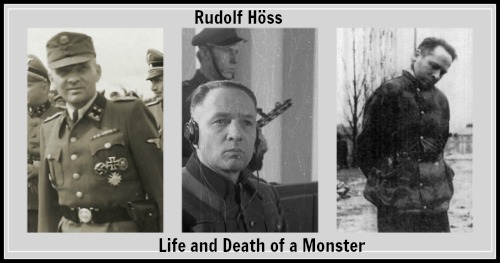
Rudolf Höss

Rudolf Franz Ferdinand Höss (also Höß, Hoeß or Hoess; 25 November 1901 – 16 April 1947) was SS–Obersturmbannführer and the longest-serving commandant of Auschwitz concentration camp in World War II. He tested and carried into effect various methods to accelerate Hitler’s plan to systematically exterminate the Jewish population of Nazi-occupied Europe, known as the Final Solution.
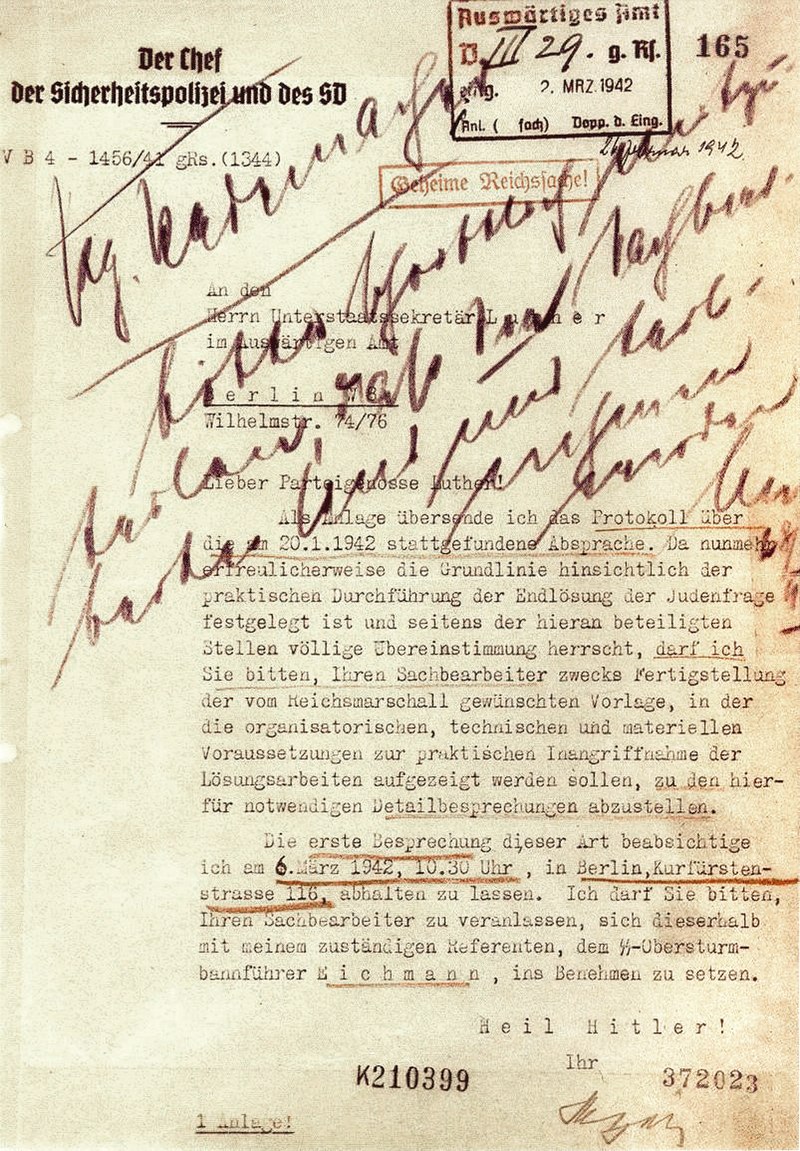
In a February 26, 1942 letter to Martin Luther, Reinhard Heydrich follows up on the Wannsee Conference by asking Luther for administrative assistance in the implementation of the “Endlösung der Judenfrage” (Final Solution of the Jewish Question).

Höss introduced pesticide Zyklon B containing hydrogen cyanide to the killing process, thereby allowing soldiers at Auschwitz to murder 2,000 people every hour. He created the largest installation for the continuous annihilation of human beings ever known.
Höss joined the Nazi Party in 1922 and the SS in 1934. From 4 May 1940 to November 1943, and again from 8 May 1944 to 18 January 1945, he was in charge of Auschwitz where more than a million people were killed before the defeat of Germany.
He was hanged in 1947 following a trial in Warsaw.

.
| Rudolf Höss | |
|---|---|

SS-Obersturmbannführer Rudolf Höss at Auschwitz
|
|
| Born | (1901-11-25)25 November 1901 Baden-Baden, Germany |
| Died | 16 April 1947(1947-04-16) (aged 45) Oświęcim, Poland |
| Allegiance |  Nazi Germany Nazi Germany |
| Service/branch |  Schutzstaffel Schutzstaffel |
| Years of service | At Auschwitz until 1945 |
| Rank |  SS-Obersturmbannführer SS-Obersturmbannführer |
| Unit |  Totenkopfverbände Totenkopfverbände |
| Commands held | Commandant of Auschwitz concentration camp, 4 May 1940 – 1 December 1943, 8 May 1944 – 18 January 1945 |
| Spouse(s) | Hedwig Hensel (m. 1929) |
| Relations |
|
Höss was born in Baden-Baden into a strict Catholic family. He lived with his mother Lina (née Speck) and father Franz Xaver Höss. Höss was the eldest of three children and the only son. He was baptised Rudolf Franz (or possibly Francis) Ferdinand on 11 December 1901. He was a lonely child with no playmates his own age until he entered elementary school; all of his companionship came from adults. He claimed in his autobiography that he was briefly abducted by Gypsies in his youth.

His father, a former army officer who served in German East Africa, ran a tea and coffee business; he brought his son up on strict religious principles and with military discipline, having decided that he would enter the priesthood. Höss grew up with an almost fanatical belief in the central role of duty in a moral life. During his early years, there was a constant emphasis on sin, guilt, and the need to do penance.
Höss began turning against religion in his early teens after an episode in which, he said, his priest broke the Seal of the Confessional by telling his father about an event at school that Höss had described during confession. Soon afterward, Höss’s father died and Höss began moving toward a military life.
When World War One broke out, Höss served briefly in a military hospital and then, at age 14, was admitted to his father’s and grandfather’s old regiment, the German Army’s 21st Regiment of Dragoons. At age 15, he fought with the Ottoman Sixth Army at Baghdad, at Kut-el-Amara, and in Palestine. While stationed in Turkey, he rose to the rank of Feldwebel (sergeant) and at 17 he was the youngest non-commissioned officer in the army. Wounded three times and a victim of malaria, he was awarded the Gallipoli Star, the Iron Cross first and second class, and other decorations. Höss also briefly commanded a cavalry unit.

After Germany’s surrender in November 1918, Höss completed his secondary education and soon joined the emerging nationalist paramilitary groups, first, the East Prussian Volunteer Corps, and then the Freikorps Rossbach in the Baltic area, Silesia, and the Ruhr. Höss participated in the armed terror attacks on Polish people during the Silesian Uprisings against the Germans, and on the French nationals during the Occupation of the Ruhr. He joined the Nazi Party in 1922 (Member No. 3240) after hearing Adolf Hitler‘s speech in Munich. Höss played a leading role in at least one political assassination for which he spent six years in jail.
On 31 May 1923, in Mecklenburg, Höss and members of the Freikorps attacked and beat to death local schoolteacher Walther Kadow on the wishes of the farm supervisor, Martin Bormann, who later became Hitler’s private secretary. Kadow was believed to have tipped off the French occupational authorities that Höss’ fellow Nazi, paramilitary soldier Albert Leo Schlageter, was carrying out sabotage operations against French supply lines. Schlageter was arrested and executed on 26 May 1923; soon afterwards Höss and several accomplices, including Bormann, took their revenge on Kadow.
In 1923, after one of the killers confessed to a local newspaper, Höss was arrested and tried as the ring leader. Although he later claimed that another man was actually in charge, Höss accepted the blame as the group’s leader. He was convicted and sentenced (on 15 or 17 May 1924 ) to 10 years in Brandenburg Penitentiary for the crime. Bormann received a one-year sentence.
Höss was released in July 1928 as part of a general amnesty and joined the völkisch Artamanen-Gesellschaft (“Artaman League“), a nationalist back-to-the-land movement that promoted clean living and a farm-based lifestyle. On 17 August 1929, he married Hedwig Hensel (3 March 1908 – 1989), whom he met in the Artaman League. Between 1930 and 1943 they had five children: two sons (Klaus and Hans-Rudolf) and three daughters (Ingebrigitt, Heidetraut, and Annegret).
| SS-Totenkopfverbände | |

|
Höss became an SS man on 1 April 1934, on Himmler’s effective call-to-action,[15] and joined the SS-Totenkopfverbände (Death’s Head Units) in the same year. He came to admire Himmler so much that he considered whatever he said to be the “gospel” and preferred to display his picture in his office rather than that of Hitler. Höss was assigned to the Dachau concentration camp in December 1934, where he held the post of Blockführer. His mentor at Dachau was Obergruppenführer Theodor Eicke.

In 1938, Höss was promoted to SS-Hauptsturmführer (captain) and was made adjutant to Hermann Baranowski in the Sachsenhausen concentration camp. He joined the Waffen-SS wing of the SS in 1939 after the invasion of Poland. Höss excelled in his duties and was recommended by his superiors for further responsibility and promotion. By the end of his tour of duty there, he was serving as administrator of the property of prisoners.

Appointment order of Rudolf Höss as Commander of Auschwitz Concentration Camp

On 1 May 1940, Höss was appointed commandant of a prison camp in western Poland, a territory Germany had incorporated into the province of Upper Silesia. The camp was built around an old Austro-Hungarian (and later Polish) army barracks near the town of Oświęcim; its German name was Auschwitz.
Höss commanded the camp for three and a half years, during which he expanded the original facility into a sprawling complex known as Auschwitz-Birkenau concentration camp. Höss had been ordered “to create a transition camp for ten thousand prisoners from the existing complex of well-preserved buildings.” and he went to Auschwitz determined “to do things differently” and develop a more efficient camp than those at Dachau and Sachsenhausen where he had previously served.
Höss lived at Auschwitz in a villa with his wife and five children.
The earliest inmates at Auschwitz were Soviet prisoners-of-war and Polish prisoners, including peasants and intellectuals. Some 700 arrived in June 1940 and were told they would not survive more than 3 months.
At its peak, Auschwitz was three separate facilities: Auschwitz I; Auschwitz II-Birkenau; and Auschwitz III-Monowitz, including many satellite sub-camps, and was built on about 8,000 hectares (20,000 acres) that had been cleared of all inhabitants.
Auschwitz I was the administrative centre for the complex; Auschwitz II Birkenau was the extermination camp, where most of the killing took place; and Auschwitz III Monowitz the slave labour camp for I.G. Farbenindustrie AG, and later other German industries .

The ramp at Birkenau. Chimneys of Crematoria II and III at the horizon
In June 1941, according to Höss’s trial testimony, he was summoned to Berlin for a meeting with Reichsführer-SS Heinrich Himmler “to receive personal orders”.
Himmler told Höss that Hitler had given the order for the final solution of the Jewish question. According to Höss, Himmler had selected Auschwitz for the extermination of Europe’s Jews, “on account of its easy access by rail and also because the extensive site offered space for measures ensuring isolation”.
Himmler described the project as a “secret Reich matter” and told Höss not to speak about it with SS-Gruppenführer Richard Glücks, head of the Nazi camp system run by the SS-Totenkopfverbände. Höss said that “no one was allowed to speak about these matters with any person and that everyone promised upon his life to keep the utmost secrecy”. He only told his wife about the camp’s purpose at the end of 1942 since she already knew about it from Fritz Bracht. Himmler told Höss that he would be receiving all operational orders from Adolf Eichmann who arrived at the camp 4 weeks later.
Höss began testing and perfecting mass killing techniques on 3 September 1941.His experiments made Auschwitz the most efficiently murderous instrument of the Final Solution and the Holocaust‘s most potent symbol. According to Höss, during standard camp operations, two to three trains carrying 2,000 prisoners each would arrive daily for periods of four to six weeks. The prisoners were unloaded in the Birkenau camp; those fit for labour were marched to barracks in either Birkenau or one of the Auschwitz camps, while those unsuitable for work were driven into the gas chambers.
At first, small gassing bunkers were located deep in the woods, to avoid detection. Later, four large gas chambers and crematoria were constructed in Birkenau to make the killing more efficient and to handle the increasing rate of exterminations.
Technically [it] wasn’t so hard—it would not have been hard to exterminate even greater numbers…. The killing itself took the least time. You could dispose of 2,000 head in half an hour, but it was the burning that took all the time. The killing was easy; you didn’t even need guards to drive them into the chambers; they just went in expecting to take showers and, instead of water, we turned on poison gas. The whole thing went very quickly.
Höss experimented with various gassing methods. According to Eichmann’s 1961 trial testimony, Höss told him that he used cotton filters soaked in sulfuric acid in early killings. Höss later introduced hydrogen cyanide (prussic acid), produced from the pesticide Zyklon B, to the killing process, after his deputy Karl Fritzsch tested it on a group of Russian prisoners in 1941.
With Zyklon B, he said that it took 3–15 minutes for the victims to die and that “we knew when the people were dead because they stopped screaming”.
After being replaced as the Auschwitz commander by Arthur Liebehenschel, on 10 November 1943, Höss assumed Liebehenschel’s former position as the chairman of Amt D I in Amtsgruppe D of the SS-Wirtschafts-Verwaltungshauptamt (WVHA); he also was appointed deputy of the inspector of the concentration camps under Richard Glücks.
On 8 May 1944, Höss returned to Auschwitz to supervise operation Aktion Höss, in which 430,000 Hungarian Jews were transported to the camp and killed in 56 day between May and July. Even Höss’s expanded facility could not handle the huge number of victims’ corpses, and the camp staff had to dispose of thousands of bodies by burning them in open pits.

Rudolf Höss at the Supreme National Tribunal of Poland, 1947
In the last days of the war, Himmler advised Höss to disguise himself among German Navy personnel. He evaded arrest for nearly a year. When captured by British troops on 11 March 1946 in Gottrupel, he was disguised as a gardener and called himself Franz Lang.

His wife, who feared that her son, Klaus, would be shipped off to the Soviet Union to be imprisoned or tortured, had told the British where he was. The British force that captured Höss was led by Hanns Alexander, a young Jewish man from Berlin who was forced to flee to England with his entire family during the rise of Nazi Germany.

Höss initially denied his identity until Alexander noticed his wedding ring and demanded to inspect it. Höss refused to remove it, claiming it was stuck. But when Alexander threatened to cut his finger off, Höss removed the ring. It had the names Rudolf and Hedwig inscribed inside. After being questioned and beaten with axe handles by the soldiers, Höss confessed his real identity.
Rudolf Höss appeared at the International Military Tribunal at Nuremberg on 15 April 1946 where he gave a detailed testimony of his crimes. He was called as a defense witness by Ernst Kaltenbrunner‘s lawyer, Dr. Kauffman.
The transcript of Höss’ testimony was later entered as evidence during the 4th Nuremberg Military Tribunal known as the Pohl Trial named for principal defendant SS-Obergruppenführer Oswald Pohl. Affidavits that Rudolf Höss made while imprisoned in Nuremberg were also used at the Pohl and IG Farben trials.
In his affidavit made at Nuremberg on 5 April 1946 Höss stated:
I commanded Auschwitz until 1 December 1943, and estimate that at least 2,500,000 victims were executed and exterminated there by gassing and burning, and at least another half million succumbed to starvation and disease, making a total of about 3,000,000 dead. This figure represents about 70% or 80% of all persons sent to Auschwitz as prisoners, the remainder having been selected and used for slave labor in the concentration camp industries.
Included among the executed and burnt were approximately 20,000 Russian prisoners of war (previously screened out of Prisoner of War cages by the Gestapo) who were delivered at Auschwitz in Wehrmacht transports operated by regular Wehrmacht officers and men. The remainder of the total number of victims included about 100,000 German Jews, and great numbers of citizens (mostly Jewish) from Holland, France, Belgium, Poland, Hungary, Czechoslovakia, Greece, or other countries. We executed about 400,000 Hungarian Jews alone at Auschwitz in the summer of 1944.
On 25 May 1946, he was handed over to Polish authorities and the Supreme National Tribunal in Poland tried him for murder. His trial lasted from 11 to 29 March 1947. During his trial, when accused of murdering three and a half million people, Höss replied, “No. Only two and one half million—the rest died from disease and starvation.”
Höss was sentenced to death by hanging on 2 April 1947. The sentence was carried out on 16 April next to the crematorium of the former Auschwitz I concentration camp. He was hanged on a short drop gallows constructed specifically for that purpose, at the location of the camp’s Gestapo. The message on the board that marks the site reads:
This is where the camp Gestapo was located. Prisoners suspected of involvement in the camp’s underground resistance movement or of preparing to escape were interrogated here. Many prisoners died as a result of being beaten or tortured. The first commandant of Auschwitz, SS-Obersturmbannführer Rudolf Höss, who was tried and sentenced to death after the war by the Polish Supreme National Tribunal, was hanged here on 16 April 1947.
Höss wrote his autobiography while awaiting execution; it was published in 1956 as Kommandant in Auschwitz; autobiographische Aufzeichnungen and later as Death Dealer: the Memoirs of the SS Kommandant at Auschwitz (among other editions).

Höss on the gallows, immediately before his execution

The location where Höss was hanged, with plaque
After discussions with Höss during the Nuremberg trials at which he testified, the American military psychologist Gustave Gilbert wrote the following:
In all of the discussions, Höss is quite matter-of-fact and apathetic, shows some belated interest in the enormity of his crime, but gives the impression that it never would have occurred to him if somebody hadn’t asked him. There is too much apathy to leave any suggestion of remorse and even the prospect of hanging does not unduly stress him. One gets the general impression of a man who is intellectually normal, but with the schizoid apathy, insensitivity and lack of empathy that could hardly be more extreme in a frank psychotic.
Four days before he was executed, Höss acknowledged the enormity of his crimes in a message to the state prosecutor:
My conscience compels me to make the following declaration. In the solitude of my prison cell I have come to the bitter recognition that I have sinned gravely against humanity. As Commandant of Auschwitz I was responsible for carrying out part of the cruel plans of the ‘Third Reich’ for human destruction. In so doing I have inflicted terrible wounds on humanity. I caused unspeakable suffering for the Polish people in particular. I am to pay for this with my life. May the Lord God forgive one day what I have done.
Shortly before his execution Höss returned to the Catholic Church. On 10 April 1947, he received the sacrament of penance from Fr. Władysław Lohn, S.J., provincial of the Polish Province of the Society of Jesus. On the next day the same priest administered to him Holy Communion as Viaticum
The original affidavit, signed by Rudolf Höss, is displayed in a glass case in the United States Holocaust Memorial Museum in Washington, DC. The photo displayed with the affidavit shows Hungarian Jewish women and children walking to one of the four gas chambers in the Birkenau death camp on 26 May 1944, carrying their hand baggage in sacks.
|
Awards and decorations
|
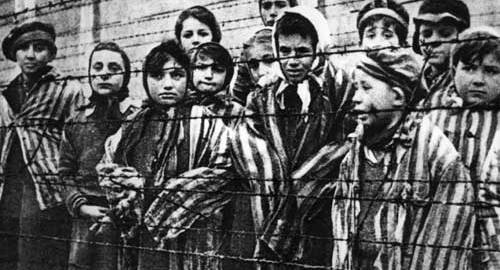
See The Holocaust

Tomorrow marks the five hundred and thirty first anniversary of the Battle of Bosworth and the end of the War of The Rose’s and for me and many a fascinating period of British/French history. At the end of day King Richard III lay dead , Plantagenet rule came to a bloody, brutal end and the rise of the “sexy” Tudors has began.
As a lover of all things history , especially British/Irish/Roman I have always been fascinated by the key players in the ruthless War of the Rose’s and the sheer brutality of the murder’s they perpetuated and casual deceit they used to forward their quest for the crown of England/Wales. Going against the grain of popular opinion I have always had a soft spot for Richard, regardless of the various murders he has been associated with , not least of all the Prince’s in the Tower. He only ruled for a short term and yet he will go down in history as a giant of British Royalty and the last Battle King of England

The Battle of Bosworth Field (or Battle of Bosworth) was the last significant battle of the Wars of the Roses, the civil war between the Houses of Lancaster and York that raged across England in the latter half of the 15th century. Fought on 22 August 1485, the battle was won by the Lancastrians.

Their leader Henry Tudor, Earl of Richmond, by his victory became the first English monarch of the Tudor dynasty. His opponent, Richard III, the last king of the House of York, was killed in the battle. Historians consider Bosworth Field to mark the end of the Plantagenet dynasty, making it a defining moment of English and Welsh history.
Richard’s reign began in 1483. At the request of his brother Edward IV, Richard was acting as Lord Protector for his son Edward V. Richard had Parliament declare Edward V illegitimate and ineligible for the throne, and Richard took it for himself. Richard lost popularity when the boy and his younger brother disappeared after Richard incarcerated them in the Tower of London, and Richard’s support was further eroded by the popular belief that he was implicated in the death of his wife. Across the English Channel in Brittany, Henry Tudor, a descendant of the greatly diminished House of Lancaster, seized on Richard’s difficulties so that he could challenge Richard’s claim to the throne.
Henry’s first attempt to invade England was frustrated by a storm in 1483, but at his second attempt he arrived unopposed on 7 August 1485 on the southwest coast of Wales. Marching inland, Henry gathered support as he made for London. Richard mustered his troops and intercepted Henry’s army south of Market Bosworth in Leicestershire. Thomas, Lord Stanley, and Sir William Stanley brought a force to the battlefield, but held back while they decided which side it would be more advantageous to support.
Richard divided his army, which outnumbered Henry’s, into three groups (or “battles”). One was assigned to the Duke of Norfolk and another to the Earl of Northumberland. Henry kept most of his force together and placed it under the command of the experienced Earl of Oxford. Richard’s vanguard, commanded by Norfolk, attacked but struggled against Oxford’s men, and some of Norfolk’s troops fled the field. Northumberland took no action when signalled to assist his king, so Richard gambled everything on a charge across the battlefield to kill Henry and end the fight. Seeing the king’s knights separated from his army, the Stanleys intervened; Sir William led his men to Henry’s aid, surrounding and killing Richard. After the battle, Henry was crowned king below an oak tree in nearby Stoke Golding, now a residential garden.
Henry hired chroniclers to portray his reign favourably; the Battle of Bosworth was popularised to represent the Tudor dynasty as the start of a new age. From the 15th to 18th centuries the battle was glamorised as a victory of good over evil. The climax of William Shakespeare‘s play Richard III provides a focal point for critics in later film adaptations. The exact site of the battle is disputed because of the lack of conclusive data, and memorials have been erected at different locations.
In 1974, the Bosworth Battlefield Heritage Centre was built on a site that has since been challenged by several scholars and historians. In October 2009, a team of researchers, who had performed geological surveys and archaeological digs in the area from 2003, suggested a location two miles (3.2 km) southwest of Ambion Hill.

During the 15th century, civil war raged across England as the Houses of York and Lancaster fought each other for the English throne. In 1471, the Yorkists defeated their rivals in the battles of Barnet and Tewkesbury. The Lancastrian King Henry VI and his only son, Edward of Lancaster, died in the aftermath of the Battle of Tewkesbury. Their deaths left the House of Lancaster with no direct claimants to the throne. The Yorkist king, Edward IV, was in complete control of England.
He attainted those who refused to submit to his rule, such as Jasper Tudor and his nephew Henry, naming them traitors and confiscating their lands. The Tudors tried to flee to France but strong winds forced them to land in Brittany, then a semi-independent duchy, where they were taken into the custody of Duke Francis II.
Henry’s mother, Lady Margaret Beaufort, was a great-granddaughter of John of Gaunt, uncle of King Richard II and father of King Henry IV. The Beauforts were originally bastards, but Henry IV legitimised them on the condition that their descendants were not eligible to inherit the throne. Henry Tudor, the only remaining Lancastrian noble with a trace of the royal bloodline, had a weak claim to the throne, and Edward regarded him as “a nobody”.
The Duke of Brittany, however, viewed Henry as a valuable tool to bargain for England’s aid in conflicts with France and kept the Tudors under his protection.
Edward IV died twelve years after Tewkesbury on 9 April 1483.

His twelve-year-old elder son succeeded him as King Edward V; the younger son, nine-year-old Richard of Shrewsbury, was next in line to the throne. Edward V was too young to rule and a Royal Council was established to rule the country until the king’s coming of age. The royal court was worried when they learned that the Woodvilles, relatives of Edward IV’s widow Elizabeth, were plotting to seize control of the council.
Having offended many in their quest for wealth and power, the Woodville family was not popular. To frustrate the Woodvilles’ ambitions, Lord Hastings and other members of the council turned to the new king’s uncle—Richard, Duke of Gloucester, brother of Edward IV. The courtiers urged Gloucester to assume the role of Protector quickly, as had been previously requested by his now dead brother.

Arms of Earl Rivers
On 29 April, Gloucester, accompanied by a contingent of guards and Henry Stafford, 2nd Duke of Buckingham, took Edward V into custody and arrested several prominent members of the Woodville family. After bringing the young king to London, Gloucester had two of the Woodvilles (Anthony Woodville, 2nd Earl Rivers and Richard Grey) executed, without trial, on charges of treason.
On 13 June, Gloucester accused Hastings of plotting with the Woodvilles and had him beheaded. Nine days later, Gloucester convinced Parliament to declare the marriage between Edward IV and Elizabeth illegal, rendering their children illegitimate and disqualifying them from the throne. With his brother’s children out of the way, he was next in the line of succession and was proclaimed King Richard III on 26 June.
The timing and extrajudicial nature of the deeds done to obtain the throne for Richard won him no popularity, and rumours that spoke ill of the new king spread throughout England. After they were declared bastards, the two princes were confined in the Tower of London and never seen in public again.
Discontent with Richard’s actions manifested itself in the summer after he took control of the country, as a conspiracy emerged to displace him from the throne. The rebels were mostly loyalists to Edward IV, who saw Richard as a usurper. Their plans were co-ordinated by a Lancastrian, Henry’s mother Lady Margaret, who was promoting her son as a candidate for the throne. The highest-ranking conspirator was Buckingham. No chronicles tell of the duke’s motive in joining the plot, although historian Charles Ross proposes that Buckingham was trying to distance himself from a king who was becoming increasingly unpopular with the people.
Michael Jones and Malcolm Underwood suggest that Margaret deceived Buckingham into thinking the rebels supported him to be king.

Elizabeth of York: rumours of her marriage launched Henry’s invasion.
The plan was to stage uprisings within a short time in southern and western England, overwhelming Richard’s forces. Buckingham would support the rebels by invading from Wales, while Henry came in by sea. Bad timing and weather wrecked the plot. An uprising in Kent started 10 days prematurely, alerting Richard to muster the royal army and take steps to put down the insurrections. Richard’s spies informed him of Buckingham’s activities, and the king’s men captured and destroyed the bridges across the River Severn. When Buckingham and his army reached the river, they found it swollen and impossible to cross because of a violent storm that broke on 15 October.
Buckingham was trapped and had no safe place to retreat; his Welsh enemies seized his home castle after he had set forth with his army. The duke abandoned his plans and fled to Wem, where he was betrayed by his servant and arrested by Richard’s men. On 2 November 1483, he was executed.
Henry had attempted a landing on 10 October (or 19 October), but his fleet was scattered by a storm. He reached the coast of England (at either Plymouth or Poole), and a group of soldiers hailed him to come ashore. They were, in truth, Richard’s men, prepared to capture Henry once he set foot on English soil. Henry was not deceived and returned to Brittany, abandoning the invasion. Without Buckingham or Henry, the rebellion was easily crushed by Richard.
The survivors of the failed uprisings fled to Brittany, where they openly supported Henry’s claim to the throne. At Christmas, Henry Tudor swore an oath to marry Edward IV’s daughter, Elizabeth of York, to unite the warring houses of York and Lancaster.
Henry’s rising prominence made him a great threat to Richard, and the Yorkist king made several overtures to the Duke of Brittany to surrender the young Lancastrian. Francis refused, holding out for the possibility of better terms from Richard. In mid-1484, Francis was incapacitated by illness and while recuperating, his treasurer, Pierre Landais, took over the reins of government. Landais reached an agreement with Richard to send back Henry and his uncle in exchange for military and financial aid. John Morton, a bishop of Flanders, learned of the scheme and warned the Tudors, who fled to France.
The French court allowed them to stay; the Tudors were useful pawns to ensure that Richard’s England did not interfere with French plans to annexe Brittany.

Anne Neville
On 16 March 1485, Richard’s queen, Anne Neville, died and rumours spread across the country that she was murdered to pave the way for Richard to marry his niece, Elizabeth. The gossip alienated Richard from some of his northern supporters, and upset Henry across the English Channel. The loss of Elizabeth’s hand in marriage could unravel the alliance between Henry’s supporters who were Lancastrians and those who were loyalists to Edward IV.
Anxious to secure his bride, Henry assembled approximately 2,000 men and set sail from France on 1 August.
.jpg)
A stained-glass window in St. James Church, Sutton Cheney, commemorates the Battle of Bosworth and the leaders of the combatants, Richard III (left) and Henry VII (right).
By the 15th century, English chivalric ideas of selfless service to the king had been corrupted.
Armed forces were mostly raised through musters in individual estates; every able-bodied man had to respond to his lord’s call to arms, and each noble had exclusive authority over his militia. Although a king could raise personal militia from his lands, he could only muster a significantly large army through the support of his nobles. Richard, like his predecessors, had to win over these men by granting gifts and maintaining cordial relationships. Powerful nobles could demand greater incentives to remain on the liege’s side or else they might turn against him.
Three groups, each with its own agenda, stood on Bosworth Field: Richard III and his Yorkist army; his challenger, Henry Tudor, who championed the Lancastrian cause; and the fence-sitting Stanleys.
Small and slender, Richard III did not have the robust physique associated with many of his Plantagenet predecessors. However, he enjoyed very rough sports and activities that were considered manly. His performances on the battlefield impressed his brother greatly, and he became Edward’s right-hand man.
During the 1480s, Richard defended the northern borders of England. In 1482, Edward charged him to lead an army into Scotland with the aim of replacing King James III with the Duke of Albany. Richard’s army broke through the Scottish defences and occupied the capital, Edinburgh, but Albany decided to give up his claim to the throne in return for the post of Lieutenant General of Scotland. As well as obtaining a guarantee that the Scottish government would concede territories and diplomatic benefits to the English crown, Richard’s campaign retook the town of Berwick-upon-Tweed, which the Scots had conquered in 1460.
Edward was not satisfied by these gains, which, according to Ross, could have been greater if Richard had been resolute enough to capitalise on the situation while in control of Edinburgh. In her analysis of Richard’s character, Christine Carpenter sees him as a soldier who was more used to taking orders than giving them. However, he was not averse to displaying his militaristic streak; on ascending the throne he made known his desire to lead a crusade against “not only the Turks, but all [his] foes”.

Duke of Norfolk
Richard’s most loyal subject was John Howard, 1st Duke of Norfolk. The duke had served Richard’s brother for many years and had been one of Edward IV’s closer confidants. He was a military veteran, having fought in the Battle of Towton in 1461 and served as Hastings’ deputy at Calais in 1471.
Ross speculates that he may have borne a grudge against Edward for depriving him of a fortune. Norfolk was due to inherit a share of the wealthy Mowbray estate on the death of eight-year-old Anne de Mowbray, the last of her family. However, Edward convinced Parliament to circumvent the law of inheritance and transfer the estate to his younger son, who was married to Anne. Consequently, Howard supported Richard III in deposing Edward’s sons, for which he received the dukedom of Norfolk and his original share of the Mowbray estate.
Henry Percy, 4th Earl of Northumberland, also supported Richard’s seizure of the throne of England. The Percys were loyal Lancastrians, but Edward IV eventually won the earl’s allegiance. Northumberland had been captured and imprisoned by the Yorkists in 1461, losing his titles and estates; however, Edward released him eight years later and restored his earldom.
From that time, Northumberland served the Yorkist crown, helping to defend northern England and maintain its peace. Initially the earl had issues with Richard III as Edward groomed his brother to be the leading power of the north. Northumberland was mollified when he was promised he would be the Warden of the East March, a position that was formerly hereditary for the Percys.
He served under Richard during the 1482 invasion of Scotland, and the allure of being in a position to dominate the north of England if Richard went south to assume the crown was his likely motivation for supporting Richard’s bid for kingship. However, after becoming king, Richard began moulding his nephew, John de la Pole, 1st Earl of Lincoln, to manage the north, passing over Northumberland for the position. According to Carpenter, although the earl was amply compensated, he despaired of any possibility of advancement under Richard.
Henry Tudor was unfamiliar with the arts of war and a stranger to the land he was trying to conquer. He spent the first fourteen years of his life in Wales and the next fourteen in Brittany and France. Slender but strong and decisive, Henry lacked a penchant for battle and was not much of a warrior; chroniclers such as Polydore Vergil and ambassadors like Pedro de Ayala found him more interested in commerce and finance. Having not fought in any battles ] Henry recruited several experienced veterans on whom he could rely for military advice and the command of his armies.

John de Vere, 13th Earl of Oxford, was Henry’s principal military commander. He was adept in the arts of war. At the Battle of Barnet, he commanded the Lancastrian right wing and routed the division opposing him. However, as a result of confusion over identities, Oxford’s group came under friendly fire from the Lancastrian main force and retreated from the field. The earl fled abroad and continued his fight against the Yorkists, raiding shipping and eventually capturing the island fort of St Michael’s Mount in 1473. He surrendered after receiving no aid or reinforcement, but in 1484 escaped from prison and joined Henry’s court in France, bringing along his erstwhile gaoler Sir James Blount. Oxford’s presence raised morale in Henry’s camp and troubled Richard III.
In the early stages of the Wars of the Roses, the Stanleys of Cheshire had been predominantly Lancastrians. Sir William Stanley, however, was a staunch Yorkist supporter, fighting in the Battle of Blore Heath in 1459 and helping Hastings to put down uprisings against Edward IV in 1471. When Richard took the crown, Sir William showed no inclination to turn against the new king, refraining from joining Buckingham’s rebellion, for which he was amply rewarded. Sir William’s elder brother, Thomas Stanley, 2nd Baron Stanley, was not as steadfast. By 1485, he had served three kings, namely Henry VI, Edward IV, and Richard III. Lord Stanley’s skilled political manoeuvrings—vacillating between opposing sides until it was clear who would be the winner—gained him high positions; he was Henry’s chamberlain and Edward’s steward.
His non-committal stance, until the crucial point of a battle, earned him the loyalty of his men, who felt he would not needlessly send them to their deaths.
Even though Lord Stanley had served as Edward IV’s steward, his relations with the king’s brother, the eventual Richard III, were not cordial. The two had conflicts that erupted into violence around March 1470. Furthermore, having taken Lady Margaret as his second wife in June 1472, Stanley was Henry Tudor’s stepfather, a relationship which did nothing to win him Richard’s favour. Despite these differences, Stanley did not join Buckingham’s revolt in 1483. When Richard executed those conspirators who had been unable to flee England, he spared Lady Margaret. However, he declared her titles forfeit and transferred her estates to Stanley’s name, to be held in trust for the Yorkist crown.
Richard’s act of mercy was calculated to reconcile him with Stanley, but it may have been to no avail—Carpenter has identified a further cause of friction in Richard’s intention to reopen an old land dispute that involved Thomas Stanley and the Harrington family. Edward IV had ruled the case in favour of Stanley in 1473, but Richard planned to overturn his brother’s ruling and give the wealthy estate to the Harringtons. Immediately before the Battle of Bosworth, being wary of Stanley, Richard took his son, Lord Strange, as hostage to discourage him from joining Henry.

The attacking force consisted of around 500 exiled Welsh and Englishmen. The history of one “John Major” (published in 1521) said Charles VIII of France had granted Henry 5,000 men of whom 1,000 were Scots, headed by Sir Alexander Bruce. No mention of Scottish soldiers was made by subsequent English historians. After the battle, Bruce was given an annuity of £20 by Henry for his “faithful services”.
How many Frenchmen actually sailed is unknown, but the historian Chris Skidmore estimates over half of Henry’s armed fleet. The Crowland Chronicler also recorded that Henry’s troops were “as much French as English”. Many of these French mercenaries were from the garrison of Phillipe de Crevecoeur, Lord of Esquerdes. Commynes recorded that these included:
“some 3,000 of the most unruly men in Normandy”.
This is partly the reason why they were taken up the coast of Wales, under Henry’s stern command, keeping them well apart from the Welsh soldiers under Rhys’ command.
Henry’s crossing of the English Channel in 1485 was without incident. Thirty ships sailed from Harfleur on 1 August and, with fair winds behind them, landed in his native Wales, at Mill Bay (near Dale) on the north side of Milford Haven on 7 August, easily capturing nearby Dale Castle. His long awaited arrival had been hailed by contemporary Welsh bards such as Dafydd Ddu and Gruffydd ap Dafydd as the true prince and “the youth of Brittany defeating the Saxons” in order to bring their country back to glory.
Mill Bay had been chosen as it was completely hidden from view and there was no resistance by the cohort of Richard’s men stationed at Dale where Henry and his men spent the first night.
In the morning they marched to Haverfordwest, the county town of Pembrokeshire, 12 miles away and were received “with the utmost goodwill of all”. Here, the Welshman Arnold Butler (who had met Henry in Brittany) announced that “the whole of Pembrokeshire was prepared to serve him”. Butler’s closest friend was Rhys ap Thomas. That afternoon, Henry and his troops headed north towards Cardigan and pitched camp “at the fifth milestone towards Cardigan” where they were joined by Gruffydd Rede with a band of soldiers and John Morgan of Tredegar. The following day, 9 August, they passed through Bwlch-y-gwynt and over the Preseli mountains and to Fagwyr Llwyd south of Cilgwyn.
Richard’s lieutenant in South Wales, Sir Walter Herbert, failed to move against Henry, and two of his officers, Richard Griffith and Evan Morgan, deserted to Henry with their men.
However, the most important defector to Henry in this early stage of the campaign was probably Rhys ap Thomas, who was the leading figure in West Wales. Richard had appointed Rhys Lieutenant in West Wales for his refusal to join Buckingham’s rebellion, asking that he surrender his son Gruffydd ap Rhys ap Thomas as surety, although by some accounts Rhys had managed to evade this condition. However, Henry successfully courted Rhys, offering the lieutenancy of all Wales in exchange for his fealty.
Henry marched via Aberystwyth while Rhys followed a more southerly route, recruiting 2,000 Welshmen en route to swell Henry’s army when they reunited at Cefn Digoll, Welshpool, thus ensuring that the majority of Henry’s army in the ensuing battle would be Welsh. By 15 or 16 August, Henry and his men had crossed the English border, making for the town of Shrewsbury.

March through Wales, to Bosworth Field.
Since 22 June 1485 Richard had been aware of Henry’s impending invasion, and had ordered his lords to maintain a high level of readiness. News of Henry’s landing reached Richard on 11 August, but it took three to four days for his messengers to notify his lords of their king’s mobilisation. On 16 August, the Yorkist army started to gather; Norfolk set off for Leicester, the assembly point, that night. The city of York, a traditional stronghold of Richard’s family, asked the king for instructions, and receiving a reply three days later sent 80 men to join the king. Simultaneously Northumberland, whose northern territory was the most distant from the capital, had gathered his men and ridden to Leicester.
Although London was his goal, Henry did not move directly towards the city. After resting in Shrewsbury, his forces went eastwards and picked up Sir Gilbert Talbot and other English allies, including deserters from Richard’s forces. Although its size had increased substantially since the landing, Henry’s army was not yet large enough to contend with the numbers Richard could muster.
Henry’s pace through Staffordshire was slow, delaying the confrontation with Richard so that he could gather more recruits to his cause. Henry had been communicating on friendly terms with the Stanleys for some time before setting foot in England, and the Stanleys had mobilised their forces on hearing of Henry’s landing. They ranged themselves ahead of Henry’s march through the English countryside, meeting twice in secret with Henry as he moved through Staffordshire.
At the second of these, at Atherstone in Warwickshire, they conferred “in what sort to arraign battle with King Richard, whom they heard to be not far off”. On 21 August, the Stanleys were making camp on the slopes of a hill north of Dadlington, while Henry encamped his army at White Moors to the northwest of their camp.

Early battle (a scenario based on historical interpretations): elements of Richard’s army charged down Ambion Hill to engage Henry’s forces on the plain. The Stanleys stood at the south, observing the situation.
On 20 August, Richard reached Leicester, joining Norfolk. Northumberland arrived the following day. The royal army proceeded westwards to intercept Henry’s march on London. Passing Sutton Cheney, Richard moved his army towards Ambion Hill—which he thought would be of tactical value—and made camp on it. Richard’s sleep was not peaceful and, according to the Croyland Chronicle, in the morning his face was “more livid and ghastly than usual”.

Late battle (a scenario based on historical interpretations): Richard led a small group of men around the main battle and charged Henry, who was moving towards the Stanleys. William Stanley rode to Henry’s rescue.
The Yorkist army, numbering about 10,000 men, deployed on the hilltop along the ridgeline from west to east. Norfolk’s group (or “battle” in the parlance of the time) of spearmen stood on the right flank, protecting the cannon and about 1,200 archers. Richard’s group, comprising 3,000 infantry, formed the centre. Northumberland’s men guarded the left flank; he had approximately 4,000 men, many of them mounted. Standing on the hilltop, Richard had a wide, unobstructed view of the area. He could see the Stanleys and their 6,000 men holding positions on and around Dadlington Hill, while to the southwest was Henry’s army.
Henry had very few Englishmen—fewer than a thousand—in his army. Between three and five hundred of them were exiles who had fled from Richard’s rule, and the remainder were Talbot’s men and recent deserters from Richard’s army. Historian John Mackie believes that 1,800 French mercenaries, led by Philibert de Chandée, formed the core of Henry’s army . John Mair, writing thirty-five years after the battle, claimed that this force contained a significant Scottish component, and this claim is accepted by some modern writers, but Mackie reasons that the French would not have released their elite Scottish knights and archers, and concludes that there were probably few Scottish troops in the army, although he accepts the presence of captains like Bernard Stewart, Lord of Aubigny.
In total, Henry’s army was around 5,000 strong, a substantial portion of which was made up by the recruits picked up in Wales. Rhys ap Thomas’s Welsh force was described as being large enough to have “annihilated” the rest of Henry’s force.
In their interpretations of the vague mentions of the battle in the old text, historians placed areas near the foot of Ambion Hill as likely regions where the two armies clashed, and thought up possible scenarios of the engagement. In their recreations of the battle, Henry started by moving his army towards Ambion Hill where Richard and his men stood. As Henry’s army advanced past the marsh at the southwestern foot of the hill, Richard sent a message to Stanley, threatening to execute his son, Lord Strange, if Stanley did not join the attack on Henry immediately. Stanley replied that he had other sons. Incensed, Richard gave the order to behead Strange but his officers temporised, saying that battle was imminent, and it would be more convenient to carry out the execution afterwards.
Henry had also sent messengers to Stanley asking him to declare his allegiance. The reply was evasive—the Stanleys would “naturally” come, after Henry had given orders to his army and arranged them for battle. Henry had no choice but to confront Richard’s forces alone.
Well aware of his own military inexperience, Henry handed command of his army to Oxford and retired to the rear with his bodyguards. Oxford, seeing the vast line of Richard’s army strung along the ridgeline, decided to keep his men together instead of splitting them into the traditional three battles: vanguard, centre, and rearguard. He ordered the troops to stray no further than 10 feet (3.0 m) from their banners, fearing that they would become enveloped. Individual groups clumped together, forming a single large mass flanked by horsemen on the wings.]
The Lancastrians were harassed by Richard’s cannon as they manoeuvred around the marsh, seeking firmer ground. Once Oxford and his men were clear of the marsh, Norfolk’s battle and several contingents of Richard’s group, under the command of Sir Robert Brackenbury, started to advance. Hails of arrows showered both sides as they closed. Oxford’s men proved the steadier in the ensuing hand-to-hand combat; they held their ground and several of Norfolk’s men fled the field.
Recognising that his force was at a disadvantage, Richard signalled for Northumberland to assist but Northumberland’s group showed no signs of movement. Historians, such as Horrox and Pugh, believe Northumberland chose not to aid his king for personal reasons. Ross doubts the aspersions cast on Northumberland’s loyalty, suggesting instead that Ambion Hill’s narrow ridge hindered him from joining the battle. The earl would have had to either go through his allies or execute a wide flanking move—near impossible to perform given the standard of drill at the time—to engage Oxford’s men.
At this juncture Richard saw Henry at some distance behind his main force. Seeing this, Richard decided to end the fight quickly by killing the enemy commander. He led a charge of mounted men around the melee and tore into Henry’s group; several accounts state that Richard’s force numbered 800–1000 knights, but Ross says it was more likely that Richard was accompanied only by his household men and closest friends.
Richard killed Henry’s standard-bearer Sir William Brandon in the initial charge and unhorsed burly John Cheyne, Edward IV’s former standard-bearer, with a blow to the head from his broken lance. French mercenaries in Henry’s retinue related how the attack had caught them off guard and that Henry sought protection by dismounting and concealing himself among them to present less of a target. Henry made no attempt to engage in combat himself.
Oxford had left a small reserve of Pike-equipped men with Henry. They slowed the pace of Richard’s mounted charge and bought Tudor some critical time. The remainder of Henry’s bodyguards surrounded their master and succeeded in keeping him away from the Yorkist king. On seeing Richard embroiled with Henry’s men and separated from his main force, William Stanley made his move. He led his men into the fight at Henry’s side. Outnumbered, Richard’s group was surrounded and gradually pressed back.
Richard’s force was driven several hundred yards away from Tudor, near to the edge of a marsh. The king’s horse lost its footing and toppled into it. Richard gathered himself and rallied his dwindling followers, supposedly refusing to retreat:
“God forbid that I retreat one step. I will either win the battle as a king, or die as one.”
In the fighting Richard’s banner man—Sir Percival Thirlwall—lost his legs but held the Yorkist banner aloft until he was killed.
Polydore Vergil, Henry Tudor’s official historian, recorded that
“King Richard, alone, was killed fighting manfully in the thickest press of his enemies”.
Richard had come within a sword’s length of Henry Tudor before being surrounded by Sir William Stanley’s men and killed. The Burgundian chronicler Jean Molinet says that a Welshman struck the death-blow with a halberd while Richard’s horse was stuck in the marshy ground.
It was said that the blows were so violent that the king’s helmet was driven into his skull. The contemporary Welsh poet Guto’r Glyn implies the leading Welsh Lancastrian Rhys ap Thomas, or one of his men, killed the king, writing that he “killed the boar, shaved his head”.
The identification in 2013 of King Richard’s body shows that the skeleton had 10 wounds, eight of them to the head, clearly inflicted in battle and suggesting he had lost his helmet. The skull showed that a blade had hacked away part of the rear of the skull.
Richard’s forces disintegrated as news of his death spread. Northumberland and his men fled north on seeing the king’s fate, and Norfolk was killed.
.jpg)
Finding Richard’s circlet after the battle, Lord Stanley hands it to Henry.
After the battle, Richard’s circlet was found and brought to Henry, who was crowned king at the top of Crown Hill, near the village of Stoke Golding. According to Vergil, Henry’s official historian, Lord Stanley found the circlet. Historian Stanley Chrimes and Professor Sydney Anglo dismiss the legend of the crown’s finding in a hawthorn bush; none of the contemporary sources reported such an event.
Ross, however, does not ignore the legend. He argues that the hawthorn bush would not be part of Henry’s coat of arms if it did not have a strong relationship to his ascendance.[120] In Vergil’s chronicle, 100 of Henry’s men, compared to 1,000 of Richard’s, died in this battle—a ratio Chrimes believes to be an exaggeration.
The bodies of the fallen were brought to St James Church at Dadlington for burial. However, Henry denied any immediate rest for Richard; instead the last Yorkist king’s corpse was stripped naked and strapped across a horse. His body was brought to Leicester and openly exhibited to prove that he was dead. Early accounts suggest that this was in the major Lancastrian collegiate foundation, the Church of the Annunciation of Our Lady of the Newarke.
After two days, the corpse was interred in a plain unmarked tomb, within the church of the Greyfriars. The location of Richard’s tomb was long uncertain, as the church was demolished following its dissolution in 1538.
On 12 September 2012 archaeologists announced the discovery of a battle-damaged skeleton suspected to be Richard’s in the remains of his burial church in Leicester. On 4 February 2013, it was announced that DNA testing had conclusively identified (“beyond reasonable doubt”) the remains as those of Richard. On Thursday 26 March 2015, these remains were ceremonially buried in Leicester Cathedral. On the following day the new royal tomb of Richard III was unveiled.
Henry dismissed the mercenaries in his force, retaining only a small core of local soldiers to form the “Yeomen of his Garde“, and proceeded to establish his rule of England. Parliament reversed his attainder and recorded Richard’s kingship as illegal, although the Yorkist king’s reign remained officially in the annals of England history. The proclamation of Edward IV’s children as illegitimate was also reversed, restoring Elizabeth’s status to a royal princess.
The marriage of Elizabeth, the heiress to the House of York, to Henry, the master of the House of Lancaster, marked the end of the feud between the two houses and the start of the Tudor dynasty. The royal matrimony, however, was delayed until Henry was crowned king and had established his claim on the throne firmly enough to preclude that of Elizabeth and her kin.
Henry further convinced Parliament to backdate his reign to the day before the battle, retrospectively enabling those who fought against him at Bosworth Field to be declared traitors. Northumberland, who had remained inactive during the battle, was imprisoned but later released and reinstated to pacify the north in Henry’s name. The purge of those who fought for Richard occupied Henry’s first two years of rule, although later he proved prepared to accept those who submitted to him regardless of their former allegiances.
Of his supporters, Henry rewarded the Stanleys the most generously. Aside from making William his chamberlain, he bestowed the earldom of Derby upon Lord Stanley along with grants and offices in other estates. Henry rewarded Oxford by restoring to him the lands and titles confiscated by the Yorkists and appointing him as Constable of the Tower and admiral of England, Ireland, and Aquitaine.
For his kin, Henry created Jasper Tudor the Duke of Bedford. He returned to his mother the lands and grants stripped from her by Richard, and proved to be a filial son, granting her a place of honour in the palace and faithfully attending to her throughout his reign. Parliament’s declaration of Margaret as femme sole effectively empowered her; she no longer needed to manage her estates through Stanley.
Elton points out that despite his initial largesse, Henry’s supporters at Bosworth would only enjoy his special favour for the short term; in later years, he would instead promote those who best served his interests.
Like the kings before him, Henry faced dissenters. The first open revolt occurred two years after Bosworth Field; Lambert Simnel claimed to be Edward Plantagenet, 17th Earl of Warwick, who was Edward IV’s nephew. The Earl of Lincoln backed him for the throne and led rebel forces in the name of the House of York.
The rebel army fended off several attacks by Northumberland’s forces, before engaging Henry’s army at the Battle of Stoke Field on 16 June 1487. Oxford and Bedford led Henry’s men,[137] including several former supporters of Richard III. Henry won this battle easily, but other malcontents and conspiracies would follow.
A rebellion in 1489 started with Northumberland’s murder; military historian Michael C. C. Adams says that the author of a note, which was left next to Northumberland’s body, blamed the earl for Richard’s death.
Contemporary accounts of the Battle of Bosworth can be found in four main sources, one of which is the English Croyland Chronicle, written by a senior Yorkist chronicler who relied on second-hand information from nobles and soldiers.
The other accounts were written by foreigners—Vergil, Jean Molinet, and Diego de Valera. Whereas Molinet was sympathetic to Richard , Vergil was in Henry’s service and drew information from the king and his subjects to portray them in a good light. Diego de Valera, whose information Ross regards as unreliable, compiled his work from letters of Spanish merchants. However, other historians have used Valera’s work to deduce possibly valuable insights not readily evident in other sources
Ross finds the poem, The Ballad of Bosworth Field, a useful source to ascertain certain details of the battle. The multitude of different accounts, mostly based on second- or third-hand information, has proved an obstacle to historians as they try to reconstruct the battle. Their common complaint is that, except for its outcome, very few details of the battle are found in the chronicles. According to historian Michael Hicks, the Battle of Bosworth is one of the worst-recorded clashes of the Wars of the Roses.

Newport History Society re-enacts Henry’s march through Wales to Bosworth Field during the battle’s quincentenary celebration.
Henry tried to present his victory as a new beginning for the country; he hired chroniclers to portray his reign as a “modern age” with its dawn in 1485. Hicks states that the works of Vergil and the blind historian Bernard André, promoted by subsequent Tudor administrations, became the authoritative sources for writers for the next four hundred years.
As such, Tudor literature paints a flattering picture of Henry’s reign, depicting the Battle of Bosworth as the final clash of the civil war and downplaying the subsequent uprisings. For England the Middle Ages ended in 1485, and English Heritage claims that other than William the Conqueror‘s successful invasion of 1066, no other year holds more significance in English history. By portraying Richard as a hunchbacked tyrant who usurped the throne by killing his nephews, the Tudor historians attached a sense of myth to the battle: it became an epic clash between good and evil with a satisfying moral outcome.
According to Reader Colin Burrow, André was so overwhelmed by the historic significance of the battle that he represented it with a blank page in his Henry VII (1502). For Professor Peter Saccio, the battle was indeed a unique clash in the annals of English history, because
“the victory was determined, not by those who fought, but by those who delayed fighting until they were sure of being on the winning side.”
Historians such as Adams and Horrox believe that Richard lost the battle not for any mythic reasons, but because of morale and loyalty problems in his army. Most of the common soldiers found it difficult to fight for a liege whom they distrusted, and some lords believed that their situation might improve if Richard was dethroned.
According to Adams, against such duplicities Richard’s desperate charge was the only knightly behaviour on the field. As fellow historian Michael Bennet puts it, the attack was “the swan-song of [mediaeval] English chivalry”. Adams believes this view was shared at the time by the printer William Caxton, who enjoyed sponsorship from Edward IV and Richard III. Nine days after the battle, Caxton published Thomas Malory‘s story about chivalry and death by betrayal—Le Morte d’Arthur—seemingly as a response to the circumstances of Richard’s death.
Elton does not believe Bosworth Field has any true significance, pointing out that the 20th-century English public largely ignored the battle until its quincentennial celebration. In his view, the dearth of specific information about the battle—no-one even knows exactly where it took place—demonstrates its insignificance to English society. Elton considers the battle as just one part of Henry’s struggles to establish his reign, underscoring his point by noting that the young king had to spend ten more years pacifying factions and rebellions to secure his throne.
Mackie asserts that, in hindsight, Bosworth Field is notable as the decisive battle that established a dynasty which would rule unchallenged over England for more than a hundred years.
Mackie notes that contemporary historians of that time, wary of the three royal successions during the long Wars of the Roses, considered Bosworth Field just another in a lengthy series of such battles. It was through the works and efforts of Francis Bacon and his successors that the public started to believe the battle had decided their futures by bringing about “the fall of a tyrant”.
William Shakespeare gives prominence to the Battle of Bosworth in his play, Richard III. It is the “one big battle”; no other fighting scene distracts the audience from this action, represented by a one-on-one sword fight between Henry Tudor and Richard III. Shakespeare uses their duel to bring a climactic end to the play and the Wars of the Roses; he also uses it to champion morality, portraying the “unequivocal triumph of good over evil”.
Richard, the villainous lead character, has been built up in the battles of Shakespeare’s earlier play, Henry VI, Part 3, as a “formidable swordsman and a courageous military leader”—in contrast to the dastardly means by which he becomes king in Richard III. Although the Battle of Bosworth has only five sentences to direct it, three scenes and more than four hundred lines precede the action, developing the background and motivations for the characters in anticipation of the battle.

Richard III, Act 5, scene 3: Richard, played by David Garrick, awakens after a nightmare visit by the ghosts of his victims.
Shakespeare’s account of the battle was mostly based on chroniclers Edward Hall‘s and Raphael Holinshed‘s dramatic versions of history, which were sourced from Vergil’s chronicle. However, Shakespeare’s attitude towards Richard was shaped by scholar Thomas More, whose writings displayed extreme bias against the Yorkist king.
The result of these influences is a script that vilifies the king, and Shakespeare had few qualms about departing from history to incite drama. Margaret of Anjou died in 1482, but Shakespeare had her speak to Richard’s mother before the battle to foreshadow Richard’s fate and fulfill the prophecy she had given in Henry VI.
Shakespeare exaggerated the cause of Richard’s restless night before the battle, imagining it as a haunting by the ghosts of those whom the king had murdered, including Buckingham. Richard is portrayed as suffering a pang of conscience, but as he speaks he regains his confidence and asserts that he will be evil, if such needed to retain his crown.
The fight between the two armies is simulated by rowdy noises made off-stage (alarums or alarms) while actors walk on-stage, deliver their lines, and exit. To build anticipation for the duel, Shakespeare requests more alarums after Richard’s councillor, William Catesby, announces that the king is “[enacting] more wonders than a man”. Richard punctuates his entrance with the classic line, “A horse, a horse! My kingdom for a horse!”
He refuses to withdraw, continuing to seek to slay Henry’s doubles until he has killed his nemesis. There is no documentary evidence that Henry had five decoys at Bosworth Field; the idea was Shakespeare’s invention. He drew inspiration from Henry IV‘s use of them at the Battle of Shrewsbury (1403) to amplify the perception of Richard’s courage on the battlefield.
Similarly, the single combat between Henry and Richard is Shakespeare’s creation. The True Tragedy of Richard III, a play earlier than Shakespeare’s, has no signs of staging such an encounter: its stage directions give not a hint of visible combat.

The Battle of Bosworth Field, a Scene in the Great Drama of History, illustrating Beckett’s mocking of Victorian attitude towards history
Despite the dramatic licences taken, Shakespeare’s version of the Battle of Bosworth was the model of the event for English textbooks for many years during the 18th and 19th centuries. This glamorised version of history, promulgated in books and paintings and played out on stages across the country, perturbed humorist Gilbert Abbott à Beckett. He voiced his criticism in the form of a poem, equating the romantic view of the battle to watching a “fifth-rate production of Richard III“: shabbily costumed actors fight the Battle of Bosworth on-stage while those with lesser roles lounge at the back, showing no interest in the proceedings.
In Laurence Olivier‘s 1955 film adaptation of Richard III, the Battle of Bosworth is represented not by a single duel but a general melee that became the film’s most recognised scene and a regular screening at Bosworth Battlefield Heritage Centre. The film depicts the clash between the Yorkist and Lancastrian armies on an open field, focusing on individual characters amidst the savagery of hand-to-hand fighting, and received accolades for the realism portrayed.
One reviewer for The Manchester Guardian newspaper, however, was not impressed, finding the number of combatants too sparse for the wide plains and a lack of subtlety in Richard’s death scene. The means by which Richard is shown to prepare his army for the battle also earned acclaim. As Richard speaks to his men and draws his plans in the sand using his sword, his units appear on-screen, arraying themselves according to the lines that Richard had drawn. Intimately woven together, the combination of pictorial and narrative elements effectively turns Richard into a storyteller, who acts out the plot he has constructed.
Shakespearian critic Herbert Coursen extends that imagery: Richard sets himself up as a creator of men, but dies amongst the savagery of his creations. Coursen finds the depiction a contrast to that of Henry V and his “band of brothers”.
The adaptation of the setting for Richard III to a 1930s fascist England in Ian McKellen‘s 1995 film, however, did not sit well with historians. Adams posits that the original Shakespearian setting for Richard’s fate at Bosworth teaches the moral of facing one’s fate, no matter how unjust it is, “nobly and with dignity”. By overshadowing the dramatic teaching with special effects, McKellen’s film reduces its version of the battle to a pyrotechnic spectacle about the death of a one-dimensional villain. Coursen agrees that, in this version, the battle and Richard’s end are trite and underwhelming.


Officially the site of the battle is deemed by Leicestershire County Council to be in the vicinity of the town of Market Bosworth. The council engaged historian Daniel Williams to research the battle, and in 1974 his findings were used to build the Bosworth Battlefield Heritage Centre and the presentation it houses. Williams’s interpretation, however, has since been questioned. Sparked by the battle’s quincentenary celebration in 1985, a dispute among historians has led many to suspect the accuracy of Williams’s theory. In particular, geological surveys conducted from 2003 to 2009 by the Battlefields Trust, a charitable organisation that protects and studies old English battlefields, show that the southern and eastern flanks of Ambion Hill were solid ground in the 15th century, contrary to Williams’s claim that it was a large area of marshland.
Landscape archaeologist Glenn Foard, leader of the survey, said the collected soil samples and finds of medieval military equipment suggest that the battle took place two miles (3 km) southwest of Ambion Hill (52°34′41″N 1°26′02″W), contrary to the popular belief that it was fought near the foot of the hill.

Bosworth Battlefield true location
The Historic Buildings and Monuments Commission for England (popularly referred to as “English Heritage”) argues that the battle was named after Market Bosworth because the town was the nearest significant settlement to the battlefield in the 15th century.
As explored by Professor Philip Morgan, a battle might initially not be named specifically at all. As time passes, writers of administrative and historical records find it necessary to identify a notable battle, ascribing it a name that is usually toponymical in nature and sourced from combatants or observers. This official name becomes accepted by society and future generations without question.
Early records associated the Battle of Bosworth with “Brownehethe”, “bellum Miravallenses“, “Sandeford” and “Dadlyngton field”. The earliest record, a municipal memorandum of 23 August 1485 from York, locates the battle “on the field of Redemore”. This is corroborated by a 1485–86 letter that mentions “Redesmore” as its site.
According to historian Peter Foss, records did not associate the battle with “Bosworth” until 151
Foss is named by English Heritage as the principal advocate for “Redemore” as the battle site. He suggests the name is derived from “Hreod Mor“, an Anglo-Saxon phrase that means “reedy marshland”. Basing his opinion on 13th- and 16th-century church records, he believes “Redemore” was an area of wetland that lay between Ambion Hill and the village of Dadlington, and was close to the Fenn Lanes, a Roman road running east to west across the region.
Foard believes this road to be the most probable route that both armies took to reach the battlefield. Williams dismisses the notion of “Redmore” as a specific location, saying that the term refers to a large area of reddish soil; Foss argues that Williams’s sources are local stories and flawed interpretations of recor
Moreover, he proposes that Williams was influenced by William Hutton‘s 1788 The Battle of Bosworth-Field, which Foss blames for introducing the notion that the battle was fought west of Ambion Hill on the north side of the River Sence. Hutton, as Foss suggests, misinterpreted a passage from his source, Raphael Holinshed‘s 1577 Chronicle. Holinshed wrote, “King Richard pitched his field on a hill called Anne Beame, refreshed his soldiers and took his rest.” Foss believes that Hutton mistook “field” to mean “field of battle”, thus creating the idea that the fight took place on Anne Beame (Ambion) Hill. To “[pitch] his field”, as Foss clarifies, was a period expression for setting up a camp

St James the Greater, Dadlington: the dead of Bosworth Field were buried here.
Foss brings further evidence for his “Redemore” theory by quoting Edward Hall‘s 1550 Chronicle. Hall stated that Richard’s army stepped onto a plain after breaking camp the next day. Furthermore, historian William Burton, author of Description of Leicestershire (1622), wrote that the battle was:
“fought in a large, flat, plaine, and spacious ground, three miles [5 km] distant from [Bosworth], between the Towne of Shenton, Sutton [Cheney], Dadlington and Stoke [Golding]”.
In Foss’s opinion both sources are describing an area of flat ground north of Dadlington.
English Heritage, responsible for managing England’s historic sites, used both theories to designate the site for Bosworth Field. Without preference for either theory, they constructed a single continuous battlefield boundary that encompasses the locations proposed by both Williams and Foss.
The region has experienced extensive changes over the years, starting after the battle. Holinshed stated in his chronicle that he found firm ground where he expected the marsh to be, and Burton confirmed that by the end of the 16th century, areas of the battlefield were enclosed and had been improved to make them agriculturally productive. Trees were planted on the south side of Ambion Hill, forming Ambion Wood. In the 18th and 19th centuries, the Ashby Canal carved through the land west and south-west of Ambion Hill. Winding alongside the canal at a distance, the Ashby and Nuneaton Joint Railway crossed the area on an embankment.
The changes to the landscape were so extensive that when Hutton revisited the region in 1807 after an earlier 1788 visit, he could not readily find his way around

Richard’s Well, where the last Yorkist king supposedly took a drink of water on the day of the battle.
Bosworth Battlefield Heritage Centre was built on Ambion Hill, near Richard’s Well. According to legend, Richard III drank from one of the several springs in the region on the day of the battle. In 1788, a local pointed out one of the springs to Hutton as the one mentioned in the legend. A stone structure was later built over the location. The inscription on the well reads:
“Near this spot, on August 22nd 1485, at the age of 32, King Richard III fell fighting gallantly in defence of his realm & his crown against the usurper Henry Tudor.
The Cairn was erected by Dr. Samuel Parr in 1813 to mark the well from which the king is said to have drunk during the battle.
It is maintained by the Fellowship of the White Boar.”
Northwest of Ambion Hill, just across the northern tributary of the Sence, a flag and memorial stone mark Richard’s Field. Erected in 1973, the site was selected on the basis of Williams’s theory. St James’s Church at Dadlington is the only structure in the area that is reliably associated with the Battle of Bosworth; the bodies of those killed in the battle were buried there.
The very extensive survey carried out (2005-2009) by the Battlefields Trust headed by Glenn Foard led eventually to the discovery of the real location of the core battlefield. This lies about a kilometer further west than the location suggested by Peter Foss. It is in what was at the time of the battle an area of marginal land at the meeting of several township boundaries. There was a cluster of field names suggesting the presence of marshland and heath. Thirty four lead round shot were discovered as a result of systematic metal detecting (more than the total found previously on all other C15th European battlefields), as well as other significant finds, including a small silver gilt badge depicting a boar. Experts believe that the boar badge could indicate the actual site of Richard III’s death, since this high-status badge depicting his personal emblem, was probably worn by a member of his close retinue.
A new interpretation of the battle now integrates the historic accounts with the battlefield finds and landscape history. The new site lies either side of the Fenn Lanes Roman road, close to Fenn Lane Farm and is some three kilometers to the southwest of Ambion Hill.
.jpg)
Bosworth Battlefield (Fenn Lane Farm)
Based on the round shot scatter, the likely size of Richard III’s army, and the topography, Glenn Foard and Anne Curry think that Richard may have lined up his forces on a slight ridge which lies just east of Fox Covert Lane and behind a postulated medieval marsh. Richard’s vanguard commanded by the Duke of Norfolk was on the right (north) side of Richard’s battle line, with the Earl of Northumberland on Richard’s left (south) side.
Tudor’s forces approached along the line of the Roman road and lined up to the west of the present day Fenn Lane Farm, having marched from the vicinity of Merevale in Warwickshire. The Stanleys were positioned on the south side of the battlefield, on rising ground towards Stoke Golding and Dadlington. The Earl of Oxford turned north to avoid the marsh (and possibly Richard’s guns). This manoeuvre put the marsh on Oxford’s right. He moved to attack Norfolk’s vanguard. Norfolk was subsequently killed.
Northumberland failed to engage, possibly due to the presence of the Stanleys, whose intentions were unclear, or due to the position of the marsh (or for both reasons). With Richard’s situation deteriorating, he decided to launch an attack against Henry Tudor, which almost succeeded, but the king’s horse became stuck in the marsh, and he was killed. Fen Hole (where the boar badge was found) is believed to be a residue of the marsh. When Richard began his charge, Sir William Stanley intervened from the vicinity of Stoke Golding. It was here, on what came to be known as Crown Hill (the closest elevated ground to the fighting), that Lord Stanley crowned Henry Tudor after Richard was killed.

Bosworth Battlefield actual site
The windmill close to which the Duke of Norfolk is said to have died (according to the ballad “Lady Bessy”) was Dadlington windmill. This has disappeared but is known to have stood at the time of the battle, in the vicinity of Apple Orchard Farm and North Farm, Dadlington. A small cluster of significant finds was made in this area, including a gold livery badge depicting an eagle. The windmill lay between the core battlefield and Richard’s camp on Ambion Hill and the rout of Norfolk’s vanguard was in this direction. This also accounts for the large number of dead in Dadlington parish, leading to the setting up of the battle chantry there.
Historic England have re-defined the boundaries of the registered Bosworth Battlefield to incorporate the newly identified site. There are hopes that public access to the site may be possible in the future.


I love history and watching the ITV drama Victoria I was curious about Lady Flora Hasting and her background and therefore I decided to look her up and learn a bit more about her. If like me your a history addict and need to know more about the people and places that came before us – see below for more details on this unfortunate woman’s story.
Lady Flora Elizabeth Rawdon-Hastings
Lady Flora Elizabeth Rawdon-Hastings (11 February 1806 – 5 July 1839) was a British aristocrat and lady-in-waiting to Queen Victoria‘s mother, the Duchess of Kent. Her death in 1839 was the subject of a court scandal that gave the Queen a negative image.
| Lady Flora Hastings | |
|---|---|
 |
|
| Born | 11 February 1806 |
| Died | 5 July 1839 (aged 33) London, England |
| Cause of death | Liver tumor |
| Resting place | Loudoun Kirk, near Loudoun Castle, Scotland |
| Parent(s) | Francis Rawdon-Hastings, 1st Marquess of Hastings Flora Mure-Campbell, 6th Countess of Loudoun |
Lady Flora was born to Francis Rawdon-Hastings, 1st Marquess of Hastings (1754–1826) and his wife, Flora Mure-Campbell, 6th Countess of Loudoun (1780–1840). Her siblings were George, Sophia, Selina and Adelaide.


The unmarried Lady Flora was alleged to have had an affair with John Conroy, the “favourite” and also suspected lover of the Duchess of Kent.
The Duchess’s daughter, Alexandrina Victoria (later Queen Victoria), detested Conroy, while Flora disliked the queen’s adored friend and mentor, Lady Lehzen, as well as the Prime Minister, Lord Melbourne.
As the Duchess of Kent’s lady-in-waiting, Hastings was party to Conroy’s infamous Kensington System by which he colluded with the Duchess to keep Victoria isolated from her Hanoverian uncles. For these reasons, the young Victoria hated and suspected Hastings, and was open to any accusation that could be laid at the feet of Conroy or his aides.
Once she ascended the throne in June 1837, Victoria made every attempt to keep her mother’s household, including Hastings and Conroy, away from her in distant parts of Buckingham Palace. It was only later, after Conroy’s departure and the birth of Victoria’s first child, that Prince Albert was able to effect a reconciliation between Victoria and the Duchess of Kent.
Sometime in 1839, Hastings began to experience pain and swelling in her lower abdomen. She visited the queen’s physician, Sir James Clark, who could not diagnose her condition without an examination, which Hastings refused. Clark assumed the abdominal growth was pregnancy, and met with Hastings twice a week from 10 January to 16 February.[1] As Hastings was unmarried, his suspicions were hushed up. However, her enemies, Baroness Lehzen and the Marchioness of Tavistock (better known as the inventor of afternoon tea) spread the rumour that she was “with child”, and eventually Lehzen told Melbourne about her fears. On 2 February, the queen wrote in her journal that she suspected Conroy, a man whom she loathed intensely, to be the father
Lady Flora felt that she had to defend herself in public, publishing her version of events in the form of a letter which appeared in The Examiner, and blaming “a certain foreign lady” (Lehzen) for spreading the rumours.
The accusations were proven false when Lady Flora finally consented to a physical examination by the royal doctors, who confirmed that she was not pregnant. She did, however, have an advanced cancerous liver tumor, and had only months left to live. With only two months to live, Lady Flora wrote in 1839 to her mother on the subject of the upcoming Eglinton Tournament, expressing her concern that one of the knights might be killed in the violent sport.
Queen Victoria visited the now emaciated and clearly dying Lady Flora on 27 June.

Lady Flora died in London on 5 July 1839, aged 33. She was buried at Loudoun Castle, her family home. Conroy and Lord Hastings, her brother, stirred up a press campaign against both the Queen and Doctor Clark which attacked them for insulting and disgracing Lady Flora with false rumours and for plotting against her and the entire Hastings family.
Published in the Morning Post, their campaign also condemned the queen’s “fellow conspirators”, Baroness Lehzen and Lady Tavistock, as the guilty parties who had originated the false rumour of pregnancy.
These attempts fell far short of their goals of discrediting the queen and forcing her to appoint Conroy to some post close to her person. Victoria remained adamant that Conroy should never be close to the throne in any fashion. The next year, her marriage and subsequent pregnancy restored her to popular favour. Victoria remained haunted by guilty memories of Lady Flora, having nightmares about her for years afterwards.
Hastings was also a poet; her work, Poems by the lady Flora Hastings, was published posthumously in 1841 by her sister Sophia (mother of John, Marquess of Bute).
Lady Flora was portrayed in the 2009 film The Young Victoria by Irish actress Genevieve O’Reilly.

Below is a comprehensive list of 60 films about the “Troubles” and Republican/Loyalist paramilitaries . The list includes background information on the movies and where possible I have incl…
Source: 60 Films about the “Troubles “
Louis Mountbatten 1st Earl Mountbatten of Burma 25 June 1900 – 27 August 1979 —————————————————…
Source: Louis Mountbatten, 1st Earl Mountbatten of Burma
The Warrenpoint Ambush 27 August 1979 ————————————————- ——————…
Source: Warrenpoint Ambush – 18 British soldiers Slaughtered by the IRA

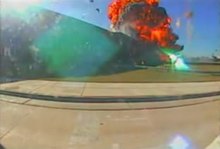


 belfastchildis.com