Key Events & Deaths on this day in Northern Ireland Troubles
6th January
———————————
Sunday 6 January 1980
Three members of the Ulster Defence Regiment (UDR) where killed by the Irish Republican Army (IRA) in a land mine attack near Castlewellan, County Down.
[These deaths brought the ‘official’ death toll, as compiled by the Royal Ulster Constabulary (RUC), to over 2,000. RUC figures do not count those killed outside of Northern Ireland.]
Thursday 6 January 1994
The Ulster Freedom Fighters (UFF), a cover name (pseudonym) used by the Ulster Defence Association (UDA), injured a Catholic man (21) in a gun attack in west Belfast.
Monday 6 January 1997
The Irish Republican Army (IRA) carried out a ‘rocket’ attack at the Royal Courts of Justice in Belfast injuring a Royal Ulster Constabulary (RUC) officer in the leg.
A man was shot in the leg in a ‘punishment’ attack in West Belfast.
[It was claimed by some people that this shooting was carried out by the Official IRA.]
Tuesday 6 January 1998
A large car bomb was defused in the centre of Banbridge, County Down.
[The bomb, estimated at 500 pounds, was planted by the Continuity Irish Republican Army (CIRA).]
A Catholic man was shot and injured in the Meadows Tavern bar, Boucher Road, Belfast. It was believed that he had been shot by Direct Action Against Drugs (DAAD) which is considered to be a cover name (pseudonym) for the Irish Republican Army (IRA).
Wednesday 6 January 1999
A man was injured in Magherafelt, County Derry, in a blast-bomb attack carried out by Loyalist paramilitaries.
A man was injured in a Loyalist gun attack in Bangor, County Down. The Social Democratic and Labour Party (SDLP) and the Ulster Unionist Party (UUP) argued over the implementation of the pre-Christmas arrangement on government departments and North-South bodies. The UUP wanted the Northern Ireland Assembly to “take note” of the agreement, whereas the SDLP wanted the two parties to approve and accept it.
The Irish Republican Army (IRA) published a New Year Message in ‘An Phoblacht / Republican News’ in which they said that the Good Friday Agreement had failed to deliver meaningful change and that Unionists were pursuing conditions that had contributed to the breakdown of the 1994 ceasefire.
[Unionists regarded the statement as a threat by the IRA to end its ceasefire.]
Thursday 6 January 2000
The Irish Republican Army (IRA) issued a new year statement in An Phoblact / Republican News. The statement warned that any move on decommissioning would depend on a dramatic reduction in the British military presence in Northern Ireland.
Saturday 6 January 2001
The body of George Legge (37), a former senior member of the Ulster Defence Association (UDA), was found dumped in a field at Clontonacally Road in Carryduff, County Antrim. Police said that he had been badly beaten before being stabbed to death.
[It was believed that the UDA was responsible for the killing which was part of an internal UDA dispute. There was media speculation that Legge had been involved in drugs and had fallen out of favour with the UDA. He had been drinking in a public house, the ‘Bunch of Grapes’ in east Belfast, and it is thought that he was first attacked there. There was a malicious fire at the rear of the pub shortly after the discovery of Legge’s body. The Irish Times (a Dublin based newspaper) reported that Legge had been decapitated.]
Sunday 6 January 2002
Loyalist paramilitaries carried out a pipe-bomb attack on the home of a prison officer in Westway Park, Ballygomartin, Belfast, at approximately 10.00pm (2200GMT). The officer’s wife and four year old daughter needed hospital treatment for shrapnel wounds, cuts, and shock. The bomb had been thrown through the living room window of the house. The Red Hand Defenders (RHD) said it was responsible for the attack.
[The RHD is a cover name that has been used in the past by members of the Ulster Defence Association (UDA) and Loyalist Volunteer Force (LVF).] The RHD said the attack was in response to alleged harassment of Loyalist prisoners including Johnny Adair and Gary Smyth in Magheraberry jail, County Antrim.
——————————————————————————
Remembering all innocent victims of the Troubles
Today is the anniversary of the death of the following people killed as a results of the conflict in Northern Ireland
“To live in hearts we leave behind is not to die
– Thomas Campbell
To the innocent on the list – Your memory will live forever
– To the Paramilitaries –
There are many things worth living for, a few things worth dying for, but nothing worth killing for.
6 People lost their lives on the 6th January between 1980 – 2001
————————————————————
06 January 1980
Robert Smyth, (18)
Protestant Status: Ulster Defence Regiment (UDR),
Killed by: Irish Republican Army (IRA) Killed in land mine attack on Ulster Defence Regiment (UDR) mobile patrol, Burren Bridge, near Castlewellan, County Down.
————————————————————
06 January 1980
James Cochrane, (21)
Catholic Status: Ulster Defence Regiment (UDR),
Killed by: Irish Republican Army (IRA) Killed in land mine attack on Ulster Defence Regiment (UDR) mobile patrol, Burren Bridge, near Castlewellan, County Down.
————————————————————
06 January 1980 Richard Wilson, (21)
Protestant Status: Ulster Defence Regiment (UDR),
Killed by: Irish Republican Army (IRA) Killed in land mine attack on Ulster Defence Regiment (UDR) mobile patrol, Burren Bridge, near Castlewellan, County Down.
————————————————————
06 January 1983
Eric Brown, (41)
Protestant Status: Royal Ulster Constabulary (RUC),
Killed by: Irish Republican Army (IRA) Shot while sitting in stationary Royal Ulster Constabulary (RUC) civilian-type car, Bridge street, Rostrevor, County Down.
————————————————————
06 January 1983
Brian Quinn, (23)
Catholic Status: Royal Ulster Constabulary (RUC),
Killed by: Irish Republican Army (IRA) Shot while sitting in stationary Royal Ulster Constabulary (RUC) civilian-type car, Bridge street, Rostrevor, County Down.
————————————————————
06 January 2001
George Legge, (37)
Protestant Status: Ulster Defence Association (UDA),
Killed by: Ulster Defence Association (UDA) Found beaten and stabbed to death, off Clontonacally Road, near Carryduff, County Down. Internal Ulster Defence Association (UDA) dispute.
————————————————————
This is simply the story of a boy trying to grow up, survive, thrive, have fun & discover himself against a backdrop of events that might best be described as ‘explosive’, captivating & shocking the world for thirty long years.
ISIS Militants Strap Bomb on 4 Year-Old Boy and Blow Him Up after Killing the Child’s Father
ISIS strapped a bomb to a four year-old child and blew him up a week after executing the boy’s father in the Al-Shirqat district.
In yet another heinous crime committed by the ISIS terror organization, the group has blown up a four-year-old child just one week after executing the child’s father.
Speaking to Alsumaria News, a senior official in the Iraqi national organization the Popular Mobilization Forces, Jabar el-Maamouri, said ISIS exploded “a bomb that was attached to a four-year-old child through a remote-controlled device so that his organs would be blown apart. ISIS executed the boy’s father a week ago who they accused of participating in an attack on one their outposts a month ago that killed two ISIS gunmen.”
The killings took place in the Al-Shirqat district north of Salah ad Din province.
El-Maamouri called human rights organizations to “document the crimes of ISIS and to publicize the incident to the international community to condemn its funders and supporters with money and words.”
ISIS has controlled the Al-Shirqat district since June, 2014. The area is considered to be one of the organization’s strongholds.
Elsewhere in Iraq, a local source in Nineveh province who asked to remain anonymous told Alsumaria News that the ISIS wiped out a village after its residents rebelled against the group.
“ISIS executed dozens of civilians including old people, women and children in the village of Al-Choud in area of Al-Keraya (85 kilometers south of Nineveh),” he said. a week after executing the boys father.
Siddhartha Dhar, also known as Abu Rumaysah, is thought to be the new man behind the mask fronting threats to the UK from inside Syria.
Child in Isil video has now been identified as Isa Dare, the son of Grace Dare a Jihadi bride from Lewisham
———————————————–
Unlike the man he appears to have replaced – Briton Mohammed Emwazi, dubbed “Jihadi John” – Mr Rumaysah was a well-known and prolific figure among radical Islamists in London.
He disappeared in September 2014, shortly after being released on bail while under investigation for allegedly encouraging terrorism.
Police banned him from travelling and ordered him to hand in his passport. However, he boarded a coach for Paris at London’s Victoria Station, along with his wife and children.
Weeks later, he announced his arrival in Syria by posting an image online of himself holding a rifle, and his newborn and fourth child.
“What a shoddy security system Britain must have to allow me to breeze through Europe to [IS],” he tweeted.
Mr Rumaysah, who is in his early 30s, was born and raised in the UK in a Hindu family – his original name is Siddhartha Dhar.
Following his conversion, he became a leading member and speaker for the al-Muhajiroun network, a group banned under terrorism legislation.
He would regularly attend demonstrations against the US, Israel, Arab regimes or any other cause the group believed to be un-Islamic.
He would stand outside mosques on Friday afternoons, seeking to find new followers to the radical network’s way of thinking. He would post videos online and rarely turned down an opportunity to speak to the media.
And when he spoke he barely hid his radical views.
When so-called Islamic State claimed to have destroyed the border between Iraq and Syria in 2014, he believed it was the moment a new Islamic regime worthy of global support had been born.
“The caliphate [a state governed in accordance with Islamic law, or Sharia] is a dream for all Muslims worldwide,” he said in one of his YouTube videos.
“We can finally have a sanctuary where we can practice our religion and live under the Sharia. It is a big, big thing.”
In an appearance on the BBC’s Sunday Morning Live programme, he expanded on these views.
“Now that we have this caliphate I think you’ll see many Muslims globally seeing it as an opportunity for the Koran to be realised,” he said.
“As a Muslim I would like to see the UK governed by the Sharia. It is far superior to democracy. I don’t really identify myself with British values. I am Muslim first, second and last.”
‘Travel guide’
In 2014, Mr Rumaysah was asked by a TV journalist whether he would condemn the killing of US journalist James Foley by IS.
—————————————
‘Save Steven Sotloff’ by Abu Rumaysah on Channel 4
—————————————
He refused to answer the question – saying only that he condemned US airstrikes killing Muslims in the “caliphate”.
In May 2015, he “published” a sort of travel guide for would-be fellow travellers.
The 40-page document, which opens with an image of a fictional battle on the edge of Jerusalem, is designed to encourage Muslims to stop procrastinating and join what Mr Rumaysah claims are the swelling ranks of Islamic State.
Most of the rest of the booklet is devoted to the kind of information that features in a standard travel guide: food, weather and transport.
“If you thought London or New York was cosmopolitan, then wait until you step foot in the Islamic State because it screams diversity,” he wrote.
“In my short time here I have met people from absolutely every walk of life, proof that the caliphate’s pulling power is strong and tenacious.”
He glossed over public executions, rape of women held as slaves and other punishments meted out to anyone who does not adhere to the fighting group’s ideology.
Key Events & Deaths on this day in Northern Ireland Troubles
5th January
—————————————-
Sunday 5 January 1969
Terence O’Neill, then Prime Minister of Northern Ireland, issued a statement on the events since 1 January
Monday 5 January 1976
Kingsmills Killings Ten Protestant civilians were killed by the Republican Action Force (RAF), believed to be a covername for some members of the Irish Republican Army (IRA), in an attack on their minibus at Kingsmills, near Bessbrook, County Armagh. The men were returning from work when their minibus was stopped by a bogus security checkpoint.
An RUC officer was shot dead by members of the IRA near Castledawson, County Derry.
Friday 5 January 1979
Two members of the Irish Republican Army (IRA) were killed in a car in Ardoyne, Belfast, when the bomb they were transporting exploded prematurely.
Monday 5 January 1981
Adam Butler, David Mitchel and John Patten were appointed to positions in the Northern Ireland Office (NIO).
Wednesday 5 January 1983
The Irish National Liberation Army (INLA) was declared illegal in the Republic of Ireland.
Thursday 6 January 1983
Two undercover Royal Ulster Constabulary (RUC) officers were shot dead by members of the Irish Republican Army (IRA) in Rostrevor, County Down.
Saturday 5 January 1991
The Irish Republican Army (IRA) planted a series of incendiary devices in premises in the Belfast area. A factory and six shops were destroyed in the attacks.
Sunday 5 January 1992
The Irish Republican Army (IRA) exploded a bomb, estimated at 500 pounds, in High Street in the centre of Belfast. The bomb caused extensive damage to property in the area.
Tuesday 5 January 1993
Incendiary bombs exploded in four stores in Oxford Street in London. [The bombs had been planted by the Irish Republican Army (IRA).]
Wednesday 5 January 1994
At the Northern Ireland Office (NIO) Michael Ancram became the Political Development Minister, and Tim Smith took over the environment and economy briefs from Robert Atkins. The National Committee on American Foreign Policy invited the leaders of the main political parties in Northern Ireland to attend a conference in New York. The invitations included one to Gerry Adams.
[On 29 January 1994 a visa to enter the USA was given to Adams.]
Sunday 5 January 1997
A bomb, estimated at 250 lbs, was left near Cullyhanna, County Armagh. The device was defused by the British Army.
[It was believed to have been planted by the IRA.]
‘Punishment’ beatings were carried out on two men in north Belfast, and there were three ‘punishment’ shootings in Portadown.
John Hume, then leader of the Social Democratic and Labour Party (SDLP), wrote an article in the Sunday Independent newspaper which responded to approaches from Sinn Féin (SF) for an electoral pact. Hume stated that the SDLP would only enter such a pact if there was an Irish Republican Army (IRA) ceasefire and if SF dropped its policy of abstention from the Westminster parliament.
[These conditions were rejected by SF.]
Monday 5 January 1998
The leadership of the Ulster Defence Association (UDA) in the Maze Prison issued a statement warning that the Loyalist ceasefire was “extremely fragile”. The UDA prisoners also demanded “equal treatment” with Republicans.
Marjorie (Mo) Mowlam, then Secretary of State for Northern Ireland, held meetings with Unionist and Nationalist politicians at Stormont Castle. The meetings included all the parties to the talks and also the Democratic Unionist Party (DUP) and the United Kingdom Unionist (UKU) party.
The funeral of Eddie Treanor took place in north Belfast.
Families Against Intimidation and Terror (FAIT) issued figures on the number of ‘punishment attacks’ carried out by paramilitary organisations in Northern Ireland. The figures showed that there had been 72 shooting incidents in 1997 compared to 31 in 1996. Loyalists had been responsible for 48 (21 in 1996) attacks while Republicans had carried out 24 (10 in 1996) attacks. The number of ‘punishment beatings’ was 160 in 1997 only slightly lower than in 1996.
In economic figures that confirmed the continuing economic boom of the ‘celtic tiger’, forecasts from the Department of Finance in the Republic of Ireland indicated that the Republic’s economy would be financially in the black for the first time in 30 years. Official returns showed that receipts in 1997 had risen by £1 billion (punts) more than the Department had estimated.
Tuesday 5 January 1999
Two men were injured in paramilitary ‘punishment’ attacks carried out by Loyalists.
Four of the five Assembly members for the United Kingdom Unionist Party (UKUP), who had left the party on 14 December 1998, announced that they were forming the Northern Ireland Unionist Party (NIUP). The members who formed the NIUP were Patrick Roche, Cedric Wilson, Roger Hutchinson, and Norman Boyd. This left Robert (Bob) McCartney, then leader of the UKUP, as the only Assembly member from that party. McCartney described the defection as “a day of political infamy and fraud”. The split and formation of a new party followed a number of disagreements within the UKUP.
[The NIUP became the sixth Unionist party within the Northern Ireland Assembly.]
Canon Cecil Cooper, then editor of the Church of Ireland Gazette, defended his criticism of Bertie Ahern, then Taoiseach (Irish Prime Minister), for having his partner, Celia Larkin, accompany him on official occasions.
Friday 5 January 2001
Ken Maginnis, then Ulster Unionist Member of Parliament (MP), and a strong ally of David Trimble, then leader of the Ulster Unionist Party (UUP), announced that he would step down as MP at the next Westminster election.
[There was media speculation about what impact his departure would have on the balance of power between the pro- and anti-Agreement elements within the UUP.]
Saturday 5 January 2002
Garda Síochána (the Irish police) arrested seven suspected dissident Republicans in County Louth, Republic of Ireland, at approximately 9.00pm (2100GMT). The men were arrested following the search of a house in Dundalk during which a number of weapons were discovered. The men, aged between 20 and 50, were being questioned under Section 30 of the Offences Against the State Act.
[It was believed that two of the men were members of the “real” Irish Republican Army (rIRA). On Tuesday 8 January 2002 six of the men appeared before the Special Criminal Court in Dublin charged with membership of an illegal paramilitary organisation.]
——————————————————————————
Remembering all innocent victims of the Troubles
Today is the anniversary of the death of the following people killed as a results of the conflict in Northern Ireland
“To live in hearts we leave behind is not to die
– Thomas Campbell
To the innocent on the list – Your memory will live forever
– To the Paramilitaries –
There are many things worth living for, a few things worth dying for, but nothing worth killing for.
17 People lost their lives on the 5th January between 1972 – 1991
————————————————————
05 January 1972
Keith Bryan, (18)
nfNI Status: British Army (BA),
Killed by: Irish Republican Army (IRA) Shot by sniper while on British Army (BA) foot patrol, Ardmoulin Street, Lower Falls, Belfast.
——————————
05 January 1973
Trevor Rankin, (18)
Protestant Status: Civilian (Civ),
Killed by: Irish Republican Army (IRA) Shot at Ben Madigan filling station, Shore Road, Belfast. Mistaken for off duty Ulster Defence Regiment (UDR) member.
——————————
05 January 1974
Leo McCullagh, (44)
Catholic Status: Civilian (Civ),
Killed by: non-specific Loyalist group (LOY) Shot at his home, Ravenscroft Avenue, Strandtown, Belfast.
——————————
05 January 1976
Clifford Evans, (30)
Protestant Status: Royal Ulster Constabulary (RUC),
Killed by: Irish Republican Army (IRA) Shot by sniper while on Royal Ulster Constabulary (RUC) mobile patrol, near Castledawson, County Derry.
Killed by: Republican Action Force (RepAF) Shot shortly after his firm’s minibus stopped at bogus vehicle check point while travelling home from work, Kingsmills, near Bessbrook, County Armagh.
——————————
05 January 1976
Walter Chapman, (23)
Protestant Status: Civilian (Civ),
Killed by: Republican Action Force (RepAF) Shot shortly after his firm’s minibus stopped at bogus vehicle check point while travelling home from work, Kingsmills, near Bessbrook, County Armagh.
Killed by: Republican Action Force (RepAF) Shot shortly after his firm’s minibus stopped at bogus vehicle check point while travelling home from work, Kingsmills, near Bessbrook, County Armagh.
Killed by: Republican Action Force (RepAF) Shot shortly after his firm’s minibus stopped at bogus vehicle check point while travelling home from work, Kingsmills, near Bessbrook, County Armagh.
Killed by: Republican Action Force (RepAF) Shot shortly after his firm’s minibus stopped at bogus vehicle check point while travelling home from work, Kingsmills, near Bessbrook, County Armagh.
Killed by: Republican Action Force (RepAF) Shot shortly after his firm’s minibus stopped at bogus vehicle check point while travelling home from work, Kingsmills, near Bessbrook, County Armagh.
Killed by: Republican Action Force (RepAF) Shot shortly after his firm’s minibus stopped at bogus vehicle check point while travelling home from work, Kingsmills, near Bessbrook, County Armagh.
Killed by: Republican Action Force (RepAF) Shot shortly after his firm’s minibus stopped at bogus vehicle check point while travelling home from work, Kingsmills, near Bessbrook, County Armagh
Killed by: Republican Action Force (RepAF) Shot shortly after his firm’s minibus stopped at bogus vehicle check point while travelling home from work, Kingsmills, near Bessbrook, County Armagh.
——————————
05 January 1976
Robert Walker, (46)
Protestant Status: Civilian (Civ),
Killed by: Republican Action Force (RepAF) Shot shortly after his firm’s minibus stopped at bogus vehicle check point while travelling home from work, Kingsmills, near Bessbrook, County Armagh.
——————————
05 January 1979
Frances Donnelly, (24)
Catholic Status: Irish Republican Army (IRA),
Killed by: Irish Republican Army (IRA) Killed in premature bomb explosion, while travelling in car, Northwick Drive, Ardoyne, Belfast.
——————————
05 January 1979
Lawrence Montgomery, (24)
Catholic Status: Irish Republican Army (IRA),
Killed by: Irish Republican Army (IRA) Killed in premature bomb explosion, while travelling in car, Northwick Drive, Ardoyne, Belfast
——————————
05 January 1991
Jervis Lynch, (26)
Catholic Status: Civilian (Civ),
Killed by: Ulster Volunteer Force (UVF) Shot at his home, Acres Road, Magheralin, near Lurgan, County Down.
——————————
This is simply the story of a boy trying to grow up, survive, thrive, have fun & discover himself against a backdrop of events that might best be described as ‘explosive’, captivating & shocking the world for thirty long years.
The ISIS militants have reportedly abducted nearly 80 teachers in Iraq’s northern province of Nineveh after the instructors refused to promote the group’s heavily-distorted interpretations of religious principles in areas under their control.
A provincial source, speaking on condition of anonymity said on Sunday that Daesh extremists kidnapped 78 educators across the province after they rejected Daesh self-proclaimed education body and its radical curriculum.
The source added that Daesh curriculum teaches children lessons on how to execute hostages, booby-trap buildingsand carry out bomb attacks and other acts of terror.
On April 12, 2015, Daesh extremists stormed a number of schools in al-Qayyarah, al-Shura, Badoush and al-Baaj neighborhoods of the troubled northern Iraqi city of Mosul, located some 400 kilometers (248 miles) north of the capital, Baghdad, and kidnapped nearly 120 schoolchildren.
Sheikh Khalid Awad al-Shabani, a tribal leader in the western Iraqi province of Anbar, said last July that the Takfiri group is actively trying to lure local children into its ranks as would-be bombers. He added that the terrorist group had set up training camps for children in the Syrian province of Raqqah and the district of Heet in Iraq’s Anbar.
The tribal leader also said that the terrorist group brainwashes children in the camps and trains them how to conduct bomb attacks against military checkpoints and civilians.
Iraqi Prime Minister Haider al-Abadi said in June that the Takfiri group “conducts organized recruitment for children in 100 countries,” adding that the “exploitation of children for murder is a heinous crime.”
Daesh launched an offensive in Iraq in June last year and took control of Mosul, the country’s second-largest city, before sweeping through parts of the country’s heartland.
The terrorists have committed heinous crimes and threatened all communities, including Shias, Sunnis, Kurds and Christians, during their advances in Iraq.
Iraqi soldiers, police units, Kurdish forces, fighters from Popular Mobilization Units and Sunni tribesmen have been engaged in joint operations to drive the terrorists out of the areas they have seized.
Key Events & Deaths on this day in Northern Ireland Troubles
4th January
————————-
Saturday 4 January 1969
Burntollet Ambush The fourth, and final, day of the People’s Democracy (PD) march took the marchers from Claudy to Derry. Seven miles from its destination, the People’s Democracy (PD) march was ambushed and attacked by a loyalist mob at Burntollet Bridge.
The ambush had been planned in advance and around 200 loyalists, including off-duty members of the ‘B-Specials’, used sticks, iron bars, bottles and stones to attack the marchers, 13 of whom received hospital treatment. The marchers believed that the 80 Royal Ulster Constabulary (RUC) officers, who accompanied the march, did little to protect them from the Loyalist crowd.
As the march entered Derry it was again attached at Irish Street, a mainly Protestant area of the city. Finally the Royal Ulster Constabulary (RUC) broke up the rally that was held in the centre of the city as the march arrived. This action, and the subsequent entry of the RUC into the Bogside area of the city, led to serious rioting.
Friday 4 January 1974
The Ulster Unionist Council (UUC, the policy making body of the Ulster Unionist Party; UUP) met and voted, by 427 votes to 374, to reject the ‘Council of Ireland’ as proposed in the Sunningdale Agreement.
[Following this vote Brian Faulkner resigned on 7 January 1974 as leader of the UUP.]
Sunday 4 January 1976
Six Catholic civilians from two families died as a result of two separate gun attacks by Loyalist paramilitaries.
Three members of the same family, John Reavey (24), Brian Reavey (22) and Anthony Reavey (17) were shot at their home in Greyhillan, Whitecross, County Armagh.
[Anthony Reavey died on 30 January 1976.] At another family home in Ballydougan, near Gilford, County Down, Barry O’Dowd (24), Declan O’Dowd (19) and Joseph O’Dowd (61), were all shot dead.
Friday 4 January 1980
Alexander Reid (20), a Catholic civilian, was found beaten to death in a derelict garage in Berlin Street, Shankill, Belfast.
Thursday 4 January 1990
The Government established the Northern Ireland Community Relations Council.
Saturday 4 January 1992
The Irish Republican Army (IRA) exploded a bomb, estimated at 800 pounds, in Bedford Street in the centre of Belfast. The bomb caused extensive damage to property in the area.
Monday 4 January 1993
A proposal to introduce proportional power-sharing on Belfast City Council was rejected by the Social Democratic and Labour Party (SDLP).
Tuesday 4 January 1994
The Ulster Freedom Fighters (UFF), a cover name (pseudonym) used by the Ulster Defence Association (UDA), sent two parcel bombs to Sinn Féin (SF) and An Phoblacht (Republican News) offices in Dublin. Two members of a bomb disposal team were injured when one of the devices exploded.
At a Fair Employment Tribunal a Catholic woman was awarded damages of £25,000 for persistent sectarian harassment at a security firm.
Monday 4 January 1999
There was an attempted armed robbery of £500,000 from a Brinks-Allied van in Dalkey, County Dublin. The raiders almost got away with the money stolen from the van when they rammed it with a truck. The getaway car stalled and was abandoned along with the money as the gang escaped. A man was injured when the raiders shot at him while hijacking his car.
Mary Harney, then Tánaiste (deputy Irish Prime Minister), said that there was no distinction between Sinn Féin (SF) and the Irish Republican Army (IRA), and called on the IRA to decommission its weapons.
Thursday 4 January 2001
A Catholic family were forced to leave their home following a pipe-bomb attack and gun attack. There were no injuries during the attack. A window was broken when a pipe-bomb exploded in the front garden while one bullet lodged in the window frame and a second was found on the living room floor. The attack was carried out by Loyalist paramilitaries
Friday 4 January 2002
A report based on a survey of 4,800 households in 12 neighbouring estates beside ‘peace lines’ in west Belfast has provided evidence that segregation between Catholic and Protestants has increased in the past 10 years.
The report also showed an increase in violence in the areas. 68 per cent of people aged 18 to 25 years said that they had never had a meaningful conversation with anyone from the other community. The report was prepared by Peter Shirlow (Dr), then a lecturer at the University of Ulster, who presented his findings to the Royal Geographical Society and Institute of British Geographers conference in Belfast on Saturday 5 January 2002.
The Ulster Defence Association (UDA) / Ulster Freedom Fighters (UFF) issued a statement calling for an end to trouble in north Belfast. Nationalist politicians were very sceptical about the impact of the statement but said they were willing to meet with Loyalist paramilitaries.
The Irish Republican Socialist Party (IRSP) issued a statement claiming that attacks on Nationalists was putting an “impossible” strain on the Irish National Liberation Army (INLA) ceasefire. The IRSP said it “viewed with increasing concern the escalating attacks on the Nationalist working-class by hate-filled Loyalism” and warned that a “Republican response is inevitable”.
The Police Service of Northern Ireland (PSNI) released figures for the number of paramilitary ‘punishment’ attacks during 2001. Overall there were 331 such attacks in 2001; an increase of over 25 per cent on the 2000 figure. Loyalist paramilitaries were responsible for 121 shootings and 91 beatings while Republicans were responsible for 66 shootings and 53 beatings.
The Irish Times (a Dublin based newspaper) reported that 19 people had been killed in Northern Ireland during 2001 as a result of sectarian or paramilitary activity. Loyalist paramilitaries were responsible for 13 deaths, while Republicans killed 4 people, it was not reported who was responsible for the two other deaths.
——————————————————————————
Remembering all innocent victims of the Troubles
Today is the anniversary of the death of the following people killed as a results of the conflict in Northern Ireland
“To live in hearts we leave behind is not to die
– Thomas Campbell
To the innocent on the list – Your memory will live forever
– To the Paramilitaries –
There are many things worth living for, a few things worth dying for, but nothing worth killing for.
8 People lost their lives on the 4th January between 1973– 1980
————————————————————
04 January 1973 James Hood, (48)
Protestant Status: Ulster Defence Regiment (UDR),
Killed by: Irish Republican Army (IRA) Off duty. Shot outside his home, Straidarran, near Feeny, County Derry.
————————————————————
04 January 1976
John Reavey, (24)
Catholic Status: Civilian (Civ),
Killed by: Ulster Volunteer Force (UVF) Shot during gun attack on his home, Greyhillan, Whitecross, County Armagh
————————————————————
04 January 1976
Brian Reavey, (22)
Catholic Status: Civilian (Civ),
Killed by: Ulster Volunteer Force (UVF) Shot during gun attack on his home, Greyhillan, Whitecross, County Armagh.
————————————————————
04 January 1976
Anthony Reavey, (17)
Catholic Status: Civilian (Civ),
Killed by: Ulster Volunteer Force (UVF) Shot during gun attack on his home, Greyhillan, Whitecross, County Armagh. He died 30 January 1976
————————————————————
04 January 1976
Barry O’Dowd, (24)
Catholic Status: Civilian Political Activist (CivPA),
Killed by: Ulster Volunteer Force (UVF) Social Democratic and Labour Party (SDLP) member. Shot during gun attack on his home, Ballydugan, near Gilford, County Down.
————————————————————
04 January 1976
Declan O’Dowd, (19)
Catholic Status: Civilian Political Activist (CivPA), K
illed by: Ulster Volunteer Force (UVF) Social Democratic and Labour Party (SDLP) member. Shot during gun attack on his home, Ballydugan, near Gilford, County Down.
————————————————————
04 January 1976
Joseph O’Dowd, (61)
Catholic Status: Civilian Political Activist (CivPA)
, Killed by: Ulster Volunteer Force (UVF) Social Democratic and Labour Party (SDLP) member. Shot during gun attack, while in relative’s home, Ballydugan, near Gilford, County Down.
————————————————————
04 January 1980 Alexander Reid, (20)
Catholic Status: Civilian (Civ),
Killed by: Ulster Defence Association (UDA) Found beaten to death in derelict garage, Berlin Street, Shankill, Belfast
————————————————————
This is simply the story of a boy trying to grow up, survive, thrive, have fun & discover himself against a backdrop of events that might best be described as ‘explosive’, captivating & shocking the world for thirty long years.
Key Events & Deaths on this day in Northern Ireland Troubles
3rd January
—————————————————-
Friday 3 January 1969
The third day of the People’s Democracy (PD) march took it from Maghera to Claudy.
Monday 3 January 1972
The Irish Republican Army (IRA) exploded a bomb in Callender Street, Belfast, which injured over 60 people.
Friday 3 January 1986
Pascal O’Hare with John Hume
Pascal O’Hare, then a Social Democratic and Labour Party (SDLP) Assembly Member, resigned from the party because he believed the Anglo-Irish Agreement (AIA) secured the union with Britain and reduced the chance of a united Ireland.
Saturday 3 January 1987
The Democratic Unionist Party (DUP) and the Ulster Unionist Party (UUP) organised a petition against the Anglo-Irish Agreement (AIA). Eventually 400,000 signatures were collected and the petition handed into Buckingham Palace on 12 February 1987.
Friday 3 January 1992
Two Catholic civilians were shot dead at their butcher’s shop in Moy, County Tyrone, by the Ulster Volunteer Force (UVF).
The Labour Party in Britain undertook to continue with the political talks in the event of it winning the forthcoming general election
Sunday 3 January 1993
Patrick Shields (51) and his son Diarmuid Shields (20), both Catholic civilians, were shot dead by the Ulster Volunteer Force (UVF) at Lisnagleer, near Dungannon, County Tyrone.
[A number of weeks later the girlfriend of Diarmuid committed suicide because she was unable to come to terms with his death.]
Monday 3 January 1994
Patrick Mayhew, then Secretary of State for Northern Ireland, said that troop levels would be reviewed after a cessation of violence but the British government would not “join the ranks of the persuaders” for a particular outcome
Friday 3 January 1997
There was a report in the Irish Times which indicated that the Ulster Freedom Fighters (UFF) were considering ending their ceasefire officially if the Irish Republican Army (IRA) continued to carry out attacks.
[The Ulster Democratic Party (UDP) denied that there was any truth in the report.]
Saturday 3 January 1998
Loyalist prisoners representing the Ulster Volunteer Force (UVF), the Ulster Defence Association (UDA) and the Ulster Freedom Fighters (UFF), voted to withdraw their support for the peace process. They expressed anger at the British government’s handling of the process and insisted that concessions were being made to Republicans.
However, the political leaders of the Loyalist paramilitary groups insisted that the 1994 ceasefire was still intact. Marjorie (Mo) Mowlam, then Secretary of State for Northern Ireland, said that she would not resign despite calls from Unionists for her to do so.
The gates of the Catholic chapel in Harryville, Ballymena, County Antrim, were rammed by Loyalists in a stolen car following Saturday night mass. This incident was one of a number since picketing began outside the chapel in August 1996. A building, used by a community playgroup, in the grounds of a Catholic chapel, were destroyed in an arson attack believed to have been carried out by Loyalists.
Sunday 3 January 1999
Bertie Ahern, then Taoiseach (Irish Prime Minister), said there should be a speedy resolution of the problems surrounding decommissioning. Royal Ulster Constabulary (RUC) detectives were reported as saying that they knew the identity of the people responsible for the Omagh Bombing but did not have enough evidence to bright them before a court.
The Irish group ‘Boyzone’ held a concert in Omagh to help raise money for the fund established to help victims of the bombing. After the concert the band-members met with survivors of the bombing. The concert raised £20,000 for the victims’ fund.
Thursday 3 January 2002
Loyalist Paramilitary Killed William Campbell (19), a member of the Ulster Defence Association (UDA), was killed when a pipe-bomb exploded close to a derelict house in Winston Way in the Heights area of Coleraine, County Derry, at approximately 11.30pm (2330GMT).
[Police were investigating the theory that the derelict house may have been used by Loyalist paramilitaries as a store for explosives. It was believed that Campbell was handling the device when it exploded prematurely. There was speculation that the pipe-bomb may have been fitted with a timing device. There have been numerous pipe-bomb attacks on Catholic homes in Coleraine since 11 September 2000. Nationalists claimed that there had been over 100 attacks on Catholic families in the previous two years.]
Loyalist paramilitaries carried out a pipe-bomb attack on a Catholic family in north Belfast at approximately 9.30pm (2130GMT). A mother and her four children escaped injury when a “substantial explosive device” filled with shrapnel was thrown through the window of the living room. The explosion caused extensive damage to the house. The family were upstairs at the time of the attack.
[Police Service of Northern Ireland (PSNI) said the attack may have been sectarian. Nationalists claimed the attack had been carried out by the UDA. The family said they would move from there home.]
A pipe-bomb was defused outside the house of a PSNI officer in Annalong, County Down. The house had also been attacked on 27 April 2001.
A man (39) was shot in the leg in a paramilitary ‘punishment’ attack in Newtownards, County Down. He was found lying in a laneway in the Scrabo estate. Police discovered 500 empty bottles in the Loyalist Tiger’s Bay area of north Belfast. Police officers said they believe the bottles would have been used to make petrol bombs.
[There have been numerous attacks since the middle of 2001 from Tiger’s Bay into the mainly Catholic Limestone Road area.]
Loyalists attacked the home of Danny O’Connor, then a Social Democratic and Labour Party (SDLP) councillor, in Larne, County Antrim. O’Connor’s car, and that of his father, were also damaged in the attack.
[O’Connor’s home has been attacked by Loyalists approximately 20 times in the past four years.]
The Social Democratic and Labour Party (SDLP) welcomed the proposals in the planned Bill of Rights for Northern Ireland. Alex Attwood, then SDLP chairman and justice spokesman, said that the proposals were “an opportunity for all and a threat to none”. He also said that the British government should not adopt a “minimalist” approach to the proposed Bill.
—————————
——————————————————————————
Remembering all innocent victims of the Troubles
Today is the anniversary of the death of the following people killed as a results of the conflict in Northern Ireland
“To live in hearts we leave behind is not to die
– Thomas Campbell
To the innocent on the list – Your memory will live forever
– To the Paramilitaries –
There are many things worth living for, a few things worth dying for, but nothing worth killing for.
5 People lost their lives on the 3rd January between 1980– 1993
————————————————————
03 January 1980
Robert Crilly, (60)
Protestant Status: Royal Ulster Constabulary (RUC),
Killed by: Irish Republican Army (IRA) Off duty reservist. Shot at his workplace, Main Street, Newtownbutler, County Fermanagh.
————————————————————
03 January 1992 John McKearney, (69)
Catholic Status: Civilian (Civ),
Killed by: Ulster Volunteer Force (UVF) Shot together with his nephew, at their shop, The Square, Moy, County Tyrone. He died 4 April 1992.
————————————————————
03 January 1992
Kevin McKearney, (32)
Catholic Status: Civilian (Civ),
Killed by: Ulster Volunteer Force (UVF) Shot together with his uncle, at their shop, The Square, Moy, County Tyrone
————————————————————
03 January 1993
Patrick Shields, (51)
Catholic Status: Civilian (Civ),
Killed by: Ulster Volunteer Force (UVF) Shot at his home / shop, Lisnagleer, near Dungannon, County
————————————————————
03 January 1993
Diarmuid Shields, (20)
Catholic Status: Civilian (Civ),
Killed by: Ulster Volunteer Force (UVF) Shot at his home / shop, Lisnagleer, near Dungannon, County Tyrone.
————————————————————
This is simply the story of a boy trying to grow up, survive, thrive, have fun & discover himself against a backdrop of events that might best be described as ‘explosive’, captivating & shocking the world for thirty long years.
1441 British armed force personnel died in Operation Banner
During the 38 year operation, 1,441 members of the British armed forces died in Operation Banner. This includes those who were killed in paramilitary attacks as well as those who died as a result of assault, accidents, suicide and natural causes
The main opposition to the British military’s deployment came from the Provisional Irish Republican Army (IRA). It waged a guerrilla campaign against the British military from 1970-97. An internal British Army document released in 2007 stated that, whilst it had failed to defeat the IRA, it had made it impossible for the IRA to win through violence, and reduced substantially the death toll in the last years of conflict
Number of troops deployed
At the peak of the operation in the 1970s, the British Army was deploying around 21,000 soldiers. By 1980, the figure had dropped to 11,000, with a lower presence of 9,000 in 1985. The total climbed again to 10,500 after the intensification of the IRA use of barrack busters toward the end of the 1980s. In 1992, there were 17,750 members of all British military forces taking part in the operation.
The British Army build-up comprised three brigades under the command of a lieutenant-general. There were six resident battalions deployed for a period of two and a half years and four roulement battalions serving six-months tours.
In July 1997, during the course of fierce riots in nationalist areas triggered by the Drumcree conflict, the total number of security forces in Northern Ireland increased to more than 30,000 (including the RUC).
A British Army Ammunition Technical Officer approaches a suspect device in Belfast.
The British military was responsible for about 10% of all deaths in the conflict. According to one study, the British military killed 306 people during Operation Banner, 156 (~51%) of whom were unarmed civilians.
Another study says the British military killed 301 people, 160 (~53%) of whom were unarmed civilians. Of the civilians killed, 61 were children.
Only four soldiers were convicted of murder while on duty in Northern Ireland. All were released after serving two or three years of life sentences and allowed to rejoin the Army. Senior Army officers privately lobbied successive Attorney Generals not to prosecute soldiers, and the Committee on the Administration of Justice says there is evidence soldiers were given some level of immunity from prosecution.
Elements of the British Army also colluded with illegal loyalist paramilitaries responsible for numerous attacks on civilians (see below). Journalist Fintan O’Toole argues that “both militarily and ideologically, the Army was a player, not a referee”.
———————————-
Northern Ireland in the 1960s/1970s Documentary
———————————-
Relationship with the Catholic community
Many Catholics initially welcomed the British Army’s deployment, as Catholic neighbourhoods had been attacked by Protestant loyalists and the Royal Ulster Constabulary (RUC).
However, relations soured between the British Army and Catholics. The British Army’s actions in support of the RUC and the unionist government “gradually earned it a reputation of bias” in favour of Protestants and unionists.
In the British Army’s campaign against the IRA, Catholic areas were frequently subjected to house raids, checkpoints, patrols and curfews that Protestant areas avoided. There were frequent claims of soldiers physically and verbally abusing Catholics during these searches.
In some neighbourhoods, clashes between Catholic residents and British troops became a regular occurrence. In April 1970, Ian Freeland — the British Army’s overall commander in Northern Ireland — announced that anyone throwing petrol bombs would be shot dead if they did not heed a warning from soldiers.
A memorial to those killed by British soldiers during the “Ballymurphy Massacre”
The Falls Curfew in July 1970, was a major blow to relations between the British Army and Catholics. A weapons search in the mainly Catholic Falls area of Belfast developed into a riot and then gun battles with the IRA. The British Army then imposed a 36-hour curfew and arrested all journalists inside the curfew zone.
It is claimed that, because the media were unable to watch them, the soldiers behaved “with reckless abandon”. A large amount of CS gas was fired into the area while hundreds of homes and businesses were forcibly searched for weapons.
The searches caused much destruction and there were scores of complaints of soldiers hitting, threatening, insulting and humiliating residents. The Army also admitted there had been looting by some soldiers. Four civilians were killed by the British Army during the operation and another 60 suffered gunshot wounds.
On 9 August 1971, internment (imprisonment without trial) was introduced in Northern Ireland. Soldiers launched dawn raids and interned almost 350 people suspected of IRA involvement. This sparked four days of violence in which 20 civilians were killed and thousands were forced to flee their homes. Seventeen civilians were killed by British soldiers, 11 of them in the Ballymurphy Massacre.
No loyalists were included in the sweep and many of those arrested were Catholics with no provable paramilitary links. Many internees reported being beaten, verbally abused, threatened, denied sleep and starved. Some internees were taken to a secret interrogation centre for a program of “deep interrogation”.
The operation led to mass protests and a sharp increase in violence over the following months. Internment lasted until December 1975 and during that time 1,981 people were interned.
Banner and crosses carried by the families of the Bloody Sunday victims on the yearly commemoration march
The incident that most damaged the relationship between the British Army and the Catholic community was “Bloody Sunday“, 30 January 1972. During an anti-internment march in Derry, 26 unarmed Catholic protesters and bystanders were shot by soldiers from the 1st Battalion, Parachute Regiment; fourteen died. Some were shot from behind or while trying to help the wounded. The Widgery Tribunal largely cleared the soldiers of blame, but it was regarded as a “whitewash” by the Catholic community.
A second inquiry, the Saville Inquiry, concluded in 2010 that the killings were “unjustified and unjustifiable”.
On 9 July 1972, British troops in Portadown used CS gas and rubber bullets to clear Catholics who were blocking an Orange Order march through their neighbourhood. The British Army then let the Orangemen march into the Catholic area escorted by at least 50 masked and uniformed Ulster Defence Association (UDA) militants.
At the time, the UDA was a legal organization. That same day in Belfast, British snipers shot dead five Catholic civilians, including three children, in the Springhill Massacre. On the night of 3–4 February 1973, British Army snipers shot dead four unarmed men (one of whom was an IRA member) in the Catholic New Lodge area of Belfast.
In the early hours of 31 July 1972, the British Army launched Operation Motorman to re-take Northern Ireland’s “no-go areas“. These were mostly Catholic neighbourhoods that had been barricaded by the residents to keep out the security forces and loyalists. During the operation, the British Army shot four people in Derry, killing a 15-year-old Catholic civilian and an unarmed IRA member.
From 1971–73, a secret British Army unit, the Military Reaction Force (MRF), carried out undercover operations in Belfast. It killed and wounded a number of unarmed Catholic civilians in drive-by shootings. The British Army initially claimed the civilians had been armed, but no evidence was found to support this. Former MRF members later admitted that the unit shot unarmed people without warning, both IRA members and civilians. One member said :
“We were not there to act like an army unit, we were there to act like a terror group”.
At first, many of the drive-by shootings were blamed on Protestant loyalists. Republicans claim the MRF sought to draw the IRA into a sectarian conflict and divert it from its campaign against the state. The MRF was succeeded by the SRU, and later by the FRU.
Over time, the British Army modified its tactics and curbed the worst excesses of its troops in crowd control situations, leading to a gradual reduction in civilian fatalities. By the 1990s, these were a rare occurrence.
In May 1992, there were clashes between paratroopers and Catholic civilians in the town of Coalisland, triggered by a bomb attack which severed the legs of a paratrooper. The soldiers ransacked two pubs, damaged civilian cars and opened fire on a crowd.
Three civilians were hospitalized with gunshot wounds. As a result, the Parachute Regiment was redeployed outside urban areas and the brigadier at 3 Infantry Brigade, Tom Longland, was relieved of his command.
Collusion with loyalist paramilitaries
A republican mural in Belfast with the slogan “Collusion Is Not An Illusion”
In their efforts to defeat the IRA, there were incidents of collusion between the British Army and loyalist paramilitaries throughout the conflict. This included soldiers taking part in loyalist attacks while off-duty, giving weapons or intelligence to loyalists, not taking action against them, and hindering police investigations. The Army also had double agents and informers within loyalist groups who organized attacks on the orders of, or with the knowledge of, their Army handlers.
The De Silva report found that, during the 1980s, 85% of the intelligence that loyalists used to target people came from the security forces. A 2006 Irish Government report alleged that British soldiers also helped loyalists with attacks in the Republic of Ireland.
The Army’s locally-recruited Ulster Defence Regiment (UDR) was almost wholly Protestant. Despite the vetting process, loyalist militants managed to enlist; mainly to obtain weapons, training and intelligence.
A 1973 British Government document (uncovered in 2004), “Subversion in the UDR”, suggested that 5–15% of UDR soldiers then were members of loyalist paramilitaries.
The report said the UDR was the main source of weapons for those groups,although by 1973 weapons losses had dropped significantly, partly due to stricter controls.
By 1990, at least 197 UDR soldiers had been convicted of loyalist terrorist offences and other serious crimes including bombings, kidnappings and assaults. Nineteen were convicted of murder and 11 for manslaughter.
This was only a small fraction of those who served in it, but the proportion was higher than in the regular British Army, the RUC and the civilian population.
————————–
Operation ‘Banner’ 1969 – 2007
————————–
Initially, the Army allowed soldiers to be members of the Ulster Defence Association (UDA). Despite its involvement in terrorism, the UDA was not outlawed by the British Government until 1992. In July 1972, Harry Tuzo (the Army’s GOC in Northern Ireland) devised a strategy to defeat the IRA, which was backed by Michael Carver, head of the British Army.
It proposed that the growth of the UDA:
“should be discreetly encouraged in Protestant areas, to reduce the load on the Security Forces”,
and suggested they “turn a blind eye to UDA arms when confined to their own areas”.
That summer, the Army mounted some joint patrols with the UDA in Protestant areas, following talks between General Robert Ford and UDA leader Tommy Herron.
In November 1972 the Army ordered that a soldier should be discharged if his sympathy for a paramilitary group affects his performance, loyalty or impartiality. Within three years, 171 soldiers with UDA links had been discharged.
In 1977, the Army investigated a UDR battalion based at Girdwood Barracks, Belfast. The investigation found that 70 soldiers had links to the Ulster Volunteer Force (UVF), that thirty soldiers had fraudulently diverted up to £47,000 to the UVF, and that UVF members socialized with soldiers in their mess. Following this, two soldiers were dismissed on security grounds.
The investigation was halted after a senior officer claimed it was harming morale. Details of it were uncovered in 2011.
During the 1970s, the Glenanne gang—a secret alliance of loyalist militants, British soldiers and RUC officers—carried out a string of attacks against Catholics in an area of Northern Ireland known as the “murder triangle”.
It also carried out some attacks in the Republic. Lethal Allies: British Collusion in Ireland claims the group killed about 120 people, almost all of whom were reportedly uninvolved Catholic civilians.
The Cassel Report investigated 76 murders attributed to the group and found evidence that soldiers and policemen were involved in 74 of those. One member, RUC officer John Weir, claimed his superiors knew of the collusion but allowed it to continue.
The Stevens Inquiries found that elements of the British Army had used loyalists as “proxies”.
Through their double-agents and informers, they helped loyalist groups to kill people, including civilians. It concluded that this had intensified and prolonged the conflict.
The Army’s Force Research Unit (FRU) was the main agency involved. Brian Nelson, the UDA’s chief ‘intelligence officer’, was a FRU agent. Through Nelson, FRU helped loyalists target people for assassination. FRU commanders say they helped loyalists target only republican activists and prevented the killing of civilians
The Inquiries found evidence only two lives were saved and that Nelson/FRU was responsible for at least 30 murders and many other attacks – many of them on civilians.One victim was solicitor Pat Finucane. Nelson also supervised the shipping of weapons to loyalists from South Africa in 1988. From 1992–94, loyalists were responsible for more deaths than republicans, partly due to FRU.
Members of the security forces tried to obstruct the Stevens investigation.
Casualties
During the 38 year operation, 1,441 members of the British armed forces died in Operation Banner. This includes those who were killed in paramilitary attacks as well as those who died as a result of assault, accidents, suicide and natural causes.
692 soldiers in the regular British Army were killed as a result of paramilitary violence while another 689 died from other causes.
197 soldiers from the Ulster Defence Regiment were killed as a result of paramilitary violence while another 284 died from other causes.
7 soldiers from the Royal Irish Regiment were killed as a result of paramilitary violence while another 60 died from other causes.
9 soldiers from the Territorial Army were killed as a result of paramilitary violence while another 8 died from other causes.
2 members from other branches of the Army were killed as a result of paramilitary violence.
21 Royal Marines were killed as a result of paramilitary violence while another 5 died from other causes.
8 Royal Navy servicemen were killed as a result of paramilitary violence while another 3 died from other causes.
4 Royal Air Force servicemen were killed as a result of paramilitary violence while another 22 died from other causes.
According to the “Sutton Index of Deaths”, at the Conflict Archive on the Internet (CAIN), the British military killed 305 people during Operation Banner.
156 (~51%) were civilians
127 (~41%) were members of republican paramilitaries, including:
Crossmaglen RUC/Army base, showing a watchtower built during the operation that was later demolished as part of the demilitarisation process. The barracks were handed over to the PSNI in 2007
The operation was gradually scaled down since 1998, after the Good Friday Agreement, when patrols were suspended and several military barracks closed or dismantled, even before the beginning of IRA’s decommissioning.
The process of demilitarisation started in 1994, after the first IRA ceasefire. From the second IRA ceasefire in 1997 until the first act of decommission of weapons in 2001, almost 50% of the army bases had been vacated or demolished along with surveillance sites and holding centers, while more than 100 cross-border roads were reopened.
Eventually in August 2005, it was announced that in response to the Provisional IRA declaration that its campaign was over, and in accordance with the Good Friday Agreement provisions, Operation Banner would end by 1 August 2007.
This involved troops based in Northern Ireland reduced to 5,000, and only for training purposes. Security was entirely transferred to the police. The Northern Ireland Resident battalions of the Royal Irish Regiment — which grew out of the Ulster Defence Regiment — were stood down on 1 September 2006. The operation officially ended at midnight on 31 July 2007, making it the longest continuous deployment in the British Army’s history, lasting over 38 years.
While the withdrawal of troops was welcomed by the nationalist parties Social Democratic and Labour Party and Sinn Féin, the unionist Democratic Unionist Party and Ulster Unionist Party opposed to the decision, which they regarded as ‘premature’. The main reasons behind their resistance were the continuing activity of republican dissident groups, the loss of security-related jobs for the protestant community and the perception of the British Army presence as an affirmation of the political union with Great Britain.
Adam Ingram, the Minister of State for the Armed Forces, has stated that assuming the maintenance of an enabling environment, British Army support to the PSNI after 31 July 2007 was reduced to a residual level, known as Operation Helvetic, providing specialised ordnance disposal and support to the PSNI in circumstances of extreme public disorder as described in Patten recommendations 59 and 66, should this be needed, thus ending the British Army’s emergency operation in Northern Ireland.
Analysis of the operation
In July 2007, under the Freedom of Information Act 2000 the Ministry of Defence published Operation Banner: An analysis of military operations in Northern Ireland, which reflected on the Army’s role in the conflict and the strategic and operational lessons drawn from their involvement.
The paper divides the IRA activity and tactics in two main periods: The “insurgency” phase (1971–1972), and the “terrorist” phase (1972–1997). The British Army claims to have curbed the IRA insurgency by 1972, after Operation Motorman. The IRA then reemerged as a cell-structured organisation.
The report also asserts that the government efforts by the 1980s were aimed to destroy the IRA, rather than negotiate a political solution. One of the findings of the document is the failure of the British Army to tackle the IRA at strategic level and the lack of a single campaign authority and plan.
The paper stops short of claiming that :
“Northern Ireland has achieved a state of lasting peace” and acknowledges that as late as 2006, there were still “areas of Northern Ireland out of bounds to soldiers.”
The report analyses Israeli military theorist Martin van Creveld‘s comments on the outcome of the operation:
“
Martin van Creveld has said that the British Army is unique in Northern Ireland in its success against an irregular force. It should be recognised that the Army did not ‘win’ in any recognisable way; rather it achieved its desired end-state, which allowed a political process to be established without unacceptable levels of intimidation. Security force operations suppressed the level of violence to a level which the population could live with, and with which the RUC and later the PSNI could cope. The violence was reduced to an extent which made it clear to the PIRA that they would not win through violence. This is a major achievement, and one with which the security forces from all three Services, with the Army in the lead, should be entirely satisfied. It took a long time but, as van Crefeld [sic] said, that success is unique.
”
The US military have sought to incorporate lessons from Operation Banner in their field manual
Key Events & Deaths on this day in Northern Ireland Troubles
2nd January
—————————-
Thursday 2 January 1969
1st January – Deaths & Events in Northern Ireland Troubles
The People’s Democracy (PD) march continued, on day two, from Antrim to Maghera.
Wednesday 2 January 1991
A proposal to extend an official invitation to Mary Robinson, then President of the Republic of Ireland, to pay a visit to Belfast was rejected by Unionist councillors on Belfast City Council.
Sunday 2 January 1994
The Ulster Freedom Fighters (UFF), a cover name (pseudonym) used by the Ulster Defence Association (UDA), carried out a gun attack on the home of Alex Maskey, then a Sinn Féin (SF) councillor.
Approximately 30 shots were fired at the house but no one was hurt.
In an interview in the Sunday Business Post (a Dublin based newspaper) Martin McGuinness, then Vice-President of Sinn Féin (SF), said that anything less than a British withdrawal from Northern Ireland would be unacceptable. Albert Reynolds, then Taoiseach (Irish Prime Minister), called for ‘demilitarisation’ in Northern Ireland.
Monday 2 January 1995
There was an accidental fire in the old Commons Chamber at Stormont which caused extensive damage.
Thursday 2 January 1997
It was reported in the Irish Times newspaper that representatives of Sinn Féin (SF) had approached the Social Democratic and Labour Party (SDLP) about the possibility of an electoral pact during the forthcoming general election.
[This approach was rejected by the SDLP on 5 January 1997.] Andrew Hunter, then Chairman of the Conservative Party’s backbench committee on Northern Ireland, predicted that the “present peace process will fade away into nothing in a relatively short period of time”.
Friday 2 January 1998
There was a gun attack on the home of a Protestant family in Newtownbutler, County Fermanagh. There were no injuries as a result of the attack in which nine bullets were fired at the house.
[A man stating he represented the Irish National Liberation Army (INLA) claimed the shooting on behalf of the organisation. However, no recognised code word was given at the time of the claim.]
Roísín McAliskey was formally committed for extradition to Germany at Bow Street Magistrates’ Court in London. The charge related to an Irish Republican Army (IRA) mortar attack on the British Army Osnabruck barracks in Germany on 28 June 1996.
[The British government took the final decision on 9 March 1998 not to extradite McAliskey on health grounds.]
Saturday 2 January 1999
The Orange Order organised two rallies in Portadown, County Armagh, in support of the Orange demonstrators at Drumcreee. An estimated 5,000 Orangemen took part in the rallies. Sinn Féin (SF) accused David Trimble, then leader of the Ulster Unionist Party (UUP), of encouraging the Orange Order.
Wednesday 2 January 2002
A Loyalist gang attacked and seriously injured a Catholic man (43) in Newington Street, north Belfast, at 4.30am (0430GMT). The Loyalists from the Tiger’s Bay area had entered the Catholic Limestone Road and tried to break into a block of flats before attacking a car parked on the street. The Catholic owner of the car was stabbed and beaten when he went to investigate the disturbance.
[Nationalists in the area blamed Loyalist paramilitaries for the attack. A Police Service of Northern Ireland (PSNI) patrol had withdrawn from the area shortly before the attack. Despite numerous attacks on Catholics in the area the police rejected calls for a permanent security presence.]
A man (32) was shot in the leg in south Belfast in a paramilitary ‘punishment’ attack. The shooting happened at approximately 6.00pm (1800GMT) at Drumart Square on the Belvoir estate. In another attack a man (40s) suffered leg injuries follow a paramilitary ‘punishment’ attack at approximately 9.00pm (2100GMT).
This attack happened in North Queen Street, north Belfast. Government cabinet papers for 1971 were released under the ‘thirty year’ rule. The papers revealed that the Unionist government at Stormont had been advised against introducing Interment by the British Army. The papers also revealed that the failure of Internment to improve the security situation resulted in some members of the Unionist government considering a very limited form of power-sharing where ‘constitutional Nationalists’ would have been offered places on three proposed government committees. In the event the decision was taken that the time was not right for such a move.
————————-
——————————————————————————
Remembering all innocent victims of the Troubles
Today is the anniversary of the death of the following people killed as a results of the conflict in Northern Ireland
“To live in hearts we leave behind is not to die
– Thomas Campbell
To the innocent on the list – Your memory will live forever
– To the Paramilitaries –
There are many things worth living for, a few things worth dying for, but nothing worth killing for.
5 People lost their lives on the 2nd January between 1973 – 1996
————————————————————
02 January 1973
John Mooney, (31)
Catholic Status: Civilian (Civ),
Killed by: non-specific Loyalist group (LOY)
Shot outside his workplace, Rolls Royce factory, Upper Newtownards Road, Dundonald, Belfast.
Killed by: Irish Republican Army (IRA)
Shot at his workplace, Kingsmills, near Bessbrook, County Armagh.
————————————————————
02 January 1984
Robert Elliott, (25)
Protestant Status: Ulster Defence Regiment (UDR),
Killed by: Irish Republican Army (IRA)
Off duty. Shot outside his home, Lislaird Road, Castlederg, County Tyrone.
————————————————————
02 January 1990 Harry Dickey, (38)
Protestant Status: Ulster Defence Association (UDA),
Killed by: Irish Republican Army (IRA)
Also Ulster Democratic Party member. Killed by booby trap bomb attached to his car, outside his home, Larkfield Manor, Sydenham, Belfast.
————————————————————
02 January 1996
Ian Lyons, (31)
Catholic Status: Civilian (Civ),
Killed by: Direct Action Against Drugs (DAAD)
Died one day after being shot, while sitting in stationary car outside friends home, Conor Park, Lurgan, County Armagh.
————————————————————
This is simply the story of a boy trying to grow up, survive, thrive, have fun & discover himself against a backdrop of events that might best be described as ‘explosive’, captivating & shocking the world for thirty long years.
Key Events & Deaths on this day in Northern Ireland Troubles
1st January
——————————
Wednesday 1 January 1969
People’s Democracy March Began Approximately 40 members of People’s Democracy (PD) began a four-day march from Belfast across Northern Ireland to Derry.
The Northern Ireland Civil Rights Association (NICRA) and some nationalists in Derry had advised against the march. The march was modelled on Martin Luther King’s Selma to Montgomery march. The first day involved a walk from Belfast to Antrim.
[Over the next four days the number of people on the march grew to a few hundred. The march was confronted and attacked by Loyalist crowds on a number of occasions the most serious attack occurring on 4 January 1969.]
Thursday 1 January 1970
UDR Recruits drill practice
The Ulster Defence Regiment (UDR) came into existence but was to become operational on 1 April 1970.
Monday 1 January 1973
Two men were found shot dead near Burnfoot, County Donegal, they had been killed by an unidentified Loyalist paramilitary group.
The United Kingdom (UK), including Northern Ireland, joined the European Union (then the EEC). The Republic of Ireland also joined the EEC on the same date.
[Membership of the EU was to have different consequences for the two parts of Ireland and also have more general implications for the whole of the island. The Republic of Ireland has over the years received more funding than Northern Ireland from the EU for agriculture and to improve the infrastructure of the country. Later, with the removal of internal border controls, one physical manifestation of the economic border between Northern Ireland and the Republic, namely the Customs Posts on every ‘approved’ road, disappeared allowing for freer movement of people and goods between the two parts of the island. See article by Jeson Ingraham.]
Tuesday 1 January 1974
Executive Takes Office The Northern Ireland Executive, which had been announced on 21 November 1973, officially took office. Although certain powers were devolved to the Executive and the Assembly others, including security and certain economic matters, were retained by the British government and the Northern Ireland Office (NIO).
Wednesday 1 January 1975
[Public Records 1975 – Released 1 January 2006: Note of a meeting between Harold Wilson, then British Prime Minister, and the leaders of the main Churches in Northern Ireland.]
Saturday 1 January 1977
A 15 month old baby boy was killed in a car bomb explosion at Harmin Park, Glengormley, near Belfast. The car bomb had been planted by the Irish Republican Army (IRA) and an inadequate warning given. A British soldier was shot dead in Crossmaglem, County Armagh by the IRA.
Tuesday 1 January 1980
Two undercover members of the British Army (BA) were shot dead by other undercover members of the BA while there were setting up an ambush near Forkhill, County Armagh.
Doreen McGuinness (16), a Catholic teenager, was shot dead by British soldiers while she was ‘joy-riding’ in a stolen car on the Whiterock Road, Ballymurphy, Belfast. John Hermon succeeded Kenneth Newman as Chief Constable of the Royal Ulster Constabulary (RUC).
Wednesday 1 January 1986
Two Royal Ulster Constabulary (RUC) officers were killed while on foot patrol in Thomas Street in Armagh. The Irish Republican Army (IRA) exploded a remote controlled bomb that had been hidden in a litter bin.
Monday 1 January 1990 The new Fair Employment Act became law in Northern Ireland.
Friday 1 January 1993
The Irish National Congress (INC) took direct action to reopen a number of border roads that had been blocked by the security forces in Northern Ireland.
[The ‘unapproved’ roads had been closed during the early part of the conflict to try to secure the border. The action by the INC coincided with the end of European Community internal boundaries.]
Saturday 1 January 1994
The Irish Republican Army (IRA) planted a 11 firebombs in shops and other premises in and around Belfast. The Linen Hall Library was one of the targets and was slightly damaged in the attack.
[The library contains the Northern Ireland Political Collection among which are thousands of ephemeral items produced by Sinn Féin (SF).]
The Ulster Freedom Fighters (UFF), a cover name (pseudonym) used by the Ulster Defence Association (UDA), issued a statement stating that they retained the right to respond militarily in 1994.
Monday 1 January 1996
Ian Lyons (31), was shot dead by the group Direct Action Against Drugs (DAAD) in Lurgan. DAAD was considered by many in Northern Ireland to be a cover name (pseudonym) used by the Irish Republican Army (IRA).
Wednesday 1 January 1997
Two bombs, estimated at 500 lbs of explosive, were left in the grounds of Belfast Castle. The bombs were safely defused. [No group claimed responsibility but it was believed to be the work of the Irish Republican Army (IRA) (?).]
Thursday 1 January 1998
Several shots were fired at the home of a Catholic family in the Greymount area of Greencastle, north Belfast. There were no injuries and no Loyalist paramilitary group claimed responsibility for the shooting. Martin Morgan, then a Social Democratic and Labour Party (SDLP) councillor, criticised the Royal Ulster Constabulary (RUC) for not responding quickly enough to the incident.
Tuesday 1 January 2002
The Euro, the new European currency, was introduced in the Republic of Ireland along with 11 other European countries. The UK had taken the decision not to join the Euro so Northern Ireland remained with the Sterling as its single legal currency. The Irish Punt will operate alongside the Euro in the Republic of Ireland until 9 February 2002. Many businesses in the border areas of Northern Ireland had made arrangements to allow customers to conduct transactions in Euro.
——————————————————————————
Remembering all innocent victims of the Troubles
Today is the anniversary of the death of the following people killed as a results of the conflict in Northern Ireland
“To live in hearts we leave behind is not to die
– Thomas Campbell
To the innocent on the list – Your memory will live forever
– To the Paramilitaries –
There are many things worth living for, a few things worth dying for, but nothing worth killing for.
12 People lost their lives on the 1st January between 1973 – 1986
————————————————————
—————————-
01 January 1973
Oliver Boyce, (25)
nfNIRI Status: Civilian (Civ),
Killed by: Ulster Defence Association (UDA) Found shot in ditch, Birdstown, near Burnfoot, County Donegal.
—————————-
01 January 1973
Breige Porter, (21)
nfNIRI Status: Civilian (Civ),
Killed by: Ulster Defence Association (UDA) Found shot in ditch, Birdstown, near Burnfoot, County Donegal.
—————————-
01 January 1974 John Whyte, (24)
Catholic Status: Civilian (Civ),
Killed by: Irish Republican Army (IRA) Shot during sniper attack on British Army (BA) mobile patrol, McClure Street, off Ormeau Road, Belfast.
—————————-
01 January 1977 Graeme Dougan, (1)
Protestant Status: Civilian (Civ),
Killed by: Irish Republican Army (IRA) Killed in car bomb explosion near his home, Harmin Park, Glengormley, near Belfast, County Antrim. Inadequate warning given.
—————————-
01 January 1977 David Hind, (23)
nfNI Status: British Army (BA),
Killed by: Irish Republican Army (IRA) Shot by sniper while on British Army (BA) foot patrol, Crossmaglen, County Armagh
—————————-
01 January 1980 Simon Bates, (23)
nfNI Status: British Army (BA),
Killed by: British Army (BA) Undercover British Army (BA) member. Shot in error, by other British Army (BA) members while setting ambush position, Tullydonnell, near Forkhill, County Armagh
—————————-
01 January 1980
Gerald Hardy, (18)
nfNI Status: British Army (BA),
Killed by: British Army (BA) Undercover British Army (BA) member. Shot in error, by other British Army (BA) members while setting ambush position, Tullydonnell, near Forkhill, County Armagh.
—————————-
01 January 1980
Doreen McGuinness, (16)
Catholic Status: Civilian (Civ),
Killed by: British Army (BA) Shot while travelling in stolen car at British Army (BA) Vehicle Check Point (VCP), Whiterock Road, Ballymurphy, Belfast.
—————————-
01 January 1981
Eugene Simons, (27)
Catholic Status: Civilian (Civ),
Killed by: Irish Republican Army (IRA) Abducted somewhere in the Castlewellan area, County Down. Found shot, partially buried in bogland, Newtown, near Knockbridge, County Louth, on 15 May 1984
—————————-
01 January 1982
Samuel Pollock, (19)
Protestant Status: Civilian (Civ),
Killed by: Irish Republican Army (IRA) Killed by booby trap bomb while getting into off duty Ulster Defence Regiment member’s car, Donard car park, Newcastle, County Down.
—————————-
01 January 1986
James McCandless, (39)
Protestant Status: Royal Ulster Constabulary (RUC),
Killed by: Irish Republican Army (IRA) Killed by remote controlled bomb hidden in litter bin, detonated when Royal Ulster Constabulary (RUC) foot patrol passed, Thomas Street, Armagh.
—————————-
01 January 1986
Michael Williams, (24)
Protestant Status: Royal Ulster Constabulary (RUC),
Killed by: Irish Republican Army (IRA) Killed by remote controlled bomb hidden in litter bin, detonated when Royal Ulster Constabulary (RUC) foot patrol passed, Thomas Street, Armagh.


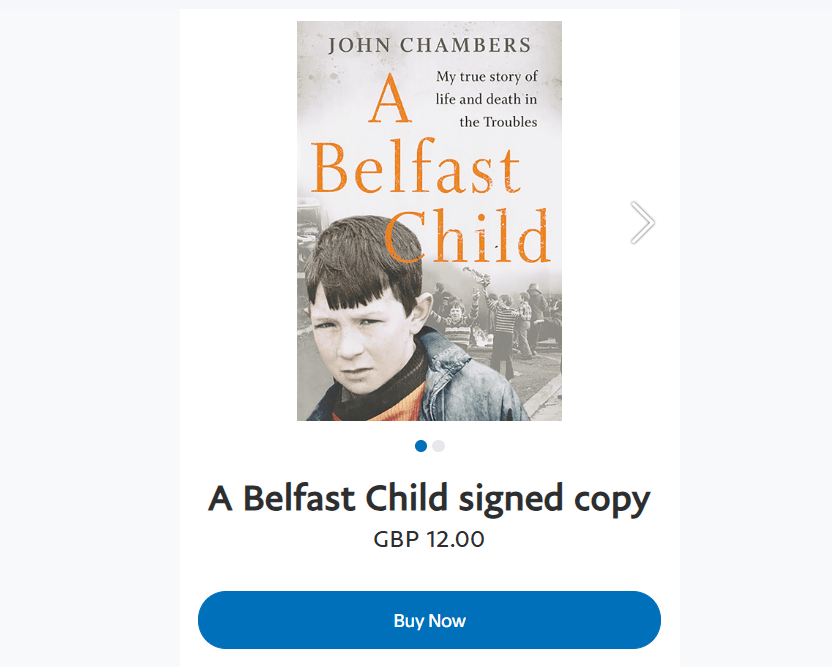



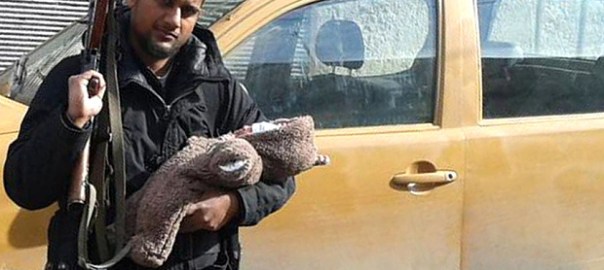


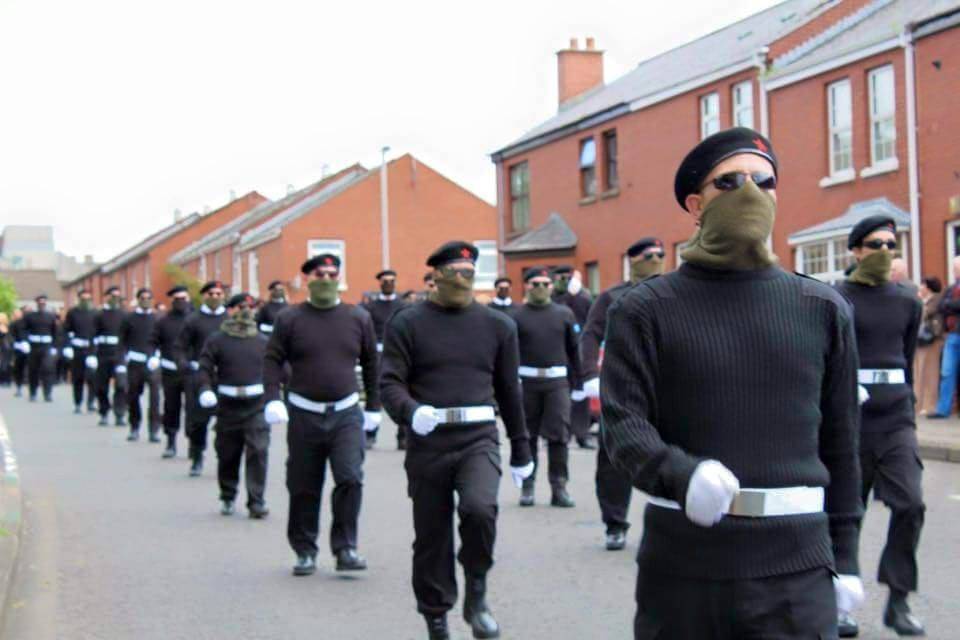


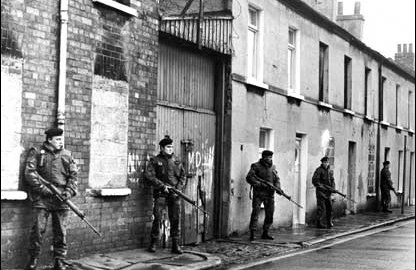


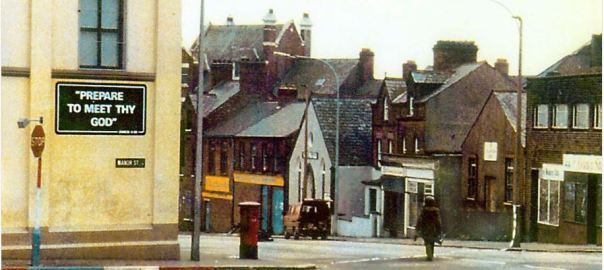


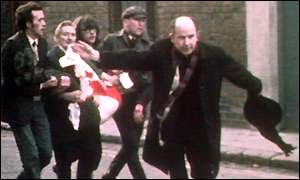
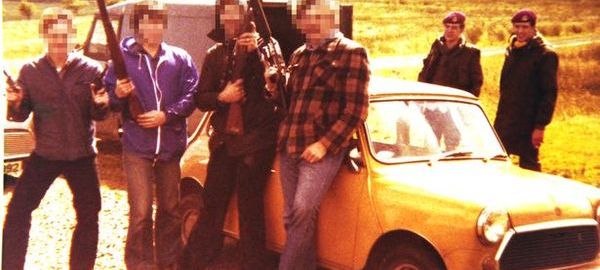

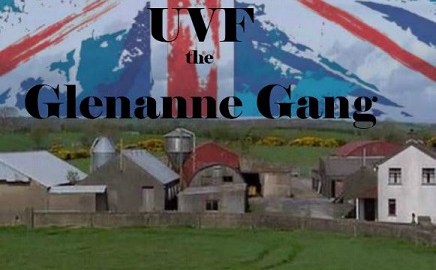


 belfastchildis.com