Key Events & Deaths on this day in Northern Ireland Troubles
27th February
———————————-
Tuesday 27 February 1973
Two Royal Ulster Constabulary (RUC) officers were shot by the Irish Republican Army (IRA) near Moira, County Antrim. [One officer died at the scene and the other died from his wounds on 25 March 1973.]
Friday 27 February 1976
Hunger Strikes.
Sunday 27 February 1977
Two members of the Ulster Volunteer Force (UVF) were killed when a bomb they were planting exploded prematurely in Exchange Street, Belfast.
A former member of the British army was shot dead by the Irish Republican Army (IRA) in Belfast.
Friday 27 February 1981
A large van bomb exploded in the centre of Limavady, County Derry, causing damage to 40 premises.
[It was believed that the Irish Republican Army (IRA) were responsible for the attack.]
Sunday 27 February 1983
Charles Haughey, then leader of Fianna Fáil (FF), addressed his party’s conference in Dublin and called on the British and Irish governments to organise a constitutional conference to consider options for the future of Northern Ireland.
Wednesday 27 February 1985
The Irish National Liberation Army (INLA) planted a bomb close to Windsor Park in Belfast during a World Cup soccer match between England and Northern Ireland. The bomb was defused The INLA also issued a general death threat against any visiting British sports teams.
Tuesday 27 February 1990
The Irish Times (a Dublin based newspaper) published an article which outlined a set of proposals on Northern Ireland which were purported to have been handed to Tom King, then Secretary of Sate for Northern Ireland, in January 1988 by James Molyneaux, then leader of the Ulster Unionist Party (UUP), and Ian Paisley, then leader of the Democratic Unionist Party (DUP).
These proposals contained suggestions about the future governance of Northern Ireland. Whilst claiming that the report was not entirely accurate Molyneaux also stressed that Unionists were prepared to discuss the ideas further in future negotiations, if and when the Anglo-Irish Agreement (AIA) was suspended.
Saturday 27 February 1999
David Trimble, First Minster Designate, warned Republicans that he intended to press for the transfer of powers to a new Executive, even without Sinn Féin (SF) participation. The man that Garda Síochána (the Irish police) believed had directed the Omagh bombing on 15 August 1998 was reported to have disappeared from his home in the Border area and to have fled the country. Three other people were arrested in the Republic of Ireland in connection with the bombing.
Wednesday 27 February 2002
Martin McGuinness (SF), then Education Minister, launched a draft action plan to address racism within the education system. The plan was drawn up in conjunction with the Equality Commission. McGuinness also launched a leaflet and poster campaign, produced by the Equality Commission and the Irish National Consultative Committee, on racism and inter-culturalism.
—————————————————————
Remembering all innocent victims of the Troubles
Today is the anniversary of the death of the following people killed as a results of the conflict in Northern Ireland
“To live in hearts we leave behind is not to die
– Thomas Campbell
To the innocent on the list – Your memory will live forever
– To the Paramilitaries –
There are many things worth living for, a few things worth dying for, but nothing worth killing for.
8 People lost their lives on the 27th February between 1973– 1989
—————————————————————————
27 February 1973
Raymond Wylie, (25)
Protestant Status: Royal Ulster Constabulary (RUC),
Killed by: Irish Republican Army (IRA) Shot during sniper attack on Royal Ulster Constabulary (RUC) mobile patrol, Aghagallon, near Moira, County Antrim.
—————————————————————————
27 February 1973
Ronald Macauley, (42)
Protestant Status: Royal Ulster Constabulary (RUC),
Killed by: Irish Republican Army (IRA) Shot during sniper attack on Royal Ulster Constabulary (RUC) mobile patrol, Aghagallon, near Moira, County Antrim. He died on 25 March 1973.
—————————————————————————
27 February 1975
Wesley Black, (31)
Protestant Status: Civilian (Civ),
Killed by: non-specific Republican group (REP) Shot during gun attack on the home of a Ulster Defence Association member, West Circular Road, Highfield, Belfast. Walking past the house at the time of the attack.
—————————————————————————
27 February 1976 Kenneth Lenaghan, (35)
Protestant Status: Ulster Volunteer Force (UVF),
Killed by: Irish Republican Army (IRA) Shot from passing car while standing outside Victor’s Bar, Coyle’s Place, Donegall Pass, Belfast.
—————————————————————————
27 February 1977 James Cordner, (23)
Protestant Status: Ulster Volunteer Force (UVF),
Killed by: Ulster Volunteer Force (UVF) Killed in premature explosion while carrying bomb along Exchange Street, off, Corporation Street, Belfast.
—————————————————————————
27 February 1977 Joseph Long, (35)
Protestant Status: Ulster Volunteer Force (UVF),
Killed by: Ulster Volunteer Force (UVF) Killed in premature explosion while carrying bomb along Exchange Street, off, Corporation Street, Belfast
—————————————————————————
27 February 1977
John Lee, (35)
Catholic Status: ex-British Army (xBA),
Killed by: Irish Republican Army (IRA) From Northern Ireland. Shot outside Crumlin Star Social Club, Balholm Drive, Ardoyne, Belfast.
Killed by: Irish Republican Army (IRA) Killed by booby trap bomb attached to his car which exploded while travelling along North Road, Bloomfield, Belfast.
—————————————————————————
My autobiography: A Belfast Child is now available to pre-order on Amazon , launch date is 30th April.
The attack killed nine RUC officers and injured almost 40 others; the highest death toll ever suffered by the RUC. Afterwards, a major building scheme was begun, to give police and military bases better protection from such attacks
—————————
IRA kill 9 RUC officers in mortar attack, Newry
—————————
Background
In the early 1970s, after the onset of the Troubles, the Provisional IRA launched a campaign aimed at forcing the British to withdraw from Northern Ireland. Republicans saw the RUC—Northern Ireland’s police force—as illegitimate, sectarian, and enforcing British rule.The RUC was a highly militarized police force.
The IRA—particularly its South Armagh Brigade—had repeatedly attacked the British Army and RUC with home-made mortars, but with limited success. Between 1973 and early 1978 a total of 71 mortar attacks were recorded, but none caused direct British Army or RUC deaths.
There were only two deadly mortar attacks before 1985. The first was on 19 March 1979, when Private Peter Woolmore of the Queen’s Regiment was killed in a mortar attack on Newtownhamilton British Army base.
The second was on 12 November 1983, when an RUC officer was killed and several hurt in a mortar attack on Carrickmore RUC base.
The attack
The attack was jointly planned by members of the South Armagh Brigade and an IRA unit in Newry. The homemade mortar launcher, dubbed the ‘Mark 10‘, was bolted on to the back of a Ford lorry that had been hijacked in Crossmaglen.
Shortly after 6.30PM on 28 February, nine shells were launched from the lorry, which had been parked on Monaghan Street, about 250 yards (230 m) from the base. At least one 50 lb shell landed on a portacabin containing a canteen, where many officers were having their evening tea break.
Nine police officers were killed and 37 people were hurt, including 25 civilian police employees;[5] the highest death toll inflicted on the RUC in its history. Another shell hit the observation tower, while the rest landed inside and outside the perimeter of the base.[6]
—————————-
The Innocent Victims
—————————-
28 February 1985
Alexander Donaldson, (41)
Protestant Status: Royal Ulster Constabulary (RUC),
Killed by: Irish Republican Army (IRA)
Killed in mortar bomb attack on Royal Ulster Constabulary (RUC) base, Edward Street, Newry, County Down.
—————————-
28 February 1985
Rosemary McGookin, (27)
Protestant Status: Royal Ulster Constabulary (RUC),
Killed by: Irish Republican Army (IRA)
Killed in mortar bomb attack on Royal Ulster Constabulary (RUC) base, Edward Street, Newry, County Down.
—————————-
28 February 1985
Geoffrey Campbell, (24)
Protestant Status: Royal Ulster Constabulary (RUC),
Killed by: Irish Republican Army (IRA)
Killed in mortar bomb attack on Royal Ulster Constabulary (RUC) base, Edward Street, Newry, County Down.
—————————-
28 February 1985
Denis Price, (22)
Catholic Status: Royal Ulster Constabulary (RUC),
Killed by: Irish Republican Army (IRA)
Killed in mortar bomb attack on Royal Ulster Constabulary (RUC) base, Edward Street, Newry, County Down.
—————————-
28 February 1985
Paul McFerran, (33)
Catholic Status: Royal Ulster Constabulary (RUC),
Killed by: Irish Republican Army (IRA)
Killed in mortar bomb attack on Royal Ulster Constabulary (RUC) base, Edward Street, Newry, County Down
—————————-
28 February 1985
Sean McHenry, (19)
Protestant Status: Royal Ulster Constabulary (RUC),
Killed by: Irish Republican Army (IRA)
Killed in mortar bomb attack on Royal Ulster Constabulary (RUC) base, Edward Street, Newry, County Down
—————————-
28 February 1985
David Topping, (22)
Protestant Status: Royal Ulster Constabulary (RUC),
Killed by: Irish Republican Army (IRA)
Killed in mortar bomb attack on Royal Ulster Constabulary (RUC) base, Edward Street, Newry, County Down.
—————————-
28 February 1985
John Dowd, (31)
Protestant Status: Royal Ulster Constabulary (RUC),
Killed by: Irish Republican Army (IRA)
Killed in mortar bomb attack on Royal Ulster Constabulary (RUC) base, Edward Street, Newry, County Down.
—————————-
28 February 1985
Ivy Kelly, (29)
Protestant Status: Royal Ulster Constabulary (RUC),
Killed by: Irish Republican Army (IRA)
Killed in mortar bomb attack on Royal Ulster Constabulary (RUC) base, Edward Street, Newry, County Down.
—————————-
Aftermath
The day was dubbed “Bloody Thursday” by the British press. British prime minister, Margaret Thatcher, called the attack “barbaric”, while the Republic’s prime minister, Garret FitzGerald, said it was “cruel and cynical”, and pledged the help of the ROI security forces to catch those responsible.
Although not involved in the attack, Newry IRA member Eamon Collins was arrested shortly afterwards and interrogated. After five days of questioning, Collins broke under interrogation and turned supergrass, leading to more than a dozen arrests of other IRA members.
The attack prompted calls from unionist politicians to “increase security”, and the British government launched a multi-million pound programme of construction to protect bases from similar attacks. This involved installing reinforced roofs and building blast-deflecting walls around the base of buildings.
After the successful attack in Newry, the IRA carried out a further nine mortar attacks in 1985. On 4 September, an RUC training centre in Enniskillen was attacked; 30 cadets narrowly escaped death due to poor intelligence-gathering by the IRA unit responsible. The cadets were expected to be in bed sleeping, but were instead eating breakfast when the bombs landed.
In November 1986, the IRA launched another attack on the RUC base in Newry, but the bombs fell short of their target and landed on residential houses. A four-year-old Catholic girl was badly wounded and another 38 people were hurt, prompting the IRA to admit that:
“this incident left us open to justified criticism”.
Key Events & Deaths on this day in Northern Ireland Troubles
26th February
————————————
Friday 26 February 1971
Two Royal Ulster Constabulary (RUC) officers, Cecil Patterson (45) and Robert Buckley (30), were shot and killed by the Irish Republican Army (IRA) while on a mobile patrol in the Ardoyne area of Belfast.
Wednesday 26 February 1975
A member of the Irish Republican Army (IRA) shot dead a police officer in London. During a subsequent search operation a bomb-making facility was uncovered in Hammersmith.
Saturday 26 February 1983
Ken Livingstone, then leader of the Greater London Council (GLC), travelled to Belfast to begin a two day visit at the invitation of Sinn Féin (SF). The visit drew strong criticism from Unionists.
Wednesday 26 February 1986
Leaders of Unionism announced that there would be a general strike, or ‘Day of Action’, on 3 March (1986) against the Anglo-Irish Agreement (AIA).
Friday 26 February 1993
The Irish Republican Army (IRA) exploded three bombs at a gas works in Warrington, England. The bombs caused a large explosion. Two men were later arrested.
.
Saturday 26 February 1994
Sinn Féin (SF) held its Ard Fheis in Dublin, Republic of Ireland .
Gerry Adams, then President of SF, addressed the conference and said that the Downing Street Declaration (DSD) was a significant departure from previous policy by the British in its attitude towards Ireland. He added:
“… does anyone really expect the IRA to cease its activities so that British civil servants can discuss with Sinn Féin the surrender of IRA weapons after we have been “decontaminated”?”
)
Monday 26 February 1996
In a crucial vote at Westminster on the Scott report (on shipments of arms to Iraq) the Ulster Unionist Party (UUP), the Social Democratic and Labour Party (SDLP), and the United Kingdom Unionist (UKU) member voted against the Government. The Democratic Unionist Party (DUP) abstained. The Government won the debate by one vote.
Wednesday 26 February 1997
Two members of the Irish Republican Army (IRA) carried out a ‘punishment’ style attack on a 16 year old girl, Judith Boylan, in Armagh.
A survey in the Irish News reported that 62 per cent of respondents favoured compromise on the issue of contentious parades.
Thursday 26 February 1998
The Court of Appeal ruled that Paratrooper Lee Clegg should be granted a retrial.
[The family of Karen Reilly who was shot dead in a ‘joy-riding’ incident on 30 September 1990 were said to be “devastated” by the news of the retrial.]
Tony Blair, then British Prime Minister, and Bertie Ahern, then Taoiseach (Irish Prime Minister), held discussions on decommissioning and the transfer of powers to the Northern Ireland Assembly. The discussions took place during a meeting of European Union heads of government in Germany.
Monday 26 February 2001
Brian Keenan made a speech warning that there could be a return to armed conflict if the political process broke down.
[Keenan was reportedly the then Chief of Staff of the (Provisional) Irish Republican Army (IRA).]
Tuesday 26 February 2002
British Army bomb disposal officers defused a pipe-bomb that had been left in the garden of a house in Ballynure, County Antrim. The crude device was discovered at approximately 4.30pm (1630GMT).
Daniel McColgan
The Police Service of Northern Ireland (PSNI) announced that a £20,000 reward was being offered for information leading to the prosecution of those who had killed Daniel McColgan (20), a Catholic civilian, on 12 January 2002.
The Ulster Defence Association (UDA) admitted responsibility for the killing. The reward money had been raised by a number of groups.
Alex Maskey, then Sinn Féin (SF) Chief Whip, said that the party had turned down an invitation to discuss a Northern Ireland Policing Board (NIPB) plan with Alan McQuillan, then Assistant Chief Constable.
Maskey said the party would play a “full and active” role when there was a new beginning to policing in the North.
Mark Durkan
Mark Durkan, then leader of the Social Democratic and Labour Party (SDLP), addressed the Oxford University Union. He said that the focus of a new campaign for Nationalism should be to persuade Unionists of the benefits of an integrated agreed Ireland.
Robert McCartney
Robert McCartney, then leader of the United Kingdom Unionist Party (UKUP), was expelled from the Northern Ireland Assembly chamber for one day for repeatedly talking to a colleague during a speech by an Social Democratic and Labour Party (SDLP) member.
Quentin Davies
It was reported that Quentin Davies, then Conservative Party spokesman on Northern Ireland, had attended a meeting in Belfast of the Loyalist Commission at which Loyalist paramilitaries were present.
It was announced that the 26 District Councils in Northern Ireland would undertake a £52m development package to assist their local economies. The funding was provided jointly by the European Union (EU) and the District Councils. The EU funding (£26m) was made available under the Local Economic Development Measure of the Building Sustainable Prosperity Programme.
PricewaterhouseCoopers published its latest ‘UK Economic Outlook and Regional Trends’ survey in which the economy of Northern Ireland was expected to grow at a rate of just under 2 per cent during 2002.
An independent report published by the General Consumer Council indicated that passenger satisfaction with bus and rail services were at an all-time low. Passenger satisfaction had dropped to 63.2 per cent on Northern Ireland Railways, 62.8 per cent on Citybus, and 71.5 per cent on Ulsterbus.
John Reid, then Secretary of State for Northern Ireland, wrote to the Commission of Inquiry into the Dublin and Monaghan bombings providing a response to a letter sent by the Inquiry on 10 November 2000.
[The information was provided in the form of a ten-page. An appendix to the letter consisting of six pages gave details concerning the structure and control of intelligence gathering in Northern Ireland during the 1970s.]
—————————————————————
Remembering all innocent victims of the Troubles
Today is the anniversary of the death of the following people killed as a results of the conflict in Northern Ireland
“To live in hearts we leave behind is not to die
– Thomas Campbell
To the innocent on the list – Your memory will live forever
– To the Paramilitaries –
There are many things worth living for, a few things worth dying for, but nothing worth killing for.
7 People lost their lives on the 26th February between 1971– 1989
—————————————————————————
26 February 1971
Cecil Patterson, (45)
Protestant Status: Royal Ulster Constabulary (RUC),
Killed by: Irish Republican Army (IRA)
Shot while on Royal Ulster Constabulary (RUC) mobile patrol, Etna Drive, Ardoyne, Belfast.
—————————————————————————
26 February 1971
Robert Buckley, (30)
Protestant Status: Royal Ulster Constabulary (RUC),
Killed by: Irish Republican Army (IRA)
Shot while on Royal Ulster Constabulary (RUC) mobile patrol, Etna Drive, Ardoyne, Belfast
—————————————————————————
26 February 1975 Stephen Tibble, (22)
nfNIB Status: British Police (BP),
Killed by: Irish Republican Army (IRA)
Shot while pursuing Irish Republican Army (IRA) member along Charleville Road, Baron’s Court, London
—————————————————————————
26 February 1976 Joseph McCullough, (57)
Protestant Status: Ulster Defence Regiment (UDR),
Killed by: Irish Republican Army (IRA)
Off duty. Found stabbed to death at his farm, Tullyvallen, near Newtownhamilton, County Armagh.
—————————————————————————
26 February 1977
Robert Mitchell, (68)
Protestant Status: Civilian (Civ),
Killed by: Irish Republican Army (IRA)
Justice of the Peace. Shot at his home, Windsor Avenue, Newry, County Down
—————————————————————————
26 February 1978
Paul Duffy, (23)
Catholic Status: Irish Republican Army (IRA),
Killed by: British Army (BA)
Shot by undercover British Army (BA) members at arms cache, in yard of unoccupied farmhouse, The Diamond, near Coagh, County Tyrone.
—————————————————————————
26 February 1989 Joseph Fenton, (35)
Catholic Status: Civilian (Civ),
Killed by: Irish Republican Army (IRA)
Found shot in entry off Bunbeg Park, Lenadoon, Belfast. Alleged informer.
Key Events & Deaths on this day in Northern Ireland Troubles
25th February
Thursday 25 February 1971
The Housing Executive (Northern Ireland) Act became law. The Act provided for the establishment for a central authority for public sector housing in Northern Ireland and to also oversee the provision of grants for improvement to the private sector.
James Chichester-Clark, then Northern Ireland Prime Minister, held a meeting with William Conway, then Catholic Cardinal of Ireland; the first such meeting between men holding these offices since 1921.
Friday 25 February 1972
There was an attempted assassination of John Taylor, then Minister of State for Home Affairs, who was shot a number of times.
The Official Irish Republican Army (OIRA) later claimed responsibility.
Sunday 25 February 1973
A Catholic boy, Gordon Gallagher (9), was killed by a booby-trap bomb that had been planted by the Irish Republican Army (IRA) in Leenan Gardens, Derry.
Monday 25 February 1974
There are further riots in Protestant areas of east Belfast.
There was a bomb explosion at the Belfast headquarters of the Alliance Party of Northern Ireland (APNI).
Saturday 25 February 1978
The Vanguard Unionist Progressive Party (VUPP) was dissolved as a political party and most of the party’s members joined the Ulster Unionist Party (UUP).
According to the Standing Committee of Irish Catholic Bishops conference the vast majority of Irish people wanted the conflict in Northern Ireland to end.
Gerry Adams, then Vice-President of Sinn Féin (SF), was charged with membership of the Irish Republican Army (IRA).
[On 6 September 1978 Adams was freed when the Judge hearing the case ruled that there was insufficient evidence to prove that he was a member of the IRA.]
Saturday 25 February 1984
There was a Loyalist demonstration at Stormont, Belfast, against the proposal to change the name of Londonderry District Council to Derry District Council.
[There was no proposal to change the official name of the city.]
Monday 25 February 1985
In the Republic of Ireland Des O’Malley, then a Teachta Dáil (TD) and member of Fianna Fáil (FF), was expelled from the party for refusing to vote against a bill to liberalise contraceptive legislation.
[O’Malley later formed a new political party, the Progressive Democrats.]
Tuesday 25 February 1986
James Molyneaux, then leader of the Ulster Unionist Party (UUP), and Ian Paisley, then leader of the Democratic Unionist Party (DUP), travelled to Downing Street, London, for a meeting with Margaret Thatcher, then British Prime Minister, to discuss the Anglo-Irish Agreement (AIA).
Following the meeting the two Unionist leaders said that they welcomed Thatcher’s promise to consider their proposals for talks on devolution for Northern Ireland.
[When Moylneaux and Paisley returned to Northern Ireland and held talks with other Unionist representatives in the region, including the leaders of workers in the power stations and the shipyard, they decided that they would hold no further discussions with the Prime Minister until the AIA was overturned.] Belfast City Council voted to refuse to set a ‘rate’ (local government tax) in protest at the Anglo-Irish Agreement (AIA). [In seventeen other councils across Northern Ireland, where Unionists were in a majority, a similar decision was taken.]
Thursday 25 February 1988
John Hume, then leader of the Social Democratic and Labour Party (SDLP), was invited to talks on devolution by Tom King, then Secretary of State for Northern Ireland.
Saturday 25 February 1995
Sinn Féin (SF) held its annual Ard Fheis at the Mansion House in Dublin. [This was the first time in four years the party had used the
building.]
Sunday 25 February 1996
Rallies in support of peace were held in a number of cities in Ireland and Britain.
Wednesday 25 February 1998
Four people were injured when a letter-bomb exploded in a Royal Mail sorting office in the centre of Belfast.
[This was the third letter-bomb to be found in Northern Ireland during the previous week.]
Thursday 25 February 1999
Confidential government papers were leaked that indicated that the North-South bodies could survive even if the Northern Ireland Assembly were to collapse. Some Unionists reacted angrily to the revelations.
Mitchel McLaughlin, then Sinn Féin (SF) chairman, said that the leadership of the Irish Republican Army (IRA) would be destabilised if it forced to decommission IRA weapons.
General, when he said that a party with loyalties to the Irish Republican Army (IRA) had no place in the Dáil.
Monday 25 February 2002
The Garda Síochána (the Irish police) uncovered a cache of weapons close to the border with Northern Ireland. The arms were found close to the village of Stranorlar, County Donegal.
The find included two AK47 assault rifles, a pump-action shotgun, a sub-machinegun, a Prig rocket launcher and detonators. A home-made grenade launcher, and a single grenade were also discovered. The weapons were in poor condition and were believed to have belonged to the Irish Republican Army (IRA). The weapons were believed to have been buried prior to the 1994 ceasefire and had not been touched since.
It was revealed that Members of the Legislative Assembly (MLAs) in Northern Ireland had claimed almost £4 million in office and travel expenses during the financial year ending in April 2000. Details for each of the 108 MLAs were published on the Northern Ireland Assembly web site.
There were significant differences in the amounts claimed by MLAs. The largest claim was that by Gregory Campbell, then Democratic Unionist Party (DUP) MLA, who received more than £47,000 in expenses. John Reid, then Secretary of State for Northern Ireland, announced the publication of a Royal Warrant for a Northern Ireland Prison Service (NIPS) Medal.
The medal was official recognition of the service of NIPS staff during the conflict. Advertisements were placed in newspapers requesting applications from serving and retired prison officers.
[26 serving (or retired) prison officers were killed during the conflict.]
It was reported that applications for enrolment at the Holy Cross Girls’ Primary School in Ardoyne, north Belfast, had dropped by almost half. The school had been at the centre of a Loyalist protest between 19 June 2001 and 23 November 2001.
—————————————————————
Remembering all innocent victims of the Troubles
Today is the anniversary of the death of the following people killed as a results of the conflict in Northern Ireland
“To live in hearts we leave behind is not to die
– Thomas Campbell
To the innocent on the list – Your memory will live forever
– To the Paramilitaries –
There are many things worth living for, a few things worth dying for, but nothing worth killing for.
6 People lost their lives on the 25th February between 1973– 1993
—————————————————————————
25 February 1973
Gordon Gallagher, (9)
Catholic Status: Civilian (Civ),
Killed by: Irish Republican Army (IRA)
Killed by booby trap bomb in back garden of his home, Leenan Gardens, Creggan, Derry
—————————————————————————
25 February 1975
Sean Fox (32)
Catholic Status: Official Irish Republican Army (OIRA),
Killed by: People’s Liberation Army (PLA)
Shot while walking along Cullingtree Row, Divis Flats, Belfast. Official Irish Republican Army (OIRA) / Irish National Liberation Army (INLA) feud.
—————————————————————————
25 February 1975
David McConkey (40)
Catholic Status: Civilian (Civ),
Killed by: non-specific Loyalist group (LOY)
Shot at his workplace, Fisher Metal Fabrications, Boucher Road, Belfast.
—————————————————————————
25 February 1977
Joseph Campbell, (49)
Catholic Status: Royal Ulster Constabulary (RUC),
Killed by: Ulster Volunteer Force (UVF)
Shot outside Cushendall Royal Ulster Constabulary (RUC) base, County Antrim
—————————————————————————
25 February 1983
Cecil McNeill, (22)
Protestant Status: Ulster Defence Regiment (UDR),
Killed by: Irish Republican Army (IRA)
Off duty. Shot at his workplace, Ballygawley, County Tyrone.
—————————————————————————
25 February 1993
Jonathan Reid, (30)
Protestant Status: Royal Ulster Constabulary (RUC),
Killed by: Irish Republican Army (IRA)
Shot by sniper while on British Army (BA) / Royal Ulster Constabulary (RUC) foot patrol, Castleblayney Road, Crossmaglen, County Armagh.
—————————————————————————
My autobiography: A Belfast Child is now available to pre-order on Amazon , launch date is 30th April.
Key Events & Deaths on this day in Northern Ireland Troubles
24th February
————————
Monday 24 February 1969
Stormont Election An election to the Stormont parliament was held. The main feature of this election was the fragmentation of the Unionist party into ‘Official Unionist’ and ‘Unofficial Unionist’. Of the 39 unionist candidates returned in the election 27 were in support of the policies of Terence O’Neill, then Northern Ireland Prime Minister, while 12 were against or undecided.
Saturday 24 February 1979
Two Catholic teenagers, Martin McGuigan (16) and James Keenan (16), were killed by the Irish Republican Army (IRA) in a remote controlled bomb explosion at Darkley, near Keady, County Armagh.
[It is believed that the two teenagers were mistaken in the dark for a British Army foot patrol.]
Wednesday 24 February 1982
The British government indicated that it would amend laws in Northern Ireland relating to homosexual acts to bring them into line with laws in Britain.
[On 22 October 1981 the European Court ruled that Britain was discriminating against homosexuals by treating homosexuality as a crime in Northern Ireland.]
Tuesday 24 February 1987
The Ulster Unionist Party (UUP) and the Democratic Unionist Party (DUP) announced the establishment of a ‘task force’ to produce an alternative to the Anglo-Irish Agreement. The Unionist Task Force reported on 2 July 1987.
Wednesday 24 February 1988
Two members of the Ulster Defence Regiment (UDR) were killed by a remote controlled bomb in Belfast. The attack was carried out by the Irish Republican Army (IRA).
Saturday 24 February 1990
The Ulster Unionist Party (UUP) announced that its councilors would resume meeting with Northern Ireland Office (NIO) Ministers on issues of ‘specific importance to any council area or relevant board’.
Monday 24 February 1992
Brian Mawhinney, then Minister of State at the Northern Ireland Office (NIO), held a meeting with the leaders of the four main political parties.
Wednesday 24 February 1993
John Major, then British Prime Minister, held a meeting with Bill Clinton, then President of the United States of America (USA), in Washington, USA. Major later stated that he found Clinton’s proposal of a ‘peace envoy’ to be unhelpful, but was in favour of a representative undertaking a “fact-finding” visit to Northern Ireland.
Thursday 24 February 1994
Jack Smyth (23), a Protestant civilian, was shot dead by the Irish National Liberation Army (INLA) as he worked as a doorman at a public house on the Lisburn Road, Belfast.
Monday 24 February 1997
The Social Democratic and Labour Party (SDLP) announced its list of candidates for the forthcoming general election. Bertie Ahern, then leader of Fianna Fáil (FF) address a public meeting in south Belfast and told the audience that any new Irish Republican Army (IRA) ceasefire could not be “conditional or tactical”.
Tuesday 24 February 1998
The Garda Síochána (the Irish police) uncovered a 250 pound bomb in County Cavan which was being prepared for transportation to a target in Northern Ireland.
[It was believed that the bomb was the work of the Continuity Irish Republican Army (CIRA).]
Marjorie (Mo) Mowlam, then Secretary of State for Northern Ireland, announced the appointment of a new Parades Commission containing seven members. Among the new members were two people with a background in the Loyalist tradition, Glen Barr and Tommy Cheevers.
Mowlam stated that she couldn’t find anyone from a Republican working-class base to balance the two appointments.
A representative of the Irish Republican Army (IRA) contacted the British Broadcasting Corporation (BBC) in Northern Ireland to state that the IRA had not been involved in recent bomb attacks and also to deny that there was a split in the organisation.
An umbrella group called New Agenda was formed when representatives of civic leaders from business, trade unions, the churches, and the voluntary sector in Northern Ireland met in Belfast. The group announced its support for the peace process and have urged the public in Northern Ireland to play a greater role in the search for a peaceful settlement.
Wednesday 24 February 1999
British Army officers made safe an explosive device in north Belfast.
John McFall, then Education Minister, announced that £51 million would be made available for childcare in Northern Ireland.
Colm Murphy (48), from County Armagh, was charged at the Special Criminal Court in Dublin in connection with the Omagh bombing on 15 August 1998. He was also charged with membership of an unlawful organisation.
Wednesday 24 February 1999
The Red Hand Defenders (RHD) admitted a pipe-bomb attack on a house in Rosapenna Street near a peaceline in north Belfast. Residents living beside the peaceline expressed fears that Loyalist attacks were escalating. The device was discovered at around 8.45am in a back garden in Rosapenna Street off the Oldpark Road.
[In 2001 it became apparent that RHD was a cover name used by both the Ulster Defence Association (UDA) and the Ulster Volunteer Force (UVF).]
Sunday 24 February 2002
Gerry Adams, then President of Sinn Féin (SF), gave an interview on Radio Telefis Éireann (RTE) in which he stated that SF recognised that the Defence Forces were the only legitimate army in the Republic of Ireland. Adams’ statement was prompted by the criticism levelled at SF by Michael McDowell, then Irish Attorney General, when he said that a party with loyalties to the Irish Republican Army (IRA) had no place in the Dáil.
——————————————————————
Remembering all innocent victims of the Troubles
Today is the anniversary of the death of the following people killed as a results of the conflict in Northern Ireland
“To live in hearts we leave behind is not to die
– Thomas Campbell
To the innocent on the list – Your memory will live forever
– To the Paramilitaries –
There are many things worth living for, a few things worth dying for, but nothing worth killing for.
13 People lost their lives on the 24th February between 1974– 1994
—————————————————————————
24 February 1974 Patrick Lynch, (23)
Catholic Status: Irish Republican Army (IRA),
Killed by: Irish Republican Army (IRA)
Found shot Rathlin Drive, Creggan, Derry. Alleged informer.
—————————————————————————
24 February 1975 Brendan Doherty, (23)
Catholic Status: Civilian (Civ),
Killed by: Ulster Volunteer Force (UVF)
Died ten days after being shot from passing car while walking along Portrush Road, Coleraine, County Derry.
—————————————————————————
24 February 1977
Harold Cobb, (38)
Protestant Status: Royal Ulster Constabulary (RUC),
Killed by: Irish Republican Army (IRA)
Shot at security barrier, Church Place, Lurgan, County Armagh.
—————————————————————————
24 February 1979
Martin McGuigan, (16)
Catholic Status: Civilian (Civ),
Killed by: Irish Republican Army (IRA)
Killed by remote controlled bomb hidden in trailer, detonated when he walked past, Darkley, near Keady, County Armagh. Mistaken for British Army (BA) foot patrol.
—————————————————————————
24 February 1979
James Keenan, (16)
Catholic Status: Civilian (Civ),
Killed by: Irish Republican Army (IRA)
Killed by remote controlled bomb hidden in trailer, detonated when he walked past, Darkley, near Keady, County Armagh. Mistaken for British Army (BA) foot patrol.
Killed by: Irish National Liberation Army (INLA)
Shot outside friend’s home, Glenvale Road, off Northland Road, Derry.
—————————————————————————
24 February 1988
James Cummings, (22)
Protestant Status: Ulster Defence Regiment (UDR),
Killed by: Irish Republican Army (IRA)
Killed when remote controlled bomb, hidden behind hoardings, was detonated when Ulster Defence Regiment (UDR) mobile patrol arrived at permanent VCP, Royal Avenue, Belfast.
—————————————————————————
24 February 1988
Frederick Starrett, (22)
Protestant Status: Ulster Defence Regiment (UDR),
Killed by: Irish Republican Army (IRA)
Died shortly after being injured, when remote controlled bomb, hidden behind hoardings, was detonated when Ulster Defence Regiment (UDR) mobile patrol arrived at permanent VCP, Royal Avenue, Belfast. He died on 25 February 1988.
—————————————————————————
24 February 1991
Peter McTasney, (25)
Catholic Status: Civilian (Civ),
Killed by: Ulster Volunteer Force (UVF)
Shot at his home, Bawnmore Park, Greencastle, Belfast.
—————————————————————————
24 February 1992
Anne – Marie Smyth, (26)
Catholic Status: Civilian (Civ),
Killed by: Ulster Volunteer Force (UVF)
Found stabbed to death on waste ground, Ballarat Street, off Ravenhill Road, Belfast
—————————————————————————
24 February 1993
Reginald Williamson, (47)
Protestant Status: Royal Ulster Constabulary (RUC),
Killed by: Irish Republican Army (IRA)
Off duty. Killed by booby trap bomb attached to his car while travelling along Lislasley Road, near Loughgall, County Armagh.
—————————————————————————
24 February 1994 Sean McParland, (55)
Catholic Status: Civilian (Civ),
Killed by: Red Hand Commando (RHC)
Died seven days after being shot, while in relatives home, Skegoneill Avenue, Belfast
—————————————————————————
24 February 1994
Jack Smyth, (23)
Protestant Status: Civilian (Civ),
Killed by: Irish National Liberation Army (INLA)
Security man, shot at the entrance to Bob Cratchits Bar, Lisburn Road, Belfast
—————————————————————————
My autobiography: A Belfast Child is now available to pre-order on Amazon , launch date is 30th April.
The Irish Republican Army (IRA) sunk a British coal boat, the St Bedan, in Lough Foyle.
Wednesday 23 February 1983
The Political Committee of the European Parliament took the decision to commission a report on Northern Ireland to see if the (then) European Economic Community (EEC) could help find a solution to the conflict. The Rapporteur was Mr N.J. Haagerup.
The British government opposed what it saw as external interference in its internal affairs.
Saturday 23 February 1985
David Devine Michael Devine, Charles Breslin,
Three members of the Irish Republican Army (IRA) were shot dead by undercover British soldiers in the outskirts of Strabane, County Tyrone.
David Devine
The IRA men were believed to be returning weapons to an arms dump when they were killed. A man alleged to be an informer was shot dead by the IRA in Derry.
[John Hume, then leader of the Social Democratic and Labour Party (SDLP), walked out of a meeting with representatives of the Irish Republican Army (IRA) when it was suggested by the IRA that part of the proceedings be recorded on video. Information on what had occurred only became available some time afer the meeting.]
Monday 23 February 1987
Belfast City Council became the latest in a line of Northern Ireland councils to be fined for failing to conduct normal business. Many Unionist controlled councils had been refusing to conduct council business as part of a protest against the Anglo-Irish Agreement (AIA). The Department of the Environment appointed a commissioner to set a rate in those councils which have refused to do so.
Tuesday 23 February 1988
Ian Thain, a Private in the British Army and the first solder to be convicted of murder (14 December 1984) while on duty in Northern Ireland, was released from a life sentence. He had served 26 months and was allowed to rejoin his regiment.
Thursday 23 February 1989
Hugh Annesley, then Assistant Commissioner at the Metropolitan Police, was appointed by the Northern Ireland Police Authority (NIPA) as the next Chief Constable of the Royal Ulster Constabulary (RUC).
[Hugh Annesley took over the post on 31 May 1989.]
Monday 23 February 1998
A Republican paramilitary group exploded a large car bomb, estimated at 300 pounds, in the centre of Portadown, County Armagh. Many business premises in the centre of the town were severely damaged by the explosion and two buildings were completely demolished by the blast. There were no injuries in the explosion.
[It was thought that the bomb had been planted by the ‘Continuity’ Irish Republican Army (CIRA).]
Tuesday 23 February 1999
Stephen Melrose
Gerry Adams, then President of Sinn Féin (SF), was confronted by the family of a victim of the Irish Republican Army (IRA) as he continued his eight-day visit to Australia. Roy Melrose, the father of Stephen Melrose, a Brisbane lawyer who was mistaken by gunmen for an off-duty British soldier in the Netherlands on 27 May 1990, criticised the way Adams was being feted at a civic champagne reception.
Friday 23 February 2001
An advertising campaign was launched to try to attract a large number of recruits to the new Police Service of Northern Ireland (PSNI). The target was to attract equal numbers of Protestants and Catholics. Nationalists and Republicans argued that they had not yet endorsed the new force which is due to replace the Royal Ulster Constabulary (RUC). Sinn Féin (SF) had attempted in court to stop the adverts.
Saturday 23 February 2002
Police arrested three people in north Belfast following sporadic rioting around the Limestone road. The three are being held charged with riotous behaviour.
A police spokesperson said one officer had to draw his firearm as a crowd wielding iron bars and sticks tried to prevent an arrest of a man in the Newington Street area.
Gerard Brophy, then a Sinn Féin (SF) councillor, said the trouble started when a crowd of up to 60 loyalists armed with bricks, bottles and baseball bats, attacked Nationalist homes. He said the attack was clearly orchestrated and the crowd included members of the neo-Nazi group Combat 18.
These claims were disputed by Loyalist residents.
Twenty children from the Holy Cross Girls’ Primary School in Ardoyne, north Belfast, met Bertie Ahern, then Taoiseach (Irish Prime Minister), during a short visit to Dublin. Ahern said the trip would show support for the children from the people of the Republic.
——————————————————————
Remembering all innocent victims of the Troubles
Today is the anniversary of the death of the following people killed as a results of the conflict in Northern Ireland
“To live in hearts we leave behind is not to die
– Thomas Campbell
To the innocent on the list – Your memory will live forever
– To the Paramilitaries –
There are many things worth living for, a few things worth dying for, but nothing worth killing for.
7 People lost their lives on the 23rd February between 1976– 1985
—————————————————————————
23 February 1976
Francis Rice, (24)
Catholic Status: Civilian (Civ),
Killed by: Ulster Volunteer Force (UVF)
Abducted while walking along Donegall Street, Belfast. Found stabbed to death several hours later, in entry, off Mayo Street, Shankill, Belfast.
—————————————————————————
23 February 1977
Peter Hill, (43)
Protestant Status: Ulster Defence Regiment (UDR)
Killed by: Irish Republican Army (IRA)
Off duty. Shot outside his home, Daphne Gardens, off Limavady Road, Waterside, Derry.
—————————————————————————
23 February 1981
James Burns (33)
Catholic Status: Irish Republican Army (IRA),
Killed by: Ulster Volunteer Force (UVF)
Shot at his home, Rodney Drive, Falls, Belfast.
—————————————————————————
23 February 1985
Michael Devine, (22)
Catholic Status: Irish Republican Army (IRA),
Killed by: British Army (BA)
Shot by undercover British Army (BA) members, while returning arms to dump, in field, off Plumbridge Road, Strabane, County Tyrone.
—————————————————————————
23 February 1985
David Devine (17)
Catholic Status: Irish Republican Army (IRA),
Killed by: British Army (BA)
Shot by undercover British Army (BA) members, while returning arms to dump, in field, off Plumbridge Road, Strabane, County Tyrone.
—————————————————————————
23 February 1985
Charles Breslin, (20)
Catholic Status: Irish Republican Army (IRA),
Killed by: British Army (BA)
Shot by undercover British Army (BA) members, while returning arms to dump, in field, off Plumbridge Road, Strabane, County Tyrone.
—————————————————————————
23 February 1985
Kevin Coyle, (24)
Catholic Status: Civilian (Civ),
Killed by: Irish Republican Army (IRA)
Found shot Corporation Street, Bogside, Derry. Alleged informer.
—————————————————————————
My autobiography: A Belfast Child is now available to pre-order on Amazon , launch date is 30th April.
Key Events & Deaths on this day in Northern Ireland Troubles
22nd February
Tuesday 22 February 1972
Aldershot Barracks Bomb
The Official Irish Republican Army (OIRA) exploded a bomb at Aldershot military barracks, the headquarters of the Parachute Regiment, killing seven people who were mainly ancillary staff. A Catholic padre was among the dead.
[This bomb was thought to be an attempted retaliation against the regiment who had carried out the ‘Bloody Sunday’ (30 January 1972) killings.]
Patrick Trainor (28), a Catholic civilian, was found shot dead on waste ground off Glen Road, Andersonstown, Belfast. Trainor had been killed by the Irish Republican Army (IRA) who alleged that he had been acting as an informer.
Wednesday 22 February 1989
The Fair Employment Agency was criticised when it was revealed that Protestants were under-represented in its senior or operations staff.
Saturday 22 February 1992
Proinsias de Rossa together with five other Workers’ Party Teachta Dáil (TDs) walked out of a party meeting in Dublin.
[The men later announced that they were forming a new organisation. Initially the new party was called New Agenda but the name was changed on 28 March 1992 to Democratic Left. The split occurred when De Rossa failed to get an assurance from the Workers’ Party that the organisation had ended its links with the Official Irish Republican Army (OIRA).]
Monday 22 February 1993
Joe Hendron, then a Social Democratic and Labour Party (SDLP) Member of Parliament (MP), together with his election agent, were found guilty of corrupt and illegal practices by an election court. The action was brought following allegations of misconduct during the 1992 Westminster election in west Belfast. [The court did order a re-run of the election.]
Wednesday 22 February 1995
Framework Documents Published
John Major, then British Prime Minister, and John Bruton, then Taoiseach (Irish Prime Minister), held a press conference in Belfast to launch the Framework Documents: ‘A New Framework For Agreement‘ and ‘A Framework For Accountable Government In Northern Ireland‘. The ‘Framework for Accountable Government’ proposed a single-chamber Assembly elected by proportional representation and containing 90 members.
The ‘Framework for Agreement’ dealt with, among other things, North/South institutions. Major tried to reassure Unionists by referring to the safeguards built into the documents however most Unionists opposed the development.
The Framework Documents were denounced as, “a one-way street to Dublin” by Ian Paisley, then leader of the Democratic Unionist Party (DUP). He claimed it represented, “a common understanding built on the fact that the British Government has no will to keep Ulster in the United Kingdom”. Peter Robinson, then deputy leader of the DUP, said: “Ulster has been served with an eviction notice to leave the United Kingdom. This is not a discussion document, it is a declaration of intent — a joint government programme for Irish unity”.
Saturday 22 February 1997
An Irish Republican Army (IRA) mortar was found by the Royal Ulster Constabulary (RUC) near Caledon, County Armagh, following a car chase during which the driver escaped.
Gerry Adams, then President of Sinn Féin (SF), stated in an article in the Irish Times that any new ceasefire by the Irish Republican Army (IRA) would be “genuinely unequivocal”.
The Ulster Democratic Party (UDP) held its first annual conference during which Gary McMichael, then leader of the UDP, called for a security crackdown on the IRA.
Statements read at the conference on behalf of the Ulster Freedom Fighters (UFF) and the Ulster Defence Association (UDA) prisoners were critical of the politics of the main Unionist parties.
Republican Sinn Féin (RSF) held a conference in Derry. RSF were critical of Sinn Féin’s (SF) desire to enter the Stormont talks and of SF’s tactics during the Drumcree crisis in July 1996.
Sunday 22 February 1998
Patrick Gallagher, a former Dublin based financier, claimed in a newspaper that he had given Charles Haughey, formerly Taoiseach (Irish Prime Minister), £375,000 in 1979.
Monday 22 February 1999
The Northern Ireland Assembly agreed to set its annual running cost at £36.8 million.
Friday 22 February 2002
Series of Loyalist Pipe-Bomb Attacks Security forces were called to deal with 10 explosive devices (pipe-bombs) at a number of locations in County Derry. The Glenshane Pass was closed for nearly three hours during the morning while devices were being dealt with. Security forces also closed the road between Garvagh and Maghera, north of Swatragh, to inspect a device found at a Gaelic Athletic Association (GAA) club, and on the Coleraine Road in Maghera..
There was also another device at a GAA club near Castledawson. One pipe bomb was discovered close to Kilrea police station, it was made safe by British Army (BA) bomb experts at 10.30pm (2230GMT). In Magherafelt, the BA dealt with nine pipe bomb type devices – one of which was declared a hoax.
[On Saturday 22 February 2002 the Assistant Chief Constable said he believed the Ulster Volunteer Force (UVF) was responsible for the attacks.]
A man (20) was beaten and shot in a paramilitary ‘punishment’ attack in Newtownabbey, County Antrim. At approximately 8.00pm (2000GMT) a gang of up to seven masked men entered the man’s home and beat him with iron bars and baseball bats and then shot him in one leg.
——————————————————————
Remembering all innocent victims of the Troubles
Today is the anniversary of the death of the following people killed as a results of the conflict in Northern Ireland
“To live in hearts we leave behind is not to die
– Thomas Campbell
To the innocent on the list – Your memory will live forever
– To the Paramilitaries –
There are many things worth living for, a few things worth dying for, but nothing worth killing for.
11 People lost their lives on the 22nd February between 1972– 1989
—————————————————————————
22 February 1972
Padre Gerry E Weston MBE
Padre Gerry E Weston MBE
Gerry Weston, (38)
nfNIB Status: British Army (BA),
Killed by: Official Irish Republican Army (OIRA)
Catholic chaplain to British Army. Killed in bomb attack on British Army (BA) base, Aldershot, England.
Killed by: Official Irish Republican Army (OIRA)
Killed in bomb attack on British Army (BA) base, Aldershot, England. Civilian employed at the British Army (BA) base.
Killed by: Official Irish Republican Army (OIRA)
Killed in bomb attack on British Army (BA) base, Aldershot, England. Civilian employed at the British Army (BA) base.
Killed by: Official Irish Republican Army (OIRA)
Killed in bomb attack on British Army (BA) base, Aldershot, England. Civilian employed at the British Army (BA) base.
Killed by: Official Irish Republican Army (OIRA)
Killed in bomb attack on British Army (BA) base, Aldershot, England. Civilian employed at the British Army (BA) base.
Killed by: Official Irish Republican Army (OIRA)
Killed in bomb attack on British Army (BA) base, Aldershot, England. Civilian employed at the British Army (BA) base.
Killed by: Official Irish Republican Army (OIRA)
Killed in bomb attack on British Army (BA) base, Aldershot, England. Civilian employed at the British Army (BA) base.
CaptainEric Melrose “Winkle” Brown, CBE, DSC, AFC, Hon FRAeS, RN[2] (21 January 1919 – 21 February 2016) was a British Royal Navy officer and test pilot who flew 487 different types of aircraft, more than anyone else in history.[1][3] He also held the world record for most aircraft carrier landings performed (2,407)[1] and was the Fleet Air Arm‘s most decorated living pilot.[4] He achieved several “firsts” in naval aviation, including the first landings on an aircraft carrier of a twin-engined aircraft, an aircraft with a tricycle undercarriage and a jet-propelled aircraft.
Early life
Brown was born in Leith, near Edinburgh, Scotland. He first flew when he was eight or ten when he was taken up in a Gloster Gauntlet by his father, the younger Brown sitting on his father’s knee.[5]
In 1936, Brown’s father, an ex-Royal Flying Corps pilot, had taken him to see the 1936 Olympics in Berlin. Hermann Göring had recently announced the existence of the Luftwaffe, so Brown and his father met, and were invited to join social gatherings by members of the newly disclosed organisation. It was here that Brown first met Ernst Udet, a former World War I fighter ace.
Brown soon discovered in himself and Udet a shared love of flying and Udet offered to take Brown up with him. Brown eagerly accepted the German’s offer and after his arrival at the appointed airfield at Halle, he was soon flying in a two-seat Bucker Jungmann, which Udet threw around much to Brown’s delight. Udet told Brown he “must learn to fly” and that he “had the temperament of a fighter pilot”. He also told Brown to learn German.
In 1937, Brown left the Royal High School and entered Edinburgh University, studying Modern Languages with an emphasis on German. While there he joined the university’s Air Unit and received his first formal flying instruction. In February 1938 he returned to Germany, where, having been invited to attend the 1938 Automobile Exhibition by Udet, by then a Luftwaffe Major General, he saw the demonstration of the Focke-Wulf Fw 61helicopter flown by Hanna Reitsch before a small crowd inside the Deutschlandhalle. During this visit he met and got to know Reitsch. Brown was later to renew his acquaintance with her after the war, in less pleasant circumstances, she having been arrested after the German surrender in 1945.
In the meantime, Brown had been selected to take part as an exchange student at the Schule Schloss Salem, located on the banks of Lake Constance, and it was while there in Germany that Brown was woken up with a loud knocking on his door one morning in September 1939. Upon opening the door he was met by a woman with the announcement that “our countries are at war“. Soon after, Brown was arrested by the SS. Fortunately, after 3 days incarceration, they merely escorted Brown in his MG Magnette sports car to the Swiss border, saying they were allowing him to keep the car because they “had no spares for it”.[6]
The loss of life was such that 802 Squadron was disbanded until February 1942. On 10 March 1942 he was awarded the Distinguished Service Cross for his service on Audacity, in particular “For bravery and skill in action against Enemy aircraft and in the protection of a Convoy against heavy and sustained Enemy attacks”.[7]
His aptitude for deck landings led to his posting for the testing of carriers’ landing arrangements before they were brought into service. The testing involved multiple combinations of landing point and type of aircraft. with the result that by the close of 1943 he had performed around 1,500 deck landings on 22 different carriers. In six years at RAE, Brown recalls that he hardly ever took a single day’s leave.[8]
In 1943 Brown resumed operational flying, being seconded to Royal Canadian Air Force (RCAF) squadrons flying escort operations to USAAFB-17s over France. His job was to train them in deck-landing techniques, though on airfields.[Note 1] As a form of quid pro quo he joined them on fighter operations.
He also flew several stints with Fighter Command in the air defence of Great Britain. During this time, in the summer of 1944 Brown’s home was destroyed by a V-1 “Doodlebug” cruise missile, concussing his wife and causing serious injury to their cleaner, including the loss of one eye.
After his time operational, again in 1943, he then went back to the RAE, this time to perform experimental flying, almost immediately being transferred to southern Italy to evaluate captured Regia Aeronautica and Luftwaffe aircraft. This Brown did with almost no tuition, information having to be gleaned from whatever documents were available. On completion of these duties, his commander, being impressed with his performance, sent him back to the RAE with the recommendation that he be employed in the Aerodynamics Flight department at Farnborough. During the first month in the Flight, Brown flew thirteen aircraft types, including a captured Focke-Wulf Fw 190.
While at Farnborough as Chief Naval Test Pilot, Brown was involved in the deck landing trials of the Sea Mosquito, the heaviest aircraft yet chosen to be flown from a British carrier. Brown landed one for the first time on HMS Indefatigable on 25 March 1944. This was the first landing on a carrier by a twin-engined aircraft.[9] The fastest speed for deck landing was 86 kts, while the stall speed was 110 kts.[8]
At this time, the RAE was the leading authority on high-speed flight and Brown became involved in this sort of testing, flights being flown where the aircraft, usually a Spitfire, would be dived at speeds of the high subsonic and near transonic region. Figures achieved by Brown and his colleagues during these tests reached Mach 0.86 for a standard Spitfire IX, to Mach 0.92 for a modified Spitfire PR Mk XI flown by his colleague Sqn Ldr Anthony F. Martindale.
Together with Brown and Martindale, the RAE Aerodynamics Flight also included two other test pilots, Sqn Ldr James “Jimmy” Nelson and Sqn Ldr Douglas Weightman.[10]
During this same period the RAE was approached by United States Army Air Forces (USAAF) General Jimmy Doolittle with a request for help, as the 8th Air Force had been having trouble when their Lightning, Thunderbolt and Mustang aircraft, providing top cover for the bombers, dived down onto attacking German fighters, some of the diving US fighters encountering speed regions where they became difficult to control. As a result of Doolittle’s request, early in 1944 the P-38H Lightning, P-51B Mustang and P-47C Thunderbolt, were dived for compressibility testing at the RAE by Brown and several other pilots. The results of the tests were that the tactical Mach numbers, i.e., the manoeuvring limits, were Mach 0.68 for the Lightning, Mach 0.71 for the Thunderbolt and Mach 0.78 for the Mustang. The corresponding figure for both the Fw 190 and Bf 109 was Mach 0.75. The tests flown by Brown and his colleagues resulted in Doolittle being able to argue with his superiors for the Mustang to be chosen in preference to the P-38 and P-47 for all escort duties from then on, which it subsequently was.
Brown had been made aware of the British progress in jet propulsion in May 1941 when he had heard of the Gloster E.28/39 after diverting in bad weather to RAF Cranwell during a flight and had subsequently met Frank Whittle when asked to suggest improvements to the jet engine to make it more suitable for naval use. This resulted in the Gloster Meteor being selected as the Royal Navy‘s first jet fighter, although, as it turned out, few would be used by them. Brown was also selected as the pilot for the Miles M.52supersonic research aircraft programme, and he flew modified aircraft incorporating components intended for the M.52; however, the post-war government later cancelled the project in 1945 with the M.52 almost complete.[6]
During carrier compatibility trials, Brown crash-landed a Fairey Firefly Mk I, Z1844, on the deck of HMS Pretoria Castle on 9 September 1943, when the arrestor hook indicator light falsely showed the hook was in the “down” position. The fighter hit the crash barrier, sheared off its undercarriage and shredded the propeller, but the pilot was unhurt.[11] On 2 May 1944, he was appointed Member of the Order of the British Empire “for outstanding enterprise and skill in piloting aircraft during hazardous aircraft trials.”[12]
A Royal Air Force Hoverfly I of the type flown by Brown from Speke to Farnborough in 1945
In February 1945, Brown learned that the Aerodynamics Flight had been allocated three Sikorsky R-4B Hoverfly/Gadfly helicopters. He had never seen one of these tail-rotor machines, so a trip to Farnborough was arranged and Brown had a short flight as a passenger in one. A few days later, Brown and Martindale were sent to RAF Speke to collect two new R-4Bs. On arrival, they found the American mechanics assembling the machines, and when Brown asked the Master Sergeant in charge about himself and Martindale being taught to fly them, he was handed a “large orange-coloured booklet” with the retort; “Whaddya mean, bud? – Here’s your instructor”. Brown and Martindale examined the booklet and after several practice attempts at hovering and controlling the craft, followed by a stiff drink, they set off for Farnborough. Brown and Martindale managed the trip safely, if raggedly, in formation, although sometimes as much as a couple of miles apart.[13]
On 4 April, Brown added another “first” to his logbook when engaged in trials in relation to the flexible deck concept with HMS Pretoria Castle, in which he was supposed to make a number of landing approaches to the escort carrier in a Bell Airacobra, which had coincidentally been modified with a tail hook. During one of these passes, Brown declared an emergency and was given permission to make a deck landing; a ruse which had previously been agreed with the carrier’s captain, Caspar John. Although the landing was achieved without difficulty, the long take off run required for the Airacobra meant that even with the ship steaming at full speed, there was little margin of error. This was the first carrier landing and take off for any aircraft with a tricycle undercarriage.[14]
Enemy flight
With the end of the European war in sight, the RAE prepared itself to acquire German aeronautical technology and aircraft before it was either accidentally destroyed or taken by the Soviets, and, because of his skills in the language, Brown was made CO of “Enemy Flight”. He flew to Northern Germany; among the targets for the RAE was the Arado Ar 234, a new jet bomber that the Allies, particularly the Americans, were much interested in. A number of the jets were based at an airfield in Denmark, the German forces having retreated there. He expected to arrive at a liberated aerodrome, just after it had been taken by the British Army; however, German resistance to the Allied advance meant that the ground forces had been delayed and the airfield was still an operational Luftwaffe base. Luckily for Brown, the commanding officer of the Luftwaffe airfield at Grove offered his surrender, Brown taking charge of the airfield and its staff of 2,000 men until Allied forces arrived the next day.
Subsequently, Brown and Martindale, along with several other members of the Aerodynamics Flight and assisted by a co-operative German pilot, later ferried twelve Ar 234s across the North Sea and on to Farnborough. The venture was not without risk, as before their capture, the Germans had destroyed all the engine log books for the aircraft, leaving Brown and his colleagues no idea of the expected engine hours remaining to the machines. Because of the scarcity of the special high-temperature alloys for use in their construction, the Junkers Jumo 004 engines had a life of only 25 hours – it was thus not known whether the engines were brand new or just about to expire.[15]
During this period, Brown was asked by Brigadier Glyn Hughes, the Medical Officer of the British 2nd Army[16] occupying the newly liberated Bergen-Belsen concentration camp, to help interrogate the former camp commandant and his assistant. Agreeing to do so, he subsequently interviewed Josef Kramer and Irma Grese, Brown remarking; “Two more loathsome creatures it is hard to imagine” and describing the latter as “… the worst human being I have ever met.” Kramer and Grese were later tried and hanged for war crimes.[6][17]
Postwar
The captured He 177 A-5 in British markings flown by Brown at Farnborough in September 1944
After World War II‚ Brown commanded the Enemy Aircraft Flight, an elite group of pilots who test-flew captured German and Italian aircraft. That experience makes Brown one of the few men qualified to compare both Allied and Axis aeroplanes as they flew during the war. He flight-tested 53 German aircraft, including the Me 163B Komet rocket fighter. His flight test of this rocket plane, apparently the only one by an Allied pilot, was accomplished unofficially: it was deemed to be more or less suicidal due to the notoriously dangerous propellants C-Stoff and T-Stoff. Brown also flight tested all three of the German jet designs to see front-line action in the war: the Messerschmitt Me 262 and the Arado Ar 234, each type powered by Junkers Jumo 004 engines, and the BMW 003-powered Heinkel He 162 turbojet combat aircraft.
Fluent in German, he helped interview many Germans after World War II, including Wernher von Braun and Hermann Göring,[18]Willy Messerschmitt, Dr. Ernst Heinkel[19] and Kurt Tank. Brown was himself using Himmler’s personal aircraft, a specially converted Focke-Wulf Fw 200 Condor that had been captured and was being used by the RAE Flight based at the former Luftwaffe airfield at Schleswig.[20] He was also able to renew acquaintances with German pilot Hanna Reitsch, whom he had met in Germany before the war.
As an RAEtest pilot he was involved in the wartime Miles M.52supersonic project, test flying a Spitfire fitted with the M.52’s all moving tail, diving from high altitude to achieve high subsonic speeds. He was due to fly the M.52 in 1946, but this fell through when the project was cancelled. The all moving tail information, however, supplied upon instruction from the British government ostensibly as part of an information exchange with the Americans (although no information was ever received in return), allowed Bell to modify its XS-1 for the true transsonic pitch controllability, allowing in turn Chuck Yeager to become the first man to exceed Mach 1 in 1947.[21]
In a throwback to his days testing aircraft in high speed dives, while at the RAE Brown performed similar testing of the Avro Tudor airliner. The requirement was to determine the safe limiting speed for the aircraft and to gather data on high-speed handling of large civil aircraft in preparation for a projected four-jet version of the Tudor. Flying from 32,000 ft, in a succession of dives to speeds initially to Mach 0.6, he succeeded in diving the Tudor up to Mach 0.7, an unusual figure for such a large piston-engined aeroplane, this speed figure being dictated by the pilot’s discretion, as pulling the aircraft out of the dive had required the combined efforts of both Brown and his second pilot. However, as an airliner, the Tudor was not a success. The planned jet-version of the Tudor would later become the Avro Ashton.[22]
The high-speed DH 108VW120 that Brown flew. This aircraft later crashed, killing Brown’s successor at the RAE, Sqn Ldr Stuart Muller-Rowland.
In 1946 he test flew a modified (strengthened and control-boosted) de Havilland DH.108 after a crash in a similar aircraft while diving at speeds approaching the sound barrier had killed Geoffrey de Havilland, Jr. Brown initially started his tests from a height of 35,000 ft, rising to 45,000 ft and during a dive from the latter he achieved a Mach number of 0.985. It was only when attempting the tests from the same height as de Havilland, 4,000 ft,that he discovered that in a Mach 0.88 dive from that altitude the aircraft suffered from a high-gpitchoscillation at several hertz (Hz). “the ride was smooth, then suddenly it all went to pieces … as the plane porpoised wildly my chin hit my chest, jerked hard back, slammed forward again, repeated it over and over, flogged by the awful whipping of the plane …”. Remembering the drill he had often practised, Brown managed to pull back gently on both stick and throttle and the motion; “… ceased as quickly as it had started”.[23] He believed that he survived the test flight partly because he was a shorter man, de Havilland having suffered a broken neck possibly due to the violent oscillation.[24] Test instrumentation on Brown’s flight recorded during the oscillations accelerations of +4 and −3g’s at 3 Hz. Brown described the DH 108 as; “A killer. Nasty stall. Vicious undamped longitudinal oscillation at speed in bumps”.[25] All three DH.108 aircraft were lost in fatal accidents.
In 1948 Brown was awarded the Boyd Trophy for his work in trials for the rubber deck landing system.[26] On 30 March 1949 he was granted a permanent Royal Navy commission as a lieutenant, with seniority backdated to his original wartime promotion to the rank.[27]
On 12 August 1949, he was testing the third of three Saunders-Roe SR.A/1 jet-powered flying-boat fighter prototypes, TG271, when he struck submerged debris, the aircraft sinking in the Solent off Cowes, Isle of Wight.[28][29] He was pulled unconscious from the cockpit of the wrecked aircraft, having been knocked out in the crash, by Saunders-Roe test pilot Geoffrey Tyson. He was promoted lieutenant-commander on 1 April 1951,[30]commander on 31 December 1953[31] and captain on 31 December 1960.[32]
In the 1950s during the Korean War, Brown was seconded as an exchange officer for two years to the United States Naval Test Pilot School at Patuxent, Maryland, where he flew a number of American aircraft, including 36 types of helicopter. In January 1952, it was while here that Brown demonstrated the steam catapult to the Americans, flying a Grumman Panther off the carrier HMS Perseus while the ship was still tied up to the dock at the Philadelphia Naval Yard. It had been planned for Brown to make the first catapult launch with the ship under way and steaming into any wind; however, the wind on the day was so slight that British officials decided that, as the new steam catapult was capable of launching an aircraft without any wind, they would risk their pilot (Brown) if the Americans would risk their aircraft. The launch was a success and US carriers would later feature the steam catapult. It was around the same time that another British invention was being offered to the US, the Angled Flight deck, and Brown once again was called upon to promote the concept. Whether due to Brown or not, the first US aircraft carrier modified with the new flight deck, the USS Antietam, was ready less than nine months later.[6]
In 1954 Brown, by then a Commander, became Commander (Air) of the RNAS Brawdy, where he remained until returning to Germany in late 1957, becoming Chief of British Naval Mission to Germany, his brief being to re-establish German naval aviation after its pre-war integration with and subornation to, the Luftwaffe. During this period Brown worked closely with Admiral Gerhard Wagner of the German Naval Staff. Training was conducted initially in the UK on Hawker Sea Hawks and Fairey Gannets, and during this time Brown was allocated a personal Percival Pembroke aircraft by the Marineflieger, which, to his surprise, the German maintenance personnel took great pride in. It was, in fact, the first exclusively naval aircraft the German Navy had owned since the 1930s.[33] Brown led the re-emergence of naval aviation in Germany to the point that in 1960 Marineflieger squadrons were integrated into NATO.
Later Brown enjoyed a brief three-month period as a test pilot for the Focke-Wulf company, helping them out until they could find a replacement after the company’s previous test pilot had been detained due to having relatives in East Germany.[6][34]
In the 1960s, due to his considerable experience of carrier aviation, Brown, while working at the Admiralty as Deputy Director of Naval Air Warfare, was consulted on the flight deck arrangement of the planned new UK class of aircraft carrier, the CVA-01, although the ship was subsequently cancelled while still on the stocks. In September 1967 came his last appointment in the Royal Navy when, as a Captain, he took command of HMS Fulmar, then the Royal Naval Air Station (now RAF), Lossiemouth, until March 1970. He was appointed a Naval Aide de Camp to Queen Elizabeth II on 7 July 1969[35] and promoted to Commander of the Order of the British Empire in the 1970 New Year Honours.[36] He relinquished his appointment as Naval ADC on 27 January 1970 and retired from the Royal Navy later in 1970.[37]
On 24 February 2015 Brown delivered the Edinburgh University Mountbatten Lecture, entitled “Britain’s Defence in the Near Future.” Speaking at the Playfair Library, he warned: “They [the Russians] are playing a very dangerous game of chess. … They are playing it to the hilt. It may develop into that. It is certainly showing the same signs as what caused the Cold War.”[39]
He flew aircraft from Britain, the United States, Germany, Italy and Japan and is listed in the Guinness Book of World Records as holding the record for flying the greatest number of different aircraft. The official record is 487, but includes only basic types. For example, Captain Brown flew fourteen versions of the Spitfire and Seafire and although these versions are very different they appear only once in the list. The list includes only aircraft flown by Brown as ‘Captain in Command’.
Because of the special circumstances involved, he didn’t think that this record would ever be beaten.[40]
He also held the world record for the most carrier landings, 2,407, partly compiled in testing the arrestor wires on more than twenty aircraft carriers during World War II.
Credits
In his book “Wings on my sleeve” (page 157 et seq), Brown records his admiration of a number of erstwhile colleagues who deserve recognition:-
Brown’s last credits mention Lewis Boddington, Dr. Thomlinson, John Noble and Charles Crowfoot whom he records (with “others”) as being responsible for “giving the Royal Navy a technical lead in aircraft carrier equipment which it still holds to this day [1978].”
Brown ends this section with “These men and women were civil servants, but they worked hours, took responsibility, and produced results far beyond what their country paid them for. To me they represent the true measure of Britain’s greatness.”
Books
Brown wrote several books about his experiences, including many describing the flight characteristics of the various aircraft he flew and an autobiography, Wings on My Sleeve, first published in 1961 and considerably up-dated in later editions. He was also the author of dozens of articles in aviation magazines and journals.[41]
His most well-known series of articles is “Viewed from the Cockpit” which was published (and occasionally re-published) in the journal Air International.[41] Flight review highlights in this series have included the following types:
Messerschmitt Bf 109 E (Emil) and G (Gustav) – Brown successfully flew the G-12 Training sub-type from the rear cockpit, a flight that very nearly ended in disaster given the extremely poor visibility afforded the instructor.
Messerschmitt Me 163Komet, Brown was one of few pilots to fly one of these and not come to grief.[43]
“My favourite piston engine (aircraft) is the de Havilland Hornet. For the simple reason it was over-powered. This is an unusual feature in an aircraft, you could do anything on one engine, almost, that you could do on two. It was a ‘hot rodMosquito‘ really, I always described it as like flying a Ferrari in the sky.
“On the jet side I was a great admirer of the F-86 Sabre, but in particular, the Model E (F-86E) which had the flying tail, and this gave me what I call the ‘perfect harmony of control’. If a pilot has this perfect harmony of control you feel you’re part of the aeroplane and you’re bonded with it really. You’ve got into it and the aeroplane welcomes you and says ‘thank God you’ve come, you’re part of me anyway’ and to fly like that is a sheer delight.”[46]
Later life
Brown’s last flight as a pilot was in 1994, but in 2015 was still lecturing and regularly attending the British Rocketry Oral History Programme (BROHP), where the annual presentation of the Sir Arthur Clarke Awards takes place. In 2007 he was the recipient of the Lifetime Achievement Award.
Brown lived, in semi-retirement, at Copthorne, West Sussex,[17] where he was interviewed by BBC Radio 4 in April 2013[47] and in June 2014 he was the subject of the hour-long BBC Two documentary Britain’s Greatest Pilot: The Extraordinary Story of Captain Winkle Brown.[8]
Assessing his achievements Mark Bowman, Chief Test Pilot at BAE Systems, said, “They didn’t have the advantage of high-tech simulators. He just had to look at the aircraft and think what he was going to do with it”, adding that he would have been flying the aircraft with “the benefit of a slide rule, not a bank of computers as we have now.”[48]
Brown received the affectionate nickname “Winkle” from his Royal Navy colleagues. Short for “Periwinkle”, a small mollusc, the name was given to Brown because of his short stature of 5 ft 7 in (1.70 m).[17] Brown has partly attributed his survival, through a number of incidents, to his small stature and his ability to “curl himself up in the cockpit”.[8]
10 March 1942 Temporary Sub-Lieutenant (A) Eric Melrose Brown RNVR of HMS Audacity, is awarded the Distinguished Service Cross (DSC) in particular “For bravery and skill in action against Enemy aircraft and in the protection of a Convoy against heavy and sustained Enemy attacks”.[7]
2 May 1944 Temporary Lieutenant (A) Eric Melrose Brown, DSC, RNVR is appointed Member of the Order of the British Empire (MBE)for outstanding enterprise and skill in piloting aircraft during hazardous flight trials.”[51]





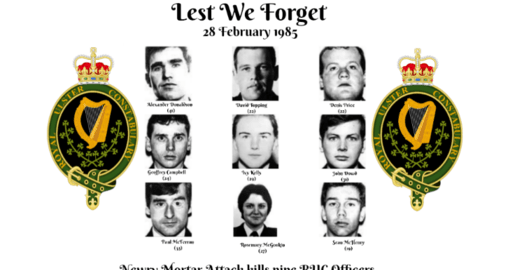


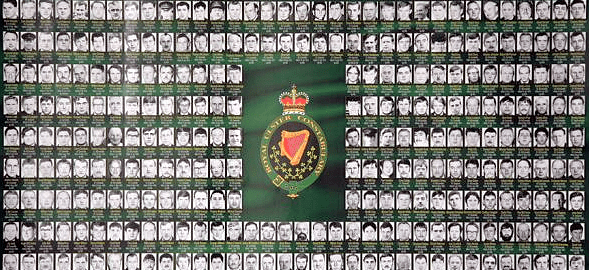






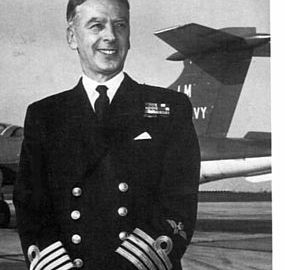


.jpg)


_Ribbon.png)


 belfastchildis.com