Key Events & Deaths on this day in Northern Ireland Troubles
7th April
——————————————
Friday 7 April 1972
Three members of the Irish Republican Army (IRA) died in a premature bomb explosion at Bawnmore Park, Greencastle, Belfast.
Saturday 7 April 1973
The Irish Republican Army (IRA) carried out a land-mine attack on a mobile patrol of the British Army and killed two soldiers near Newtownhamilton, County Armagh.
A member of the Official Irish Republican Army (OIRA) was shot dead near his home in Armagh city.
Monday 7 April 1975
IRA Truce
Wednesday 7 April 1976
Elizabeth & Noleen Herron
Herron, William also died
Three members of a Protestant family were killed by the Irish Republican Army (IRA) when an incendiary bomb caused a fire in the drapery business below the Herron family home.
Friday 7 April 1978
Airey Neave, then Conservative party spokesperson on Northern Ireland, said that power-sharing no longer represented practical politics.
James Callaghan, then British Prime Minister, held a meeting with Jack Lynch, then Taoiseach (Irish Prime Minister), at the European Community summit at Copenhagen.
[The talks helped to ease relationships between the British and Irish governments.]
Tuesday 7 April 1981
Joanne Mathers (29), a Protestant civilian who was acting as a census enumerator, was shot dead in the Gobnascale area of Derry, while she was collecting census returns. Republican paramilitaries were responsible for the killing.
Saturday 7 April 1984
John Hermon, then Chief Constable of the Royal Ulster Constabulary (RUC), denied there was a ‘shoot to kill’ policy being operated by security forces in Northern Ireland. He also said there was no cover-up in relation to events surrounding the killing of two Irish National Liberation Army (INLA) members at a vehicle check-point at Mullacreavie, County Armagh, on 12 December 1982.
Hermon did admit that two unarmed RUC officers had entered the Republic of Ireland for ‘observation purposes’ in December 1982. Wednesday 7 April 1993 Gordon Wilson met with representatives of the Irish Republican Army (IRA) to try to persuade them to stop their military campaign. [Gordon Wilson had been injured, and his daughter killed, in the Enniskillen bombing on 8 November 1987. Following the meeting he said that he was saddened by the outcome.]
Margaret Wright (31), a Protestant civilian, was badly beaten by a group of men, and then finally shot four times in the head, in a Loyalist band-hall in the Donegal Road area of Belfast.
[She had been invited to the hall on the evening of 6 April 1994 and was then killed by Loyalists who believed that she was a Catholic. There was strong condemnation of the killing in Protestant areas.
Ian Hamiltion (21), a Ulster Volunteer Force (UVF) member, was shot dead by the UVF on 12 April 1994 because they claimed he had admitted killing Wright. William Elliott (32), a member of the Red Hand Commando (RHC), a group associated with the UVF, was also shot dead on 28 September 1995 for his alleged part in the killing of Wright.]
Sunday 7 April 1996
(Easter Sunday) Republicans held a series of rallies to commemorate the Easter Rising of 1916. Gerry Adams, then President of Sinn Féin (SF), addresses a rally in the Bogside, Derry. The Irish Republican Army (IRA) issued an Easter statement which did not mention a renewed ceasefire.
A Catholic chapel, Mullavilly in County Armagh, was destroyed by arsonists and a Protestant parish hall was also damaged in Dungiven, County Derry.
Gary Martin Quinn (33) was charged with four murders dating from 1989 and was also charged with being a member of the Ulster Freedom Fighters (UFF), a covername used by the Ulster Defence Association (UDA).
Tuesday 7 April 1998
The Ulster Unionist Party (UUP) rejected the Mitchell draft settlement paper which had been presented to the parties on 6 April 1998.
Tony Blair, then British Prime Minister, travelled to Northern Ireland to be present during the final stages of the search for agreement. On arriving in Northern Ireland the Prime Minister said, ‘I feel the hand of history upon our shoulder’. Blair held a two hour meeting with David Trimble, then leader of the Ulster Unionist Party (UUP), at Hillsborough Castle, County Down.
Wednesday 7 April 1999
Martin McGuinness, then Vice-President of Sinn Féin (SF), said the Irish Republican Army (IRA) would not accept decommissioning as a precondition to his party’s entry into a power-sharing Executive in Northern Ireland.
Billy Armstrong, then Ulster Unionist Party (UUP) Assembly member, described the Hillsborough Declaration as unacceptable. Sources in the Ulster Volunteer Force (UVF) were reported as saying that the organisation would not decommission its weapons “to get Sinn Féin into government”.
———————————————
Remembering all innocent victims of the Troubles
Today is the anniversary of the death of the following people killed as a results of the conflict in Northern Ireland
“To live in hearts we leave behind is not to die
– Thomas Campbell
To the innocent on the list – Your memory will live forever
– To the Paramilitaries –
There are many things worth living for, a few things worth dying for, but nothing worth killing for.
16 People lost their lives on the 7th April between 1972– 1985
———————————————–
07 April 1972
Charles McCrystal, (17)
Catholic Status: Irish Republican Army (IRA),
Killed by: Irish Republican Army (IRA)
Died in premature bomb explosion in garage, Bawnmore Park, Greencastle, Belfast
———————————————–
07 April 1972
Samuel Hughes, (17)
Catholic Status: Irish Republican Army (IRA), Killed by: Irish Republican Army (IRA)
Died in premature bomb explosion in garage, Bawnmore Park, Greencastle, Belfast
———————————————–
07 April 1972
John McErlean, (17)
Catholic Status: Irish Republican Army (IRA),
Killed by: Irish Republican Army (IRA)
Died in premature bomb explosion in garage, Bawnmore Park, Greencastle, Belfast
———————————————–
07 April 1972
Peter Sime, (22)
nfNI Status: British Army (BA),
Killed by: Irish Republican Army (IRA)
Shot by sniper while on British Army (BA) foot patrol, Springfield Road, Belfast
———————————————–
7 April 1973 Steven Harrison, (26)
nfNI Status: British Army (BA),
Killed by: Irish Republican Army (IRA)
Killed in land mine attack on British Army (BA) mobile patrol, Tullyogallaghan, near Newtownhamilton, County Armagh.
———————————————–
07 April 1973 Terence Brown, (26)
nfNI Status: British Army (BA),
Killed by: Irish Republican Army (IRA)
Killed in land mine attack on British Army (BA) mobile patrol, Tullyogallaghan, near Newtownhamilton, County Armagh
———————————————–
07 April 1973
James McGerrigan, (17)
Catholic Status: Official Irish Republican Army (OIRA),
Killed by: British Army (BA)
Shot near his home, Windmill Hill, Armagh.
———————————————–
07 April 1975
Gerard McLaughlin, (21)
Catholic Status: Civilian (Civ),
Killed by: non-specific Loyalist group (LOY)
Shot while walking to work along Carnmoney Road North, Glengormley, near Belfast, County Antrim.
———————————————–
07 April 1975
Hugh McVeigh, (36)
Protestant Status: Ulster Defence Association (UDA),
Killed by: Ulster Volunteer Force (UVF)
Abducted while delivering furniture somewhere in the Shankill area, Belfast. Found shot, on information supplied to the British authorities, buried in wasteland, Gobbins, Islandmagee, County Antrim, on 1 September 1975. Ulster Defence Association (UDA) / Ulster Volunteer Force (UVF) feud.
———————————————–
07 April 1975
David Douglas, (20)
Protestant Status: Ulster Defence Association (UDA),
Killed by: Ulster Volunteer Force (UVF)
Abducted while delivering furniture somewhere in the Shankill area, Belfast. Found shot, on information supplied to the British authorities, buried in wasteland, Gobbins, Islandmagee, County Antrim, on 1 September 1975. Ulster Defence Association (UDA) / Ulster Volunteer Force (UVF) feud.
———————————————–
07 April 1976 William Herron, (64)
Protestant Status: Civilian (Civ),
Killed by: Irish Republican Army (IRA)
Killed during incendiary bomb attack on his drapery shop, The Square, Dromore, County Down. He lived above the shop
———————————————–
07 April 1976
Elizabeth Herron, (58)
Protestant Status: Civilian (Civ),
Killed by: Irish Republican Army (IRA)
Killed during incendiary bomb attack on her drapery shop, The Square, Dromore, County Down. She lived above the shop
———————————————–
07 April 1976
Noleen Herron, (26)
Protestant Status: Civilian (Civ),
Killed by: Irish Republican Army (IRA)
Killed during incendiary bomb attack on her parents’ drapery shop, The Square, Dromore, County Down. She lived above the shop.
———————————————–
07 April 1981
Joanne Mathers, (29)
Protestant Status: Civilian (Civ),
Killed by: non-specific Republican group (REP)
Shot while collecting census forms, Anderson Crescent, Gobnascale, Derry.
———————————————–
07 April 1983
Gerald Jeffrey, (28)
nfNI Status: British Army (BA),
Killed by: Irish Republican Army (IRA)
Died eight days after being injured by remote controlled bomb while on British Army (BA) foot patrol, Falls Road, Belfast.
———————————————–
07 April 1985 Martin Love, (24)
Catholic Status: Civilian (Civ),
Killed by: Ulster Freedom Fighters (UFF)
Shot while walking along Factory Row, Enniskillen, County Fermanagh
———————————————–
My autobiography: A Belfast Child is now available to pre-order on Amazon , launch date is 30th April.
Key Events & Deaths on this day in Northern Ireland Troubles
6th April
———————————————–
Tuesday 6 April 1971
During a debate at Westminster on Northern Ireland, Harold Wilson, then leader of the Labour Party, claimed that a draft Bill for the imposition of direct rule existed.
Thursday 6 April 1972
Scarman Report The Scarman Tribunal Report (Cmd. 566) was published. The report was into the causes of violence during the summer of 1969.
The report found that the Royal Ulster Constabulary (RUC) had been seriously at fault on a number of occasions.
Sunday 6 April 1975
Daniel Loughran (18), then a member of the People’s Liberation Army (PLA; later to become the Irish National Liberation Army, INLA), was shot dead at Divis Flats, Belfast, by members of the Official Irish Republican Army (OIRA) in the continuing feud between the OIRA and the INLA. A Protestant civilian was shot dead by Republicans in Belfast.
Friday 6 April 1990
The Irish Supreme Court rejected an application for the extradition of Owen Carron. Carron had been charged with a firearms offence in Northern Ireland but had fled to the Republic of Ireland before his trial.
This decision, following earlier decisions on 1 March 1990 and 13 March 1990 causes further strains on relations between the British and the Irish Governments.
Wednesday 6 April 1994
IRA Ceasefire The Irish Republican Army (IRA) called a three-day ceasefire (Wednesday 6 April 1994 to Friday 8 April 1994).
Saturday 6 April 1996
Patrick Mayhew, then Secretary of State for Northern Ireland, said that the Irish Republican Army was “out of a touch” with the wishes of Irish People. Ian Paisley, then leader of the Democratic Unionist Party (DUP), celebrated his 70th birthday and stated his intention to continue as leader of the DUP and the Free Presbyterian Church.
Monday 6 April 1998
George Mitchell, then Chairman of the multi-party talks at Stormont, presented a draft settlement paper to the parties involved in the talks late in the evening. Mitchell appealed for the document not to be leaked: “Lives and deaths are at stake here”.
The paper had been delayed because of disagreement between the Ulster Unionist Party (UUP) and the Social Democratic and Labour Party (SDLP) over how “consensus” decisions would be reached in the proposed Northern Ireland Assembly and also whether or not cross-border bodies would be accountable to the Assembly. Sinn Féin (SF) said that 12 people had resigned from the party over its decision to be involved in the multi-party talks. SF denied however that there had been large-scale resignations from the party.
[Those people who had left the party claimed that they had been expelled to stop criticism of the party’s leadership at the forthcoming Ard Fheis.]
Tuesday 6 April 1999
Members of the Orange Order in Ballynafeight, Belfast, accepted calls to enter proximity talks with the Lower Ormeau Concerned Community Group. [This did not involve face-to-face discussions between the Orangemen and the residents.]
Saturday 6 May 2000
The Irish Republican Army (IRA) undertook to open some of its arms dumps for inspection and said it was prepared to “initiate a process that will completely and verifiably put IRA arms beyond use”.
———————————————
Remembering all innocent victims of the Troubles
Today is the anniversary of the death of the following people killed as a results of the conflict in Northern Ireland
“To live in hearts we leave behind is not to die
– Thomas Campbell
To the innocent on the list – Your memory will live forever
– To the Paramilitaries –
There are many things worth living for, a few things worth dying for, but nothing worth killing for.
8 People lost their lives on the 6th April between 1974– 1994
———————————————–
06 April 1974 Ellen McDowell, (21)
Protestant Status: Civilian (Civ),
Killed by: Ulster Volunteer Force (UVF)
Shot while walking with her boyfriend along Shankill Road, Belfast.
———————————————–
06 April 1975
Daniel Loughran, (18)
Catholic Status: People’s Liberation Army (PLA),
Killed by: Official Irish Republican Army (OIRA)
Shot while walking along Albert Street, Lower Falls, Belfast. Official Irish Republican Army (OIRA) / Irish National Liberation Army (INLA) feud.
———————————————–
06 April 1975
William Archer, (19)
Protestant Status: Ulster Defence Association (UDA),
Killed by: non-specific Republican group (REP)
Shot while standing outside social club, Alliance Road, Belfast.
———————————————–
06 April 1976
Gillian Liggett, (33)
Protestant Status: Ulster Defence Regiment (UDR),
Killed by: Irish Republican Army (IRA)
Shot during sniper attack on Ulster Defence Regiment (UDR) mobile patrol, Ashfort, near Middletown, County Armagh.
———————————————–
06 April 1977 Gerald Cloete, (46)
Protestant Status: Ulster Defence Regiment (UDR),
Killed by: Irish Republican Army (IRA)
Off duty. Shot while driving his car, near to his home, Glenside Park, off Northland Road, Derry.
———————————————–
06 April 1988 William Burleigh, (51)
Protestant Status: Ulster Defence Regiment (UDR),
Killed by: Irish Republican Army (IRA)
Off duty. Killed by booby trap bomb attached to his car, Tirraroe, near Derrylin, County Fermanagh
———————————————–
06 April 1991
Spence McGarry, (46)
Protestant Status: Royal Ulster Constabulary (RUC),
Killed by: Irish Republican Army (IRA)
Off duty. Killed by booby trap bomb attached to his car in car park, Castle Street, Ballycastle, County Antrim.
———————————————–
06 April 1994
Margaret Wright, (31)
Protestant Status: Civilian (Civ),
Killed by: Red Hand Commando (RHC)
Shot while in social club, Meridi Street, off Donegall Road, Belfast. Her body found in backyard of unoccupied house, Donegall Avenue, Village, Belfast, on 7 April 1994. Assumed to be a Catholic.
———————————————–
My autobiography: A Belfast Child is now available to pre-order on Amazon , launch date is 30th April.
Sadly murder and barbaric acts of violence (Islamic State ) have become part of modern life and almost daily we watch in shock and horror at the evil mankind is capable off. The Islamic merchants of death thrive on and glorify their slaughter through social media – to a global audience and we can be forgiven for almost taking it in our stride -it has become so common.
But there are still some acts of murder and brutality that can stop us in our tracks and today in the UK two 15-year-old girls who “battered and tortured” a woman to death in her own home were found guilty of murder.
Angela Wrightson
Angela Wrightson, 39, was found in her living room with more than 100 injuries – including 80 to her face – in Hartlepool in December 2014.
The girls, then aged 13 and 14, used a variety of weapons including a coffee table and a computer printer.
They then rang police for a lift home before taking a selfie in the back of the van, Leeds Crown Court heard.
The fact that this murder was carried out by two young females makes it all the more horrific, as crimes like this are seldom carried out by females in the UK apart from Myra Hindley and a few others. America has a long history of female killers and Aileen Wuornos became a global curiosity thanks to Hollywood and her brutal crimes.
Aileen Carol Wuornos (February 29, 1956 – October 9, 2002) was an American serial killer who killed seven men in Florida between 1989 and 1990. Wuornos claimed that her victims had either raped or attempted to rape her while she was working as a prostitute, and that all of the homicides were committed in self-defense.
.Joanna Dennehy a serial killer becomes first woman told by judge to die in jail .Judge told the murderer of three men she was ‘a cruel, calculating, selfish and manipulative serial killer’ .
She was convicted of killing three men in what became known as the Peterborough ditch murders
Peterborough ditch murders
The Peterborough ditch murders were a series of three murders which took place in England in March 2013. All of the victims were male and died from stab wounds. The bodies of all three men were discovered dumped in ditches outside Peterborough. The perpetrator of the murders was Joanna Dennehy, a local woman who was later sentenced to life imprisonment with a recommendation that she never be released.
Court proceedings
In November 2013, Joanna Dennehypleaded guilty to all three murders and two further attempted murders.[1][2] Dennehy’s sister Maria was unsurprised by the guilty plea and said, “I think she did that to control the situation. She likes people to know she’s the boss.”[3] Dennehy has been held at HM Prison Bronzefield where Rosemary West is also being held.[4] Assessing psychiatrists later diagnosed Dennehy with “psychopathic, anti-social and emotional instability disorders” (also known as borderline personality disorder).[5]
Two men, Gary Richards (known as Gary Stretch), 47, and Leslie Layton, 36, stood trial charged with a range of crimes assisting Dennehy, 31. Neither agreed to enter the witness box, give sworn evidence or face cross-examination.[6] The jury began considering their verdict on 4 February 2014.[7][8][9][10] On 10 February Richards was found guilty of attempted murder. Layton was found guilty of perverting the course of justice.[11][12] On 12 February Layton and Richards were convicted of all other charges.[13][14][15]
On 28 February 2014 at the Old Bailey, Joanna Dennehy was sentenced to life imprisonment. The trial judge, Mr Justice Spencer, recommended that she should never be released. He said that this was justified due to the premeditation of each murder. Spencer said further that Dennehy was sadomasochistic, and lacked the normal range of human emotions.[16] Dennehy is believed to be one of just three women in the United Kingdom to be told that her life sentence should mean life. The other two confirmed cases are Myra Hindley (now dead) and Rosemary West.[17] Gary ‘Stretch’ Richards was also sentenced at the Old Bailey alongside Dennehy to life imprisonment with a recommended minimum term of 19 years. Leslie Layton was sentenced to a total of 14 years, and Robert Moore, 55, who admitted to assisting an offender received a three-year prison sentence.[18][19][20]
———————————————
Joanna Dennehy’s Ex-Boyfried Talks Of Their Relationship | This Morning
———————————————
Victims
Kevin Lee was a property developer, landlord of Joanna Dennehy and her lover.[21][22] He was killed on 29 March, and his body found the next day near Newborough.[23] Dennehy dressed Lee’s body in a black sequined dress before dumping his corpse.[24]
Lukasz Slaboszewski and John Chapman were both housemates of Dennehy.[21] Slaboszewski was killed at some point between 19 and 29 March, and Chapman on 29 March.[23] The bodies of Slaboszewski and Chapman were both found on 3 April near Thorney with stab wounds.[25]
After the killings, Dennehy and Richards drove to Hereford where she stabbed two random men, both of whom survived.[26] One of them, John Rogers, died of unrelated causes in November 2014.[27]
Victim selection and motives
Dennehy specifically targeted men during her killing spree, telling Lloyd that she did not wish to kill a woman and especially not a woman with children. Lloyd stated Dennehy had wanted to kill nine men in total, seeking to be like Bonnie and Clyde. Dennehy hunted and stabbed men for the purpose of entertainment, telling Stretch, “I want my fun. I need you to get my fun.” She later told a psychiatrist that she had found murder to be “moreish” and that after the first killing she “got a taste for it.”[28][22][29]
Key Events & Deaths on this day in Northern Ireland Troubles
5th April
——————————
Saturday 5 April 1975
Kevin Kane and Michael Coyle
Two Catholic civilians were killed in a bomb attack on McLaughlin’s Bar in the New Lodge area of Belfast. The attack was claimed by the Protestant Action Force (PAF) a covername used by the Ulster Volunteer Force (UVF).
Republican paramilitaries carried out a bomb attack on Mountainview Tavern, Shankill Road, Belfast, and killed five people. Four of the dead were Protestant civilians and one was a member of the Ulster Defence Association (UDA).
A Catholic civilian was shot dead by Loyalists as he walked home in the Ardoyne area of Belfast. Merlyn Rees, then Secretary of Sate for Northern Ireland, said that Loyalist paramilitaries had tried to assassinate him in 1974.
Monday 5 April 1976
James Callaghan succeeded Harold Wilson as the British Prime Minister.
Thursday 5 April 1979
Anthony Dykes and Anthony Thornett
Two British soldiers were shot dead by the Irish Republican Army (IRA) while standing outside Andersonstown join Royal Ulster Constabulary (RUC) and British Army base in Belfast.
Sunday 5 April 1981
The 1981 Census
During the census Sinn Féin (SF) campaigned for non completion of the census forms as a demonstration of support for the hunger strike. As a result in many Republican areas the census enumerators were unable to collect completed forms. Indeed one enumerator was shot dead in Derry by Republican paramilitaries on 7 April 1981.
[This led to a large under representation of Catholics in the published figures. The population of Northern Ireland was recorded as 1,481,959 with 28 per cent giving their religion as Catholic. 18.5 per cent of the population had refused to state their religion. Later estimates of the true Catholic population put the figure at 38.5 per cent.]
Monday 5 April 1982
White Paper Published
The British government published its White Paper, ‘Northern Ireland: A Framework for Devolution‘ (Cmnd 8541). The paper set out proposals for the establishment of an elected 78 member Assembly at Stormont. The Assembly would then be asked to reach agreement on how any powers devolved to it from Westminster would be administered. The proposals indicated that it would need the agreement of 70 per cent of Assembly members before powers would be devolved.
It was also envisaged that power would be passed to particular Northern Ireland Departments one at a time; because of this the scheme became known as ‘rolling devolution’.
[The ideas contained in the White Paper had been discussed for some time prior to its publication and most of the political parties had expressed opposition to it.]
Friday 5 April 1985
The British government said that it would not provide the funding to save the ‘town gas’ industry in Northern Ireland.
Thursday 5 April 1990
The report of the Stevens Inquiry was presented to Hugh Annesley, then Chief Constable of the Royal Ulster Constabulary (RUC).
Sunday 5 April 1992
Bill Clinton gave a speech to the American-Irish Presidential Forum in New York, United States of America (USA). He undertook, if elected President, to: reverse the ban on Gerry Adams, then President of Sinn Féin (SF), entering the USA; support the ‘MacBride Principles’; appoint a peace envoy to Northern Ireland; and raise the issue of human rights violations with the British government.
Saturday 5 April 1997
‘Grand National’ Cancelled
Two Catholic chapels, St MacNissi’s in Randalstown and St Comgall’s in Antrim Town, and a Protestant church, St Patrick’s in Donoghmore, were damaged by arson attacks.
Seamus Mallon, deputy leader of the Social Democratic and Labour Party (SDLP), blamed the comments made by Ian Paisley, then leader of the Democratic Unionist Party (DUP), in Portadown on 4 April 1997 for fuelling “sectarian hatred”.
Paisley called Mallon’s comments “vile bile”.
The ‘Grand National’ horse race at Aintree in Liverpool had to be abandoned following a hoax warning that the Irish Republican Army (IRA) had planted a bomb at the race course. [In terms of public interest the Grand National is the premier event in the horse racing calendar. There was widespread anger that the race had to be cancelled.
Jack Straw, then Labour Party shadow Home Secretary, said that the IRA had “put themselves beyond the pale”. This incident was one of a number in which the IRA demonstrated its ability to disrupt the ordinary life of people in Britain at minimum effort and risk on the part of IRA members.]
Sunday 5 April 1998
Julia Ahern, the mother of Bertie Ahern, then Taoiseach (Irish Prime Minister), died aged 87. Bertie Ahern, who was heavily involved with the multi-party talks at Stormont, had to leave the talks at various times to organise funeral arrangements and attend the service.
Friday 5 May 2000
A Catholic couple were forced to leave their home in a Loyalist area of south Belfast following a sectarian pipe-bomb attack. The husband sustained minor leg injuries after the device, which was packed with nails, blew a hole in the back door of the house at Broadway Parade and exploded into the kitchen.
His wife who also was in the kitchen escaped unhurt. The attack was carried out by Loyalist paramilitaries.
———————————————
Remembering all innocent victims of the Troubles
Today is the anniversary of the death of the following people killed as a results of the conflict in Northern Ireland
“To live in hearts we leave behind is not to die
– Thomas Campbell
To the innocent on the list – Your memory will live forever
– To the Paramilitaries –
There are many things worth living for, a few things worth dying for, but nothing worth killing for.
15 People lost their lives on the 5th April between 1975– 1993
———————————————–
05 April 1975 Kevin Kane, (18)
Catholic Status: Civilian (Civ),
Killed by: Protestant Action Force (PAF)
Killed in bomb attack on McLaughlin’s Bar, Antrim Road, New Lodge, Belfast.
———————————————–
05 April 1975 Michael Coyle, (20)
Catholic Status: Civilian (Civ),
Killed by: Protestant Action Force (PAF)
Killed in bomb attack on McLaughlin’s Bar, Antrim Road, New Lodge, Belfast
———————————————–
05 April 1975
Williams Andrews, (33)
Protestant Status: Ulster Defence Association (UDA),
Killed by: non-specific Republican group (REP)
Killed in bomb attack on Mountainview Tavern, Shankill Road, Belfast.
———————————————–
05 April 1975
Alan Madden, (18)
Protestant Status: Civilian (Civ),
Killed by: non-specific Republican group (REP)
Killed in bomb attack on Mountainview Tavern, Shankill Road, Belfast.
———————————————–
05 April 1975
Albert Fletcher, (32)
Protestant Status: Civilian (Civ),
Killed by: non-specific Republican group (REP)
Killed in bomb attack on Mountainview Tavern, Shankill Road, Belfast
———————————————–
05 April 1975 Nathaniel Adams, (29)
Protestant Status: Civilian (Civ),
Killed by: non-specific Republican group (REP)
Killed in bomb attack on Mountainview Tavern, Shankill Road, Belfast.
———————————————–
05 April 1975
Joseph Bell, (52)
Protestant Status: Civilian (Civ),
Killed by: non-specific Republican group (REP)
Killed in bomb attack on Mountainview Tavern, Shankill Road, Belfast
———————————————–
05 April 1975 Thomas Robinson, (61)
Catholic Status: Civilian (Civ),
Killed by: non-specific Loyalist group (LOY)
Shot while walking home from social club, Etna Drive, Ardoyne, Belfast.
———————————————–
05 April 1976 Robert McConnell, (32)
Protestant Status: Ulster Defence Regiment (UDR)
, Killed by: Irish Republican Army (IRA)
Off duty. Shot outside his home, Tullyvallen, Newtownhamilton, County Armagh
———————————————–
05 April 1976 Sean McDermott, (20)
Catholic Status: Irish Republican Army (IRA),
Killed by: Royal Ulster Constabulary (RUC)
Shot by off duty Royal Ulster Constabulary (RUC) member shortly after being involved in bomb attack on Conway Hotel, Dunmurry, near Belfast, County Antrim.
———————————————–
05 April 1977 Sean Prendergast, (22)
nfNI Status: British Army (BA),
Killed by: Irish Republican Army (IRA)
Died one day after being injured during land mine attack on British Army (BA) Armoured Personnel Carrier, Derrynacross, near Belleek, County Fermanagh.
———————————————–
05 April 1979 Anthony Dykes, (25)
nfNI Status: British Army (BA),
Killed by: Irish Republican Army (IRA)
Shot by snipers while standing outside Andersonstown Royal Ulster Constabulary (RUC) / British Army (BA) base, Belfast.
———————————————–
05 April 1979 Anthony Thornett, (20)
nfNI Status: British Army (BA),
Killed by: Irish Republican Army (IRA)
Shot by snipers while standing outside Andersonstown Royal Ulster Constabulary (RUC) / British Army (BA) base, Belfast.
———————————————–
05 April 1987 Samuel Lawrence, (60)
Protestant Status: Civilian (Civ),
Killed by: Ulster Volunteer Force (UVF)
Died two days after being injured during robbery at railway station, York Road,
———————————————–
05 April 1993 William Killen, (36)
Protestant Status: ex-Ulster Defence Association (xUDA),
Killed by: Ulster Defence Association (UDA)
Shot at his home, Westlea Gardens, Portavogie, County Down. Internal Ulster Defence Association dispute.
———————————————–
My autobiography: A Belfast Child is now available to pre-order on Amazon , launch date is 30th April.
This was another act of terrorism on my local community by republican terrorists and things could have been so much worse, for my family at least. My uncles and grandfather had been in the pub shortly before the attack and had just left to visit another pub further down the Shankill.
The victims were known by my family and their deaths left a lasting mark on the Shankill and local community. Acts such as this drove young protestant men and women to join the loyalist paramilitaries and take the war to the IRA and their nationalist/republican sympathisers. The sectarian slaughter was self perpetuating and countless innocent lives were lost as death stalked the streets of west Belfast and the loyalist community mourned the deaths of five of their own
.The attack happened at about 6pm. When Two youths opened fire with handguns before detonating the bomb.
Five men, aged between 18 and 52 were killed. One of them, William Andrews, was a member of the UDA.
It was the second pub bombing in Belfast that day. Earlier the UVF had killed two people in an attack on a pub in the New Lodge area of north Belfast
The bar was packed with people waiting to watch the Grand National horse race when the attack happened on the afternoon of Saturday April 5.
Two youths walked in and one opened fire with a handgun before they left the bomb at the door. It exploded moments later, killing four people instantly. One died later in hospital.
While a telephone caller claimed a rival loyalist group was responsible, police blamed the IRA.
The getaway car used in the attack was found abandoned in the nationalist Springfield area.
—————————————
The Victims
Mountainview Bar Plaque
On the front wall of the public house close to the front door.
—————————————
05 April 1975
Williams Andrews, (33)
Protestant Status: Ulster Defence Association (UDA),
Killed by: non-specific Republican group (REP) Killed in bomb attack on Mountainview Tavern, Shankill Road, Belfast.
—————————————
05 April 1975
Alan Madden, (18)
Protestant Status: Civilian (Civ),
Killed by: non-specific Republican group (REP) Killed in bomb attack on Mountainview Tavern, Shankill Road, Belfast.
—————————————
05 April 1975
Albert Fletcher, (32)
Protestant Status: Civilian (Civ),
Killed by: non-specific Republican group (REP) Killed in bomb attack on Mountainview Tavern, Shankill Road, Belfast
—————————————
05 April 1975 Nathaniel Adams, (29)
Protestant Status: Civilian (Civ),
Killed by: non-specific Republican group (REP) Killed in bomb attack on Mountainview Tavern, Shankill Road, Belfast.
—————————————
05 April 1975
Joseph Bell, (52)
Protestant Status: Civilian (Civ),
Killed by: non-specific Republican group (REP) Killed in bomb attack on Mountainview Tavern, Shankill Road, Belfast
—————————————
Shankill Road Victims Memorial Services 2013
—————————————
Mountain View today
—————————————————-
Update
Published 01/03/2012
A man has been arrested in connection with a deadly bar bomb attack in Belfast 37 years ago.
The blast at the Mountainview Tavern on the Shankill Road in April 1975 killed five people and injured 60 others.
The 54-year-old suspect was arrested by detectives from the Police Service of Northern Ireland’s Serious Crime Branch in Co Antrim.
The investigation into the attack was reopened after a review by the police’s Historical Enquiries Team (HET).
The bar was packed with people waiting to watch the Grand National horse race when the attack happened on Saturday April 5.
Two youths walked in and one opened fire with a handgun before they left the bomb at the door. It exploded moments later, killing four people instantly. One died later in hospital.
The bar was known to be frequented by members of the Ulster Volunteer Force (UVF).
While a telephone caller claimed a rival loyalist group was responsible, police blamed the IRA.
The getaway car used in the attack was found abandoned in the nationalist Springfield area.
The arrested man is being questioned in the police’s Serious Crime Suite in Antrim town.
Key Events & Deaths on this day in Northern Ireland Troubles
4th April
——————————————–
Friday 4 April 1969Loyalist Bomb
There was an explosion at a water installation at Dunadry, County Antrim. This was one of the main water supply pipes to Belfast. [It was later established that the bomb was planted by Loyalists who were members of the Ulster Volunteer Force (UVF) and the Ulster Protestant Volunteers (UPV)
Wednesday 4 April 1973
[Public Records 1972 Released 1 January 2003: Letter from A.W.Stephens, then Head of Defence Secretariat 10 at the Ministry of Defence, to W.K.K.White, then an official at the Irish Department of Foreign Affairs, about border security in Belleek, County Fermanagh.]
Thursday 4 April 1974
Merlyn Rees, then Secretary of Sate for Northern Ireland, announces that he will de-proscribe (remove the illegal status from) the Ulster Volunteer Force (UVF) and Sinn Féin (SF), and also phase out Internment.
Monday 4 April 1977
See Hunger Strike.
Wednesday 4 April 1984
The British government issued an apology to the Irish government about undercover operations by the Royal Ulster Constabulary (RUC) in the territory of the Republic of Ireland in December 1982.
Friday 4 April 1986
The leaders of the main Protestant churches condemned Loyalist attacks on the homes of Royal Ulster Constabulary (RUC) officers and Catholic-owned property.
Thursday 4 April 1991
The Irish Republican Army (IRA) exploded a bomb, estimated at 1,000 pounds, in the centre of Banbridge, County Down. The bomb caused widespread damage
Tuesday 4 April 1995
Garda Síochána (the Irish police) arrested four men from Northern Ireland near Balbriggan, County Dublin. The Garda recovered 20 handguns, 6 rifles, and 2,500 rounds of ammunition at the scene.
Bill Clinton, then President of the United States of America (USA), held a meeting in Washington with John Major, then British Prime Minister.
[The meeting helped to repair the damage to relations between the two administrations following the decision on 9 March 1995 to allow Sinn Féin (SF) to raise funds in the USA.]
Friday 4 April 1997
Ian Paisley, then leader of the Democratic Unionist Party (DUP), addressed a rally of the Protestant group ‘Right to March’ in Portadown.
Saturday 4 April 1998
George Mitchell, then Chairman of the multi-party talks at Stormont, delayed the delivery of his ‘blueprint’ document to those taking part in the talks.
[The document was delivered on 6 April 1998.]
The Alliance Party of Northern Ireland (APNI) held its annual conference in Belfast. John Alderdice, then leader of the Alliance Party of Northern Ireland (APNI), called on the British and Irish Prime Ministers to take personal control of the final stage of the multi-party talks at Stormont.
Sunday 4 April 1999
In his Easter Sunday address Gerry Adams, then President of Sinn Féin (SF), praised the IRA’s “commitment” to searching for a peaceful settlement. He said the Hillsborough Declaration of the previous week “may have merit, but it may also be counterproductive if it amounts to an ultimatum to armed groups.”
Thursday 4th May 2000
Further Political Talks
Tony Blair, then British Prime Minister, and Bertie Ahern, then Taoiseach (Irish Prime Minister), arrived in Northern Ireland for a further round of political talks as part of a review of the Good Friday Agreement.
———————————————
Remembering all innocent victims of the Troubles
Today is the anniversary of the death of the following people killed as a results of the conflict in Northern Ireland
“To live in hearts we leave behind is not to die
– Thomas Campbell
To the innocent on the list – Your memory will live forever
– To the Paramilitaries –
There are many things worth living for, a few things worth dying for, but nothing worth killing for.
4 People lost their lives on the 4th April between 1976– 1990
—————————————————————————
04 April 1976
Margaret Gamble, (38)
Catholic Status: Civilian (Civ),
Killed by: not known (nk)
Found stabbed to death at junction of Antrim Road and Glandore Gardens, Belfast
—————————————————————————
04 April 1980
Bernard Montgomery, (33)
Protestant Status: Royal Ulster Constabulary (RUC),
Killed by: Irish Republican Army (IRA)
Off duty reservist. Shot at his workplace, Glenbank Industrial Estate, Ligoniel, Belfast
—————————————————————————
04 April 1989
Gerard Casey, (29)
Catholic Status: Irish Republican Army (IRA),
Killed by: Ulster Volunteer Force (UVF)
Shot at his home, Shamrock Park, Rosnashane, near Rasharkin, County Antrim
—————————————————————————
04 April 1990
Roger Bradley, (38)
Catholic Status: ex-Irish Republican Army (xIRA),
Killed by: Ulster Volunteer Force (UVF)
Former Republican prisoner. Shot while renovating houses, Armoy Gardens, Rathcoole, Newtownabbey, County Antrim.
—————————————————————————
My autobiography: A Belfast Child is now available to pre-order on Amazon , launch date is 30th April.
Key Events & Deaths on this day in Northern Ireland Troubles
3rd April
———————————-
Friday 3 April 1970
As part of a new ‘get tough’ policy, Ian Freeland, the General Officer Commanding (GOC) the British Army, warned that those throwing petrol bombs could be shot dead if, after a warning, they did not stop using them.
If arrested those using petrol bombs could face a sentence of 10 years in prison. A member of the Garda Siochana (Irish police) was shot dead during a robbery in Dublin, Republic of Ireland.
Thursday 3 April 1980
Kincora Scandal
Three staff members of the Kincora Boys Home, Belfast, were charged with acts of gross indecency. [These charges, and subsequent revelations, led to years of accusations that elements of the security service, civil servants and a number of Loyalists had been involved in the sexual abuse of young boys at Kincora.]
Saturday 3 April 1981
See 1981 Hunger Strike
Wednesday 3 April 1985
The Irish Republican Army (IRA) exploded a car bomb outside the Courthouse in Newry, County Down. The blast killed an Royal Ulster Constabulary (RUC) officer and a civilian worker employed at the Courthouse.
Thursday 3 April 1986
John Hume, then leader of the Social Democratic and Labour Party (SDLP), praised the Royal Ulster Constabulary (RUC) for its even-handed approach to the disturbances in Portadown, County Armagh.
Friday 3 April 1987
The IRA killed two members of the security forces in separate incidents.
Friday 3 April 1992
James Molyneaux, then leader of the Ulster Unionist Party (UUP), advised those people who supported the UUP to vote for Peter Robinson, Democratic Unionist Party (DUP), in East Belfast and for Jim Kilfedder, Ulster Popular Unionist Party (UPUP), in North Down.
[As in previous elections, the DUP and the UUP observed an electoral pact in those constituencies where a contest between Unionist candidates might lead to a Nationalist winning the seat. In North Down the UUP intention was to support the sitting Member of Parliament (MP) and to prevent the election of a Conservative Party candidate.]
Wednesday 3 April 1996
Ron Brown, then United States of America Commerce Secretary was killed in a plane crash in Croatia. Ron Brown had been involved in measures to increase American investment in Northern Ireland.
Thursday 3 April 1997
There was widespread disruption on the motorways of England when the Irish Republican Army (IRA) warned of bombs on the M1, M5 and M6.
Two small bombs were subsequently found by the police.
The Royal Ulster Constabulary (RUC) intercepted a suspicious package that had been addressed to Kevin McQuillan, then leader of the Irish Republican Socialist Party (IRSP).
Friday 3 April 1998
Bertie Ahern, then Taoiseach (Irish Prime Minister), travelled to London to meet with Tony Blair, then British Prime Minister, for further talks on the Peace Process. This was their third meeting in three days.
The Parades Commission ruled against allowing the Apprentice Boys of Derry to march down the mainly Catholic area of the lower Ormeau Road in Belfast on Easter Monday.
The second inquiry into the events surrounding ‘Bloody Sunday’ in Derry on 30 January 1972 was opened in the Guildhall in the city. The new inquiry was headed by an English Law Lord, Lord Saville, and the other two members of the panel were Edward Somers, a retired New Zealand judge, and William Hoyt, a judge from Canada.
Rosemary Nelson, then a solicitor working in Lurgan, travelled to New York to inform United Nations (UN) officials and United States politicians about death threats to, and intimidation of, lawyers working in Northern Ireland.
Nelson highlighted the allegations that Royal Ulster Constabulary (RUC) officers had made threats against lawyers, including herself, through their clients.
[Nelson was assassinated on 15 March 1999 in Lurgan. The Red Hand Defenders (RHD), a Loyalist paramilitary group, claimed responsibility for the killing, but there were claims that the security forces had colluded with the killers.]
Brian Keenan, then a leading Belfast Republican, addressed a rally in Inishkeen, County Monaghan, Republic of Ireland. Keenan said that the Irish Republican Army (IRA) would not be forced into a ‘surrender’ in the form of decommissioning.
The Ulster Unionist Party (UUP) decided to await clarification on certain points of the Hillsborough Declaration on 1 April 1999 before making its final decision on the establishment of the Executive.
———————————————
Remembering all innocent victims of the Troubles
Today is the anniversary of the death of the following people killed as a results of the conflict in Northern Ireland
“To live in hearts we leave behind is not to die
– Thomas Campbell
To the innocent on the list – Your memory will live forever
– To the Paramilitaries –
There are many things worth living for, a few things worth dying for, but nothing worth killing for.
10 People lost their lives on the 3rd April between 1970– 1991
—————————————————————————
03 April 1970 Richard Fallon, (42)
nfNIRI Status: Garda Siochana (GS),
Killed by: Saor Eire (SE)
Shot, during armed robbery at Bank of Ireland, Arran Quay, Dublin.
—————————————————————————
03 April 1975 Martin McVeigh, (22)
Catholic Status: Civilian (Civ),
Killed by: non-specific Loyalist group (LOY)
Shot while cycling home from work, Ballyoran Park, Portadown, County Armagh
—————————————————————————
03 April 1975 Alan Simpson, (19)
Protestant Status: Ulster Defence Association (UDA),
Killed by: non-specific Republican group (REP)
Shot at his home, Highfield Drive, Highfield, Belfast.
—————————————————————————
03 April 1982 Patrick Scott, (27)
Catholic Status: Irish Republican Army (IRA),
Killed by: Irish Republican Army (IRA)
Found shot, Dunville Street, Lower Falls, Belfast. Alleged informer.
—————————————————————————
03 April 1983 James McCormick, (45)
Protestant Status: Civilian (Civ),
Killed by: Irish Republican Army (IRA)
Shot at his home, Balligan Gardens, Kilcooley, Bangor, County Down.
—————————————————————————
03 April 1985
Michael Kay, (38)
Protestant Status: Royal Ulster Constabulary (RUC),
Killed by: Irish Republican Army (IRA)
Killed by remote controlled bomb, hidden in parked car, detonated when Royal Ulster Constabulary (RUC) patrol passed, outside Courthouse, Downshire Road, Newry, County Down
—————————————————————————
03 April 1985
Kenneth Parry, (55)
nfNI Status: Civilian (Civ),
Killed by: Irish Republican Army (IRA)
Originally from England. Killed by remote controlled bomb, hidden in parked car, detonated when Royal Ulster Constabulary (RUC) patrol passed, outside Courthouse, Downshire Road, Newry, County Down. He was employed at the Courthouse.
—————————————————————————
03 April 1987
James Oldman, (39)
Protestant Status: Ulster Defence Regiment (UDR),
Killed by: Irish Republican Army (IRA)
Off duty. Shot outside his shop, Ederny, County Fermanagh.
—————————————————————————
03 April 1987
George Shaw, (51)
Protestant Status: Royal Ulster Constabulary (RUC),
Killed by: Irish Republican Army (IRA)
Shot outside Ballynahinch Royal Ulster Constabulary (RUC) base, County Down
—————————————————————————
03 April 1991 Samuel Bell, (54)
Catholic Status: Civilian (Civ),
Killed by: non-specific Loyalist group (LOY)
Taxi driver. Found shot beside his burnt out car, Thompson’s Lane, off Glencairn Road, Belfast.
—————————————————————————
My autobiography: A Belfast Child is now available to pre-order on Amazon , launch date is 30th April.
The 1990 Strangeways Prison riot was a 25-day prison riot and rooftop protest at Strangeways Prison in Manchester, England. The riot began on 1 April 1990 when prisoners took control of the prison chapel, and the riot quickly spread throughout most of the prison. The riot and rooftop protest ended on 25 April when the final five prisoners were removed from the rooftop, making it the longest prison riot in British penal history. One prisoner was killed during the riot, and one prison officer died from a heart attack. 147 prison officers and 47 prisoners were injured. Much of the prison was damaged or destroyed with the cost of repairs coming to £90 million.
The riot sparked a series of disturbances in prisons across England, Scotland and Wales, resulting in the British government announcing a public inquiry into the riots headed by Lord Woolf. The resulting Woolf Report concluded that conditions in the prison had been intolerable, and recommended major reform of the prison system. The Guardian newspaper described the report as a blueprint for the restoration of “decency and justice into jails where conditions had become intolerable”.
Manchester’sStrangeways Prison, which opened in 1868, was a “local prison” designed to hold prisoners from the surrounding area, mainly those on remand or serving sentences of less than five years.
At the time of the riot, the main prison consisted of six wings connected by a central rotunda known as the Centre.[2] Convicted adult prisoners were held in wings A, B, C and D, and convicted young offenders were held in E wing, which was physically separated from the Centre by gates. Convicted prisoners on Rule 43(a) were held on landings C1 and C2 of C wing, and remand prisoners on Rule 43(a) were held on the fourth landing on E wing.
F wing contained administrative offices on the lower floor and the chapel on the upper floor. Remand prisoners were held in wings G, H, I and K of a separate prison, linked to the main prison through workshops and a kitchen. The Certified Normal Accommodation Figure for Strangeways, the number of prisoners the prison was designed to hold, was 970. The population of the prison had increased in the months before the riot, from 1,417 in January 1990 to a peak of 1,658 on 27 March.
On 1 April, the prison contained 1,647 prisoners – about 925 convicted adult prisoners, 500 remand prisoners and 210 convicted young offenders.
Prisoners felt their complaints about conditions were being ignored. Remand prisoners were only allowed out of their cells for 18 hours per week, and Category A prisoners were locked in their cells for 22 hours a day, and rarely left their cells except for “slopping out“, a one-hour exercise period each day or a weekly shower.
In March 1990, Dominic Noonan was transferred from Strangeways to HM Prison Hull. Noonan was the organiser of the Prisoners’ League Association (PLA), an organisation formed in 1989 which campaigned for prisoners’ rights. Its aims included initiating legal proceedings against prison staff for mistreatment of prisoners, and picketing outside prisons in which prisoners were mistreated.
The PLA were active at Strangeways Prison, and Noonan’s transfer demonstrates prison officers were aware of rising tensions inside the prison. On 26 March, Barry Morton was taken to the “punishment block” and strip-searched after being visited by his mother, as prison officers believed she had brought drugs into the prison for him. During a struggle he sustained a black eye and swollen nose, and the following day he was released back into the main prison along with another prisoner, Tony Bush.
Later the same day, Bush and Morton climbed onto the roof of the prison and staged a twenty-hour rooftop protest. On 31 March there was a 30-minute sit-down protest in the chapel after a film was shown, which ended after a prison officer promised to listen to the prisoners’ grievances. The same evening it is reported that a black prisoner was assaulted by prison officers in front of other prisoners, and injected with Largactil – a sedative used to control prisoners, known in prisons as the “liquid cosh”.
Prisoners then decided to stage a further protest in the chapel the following day, 1 April.
—————————————-
‘Strangeways’ Prison Officers 1979
—————————————-
The riot
Disturbance in the chapel
Prison officers had advance warning that an incident would occur in the chapel on 1 April, and security was increased. Extra prison officers were used to escort prisoners to the service, and fourteen officers were inside the chapel supervising the service instead of the usual total of eight. An additional seven officers were also stationed in the vestry outside the chapel. The service was attended by 309 prisoners which was about the usual attendance, but all Rule 43(a) prisoners were prevented from attending as a precautionary measure.
A senior prison officer believed the prisoners would attempt another sit-down protest with the possibility of hostage-taking, and instructed staff to evacuate the chapel if trouble began. At approximately 11:00 am, a visiting Church of England preacher had just delivered the sermon, and the prison chaplain, Reverend Noel Proctor, stood to thank the preacher when prisoner Paul Taylor took the microphone from him and addressed the congregation.] Reverend Proctor was recording the service for distribution to a prayer group, and the subsequent events were recorded:
Noel Proctor: After that remarkable message that has…
Paul Taylor: I would like to say, right, that this man has just talked about blessing of the heart and a hardened heart can be delivered. No it cannot, not with resentment, anger and bitterness and hatred being instilled in people.
[General noise, over which]
A prisoner: Fuck your system, fuck your rules.
[Applause]
Noel Proctor: Right lads, sit down.
[More noise]
Noel Proctor: Right lads, down. Down. Come on, this is no way to carry on in God’s house.
[More noise]
A prisoner: Fuck your system.
[More noise]
Noel Proctor: Right lads, sit down. This is completely out of order. Sit down.
A prisoner: Why is it? It’s been waiting to happen for ever. It will never change.
Noel Proctor: Come on. This is terrible.
[More noise, banging, shouting, cheering]
Noel Proctor: All of you who want to go back to your cells go the back of the church please.
A prisoner: What? You’re a fucking hypocrite, you.
Noel Proctor: I’m trying to help you, to keep you.
A prisoner: Leave it, mate.
[More noise until microphone goes dead]
As Reverend Proctor was appealing for calm, a prisoner brandishing two sticks shouted out
“You’ve heard enough, let’s do it, get the bastards”.
Other prisoners responded by donning masks and brandishing weapons, and three prison officers started to leave the chapel as earlier instructed. A set of keys was taken from a prison officer when a number of officers were attacked by prisoners wielding fire extinguishers, table legs and fire buckets. A number of prisoners attempted to leave the chapel via the vestry; at the same time, the seven prison officers there attempted to gain entry to the chapel.
Once they managed to do so, the officers were attacked by prisoners, and a second set of keys was taken from one of them. Some prisoners helped to get injured officers and Reverend Proctor to a place of safety via the vestry, while others barricaded entrances to the chapel or attempted to gain access to the roof.
The riot spreads
Damage caused to B wing of the prison
The prison officers guarding the gates outside the chapel abandoned them, and ran towards the Centre. The prison officer in charge of the Centre saw his colleagues running from the direction of the chapel, but due to the presence of scaffolding he was in a poor position to view the upper levels, and mistakenly assumed he saw prisoners running from the chapel.
He informed other officers on C1 and D1 of this and, upon hearing that prisoners were in possession of keys, told them and officers on A1 that they should evacuate the prison. Governor Morrison, who was responsible for the main prison, was present and did not intervene with these instructions. Morrison then ordered officers to evacuate the Centre at 11:13 am as he mistakenly believed prisoners had entered the Centre. By this time prisoners had gained access to the roofs of E and F wings, and from there gained access to other wings by making holes in unprotected office ceilings.
The prisoners found A and B wings unsupervised as the prison officers had already evacuated, and began to free other prisoners who were still locked in their cells. The prison officer in charge of the first landing of C wing was ordered to evacuate, and with the help of three other officers evacuated the 73 Rule 43(a) prisoners being held there, being fearful for the safety of the prisoners who were regarded as sex offenders.
Due to rioting prisoners entering the wing, the officers were unable to evacuate a further seven Rule 43(a) prisoners who were being held on the second landing. Rioting prisoners also gained access to E wing, where the Rule 43(a) prisoners had been left locked in their cells after the prison officers evacuated A number of these Rule 43(a) prisoners were attacked by rioting prisoners. One such prisoner was Derek White, who was being held on remand on charges of indecent assault and buggery. White later died in North Manchester General Hospital on 3 April after being admitted suffering from head wounds, a dislocated shoulder and chest pains.
At 11:43 am rioting prisoners were seen approaching the remand prison, which was still secure. The prison governor, Brendan O’Friel, arrived at the prison at 11:55 am and gave orders to defend the remand prison.
He later recalled that:
By 12 o’clock when I came in it looked as if we’d lost control of the whole thing. My first decision was to send a Governor 5 back up to the remand prison to see if we could hold it, but it was too late. That decision, had it been taken half an hour earlier, would have meant we could have held the remand prison, meaning we could have kept another 400 locked up. Assuming the doors would have held, that sort of thing. But we had about 200 staff on duty, and we must have lost nine or ten casualties of one sort or another and then you lose staff getting the casualties out. We didn’t have a lot of the staff come pouring in until about 1 o’clock. I tell you what really bugged us was there an element of April Fool about it. We rang staff up about it, who said “You must be joking, is this an April Fool?” That’s what happened when they rang up my home, my son thought it was an April Fool.
Rioting prisoners gained access to the remand prison at 12:20 pm through the kitchens in G wing, and began freeing prisoners who were still locked in their cells using stolen keys or improvised tools such as iron bars and fire extinguishers. At this point the rioting prisoners were in control of all accommodation wings of the prison. A large number of prisoners were on the prison roof, and roof tiles and other missiles were thrown at prison officers on the ground.Rioting inside the prison continued with cells being damaged and fires being started, and at 3:40 pm the Public Relations Department of the Home Office issued a statement:
At 11 am a disturbance started in the chapel at Strangeways Prison when some 300 prisoners attacked staff. Those prisoners then gained access to the chapel roof and then broke into the living accommodation in the main prison. Other prisoners, including those on remand, joined in the disturbance and staff had to be withdrawn. The perimeter is secure.
Between 2:00 pm and 5:00 pm approximately 800 prisoners had surrendered, and arrangements were made for them to be transferred to other prisons.At 8:00 pm Governor O’Friel agreed that prison officers should enter E wing, and at 8:05 pm approximately ten Control & Restraint (C&R) units each consisting of twelve prison officers entered the wing.
By 8:10 pm all four landings of E wing had been secured, and one C&R unit progressed to the Centre where they fought with rioting prisoners. This was reported to Governor O’Friel, who instructed the officers not to move beyond E wing. Scaffolding poles and other missiles were thrown at the C&R teams from the roof area above the fourth landing in E wing, and when prisoners broke onto the wing the C&R teams withdrew at 0:22 am on 2 April, leaving prisoners in control of the wing.
Up to 1,100 of the 1,647 prisoners were involved in the rioting, and by the end of the first day 700 had surrendered and been transferred to other prisons along with 400 prisoners who were not involved in the rioting. Between 200 and 350 prisoners occupied the rooftop of the main prison during the night.
Rooftop protest
At 7:00 am on 2 April, an estimated total of 142 prisoners were still in control of all the accommodation wings of the prison. Some prisoners on the roof gave clenched fist salutes to the crowd watching below.Some prisoners were wearing prison officers’ hats and uniforms, while others were wearing masks improvised from towels and blankets.
A banner was unveiled that read “No dead”, in response to claims in the press that between eleven and twenty prisoners had been killed in the rioting. At 10:00 am, C&R units entered the remand prison and regained control, with six prisoners surrendering peacefully. A Home Office statement was released at 11:45 am stating that no bodies had been found in the remand prison, and 12 prison officers and 37 prisoners had received treatment in hospital to date. Further prisoners surrendered the same day, and by 6:00 pm 114 prisoners remained in the prison.
On 3 April newspapers published pictures of the prisoners’ “No dead” banner, while still insisting that 20 prisoners had been killed. The prisoners responded with a banner that read “Media contact now”. The Manchester Evening News newspaper was contacted from inside the prison by telephone, and prisoners outlined their demands:
Improved visiting facilities, including the right to physical contact with visitors and a children’s play area.
Category A prisoners would be allowed to wear their own clothes and be able to receive food parcels.
Longer exercise periods.
An end to 23-hour-a-day lock-up.
At 11:10 am Michael Unger from the Manchester Evening News was allowed into the prison as an “independent observer”. Unger met prisoners who described their grievances to him, which included mental and physical brutality, poor food and conditions, and misuse of drugs in controlling prisoners. While Unger was inside the prison twelve C&R units attempted to regain control of E wing, in what became known as the “battle for E wing”.
Prisoners built barricades and threw scaffolding poles at the C&R units, and after approximately thirty minutes the C&R units withdrew without regaining control of the wing. By the end of the third day of the riot prisoners still controlled the upper levels of the prison, but prison officers had regained control of the lower level, and a Home Office statement was issued:
During the course of the evening prison staff have had access at ground level to all wings in the main prison. No bodies have been found. Earlier today prison staff gained access to the main prison building in order to remove barricades to allow the surrender of inmates who wished to do so. No inmates were injured during this process. Nine prison staff were taken to outside hospital for treatment. Two remain overnight for observation. Negotiations were carried out by prison staff … 31 inmates surrendered. All of those who surrendered have been interviewed, medically examined and fed. They will be transferred to other accommodation as soon as practicable.
On 4 April, Governor O’Friel spoke to the press for the first time, describing the riot as “an explosion of evil which was quite terrible to see”. Also that day the Prison Officers Association claimed that Rule 43(a) prisoners were being treated in North Manchester General Hospital for castration wounds, which was repeated by sections of the press despite being categorically denied by the hospital’s public relations officer and consultant-in-charge.
29 prisoners surrendered during the day leaving 26 prisoners inside the prison, 11 of whom had been identified by the Prison Service. Two more prisoners surrendered on 5 April, the same day as the Home Office announced a public inquiry into the riot headed by Lord Woolf. Also that day a prison officer died in hospital; he had not been injured during the riot and suffered from a long-standing medical condition. By this time plans to retake the entire prison by force had been scrapped due to the likelihood of fatalities among prisoners or prison officers.
That evening the police and prison officers introduced new tactics designed to weaken the resolve of the prisoners and to prevent them from sleeping. Loud music was played, lights were shone at the roof, and prison officers banged on their riot shields and shouted at the prisoners, including calling them “beasts”.
The rooftop protest was watched by a crowd of onlookers and supporters outside the prison. Various political groups also attended in support of the prisoners, including anarchist group Class War, the Revolutionary Communist Group, and the Prisoners’ League Association.
On 6 April Paul Taylor attempted to shout out the prisoners’ demands to the crowd gathered below, but he was drowned out by police sirens. Taylor and other prisoners responded by unfurling a banner which read “We fight and stand firm on behalf of humanity”.
On 9 April, The Sun newspaper called for an end to the riot, saying “Jail riot scum must be crushed”, and former prisoner John McVicar called for the retaking of the prison by force at the earliest possible opportunity.
By 10 April more prisoners had surrendered, leaving thirteen inside the prison. Three more prisoners surrendered the following day, one of whom, Barry Morton, had taken part in the rooftop protest on 26 March. On 16 April, another three prisoners surrendered when they became ill with food poisoning.
Local businesses were calling for an end to the riot due to the disruption caused, including the closure of roads around the prison. A leather-jacket retailer in the vicinity of the prison claimed to have lost £20,000 in revenue since the riot had begun.
Greater Manchester Police asked for £2 million to cover the costs of policing the riot, which it described as the:
“most savage incident of its kind ever experienced within the British prison service”.
On 17 April the remaining seven prisoners began negotiations to attempt to bring the rooftop protest to an end.
Negotiations took place inside the prison between two Home Office officials and prisoner Alan Lord, who was negotiating on behalf of the remaining prisoners. On 23 April, Lord was captured by a C&R unit while on his way to meet the negotiators. Mark Williams—one of the remaining prisoners—later described his reactions to the negotiations and Lord’s capture:
The last five prisoners descend from the roof in a “cherry picker“—Mark Williams, John Murray, Paul Taylor, Martin Brian and Glyn Williams.
David Bell, the Home Office negotiator, kept contradicting himself, as if in a bid to prolong the negotiations. He would agree to our terms, then he would try and tell us it was out of his hands, and go back on his word. If it was out of the Home Officer’s hands—then whose hands was it in? I think the final stages were messed around by the Home Office so that our protest could help to divert the public’s attention from the Poll Tax revolt that was going on throughout the country. As Alan Lord was snatched after being asked to negotiate on behalf of us all, this made us all more defiant about ending the protest.
Following the capture of Lord, the remaining prisoners agreed that 25 April would be the final day of the protest. Prison officers entered the prison early in the morning and gradually began to occupy the upper landings. At 10:20 am one of the remaining prisoners, a seventeen-year-old on remand for joyriding, was captured leaving five prisoners remaining on the roof.
When prison officers reached the roof they put up a sign similar to the ones used by prisoners throughout the protest, which read “HMP in charge—no visits”. At 6:20 pm the remaining five prisoners were removed from the roof in a “cherry picker” hydraulic platform, giving clenched fist salutes to the press and public as they descended. During the course of the 25-day riot, the longest in British penal history, 147 prison officers and 47 prisoners had been injured.
Disturbances at other prisons
The Strangeways riot caused a number of protests at prisons across England, Scotland and Wales, described as either solidarity actions or copycat riots. Approximately 100 remand prisoners at HM Prison Hull staged a sit-down protest in the exercise yard on 1 April, after hearing about the Strangeways riot on the radio. Disturbances occurred the same day at HM Prison Gartree, HM Prison Kirkham and HM Prison Rochester, although the Gartree protest had started three days earlier over conditions in the prison.
The weekend of 7 April and 8 April saw protests across the prison system. At HM Prison Leeds there was a sit-down protest after the arrival of over 100 prisoners who had been transferred from Strangeways. At HM Prison Dartmoor, between 100 and 120 prisoners wrecked D wing of the prison, and 12 prisoners also protested on the roof of C wing unfurling a banner that read:
“Strangeways, we are with you”.
32 prisoners from Dartmoor were transferred to HM Prison Bristol, where there was another major protest following their arrival. Up to 400 prisoners took over three wings of the prison, and held control of them for two days. 130 prisoners at HM Prison Cardiff destroyed cells, a twenty-hour rooftop protest took place at HM Prison Stoke Heath, and disturbances occurred at HM Prison Brixton, HM Prison Pentonville, HM Prison Stafford and HM Prison Shepton Mallet. A second protest took place at HM Prison Hull, where 110 prisoners staged a sit-down protest in the exercise yard.
Prisoners smashed windows at HM Prison Verne on 9 April, and 40 prisoners held a prison officer hostage for twenty-four hours after taking over a hall at HM Prison Shotts on 10 April. On 12 April, two teenage remand prisoners at HM Prison Swansea barricaded themselves into their cell for seventeen hours, and on 22 April between 80 and 100 remand prisoners staged an eighteen-hour rooftop protest at HM Prison Ashfield in Pucklechurch.
Media reaction
On 2 April newspapers reported a weekend of “anti-authority violence”, as in addition to the Strangeways riot the Poll Tax Riot had occurred in London on 31 March. Reports of the violence at Strangeways included kangaroo courts, hangings, castrations and that between eleven and twenty prisoners had been killed.
On 3 April the front page of the Daily Mirror read “Prison Mob ‘Hang Cop’ “, and claimed a former policeman imprisoned at Strangeways for rape had been killed by prisoners. The newspaper was forced to publish a retraction admitting that “reliable police sources” had been mistaken, when it transpired that the man was actually alive and imprisoned in HM Prison Leeds.
Following the end of the rooftop protest the newspapers condemned the prisoners, with The Daily Telegraph describing the riot as “a degrading public spectacle”, and The Independent describing the rioters as “dangerous and unstable criminals enjoying an orgy of destruction”. The Guardian urged the government to institute reforms, a view which was the prevalent one for a time, stating:
Initially, the riot appeared to increase public support for radical reform of the present degrading prison system. Some of that goodwill will have been eroded by the antics of the rioters in the last two weeks, and may be further eroded once details emerge during the forthcoming criminal prosecutions. But this must not deflect Home Office ministers from the road down which they had belatedly begun to travel. A change in prison conditions is crucial if good order is to be restored to the system.
In its last act before disbanding in 1991 and being replaced by the Press Complaints Commission, the Press Council produced a comprehensive report into the press coverage during the Strangeways riot. The report stated that “many of the more gruesome events report in the press had not occurred – nobody had been systematically mutilated, there had been no castrations, no bodies had been chopped up and flushed in the sewers. Though there was inter-prisoner violence in the first hours of the riot, torture on the scale suggested by many of the early reports did not take place.”
It further found that press coverage “fell into the serious ethical error of presenting speculation and unconfirmed reports as fact”.
A five-month public inquiry was held into the disturbances at Strangeways and other prisons, beginning in Manchester on 11 June 1990 and ending in London on 31 October.] In addition to the public inquiry, Lord Woolf and Her Majesty’s Chief Inspector of Prisons, Stephen Tumim, also sent letters to every prisoner and prison officer in the country.[61] 1,300 prisoners and 430 prison officers responded, with many excerpts from the letters being appended to the finished report.
The Woolf Report was published on 25 February 1991, and blamed the loss of control of the prison on the prison officers abandoning the gates outside the chapel, which “effectively handed the prison to the prisoners”. Woolf described the conditions inside Strangeways in the months leading up to the riot as “intolerable”, and viewed a “combination of errors” by staff and management at the prison and Prison Service as a central contributing factor to the riot.
He also blamed the failure of successive governments to “provide the resources to the Prison Service which were needed to enable the Service to provide for an increased prison population in a humane manner”. Woolf recommended major reform of the Prison Service, and made 12 key recommendations with 204 accompanying proposals.
The key recommendations were:
Closer cooperation between the different parts of the Criminal Justice System. For this purpose a national forum and local committees should be established.
More visible leadership of the Prison Service by a Director General who is and is seen to be the operational head and in day to day charge of the Service. To achieve this there should be a published “compact” or “contract” given by Ministers to the Director General of the Prison Service, who should be responsible for the performance of that “contract” and publicly answerable for the day-to-day operations of the Prison Service.
Increased delegation of responsibility to Governors of establishments.
An enhanced role for prison officers.
A “compact” or “contract” for each prisoner setting out the prisoner’s expectations and responsibilities in the prison in which he or she is held
A national system of Accredited Standards, with which, in time, each prison establishment would be required to comply.
A new Prison Rule that no establishment should hold more prisoners that is provided for it its certified normal level of accommodation, with provisions for Parliament to be informed if exceptionally there is to be a material departure from that rule.
A public commitment from Ministers setting a timetable to provide access to sanitation for all inmates at the earliest practical date, not later than February 1996.
Better prospects for prisoners to maintain their links with families and the community through more visits and home leaves and through being located in community prisons as near to their homes as possible.
A division of prison establishments into small and more manageable and secure units.
A separate statement of purpose, separate conditions and generally a lower security categorisation for remand prisoners.
Improved standards of justice within prisons involving the giving of reasons to a prisoner for any decision which materially and adversely affects him; a grievance procedure and disciplinary proceedings which ensure that the Governor deals with most matters under his present powers; relieving Boards of Visitors of their adjudicatory role; and providing for final access to an independent Complaints Adjudicator
The Guardian newspaper described the report as a blueprint for the restoration of “decency and justice into jails where conditions had become intolerable”.
Home SecretaryKenneth Baker welcomed the Woolf report and pledged to end “slopping out” by 1994, and also accepted Woolf’s recommendations for more visits, home leave and telephone calls. In contrast to his proposed reforms, Baker also proposed the introduction of a new offence of “prison mutiny” carrying a maximum sentence of ten years imprisonment, stating :
“The events of last April marked a watershed in the history of prison service. We cannot, and will not, tolerate the savagery and vandalism in our prisons that we saw then”.
Prosecutions
The first prosecutions in relation to the riot began at Manchester Crown Court on 14 January 1992. The trial was conducted amid tight security, including armed police patrolling the area around the court, body searches for spectators and a specially constructed dock with sides made from bulletproof glass. Nine men went on trial charged with riot under Section 1 of the Public Order Act 1986, with six of them, including Paul Taylor and Alan Lord, also being charged with the murder of Derek White.
On the first day one prisoner pleaded guilty to charges of riot and conspiracy to riot, and was also acquitted of the murder charge. The other defendants were also acquitted of murder due to the unreliability of eyewitness testimony and the possibility that White had died from a pre-existing thrombotic condition. On 16 April, four defendants including Paul Taylor were convicted of rioting, and the remaining four including Alan Lord were acquitted.
Taylor received a ten-year sentence, the maximum sentence the judge had the power to impose. The sentences received by the other defendants ranged from four years to nine-and-a-half years imprisonment. By the end of the trial the total cost of the Strangeways riot, including refurbishing the prison and the costs of the police inquiry and court case, had reached £112 million.
The second trial began at the same court on 5 October 1992, and dealt with charges relating to the “battle for E wing” on 3 April 1990. There were fourteen defendants, including Alan Lord and another man who was acquitted in the first trial, both of whom were added to the list of defendants after their acquittals.
Two defendants pleaded guilty to violent disorder and received four- and five-year sentences, which due to the two years they had spent on remand awaiting trial resulted in them being freed.
The remaining twelve defendants pleaded not guilty to conspiracy to commit grievous bodily harm with intent and conspiracy to riot. On 7 December 1992 David Bowen and Mark Azzopardi escaped from the prison van transferring them from HM Prison Hull to the court. Azzopardi was recaptured, before escaping from the court on 17 February 1993 along with five of the other defendants.
At the conclusion of the trial two defendants were acquitted and the remainder found guilty of conspiracy to commit grievous bodily harm with intent, the lesser charge of conspiracy to riot automatically being dropped when guilty verdicts were announced on the first charge. When passing sentence, the judge remarked:
“You had your period of arrogance and violence in front of the world, but now the price must be paid and paid by you”.
he defendants received sentences ranging from four years to ten years imprisonment, although only five defendants were in court to hear the verdict as six defendants were still on the run after escaping and another was being treated at Ashworth Secure Hospital.
Following the second trial, a further 26 defendants were still due to be tried on charges relating to the riot. The Crown Prosecution Service accepted plea bargains where defendants pleaded guilty to violent disorder in exchange for the dropping of other charges, or in some cases all charges were dropped completely.
On 20 September 1993 the last remaining defendant to maintain a plea of not guilty went on trial, and he was convicted of conspiracy to commit grievous bodily harm and sentenced to thirty months imprisonment.
On 18 March 1994, six prisoners appeared in court on charges of escaping from custody during the second riot trial. Five of them pleaded guilty to escaping from custody on one occasion, and Mark Azzopardi pleaded guilty to escaping on two occasions.
Each was sentenced to eighteen months imprisonment for escaping from Manchester Crown Court, and Azzopardi received an additional two-year sentence for escaping from the van transporting him from HM Prison Hull to the court. In July 1994, David Bowen was convicted of attempting to pervert the course of justice by attempting to influence the jury in the first riot trial, and was sentenced to three years imprisonment. Paul Taylor, who had already pleaded guilty to the same charge, also received a three-year sentence.
Strangeways was rebuilt and refurbished at a cost of £90 million, and was officially re-opened as HM Prison Manchester on 27 May 1994. The press were invited to view the new prison and talk to the prisoners by new governor Derek Lewis.
A prisoner told the visiting journalists:
The better conditions in here are not down to the prison department. But for the riot, we would still be in the same old jail banged up all day and slopping out … The rioters brought this about. These conditions … should not have cost the lives of a prisoner, a prison officer and two huge court trials. They should have done it years ago but it took a riot to get them to do it.
“Slopping out” was abolished in England and Wales by 1996, and was scheduled to be abolished in Scotland by 1999. Due to budget restraints the abolishment was delayed, and by 2004 prisoners in five of Scotland’s sixteen prisons still had to “slop out”.
“Slopping out” ended at HM Young Offenders Institution Polmont in 2007, leaving HM Prison Peterhead as the last prison where inmates did not have access to proper sanitation, as 300 prisoners were forced to use chemical toilets due to the difficulty of installing modern plumbing in the prison’s granite structure. Peterhead prison closed in December 2013.
In 2015, the Daily Telegraph reported that a prisoner serving a 27-year sentence was conducting a lone protest on the roof against conditions and was being cheered by other prisoners. The newspaper also referenced in its own report an interview with former lord chief justice Lord Woolf from earlier in the year where he described prisoners being kept in intolerable conditions-as bad as at the time of the riots. Woolf recommended prisons were kept out of politics.
Telegram from Edward Heath, then British Prime Minister, to Liam Cosgrave, then Taoiseach (Irish Prime Minister), seeking further cooperation between security forces in Northern Ireland and those in the Republic of Ireland.]
Tuesday 2 April 1974
Sunningdale; Ulster Workers’ Council Strike; Internment.
Wednesday 2 April 1975
IRA Truce.
Saturday 2 April 1977
Airey Neave, then the Conservative Party spokesperson on Northern Ireland, said that Provisional Sinn Féin (PSF) should be proscribed (declared illegal).
Michael Howard, then Home Secretary, introduced new emergency legislation to give the police the right to ‘stop and search’ suspected members of paramilitary groups.
Thursday 2 April 1998
A car bomb, estimated at 1,000 pounds, was intercepted by the Garda Síochána (the Irish police) Emergency Response Unit at Dun Laoghaire ferry port close to Dublin.
[It was thought that the bomb might have been destined for the Aintree Grand National horse race in England. It was believed that dissident Republicans were behind the attempted bombing.]
Friday 2 April 1999
The Ulster Unionist Party (UUP) issued a statement in response to the Hillsborough Declaration.
Monday 2 April 2001
Trevor Lowry, (49)
A Protestant civilian was mistaken for a Catholic and beaten to death by Loyalists in Belfast.
———————————————
Remembering all innocent victims of the Troubles
Today is the anniversary of the death of the following people killed as a results of the conflict in Northern Ireland
“To live in hearts we leave behind is not to die
– Thomas Campbell
To the innocent on the list – Your memory will live forever
– To the Paramilitaries –
There are many things worth living for, a few things worth dying for, but nothing worth killing for.
9 People lost their lives on the 2nd April between 1973– 2001
—————————————————————————
02 April 1973 David McQueen, (28)
Protestant Status: Civilian (Civ),
Killed by: non-specific Loyalist group (LOY)
Found shot at side of the road, near Ballyhalbert, County Down.
—————————————————————————
02 April 1976 Robert Lennox, (60)
Protestant Status: Ulster Defence Regiment (UDR),
Killed by: Irish Republican Army (IRA)
Off duty. Shot while on his postal round, Gulladuff, near Maghera, County Derry
—————————————————————————
02 April 1977 Hugh Clarke, (30)
Protestant Status: Civilian (Civ),
Killed by: Republican Action Force (RepAF)
Found shot, Tullymacreeve, near Forkhill, County Armagh.
—————————————————————————
02 April 1980
Carl McParland, (21)
Catholic Status: Civilian (Civ),
Killed by: Ulster Volunteer Force (UVF)
Shot at his sister’s home, Leoville Street, off Springfield Road, Belfast.
—————————————————————————
02 April 1981
Kenneth Acheson, (23)
Protestant Status: Royal Ulster Constabulary (RUC),
Killed by: Irish Republican Army (IRA)
Off duty. Killed when detonated booby trap bomb attached to his car, shortly after leaving Bessbrook Royal Ulster Constabulary (RUC) base, County Armagh.
—————————————————————————
02 April 1983 Sean McConville, (22)
Catholic Status: Civilian (Civ),
Killed by: non-specific Loyalist group (LOY)
Beaten to death, while walking along Distillery Hill, Lurgan, County Armagh
—————————————————————————
02 April 1987
Laurence Marley, (41)
Catholic Status: Irish Republican Army (IRA),
Killed by: Ulster Volunteer Force (UVF)
Shot at his home, Havana Court, Ardoyne, Belfast.
—————————————————————————
02 April 1992
Danny Cassidy, (40)
Catholic Status: ex-Irish Republican Army (xIRA),
Killed by: Ulster Freedom Fighters (UFF)
Sinn Fein (SF) election worker. Shot while sitting in his car near his home, Coleraine Road, Kilrea, County Derry.
—————————————————————————
02 April 2001
Trevor Lowry, (49)
Protestant Status: Civilian (Civ),
Killed by: Ulster Defence Association (UDA)
Died two days after being badly beaten, Harmin Parade, Glengormley, near Belfast, County Antrim. Assumed to be a Catholic.
—————————————————————————
My autobiography: A Belfast Child is now available to pre-order on Amazon , launch date is 30th April.
Key Events & Deaths on this day in Northern Ireland Troubles
1st April
————————————————
Tuesday 1 April 1969
Political Developments
Civil Rights Campaign
Wednesday 1 April 1970
UDR Began Operations
Serious riots continued in the Ballymurphy estate in Belfast between Catholic residents and the British Army. The Ulster Defence Regiment (UDR) became operational. The UDR was introduced to replace the ‘B-Specials’ (the Ulster Special Constabulary).
The UDR was a locally recruited regiment of the British Army. Roy Hattersley, then Minister of Defence, visited Northern Ireland to mark the occasion.
[Initially Catholics formed 18 per cent of the membership of the UDR, however it was to become almost exclusively Protestant and in its time attract almost as much controversy as the ‘B-Specials’. Many ex-members of the ‘B-Specials’ joined the new force.]
Friday 1 April 1977
The British government came out in support of the idea of treating Northern Ireland as a single constituency, returning three members, for elections to the European Parliament. The government also supported the use of Proportional Representation (PR) in these elections.
The proposals were supported by the Social Democratic and Labour Party (SDLP) and the Alliance Party (APNI) but were opposed by the Ulster Unionist Party (UUP) and the Democratic Unionist Party (DUP).
Thursday 1 April 1981
The Democratic Unionist Party (DUP) organised three late-night rallies on top of hills near Armagh, Gortin and Newry. At the rally near Gortin, County Tyrone, two Royal Ulster Constabulary (RUC) vehicles were overturned by the crowd.
[The rallies were similar to one held on 6 February 1981 when firearm certificates were displayed by those taking part.]
Thursday 1 April 1982
Two undercover members of the British Army were shot dead by the Irish Republican Army (IRA) as they drove a civilian type van from the joint Army / Royal Ulster Constabulary (RUC) base in Rosemount, Derry.
Tuesday 1 April 1986
There were further periods of rioting in Portadown, County Armagh. During the riots Keith White (20), a Protestant civilian, was fatally wounded by a plastic baton round fired by the Royal Ulster Constabulary (RUC).
[White died on 14 April 1986 and was the first Protestant to be killed by a plastic bullet. Police figures released later showed that there were: 38 civilians injured; 39 RUC officers injured; 147 plastic baton rounds fired; 38 cases of damage to property; and 33 arrests. These figures were to increase over the following weeks.]
Sunday 1 April 1990
On the 20th anniversary of the setting up of the Ulster Defence Regiment (UDR), Peter Brooke, then Secretary of State for Northern Ireland, describes the regiment as committed to ‘justice, decency and democracy’.
Thursday 1 April 1993
Albert Reynolds, then Taoiseach (Irish Prime Minister), gave a speech in the Daíl about the prospects for peace in Northern Ireland. Reynolds defended the Irish Constitution and called for a new framework to help take the gun out of politics on the island.
The News Letter (a Northern Ireland newspaper) published a poll of its readers which showed that, of those who took part, 42 per cent agreed with Loyalist paramilitary violence.
Saturday 1 April 1995
British Army technical officers defused an incendiary device that had been found in a grocery shop in Belfast.
This was the third such device in a week
Monday 1 April 1996
A ‘consultation paper’ was issued by the British Government which listed 15 parties entitled to take part in the 30 May 1996 elections.
[There was a series of concerns about a number of groups and individuals who were not included on the list. The list was increased to 30 on 16 April 1996.]
Tuesday 1 April 1997
The Mountpottinger Baptist Tabernacle in east Belfast was damaged in an arson attack.
[Initially Catholics were blamed by Sammy Wilson, then a Democratic Unionist Party (DUP) councillor. However David Ervine, then a spokesperson for the Progressive Unionist Party (PUP), later (on 20 April 1997) said that dissident Loyalists had carried out the attack. This was evidently another attempt to raise general Protestant anger at the Catholic community. This tactic has been used by Loyalists on numerous occasions during the current conflict.]
There were arson attacks on several Protestant houses and business in the Dungannon and Coalisland areas. The home of Joel Patton, then leader of Spirit of Drumcree (SOD), was also attacked.
A special court was held in Belfast City Hospital to charge Gareth Doris, who had been shot by the Special Air Service (SAS) in Coalisland on 26 March 1997, with attempted murder and causing an explosion.
Wednesday 1 April 1998
Bertie Ahern, then Taoiseach (Irish Prime Minister), travelled to London to meet with Tony Blair, then British Prime Minister, to try to reach a common position on the key elements of any potential agreement. Despite hours of talks lasting late into the evening the two sides were unable to reach agreement.
Ahern said that there were “large disagreements which could not be cloaked”.
The British government said that it would not order any inquiry into the killing (on 12 February 1989) of Belfast solicitor Pat Finucane.
The Royal Ulster Constabulary (RUC) agreed to the building of a new ‘peaceline’ in the White City area of north Belfast. There had been a high level of sectarian violence in the area.
Thursday 1 April 1999
Hillsborough Declaration
The multi-party talks at Hillsborough came to an end with a call for the proposed Executive to be established within three weeks. Talks were adjourned until 13 April 1999. The Hillsborough Declaration was agreed by Tony Blair, then British Prime Minister, and Bertie Ahern, then Taoiseach (Irish Prime Minister).
The Declaration set out a framework for progress towards establishing the Executive. It also stated that:
“At a date to be proposed by the Independent International Commission on Decommissioning [IICD] but not later than [one month after nomination date] a collective act of reconciliation will take place. This will see some arms put beyond use on a voluntary basis, in a manner which will be verified by the Independent International Commission on Decommissioning, and further moves on normalisation and demilitarisation in recognition of the changed situation on security.”
[The Ulster Unionist Party (UUP) had been insisting that there should be decommissioning of arms by the Irish Republican Army (IRA) before Sinn Féin (SF) could sit on an Executive. SF said that it could not deliver decommissioning before the Executive was formed. Those Unionists who were against the Good Friday Agreement also came out strongly against the Declaration.]
———————————————
Remembering all innocent victims of the Troubles
Today is the anniversary of the death of the following people killed as a results of the conflict in Northern Ireland
“To live in hearts we leave behind is not to die
– Thomas Campbell
To the innocent on the list – Your memory will live forever
– To the Paramilitaries –
There are many things worth living for, a few things worth dying for, but nothing worth killing for.
8 People lost their lives on the 1st April between 1974– 1992
—————————————————————————
01 April 1974
James Hanna, (27)
Protestant Status: Ulster Volunteer Force (UVF),
Killed by: Ulster Volunteer Force (UVF)
Found shot in abandoned car, Mansfield Street, Shankill, Belfast. Alleged informer
—————————————————————————
01 April 1975
Dorothy Trainor, (52)
Catholic Status: Civilian (Civ),
Killed by: non-specific Loyalist group (LOY)
Shot while walking across park near her home, off Garvaghy Road, Portadown, County Armagh.
—————————————————————————
01 April 1975 Patrick Cachart, (36)
nfNI Status: Civilian (Civ),
Killed by: non-specific Loyalist group (LOY)
Originally from India. Married to a Catholic. Shot at his home, Northlands, Carrickfergus, County Antrim.
—————————————————————————
01 April 1976 John McCutcheon, (48)
Protestant Status: Ulster Defence Regiment (UDR),
Killed by: Irish Republican Army (IRA)
Off duty. Shot at his workplace, Macrete Concrete Company, Castledawson, County Derry.
—————————————————————————
01 April 1980
Robert Carr, (21)
Catholic Status: Irish Republican Army (IRA),
Killed by: Irish Republican Army (IRA)
Died nine days after being injured in premature bomb explosion, Customs Office, Newry, County Down.
—————————————————————————
01 April 1982 Michael Ward, (29)
nfNI Status: British Army (BA),
Killed by: Irish Republican Army (IRA)
Shot by sniper while travelling in British Army (BA) civilian type van, shortly after leaving Rosemount British Army (BA) / Royal Ulster Constabulary (RUC) base, Derry
—————————————————————————
01 April 1982 Michael Burbridge, (31)
nfNI Status: British Army (BA),
Killed by: Irish Republican Army (IRA)
Shot by sniper while travelling in British Army (BA) civilian type van, shortly after leaving Rosemount British Army (BA) / Royal Ulster Constabulary (RUC) base, Derry
—————————————————————————
01 April 1992 Peter McClements, (43)
Protestant Status: Civilian (Civ),
Killed by: Ulster Volunteer Force (UVF)
Shot outside his home, Lower Toberhewney Lane, Lurgan, County Armagh. Alleged informer.
—————————————————————————
My autobiography: A Belfast Child is now available to pre-order on Amazon , launch date is 30th April.

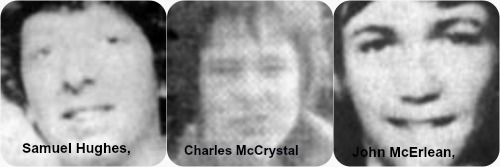







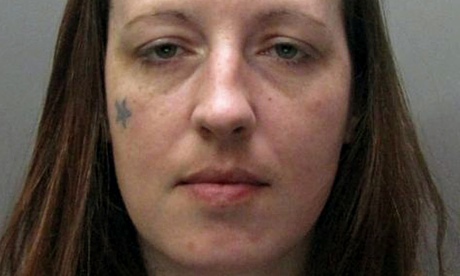

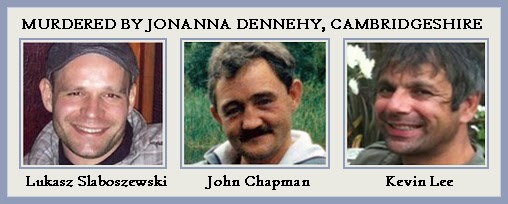
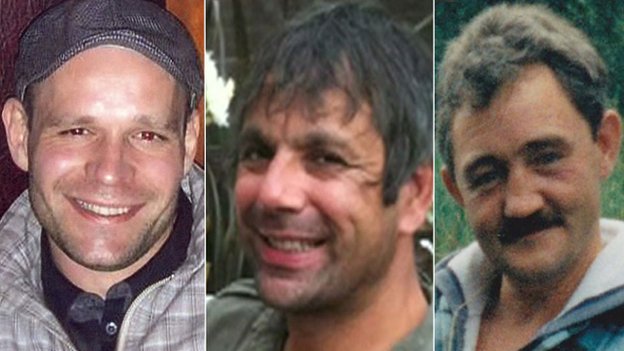


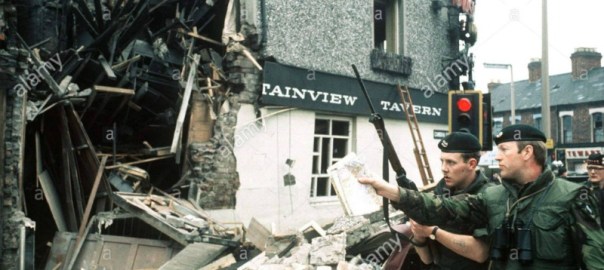


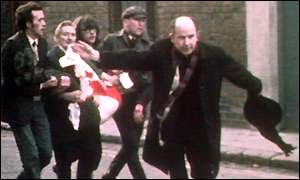

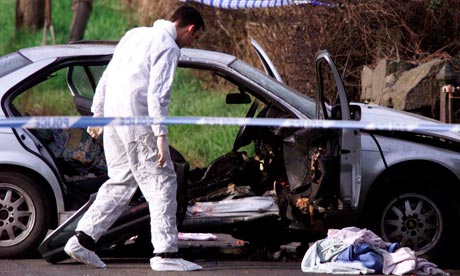


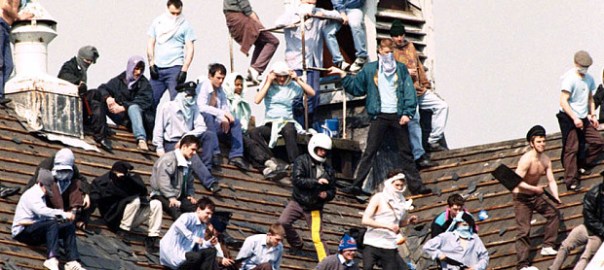




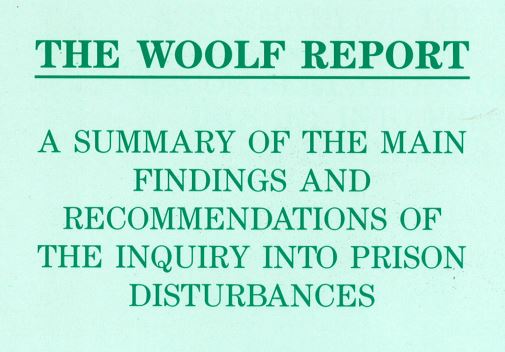




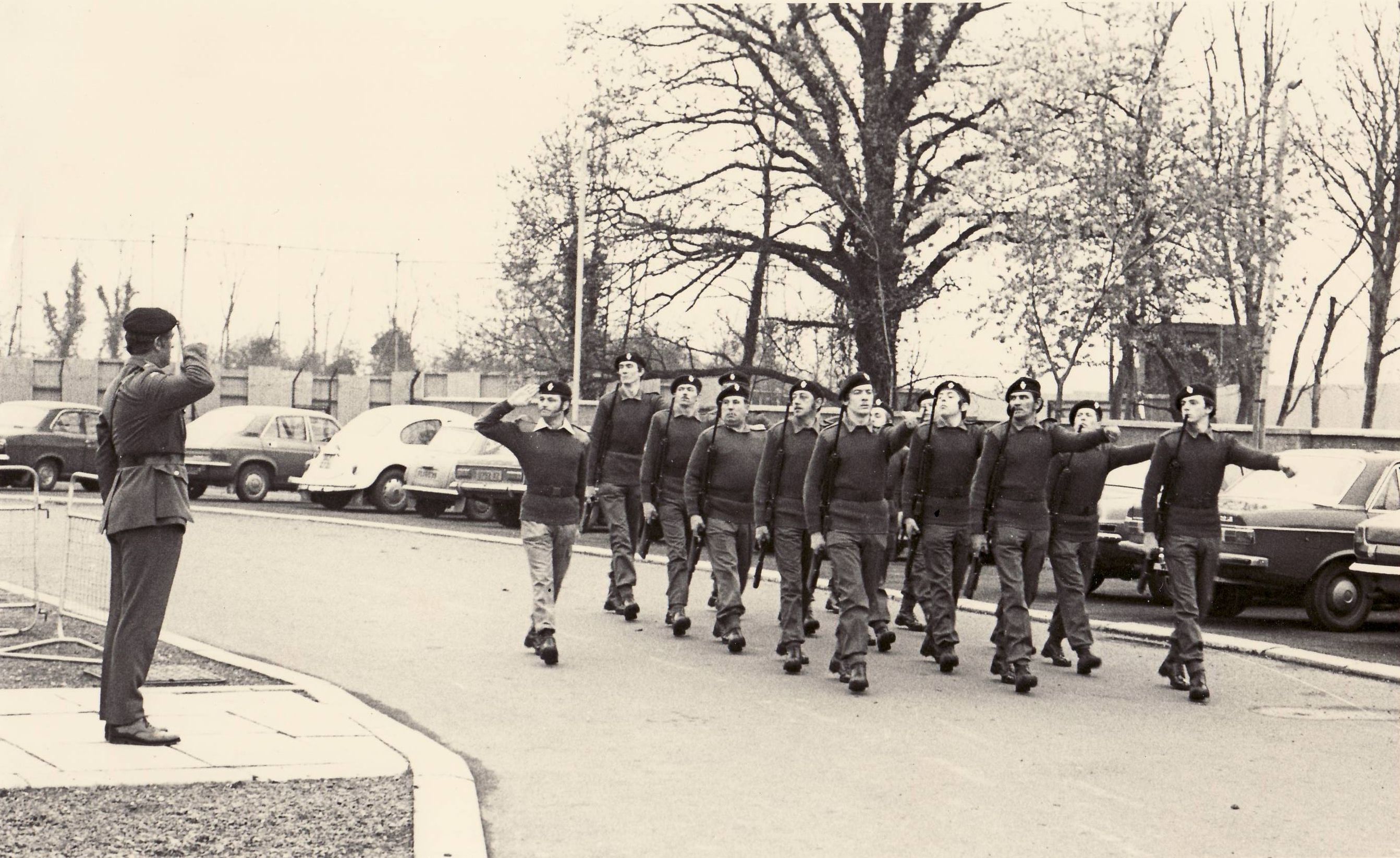

.png)




 belfastchildis.com