All posts by belfastchildis

IRA bands play sectarian songs outside protestant church – Double Standards –
Share this:
The Siege Of Derry 1689 – What’s it all about?
The Siege Of Derry 1689 – What’s it all about?.
Share this:
The Siege Of Derry 1689 – What’s it all about?
The Siege Of Derry 1689 – What’s it all about?.
Share this:
Why Ireland split into the Republic of Ireland & Northern Ireland

Why Ireland split into the Republic of Ireland & Northern Ireland
Disclaimer – The views and opinions expressed in these documentary are soley intended to educate and provide background information to those interested in the Troubles of Northern Ireland. They in no way reflect my own opinions and I take no responsibility for any inaccuracies or factual errors.
A brief overview of the history of Ireland and the events that led to the political division of the island.
Including: the Norman and Tudor conquest of Ireland, the break away from the Roman Catholic Church, the Union of the Crowns, the various Irish Rebellions, Oliver Cromwell’s effect on Ireland, Irish joining the Union, the Irish War for Independence, the following Civil War, and the recent violence in Northern Ireland known as The Troubles.
————————————————————————–
Why Ireland split into the Republic of Ireland & Northern Ireland
————————————————————————–
Share this:

Give my head peace twelfth July .
Share this:
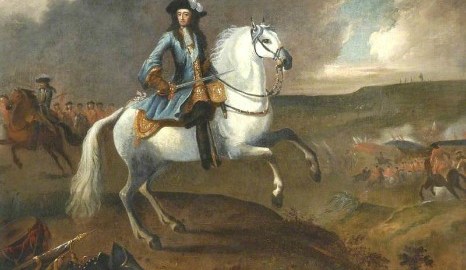
The Siege Of Derry 1689 – What’s it all about?
– Disclaimer –
The views and opinions expressed in these documentaries are soley intended to educate and provide background information to those interested in the Troubles of Northern Ireland. They in no way reflect my own opinions and I take no responsibility for any inaccuracies or factual errors.
———————————————————————————-
The Siege Of Derry 1689
A great documentary detailing the rebellion in which the citizens of Derry locked their king and his men out of the city in 1689, in support of the Dutch invasion of England.The great academic historians of this generation tell the story of Derry’s siege and related incidents.
——————————————————
——————————————————
The Siege of Derry (Irish: Léigear Dhoire) involved a pre-emptive lockdown of the city gates in December 1688[1] and a violent defensive action lasting from 18 April to 28 July 1689, during the Williamite War in Ireland. The city, a Williamite stronghold, was besieged by a Jacobite army until it was relieved by Royal Navy ships. The siege is commemorated yearly in August by the Apprentice Boys of Derry.
The Siege of Derry
What’s it all about?
——————————————————
——————————————————
In the “Glorious Revolution” of 1688, James II (King of England, Ireland and Scotland), a Roman Catholic convert, was ousted from power by his Protestant daughter Mary and her husband William of Orange. Most of the Irish population were Catholic, and James had given them some real concessions during his reign. He had made an Irish Catholic the Lord Deputy of Ireland (Richard Talbot), and re-admitted Catholics into the Irish Parliament, public office, and had replaced Protestant officers with Roman Catholic officers in the army. Irish Catholics also hoped that James would re-grant them their lands, which had been seized after the Cromwellian conquest of Ireland (1649–53). James thus looked to Ireland to muster support in re-gaining his kingdoms just as his father, Charles I had done in the Civil War of the 1640s.
Richard Talbot, who was acting as James’s viceroy in Ireland, was eager to ensure that all strongholds in the country were held by garrisons loyal to James. He focused on the northern province of Ulster, which had been the most heavily planted by British Protestant colonists.
By November 1688, Enniskillen and Derry were the two garrisons in Ulster that were not wholly loyal to James. The elderly Alexander MacDonnell, 3rd Earl of Antrim, was ordered to replace them with a more trustworthy force. He agreed, but wasted several weeks searching for men who were at least six feet tall. A force of about 1,200 Scottish Catholic “Redshanks” then set out for Derry. On 7 December, with the army a short distance away, thirteen apprentice boys seized the city keys and locked the gates.
On 10 December, King James fled London. He was caught, but fled a second time on 23 December and made his way to France. James’s first cousin, King Louis XIV of France, said he would help James regain power. In London on 13 February 1689, William and Mary were crowned.
On 12 March, James landed in Kinsale (on Ireland’s south coast) with 6000 French soldiers. He took Dublin and marched north with an army of Irish and French Catholics.
The Derry City Governor, Lieutenant Colonel Robert Lundy, turned away reinforcements led by Colonel Cunningham, which had arrived in the River Foyle, telling them that the city was to be surrendered.[2] He wrote on 15 April that “without an immediate supply of money and provisions this place must fall very soon into the enemy’s hands”. Lundy called a meeting with several of his most loyal supporters to discuss surrender. News of the meeting spread, angering many of the citizens. That night, Lundy (in disguise) and many others left the city and took ship to Scotland. The city’s defence was overseen by Major Henry Baker, Colonel Adam Murray, and Major George Walker (also an Anglican priest). Their slogan was “No Surrender”.[3]
As the Jacobite army neared, all the buildings outside the city walls were set alight by the defenders to prevent them being used as cover by the besiegers.
The Jacobite army reached Derry on 18 April. King James and his retinue rode to within 300 yards of Bishop’s Gate and demanded the surrender of the city. He was rebuffed with shouts of “No surrender!”, and some of the city’s defenders fired at him. According to a later account, one of the king’s aides-de-camp was killed by a shot from the city’s largest cannon which was called “Roaring Meg“.[4] James would ask thrice more, but was refused each time. This marked the beginning of the siege. Cannon and mortar fire were exchanged, and disease took hold within the city. James returned to Dublin and left his forces under the command of Richard Hamilton.
Royal Navy warships under Admiral Rooke arrived in Lough Foyle on 11 June, but initially declined to ram through the heavily defended defensive boom (floating barrier) across the River Foyle at Culmore. On 28 July, two armed merchant ships, Mountjoy and Phoenix, sailed toward the boom, protected by the frigate HMS Dartmouth under Captain John Leake. Mountjoy rammed and breached the boom at Culmore fort, and the ships moved in, unloading many tons of food to relieve the siege.[5]
The city had endured 105 days of siege during which some 8000[6][citation needed] people of a population of 30,000 were said to have died.
Make a small donation

Share this:

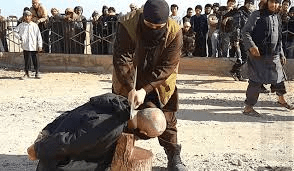
The Rise of Islam and Racism – Documentary . IS – ISLAMIC STATE
Disclaimer – The views and opinions expressed in these documentaries are soley intended to educate and provide background information to those interested in Islamic State. They in no way reflect my own opinions and I take no responsibility for any inaccuracies or factual errors.
————————————————————————————————————————————
————————————————————————————————————————————-
ISIS – “Islamic” Extremism?
The following documentary contains scenes of a graphic nature which some viewers may find distressing.
Discretion is advised
—————————————————————————————————————————-
if you have enjoyed reading my story and daily blogs please consider making a small donation
Share this:

Independence Day – What’s it all about?
Independence Day of the United States, also referred to as Fourth of July or July Fourth in the U.S., is a federal holiday commemorating the adoption of the Declaration of Independence on July 4, 1776, by the Continental Congress declaring that the thirteen American colonies regarded themselves as a new nation, the United States of America, and no longer part of the British Empire.[1] Independence Day is commonly associated with fireworks, parades, barbecues, carnivals, fairs, picnics, concerts, baseball games, family reunions, and political speeches and ceremonies, in addition to various other public and private events celebrating the history, government, and traditions of the United States. Independence Day is the National Day of the United States.[2][3][4]
July 4th – Independence Day
During the American Revolution, the legal separation of the Thirteen Colonies from Great Britain occurred on July 2, 1776, when the Second Continental Congress voted to approve a resolution of independence that had been proposed in June by Richard Henry Lee of Virginia declaring the United States independent from Great Britain rule.[5][6] After voting for independence, Congress turned its attention to the Declaration of Independence, a statement explaining this decision, which had been prepared by a Committee of Five, with Thomas Jefferson as its principal author. Congress debated and revised the wording of the Declaration, finally approving it on July 4. A day earlier, John Adams had written to his wife Abigail:
The second day of July, 1776, will be the most memorable epoch in the history of America. I am apt to believe that it will be celebrated by succeeding generations as the great anniversary festival. It ought to be commemorated as the day of deliverance, by solemn acts of devotion to God Almighty. It ought to be solemnized with pomp and parade, with shows, games, sports, guns, bells, bonfires, and illuminations, from one end of this continent to the other, from this time forward forever more.[7]
Adams’s prediction was off by two days. From the outset, Americans celebrated independence on July 4, the date shown on the much-publicized Declaration of Independence, rather than on July 2, the date the resolution of independence was approved in a closed session of Congress.[8]
Historians have long disputed whether Congress actually signed the Declaration of Independence on July 4, even though Thomas Jefferson, John Adams, and Benjamin Franklin all later wrote that they had signed it on that day. Most historians have concluded that the Declaration was signed nearly a month after its adoption, on August 2, 1776, and not on July 4 as is commonly believed.[9][10][11][12][13]
Coincidentally, both John Adams and Thomas Jefferson, the only signers of the Declaration of Independence later to serve as Presidents of the United States, died on the same day: July 4, 1826, which was the 50th anniversary of the Declaration. Although not a signer of the Declaration of Independence, but another Founding Father who became a President, James Monroe, died on July 4, 1831, thus becoming the third President in a row who died on the holiday. Calvin Coolidge, the 30th President, was born on July 4, 1872, and, so far, is the only U.S. President to have been born on Independence Day.
 belfastchildis.com