
I don’t know exactly why but this clip always make me laugh
I’ve seen it a 1000 times, but still works for me
I don’t know exactly why but this clip always make me laugh
I’ve seen it a 1000 times, but still works for me


Second Battle of Ypres
A brief summary of the events that took place in April 1915 outside the town of Ypres.

Slide show remembering those lost at the first battle of Ypres 1914

First Battle of Ypres
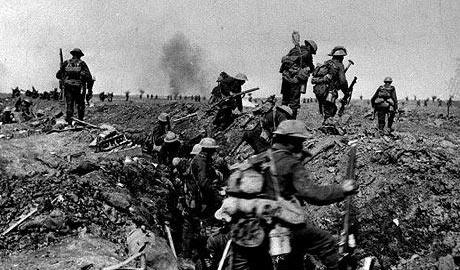
The First Battle of Ypres (19 October – 22 November) was a First World War battle fought around Ypres, in western Belgium during October and November 1914. The battle took place as part of the First Battle of Flanders (French: Première Bataille des Flandres German: Erste Flandernschlacht), in which German, French, Belgian and British armies fought from Arras in France to Nieuport on the Belgian coast, from 10 October to mid-November. The battles at Ypres began at the end of the Race to the Sea which involved attempts by the German and Franco-British armies to advance past the northern flank of their opponents. North of Ypres the fighting continued in the Battle of the Yser (16–31 October), fought between the German 4th Army and a largely Belgian force.
The fighting has been divided into five stages, an encounter battle from 19–21 October, the Battle of Langemarck from 21–24 October, the battles at La Bassée and Armentières to 2 November, coincident with more Allied attacks at Ypres and the Battle of Gheluvelt (29–31 October), a fourth phase with the last big German offensive which culminated at the Battle of Nonne Bosschen on 11 November then local operations, which faded out in late November. J. E. Edmonds, the British Official Historian, wrote that the II Corps battle at La Bassée could be taken as separate but that the battles from Armentières to Messines and Ypres, were better understood as a battle in two parts, an offensive by III Corps and the Cavalry Corps from 12–18 October), against which the Germans retired and an offensive by the German 6th and 4th armies from (19 October – 2 November), which from 30 October took place mainly north of the Lys, when the battles of Armentières and Messines merged with the Battles of Ypres.[a]
Attacks by the BEF, Belgians and a new French Eighth Army in Belgium made little progress beyond Ypres and then the German 4th and 6th armies took small amounts of ground at great cost to both sides, during the Battle of the Yser (16–31 October) and further south at Ypres. Falkenhayn then tried a limited offensive to capture Ypres and Mount Kemmel, from (19 October – 22 November). Neither side had moved forces to Flanders fast enough to obtain a decisive victory and by November, both were exhausted, short of ammunition and suffering from collapses in morale; some infantry units refused orders. The autumn battles in Flanders had quickly become static, attritional operations, unlike the battles of manoeuvre in the summer. French, British and Belgian troops in improvised field defences, repulsed German attacks for four weeks. From 21–23 October, German reservists had made mass attacks at Langemarck, with losses of up to 70 percent to little effect.
Warfare between mass armies, equipped with the weapons of the Industrial Revolution and its later developments, proved to be indecisive, because field fortifications neutralised many classes of offensive weapon. The defensive use of artillery and machine-guns had dominated the battlefield and the ability of the armies to supply themselves and replace casualties, prolonged battles for weeks. The German armies engaged 34 divisions in the Flanders battles, the French twelve, the British nine and the Belgians six, along with marines and dismounted cavalry. Falkenhayn reconsidered German strategy over the winter, because Vernichtungsstrategie and a dictated peace against France and Russia had been shown to be beyond German resources. Falkenhayn intended to detach Russia or France from the Allied coalition, by diplomatic as well as military action. A strategy of attrition (Ermattungsstrategie), would make the cost of the war too great, until one enemy negotiated an end to the war. The remaining belligerents would have to negotiate or face the German army concentrated on the remaining front, which would be sufficient to obtain a decisive victory.
For other Battles of Ypres, see Battle of Ypres.

I didn’t know they celebrated the 12th over there ? I know – I jest


Remembering all victims of the 7/7 Bombings

Today as we remember the innocent victims of the 7/7 bombing my thoughts are with the families of those so callously murdered that day and the many injured, both physically and mentally who will live with the terrible events of that day for the rest of their lives.
The 52 victims were of diverse backgrounds; among them were several foreign-born British nationals, foreign exchange students, parents. Christian alongside Muslins and other faiths died for the twisted ideology of a few sick individuals. More than 700 more were also injured in the attacks.

Three of the bombers were British-born sons of Pakistani immigrants; Lindsay was a convert born in Jamaica. All had lived in our country and enjoyed our freedom and democracy and this made their betrayal all the more hard to stomach.

The investigation into the bombings found that both Mohammad Sidique Khan and Shehzad Tanweer had previously spent several months in Pakistan where it is very likely that they were in contact with Al-Qaeda and went through extensive extremist training. Regardless of where these animals were radicalised It is a sad truth that throughout history all terrorists fundamentally see themselves as altruists believing that they are serving a “good” cause designed to achieve a greater good for a wider constituency—whether real or imagined—which the terrorist and his organization or cell purport to represent.

For decades the IRA and other Republican terrorists waged a indiscriminate savage war against the British government and people and the British population were sadly familiar with the slaughter of the innocent and murder of members of their security forces on an industrial scale. That doesn’t mean we were immune to the almost daily attacks during the height of the troubles, but we learnt to live with it and day to day life continued in spite of the shock and horror of these terrorist outrages. The British people have long been able to move forward after such attacks and this resolve must surely send a message to all terrorist throughout the world. You can attack us, kill our people and hurt us but we will never give in to your demands and we will hunt you to the ends of the earth.
Hell has no fury like a vengeful British public.

Growing up in Loyalist Belfast during the worst years of the troubles I have seen things that no child should ever have to witness and I have lost count of how many bombs, bullets, murders and terrorist attacks that have affected me directly. As a child I was always fearful of the IRA and lived in a constant state of alertness for the next IRA attack and every car that backed fired was a bomb going off and I would “hit the deck”

Death stalked the streets of Belfast & Northern Ireland day in and day out and there was no escape from the madness that surrounded and engulfed us.
The communities from The Shankill , The Falls and surrounding areas arguable suffered most during the Troubles , as not only were we on the “frontline” of the sectarian divide , but the paramilitaries from both sides lived and operated among us. I have lost count of how many people I grew up with whom have been murdered, imprisoned or had their life’s destroyed as a direct result of the Troubles.
When I had finally had enough of the madness of Belfast I moved to London and began to build a better life for myself and was able to look forward to the future. Most of the people I met were friendly and accommodating and I made friends fast and learnt a bit about the world. However there was always an element of suspicion and mistrust in some people and this was largely because of my thick Belfast accent. I have lost count of how many times I have been in pubs or clubs in London and people have heard my accent and automatically came to the conclusion that I was either a member of the IRA or I sympathised with their cause.
This was extremely annoying to me and as I am very proud of my Protestant culture and heritage.

I was born British into a British country and I am extremely proud of my British & Unionist heritage That doesn’t mean I hate Catholics or wish harm on them, I don’t, it means I have a different point of view and democracy is all about freedom of choice and my choice is to maintain the Union with the UK and embrace and celebrate my loyalist culture and traditions.
I remember once I was working part time as a barman in a private members club in central London and the membership was largely made up of retired British army personnel. One day whilst working I noticed a guy at the end of the bar whom had no legs from the knee down. When I went to serve him, he started to abuse me and told me that his legs had been blown off in a bomb attack in Belfast and he hated all “Paddy’s”.
Not my problem I told him.
When he heard that I was from the Shankill Road his attitude changed and he even left me a large tip.
Another time there was a huge leaving do for someone high up in the British Army and the day before all these security force persons arrived and swept the place, I suppose making sure there were no bombs or terrorists hiding in the loo. When one of these guys heard my accent he came over and had a casual chat with me. Five minutes after they had completed the sweep the bar manager came over and told me to go home as I wasn’t needed anymore. I knew this to be a lie, as I had been called in last minute. The next day I got a call to say I wouldn’t be needed that day and furthermore they never used to again. I was a victim of discrimination due to my accent and there was nothing I could do about it.
The point I am trying to make is that at the minute there is a sense of suspicion and mistrust surrounding all Muslims and many British Muslins feel isolated and ostracised. I know from first hand experience what it feels like to be judge on your culture (Belfast Accent) and face prejudice on a regular basis.
British muslim’s need to stand up and be counted and let the rest of the UK know that they abhor the extremists and they will do everything in their power to steer their young away from the preachers of hate and bring these scum to the attention of the authorities.
At the minute the silence from the Muslim community is deafening and its up to their leaders to lead the way and show their communities that they are proud to be British and stand along side us in the fight against the merchants of death. the mistrust that many hold against the Muslim community .
I can understand the mistrust and suspicion many white British people feel towards Muslims and Islam. This is largely due to the actions of a few twisted individuals whom follow the Jihhad culture of death and can’t wait to claim their 72 Dark-Eyed Virgins when they arrive in heaven.

Jihhad Bride
If there is a god and any justice the only thing waiting for them in heaven will hopefully be a nine hundred pound ugly transvestite, will long black teeth and short curly beards and a taste for sadistic torture and all of eternity to torment these scum of thee earth
To beat terrorism we must stand as one and send a clear message out to the Jihad death merchants and the message is this.
You will never defeat us and no matter how long it takes we will destroy you and your erase your twisted ideology forever!
if you have enjoyed reading my story and daily blogs please consider making a small donation



7th July 2005 London bombings
Below is a documentary about the 7/7 London bombings.
At the time of the bombing I was living in North London and my offices were based in Russell Square directly opposite the tube station. On a normal working day I would have travelled from Holloway Rd N7 directly via Kings Cross and got of the tube at Russell Square. Thankfully on the day of the Bombs I had an early meeting in Birmingham and had travelled up the day before.
So perhaps once again the gods were smiling on me. The irony is that I had left Belfast to escape the madness of the Troubles and in truth I probably had more chance of being killed or injured in a terrorist attack in London.
The 7 July 2005 London bombings (often referred to as 7/7) were a series of coordinated suicide bomb attacks in central London, which targeted civilians using the public transport system during the morning rush hour.
On the morning of Thursday, 7 July 2005, four men, all from West Yorkshire, separately detonated three bombs in quick succession aboard London Underground trains across the city and, later, a fourth on a double-decker bus in Tavistock Square. Fifty-two civilians were killed and over 700 more were injured in the attacks, the United Kingdom’s worst terrorist incident since the 1988 Lockerbie bombing as well as the country’s first ever suicide attack.
The explosions were caused by homemade organic peroxide-based devices packed into backpacks. The bombings were followed two weeks later by a series of attempted attacks that failed to cause injury or damage.
The 7 July attacks occurred the day after London had won its bid to host the 2012 Olympic Games, which had highlighted the city’s multicultural reputation
At 8:49 am, three bombs were detonated on board London Underground trains within fifty seconds of each other:
It was originally thought that there had been six, rather than three, explosions on the Underground network. The bus bombing brought the reported total to seven; this was clarified later in the day. The erroneous reporting can be attributed to the fact that the blasts occurred on trains that were between stations, causing wounded passengers to emerge from both stations, giving the impression that there was an incident at each. Police also revised the timings of the tube blasts: initial reports had indicated that they occurred during a period of almost half an hour. This was due to initial confusion at London Underground (LU), where the explosions were originally believed to have been caused by power surges. An early report, made in the minutes after the explosions, involved a person under a train, while another described a derailment (both of which did occur, but only as a result of the explosions). A code amber alert was declared by LU at 09:19, and LU began to cease the network’s operations, ordering trains to continue only to the next station and suspending all services.[4]
The effects of the bombs are understood to have varied due to the differing characteristics of the tunnels in which they occurred:[5]

Locations of the bombings on a Central London tube map
The explosion at 9:47 am in Tavistock Square ripped off the roof and destroyed the rear portion of the bus. The blast took place near BMA House, the headquarters of the British Medical Association, on Upper Woburn Place. A number of doctors and medical staff in or near that building were able to provide immediate emergency assistance.
Witnesses reported seeing “half a bus flying through the air”. BBC Radio 5 Live and The Sun later reported that two injured bus passengers said that they saw a man exploding in the bus.[6]
The location of the bomb inside the bus meant the front of the vehicle remained mostly intact. Most of the passengers at the front of the top deck survived, as did those near the front of the lower deck, including the driver, but those at the rear of the bus suffered more serious injuries. The extent of the damage caused to the victims’ bodies resulted in a lengthy delay in announcing the death toll from the bombing while police determined how many bodies were present and whether the bomber was one of them. Several passers-by were also injured by the explosion and surrounding buildings were damaged by debris.
All but one of the 52 victims had been residents in London during the attacks and were from a diverse range of backgrounds. Among those killed were several foreign-born British nationals, foreign exchange students, parents, and one British couple of 14 years. Due to train delays before the attacks, as well as subsequent transport issues caused by them, several victims died aboard trains and buses they would not normally have taken. Their ages ranged from 20 to 60 years old.
Aldgate:
Edgware Road:
Russell Square:
Tavistock Square:

Belfast Child. Autobiography..
 belfastchildis.com