The Military Reaction Force ——————————————— The views and opinions expressed in this documentary and page are soley intended to educate and provide background information to those interested in the…
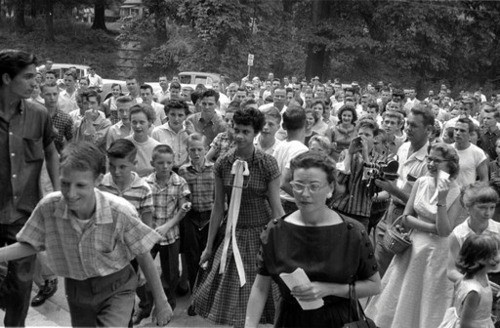
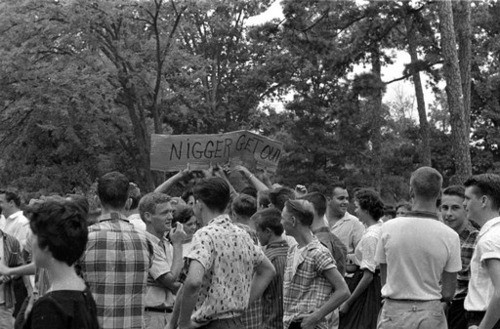
Dorothy Counts (born 1942) was one of the first black students admitted to the Harry Harding High School, in Charlotte, North Carolina. After four days of harassment that threatened her safety, her parents forced her to withdraw from the school.
————————————-
A Walk of Faith
————————————-
History
In 1956, forty black students applied for transfers at a white school.[1] This was after the passing of the Pearsall Plan in North Carolina. At 15 years of age, on 4 September 1957, Dorothy Counts was one of the four black students enrolled at various all-white schools in the district; She was at Harry Harding High School, Charlotte, North Carolina.[2]
Three students were enrolled at other schools, including Central High School. The harassment started when the wife of John Z. Warlick, the leader of the
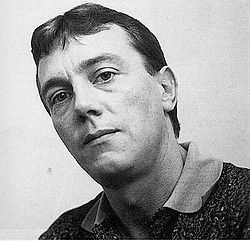
Donald McCullin, CBEHon FRPS (9 October 1935) is an internationally known Britishphotojournalist, particularly recognized for his war photography and images of urban strife. His career, which began in 1959, has specialised in examining the underside of society, and his photographs have depicted the unemployed, downtrodden and the impoverished.
He is dyslexic but displayed a talent for drawing at the Secondary Modern School he attended. He won a scholarship to Hammersmith School of Arts and Crafts but, following the death of his father, he left school at the age of 15, without qualifications, for a catering job on the railways.He was then called up…
This young crewman of a US Navy “Dumbo” PBY rescue mission has just jumped into the water of Rabaul Harbor to rescue a badly burned Marine pilot who was shot down while bombing the Japanese-held fortress of Rabaul.
Since Japanese coastal defense guns were firing at the plane while it was in the water during take-off, this brave young man, after rescuing the pilot, manned his position as machine gunner without taking time to put on his clothes.
A hero photographed right after he’d completed his heroic act. Naked.
Horace Bristol
Photo taken by Horace Bristol (1908-1997). In 1941, Bristol was recruited to the U.S. Naval Aviation Photographic Unit, as one of six photographers under the command of Captain Edward J. Steichen, documenting World War II in places such as South Africa, and Japan. He ended up…
Below is a comprehensive list of 60 films about the “Troubles” and Republican/Loyalist paramilitaries . The list includes background information on the movies and where possible I have incl…
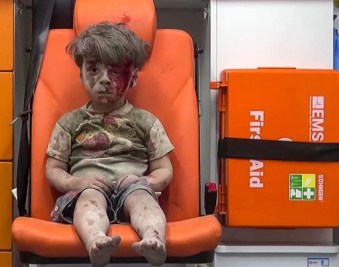
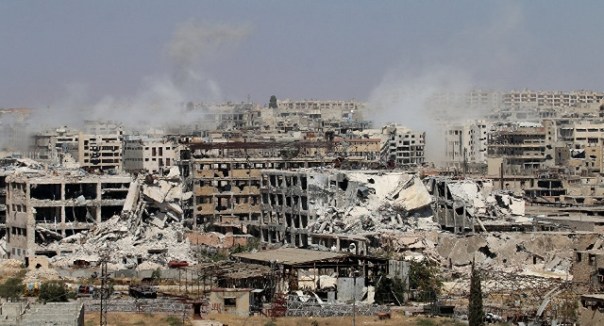
The battle’s scale and importance led combatants to name it the “mother of battles” or “Syria’s Stalingrad“. The battle has been marked by the Syrian army’s indiscriminate use of barrel bombs dropped from helicopters, killing thousands of people.
Hundreds of thousands have been forced to evacuate.
In 2011, Aleppo was Syria‘s largest city with a population of 2.5 million people. A UNESCO World Heritage Site, it has been described by Time as Syria’s commercial capital. Author Diana Darke has written that
“The city has long been multi-cultural, a complex mix of Kurds, Iranians, Turkmen, Armenians and Circassians overlaid on an Arab base in which multi-denominational churches and mosques still share the space.”
Nationwide protests against the government led by President Bashar al-Assad had occurred since 15 March 2011, as part of the Arab Spring. In Aleppo itself large protests started more than a year later in May 2012. During this period, government-organized rallies in support of itself also occurred.
Aleppo had remained undisturbed by the 16 month long conflict till 22 July, when rebel fighters from the neighbouring villages converged and penetrated into it.
Combatants
At the beginning of the Battle of Aleppo, rebels reportedly had between 6,000 and 7,000 fighters in 18 battalions.
The largest rebel group was the al-Tawhid Brigade and the most prominent was the Free Syrian Army, largely composed of army defectors. Most of the rebels came from the Aleppo countryside and from towns including Al-Bab, Marea, Azaz, Tel Rifaat and Manbij. A resident of Aleppo reportedly accused the rebels of using civilian homes for shelter. On 19 November 2012, the rebel fighters—particularly the al-Tawhid Brigade and the al-Nusra Front—initially rejected the newly formed Syrian National Coalition. However, the next day the rebels withdrew their rejection.
By December, rebel fighters were commonly looting for supplies; they switched their loyalties to groups that had more to share. This new approach led to the killing of at least one rebel commander following a dispute; fighters retreating with their loot caused the loss of a frontline position and the failure of an attack on a Kurdish neighborhood. The looting cost the rebel fighters much popular support.
Islamic extremists and foreign fighters, many of whom were experienced and came from the ongoing insurgency in neighboring Iraq, joined the battle. Jihadists reportedly came from across the Muslim world. Jacques Bérès, a French surgeon who treated wounded fighters, reported a significant number of foreign fighters, most of whom had Islamist goals and were not directly interested in Bashar al-Assad. They included Libyans, Chechens, and Frenchmen. Bérès contrasted the situation in Aleppo with that in Idlib and Homs, where foreign forces were not common.
Some FSA brigades cooperated with Mujahideen fighters.
The government retained support in Aleppo. A rebel commander said, “around 70% of Aleppo city is with the regime”. During the course of the battle, Assad lost support from Aleppo’s wealthy class. CBS News reported that 48 elite businessmen who were the primary financiers for the government switched sides.
For the first time, the Syrian Army engaged in urban warfare. They divided their forces into groups of 40 soldiers each. These were armed mostly with automatic rifles and anti-tank rockets and artillery, tanks and helicopters were only used for support. In August 2012, the army deployed its elite units. and eventually, after the rebels executed Shabiha and Zeino al-Berri, tribal leader of the al-Berri tribe, the tribe joined the fight against the rebels. The Christians supported the Army and formed militias aligned with the government following the capture of their quarters by the Syrian Army. The Christian Armenians also supported the Syrian Army. Aleppo’s Armenians say Turkey supported the FSA to attack Armenians and Arab Christians. The Armenians had a militia with around 150 fighters.
At the beginning of the battle, Aleppo’s Kurds formed armed groups, most notably the Kurdish Salahaddin Brigade, which worked with the opposition. The Kurdish Democratic Union Party (PYD) had poor relations with both sides. The PYD’s Popular Protection Committees stayed out of Arab areas and insisted the FSA stay out of the Kurdish area. They did not initially fight the Syrian Army unless attacked but later joined the opposition against pro-Assad forces. The Kurdish areas in Aleppo were mainly under PYD control. Four hundred Turkmen joined the battle under Sultan Abdulhamid Han.
Course of the battle
2012: Initial rebel attack and capture of Eastern Aleppo
Gunfire between rebels and security forces broke out in and around Salaheddine, a district in the city’s southwest, on the night of 19 July 2012. After one week of war, The Guardian wrote, “The US says it fears that the Assad regime is ‘lining up’ to commit a massacre in Aleppo, but it has repeated its reluctance to intervene in the conflict”.
Bombed out vehicles Aleppo
In late July and early August 2012, the FSA continued its offensive in Aleppo, with both sides suffering a high level of casualties. Rebel commanders said their main aim was to capture the city center. The rebels seized a strategic checkpoint in Anadan, a town north of Aleppo, gaining a direct route between the city and the Turkish border—an important rebel supply base. They also captured Al-Bab, an army base northeast of the city. Later, rebels attacked the air base at Minakh, 30 km (19 mi) northwest of Aleppo, with arms and tanks captured at the Anadan checkpoint. Opposition forces continued to gain territory in the city, controlling most of eastern and southwestern Aleppo, including Salaheddine and parts of Hamdaniyeh.
They continued to target security centers and police stations as clashes erupted near the Air Force intelligence headquarters in Aleppo’s northwestern district Zahraa. Rebels over-ran several police stations and posts in the central and southern districts of Bab al-Nerab, Al-Miersa and Salhain, seizing a significant quantity of arms and ammunition.
2013: Advances and counter-advances
In December 2012, the al-Nusra Front unilaterally declared a no-fly zone and threatened to shoot down commercial aircraft, alleging that the government was using them to transport loyalist troops and military supplies. After multiple attacks on Aleppo International Airport, all flights were suspended on 1 January 2013. The following month, the rebels seized Umayyad Mosque; and during the battle, the mosque’s museum caught fire and its ceiling collapsed.
On 9 June, the Syrian Army announced the start of “Operation Northern Storm”, an attempt to recapture territory in and around the city. Between 7 and 14 June, army troops, government militiamen and Hezbollah fighters launched the operation. Over a one-week period, government forces advanced in the city and the countryside, pushing back the rebels. However, according to an opposition activist, on 14 June the situation started reversing after rebels halted an armored reinforcement column from Aleppo that was heading for two Shiite villages northwest of the city.
On 8 November, the Syrian Army started an offensive against the rebel-held Base 80, launching “the heaviest barrage in more than a year”.
Al Jazeera wrote that a government victory would cut the rebels’ route between the city and al-Bab. Two days later, Reuters reported that the rebels had regrouped to fight the Syrian army. Fifteen rebels were killed and the army recaptured the base. The following month, the army besieged the city in Operation Canopus Star. The army helicopters attacked with barrel bombs, killing more than a thousand people, according to the Free Syrian Army’s Abu Firas Al-Halabi.
2014: Syrian government encirclement of the rebels
Government forces, having lifted the siege of Aleppo in October 2013, continued their offensive in 2014. This culminated in the capture of the Sheikh Najjar industrial district north of Aleppo and the lifting of the siege of Aleppo Central Prison on 22 May 2014, which contained a garrison of government soldiers that had resisted rebel forces since 2012.
A ceasefire proposal was presented by a UN envoy in November; under the proposal the Syrian Arab Army would allow the rebels to leave Aleppo without violence and would help with their transportation. In return the militants would surrender their arms. President Assad reportedly agreed to consider taking this ceasefire plan, though no official confirmation was made.
The FSA rejected the plan; its military commander Zaher al-Saket said they had “learned not to trust the [Bashar al-] Assad regime because they are cunning and only want to buy time”.
2015: War of attrition
In early January, the rebels recaptured the Majbal (sawmills) area of al-Brej and captured the southern entrance of the stone quarries known as al-Misat, forcing government troops to retreat to the north. Rebels also seized the Manasher al-Brej area. They tried to advance and take control of al-Brej Hill, with which they could seize the military supply road running between Aleppo Central Prison and the Handarat and al-Mallah areas.
At the end of January, the rebels took control over some positions in al-Brej Hill
In mid-February, the Syrian Arab Army and its allies launched a major offensive in the northern Aleppo countryside, with the aim of cutting the last rebel supply routes into the city, and relieving the rebel siege of the Shi’a-majority towns Zahra’a and Nubl to the northwest of Aleppo. They quickly captured several villages, but bad weather conditions and an inability to call up reinforcements stalled the government offensive.
A few days later, the rebels launched a counter-offensive, retaking two of four positions they had lost to Syrian government forces.
On 9 March, opposition forces launched an assault on Handarat, north of Aleppo, after reportedly noticing confusion in the ranks of Syrian government troops after the February fighting. Opposition sources said the rebels had captured 40–50% of the village, or possibly even 75%, while the Army remained in control of the northern portion of Handarat. In contrast, a Syrian Army source stated they still controlled 80% of Handarat.
On 18 March, after almost 10 days of fighting, the Syrian Army had fully expelled the rebels from Handarat, and re-established control of the village.
In preparation for a new offensive, the rebels heavily shelled government-held parts of Aleppo, leaving 43 civilians dead and 190 wounded on 15 June. On 17 June, rebel forces captured the western neighborhood of Rashideen from Syrian government forces. Throughout 19 and 20 June, a new round of rebel shelling killed 19 more civilians.
In early July, two rebel coalitions launched an offensive against the government-held western half of the city. During five days of fighting, the rebels seized the Scientific Research Center on Aleppo’s western outskirts, which was being used as a military barracks. Two rebel attacks on the Jamiyat al-Zahra area were repelled. Government forces launched an unsuccessful counter-attack against the Scientific Research Center.
In mid-October, ISIL captured four rebel-held villages northeast of Aleppo, while the Army seized the Syria-Turkey Free Trade Zone, the al-Ahdath juvenile prison and cement plant.
Meanwhile, the SAA and Hezbollah launched an offensive south of Aleppo, capturing 408 square kilometres (158 square miles) of territory in one month. By late December, they were in control of 3/4 of the southern Aleppo countryside.
2016: Supply lines cut and encirclements
By 2016, it was estimated that the population of rebel-held Eastern Aleppo had been reduced to 300,000. while 1.5 million were living in government-held Western Aleppo.
In early February 2016, Syrian government forces and its allies broke a three-year rebel siege of two Shi’ite towns of Nubl and Zahraa, cutting off a main insurgent route to nearby Turkey. On 4 February, the towns of Mayer and Kafr Naya were recaptured by government forces On 5 February, the government captured the village of Ratyan, to the northwest of Aleppo.
On 25 June, the Syrian army and allied forces began their long-awaited North-west Aleppo offensive. The ultimate goal of the offensive was to cut the Castello highway, which is the last supply route for rebels inside the city, thus fully encircling remaining opposition forces.
By late July, the military had managed to sever the last rebel supply line coming from the north and completely surround Aleppo. However, within days, the rebels launched a large-scale counter-attack south of Aleppo in an attempt to both open a new supply line into rebel-held parts of the city and cut-off the government-held side. The whole campaign, including both the Army’s offensive and subsequent rebel counter-offensive, was seen by both sides as possibly deciding the fate of the entire war.
After a week of heavy fighting, rebels both inside and outside Aleppo advanced into the Ramouseh neighborhood, linked up and captured it. They also seized the Al-Assad Military Academy. With these advances, the rebels managed to cut the government’s supply line into the government-held part of west Aleppo and announced the Army’s siege of rebel-held east Aleppo had been broken. However, the new rebel supply line was still under Army artillery fire and being hit by air-strikes, making both sides essentially under siege. Since the rebel offensive started, at least 130 civilians had been killed, most by rebel shelling of government-held districts. 500 fighters on both sides also died, mostly rebels
Strategic analysis
Rebel forces expanded into the countryside south of Aleppo to control sections of the M4 and M5 highways, effectively blocking ground reinforcements for the Syrian Army. Before the end of 2012, the Syrian Army in Aleppo was receiving sporadic supplies and ammunition replenishment by air or via backroads.
The fall of Base 46, a large complex that reinforced and supplied government troops, was seen by experts as “a tactical turning point that may lead to a strategic shift” in the battle for Aleppo. In a November 2012 intelligence report, American publisher Strategic Forecasting, Inc. described the strategic position of government forces in Aleppo as “dire”, and said the Free Syrian Army had them “essentially surrounded”.
On 26 November 2012, rebels captured Tishrin Dam, further isolating government forces in Aleppo and leaving only one route into Aleppo. By late January 2013 Deputy Prime Minister Qadri Jamil said all supply routes to Aleppo had been cut off by opposition forces, comparing the situation to the Siege of Leningrad.
By late February 2013, Aleppo International Airport was almost surrounded by rebel forces. Later, the Syrian Army regained control of the strategic town Tel Sheigeb, allowing them to approach the airport. In November 2013, the Syrian Army retook the town of al-Safira. This opened a road for the government to support the besieged Kuweires Military Airbase and Aleppo Power Plant.
In February 2014, it was reported that the army planned to encircle Aleppo and impose blockades and truces. It would also try to recapture Sheikh Najjar Industrial City to rebuild the economy and provide jobs. By October 2014, the army had seized Sheikh Najjar, reinforced Aleppo Central Prison and captured Handaraat, almost besieging rebel-held Aleppo. Tensions peaked in early April 2014, when a Syrian Republican Guard officer allegedly killed a Hezbollah commander during an argument over the opposition advance in al-Rashadin, and other pro-government militant groups sent as reinforcements, such as the National Defence Force, proved to be unreliable in combat.
Effectively cutting off access was more difficult in Aleppo because rebels controlled more terrain there than in other cities. Rebels also have a strong presence in the countryside and around the border crossings with Turkey. In April 2014 government commanders inside the city were saying that contrary to implementing such a strategy, “the best [they] can do in Aleppo is just secure … positions”.
The attempted encirclement involved the SAA’s attacks on Bustan Al-Pasha, Khalidiyyeh, the farms of Mazra’a Halabi, Al-Amariyya and Bustan Al-Qaseer . The rebels’ strategic victory at the Siege of Wadi Deif resulted in threats to several main government supply lines. This cast doubt on government forces’ ambitions to control the road from Hama to Aleppo and the Damascus-Aleppo international road, and has been seen as a personal defeat for Syrian Arab Army Col. Suheil Al Hassan.
Staffan de Mistura, the United Nations and Arab League Envoy to Syria, proposed a pause in fighting, but opinions about implementation were divided. The European Union warned that “cases of forced surrender imposed by the Assad regime through starvation sieges were labelled fallaciously as local cease-fires in the past. The Southern Front of the Free Syrian Army, which was gaining ground in Deraa province south of Damascus, warned that a freeze in fighting in Aleppo could hamper their advance, as pro-Assad forces could be redirected from Aleppo.
The Syrian government’s defeat at the Second Battle of Idlib in late March 2015, which helped expand the influence of the al-Nusra Front, forced the Islamic State (IS) to expand its attacks in central Syria after it failed to block the Raqqa highway that branches out to the Syrian army’s main supply route to Aleppo along the Khanasir-Athriya road. IS’s aim would potentially be to establish the necessary conditions to attack Idlib and al-Nusra. The March–April IS offensive in central Syria led some volunteers defending the Homs-Aleppo highway to consider deserting to defend their hometowns.
According to Jane’s Information Group, a possible offensive on Homs by both al-Nusra Front and IS working independently might force the government to move critical forces away from Aleppo to defend key supply routes.
After additional opposition gains during the 2015 Jisr al-Shughur offensive, Jane’s said it was no longer possible for the SAA to properly reinforce Aleppo, leaving their forces vulnerable to any opposition or IS offensive on the city. If opposition forces decided to capitalize on their gains and launch an assault towards Latakia, the prospect of soldiers deserting was raised because if they were not redeployed back to defend it, they could defend their own homes against any potential rebel advance.
Syrian government minister Faisal Mekdad stated in June 2015,
“All our strategic planning now is to keep the way open to Aleppo to allow our forces to defend it”.
Barrel bombs
In 2014, the United Nations adopted Resolution 2139 which ordered the end of using barrel bombs in the battle. The Syrian Observatory of Human Rights stated that the Syrian army dropped 7,000 barrel bombs in the first five months of 2015 claiming the lives of 3,000 people. Amnesty International claims that barrel bombs killed 3,000 people in 2014 Channel4 claims that videos have emerged online showing the Syrian army using barrel bombs.
The Syrian government has been alleged of using the barrel bombs several times. Some of them are:
According to Middle East Monitor reported the death of 14 people allegedly caused by the bombs in the Kallasa and Qasila neighbourhood of the city in June 2015.
CNN-IBN wrote about the government of dropping barrel bombs in July in the neighbourhood of al-Bab causing the death of 35 and injuring 50 others.
The BBC alleged the government of dropping the same in May, leading to the death of 72 civilians.
The Anadolu Agency of Turkey wrote that the bombs launched by the government forces in July killed 15 people.
However, the government has denied using barrel bombs. In an interview to BBC, President Bashar al-Assad denied using “indiscriminate weapons” like barrel bombs in the rebel held territories.
Assad said:
“I know about the army. They use bullets, missiles and bombs. I haven’t heard of the army using barrels, or maybe cooking pots.”
..the ongoing devastation inflicted on the country’s stunning archaeological sites—bullet holes lodged in walls of its ancient Roman cities, the debris of Byzantine churches, early mosques and crusader fortresses—rob Syria of its best chance for a post-conflict economic boom based on tourism, which, until the conflict started 18 months ago, contributed 12% to the national income.
The Al-Madina Souq, a major souq (market) in Aleppo, was affected by a fire in September 2012. The Irish Times reported that around 700 to 1000 shops were destroyed by the fire, which had been caused by firing and shelling. The following month, there were reports of the Great Mosque of Aleppo being damaged by rocket-propelled grenades. Fighting with mortars and machine guns caused damage to the main gate and the prayer hall
The attack continued in the mosque till it was repelled by the army.
On 2 October, Irena Bokova the Director-General of UNESCO, expressed her “grave concern about possible damage to precious sites” and requested the combatants to “ensure the protection of the outstanding cultural legacy that Syria hosts on its soil”.
She cited the Hague Convention for protecting the heritage sites.
A 2014 report by UNITAR found, using satellite images, that 22 out of the 210 examined key structures had been completely destroyed. 48 others had sustained severe damage, 33 moderate damage and 32 possible damage. The destroyed sites included the Carlton Citadel Hotel, destroyed to its foundations in a bombing in 2014, the madrasas of al-Sharafiyya and Khusruwiyah. The damage to the Great Mosque, whose minaret had been destroyed, was confirmed. According to official estimates, 1500 out of the 1600 shops in the souqs had been damaged or destroyed.
Reactions
Domestic reaction
The Syrian president, Bashar al-Assad, said on the occasion of the 67th Anniversary of the Syrian Arab Army in August 2012,
“the army is engaged in a crucial and heroic battle … on which the destiny of the nation and its people rests …”
Foreign reactions
Armenia began sending humanitarian aid to Aleppo in mid-October 2012. The aid was distributed by Red Crescent, the Armenian National Prelacy in Aleppo, the Aleppo Emergency unit, and the Embassy of the Republic of Armenia to Syria. The Governor of the Aleppo Governorate, Hilal Hial, said, “the Syrian people highly appreciate this humanitarian gesture of the Armenian people, underlining the strong Syrian-Armenian cooperation”.
The French Foreign Ministry said, “With the build-up of heavy weapons around Aleppo, Assad is preparing to carry out a fresh slaughter of his own people”. Italy and the UN peacekeeping chief also accused the government of preparing to massacre civilians.
As the battle of Aleppo started, Saeed Jalili, the head of Iran’s Supreme National Security Council, met with Assad in Damascus. Jalili said Iran would help Assad to confront “attempts at blatant foreign interference” in Syria’s internal affairs, saying, “Iran will not allow the axis of resistance, of which it considers Syria to be an essential part, to be broken in any way”.
The Russian Foreign Ministry issued an official statement condemning the bombing that occurred on 9 September 2012, in which more than 30 people were killed. The ministry stated, “We firmly condemn the terrorist acts which claim the lives of innocent people”, on 11 September. The Foreign Ministry also called on foreign powers to pressure the armed opposition to stop launching “terrorist attacks”.
The Russian Consulate General in Aleppo suspended operations on 16 January 2013.
Turkish Prime Minister Recep Tayyip Erdoğan urged international action, saying it was not possible “to remain a spectator” to the government offensive on Aleppo Reuters reported that Turkey had set up a base with allies Saudi Arabia and Qatar to direct military and communications aid to the Free Syrian Army from the city of Adana. Reuters also quoted a Doha-based source, which stated that Turkey, Qatar and Saudi Arabia were providing rebel fighters with weapons and training.
The United States stated it feared a new massacre in Aleppo by the Syrian government; “This is the concern: that we will see a massacre in Aleppo and that’s what the regime appears to be lining up for”. The United States condemned “in the strongest possible terms” the government SCUD missile strikes on Aleppo in late February 2013, saying they were “the latest of the Syrian regime’s ruthlessness and its lack of compassion for the Syrian people it claims to represent”.[
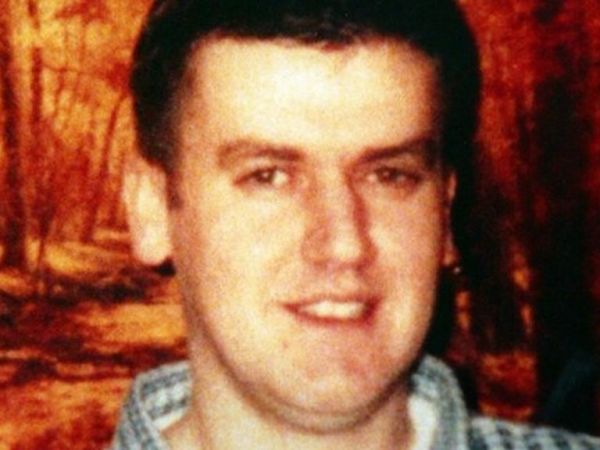
Billy Giles (3 September 1957, Belfast – 25 September 1998, Belfast) was an Ulster Volunteer Forcevolunteer who later became active in politics following his release from the Maze Prison in 1997 after serving 14 years of a life sentence for murder.
Disclaimer
The views and opinions expressed in these pages/documentaries are soley intended to educate and provide background information to those interested in the Troubles of Northern Ireland. They in no way reflect my own opinions and I take no responsibility for any inaccuracies or factual errors.
Family life
Billy Giles was born William Alexander Ellis Giles in Belfast, Northern Ireland on 3 September 1957, and grew up in Island Street, in loyalist east Belfast. His father Sam, worked as a plater in the nearby Harland and Wolff shipyard, and his mother, Lily was a housewife. Giles was the eldest of six children. The Giles family was very religious, the Protestant church having been the centre of their lives. Giles often attended the rallies of Ian Paisley, and was strongly influenced by his sermons.
At the age of 14, he witnessed first-hand the events of Bloody Friday on 21 July 1972 when the Provisional IRA exploded 26 bombs across Belfast, killing nine people, and injuring 103. As the years passed, he found himself attending many funerals of friends he had lost and people he had known. In 1975, he joined the Ulster Volunteer Force (UVF) and was trained in the use of weapons and explosives by former military personnel; he had just turned 18 years old.
At the outbreak of the republican hunger strike in 1981, Giles had gradually become disassociated from the UVF. Following the deaths of the ten republican prisoners, however, Giles believed that, in the wake of the hunger strike, “there was going to be an uprising and they [Protestants] were all going to be slaughtered” by the IRA.
Giles mentally prepared himself to go to war against the IRA and therefore returned as an active member of the UVF.
Killing
On 19 November 1982 in Newtownards, Billy Giles abducted a Roman Catholic married man, Michael Fay, and shot him in the back of the head, killing him instantly. He then stuffed the body in the car’s boot. Fay had been Giles’ friend and workmate. The killing was in retaliation for the fatal shooting of Karen McKeown, a young Protestant Sunday school teacher by the Irish National Liberation Army two months previously. Giles was arrested by the Royal Ulster Constabulary (RUC) and brought to the Castlereagh interrogation centre, where he confessed to the killing. He was found guilty of the murder and sentenced to life in the Maze Prison
Life In The Maze
Giles was housed in the prison’s H-Blocks. He spent his time studying and took several GCSEs; he eventually obtained an Open University degree in Social Sciences. He also wrote a play about his childhood in Island Street called Boy Girl. It was later performed before a Belfast audience; his parents were present at the performance. Few people present at the performance were aware that it was the work of a UVF prisoner.
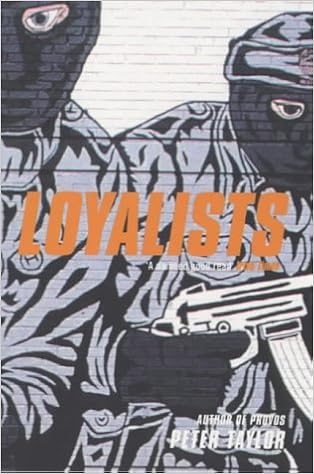
It took Giles seven years before he adjusted to life inside The Maze. He gave many interviews to British journalist, Peter Taylor, to whom he confessed his deep remorse at the killing of Michael Fay, saying that he had “never felt like a whole person again” since the fatal shooting.
On two separate occasions, Giles claimed he had saved the lives of prison officers inside the Maze: the first time when he stopped an inmate from cutting an officer’s throat and the second time during a prison riot in March 1995 when he persuaded his inmates to stop the wrecking and to allow free passage to the block staff.
Progressive Unionist Party
He was released on 4 July 1997 after serving 14 years of his life sentence. He immediately commenced work with the Progressive Unionist Party also known as PUP, and concentrated on helping released Loyalist prisoners to resettle into the community. At the signing of the Good Friday Agreement on 10 April 1998 at Stormont, Giles was part of PUP’s negotiating team. He told Peter Taylor that he felt optimistic about the future of Northern Ireland and his own.
Death
Despite his degree, he was unable to obtain a proper job that paid a decent salary. On the night of 24–25 September after composing a four-page letter of explanation and naming himself a “victim of the Troubles“, Billy Giles hanged himself in his living room.
He was 41 years old. Peter Taylor visited Giles’ family in east Belfast on the eve of the funeral. He described Giles as lying in the coffin wearing his best suit, and his UVF badge with the inscribed words “For God and Ulster” was pinned to his lapel.
One of his last lines in his letter read,
“Please let the next generation live normal lives”.
This line was quoted during a speech given by Colm Cavanagh, Vice-President of The Alliance Party of Northern Ireland on 3 March 2006 to The Department of Education. His friend and former UVF colleague Billy Mitchell, who was strongly critical of trauma counselling and a psychological approach to former paramilitaries, suggested that Giles’ suicide had been prompted by a “trauma workshop” Giles had attended in South Africa. This was in contrast to Taylor, who believed that Giles took his own life because of the remorse he felt about his involvement in UVF violence.
Giles is commemorated, along with other prominent Loyalist paramilitaries, in the controversial UVF song Battalion of the Dead.
As I child I learned the stories & legends of the Battle of Boyne & Siege of Derry at my grandfather’s & father’s k… twitter.com/i/web/status/1…— Belfast Child (@bfchild66) June 07, 2020
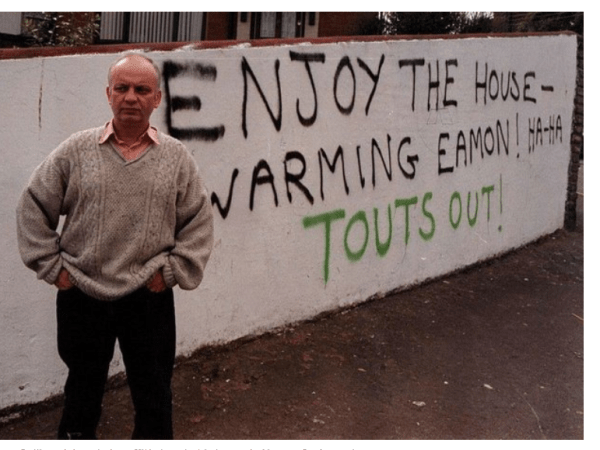
The life and death of Eamon Collins Eamon Collins (1954 – 27 January 1999) was a Provisional Irish Republican Army member in the late 1970s and early 1980s. He turned his back on the organisation in the late 1980s, and later co-authored a book called Killing Rage detailing his experiences within it. In January 1999 he was waylaid on a…
The brutal & unforgivable murder of Ann Ogilby, also known as the Romper Room murder Forgotten victims of the Troubles The murder of Ann Ogilby, also known as the “Romper Room murder”, took place in Sandy Row, south Belfast, Northern Ireland on 24 July 1974. It was a punishment killing, carried out by members of the Sandy Row women’s Ulster Defence…
Joe McCann – Life & Death Joe McCann (2 November 1947 – 15 April 1972) was an Irish republican volunteer. A member of the Irish Republican Army and later the Official Irish Republican Army, he was active in politics from the early 1960s and participated in the early years of the Troubles in Northern Ireland. He was shot dead, after being confronted by RUC Special…
… Máire Drumm Life & death 22 October 1919 – 28 October 1976 Máire Drumm (22 October 1919 – 28 October 1976) was the vice-president of Sinn Féin and a commander in Cumann na mBan. She was killed by Ulster loyalists while recovering from an eye operation in Belfast’s Mater Hospital. Born in Newry, County Down, to a staunchly Irish republican family. Drumm’s mother had…
Death of Robert Hamill Robert Hamill was an Irish Catholic civilian who was beaten to death by a loyalist mob in Portadown, County Armagh, Northern Ireland. Hamill and his friends were attacked on 27 April 1997 on the town’s main street. It has been claimed that the local Royal Ulster Constabulary (RUC), parked a short…
John Bingham Life & Death John Dowey Bingham (c. 1953 – 14 September 1986) was a prominent Northern Irish loyalist who led “D Company” (Ballysillan), 1st Battalion, Ulster Volunteer Force (UVF). He was shot dead by the Provisional IRA after they had broken into his home. Bingham was one of a number of prominent UVF members to be assassinated during the 1980s,…
Patrick Rooney Age 9 First Child killed in the Troubles Patrick Rooney 14th August 1969 Patrick was the first child to be killed during the Troubles he died shortly after being struck by a tracer bullet by the RUC as he lay in his bed in his family home in Divis Tower. The shot was…
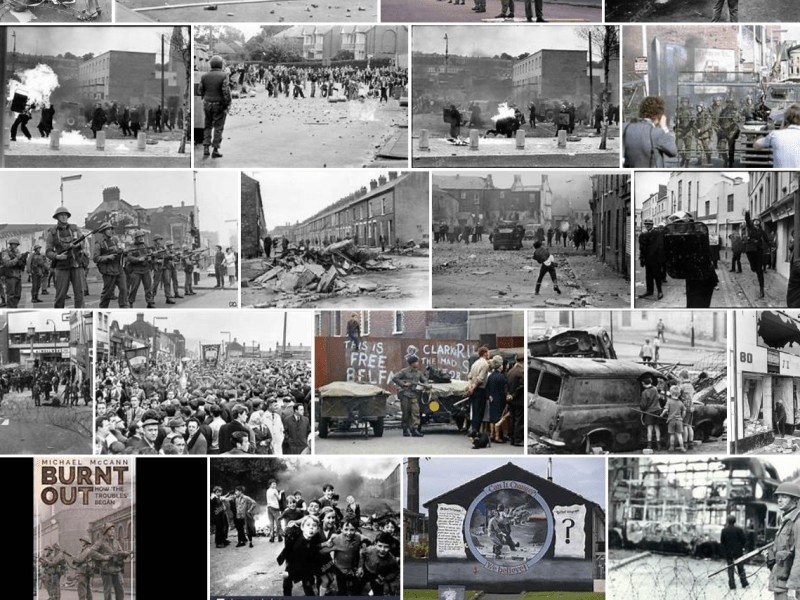
Dawn of the Troubles – August 1969 Northern Ireland History During 12–16 August 1969, there was an outbreak of political and sectarian violence in Northern Ireland, which is often seen as the beginning of the thirty-year conflict known as the Troubles. There had been sporadic violence throughout the year arising out of the civil rights…
Ian Reginald Edward Gow Ian Reginald Edward Gow TD 11 February 1937 – 30 July 1990) was a British Conservative politician and solicitor. While serving as Member of Parliament (MP) for Eastbourne, he was assassinated by the Provisional Irish Republican Army (IRA), who exploded a bomb under his car outside his home in East Sussex. Early life Ian Gow was born at 3 Upper Harley Street, London, the…
Miriam Daly Life & Death Miriam Daly (1928 – 26 June 1980) was an Irish republican activist and university lecturer who was assassinated by the loyalist Ulster Defence Association (UDA). Background and personal life She was born in the Curragh Irish Army camp, County Kildare, Ireland. She grew up in Hatch Street, Dublin, attending Loreto College on St Stephen’s Green and then University College, Dublin, graduating in history. The…
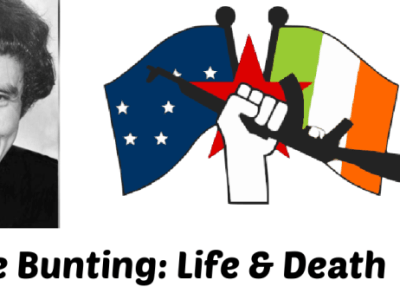
Ronnie Bunting (1947/1948 – 15 October 1980) was a Protestant Irish republican and socialist activist in Ireland. He became a member of the Official IRA in the early 1970s and was a founder-member of the Irish National Liberation Army (INLA) in 1974. He became leader of the INLA in 1978 and was assassinated in 1980 at age 32. Background Bunting came from an Ulster Protestant family in East Belfast.…
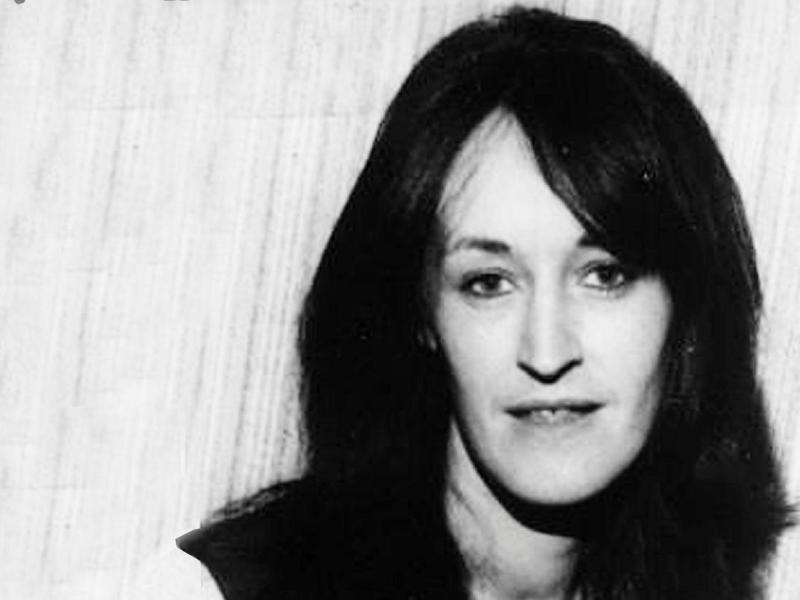
Dolours Price IRA Icon ? Dolours Price (16 December 1950 – 23 January 2013) was a Provisional Irish Republican Army (IRA) volunteer along with her younger sister Marian. Early life Dolours and her sister, Marian, also an IRA member, were the daughters of Albert Price, a prominent Irish republican and former IRA member from Belfast. Their aunt, Bridie Dolan, was blinded and lost both hands in…
Kevin Fulton aka Peter Keeley – Double Agent ? Kevin Fulton is a British agent from Newry, Northern Ireland, who allegedly spied on the Provisional Irish Republican Army (IRA) for MI5. He is believed to be in London, where he is suing the Crown, claiming his British military handlers cut off their connections and financial aid to him. In 2004 he reportedly sued the Andersonstown News, an Irish…




_-_geograph.org.uk_-_799767.jpg)




 Shell-shocked American soldier

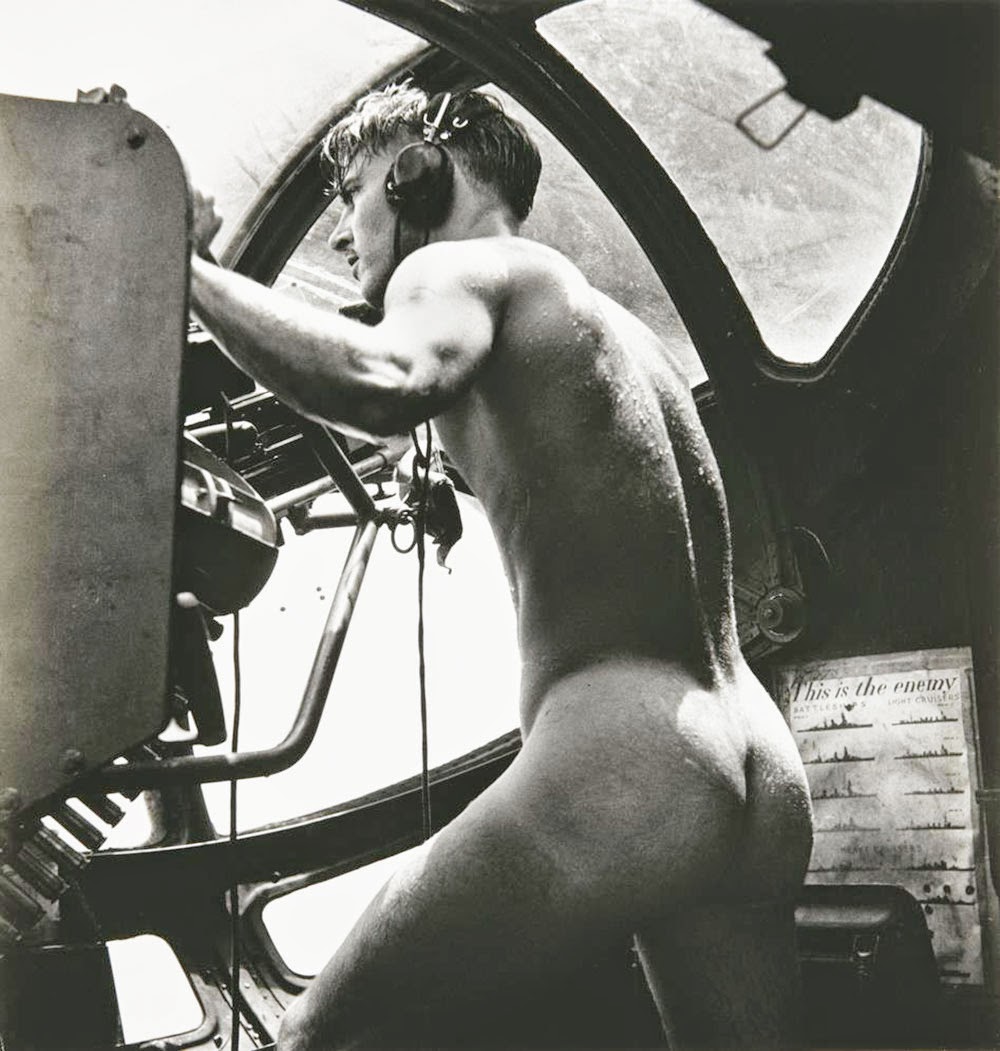 PBY Blister Gunner By Horace Bristol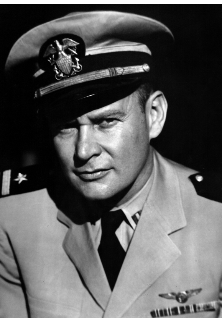






 belfastchildis.com