Hi All ,Just a quick blog to tell you all I’m featured in the family section of todays Guardian – should be on their website later , so if your interested go out and buy the paper and have a read.
Key Events & Deaths on this day in Northern Ireland Troubles
Tuesday 11 August 1970
Two Royal Ulster Constabulary (RUC) officers were killed by the Irish Republican Army (IRA) when they set off a booby trap bomb planted in a car near Crossmaglen, County Armagh.
Wednesday 11 August 1971
Four people were shot dead in separate incidents in Belfast, three of them by the British Army (BA), as violence continued following the introduction of Internment.
Friday 11 August 1972
Two IRA members were killed when a bomb they were transporting exploded prematurely.
Saturday 11 August 1973
Two members of the Irish Republican Army (IRA) were killed when the bomb they were transporting exploded prematurely near Castlederg, County Tryone.
A Protestant civilian was shot dead by Loyalists in Belfast.
Wednesday 11 August 1976
The third of the Maguire children died as a result of injuries received on 10 August 197
Saturday 11 August 1979
Representatives from the Irish National Caucus paid a visit to Northern Ireland and said that the Caucus intended to make the conflict in the region a major issue during the 1980 United States (US) Presidential election. 6.
Sunday 11 August 1991
Sinn Féin (SF) held a rally in Belfast to mark the 20th anniversary of the introduction of Internment and the 10th anniversary of the hunger strike.
Wednesday 11 August 1993
Seamus Hopkins (24), a Catholic civilian, was found beaten to death in the Shankill area of Belfast.
Sir Hugh Annesley, then Chief Constable of the Royal Ulster Constabulary (RUC), announced that women officers would be armed from April 1994.
Thursday 11 August 1994
Martin L’Estrange (36), a Catholic civilian, was shot dead by the Ulster Freedom Fighters (UFF), a cover name (pseudonym) used by the Ulster Defence Association (UDA).
He was a printer and was killed at his workplace in William Street, Lurgan, County Armagh.
Monday 11 August 1997
Two Social Security officials had shots fired at their car which was also damaged by clubs in north Belfast.
There was an arson attack on the Orange Order Hall in Purdysburn in south Belfast.
Kevin Artt, Paul Brennan, and Terry Kirby, previously members of the Irish Republican Army (IRA), who had escaped from the Maze Prison on 25 September 1983 lost their case in an American court to try to stop their extradition.
The three men appealed against the decision.
Saturday 11 August 2001
Assembly Restored
John Reid, then Secretary of State for Northern Ireland, signed an order which restored the Northern Ireland Assembly and the other institutions of the Good Friday Agreement.
The latest period of suspension had lasted 24 hours and had the effect of postponing by six weeks the deadline for the election of the First Minister and Deputy First Minister (22 September 2001).
The main Apprentice Boys of Derry (ABOD) parade passed off without serious trouble. Around 10,000 ABOD members together with 170 bands marched around the city centre to commemorate the relief of the Siege of Derry in 1689.
A feeder parade in Belfast was prevented from marching past the Nationalist Ardoyne area following a Pardes Commission ruling.
The ABOD members decided to protest against the decision by blocking the Crumlin Road. The standoff with the police lasted for six hours.
—————————————————————
Remembering all innocent victims of the Troubles
Today is the anniversary of the death of the following people killed as a results of the conflict in Northern Ireland
“To live in hearts we leave behind is not to die
– Thomas Campbell
To the innocent on the list – Your memory will live forever
– To the Paramilitaries –
There are many things worth living for, a few things worth dying for, but nothing worth killing for.
14 People lost their lives on the 11th August between 1971– 1994
————————————————————————
11 August 1971
John Laverty, (20)
Catholic Status: Civilian (Civ),
Killed by: British Army (BA)
Shot while walking along path by St Aidan’s Primary School, Ballymurphy
————————————————————–
11 August 1971 William Stronge, (46)
Protestant Status: Civilian (Civ),
Killed by: not known (nk)
Shot while moving furniture from sister’s home, Ballyclare Street, Belfast
————————————————————–
11 August 1971
Seamus Simpson, (21)
Catholic Status: Irish Republican Army (IRA),
Killed by: British Army (BA)
Shot while throwing bomb at British Army (BA) foot patrol, Rossnareen Avenue, Andersonstown, Belfast.
————————————————————–
11 August 1971
William McKavanagh, (21)
Catholic Status: Civilian (Civ),
Killed by: British Army (BA)
Shot while in McAuley Street, Markets, Belfast.
————————————————————–
11 August 1972 Anne Parker, (18)
Catholic Status: Irish Republican Army (IRA),
Killed by: Irish Republican Army (IRA)
Died in premature bomb explosion while travelling in van, North Howard Street, Lower Falls, Belfast.
————————————————————–
11 August 1972 Michael Clarke, (22)
Catholic Status: Irish Republican Army (IRA),
Killed by: Irish Republican Army (IRA)
Died in premature bomb explosion while travelling in van, North Howard Street, Lower Falls, Belfast
————————————————————–
11 August 1973 James McGlynn, (20)
Catholic Status: Irish Republican Army (IRA),
Killed by: Irish Republican Army (IRA)
Killed in premature bomb explosion while travelling in car, Kilclean, near Castlederg, County Donegal.
————————————————————–
11 August 1973
Seamus Harvey, (23)
Catholic Status: Irish Republican Army (IRA),
Killed by: Irish Republican Army (IRA)
Killed in premature bomb explosion while travelling in car, Kilclean, near Castlederg, County Donegal.
————————————————————–
11 August 1973 Norman Hutchinson, (17)
Protestant Status: Civilian (Civ),
Killed by: Ulster Volunteer Force (UVF)
Shot while walking along Ormeau Road, near University Street, Belfast.
————————————————————–
11 August 1976 Michael Quigley, (33)
Catholic Status: Civilian (Civ),
Killed by: Irish Republican Army (IRA)
Shot during Irish Republican Army (IRA) sniper attack on British Army (BA) observation post, while walking along Meenan Square, Bogside, Derry.
————————————————————–
11 August 1978 Alan Swift, (25) nfNI Status: British Army (BA),
Killed by: Irish Republican Army (IRA)
Undercover British Army (BA) member. Shot while sitting in stationary British Army (BA) civilian type car, Letterkenny Road, Derry.
————————————————————–
11 August 1981
Charles Johnston, (43)
Protestant Status: Civilian (Civ),
Killed by: Irish Republican Army (IRA)
Shot from passing motorcycle while walking along Talbot Street,
————————————————————–
11 August 1993
Seamus Hopkins, (24)
Catholic Status: Civilian (Civ),
Killed by: non-specific Loyalist group (LOY)
Found beaten to death on waste ground, off Sherbrook Way, Shankill, Belfast.
————————————————————–
11 August 1994
Martin L’Estrange, (36)
Catholic Status: Civilian (Civ),
Killed by: Ulster Freedom Fighters (UFF)
Shot, at his workplace, printers, William Street, Lurgan, County Armagh.
————————————————————–
This is simply the story of a boy trying to grow up, survive, thrive, have fun & discover himself against a backdrop of events that might best be described as ‘explosive’, captivating & shocking the world for thirty long years.
It was around 1976 that it first came to my attention that dad was ill and he was getting sicker and weaker by the day. He had always been a heavy drinker and smoker, but this was normal where we lived and we never really thought anything about it or the health implications these habits would have on him. One day when dad was supposed to be working I got home from school and found Margaret, Jean and some of their friend’s standing outside the front door. When I asked them what they were doing they said that had arrived home from school and on entering the house had heard a strange noise coming from upstairs and they had fled the house.
Trying to act all brave in from of my sisters I causally moved into the house, making sure I left the front door open, in case I had to make a quick getaway. After a nervous look downstairs and not finding anything, I began to make my way slowly up the stairs. As I got to the top I became aware of a deep rasping sound growing louder and louder that stopped me in my tracks. I’d seen enough of Dr. Who to know the sound I heard wasn’t coming from a human and I flew down the stairs and out of the house as fast as my legs could carry me. When the girls finally caught up with me I confirmed that I had indeed heard the sounds and I thought it might be one of those monsters from Dr.Who. The others looked rightly shocked at my analysis of the situation and it was decided that we would call the police. Christine Russell’s mum was the only neighbour we knew who had a phone and while Margaret and the other’s went to make the call, David and I made our way back to the house, making sure we kept a safe distance between us and the front door.
Word quickly spread around the estate that we had one of those monsters from Dr. Who hiding upstairs and before long large crowds began to gather, in the hope of seeing some action. When the police arrived they asked a few questions before entering the house and slowly making their way up the stairs. Whilst we were all waiting about outside to see what happened, Granny arrived and after a quick chat with a neighbour she made her way into the house with the police up stairs. After a while Granny came out with one of the policemen and explained to us that it was dad in the house, that he was sick and would have to go to hospital. In the distance we could hear the sound of an ambulance rushing towards us and suddenly it wasn’t funny or exciting anymore. I watched with the others as dad was stretchered out and placed in the ambulance and taken to the hospital. By the time everyone had cleared, Aunty Anne, dads younger sister arrived and explained to us that dad was going to be ok, but he would have to stay in hospital for a few days and she would be staying with us whilst he was away.
Being so young I don’t think I fully understood the magnitude of the situation and as usual I just ignored the situation that was going on around me and got on with my life. After that first time, dad was in and out of hospital all the time and gradually he became more and more ill. I remember many evenings at home, dad would take these horrible, agonising fits and one of us would have to run to Christine Russell’s house to call an ambulance. This became almost natural to us, but it was always distressing to see dad suffering so much and be unable to do anything to help.
Gradually we all began to realize that dad was very ill, although none of us wanted to accept or believe that he might die. I had already “lost” my mother and surely God wouldn’t take my dad away also? Once when he was in hospital Margaret decided that we would all do up the garden for dad and plant some rose bushes. We all went to work and by the time dad got out of hospital, the garden was looking great and dad was really impressed with our efforts and monitored the progress of the rose bushes with us. I remember the last time Granny took me up to the hospital to visit dad, I was really shocked and upset at how bad he looked. He was thin as a rake and I remember the watch he had worn all the time on his wrist had slide all the way up his arm to his elbow.
I’ve still got that watch, but I’ve never been able to wear it and every time I look at it I see dad in hospital, all skin and bones and at deaths door.
Although I didn’t know it at the time, I was too young to understand the seriousness of how ill dad was, this was the last time that I would see my dad alive.
I wish I had told him how much I loved him and told him how much the others and I would miss him, how much we needed him and didn’t want him to die.
When I got home I went straight to my room and begged God to save my dad and not take him away from us. But as usual God wasn’t listening and fate was once again messing with my destiny and making my young life a misery.
One day when we got home from school, Aunty Anne was waiting for us and told us that dad had been taken to hospital again, but he should be home in a few days. The day he was suppose to come home arrived and we all busied ourselves tidying up and making the place as nice as possible for him. Someone had told us that dad would be home around three o’clock and when the time came we all went down and stood on the main road watching for the car that would bring him home. Three o’clock came and went, then four and by 5 o’clock we were all getting bored waiting around. Eventually a car did approach us and pulled up, but our relief turned to panic when we realised that only Granny and Granddad were in the back. As they got out it was obvious that Granny was very upset and had been crying. Granddad told us he was taking her home and for us to wait indoors and they would come to see us in a while.
Dad never did come home.
Later that night Granny and Granddad gathered us all in the front room and through tears told us that dad wouldn’t be coming home. She explained to us that dad had died and was now in heaven watching over us. From the moment I heard the news I was distraught with grief and numb to everything going on around me. Dad had been the one stable thing in our lives since mum had left and now we were being told that he had died and we would never see him again.
The pain was almost too much to bear and I kept praying to myself that somehow there had been a terrible mistake and dad was going to walk through the door at any minute. But the brutal truth of the matter was that I wasn’t dreaming and once again fate and chance had entered my life and left a trail of misery and destruction in their wake.
The week of the funeral was the worst and longest of my live and to this day I am still trying to come to terms with dad’s death and the consequences it had on all our lives. After the autopsy dad’s body was brought home and laid to rest in Granny’s front room. Endless people came to pay their last respects and the sound of crying drifted constantly through the house, reminding me of my huge lose. Since the moments dad’s coffin was laid out in the front room, Shep curled up underneath and didn’t move the whole time it was in the house, apart from going for a pee. It was almost as if he was guarding dad’s body and at night when we were sleeping upstairs in Granny’s room, we could hear him whinging softly to himself, as he kept his 24 hour vigil. On the second night we were all brought in to see dad and as I stood over the coffin, looking into his lifeless face, I was praying and willing for him to move and for me to wake up from this horrible nightmare. I don’t know how long I stood looking down at him, but I was completely numb with pain and vaguely remember breaking down in tears and someone leading me away from the room.
When the day of the funeral finally arrived Granny got us all up early and dressed us in new clothes she had brought us for the funeral. I still remember the green and silver dogtooth blazer I wore that day as if it was yesterday and how I hated that jacket. After the coffin had been removed from the house we made our way to the church and I remember being surprised that there were so many people making their way to the church and the main road to see dad off. In the church we took our seats in front of the coffin and suddenly Granny absolutely lost it and threw herself over the coffin, screaming and crying for her baby son. It was really heartbreaking to see Granny suffer like that, but I was so numb with grief that it hardly registered at the time. It had been decided that dad’s band would all attend the funeral and when they stood up and played Amazing Grace it seemed as if everyone in the church was crying. When the service ended dad’s brothers and close family and friends lifted the coffin onto their shoulders and carried dad out of the church and unto the main road, for his final journey. Dads younger, Uncle Sam had been let out of jail for the funeral and his guards respectively give him the freedom to carry dad’s coffin. As the cortege made its way down the Glencairn Road, David and I fell in behind it and we followed the coffin down the Forthriver Road.
Dad had been such an integral part of the community that the whole of Glencairn came out that day to see him off and people lined the whole route all the way out of the estate. I don’t remember much about the graveyard, apart from the fact that it was a beautiful day and I could hear birds singing against the background of people crying. After the burial everyone headed back to Granny’s house for the wake and I remember wishing that I was at home in bed and alone with my broken heart, instead of being surrounded by people talking about dad and the happy memories he had left behind. It was the longest night of my life, with various people coming and going all the time and although they might have been trying to be kind to us, I just wished they would all go home and leave me alone, so I could go to bed and try to begin and comprehend dad’s death and life without him.
Eventually Aunty Anne gathered us all up and brought us home, to our own empty house and eventually got us into bed. I still remember lying there in the dark and thinking over and over again:
Why?
Why you dad?
Why, why, wh?
Surely if there really was a God, what possible reason would he have to let this happen to us.
Why would he let this happen to us, after everything else we had been through? I lay awake for hours tortured by the reality of what had happened and what the future now held for us without dad to protect us and mum being a distant memory.
Eventually I feel asleep from exhaustion and had a dream about dad that I was to have for many years after his death .In the dream I’m asleep in my bed and am woken up by the sound of dad gently calling my name. I begin searching the whole house for him and finally I realise that the voice is coming from the attic. When I get half way up the ladder, dads arm reaches down and helps me the rest of the way up. In the loft I notice that dads got a camp bed, a gas oven, kettle and it looks as if he has been here for some time. I ask him what he’s doing and tell him that I thought he was dead and I feel really happy now I know that he’s alive and well and still with us. Dad sits and talks to me for ages and when I ask him to come down and see the others he says he’s hiding and I have to keep it a secret from the others. The dream always ends with me crying hysterically for dad to come down from the loft with me and him reassuring me that everything would be ok. I would always wake up crying and upset and glace through the darkness towards the loft in the hallway, wishing the dream had been real.
The day after the funeral the reality of the situation hit all and we all dealt with our grief privately. Now that dad was dead there was the immediate problem of what was going to happen to us and where we were going to live. Aunty Ann had moved into the house and we all waited apprehensively to see what would happen to us. I remember thinking about mum and wishing she was there to pick up the piece and sooth our agony over dads death. Due to the fact that we were now orphans the social services got involved with the case and there was talk of us all going into a home. When we heard this we all prayed that it would never happen and in our childish innocence we hoped that they would let Margaret look after us, so we could all stay together.
This was never a realistic options as Margaret was only thirteen at the time and legally too young to look after us. Although we were all grief stricken at dad’s death, we really wanted to remain together as a family and we let Granny know this. Granny and the family pulled together and fought tooth and nail for the social services not to take us away from them and finally our future was decided. We were to be split up among the family in Glencairn. At least this meant we would still be living close together. Because Margaret was the oldest and closer to Granny and Granddad, she and David would go to live with them. Jean would go to live with dad’s brother Uncle Jim, his wife Maureen and my cousin’s Denise, Karen and Stephen, otherwise known as Pickle, at the top of the estate. I was going to live with Uncle Sam, Aunt Gerry (who was Maureen’s younger sister) and their children Wee Sam, Linda, Mandy and Joanne, on the Forthriver road. It was not a perfect solution and although we were all really upset that we were to be split up, at least we would all be living with members of the family and would see each other on a daily basis.
I was only 11 years old at the time and like the others had suffered a terrible life at the hands of fate and destiny, but there was one more tragedy just around the corner for me to deal with. Because I was so close to Shep, it was decided that he would come and live with me in Uncle Sam’s house. Since dad’s death Shep had refused to eat or drink and two weeks after the funeral he died one night in his sleep. The vet said that he had died of a broken heart and no one doubted this. There was so much misery in my life that I was almost to numb to mourn Shep’s death at the time. Beside’s I felt like I was also dying from a broken heart and I didn’t care whether I lived or died. I was 11 years old and I had lost the will to live.
Post traumatic stress disorder Combat Stress is here to support you In the UK, there are various charities and service organisations dedicated to aiding veterans in readjusting to civilian life. Th…
Key Events & Deaths on this day in Northern Ireland Troubles
Tuesday 10 August 1971
During the 9 August 1971 and the early hours of the 10 August Northern Ireland experienced the worst violence since August 1969.
Over the following days thousands of people (estimated at 7,000), the majority of them Catholics, were forced to flee their homes. Many Catholic ‘refugees’ moved to the Republic of Ireland, and have never returned to Northern Ireland.
Saturday 10 August 1974
The body of Patrick Kelly (33), a Nationalist councillor, was discovered in Lough Eyes, near Lisbellaw, County Fermanagh. Kelly had disappeared on 24 July 1974 after leaving Trillick, County Tyrone, to travel home.
Sunday 10 August 1975
There was an outbreak of shooting between the Irish Republican Army (IRA) and the British Army in west Belfast.
Siobhan McCabe, & Patrick Crawford,
Two Catholic children, aged 4 and 15 years, were killed in the crossfire during separate incidents and another eight people were injured.
[These incidents mark a further dilution of the IRA truce.]
Tuesday 10 August 1976
Peace People (Women’s Peace Movement) Established
A member of the Irish Republican Army (IRA) was shot dead, by a British Army mobile patrol, as he drove a car along Finaghy Road North, Belfast.
The car then went out of control and ploughed into the Maguire family who were walking on the pavement.
Three children were killed as a result of this incident, Joanne Maguire (9), John Maguire (3) and Andrew Maguire (6 weeks).
Two of the children died at the scene and the third died the following day. In the aftermath of these deaths there were a series of peace rallies held in Belfast and across Northern Ireland.
There were rallies on 12 August 1976, 14 August 1976, 21 August 1976, 28 August 1976 and in London on 27 November 1976.
Mairead Maguire
The rallies were organised by the children’s aunt, Mairead Corrigan, and another woman, Betty Williams (they were later joined by Ciaran McKeown).
Betty Williams
Initially the group called itself the Women’s Peace Movement as the rallies were mainly attended by women from both the main communities. Later the name was changed to the Peace People.
The rallies were the first since ‘the Troubles’ began where large number of Catholics and Protestants joined forces on the streets of Northern Ireland to call for peace. On 10 October 1977 it was announced that Mairead Corrigan and Betty Williams would receive the Nobel Peace Prize for their work. On 5 October 1978 the original leaders of the Peace People announced that they were stepping down from the leadership of the organisation.
Wednesday 10 August 1977
The Irish Republican Army (IRA) planted a small bomb in a garden on the campus of the New University of Ulster which was visited by the Queen as part of her jubilee celebrations. The bomb exploded after the Queen had left and it caused no injuries, nor was the Queen’s schedule affected. Members of the Social Democratic and Labour Party (SDLP) refused to attend a reception in her honour.
Monday 10 August 1981
Patrick Sheehan
Patrick Sheehan, then an Irish Republican Army (IRA) prisoner, joined the hunger strike.
Friday 10 August 1984
Francis Hand (Garda Siochana )
A member of the Garda Siochana (GS) was shot dead by the Irish Republican Army (IRA) in County Meath. A member of the Ulster Defence Association (UDA) was accidentally killed as he tried to escape from the Maze Prison.
Patrick Mayhew, then Secretary of State for Northern Ireland, announced that the Ulster Defence Association (UDA) was to be proscribed (banned) as of from midnight.
The move was welcomed by Nationalist politicians who felt the decision was long overdue.
Many commentators felt that the timing of the move was related to the recent upsurge in Loyalist violence. During the first six months of the year the Ulster Freedom Fighters (UFF), a cover name (pseudonym) used by the Ulster Defence Association (UDA), had killed more people than the Irish Republican Army (IRA).
Wednesday 10 August 1994
Harry O’Neill (60), a Catholic civilian, was shot dead by the Ulster Freedom Fighters (UFF), a cover name (pseudonym) used by the Ulster Defence Association (UDA).
He was killed while working as security man at a supermarket, Orby Link, Castlereagh, Belfast.
Saturday 10 August 1996
In a decision taken during the morning the Apprentice Boys of Derry organisation decided not to try to walk along the section of closed-off Derry walls. The main parade through the centre of the city went ahead as planned. Contentious parades in Newtownbutler and Roslea, County Fermanagh went ahead after compromises were reached with local residents. There was trouble in Dunloy, County Derry, when a large group of Apprentice Boys tried to parade through the village.
John Molloy (18), a Catholic man, was stabbed to death in Belfast.
Sunday 10 August 1997
The Sunday Times (a London newspaper) carried a claim by David Ervine, then a spokesperson for the Progressive Unionist Party (PUP), that the Democratic Unionist Party (DUP) had tried to persuade Loyalist paramilitaries from calling a ceasefire in 1994. It was also claimed that the DUP had continued to try to undermine the Combined Loyalist Military Command (CLMC) ceasefire once it was in place.
[The DUP later responded to the claims by saying that Ervine was engaging in “fantasy politics”.]
Sinn Féin (SF) held a rally in Belfast and called on Unionists to join them at the talks in Stormont. While the rally was in progress the Irish National Liberation Army (INLA) staged a publicity stunt involving armed members posing with weapons for a cameraman in west Belfast.
The INLA later released a statement that called the ceasefire by the Irish Republican Army (IRA) “bogus”.
Tuesday 10 August 1999
Two pipe-bombs were recovered after Royal Ulster Constabulary (RUC) officers stopped a car acting suspiciously in the Rathenraw estate in Antrim shortly after midnight. Two men were arrested and the devices were defused by British Army (BA) officers.
Thursday 10 August 2000
A pipe-bomb was discovered in Magherafelt, County Derry, and was diffused by the British army. The attack was carried out by Loyalist paramilitaries. Loyalists also attacked 12 Catholic homes in Carrickhill and Ardoyne.
Friday 10 August 2001
Assembly Suspended For 1 Day
Two men were shot in separate paramilitary ‘punishment’ attacks in west Belfast. A 17-year-old youth was shot in both legs and arms in Andersonstown after he had been taken from his home. The second man was shot in both legs in Twinbrook.
John Reid, then Secretary of State for Northern Ireland, announced that he was suspending the Northern Ireland Assembly, at midnight, for a short period and hoped the period of suspension would last just for the coming weekend.
[The suspension lasted just 24 hours. The effect of the suspension was to allow another period of six weeks (until 22 September 2001) in which the political parties would have a second opportunity to come to agreement and re-elect the First Minister and Deputy First Minister.]
There was a report in the Irish Times (a Republic of Ireland newspaper) on the scale of Loyalist paramilitary pipe-bomb attacks across Northern Ireland during 2001. Of the 134 pipe-bombs used during the year to date 50 had exploded and the rest were either defused or failed to explode. There had been 44 pipe-bomb attacks in Belfast; 19 in Coleraine; 12 in Ballymena; 6 in Larne; and 5 in Ballymoney.
Sam Kinkaid, then Assistant Chief Constable of the Royal Ulster Constabulary (RUC), said that the attacks have been carried out by the Ulster Defence Association (UDA).
Omagh Bomb
Some of the relatives of those killed by the Omagh Bomb (15 August 1998) announced that they were beginning a civil action against the “real” Irish Republican Army (rIRA).
[The legal action would involve the families sueing five men (alleged to be members of the rIRA) for compensation. This action was thought to be the first of its kind.]
Today is the anniversary of the death of the following people killed as a results of the conflict in Northern Ireland
“To live in hearts we leave behind is not to die
– Thomas Campbell
To the innocent on the list – Your memory will live forever
– To the Paramilitaries –
There are many things worth living for, a few things worth dying for, but nothing worth killing for.
17 people lost their lives on the 10th August between 1971 – 1994
——————————-
10 August 1971
Norman Watson (53)
Protestant
Status: Civilian (Civ),
Killed by: British Army (BA) Shot while driving along Irish Street, Armagh.
——————————-
10 August 1971
Paul Challoner
Paul Challoner, (23) nfNI
Status: British Army (BA),
Killed by: Irish Republican Army (IRA) Shot while on British Army (BA) foot patrol, Bligh’s Lane, Creggan, Derry.
——————————-
10 August 1971
Edwards Doherty, (28)
Catholic
Status: Civilian (Civ),
Killed by: British Army (BA) Shot while walking along Whiterock Road, Ballymurphy, Belfast.
——————————-
10 August 1973
Joseph Murphy
Joseph Murphy (22)
Catholic
Status: Civilian (Civ),
Killed by: non-specific Loyalist group (LOY) Shot while walking along Kennedy Way, Andersonstown, Belfast.
——————————-
10 August 1975
Siobhan McCabe
Siobhan McCabe, (4)
Catholic
Status: Civilian (Civ),
Killed by: Irish Republican Army (IRA) Shot during gun battle between Irish Republican Army (IRA) and British Army (BA), McDonnell Street, Lower Falls, Belfast.
——————————-
10 August 1975
Patrick Crawford
Patrick Crawford, (15)
Catholic
Status: Civilian (Civ),
Killed by: not known (nk) Shot during gun battle between Irish Republican Army (IRA) and British Army (BA), grounds of Royal Victoria Hospital, Belfast.
——————————-
10 August 1976
Daniel Lennon
Daniel Lennon, (23)
Catholic
Status: Irish Republican Army (IRA),
Killed by: British Army (BA) Shot while driving car away from attempted ambush of British Army (BA) foot patrol, car went out of control and crashed into Maguire family, walking along Finaghy Road North, Belfast.
——————————-
10 August 1976
John Maguire, (3)
Catholic
Status: Civilian (Civ),
Killed by: not known (nk) Died when hit by car, which went out of control and mounted pavement, after the Irish Republican Army (IRA) member driver had been shot by British Army (BA) patrol, Finaghy Road North, Belfast.
——————————-
10 August 1976
Joanne Maguire
Joanne Maguire, (9)
Catholic
Status: Civilian (Civ),
Killed by: not known (nk) Died when hit by car, which went out of control and mounted pavement, after the Irish Republican Army (IRA) member driver had been shot by British Army (BA) patrol, Finaghy Road North, Belfast.
——————————-
10 August 1976
Andrew Maguire, (0)
Catholic
Status: Civilian (Civ),
Killed by: not known (nk) Died when hit by car, which went out of control and mounted pavement, after the Irish Republican Army (IRA) member driver had been shot by British Army (BA) patrol, Finaghy Road North, Belfast.
——————————-
10 August 1979
Arthur McGraw, (29)
Protestant
Status: Civilian (Civ),
Killed by: Irish Republican Army (IRA) Shot outside his home, Moneycarrie Road, Garvagh, County Derry. Mistaken for his Ulster Defence Regiment (UDR) member brother.
——————————-
10 August 1984
Benjamin Redfern
Benjamin Redfern, (32)
Protestant
Status: Ulster Defence Association (UDA),
Killed by: not known (nk) Crushed to death in back of refuse lorry during attempted escape from Long Kesh / Maze Prison, County Down.
——————————-
10 August 1984
Francis Hand
Francis Hand, (26) nfNIRI
Status: Garda Siochana (GS),
Killed by: Irish Republican Army (IRA) Shot during attempted armed robbery at post office, Drumcree, County Meath.
——————————-
10 August 1988
Samuel Patton, (33)
Protestant
Status: Ulster Volunteer Force (UVF),
Killed by: Ulster Volunteer Force (UVF) Found shot in field, off Ballyversal Road, near Coleraine, County Derry.
——————————-
10 August 1988
James McPhilemy, (20)
Catholic
Status: Irish National Liberation Army (INLA),
Killed by: British Army (BA) Shot while involved in attempted gun attack on permanent British Army (BA) Vehicle Check Point (VCP), Clady, near Strabane, County Tyrone.
——————————-
10 August 1991
James Carson, (33)
Catholic
Status: Civilian (Civ),
Killed by: Loyalist Retaliation and Defence Group (LRDG) Shot at his shop, junction of Falls Road and Donegall Road, Falls, Belfast.
——————————-
10 August 1994
Harry O’Neill
Harry O’Neill, (60)
Catholic
Status: Civilian (Civ),
Killed by: Ulster Freedom Fighters (UFF) Security man. Shot while in security hut at supermarket, Orby Link, Castlereagh, Belfast.
This is simply the story of a boy trying to grow up, survive, thrive, have fun & discover himself against a backdrop of events that might best be described as ‘explosive’, captivating & shocking the world for thirty long years.
Operation Demetrius was a British Army operation in Northern Ireland on 9–10 August 1971, during the Troubles. It involved the mass arrest and internment (imprisonment without trial) of 342 people suspected of being involved with the Irish Republican Army (IRA), which was waging a campaign for a united Ireland against the British state. It was proposed by the Northern Ireland Government and approved by the British Government. Armed soldiers launched dawn raids throughout Northern Ireland, sparking four days of violence in which 20 civilians, two IRA members and two British soldiers were killed. All of those arrested were Irish nationalists, the vast majority of them Catholic. Due to faulty intelligence, many had no links with the IRA. Ulster loyalist paramilitaries were also carrying out acts of violence, which were mainly directed against Catholics and Irish nationalists, but no loyalists were included in the sweep.
The introduction of internment, the way the arrests were carried out, and the abuse of those arrested, led to mass protests and a sharp increase in violence. Amid the violence, about 7,000 people fled or were forced out of their homes. The interrogation techniques used on the internees were described by the European Commission of Human Rights in 1976 as torture, but the European Court of Human Rights (ECHR) ruled on appeal in 1978 that while the techniques were “inhuman and degrading”, they did not constitute torture.
It was later revealed that the British Government had withheld information from the ECHR and that a policy of torture had in fact been authorized by British Government ministers. In December 2014 the Irish government asked the ECHR to revise its 1978 judgement.
The policy of internment was to last until December 1975 and during that time 1,981 people were interned; 1,874 were nationalist, while 107 were loyalist. The first loyalist internees were detained in February 1973.
Background and planning
Internment had been used a number of times during Northern Ireland‘s (and the Republic of Ireland‘s) history, but had not yet been used during the Troubles, which began in the late 1960s. Ulster loyalist paramilitaries such as the Ulster Volunteer Force (UVF) had been engaged in a low-level violent campaign since 1966. After the August 1969 riots, the British Army was deployed on the streets to bolster the Royal Ulster Constabulary (RUC). Up until this point the Irish Republican Army (IRA) had been largely inactive. However, as the violence and political situation worsened, the IRA was divided over how to deal with it. It split into two factions, the Provisional IRA and Official IRA. In 1970–71, the Provisionals began to retaliate against the British Army and the RUC. The Officials’ policy was one more defensive.
During 1970–71 there were numerous clashes between state forces and the two wings of the IRA, between the IRAs and loyalists, and occasionally between the IRAs. Most loyalist attacks were directed against Catholic civilians, but they also clashed with state forces and the IRA on a number of occasions.
The idea of re-introducing internment for Irish republican militants came from the unionistgovernment of Northern Ireland, headed by Prime MinisterBrian Faulkner. It was agreed to re-introduce internment at a meeting between Faulkner and UK Prime Minister Edward Heath on 5 August 1971. The British cabinet recommended “balancing action”, such as the arrest of loyalist militants, the calling in of weapons held by (generally unionist) rifle clubs in Northern Ireland and an indefinite ban on parades (most of which were held by unionist/loyalist groups). However, Faulkner argued that a ban on parades was unworkable, that the rifle clubs posed no security risk and that there was no evidence of loyalist terrorism.
It was eventually agreed that there would be a six-month ban on parades but no interning of loyalists and that internment would go ahead on 9 August, in an operation carried out by the British Army.
On the initial list of those to be arrested, which was drawn up by RUC Special Branch and MI5, there were 450 names, but only 350 of these were found. Key figures on the list, and many who never appeared on them, had got wind of the swoop before it began. The list included leaders of the non-violent Northern Ireland Civil Rights Association such as Ivan Barr and Michael Farrell. But, as Tim Pat Coogan noted,
What they did not include was a single Loyalist. Although the UVF had begun the killing and bombing, this organisation was left untouched, as were other violent Loyalist satellite organisations such as Tara, the Shankill Defence Association and the Ulster Protestant Volunteers. Faulkner was urged by the British to include a few Protestants in the trawl but, apart from two republicans, he refused.
In a subsequent case brought to the European Commission of Human Rights by the Irish government against the government of the United Kingdom, it was conceded that Operation Demetrius was planned and implemented from the highest levels of the British government and that specially trained personnel were sent to Northern Ireland to familiarize the local forces in what became known as the ‘five techniques‘, methods of interrogation described by opponents as “a euphemism for torture”.
Legal basis
The internments were initially carried out under Regulations 11 and 12 of 1956 and Regulation 10 of 1957 (the Special Powers Regulations), made under the authority of the Special Powers Act. The Detention of Terrorists Order of 7 November 1972, made under the authority of the Temporary Provisions Act, was used after direct rule was instituted.
(2) The process of identification and questioning, leading either to release of the detainee or movement into detention at Crumlin Road prison or aboard HMS Maidstone, a prison ship in Belfast Harbour.
In the first wave of raids across Northern Ireland, 342 people were arrested. Many of those arrested reported that they and their families were assaulted, verbally abused and threatened by the soldiers. There were claims of soldiers smashing their way into houses without warning and firing baton rounds through doors and windows. Many of those arrested also reported being ill-treated during their three-day detention at the holding centres. They complained of being beaten, verbally abused, threatened, harassed by dogs, denied sleep, and starved. Some reported being forced to run a gauntlet of baton-wielding soldiers, being forced to run an ‘obstacle course’, having their heads forcefully shaved, being kept naked, being burnt with cigarettes, having a sack placed over their heads for long periods, having a rope kept around their necks, having the barrel of a gun pressed against their heads, being dragged by the hair, being trailed behind armoured vehicles while barefoot, and being tied to armoured trucks as a human shield.
Some were hooded, beaten and then thrown from a helicopter. They were told they were hundreds of feet in the air, but were actually only a few feet from the ground.
The operation sparked an immediate upsurge of violence, the worst since the August 1969 riots.
The British Army came under sustained attack from Irish nationalist rioters and gunmen, especially in Belfast. According to journalist Kevin Myers:
“Insanity seized the city. Hundreds of vehicles were hijacked and factories were burnt. Loyalist and IRA gunmen were everywhere”.
People blocked roads and streets with burning barricades to stop the British Army entering their neighbourhoods. In Derry, barricades were again erected around Free Derry and “for the next 11 months these areas effectively seceded from British control”.
Between 9 and 11 August, 24 people were killed or fatally wounded: 20 civilians (14 Catholics, 6 Protestants), two members of the Provisional IRA (shot dead by the British Army), and two members of the British Army (shot dead by the Provisional IRA).
Of the civilians killed, 17 were killed by the British Army and the other three were killed by unknown attackers. In West Belfast’s Ballymurphy housing estate, 11 Catholic civilians were killed by 1st Battalion, Parachute Regiment between 9 and 11 August in an episode that has become known as the Ballymurphy Massacre. Another flashpoint was Ardoyne in North Belfast, where soldiers shot dead three people on 9 August.
Many Protestant families fled Ardoyne and about 200 burnt their homes as they left, lest they “fall into Catholic hands”. Protestant and Catholic families fled “to either side of a dividing line, which would provide the foundation for the permanent peaceline later built in the area”Catholic homes were burnt in Ardoyne and elsewhere too.
About 7000 people, most of them Catholics, were left homeless. About 2500 Catholic refugees fled south of the border, where new refugee camps were set up.
By 13 August, media reports indicated that the violence had begun to wane, seemingly due to exhaustion on the part of the IRA and security forces.
On 15 August, the nationalist Social Democratic and Labour Party (SDLP) announced that it was starting a campaign of civil disobedience in response to the introduction of internment. By 17 October, it was estimated that about 16,000 households were withholding rent and rates for council houses as part of the campaign of civil disobedience.
On 16 August, over 8,000 workers went on strike in Derry in protest at internment. Joe Cahill, then Chief of Staff of the Provisional IRA, held a press conference during which he claimed that only 30 Provisional IRA members had been interned.
On 22 August, in protest against internment, about 130 non-unionistcouncillors announced that they would no longer sit on district councils. The SDLP also withdrew its representatives from a number of public bodies.
Following the suspension of the Northern Ireland Government and Parliament, internment was continued by the direct rule administration until 5 December 1975. During this time a total of 1,981 people were interned: 1,874 were from an Irish nationalist background, while 107 were from a unionist background.
Historians generally view the period of internment as inflaming sectarian tensions in Northern Ireland, while failing in its goal of arresting key members of the IRA. Many of the people arrested had no links whatsoever with the IRA, but their names appeared on the list of those to be arrested through bungling and incompetence. The list’s lack of reliability and the arrests that followed, complemented by reports of internees being abused far in excess of the usual state violence, led to more nationalists identifying with the IRA and losing hope in non-violent methods.
After Operation Demetrius, recruits came forward in huge numbers to join the Provisional and Official wings of the IRA. Internment also led to a sharp increase in violence. In the eight months before the operation, there were 34 conflict-related deaths in Northern Ireland. In the four months following it, 140 were killed.
A serving officer of the British Royal Marines declared:
It (internment) has, in fact, increased terrorist activity, perhaps boosted IRA recruitment, polarised further the Catholic and Protestant communities and reduced the ranks of the much needed Catholic moderates.
In terms of loss of life, 1972 was the most violent year of the Troubles. The fatal march on Bloody Sunday (30 January 1972) in Derry, when 14 unarmed civil rights protesters were shot dead by British paratroopers, was an anti-internment march.
Interrogation of internees
All of those arrested were interrogated by the British Army and RUC. However, twelve internees were then chosen for further “deep interrogation”, using sensory deprivation. This took place at a secret interrogation centre, which was later revealed to be Shackleton Barracks, outside Ballykelly. In October, a further two internees were chosen for deep interrogation. These fourteen became known as “the Hooded Men”, or “the Guineapigs”.
After undergoing the same treatment as the other internees, the men were hooded, handcuffed and flown to the base by helicopter. On the way, soldiers severely beat them and threatened to throw them from the helicopter. When they arrived they were stripped naked, photographed, and examined by a doctor.
For seven days, when not being interrogated, they were kept hooded and handcuffed in a cold cell and subjected to a continuous loud hissing noise. Here they were forced to stand in a stress position for many hours and were repeatedly beaten on all parts of their body. They were deprived of sleep, food and drink. Some of them also reported being kicked in the genitals, having their heads banged against walls, being shot at with blank rounds, and being threatened with injections. The result was severe physical and mental exhaustion, severe anxiety, depression, hallucinations, disorientation and repeated loss of consciousness.
The interrogation methods used on the men became known as the ‘five techniques‘. Training and advice regarding the five techniques came from senior intelligence officials in the British government. The European Court of Human Rights (ECHR) defined the five techniques as follows:
(a) wall-standing: forcing the detainees to remain for periods of some hours in a “stress position”, described by those who underwent it as being “spreadeagled against the wall, with their fingers put high above the head against the wall, the legs spread apart and the feet back, causing them to stand on their toes with the weight of the body mainly on the fingers”;
(b) hooding: putting a black or navy coloured bag over the detainees’ heads and, at least initially, keeping it there all the time except during interrogation;
(c) subjection to noise: pending their interrogations, holding the detainees in a room where there was a continuous loud and hissing noise;
(d) deprivation of sleep: pending their interrogations, depriving the detainees of sleep;
(e) deprivation of food and drink: subjecting the detainees to a reduced diet during their stay at the centre and pending interrogations.
The fourteen Hooded Men were the only internees subjected to the full five techniques. However, over the following months, some internees were subjected to at least one of the five techniques, as well as other interrogation methods. These allegedly included waterboarding, electric shocks, burning with matches and candles, forcing internees to stand over hot electric fires while beating them, beating and squeezing of the genitals, inserting objects into the anus, injections, whipping the soles of the feet, and psychological abuse such as Russian roulette.
Parker Report
When the interrogation techniques used on the internees became known to the public, there was outrage at the British government, especially from Irish nationalists. In answer to the anger from the public and Members of Parliament, on 16 November 1971, the British government commissioned a committee of inquiry chaired by Lord Parker (the Lord Chief Justice of England) to look into the legal and moral aspects of the ‘five techniques’.
The “Parker Report” was published on 2 March 1972 and found the five techniques to be illegal under domestic law:
10. Domestic Law …(c) We have received both written and oral representations from many legal bodies and individual lawyers from both England and Northern Ireland. There has been no dissent from the view that the procedures are illegal alike by the law of England and the law of Northern Ireland. … (d) This being so, no Army Directive and no Minister could lawfully or validly have authorized the use of the procedures. Only Parliament can alter the law. The procedures were and are illegal.
[The] Government, having reviewed the whole matter with great care and with reference to any future operations, have decided that the techniques … will not be used in future as an aid to interrogation… The statement that I have made covers all future circumstances.
As foreshadowed in the Prime Minister’s statement, directives expressly forbidding the use of the techniques, whether alone or together, were then issued to the security forces by the government. While these are still legally in force and the use of such methods by UK security forces is not officially condoned by the government, the five techniques were still being used by the British Army in 2003.
European Commission of Human Rights
The Irish Government, on behalf of the men who had been subject to the five techniques, took a case to the European Commission on Human Rights (Ireland v. United Kingdom, 1976 Y.B. Eur. Conv. on Hum. Rts. 512, 748, 788–94 (Eur. Comm’n of Hum. Rts.)). The Commission stated that it
…unanimously considered the combined use of the five methods to amount to torture, on the grounds that (1) the intensity of the stress caused by techniques creating sensory deprivation “directly affects the personality physically and mentally”; and (2) “the systematic application of the techniques for the purpose of inducing a person to give information shows a clear resemblance to those methods of systematic torture which have been known over the ages…a modern system of torture falling into the same category as those systems applied in previous times as a means of obtaining information and confessions.
European Court of Human Rights
The Commissions findings were appealed. In 1978, in the European Court of Human Rights (ECHR) trial Ireland v. the United Kingdom (Case No. 5310/71),
the court ruled:
167. … Although the five techniques, as applied in combination, undoubtedly amounted to inhuman and degrading treatment, although their object was the extraction of confessions, the naming of others and/or information and although they were used systematically, they did not occasion suffering of the particular intensity and cruelty implied by the word torture as so understood. …
On 8 February 1977, in proceedings before the ECHR, and in line with the findings of the Parker Report and UK Government policy, the Attorney-General of the United Kingdom stated:
The Government of the United Kingdom have considered the question of the use of the ‘five techniques’ with very great care and with particular regard to Article 3 (art. 3) of the Convention. They now give this unqualified undertaking, that the ‘five techniques’ will not in any circumstances be reintroduced as an aid to interrogation.
Later development
In 2013, declassified documents revealed the existence of the interrogation centre at Ballykelly. It had not been mentioned in any of the inquiries. Human rights group the Pat Finucane Centre accused the British Government of deliberately hiding it from the inquiries and the European Court of Human Rights.
In June 2014, an RTÉ documentary entitled The Torture Files uncovered a letter from the UK Home Secretary Merlyn Rees in 1977 to the then British Prime Minister James Callaghan. It confirmed that a policy of ‘torture’ had in fact been authorized by the British Government’s ministers—specifically the Secretary for Defence Peter Carrington—in 1971, contrary to the knowledge of the Irish government or the ECHR. The letter states:
“It is my view (confirmed by Brian Faulkner before his death) that the decision to use methods of torture in Northern Ireland in 1971/72 was taken by ministers – in particular Lord Carrington, then secretary of state for defence”.
Following the 2014 revelations, the President of Sinn Féin, Gerry Adams, called on the Irish government to bring the case back to the ECHR because the British government, he said, “lied to the European Court of Human Rights both on the severity of the methods used on the men, their long term physical and psychological consequences, on where these interrogations took place and who gave the political authority and clearance for it”.[
On 2 December 2014 the Irish government announced that, having reviewed the new evidence and following requests from the survivors, it had decided to officially ask the ECHR to revise its 1978 judgement.
This is simply the story of a boy trying to grow up, survive, thrive, have fun & discover himself against a backdrop of events that might best be described as ‘explosive’, captivating & shocking the world for thirty long years.
Evening all , Im heading home to Belfast tomorrow for the Easter period and hopefully a trip down south to visit my bro and his family in County Meath , depending on a few factors which are out of my control 😜 Belfast will always be my home and although I look forward to visiting … Continue reading Belfast & Meath trip starts tomorrow→
Hi folks, Just a shortish blog post to wish you all a wonderful evening and a fantastic Xmas day. Some of you guys have followed me and my story for years now and during recent tragic soul destroying lows to a few joy filled epic highs you have been there to support , comfort and … Continue reading Merry Christmas to all my friends out there X→
Last chance to order before Xmas delivery cut-off period nxt Wednesday . A personally signed copy of my No.1 Best Selling book : A Belfast Child , which may be worth a few quid if my story is made into a movie – watch this space ! UK Orders Free postage for UK orders only … Continue reading A singed copy of my book for Xmas ?→
And Im happy to bribe you with a free giveaway 🎁 Read on for more detail… Ive doing a soft launch of my online shop : https://deadongifts.co.uk/ which I set up with my sister Mags and I need to drive some traffic to the store and start creating an online presence. The shop will be … Continue reading I need some help folks 😜→
Key Events & Deaths on this day in Northern Ireland Troubles
Monday 9 August 1971
Internment
Operation Demetrius
Operation Demetrius was a British Army operation in Northern Ireland on 9–10 August 1971, during the Troubles. It involved the mass arrest and internment (imprisonment without trial) of 342 people suspected of being involved with the Irish Republican Army (IRA), which was waging a campaign against the state. It was proposed by the Northern Ireland Government and approved by the British Government. Armed soldiers launched dawn raids throughout Northern Ireland, sparking four days of violence in which 20 civilians, two IRA members and two British soldiers were killed. All of those arrested were Catholic Irish nationalists. Due to faulty intelligence, many had no links with the IRA. Ulster loyalist paramilitaries were also carrying out acts of violence, which were mainly directed against Catholics and Irish nationalists, but no loyalists were included in the sweep
See below for additional details on Internment
————————————————-
Internment, 17 People Killed
In a series of raids across Northern Ireland, 342 people were arrested and taken to makeshift camps as Internment was re-introduced in Northern Ireland. There was an immediate upsurge of violence and 17 people were killed during the next 48 hours. Of these 10 were Catholic civilians who were shot dead by the British Army (BA).
Hugh Mullan (38) was the first Catholic priest to be killed in the conflict when he was shot dead by the British Army as he was giving the last rites to a wounded man.
Winston Donnell (22) became the first Ulster Defence Regiment (UDR) solider to die in ‘the Troubles’ when he was shot by the Irish Republican Army (IRA) near Clady, County Tyrone.
[There were more arrests in the following days and months. Internment was to continue until 5 December 1975. During that time 1,981 people were detained; 1,874 were Catholic / Republican, while 107 were Protestant / Loyalist. Internment had been proposed by Unionist politicians as the solution to the security situation in Northern Ireland but was to lead to a very high level of violence over the next few years and to increased support for the IRA. Even members of the security forces remarked on the drawbacks of internment.]
Wednesday 9 August 1972
There was widespread and severe rioting in Nationalist areas on the anniversary of the introduction of Internment.
Friday 9 August 1974
A report on the Dublin bombings investigation was completed by the Garda Síochána (the Irish police).
[A number of further inquiries were carried out by the Garda Síochána between 1974 and 1976 but nothing of consequence resulted.]
Tuesday 9 August 1977
The Queen began a two-day visit to Northern Ireland as part of her jubilee celebrations. It was the first visit by the Queen for 11 years.
Saturday 9 August 1980
Following protests on the ninth anniversary of Internment there was continuing violence and three people were killed and 18 injured in a number of incidents.
Sunday 9 August 1981
Liam Canning (19), a Catholic civilian, was shot dead by the Ulster Freedom Fighters (UFF), a covername used by the Ulster Defence Association (UDA), as he walked along Alliance Avenue, Ardoyne, Belfast.
Peter Maguinness (41), a Catholic civilian, was shot dead by a plastic bullet fired by the Royal Ulster Constabulary (RUC) while he was outside his home on the Shore Road, Greencastle, Belfast.
There were continuing riots in Nationalist areas of Northern Ireland.
Tuesday 9 August 1983
In the run-up to the anniversary of the introduction of Internment in 1971 there was rioting in Nationalist areas of Belfast. A young Catholic man was shot dead by a British soldier following an altercation between local people and a British Army (BA) foot patrol on the Whiterock Road, Ballymurphy, Belfast.
Thursday 9 August 1984
Martin Galvin, then leader of NORAID (Irish Northern Aid Committee), appeared at a rally in Derry despite being banned from the UK.
Galvin appeared at another rally in Belfast on 12 August 1984.
Wednesday 9 August 1989
Seamus Duffy (15) was killed by a plastic bullet fired by a member of the Royal Ulster Constabulary (RUC).
Friday 9 August 1991
Garry Lynch (28), who was an election worker with the Ulster Democratic Party (UDP), was shot dead in an attack at his workplace in Derry.
Wednesday 9 August 1995
Albert Reynolds, the former Taoiseach (Irish Prime Minister), said that the decommissioning of paramilitary weapons had not been highlighted in the talks leading to the Downing Street Declaration. He further stated that if the issue had been raised he would not have signed the Declaration.
Monday 19 August 1996
Jimmy Smith, one of those who had escaped from the Maze prison in 1983, was extradited from the United States of America.
Saturday 9 August 1997
The Continuity Irish Republican Army (CIRA) planted a hoax van bomb on Craigavon Bridge in Derry, prior to the start of the Apprentice Boys’ parade through the city. When the march got underway there were disturbances when Loyalist bandsmen broke ranks to attack Nationalist residents who were observing the parade. An Apprentice Boys’ parade through Dunloy, County Antrim, was rerouted by the Royal Ulster Constabulary (RUC).
The Royal Black Preceptory decided to cancel a parade in Newtownbutler, County Fermanagh, because of protests by the Nationalist residents of the village.
Monday 9 August 1999
The Director of Public Prosecutions decided not to press charges against Royal Ulster Constabulary (RUC) officers who were accused of assaulting David Adams, an Irish Republican Army (IRA) member.
Adams had received £30,000 compensations for injuries, including a broken leg, inflicted upon him while being held in Castlereagh Holding Centre. Adams had been arrested in 1994 and later sentenced to 25 years for conspiracy to murder a senior RUC detective.
A man from north Belfast appeared in Belfast High Court and was charged with the murder of Charles Bennett on 30 July 1999.
The Northern Ireland Parades Commission decided to allow an Apprentice Boys march down the lower Ormeau Road, Belfast, on 14 August 1999 despite the opposition of local Nationalist residents. Delegates from the Apprentice Boys of Derry and the Bogside Residents’ Group met in an effort to reach a compromise on the arrangement for the forthcoming parade in Derry.
Thursday 9 August 2001
The Irish Republican Army (IRA) issued a statement about its meetings with the Independent International Commission on Decommissioning (IICD). David Trimble, then leader of the Ulster Unionist Party (UUP), said the statement did not go far enough and his party wanted to see a beginning to actual decommissioning.
The UUP and Sinn Féin (SF), and the Social Democratic and Labour Party (SDLP), held separate meetings with John Reid, then Secretary of State for Northern Ireland, at Hillsborough Castle, County Down. The UUP argued for a suspension of the institutions of devolved government, whereas SF favoured fresh elections to the Assembly.
————————————–
Remembering all innocent victims of the Troubles
Today is the anniversary of the death of the following people killed as a results of the conflict in Northern Ireland
“To live in hearts we leave behind is not to die
– Thomas Campbell
To the innocent on the list – Your memory will live forever
– To the Paramilitaries –
There are many things worth living for, a few things worth dying for, but nothing worth killing for.
.26 People lost their lives on the 9th August between 1971 – 1991
9th August
————————————–
09 August 1971 William Atwell, (40)
Protestant Status: Civilian (Civ),
Killed by: non-specific Republican group (REP)
Security man. Killed by nail bomb thrown into Mackie’s factory, Springfield Road, Belfast.
————————————–
09 August 1971 Sarah Worthington, (50)
Protestant Status: Civilian (Civ),
Killed by: British Army (BA)
Shot in her home, Velsheda Park, Ardoyne, Belfast.
————————————–
09 August 1971 Leo McGuigan, (16)
Catholic Status: Civilian (Civ),
Killed by: British Army (BA)
Shot while walking along Estoril Park, Ardoyne, Belfast.
————————————–
09 August 1971
Patrick McAdorey, (24)
Catholic Status: Irish Republican Army (IRA),
Killed by: British Army (BA)
Shot during gun battle, Alliance Avenue, Ardoyne, Belfast.
————————————–
09 August 1971 John Beattie, (17)
Protestant Status: Civilian (Civ),
Killed by: British Army (BA)
Shot, from British Army (BA) observation post in Clonard Monastery, while driving van along Ashmore Street, Shankill, Belfast.
————————————–
09 August 1971
Francis Quinn, (20)
Catholic Status: Civilian (Civ),
Killed by: British Army (BA)
Shot during gun battle, Springfield Park, Ballymurphy, Belfast, by BA snipers from the nearby New Barnsley British Army (BA) base, while going to the aid of a wounded man.
————————————–
09 August 1971
Hugh Mullan, (38)
Catholic Status: Civilian (Civ),
Killed by: British Army (BA)
Catholic Priest. Shot during gun battle, Springfield Park, Ballymurphy, Belfast, by BA snipers from the nearby New Barnsley British Army (BA) base, while going to the aid of a wounded man.
————————————–
09 August 1971 Francis McGuinness, (17)
Catholic Status: Civilian (Civ),
Killed by: British Army (BA)
Shot during street disturbances, Finaghy Road North, Belfast.
————————————–
09 August 1971
Desmond Healey, (14)
Catholic Status: Civilian (Civ),
Killed by: British Army (BA)
Shot during street disturbances, Lenadoon Avenue, Belfast.
————————————–
09 August 1971
Joan Connolly, (50)
Catholic Status: Civilian (Civ),
Killed by: British Army (BA)
Shot as she stood opposite New Barnsley British Army (BA) base, Springfield Road, Belfast.
————————————–
09 August 1971 Daniel Teggart, (44)
Catholic Status: Civilian (Civ),
Killed by: British Army (BA)
Shot as he stood opposite New Barnsley British Army (BA) base, Springfield Road, Belfast.
————————————–
09 August 1971 Noel Phillips, (20)
Catholic Status: Civilian (Civ),
Killed by: British Army (BA)
Shot as he stood opposite New Barnsley British Army (BA) base, Springfield Road, Belfast.
————————————–
09 August 1971 Joseph Murphy, (41)
Catholic Status: Civilian (Civ),
Killed by: British Army (BA)
Shot as he stood opposite New Barnsley British Army (BA) base, Springfield Road, Belfast. He died on 22 August 1971.
————————————–
09 August 1971 Winston Donnell, (22)
Protestant Status: Ulster Defence Regiment (UDR),
Killed by: Irish Republican Army (IRA)
Shot while at British Army (BA) Vehicle Check Point (VCP), Clady near Strabane, County Tyrone.
————————————–
09 August 1972
Colm Murtagh, (24)
Catholic Status: Irish Republican Army (IRA),
Killed by: Irish Republican Army (IRA)
Died in premature bomb explosion in garage, Dublin Road, Newry, County Down.
————————————–
09 August 1973
Henry Cunningham, (17) nfNI Status: Civilian (Civ),
Killed by: Ulster Volunteer Force (UVF)
From County Donegal. Shot during gun attack on his firm’s van, from bridge overlooking the M2 motorway, near Templepatrick, County Antrim.
————————————–
09 August 1977
Paul McWilliams, (16)
Catholic Status: Irish Republican Army Youth Section (IRAF),
Killed by: British Army (BA)
Shot from British Army (BA) observation post, in Corry’s Timber Yard, Springhill Avenue, Ballymurphy, Belfast
————————————–
09 August 1977 Loius Harrison (20) nfNI Status: British Army (BA),
Killed by: Irish Republican Army (IRA)
Shot by sniper while standing outside Henry Taggart British Army (BA) base, Springfield Road, Ballymurphy, Belfast.
————————————–
09 August 1980 James McCarren, (19)
Catholic Status: Civilian (Civ),
Killed by: Irish National Liberation Army (INLA)
Shot during sniper attack on British Army (BA) mobile patrol, Shaw’s Road, Andersonstown, Belfast.
————————————–
09 August 1980
Brien Brown, (29) nfNI Status: British Army (BA),
Killed by: Irish Republican Army (IRA)
Killed by remote controlled bomb while on British Army (BA) foot patrol, Forkhill, County Armagh.
————————————–
09 August 1980
Michael Donnelly, (21)
Catholic Status: Civilian (Civ),
Killed by: British Army (BA)
Shot by plastic bullet at the junction of Leeson Street and Falls Road, Belfast.
————————————–
09 August 1981 Liam Canning, (19)
Catholic Status: Civilian (Civ),
Killed by: Ulster Freedom Fighters (UFF)
Shot while walking along Alliance Avenue, Ardoyne, Belfast.
————————————–
09 August 1981
Peter McGuinness, (41)
Catholic Status: Civilian (Civ),
Killed by: Royal Ulster Constabulary (RUC)
Shot by plastic bullet outside his home, Shore Road, Greencastle, Belfast.
————————————–
09 August 1983
Thomas Reilly, (22)
Catholic Status: Civilian (Civ),
Killed by: British Army (BA)
Shot during altercation between local people and British Army (BA) foot patrol, Whiterock Road, Ballymurphy, Belfast.
————————————–
09 August 1989
Seamus Duffy, (15)
Catholic Status: Civilian (Civ),
Killed by: Royal Ulster Constabulary (RUC)
Shot by plastic bullet while walking along Dawson Street, New Lodge, Belfast
————————————–
09 August 1991
Lynch, Gary (27)
Protestant Status: Ulster Defence Association (UDA),
Killed by: Irish Republican Army (IRA)
Also Ulster Democratic Party (UDP) member. Shot at his workplace, Foyle Meats, Lisahally, Derry.
————————————–
Operation Demetrius
Internment
Operation Demetrius was a British Army operation in Northern Ireland on 9–10 August 1971, during the Troubles. It involved the mass arrest and internment (imprisonment without trial) of 342 people suspected of being involved with the Irish Republican Army (IRA), which was waging a campaign against the state. It was proposed by the Northern Ireland Government and approved by the British Government. Armed soldiers launched dawn raids throughout Northern Ireland, sparking four days of violence in which 20 civilians, two IRA members and two British soldiers were killed. All of those arrested were Catholic Irish nationalists. Due to faulty intelligence, many had no links with the IRA. Ulster loyalist paramilitaries were also carrying out acts of violence, which were mainly directed against Catholics and Irish nationalists, but no loyalists were included in the sweep.
The introduction of internment, the way the arrests were carried out, and the abuse of those arrested, led to mass protests and a sharp increase in violence. Amid the violence, about 7,000 people fled or were forced out of their homes. The interrogation techniques used on the internees were described by the European Commission of Human Rights in 1976 as torture, but the European Court of Human Rights ruled on appeal in 1978 that while the techniques were “inhuman and degrading”, they did not constitute torture.
It was later revealed that the British Government had withheld information from the ECHR and that a policy of torture had in fact been authorized by British Government ministers. In December 2014 the Irish government asked the European Court of Human Rights to revise its 1978 judgement.
The policy of internment was to last until December 1975 and during that time 1,981 people were interned;1,874 were Catholic/Irish republican, while 107 were Protestant/loyalist. The first Protestant/loyalist internees were detained in February 1973.
Background and planning
Internment had been used a number of times during Northern Ireland‘s (and the Republic of Ireland‘s) history, but had not yet been used during the Troubles, which began in the late 1960s. Ulster loyalist paramilitaries such as the Ulster Volunteer Force (UVF) had been engaged in a low-level violent campaign since 1966. After the August 1969 riots, the British Army (BA) was deployed on the streets to bolster the Royal Ulster Constabulary (RUC). Up until this point the Irish Republican Army (IRA) had been largely inactive. However, as the violence and political situation worsened, the IRA was divided over how to deal with it. It split into two factions: the Provisional IRA and Official IRA. In 1970–71, the Provisionals launched an armed campaign against the British Army and the RUC. The Officials stated that their policy was one of defence.
During 1970–71 there were numerous clashes between state forces and the two wings of the IRA, and between the IRA and loyalists. Most loyalist attacks were directed against Catholic civilians and the Irish nationalist/republican community, but they also clashed with state forces on a number of occasions.
The idea of re-introducing internment for republican militants came from the unionistgovernment of Northern Ireland, headed by Prime MinisterBrian Faulkner. It was agreed to re-introduce internment at a meeting between Faulkner and UK Prime Minister Edward Heath on 5 August 1971. The British cabinet recommended “balancing action”, such as the arrest of loyalist militants, the calling in of weapons held by (generally unionist) rifle clubs in Northern Ireland and an indefinite ban on parades (most of which were held by unionist/loyalist groups). However, Faulkner argued that a ban on parades was unworkable, that the rifle clubs posed no security risk and that there was no evidence of loyalist terrorism
It was eventually agreed that there would be a six-month ban on parades but no targeting of loyalists and that internment would go ahead on 9 August, in an operation carried out by the British Army.
On the initial list of those to be arrested, which was drawn up by RUC Special Branch and MI5, there were 450 names, but only 350 of these were found. Key figures on the list, and many who never appeared on them, had got wind of the swoop before it began. The list included leaders of the non-violent civil rights movement such as Ivan Barr and Michael Farrell. But, as Tim Pat Coogan noted,
What they did not include was a single Loyalist. Although the UVF had begun the killing and bombing, this organisation was left untouched, as were other violent Loyalist satellite organisations such as Tara, the Shankill Defence Association and the Ulster Protestant Volunteers. It is known that Faulkner was urged by the British to include a few Protestants in the trawl but he refused.
In the case brought to the European Commission of Human Rights by the Irish government against the government of the United Kingdom, it was conceded that Operation Demetrius was planned and implemented from the highest levels of the British government and that specially trained personnel were sent to Northern Ireland to familiarize the local forces in what became known as the ‘five techniques‘, methods of interrogation described by opponents as “a euphemism for torture”.
Legal basis
The internments were initially carried out under Regulations 11 and 12 of 1956 and Regulation 10 of 1957 (the Special Powers Regulations), made under the authority of the Special Powers Act. The Detention of Terrorists Order of 7 November 1972, made under the authority of the Temporary Provisions Act, was used after direct rule was instituted.
Internees arrested without trial pursuant to Operation Demetrius could not complain to the European Commission of Human Rights about breaches of Article 5 of the European Convention on Human Rights (ECHR) because on 27 June 1957, the UK lodged a notice with the Council of Europe declaring that there was a “public emergency within the meaning of Article 15(1) of the Convention.”
The operation and immediate aftermath
The HMS Maidstone, a prison ship docked at Belfast where many internees were sent
Operation Demetrius began on Monday 9 August at about 4AM.
(2) The process of identification and questioning, leading either to release of the detainee or movement into detention at Crumlin Road prison or aboard HMS Maidstone, a prison ship in Belfast Harbour.
In the first wave of raids across Northern Ireland, 342 people were arrested. Many of those arrested reported that they and their families were assaulted, verbally abused and threatened by the soldiers. There were claims of soldiers smashing their way into houses without warning and firing baton rounds through doors and windows. Many of those arrested also reported being ill-treated during their three-day detention at the holding centres. They complained of being beaten, verbally abused, threatened, harassed by dogs, denied sleep, and starved.
Some reported being forced to run a gauntlet of baton-wielding soldiers, being forced to run an ‘obstacle course’, having their heads forcefully shaved, being kept naked, being burnt with cigarettes, having a sack placed over their heads for long periods, having a rope kept around their necks, having the barrel of a gun pressed against their heads, being dragged by the hair, being trailed behind armoured vehicles while barefoot, and being tied to armoured trucks as a human shield.[12][13] Some were hooded, beaten and then thrown from a helicopter. They were told they were hundreds of feet in the air, but were actually only a few feet from the ground.
The operation sparked an immediate upsurge of violence, which was said to be the worst since the August 1969 riots. The British Army came under sustained attack from Irish nationalist/republican rioters and gunmen, especially in Belfast. According to journalist Kevin Myers:
“Insanity seized the city. Hundreds of vehicles were hijacked and factories were burnt. Loyalist and IRA gunmen were everywhere”.
People blocked roads and streets with burning barricades to stop the British Army entering their neighbourhoods. In Derry, barricades were again erected around Free Derry and “for the next 11 months these areas effectively seceded from British control”. Between 9 and 11 August, 24 people were killed or fatally wounded: 20 civilians (14 Catholics, 6 Protestants), two members of the Provisional IRA (shot dead by the British Army), and two members of the British Army (shot dead by the Provisional IRA).
Of the civilians killed, 17 were killed by the British Army and the other three were killed by unknown attackers. In West Belfast’s Ballymurphy housing estate, 11 Catholic civilians were killed by 1st Battalion, Parachute Regiment between 9 and 11 August in an episode that has become known as the Ballymurphy Massacre. Another flashpoint was Ardoyne in North Belfast, where soldiers shot dead three people on 9 August.
Many Protestant families fled Ardoyne and about 200 burnt their homes as they left, lest they “fall into Catholic hands”.Protestant and Catholic families fled “to either side of a dividing line, which would provide the foundation for the permanent peaceline later built in the area”. Catholic homes were burnt in Ardoyne and elsewhere too. About 7000 people, most of them Catholics, were left homeless.
About 2500 Catholic refugees fled south of the border, where new refugee camps were set up.
By 13 August, media reports indicated that the violence had begun to wane, seemingly due to exhaustion on the part of the IRA and security forces.
On 15 August, the nationalist Social Democratic and Labour Party (SDLP) announced that it was starting a campaign of civil disobedience in response to the introduction of internment. By 17 October, it was estimated that about 16,000 households were withholding rent and rates for council houses as part of the campaign of civil disobedience.
On 16 August, over 8000 workers went on strike in Derry in protest at internment. Joe Cahill, then Chief of Staff of the Provisional IRA, held a press conference during which he claimed that only 30 Provisional IRA members had been intern
On 22 August, in protest against internment, about 130 non-Unionistcouncillors announced that they would no longer sit on district councils. The SDLP also withdrew its representatives from a number of public bodies. On 19 October, five Northern Ireland Members of Parliament (MPs) began a 48-hour hunger strike against internment. The protest took place near 10 Downing Street in London. Among those taking part were John Hume, Austin Currie, and Bernadette Devlin.
Protests would continue until internment was ended in December 1975.
Long-term effects
Anti-internment mural in the Bogside area of Derry
Following the suspension of the Northern Ireland Government and Parliament, internment was continued by the direct rule administration until 5 December 1975. During this time a total of 1,981 people were interned: 1,874 were from a Catholic or Irish nationalist background, while 107 were from a Protestant or Ulster loyalist background.
Historians generally view the period of internment as inflaming sectarian tensions in Northern Ireland, while failing in its goal of arresting key members of the IRA. Many of the people arrested had no links whatsoever with the IRA, but their names appeared on the list of those to be arrested through bungling and incompetence. The list’s lack of reliability and the arrests that followed, complemented by reports of internees being abused, led to more people identifying with the IRA in the Irish nationalist community and losing hope in other methods.
After Operation Demetrius, recruits came forward in huge numbers to join the Provisional and Official wings of the IRA. Internment also led to a sharp increase in violence. In the eight months before the operation, there were 34 conflict-related deaths in Northern Ireland. In the four months following it, 140 were killed.
A serving officer of the British Royal Marines declared:
It (internment) has, in fact, increased terrorist activity, perhaps boosted IRA recruitment, polarised further the Catholic and Protestant communities and reduced the ranks of the much needed Catholic moderates.
In terms of loss of life, 1972 was the most violent of the Troubles. The fatal march on Bloody Sunday (30 January 1972) in Derry, when 14 unarmed civil rights protesters were shot dead by British paratroopers, was an anti-internment march.
Interrogation of internees
All of those arrested were interrogated by the British Army and RUC. However, twelve internees were then chosen for further “deep interrogation”, using sensory deprivation. This took place at a secret interrogation centre, which was later revealed to be Shackleton Barracks, outside Ballykelly. In October, a further two internees were chosen for deep interrogation. These fourteen became known as “the Hooded Men”, or “the Guineapigs”.
After undergoing the same treatment as the other internees, the men were hooded, handcuffed and flown to the base by helicopter. On the way, soldiers severely beat them and threatened to throw them from the helicopter. When they arrived they were stripped naked, photographed, and examined by a doctor.
For seven days, when not being interrogated, they were kept hooded and handcuffed in a cold cell and subjected to a continuous loud hissing noise. Here they were forced to stand in a stress position for many hours and were repeatedly beaten on all parts of their body. They were deprived of sleep, food and drink. Some of them also reported being kicked in the genitals, having their heads banged against walls, being shot at with blank rounds, and being threatened with injections. The result was severe physical and mental exhaustion, severe anxiety, depression, hallucinations, disorientation and repeated loss of consciousness.
The interrogation methods used on the men became known as the ‘five techniques‘. Training and advice regarding the five techniques came from senior intelligence officials in the British government. The European Court of Human Rights (ECHR) defined the five techniques as follows:
(a) wall-standing: forcing the detainees to remain for periods of some hours in a “stress position”, described by those who underwent it as being “spreadeagled against the wall, with their fingers put high above the head against the wall, the legs spread apart and the feet back, causing them to stand on their toes with the weight of the body mainly on the fingers”;
(b) hooding: putting a black or navy coloured bag over the detainees’ heads and, at least initially, keeping it there all the time except during interrogation;
(c) subjection to noise: pending their interrogations, holding the detainees in a room where there was a continuous loud and hissing noise;
(d) deprivation of sleep: pending their interrogations, depriving the detainees of sleep;
(e) deprivation of food and drink: subjecting the detainees to a reduced diet during their stay at the centre and pending interrogations.
The fourteen Hooded Men were the only internees subjected to the full five techniques. However, over the following months, some internees were subjected to at least one of the five techniques, as well as other interrogation methods. These allegedly included waterboarding,electric shocks, burning with matches and candles, forcing internees to stand over hot electric fires while beating them, beating and squeezing of the genitals, inserting objects into the anus, injections, whipping the soles of the feet, and psychological abuse such as Russian roulette.
Parker Report
When the interrogation techniques used on the internees became known to the public, there was outrage at the British government, especially from Irish nationalists. In answer to the anger from the public and Members of Parliament, on 16 November 1971, the British government commissioned a committee of inquiry chaired by Lord Parker (the Lord Chief Justice of England) to look into the legal and moral aspects of the ‘five techniques’.
The “Parker Report” was published on 2 March 1972 and found the five techniques to be illegal under domestic law:
10. Domestic Law …(c) We have received both written and oral representations from many legal bodies and individual lawyers from both England and Northern Ireland. There has been no dissent from the view that the procedures are illegal alike by the law of England and the law of Northern Ireland. … (d) This being so, no Army Directive and no Minister could lawfully or validly have authorized the use of the procedures. Only Parliament can alter the law. The procedures were and are illegal.
[The] Government, having reviewed the whole matter with great care and with reference to any future operations, have decided that the techniques … will not be used in future as an aid to interrogation… The statement that I have made covers all future circumstances.
As foreshadowed in the Prime Minister’s statement, directives expressly forbidding the use of the techniques, whether alone or together, were then issued to the security forces by the government. While these are still legally in force and the use of such methods by UK security forces is not officially condoned by the government, the five techniques were still being used by the British Army in 2003.
European Commission of Human Rig
The Irish Government, on behalf of the men who had been subject to the five techniques, took a case to the European Commission on Human Rights (Ireland v. United Kingdom, 1976 Y.B. Eur. Conv. on Hum. Rts. 512, 748, 788-94 (Eur. Comm’n of Hum. Rts.)). The Commission stated that it
…unanimously considered the combined use of the five methods to amount to torture, on the grounds that (1) the intensity of the stress caused by techniques creating sensory deprivation “directly affects the personality physically and mentally”; and (2) “the systematic application of the techniques for the purpose of inducing a person to give information shows a clear resemblance to those methods of systematic torture which have been known over the ages…a modern system of torture falling into the same category as those systems applied in previous times as a means of obtaining information and confessions.
European Court of Human Rights
The Commissions findings were appealed. In 1978, in the European Court of Human Rights (ECHR) trial Ireland v. the United Kingdom (Case No. 5310/71), the court ruled:
167. … Although the five techniques, as applied in combination, undoubtedly amounted to inhuman and degrading treatment, although their object was the extraction of confessions, the naming of others and/or information and although they were used systematically, they did not occasion suffering of the particular intensity and cruelty implied by the word torture as so understood. …168. The Court concludes that recourse to the five techniques amounted to a practice of inhuman and degrading treatment, which practice was in breach of the European Convention on Human RightsArticle 3 (art. 3).
On 8 February 1977, in proceedings before the ECHR, and in line with the findings of the Parker Report and UK Government policy, the Attorney-General of the United Kingdom stated:
The Government of the United Kingdom have considered the question of the use of the ‘five techniques’ with very great care and with particular regard to Article 3 (art. 3) of the Convention. They now give this unqualified undertaking, that the ‘five techniques’ will not in any circumstances be reintroduced as an aid to interrogation.
Later developments
In 2013, declassified documents revealed the existence of the interrogation centre at Ballykelly. It had not been mentioned in any of the inquiries. Human rights group the Pat Finucane Centre accused the British Government of deliberately hiding it from the inquiries and the European Court of Human Rights.
In June 2014, an RTÉ documentary entitled The Torture Files uncovered a letter from the UK Home Secretary Merlyn Rees in 1977 to the then British Prime Minister James Callaghan. It confirmed that a policy of ‘torture’ had in fact been authorized by the British Government’s ministers—specifically the Secretary for Defence Peter Carrington—in 1971, contrary to the knowledge of the Irish government or the ECHR. The letter states:
“It is my view (confirmed by Brian Faulkner before his death) that the decision to use methods of torture in Northern Ireland in 1971/72 was taken by ministers – in particular Lord Carrington, then secretary of state for defence”.
Following the 2014 revelations, the President of Sinn Féin, Gerry Adams, called on the Irish government to bring the case back to the ECHR because the British government, he said,
“lied to the European Court of Human Rights both on the severity of the methods used on the men, their long term physical and psychological consequences, on where these interrogations took place and who gave the political authority and clearance for it”.
On 2 December 2014 the Irish government announced that, having reviewed the new evidence and following requests from the survivors, it had decided to officially ask the ECHR to revise its 1978 judgement.
Key Events & Deaths on this day in Northern Ireland Troubles
Friday 8 August 1969
James Chichester-Clark, then Northern Ireland Prime Minister, held a meeting with James Callaghan, then British Home Secretary, in London. Callaghan agreed to an increase in the number of security force personnel.
It was also decided to allow the annual Apprentice Boys parade to go ahead in Derry.
Sunday 8 August 1976
A number of rallies were held to mark the fifth anniversary of the introduction of internment.
Máire Drumm, then Vice-President of Sinn Féin (SF), addressed one of the rallies and said that the campaign for the reintroduction of special category status would continue.
Drumm is reported as saying that Belfast would “come down stone by stone, and if necessary other towns will come down, and some in England too” as part of the campaign.
A group of Republican demonstrators broke into the home of Gerry Fitt, then leader of the Social Democratic and Labour Party (SDLP), who had to use his gun, issued for personal protection, to protect himself and members of his family and to force the crowd to leave the house.
Friday 8 August 1980
There was widespread violence following commemorations of the ninth anniversary of the introduction of Internment.
Saturday 8 August 1981
Ninth Hunger Striker Died
Thomas McElwee
Thomas McElwee (23) died after 62 days on hunger strike. This weekend marked the tenth Anniversary of the introduction of Internment and there were widespread riots in Republican areas.
Three people were killed during disturbances over the weekend.
Sunday 8 August 1982
At an Internment anniversary rally in west Belfast representatives of Noraid and the People’s Liberation Organisation (PLO) addressed the crowd.
Monday 8 August 1988
Two Catholic men were killed by the Protestant Action Force (PAF).
A British soldier died from injuries received three weeks earlier.
Sunday 8 August 1993
Sean Lavery (21), a Catholic civilian, was shot dead by the Ulster Freedom Fighters (UFF), a cover name (pseudonym) used by the Ulster Defence Association (UDA), in a gun attack on the Lavery home.
Sean’s father, Bobby Lavery, was a Sinn Féin (SF) councillor.
Monday 8 August 1994
Trelford Withers (46), a part-time member of the Royal Irish Regiment (RIR), was shot dead by the Irish Republican Army (IRA). He was off duty at the time and was killed at his shop, Downpatrick Street, Crossgar, County Down.
Tuesday 8 August 1995
Members of the Apprentice Boys of Derry (ABD) threatened to prevent Catholics from attending church if Loyal Order parades were rerouted away from Nationalist areas.
Friday 8 August 1997
Nationalist residents of Newtownbutler, County Fermanagh, gathered outside the Royal Ulster Constabulary (RUC) police station to protest at a Royal Black Preceptory march planned for the village on 9 August 1997.
Ruairí O Brádaigh, then President of Republican Sinn Féin (RSF), was refused a visa by the Canadian government.
Saturday 8 August 1998
The Loyalist Volunteer Force (LVF) issued a statement which stated that as far as the grouping was concerned the “war is over”.
Many people expressed doubts about the real intentions of the LVF.
This was a follow-up to the announcement of a ceasefire on 15 May 1998. It was thought that the statement was a response to the fact that LVF prisoners had not been included on the list of those eligible for release that was presented on 28 July 1998.
Gerry Adams, then President of Sinn Féin (SF), told a meeting in west Belfast that he would not be pressured into uttering the words “the war is over” to satisfy Unionists.
There were disturbances in Derry following the annual Apprentice Boys of Derry parade.
Sunday 8 August 1999
INLA Stated that War is Over
There was a report in The Sunday Times (a London based newspaper) that the Irish National Liberation Army (INLA) had confirmed its view of the futility of continuing the “armed struggle” and had declared that the “war is over”.
The INLA was the first paramilitary organisation to make this declaration. However, the organisation insisted that it was not about to begin decommissioning its weapons.
A man from Newtownabbey, County Antrim, was shot in a paramilitary ‘punishment’ attack.
Two petrol bombs were thrown at the house of a Catholic man living in Larne, County Antrim.
There were sectarian arson attacks on an Orange hall in Ballymoney, County Antrim, a Presbyterian church hall in Rathfriland, County Down, and a Free Presbyterian church hall in Moneyslane.
————————————————————–
Remembering all innocent victims of the Troubles
Remembering all innocent victims of the Troubles
Today is the anniversary of the follow people killed as a results of the conflict in Northern Ireland
To the innocent on the list – Your memory will live forever
– To the Paramilitaries –
“There are many things worth living for, a few things worth dying for, but nothing worth killing for.
10 people lost their lives on the 8th August between 1971 – 1994
————————————————————–
08 August 1971
Malcolm Hatton, (21) nfNI Status: British Army (BA),
Killed by: Irish Republican Army (IRA)
Shot by sniper while on British Army (BA) foot patrol, Brompton Park, Ardoyne, Belfast.
————————————————————–
08 August 1974
Terence Miskimmin, (24)
Protestant Status: Ulster Defence Association (UDA),
Killed by: Ulster Defence Association (UDA)
Found shot, Seaview Drive, off Shore Road, Belfast. Internal Ulster Defence Association dispute.
————————————————————–
08 August 1976 James Borucki, (19) nfNI Status: British Army (BA),
Killed by: Irish Republican Army (IRA)
Killed by bomb attached to abandoned bicycle while on British Army (BA) foot patrol, The Square, Crossmaglen, County Armagh.
————————————————————–
08 August 1981
Thomas McElwee, (23)
Catholic Status: Irish Republican Army (IRA),
Killed by: not known (nk)
Died on the 62nd day of hunger strike, Long Kesh / Maze Prison, County Down.
————————————————————–
08 August 1984
Brendan Watters, (24)
Catholic Status: Irish Republican Army (IRA),
Killed by: Irish Republican Army (IRA)
Died in premature bomb explosion in house, Barcroft Park, Newry, County Down.
————————————————————–
08 August 1988 Alexander Bannister, (21) nfNI Status: British Army (BA),
Killed by: Irish Republican Army (IRA)
Died three weeks after being shot by sniper while on British Army (BA) foot patrol, outside New Barnsley British Army (BA) base, Ballymurphy, Belfast.
————————————————————–
08 August 1988
Seamus Morris, (18)
Catholic Status: Civilian (Civ),
Killed by: Protestant Action Force (PAF)
Shot from passing car while walking along Brompton Park, Ardoyne, Belfast
————————————————————–
08 August 1988 Peter Dolan, (25) Catholic Status: Civilian (Civ),
Killed by: Protestant Action Force (PAF)
Shot from passing car while walking along Etna Drive, Ardoyne, Belfast.
————————————————————–
08 August 1993
Sean Lavery, (21)
Catholic Status: Civilian (Civ),
Killed by: Ulster Freedom Fighters (UFF)
Shot during gun attack on his home, Antrim Road, New Lodge, Belfast. His father a Sinn Fein (SF) councillor.
————————————————————–
08 August 1994
Trelford Withers, (46)
Protestant Status: Royal Irish Regiment (RIR),
Killed by: Irish Republican Army (IRA)
Off duty. Shot at his shop, Downpatrick Street, Crossgar, County Down.
————————————————————–
This is simply the story of a boy trying to grow up, survive, thrive, have fun & discover himself against a backdrop of events that might best be described as ‘explosive’, captivating & shocking the world for thirty long years.
Key Events & Deaths on this day in Northern Ireland Troubles
Monday 7 August 1972
Seven people were killed in separate incidents across Northern Ireland.
Tuesday 7 August 1979
Eamon Ryan (32), a civilian in the Republic of Ireland, was shot dead by the Irish Republican Army (IRA) during a bank robbery in Strand Street, Tramore, County Waterford.
Wednesday 7 August 1985
British Broadcasting Corporation (BBC) and Independent Television News (ITN) journalists went on strike over the decision by the British government and the BBC in Northern Ireland to ban the documentary ‘Real Lives: At The Edge Of The Union’.
What Happened Next – At The Edge Of The Union (Part 1)
The strike led to the BBC World Service going off the air for the first time.
Thursday 7 August 1986
DUP ‘Invade’ Republic
Peter Robinson, then deputy leader of the Democratic Unionist Party (DUP), marched with 500 Loyalists into the village of Clontibret, County Monaghan, in the Republic of Ireland.
The Loyalists entered the Garda Síochána (the Irish police) station in the village and physically assaulted two Garda officers.
[Robinson was later arrested and fined £17,500 in a Drogheda court because of the incident.]
The Ulster Freedom Fighters (UFF), a covername used by the Ulster Defence Association (UDA), announced that it was extending its list of ‘legitimate targets’.
[This was in response to Irish Republican Army (IRA) statements on 28 July 1986 and 5 August 1986.]
Sunday 7 August 1994
Kathleen O’Hagan (38), a Catholic civilian who was pregnant at the time, was shot dead by the Ulster Volunteer Force (UVF) at her home, Barony Road, Greencastle, near Omagh, County Tyrone.
A husband talks about the murder of his pregnant wife by loyalist paramilitaries
Wednesday 7 August 1996
Patrick Mayhew, then Secretary of State for Northern Ireland, ordered that the contentious part of the Derry walls, a section overlooking the Bogside area, be closed off for a month. This effectively banned the proposed march on 10 August 1996. Immediately after the decision the British Army moved to seal off the section of walls.
Gardí in the Republic of Ireland discover a rocket launcher and ammunition in the Fane River near Dundalk, County Louth.
Tuesday 7 August 2001
Ulster Unionist Party (UUP) Members of the Legislative Assembly (MLAs) and Members of Parliament (MPs) met for two hours to discuss the British and Irish government’s Implementation Plan (1 August 2001) and also the statement by the Independent International Commission on Decommissioning (IICD) (6 August 2001).
Following the meeting the UUP rejected both the Implementation Plan and the latest moves on the decommissioning of weapons held by the Irish Republican Army (IRA).
David Trimble, then leader of the UUP, stated that: “We have seen a step by republicans but of course it falls far short of what we need, which is to see decommissioning actually begin. We’re now heading towards a difficulty at the end of the week,”.
The Social Democratic and Labour Party (SDLP) responded positively to the Implementation Plan. John Hume, then leader of the SDLP, addressed a press conference in Belfast and said the party had made a detailed study of the proposals:
“We are responding with a very strong ‘Yes’, … We have some concerns, but that is totally natural,”
He also said: “We are fully committed to the full implementation of the Good Friday Agreement”.
——————-
————————————–
Remembering all innocent victims of the Troubles
Today is the anniversary of the death of the following people killed as a results of the conflict in Northern Ireland
“To live in hearts we leave behind is not to die
– Thomas Campbell
To the innocent on the list – Your memory will live forever
– To the Paramilitaries –
There are many things worth living for, a few things worth dying for, but nothing worth killing for.
9 People lost their lives on the 7th August between 1971 – 1994
———————-
07 August 1971
Harry Thornton, (30)
Catholic Status: Civilian (Civ),
Killed by: British Army (BA)
Shot while driving past Springfield Road Royal Ulster Constabulary (RUC) / British Army (BA) base, Belfast.
———————-
07 August 1972 Terence Hennebrey, (17)
Catholic Status: Civilian (Civ),
Killed by: non-specific Loyalist group (LOY)
Found shot in entry off Glenmachan Street, Village, Belfast.
———————-
07 August 1972
David Wynne, (21) nfNI Status: British Army (BA),
Killed by: Irish Republican Army (IRA)
Killed in land mine attack on British Army (BA) mobile patrol, Forfey, near Lisnaskea, County Fermanagh.
———————-
07 August 1972
Errol Gordon, (22) nfNI Status: British Army (BA),
Killed by: Irish Republican Army (IRA)
Killed in land mine attack on British Army (BA) mobile patrol, Forfey, near Lisnaskea, County Fermanagh.
———————-
07 August 1972
William Creighton, (27)
Protestant Status: Ulster Defence Regiment (UDR),
Killed by: Irish Republican Army (IRA)
Off duty. Shot outside his home, Drumrainey, Magheraveely, near Newtownbutler, County Fermanagh
———————-
07 August 1972
Geoffrey Knipe, (24) nfNI Status: British Army (BA),
Killed by: not known (nk)
Killed when British Army (BA) Armoured Personnel Carrier crashed after coming under missile attack thrown from crowd, Drumarg, Armagh.
———————-
07 August 1974
Patrick McElhone, (23)
Catholic Status: Civilian (Civ),
Killed by: British Army (BA)
Shot shortly after being taken from his home by British Army (BA) patrol, Limehill, near Pomeroy, County Tyrone.
———————-
07 August 1979 Eamon Ryan, (32) nfNIRI Status: Civilian (Civ),
Killed by: Irish Republican Army (IRA)
Shot during bank robbery, Strand Street, Tramore, County
———————-
07 August 1994
Kathleen O’Hagan, (38)
Catholic Status: Civilian (Civ),
Killed by: Ulster Volunteer Force (UVF)
Shot, at her home, Barony Road, Greencastle, near Omagh, County Tyrone
———————-
This is simply the story of a boy trying to grow up, survive, thrive, have fun & discover himself against a backdrop of events that might best be described as ‘explosive’, captivating & shocking the world for thirty long years.
Hi All ,Just a quick blog to tell you all I’m featured in the family section of today’s Guardian – should be on their website later , so if your interested go out and buy the paper and have a read.


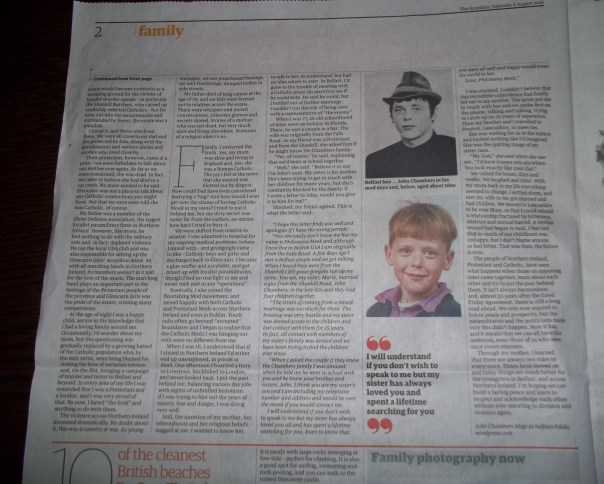

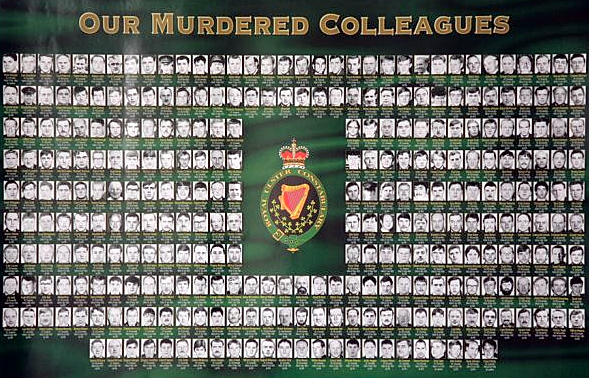


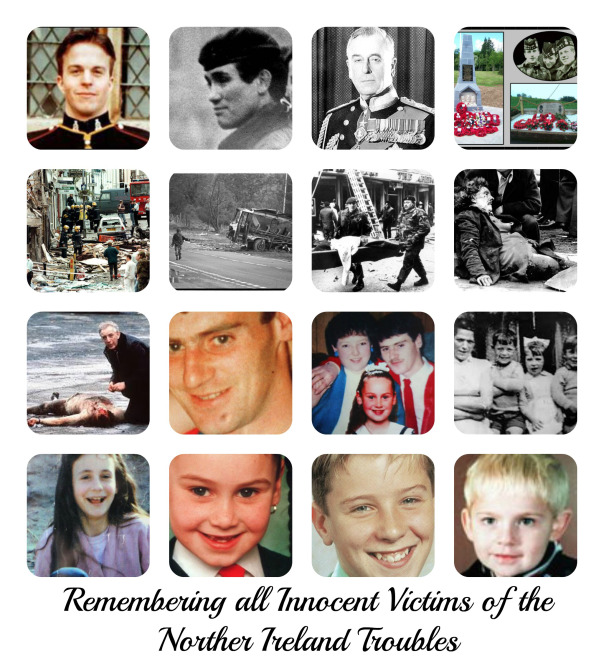


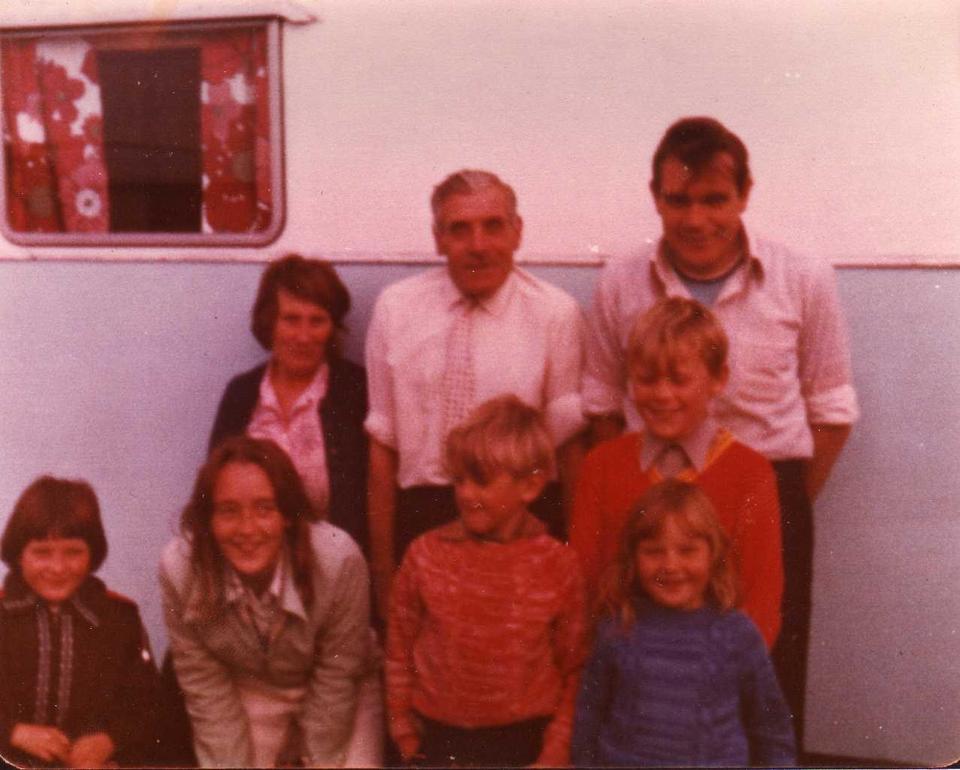

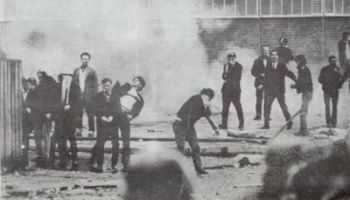


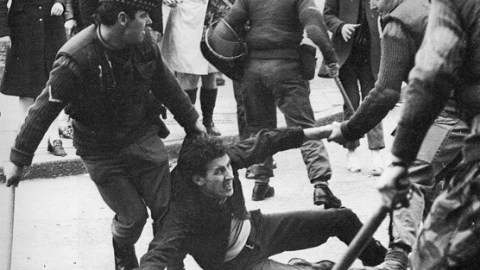


,_August_2009.JPG)






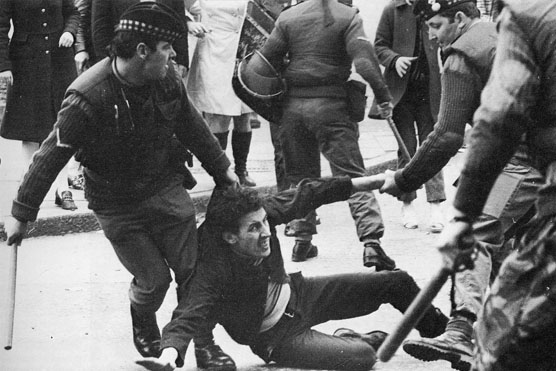


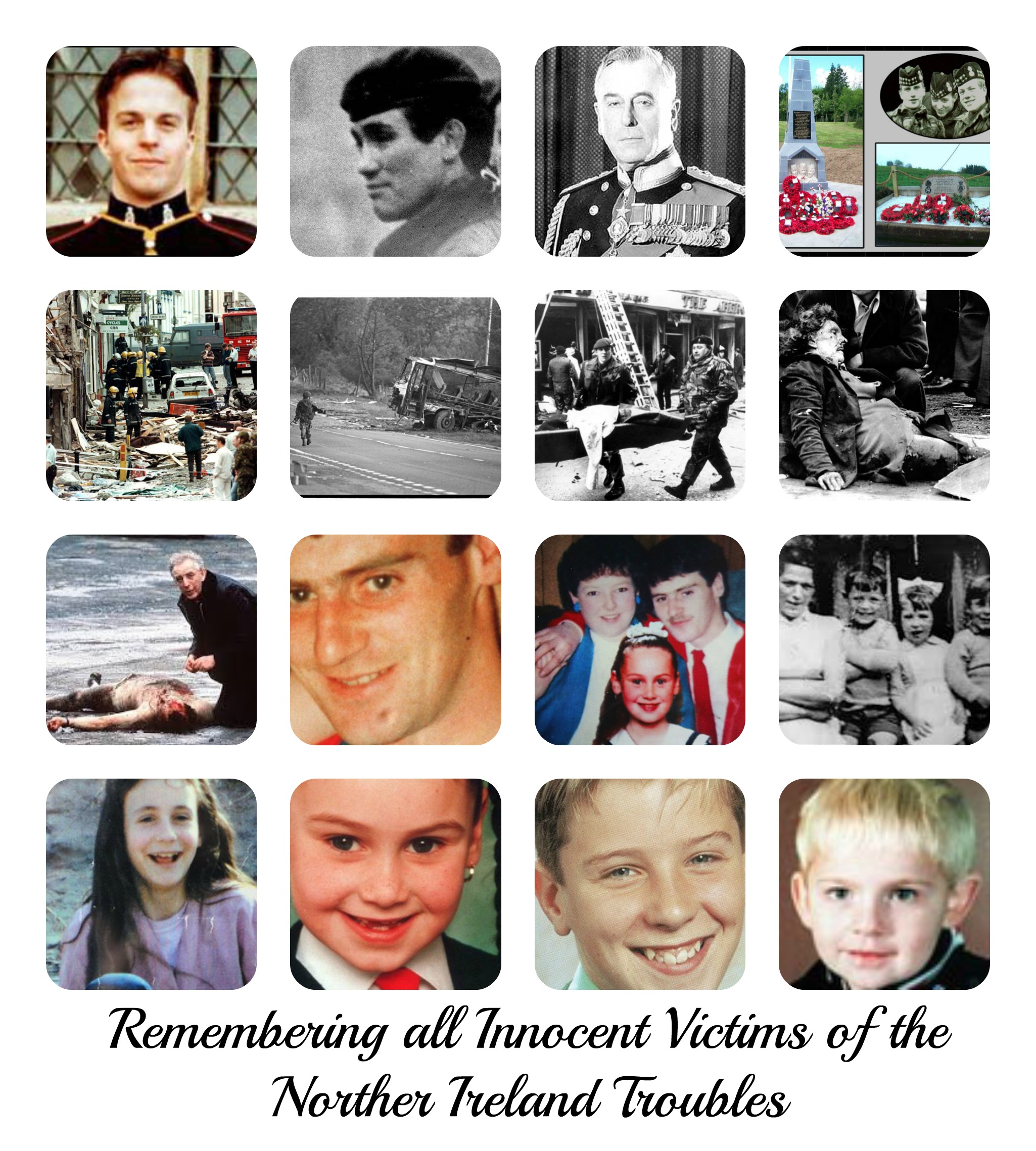




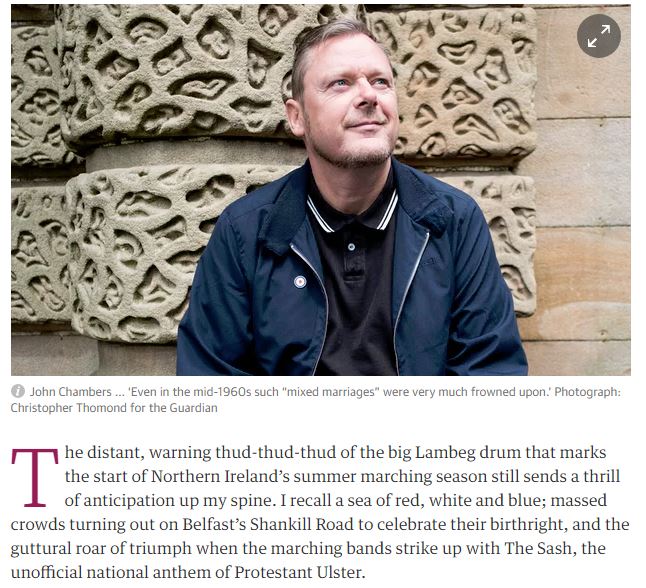
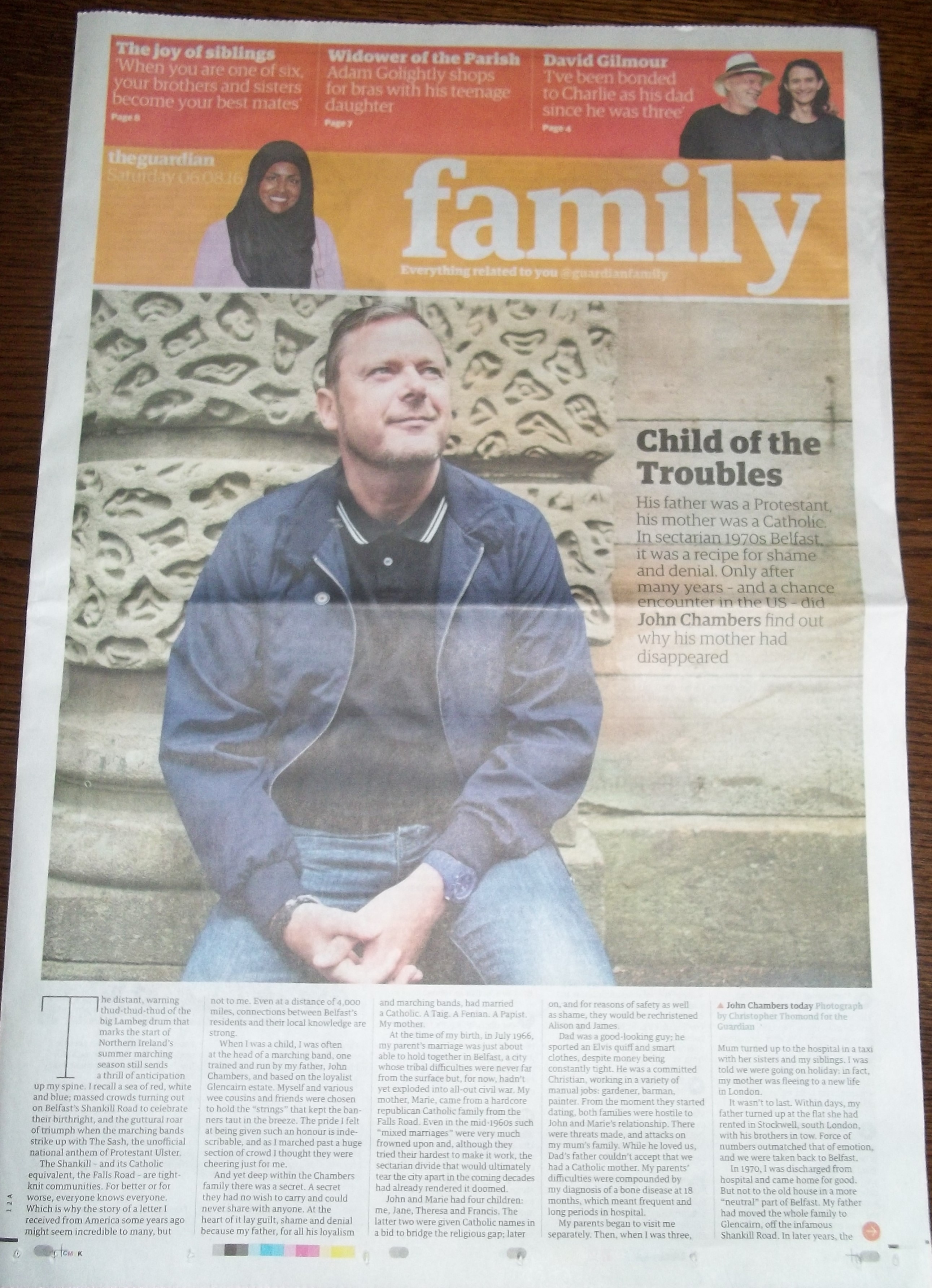
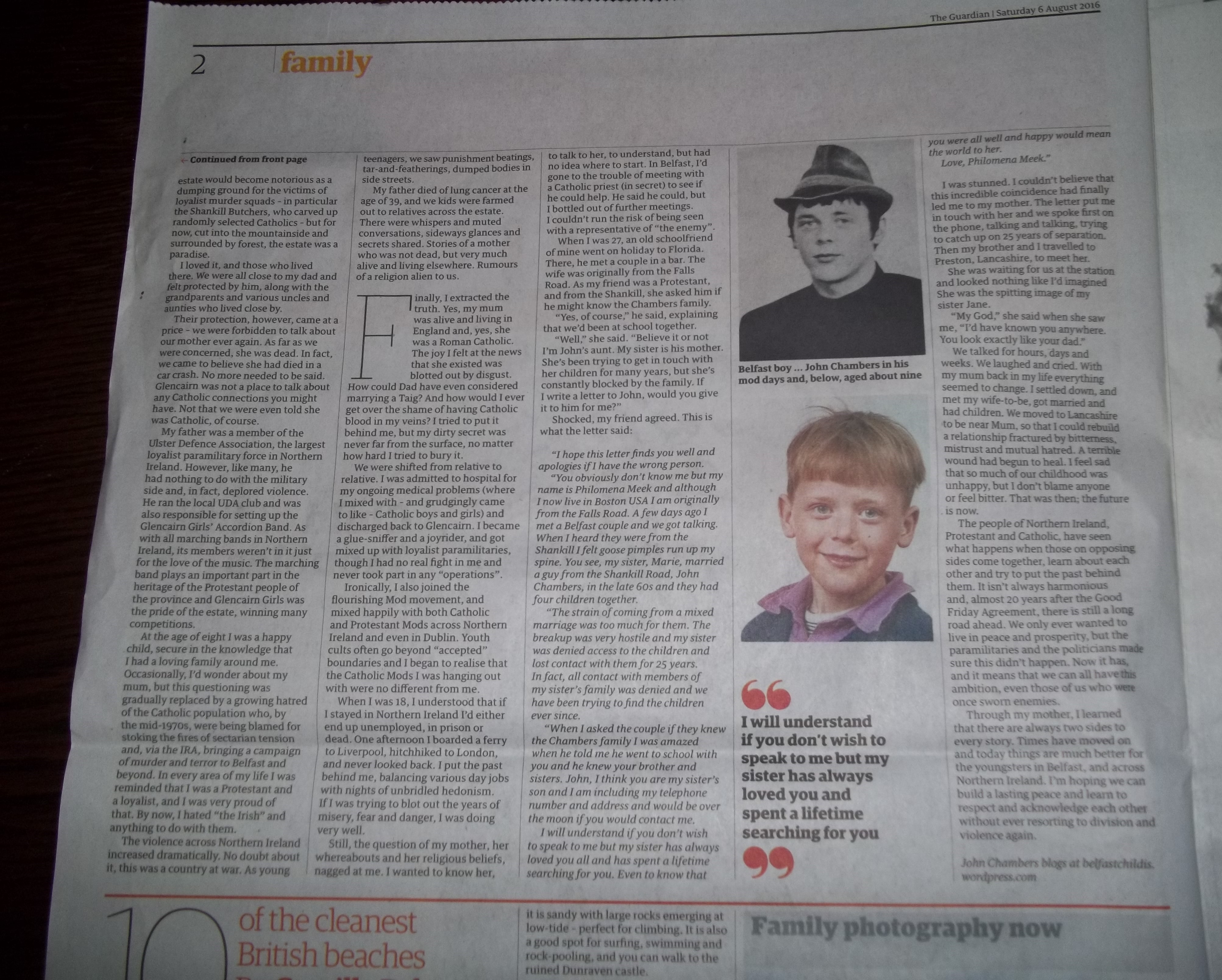

 belfastchildis.com