In the 1952 Olympics in Helsinki, Bannister set a British record in the 1500 metres but finished fourth. This strengthened his resolve to be the first 4-minute miler.
He achieved this feat on 6 May 1954 at Iffley Road track in Oxford, with Chris Chataway and Chris Brasher providing the pacing. When the announcer declared “The time was three…”, the cheers of the crowd drowned out Bannister’s exact time, which was 3 min 59.4 sec.
Bannister’s record lasted just 46 days. He had reached this record with minimal training, while practising as a junior doctor.
Bannister went on to become a distinguished neurologist and Master of Pembroke College, Oxford, before retiring in 1993. When asked whether the 4-minute mile was his proudest achievement, he said he felt prouder of his contribution to academic medicine through research into the responses of the nervous system. Bannister is patron of the MSA Trust. He was diagnosed with Parkinson’s disease in 2011
Bannister was inspired by miler Sydney Wooderson‘s remarkable comeback in 1945. Eight years after setting the mile record and seeing it surpassed during the war years by the great Swedish runners Arne Andersson and Gunder Hägg, Wooderson regained his old form and challenged Andersson over the distance in several races. Wooderson lost to Andersson but set a British record of 4:04.2 in Gothenburg on 9 September.
Like Wooderson, Bannister would ultimately set a mile record, see it broken, and then set a new personal best slower than the new record.
Bannister started his running career at Oxford in the autumn of 1946 at the age of 17. He had never worn running spikes previously or run on a track. His training was light, even compared to the standards of the day, but he showed promise in running a mile in 1947 in 4:24.6 on only three weekly half-hour training sessions.
He was selected as an Olympic “possible” in 1948 but declined as he felt he was not ready to compete at that level. However, he was further inspired to become a great miler by watching the 1948 Olympics. He set his training goals on the 1952 Olympics in Helsinki.
In 1949, he improved in the 880 yards to 1:52.7 and won several mile races in 4:11. Then, after a period of six weeks with no training, he came in third at White City in 4:14.2.
The year 1950 saw more improvements as he finished a relatively slow 4:13 mile on 1 July with an impressive 57.5 last quarter. Then, he ran the AAA 880 in 1:52.1, losing to Arthur Wint, and then ran 1:50.7 for the 800 m at the European Championships on 26 August, placing third. Chastened by this lack of success, Bannister started to train harder and more seriously.
His increased attention to training paid quick dividends, as he won a mile race in 4:09.9 on 30 December. Then in 1951 at the Penn Relays, Bannister broke away from the pack with a 56.7 final lap, finishing in 4:08.3. Then, in his biggest test to date, he won a mile race on 14 July in 4:07.8 at the AAA Championships at White City before 47,000 people. The time set a meet record and he defeated defending champion Bill Nankeville in the process.
Bannister suffered defeat, however, when Yugoslavia‘s Andrija Otenhajmer, aware of Bannister’s final-lap kick, took a 1500 m race in Belgrade 25 August out at near-record pace, forcing Bannister to close the gap by the bell lap. Otenhajmer won in 3:47.0, though Bannister set a personal best finishing second in 3:48.4. Bannister was no longer seen as invincible.
Bannister avoided racing after the 1951 season until late in the spring of 1952, saving his energy for Helsinki and the Olympics. He ran an 880 on 28 May in 1:53.00, then a 4:10.6 mile time-trial on 7 June, proclaiming himself satisfied with the results. At the AAA championships, he skipped the mile and won the 880 in 1:51.5. Then, 10 days before the Olympic final, he ran a ¾ mile time trial in 2:52.9, which gave him confidence that he was ready for the Olympics as he considered the time to be the equivalent of a four-minute mile.
His confidence soon dissipated as it was announced there would be semifinals for the 1500 m (equal to 0.932 miles) at the Olympics, and he knew that this favoured runners who had much deeper training regimens than he did. When he ran his semifinal, Bannister finished fifth and thereby qualified for the final, but he felt “blown and unhappy.”
The 1500 m final on 26 July would prove to be one of the more dramatic in Olympic history. The race was not decided until the final metres, Josy Barthel of Luxembourg prevailing in an Olympic-record 3:45.28 (3:45.1 by official hand-timing) with the next seven runners all under the old record. Bannister finished fourth, out of the medals, but set a British record of 3:46.30 (3:46.0) in the process.
New goal
After his relative failure at the 1952 Olympics, Bannister spent two months deciding whether to give up running. He set himself on a new goal: to be the first man to run a mile in under four minutes. Accordingly, he intensified his training and did hard intervals.
On 2 May 1953, he made an attempt on the British record at Oxford. Paced by Chris Chataway, Bannister ran 4:03.6, shattering Wooderson’s 1945 standard. “This race made me realise that the four-minute mile was not out of reach,” said Bannister.
On 27 June, a mile race was inserted into the programme of the Surrey schools athletic meeting. Australian runner Don Macmillan, ninth in the 1500 m at the 1952 Olympics, set a strong pace with 59.6 and 1:59.7 for two laps. He gave up after 21⁄2 laps, but Chris Brasher took up the pace. Brasher had jogged the race, allowing Bannister to lap him so he could be a fresh pace-setter. At ¾ mile, Bannister was at 3:01.8, the record—and first sub-four-minute mile—in reach. But the effort fell short with a finish in 4:02.0, a time bettered by only Andersson and Hägg. British officials would not allow this performance to stand as a British record, which, Bannister felt in retrospect, was a good decision. “My feeling as I look back is one of great relief that I did not run a four-minute mile under such artificial circumstances,” he said.
But other runners were making attempts at the four-minute barrier and coming close as well. AmericanWes Santee ran 4:02.4 on 5 June, the fourth-fastest mile ever. And at the end of the year, AustralianJohn Landy ran 4:02.0.
Then early in 1954, Landy made some more attempts at the distance. On 21 January, he ran 4:02.4 in Melbourne, then 4:02.6 on 23 February, and at the end of the Australian season on 19 April he ran 4:02.6 again.
Bannister had been following Landy’s attempts and was certain his Australian rival would succeed with each one. But knowing that Landy’s season-closing attempt on 19 April would be his last until he travelled to Finland for another attempt, Bannister knew he had to make his attempt soon.
This historic event took place on 6 May 1954 during a meet between British AAA and Oxford University at Iffley Road Track in Oxford. It was watched by about 3,000 spectators. With winds up to 25 miles per hour (40 km/h) prior to the event, Bannister had said twice that he favoured not running, to conserve his energy and efforts to break the 4-minute barrier; he would try again at another meet. However, the winds dropped just before the race was scheduled to begin, and Bannister did run. The pace-setters from his major 1953 attempts, future Commonwealth Games gold medallist Chris Chataway from the 2 May attempt and future Olympic Games gold medallist Chris Brasher from the 27 June attempt, combined to provide pacing on this historic day. The race was broadcast live by BBC Radio and commented on by 1924 Olympic 100 metres champion Harold Abrahams, of Chariots of Fire fame.
—————————–
Chariots of fire – movie, opening scene
—————————–
Bannister had begun his day at a hospital in London, where he sharpened his racing spikes and rubbed graphite on them so they would not pick up too much cinder ash. He took a mid-morning train from Paddington Station to Oxford, nervous about the rainy, windy conditions that afternoon.Being a dual-meet format, there were 7 men entered in the Mile: Alan Gordon, George Dole and Nigel Miller from Oxford University and four British AAA runners – Bannister, his two pacemakers Brasher and Chataway and Tom Hulatt. Nigel Miller arrived as a spectator and he only realised that he was due to run when he read the programme. Efforts to borrow a running kit failed and he could not take part, thus reducing the field to 6.
The race went off as scheduled at 6:00 pm, and Brasher and Bannister went immediately to the lead. Brasher, wearing No. 44, led both the first lap in 58 seconds and the half-mile in 1:58, with Bannister (No. 41) tucked in behind, and Chataway (No. 42) a stride behind Bannister. Chataway moved to the front after the second lap and maintained the pace with a 3:01 split at the bell. Chataway continued to lead around the front turn until Bannister began his finishing kick with about 275 yards to go (just over a half-lap), running the last lap in just under 59 seconds.
The stadium announcer for the race was Norris McWhirter, who went on to co-publish and co-edit the Guinness Book of Records. He excited the crowd by delaying the announcement of the time Bannister ran as long as possible:
“Ladies and gentlemen, here is the result of event nine, the one mile: first, number forty one, R. G. Bannister, Amateur Athletic Association and formerly of Exeter and Merton Colleges, Oxford, with a time which is a new meeting and track record, and which—subject to ratification—will be a new English Native, British National, All-Comers, European, British Empire and World Record. The time was three…”
The roar of the crowd drowned out the rest of the announcement. Bannister’s time was 3 minutes, 59.4 seconds.
50th anniversary of Bannister’s four-minute mile, commemorated on a 2004 British fifty pence coin.
The claim that a four-minute mile was once thought to be impossible by informed observers was and is a widely propagated myth created by sportswriters and debunked by Bannister himself in his memoir, The Four Minute Mile (1955). The reason the myth took hold was that four minutes was a round number which was slightly better (1.4 seconds) than the world record for nine years, longer than it probably otherwise would have been because of the effect of the Second World War in interrupting athletic progress in the combatant countries. The Swedish runners Gunder Hägg and Arne Andersson, in a series of head-to-head races in the period 1942–45, had already lowered the world mile record by five seconds to the pre-Bannister record. (See Mile run world record progression.) What is still impressive to knowledgeable track fans is that Bannister ran a four-minute mile on very low-mileage training by modern standards.
Just 46 days later, on 21 June in Turku, Finland, Bannister’s record was broken by his rival Landy with a time of 3 min 57.9 s, which the IAAF ratified as 3 min 58.0 s due to the rounding rules then in effect.
Statue of Bannister and Landy in Vancouver
On 7 August, at the 1954 British Empire and Commonwealth Games in Vancouver, B.C., Bannister, running for England, competed against Landy for the first time in a race billed as “The Miracle Mile”. They were the only two men in the world to have broken the 4-minute barrier, with Landy still holding the world record. Landy led for most of the race, building a lead of 10 yards in the third lap (of four), but was overtaken on the last bend, and Bannister won in 3 min 58.8 s, with Landy 0.8 s behind in 3 min 59.6 s. Bannister and Landy have both pointed out that the crucial moment of the race was that at the moment when Bannister decided to try to pass Landy, Landy looked over his left shoulder to gauge Bannister’s position and Bannister burst past him on the right, never relinquishing the lead. A larger-than-life bronze sculpture of the two men at this moment was created by Vancouver sculptor Jack Harman in 1967 from a photograph by Vancouver Sun photographer Charlie Warner and stood for many years at the entrance to Empire Stadium; after the stadium was demolished the sculpture was moved a short distance away to the Hastings and Renfrew entrance of the Pacific National Exhibition (PNE) fairgrounds. Regarding this sculpture, Landy quipped: “While Lot’s wife was turned into a pillar of salt for looking back, I am probably the only one ever turned into bronze for looking back.”
Bannister went on that season to win the so-called metric mile, the 1500 m, at the European Championships in Bern on 29 August, with a championship record in a time of 3 min 43.8 s. He then retired from athletics to concentrate on his work as a junior doctor and to pursue a career in neurology.
Sports Council and knighthood
He later became the first Chairman of the Sports Council (now called Sport England) and was knighted for this service in 1975. Under his aegis, central and local government funding of sports centres and other sports facilities was rapidly increased, and he also initiated the first testing for use of anabolic steroids in sport.
Personal life
Bannister married the artist Moyra Jacobsson, daughter of the Swedish economist Per Jacobsson, who served as Managing Director of the International Monetary Fund.
Legacy
London 2012 Olympics torch relay: Sir Roger Bannister carries flame
On the 50th anniversary of running the sub-4-minute mile, Bannister was interviewed by the BBC‘s sports correspondent Rob Bonnet. At the conclusion of the interview, Bannister was asked whether he looked back on the sub-4-minute mile as the most important achievement of his life. Bannister replied to the effect that no, he rather saw his subsequent forty years of practising as a neurologist and some of the new procedures he introduced as being more significant. His major contribution in academic medicine was in the field of autonomic failure, an area of neurology focusing on illnesses characterised by certain automatic responses of the nervous system (for example, elevated heart rate when standing up) not occurring.
For his efforts, Bannister was also made the inaugural recipient of the Sports IllustratedSportsman of the Year award in 1955 (he was given the award as the 1954 Sportsman of the Year, but it was awarded in January 1955) and is one of the few non-Americans recognised by the American-published magazine as such.
In a UK poll conducted by Channel 4 in 2002, the British public voted Bannister’s historic sub-4-minute mile as number 13 in the list of the 100 Greatest Sporting Moments.
Bannister is the subject of the ESPN film Four Minutes (2005). This film is a dramatisation, its major departures from the factual record being the creation of a fictional character as Bannister’s coach, who was actually Franz Stampfl, an Austrian, and secondly his meeting his wife, Moyra Jacobsson, in the early 1950s when in fact they met in London only a few months before the Miracle Mile itself took place.
The 50th anniversary of Bannister’s achievement was marked by a commemorative British 50-pence coin. The reverse of the coin shows the legs of a runner and a stopwatch (stopped at 3:59.4).
Bannister, arguably the most famous record-setter in the mile, is also the man who held the record for the shortest period of time, at least since the IAAF started to ratify records.
In 1996, Pembroke College, University of Oxford named the Bannister Building to honour the achievements and memory of Sir Roger, a former Master of the college. The building, an 18th-century townhouse in Brewer Street, was converted to provide accommodation for graduate students. It was extensively refurbished during 2011 and 2012 and now forms part of the building complex surrounding the Rokos Quad, and is inhabited by undergraduates.
In 2012, Bannister carried the Olympic flame at the site of his memorable feat, in the stadium now named after him.
Memorabilia
In the gallery of Pembroke College dining hall there is a cabinet containing over 80 exhibits covering Bannister’s athletic career and including some academic highlights.
Key Events & Deaths on this day in Northern Ireland Troubles
6th May
————————————–
Tuesday 6 May 1969
Chichester-Clark, then Northern Ireland Prime Minister, announced an amnesty for all offences associated with demonstrations since 5 October 1968 and this resulted in the release of, among others, Ian Paisley and Ronald Bunting.
Wednesday 6 May 1970
Jack Lynch, then Taoiseach (Irish Prime Minister), sacked Charles Haughey and Neil Blaney, then both ministers in the Irish government, over allegations of illegal arms importation. Lynch then survived a vote of confidence in the government.
[On 28 May 1970 Haughey and Blaney appeared in court at the beginning of what became known as the ‘Arms Trial’.]
Saturday 6 May 1972
At approximately 9.00 pm a man aged 18 was shot and injured in the Glen Road area of west Belfast.
[On 1 December 2015 the PSNI listed this shooting as one of nine incidents it was investigating in relation to the activities of the British Army’s Military Reaction Force (MRF).]
Eight members of the Special Air Service (SAS) were arrested in the Republic of Ireland. The official explanation was that the soldiers had made a map reading error and accidentally crossed the border.
[During the course of the Northern Ireland conflict there were many instances of British Army personnel and vehicles, including aircraft, making illegal crossings of the border. In March 1976 SAS soldiers had crossed the border and grabbed Seán McKenna, then an Irish Republican Army (IRA) commander, from his home before handing him over to a British Army patrol on the northern side of the border.]
Friday 6 May 1977
Day 4 of the UUAC Strike
The United Unionist Action Council (UUAC) was unable to secure the support of the workers at the Ballylumford power station, near Larne, County Antrim. This meant that power would be maintained and factories and commerce could continue to operate.
[The Ballylumford workers had control of a major part of Northern Ireland’s power supply, approximately two-thirds, and thus were crucial to the outcome of the strike.]
The Coachman’s Inn, a hotel situated near Bangor, County Down, was attacked by a mob which set fire to the building. The premises had continued to remain open during the strike.
Roy Mason, then Secretary of State, met a delegation led by Harry West, then leader of the Ulster Unionist Party (UUP). Its members including representatives from the Orange Order, industrialists, farmers, and businessmen.
The delegation pressed Mason to embark on a series of tougher security measures. Contrasting claims continued to be made about the progress of the UUAC strike. While the Northern Ireland Office (NIO) claimed that the business sector was ‘near normal’, leaders of the UUAC argued that support for their action was growing.
In an attempt to increase the pressure the UUAC called for a complete shutdown of Northern Ireland on Monday 9 May 1977. This call was criticised by Harry West who said he had been guaranteed by Roy Mason that a tougher security policy would be implemented.
Sunday 6 May 1979
An undercover member of the Royal Ulster Constabulary (RUC) and an undercover member of the British Army were both shot dead by the Irish Republican Army (IRA) at Lisnaskea, County Fermanagh.
Wednesday 6 May 1981
The British government sent 600 extra British troops into Northern Ireland.
Sunday 6 May 1984
There were riots in Nationalist areas of Belfast and other towns following the third anniversary of the death of Bobby Sands on hunger strike.
Tuesday 6 May 1986
There was a vote at Belfast City Council to resume normal business that had been adjourned in protest at the Anglo-Irish Agreement (AIA).
The vote was carried by 27 to 23 votes. The vote was taken to avoid a £25,000 court fine, however the council began a policy of deferring business.
Wednesday 6 May 1987
Tom King, then Secretary of State for Northern Ireland, announced the recruitment of an extra 500 full-time Royal Ulster Constabulary (RUC) reservists.
Tuesday 6 May 1997
The Royal Ulster Constabulary (RUC) banned a parade planned by Apprentice Boys of Derry (ABD) for Saturday 10 May 1997. The march was intending to pass through the Nationalist lower Ormeau Road area of Belfast.
The Royal Black Preceptory announced that it had taken the decision not to proceed with its forthcoming march in Dunloy, County Antrim. There was a gala opening of the new Waterfront Hall in Belfast. The Prince of Wales carried out the official opening of the new concert complex.
Wednesday 6 May 1998
The Sinn Féin (SF) leadership confirmed its support for the Good Friday Agreement, recommending that members in both the North and the South should vote ‘Yes’ in the forthcoming referendum.
It had been reported that the Irish Republican Army (IRA) had taken the decision to drop the ban on members of the Republican movement taking part in an assembly at Stormont.
Tony Blair, then British Prime Minister, and John Major, a former British Prime Minister, travelled to Northern Ireland to lend their support to the campaign for a ‘Yes’ vote in the referendum. Blair welcomed the news that SF had decided to support the Agreement.
A majority of councillors in Ballymena District Council voted to support the Agreement.
[Ballymena has been viewed as a stronghold of Paisleyism and some people had expected that the vote would go against the Agreement.]
Thursday 6 May 1999
Representatives of the British and Irish governments held talks in London with representatives of the Ulster Unionist Party (UUP), the Social Democratic and Labour Party (SDLP), and Sinn Féin (SF).
The Ulster Volunteer Force (UVF) was reported to be anxious to see permanent disarmament because of fears of weapons falling into “criminal hands”.
[The statement marked a shift from saying it might never decommission its weapons.]
Saturday 6 May 2000
The Irish Republican Army (IRA) undertook to open some of its arms dumps for inspection and said it was prepared to “initiate a process that will completely and verifiably put IRA arms beyond use”.
Sunday 6 May 2001
Bomb Explosion in London
There was a bomb explosion at a Post Office delivery depot in north London at 1.53am (0153BST). The explosion happened at the same building where another bomb had exploded on 14 April 2001.
Again there was no warning of the bomb and one man was injured in the explosion. The “real” Irish Republican Army (rIRA) was thought to have been responsible for the attack.
———————————————
Remembering all innocent victims of the Troubles
Today is the anniversary of the death of the following people killed as a results of the conflict in Northern Ireland
“To live in hearts we leave behind is not to die
– Thomas Campbell
To the innocent on the list – Your memory will live forever
– To the Paramilitaries –
There are many things worth living for, a few things worth dying for, but nothing worth killing for.
4 People lost their lives on the 6th May between 1979 – 1988
———————————————–
06 May 1979
Norman Prue (29)
Protestant Status: Royal Ulster Constabulary (RUC),
Killed by: Irish Republican Army (IRA)
Undercover British Army (BA) / Royal Ulster Constabulary (RUC) patrol. Shot while sitting in stationary civilian type car, outside church, Lisnaskea, County Fermanagh.
———————————————–
06 May 1979 Robert Maughan (30)
nfNI Status: British Army (BA),
Killed by: Irish Republican Army (IRA)
Undercover British Army (BA) / Royal Ulster Constabulary (RUC) patrol. Shot while sitting in stationary civilian type car, outside church, Lisnaskea, County Fermanagh.
———————————————–
06 May 1981
Philip Ellis (33)
Protestant Status: Royal Ulster Constabulary (RUC),
Killed by: Irish Republican Army (IRA)
Shot by sniper while on Royal Ulster Constabulary (RUC) foot patrol, Duncairn Gardens, Belfast.
———————————————–
06 May 1988 Hugh Hehir (37)
nfNIRI Status: Irish Republican Army (IRA),
Killed by: Garda Siochana (GS)
From County Clare. Shot during attempted armed robbery at Caher Post Office, Feakle, County Clare.
Boudica’s husband Prasutagus ruled as a nominally independent ally of Rome and left his kingdom jointly to his daughters and the Roman emperor in his will. However, when he died his will was ignored, and the kingdom was annexed. Boudica was flogged, her daughters raped, and Roman financiers called in their loans.
——————————–
Boudicca: Warrior Queen
——————————–
In AD 60 or 61, when the Roman governorGaius Suetonius Paulinus was campaigning on the island of Anglesey off the northwest coast of Wales, Boudica led the Iceni, the Trinovantes, and others in revolt. They destroyed Camulodunum (modern Colchester), earlier the capital of the Trinovantes but at that time a colonia, a settlement for discharged Roman soldiers and site of a temple to the former Emperor Claudius. Upon hearing of the revolt, Suetonius hurried to Londinium (modern London), the 20-year-old commercial settlement that was the rebels’ next target.
The Romans, having concluded that they lacked sufficient numbers to defend the settlement, evacuated and abandoned Londinium. Boudica led 100,000 Iceni, Trinovantes, and others to fight Legio IX Hispana, and burned and destroyed Londinium, and Verulamium (modern-day St Albans).
——————————
THE ROMAN EMPIRE – THE CONQUEST OF BRITAIN
——————————
An estimated 70,000–80,000 Romans and British were killed in the three cities by those led by Boudica. Suetonius, meanwhile, regrouped his forces in the West Midlands, and despite being heavily outnumbered defeated the Britons in the Battle of Watling Street.
The crisis caused Nero to consider withdrawing all Roman forces from Britain, but Suetonius’ eventual victory over Boudica confirmed Roman control of the province. Boudica then either killed herself, to avoid capture, or died of illness. The extant sources, Tacitus and Cassius Dio, differ.
Interest in these events revived in the English Renaissance and led to Boudica’s fame in the Victorian era. Boudica has remained an important cultural symbol in the United Kingdom. However, the absence of native British literature during the early part of the first millennium means that knowledge of Boudica’s rebellion comes solely from the writings of the Romans.
——————————–
Boudica Warrior Queen 2003
Full Movie
——————————-
Name
Boudica has been known by several versions of her name. Raphael Holinshed calls her Voadicia, while Edmund Spenser calls her Bunduca, a version of the name that was used in the popular Jacobean play Bonduca, in 1612. William Cowper‘s poem, Boadicea, an ode (1782) popularised an alternative version of the name.
From the 19th century and much of the late 20th century, Boadicea was the most common version of the name, which is probably derived from a mistranscription when a manuscript of Tacitus was copied in the Middle Ages.
Her name was clearly spelled Boudicca in the best manuscripts of Tacitus, but also Βουδουικα, Βουνδουικα, and Βοδουικα in the (later and probably secondary) epitome of Cassius Dio. The name is attested in inscriptions as Boudica in Lusitania, Boudiga in Bordeaux, and Bodicca in Algeria.
Kenneth Jackson concludes, based on later development of Welsh and Irish, that the name derives from the Proto-Celtic feminine adjective *boudīkā, “victorious”, that in turn is derived from the Celtic word *boudā, “victory” (cf. Irishbua (Classical Irish buadh), Buaidheach, Welshbuddugoliaeth), and that the correct spelling of the name in Common Brittonic (the British Celtic language) is Boudica, pronounced [bɒʊˈdiːkaː].
The closest English equivalent to the vowel in the first syllable is the ow in “bow-and-arrow”. The modern English pronunciation is /ˈbuːdɪkə/, and it has been suggested that the most comparable English name, in meaning only, would be “Victoria”.
History
Background
Location of Iceni territory in eastern England; modern county borders are shown.
Tacitus and Cassius Dio agree that Boudica was of royal descent. Dio describes her as “possessed of greater intelligence than often belongs to women.” He also describes her as tall, with tawny hair hanging down to below her waist, a harsh voice and a piercing glare. He notes that she habitually wore a large golden necklace (perhaps a torc), a colourful tunic, and a thick cloak fastened by a brooch.
Boudicca’s husband, Prasutagus, was the king of the Iceni, a people who inhabited roughly what is now Norfolk. The Iceni initially voluntarily allied with Rome following Claudius’s conquest of Southern Britain AD 43. They were proud of their independence, and had revolted in AD 47 when the then Roman governor Publius Ostorius Scapula planned to disarm all the peoples in the area of Britain under Roman control following a number of local uprisings. Ostorius defeated them and went on to put down other uprisings around Britain. The Iceni remained independent. Tacitus first mentioned Prasutagus when he wrote about Boudica’s rebellion. We do not know whether he became the king after the mentioned defeat of the Iceni. We do not have any record as to whether the Iceni at that point were still Roman allies or had become a client kingdom.
Tacitus wrote “The Icenian king Prasutagus, celebrated for his long prosperity, had named the emperor his heir, together with his two daughters; an act of deference which he thought would place his kingdom and household beyond the risk of injury. The result was contrary — so much so that his kingdom was pillaged by centurions, his household by slaves; as though they had been prizes of war.” He added that Boudica was lashed and her two daughters were raped and that the estates of the leading Iceni men were confiscated.
Cassius Dio wrote:
“An excuse for the war was found in the confiscation of the sums of money that Claudius had given to the foremost Britons; for these sums, as Decianus Catus, the procurator of the island maintained, were to be paid back.”
He also said that another reasons was “the fact that Seneca, in the hope of receiving a good rate of interest, had lent to the islanders 40,000,000 sesterces that they did not want, and had afterwards called in this loan all at once and had resorted to severe measures in exacting it.”
Tacitus did not say why Prasutagus’ naming the emperor as his heir as well as his daughters was meant to avert the risk of injury. He did not explain why the Romans pillaged the kingdom, why they took the lands of the chiefs or why Boudica was flogged and her daughters were raped. Cassius Dio did not mention any of this. He said that the cause of the rebellion was the decision of the procurator of Britain (the chief financial officer) and Seneca (an advisor of the emperor Nero) to call in Prasutagus’ debts and the harsh measures which were taken to collect them. Tacitus does not mention these events. However, he wrote: “Alarmed by this disaster and by the fury of the province which he had goaded into war by his rapacity, the procurator Catus crossed over into Gaul.”
It has to be noted that this was happening while the governor of Britain, Gaius Suetonius Paulinus, was away fighting in North Wales. We do not know whether he approved of these actions. We do not know who the centurions who pillaged the kingdom were and who sent them. The text of Cassius Dio seems to suggest that Seneca, who was a private citizen, was responsible for the violence. It is unlikely that a legion was sent to land of the Iceni as two of them were fighting at the island of Anglesey and the other two were stationed at their garrisons. Tacitus said that “It was against the veterans that their hatred was most intense. For these new settlers in the colony of Camulodunum drove people out of their houses, ejected them from their farms, called them captives and slaves …”
Boudica’s uprising
In AD 60 or 61, while the current governor, Gaius Suetonius Paulinus, was leading a campaign against the island of Mona (modern Anglesey) in the north of Wales, which was a refuge for British rebels and a stronghold of the druids, the Iceni conspired with their neighbours the Trinovantes, amongst others, to revolt. Boudica was chosen as their leader. According to Tacitus, they drew inspiration from the example of Arminius, the prince of the Cherusci who had driven the Romans out of Germany in AD 9, and their own ancestors who had driven Julius Caesar from Britain. Dio says that at the outset Boudica employed a form of divination, releasing a hare from the folds of her dress and interpreting the direction in which it ran, and invoked Andraste, a British goddess of victory.
The rebels’ first target was Camulodunum (Colchester), the former Trinovantian capital and, at that time, a Roman colonia. The Roman veterans who had been settled there mistreated the locals and a temple to the former emperor Claudius had been erected there at local expense, making the city a focus for resentment. The Roman inhabitants sought reinforcements from the procurator, Catus Decianus, but he sent only two hundred auxiliary troops. Boudica’s army fell on the poorly defended city and destroyed it, besieging the last defenders in the temple for two days before it fell. Archaeologists have shown that the city was methodically demolished. The future governor Quintus Petillius Cerialis, then commanding the Legio IX Hispana, attempted to relieve the city, but suffered an overwhelming defeat. His infantry was wiped out—only the commander and some of his cavalry escaped.
The location of this famous destruction of the Legio IX is now claimed by some to be the village of Great Wratting, in Suffolk, which lies in the Stour Valley on the Icknield Way West of Colchester, and by a village in Essex. After this defeat, Catus Decianus fled to Gaul.
When news of the rebellion reached him, Suetonius hurried along Watling Street through hostile territory to Londinium. Londinium was a relatively new settlement, founded after the conquest of AD 43, but it had grown to be a thriving commercial centre with a population of travellers, traders, and, probably, Roman officials. Suetonius considered giving battle there, but considering his lack of numbers and chastened by Petillius’s defeat, decided to sacrifice the city to save the province.
Alarmed by this disaster and by the fury of the province which he had goaded into war by his rapacity, the procurator Catus crossed over into Gaul. Suetonius, however, with wonderful resolution, marched amidst a hostile population to Londinium, which, though undistinguished by the name of a colony, was much frequented by a number of merchants and trading vessels. Uncertain whether he should choose it as a seat of war, as he looked round on his scanty force of soldiers, and remembered with what a serious warning the rashness of Petilius had been punished, he resolved to save the province at the cost of a single town. Nor did the tears and weeping of the people, as they implored his aid, deter him from giving the signal of departure and receiving into his army all who would go with him. Those who were chained to the spot by the weakness of their sex, or the infirmity of age, or the attractions of the place, were cut off by the enemy.— Tacitus
Londinium was abandoned to the rebels who burnt it down, slaughtering anyone who had not evacuated with Suetonius. Archaeology shows a thick red layer of burnt debris covering coins and pottery dating before AD 60 within the bounds of Roman Londinium; while Roman-era skulls found in the Walbrook in 2013 were potentially linked to victims of the rebels.
In the three settlements destroyed, between seventy and eighty thousand people are said to have been killed. Tacitus says that the Britons had no interest in taking or selling prisoners, only in slaughter by gibbet, fire, or cross.
Dio’s account gives more detail; that the noblest women were impaled on spikes and had their breasts cut off and sewn to their mouths, “to the accompaniment of sacrifices, banquets, and wanton behaviour” in sacred places, particularly the groves of Andraste.
Romans rally
While Boudica’s army continued their assault in Verulamium (St. Albans), Suetonius regrouped his forces. According to Tacitus, he amassed a force including his own Legio XIV Gemina, some vexillationes (detachments) of the XX Valeria Victrix, and any available auxiliaries. The prefect of Legio II Augusta, Poenius Postumus, stationed near Exeter, ignored the call, and a fourth legion, IX Hispana, had been routed trying to relieve Camulodunum, but nonetheless the governor was able to call on almost ten thousand men.
Suetonius took a stand at an unidentified location, probably in the West Midlands somewhere along the Roman road now known as Watling Street, in a defile with a wood behind him — but his men were heavily outnumbered. Dio says that, even if they were lined up one deep, they would not have extended the length of Boudica’s line. By now the rebel forces were said to have numbered 230,000. However, this number should be treated with scepticism — Dio’s account is known only from a late epitome, and ancient sources commonly exaggerate enemy numbers.
Boudica exhorted her troops from her chariot, her daughters beside her. Tacitus gives her a short speech in which she presents herself not as an aristocrat avenging her lost wealth, but as an ordinary person, avenging her lost freedom, her battered body, and the abused chastity of her daughters. She said their cause was just, and the deities were on their side; the one legion that had dared to face them had been destroyed. She, a woman, was resolved to win or die; if the men wanted to live in slavery, that was their choice.
However, the lack of manoeuvrability of the British forces, combined with lack of open-field tactics to command these numbers, put them at a disadvantage to the Romans, who were skilled at open combat due to their superior equipment and discipline. Also, the narrowness of the field meant that Boudica could put forth only as many troops as the Romans could at a given time.
First, the Romans stood their ground and used volleys of pila (heavy javelins) to kill thousands of Britons who were rushing toward the Roman lines. The Roman soldiers, who had now used up their pila, were then able to engage Boudica’s second wave in the open. As the Romans advanced in a wedge formation, the Britons attempted to flee, but were impeded by the presence of their own families, whom they had stationed in a ring of wagons at the edge of the battlefield, and were slaughtered. This is not the first instance of this tactic — the women of the Cimbri, in the Battle of Vercellae against Gaius Marius, were stationed in a line of wagons and acted as a last line of defence.Ariovistus of the Suebi is reported to have done the same thing in his battle against Julius Caesar. Tacitus reports that “according to one report almost eighty thousand Britons fell” compared with only four hundred Romans.
According to Tacitus in his Annals, Boudica poisoned herself, though in the Agricola which was written almost twenty years prior he mentions nothing of suicide and attributes the end of the revolt to socordia (“indolence”); Dio says she fell sick and died and then was given a lavish burial; though this may be a convenient way to remove her from the story. Considering Dio must have read Tacitus, it is worth noting he mentions nothing about suicide (which was also how Postumus and Nero ended their lives).
Postumus, on hearing of the Roman victory, fell on his sword. Catus Decianus, who had fled to Gaul, was replaced by Gaius Julius Alpinus Classicianus. Suetonius conducted punitive operations, but criticism by Classicianus led to an investigation headed by Nero‘s freedmanPolyclitus. Fearing Suetonius’s actions would provoke further rebellion, Nero replaced the governor with the more conciliatory Publius Petronius Turpilianus.The historian Gaius Suetonius Tranquillus tells us the crisis had almost persuaded Nero to abandon Britain.
Location of her defeat
The location of Boudica’s defeat is unknown. Most historians favour a site in the West Midlands, somewhere along the Roman road now known as Watling Street. Kevin K. Carroll suggests a site close to High Cross in Leicestershire, on the junction of Watling Street and the Fosse Way, which would have allowed the Legio II Augusta, based at Exeter, to rendezvous with the rest of Suetonius’s forces, had they not failed to do so. Manduessedum (Mancetter), near the modern town of Atherstone in Warwickshire, has also been suggested, as has “The Rampart” near Messing in Essex, according to legend. More recently, a discovery of Roman artefacts in Kings Norton close to Metchley Camp has suggested another possibility, and a thorough examination of a stretch of Watling Street between St. Albans, Boudica’s last known location, and the Fosse Way junction has suggested the Cuttle Mill area of Paulerspury in Northamptonshire, which has topography very closely matching that described by Tacitus of the scene of the battle.
In 2009 it was suggested that the Iceni were returning to East Anglia along the Icknield Way when they encountered the Roman army in the vicinity of Arbury Bank, Hertfordshire. In March 2010, evidence was published suggesting the site may be located at Church Stowe, Northamptonshire.
Historical sources
Tacitus, the most important Roman historian of this period, took a particular interest in Britain as his father-in-law Gnaeus Julius Agricola served there three times (and was the subject of his first book). Agricola was a military tribune under Suetonius Paulinus, which almost certainly gave Tacitus an eyewitness source for Boudica’s revolt. Cassius Dio’s account is only known from an epitome, and his sources are uncertain. He is generally agreed to have based his account on that of Tacitus, but he simplifies the sequence of events and adds details, such as the calling in of loans, that Tacitus does not mention.
Gildas, in his 6th century De Excidio et Conquestu Britanniae, may have been alluding to Boudica when he wrote “A treacherous lioness butchered the governors who had been left to give fuller voice and strength to the endeavours of Roman rule”.
Cultural depictions
Boudica and King’s Cross
The area of King’s Cross, London was previously a village known as Battle Bridge which was an ancient crossing of the River Fleet. The original name of the bridge was Broad Ford Bridge.
The name “Battle Bridge” led to a tradition that this was the site of a major battle between the Romans and the Iceni tribe led by Boudica. The tradition is not supported by any historical evidence and is rejected by modern historians. However, Lewis Spence‘s 1937 book Boadicea — warrior queen of the Britons went so far as to include a map showing the positions of the opposing armies. There is a belief that she was buried between platforms 9 and 10 in King’s Cross station in London, England. There is no evidence for this and it is probably a post-World War II invention.
It was in the Victorian era that Boudica’s fame took on legendary proportions as Queen Victoria came to be seen as Boudica’s “namesake”, their names being identical in meaning. Victoria’s Poet Laureate, Alfred, Lord Tennyson, wrote a poem, “Boadicea”, and several ships were named after her
Julius Caesar does not mention the Iceni in his account of his invasions of Britain in 55 and 54 BC, though they may be related to the Cenimagni, who Caesar notes as living north of the River Thames at that time. The Iceni were a significant power in eastern Britain during Claudius‘ conquest of Britain in AD 43, in which they allied with Rome. Increasing Roman influence on their affairs led to revolt in 47, though they remained nominally independent under king Prasutagus until his death around AD 60. Roman encroachment after Prasutagus’ death led his wife Boudica to launch a major revolt from 60–61. Boudica’s uprising seriously endangered Roman rule in Britain and resulted in the burning of Londinium and other cities. The Romans finally crushed the rebellion, and the Iceni were increasingly incorporated into the Roman province.
Archaeology
Iceni coin
Archaeological evidence of the Iceni includes torcs — heavy rings of gold, silver or electrum worn around the neck and shoulders. The Iceni began producing coins around 10 BC. Their coins were a distinctive adaptation of the Gallo-Belgic “face/horse” design, and in some early issues, most numerous near Norwich, the horse was replaced with a boar. Some coins are inscribed ECENI, making them the only coin-producing group to use their tribal name on coins. The earliest personal name to appear on coins is Antedios (about 10 BC), and other abbreviated names like AESU and SAEMU follow.
It has been discovered that the name of Antedios’ succeeding ruler Prasutagus appears on the coins as well. H. R. Mossop in his article “An Elusive Icenian Legend” discusses coins that were discovered by D. F. Allen in Joist Fen, Suffolk, and states, “It is the coins Nos. 6 and 7 which give an advance in the obverse reading, confirming Allen’s attractive reading PRASTO, with its implied allusion to Prasutagus” (Mossop and Allen 258).
Sir Thomas Browne, the first English archaeological writer, said of the Roman occupation, Boudica and Iceni coins:
Iceni coin.
That Britain was notably populous is undeniable, from that expression of Caesar. That the Romans themselves were early in no small Numbers, Seventy Thousand with their associates slain by Bouadicea, affords a sure account… And no small number of silver pieces near Norwich; with a rude head upon the obverse, an ill-formed horse on the reverse, with the Inscriptions Ic. Duro.T. whether implying Iceni, Durotriges, Tascia, or Trinobantes, we leave to higher conjecture. The British Coyns afford conjecture of early habitation in these parts, though the city of Norwich arose from the ruins of Venta, and though perhaps not without some habitation before, was enlarged, built, and nominated by the Saxons.
John A. Davies and Tony Gregory conducted archaeological surveys of Roman coins that appeared during the period of Roman occupation of Norfolk. Their study showed that the bulk of the coins circulating before AD 60 was Icenian rather than Roman. They speculated that Roman coins were not adapted into the Iceni area until after AD 60. The coin study also showed that there was not a regular supply of Roman coinage from year to year:
The predominance of specific issues at sites across the province and relative scarcity of coins of some emperors illustrates the point that supply was sporadic and that there were periods when little or no fresh coinage was sent to Britain from the imperial mints.
In certain rural regions of Norfolk, Davies and Gregory speculate that the Iceni farmers were impacted very little by the civitas, seeing as there is a scarce presence of coinage and treasures. On the other hand, their surveys found “coin-rich temple sites, which appear to have served as centres for periodic fairs and festivals and provided locations for markets and commercial transactions within their complexes and environs. In such rural areas, producers and consumers would have been attracted to these sites for commerce from afield”
The Roman invasion
The meaning of the name Iceni is unknown. Icenian coins dating from the 1st century AD use the spelling ECEN,: another article by D. F. Allen titled “The Coins of the Iceni,” discusses the difference between coins with the inscription ECE versus coins with ECEN. This difference, Allen posits, tells archeologists and historians when Prasutagus started his reign because the coins did not start reading the name of the tribe until around AD 47. Allen suggests that when Antedios was king of the Iceni, the coins did not yet have the name of the tribe on them but instead the name of its ruler, stating, “If so, the coins suggest that the Prasutagus era commenced only after the events of 47” (Allen 16).
Tacitus records that the Iceni were not conquered in the Claudian invasion of AD 43, but had come to a voluntary alliance with the Romans. However, they rose against them in 47 after the governor, Publius Ostorius Scapula, threatened to disarm them. D. F. Allen explains in further detail, in his article “The Coins of the Iceni,” that Scapula had been “preoccupied with defense against the unconquered Silures in South Wales and Brigantes in Yorkshire.” Allen informs readers that this was how Prasutagus had come to gain full control over the Iceni (Allen 2). The Iceni were defeated by Ostorius in a fierce battle at a fortified place, but were allowed to retain their independence.
A second and more serious uprising took place in AD 61. Prasutagus, the wealthy, pro-Roman Icenian king, who, according to a section in the Oxford Dictionary of National Biography titled “Roman Britain, British Leaders”. was leader of the Iceni between AD 43 and 50 (Todd 4), had died. It was common practice for a Roman client king to leave his kingdom to Rome on his death, but Prasutagus had attempted to preserve his line by bequeathing his kingdom — which Allen believes was located in Breckland, near Norwich (Allen 15) — jointly to the Emperor and his own daughters. The Romans ignored this, and the procuratorCatus Decianus seized his entire estate. Prasutagus’s widow, Boudica, was flogged, and her daughters were raped. At the same time, Roman financiers called in their loans. While the governor, Gaius Suetonius Paulinus, was campaigning in Wales, Boudica led the Iceni and the neighbouring Trinovantes in a large-scale revolt:
…a terrible disaster occurred in Britain. Two cities were sacked, eighty thousand of the Romans and of their allies perished, and the island was lost to Rome. Moreover, all this ruin was brought upon the Romans by a woman, a fact which in itself caused them the greatest shame…. But the person who was chiefly instrumental in rousing the natives and persuading them to fight the Romans, the person who was thought worthy to be their leader and who directed the conduct of the entire war, was Buduica, a Briton woman of the royal family and possessed of greater intelligence than often belongs to women…. In stature she was very tall, in appearance most terrifying, in the glance of her eye most fierce, and her voice was harsh; a great mass of the tawniest hair fell to her hips; around her neck was a large golden necklace; and she wore a tunic of divers colours over which a thick mantle was fastened with a brooch. This was her invariable attire.
The revolt caused the destruction and looting of Camulodunum (Colchester), Londinium (London), and Verulamium (St Albans) before finally being defeated by Suetonius Paulinus and his legions. Although the Britons outnumbered the Romans greatly, they lacked the superior discipline and tactics that won the Romans a decisive victory. The battle took place at an unknown location, probably in the West Midlands somewhere along Watling Street. Today, a large statue of Boudica wielding a sword and charging upon a chariot can be seen in London on the north bank of the Thames by Westminster Bridge.
Key Events & Deaths on this day in Northern Ireland Troubles
5th May
Friday 5 May 1972
————————————-
Sunday 5 May 1974
Pro-Assembly Unionists meeting in Portstewart, County Derry, announced the reformation of their group which was to use the name the Unionist Party
Monday 5 May 1975
The Fair Employment (NI) Bill was introduced to the House of Lords.
Wednesday 5 May 1976
Nine members of the Irish Republican Socialist Party (IRSP) escaped from the Maze Prison through a tunnel.
Thursday 5 May 1977Day 3 of the UUAC Strike
After three days of the strike the Royal Ulster Constabulary (RUC) released figures showing that it had dismantled some 300 roadblocks, arrested 23 people, and dealt with over 1,000 cases of alleged intimidation.
In addition it also claimed that the United Unionist Action Council (UUAC) was deliberately choosing to employ women and children during confrontations with the police in order to draw support to its cause and to alienate people against the RUC.
A bomb exploded outside the Lismore factory in Portadown.
[It was believed that Loyalist paramilitaries were responsible for the bombing which was thought to be a response to the factory remaining open during the stoppage.]
Saturday 5 May 1979
Humphrey Atkins succeeded Roy Mason as Secretary of State for Northern Ireland.
[The appointment prompted the Belfast Telegraph to ask ‘Humphrey Who?’]
Wednesday 5 March 1980
Tomás Ó Fiaich, then Catholic Primate of Ireland, and Edward Daly, then Bishop of Derry , held a meeting with Humphrey Atkins, then Secretary of State for Northern Ireland, to express their concerns about conditions within the Maze Prison. A former chairman of the Peace People, Peter McLachlan, resigned from the organisation.
Tuesday 5 May 1981Bobby Sands Died
After 66 days on hunger strike Bobby Sands (26), then a member of the Irish Republican Army (IRA) and a Member of Parliament (MP), died in the Maze Prison.
[The announcement of his death sparked riots in many areas of Northern Ireland but also in the Republic of Ireland. The Irish Republican Army (IRA) also stepped up its attacks on members of the security services. Following the death of Sands the British government faced extensive international condemnation for the way in which it had handled the hunger strike. The relationship between the British and Irish government was also very strained.]
Eric Guiney (45) and his son Desmond Guiney (14), both Protestant civilians, were seriously injured after their milk lorry crashed following an incident in which it was stoned by a crowd of people at the junction of New Lodge Road and Antrim Road in Belfast. Desmond Guiney died on 8 May 1981 and Eric Guiney died on 13 May 1981.
Maureen McCann (64), a Protestant civilian, was stabbed and shot by the Ulster Freedom Fighters (UFF), a covername used by the Ulster Defence Association (UDA), during an armed robbery at her post office in Killinchy, County Down.
Thursday 5 May 1983
James Prior, then Secretary of State for Northern Ireland, travelled to Dublin for talks with the Irish government.
Tuesday 5 May 1987
In response to speculation about the content of the Unionist Task Force report, Ian Paisley, then leader of the Democratic Unionist Party (DUP), stated that the DUP would have no involvement in any power-sharing arrangement.
Tuesday 5 May 1992
An inquest began into the deaths on 11 November 1982 of three Irish Republican Army (IRA) members shot dead by an undercover Royal Ulster Constabulary (RUC) unit near Craigavon, County Armagh.
The Court of Appeal in London began hearing the appeal of Judith Ward against her conviction for involvement in a bomb attack on 4 February 1974.
Wednesday 5 May 1993
Gerry Adams, then President of Sinn Féin (SF), was refused a visitor’s visa to enter the United States of America (USA
Sunday 5 May 1996
A coded warning in the name of the Ulster Volunteer Force (UVF) was issued stating that two bombs had been planted in Dublin. A suspect car at Dublin Airport was blown-up in the following security operation.
Monday 5 May 1997
The new Ministers of State at the Northern Ireland Office (NIO) were announced. Adam Ingram – Minister for Security, and Economic Development; Paul Murphy – Political and Constitutional Affairs, and Finance and Information; Tony Worthington – Education, Training, Welfare, Health, and Employment Equality; Lord Dubs – Agriculture, Environment, and NIO representative in the House of Lords.
Tuesday 5 May 1998
A group of Irish Republican Army (IRA) prisoners, known as the Balcombe Street gang, were transferred from England to Porflsoise Prison in the Republic of Ireland. To date the men had served 22 years and five months in English jails.
The United Unionist Campaign (UUC) was launched in Belfast to oppose the Good Friday Agreement in the referendum. The group was made up of representatives of the Democratic Unionist Party (DUP), the United Kingdom Unionist Party (UKUP), and also dissident Ulster Unionist Party (UUP) Members of Parliament (MPs). The UUC used the slogan: “It’s Right to say No”
There was an attempted Loyalist gun attack in north Belfast. A gunman attempted to fire shots at two boys standing outside a shop but they escaped when the gun jammed.
[The attack was later claimed by a group calling itself the ‘Protestant Liberation Force’. Some commentators believed that this was a cover name for members of the Ulster Defence Association (UDA).]
A pipe-bomb, that had been packed with nails, blew a hole in the wall of the home of a Catholic couple living in a Loyalist area of south Belfast.
Although the woman escaped unharmed, her husband received minor leg injuries. The attack was carried out by Loyalist paramilitaries.
Relatives of Pat Finucane, a Belfast solicitor killed on 12 February 1989, held a meeting at Stormont with Marjorie (Mo) Mowlam, then Secretary of State for Northern Ireland. They pressed their case for a public inquiry into his death rather than the police investigation favoured by the British government.
Gerry Adams, then President of Sinn Féin (SF), stated in an article in The Irish Post (a London based newspaper) that if the Executive proved to be successful it could make the Irish Republican Army (IRA) “irrelevant”.
Friday 5 May 2000
A Catholic couple were forced to leave their home in a Loyalist area of south Belfast following a sectarian pipe-bomb attack. The husband sustained minor leg injuries after the device, which was packed with nails, blew a hole in the back door of the house at Broadway Parade and exploded into the kitchen. His wife who also was in the kitchen escaped unhurt.
The attack was carried out by Loyalist paramilitaries.
———————————————
Remembering all innocent victims of the Troubles
Today is the anniversary of the death of the following people killed as a results of the conflict in Northern Ireland
“To live in hearts we leave behind is not to die
– Thomas Campbell
To the innocent on the list – Your memory will live forever
– To the Paramilitaries –
There are many things worth living for, a few things worth dying for, but nothing worth killing for.
8 People lost their lives on the 5th May between 1973 – 1992
———————————————–
05 May 1973
Vines, William (37) nfNI Status: British Army (BA), Killed by: Irish Republican Army (IRA)
Killed in land mine attack on British Army (BA) foot patrol, Moybane, near Crossmaglen, County Armagh.
Sergeant-Major (William) Ronnie Vines of 2 PARA was killed by an IRA mine remotely detonated by wire on 5 May 1973 at Moybane, near Crossmaglen. Married shortly before he was killed, Sgt Major Vines died aged 36 years and is now buried at Aldershot Military Cemetery.
The following obituary notice appeared in the Pegasus Journal in July 1973: “CSM Ron Vines, on his third tour in Northern Ireland was killed in a terrorist mine explosion near Crossmaglen on the 5th May 1973. He was commanding a road clearance patrol from C (Patrol) Company, and it was typical of his enthusiasm and leadership that it was he who noticed and was checking the suspect area where the mine was located. Ron re-enlisted into The Parachute Regiment in 1962 (previously he had served for three years in the Coldstream Guards) and rapidly achieved promotion to Sgt by 1964, in which rank he served in Bahrain, Malaysia, Borneo and Radfan in C (Patrol) Company of the 2nd Bn. He was detached in 1969 to the Royal Marines Training Centre as an instructor and returned to the 2nd Bn in 1972, to be CQMS of B Coy. He was promoted in September 1972 to WO2 and returned as CSM to his first love-Patrol Coy. He was a most competent and professional soldier and was fair and popular with all ranks. He will be sadly missed in the Bn and elsewhere.”
Ronnie had two daughters Jayne and Annette with his first wife Phyllis. They were married for 17 years.
Killed by: Irish Republican Army (IRA)
Killed by booby trap bomb while on British Army (BA) foot patrol, Moybane, near Crossmaglen, County Armagh.
———————————————–
05 May 1973 Terence Williams (35)
nfNI Status: British Army (BA),
Killed by: Irish Republican Army (IRA)
Killed by booby trap bomb while on British Army (BA) foot patrol, Moybane, near Crossmaglen, County Armagh.
———————————————–
05 May 1977 James Green (22)
Catholic Status: ex-British Army (xBA),
Killed by: Irish Republican Army (IRA)
From Northern Ireland. Shot while driving his taxi, when he stopped to pick up a passenger, Glen Road, Andersonstown, Belfast.
———————————————–
05 May 1981 Bobby Sands (26)
Catholic Status: Irish Republican Army (IRA),
Killed by: not known (nk)
Also Member of Parliament. Died on the 66th day of hunger strike, Long Kesh / Maze Prison, County Down.
Killed by: Ulster Volunteer Force (UVF)
Stabbed and shot during armed robbery at her post office, Killinchy, County Down.
———————————————–
05 May 1990 Graham Stewart (25)
nfNI Status: British Army (BA),
Killed by: Irish Republican Army (IRA)
Undercover British Army (BA) member. Shot during gun attack on BA concealed hilltop observation post, overlooking Cullyhanna, County Armagh.
———————————————–
05 May 1992
William Sergeant (66)
Protestant Status: Civilian (Civ),
Killed by: Irish People’s Liberation Organisation (IPLO)
Shot during gun attack on Mount Inn, North Queen Street, Tiger’s Bay, Belfast.
———————————————–
My autobiography:
A Belfast Child is now available to pre-order on Amazon , launch date now is 3rd September
" he began a turbulent and hedonistic adulthood in London "
He was the leader of the 1981 hunger strike in which Irish republican prisoners protested against the removal of Special Category Status. During his strike he was elected to the British Parliament as an Anti H-Block candidate. His death and those of nine other hunger strikers were followed by a new surge of Provisional IRA recruitment and activity. International media coverage brought attention to the hunger strikers, and the republican movement in general, attracting both praise and criticism.
– Disclaimer –
The views and opinions expressed in these pages/documentaries are soley intended to educate and provide background information to those interested in the Troubles of Northern Ireland. They in no way reflect my own opinions and I take no responsibility for any inaccuracies or factual errors.
Early years
Sands was born in 1954 to Roman Catholic parents, John and Rosaleen, who were both raised in Belfast. After marrying, they relocated to the new development of Abbots Cross, Newtownabbey, County Antrim outside North Belfast.Sands was the eldest of four children. His sisters, Marcella and Bernadette, were born in 1955 and 1958, respectively. After experiencing harassment and intimidation from their neighbours, the family abandoned the development and moved in with friends for six months before being granted housing in the nearby Rathcoole development. Rathcoole was 30% Catholic and featured Catholic schools as well as a nominally Catholic but religiously-integrated youth football club known as Star of the Sea (of which Sands was a member and for whom he played left-back), an unusual circumstance in Northern Ireland. His parents had a second son, John (born 1962), their last child.
By 1966, sectarian violence in Rathcoole (along with the rest of Belfast) had considerably worsened, and the minority Catholic population there found itself under siege; Sands and his sisters were forced to run a gauntlet of bottle- and rock-throwing Protestant youths on the way to school every morning, and the formerly integrated Rathcoole youth football club banned Catholic members and renamed itself “The Kai”, which stood for “Kill All Irish”. Despite always having had Protestant friends, Sands suddenly found that none of them would even speak to him, and he quickly learned to associate only with Catholics.
He left school in 1969 at age 15, and enrolled in Newtownabbey Technical College, beginning an apprenticeship as a coach builder at Alexander’s Coach Works in 1970. He worked there for less than a year, enduring constant harassment from his Protestant co-workers, which according to several co-workers he ignored completely, as he wished to learn a meaningful trade. He was eventually confronted after leaving his shift in January 1971 by a number of his colleagues wearing the armbands of the local Ulster loyalisttartan gang. He was held at gunpoint and told that Alexander’s was off-limits to “Fenian scum” and to never come back if he valued his life. This event, by Sands’s admission, proved to be the point at which he decided that militancy was the only solution.
In June 1972, Sands’ parents’ home was attacked and damaged by a loyalist mob and they were again forced to move, this time to the West Belfast Catholic area of Twinbrook, where Sands, now thoroughly embittered, rejoined them. He attended his first Provisional IRA meeting in Twinbrook that month and joined the IRA the same day. He was 18 years old. By 1973, almost every Catholic family had been driven out of Rathcoole by violence and intimidation.
Provisional IRA activity
In 1972, Sands joined the Provisional IRA He was arrested and charged in October 1972 with possession of four handguns found in the house where he was staying. Sands was convicted in April 1973, sentenced to five years imprisonment and released in April 1976.
Upon his release, he returned to his family home in West Belfast, and resumed his active role in the Provisional IRA. Sands and Joe McDonnell planned the October 1976 bombing of the Balmoral Furniture Company in Dunmurry. The showroom was destroyed but as the IRA men left the scene there was a gun battle with the Royal Ulster Constabulary. Leaving behind two wounded, Seamus Martin and Gabriel Corbett, the remaining four (Sands, McDonnell, Seamus Finucane, and Sean Lavery) tried to escape by car, but were arrested. One of the revolvers used in the attack was found in the car. In 1977 the four were sentenced to 14 years for possession of the revolver. They were not charged with explosive offences.
Immediately after his sentence, Sands was implicated in a ruckus and spent the first 22 days “on boards” (all furniture was removed from his cell) in Crumlin Road Prison, 15 days naked, and a No. 1 starvation diet (bread and water) every three days.
Long Kesh years
In late 1980 Sands was chosen as Officer Commanding of the Provisional IRA prisoners in Long Kesh, succeeding Brendan Hughes who was participating in the first hunger strike. Republican prisoners organised a series of protests seeking to regain their previous Special Category Status which would free them from some ordinary prison regulations. This began with the “blanket protest” in 1976, in which the prisoners refused to wear prison uniform and wore blankets instead. In 1978, after a number of attacks on prisoners leaving their cells to “slop out” (i.e., empty their chamber pots), this escalated into the “dirty protest“, wherein prisoners refused to wash and smeared the walls of their cells with excrement.
Published work
While in prison Sands had several letters and articles published in the republican paper An Phoblacht under the pseudonym “Marcella” (his sister’s name). Other writings attributed to him are: Skylark Sing Your Lonely Song and One Day in My Life. Sands also wrote the lyrics of Back Home in Derry and McIlhatton, which were both later recorded by Christy Moore, and Sad Song For Susan which was also later recorded. The melody of Back Home in Derry was borrowed from Gordon Lightfoot‘s famous 1976 song The Wreck of the Edmund Fitzgerald. The song itself is about the penal transportation of Irish republicans to Van Diemen’s Land in the 19th century (modern day Tasmania, Australia).
The sudden vacancy in a seat with a nationalist majority of about 5,000 was a valuable opportunity for Sands’s supporters “to raise public consciousness”. Pressure not to split the vote led other nationalist parties, notably the Social Democratic and Labour Party, to withdraw, and Sands was nominated on the label “Anti H-Block/Armagh Political Prisoner”. After a highly polarised campaign, Sands narrowly won the seat on 9 April 1981, with 30,493 votes to 29,046 for the Ulster Unionist Party candidate Harry West. Sands also became the youngest MP at the time.However Sands died in prison less than a month afterwards, without ever having taken his seat in the Commons.
Following Sands’s success, the British Government introduced the Representation of the People Act 1981 which prevents prisoners serving jail terms of more than one year in either the UK or the Republic of Ireland from being nominated as candidates in British elections. This law was introduced to prevent the other hunger strikers from being elected to the British parliament.
Hunger strike
The 1981 Irish hunger strike started with Sands refusing food on 1 March 1981. Sands decided that other prisoners should join the strike at staggered intervals to maximise publicity, with prisoners steadily deteriorating successively over several months.
The hunger strike centred on five demands:
the right not to wear a prison uniform;
the right not to do prison work;
the right of free association with other prisoners, and to organise educational and recreational pursuits;
the right to one visit, one letter and one parcel per week;
full restoration of remission lost through the protest.
The significance of the hunger strike was the prisoners’ aim of being considered political prisoners as opposed to criminals. The Washington Post reported that the primary aim of the hunger strike was to generate international publicity.
Sands died on 5 May 1981 in the Maze’s prison hospital after 66 days on hunger strike, aged 27. The original pathologist‘s report recorded the hunger strikers’ causes of death as “self-imposed starvation”, later amended to simply “starvation” after protests from the dead strikers’ families. The coroner recorded verdicts of “starvation, self-imposed”.
The announcement of Sands’s death prompted several days of rioting in nationalist areas of Northern Ireland. A milkman, Eric Guiney, and his son, Desmond, died as a result of injuries sustained when their milk float crashed after being stoned by rioters in a predominantly nationalist area of north Belfast. Over 100,000 people lined the route of Sands’s funeral, and he was buried in the ‘New Republican Plot’ alongside 76 others. Their graves are maintained by the National Graves Association, Belfast.
Reactions
—————————————
—————————————
The International Reaction to the Death of Bobby Sands
In response to a question in the House of Commons on 5 May 1981, British Prime Minister Margaret Thatcher said, “Mr. Sands was a convicted criminal. He chose to take his own life. It was a choice that his organisation did not allow to many of its victims”.
Cardinal Basil Hume, head of the Catholic Church in England and Wales, condemned Sands, describing the hunger strike as a form of violence. However, he noted that this was his personal view. The Roman Catholic Church’s official stance was that ministrations should be provided to the hunger strikers who, believing their sacrifice to be for a higher good, were acting in good conscience.
At Old Firm football matches in Glasgow, Scotland, some Rangers fans have been known to sing songs mocking Sands to taunt fans of Celtic. Rangers fans are mainly Protestant, and predominantly sympathetic to unionists; Celtic fans are traditionally more likely to support nationalists.
Celtic fans regularly sing the republican song The Roll of Honour, which commemorates the ten men who died in the 1981 hunger strike, amongst other songs in support of the IRA. Sands is honoured in the line “They stood beside their leader – the gallant Bobby Sands.” Rangers’s taunts have since been adopted by the travelling support of other UK clubs, particularly those with strong British nationalist ties, as a form of anti-Irish sentiment. The 1981 British Home Championship football tournament was cancelled following the refusal of teams from England and Wales to travel to Northern Ireland in the aftermath of his death, due to security concerns.
Europe
Memorial mural along Falls Road, Belfast
In Europe, there were widespread protests after Sands’s death. 5,000 Milanese students burned the Union Flag and chanted ‘Freedom for Ulster’ during a march. The British Consulate at Ghent was raided Thousands marched in Paris behind huge portraits of Sands, to chants of “the IRA will conquer”.
In the Portuguese Parliament, the opposition stood for Sands. In Oslo, demonstrators threw a tomato at Elizabeth II, the Queen of the United Kingdom, but missed. (One 28-year-old assailant said he had actually aimed for what he claimed was a smirking British soldier.) In the Soviet Union, Pravda described it as “another tragic page in the grim chronicle of oppression, discrimination, terror, and violence” in Ireland. Russian fans of Bobby Sands published a translation of the “Back Home in Derry” song (“На Родину в Дерри” in Russian) Many French towns and cities have streets named after Sands, including Nantes, Saint-Étienne, Le Mans, Vierzon, and Saint-Denis The conservative West German newspaper Die Welt took a negative view of Sands.[5]
Africa
News of the death of Bobby Sands influenced political prisoners and the African National Congress in South Africa, and reportedly inspired a new form of resistance.
Nelson Mandela was said to have been “directly influenced by Bobby Sands”, and instigated a successful hunger strike on Robben Island.
Americas
A number of political, religious, union and fund-raising institutions chose to honour Sands in the United States. The International Longshoremen’s Association in New York announced a 24-hour boycott of British ships. Over 1,000 people gathered in New York’sSt. Patrick’s Cathedral to hear Cardinal Terence Cooke offer a reconciliation Mass for Northern Ireland. Irish bars in the city were closed for two hours in mourning.
The US media expressed a range of opinions on Sands’s death. The Boston Globe commented, a few days before Sands’ death, that “[t]he slow suicide attempt of Bobby Sands has cast his land and his cause into another downward spiral of death and despair. There are no heroes in the saga of Bobby Sands.”. The Chicago Tribune wrote that “Mahatma Gandhi used the hunger strike to move his countrymen to abstain from fratricide. Bobby Sands’ deliberate slow suicide is intended to precipitate civil war. The former deserved veneration and influence. The latter would be viewed, in a reasonable world, not as a charismatic martyr but as a fanatical suicide, whose regrettable death provides no sufficient occasion for killing others.”
The New York Times wrote that “Britain’s prime minister Thatcher is right in refusing to yield political status to Bobby Sands, the Irish Republican Army hunger striker”, but added that by appearing “unfeeling and unresponsive” the British Government was giving Sands “the crown of martyrdom”.The San Francisco Chronicle argued that political belief should not exempt activists from criminal law:
“Terrorism goes far beyond the expression of political belief. And dealing with it does not allow for compromise as many countries of Western Europe and United States have learned. The bombing of bars, hotels, restaurants, robbing of banks, abductions, and killings of prominent figures are all criminal acts and must be dealt with by criminal law.”
Some American critics and journalists suggested that American press coverage was a “melodrama”.[49] Edward Langley of The Pittsburgh Press criticised the large pro-IRA Irish-American contingent which “swallow IRA propaganda as if it were taffy“, and concluded that IRA “terrorist propaganda triumphs.”
Archbishop John R. Roach, president of the US Catholic bishops, called Sands’s death “a useless sacrifice”. The Ledger of 5 May 1981 under the headline “To some he was a hero, to others a terrorist” claims that the hunger strike made Sands “a hero among Irish Republicans or Nationalists seeking the reunion of Protestant-dominated and British-ruled Northern Ireland with the predominantly Catholic Irish Republic to the south.”
The Ledger cited Sands as telling his friends: “If I die, God will understand” and one of his last messages was “Tell everyone I’ll see them somewhere, sometime.”
In Hartford, Connecticut a memorial was dedicated to Bobby Sands and the other hunger strikers in 1997, the only one of its kind in the United States. Set up by the Irish Northern Aid Committee and local Irish-Americans, it stands in a traffic island known as Bobby Sands Circle at the bottom of Maple Avenue near Goodwin Park.
In 2001, a memorial to Sands and the other hunger strikers was unveiled in Havana, Cuba.
The Iranian government renamed Winston Churchill Boulevard, the location of the Embassy of the United Kingdom in Tehran, to Bobby Sands Street, prompting the embassy to move its entrance door to Ferdowsi Avenue to avoid using Bobby Sands Street on its letterhead. A street in the Elahieh district is also named after Sands. An official blue and white street sign was affixed to the rear wall of the British embassy compound saying (in Persian) “Bobby Sands Street” with three words of explanation “militant Irish guerrilla”. The official Pars News Agency called Bobby Sands’s death “heroic”. There have been claims that the British pressured Iranian authorities to change the name of Bobby Sands Street but this was denied. A burger bar in Tehran is named in honour of Sands.
Palestinian prisoners incarcerated in the Israeli desert prison of Nafha sent a letter, which was smuggled out and reached Belfast in July 1981, which read; “To the families of Bobby Sands and his martyred comrades. We, revolutionaries of the Palestinian people…extend our salutes and solidarity with you in the confrontation against the oppressive terrorist rule enforced upon the Irish people by the British ruling elite. We salute the heroic struggle of Bobby Sands and his comrades, for they have sacrificed the most valuable possession of any human being. They gave their lives for freedom.“
The Hindustan Times said Margaret Thatcher had allowed a fellow Member of Parliament to die of starvation, an incident which had never before occurred “in a civilised country”.
In the Indian Parliament, opposition members in the upper houseRajya Sabha stood for a minute’s silence in tribute. The ruling Congress Party did not join in. Protest marches were organised against the British government and in tribute to Sands and his fellow hunger strikers.
The Hong Kong Standard said it was ‘sad that successive British governments have failed to end the last of Europe’s religious wars.’
Nine other IRA and Irish National Liberation Army (INLA) members who were involved in the 1981 Irish Hunger Strike died after Sands. On the day of Sands’s funeral, Unionist leader Ian Paisley held a memorial service outside of Belfast city hall to commemorate the victims of the IRA. In the Irish general elections held the same year, two anti H-block candidates won seats on an abstentionist basis.
The media coverage that surrounded the death of Sands resulted in a new surge of IRA activity and an immediate escalation in the Troubles, with the group obtaining many more members and increasing its fund-raising capability. Both nationalists and unionists began to harden their attitudes and move towards political extremes. Sands’s Westminster seat was taken by his election agent, Owen Carron standing as ‘Anti H-Block Proxy Political Prisoner’ with an increased majority.
In popular culture
Éire Nua flute band inspired by Bobby Sands, commemorate the Easter Rising on the 91st anniversary
The Grateful Dead played the Nassau Coliseum the following night after Sands died and guitarist Bob Weir dedicated the song “He’s Gone” to Sands. The concert was later released as Dick’s Picks Volume 13, part of the Grateful Dead’s programme of live concert releases. French musician Léo Ferré dedicated performances of his song “Thank You Satan” to Sands in 1981 and 1984.
Celtic F.C., a Scottish football club, received a €50,000 fine from the UEFA over banners depicting Sands with a political message, which was displayed during a game on 26 November 2013,by Green Brigade fans.
Bobby Sands has also been portrayed in the following films:
The Netflix original documentary The Art of Conflict has a segment describing the hunger-strike, election, and Sands’ death.
Family
Sands married Geraldine Noade while in prison on robbery charges on 3March1973. His son, Gerard, was born 8 May 1973. Noade soon left to live in England with their son.
Bernadette Sands McKevitt is opposed to the Belfast Agreement, stating that “Bobby did not die for cross-border bodies with executive powers. He did not die for nationalists to be equal British citizens within the Northern Ireland state. The RIRA was responsible for the Omagh bombing on 15 August 1998, in which 29 people, including a mother pregnant with twins, were killed and more than 200 injured. This is the highest death toll from a single incident during the Troubles. Michael McKevitt was one of those named in a civil suit filed by victims and survivors.
See Hungry Strikes
1981
The grave of hunger striker Bobby Sands, just one of the graves smashed at the Republican plot in Milltown cemetery, Belfast.
– Disclaimer –
The views and opinions expressed in these pages/documentaries are soley intended to educate and provide background information to those interested in the Troubles of Northern Ireland. They in no way reflect my own opinions and I take no responsibility for any inaccuracies or factual errors.
My autobiography: A Belfast Child is now available to pre-order on Amazon , launch date is 30th April.
Upon Napoleon’s return to power in March 1815, many states that had opposed him formed the Seventh Coalition and began to mobilize armies. Wellington and Blücher’s armies were cantoned close to the north-eastern border of France. Napoleon chose to attack them in the hope of destroying them before they could join in a coordinated invasion of France with other members of the coalition. Waterloo was the decisive engagement of the Waterloo Campaign and Napoleon’s last. According to Wellington, the battle was “the nearest-run thing you ever saw in your life”.[10] The defeat at Waterloo ended Napoleon’s rule as Emperor of the French, and marked the end of his Hundred Days return from exile. Napoleon abdicated 4 days later, and on 7 July coalition forces entered Paris.
After the Battle of Quatre Bras, Wellington withdrew from Quatre Bras to Waterloo. After the simultaneous Battle of Ligny the Prussians withdrew parallel to Wellington, drawing a third part of Napoleon’s forces away from Waterloo to the separate and simultaneous Battle of Wavre. Upon learning that the Prussian army was able to support him, Wellington decided to offer battle on the Mont-Saint-Jeanescarpment, across the Brussels road. Here he withstood repeated attacks by the French throughout the afternoon, aided by the progressively arriving Prussians. In the evening Napoleon committed his last reserves to a desperate final attack, which was narrowly beaten back. With the Prussians breaking through on the French right flank Wellington’s Anglo-allied army counter-attacked in the centre, and the French army was routed.
The battlefield is located in the municipalities of Braine-l’Alleud and Lasne,[11] about 15 kilometres (9.3 mi) south of Brussels, and about 2 kilometres (1.2 mi) from the town of Waterloo. The site of the battlefield today is dominated by a large monument, the Lion’s Mound. As this mound was constructed from earth taken from the battlefield itself, the contemporary topography of the battlefield near the mound has not been preserved.
——————————————————
History The battle of Waterloo
——————————————————
Prelude
On 13 March 1815, six days before Napoleon reached Paris, the powers at the Congress of Viennadeclared him an outlaw.[12] Four days later, the United Kingdom, Russia, Austria, and Prussia mobilised armies to defeat Napoleon.[13] Critically outnumbered, Napoleon knew that once his attempts at dissuading one or more of the Seventh Coalition allies from invading France had failed, his only chance of remaining in power was to attack before the coalition mobilised.[14]
If Napoleon could destroy the existing coalition forces south of Brussels before they were reinforced, he might be able to drive the British back to the sea and knock the Prussians out of the war and then turn his armies towards the Austrians and Russians. An additional consideration was that there were many French-speaking sympathisers in Belgium and a French victory might trigger a friendly revolution there. Also, the British troops in Belgium were largely second-line troops; most of the veterans of the Peninsular War had been sent to North America to fight in the War of 1812.[14]
A map of the Waterloo campaign
The resurgent Napoleon’s strategy was to isolate the Allied and Prussian armies and annihilate each one separately
Napoleon’s headquarters on the eve of the battle, the Caillou (“Pebble”) Farm
Marshal Michel Ney exercised tactical control of the greater part of the French forces for most of the battle
Wellington’s initial dispositions were intended to counter the threat of Napoleon enveloping the Coalition armies by moving through Mons to the south-west of Brussels.[15] This would have cut Wellington’s communications with his base at Ostend, but would have pushed his army closer to Blücher’s. Napoleon manipulated Wellington’s fear of this loss of his supply chain from the channel ports with false intelligence.[16]
By June, Napoleon had raised a total army strength of about 300,000 men. The force at his disposal at Waterloo was less than one third that size, but they were nearly all loyal and experienced soldiers.[17] He divided his army into a left wing commanded by Marshal Ney, a right wing commanded by Marshal Grouchy and a reserve under his command (although all three elements remained close enough to support one another). Crossing the frontier near Charleroi before dawn on 15 June, the French rapidly overran Coalition outposts, securing Napoleon’s “central position” between Wellington’s and Blücher’s armies.
Only very late on the night of 15 June, was Wellington certain that the Charleroi attack was the main French thrust. In the early hours of 16 June, at the Duchess of Richmond’s ball in Brussels, he received a dispatch from the Prince of Orange and was shocked by the speed of Napoleon’s advance. He hastily ordered his army to concentrate on Quatre Bras, where the Prince of Orange, with the brigade of Prince Bernhard of Saxe-Weimar, was holding a tenuous position against the soldiers of Ney’s left wing.[18] Ney’s orders were to secure the crossroads of Quatre Bras, so that, if necessary, he could later swing east and reinforce Napoleon.
Napoleon moved against the concentrated Prussian army first. On 16 June, with a part of the reserve and the right wing of the army, he attacked and defeated Blücher’s Prussians at the Battle of Ligny. The Prussian centre gave way under more heavy French assaults but the flanks held their ground. Ney, meanwhile, found the crossroads of Quatre Bras lightly held by the Prince of Orange, who repelled Ney’s initial attacks but was gradually driven back by overwhelming numbers of French troops. First reinforcements and then Wellington arrived. He took command and drove Ney back, securing the crossroads by early evening, too late to send help to the Prussians, who were defeated at the Battle of Ligny on the same day. The Prussian defeat made Wellington’s position at Quatre Bras untenable, so the next day he withdrew northwards, to a defensive position he had reconnoitred the previous year—the low ridge of Mont-Saint-Jean, south of the village of Waterloo and the Sonian Forest.[19]
The Prussian retreat from Ligny went uninterrupted and seemingly unnoticed by the French.[20] The bulk of their rearguard units held their positions until about midnight and some elements did not move out until the following morning, ignored by the French.[20] Crucially, the Prussians did not retreat to the east, along their own lines of communication. Instead, they too fell back northwards—parallel to Wellington’s line of march, still within supporting distance and in communication with him throughout. The Prussians rallied on Bülow’s IV Corps, which had not been engaged at Ligny and was in a strong position south of Wavre.[20]
Once he had intelligence of the Prussian defeat, Wellington organised a retreat from Quatre Bras to Waterloo. Napoleon, with the reserves, made a late start on 17 June and joined Ney at Quatre Bras at 13:00 to attack Wellington’s army but found the position empty. The French pursued Wellington’s retreating army all the way to Waterloo, however due to weather and the head start that Napoleon’s tardy advance had allowed Wellington, apart from a cavalry action at Genappe there was no other substantial engagement.
Before leaving Ligny, Napoleon ordered Grouchy, commander of the right wing, to follow up the retreating Prussians with 33,000 men. A late start, uncertainty about the direction the Prussians had taken and the vagueness of the orders given to him meant that Grouchy was too late to prevent the Prussian army reaching Wavre, from where it could march to support Wellington. By the end of 17 June, Wellington’s army had arrived at its position at Waterloo, with the main body of Napoleon’s army following. Blücher’s army was gathering in and around Wavre, around 8 miles (13 km) to the east of the city.
Three armies were involved in the battle: Napoleon’s Armée du Nord; a multinational army under Wellington; and a Prussian army under Blücher.
The French army of around 69,000 consisted of 48,000 infantry, 14,000 cavalry, and 7,000 artillery with 250 guns.[21][22] Napoleon had used conscription to fill the ranks of the French army throughout his rule, but he did not conscript men for the 1815 campaign. His troops were mainly veterans with considerable experience and a fierce devotion to their Emperor.[23] The cavalry in particular was both numerous and formidable, and included fourteen regiments of armoured heavy cavalry and seven of highly versatile lancers.
Wellington claimed that he himself had “an infamous army, very weak and ill-equipped, and a very inexperienced Staff”.[24] His troops consisted of 67,000 men: 50,000 infantry, 11,000 cavalry, and 6,000 artillery with 150 guns. Of these, 25,000 were British (including a disproportionate number of Irishmen[25]), with another 6,000 from the King’s German Legion (KGL). All of the British Army troops were regular soldiers but only 7,000 of them were Peninsular War veterans.[26] In addition, there were 17,000 Dutch and Belgian troops, 11,000 from Hanover, 6,000 from Brunswick, and 3,000 from Nassau.[4]
Many of the troops in the Coalition armies were inexperienced.[a][b] The Dutch army had been re-established in 1815, following the earlier defeat of Napoleon. With the exception of the British and some from Hanover and Brunswick who had fought with the British army in Spain, many of the professional soldiers in the Coalition armies had spent some of their time in the French army or in armies allied to the Napoleonic regime. The historian Barbero states that in this heterogeneous army the difference between British and foreign troops did not prove significant under fire.[27]
Wellington was also acutely short of heavy cavalry, having only seven British and three Dutch regiments. The Duke of York imposed many of his staff officers on Wellington, including his second-in-command the Earl of Uxbridge. Uxbridge commanded the cavalry and had carte blanche from Wellington to commit these forces at his discretion. Wellington stationed a further 17,000 troops at Halle, 8 miles (13 km) away to the west. They were not recalled to participate in the battle but were to serve as a fallback position should the battle be lost. They were mostly composed of Dutch troops under Prince of Orange’s younger brother Prince Frederik of the Netherlands. They were placed as a guard against any possible wide flanking movement by the French forces, and also to act as a rearguard if Wellington was forced to retreat towards Antwerp and the coast.[28] According to Hofschröer, the best Dutch troops were at Halle and he questions the reasons for their placement.[29][c]
The Prussian army was in the throes of reorganisation. In 1815, the former Reserve regiments, Legions, and Freikorps volunteer formations from the wars of 1813–1814 were in the process of being absorbed into the line, along with many Landwehr (militia) regiments. The Landwehr were mostly untrained and unequipped when they arrived in Belgium. The Prussian cavalry were in a similar state.[30] Its artillery was also reorganising and did not give its best performance – guns and equipment continued to arrive during and after the battle.[31]
Off-setting these handicaps the Prussian Army had excellent and professional leadership in its General Staff organisation. These officers came from four schools developed for this purpose and thus worked to a common standard of training. This system was in marked contrast to the conflicting, vague orders issued by the French army. This staff system ensured that before Ligny, three-quarters of the Prussian army concentrated for battle at 24 hours notice.[31]
After Ligny, the Prussian army, although defeated, was able to realign its supply train, reorganise itself, and intervene decisively on the Waterloo battlefield within 48 hours.[31] Two and a half Prussian army corps, or 48,000 men, were engaged at Waterloo – two brigades under Bülow, commander of IV Corps, attacked Lobau at 16:30, while Zieten’s I Corps and parts of Pirch I’s II Corps engaged at about 18:00.
A view of the battlefield from the Lion’s mound. On the top right are the buildings of La Haye Sainte.
The Waterloo position was a strong one. It consisted of a long ridge running east-west, perpendicular to, and bisected by, the main road to Brussels. Along the crest of the ridge ran the Ohain road, a deep sunken lane. Near the crossroads with the Brussels road was a large elm tree that was roughly in the centre of Wellington’s position and served as his command post for much of the day. Wellington deployed his infantry in a line just behind the crest of the ridge following the Ohain road.[32]
Using the reverse slope, as he had many times previously, Wellington concealed his strength from the French, with the exception of his skirmishers and artillery.[32] The length of front of the battlefield was also relatively short at 2.5 miles (4.0 km). This allowed Wellington to draw up his forces in depth, which he did in the centre and on the right, all the way towards the village of Braine-l’Alleud, in the expectation that the Prussians would reinforce his left during the day.[33]
A map showing the local geography, with Waterloo defending the approach to Brussels, 1816.
In front of the ridge, there were three positions that could be fortified. On the extreme right were the château, garden, and orchard of Hougoumont. This was a large and well-built country house, initially hidden in trees. The house faced north along a sunken, covered lane (usually described by the British as “the hollow-way”) along which it could be supplied. On the extreme left was the hamlet of Papelotte.[34]
Both Hougoumont and Papelotte were fortified and garrisoned, and thus anchored Wellington’s flanks securely. Papelotte also commanded the road to Wavre that the Prussians would use to send reinforcements to Wellington’s position. On the western side of the main road, and in front of the rest of Wellington’s line, was the farmhouse and orchard of La Haye Sainte, which was garrisoned with 400 light infantry of the King’s German Legion.[34]
On the opposite side of the road was a disused sand quarry, where the 95th Rifles were posted as sharpshooters.[35] This position presented a formidable challenge to any attacking force. Any attempt to turn Wellington’s right would entail taking the entrenched Hougoumont position. Any attack on his right centre would mean the attackers would have to march between enfilading fire from Hougoumont and La Haye Sainte. On the left, any attack would also be enfiladed by fire from La Haye Sainte and its adjoining sandpit, and any attempt at turning the left flank would entail fighting through the lanes and hedgerows surrounding Papelotte and the other garrisoned buildings on that flank, and some very wet ground in the Smohain defile.[36]
The French army formed on the slopes of another ridge to the south. Napoleon could not see Wellington’s positions, so he drew his forces up symmetrically about the Brussels road. On the right was I Corps under d’Erlon with 16,000 infantry and 1,500 cavalry, plus a cavalry reserve of 4,700. On the left was II Corps under Reille with 13,000 infantry, and 1,300 cavalry, and a cavalry reserve of 4,600. In the centre about the road south of the inn La Belle Alliance were a reserve including Lobau’s VI Corps with 6,000 men, the 13,000 infantry of the Imperial Guard, and a cavalry reserve of 2,000.[37]
In the right rear of the French position was the substantial village of Plancenoit, and at the extreme right, the Bois de Paris wood. Napoleon initially commanded the battle from Rossomme farm, where he could see the entire battlefield, but moved to a position near La Belle Alliance early in the afternoon. Command on the battlefield (which was largely hidden from his view) was delegated to Ney.[38]
Wellington rose at around 02:00 or 03:00 on 18 June, and wrote letters until dawn. He had earlier written to Blücher confirming that he would give battle at Mont-Saint-Jean if Blücher could provide him with at least one corps; otherwise he would retreat towards Brussels. At a late-night council, Blücher’s chief of staff, August Neidhardt von Gneisenau, had been distrustful of Wellington’s strategy, but Blücher persuaded him that they should march to join Wellington’s army. In the morning Wellington duly received a reply from Blücher, promising to support him with three corps.[39]
From 06:00 Wellington was in the field supervising the deployment of his forces. At Wavre, the Prussian IV Corps under Bülow was designated to lead the march to Waterloo as it was in the best shape, not having been involved in the Battle of Ligny. Although they had not taken casualties, IV Corps had been marching for two days, covering the retreat of the three other corps of the Prussian army from the battlefield of Ligny. They had been posted farthest away from the battlefield, and progress was very slow. The roads were in poor condition after the night’s heavy rain, and Bülow’s men had to pass through the congested streets of Wavre and move 88 artillery pieces. Matters were not helped when a fire broke out in Wavre, blocking several streets along Bülow’s intended route. As a result, the last part of the corps left at 10:00, six hours after the leading elements had moved out towards Waterloo. Bülow’s men were followed to Waterloo first by I Corps and then by II Corps.[40]
Napoleon breakfasted off silver plate at Le Caillou, the house where he had spent the night. When Soult suggested that Grouchy should be recalled to join the main force, Napoleon said, “Just because you have all been beaten by Wellington, you think he’s a good general. I tell you Wellington is a bad general, the English are bad troops, and this affair is nothing more than eating breakfast”.[41]
Napoleon’s surprisingly dismissive statements should not be taken at face value, given the Emperor’s maxim that “in war, morale is everything” and that praising the enemy is always wrong, as it reduces one’s morale. Indeed, he had been seen engaging in such pre-battle, morale-boosting harangues on a number of occasions in the past and on the morning of the battle of Waterloo he had to deal with his chief of staff’s pessimism and nervousness and had to respond to several persistent and almost defeatist objections from some of his senior generals.[42]
Later on, being told by his brother, Jerome, of some gossip overheard by a waiter between British officers at lunch at the ‘King of Spain’ inn in Genappe that the Prussians were to march over from Wavre, Napoleon declared that the Prussians would need at least two days to recover and would be dealt with by Grouchy.[43] Surprisingly, Jerome’s overheard gossip aside, the French commanders present at the pre-battle conference at Le Caillou had no information about the alarming proximity of the Prussians and did not suspect that Blücher’s men would start erupting onto the field of battle in great numbers just five hours later.[44]
Napoleon had delayed the start of the battle owing to the sodden ground, which would have made manoeuvring cavalry and artillery difficult. In addition, many of his forces had bivouacked well to the south of La Belle Alliance. At 10:00, in response to a dispatch he had received from Grouchy six hours earlier, he sent a reply telling Grouchy to “head for Wavre [to Grouchy’s north] in order to draw near to us [to the west of Grouchy]” and then “push before him” the Prussians to arrive at Waterloo “as soon as possible”.[45]
At 11:00, Napoleon drafted his general order: Reille’s Corps on the left and d’Erlon’s Corps to the right were to attack the village of Mont-Saint-Jean and keep abreast of one another. This order assumed Wellington’s battle-line was in the village, rather than at the more forward position on the ridge.[46] To enable this, Jerome’s division would make an initial attack on Hougoumont, which Napoleon expected would draw in Wellington’s reserves,[47] since its loss would threaten his communications with the sea. A grande batterie of the reserve artillery of I, II, and VI Corps was to then bombard the centre of Wellington’s position from about 13:00. D’Erlon’s corps would then attack Wellington’s left, break through, and roll up his line from east to west. In his memoirs, Napoleon wrote that his intention was to separate Wellington’s army from the Prussians and drive it back towards the sea.[48]
The historian Andrew Roberts notes that “It is a curious fact about the Battle of Waterloo that no one is absolutely certain when it actually began”.[49] Wellington recorded in his dispatches that at “about ten o’clock [Napoleon] commenced a furious attack upon our post at Hougoumont”.[50] Other sources state that the attack began around 11:30.[d] The house and its immediate environs were defended by four light companies of Guards, and the wood and park by Hanoverian Jäger and the 1/2nd Nassau.[e][51]
The initial attack by Bauduin’s brigade emptied the wood and park, but was driven back by heavy British artillery fire, and cost Bauduin his life. As the British guns were distracted by a duel with French artillery, a second attack by Soye’s brigade and what had been Bauduin’s succeeded in reaching the north gate of the house. Sous-Lieutenant Legros, a French officer, broke the gate open with an axe. Some French troops managed to enter the courtyard.[52] The 2nd Coldstream Guards and 2/3rd Foot Guards arrived to help. There was a fierce melee, and the British managed to close the gate on the French troops streaming in. The Frenchmen trapped in the courtyard were all killed. Only a young drummer boy was spared.
Gate on the north side assaulted by the 1st Légère who were led by sous-lieutenant Legros[53]
Fighting continued around Hougoumont all afternoon. Its surroundings were heavily invested by French light infantry, and coordinated attacks were made against the troops behind Hougoumont. Wellington’s army defended the house and the hollow way running north from it. In the afternoon, Napoleon personally ordered the house to be shelled to set it on fire,[f] resulting in the destruction of all but the chapel. Du Plat’s brigade of the King’s German Legion was brought forward to defend the hollow way, which they had to do without senior officers. Eventually they were relieved by the 71st Foot, a British infantry regiment. Adam’s brigade was further reinforced by Hugh Halkett’s 3rd Hanoverian Brigade, and successfully repulsed further infantry and cavalry attacks sent by Reille. Hougoumont held out until the end of the battle.
I had occupied that post with a detachment from General Byng’s brigade of Guards, which was in position in its rear; and it was some time under the command of Lieutenant-Colonel MacDonald, and afterwards of Colonel Home; and I am happy to add that it was maintained, throughout the day, with the utmost gallantry by these brave troops, notwithstanding the repeated efforts of large bodies of the enemy to obtain possession of it.
When I reached Lloyd’s abandoned guns, I stood near them for about a minute to contemplate the scene: it was grand beyond description. Hougoumont and its wood sent up a broad flame through the dark masses of smoke that overhung the field; beneath this cloud the French were indistinctly visible. Here a waving mass of long red feathers could be seen; there, gleams as from a sheet of steel showed that the cuirassiers were moving; 400 cannon were belching forth fire and death on every side; the roaring and shouting were indistinguishably commixed—together they gave me an idea of a labouring volcano. Bodies of infantry and cavalry were pouring down on us, and it was time to leave contemplation, so I moved towards our columns, which were standing up in square.
— Major Macready, Light Division, 30th British Regiment, Halkett’s brigade, [55]
The fighting at Hougoumont has often been characterised as a diversionary attack to draw in Wellington’s reserves which escalated into an all-day battle and drew in French reserves instead.[56] In fact there is a good case to believe that both Napoleon and Wellington thought that holding Hougoumont was key to winning the battle. Hougoumont was a part of the battlefield that Napoleon could see clearly,[57] and he continued to direct resources towards it and its surroundings all afternoon (33 battalions in all, 14,000 troops). Similarly, though the house never contained a large number of troops, Wellington devoted 21 battalions (12,000 troops) over the course of the afternoon in keeping the hollow way open to allow fresh troops and ammunition to reach the buildings. He moved several artillery batteries from his hard-pressed centre to support Hougoumont,[58] and later stated that “the success of the battle turned upon closing the gates at Hougoumont”.[59]
———————————————–
Napoleon Bonaparte – 1815 Battle of Waterloo
———————————————–
First French infantry attack
Map of the battle. Napoleon’s units are in blue, Wellington’s in red, Blücher’s in grey.
The 80 guns of Napoleon’s grande batterie drew up in the centre. These opened fire at 11:50, according to Lord Hill (commander of the Anglo-allied II Corps),[g] while other sources put the time between noon and 13:30.[60] The grande batterie was too far back to aim accurately, and the only other troops they could see were skirmishers of the regiments of Kempt and Pack, and Perponcher’s 2nd Dutch division (the others were employing Wellington’s characteristic “reverse slope defence“).[61][h] Nevertheless, the bombardment caused a large number of casualties. Though some projectiles buried themselves in the soft soil, most found their marks on the reverse slope of the ridge. The bombardment forced the cavalry of the Union Brigade (in third line) to move to its left, as did the Scots Greys, to reduce their casualty rate.[62]
At about 13:00, Napoleon saw the first columns of Prussians around the village of Lasne-Chapelle-Saint-Lambert, four or five miles (three hours march for an army) away from his right flank.[63] Napoleon’s reaction was to have Marshal Soult send a message to Grouchy telling him to come towards the battlefield and attack the arriving Prussians.[64] Grouchy, however, had been executing Napoleon’s previous orders to follow the Prussians “with your sword against his back” towards Wavre, and was by then too far away to reach Waterloo. Grouchy was advised by his subordinate, Gérard, to “march to the sound of the guns”, but stuck to his orders and engaged the Prussian III Corps rear guard under the command of Lieutenant-GeneralBaronJohann von Thielmann at the Battle of Wavre. Moreover, Soult’s letter ordering Grouchy to move quickly to join Napoleon and attack Bülow would not actually reach Grouchy until after 20:00.[citation needed]
A little after 13:00, I Corps’ attack began. D’Erlon, like Ney, had encountered Wellington in Spain, and was aware of the British commander’s favoured tactic of using massed short-range musketry to drive off infantry columns. Rather than use the usual nine-deep French columns deployed abreast of one another, therefore, each division advanced in closely spaced battalion lines behind one another. This allowed them to concentrate their fire,[65] but it did not leave room for them to change formation.
The formation was initially effective. Its leftmost division, under François-Xavier Donzelot, advanced on La Haye Sainte. The farmhouse was defended by the King’s German Legion. While one French battalion engaged the defenders from the front, the following battalions fanned out to either side and, with the support of several squadrons of cuirassiers, succeeded in isolating the farmhouse. The King’s German Legion resolutely defended the farmhouse. Each time the French tried to scale the walls the outnumbered Germans somehow held them off. The Prince of Orange saw that La Haye Sainte had been cut off and tried to reinforce it by sending forward the Hanoverian Lüneberg Battalion in line. Cuirassiers concealed in a fold in the ground caught and destroyed it in minutes and then rode on past La Haye Sainte, almost to the crest of the ridge, where they covered d’Erlon’s left flank as his attack developed.[66]
At about 13:30, d’Erlon started to advance his three other divisions, some 14,000 men over a front of about 1,000 metres (1,100 yards), against Wellington’s left wing. At the point they aimed for they faced 6,000 men: the first line consisted of the Dutch 1st “Brigade van Bylandt” of the 2nd Dutch division, flanked by the British brigades of Kempt and Pack on either side. The second line consisted of British and Hanoverian troops under Sir Thomas Picton, who were lying down in dead ground behind the ridge. All had suffered badly at Quatre Bras. In addition, the Bijlandt brigade had been ordered to deploy its skirmishers in the hollow road and on the forward slope. The rest of the brigade was lying down just behind the road.[i][j]
At the moment these skirmishers were rejoining their parent battalions, the brigade was ordered to its feet and started to return fire. On the left of the brigade, where the 7th Dutch Militia stood, a “few files were shot down and an opening in the line thus occurred.”[67] The battalion had no reserves and was unable to close the gap.[k] D’Erlon’s troops pushed through this gap in the line and the remaining battalions in the Bylandt brigade (8th Dutch Militia and Belgian 7th Line Battalion) were forced to retreat to the square of the 5th Dutch Militia, which was in reserve between Picton’s troops, about 100 paces to the rear. There they regrouped under the command of Colonel Van Zuylen van Nijevelt.[l][m] A moment later the Prince of Orange ordered a counterattack, which actually occurred around 10 minutes later. Bylandt was wounded and retired off the field, passing command of the brigade to Lt. Kol. De Jongh.[n]
D’Erlon’s men ascended the slope and advanced on the sunken road, Chemin d’Ohain, that ran from behind La Haye Sainte and continued east. It was lined on both sides by thick hedges, with Bylandt’s brigade just across the road while the British brigades had been lying down some 100 yards back from the road, Pack’s to Bylandt’s left and Kempt’s to Bylandt’s right. Kempt’s 1,900 men were engaged by Bourgeois’ brigade of 1,900 men of Quiot’s division. In the centre, Donzelot’s division had pushed back Bylandt’s brigade. On the right of the French advance was Marcognet’s division led by Grenier’s brigade consisting of the 45e Régiment de Ligne and followed by the 25e Régiment de Ligne, somewhat less than 2,000 men, and behind them, Nogue’s brigade of the 21e and 45e regiments. Opposing them on the other side of the road was Pack’s 9th Brigade consisting of three Scottish regiments: the Royal Scots, the 42nd Black Watch, the 92nd Gordons and the 44th Foot totaling something over 2,000 men. A very even fight between British and French infantry was about to occur.[68]
The French advance drove in the British skirmishers and reached the sunken road. As they did so, Pack’s men stood up, formed into a four deep line formation for fear of the French cavalry, advanced, and opened fire. However, a firefight had been anticipated and the French infantry had accordingly advanced in more linear formation. Now, fully deployed into line, they returned fire and successfully pressed the British troops; although the attack faltered at the centre, the line in front of d’Erlon’s right started to crumble. Picton was killed shortly after ordering the counter-attack and the British and Hanoverian troops also began to give way under the pressure of numbers.[69] Pack’s regiments, all four ranks deep, advanced to attack the French in the road but faltered and began to fire on the French instead of charging. The 42nd Black Watch halted at the hedge and the resulting fire-fight drove back the British 92nd Foot while the leading French 45e Ligne burst through the hedge cheering. Along the sunken road, the French were forcing the Allies back, the British line was dispersing, and at two o’clock in the afternoon Napoleon was winning the Battle of Waterloo.[70]
Charge of the British heavy cavalry
Our officers of cavalry have acquired a trick of galloping at everything. They never consider the situation, never think of manoeuvring before an enemy, and never keep back or provide a reserve.
More than 20 years of warfare had eroded the numbers of suitable cavalry mounts available on the European continent; this resulted in the British heavy cavalry entering the 1815 campaign with the finest horses of any contemporary cavalry arm. British cavalry troopers also received excellent mounted swordsmanship training. They were, however, inferior to the French in manoeuvring in large formations, cavalier in attitude, and unlike the infantry some units had scant experience of warfare.[71] The Scots Greys, for example, had not been in action since 1795.[74] According to Wellington, though they were superior individual horsemen, they were inflexible and lacked tactical ability.[71] “I considered one squadron a match for two French, I didn’t like to see four British opposed to four French: and as the numbers increased and order, of course, became more necessary I was the more unwilling to risk our men without having a superiority in numbers.”[75]
The two brigades had a combined field strength of about 2,000 (2,651 official strength); they charged with the 47-year-old Uxbridge leading them and a very inadequate number of squadrons held in reserve.[76] There is evidence that Uxbridge gave an order, the morning of the battle, to all cavalry brigade commanders to commit their commands on their own initiative, as direct orders from himself might not always be forthcoming, and to “support movements to their front”.[77] It appears that Uxbridge expected the brigades of Sir John Ormsby Vandeleur, Hussey Vivian and the Dutch cavalry to provide support to the British heavies. Uxbridge later regretted leading the charge in person, saying “I committed a great mistake”, when he should have been organising an adequate reserve to move forward in support.[78]
The Household Brigade crossed the crest of the Allied position and charged downhill. The cuirassiers guarding d’Erlon’s left flank were still dispersed, and so were swept over the deeply sunken main road and then routed.[79] The sunken lane acted as a trap, funnelling the flight of the French cavalry to their own right and away from the British cavalry. Some of the cuirassiers then found themselves hemmed in by the steep sides of the sunken lane, with a confused mass of their own infantry in front of them, the 95th Rifles firing at them from the north side of the lane, and Somerset’s heavy cavalry still pressing them from behind.[80] The novelty of fighting armoured foes impressed the British cavalrymen, as was recorded by the commander of the Household Brigade.
The blows of the sabres on the cuirasses sounded like braziers at work.
Continuing their attack, the squadrons on the left of the Household Brigade then destroyed Aulard’s brigade. Despite attempts to recall them, they continued past La Haye Sainte and found themselves at the bottom of the hill on blown horses facing Schmitz’s brigade formed in squares.[82]
To their left, the Union Brigade suddenly swept through the infantry lines (giving rise to the legend that some of the 92nd Gordon Highland Regiment clung onto their stirrups and accompanied them into the charge).[o] From the centre leftwards, the Royal Dragoons destroyed Bourgeois’ brigade, capturing the eagle of the 105th Ligne. The Inniskillings routed the other brigade of Quoit’s division, and the Scots Greys came upon the lead French regiment, 45th Ligne, as it was still reforming after having crossed the sunken road and broken through the hedge row in pursuit of the British infantry. The Greys captured the eagle of the 45th Ligne[83] and overwhelmed Grenier’s brigade.[84] These would be the only two eagles captured from the French during the battle.[84] On Wellington’s extreme left, Durutte’s division had time to form squares and fend off groups of Greys.
Private of the Chevau-légers of the line (lancers) who routed the Union Brigade.
As with the Household Cavalry, the officers of the Royals and Inniskillings found it very difficult to rein back their troops, who lost all cohesion. Having taken casualties, and still trying to reorder themselves, the Scots Greys and the rest of the Union Brigade found themselves before the main French lines.[85] Their horses were blown, and they were still in disorder without any idea of what their next collective objective was. Some attacked nearby gun batteries of the Grande Battery. [86] Though the Greys had neither the time nor means to disable the cannon or carry them off, they put very many out of action as the gun crews were killed or fled the battlefield.[87] Sergeant Major Dickinson of the Greys stated that his regiment was rallied before going on to attack the French artillery: Hamilton, the regimental commander, rather than holding them back cried out to his men “Charge, charge the guns!”.[88] Napoleon promptly responded by ordering a counter-attack by the cuirassier brigades of Farine and Travers and Jaquinot’s two Chevau-léger (lancer) regiments in the I Corps light cavalry division. Disorganized and milling about the bottom of the valley between Hougoumont and La Belle Alliance, the Scots Greys and the rest of the British heavy cavalry were taken by surprise by the countercharge of Milhaud’scuirassiers, joined by lancers from Baron Jaquinot’s 1st Cavalry Division.[89]
As Ponsonby tried to rally his men against the French cuirassers, he was attacked by Jaquinot’s lancers and captured. A nearby party of Scots Greys saw the capture and attempted to rescue their brigade commander. However, the French lancer who had captured Ponsonby killed him and then used his lance to kill three of the Scots Greys who had attempted the rescue.[85] By the time Ponsonby died, the momentum had entirely returned in favour of the French. Milhaud’s and Jaquinot’s cavalrymen drove the Union Brigade from the valley. The result was very heavy losses for the British cavalry.[90][91] A countercharge, by British light dragoons under Major-General Vandeleur and Dutch–Belgian light dragoons and hussars under Major-General Ghigny on the left wing, and Dutch–Belgian carabiniers under Major-General Trip in the centre, repelled the French cavalry.[92]
All figures quoted for the losses of the cavalry brigades as a result of this charge are estimates, as casualties were only noted down after the day of the battle and were for the battle as a whole.[93][p] Some historians, Barbero for example,[94] believe the official rolls tend to overestimate the number of cavalrymen present in their squadrons on the field of battle and that the proportionate losses were, as a result, considerably higher than the numbers on paper might suggest.[q] The Union Brigade lost heavily in both officers and men killed (including its commander, William Ponsonby, and Colonel Hamilton of the Scots Greys) and wounded. The 2nd Life Guards and the King’s Dragoon Guards of the Household Brigade also lost heavily (with Colonel Fuller, commander of the King’s DG, killed). However, the 1st Life Guards, on the extreme right of the charge, and the Blues, who formed a reserve, had kept their cohesion and consequently suffered significantly fewer casualties.[95][r] On the rolls the official, or paper strength, for both Brigades is given as 2,651 while Barbero and others estimate the actual strength at around 2,000[94][s] and the official recorded losses for the two heavy cavalry brigades during the battle was 1,205 troopers and 1,303 horses.[93][t]
Jan Willem Pieneman: The Battle of Waterloo (1824). Duke of Wellington, centre, flanked on his left by Lord Uxbridge in hussar uniform. On the image’s far left, Cpl. Styles of the Royal Dragoons flourishes the eagle of the 105emeLigne. The wounded Prince of Orange is carried from the field in the foreground.
Some historians, such as Chandler and Weller, assert that the British heavy cavalry were destroyed as a viable force following their first, epic charge. Barbero states that the Scots Grey were practically wiped out and that the other two regiments of the Union Brigade suffered comparable losses.[96] Other historians, such as Clark-Kennedy and Wood, citing British eyewitness accounts, describe the continuing role of the heavy cavalry after their charge. The heavy brigades, far from being ineffective, continued to provide valuable services. They countercharged French cavalry numerous times (both brigades),[97][98][99][100] halted a combined cavalry and infantry attack (Household Brigade only),[101][102][103][104] were used to bolster the morale of those units in their vicinity at times of crisis, and filled gaps in the Anglo-allied line caused by high casualties in infantry formations (both brigades).[105][106][107][108][109] This service was rendered at a very high cost, as close combat with French cavalry, carbine fire, infantry musketry and—more deadly than all of these—artillery fire steadily eroded the number of effectives in the two brigades.[u] At 6 o’clock in the afternoon the whole Union Brigade could field only 3 squadrons, though these countercharged French cavalry, losing half their number in the process.[98] At the end of the fighting the two brigades, by this time combined, could muster one squadron.[110][98][111][108]
14,000 French troops of D’Erlon’s I Corps had been committed to this attack. The I Corps had been driven in rout back across the valley costing Napoleon 3,000 casualties[112] including over 2,000 prisoners taken.[113] Also some valuable time was lost, the charge had dispersed numerous units and it would take until 16:00 hours for D’Erlon’s shaken corps to reform. And although elements of the Prussians now began to appear on the field to his right, Napoleon had already ordered Lobau’s VI corps to move to the right flank to hold them back before D’Erlon’s attack began.
A little before 16:00, Ney noted an apparent exodus from Wellington’s centre. He mistook the movement of casualties to the rear for the beginnings of a retreat, and sought to exploit it. Following the defeat of d’Erlon’s Corps, Ney had few infantry reserves left, as most of the infantry had been committed either to the futile Hougoumont attack or to the defence of the French right. Ney therefore tried to break Wellington’s centre with cavalry alone.[114] Initially Milhaud’s reserve cavalry corps of cuirassiers and Lefebvre-Desnoëttes’ light cavalry division of the Imperial Guard, some 4,800 sabres, were committed. When these were repulsed, Kellermann’s heavy cavalry corps and Guyot’s heavy cavalry of the Guard were added to the massed assault, a total of around 9,000 cavalry in 67 squadrons.[115] When Napoleon saw the charge he said it was an hour too soon.[112]
Wellington’s infantry responded by forming squares (hollow box-formations four ranks deep). Squares were much smaller than usually depicted in paintings of the battle – a 500-man battalion square would have been no more than 60 feet (18 m) in length on a side. Vulnerable to artillery or infantry, squares that stood their ground were deadly to cavalry, because they could not be outflanked and because horses would not charge into a hedge of bayonets. Wellington ordered his artillery crews to take shelter within the squares as the cavalry approached, and to return to their guns and resume fire as they retreated.[116][117]
Witnesses in the British infantry recorded as many as 12 assaults, though this probably includes successive waves of the same general attack; the number of general assaults was undoubtedly far fewer. Kellermann, recognising the futility of the attacks, tried to reserve the elite carabinier brigade from joining in, but eventually Ney spotted them and insisted on their involvement.[118]
A British eyewitness of the first French cavalry attack, an officer in the Foot Guards, recorded his impressions very lucidly and somewhat poetically:
About four p.m., the enemy’s artillery in front of us ceased firing all of a sudden, and we saw large masses of cavalry advance: not a man present who survived could have forgotten in after life the awful grandeur of that charge. You discovered at a distance what appeared to be an overwhelming, long moving line, which, ever advancing, glittered like a stormy wave of the sea when it catches the sunlight. On they came until they got near enough, whilst the very earth seemed to vibrate beneath the thundering tramp of the mounted host. One might suppose that nothing could have resisted the shock of this terrible moving mass. They were the famous cuirassiers, almost all old soldiers, who had distinguished themselves on most of the battlefields of Europe. In an almost incredibly short period they were within twenty yards of us, shouting “Vive l’Empereur!” The word of command, “Prepare to receive cavalry”, had been given, every man in the front ranks knelt, and a wall bristling with steel, held together by steady hands, presented itself to the infuriated cuirassiers.
“The artillery officers had the range so accurately, that every shot and shell fell into the very centre of their masses.” (Original inscription and drawing after George Jones)
In essence this type of massed cavalry attack relied almost entirely on psychological shock for effect.[120] Close artillery support could disrupt infantry squares and allow cavalry to penetrate; at Waterloo, however, co-operation between the French cavalry and artillery was not impressive. The French artillery did not get close enough to the Anglo-allied infantry in sufficient numbers to be decisive.[121] Artillery fire between charges did produce mounting casualties, but most of this fire was at relatively long range and was often indirect, at targets beyond the ridge. If infantry being attacked held firm in their square defensive formations, and were not panicked, cavalry on their own could do very little damage to them. The French cavalry attacks were repeatedly repelled by the steadfast infantry squares, the harrying fire of British artillery as the French cavalry recoiled down the slopes to regroup, and the decisive countercharges of Wellington’s light cavalry regiments, the Dutch heavy cavalry brigade, and the remaining effectives of the Household Cavalry. At least one artillery officer disobeyed Wellington’s order to seek shelter in the adjacent squares during the charges. Captain Mercer, who commanded ‘G’ Troop, Royal Horse Artillery, thought the Brunswick troops on either side of him so shaky that he kept his battery of six nine-pounders in action against the cavalry throughout, to great effect:[v]
I thus allowed them to advance unmolested until the head of the column might have been about fifty or sixty yards from us, and then gave the word, “Fire!” The effect was terrible. Nearly the whole leading rank fell at once; and the round shot, penetrating the column carried confusion throughout its extent … the discharge of every gun was followed by a fall of men and horses like that of grass before the mower’s scythe.
A British square puts up dogged resistance against attacking French cavalry.
For reasons that remain unclear, no attempt was made to spike other allied guns while they were in French possession. In line with Wellington’s orders, gunners were able to return to their pieces and fire into the French cavalry as they withdrew after each attack. After numerous costly but fruitless attacks on the Mont-Saint-Jean ridge, the French cavalry was spent.[w] Their casualties cannot easily be estimated. Senior French cavalry officers, in particular the generals, experienced heavy losses. Four divisional commanders were wounded, nine brigadiers wounded, and one killed – testament to their courage and their habit of leading from the front.[118] Illustratively, Houssaye reports that the Grenadiers à Cheval numbered 796 of all ranks on 15 June, but just 462 on 19 June, while the Empress Dragoons lost 416 of 816 over the same period.[123] Overall Guyot’s Guard heavy cavalry division lost 47% of its strength.
Eventually it became obvious, even to Ney, that cavalry alone were achieving little. Belatedly, he organised a combined-arms attack, using Bachelu’s division and Tissot’s regiment of Foy’s division from Reille’s II Corps (about 6,500 infantrymen) plus those French cavalry that remained in a fit state to fight. This assault was directed along much the same route as the previous heavy cavalry attacks.[124] It was halted by a charge of the Household Brigade cavalry led by Uxbridge. The British cavalry were unable, however, to break the French infantry, and fell back with losses from musketry fire.[125]
Uxbridge recorded that he tried to lead the Dutch Carabiniers, under Major-General Trip, to renew the attack and that they refused to follow him. Other members of the British cavalry staff also commented on this occurrence.[126] However, there is no support for this incident in Dutch or Belgian sources.[y] Meanwhile, Bachelu’s and Tissot’s men and their cavalry supports were being hard hit by fire from artillery and from Adam’s infantry brigade, and they eventually fell back.[124] Although the French cavalry caused few direct casualties to Wellington’s centre, artillery fire onto his infantry squares caused many. Wellington’s cavalry, except for Sir John Vandeleur’s and Sir Hussey Vivian’s brigades on the far left, had all been committed to the fight, and had taken significant losses. The situation appeared so desperate that the Cumberland Hussars, the only Hanoverian cavalry regiment present, fled the field spreading alarm all the way to Brussels.[127][z]
The storming of La Haye Sainte by Knötel
French capture of La Haye Sainte
At approximately the same time as Ney’s combined-arms assault on the centre-right of Wellington’s line, rallied elements of D’Erlon’s I Corps, spearheaded by the 13th Légère, renewed the attack on La Haye Sainte and this time were successful, partly because the King’s German Legion’s ammunition ran out. However, the Germans had held the centre of the battlefield for almost the entire day, and this had stalled the French advance.[128][129] Ney then moved horse artillery up towards Wellington’s centre and began to pulverise the infantry squares at short range with canister.[114] The 30th and 73rd Regiments suffered such heavy losses that they had to combine to form a viable square.[130]
The possession of La Haye Sainte by the French was a very dangerous incident. It uncovered the very centre of the Anglo-Allied army, and established the enemy within 60 yards of that centre. The French lost no time in taking advantage of this, by pushing forward infantry supported by guns, which enabled them to maintain a most destructive fire upon Alten’s left and Kempt’s right …
— Captain James Shaw, 43rd Foot, Chief of Staff 3rd Division, [131]
The success Napoleon needed to continue his offensive had occurred.[132] Ney was on the verge of breaking the Allied centre.[131]
Along with this artillery fire a multitude of French tirailleurs occupied the dominant positions behind La Haye Sainte and poured an effective fire into the squares. The situation was now so dire that the 33rd Regiment’s colours and all of Halkett’s brigade’s colours were sent to the rear for safety, described by historian Alessandro Barbero as, “… a measure that was without precedent.”[133] Wellington, noticing the slackening of fire from La Haye Sainte, with his staff rode closer to it. French skirmishers appeared around the building and fired on the British command as it struggled to get away through the hedgerow along the road. Alten ordered a single battalion, the Fifth KGL to recapture the farm. Their Colonel Ompteda obeyed and chased off some French skirmishers until French cuirassiers fell on his open flank, killed him, destroyed his battalion and took its colour.[132] A Dutch–Belgian cavalry regiment ordered to charge, retreated from the field instead, fired on by their own infantry. Merlen’s Light Cavalry Brigade charged the French artillery taking position near La Haye Sainte but were shot to pieces and the brigade fell apart. The Netherlands Cavalry Division, Wellington’s last cavalry reserve behind the centre having lost half their strength was now useless and the French cavalry, despite its losses, were masters of the field compelling the allied infantry to remain in square. More and more French artillery was brought forward.[134]
A French battery advanced to within 300 yards of the 1/1st Nassau square causing heavy casualties. When the Nassauers attempted to attack the battery they were ridden down by a squadron of cuirassiers . Yet another battery deployed on the flank of Mercer’s battery and shot up its horses and limbers and pushed Mercer back. Mercer later recalled, “The rapidity and precision of this fire was quite appaling. Every shot almost took effect, and I certainly expected we should all be annihilated. … The saddle-bags, in many instances were torn from horses’ backs … One shell I saw explode under the two finest wheel-horses in the troop down they dropped.”[134]
French tirailleurs occupied the dominant positions, especially one on a knoll overlooking the square of the 27th. Unable to break square to drive off the French infantry because of the presence of French cavalry and artillery, they had to remain in that formation and endure the fire of the tirailleurs. That fire nearly annihilated the 27th Foot, the Inniskillings, who lost two-thirds of their strength within that three or four hours.[135]
The banks on the road side, the garden wall, the knoll and sandpit swarmed with skirmishers, who seemed determined to keep down our fire in front; those behind the artificial bank seemed more intent upon destroying the 27th, who at this time, it may literally be said, were lying dead in square; their loss after La Haye Sainte had fallen was awful, without the satisfaction of having scarcely fired a shot, and many of our troops in rear of the ridge were similarly situated.
During this time many of Wellington’s generals and aides were killed or wounded including Somerset, Canning, de Lancey, Alten and Cooke.[137] The situation was now critical and Wellington, trapped in an infantry square and ignorant of events beyond it, was desperate for the arrival of help from the Prussians. He later wrote,
The time they occupied in approaching seemed interminable. Both they and my watch seemed to have stuck fast.[138]
The first Prussian corps to arrive in strength was Bülow’s IV Corps. Bulow’s objective was Plancenoit, which the Prussians intended to use as a springboard into the rear of the French positions. Blücher intended to secure his right upon Frichermont using the Bois de Paris road.[139] Blücher and Wellington had been exchanging communications since 10:00 and had agreed to this advance on Frichermont if Wellington’s centre was under attack.[140][141] General Bülow noted that the way to Plancenoit lay open and that the time was 16:30.[139]
At about this time, as the French cavalry attack was in full spate, the 15th Brigade IV Corps was sent to link up with the Nassauers of Wellington’s left flank in the Frichermont-La Haie area with the brigade’s horse artillery battery and additional brigade artillery deployed to its left in support.[142] Napoleon sent Lobau’s corps to intercept the rest of Bülow’s IV Corps proceeding to Plancenoit. The 15th Brigade threw Lobau’s troops out of Frichermont with a determined bayonet charge, then proceeded up the Frichermont heights, battering French Chasseurs with 12-pounder artillery fire, and pushed on to Plancenoit. This sent Lobau’s corps into retreat to the Plancenoit area, driving Lobau past the rear of the Armee Du Nord’s right flank and directly threatening its only line of retreat. Hiller’s 16th Brigade also pushed forward with six battalions against Plancenoit.
Napoleon had dispatched all eight battalions of the Young Guard to reinforce Lobau, who was now seriously pressed. The Young Guard counter-attacked and, after very hard fighting, secured Plancenoit, but were themselves counter-attacked and driven out.[143] Napoleon sent two battalions of the Middle/Old Guard into Plancenoit and after ferocious bayonet fighting—they did not deign to fire their muskets—this force recaptured the village.[143]
Zieten’s flank march
Situation from 17:30 to 20:00
Throughout the late afternoon, Zieten’s I Corps had been arriving in greater strength in the area just north of La Haie. General Müffling, Prussian liaison to Wellington, rode to meet I Corps. Zieten had by this time brought up his 1st Brigade, but had become concerned at the sight of stragglers and casualties from the Nassau units on Wellington’s left and from the Prussian 15th Brigade. These troops appeared to be withdrawing and Zieten, fearing that his own troops would be caught up in a general retreat, was starting to move away from Wellington’s flank and towards the Prussian main body near Plancenoit. Zieten had also received a direct order from Blücher to support Bülow, Zieten obeyed and marched to Bülow’s aid. Müffling saw this movement away and persuaded Zieten to support Wellington’s left flank. Zieten resumed his march to support Wellington directly, and the arrival of his troops allowed Wellington to reinforce his crumbling centre by moving cavalry from his left.[144]
I Corps proceeded to attack the French troops before Papelotte and by 19:30 the French position was bent into a rough horseshoe shape. The ends of the line were now based on Hougoumont on the left, Plancenoit on the right, and the centre on La Haie.[145] Durutte had taken the positions of La Haie and Papelotte in a series of attacks,[145] but now retreated behind Smohain without opposing the Prussian 24th Regiment as it retook both. The 24th advanced against the new French position, was repulsed, and returned to the attack supported by Silesian Schützen (riflemen) and the F/1st Landwehr.[146] The French initially fell back before the renewed assault, but now began seriously to contest ground, attempting to regain Smohain and hold on to the ridgeline and the last few houses of Papelotte.[146]
The 24th Regiment linked up with a Highlander battalion on its far right and along with the 13th Landwehr regiment and cavalry support threw the French out of these positions. Further attacks by the 13th Landwehr and the 15th Brigade drove the French from Frichermont.[147] Durutte’s division, finding itself about to be charged by massed squadrons of Zieten’s I Corps cavalry reserve, retreated from the battlefield. I Corps then advanced to the Brussels road and the only line of retreat available to the French.
Attack of the Imperial Guard
Meanwhile, with Wellington’s centre exposed by the fall of La Haye Sainte and the Plancenoit front temporarily stabilised, Napoleon committed his last reserve, the hitherto-undefeated Imperial Guard infantry. This attack, mounted at around 19:30, was intended to break through Wellington’s centre and roll up his line away from the Prussians. Although it is one of the most celebrated passages of arms in military history, it had been unclear which units actually participated. It appears that it was mounted by five battalions of the Middle Guard,[aa] and not by the grenadiers or chasseurs of the Old Guard. Three Old Guard battalions did move forward and formed the attack’s second line, though they remained in reserve and did not directly assault the allied line.[148][ab]
Napoleon addresses the Old Guard as it prepares to attack the Anglo-allied centre at Waterloo.
… I saw four regiments of the middle guard, conducted by the Emperor, arriving. With these troops, he wished to renew the attack, and penetrate the centre of the enemy. He ordered me to lead them on; generals, officers and soldiers all displayed the greatest intrepidity; but this body of troops was too weak to resist, for a long time, the forces opposed to it by the enemy, and it was soon necessary to renounce the hope which this attack had, for a few moments, inspired.
Napoleon himself oversaw the initial deployment of the Middle and Old Guard. The Middle Guard formed in battalion squares, each about 550 men strong, with the 1st/3rd Grenadiers, led by Generals Friant and Poret de Morvan, on the right along the road, to their left and rear was General Harlet leading the square of the 4th Grenadiers, then the 1st/3rd Chasseurs under General Michel, next the 2nd/3rd Chasseurs and finally the large single square of two battalions of 800 soldiers of the 4th Chasseurs led by General Henrion. Two batteries of Imperial Guard Horse Artillery accompanied them with sections of two guns between the squares. Each square was led by a general and Marshal Ney, mounted on his 5th horse of the day, led the advance.[150]
Behind them, in reserve, were the three battalions of the Old Guard, right to left 1st/2nd Grenadiers, 2nd/2nd Chasseurs and 1st/2nd Chasseurs. Napoleon left Ney to conduct the assault, however Ney led the Middle Guard on an oblique towards the Allied centre right instead of attacking straight up the centre, Napoleon would send Ney’s senior ADC Colonel Crabbé to order Ney to adjust. But Crabbé was unable to get there in time. Other troops rallied to support the advance of the Guard. On the left infantry from Reille’s corps that was not engaged with Hougoumont and cavalry advanced. On the right all the now rallied elements of D’Érlon’s corps once again ascended the ridge and engaged the allied line. Of these, Pégot’s brigade broke into skirmish order and moved north and west of La Haye Sainte and provided fire support to Ney, once again unhorsed, and Friant’s 1st/3rd Grenadiers. The Guards first received fire from some Brunswick battalions, but the return fire of the grenadiers forced them to retire. Next, Colin Halket’s brigade front line consisting of the 30th Foot and 73rd traded fire but they were driven back in confusion into the 33rd and 69th regiments, Halket was shot in the face and seriously wounded and the whole brigade retreated in a mob. Other allied troops began to give way as well. A counter attack by the Nassauers and the remains of Kielmansegge’s brigade from the allied second line, led by the Prince of Orange, was also thrown back and the Prince of Orange was seriously wounded. General Harlet brought up the 4th Grenadiers and the allied centre was now in serious danger of breaking. It was at this moment that the timely arrival of the Dutch General Chassé turned the tide in favour of the allies.[151]
Chassé’s relatively fresh Dutch division was sent against them, led by a battery of Dutch horse-artillery commanded by Captain Krahmer de Bichin. The battery opened a destructive fire into the victorious 1st/3rd Grenadiers’ flank.[152] This still did not stop the Guard’s advance, so Chassé ordered his first brigade (Colonel Hendrik Detmers) to charge the outnumbered French with the bayonet, who faltered and broke.[153][154]
The 4th Grenadiers, seeing their comrades retreat and having suffered heavy casualties themselves, now wheeled right about and retired.[155]
British 10th Hussars of Vivian’s Brigade (red shakos – blue uniforms) attacking mixed French troops, including a square of Guard grenadiers (left, middle distance) in the final stages of the battle.
To the left of the 4th Grenadiers were the two squares of the 1st/ and 2nd/3rd Chasseurs who angled further to the west and had suffered more from artillery fire than the grenadiers. But as their advance mounted the ridge they found it apparently abandoned and covered with dead. Suddenly 1,500 British Foot Guards under Maitland who had been lying down to protect themselves from the French artillery rose and devastated them with point-blank volleys. The chasseurs deployed to answer the fire, but began to waver, some 300 falling from the first volley,[156] killing General Michel.[citation needed] A bayonet charge by the Foot Guards then broke them, the British losing order in their pursuit.
The 4th Chasseurs battalion, 800 strong, now came up on the flank of the British guardsmen and the two battalions of British Foot Guards lost all cohesion and dashed back up the slope as a disorganized crowd with the chasseurs in pursuit. At the crest the chasseurs came upon the battery that had caused severe casualties on the 1st and 2nd/3rd Chasseurs, they opened fire and swept away the gunners. The left flank of the square now came under fire from a heavy formation of British skirmishers, the chasseurs drove them back, but the skirmishers were replaced as the 52nd Light Infantry, led by John Colborne, wheeled in line onto the chasseurs’ flank and poured a devastating fire into them, the chasseurs returned a very sharp fire killing or wounding some 150 men of the 52nd.[157] The 52nd then charged.[153][158] Under this onslaught, the chasseurs broke.[158]
The last of the Guard retreated headlong. A ripple of panic passed through the French lines as the astounding news spread: “La Garde recule. Sauve qui peut!” (“The Guard is retreating. Every man for himself!”) Wellington now stood up in Copenhagen’s stirrups and waved his hat in the air to signal a general advance. His army rushed forward from the lines and threw themselves upon the retreating French.[153]
The surviving Imperial Guard rallied on their three reserve battalions (some sources say four) just south of La Haye Sainte for a last stand. A charge from Adam’s Brigade and the Hanoverian Landwehr Osnabrück Battalion, plus Vivian’s and Vandeleur’s relatively fresh cavalry brigades to their right, threw them into confusion. Those left in semi-cohesive units retreated towards La Belle Alliance. It was during this retreat that some of the Guards were invited to surrender, eliciting the famous, if apocryphal,[ac] retort “La Garde meurt, elle ne se rend pas!” (“The Guard dies, it does not surrender!”)[159][ad]
At about the same time, the Prussian 5th, 14th, and 16th Brigades were starting to push through Plancenoit, in the third assault of the day. The church was by now on fire, while its graveyard—the French centre of resistance—had corpses strewn about “as if by a whirlwind”. Five Guard battalions were deployed in support of the Young Guard, virtually all of which was now committed to the defence, along with remnants of Lobau’s corps. The key to the Plancenoit position proved to be the Chantelet woods to the south. Pirch’s II Corps had arrived with two brigades and reinforced the attack of IV Corps, advancing through the woods.[160]
The 25th Regiment’s musketeer battalions threw the 1/2e Grenadiers (Old Guard) out of the Chantelet woods, outflanking Plancenoit and forcing a retreat. The Old Guard retreated in good order until they met the mass of troops retreating in panic, and became part of that rout. The Prussian IV Corps advanced beyond Plancenoit to find masses of French retreating in disorder from British pursuit. The Prussians were unable to fire for fear of hitting Wellington’s units. This was the fifth and final time that Plancenoit changed hands.[160]
French forces not retreating with the Guard were surrounded in their positions and eliminated, neither side asking for nor offering quarter. The French Young Guard Division reported 96 per cent casualties, and two-thirds of Lobau’s Corps ceased to exist.
Despite their great courage and stamina, the French Guards fighting in the village began to show signs of wavering. The church was already on fire with columns of red flame coming out of the windows, aisles and doors. In the village itself—still the scene of bitter house-to-house fighting—everything was burning, adding to the confusion. However, once Major von Witzleben’s manoeuvre was accomplished and the French Guards saw their flank and rear threatened, they began to withdraw. The Guard Chasseurs under General Pelet formed the rearguard. The remnants of the Guard left in a great rush, leaving large masses of artillery, equipment and ammunition wagons in the wake of their retreat. The evacuation of Plancenoit led to the loss of the position that was to be used to cover the withdrawal of the French Army to Charleroi. The Guard fell back from Plancenoit in the direction of Maison du Roi and Caillou. Unlike other parts of the battlefield, there were no cries of “Sauve qui peut!” here. Instead, the cry “Sauvons nos aigles!” (“Let’s save our eagles!”) could be heard.
— Official History of the 25th Regiment, 4 Corps, [160]
The French right, left, and centre had all now failed.[160] The last cohesive French force consisted of two battalions of the Old Guard stationed around La Belle Alliance; they had been so placed to act as a final reserve and to protect Napoleon in the event of a French retreat. He hoped to rally the French army behind them,[161] but as retreat turned into rout, they too were forced to withdraw, one on either side of La Belle Alliance, in square as protection against Coalition cavalry. Until persuaded that the battle was lost and he should leave, Napoleon commanded the square to the left of the inn.[55][162] Adam’s Brigade charged and forced back this square,[158][163] while the Prussians engaged the other.
As dusk fell, both squares withdrew in relatively good order, but the French artillery and everything else fell into the hands of the allies. The retreating Guards were surrounded by thousands of fleeing, broken French troops. Coalition cavalry harried the fugitives until about 23:00, with Gneisenau pursuing them as far as Genappe before ordering a halt. There, Napoleon’s abandoned carriage was captured, still containing diamonds left behind in the rush to escape. These became part of King Friedrich Wilhelm of Prussia’s crown jewels; one Major Keller of the F/15th received the Pour le Mérite with oak leaves for the feat.[164] By this time 78 guns and 2,000 prisoners had also been taken, including more generals.[165]
There remained to us still four squares of the Old Guard to protect the retreat. These brave grenadiers, the choice of the army, forced successively to retire, yielded ground foot by foot, till, overwhelmed by numbers, they were almost entirely annihilated. From that moment, a retrograde movement was declared, and the army formed nothing but a confused mass. There was not, however, a total rout, nor the cry of sauve qui peut, as has been calumniously stated in the bulletin.
In the middle of the position occupied by the French army, and exactly upon the height, is a farm (sic), called La Belle Alliance. The march of all the Prussian columns was directed towards this farm, which was visible from every side. It was there that Napoleon was during the battle; it was thence that he gave his orders, that he flattered himself with the hopes of victory; and it was there that his ruin was decided. There, too, it was that, by happy chance, Field Marshal Blücher and Lord Wellington met in the dark, and mutually saluted each other as victors.
Other sources agree that that the meeting of the commanders took place near La Belle Alliance, with this occurring at around 21:00.[168][169] However, historian Peter Hofschröer has written that Wellington and Blücher met at Genappe around 22:00, signifying the end of the battle.[164]
Waterloo cost Wellington around 15,000 dead or wounded and Blücher some 7,000 (810 of which were suffered by just one unit: the 18th Regiment, which served in Bülow’s 15th Brigade, had fought at both Frichermont and Plancenoit, and won 33 Iron Crosses).[170] Napoleon’s losses were 24,000 to 26,000 killed or wounded and included 6,000 to 7,000 captured with an additional 15,000 deserting subsequent to the battle and over the following days.[7]
22 June. This morning I went to visit the field of battle, which is a little beyond the village of Waterloo, on the plateau of Mont-Saint-Jean; but on arrival there the sight was too horrible to behold. I felt sick in the stomach and was obliged to return. The multitude of carcasses, the heaps of wounded men with mangled limbs unable to move, and perishing from not having their wounds dressed or from hunger, as the Allies were, of course, obliged to take their surgeons and waggons with them, formed a spectacle I shall never forget. The wounded, both of the Allies and the French, remain in an equally deplorable state.
— Major W. E. Frye After Waterloo: Reminiscences of European Travel 1815–1819.[171]
Invasion of France by the Seventh Coalition armies in 1815
At 10:30 on 19 June General Grouchy, still following his orders, defeated General Thielemann at Wavre and withdrew in good order—though at the cost of 33,000 French troops that never reached the Waterloo battlefield. Wellington sent his official dispatch describing the battle to England on 19 June 1815; it arrived in London on 21 June 1815 and was published as a London Gazette Extraordinary on 22 June.[172] Wellington, Blücher and other Coalition forces advanced upon Paris.
Napoleon announced his second abdication on 24 June 1815. In the final skirmish of the Napoleonic Wars, Marshal Davout, Napoleon’s minister of war, was defeated by Blücher at Issy on 3 July 1815.[173] Allegedly, Napoleon tried to escape to North America, but the Royal Navy was blockading French ports to forestall such a move. He finally surrendered to CaptainFrederick Maitland of HMSBellerophon on 15 July. There was a campaign against French fortresses that still held out; Longwy capitulated on 13 September 1815, the last to do so. The Treaty of Paris was signed on 20 November 1815. Louis XVIII was restored to the throne of France and Napoleon was exiled to Saint Helena, where he died in 1821.[174]
Royal Highness, – Exposed to the factions which divide my country, and to the enmity of the great Powers of Europe, I have terminated my political career; and I come, like Themistocles, to throw myself upon the hospitality (m’asseoir sur le foyer) of the British people. I claim from your Royal Highness the protections of the laws, and throw myself upon the most powerful, the most constant, and the most generous of my enemies.
— Napoleon. (letter of surrender to the Prince Regent; translation), [175]
Maitland’s 1st Foot Guards, who had defeated the Chasseurs of the Guard, were thought to have defeated the Grenadiers, although they had only faced Chasseurs of the newly raised Middle Guard.[176] They were nevertheless awarded the title of Grenadier Guards in recognition of their feat and adopted bearskins in the style of the Grenadiers. Britain’s Household Cavalry likewise adopted the cuirass in 1821 in recognition of their success against their armoured French counterparts. The effectiveness of the lance was noted by all participants and this weapon subsequently became more widespread throughout Europe; the British converted their first light cavalry regiment to lancers in 1816, their uniforms, of Polish origin, were based on those of the Imperial Guard lancers.
Analysis
Historical importance
Waterloo was a decisive battle in more than one sense. Every generation in Europe up to the outbreak of the First World War looked back at Waterloo as the turning point that dictated the course of subsequent world history. In retrospect, it was seen as the event that ushered in the Concert of Europe, an era characterised by relative peace, material prosperity and technological progress.[177] The battle definitively ended the series of wars that had convulsed Europe, and involved many other regions of the world, since the French Revolution of the early 1790s. It also ended the First French Empire and the political and military career of Napoleon Bonaparte, one of the greatest commanders and statesmen in history.[ae]
It was followed by almost four decades of international peace in Europe. No further major conflict occurred until the Crimean War. Changes to the configuration of European states, as refashioned after Waterloo, included the formation of the Holy Alliance of reactionary governments intent on repressing revolutionary and democratic ideas, and the reshaping of the former Holy Roman Empire into a German Confederation increasingly marked by the political dominance of Prussia. The bicentenary[178] of Waterloo has prompted renewed attention to the geopolitical[179] and economic[180] legacy of the battle and the century of relative transatlantic peace which followed.[af]
Views on the reasons for Napoleon’s defeat
General Antoine-Henri, Baron Jomini, one of the leading military writers on the Napoleonic art of war, had a number of very cogent explanations of the reasons behind Napoleon’s defeat at Waterloo.[ag]
In my opinion, four principal causes led to this disaster:
The first, and most influential, was the arrival, skilfully combined, of Blücher, and the false movement that favoured this arrival;[ah] the second, was the admirable firmness of the British infantry, joined to the sang-froid and aplomb of its chiefs; the third, was the horrible weather, that had softened the ground, and rendered the offensive movements so toilsome, and retarded till one o’clock the attack that should have been made in the morning; the fourth, was the inconceivable formation of the first corps, in masses very much too deep for the first grand attack.[181]
Wellington himself wrote in his official dispatch back to London: “I should not do justice to my own feelings, or to Marshal Blücher and the Prussian army, if I did not attribute the successful result of this arduous day to the cordial and timely assistance I received from them. The operation of General Bülow upon the enemy’s flank was a most decisive one; and, even if I had not found myself in a situation to make the attack which produced the final result, it would have forced the enemy to retire if his attacks should have failed, and would have prevented him from taking advantage of them if they should unfortunately have succeeded.”[172]
Despite their differences on other matters, discussed at length in Carl von Clausewitz‘s study of the Campaign of 1815 and Wellington’s famous 1842 essay in reply to it, the Prussian theorist and historian Clausewitz agreed with Wellington on this assessment. Indeed, Clausewitz viewed the battle prior to the Prussian intervention more as a mutually exhausting stalemate than as an impending French victory, with the advantage, if any, leaning towards Wellington.[182]
Many modern authors, however, share the view that Wellington faced imminent defeat without Prussian help. For example, Parkinson (2000) writes: “Neither army beat Napoleon alone. But whatever the part played by Prussian troops in the actual moment when the Imperial Guard was repulsed, it is difficult to see how Wellington could have staved off defeat, when his centre had been almost shattered, his reserves were almost all committed, the French right remained unmolested and the Imperial Guard intact. …. Blucher may not have been totally responsible for victory over Napoleon, but he deserved full credit for preventing a British defeat.”[183] Zabecki (2014) writes: “Blucher’s arrival not only diverted vital reinforcements, but also forced Napoleon to accelerate his effort against Wellington. The tide of battle had been turned by the hard-driving Blucher.”[184]
Some portions of the terrain on the battlefield have been altered from their 1815 appearance. Tourism began the day after the battle, with Captain Mercer noting that on 19 June “a carriage drove on the ground from Brussels, the inmates of which, alighting, proceeded to examine the field.”[122] In 1820, the Netherlands’ King William I ordered the construction of a monument. The Lion’s Hillock, a giant mound, was constructed here using 300,000 cubic metres (390,000 cu yd) of earth taken from the ridge at the centre of the British line, effectively removing the southern bank of Wellington’s sunken road.
Every one is aware that the variously inclined undulations of the plains, where the engagement between Napoleon and Wellington took place, are no longer what they were on 18 June 1815. By taking from this mournful field the wherewithal to make a monument to it, its real relief has been taken away, and history, disconcerted, no longer finds her bearings there. It has been disfigured for the sake of glorifying it. Wellington, when he beheld Waterloo once more, two years later, exclaimed, “They have altered my field of battle!” Where the great pyramid of earth, surmounted by the lion, rises to-day, there was a hillock which descended in an easy slope towards the Nivelles road, but which was almost an escarpment on the side of the highway to Genappe. The elevation of this escarpment can still be measured by the height of the two knolls of the two great sepulchres which enclose the road from Genappe to Brussels: one, the English tomb, is on the left; the other, the German tomb, is on the right. There is no French tomb. The whole of that plain is a sepulchre for France.
The alleged remark by Wellington about the alteration of the battlefield as described by Hugo was never documented, however.
Other terrain features and notable landmarks on the field have remained virtually unchanged since the battle. These include the rolling farmland to the east of the Brussels–Charleroi Road as well as the buildings at Hougoumont, La Haye Sainte, and La Belle Alliance.
Apart from the Lion Mound, there are several more conventional but noteworthy monuments throughout the battlefield. A cluster of monuments at the Brussels–Charleroi and Braine L’Alleud–Ohain crossroads marks the mass graves of British, Dutch, Hanoverian and King’s German Legion troops. A monument to the French dead, entitled L’Aigle blessé (“The Wounded Eagle”), marks the location where it is believed one of the Imperial Guard units formed a square during the closing moments of the battle.[186]
A monument to the Prussian dead is located in the village of Plancenoit on the site where one of their artillery batteries took position. The Duhesme mausoleum is one among the few graves of the fallen. It is located at the side of Saint Martin’s Church in Ways, a hamlet in the municipality of Genappe. Seventeen fallen officers are buried in the crypt of the British Monument in the Brussels Cemetery in Evere.[186] The remains of a 23-year-old soldier named Friederich Brandt were discovered in 2012.[187] He was a slightly hunchbacked infantryman, 1.60 metres (5.2 ft) tall, and was hit in the chest by a French bullet. His rifle, coins, and position on the battlefield identified him as an Hanoverian fighting in the King’s German Legion.[188]
Coin controversy
As part of the bicentennial celebration of the battle, in 2015 Belgium minted a 2 Euro coin depicting the Lion monument over a map of the field of battle. France officially protested this issue, while the Belgian government noted that the French mint sells souvenir medals at Waterloo.[189] After 180,000 coins were minted but not released, the issue was melted. Instead, Belgium issued an identical commemorative coin in the non-standard value of 2½ Euros. Legally only valid within the issuing country (but unlikely to circulate) it was minted in brass, packaged, and sold by the Belgian mint for 6 Euros. A 10 Euro coin, showing Wellington, Blücher, their troops and the silhouette of Napoleon, was also available in silver for 42 Euros.[190]
Napoleon’s headquarters on the eve of the Battle (now the Musée du Caillou)
Monument to the King’s German Legion (left) and Gordon (right) and the Lion mound
South Portal of the Goumont or Hougoumont farm
Monument to the last fighters of the Grand Army (The Wounded Eagle)
The British Waterloo Campaign Memorial at the Brussels Cemetery
Waterloo, Napoleon statue erected close to the Bivouac de l’Empereur hostel
The 8th Infantry Regiment: In this place 18 June 1815 the 8th Infantry’s Durutte Division successfully attacked the German 2nd Legion of Colonel von Ompteda.
Victor Hugo column, portrait
General Duhesme tomb in Ways
——————————————————————
Death mask of Napoleon, taken a day and a half after he died on the island of St. Helena at age 51. His eyes are closed, lips slightly parted, and his shaven head is tilted backward, resting on a pillow garnished with a tassel at each corner. Napoleon’s original death mask was created on May 7, 1821
Key Events & Deaths on this day in Northern Ireland Troubles
4th May
———————————————
Wednesday 4 May 1977
Day 2 of the UUAC Strike
The UUUC parliamentary coalition was ended because of the support of Ian Paisley and Ernest Baird for the United Unionist Action Council (UUAC) strike.
This decision was taken by James Molyneaux, then leader of the Ulster Unionist Party (UUP) at Westminster, on the grounds that elements of the UUAC were planning to establish a provisional government in Northern Ireland as the next stage of the stoppage.
In Belfast loyalist paramilitaries were suspected of being responsible for a bomb explosion outside a police station on the York Road.
Roy Mason argued that more people had attended work than on the first day of the strike.
On the Newtownards Road in east Belfast the Royal Ulster Constabulary (RUC) clashed with members of the Ulster Defence Association (UDA) when police officers attempted to remove a barricade.
In spite of attacks on buses bus drivers voted to continue working. Andy Tyrie, then leader of the UDA and a member of the UUAC, appealed for members of the UDA to ‘cool it’.
Monday 4 May 1981
The European Commission on Human Rights announced that it had no power to proceed with the case brought against the British government by Marcella Sands, the sister of Bobby Sands.
The case had been announced on 23 April 1981.
Wednesday 4 May 1988
Margaret Thatcher, then British Prime Minister, failed in an attempt to stop a Northern Ireland British Broadcasting Corporation (BBC) programme about the Gibraltar inquests being shown on 5 May 1988.
Peter Brooke, then Secretary of State for Northern Ireland, told Unionist leaders that proposed political talks would consider an alternative to the Anglo-Irish Agreement (AIA).
Wednesday 4 May 1994
The first report of the Independent Assessor of Military Complaints Procedures in Northern Ireland showed that 606 complaints had been made during 1993. However, only one soldier had been severely reprimanded as the result of a complaint
Thursday 4 May 1995
There were clashes on the Newtownards Road, Belfast, as Orange Order members marched past a Nationalist area.
Monday 4 May 1998
A Republican paramilitary group carried out a mortar bomb attack on Grosvenor Road Royal Ulster Constabulary (RUC) Station in Belfast. One of the home-made mortars did not reach its target and the other exploded in its launch tube.
There were no reported injuries.
The attack caused a delay and a re-routing of the Belfast marathon.
[The attack was believed to have been carried out by the Continuity Irish Republican Army (CIRA).]
There was a bomb attack on the home of a former Sinn Féin (SF) councillor in Craigavon, County Armagh.
[Although Loyalist paramilitaries were believed to have carried out the attack, no organisation claimed responsibility.]
Two men were the victims of a Loyalist paramilitary ‘punishment’ shooting near Disraeli Street in the Shankill area of Belfast.
Bertie Ahern, then Taoiseach (Irish Prime Minister), officially launched the Fianna Fáil (FF) campaign for a ‘Yes’ vote in the Republic of Ireland. John Bruton, then leader of Fine Gael (FG), called on political leaders, north and south, to step up their campaigns for a ‘Yes’ vote.
Tuesday 4 May 1999
Nine shots were fired at Lisnaskea Royal Ulster Constabulary (RUC) station in County Fermanagh.
[The Continuity Irish Republican Army (CIRA) was thought to have been responsible for the attack.]
Marjorie (Mo) Mowlam, then Secretary of State for Northern Ireland, announced that there would be a new police investigation into allegations of collusion between the security services and Loyalist paramilitaries in the killing of Pat Finucane, a Belfast solicitor, on 12 February 1989.
The Independent (a London based newspaper) published details of an Irish government document that alleged collusion in the killing of Finucane.
David Trimble, then leader of the Ulster Unionist Party (UUP), held talks elected representatives from the Portadown area in an effort to find a resolution to the Drumcree parade dispute. Among those invited were Brendán Mac Cionnaith, then spokesperson of the Garvaghy Road Residents’ Coalition and also independent councillor in Portadown.
There was a protest meeting outside by anti-Agreement Loyalists. Gerry Adams, then President of Sinn Féin (SF), called for an inquiry into the shooting dead of five people on 9 July 1972 by the security forces.
Thursday 4 May 2000
Further Political Talks
Tony Blair, then British Prime Minister, and Bertie Ahern, then Taoiseach (Irish Prime Minister), arrived in Northern Ireland for a further round of political talks as part of a review of the Good Friday Agreement.
Friday 4 May 2001
Paul Daly (38), a Catholic civilian, was shot dead while sitting in his stationary car, outside a relative’s home, in Stephen Street, off Carrick Hill, north Belfast. [It is not known which paramilitary organisation was responsible for his killing.]
———————————————
Remembering all innocent victims of the Troubles
Today is the anniversary of the death of the following people killed as a results of the conflict in Northern Ireland
“To live in hearts we leave behind is not to die
– Thomas Campbell
To the innocent on the list – Your memory will live forever
– To the Paramilitaries –
There are many things worth living for, a few things worth dying for, but nothing worth killing for.
5 People lost their lives on the 4th May between 1972 – 2001
———————————————–
04 May 1972 Victor Andrews (20)
Catholic Status: Civilian (Civ), K
illed by: non-specific Loyalist group (LOY)
Found stabbed to death in entry off Baltic Avenue, New Lodge, Belfast.
———————————————–
04 May 1982
Samuel Caskey (21)
Protestant Status: Royal Ulster Constabulary (RUC),
Killed by: Irish Republican Army (IRA)
Shot during sniper attack on Royal Ulster Constabulary (RUC) foot patrol, The Diamond, Derry.
———————————————–
04 May 1989
John Griffiths (37)
Protestant Status: Prison Officer (PO),
Killed by: Irish Republican Army (IRA)
Off duty. Killed by booby trap bomb attached to his car outside his home, Loughgall, County Armagh.
———————————————–
04 May 1989 Stephen McGonigle (30)
nfNI Status: British Army (BA),
Killed by: Irish Republican Army (IRA)
Killed in land mine attack on British Army (BA) foot patrol, Silverbridge, near Crossmaglen, County Armagh
———————————————–
04 May 2001 Paul Daly (38)
Catholic Status: Civilian (Civ),
Killed by: not known (nk)
Shot while sitting in his stationary car, outside relative’s home, Stephen Street, off Carrick Hill, Belfast.
———————————————–
My autobiography:
A Belfast Child is now available to pre-order on Amazon , launch date now is 3rd September
" he began a turbulent and hedonistic adulthood in London "
Key Events & Deaths on this day in Northern Ireland Troubles
3rd May
—————————-
Thursday 3 May 1973
The Northern Ireland Assembly Act received its Royal Assent and became law. The Act provided for a 78 member Assembly elected using Proportional Representation (PR).
Tuesday 3 May 1977
United Unionist Action Council (UUAC) StrikeDay 1 of the UUAC Strike
The United Unionist Action Council (UUAC) began a Northern Ireland wide strike.
[Many factories managed to stay open although the port at Larne, County Antrim, was closed. Intimidation, or ‘persuasion’ as the Loyalist paramilitaries preferred to call it, was used as in 1974 to try to stop people from going to work.
Despite this the majority of the Harland and Wolff shipyard workers voted against the strike. The strike was also criticised by the Ulster Unionist Party (UUP), Ulster Vanguard, and the Orange Order. During the first three days of the strike the Royal Ulster Constabulary (RUC) reported that it had removed 300 road blocks, arrested 23 people, and received 1,000 complaints of intimidation.
In calling the strike the UUAC were copying the tactics of the Ulster Workers Council strike in May 1974 and were obviously hoping for similar success. However many of the conditions were different from 1974. There was not the same anxiety among the Protest population that Britain was about to withdraw from Northern Ireland and this had the effect of reducing support for the strike. In particular those organising the strike were unable to secure the support of key groups of workers.
Chief amongst these were the workers at Ballylumford power station who, although brought under great pressure, refused on a number of occasions to support the strike. The other major factor was that the British government had learnt some lessons from the 1974 strike and were more prepared for the tactics of the strikers.]
Thursday 3 May 1979 General Election
The Conservative Party won the general election and Margaret Thatcher became Prime Minister. Humphrey Atkins was appointed as Secretary of State for Northern Ireland. In Northern Ireland the turnout was 68.4 per cent and the Democratic Unionist Party (DUP) led by Ian Paisley gained two seats from the Ulster Unionist Party (UUP).
Monday 3 May 1982
Paddy Power, then Irish Defence Minister, criticised Britain over the sinking of the Argentinean ship the Belgrano during the Falklands War.
Wednesday 3 May 1995
John Major, then British Prime Minister, paid a visit to Derry. Sinn Féin (SF) supporters held a protest at the visit. There were a number of disturbances as 100 people rioted.
Saturday 3 May 1997
Mowlam Appointed Secretary of State
Tony Blair, then British Prime Minister, appointed Marjorie (Mo) Mowlam as the new Secretary of State for Northern Ireland. Mowlam travelled to Belfast and visited shoppers in the centre of the city. Mowlam said that she was keen to implement a number of ‘confidence building measures’ such as employment equality, reform of the Royal Ulster Constabulary (RUC), and the recommendations of the The North Report on parades and marches.
She also said that Sinn Féin (SF) could enter the talks process when there was a renewed Irish Republican Army (IRA) ceasefire. [SF later responded to the comments of Mowlam by saying that they were “ready to do business with the British government”.] [In terms of the peace process the election of a Labour government with a large working majority was to provide new momentum in the search for a political settlement to the conflict.]
Monday 3 May 1999
A 27 year-old Catholic man was badly beaten in a sectarian attack carried out by a crowd of Loyalists in Lurgan, County Armagh.
A 24 year-old Catholic man was beaten in a separate sectarian attack in Lurgan.
It was reported in the media that David Trimble, then leader of the Ulster Unionist Party (UUP), had been involved with secret talks with senior members of the Orange Order from Portadown about the Drumcree parade dispute.
Bertie Ahern, then Taoiseach (Irish Prime Minister), rejected Northern Ireland Office (NIO) proposals to establish a ‘transitional’ Executive without a transfer of powers until decommissioning had begun.
Thursday 3 May 2001
Martin McGuinness, then Vice-President of Sinn Féin (SF), formally confirmed that he had been the “second-in-command” of the Irish Republican Army (IRA) in Derry when the events of ‘Bloody Sunday’ took place on 30 January 1972. The statement was made in advance of his expected appearance at the Bloody Sunday Inquiry.
———————————————
Remembering all innocent victims of the Troubles
Today is the anniversary of the death of the following people killed as a results of the conflict in Northern Ireland
“To live in hearts we leave behind is not to die
– Thomas Campbell
To the innocent on the list – Your memory will live forever
– To the Paramilitaries –
There are many things worth living for, a few things worth dying for, but nothing worth killing for.
5 People lost their lives on the 3th May between 1973 – 1994
———————————————–
03 May 1973
Thomas Crump (27)
nfNI Status: British Army (BA),
Killed by: Irish Republican Army (IRA) Died one day after being shot by sniper while on British Army (BA) foot patrol, junction of Foyle Road and Bishop Street, Derry.
———————————————–
03 May 1977 Edward Coleman (22)
Catholic Status: Civilian (Civ),
Killed by: Irish Republican Army (IRA) Found shot in field, off Glen Road, Suffolk, Belfast.
———————————————–
03 May 1985 William Heenan (51)
Protestant Status: Civilian (Civ),
Killed by: Irish Republican Army (IRA) Shot at his home, Leitrim, near Castlewellan, County Down.
———————————————–
03 May 1991
Stephen Gillespie (31)
Protestant Status: Royal Ulster Constabulary (RUC),
Killed by: Irish Republican Army (IRA) Died two days after being injured during rocket attack on Royal Ulster Constabulary (RUC) mobile patrol, Mica Drive, Beechmount, Belfast
———————————————–
03 May 1994
Thomas Douglas (44)
Protestant Status: Civilian (Civ),
Killed by: Irish National Liberation Army (INLA) Shot, outside his workplace, Northern Ireland Electricity Headquarters, Stranmillis Road, Malone, Belfast
Forkhill or Forkill (from Irish: Foirceal) is a small village and civil parish in south County Armagh, Northern Ireland, in the ancient barony of Upper Orior. It is within the Ring o…
The butterfly effect refers to a concept that small causes can have large effects. Initially, it was used with weather prediction but later the term became a metaphor used in and out of science.
——————————–
Strange Attractors – The butterfly effect
——————————–
Edward Loren
In chaos theory, the butterfly effect is the sensitive dependence on initial conditions in which a small change in one state of a deterministic nonlinear system can result in large differences in a later state. The name, coined by Edward Lorenz for the effect which had been known long before, is derived from the metaphorical example of the details of a hurricane (exact time of formation, exact path taken) being influenced by minor perturbations such as the flapping of the wings of a distant butterfly several weeks earlier. Lorenz discovered the effect when he observed that runs of his weather model with initial condition data that was rounded in a seemingly inconsequential manner would fail to reproduce the results of runs with the unrounded initial condition data. A very small change in initial conditions had created a significantly different outcome.
The idea, that small causes may have large effects in general and in weather specifically, was used from Henri Poincaré to Norbert Wiener.Edward Lorenz‘s work developed the concept of instability of the atmosphere to a quantitative foundation and linked the concept to the properties of large classes of systems undergoing nonlineardynamics and deterministic chaos theory.
The butterfly effect is exhibited by very simple systems. For example, the randomness of the outcomes of throwing dice depends on this characteristic to amplify small differences in initial conditions—the precise direction, thrust, and orientation of the throw—into significantly different dice paths and outcomes, which makes it virtually impossible to throw dice exactly the same way twice.
A plot of Lorenz’s strange attractor for values ρ=28, σ = 10, β = 8/3. The butterfly effect or sensitive dependence on initial conditions is the property of a dynamical systemthat, starting from any of various arbitrarily close alternative initial conditions on the attractor, theiterated points will become arbitrarily spread out from each other.
History
Chaos theory and the sensitive dependence on initial conditions were described in the literature in a particular case of the three-body problem by Henri Poincaré in 1890. He later proposed that such phenomena could be common, for example, in meteorology.
In 1961, Lorenz was running a numerical computer model to redo a weather prediction from the middle of the previous run as a shortcut. He entered the initial condition 0.506 from the printout instead of entering the full precision 0.506127 value. The result was a completely different weather scenario.In 1963 Lorenz published a theoretical study of this effect in a highly cited, seminal paper called Deterministic Nonperiodic Flow(the calculations were performed on a Royal McBeeLGP-30 computer).Elsewhere he stated:
One meteorologist remarked that if the theory were correct, one flap of a sea gull‘s wings would be enough to alter the course of the weather forever. The controversy has not yet been settled, but the most recent evidence seems to favor the sea gulls.
Following suggestions from colleagues, in later speeches and papers Lorenz used the more poetic butterfly. According to Lorenz, when he failed to provide a title for a talk he was to present at the 139th meeting of the American Association for the Advancement of Science in 1972, Philip Merilees concocted Does the flap of a butterfly’s wings in Brazil set off a tornado in Texas? as a title. Although a butterfly flapping its wings has remained constant in the expression of this concept, the location of the butterfly, the consequences, and the location of the consequences have varied widely.
The phrase refers to the idea that a butterfly’s wings might create tiny changes in the atmosphere that may ultimately alter the path of a tornado or delay, accelerate or even prevent the occurrence of a tornado in another location. The butterfly does not power or directly create the tornado, but the term is intended to imply that the flap of the butterfly’s wings can cause the tornado: in the sense that the flap of the wings is a part of the initial conditions; one set of conditions leads to a tornado while the other set of conditions doesn’t. The flapping wing represents a small change in the initial condition of the system, which cascades to large-scale alterations of events (compare: domino effect). Had the butterfly not flapped its wings, the trajectory of the system might have been vastly different—but it’s also equally possible that the set of conditions without the butterfly flapping its wings is the set that leads to a tornado.
The butterfly effect presents an obvious challenge to prediction, since initial conditions for a system such as the weather can never be known to complete accuracy. This problem motivated the development of ensemble forecasting, in which a number of forecasts are made from perturbed initial conditions.
Some scientists have since argued that the weather system is not as sensitive to initial condition as previously believed.David Orrell argues that the major contributor to weather forecast error is model error, with sensitivity to initial conditions playing a relatively small role.Stephen Wolfram also notes that the Lorenz equations are highly simplified and do not contain terms that represent viscous effects; he believes that these terms would tend to damp out small perturbations.
These figures show two segments of the three-dimensional evolution of two trajectories (one in blue, the other in yellow) for the same period of time in the Lorenz attractorstarting at two initial points that differ by only 10−5 in the x-coordinate. Initially, the two trajectories seem coincident, as indicated by the small difference between the zcoordinate of the blue and yellow trajectories, but for t > 23 the difference is as large as the value of the trajectory. The final position of the cones indicates that the two trajectories are no longer coincident at t = 30.
An animation of the Lorenz attractor shows the continuous evolution.
Theory and mathematical definition
Recurrence, the approximate return of a system towards its initial conditions, together with sensitive dependence on initial conditions, are the two main ingredients for chaotic motion. They have the practical consequence of making complex systems, such as the weather, difficult to predict past a certain time range (approximately a week in the case of weather) since it is impossible to measure the starting atmospheric conditions completely accurately.
A dynamical system displays sensitive dependence on initial conditions if points arbitrarily close together separate over time at an exponential rate. The definition is not topological, but essentially metrical.
If M is the state space for the map , then displays sensitive dependence to initial conditions if for any x in M and any δ > 0, there are y in M, with distance d(. , .) such that and such that
for some positive parameter a. The definition does not require that all points from a neighborhood separate from the base point x, but it requires one positive Lyapunov exponent.
The simplest mathematical framework exhibiting sensitive dependence on initial conditions is provided by a particular parametrization of the logistic map:
where the initial condition parameter is given by . For rational , after a finite number of iterations maps into a periodic sequence. But almost all are irrational, and, for irrational , never repeats itself – it is non-periodic. This solution equation clearly demonstrates the two key features of chaos – stretching and folding: the factor 2n shows the exponential growth of stretching, which results in sensitive dependence on initial conditions (the butterfly effect), while the squared sine function keeps folded within the range [0, 1].
Examples
The butterfly effect is most familiar in terms of weather; it can easily be demonstrated in standard weather prediction models, for example.
The potential for sensitive dependence on initial conditions (the butterfly effect) has been studied in a number of cases in semiclassical and quantum physics including atoms in strong fields and the anisotropic Kepler problem.Some authors have argued that extreme (exponential) dependence on initial conditions is not expected in pure quantum treatments;however, the sensitive dependence on initial conditions demonstrated in classical motion is included in the semiclassical treatments developed by Martin Gutzwiller and Delos and co-workers.
Other authors suggest that the butterfly effect can be observed in quantum systems. Karkuszewski et al. consider the time evolution of quantum systems which have slightly different Hamiltonians. They investigate the level of sensitivity of quantum systems to small changes in their given Hamiltonians. Poulin et al. presented a quantum algorithm to measure fidelity decay, which “measures the rate at which identical initial states diverge when subjected to slightly different dynamics”. They consider fidelity decay to be “the closest quantum analog to the (purely classical) butterfly effect”.Whereas the classical butterfly effect considers the effect of a small change in the position and/or velocity of an object in a given Hamiltonian system, the quantum butterfly effect considers the effect of a small change in the Hamiltonian system with a given initial position and velocity. This quantum butterfly effect has been demonstrated experimentally. Quantum and semiclassical treatments of system sensitivity to initial conditions are known as quantum chaos.
The butterfly effect has also played a large role in many modern video games. There have been many instances of it being used, where a single/multiple choice(s) throughout gameplay may alter the entire ending of the game. A few examples are Heavy Rain, Beyond Two Souls, Until Dawn, and Life is Strange.
During the 1950s, Lorenz became skeptical of the appropriateness of the linear statistical models in meteorology, as mostatmospheric phenomena involved in weather forecasting are non-linear. His work on the topic culminated in the publication of his 1963 paper “Deterministic Nonperiodic Flow” in Journal of the Atmospheric Sciences, and with it, the foundation of chaos theory.
He states in that paper:
Two states differing by imperceptible amounts may eventually evolve into two considerably different states … If, then, there is any error whatever in observing the present state—and in any real system such errors seem inevitable—an acceptable prediction of an instantaneous state in the distant future may well be impossible….In view of the inevitable inaccuracy and incompleteness of weather observations, precise very-long-range forecasting would seem to be nonexistent.
His description of the butterfly effect followed in 1969. He was awarded the Kyoto Prize for basic sciences, in the field of earth and planetary sciences, in 1991, the Buys Ballot Award in 2004, and the Tomassoni Award in 2008. In his later years, he lived inCambridge, Massachusetts. He was an avid outdoorsman, who enjoyed hiking, climbing, and cross-country skiing. He kept up with these pursuits until very late in his life, and managed to continue most of his regular activities until only a few weeks before his death. According to his daughter, Cheryl Lorenz, Lorenz had “finished a paper a week ago with a colleague.” On April 16, 2008, Lorenz died at his home in Cambridge at the age of 90, having suffered from cancer.
Lorenz built a mathematical model of the way air moves around in the atmosphere. As Lorenz studied weather patterns he began to realize that the weather patterns did not always behave as predicted. Minute variations in the initial values of variables in his twelve-variable computer weather model (c. 1960, running on an LGP-30 desk computer) would result in grossly divergent weather patterns.This sensitive dependence on initial conditions came to be known as the butterfly effect (it also meant that weather predictions from more than about a week out are generally fairly inaccurate).
Lorenz went on to explore the underlying mathematics and published his conclusions in a seminal work titled Deterministic Nonperiodic Flow, in which he described a relatively simple system of equations that resulted in a very complicated dynamical object now known as the Lorenz attractor.
Publications
Lorenz published several books and articles. A selection:
1955 Available potential energy and the maintenance of the general circulation. Tellus. Vol.7


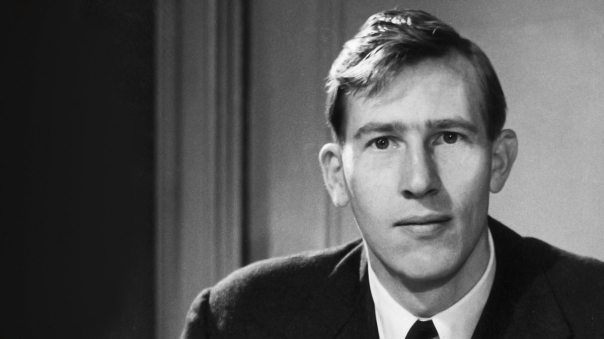


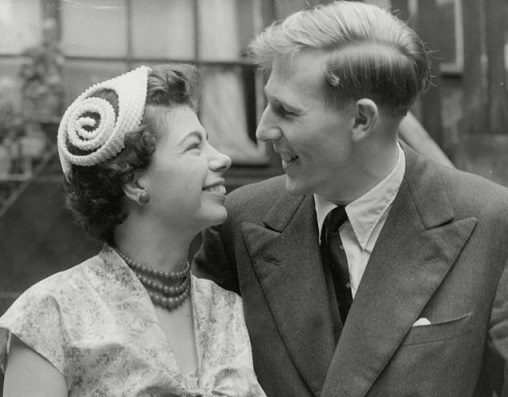




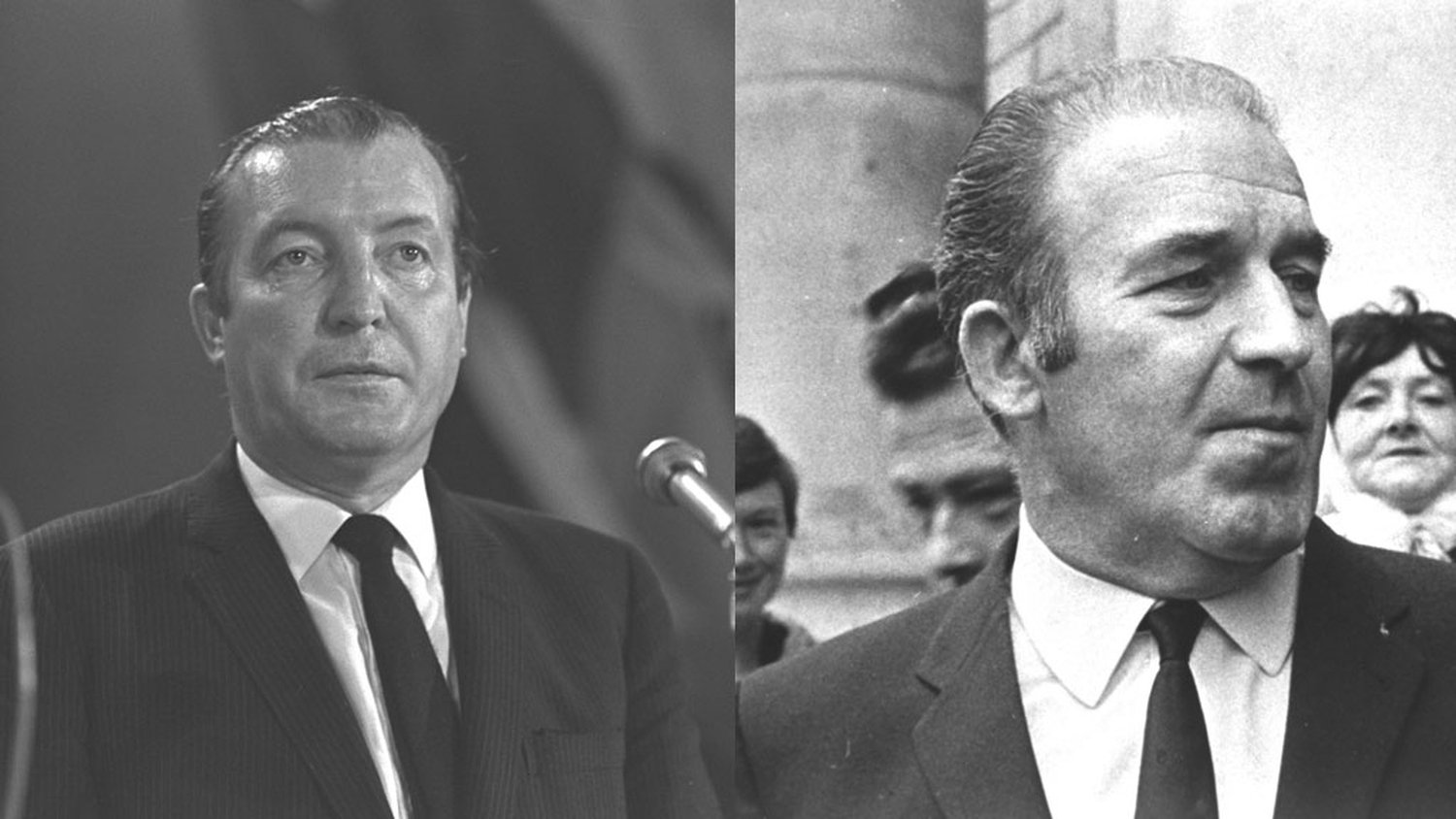
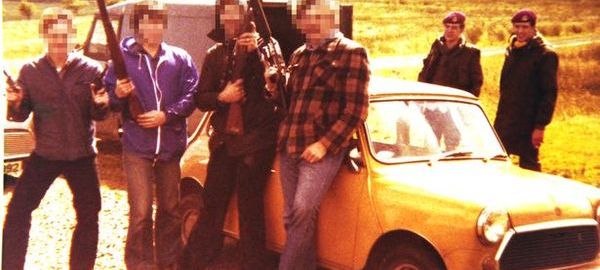


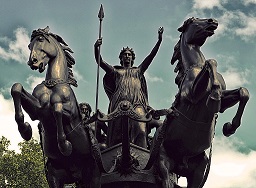


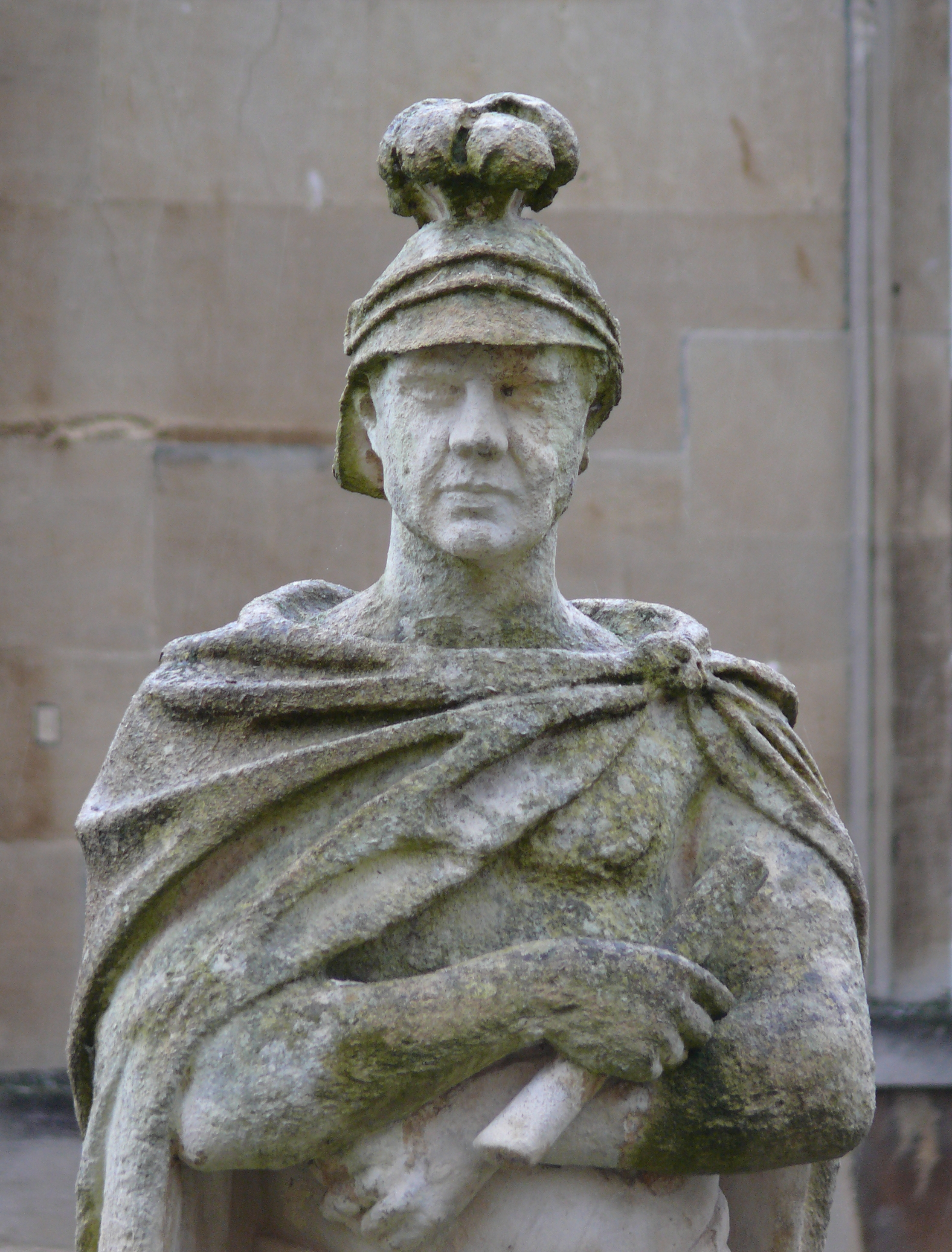




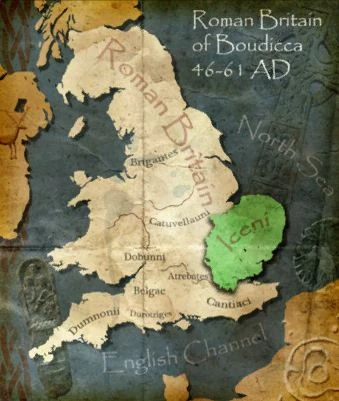




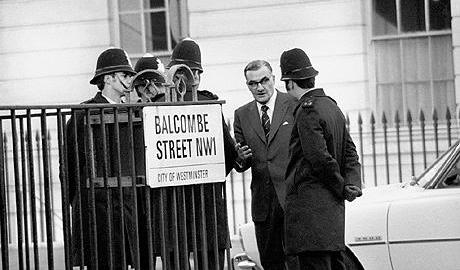
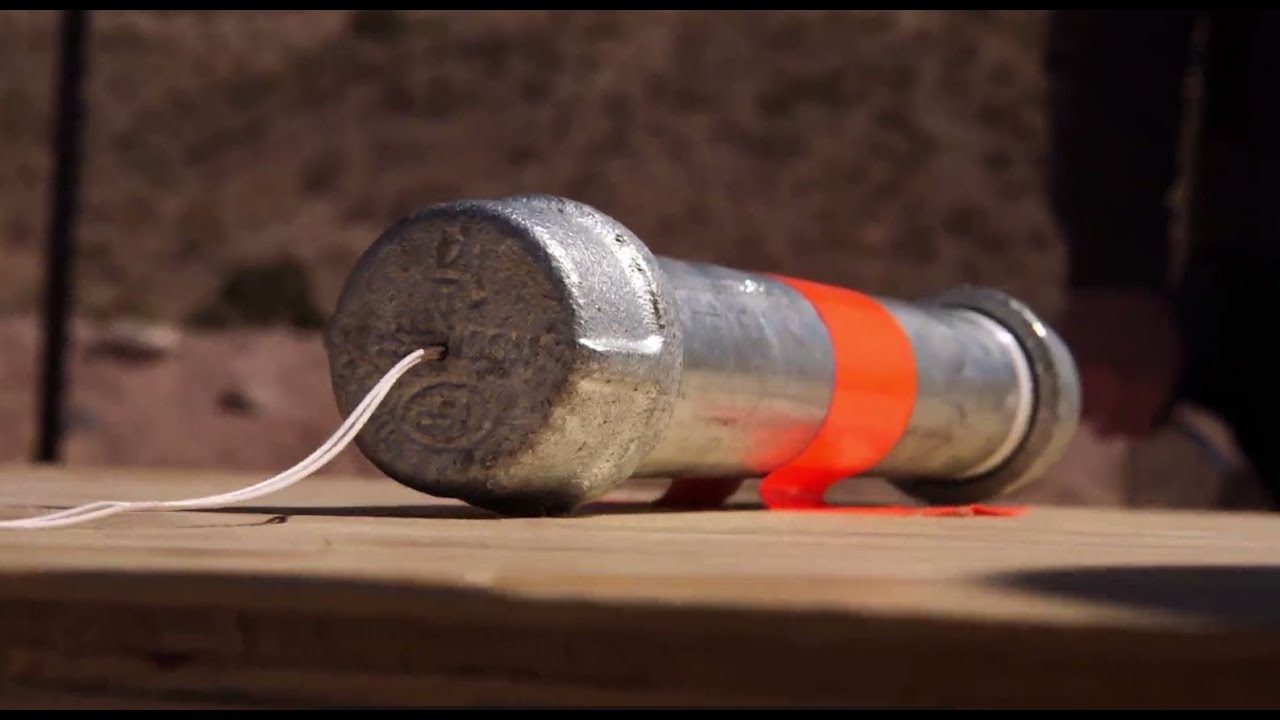


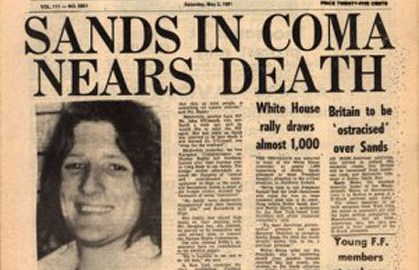


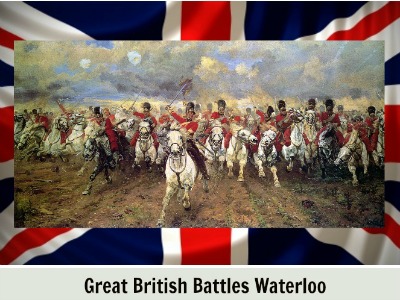


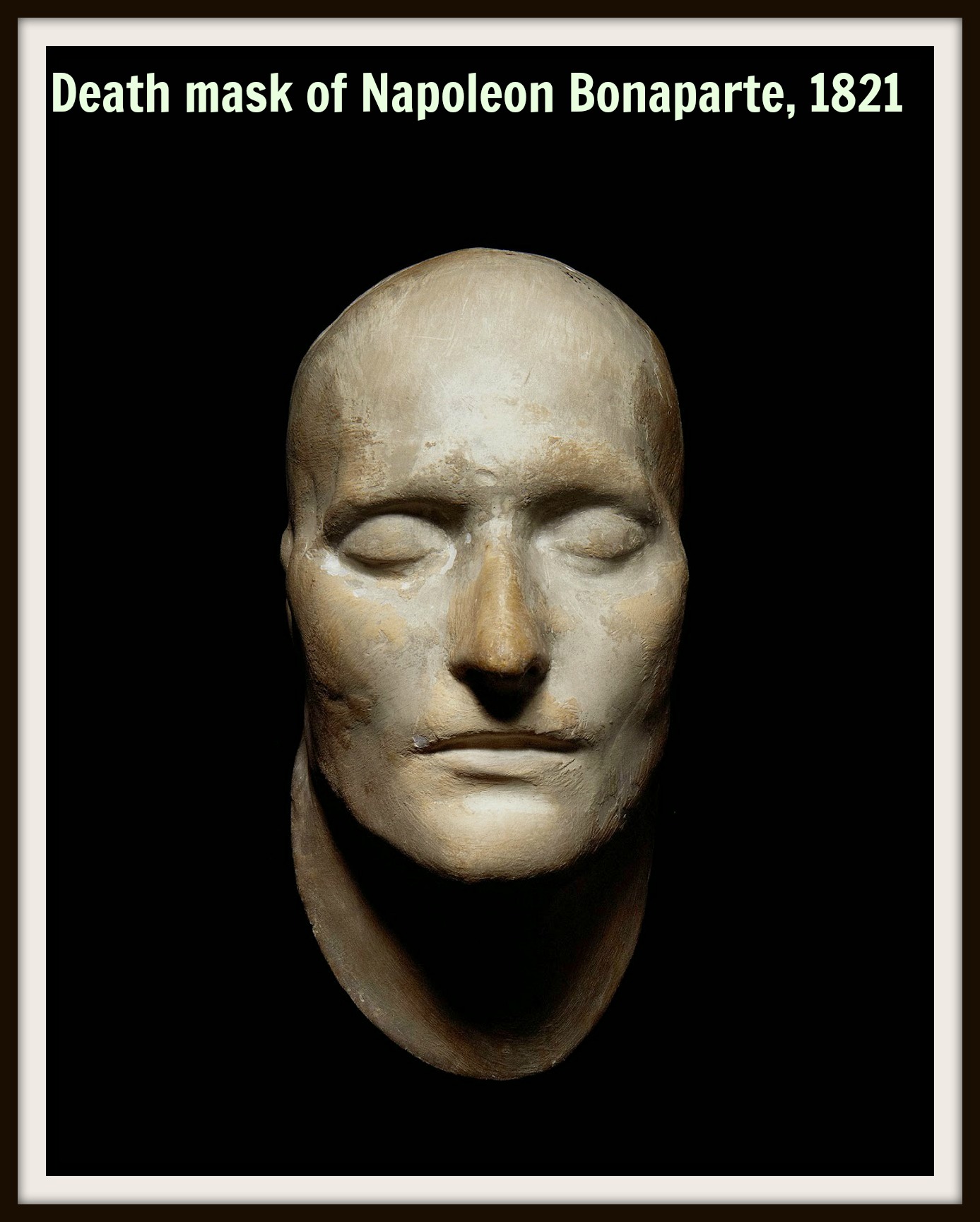








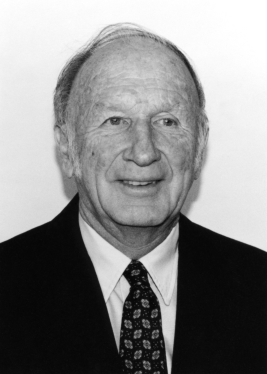


 , then
  and such that


 is given by
  . For rational
  maps into a
 belfastchildis.com

