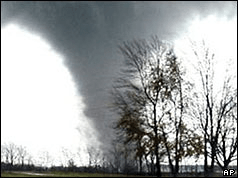
Two people have died in violent storms and a tornado which have devastated southern England.
Several others were injured in lightning strikes and fierce winds which caused massive damage to property around London.
The two who died were Frederick Cast and James Perry, of Kempston in Bedfordshire. Both were struck by lightning and killed as they ran for shelter.
Three others with them were injured and taken to hospital
Black Cloud
The worst damage to property was caused by a tornado which began in the late afternoon in Buckinghamshire.
Eyewitnesses spoke of a dense, black cloud gathering on the horizon and quickly developing into the dark column of a tornado.
It swept through towns and villages across the top of London as far as the Cambridgeshire fens, leaving ruin in its wake.
Terrifying Wind
In the Buckinghamshire village of Linslade, the terrifying wind wrecked hundreds of houses and other buildings as it tore through the streets and surrounding fields.
One resident, Tony Birch, described the scene:
“When we looked out of the side of the house, clouds appeared to be coming together in different directions. I believe I saw the actual source of the tornado.”
Dozens homeless
Whole streets of houses were stripped of their roof tiles, with furniture inside ruined by the heavy rain which followed.
Dozens of people have been made homeless, and relief workers are now helping those affected.
There were extraordinary scenes as the wind passed over: hundreds of trees were uprooted, drawn into the air and dropped large distances away.
The tornado also lifted up parked cars, cattle and horses and dumped them in nearby fields.
Witnesses said the tornado was 50 yards (45.7 metres) wide in places, although it shrank to just 5 yards (4.6 metres) wide in others.
It took less than an hour to travel from one end of the village to the other, but it caused hundreds of pounds worth of damage.
Flood Warnings
Other towns in the tornado’s path were also badly affected.
About half a mile from Linslade, in the town of Leighton Buzzard, a shop in the high street was struck by lightning and set on fire, while in Ely, Cambridgeshire, a double-decker bus was overturned.
There are warnings of further flooding throughout the entire region, and it’s likely that the difficult weather conditions will continue.
The path of the 1950 tornado was at least 66 miles long. It remains the longest trail on record for a tornado in England, and at two and a half hours the tornado is the longest lasting on record in Europe.In Linslade alone, 200 houses were damaged, 50 extensively. The Ministry of Supply handed out 450 tarpaulins to cover damaged roofs.
A further victim of the storms was eight-year-old Jennifer Margaret Reeves, who was swept away by flood waters and drowned.
One or two tornadoes are reported every year in the UK, of varying severity. Most are very limited in area, and cause damage over a narrow band not many miles in length.
They generally happen as a result of violent thunderstorms, and are caused by strong air currents within a storm cloud creating a high-speed funnel of wind.
Nicholas Winton memorial service honours Holocaust hero
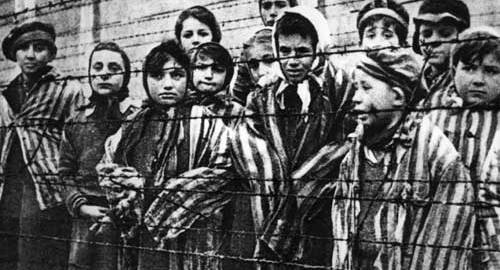
A memorial service is being held for Sir Nicholas Winton, who rescued hundreds of children from the Holocaust in the months before World War Two.
Some 400 people are attending event at London’s Guildhall, including 28 of those he saved and Czech, Slovak and UK government representatives.
Sir Nicholas organised the “Kindertransport” in which 669 mostly Jewish children came to Britain by train from Czechoslovakia in 1939.
He died on 1 July last year, aged 106.
The Kindertransport became public knowledge on BBC TV show That’s Life in 1988 when presenter Esther Rantzen reunited some of those saved with the person who helped them escape the Nazis
Sir Nicholas Winton, Nicky’s Children, the Czech Kindertransport
———————–
Sir Nicholas George WintonMBE (born Nicholas George Wertheim; 19 May 1909 – 1 July 2015) was a British humanitarian who organized the rescue of 669 children, most of them Jewish, from Czechoslovakia on the eve of the Second World War in an operation later known as the Czech Kindertransport (German for “children transportation”). Winton found homes for the children and arranged for their safe passage to Britain.
The world found out about his work over 40 years later, in 1988. The British press dubbed him the “British Schindler“. On 28 October 2014, he was awarded the highest honour of the Czech Republic, the Order of the White Lion (1st class), by Czech President Miloš Zeman.
Nicholas Winton was born on 19 May 1909 in Hampstead, London, a son of bank manager Rudolph Wertheim and wife Barbara (née Wertheimer). His parents were German Jews who had moved to London two years earlier. The family name was Wertheim, but they changed it to Winton in an effort at integration. They also converted to Christianity, and Winton was baptised.
Motto
Latin: Persto et Praesto
(“I stand firm and I stand first”)
In 1923, Winton entered Stowe School, which had just opened. He left without qualifications, attending night school while volunteering at the Midland Bank. He then went to Hamburg, where he worked at Behrens Bank, followed by Wasserman Bank in Berlin. In 1931, he moved to France and worked for the Banque Nationale de Crédit in Paris. He also earned a banking qualification in France. Returning to London, he became a broker at the London Stock Exchange. Though a stockbroker, Winton was also “an ardent socialist who became close to Labour Party luminaries Aneurin Bevan, Jennie Lee and Tom Driberg.” Through another socialist friend, Martin Blake, Winton became part of a leftwing circle opposed to appeasement and concerned about the dangers posed by the Nazis.[11]
At school, he had become an outstanding fencer and he was selected for the British team in 1938. He had hoped to compete in the next Olympics, but the games were cancelled because of the war
Rescue work
Shortly before Christmas 1938, Winton was planning to travel to Switzerland for a skiing holiday. He decided instead to visit Prague and help Martin Blake, who was in Prague as an associate of the British Committee for Refugees from Czechoslovakia, then in the process of being occupied by Germany, and had called Winton to ask him to assist in Jewish welfare work.
Winton single-handedly established an organization to aid children from Jewish families at risk from the Nazis. He set up his office at a dining room table in his hotel in Wenceslas Square. In November 1938, following Kristallnacht in Nazi-ruled Germany, the House of Commons approved a measure to allow the entry into Britain of refugees younger than 17, provided they had a place to stay and a warranty of £50 was deposited for their eventual return to their own country.
The Netherlands
An important obstacle was getting official permission to cross into the Netherlands, as the children were to embark on the ferry at Hoek van Holland. After Kristallnacht in November 1938, the Dutch government officially closed its borders to any Jewish refugees. The border guards, marechaussees, searched for them and returned any found to Germany, despite the horrors of Kristallnacht being well known.
Winton succeeded, thanks to the guarantees he had obtained from Britain. After the first train, the process of crossing the Netherlands went smoothly.Winton ultimately found homes in Britain for 669 children, many of whose parents would perish in the Auschwitz concentration camp. His mother worked with him to place the children in homes and later hostels. Throughout the summer of 1939, he placed photographs of the children in Picture Post seeking families to accept them. He also wrote to US politicians such as Roosevelt, asking them for haven for more children. He said that two thousand more might have been saved if they had helped but only Sweden took any besides those sent to Britain. The last group of 250, scheduled to leave Prague on 1 September 1939, were unable to depart. With Hitler‘s invasion of Poland on the same day, the Second World War had begun.
Of the children due to leave on that train, only two survived the war.
Winton acknowledged the vital roles of Doreen Warriner (March 16, 1904 – December 17, 1972), Trevor Chadwick (April 22, 1907 – December 23, 1979), Nicholas Stopford, Beatrice Wellington (June 15, 1907 – ) Josephine Pike, and Bill Barazetti (1914 – 2000 in Prague who also worked to evacuate children from Europe. Winton was in Prague for only about three weeks before the Nazis occupied the country. He never set foot in Prague Station. As he later wrote, “Chadwick did the more difficult and dangerous work after the Nazis invaded… he deserves all praise
—————————–
Sir Nicholas Winton – BBC Programme
“That’s Life” aired in 1988
—————————–
Notable people saved
Alf Dubs, Baron Dubs (born 1932), British Labour Party politician and former Member of Parliament
Of the 669 children saved from the Holocaust through Winton’s efforts, more than 370 have never been traced. BBC News suggested in 2015 that they may not know the full story of how they survived the war
After the war, Winton worked for the International Refugee Organisation and then the International Bank for Reconstruction and Development in Paris, where he met Grete Gjelstrup, a Danish secretary and accountant’s daughter.They married in her hometown of Vejle on 31 October 1948. The couple settled in Maidenhead, England, where they brought up their three children and he stood, unsuccessfully, for the town council in 1954. Winton found work in the finance departments of various companies.
Recognition
It is often wrongly reported that Winton suppressed humanitarian exploits for many years despite mentioning them in his election material while unsuccessfully standing for election to the town council in 1954. In 1988 his wife found a detailed scrapbook in their attic, containing lists of the children, including their parents’ names and the names and addresses of the families that took them in. She gave the scrapbook to Elisabeth Maxwell, a Holocaust researcher and wife of media magnate Robert Maxwell.
Winton himself could not remember the reason why this was done. Letters were sent to each of these known addresses and 80 of “Winton’s children” were found in Britain.
The wider world found out about his work in February 1988 during an episode of the BBC television programme That’s Life! when he was invited as a member of the audience. At one point, Winton’s scrapbook was shown and his achievements were explained. The host of the programme, Esther Rantzen, asked whether anybody in the audience owed their lives to Winton, and if so, to stand – more than two dozen people surrounding Winton rose and applauded.
Winton died peacefully in his sleep on the morning of 1 July 2015 at Wexham Park Hospital in Slough from cardio-respiratory failure having been admitted a week earlier following a deterioration in his health. He was 106 years old.
Winton’s death came 76 years to the day after 241 of the children he saved left Prague on a train.[45] A special report from the BBC News on several of the children whom Winton rescued during the war had been published earlier that day.
A statue of Winton stands on Platform 1 of the Praha hlavní nádraží railway station. Created by Flor Kent, it was unveiled on 1 September 2009 as part of a larger commemoration of the 70th anniversary of the last Kindertransport train (see also Winton train, below).
Winton was baptised as a Christian by his parents, but his Jewish ancestry disqualified him from being declared a Righteous Among the Nations by Yad Vashem in Israel. As an adult, he was not active in any particular religion. In a 2015 interview Winton told Stephen Sackur, he had become disillusioned with religion during the war as he could not reconcile religious movements “praying for victory on both sides of the same war”. Winton went on to describe his personal beliefs,
“I believe in ethics, and if everybody believed in ethics we’d have no problems at all. That’s the only way out; forget the religious side.”
Winton received the Wallenberg Medal on 27 June 2013 in London.The following year, the International Raoul Wallenberg Foundation established a literary competition named after Winton. The contest is for essays by high school students about Winton’s legacy.
Winton was awarded the Freedom of the City of London on 23 February 2015.
On 1 September 2009, a special “Winton Train” set off from the Prague Main railway station. The train, composed of one or two steam locomotives (out of a set of six) and carriages used in the 1930s, headed to London via the original Kindertransport route. On board were several surviving “Winton children” and their descendants, who were welcomed by Winton in London. The occasion marked the 70th anniversary of the intended last Kindertransport, due to set off on 3 September 1939 but prevented by the outbreak of the Second World War. At the train’s departure, a memorial statue for Winton, designed by Flor Kent, was unveiled at the railway station.
Order of the White Lion
On 19 May 2014, Winton’s 105th birthday, it was announced he was to receive the Czech Republic‘s highest honour, for giving Czech children “the greatest possible gift: the chance to live and to be free”. On 28 October 2014, Winton was awarded the Order of the White Lion (Class I) by Czech President Miloš Zeman,[69] the Czech Defence Ministry having sent a special aircraft to bring him to Prague. The award was made alongside one to Sir Winston Churchill, which was accepted by his grandson Nicholas Soames. Zeman said he regretted the highest Czech award having been awarded to the two personalities so belatedly, but added “better late than never”.
Winton was also able to meet some of the people he rescued 75 years earlier, themselves then in their 80s. He said, “I want to thank you all for this enormous expression of thanks for something which happened to me nearly 100 years ago—and a 100 years is a heck of a long time. I am delighted that so many of the children are still about and are here to thank me.”[68][71]
Speaking on BBC Radio 4’s Today programme, on 28 October 2014, Winton said he thought he had “made a difference to a lot of people” and went on to say,
“I don’t think we’ve learned anything… the world today is in a more dangerous situation than it has ever been.”
On 22 April 2016, a remembrance quarter peal was rung and a new method named ‘Sir Nicholas Winton Delight’ by bellringers of the Whiting Society of Ringers
Key Events & Deaths on this day in Northern Ireland Troubles
19th May
Sunday 19 May 1974
Day 5 of the UWC strike
Merlyn Rees, then Secretary of Sate for Northern Ireland, announced a State of Emergency (Section 40, Northern Ireland Constitution Act 1973).
Rees flew to Chequers, the country home of the Prime Minister, for talks.
The United Ulster Unionist Council (UUUC) met and agreed to support the Ulster Workers’ Council (UWC). The UWC withdrew its call for a total stoppage as of midnight. Some shops reported panic buying. A memorandum was submitted by the Northern Ireland Labour Party (NILP) to the Northern Ireland Office (NIO
Tuesday 19 May 1981
Five British soldiers were killed in an Irish Republican Army (IRA) landmine attack near Bessbrook, County Armagh. The soldiers had been travelling in an armoured vehicle when the bomb exploded.
The Ulster Unionist Party (UUP) expelled Robert McCartney because of his criticism of UUP leaders and also for his involvement in the Campaign for Equal Citizenship.
Wednesday 19 May 1993
Local Government Elections
There were district council elections to choose 582 councillors for the 26 District Councils in Northern Ireland.
[When the results were declared they showed an increase in the percentage share of the vote for the Social Democratic and Labour Party (SDLP), Sinn Féin (SF), and the Alliance Party of Northern Ireland (APNI).]
Three former detectives in the British police who had been involved in the investigations that led to the convictions of the Guildford Four were cleared of conspiring to pervert the course of justice. The men were accused of having manufactured the interview notes of one of the Guildford Four.
The Northern Ireland Office (NIO) published a 21 page British government response to Sinn Féin (SF) questions that arose from the Downing Street Declaration (DSD). SF had submitted a series of 20 questions via the Irish government. Albert Reynolds, then Taoiseach (Irish Prime Minister), described the clarification as “comprehensive and positive”.
Friday 19 May 1995
At the Forum for Peace and Reconciliation in Dublin, Seamus Mallon, then deputy leader of the Social Democratic and Labour Party (SDLP), criticised the support by Sinn Féin (SF) for imposed all-Ireland institutions without a democratic assembly in Northern Ireland. Mallon argued in favour of the model in the Framework Documents (published on 22 February 1995).
Sunday 19 May 1996
Geoffrey Anderson, then a Royal Irish Regiment soldier, killed two people and injured a third before committing suicide.
There was a confrontation between the Royal Ulster Const abulary (RUC) and nationalists in the village of Dunloy, County Antrim, during an Apprentice Boys of Derry march
Monday 19 May 1997
Gerry Adams, then President of Sinn Féin (SF), and Martin McGuinness, then Vice-President of Sinn Féin (SF), travelled to Westminster to press their case for facilities within the House of Commons.
The two SF Members of Parliament (MPs) were denied access to the House when they refused to take their seats which would have involved taking an oath of allegiance to the Queen.
Tuesday 19 May 1998
John Hume, then leader of the Social Democratic and Labour Party (SDLP), and David Trimble, then leader of the Ulster Unionist Party (UUP), met on the stage at a U2 concert at Belfast’s Waterfront Hall.
The concert had been arranged to support the ‘Yes’ campaign.
[Bono, then lead singer with the group U2, joined the two party leaders on stage and held their arms aloft. This event was thought to have given the ‘Yes’ campaign a much needed boost. Until then the two party leaders had not campaigned together.]
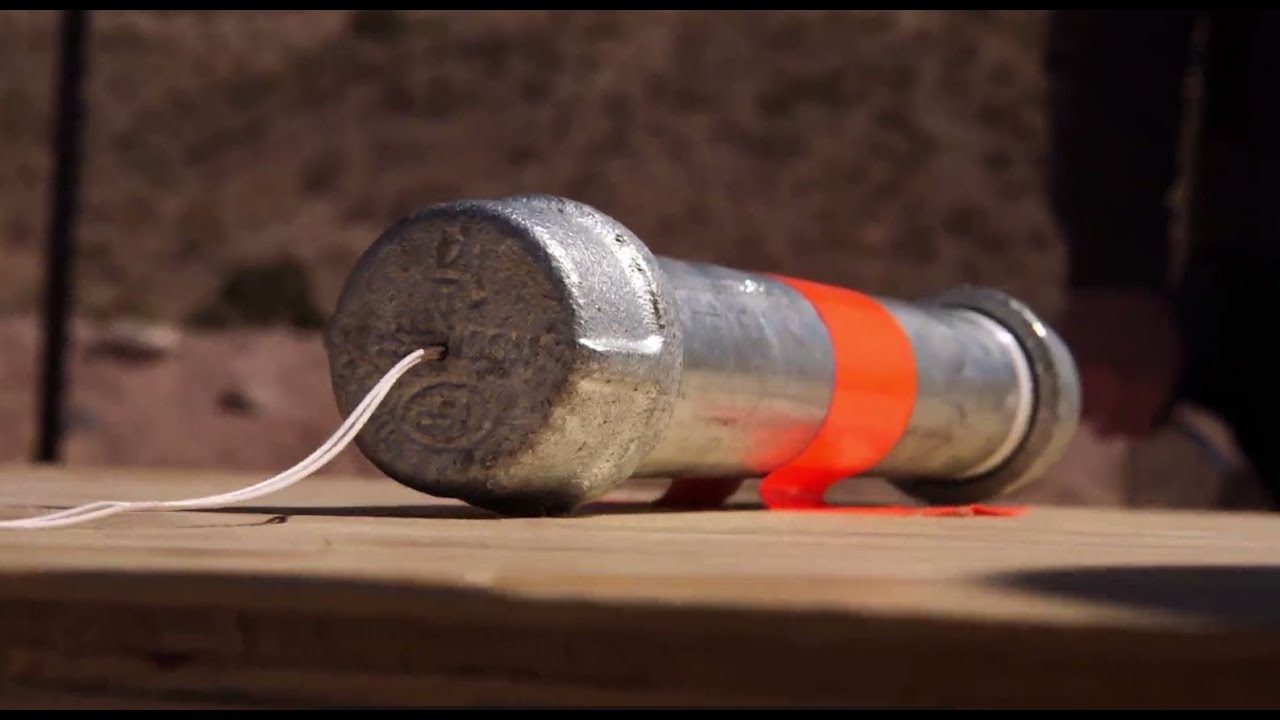
A ‘pipe-bomb’ contained in a parcel was delivered to the Dublin Tourist offices in St Andrew’s Street, Dublin, Republic of Ireland. The device was spotted and defused.
[An unknown Loyalist paramilitary group was thought to be responsible for the attack. Pipe-bombs were widely used by Loyalist paramilitaries over the coming years particularly in attacks on the homes of Catholic families in Northern Ireland.]
Wednesday 19 May 1999
John Pickering (Rev), then rector of Drumcree, together with his vestry, decided to defy the General Synod’s vote on 18 May 1999 and announced that they would go ahead with the service for the Orange Order at Drumcree on 4 July 1999.
Talks were held in Downing Street involving the Ulster Unionist Party (UUP), the Social Democratic and Labour Party (SDLP), and Sinn Féin (SF).
However the parties failed to reach agreement on outstanding issues.
Loyalists clashed with Royal Ulster Constabulary (RUC) officers in Portadown, County Armagh.
Eddie Copeland was awarded £27,500 by Belfast High Court in compensation for injuries received when he was shot by a British Army soldier on 26 October 1993. The case was taken against the Ministry of Defence. Copeland had been attending the funeral of Thomas Begley who was killed planting a bomb on the Shankill Road on 23 October 1993.
Garda Síochána (the Irish police) opened an inquiry into the killing of Seamus Ludlow on 2 May 1976 who was found shot in laneway near to his home, Thistlecross, near Dundalk, County Louth. Gardaí initially blamed the Irish Republican Army (IRA) for the killing.
[However later it was claimed that Ludlow had been killed by the Red Hand Commando (RHC) / Ulster Volunteer Force (UVF). There was also speculation of involvement by the Special Air Service (SAS) and also by the Ulster Defence Regiment (UDR).]
——————————————
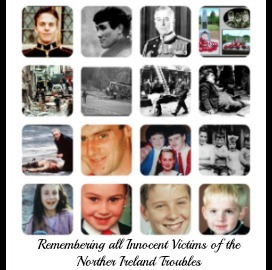
Remembering all innocent victims of the Troubles
Today is the anniversary of the death of the following people killed as a results of the conflict in Northern Ireland
“To live in hearts we leave behind is not to die
– Thomas Campbell
To the innocent on the list – Your memory will live forever
– To the Paramilitaries –
There are many things worth living for, a few things worth dying for, but nothing worth killing for.
10 People lost their lives on the 19th May between 1972 – 1981
——————————————
19 May 1972 Harold Morris (15)
Protestant Status: Civilian (Civ),
Killed by: Irish Republican Army (IRA)
Shot by sniper while walking along Boundary Street, Shankill, Belfast.
——————————————
19 May 1972
Manus Deery (15)
Catholic Status: Civilian (Civ),
Killed by: British Army (BA)
Shot by sniper from British Army (BA) observation post on city walls, while in entry off Westland Street, Derry.
——————————————
19 May 1973 Robert McIntyre (24)
Protestant Status: Ulster Volunteer Force (UVF),
Killed by: Ulster Defence Regiment (UDR)
Died two days after being shot by off duty Ulster Defence Regiment (UDR) member while attempting to hijack a car, Shankill Road, Belfast.
——————————————
19 May 1973 Edward Coogan (39)
Catholic Status: Civilian (Civ),
Killed by: non-specific Loyalist group (LOY)
Shot from passing car while walking along Adela Street, off Antrim Road, Belfast.
Killed by: Irish Republican Army (IRA)
Shot while delivering bread, Garrison, County Fermanagh.
——————————————
19 May 1981
Andrew Gavin (19)
nfNI Status: British Army (BA),
Killed by: Irish Republican Army (IRA)
Killed in land mine attack on British Army (BA) Armoured Personnel Carrier, Chancellor’s Road, Altnaveigh, near Bessbrook, County Armagh.
——————————————
19 May 1981
Paul Bulman (19)
nfNI Status: British Army (BA),
Killed by: Irish Republican Army (IRA)
Killed in land mine attack on British Army (BA) Armoured Personnel Carrier, Chancellor’s Road, Altnaveigh, near Bessbrook, County Armagh.
——————————————
19 May 1981
Michael Bagshaw (25)
nfNI Status: British Army (BA),
Killed by: Irish Republican Army (IRA)
Killed in land mine attack on British Army (BA) Armoured Personnel Carrier, Chancellor’s Road, Altnaveigh, near Bessbrook, County Armagh.
——————————————
19 May 1981 John King (20)
nfNI Status: British Army (BA),
Killed by: Irish Republican Army (IRA)
Killed in land mine attack on British Army (BA) Armoured Personnel Carrier, Chancellor’s Road, Altnaveigh, near Bessbrook, County Armagh.
——————————————
19 May 1981
Grenville Winstone (27)
nfNI Status: British Army (BA),
Killed by: Irish Republican Army (IRA)
Killed in land mine attack on British Army (BA) Armoured Personnel Carrier, Chancellor’s Road, Altnaveigh, near Bessbrook, County Armagh.
OriginThe office was created in 1350 by royal letters patent, though the current title dates from 1522. The position was adopted by other members of the Commonwealth when they adopted the British Westminster system. The title is derived from the staff of office, an ebony staff topped with a golden lion, which is the main symbol of the office’s authority.
The office was created in 1350 by royal letters patent, though the current title dates from 1522. The position was adopted by other members of the Commonwealth when they adopted the British Westminster system. The title is derived from the staff of office, an ebony staff topped with a golden lion, which is the main symbol of the office’s authority.
United Kingdom
Appointment
Black Rod is formally appointed by the Crown based on a recruitment search performed by the Clerk of the Parliaments, to whom he reports. Prior to 2002 the office rotated among retired senior officers from the Royal Navy, the British Army and the Royal Air Force. It is now advertised openly. Black Rod is an officer of the English Order of the Garter, and is usually appointed Knight Bachelor if not already knighted. His deputy is the Yeoman Usher of the Black Rod.
Official duties
He is responsible, as the representative of the Administration and Works Committee, for maintaining the buildings, services, and security of the Palace of Westminster. Black Rod’s official duties also include responsibility as the usher and doorkeeper at meetings of the Most Noble Order of the Garter; the personal attendant of the Sovereign in the Lords; as secretary to the Lord Great Chamberlain and as the Sergeant-at-Arms and Keeper of the Doors of the House, in charge of the admission of strangers to the House of Lords. Either Black Rod or his deputy, the Yeoman Usher, is required to be present when the House of Lords, the upper house of Parliament, is in session, and plays a role in the introduction of all new Lords Temporal in the House (but not of bishops as new Lords Spiritual). Black Rod also arrests any Lord guilty of breach of privilege or other Parliamentary offence, such as contempt or disorder, or the disturbance of the House’s proceedings. His equivalent for security in the House of Commons is the Serjeant at Arms.
Black Rod, along with his deputy, is responsible for organizing ceremonial events within the Palace of Westminster, providing leadership in guiding the significant logistics of running such events.
Ceremonial Duties
Mace
Black Rod is in theory responsible for carrying the Mace into and out of the chamber for the Speaker of the House of Lords (formerly the Lord Chancellor, now the Lord Speaker), though this role is delegated to the Yeoman Usher and Deputy Serjeant-at-Arms, or on judicial occasions, to the Lord Speaker’s deputy, the Assistant Serjeant-at-Arms. The mace was introduced in 1876.
State Opening of Parliament
Black Rod is best known for his part in the ceremonies surrounding the State Opening of Parliament and the Throne speech. He summons the Commons to attend the speech and leads them to the Lords. As part of the ritual, as Black Rod approaches the doors to the chamber of the House of Commons to make his summons, they are slammed in his face. This is to symbolize the Commons’ independence of the Sovereign. Black Rod then strikes the door three times with his staff, and is then admitted and issues the summons of the monarch to attend.
This ritual is derived from the attempt by King Charles I to arrest the Five Members in 1642, in what was seen as a breach of the constitution. This and prior actions of the King led to the Civil War. After that incident, the House of Commons has maintained its right to question the right of the monarch’s representative to enter their chamber, although they cannot bar him from entering with lawful authority. In recent years, Black Rod has received jibes on this annual occasion from the outspoken republican LabourMPDennis Skinner
Boudica Warrior Queen Boudica (/ˈbuːdᵻkə/; alternative spellings: Boudicca, Boudicea, also known as Boadicea /boʊdᵻˈsiːə/ and in Welsh as Buddug [ˈbɨ̞ðɨ̞ɡ]) (d. AD 60 or 61) was a queen of the Brit…
– Disclaimer – The views and opinions expressed in these documentaries are soley intended to educate and provide background information to those interested in the Troubles of Northern I…
The battle took place on 1 July 1690 in the old style (Julian) calendar. This was equivalent to 11 July in the new style (Gregorian) calendar, although today its…
Key Events & Deaths on this day in Northern Ireland Troubles
18th May
——————————-
Saturday 18 May 1974
Day 4 of the UWC strike
The Ulster Workers’ Council (UWC) issued a statement calling for an all-out stoppage to begin at midnight on Sunday 19 May 1974.
The UWC criticised Merlyn Rees, then Secretary of Sate for Northern Ireland, for not meeting with leaders of the strike. Members of the Northern Ireland Executive were told that the Army could not run the power stations on their own.
There were attempts at negotiation by the Northern Ireland Labour Party (NILP).
[At this stage some people believed that there were grounds for thinking that the strike might not succeed. Many middle-class Protestants were against the strike, as were managers, technicians in power stations, doctors, lawyers, teachers and small shopkeepers.]
Joseph Shaw (22), a member of the Ulster Volunteer Force (UVF), was shot dead by a member of the Ulster Defence Association (UDA) during a fracas in North Star Bar, North Queen Street, Belfast. The killing was part of a feud between the UDA and the UVF.
Wednesday 18 May 1977
District Council ElectionsElections were held to the 26 district councils in Northern Ireland. As the United Ulster Unionist Council (UUUC) had broken up the main Unionist parties stood against each other for the first time since 1974.
Saturday 18 May 1984
Two Royal Ulster Constabulary (RUC) officers were killed when the Irish Republican Army (IRA) exploded a land mine as their armoured patrol car travelled near Camlough, County Armagh.
Two British Army (BA) soldiers were killed, and another died later as a result of injuries, after the IRA planted a booby trap bomb under their car in Enniskillen, County Fermanagh. The soldiers were off-duty at the time and had just competed in a fishing competition.
Wednesday 18 May 1994
Two Catholics Killed by UVF
Gavin McShane (17) and Shane McArdle (17), both Catholic civilians, were killed when the Ulster Volunteer Force (UVF) carried out a gun attack on people in a taxi depot on Lower English Street, Armagh.
Thursday 18 May 1995
A joint delegation from the Ulster Unionist Party (UUP) and the Social Democratic and Labour Party (SDLP) held a meeting with John Major, then British Prime Minister, in London to discuss social and economic matters.
Following the meeting the Northern Ireland Office (NIO) released a statement saying that Patrick Mayhew, then Secretary of State for Northern Ireland, would meet with Gerry Adams, then President of Sinn Féin (SF), informally when they were both in Washington on 24 May 1995 attending an investment conference on Northern Ireland.
[Later James Molyneaux, then leader of the Ulster Unionist Party (UUP), announced that he would not attend the conference because of the planned meeting between Mayhew and Adams.]
Tuesday 18 May 1999
There was a Loyalist rally in Portadown, County Armagh, in support of Drumcree. Six Royal Ulster Constabulary (RUC) officers and six civilians were injured in disturbances at the rally.
David Trimble, then leader of the Ulster Unionist Party (UUP), reiterated his party’s position on Irish Republican Army (IRA) decommissioning as Tony Blair, then British Prime Minister, called the main party leaders back to Downing Street, London. The Prime Minister was hoping to resolve the impasse which threatened the Good Friday Agreement.
After the one-hour meeting, UUP party sources indicated that Trimble would propose that potential ministers in an Executive would be “identified”, though not “nominated”.
There was a meeting of the Church of Ireland General Synod in Dublin. The General Synod voted to urge Drumcree church vestry to withdraw its invitation to the Orange Order to hold services at the church if the Order did not give assurances to respect Church sanctity and property. John Pickering (Rev), then rector of Drumcree, voted against each of the three motions that arose in respect of Drumcree.
[On 19 May 1999 Pickering and his vestry decided to defy the Synod’s vote and announced that they would go ahead with the service for the Orange Order on 4 July 1999.]
The General Synod voted to stop flying the Union flag on churches to avoid giving offence.
——————————————
Remembering all innocent victims of the Troubles
Today is the anniversary of the death of the following people killed as a results of the conflict in Northern Ireland
“To live in hearts we leave behind is not to die
– Thomas Campbell
To the innocent on the list – Your memory will live forever
– To the Paramilitaries –
There are many things worth living for, a few things worth dying for, but nothing worth killing for.
13 People lost their lives on the 18th May between 1972 – 1997
——————————————
18 May 1972 John Hillman (28)
nfNI Status: British Army (BA),
Killed by: Irish Republican Army (IRA)
Died three days after being shot by sniper while in Flax Street British Army (BA) base, Ardoyne, Belfast.
——————————————
18 May 1973
Sean McKee (17)
Catholic Status: Irish Republican Army (IRA),
Killed by: British Army (BA)
Shot during attempted sniper attack on British Army (BA) foot patrol, Fairfield Street, Ardoyne, Belfast.
——————————————
18 May 1974 Joseph Shaw (22)
Protestant Status: Ulster Volunteer Force (UVF),
Killed by: Ulster Defence Association (UDA)
Shot during fracas in North Star Bar, North Queen Street, Belfast. Ulster Defence Association (UDA) / Ulster Volunteer Force (UVF) feud.
——————————————
18 May 1975 Francis Rice (17)
Catholic Status: Irish Republican Army (IRA),
Killed by: Ulster Volunteer Force (UVF)
Found stabbed to death on pathway, off Rathfriland Road, Castlewellan, County Down
——————————————
18 May 1984
Trevor Elliott (28)
Protestant Status: Royal Ulster Constabulary (RUC),
Killed by: Irish Republican Army (IRA)
Killed in land mine attack on Royal Ulster Constabulary (RUC) armoured patrol car, Lislea, near Camlough, County Armagh.
——————————————
18 May 1984
Neville Gray (25)
Protestant Status: Royal Ulster Constabulary (RUC),
Killed by: Irish Republican Army (IRA)
Killed in land mine attack on Royal Ulster Constabulary (RUC) armoured patrol car, Lislea, near Camlough, County Armagh
——————————————
18 May 1984 Thomas Agar (35)
nfNI Status: British Army (BA),
Killed by: Irish Republican Army (IRA)
Off duty. Killed by booby trap bomb attached to his car, outside Lakeland Forum Leisure Centre, Enniskillen, County Fermanagh.
——————————————
18 May 1984
Robert Huggins (29)
nfNI Status: British Army (BA),
Killed by: Irish Republican Army (IRA)
Off duty. Killed by booby trap bomb attached to his car, outside Lakeland Forum Leisure Centre, Enniskillen, County Fermanagh.
——————————————
18 May 1984 Peter Gallimore (27)
nfNI Status: British Army (BA),
Killed by: Irish Republican Army (IRA)
Off duty. Injured by booby trap bomb attached to his car, outside Lakeland Forum Leisure Centre, Enniskillen, County Fermanagh. He died 18 October 1984
——————————————
18 May 1993 Denis Headley (38)
Catholic Status: Civilian (Civ),
Killed by: not known (nk)
Found shot, in laneway off Sugarisland Road, Bleary, near Lurgan, County Down
——————————————
18 May 1994 Gavin McShane (17)
Catholic Status: Civilian (Civ),
Killed by: Ulster Volunteer Force (UVF)
Shot, while in taxi depot, Lower English Street, Armagh.
——————————————
18 May 1994 Shane McArdle (17)
Catholic Status: Civilian (Civ),
Killed by: Ulster Volunteer Force (UVF)
Shot, while in taxi depot, Lower English Street, Armagh.
——————————————
18 May 1997 John Harbinson (39)
Protestant Status: Civilian (Civ),
Killed by: Ulster Volunteer Force (UVF)
Found beaten to death in entry, off Mount Vernon Walk, Mount Vernon, Belfast.
——————————————
v
My autobiography:
A Belfast Child is now available to pre-order on Amazon , launch date now is 3rd September
" he began a turbulent and hedonistic adulthood in London "













 King James II
  King Billy
_in_NI_logo.jpg/180px-Labour_Party_(UK)_in_NI_logo.jpg)


 belfastchildis.com