Monthly Archives: February 2016

Great British Battles – Battle of Goose Green


The Battle of Goose Green

The Falklands War – The Untold Story

The Battle of Goose Green (28–29 May 1982) was an engagement between British and Argentine forces during the Falklands War. Goose Green and its neighbouring settlement Darwin on East Falkland lie on Choiseul Sound on the east side of the island’s central isthmus. They are about 13 miles (21 km) south of the site where the major British amphibious landings took place in San Carlos Water (Operation Sutton) on the night of 21/22 May 1982.

Goose Green school.jpg
Darwin School House
Date 28–29 May 1982
Location Goose Green and Darwin, Falkland Islands
Result British victory
Belligerents
Argentina Argentina United Kingdom United Kingdom
Commanders and leaders
Lt. Col. Ítalo Piaggi (POW)
Vicecomodoro Wilson Pedrozo
Lt. Col. Herbert Jones 
Maj. Chris Keeble
Strength
684[4]-871 army
202 airforce
10 navy personnel
Total: 896-1083[5]
690[6]
Casualties and losses
45[7][8]-55 killed[9][10]
98 army wounded[11] and at least 14 air force personnel wounded.[12]
961[13] captured

——————————————–

The Battle of Goose Green

——————————————–

Times and nomenclature

British forces worked on UTC (Zulu) Time and many reports and sources quote the timing of events based on Zulu time. All times stated in this page are reflected as local, Falkland Island time (UTC−3), the same as Argentine time. On the day of the battle, sunrise was at 08:39 and sunset at 16:58.[17] To avoid confusion between similar company designations, Argentine companies are referred to in the form “Company A” while British forces are referred to as “A Company.”

Terrain and conditions

Map 1: Context map showing location of the Darwin isthmus in relation to the Falkland Islands. Area in red matches the area covered by Map 2

Vegetation and terrain: Low tussock covered hills with gorse filled valleys. Image is looking south in the direction of A Company, 2 Para attack with Darwin settlement on the left. Darwin Hill on the right.

Goose Green and Darwin are on a narrow isthmus connecting Lafonia to Wickham Heights, which together form the large eastern island of the Falkland Islands. The terrain is rolling and treeless and is covered with grass outcrops, areas of thick gorse and peat bogs making effective camouflage and concealment extremely difficult. From May to August, the southern hemisphere winter, the ground is sodden and frequently covered with brackish water, causing movement to be slow and exhausting, especially at night. The isthmus has two settlements, both on the eastern coastal edge with Darwin settlement to the north and Goose Green to the south. The islands have a cold, damp climate and light, drizzly rains occur two out of every three days with continuous winds. Periods of rain, snow, fog, and sun change rapidly, and sunshine is extremely limited, leaving few opportunities for troops to warm up and dry out.[18]

Reasons for the attack

The bulk of the Argentine forces were in positions around Port Stanley about 50 miles (80 km) to the east of San Carlos. The Argentine positions at Goose Green and Darwin were well defended by a force of combined units equipped with artillery, mortars, 35 mm cannon and machine guns.[19] British intelligence indicated that the Argentine force only presented limited offensive capabilities and did not pose a major threat to the landing area at San Carlos. Consequently, Goose Green seemed to have no strategic military value for the British in their campaign to recapture the islands and initial plans for land operations had called for Goose Green to be isolated and bypassed.[20]

After the British landings at San Carlos on 21 May and while the bridgehead was being consolidated, no offensive ground operations had been conducted and activities were limited to digging fortified positions, patrolling and waiting;[21] during this time Argentine air attacks caused significant loss of and damage to British ships in the area around the landing grounds. These attacks, and the lack of movement of the landed forces out of the San Carlos area, led to a feeling among senior commanders and politicians in the UK that the momentum of the campaign was being lost.[22] As a result, British Joint Headquarters in the UK came under increasing pressure from the British government for an early ground offensive of political and propaganda value.[23] There were also fears that the United Nations Security Council would vote for a cease-fire, maintaining current positions. If the Darwin-Goose Green isthmus could be taken prior to such a decision, British forces would control access to the entire Lafonia and thus a significant portion of East Falkland.[24] On 25 May Brigadier Julian Thompson, ground forces commander, commanding 3 Commando Brigade, was again ordered to mount an attack on Argentine positions around Goose Green and Darwin.[22]

Argentinian defences

The defending Argentine forces, known as Task Force Mercedes, consisted of two companies of Lieutenant-Colonel Italo Piaggi‘s 12th Infantry Regiment (IR12)—his third company (Company B) was still deployed on Mount Kent as Combat Team Solari and was only to re-join the battalion after the first days fighting.[25] The Task Force in 1982 also contained a company of the Ranger-type 25th Infantry Regiment (IR25).[26] Air defence was provided by a battery of six 20 mm Rheinmetall manned by Air Force personnel and two radar-guided Oerlikon 35 mm anti-aircraft guns from the 601st Anti-Aircraft Battalion, that would be employed in a ground support role in the last stages of the fighting. There was also one battery of three OTO Melara Mod 56 105 mm pack howitzers from the 4th Airborne Artillery Regiment. Pucarás based at Stanley, armed with rockets and napalm, provided close air support.[27][28] Total forces under Piaggi’s commanded numbered 1083 men.[29]

Piaggi’s orders required him: (a) to provide a reserve battle group (Task Force Mercedes) in support of other forces deployed to the west of Stanley; (b) to occupy and defend the Darwin isthmus; and (c) to defend Military Air Base Condor located at Goose Green. He assumed an all-round defence posture with Company A, IR12 providing the key to his defence, they being deployed along a gorse hedge running across the Darwin isthmus from Darwin Hill to Boca House.[25] Piaggi deployed his Recce Platoon as an advance screen forward of Company A IR12 towards Coronation Ridge while Company C IR12 were deployed south of Goose Green to cover the approaches from Lafonia. To replace his Company B left on Mount Kent, he created a composite company from headquarters and other staff and deployed them in Goose Green. 1st Lt Carlos Daniel Esteban‘s “Ranger” Company C IR25 provided a mobile reserve and were billeted at the school-house in Goose Green.[25] Elements were also deployed to Darwin settlement, Salinas Beach and Boca House and the air force security cadets together with the anti-aircraft elements were charged with protecting the airfield. Minefields had been laid in areas deemed tactically important (Refer Map 2) to provide further defence against attack.[30]


Argentinian 120mm mortar position (possibly close to Goose Green)

On paper Piaggi had a full regiment, but it consisted of units from three separate regiments from two different brigades, none of whom had ever worked together. IR12 consisted mostly of conscripts from the northern, sub-tropical province of Corrientes, while the IR25 Company was considered an elite formation and well-led. At the start of the battle, the Argentinian forces had about the same number of effective combatants as the British paratroopers.[31] Some elements were well-trained and displayed a high degree of morale and motivation (Company C IR25 and 25 Signal company); one of their officers remarking that: “…we are going to defend something that is ours.”[31] Other companies were less well motivated, with the 12th Regiment chaplain, Padre Santiago Mora writing:

The conscripts of 25th Infantry wanted to fight and cover themselves in glory. The conscripts of 12th Infantry Regiment fought because they were told to do so. This did not make them any less brave. On the whole, they remained admirably calm.[32]

The Argentine positions were well-selected, and officers were well-briefed.[31] In the weeks before the battle British air strikes, poor logistic support and inclement conditions had contributed to the reduction of overall Argentine morale,[33] but it remained strong among the officers, NCOs and conscripts of the 25th Regiment company and 4th Airborne Artillery battery.[34]

Remains of Harrier XZ998, shot down over Goose Green on 27 May 1982.

On 4 May three Royal Navy Sea Harriers operating from HMS Hermes attacked the airfield and installations at Goose Green. During the operation, a Sea Harrier was shot down by Argentine 35mm anti-aircraft fire, killing its pilot.[35] As part of the diversionary raids to cover the British landings in the San Carlos area on 21 May, which involved naval shelling and air attacks, ‘D’ Squadron of the SAS put in a major raid to simulate a battalion-sized attack on the Argentine troops dug in on Darwin Ridge.[36] Argentine forces had also spotted 2 Para reconnaissance parties in the days prior to the attack. Throughout 27 May, Royal Air Force Harriers were active over Goose Green. One of them, responding to a call for help from 2 Para, was lost to 35mm fire while attacking Darwin Ridge.[37][38][39] The Harrier attacks, the sighting of the reconnaissance elements as well as the BBC announcing that the 2nd Battalion of the Parachute Regiment were poised and ready to assault Darwin and Goose Green the day before the assault alerted the Argentine garrison to the impending attack.[40]

British assault force

Thompson ordered 2nd Battalion of the Parachute Regiment (2 Para) to prepare for and execute the operation as they were the unit closest to Goose Green in the San Carlos defensive perimeter.[41] He ordered Lieutenant-Colonel Herbert ‘H’ Jones, Officer Commanding 2 Para, to “carry out a raid on Goose Green isthmus and capture the settlements before withdrawing in a reserve for the main thrust to the north.” The “capture” component appealed more to Jones than the “raid” component, although Thompson later acknowledged that he had assigned insufficient forces to rapidly execute the “capture” part of the orders.[42]

Milan missile, similar to those used in the battle

2 Para consisted of three rifle companies, one patrol company, one support company and an HQ company. Thompson had assigned three 105 mm artillery pieces with 960 shells from 29 Commando Regiment, Royal Artillery; one MILAN anti-tank missile platoon and Scout helicopters as support elements. In addition, close air support was available from three Royal Air Force Harriers, and naval gunfire support was to be provided by HMS Arrow in the hours of darkness.[43]

SAS reconnaissance had reported that the Darwin – Goose Green area was occupied by one Argentine company. Brigade intelligence reported that enemy forces consisted of three infantry companies (two from IR12 and one from IR25), one platoon from IR8 plus a possible amphibious platoon together with artillery and helicopter support. Jones was not too perturbed by the conflicting intelligence reports and, incorrectly, tended to believe the SAS reports, on the assumption that they were actually “on the spot” and were able to provide more accurate information than the Brigade intelligence staff.[44] Based on this intelligence and the orders from Thompson, Jones planned the operation to be conducted in six phases, as a complicated night / day, silent / noisy attack. C Company was to secure the start line and then A Company was to launch the attack from the start line on the left (Darwin) side of the isthmus. B Company would launch their attack from the start line directly after A Company had initiated contact and would advance on the right (Boca House) side of the isthmus. Once A and B Companies had secured their initial objectives, D Company would then advance from the start line between A and B Companies and were to “go firm” on having exploited their objective. This would be followed by C Company, who were required to pass through D Company and neutralise any Argentine reserves. C Company would then advance again and clear the Goose Green airfield after which the settlements of Darwin and Goose Green would be secured by A and D Companies respectively.[45]

As most of the helicopter airlift capability had been lost with the sinking of the Atlantic Conveyor, 2 Para were required to walk the 13 miles (21 km) from San Carlos to the forming-up place at Camilla Creek House.[46] C Company and the commando engineers moved out from there at 22:00 on 27 May to clear the route to the start line for the other companies. A fire base (consisting of air and naval fire controllers, mortars and snipers) was established by Support Company west of Camilla Creek, and they were in position by 02:00 on the morning of 28 May.[47] The three guns from 8 Battery, their crew and ammunition had been flown in to Camilla Creek House by 20 Sea King helicopter sorties after last light on the evening of 27 May. The attack, to be initiated by A company, was scheduled to start at 03:00, but because of delays in registering the support fire from HMS Arrow, only commenced at 03:35.[48]

Battle


—————————————————

20th Century Battlefields – Falklands War

—————————————————

Burntside House

Map 2: Actual course of British attack: Goose Green, 28–29 May 1982

At 03:35 HMS Arrow opened fire (she was to fire a total of 22 star-shell (illumination) and 135 rounds of 4.5″ HE shells in a 90-minute bombardment), signalling the start of the attack.[49] In the ensuing night battle about twelve Argentines were killed.[26] The platoon under Sub-Lieutenant Gustavo Adolfo Malacalza fought a delaying action against the British paratroopers, blooding themselves on Burntside Hill before taking up combat positions again on Darwin Ridge.[26]

Major Philip Neame’s D Company was temporarily halted by the Coronation Ridge position. Two of his men, 24-year-old Lance-Corporal Gary Bingley and 19-year-old Private Barry Grayling darted out from under cover to charge the enemy machine gun nest that was holding up the advance. Both were hit 10 metres (11 yd) from the machine gun, but shot two of the crew before collapsing. Bingley “got hit in the head and I got hit in the hip,” Grayling recalled in an interview published in 2007. “Unfortunately, he didn’t make it.”[50] Bingley was posthumously awarded the Military Medal and Grayling was decorated with the Queen’s Gallantry Medal. With the enemy machine gun out of action, the Paras were able to clear the Argentine platoon position, at the cost of three dead.[26]

Then 2 Para moved on to the south via Darwin Parks. The Argentines made a determined stand along Darwin Ridge. As A and B Companies moved south from Coronation Ridge they were raked by fire from a couple of concealed Argentine FN MAG machine guns. An Argentine senior NCO, Company Sergeant-Major Juan Carlos Cohelo, is credited with rallying the IR12’s A Company remnants falling back from Darwin Parks, and was later awarded the Medal of Valour in Combat. He was seriously wounded later in the day. Another two IR12 NCOs, reported to be sergeants, who had fallen back from the earlier fighting, at great risk to themselves cleared the jammed machinegun of IR25 Private Jorge Oscar Ledesma, allowing him to resume fire at a critical point in the morning battle; Ledesma’s fire killed Colonel Jones, according to 2012 Argentine reports.[51]

The first British assault was broken up by fire from Sub-Lieutenant Ernesto Orlando Peluffo‘s IR12 platoon after the platoon sergeant, Buenaventura Jumilla, warned that the British were approaching. Corporal David Abols later said that an Argentine sniper was mainly responsible for holding up A Company and with shooting several Paras in the morning fighting.[a] Nevertheless, the Paras called on the Argentines to surrender. The death of Lieutenant-Colonel Jones was attributed to a sniper identified as Corporal Osvaldo Faustino Olmos, who was interviewed by the British newspaper “Daily Express” in 1996.[52]Corporal Olmos, of IR25 had refused to leave his foxhole and his section fired at Jones and the five paratrooperss who accompanied him as he moved forward.[b]

At this juncture of the battle, 2nd Para’s advance had become stuck. A Company was in the gorse line at the bottom of Darwin Hill, and against the entrenched Argentines who were looking down the hill at them. As it was now daylight, Jones led an unsuccessful charge up a small gully resulting in the death of the adjutant, Captain Wood, A Company’s second-in-command Captain Dent, and Corporal Hardman.[53]

Shortly thereafter Jones was seen to run west along the base of Darwin Ridge to a small re-entrant, followed by his bodyguard. He checked his Sterling submachine gun, then ran up the hill towards an Argentine trench. He was seen to be hit once, then fell, got up and was hit again from the side. He fell metres short of the trench, hit in the back and the groin, and died within minutes.[53][c]

As Jones lay dying, his men radioed for urgent casualty evacuation. However, the British Scout Helicopter sent to evacuate Jones was shot down by an Argentine FMA IA 58 Pucara ground attack aircraft. The pilot, Lt. Richard Nunn RM was killed and posthumously received the DFC, and the aircrewman, Sgt. Belcher RM badly wounded in both legs.[53] Corporal José Luis Ríos, of the 12th Regiment’s Reconnaissance Platoon who in the opinion of historian Hugh Bicheno had killed Lieutenant-Colonel Jones,[54] was later fatally wounded manning a machine-gun in his trench by Corporal Abols firing a 66 mm rocket.[d]

Jones was posthumously awarded the Victoria Cross.

Darwin Hill

Remnants of Argentinian defensive positions along gorse hedge on Darwin Hill

By then it was 10.30 am and Major Dair Farrar-Hockley‘s A Company made a third attempt, but this petered out. Eventually the British company, hampered by the morning fog as they advanced up the slope of Darwin Ridge, were driven back to the gulley by the fire of 1st Platoon of IR25’s C Company, under the command of 2nd Lieutenant Roberto Estévez.

During this action Lieutenant Estévez directed Argentine 105 mm artillery and 120 mm mortar fire that posthumously earned him the Argentine Nation to the Heroic Valour in Combat Cross (CHVC). 2 Para’s mortar crews fired 1,000 rounds to keep the enemy at bay, and helped stop the Argentines getting a proper aim at the Paras.[e]

It was almost noon before the British advance resumed. A Company soon cleared the eastern end of the Argentine position and opened the way forward. There had been two battles going on in the Darwin hillocks – one around Darwin Hill looking down on Darwin Bay, and an equally fierce one in front of Boca Hill, also known as Boca House Ruins. Sub-Lieutenant Guillermo Ricardo Aliaga‘s 3rd Platoon of RI 8’s C Company held Boca Hill. The position of Boca Hill was taken after heavy fighting by Major John Crosland’s B Company with support from the MILAN anti-tank platoon. Sub-Lieutenants Aliaga and Peluffo were gravely wounded in the fighting. Crosland was the most experienced British officer and, as the events of the day unfolded, it was later said that Crosland’s cool and calm leadership of his soldiers on the battlefield turned the Boca House section of the front line.

About the time of the victory at the Boca Hill position, A Company overcame the Argentine defenders on Darwin Hill, finally taking the position that had resisted for nearly six hours,[f] with many Argentine and British casualties. Majors Farrar-Hockley and Crosland each won the Military Cross for their efforts. Corporal David Abols was awarded a Distinguished Conduct Medal for his daring charges which turned the Darwin Hill battle.

Attack on the airfield

35mm Oerlikon, similar to the two guns deployed by Argentinean forces at the airfield

After the victory on Darwin Ridge, C and D Companies began to make their way to the small airfield as well as Darwin School, which was east of the airfield, while B Company made their way south of Goose Green Settlement. A Company remained on Darwin Hill. C Company took heavy losses when they became the target of intense direct fire from 35 mm anti-aircraft guns, causing 20 per cent casualties.[55] Private Mark Hollman-Smith, a signaller in the company headquarters, was killed by anti-aircraft guns while trying to recover a heavy machine gun from wounded Private Steve Russell.[56]

Lieutenant James Barry’s No. 12 Platoon, D company, saw some fierce action at the airfield. They were ambushed,[26] by another platoon of the 25th Regiment but one of his men shot dead two of the attackers, and then reported the events to Major Neame.[g] The platoon sergeant charged the attacking enemy with his machine gun, killing four of them. Private Graham Carter won the Military Medal by rallying No. 12 Platoon and leading it forward at bayonet point to take the airfield.[26]

The IR25 platoon defending the airfield fled into the Darwin-Goose Green track and was able to escape. Sergeant Sergio Ismael Garcia of IR25 single-handedly covered the withdrawal of his platoon during the British counterattack. He was posthumously awarded the Argentine Nation to the Valour in Combat Medal. Four Paras of D Company and approximately a dozen Argentines were killed in these engagements. Among the British dead were 29-year-old Lieutenant Barry and two NCOs, Lance-Corporal Smith and Corporal Sullivan, who were killed after Barry’s attempt to convince Sub Lieutenant Juan José Gómez Centurión to surrender, had been rebuffed.[26][h][57][58] C Company had not lost a single man in the Darwin School fighting, but Private Steve Dixon, from D Company, died when a splinter from a 35 mm anti-aircraft shell struck him in the chest.[59] The Argentine 35mm anti-aircraft guns under the command of Second Lieutenant Claudio Oscar Braghini reduced the schoolhouse to rubble after sergeants Mario Abel Tarditti and Roberto Amado Fernandez reported to him that sniper fire was coming from there.[2][3]

At around this time three Harriers made an attack on the Argentine 35mm gun positions; the army radar-guided guns were unable to respond effectively because a piece of mortar shrapnel had earlier struck the generator to the guns and fire-control radar. This greatly lifted morale among the British paras and helped convince Piaggi of the futility of continued resistance. Although it was not known at the time, the Harriers came close to being shot down in their bomb run after being misidentified as enemy aircraft by Lieutenant-Commander Nigel Ward and Flight Lieutenant Ian Mortimer of 801 Squadron.[i]

Situation at last light on 28 May

J Company, 42 Commando, RM arrive in Goose Green as reinforcements on the evening of 28 May after fighting had ceased, but prior to the Argentinian surrender.

By last light, the situation for 2 Para was critical. A Company was still on Darwin Hill north of the gorse hedge, B Company had penetrated much further south and had swung in a wide arc from the western shore of the isthmus eastwards towards Goose Green. They were isolated and under fire from an Argentinian platoon and unable to receive mutual support from the other companies.[60] To worsen their predicament Argentine helicopters—a Puma, a Chinook and six Hueys—landed southwest of their position just after last light, bringing in the remaining Company B of IR12 (Combat Team Solari) from Mount Kent.[61] B company managed to bring in artillery fire on these new reinforcements, forcing them to disperse towards the Goose Green settlement, while some re-embarked and left with the departing helicopters.[62] For C Company, the attack had also fizzled out after the skirmish at the school-house with the company commander injured, no radio contact and the platoons scattered with up to 1,200m between them. The C Company second-in-command was also unaccounted for.[63] D Company had regrouped just before last light, and they were deployed to the west of the dairy; exhausted, hungry, low on ammunition and without water.[64] Food was redistributed to share one ration-pack between two men for A and C Companies, but B and D Companies could not be reached. At this time a British helicopter casualty evacuation flight took place, successfully extracting C Company casualties on the forward slope of Darwin Hill under fire from Argentine positions.[65]

To Keeble, the situation looked precarious: the settlements had been surrounded but not captured, and his companies were exhausted, cold and low on water, ammunition and food. His concern was that the Company B reinforcements dropped by helicopter would either be used in an early morning counter-attack, or used to stiffen the defences around Goose Green. He had seen the C Company assault stopped in its tracks by the AA fire from the airfield, and had seen the Harrier strikes of earlier that afternoon missing their intended targets. In an order group with the A and C Company commanders, he indicated his preference for calling for an Argentine surrender rather than facing an ongoing battle the following morning. His alternative plan, if the Argentines did not surrender, was to “flatten Goose Green” with all available fire-power and then launch an assault with all forces possible, including reinforcements he had requested from Thompson. On Thompson’s orders, J Company of 42 Commando, Royal Marines, the remaining guns of 8 Battery, and additional mortars were helicoptered in to provide the necessary support.[66]

Surrender

Once Thompson and 3 Brigade had agreed to the approach, a message was relayed by CB radio from San Carlos to Mr. Eric Goss, the farm manager in Goose Green – who in turn delivered it to Piaggi. The call explained the details of a planned delegation who would go forward from the British lines to the Argentine positions in Goose Green bearing a message. Piaggi agreed to receive the delegation.[67] Soon after midnight, two Argentine Air Force warrant officer prisoners of war were sent to meet with Piaggi and to hand over the proposed terms of surrender.[j] On receiving the terms, Piaggi concluded “..The battle had turned into a sniping contest. They could sit well out of range of our soldiers’ fire and, if they wanted to, raze the settlement. I knew that there was no longer any chance of reinforcements from 6th [Compañía ‘Piribebuy’] Regiment’s B Company and so I suggested to Wing Commander [Vice Commodore] Wilson Pedrozo that he talk to the British. He agreed reluctantly.” The next morning, agreement for an unconditional surrender was reached and Pedrozo held a short parade and those on parade then laid down their weapons. After burning the regimental flag, Piaggi led the troops and officers, carrying their personal belongings, into captivity.[68]

Aftermath

Prisoners and casualties

Initial burial place of British casualties at Ajax Bay

Between 45[8][69] and 55 Argentines were killed[10] (32 from IR12, 13 from Company C 25IR, five killed in the Platoon from IR8, 4 Air Force staff and one Navy servicemen)[9] and about 86 wounded.[10] The claim in various British books that the 8th Regiment lost five killed defending Boca House is disputed, with other sources claiming that Corporal Juan Waudrik (supposedly killed at Boca House) was mortally wounded in late May after the tractor he was riding detonated a mine at Fox Bay,[70] and that Privates Simón Oscar Antieco, Jorge Daniel Ludueña, Sergio Fabián Nosikoski and Eduardo Sosa, the four conscripts reportedly killed fighting alongside Waudrik, were killed in the same locality on West Falkland during a naval bombardment on 9 May. In all, the 8IR lost 5 killed during the Falklands War.[citation needed] The remainder of the Argentine force were taken prisoner. Argentine dead were buried in a cemetery to the north of Darwin, and the wounded were evacuated to hospital ships via the medical post in San Carlos. Prisoners were used to clear the battlefield; in an incident involving the moving of artillery ammunition, four IR12 conscripts were involved in a huge explosion that caused two fatalities and two seriously wounded.[14] After clearing the area and assisting with the burying of the dead, the prisoners were marched to and interned in San Carlos.[71] The British lost 18 killed (16 Paras, one Royal Marine pilot and one commando sapper)[14] and 64 wounded. The seriously wounded were evacuated to the hospital ship Uganda.[72]

Commanders

Lieutenant-Colonel Ítalo Ángel Piaggi surrendered his forces in Goose Green on the Argentinian National Army Day (29 May). After the war he was forced to resign from the army, and faced ongoing trials questioning his competence at Goose Green. In 1986 he wrote a book titled Ganso Verde, in which he strongly defended his decisions during the war and criticised the lack of logistical support from Stanley. In his book he said that Task Force Mercedes had plenty of 7.62mm rifle ammunition left, but had run out of 81mm mortar rounds, and there were only 394 shells left for the 105mm artillery guns.[4] On 24 February 1992, after a long fight in both civil and military courts, Piaggi had his retired military rank and pay reinstated as a full colonel.[73] He died in July 2012.[74]


Lieutenant-Colonel Herbert H Jones

See Victoria Cross


Lieutenant-Colonel Herbert ‘H’ Jones was buried at Ajax Bay on 30 May; after the war his body was exhumed and transferred to the British cemetery in San Carlos.[75] He was posthumously awarded the Victoria Cross.[76]

Major Chris Keeble, who took over command of 2 Para when Jones was killed, was awarded the DSO for his actions at Goose Green.[77] Keeble’s leadership at Goose Green was one of the key factors which lead to the British victory, in that his flexible style of command and the autonomy he afforded to his company commanders was much more successful than the rigid control and adherence to plan exercised by Jones.[78] Despite sentiment among the soldiers of 2 Para for him to remain in command, he was superseded by Lieutenant-Colonel David Robert Chaundler, who was flown in from Britain to take command of the battalion.[79]

Order of battle

All order of battle data from Fitz-Gibbon (2002), unless otherwise stated[43]

Argentine Forces (Task Force Mercedes)
Lieutenant Colonel I. Piaggi
British Forces (2 Para Group)
Lieutenant Colonel H. Jones
The following forces were present at the start of fighting at circa 06:35 on 28 May 1982
Infantry
HQ Company (-) Infantry Regiment 12 (Lt. Col. Piaggi) HQ Company (-) 2 Para (Lt. Col H. Jones)
Company A, Infantry Regiment 12 (1st Lt. Manresa) A Company, 2 Para (Maj. D. Farrar-Hockley)
Company C, Infantry Regiment 12 (1st Lt. Fernández) B Company, 2 Para (Maj. J. Crossland)
Company C, Infantry Regiment 25 (1st Lt. Esteban) C (Patrol) Company, 2 Para [two platoons] (Maj. Roger Jenner)
3 Platoon, Company C, Infantry Regiment 8[80] D Company, 2 Para (Maj. P. Neame)
Support Company, 2 Para (Maj. Hugh Jenner)[81]
Recce Platoon (-) Infantry Regiment 12 NGFO 4, 148 Commando FO Bty[80]
202 air force personnel from Security Coy, Military Aviation School; Pucará Sqn, Malvinas; 1st Naval Attack Sqn [MB-399] and also including 20m AA crews[80]
Engineers
One section, Engineer Company 9 Recce Troop, 59 Independent Commando Squadron, Royal Engineers
Artillery and support fire
3x 105mm pack howitzer: Troop from Battery A, Airborne Artillery Regiment 4[80] 3x 105mm light guns from 8 Commando Battery[80]
1x 120mm Mortar 2x 81mm Mortars
NGS from 1x Type 21 frigate (HMS Arrow: dark hours only)
Anti-tank
1x 105mm recoilless rifle 3x Milan ATGM detachments from 43 Battery, 32 Guided Weapons Regiment[80]
Air defence
2x 35mm radar controlled AA: 3 Sec, Battery B, GADA 601[80] 6x Blowpipe detachments: Air Defence Troop, Royal Marines
6x 20mm AA
Close air support
3x Pucará operated from Stanley airfield[82] 3x Harrier GR3s from HMS Hermes[83]
Reinforcements received during 28 May 1982
106 personnel: Company B, Infantry Regiment 12
Reinforcements received after fighting ceased
J Company, 42 Commando, Royal Marines
Remaining 3x 105mm light guns from 8 Commando Battery
Mortar locating radar
2x 120mm Mortars 6x 81mm Mortars
Reserves available as of 29 May
None 1x Type 21 frigate for NGS
Harrier close air support
Memorials related to the battle
Argentinian cemetery north of Darwin where most of the Argentinian casualties of the Goose Green battle were buried.
Memorial to 2 Para Group west of Darwin settlement, Falklands
Memorial to Lt. Col. H. Jones VC OBE, outside Darwin settlement, marking the spot where he was killed.
Memorial to casualties from 59 Independent Commando Squadron, Royal Engineers, one of whom was killed in the Battle of Goose Green – NW of Darwin settlement.
Unofficial memorial to a fallen paratrooper in the gorse leading up to Darwin Hill.

BBC incident

During the planning of the assault of both Darwin and Goose Green, the Battalion Headquarters were listening in to the BBC World Service. The newsreader announced that the 2nd Battalion of the Parachute Regiment were poised and ready to assault Darwin and Goose Green, causing great confusion with the commanding officers of the battalion. Lieutenant Colonel Jones became furious with the level of incompetence and told BBC representative Robert Fox he was going to sue the BBC, Whitehall and the War Cabinet.[84]

Argentine military trials of 2009

In the years after the battle, Argentine army officers and NCOs were accused of handing out brutal field punishment to their troops at Goose Green (and other locations during the war).[85] In 2009, Argentine authorities in Comodoro Rivadavia ratified a decision made by authorities in Río Grande, Tierra del Fuego. announcing their intention to charge 70 officers and NCOs with inhumane treatment of conscript soldiers during the war.[86] There were claims, however, that false testimonies were used as evidence in accusing the Argentine officers and NCOs of abandonment, and Pablo Vassel who has made the denouncements, had to step down from his post as president of Human Rights Department of Corrientes province.[87] Other veterans are sceptical about the veracity of the accusations with Colonel José Martiniano Duarte, an ex-601 Commando Company officer in the Falklands, saying that it has become fashionable for ex-conscripts to now accuse their superiors of abandonment.[88] Since the 2009 announcement was made, no one in the military or among the retired officers and NCOs has been charged, causing Vassel in April 2014 to comment:

For over two years we’ve been waiting for a final say on behalf of the courts … There are some types of crimes that no state should allow to go unpunished, no matter how much time has passed, such as the crimes of the dictatorship. Last year Germany sentenced a 98-year-old corporal for his role in the concentration camps in one of the Eastern European countries occupied by Nazi Germany. It didn’t take into account his age or rank.[89]

The Falklands War – The Untold Story

See Victoria Cross

……………………………………..


6th February – Deaths & Events in Northern Ireland Troubles

Key Events & Deaths on this day in Northern Ireland Troubles

6th February

——————————————

Thursday 6 February 1969

The New Ulster Movement (NUM) was formed. This pressure group was established to promote moderate and non-sectarian policies and to assist those candidates who supported Terence O’Neill, then Northern Ireland Prime Minister, in the election on 24 February 1969.

Saturday 6 February 1971

First Soldier Killed The Irish Republican Army (IRA) shot and killed Gunner Robert Curtis, the first British soldier to die during the current conflict. Bernard Watt (28), a Catholic civilian, was shot and killed by the British Army (BA) during street disturbances in Ardoyne, Belfast. James Saunders (22), a member of the IRA, was shot and killed by the British Army during a gun battle near the Oldpark Road, Belfast.

Sunday 6 February 1972

A Civil Rights march held in Newry, County Down. There was a very large turn-out for the march with many people attending to protest at the killings in Derry the previous Sunday.

Tuesday 6 February 1973

Although a number of ‘moderate’ Unionist politicians called on people not to heed the call by the United Loyalist Council (ULC) for a region wide strike, by the evening cuts in the electricity supply began to affect Belfast.

 The ULC strike officially began on 7 February 1973.

Wednesday 6 February 1974

 Sunningdale; Ulster Workers’ Council Strike

Friday 6 February 1976

Two Royal Ulster Constabulary (RUC) officers were shot dead by the Irish Republican Army (IRA) at Cliftonville Circus, Belfast. A Protestant civilian died then days after being shot by Republicans in Belfast.

Friday 6 February 1981

‘Firearm Certificates Protest’ Ian Paisley, then leader of the Democratic Unionist Party (DUP), led a group of 500 men up a hillside in County Antrim at night. Those taking part in the gathering were photographed holding firearms certificates above their head.

[Firearm certificates are issued by the Royal Ulster Constabulary (RUC) to those people who possess legally held firearms. The implication of the demonstration was that those taking part could as easily have been holding their weapons above their head.]

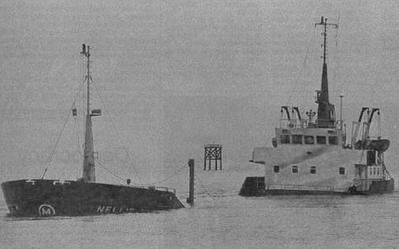
The Irish Republican Army (IRA) bombed and sunk a British coal boat, Nellie M, off the coast at Moville, County Donegal, Republic of Ireland

Thursday 6 February 1992

Albert Reynolds was elected as leader of Fianna Fáil (FF) and also became Taoiseach (Irish Prime Minister).

Friday 6 February 1998

It was reported in the Irish Times (a Republic of Ireland newspaper) that the British government would not implement proposals which would reduce the number of legally-held firearms in Northern Ireland. The report suggested that Unionist politicians had lobbied hard to have the proposals shelved.

It is estimated that there are 87,017 firearms certificates issued in Northern Ireland which cover 134,086 weapons. The Royal Ulster Constabulary (RUC) state that 80 per cent of the weapons are shotguns and air guns while the remainder are personal protection weapons. There are no figures for the religious breakdown of the ownership of weapons but it is generally thought that the vast majority of weapons are held by Protestants.

Saturday 6 February 1999

Concern was expressed for the future of the peace process with Marjorie (Mo) Mowlam, then Secretary of State for Northern Ireland, conceding that the deadline for the devolution of powers could be missed. Roberty McCartney, then Leader of the United Kingdom Unionist Party (UKUP), warned that North-South bodies could remain in place even if the Northern Ireland Assembly collapsed.

The Association of Garda Síochána (the Irish police) Superintendents announced that it was planning to meet the Minister for Justice to discuss the decision of the prosecution to accept a manslaughter plea in the Jerry McCabe case.

Wednesday 6 February 2002

Police Service of Northern Ireland (PSNI) officers arrested a man (33) under the Terrorism Act. He was arrested at the request of Metropolitan Police and was taken to a central London police station. It was believed that he was questioned about bombs in Birmingham, Ealing, and west London, during 2001.

The Northern Ireland Policing Board (NIPB) appointed a four man committee to continue the work began on Tuesday 5 February 2002 on the reports of the investigation into the Omagh bombing (15 August 1998). Some of the relatives of those killed in the Omagh bomb called for an outside police officer to take charge of a fresh investigation.

[This was one recommendation of Nuala O’Loan, then Police Ombudsman for Northern Ireland (PONI), but was opposed by the Chief Constable.]

David Trimble (UUP), then First Minister, and Mark Durkan (SDLP), then Deputy First Minister, opened the Northern Ireland Bureau in Washington, United States of America (USA). The office was established to promote Northern Ireland in the USA.

[There was some criticism of the cost of the new office. A Democratic Unionist Party (DUP) Member of the Legislative Assembly (MLA) who visited the office criticised the lack of a Union flag in the office.]

A man was shot in the leg in a paramilitary ‘punishment’ attack in Dundonald, east Belfast. Allied Irish Banks announced that it had been the victim of a $750m (£529m) fraud at its US subsidiary.


————————————————————————

Remembering all innocent victims of the Troubles

Today is the anniversary of the death of the following  people killed as a results of the conflict in Northern Ireland

“To live in hearts we leave behind is not to die

– Thomas Campbell

To the innocent on the list – Your memory will live  forever

– To  the Paramilitaries  –

There are many things worth living for, a few things worth dying for, but nothing worth killing for.

12  People   lost their lives on the 6th February  between  1971 – 1989

  —————————————————————————

06 February 1971


Bernard Watt,  (28)

Catholic
Status: Civilian (Civ),

Killed by: British Army (BA)
Shot during street disturbances, Chatham Street, Ardoyne, Belfast.

  —————————————————————————

06 February 1971


James Saunders,  (22)

Catholic
Status: Irish Republican Army (IRA),

Killed by: British Army (BA)
Shot during gun battle, Louisa Street, off Oldpark Road, Belfast.

  —————————————————————————

06 February 1971


Robert Curtis,  (20)

nfNI
Status: British Army (BA),

Killed by: Irish Republican Army (IRA)
Shot by sniper while on British Army (BA) foot patrol, New Lodge Road, Belfast

  —————————————————————————

06 February 1972


David Seaman,  (31)

nfNI
Status: Civilian (Civ),

Killed by: not known (nk)
Englishman also known as Barry Barber. Found shot, Cullaville, near Crossmaglen, County Armagh.

  —————————————————————————

06 February 1973
Michael Murtagh,  (22)

nfNI
Status: British Army (BA),

Killed by: Irish Republican Army (IRA)
Killed in rocket attack on British Army (BA) Armoured Personnel Carrier, Servia Street, Lower Falls, Belfast.

  —————————————————————————

06 February 1975
Colette Brown,   (31)

Catholic
Status: Civilian (Civ),

Killed by: non-specific Loyalist group (LOY)
Found shot by the side of Killyglen Road, Larne, County Antrim.

  —————————————————————————

06 February 1976


 James Blakely,  (42)

Protestant
Status: Royal Ulster Constabulary (RUC),

Killed by: Irish Republican Army (IRA)
Shot while on Royal Ulster Constabulary (RUC) foot patrol, Cliftonville Road, Belfast

  —————————————————————————

06 February 1976


William  Murtagh,  (31)

Protestant
Status: Royal Ulster Constabulary (RUC),

Killed by: Irish Republican Army (IRA)
Shot while on Royal Ulster Constabulary (RUC) foot patrol, Cliftonville Road, Belfast. He died on 7 February 1976

  —————————————————————————

06 February 1976
John McCready, (57)

Protestant
Status: Civilian (Civ),

Killed by: non-specific Republican group (REP)
Died ten days after being shot from passing car, while walking along Charnwood Avenue, off Cavehill Road, Belfast.

  —————————————————————————

06 February 1976
Thomas Quinn,  (55)

Catholic
Status: Civilian (Civ),

Killed by: Ulster Volunteer Force (UVF)
Abducted while walking along Millfield, Belfast. Found stabbed to death on grass bank, off Forthriver Way, Glencairn, Belfast, on 7 February 1976.

  —————————————————————————

06 February 1981


Charles Lewis,   (36)

Protestant
Status: Royal Ulster Constabulary (RUC),

Killed by: Irish Republican Army (IRA)
Shot while standing outside shop, while on Royal Ulster Constabulary (RUC) foot patrol, Balmoral Avenue, Malone, Belfast

  —————————————————————————

06 February 1989


 James Connolly,  (20)

Catholic
Status: Irish Republican Army (IRA),

Killed by: Irish Republican Army (IRA)
Died in premature explosion while planting booby trap bomb under Royal Ulster Constabulary (RUC) member’s car outside his home, Drumquin, County Tyrone.

  —————————————————————————


5th February – Deaths & Events in Northern Ireland Troubles

Key Events & Deaths on this day in Northern Ireland Troubles

5th February

————————————————-

Saturday 5 February 1972

Two IRA members were killed when a bomb they were planting exploded prematurely. A man died from injuries received in an explosion six days earlier.

Monday 5 February 1973

Following a decision to intern two Loyalists, suspected of the murder of a Catholic man, there was a call for a general strike under the auspices of the United Loyalist Council (ULC) .

[Although Internment had been introduced on Monday 9 August 1971 and hundreds of Catholics / Nationalists had been arrested and interned, this was the first time that Protestants had been held under the Detention of Terrorists Order. This decision was to lead to a strike by Loyalists and an upsurge in Loyalist violence.]

Wednesday 5 February 1975

The Northern Ireland Office (NIO) published a discussion paper on power-sharing, The Government of Northern Ireland: A Society Divided. This was the third discussion paper published in advance of the Northern Ireland Constitutional Convention. Merlyn Rees, then Secretary of Sate for Northern Ireland, announced that new blocks (‘H-Blocks’) were to be built at the Maze Prison while waiting for a new prison at Maghaberry, County Antrim, to be completed.

Thursday 5 February 1981

In a statement Republican prisoners warned that there could be further hunger strikes if they were not granted special category status.

Wednesday 5 February 1986

John Hermon, then Chief Constable of the Royal Ulster Constabulary (RUC), instructed leaders of the Northern Ireland Police Federation (NIPF), the main union for RUC officers, not to give interviews to the media without receiving clearance from RUC headquarters. The chairman of the Federation later stated that the Police Act (1970) protected the organisation’s freedom of speech.

Friday 5 February 1988

John Stalker, who initially investigated the ‘shoot to kill’ inquiry, alleged that he was removed from the inquiry because his investigations would have caused political embarrassment.

Wednesday 5 February 1992

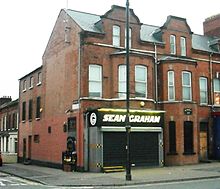
Sean_Graham_2

Shooting at Bookmaker’s Shop The Ulster Freedom Fighters (UFF), a cover name (pseudonym) used by the Ulster Defence Association (UDA), shot dead five Catholic civilians, including a 15 year old boy, in a gun attack on Sean Graham’s Bookmaker’s shop on the lower Ormeau Road in Belfast.

[The UDA at this time was a legal organisation and there were calls for it to be proscribed. A statement from the UFF concluded with the words “Remember Teebane”.]

See Sean Graham bookmakers’ shooting

See Teebane Bus Bomb

A member of the Irish Republican Army (IRA) was shot dead by the Ulster Defence Regiment (UDR) in County Fermanagh.

Friday 5 February 1993

Roger Wheeler, then a Lieutenant-General in the British Army, replaced John Wilsey as General Officer Commanding (GOC) of the army in Northern Ireland.

Wednesday 5 February 1997

Billy McCaughey, an ex-officer of the Royal Ulster Constabulary (RUC) who had served 16 years for a sectarian murder, denied that he was organising the pickets each Saturday night outside the Catholic chapel at Harryville, Ballymena.

Thursday 5 February 1998

Gerry Adams, then President of Sinn Féin (SF), published his response to remarks made by John Hume, then leader of the Social Democratic and Labour Party (SDLP), and David Trimble, then leader of the Ulster Unionist Party (UUP). In the response Adams set out SF’s opposition to any new Assembly at Stormont. David Andrews, then Irish Foreign Minister, paid a visit to Northern Ireland. He travelled to Kilkeel and Newcastle, County Down before travelling to Belfast. In Belfast Andrews laid a wreath at the site of the shooting of five Catholics on the Lower Ormea Road in 1992. Unionist politicians criticised the visit.

Friday 5 February 1999

Bertie Ahern, then Taoiseach (Irish Prime Minister), warned against any attempt to “park” (to suspend) the Good Friday Agreement.

Monday 5 February 2001

There was a pipe-bomb attack on a Catholic family in Ardoyne, north Belfast. The device failed to explode and was found in the living room. Two adults and three children, aged one to 15, were uninjured in the incident. The man, a former republican prisoner, said he received a warning from the Royal Ulster Constabulary (RUC) on Friday night that he was being targeted by the Red Hand Defenders (RHD).

The man discovered the device at 8.45am when he was preparing to take his children to school.

[The RHD is a cover name that has been used in the past by members of the Ulster Defence Association (UDA) and Loyalist Volunteer Force (LVF).]

There was a pipe-bomb attack on a Cathoic family in north Belfast. The father said he was sitting watching television in the house shortly after midnight when he heard two men talking outside. He said one of the men smashed the window and the other threw something into the front room. He and his family escaped injury when a fire-ball tore through the house and gutted the building. Both attacks were carried out by Loyalist paramilitaries.

Tuesday 5 February 2002

Jane Kennedy, then Security Minister, announced new security measures and new peace lines at a number of interface areas in Northern Ireland. The schemes mainly involved extensions to existing peace lines and the cost was estimated at £670,000.

[The following details, of the schemes involved, were published. North Belfast – 250 metre fence at Newington Avenue / Halliday’s Road (completed); 250 metre extension of a fence at Alliance Avenue / Glenbryn Park; security fencing at Wyndham Street. West Belfast – extension to the existing fence at Ainsworth Avenue / Springfield Road to Kirk Street / Workman Avenue; extension to the existing fence at Bombay Street. East Belfast – closure of the road and construction of a security structure at Madrid Street. Portadown – series of security measures in the Corcrain Road area. Derry – modification of the fence at Harding Street.]

The Northern Ireland Policing Board (NIPB) held separate private meetings with Ronnie Flanagan, then Chief Constable of the Police Service of Northern Ireland (PSNI), and Nuala O’Loan, then Police Ombudsman for Northern Ireland (PONI).

The meetings were to allow the NIPB to hear reports on the investigation of the Omagh bombing (15 August 1998) and also to see if it could come to a decision on the public disagreement between O’Loan and Flanagan.

[However it was clear that the NIPB was deeply divided on the issue with one Ulster Unionist Party (UUP) member calling, prior to the meeting, for the resignation of O’Loan.]

It was revealed that the Department of Health and Social Services had spend £180,000 implementing the bilingual policy adopted by Bairbre de Brún (SF) then Minister of Health. The policy means that all public notices, documents, and advertising campaigns, are available in both English and Irish. The total also includes translations into other languages including Chinese, Punjabi, and Ulster Scots.

Two men who admitted being members of the “real” Irish Republican Army (rIRA) were jailed for 18 months each by the Special Criminal Court (three judges but no jury) in Dublin. A special branch officer testified that the men had played only a peripheral part in the organisation.

 —————————————————————————

Remembering all innocent victims of the Troubles

Today is the anniversary of the death of the following  people killed as a results of the conflict in Northern Ireland

“To live in hearts we leave behind is not to die

– Thomas Campbell

To the innocent on the list – Your memory will live  forever

– To  the Paramilitaries  –

There are many things worth living for, a few things worth dying for, but nothing worth killing for.

12  People   lost their lives on the 5th February  between  1972 – 1992

  —————————————————————————

05 February 1972
 Paul McFadden,  (31)

Catholic
Status: Civilian (Civ),

Killed by: Irish Republican Army (IRA)
Died six days after being injured in van bomb explosion at Castle Arcade, off Castle Lane, Belfast. Inadequate warning given.

  —————————————————————————

05 February 1972
Phelim Grant,  (-9)

Catholic
Status: Irish Republican Army (IRA),

Killed by: Irish Republican Army (IRA)
Died in premature bomb explosion while travelling on barge, near Crumlin, Lough Neagh, County Antrim.

  —————————————————————————

05 February 1972


Charles McCann,   (-9)

Catholic
Status: Irish Republican Army (IRA),

Killed by: Irish Republican Army (IRA)
Died in premature bomb explosion while travelling on barge, near Crumlin, Lough Neagh, County Antrim.

  —————————————————————————

05 February 1977


Robert Harrison,   (50)

Protestant
Status: Royal Ulster Constabulary (RUC),

Killed by: Irish Republican Army (IRA)
Shot by sniper while on joint Royal Ulster Constabulary (RUC) / British Army (BA) mobile patrol, Gilford, County Down

  —————————————————————————

05 February 1980


Aubrey Abercrombie,   (44)

Protestant
Status: Ulster Defence Regiment (UDR),

Killed by: Irish Republican Army (IRA)
Off duty. Shot at his farm, Edenmore, near Kinawley, County Fermanagh.

  —————————————————————————

05 February 1987


Anthony McCluskey,   (32)

Catholic
Status: Irish People’s Liberation Organisation (IPLO),

Killed by: Irish National Liberation Army (INLA)
Found shot, Middletown, County Armagh. Irish National Liberation Army / Irish People’s Liberation Organisation feud.

  —————————————————————————

05 February 1992
Joseph MacManus,  (21)

nfNI
Status: Irish Republican Army (IRA),

Killed by: Ulster Defence Regiment (UDR)
From County Sligo. Shot while involved in gun attack on an off duty Ulster Defence Regiment (UDR) member, Scardens Upper, near Belleek, County Fermanagh.

  —————————————————————————

See Sean Graham Shooting

05 February 1992


Peter Magee,  (18)

Catholic
Status: Civilian (Civ),

Killed by: Ulster Freedom Fighters (UFF)
Shot during gun attack on Sean Graham’s Bookmaker’s shop, Ormeau Road, Belfast

  —————————————————————————

05 February 1992


 Jack Duffin,   (66)

Catholic
Status: Civilian (Civ),

Killed by: Ulster Freedom Fighters (UFF)
Shot during gun attack on Sean Graham’s Bookmaker’s shop, Ormeau Road, Belfast

  —————————————————————————

05 February 1992


James Kennedy,  (15)

Catholic
Status: Civilian (Civ),

Killed by: Ulster Freedom Fighters (UFF)
Shot during gun attack on Sean Graham’s Bookmaker’s shop, Ormeau Road, Belfast

  —————————————————————————

05 February 1992


William McManus,   (54)

Catholic
Status: Civilian (Civ),

Killed by: Ulster Freedom Fighters (UFF)
Shot during gun attack on Sean Graham’s Bookmaker’s shop, Ormeau Road, Belfast

  —————————————————————————

05 February 1992


Christy Doherty,  (52)

Catholic
Status: Civilian (Civ),

Killed by: Ulster Freedom Fighters (UFF)
Shot during gun attack on Sean Graham’s Bookmaker’s shop, Ormeau Road, Belfast

  —————————————————————————


Sean Graham bookmakers’ shooting

Sean Graham bookmakers’ shooting

5 February 1992

On 5 February 1992, a mass shooting took place at the Sean Graham bookmaker‘s shop on the Lower Ormeau Road in Belfast, Northern Ireland. Members of the Ulster Defence Association (UDA), a loyalist paramilitary group, opened fire on the customers, killing five civilians and wounding another nine. The shop was in an Irish nationalist area, and all of the victims were local Catholic civilians. The UDA claimed responsibility using the cover name “Ulster Freedom Fighters”, and said the shooting was retaliation for the Teebane bombing, which had been carried out by the Provisional IRA less than three weeks before


Background


Ulster Freedom Fighters insignia in the Annadale Flats area, January 2012

The start of 1992 had witnessed an intensification in the campaign of violence being carried out by the Ulster Defence Association (UDA) under their UFF covername. The group’s first killing that year was on 9 January when Catholic civilian Phillip Campbell was shot dead at his place of work near Moira by a Lisburn-based UDA unit.[1] The same group killed another Catholic civilian, Paul Moran, at the end of the month and a few days later taxi driver Paddy Clarke was killed at his north Belfast home by members of the UDA West Belfast Brigade.[2]

However, the Inner Council of the UDA, which contained the six brigadiers that controlled the organisation, felt that these one-off killings were not sending a strong enough message to republicans and so it sanctioned a higher-profile attack in which a number of people would be killed at once.[2] On this basis the go-ahead was given to attack Sean Graham bookmaker’s shop on the Irish nationalist Lower Ormeau Road. This was a major arterial route in the city and was near the UDA stronghold of Annadale Flats.[2] According to David Lister and Hugh Jordan, the bookmaker’s shop was chosen by West Belfast Brigadier and Inner Council member Johnny Adair because he had strong personal ties with the commanders of the Annadale UDA.[3] A 1993 report commissioned by RUC Special Branch also claimed that Adair was the driving force behind the attack.[3]

The shooting

Names of the dead commemorated on a plaque in Hatfield Street

The attack occurred at 2:20 in the afternoon.[4] A car parked on University Avenue facing the bookmakers and two men, wearing boiler suits and balaclavas, left the car and crossed the Ormeau Road to the shop.[5] One was armed with a VZ.58 Czechoslovak semi-automatic rifle and the other with a 9mm pistol. They entered the shop—in which there were 15 customers—and opened fire, unleashing a total of 44 shots on the assembled victims.[6]

Five Catholic men and boys were killed: Christy Doherty (52), Jack Duffin (66), James Kennedy (15), Peter Magee (18) and William McManus (54).[7] Nine others were wounded, one critically.[4] Four of them died at the scene although 15-year-old Kennedy survived until he reached the hospital, his final words being reported as “tell my mummy that I love her”.[8] Kennedy’s mother Kathleen died two years later after becoming a recluse. Her husband, James (Sr.), blamed his wife’s death on the shooting by claiming “the bullets that killed James didn’t just travel in distance, they travelled in time. Some of those bullets never stopped travelling”.[8]

One of the wounded described the shooting to British journalist Peter Taylor:

“There was a right crowd in [the betting shop] and I cracked a joke with a couple of them – they were like that, always laughing and carrying on. I had only been in for about twenty or twenty-five minutes when the shooting started – I was standing next to the door with a docket in my hand studying the form. At first I thought it was a hold-up but then the shooting started and somebody yelled, ‘Hit the deck’. I just lay there and prayed that the shooting would stop. It seemed to go on for a lifetime. There wasn’t a sound for a few seconds – everybody was so stunned, but then the screaming started. People were yelling out in agony. You could hardly see anything. The room was full of gun smoke and the smell would have choked you”.[9]

In a separate incident, a unit of the Ulster Volunteer Force (UVF) had travelled to the area at the time of the attack with the intention of killing a local Sinn Féin activist based on intelligence they had received that he returned home about that time every day. The attack was abandoned, however, when the car carrying the UVF members was passed by speeding Royal Ulster Constabulary (RUC) vehicles and ambulances. The UVF members, who had already retrieved their weapons for the attack, were said to be livid with the UDA for not co-ordinating with them beforehand and effectively spoiling their chance to kill a leading local republican.[10]

  —————————————————————————

The Victims

  —————————————————————————

05 February 1992


Peter Magee,  (18)

Catholic
Status: Civilian (Civ),

Killed by: Ulster Freedom Fighters (UFF)
Shot during gun attack on Sean Graham’s Bookmaker’s shop, Ormeau Road, Belfast

  —————————————————————————

05 February 1992


 Jack Duffin,   (66)

Catholic
Status: Civilian (Civ),

Killed by: Ulster Freedom Fighters (UFF)
Shot during gun attack on Sean Graham’s Bookmaker’s shop, Ormeau Road, Belfast

  —————————————————————————

05 February 1992


James Kennedy,  (15)

Catholic
Status: Civilian (Civ),

Killed by: Ulster Freedom Fighters (UFF)
Shot during gun attack on Sean Graham’s Bookmaker’s shop, Ormeau Road, Belfast

  —————————————————————————

05 February 1992


William McManus,   (54)

Catholic
Status: Civilian (Civ),

Killed by: Ulster Freedom Fighters (UFF)
Shot during gun attack on Sean Graham’s Bookmaker’s shop, Ormeau Road, Belfast

  —————————————————————————

05 February 1992


Christy Doherty,  (52)

Catholic
Status: Civilian (Civ),

Killed by: Ulster Freedom Fighters (UFF)
Shot during gun attack on Sean Graham’s Bookmaker’s shop, Ormeau Road, Belfast

  —————————————————————————

Aftermath

Memorial stone laid in February 2012

A UDA statement in the aftermath of the attack claimed that the killings were justified as the Lower Ormeau was “one of the IRA‘s most active areas”.[8] The statement also included the phrase “remember Teebane”, suggesting that they intended the killings as retaliation for the Teebane bombing in County Tyrone less than three weeks earlier. In that attack, the IRA had killed eight Protestant men who were repairing a British Army base.[11] The same statement had also been yelled by the gunmen as they ran from the betting shop.[8] Alex Kerr, who was then UDA Brigadier for South Belfast, released a second statement about a month after the attack in which he sought to justify the killings. Kerr stated that “the IRA was extremely active in the lower Ormeau and the nationalist population there shielded them. They paid the price for Teebane”. He added that if there were any further bombings like that at Teebane then the UDA would retaliate in the same way as at Sean Graham’s.[12]

See Teebane Bus Bomb

teebane2
Teebane Bus Bomb


The idea that the killings were justified because of Teebane was shunned by Rev. Ivor Smith, a Presbyterian minister who was based in the area and who worked with the families of the bomb victims. He said that the UDA claim was “like a knife through the heart. We were absolutely appalled at the thought that somebody would try to do something like that and justify it by bringing in Teebane. As far as the families were concerned, it was very definitely not ‘in my name'”.[11] A letter expressing deep sympathy from Betty Gilchrist, a Protestant whose husband had been killed at Teebane, was read out at the funeral of Jack Duffin.[12] Alasdair McDonnell, a general practitioner and Social Democratic and Labour Party councillor in the area, also suggested that the attack had been in response to Teebane. However, he was strongly rebuked by the Lower Ormeau Residents Action Group, a residents’ association with Sinn Féin links, for seemingly justifying the killings with this claim.[13]

When a July 1992 Orange Order march passed the scene of the shooting, Orangemen shouted pro-UDA slogans and held aloft five fingers as a taunt to residents over the five deaths.[4][14] The claim is corroborated by Henry McDonald and Jim Cusack. The images of Orangemen and loyalist flute band members holding up five fingers as they passed the shop were beamed around the world and was a public relations disaster for the Order.[15] Patrick Mayhew, then Secretary of State for Northern Ireland, said that the actions of the marchers “would have disgraced a tribe of cannibals”.[14] The incident led to a more concerted effort by Lower Ormeau residents to have the marches banned from the area, which later succeeded.[15]

No one was ever convicted for the killings although, locally, blame fell on Joe Bratty and his sidekick Raymond Elder, the two leading UDA figures in the Annadale Flats.[12] McDonald and Cusack suggest that, whilst Bratty had been the brains behind the attack, the gunmen he had used were actually from East Belfast and that a UDA member later convicted of supplying one of the guns had been at the shooting.[12] Lister and Jordan, however, claim that one of the gunmen was actually from west Belfast and was supplied to Bratty by Adair.[3] Bratty was charged with involvement in the attack although the charges were withdrawn.[16] Following his release from custody, Adair organised a lavish celebration party for Bratty in Scotland where he allegedly gave Bratty a gold ring inscribed with the initials UFF.[3]

The IRA did not immediately retaliate although in a statement they claimed to know the identity of the killers and claimed that they would “take them out when the time was right”.[17] When Bratty and Elder were shot dead by the IRA in July 1994, revellers in the Lower Ormeau hailed the attack as revenge for Sean Graham’s.[18]

On 5 February 2002 a plaque was erected on the side of the bookmaker’s shop in Hatfield Street carrying the names of the five victims and the Irish language inscription Go ndéana Dia trócaire ar a n-anamacha (“May God have mercy on their souls”). A small memorial garden was later added.[19] The unveiling ceremony, which took place on the tenth anniversary of the attack, was accompanied by a two-minute silence and was attended by relatives of the dead and survivors of the attack.[20] A new memorial stone was laid on 5 February 2012 to coincide with the publication of a booklet calling for justice for the killings.[21]

Historical Enquiries Team findings

The attack was one of a number to be investigated by the Historical Enquiries Team (HET) in 2010. It found that a Browning pistol used by the gunmen had been given to them by the police. UDA quartermaster and police agent William Stobie had handed the gun to police and the police had given it back to him. Police “may have thought they had tampered with it to prevent it from being used”. According to the HET report this operation “would have required both the authority of a senior police officer and a recovery plan, generally short-term and where possible supported by the security forces within a short period of time. Clearly in this case, there was a significant failure and the repercussions were tragic and devastating”. The gun was, the report continued, also used in other UDA killings.[22]

Alex Maskey, a Sinn Féin MLA for the area, commented that “the finding by the HET that the Browning pistol used by the UDA in this attack was handed back to them by the RUC will come as no surprise to the people of the Lower Ormeau area who have long known that a high degree of collusion took place in this attack”.[22]

Officers from the HET were told by police that the assault rifle used in the attack had been “disposed of”. However, it was later discovered on display in the Imperial War Museum.[23]

Jackie McDonald

In February 2012 Jackie McDonald, the incumbent commander of the UDA South Belfast Brigade (the area in which the shop is located), admitted that the victims of the shooting had been innocent. However, McDonald said that he could not apologise for the attack, arguing that as he was imprisoned at the time he played no part in what had happened.[11] In an earlier interview with Peter Taylor, McDonald suggested that it was the rise in sectarian killings and attacks such as that at Sean Graham’s that “brought about the ceasefire at the end of the day”.[9]

Attack on James Murray’s bookmakers

On the afternoon of 14 November 1992, the UDA carried out another attack on a betting shop in Belfast. The target was James Murray’s betting shop on the Oldpark Road in the north of the city, which was used mostly by Catholics.[24] One gunman fired into the shop from the doorway with an automatic weapon, while another smashed the window and threw a grenade inside. As he did so, he shouted “Yous deserve it, yous Fenian bastards!”.[25] Two Catholic civilians were killed outright and another died in hospital shortly after;[25] all of them were elderly men.[26] Thirteen others were wounded, some seriously. Like the shooting at Sean Graham’s, the November attack had also been planned by Adair. It “was followed by a raucous celebration in a loyalist club in south Belfast with Adair occupying centre stage”.[25] According to McDonald and Cusack the attack on this shop, which also had a few Protestant patrons who were present during the shooting, was carried out by Stephen McKeag.[27]


4th February – Deaths & Events in Northern Ireland Troubles

Key Events & Deaths on this day in Northern Ireland Troubles

4th February

————————————————

Thursday 4 February 1971

Vernon Erskine-Crum, a Lieutenant-General, became General Officer Commanding (GOC) of the British Army (BA) in Northern Ireland.

Sunday 4 February 1973

A member of the Irish Republican Army (IRA) and 3 Catholic civilians were shot dead by members of the British Army in the New Lodge area of Belfast. Three other people died in separate incidents in Belfast.

Monday 4 February 1974

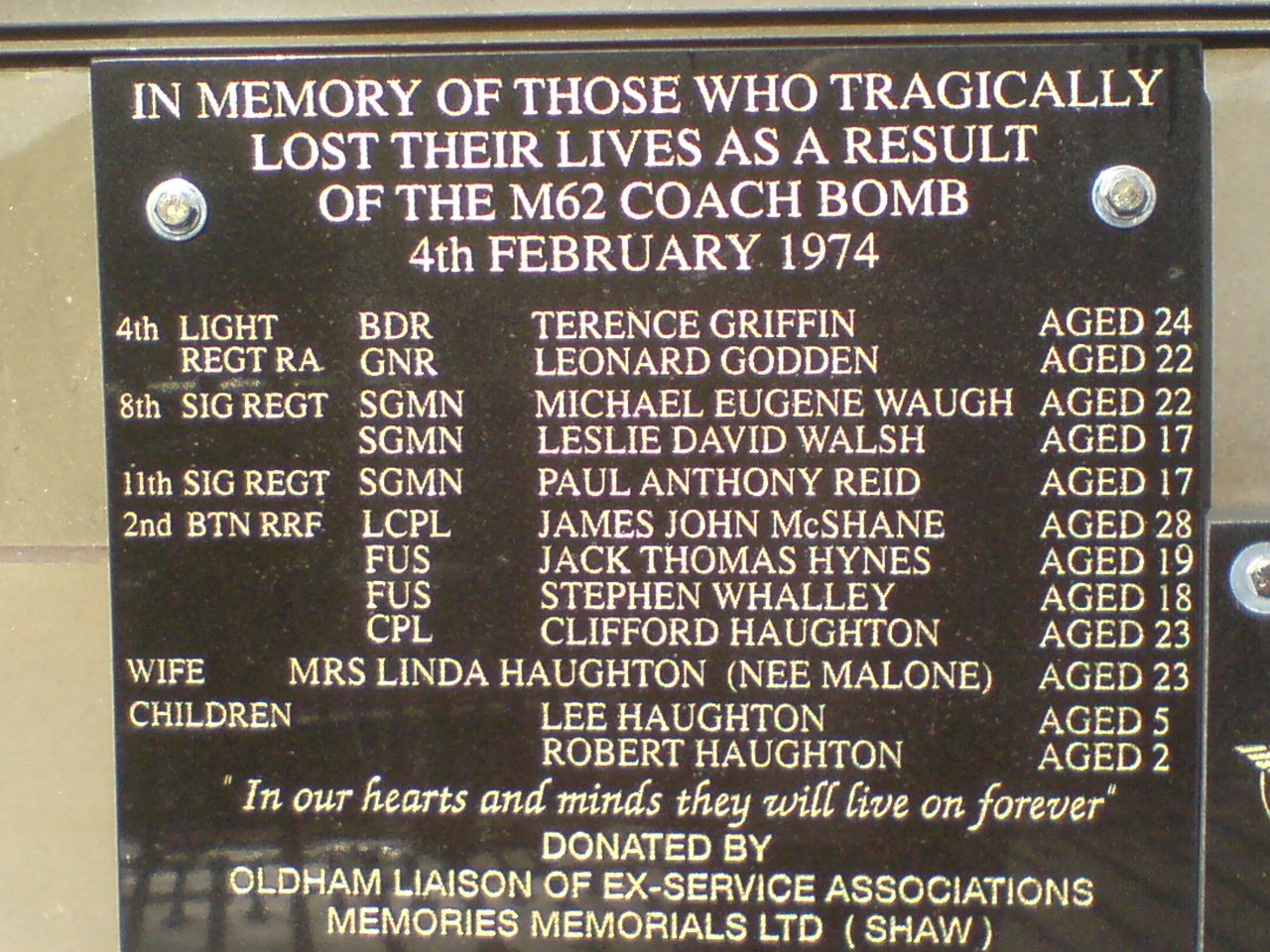
m62 coach bombing

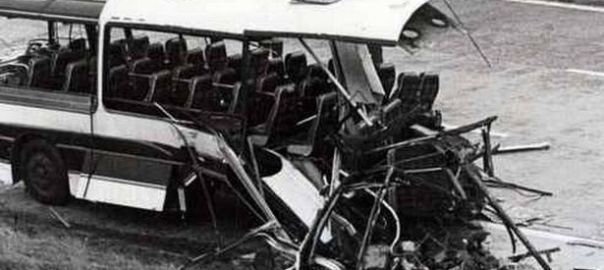
‘M62 Coach Bomb’ The Irish Republican Army (IRA) planted a bomb (estimated at between 20 and 25 pounds) on a coach carrying British soldiers and their families. The bomb exploded shortly after midnight as the coach travelled along the M62 in England and 11 people were killed at the scene and one other person died a few days later.

Many of the passengers were injured in the blast. [This bomb was the first of many attacks in Britain during 1974. Judith Ward was later convicted of causing the explosion and given a sentence of 30 years. It wasn’t until 1992 that her convictions were quashed and she was released.] A Catholic civilian was shot dead by Loyalists in Belfast.

See M62 Coach Bomb

Friday 4 February 1977

The police in England uncover an Irish Republican Army (IRA) ‘bomb factory’ in Liverpool.

Sunday 4 February 1979


Patrick MacKin (60), a former Prison Officer, and his wife Violet (58), were both shot dead by the Irish Republican Army (IRA) at their home in Oldpark Road, Belfast.

Tuesday 4 February 1992

Shooting at SF Office An off-duty Royal Ulster Constabulary (RUC) officer, Allen Moore, walked into the Falls Road office of Sinn Féin (SF) and shot dead three Catholic civilians. Moore drove away from the scene and later shot himself. Two of those killed were members of SF.

Sunday 4 February 1996

The Ulster Unionist Party (UUP) rejected calls from the Irish Government for a start to negotiations. George Mitchell, then chair of the International Body on Arms Decommissioning, said that there was a danger of an Irish Republican Army (IRA) split if there was no movement to all-party talks.

Tuesday 4 February 1997

Ken Maginnis, then Ulster Unionist Party (UUP) Member of Parliament (MP), called on the British government to apologise for ‘Bloody Sunday’.

Wednesday 4 February 1998

The Loyalist Volunteer Force (LVF) admitted firing a shot at a Protestant man in the

Mourneview estate in Lurgan, County Armagh. The man wasn’t injured but the LVF warned him to leave the area. In a report to the House of Commons Select Committee on Northern Ireland Affairs Colin Smith, then Inspector of Constabulary, said that senior members of the Royal Ulster Constabulary (RUC) were “reluctant” to embrace changes in the organisation and displayed “defensiveness” towards new ideas.

Proposals contained in the Public Processions (Northern Ireland) Bill would mean that organisers of demonstrations would be required to provide the RUC with 14 days notice.

Thursday 4 February 1999

Nicholas Mullen, the last of the Republican prisoners to be held at a jail in England, was released by the Court of Appeal in London. A unit of the Ulster Volunteer Force (UVF) announced that it was rearming.

The claim was welcomed by the Red Hand Defenders (RHD). Marjorie (Mo) Mowlam, then Secretary of State for Northern Ireland, rejected criticism from Patrick Mayhew, the former Secretary of State, that the Labour government was in a state of “paralysis” over paramilitary violence.

It was reported that during negotiations on the Good Friday Agreement the Irish Government came under pressure from Sinn Féin to include on the list of people eligible for early release those charged with the killing of Jerry McCabe, who was a Detective in the Garda Síochána (the Irish police). The Irish Republican Army (IRA) issued a statement claiming that some of its weapons had been stolen by Republicans opposed to the peace process.

Sunday 4 February 2001

The Royal Ulster Constabulary (RUC) described a pipe-bomb used in an attack in Newcastle, County Down, in which a couple were injured, as a “relatively sophisticated device”. The 24 year old woman and 25 year old man sustained minor leg injuries after they lifted the device from the top of their car.

The police said a 13 year old boy also suffered a minor cut to his arm as he was walking past when the device exploded. A north Belfast family escaped injury when a pipe-bomb was thrown through the window of their home. The family fled from their home in the New Lodge area as it caught fire. The RUC said they were treating the attack as attempted murder.

Monday 4 February 2002

Postal deliveries were disrupted in Derry following a threat made against a Catholic postman who worked in the Waterside area of the city. The threat was made to the Samaritans on Sunday 3 February 2002 and the threat was made about a named individual. The police advised the man to stay away from the Waterside.

[The Ulster Defence Association (UDA) later issued a statement denying that it had made the threat.]

The Bloody Sunday Inquiry recommenced following an adjournment for the 30th anniversary of the killings (30 January 1972). William George Hunter became the first police witness to give evidence to the inquiry. The former Royal Ulster Constabulary (RUC) officer, who had been a member of Special Branch, was screened from the public and the press as he gave his evidence.

See Bloody Sunday

The Inquiry had earlier ruled that he faced a “special danger” which overrode the public duty to conduct an open inquiry. Hunter told the inquiry that he heard nail-bombs and a sub-machine gun prior to the shooting by the paratroopers. Hunter was positioned at Barrier 14 in William Street on Bloody Sunday.

The afternoon session of the inquiry was adjourned when it became clear that other former RUC officers had expressed a desire to given evidence from behind screens. The Belfast Education and Library Board published a report showing that literacy levels in Belfast were the lowest of any are in Northern Ireland. The report was based on a survey that tested nearly 3,000 15 year olds in a cross-section of schools throughout the region.

It was part of the Programme for International Student Assessment, which was carried out in 32 countries by the Organisation for Economic Co-operation and Development (OECD). The report made 70 recommendations for improvement.

see Segregation in Northern Ireland

Peter Robinson (DUP), then Minister for Regional Development, announced plans to try to secure an additional £950 million over 10 years for spending on roads and public transport services in the region.

[Two thirds of the money is planned to be spent on roads and some lobby groups suggested that a greater percentage should have been allocated for public transport.]

A man (19) was shot three times in the leg in north Belfast during a Loyalist paramilitary ‘punishment’ attack. The incident happened at approximately 9.00pm (2100GMT) after three men broke into the victim’s home in Mount Vernon Drive, off the Shore Road.

—————————————————————————

Remembering all innocent victims of the Troubles

Today is the anniversary of the death of the following  people killed as a results of the conflict in Northern Ireland

“To live in hearts we leave behind is not to die

– Thomas Campbell

To the innocent on the list – Your memory will live  forever

– To  the Paramilitaries  –

There are many things worth living for, a few things worth dying for, but nothing worth killing for.

26 People   lost their lives on the 4th February  between  1972 – 1992

  —————————————————————————

04 February 1973


 James McCann,   (18)

Catholic
Status: Irish Republican Army (IRA),

Killed by: non-specific Loyalist group (LOY)
Died shortly after being shot from passing car, while standing outside Lynch’s Bar, corner of New Lodge Road and Antrim Road, Belfast.

—————————————————————————

04 February 1973


Anthony Campbell,  (19)

Catholic
Status: Irish Republican Army (IRA),

Killed by: British Army (BA)
Shot by British Army (BA) sniper at the junction of Edlingham Street and New Lodge Road, Belfast.

—————————————————————————

04 February 1973


Ambrose Hardy,  (26)

Catholic
Status: Civilian (Civ),

Killed by: British Army (BA)
Shot by British Army (BA) sniper at the junction of Edlingham Street and New Lodge Road, Belfast.

—————————————————————————

04 February 1973


Brenda Maguire,   (33)

Catholic
Status: Civilian (Civ),

Killed by: British Army (BA)
Shot by British Army (BA) sniper at the junction of Edlingham Street and New Lodge Road, Belfast.

—————————————————————————


04 February 1973


John Loughran,   (35)

Catholic
Status: Civilian (Civ),

Killed by: British Army (BA)
Shot by British Army (BA) sniper at the junction of Edlingham Street and New Lodge Road, Belfast.

—————————————————————————

04 February 1973
John Boyd,  (33)

Protestant
Status: Civilian (Civ),

Killed by: non-specific Loyalist group (LOY)
Found shot, by the side of Connswater River, off Severn Street, Belfast.

—————————————————————————

04 February 1973


Seamus Gilmore,   (18)

Catholic
Status: Civilian (Civ),

Killed by: Ulster Volunteer Force (UVF)
Shot at his workplace, Mount Pleasant Filling Station, Ballysillan Road, Belfast

—————————————————————————

04 February 1974
Leonard Godden,   (22)

nfNIB
Status: British Army (BA),

Killed by: Irish Republican Army (IRA)
Killed in time bomb attack on British Army (BA) coach travelling along M62 motorway, Yorkshire, England.

—————————————————————————

04 February 1974


Terence Griffin,   (24)

nfNIB
Status: British Army (BA),

Killed by: Irish Republican Army (IRA)
Killed in time bomb attack on British Army (BA) coach travelling along M62 motorway, Yorkshire, England.

—————————————————————————

04 February 1974
Michael Waugh,   (22)

nfNIB
Status: British Army (BA),

Killed by: Irish Republican Army (IRA)
Killed in time bomb attack on British Army (BA) coach travelling along M62 motorway, Yorkshire, England.

—————————————————————————

04 February 1974
Leslie Walsh,  (19)

nfNI
Status: British Army (BA),

Killed by: Irish Republican Army (IRA)
Killed in time bomb attack on British Army (BA) coach travelling along M62 motorway, Yorkshire, England.

—————————————————————————

04 February 1974
Paul Reid,  (17)

nfNIB
Status: British Army (BA),

Killed by: Irish Republican Army (IRA)
Killed in time bomb attack on British Army (BA) coach travelling along M62 motorway, Yorkshire, England

—————————————————————————

04 February 1974
Jack Hynes,  (19)

nfNIB
Status: British Army (BA),

Killed by: Irish Republican Army (IRA)
Killed in time bomb attack on British Army (BA) coach travelling along M62 motorway, Yorkshire, England.

—————————————————————————

04 February 1974
James McShane,  (28)

nfNIB
Status: British Army (BA),

Killed by: Irish Republican Army (IRA)
Killed in time bomb attack on British Army (BA) coach travelling along M62 motorway, Yorkshire, England.

—————————————————————————

04 February 1974


Clifford Houghton,   (23)

nfNIB
Status: British Army (BA),

Killed by: Irish Republican Army (IRA)
Killed in time bomb attack on British Army (BA) coach travelling along M62 motorway, Yorkshire, England

—————————————————————————

04 February 1974


Linda Houghton, (23)

nfNIB
Status: Civilian (Civ),

Killed by: Irish Republican Army (IRA)
Killed in time bomb attack on British Army (BA) coach travelling along M62 motorway, Yorkshire, England

—————————————————————————

04 February 1974


Lee Houghton, (5)

nfNIB
Status: Civilian (Civ),

Killed by: Irish Republican Army (IRA)
Killed in time bomb attack on British Army (BA) coach travelling along M62 motorway, Yorkshire, England

—————————————————————————

04 February 1974


Robert Houghton,   (2)

nfNIB
Status: Civilian (Civ),

Killed by: Irish Republican Army (IRA)
Killed in time bomb attack on British Army (BA) coach travelling along M62 motorway, Yorkshire, England.

—————————————————————————

04 February 1974


Stephen Whalley,   (18)

nfNIB
Status: British Army (BA),

Killed by: Irish Republican Army (IRA)
Injured in time bomb attack on British Army (BA) coach travelling along M62 motorway, Yorkshire, England. He died 7 February 1974.

—————————————————————————

04 February 1974


Vincent Clarke,   (43)

Catholic
Status: Civilian (Civ),

Killed by: Ulster Volunteer Force (UVF)
Shot outside his garage, Whiterock Gardens, Ballymurphy, Belfast.

—————————————————————————

04 February 1978
Martha McAlpine,  (69)

Protestant
Status: Civilian (Civ),

Killed by: Irish Republican Army (IRA)
Shot from passing van during gun attack on nearby Royal Ulster Constabulary (RUC) foot patrol, outside Seaview football ground, Shore Road, Skegoneill, Belfast.

—————————————————————————

04 February 1979


Patrick Mackin,   (60)

Catholic
Status: ex-Prison Officer (xPO),

Killed by: Irish Republican Army (IRA)
Shot together with his wife, at their home, Oldpark Road, Belfast.

—————————————————————————

04 February 1979


Violet Mackin,  (58)

Protestant
Status: Civilian (Civ),

Killed by: Irish Republican Army (IRA)
Shot together with her husband, a former Prison Officer, at their home, Oldpark Road, Belfast.

—————————————————————————

04 February 1992


Patrick Loughran,  (61)

Catholic
Status: Civilian Political Activist (CivPA),

Killed by: Royal Ulster Constabulary (RUC)
Sinn Fein (SF) member. Shot by off duty Royal Ulster Constabulary (RUC) member at Sinn Fein (SF) Advice Centre, Sevastopol Street, Lower Falls, Belfast.

—————————————————————————

04 February 1992


Patrick McBride,  (40)

Catholic
Status: Civilian Political Activist (CivPA),

Killed by: Royal Ulster Constabulary (RUC)
Sinn Fein (SF) member. Shot by off duty Royal Ulster Constabulary (RUC) member at Sinn Fein (SF) Advice Centre, Sevastopol Street, Lower Falls, Belfast.

—————————————————————————

04 February 1992


Michael O’Dwyer,  (24)

Catholic
Status: Civilian (Civ),

Killed by: Royal Ulster Constabulary (RUC)
Shot by off duty Royal Ulster Constabulary (RUC) member at Sinn Fein (SF) Advice Centre, Sevastopol Street, Lower Falls, Belfast.

—————————————————————————


M62 Coach Bombing – 12 People including two children slaughtered by the IRA

The M62 coach bombing happened on 4 February 1974 on the M62 motorway in northern England, when a Provisional Irish Republican Army (IRA) bomb exploded in a coach carrying off-duty British Armed Forces personnel and their family members.

Twelve people (nine soldiers, three civilians) were killed by the bomb, which consisted of 25 pounds (11 kg) of high explosive hidden in a luggage locker on the coach. Judith Ward was convicted of the crime later in 1974, but 18 years later the conviction was judged as wrongful and she was released from prison.
The Bombing

The coach had been specially commissioned to carry British Army and Royal Air Force personnel on leave with their families from and to the bases at Catterick and Darlington during a period of railway strike action. The vehicle had departed from Manchester and was making good progress along the motorway. Shortly after midnight, when the bus was between junction 26 and 27, near Oakwell Hall, there was a large explosion on board. Most of those aboard were sleeping at the time. The blast, which could be heard several miles away, reduced the coach to a “tangle of twisted metal” and threw body parts up to 250 yards (230 m).

The explosion killed eleven people outright and wounded over fifty others , one of whom died four days later. Amongst the dead were nine soldiers – two from the Royal Artillery, three from the Royal Corps of Signals and four from the 2nd battalion Royal Regiment of Fusiliers.

Royal Fusiliers Regiment.svg
The Capbadge of the Royal Regiment of Fusiliers

One of the latter was Corporal Clifford Haughton, whose entire family, consisting of his wife Linda and his sons Lee (5) and Robert (2), also died. Numerous others suffered severe injuries, including a six-year-old boy, who was badly burned.

The driver of the coach, Roland Handley, was injured by flying glass, but was hailed as a hero for bringing the coach safely to a halt. Handley died, aged 76, after a short illness, in January 2011.

Suspicions immediately fell upon the IRA, which was in the midst of an armed campaign in Britain involving numerous operations, later including the Guildford Pub Bomb and the Birmingham pub bombings.

Reaction

Memorial plaque at Hartshead Moor services

Reactions in Britain were furious, with senior politicians from all parties calling for immediate action against the perpetrators and the IRA in general. The British media were equally condemnatory; according to The Guardian, it was:

“the worst IRA outrage on the British mainland” at that time, whilst the BBC has described it as “one of the IRA’s worst mainland terror attacks”.

The Irish Sunday Business Post later described it as the “worst” of the “awful atrocities perpetrated by the IRA” during this period.

IRA Army Council member Dáithí Ó Conaill was challenged over the bombing and the death of civilians during an interview, and replied that the coach was bombed because IRA intelligence indicated that it was carrying military personnel only.

The attack’s most lasting consequence was the adoption of much stricter ‘anti-terrorism‘ laws in Great Britain and Northern Ireland, allowing police to hold those ‘suspected of terrorism’ for up to seven days without charge, and to deport those ‘suspected of terrorism’ in Britain or the Republic of Ireland to Northern Ireland to face trial, where special courts judged with separate rules on ‘terrorism‘ suspects.

The entrance hall of the westbound section of the Hartshead Moor service area was used as a first aid station for those wounded in the blast. A memorial to those who were killed was later created there. following a campaign by relatives of the dead, a larger memorial was later erected, set some yards away from the entrance hall.

The site, situated behind four flag poles, includes an English oak tree, a memorial stone, a memorial plaque and a raised marble tablet inscribed with the names of those who died.

A memorial plaque engraved with the names of the casualties was also unveiled in Oldham in 2010.

M62 coach bombing

—————————————————————————

Victims

—————————————————————————

04 February 1974
Leonard Godden,   (22)

nfNIB
Status: British Army (BA),

Killed by: Irish Republican Army (IRA)
Killed in time bomb attack on British Army (BA) coach travelling along M62 motorway, Yorkshire, England.

—————————————————————————

04 February 1974


Terence Griffin,   (24)

nfNIB
Status: British Army (BA),

Killed by: Irish Republican Army (IRA)
Killed in time bomb attack on British Army (BA) coach travelling along M62 motorway, Yorkshire, England.

—————————————————————————

04 February 1974
Michael Waugh,   (22)

nfNIB
Status: British Army (BA),

Killed by: Irish Republican Army (IRA)
Killed in time bomb attack on British Army (BA) coach travelling along M62 motorway, Yorkshire, England.

—————————————————————————

04 February 1974
Leslie Walsh,  (19)

nfNI
Status: British Army (BA),

Killed by: Irish Republican Army (IRA)
Killed in time bomb attack on British Army (BA) coach travelling along M62 motorway, Yorkshire, England.

—————————————————————————

04 February 1974
Paul Reid,  (17)

nfNIB
Status: British Army (BA),

Killed by: Irish Republican Army (IRA)
Killed in time bomb attack on British Army (BA) coach travelling along M62 motorway, Yorkshire, England

—————————————————————————

04 February 1974
Jack Hynes,  (19)

nfNIB
Status: British Army (BA),

Killed by: Irish Republican Army (IRA)
Killed in time bomb attack on British Army (BA) coach travelling along M62 motorway, Yorkshire, England.

—————————————————————————

04 February 1974
James McShane,  (28)

nfNIB
Status: British Army (BA),

Killed by: Irish Republican Army (IRA)
Killed in time bomb attack on British Army (BA) coach travelling along M62 motorway, Yorkshire, England.

—————————————————————————

04 February 1974


Clifford Houghton,   (23)

nfNIB
Status: British Army (BA),

Killed by: Irish Republican Army (IRA)
Killed in time bomb attack on British Army (BA) coach travelling along M62 motorway, Yorkshire, England

—————————————————————————

04 February 1974


Linda Houghton, (23)

nfNIB
Status: Civilian (Civ),

Killed by: Irish Republican Army (IRA)
Killed in time bomb attack on British Army (BA) coach travelling along M62 motorway, Yorkshire, England

—————————————————————————

04 February 1974


Lee Houghton, (5)

nfNIB
Status: Civilian (Civ),

Killed by: Irish Republican Army (IRA)
Killed in time bomb attack on British Army (BA) coach travelling along M62 motorway, Yorkshire, England

—————————————————————————

04 February 1974


Robert Houghton,   (2)

nfNIB
Status: Civilian (Civ),

Killed by: Irish Republican Army (IRA)
Killed in time bomb attack on British Army (BA) coach travelling along M62 motorway, Yorkshire, England.

—————————————————————————

04 February 1974


Stephen Whalley,   (18)

nfNIB
Status: British Army (BA),

Killed by: Irish Republican Army (IRA)
Injured in time bomb attack on British Army (BA) coach travelling along M62 motorway, Yorkshire, England. He died 7 February 1974.

—————————————————————————

See: Palace Barracks Memorial Garden

04 February 1974

Prosecution

Second memorial at Hartshead Moor services

Following the explosion, the British public and politicians from all three major parties called for “swift justice”. The ensuing police investigation led by Detective Chief Superintendent George Oldfield was rushed, careless and ultimately forged, resulting in the arrest of the mentally ill Judith Ward who claimed to have conducted a string of bombings in Britain in 1973 and 1974 and to have married and had a baby with two separate IRA members. Despite her retraction of these claims, the lack of any corroborating evidence against her, and serious gaps in her testimony – which was frequently rambling, incoherent and “improbable”  – she was wrongfully convicted in November 1974. Following her conviction, the Irish Republican Publicity Bureau issued a statement:

Miss Ward was not a member of Óglaigh na hÉireann and was not used in any capacity by the organisation. She had nothing to do what-so-ever with the military coach bomb (on 4 February 1974), the bombing of Euston Station and the attack on Latimer Military College. Those acts were authorised operations carried out by units of the Irish Republican Army.

The case against her was almost completely based on inaccurate scientific evidence using the Griess test and deliberate manipulation of her confession by some members of the investigating team. The case was similar to those of the Guildford Four, the Birmingham Six and the Maguire Seven, which occurred at the same time and involved similar forged confessions and inaccurate scientific analysis. Ward was finally released in 1992, when three Appeal Court judges held unanimously that her conviction was “a grave miscarriage of justice”, and that it had been “secured by ambush

See: Guildford Pub Bomb

See: Birmingham Pub Bombings

Sunnis and Shia – What’s the difference?

belfastchildis's avatar

According to Adherents.com the two biggest religions in the world are Christianity , with approximately 2.2 billion practising followers and Islam , with approximately 1.6 billion practising followers and both have various offshoots and different strands often dictated by regional and cultural boundaries.

When you consider that the world population is approximately 7.3 billion ( as of July 2015  )  then almost half of the world population follow Christianity and/or Islam and sadly both religions are responsibly for more deaths and devastation  than any act of nature or global war and the corridors of time are littered with the blood of the innocent and the souls of the none believers – In my book religion has a lot to answer for!

——————————

Sunnis and Shia – What’s the difference?

Struggles between Sunni and Shia forces have fed the Syrian civil war that threatens to transform the map of the Middle East, spurred violence that is…

View original post 12,859 more words

3rd February – Deaths & Events in Northern Ireland Troubles

Key Events & Deaths on this day in Northern Ireland Troubles

3rd February

———————————–

Monday 3 February 1969

Terence O’Neill, then Northern Ireland Prime Minister, announced the dissolution of the Stormont parliament and the holding of an election on 24 February 1969.

[This was a political gamble by O’Neill in an attempt to strenghten the hand of of those in favour of reform.]

Wednesday 3 February 1971

There were a series of house searches by the British Army (BA) in Catholic areas of Belfast. Serious rioting and gun battles took place during the searches.

Thursday 3 February 1972

[Public Records 1972 – Released 1 January 2003:

Annex to British Cabinet Minutes which recorded the discussion of the aftermath of the killings on 30 January 1972 (‘Bloody Sunday’)

Saturday 3 February 1973

A Catholic civilian was shot dead by Loyalists at his cafe in York Street, Belfast.

A member of the Irish Republican Army (IRA) was shot dead by the Ulster Defence Association (UDA) in the New Lodge area of Belfast.

Two Loyalists were detained, and then subsequently interned (5 February 1973), because of their alleged involvement in the killing of an innocent Catholic man.

Following their arrest a crowd of approximately 2,000 marched in protest to the Castlereagh Royal Ulster Constabulary (RUC) station to demand the release of the two men.

Tuesday 3 February 1976

The Constitutional Convention was reconvened in an attempt to reach agreement on a constitutional arrangement for Northern Ireland. A series of inter-party talks were held over the next three weeks and these were chaired by Robert Lowry.

Thursday 3 February 1977

Joseph Morrissey (52), a Catholic civilian, was found stabbed and with his throat cut on the Glencairn Road, Belfast. Members of he Ulster Volunteer Force (UVF) gang known as the ‘Shankill Butchers’ were responsible for the killing.

 See The Shankill Butchers

Sunday 3 February 1985

Garret FitzGerald, then Taoiseach (Irish Prime Minister), said that the proposed meeting between John Hume, then leader of the Social Democratic and Labour Party (SDLP), and the Irish Republican Army (IRA) would be used by Republicans for propaganda purposes. Charles Haughey, then leader of Fianna Fáil (FF), supported Hume.

Sunday 3 February 1991

The Irish Republican Army (IRA) carried out a ‘proxy bomb’ attack on a Ulster Defence Regiment (UDR) base in Magherafelt, County Derry.

A man, who was employed by a company that carried out work for the security forces, was forced to drive his van containing a bomb, estimated at 500 pounds, into the UDR base. He managed to get away from the vehicle before the bomb exploded. The bomb caused extensive damage to the UDR base and also damaged approximately 50 nearby houses.

proxy bomb
Coshquin Proxy Bomb


See Coshquin Proxy Bomb

Wednesday 3 February 1993

The Irish Republican Army (IRA) carried out two bomb attacks in London. The Anglo-Irish Intergovernmental Conference (AIIC) held a meeting in London and decided to issue invitations to the political parties to attend bilateral talks.

Thursday 3 February 1994

Mark Sweeney (31), a Catholic civilian, was shot dead by the Ulster Freedom Fighters (UFF), a cover name (pseudonym) used by the Ulster Defence Association (UDA), on the outskirts of Newtownards, County Down.

The Ulster Volunteer Force (UVF) carried out a gun attack in west Belfast on a minibus used by relatives of Republican prisoners. The driver of the minibus and a woman passerby were both injured in the attack.

The Irish Republican Army (IRA) planted a small Semtex bomb outside the home of an Royal Ulster Constabulary (RUC) Assistant Chief Constable in Derry.

On his return to Ireland from the United States of America (USA) Gerry Adams, then President of Sinn Féin (SF), was confronted in Dublin airport by a protest by victims of IRA violence. Adams said that he thought this was “the final phase” of the conflict.

Thursday 2 February 1995

Results from the 1993 Labour Force Survey showed that Catholics remained twice as likely to be unemployed as Protestants.

Monday 3 February 1997

It was reported in the Irish Times that Members of Parliament (MP) from the Ulster Unionist Party (UUP) had met representatives of the British Foreign Office to complain about the frequency of visits by Mary Robinson, then President of the Republic of Ireland, to Northern Ireland. They also expressed concerns about breaches of protocol and distinctions between ‘official’ and ‘private’ visits.

Tuesday 3 February 1998

David Trimble, then leader of the Ulster Unionist Party (UUP), published his reply to a letter from Gerry Adams, then President of Sinn Féin (SF), requesting a meeting between the two parties.

In his reply, in the form of a statement to the Irish Times (a Republic of Ireland newspaper), Trimble set out a number of conditions for meeting with Adams.

Wednesday 3 February 1999

There were disturbances in Prortadown, County Armagh, when approximately two hundred loyalists clashed with Royal Ulster Constabulary (RUC) officers.

The Belfast Telegraph (a Belfast based newspaper) contained a report that the North Ulster Unit of the Ulster Volunteer Force (UVF) had brought new weapons into Northern Ireland. The report also claimed that the Continuity Irish Republican Army (CIRA) had also obtained new weapons.

Jerry McCabe


At the trial of four men for the murder of Jerry McCabe, who was a Detective in the Garda Síochána (the Irish police), the charges were changed from capital murder to manslaughter, to which the four men pleaded guilty. There was widespread criticism at the development from politicians, Gardaí, and members of the public.

Bertie Ahern, then Taoiseach (Irish Prime Minister), said the men would not benefit from early release under the Good Friday Agreement.

Saturday 3 February 2001

There was a pipe-bomb attack on a public house in the village of Whitehead, County Antrim. Customers escaped injury after the device failed to explode when it was thrown through a window.

A pipe-bomb explosion in north Belfast came close to killing an entire family. Two parents and their three children escaped around midnight when a fire caused by the explosion gutted their house in the New Lodge area of north Belfast. The attack was carried out by Loyalist paramilitaries.

Sunday 3 February 2002

The was a ‘Bloody Sunday’ commemoration march in Derry to mark the 30th anniversary of the events in the city on 30 January 1972. British Army paratroopers shot dead 13 people and injured another 14 during a civil rights march in what became known as Bloody Sunday.

An estimated 30,000 people took part in the march through the Creggan and the Bogside areas of the city to a rally at ‘Free Derry Corner’. There were representatives from the main nationalist political parties, and people had travelled from throughout Ireland, Britain, and America to take part.

Up to 400 members of the Ancient Order of Hibernians (AOH) from different cities in the United States of America (USA) also took part in the march. Representatives from political parties in Northern Ireland were present at the World Economic Forum in New York, USA. During a discussion session Gerry Adams, then President of Sinn Féin (SF), said that he did not want to force Unionists into a united Ireland without their consent.

See Bloody Sunday

—————————————————————————

Remembering all innocent victims of the Troubles

Today is the anniversary of the death of the following  people killed as a results of the conflict in Northern Ireland

“To live in hearts we leave behind is not to die

– Thomas Campbell

To the innocent on the list – Your memory will live  forever

– To  the Paramilitaries  –

There are many things worth living for, a few things worth dying for, but nothing worth killing for.

7 People   lost their lives on the 3rd  February  between  1973 – 1994

  —————————————————————————

03 February 1973


Alfredo Fusco,   (56)

Catholic
Status: Civilian (Civ),

Killed by: Ulster Defence Association (UDA)
Shot at his cafe, York Road, Belfast.

 —————————————————————————

03 February 1973


James Sloan,   (19)

Catholic
Status: Irish Republican Army (IRA),

Killed by: non-specific Loyalist group (LOY)
Shot from passing car while standing outside Lynch’s Bar, corner of Antrim Road and New Lodge Road, Belfast

 —————————————————————————

03 February 1977


 Joseph Morrissey,   (52)

Catholic
Status: Civilian (Civ),

Killed by: Ulster Volunteer Force (UVF)
Abducted while walking along Donegall Street, Belfast. Found stabbed to death a short time later, near the community centre, off Forthriver Road, Glencairn, Belfast.

 —————————————————————————

03 February 1978
Bernard Brown,   (50)

Catholic
Status: Civilian (Civ),

Killed by: Irish Republican Army (IRA)
From Northern Ireland. Died 5 days after being shot, during armed robbery at supermarket, Killygordon, County Donegal.

 —————————————————————————

03 February 1986


John Earley,   (21)

Catholic
Status: Ulster Defence Regiment (UDR),

Killed by: Irish Republican Army (IRA)
Killed in remote controlled bomb attack on Ulster Defence Regiment (UDR) foot patrol, Belcoo, County Fermanagh

 —————————————————————————

03 February 1992
Gordon Hamill,   (42)

Protestant
Status: Civilian (Civ),

Killed by: Irish Republican Army (IRA)
Shot as he delivered bread to supermarket, Newell Road, Dungannon, County Tyrone

 —————————————————————————

03 February 1994


Mark Sweeney,   (31)

Catholic
Status: Civilian (Civ),

Killed by: Ulster Volunteer Force (UVF)
Taxi driver. Found shot in his car, Ballyreagh Road, Newtownards, County Down

 —————————————————————————


Segregation in Northern Ireland

Segregation in Northern Ireland

Segregation in Northern Ireland is a long-running issue in the political and social history of Northern Ireland. The segregation involves Northern Ireland’s two main voting blocs – Irish nationalist/republicans (mainly Roman Catholic) and unionist/loyalist (mainly Protestant). It is often seen as both a cause and effect of the “Troubles“.

A combination of political, religious and social differences plus the threat of intercommunal tensions and violence has led to widespread self-segregation of the two communities. Catholics and Protestants lead largely separate lives in a situation that some have dubbed “self-imposed apartheid”.[1] The academic John H. Whyte argued that “the two factors which do most to divide Protestants as a whole from Catholics as a whole are endogamy and separate education

———————————————————

Inside Story – How divided is Northern Ireland

———————————————————

Education

Education in Northern Ireland is heavily segregated. Most state schools in Northern Ireland are predominantly Protestant, while the majority of Catholic children attend schools maintained by the Catholic Church. In all, 90 per cent of children in Northern Ireland still go to separate faith schools.[3] The consequence is, as one commentator has put it, that “the overwhelming majority of Ulster’s children can go from four to 18 without having a serious conversation with a member of a rival creed.”[4] The prevalence of segregated education has been cited as a major factor in maintaining endogamy (marriage within one’s own group).[5] The integrated education movement has sought to reverse this trend by establishing non-denominational schools such as the Portadown Integrated Primary. Such schools are, however, still the exception to the general trend of segregated education. Integrated schools in Northern Ireland have been established through the voluntary efforts of parents. The churches have not been involved in the development of integrated education.[6]

———————————————————

Why Ireland split into the Republic of Ireland & Northern Ireland

———————————————————

Employment

Historically, employment in the Northern Irish economy was highly segregated in favour of Protestants, particularly at senior levels of the public sector, in certain then important sectors of the economy, such as shipbuilding and heavy engineering, and strategically important areas such as the police.[7] Emigration to seek employment was therefore significantly more prevalent among the Catholic population. As a result, Northern Ireland’s demography shifted further in favour of Protestants leaving their ascendancy seemingly impregnable by the late 1950s.

A 1987 survey found that 80 per cent of the workforces surveyed were described by respondents as consisting of a majority of one denomination; 20 per cent were overwhelmingly unidenominational, with 95–100 per cent Catholic or Protestant employees. However, large organisations were much less likely to be segregated, and the level of segregation has decreased over the years.[8]

The British government has introduced numerous laws and regulations since the mid-1990s to prohibit discrimination on religious grounds, with the Fair Employment Commission (originally the Fair Employment Agency) exercising statutory powers to investigate allegations of discriminatory practices in Northern Ireland business and organisations.[7] This has had a significant impact on the level of segregation in the workplace;[8] John Whyte concludes that the result is that “segregation at work is one of the least acute forms of segregation in Northern Ireland.” [9]

———————————————————

BBC Spotlight – Poverty in Northern Ireland

———————————————————

Housing

Gates in a peace line in West Belfast

Back of a house behind a “peace line”, on Bombay Street Belfast

Public housing is overwhelmingly segregated between the two communities. Intercommunal tensions have forced substantial numbers of people to move from mixed areas into areas inhabited exclusively by one denomination, thus increasing the degree of polarisation and segregation. The extent of self-segregation grew very rapidly with the outbreak of the Troubles. In 1969, 69 per cent of Protestants and 56 per cent of Catholics lived in streets where they were in their own majority; as the result of large-scale flight from mixed areas between 1969 and 1971 following outbreaks of violence, the respective proportions had by 1972 increased to 99 per cent of Protestants and 75 per cent of Catholics.[10] In Belfast, the 1970s were a time of rising residential segregation.[11] It was estimated in 2004 that 92.5% of public housing in Northern Ireland was divided along religious lines, with the figure rising to 98% in Belfast.[1] Self-segregation is a continuing process, despite the Northern Ireland peace process. It was estimated in 2005 that more than 1,400 people a year were being forced to move as a consequence of intimidation.[12]

In response to intercommunal violence, the British Army constructed a number of high walls called “peace lines” to separate rival neighbourhoods. These have multiplied over the years and now number forty separate barriers, mostly located in Belfast. Despite the moves towards peace between Northern Ireland’s political parties and most of its paramilitary groups, the construction of “peace lines” has actually increased during the ongoing peace process; the number of “peace lines” doubled in the ten years between 1995 and 2005.[13] In 2008 a process was proposed for the removal of the peace walls.[14]

The effective segregation of the two communities significantly affects the usage of local services in “interface areas” where sectarian neighbourhoods adjoin. Surveys in 2005 of 9,000 residents of interface areas found that 75% refused to use the closest facilities because of location, while 82% routinely travelled to “safer” areas to access facilities even if the journey time was longer. 60% refused to shop in areas dominated by the other community, with many fearing ostracism by their own community if they violated an unofficial de facto boycott of their sectarian opposite numbers.[13]

Intermarriage

In contrast with both the Republic of Ireland and most parts of Great Britain, where intermarriage between Protestants and Catholics is not unusual, in Northern Ireland it has been uncommon: from 1970 through to the 1990s, only 5 per cent of marriages were recorded as crossing community divides.[15] This figure remained largely constant throughout the Troubles. It rose to between 8 and 12 per cent, according to the Northern Ireland Life and Times Survey, in 2003, 2004 and 2005.[16][17][18] Attitudes towards Catholic–Protestant intermarriage have become more supportive in recent years (particularly among the middle class)[19] and younger people are also more likely to be married to someone of a different religion to themselves than older people. However, the data hides considerable regional variation across Northern Ireland.[20]

Anti-discrimination legislation

In the 1970s, the British government took action to legislate against religious discrimination in Northern Ireland. The Fair Employment Act 1976 prohibited discrimination in the workplace on the grounds of religion and established a Fair Employment Agency. This Act was strengthened with a new Fair Employment Act in 1989, which introduced a duty on employers to monitor the religious composition of their workforce, and created the Fair Employment Commission to replace the Fair Employment Agency. The law was extended to cover the provision of goods, facilities and services in 1998 under the Fair Employment and Treatment (Northern Ireland) Order 1998.[21] In 1999, the Commission was merged with the Equal Opportunities Commission, the Commission for Racial Equality and the Northern Ireland Disability Council to become part of the Equality Commission for Northern Ireland.[22]

An Equality Commission review in 2004 of the operation of the anti-discrimination legislation since the 1970s, found that there had been a substantial improvement in the employment profile of Catholics, most marked in the public sector but not confined to it. It said that Catholics were now well represented in managerial, professional and senior administrative posts, although there were some areas of under-representation such as local government and security but that the overall picture was a positive one. Catholics, however, were still more likely than Protestants to be unemployed and there were emerging areas of Protestant under-representation in the public sector, most notably in health and education at many levels including professional and managerial. The report also found that there had been a considerable increase in the numbers of people who work in integrated workplaces.


Paul Gallagher – A Survivors Story

Paul Gallagher – A Survivors Story

——————————————————————————————

The views and opinions expressed in this page and  article  are soley intended to educate and provide background information to those interested in the Troubles of Northern Ireland.

They in no way reflect my own opinions and I take no responsibility for any inaccuracies or factual errors.

——————————————————————————————

This article is by Paul Gallagher , a survivor of the Northern Ireland conflict and a fellow blogger . His frank and wry account of the day the UFF came calling and changed his life forever struck a cord in me and reminded me of the silent victims of The Troubles , those that had lived through the sectarian slaughter and although alive , lived daily with the  physical and emotional legacy of thirty years of slaughter on the streets and Northern Ireland and mainland Britain.

“You realize that our mistrust of the future makes it hard to give up the past.”

  Chuck Palahniuk

‘Injured On That Day’

by

Paul Gallagher

When you hear many of the stories about shootings and killings in this country, they usually contain the line that the victim was in the wrong place at the wrong time.  On 6th January 1994 I was in the right place at the right time.  I was a 21 year old man in my home in Lenadoon about to sit down to my dinner.

A rap at the door.  My 15 year old sister, Joanne, goes to answer it and is pushed aside by an intrusion of wooly faces brandishing their hardware.  “We are the IRA and we are taking over this house.”  When the IRA come into a house in Lenadoon you sit down and shut up.  So that’s what my mother Mary Jane, my 18 year old brother Damien, my sister and I did.

The Crystal Maze was on TV but nobody was watching.  Joanne was frightened.  The fat, wooly face had his machine gun pointed at her.  She was crying.  I asked the black head to stop pointing the gun in her direction.  After giving me a cold look out of his sweaty mask he pointed the muzzle to the floor. 

After a long 20 minutes the front door knocked again.  Another of the gunmen came down into the living room from upstairs.  He instructed me to go to the door, open it and bring whoever it was into the living room where we were being held.  “If you do anything stupid, I will shoot your family.”  

There was no argument.  I went out to the hall and opened the door to my father, Paul.  He had a few drinks on him but noticed that there was something wrong.  We walked into the living room and the door was closed behind him.

I sat down while he stood there in the middle of the room.  “What the fuck is going on here? What are you all doing in my house? ”.  The little, wiry monkey one pulled out a big black hand cannon and pointed it up to my da’s forehead.  “If you value your life, you will sit down now.”  Joanne was hysterical now.  “Da, just sit down.   It’s the Ra.  They’ll be out of here soon.” I said.  He sat down beside Joanne.  We were all a lot more nervous now. 

Ten minutes later the door knocked again.  “Just bring them in here!”  I got up and went out to the door.  It was a few of Joanne’s friends.  Wee girls.  “Joanne’s already out with her other friends” says I.  I was not bringing these wee girls into this situation.  I closed the door and went back in.  The white eyes in the black heads weren’t too happy, but unlucky!  “You don’t need to bring those wee girls into this”.  I sat down again.

They all left the room and closed the door behind them.  We all looked at each other and just sat there.  The door was kicked open.  “Operation’s over,” was the shout.  Then a loud crackle of bangs rang out and they were gone.  “Is everybody alright?” asked my mum. 

“I’m not alright” says I, to myself.  “I’ve been shot here”.  But nobody could hear me.  Five bullets had pierced my body.  My arm, my femoral artery, my lung, my spleen, my spine.  I was in shutdown and melting into the sofa.  A strong smell of cordite filled the air.  “There’s something wrong with Paul here”, says Damien.  Keep him awake. Phone an ambulance.  Get a towel.  Stop the bleeding.  Keep him awake.  Slap his face.  Stay awake screams Dee.  Stay with us.  Where’s that ambulance.   Pandemonium.

I was quite happy and content.  An enormous sense of warmth was flowing through my body.  But I was falling away and I knew it.  Damien was pulling me back out, he had a tight grip on my arm, both in my mind and literally.  Stay with us.  I started to come round a bit but I was only running on adrenalin.  “I’m ok, I’m here” I thought, but I could not open my eyes. 

The ambulance came and the boys got on with their job.  They got me in the back and it was away we go.  “I’m alright, don’t be worrying yourselves, lads” says I.  That must have been some strong gear they gave me because I was in the clouds.  We arrived at the RVH and it was like a movie scene.  The stretcher banging through the doors, the strip lights above.  “Paul, would you please stop that chanting?” requested one of the doctors.  “Ay ya hi ya, ay ya hi ya” was all I could shout for the previous five minutes.  My inner shaman was keeping me awake.  Then the anaesthesia kicked in and that was that.  

I woke up many, many hours later and was told that I was in intensive care.  I had a very long breathing tube down my throat and could not speak.  I motioned to get a pen and paper and scrawled ‘Don’t worry, be happy.  Jah Lives’.  My inner Bob Marley was in control.  Back to the morphine.

The week in that bed was a nightmare.  The heat was oppressive and the pain was here to stay, for good.  After a few days I was told by the surgeon that I would never walk again.  I was paralysed from the waist down.  It was hard to take and it was even harder to express this on an Alphabet card.  That bloody tube.

The next few months in Musgrave Park Hospital Spinal Injuries Unit were long but I was able to meet many more people who, in my eyes, were worse off than me.  I still had my arms and that breathing tube was gone.  A wheelchair couldn’t be that bad.  I still had my family and all of my friends with me.

By the way it wasn’t the IRA after all.  Turns out, the UFF did it.  Their intended target, a neighbour, didn’t arrive so ‘any Fenian will do!!’.  Who knows?  Who cares? 

Visit  Pauls Website:  cutabegs.blogspot.co.uk