Yearly Archives: 2015

Enniskillen Bombing – 10.43am, 8th November 1987 – Shame on the IRA & those that Supported them!

Enniskillen Bombing – Remembrance Day Bombing

floating-poppie-new

Poppy cross
Those who died that day are now remembered at the Cenotaph alongside the names of the war dead they went there to honour

———————————————————————-

The Enniskillen Rememberance Day Massacre

———————————————————————-

The Remembrance Day bombing (also known as the Enniskillen bombing or Poppy Day massacre[1][2]) took place on 8 November 1987 in Enniskillen, County Fermanagh, Northern Ireland. A Provisional Irish Republican Army (IRA) bomb exploded near the town’s war memorial (cenotaph) during a Remembrance Sunday ceremony, which was being held to commemorate British military war dead. Eleven people (ten civilians and a police officer) were killed and 63 were injured. The IRA said it had made a mistake and that its target had been the British soldiers parading to the memorial. The unit who carried out the bombing was disbanded.

People run from explosion
Enniskillen Remembrance Day bomb

The bombing was strongly condemned by all sides and weakened the IRA’s and Sinn Féin‘s support. It also facilitated the passing of the Extradition Act, which made it easier to extradite IRA suspects from the Republic of Ireland to the United Kingdom. Loyalist paramilitaries responded to the bombing with ‘revenge’ attacks on Catholic civilians.

The bombing has been described as a turning point in the Troubles and an incident that shook the IRA “to its core”.

———————————————————————-

IRA – Reign of Terror

Part 1 of 4 The IRA and the Enniskillen Remembrance Day Bombing – Age of Terror

———————————————————————-

Planning

The bombing was thought by the British and Irish security forces to have involved at least two IRA units, from both sides of the border. Although IRA units were given “a degree of operational autonomy” at the time, they believed that such a bombing must have been sanctioned by IRA Northern Command.

However, a high-ranking IRA member said that it was suggested by IRA men at the local level and sanctioned by a “middle level” officer.

Denzil McDaniel, author of Enniskillen: The Remembrance Sunday Bombing, later interviewed security and IRA contacts, putting together an account of the bombers’ movements. He wrote that the 40-pound (18 kg) bomb was made in Ballinamore, County Leitrim and brought to Enniskillen by up to thirty IRA volunteers, moving in relay teams to avoid security patrols. It is thought to have taken over 24 hours to transport the bomb.

On the night of 7 November, the bomb—hidden in a sports bag—was left at the gable wall inside the town’s Reading Rooms, and set to explode at 10:43 AM the next day, minutes before the ceremony was to start.

———————————————–

Enniskillen Rememberance Day Bombing

———————————————————————-

Explosion


The Cenotaph in 2009.


The bomb exploded as a parade of Ulster Defence Regiment (UDR) soldiers was making its way to the memorial and as people waited for the ceremony to begin.  It blew out the wall of the Reading Rooms—where many of the victims were standing—burying them under rubble and hurling masonry towards the gathered crowd.

Bystanders rushed to free those trapped underneath.

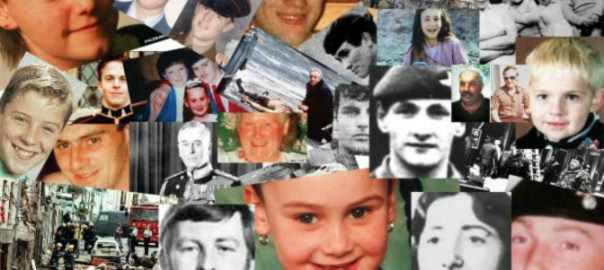
Eleven people were killed, including three married couples. The dead were Wesley and Bertha Armstrong, Kitchener and Jessie Johnston, William and Agnes Mullan, John Megaw, Georgina Quinton, Marie Wilson, Samuel Gault and Edward Armstrong. Edward Armstrong was a serving Royal Ulster Constabulary officer and Gault had recently left the force. Gordon Wilson, whose daughter Marie died in the blast and who was himself injured, went on to become a peace campaigner and member of Seanad Éireann.

The twelfth fatality, Ronnie Hill, died after spending 13 years in a coma. Sixty-three people were injured, including thirteen children.  Ulster Unionist politicians Sammy Foster and Jim Dixon were among the crowd; the latter received extensive head injuries but recovered. A local businessman captured the immediate aftermath of the bombing on video camera. His footage, showing the effects of the bombing, was broadcast on international television.

All the victims were Protestant.

A few hours after the blast, the IRA called a radio station and said it had abandoned a 150-pound (68 kg) bomb in Tullyhommon, 20 miles (32 km) away, after it failed to detonate.  That morning, a Remembrance Sunday parade (which included many members of the Boys’ and Girls’ Brigades) had unwittingly gathered near the Tullyhommon bomb.Soldiers and RUC officers had also been there, and the IRA said it triggered the bomb when soldiers were standing beside it.It was defused by security forces and was found to have a command wire leading to a ‘firing point’ across the border.

Reactions

The IRA apologised, saying it had made a mistake and that the target had been the UDR soldiers who were parading to the memorial.

Image result for Denzil McDaniel, author of Enniskillen

Denzil McDaniel, author of Enniskillen: The Remembrance Sunday Bombing, commented:

“I don’t believe the IRA set out to specifically kill civilians. I think they made mistakes, probably with their intelligence on the time-table for the service, but the IRA was reckless about civilian life”.

Image result for RUC Detective Chief Superintendent Norman Baxter

RUC Detective Chief Superintendent Norman Baxter said:

“Their intention was to inflict casualties. The only mistake in the operation was that the bomb went off before the parade arrived”.

Many nationalists were horrified by the bombing and described it as a blow to the republican cause. Sinn Féin’s weekly newspaper, An Phoblacht, criticised the bombing on tactical grounds, calling it a “monumental error” that would strengthen the IRA’s opponents.

The IRA disbanded the unit responsible.

The bombing led to an outcry among politicians in the Republic of Ireland and the United Kingdom. The then British Prime Minister Margaret Thatcher said:

“It’s really desecrating the dead and a blot on mankind”.

The Secretary of State for Northern Ireland, Tom King, denounced the “outrage” in the House of Commons,[8] as did the Irish Minister for Foreign Affairs, Brian Lenihan in Dáil Éireann (the lower house of the Oireachtas, the Irish parliament), while in Seanad Éireann Senator Maurice Manning spoke of people’s “total revulsion”.

Many public figures used terms such as ‘barbarism’ and ‘savagery’ to describe the bombing.

The bombing was seen by many Northern Irish Protestants as an attack on them, and loyalists ″retaliated″ with attacks on Catholic civilians. The day after, five Catholic teenagers were wounded in a shooting in Belfast, and a Protestant teenager was killed by the Ulster Defence Association after being mistaken for a Catholic.

In the week after the bombing, there were 14 gun and bomb attacks on Catholics in Belfast.

Irish band U2 were holding a concert in Denver, Colorado the same day. During a performance of their song “Sunday Bloody Sunday“, singer Bono passionately condemned the bombing, stating “fuck the revolution” in his mid-song speech, as well as criticising the armchair republicanism of many Irish-Americans and stating that the majority of people in the Republic of Ireland did not support the IRA. The footage is included in U2’s rockumentary Rattle and Hum.

Long-term results


The Clinton Centre, which was built in 2002 on the site of the bomb.


At the time, the British and Irish governments were negotiating an Extradition Act that would make it easier to extradite IRA suspects from the Republic to the UK. The Act was to come before the Irish parliament less than a month after the bombing.

The Irish government wanted the British to reform the justice system in Northern Ireland (such as by abolishing “Diplock courts“) before it would pass the Act. Many in the Republic insisted that the Act should only be passed if, and when, the reforms took place. However, after the bombing, opposition to the Act dwindled and it was passed by the Irish government, albeit with some changes.

The bombing harmed Sinn Féin’s electoral support.  In 1989, in the first local elections held in County Fermanagh after the bombing, Sinn Féin lost four of its eight council seats and was overtaken by the SDLP as the biggest Irish nationalist party It was not until 2001, fourteen years after the bombing, that Sinn Féin support returned to its 1985 level.

In 1997, Sinn Féin leader Gerry Adams apologised for the bombing on behalf of the republican movement.

Enniskillen’s Remembrance Day service was re-staged two weeks after the bombing, and attended by about 5,000 people, including British Prime Minister Margaret Thatcher.

The site of the bomb, which was owned by the Catholic Church, was rebuilt as The Clinton Centre, a youth hostel, in 2002. The hostel was opened by and named after former US President Bill Clinton.

 The Innocent Victims

floating-poppie-new

Princess Diana visits casualty in hospital
Princess Di Visiting Victims

———————————————————

08 November 1987


Edward Armstrong,   (52)

Protestant
Status: Royal Ulster Constabulary (RUC),

Killed by: Irish Republican Army (IRA)
Off duty. Killed by time bomb which exploded near war memorial, during Remembrance Day ceremony, Enniskillen, County Fermanagh.

———————————————————

08 November 1987


Marie Wilson,  (20)

Protestant
Status: Civilian (Civ),

Killed by: Irish Republican Army (IRA)
Killed by time bomb which exploded near war memorial, during Remembrance Day ceremony, Enniskillen, County Fermanagh.

———————————————————

08 November 1987


Samuel Gault,   (49)

Protestant
Status: Civilian (Civ),

Killed by: Irish Republican Army (IRA)
Killed by time bomb which exploded near war memorial, during Remembrance Day ceremony, Enniskillen, County Fermanagh.

———————————————————

08 November 1987

Georgina Quinton,   (72)

Protestant
Status: Civilian (Civ),

Killed by: Irish Republican Army (IRA)
Killed by time bomb which exploded near war memorial, during Remembrance Day ceremony, Enniskillen, County Fermanagh.

———————————————————

08 November 1987


John Megaw,   (68)

Protestant
Status: Civilian (Civ),

Killed by: Irish Republican Army (IRA)
Killed by time bomb which exploded near war memorial, during Remembrance Day ceremony, Enniskillen, County Fermanagh.

———————————————————

08 November 1987


Wesley Armstrong,   (62)

Protestant
Status: Civilian (Civ),

Killed by: Irish Republican Army (IRA)
Killed by time bomb which exploded near war memorial, during Remembrance Day ceremony, Enniskillen, County Fermanagh.

———————————————————

08 November 1987


Bertha Armstrong,   (53)

Protestant
Status: Civilian (Civ),

Killed by: Irish Republican Army (IRA)
Killed by time bomb which exploded near war memorial, during Remembrance Day ceremony, Enniskillen, County Fermanagh.

———————————————————

08 November 1987


William Mullan,   (72)

Protestant
Status: Civilian (Civ),

Killed by: Irish Republican Army (IRA)
Killed by time bomb which exploded near war memorial, during Remembrance Day ceremony, Enniskillen, County Fermanagh.

———————————————————

08 November 1987


Agnes Mullan,   (70)

Protestant
Status: Civilian (Civ),

Killed by: Irish Republican Army (IRA)
Killed by time bomb which exploded near war memorial, during Remembrance Day ceremony, Enniskillen, County Fermanagh.

———————————————————

08 November 1987


Kit Johnston,   (70)

Protestant
Status: Civilian (Civ),

Killed by: Irish Republican Army (IRA)
Killed by time bomb which exploded near war memorial, during Remembrance Day ceremony, Enniskillen, County Fermanagh.

———————————————————

08 November 1987


Jessie Johnston,   (66)

Protestant
Status: Civilian (Civ),

Killed by: Irish Republican Army (IRA)
Killed by time bomb which exploded near war memorial, during Remembrance Day ceremony, Enniskillen, County Fermanagh.

———————————————————

08 November 1987


Ronnie Hill, (68)

Protestant
Status: Civilian (Civ),

Killed by: Irish Republican Army (IRA)
Injured when time bomb exploded near war memorial, during Rememberance Day ceremony, Enniskillen, County Fermanagh. He died 28 December 2000, after being in a coma since the incident.

———————————————————

Enniskillen bombing

See BBC News for full story & background information


“‘Daddy, I love you very much’. Those were the exact words she spoke to me, and those were the last words I heard her say”. Gordon Wilson was speaking shortly after the death of his daughter, Marie, who was killed by the Provisional IRA bomb at the Cenotaph in Enniskillen on Sunday 8 November 1987.

As the explosion ripped the heart out of the town, it killed a further ten innocent bystanders. Five of the victims were women, and there were three married couples among the dead. All of those killed were Protestants, and all but one (a police reservist) were civilians.

Sixty-three others were injured in the blast, including thirteen children. A twelfth victim, Ronnie Hill, died in December 2000 after spending 13 years in a coma as a result of injuries sustained in the bombing.

Why?

Situated close to the border with the Republic of Ireland, Enniskillen was an easy target that offered the terrorists a ready escape route. The timing of the attack was also significant, coming in the wake of some major setbacks for the IRA. These included the killing of eight IRA men by the SAS during an attack on a police station in Loughgall and the seizing of a huge arms shipment from Libya.

Condemnation

The bombing was widely condemned. The British Prime Minister, Margaret Thatcher, said that “there should be no hiding place in any country for these people” and described the bombing as “a desecration”, “utterly barbaric” and “a blot on mankind”. The Irish Taioseach, Charles Haughey, stated: “The culprits must be utterly repudiated and brought to justice.”

International condemnation included official statements from Russia and, significantly, Libya. Under the rule of Colonel Gaddafi, Libya had provided the IRA with support and a steady supply of weapons, including the plastic explosive used in the bombing of Enniskillen. A Libyan Press Association statement said: “Libya is aware of the difference between legitimate revolutionary action and terrorism aimed at civilians and innocent people. This action does not belong to the legitimate revolutionary operation.”

The scale of this condemnation prompted the IRA to release a statement the following day expressing their “deep regret” at the results of the blast. At the same time, they claimed the bomb may have been detonated by the army scanning high frequencies in a security operation prior to the Remembrance Day parade. This claim was later admitted to be false.

It also transpired that the IRA had targeted the village of Tullyhommon, 20 miles from Enniskillen, on that Remembrance Sunday. The bomb at Tullyhommon was four times the size of the Enniskillen device. Had it exploded, members of the Boys’ and Girls’ Brigades would have been caught up in the carnage.

Retaliation and reconciliation

Loyalist paramilitaries were intent on retaliation – but were largely dissuaded by the words of Gordon Wilson in an interview broadcast the following day. “I have lost my daughter, and we shall miss her”, he said, “but I bear no ill will. I bear no grudge. Dirty sort of talk is not going to bring her back to life. She was a great wee lassie, she loved her profession, she was a pet. She’s dead, she’s in heaven, and we’ll meet again.”

Some of the victims did not share Gordon Wilson’s sentiments about the bombers and were frustrated that the media focused almost solely on him. Yet Mr Wilson’s words touched many hearts at home and abroad. They also effected a spirit of reconciliation among the people of Enniskillen when fear and confrontation might just have easily taken hold.

A fortnight after the bombing, Prime Minister Margaret Thatcher joined seven thousand others for a second Remembrance Day service at the war memorial in Enniskillen.

Turning point

The IRA lost support worldwide immediately after the Enniskillen bombing. Crucially, the Gadaffi regime in Libya withdrew their support and with it the supply of weapons and ammunition that had been planned to sustain the ‘Long War’. The leadership of Sinn Féin, the political wing of the republican movement in Northern Ireland, sought greater engagement with mainstream politics.

In Enniskillen itself, the Catholic community put pressure on the SDLP (the mainstream nationalist party) to stop its policy of supporting Sinn Féin for the posts of chairman and deputy chairman on the Fermanagh District Council. The SDLP were forced instead to support unionist candidates. The move helped to improve community relations, as did the work of the ‘Enniskillen Together’ group, set up to further the cause of reconciliation in the area.

Perhaps the most significant political consequence of the Enniskillen bombing was the resumption of talks between the SDLP leader John Hume and Gerry Adams. In his role as leader of Sinn Féin, Adams had condemned the bombing and resolved to step up the republican movement’s involvement in electoral politics. Although Hume received little support for the move, it paved the way for formal talks between the two parties and the beginnings of the ‘peace process’ that would eventually lead to the cessation of violence and the Good Friday Agreement

See below on how to order a copy of my No.1 Bestselling book: A Belfast Child 

6th November – Deaths & Events in Northern Ireland Troubles

Key Events & Deaths on this day in Northern Ireland Troubles

6th November

—————————————————————————————————-

Saturday 6 November 1971

Kathleen Thompson (47) was shot dead by British soldiers as she stood in garden in the Creggan area of Derry.

Wednesday 6 November 1974

——————————————————-

IRA 1983 Break Out of the Maze Prison

——————————————————-

33 Republican Prisoners escaped from the Maze Prison through a tunnel. Hugh Coney (24) was shot dead by a sentry during the escape. 32 of the prisoners were captured by the end of the day.

Two British soldiers were shot dead by the Irish Republican Army (IRA) in Crossmaglen, County Armagh.

Thursday 6 November 1975

Freed: Tiede Herrema, accompanied by his wife, Elisabeth, in November 1975,

The siege at the house in Monasterevin, County Kildare, where Tiede Herrema, then a Dutch industrialist, was being held hostage, ended with his safe release.

Saturday 6 November 1976

Two Catholic civilians died as a result of separate shooting incidents carried out by Loyalist paramilitaries in New Lodge, Belfast and Whiteabbey, Belfast.

Friday 6 November 1981

Garret FitzGerald, then Taoiseach (Irish Prime Minister), held talks with Margaret Thatcher, then British Prime Minister, in London. As a result of the meeting it was decided to establish the Anglo-Irish Inter-Governmental Council which would act as forum for meetings between the two governments.

Tuesday 6 November 1984

New measures were announced to try and combat the problem of impersonation during Northern Ireland elections.

[The local phrase of “vote early, vote often” was a reflection of the belief that there was a widespread problem even if it could not be quantified.]

Tuesday 6 November 1990

Cahal Daly was announced as the new Catholic Primate of All Ireland.

Wednesday 6 November 1991

Plans for public expenditure in Northern Ireland for the year 1992 to 1993 were published. Total expenditure was estimated at £7,030 million, which represented an increase of 8.4 per cent on the previous year.

Friday 6 November 1992

The Ulster Freedom Fighters (UFF), a cover name (pseudonym) used by the Ulster Defence Association (UDA), announced that it was extending its campaign to include “the entire Republican community”.

The coalition government in the Republic of Ireland collapsed and a general election was called for 25 November 1992

Saturday 6 November 1993

Gerry Adams, then President of Sinn Féin (SF), rejected the six principles proposed by Dick Spring, then Tánaiste (deputy Irish Prime Minister and Minister for Foreign Affairs), as “the basis for a peace process”.

[Spring had outlined the principles on 27 October 1993.] Albert Reynolds, then Taoiseach (Irish Prime Minister), told the Fianna Fáil (FF) Ard Fheis (annual conference) that peace could begin by the end of the year.

Wednesday 6 November

Gerry Adams, then President of Sinn Féin (SF), was involved in a car accident near Dundalk in the Republic of Ireland, and received hospital treatment for minor injuries.

Peter McMuller, a former member of the British Army’s Parachute Regiment, was sentenced to 14 years imprisonment for his part in a bomb attack on British Army barracks in Yorkshire, England. He was released because of time already spent in jail.

Thursday 6 November 1997

Split in Sinn Féin In Dundalk in the Republic of Ireland around 12 members of Sinn Féin (SF) resigned from the party in protest at SF’s acceptance of the Mitchell Principles.

[There were also media reports that a number of members of the Irish Republican Army (IRA) had left the paramilitary group. A number of commentators considered this to be the most significant split in Republican ranks since 2 November 1986.]

Saturday 6 November 1999

John Hume, then leader of the Social Democratic and Labour Party (SDLP), delivered his 20th annual leader’s address to the party’s annual conference in Belfast. He said SDLP policies of negotiation, partnership and reconciliation had a major influence in bringing about the Good Friday agreement.

The deputy leader, Séamus Mallon, called on Sinn Féin (SF) and the Ulster Unionist Party (UUP) to end their “miserable dispute” over decommissioning and devolution. Peter Mandelson, then Secretary of State for Northern Ireland, also addressed the conference.

The Alliance Party of Northern Ireland (APNI) formally accepted the recommendations of the Patten report. A new pedestrian bridge was lifted into place across the Liffey, in Dublin, between Grattan Bridge and the Ha’penny Bridge. The Millennium Bridge was due to open in late December 1999.

——————————————————–

———————————————————————————

Remembering all innocent victims of the Troubles

Today is the anniversary of the death of the following  people killed as a results of the conflict in Northern Ireland

“To live in hearts we leave behind is not to die

– Thomas Campbell

To the innocent on the list – Your memory will live  forever

– To  the Paramilitaries  –

There are many things worth living for, a few things worth dying for, but nothing worth killing for.

10 People lost their lives on the 6th November between 1971 – 1989

————————————————————

06 November 1971


Kathleen Thompson,  (47)

Catholic
Status: Civilian (Civ),

Killed by: British Army (BA)
Shot in the back garden of her home, Kildrum Gardens, Creggan, Derry.

————————————————————

06 November 1973
John Aikman,  (25)

nfNI
Status: British Army (BA),

Killed by: Irish Republican Army (IRA)
Shot by sniper while on British Army (BA) foot patrol, Newtownhamilton, County Armagh.

————————————————————

06 November 1974


Hugh Coney,  (24)

Catholic
Status: Irish Republican Army (IRA),

Killed by: British Army (BA)
Shot while attempting to escape from Long Kesh Prison, County Down.

————————————————————

06 November 1974


Stephen Windsor,  (26)

nfNI
Status: British Army (BA),

Killed by: Irish Republican Army (IRA)
Shot by sniper while on British Army (BA) foot patrol, Crossmaglen, County Armagh.

————————————————————

06 November 1974


Brian Allen,  (20)

nfNI
Status: British Army (BA),

Killed by: Irish Republican Army (IRA)
Shot by sniper while on British Army (BA) foot patrol, Crossmaglen, County Armagh

————————————————————

06 November 1975


John Bell,  (59)

Protestant
Status: Ulster Defence Regiment (UDR),

Killed by: Irish Republican Army (IRA)
Off duty. Shot while driving home from work, Ballymoyer, near Newtownhamilton, County Armagh.

————————————————————

06 November 1976


 Carol McMenamy, (15)

Catholic
Status: Civilian (Civ),

Killed by: non-specific Loyalist group (LOY)
Died one day after being shot while standing outside friend’s home, Newington Street, New Lodge, Belfast.

————————————————————

06 November 1976


Eugene McDonagh,  (23)

Catholic
Status: Civilian (Civ),

Killed by: Ulster Volunteer Force (UVF)
Barman. Shot outside his workplace, Jordanstown Inn, Whiteabbey, County Antrim.

————————————————————

06 November 1989
Robert Burns,  (49)

Catholic
Status: Civilian (Civ),

Killed by: Irish People’s Liberation Organisation (IPLO)
Shot at his home, Milltown Avenue, Derriaghy, near Belfast, County Antrim.

————————————————————

06 November 1991
Michael Boxall,   (27)

Protestant
Status: Ulster Defence Regiment (UDR),

Killed by: Irish Republican Army (IRA)
Killed in horizontal mortar attack on Ulster Defence Regiment (UDR) mobile patrol, Bellaghy, County Derry.

————————————————————


Buy Me A Coffee

See below on how to order a copy of my No.1 Bestselling book: A Belfast Child 
5th November – Deaths & Events in Northern Ireland Troubles

Key Events & Deaths on this day in Northern Ireland Troubles

5th November

Tuesday 5 November 1968

Civil Rights Campaign

Sunday 5 November 1972

Maire Drumm,

Maire Drumm, then vice-President of Sinn Féin (SF), was arrested in the Republic of Ireland. There is a ministerial re-shuffle of posts at the Northern Ireland Office (NIO).

Friday 5 November 1982

In the United States of America (USA) a court acquitted five men of charges of conspiring to ship arms to the Irish Republican Army (IRA) during 1981. The men used the defence that the Central Intelligence Agency (CIA) had approved the shipment of arms although this was denied.

Tuesday 5 November 1991

At a football match at Windsor Park in Belfast, the Ulster Freedom Fighters (UFF), a cover name (pseudonym) used by the Ulster Defence Association (UDA), threw a grenade at the supporters of the Cliftonville team.

[Supporters of Cliftonville are perceived as being mainly Catholic. The UFF said the attack was in retaliation for the bombing on 2 November 1991.]

Sunday 5 November 1995

Gerry Adams, then President of Sinn Féin (SF), said that the British government had subverted the peace process to the point where it no longer existed.

Tuesday 5 November 1996

Bill Clinton won the American presidential election to secure a second term in office.

Wednesday 5 November 1997

There was a gun attack on the headquarters of Sinn Féin (SF) on Andersontown Road, Belfast. No one was hurt during the attack.

[It was later claimed that Brendan Campbell, an alleged drug dealer had carried out the attack. Campbell was killed by Direct Action Against Drugs (DAAD), which is considered to be a covername used by the Irish Republican Army (IRA), on 10 February 1998.]

Dick Spring, formerly the Tánaiste (deputy Irish Prime Minister and Minister for Foreign Affairs), resigned as leader of the Irish Labour Party.

[Spring had proved a successful leader of the Labour Party and was a key figure in recent initiatives in Northern Ireland. It was believed that one reason for his decision to resign was the poor result achieved by the Labour candidate in the Presidential election on 30 October 1997. Ruairi Quinn was elected as the new leader of the party on 13 November 1997.]

Friday 5 November 1999

The Parades Commission issued a determination which re-routed a planed parade by the Orange Order on Poppy Day. The Orange Order had applied to march through the mainly Nationalist Garvaghy Road in Portadown, County Armagh. Seamus Mallon, then deputy leader of the Social Democratic and Labour Party (SDLP), made a speech at the party’s annual conference in Belfast.

Monday 5 November 2001

A man and a youth were injured in separate paramilitary ‘punishment’ shootings. The man (19) was shot in both legs in an attack in Newtownabbey, County Antrim, at approximately 7.15pm (1915GMT). In the other attack a teenager (16) was shot in one leg at Cavehill Road, north Belfast, at around 9.30pm (2130GMT).

The Northern Ireland Assembly met to debate the motion on the election of David Trimble as First Minister and Mark Durkan as Deputy First Minister. The move followed a series of meetings over the weekend between pro-Agreement parties and John Reid, then Secretary of State for Northern Ireland.

[There was a plan that some MLAs from the Alliance Party of Northern Ireland (APNI) would redesignate from ‘Other’ to ‘Unionist’, for a period of 24 hours, and vote in favour of Trimble and Durkan for the two posts. However, anti-Agreement Unionists used a procedural device (a ‘petition of concern’) to postpone the vote on the two motions although the actual debates could go ahead. The voting on the two motions took place on Tuesday 6 November 2001.]

The Democratic Unionist Party (DUP) took legal action in Belfast High Court against John Reid’s decision not to call fresh elections to the Northern Ireland Assembly. The deadline for the election of a First Minister and a Deputy First Minister had been midnight on Saturday 3 November. The action was dismissed but the DUP returned to the High Court on Thursday 8 November 2001.

Loyalist protesters at the Holy Cross Girls’ Primary School said that they had reached an “understanding” with the Police Service of Northern Ireland (PSNI) over the weekend. As a result of which the police were not wearing full riot gear when the protest took place. The residents had undertaken to stand back from police vehicles. A representative of Catholic parents on the Right to Education Group said: “The police should have sat down with both sides to talk about this”.

—————————————————————————————————————


———————————————————————————

Remembering all innocent victims of the Troubles

Today is the anniversary of the death of the following  people killed as a results of the conflict in Northern Ireland

“To live in hearts we leave behind is not to die

– Thomas Campbell

To the innocent on the list – Your memory will live  forever

– To  the Paramilitaries  –

There are many things worth living for, a few things worth dying for, but nothing worth killing for.

3 People lost their lives on the 5th November between 1975 – 1983

————————————————————

05 November 1975
Stanley Irwin,   (26)

Protestant
Status: Civilian (Civ),

Killed by: non-specific Republican group (REP)
Shot at his farm, Carrowbeg, Benburb, County Tyrone.

————————————————————

05 November 1979


Thomas Gilhooley,   (25)

Protestant
Status: Prison Officer (PO),

Killed by: Irish Republican Army (IRA)
Shot while leaving Crumlin Road Prison, Belfast.

————————————————————

05 November 1983


 John McFadden,  (50)

Protestant
Status: Royal Ulster Constabulary (RUC),

Killed by: Irish Republican Army (IRA)
Off duty. Shot outside his home, Bamford Park, Rasharkin, County Antrim.

————————————————————


Buy Me A Coffee

See below on how to order a copy of my No.1 Bestselling book: A Belfast Child 

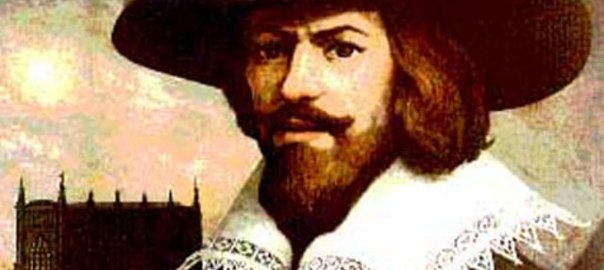
Guy Fawkes – The Gunpowder Plot – Exploding the Legend

Guy Fawkes

Born: April 13, 1570, York

Died: January 31, 1606, Westminster

———————————————————————–

The Gunpowder Plot Exploding the Legend

———————————————————————–

Guy Fawkes (/ˈɡ ˈfɔːks/; 13 April 1570 – 31 January 1606), also known as Guido Fawkes, the name he adopted while fighting for the Spanish, was a member of a group of provincial English Catholics who planned the failed Gunpowder Plot of 1605.

Gunpowder Plot
Guy Fawkes
Black-and-white drawing

George Cruikshank‘s illustration of Guy Fawkes, published in William Harrison Ainsworth‘s 1840 novel
Details
Parents Edward Fawkes, Edith (née Blake or Jackson)
Born 13 April 1570 (presumed)
York, England
Alias(es) Guido Fawkes, John Johnson
Occupation Soldier; Alférez
Plot
Role Explosives
Enlisted 20 May 1604
Captured 5 November 1605
Conviction(s) High treason
Penalty Hanged, drawn and quartered
Died 31 January 1606 (aged 35)
Westminster, London, England
Cause Hanged

Fawkes was born and educated in York. His father died when Fawkes was eight years old, after which his mother married a recusant Catholic. Fawkes later converted to Catholicism and left for the continent, where he fought in the Eighty Years’ War on the side of Catholic Spain against Protestant Dutch reformers in the Low Countries. He travelled to Spain to seek support for a Catholic rebellion in England but was unsuccessful. He later met Thomas Wintour, with whom he returned to England.

Wintour introduced Fawkes to Robert Catesby, who planned to assassinate King James I and restore a Catholic monarch to the throne. The plotters secured the lease to an undercroft beneath the House of Lords, and Fawkes was placed in charge of the gunpowder they stockpiled there. Prompted by the receipt of an anonymous letter, the authorities searched Westminster Palace during the early hours of 5 November, and found Fawkes guarding the explosives. Over the next few days, he was questioned and tortured, and eventually he broke. Immediately before his execution on 31 January, Fawkes jumped from the scaffold where he was to be hanged and broke his neck, thus avoiding the agony of the mutilation that followed.

Fawkes became synonymous with the Gunpowder Plot, the failure of which has been commemorated in Britain since 5 November 1605. His effigy is traditionally burned on a bonfire, commonly accompanied by a firework display.

———————————————————————–

Guy Fawkes and the Gunpowder Plot

———————————————————————–

Early life

Childhood

Photo

Fawkes was baptised at the church of St. Michael le Belfrey

Guy Fawkes was born in 1570 in Stonegate, York. He was the second of four children born to Edward Fawkes, a proctor and an advocate of the consistory court at York,[a] and his wife, Edith.[b] Guy’s parents were regular communicants of the Church of England, as were his paternal grandparents; his grandmother, born Ellen Harrington, was the daughter of a prominent merchant, who served as Lord Mayor of York in 1536.[4] However, Guy’s mother’s family were recusant Catholics, and his cousin, Richard Cowling, became a Jesuit priest.[5] Guy was an uncommon name in England, but may have been popular in York on account of a local notable, Sir Guy Fairfax of Steeton.[6]

The date of Fawkes’s birth is unknown, but he was baptised in the church of St. Michael le Belfrey on 16 April. As the customary gap between birth and baptism was three days, he was probably born about 13 April.[5] In 1568, Edith had given birth to a daughter named Anne, but the child died aged about seven weeks, in November that year. She bore two more children after Guy: Anne (b. 1572), and Elizabeth (b. 1575). Both were married, in 1599 and 1594 respectively.[6][7]

In 1579, when Guy was eight years old, his father died. His mother remarried several years later, to the Catholic Dionis Baynbrigge (or Denis Bainbridge) of Scotton, Harrogate. Fawkes may have become a Catholic through the Baynbrigge family’s recusant tendencies, and also the Catholic branches of the Pulleyn and Percy families of Scotton,[8] but also from his time at St. Peter’s School in York. A governor of the school had spent about 20 years in prison for recusancy, and its headmaster, John Pulleyn, came from a family of noted Yorkshire recusants, the Pulleyns of Blubberhouses. In her 1915 work The Pulleynes of Yorkshire, author Catharine Pullein suggested that Fawkes’s Catholic education came from his Harrington relatives, who were known for harbouring priests, one of whom later accompanied Fawkes to Flanders in 1592–1593.[9] Fawkes’s fellow students included John Wright and his brother Christopher (both later involved with Fawkes in the Gunpowder plot) and Oswald Tesimond, Edward Oldcorne and Robert Middleton, who became priests (the latter executed in 1601).[10]

After leaving school Fawkes entered the service of Anthony Browne, 1st Viscount Montagu. The Viscount took a dislike to Fawkes and after a short time dismissed him; he was subsequently employed by Anthony-Maria Browne, 2nd Viscount Montagu, who succeeded his grandfather at the age of 18.[11] At least one source claims that Fawkes married and had a son, but no known contemporary accounts confirm this.[12][c]

———————————————————————–

5 Things You Probably Didn’t Know About The Gunpowder Plot

———————————————————————–

Military career

In October 1591 Fawkes sold the estate in Clifton that he had inherited from his father.[d] He travelled to the continent to fight in the Eighty Years War for Catholic Spain against the new Dutch Republic and, from 1595 until the Peace of Vervins in 1598, France. Although England was not by then engaged in land operations against Spain, the two countries were still at war, and the Spanish Armada of 1588 was only five years in the past. He joined Sir William Stanley, an English Catholic and veteran commander in his mid-fifties who had raised an army in Ireland to fight in Leicester’s expedition to the Netherlands. Stanley had been held in high regard by Elizabeth I, but following his surrender of Deventer to the Spanish in 1587 he, and most of his troops, had switched sides to serve Spain. Fawkes became an alférez or junior officer, fought well at the siege of Calais in 1596, and by 1603 had been recommended for a captaincy.[3] That year, he travelled to Spain to seek support for a Catholic rebellion in England. He used the occasion to adopt the Italian version of his name, Guido, and in his memorandum described James I as “a heretic”, who intended “to have all of the Papist sect driven out of England.” He denounced Scotland, and the King’s favourites among the Scottish nobles, writing “it will not be possible to reconcile these two nations, as they are, for very long”.[13] Although he was received politely, the court of Philip III was unwilling to offer him any support.[14]

Gunpowder Plot

Main article: Gunpowder Plot
A monochrome engraving of eight men, in 17th-century dress.  All have beards, and appear to be engaged in discussion

A contemporary engraving of eight of the thirteen conspirators, by Crispijn van de Passe. Fawkes is third from the right.

In 1604 Fawkes became involved with a small group of English Catholics, led by Robert Catesby, who planned to assassinate the Protestant King James and replace him with his daughter, third in the line of succession, Princess Elizabeth.[15][16] Fawkes was described by the Jesuit priest and former school friend Oswald Tesimond as “pleasant of approach and cheerful of manner, opposed to quarrels and strife … loyal to his friends”. Tesimond also claimed Fawkes was “a man highly skilled in matters of war”, and that it was this mixture of piety and professionalism which endeared him to his fellow conspirators.[3] The author Antonia Fraser describes Fawkes as “a tall, powerfully built man, with thick reddish-brown hair, a flowing moustache in the tradition of the time, and a bushy reddish-brown beard”, and that he was “a man of action … capable of intelligent argument as well as physical endurance, somewhat to the surprise of his enemies.”[5]

The first meeting of the five central conspirators took place on Sunday 20 May 1604, at an inn called the Duck and Drake, in the fashionable Strand district of London.[e] Catesby had already proposed at an earlier meeting with Thomas Wintour and John Wright to kill the King and his government by blowing up “the Parliament House with gunpowder”. Wintour, who at first objected to the plan, was convinced by Catesby to travel to the continent to seek help. Wintour met with the Constable of Castile, the exiled Welsh spy Hugh Owen,[18] and Sir William Stanley, who said that Catesby would receive no support from Spain. Owen did, however, introduce Wintour to Fawkes, who had by then been away from England for many years, and thus was largely unknown in the country. Wintour and Fawkes were contemporaries; each was militant, and had first-hand experience of the unwillingness of the Spaniards to help. Wintour told Fawkes of their plan to “doe some whatt in Ingland if the pece with Spaine healped us nott”,[3] and thus in April 1604 the two men returned to England.[17] Wintour’s news did not surprise Catesby; despite positive noises from the Spanish authorities, he feared that “the deeds would nott answere”.[f]

One of the conspirators, Thomas Percy, was promoted in June 1604, gaining access to a house in London that belonged to John Whynniard, Keeper of the King’s Wardrobe. Fawkes was installed as a caretaker and began using the pseudonym John Johnson, servant to Percy.[20] The contemporaneous account of the prosecution (taken from Thomas Wintour’s confession)[21] claimed that the conspirators attempted to dig a tunnel from beneath Whynniard’s house to Parliament, although this story may have been a government fabrication; no evidence for the existence of a tunnel was presented by the prosecution, and no trace of one has ever been found; Fawkes himself did not admit the existence of such a scheme until his fifth interrogation, but even then he could not locate the tunnel.[22] If the story is true, however, by December 1604 the conspirators were busy tunnelling from their rented house to the House of Lords. They ceased their efforts when, during tunnelling, they heard a noise from above. Fawkes was sent out to investigate, and returned with the news that the tenant’s widow was clearing out a nearby undercroft, directly beneath the House of Lords.[3][23]

The plotters purchased the lease to the room, which also belonged to John Whynniard. Unused and filthy, it was considered an ideal hiding place for the gunpowder the plotters planned to store.[24] According to Fawkes, 20 barrels of gunpowder were brought in at first, followed by 16 more on 20 July.[25] On 28 July however, the ever-present threat of the plague delayed the opening of Parliament until Tuesday, 5 November.[26]

Overseas

In an attempt to gain foreign support, in May 1605 Fawkes travelled overseas and informed Hugh Owen of the plotters’ plan.[27] At some point during this trip his name made its way into the files of Robert Cecil, 1st Earl of Salisbury, who employed a network of spies across Europe. One of these spies, Captain William Turner, may have been responsible. Although the information he provided to Salisbury usually amounted to no more than a vague pattern of invasion reports, and included nothing which regarded the Gunpowder Plot, on 21 April he told how Fawkes was to be brought by Tesimond to England. Fawkes was a well-known Flemish mercenary, and would be introduced to “Mr Catesby” and “honourable friends of the nobility and others who would have arms and horses in readiness”.[28] Turner’s report did not, however, mention Fawkes’s pseudonym in England, John Johnson, and did not reach Cecil until late in November, well after the plot had been discovered.[3][29]

It is uncertain when Fawkes returned to England, but he was back in London by late August 1605, when he and Wintour discovered that the gunpowder stored in the undercroft had decayed. More gunpowder was brought into the room, along with firewood to conceal it.[30] Fawkes’s final role in the plot was settled during a series of meetings in October. He was to light the fuse and then escape across the Thames. Simultaneously, a revolt in the Midlands would help to ensure the capture of Princess Elizabeth. Acts of regicide were frowned upon, and Fawkes would therefore head to the continent, where he would explain to the Catholic powers his holy duty to kill the King and his retinue.[31]

Discovery

In a stone-walled room, several armed men physically restrain another man, who is drawing his sword.

Discovery of the Gunpowder Plot (c. 1823), Henry Perronet Briggs

A few of the conspirators were concerned about fellow Catholics who would be present at Parliament during the opening.[32] On the evening of 26 October, Lord Monteagle received an anonymous letter warning him to stay away, and to “retyre youre self into yowre contee whence yow maye expect the event in safti for … they shall receyve a terrible blowe this parleament”.[33] Despite quickly becoming aware of the letter – informed by one of Monteagle’s servants – the conspirators resolved to continue with their plans, as it appeared that it “was clearly thought to be a hoax”.[34] Fawkes checked the undercroft on 30 October, and reported that nothing had been disturbed.[35] Monteagle’s suspicions had been aroused, however, and the letter was shown to King James. The King ordered Sir Thomas Knyvet to conduct a search of the cellars underneath Parliament, which he did in the early hours of 5 November. Fawkes had taken up his station late on the previous night, armed with a slow match and a watch given to him by Percy “becaus he should knowe howe the time went away”.[3] He was found leaving the cellar, shortly after midnight, and arrested. Inside, the barrels of gunpowder were discovered hidden under piles of firewood and coal.[36]

Torture

Fawkes gave his name as John Johnson and was first interrogated by members of the King’s Privy chamber, where he remained defiant.[37] When asked by one of the lords what he was doing in possession of so much gunpowder, Fawkes answered that his intention was “to blow you Scotch beggars back to your native mountains.” [38] He identified himself as a 36-year-old Catholic from Netherdale in Yorkshire, and gave his father’s name as Thomas and his mother’s as Edith Jackson. Wounds on his body noted by his questioners he explained as the effects of pleurisy. Fawkes admitted his intention to blow up the House of Lords, and expressed regret at his failure to do so. His steadfast manner earned him the admiration of King James, who described Fawkes as possessing “a Roman resolution”.[39]

James’s admiration did not, however, prevent him from ordering on 6 November that “John Johnson” be tortured, to reveal the names of his co-conspirators.[40] He directed that the torture be light at first, referring to the use of manacles, but more severe if necessary, authorising the use of the rack: “the gentler Tortures are to be first used unto him et sic per gradus ad ima tenditur [and so by degrees proceeding to the worst]”.[37][41] Fawkes was transferred to the Tower of London. The King composed a list of questions to be put to “Johnson”, such as “as to what he is, For I can never yet hear of any man that knows him”, “When and where he learned to speak French?”, and “If he was a Papist, who brought him up in it?”[42] The room in which Fawkes was interrogated subsequently became known as the Guy Fawkes Room.[43]

Two signatures

Fawkes’s signature of “Guido”, made soon after his torture, is a barely evident scrawl compared to a later instance.

Sir William Waad, Lieutenant of the Tower, supervised the torture and obtained Fawkes’s confession.[37] He searched his prisoner, and found a letter, addressed to Guy Fawkes. To Waad’s surprise, “Johnson” remained silent, revealing nothing about the plot or its authors.[44] On the night of 6 November he spoke with Waad, who reported to Salisbury “He [Johnson] told us that since he undertook this action he did every day pray to God he might perform that which might be for the advancement of the Catholic Faith and saving his own soul”. According to Waad, Fawkes managed to rest through the night, despite his being warned that he would be interrogated until “I had gotton the inwards secret of his thoughts and all his complices”.[45] His composure was broken at some point during the following day.[46]

The observer Sir Edward Hoby remarked “Since Johnson’s being in the Tower, he beginneth to speak English”. Fawkes revealed his true identity on 7 November, and told his interrogators that there were five people involved in the plot to kill the King. He began to reveal their names on 8 November, and told how they intended to place Princess Elizabeth on the throne. His third confession, on 9 November, implicated Francis Tresham. Following the Ridolfi plot of 1571 prisoners were made to dictate their confessions, before copying and signing them, if they still could.[47] Although it is uncertain if he was tortured on the rack, Fawkes’s scrawled signature bears testament to the suffering he endured at the hands of his interrogators.[48]

Trial and execution

The trial of eight of the plotters began on Monday 27 January 1606. Fawkes shared the barge from the Tower to Westminster Hall with seven of his co-conspirators.[g] They were kept in the Star Chamber before being taken to Westminster Hall, where they were displayed on a purpose-built scaffold. The King and his close family, watching in secret, were among the spectators as the Lords Commissioners read out the list of charges. Fawkes was identified as Guido Fawkes, “otherwise called Guido Johnson”. He pleaded not guilty, despite his apparent acceptance of guilt from the moment he was captured.[50]

Etching

A 1606 etching by Claes (Nicolaes) Jansz Visscher, depicting Fawkes’s execution

The outcome was never in doubt. The jury found all of the defendants guilty, and the Lord Chief Justice Sir John Popham proclaimed them guilty of high treason.[51] The Attorney General Sir Edward Coke told the court that each of the condemned would be drawn backwards to his death, by a horse, his head near the ground. They were to be “put to death halfway between heaven and earth as unworthy of both”. Their genitals would be cut off and burnt before their eyes, and their bowels and hearts removed. They would then be decapitated, and the dismembered parts of their bodies displayed so that they might become “prey for the fowls of the air”.[52] Fawkes’s and Tresham’s testimony regarding the Spanish treason was read aloud, as well as confessions related specifically to the Gunpowder Plot. The last piece of evidence offered was a conversation between Fawkes and Wintour, who had been kept in adjacent cells. The two men apparently thought they had been speaking in private, but their conversation was intercepted by a government spy. When the prisoners were allowed to speak, Fawkes explained his not guilty plea as ignorance of certain aspects of the indictment.[53]

On 31 January 1606, Fawkes and three others – Thomas Wintour, Ambrose Rookwood, and Robert Keyes – were dragged (i.e. drawn) from the Tower on wattled hurdles to the Old Palace Yard at Westminster, opposite the building they had attempted to destroy.[54] His fellow plotters were then hanged and quartered. Fawkes was the last to stand on the scaffold. He asked for forgiveness of the King and state, while keeping up his “crosses and idle ceremonies”. Weakened by torture and aided by the hangman, Fawkes began to climb the ladder to the noose, but either through jumping to his death or climbing too high so the rope was incorrectly set, he managed to avoid the agony of the latter part of his execution by breaking his neck.[37][55][56] His lifeless body was nevertheless quartered[57] and, as was the custom,[58] his body parts were then distributed to “the four corners of the kingdom”, to be displayed as a warning to other would-be traitors.[59]

Legacy

Sketch of a group of children escorting an effigy

Procession of a Guy (1864)

On 5 November 1605 Londoners were encouraged to celebrate the King’s escape from assassination by lighting bonfires, “always provided that ‘this testemonye of joy be carefull done without any danger or disorder'”.[3] An Act of Parliament designated each 5 November as a day of thanksgiving for “the joyful day of deliverance”, and remained in force until 1859.[60] Although he was only one of 13 conspirators, Fawkes is today the individual most associated with the failed Plot.[61]

In Britain, 5 November has variously been called Guy Fawkes Night, Guy Fawkes Day, Plot Night[62] and Bonfire Night; the latter can be traced directly back to the original celebration of 5 November 1605.[63] Bonfires were accompanied by fireworks from the 1650s onwards, and it became the custom to burn an effigy (usually the pope) after 1673, when the heir presumptive, James, Duke of York, made his conversion to Catholicism public.[3] Effigies of other notable figures who have become targets for the public’s ire, such as Paul Kruger and Margaret Thatcher, have also found their way onto the bonfires,[64] although most modern effigies are of Fawkes.[60] The “guy” is normally created by children, from old clothes, newspapers, and a mask.[60] During the 19th century, “guy” came to mean an oddly dressed person, but in American English it lost any pejorative connotation, and was used to refer to any male person.[60][65]

Children preparing for Guy Fawkes night celebrations (1954)

William Harrison Ainsworth‘s 1841 historical romance Guy Fawkes; or, The Gunpowder Treason portrays Fawkes in a generally sympathetic light,[66] and transformed him in the public perception into an “acceptable fictional character”. Fawkes subsequently appeared as “essentially an action hero” in children’s books and penny dreadfuls such as The Boyhood Days of Guy Fawkes; or, The Conspirators of Old London, published in about 1905.[67] Historian Lewis Call has observed that Fawkes is now “a major icon in modern political culture”. He went on to write that the image of Fawkes’s face became “a potentially powerful instrument for the articulation of postmodern anarchism”[h] during the late 20th century, exemplified by the mask worn by V in the comic book series V for Vendetta, who fights against a fictional fascist English state.[68]

Guy Fawkes is sometimes toasted as “the last man to enter Parliament with honest intentions”.[69]

4th November – Deaths & Events in Northern Ireland Troubles

Key Events & Deaths on this day in Northern Ireland Troubles

4th November

—————————————————————–

Monday 4 November 1968

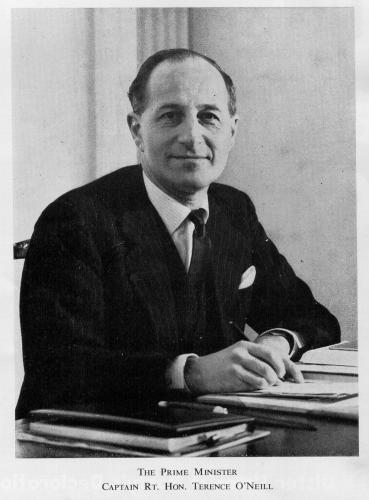
Terence O’Neill, then Northern Ireland Prime Minister, together with William Craig, then Home Affairs Minister, and Brian Faulkner, then Minister of Commerce, met in Downing Street, London, with Harold Wilson, then British Prime Minister, and James Callaghan, then British Home Secretary, for talks about the situation in Northern Ireland.

The British Prime Minister stated that there would be no change in the constitutional position of Northern Ireland without the consent of the Northern Ireland population.

[Wilson is believed to have pressed O’Neill to introduce urgent reforms. A reforms package was announced on 22 November 1968.]

Thursday 4 November 1971

British soldiers shot dead a man in Belfast. A British soldier died seven weeks after being mortally wounded in Belfast.

Brian Faulkner,

Brian Faulkner, then Northern Ireland Prime Minister, went to London for a meeting with Harold Wilson, then leader of the Labour Party, and James Callaghan, then shadow British Home Secretary.

Tuesday 4 November 1975

Merlyn Rees

Merlyn Rees, then Secretary of Sate for Northern Ireland, announced that anyone convicted of terrorist crimes committed after 1 March 1976 would not be accorded special category status.

Saturday 4 November 1978

The Social Democratic and Labour Party (SDLP) annual conference voted that British withdrawal was ‘desirable and inevitable’. The party also called for fresh talks between the British and Irish governments and representatives of the two communities in Northern Ireland.

Thursday 4 November 1982

The Irish coalition government was defeated in a vote of confidence in the Dáil.

Friday 4 November 1983

The Irish Republican Army (IRA) planted a bomb in a lecture room of the (then) Ulster Polytechnic at Jordanstown, County Antrim. The bomb was targeted at a lecture to members of the Royal Ulster Constabulary (RUC) and killed two officers and injured a further 33. [Another officer died from his injuries on 13 August 1984.]

Sunday 4 November 1984

In an article in the Sunday Press it was claimed that Margaret Thatcher, then British Prime Minister, had twice asked her advisors to produce assessments on the possibility of repartition, redrawing the border between Northern Ireland and the Republic of Ireland.

Tuesday 4 November 1986

It was revealed that Margaret Thatcher, then British Prime Minister, had written to Garret FitzGerald, then Taoiseach (Irish Prime Minister), and rejected suggestions by the Irish government that Diplock courts in Northern Ireland should be heard by three judges instead of one.

Saturday 4 November 1989

The Social Democratic and Labour Party (SDLP) held its annual conference in Newcastle, County Down.

Wednesday 4 November 1992

The Northern Ireland Office (NIO) offered to extend 100 per cent capital funding to Catholic (maintained) schools

Thursday 4 November 1993

John Hume

John Hume, then leader of the Social Democratic and Labour Party (SDLP), had a meeting with John Major, then British Prime Minister, in London. Hume later stated that there could be peace within a week if his proposals were adopted. Gordon Wilson revealed that he, along with two other people, had held a meeting with three leaders of Loyalist paramilitaries. The meeting took place earlier in the week.

Friday 4 November 1994

Seamus Mallon, then deputy leader of the Social Democratic and Labour Party (SDLP), called for the Royal Ulster Constabulary (RUC) to be split into four local police forces.

[The idea was dismissed by Sir Hugh Annesley, then Chief Constable of the RUC, on 10 November 1994.]

Wednesday 4 November 1998

The Northern Ireland Office (NIO) revealed that there had been an estimated 1,000 punishment attacks since September 1994. A British Army Review Board decide that the two Scots Guards, who had been convicted of the murder of Peter McBride (18), a Catholic civilian, in Belfast on 4 September 1992, could rejoin their regiment.

Thursday 4 November 1999

David Trimble

David Trimble, then leader of the Ulster Unionist Party (UUP), flew to Washington to brief officials at the White House on the Mitchell Review of the Agreement. Tommy English, a former Ulster Democratic Party (UDP) delegate, was charged along with two other men with aggravated burglary. The charge related to accusations that the three men had caused damage with baseball bats to the Crow’s Nest pub in Belfast.

The Irish Times (a Dublin based newspaper) published the results of an opinion poll which indicated that the Irish Government’s satisfaction rating was at its lowest since the Coalition was formed in 1997. The survey was conducted by MRBI on behalf of the Irish Times.

Sunday 4 November 2001

New Police Service of Northern Ireland (PSNI) The Police Service of Northern Ireland (PSNI) came into being with a change to the name of the Royal Ulster Constabulary (RUC). The powers of the new Northern Ireland Policing Board took effect. The first batch of the 308 recruits to the PSNI, recruited on the basis of 50 per cent Catholic and 50 per cent Protestant, began their training. [The Patten report containing recommendations for the police service in Northern Ireland was published in September 1999 and an ‘Updated Implementation Plan 2001’ was published on 17 August 2001. The report called for sweeping changes to the RUC’s name, badge, structure, ethos, and recruitment procedures.]

——————————————————————————————————–


———————————————————————————

Remembering all innocent victims of the Troubles

Today is the anniversary of the death of the following  people killed as a results of the conflict in Northern Ireland

“To live in hearts we leave behind is not to die

– Thomas Campbell

To the innocent on the list – Your memory will live  forever

– To  the Paramilitaries  –

There are many things worth living for, a few things worth dying for, but nothing worth killing for.

 9  People lost their lives on the 4th November between 1971 – 1992

————————————————————

04 November 1971


Stephen McGuire,   (20)

nfNI
Status: British Army (BA),

Killed by: Irish Republican Army (IRA)
Died seven weeks after being shot by sniper at Henry Taggart British Army (BA) base, Ballymurphy, Belfast.

————————————————————

04 November 1971


Christopher Quinn,   (39)

Catholic
Status: Civilian (Civ),

Killed by: British Army (BA)
Shot while walking along entry by Unity Flats, off Upper Library Street, Belfast.

————————————————————

04 November 1974
Ivan Clayton,  (48)

Catholic
Status: Civilian (Civ),

Killed by: non-specific Loyalist group (LOY)
Security man. Shot at the entrance to Club Bar, University Road, Belfast

————————————————————

04 November 1976


Cornelius McCrory,   (17)

Catholic
Status: Civilian (Civ),

Killed by: non-specific Loyalist group (LOY)
Found shot on the bank of the Forth River, Glencairn, Belfast.

————————————————————

04 November 1981
Arthur Bettice,  (35)

Protestant
Status: Ulster Defence Association (UDA),

Killed by: Ulster Freedom Fighters (UFF)
Shot at his home, Silvio Street, Shankill, Belfast. Alleged informer

————————————————————

04 November 1983


John Martin,  (28)

Protestant
Status: Royal Ulster Constabulary (RUC),

Killed by: Irish Republican Army (IRA)
Killed by time bomb, hidden in ceiling of classroom, which exploded during lecture to Royal Ulster Constabulary (RUC) members, Ulster Polytechnic, Jordanstown, County Antrim.

————————————————————

04 November 1983


Stephen Fyfe,  (28)

Protestant
Status: Royal Ulster Constabulary (RUC),

Killed by: Irish Republican Army (IRA)
Killed by time bomb, hidden in ceiling of classroom, which exploded during lecture to Royal Ulster Constabulary (RUC) members, Ulster Polytechnic, Jordanstown, County Antrim.

————————————————————

04 November 1983


William McDonald,  (29)

Protestant
Status: Royal Ulster Constabulary (RUC),

Killed by: Irish Republican Army (IRA)
Injured by time bomb, hidden in ceiling of classroom, which exploded during lecture to Royal Ulster Constabulary (RUC) members, Ulster Polytechnic, Jordanstown, County Antrim. He died 12th August 1984.

————————————————————

04 November 1992


Michael Gilbride,  (36)

Catholic
Status: Civilian (Civ),

Killed by: Ulster Freedom Fighters (UFF)
Shot outside his parents’ home, Fernwood Street, Ballynafeigh, Belfast.

————————————————————


See below on how to order a copy of my No.1 Bestselling book: A Belfast Child 

The Holy day of Ashura – Muslims Spilling blood for their religion

Spilling blood for their religion:

Photographs from Delhi, India, showed shockingly young boys lashing their own backs with small knives and chains to mark the holy Muslim Day of Ashura
Young boys lashing their own backs with small knives and chains to mark the holy Muslim Day of Ashura

Tiny Shi’ite Muslim boys whip themselves with sharp blades to mourn the death of Prophet Muhammad’s grandson

  • Men and young boys in countries all over the world, including Pakistan, Iraq and Greece ,  have been self-flagellating
  • They whip themselves with sharp blades to mourn the death of the Prophet Muhammad’s grandson, Imam Hussein 
  • Hundreds of Iranians covered themselves in wet mud and dried it near massive bonfires lit in the streets of Tehran
  • Holy Day of Ashura was marred by suspected suicide bomb targetted at Shi’ites in Pakistan which killed at least 24

Shi'ite Muslims all over the world, including in India (pictured), self-flagellate to mourn the death of Imam Hussain
Shi’ite Muslims all over the world, including in India (pictured), self-flagellate to mourn the death of Imam Hussain

Millions of Muslims worldwide are now marking the holy day of Ashura, the tenth day of Muharram in the Islamic calendar. This year, Ashura falls on Nov. 3-4. The Islamic holy day is a voluntary day of fasting that marks the day Noah left the Ark, the time when the Israelites were freed from slavery in Egypt, and the death of Imam Hussein, grandson of Prophet Muhammad.

Sunni and Shiite Muslims – the two major branches of Islam – mark the day in separate ways. For Sunnis, Ashura is considered a day of atonement. Some choose to fast for two days, as the Prophet Muhammad did when he observed Jews doing the same for their Day of Atonement. For Shiite Muslims, Ashura also commemorates the martyrdom of Hussein, grandson of the Prophet Muhammad, in the year 680 at Karbala in modern-day Iraq.

———————————————————————————————————–

———————————————————————————————————–

This year, the holy day has taken on new meaning since the Islamic State group, or ISIS, has overrun large parts of Syria and Iraq. Members of the Sunni jihadist group consider all Shiites heretics, and engaged in a campaign of massacres against them. Multiple attacks aimed at Shiites killed more than 40 people in Baghdad two days before Ashura started, Agence France-Presse reports.

For those unfamiliar with Ashura, below are three answers to common questions surrounding the Islamic holy day:

What Is Ashura?

The word “Ashura” means “tenth” in Arabic, since the holiday falls on the tenth day of Muharram, the first month in the Islamic calendar.

Sunni Muslims consider Ashura a day to fast. They see the day as a way to memorialize Allah’s role in saving Moses and the Israelites from the Egyptian pharaoh. Fasting is meant to symbolize Allah’s omnipotence and benevolence. Many Sunni Muslims choose not to participate in overt displays of happiness such as weddings to focus on fasting.

For Shiite Muslims, Ashura is all about the martyrdom of Imam Hussein. In Islamic history, the grandson of the Prophet Muhammad stood up to a tyrant from the Ummayad dynasty, Yazid, in a battle that cost him his life, known as the Battle of Karbala, in 680. Hussein and his small army was massacred by an army sent by Yazid, a ruler whom Shiites consider a usurper of the caliphate, which belongs in their view to the line of Ali, Hussein’s father.

“[Hussein] did not run away. He knew why he was there and why he had challenged the authority,” Dr. Aslam Abdullah, director of the Islamic Society of Nevada, wrote in an article for IslamiCity. “He fought bravely and left the world with violent wounds as a testimony of his belief that sometimes in the life of nations come moments when liberty and justice become more important than the life itself.”

Hussein’s death along with that of his father Ali (the son-in-law of the Prophet and the fourth caliph, who was murdered in 661) gave rise to the great schism in Islam between its two main sects: Sunnis and Shiites. This sectarian strife has continued until today, where public Ashura demonstrations have become targets of violence. In 2005, nearly a thousand Shia pilgrims died in a stampede on a Baghdad bridge after a rumor spread that a suicide bomber was in the crowd. In 2013, at least 36 Shia pilgrims were killed in Iraq during Ashura demonstrations. This year, Iraq’s Shiite-led authorities sent more than 30,000 troops to Karbala. No attacks were reported.

Common Rituals

On Ashura, Shiite men and women dress in black, slap their chests and chant. Others reenact the Battle of Karbala with mourning rituals. Known as passion plays, the performances include a mourning procession and speeches. Many make a pilgrimage on Ashura to the Mashhad al-Husayn, the shrine in Karbala that is regarded as Hussein’s tomb.

In mosques, poetic lamentations are recited in memory of Hussein’s martyrdom. Prayers are typically said to the tune of beating drums and chanting “Ya Hussein.”

Ashura and Self-Flagellation

——————————————————————————

Ashura festival climaxes with bloody self-flagellation

——————————————————————————

Some Shiite men flagellate themselves with chains and cut themselves with knives on their foreheads as a way to mourn for Hussein in a ritual called “tatbeer.” Hundreds were seen on the streets of Karbala on Tuesday performing the ritual. Some Shiite clerics have condemned the practice and have advocated for donating blood instead.

Men in Lebanon are drenched in their own blood after beating themselves with sharp blades to commemorate the Day of Ashura 
Men in Lebanon are drenched in their own blood after beating themselves with sharp blades to commemorate the Day of Ashura

——————————————————————————–

Day of Ashura

The Day of Ashura (Arabic: عاشوراءʻĀshūrā’, colloquially: /ʕa(ː)ˈʃuːra/; Urdu: عاشورا‎; Persian: عاشورا‎‎ /ʕɒːʃuːˈɾɒ/; Azerbaijani: Aşura Günü or English: Day of Remembrance) is on the tenth day of Muharram in the Islamic calendar and marks the climax of the Remembrance of Muharram.[5] Shiite commemorations of the Day of Ashura have traditionally included rituals which have been condemned by many Shia religious authorities recently under the claim that such practices are wrong or unislamic. This day is celebrated by Sunni Muslims (who refer to it as The Day of Atonement) as the day on which the Israelites were freed from the Pharaoh (called ‘Firaun’ in Arabic) of Egypt. However, Shi’a Muslims reject these stories and maintain that Ashura is a day of great sorrow due to the tragic events of Karbala.

It is commemorated by Shi’a Muslims as a day of mourning for the martyrdom of Husayn ibn Ali, the grandson of Muhammad at the Battle of Karbala on 10 Muharram in the year 61 AH ( in AHt: October 10, 680 CE). The massacre of Husayn with a small group of his companions and family members had great impact on the religious conscience of Muslims. Especially Shia Muslims have ever remembered it with sorrow and passion.[6] Mourning for Husayn and his companions began almost immediately after the Battle of Karbala, by his survivor relatives and supporters. Popular elegies were made by poets to commemorate Battle of Karbala during Umayyads and Abbasids era. The earliest public mourning rituals happened in 963 CE during Buyid dynasty.[7] Nowadays, in some countries such as Afghanistan,[8] Iran,[9] Iraq,[10] Lebanon,[11] Bahrain,[12] and Pakistan,[13] the Commemoration of Husayn ibn Ali has become a national holiday and most ethnic and religious communities participate in it.[14][15] In secular country like India, Ashura (10th day in the month of Muharram) is commemorated and is a public holiday due to the presence of a significant Indian Shia Muslim population (2-3% of total population, 20-25% of Indian Muslim population).

Etymology

The root of the word Ashura has the meaning of tenth in Semitic languages; hence the name of the remembrance, literally translated, means “the tenth day”. According to the orientalist A.J. Wensinck, the name is derived from the Hebrew ʿāsōr, with the Aramaic determinative ending.[16] The day is indeed the tenth day of the month, although some Islamic scholars offer up different etymologies.

In his book Ghuniyatut Talibin, Sheikh Abdul Qadir Jilani writes that Islamic scholars differ as to why this day is known as Ashura, some of them suggesting that this day is the tenth most important day with which God has blessed Muslims.[citation needed]

Historical background

Main article: Battle of Karbala

In April 680, Yazid I succeeded his father Muawiyah as the new caliph. Yazid immediately instructed the governor of Medina to compel Hussayn and few other prominent figures to pledge their allegiance (Bay’ah).[6] Husain, however, refrained from it believing that Yazid was openly going against the teachings of Islam in public and changing the sunnah of Muhammad.[17][18] He, therefore, accompanied by his household, his sons, brothers, and the sons of Hasan left Medina to seek asylum in Mecca.[6]

On the other hand, the people in Kufa who were informed about Muawiyah ‘s death, sent letters urging Husayn to join them and pledge to support him against Umayyads. Husayn wrote back to them saying that he would send his cousin Muslim ibn Aqeel to report to him on the situation. If he found them united as their letters indicated he would speedily join them, because Imam should act in accordance with the Quran, uphold justice, proclaim the truth, and dedicate himself to the cause of God. The mission of Moslem was initially successful and according to reports 18,000 men pledged their allegiance. But situation changed radically when Yazid appointed Ubayd Allah ibn Ziyad as the new governor of Kufah, ordering him to deal severely with Ibn Aqeel. Before news of the adverse turn of events arrived in Mecca, Husayn set out for Kufa.[6]

On the way, Husayn found that his messenger, Muslim ibn Aqeel, was killed in Kufa. He broke the news to his supporters and informed them that people had deserted him. Then, he encouraged anyone who so wished, to leave freely without guilt. Most of those who had joined him at various stages on the way from Mecca now left him. Later, Husayn encountered with the army of Ubaydullah ibn Ziyad in his path towards Kufa. Husayn addressed the Kufans army, reminding them that they had invited him to come because they were without an Imam. He told them that he intended to proceed to Kufa with their support, but if they were now opposed to his coming, he would return to where he had come from. However, the army urged him to choose another way. Thus, he turned to left and reached Karbala, where the army forced him not to go further and stop at a location that was without water.[6]

Umar ibn Sa’ad, the head of Kufan army, sent a messenger to Husayn to inquire about the purpose of his coming to Iraq. Husayn answered again that he had responded to the invitation of the people of Kufa but was ready to leave if they now disliked his presence. When Umar ibn Sa’ad, the head of Kufan army, reported it back to Ubaydullah ibn Ziyad, the governor instructed him to offer Ḥusayn and his supporters the opportunity to swear allegiance to Yazid. He also ordered Umar ibn Sa’ad to cut off Husayn and his followers from access to the water of the Euphrates.[6]

Name of the Karbala Martyr Husayn with Islamic calligraphy in Hagia Sophia Mosque.

On the next morning, as ʿOmar b. Saʿd arranged the Kufan army in battle order, Al-Hurr ibn Yazid al Tamimi challenged him and went over to Ḥusayn. He vainly addressed the Kufans, rebuking them for their treachery to the grandson of Muhammad and was killed in the battle.[6]

The Battle of Karbala lasted from morning till sunset of October 10, 680 (Muharram 10, 61 AH) all Husayn’s small group of companions and family members (in total who were around 72 men and few ladies and children)[a][20][21] fought with a large army under the command of Umar ibn Sa’ad. and were killed near the river (Euphrates) where they were not allowed to get any water from. The renowned historian Abū Rayḥān al-Bīrūnī states; “… then fire was set to their camp and the bodies were trampled by the hoofs of the horses; nobody in the history of the human kind has seen such atrocities.”[22] Before being killed, Husayn said “If the religion of Muhammad was not going to live on except with me dead, let the swords tear me to pieces.”[23][unreliable source?] Once the Umayyad troops had mass murdered Husayn and his male followers, they looted the tents, stripped the women of their jewelry, and took the skin upon which Zain al-Abidin was prostrate. It is said that Shemr was about to kill him but Husayn’s sister Zaynab was able to make Umar ibn Sa’ad, the Umayyad commander to let him alive. He was taken along with the enslaved women to the caliph in Damascus, and eventually he was allowed to return to Medina.[24][25]

Legacy

Zaynab bint Ali quoted as she passed the prostrate body of her brother, Husayn. “O Muhammad ! O Muhammad! May the angels of heaven bless you. Here is Husayn in the open, stained with blood and with limbs torn off. O Muhammad! Your daughters are prisoners, your progeny are killed, and the east wind blows dust over them.” By God! She made every enemy and friend weep.”
Tabari, History of the Prophets and Kings, Volume XIX The Caliphate of Yazid.[26]

British historian wrote Edward Gibbon says:

In a distant age and climate the tragic scene of the death of Hussyn will awaken the sympathy of the coldest reader.[27]

Scottish Orientalist William Muir wrote:

The tragedy of Karbala decided not only the fate of the caliphate, but of the Mohammedan kingdoms long after the Caliphate had waned and disappeared.[28]

Shiite Imam Zayn al-Abidin declared:

No day was more difficult for Allah’s Messenger than the Day (Battle) of Uhud in which his uncle Hamza, the lion of Allah and the lion of His Messenger, was killed, and after it was the Day of Mu’tah in which his cousin Ja’far ibn Abi Talib was killed.” Then he (Zayn al-Abidin) said: “There was no day like the Day of Husayn, when thirty thousand men advanced against him (while) they claimed that they belonged to this community, and that they (wanted) to seek proximity to Allah, the Great and Almighty, through (shedding) his blood. He (al-Husayn) reminded them of Allah, but they did not learn (from him) till they killed him out of (their) oppression and aggression”.”[b][29]

Commemoration of the death of Husayn ibn Ali[edit]

Millions of Shia Muslims gather around the Husayn Mosque in Karbala after making the Pilgrimage on foot during Arba’een, which is a Shia religious observation that occurs 40 days after the Day of Ashura.

History of the commemoration by Shi’a

According to Ignác Goldziher ever since the black day of Karbala, the history of this family … has been a continuous series of sufferings and persecutions. These are narrated in poetry and prose, in a richly cultivated literature of martyrologies …’More touching than the tears of the Shi’is’ has even become an Arabic proverb.[30] The first assembly (majlis) of Commemoration of Husayn ibn Ali, it is said to have been held by Zaynab in prison. In Damascus, too, she is reported to have delivered a poignant oration. The prison sentence ended when Husayn’s 3 year old daughter, Rukaya, died in captivity. She would often cry in prison to be allowed to see her father. She is believed to have died when she saw her father’s mutilated head. Her death caused an uproar in the city, and Yazid, fearful of a potential resulting revolution, freed the captives.[31]

In terms of Imam Zayn AL Abidin(A.S.)The following is said about the Holy Imam.It is said that for twenty years whenever food was placed before him, he would weep. One day a servant said to him, ‘O son of Allah’s Messenger! Is it not time for your sorrow to come to an end?’ He replied, ‘Woe upon you! Jacob the prophet had twelve sons, and Allah made one of them disappear. His eyes turned white from constant weeping, his head turned grey out of sorrow, and his back became bent in gloom,[c] though his son was alive in this world. But I watched while my father, my brother, my uncle, and seventeen members of my family were slaughtered all around me. How should my sorrow come to an end?’[d] [29][32]

Husayn’s grave became a pilgrimage site among Shiite only a few years after his death. A tradition of pilgrimage to the Imam Husayn Shrine and the other Karbala martyrs quickly developed, which is known as Ziarat ashura.[33] The Umayyad and Abbasid caliphs tried to prevent construction of the shrines and discouraged pilgrimage to the sites.[34] The tomb and its annexes were destroyed by the Abbasid caliph Al-Mutawakkil in 850–851 and Shi’a pilgrimage was prohibited, but shrines in Karbala and Najaf were built by the Buwayhid emir ‘Adud al-Daula in 979-80.[35]

Public rites of remembrance for Husayn’s martyrdom developed from the early pilgrimages[citation needed]. Under the Buyid dynasty, Mu’izz ad-Dawla officiated at public commemoration of Ashura in Baghdad[citation needed]. These commemorations were also encouraged in Egypt by the Fatimid caliph al-‘Aziz[citation needed]. From Seljuq times[citation needed], Ashura rituals began to attract participants from a variety of backgrounds, including Sunnis[citation needed]. With the recognition of Twelvers as the official religion by the Safavids, Mourning of Muharram extended throughout the first ten days of Muharram.[33]

Significance for Shi’as

Mourning of Muharram
Events
Figures
Places
Times
Customs
Related portals

10th of the month of Muharrem: The Ashure Day – Huseyn bin Ali was murdered at Kerbela [36] Remembrance by Jafaris, Qizilbash AleviTurks and Bektashis together in Ottoman Empire.

This day is of particular significance to Twelver Shi’a and Alawites, who consider Husayn (the grandson of Muhammad) Ahl al-Bayt the third Imam to be the rightful successor of Muhammad.

Shi’a devotees congregate outside the Sydney Opera House, Australia to commemorate Husayn.

Mourning of Muharram in Iran

According to Kamran Scot Aghaie:”The symbols and rituals of Ashura have evolved over time and have meant different things to different people. However, at the core of the symbolism of Ashura is the moral dichotomy between worldly injustice and corruption on the one hand and God-centered justice, piety, sacrifice and perseverance on the other. Also, Shiite Muslims consider the remembrance of the tragic events of Ashura to be an importance way of worshiping God in a spiritual or mystical way.”[37]

Shi’as make pilgrimages on Ashura, as they do forty days later on Arba’een, to the Mashhad al-Husayn, the shrine in Karbala, Iraq that is traditionally held to be Husayn’s tomb. On this day Shi’a are in remembrance, and mourning attire is worn. They refrain from music, since Arabic culture generally considers music impolite during death rituals. It is a time for sorrow and respect of the person’s passing, and it is also a time for self-reflection, when one commits oneself to the mourning of the Husayn completely. Weddings and parties are also not planned on this date by Shi’as. Shi’as also express mourning by crying and listening to recollections about the tragedy and sermons on how Husayn and his family were martyred. This is intended to connect them with Husayn’s suffering and martyrdom, and the sacrifices he made to keep Islam alive. Husayn’s martyrdom is widely interpreted by Shi’a as a symbol of the struggle against injustice, tyranny, and oppression.[38] Shi’as believe the Battle of Karbala was between the forces of good and evil with Husayn representing good while Yazid represented evil. Shi’as also believe the Battle of Karbala was fought to keep the Muslim religion untainted of any corruptions and they believed the path that Yazid was directing Islam was definitely for his own personal greed.[citation needed]

Shia Imams strongly insist that the day of Ashura should not be taken as a day of joy and festivity. The day of Ashura, according to Eighth Shia Imam, Ali al-Rida, must be observed as a day of inactivity, sorrow and total disregard of worldly cares.[39]

Some of the events associated with Ashura are held in special congregation halls known as “Imambargah” and Hussainia.[citation needed]

Cutting with knives or chains

Suffering and cutting the body with knives or chains (matam) was banned by the Shi’a Marja’ Ali Khamenei, Supreme Leader of Iran and Hezbollah in Lebanon but still is practiced in Bangladesh and India.[40][41] Other marjas like Mohammad al-Husayni al-Shirazi promote hemic flagellation rituals as a way of preserving the revolution of Imam al-Husayn.[40]

On Ashura, some Shi’a observe mourning with blood donation which is called “Qame Zani” and flailing.[42]

Certain traditional flagellation rituals such as Talwar zani (talwar ka matam or sometimes tatbir) use a sword. Other rituals such as zanjeer zani or zanjeer matam involve the use of a zanjeer (a chain with blades).[43]

These religious customs show solidarity with Husayn and his family. Through them, people mourn Husayn’s death and regret the fact that they were not present at the battle to fight and save Husayn and his family.[44][45]

In some areas, such as in the Shi’a suburb of Beirut, Shi’a communities organize blood donation drives with organizations like the Red Cross or the Red Crescent on Ashura as a replacement for self-flagellation rituals like “tatbir” and “qame zani.”[40]

Some Shi’a believe that taking part in Ashura washes away their sins.[46] A popular Shi’a saying has it that, “a single tear shed for Husayn washes away a hundred sins.”[47]

Popular customs

For Shi’as, commemoration of Ashura is not a festival, but rather a sad event, while Sunni Muslims view it as a victory God gave to Moses. This victory is the very reason, as Sunni Muslims believe, Muhammad mentioned when recommending fasting on this day. For Shi’as, it is a period of intense grief and mourning. Mourners congregate at a Mosque for sorrowful, poetic recitations such as marsiya, noha, latmiya and soaz performed in memory of the martyrdom of Husayn, lamenting and grieving to the tune of beating drums and chants of “Ya Hussain.” Also Ulamas give sermons with themes of Husayn’s personality and position in Islam, and the history of his uprising. The Sheikh of the mosque retells the Battle of Karbala to allow the listeners to relive the pain and sorrow endured by Husayn and his family. In Arab countries like Iraq and Lebanon they read Maqtal Al-Husayn. In some places, such as Iran, Iraq and the Arab states of the Persian Gulf, Ta’zieh, passion plays, are also performed reenacting the Battle of Karbala and the suffering and martyrdom of Husayn at the hands of Yazid.[20][21]

Indian Shia Muslims take out a Ta’ziya procession on day of Ashura in Barabanki, India, Jan, 2009.

For the duration of the remembrance, it is customary for mosques and some people to provide free meals (NAZRI) on certain nights of the month to all people[citation needed]. People donate food and Middle Eastern sweets to the mosque[citation needed]. These meals are viewed as being special and holy, as they have been consecrated in the name of Husayn, and thus partaking of them is considered an act of communion with God, Hussain, and humanity.[citation needed]

Participants congregate in public processions for ceremonial chest beating (matham/latmiya) as a display of their devotion to Husayn, in remembrance of his suffering and to preach that oppression will not last in the face of truth and justice.[48] Others pay tribute to the time period by holding a Majilis, Surahs from the Quran and Maqtal Al-Husayn are read.

Shia Muslims take out an Al’am procession on day of Ashura in Barabanki, India, Jan, 2009.

Today in Indonesia, the event is known as Tabuik (Minangkabau language) or Tabut (Indonesian). Tabuik is the local manifestation of the Shi’a Muslim Mourning of Muharram among the Minangkabau people in the coastal regions of West Sumatra, particularly in the city of Pariaman. The re-enactment includes the Battle of Karbala, and the playing of tassa and dhol drums.[citation needed] In Iran, people perform their Imam’s funeral by carrying a huge wooden structure called “Nakhl”, which is usually carried by several hundred men.[49] In countries like Turkey, there is the custom of eating Noah’s Pudding (Ashure) as this day in Turkish is known as Aşure.

Tabuiks being lowered into the sea in Pariaman, Indonesia, by Shia Muslims.

Nakhl gardani in cities and villages of Iran

Commemoration by non-Muslims

In Trinidad and Tobago[50] and Jamaica[51] all ethnic and religious communities participate in this event, locally known as “Hosay” or “Hussay”, from “Husayn”.

Significance for Sunni Muslims

Not related to Ashura and Karbala, some Sunni Muslims fast on this day of Ashura based on narrations attributed to Muhammad. Some other Sunnis accept Ashura as a significant day due to the martyrdom of Imam Husayn and the significance of the events at Karbala. The fasting is to commemorate the day when Moses and his followers were saved from Pharaoh by Allah by creating a path in the Red Sea. According to Muslim tradition, the Jews used to fast on the tenth day. According to Sunni Muslim tradition, Ibn Abbas narrates that Muhammad came to Medina and saw the Jews fasting on the tenth day of Muharram. He asked, “What is this?” They said, “This is a good day, this is the day when Allah saved the Children of Israel from their enemy and Musa (Moses) fasted on this day.” He said, “We are closer to Musa than you.” So he fasted on the day and told the people to fast.[52][53][54][55]

This tenth in question is believed to be the tenth of Jewish month of Tishri which is Yom Kippur in Judaism. [56] The Torah designates the tenth day of seventh month as holy and a feast (Lev. 16, Lev. 23, Num. 29). The word tenth in Hebrew is Asarah or Asharah (He:עשרה) which is from the same semitic root A-SH-R. According to this tradition Muhammad continued to observe the veneration of Ashura modeled on it’s Jewish prototype in late September until shortly before his death which the verse of Nasi’ was revealed and the Jewish type calendar adjustments of the Muslims became prohibited. From then Ashura became disjointed from it’s Jewish predecessor of Yom Kippur. [57]

A tadjah at Hosay in Port of Spain during the 1950s

Pilgrims gather for the Ashura ritual in Karbala, Iraq, Jan. 19, 2008. The 10-day event commemorates the death of Imam Hussein, the grandson of the prophet Mohammad, 1,300 years ago. About 2.5 million people are estimated to hav

In some countries other religious communities commemorate this event. According to Hadith record in Sahih Bukhari, Ashura was already known as a commemorative day during which some Makkah residents used to observe customary fasting. Muhammad used to fast on the day of Ashura, 10th Muharram, in Makkah. When fasting the month of Ramadan became obligatory, the fast of Ashura was made non compulsory. This has been narrated by Ayesha RA, Sahih Muslim, (Hadith-2499). In hijrah event when Muhammad led his followers to Madina, he found the Jews of that area likewise observing fasts on the day of Ashura. At this, Muhammad affirmed the Islamic claim to the fast, and from then the Muslims have fasted on combinations of two or three consecutive days including the 10th of Muharram (e.g. 9th and 10th or 10th and 11th).[52][53]

A companion of Muhammad, Ibn Abbas reports Muhammad went to Madina and found the Jews fasting on the tenth of Muharram. Muhammad inquired of them, “What is the significance of this day on which you fast?” They replied, “This is a good day, the day on which God rescued the children of Israel from their enemy. So, Moses fasted this day.” Muhammad said, “We have more claim over Moses than you.” Muhammad then fasted on that day and ordered Muslims too.[58]

The narrations of Muhammad mentioning the Children of Israel being saved from Pharaoh are indeed confirmed by authentic hadith in Sahih Bukhari and Sahih Muslim.

Sunnis regard fasting during Ashura as recommended, though not obligatory, having been superseded by the Ramadan fast.Sahih Muslim, (Hadith-2499)[59]

Muhammad’s tribe, the Quraish, fasted on the 10th of Muharram. Though optional, Muhammad retained this pre-Islamic practice too. Below is details from the Hadith:

Narrated Ayesha RA:

‘Ashura’ (i.e. the tenth day of Muharram) was a day on which the tribe of Quraish used to fast in the pre-lslamic period of ignorance. The Prophet also used to fast on this day. So when he migrated to Madina, he fasted on it and ordered (the Muslims) to fast on it. When the fasting of Ramadan was enjoined, it became optional for the people to fast or not to fast on the day of Ashura.

Egyptian Muslims customarily eat a pudding (also known as Ashura) after dinner on the Day of Ashura. Similar to the Turkish Aşure, it is a wheat pudding with nuts, raisins, and rose water.

Socio-political aspects

Commemoration of Ashura has great socio-political value for the Shi’a, who have been a minority throughout their history. “Al-Amd” asserts that the Shi’a transference of Al-Husayn and Karbala ‘ from the framework of history to the domain of ideology and everlasting legend reflects their marginal and dissenting status in Arab-Islamic society.[original research?][citation needed] According to the prevailing conditions at the time of the commemoration, such reminiscences may become a framework for implicit dissent or explicit protest. It was, for instance, used during the Islamic Revolution of Iran, the Lebanese Civil War, the Lebanese resistance against the Israeli military presence and in the 1990s Uprising in Bahrain. Sometimes the `Ashura’ commemorations associate the memory of Al-Husayn’s martyrdom with the conditions of Islam and Muslims in reference to Husayn’s famous quote on the day of Ashura: “Every day is Ashura, every land is Karbala”.[60]

From the period of the Iranian Constitutional Revolution (1905–1911) onward, mourning gatherings increasingly assumed a political aspect. Following an old established tradition, preachers compared the oppressors of the time with Imam Hosayn’s enemies, the umayyads.[61]

The political function of commemoration was very marked in the years leading up to the Islamic Revolution of 1978–79, as well as during the revolution itself. In addition, the implicit self-identification of the Muslim revolutionaries with Imam Hosayn led to a blossoming of the cult of the martyr, expressed most vividly, perhaps, in the vast cemetery of Behesht-e Zahra, to the south of Tehran, where the martyrs of the revolution and the war against Iraq are buried.[61]

On the other hand, some governments have banned this commemoration. In 1930s Reza Shah forbade it in Iran. The regime of Saddam Hussein saw this as a potential threat and banned Ashura commemorations for many years. In the 1884 Hosay massacre, 22 people were killed in Trinidad and Tobago when civilians attempted to carry out the Ashura rites, locally known as Hosay, in defiance of the British colonial authorities.

Violence during Ashur

On June 20, 1994 the explosion of a bomb in a prayer hall of Imam Reza shrine in Mashhad[62] killed at least 25 people.[63] The Iranian government officially blamed Mujahedin-e-Khalq for the incident to avoid sectarian conflict between Shias and Sunnis.[64] However, the Pakistani daily The News International reported on March 27, 1995, “Pakistani investigators have identified a 24-year-old religious fanatic Abdul Shakoor residing in Lyari in Karachi, as an important Pakistani associate of Ramzi Yousef. Abdul Shakoor had intimate contacts with Ramzi Ahmed Yousef and was responsible for the June 20, 1994, massive bomb explosion at the shrine Imam Ali Reza in Mashhad.”[65]

The 2004 (1425 AH) Shi’a pilgrimage to Karbala, the first since Saddam Hussein was removed from power in Iraq, was marred by bomb attacks, which killed and wounded hundreds despite tight security.

On January 19, 2008, 7 million Iraqi Shia pilgrims marched through Karbala city, Iraq to commemorate Ashura. 20,000 Iraqi troops and police guarded the event amid tensions due to clashes between Iraqi troops and members of a Shia cult, the Soldiers of Heaven, which left around 263 people dead (in Basra and Nasiriya).[66]

On December 28, 2009, dozens of people were killed and hundreds injured (including both Shia and Sunni commemorators) during the Ashura procession when a massive bomb exploded at the procession in Karachi, Pakistan (See: 2009 Karachi bombing). Reuters[67]

On December 15, 2010, 200 Shia followers were detained by the Selangor Islamic Department (JAIS) in a raid at a shop house in Sri Gombak known as Hauzah Imam Ali ar-Ridha (Hauzah ArRidha). This was because of a fatwa by a Salafi Selangor mufti, who had declared the Shias to be heretics. Khusrin said all the Shias mourners who were detained were to be charged under Section 12 of the Selangor Syariah Criminal Enactment 1995 which are insulting, rejecting, or dispute the violation of the instructions set out and given a fatwa by the Salafi religious authorities. ABNA[68]

On December 5, 2011, thirty Shia pilgrims participating in Ashura processions were killed by a series of bomb attacks in Hilla and Baghdad, Iraq.[69]

On December 6, 2011, a suicide attack killed 63 people and critically wounded 160 at a shrine in Kabul, Afghanistan where a crowd of hundreds had gathered for the day of Ashura observation.[70]

3rd November – Deaths & Events in Northern Ireland Troubles

Key Events & Deaths on this day in Northern Ireland Troubles

3rd November

——————————————————————-

November 1975

Monday 3 November 1975

James Fogarty (22), who had been a Republican Clubs member, was shot dead at his home in Ballymurphy, Belfast, by members of the Provisional Irish Republican Army (PIRA). This killing was part of the continuing feud between the two wings of the IRA.

Wednesday 3 November 1976

Two Protestant civilians were killed in separate shooting incidents carried out by Republican paramilitaries in Dundrod, County Antrim and Tiger’s Bay, Belfast.

Saturday 3 November 1979

The Social Democratic and Labour Party (SDLP) held its annual conference. The party rejected calls for talks with the Irish Republican Army (IRA). The party also called for a joint approach by the British and Irish governments to finding a solution to the problems in Northern Ireland.

Tuesday 3 November 1981 s[ Political Developments.]

Friday 3 November 1989

In a speech, Peter Brooke, then Secretary of State for Northern Ireland, said that the Irish Republican Army (IRA) could not be defeated militarily. He also said that he would not rule out talks with Sinn Féin (SF) in the event of an end to violence. [His remarks caused controversy.]

Tuesday 3 November 1992

The ‘Belfast Brigade’ of the Irish People’s Liberation Organisation (IPLO) that it would disband. [This followed an internal feud and the intervention of the Irish Republican Army (IRA) on 31 October 1992.]

Wednesday 3 November 1993

The Irish Congress of Trade Unions (ICTU) organised peace rallies in Belfast and Derry.

Thursday 3 November 1994

Albert Reynolds, then Taoiseach (Irish Prime Minister), said that there would be no change in the constitutional status of Northern Ireland without the consent of the majority of its people.

Friday 3 November 1995

The Northern Ireland Office (NIO) published a document referred to as the ‘Building Blocks’ paper. Copies of the document had been given to the political parties and the Irish and American government during the previous week. The paper suggested that: “all-party preparatory talks and an independent international body to consider the decommissioning issue will be convened in parallel by the two governments”

. Hence the process was to be called the ‘twin-track’ process. Martin McGuinness, then Vice-President of Sinn Féin (SF), held a meeting with Michael Ancram, the Political Development Minister at the NIO, and discussed decommissioning of paramilitary weapons and also all-party talks.

Sunday 3 November 1996

Gerry Adams, then President of Sinn Féin (SF), refused to comment on reports in the Sunday Tribune (a Dublin based newspaper) that the British government had reopened contacts with Sinn Féin (SF). Sean Brady succeeded Cathal Daly and was appointed as Archbishop of Armagh and head of the Catholic church in Ireland.

Wednesday 3 November 1999

The Royal Ulster Constabulary (RUC) conducted a series of raids in County Armagh and County Antrim against Loyalist paramilitaries. Fifty RUC detectives were involved in the operation and three men were arrested and arms and explosives recovered. In one of the raids at Stoneyford Orange Hall, County Antrim, the police held six men for questioning when military documents were uncovered with the personal details of over 300 Republicans from Belfast and south Armagh.

The Orange Order said it was “aghast” at the finds. Sinn Féin (SF) said the documents were evidence of collusion between the security forces and Loyalist paramilitaries. The RUC held three men for questioning about the killing of Pat Finucane, a Belfast solicitor shot dead on 12 February 1989. The arrests were made at the request of the team carrying out an inquiry into the killing. The team was headed by John John Stevens, then Commissioner of the Metropolitan Police. John White, then Ulster Democratic Party (UDP) spokesman, accused the inquiry team of “deliberately harassing Loyalists”.

Saturday 3 November 2001

Saturday (midnight) marked the new deadline for the election of a First Minister and a Deputy First Minister by the parties in the Northern Ireland Assembly (NIA).

[The date represented a period of six weeks since the political institutions were restored to power following their last 24 hour suspension (22 September 2001). John Reid, then Secretary of State for Northern Ireland, allowed the deadline to pass without taking any action. The intention was to try to elect a First Minister and a Deputy First Minister on Monday 5 November 2001. The Democratic Unionist Party (DUP) announced that it would seek a legal challenge to the decision taken by Reid.]

——————————————————————————————


———————————————————————————

Remembering all innocent victims of the Troubles

Today is the anniversary of the death of the following  people killed as a results of the conflict in Northern Ireland

“To live in hearts we leave behind is not to die

– Thomas Campbell

To the innocent on the list – Your memory will live  forever

– To  the Paramilitaries  –

There are many things worth living for, a few things worth dying for, but nothing worth killing for.

  4   People lost their lives on the 3rd November between 1975 – 1991

————————————————————

03 November 1975


 James Fogarty,  (22)

Catholic
Status: Civilian Political Activist (CivPA),

Killed by: Irish Republican Army (IRA)
Former Republican Clubs member. Shot at his home, Rock Grove, Ballymurphy, Belfast. Official Irish Republican Army (OIRA) / Irish Republican Army (IRA) feud.

————————————————————

03 November 1976
Samuel McConnell,  (59)

Protestant
Status: Civilian (Civ), Killed by: non-specific Republican group (REP)
Shot at his farm, Sycamore Road, Dundrod, County Antrim.

————————————————————

03 November 1976


Georgina Strain,   (50)

Protestant
Status: Civilian (Civ),

Killed by: non-specific Republican group (REP)
Shot at her home, Hogarth Street, Tiger’s Bay, Belfast.

————————————————————

03 November 1991


 Gerard Maginn,   (17)

Catholic
Status: Civilian (Civ),

Killed by: Royal Ulster Constabulary (RUC)
Found shot in abandoned stolen car, Glen Road, Andersonstown, Belfast.

————————————————————

See below on how to order a copy of my No.1 Bestselling book: A Belfast Child 

Her War: YPJ & Other Women Fighting ISIL

Women Fighting ISIL

———————————————————————————-

Kurdish women fighting ISIL on the frontline

———————————————————————————-

In the face of the deadly threat posed by the so-called Islamic State, many Kurdish women decide not to leave their survival to fate. Instead, they fight for their lives and their future. Taking up arms, they join the YPG – Kurdish People’s Protection Units that defend their town’s borders from the militants. The enemy fears female warriors. Jihadists believe if they are killed by a woman they will go straight to hell.

Israelis have become captivated by the YPJ’s female fighters. AFP photo.

—————————————————————————————————–

Her War

—————————————————————————————————–

Amazons of the Middle East: Kurdish Women Fighting Against ISIL
Female fighters from the Kurdish People’s Protection Unit (YPG) take a break on the front line in the northeastern Syrian city of Hasakeh.

Women’s Protection Units

The Women’s Protection Units or Women’s Defense Units (Kurdish: Yekîneyên Parastina Jin‎) (YPJ) is a military organization that was set up in 2012 as the female brigade of the leftist People’s Protection Units (Yekîneyên Parastina Gel, YPG) militia.The YPJ and YPG are the armed wing of a Kurdish coalition that has taken de facto control over much of Syria’s predominantly Kurdish north, Rojava.

The organization grew out of the Kurdish resistance movement, and as of late 2014 it had over 7,000 (or 10,000, according to TeleSUR) volunteer fighters between the ages of 18 and 40. They receive no funding from the international community and rely on the local communities for supplies and food.

The YPJ joined its brother organization, the YPG, in fighting against any groups that showed intentions of bringing the Syrian Civil War to Kurdish-inhabited areas. It has come under increased attacks from ISIL militants and was involved in the Siege of Kobanî.

The group played a critical role in rescuing the thousands of Yazidis trapped on Mount Sinjar by ISIL fighters in August 2014. One fighter said: “We need to control the area ourselves without depending on [the government]… They can’t protect us from [ISIL], we have to protect ourselves [and] we defend everyone … no matter what race or religion they are.

The group had been praised by feminists for “confront[ing] traditional gender expectations in the region” and “redefining the role of women in conflict in the region”. According to photographer Erin Trieb, “the YPJ is in itself a feminist movement, even if it is not their main mission”. She asserted that “they want ‘equality’ between women and men, and a part of why they joined was to develop and advance the perceptions about women in their culture”.

Members of the YPJ at Kobanî

Various Kurdish media agency indicate that “YPJ troops have become vital in the battle against I.S.” in Kobanî.YPJ achievements in Rojava have attracted considerable international attention as a rare example of strong female achievement in a region in which women are heavily repressed.

—————————————————————————————————-

Kurdish women fighting ISIL on the frontline

On the frontline between Kurdish fighters and Islamic State militants, a group of young women have mobilised.

They have left their homes and dreams behind to fight on the frontline. The women say they felt compelled to join the battles with men in order to protect their land. They call themselves the women defenders, or the YPJ (pron: Yuh-pah-Juy); pro-Kurdish Yekineyen Parastina Jin

17-year-old Dilbreen says she signed up to help liberate the country.

“I joined YPJ voluntarily. I joined them to defend the Kurds, the Arabs, the Christians, and all nationals. I will defend my country and all those who are fighting for it,” explained Dilbreen.

The women feel no different from the men fighters. However they believe that while men rely more on their physical strength, they use cunning, stealth and patience to get results.

One YPJ commander, Çiçek told euronews: “The male fighter fights physically, while the woman fights with her mind. The woman knows when to use weapons, and naturally she is a hater of war violence. However, we are forced to defend ourselves. We were raised on such thoughts.”

According to the Syrian Observatory for Human Rights, the Popular Protection Units (YPG) have seen their numbers swell of late with new recruits coming from Europe, Australia and the United States to join the battle.

Original story Euronew.com

—————————————————————————————————–

Captured, sold, raped: ISIS turns thousands of Christian women and children into sex slaves

—————————————————————————————————–

Canadian  Joins  Kurdish women fighting

Hanna Bohman with YPJ Kurdish fighters. “They’re the real heroes because they’re not just fighting ISIL, they’re fighting for women’s rights,” Bohman says.

VANCOUVER — The city was out enjoying an overcast Saturday afternoon of grocery shopping on Davie Street, biking the Stanley Park Seawall and just staring at the freighters out in English Bay. But Hanna Bohman was thinking about leaving town.

It had been almost two months since she’d said goodbye to Syria, where she volunteered with the Kurdish women’s army known as the YPJ. And she was wondering: should she go back? “I’m thinking about it,” she said in an interview at a West End coffee shop. “I’m thinking about it a lot.”

Hanna Bohman

Hanna BohmanHeavy metal-loving Heval Rosa, 19, and 22-year-old, Heval Azidan, who was Hanna Bohman’s best friend.

Pulling her back to the war zone were the “girls” — the female Kurdish guerillas she befriended during her months in Rojava, the independent state they are fighting to establish in northern Syria.

Girls like Heval Rosa.

In a video on Bohman’s tablet, Rosa sat on the tailgate of a pickup truck holding her grenade launcher. “She likes heavy metal,” recalled Bohman. “She asked me, ‘Do you have any heavy metal?’” Seeing the camera trained on her, Rosa stuck out her tongue.

Another video showed half-a-dozen women in camouflage sitting on a floor mat in an abandoned house playing a game, laughing like it was a sleepover. And then there was the video of the uniformed YPJ fighter who insisted that Bohman take her jacket because there was a cold wind.

The conflict in Syria has been hard on women. The Islamic State of Iraq and the Levant has systematically raped them, sold them, traded them and enslaved them. Women have been forced to convert and cover themselves. They’ve been lured from Western countries to serve as comfort wives for lonely killers. But as Bohman found out, the women are fighting back.

The Women’s Defense Unit, or YPJ, was created three years ago and consists of some 7,500 Kurdish fighters. It is the women’s branch of a militia called the YPG, or People’s Protection Units. By decree, 40% of the spots in each YPG fighting unit are filled by women.

“The women fight just as much as the men,” said Bohman, 46, who is also known by her online alias, Tiger Sun. “I think the YPJ girls, they’re the real heroes because they’re not just fighting ISIL, they’re fighting for women’s rights.”

Hanna Bohman

Hanna BohmanSeventeen-year-old Heval Canda was in charge of the fighters on duty. It was her job to pick who lived or died that day.

One of a handful of Canadians who have fought alongside Kurdish forces, Bohman was born in Zambia to Canadian parents. She returned to Canada when she was still a toddler and grew up with humanitarian ambitions, dreaming of flying aid missions in Africa.

Instead she worked a variety of jobs — sales, the oil fields, a horseracing track — until a workplace injury followed by a car accident made her rethink what she really wanted. “I realized I’d been spending too much of my time doing things I didn’t want to do,” she said.

She didn’t know much about the Kurdish people but she was familiar with ISIL and she thought, if Canadians were fighting for the extremist cause, why couldn’t she fight for the other side? After making contact with the YPJ through Facebook, she broke the news to her family. “I told my mother and a couple of friends,” she said. “I was really excited to get going.”

Hanna Bohman

Hanna BohmanTeam commander Heval Arjin, 19, who gave Hanna Bohman her first grenades, playing a game with improvised cards.

But as she was leaving Qatar, next stop northern Iraq, she got nervous. She was trusting her life to people she didn’t know, at a time jihadists had discovered the profitability and shock value of kidnapping. The plane landed in Sulaymaniyah and she crossed a river at night to a Kurdistan Workers Party (PKK) camp. The setting reminded her of B.C.’s Okanagan. Nine other Westerners were there — from Germany, the Netherlands and the United States.

She had been told there would be 45 days of training, but by the time she got there they had reduced it to 15 days, and then five. It ended up consisting of five hours of firearms instruction, “everything I could have learned on YouTube,” she said.

Initially, she was assigned to a base where she dug ditches and took shifts on guard duty. The Shingal Mountains of Iraq were just across the border and the biggest threat was ISIL suicide trucks. From there, she moved closer to the action, joining a mobile fighting unit. They would capture a village, hold it and move on. “Most of the time (ISIL) would run away but sometimes they’d put up a fight and we’d just kill them off,” she said. Bohman said she never killed anyone herself.

The YPJ girls she met were young — 17, 18 and 19. Many were poorly educated, some had run away from forced marriages. She described them as a “peasant militia.” During downtime, they played volleyball, danced and sang nationalistic songs, she said. They seemed keenly aware they were fighting for women’s rights.

“As we say, the revolution of Rojava is a women’s revolution,” Feleknas Uca, a Turkish Member of Parliament who is also Kurdish and Yazidi, said in an interview at the Toronto Kurdish Community Centre. She said the YPJ was avenging ISIL’s treatment of women and joked that ISIL fighters were terrified of the sight of red shoes and makeup. “They are very afraid of women because they believe if they die by women they will not go to heaven.”

Hanna Bohman

Hanna BohmanHeval Nujian, 22, told Hanna Bohman that she always smiled because it helps others feel better.

In contrast to ISIL’s misogyny the YPJ manifesto speaks optimistically about “gender freedom” and “struggling at all levels with an awareness of the idea of legitimate defense in the face of various forms of attacks against women.”

In June, Bohman rode with the Kurdish fighters as they captured the town of Tal Abyad. She was crossing a damaged bridge when she jumped and her legs buckled. She had lost so much muscle eating a diet of canned sardines and cucumber, she knew it was time to go home. “I didn’t want anyone getting hurt because I couldn’t carry my weight,” she said. “It was the safest thing for everybody.”

Nobody batted an eye when she got to Montreal airport, she said. “All they said to me was welcome home.” Two weeks later, however, a Canadian Security Intelligence Service officer tracked her down and they met for lunch, she said.

“I asked her why it took them so long to contact me and she said, ‘Well, we didn’t know you went,’” Bohman said. The CSIS officer did not seem concerned about Bohman’s encounters with the PKK. She only seemed interested in Canadians who had joined ISIL, Bohman said. “She wasn’t worried about me.”

Hanna Bohman

Hanna BohmanHeval Silav taught herself how to speak, read, and write English, Arabic, and Kurdish, despite only being allowed to attend school for one year.

The Kurdish conflict has worsened since she left. A ceasefire between Turkey and the PKK collapsed and there have been several deadly skirmishes. Last month, a suspected ISIL suicide bomber killed 32 youths in Suruc, a Kurdish town in Turkey.

Bohman put her uniform back on for an Aug. 6 protest at the U.S. consulate in Vancouver after Turkey launched airstrikes on some of the PKK camps she had visited in Iraq. But she was undecided about going back to Syria.

A new travel zone ban proposed by Prime Minister Stephen Harper may complicate matters. Although those fighting against ISIL are said to be exempted, it was unclear how the law would impact those like Bohman who rubbed shoulders with the PKK, a terrorist group under Canadian law.

“Should Sun be motivated enough by the Turkish offensive against the Kurds to return to fight with the YPG, she could suddenly find herself on the other side of Harper’s proposed travel ban law,” journalist and former infantryman Scott Taylor wrote in Esprit de Corps.

Bohman was well-aware of the problems she could face should she return. “What am I going to do that’s going to make me feel as useful and worthwhile?” she asked. “I’m not doing anything better here in Canada.”

National Post


Hanna Bohman
Hanna BohmanHeval Canfida, 19, cleans her RPG.

——————————————————————————————————————————
20-year-old Danish Coed Joins Kobane Angels to Fight ISIS

234C386400000578-2840937-image-72_1416407767660

A Danish woman has become the latest Westerner to travel to the besieged Syrian city of Kobane and join Kurdish forces bravely battling Islamic State militants.

Her name is Joanna Palani and she is a 20-year-old of Kurdish descent.  Joanna is understood to have written a message on her Facebook page describing a minor foot injury she picked up during a ‘hard’ attack on the jihadist.

Minutes earlier she had updated the page with a photograph of herself calmly smiling while wearing military fatigues, a bullet proof vest and carrying a large assault rifle – threatening ISIS militants with the words: ‘See you on the front line tomorrow’.

Ms. Palani has become the latest Westerner to join the fight against ISIS in Kobane, where Syrian Kurds assisted by Iraqi Peshmerga troops and US and Arab coalition warplanes have managed to force hundreds of militants out of the center of the city.

Ms. Palani is the latest Westerner to join the fight against ISIS in Kobane (pictured), where Syrian Kurds assisted by Iraqi Peshmerga troops and US warplanes have forced hundreds of militants out the city center

Details of Ms. Palani’s journey to fight ISIS in Syria were reported by the Danish newspaper BT.

Less than a month ago she had made a gave an interview to Politiken saying that she was dropping out mid-way through her college course and intended to join the fight against ISIS in Kobane.

It is likely Ms. Palani, who has lived in Denmark since she was three-years-old, has joined the KurdishYPJ regiment – the all-female force of the better known YPG (People’s Protection Unit). Both groups are affiliated with the PKK (Kurdistan Workers’ Party), which has been designated a terror

The Angel of Kobani

group by NATO, but Ms. Palani makes it clear that she does not agree with this assessment.  The US has since removed the Kurds from the terrorist list and is now training and arming them.

‘The Kurds are fighting for democracy and Western values,’ she was quoted as saying.

‘If I get captured or killed, I will be proud of why I was killed. If I was afraid of the consequences of going down there, I would not consider it,’ she reportedly added.

In her earlier interview with Politiken before she left for Syria, Ms. Palani said she would do exactly the same thing had Denmark come under attack by Islamic extremists.

‘I love Denmark. I grew up here and I love the freedom of our society. If Denmark should ever be attacked, I’m going to go in the front row with a Danish flag around my shoulders,’ she was quoted as saying.’But I’ve Kurdish family, and right now it is the Kurds who are attacked by brainwashed Islamists,’ she added.  She is far from the first Westerner to join the Kurdish fighters battling ISIS in Kobane.

There have been numerous other reports from Kobane of Westerners travelling taking up arms against the militants – including claims that a number of European biker gangs had ridden to Syria and are helping to assist the resistance.

One of the greatest fears that ISIS fighters have is to be captured or killed by Kobane Female Fighters.  Would Allah allow them access to their “virgins” when it was a women who took them out?  It is up to “Allah” I guess, said one fighter!
LiveLeak-dot-com-101_1409890684-723234148_1409891612This morning Kurdish fighters captured six buildings from ISIS near Kobane and seized a large haul of their weapons and ammunition, a group monitoring the war said.

The terror group has been desperately trying to capture the town for more than two months in an assault that has driven tens of thousands of Kurdish civilians over the border into Turkey.

The six buildings seized by Kurdish fighters this morning were in a strategic location in the town’s north, close to Security Square where the main municipal offices are based, said Rami Abdurrahman, who runs the Syrian Observatory for Human Rights.

His group that tracks the three-year-old conflict in Syria using sources on the ground.

The Kurds also took a large quantity of rocket-propelled grenade launchers, guns and machine gun ammunition.

The clashes killed around 13 Islamic State militants, including two senior fighters who had been helping to lead the militant group’s assault on the town, he said.

Kurdish forces appear to have made other gains in recent days of fighting.11665268185_848f03648b_o

Last week they blocked a road Islamic State was using to resupply its forces, the first major gain against the jihadists after weeks of violence.

‘During the last few days we have made big progress in the east and southeast,’ said Idris Nassan, an official in Kobane.

Nevertheless, Islamic State still appeared to be holding a significant grip on the town. Abdurrahman estimated it controlled more than 50 percent of the city.

Read more Christian Martyr Watch

2nd November – Deaths & Events in Northern Ireland Troubles

Key Events & Deaths on this day in Northern Ireland Troubles

 2nd November

———————————————————————————————

Saturday 2 November 1968

There was a march in Derry by the fifteen committee members of the Derry Citizen’s Action Committee (DCAC). The march took place over the route of the banned 5 October 1968 march. Thousands of people walked in support behind the DCAC committee.

[Due to the number of people taking part the Royal Ulster Constabulary (RUC) were unable to prevent the march taking place.] [ Civil Rights Campaign; Law Order. ]

Tuesday 2 November 1971

The Irish Republican Army (IRA) exploded two bombs on the Ormeau Road in Belfast, one at a drapery shop and the other at the Red Lion bar, and killed three Protestant civilians; John Cochrane (67), Mary gemmell (55) and William Jordan (31).

Thursday 2 November 1972

Fianna Fáil, then the goverment of the Republic of Ireland, introduced a bill to the Dáil to remove the special position of the Catholic Church from the Irish Constitution.

Thursday 2 November 1978

[A British Army intelligence document, ‘Northern Ireland: Future Terrorist Trends’, was uncovered. The document contained an assessment of the capacity of the Irish Republican Army (IRA). It noted that the calibre of members was high and that the new ‘cell structure’ that the Active Service Units (ASUs) had adopted made them less vulnerable to informers.]

Tuesday 2 November 1982

Representatives of the Social Democratic and Labour Party (SDLP) held a meeting with James Prior, then Secretary of State for Northern Ireland, and told him that the party would continue its boycott of the Assembly.

Saturday 2 November 1985

Early Ulster Clubs

Loyalists began a campaign to establish ‘Ulster Clubs’ in each District Council area in Northern Ireland. To begin the campaign there was a march through Belfast by an estimated 5,000 members of the United Ulster Loyalist Front (UULF). The main aim of the organisation was to oppose any forthcoming Anglo-Irish agreement.

Sinn Féin began a two day Ard Fheis (annual conference) during which a debate was held on a motion that the party’s “… policy on abstentionism be viewed as a tactic and not as a principle”.

[In essence this proposed that SF should in the future consider taking up, if successful, any seats won by the party in the Dail, the parliament of the Republic of Ireland. After a vote however the motion was defeated by 187 votes to 161. The issue was debated again at the Ard Fheis held on 1-2 November 1986.]

Sunday 2 November 1986

SF End Abstentionism / Split in SF

During the second day of the Sinn Féin (SF) Ard Fheis in Dublin, a majority of delegates voted to end the party’s policy of abstentionism – that of refusing to take seats in Dáil Éireann. The change in policy led to a split in SF and Ruairí Ó Brádaigh, a former President of SF, Dáithí Ó Conaill, a former vice-President of SF, and approximately 100 people staged a walk-out. [Ó Brádaigh and Ó Conaill went on to establish a new organisation called Republican Sinn Féin (RSF).]

Saturday 2 November 1991

The Irish Republican Army (IRA) exploded a bomb at the military wing of Musgrave Park Hospital in Belfast killing two British soldiers. Eighteen people were also injured in the attack.

Tuesday 2 November 1993

John Major, then British Prime Minister, proposed a series of bilateral meetings with the leaders of the four main (constitutional) political parties to try to start a talks process. The Ulster Unionist Party (UUP) and the Democratic Unionist Party (DUP) said that the parties would not talk to the Social Democratic and Labour Party (SDLP) until the Hume-Adams Initiative was ended.

Thursday 2 November 1995

An article by Gerry Adams, then President of Sinn Féin (SF), entitled ‘Peace Process in Very Serious Difficulty‘, was published in An Phoblacht (Republican News). Adams held a meeting with John Bruton, then Taoiseach (Irish Prime Minister), in Dublin.

Monday 2 November 1998

Bertie Ahern, then Taoiseach (Irish Prime Minister), became the first Taoiseach in over 30 years to visit Stormont. Ahern was there to discuss the North-South Ministerial Council.

Tuesday 2 November 1999

Royal Ulster Constabulary (RUC) detectives found a number of pipe-bombs hidden in a hedgerow while conducting a search of the Loyalist Mourneview area of Lurgan, County Armagh.

Martin McGartland
Martin McGartland.

The RUC in Belfast and police in Glasgow, Scotland, arrested two men in a joint operation. The men were held for questioning about the shooting of Martin McGartland. McGartland, formerly a member of the Irish Republican Army (IRA) who turned informer, was shot and injured on 17 June 1999 at his home in Whitley Bay, England. McGartland blamed the IRA for trying to kill him.

[The two men were questioned by police in Northumbria but were released on 4 November 1999.] George Mitchell, then chairman of the Review of the Agreement, indicated that he thought the Review would end within a week. He also announced that he was asking John de Chastelain for an assessment of the impasse over decommissioning.

Friday 2 November 2001

There was a meeting of the Northern Ireland Assembly to try to elect a First Minister and a Deputy First Minister. David Trimble, then leader of the Ulster Unionist Party (UUP), stood for re-election to the post of First Minister.

Mark Durkan (leader in waiting of the Social Democratic and Labour Party; SDLP), then Minister of Finance and Personnel, stood for the post of Deputy First Minister. The Democratic Unionist Party (DUP) opposed the election of Trimble and the party obtained enough Unionist support to prevent his election. Trimble needed 30 ‘Unionist’ votes to secure his re-election but only managed to obtain 29 votes. The motion therefore fell although 72 voted in favour of it as opposed to 30 against. The Northern Ireland Women’s Coalition had earlier won a motion to reduce the 30 days notice required for Members of the Legislative Assembly (MLAs) to re-nominate themselves as ‘Unionist’, ‘Nationalist’, or ‘Other’.

The NIWC then changed the community nomination of its two MLAs from ‘Other’ to one ‘Unionist’ and one ‘Nationalist’. Despite this move Trimble failed to be elected. [John Reid, then Secretary of State for Northern Ireland, faced a decision on what action to take. He could have suspended the Assembly for either an open-ended period and thus re-introduce Direct Rule.

Another option was to call fresh Assembly elections. Another possibility was that the Secretary of State could have suspended the Assembly for one day (this has already been done twice before) which would allow a further six week period in which to find agreement. In the event Reid decided to simply ignore the deadline. The Assembly met again on Monday 5 November 2001 but it was at a meeting on Tuesday 6 November 2001 that Trimble and Durkan were elected.]

—————————————

———————————————————————————

Remembering all innocent victims of the Troubles

Today is the anniversary of the death of the following  people killed as a results of the conflict in Northern Ireland

“To live in hearts we leave behind is not to die

– Thomas Campbell

To the innocent on the list – Your memory will live  forever

– To  the Paramilitaries  –

There are many things worth living for, a few things worth dying for, but nothing worth killing for.

  10  People lost their lives on the 2nd November between 1971 – 1993

————————————————————

02 November 1971
John Cochrane, (67)

Protestant
Status: Civilian (Civ),

Killed by: Irish Republican Army (IRA)
Killed in bomb attacks on drapery shop and Red Lion Bar, either side of Ormeau Road Royal Ulster Constabulary (RUC) base, Belfast. Inadequate warning given.

————————————————————

02 November 1971
Mary Gemmell, (55)

Protestant
Status: Civilian (Civ),

Killed by: Irish Republican Army (IRA)
Killed in bomb attacks on drapery shop and Red Lion Bar, either side of Ormeau Road Royal Ulster Constabulary (RUC) base, Belfast. Inadequate warning given.

————————————————————

02 November 1971
William Jordan,  (31)

Protestant
Status: Civilian (Civ), Killed by: Irish Republican Army (IRA)
Injured in bomb attacks on drapery shop and Red Lion Bar, either side of Ormeau Road Royal Ulster Constabulary (RUC), Belfast. Inadequate warning given. He died on 4 November 1971.

————————————————————

02 November 1974
Lorenzo Sinclair,   (44)

Protestant
Status: Civilian (Civ),

Killed by: non-specific Republican group (REP)
Security man. Shot from passing car, at the entrance to Park Bar, Lawther Street, Tiger’s Bay, Belfast.

————————————————————

02 November 1976

Noel McCabe,   (25)

Protestant
Status: Royal Ulster Constabulary (RUC),

Killed by: Irish Republican Army (IRA)
Undercover Royal Ulster Constabulary (RUC) member. Shot while sitting in civilian type car, junction of Falls Road and Clonard Street, Belfast.

————————————————————

02 November 1977
Walter Kerr,  (34)

Protestant
Status: Ulster Defence Regiment (UDR),

Killed by: Irish Republican Army (IRA)
Off duty. Died one week after being injured when detonated booby trap bomb, attached to his car, outside his home, Magherafelt, County Derry.

————————————————————

02 November 1990
Albert Cooper,   (42)

Protestant
Status: Ulster Defence Regiment (UDR),

Killed by: Irish Republican Army (IRA)
Off duty. Killed by booby trap bomb attached to car at his workplace, a garage, Union Street, Cookstown, County Tyrone.

————————————————————

02 November 1991


Philip Cross,   (33)

nfNI
Status: British Army (BA),

Killed by: Irish Republican Army (IRA)
Killed in time bomb attack on Musgrave Park British Army (BA) hospital base, Belfast.

————————————————————

02 November 1991


Craig Pantry,  (20)

nfNI
Status: British Army (BA),

Killed by: Irish Republican Army (IRA)
Killed in time bomb attack on Musgrave Park British Army (BA) hospital base, Belfast.

————————————————————

02 November 1993


Brian Woods,  (30)

Protestant
Status: Royal Ulster Constabulary (RUC),

Killed by: Irish Republican Army (IRA)
Died two days after being shot by sniper, while at Royal Ulster Constabulary (RUC) Vehicle Check Point (VCP), Upper Edward Street, Newry, County Down.

————————————————————

See below on how to order a copy of my No.1 Bestselling book: A Belfast Child 

1st November – Deaths & Events in Northern Ireland Troubles

Key Events & Deaths on this day in Northern Ireland Troubles

 1st November

Friday 1 November 1968

November 1973 The Ulster Volunteer Force (UVF) began what was to be a 43 day ceasefire.

Thursday 1 November 1973

Jamie Flanagan replaced Graham Shillington as the Chief Constable of the Royal Ulster Constabulary (RUC). Flanagan was the first Catholic to hold this post.

Tuesday 1 November 1977

Timothy Creasey, then a Lieutenant-General, took over from David House and the General Officer Commanding (GOC) of the British Army in Northern Ireland.

Thursday 1 November 1979

The Irish security forces seized a quantity of arms at Dublin docks which were believed to have originated in the United States of America (USA) and to be bound for the Irish Republican Army (IRA). The shipment totalled 156 weapons and included the M-60 machine gun and were worth an estimated £500,000. Jack Lynch, then Taoiseach (Irish Prime Minister), stated that he believed that the conflict in Northern Ireland continued to be “as intractable as at any stage in the last ten years”.

Thursday 1 November 1984

The Report of the unofficial Kilbrandon Committee was published. The Committee was established by the British Irish Association and consisted of politicians and academics. The Report was seen as a response to the New Ireland Forum Report. The Kilbrandon Report recommended that Northern Ireland should be governed by a five member Executive and that one of the members should be an Irish government minister.

Saturday 1 November 1986

James Molyneaux, then leader of the Ulster Unionist Party (UUP), and Ian Paisley, then leader of the Democratic Unionist Party (DUP), attended an Orange Order rally in Glasgow, Scotland. At the rally the Unionist leaders launched the start of a campaign in Britain against the Anglo-Irish Agreement (AIA).

Sunday 1 November 1987

A ship, the Eksund, was searched off the French coast and was found to be carrying 150 tons of arms bound for the Irish Republican Army (IRA).

[It later emerged that this shipment was one of four consignments of arms which originated in Libya. The other three shipments were believed to have been obtained by the IRA.]

Monday 1 November 1993

John Major, then British Prime Minister, told John Hume, then leader of the Social Democratic and Labour Party (SDLP), that the proposals contained in the Hume-Adams Initiative were “not the right way to proceed”. In reply to another member of the House of Commons Major said that to “sit down and talk with Mr Adams and the Provisional IRA … would turn my stomach”. [It was revealed on 28 November 1993 that the British government had a channel of communication with the Republican movement for three years and had been in regular contact since February.]

Tuesday 1 November 1994

Bill Clinton, then President of the United States of America (USA), announced that the US government would increase its contribution to the International Fund for Ireland (IFI) from $20 million to $30 million per year over the next two years. Clinton also announced that he intended to call a conference on trade and investment in Ireland to be held in Philadelphia in the spring of 1995.

Wednesday 1 November 1995

David Trimble, then leader of the Ulster Unionist Party (UUP), had a meeting with Bill Clinton, then President of the United States of America (USA), in Washington. Gerry Adams, then President of Sinn Féin (SF), said that the talks between SF and the British government had failed.

Monday 1 November 1999

Ed Moloney, then Northern editor of the Sunday Tribune (a Dublin based newspaper), was named Journalist of the Year in the annual ESB National Media Awards for “defending the highest journalistic standards”. Moloney had won a long-running legal battle against handing over interview notes to the Royal Ulster Constabulary (RUC).

Wednesday 1 November 2000

Mark Quail (26), a member of the Ulster Volunteer Force (UVF), was shot dead in front of his girlfriend at their flat in Ballyronan Park, Rathcoole, in north Belfast. The shooting was believed to have been carried out by the Ulster Defence Association (UDA) in retaliation for the killing on Tuesday of the Loyalist politician Tommy English by the rival UVF. The killing was part of a feud between the UDA and the UVF and brought to seven the number of men killed since August.

Thursday 1 November 2001

Loyalist paramilitaries carried out a ‘punishment’ beating attack on a man in Bangor, County Down, at approximately 10.35pm (2235GMT). The man was seriously injured in the attack. British Army technical officers were called to deal with a “crude explosive device” that had initially been left in a community centre in north Belfast. Children had moved the device to Roseleigh Street before their parents raised the alarm.

[It is believed that Loyalists left the device.]

Pauline Armitage, then Ulster Unionist Party (UUP) Member of the Legislative Assembly (MLA), announced that she would not be voting for her party leader David Trimble to be re-elected as First Minister on Friday 2 November 2001. The Democratic Unionist Party (DUP) said that John Reid, then Secretary of State for Northern Ireland, should call fresh Assembly elections if David Trimble, then leader of the UUP, does not get re-elected as First Minister. David Trimble, then leader of the UUP, together with two UUP colleagues, joined with members of the ‘Loyalist Commission’ to hold a joint meeting with Jane Kennedy, then Security Minister at the Northern Ireland Office (NIO).

[The Loyalist Commission is comprised of representatives of three Loyalist paramilitary groups – the Ulster Defence Association (UDA), the Ulster Volunteer Force (UVF), and the Red Hand Commando (RHC) – and Protestant church and community representatives from north Belfast. Members of the UUP help set up the new group.]

The meeting was to discuss the situation in Glenbryn, Ardoyne, north Belfast, where Loyalist residents are blockading the Holy Cross Girls’ Primary School.

[To date this year Loyalist paramilitaries have carried out five sectarian murders and over 200 pipe-bomb attacks.]

————————————————————-

———————————————————————————

Remembering all innocent victims of the Troubles

Today is the anniversary of the death of the following  people killed as a results of the conflict in Northern Ireland

“To live in hearts we leave behind is not to die

– Thomas Campbell

To the innocent on the list – Your memory will live  forever

– To  the Paramilitaries  –

There are many things worth living for, a few things worth dying for, but nothing worth killing for.

  5  People lost their lives on the 1st November between 1971 – 2000

————————————————————

01 November 1971


Stanley Corry,  (28)

Protestant
Status: Royal Ulster Constabulary (RUC),

Killed by: Irish Republican Army (IRA)
Shot while investigating burglary, Avoca Shopping Centre, Andersonstown, Belfast.

————————————————————

01 November 1971


William Russell,  (31)

Protestant
Status: Royal Ulster Constabulary (RUC),

Killed by: Irish Republican Army (IRA)
Shot while investigating burglary, Avoca Shopping Centre, Andersonstown, Belfast.

————————————————————

01 November 1973
Daniel Carson,  (28)

Catholic
Status: Civilian (Civ),

Killed by: non-specific Loyalist group (LOY)
Shot as he left his workplace, Dayton Street, Shankill, Belfast.

————————————————————

01 November 1973
Francis McNelis,  (65)

Catholic
Status: Civilian (Civ),

Killed by: Ulster Volunteer Force (UVF)
Killed when car bomb exploded outside Avenue Bar, Union Street, Belfast. He was a passer-by at the time of the incident.

————————————————————

01 November 2000
Mark Quail,  (26)

Protestant
Status: Ulster Volunteer Force (UVF),

Killed by: Ulster Defence Association (UDA)
Shot at his home, Ballyronan Park, Rathcoole, Newtownabbey, County Antrim. Ulster Defence Association (UDA) / Ulster Volunteer Force (UVF) feud.

————————————————————

See below on how to order a copy of my No.1 Bestselling book: A Belfast Child