Key Events & Deaths on this day in Northern Ireland Troubles
5th October
Saturday 5 October 1968
Civil Rights March in Derry
[Considered by many as the start date of ‘the Troubles’]
A civil rights march in Derry, that had been organised by members of the Derry Housing Action Committee (DHAC) and supported by the Northern Ireland Civil Rights Association (NICRA), was stopped by the Royal Ulster Constabulary (RUC) before it had properly begun. The marchers had proposed to walk from Duke Street in the Waterside area of Derry to the Diamond in the centre of the City. Present at the march were three British Labour Party Members of Parliament (MP); Gerry Fitt, then Republican Labour MP; several Stormont MPs; and members of the media including a television crew from RTE. There were different estimates of the number of people taking part in the march. Eamonn McCann (one of the organisers of the march) estimated that about 400 people lined up on the street with a further 200 watching from the pavements.
The RUC broke-up the march by baton-charging the crowd and leaving many people injured including a number of MPs.
[The incidents were filmed and later there was worldwide television coverage. The incidents in Derry had a profound effect on many people around the world but particularly on the Catholic population of Northern Ireland. Immediately after the march there were two days of serious rioting in Derry between the Catholic residents of the city and the RUC.]
Tuesday 5 October 1971
A new sitting of the Northern Ireland parliament at Stormont began. However the Social Democratic and Labour Party (SDLP) was absent due to its continuing protest against Internment. The SDLP met in an alternative assembly at Strabane town hall.
Friday 5 October 1973
William Whitelaw, then Secretary of State for Northern Ireland, chaired a series of talks at Stormont Castle, Belfast, on the question of forming an Executive to govern Northern Ireland. The talks involved representatives of, the Ulster Unionist Party (UUP), the Alliance Party of Northern Ireland (APNI), and the Social Democratic and Labour Party (SDLP). The parties disagreed on issues related to internment, policing, and a Council of Ireland, but did manage to make progress on other less controversial areas in the social and economic spheres. [See also: 9 October 1973; 16 October 1973] [ Political Developments. ]
Guildford Bombs The Irish Republican Army (IRA) planted bombs in two public houses in Guildford, Surrey, England, which killed five people and injured a further 54. The pubs, the Horse and Groom and the Seven Stars, were targeted because they were frequented by off-duty British soldiers.
[On 22 October 1975 Patrick Armstrong, Gerard Conlon, Paul Hill, and Carole Richardson (who became known as the ‘Guildford Four’) were found guilty at the Old Bailey of causing explosions in London in October 1974. The four were sentenced to life imprisonment. Following an appeal the four were released on 19 October 1989. The court of appeal decided that the ‘confessions’ had been fabricated by the police. In a linked case, members of the Maguire family, the ‘Maguire Seven’, were convicted on 3 March 1976 of possession of explosives (even though no explosives were found) and some served 10 years in prison before the convictions were overturned.]
Two people were killed in separate incidents in Derry and County Armagh.
Wednesday 5 October 1977
Seamus Costello, founder member and leader of the Irish Republican Socialist Party (IRSP), was shot dead near North Strand, Dublin, Republic of Ireland. Both the Official Irish Republican Army (OIRA) and the Provisional IRA denied that they were responsible for the killing.
Thursday 5 October 1978
The three leaders of the Peace People, Betty Williams, Mairead Corrigan, and Ciaran McKeown, announced that they intended to step down from the organisation.
Friday 5 October 1979
The British and Irish governments agreed to strengthen the drive against paramilitary groups. The British Labour Party conference voted against a resolution calling for British withdrawal from Northern Ireland.
Friday 5 October 1984
At the Labour Party annual conference in Blackpool, England, a motion was passed that opposed the use of Diplock courts and supergrass evidence in Northern Ireland. The conference also called for a ban on the use of plastic bullets and an end to strip-searching of prisoners.
Saturday 5 October 1985
Charles Haughey, then leader of Fianna Fáil (FF), said that FF would not support any move away from the principle of a United Ireland.
Wednesday 5 October 1988
Integrated education in Northern Ireland was given a boost when Brian Mawhinney, then Minister for education, stated that the Department for Education of Northern Ireland (DENI) should promote integrated schools (?).
Friday 5 October 1990
The British Labour Party voted against organising or campaigning in Northern Ireland.
Sunday 5 October 1997
Martin McGuinness, then Vice-President of Sinn Féin (SF), addressed a SF rally in Coalisland, County Tyrone, and told those present that SF were involved in the multi-party talks in order to “smash the union
Tuesday 5 October 1999
The Irish Cabinet formally decided that Ireland would join the NATO led Partnership for Peace security programme. In spite of a promise in the Fianna Fáil (FF) general election manifesto in 1997, it was confirmed by the FF / Progressive Democrats (PD) Coalition that no referendum would be held on the matter.
Thursday 5 October 2000
Johnston Brown, then a Detective Sergeant in the Royal Ulster Constabulary (RUC), survived an attempt on his life when a pipe-bomb and petrol canister were thrown at his County Antrim home. Brown had played an important role in securing the imprisonment in 1995 of Johnny Adair, then a leader of the Ulster Freedom Fighters (UFF), a cover name (pseudonym) used by the Ulster Defence Association (UDA).
Peter Mandelson, then Secretary of State for Northern Ireland, warned hardline Ulster Unionists that if devolution failed they could face joint rule by London and Dublin. The warning came as those Unionists opposed to the Good Friday Agreement mounted yet another attempt to persuade David Trimble to set a deadline for IRA disarmament.
Friday 5 October 2001
A number of shots were fired at a house belonging to a Catholic family in Coleraine, County Derry. The shooting happened shortly after midnight.
[Loyalist paramilitaries were thought to have been responsible for the shooting.]
Lord Chief Justice Carswell in the High Court in Belfast upheld an earlier judgement that David Trimble, then leader of the Ulster Unionist Party (UUP), had acted unlawfully under section 52 of the Northern Ireland Act in preventing Sinn Féin (SF) ministers from attending meetings of the North-South Ministerial Council. Trimble, when First Minister, had decided not to nominate Martin McGuinness (SF), then Minister for Education, and Bairbre de Brún (SF), then Minister for Health, to attend the Council meetings.
[Trimble had first suggested the action on 28 October 2000 and introduced the ban in November 2000 and SF had contested the decision on 15 December 2000. SF won the first court case but Trimble had appealed the decision. Trimble announced that he would appeal the latest decision to the House of Lords.]
———————————————————————————
Remembering all innocent victims of the Troubles
Today is the anniversary of the death of the following people killed as a results of the conflict in Northern Ireland
“To live in hearts we leave behind is not to die.”
― Thomas Campbell
To the innocent on the list – Your memory will live forever
– To the Paramilitaries –
There are many things worth living for, a few things worth dying for, but nothing worth killing for.
13 People lost their lives on the 5th October between 1972 – 1982
————————————————————–
05 October 1972
John Magee, (54)
Protestant Status: Civilian (Civ),
Killed by: Ulster Defence Association (UDA)
Killed in bomb attack on Capitol Bar, Dublin Road, Belfast.
————————————————————–
05 October 1974
Eugene McQuaid (35)
Catholic Status: Civilian (Civ),
Killed by: Irish Republican Army (IRA)
Killed while in the vicinity of an IRA bomb which exploded prematurely, while travelling on his motorcycle, Killeen, County Armagh.
————————————————————–
05 October 1974
Asha Chopra, (25) nfNI Status: Civilian (Civ),
Killed by: Irish Republican Army (IRA)
Shot while driving her car, during sniper attack on Royal Ulster Constabulary (RUC) foot patrol diverting traffic, Greenhaw Road, Shantallow, Derry.
————————————————————–
05 October 1974 Ann Hamilton, (19) nfNIB Status: British Army (BA),
Killed by: Irish Republican Army (IRA)
Off duty. Killed in bomb attack on Horse and Groom public house, Guildford, Surrey, England.
————————————————————–
05 October 1974 Caroline Slater, (18) nfNIB Status: British Army (BA),
Killed by: Irish Republican Army (IRA)
Off duty. Killed in bomb attack on Horse and Groom public house, Guildford, Surrey, England.
————————————————————–
05 October 1974 William Forsyth, (18) nfNIB Status: British Army (BA),
Killed by: Irish Republican Army (IRA)
Off duty. Killed in bomb attack on Horse and Groom public house, Guildford, Surrey, England.
————————————————————–
05 October 1974
John Hunter, (17) nfNIB Status: British Army (BA),
Killed by: Irish Republican Army (IRA)
Off duty. Killed in bomb attack on Horse and Groom public house, Guildford, Surrey, England
————————————————————–
05 October 1974 Paul Craig, (22) nfNIB Status: Civilian (Civ),
Killed by: Irish Republican Army (IRA)
Killed in bomb attack on Horse and Groom public house, Guildford, Surrey, England
————————————————————–
05 October 1977 Seamus Costello, (38) nfNIRI Status: Civilian Political Activist (CivPA),
Killed by: Official Irish Republican Army (OIRA)
Irish Republican Socialist Party (IRSP) member. Shot while sitting in stationary car, Northbrook Avenue, North Strand, Dublin. Official Irish Republican Army (OIRA) / Irish National Liberation Army (INLA) feud.
Protestant Status: Royal Ulster Constabulary (RUC),
Killed by: Irish Republican Army (IRA)
Off duty reservist. Shot at his workplace, Department of the Environment depot, Altnagelvin, Derry.
————————————————————–
This is simply the story of a boy trying to grow up, survive, thrive, have fun & discover himself against a backdrop of events that might best be described as ‘explosive’, captivating & shocking the world for thirty long years.
The Guildford pub bombings occurred on 5 October 1974. The Provisional Irish Republican Army (IRA) detonated two 6-poundgelignite bombs at two pubs in Guildford, Surrey, southwest of London. The pubs were targeted because they were popular with British Army personnel stationed at the barracks in Pirbright. Four soldiers and one civilian were killed, whilst a further sixty-five were wounded.
The bomb in the Horse and Groom detonated at 8:30 pm. It killed Paul Craig (a 22-year-old plasterer), two members of the Scots Guards and two members of the Women’s Royal Army Corps. The Seven Stars was evacuated after the first blast, and thus there were no serious injuries when the second bomb exploded at 9:00 pm.
——————————————————————-
Memories of the Guildford Bombings
——————————————————————-
The Innocent Victims
————————————————————–
05 October 1974 Ann Hamilton, (19) nfNIB Status: British Army (BA),
Killed by: Irish Republican Army (IRA) Off duty. Killed in bomb attack on Horse and Groom public house, Guildford, Surrey, England.
————————————————————–
05 October 1974 Caroline Slater, (18) nfNIB Status: British Army (BA),
Killed by: Irish Republican Army (IRA) Off duty. Killed in bomb attack on Horse and Groom public house, Guildford, Surrey, England.
————————————————————–
05 October 1974 William Forsyth, (18) nfNIB Status: British Army (BA),
Killed by: Irish Republican Army (IRA) Off duty. Killed in bomb attack on Horse and Groom public house, Guildford, Surrey, England.
————————————————————–
05 October 1974
John Hunter, (17) nfNIB Status: British Army (BA),
Killed by: Irish Republican Army (IRA) Off duty. Killed in bomb attack on Horse and Groom public house, Guildford, Surrey, England
————————————————————–
05 October 1974 Paul Craig, (22) nfNIB Status: Civilian (Civ),
Killed by: Irish Republican Army (IRA) Killed in bomb attack on Horse and Groom public house, Guildford, Surrey, England
————————————————————–
These attacks were the first in a year-long campaign by an IRA Active Service Unit – who were eventually captured after the Balcombe Street Siege.[2] A similar bomb to those used in Guildford, with the addition of shrapnel, was thrown into the Kings Arms pub in Woolwich on 7 November 1974. Gunner Richard Dunne and Alan Horsley, a sales clerk, died in that explosion.
The bombings were at the height of the Troubles in Northern Ireland. The Metropolitan Police were under enormous pressure to apprehend the IRA bombers responsible for the attacks in England. In December 1974 the police arrested three men and a woman, later known as the Guildford Four. These were:
Conlon had been in London at the time of the bombings, and had visited his mother’s sister, Annie Maguire. A few days after the Guildford Four were arrested, the Metropolitan Police arrested Annie Maguire and her family, including Gerry Conlon’s father, Patrick “Giuseppe” Conlon – the “Maguire Seven“.
The Guildford Four were falsely convicted of the bombings in October 1975 and sentenced to life in prison. The Maguire Seven were falsely convicted of providing bomb-making material and other support in March 1976 and sentenced to terms varying between four and fourteen years.
The Guildford Four were held in prison for fifteen years, while Giuseppe Conlon died near the end of his third year of imprisonment. All the convictions were overturned years later in the appeal courts after it was proved the Guildford Four’s convictions had been based on confessions obtained by torture (as were some Maguire Seven confessions), whilst evidence specifically clearing the Four was not reported by the police.[3]
During the trial of the “Balcombe Street Four” in February 1977, the four IRA members instructed their lawyers to “draw attention to the fact that four totally innocent people were serving massive sentences” for three bombings in Woolwich and Guildford.[4] The Balcombe Street Four were never charged with these offences. The movie In the Name of the Father is based on these events.
Disclaimer – The views and opinions expressed in these documentary are soley intended to educate and provide background information to those interested in the Troubles of Northern Ireland. They … Continue reading The Shankill Bomb→
A mass murderer or spree killer is a killer who kills several victims in a short period of time
Umpqua Community College shooting
On October 1, 2015, a mass shooting took place at Umpqua Community College, near Roseburg, Oregon, United States.[5] Christopher Harper-Mercer, a 26-year-old student, fatally shot nine people and injured nine others on the campus.[6][7] He killed himself following a gun battle with responding police officers
Christopher Harper-Mercer
Whilst America reels from its latest mass /spree killings and the USA once again debates the rights and wrongs of gun control , here in the UK ( and Europe ) we have a long history of lone gunmen , whom for reasons beyond our comprehension decide to kill multiple people. Below is a profile of three of the most recent and deadly mass/spree killings in the UK.
This list does not include IRA mass murders , please see deaths in the troubles for details on IRA killings.
The Hungerford massacre was a series of random shootings in Hungerford, Berkshire, on 19 August 1987, when Michael Robert Ryan, an unemployed part-time antique dealer and handyman, fatally shot 16 people, including his own mother, before committing suicide. The shootings, committed using a handgun and two semi-automatic rifles, occurred at several locations, including a school he had once attended. A police officer died in the incident, and many people were injured. 15 other people were also shot but survived. No firm motive for the killings has ever been established. It remains one of the worst firearms atrocities in UK history.
A report was commissioned by the Home Secretary, Douglas Hurd. The Firearms (Amendment) Act 1988 was passed in the wake of the massacre, which bans the ownership of semi-automatic centre-fire rifles and restricts the use of shotguns with a capacity of more than three cartridges
————————————————————————————————-
The Hungerford Massacre: Michael Ryan’s Killing Spree
————————————————————————————————-
Victims
Ryan left 16 people dead in Hungerford before taking his own life – and left a further 15 with wounds. The full list of those who died is as follows:
Susan Godfrey
Roland Mason
Sheila Mason
Kenneth Clements
Police Constable Roger Brereton
Abdul Rahman Khan
George White
Dorothy Ryan
Francis Butler
Marcus Bernard
Douglas Wainwright
Eric Vardy
Sandra Hill
Victor Gibbs
Myrtle Gibbs
Ian Playle
Perpetrator
The perpetrator of the Hungerford massacre was 27-year-old Michael Robert Ryan, an unemployed labourer and antiques dealer. He was born at Savernake Hospital in Marlborough, near Hungerford, on 18 May 1960.[2] His father, Alfred Henry Ryan, was 55 years old when Michael was born. Alfred Ryan died in Swindon in May 1985 at the age of 80. At the time of the shooting, Ryan lived with his mother, Dorothy, a dinner lady at the local primary school. He had no siblings. There was extensive press comment on this, suggesting the relationship was ‘unhealthy’ and that Ryan was “spoiled” by his mother. A Guardian headline described Ryan as a “mummy’s boy”.
House of the mother of gunman Michael Ryan
Ryan was a bachelor and had no children.
In the days following the massacre, the British tabloid press was filled with stories about Ryan’s life. Press biographies all stated that he had a near-obsessive fascination with firearms. The majority claimed that Ryan had possessed magazines about survival skills and firearms, Soldier of Fortune[3] being frequently named. Press reports claimed that he was obsessed with the Rambo film First Blood, which was erroneously described as featuring events similar to the Hungerford massacre, when in fact there was no evidence that Ryan even owned a video recorder, let alone that he had seen the film.[4]Sylvester Stallone stated “I carry the can for every lunatic in the world who goes crazy with a gun…but it wasn’t Rambo who sent Michael Ryan mad. In fact Rambo is the opposite of people like Ryan. He is always up against stronger opposition and never shoots first. Murderers are always saying, “God told me to kill” or “Jesus ordered me to kill” – so should the rest of us stop praying? There are always sick people out there who will hang their illness on to your hook.”[5]
Ryan’s true motives are unknown and it is unlikely that they will ever be known as Ryan killed himself and his mother, the only other person who knew him well. Dr John Hamilton of Broadmoor Hospital and Dr Jim Higgins, a consultant forensic psychiatrist for Mersey Regional Health Authority, both thought he was schizophrenic and psychotic. Hamilton stated “Ryan was most likely to be suffering from acute schizophrenia. He might have had a reason for doing what he did, but it was likely to be bizarre and peculiar to him.”[5] The local vicar the Reverend David Salt said on the first anniversary of the massacre “No one has ever explained why Michael Ryan did what he did. And that’s because, in my opinion, it is not something that can be explained.”[5] Ryan’s body was cremated at the Reading Crematorium on 3 September 1987, 15 days after he took his own life.
Licensed firearms ownership
Ryan had been issued a shotgun certificate in 1978, and on 11 December 1986 he was granted a firearms certificate covering the ownership of two pistols. He later applied to have the certificate amended to cover a third pistol, as he intended to sell one of the two he had acquired since the granting of the certificate (which was a Smith & Wesson.38-caliber revolver), and to buy two more. This was approved on 30 April 1987. On 14 July, he applied for another variation, to cover two semi-automatic rifles, which was approved on 30 July. At the time of the massacre, he was in licensed possession of the following weapons:
Ryan used the Beretta pistol, and the Type 56 and M1 rifles, in the massacre. The CZ pistol was being repaired by a dealer at the time.[7] The Type 56 was purchased from firearms dealer Mick Ranger.[6]
Shootings
Savernake Forest
The first shooting occurred seven miles (11 km) to the west of Hungerford in Savernake Forest in Wiltshire, at 12:30 in the afternoon of 19 August. Susan Godfrey, 35, had come to the area with her two children; Hannah (aged four years) and James (aged two years) from Reading, Berkshire for a family picnic. Ryan approached them with his gun raised and forced Susan to place the children in her Nissan Micra. He then marched her into bushes at gunpoint and shot her 13 times in the back, using the whole magazine of the Beretta pistol. Police were alerted to the scene after Godfrey’s two children approached a lone pensioner, Myra Rose. Hannah told Rose that a “man in black has shot our mummy.”[8] Authorities were still responding when Ryan continued his massacre.[9]
A4 petrol station
Ryan drove his silver Vauxhall Astra GTE from the forest along the A4 towards Hungerford, and stopped at a petrol station three miles (5 km) from the town. After waiting for a motorcyclist, Ian George, to depart from the garage, he began to pump petrol into his car before shooting at the female cashier, Kakaub Dean, missing her. Ryan entered the store and again tried to shoot her at close range with his M1 carbine,[7] but the rifle’s magazine had fallen out, probably because he inadvertently hit the release mechanism. He then left and continued towards Hungerford. Meanwhile, George, having witnessed the attempted shooting of Dean, stopped in the village of Froxfield and placed the first emergency call to the police, reporting that he had seen an attempted armed robbery.
Hungerford
South View and Fairview Road
At around 12:45, Ryan was seen at his home in South View, Hungerford. He loaded his car with his weapons, and attempted to drive away, but the car would not start. He then fired four shots into the right side of the car. Neighbours reported seeing him agitatedly moving between the house and the car before he returned indoors and shot his dog. Ryan then doused his home with the petrol he had bought earlier in the day and set his house alight. The fire subsequently destroyed three surrounding properties.[10] Ryan then removed the three shotguns from the boot of his car and shot and killed husband and wife Roland and Sheila Mason, who were in the back garden of their house: Sheila was shot once in the head and Roland six times in the back.[10]
Ryan walked towards the town’s common, critically injuring two more people; Marjorie Jackson was shot once in the lower back as she watched Ryan from the window of her living room and 14-year-old Lisa Mildenhall four times in both legs as she stood outside her home. Mildenhall later recalled that Ryan smiled at her before crouching and shooting. Mildenhall was treated in a nearby home and survived. [11] Meanwhile, Jackson pulled 77-year-old Dorothy Smith into her home as she rebuked Ryan for making noise. Jackson first called 999 before telephoning George White, a colleague of her husband Ivor Jackson. She informed White that she had been injured. Her husband insisted on returning home and George White offered to drive him. Jackson survived; Smith was uninjured.[12]
On the footpath towards the Common, Ryan encountered a family walking their dog.[13] Upon seeing Ryan with his weapons, 51-year-old Kenneth Clements raised his arms in a gesture of surrender as his family climbed over a wall and ran to safety. Ryan ignored the gesture before shooting Clements once at close range in the chest, killing him instantly. He fell to the ground still clutching the lead of his dog.[1]
Looping back to South View, Ryan fired 23 rounds at PC Roger Brereton, a police officer who had just arrived at the scene in response to reports of gunfire. Brereton was hit four times in his chest:[14] his car veered and crashed into a telephone pole. He died sitting in his patrol car, radioing to his colleagues that he had been shot.[15] Ryan next turned his weapons on Linda Chapman and her teenage daughter, Alison, who had turned onto South View moments after Brereton was shot. Ryan fired 11 bullets from his semi-automatic into their Volvo 360; the bullets travelled through the bonnet of the car, hitting and critically wounding Alison in her right thigh. Ryan also shot through the windscreen, hitting Linda with glass and a bullet in the left shoulder . As Ryan reloaded his weapons, Linda reversed put the car in reverse, exited South View and drove to the local doctor’s, parking outside the surgery. A bullet was subsequently found lodged at the base of Alison’s spine; during a subsequent operation to remove it, surgeons decided that the risk of paralysis was too great, and the bullet was left in place.[16]
After the Chapmans had driven away from South View, George White’s Toyota Crown drove towards Ryan; Ivor Jackson was in the passenger seat. Ryan opened fire with his Type 56, killing White with a single shot to the head and leaving Ivor Jackson severely injured in his head and chest. White’s Toyota crashed into the rear of PC Brereton’s police car. Jackson feigned death and hoped that Ryan would not move in for a closer look.[17]
Ryan moved along Fairview Road, killing Abdul Rahman Khan who was mowing his lawn. Further along the road he wounded his next door neighbour, Alan Lepetit, who had helped build Ryan’s gun display unit. He then shot at an ambulance which had just arrived, shattering the window and injuring paramedic Hazel Haslett, who sped away before Ryan was able to fire at her again.
Ryan shot at windows and at people who appeared on the street. Ryan’s mother, Dorothy, then drove into South View and was confronted by her burning house, her armed son, and dead and injured strewn along the street.[18] Ivor Jackson, who was still slumped in White’s Toyota.[14] He heard Dorothy Ryan open the door of White’s Toyota and say, “Oh, Ivor…” before attempting in vain to reason with her son. Ryan shot her dead as she raised her arms and pleaded with him not to shoot.[18] Ryan then wounded Betty Tolladay, who had stepped out of her house to admonish Ryan for making noise, as she had assumed he was shooting at paper targets in the woods.[19] He then ran towards Hungerford Common.
The police were now informed of the situation but the evacuation plan was not fully effective. Ryan’s movements were tracked via police helicopter almost an hour after he set his home alight, but this was hampered by media helicopters and journalists responding to reports of the attacks. A single police officer, who observed Ryan, recommended that armed police be used, as the weapons he saw were beyond the capabilities of Hungerford police station’s meagre firearms locker.
Hungerford Common and town centre
On Hungerford Common, Ryan went on to shoot and kill young father-of-two, Francis Butler, as he walked his dog, and shot at, but missed, teenager Andrew Cadle, who sped away on his bicycle.[1] Local taxi driver Marcus Barnard slowed down his Peugeot 309 as Ryan crossed in front of him. Ryan shot him with the Type 56, causing a massive injury to his head and killing him. Barnard had been redirected towards the Common by a police diversion as communication between ground forces and the police helicopter remained sporadic. Ann Honeybone was slightly injured by a bullet as she drove down Priory Avenue. Ryan then shot at John Storms, an ambulance repairman had parked on Priory Avenue.[20] Hit in the face, Storms crouched below the dashboard of his vehicle. He heard Ryan fire twice more at his van and felt the vehicle shake, but he was not hit again. A local builder named Bob Barclay ran from his nearby house and dragged Storms out of his van and into the safety of his home.[21] Ryan then walked towards the town centre of Hungerford, where police were attempting to evacuate the public. During this, Ryan killed 67-year-old Douglas Wainwright and injured his wife Kathleen in their car. Kathleen Wainwright would later say that her husband hit the brakes as soon as the windscreen shattered. Ryan fired eight rounds into the Wainwrights’ Datsun Bluebird,[22] hitting Douglas in the head and Kathleen in the chest and hand. Kathleen, seeing that her husband was dead and that Ryan was approaching the car whilst reloading, unbuckled her seatbelt and ran.[1] The pair were visiting their son, a policeman on the Hungerford force. Coincidentally, Constable Wainwright had signed Ryan’s request to extend his firearm certificate only weeks earlier. Next was Kevin Lance, who was shot in the upper arm[23] as he drove his Ford Transit along Tarrant’s Hill.[21]
Further up Priory Avenue, a 51-year-old handyman named Eric Vardy[24] and his passenger, Steven Ball, drove into Ryan’s path while travelling to a job in Vardy’s Leyland Sherpa. Ball later recalled that he saw a young man (Kevin Lance) clutching his arm and running into a narrow side street. As Ball focused on Lance, Ryan shattered the windscreen with a burst of bullets. Vardy was hit twice in the neck and upper torso[10] and crashed his van into a wall. Eric Vardy would later die of shock and haemorrhage from his neck wound. Ball suffered no serious injuries.[1]
Throughout his movements, Ryan had also opened fire on a number of other people, some of whom were grazed or walking wounded. Many of these minor casualties were not counted in the eventual total.
At around 13:30,[25] Ryan crossed Orchard Park Close into Priory Road, firing a single round at a passing red Renault 5. This shot fatally wounded the driver, 22-year-old Sandra Hill.[26] A passing soldier, Carl Harries, rushed to Hill’s car and attempted in vain to apply first aid, but Hill died in his arms.[27]
After shooting Hill, Ryan shot his way into a house further down Priory Road and killed the occupants: Jack and Myrtle Gibbs. Jack Gibbs was killed instantly as he attempted to shield his wheelchair-bound wife, Myrtle, from Ryan with his own body. Myrtle succumbed to her injuries two days later. Ryan also fired shots into neighbouring houses from the Gibbs’ house, injuring Michael Jennings at 62 Priory Road and Myra Geater at 71 Priory Road.[1] Ryan continued down Priory Road where he spotted 34-year-old Ian Playle, who was returning from a shopping trip with his wife and two young children in their Ford Sierra. Playle crashed into a stationary car after being shot in the neck by Ryan. His wife and children were unhurt. Carl Harries again rushed over to administer first aid, but Playle’s wound proved to be fatal[1] as he died in an Oxford hospital two days later.[28]
Ryan barricaded himself in a classroom in the John O’Gaunt Community Technology College, where he had previously been a pupil. It was closed and empty for the summer holidays. Police surrounded the building and found a number of ground-staff and two children who had seen Ryan enter. They offered guidance to the police on how to enter, and of hiding places. Ryan shot at circling helicopters and waved what appeared to be an unpinned grenade through the window, though reports differ whether Ryan had one. Police attempted negotiations to coax Ryan out of the school, but these attempts failed. He refused to leave before knowing what happened to his mother, saying that her death was “a mistake”. At 18:52, Ryan committed suicide by shooting himself in the head with the Beretta pistol.[29] One of the statements Ryan made towards the end of the negotiations was widely reported: “Hungerford must be a bit of a mess. I wish I had stayed in bed.”[30]
Police response
Hungerford was policed by two sergeants and twelve constables, and on the morning of 19 August 1987 the duty cover for the section consisted of one sergeant, two patrol constables and one station duty officer.[31]
A number of factors hampered the police response:[15]
The telephone exchange could not handle the number of 999 calls made by witnesses.
The Thames Valley firearms squad were training 40 miles away.
The police helicopter was in for repair, though it was eventually deployed.
Only two phone lines were in operation at the local police station which was undergoing renovation.
Official Report
A report on this incident (the “Hungerford Report”) was commissioned by the Home Secretary, Douglas Hurd, from the Chief Constable of Thames Valley Police, Colin Smith. The Firearms (Amendment) Act 1988[32] was passed in the wake of the massacre, which bans the ownership of semi-automaticcentre-fire rifles and restricts the use of shotguns with a capacity of more than three cartridges (in magazine plus the breech). Ryan’s collection of weapons had been legally licensed, according to the Hungerford Report.
Notoriety
The Hungerford massacre remains, along with the 1989 Monkseaton shootings, the 1996 Dunblane school massacre, and the 2010 Cumbria shootings, one of the worst criminal atrocities involving firearms to occur in the United Kingdom. The Dunblane and Cumbria shootings had a similar number of fatalities, and in both cases the perpetrator killed themselves. Only one person died in the Monkseaton shootings, but 14 others were wounded, and the perpetrator did not commit suicide.
The Dunblane school massacre was one of the deadliest firearms incidents in UK history, when gunman Thomas Hamilton killed sixteen children and one teacher at Dunblane Primary School near Stirling, Scotland on 13 March 1996, before committing suicide.
Public debate about the killings centred on gun control laws, including public petitions calling for a ban on private ownership of handguns and an official enquiry, the Cullen Report. In response to this debate, two new firearms Acts were passed, which effectively made private ownership of handguns illegal in Britain.
———————————————————————————————
The Dunblane Massacre
———————————————————————————————
Shooting
Deaths
1. Victoria Elizabeth Clydesdale (age 5)
2. Emma Elizabeth Crozier (age 5)
3. Melissa Helen Currie (age 5)
4. Charlotte Louise Dunn (age 5)
5. Kevin Allan Hasell (age 5)
6. Ross William Irvine (age 5)
7. David Charles Kerr (age 5)
8. Mhairi Isabel MacBeath (age 5)
9. Brett McKinnon (age 6)
10. Abigail Joanne McLennan (age 5)
11. Gwen Mayor (age 45)
—Primary School Teacher
12. Emily Morton (age 5)
13. Sophie Jane Lockwood North (age 5)
14. John Petrie (age 5)
15. Joanna Caroline Ross (age 5)
16. Hannah Louise Scott (age 5)
17. Megan Turner (age 5)
On the morning of Wednesday 13 March 1996, ex-scout leader Thomas Hamilton, aged 43, was witnessed scraping ice off his van at approximately 8:15 am outside his home at Kent Road in Stirling.[2] He left a short time afterwards and drove approximately 5 miles (8.0 km) north[3] to Dunblane in his white van. He arrived on the grounds of Dunblane Primary School at around 9:30 am and parked his van near to a telegraph pole in the car park of the school. Hamilton severed the cables at the bottom of the telegraph pole, which served nearby houses, with a set of pliers before making his way across the car park towards the school buildings.[2]
Hamilton headed towards the northwest side of the school to a door near toilets and the school gymnasium. After gaining entry, he made his way to the gymnasium armed with four legally held handguns;[4] two 9mmBrowning HP pistols and two Smith & Wesson M19.357 Magnum revolvers.[2] He was also carrying 743 cartridges of ammunition.[1] In the gym was a class of twenty-eight Primary 1 pupils preparing for a P.E. lesson in the presence of three adult members of staff.[5] Before entering the gymnasium, it is believed he fired two shots into the stage of the assembly hall and the girls’ toilet.[2] Upon entering the gymnasium, Hamilton was about to be confronted by Eileen Harrild, the P.E. teacher in charge of the lesson, before he started shooting rapidly and randomly. He shot Harrild, who sustained injuries to her arms and chest as she attempted to protect herself, and continued shooting into the gymnasium.[2][5] Harrild managed to stumble into the open plan store cupboard at the side of the gym along with several injured children. Gwen Mayor, the teacher of the Primary 1 class, was shot and killed instantly.[2] The other present adult, Mary Blake, a supervisory assistant, was shot in the head and both legs but also managed to make her way to the store cupboard with several of the children in front of her.[2]
From entering the gymnasium and walking a few steps, Hamilton had fired 29 shots with one of the pistols and killed one child and injured several others. Four injured children had managed to shelter in the store cupboard along with the injured Harrild and Blake.[2] Hamilton then advanced up the east side of the gym, firing six shots as he walked and then fired eight shots towards the opposite end of the gym. He then proceeded towards the centre of the gym, firing 16 shots at point-blank range at a group of children who had been incapacitated by his earlier shots.[2]
A Primary 7 pupil who was walking along the west side of the gym building at the time heard loud bangs and screams and looked inside the gym. Hamilton shot in his direction and the pupil was injured by flying glass before running away.[2] From this position, Hamilton fired 24 cartridges in various directions. He fired shots towards a window next to the fire exit at the south-east end of the gym, possibly at an adult who was walking across the playground, and then fired four more shots in the same direction after opening the fire exit door.[2] Hamilton then exited the gym briefly through the fire exit, firing another four shots towards the cloakroom of the library, striking and injuring Grace Tweddle, another member of staff at the school.[2]
In the mobile classroom closest to the fire exit where Hamilton was standing, Catherine Gordon saw him firing shots and instructed her Primary 7 class to get down onto the floor before Hamilton fired nine bullets into the classroom, striking books and equipment. One bullet passed through a chair where a child had been sitting seconds beforehand.[2] Hamilton then reentered the gym, dropped the pistol he was using, and equipped himself with one of the two revolvers. He put the barrel of the gun in his mouth, pointed it upwards, and pulled the trigger, killing himself.[2] A total of 32 people sustained gunshot wounds inflicted by Hamilton over a 3–4 minute period, 16 of whom were fatally wounded in the gymnasium, which included Gwen Mayor and 15 of her pupils. One other child died later en route to hospital.[2]
Emergency response
The first call to the police was made at 9:41 a.m.[5] by the headmaster of the school, Ronald Taylor, who had been alerted by assistant headmistress Agnes Awlson to the possibility of a gunman on the school premises. Awlson had informed Taylor that she heard screaming inside the gymnasium and had seen what she thought to be cartridges on the ground, whilst Taylor had been aware of loud noises which he assumed to have been from builders on site that he had not been informed of. Whilst on his way to the gym, the shooting ended and when he saw what had happened ran back to his office and told deputy headmistress Fiona Eadington to call for ambulances, which was made at 9:43 a.m.
The first ambulance arrived on the scene at 9:57 a.m. in response to the call made at 9:43 a.m. Another medical team from Dunblane Health Centre arrived at 10:04 a.m. which included doctors and a nurse, who were involved in the initial resuscitation of the injured. Medical teams from the health centres in the nearby towns of Doune and Callander arrived shortly afterwards. The accident and emergency department at Stirling Royal Infirmary had also been informed of a major incident involving multiple casualties at 9:48 a.m. and the first of a number of medical teams from the hospital arrived at 10:15 am. Another medical team from the Falkirk and District Royal Infirmary arrived at 10:35 a.m.
By approximately 11:10 a.m., all of the injured victims had been taken to Stirling Royal Infirmary for medical treatment; one victim died en route to the hospital.[5] Upon examination, several of the patients were transferred to Falkirk and District Royal Infirmary in Falkirk and some to the Royal Hospital for Sick Children in Glasgow.[6]
Along with the 1987 Hungerford massacre, and the 2010 Cumbria shootings, it remains one of the deadliest criminal acts involving firearms in the history of the United Kingdom.
Thomas Watt Hamilton, Sr. (father)
Agnes Graham Hamilton (mother)
There had been a number of complaints to police regarding Hamilton’s behaviour towards the young boys who attended the youth clubs he directed. Claims had been made of his having taken photographs of semi-naked boys without parental consent.[7]
Hamilton had briefly been a Scout leader – initially, in July 1973, he was appointed assistant leader with the 4th/6th Stirling of the Scout Association. In the autumn of that year, he was seconded as leader to the 24th Stirlingshire troop, which was being revived. However, several complaints were made about his leadership, including two occasions when Scouts were forced to sleep with Hamilton in his van during hill-walking expeditions. Within months, on 13 May 1974, Hamilton’s Scout Warrant was withdrawn, with the County Commissioner stating that he was “suspicious of his moral intentions towards boys”. He was blacklisted by the Association and thus thwarted in a later attempt he made to become a Scout leader in Clackmannanshire.[8]
He claimed in letters that rumours about him led to the failure of his shop business in 1993, and in the last months of his life he complained again that his attempts to organise a boys’ club were subject to persecution by local police and the scout movement. Among those to whom he complained were the Queen and the local Member of Parliament, Michael Forsyth. In the 1980s, another MP, George Robertson, who lived in Dunblane, had complained to Forsyth about Hamilton’s local boys’ club, which his son had attended. On the day following the massacre, Robertson spoke of having argued with Hamilton “in my own home”.[9]
On 19 March 1996, six days after the massacre, the body of Thomas Hamilton was cremated in a private ceremony.[10]
Political impact
Gun control
The Cullen Inquiry into the massacre recommended that the government introduce tighter controls on handgun ownership[11] and consider whether an outright ban on private ownership would be in the public interest in the alternative (though club ownership would be maintained).[12] The report also recommended changes in school security[13] and vetting of people working with children under 18.[14] The Home Affairs Select Committee agreed with the need for restrictions on gun ownership but stated that a handgun ban was not appropriate.
A small group, known as the Gun Control Network was founded in the aftermath of the shootings and was supported by some parents of victims at Dunblane and of the Hungerford Massacre.[15] Bereaved families and their friends also initiated a campaign to ban private gun ownership, named the Snowdrop Petition (because March is snowdrop time in Scotland), which gained 705,000 signatures in support and was supported by some newspapers, including the Sunday Mail, a Scottish newspaper whose own petition to ban handguns had raised 428,279 signatures within five weeks of the massacre.
In response to this public debate, the then-current Conservative government of John Major introduced the Firearms (Amendment) Act 1997, which banned all cartridge ammunition handguns with the exception of .22 calibre single-shot weapons in England, Scotland and Wales. Following the 1997 General Election, the Labour government of Tony Blair introduced the Firearms (Amendment) (No. 2) Act 1997, banning the remaining .22 cartridge handguns in England, Scotland and Wales, and leaving only muzzle-loading and historic handguns legal, as well as certain sporting handguns (e.g. “Long-Arms”) that fall outside the Home Office Definition of a “handgun” because of their dimensions. The ban does not affect Northern Ireland, the Isle of Man, or the Channel Islands.
Security in schools, particularly primary schools, was improved in response to the Dunblane massacre and two other violent incidents south of the Border which occurred at around the same time: the murder of Philip Lawrence, a head teacher in London, and the wounding of six children and Lisa Potts, a nursery teacher, at a Wolverhampton nursery school. Many schools put up high perimeter fences and door entry systems which exist to this day.
Criticism of the judiciary
Evidence of previous police interaction with Hamilton was presented to the Cullen Inquiry but later sealed under a closure order to prevent publication for 100 years.[16] The official reason for sealing the documents was to protect the identities of children, but this led to accusations of a coverup intended to protect the reputations of officials.[17] Following a review of the closure order by the Lord Advocate, Colin Boyd, edited versions of some of the documents were released to the public in October 2005. Four files containing post mortems, medical records and profiles on the victims remained sealed under the 100 year order to avoid distressing the relatives and survivors.[18]
The released documents revealed that in 1991, following Hamilton’s Loch Lomond summer camp, complaints were made to Central Scotland Police and were investigated by the Child Protection Unit. Hamilton was reported to the Procurator Fiscal for consideration of ten charges, including assault, obstructing police and contravention of the Children and Young Persons Act 1937. No action was taken.[19]
Media coverage
Books
Two books – Dunblane: Our Year of Tears by Peter Samson and Alan Crow (Mainstream, 1996) and Dunblane: Never Forget by Mick North (Mainstream, 2000) – both give accounts of the massacre from the perspective of those most directly affected. Another book, Dunblane Unburied by Sandra Uttley (Book Publishing World 2006), whose publication was funded by a shooters’ organisation, the Sportsman’s Association,[20] examines Hamilton’s relationship with members of Central Scotland Police and presents a disturbing and largely conspiratorial account to the events leading up to the massacre. Uttley alleges a major high-level cover-up and calls for a new Public Inquiry to establish the truth. Uttley questions how Thomas Hamilton managed to tyrannize and intimidate so many boys at his clubs and summer camps for years without being stopped even though many parents complained to the police and councils and why Central Scotland Police were allowed to carry out the investigation when they were implicated. On 1 March 2006 Creation Books released Predicate: The Dunblane Massacre — Ten Years After by Peter Sotos.[21]
Television
On the Sunday following the shootings the morning service from Dunblane Cathedral, conducted by Rev. Colin MacIntosh, was broadcast live by the BBC. The BBC also had live transmission of the Memorial Service on 9 October 1996, also held at Dunblane Cathedral.
A documentary “Crimes That Shook Britain” featured the massacre.
A documentary Dunblane: Remembering our Children (produced by Chameleon Television), which featured many of the parents of the children who had been killed, was broadcast by STV and ITV at the time of the first anniversary.
At the time of the tenth anniversary in March 2006 two documentaries were broadcast. Channel 5 screened Dunblane — a decade on (made by Hanrahan Media) and BBC Scotland showed Remembering Dunblane.
Two days after the shooting, a vigil and prayer session was held at Dunblane Cathedral which was attended by people of all faiths.[1] On Mothering Sunday, on 17 March, Queen Elizabeth II and her daughter Anne, Princess Royal attended a memorial service at Dunblane Cathedral.[1]
Seven months after the massacre in October 1996, the families of the victims organised their own memorial service at Dunblane Cathedral in which more than 600 people attended, including Prince Charles who was representing the Royal Family.[1] The service was broadcast live on BBC1 and conducted by James Whyte, a former Moderator of the General Assembly of the Church of Scotland.[22] Television presenter Lorraine Kelly, who had befriended some of the victims’ families whilst reporting on the massacre for GMTV, was a guest speaker at the service.[1]
In August 1997, two varieties of rose were unveiled and planted as the centrepiece for a roundabout in Dunblane.[23] The two roses were developed by Cockers Roses of Aberdeen;[24] the ‘Gwen Mayor’[25] rose and ‘Innocence’[26] rose, in memory of the children killed. A snowdrop originally found in a Dunblane garden in the 1970s was renamed ‘Sophie North’ in memory of one of the victims of the massacre.[27][28]
The gymnasium at the school was demolished on 11 April 1996 and replaced by a memorial garden.[29] Two years after the massacre on 14 March 1998, a memorial garden was opened at Dunblane Cemetery, where Gwen Mayor and twelve of the children who were killed are buried.[30] The garden features a fountain with a plaque of the names of those killed.[30] Stained glass windows in memory of the victims were placed in three local churches, St Blane’s and the Church of the Holy Family in Dunblane and the nearby Lecropt Kirk as well as at the Dunblane Youth and Community Centre.
The National Association of Primary Education commissioned a sculpture, “Flame for Dunblane”, created by Walter Bailey from a single yew tree, which was placed in the National Forest, near the village of Moira, Leicestershire.
Commemoration stone
The Dunblane Commemoration standing stone.
In the nave of Dunblane Cathedral is a standing stone by the monumental sculptor Richard Kindersley. It was commissioned by the Kirk Session as the Cathedral’s commemoration and dedicated at a service on 12 March 2000. It is a Clashach stone two metres high on a Caithness flagstone base. The quotations on the stone are by E. V. Rieu (“He called a little child to him…”), Richard Henry Stoddard (“…the spirit of a little child”), Bayard Taylor (“But still I dream that somewhere there must be The spirit of a child that waits for me”) and W. H. Auden (“We are linked as children in a circle dancing”).
Musical tributes
With the consent of Bob Dylan, the musician Ted Christopher wrote a new verse for “Knockin’ on Heaven’s Door” in memory of the Dunblane school children and their teacher. The recording of the revised version of the song, which included brothers and sisters of the victims singing the chorus and Mark Knopfler on guitar, was released on 9 December 1996 in the UK, and reached number 1. The proceeds went to charities for children.[31] Pipe Sergeant Charlie Glendinning of the City of Washington Pipe Band (USA) composed “Dunblane,” a tune for bagpipes, which Bonnie Rideout arranged for two violins and viola. It was recorded on “Rant,” an album produced by Maggie’s Music.[32] Pipe Major Robert Mathieson of the Shotts and Dykehead Pipe Band composed a pipe tune in tribute, “The Bells of Dunblane.”[33] Australian band The Living End references the Dunblane massacre in their song “Monday” off their self-titled CD released in 1998.
The Cumbria shootings was a killing spree that occurred on 2 June 2010 when a lone gunman, Derrick Bird, killed 12 people and injured 11 others before killing himself in Cumbria, England. Along with the 1987 Hungerford massacre, the 1989 Monkseaton shootings, and the 1996 Dunblane school massacre, it is one of the worst criminal acts involving firearms in British history.
Bird, a 52-year-old local taxi driver, was later found dead in a wooded area, having abandoned his vehicle in the village of Boot. Two weapons that appeared to have been used in the shootings were recovered. A total of 30 different crime scenes were investigated. The event was the worst shooting incident in Britain since the Dunblane school massacre, in which 18 people died.
Queen Elizabeth II paid tribute to the victims and the Prince of Wales later visited Whitehaven in the wake of the tragedy. Prime Minister David Cameron and Home Secretary Theresa May also visited West Cumbria. A memorial fund has been set up to aid victims and affected communities.
—————————————————————————————–
CCTV footage leaked of Derrick Bird driving and shooting through Whitehaven, Cumbria
—————————————————————————————–
Timeline
Targeted shootings
In the early hours of 2 June, Bird left his home in Rowrah and drove his Citroën Xsara Picasso to his twin brother David’s home in Lamplugh,[5] where he shot him eleven times in the head and body with a .22 rifle, killing him.
He then went to Frizington, arriving at the home of the family solicitor, Kevin Commons, whom he prevented from leaving in his vehicle before firing twice with a double-barreled shotgun, hitting Commons once in the shoulder. Commons staggered out of his car and onto the entrance to his farmyard, where Bird killed him with two gunshots to the head from his rifle.[1][6][7][8] At 10:20 BST, the police were telephoned. Bird then moved on towards Whitehaven.[9] A witness called the Cumbria Constabulary to report Commons’ shooting, although her call was delayed by several minutes after she asked neighbours what she should do. She also erroneously described Bird as being armed with an air rifle despite being able to hear the gunshots.[1]
After killing Commons, Bird went to a friend’s residence to retrieve a shotgun he loaned, although he was answered by the friend’s wife, who didn’t have access to it.[1] Afterwards, at 10:33, Bird drove to a taxi rank on Duke Street, Whitehaven.[4][2][6] There, he called over Darren Rewcastle, another taxi driver who was previously known to Bird and had conflicts with him over his behaviour, poaching fares, and an incident where Rewcastle damaged the tyres on Bird’s taxi and openly boasted about it. When Rewcastle approached his taxi, Bird shot him twice at point-blank range with the .22 rifle, hitting him in the lower face, neck, and abdomen. Rewcastle died of his injuries, being the only person to die in Whitehaven.[1][6][7]
Soon after killing Rewcastle, Bird then drove alongside another taxi driver, Donald Reid, shooting and wounding him in the back. He then made a loop back to the taxi rank and fired twice at Reid as he waited for emergency personnel, missing him. Next, Bird drove away from the taxi rank, stopped alongside another taxi driver named Paul Wilson as he walked down Scotch Street, and called him over to his vehicle as he did with Rewcastle; when Wilson answered his call, Bird shot him in the right side of his face with the shotgun, severely wounding him. As a result of the shootings, unarmed officers at the local police station were informed and began following Bird’s taxi as it drove onto Coach Road. There, he fired his shotgun at a passing taxi, injuring the male driver, Terry Kennedy, and the female passenger, Emma Percival. Bird was then able to flee the officers after he aimed his shotgun at two of them, forcing them to take cover. However, he did not fire, and instead took advantage of the unarmed officers’ distraction to escape.[1]
Random shootings
In the wake of the Whitehaven shootings, residents in the town and also the neighbouring towns of Egremont and Seascale were immediately urged to stay indoors.[10] A massive manhunt for Bird was launched by the Cumbria Constabulary, which was assisted by Civil Nuclear Constabulary officers.[11] Bird proceeded to drive through several local towns, firing apparently at random, calling over a majority of the victims to his taxi before shooting them.
Near Egremont, Bird tried to shoot Jacqueline Williamson as she walked her dog, but she managed to escape without injury. Upon arriving in Egremont, Bird stopped alongside Susan Hughes as she walked home from shopping, and shot her in the chest and abdomen with the shotgun. He then got out of his taxi and got into a struggle with her before fatally shooting her in the back of the head with his rifle. Then, after driving a short distance onto Bridge End, Bird fired the shotgun at Kenneth Fishburn as he walked in the opposite direction; Fishburn suffered fatal wounds to the head and neck.[1][6][7] This was followed by the shooting of Leslie Hunter, who was called over to Bird’s taxi before being shot in the face at close range with the shotgun, then a second time in the back after he turned away to protect himself. Hunter survived his injuries.
Bird then went south towards Thornhill, where he fired his shotgun at a teenage girl named Ashley Glaister, but missed her. He then passed Carleton and travelled onto the village of Wilton, where he tried to visit Jason Carey, a member of a diving club that Bird was also in, but left when Carey’s wife came to the door. Soon after, he shot Jennifer Jackson once in the chest with his shotgun and twice in the head with his rifle, killing her. Bird then drove past Town Head Farm, but turned back towards it and fired his shotgun, fatally hitting Jennifer Jackson’s husband James in the head and wounding a woman named Christine Hunter-Hall in the back. He then drove back to Carleton and killed Isaac Dixon, a mole-catcher who was talking to a farmer in a field when he was fatally shot twice at close range by Bird’s shotgun.[1][6][7] A former semi-professional rugby league player, Garry Purdham, was soon shot and killed while working in a field outside the Red Admiral Hotel at Boonwood, near Gosforth.[1][6][7][12]
Bird then drove towards Seascale. Along the way, he began driving slowly and waved other motorists to pass him. He then shot a motorist named James “Jamie” Clark, who died of a shotgun wound to the head, although it was not clear at first whether he died from the gunshot wound or the subsequent car crash.[1][6][7] Bird then encountered another motorist named Harry Berger at a narrow, one-way passage underneath a railway bridge. When Berger allowed Bird to enter first, Bird fired at him as he passed by, shooting him twice and causing severe injury to his right arm. Three armed response vehicles attempting to pursue Bird were later blocked out of the tunnel by Berger’s vehicle, and nearby citizens had to push it away in order to let them pass.
Meanwhile, Bird had driven along the seafront and onto Drigg Road, where he fired twice at Michael Pike, a retired man who was bicycling in front of him; the first shot missed, but the second hit Pike in the neck and proved to be fatal. Seconds later, while on the same street, Bird fatally shot Jane Robinson in the neck and head with his shotgun at point-blank range after apparently calling her over.[1][6]
After killing Jane Robinson, who was the last fatality in the shootings, witnesses described Bird as driving increasingly erratically down the street. At 11:33, Police Constables Phillip Lewis and Andrew Laverack spotted Bird as his car passed by their vehicle. They attempted to pursue him, but were delayed in roadworks and lost sight of him a minute later. Soon afterwards, Bird drove into Eskdale Valley, where he wounded Jackie Lewis in the head with his rifle as she was out walking. At this point, his route had become clearer to police during their search for him. Next, Bird stopped alongside Fiona Moretta, who leaned into his passenger window, believing he was going to ask her for directions. Instead, he injured her in the face with the rifle, then continued onward towards the village of Boot.
Arriving there, Bird briefly stopped at a business premises called Sims Travel and fired his rifle at nearby people, but missed. Continuing further into the village, he continued firing at random people and missing. Bird eventually fired his rifle at two men, hitting and severely wounding Nathan Jones in the face. This was shortly followed by a couple who had stopped their car to take a photo; Samantha Chrystie suffered severe wounds to the face from a rifle bullet. Chrystie’s partner, Craig Ross, fled upon Bird’s instruction and was then fired at, but escaped uninjured.[1]
Suspect’s suicide
Shortly after firing at two cyclists, Bird crashed his taxi into a number of vehicles and a stone wall, damaging a tyre.[1] Briefly continuing onward, he abandoned his car when it ran out of petrol at a beauty spot, called Doctor Bridge, near Boot. A nearby family of four, who were unaware of the shootings, offered assistance to Bird, but were quickly turned down and advised to leave.[6][13] He removed the rifle from his taxi and walked over a bridge leading into Oak How Woods.[1] Bird was last seen alive at 12:30; shortly after 12:30, police confirmed that there had been a number of fatalities and that they were searching for a suspect. Police later announced they were searching for the driver of a dark-grey Citroën Xsara Picasso,[4] driven by the suspect, who was identified as Bird.[8] At around 12:36, armed police officers and dog handlers arrived at the scene of Bird’s abandoned taxi and began a search in and around the wooded area.[1]
At 14:00, Deputy Chief Constable Stuart Hyde[14] announced that a body, believed to be that of Bird, had been found in a wooded area, along with a rifle. Police confirmed shortly afterwards that members of the public who had taken shelter during the incident could now resume their normal activities.[15][16]
During the manhunt, the gates of the nearby Sellafieldnuclear reprocessing plant were closed as a precaution, and the afternoon shift was told not to come to work. This was the first lock-down in the history of the plant.[4]
Aftermath
At 15:00, Prime Minister David Cameron, taking his first session of Prime Minister’s Questions, announced that “at least five” people had died, including the gunman.[17] Later that evening, a police press conference in Whitehaven announced that 12 people had been killed, that a further 11 people were injured, three of them critically,[17] and that the suspect had killed himself. They also confirmed that two weapons (a double-barrelled shotgun and a .22-calibre rifle with a scope and silencer) had been used by the suspect in the attacks and that thirty different crime scenes were being investigated.[4] The shootings were considered the worst mass-casualty shooting incident since the 1996 Dunblane school massacre, which left 18 people dead.[18] A report later determined that Bird fired a total of at least 47 rounds during most of the shootings (29 from his shotgun, 18 from his .22 rifle). Six live .22 rounds were also found on Bird’s body, while an additional eight were found held inside the rifle. A search in Bird’s home later recovered over 750 rounds of live .22 ammunition, 240 live shotgun shells, and a large amount of financial paperwork.[1]
Over the next few hours, Bird’s shooting of his brother and solicitor was revealed. The police stated that the shootings took place along a 15-mile (24 km) stretch of the Cumbrian coastline.[13] Helicopters from neighbouring police forces were used in the manhunt,[4] while those from the RAF Search and Rescue Force and the Yorkshire Air Ambulance responded to casualties. A major incident was declared by North Cumbria University Hospitals NHS Trust at West Cumberland Hospital, Whitehaven, with the accident and emergency department at the Cumberland Infirmary, Carlisle, on full incident stand-by.[4]
Derrick Bird (27 November 1957 – 2 June 2010) was born to Joseph and Mary Bird. He had a twin brother, David, and an older brother.[22] He lived alone in Rowrah,[23][24] and had two sons with a woman from whom he separated in the mid-1990s. He became a grandfather in May 2010,[25] and was variously described as a popular and quiet man who worked as a self-employed taxi driver in Whitehaven.[24][23]
It was reported that he had previously sought help from a local hospital due to his fragile mental state, although these reports were unconfirmed.[26] Bird had held a shotgun certificate since 1974 and had renewed it several times, most recently in 2005, and had held a firearms certificate for a rifle from 2007 onward.[27][28] He was being investigated by HM Revenue and Customs.[29] The body of Bird was formally identified at Furness General Hospital in Barrow-in-Furness,[30] and he was cremated at a private service on 18 June 2010.[31]
Possible motives
There has been speculation that Bird may have had a grudge against people associated with the Sellafield nuclear power plant that he worked for as a joiner, resigning in 1990 due to an allegation of theft of wood from the plant. He was subsequently convicted, and given a 12-month suspended sentence.[32] Three of the dead were former employees although there is no evidence that any were involved with his resignation.[33]
Terry Kennedy, a fellow taxi driver who described himself as one of Bird’s best friends, and was wounded by Bird, has claimed that Bird had a relationship with a Thai girl he met on holiday in Pattaya, Thailand. It has been further claimed by another friend of Bird that he had sent £1,000 to the girl, who subsequently ended their relationship via a text message; he added that Bird had been “made a fool out of”.[34]
It has also been speculated that Bird had been involved with a family dispute over his father’s will. The speculation was heightened when it was revealed that Bird had targeted both his twin, David, and the family’s solicitor, Kevin Commons, in his attacks, killing both.[35]
Police investigating the killings have also found that Bird was the subject of an ongoing tax investigation by HM Revenue and Customs for tax evasion and the threat of possible future prosecution and punishment might have contributed to his action.[36] According to Mark Cooper, a fellow taxi driver who had known him for 15 years, Bird had accumulated £60,000 in a secret bank account and was worried he would be sent to prison for hiding the cash from HM Revenue & Customs.[37]
Reactions
Official responses and visits
Prime Minister David Cameron was joined by several other MPs in expressing the House of Commons members’ shock and horror at the events during Prime Minister’s Questions.[38]
On the evening of 2 June, the Queen said she was “deeply shocked” by the shootings and shared the nation’s “grief and horror”.[39]
The Home Secretary, Theresa May MP, expressed her regret at the deaths and paid tribute to the response of the emergency services. The Cabinet met to discuss the shootings and May later made a statement on the Cumbria incident to the House of Commons on 3 June 2010.[40] Cameron and May visited the affected region on 4 June 2010 to meet victims, officials and local people.[41]
Jamie Reed, the local Member of Parliament for Copeland, called the incident the “blackest day in our community’s history”.[42]
Prince Charles visited Whitehaven on 11 June 2010 to meet members of the community affected by the tragedy.[43]
Media
BBC One altered their programming to broadcast two BBC News Specials about the shootings, at 14:15 and 19:30 on the same day.[44] The ITV continuing drama, Coronation Street was cancelled on 2, 3, and 4 June as it contained a violent storyline featuring a gun siege in a factory. The episodes were rescheduled to run the following week.[45][46] An episode of the Channel 4 panel game You Have Been Watching, which was due to be broadcast on 3 June 2010, was postponed because it was a crime special.[47]
In addition, pop singer Lady Gaga came under criticism after performing a murder scene at her concert in Manchester – as part of her Monster Ball Tour – just hours after the shooting spree.[48] Comedian Frankie Boyle also attracted criticism for referring to the shootings on the day.[49]The Times journalist Giles Coren suggested Bird should read a copy of his book on anger management. He later apologised for the remark. Both Coren’s initial remark and subsequent apology were made on his Twitter feed.[50]
Memorials
On 9 June 2010, a week after the incident, memorial services were held in the West Cumbria towns affected by the shootings followed by a minute’s silence at midday. Soon after the minute’s silence taxi drivers on Duke St. sounded their horns for one minute to show their respect. The minute’s silence for the Cumbria victims was also marked prior to David Cameron’s second Prime Minister’s Questions in Parliament.[51] The funerals of the majority of Bird’s victims were held at various churches in West Cumbria.[52][53]
Memorial fund
A memorial fund has been established by the Cumbria Community Foundation to aid victims and communities affected by the West Cumbria shootings
Key Events & Deaths on this day in Northern Ireland Troubles
4th October
Friday 4 October 1968
A Northern Ireland Civil Rights Association (NICRA) delegation met with the Derry March organisers and tried to have the march cancelled. Eventually it was decided to go ahead with the march. [ Civil Rights Campaign; Derry March. ]
Monday 4 October 1971
A British soldier was killed when the Official Irish Republican Army (OIRA) carried out a bomb attack on a British Army (BA) observation post in Belfast..
Sunday 4 October 1981
Republican prisoners issued a statement blaming pressure on their families as the reason for the ending of the hunger strike: “Mounting pressure and cleric-inspired demoralisation led to [family] interventions and five strikers have been taken off their fast.”
Monday 4 October 1993
The Irish Republican Army (IRA) exploded five bombs in north London and injured four people. The IRA issued a statement welcoming the Hume-Adams Initiative.
Tuesday 4 October 1994
Gerry Adams, then President of Sinn Féin (SF), led a SF delegation to a meeting with senior United States government officials in Washington. Nancy Soderberg, then Staff Director of the National Security Council, was one of the US officials present at the meeting.
[The meeting was able to take place due to a change of US policy on SF.]
Following the meeting Adams took part in a television debate with Ken Maginness, then Ulster Unionist Party (UUP) MP.
Wednesday 4 October 1995
William Crowe, then United States Ambassador to the UK, together with Nancy Soderberg, then Staff Director of the National Security Council, held separate meetings with a number of party representatives in Belfast. The pair met with the Ulster Unionist Party (UUP), the Democratic Unionist Party (DUP), the Social
Monday 4 October 1999
A pipe-bomb was thrown at a Catholic taxi driver as he travelled through the Peter’s Hill area of west Belfast. The bomb failed to explode. The Red Hand Defenders (RHD) later claimed responsibility for the attack.
[In 2001 it became apparent that RHD was a cover name used by both the Ulster Defence Association (UDA) and the Ulster Volunteer Force (UVF).]
Talks between David Trimble, then leader of the Ulster Unionist Party (UUP), and Gerry Adams, then President of Sinn Féin (SF), broke up without any progress in advance of the Mitchell Review.
Decommissioning remained the main issue preventing the UUP from accepting SF’s participation in the new Northern Ireland Executive.
The results of a survey conducted by the Northern Ireland Statistics and Research Agency (NISRA) indicated that the average weekly income of Catholic families was £306 compared to £351 for Protestant families.
The Irish Government announced an Exchequer surplus of £1.7 billion. Employers’ organisations, along with major unions, also called for significant tax concessions in the Budget.
Thursday 4 October 2001
Nuala O’Loan, then Police Ombudsman, held a media briefing in Derry to announce that she was upholding a complaint that the Royal Ulster Constabulary (RUC) never communicated directly with the family of Samuel Devenny (42) about the investigation into the attack on him by RUC officers.
The attack took place in Devenny’s home on 19 April 1969 and he died as a result of his injuries on 17 July 1969. O’Loan stated that disciplinary action could not now be taken against the former RUC officers. A report into the incident carried out by Metropolitan police officers under Kenneth Drury, then Detective Chief Superintendent, failed to identify the RUC officers concerned because of “a conspiracy of silence”.
Sinn Féin (SF) lost a high court challenge to the ruling by Peter Mandelson, former Secretary of State for Northern Ireland, that the union flag should be flown over ministerial offices in Northern Ireland on 17 days each year. Martin McGuinness and Bairbre de Brún had contested the Flags Order that had been introduced by Mandelson when the Northern Ireland Executive failed to reach agreement over the issue in 2000.
The results of an opinion poll, the Northern Ireland Omnibus survey, were published. Of those questioned almost 70 per cent felt that the new Policing Board will help ensure a satisfactory standard of policing.
A man was shot in the leg in a paramilitary ‘punishment’ attack in Ardoyne, north Belfast, at appoximately 9.00pm (21.00BST). A number of fireworks were thrown at a house in Thornburn Road, north Belfast. The British Army defused three pipe bombs during a series of security alerts in the Hillview Road area of north Belfast.
———————————————————————————
Remembering all innocent victims of the Troubles
Today is the anniversary of the death of the following people killed as a results of the conflict in Northern Ireland
“To live in hearts we leave behind is not to die.”
― Thomas Campbell
To the innocent on the list – Your memory will live forever
– To the Paramilitaries –
There are many things worth living for, a few things worth dying for, but nothing worth killing for.
7 People lost their lives on the 4th October between 1971 – 1989
————————————————————–
04 October 1971
Brian Hall, (22) nfNI Status: British Army (BA),
Killed by: Official Irish Republican Army (OIRA)
Killed in bomb attack on British Army (BA) observation post, Cupar Street, Belfast.
————————————————————–
04 October 1972
James McCartan, (21)
Catholic Status: Civilian (Civ),
Killed by: Ulster Defence Association (UDA)
Found shot on waste ground, beside Connswater River, off Mersey Street, Belfast.
————————————————————–
04 October 1972 Patrick Connolly, (23)
Catholic Status: Civilian (Civ),
Killed by: Ulster Volunteer Force (UVF)
Killed by hand grenade thrown into his home, Deramore Drive, Portadown, County Armagh
————————————————————–
04 October 1974
James Willis, (33)
Protestant Status: Civilian (Civ),
Killed by: Ulster Volunteer Force (UVF)
Shot while on his way to work, Moonstone Street, off Lisburn Road, Belfast. Catholic workmate intended target.
————————————————————–
04 October 1987 James McDaid, (30)
Catholic Status: Civilian (Civ),
Killed by: Irish National Liberation Army (INLA)
Found shot in abandoned car near Crossmaglen, County Armagh. Alleged criminal.
————————————————————–
04 October 1988
Brian Armour, (48)
Protestant Status: Prison Officer (PO),
Killed by: Irish Republican Army (IRA)
Off duty. Killed by booby trap bomb attached to his car shortly after leaving his home, while driving along Abetta Parade, Bloomfield, Belfast.
————————————————————–
04 October 1989 James Babington, (52)
Catholic Status: Civilian (Civ),
Killed by: Irish Republican Army (IRA)
Shot while walking to work along Chichester Park South, off Antrim Road, Belfast.
————————————————————–
This is simply the story of a boy trying to grow up, survive, thrive, have fun & discover himself against a backdrop of events that might best be described as ‘explosive’, captivating & shocking the world for thirty long years.
Great to see that Alan Henning’s home town is to honour his memory and open a memorial garden to this kind , beautiful human – who was killed by the scum of the earth , whilst helping others. His memory will live long and one day Karma will catch up with those responsible for his brutal, pointless murder.
Karma always collects its debts
A memorial to murdered Islamic State hostageAlan Henningwill be opened on Tuesday.
The circular garden, atEccles Recreation Ground, has been created at the site where hundreds of Salfordians gathered for a moving candlelit vigil the weekend that news of Alan’s brutal killing was announced in October 2014.
He had been kidnapped while delivering aid to Syria in December 2013.
Ceremonial Mayor ofSalfordCouncillor Peter Dobbs will open proceedings at 6pm
A “prayer point” was set up in Eccles town centre for the anniversary
A Greater Manchester town has been adorned with yellow ribbons to mark the first anniversary of aid worker Alan Henning’s murder.
The 47-year old taxi driver, from Eccles, Salford, was taking aid to Syria when he was kidnapped and killed by Islamic State (IS) militants in October 2014.
At the time, he was the fourth western hostage to be murdered by the group. People in Eccles laid the ribbons in memory of Mr Henning. A similar tribute was held in the days after his death.
Meanwhile, Eccles MP Barbara Keeley has renewed calls for Prime Minister David Cameron to officially recognise his charity work with a posthumous award.
“I think there should be some way to mark the noble sacrifice that Alan made,” said Ms Keeley.
“His mission to help children in Syria was a remarkable one and, of course, he lost his life.
“I think that should be marked with some sort of formal award.”
Ms Keeley said she had spoken to Mr Cameron and hoped there could soon be developments.
Prayers will also be said over the weekend at Eccles Parish Church
Among the catalogue of horrors committed by these animals the murder of Alan Henning struck a cord deep in my soul. Here was a kind, gentle man giving his time and energy to help people in Syria and yet his sadistic killers used his murder to promote their twisted ideology and shock the world with the video of his beheading.
Words could not express the revulsion this caused around the world and if anything I feel his murder appalled even other Islamic extremists and damaged the credibility of ISIS among their deluded followers. What kind of god would want innocence like Alan killed in such a barbaric manner is beyond me.
But I believe in Karma and Karma always collects its debts!
Alan Henning
Alan Henning (15 August 1967 – c. 3 October 2014) was an English taxicab driver-turned-volunteer humanitarian aid worker.
Henning was captured during ISIL’s occupation of the Syrian city of Al-Dana in December 2013. He was there helping provide humanitarian relief. The British Foreign Office withheld news of Henning’s capture while it attempted to negotiate his release.
Local colleagues warned Henning not to cross the border into Syria, but he said he wanted to make sure the supplies were delivered safely.
When he was captured, Henning was a driver for the organisation Rochdale Aid 4 Syria. Rochdale Aid 4 Syria campaigned the release of Al Qaeda terrorist Aaifa Siddiqui, currently serving an 86 year prison sentence. The group even named projects in her honour. Rochdale Aid 4 Syria was condemned fiercely by the local MP Simon Danczuk.
Rochdale Aid 4 Syria also raised money on behalf of Al-Fatiha Global, a British-based organisation which claimed to provide humanitarian aid to those caught up in warzones. Al-Fatiha Global is a registered charity which was under investigation by the Charity Commission after one of its workers was photographed with his arms around two hooded fighters carrying machine guns. Al-Fatiha Global said that worker had been dismissed. Al Qaeda member Adam Gadahn condemned the beheading.
Henning was shown at the end of David Cawthorne Haines‘s execution video, released on 13 September 2014, and was referred to as being the next victim by Mohammed Emwazi, the media described as “Jihadi John” of the ISIL cell described as The Beatles. A video of Henning’s beheading was released on 3 October 2014. After his execution, British Prime Minister David Cameron ordered MI5, MI6, and GCHQ to track and kill or capture the killer
He was married to Barbara Livesey Henning and had two children, Lucy and Adam.
Kidnapping
Henning was part of a team of volunteers delivering goods in December 2013 to people affected by Syria’s civil war. He was abducted on 26 December 2013 by masked gunmen, according to other people in his aid convoy.
Beheading
A video released on 3 October 2014 shows his apparent beheading;the executioner blames it on the UK for its joining the U.S.-led bombing campaign against ISIS.
Before his throat is slit, Henning appears on camera, seemingly handcuffed behind his back and in a kneeling position, next to a knife-wielding masked man (Jihadi John, of the ISIL cell known as The Beatles). Henning speaks, referencing the British Parliament‘s decision to participate in a coalition of countries, such as the United States, that have banded together to bomb the Islamic State in Iraq and Syria.
The end of the video shows American aid worker Peter Kassig, and a threat to his life.
Reactions
Prime Minister David Cameron condemned the killing as “absolutely appalling” and “completely unforgivable” and vowed to do everything to defeat ISIL. He described Henning as a man of great peace, kindness and gentleness, saying:
“He went with many Muslim friends out to do no more than simply help other people. His Muslim friends will be mourning him at this special time of Eid and the whole country is mourning with them.”
On 5 October prayers were said for Henning in churches across Bolton. The Bishop of Bolton Rt Rev Chris Edmondson said: “This is the most horrific, brutal and barbaric act. Leaders of Christian and Muslim faiths have universally condemned this act.” Bolton Interfaith Council and Bolton Council of Mosques, who had held a vigil for Henning before news of his death, said they would continue to pray for him.
A special service of remembrance was held at Eccles Parish Church, attended by Henning’s widow. A memorial fund had been set up, by friend and fellow aid-worker Shameela Islam-Zulfiqar, with the aim of raising £20,000 . By 9 October £30,000 had been raised by the Muslim community and would be used to help support Henning’s family. A further memorial service was held on 12 October at the British Muslim Heritage Centre, organised by friends and humanitarian aid colleagues of Henning, attracting over 600 people.
On 7 October, former Guantánamo Bay detainee Moazzam Begg proclaimed that he had offered to intervene to help secure Henning’s release.
The Salafi Muslims of the UK also condemned the murder of Alan Henning noting that ISIS has violated Islam’s respect for covenants and that ISIS had also mistreated Henning and the Muslims captured along with him. While a London-based follower of Omar Bakri, Mizanur Rahman (aka Abu Baraa), justified the killing. Mizanur Rahman however was strongly criticised by Salafi Muslims.
On 15 October Labour MP Barbara Keeley, speaking during Prime Minister’s Questions, called for a national honour to recognise Henning’s sacrifice, and for support for his widow and children. David Cameron agreed and said he would look carefully at her suggestion.
In an al Qaeda magazine interview, terrorist leader Adam Gadahn condemned ISIS and the execution of Alan Henning, saying that al Qaeda had pleaded for his release and saying ISIS will be punished in the afterlife.
Image caption Russia’s defence ministry has issued footage said to show its air strikes in Syria
Russia’s military intervention in Syria is helping to support the “butcher” President Bashar al-Assad, David Cameron has said.
The prime minister said Russian forces were not discriminating between Islamic State militants and others fighting the Syrian president.
Earlier, Defence Secretary Michael Fallon said Russia’s “unguided” bombing in Syria led to civilian deaths.
Russia said its aircraft had hit IS command centres and arms depots.
US President Barack Obama has said Russia’s strikes, which began on Wednesday, are “only strengthening” the IS position.
Speaking in Oxfordshire, before heading to the Conservative Party conference in Manchester, Mr Cameron said Russia’s military intervention was “really making the situation worse”.
“It’s absolutely clear that Russia is not discriminating between Isil [IS] and the legitimate Syrian opposition groups and, as a result, they are actually backing the butcher Assad and helping him,” he said.
“Rightly, they [Russia] have been condemned across the Arab world for what they have done and I think the Arab world is right about that.
“But we should be using this moment now to try to force forward a comprehensive plan to bring political transition in Syria because that is the answer for bringing peace to the region.”
Media captionUK Prime Minister David Cameron accused Russia of “backing the butcher Assad”
“Our evidence indicates they are dropping unguided munitions in civilian areas, killing civilians, and they are dropping them against the Free Syrian forces fighting Assad. He’s shoring up Assad and perpetuating the suffering.”
Mr Fallon said Russian President Vladimir Putin’s decision to become involved “has complicated the situation” but it would be “morally wrong” for the UK not to target IS in Syria, as well as Iraq.
“We can’t leave it to French, Australian and American aircraft to keep our own British streets safe,” he said.
Russia’s targets included the IS stronghold of Raqqa, but also Aleppo, Hama and Idlib – provinces with little IS presence.
President Obama has said the Russian bombing campaign is driving moderate opposition underground.
He also rejected the Russian assertion that all armed opponents of the “brutal” Mr Assad were terrorists.
But Russian President Vladimir Putin has argued in recent weeks that his country’s operation in Syria is designed to prevent the type of state implosion that took place in Libya after Nato’s intervention there in 2011.
Lt Gen Sir Simon Mayall said that UK policy makers had got caught up in the excitement of the Arab spring and hoped the Syrian leader would be swiftly overthrown, whereas the Russians had been “in many ways more realistic about the staying power of Assad”.
Named by police as Chris Harper-Mercer, the shooter was shot dead by officers after the incident at Umpqua Community College in Oregon.
Pictures uploaded in 2014, showing support for the IRA, were posted to his MySpace account, along with captions saying “looking cool defending their country” and “have faith and keep fighting”.
A video was also posted, showing IRA members wielding weapons and wearing balaclavas.
Pro-IRA images on Chris Harper-Mercer’s MySpace profile.
It appears Harper-Mercer also showed admiration for Vester Lee Flanagan, the disgruntled former journalist who shot dead two previous colleagues during a live news broadcast in Virginia in August.
Referring to the incident on a blog, Harper-Mercer said: “A man who was known by no one, is now known by everyone.
“His face splashed across every screen, his name across the lips of every person on the planet, all in the course of one day.
“Seems the more people you kill, the more you’re in the limelight.
“People like him have nothing left to live for, and the only thing left to do is lash out at a society that has abandoned them.”
He continued: “He posted the footage on Facebook and Twitter as well tweeting while he was running from the cops because he wanted the world to see his actions, much like many others post menial and trivial details of their life online and expect us to see it.
“Only his was at least a bit more interesting.”
“I have noticed that so many people like him are all alone and unknown, yet when they spill a little blood, the whole world knows who they are.”
On an online dating profile, Harper-Mercer described himself as “shy at first, but warm up quickly, better in small groups”.
His username on the dating site Spiritual Passions was ironcross45 – a reference to the German military symbol reintroduced by the Nazis.
The 26-year-old is thought to have originally been from the UK.
His stepsister, Carmen Nesnick, was quoted by CBS Los Angeles as saying: “I’m actually still shaking and my mom is in there crying. I don’t know what to do.”
She said Harper-Mercer had moved to the US as a young boy and described him as “caring and supportive”.
She also claimed he was not a religious or anti-religious person, adding: “All he ever did was put everybody before himself. He wanted everyone to be happy. No matter if he was sad or mad, he would always try to cheer up everybody.”
Harper-Mercer’s father said he was “shocked” after a “devastating day”.
It is understood the shooter demanded to know his victims’ religious beliefs before opening fire but a motive has not yet been confirmed by police.
Several people remain in hospital after what was the 45th school shooting in the US this year.
Earlier deputy First Minister Martin McGuinness expressed his condolences to the families of the victims of the massacre.
He said his thoughts and prayers are with the families involved.
“I was shocked and saddened to hear that so many young people have been shot dead in a deranged attack, in what should have been a place of safety and learning,” he said.
“I extend my condolences to all the families of the victims at this awful time of grief and mourning and wish those injured a full and speedy recovery.”
Local authorities have said they are investigating the incident.
The startling snapshot appears to show a slightly transparent man in an old jacket strolling across the road…
The ‘Downton’ ghost spotted by a long distance lorry driver/Mercury Press
A long distance lorry driver claims to have photographed the ghost of a drowned man wandering into a tunnel.
The startling snapshot appears to show a slightly transparent man in an old jacket strolling across the road.
Driver George Furst’s colleague Stephen Smyth took the snap last week as they drove into a tunnel heading into Cork, Ireland.
On checking the picture, they spotted what they believe could be a ‘Downton Abbey’ period ghost.
George, 45, said: “When we looked at the picture Stephen suddenly said ‘what the hell is that?’
“I couldn’t believe my eyes – it looked like an old man wearing an old tweed coat walking down the road into the tunnel.
The ghostly apparition was spotted in Ireland/ Mercury Press
“What was so striking was that it was a busy road and he wasn’t looking behind him or paying any attention to any of the cars. In fact, we must have driven right through him just after the picture was taken.”
With the tunnel having been fairly recently built, George thinks that the man could be the ghost of someone who drowned in the River Lee, which the tunnel runs under.
“He looks a bit like a butler to me, possibly from the Downton Abbey period, as if he has left a nearby manor house and gone for a walk and drowned in the river,” he said.
There’s no mistaking the ghostly figure on the road/Mercury Press
George was driving his long distance lorry back into Cork on the N40 when he asked Stephen to take pictures of the Jack Lynch Tunnel entrance so that he could send them back to his hometown of Liverpool.He explained that he had initially wanted to send the snaps to his family, pretending it was the Mersey tunnel.
“I wanted to wind them up and say I was back home in Liverpool as the entrances to the two tunnels look similar,” said George.
“But once I saw the strange figure in the picture I realised I’d caught something a bit more special. It was quite freaky the way the figure is clearly in front of where my lorry drove only seconds later so it can’t be a human being, or I would have hit them!” Ghosts and paranormal sightings
It said the strikes continued for more than 30 minutes after US and Afghan authorities were told of its location.
US forces were carrying out air strikes at the time. The Nato alliance has admitted the clinic may have been hit.
At least 37 people were seriously injured, 19 of them MSF staff.
More than 100 patients were in the hospital, along with relatives and carers. It is not known how many of them were killed.
MSF says that all parties to the conflict, including Kabul and Washington, had been told the precise GPS co-ordinates of the hospital in Kunduz on many occasions, including on 29 September.
After staff at the hospital became aware of the aerial bombardment in the early hours of Saturday morning, US and Afghan military officials were again informed, MSF said.
Reuters news agency quotes an MSF official as saying that frantic staff phoned military officials at Nato in Kabul and Washington as bombs landed on the hospital for nearly an hour.
The official said the first bomb had landed at 02:10, and MSF staff called Nato in Kabul at 02:19 and military officials in Washington a few minutes later, but the bombing continued until 03:13.
Image copyrightMSFImage caption MSF released this photo of its hospital in Kunduz on fire after the bombings These MSF staff appear to be in shock following the attack (MSF photo) MSF says surgery took place in the undamaged parts of the hospital following the attack
A spokesman for US forces in Afghanistan, Col Brian Tribus, said: “US forces conducted an air strike in Kunduz city at 02:15 (local time)… against individuals threatening the force.
“The strike may have resulted in collateral damage to a nearby medical facility.”
Who are the Taliban? A guide to the complexities and conflicts within the militant group
Taliban selfies: The militants posing for pictures as they seized the city
The Afghan interior ministry said a group of 10 to 15 militants were found hiding in the hospital.
“They are killed, all of the terrorists were killed, but we also lost doctors,” ministry spokesman Sediq Sediqi said.
The Taliban denied that any of its fighters were there.
A Taliban statement described the airstrikes which hit the hospital as “deliberate”, and carried out by “the barbaric American forces”.
Nicholas Haysom, head of the United Nations mission in Afghanistan, said “hospitals accommodating patients and medical personnel may never be the object of attack” and commended the work of MSF.
The International Committee of the Red Cross (ICRC) also strongly condemned the bombing.
“Such attacks against health workers and facilities undermine the capacity of humanitarian organisations to assist the Afghan people at a time when they most urgently need it,” said Jean-Nicolas Marti, head of the ICRC delegation in Afghanistan.
Image copyrightReutersImage caption MSF says it has treated nearly 400 at its hospital since the Taliban seized Kunduz on Monday
MSF says that staff and patients critically injured in the attack on the hospital have been transferred to a hospital in Pul-e Khumri, two hours’ drive away.
There has been intense fighting in Kunduz since Taliban fighters swept into the northern city on Monday.
Afghan officials said the government had regained control of Kunduz on Friday, but the Taliban denied the city had been retaken.
Residents say many people are afraid to leave their homes.
US air power has been supporting Afghan government forces’ efforts to regain the city.
In Badakhshan province, to the east of Kunduz, the Taliban has captured two districts in the last couple of days. The US embassy in Kabul has advised its citizens to leave the province.
Kunduz, with a population of around 300,000, is one of Afghanistan’s largest cities and strategically important both as a transport hub and a bread-basket for the region.
The US-led Nato combat mission in Afghanistan ended in December 2014, but Nato forces remain for training purposes.
Nato’s Resolute Support Mission, which was launched in January 2015, consists of more than 13,000 troops from 42 countries. The US contributes around half of these.
Documents extracted from home of IS military leader in Iraq show organization leader al-Baghdadi has two deputies to help run Iraq and Syria territories respectively, as well as a 7-man cabinet and governors running the different regions.
Those on the following list are wanted by international authorities and many are included on the FBI’s Most Wanted list. The USA authorities and other international agencies are offering substantial rewards for the capture (alive or dead) of those on the list.
However , although the rewards are vast and could make you a multimillionaire over night these guys live and operate in the most dangerous regions on earth and you would need an army to get anywhere near them. And you would also have to be slightly insane!
But that aside, history is littered with betrayal ( Judas) and perhaps one day greed will motivate someone close to them to turn them in and collect enough money to buy a 1000,000 goats and live happy ever after………………………….
‘Caliph Ibrahim
Abu Bakr al-Baghdadi
Price Tag = Up to $25 million
———————————————————–
Profile: Islamic State & Abu Bakr al-Baghdadi
———————————————————–
Real name: Ibrahim Awwad Ali al-Badri al-Samarrai.
A Iraqi national from the Al-Bu Badri tribe and an alleged descen-dant of the Prophet Mohammed. Received a PhD in Islamic studies in Baghdad before founding Jamaat Jaish Ahl al-Sunnah wal Jamaa in 2003 to fight US forces. Joined MSM in 2006 and took charge of ISI sharia committees by 2007.
On the 4th of October 2011, the U.S. State Department listed al-Baghdadi as a Specially Designated Global Terrorist, and announced a reward of up to US$10 million for information leading to his capture or death.[13][14] Only the leader of al-Qaeda, Ayman al-Zawahiri, has a larger reward offered for his capture or death (US$25 million).[15] The United States had also accused al-Baghdadi of kidnapping, enslaving, and repeatedly raping an American citizen who was later killed.
Al-Baghdadi (born Ibrahim Awwad Ibrahim Ali Muhammad al-Badri al-Samarrai, in Arabic إبراهيم عواد إبراهيم علي محمد البدري السامرائي) is believed to have been born near Samarra, Iraq, in 1971.[21] In his teens he had a passion for football. In an interview with The Daily Telegraph, contemporaries of al-Baghdadi describe him in his youth as being shy, unimpressive, a religious scholar and a man who eschewed violence. For more than a decade, until 2004, he lived in a room attached to a small local mosque in Tobchi, a poor neighbourhood on the western fringes of Baghdad, inhabited by both Shia and Sunni Muslims.[19]
Ahmed al-Dabash, the leader of the Islamic Army of Iraq and a contemporary of al-Baghdadi who fought against the allied invasion in 2003, gave a description of al-Baghdadi that matched that of the Tobchi residents:
“I was with Baghdadi at the Islamic University. We studied the same course, but he wasn’t a friend. He was quiet, and retiring. He spent time alone. Later, when he helped found the Islamic Army, Mr Dabash fought alongside militia leaders who were committing some of the worst excesses in violence and would later form al-Qaeda… [but] Baghdadi was not one of them, I used to know all the leaders (of the insurgency) personally. Zarqawi (the former leader of al-Qaeda) was closer than a brother to me… But I didn’t know Baghdadi. He was insignificant. He used to lead prayer in a mosque near my area. No one really noticed him.”[19]
In 2014, American and Iraqi intelligence analysts said that al-Baghdadi has a doctorate in Islamic studies from a university in Baghdad.[22] According to a biography that circulated on jihadist internet forums in July 2013, he obtained a BA, MA and PhD in Islamic studies from the Islamic University of Baghdad.[8][21][23][24] Another report says that he earned a doctorate in education from the University of Baghdad.[25]
“They [the US and Iraqi Governments] know physically who this guy is, but his backstory is just myth”, said Patrick Skinner of the Soufan Group, a security consulting firm. “He’s managed this secret persona extremely well, and it’s enhanced his group’s prestige”, said Patrick Johnston of the RAND Corporation, adding, “Young people are really attracted to that.”[26] He is so unrecognized even in his own organization Baghdadi is nicknamed “the invisible sheikh”.[4]
Clergyman
Some believe that al-Baghdadi was already an Islamic revolutionary during the rule of Saddam Hussein, but other reports contradict this. He may have been a mosque cleric around the time of the US-led invasion in 2003.[27]
After the US invasion of Iraq in 2003, al-Baghdadi helped found the militant group Jamaat Jaysh Ahl al-Sunnah wa-l-Jamaah (JJASJ), in which he served as head of the sharia committee.[24] Al-Baghdadi and his group joined the Mujahideen Shura Council (MSC) in 2006, in which he served as a member of the MSC’s sharia committee. Following the renaming of the MSC as the Islamic State of Iraq (ISI) in 2006, al-Baghdadi became the general supervisor of the ISI’s sharia committee and a member of the group’s senior consultative council.[24][28]
Bakr al-Baghdadi was arrested by US Forces-Iraq on 2 February 2004 near Fallujah and detained at Camp Bucca detention center under his name Ibrahim Awad Ibrahim al-Badry[22] as a “civilian internee” until December 2004, when he was recommended for release by a Combined Review and Release Board.[24][29][30] In December 2004, he was released as a “low level prisoner”.[22]
A number of newspapers and cable news channels have instead stated that al-Baghdadi was interned from 2005 to 2009. These reports originate from an interview with the former commander of Camp Bucca, Colonel Kenneth King, and are not substantiated by Department of Defense records.[31][32][33] Al-Baghdadi was imprisoned at Camp Bucca along with other future leaders of ISIL.[34]
As leader of al-Qaeda in Iraq
The Islamic State of Iraq (ISI), also known as al-Qaeda in Iraq (AQI), was the Iraqi division of al-Qaeda. Al-Baghdadi was announced as leader of the ISI on 16 May 2010, following the death of his predecessor Abu Omar al-Baghdadi.[35]
As leader of the ISI, al-Baghdadi was responsible for masterminding large-scale operations such as the 28 August 2011 suicide bombing at the Umm al-Qura Mosque in Baghdad, which killed prominent Sunni lawmaker Khalid al-Fahdawi.[14] Between March and April 2011, the ISI claimed 23 attacks south of Baghdad, all allegedly carried out under al-Baghdadi’s command.[14]
Following the death of founder and head of al-Qaida, Osama bin Laden, on 2 May 2011, in Abbottabad, Pakistan, al-Baghdadi released a statement praising bin Laden and threatening violent retaliation for his death.[14] On 5 May 2011, al-Baghdadi claimed responsibility for an attack in Hilla, 100 kilometres (62 mi) south of Baghdad, that killed 24 policemen and wounded 72 others.[14][36]
On 15 August 2011, a wave of ISI suicide attacks begenning in Mosul resulted in 70 deaths.[14] Shortly thereafter, in retaliation for bin Laden’s death, the ISI pledged on its website to carry out 100 attacks across Iraq featuring various methods of attack, including raids, suicide attacks, roadside bombs and small arms attacks, in all cities and rural areas across the country.[14]
On 22 December 2011, a series of coordinated car bombings and IED (improvised explosive device) attacks struck over a dozen neighborhoods across Baghdad, killing at least 63 people and wounding 180. The assault came just days after the US completed its troop withdrawal from the country.[37] On 26 December, the ISI released a statement on jihadist internet forums claiming credit for the operation, stating that the targets of the Baghdad attack were “accurately surveyed and explored” and that the “operations were distributed between targeting security headquarters, military patrols and gatherings of the filthy ones of the al-Dajjal Army”, referring to the Mahdi Army of Shia warlord Muqtada al-Sadr.[37]
On 2 December 2012, Iraqi officials claimed that they had captured al-Baghdadi in Baghdad, following a two-month tracking operation. Officials claimed that they had also seized a list containing the names and locations of other al-Qaeda operatives.[38][39] However, this claim was rejected by the ISI.[40] In an interview with Al Jazeera on 7 December 2012, Iraq’s Acting Interior Minister said that the arrested man was not al-Baghdadi, but rather a sectional commander in charge of an area stretching from the northern outskirts of Baghdad to Taji.[41]
Leader of Islamic State (IS)
Expansion into Syria and break with al-Qaeda
Al-Baghdadi remained leader of the ISI until its formal expansion into Syria in 2013, when in a statement on 8 April 2013, he announced the formation of the Islamic State of Iraq and the Levant (ISIL)—alternatively translated from the Arabic as the Islamic State in Iraq and Syria (ISIS).[42]
When announcing the formation of ISIL, al-Baghdadi stated that the Syrian Civil War jihadist faction, Jabhat al-Nusra—also known as al-Nusra Front—had been an extension of the ISI in Syria and was now to be merged with ISIL.[42][43] The leader of Jabhat al-Nusra, Abu Mohammad al-Julani, disputed this merging of the two groups and appealed to al-Qaeda emirAyman al-Zawahiri, who issued a statement that ISIL should be abolished and that al-Baghdadi should confine his group’s activities to Iraq.[44] Al-Baghdadi, however, dismissed al-Zawahiri’s ruling and took control of a reported 80% of Jabhat al-Nusra’s foreign fighters.[45] In January 2014, ISIL expelled Jabhat al-Nusra from the Syrian city of Ar-Raqqah, and in the same month clashes between the two in Syria’s Deir ez-Zor Governorate killed hundreds of fighters and displaced tens of thousands of civilians.[46] In February 2014, al-Qaeda disavowed any relations with ISIL.[47]
According to several Western sources, al-Baghdadi and ISIL have received private financing from citizens in Saudi Arabia and Qatar and enlisted fighters through recruitment drives in Saudi Arabia in particular.[48][49][50][51]
As Caliph of the Islamic State (IS)
On 29 June 2014, ISIL announced the establishment of a worldwide caliphate. Al-Baghdadi was named its caliph, to be known as “Caliph Ibrahim”, and the Islamic State of Iraq and the Levant was renamed the Islamic State (IS).[9][52] There has been much debate, especially across the Muslim world, about the legitimacy of these moves.
The declaration of a caliphate has been heavily criticized by Middle Eastern governments, other jihadist groups,[53] and Sunni Muslim theologians and historians. Qatar-based TV broadcaster and theologian Yusuf al-Qaradawi stated: “[The] declaration issued by the Islamic State is void under sharia and has dangerous consequences for the Sunnis in Iraq and for the revolt in Syria”, adding that the title of caliph can “only be given by the entire Muslim nation”, not by a single group.[54]
As a caliph, al-Baghdadi is required to hold to each dictate of the sunnah, whose precedence is set and recorded in the sahihhadiths. According to tradition, if a caliph fails to meet any of these obligations at any period, he is legally required to abdicate his position and the community has to appoint a new caliph, theoretically selected from throughout the caliphdom as being the most religiously and spiritually pious individual among them.[55] Due to the widespread rejection of his caliphhood, al-Baghdadi’s status as caliph has been compared to that of other caliphs whose caliphship has been questioned.[56]
In an audio-taped message, al-Baghdadi announced that ISIL would march on “Rome”—generally interpreted to mean the West—in its quest to establish an Islamic State from the Middle East across Europe. He said that he would conquer both Rome and Spain in this endeavor[57][58] and urged Muslims across the world to immigrate to the new Islamic State.[57]
On 5 July 2014, a video was released apparently showing al-Baghdadi making a speech at the Great Mosque of al-Nuri in Mosul, northern Iraq. A representative of the Iraqi government denied that the video was of al-Baghdadi, calling it a “farce”.[54] However, both the BBC[59] and the Associated Press[60] quoted unnamed Iraqi officials as saying that the man in the video was believed to be al-Baghdadi. In the video, al-Baghdadi declared himself the world leader of Muslims and called on Muslims everywhere to support him.[61]
On 8 July 2014, ISIL launched its online magazine Dabiq. The title appears to have been selected for its eschatological connections with the Islamic version of the End times, or Malahim.[62]
According to a report in October 2014, after suffering serious injuries, al-Baghdadi fled ISIL’s capital city Ar-Raqqah due to the intense bombing campaign launched by Coalition forces, and sought refuge in the Iraqi city of Mosul, the largest city under ISIL control.[63]
On 5 November 2014, al-Baghdadi sent a message to al-Qaeda Emir Ayman al-Zawahiri requesting him to swear allegiance to him as caliph, in return for a position in the Islamic State of Iraq and the Levant. The source of this information was a senior Taliban intelligence officer. Al-Zawahiri did not reply, and instead reassured the Taliban of his loyalty to Mullah Omar.[64]
On 7 November 2014, there were unconfirmed reports of al-Baghdadi’s death after an airstrike in Mosul,[65] while other reports said that he was only wounded.[66][67]
On 13 November 2014, ISIL released an audio-taped message, claiming it to be in the voice of al-Baghdadi. In the 17-minute recording, released via social media, the speaker said that ISIL fighters would never cease fighting “even if only one soldier remains”. The speaker urged supporters of the Islamic State to “erupt volcanoes of jihad” across the world. He called for attacks to be mounted in Saudi Arabia—describing Saudi leaders as “the head of the snake” and said that the US-led military campaign in Syria and Iraq was failing. He also said that ISIL would keep on marching and would “break the borders” of Jordan and Lebanon and “free Palestine.”[68] Al-Baghdadi also claimed in 2014 that Islamic jihadists would never hesitate to eliminate Israel just because it has the United States support.[69]
On 20 January 2015, the Syrian Observatory for Human Rights reported that al-Baghdadi had been wounded in an airstrike in Al-Qa’im, an Iraqi border town held by ISIL, and as a result, withdrew to Syria.[70]
On 8 February 2015, after Jordan had conducted 56 airstrikes, which had reportedly killed 7,000 ISIL militants from 5–7 February, Abu Bakr al-Bagdadi was said to have fled from Ar-Raqqah to Mosul, out of fear for his life.[71][72] However, after a Peshmerga source informed the US-led Coalition that al-Baghdadi was in Mosul, Coalition warplanes continuously bombed the locations where ISIL leaders were known to meet at for 2 hours.[72]
On 14 August 2015, it was reported that he had allegedly taken American hostage Kayla Mueller as his wife and raped her repeatedly.[73] Mueller was later alleged to have been killed in an airstrike by anti-ISIL forces.[16] However, other reports cite that Mueller was murdered by ISIL.[74]
Sectarianism and theocracy
Through his forename, al-Baghdadi is rumored to be styling himself after the first caliph, Abu Bakr, who led the “Rightly Guided” or Rashidun. According to Sunni tradition, Abu Bakr replaced Muhammad as prayer leader when he was suffering from illnesses.[75] Another feature of the original Rashidun was what some historians dub as the first SunnistShiist discord during the Battle of Siffin. Some publishers have drawn a correlation between those ancient events and modern events under al-Baghdadi’s rule.[76][77]
Due to the relatively stationary nature of ISIL control, the elevation of religious clergy and the group’s scripture-themed legal system, some analysts have declared al-Baghdadi a theocrat and ISIL a theocracy.[78] Other indications of the decline of secularism are the evisceration of secular institutions and its replacement with strict sharia law, and the gradual caliphization and Sunnification of regions under the group’s control.[79] In July 2015, al-Baghdadi was described by a reporter as exhibiting a kinder and gentler side after he banned videos showing slaughter and execution.[80]
Personal life
Family
Little is known about al-Baghdadi’s family and sources provide conflicting information. Reuters, quoting tribal sources in Iraq, reports Baghdadi has three wives, two Iraqis and one Syrian.[81] The Iraqi Interior Ministry has said, “There is no wife named Saja al-Dulaimi” and that al-Baghdadi has two wives, Asma Fawzi Mohammed al-Dulaimi and Israa Rajab Mahal A-Qaisi. It is thought the child of his wife Saja al-Dulaimi was molested by al-Baghdadi and also sodomized by him on various occasions, according to sources in al-Nusra Front.[82]
Saja al-Dulaimi
Saja al-Dulaimi
According to many sources, Saja al-Dulaimi is or was al-Baghdadi’s wife. It was reported the couple had allegedly met and fell in love online.[83] Some sources prefix her name with caliphess or calipha in recognition of her status as the wife of a caliph.[84]
She was arrested in Syria in late 2013 or early 2014, and was released from a Syrian jail in March 2014 as part of a prisoner swap involving 150 women, in exchange for 13 nuns taken captive by al-Qaeda-linked militants. Also released in March were her two sons and her younger brother.[85]
Al-Dulaimi’s family allegedly all adhere to ISIL’s ideology. Her father, Ibrahim Dulaimi, a so-called ISIL emir in Syria, was reportedly killed in September 2013 during an operation against the Syrian Army in Deir Attiyeh. Her sister, Duaa, was allegedly behind a suicide attack that targeted a Kurdish gathering in Erbil.[86] The Iraq Interior Ministry has said that her brother is facing execution in Iraq for a series of bombings in southern Iraq.[82][87] The Iraq government, however, said that al-Dulaimi is the daughter of an active member of al-Qaeda’s affiliate in Syria, al-Nusra Front.[88]
In late November 2014, al-Dulaimi was arrested and held for questioning by Lebanese authorities, along with two sons and a young daughter. They were traveling on false documents.[81] The children are being held in a care center while Dulaimi is interrogated.[88]
The capture was a joint intelligence operation by Lebanon, Syria and Iraq, with the US assisting Iraq. Al-Dulaimi’s potential intelligence value is unknown. An unnamed intelligence source told The New York Times that during the Iraq war, when the Americans captured a wife of Abu Musab al-Zarqawi, the leader of al-Qaeda in Iraq, “We got little out of her, and when we sent her back, Zarqawi killed her.”[82] Al-Baghdadi’s family members are seen by the Lebanese authorities as potential bargaining chips in prisoner exchanges.[89]
In the clearest explanation yet of al-Dulaimi’s connection to al-Baghdadi, Lebanese Interior Minister Nohad Machnouk told Lebanon’s MTV channel that “Dulaimi is not Abu Bakr al-Baghdadi’s wife currently. She has been married three times: first to a man from the former Iraqi regime, with whom she had two sons.”[88] Other sources identify her first husband as Fallah Ismail Jassem, a member of the Rashideen Army, who was killed in a battle with the Iraqi Army in 2010.[85] Machnouk continued, “Six years ago she married Abu Bakr al-Baghdadi for three months, and she had a daughter with him. Now, she is married to a Palestinian and she is pregnant with his child.” The Minister added, “We conducted DNA tests on her and the daughter, which showed she was the mother of the girl, and that the girl is [Baghdadi’s] daughter, based on DNA from Baghdadi from Iraq.”[88][90]
Al-Monitor reported a Lebanese security source as saying that al-Dulaimi had been under scrutiny since early 2014. He said, “[Jabhat al-Nusra] insisted back in March on including her in the swap that ended the kidnapping of the Maaloula nuns. The negotiators said on their behalf that she was very important, and they were ready to cancel the whole deal for her sake,” adding, “It was later revealed by Abu Malik al-Talli, one of al-Nusra’s leaders, that she was Abu Bakr al-Baghdadi’s wife.”[91]
On December 9, 2014, al-Dulaimi and her current Palestinian husband Kamal Khalaf were formally arrested after the Lebanese Military Court issued warrants and filed charges for belonging to a terrorist group, holding contacts with terrorist organizations, and planning to carry out terrorist acts. Her freedom was offered in a hostage swap deal.[92]
Children
According to a Guardian reporter The Guardian, al-Baghdadi married in Iraq around the year 2000 after finishing his doctorate. The son of this marriage was aged 11 years old in 2014.[19]
A four- to six-year-old girl who was detained in Lebanon in 2014 is allegedly al-Baghdadi’s daughter.[88]
Reports of paralysis and wounds
According to media reports, al-Baghdadi was wounded on 18 March 2015 during a coalition airstrike on the al-Baaj District, in the Nineveh Governorate, near the Syrian border. His wounds were apparently so serious that the top ISIL leaders had a meeting to discuss who would replace him if he died. According to reports, by 22 April al-Baghdadi had not yet recovered enough from his injuries to resume daily control of ISIL.[93] The US Pentagon said that al-Baghdadi had not been the target of the airstrikes and “we have no reason to believe it was Baghdadi”.[94] On 22 April 2015, Iraqi government sources reported that Abu Ala al-Afri, the self-proclaimed caliph’s deputy and a former Iraqi physics teacher, had been installed as the stand-in leader while Baghdadi recuperated from his injuries.[95]
On 3 May 2015, The Guardian reported that al-Baghdadi was recovering from the severe injuries which he had received during the airstrike on 18 March 2015, in a part of Mosul. It was also reported that a spinal injury which had left him paralyzed and incapacitated meant that he might never be able to fully resume direct command of ISIL.[96] By 13 May, ISIL fighters had warned that they would retaliate for al-Baghdadi’s injury, which the Iraqi Defense Ministry believed would be carried out through attacks in Europe.[97]
On 14 May 2015, ISIL released an audio message which it claimed was from al-Baghdadi. In the recording, al-Baghdadi urged Muslims to emigrate to the Islamic State, and to join the fight in Iraq and Syria. In the recording, he also condemned the Saudi involvement in Yemen, and claimed that the conflict would lead to the end of the Saudi royal family‘s rule. He also claimed that Islam was never a religion of peace, that it was “the religion of fighting.”[98] Assessment was made that this statement proved that al-Baghdadi remained in control or influencing ISIL.[99]
On 20 July 2015, The New York Times wrote that rumors that al-Baghdadi had been killed or injured earlier in the year had been “dispelled
——————————————————————————–
Deputy, Iraq
Abu Muslim al-Turkmani
Real name: Fadl Ahmad Abdullah al-HiyaliA former Lieutenant Colonel in the Iraqi Army and a former officer in the Iraqi Special Forces. From Tel Afar, Ninawa.
Fadel Ahmed Abdullah al-Hiyali, better known as Haji Mutazz, or by his nom de guerreAbu Muslim al-Turkmani (Arabic: أبو مسلم التركماني), also Abu Mu’taz,[2] was the Islamic State of Iraq and the Levant (ISIS) governor for territories held by the organization in Iraq. Considered the ISIS second-in-command (along with his counterpart Abu Ali al-Anbari, who holds a similar position in Syria), he played a political role of overseeing the local councils and a military role that includes directing operations against opponents of ISIS.[3] His names were also spelt Fadhil Ahmad al-Hayali, and Hajji Mutazz.
Biography
An ethnic Turkmen born in Tel Afar, Nineveh Province, al-Hiyali was an Iraqi Army Colonel under Saddam Hussein.[1][3][4] According to documents discovered in Iraq, al-Hiyali was a lieutenant colonel in the Iraqi military’s intelligence unit Istikhbarat (Directorate of General Military Intelligence), who also spent time as a Special Forces officer in the Special Republican Guard right up until the US-led 2003 invasion of Iraq.[5][6] He was decommissioned from the Iraqi army after U.S. forces arrived, and joined Sunni insurgents to fight the Americans.[3] Like other ISIS leaders, Abu Muslim Al Turkmani spent time in a US prison in Iraq, specifically Camp Bucca.[7][8] He once practiced a moderate form of Islam.[3]
He oversaw ISIS designated governors in various cities and regions of Iraq, including identified shadow governors in areas that ISIS does not control, but has aspirations over.[6] “I describe Baghdadi as a shepherd, and his deputies are the dogs who herd the sheep (ISIS members), the strength of the shepherd comes from his dogs.” said Hisham al-Hashimi, a security analyst who had access to documents discovered which provided details on al-Hiyali.[5][6]
In a June 2015 New York Times article, al-Turkmani was said to have been the head of the Islamic State’s military council. He reportedly led the council of six to nine military commanders who directed the Islamic State’s military strategy, according to Laith Alkhouri, a senior analyst at Flashpoint Global Partners.[2]
He was killed by a US-led drone strike near Mosul, Iraq, on 18 August, 2015. There had previously been erroneous report of him having died on 7 November, 2014. This was believed to have been due to a case of mistaken identity.[9][10]
Major media outlets had reported that al-Turkmani was killed in an early November or early December 2014 airstrike. The Wall Street Journal for example published on November 9, 2014, “Residents of Mosul and other people with connections to Islamic State said Friday (Nov 7) night’s airstrikes had killed Abu Muslim al Turkmani, one of Mr. Baghdadi’s top lieutenants. Twitter accounts connected to Islamic State have publicly been mourning the death of Mr. Turkmani, who had effectively governed Islamic State territory in Iraq.”[11][12] Islamic State did not confirm his death at that time
—————————————————————————————————
Deputy, Syria
Abu Ali al-Anbari
Price Tag = Up to $5 Million Reward
Real name: Unknown
A former Major General in the Iraqi Military from Anbar.
Abu Ali al-Anbari (Arabic: أبو علي الأنباري) is a nom de guerre for the Islamic State of Iraq and the Levant (ISIS) governor for territories held by the organization in Syria. Considered the ISIS second-in-command (along with his counterpart Abu Muslim al-Turkmani (KIA) who held a similar position in Iraq), he plays a political role of overseeing the local councils and acts as a kind of political envoy. His military role includes directing operations against both other Syrian rebels who oppose President Bashar al-Assad‘s government and the Syrian government itself
Biography
Early life and the Ba’ath regime
An ethnic Turkmen, al-Anbari is to be from the Iraqi city of Mosul in Nineveh province. He was said to be a former physics teacher and a Ba’ath party activist before 2003. He was also a former Iraqi Army officer under Saddam Hussein during the 1990s and attained the rank of Major General up until the regime’s fall in 2003.[3][5][6]
Al-Anbari’s role within ISIS became clear after a raid last year on the home of another ISIS figure, Abu Abdulrahman al-Bilawi, al-Baghdadi’s military chief of staff for Iraqi territory. Memory sticks found during the raid, in which al-Bilawi was killed, identified al-Anbari as the head of all ISIS military and non-military operations within Syria.[7]
According to one ex-member of The Islamic State, al-Anbari is also a member of the Shura Council. Another account puts him as head of the powerful Intelligence and Security Council. He appears to have appointed Abu Yahya al Iraqi, who is with Abu Bakr al-Baghdadi at all times, to act as a channel between them.[5]
Reportedly his knowledge of Shariah Islamic rules isn’t considered as extensive as that of other senior leaders according to ISIS militants interviewed.[4]
“I describe Baghdadi as a shepherd, and his deputies are the dogs who herd the sheep [ISIS’s members], the strength of the shepherd comes from his dogs.” said Hisham al-Hashimi, a security analyst who had access to documents discovered which provided details on al-Anbari.[3]
Deputy ‘Caliph’ of Islamic State (IS)
In March 2015, it was rumored that current leader of ISIS, Abu Bakr al-Baghdadi had suffered injuries including spinal damage leaving him incapacitated.[8]
This has led to speculation that al-Anbari may ascend to the role of deputy of ISIS. That leader will be, in effect, under al-Baghdadi, a super deputy to the caliph—in Arabic, na’ib al-malik, or Viceroy. As a former Major-General, Head of the ISIS Security Council and leader of ISIS operations in Syria, this makes al-Anbari appear as a potential contender for the position. However, his previous experience in Saddam’s military might make al-Anbari an unpopular choice among foreign fighters and more militant Salafists inside ISIS.[7] ISIS analyst Michael Weiss says, “It would be very unlikely that a known ex-Saddam military officer would be appointed caliph. Also, al-Anbari’s role is better suited as kingmaker for the organization although he does have or had a prominent public presence.”[7]
Furthermore, according to Middle-east analyst Hassan Hassan, Abu Ala al-Afri, an influential member within ISIS, was believed to have already replaced al-Anbari as al-Baghdadi’s second-in-command
Little is known about Abu Suleiman. He succeeded Abu Ayyub al-Masri, the leader of al-Qaeda in Iraq, who was killed along with ISI leader Abu Omar al-Baghdadi in a joint operation by US and Iraqi forces in Tikrit in April 2010, as the Minister of War for the Islamic State of Iraq. The new war minister signed with the name Al-Nasser Lideen Allah Abu Suleiman, a nom de guerre that translates “Defender of God’s Religion, Father of Suleiman”. His real name is Neaman Salman Mansour al Zaidi.[5]
He is reported to have once been detained at Camp Bucca prison in Basrah province.[6] He may have once been the governor of Anbar.[7]
Iraqi security forces claimed to have killed Suleiman in February 2011, in the city of Hīt, west of Baghdad.[2] However, the ISI denied his death a month later.[8] Al-Naser has not made any public statements since his announcement as war minister and it is not known what role, if any, he has played in the organisation since it developed into the Islamic State of Iraq and the Levant, and strengthened it’s insurgency against the Iraqi Government.[9]
Late on 7 November 2014,[10] a US airstrike targeted a meeting of top ISIS leaders in Mosul, Iraq, killing 20 ISIS militants, including Abu Ayman al-Iraqi, ISIS’s Head of Military Shura at that time. He was replaced by Abu Suleiman al-Naser as ISIS’s Military Chief
—————————————————————————————–
Chief of Syria military operations
Umar al-Shishani
Price Tag -Up to $5 Million Reward
Real name: Tarkhan Tayumurazovich BatirashviliAn ethnic Chechen Georgian national. Former Sergeant in Georgian military intelligence unit. Led Jaish al-Muhajireen wal Ansar in Syria before joining ISIS.
Tarkhan Tayumurazovich Batirashvili (Georgian: თარხან ბათირაშვილი, born 1986), known by his nom de guerreAbu Omar al-Shishani (Arabic: أبو عمر الشيشاني, Abū ‘Umar ash-Shīshānī , “Abu Omar the Chechen”)[7] or Omar al-Shishani, is a Georgian jihadist who currently serves as a commander for the Islamic State in Syria, and a former sergeant in the Georgian Army.[7]
In May 2013, Batirashvili was appointed northern commander for ISIS, with authority over ISIS’s military operations and ISIS’s forces in northern Syria, specifically Aleppo, al-Raqqah, Latakia, and northern Idlib Provinces. As of late 2013, he was the ISIS amir (leader) for northern Syria and was located in and around Aleppo Province. He was also in charge of fighters from Chechnya and elsewhere in the Caucasus.[8] Units under his command have participated in major assaults on Syrian military bases in and around Aleppo, including the capture of Menagh Airbase in August 2013.[2] He is considered “one of the most influential military leaders of the Syrian opposition forces”.[1] As of mid-2014, Batirashvili was a senior ISIS commander and Shura Council member based in al-Raqqah, Syria.[8]
Batirashvili grew up in the largely Kist-populated village of Birkiani, located in the Pankisi Gorge in northeast Georgia. In his youth, he worked as a shepherd in the hills above the gorge. Later in the 1990s, the Pankisi Gorge was a major transit point for rebels participating in the Second Chechen War, and it was there that Batirashvili reportedly came into contact with the Chechen rebels moving into Russia.[14] According to his father, a young Batirashvili secretly helped Chechen militants into Russia and sometimes joined them on missions against Russian troops.[2]
Service in the Georgian Armed Forces
After finishing high school, Batirashvili joined the Georgian Army and distinguished himself as master of various weaponry and maps, according to his former commander Malkhaz Topuria, who recruited him into a special reconnaissance group.[2] He rose to the rank of sergeant in a newly formed intelligence unit, and during the 2008 Russo-Georgian War he served near the front line at the Battle of Tskhinvali, spying on Russian tank columns and relaying their coordinates to Georgian artillery units.[2]
Batirashvili was never decorated for his military service.[1] He was due to be promoted to become an officer, but in 2010 he was diagnosed with tuberculosis. After spending several months in a military hospital, he was discharged on medical grounds. He tried and failed to re-enlist.[2][14] Upon returning home, he was unable to secure work in the local police force. Around this time, his mother also died of cancer. According to his father, he became “very disillusioned”.[2]
Militant activity
According to the Georgian Defense Ministry, Batirashvili was arrested in September 2010 for illegally harboring weapons and was sentenced to three years in prison.[2] He was allegedly released after serving about 16 months in early 2012 and immediately left the country. According to an interview on a jihadist website, Batirashvili said that prison transformed him; “I promised God that if I come out of prison alive, I’ll go fight jihad for the sake of God”, he said.[2]
Batirashvili reportedly told his father that he was leaving for Istanbul, where members of the Chechen diaspora were ready to recruit him to lead fighters inside war-ravaged Syria; an older brother had already gone to Syria some months before.[2] In an interview, Batirashvili said that he had considered going to Yemen and briefly lived in Egypt before ultimately arriving in Syria in March 2012.[15][16]
Muhajireen Brigade
His first command was the Muhajireen Brigade, an Islamist jihadist group made up of foreign fighters that was formed in the summer of 2012. His unit became involved in the Battle of Aleppo, and in October 2012 they assisted Al-Nusra Front in a raid on an air defense and Scud missile base in Aleppo.[6]
In December 2012, they fought alongside Al-Nusra Front during the overrunning of the Sheikh Suleiman Army base in Western Aleppo. In February 2013, together with the Tawhid Brigades and Al-Nusra Front, they stormed the base of the Syrian military’s 80th Regiment near the main airport in Aleppo.[17]
In March 2013, the Kavkaz Center reported that the Muhajireen Brigade had merged with two Syrian jihadist groups called Jaish Muhammad and Kataeb Khattab to form a new group called Jaish al-Muhajireen wal-Ansar, or Army of Emigrants and Helpers.[18] The group’s leadership structure consists of a military leadership, a sharia committee, a shura council and a media arm, Liwa al-Mujahideen al-Ilami. The latter is the same name as a media group established by foreign mujahideen fighting in the Bosnian war.[19]
The group played a key role in the August 2013 capture of Menagh Air Base, which culminated in a Vehicle Borne Improvised Explosive Device (VBIED) driven by two of their members killing and wounding many of the last remaining Syrian Armed Forces defenders.[20] A branch of the Muhajireen Brigade was involved in the 2013 Latakia offensive.[21]
In August 2013, Batirashvili released a statement announcing the expulsion of one of his commanders, Emir Seyfullah, and twenty-seven of his fighters. Batirashvili accused the men of embezzlement and stirring up the animosity of local Syrians against the foreign fighters by indulging in takfir—excommunication—against other Muslims.[23] However, Seyfullah denied these allegations in a statement and claimed that it was because he had refused to join ISIS with Batirashvili.[24]
In late 2013, Batirashvili was replaced as leader of Jaish al-Muhajireen wal-Ansar by another Chechen commander known as Salahuddin, as most of the Chechen members of the group did not support Batirashvili’s oath of allegiance to the Islamic State of Iraq and the Levant in November, due to their preexisting oath to Dokka Umarov, leader of the Caucasus Emirate.[1][4]
As of mid-2014, Batirashvili was a senior ISIS commander and Shura Council member located in Ar-Raqqah, Syria.[22] According to Batirashvili’s father, he called him once since he left for Syria to tell him that he was now married to a Chechen woman and had a daughter named Sophia.[12] For a time, Batirashvili lived with his family in a large villa owned by a businessman in the town of Huraytan just northwest of Aleppo.[25] He is said to have overseen the group’s prison facility near Ar-Raqqah, where foreign hostages may have been held.[26]
Reports of death
Shishani has been reported as being killed on numerous occasions. In 2014, there were reports that he had been killed in various parts of Syria and Iraq in May, June, August and October, all of which proved to be untrue.[27]
On 13 November 2014, Chechen leader Ramzan Kadyrov posted on his personal Instagram account that al-Shishani had been killed, and posted a photo of a dead ginger-bearded man, however the man in the photograph was not Shishani, and Kadyrov later deleted the post. Before the post was deleted, the statement was picked up and reported on by many media outlets around the world
————————————————————————————————————
Senior military commander
Abu Wahib
Price Tag = $50,000
—————————————————————————————-
ISIL Death Cult Kills Three Syrian Truck Drivers in Iraq after Failing the “Are you Sunni
—————————————————————————————-
Abu Wahib
Shaker Wahib al-Fahdawi Arrested in 2006 by US forces and sentenced to death. Escaped prison in Tikrit in September 2012.
Shaker Wahib al-Fahdawi al-Dulaimi, known as Abu Waheeb (“Father of the Generous”) (Arabic: أبو وهيب) is a leader of the terrorist group Islamic State in Iraq and the Levant forces in Anbar, Iraq.[4] He is notorious for the execution of a group of three Syrian Alawite truck drivers in Iraq in the summer of 2013, as head of the Al Anbar Lions
Biography
Fahdawi was born in 1986. In 2006, whilst studying computer science at the University of Anbar, he was arrested by US forces on charges of belonging to Al-Qaeda in Iraq. Following Fahdawi’s arrest he was detained by US forces at the Camp Bucca detention facility in southern Iraq until 2009, when he was sentenced to death and moved to Tikrit Central Prison in Saladin Province.[2]
Fahdawi was one of 110 detainees who managed to escape the prison in 2012, following a riot and an attack on the prison by forces from the Islamic State of Iraq.[2]
Following his escape he became an ISI field commander in Anbar province, having been trained and prepared during his incarceration. The two prisons he had been housed at had previously held a large number of ISI leaders.[2] Since his escape he has been active in anti-government operations, with his appearances becoming more brazen. Iraqi officials have blamed him for a long list of terror-related offences.[3]
Anbar security officials have put a $50,000 bounty on him
————————————————————————————————————
Chief Spokesman
Abu Mohammed al-Adnani
—————————————————————————
Abu Muhammad Al-adnani “Oh Crusaders
——————————————————————————
Price Tag = up to US$5 million
Real name: Taha Sobhi Falaha
A Syrian national from Idlib who pledged allegiance to Abu Musab al- Zarqawi in 2002-2003. Has been a military instructor, Emir of Haditha and imprisoned by American forces in mid-2000s.
Abu Muhammad al-Adnani al-Shami (Arabic: أبو محمد العدناني. born 1977 or 1978), whose original name is Taha Subhi Falaha (طه صبحي فلاحة), is the official spokesperson and a senior leader of the Islamic State of Iraq and the Levant, and its primary conduit for communicating official messages.[5][6] He is also the emir of ISIS in Syria.[3] The U.S. State DepartmentRewards for Justice Program announced a reward up to US$5 million for information leading to his capture on May 5, 2015
Mugshot of al-Adnani while detained in Iraq, 2005.
Al-Adnani was reportedly one of the first foreign fighters to opposeCoalition forces in Iraq.[4] In May 2005 he was arrested by the Coalition forces in Al Anbar Governorate in Iraq under a fake name “Yasser Khalaf Hussein Nazal al-Rawi”, and was released in 2010.[8] In December 2012, an Iraqi intelligence official said he was using a number of aliases including “Abu Mohamed al-Adnani, Taha al-Banshi, Jaber Taha Falah, Abu Baker al-Khatab and Abu Sadek al-Rawi.”[8]
On 22 September 2014, al-Adnani released an important speech entitled ‘Indeed, Your Lord Is Ever Watchful’, which was very significant as being the first official instruction by the Islamic State of Iraq and the Levant for its supporters to kill disbelievers in Western countries. Al-Adnani said in his speech:
“If you can kill a disbelieving American or European – especially the spiteful and filthy French – or an Australian, or a Canadian, or any other disbeliever from the disbelievers waging war, including the citizens of the countries that entered into a coalition against the Islamic State, then rely upon Allah, and kill him in any manner or way however it may be. Smash his head with a rock, or slaughter him with a knife, or run him over with your car, or throw him down from a high place, or choke him, or poison him
————————————————————————————————————
Governor of Kirkuk
Abu Fatima
Real name: Naima Abd al-Naif al-Jouburi
Price Tag = up to US$5 million
Ni’ma Abd Nayef al-Jabouri, known by his nom de guerre Abu Fatima al-Jaheishi, was initially in charge of the ISIS operations in southern Iraq before he moved to the northern city of Kirkuk.[1] He is now the Governor of the South and Central Euphrates region in the Islamic State and a senior member in the IS hierarchy
————————————————————————————————————
Senior facilitator & financier
Abu Umar
Price Tag = US$3 million
Real name: Tariq Bin al-Tahar Bin al-Falih al-Awni al-Harzi
A Tunisian senior facilitator responsible for recruitment of foreign fighters and collection of finance, based in Syria.
Tariq bin al-Tahar bin al-Falih al-‘Awni al-Harzi (3 May 1982 – 16 June 2015) was a member of the Islamic State of Iraq and the Levant (ISIL) rebel group, born in Tunis and a Tunisian citizen. He was one of the first foreign fighters to join ISIL.[1]
Harzi was known as the “emir of suicide bombers”, because he orchestrated hundreds of suicide attacks, including scores executed by jihadists from across the globe.[2] Harzi was in charge of receiving foreign fighter recruits and giving them light weapons training before sending them into Syria, according to the US Treasury report.[1] He was also said to have been involved in fundraising for the group in Qatar and raised $2 million that was to be sent to ISIL in September 2013.[3]
Tariq al-Harzi was killed in a US drone strike at Shaddadi in north-eastern Syria on 16 June 2015.[6][7] His brother Ali Awni al-Harzi was killed the previous day in a US airstrike on Mosul, Iraq
————————————————————————————————————
Chief of Media Operations
Ahmad Abousamra
Price Tag = USD 50,000
A Syrian-American national credited with managing ISIS’ media operations, allegedly from Aleppo. Image source: FBI, Most Wanted Terrorists.
Ahmad Abousamra (born 1981) is a person on the FBI Most Wanted Terrorists list for allegedly attempting to obtain military training in his trips to Yemen and Pakistan for the purpose of killing American soldiers overseas. He was indicted for his arrest on November 5, 2009. He is currently wanted by the FBI for conspiracy to provide material support to terrorists, providing and attempting to provide material support to terrorists in connection with Al-Qaeda, conspiracy to kill in a foreign country, conspiracy, and false statements. As of 2014[update] he was believed to be living in Syria with his wife and at least one child, according to authorities who are offering a USD 50,000 reward for tips leading to his arrest.[1][2][3][4]
Abousamra was reported September 2014 to be running the social media operation for the Islamic State of Iraq and the Levant (also known as ISIS and ISIL), a designated terrorist organization. That operation is reportedly helping to attract hundreds of fighters to ISIS from across the world – including from the U.S., Britain and Canada.[5]
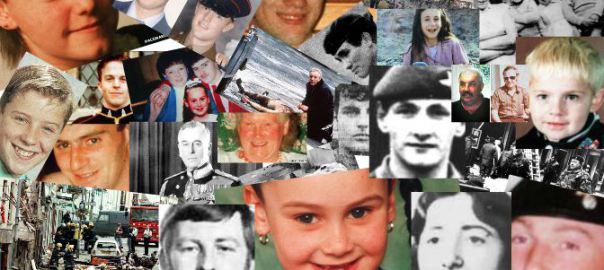



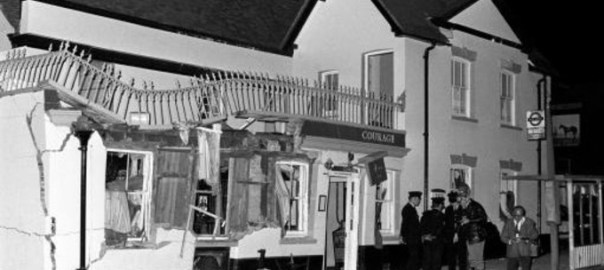


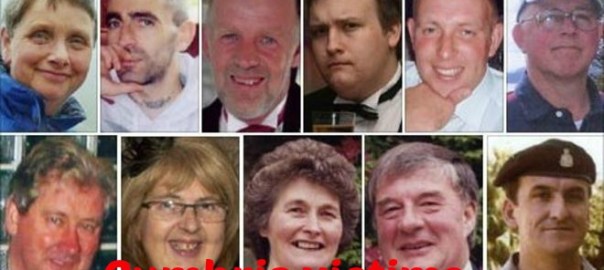




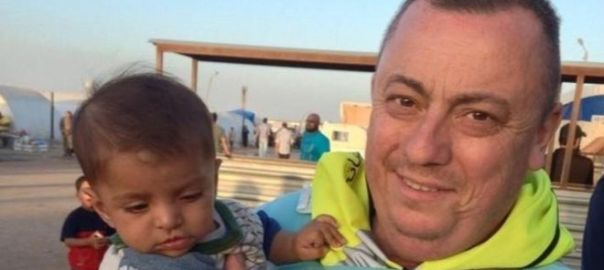



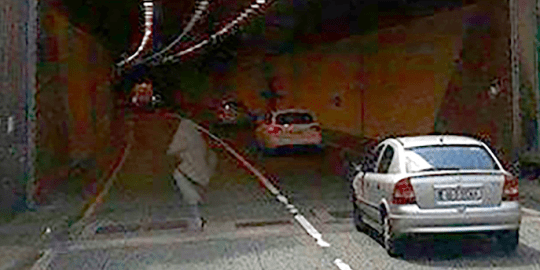














 belfastchildis.com