Monthly Archives: October 2015

The Brighton Bombing – 12 October 1984

Brighton Bombing

12 October 1984 anniversary
————————————————————————

Brighton Bomb

————————————————————————

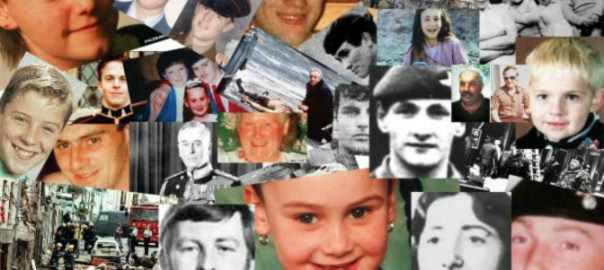
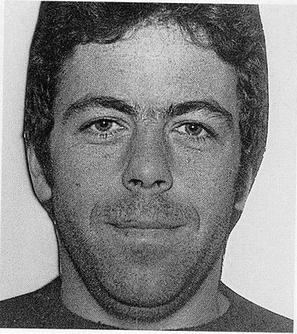
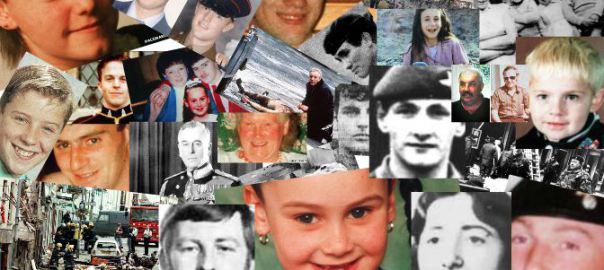
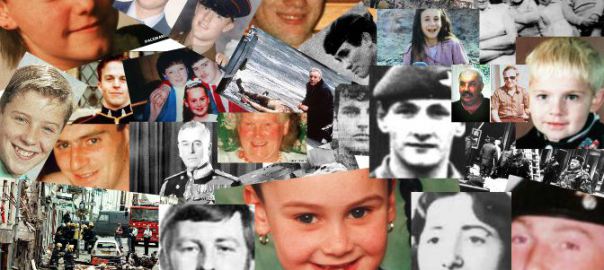
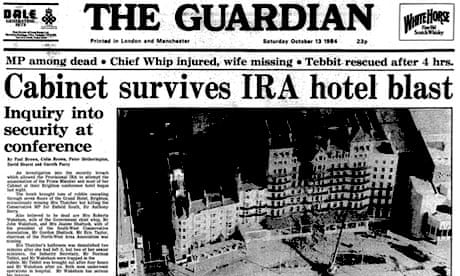
The Brighton hotel bombing occurred on 12 October 1984 at the Grand Hotel in Brighton, England. A long-delay time bomb was planted in the hotel by Provisional Irish Republican Army (IRA) member Patrick Magee, with the purpose of killing Prime Minister Margaret Thatcher and her cabinet, who were staying at the hotel for the Conservative Party conference.[1] Although Thatcher narrowly escaped injury, five people were killed, including two high-profile members of the Conservative Party, and 31 were injured.
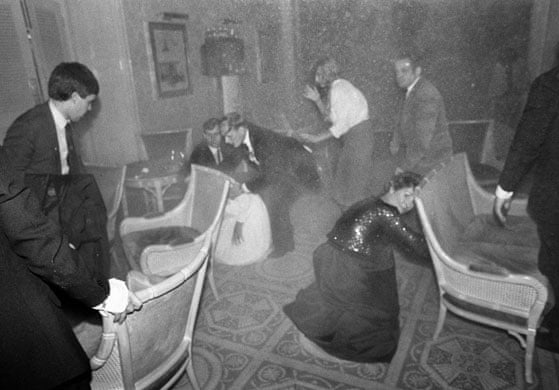
Guests at the Hotel

Preparation

Patrick Magee had stayed in the hotel under the pseudonym Roy Walsh during the weekend of 14–17 September 1984. During his stay, he planted the bomb under the bath in his room, number 629.[1] The device was fitted with a long-delay timer made from video recorder components and a Memo Park Timer safety device.[2] IRA mole Sean O’Callaghan claimed that 20 lb (9 kg) of Frangex (gelignite) was used.[3] The device was described as a ‘small bomb by IRA standards’ by a contemporary news report, and may have avoided detection by sniffer dogs by being wrapped in cling film to mask the smell of the explosive.[4]

Bombing

Thatcher’s Napoleon suite bathroom

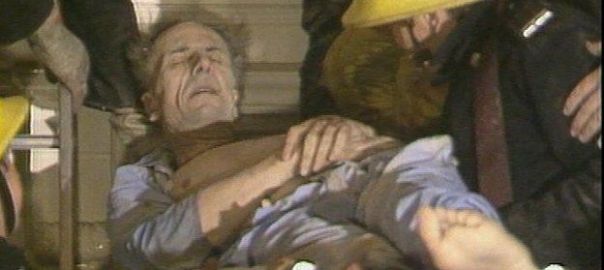
The bomb detonated at approximately 2:54 a.m. on 12 October. The midsection of the building collapsed into the basement, leaving a gaping hole in the hotel’s façade. Firemen said that many lives were likely saved because the well-built Victorian hotel remained standing.[5] Margaret Thatcher was still awake at the time, working on her conference speech for the next day in her suite. The blast badly damaged her bathroom, but left her sitting room and bedroom unscathed. Both she and her husband Denis escaped injury. She changed her clothes and was led out through the wreckage along with her husband and her friend and aide Cynthia Crawford, and driven to Brighton police station.[1][6]

At about 4:00 a.m., as Thatcher left the police station, she gave an impromptu interview to the BBC’s John Cole, saying that the conference would go on as usual. Alistair McAlpine persuaded Marks & Spencer to open early at 8:00 a.m. so those who had lost their clothes in the bombing could get new ones. Thatcher went from the conference to visit the injured at the Royal Sussex County Hospital.[6]

Casualties

Victims

————————————————————–

12 October 1984


Anthony Berry,   (59) nfNIB
Status: Civilian Political Activist (CivPA),Anniversary

Killed by: Irish Republican Army (IRA)
Member of Parliament. Killed in time bomb attack at Conservative Party Conference, Grand Hotel, Brighton, Sussex, England.

————————————————————–

12 October 1984


Eric Taylor,  (54) nfNIB
Status: Civilian Political Activist (CivPA),

Killed by: Irish Republican Army (IRA)
Member of Conservative Party. Killed in time bomb attack at Conservative Party Conference, Grand Hotel, Brighton, Sussex, England.

————————————————————–

12 October 1984


Roberta Wakeham,   (45) nfNIB
Status: Civilian (Civ),

Killed by: Irish Republican Army (IRA)
Killed in time bomb attack at Conservative Party Conference, Grand Hotel, Brighton, Sussex, England.

————————————————————–

12 October 1984


Jeanne Shattock, (52) nfNIB
Status: Civilian (Civ),

Killed by: Irish Republican Army (IRA)
Killed in time bomb attack at Conservative Party Conference, Grand Hotel, Brighton, Sussex, England.

————————————————————–

12 October 1984


Muriel MacLean,   (54) nfNIB
Status: Civilian (Civ),

Killed by: Irish Republican Army (IRA)
Injured in time bomb attack at Conservative Party Conference, Grand Hotel, Brighton, Sussex, England. She died 13th November 1984

————————————————————–

Five people were killed, although none of them were government ministers. Those killed were Conservative MP Sir Anthony Berry, Eric Taylor (North-West Area Chairman of the Conservative Party), Lady (Jeanne) Shattock (wife of Sir Gordon Shattock, Western Area Chairman of the Conservative Party), Lady (Muriel) Maclean (wife of Sir Donald Maclean, President of the Scottish Conservatives), and Roberta Wakeham (wife of Parliamentary Treasury Secretary John Wakeham). Donald and Muriel Maclean were in the room in which the bomb exploded.[6]

Several more, including Margaret Tebbit—the wife of Norman Tebbit, who was then President of the Board of Trade—were left permanently disabled. Thirty-four people were taken to hospital and recovered from their injuries. When hospital staff asked Tebbit whether he was allergic to anything, he is said to have answered “bombs”.[6]

Aftermath

IRA statement

The IRA claimed responsibility the next day, and said that it would try again. Its statement read

Mrs. Thatcher will now realise that Britain cannot occupy our country and torture our prisoners and shoot our people in their own streets and get away with it. Today we were unlucky, but remember we only have to be lucky once. You will have to be lucky always. Give Ireland peace and there will be no more war

Defiance

————————————————————————————

Margaret Thatcher Brighton Bomb Speech

————————————————————————————

Margaret Thatcher began the next session of the conference at 9:30 a.m. the following morning, as scheduled. She dropped from her speech most of her planned attacks on the Labour Party and said the bombing was “an attempt to cripple Her Majesty’s democratically elected Government”:

That is the scale of the outrage in which we have all shared, and the fact that we are gathered here now—shocked, but composed and determined—is a sign not only that this attack has failed, but that all attempts to destroy democracy by terrorism will fail.[8]

One of her biographers wrote that Thatcher’s “coolness, in the immediate aftermath of the attack and in the hours after it, won universal admiration. Her defiance was another Churchillian moment in her premiership which seemed to encapsulate both her own steely character and the British public’s stoical refusal to submit to terrorism”.[9] Immediately afterwards, her popularity soared almost to the level it had been during the Falklands War.[10] The Saturday after the bombing, Thatcher said to her constituents: “We suffered a tragedy not one of us could have thought would happen in our country. And we picked ourselves up and sorted ourselves out as all good British people do, and I thought, let us stand together for we are British! They were trying to destroy the fundamental freedom that is the birth-right of every British citizen, freedom, justice and democracy

Hostile reactions

Thatcher was a hated figure in some sections of British society. At the time of the bombing, the miners’ strike was underway. Morrissey, frontman of the popular English alternative rock band The Smiths, said shortly after: “the only sorrow of the Brighton bombing is that Thatcher escaped unscathed”. David Bret wrote in the book Morrissey: Scandal & Passion that “The tabloids were full of such remarks; jokes about the tragedy were cracked on radio and television programmes. A working-men’s club in South Yorkshire seriously considered a whip-round ‘to pay for the bomber to have another go’.”[12] In 1986, English punk band the Angelic Upstarts celebrated the IRA’s assassination attempt with their controversial single “Brighton Bomb”. They released an album of the same name in 1987.[13]

Patrick Magee

Once investigators had narrowed the seat of the blast to the bathroom of Room 629, police began to track down everyone who had stayed in the room. This eventually led them to ‘Roy Walsh’ (IRA member Patrick Magee).[1] On 24 June 1985 he was arrested in Glasgow, Scotland with other members of an IRA active service unit while planning further bombings.

In September 1985, Magee (then aged 35) was found guilty of planting the bomb, detonating it, and of five counts of murder. Magee received eight life sentences: seven for offences relating to the Brighton bombing, and the eighth for another bomb plot. The judge recommended that he serve at least 35 years. Later Home Secretary Michael Howard lengthened this to “whole life”. However, Magee was released from prison in 1999, having served 14 years (including the time before his sentencing), under the terms of the Good Friday Agreement.[4] A British Government spokesman said that his release “was hard to stomach” and an appeal by then Home Secretary Jack Straw to forestall it was turned down by the Northern Ireland High Court.

Four members of an IRA unit were also imprisoned for involvement in the plot.[5] Magee, while admitting being part of the IRA unit responsible, maintains that the fingerprint evidence on a registration card from the hotel was faked.

In 2000, Magee spoke about the bombing in an interview with The Sunday Business Post. He told interviewer Tom McGurk that the British government’s strategy at the time was to depict the IRA as mere criminals while containing The Troubles within Northern Ireland:

As long as the war was kept in that context, they could sustain the years of attrition. But in the early 1980s we succeeded in destroying both strategies. The hunger strike destroyed the notion of criminalisation and the Brighton bombing destroyed the notion of containment […] After Brighton, anything was possible and the British for the first time began to look very differently at us; even the IRA itself, I believe, began to fully accept the priority of the campaign in England.[15]

Of those killed in the bombing, Magee said: “I deeply regret that anybody had to lose their lives, but at the time did the Tory ruling class expect to remain immune from what their frontline troops were doing to us?”[15]

Attitudes towards security

Daily Telegraph journalist David Hughes called the bombing “the most audacious attack on a British government since the Gunpowder Plot” and wrote that it “marked the end of an age of comparative innocence. From that day forward, all party conferences in this country have become heavily defended citadels
11th October – Deaths & Events in Northern Ireland Troubles

Key Events & Deaths on this day in Northern Ireland Troubles

11th October

Saturday 11 October 1969

Victor Arbuckle

First RUC Officer Killed Victor Arbuckle (aged 29), a member of the Royal Ulster Constabulary (RUC), was shot dead by Loyalists during street disturbances on the Shankill Road in Belfast. [Arbuckle was the first member of the RUC to be killed in ‘the Troubles’.] Two Protestant civilians were shot dead by the British Army during rioting.

See Victor Arbuckle death 

Sunday 11 October 1970

A claim of maladministration in housing allocation against Dungannon Rural District Council was upheld by the Commissioner for Complaints

Friday 11 October 1974

The Irish Republican Army (IRA) carried out two bomb attacks on clubs in London. At 10.30pm a hand-thrown bomb with a short fuse was thrown through a basement window of the Victory, an ex-servicemen’s club in Seymour Street near Marble Arch. A short time later an identical bomb was thrown into the ground floor bar at the Army and Navy Club in St. James’s Square. Only one person was injured in these two attacks.

Tuesday 11 October 1977

Lenny Murphy

See Shankill Butchers

Lenny Murphy was found guilty of possession of firearms and sentenced to 12 years in jail.

[It was later revealed that Murphy was the leader of the ‘Shankill Butchers’ a Ulster Volunteer Force (UVF) gang which was responsible for the killings of at least 19 Catholic civilians.]

Tuesday 11 October 1983

James Prior, then Secretary of State for Northern Ireland, said that he would resign his post if the inquiry into the Maze prison escape on 25 September 1983 found that his policies had been responsible. [The report of the inquiry was published on 26 January 1984.]

Thursday 11 October 1984

The European Parliament voted in favour of a motion calling on the British government to ban the use of plastic bullets by the security forces in Northern Ireland. An opinion poll published in the Belfast Telegraph, a Northern Ireland newspaper, showed that 58 per cent of Protestants and 50 per cent of Catholics, among those questioned, were ‘basically satisfied’ with direct rule.

Sunday 11 October 1987

Charles Haughy, then Taoiseach (Irish Prime Minister), expressed his disappointment in the achievements of the Anglo-Irish Agreement (AIA).

Tuesday 11 October 1988

Ian Paisley, then leader of the Democratic Unionist Party (DUP) and Member of the European Parliament (MEP) for Northern Ireland, was physically removed from the European Parliament building when he mounted a protest at a speech being made by the Pope.

Tuesday 11 October 1994

The Royal Ulster Constabulary (RUC) began patrolling west Belfast without the support of British Army (BA) soldiers.

Wednesday 11 October 1995

John Bruton, then Taoiseach (Irish Prime Minister), said that he believed that Sinn Féin (SF) had satisfied the conditions of a commitment to exclusively peaceful means and thus all-party talks should begin.

Friday 11 October 1996

Warrant Officer James Bradwell (43) died of injuries received during the Irish Republic Army (IRA) bombing of the British Army Barracks on Monday 7 October 1996. There were reports in the Northern Ireland media that the Combined Loyalist Military Command (CLMC) had met during the day to consider their response to the IRA bombing.

At the Conservative Party conference in Bournemouth, John Major, then British Prime Minister, told delegates that the IRA would not bomb its way into the Stormont talks. About 1,000 people attended a peace rally organised by Women Together outside the City Hall in Belfast.

Monday 11 October 1999

Mandelson Appointed Secretary of Sate Marjorie (Mo) Mowlam (Dr), then Secretary of State for Northern Ireland, who had been in post since 3 May 1997 was replaced in a Cabinet reshuffle by Peter Mandelson. Although thought “too green” in her political leanings, Mowlam insisted she had not been forced out by Unionists. Mandelson had first been suggested for the position by David Trimble, then leader of the Ulster Unionist Party (UUP).

A pipe-bomb was thrown at the home of a Catholic family in the Twinbrook area of west Belfast. The device was hurled through the family’s living room window but failed to explode. A second pipe-bomb was found outside the house. A couple and their two-month old baby were in the house at the time but escaped injury. The attack was carried out by Loyalist paramilitaries. The Police Federation of Northern Ireland launched a petition to ‘defend the RUC’ from the proposal in the Patten report. Nuala O’Loan, a law lecturer and former member of the Police Authority, was appointed by Adam Ingram, then Security Minister at the Northern Ireland Office (NIO), as the new Police Ombudsman for Northern Ireland (PONI).

Thursday 11 October 2001

The Royal Ulster Constabulary (RUC) described an attack on a Catholic man (22) as attempted murder. A Loyalist gang attacked the man on the Westlink between Grosvenor Road and Broadway, Belfast, at 3.15am (0315BST). The gang got out of a passing car as the man walked home and hit him several times with a hammer and stabbed him in the arm. The man suffered a broken cheek bone and needed stitches for the knife wound.

There was serious rioting in a number of Loyalist areas of west and north Belfast. In the Shankill area of west Belfast a Loyalist crowd attacked security forces that were involved in a search of a house. Two RUC officers and a British soldier were injured in a sustained petrol bomb attack.

A pipe-bomb was discovered during the search and one man was arrested. The RUC later found three blank-firing pistols, a quantity of ammunition, a timer power unit, £900 worth of cannabis, and paramilitary regalia, during a follow-up search. There were further disturbances during the evening with cars hijacked and set on fire. There was a blast-bomb attack on a Catholic home in the New Lodge area of north Belfast at around 10.30pm (22.30BST). Sinn Féin (SF) blamed the Ulster Defence Association (UDA) for the attack. The house attacked was the one closest to the dividing line between Catholics and Protestants living in that part of north Belfast.

Shots were also heard in the area, as a crowd gathered following the attack. The Presbyterian Church in Ireland called for an end to the Loyalist protest at the Holy Cross school. There was a meeting of Catholic parents of children attending the Holy Cross school. The meeting had been called to learn about the outcome of face-to-face discussions with residents from the neighbouring Protestant Glenbryn estate held earlier this week. However, the meeting was interrupted by the news that Loyalist residents were staging a protest on the Ardoyne Road.


——————————————————————————

Remembering all innocent victims of the Troubles

Today is the anniversary of the death of the following  people killed as a results of the conflict in Northern Ireland

“To live in hearts we leave behind is not to die.”
Thomas Campbell

To the innocent on the list – Your memory will live  forever

– To  the Paramilitaries  –

There are many things worth living for, a few things worth dying for, but nothing worth killing for.

10 People lost their lives on the 11th October  between 1969 – 1996

————————————————————–

11 October 1969
Goerge Dickie,   (25)

Protestant
Status: Civilian (Civ),

Killed by: British Army (BA)
Shot during street disturbances, at the corner of Shankill Road and Downing Street, Belfast

————————————————————–

11 October 1969
Herbert Hawe,  (32)

Protestant
Status: Civilian (Civ),

Killed by: British Army (BA)
Shot during street disturbances, Hopeton Street, Shankill, Belfast.

————————————————————–

11 October 1969


Victor Arbuckle,   (29)

Protestant
Status: Royal Ulster Constabulary (RUC),

Killed by: non-specific Loyalist group (LOY)
Shot during street disturbances, Shankill Road, Belfast.

————————————————————–

11 October 1971


Roger Wilkins,   (32) nfNI
Status: British Army (BA),

Killed by: Irish Republican Army (IRA)
Died two weeks after being shot while on British Army (BA) foot patrol, Letterkenny Road, Derry.

————————————————————–

11 October 1974
James Hasty,  (40)

Catholic
Status: Civilian (Civ),

Killed by: Protestant Action Group (PAG)
Shot as he walked to work along Brougham Street, New Lodge, Belfast.

————————————————————–

11 October 1976
Anne Magee,  (15)

Catholic
Status: Civilian (Civ),

Killed by: non-specific Loyalist group (LOY)
Died two weeks after being shot while in shop, Manor Street, Lower Oldpark, Belfast.

————————————————————–

11 October 1976
Peter Woolsey,   (39)

Catholic
Status: Civilian (Civ),

Killed by: Ulster Volunteer Force (UVF)
Shot at his farm, Cornascriebe, near Portadown, County Armagh.

————————————————————–

11 October 1986


Desmond Dobbin,   (42)

Protestant
Status: Royal Ulster Constabulary (RUC),

Killed by: Irish Republican Army (IRA)
Killed in mortar bomb attack on New Barnsley British Army (BA) / Royal Ulster Constabulary (RUC) base, Springfield Road, Belfast.

————————————————————–

11 October 1988


John Larmour,  (42)

Protestant
Status: Royal Ulster Constabulary (RUC),

Killed by: Irish Republican Army (IRA)
Off duty. Shot while working at his brother’s shop, Lisburn Road, Belfast.

————————————————————–

11 October 1996


James Bradwell,   (43) nfNI
Status: British Army (BA),

Killed by: Irish Republican Army (IRA)
Died four days after being injured during car bomb attack on Thiepval British Army (BA) base, Lisburn, County Antrim.

————————————————————–


10th October – Deaths & Events in Northern Ireland Troubles

Key Events & Deaths on this day in Northern Ireland Troubles

10th October

Friday 10 October 1969 Hunt Report Published

‘B Specials’

The Hunt Report was published. The Report recommended that: the Royal Ulster Constabulary (RUC) should become an unarmed force; the Ulster Special Constabulary (USC; the ‘B Specials’) should be disbanded; a new RUC Reserve should be set up; and a new locally recruited part-time force should be established under the control of the British Army (BA) [this force was to become the Ulster Defence Regiment (UDR)]. Arthur Young was appointed as Chief Constable of the RUC at the request of Harold Wilson, then British Prime Minister. Young was appointed to oversee the reforms recommended in the Hunt Report. The publication of the report sparked serious rioting by loyalists in Belfast.

Tuesday 10 October 1972

Three members of the Irish Republican Army (IRA) died in a premature explosion in a house in Balkan Street, Lower Falls, Belfast. A UDR soldier was shot dead by the IRA in Newry, County Down.

Tuesday 16 October 1973

Representatives of the Ulster Unionist Party (UUP), the Alliance Party of Northern Ireland (APNI), and the Social Democratic and Labour Party (SDLP), met again at Stormont Castle, Belfast, for additional talks on the possibility of devolved government for Northern Ireland. The position of the parties on matters related to law and order were beginning to move closer to each other although there remained serious differences of opinion on specific issues.

Thursday 10 October 1974

Enoch Powell

General Election A general election was held across the United Kingdom (UK). The United Ulster Unionist Council (UUUC) won 10 of the 12 seats in Northern Ireland. The Social Democratic and Labour Party (SDLP) held the seat in West Belfast and an independent Nationalist unseated Harry West, then leader of the Ulster Unionist Party (UUP), in Fermanagh / South Tyrone. Enoch Powell was returned for South Down. [See detailed results.]

Sunday 10 October 1976

Brian Stewart (13) died six days after being shot by a plastic bullet near his home in Norglen Road, Turf Lodge, Belfast. The shot was fired by a British solider. Rioting followed news of the boys death and representatives of the Peace People were attacked by some of the rioters. The Peace People organisation was also denounced by Republicans as being pro-British.

Monday 10 October 1977

Peace People Win Nobel Peace Prize Betty Williams and Mairead Corrigan, who were both founding members of the Peace People, were awarded the 1976 Nobel Peace Prize.

[The Unionist dominated Belfast City Corporation refused to hold a civic reception in honour of the prize winners. The associated prize money of £80,000 was later to be the source of controversy within the Peace People.]

Saturday 10 October 1981

The Irish Republican Army (IRA) carried out a bomb attack on a British Army (BA) bus close to Chelsea Barracks in London. The device was believed to be a romote controlled bomb hidden in a parked van, close to the junction of Ebury Bridge Road and St. Barnabas Street. The bomb was detonated when the bus carring the soldiers passed. Two British civilians were killed in the blast and 40 other people injured, including 23 soldiers.

Tuesday 10 October 1989

A vote was taken by the British Conservative Party conference to organise in Northern Ireland for the first time.

Thursday 10 October 1991

The Irish People’s Liberation Organisation (IPLO) shot dead a Protestant civilian during a gun attack on a public house on the Shankill Road in west Belfast. Hours later the Ulster Freedom Fighters (UFF), a cover name (pseudonym) used by the Ulster Defence Association (UDA), shot dead a Catholic civilian near the Oldpark Road in west Belfast. [A further four Catholic civilians were killed by the UFF over the following six days.]

Sunday 10 October 1993


Martin Smyth (Rev.), then Ulster Unionist Party (UUP) Member of Parliament (MP) and Grand Master of the Orange Lodge, gave an interview to the British Broadcasting Corporation (BBC). In the interview he stated that Sinn Féin (SF) could be included in political taks on what was best for “Northern Ireland within the United Kingdom” if they ended their support for the Irish Republican Army (IRA). [Smyth was criticised by some UUP members and other Unionists for this statement.]

The Sunday Independent (a Republic of Ireland newspaper) published the results of a poll of opinion in the Republic of Ireland. The result showed that, of those questioned, 72 per cent supported the talks that led to the Hume-Adams Initiative. Albert Reynolds, then Taoiseach (Irish Prime Minister), held a meeting in Dublin with Nelson Mandela, then leader of the African National Congress. Mandela gave his endorsement to the Hume-Adams Initiative.

Monday 10 October 1994
 The Northern Ireland Office (NIO) gave permission for Loyalist leaders to enter the Maze Prison to discuss with Loyalist prisoners the possibility of a ceasefire.

Friday 10 October 1997
The Scottish Office blocked the transfer of Jason Campbell from a Scottish prison to the Maze Prison in Northern Ireland.

[Campbell was serving a sentence for the murder of a Celtic football supporter in Glasgow in October 1995. The Progressive Unionist Party (PUP) had originally requested the transfer but later withdrew its request following widespread criticism.]

Saturday 10 October 1998
Martin McGuinness, the Vice-President of Sinn Féin (SF), travelled to Dublin for a meeting with Bertie Ahern, then Taoiseach (Irish Prime Minister). The meeting failed to provide any progress on the issue of decommissioning.
An Appeal court in the United States of America (USA) overturned a decision to extradite back to Northern Ireland three men who had escaped from the Maze prison. Billy Hutchinson, then a spokesman for the Progressive Unionist Party (PUP), said that the Ulster Volunteer Force (UVF) and the Red Hand Commandos (RHC) were not ready to decommission their weapons even if the Irish Republican Army (IRA) did begin to had over arms.

Sunday 10 October 1999
Patrick Campbell (22), a member of the Irish National Liberation Army (INLA) and originally from Belfast, died after being badly beaten and stabbed on 6 October 1999 during clash between an INLA unit and a group of men in Ballymount industrial estate, Walkinstown, Dublin.

Wednesday 10 October 2001
Bryce Dickson, then Chief Commissioner of the Northern Ireland Human Rights Commission, visited the scene of the Loyalist protest at the Holy Cross Girls’ Primary School in Ardoyne, north Belfast. Dickson was there to observe the nature of the protest. He spoke to some of the Loyalist protesters but was criticised by some of the parents of the children for not walking the route of the protest along with them.

Many of the protesters have begun to hide their identity and some were wearing ghoul masks (of characters in horror movies).  Michael Tan (Dr), then a General Practicioner in Ardoyne, stated that some of the families were close to “breaking point” and parents and children were in need of professional psychological care.  One of the Loyalist protesters displayed a threatening letter allegedly sent by a group called the Catholic Reaction Force.  Jane Kennedy, then Security Minister at the NIO, said the existing security wall between the Loyalist and Nationalist areas of Ardoyne would be extended. However, she said there would be no gates across the route used by the Catholic parents and children.
David Trimble, then leader of the Ulster Unionist Party (UUP), addressed the annual conference of the Conservative Party in Blackpool, England. Trimble emphasised the strong continuing links between the two parties and also explained his decision to withdraw the UUP from the power-sharing Executive at the Assembly in Northern Ireland. He also criticised Tony Blair, then British Prime Minister, for the handling of the peace process and for “slithering into appeasement” of the IRA.

——————————————————————————

Remembering all innocent victims of the Troubles

Today is the anniversary of the death of the following  people killed as a results of the conflict in Northern Ireland

“To live in hearts we leave behind is not to die.”
Thomas Campbell

To the innocent on the list – Your memory will live  forever

– To  the Paramilitaries  –

There are many things worth living for, a few things worth dying for, but nothing worth killing for.

17 People lost their lives on the 10th October  between 1972– 1999

————————————————————–

10 October 1972
John Ruddy,  (50)

Catholic
Status: Ulster Defence Regiment (UDR),

Killed by: Irish Republican Army (IRA)
Off duty. Shot outside his home, Dromalane Park, Newry, County Down

————————————————————–

10 October 1972
Patrick Maguire,   (24)

Catholic
Status: Irish Republican Army (IRA),

Killed by: Irish Republican Army (IRA)
Died in premature bomb explosion in house, Balkan Street, Lower Falls, Belfast.

————————————————————–

10 October 1972
Joseph McKinney,  (17)

Catholic
Status: Irish Republican Army (IRA),

Killed by: Irish Republican Army (IRA)
Died in premature bomb explosion in house, Balkan Street, Lower Falls, Belfast.

————————————————————–

10 October 1972
John Donaghy,   (19)

Catholic
Status: Irish Republican Army (IRA),

Killed by: Irish Republican Army (IRA)
Died in premature bomb explosion in house, Balkan Street, Lower Falls, Belfast.

————————————————————–

10 October 1974
Albert Lutton,  (30)

Catholic
Status: Civilian (Civ),

Killed by: Protestant Action Force (PAF)
Shot at his friend’s house, Ballyfore Park, Ballyduff, Newtownabbey, County Antrim.

————————————————————–

10 October 1975
David Wray,   (18) nfNI
Status: British Army (BA),

Killed by: Irish National Liberation Army (INLA)
Died two weeks after being shot by sniper while on British Army (BA) foot patrol, Iniscarn Road, Creggan, Derry.

————————————————————–

10 October 1975


Ernest Dowds,  (21)

Protestant
Status: Ulster Defence Association (UDA),

Killed by: Irish Republican Army (IRA)
Shot near his home while walking along Haywood Avenue, off Ormeau Road, Belfast.

————————————————————–

10 October 1975


Sean McNamee,   (24)

Catholic
Status: Civilian (Civ),

Killed by: Official Irish Republican Army (OIRA)
Shot during armed robbery at his factory, Macweld Engineering, Whiterock Industrial Estate, Belfast.

————————————————————–

10 October 1976


Brian Stewart,   (13)

Catholic
Status: Civilian (Civ),

Killed by: British Army (BA)
Died six days after being hit by plastic bullet near his home, Norglen Road, Turf Lodge, Belfast.

————————————————————–

10 October 1980
 James Hewitt,   (48)

Protestant
Status: Ulster Defence Regiment (UDR),

Killed by: Irish Republican Army (IRA)
Off duty. Killed by booby trap bomb attached to his car parked at cattle mart, Tandragee Road, Portadown, County Armagh.

————————————————————–

10 October 1981


Nora Field,  (59) nfNIB
Status: Civilian (Civ),

Killed by: Irish Republican Army (IRA)
Killed by remote controlled bomb hidden in parked van which was detonated when British Army (BA) bus passed, near to Chelsea British Army (BA) base, Ebury Bridge Road, Chelsea, London.

————————————————————–

10 October 1981
 John Breslin,  (18) nfNIB
Status: Civilian (Civ),

Killed by: Irish Republican Army (IRA)
Killed by remote controlled bomb hidden in parked van which was detonated when British Army (BA) bus passed, near to Chelsea British Army (BA) base, Ebury Bridge Road, Chelsea, London.

————————————————————–

10 October 1983


Sean McShane,  (39)

Catholic
Status: Civilian (Civ),

Killed by: Irish Republican Army (IRA)
Shot while in bookmaker’s shop, Monaghan Street, Newry, County Down. Off-duty Royal Ulster Constabulary (RUC) member intended target.

————————————————————–

10 October 1991


Harry Ward,   (42)

Protestant
Status: Ulster Defence Association (UDA),

Killed by: Irish People’s Liberation Organisation (IPLO)
Shot during gun attack on Diamond Jubilee Bar, Shankill Road, Belfast.

————————————————————–

10 October 1991


Huge Magee,   (53)

Catholic
Status: Civilian (Civ),

Killed by: Ulster Freedom Fighters (UFF)
Shot while driving his black taxi along Rosapenna Street, off Oldpark Road, Belfast.

————————————————————–

10 October 1992


 James Douglas,  (50)

Protestant
Status: Royal Ulster Constabulary (RUC),

Killed by: Irish Republican Army (IRA)
Off duty. Shot while in Monico Bar, Lombard Street, Belfast.

————————————————————–

10 October 1992
 James Douglas,   (50)

Protestant
Status: Royal Ulster Constabulary (RUC),

Killed by: Irish Republican Army (IRA)
Off duty. Shot while in Monico Bar, Lombard Street, Belfast.

————————————————————–

9th October – Deaths & Events in Northern Ireland Troubles

Key Events & Deaths on this day in Northern Ireland Troubles 

9th October 

—————————————————————————————

Wednesday 9 October 1968

People’s Democracy Formed 2,000 students from the Queen’s University of Belfast (QUB) tried to march to Belfast City Hall to protest against ‘police brutality’ on the 5 October 1968 in Derry. The marched was blocked by a counter demonstration led by Ian Paisley. A three-hour sit-down demonstration followed the blocking of the march.

Bernadette Devlin

[Following the events of the day the People’s Democracy (PD) organisation was formed. PD became an important force in the civil rights movement and a number of those who were leading members in the organisation, for example Bernadette Devlin and Michael Farrell, became prominent political activists.]

The Derry Citizen’s Action Committee (DCAC) was formed from five protest organisations which had been active in the city. Ivan Cooper was the first chairman and John Hume the first vice-chairman of the DCAC.

[ Political Developments; Civil Rights Campaign; Derry March. ]

Thursday 9 October 1969

James Callaghan, then British Home Secretary, made a second visit to Northern Ireland between 9 and 10 October 1969. Following meetings between Callaghan and the Stormont government, plans for further reforms were agreed in a communiqué. The matters covered included: the establishment of a central housing authority; reforms to the Royal Ulster Constabulary (RUC) in light of the Hunt Report; reforms to the legal system; and the issue of fair employment.

Saturday 9 October 1971

A woman was killed when Loyalist paramilitaries planted a bomb in a pub in Belfast.

Tuesday 9 October 1973

Representatives of the Ulster Unionist Party (UUP), the Alliance Party of Northern Ireland (APNI), and the Social Democratic and Labour Party (SDLP), met again at Stormont Castle, Belfast for further talks. The parties announced that they had reached agreement on an economic and social programme.

Thursday 9 October 1975

A British soldier was killed in an Irish Republican Army (IRA) land mine attack near Crossmaglen, County Armagh. The Irish Republican Army (IRA) exploded a bomb outside the Green Park Underground Station in London and killed one person and injured 20 others.

Monday 9 October 1978

[ Ill-treatment of detainees by police; Law Order; Hunger Strike. ]

Tuesday 9 October 1990
 A British Army undercover team shot dead two Irish Republican Army (IRA) members on a farm near Loughgall, County Armagh.

See SAS Loughgall

Wednesday 9 October 1991
The Conservative Party held its annual conference. Delegates praised the efforts of Peter Brooke, then Secretary of State for Northern Ireland, to find an agreement, and they also recognised the need for an ‘Irish dimension’ in any settlement. The conference also pledged support for Conservative candidates contesting elections in Northern Ireland.

Saturday 9 October 1993


John Taylor, then Ulster Unionist Party (UUP) Member of Parliament (MP), called on Loyalist paramilitaries to end their campaign of violence.

Monday 9 October 1995
 Gerry Adams, then President of Sinn Féin (SF), said that SF was committed to “the democratic and peaceful process”. He went on to state that: “It is self-evident that threats of any description from any quarter have no role in any such process.”

Wednesday 9 October 1996
 The Irish Republican Army (IRA) issued a statement stating that Diarmuid O’Neill (21), who was shot dead by British security personnel in London on 23 September 1996, was one of their volunteers.

Thursday 9 October 1997
David Trimble, then leader of the Ulster Unionist Party (UUP), spoke at a fringe meeting of the Conservative and said that he had “no expectation of an agreement between Unionists of any shape and Sinn Féin”. The meeting was organised by the group ‘Friends of the Union’. Andrew McKay, then Conservative spokesperson on Northern Ireland, also spoke at the meeting and said that if the Labour Party did not follow the policies established by John Major it might mean an end to the bipartisan approach to the region in the House of Commons.

Friday 9 October 1998
Members of the Ulster Unionist Party (UUP) opposed to the Good Friday Agreement set up the ‘Union First’ pressure group within the party.

Saturday 9 October 1999
David Trimble, then leader of the Ulster Unionist Party (UUP), defended the Good Friday Agreement and criticised anti-Agreement elements within the UUP at the part conference in Enniskillen, County Fermanagh. Anti-agreement dissidents warned the conference against any compromise on Sinn Féin’s entry into the Executive without prior decommissioning. The conference unanimously passed a motion dismissing the Patten recommendations on the RUC as a threat to security.

Monday 9 October 2000

 The BBC Panorama programme named four men living in the Republic of Ireland which it claimed were responsible for the Omagh bombing on 15 August 1998 in which 29 people died.

Tuesday 9 October 2001
Gerry Adams, then President of Sinn Féin (SF), and Martin McGuinness, then Vice-President of SF, travelled to Downing Street, London, for a meetings with Tony Blair, then British Prime Minister. The meeting was requested by SF to discuss the impass in the peace process. Following the meeting Adams said that the institutions (of government) would collapse if Unionists withdrew from the Executive.
The Loyalist protest continued outside the Holy Cross Girls’ Primary School in Ardoyne, north Belfast. Aidan Troy (Fr.), then chairman of the Board of Governors of the school, said that he was considering taking legal action to try to end the protest: “The weeks of suffering for these small girls were never justified. … This is no longer a legitimate protest; it is a form of child abuse.”

The cost of policing the Loyalist protest at the school was reported as having reached £1 million.
Mark Durkan (Social Democratic and Labour Party; SDLP), then Minister of Finance and Personnel, called on Republicans to save the peace process by beginning the process of decommissioning.  There was speculation in some of the media that the Irish Republican Army (IRA) was considering a move on decommissioning. The British and Irish governments expressed doubt over the speculation.
A man (30s) was shot in both legs in a paramilitary ‘punishment’ attack in Castlewellan, County Down. He was taken to the Royal Victoria Hospital, Belfast, where his condition was described as “serious but not life threatening”.

——————————————————————————

Remembering all innocent victims of the Troubles

Today is the anniversary of the death of the following  people killed as a results of the conflict in Northern Ireland

“To live in hearts we leave behind is not to die.”
Thomas Campbell

To the innocent on the list – Your memory will live  forever

– To  the Paramilitaries  –

There are many things worth living for, a few things worth dying for, but nothing worth killing for.

10 People lost their lives on the 9th October  between 1971 – 1992

————————————————————–

09 October 1971


Winifred Maxwell,  (45)

Protestant
Status: Civilian (Civ),

Killed by: Ulster Volunteer Force (UVF)
Killed in bomb attack on Fiddler’s House Bar, Durham Street, Belfast

————————————————————–

09 October 1975
Edward Gleeson,   (28) nfNI
Status: British Army (BA),

Killed by: Irish Republican Army (IRA)
Killed in land mine attack on British Army (BA) Armoured Personnel Carrier, Lurgancullenboy, near Crossmaglen, County Armagh.

————————————————————–

09 October 1975
 Graham Tuck,   (23) nfNIB
Status: Civilian (Civ),

Killed by: Irish Republican Army (IRA)
Killed in bomb explosion outside Green Park Underground Station, London

————————————————————–

09 October 1976


Yvonne Dunlop,  (26)

Protestant
Status: Civilian (Civ),

Killed by: Irish Republican Army (IRA)
Killed during incendiary bomb attack on her shop, Alley Katz Boutique, Bridge Street, Ballymena, County Antrim.

————————————————————–

09 October 1976
Sean McCrystal,  (41)

Catholic
Status: Civilian (Civ),

Killed by: non-specific Loyalist group (LOY)
Found beaten to death and on fire, in entry between Bridge Street and Prospect Place, Ballymena, County Antrim.

————————————————————–

09 October 1987


Francisco Notarantonio,  (66)

Catholic
Status: Civilian (Civ),

Killed by: Ulster Freedom Fighters (UFF)
Former internee. Shot at his home, Whitecliff Parade, Ballymurphy, Belfast.

————————————————————–

09 October 1989
Thomas Gibson,  (28)

Protestant
Status: British Army Territorial Army (TA),

Killed by: Irish Republican Army (IRA)
Off duty. Also member of Ulster Volunteer Force (UVF). Shot while sitting in his stationary car, Bank Square, Kilrea, County Derry.

————————————————————–

09 October 1990


Desmond Grew,   (37)

Catholic
Status: Irish Republican Army (IRA),

Killed by: British Army (BA)
Shot by undercover British Army (BA) members, at derelict farmhouse, Lislasley Road, near Loughgall, County Armagh.

————————————————————–

09 October 1990


Martin McCaughey,   (23)

Catholic
Status: Irish Republican Army (IRA),

Killed by: British Army (BA)
Shot by undercover British Army (BA) members, at derelict farmhouse, Lislasley Road, near Loughgall, County Armagh.

————————————————————–

09 October 1992
Michael Anderson, (37)

Protestant
Status: Civilian (Civ),

Killed by: Red Hand Commando (RHC)
Shot at his workplace, a conservation project beside Connswater River, off Mersey Street, Belfast. Alleged informer.

————————————————————–

8th October – Deaths & Events in Northern Ireland Troubles

Key Events & Deaths on this day in Northern Ireland Troubles
8th October

—————————————————————————–

Thursday 8 October 1970

The Social Democratic and Labour Party (SDLP) proposed that a system of Proportional Representation (PR) should be used in elections in Northern Ireland. [PR was introduced on 30 May 1973 for local government elections.]

Thursday 7 October 1971

Brian Faulkner, then Northern Ireland Prime Minister, met with Edward Heath, then British Prime Minister, and the British Cabinet. The meeting was held in London. An additional 1,500 British Army troops were sent to Northern Ireland.

Monday 8 October 1973

A group of Ulster Unionists who were opposed to sharing power with the Social Democratic and Labour Party (SDLP) called for the resignation of Brian Faulkner, then leader of the Ulster Unionist Party (UUP).

Saturday 8 October 1977

Margaret Hearst (24), a member of the Ulster Defence Regiment (UDR), was shot dead, while she was off duty, by the Irish Republican Army (IRA) at her parent’s home near Tynan, County Armagh.

Sunday 8 October 1978

A number of groups in Derry, including Sinn Féin (SF), held a march to commemorate the 10th anniversary of the 5 October 1968 civil rights march. The Democratic Unionist Party (DUP) staged a counter demonstration attended by Loyalists and led by Ian Paisley. Trouble developed and 67 Royal Ulster Constabulary (RUC) officers were injured in clashes with Loyalists. Two RUC officers were also injured in confrontations with Republicans

Thursday 8 October 1981

Lawrence Kennedy, an Independent councillor on Belfast Council, was shot dead by Loyalist paramilitaries as he stood in the entrance to Shamrock Social Club, Ardoyne, Belfast.

Tuesday 8 October 1985

The Northern Ireland Court of Appeal overturned a conviction for murder against Dominic McGlinchey, formerly leader of the Irish National Liberation Army (INLA). [McGlinchey was later extradited back to the Republic of Ireland.]

Sunday 8 October 1989

UDR Members Arrested Twenty-eight members of the Ulster Defence Regiment (UDR) were arrested by the Royal Ulster Constabulary (RUC) as part of the Stevens inquiry into the leaking of security force documents to Loyalist paramilitary groups.

Tuesday 8 October 1991

The Ulster Freedom Fighters (UFF), a cover name (pseudonym) used by the Ulster Defence Association (UDA), set fire to a Gaelic Athletic Association (GAA) hall in Kircubbin, County Down. Later in the day the UFF in a statement said that in future members of the GAA would be considered ‘legitimate targets’. [The threat was condemned by Protestant church leaders and Unionist politicians. The next day the UFF issued another statement which said that it would only attack those GAA members with strong Republican links.]

Friday 8 October 1993

John Major, then British Prime Minister, delivered a speech to the Conservative Party conference in Blackpool, England. Major stated that the only message he wanted from the Irish Republican Army (IRA) was one indicating that the organisation was finished with its campaign of violence for good. Robin Eames (Dr), then Church of Ireland Primate, condemned the Ulster Freedom Fighters (UFF) threat to the Catholic community. [Ten Catholic civilians had been killed since 8 August 1993 by the UFF and the Ulster Volunteer Force (UVF).]

Tuesday 8 October 1996

In a statement issued from Dublin the Irish Republican Army (IRA) admitted responsibility for the bombs in Lisburn, County Antrim, on 7 October 1996.

Wednesday 8 October 1997

David Trimble, then leader of the Ulster Unionist Party (UUP), met Tony Blair, then British Prime Minister, at Chequers in England. The Apprentice Boys of Derry (ABD) suspended a Loyalist band, the Cloughfern Young Conquerors’ Band, from taking part in further ABD marches. The disciplinary action followed disturbances caused by the band at a parade in Derry on 9 August 1997. David Andrews, then a Fianna Fáil (FF) Teachta Dála (TD; member of Irish Parliament), was appointed as the new Irish Foreign Minister. The United States of America (USA) State Department decided to drop the Irish Republican Army (IRA) from its list of ‘terrorist’ organisations. One affect of this decision was to allow funds to be raised on behalf of the IRA. Unionists were critical of the decision.

Friday 8 October 1999

The Ulster Unionist Party (UUP) published a document entitled ‘Implementing the Agreement’ which discussed the extent to which the Belfast Agreement had been implemented and the extent to which the different parties recognised their obligations and complied with the requirements of the Agreement. David Trimble, then leader of the UUP, issued a statement on ‘the best way forward’. Bill Clinton, the President of the USA, gave a speech in Ottawa, Canada, during which he said:

“I spent an enormous amount of time trying to help the people in the land of my forebears in Northern Ireland get over 600 years of religious fights, and every time they make an agreement to do it, they’re like a couple of drunks walking out of the bar for the last time. When they get to the swinging door, they turn around and go back in and say, ‘I just can’t quite get there.’”

Ian Paisley, then leader of the Democratic Unionist Party (DUP), criticised the remarks. Later Clinton apologised for the use of an inappropriate metaphor.

Monday 8 October 2001

The Northern Ireland Assembly debated an Ulster Unionist Party (UUP) motion, and later a similar Democratic Unionist Party (DUP) motion, to exclude Sinn Féin (SF) ministers from the Executive. The motions were supported by Unionist members of the Assembly but were not supported by SF or the Social Democratic and Labour Party (SDLP). Due to a lack of cross-community support the two motions failed.

[Following the debates the UUP announced that its three ministers were withdrawing from the Executive. The UUP also said that the three ministers would formally resign early next week (perhaps Monday 15 October 2001). John Reid, then Secretary of State for Northern Ireland, would have seven days in which to decide what action to take. He could decide to call for a review of the Good Friday Agreement which would involve an indefinite suspension of the power-sharing government. Alternatively, and less likely, he could opt for fresh Assembly elections.]

Johnny Adair announced that he would not be continuing with a judicial review (at the High Court in Belfast) of the decision to keep him in prison. Adair, then a leader of the Ulster Freedom Fighters (UFF) a cover name (pseudonym) used by the Ulster Defence Association (UDA), was originally released on licence in 1999 but was re-arrested and returned to prison by the order of Peter Mandelson, then Secretary of State for Northern Ireland, on 22 August 2000.

—————————————————————————–

Remembering all innocent victims of the Troubles

Today is the anniversary of the death of the following  people killed as a results of the conflict in Northern Ireland

“To live in hearts we leave behind is not to die.”
Thomas Campbell

To the innocent on the list – Your memory will live  forever

– To  the Paramilitaries  –

There are many things worth living for, a few things worth dying for, but nothing worth killing for.

11 People lost their lives on the 8th October  between 1974 – 1989

————————————————————–

8th  October 1974


Arthur Henderson,  (31)

Protestant
Status: Royal Ulster Constabulary (RUC),

Killed by: Irish Republican Army (IRA)
Killed by booby trap bomb in abandoned car, West Street, Stewartstown, County Tyrone.

————————————————————–

8th  October 1975


Richard McCann,  (32)

Catholic
Status: Civilian (Civ),

Killed by: Ulster Volunteer Force (UVF)
Died six weeks after being shot at Grove Filling Station, Shore Road, Skegoneill, Belfast.

————————————————————–

8th  October 1976


Arthur McKay,   (43)

Protestant
Status: Royal Ulster Constabulary (RUC),

Killed by: Irish Republican Army (IRA)
Killed by booby trap bomb in abandoned van while on Royal Ulster Constabulary (RUC) patrol, Gortmacrane, near Kilrea, County Derry.

————————————————————–

8th October 1976


Robert Hamilton,  (25)

Protestant
Status: Prison Officer (PO),

Killed by: Irish Republican Army (IRA)
Off duty. Shot outside his home, Governor Road, Derry.

————————————————————–

8th  October 1977


Margaret Hearst,   (24)

Protestant
Status: Ulster Defence Regiment (UDR),

Killed by: Irish Republican Army (IRA)
Off duty. Shot in her mobile home, situated in the garden of her parents’ home, Doogary, Tynan, County Armagh.

————————————————————–

8th  October 1979
Mark McGrann,   (24)

Catholic
Status: Civilian (Civ),

Killed by: Ulster Volunteer Force (UVF)
Shot while walking along East Bridge Street, at the junction with Laganbank Road, Belfast.

————————————————————–

8th October 1979
Paul Wright,  (21) nfNI
Status: British Army (BA),

Killed by: Irish Republican Army (IRA)
Undercover British Army (BA) member. Shot while driving civilian type car along Falls Road, Belfast.

————————————————————–

8th  October 1981


Larry Kennedy,   (35)

Catholic
Status: Civilian Political Activist (CivPA),

Killed by: non-specific Loyalist group (LOY)
Independent Councillor. Shot while standing in entrance foyer at Shamrock Social Club, Ardoyne, Belfast.

————————————————————–

08 October 1982


Eamon Quinn, (20)

Catholic
Status: Civilian (Civ),

Killed by: non-specific Loyalist group (LOY)
Found shot at his flat, Damascus Street, Belfast.

————————————————————–

8th October 1984
Melvin Simpson,   (40)

Protestant
Status: ex-Ulster Defence Regiment (xUDR),

Killed by: Irish Republican Army (IRA)
Shot at his workplace, building site, Ann Street, Dungannon, County Tyrone.

————————————————————–

8th  October 1989


Alwyn Harris,   (51)

Protestant
Status: Royal Ulster Constabulary (RUC),

Killed by: Irish Republican Army (IRA)
Off duty. Killed by booby trap bomb attached to his car outside his home, Dalboyne Gardens, Lisburn, County Antrim.

————————————————————–

SAF Airstrike 02/01

  • Extremely Graphic Scenes –

————————————————————————

————————————————————————

7th October – Deaths & Events in Northern Ireland Troubles

Key Events & Deaths on this day in Northern Ireland Troubles
7th October

—————————————————————————–

Friday 7 October 1977

Desmond Irvine (38), then Chairman of the Northern Ireland Prison Officers’ Association, was shot dead by the Irish Republican Army (IRA) in Wellington Park, Belfast. The Irish Independence Party (IIP) was launched. The IIP was a Nationalist political party which advocated British withdrawal from Northern Ireland. The founding members of the IIP were Frank McManus and Fergus McAteer. The IIP was seen as a potential challenge to the domination of nationalist politics by the Social Democratic and Labour Party (SDLP).

Thursday 7 October 1982

A member of the Ulster Defence Regiment (UDR) and a Prison Officer were killed in a connected incident in Kilmore, County Armagh.

Wednesday 7 October 1987

Peter Robinson, then deputy leader of the Democratic Unionist Party (DUP), resigned as deputy leader. (??)

Sunday 7 October 1990

In an interview John Hume, then leader of the Social Democratic and Labour Party (SDLP), was called for the abandonment of the present proposals for the commencement of political talks.

Thursday 7 October 1993

Hume Meets Taoiseach John Hume, then leader of the Social Democratic and Labour Party (SDLP), travelled to Dublin to meet Albert Reynolds, then Taoiseach (Irish Prime Minster), and Dick Spring, then Tánaiste (deputy Irish Prime Minister and Minister for Foreign Affairs). Hume gave them a report on the meetings he had held with Gerry Adams, then President of Sinn Féin (SF).

Adams, who was also in Dublin, said that a declaration by the British government on the right of Irish self-determination would lead to an end of the campaign of violence by the Irish Republican Army (IRA). At the trial of three former British police officers in London was ended by the judge because of what he termed “saturation” publicity surrounding the case. The three officers had been accused of perjury and conspiracy to pervert the course of justice in the case of the Birmingham Six.

Monday 7 October 1996

IRA Bombing of Army Headquarters The Irish Republican Army (IRA) exploded two bombs in the British Army Headquarters, Thiepval Barracks, Lisburn, County Antrim (responsibility for the bombs was claimed on 8 October 1996).

31 people were injured, four seriously, in the attack. (Warrant Officer James Bradwell (43) died four days later (11 October) of injuries received in the blasts).

The bombs were each estimated to have contained 800 pounds of home-made explosive. The car bombs were smuggled into what is considered to be the top security base in Northern Ireland. The bombs were the first attack against the security forces in Northern Ireland by the IRA since their ceasefire on 31 August 1994.

The bombing coincided with the start of the Conservative Party conference in Bournemouth, and a meeting between loyalist prisoners and representatives of the Progressive Unionist Party (PUP) in the Maze Prison

Tuesday 7 October 1997

Substantive Talks Began at Stormont A bomb was sent by mail to the office of Jeffrey Donaldson, then Ulster Unionist Party (UUP) Member of Parliament (MP) . Donaldson was in America at the time and the device was defused by the British Army. Those parties taking part in the talks returned to Stormont to being discussing substantive issues. However, David Trimble, then leader of the UUP, was not present as he was still on a two-day visit to the United States of America (USA). During the visit Trimble had a meeting with Bill Clinton, then President of the United States of America. The talks in Belfast were also overshadowed by the resignation of Ray Burke, then Irish Foreign Minister.

Alan Clark, formerly a British Defence Minister, spoke at a fringe meeting of the Conservative Party conference and said that “the only solution for dealing with the IRA [Irish Republican Army] is kill 600 people in one night”.

[Clark later said that he was only joking.]

Thursday 7 October 1999

Ian Paisley, then leader of the Democratic Unionist Party (DUP), addressed a rally, estimated at 500 people, which was organised to ‘Defend the RUC’. The rally was held in Newtownards, County Down, and was planned as being the first in a series. Esmond Bernie, then Ulster Unionist Party (UUP) MLA, told a party meeting that he would accept “jumping together” with Sinn Féin (SF) into government. He was prepared to accept this ahead of decommissioning if SF ministers agreed to resign if Irish Republican Army (IRA) decommissioning of arms did not occur. The Democratic Unionist Party (DUP) announced that Nigel Dodds would stand as a candidate for the party at the next general election in north Belfast. Previously in the 1997 general election Cecil Walker, then UUP MP, had not been opposed by any Unionist candidate.

[At the 2001 general election Dodds won the seat.]

Saturday 7 October 2000

David Trimble, then leader of the Ulster Unionist Party (UUP), delivered a strong speech in defence of power-sharing at the annual conference of the UUP. Most delegates give him a standing ovation but there was a significant section of the delegates who booed.

Sunday 7 October 2001

There was a gun attack on Lavery’s Bar, Bradbury Place, Beflast. A gunman fired a shotgun from a passing car. No one was injured in the attack. There was an attack on the home of a prison officer in Portadown, County Armagh.

A gang of men forced their way into the house and set it on fire. The daughter (17) of the prison officer was alone in the house at the time of the attack and suffered from the effects of smoke inhalation. A young child found a pipe-bomb that had been left at a Gaelic Athletic Club (GAA) in Swatragh, County Derry.

The British Army defused the device which had been discovered at 5.00pm (17.00BST). [Loyalist paramilitaries were believed to have been responsible for the attack.] Bomb-making equipment was discovered in a disused house in Haliday’s Road, Belfast. Security forces removed a number of items including a quantity of ammunition and combat clothing.

———————————————————————————

Remembering all innocent victims of the Troubles

Today is the anniversary of the death of the following  people killed as a results of the conflict in Northern Ireland

“To live in hearts we leave behind is not to die.”
Thomas Campbell

To the innocent on the list – Your memory will live  forever

– To  the Paramilitaries  –

There are many things worth living for, a few things worth dying for, but nothing worth killing for.

6 People lost their lives on the 7th October  between 1972 – 1985

————————————————————–

07 October 1972


Olive McConnell,   (23)

Catholic
Status: Civilian (Civ),

Killed by: Ulster Volunteer Force (UVF)
Killed in car bomb attack, outside Long Bar, Leeson Street, Lower Falls, Belfast

——————————————————————————

07 October 1972


Alexander Moorehead,  (16)

Protestant
Status: Civilian (Civ),

Killed by: Ulster Defence Regiment (UDR)
Shot while walking along Mourne Park, Newtownstewart, County Tyrone

——————————————————————————

07 October 1977


Desmond Irvine,   (38)

Protestant
Status: Prison Officer (PO),

Killed by: Irish Republican Army (IRA)
Off duty. Shot shortly after leaving trade union office, Wellington Park, Malone, Belfast.

——————————————————————————

07 October 1982
Fred Williamson,   (33)

Protestant
Status: Ulster Defence Regiment (UDR),

Killed by: Irish National Liberation Army (INLA)
Off duty. Shot by sniper while driving to work, Kilmore, near Armagh. Car went out of control and hit Elizabeth Chambers’ car coming in opposite direction causing her death.

——————————————————————————

07 October 1982


Elizabeth Chambers,   (26)

Protestant
Status: Prison Officer (PO),

Killed by: Irish National Liberation Army (INLA)
Killed when off duty Ulster Defence Regiment (UDR) member Fred Williamson’s car went out of control and hit her car, coming in opposite direction, Kilmore, near Armagh. Fred Williamson had been shot by sniper.

——————————————————————————

07 October 1985
Damien McCrory,   (20)

Catholic
Status: Civilian (Civ),

Killed by: Irish Republican Army (IRA)
Found shot, by the side of road, Drumrallagh, Strabane, County Tyrone. Alleged informer.

——————————————————————————

Plantation of Ulster – History , Background & Documentaries

Plantation of Ulster

————————————————————————-

Ulster Plantation

————————————————————————-

The Plantation of Ulster (Irish: Plandáil Uladh; Ulster-Scots: Plantin o Ulster) was the organised colonisation (plantation) of Ulster – a province of Ireland – by people from Great Britain during the reign of King James I. Most of the colonists came from Scotland and England. Small private plantation by wealthy landowners began in 1606, while the official plantation began in 1609. An estimated half a million acres (2,000 km²) spanning counties Tyrconnell, Tyrone, Fermanagh, Cavan, Coleraine and Armagh, was confiscated from Gaelic chiefs, most of whom had fled Ireland in the 1607 Flight of the Earls. Most of counties Antrim and Down were privately colonised. Colonising Ulster with loyal settlers was seen as a way to prevent further rebellion, as it had been the region most resistant to English control during the preceding century.

—————————————————————————————–

The Flight Of The Earls

—————————————————————————————–

King James wanted the Plantation to be “a civilising enterprise” that would settle Protestants in Ulster, a land that was mainly Gaelic-speaking and of the Catholic faith. The Lord Deputy of Ireland, Arthur Chichester, also saw the Plantation as a scheme to anglicise the Irish.]Accordingly, the colonists (or “British tenants”) were required to be English-speaking and Protestant. Some of the undertakers and colonists however were Catholic and it has been suggested that a significant number of the Scots spoke Gaelic.The Scottish colonists were mostly Presbyterian[6] and the English mostly members of the Church of England. The Plantation of Ulster was the biggest of the Plantations of Ireland.

Ulster before plantation

Prior to its conquest in the Nine Years War of the 1590s, Ulster had been the most Gaelic part of Ireland, a province existing largely outside English control. The area was underdeveloped by mainland European standards of the time, and it possessed few towns or villages.

Throughout the 16th century, Ulster was viewed by the English as being “underpopulated” and undeveloped.An early attempt at plantation of the north of Ireland in the 1570s on the east coast of Ulster by Walter Devereux, 1st Earl of Essex, had failed (see Plantations of Ireland).

Many of the Gaelic Irish lived by “creaghting” (seasonal migration with their cattle) and as such, permanent habitations were uncommon.The wars fought among Gaelic clans and between the Gaelic and English undoubtedly contributed to depopulation. By 1600 (before the worst atrocities of the Nine Years War) Ulster’s total adult population according to Perceval-Maxwell was only 25,000 to 40,000 people.

The 16th century English conquest of Ireland was made piece by piece starting in the reign of Henry VIII (1509–1547) and only was completed after sustained warfare in the reign of Elizabeth I (1558–1603). During these wars the force of the semi-independent chieftains was broken.

The Nine Years War of 1594-1603 provided the immediate background to the Plantation. A confederation of northern Gaelic Chieftains, led by Hugh O’Neill, resisted the imposition of English government in Ulster. Following an extremely costly series of campaigns by the English, including massacre and use of ruthless scorched earth tactics, the Nine Years War ended in 1603 with the surrender of Hugh O’Neill’s and Hugh O’Donnell‘s forces at the Treaty of Mellifont.[20] The terms of surrender granted to the rebels were generous, with the principal condition that lands formerly contested by feudal right and Brehon law be held under English law.

However, when Hugh O’Neill and other rebel chieftains left Ireland in the Flight of the Earls (1607) to seek Spanish help for a new rebellion, Lord Deputy Arthur Chichester seized their lands and prepared to colonise the province in a plantation. This would have included large grants of land to native Irish lords who had sided with the English during the war, for example Niall Garve O’Donnell. However, the plan was interrupted by the rebellion in 1608 of Sir Cahir O’Doherty of Inishowen, who captured and burned the town of Derry. The brief rebellion was suppressed by Sir Richard Wingfield at the Battle of Kilmacrennan. After O’Doherty’s death his lands in Inishowen were granted out by the state, and eventually escheated to the Crown. This episode prompted Chichester to expand his plans to expropriate the legal titles of all native landowners in the province.

Planning the plantation

The Plantation of Ulster was presented to James I as a joint “British”, or English and Scottish, venture to ‘pacify’ and ‘civilise’ Ulster, with at least half the settlers to be Scots. James had been King of Scots before he also became King of England and needed to reward his subjects in Scotland with land in Ulster to assure them they were not being neglected now that he had moved his court to London. In addition, long-standing contact and settlement between Ulster and the west of Scotland meant that Scottish participation was a practical necessity.

Six counties were involved in the official plantation – Donegal, Coleraine, Tyrone, Fermanagh, Cavan and Armagh. In the two officially unplanted counties of Antrim and Down, substantial Presbyterian Scots settlement had been underway since at least 1606.

The plan for the plantation was determined by two factors. One was the wish to make sure the settlement could not be destroyed by rebellion as the first Munster Plantation had been in the Nine Years War. This meant that, rather than settling the planters in isolated pockets of land confiscated from Irish rebels, all of the land would be confiscated and then redistributed to create concentrations of British settlers around new towns and garrisons.

What was more, the new landowners were explicitly banned from taking Irish tenants and had to import workers from England and Scotland. The remaining Irish landowners were to be granted one quarter of the land in Ulster. The peasant Irish population was intended to be relocated to live near garrisons and Protestant churches. Moreover, the planters were barred from selling their lands to any Irishman and were required to build defences against any possible rebellion or invasion. The settlement was to be completed within three years. In this way, it was hoped that a defensible new community composed entirely of loyal British subjects would be created.

The second major influence on the Plantation was the negotiation among various interest groups on the British side. The principal landowners were to be “Undertakers”, wealthy men from England and Scotland who undertook to import tenants from their own estates. They were granted around 3000 acres (12 km²) each, on condition that they settle a minimum of 48 adult males (including at least 20 families), who had to be English-speaking and Protestant. Veterans of the Nine Years War (known as “Servitors”) led by Arthur Chichester successfully lobbied to be rewarded with land grants of their own.

Since these former officers did not have enough private capital to fund the colonisation, their involvement was subsidised by the twelve great guilds. Livery companies from the City of London were coerced into investing in the project, as were City of London guilds which were granted land on the west bank of the River Foyle, to build their own city (Londonderry near the older Derry) as well as lands in County Coleraine. They were known jointly as The Honourable The Irish Society. The final major recipient of lands was the Protestant Church of Ireland, which was granted all the churches and lands previously owned by the Roman Catholic Church. The British government intended that clerics from England and the Pale would convert the native population to Anglicanism.

Implementing the plantation

Scottish settlers had been migrating to Ulster for many centuries. Highland Gaelic Scottish mercenaries known as Gallowglass had been doing so since the 15th century and Presbyterian lowland Scots had been arriving since around 1600. From 1606 there was substantial lowland Scots settlement on disinhabited land in north Down, led by Hugh Montgomery and James Hamilton. In 1607 Sir Randall MacDonnell settled 300 Presbyterian Scots families on his land in Antrim.

From 1609 onwards, “British” Protestant immigrants arrived in Ulster through direct importation by Undertakers to their estates and also by a spread to unpopulated areas, through ports such as Derry and Carrickfergus. In addition there was much internal movement of settlers who did not like the original land allotted to them.Some planters settled on uninhabited and unexploited land, often building up their farms and homes on overgrown terrain that has been variously described as “wilderness” and “virgin” ground.

By 1622, a survey found there were 6,402 “British” adult males on Plantation lands, of whom 3,100 were English and 3,700 Scottish – indicating a total adult planter population of around 12,000. However another 4,000 Scottish adult males had settled in unplanted Antrim and Down, giving a total settler population of about 19,000.

Despite the fact that the Plantation had decreed that the Irish population be displaced, this did not generally happen in practice. Firstly, some 300 native landowners who had taken the English side in the Nine Years War were rewarded with land grants.Secondly, the majority of the Gaelic Irish remained in their native areas, but were now only allowed worse land than before the plantation. They usually lived close to and even in the same townlands as the settlers and the land they had farmed previously.] The main reason for this was that Undertakers could not import enough English or Scottish tenants to fill their agricultural workforce and had to fall back on Irish tenants. However, in a few heavily populated lowland areas (such as parts of north Armagh) it is likely that some population displacement occurred.

However, the Plantation remained threatened by the attacks of bandits, known as “wood-kerne“, who were often Irish soldiers or dispossessed landowners. In 1609, Chichester had 1,300 former Gaelic soldiers deported from Ulster to serve in the Swedish Arm. As a result, military garrisons were established across Ulster and many of the Plantation towns, notably Derry, were fortified. The settlers were also required to maintain arms and attend an annual military ‘muster’.

There had been very few towns in Ulster before the Plantation. Most modern towns in the province can date their origins back to this period. Plantation towns generally have a single broad main street ending in a square – often known as a “diamond”] The Diamond, Donegal being an attractive example.

Success and failures

The plantation was a mixed success from the point of view of the settlers. About the time the Plantation of Ulster was planned, the Virginia Plantation at Jamestown in 1607 started. The London guilds planning to fund the Plantation of Ulster switched and backed the London Virginia Company instead. Many “British” Protestant settlers went to Virginia or New England in America rather than to Ulster.

By the 1630s, there were 20,000 adult male “British” settlers in Ulster, which meant that the total settler population could have been as high as 80,000. They formed local majorities of the population in the Finn and Foyle valleys (around modern Londonderry and east Donegal), in north Armagh and in east Tyrone. Moreover, the unofficial settlements in Antrim and Down were thriving. What was more, the settler population grew rapidly, as just under half of the planters were women.

The attempted conversion of the Irish to Protestantism was generally a failure. One problem was language difference. The Protestant clerics imported were usually all monoglot English speakers, whereas the native population were usually monoglot Gaelic speakers. However, ministers chosen to serve in the plantation were required to take a course in the Irish language before ordination, and nearly 10% of those who took up their preferments spoke it fluently. Nevertheless, conversion was rare, despite the fact that, after 1621, Gaelic Irish natives could be officially classed as “British” if they converted to Protestantism.

Of those Catholics who did convert to Protestantism, many made their choice for social and political reasons.

Wars of the Three Kingdoms and Ulster Plantation

Further information: Wars of the Three Kingdoms

By the 1630s it is suggested that the plantation was settling down with “tacit religious tolerance”, and in every county Old Irish were serving as royal officials and members of the Irish Parliament. However, in the 1640s, the Ulster Plantation was thrown into turmoil by civil wars that raged in Ireland, England and Scotland. The wars saw Irish rebellion against the planters, twelve years of bloody war, and ultimately the re-conquest of the province by the English parliamentary New Model Army that confirmed English and Protestant dominance in the province.

After 1630, Scottish migration to Ireland waned for a decade. In the 1630s, Presbyterians in Scotland staged a rebellion against Charles I for trying to impose Anglicanism. The same was attempted in Ireland, where most Scots colonists were Presbyterian. A large number of them returned to Scotland as a result. Charles I subsequently raised an army largely composed of Irish Catholics, and sent them to Ulster in preparation to invade Scotland. The English and Scottish parliaments then threatened to attack this army. In the midst of this, Gaelic Irish landowners in Ulster, led by Phelim O’Neill and Rory O’More, planned a rebellion to take over the administration in Ireland.

On 23 October 1641, the Ulster Catholics staged a rebellion. The mobilised natives turned on the “British” colonists, massacring about 4000 and expelling about 8,000 more. Marianne Elliott believes that “1641 destroyed the Ulster Plantation as a mixed settlement…” The initial leader of the rebellion, Phelim O’Neill, had actually been a beneficiary of the Plantation land grants. Most of his supporters’ families had been dispossessed and were likely motivated by the desire to recover their ancestral lands. Many colonists who survived rushed to the seaports and went back to Britain.

The massacres had a devastating and lasting impact on the Ulster Protestant population. A.T.Q. Stewart states that “The fear which it inspired survives in the Protestant subconscious as the memory of the Penal Laws or the Famine persists in the Catholic.” He also believed that “Here, if anywhere, the mentality of siege was born, as the warning bonfires blazed from hilltop to hilltop, and the beating drums summoned men to the defence of castles and walled towns crowded with refugees.”

In the summer of 1642, the Scottish Parliament sent some 10,000 soldiers to quell the Irish rebellion. In revenge for the massacres of Scottish colonists, the army committed many atrocities against the Catholic population. Based in Carrickfergus, the Scottish army fought against the rebels until 1650. In the northwest of Ulster, the colonists around Derry and east Donegal organised the Laggan Army in self-defence. The British forces fought an inconclusive war with the Ulster Irish led by Owen Roe O’Neill. All sides committed atrocities against civilians in this war, exacerbating the population displacement begun by the Plantation.

In addition to fighting the Ulster Irish, the “British” settlers fought each other in 1648-49 over the issues of the English Civil War. The Scottish Presbyterian army sided with the King and the Laggan Army sided with the English Parliament. In 1649-50, the New Model Army, along with some of the “British” colonists under Charles Coote, defeated both the Scottish forces and the Ulster Irish.

As a result, the English Parliamentarians or Cromwellians (after Oliver Cromwell) were generally hostile to Scottish Presbyterians after they re-conquered Ireland from the Catholic Confederates in 1649-53. The main beneficiaries of the postwar Cromwellian settlement were English Protestants like Sir Charles Coote, who had taken the Parliament’s side over the King or the Scottish Presbyterians. The Wars eliminated the last major Catholic landowners in Ulster.

Continued migration from Scotland to Ulster

————————————————————————————

Dawn of the Ulster Scots Part 1

————————————————————————————

Most of the Scottish planters came from southwest Scotland, but many also came from the unstable regions along the border with England. The plan was that moving Borderers (see Border Reivers) to Ireland (particularly to County Fermanagh) would both solve the Border problem and tie down Ulster. This was of particular concern to James VI of Scotland when he became King of England, since he knew Scottish instability could jeopardise his chances of ruling both kingdoms effectively.

Another wave of Scottish immigration to Ulster took place in the 1690s, when tens of thousands of Scots fled a famine (1696–1698) in the border region of Scotland. It was at this point that Scottish Presbyterians became the majority community in the province. Whereas in the 1660s, they made up some 20% of Ulster’s population (though 60% of its British population) by 1720 they were an absolute majority in Ulster.

Despite the fact that Scottish Presbyterians strongly supported the Williamites in the Williamite war in Ireland in the 1690s, they were excluded from power in the postwar settlement by the Anglican Protestant Ascendancy. During the 18th century, rising Scots resentment over religious, political and economic issues fueled their emigration to the American colonies, beginning in 1717 and continuing up to the 1770s. Scots-Irish from Ulster and Scotland, and British from the borders region comprised the most numerous group of immigrants from Great Britain and Ireland to the colonies in the years before the American Revolution. An estimated 150,000 left northern Ireland. They settled first mostly in Pennsylvania and western Virginia, from where they moved southwest into the backcountry of upland territories in the South, the Ozarks and the Appalachian Mountains.

Legacy

Percentage of Catholics in each electoral division in Ulster. Based on census figures from 2001 (UK) and 2006 (ROI).
0-10% dark orange, 10-30% mid orange,
30-50% light orange, 50-70% light green,
70-90% mid green, 90-100% dark green

Ireland Protestants 1861–2011

The legacy of the Plantation remains disputed. According to one interpretation, it created a society segregated between native Catholics and settler Protestants in Ulster and created a Protestant and British concentration in north east Ireland. This argument therefore sees the Plantation as one of the long-term causes of the Partition of Ireland in 1921, as the north-east remained as part of the United Kingdom in Northern Ireland.

However the densest Protestant settlement took place in the eastern counties of Antrim and Down, which were not part of the Plantation, whereas Donegal, in the west, was planted but did not become part of Northern Ireland.

Therefore, it is also argued that the Plantation itself was less important in the distinctiveness of the North East of Ireland than natural population flow between Ulster and Scotland. A.T.Q. Stewart concluded, “The distinctive Ulster-Scottish culture, isolated from the mainstream of Catholic and Gaelic culture, would appear to have been created not by the specific and artificial plantation of the early seventeenth century, but by the continuous natural influx of Scottish settlers both before and after that episode…”

The Plantation of Ulster is also widely seen as the origin of mutually antagonistic Catholic/Irish and Protestant/British identities in Ulster. Richard English has written that, “not all of those of British background in Ireland owe their Irish residence to the Plantations… yet the Plantation did produce a large British/English interest in Ireland, a significant body of Irish Protestants who were tied through religion and politics to English power.”

However, going on surnames, others have concluded that Protestant and Catholic are poor guides to whether people’s ancestors were settlers or natives of Ulster in the 17th century.

The settlers also left a legacy in terms of language. The Ulster Scots dialect originated through the speech of lowland Scots settlers evolving and being influenced by both Hiberno-English and Irish Gaelic.[ Seventeenth century English settlers also contributed dialect words that are still in current use in Ulster.


Belfast Child is testing out his new site

Belfast Child is testing out new site

http://loyalistchild.co.uk/

Hi there,

I am testing out my new site http://loyalistchild.co.uk/  . I would appreciate any feed back you may wish to offer and I may even take some notice of what you have to say. Click the link above to visit said site and thank you!

6th October – Deaths & Events in Northern Ireland Troubles

Key Events & Deaths on this day in Northern Ireland Troubles
6th October

——————————————————————————

Sunday 6 October 1968

Rioting flared up again in the afternoon in Derry. [ Civil Rights Campaign; Derry March. ]

Friday 6 October 1972

Jack Lynch’s, then Taoiseach (Irish Prime Minister), government closed the Sinn Féin (SF) office in Dublin.

Wednesday 6 October 1976

Two Catholic civilians were shot dead at their home in Victoria Gardens, Cavehill Road, Belfast, by Loyalist paramilitaries.

Tuesday 6 October 1981

Announcement on Prison Policy James Prior, then Secretary of State for Northern Ireland, announced a number of changes in prison policy, one of which would allowed prisoners to wear their civilian clothes at all times. This was one of the five key demands that had been made at the start of the hunger strike. Prior also announced other changes: free association would be allowed in neighbouring wings of each H-Block, in the exercise areas and in recreation rooms; an increase in the number of visits each prisoner would be entitled to; and up to 50 per cent of lost remission would be restored. [The issue of prison work was not resolved at this stage but there were indications that this issue too would be addressed.] [ Political Developments.]

Wednesday 6 October 1982

Des O’Malley, the Irish Minister for Trade, Commerce and Tourism, resigned for the government in the Republic of Ireland. O’Malley resigned because of disagreements with Charles Haughey, then Taoiseach (Irish Prime Minister), on matters related to Northern Ireland and the Republic’s economy. [O’Malley later formed a new political party in the Republic called the Progressive Democrats.]

Thursday 7 October 1982

A member of the Ulster Defence Regiment (UDR) and a Prison Officer were killed in a connected incident in Kilmore, County Armagh.

Monday 6 October 1986

There was a meeting of the Anglo-Irish Intergovernmental Conference in Dublin. The group discussed border security and agreed to implement a proposal that citizens from the Republic of Ireland who were living in Northern Ireland would be given the right to vote in local government elections in the region.

Saturday 6 October 1990

A Catholic man was shot dead by the Protestant Action Force (PAF) at Oxford Island, Lough Neagh, County Armagh. This shooting was viewed by many as retaliation for the shooting of a Ulster Defence Regiment (UDR) soldier at the same location on 23 September 1990. [There was a further attack in the area on 10 November 1990.]

Wednesday 6 October 1993

The Ulster Freedom Fighters (UFF), a cover name (pseudonym) used by the Ulster Defence Association (UDA), carried out a gun attack on a pub in Twinbrook, Belfast, and killed one Catholic civilian and injured two others. The UFF later claimed that the attack was carried out because of the Hume-Adams Initiative and the pan-Nationalist front.

The Ulster Volunteer Force (UVF) exploded a bomb outside a Sinn Féin (SF) office on the Falls Road, Belfast. James Molyneaux, then leader of the Ulster Unionist Party (UUP), made a speech at a fringe meeting of the Conservative Party conference in Blackpool, England. Molyneaux stated that the Hume-Adams Initiative had wrecked any prospect of future inter-party talks.

Ian Paisley, then leader of the Democratic Unionist Party (DUP), wrote a letter to John Major, then British Prime Minister, in which he stated that the Hume-Adams Initiative was “aimed at Ulster’s destruction”. Albert Reynolds, then Taoiseach (Irish Prime Minister), stated that if there was an overall political settlement then Articles 2 and 3 of the Irish Constitution could be changed by a referendum.

Tuesday 6 October 1998

Frankie O’Reilly (30), a Royal Ulster Constabulary (RUC) officer, died as a result of injuries he received on 7 September 1998. O’Reilly was critically injured by a blast bomb thrown by Loyalists taking part in a Drumcree protest at Portadown, County Armagh. The attack was claimed by the Red Hand Defenders (RHD) a Loyalist paramilitary grouping that was believed to have been formed a short time before the incident.

Davy Jones, then a Orange Order spokesperson, said that the cost of upholding civil liberties [on behalf of the Orange Order] “can be very high”.

Wednesday 6 October 1999

Garda Síochána (the Irish police) officers arrested four men in County Donegal in connection with an arms find in County Wexford. Patrick Campbell (22), an Irish National Liberation Army (INLA) member who was originally from west Belfast, was badly beaten and stabbed during clash between INLA members and a group of men (described in the media as a criminal gang) in the Ballymount industrial estate, Walkinstown, Dublin. [Campbell died on 10 October 1999 from his injuries.]

Saturday 6 October 2001

The 150 member council of the Alliance Party of Northern Ireland (APNI) met to elect a new leader. The two people who stood in the election were David Ford and Eileen Bell. Ford won the leadership contest. Republicans held a rally in the centre of Dublin, Republic of Ireland, to commemorate the 20th anniversary of the 1981 Hunger Strikes.

———————————————————————————

Remembering all innocent victims of the Troubles

Today is the anniversary of the death of the following  people killed as a results of the conflict in Northern Ireland

“To live in hearts we leave behind is not to die.”
Thomas Campbell

To the innocent on the list – Your memory will live  forever

– To  the Paramilitaries  –

There are many things worth living for, a few things worth dying for, but nothing worth killing for.

  13  People lost their lives on the 6th October  between 1972 – 1998

————————————————————–

06 October 1972
Daniel McAreavey,  (21)

Catholic
Status: Irish Republican Army (IRA),

Killed by: British Army (BA)
Shot during bomb attack on British Army (BA) observation post, Osman Street, Lower Falls, Belfast.

————————————————————–

06 October 1975
Alice McGuinness,  (57)

Catholic
Status: Civilian (Civ),

Killed by: Irish Republican Army (IRA)
Died three days after being injured during bomb attack on John McKeague’s shop, Albertbridge Road, Belfast.

————————————————————–

06 October 1975


David Love,  (45)

Protestant
Status: Royal Ulster Constabulary (RUC),

Killed by: Irish Republican Army (IRA)
Killed in bomb explosion shortly after armed robbery, at Roeview Inn, near Limavady, County Derry

————————————————————–

06 October 1976
Francis Nolan,   (34)

Catholic
Status: Civilian (Civ),

Killed by: non-specific Loyalist group (LOY)
Shot at his home, Victoria Gardens, off Cavehill Road, Belfast.

————————————————————–

06 October 1976


Catherine O’Connor,   (68)

Catholic
Status: Civilian (Civ),

Killed by: non-specific Loyalist group (LOY)
Shot at her home, Victoria Gardens, off Cavehill Road, Belfast.

————————————————————–

06 October 1978
Charles Henning,   (50)

Protestant
Status: Ulster Defence Regiment (UDR),

Killed by: Irish Republican Army (IRA)
Off duty. Died four days after being shot at cattle mart, Patrick Street, Newry, County Down.

————————————————————–

06 October 1983


William Finlay,  (55)

Protestant
Status: Royal Ulster Constabulary (RUC),

Killed by: Irish Republican Army (IRA)
Shot while on Royal Ulster Constabulary (RUC) foot patrol, Meadowlands, Downpatrick, County Down.

————————————————————–

06 October 1983


James Ferguson,  (53)

Protestant
Status: Royal Ulster Constabulary (RUC),

Killed by: Irish Republican Army (IRA)
Shot while on Royal Ulster Constabulary (RUC) foot patrol, Meadowlands, Downpatrick, County Down.

————————————————————–

06 October 1986


Martin Blaney,  (23)

Protestant
Status: Ulster Defence Regiment (UDR),

Killed by: Irish Republican Army (IRA)
Off duty. Shot outside his home, Eglish, near Dungannon, County Tyrone.

————————————————————–

06 October 1987


Thomas Dickson, 

  (35) Protestant
Status: ex-Ulster Defence Association (xUDA),

Killed by: Ulster Freedom Fighters (UFF)
Shot at his home, Alliance Parade, Belfast. Internal Ulster Defence Association (UDA) dispute.

————————————————————–

06 October 1990


Denis Carville,  (19)

Catholic
Status: Civilian (Civ),

Killed by: Protestant Action Force (PAF)
Shot while sitting in stationary car with his girlfriend, Oxford Island, Lough Neagh, County Armagh.

————————————————————–

06 October 1993


Jason McFarlane, (20)

Catholic
Status: Civilian (Civ),

Killed by: Ulster Freedom Fighters (UFF)
Shot during gun attack on Derby House Bar, Stewartstown Road, Twinbrook, Belfast

————————————————————–

06 October 1998
Francis O’Reilly,   (30)

Catholic
Status: Royal Ulster Constabulary (RUC),

Killed by: Red Hand Defenders (RHD)
Died one month after being injured by blast bomb, thrown during street disturbances, Charles Street, Portadown, County Armagh. Injured on 5 September 1998.

————————————————————–